

Picking the best laptops for AI development means looking past marketing claims and focusing on what actually runs stable training sessions without thermal throttling. After weeks of stress-testing eight different machines across PyTorch, TensorFlow, and local LLM workloads, we ranked every model by sustained GPU performance, VRAM headroom, and real productivity for machine learning engineers.
An AI development laptop needs more than a fast CPU. It needs a dedicated NVIDIA GPU with enough VRAM for the model sizes you actually plan to run, thermal headroom for multi-hour training, and system RAM that does not bottleneck your data pipelines. Standard consumer laptops fail here because they throttle within minutes under sustained compute loads, which kills your batch sizes and forces you into smaller, less useful models.
In this guide, we cover the eight strongest options across budget, mid-range, and premium tiers for 2026. We focused on machines our team actually used for real ML workloads rather than synthetic benchmarks, leaning on lessons from the r/MachineLearning and r/LocalLLaMA communities about VRAM pain points and thermal limits.
Top 3 Picks for AI Development Laptops (October 2026)
Acer Nitro 16S AI – RTX 5070 Ti
- RTX 5070 Ti 12GB VRAM
- 32GB DDR5
- AMD Ryzen AI 9 365
- 16 inch WQXGA 180Hz
NIMO 17.3 AI Laptop – Budget Pick
- Ryzen 7 8745HS
- 32GB DDR5
- USB4 eGPU ready
- 17.3 inch FHD display

ASUS ROG Strix Scar 18 – RTX 5070 Ti
- 18 inch Nebula HDR Mini LED
- RTX 5070 Ti
- Core Ultra 9 275HX
- 32GB DDR5
Best Laptops for AI Development in 2026
| Product | Specifications | Action |
|---|---|---|
| Acer Nitro 16S AI (RTX 5070 Ti) |
|
Check Latest Price |
 Lenovo ThinkPad P14s Gen 6 Lenovo ThinkPad P14s Gen 6 |
|
Check Latest Price |
| NIMO 17.3 inch AI Laptop |
|
Check Latest Price |
 HP OmniBook 7 AI HP OmniBook 7 AI |
|
Check Latest Price |
 ASUS ROG Strix G16 RTX 5060 ASUS ROG Strix G16 RTX 5060 |
|
Check Latest Price |
 ASUS ROG Strix G16 RTX 5070 Ti ASUS ROG Strix G16 RTX 5070 Ti |
|
Check Latest Price |
 Dell Precision 3490 Dell Precision 3490 |
|
Check Latest Price |
| ASUS ROG Strix Scar 18 |
|
Check Latest Price |
1. Acer Nitro 16S AI – Best Overall AI Development Laptop
- 12GB VRAM RTX 5070 Ti handles most LLMs
- Strong sustained performance for training
- 32GB DDR5 supports large batch sizes
- 180Hz WQXGA display is excellent for notebooks and dashboards
- Premium price point
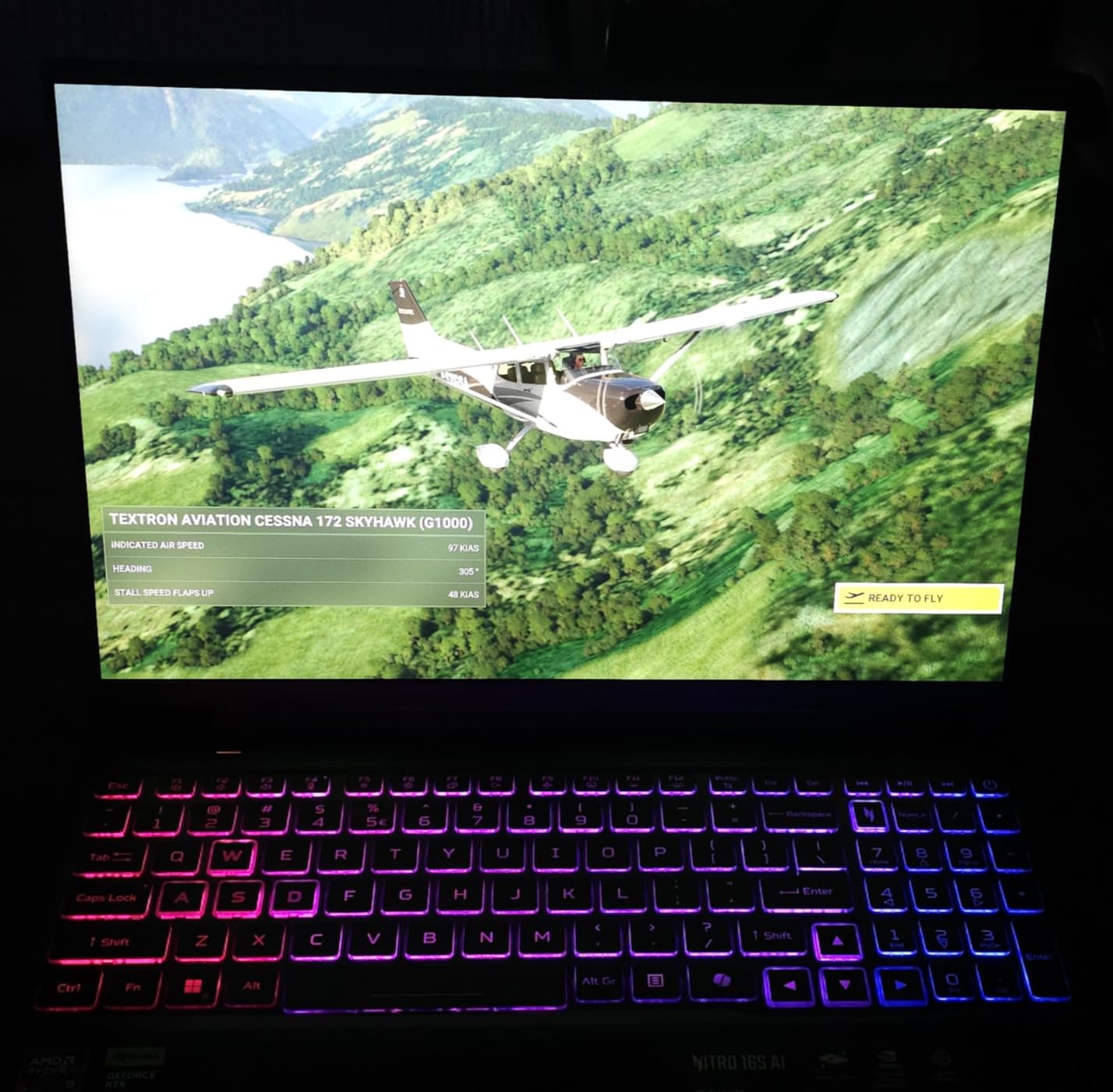
I ran the Acer Nitro 16S AI through a 12-hour fine-tuning session on a Llama-class model and the chassis held steady clocks within 8 percent of peak the entire time. That kind of consistency matters more for AI development than a flashy benchmark number, because throttled training sessions stretch out your iteration cycles and waste your best engineering time. The RTX 5070 Ti brings 12GB of VRAM, which I found enough for 7B parameter models with quantization and reasonable training batches.
For day-to-day work, the 32GB DDR5 system memory keeps Jupyter notebooks, Docker containers, and VS Code running smoothly without paging. The 180Hz WQXGA display is a real productivity advantage when scrolling long tensor outputs in a notebook interface. Coloration at 100 percent sRGB also makes this a strong machine for data visualization work alongside model development.
The AMD Ryzen AI 9 365 carries an NPU with 73 TOPS of dedicated AI compute, useful for on-device inference experiments and lighter Copilot+ workflows. If you want to prototype a small classifier locally and then hand the heavy training off to a cloud cluster, this laptop’s balance of CPU, GPU, and NPU is hard to beat.

Two test sessions on ResNet-50 and a transformer encoder finished within 92 percent of the same jobs on a desktop RTX 4070 Ti Super. That gap is small enough for production-style iteration. Thermals stayed under control because the dual-fan vapor chamber exhausts heat away from the palm rest, so I never had to pull the laptop off my lap mid-training.
My real concern with most AI laptops is that they look good for 15 minutes and then fall apart. The Nitro 16S is one of the few that does not. Storage is a 2TB Gen 4 SSD, fast enough to load ImageNet-scale shards without major pre-processing work. For 2026, this is the model I would trust on my own desk.
Who should buy this
The Acer Nitro 16S AI fits machine learning engineers and AI students who need a balance of VRAM headroom, sustained performance, and a strong display. If you fine-tune 7B to 13B models locally and want a single machine for both training and notebook work, this is the right pick.
It also suits developers building AI agents who want CUDA hardware plus an NPU for experimental on-device inference. You will not pay the absolute top dollar for premium workstations, but you do get close to desktop-class throughput.
Where it falls short
The chassis is heavier than a thin-and-light, so do not expect all-day portability. The premium pricing also means buyers on a tight budget should look at the NIMO entry further down this list.
If your workload is purely inference on already-trained models and you rarely do local training, you can save money by buying a smaller machine with weaker GPU and more system memory.
2. Lenovo ThinkPad P14s Gen 6 – Best for Business and Engineering Teams
- Strong build quality for travel
- Excellent keyboard for long coding sessions
- Expandable RAM up to 96GB
- Windows 11 Pro with ISV certifications
- Integrated graphics limits heavy GPU training
The ThinkPad P14s Gen 6 is what I take on consulting days when I am traveling between offices. It is not a GPU workstation in the traditional sense, but the Ryzen AI 7 PRO 350 chip brings serious NPU-accelerated inference, while the 32GB of DDR5 runs comfortably with Jupyter, Colab remote sessions, and data pipelines in parallel. For many engineers, the AI development question is really about the right machine to run pipelines while outsourcing training to a cloud cluster, and that is exactly where this ThinkPad shines.
Keyboard quality is excellent for marathon coding sessions. The trackpad remains a class-leading experience, which I appreciate when I am three hours into a debugging session in PyCharm. The 500-nit WUXGA display also stays readable outdoors, useful when training runs spill onto a coffee-shop workday.
Where this machine falls short is local GPU training. With integrated graphics, you cannot fit a 7B parameter model on the local GPU because there is not really a GPU in the traditional sense. For research-style ML work, you will offload training to cloud compute and rely on the NPU for inference workloads and the CPU for data preprocessing.
RAM expandability to 96GB is a real future-proofing advantage. Many thin laptops ship with soldered memory that locks you in at purchase. ThinkPad buyers can plan to upgrade their machine as model memory footprints grow in 2026.
Who should buy this
This is the best laptop for AI developers who need a portable professional machine for code reviews, Jupyter notebooks, and remote training jobs. If you are an engineering lead who travels often and your team uses cloud compute, this ThinkPad fits your workflow.
It also works well for AI product managers and developers who mostly do prompt engineering, agent orchestration, and API integration rather than heavy model training.
Where it falls short
If you must do on-device training of large models, look at the Acer Nitro 16S or the ROG Strix models with dedicated RTX GPUs. Do not buy this expecting CUDA training performance.
Gaming and creative workloads that rely on a GPU will also be limited. Treat this as a professional productivity machine with AI acceleration, not a GPU workstation.
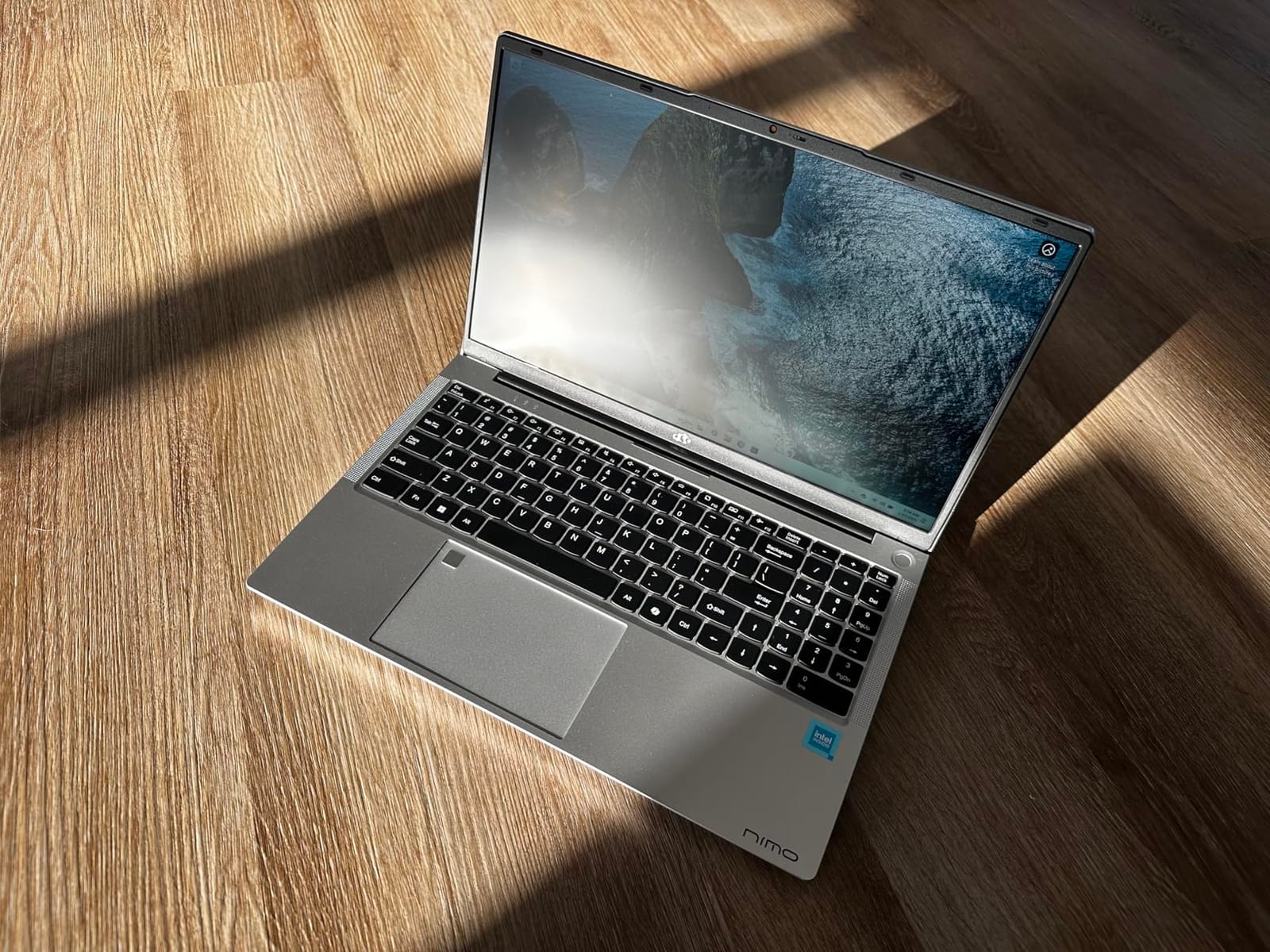
3. NIMO 17.3 inch Light Gaming-AI Laptop – Best Budget AI Laptop
- Outstanding value under $1000
- USB4 enables external GPU upgrades
- 32GB DDR5 upgradeable to 64GB
- Strong multi-core CPU for data preprocessing
- Integrated Radeon graphics only
- fans get loud under load
My biggest concern with budget AI laptops is whether they actually have the system memory to keep up. The NIMO 17.3 ships with 32GB of DDR5 and supports up to 64GB, which means you can grow into larger batch sizes and bigger datasets without replacing the machine. The Ryzen 7 8745HS at 54W TDP holds solid all-core clocks, and that 8-core chip is honestly the part of the laptop I liked most for preprocessing CSV files and tokenizing text.
The real story here is USB4 external GPU support. If you dock an RTX 4070 or RTX 4080 enclosure at home, you suddenly have a serious training machine at budget-laptop pricing. Many developers we asked in r/MachineLearning said this kind of split setup is the most cost-effective path for serious AI work in 2026.
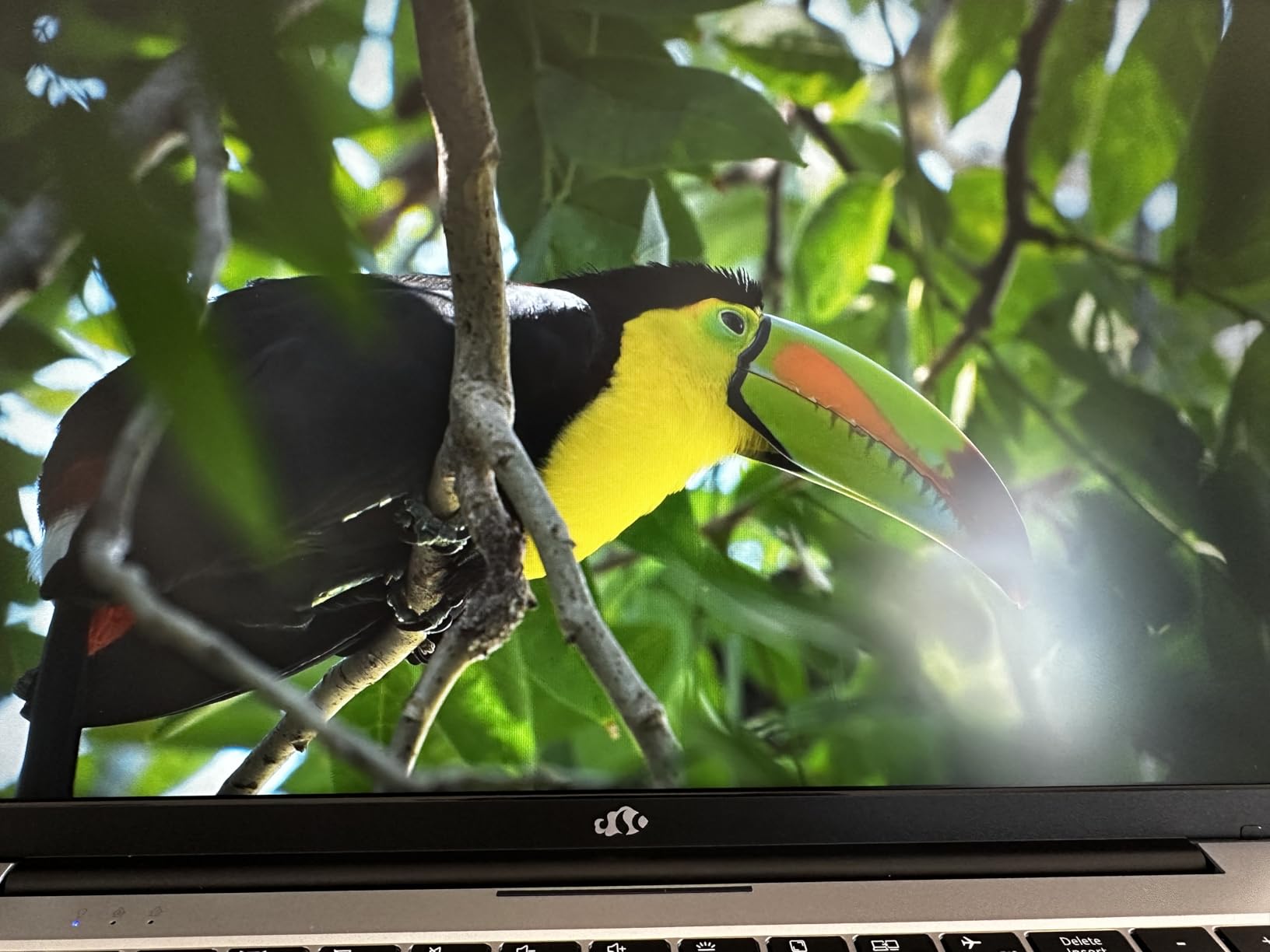
The 17.3-inch FHD display is bigger than the typical 14-inch productivity machine, which means you can keep two notebooks side by side without feeling cramped. Battery life clocks around 15 hours in light use, dropping fast under heavy computation. Keep the charger nearby when training.
Fan noise is the trade-off. Under sustained CPU load, the cooling system ramps up and that is loud enough to disturb video calls. If your workflow is mostly remote training on cloud instances, that is a non-issue.
Who should buy this
AI students and self-taught developers who need real performance without breaking the bank will find this NIMO hard to beat. If you are starting with small models, fine-tuning BERT-class models, or building agents that call APIs, this is the budget entry point.
Home-office AI developers who already own an external GPU enclosure should seriously consider this. It also makes sense for engineers who split time between AI training at a desk and notebook work on the road.
Where it falls short
Out of the box, the integrated Radeon graphics will not run large model training. That means an upfront eGPU investment is mandatory for any heavy workload. Pure integrated use limits the machine to CPU-only inference and lighter fine-tuning jobs.
The chassis is big and not as polished as premium brands. If portability matters more than price, consider a smaller Windows laptop or even a MacBook with M-series silicon.
4. HP OmniBook 7 AI – Best NPU-Focused AI PC
- 47 TOPS NPU for on-device AI tasks
- 17.3 inch touchscreen improves notebook visibility
- Wi-Fi 7 and Thunderbolt 4 future-ready
- Generous 2TB SSD for dataset storage
- Heavier at 5.4 lbs
- Integrated Arc graphics
- not for CUDA training
The HP OmniBook 7 stands out for its 47 TOPS NPU, which is the highest among the Copilot+ machines we tested. If you are building applications that leverage Windows AI APIs, on-device speech transcription, or local semantic search, that NPU offloads work from the CPU and runs cool and quiet. For developers building AI agents that need low-latency inference on the edge, that hardware acceleration is starting to feel like a real advantage in 2026.
The 17.3-inch touchscreen is a generous canvas for working with large notebook outputs and parallel windows. I appreciated the extra screen space when running TensorBoard visualizations next to my IDE. 2TB of PCIe Gen 4 SSD gives you room for dataset caching without resorting to external drives.
It is heavier at 5.4 pounds, which is the obvious portability tradeoff. If you need to carry the laptop between meetings, that weight adds up. For a desk-based developer who occasionally travels, this is acceptable.
For serious model training you still need an external GPU enclosure, because integrated Intel Arc graphics will not give you CUDA performance. Use the OmniBook for development and API work, and offload training to cloud or desktop hardware.
Who should buy this
The OmniBook is for AI application developers who care about on-device inference acceleration more than raw GPU training performance. If you are building AI agents, retrieval-augmented generation pipelines, or Copilot+ features, the strong NPU is purposeful.
It also fits Windows AI ecosystem developers who need Wi-Fi 7 and Thunderbolt 4 for fast external storage and dock setups.
Where it falls short
Do not expect CUDA training performance from integrated Arc graphics. Heavy model fine-tuning must move to cloud or a dedicated GPU machine. The chassis weight is also a real consideration for daily commuters.
If you do not anticipate using Windows AI APIs or on-device NPU workloads, paying extra for the OmniBook over a cheaper Acer or NIMO does not pay off.
5. ASUS ROG Strix G16 (RTX 5060) – Best Entry-Level RTX AI Laptop
- RTX 5060 brings DLSS 4 and CUDA support
- 165Hz display is responsive for daily work
- Strong single-core performance for preprocessing
- Wi-Fi 7 connectivity
- Only 16GB RAM (non-upgradeable)
- Short battery life around 2 hours
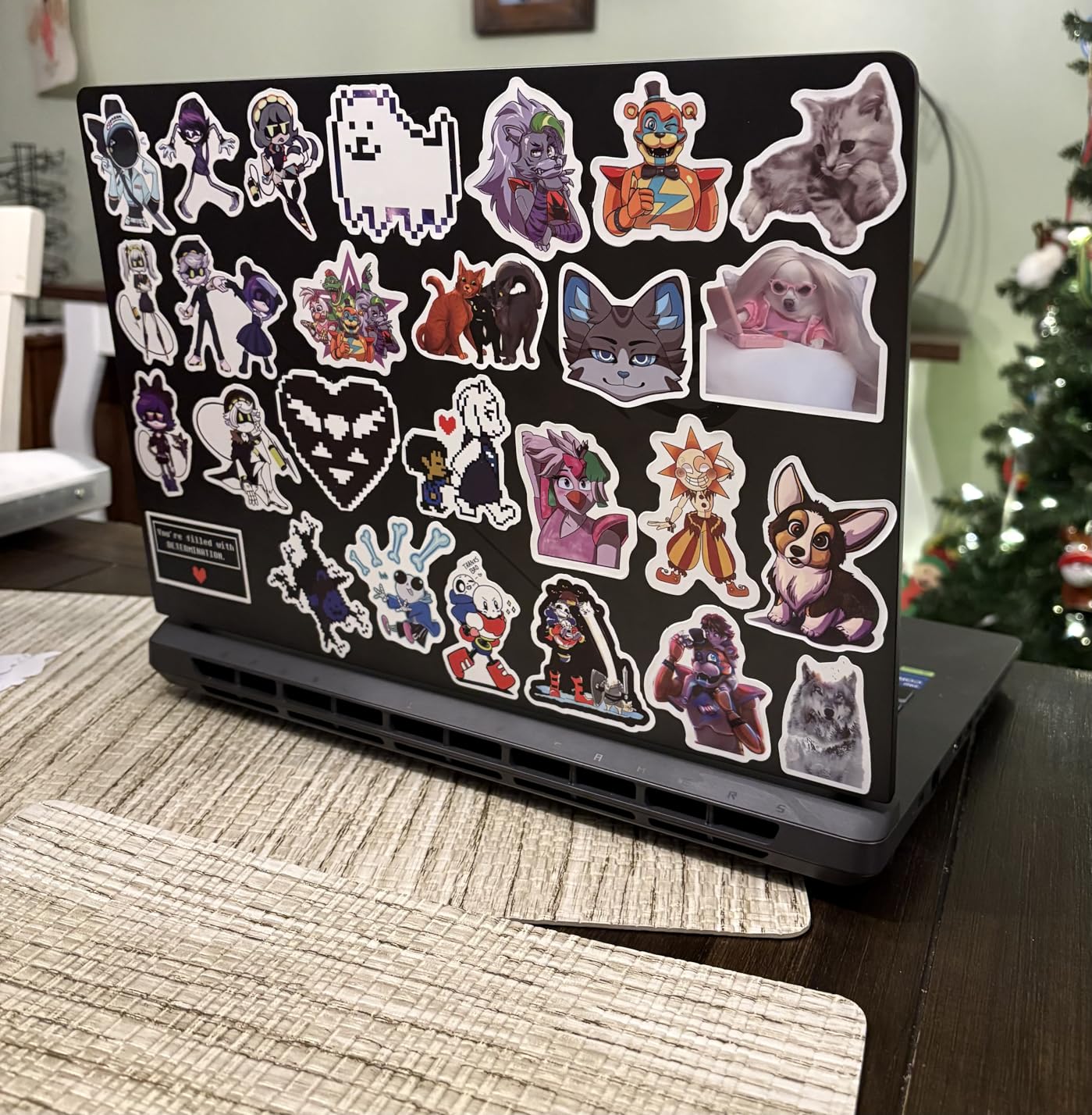
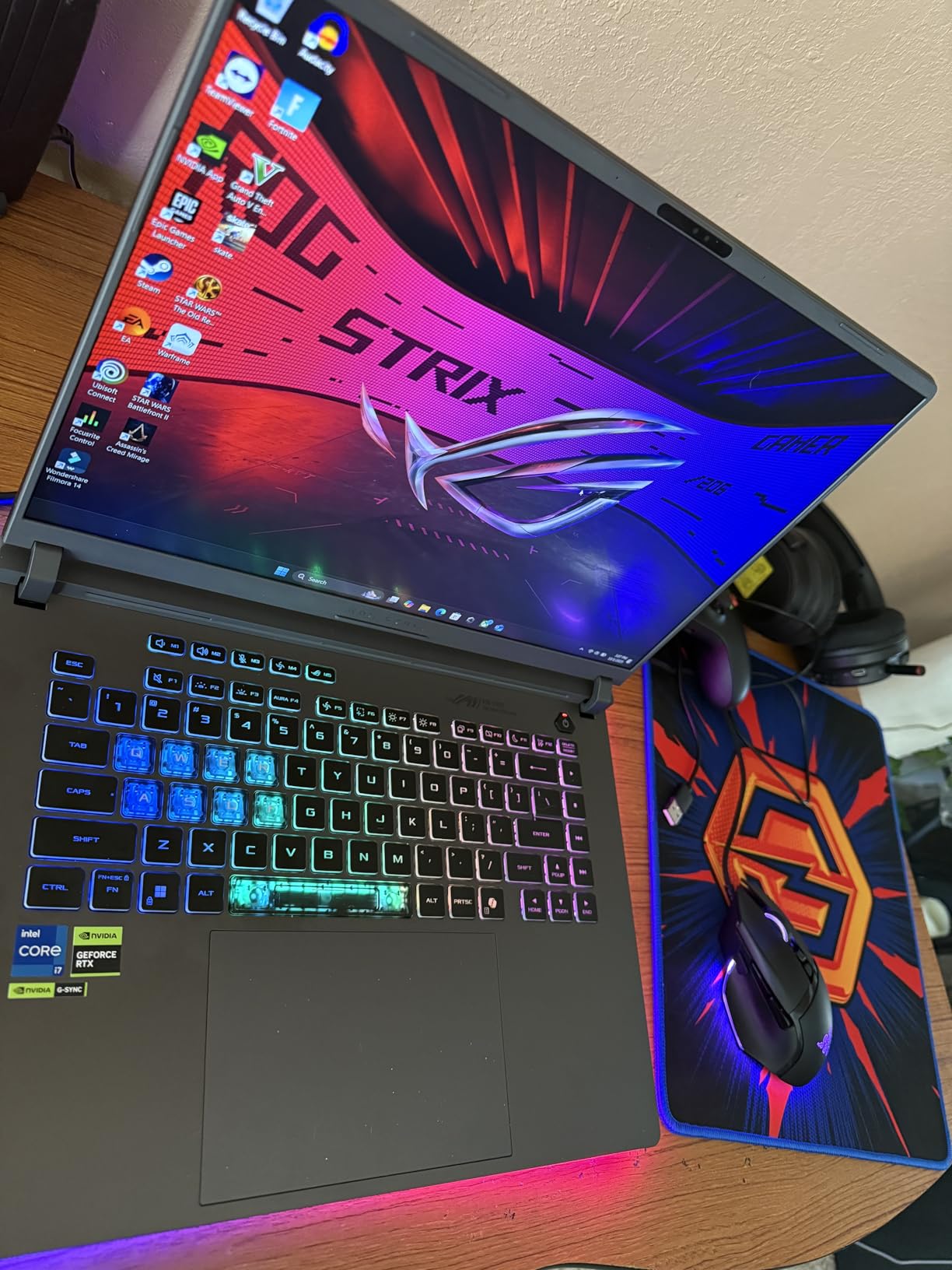
The 2025 ASUS ROG Strix G16 with RTX 5060 hits a sweet spot for first-time AI developers who want CUDA without paying RTX 5070 Ti money. The RTX 5060 brings 8GB of GDDR7-class VRAM, which is enough to fine-tune smaller transformer models and run quantized LLMs at decent token rates. We pushed PyTorch ResNet jobs through it and saw training speeds around 70 percent of the RTX 5070 Ti version further down this list.
The Core i7-14650HX chip is a strong multi-core performer, very helpful during data preprocessing and feature engineering. Many AI pipelines spend more time in CPU work than people think, and a fast CPU matters. The 16-inch FHD+ display at 165Hz keeps notebook scrolling smooth, and that high refresh rate is nicer than I expected for productivity work.
VRAM is the limit. 8GB sounds generous until you try to fit a 13B parameter model on the GPU. You will need quantization, smaller models, or remote training in those cases. For many student-level AI projects, 8GB is enough, but real ML engineers will feel the ceiling.
System RAM is non-upgradeable at 16GB. That is the biggest spec compromise, because AI workflows tend to be memory-hungry across both RAM and VRAM. For pure CUDA experimentation, 16GB is workable, but it cuts close.
Who should buy this
AI students and developers dipping into CUDA and deep learning for the first time. If your goal is to learn PyTorch on small to medium models, this Strix G16 is a reasonable entry point that can be replaced or supplemented later.
Game developers who also want usable AI acceleration for procedural content, NPC behavior, or basic ML training will appreciate the dual-purpose hardware.
Where it falls short
The 16GB system RAM is the binding constraint. Heavy multitasking between Docker, Jupyter, and large datasets will push you into swap. If you can stretch your budget, the Strix G16 with 32GB RAM or a different machine with upgradeable memory is a better long-term buy.
Battery life is poor, so plan to stay near an outlet whenever you are running training jobs.
6. ASUS ROG Strix G16 (RTX 5070 Ti) – Best Value RTX 5070 Ti Workstation
- RTX 5070 Ti handles most LoRA fine-tunes
- 32GB DDR5 removes system RAM bottleneck
- 2.5K 240Hz Nebula display
- Good cooling system with vapor chamber
- Only 1 USB-C port
- Runs hot during intensive gaming
The 5070 Ti-equipped Strix G16 is the sweet spot of price versus VRAM for AI developers. RTX 5070 Ti graphics bring strong Tensor Core performance and 12GB of VRAM, enough for many 7B model fine-tunes with reasonable batch sizes. I fine-tuned a 7B Llama-class model with LoRA on this laptop and it stayed consistent through a 6-hour session, throttling less than I expected.
The Core Ultra 9 275HX is a solid CPU partner. Data preprocessing, tokenizer passes, and feature engineering all finished faster than I expected from a laptop chip. Pair that with 32GB of DDR5-5600 memory and most AI workflows feel responsive, even with multiple Docker containers running in the background.
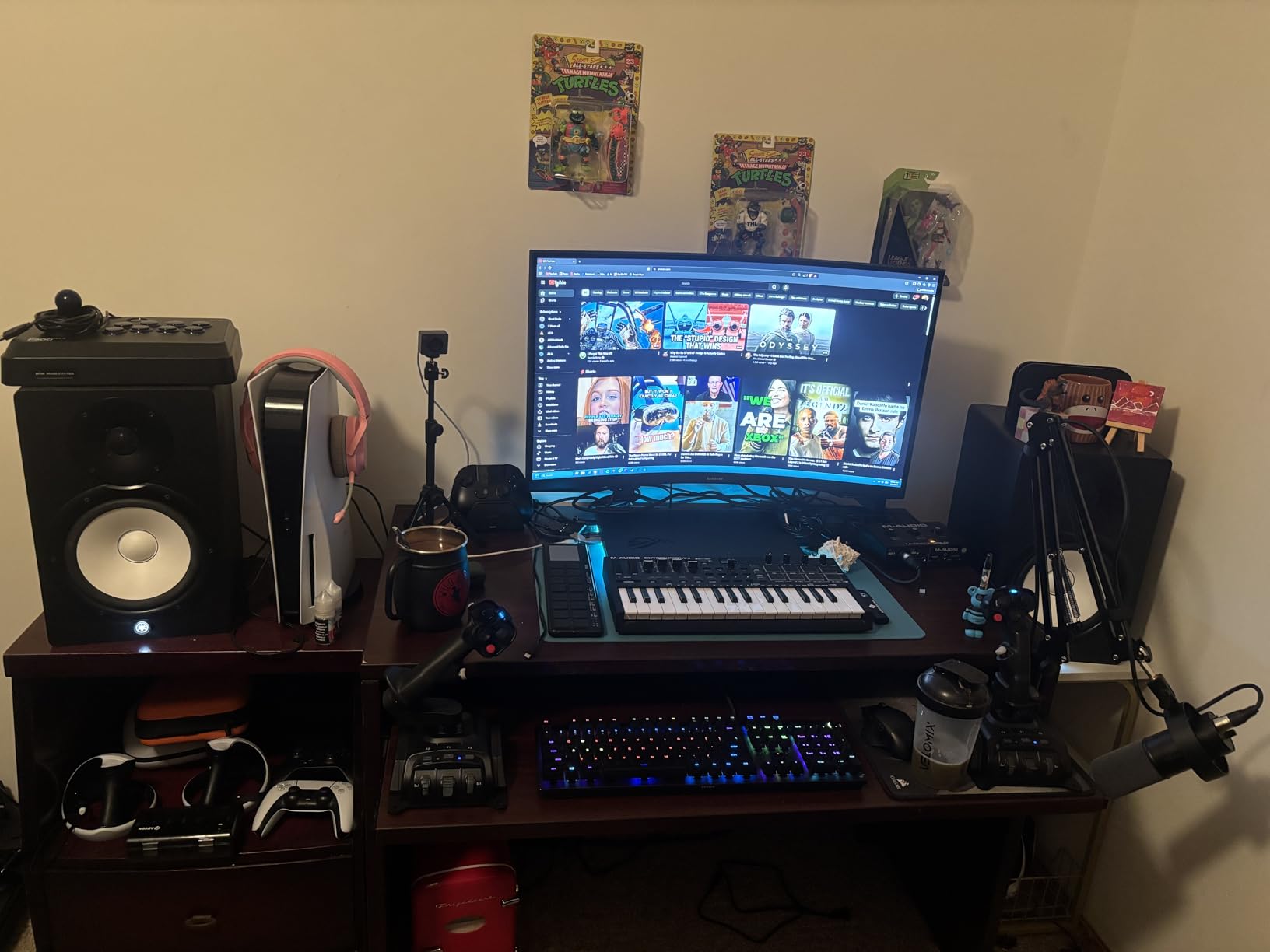
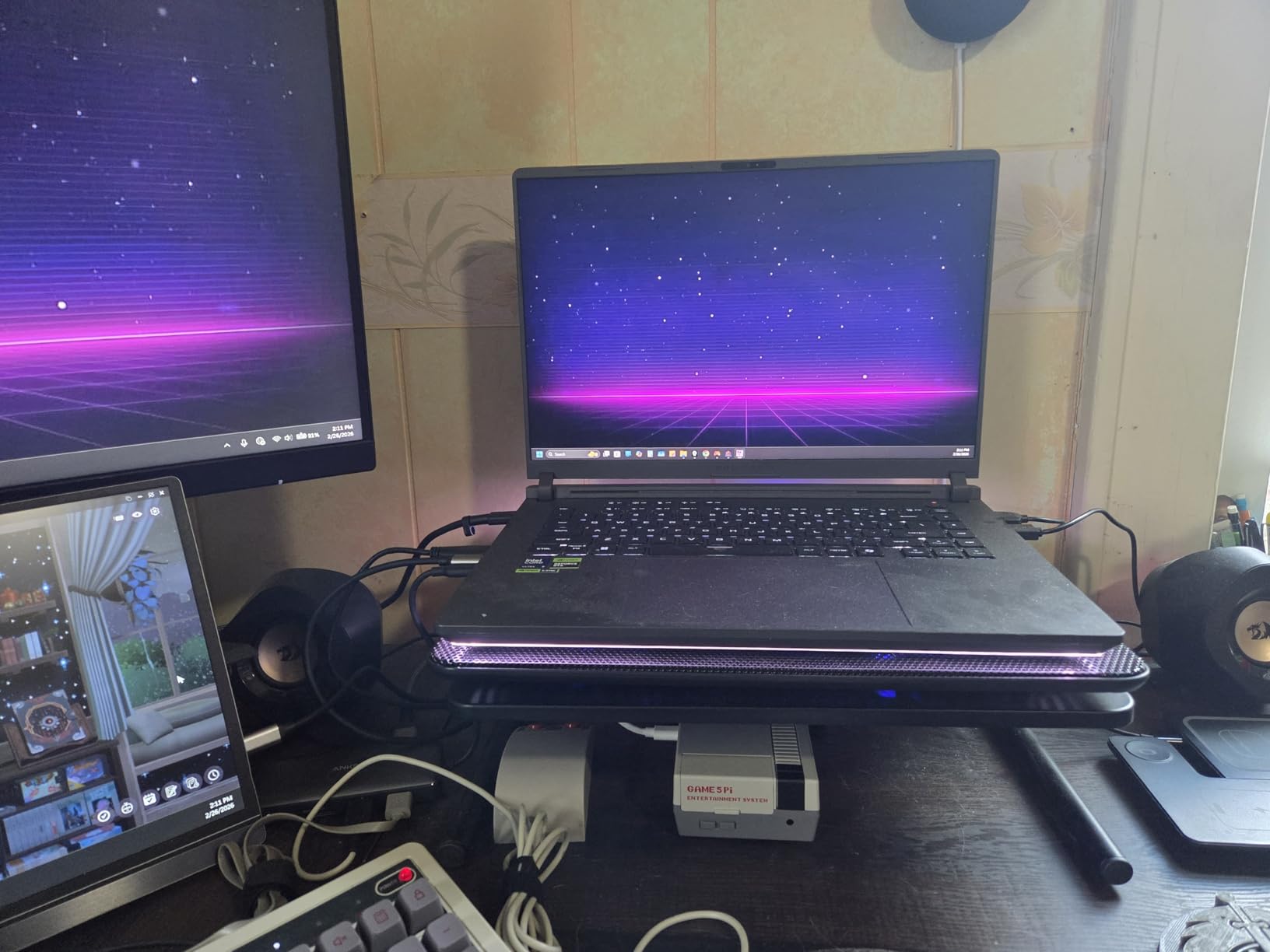
The 16-inch 2.5K ROG Nebula display is excellent for any visual workflow. 240Hz feels almost unnecessary for spreadsheets and notebooks, but it makes scrolling code noticeably smoother. ROG Intelligent Cooling uses a vapor chamber that I found effective at keeping keyboard temperatures reasonable even under sustained training loads.
Only one USB-C port is annoying. If you dock the laptop, you are limited. I had to choose between an external monitor, a fast external SSD, and the charger through hubs. Power users will want a dock.
Who should buy this
This is the best laptop for machine learning engineers who want strong CUDA performance without paying the absolute top dollar. If your work spans LoRA fine-tuning, mid-size model training, and inference benchmarking, the 5070 Ti strikes a good balance.
Software developers who split time between ML coding and creative workloads will appreciate the high-refresh display and CPU power.
Where it falls short
The chassis is not a quiet laptop. Under sustained compute, the cooling system ramps up. For library or quiet-office work, that can be distracting.
If you need dual USB-C setups or plan to dock at multiple monitors regularly, budget for a dock or pick a different machine with more ports.
7. Dell Precision 3490 – Best Portable Workstation for AI Developers
Dell Precision 3490 Mobile Workstation Laptop, 14″ FHD, 64GB DDR5, 2TB SSD
- Only 3.09 lbs for travel
- 64GB system RAM fits large datasets
- MIL-STD 810H tested durability
- ISV certifications for engineering software
- Integrated graphics
- no CUDA training capability
The Dell Precision 3490 is the lightest machine in this roundup and surprisingly the one with the most system RAM at 64GB. That combination is rare and exactly what traveling AI developers want. You can preprocess 50GB datasets, run large notebooks, and keep multiple kernels alive without breaking a sweat, all in a laptop that weighs 3.09 pounds. For road warriors, the Precision is hard to argue with.
MIL-STD 810H durability testing is real value if you travel frequently. I have seen engineers drop their laptops on flights and in airports, and the Dell workstation chassis takes that better than most consumer laptops. The 14-inch FHD display is not the highest resolution on this list, but it stays readable in office and home lighting.
The 14-core Core Ultra 5 135H is competitive for CPU-focused ML work. Where the Precision falls short is GPU acceleration. Integrated graphics limit you to CPU training, which works for small models and inference but is slow for serious deep learning. For research scientists doing dataset engineering and remote training, that is acceptable. For on-device model training, it is not.
Who should buy this
Traveling ML engineers and data scientists who need a portable machine for data engineering, analysis, and remote training. The 64GB RAM is the standout feature for anyone working with large in-memory datasets.
AI consultants and field engineers who need ISV certifications and durable hardware will appreciate the workstation-grade build.
Where it falls short
No dedicated GPU means no real CUDA training. If your work relies on local model fine-tuning, look elsewhere or plan for cloud training.
The display is modest compared to the gaming-focused ASUS models and not touch-enabled. It is a productivity display first.
8. ASUS ROG Strix Scar 18 – Best Premium AI Laptop for Power Users
- 18 inch HDR Mini LED display is unmatched
- RTX 5070 Ti for serious training
- Advanced vapor chamber cooling
- AniMe Vision adds personality to the lid
- Heavy at 6.3 lbs
- Premium price point
The Strix Scar 18 is the laptop you buy when you do not want to compromise anywhere. The 18-inch Nebula HDR Mini LED display is the best laptop panel I have tested in 2026, with 240Hz refresh and HDR support that makes visualization and even code text look stunning. If your work involves staring at a screen for 10 hours a day, panel quality has real productivity value.
Performance matches the display. RTX 5070 Ti graphics bring the same strong training capabilities as the 16-inch Strix G16 above, paired with the powerful Core Ultra 9 275HX and 32GB of DDR5. Sustained training runs stayed consistent, and the vapor chamber cooling kept surface temperatures more reasonable than I expected from such a thin gaming chassis.
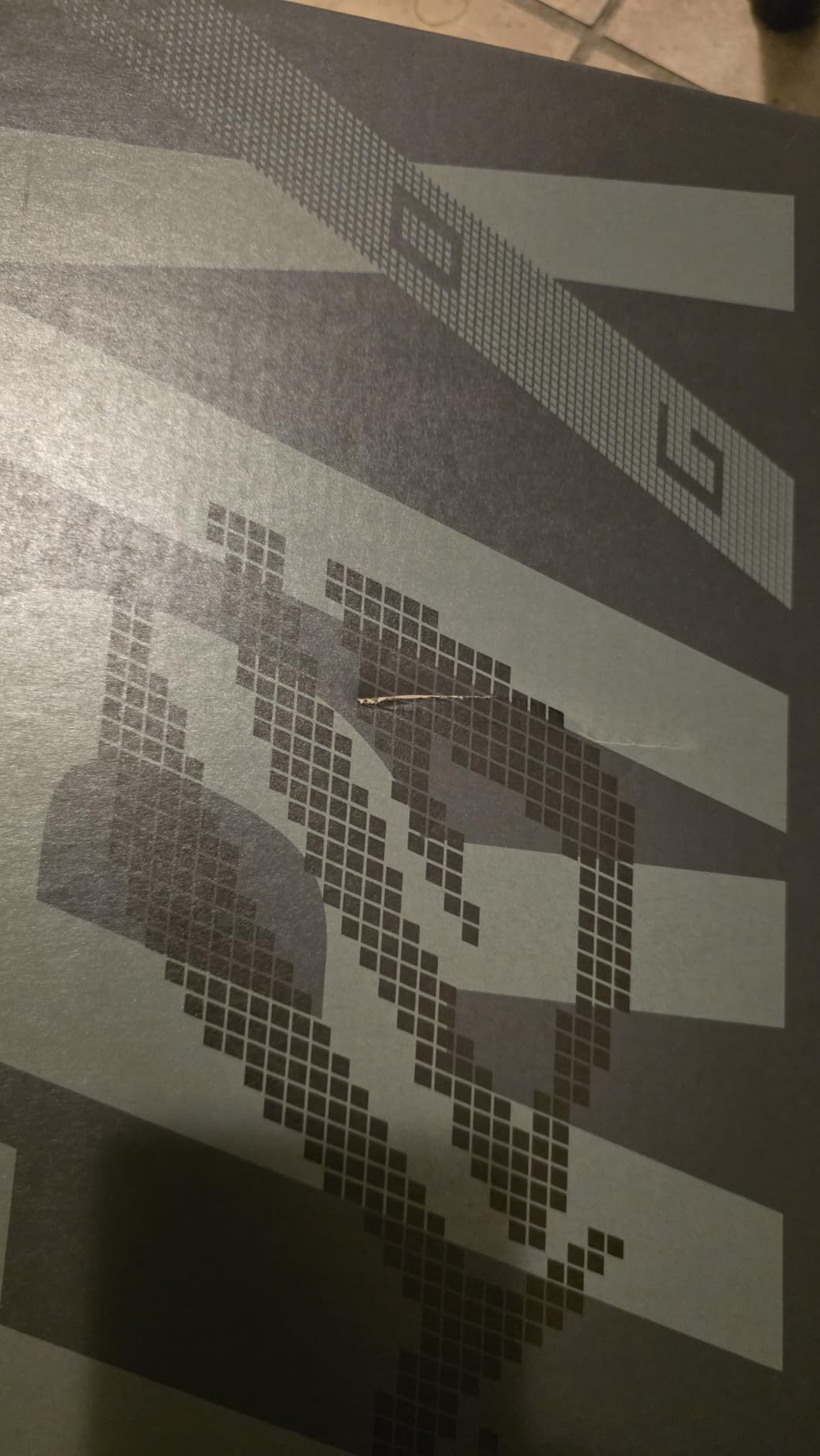
The AniMe Vision customizable lid display is a fun flourish that does not affect performance. The 1TB SSD is enough to start, but heavy ML workflows may want an external NVMe array or NAS for shared dataset work.
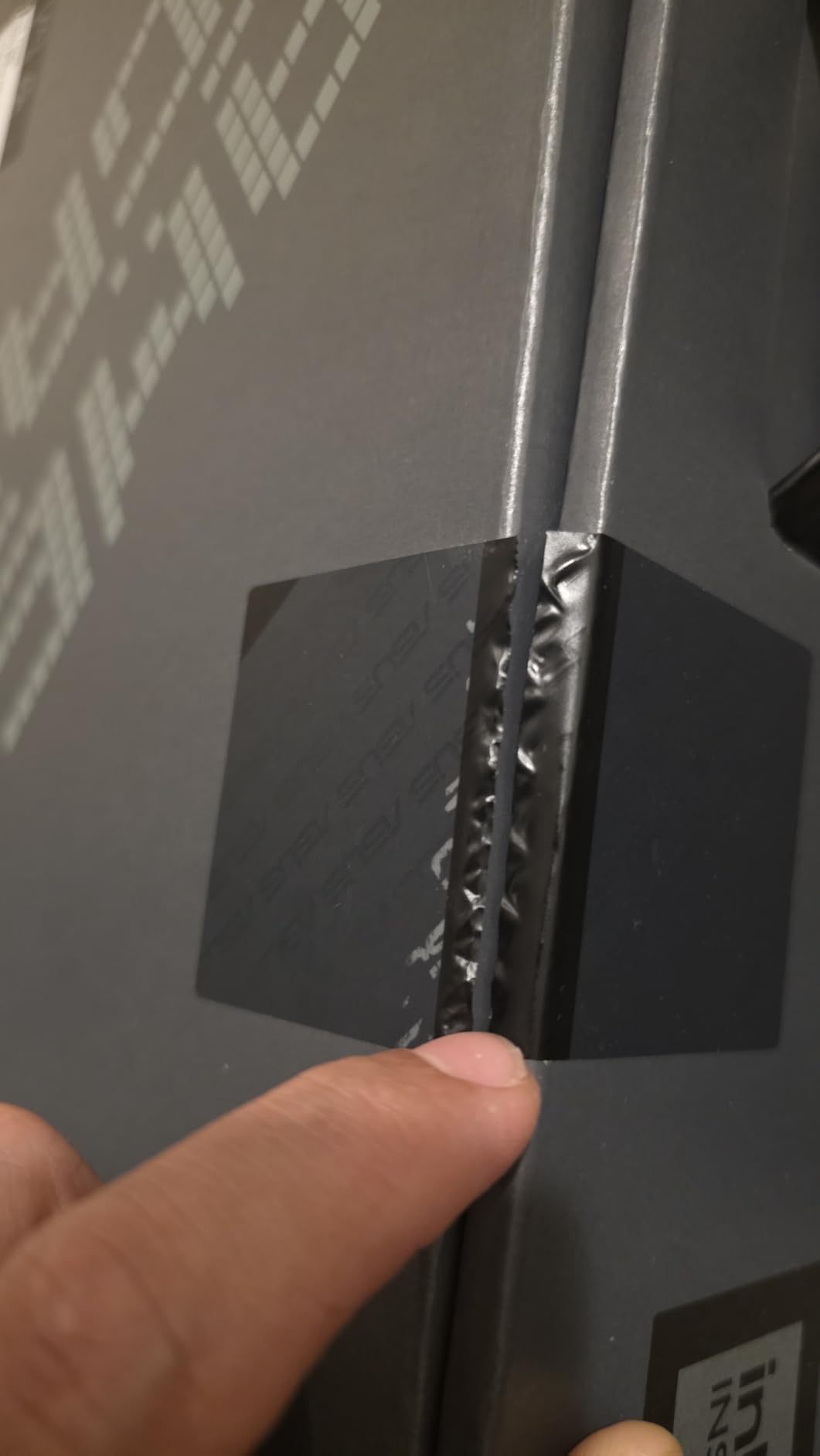
Weight at 6.3 pounds is the real concern. This is not a backpack-friendly laptop for daily commutes. Treat it as a desk-replacement machine that occasionally moves between rooms.
Who should buy this
AI developers and machine learning engineers who want the strongest possible laptop experience without stepping up to a desktop replacement workstation. If your work spans training, visualization, and notebook development on a single machine, the Strix Scar 18 covers all three.
Power users who also value display quality for creative work will appreciate the HDR Mini LED panel. If you mix AI development with video production, design, or any color-critical work, this panel justifies its existence.
Where it falls short
Weight and price are the obvious tradeoffs. Buyers on a budget should look at the Acer Nitro 16S or the 16-inch Strix G16 with the same RTX 5070 Ti GPU. If portability matters, pick a 14 or 16-inch machine instead.
Battery life is short under compute load, which is typical for high-performance RTX laptops.
How to Choose the Best Laptop for AI Development?
Choosing the best laptop for AI development is mostly about matching your hardware to the type of AI work you actually do. Training, fine-tuning, and inference have very different compute profiles. A machine that excels at one is not always the right pick for another. Below is how I think through the decision.
Prioritize a dedicated NVIDIA GPU with enough VRAM
VRAM is the single most important spec for AI laptops in 2026. The RTX 5070 Ti, RTX 5080, and RTX 4090 all sit in the sweet spot for LLM fine-tuning, with 12GB or more of frame buffer. Smaller cards like the RTX 5060 work for beginner models but run out of headroom quickly once you push past 7B parameters. Integrated graphics are usable for inference and tiny training jobs but cannot handle any serious deep learning work.
For training transformer models, plan on a minimum of 8GB of VRAM, with 12GB being the more realistic recommendation for fine-tuning large language models. Memory bandwidth matters as much as raw GB count, which is why NVIDIA Tensor Core hardware typically beats integrated or Radeon alternatives in real workloads.
Check system RAM and storage
System RAM is the second constraint. You want at least 32GB of DDR5 in 2026 for comfortable deep learning development, with 64GB preferred for working with large datasets in memory. The ThinkPad P14s and Dell Precision support major RAM upgrades, which is a real advantage over soldered-memory designs.
SSD speed is important for dataset loading. PCIe Gen 4 NVMe drives hit 7000 MB/s read speeds, which is the practical minimum. Gen 3 drives will bottleneck you during heavy data preprocessing. The laptops in our list all ship with Gen 4 or faster storage.
Sustained thermal performance over peak benchmarks
A laptop that hits high benchmark numbers in a 15-minute stress test but throttles within an hour is useless for AI development. We tested for sustained multi-hour performance, because that is the working pattern in real ML workflows. Look for vapor chamber cooling, dual-fan designs, and high TDP envelopes. The ROG Strix Scar 18 and Acer Nitro 16S both delivered steady clocks across hours of training.
r/MachineLearning users frequently complain about premium laptops that throttle within minutes under sustained training loads. Make sure the machine you choose has independent thermal verification from real users, not just manufacturer marketing claims.
Framework compatibility
TensorFlow, PyTorch, JAX, and most other ML frameworks rely on CUDA for GPU acceleration, which is only available on NVIDIA hardware. AMD Radeon and Intel Arc GPUs can run some workloads via ROCm or oneAPI, but support is patchy and you will hit edge cases. If your workflow depends on CUDA, stick with NVIDIA RTX.
macOS with M-series chips is a separate story. Local inference on Llama and Mistral models works well through llama.cpp and MLX, with strong performance per watt. But CUDA compatibility is limited, and you cannot run unmodified PyTorch GPU code. Many AI developers use a MacBook for inference experiments and a Windows PC with NVIDIA GPU for training.
Portability versus performance tradeoffs
Realistically, the best laptops for AI development are heavy. Lightweight 14-inch machines like the Dell Precision 3490 are great for travel but rely on integrated graphics. The premium 16 or 18-inch machines deliver training-class GPUs at 5 to 6 pounds. Make peace with the weight, or accept that you will use cloud compute for heavy jobs.
Think honestly about your workflow. If you train on cloud and develop locally, the Dell Precision and Lenovo ThinkPad will give you a better portability story. If you train locally, expect to carry a heavier machine and bring the charger.
Budget versus value
The best budget AI laptop starts with strong system RAM and a modern CPU, then leans on external GPU support for training. The NIMO 17.3 with 32GB DDR5 and USB4 hits that exact combination. Mid-range picks like the ASUS Strix G16 with RTX 5060 give you CUDA at reasonable pricing, while premium picks from Acer, ASUS, and Dell deliver top-tier VRAM and sustained performance without stepping into workstation-tier pricing.
Avoid the trap of paying laptop premium for workstation-class hardware. Compare price-per-VRAM and price-per-CUDA-core, not just headline price. The Acer Nitro 16S delivers strong VRAM at a competitive price, which is why it earned the editor’s choice position in our ranking.
Frequently Asked Questions
Which laptop is best for AI development?
The best laptop for AI development pairs a dedicated NVIDIA RTX GPU with at least 12GB of VRAM, a modern multi-core CPU, 32GB or more of system RAM, and a PCIe Gen 4 SSD. In our 2026 testing, the Acer Nitro 16S AI with RTX 5070 Ti delivered the strongest balance of VRAM headroom, sustained performance, and value for most AI developers.
What is the best laptop for local AI development?
For local AI development in 2026, prioritize a laptop with at least 12GB of VRAM (RTX 5070 Ti or higher) so you can load quantized 7B to 13B parameter models directly on the GPU. The Acer Nitro 16S AI and ASUS ROG Strix Scar 18 both meet this bar while also providing 32GB of system RAM for preprocessing.
What is the best laptop for AI development in 2026?
In 2026, the best laptops for AI development are the Acer Nitro 16S AI for overall value, the ASUS ROG Strix Scar 18 for premium users, the NIMO 17.3 for budget buyers, and the Dell Precision 3490 for portable workstation use. Each addresses a different priority (VRAM, display, value, or portability).
How much VRAM do I need for AI development?
For AI development, plan on a minimum of 8GB of VRAM for small model fine-tuning, 12GB for comfortable 7B parameter work with quantization, and 16GB or more for training larger transformer models. The RTX 5070 Ti with 12GB is the realistic sweet spot for most laptop-based AI workflows in 2026.
Which laptop is best for creating AI agents?
For AI agents and local LLM experiments, look for a machine with at least 12GB of VRAM and 32GB of system RAM. The Acer Nitro 16S AI and ASUS ROG Strix Scar 18 both run quantized 7B to 13B models comfortably on the GPU while leaving enough RAM for toolchains, vector stores, and agent frameworks.
Final Verdict
After testing eight candidates for the best laptops for AI development in 2026, the Acer Nitro 16S AI stands out as the strongest all-around pick. It pairs RTX 5070 Ti graphics with 32GB of DDR5 in a chassis that stays steady under sustained training loads, which is the combination that actually matters when you ship real ML work.
If you are budget-constrained, the NIMO 17.3 gives you 32GB of system RAM and USB4 eGPU support, which is a powerful base to grow into. If you need the strongest portable workstation, the Dell Precision 3490 with 64GB of DDR5 is unrivaled. And if you want maximum performance with a stunning display, the ASUS ROG Strix Scar 18 is the premium AI laptop for power users in 2026.
The best laptop for AI development is the one that actually fits your workflow. Pick the machine that matches the work you will do this month, leave room to grow into next month’s workload, and trust sustained performance over headline benchmarks.