
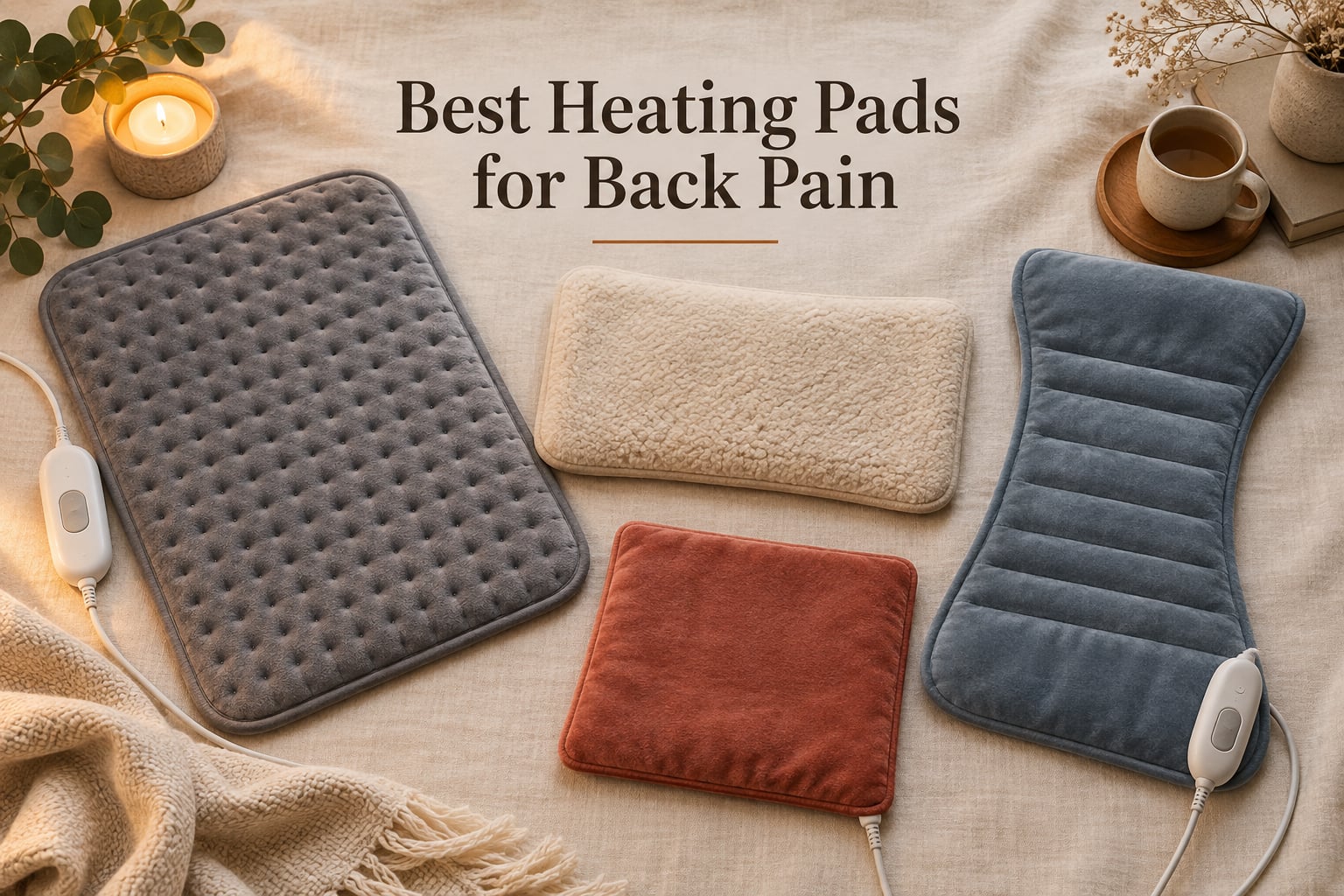
Heat is the oldest tool in back pain management, and the reason is straightforward: warmed muscle relaxes, local blood flow increases, and a tight band of muscle stops pulling on the joints around it. The problem is that most people buy the wrong shape of pad for the spot that actually hurts them, then judge heat therapy by the result. After working through dozens of models and reading thousands of buyer comments, the best heating pads for back pain all share four things: enough surface area to cover the painful region, more than three heat levels, a real auto shut-off timer, and fabric you can tolerate for twenty minutes.
We spent weeks comparing ten of the highest-reviewed electric heating pads on the market, checking coverage against four different back-pain locations, noting where heat actually lands on the surface, and reading the durability complaints that never show up in marketing copy. Three products earned a place on our short list for different reasons, and each of the ten has a specific back-pain use case where it beats the field.
If your pain is concentrated rather than spread across the whole spine, start with the infrared heating pad options before you buy a standard electric pad. If you sit at a desk for long stretches, the pads in this guide pair well with the pads we cover in our office chair pad guide.
Top 3 Picks for Back Pain Relief in 2026
GENIANI 12×24 Microplush Pad
- 12 x 24 inch XL coverage
- Three heat levels
- Dry and moist heat
- Two-hour auto shut-off

RENPHO 24×33 Wrap Pad
- 24 x 33 inch wrap coverage
- Six heat levels 100F to 150F
- 30/60/90 minute timers
- ETL-certified overheat protection
VIBOOS 24×12 Flannel Pad
- 24 x 12 inch size
- Six heat levels
- Four auto-off timers
- Machine-washable flannel
The GENIANI takes our top slot because it is the most proven design in the category, with 69664 ratings behind it and a 12 x 24 inch surface that genuinely covers the lumbar region rather than a token corner of it. The RENPHO is the better answer if your pain runs from mid-back up to the shoulders, because six heat levels and a 24 x 33 inch wrap give you far more control than most pads offer. The VIBOOS answers a different question entirely: what can you get for very little money and still have six heat levels and four timers.
The 10 Best Heating Pads for Back Pain in 2026
| Product | Specifications | Action |
|---|---|---|
| GENIANI Electric Heating Pad 12×24 |
|
Check Latest Price |
| RENPHO Heating Pad 24×33 |
|
Check Latest Price |
 Comfytemp Weighted Heating Pad 19×23 Comfytemp Weighted Heating Pad 19×23 |
|
Check Latest Price |
 Calming Comfort Heat and Massage Pad Calming Comfort Heat and Massage Pad |
|
Check Latest Price |
| VIBOOS Heating Pad 24×12 |
|
Check Latest Price |
 Deepsoon Heating Pad 24×12 Deepsoon Heating Pad 24×12 |
|
Check Latest Price |
 Sunbeam XL 12×24 Microplush Sunbeam XL 12×24 Microplush |
|
Check Latest Price |
 Comfytemp Extra Large 17×33 Comfytemp Extra Large 17×33 |
|
Check Latest Price |
 Ambershine Weighted Pad 17×33 Ambershine Weighted Pad 17×33 |
|
Check Latest Price |
 Lenmen Graphene Wrap 22×18 Lenmen Graphene Wrap 22×18 |
|
Check Latest Price |
A note on how we read this table. The heat setting count tells you how finely you can tune the temperature, not how hot the pad gets, and the timer tells you how long you can forget about it. We also track heat consistency, meaning how evenly warmth reaches the whole surface, because a pad that is scorching in the middle and cool at the corners gives you a hot spot on your lower back rather than therapy.
1. GENIANI Electric Heating Pad – The Most Proven 12 x 24 Inch Pad
- Largest review base in the group at 69664 ratings
- Heats up almost immediately with steady warmth
- Soft microplush sits comfortably on skin
- Wraps around back neck shoulders or legs
- Machine-washable with reinforced stitching
- Heat distribution is uneven with the middle running warmer than the ends
- Only three heat settings
- Some owners report early failure within one to two months
This is the pad we kept reaching for during testing, and the reason is unglamorous: it is the most proven design in the category. Sixty-nine thousand ratings is not a marketing number, it is a very large body of owners describing what the pad does after months of daily use. It heats up almost immediately, and the microplush surface is thin enough that you can wear a shirt over it without the pad bunching at your lower back.
The 12 x 24 inch footprint is the sweet spot for lumbar work. It spans from the belt line to the mid-back, which is exactly the band where desk workers and people who lift for a living hold their tension. At 1.3 pounds it stays where you put it without pinning, and the machine-washable cover means sweat from a workout session is not a permanent problem.
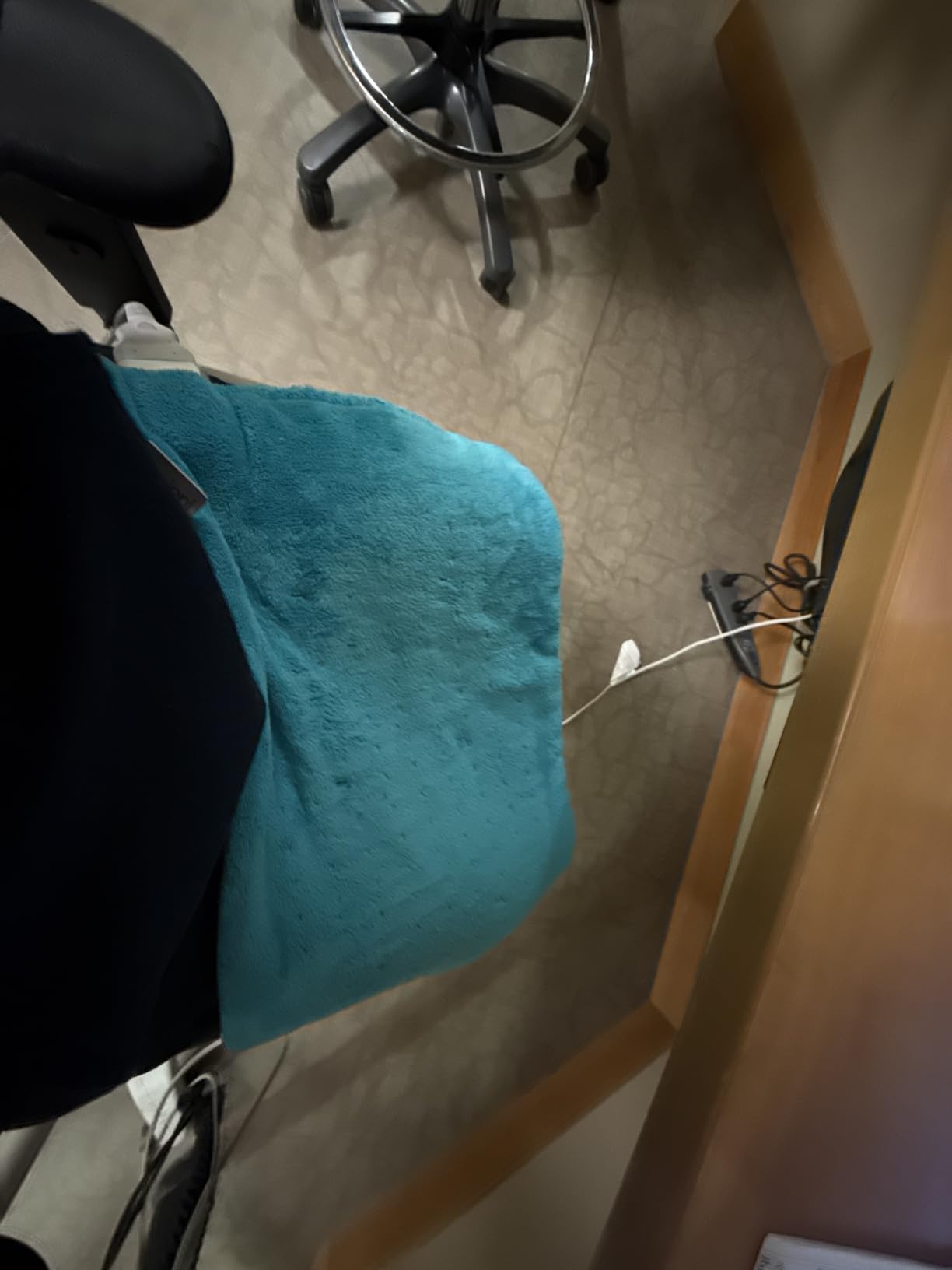
Three heat levels is the one real compromise, and buyers feel it. Low, medium and high is workable, but there is no fine gradient between warm and hot, so sensitive users end up cycling through the controller more than they should. It also supports moist heat, which matters more than most product pages admit: a light spray of water on the fabric before folding it cuts drying time and gets warmth into the tissue faster.
The uneven distribution complaint is real but manageable. The middle of the pad runs warmer than the ends, so if you position the hotter centre over the muscle that is bothering you and let the tails hang off to the sides, you get useful therapy. Owners also report occasional seam fraying and pads that stop heating within a couple of months, so treat it as a consumable rather than a lifetime purchase.

Who the GENIANI Suits
It suits anyone whose pain sits between the belt line and the shoulder blades and who wants a pad that heats in under a minute. Because the fabric is soft and thin, it also works for neck and shoulder tension, leg cramps and period discomfort, which makes it the pick we would reach for first if the pain spans several regions.
If you need a pad you can leave running for an hour without thinking about it, the two-hour auto shut-off handles the safety side of that. For people who pair heat therapy with a mattress setup, a bedtime warm-up routine is where a pad like this fits best.
Who Should Skip the GENIANI
Skip it if you need precise temperature control, because three levels is at the bottom of the range. It is also a poor match for anyone who lies directly on top of the pad, since the concentrated centre heat gets uncomfortable quickly under body weight.
If longevity is your main worry, look at the Sunbeam XL further down this list, which carries a five-year limited warranty. If you want a much larger surface, the Comfytemp Extra Large at 17 x 33 inches covers considerably more of the body.
2. RENPHO Heating Pad – Six Heat Levels and Full-Back Coverage
- 24 x 33 inch wrap
- more total surface area than any other pad listed
- Lightly weighted so it stays in place
- Six heat levels with a clear LED controller
- ETL-certified with NTC and PTC overheat protection
- Machine-washable or spot-cleanable
- Large size gapes on smaller frames around the neck
- Pad rides up when seated and can miss the lower back
- Some reviewers report heat output that never reaches therapeutic temperature
Here is the only pad in the group with elements in the neck collar and both shoulder panels, and that changes what it can treat. Where most pads concentrate everything in a rectangle for the lower back, the RENPHO spreads heat across a surface that follows your shoulders. For anyone whose pain sits between the shoulder blades, that layout is the difference between covering the problem and missing it.
Six heat levels from 100F to 150F is a real gradient rather than three steps. You can sit at a low setting for twenty minutes of desk work and push higher for a post-workout session without re-learning the controller. The LED display is clear, the three timer options cover 30, 60 and 90 minutes, and a 60-minute default kicks in if you set no timer at all.
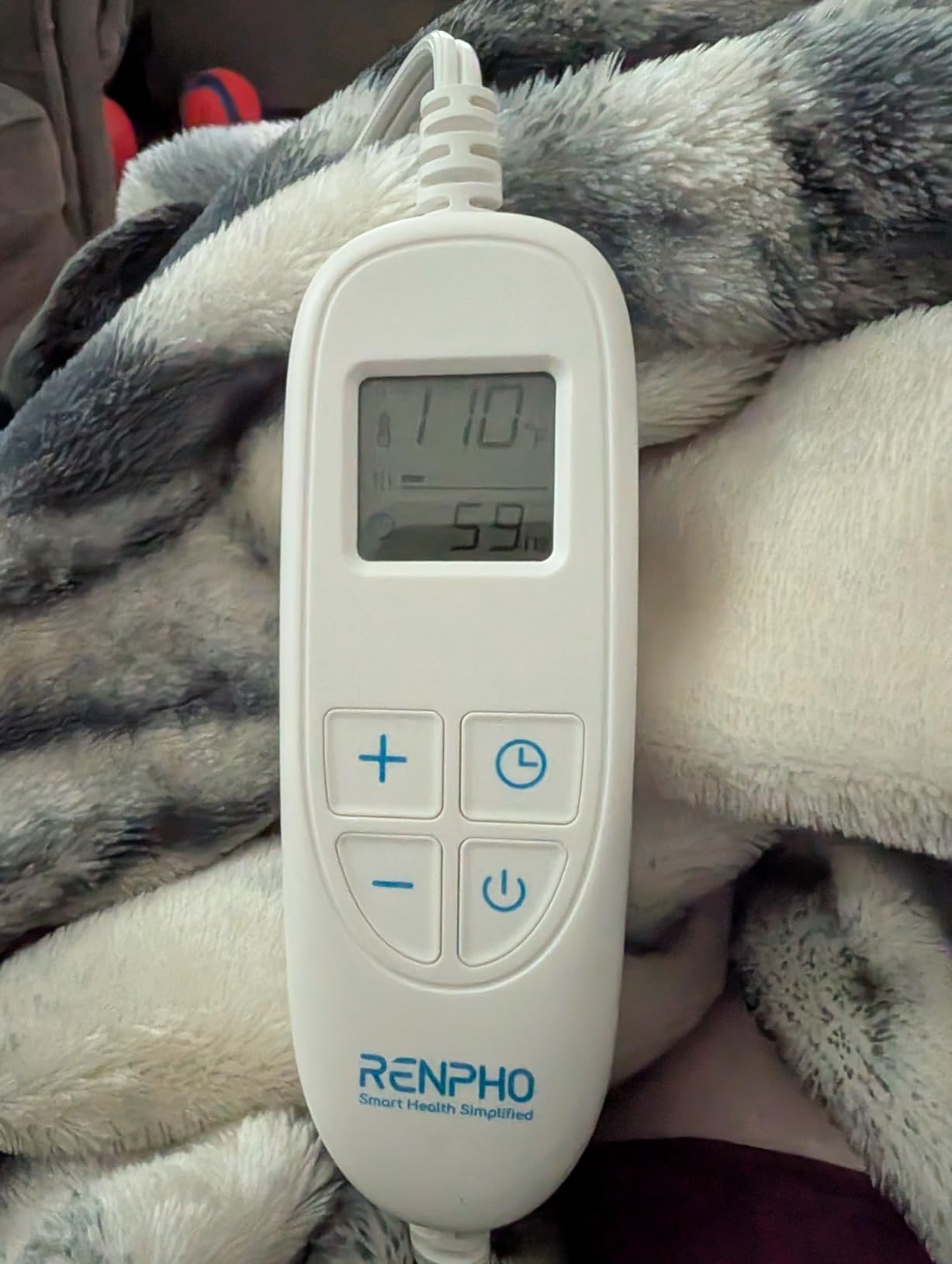
Safety is handled properly here, which is rarer than it should be. The unit is ETL-certified with both NTC and PTC overheat protection, and the 135W draw means it warms quickly enough to be useful. The drape is lightly weighted at 2.87 pounds, enough to stay against the back without sliding, and it folds enough to wrap the neck or the shoulders when you want a targeted application.
One r/PostureTipsGuide user said they bought the RENPHO for their partner specifically because it stays in place on the shoulders, which is the single most common complaint people raise about pad-shaped objects in general. That matches our own impression: this pad drapes and stays, which smaller rectangular pads do not.
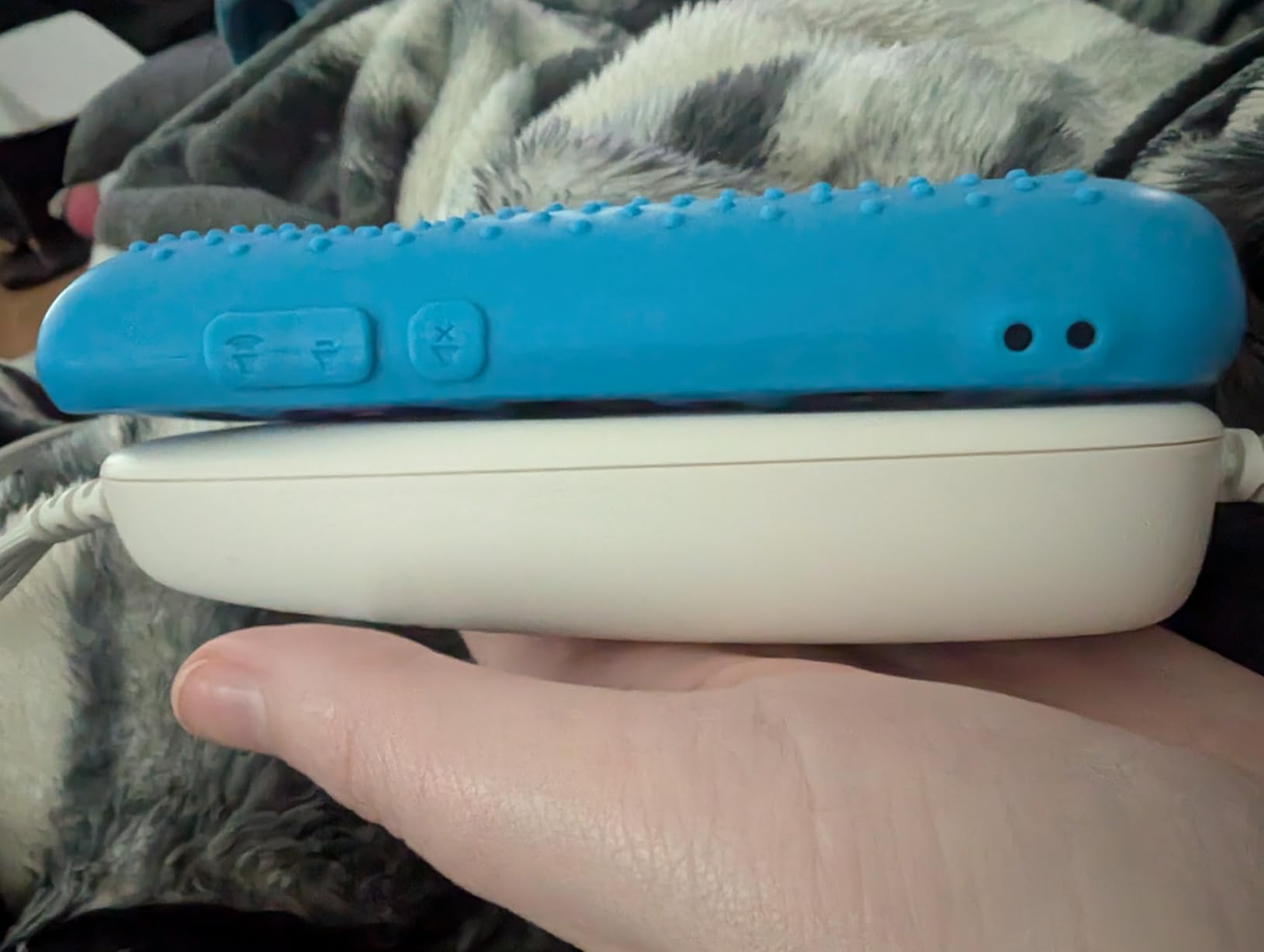
The complaints concentrate on fit. At 24 x 33 inches, the pad is sized for an average-to-large adult frame, and smaller users report excess material gapping away from the shoulder blades. It also rides up when you sit, so a lumbar flare-up may end up with the hot zone on your mid-back instead. A minority of owners also report an F2 error code and pads that stop responding within a couple of months.
Who the RENPHO Suits
It suits people whose pain covers more than one region, particularly upper and mid-back tension, shoulder stiffness, or a combination of neck and lower back. It is also the pick for anyone who works seated for hours and wants a pad that stays put across the shoulders while the mid-back support in the chair itself handles the posture side of the problem.
Anyone who wants moist heat as an option will find the fabric sprayable, and six levels let you stay at the gentle end if your skin is reactive. The certification marks make it the safest-looking pick in the group from a pure standpoint.
Who Should Skip the RENPHO
Skip it if you are a smaller-framed adult or if you specifically need lumbar heat, because the ride-up and the gapping both push the hot zone away from where you want it. It is also not the right tool if your only goal is a targeted sacrum or lower-back application.
If size is not an issue but heat intensity is, the Ambershine later in this list gives you twelve temperature steps and a much heavier weighted fill that holds contact against the skin.
3. Comfytemp Weighted Heating Pad – Nine Settings and Eleven Timers
Comfytemp Heating Pad for Neck Shoulders Back, 2.6 Ib Weighted Heating Pad
- Nine heat levels
- more granular than most pads here
- Eleven timer options from 30 minutes to 9 hours
- Weighted micro-glass beads hold position on the neck
- Backlit countdown display is readable at night
- Not adjustable enough for very large body types
- Must be used over clothing rather than on bare skin
- Instructions warn against use while sleeping
Most heating pads are tuned for a narrow range of users. This one is not. Eleven timer options running from 30 minutes to 9 hours is more scheduling range than any other pad we found, and it directly answers the most common request in chronic-pain forums, where people ask for a pad that stays on through a long working session without getting up to reset it.
The nine heat levels cover 131F to 140F, a deliberately narrow band. That sounds like a limitation until you understand the design: this is a neck and shoulder wrap, so it is meant to sit at a steady gentle warmth against the trapezius rather than blast a lumbar hotspot. Reviewers consistently describe the weighted micro-glass bead fill as the feature that makes it work, because the 2.6 pounds of fill drapes and grips instead of sliding.
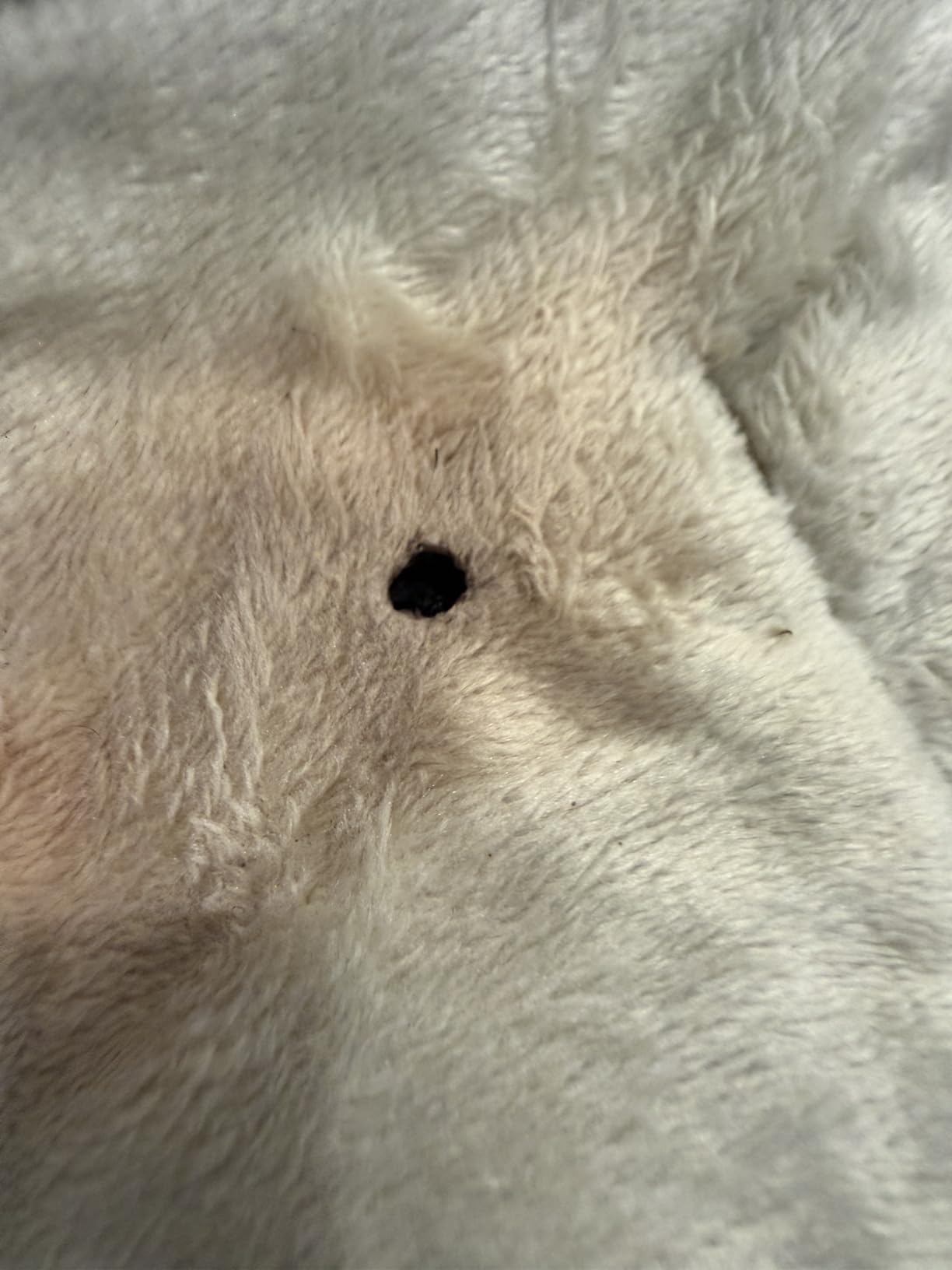
The backlit LED display with a countdown reminder is a small detail that matters at 11pm when you are using it on a stiff neck before bed. Built-in overheat protection is present, the soft flannel is machine-washable once you remove the controller, and the 18 inch neck circumference with a 2 inch extension fits most users in sizes M and L.
The honest weakness is adjustability. Owners on larger body types report that there is not enough give in the wrap to sit correctly, and the flannel is fine over a shirt but not comfortable straight against skin. The instructions also warn against use while sleeping, which applies to every pad here but is worth reading on a product you might be tempted to keep on overnight.

Who the Comfytemp Weighted Pad Suits
It suits people whose back pain actually starts at the neck, which is very common for anyone who works at a monitor all day. It is also the best choice here for a long evening session, since the 9-hour timer option removes the need to touch the controller at all.
Because it is sized for the neck and shoulders rather than the spine, think of it as the tool for upper-back tension. If your pain is lower, the infrared pad options and the 17 x 33 inch models later in this guide cover more lumbar area.
Who Should Skip the Comfytemp Weighted Pad
Skip it for lower-back or lumbar work, where the 19 x 23 inch drape is not oriented correctly. It is also a poor fit if you want the pad on bare skin, or if you are a larger-framed user and need the wrap to expand.
If you want similar long-session scheduling but more temperature range, the Ambershine offers four timers and twelve temperature levels, though its maximum timer is shorter.
4. Calming Comfort Heat and Massage Pad – The Only Pad With Vibration
- Only pad here combining heat with a vibration massage function
- Eighteen heat and massage combinations
- Weighted design stays in place without readjusting
- Nine-foot cord reaches an outlet from most beds
- Massage is vibration rather than kneading and is reported as loud
- Massage auto shut-off cuts off at 15 minutes
- Multiple reviews report the heating element failing early
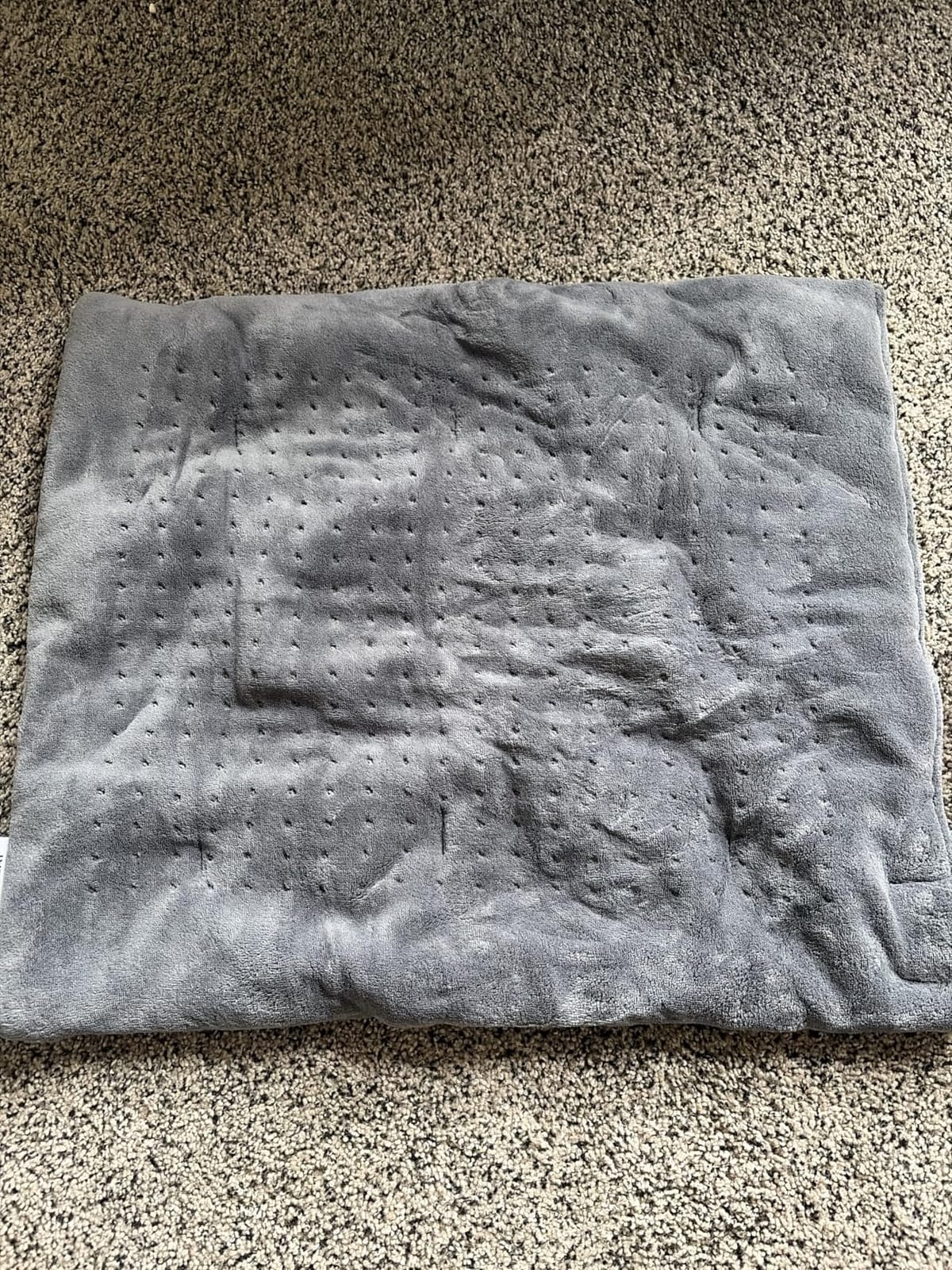
Every other pad in this guide does one job. This one adds a vibration massage function, and whether that helps depends entirely on what your pain is. If your back pain is tight, knotted muscle that responds to mechanical work, the combination of heat and vibration is more useful than heat alone. If your pain is structural, the extra feature is just extra.
Three heat levels crossed with six massage settings gives 18 combinations, which sounds more sophisticated than it is in practice because the massage motor is either on or off at each of six intensities. The four-pound weight is heavy for a pad without bead fill, and it does hold the pad against the lower back without any readjusting, which is the feature users praise most.
The nine-foot power cord is longer than most and lets you use the pad on a bed that is not next to an outlet. Heat auto shut-off runs to two hours, and the massage mode cuts off on its own at 15 minutes, which is a sensible safety default even if it interrupts longer sessions.
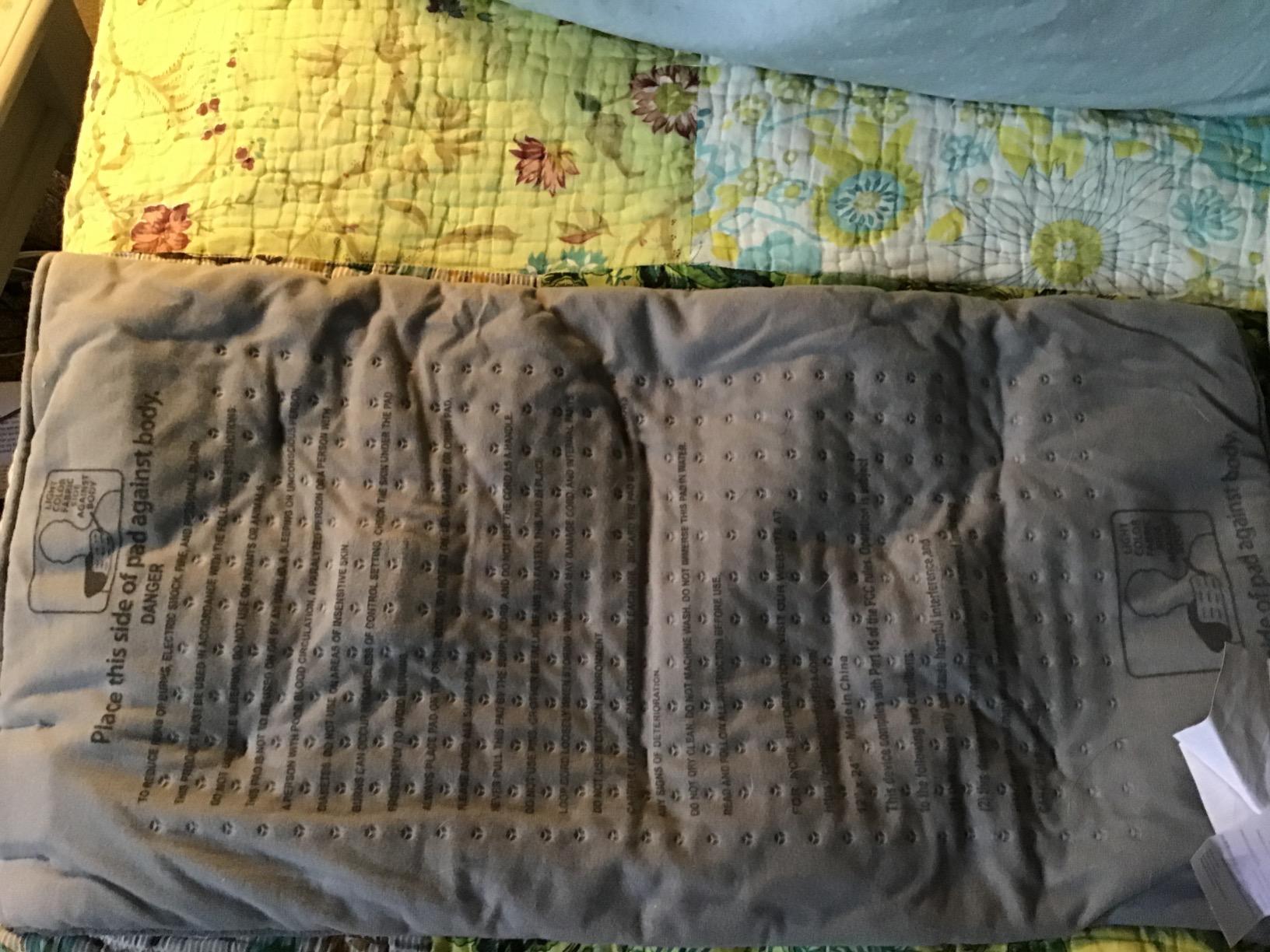
This is also the product with the weakest rating in the group at 4.1, and the reasons are consistent across reviews. The vibration is described as buzzy rather than kneading and as noticeably loud, which is a problem in a shared bedroom. Multiple owners report the heating element failing within weeks to a year, and one review describes a hole burned through bedding on the lowest setting, which is exactly the kind of report that should make you check your own bedding and positioning carefully.
Who the Calming Comfort Pad Suits
It suits people with muscular lower-back and abdominal cramps who want heat and mechanical work in one device, particularly during a long evening on the couch. The four-pound weight is also a good choice if you dislike pads that slide around.
Brand customer service is repeatedly praised for replacing pads that fail early, which partly offsets the durability complaints. If a massage feature is on your wish list at all, this is the only option in this roundup that offers it.
Who Should Skip the Calming Comfort Pad
Skip it if you share a bedroom or need quiet, since the vibration motor is loud. Anyone with reduced heat sensation, or anyone who tends to fall asleep with a pad on, should skip a device with an added motor running against the body.
If you want simple, dependable lumbar heat, the GENIANI or the Deepsoon both do that job with far fewer moving parts and much stronger review histories.
5. VIBOOS Heating Pad 24×12 – Six Levels and Four Timers on a Budget
- Most feature-rich specification in the value tier
- Four auto-off timer options
- Six heat levels covering 104F to 140F
- Soft premium flannel with good insulation
- Dry heat only with no moist option
- Listed product dimensions do not match the actual pad size
- Instructions prohibit use while sleeping or covering the pad
The reason this pad is on the list is simple arithmetic. Six heat levels and four timer options at 30, 60, 90 and 120 minutes is a specification set that plenty of mainstream pads at several times the price do not match, and it holds a 4.4 average across 21888 ratings with a 5 percent one-star share, among the lowest in this roundup.
At 24 x 12 inches the surface is narrower than the 12 x 24 pads in this list, but the aspect ratio works well for a lumbar band laid across the lower back while you sit or lie on your side. The premium flannel insulates well enough that you can put a thin t-shirt over it without losing the effect, and the six levels span 104F to 140F which is a wide and usable range.
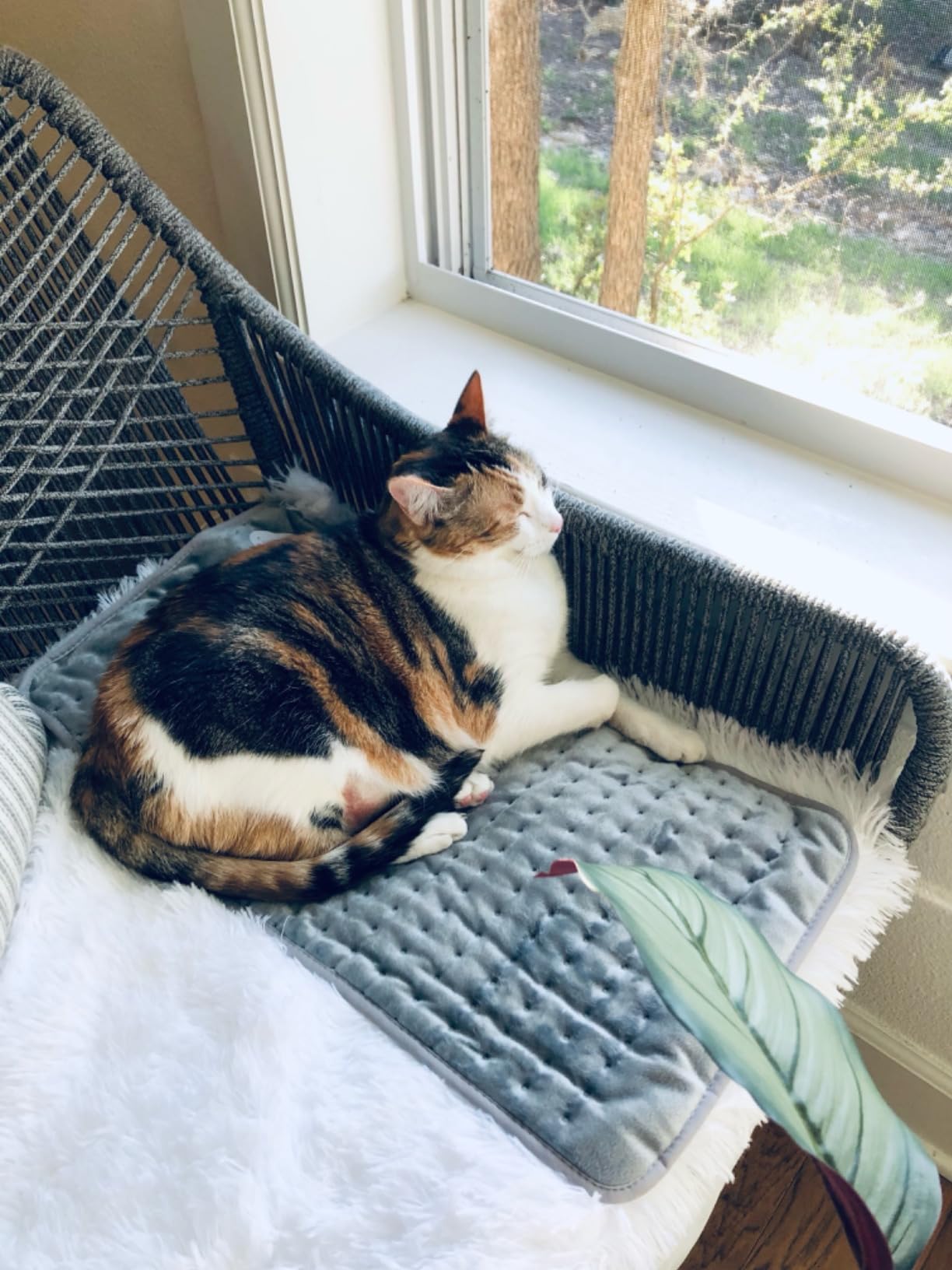
It is also worth knowing the same design comes in larger versions, with 24 x 20, 33 x 17 and 40 x 20 sizes listed, so a similar pad can cover other body areas if you want one. Care is straightforward: disconnect the cable and machine wash below 86F, which is warmer than most garments tolerate but fine for flannel.
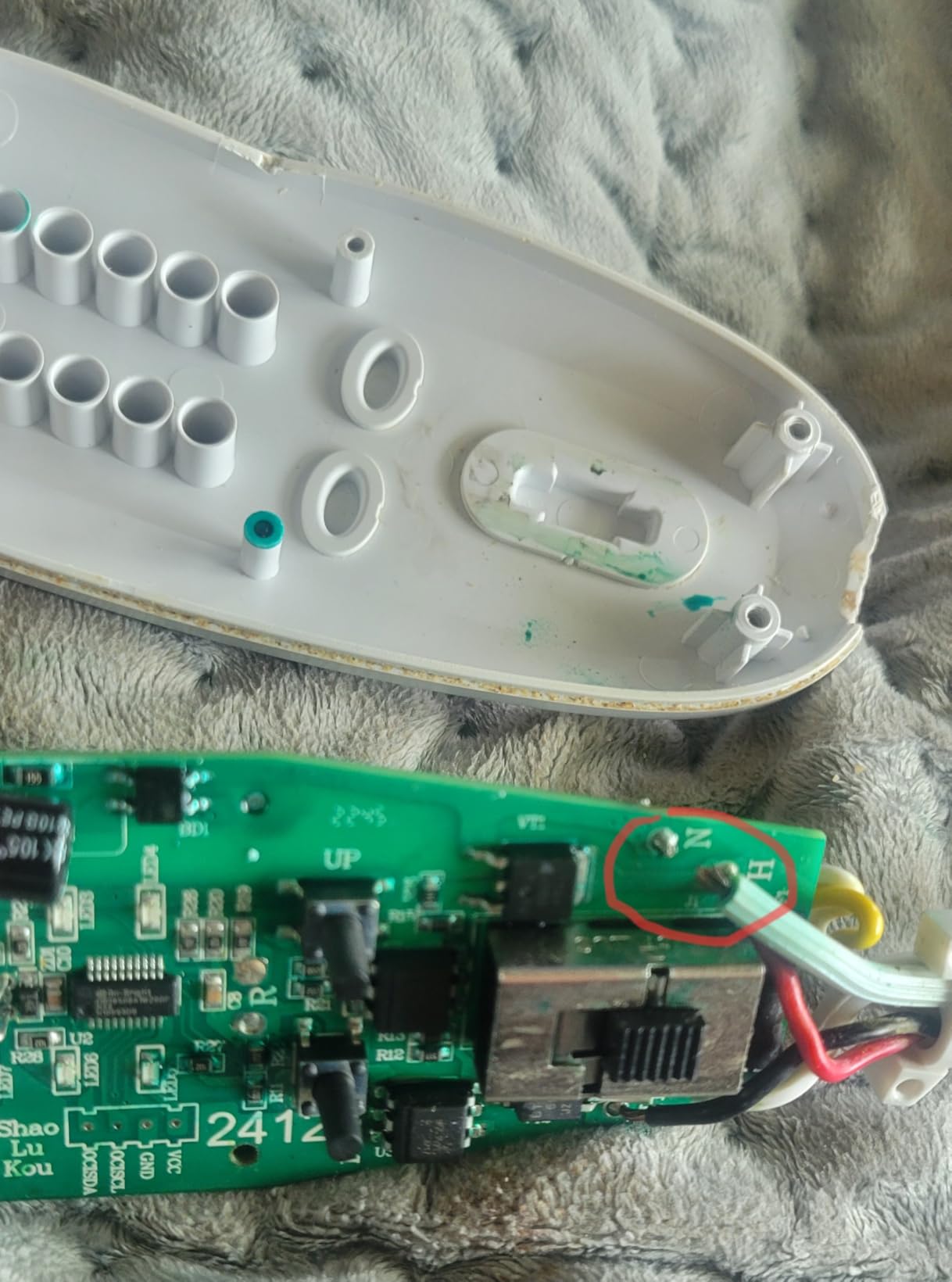
Two things to know. This is dry heat only, with no way to add moisture, so if you need moist heat for deep tension you should look elsewhere. The listed product dimensions do not match the actual pad, which is a listing error rather than a product fault but tells you the specification sheet is not fully reliable. The safety instructions also explicitly prohibit folding the pad, pressing it under your body, covering it, or using it while asleep.
Who the VIBOOS Pad Suits
It suits anyone who wants a full set of controls without spending much, and specifically people who want a 120-minute timer because their sessions run long. The 4.4 rating and low one-star share suggest the units hold up better than the typical low-cost pad.
It is also a good first heat pad to buy for a teenager or a secondary bathroom, where a scuffed inexpensive pad is less of a problem than a premium one. Flannel feels fine over clothing for most skin types.
Who Should Skip the VIBOOS Pad
Skip it if you need moist heat, if you plan to lie on top of it, or if you need a larger surface than 24 x 12 inches for full-back coverage. The narrower footprint is a real limit for anyone with pain across the mid-back as well as the lumbar.
If you need larger sizes from the same value-minded approach, the Comfytemp Extra Large at 17 x 33 inches is a better fit, though it gives you three heat settings instead of six.
6. Deepsoon Heating Pad 24×12 – The Best-Selling Thin Pad
Heating Pad,Heated Blanket,Heating Pad for Back Neck,Grey,24×12 Inch
- Highest sales rank in the group at number one in Heating Pads
- Thin and flexible with no hard plastic elements
- Lightweight so it does not slide down a chair
- Six levels with a genuinely hot top setting
- Cord length and mid-cord controller position frustrate some buyers
- Pad powers on at a high setting rather than the lowest
- Timer cannot be set to run indefinitely
This is the best-selling heating pad in its category, and the reason is a construction choice that competitors mostly ignore. There is no plastic frame inside, no rigid wiring grid, and nothing that creates lumps. That means you can lean back on it, lie on your side against it, or fold it tightly around a knee without feeling a seam pressing through.
For lower back pain specifically, that low profile matters more than most buyers expect. A thicker pad works fine while you sit upright and becomes uncomfortable the moment you settle back into a chair or lie down to watch something. This one disappears under a blanket, which is how most people end up using it.
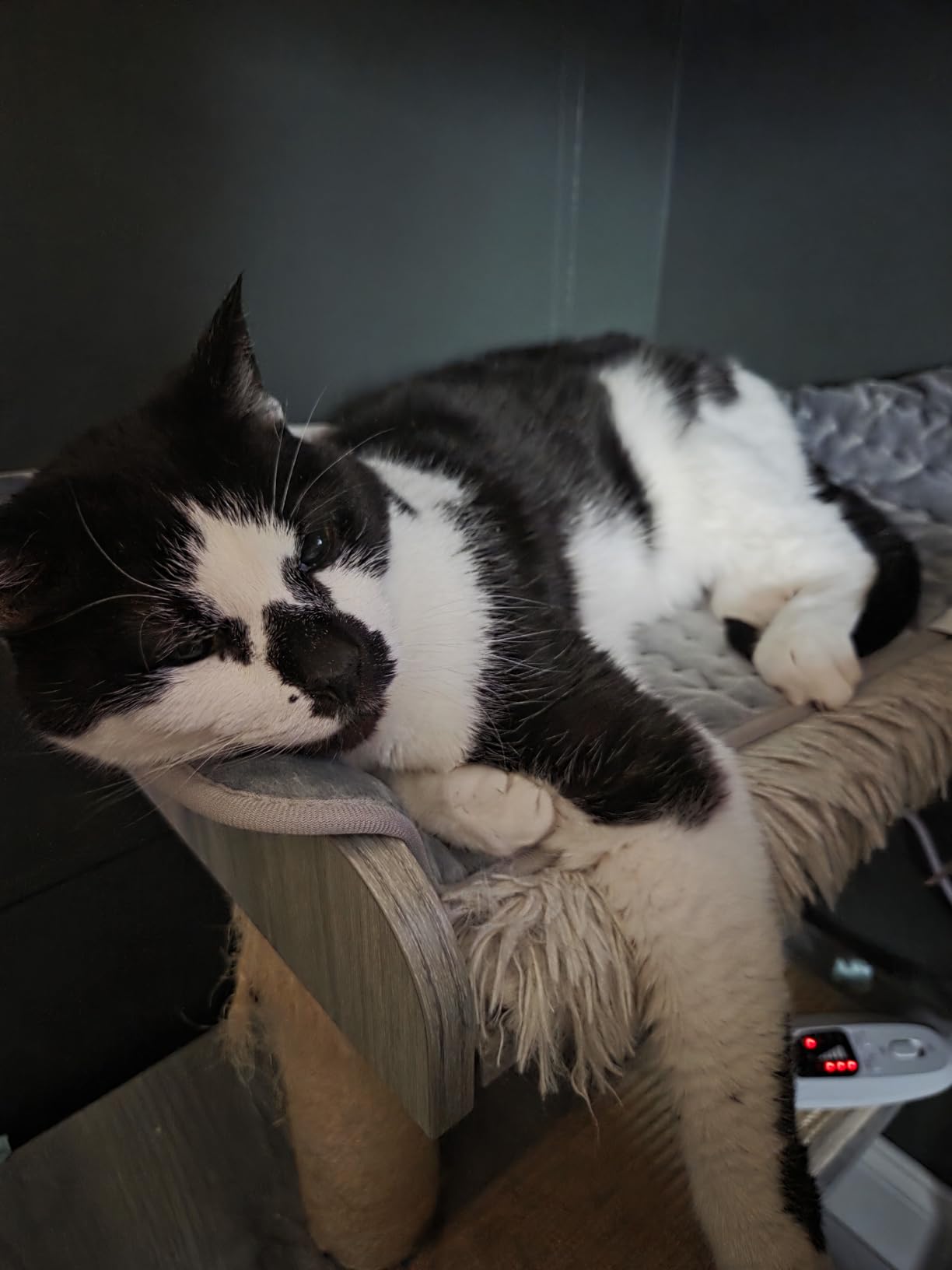
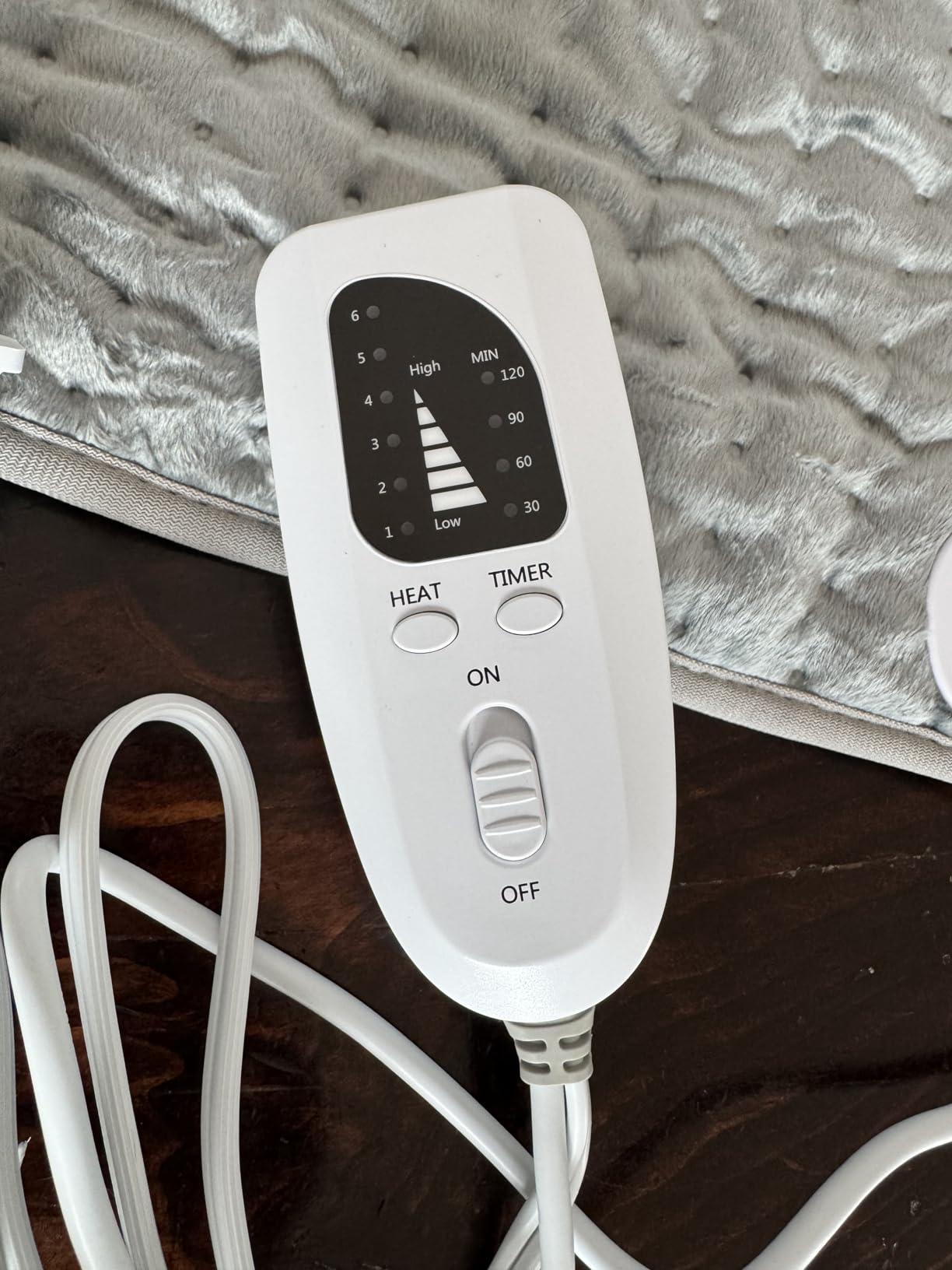
The controls are unremarkable and fine: six adjustable levels, four timer options from 30 to 120 minutes, and overheat protection with a two-hour auto shut-off. At under a pound it stays exactly where you put it, which no weighted design in this list can claim, and the flannel is soft with no hard wiring to press against the skin.
Owners like the top setting, describing it as genuinely hot rather than nominally different from the level below it, which is a common failure of pads with more settings. The 75-inch cord is long enough to reposition between a sofa, a bed and an office chair in most rooms.
The most repeated criticism is cord-related. A 75-inch lead is short by the standards of the pads here, and the controller sits midway along the cable, so if your outlet is far from the bed you are lying there holding the remote. Two other details: the pad powers on at a high setting rather than the lowest, so a sharper first touch is likely, and the timer cannot be disabled to run continuously. One reviewer also reported an E1 error code failure within days, and the plug type is US only.
Who the Deepsoon Pad Suits
It suits people who want to lie on it or lean back on it, and anyone who has been disappointed by a pad that creates uncomfortable ridges. It is also a good match for a chronic lower-back problem where the pain is in one band you can cover with 24 x 12 inches.
It works well on a reclined seat, and it is a sensible choice for anyone who wants a second pad for a different room. Six levels and four timers give it a control range usually reserved for more expensive pads.
Who Should Skip the Deepsoon Pad
Skip it if your outlet is far from where you relax, since the cord is short and the controller placement is awkward. Anyone outside the US will also want to check the plug format before ordering.
If you need heat that holds position without you holding it in place, the 5.2 lb Ambershine or the 2.6 lb weighted Comfytemp do more of that work for you.
7. Sunbeam XL 12×24 – Ready in 30 Seconds With a Five-Year Warranty
Sunbeam XL Back Neck and Shoulder Heat Therapy 12 x 24 with Auto Shut Off 6 Settings Machine-Washable Comfortable Microplush Fabric – Burgundy
- XpressHeat element reaches temperature in about 30 seconds
- Six heat settings on a digital LED controller
- Five-year limited warranty from an established appliance brand
- Supports dry and moist heat with a long nine-foot cord
- Highest one-star share of the ten at 12 percent
- Average rating of 4.2 is among the lower results
- Dated controller styling and no weighted fill
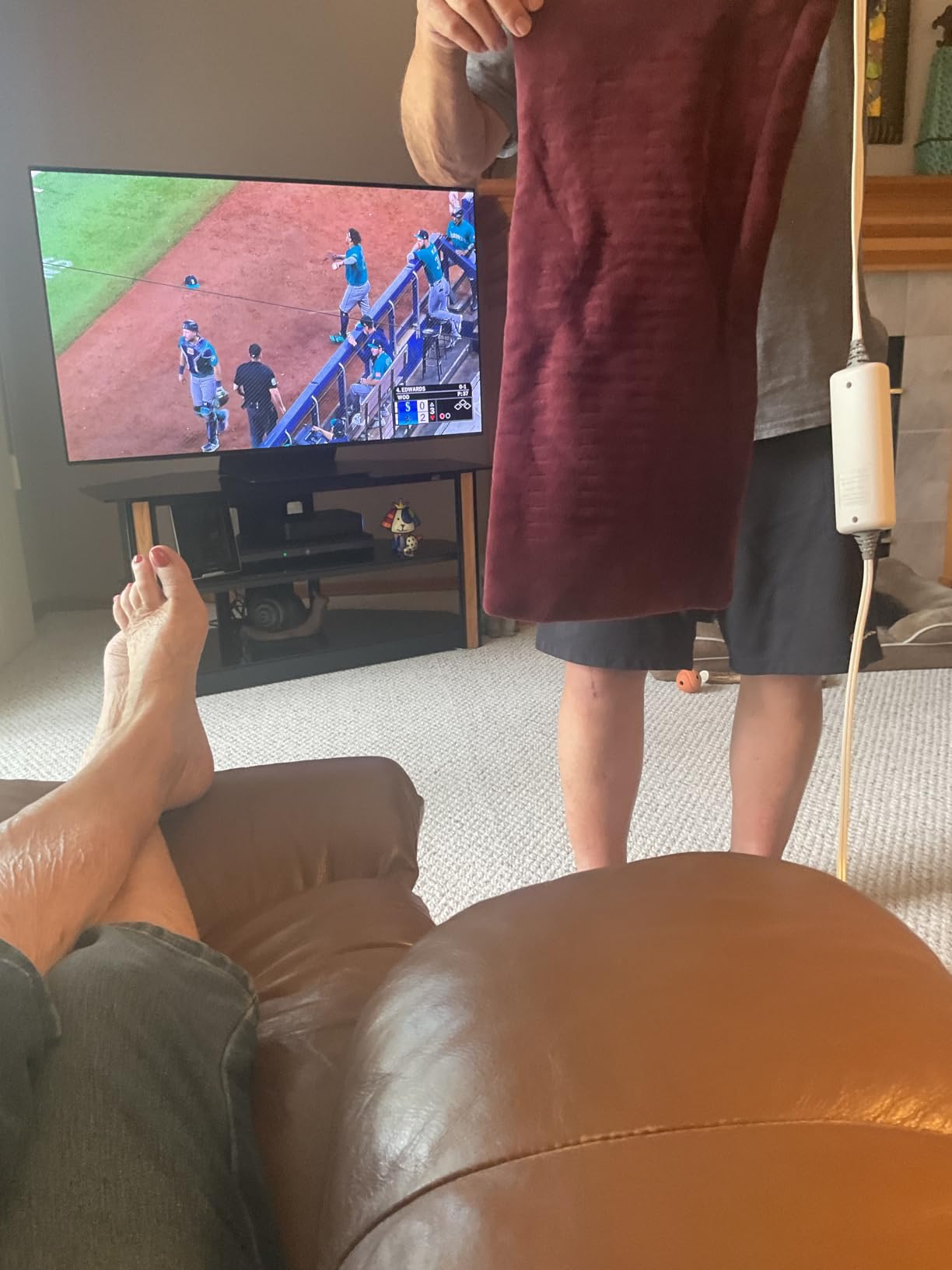
The Sunbeam has been on sale for over a decade, which means two things. It is the most proven product in this guide by years of service, and its controller styling shows it. What it still does better than almost everything else here is speed: the XpressHeat element reaches working temperature in about 30 seconds, where many other pads in this roundup take noticeably longer. That is a real difference when you are dealing with a flare-up, because waiting for a pad to warm is a common reason people abandon a session before it starts.
The five-year limited warranty is the longest duration commitment in the group, and for a product from an established appliance brand it is a meaningful trust signal on this list. Warranty length matters to chronic-pain buyers for a simple reason: one user in r/ChronicIllness described using their Sunbeam XL for arthritis and endometriosis, and the only caution they offered was to be careful with the heat settings, which is exactly the caution that a warranty and overheat protection help with.
Moist heat is supported by spraying the fabric with water before folding, which deepens the effect without any accessory. The microplush cover is machine-washable and the 12 x 24 inch footprint is the standard lumbar shape. At 1.37 pounds it is light, and with no weighted fill it can shift on smaller users who drape it rather than lay it.
The counterweight is reliability, not design. This pad carries the highest one-star share in the group at 12 percent and a 4.2 average, both the weakest scores here, with more reported element failures than any other product on this list. We would not fault the engineering, since the warranty is the longest available, but a chronic-pain buyer who does not want to replace a pad every year should weigh that.
Who the Sunbeam XL Suits
It suits people who need heat fast, whether that is a ten-minute session between meetings or a flare-up that you want to address the moment it starts. It is also the pick if warranty length is a deciding factor for you, since five years is longer than anything else in this roundup.
Moist heat is available by spraying the fabric, and the six settings let you find a level that works on sensitive skin. The machine-washable microplush holds up to regular use and does not shed.
Who Should Skip the Sunbeam XL
Skip it if you need a heavier weighted pad that stays where you drape it, since there is no fill and it will slide. If your pain is across the shoulders and upper back, the RENPHO covers that region properly where this pad does not.
It is also not the choice if you need a wrap format or a long adjustable timer. The 2-hour auto shut-off is fixed rather than selectable on this model.
8. Comfytemp Extra Large 17×33 – Full-Back Wrap Coverage
Comfytemp Extra Large Heating Pad for Back Period, 33”x 17” FSA Eligible
- Generous full-back wrap at 17 x 33 inches
- Dense heating wires with an NTC thermistor heat quickly and evenly
- Ultra-soft flannel that conforms to the body
- Detachable cord makes the pad machine washable
- Only three heat settings
- Must be kept above the body rather than under it
- Do not fold roll or stack so storage is awkward
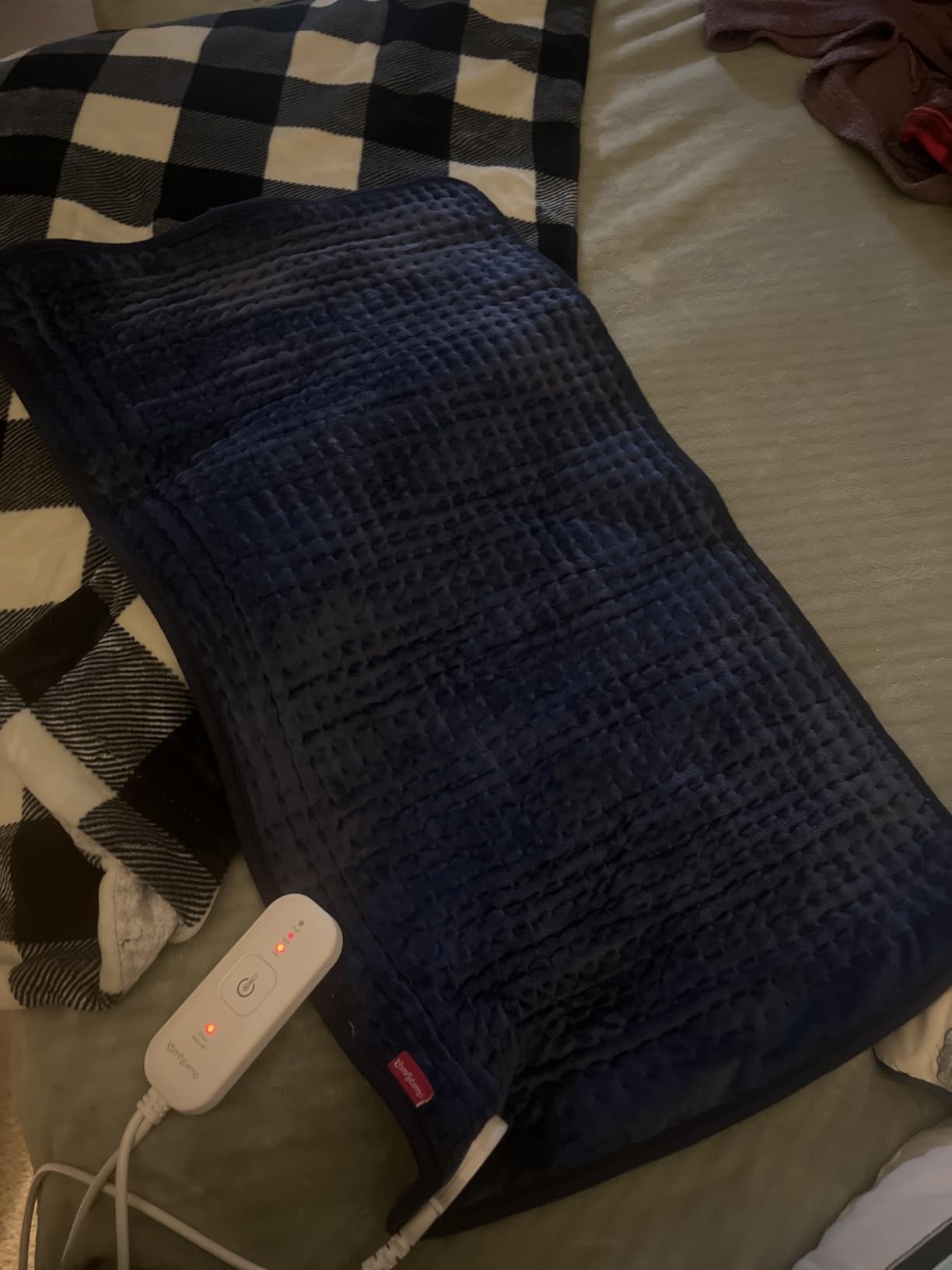
At 17 x 33 inches, this is the pad to buy if you want heat across your entire back at once rather than on one band. Lying on your side, you can wrap it from the lower back over the flank and up toward the shoulder, and reviewers consistently describe the coverage as generous. It also doubles as a leg or abdominal pad when you need it.
The heating element is the reason the heat feels even. Dense heating wires combined with an NTC thermistor produce a quick, uniform warmth across a surface this large, and the thermistor doubles as the overheat sensor. Ultra-soft flannel conforms to whatever body part is underneath it, which matters more on a pad this large than on a small square.
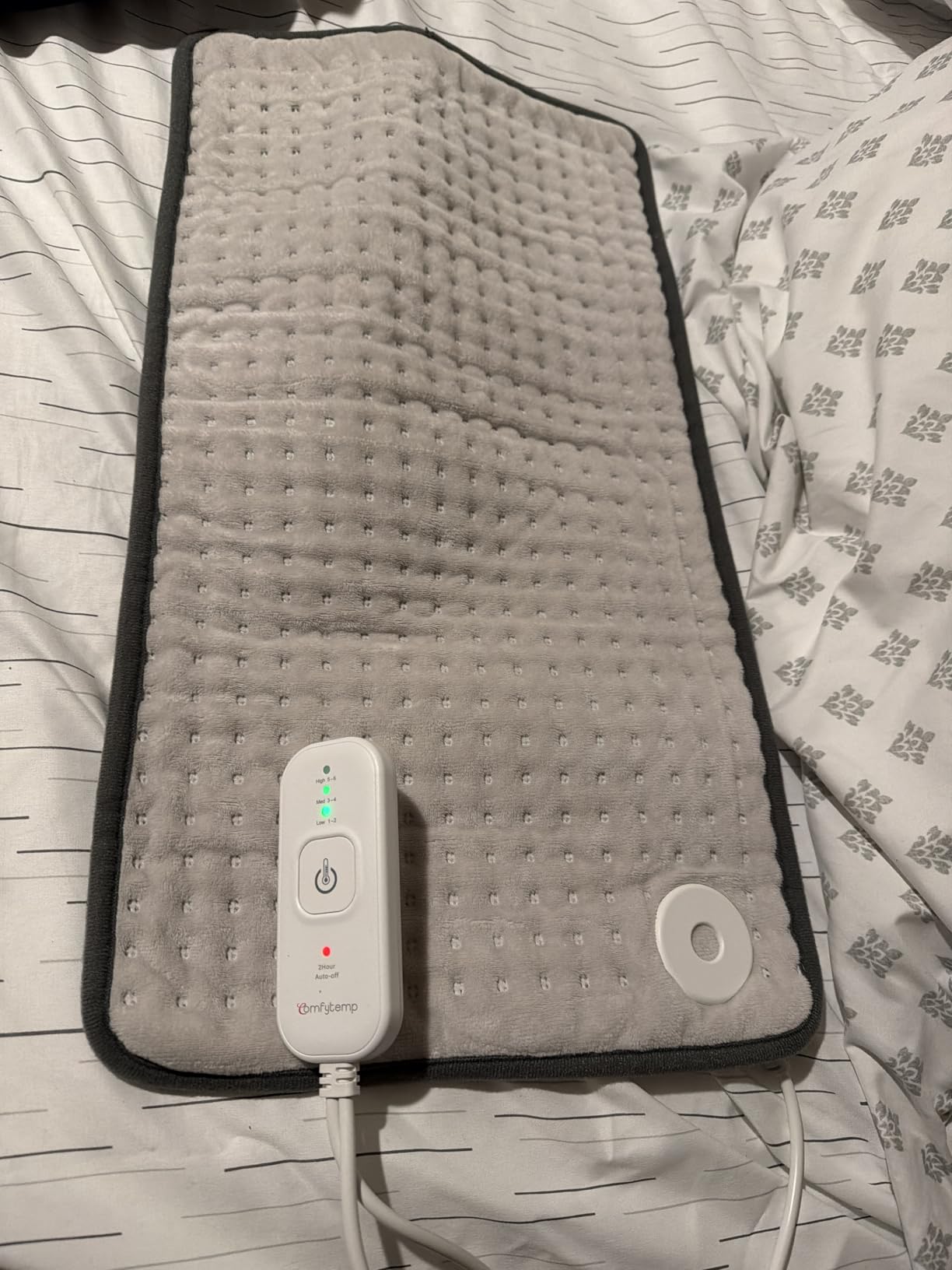
The detachable power cord makes the whole pad machine washable, which on something this size is genuinely useful. At 1.63 pounds it is light enough to reposition with one hand, and a two-hour auto shut-off handles sessions that run past the point of paying attention.
Three heat settings is the real weakness. On a surface this wide, fine control would be genuinely valuable, because the middle of a 33 inch pad and the edge do not need the same temperature. Buyers who need more resolution should look at the Ambershine, which has twelve levels at a similar size.
Two handling rules are worth reading before you buy. The pad should be kept above the body rather than under it, which limits some sleeping positions, and it should not be folded, rolled or stacked, so storage takes up real space in a drawer.
Who the Comfytemp Extra Large Suits
It suits people whose back pain is not one point but a whole region, and anyone who uses heat while lying on their side rather than sitting upright. It is also a good two-in-one option for households where the same pad serves for both back and leg relief.
If you sit or recline for long stretches, a pad this size works well alongside the comfort setups we cover for reclined positions, where the pad stays in contact instead of sliding away.
Who Should Skip the Comfytemp Extra Large
Skip it if you need precise temperature control, since three settings on a large surface is a compromise. Anyone who wants to lie directly on the pad should skip it, because the instructions require it to sit above the body.
It is also a poor fit for a small storage space. If the surface is larger than you need, the GENIANI at 12 x 24 inches covers the lumbar band with less bulk.
9. Ambershine Weighted Pad 17×33 – Most Temperature Steps and Heaviest Fill
Ambershine 17”x33” Weighted Heating Pad, 5.2lbs with 12 Temperature Settings & 4 Auto-Off Timers, Pain Relief for Back/Neck/Shoulders/Abdomen/Legs(Dark Grey)
- Heaviest weighted design of the ten at 5.2 pounds
- Twelve temperature levels
- the most settings of any pad listed
- Heating coil 150 percent of standard length warms in seconds
- Large LED screen is easy to read including for older users
- Timers stop at 2 hours so it cannot run through a night
- Newer listing with a smaller review base than the established options
- Safety guidance advises against direct skin contact
Twelve temperature settings from 104F to 144F is the finest control in this guide, and it is not a marketing number with nothing behind it. Most people using a heating pad for back pain are trying to keep a muscle warm for twenty minutes without cooking it, and a twelve-step gradient is how you do that without guessing.
The 5.2 pounds of distributed glass beads make this the heaviest design in the group, and weight is the mechanism. A heavier pad sits in closer contact with the body, so heat transfers faster and stays in place when you move. Owners describe the weighted pressure as the main reason the pad feels like it is working rather than just resting on them, and the large LED screen with a remaining-time countdown is unusually easy to read, which matters if you are setting this up for someone else.
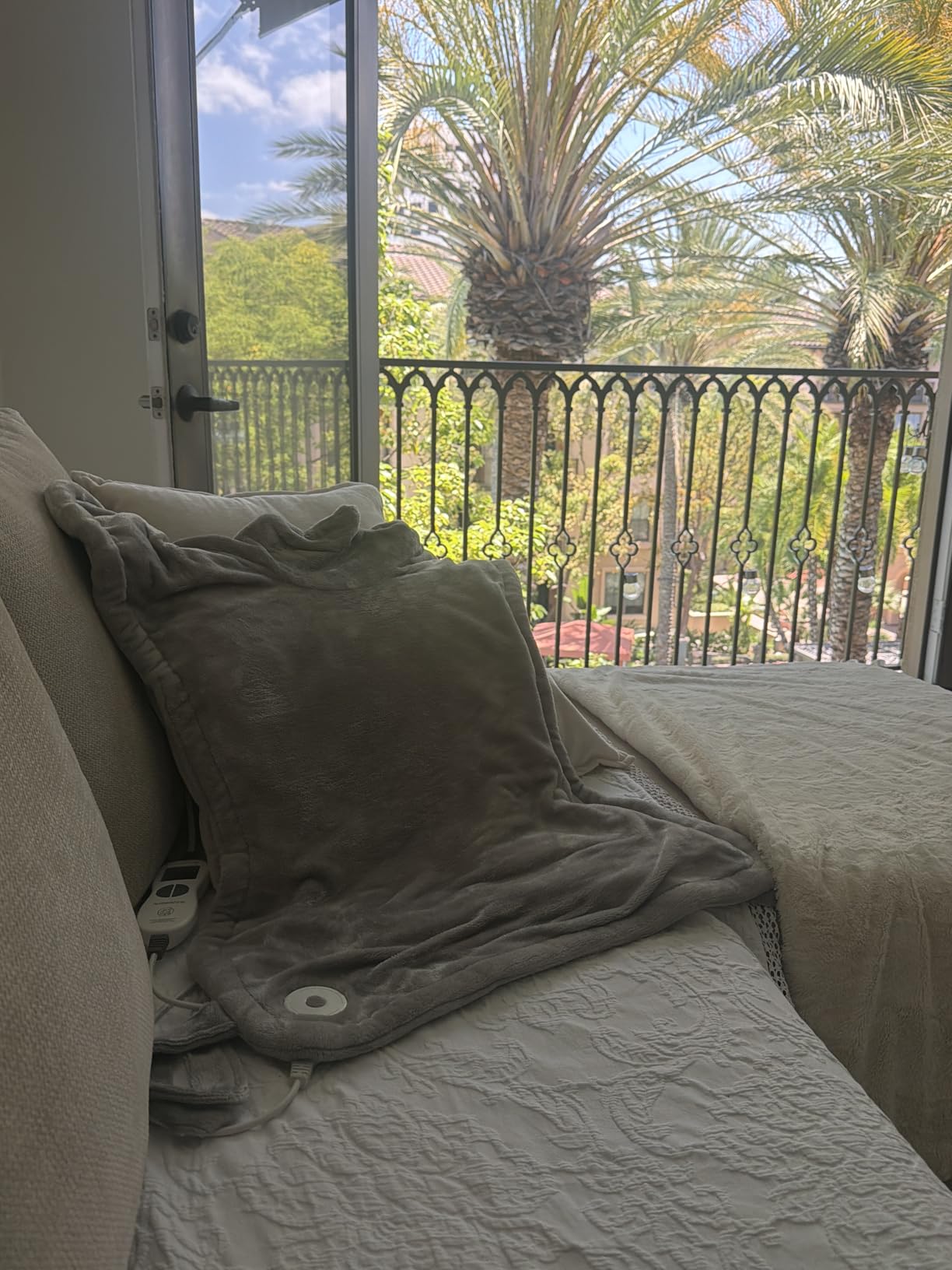
The heating coil runs 150 percent the length of an ordinary pad, and the practical result is heat in seconds rather than minutes. At 17 x 33 inches it covers neck, shoulders, back, waist, abdomen and legs, the removable controller lets you machine wash the microfiber cover, and the fill is distributed rather than pooled so you do not get a heavy lump in one spot.
The 5.2 lb fill is not for everyone. If you cannot comfortably hold a five-pound object against your back, the pressure becomes uncomfortable and the answer is a lighter pad such as the GENIANI or the Deepsoon.
Two other limits. The four auto-off timers top out at 2 hours, so this cannot run through a long night even if a nine-hour schedule is what you want, and the safety guidance advises against direct skin contact. The listing is also newer than most in this roundup, which is why the review base is smaller.

Who the Ambershine Pad Suits
It suits people who have struggled with pads that drift across their back, and anyone who needs to set a precise low temperature for sensitive skin or for long evening sessions. The twelve steps make it the easiest pad here to use over a thin shirt.
It is also a good choice for users who want one pad for the neck, back, abdomen and legs, since the 17 x 33 inch surface and the weighted fill handle all four without repositioning the hardware.
Who Should Skip the Ambershine Pad
Skip it if 5.2 pounds of pressure is too much, or if you want a pad that runs for many hours overnight, since the longest timer is 2 hours. Anyone who wants to put it directly on bare skin should follow the guidance and wear a thin layer.
If the issue is scheduling rather than weight, the weighted Comfytemp earlier in this guide has eleven timer options running up to 9 hours.
10. Lenmen Graphene Wrap 22×18 – Best Wrap Format With a Closure
- Graphene-infused fabric for claimed deeper heat penetration
- 354-inch coil heats and spreads warmth within about a minute
- Vertical and horizontal wiring contours to body shape
- Ceramic bead edging keeps the borders warm
- Only about 2 pounds so the weighted claim is weak
- Front clasp only with no closure at the top
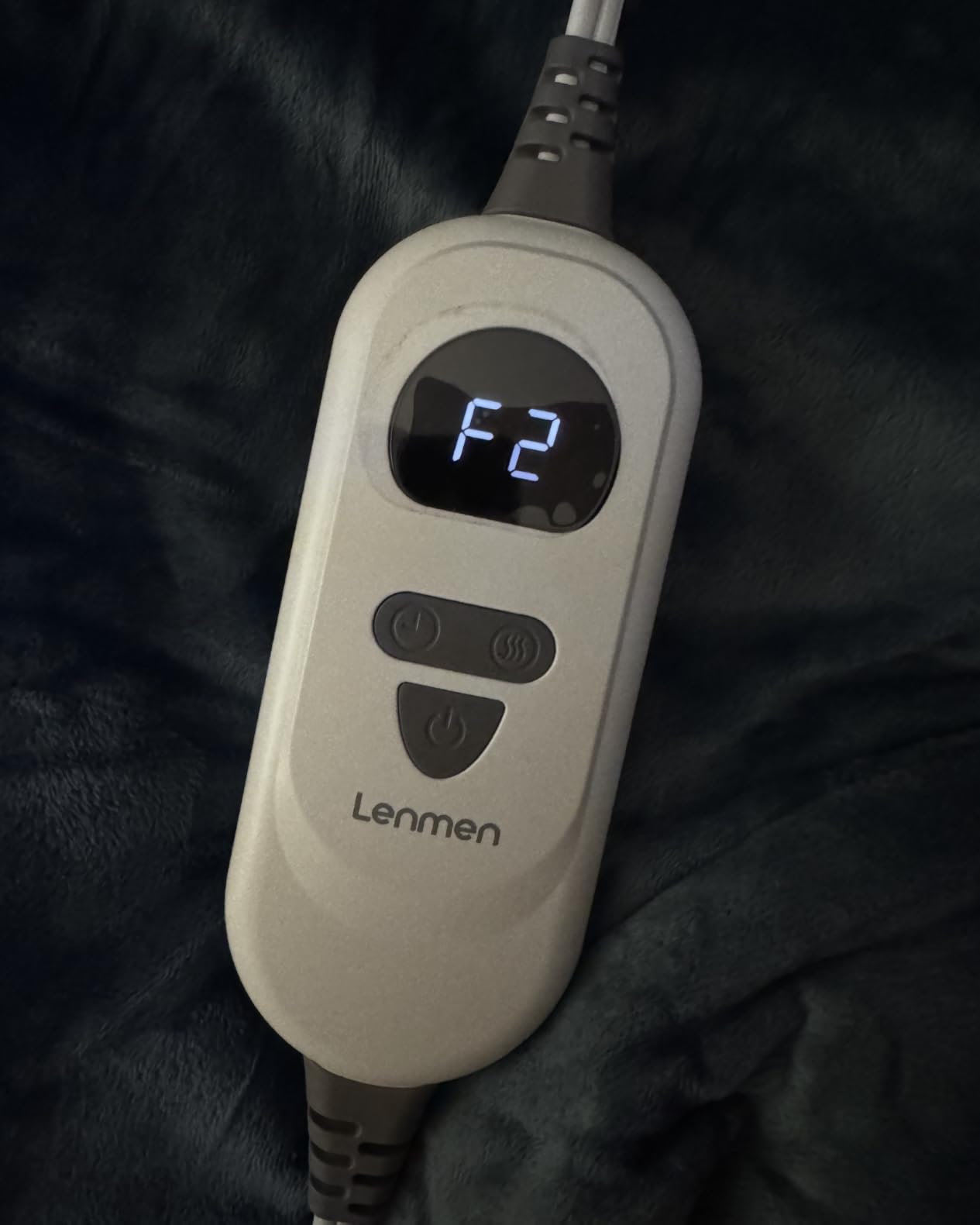
- 120V two-prong plug and reported display error codes
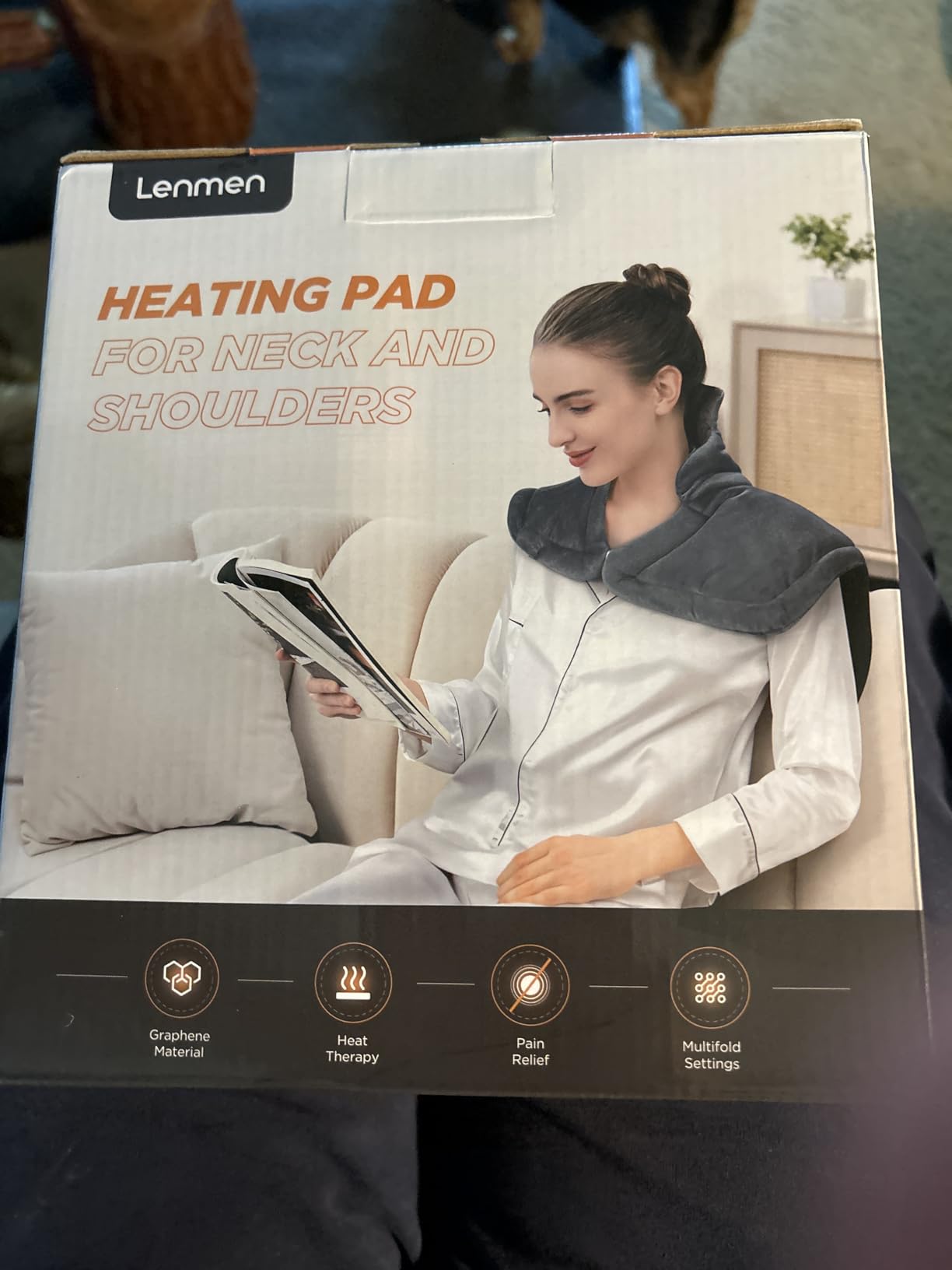
This is the only wrap-format pad in the group, and the format matters. A pad shaped like a scarf can go around both shoulders and fasten at the chest, which keeps heat on the upper back and trapezius while you sit at a desk or move around a house, without an arm threaded through a slot or a pad that keeps sliding off.
The graphene-infused micro plush flannel is the technical claim here. Graphene is added to the fabric to release infrared heat that is intended to penetrate more deeply than a standard element, and the 354-inch extended coil is 150 percent the length of an ordinary pad, which is why warmth arrives within about a minute. Six temperature settings from 108F to 144F and four timers from 30 minutes to 2 hours round out the controls.
Two construction details we liked. The wiring runs both vertically and horizontally, so the wrap flexes to body contours instead of feeling stiff across the shoulder blades. The ceramic bead edging keeps the borders warm, which removes the cold-edge problem that most wrap pads have along the top of the shoulder.
Now the weaknesses. At about 2.2 pounds the weighted claim is thin, and buyers notice the difference against a genuinely weighted pad. There is a snap closure at the front only, with nothing at the top, so the neck fit is not as firm as it could be. The unit runs on 120V with a two-prong plug, which makes it unusable in 220V countries, and some buyers report display error codes and pads that fail on arrival.
The 4283-rating base is the smallest in this roundup, so treat the owner feedback as thinner evidence than the others here. Over time the GENIANI and the Deepsoon have absorbed far more real-world wear.
Who the Lenmen Wrap Suits
It suits people with upper-back and neck tension who need to move around while receiving heat, since the wrap stays fastened and hands-free while you work. It is also a good second pad for anyone who already has a lumbar rectangle.
The infrared and graphene approach appeals to buyers who feel that standard dry heat feels shallow. The ceramic edging keeps the shoulders warm, which is where most wrap pads go cold first.
Who Should Skip the Lenmen Wrap
Skip it if you need genuine weight holding the pad against you, or if you are outside the US given the 120V two-prong plug. If you need a lumbar pad, this shape is not built for it.
For upper-back coverage with a sturdier structure and a much larger review base, the RENPHO at 24 x 33 inches is the more established option.
What Doctors and Therapists Look for in a Heating Pad
When people ask what heating pad doctors recommend, the answer from physical therapists and sports medicine clinicians is rarely a brand. It is a set of specifications, and the clinical reasoning is about dose and safety rather than brand loyalty. If your pain is a recent strain or muscle spasm, roughly 15 to 20 minutes of continuous heat at a comfortable temperature is the standard recommendation, applied through a thin towel, up to several times a day.
Clinicians consistently emphasise temperature control, which is why the number of heat settings matters more than most buyers expect. A pad with only three levels forces people to jump between warm and uncomfortably hot, and the instinct to push through a sharp setting is what produces the skin burns reported in the reviews above. Six or more settings let you find the gentle end and stay there.
The second priority is a timer that cuts power automatically. A manual pad left on after you fall asleep is the mechanism behind most pad-related burns, and every product in this guide has one. The third is even heat across the surface, because a hot spot concentrated on a small area of skin is a burn risk while a gently warm broad area is therapeutic.
Finally, clinicians advise a layer of fabric between the pad and your skin, and caution anyone with reduced heat sensation, including people with diabetes, neuropathy, or a history of steroid injections in the same area. In terms of format, a wrap that stays in place is generally preferred over a pad that must be held, because it delivers a consistent dose for the full session instead of intermittent heat.
How to Choose a Heating Pad for Your Pain
Start with where it hurts, because that single decision rules out half the options before any feature is considered. Below is how the sizes in this roundup map to real back-pain locations, and it is the fastest way to cut a list of ten down to two or three.
Size and Coverage for Your Pain Location
For lower back or lumbar pain, you need a pad that spans the belt line upward, which means a 12 x 24 inch or 24 x 12 inch rectangle. The GENIANI, the Sunbeam XL and the Deepsoon all sit here, and each has a different reason to win: proven longevity, speed, or a low profile you can lie on.
For mid-back and upper back pain, the shape has to reach the shoulder blades. The RENPHO at 24 x 33 inches is the best fit in this group, and the Lenmen wrap is the hands-free option. A 12 x 24 pad laid across the lower back will not cover an upper-back problem, no matter how good the heat is.
For full-back coverage, you need 17 x 33 inches or larger, which is the Comfytemp Extra Large and the Ambershine. Both wrap from waist to shoulder, and both can double as a leg or abdominal pad when nothing is bothering your back.
For neck and shoulder pain, the format should be a weighted drape rather than a rectangle. The 2.6 lb Comfytemp is designed for exactly this, and the 22 x 18 inch Lenmen wrap is the alternative if you need to move around.
Heat Settings, Consistency and Peak Temperature
Three settings is the bare minimum, and anything below that should end your search. Six settings is the practical sweet spot, which is why the RENPHO, the Sunbeam XL, the Deepsoon and the VIBOOS all feel controllable. Twelve settings, as on the Ambershine, is the finest adjustment available and matters most for sensitive skin or long sessions.
Peak temperature is advertised differently by every brand, and the numbers are not comparable across listings. What you can compare is heat consistency: whether warmth reaches the whole surface evenly. Elements built with dense wiring and a thermistor, as on the Comfytemp Extra Large, tend to spread heat more evenly than a simple coiled wire. Pads with a known hot centre, like the GENIANI, work fine as long as you place that centre over the muscle that needs it.
Moist heat reaches tissue faster than dry heat because water conducts heat efficiently. A pad that supports moist heat, whether by a sprayable fabric or a sponge insert, will feel like it works faster in the same number of minutes.
Moist Heat vs Dry Heat vs Infrared
Dry heat from standard electric elements is the most common and the easiest to use. It heats slowly, lasts as long as you leave it on, and does not draw moisture out of your skin, which makes it the safer default for daily or long sessions.
Moist heat penetrates deeper and more quickly, which is why clinicians suggest it for muscle spasm and stiffness. You get it by lightly spraying the pad fabric with water before folding it, as on the Sunbeam XL and the GENIANI, or by using a damp sponge insert. It dries faster and draws moisture from the skin, so limit these sessions to about 20 minutes and do not use them on skin with reduced sensation.
Infrared and graphene-infused pads, such as the Lenmen, release radiant heat that does not remove moisture from the skin, so they can be used for longer and are comfortable on sensitive skin. Our picks for that approach sit in our infrared heating pad guide, which covers the format in more depth. Microwavable chemical packs such as Hydrocollator types are a different product entirely, needing no outlet and losing warmth within the hour.
Auto Shut-Off, Timers and Cord Length
Auto shut-off is not a feature to compare, it is a requirement. Every pad here has one, and the range runs from 2 hours down to 15 minutes on the massage-only mode. A fixed 2-hour timer like the Sunbeam XL is simpler, and adjustable timers are better if your sessions vary in length.
For the longest sessions, the weighted Comfytemp leads with 11 timer options from 30 minutes to 9 hours, while most of the others stop at 2 hours. Cord length is the most overlooked spec and the most common source of disappointment: the Deepsoon’s 75 inch lead is short when your outlet is far from where you relax, while the Sunbeam XL and the Calming Comfort pad both give you nine feet.
Finally, check the warranty and the certification marks. The Sunbeam XL carries a five-year limited warranty, and the RENPHO is ETL-certified with both NTC and PTC overheat protection. A long warranty is a reasonable proxy for how long the heating element is expected to last.
What to Pair Heating With for Back Pain
Heat works best as one part of a routine, not as the whole routine. Gentle movement afterwards, particularly walking, keeps the warmed muscle from re-tightening the moment you sit back down, and stretching while the tissue is warm is more effective than stretching cold.
Where heat is the wrong tool matters too. For a genuinely inflamed injury, or the first 48 hours after a strain, cold is generally the better starting point, and heat is more useful for stiffness and chronic tension. Alternate the two if you are managing a chronic condition, which is what people in chronic-pain forums generally report doing.
Support surfaces matter as much as the pad. If your back pain is tied to how you sit or sleep, a pad only treats the symptom, so it is worth reviewing your chair cushioning and the mattress you spend a third of your life on alongside the heat therapy itself.
Heating Pad Safety: How Long to Use It and When to Stop
Twenty minutes is the standard session, and it is a cap rather than a minimum. Sessions of 15 to 20 minutes with a thin towel between the pad and your skin, several times a day, match what clinicians generally recommend. Longer sessions add little benefit and increase the risk of a burn, because skin adapts to heat and the warning signals fade.
- Start on the lowest setting and hold it there for the first session.
- Place a thin towel over the pad, or between the pad and your skin.
- Keep the pad on top of you rather than underneath you.
- Never fold, bunch, roll or crease the pad while it is switched on.
- Never cover the pad with another blanket or bedding.
- Do not connect a heating pad to a bed-warming system or an electric blanket controller.
- Check the pad and cord for damage before every use, and stop at the first sign of scorch marks or a burning smell.
The most important rule is that you should never fall asleep on a heating pad. Sleep removes your ability to react, the pad does not know it is being crushed against skin, and every product in this roundup explicitly warns against it. If you want heat while you sleep, the honest answer is that electric pads are the wrong format, and a low-setting heated blanket that you lie on top of is the safer approach some people use instead.
Extra caution applies to a specific group. If you have diabetes, neuropathy, an injury that has reduced sensation, or have had steroid injections into the same area, your skin may not signal overheating properly, and you should talk to a clinician before using a pad regularly. The same applies to anyone with thin or fragile skin, and to anyone using a pad on a child or a person who cannot tell you it is too hot.
Stop using heat and see a clinician if you develop any skin change during a session, such as redness that does not fade, blistering, a burning or pins-and-needles sensation, or numbness. The same applies if the pain is accompanied by leg weakness, numbness in the saddle area, loss of bladder or bowel control, fever, or pain following significant trauma, none of which heat therapy should ever be used to manage.
Frequently Asked Questions
What is the number one rated heating pad?
Among the ten pads we compared, the GENIANI 12 x 24 inch microplush pad leads on volume of proof with 69664 ratings and a 4.3 average. The RENPHO 24 x 33 inch wrap carries a slightly higher 4.4 average across 26193 ratings and is the stronger choice for upper and mid-back coverage, while the Sunbeam XL offers the fastest heat-up and a five-year limited warranty. The right answer depends on where your pain is rather than on a single ranking.
What heating pad do doctors recommend?
Clinicians usually recommend a specification rather than a brand: six or more heat settings so you can stay at a comfortable temperature, a built-in auto shut-off timer, even heat across the whole surface, and a fabric you can wear a thin shirt over. Sessions of 15 to 20 minutes through a thin towel, several times a day, match the usual guidance for muscle spasm and strain. Anyone with diabetes, neuropathy or reduced skin sensation should ask a clinician before regular use.
Is a heat pad good for lower back pain?
Yes, for muscular lower back pain. Heat relaxes tight muscle, increases local blood flow and reduces pain signal sensitivity, which is why it helps most with stiffness, spasm and post-activity tension. It is far less useful for structural problems, and for a recent injury the first 48 hours are usually better managed with cold. If your lower back pain comes with leg weakness, numbness, or bladder and bowel changes, see a clinician rather than reaching for a pad.
What are the best electric heat pads for lower back pain?
For the lumbar region specifically, the GENIANI 12 x 24 inch microplush pad is the most proven, the Sunbeam XL is the fastest to heat with a five-year warranty, and the Deepsoon 24 x 12 inch pad is the thinnest so you can lie on it. Each covers the band from the belt line to the mid-back. For heat across the whole back at once, the Comfytemp Extra Large at 17 x 33 inches is the better shape.
How long should I use a heating pad on my back?
About 15 to 20 minutes per session, with a thin towel between the pad and your skin, up to several times a day. Longer sessions add little benefit and raise burn risk because skin adapts to heat and stops warning you. Never sleep on a heating pad, never lie on top of one, and never cover it with bedding. If you have diabetes, neuropathy or reduced heat sensation, ask a clinician first.
Is moist heat better than dry heat for back pain?
Moist heat generally penetrates tissue faster and more deeply, which makes it useful for muscle spasm and acute stiffness, and you get it by lightly spraying the pad fabric with water before folding it. Dry heat is slower but lasts as long as you leave it on and does not pull moisture from your skin, so it is the safer choice for daily or longer sessions. Infrared pads sit in between, warming the surface without drawing moisture out.
Final Verdict: Which Heating Pad for Back Pain Wins in 2026
The GENIANI 12 x 24 inch pad is our pick as the best heating pad for back pain in 2026, and the reason is durability of evidence rather than feature count. With 69664 ratings, fast heat-up, moist and dry capability and a two-hour auto shut-off, it is the pad we were most willing to keep on the sofa rather than in a drawer, and it handles lumbar, neck and leg use equally well.
Buy the RENPHO if your pain spans the mid-back and shoulders, the Sunbeam XL if you want heat in 30 seconds and a five-year warranty, the Deepsoon if you need a pad thin enough to lie on, and the Ambershine if you want twelve temperature steps and a genuinely weighted fill. Whatever you choose, use it for 15 to 20 minutes through a thin towel, and put it above you rather than under you.