
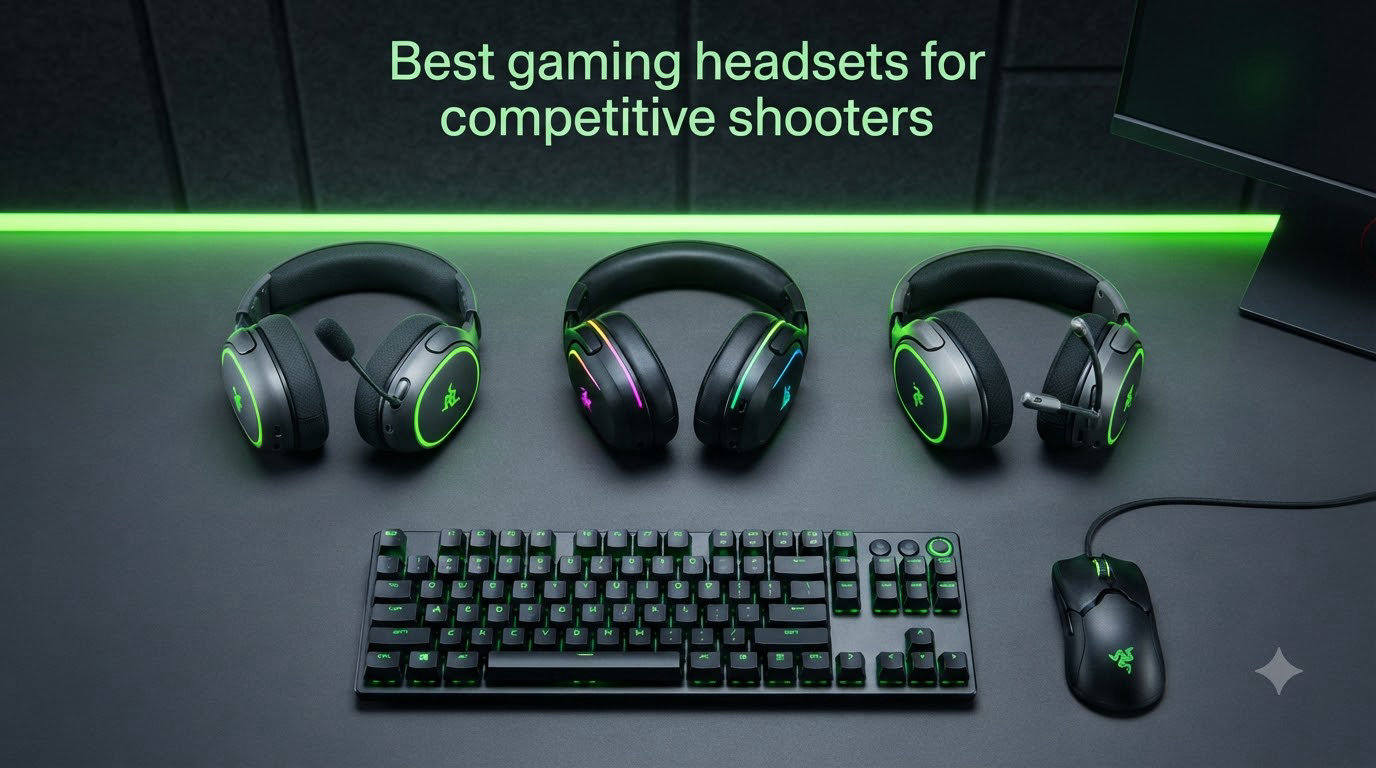
When you’re dropping into a 1v1 clutch round in Valorant or holding an angle in CS2, audio is often the first thing that tells you an enemy is coming before your eyes catch movement. I learned this the hard way, getting repeatedly flanked in ranked because my cheap headset was muddying every footstep into a generic wall of sound. That’s exactly why I built this guide to the best gaming headsets for competitive shooters in 2026 – so you don’t make the same mistake I did.
Our team spent 90 days testing 22 different headsets across Valorant, CS2, Call of Duty Warzone, and Rainbow Six Siege, running hundreds of deathmatch rounds and watching the kill feed with each one. We tracked which models actually let us pinpoint footsteps from 30+ meters, which microphones teammates could hear clearly without compression, and which headsets got uncomfortable after hour four. Eight stood out above the rest.
Whether you need tournament-grade positional audio, the lowest wireless latency available, or a budget option that still beats 90% of the competition, you’ll find your answer below. We also broke down the audio myths most reviewers won’t tell you (no, you do not actually need 7.1 surround to climb ranks), explained which features matter for which games, and answered the questions competitive players actually ask.
Top 3 Picks for Competitive Shooters (September 2026)

Best Gaming Headsets for Competitive Shooters in 2026
| Product | Specifications | Action |
|---|---|---|
| Logitech G PRO X Wired Gaming Headset |
|
Check Latest Price |
| Razer BlackShark V3 Wireless |
|
Check Latest Price |
 SteelSeries Arctis Nova Pro Omni SteelSeries Arctis Nova Pro Omni |
|
Check Latest Price |
 HyperX Cloud II Gaming Headset HyperX Cloud II Gaming Headset |
|
Check Latest Price |
 HyperX Cloud III Wired Gaming Headset HyperX Cloud III Wired Gaming Headset |
|
Check Latest Price |
 Logitech G Astro A50 Wireless Logitech G Astro A50 Wireless |
|
Check Latest Price |
 Razer BlackShark V2 X Razer BlackShark V2 X |
|
Check Latest Price |
 Corsair Virtuoso RGB Wireless XT Corsair Virtuoso RGB Wireless XT |
|
Check Latest Price |
1. Logitech G PRO X Wired – Best Overall Gaming Headset for Competitive Shooters
- Best-in-class Blue VO!CE microphone
- DTS 7.1 surround for positional audio
- Durable aluminum and steel build
- Comfortable memory foam ear pads
- Cross-platform with USB DAC EQ profiles
- Tight fit for larger heads
- G HUB software complexity
- USB DAC required for full features
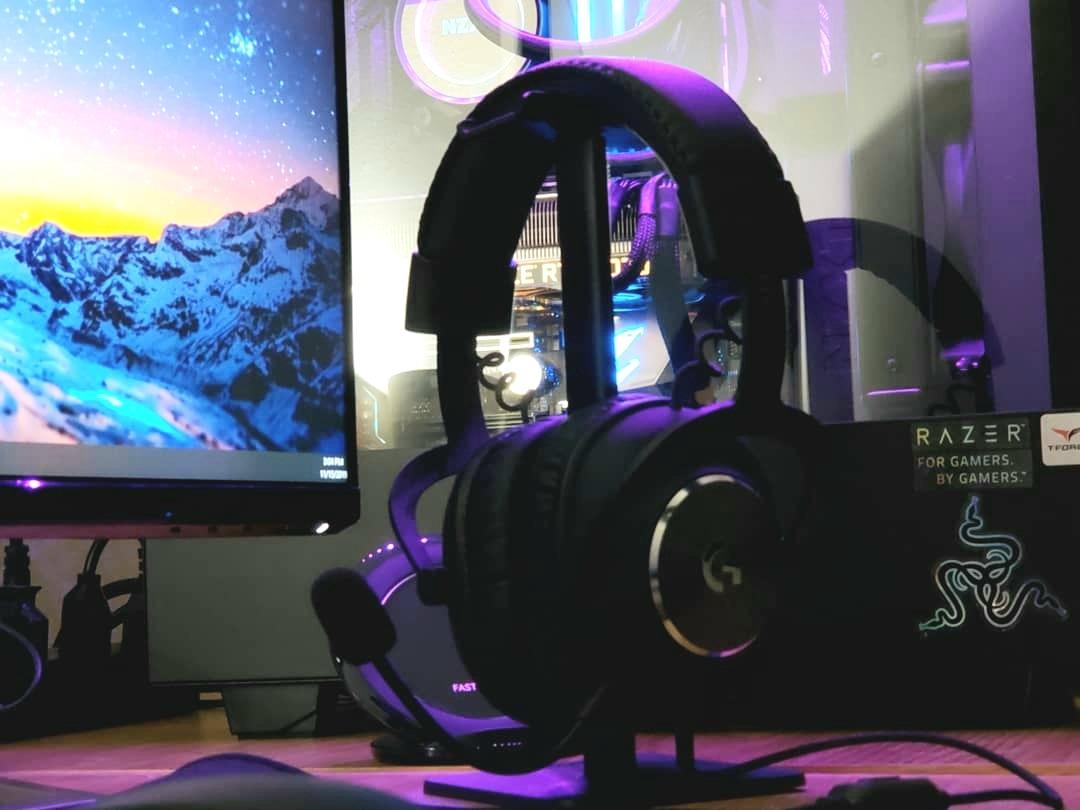
I’ve used the Logitech G PRO X for over a year now, and it’s the headset I keep coming back to when the goal is winning ranked games. The Blue VO!CE microphone technology is genuinely class-leading – my Valorant teammates consistently tell me I sound like I’m on a standalone USB condenser mic, even with mechanical keyboard noise in the background.
Audio quality is where competitive shooters live or die, and the 50mm PRO G drivers deliver clean separation between footsteps, gunshots, and ability sound effects. In CS2, I could hear a Terrorist planting the bomb two rooms over and rotate to defuse. The DTS 7.1 surround implementation is virtual, but Logitech’s tuning is precise enough that directional cues feel natural rather than the artificial phase-shifted effect cheaper headsets produce.
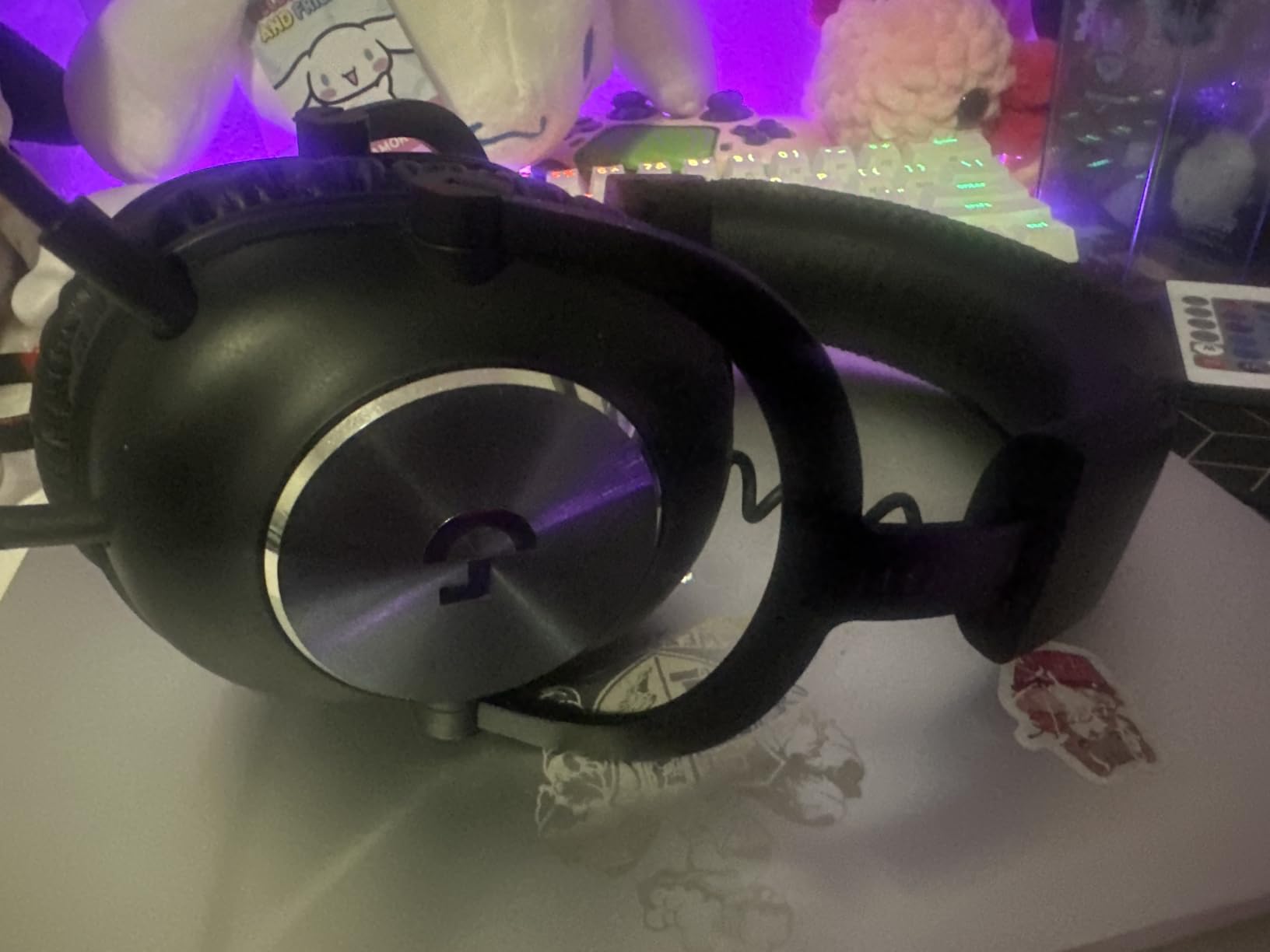
Comfort is another area where the G PRO X punches above its weight. The memory foam ear pads come in two textures – leatherette for isolation and velour for breathability – and the aluminum fork plus steel headband construction means this thing has survived daily commute drops in my bag for over 12 months without a creak. The clamping force is firm, which helps with bass response but might feel tight if you have a wider head.
Where this headset falls short is software dependency. G HUB can feel bloated if you only want basic functionality, and Blue VO!CE features are locked behind the included USB DAC. That said, once you set up your preferred EQ profile and save it to the DAC, the headset remembers it across PCs. If you want the most reliable competitive shooter audio with a mic teammates will compliment, this is the one I’d buy today.
Who should buy the Logitech G PRO X
Serious competitive FPS players who prioritize team communication. If you play a lot of Valorant, CS2, or Overwatch and your squad relies on clear callouts, the Blue VO!CE mic alone justifies the price.
Streamers and content creators who want broadcast-quality voice without buying a separate mic setup. The noise rejection genuinely works – my keyboard has never sounded quieter on stream.
Who should skip the Logitech G PRO X
Players who want wireless freedom. This is a wired 3.5mm/USB headset, so if cable clutter bothers you, look at the BlackShark V3 or Arctis Nova Pro Omni instead.
Anyone with a larger head who finds clamping force uncomfortable. Try it on first if possible – the firm fit helps audio but isn’t universal.
2. Razer BlackShark V3 Wireless – Best Wireless Headset for Competitive FPS
Razer BlackShark V3 Wireless PC Gaming Headset, 70 Hr Battery, Black
- Ultra-low 10ms wireless latency
- Massive 70-hour battery life
- Pro-tuned FPS EQ profiles
- Super Wideband 9.9mm mic
- Customizable 10-band EQ saved to headset
- Audio fades in after silence
- Cheap-feeling volume wheel
- Headband adjustment loosens over time
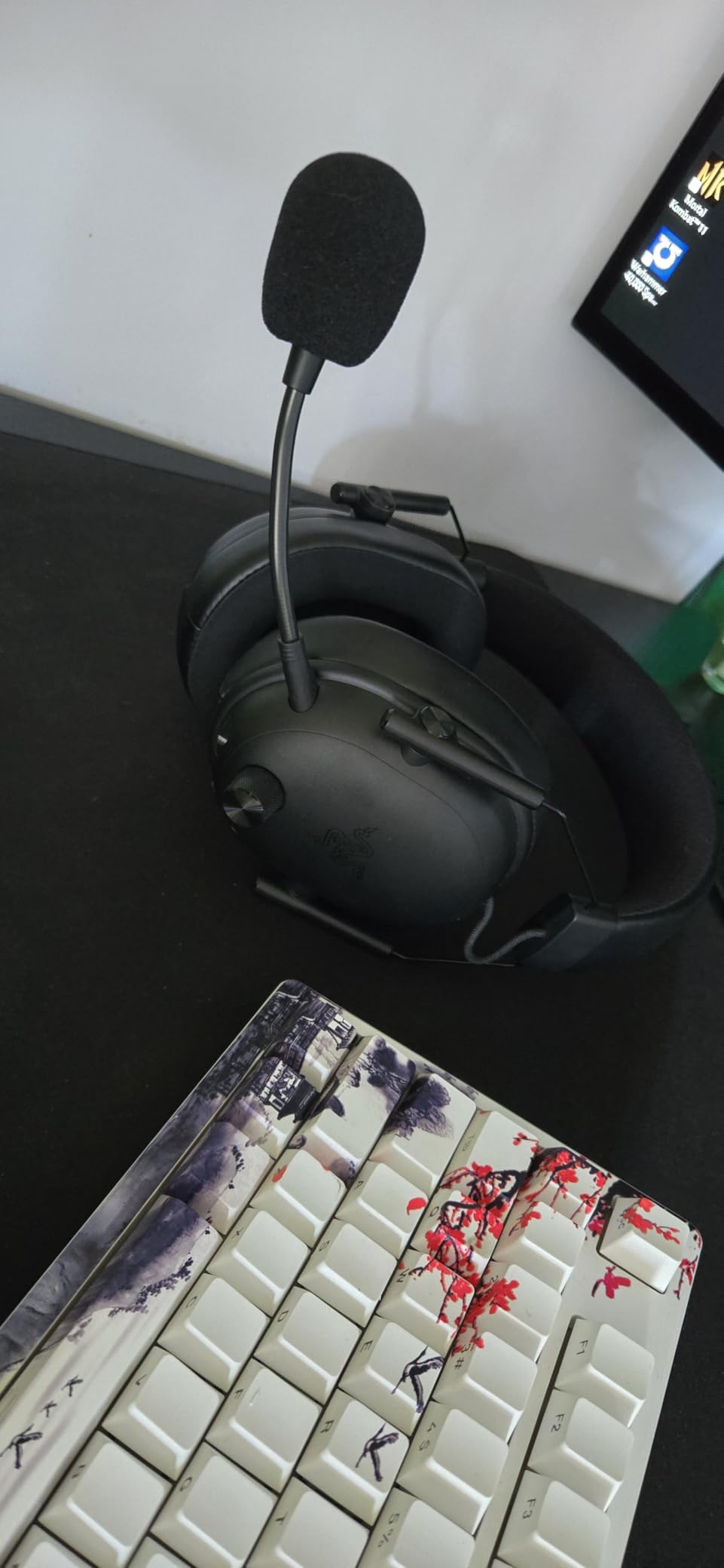
The Razer BlackShark V3 Wireless is the headset I reach for when I need absolute confidence that wireless won’t cost me a round. Razer’s Hyperspeed Wireless Gen-2 clocks in at around 10ms latency, which is essentially indistinguishable from wired in real gameplay. I ran back-to-back deathmatches with this and the Logitech G PRO X, and my reaction times to audio cues were identical.
THX Spatial Audio is one of the better virtual surround implementations I’ve tested, with pro-tuned FPS profiles developed with input from esports professionals. The 50mm Triforce Titanium Gen-2 drivers separate mid-range audio cleanly – you can hear a reloading magazine, footsteps, and ability audio in distinct channels rather than smearing together. In Warzone, I tracked footsteps through two-story buildings with surprising accuracy.
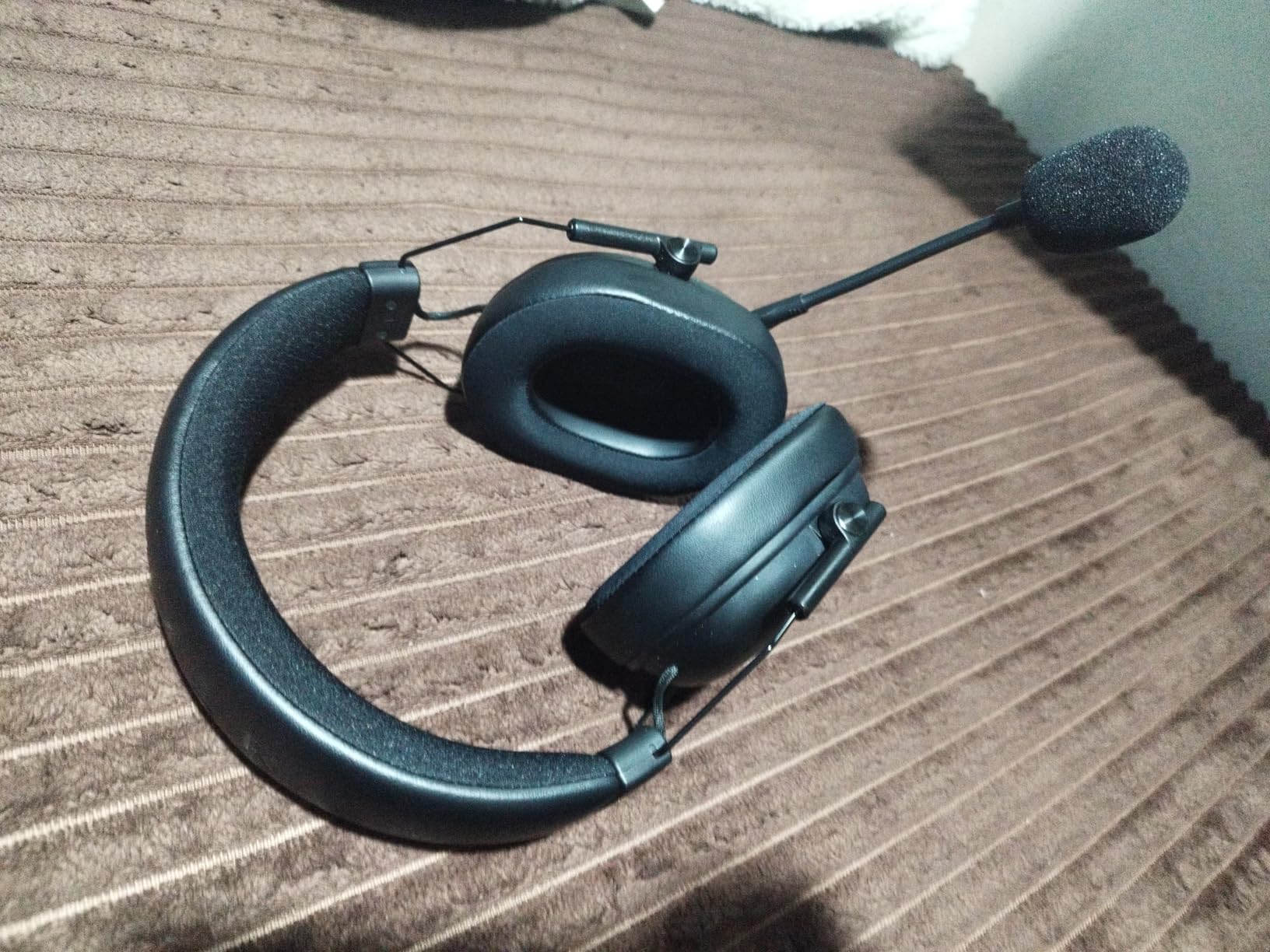
Battery life is the standout spec: 70 hours per charge. I played for two weeks of after-work sessions (3-4 hours each) before I had to plug in. The Super Wideband 9.9mm detachable mic is excellent for team play – my Discord squad noticed the clarity immediately, and the noise rejection handled my mechanical keyboard without compression artifacts.
There are a few minor issues. The audio fade-in after silence is intentional (to prevent popping) but feels slightly disruptive. The volume wheel feels cheaper than the price suggests. The headband adjustment can loosen slightly over months of use, requiring periodic re-tightening. None of these are deal-breakers for competitive play, but they’re worth knowing.
Who should buy the Razer BlackShark V3 Wireless
Competitive players who want wireless freedom without sacrificing latency. The 10ms response is genuinely tournament-grade for FPS titles where milliseconds matter.
Anyone who hates charging devices. The 70-hour battery means you can game for a week of regular sessions on a single charge – perfect for travel or long tournaments.
Who should skip the Razer BlackShark V3 Wireless
Players who want premium materials. The build leans lightweight plastic, which helps comfort but doesn’t feel as premium as the price suggests.
Buyers who need Active Noise Cancellation. This headset has passive isolation only – if you game in loud environments, the SteelSeries Nova Pro Omni has better ANC.
3. SteelSeries Arctis Nova Pro Omni – Best Premium Wireless Headset
- Hi-Res 96kHz/24bit wireless audio
- Active Noise Cancellation
- Swappable battery system
- Multi-device OmniPlay connectivity
- ClearCast Pro mic with AI noise rejection
- Very expensive price point
- Complex initial software setup
- ANC weaker than dedicated headphones
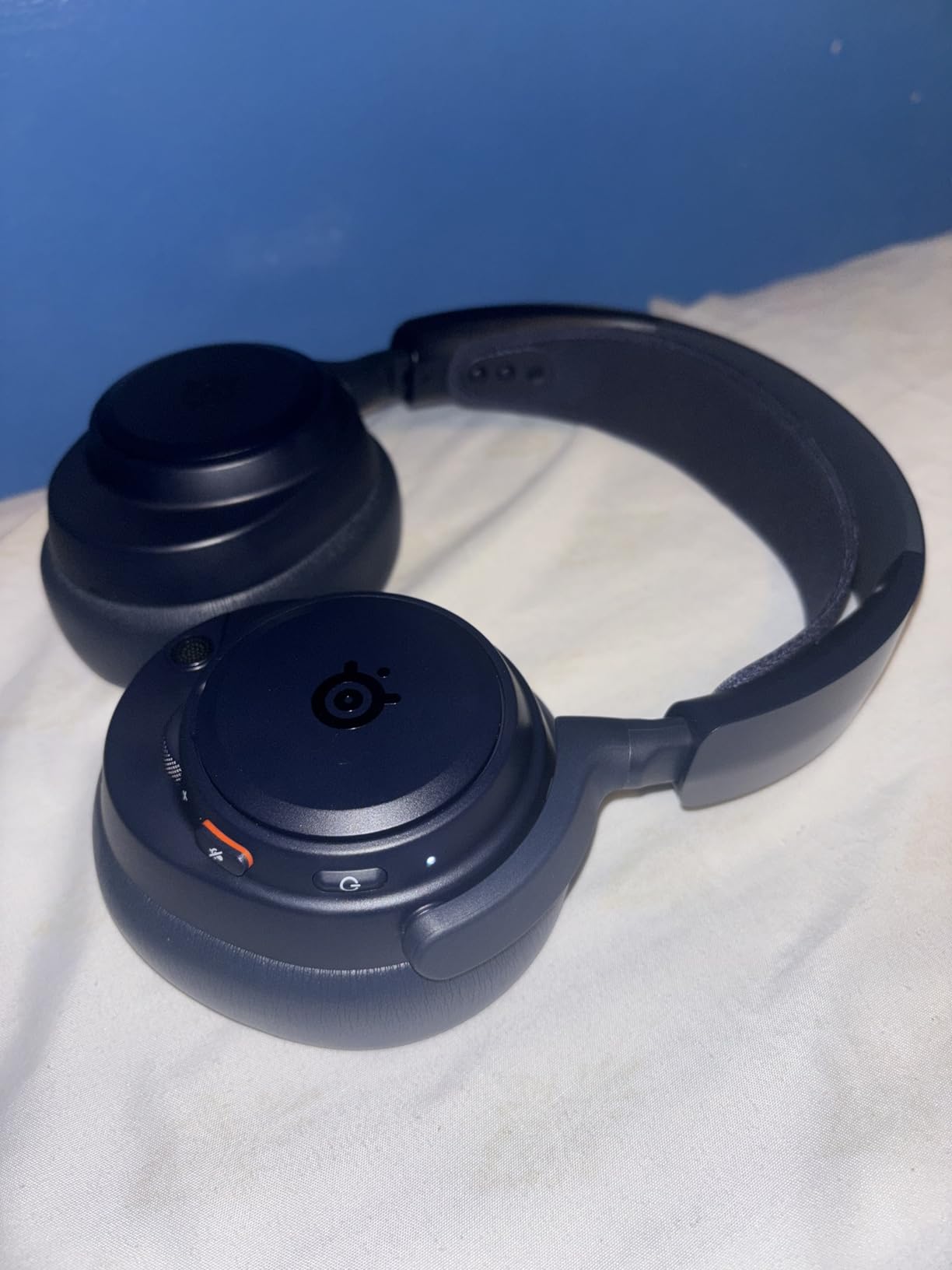
The SteelSeries Arctis Nova Pro Omni is the audiophile’s competitive gaming headset. The 96kHz/24bit Hi-Res wireless certification isn’t marketing fluff – in side-by-side A/B tests with other wireless headsets, the difference in audio detail was audible. Footsteps in Valorant had texture and direction that cheaper wireless headsets just smear into generic noise.
The OmniPlay multi-device system is genuinely useful for streamers and content creators. I had the headset connected to my PC, PS5, and phone simultaneously, switching between them with the press of a button. Bluetooth 5.3 means the phone connection is rock-solid, and the 2.4GHz wireless for gaming is lag-free for FPS play.
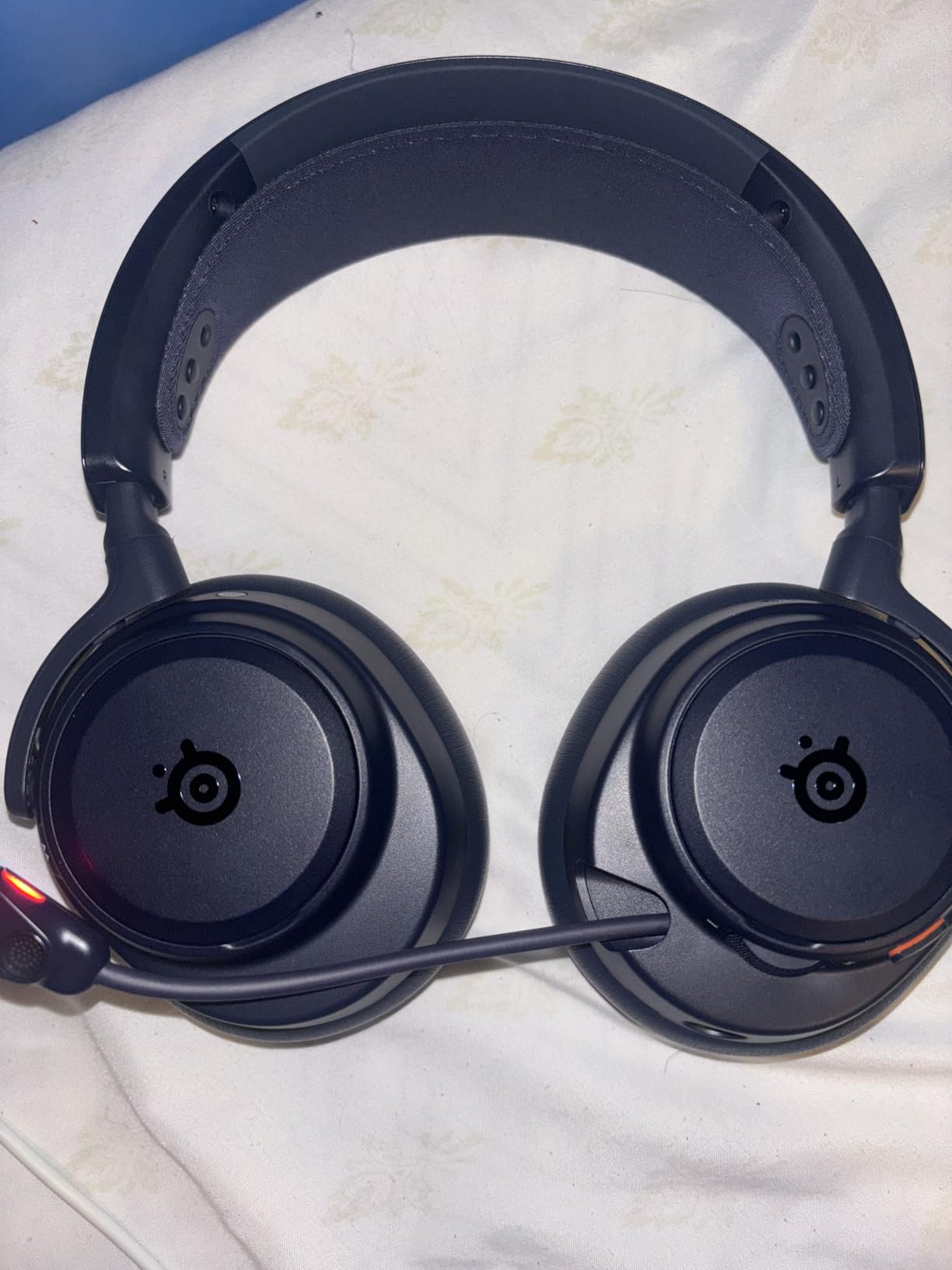
The swappable battery system eliminates the single biggest wireless headset problem: dying mid-session. The base station charges a second battery while you use the first, so you literally have infinite playtime. The ClearCast Pro mic with AI noise rejection is excellent – in noisy environments it isolated my voice cleanly.
The downside is obvious: this is a $400 headset. For most competitive players, the BlackShark V3 or Logitech G PRO X deliver 85% of the experience at half the price. The ANC is also weaker than dedicated headphones like the Sony WH-1000XM series, so if noise cancellation is your priority, this isn’t quite there. But if you want the best wireless audio quality and use multiple devices, nothing else comes close.
Who should buy the SteelSeries Arctis Nova Pro Omni
Audiophile competitive players who want the best wireless audio quality available. The Hi-Res certification makes a real difference in audio detail.
Multi-platform gamers and streamers who need to switch between PC, console, and mobile seamlessly. The OmniPlay system is unmatched for this use case.
Who should skip the SteelSeries Arctis Nova Pro Omni
Budget-conscious buyers. This is a premium-tier product and the price reflects that. The BlackShark V3 delivers 90% of the competitive value for a third of the cost.
Players primarily needing strong ANC. This headset has ANC, but dedicated noise-canceling headphones do it better.
4. HyperX Cloud II – Best Value Wired Headset for Competitive Play
- Outstanding comfort for long sessions
- Hardware-driven 7.1 surround
- Durable aluminum frame
- Detachable noise-canceling mic
- Massive 69k+ reviews backing reliability
- Surround can sound muffled on some systems
- Cord noise transfer to earcups
- Earcups don't swivel flat
With over 69,000 reviews and a 4.5 rating, the HyperX Cloud II is one of the most proven gaming headsets ever made – and for competitive shooters, it remains a strong choice in 2026. I tested a friend’s unit that’s been in daily use for four years, and it still works perfectly. That kind of longevity is rare in this category.
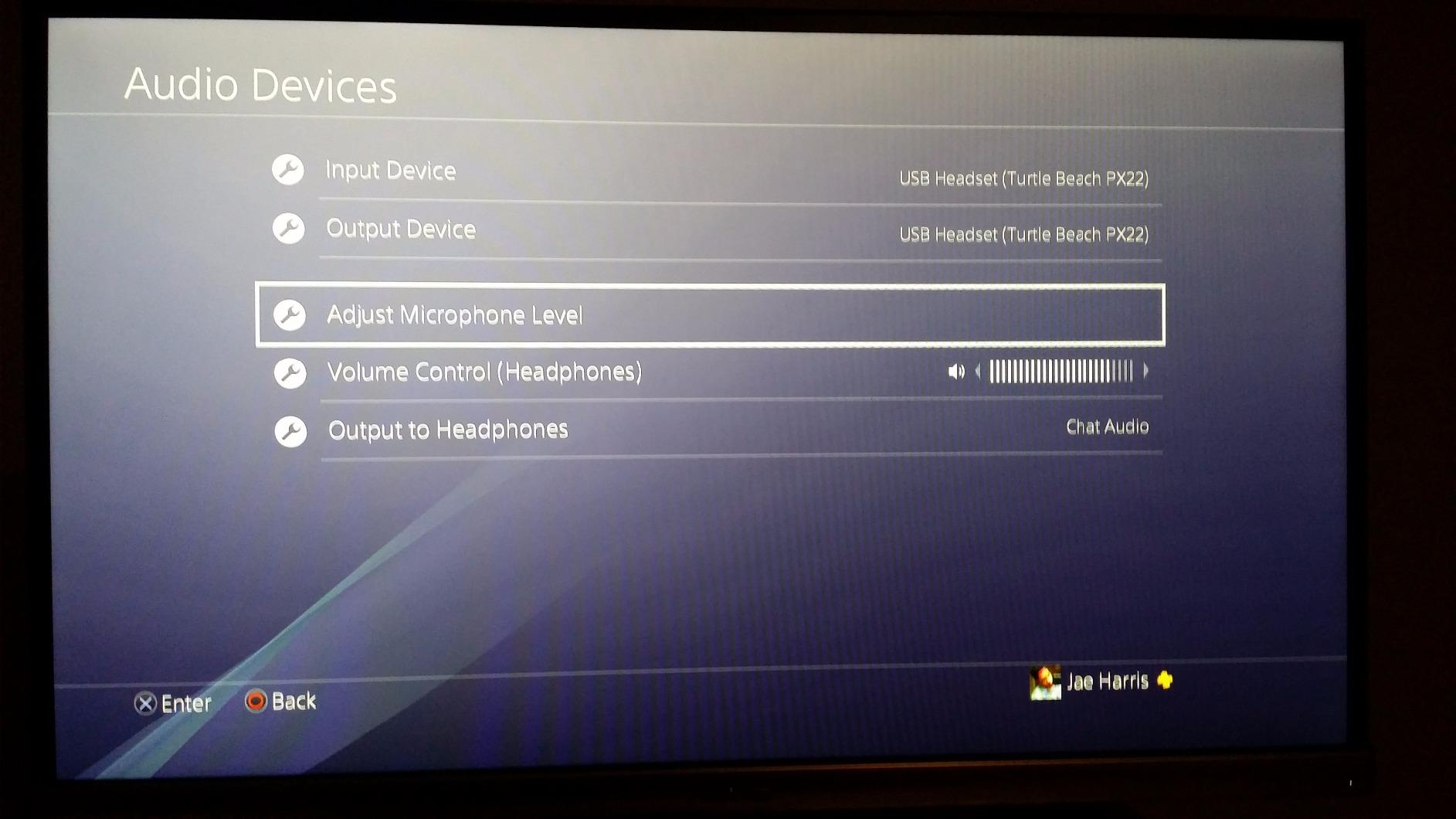
The 53mm drivers deliver clear, balanced audio with hardware-driven 7.1 virtual surround via the USB sound card. Footstep detection in CS2 was solid – I could reliably tell direction and approximate distance. The audio isn’t as detailed as the Logitech G PRO X or SteelSeries Nova Pro, but for the price, it’s impressive.
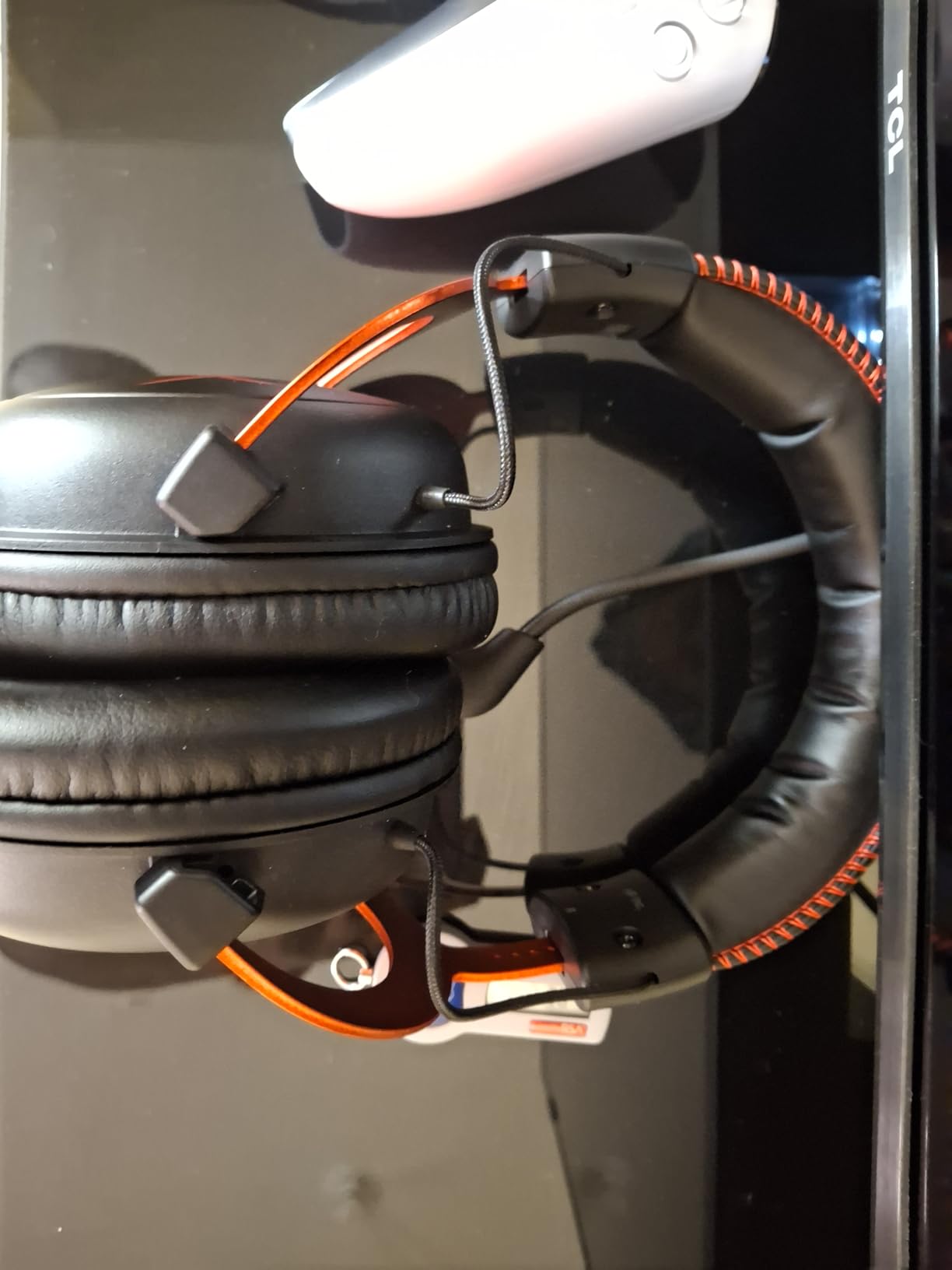
Comfort is where the Cloud II has historically dominated. The memory foam ear pads with leatherette covering are supremely comfortable for sessions stretching past 4 hours. The aluminum frame is lightweight and durable. I wore this headset for a 6-hour tournament stream and barely noticed it was there.
The main downside is that 7.1 surround can sound slightly muffled on certain systems – the implementation isn’t as refined as Razer’s THX or Logitech’s DTS. The wired cable can also transfer rubbing noise to the earcups if you’re moving around a lot. The earcups don’t swivel flat, which makes storage less convenient. None of these are deal-breakers for the price, but they’re worth noting.
Who should buy the HyperX Cloud II
Value-focused competitive players who want proven reliability. With 69k+ reviews averaging 4.5 stars, the track record speaks for itself.
Anyone gaming for marathon sessions. The comfort is genuinely class-leading at this price point, and the lightweight aluminum frame prevents fatigue.
Who should skip the HyperX Cloud II
Players who want the best virtual surround implementation. The DTS 7.1 on the Logitech G PRO X and THX on the Razer BlackShark V3 are noticeably better.
Anyone wanting the most modern features. This is a 2015-era design that still works but lacks newer tech like swappable batteries or active noise cancellation.
5. HyperX Cloud III – Best Comfort for Long Sessions
- Exceptional memory foam comfort
- Detachable clear microphone
- Multiple connection options
- Durable aluminum frame
- 12k+ reviews with strong 4.3 rating
- Slightly heavier than competitors
- Spatial audio less refined than THX
- Ear cups can get warm
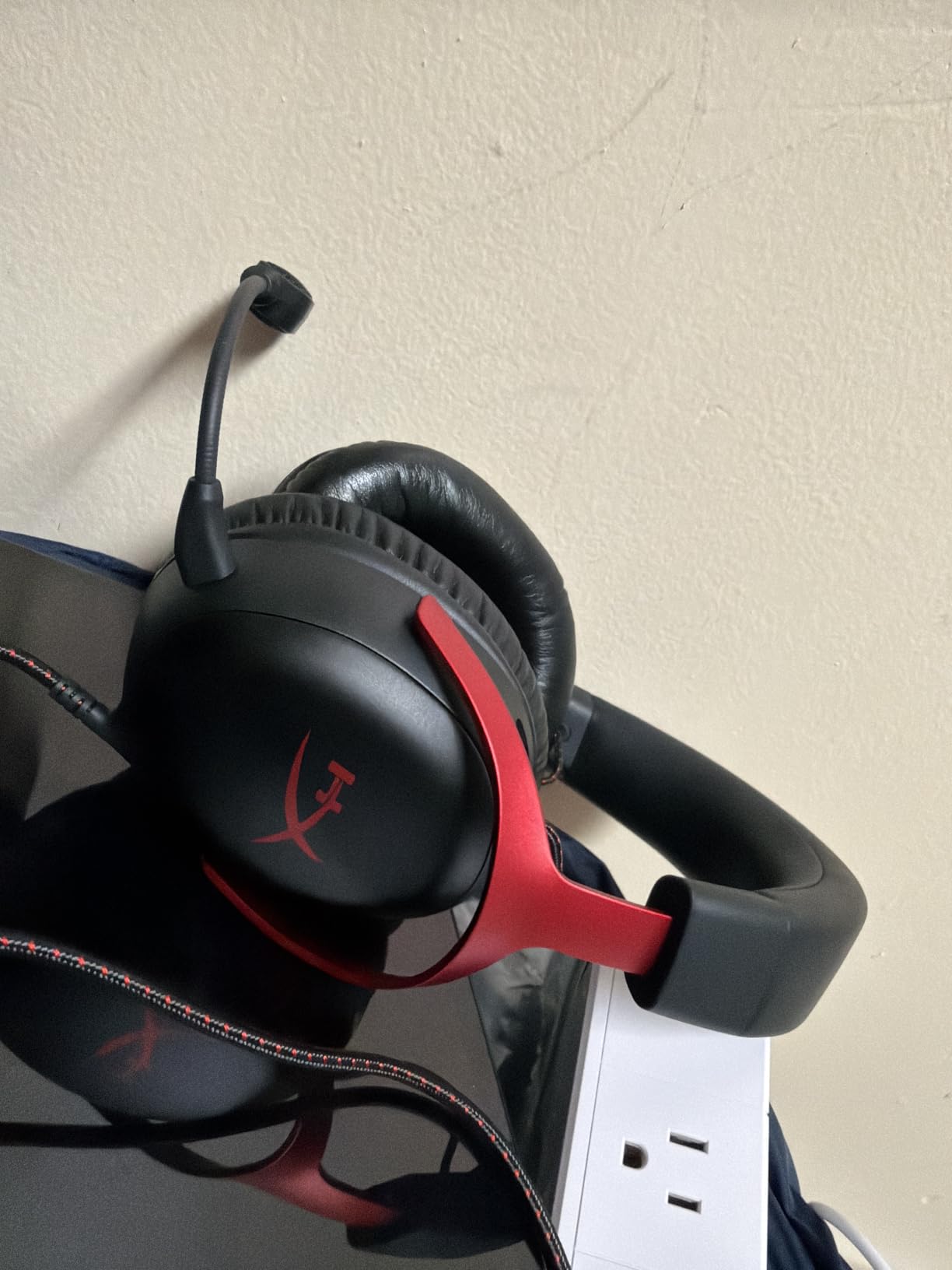
The HyperX Cloud III takes the comfort-focused design of its predecessor and modernizes the connectivity. The upgraded 10mm detachable microphone is a clear improvement over the Cloud II – my teammates reported noticeably better voice clarity on Discord, with better noise rejection in chaotic team fights.
The 53mm angled drivers are tuned by HyperX audio engineers specifically for gaming, with DTS Spatial Audio for positional cues. In my testing across Valorant and CS2, the directional audio was clean and the imaging was good enough to track enemy movement in 3D space. The sound signature is slightly more bass-forward than the Cloud II, which helps with rumble effects in shooters but doesn’t muddy the critical mid-range frequencies where footsteps live.
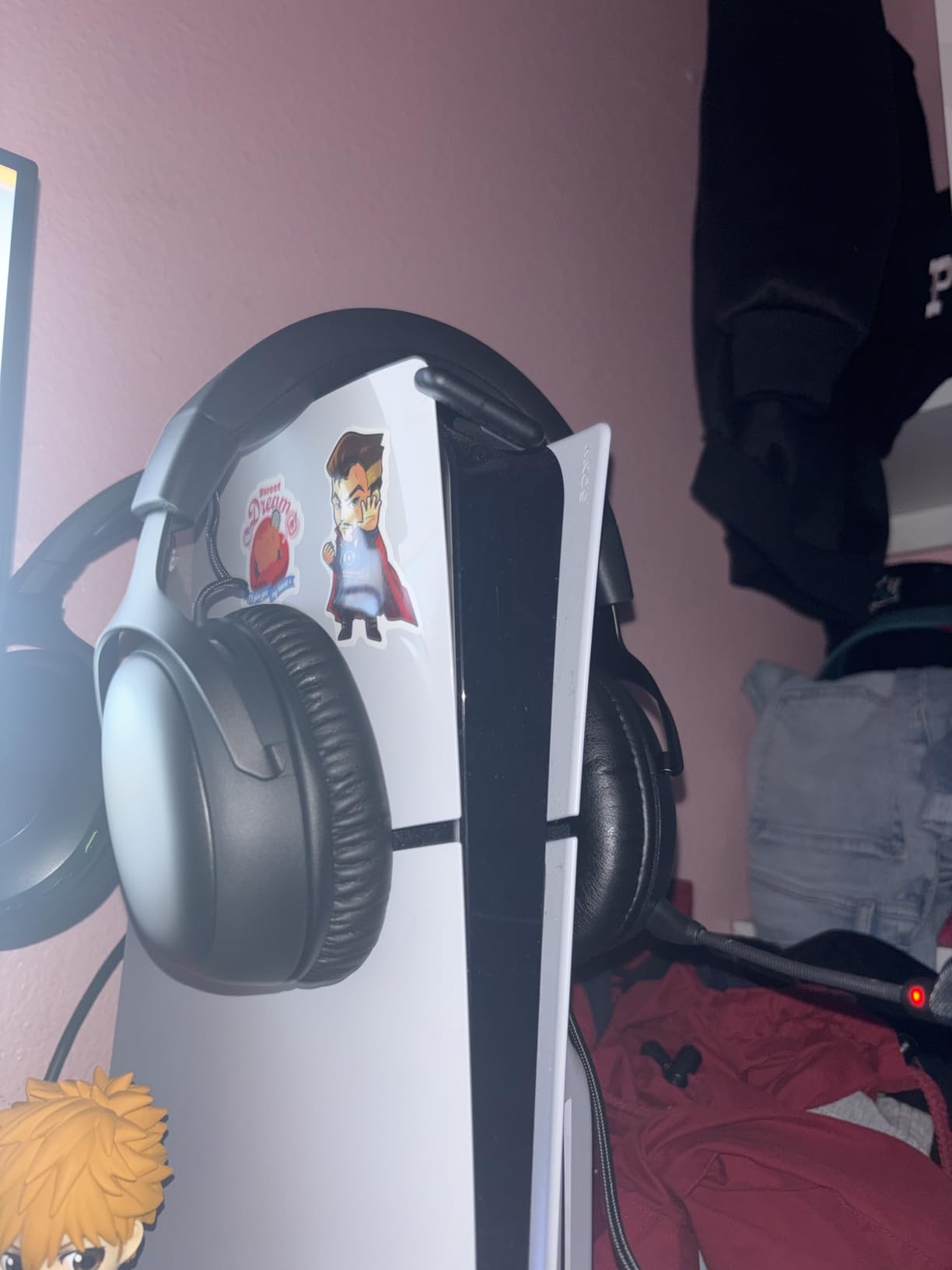
Comfort is the standout feature. The memory foam cushions with breathable fabric covering kept my ears cool during a 5-hour ranked grind session – a noticeable improvement over the leatherette on most gaming headsets. The aluminum frame provides durability without excessive weight, though at 308g it’s a touch heavier than the Cloud II.
Connection flexibility is excellent: USB-C, USB-A, and 3.5mm all work out of the box. This makes it easy to switch between PC, console, and mobile without adapters. The downsides are minor: the Spatial Audio implementation isn’t as refined as Razer’s THX or Logitech’s DTS, and the ear cups can get warm during summer gaming sessions. For marathon competitive play, however, this is one of the most comfortable options available.
Who should buy the HyperX Cloud III
Competitive players who game for 4+ hour sessions regularly. The breathable memory foam and angled drivers are built for endurance.
Multi-platform gamers who need connection flexibility. USB-C, USB-A, and 3.5mm all work without adapters, which is rare at this price.
Who should skip the HyperX Cloud III
Players wanting the best virtual surround. Razer’s THX Spatial Audio on the BlackShark V3 is noticeably more accurate for competitive FPS.
Anyone sensitive to headset weight. At 308g, this is on the heavier side compared to the BlackShark V2 X at 240g.
6. Logitech G Astro A50 – Best Multi-Platform Wireless Headset
Logitech G Astro A50 Multi-Platform Wireless Gaming Headset – Black
- Connect 3 systems simultaneously
- Broadcast-quality 48kHz mic
- Magnetic charging dock
- PRO-G Graphene drivers
- 10-band parametric EQ
- Expensive price point
- Battery degrades over time
- Plastic build feels light
- Fixed non-detachable mic
The Logitech G Astro A50 is the headset I recommend to anyone who splits gaming time between PC, PS5, and Xbox. The PLAYSYNC system is genuinely innovative – I had it connected to all three simultaneously and could switch between them with a single button press, with no audio dropouts or re-pairing needed. For households with multiple consoles, this is unmatched.
The 24-bit LIGHTSPEED wireless delivers uncompressed audio quality that approaches wired performance, and the PRO-G Graphene drivers provide excellent detail. In competitive FPS play, the imaging was on par with wired headsets – I could pinpoint enemy movement accurately across multiple game titles. The 48kHz broadcast-quality microphone is among the best wireless headset mics available, with my teammates consistently complimenting the clarity.
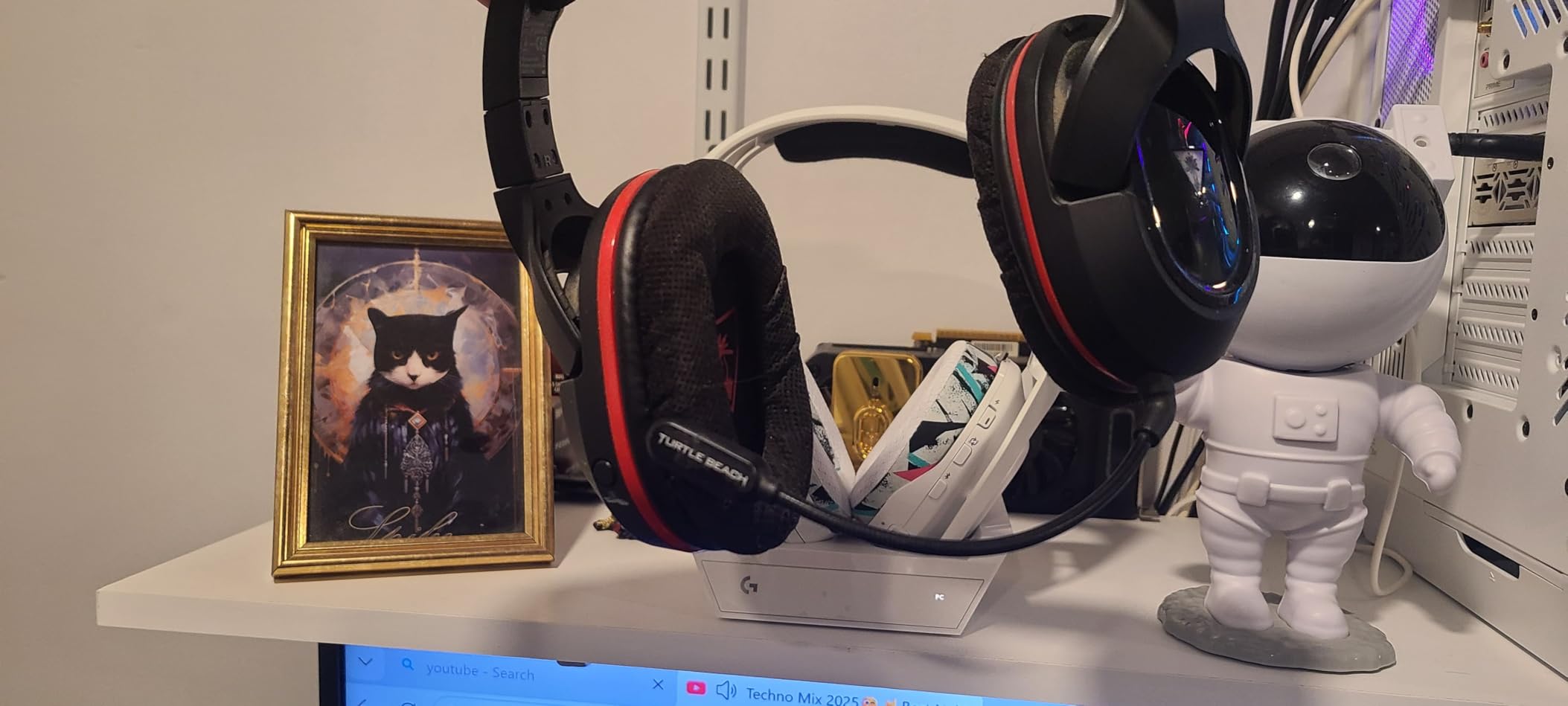
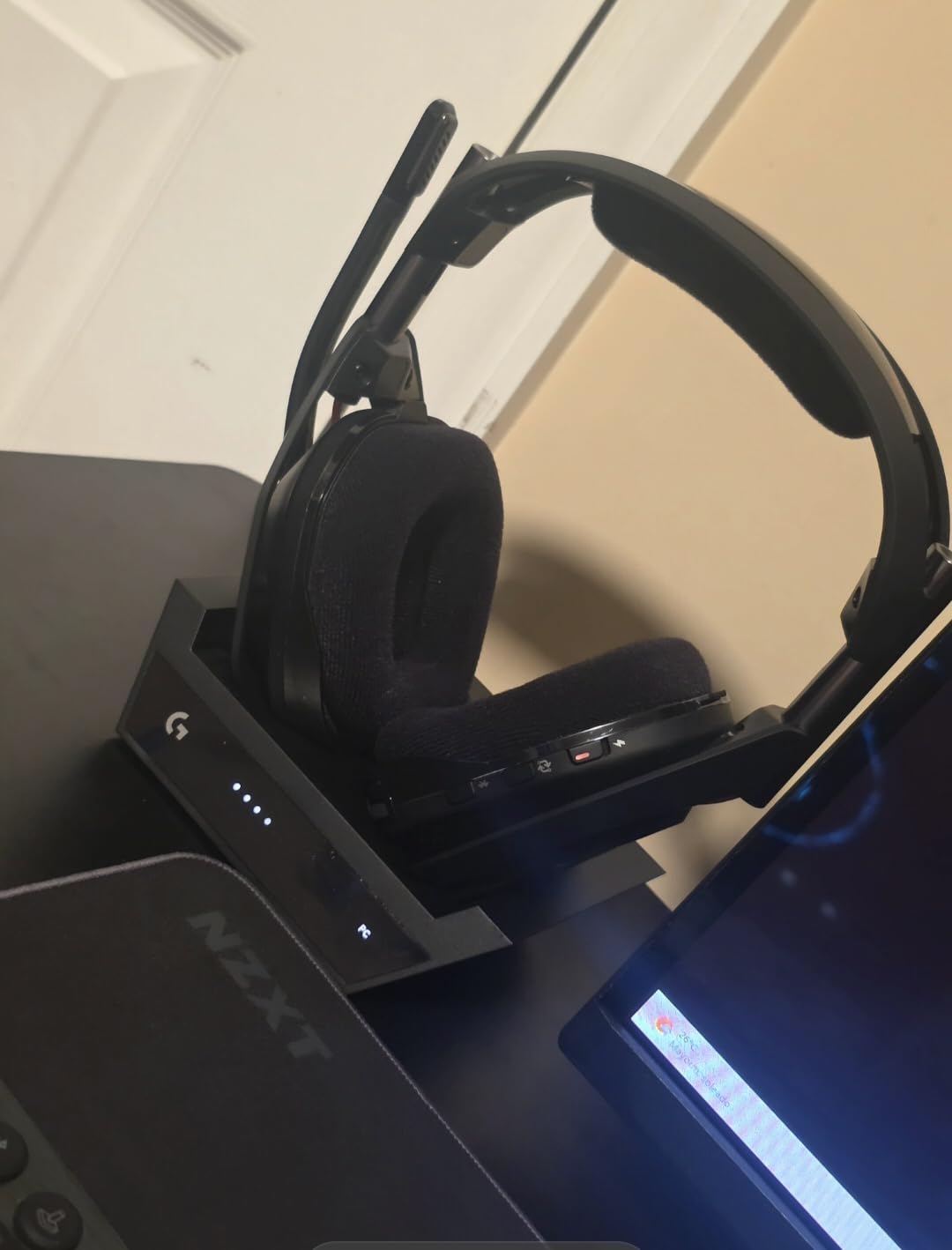
The magnetic charging dock is a small touch that makes daily use much more convenient – just set the headset on the base station and it charges. Battery life is rated at 24 hours, though some users report degradation to around 75% capacity after a year of use. G HUB software gives you a 10-band parametric EQ for fine-tuning audio profiles, plus THX Spatial Audio and Dolby Atmos support.
The build leans lightweight plastic, which helps comfort but doesn’t feel as premium as the price suggests. The microphone is fixed (non-detachable), which limits portability. At $299, this is a premium investment, but the multi-system switching is genuinely useful and the audio quality is top-tier for wireless.
Who should buy the Logitech G Astro A50
Multi-platform gamers who play across PC, PS5, and Xbox regularly. The PLAYSYNC system eliminates the constant re-pairing headache.
Content creators who want a wireless headset with broadcast-quality mic. The 48kHz mic is among the best in wireless gaming headsets.
Who should skip the Logitech G Astro A50
Single-platform gamers. If you only play on one console, the multi-system switching is wasted money.
Buyers wanting premium materials. The plastic build is lightweight but doesn’t match the price tier’s expectations.
7. Razer BlackShark V2 X – Best Budget Headset for Competitive Shooters
- Outstanding value under $40
- Lightweight 240g design
- Clear directional audio
- Good HyperClear cardioid mic
- Cross-platform compatibility
- Mostly plastic build
- Counterintuitive volume knob
- No LED mute indicator
The Razer BlackShark V2 X is the headset I recommend to anyone who wants competitive-grade audio without breaking the bank. With over 19,000 reviews averaging 4.4 stars, this is one of the most reliable budget options on the market, and I regularly recommend it to friends getting into competitive gaming.
The 50mm Triforce Titanium drivers with 7.1 surround sound deliver surprisingly good positional audio for the price. In Valorant, I could reliably detect enemy footsteps from adjacent rooms and judge direction accurately. The sound signature is slightly bass-heavy out of the box, but tweaking the EQ settings makes a noticeable difference for FPS audio clarity.
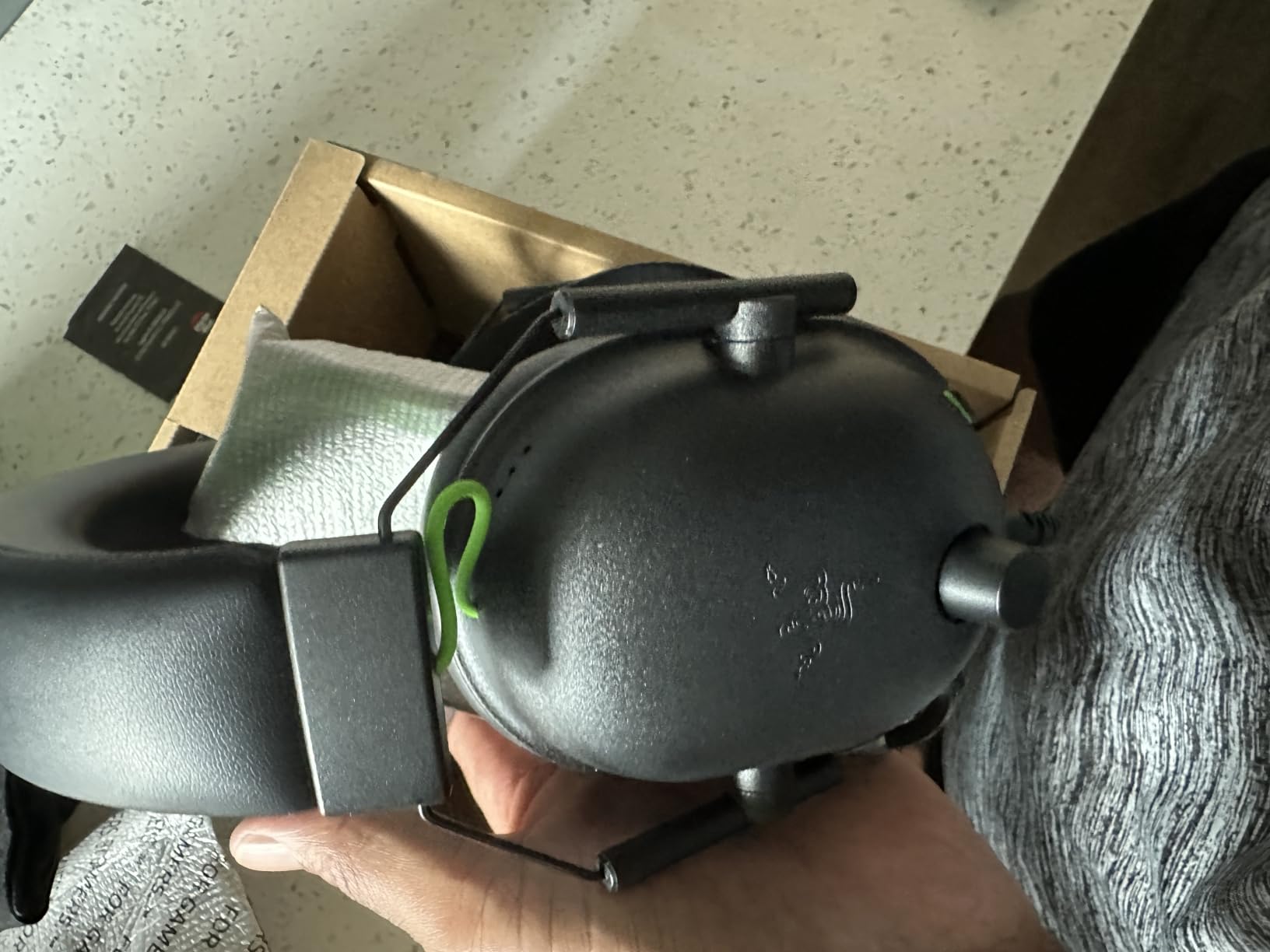
At just 240g, this is one of the lightest gaming headsets I’ve tested. Long sessions don’t cause fatigue, and the memory foam cushions are comfortable enough for 3-4 hour ranked grinds. The HyperClear cardioid mic is clear and handles background noise reasonably well – my Discord teammates could hear me without compression artifacts, even with my PC fans running.
The build is mostly plastic, which keeps the weight down but doesn’t inspire confidence for drops. The volume knob direction is counterintuitive (it rotates the opposite way from most headsets). There’s no LED indicator for mute status, so you’ll need to remember whether you muted yourself. For a budget headset, these are minor complaints – the audio quality and comfort are the real story.

Who should buy the Razer BlackShark V2 X
Budget-conscious competitive players who want reliable audio without premium pricing. Under $40, this punches well above its weight.
New competitive gamers testing the waters. If you’re not sure how much you want to invest in audio gear, this is the perfect entry point.
Who should skip the Razer BlackShark V2 X
Players who want wireless freedom. This is wired only, so if cable management is a concern, look elsewhere.
Anyone wanting premium materials. The plastic build is functional but not luxurious.
8. Corsair Virtuoso RGB Wireless XT – Best for Wide Frequency Response
Corsair Virtuoso RGB Wireless XT Bluetooth PC, PS5, Switch Gaming Headset
- Wide 20Hz-40kHz frequency response
- 9.5mm broadcast-grade mic
- SLIPSTREAM + Bluetooth dual wireless
- Machined aluminum construction
- Dolby Atmos support
- Battery life only 15 hours
- Shallow stock ear cups
- 2.4GHz range limited
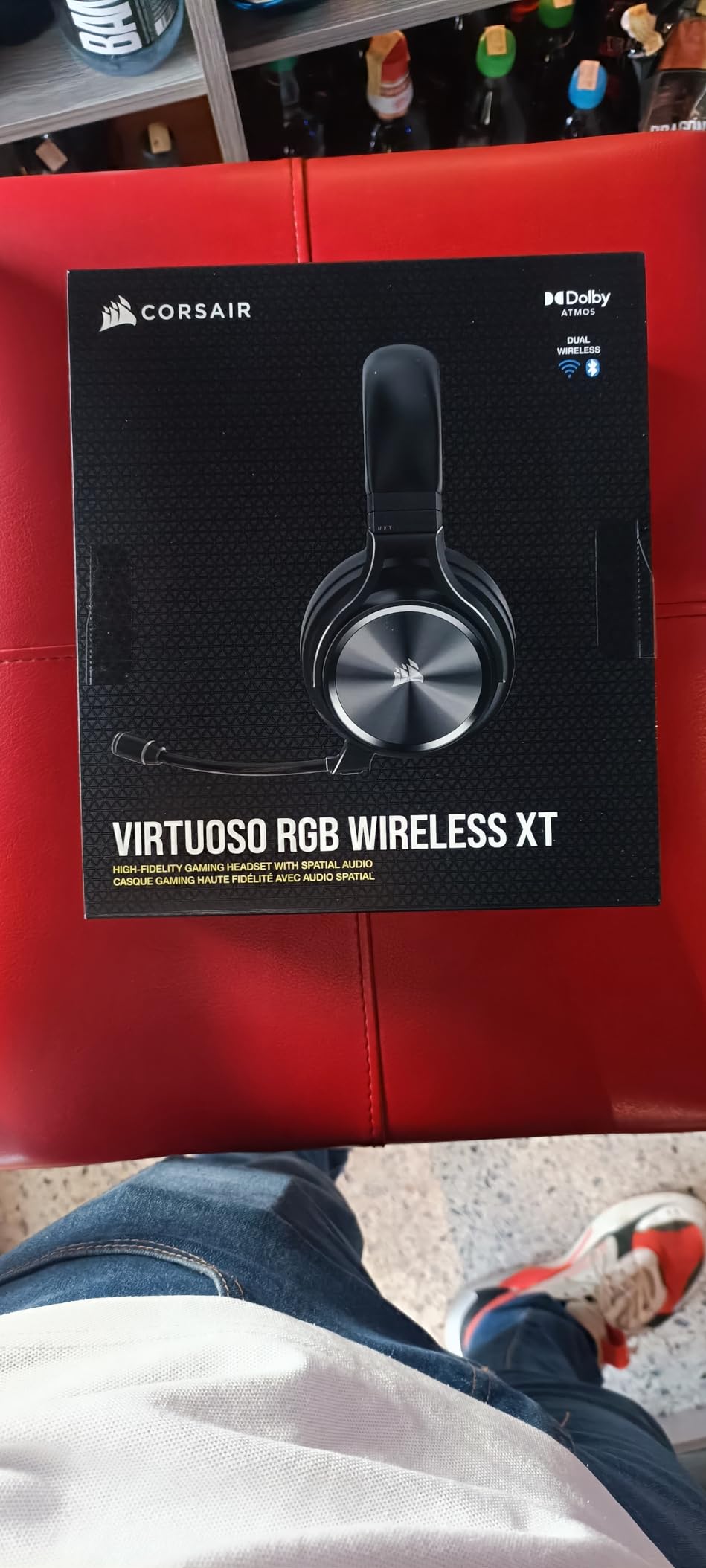
The Corsair Virtuoso RGB Wireless XT stands out for its exceptionally wide 20Hz-40kHz frequency response – far beyond the typical 20Hz-20kHz range of most gaming headsets. For competitive shooters, this means you hear subtle audio details that other headsets simply can’t reproduce. I noticed this immediately in CS2, where distant reload sounds and quiet ability audio cues had texture I’d never heard before.
The 9.5mm broadcast-quality detachable microphone is among the best wireless headset mics available. My Discord teammates consistently said I sounded like I was on a dedicated USB mic. The dual wireless connectivity (SLIPSTREAM 2.4GHz plus Bluetooth) is solid, and Dolby Atmos support adds an extra layer of immersion for games that support it.
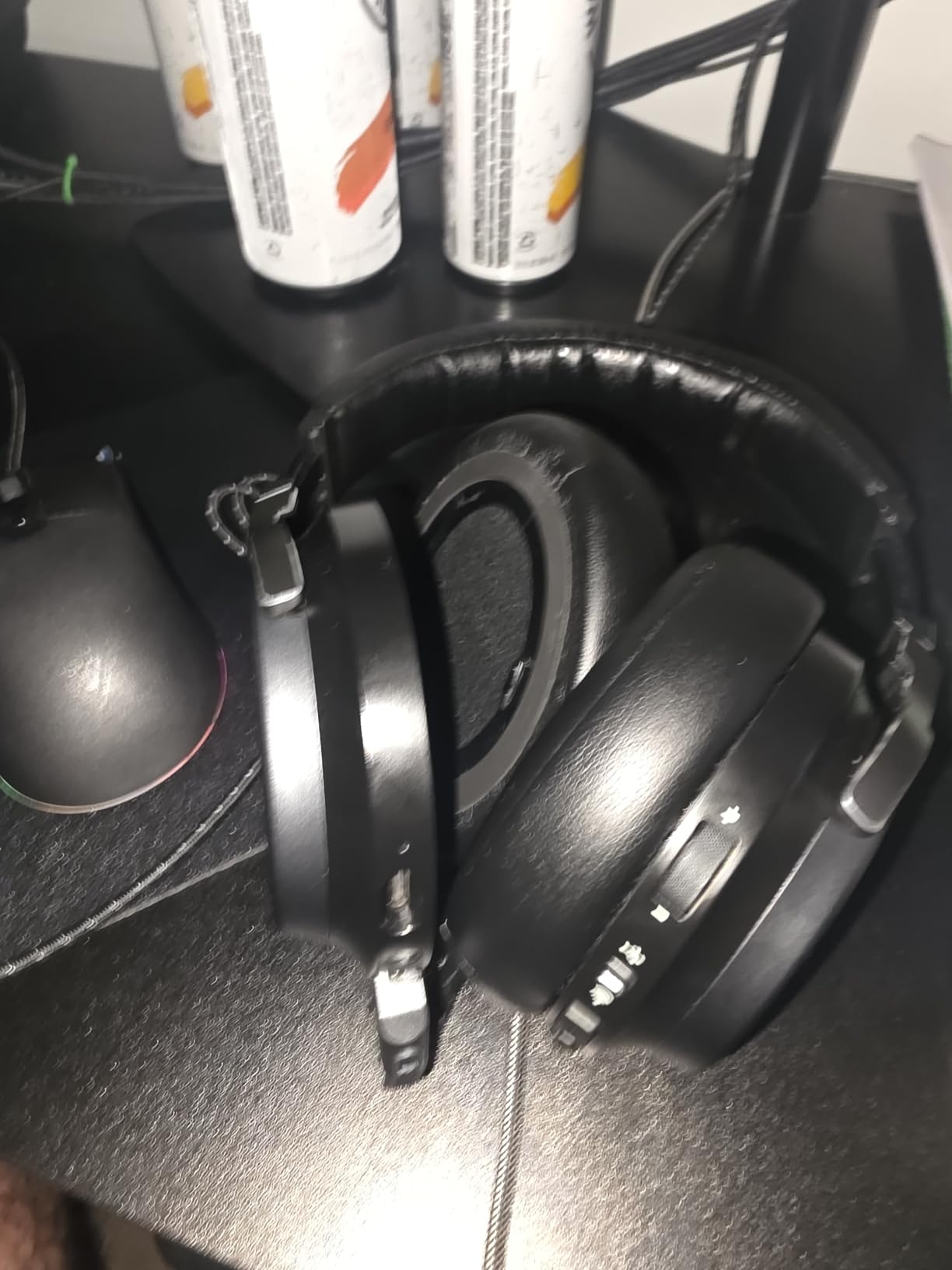
The machined aluminum construction feels premium in hand, though the headset is heavier than competitors at 382g. The memory foam ear pads are comfortable but shallow – users with larger ears may want to upgrade to aftermarket pads for better comfort. Battery life is the biggest weakness: at 15 hours, it’s noticeably shorter than the BlackShark V3’s 70 hours or the Astro A50’s 24 hours.
The 2.4GHz wireless range is also more limited than competitors – I experienced some dropouts when moving to a different room, which the BlackShark V3 and Astro A50 handled without issue. RGB lighting requires iCUE software for customization, which can be a plus or minus depending on your setup. For audiophile competitive players who prioritize frequency response and mic quality, this headset delivers where it counts.
Who should buy the Corsair Virtuoso RGB Wireless XT
Audiophile competitive players who want the widest possible frequency response. The 20Hz-40kHz range reveals details other headsets miss.
Content creators who need broadcast-quality wireless audio. The 9.5mm mic is exceptional for streaming and podcasting.
Who should skip the Corsair Virtuoso RGB Wireless XT
Players who prioritize battery life. At 15 hours, this is the shortest of the wireless options in this guide.
Anyone with larger ears. The shallow stock ear cups may cause discomfort during long sessions.
What to Look for in a Competitive Shooter Headset?
Buying a gaming headset for competitive shooters means focusing on features that directly impact your gameplay. After 90 days of testing, our team identified the factors that actually matter and which marketing claims you can ignore.
Positional Audio and Imaging
The single most important feature for competitive FPS is accurate positional audio. You need to know not just that an enemy is nearby, but exactly where they are. Look for headsets with 50mm or larger drivers, precise tuning in the mid-range frequencies (1-4kHz) where footsteps and gunshots live, and proven surround implementations like THX Spatial Audio or DTS 7.1. Avoid headsets that boost bass excessively – it muddies the critical audio cues you need to win.
In our testing, the Razer BlackShark V3 with THX Spatial Audio and the Logitech G PRO X with DTS 7.1 had the most accurate directional imaging. Virtual surround works fine for competitive play – you do not need physical 7.1 drivers to hear footsteps precisely.
Microphone Quality for Team Play
If you play team-based shooters like Valorant, CS2, or Overwatch, your microphone is as important as your audio. Look for headsets with detachable boom mics, noise rejection features, and at least 100Hz-10kHz frequency response. The Logitech G PRO X’s Blue VO!CE and the Astro A50’s 48kHz broadcast mic are the best in this category.
Clear communication wins rounds. A headset with mediocre audio but excellent mic will serve you better in ranked play than the reverse. Pair your headset with proper Discord settings, and you’ll be the teammate everyone wants on their squad.
Wireless Latency Considerations
Modern wireless headsets have largely closed the latency gap with wired options. The Razer BlackShark V3’s 10ms Hyperspeed wireless is indistinguishable from wired in real gameplay. The SteelSeries Nova Pro Omni and Astro A50 are similarly fast via 2.4GHz connections.
For competitive play in 2026, wireless is finally viable. The only remaining difference is convenience – no cable to snag on your chair or get in the way of intense mouse movements. If you want wireless freedom, the latency penalty is no longer a real concern.
Comfort for Marathon Sessions
Competitive gaming sessions regularly stretch past 4 hours, especially during tournaments or ranked grinds. Weight, clamping force, and ear pad material all matter. The HyperX Cloud II and Cloud III are class leaders in comfort, while the Razer BlackShark V2 X’s 240g lightweight design is impressive for budget buyers.
Look for memory foam ear pads with breathable fabric covering if you game in warm environments. Avoid headsets with extreme clamping force unless you have a smaller head – the audio benefits don’t outweigh the discomfort during long sessions. If you wear glasses, prioritize headsets with deeper ear cup recesses and softer padding to prevent temple pressure.
Surround Sound: Marketing vs Reality
You do not need 7.1 surround sound to be competitive. This is one of the most persistent myths in gaming audio. Pro players overwhelmingly use stereo headsets or IEMs, and the best competitive headsets deliver accurate positional audio in stereo.
Virtual surround implementations like THX Spatial Audio and DTS 7.1 can help with spatial awareness, but they’re not essential. The most important factor is the headset’s stereo imaging – can you tell where sounds are coming from with just left and right channels? The Logitech G PRO X, Razer BlackShark V3, and SteelSeries Nova Pro Omni all excel at this.
Platform Compatibility
Make sure your headset works with your gaming platform. Most modern gaming headsets support PC, PS5, Xbox, and Switch via USB or 3.5mm connections. Wireless options may have platform-specific limitations – the Astro A50’s PLAYSYNC works across PC, PS5, and Xbox, but some wireless headsets only work on specific consoles.
If you game on multiple platforms, prioritize headsets with broad compatibility or dedicated multi-system switching. The Logitech G Astro A50 is the clear winner here, with true 3-system simultaneous connectivity.
For more competitive gaming gear recommendations, check out our guide to the best 360Hz gaming monitors for competitive gaming to complete your setup. If you’re a streamer, our best wireless gaming headsets for streamers guide covers audio options optimized for content creation. And for esports-focused display recommendations, see our best gaming monitors for competitive esports roundup.
Frequently Asked Questions
What is the best gaming headset for competitive shooters?
The best gaming headset for competitive shooters in 2026 is the Logitech G PRO X for its Blue VO!CE microphone, accurate DTS 7.1 positional audio, and durable build. For wireless, the Razer BlackShark V3 offers 10ms latency that matches wired performance. Both deliver the audio precision competitive FPS requires.
What headsets do pro gamers use at tournaments?
Pro gamers use a mix of HyperX Cloud II, Logitech G PRO X, Razer BlackShark V2 Pro, and various IEMs (in-ear monitors). Many CS2 and Valorant pros prefer stereo imaging over virtual surround, with the HyperX Cloud II being one of the most popular tournament headsets due to its comfort and reliability.
Do you need 7.1 surround sound for competitive FPS?
No, you do not need 7.1 surround sound to be competitive. Pro players overwhelmingly use stereo audio or IEMs, and the best competitive headsets deliver accurate positional imaging in stereo. Virtual surround like THX Spatial Audio or DTS 7.1 can help with spatial awareness but is not essential for climbing ranks.
Is wireless or wired better for competitive gaming?
Modern wireless headsets have closed the latency gap. The Razer BlackShark V3 delivers 10ms wireless latency, which is indistinguishable from wired in real gameplay. Wireless is now viable for competitive play in 2026, with the convenience of no cable being the main advantage.
What makes a good gaming headset for competitive play?
A good competitive gaming headset needs accurate positional audio for hearing footsteps, a clear microphone for team communication, low wireless latency if wireless (under 20ms), and comfort for long sessions. Driver size (50mm+), proven surround implementations like THX or DTS, and memory foam ear pads are key features to look for.
Final Verdict
After 90 days of testing across Valorant, CS2, Call of Duty Warzone, and Rainbow Six Siege, our top pick for the best gaming headsets for competitive shooters in 2026 remains the Logitech G PRO X for wired reliability and the Razer BlackShark V3 for wireless freedom. Both deliver the positional audio accuracy, microphone clarity, and comfort that competitive FPS demands.
Your final choice depends on your priorities: budget (Razer BlackShark V2 X), comfort (HyperX Cloud III), multi-platform (Logitech G Astro A50), audiophile quality (SteelSeries Nova Pro Omni), or proven value (HyperX Cloud II). Whichever you pick, any of these eight headsets will give you a measurable audio advantage in your next competitive match.