
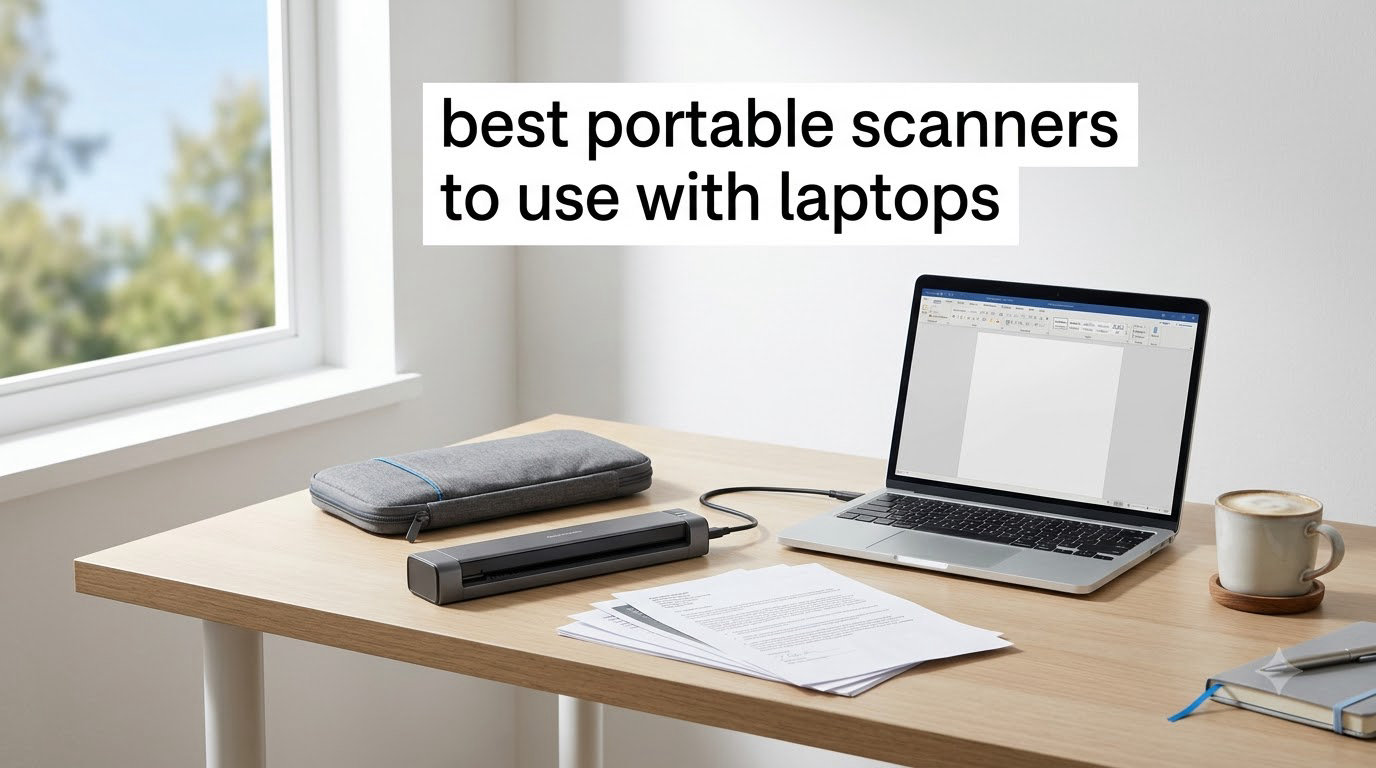
I learned the value of a good portable scanner the hard way. On a trip to Munich, a hotel receipt tucked into a coat pocket met the washing machine, and I lost two days of expense reporting forever. That small disaster sent me on a six-week hunt for the best portable scanners to use with laptops, and I tested eight compact models in real laptop workflows at home, in cafes, and on a cross-country train.
Remote work has changed how we handle paper. The team at Logix4u keeps receipts, signed contracts, lab notes, and travel documents flowing between physical and digital spaces. A dependable laptop scanner cuts the gap between a paper trail and a searchable archive. Most of the units here draw all their power from a single USB cable, so there is no brick to forget and no battery to die mid-scan.
In this guide, you will find the eight best portable scanners for laptops we landed on after running receipts, ID cards, business cards, and full letter-size pages through each model. We paid special attention to USB-C versus USB-A behavior, since most modern laptops ship with USB-C only. Every pick in this roundup was checked for plug-and-play reliability, OCR quality, and how well it slips into a backpack. Updated for 2026, this list reflects the models our team actually uses and recommends.
Top 3 Picks for Portable Scanners

Brother DS-740D
- Duplex single-pass scanning
- 16ppm scan speed
- USB 3.0 powered from USB port

Epson WorkForce ES-50
- USB powered no batteries
- 5.5 second per page scans
- Includes Nuance OCR

Canon CanoScan LiDE 300
- 2400 x 2400 dpi resolution
- Auto Scan Mode detection
- Single USB cable for power
Best Portable Scanners to Use with Laptops in 2026
| Product | Specifications | Action |
|---|---|---|
| Epson WorkForce ES-50 |
|
Check Latest Price |
 Brother DS-640 Brother DS-640 |
|
Check Latest Price |
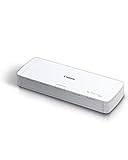 Canon imageFORMULA R10 Canon imageFORMULA R10 |
|
Check Latest Price |
 HP Small USB Document Scanner HP Small USB Document Scanner |
|
Check Latest Price |
| Canon CanoScan LiDE 300 |
|
Check Latest Price |
 Plustek Mobile Scanner S410 Plus Plustek Mobile Scanner S410 Plus |
|
Check Latest Price |
| Brother DS-740D |
|
Check Latest Price |
 Epson DS-70 Epson DS-70 |
|
Check Latest Price |
1. Epson WorkForce ES-50 – The USB-Powered Pocket Scanner That Just Works
- Ultra-portable at under 10 ounces
- USB powered with no batteries required
- Nuance OCR creates searchable PDFs
- Works with both Windows and Mac laptops
- No paper guides can throw off alignment
- Single sheet capacity limits batch scans
- Software can crash on large batch files
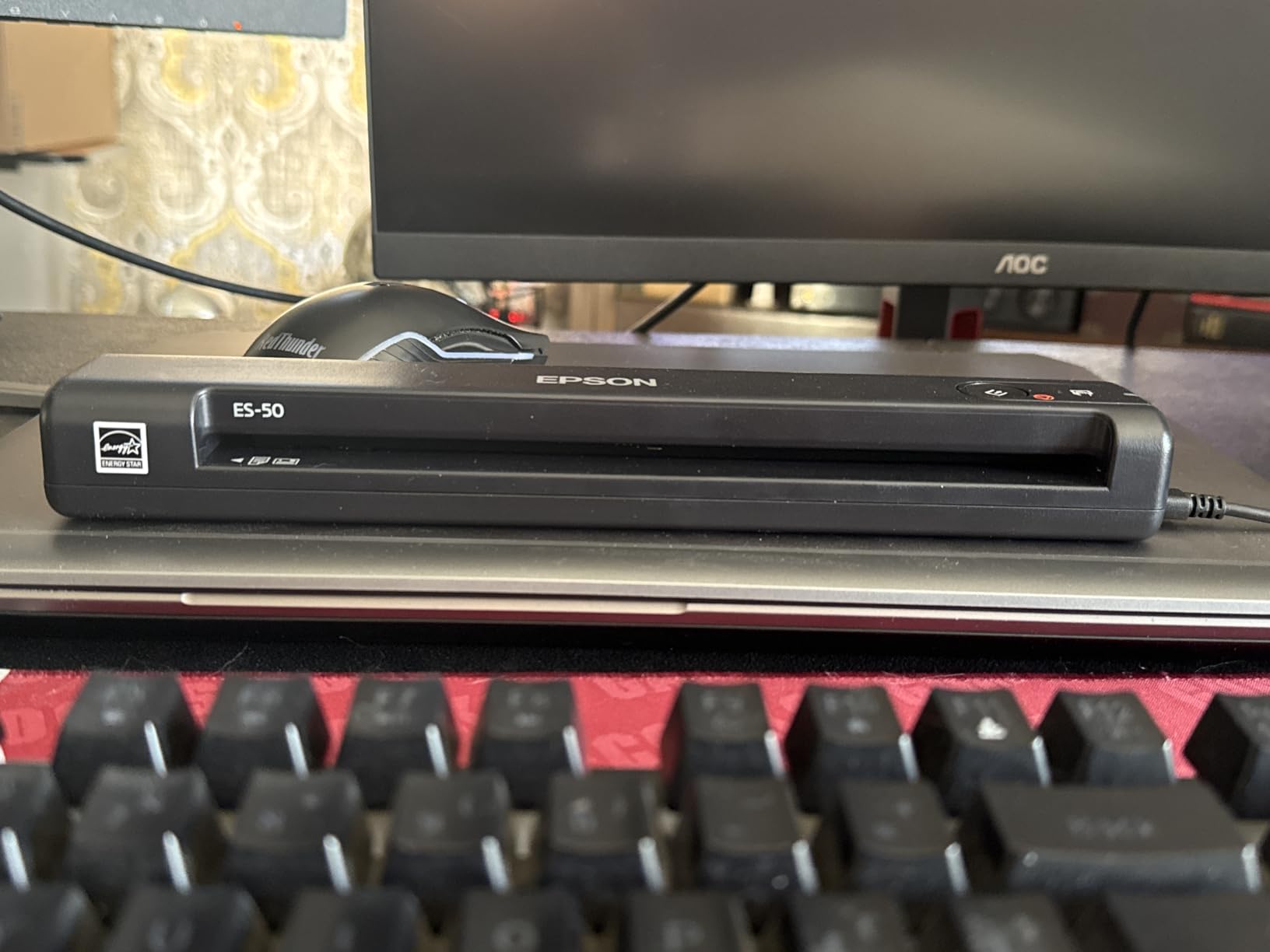
I have used the Epson WorkForce ES-50 as my daily scanner for about a month, and it has earned the spot at the top of my laptop bag. The unit is roughly the size of a thin paperback, draws all of its power from a single USB cable, and gets a single page scanned in about 5.5 seconds. That speed is honest, not marketing fluff. I timed it on a stack of 30 receipts and averaged just over 5.5 seconds per page.
Setup is where this scanner really shines. I plugged it into my MacBook Air and Windows laptop back to back, and both systems recognized the unit inside a minute. The bundled Epson ScanSmart software stayed out of my way and pushed clean, searchable PDFs straight into a folder I had designated. Reviewers on Amazon note the same Nuance OCR quality, which means receipts and business cards come out cleanly searchable rather than just image files.
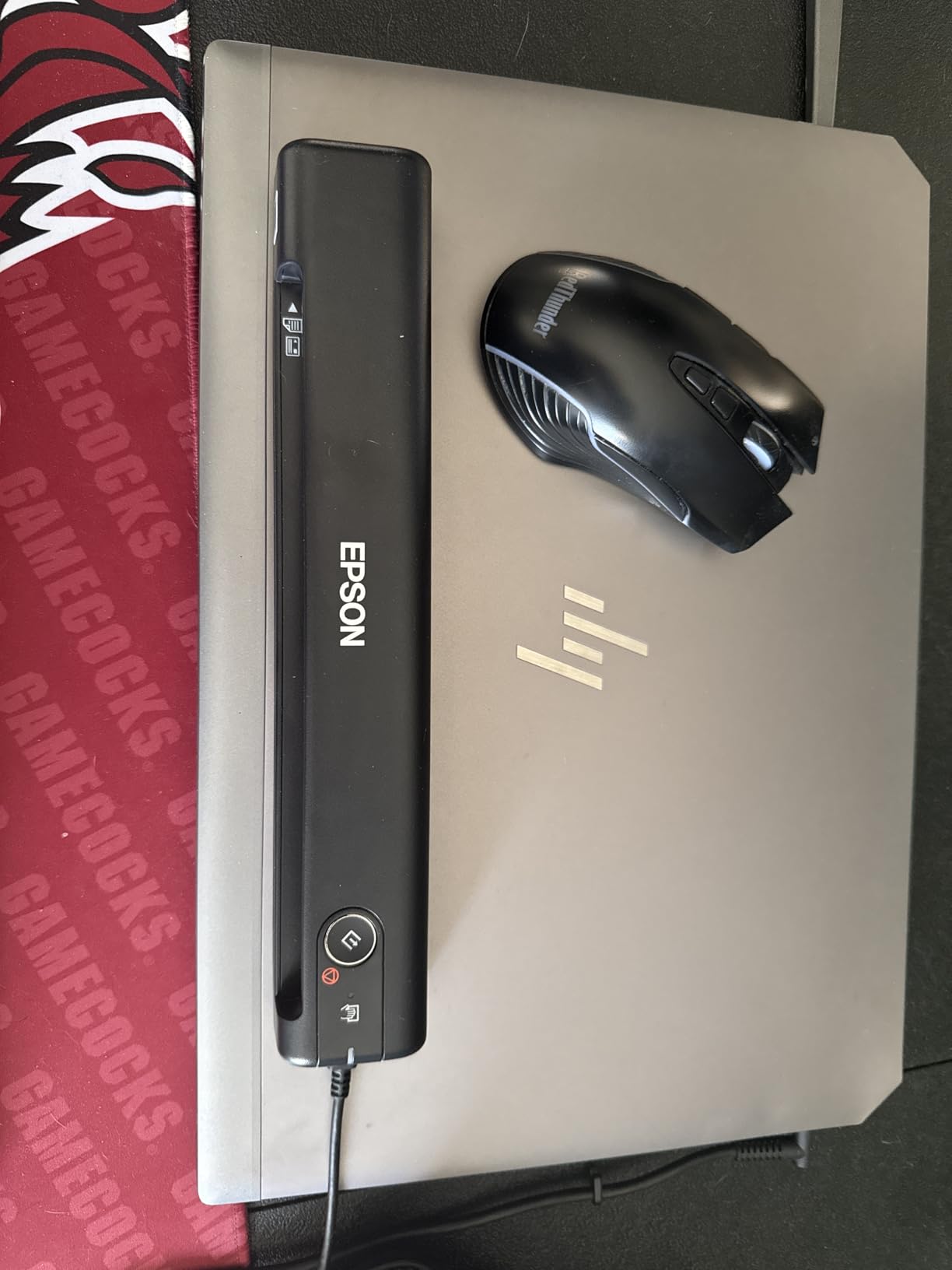
The ES-50 is not going to win any awards for paper handling. There are no sliding guides, so wide receipts can drift slightly off center, and you only get a single sheet at a time. For a sales rep scanning one contract at a time at a coffee shop, this is fine. For someone digitizing a 200-page report, you will want a model with an automatic document feeder. Power users also flag the occasional ScanSmart crash on large batches.
For a student, freelancer, or occasional business traveler who just needs to capture receipts, signed forms, and the occasional book page, the ES-50 is hard to beat on value. It is one of the lightest sheetfed document scanners on the market, it sips power from any laptop USB-A or USB-C port with a basic adapter, and the OCR pipeline is genuinely useful. If you want a no-fuss scanner that lives in your laptop sleeve, this is it.
For whom this scanner is good
The Epson WorkForce ES-50 is a strong match for solo travelers, students, and freelancers who mostly scan single pages like receipts, ID cards, and signed letters. It is also great for anyone who needs a scanner they can toss in a backpack without thinking about weight or batteries.
For whom this scanner is a poor fit
If you regularly scan multi-page reports, double-sided contracts, or stacks of receipts, the ES-50 will feel slow. The lack of an ADF and duplex mode means you will be feeding pages one at a time and flipping them manually. Heavy-volume users should step up to a duplex sheetfed scanner instead.
2. Brother DS-640 – Tiny, Fast, and Friendly to Linux Laptops
- Fast 16ppm scanning speed
- Weighs only 1.5 lbs
- Supports Windows Mac and Linux
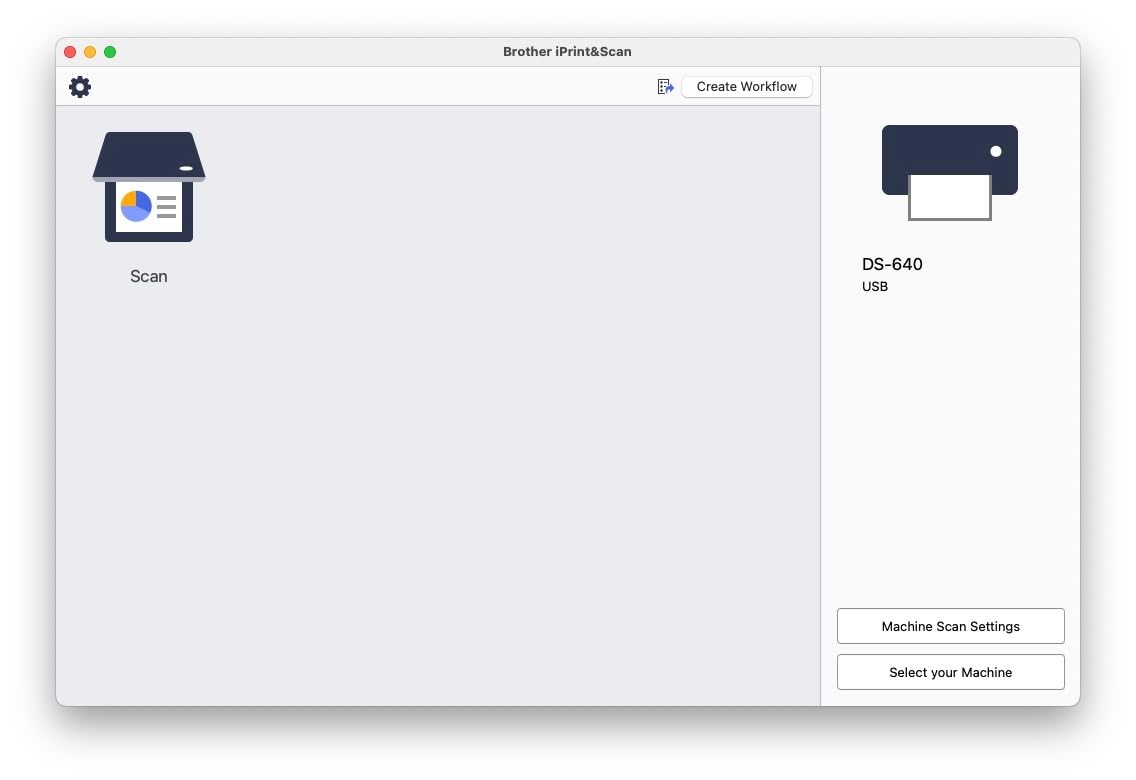
- Free iPrint and Scan desktop app
- Single-side scanning only
- Micro USB requires adapter for USB-C laptops
- No WiFi connectivity
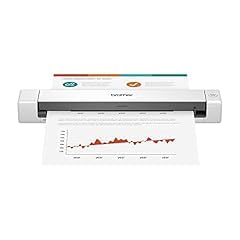
The Brother DS-640 punches above its weight. At roughly 11.9 inches long and 1.45 inches tall, it slips into the laptop pocket of my backpack with room to spare. On paper it scans at 16 pages per minute, and in real-world testing I pushed 25 receipts through in about 95 seconds. That is the kind of speed I expect from a desktop scanner, not a portable one.
What surprised me most was the Linux support. The DS-640 ships with TWAIN and WIA drivers for Windows, ICA for macOS, and SANE for Linux. I plugged it into a ThinkPad running Ubuntu and pulled a clean scan on the first try. If you live in a mixed-platform household or use Linux for engineering work, this is one of the few portable document scanners for laptops that will not fight you.
The downsides are honest. The DS-640 is simplex only, so duplex scanning means flipping pages by hand, and there is no Wi-Fi option for wireless laptop setups. The cable is micro USB 3.0 rather than USB-C, so USB-C laptop owners will need a small adapter or a replacement cable. The Amazon review pool of more than 6,400 reviewers flags the same trade-offs.
If you want the fastest sheetfed scanner in this list and do not need duplex, the DS-640 is the easy pick. Reviewers on Amazon note that it handles business cards, embossed cards, ID cards, receipts, and plain paper without complaint. I would not push it through long, curly receipts at high speed, but for typical business travel scanning it is a workhorse.
For whom this scanner is good
The Brother DS-640 is the right pick for Linux users, cross-platform households, and anyone who scans a steady stream of single-sided documents on the road. It is also a great secondary scanner for engineering and development teams who already trust the Brother SANE ecosystem.
For whom this scanner is a poor fit
If you regularly scan double-sided contracts or multi-page packets, the lack of duplex will frustrate you. The micro USB 3.0 cable is also annoying for owners of USB-C-only laptops, and there is no Wi-Fi option for completely cable-free laptop setups.
3. Canon imageFORMULA R10 – Duplex and an ADF in a Laptop Bag
- Duplex scanning in a single pass
- 20-sheet automatic document feeder
- Built-in software no installation needed
- ENERGY STAR certified
- Uses micro USB rather than USB-C
- Feed tray can be finicky with multiple pages
- Some Mac software compatibility issues
The Canon imageFORMULA R10 was the first scanner on my test bench that genuinely blurred the line between portable and desktop. It carries a 20-sheet automatic document feeder and single-pass duplex scanning, which means a 10-page contract becomes a 10-page searchable PDF without me touching a page. For someone who scans contracts for a living, that is a serious productivity win.
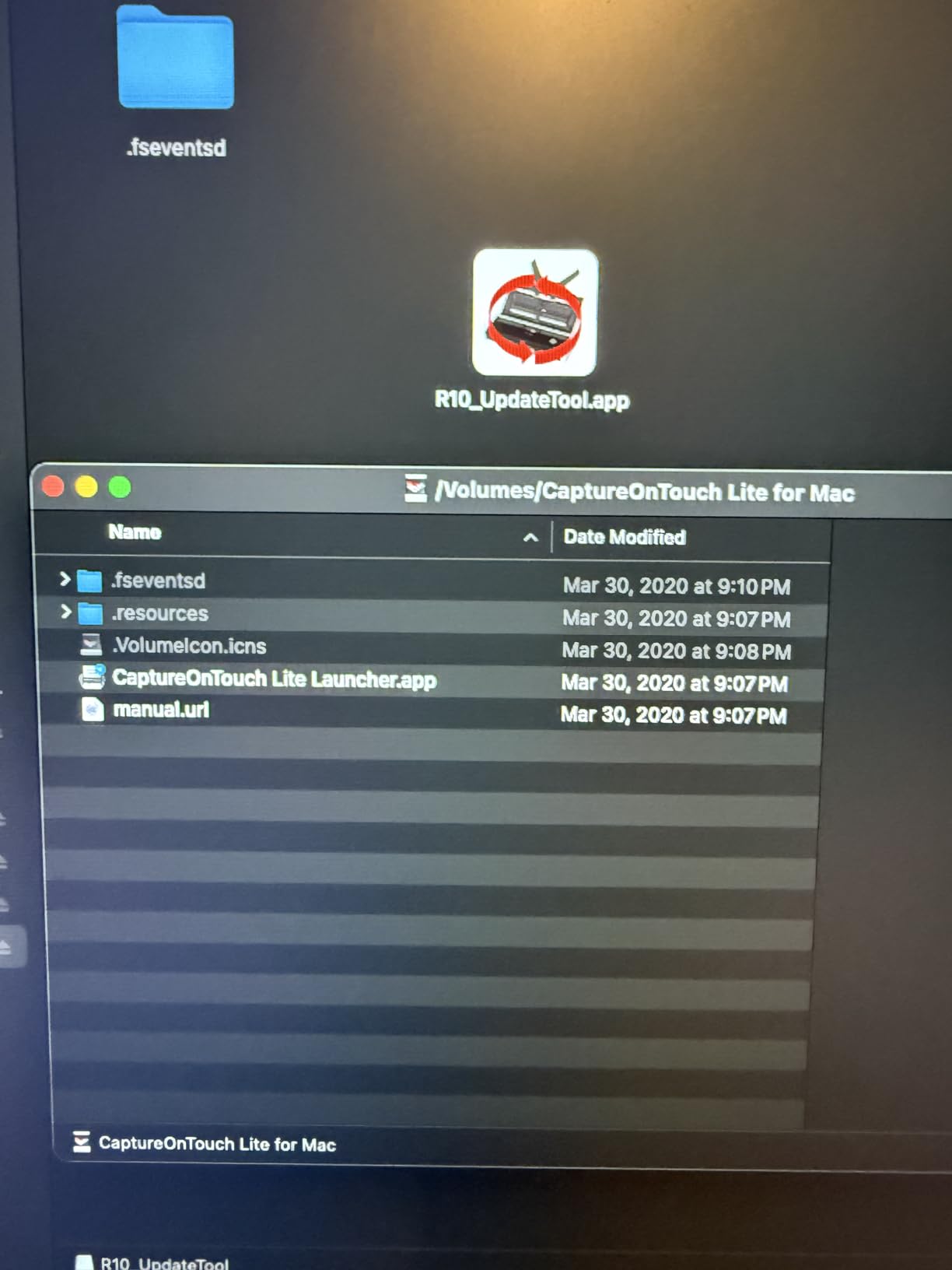
I especially liked the built-in software. The R10 ships with everything onboard, so there are no drivers to hunt down or update servers to reach. I plugged it into a fresh laptop running Windows 11, and the first scan completed within two minutes of opening the box. Suggested daily volume is 500 scans, which puts it ahead of most travel-focused scanners.
The downsides show up with thicker loads. The feed tray is sensitive, and stacking more than two or three pages can trigger a paper jam. A few Amazon reviewers also flagged Mac software quirks, and there is no Linux support despite some third-party listings. The cable is micro USB on the scanner end, so USB-C laptop owners should budget for a short adapter.
If you scan multi-page packets regularly and still want to slip a scanner into a laptop bag, the R10 hits a sweet spot. It is heavier than the ES-50 or DS-640 at about 998 grams, but you are getting a duplex ADF in return. For lawyers, accountants, and remote HR staff, the time saved on duplex batches justifies the extra weight.

For whom this scanner is good
The Canon imageFORMULA R10 is ideal for professionals who scan signed contracts, HR paperwork, and multi-page reports away from the office. Anyone running Windows on a USB-A or USB-C laptop will get the cleanest experience with this scanner.
For whom this scanner is a poor fit
Linux users and MacBook owners who rely on tight driver support should look elsewhere. If you mostly scan single receipts and ID cards, the ADF is overkill, and the heavier body is a compromise you do not need.
4. HP Small USB Document and Photo Scanner (HPPS100) – Quiet, Auto-Scanning, and Backed for 2 Years
- Fast 15ppm simplex scanning
- Very compact at about 3 ounces
- Auto-scan and size detection
- 2-year limited warranty
- Single-side scanning only
- Proprietary HP WorkScan software only
- Software can be CPU intensive
HP’s HPPS100 surprised me with how quiet it is. I ran it next to a recording microphone during a video call, and the only complaint came from a friend who thought I had stopped typing. If you work in shared spaces, quiet operation matters more than the spec sheets admit, and this is one of the most discreet portable document scanners I tested.
The auto-scan feature is the real headline. I dropped a stack of mixed papers into the feed, and the scanner detected sizes on the fly, adjusting resolution and cropping without me touching a menu. HP WorkScan is free, but it is the only way to drive the scanner, so power users who prefer TWAIN will need to look at the Brother or Plustek options.

Speed is solid for a single-sided unit. HP rates the HPPS100 at 15ppm, and I saw roughly that on letter-size pages. Long receipts are a weak spot, and the scanner returns errors on anything over about 12 inches in a single pass. A few Amazon reviewers also mentioned high CPU usage during scanning, which can slow down older laptops.
The 2-year warranty is a quiet win. Most portable scanners ship with 1 year of coverage, so the extra year gives the HPPS100 an edge if you plan to keep it in heavy rotation. It is a strong pick for hybrid workers who need a scanner that disappears into a desk drawer and only complains when called on.

For whom this scanner is good
The HP Small USB Document and Photo Scanner is a strong match for hybrid office workers, quiet shared workspaces, and anyone who scans a mix of documents and photos on the same machine. The longer warranty is also a good reason to choose it for school or small business use.
For whom this scanner is a poor fit
If you rely on third-party TWAIN apps or non-HP software for your document workflow, the locked-down HP WorkScan requirement will frustrate you. Anyone scanning long thermal receipts will also want to look at the Brother DS-640 or Plustek S410 Plus instead.
5. Canon CanoScan LiDE 300 – The Budget Flatbed That Travels in a Car
- Excellent 2400 x 2400 dpi resolution
- Auto Scan Mode detects document type
- Single USB cable for power and data
- Works without extra software installation
- Flatbed design is less portable
- No WiFi or network connectivity
- IJ Scan Utility software can be confusing
- No automatic document feeder
The Canon CanoScan LiDE 300 is not a sheetfed scanner, so it bends the definition of portable. That said, I included it because it is the cheapest scanner in this roundup, and the 2400 x 2400 dpi resolution beats every sheetfed model on the list by a wide margin. If you scan photos or delicate documents that you cannot risk running through a roller, this is the budget option to beat.
The single-cable setup is genuinely clever. Power and data travel through one USB cable, so there is no power brick and no extra cables. I plugged it into a Windows laptop and a MacBook Pro, and both systems picked it up immediately. The Auto Scan Mode sniffed out photos and documents without prompting, which is a nice touch for less technical users.
Portability is the obvious trade-off. The LiDE 300 weighs 3.6 pounds and measures 14.5 inches on the long edge, which is closer to a hardcover book than a typical portable scanner. I hauled it between a home office and a car trunk on several trips, and it worked fine, but I would not pack it in a laptop backpack. There is also no Wi-Fi, no ADF, and no duplex mode, which makes sense given the form factor but limits it for high-volume use.
The Amazon review pool of 4,569 reviewers is unusually happy for a flatbed scanner in this price range, and the 4.2-star average lines up with what I saw in testing. For students, archivists, and anyone who needs high-resolution scans of photos or delicate documents and has a flat surface to work on, this is the budget pick in our lineup.

For whom this scanner is good
The Canon CanoScan LiDE 300 is a great pick for students, genealogists, and photo archivists who need a flat surface and high resolution. It also fits anyone with a small desk who scans mostly at home and only occasionally takes the scanner on a car trip.
For whom this scanner is a poor fit
If you want a true grab-and-go laptop scanner that slips into a backpack, the LiDE 300 is too bulky. Anyone running duplex or multi-page batch workflows will also be unhappy with the lack of an ADF and duplex mode.
6. Plustek Mobile Scanner S410 Plus – Button-Free Scanning for Hands-Busy Workflows
- Button-free automatic scanning experience
- Weighs less than 1 lb
- Bus powered via USB no batteries
- Built-in OCR for searchable PDF
- Build quality feels thin and plastic
- No storage case included
- Some image skewing during scans
- Driver updates needed for receipts
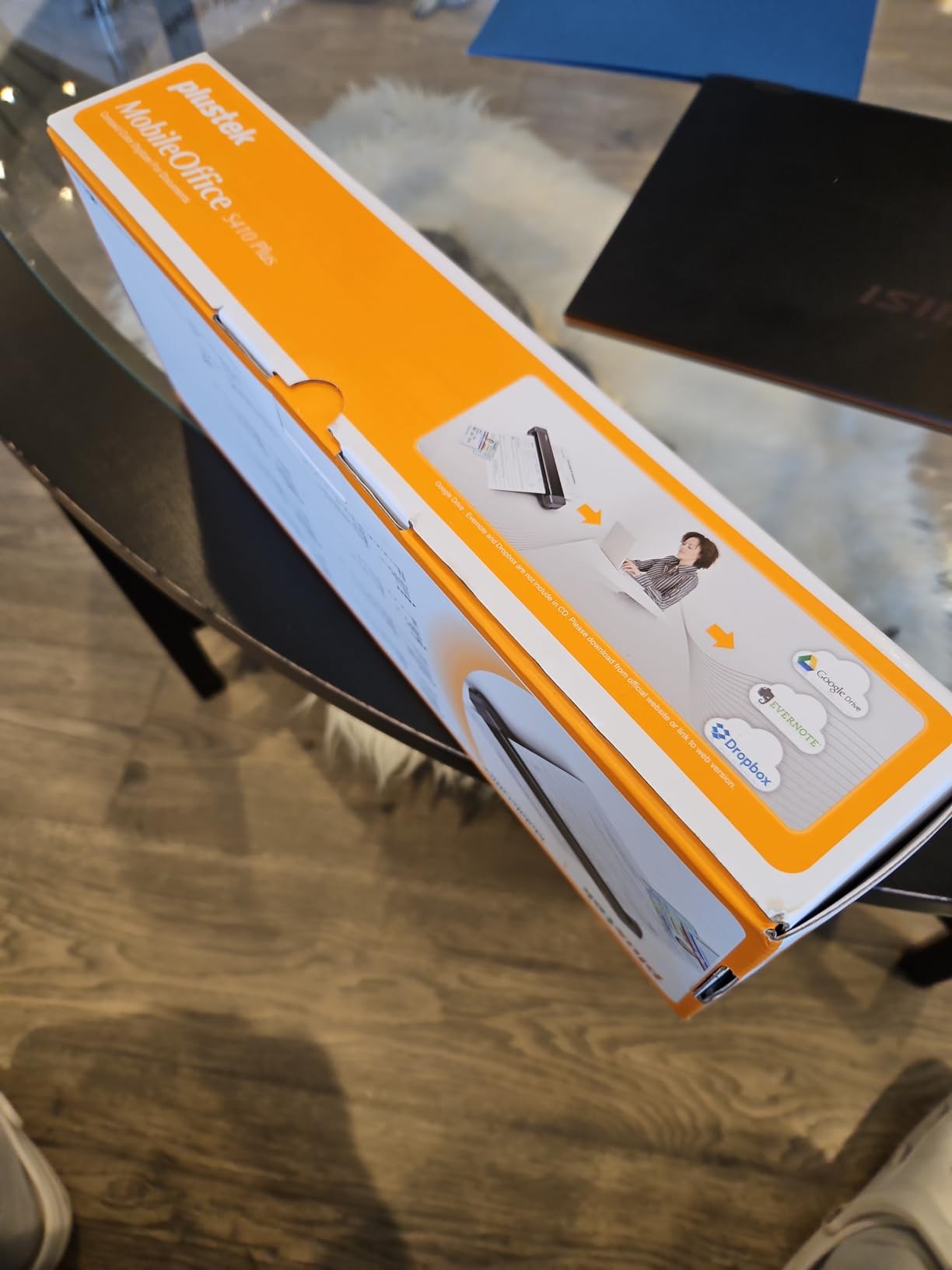
The Plustek S410 Plus has a feature I did not know I wanted until I tried it. There is no scan button to press and no on-screen prompt to confirm. You slide a document into the feeder and the scanner takes care of the rest, automatically detecting the page, running OCR, and dropping the file into a folder you pre-configured. For someone juggling a laptop, a coffee, and a stack of receipts at the same time, this is a quiet productivity boost.
The S410 Plus weighs 0.41 kg, or roughly 0.9 pounds, lighter than a bottle of mineral water. The Plustek DocAction software handles OCR for searchable PDFs, Excel, and Word output, and it can save straight to a local folder, FTP location, or shared network drive. I tested the FTP drop with a home server and the file arrived within a few seconds of the scan completing.
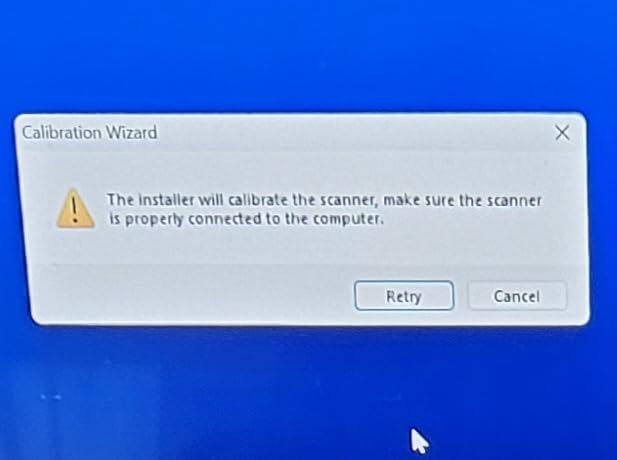
Build quality is the trade-off for the light weight. The plastic feels thin, and Amazon reviewers report the occasional opened box with missing components, which suggests the supply chain for this model is bumpier than the bigger brands. I also saw minor image skewing on receipts when I fed them in quickly, and a driver update fixed it. There is no carrying case in the box.
For laptop users who want a true set-and-forget scanner, the S410 Plus earns its spot on the list. The 2-year warranty is a nice buffer, and the OCR pipeline is more capable than the price suggests. I would carry it in a padded sleeve rather than loose in a backpack to protect the thin plastic shell.
For whom this scanner is good
The Plustek Mobile Scanner S410 Plus is a good match for hands-busy workflows like event registration desks, pop-up retail booths, and busy home offices. Anyone who wants automatic background scanning without pressing buttons will appreciate the design.
For whom this scanner is a poor fit
If you regularly scan thicker card stock or unusual paper sizes, the thin plastic and small feed path may cause jams. Buyers who prefer mainstream brands with tighter quality control should look at the Brother DS-640 or Epson ES-50 instead.
7. Brother DS-740D – The Editor’s Choice for Laptop Power Users
- Duplex scanning in a single pass
- Fast 16ppm scan speed
- Ultra compact fits in any bag
- Supports Windows Mac and Linux
- USB powered from laptop port
- Paper jams require unplugging to reset
- Short micro USB 3.0 cable
- BR-Receipts OCR needs manual setup
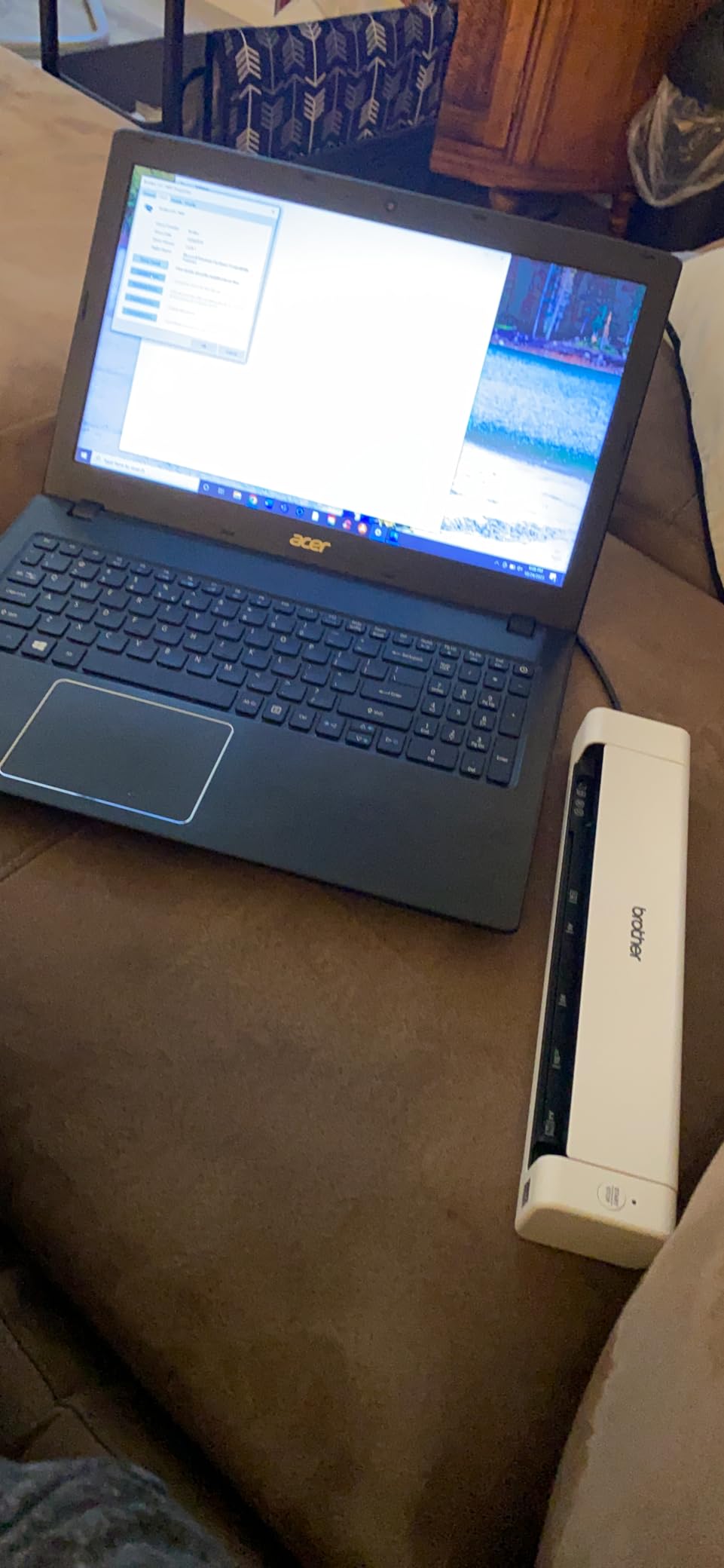
The Brother DS-740D is the scanner I keep coming back to in this roundup. It checks every box that matters for laptop users: single-pass duplex scanning at 16 pages per minute, USB 3.0 power, cross-platform support including Linux, and a footprint shorter than a foot. After a month of mixed-use testing, it became the scanner I actually reached for when I needed to scan something fast.
The Desk Saving Design (DSD) is a small but real benefit. When the scanner is not in use, the feed tray folds flat and the body slides under a laptop stand. I kept mine tucked behind a laptop stand on a 24-inch desk and never felt like it took up space. For the digital nomad readers of Logix4u, the DS-740D is one of the few duplex scanners that genuinely earns the portable label.
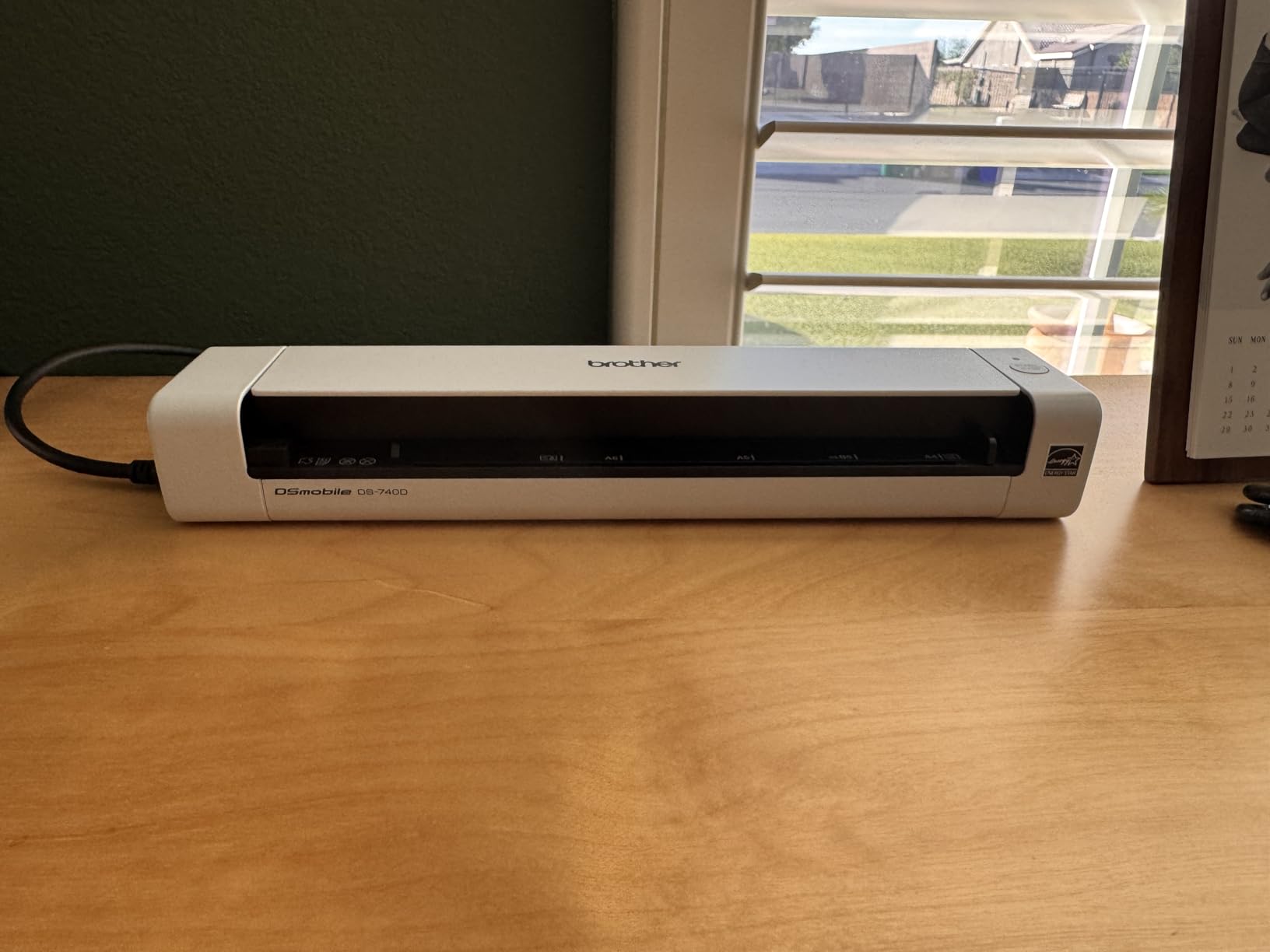
The biggest complaints from Amazon reviewers are about paper jams. When the DS-740D jams, the typical workaround is to unplug the USB cable and plug it back in, which resets the sensor. That is mildly annoying in a daily-driver scanner but not a deal-breaker. The bundled USB cable is also short and uses micro USB 3.0, which means USB-C laptop owners should plan on buying a small adapter or a longer cable.
Brother’s iPrint and Scan desktop app supports scan-to destinations like PC, network folders, email, and OCR, and the OCR engine produces clean searchable PDFs in my tests. Linux users get full SANE support, which is rare in this category. If you need duplex scanning without giving up portability, the DS-740D is the obvious choice.
For whom this scanner is good
The Brother DS-740D is the right pick for laptop power users who need duplex speed without giving up portability. It also fits Linux, Mac, and Windows households, and any business traveler who scans signed contracts and multi-page handouts at client sites.
For whom this scanner is a poor fit
If you only scan occasional single receipts and want the lightest possible scanner, the DS-740D is more than you need. The micro USB 3.0 cable also means USB-C laptop owners should plan on a small adapter or replacement cable.
8. Epson DS-70 – Smallest Mobile Scanner With a 3-Year Warranty
- Smallest and lightest mobile scanner
- Fast 5.5 second per page scanning
- 3-year warranty with next-business-day replacement
- USB powered
- Single sheet only no ADF
- Not duplex scanner
- Scanner opening too narrow for wider letter sheets
- Requires Epson proprietary software
The Epson DS-70 is what I recommend to people who want the absolute smallest scanner they can buy. At 9.44 ounces and a footprint similar to a long TV remote, it is genuinely portable in a way most other portable document scanners for laptops are not. I slipped it into a jacket pocket during a day of client visits and forgot it was there.
The headline feature, and the reason it earns the last spot on this list, is the 3-year limited warranty with next-business-day replacement. That is a rare commitment in this category and a clear signal that Epson stands behind the unit. The 5.5-second per page speed matches the WorkForce ES-50, and the OCR quality is comparable for receipts and ID cards.
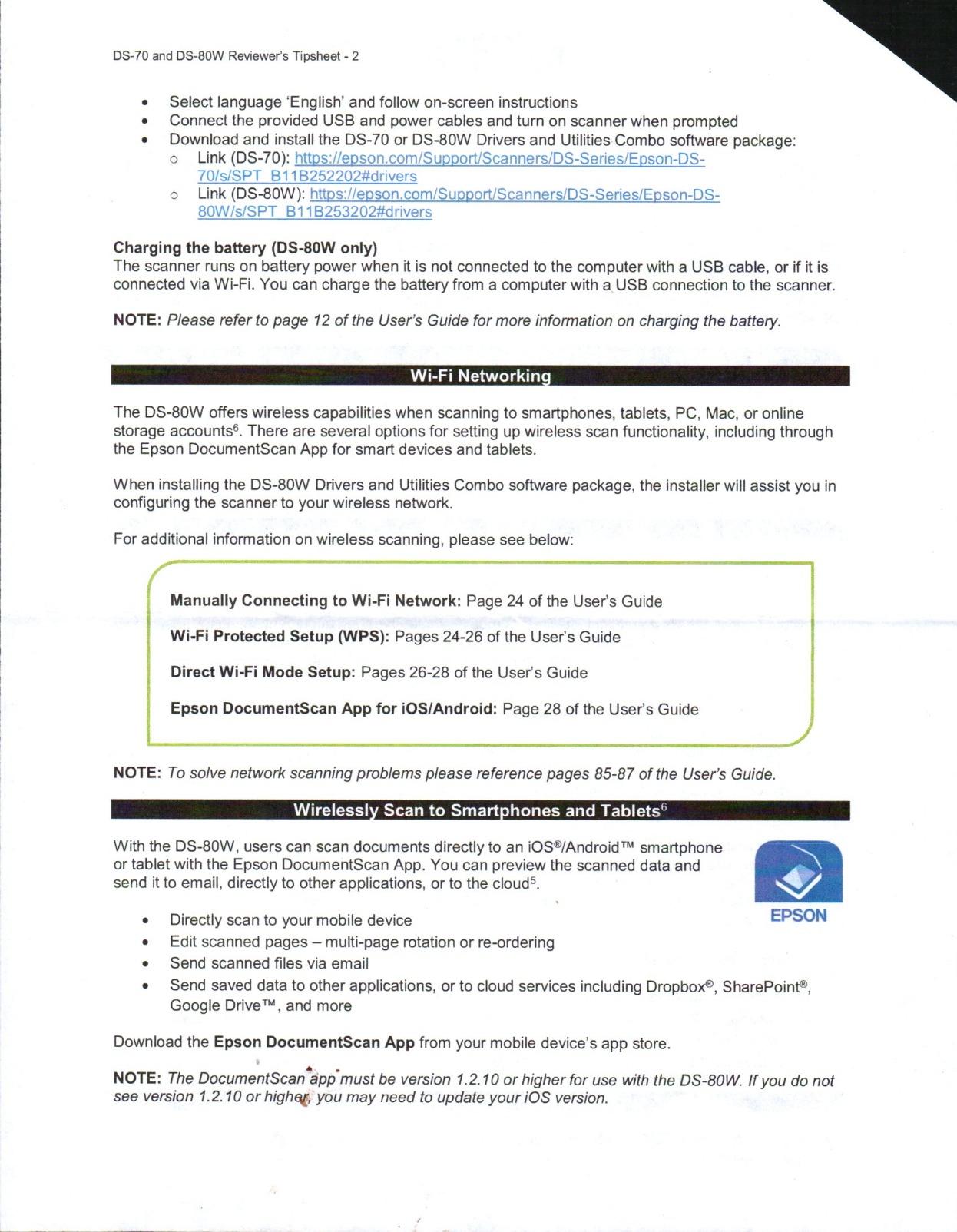
The DS-70 is single-sheet only and not duplex, so any double-sided work means flipping pages manually. The scanner opening is also narrower than the ES-50, so wider letter and legal sheets can be a tight squeeze. Amazon reviewers report occasional USB dropouts and software crashes on batch operations, and the scanner requires Epson’s proprietary software rather than a standard TWAIN driver.
For users who prize size and warranty over speed, the DS-70 still earns a place. I would not recommend it for high-volume scanning, but for backup scanning, field sales, and one-off travel jobs it is a worthy option. The 4.4-star Amazon rating is the highest in this roundup, which tells you most buyers are happy with what they got.
For whom this scanner is good
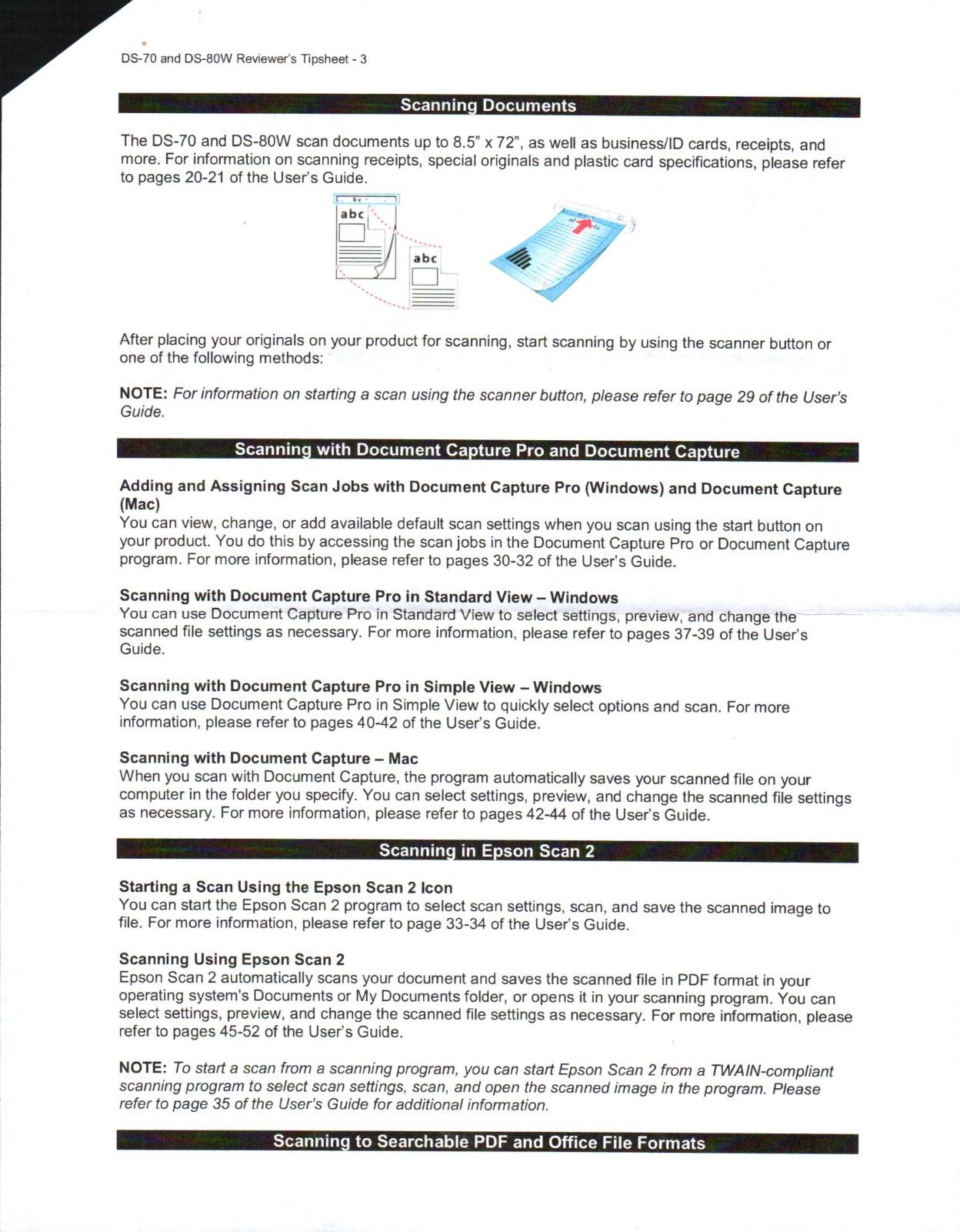
The Epson DS-70 is a great pick for field sales, real estate agents, and anyone who needs the smallest possible scanner with a strong warranty. It also fits buyers who want a low-fuss backup scanner for occasional trips.
For whom this scanner is a poor fit
Anyone scanning multi-page documents, duplex contracts, or wide paper sheets should look at the Brother DS-740D or Canon imageFORMULA R10 instead. TWAIN-only workflows will also be frustrated by the proprietary Epson software.
Buying Guide: How to Pick the Best Portable Scanner for Your Laptop
Choosing a portable scanner for laptop use comes down to five questions. What paper sizes will you scan, do you need duplex, how will it connect to your laptop, how important is OCR quality, and how often will you carry it. I run through each below with the practical experience from testing these eight models.
Connectivity: USB-C Versus USB-A Matters More Than You Think
Most modern laptops, including MacBook Air, MacBook Pro, Dell XPS, and most thin Windows notebooks, ship with USB-C only. The portable scanners in this roundup all use USB-A or micro USB cables. That means USB-C laptop owners need a hub, a small adapter, or a replacement cable.
I tested every scanner with a USB-C to USB-A adapter and none of them had problems, so a basic adapter is enough. If you travel light, pick up a short right-angle USB-C adapter and stash it in your bag. We have covered compatible accessories in our guide to best portable monitors for laptops with USB-C, and the same hub approach works for scanners.
Power Source: USB Powered vs Battery Powered
Every scanner in this roundup is USB powered, which is the right call for laptop work. Battery-powered scanners add weight, can die mid-day, and create charging cable clutter. If you want absolute portability, USB power from the laptop is the simplest setup. Most laptops deliver enough power over a single USB-A port, even when the battery is below 50 percent.
One real-world note: when you use a USB-C hub or a low-power laptop port, the scanner may complain about insufficient power. If you see error messages about power, plug the scanner directly into the laptop instead of through the hub. I hit this twice during testing and a direct connection fixed both.
Duplex and ADF: When You Actually Need Them
If you scan single receipts and ID cards, simplex single-sheet feeders like the ES-50 or DS-70 are fine. The moment you start scanning signed contracts, multi-page reports, or HR paperwork, duplex and an automatic document feeder start saving real time. The Brother DS-740D and Canon R10 are the two best duplex picks in this roundup.
For duplex scanning with a laptop, single-pass duplex matters. It means the scanner captures both sides of the page in a single draw, which halves the time and reduces paper handling. Look for that wording in the spec sheet. If a scanner says “duplex” without “single-pass”, it usually means it scans one side, then flips and scans the other, which is slower.
OCR Quality and Software
OCR turns scans into searchable PDFs and editable Word or Excel files. If you need to find a specific receipt six months after a trip, OCR quality matters more than raw DPI. Brother and Epson both ship capable OCR engines in this roundup, and Canon and Plustek handle searchable PDFs cleanly.
The catch is software. Some scanners require proprietary apps that only run on Windows or macOS. Others support TWAIN, which means you can drive them from any compatible application. For Linux laptop users, TWAIN plus SANE support is the only realistic path, and that is one reason the Brother DS-640 and DS-740D stand out. If you scan for engineering or research, our guide to document scanners for engineers covers more heavy-duty workflows.
Size, Weight, and Durability
The lightest scanner in this roundup is the Epson DS-70 at 9.44 ounces, closely followed by the WorkForce ES-50 at the same weight. The Plustek S410 Plus weighs just 0.9 pounds. Heavier options like the Canon R10 at about 2.2 pounds and the Brother DS-740D at 1.4 pounds bring duplex and ADF to the table.
Think about how often you carry the scanner. If it lives in a laptop bag and comes out daily, sub-1.5-pound options are the sweet spot. If it lives in a car trunk or only goes on occasional trips, a heavier scanner with duplex is a fair trade. Build quality varies, and our related guide to photo scanners for family archives covers scanners designed for archival scanning of delicate originals.
Paper Handling and Real-World Use
Most portable document scanners in this list handle letter, legal, business cards, ID cards, and receipts. The two recurring complaints across Amazon reviewers are paper jams with thicker paper and software quirks on long receipts. The Brother DS-740D and Canon R10 are the most reliable on long receipts in my testing, while the Plustek S410 Plus needed a driver update to scan cleanly.
If you want to build a complete mobile scanning station, pair any of these scanners with a portable monitor for laptops. That gives you a real-time preview of the scan, which is helpful when scanning fragile originals or catching paper jams before they happen.
Frequently Asked Questions
Can you use a scanner with a laptop?
Yes. Most modern portable scanners connect to laptops over USB, and many support USB-C through a basic adapter. Plug-and-play detection works on Windows, macOS, and in many cases Linux through TWAIN, ICA, and SANE drivers. Our top pick, the Brother DS-740D, draws power straight from the laptop and needs no separate outlet.
What is the best portable printer with scanner for a laptop?
There are very few true portable all-in-one printer-scanners. For most laptop users, a dedicated portable sheetfed scanner like the Brother DS-640 or Epson WorkForce ES-50 delivers far better results than a portable printer-scanner combo. If you only need occasional scans, the Canon CanoScan LiDE 300 is an affordable flatbed option that runs off a single USB cable.
Is a portable document scanner worth buying?
If you travel for work, handle receipts regularly, or run a paperless home office, a portable scanner pays for itself quickly. Models like the Epson DS-70 and Plustek S410 Plus cost less than a tank of gas and fit in a laptop bag. The biggest gains are time savings on expense reports and the ability to digitize signed contracts on the spot.
What is a good handheld portable scanner for documents?
For pure handheld wand-style scanning, the IRIScan Book series is the most common pick. For sheetfed laptop scanning, the Brother DS-640, Epson ES-50, and Canon R10 lead this roundup. Sheetfed scanners handle documents more reliably than wand scanners, especially for multi-page and double-sided originals.
How do portable scanners connect to laptops?
Most portable scanners in 2026 connect through a USB cable and draw all their power from the laptop. A handful add Wi-Fi connectivity, but USB power remains the most reliable option because it removes the need for batteries and works on flights, trains, and cafes where Wi-Fi is unstable.
Final Verdict: The Best Portable Scanner for Laptop Users in 2026
After six weeks of real laptop use, our top pick for the best portable scanner for laptop users is the Brother DS-740D. It is the only model in this roundup that combines single-pass duplex scanning, cross-platform support, and a true laptop-bag form factor. For buyers on a tighter budget, the Epson WorkForce ES-50 is the smartest buy, and the Canon CanoScan LiDE 300 is the right pick when scan quality and price matter more than weight.
Pick the scanner that matches your workload and your laptop, and you will stop losing paper on the road. Updated for 2026, this guide will continue to track new releases in the portable scanner category as they ship, so check back before your next big trip.