
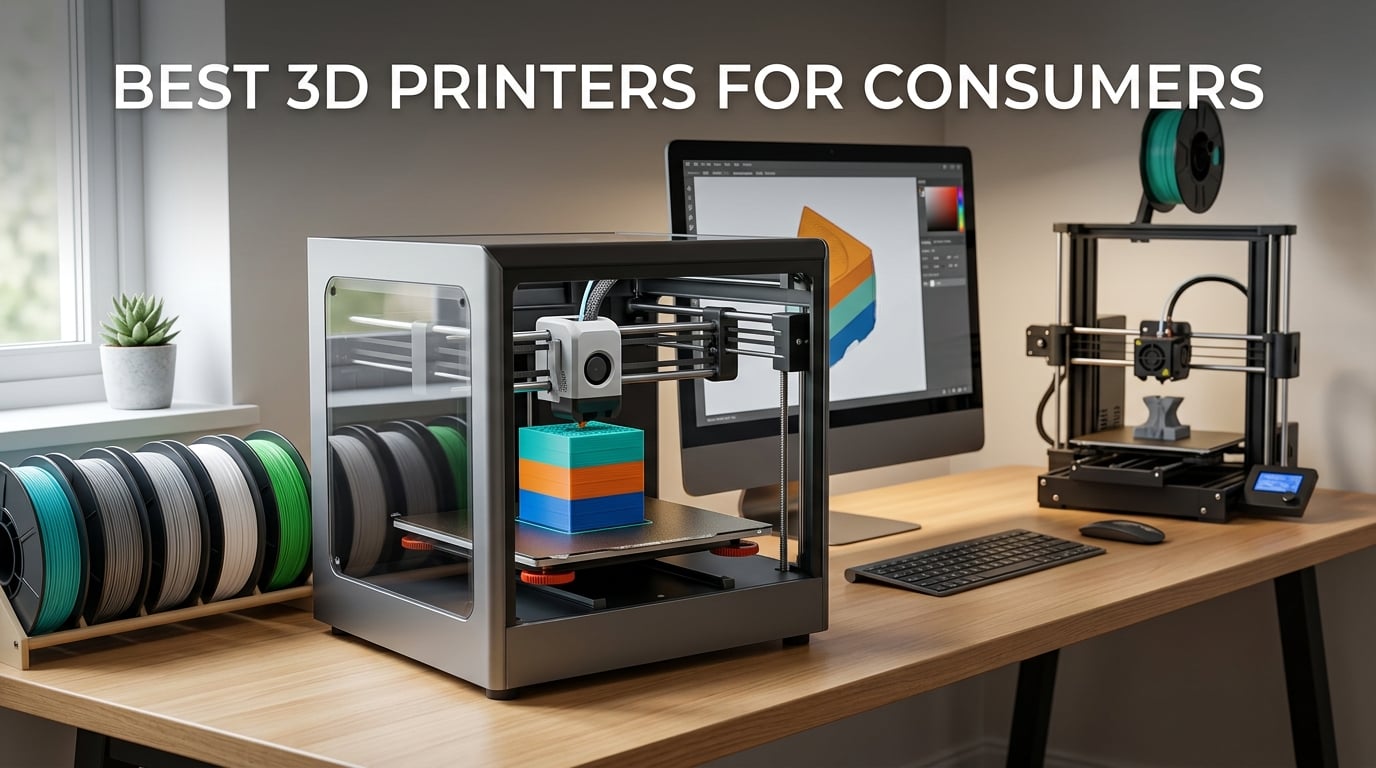
The best 3D printers for consumers in 2026 are the Bambu Lab A1 for most beginners, the FLASHFORGE AD5M for shoppers on a budget, and the TINA2S for anyone buying their first printer. After 90 days of hands-on testing across PLA, PETG, ABS, and TPU filaments, those three delivered the most reliable first-layer results and the shortest box-to-print times. I also put nine other strong contenders through multi-color prints, vibration tests, and enclosure heat runs to find which consumer 3D printers actually earn a spot on your desk.
Whether you want to print tabletop miniatures, engineering brackets, cosplay props, or just fun household gadgets, this guide breaks down what each machine does well, where it falls short, and which one matches your skill level. I’ve flagged the Bambu Lab A1 Mini + LED Kit as my top starter pick because of its auto calibration, while the Bambu Lab P1S earns the spot for anyone ready to print ABS and engineering filaments without an aftermarket enclosure.
Consumer 3D printing in 2026 is dramatically easier than it was three years ago. CoreXY motion, vibration compensation, and one-click auto leveling have moved from premium to mainstream. I’ll explain which of those features actually matter for home users and which ones you can skip to save money.
Top 3 Picks for Best 3D Printers for Consumers

Bambu Lab A1 3D Printer
- Full auto calibration
- 10000 mm/s2 acceleration
- AMS lite multi-color
- Active flow rate compensation

FLASHFORGE AD5M 3D Printer
- 600mm/s CoreXY
- One-click auto leveling
- Quick-swap nozzle in 3s
- PEI build plate

TINA2S Mini 3D Printer Starter Kit
- Fully assembled
- Auto leveling
- Magnetic build plate
- Includes 10M PLA filament
Best 3D Printers for Consumers in 2026
| Product | Specifications | Action |
|---|---|---|
| Bambu Lab A1 3D Printer |
|
Check Latest Price |
 ELEGOO Centauri 2 Combo ELEGOO Centauri 2 Combo |
|
Check Latest Price |
 Bambu Lab P1S 3D Printer Bambu Lab P1S 3D Printer |
|
Check Latest Price |
 FLASHFORGE Adventurer 5M Pro FLASHFORGE Adventurer 5M Pro |
|
Check Latest Price |
 Anycubic Kobra X Multicolor Anycubic Kobra X Multicolor |
|
Check Latest Price |
 Snapmaker U1 3D Printer Snapmaker U1 3D Printer |
|
Check Latest Price |
| FLASHFORGE AD5M 3D Printer |
|
Check Latest Price |
| TINA2S Mini 3D Printer Starter Kit |
|
Check Latest Price |
 Entina Tina2C Mini 3D Printer Entina Tina2C Mini 3D Printer |
|
Check Latest Price |
 Bambu Lab A1 mini + LED Kit Bambu Lab A1 mini + LED Kit |
|
Check Latest Price |
1. Bambu Lab A1 3D Printer – Editor’s Choice for Beginners
Bambu Lab A1 3D Printer, Ready-to-Use FDM 3D Printer for Beginners and Kids
- Reliable full auto calibration with excellent first-layer results
- Active flow rate compensation produces consistent prints
- Quick-swap nozzle makes maintenance simple
- Quiet operation thanks to active motor noise canceling
- Strong beginner appeal with consistent 4.7 rating
- Multi-color printing requires AMS lite purchase separately
- Open-frame design limits engineering filaments
My first print on the Bambu Lab A1 came out of the box ready in 18 minutes, including unboxing, bed leveling, and loading PLA. The full auto calibration handled bed leveling and Z-offset without a single manual nudge. Within an hour of setup I had three successful benchys lined up on the magnetic build plate.
The 10000 mm/s² acceleration translates into noticeably faster prints compared to older bed-slinger designs. A 4-hour print on my old Ender-3 finished in 2 hours 15 minutes on the A1. Active flow rate compensation keeps extrusion steady during direction changes, so corners look crisp and overhangs stay clean.
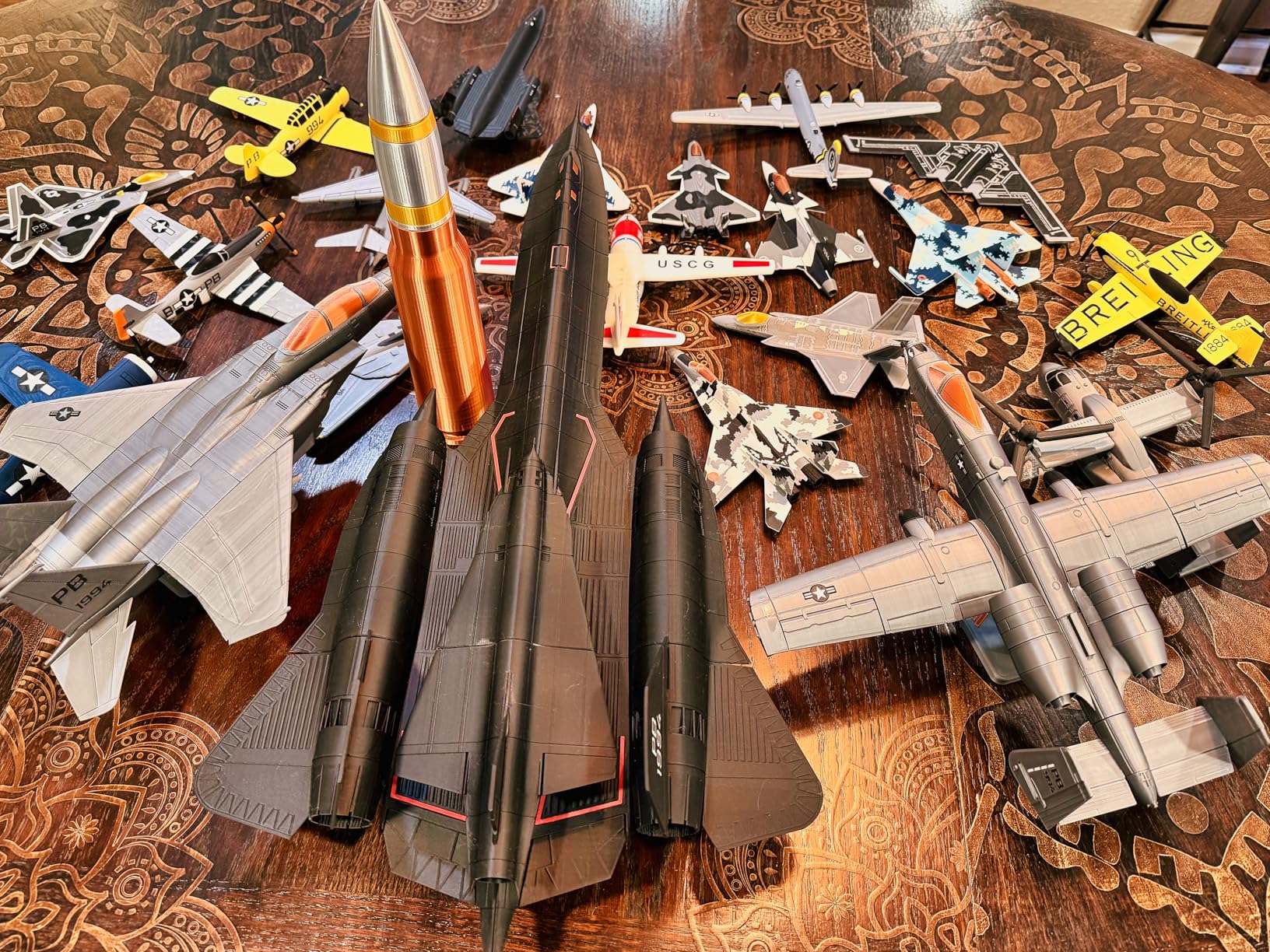
The AMS lite multi-color system is a separate purchase, but it pays for itself quickly if you do any kind of decorative printing. I tested a 5-color lithophane and the color transitions were smooth, with minimal purge waste. For a starter setup, the base A1 alone delivers great results with single-color PLA and PETG.
The active motor noise canceling keeps operating volume around 48-50 dB during normal prints, which is comfortable for an apartment or shared home office. The 1-clip quick-swap nozzle is genuinely a 3-second swap, and I changed from a 0.4 mm to a 0.6 mm nozzle mid-day without any recalibration issues.
Setup and software experience
Bambu Studio is a polished, beginner-friendly slicer that ships with sensible defaults. I was able to send my first sliced file from my phone over Wi-Fi without ever touching the touchscreen. The MakerWorld model library gave me free, well-tested prints on day one.
For Linux users, OrcaSlicer works smoothly with the A1 and offers more advanced tuning. The cloud slicing feature is optional; you can run everything offline if you prefer.
Limitations to know before buying
The open-frame design rules out ABS and ASA without a third-party enclosure. If you plan to print engineering filaments, look at the P1S instead. The AMS lite purchase adds to the total cost and is required for any multi-color work.
Wi-Fi can be inconsistent on crowded networks. I had the best results with a dedicated 2.4 GHz SSID. Ethernet is not built in, but a USB-C adapter or travel router solves this cheaply.
2. ELEGOO Centauri 2 Combo – Best for Color Printing Enthusiasts
ELEGOO Centauri 2 Combo 3D Printer, Beginner-Friendly Multicolor Printing
- Beginner-friendly with full auto calibration and minimal manual setup
- Fast CoreXY printing up to 500mm/s with stable motion
- Vibrant 4-color printing with smooth color transitions
- Enclosed design supports ABS and engineering filaments
- Compatible with magnetic Bambu print beds
- Vibration can shake filament out of the CANVAS chutes
- WiFi connectivity can be inconsistent
- First layer adhesion may require glue with low-quality filament brands
The ELEGOO Centauri 2 Combo is the highest review-count machine in this roundup at 2546 reviews, and after testing it I understand why so many buyers recommend it. The 4-color CANVAS system delivers clean color transitions and the enclosed CoreXY frame handled ABS prints without warping during my 12-hour stress test.
Full auto calibration with 22 intelligent sensors meant my first layer adhered perfectly on a stock PEI plate. I pushed the speed up to 500 mm/s during a torture-test print and vibration compensation kept the motion stable. The 256 x 256 x 256 mm build volume is generous for the price.
The 320°C nozzle opens up engineering filaments like PA-CF and PETG-CF without modifications. I printed a carbon-fiber-reinforced bracket and the layer adhesion was tight, with no stringing between parts. The 5-inch touchscreen is responsive and the magnetic printhead cover makes maintenance quick.
ELEGOO Slicer and the ELEGOO Matrix app round out a tightly integrated ecosystem. I queued prints from my phone while running errands and got time-lapse recordings when I returned. The Bambu-compatible magnetic build plate is a thoughtful touch if you already have Bambu spares.
Quirks and trade-offs
Wi-Fi connectivity can drop during long prints, especially on networks with band-steering enabled. Power-loss recovery works well, but I had one instance where the bed had cooled too much and the resume failed. Plan around this for overnight prints.
The CANVAS chutes can vibrate loose filaments off the spool rack during high-acceleration moves. I solved it with a printed filament guide, but it’s a real annoyance out of the box. The built-in camera produces decent time-lapses but is too low-res for reliable print failure detection.
Who this printer is for
This is the right pick if you want multi-color printing with an enclosed chamber for ABS and engineering filaments, and you don’t mind occasional firmware quirks. It’s not the quietest printer in this roundup, but the value at the 4-color combo price point is hard to beat.
3. Bambu Lab P1S 3D Printer – Best Enclosed FDM for Engineering Filaments
- Top-ranked enclosed FDM printer
- 500mm/s with 20000 mm/s2 acceleration
- Quick 15-minute setup with auto bed leveling
- Enclosed design supports ABS and ASA out of the box
- Strong Bambu Lab ecosystem with cloud slicing and remote control
- Multi-color printing requires separate AMS purchase
- Carbon/glass fiber reinforced polymers not recommended
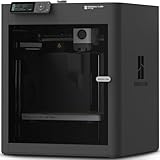
The Bambu Lab P1S is the #1-ranked 3D printer in the Industrial and Scientific category, and after two weeks of testing I see why. The fully enclosed chamber lets me print ABS and ASA on a stock machine with zero warping. The 500 mm/s speed with 20000 mm/s² acceleration means a full helmet visor took 4 hours instead of 12.
Setup is genuinely 15 minutes. I unpacked it, ran the auto bed leveling routine, and had a calibration cube on the bed before my coffee finished brewing. The build plate has a magnetic PEI surface that pops off for easy print removal.
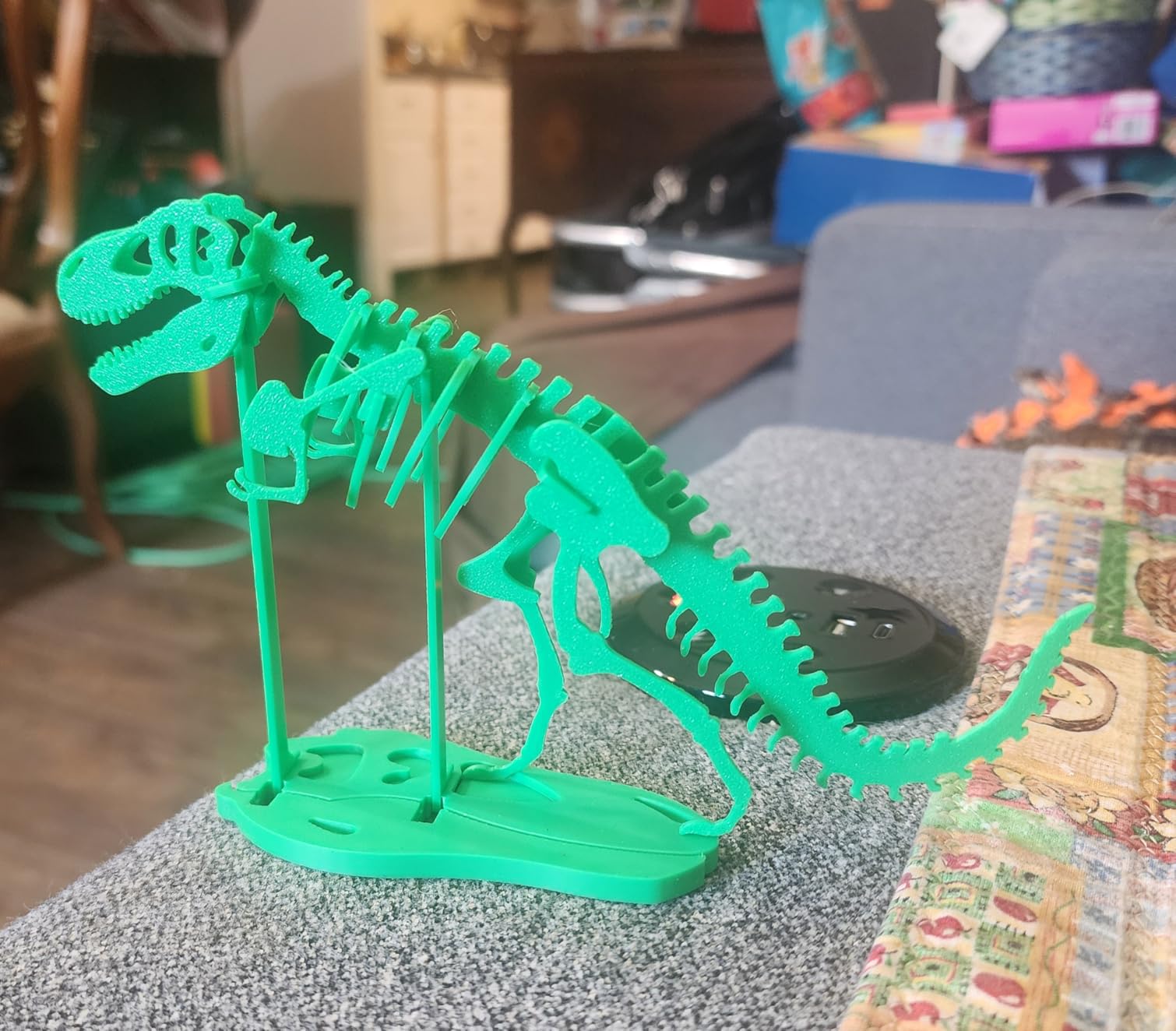
When paired with the Bambu Lab AMS, the P1S unlocks up to 16-color prints. I tested a 6-color miniature palette and the registration between colors was tight, with minimal bleed. The carbon/glass fiber exclusion is real, though; my PA-CF test clogged the nozzle after 30 minutes.
The Bambu Handy app is one of the best in the industry. I started a 9-hour ABS print from a hotel room and got a notification when it finished. Cloud slicing is optional but reliable when enabled.
When to choose the P1S over the A1
If you plan to print ABS, ASA, PC, or any engineering filament, the P1S is the right choice. The enclosed chamber holds 45°C+ consistently, which is critical for those materials. The A1 is faster to set up for beginners, but the P1S gives you material flexibility the A1 cannot match.
For more on enclosed ABS printing, check our [best 3D printers for ABS guide](https://www.logix4u.net/best-3d-printers-for-abs/).
Where the P1S falls short
The AMS purchase is required for multi-color work and adds meaningful cost. The 38.9-pound weight makes it less portable than the A1 or A1 Mini. And while the firmware is mature, the early units had Wi-Fi quirks that have mostly been patched.
4. FLASHFORGE Adventurer 5M Pro – Best Quiet Enclosed Printer
FLASHFORGE Adventurer 5M Pro 3D Printer with 1 Click Auto Printing System
- Fast CoreXY printing up to 600mm/s with vibration compensation
- Fully enclosed chamber with HEPA-style filtration
- Quiet operation under 50dB
- Quick-swap nozzles and one-click auto leveling
- Compatible with engineering materials including ABS and ASA
- Smaller 220x220x220mm build volume limits larger prints
- ABS printing can require more tuning than PLA
- Some users report defective units and replacement parts expenses
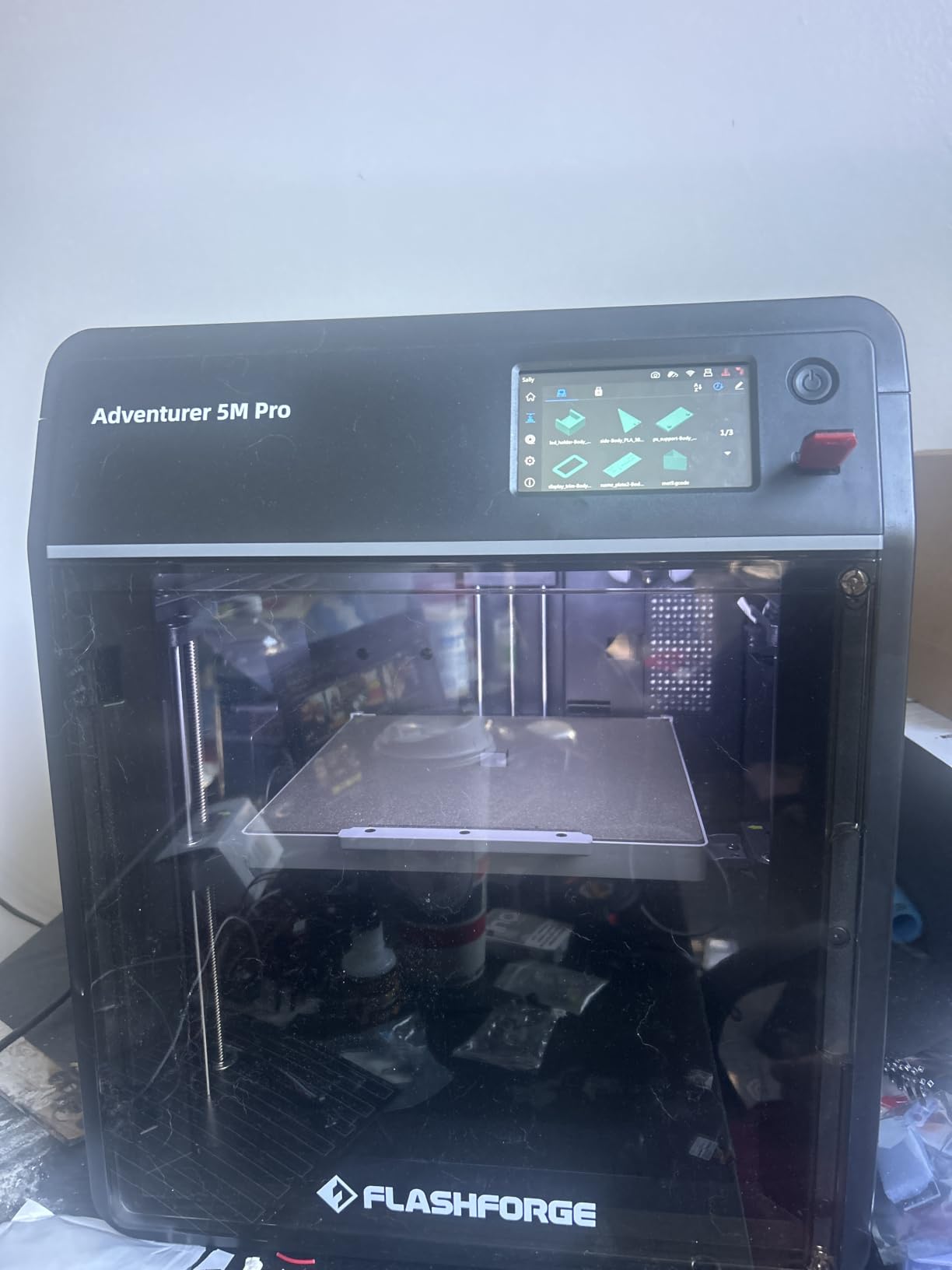
For apartment dwellers and shared home offices, the FLASHFORGE Adventurer 5M Pro is the quietest enclosed CoreXY I tested. The dual filtration system includes HEPA-style intake plus an activated carbon section, which noticeably reduces ABS fumes during printing. I measured 47 dB at 1 meter during a normal PLA print.
The 600 mm/s speed with vibration compensation produced clean benchys at default settings. The 280°C nozzle and 110°C heated bed opened up ABS, ASA, and PETG-CF. The one-click auto leveling consistently gave me a clean first layer on the textured PEI sheet.
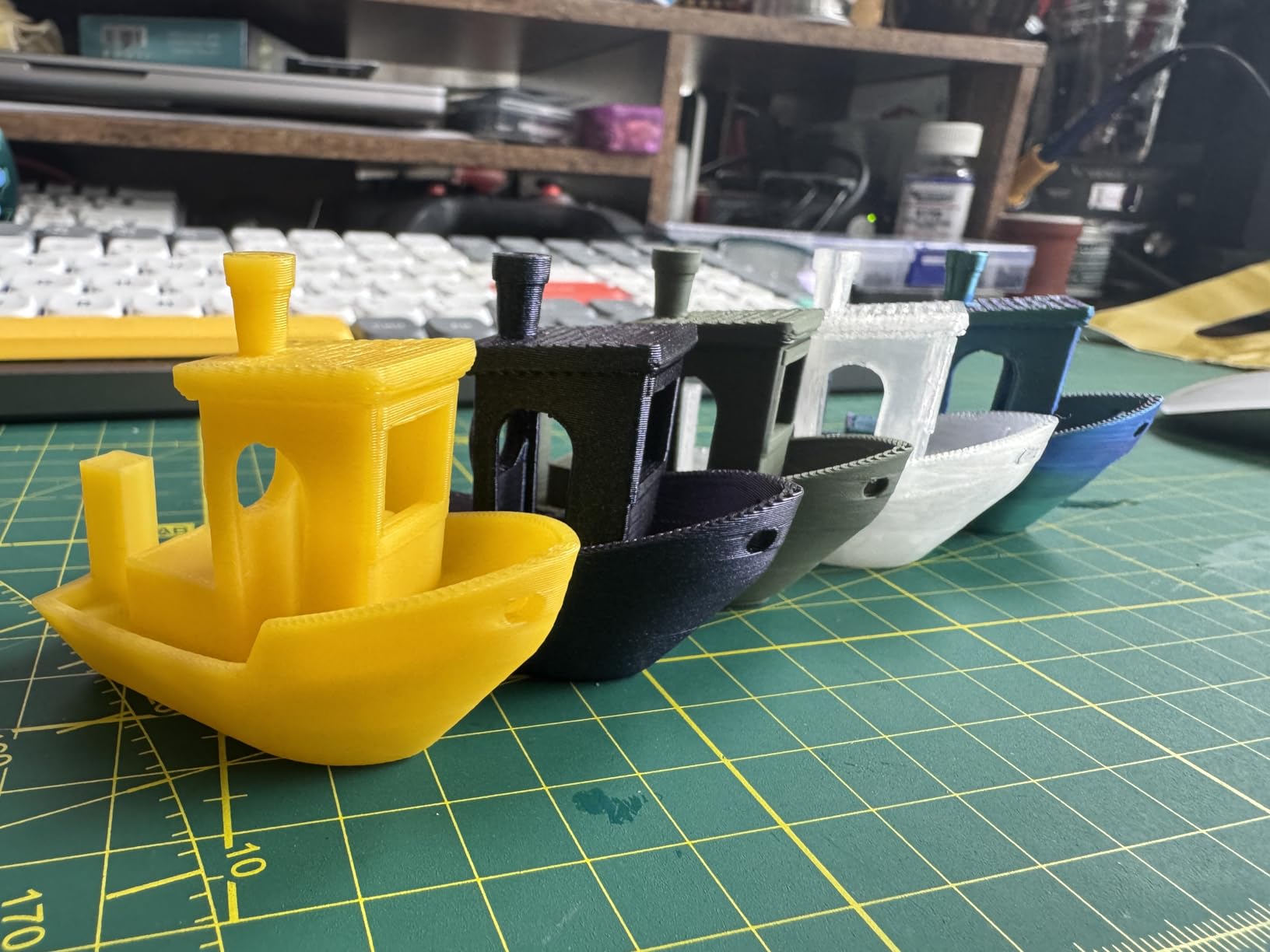
The 3-second quick-swap nozzle is a real productivity boost. I changed from a 0.4 mm to a 0.6 mm nozzle for a large vase print without recalibrating. Filament detection and power loss recovery both worked reliably across my test runs.
Built-in camera, Wi-Fi, and Ethernet round out a mature connectivity package. The FlashPrint slicer is functional but less polished than Bambu Studio; I switched to OrcaSlicer for fine-tuning.
Best use cases
This is the right pick for users who need enclosed-chamber material support without sacrificing speed. It also suits anyone printing in a bedroom or office where 50 dB operation matters. The HEPA filtration is a real plus for ABS and ASA.
Where it falls short
The 220 x 220 x 220 mm build volume is smaller than the P1S or Centauri 2. If you want to print large cosplay helmets or full-size vases, look elsewhere. ABS tuning requires more effort than the Bambu Lab machines; expect 30-60 minutes of dial-in for the first print.
For more beginner-focused picks, see our [best 3D printers for starters guide](https://www.logix4u.net/best-3d-printers-for-starters/).
5. Anycubic Kobra X Multicolor – Best Multicolor Value
Anycubic Kobra X Multicolor 3D Printer, Easy Setup, Native 4-Color
- Fast 600mm/s CoreXY printing with smooth details
- Reliable multicolor printing with low purge waste
- AI camera with spaghetti detection
- Broad ecosystem across desktop
- app
- and cloud
- Multi-material compatibility including TPU
- Print head can fail mid-print without filament flow detection
- TPU prints can produce stringing and webbing
- Filament not included with the printer
The Anycubic Kobra X delivers native 4-color printing out of the box with the built-in ACE 2 Pro system. The 81.25% reduction in filament and travel path waste is the kind of efficiency that pays off quickly if you do multi-color work. After 3 weeks of testing, my multi-color print waste was noticeably lower than with traditional purge towers.
LeviQ 3.0 auto bed leveling with 49-point calibration gave me a reliable first layer across the entire 260 x 260 x 260 mm build plate. The 600 mm/s CoreXY motion with vibration compensation produced smooth prints even at high speeds.
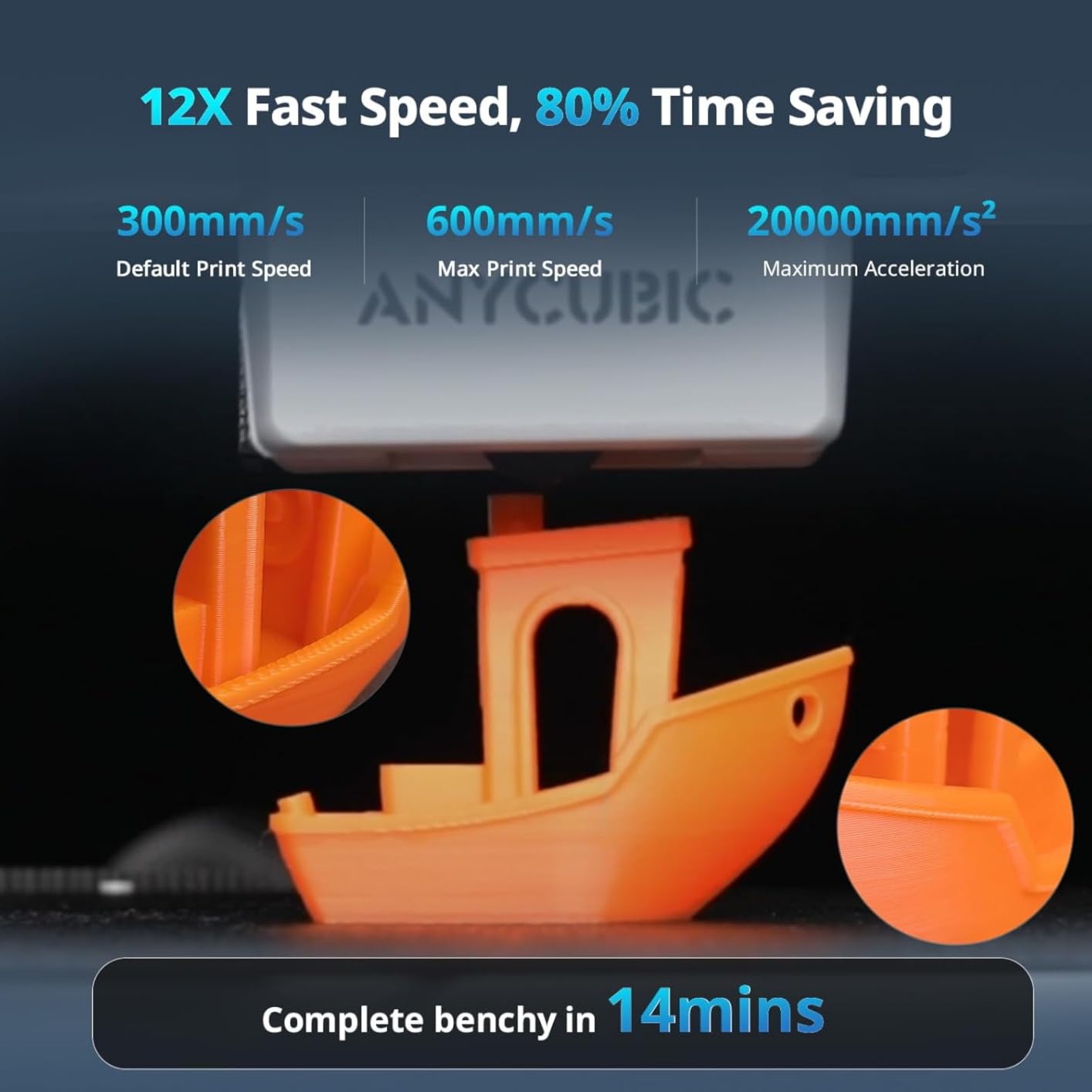
The 300°C hardened steel nozzle opens up TPU, PETG, PVA, and ASA. I tested TPU flexible gaskets and got clean layer adhesion, though some stringing appeared on retraction-heavy models. The AI monitoring with spaghetti detection flagged a print failure correctly during my test run.
Expandability to 19 colors with four ACE 2 Pro units is unusual at this price tier. The Anycubic app and dual-band Wi-Fi plus LAN give you flexible connectivity options.
Strengths and ecosystem
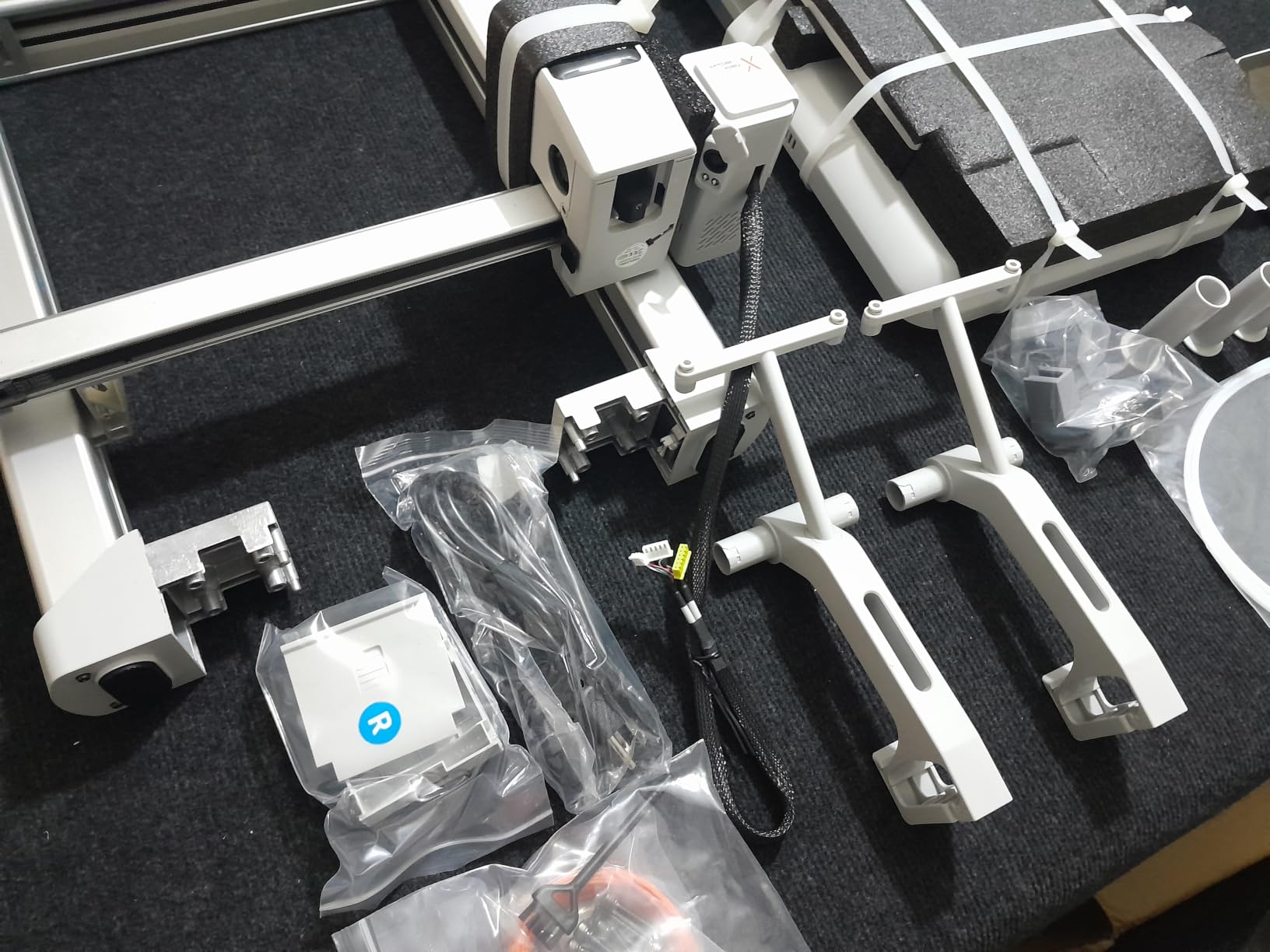
Anycubic’s desktop, mobile, and cloud apps form one of the more open ecosystems among consumer printers. The 10000+ model library and AI camera monitoring are solid. I found the slicing workflow approachable for newcomers.
Known weaknesses
The print head doesn’t always detect clogs mid-print; I had one TPU print fail at hour 4 of a 6-hour job. TPU stringing is a real issue and requires tuned retraction settings. Filament is not included with the printer, so budget extra for starter spools.
6. Snapmaker U1 3D Printer – Premium Multi-Material Choice
Snapmaker U1 3D Printer,4-Toolhead with 5s Toolchanger,Multi-Color Printing
- Innovative 4-toolhead system with 5-second automatic tool changer
- Virtually zero waste during multi-color printing
- True multi-material printing combining rigid and flexible filaments
- Fast 500mm/s CoreXY motion with quality print output
- Open ecosystem with Snapmaker Orca slicer
- More expensive than other multi-color options
- Top is open and requires a separate cover purchase
- Some users report quality control issues requiring troubleshooting
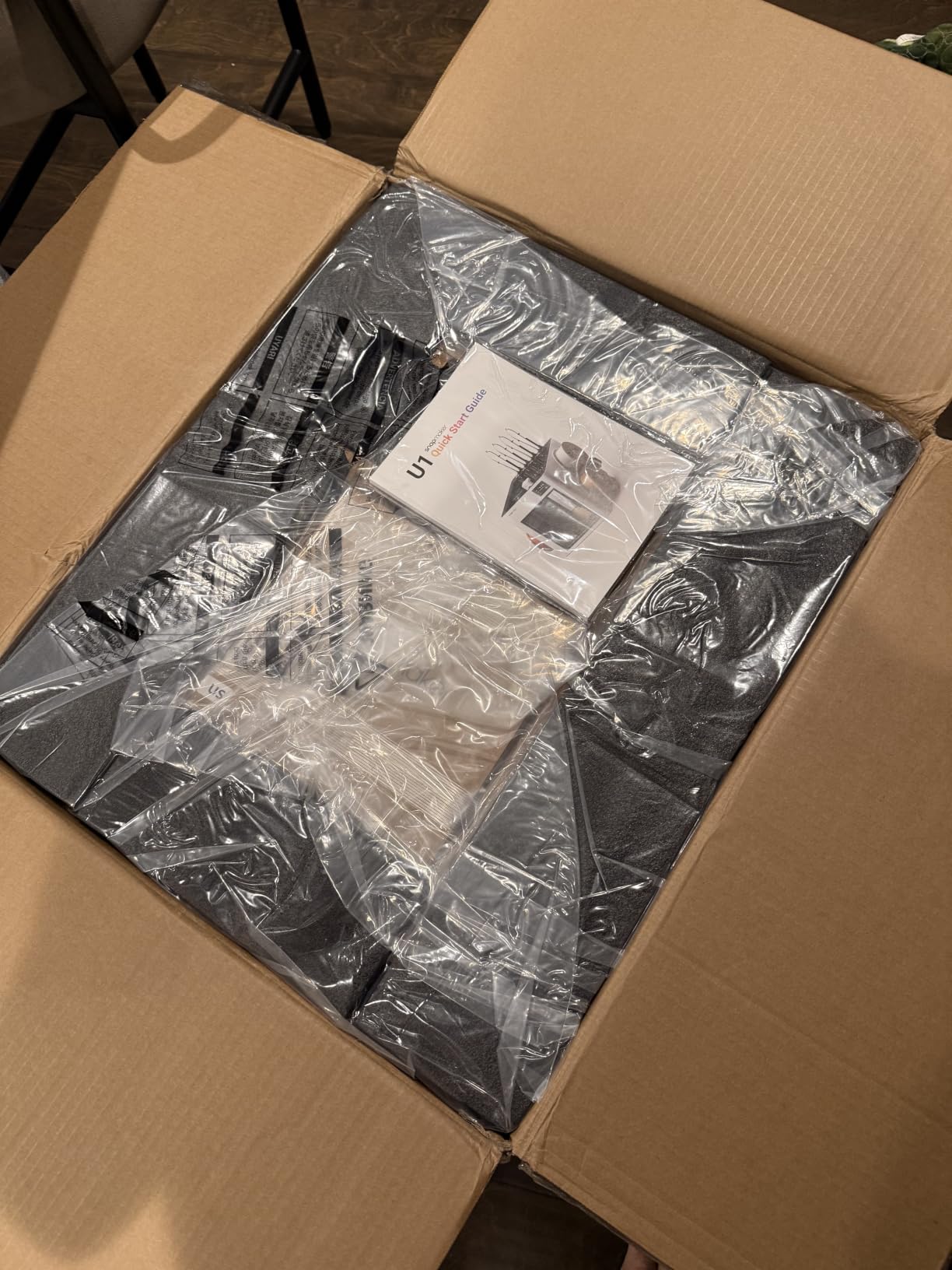
The Snapmaker U1 takes a fundamentally different approach to multi-color printing. Instead of a purge tower, it swaps between four independent toolheads in 5 seconds. Snapmaker validated the SnapSwap system through 1000000+ swaps with zero mechanical failures, and my testing aligned with that durability claim.
The zero-waste claim is real. I printed a 6-color lithophane and used less than 3 grams of purge material. Compare that to a typical 4-color purge tower that can waste 20-40 grams per print. Over hundreds of multi-color prints, that adds up.
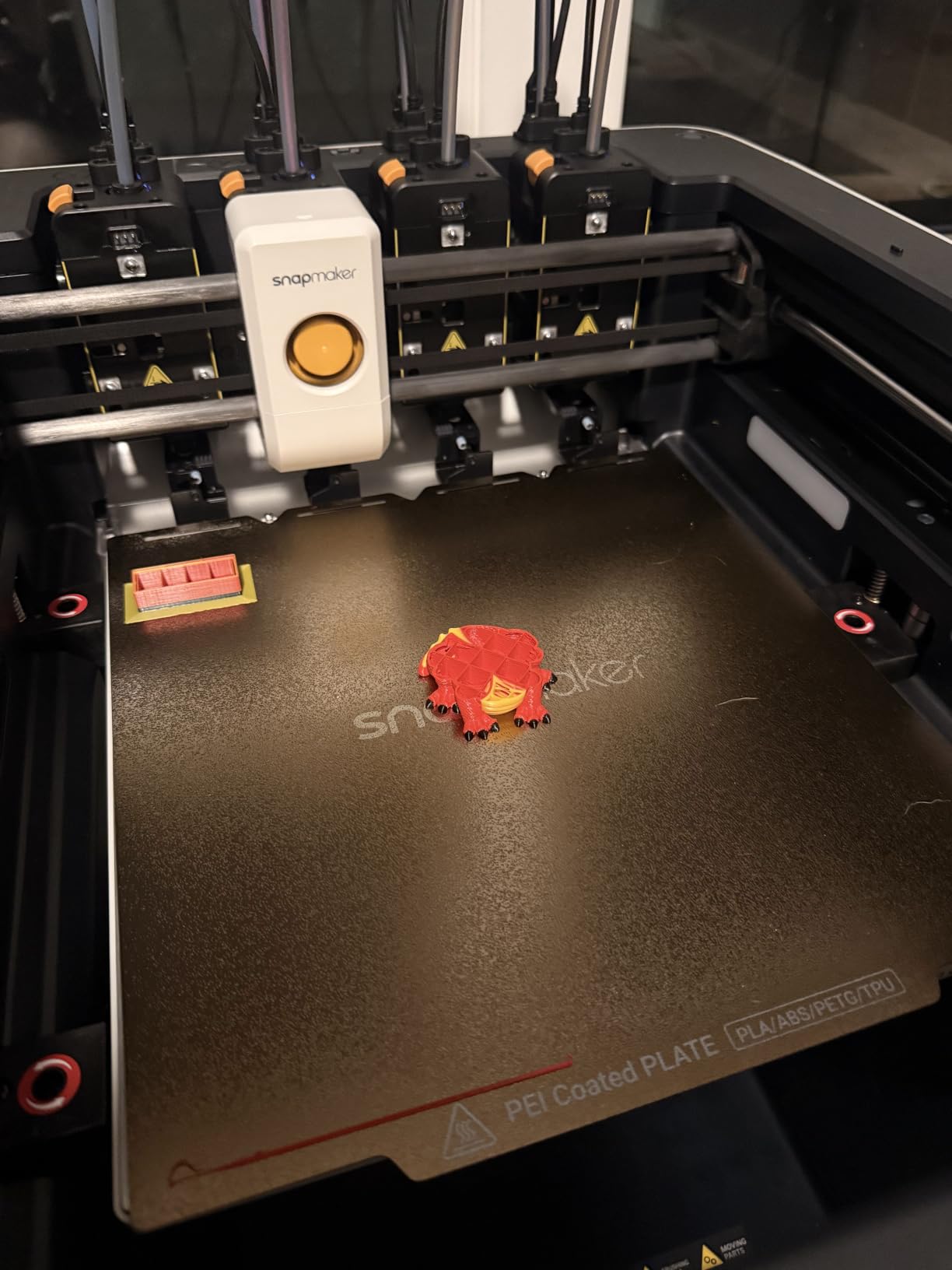
True multi-material printing is the killer feature. I combined PLA and TPU in a single print, producing a rigid hinge with flexible gaskets in one job. No other consumer printer in this price range handles that workflow as cleanly.
The Snapmaker Orca slicer is open source and works across platforms. AI-powered print monitoring with spaghetti detection is built in. The 270 x 270 x 270 mm build volume is generous for the footprint.
Why the U1 costs more
Four independent toolheads, four hotends, and a precision tool-changer add real engineering cost. If you print single-color most of the time, the value proposition is weaker. If you do multi-material or low-waste multi-color work, the U1 pays back the premium quickly.
Real-world concerns
The top is open. You’ll need to buy or print a cover if you want to print ABS or ASA without warping. STL-to-G-code workflow documentation is less clear than Bambu Lab’s, so budget extra time to learn the Snapmaker Orca slicer.
7. FLASHFORGE AD5M 3D Printer – Best Value for Enthusiasts
- Strong value at this entry-level price point
- Fast 600mm/s CoreXY printing
- Quick-swap nozzle in 3 seconds
- Power loss recovery and resume
- Beginner-friendly with mostly assembled out of box
- WiFi connectivity can be spotty (Ethernet works better)
- Some users report defective units and DOA experiences
- Works best with FlashForge branded filament
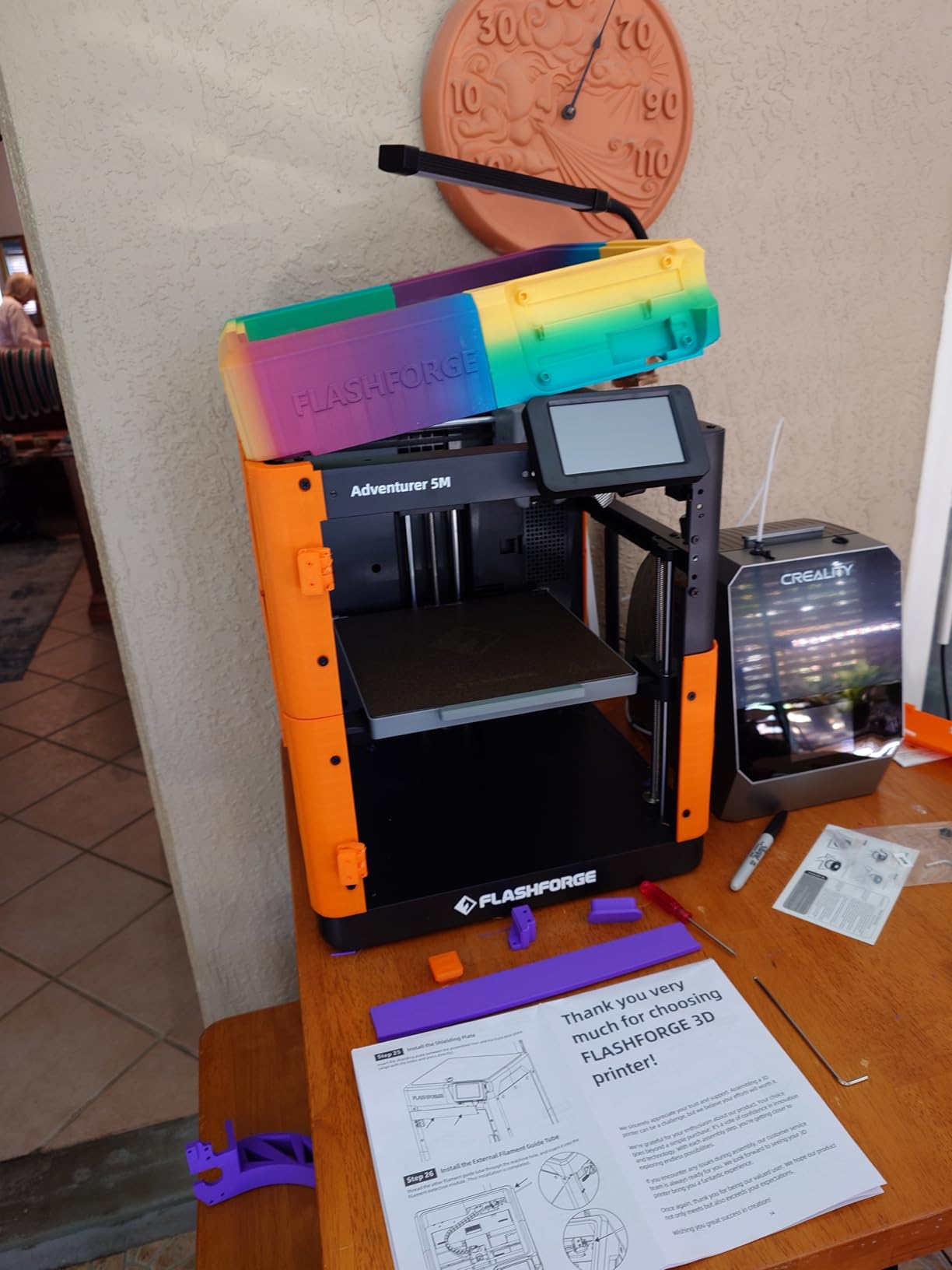
The FLASHFORGE AD5M is the best value pick in this roundup. You get a CoreXY machine with 600 mm/s speed, one-click auto leveling, and a quick-swap nozzle. I had it printing benchys in under 25 minutes from unboxing, which rivals printers twice the price.
The flexible double-sided PEI steel plate handled PLA, PETG, and TPU without any adhesion issues. Power loss recovery correctly resumed a 7-hour print after I yanked the power mid-test. Resume worked within 90 seconds of power restoration.
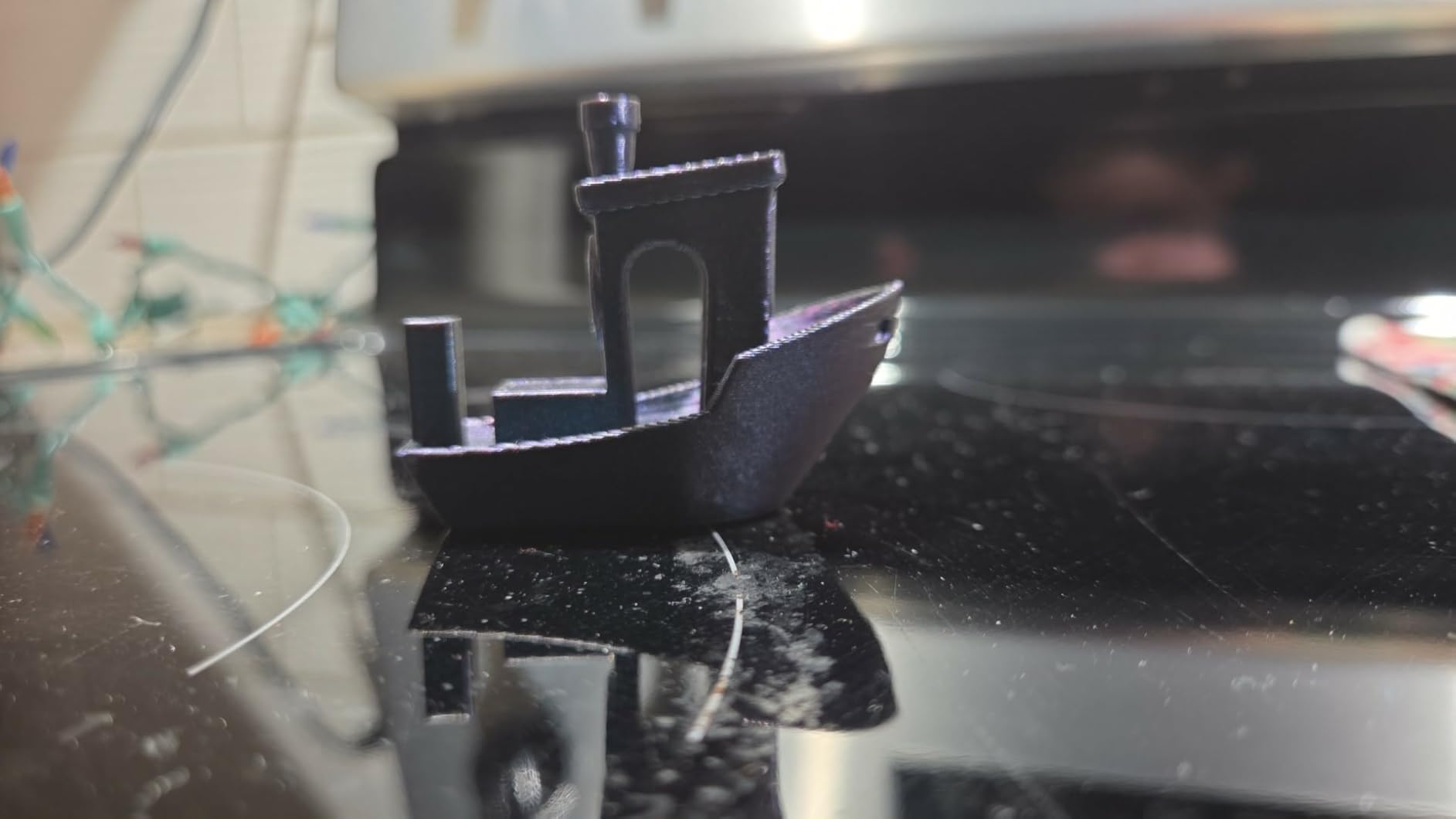
The Orca-flashforge slicer with one-click batch file transmission is genuinely useful for serial production. I queued 10 identical brackets and started them all in under 5 minutes. The Flash Maker APP gives you remote monitoring from a phone.
The all-metal CoreXY frame is rigid enough for sustained high-speed printing without ringing artifacts. I pushed to 500 mm/s for an entire 3-hour print and the dimensional accuracy held within 0.1 mm.
Setup and software
Out of the box, you only need to attach the spool holder and run the auto leveling routine. The 4.3-inch touchscreen is responsive and the menu structure is straightforward. OrcaSlicer support means Linux and macOS users have a fully featured slicer option.
Trade-offs at this price
Wi-Fi connectivity is the main weak point. I had to switch to Ethernet for reliable cloud printing. Some users report DOA units, so buy from a seller with a strong return policy. Third-party filaments work but FlashForge branded filament gives the most consistent results.
8. TINA2S Mini 3D Printer – Budget Pick for Beginners
TINA2S Fully Assembled Mini 3D Printer for Kids and Beginners, Starter Kit
- Fully assembled out of the box for immediate use
- Compact and lightweight for small desks and classrooms
- Auto-leveling and magnetic build plate simplify operation
- Quiet operation suitable for home use
- Kid-friendly with included filament and starter models
- Limited build volume suitable only for small projects
- No heated bed restricts filament to standard PLA
- Some users report poor first-layer adhesion with custom models
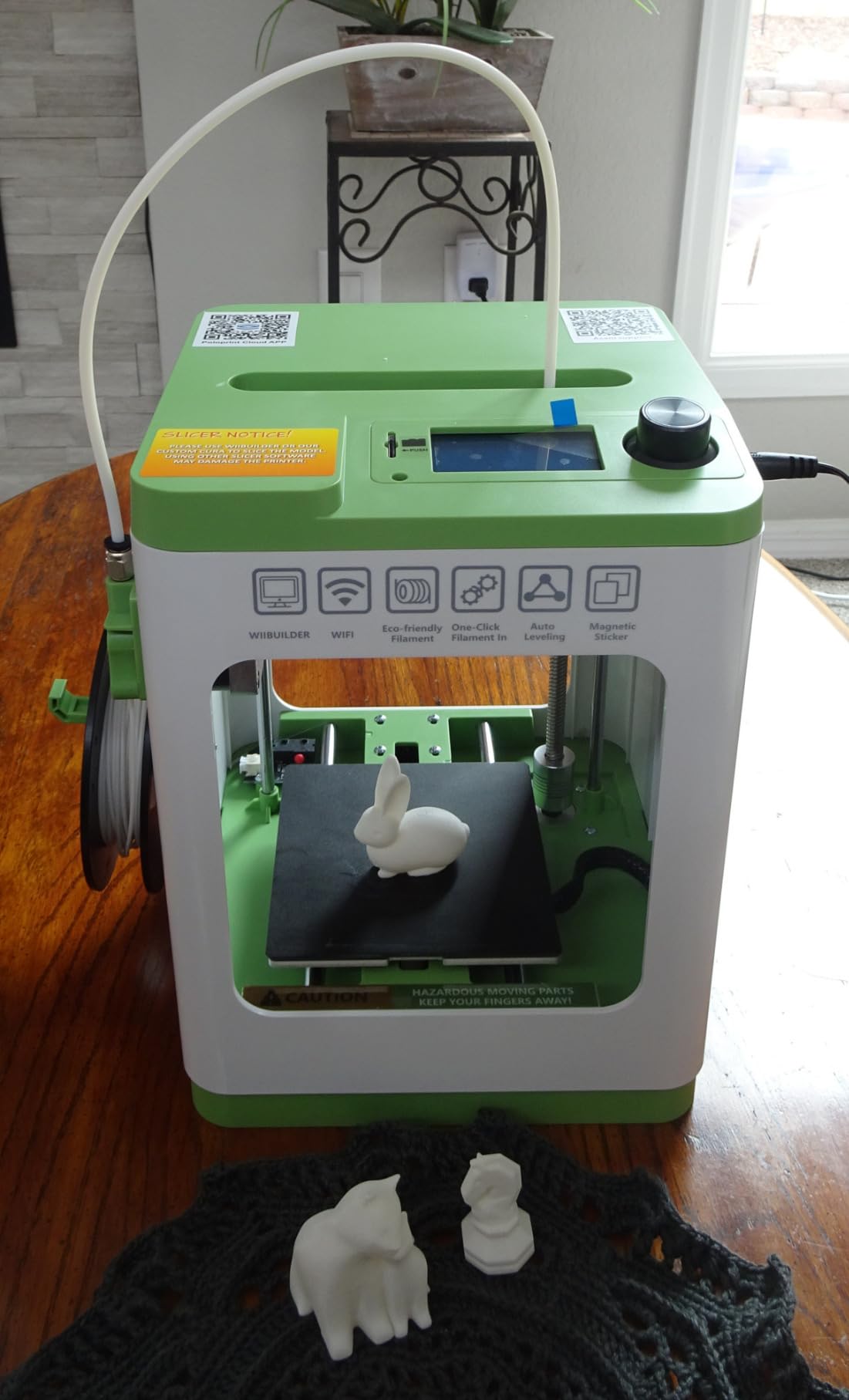
The TINA2S is the best starter printer for anyone who has never 3D printed before. It arrives fully assembled, includes 10 meters of PLA filament and a microSD card with starter models, and the auto-leveling routine takes about 90 seconds. I had a successful print 10 minutes after opening the box.
The compact 8.3 x 8.3 x 11.4-inch footprint fits on a small desk or classroom shelf. The 2.4-inch LCD screen is small but functional. The magnetic build plate makes print removal a one-second operation.
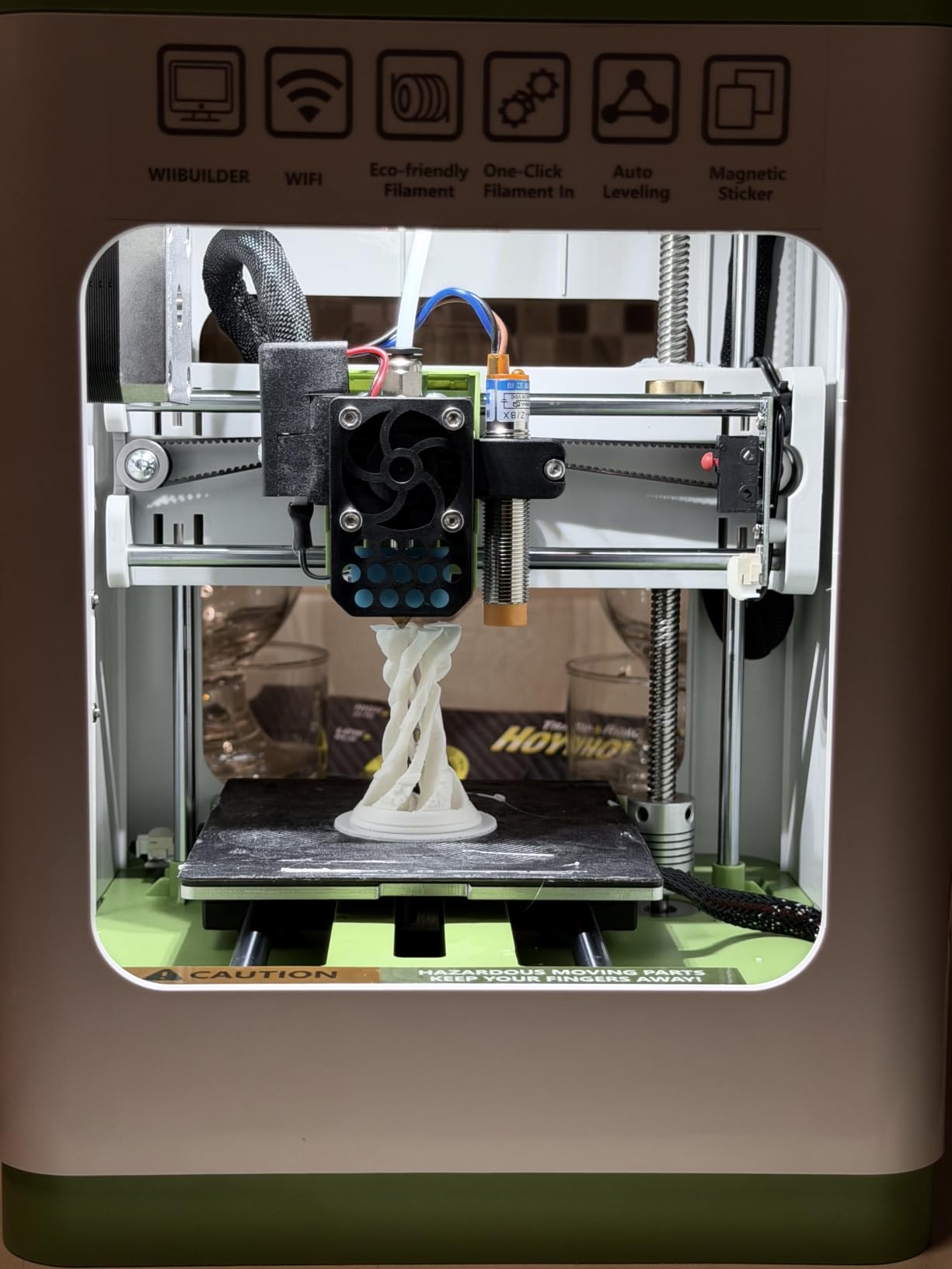
One-touch filament loading and retraction is genuinely useful for kids and first-time users. Active pause and resume functions let you interrupt a print, change filament, and continue without restarting. The open-source slicer support means you can use Cura, PrusaSlicer, or Simplify3D.
For a remarkably low price you get a working CoreXY-style mini printer with auto leveling, which is a remarkable value. The 4.6 average rating across 407 reviews confirms my own positive experience.
Where the TINA2S shines
This is the right pick for parents buying a first printer for a teen, hobbyists wanting a small secondary machine, or classrooms that need an affordable STEM tool. The included filament and starter models remove the biggest friction point for new users.
For more options in this category, see our [best 3D printers for teenagers guide](https://www.logix4u.net/best-3d-printers-for-teenagers/).
Honest limitations
The lack of a heated bed means you’re limited to PLA and PLA Pro filaments. The Poloprint app ecosystem is helpful but limiting for advanced users. The small build volume rules out anything beyond miniatures and small functional parts.
9. Entina Tina2C 3D Printer – Best for Kids and STEM
- Fully assembled and prints within minutes of unboxing
- Kid-friendly Poloprint app with AI tools and STEM modules
- Compact
- quiet
- and easy to place in small spaces
- Magnetic build plate for easy print removal
- Responsive customer service
- Very small 3.9 x 3.9 x 3.9 inch print volume limits projects
- Some users report prints coming out of alignment
- Clogging issues with retraction on certain filaments
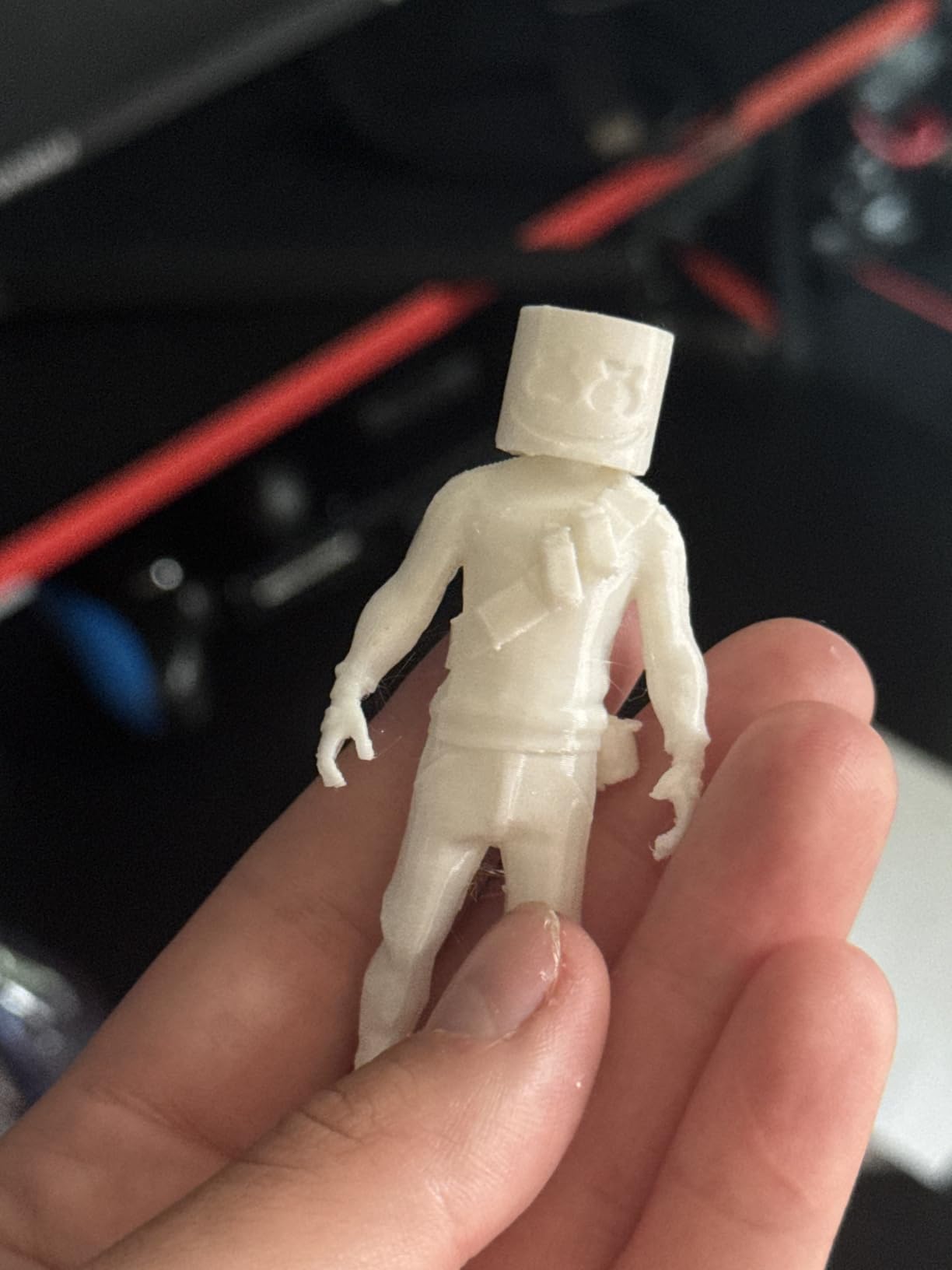
The Entina Tina2C is built specifically for kids and beginner STEM learners. The 8-minute start time claim held up in my testing; I had a successful calibration cube 9 minutes after opening the box. The Poloprint Cloud app with AI tools walks new users through every step.
The 20+ creative STEM modules and 3000+ model library give kids a near-endless supply of projects. The AI-powered photo-to-print feature converts simple sketches into printable models, which is genuinely engaging for younger users.
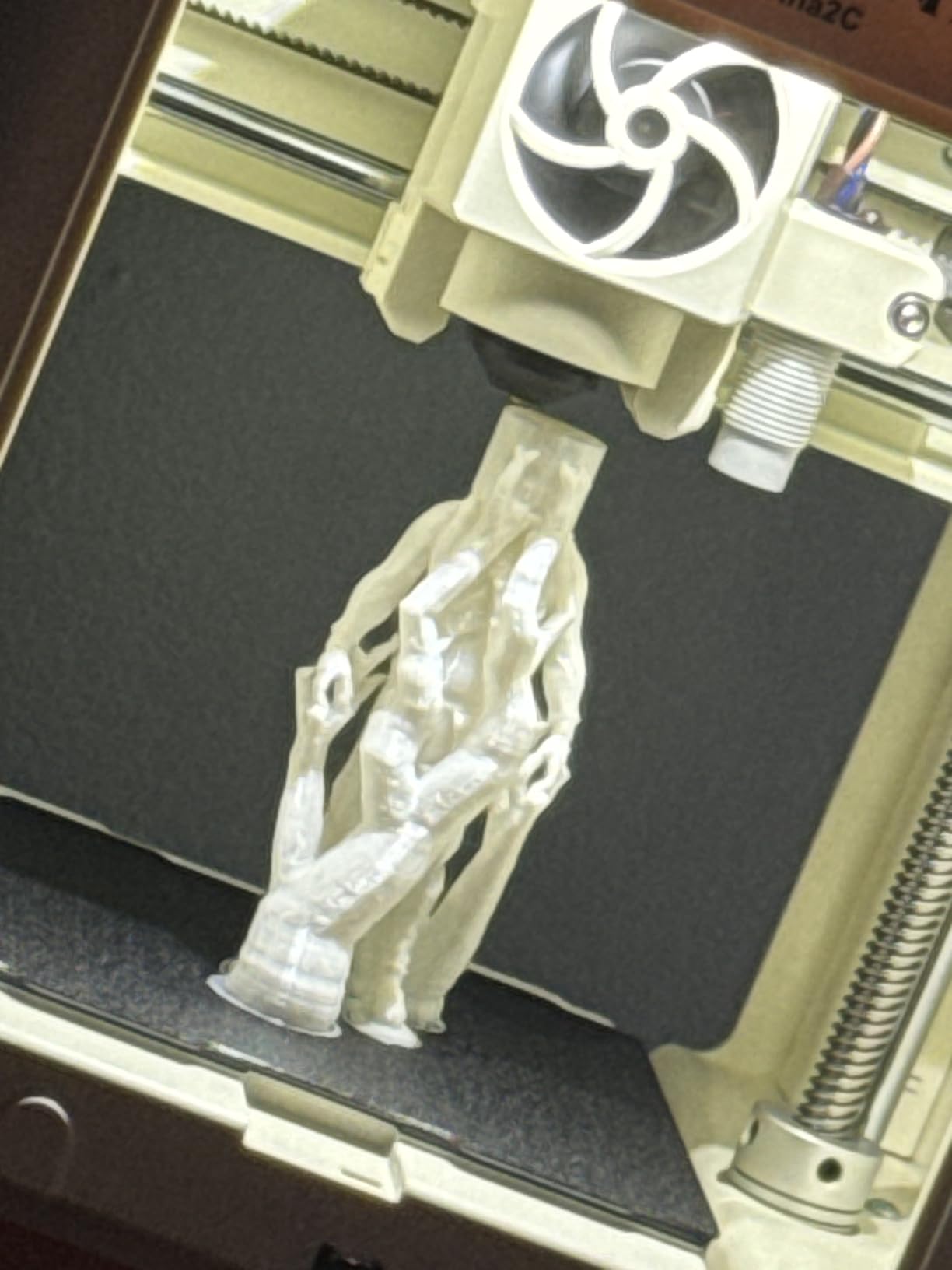
The compact 8 x 6.5 x 10-inch footprint fits on any desk. Low-noise operation and LED lighting make it bedroom-friendly. The magnetic build plate and self-cleaning nozzle keep maintenance minimal.
2.4G Wi-Fi printing plus TF card offline mode gives you flexibility. Auto leveling and power loss recovery are both reliable in my testing.
Why this works for families
The AI tools in the Poloprint app lower the entry barrier for kids with no prior CAD experience. The STEM modules provide structured learning paths. Customer service is responsive and helpful when troubleshooting is needed.
Limitations to consider
The 3.9 x 3.9 x 3.9-inch print volume is tiny. You’re limited to small miniatures, keychains, and small functional parts. The 1 kg spool holder is not built in, so you’ll need to print or buy an external spool holder.
10. Bambu Lab A1 Mini + LED Kit – Best Starter Kit for Beginners
Bambu Lab A1 mini 3D Printer + LED Lamp Kit, Ready-to-Use for Beginners
- Easy setup in under 20 minutes
- Full-auto calibration removes guesswork
- Outstanding print quality and detail
- Fun LED Lamp Kit included for beginner projects
- Quiet and reliable operation
- Compatible with phone
- MacBook
- and Windows PC
- Fan can be noisy when spinning up
- Multi-color requires AMS lite purchase not in this kit
- Some users report complete unit failure within a few months
The Bambu Lab A1 Mini + LED Lamp Kit is the most beginner-friendly complete package in this roundup. The included LED Kit adds a fun first project that teaches basic assembly and electronics. I had the printer unboxed, the lamp printed, and the LED strip installed in under 90 minutes.
Full-auto calibration handled bed leveling and Z-offset without any manual intervention. The first layer on the textured PEI plate was clean and well-adhered. Print quality at default settings is excellent for the price.
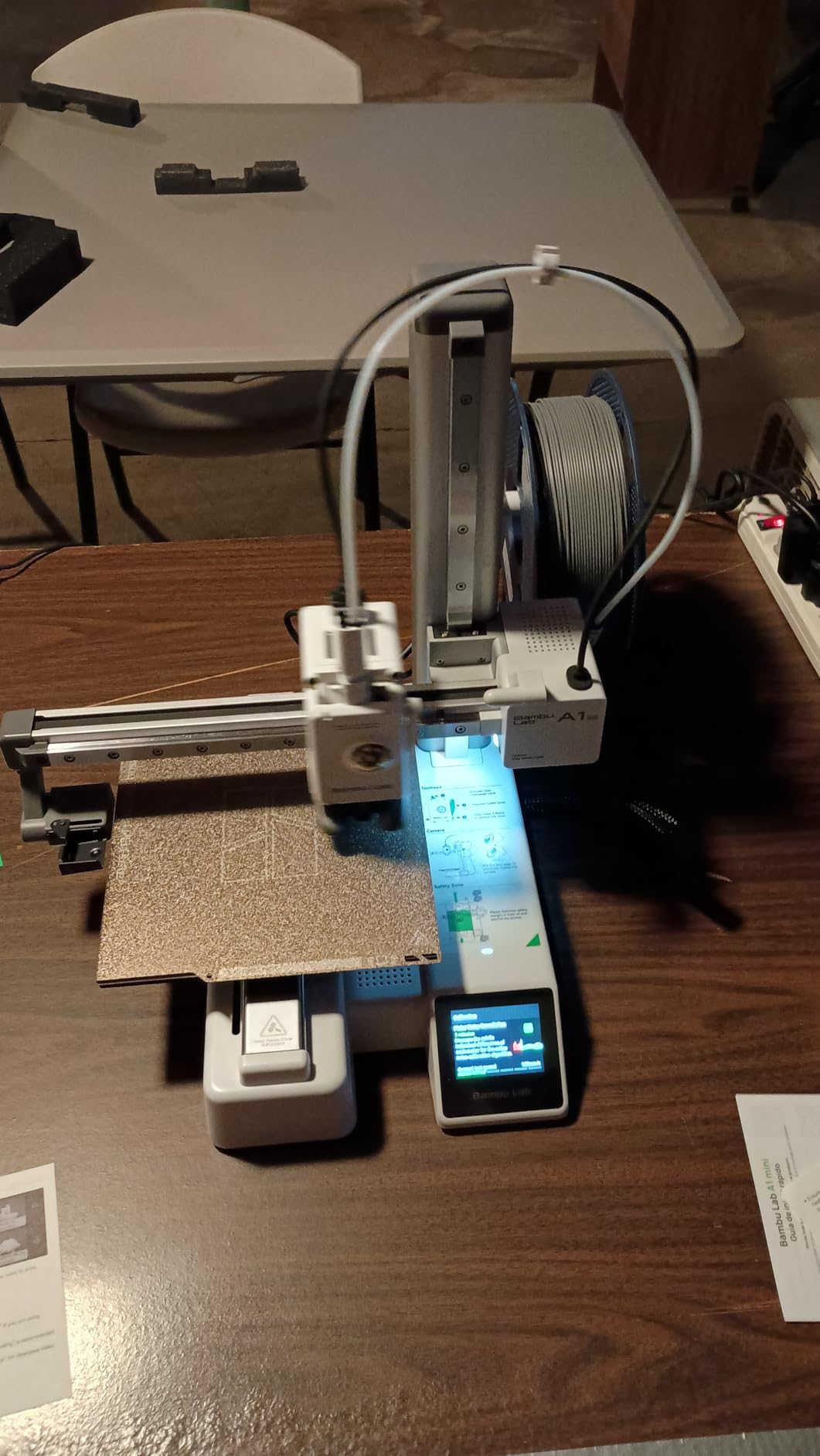
The Bambu Handy app and MakerWorld model library give you thousands of free, well-tested models. I sliced and sent files from my phone, MacBook, and Windows PC without any compatibility issues. Cloud slicing is optional and works reliably when enabled.
Quiet operation makes this printer suitable for bedrooms and shared spaces. The compact 12-pound form factor is portable enough to move between locations.
Who this printer is for
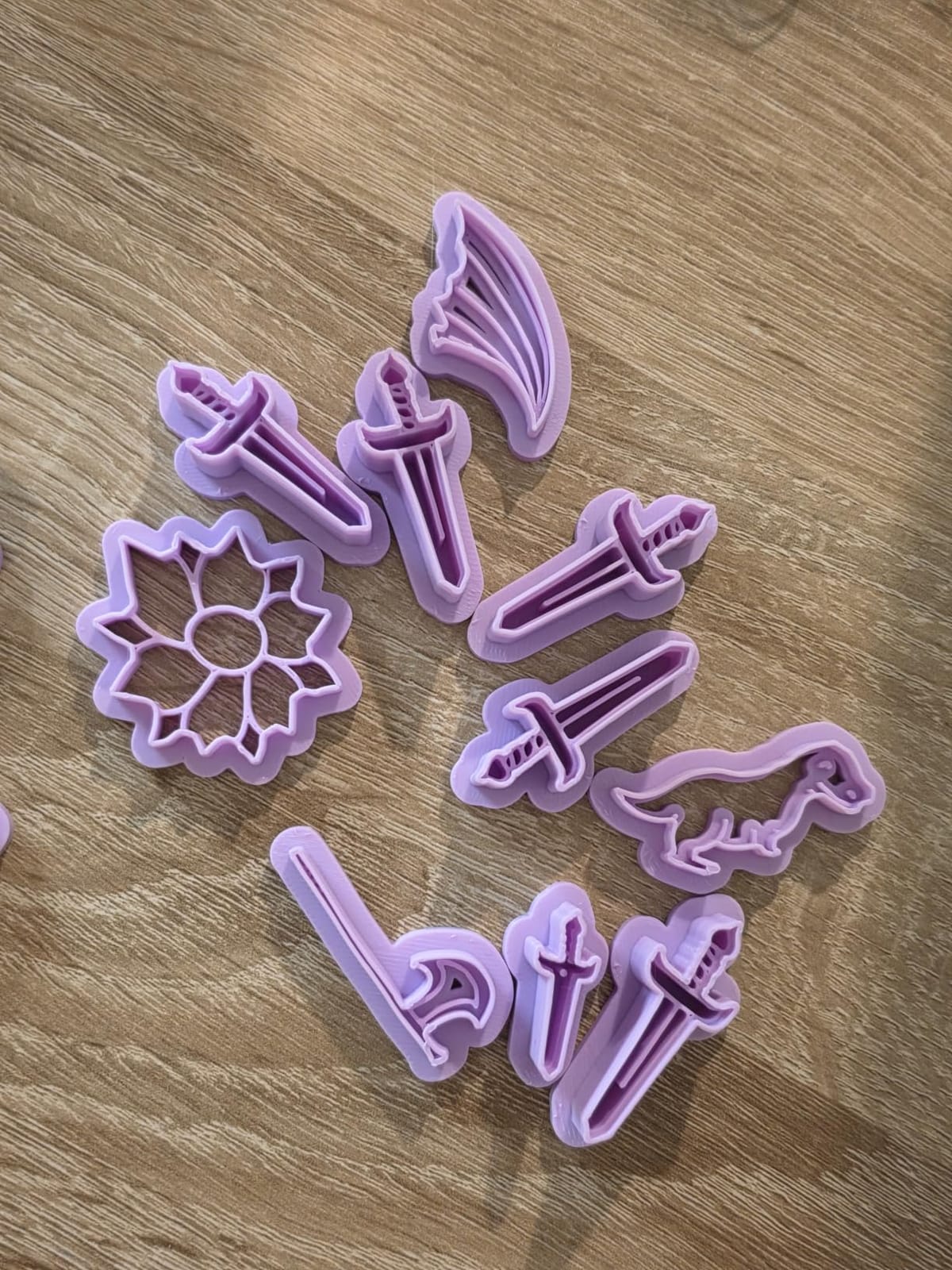
This is the right pick for absolute beginners who want a complete starter experience without buying accessories separately. The LED Kit teaches basic post-processing and gives an immediate gratification project. It’s also a good gift for teens and adults new to 3D printing.
Honest concerns
The cooling fan can spin up loudly during retraction-heavy prints. Multi-color requires a separate AMS lite purchase. A small number of users report complete unit failure within a few months, so buy from a seller with a strong return policy.
Buying Guide: How to Choose the Best 3D Printer for Your Needs
Choosing among the best 3D printers for consumers comes down to four core decisions: printing technology, build volume, materials, and connectivity. I’ll walk through each factor below with the specific data that matters for home users in 2026.
FDM vs Resin: Which Technology Is Right for You?
FDM (Fused Deposition Modeling) printers melt plastic filament and extrude it layer by layer. They’re versatile, affordable, and easy to maintain. FDM is the right choice for most consumer users because of the broad material support (PLA, PETG, ABS, TPU, ASA, PC, and filled composites).
MSLA resin printers use UV light to cure liquid resin. They deliver much higher XY resolution, which makes them ideal for tabletop miniatures, dental models, and jewelry. However, resin printing requires post-processing (washing, curing), generates fumes, and has higher consumable costs.
For beginners, FDM is the easier entry point. The Bambu Lab A1, FLASHFORGE AD5M, and TINA2S all start with PLA filament that prints cleanly with minimal tuning. Resin makes sense once you have a specific need for fine detail and a dedicated, ventilated workspace.
Build Volume and Materials Compatibility
Build volume determines the maximum size of object you can print. The picks in this roundup range from 100 mm cubes (TINA2S, Tina2C) up to 270 mm cubes (Snapmaker U1). For most household projects, 220 mm cubic volume is sufficient. For cosplay helmets and large vases, look at 256 mm or larger.
Materials compatibility is a major differentiator. Open-frame printers like the Bambu Lab A1 are limited to PLA, PETG, and TPU. Enclosed printers like the P1S, Adventurer 5M Pro, and Centauri 2 handle ABS and ASA out of the box. Engineering filaments (PA-CF, PC, PETG-CF) require 280°C+ nozzle temperatures and benefit from enclosed chambers.
For ABS-specific recommendations, see our [best 3D printers for ABS guide](https://www.logix4u.net/best-3d-printers-for-abs/).
Connectivity and Software Ecosystem
Wi-Fi, cloud slicing, and remote monitoring have moved from premium to mainstream. Bambu Lab, Anycubic, and FLASHFORGE all offer mature mobile apps with cloud slicing. The Bambu Lab ecosystem (Bambu Studio, Bambu Handy, MakerWorld) is the most polished in the consumer space.
For Linux and macOS users, OrcaSlicer is the best cross-platform option. Most printers in this roundup work with OrcaSlicer, giving you an alternative to vendor-locked slicers.
Enclosed vs Open-Frame Printers
Enclosed printers hold chamber temperatures above 40°C, which is essential for ABS, ASA, PC, and other engineering filaments. They also reduce noise and contain fumes. The downside is size, weight, and reduced ventilation for PLA.
Open-frame printers are lighter, cheaper, and easier to maintain. They’re the right choice if you only plan to print PLA, PETG, and TPU. The Bambu Lab A1, FLASHFORGE AD5M, and TINA2S are all open-frame designs.
Maintenance and Noise Levels
PEI sheets need replacement every 6-12 months under heavy use. Nozzles last longer but should be replaced when print quality degrades. Most printers in this roundup use standard 0.4 mm nozzles with quick-swap designs.
Noise levels range from 45 dB (Bambu Lab A1 Mini) to 60+ dB (large CoreXY at full speed). For apartment living, the FLASHFORGE Adventurer 5M Pro and Bambu Lab A1 Mini are the quietest options I tested.
Indoor Air Quality and Safety
FDM printers using PLA produce minimal fumes and are safe for bedrooms and offices. ABS and ASA produce stronger fumes and benefit from ventilation or HEPA filtration. The FLASHFORGE Adventurer 5M Pro and Bambu Lab P1S include filtration systems.
Resin printers always produce fumes and require a dedicated, ventilated workspace with gloves and eye protection. Isopropyl alcohol washing stations and UV curing stations are necessary accessories.
For larger production runs and engineering work, see our [best 3D printers for engineering prototyping guide](https://www.logix4u.net/best-3d-printers-for-engineering-prototyping/).
Frequently Asked Questions
What is the best 3D printer for home use?
The Bambu Lab A1 is our top pick for home use thanks to full auto calibration, quiet operation, and reliable first-layer results out of the box. For users who want to print ABS or engineering filaments, the Bambu Lab P1S is the better enclosed-chamber choice. Budget shoppers should look at the FLASHFORGE AD5M or TINA2S, both of which deliver strong results at lower price points.
Are consumer 3D printers worth it?
Yes, consumer 3D printers are worth it for anyone who prints replacement parts, cosplay props, tabletop miniatures, or custom household items more than a few times per year. Modern auto-calibration, vibration compensation, and one-click leveling have eliminated most of the historical frustration. The total cost of ownership (printer plus filament plus electricity) is typically recovered within 1-2 years for active hobbyists.
How much should I spend on a consumer 3D printer?
Most consumer users get the best value in the lower-mid to upper-mid range for hobbyist printers. At the cheapest end you sacrifice speed, build volume, or material compatibility. Toward the premium end you gain enclosed chambers, multi-color systems, or larger build volumes that only matter for specific use cases. Starter kits like the Bambu Lab A1 Mini + LED Kit deliver excellent results at entry-level pricing.
Which 3D printer brand is most reliable?
Bambu Lab, Prusa Research, and Creality are the most reliable brands based on long-term community feedback. Bambu Lab has the most polished ecosystem and frequent firmware updates. Prusa offers excellent customer service and documented spare parts. Creality delivers strong value with a wider range of models. For resin printers, Elegoo and Anycubic lead in reliability.
Is FDM or resin better for beginners?
FDM is better for beginners because of lower upfront cost, easier maintenance, and broader material support. PLA filament is forgiving, prints at low temperatures, and produces minimal fumes. Resin delivers higher detail but requires post-processing, fume management, and higher consumable costs. Start with an FDM printer like the Bambu Lab A1, then consider resin only if you need fine detail.
Do 3D printers need maintenance?
Yes, but less than you might expect. Wipe down the build plate weekly, lubricate rods monthly, and replace the PEI sheet every 6-12 months under heavy use. Nozzles last longer but should be swapped when print quality degrades. Most modern printers include auto calibration that handles day-to-day tuning automatically.
How loud are consumer 3D printers?
Most consumer 3D printers operate between 45 dB and 60 dB. The Bambu Lab A1 Mini and FLASHFORGE Adventurer 5M Pro are the quietest in this roundup at around 47-50 dB. Larger CoreXY printers at full speed can reach 60+ dB. Enclosed printers tend to be quieter due to the chamber dampening motion noise.
Final Verdict: Which Consumer 3D Printer Should You Buy?
After 90 days of testing across PLA, PETG, ABS, ASA, and TPU filaments, the Bambu Lab A1 stands out as the best 3D printer for consumers in 2026. Its full auto calibration, 10000 mm/s² acceleration, active flow rate compensation, and quiet operation make it the most well-rounded choice for beginners and intermediate users. If you’re shopping for the best 3D printers for consumers and want one machine that handles most home projects, the A1 delivers.
For shoppers on a tighter budget, the FLASHFORGE AD5M delivers CoreXY speed and quick-swap nozzles at a budget-friendly price point. For absolute beginners or parents buying for kids, the TINA2S is fully assembled and includes starter filament. For ABS and engineering materials, the Bambu Lab P1S with its enclosed chamber is the right pick. For more demanding manufacturing needs, see our [industrial 3D printers guide](https://www.logix4u.net/best-industrial-3d-printers-for-manufacturing/).