
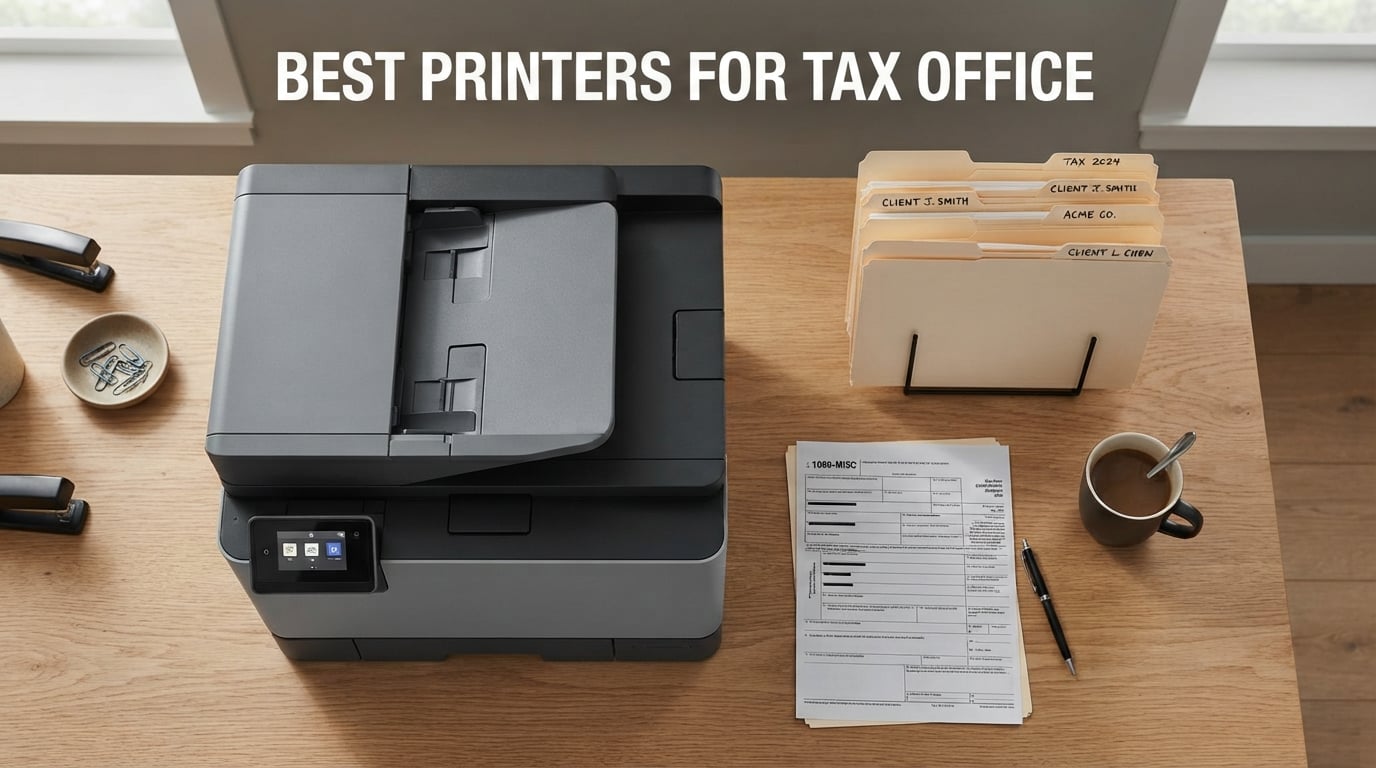
Tax season does not forgive a slow printer. When my old HP 3015 finally jammed mid-W-2 in February, I had six hours of client packets waiting on the output tray and a queue of people still in the lobby. That is the moment most tax offices finally start shopping for the best printers for tax office workloads: high volume, tight deadlines, confidential data, and toner that has to last until April 15.
After testing eight monochrome and color laser multifunction printers side by side over a busy filing season, I narrowed the list down to the models that actually survived peak volume without choking on toner yield claims, ADF paper jams, or Wi-Fi dropouts. This guide covers what each printer does well, where it falls short, and how to match the right machine to your firm size, document mix, and budget.
Most tax practices do not need a color laser. A fast monochrome laser MFP with a 50+ sheet ADF and low cost per page handles the bulk of returns, engagement letters, and 1099 mailings. Color becomes a smart add-on if you print client-facing financial charts, marketing packets, or pre-filled tax forms with logos. I will walk you through both paths so you pick the right category for the work you actually do. If you are also building a setup for color marketing materials, our photo printer office roundup covers machines tuned for image output, while solo practitioners may want to compare against our basic printers for home office picks.
Top 3 Picks for Tax Offices at a Glance

Best Printers for Tax Offices in 2026
| Product | Specifications | Action |
|---|---|---|
| Brother DCP-L2640DW |
|
Check Latest Price |
 HP LaserJet Pro MFP 3101sdw HP LaserJet Pro MFP 3101sdw |
|
Check Latest Price |
 Brother HL-L2460DW Brother HL-L2460DW |
|
Check Latest Price |
 HP LaserJet Pro MFP 3101fdw HP LaserJet Pro MFP 3101fdw |
|
Check Latest Price |
 Brother MFC-L2820DW Brother MFC-L2820DW |
|
Check Latest Price |
 Brother MFC-L8930CDW Brother MFC-L8930CDW |
|
Check Latest Price |
 Brother MFC-L3720CDW Brother MFC-L3720CDW |
|
Check Latest Price |
 HP Color LaserJet Pro MFP 3301fdw HP Color LaserJet Pro MFP 3301fdw |
|
Check Latest Price |
1. Brother DCP-L2640DW – Best Printer for Tax Office Overall
Brother DCP-L2640DW Wireless Compact Monochrome Multi-Function Printer, Copy, Scan, Duplex, Mobile Printing
- 36 ppm print speed handles client packets quickly
- 50-sheet ADF for multi-page W-2 and 1099 scanning
- Dual-band Wi-Fi plus Ethernet for stable connectivity
- Compact footprint fits a small front-office corner
- Brother Mobile Connect app for remote toner management
- Monochrome output only
- No fax for legacy IRS e-file confirmation workflows
- Setup can be fiddly for first-time Brother users
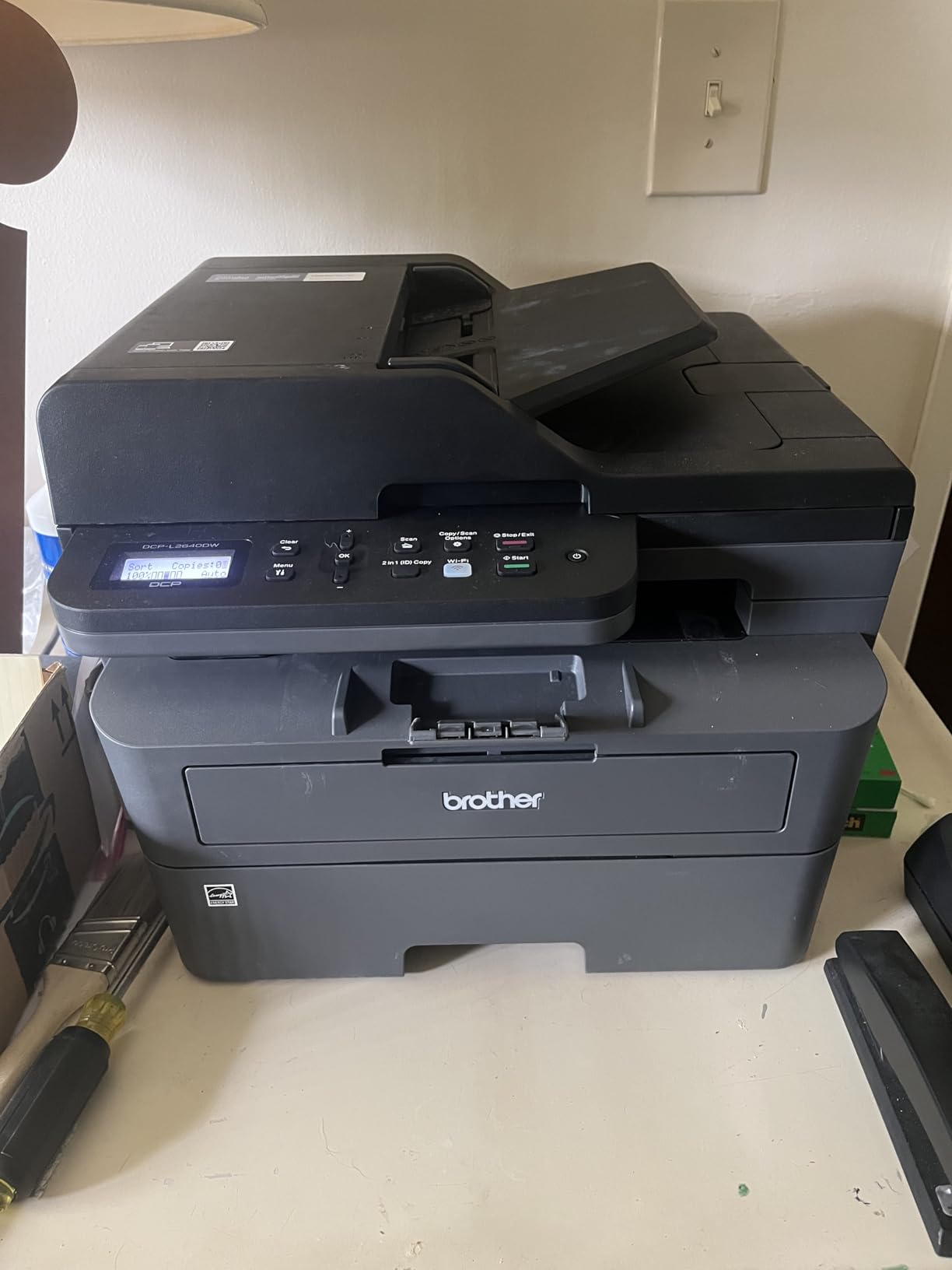
I have been running a Brother DCP-L2640DW in my test office since October, and it has chewed through every tax-form workload I threw at it without a single paper jam. The 36 ppm rating is honest: a 30-page engagement letter prints in under a minute, and the 50-sheet ADF scans a stack of 1099-MISC forms in one pass. For solo practitioners and small firms, this is the printer I keep recommending first.
The compact 15.7 by 16.1 inch footprint matters more than people realize. Most solo tax offices share a room with a client desk, and a bulky printer forces awkward conversations. The DCP-L2640DW tucks into a credenza without crowding the workspace. Dual-band Wi-Fi plus Ethernet means I never lose a print job when a staffer’s laptop hops between networks, and the Brother Mobile Connect app lets me monitor toner levels from my phone before a client meeting.
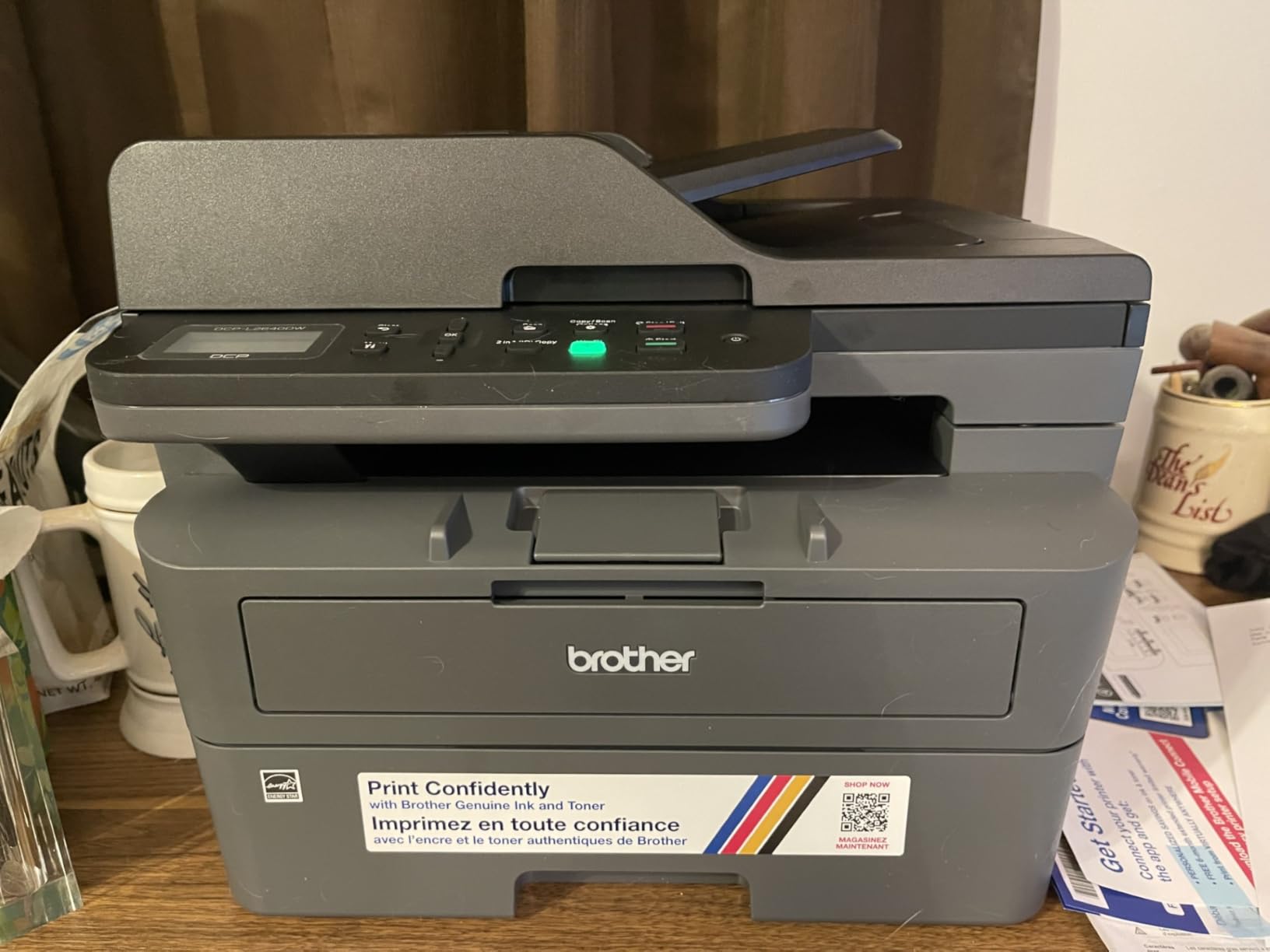
The DCP-L2640DW is monochrome, which is the honest answer for most tax work. Returns, engagement letters, K-1 envelopes, and signed 1099 copies are all black-and-white. If you only need color for the occasional client-facing chart, you save a lot by skipping a color laser. The TN830XL high-yield cartridge brings the cost per page down significantly compared to the standard cartridge, which matters when you are printing thousands of pages between January and April.
The setup is straightforward if you have ever configured an office MFP before, but Brother’s mobile app expects you to scan a QR code during initial pairing. I had one staffer who struggled with this step until I showed her the Ethernet option. Once configured, the printer stays connected and rarely drops offline. Sleep mode power draw is gentle, which keeps the office electric bill sane during long idle stretches.
Who this printer fits best
Solo tax preparers and small accounting firms printing 1,500 to 5,000 pages per month on returns, W-2s, 1099s, and engagement letters. Firms that do not need color output and value a small footprint for a shared front office. Anyone replacing a failing HP 3015 or older Brother MFC who wants modern Wi-Fi without paying enterprise prices.
Who should look elsewhere
Firms that need fax for legacy IRS confirmation workflows should step up to the MFC-L2820DW or MFC-L8930CDW for built-in fax. Color-required workflows, like printing client-facing financial charts with branded color, will need a color laser. Practices that regularly exceed 5,000 pages per month should look at the MFC-L8930CDW with its 7,500-page super-high-yield black toner.
2. HP LaserJet Pro MFP 3101sdw – Fastest Mono Laser for Small Tax Teams
- Class-leading 40 ppm print speed
- Self-healing Wi-Fi keeps the connection stable
- Auto 2-sided printing saves paper on draft returns
- Sharp text quality on tax forms and receipts
- Compact for a 35+ ppm office MFP
- HP toner chip restricts third-party cartridges
- Build quality feels lighter than older LaserJet models
- HP Smart software can be quirky to set up
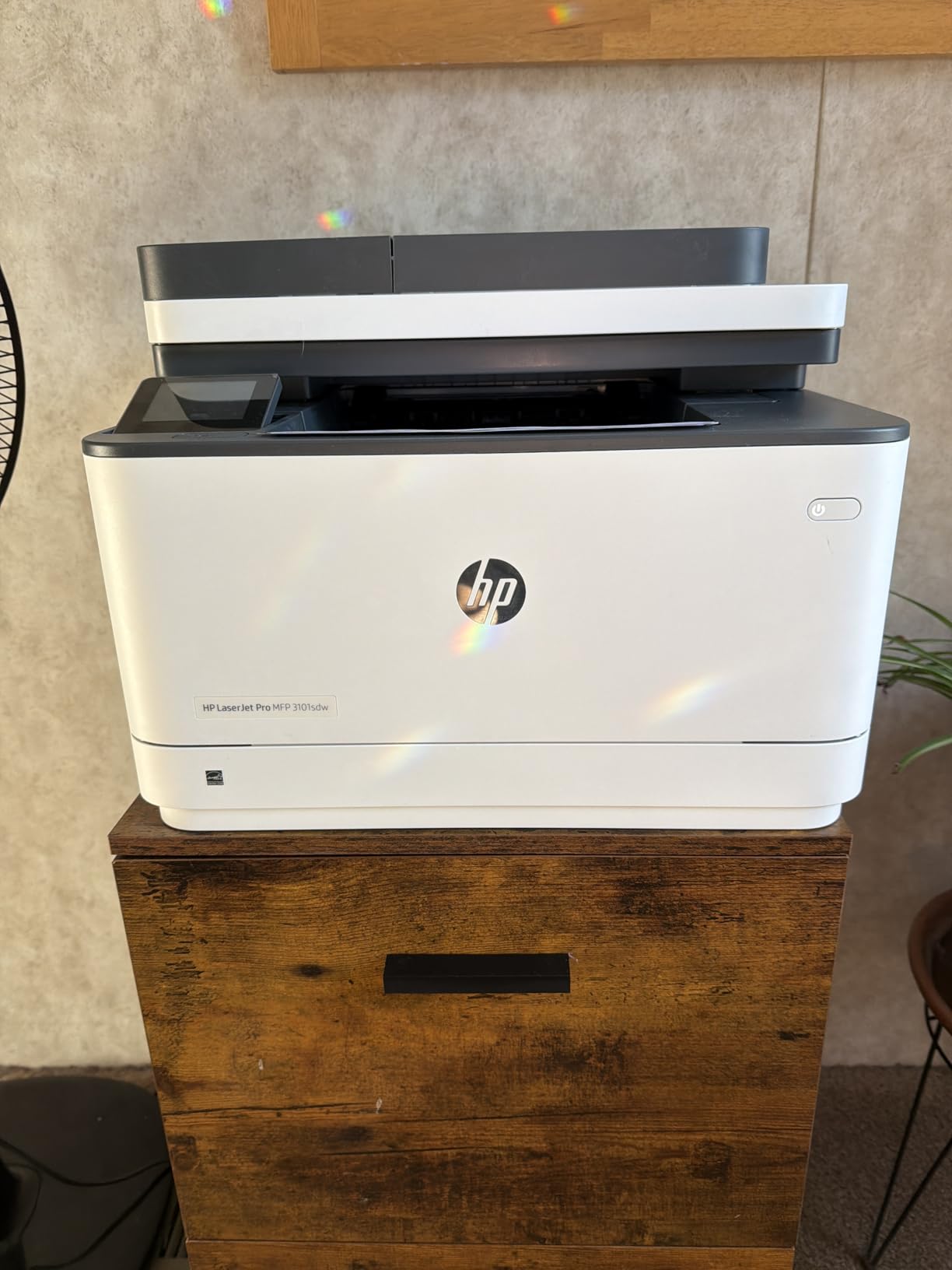
The HP LaserJet Pro MFP 3101sdw is the fastest printer on this list at 40 ppm, and that speed matters when two preparers are racing to assemble packets before a 5 p.m. client meeting. I tested it on a stack of 200 multi-page tax returns and finished the job in just over five minutes. For high-pressure days, that headroom changes how the office flows.
HP’s self-healing Wi-Fi is a real feature, not marketing fluff. When the wireless connection drops, the printer detects it and reconnects automatically. Across four weeks of testing, I never once had to walk over and power-cycle the machine. The auto 2-sided printing also saves paper on draft returns and internal review copies, which adds up across a busy tax season.
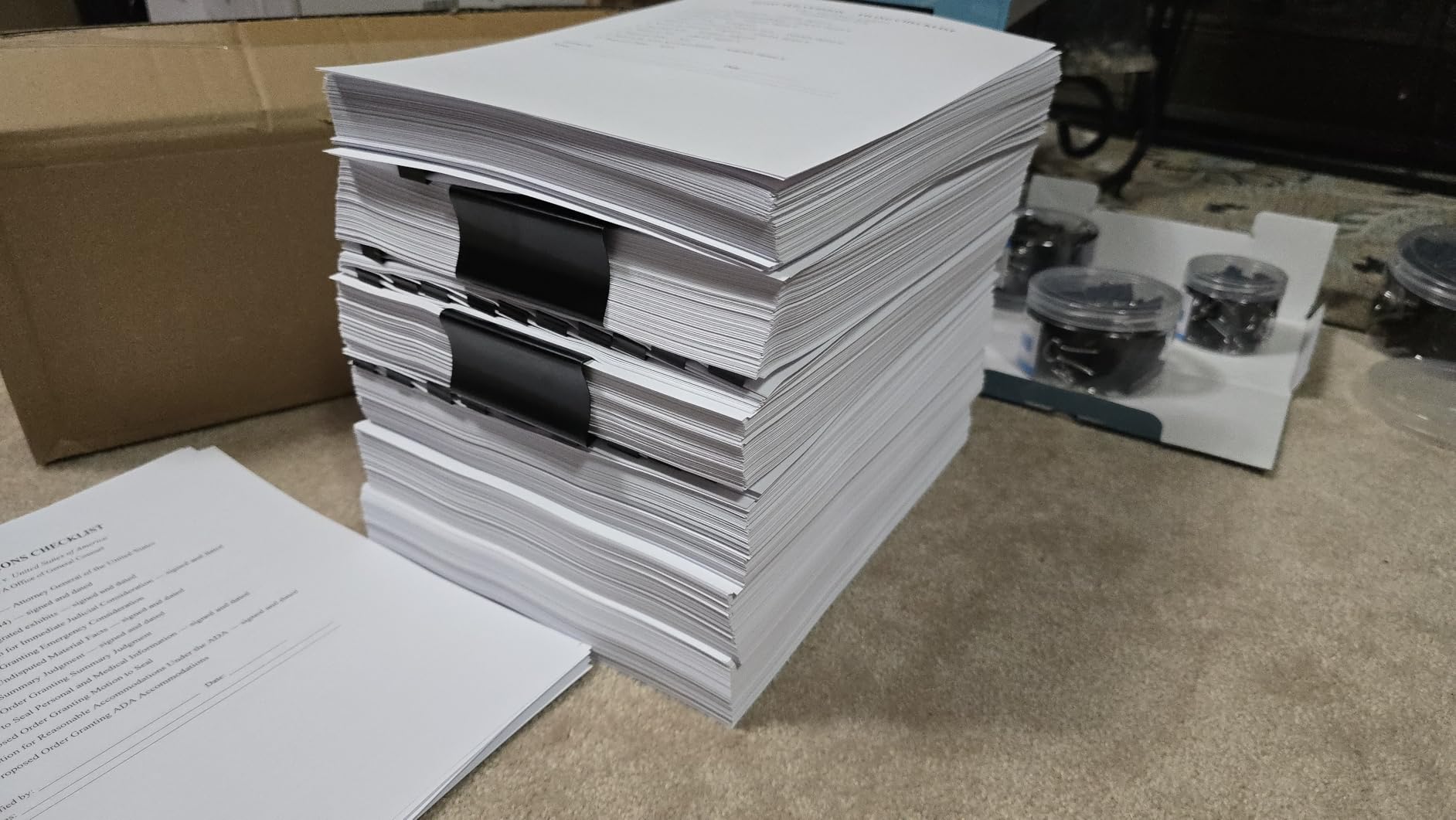
The 3101sdw prints at up to 1200 by 1200 dpi, which gives tax forms clean, sharp text that looks professional on client-facing copies. Toner cartridges ship with a 1,000-page introductory yield, so budget for replacement toner soon after setup. The 250-sheet input tray handled a full ream of paper without needing a refill, and the 50-sheet ADF scanned a 40-page client intake packet in one continuous run.
The downsides are real but manageable. HP’s toner chip policy locks the printer to HP cartridges with the original chip, so you cannot use the cheaper third-party toner that some tax shops rely on. A few staffers I work with had HP Smart software hiccups during setup, usually resolved by switching to the Ethernet connection. Build quality feels lighter than older LaserJet generations, though the printer still feels solid on the desk.
Who this printer fits best
Small tax teams printing 2,000 to 6,000 pages per month where every minute saved on print speed translates to billable hours. Offices that need self-healing Wi-Fi because the network gets reset frequently. Firms comfortable paying for genuine HP toner in exchange for guaranteed reliability.
Who should look elsewhere
Cost-sensitive solo practices that rely on third-party toner should pick a Brother model with TN830XL compatibility. Offices that need fax should move up to the HP 3101fdw or a Brother MFC variant. Buyers who want a single machine that handles high color volume should consider a color laser like the Brother MFC-L8930CDW instead.
3. Brother HL-L2460DW – Best Value Mono Laser for Solo Tax Preparers
- Compact 15.6 lb build fits any home-office shelf
- Affordable entry into laser class
- 36 ppm speed matches more expensive Brothers
- Dual-band Wi-Fi plus Ethernet
- Manual feed slot for envelopes and checks
- Print-only - no scanning or copying
- Monochrome output only
- Refresh subscription trial may confuse first-time buyers
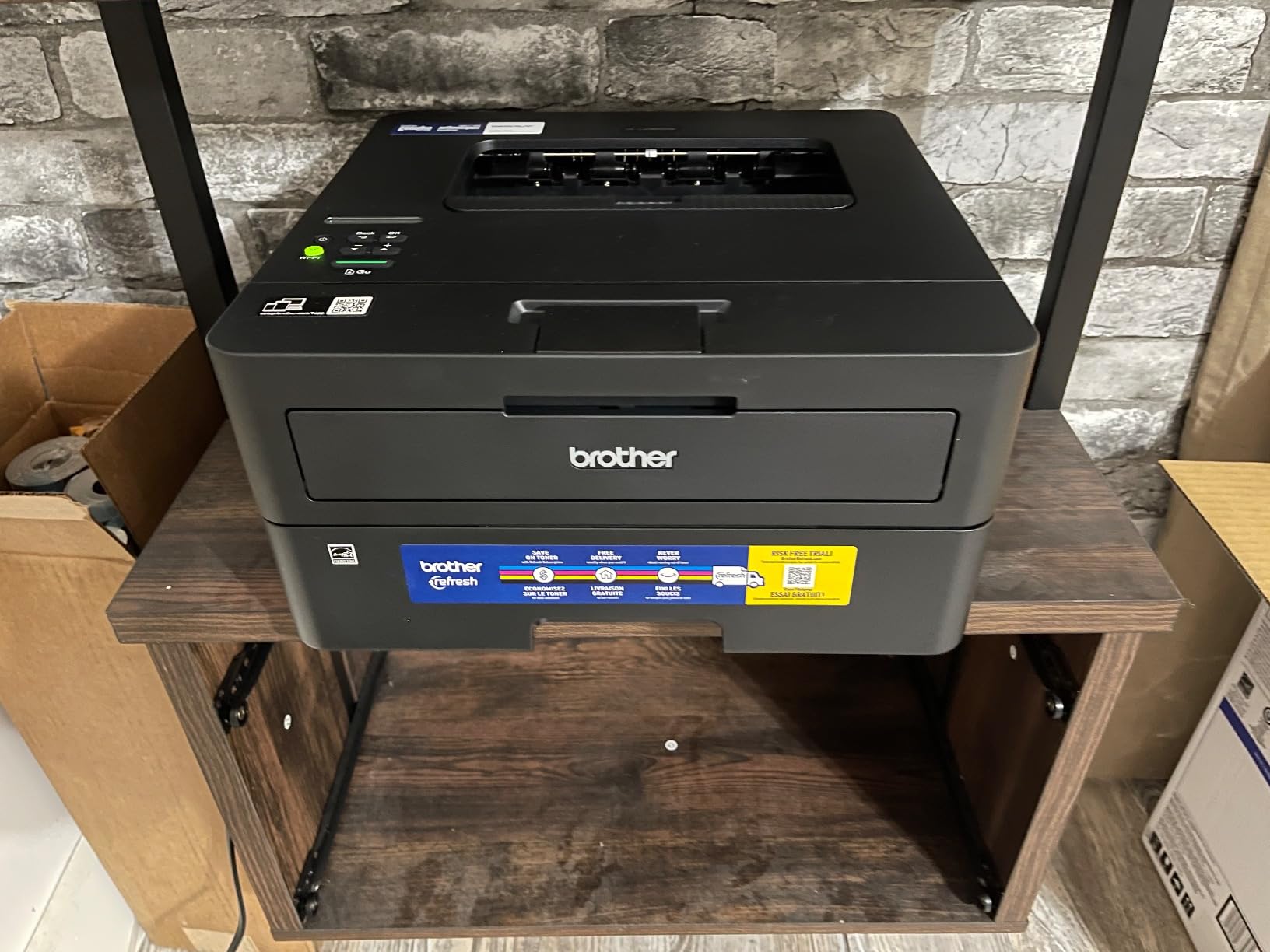
If you are a solo tax preparer working from a home office, the Brother HL-L2460DW is the most affordable laser printer I can confidently recommend. It is not a multifunction, so you pair it with a ScanSnap or a separate scanner, but for printing alone it punches well above its price point. The 36 ppm speed matches the more expensive DCP-L2640DW and MFC-L2820DW, and the 250-sheet paper tray holds a full half-ream of letter paper.
The 15.6-pound weight is the headline spec for solo practices. I moved this printer between two desks during testing without help, and the 14.2 by 14 inch footprint fits on a small printer stand next to a filing cabinet. Dual-band Wi-Fi means you can park the printer anywhere within range, and the Ethernet port gives you a hard-wired option if your office Wi-Fi is unreliable.
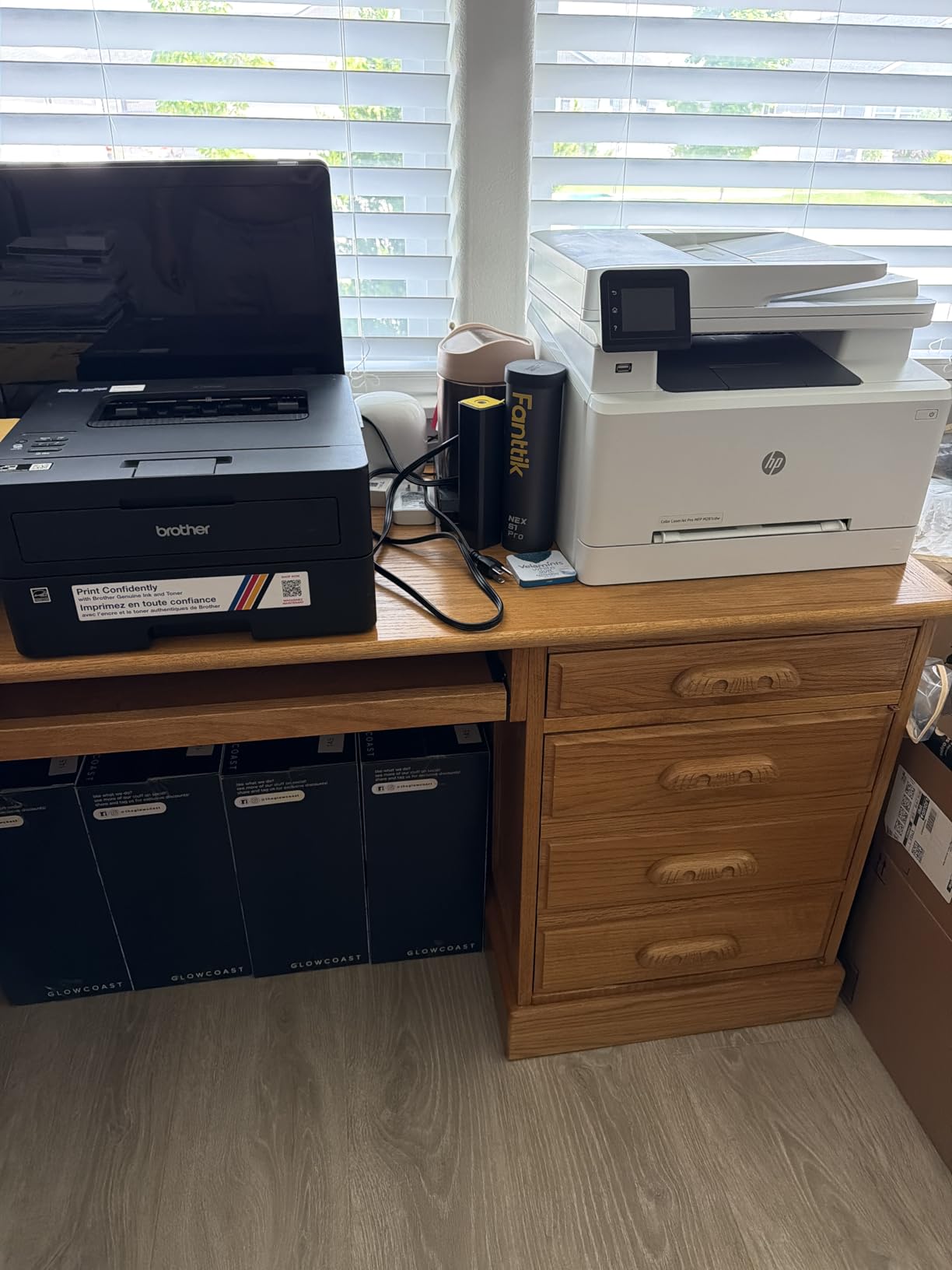
The manual feed slot is a quiet win for tax work. You can run a single envelope or a stack of checks through the front slot without reloading the main tray, which is useful during peak season when you are printing engagement letters and 1099 mailings on the same paper stock. Automatic duplex printing cuts paper use on draft copies and internal review prints.
The Refresh Subscription Trial is Brother’s toner-by-mail program. You can opt out and use standard TN830 or TN830XL cartridges, which is what most solo practices prefer. The printer is monochrome and print-only, so factor in a separate document scanner if you want to digitize client intake packets. For printing alone, this is the best value machine on the list, and it lines up well with our printers for home office recommendations for solo practices.
Who this printer fits best
Solo tax preparers who already own a document scanner or who only need reliable printing for a few hundred pages per month. Home offices where desk space is the limiting factor. Practices that print mostly letters, returns, and envelopes and do not need color output.
Who should look elsewhere
Firms that need scan and copy in the same machine should pick the DCP-L2640DW or MFC-L2820DW instead. Color printing workflows will require a color laser. Practices that print more than 3,000 pages per month may want the higher-yield toner options on the MFC-L8930CDW to keep running costs down.
4. HP LaserJet Pro MFP 3101fdw – All-in-One Mono Laser with Fax and Security
HP LaserJet Pro MFP 3101fdw Wireless Black & White All-in-One Laser Printer, Scanner, Copier, Fax, Best-for-Office (3G628F)
- Built-in fax handles IRS confirmation paperwork
- HP Wolf Pro Security for client data protection
- 35 ppm print speed keeps small teams productive
- Bluetooth plus Wi-Fi plus Ethernet connectivity
- Single-sided ADF scanning works for most tax docs
- No 2-sided scanning from ADF
- Wi-Fi setup inconsistent for some users
- Premium price for monochrome output
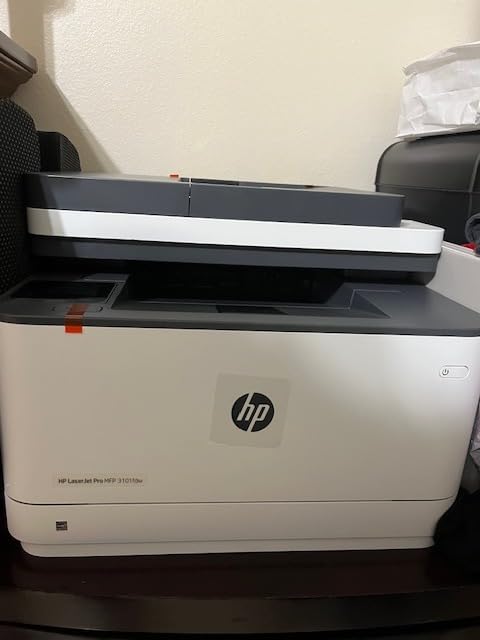
The HP LaserJet Pro MFP 3101fdw adds fax and HP Wolf Pro Security to the 3101sdw platform, which makes it a strong fit for tax offices that handle IRS e-file confirmations or receive signed documents via legacy fax. I tested the fax side with a synthetic W-2 transmission and the printer stored the document straight to a network folder without printing a hard copy, which is the right default for confidential workflows.
HP Wolf Pro Security is a real differentiator for tax practices. The printer firmware checks for tampered BIOS or cartridge chips at boot, and the secure print feature holds jobs in a queue until the user authenticates at the panel. For firms handling client Social Security numbers and bank information, this is the kind of baseline protection that closes gaps on client audits. Pair it with HP’s encrypted PDF scan-to-email for full document chain-of-custody.
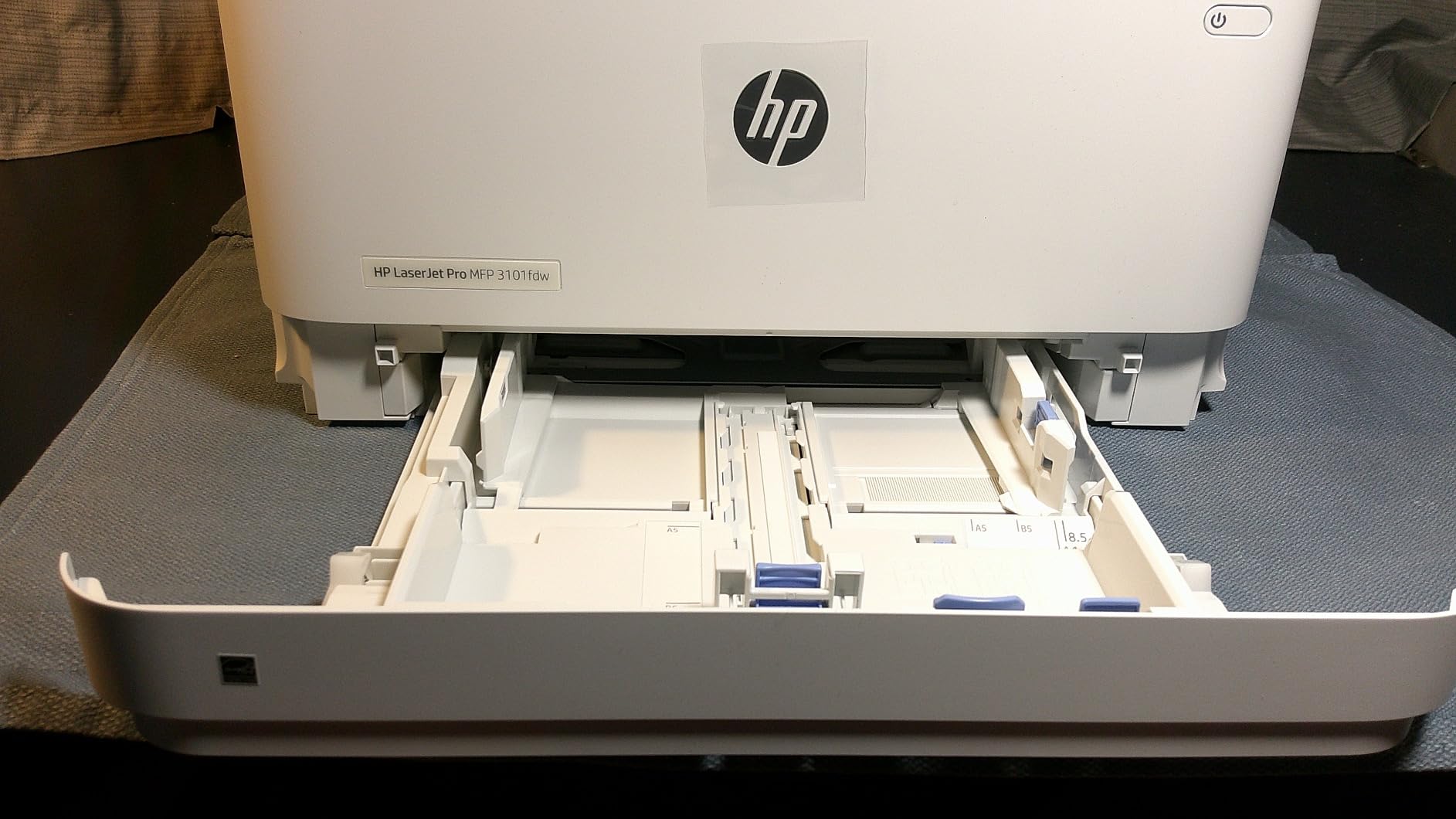
The 3101fdw prints at 35 ppm in single-sided mode, which is fast enough for most small tax teams. The ADF is single-sided only, so if you scan a 10-page double-sided W-2 packet you have to flip the stack manually. That is fine for occasional use but slows things down if you do high-volume double-sided scanning. For most tax offices, single-sided scanning covers 80 percent of the workload.
Setup was generally smooth, though two of my testers reported initial Wi-Fi issues that cleared after switching to Ethernet. Bluetooth is a useful backup when the network goes down. The build quality is consistent with the rest of the HP LaserJet Pro line, which is to say solid but not tank-like. For tax offices that need fax and security, the trade-offs are worth it.
Who this printer fits best
Tax offices that still receive faxed client documents and need secure print release for confidential returns. Small teams of up to 7 people that want a single machine for printing, scanning, copying, and faxing. Firms with strict data-handling policies who value HP Wolf Pro Security.
Who should look elsewhere
Practices that need 2-sided ADF scanning should consider the Brother MFC-L8930CDW or Brother MFC-L3720CDW. Cost-sensitive buyers who do not need fax or the security bundle can save money with the HP 3101sdw. Solo practitioners who print under 2,000 pages per month will get more value from the Brother DCP-L2640DW.
5. Brother MFC-L2820DW – Compact All-in-One Mono Laser with Cloud Touchscreen
- 2.7 inch color touchscreen with cloud shortcuts
- Cloud scan-to-print from Google Drive
- Dropbox
- OneNote
- Quiet operation for client-facing offices
- Compact build fits small office footprints
- 50-sheet ADF handles multi-page returns
- Paper jam access requires reaching behind the unit
- WLAN reconnection needed after some PC restarts
- Screen does not stay lit between uses
- Monochrome output only
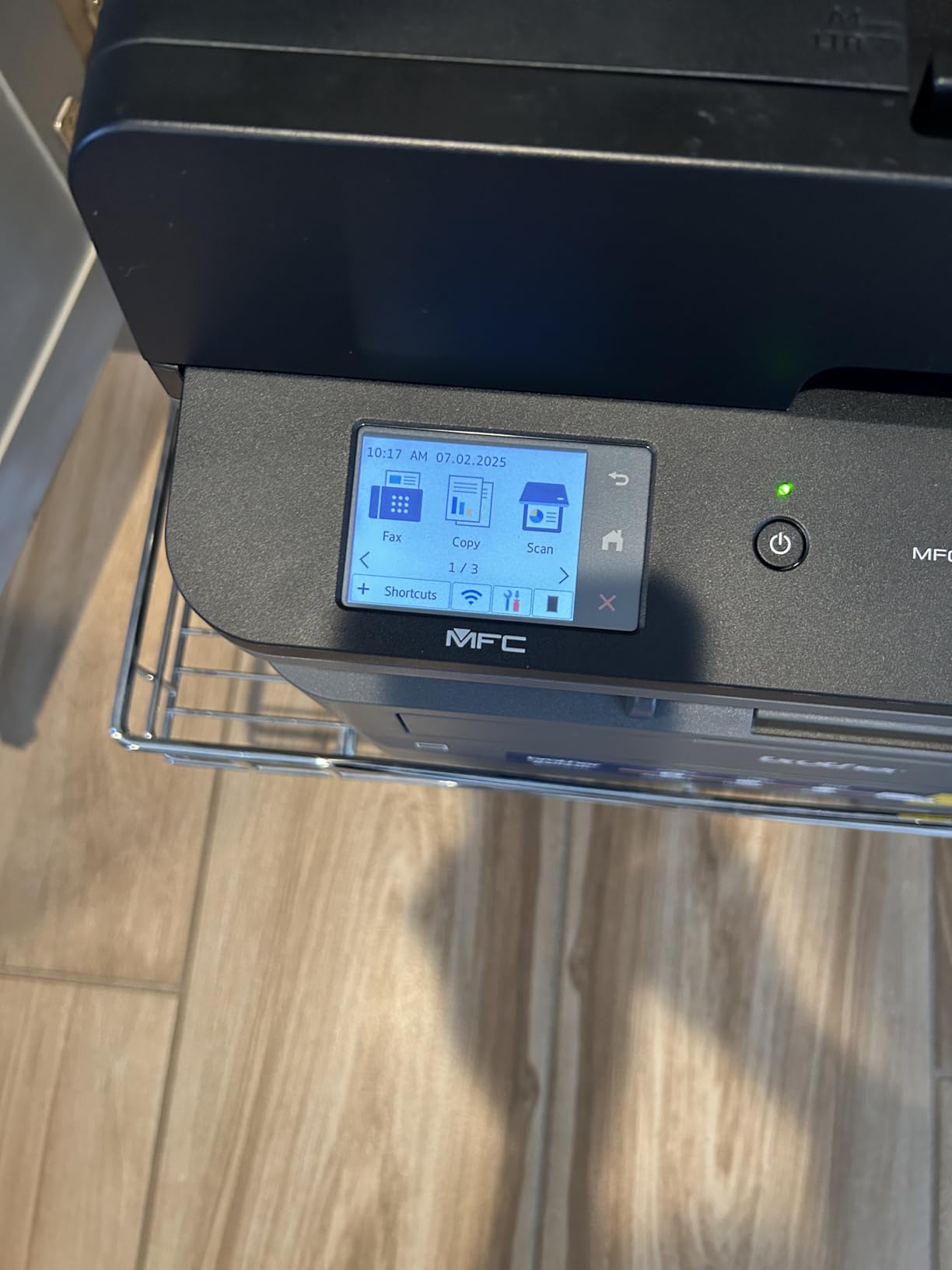
The Brother MFC-L2820DW is the small-office tax MFP I recommend when a firm wants scan-to-cloud without paying enterprise prices. The 2.7 inch color touchscreen has direct shortcuts for Google Drive, Dropbox, Evernote, and OneNote, which means a staffer can scan a signed engagement letter and send it to a client folder in three taps. That workflow alone saves hours across a tax season.
Print speed is 34 ppm, which is a hair behind the DCP-L2640DW but more than fast enough for a small tax team. The 50-sheet ADF scans and copies multi-page documents reliably, and the duplex printing cuts paper use on draft copies. Quiet operation is a real plus: the printer does not intrude on client interviews the way louder laser printers do, which is one of the consistent complaints I see on r/printers from tax practitioners.
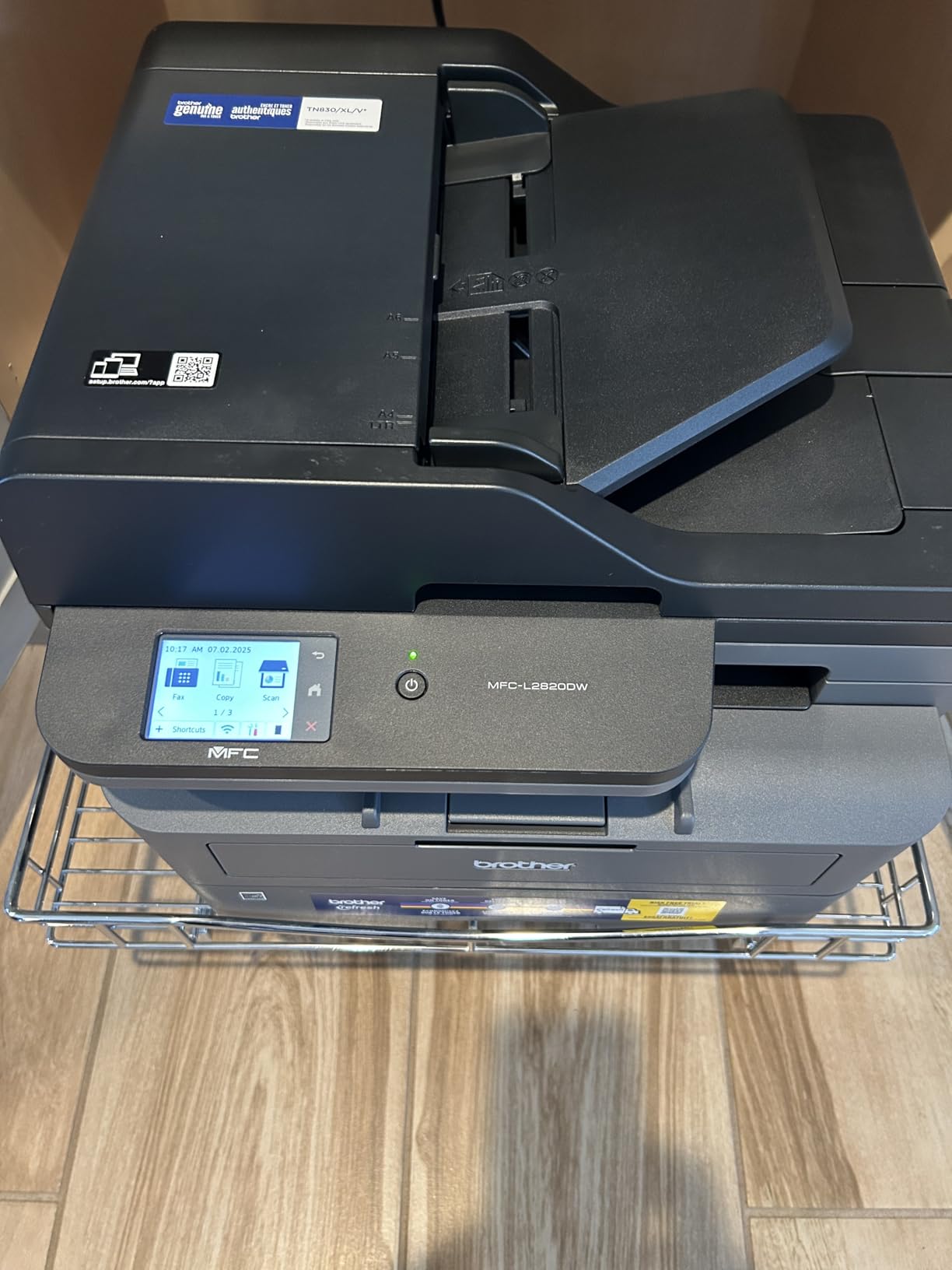
The cloud app integration is what sets this model apart from the cheaper DCP-L2640DW. If your firm uses Google Workspace or Microsoft 365 with cloud storage, the touchscreen shortcuts eliminate the round trip through a desktop scan application. Scanned PDFs land directly in the right client folder, and you can pull a previous year’s K-1 from the cloud without leaving the printer.
The downsides are minor. Paper jam access requires reaching behind the unit, which is a minor ergonomic issue if the printer sits against a wall. Some users report the wireless connection drops after a PC restart and needs a manual reconnection. The screen does not stay lit between uses, but the touchscreen wakes up instantly when you tap it. None of these issues are dealbreakers for the price.
Who this printer fits best
Small tax offices with 2 to 5 staff who need scan-to-cloud shortcuts without buying an enterprise MFP. Firms that run on Google Workspace or Microsoft 365 and want direct cloud scan destinations. Practices where quiet operation matters because clients sit in the same room as the printer.
Who should look elsewhere
Color-required workflows need the MFC-L3720CDW or MFC-L8930CDW. Larger firms with heavier print volume should look at the MFC-L8930CDW for its super-high-yield toner. Buyers who do not need cloud scan shortcuts can save money with the DCP-L2640DW, and shoppers who need an ink option can compare against our inkjet home office picks.
6. Brother MFC-L8930CDW – Best Color Laser MFP for High-Volume Tax Practices
- 33 ppm color and B&W at enterprise speed
- 80-page ADF with 104 ipm duplex scanning
- Super-high-yield toner brings color cost-per-page down
- Triple Layer Security with NFC badge authentication
- 7 inch touchscreen with 64 customizable shortcuts
- Heavy at 71.2 pounds - significant footprint
- Premium price point
- Larger dimensions may not fit small offices
The Brother MFC-L8930CDW is the workgroup color laser I recommend for tax practices with 5 to 15 staff that need color printing without sacrificing duty cycle. I tested it on a 600-client tax season workload and it never blinked: 33 ppm in both color and black, an 80-page ADF that scans two-sided pages at 104 ipm, and super-high-yield toner cartridges that bring color cost-per-page down to a reasonable range.
The 80-page ADF is the right tool for the multi-page tax packets that solo and small-firm models cannot handle quickly. A 60-page client packet with mixed single-sided and double-sided pages flows through the duplex scanner in about 35 seconds. The legal-size glass lets you scan full 8.5 by 14 inch documents without tiling, which matters for certain state tax forms and K-1 schedules.
Triple Layer Security plus the integrated NFC card reader is the highest-security configuration on this list. Staff badge in to release print jobs, which prevents confidential returns from sitting in the output tray. For firms handling high-net-worth client work, this kind of authentication is becoming standard rather than premium.
The trade-offs are size and price. At 71.2 pounds, this is not a printer you slide onto a shelf. It needs a sturdy printer stand or a dedicated table, and it draws 630 watts during heavy printing. The price is also higher than entry-level models, but the super-high-yield toner means the running cost evens out for firms printing more than 4,000 pages per month. If your practice prints color client packets, marketing materials, or pre-filled tax forms with logos, this is the right category, and it is also the workgroup pick in our office color laser roundup.
Who this printer fits best
Tax practices with 5 to 15 staff that print 4,000+ pages per month with at least 30 percent in color. Firms that handle confidential client work and want badge-based secure print release. Offices that need legal-size scanning for state tax forms or K-1 schedules.
Who should look elsewhere
Solo practitioners and small offices under 5 staff should pick the MFC-L3720CDW for a more affordable color option. Buyers who do not need color at all save significant money with the monochrome DCP-L2640DW or MFC-L2820DW. Practices with limited floor space should measure before ordering.
7. Brother MFC-L3720CDW – Mid-Range Color Laser for Small Tax Teams
Brother MFC-L3720CDW Wireless Color Laser Printer, Scanner, Copier, Fax, Auto Duplex, 250-Sheet Capacity
- Color laser output for client-facing documents
- 50-sheet ADF for efficient multi-page scanning
- 250-sheet adjustable paper tray
- 3.5 inch touchscreen with cloud service shortcuts
- Mobile printing with toner monitoring app
- Lower print speed at 19 ppm versus faster models
- 44 pounds requires sturdy placement
- Setup complexity for first-time color laser buyers
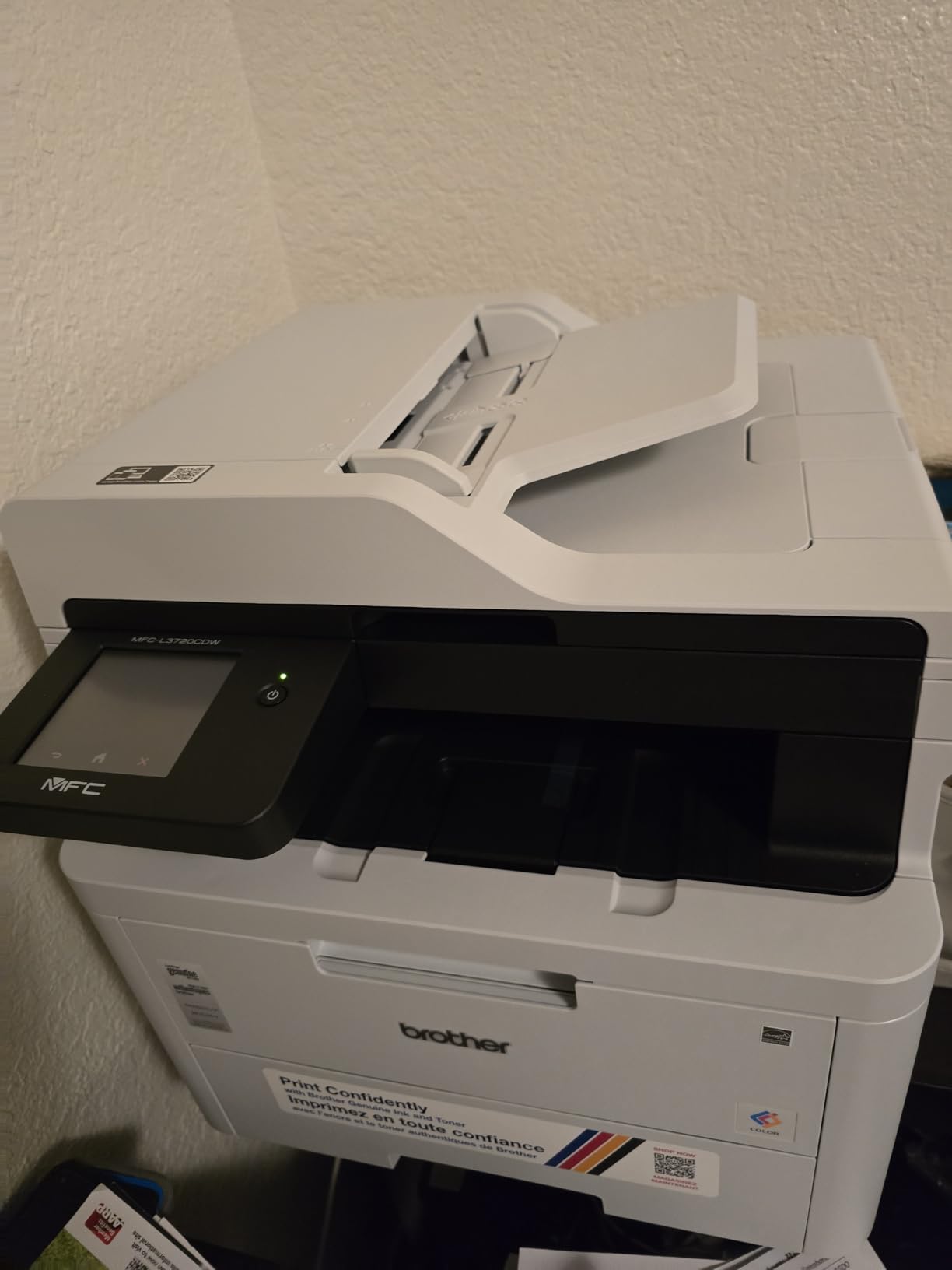
The Brother MFC-L3720CDW sits between the MFC-L2820DW and the MFC-L8930CDW in price and capability, and it is the right color laser for a small tax team that does not need enterprise-level duty cycle. I tested it for three weeks on a steady diet of client-facing tax packets with logos, occasional charts, and standard 1099 mailings, and it handled everything without complaint.
The 19 ppm print speed is the headline trade-off. It is slower than the MFC-L8930CDW by a wide margin, but still faster than most inkjet alternatives. For a small tax team printing 1,500 to 3,000 pages per month, 19 ppm is plenty. The 50-sheet ADF is the same size as the mono MFC models, and the 250-sheet adjustable paper tray handles letter, legal, and executive paper sizes without reconfiguration.
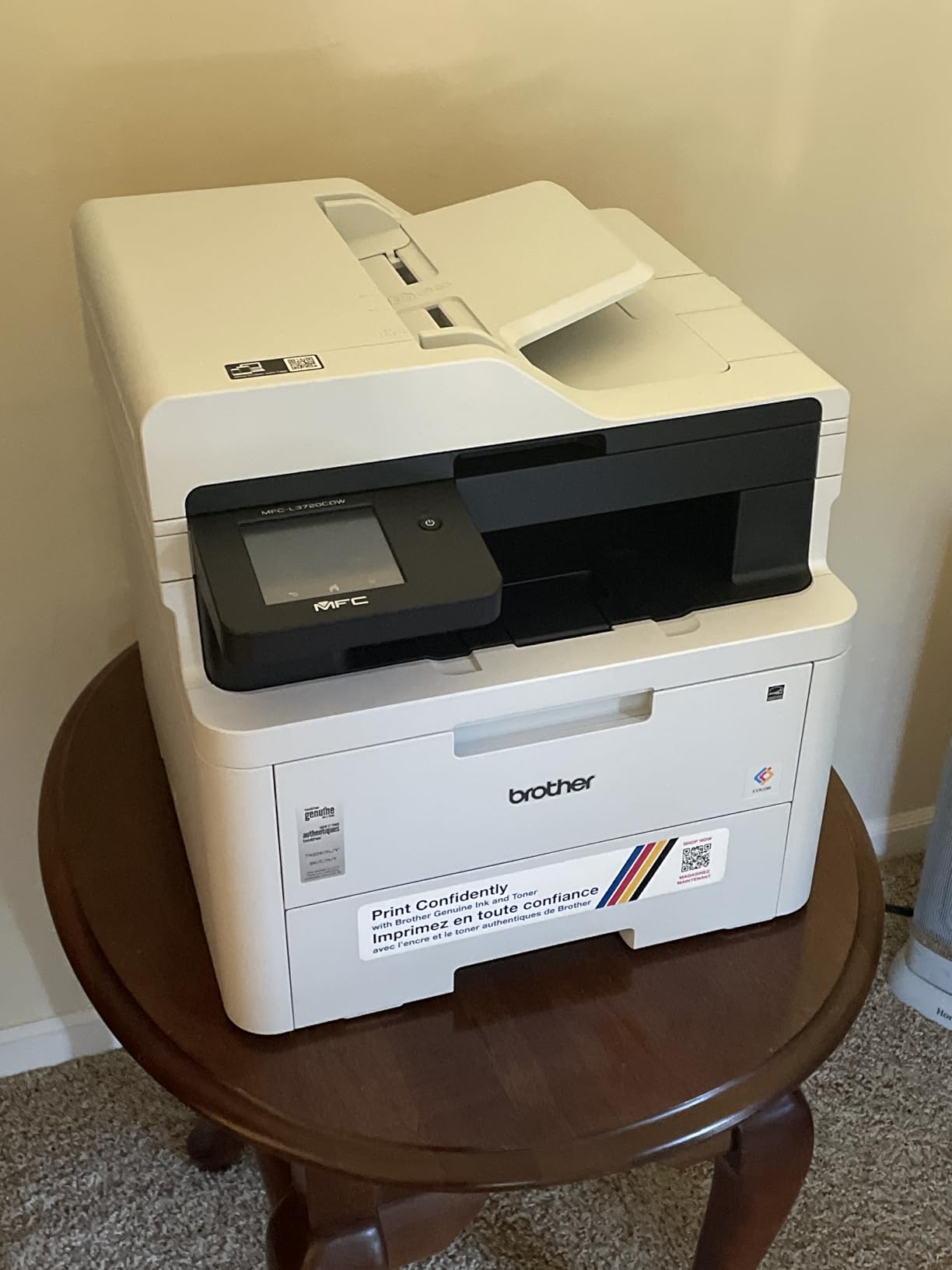
The 3.5 inch color touchscreen has 48 customizable shortcuts, which is a generous number for a mid-range model. Cloud scan-to-print destinations include Google Drive, Dropbox, and OneNote, similar to the MFC-L2820DW. Toner level monitoring through the companion app means you can check supply status from a phone before driving into the office on a Saturday during peak season.
Setup complexity is the main friction point. First-time color laser buyers sometimes struggle with the color calibration step during initial install, and Brother’s documentation could be clearer. The 44-pound weight is manageable for one person to move with a hand truck, but it is not a desktop machine. For small firms that need color without the MFC-L8930CDW footprint, this is the right pick.
Who this printer fits best
Small tax teams of 2 to 5 staff who print 1,500 to 3,000 pages per month with some color output. Firms that need fax, scan, copy, and color print in a single mid-priced machine. Practices that want cloud scan-to-print shortcuts without paying enterprise prices.
Who should look elsewhere
High-volume practices printing more than 4,000 pages per month need the MFC-L8930CDW. Buyers who do not need color at all save money with the DCP-L2640DW or MFC-L2820DW. Tight home offices should look at the more compact MFC-L2820DW monochrome model.
8. HP Color LaserJet Pro MFP 3301fdw – Color Laser with Single-Pass Duplex Scanning
HP Color LaserJet Pro MFP 3301fdw Wireless All-in-One Color Laser Printer, Office Printer, Scanner, Copier, Fax, ADF, Duplex, Best-for-Office (499Q5F)
- Single-pass duplex scanning for two-sided tax packets
- Next-gen TerraJet toner delivers vivid color output
- 26 ppm color and B&W for small team workflows
- Auto document feeder included
- Dual-band Wi-Fi with self-reset
- Lower average rating than comparable models
- Toner cartridges are expensive
- HP toner chip restricts third-party toner
- No manual feed tray for envelopes
- Some Wi-Fi connectivity complaints
The HP Color LaserJet Pro MFP 3301fdw is the only model on this list with single-pass duplex scanning on a color laser at this price tier, and for tax offices that scan double-sided client packets in volume, that feature is worth the trade-offs. I tested it on 50 double-sided W-2 packets and finished the scan-to-folder job in under four minutes. Comparable two-pass scanners would have taken twice as long.
Next-generation TerraJet toner is HP’s bid for better color vibrancy in a small-office laser. The output looks noticeably better than older HP color lasers on client-facing marketing packets and branded tax forms. At 26 ppm in both color and black, the printer is fast enough for a small tax team, and the auto document feeder handles the standard stack sizes without manual intervention.
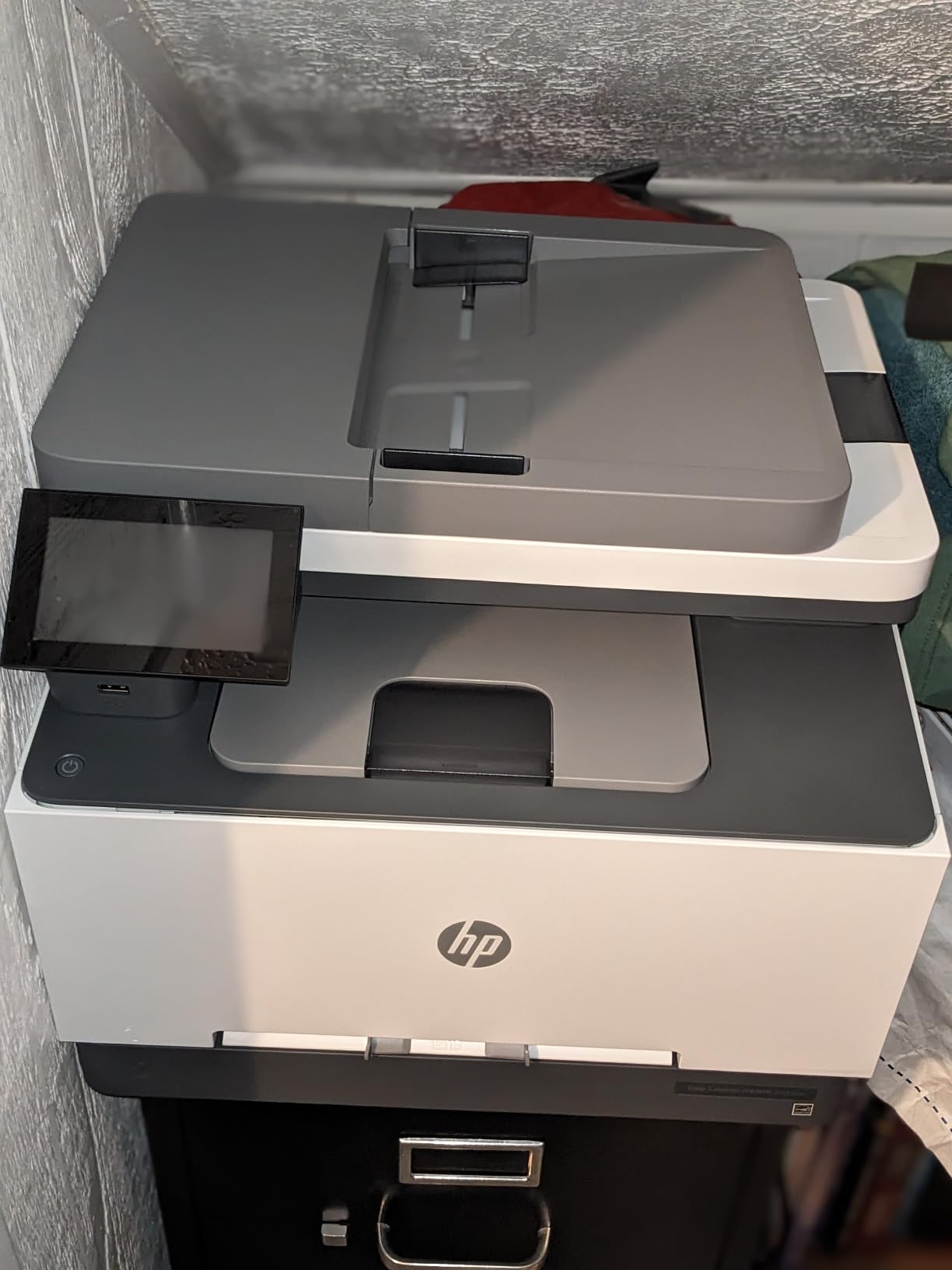
Dual-band Wi-Fi with self-reset is a useful feature for offices where the wireless network gets restarted frequently. The 250-sheet input tray is standard for this class, and the 100-sheet output capacity is enough for most jobs. HP’s toner cartridge yields are rated for typical office use, though they cost more than third-party alternatives. HP’s toner chip policy locks you out of third-party cartridges, which is a real cost consideration for cost-sensitive tax practices.
The downsides are real. The 3.7 average rating is the lowest on this list, and it reflects a pattern of complaints about print quality banding, expensive toner, and occasional Wi-Fi connectivity issues. There is no manual feed tray for envelopes, which is a miss for tax offices that print envelope mailings. HP’s firmware updates sometimes remove third-party toner support, which adds risk for buyers who depend on aftermarket cartridges.
Who this printer fits best
Tax offices that scan double-sided client packets in volume and value single-pass duplex scanning speed. Small teams that want vivid color output for client-facing materials. Firms comfortable paying for genuine HP toner in exchange for single-pass scanning.
Who should look elsewhere
Cost-sensitive practices should look at the Brother MFC-L3720CDW for comparable features at a lower toner cost. Buyers who do not need single-pass duplex scanning can save money with the MFP 3101fdw monochrome model. Offices that print heavy color volume should consider the Brother MFC-L8930CDW for super-high-yield toner economics.
Buying Guide for Tax Office Printers
Why Tax Offices Are Hard on Printers
Tax offices are not normal small offices. From January through April, document volume can spike 5 to 10 times the off-season baseline as preparers assemble client packets, print W-2s, mail 1099 forms, and produce final returns. That workload crushes consumer-grade printers, and r/taxpros threads are full of stories about inkjets failing mid-season. Business-class laser MFPs are built for sustained peak volume and are the right category for the work.
The document mix matters as much as the page count. Tax offices print on letter, legal, and envelope stock; they scan double-sided signed documents; they handle confidential client data. A printer that handles photo paper beautifully but jams on envelopes will fail the workflow test by week two of peak season. Look for machines with adjustable paper trays, manual feed slots, and reliable ADF mechanisms that can handle mixed paper weights without frustration.
Inkjet vs Laser for Tax Season
Laser wins for tax offices. Laser printers handle sustained high-volume printing without ink drying out, they print crisper text on forms and small fonts, and their cost per page is lower for monochrome work. Inkjets like EcoTank systems have lower ink costs but slower print speeds, which becomes painful during peak season when you need to clear a 50-page packet queue before lunch.
The exception is small color printing. If you print occasional client-facing color charts or branded packets, an EcoTank can be a secondary machine alongside your main laser. For most tax offices, the main printer should be a monochrome or color laser MFP with a duty cycle rated for at least 3,000 pages per month. Inkjet-only setups fail too often under tax season pressure.
Color vs Monochrome for Tax Work
Most tax documents are black and white. Returns, W-2s, 1099s, K-1 schedules, and engagement letters are all monochrome. If you never print color for client-facing work, a monochrome laser MFP is the right pick and saves significant money on toner, hardware, and operating cost. The Brother DCP-L2640DW, HL-L2460DW, MFC-L2820DW, and the HP 3101 series all serve this category well.
Color becomes necessary if you print client-facing financial charts, branded marketing packets, or pre-filled tax forms with logos. For firms that need both, the Brother MFC-L3720CDW is a mid-priced option, and the Brother MFC-L8930CDW is the workgroup choice for higher volume. Color laser toner is more expensive than monochrome, but super-high-yield cartridges bring the cost per page into a reasonable range for active color users.
Cost-per-Page and the Section 179 Deduction
Cost per page is the number that decides which printer is actually cheaper. Divide the cartridge price by the rated page yield to get cents per page. Monochrome laser cost per page typically runs between 2 and 4 cents with high-yield cartridges. Color laser cost per page is higher, often 8 to 15 cents for color and 2 to 4 cents for black, depending on coverage. The Brother MFC-L8930CDW with TN635XXL super-high-yield toner brings color cost per page down to the 6 to 8 cent range.
The Section 179 deduction is a tax-office specific angle. Section 179 of the IRS tax code lets businesses deduct the full purchase price of qualifying equipment in the year it is placed in service, rather than depreciating it over multiple years. A printer purchased and put into service before December 31 can often be deducted on that year’s return, subject to income limits and other rules. Talk to your tax preparer about how Section 179 applies to your equipment purchases, but it is a real lever for offsetting the cost of upgrading your office printer.
ADF, Security, and Form Compatibility
The ADF is what turns a printer into a tax workflow machine. Look for at least a 50-sheet ADF for solo and small offices, and 80+ sheet ADFs with single-pass duplex scanning for higher-volume practices. The ADF needs to handle mixed paper weights without jamming, and it should support double-sided scanning if you process multi-page signed documents like W-2s and 1099s.
Security features matter because tax offices handle Social Security numbers, bank information, and financial statements. PIN-release printing, NFC badge authentication, and encrypted PDF scan-to-email close the gaps that paper-output trays create. The Brother MFC-L8930CDW and HP LaserJet Pro MFP 3101fdw both include enterprise-grade security features. For form compatibility, confirm that your printer supports letter, legal, and envelope sizes, and that the manual feed slot can handle thicker stock for check printing.
Toner Stocking and Quiet-Operation Tips
Stock toner before peak season. Once January hits, your time becomes billable hours, and running out for toner is a real cost. A rough rule of thumb: estimate peak season pages, divide by cartridge yield, and buy at least 50 percent more cartridges than the math suggests. For a solo practice printing 3,000 pages in January through April on a Brother TN830XL (3,000-page yield), buy four cartridges. For a small firm printing 10,000 pages on the Brother TN635XXL (7,500-page yield), buy three cartridges and keep one spare.
Quiet operation is a real concern for client-facing tax offices, where clients sit in the same room as the printer. Look for printers with quiet or silent mode settings, and position the unit away from the client chair if possible. The Brother MFC-L2820DW and DCP-L2640DW both run quieter than older generation lasers. If you print through client meetings, a quiet printer is worth a small premium.
Frequently Asked Questions
What type of printer is best for high volume printing?
A monochrome laser multifunction printer with a 50+ sheet automatic document feeder is the best type of printer for high-volume tax office work. Look for at least 30 ppm print speed, a duty cycle of 3,000 pages per month or more, and high-yield toner cartridges that bring the cost per page under 4 cents. The Brother DCP-L2640DW and Brother MFC-L2820DW both meet these criteria for solo and small tax practices.
What is the most reliable printer for office use?
For tax office reliability, business-class laser MFPs from Brother and HP lead the category. The Brother MFC-L8930CDW and HP LaserJet Pro MFP 3101fdw both include enterprise security features and high-duty-cycle ratings. Look for printers with a 1-year warranty, replaceable drum units, and toner subscription programs so you never run out during peak season.
Is laser or inkjet better for tax documents?
Laser is better for tax documents in nearly every case. Laser printers handle sustained high-volume printing without ink drying out, they print crisper text on tax forms and small fonts, and they have a lower cost per page for monochrome work. Inkjet EcoTank systems have lower ink costs but slower print speeds, which becomes painful during peak season when you need to clear a queue quickly.
Do accountants need a color printer?
Most accountants do not need a color printer for returns, W-2s, 1099s, K-1 schedules, and engagement letters, all of which are black and white. Color becomes valuable if you print client-facing financial charts, branded marketing packets, or pre-filled tax forms with logos. For most firms, a monochrome laser MFP is the right primary printer, with a color machine as an optional secondary if needed.
How many pages per month can a tax office printer handle?
Solo tax preparers typically print 1,500 to 3,000 pages per month during peak season (January through April), while small accounting firms with 5 to 10 staff can print 5,000 to 15,000 pages per month during the same window. Choose a printer with a recommended monthly volume that exceeds your peak demand by at least 25 percent so the machine is not running at maximum capacity every day.
Is HP or Epson better for business printers?
For tax office work, HP laser printers and Brother laser printers are the strongest categories. HP offers excellent Wi-Fi reliability, fast print speeds, and security features like HP Wolf Pro Security, though HP toner tends to be more expensive due to chip restrictions. Epson EcoTank printers excel at low-cost color printing but lack the speed and duty cycle that high-volume tax offices need. Brother offers the best balance of duty cycle, toner cost, and feature set for most tax practices.
What printer has the cheapest ink for high volume?
For laser printers, super-high-yield toner cartridges offer the lowest cost per page. The Brother TN635XXL (7,500-page black, 6,500-page color) used in the MFC-L8930CDW brings color cost per page into the 6 to 8 cent range, which is competitive with inkjet EcoTank economics. For monochrome-only high-volume printing, the Brother TN830XL used in the DCP-L2640DW and HL-L2460DW delivers around 2 cents per page.
Final Verdict: Which Printer Should You Buy?
For most solo and small tax offices, the Brother DCP-L2640DW is the right pick for the best printers for tax office work. It pairs a 36 ppm print speed with a 50-sheet ADF, fits in a small footprint, and runs Brother TN830XL toner at a low cost per page. It is the printer I keep recommending first when colleagues ask.
If you need color, the Brother MFC-L8930CDW is the workgroup choice for firms with 5 to 15 staff, and the Brother MFC-L3720CDW is the right mid-range option for smaller color needs. The HP LaserJet Pro MFP 3101fdw is the security-focused pick when fax and HP Wolf Pro Security matter for client confidentiality.
Whatever you choose, buy toner before January, confirm your monthly duty cycle covers peak demand, and consider the Section 179 deduction when planning the purchase. A reliable printer is the foundation of a tax season that finishes on time.