
A garden bench is one of those purchases where the cheap option looks perfectly good on the day it arrives. A year later it is sitting there with soft wood at the feet, orange bloom around the bolts, or a powder coat chipped off in one spot. I have gone through twelve outdoor benches in the last few seasons for this guide, mostly metal and poly lumber, and the pattern was consistent: what fails first is almost never the frame. It is the ground contact and the fasteners.
That is why the best garden benches below are judged on benchmarks rather than looks alone. Seat height, width per person, stated weight capacity, how the frame is protected, how heavy it is to shift, and what the warranty actually says. The FDW 46-inch bench is our overall pick because it combines a genuinely rust-resistant powder-coated steel frame, a 480-lb rating and 2242 owner reviews with a footprint that fits an ordinary patio. The Psilvam teak-look poly bench takes the rating crown with 4.8 stars across 1404 reviews, and the VINGLI cast iron rose bench wins for anyone buying for a narrow path or porch.
One quick note before the list. Searches for this term mix seating benches with potting benches, which are tall workbenches at standing height. This guide covers seating only. If you want a work surface for repotting, our picks on the best potting benches for gardeners are the relevant read instead.
We updated this list in 2026 so the ratings, capacities and assembly notes reflect the current listings.
Top 3 Garden Bench Picks in 2026

FDW 46 inch Powder-Coated Steel Bench
- Powder-coated rust-resistant steel frame
- 480 lbs capacity
- 18 inch seat height
- Numbered parts and included hardware

Psilvam 2-Person Teak-Look Poly Bench
- 700 lbs load capacity
- Recycled polystyrene construction
- Nine-screw assembly
- No rot or rust risk

Best Choice Products Geometric Steel Bench
- All-steel weather-resistant frame
- Open geometric backrest
- 790 lbs advertised capacity
- Sixteen colour finishes
The Best Garden Benches in 2026 at a Glance
Every bench in the table below is a real listing we examined, with the specifications the manufacturer publishes rather than the marketing adjectives. Weight capacity is the number the maker claims, not a load test we performed.
| Product | Specifications | Action |
|---|---|---|
| FDW 46 inch Garden Bench, Black |
|
Check Latest Price |
 VINGLI Cast Iron Rose Bench VINGLI Cast Iron Rose Bench |
|
Check Latest Price |
 MFSTUDIO 50 inch Floral Cast Iron Bench MFSTUDIO 50 inch Floral Cast Iron Bench |
|
Check Latest Price |
 Leigh Country Welcome Steel Bench Leigh Country Welcome Steel Bench |
|
Check Latest Price |
| Psilvam 2-Person Teak-Look Poly Bench |
|
Check Latest Price |
| Best Choice Products Geometric Bench |
|
Check Latest Price |
 Maemttes Wrought Iron 50 inch Bench Maemttes Wrought Iron 50 inch Bench |
|
Check Latest Price |
 Tangkula 50 inch Solid Eucalyptus Bench Tangkula 50 inch Solid Eucalyptus Bench |
|
Check Latest Price |
 VEVOR 46 inch Mesh Pattern Bench VEVOR 46 inch Mesh Pattern Bench |
|
Check Latest Price |
 Giantex Acacia Loveseat Bench Giantex Acacia Loveseat Bench |
|
Check Latest Price |
 HAPPYGRILL Acacia 2-Person Bench HAPPYGRILL Acacia 2-Person Bench |
|
Check Latest Price |
 Furinno TIOMAN Backless Bench Furinno TIOMAN Backless Bench |
|
Check Latest Price |
1. FDW 46 Inch Garden Bench – Best Overall Garden Bench
- Powder-coated steel resists rust and weathering
- Numbered parts and clear assembly steps
- Seats two adults at a compact 46 inch width
- Grid backrest works as decoration and support
- Plastic backrest panel feels less premium than all-metal
- Light 23-lb frame is easier to shift in a gust
This is the bench we keep coming back to. The frame is reinforced steel under a powder-coated finish rated by the maker for rust and weather resistance, and that coating is the reason the rating holds up at 4.7 across 2242 reviews. Eighty-four percent of those reviews are five star, which is about as consistent as a mass-produced outdoor bench gets.
The dimensions matter more than the headline number. At 45.7 inches wide with a 20.5 inch depth it seats two adults properly without demanding a patio the size of a dance floor, and the 18 inch seat height lands right in the comfortable middle band rather than low enough to strain knees.
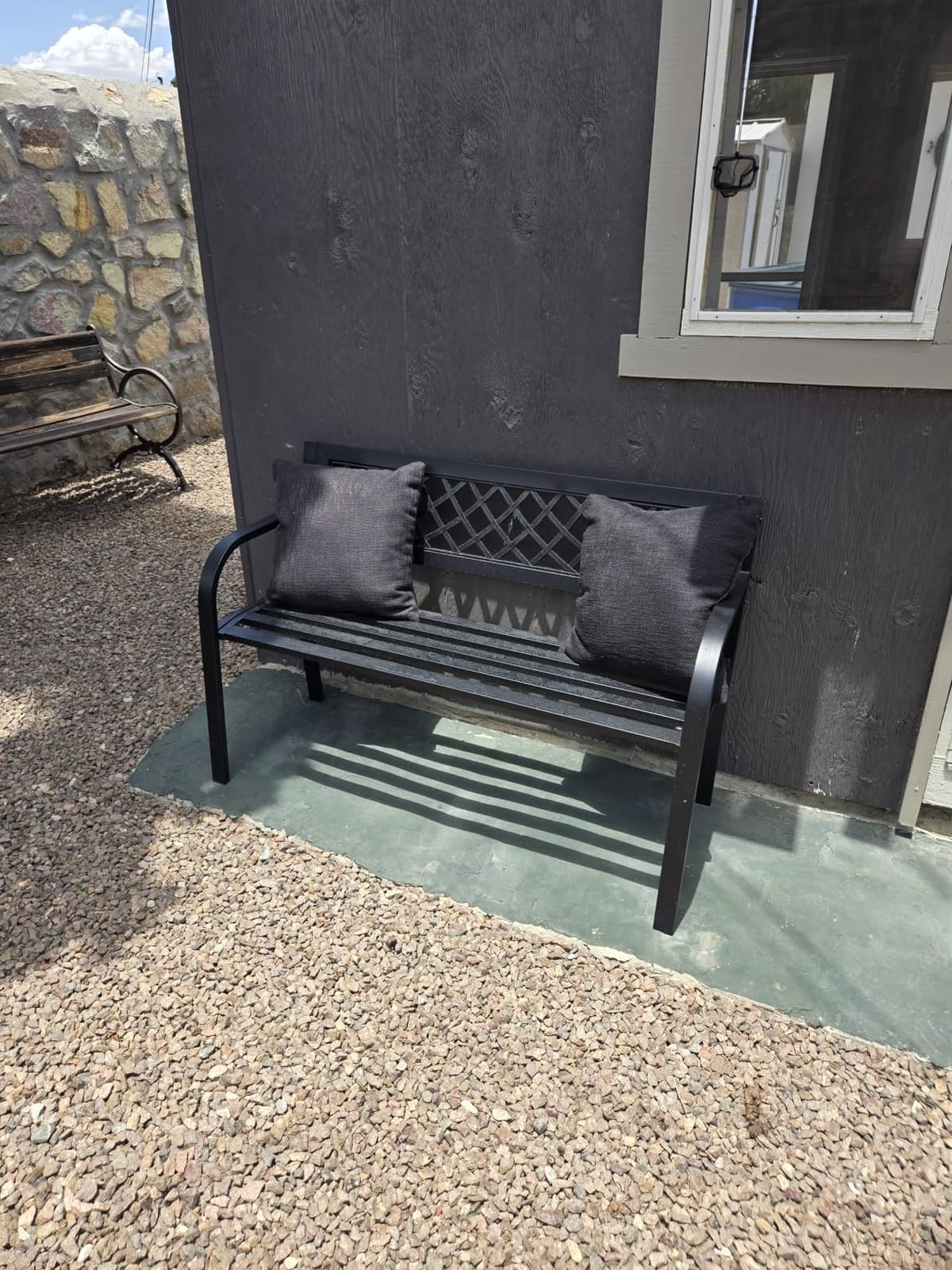
Assembly is genuinely uneventful. Parts arrive numbered, the manual is included, all hardware is in the box, and the finished edges are described as free of raw cuts and drips, which matters if children or bare legs are involved.
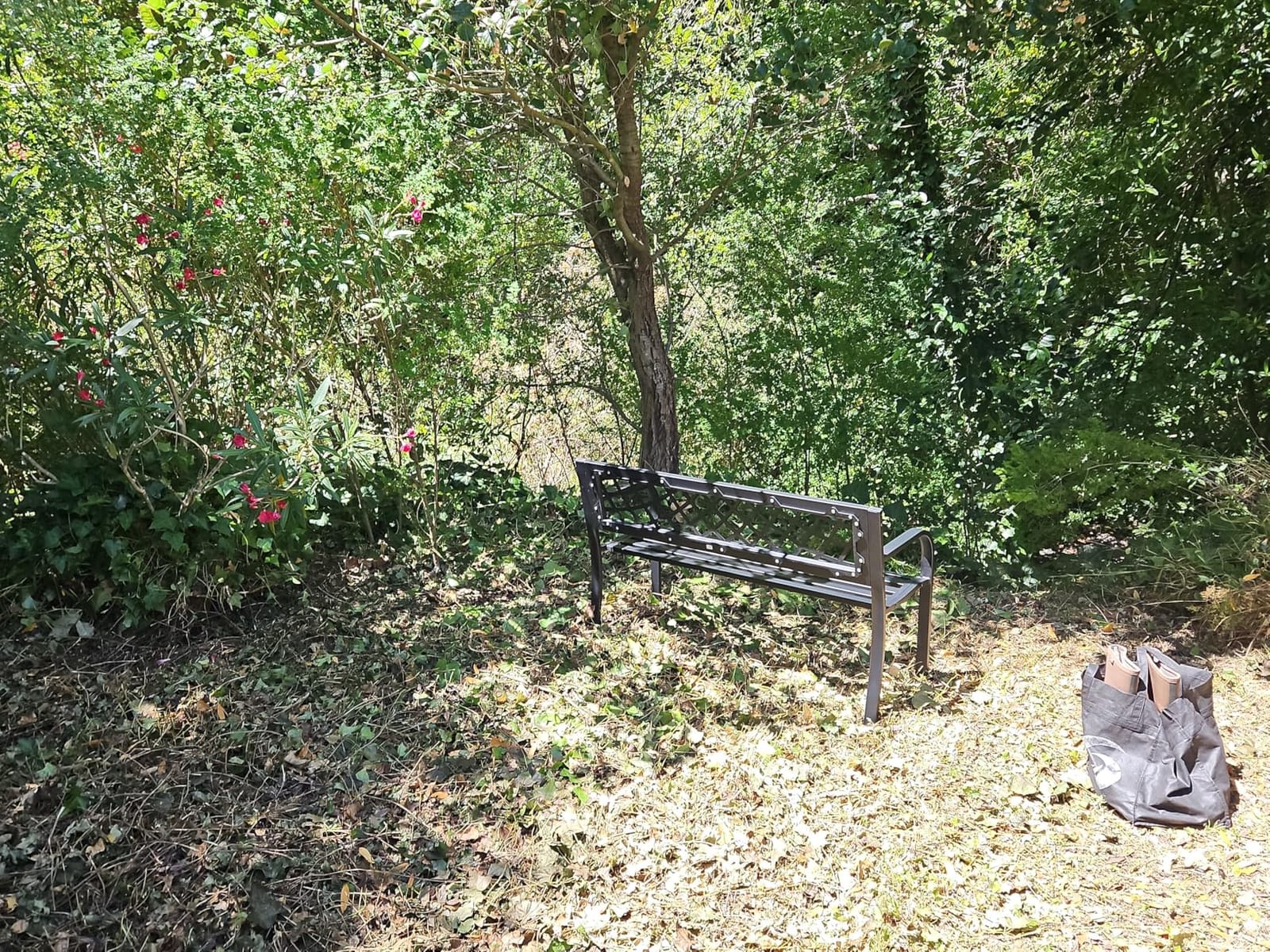
The honest catch is the plastic backrest panel. It gives the bench its grid look and it will not rot or rust, but it does not have the same rigidity as the steel underneath, and it is the part owners single out when they mention anything negative. The second catch is weight: 23 pounds is light enough that a gust can shift it on a smooth patio.
Is the powder coating enough protection for a wet climate?
For rain, sun and general outdoor exposure, yes, and owners across reviews describe it holding up season after season. What the coating does not solve is the one weakness shared by most powder-coated steel benches, which is corrosion starting at the fasteners where the coating was interrupted during assembly. That is a maintenance item, not a reason to skip the bench.
Who should skip this bench?
Skip it if you want a reclined back or deep lounging comfort. The backrest is upright and modest, which suits a garden bench you sit on for a coffee and a conversation, not an afternoon nap. Anyone wanting a slatted seat that breathes in high heat will find this one warmer than a wood or poly option.
2. VINGLI Cast Iron Rose Bench – Best Garden Bench for Narrow Paths
- Ornate rose design reads as a genuine garden ornament
- Cast iron handles sun
- rain and snow without visible corrosion
- About 15 minutes to assemble with included hardware
- Compact 38.5 inch width suits narrow paths
- Aluminium seat panels are hard and cool for long sitting
- Narrower frame seats two people snugly
This is the bench for the spot where a full-width two-seater will not go. At 38.5 inches wide and 13.5 inches deep it is the shallowest footprint in this roundup, and it still carries a 500-lb capacity rating on cast iron supports.
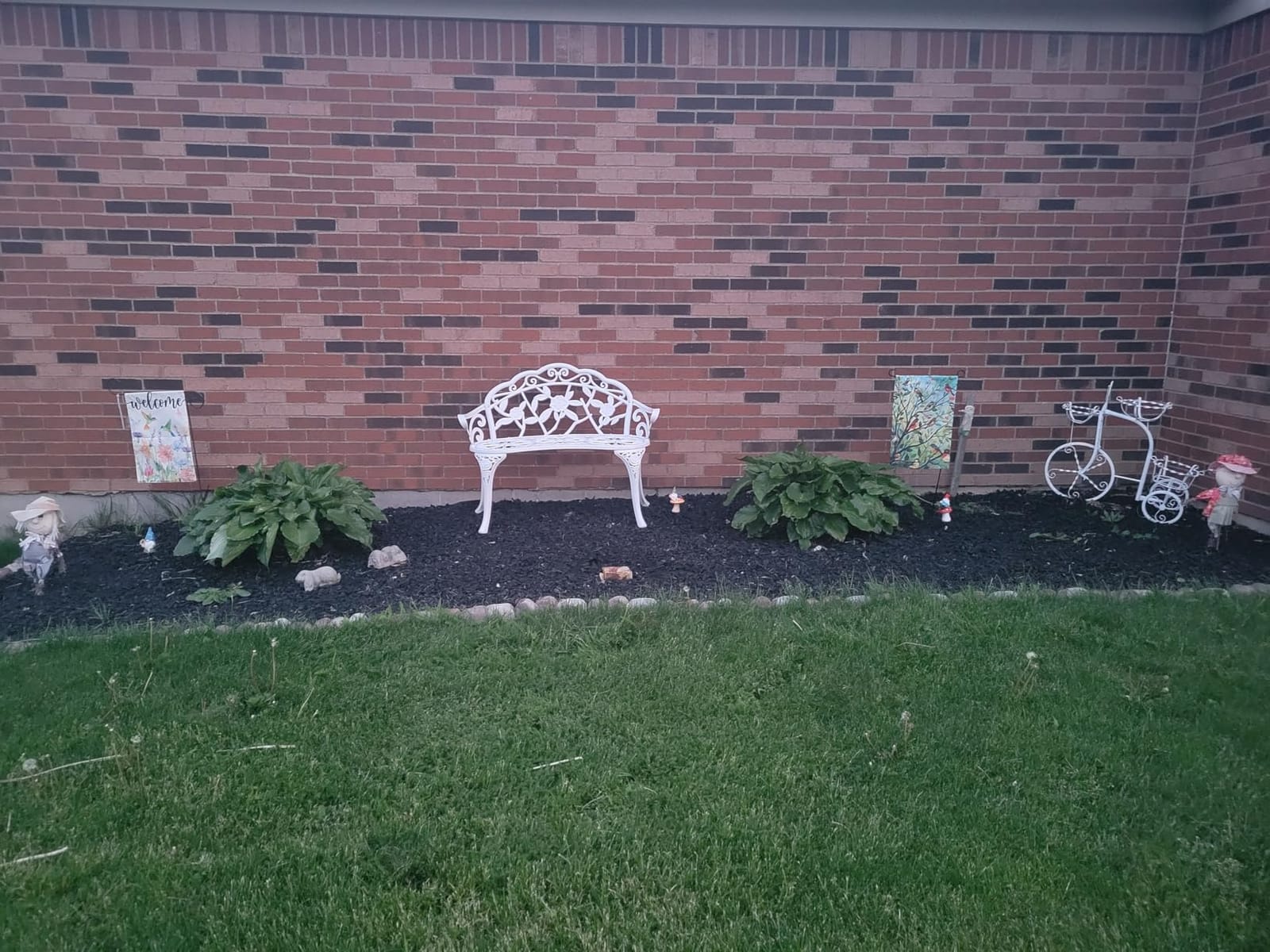
The decorative case is the reason to buy it. Cast iron legs and back frame combined with aluminium tube panels in the seat, armrests and backrest, finished in an antique bronze with three round flower motifs pressed into the seat. It reads as a garden ornament first and a seat second, which suits a border, a path edge or a courtyard corner.
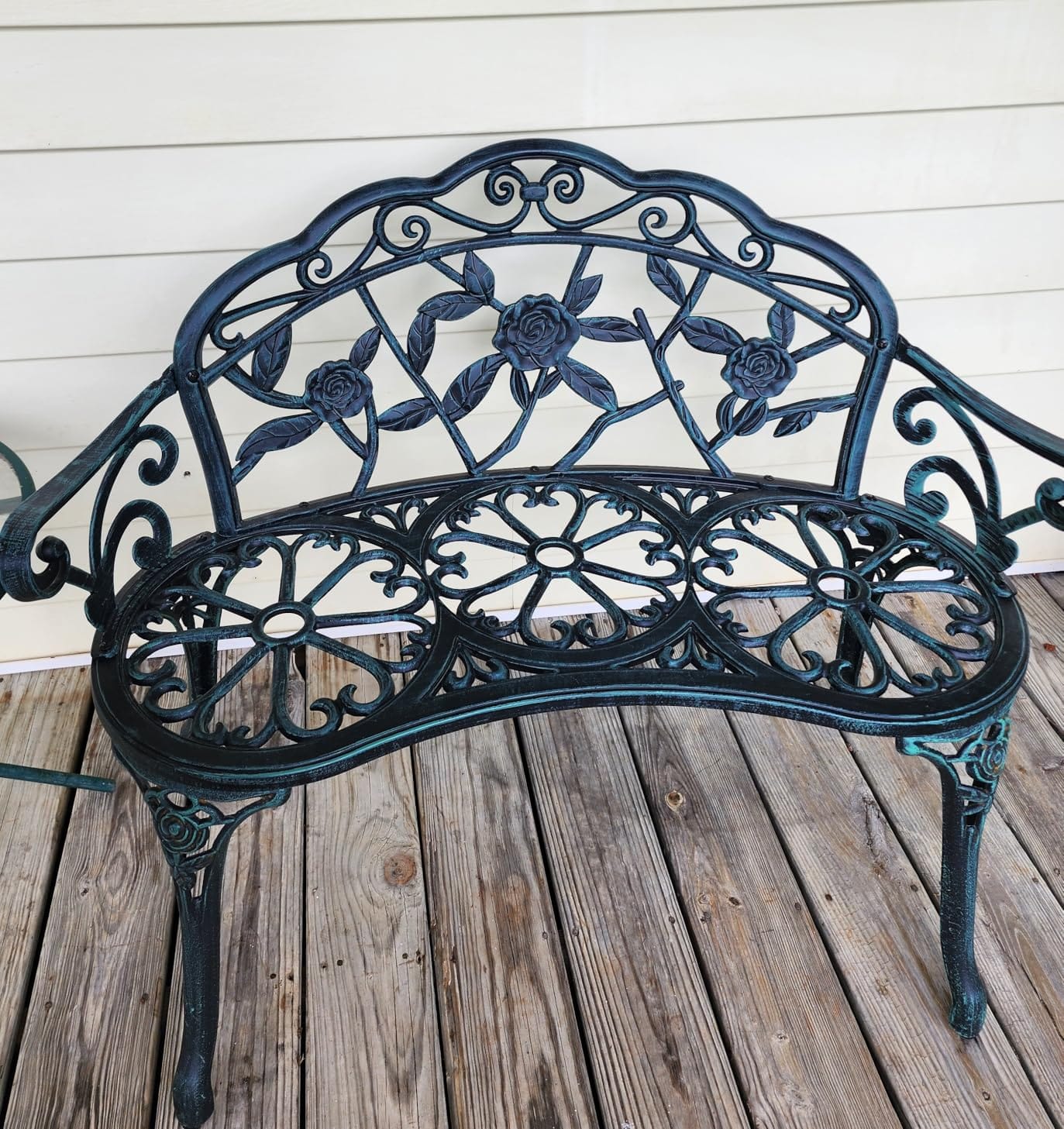
The paint is specified for sun, rain and snow, and the exposed fixings come with screw caps, which is a small detail that genuinely helps on a metal bench. Reviewers report the frame free of visible corrosion after extended outdoor use.
Two things to weigh. The aluminium panels are rigid rather than forgiving, so this is a short-sit bench rather than a long-lounge one. And a 16.25 inch seat height is a little lower than the 17 to 18 inch sweet spot, which taller users notice first.
Will a cast iron bench rust in a coastal garden?
Not quickly, provided the coating is intact. The cast iron frame is the most corrosion-tolerant part of any material in this guide, but salt air is still aggressive, and the paint sits on top of the metal rather than being the metal. A yearly wash with mild soapy water and a touch-up on any chips is cheap insurance and takes a few minutes.
Is it comfortable enough to sit on for an hour?
For coffee, a phone call or a short chat, comfortably. The panels have no give and no slat ventilation, so a cushion is the fix if you plan to sit out at dusk. Two adults fit, but not two large adults plus a bag of shopping between you.
3. MFSTUDIO 50 Inch Floral Cast Iron Bench – Best Garden Bench for Three People
MFSTUDIO 50 Inches Outdoor Garden Bench Cast Iron Metal Frame Floral Bronze
- E-coating reaches tube interiors
- welds and corners
- 50 inch seat fits two to three adults
- Sloped back and curved armrests reduce fatigue
- Heavy build feels planted and stable
- Heaviest bench here at 36.7 lbs for one-person moving
- Cast iron slats heat up in direct sun
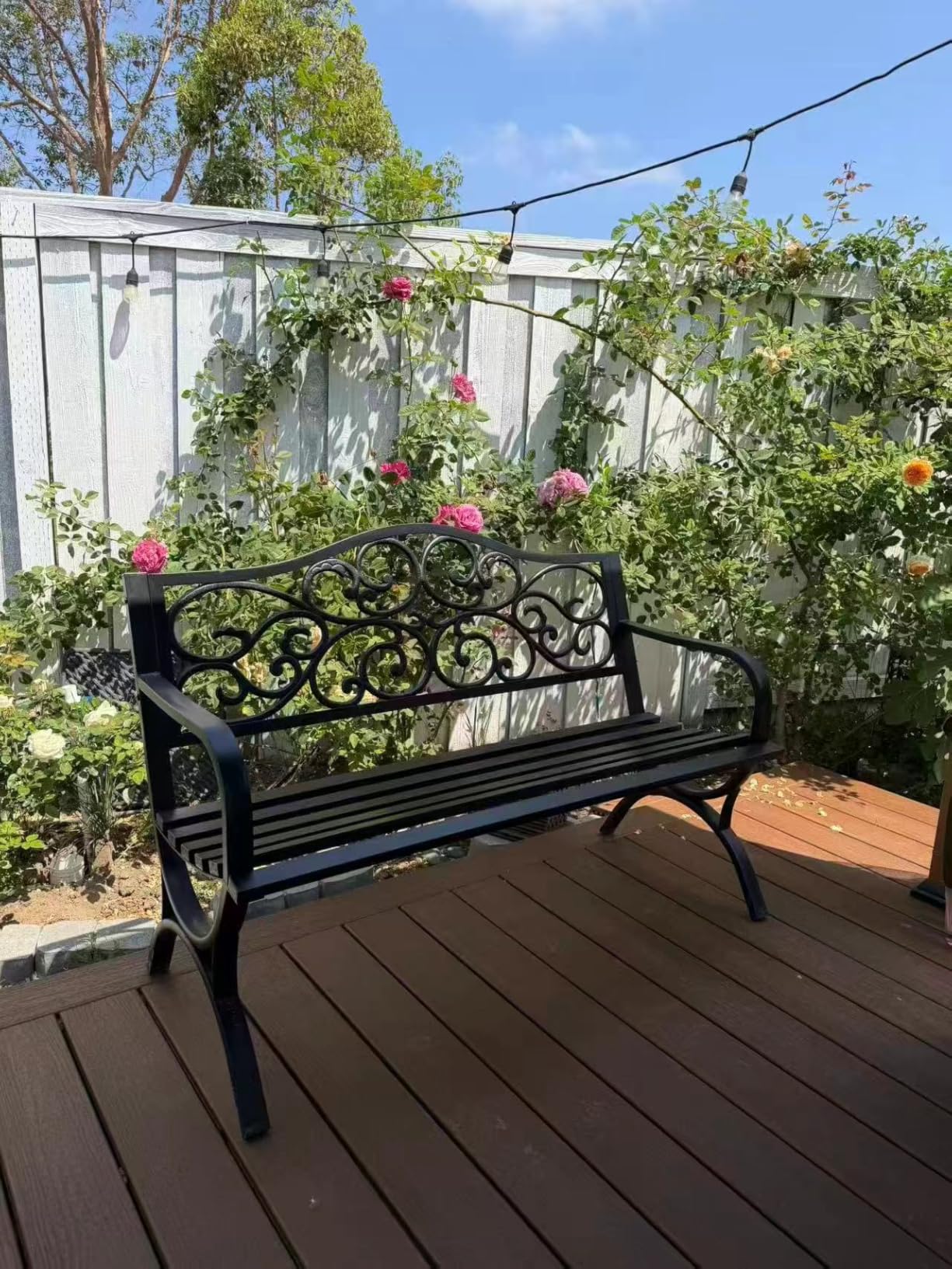
Width is the headline spec. At 50 inches this is one of only two benches in the group with the width to seat three adults rather than two, and the 550-lb rating comes from arch legs rather than a standard straight-leg frame.
The rust protection detail is what separates it from cheaper cast iron. Instead of coating only the outside, the E-coating is described as covering the inner walls of the tube, the weld joints and every corner, which are exactly the places where a coating gets missed and corrosion starts. That is the single most important specification on any metal bench.

Comfort is better than the width alone suggests. The backrest slopes slightly and the armrests curve, so the bench does not force you into a rigid upright posture the way a flat-backed model does. Edges are rounded and smoothed, which is worth checking on any bench with a decorative profile.
The cost of that solidity is 36.7 pounds. That is heavy enough that repositioning is a two-person job, and heavy enough that you will want to decide where it lives before you unpack it. Buyers also mention cast iron getting hot in direct summer sun, which is the recurring complaint across the whole cast metal category.
Is 550 lbs a real capacity or a marketing number?
It is a stated maximum, like every other figure in this guide, and manufacturers arrive at it differently. What you can check yourself is whether the rating comes from a reinforced leg design. Here it does, with arch legs, and the frame is 50 inches wide with a slatted seat, so the number is attached to something structural rather than floating on its own.
Where does this bench work best in a garden?
Anywhere you need three seats and want them to stay put. A rear patio, a wide path, a lawn edge under a tree, or a seating area at the end of a deck. Put it in dappled shade rather than full west-facing sun and you get the benefit of the mass without the heat problem.
4. Leigh Country Welcome Steel Bench – Premium Powder-Coated Steel Pick
Leigh Country Metal Outdoor Bench, Welcome Design, Decorative Patio Seating for Porch/Deck
- Ivy leaf Welcome back panel has real decorative detail
- Substantial tubing resists bending and wind
- Owners report it through heavy rain and extreme heat
- Only four pieces to join in assembly
- Assembly diagrams are labelled from the wrong viewpoint
- Some units arrive with flaking paint or transit dents
- Base bolts can corrode and benefit from anti-rust treatment
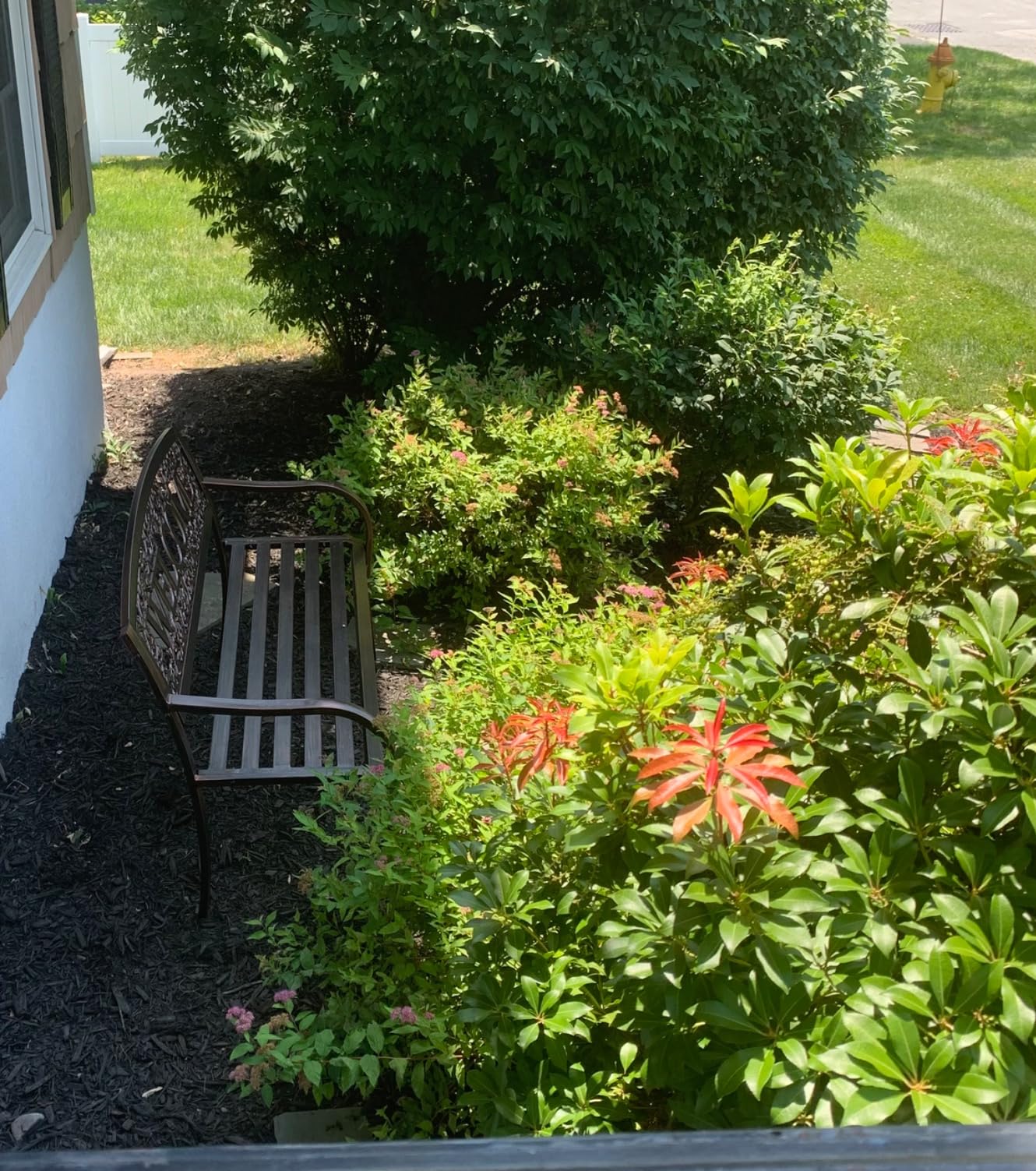
This one earns its place on construction rather than on any single clever feature. A steel tubing frame carries a cast aluminium back panel and a reinforced metal seat panel rated to 550 pounds, which puts it in the same structural class as the cast iron benches but in a lighter, more modern shape.
The Welcome back panel is cast aluminium with an ivy leaf relief, and it is the detail that lifts it out of the generic steel bench category. Owners frequently describe it as elegant rather than merely functional, and the powder-coated paint is specified for indoor or outdoor placement.
It arrives semi assembled, so you are joining four pieces, which is close to the minimum any of these benches requires. At 51 by 24 by 34 inches it gives you more seat than the FDW without going to the full three-person width.
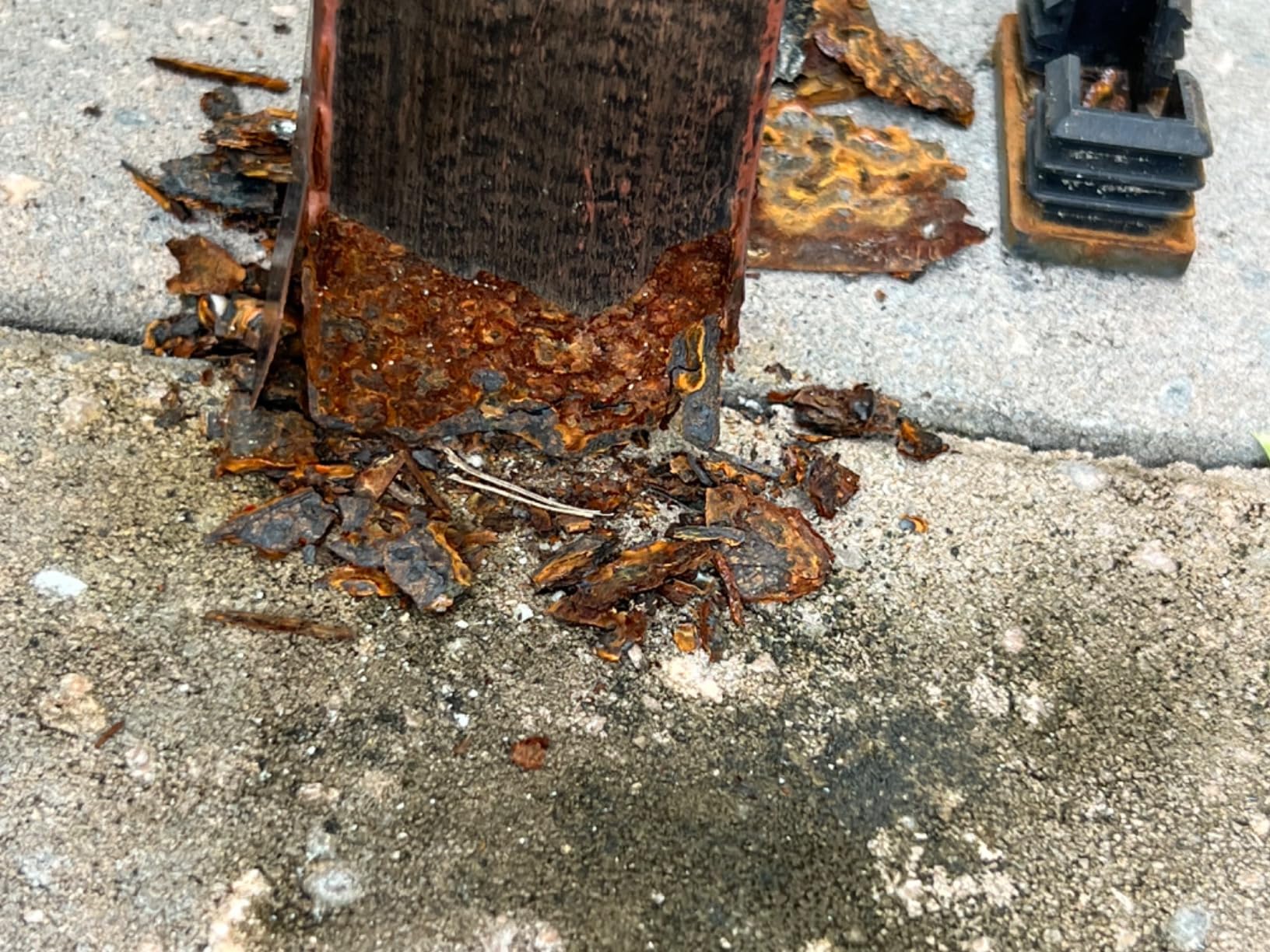
Owners do report problems, and they are worth stating. The most repeated is an assembly diagram that labels parts from the opposite viewpoint to the one you are sitting in, which wastes a good twenty minutes on a two-person job. A smaller group received units with flaking paint or dents, and base bolts are noted as a place where rust eventually appears and where an anti-rust treatment pays off.
What warranty does this bench carry?
A one-year limited warranty, which is a genuine point of comparison rather than a footnote. Metal benches at this level commonly sit at that figure, while the poly lumber and premium teak options we have tested carry far longer. Treat the length of the written warranty as a rough proxy for how confident the maker is in the finish.
Is 34 pounds manageable for one person?
Yes, comfortably, if you drag rather than lift. It is heavier than the 19 to 23 pound metal options but far lighter than the 65 pound poly bench, and the four-piece build means you can move it in sections if a doorway is tight.
5. Psilvam 2-Person Teak-Look Poly Bench – Top Rated Poly Lumber Bench
- Highest rated bench here at 4.8 with 91 percent five star
- Will not rot
- crack
- peel or rust
- 700 lbs capacity with no reported flexing
- Grain pattern reads convincingly like teak
- Heaviest bench in the set at 65 lbs
- Backless low profile gives less lumbar support
- 15.35 inch seat height suits shorter users
This is the bench to buy if the phrase zero maintenance is what you are actually shopping for. It is made from recycled polystyrene with a wood-grain colour process, so there is no timber to rot, nothing to oxidise and no fastener corrosion to worry about because the whole assembly is synthetic.
The rating is the strongest in this roundup. 4.8 stars across 1404 reviews with 91 percent of those at five stars is an unusually consistent result, and the two things owners mention most are the 700-lb load rating with no flexing reported, and how closely the grain mimics real teak.
Assembly is the easiest in the group by a distance. The holes are pre-drilled and the whole build comes down to nine screws, so this is a flat-pack job one person can finish on a patio without a workbench.
Be honest about the trade-offs. It weighs 65 pounds, the heaviest bench we examined, so moving it takes two people. The seat height of 15.35 inches is the lowest of the poly and wood options here, and the low, backless profile gives noticeably less back support than a slatted high-back model. If you want a bench to lounge on for an hour, this is not it.
How does recycled polystyrene compare to real teak?
Teak wins on appearance over decades and on nothing else. It is the heaviest, the most expensive and the only one in this comparison that needs oiling. Poly lumber wins on maintenance, weight consistency and resistance to rot and splitting, and the colour process here is close enough that most people cannot tell at a glance.
Can this bench stay outside through winter?
Yes, with no treatment at all. That is the core advantage of the material. Cold and wet do nothing to it, no end grain absorbs water, and there is no finish to fail. Nine colour options are listed, including teak, grey, green and black, so matching a garden scheme is straightforward.
6. Best Choice Products Geometric Steel Bench – Best Value Garden Bench
- Sixteen colour finishes
- the widest range here
- Builds in about 15 to 30 minutes with included hex key
- Open geometric back keeps the seat airy and light
- Light enough for one person to reposition
- Frame flexes more than cast iron under concentrated weight
- Paint can arrive with cosmetic scuffs
- Bare steel seat needs a cushion to be comfortable
The value case here is the finish list. Sixteen colour options from rose red to ocean blue, which is more choice than every other bench in this guide put together, and it makes matching an existing patio set far easier than defaulting to black.
The construction is straightforward all-steel with a weather-resistant finish, a slatted seat and an open geometric backrest that lets air move through. The open back is not just decorative, it keeps the bench cooler in direct sun than a solid panel does.
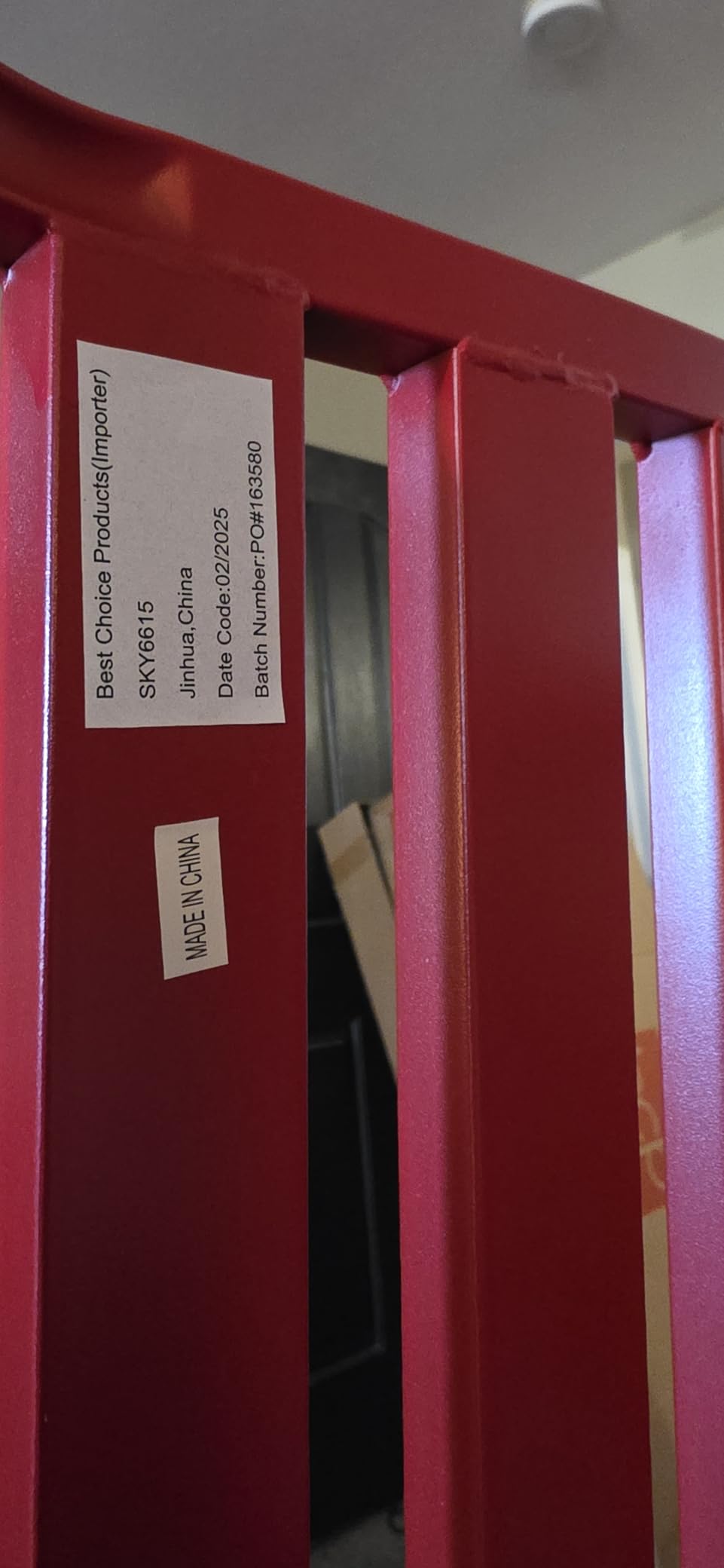
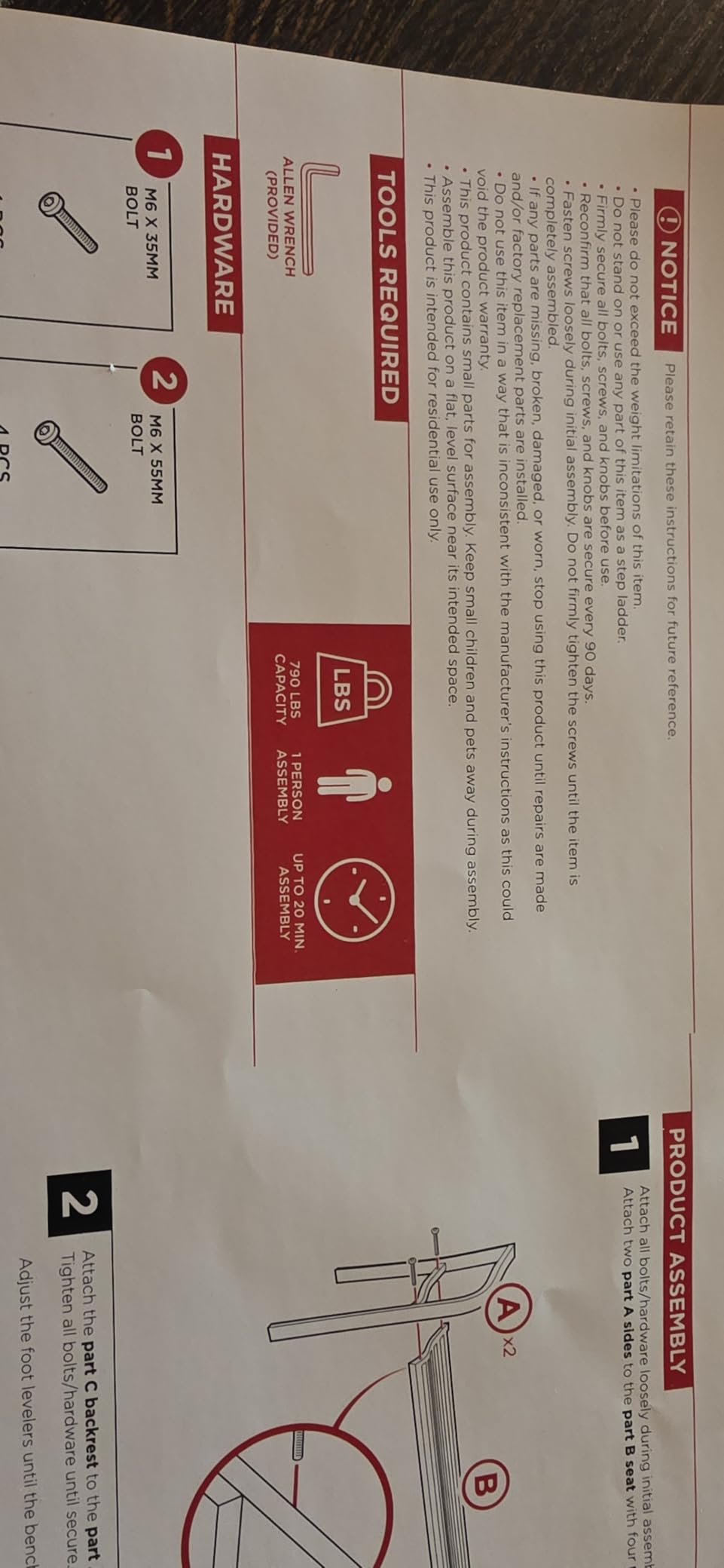
Assembly is three steps: legs to seat, then back to legs, with a hex key included. Reviews describe a 15 to 30 minute build, and at 27.8 pounds one person can move it around to catch the light.
One number needs care. The marketing copy lists 790 pounds while the specification section lists 775. Either way it is well above what two adults will ever place on it, but the discrepancy tells you the figure is a category standard rather than a measured result. Reviewers also note the steel is sturdy but flexes more than a cast iron frame under concentrated weight, and that a cushion makes a real difference on bare slats.
Is 50 inches too wide for a small patio?
It is 50 inches long and 26 inches deep, so plan on roughly six feet of frontage including walking room. For a narrow porch or a small courtyard the 38 inch cast iron option or the 46 inch models suit better. Thirty-six inches of circulation clearance in front of any bench keeps the space usable.
How long does the paint last outdoors?
With a weather-resistant steel finish and light care, several seasons is realistic, and owners report no chipping after a full year outside. Expect cosmetic scuffs in transit more than wear after installation. Keep an eye on the base bolts, since that is where corrosion starts on any coated steel bench.
7. Maemttes Wrought Iron Bench – Best Heavy-Duty Garden Bench
- Highest stated capacity in the group at 880 pounds
- Anti-rust coating marketed for rain
- sun and snow
- 50 inch width fits two to three adults
- Backrest pattern doubles as lumbar support
- Listing gives less detail than competing products
- 50 inch frame needs more porch clearance
If your priority is a stated capacity and nothing else, this is the number to beat. The listing gives 880 pounds, the highest maximum weight recommendation of the twelve benches here, on a wrought iron and metal frame at a 50-inch width.
The finish is described as a weatherproof anti-rust coating for year-round rain, sun and snow exposure, and the backrest carries an intricate decorative pattern that also functions as lumbar support. At 29 pounds it is heavier than typical steel but lighter than a true cast iron bench.
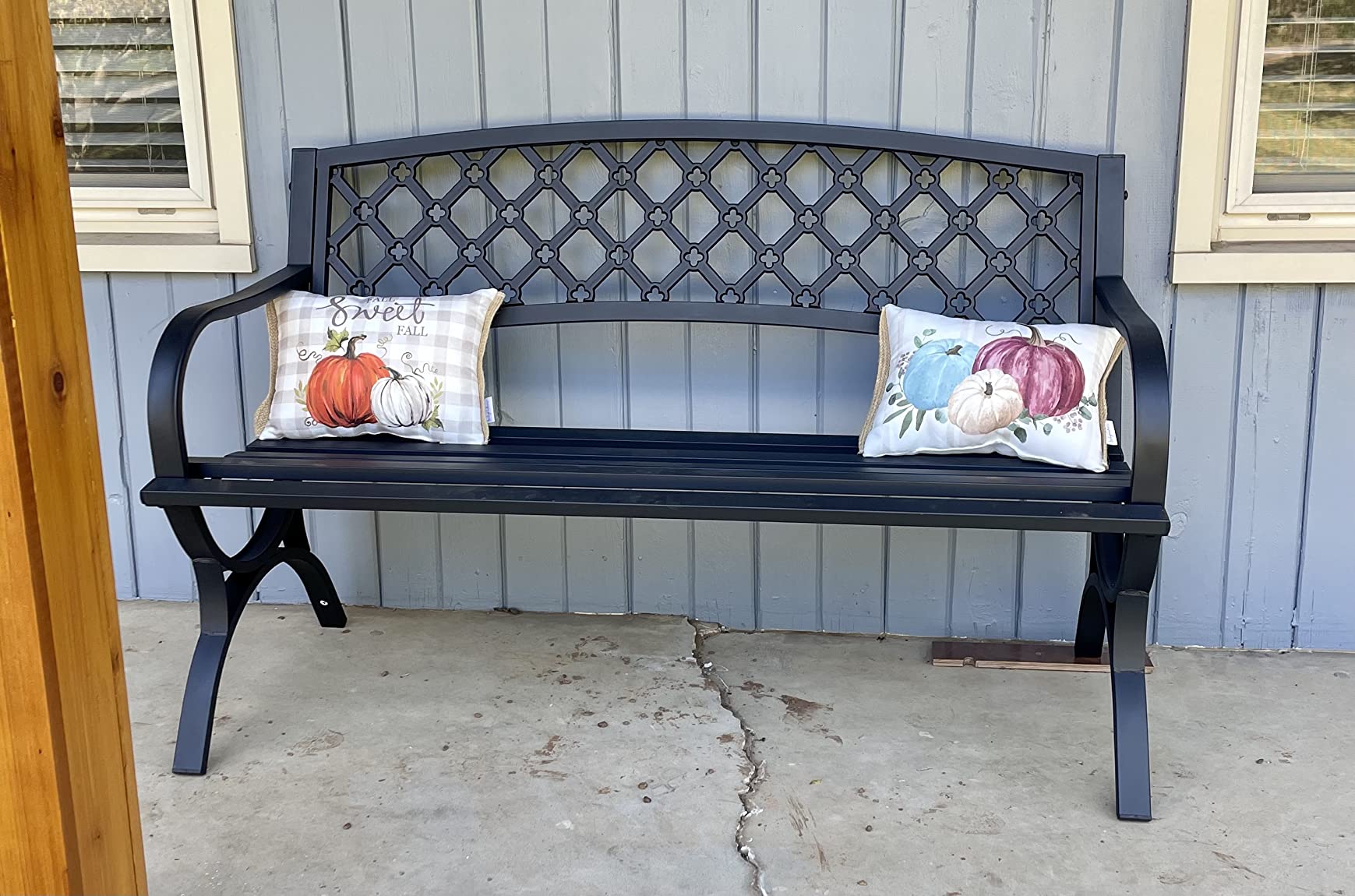
Owners report a sturdy, attractive bench that holds up outdoors, with 85 percent of reviews at five stars across 551 reviews. Feedback centres on the heavy-duty feel, straightforward assembly and the decorative back rather than on any recurring defect, which is what you want to see.
The trade-off is specification depth. The listing is thinner on dimensions and component detail than the established listings in this roundup, and the listed package quantity of two is a packaging number rather than a bench count. Confirm the dimensions against your space before committing, because a 50 inch frame with a 24.4 inch depth will crowd a shallow porch.
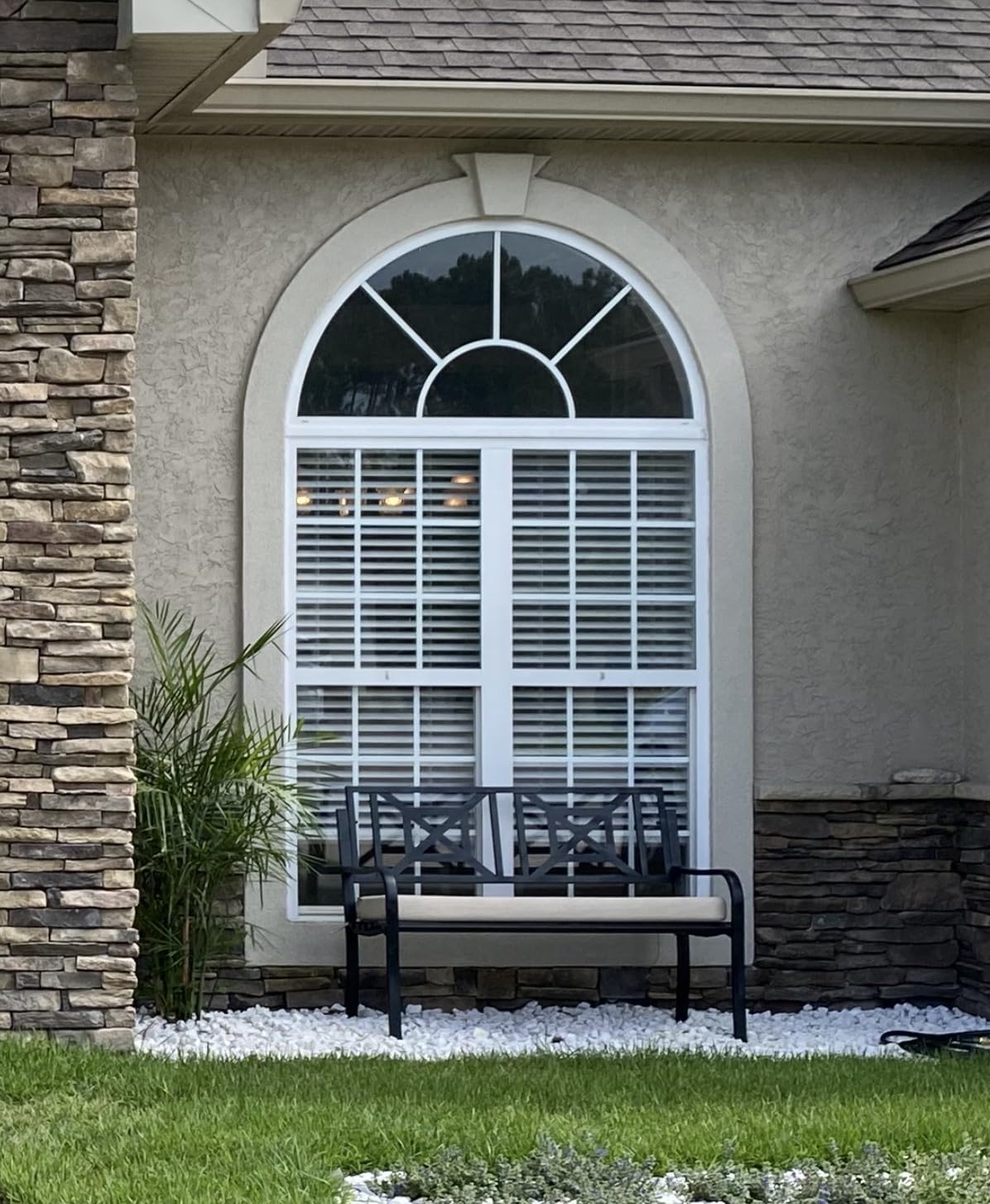
Is the highest stated capacity actually the strongest bench?
Not automatically. Capacity figures are self-declared and tested differently by each maker, so compare them cautiously. What matters more in practice is frame gauge, how the legs meet the seat, and whether the coating covers welds and tube interiors. A 550-pound bench with arch legs can outlast an 800-pound bench with thin tubing.
What is the seat height like for everyday use?
It is 16.54 inches, which sits comfortably in the middle of the 16 to 18 inch range most people find easy to get up from. That makes it a practical choice for older users and for anyone who will stand up from the bench frequently rather than settle in for an afternoon.
8. Tangkula 50 Inch Solid Eucalyptus Bench – Best Wooden Garden Bench
- Mortise and tenon joinery is well above the mass-market norm
- Slightly reclined back suits taller users
- Varnished surface wipes clean and holds its finish
- Anti-rust hardware at every frame joint
- Included Allen key strips bolt heads
- Instructions are weak and seat rails fit either way up
- Tone is more orange than some buyers pictured
Of the wood benches in this guide, this is the one built like furniture rather than like a flat-pack kit. Solid eucalyptus with a dense slatted seat and backrest, joined with mortise and tenon, and finished in varnish for waterproofing and scratch resistance. That joinery is the reason a wooden bench lasts rather than racks itself apart.
Comfort is the strongest argument for it. The backrest slopes slightly rather than standing straight up, and at 17.5 inches it is one of the higher seats here, which is a better fit for taller users than most of the metal options. Curved armrests sit at a height you can actually lean on.
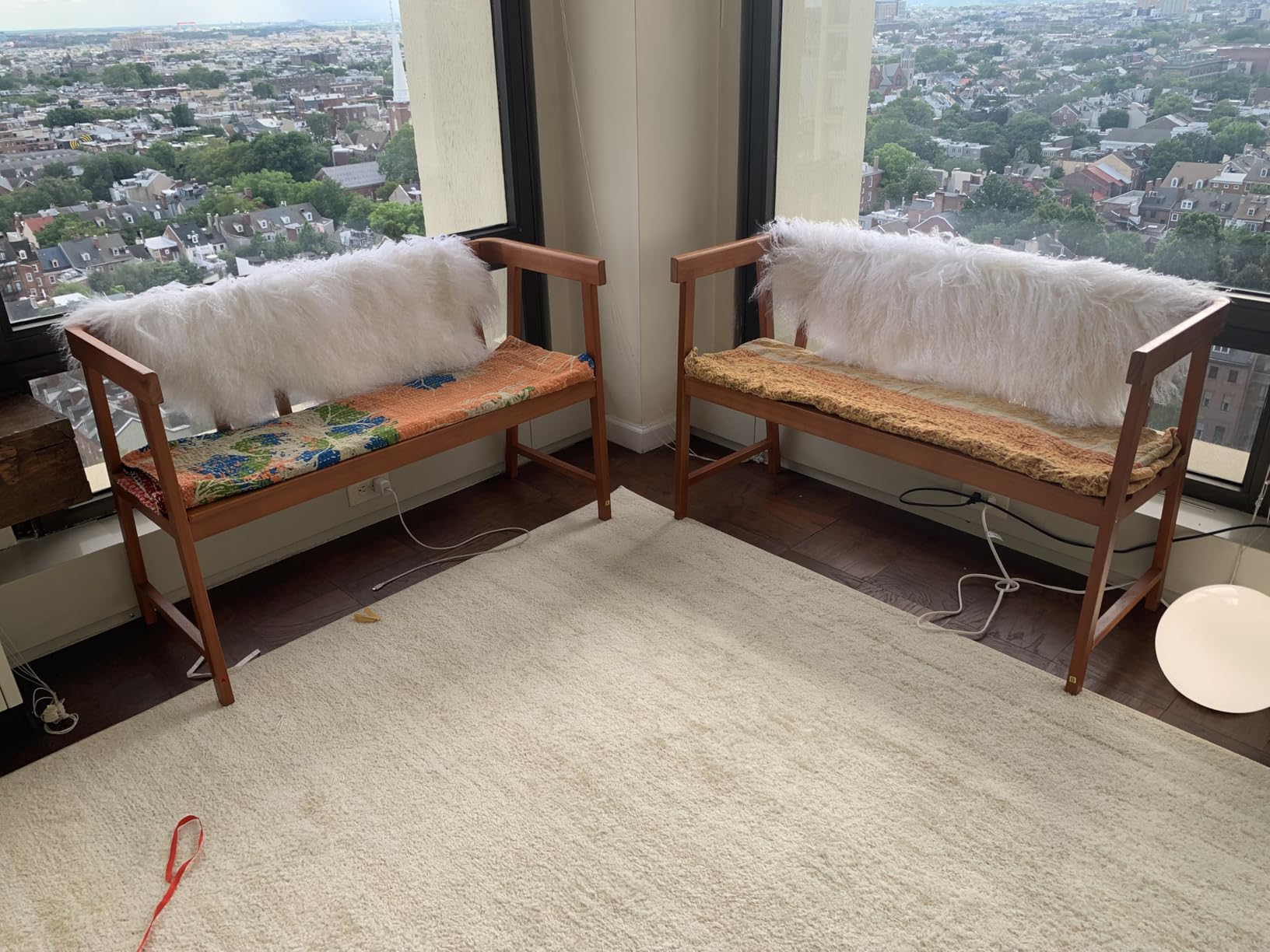
Two specifications are worth copying onto your own checklist. The listed capacity is 705 pounds across dense slats and strong legs, and the connecting hardware is described as anti-rust, which on a wood bench is the detail that decides whether the frame outlives the timber. Wood rots from the ground up; the metal in between does not care.
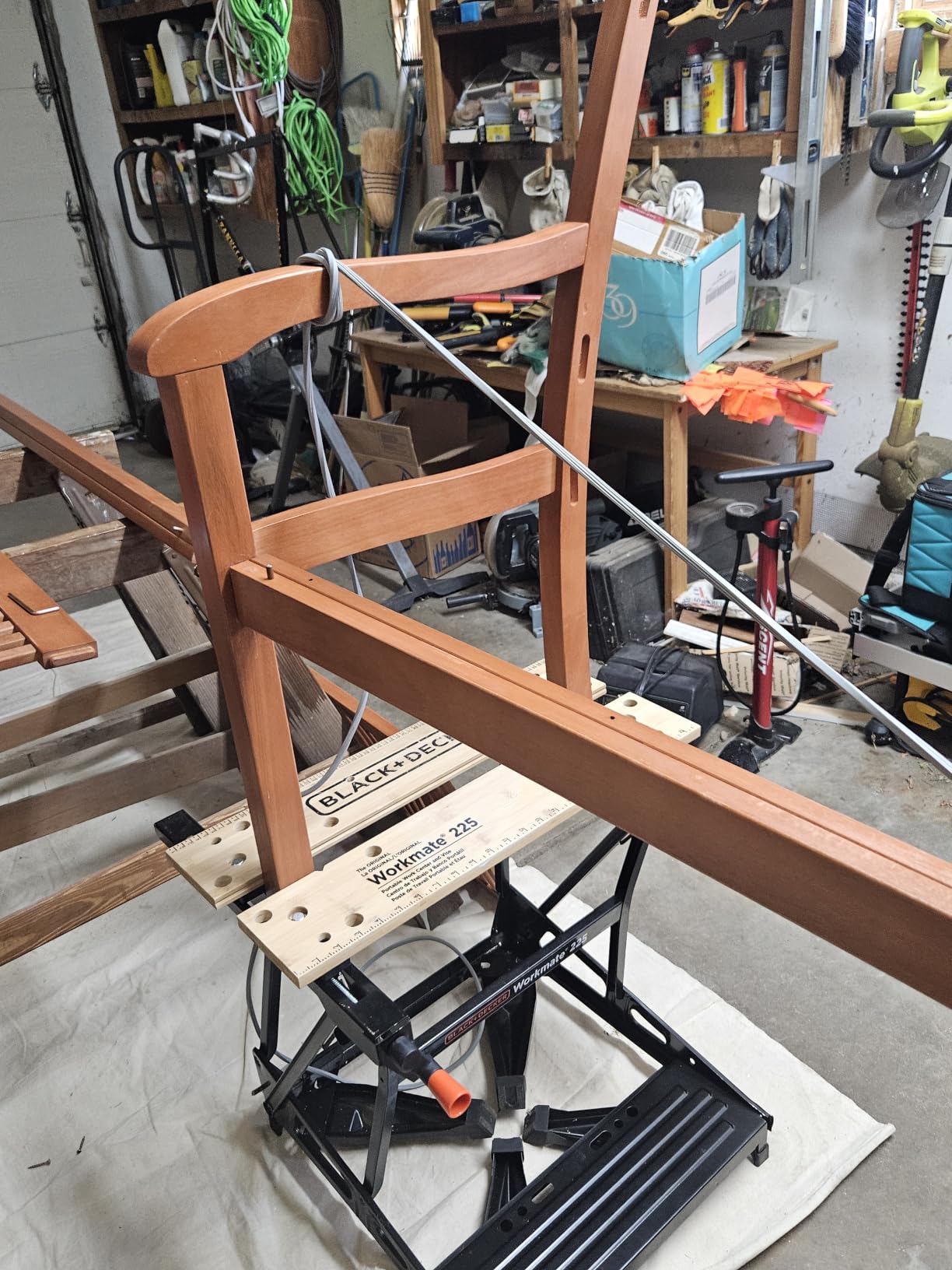
Owners are positive about the quality and about the packaging, which is well packed with minimal foam and little transit damage. The complaints are practical: the supplied Allen key is poorly machined and can strip bolt heads, so a 4 mm key is a worthwhile ten-minute purchase, and the instructions are weak enough that seat rails can go on upside down.
How do I stop the legs rotting where they meet the ground?
This is the number one complaint on woodworking forums about any outdoor wooden bench, and it is nearly always invisible until the bench starts to lean. Keep the feet off bare soil and out of standing water, use a metal or plastic foot plate on each leg, and re-oiling the varnish once a year will keep water out of the end grain where it soaks in fastest.
Is 37.5 pounds a bench I can move alone?
It is at the edge of what one person manages comfortably, especially across a lawn. Once assembled on a level surface it is stable enough that you will rarely need to move it, so plan the location before the build rather than after.
9. VEVOR 46 Inch Mesh Pattern Bench – Best Lightweight Metal Garden Bench
VEVOR Outdoor Bench, 46″ Iron Steel Frame Garden Park Bench with Mesh Pattern and Plastic Backrest Armrests, Patio Bench for Garden, Park, Yard, Front Porch
- Lightest frame here at 19.6 lbs for one-person handling
- Backrest set past 90 degrees for a relaxed lean
- About 15 minutes to assemble with all hardware included
- Minimalist grid back suits modern settings
- Lightest build is also least resistant to being shifted
- Metal surface feels hot in summer and cold in winter
Nineteen and a half pounds makes this the easiest bench in the roundup to reposition, and that is a genuine feature rather than a compromise for its own sake. Anyone rearranging a patio every summer, or anyone who cannot comfortably lift 30 pounds, will appreciate it immediately.
The frame is metal rated to 480 pounds, described as corrosion and deformation resistant for long-term outdoor use, with a mesh-pattern backrest set at more than 90 degrees so you lean back rather than perch forward. Curved armrests take the arms when you are reading or eating.
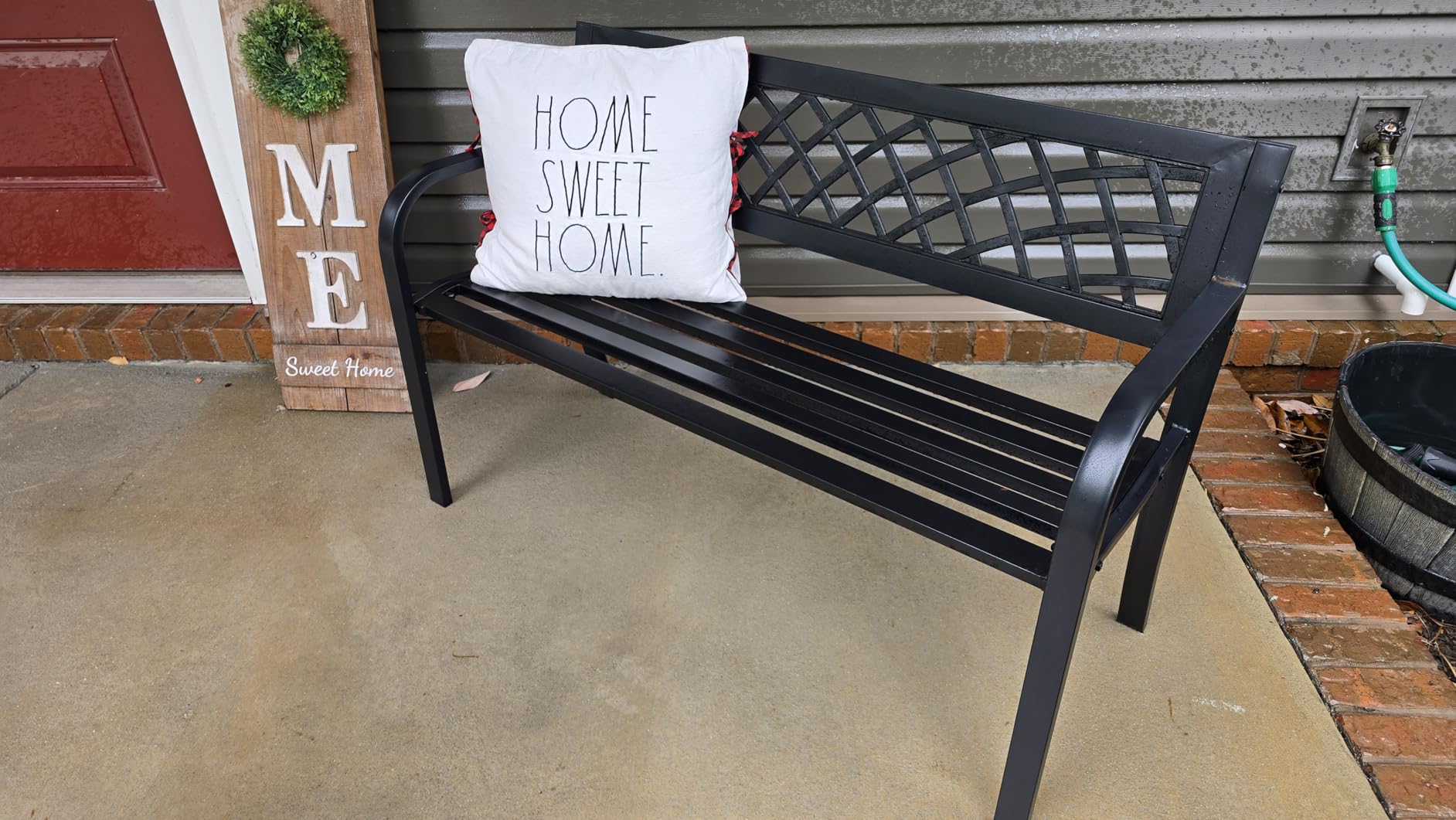
The box includes a user manual, both armrests, the seat board and the backrest with all fixings, and reviews describe a 15 minute build. It is also the least expensive seat per person of any bench we examined, which is a fair way to judge a garden bench when the aim is covering a wide path cheaply.
The same lightness is the drawback. A 19.6 pound bench is the least stable of the twelve in a gust, so anchor it or accept that it will move. Metal surfaces also swap temperature hard, hot in direct sun and cold in winter, so a cushion or a slatted seat cover changes the experience more than it does on wood.
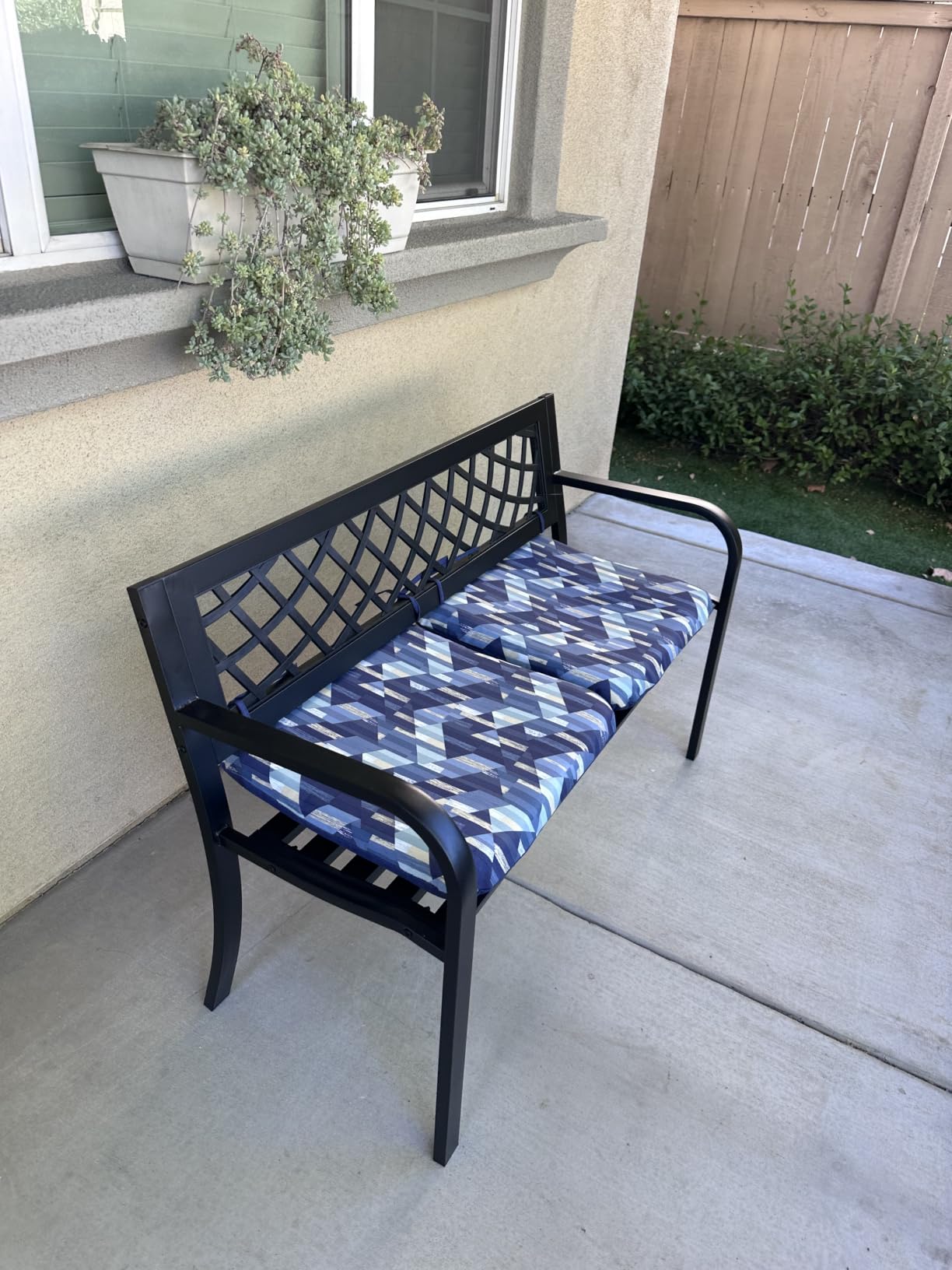
Is 480 pounds enough for two adults?
Yes, comfortably, since that is roughly what two adults weigh together. The 480-pound figure is a stated maximum rather than a comfort rating, and for a bench this size the practical limit is set by its length and by how the frame flexes, not by the number on the listing.
Will a light metal bench blow over in a storm?
It can, so treat weight as a specification. Heavier benches resist being blown over simply because they resist being moved. If the spot is open and exposed, either secure this one with a ground anchor or accept that a 46 inch metal bench is something you will be picking up after a windy night.
10. Giantex Acacia Loveseat Bench – Best Garden Bench for a Narrow Porch
- Only 22 inches deep
- the shallowest wooden footprint here
- Crossbars at the legs stop the wobbling cheaper wood benches suffer
- Light enough at 26.5 lbs for one person to reposition
- Numbered parts and a clear manual
- Very upright backrest
- several owners add a pillow
- Wood creaks slightly under load
- Natural tone darker than pictured
The number that sells this bench is 22 inches of depth. Most two-seaters run from 24 to 25 inches deep, which is the difference between a bench that leaves a walkway usable and one that blocks it. Paired with a 47.5 inch width, this is the pick for a genuinely narrow porch or a path you have to walk past daily.
Construction is solid acacia, described as dimensionally stable and resistant to deformation, with two crossbars at the base of the legs. Those crossbars are the answer to the rocking and wobbling that owners complain about in cheaper wood benches, because they tie the legs into a single rigid frame instead of leaving them independent.
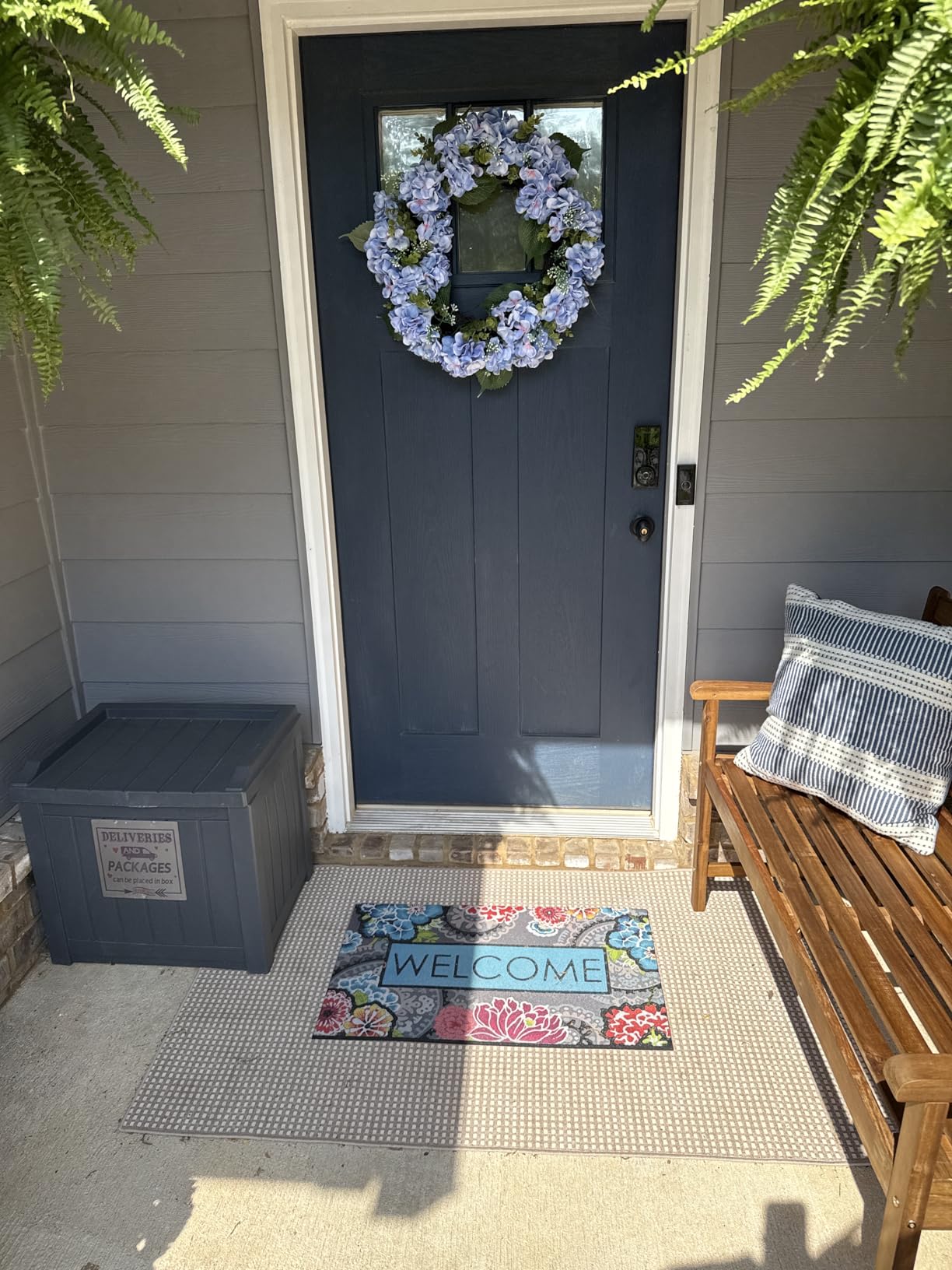
Load capacity is listed at 800 pounds, 363 kg in the specification, which is high for solid wood at this width. The slatted seat is breathable and easy to clean, and all parts are numbered in the guide for assembly.
Its review pool is the smallest in the roundup at 120, and the sentiment within that pool is strongly positive with 77 percent five stars. Owners specifically call out the narrow footprint, the crossbar frame and the geometric back design. The main caveat is the very upright backrest, which several owners solve with a throw pillow.
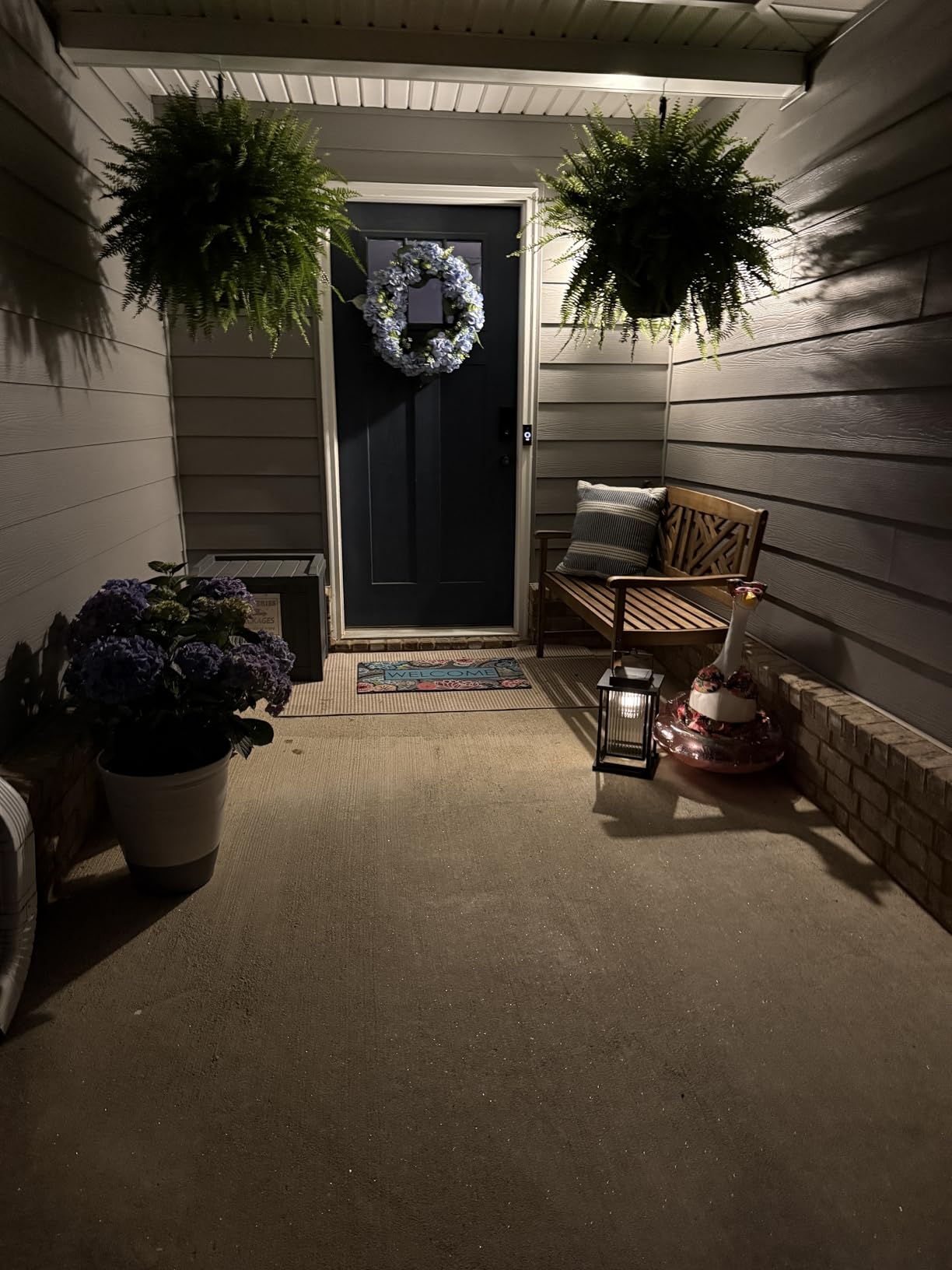
Is acacia wood a good choice for an outdoor bench?
It is one of the best value hardwoods for outdoor furniture, and builders rate it alongside teak and cedar for stability. It is not rot-proof, so it wants an annual oil or sealer and a foot plate at ground contact, but it holds its shape through seasonal moisture swings better than pine or untreated softwood.
What is the average lifespan of a solid wood garden bench?
Depends entirely on treatment and placement. Untreated acacia in ground contact gives up in a few seasons. Varnished hardwood on a paved surface with foot plates, oiled once a year, is a different proposition entirely. Full numbers by material are in the maintenance section below.
11. HAPPYGRILL Acacia 2-Person Bench – Best Budget Wooden Garden Bench
- Lightest wooden bench here at 23 lbs for single-person moving
- Owners report it outdoors through all weather with light fading only
- Colour is well matched
- not overly orange or yellow
- Burr-free polished surface with rounded corners
- Backrest is very upright and wants a cushion
- Instructions do not match parts to legs clearly
- Some units lack pilot holes and need an unincluded screwdriver
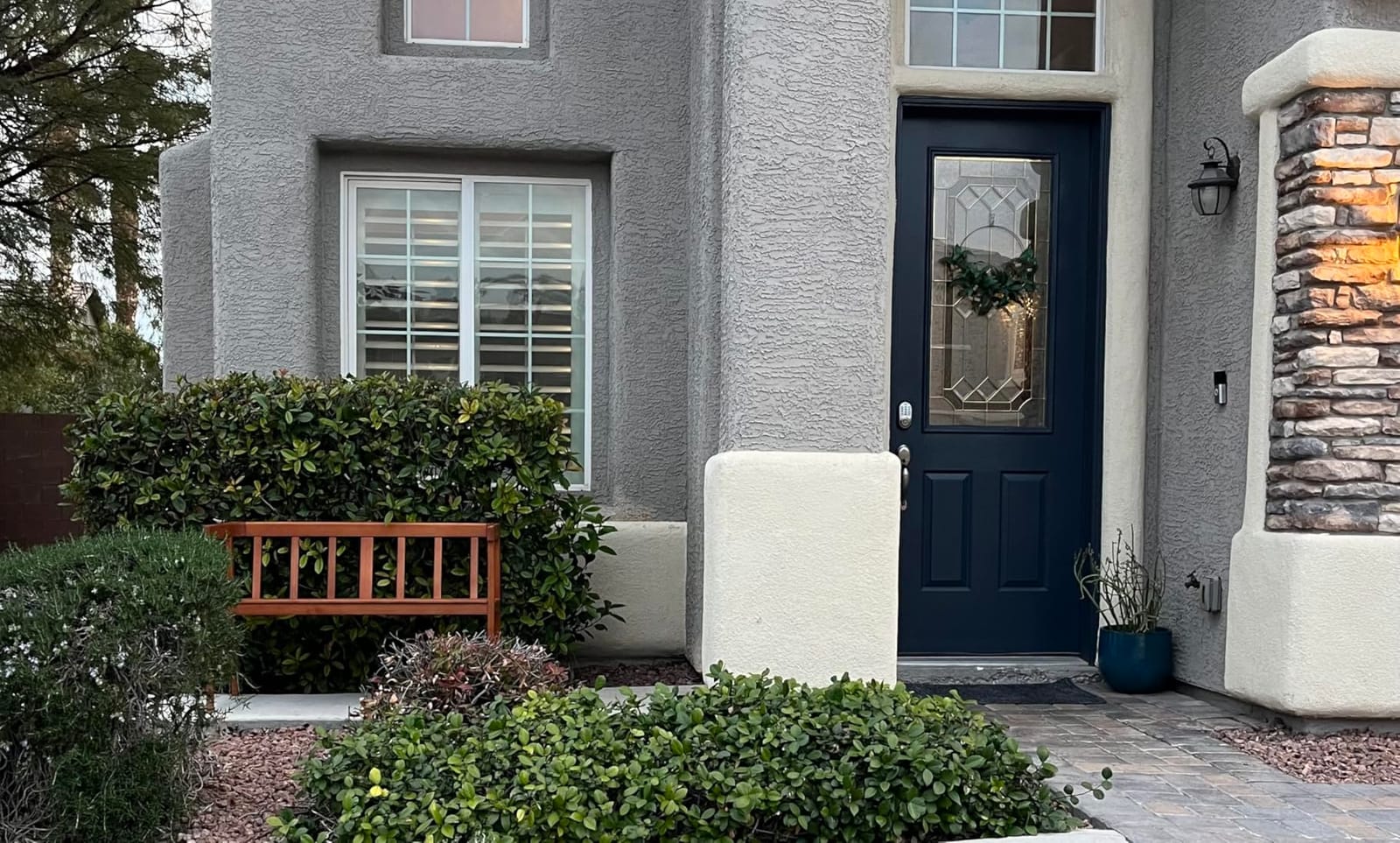
At 23 pounds this is the only wooden bench in the roundup light enough for one person to reposition without help, and it still carries an 800-pound rating on thickened legs and reinforced bars. That combination of low weight and high stated capacity is unusual in solid wood.
Owners consistently report the bench sitting outdoors unsheltered through all weather with only light fading, and several remark that it looks more expensive than it is. The surface is polished burr-free with smoothly rounded corners, which matters more than it sounds for bare arms and legs.
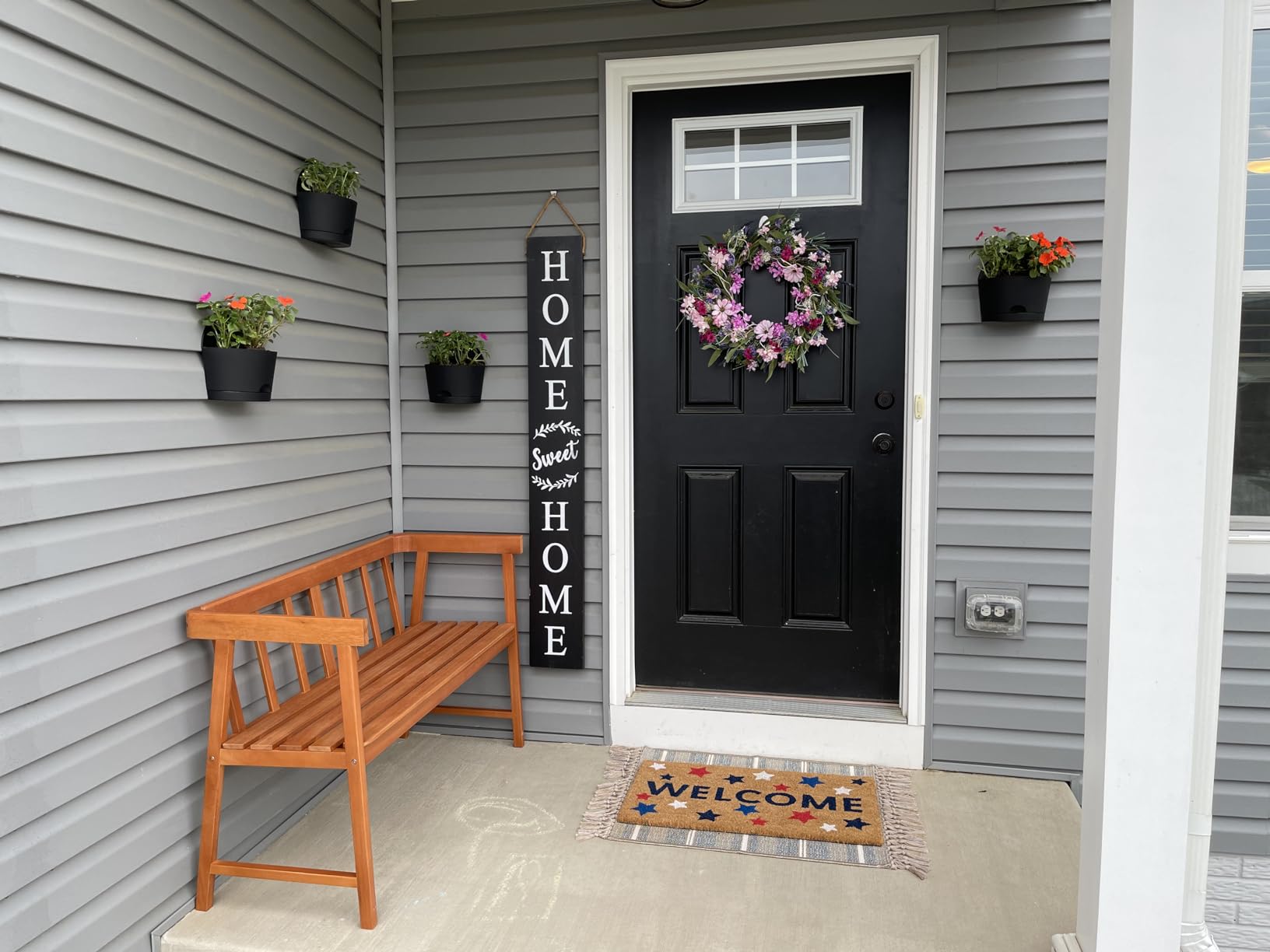
The slatted design is breathable, so the seat stays cooler in summer than a solid panel, and the ergonomic backrest is described as following the line of the body. Both acacia and eucalyptus variants exist, and some of the styles fold flat for winter storage, which is worth checking when you pick a variant.
There is a small review pool here at 114 with 80 percent five stars, so the picture is optimistic but not deeply tested. The recurring caveat is the very upright backrest, which many owners fix with a cushion. Assembly instructions do not map cleanly onto the numbered parts, and some units arrive without pilot holes, so have a screwdriver to hand.
Can I store this bench over winter?
Some of the styles in this range fold flat, which makes storage in a garage or shed realistic even at 23 pounds. If you pick a non-folding variant, 23 pounds is still light enough to carry in one hand, and leaving solid acacia outside is fine provided it is not sitting in standing water.
How do I stop an acacia bench from cracking?
Keep it out of standing water, put a barrier between the feet and wet ground, and treat the surface once a year. Wood moves with moisture, and a bench that dries out slowly and evenly will check far less than one that bakes and soaks in cycles. The manufacturer lists it as resistant to cracking under temperature change, which handles heat but not standing water.
12. Furinno TIOMAN Backless Bench – Best Backless Garden Bench
Furinno TIOMAN Outdoor Bench, Promo Backless Garden Bench, for Patio, Garden, Porch, 12 x 39 x 19, Natural
- Lightest and lowest cost bench in the roundup at 15.4 lbs
- Backless slats slide under tables and into balcony corners
- Meranti treated with teak oil resists water better than pine
- Instructions
- tools and hardware pack included
- Backless slats give no back support for long sitting
- 330 lbs capacity suits one or two light users
- Needs annual teak oiling to stay protected
A backless bench solves a specific problem that a full garden bench cannot. At 39.3 inches wide and 11.9 inches deep it slides under a table, tucks against a wall, or fills a balcony corner where nothing else fits, and at 15.4 pounds you can carry it with one arm.
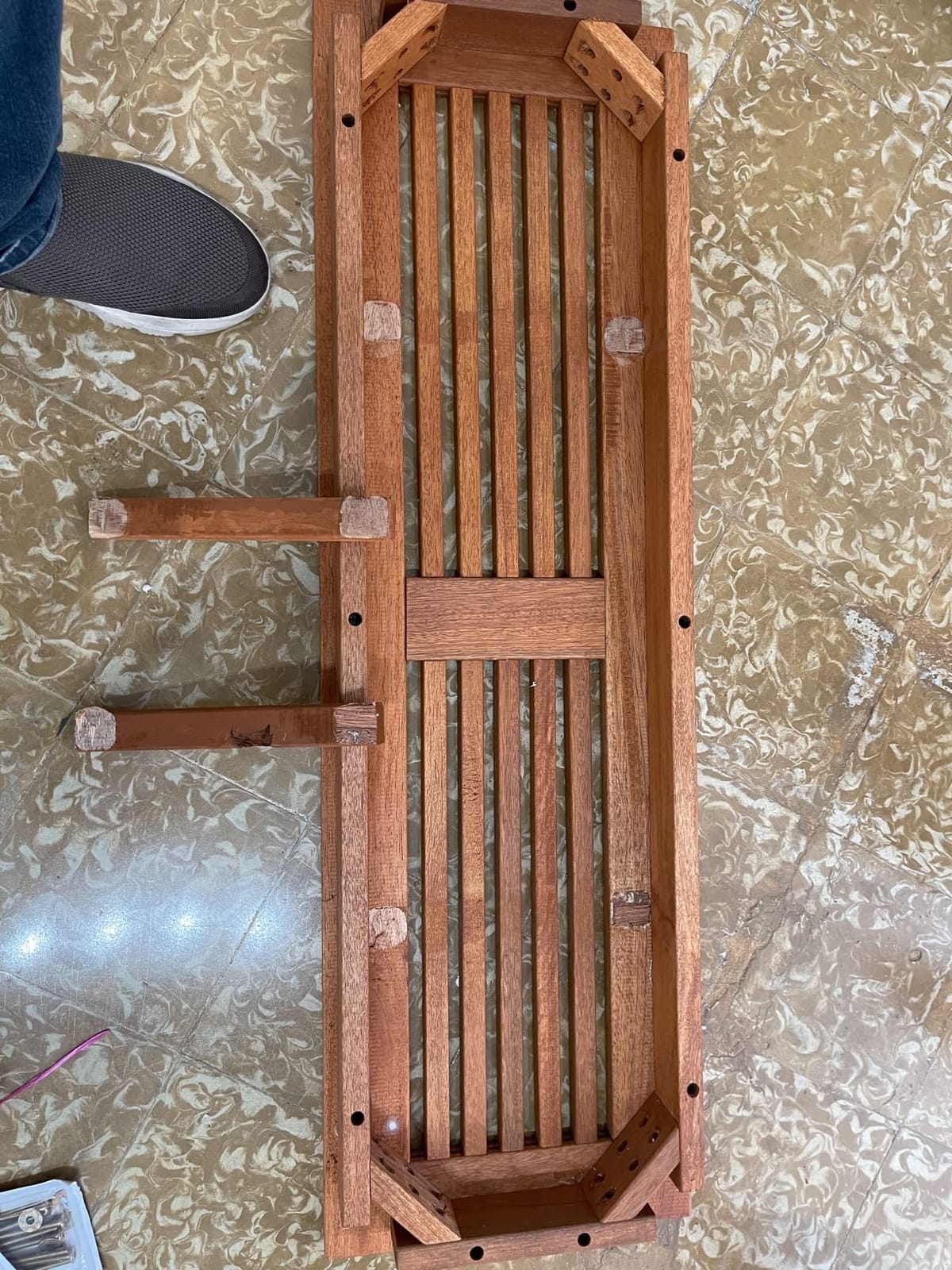
The material is dark red meranti, already treated with teak oil for water resistance, with a slatted seat. The listed capacity is 330 pounds, the lowest here, which makes it a one or two light-user bench rather than a place to sit and lounge. Instructions, tools and a hardware pack all come in the box.
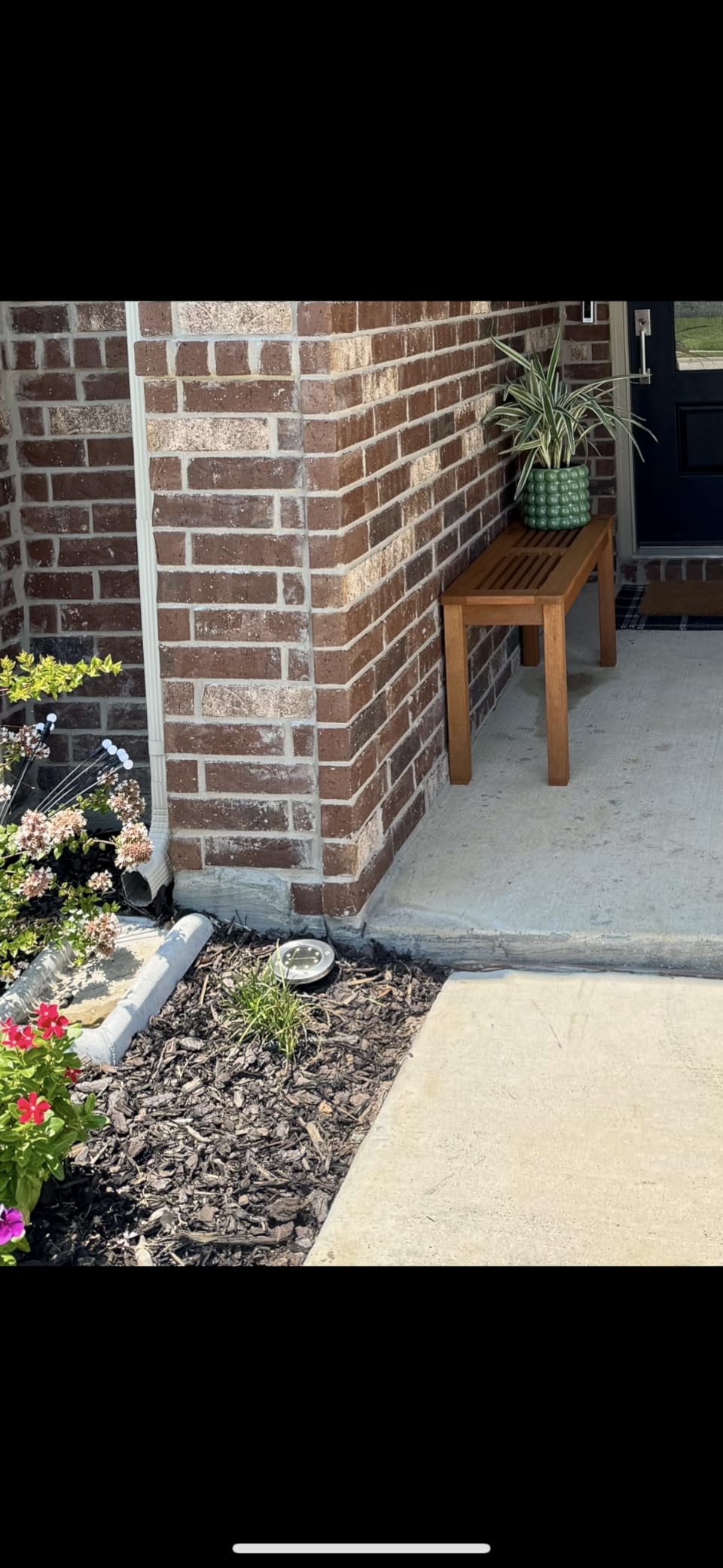
At 18.5 inches it is the highest seat in the roundup, which works well for getting up quickly and suits taller users. That height, combined with the backless profile, makes it more of a perch and a surface than a comfortable long-sit seat.
Two honest cautions. It carries the largest share of one-star reviews in the group at 6 percent, with those reviews citing surface checking and splitting, which is what untreated wood does over a wet winter. And the manufacturer recommends a teak oil treatment once a year, so it is not a zero-maintenance bench despite being the lightest.
When is a backless bench the right choice?
When space is the constraint, not comfort. A balcony, a narrow side path, under a window, a spot at the end of a table, or a wall edge that will not take a backrest. If you want to read for an hour, look at the slatted high-back options instead.
What is the warranty on this bench?
One year limited, which is the shortest written coverage among the twelve. That is a fair proxy for build expectations at this end of the market and a fair reason to check the frame every spring, especially where the legs meet the paving.
Which Garden Bench Material Should You Buy?
Wood for looks and warmth, metal for strength and ornament, poly lumber for zero maintenance, and concrete when the bench will never move again. Those four families cover almost every garden bench sold today, and the differences between them are mostly about how you feel about annual upkeep.
Here is the short answer: solid wood or teak looks best and lasts longest if you will oil or seal it each year. Powder-coated steel or cast iron is the strongest and most decorative, and needs only a wash and an occasional touch-up at the bolts. HDPE poly lumber needs nothing at all and will outlast most wood by decades. Cast concrete is effectively maintenance free and immovable.
Wood: teak, cedar, acacia and eucalyptus
Wood is the only material here that improves with age if you keep it fed, and the only one that dies if you do not. Teak is the premium answer, dense and naturally oily, and it silvers to grey outdoors unless you keep oiling it. Cedar is lighter and cheaper with comparable rot resistance. Acacia and eucalyptus are the value hardwoods, stable enough for furniture but not rot-proof.
For anyone building rather than buying, the DIY consensus on woodworking forums is black locust, white oak, mahogany and sepele, with Angelim Pedra cited as a rated outdoor option. All of those outlast anything you can buy at a garden centre in a weekend, because the joinery is yours to get right.
Metal: powder-coated steel, cast iron and cast aluminium
Metal wins on strength and on decoration. Cast iron carries the highest capacities and the most ornamental patterns, and it does not rot. Its weaknesses are heat, weight and the fact that it conducts cold as readily as heat. Powder-coated steel is lighter and cheaper, but the coating only protects where it is unbroken, and it is interrupted at every bolt hole.
The single specification that matters on a metal bench is whether the coating covers weld joints, corners and the inside of the tube. That is the difference between a bench that lasts ten years and one that blooms orange from the inside out while the outside still looks fine.
Poly lumber and resin: HDPE and recycled polystyrene
Poly lumber is the answer when maintenance is the thing you are trying to avoid. It will not rot, crack, split or rust, it accepts screws into pre-drilled holes, and colour is stabilised through the board thickness so a lighter colour does not fade faster than a dark one. The compromise is the look, which is convincingly wood-like at arm length rather than identical up close, and the weight, which is often higher than a timber bench of the same size.
Concrete: for the immovable option
Cast concrete benches carry the highest capacities and the lowest maintenance of anything on this list. They never need coating, never rot and effectively never move, which is the feature in a formal garden and the regret in a rented one.
What Garden Bench Owners Actually Complain About
Across the reviews of these twelve benches and the recurring threads on woodworking and home improvement forums, the same five complaints come up again and again. None of them are about the bench looking wrong in the first year.
Wooden legs rotting where they meet the ground is the most repeated failure of all, and it is nearly always invisible until the bench tilts. Ground contact traps moisture against the end grain, which is exactly the part of a post designed to soak water up.
Rust at the hardware is the number two complaint, and it happens even on benches with a well-finished frame. Galvanised or zinc-plated fasteners corrode within a few years outdoors, while marine-grade 316 stainless hardware resists it. This is a specification to check before buying, not a maintenance chore to discover later.
Flaking powder coat and chipped paint turn up on transit scuffs and on chips that were never repaired, and both let water sit on bare metal. Bare steel seats get uncomfortably hot in direct sun and cold in winter, reported independently by owners and by both general buying guides. And heavy benches, whether concrete or cast iron, become a genuine regret once the layout changes, because the immovability was an advantage on delivery day and a problem the following spring.
One more that shows up on lighter frames: a bench under about 25 pounds can be walked into a new position by the wind. Weight is not just a comfort specification, it is a stability one.
How to Choose the Right Garden Bench for Your Space
Eight checks, in the order they actually matter. Most bench regrets trace back to a measurement taken with a tape against the wall rather than a spec on a listing.
1. Match the material to the exposure. Full sun and coastal salt air both punish steel and untreated wood. Poly lumber and powder-coated aluminium tolerate all-year exposure with no treatment. Under trees, expect sap, bird droppings and shade-damp wood, and favour a slatted seat over a solid panel so it dries. Shaded north walls are the easiest position in a garden for almost any material.
2. Measure the space before the seat length. Allow roughly 24 inches of width per person, so a two-seater wants 48 inches and a three-seater wants 70 or more. Add 36 inches of circulation clearance in front if anyone needs to walk past. Depth is the number people forget, and 22 inches versus 25 inches is the difference between a usable walkway and a blocked one.
3. Get the seat height right. Sixteen to 18 inches suits most adults. Above 18 inches feels high for shorter users and makes getting up harder; below 16 inches pushes the knees up. If you can, sit on the bench in a showroom rather than judging it from a photograph, which is the single most common complaint about buying online.
4. Check capacity against use, not against the number. Two adults need around 350 to 400 pounds. A figure of 700 to 800 pounds is not a quality signal, it just means the maker tested to a limit. Look for what supports the number, such as arch legs or reinforced bars, and treat figures that contradict the product’s own specification sheet with suspicion.
5. Check the hardware specification. Ask whether the fixings are marine-grade 316 stainless. On wood benches check that the connectors between the frame parts are anti-rust steel. This is the part that fails first on almost every bench, and it is rarely mentioned in the product copy.
6. Decide about maintenance honestly. Poly lumber and powder-coated metal need a wash. Wood needs oil or sealer once a year, and twice a year in a hard climate. If you will not do that, buy synthetic and accept the look. If you want the look and will do the work, buy hardwood.
7. Read the warranty as a quality signal. One year is common at the budget end. Twenty years and lifetime warranties appear on premium poly lumber. Longer written coverage generally means the maker expects the product to survive the claim period, and it is the cheapest trust signal on the page.
8. Think about moving weight before delivery. Anything under 25 pounds one person can reposition. Forty pounds is manageable once. Sixty-five pounds and above is a two-person job, and anything heavier is permanent. Decide the final position before you open the box.
If you also need somewhere to sit indoors with the same storage logic, our guide to the best mudroom benches with storage covers the dual-purpose layout in a covered space.
How to Keep Your Garden Bench Looking New
Maintenance is the whole difference between the materials, and it is a small job done on a schedule. The table below covers how long each material realistically lasts and what it asks of you.
Hardwood such as teak, cedar and quality acacia is the long-life answer when maintained, with figures commonly quoted in the 25 to 50 year range for well-kept teak. Untreated softwood or ground-contact acacia gives up in a few seasons. Clean with mild soap and water, treat a quarter cup of bleach into soapy water for stubborn stains, use a vinegar and water mix for mildew, and oil once a year. The grey patina that develops on teak is not damage and can be sanded back or brightened.
Powder-coated steel and cast iron run 25 years and beyond when the coating holds. Wash with soapy water, dry it, and touch any chip while it is still small. Check the base bolts each spring and treat them if rust appears.
Poly lumber and resin are effectively indefinite in service life, since they do not rot, crack or corrode. Wipe with a damp cloth and mild soap. Avoid harsh solvents, and a cover is optional rather than necessary.
Concrete needs almost nothing beyond a rinse, though a cover prevents leaf staining and winter salt marks. A furniture cover is worthwhile for any wood or metal bench in a hard winter, less so for poly.
If you want a bench that doubles as somewhere to keep things, the best entryway benches with storage goes through that trade-off in detail.
Frequently Asked Questions
What is the best material for a garden bench?
Poly lumber such as HDPE is the lowest maintenance and never rots or rusts. Teak and cedar last longest when sealed yearly, and powder-coated steel or cast iron is the strongest and most decorative but needs an occasional wash and touch-up at the bolts.
What is the average lifespan of a garden bench?
Well maintained hardwood such as teak runs 25 to 50 years, powder-coated steel and cast iron run 25 years and beyond, and poly lumber is effectively indefinite because it cannot rot or corrode. Untreated softwood in ground contact can fail within a few seasons.
What is the best garden furniture to leave outside all year?
HDPE poly lumber and powder-coated aluminium are the materials that can genuinely be left out permanently with zero treatment. Teak also works year round if the silvery patina is acceptable, while steel and cast iron need an annual check at the fasteners.
Are teak benches worth the cost?
They are the only material here that both looks better with age and survives for decades. The case rests on lifespan rather than sticker price: teak and quality acacia both need annual oiling, but teak outlasts acacia by decades, so the cost per year is usually lower despite the higher purchase price.
What is the most comfortable garden bench?
Comfort comes from a seat height of 16 to 18 inches, roughly 24 inches of width per person, a slatted or contoured seat rather than flat steel, and a backrest that reclines slightly rather than standing vertical. Add a cushion if the seat is solid metal or wood in full sun.
What is the best gardening bench?
A gardening bench is a raised potting bench at standing height with a shelf and usually a lower storage rack, not a seating bench. If you want somewhere to sit and watch the garden, you need a seat at 16 to 18 inches high instead.
Conclusion
The best garden benches in 2026 come down to what your spot asks of them. The FDW 46-inch powder-coated steel bench is the one we would put in an ordinary patio, because 2242 reviews at 4.7 stars and a 480-pound rating is the most proven combination in this group. The Psilvam teak-look poly bench is the better answer if you refuse to maintain anything, taking the top rating at 4.8 and holding 700 pounds without flexing. The VINGLI cast iron rose bench is the right call when the space is narrow and the look matters.
Buy a slatted high-back wooden bench if you want the look and will oil it. Buy something lighter and backless if space is the constraint. And whatever you choose, check the fastener specification and the foot treatment, because those are the two places every outdoor bench eventually fails. Our 2026 list is current, and each pick links straight to the current listing so you can check the specifications against your own measurements before committing.