
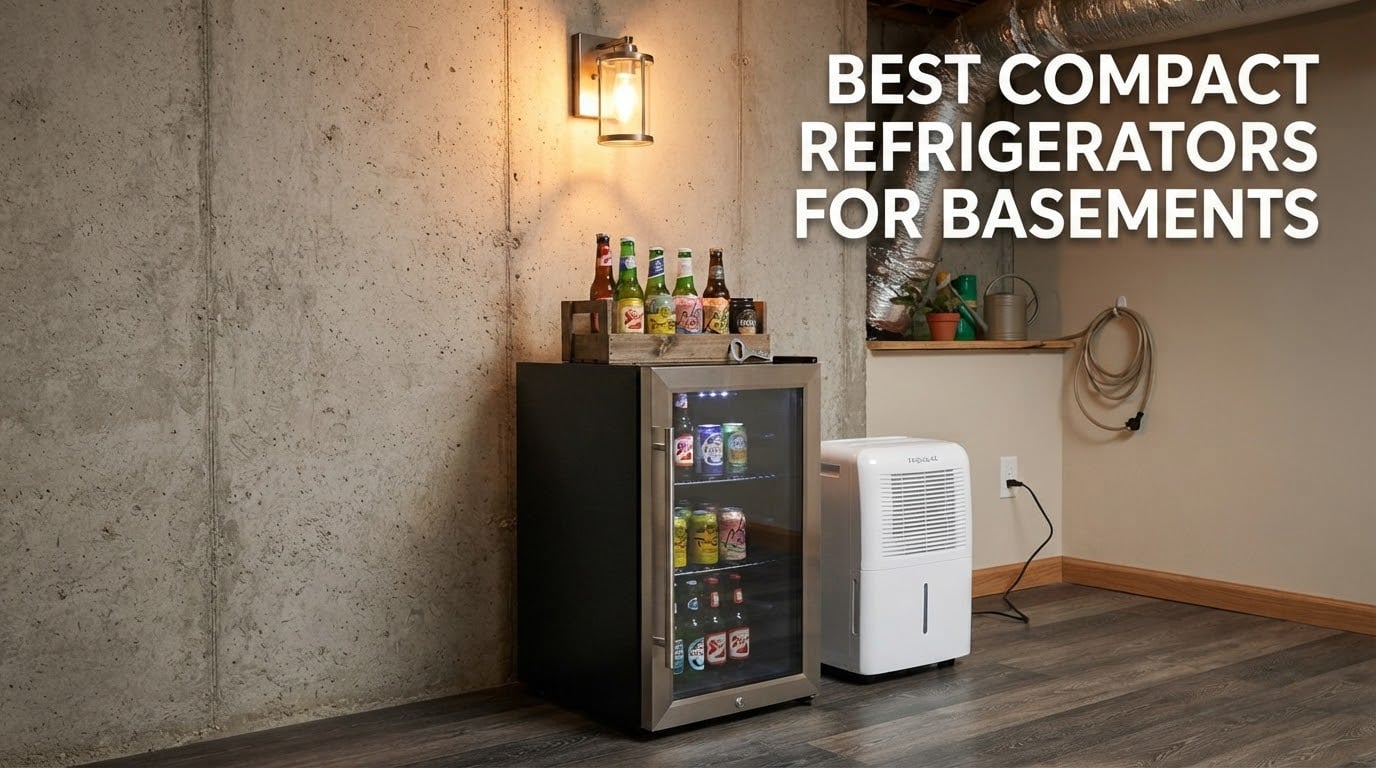
Yes, a refrigerator belongs in a basement, with one caveat: the room has to stay inside the temperature band the compressor was built for. Most mini fridges are engineered for a 60-70°F living space, and an unheated basement that swings from 45°F in March to 78°F in July is harder on them than any kitchen ever is. Get the clearance, the outlet and the humidity right, and a compact unit will run for years down there.
That is the whole argument behind this roundup. We went through twelve compact refrigerators built for secondary-storage duty and compared them on the four things that actually decide whether a basement fridge works: measured cabinet dimensions, usable interior capacity, noise, and how each one behaves when the surrounding air gets cold and damp. If you have a finished rec room, a basement kitchenette, a home bar, or just need overflow pantry space, the right unit is in here.
We also spent time on the part nobody covers, which is the delivery path. Getting a fridge down basement stairs is a one-way mistake, so the measurement section below comes before the product picks. If basement humidity is already an issue in your space, our guide to the best dehumidifiers for basements is worth reading first, because a fridge running next to standing moisture fails faster than the specs suggest.
Is It Okay to Put a Refrigerator in a Basement?
It is fine, provided the room stays within the unit’s rated ambient range and you give it airflow. A basement refrigerator works normally, but a cool room means the compressor cycles less often, and in an unheated space that dips near 50°F a standard unit can over-cool its contents and build a frost layer on the freezer walls.
Five conditions decide whether a compact fridge is happy down there:
Temperature range. Standard compact units assume roughly a 60-70°F room. Below about 50°F, a manual-defrost model can freeze the food in the fresh-food section. Garage-ready models are rated wider, typically from the high 30s to around 100°F.
Insulation. Insulated walls and a poured or block foundation keep the swing narrow. An uninsulated cinder-block basement is the hardest case for any compressor.
Humidity. Aim for a relative humidity in the room below about 60 percent. Above that, expect rust on steel panels and mildew on plastic door bins. Running a dehumidifier in the same room does more for appliance life than any feature on the spec sheet.
Power. Plug it directly into a grounded wall outlet. In finished basements, that outlet should be GFCI protected, and a dedicated circuit is the safer choice. Extension cords underfoot in a damp room are a bad idea.
Ventilation clearance. Leave a couple of inches at the back and top for the condenser coils to shed heat. Units with an open back panel need more room at the rear than flush-back models.
If your basement regularly drops under 50°F, plan on a garage-ready or frost-free model, and think about pairing it with a humidity control plan. If the space stays between 60 and 70°F year-round, any of the compact units in this roundup will do the job.
Top 3 Best Compact Refrigerators For Basements (October 2026)
These three cover the most common basement jobs: a general-purpose second fridge, a quiet unit for a finished room, and a two-door model that freezes properly. Every pick below has a large enough review base to trust, which matters more than any single spec when you cannot test the appliance yourself.

Upstreman 3.2 Cu.Ft Mini Fridge
- 3.2 cu.ft with 0.3 cu.ft freezer
- 5-level thermostat 32-50F
- 38 dB
- Reversible door

Midea 1.6 Cu.Ft Mini Fridge
- 1.6 cu.ft countertop size
- Under 42 dB
- Energy Star 207 kWh per year
- Reversible door
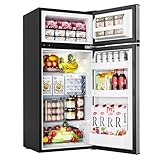
EUHOMY 4.5 Cu.Ft Two-Door
- 4.5 cu.ft with 0.8 cu.ft freezer
- Freezer to -7.6F
- 38 dB
- Interior LED light
Quick Overview: Best Compact Refrigerators for Basements in 2026
Every unit below, with its headline spec. We list them in order of overall usefulness for a basement, not in order of price. Details on each one follow the table.
| Product | Specifications | Action |
|---|---|---|
| Upstreman 3.2 Cu.Ft Mini Fridge |
|
Check Latest Price |
| Midea 1.6 Cu.Ft Mini Fridge |
|
Check Latest Price |
| EUHOMY 4.5 Cu.Ft Two-Door |
|
Check Latest Price |
 EUHOMY 145 Can 4.5 Cu.Ft Cooler EUHOMY 145 Can 4.5 Cu.Ft Cooler |
|
Check Latest Price |
 Frigidaire 7.5 Cu.Ft Combo Frigidaire 7.5 Cu.Ft Combo |
|
Check Latest Price |
 Electactic 3.2 Cu.Ft 130 Can Cooler Electactic 3.2 Cu.Ft 130 Can Cooler |
|
Check Latest Price |
 EUHOMY 3.2 Cu.Ft Single Door EUHOMY 3.2 Cu.Ft Single Door |
|
Check Latest Price |
 Frigidaire 1.6 Cu.Ft EFR115 Frigidaire 1.6 Cu.Ft EFR115 |
|
Check Latest Price |
 Feelfunn 126 Can 3.2 Cu.Ft Cooler Feelfunn 126 Can 3.2 Cu.Ft Cooler |
|
Check Latest Price |
 Frigidaire 4.5 Cu.Ft Stainless Frigidaire 4.5 Cu.Ft Stainless |
|
Check Latest Price |
 Tehanld 4.5 Cu.Ft Two-Door Tehanld 4.5 Cu.Ft Two-Door |
|
Check Latest Price |
 Danby 4.4 Cu.Ft Frost Free Danby 4.4 Cu.Ft Frost Free |
|
Check Latest Price |
1. Upstreman 3.2 Cu.Ft Mini Fridge with Freezer
- Large review base of 5509 ratings
- Quiet 38 dB operation
- Five temperature levels from 32 to 50F
- Reversible door with glass shelves
- Only 2.2 sq ft style footprint for the storage
- No interior light
- Manual defrost freezer holds cold only briefly
- Single thermostat can over-cool fresh food
- Strong chemical odor on arrival that needs airing out
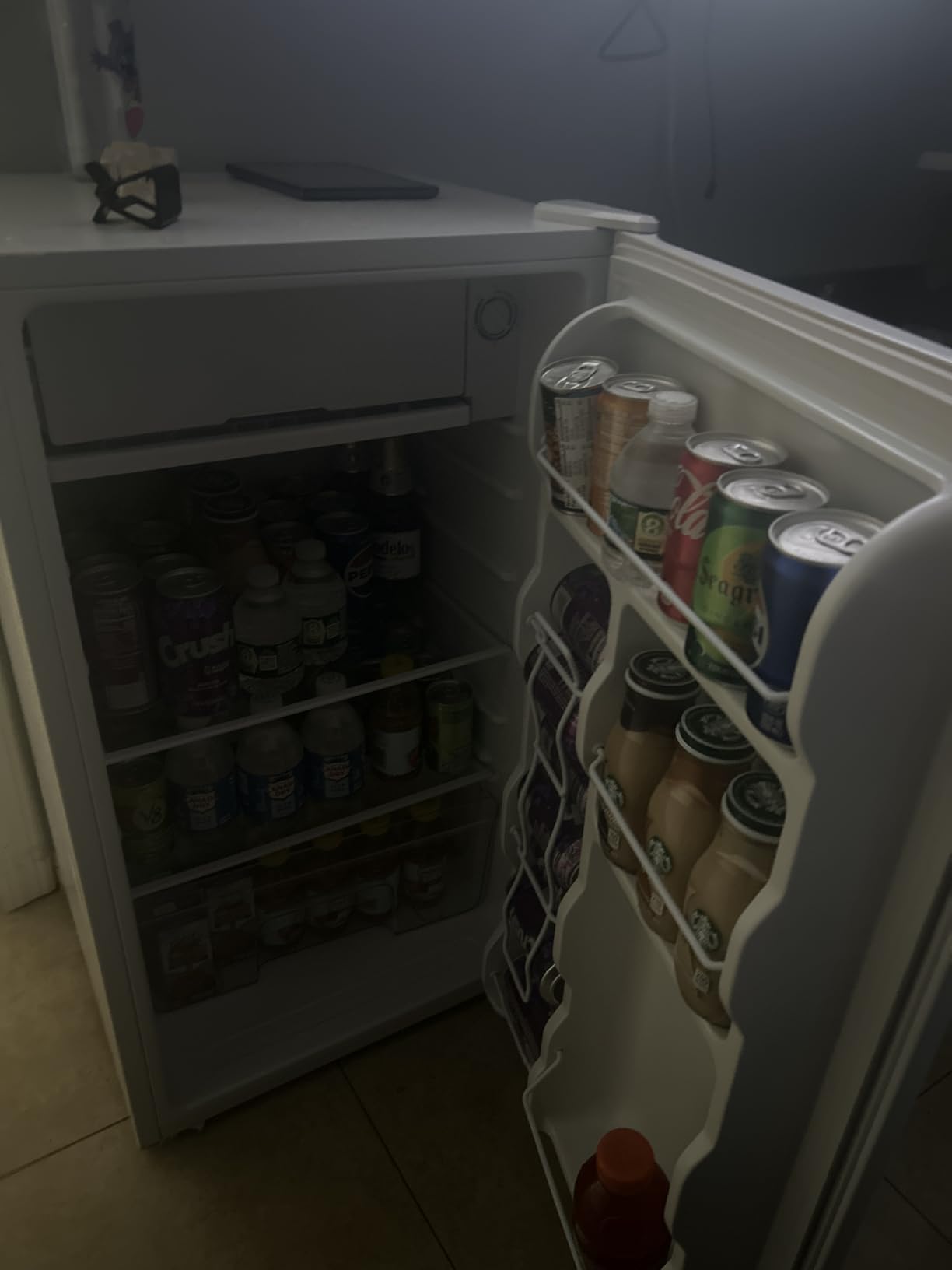
This is the unit we would put in most basements. It measures 18.7 inches wide by 17.4 inches deep by 33.1 inches tall, so it clears a standard basement door and tucks into a corner without stealing walking room. The 3.2 cu.ft splits into 2.9 cu.ft of fresh food and a 0.3 cu.ft freezer, which is enough for ice trays and a week of frozen goods.
The 5,500-plus ratings behind it are the strongest trust signal in this group. Owners consistently describe it as a drinks-and-snacks fridge rather than a real freezer, which is exactly how most basements use it. Draw is listed at 206 kWh per year, which is reasonable for a unit of this size running in a cool room.
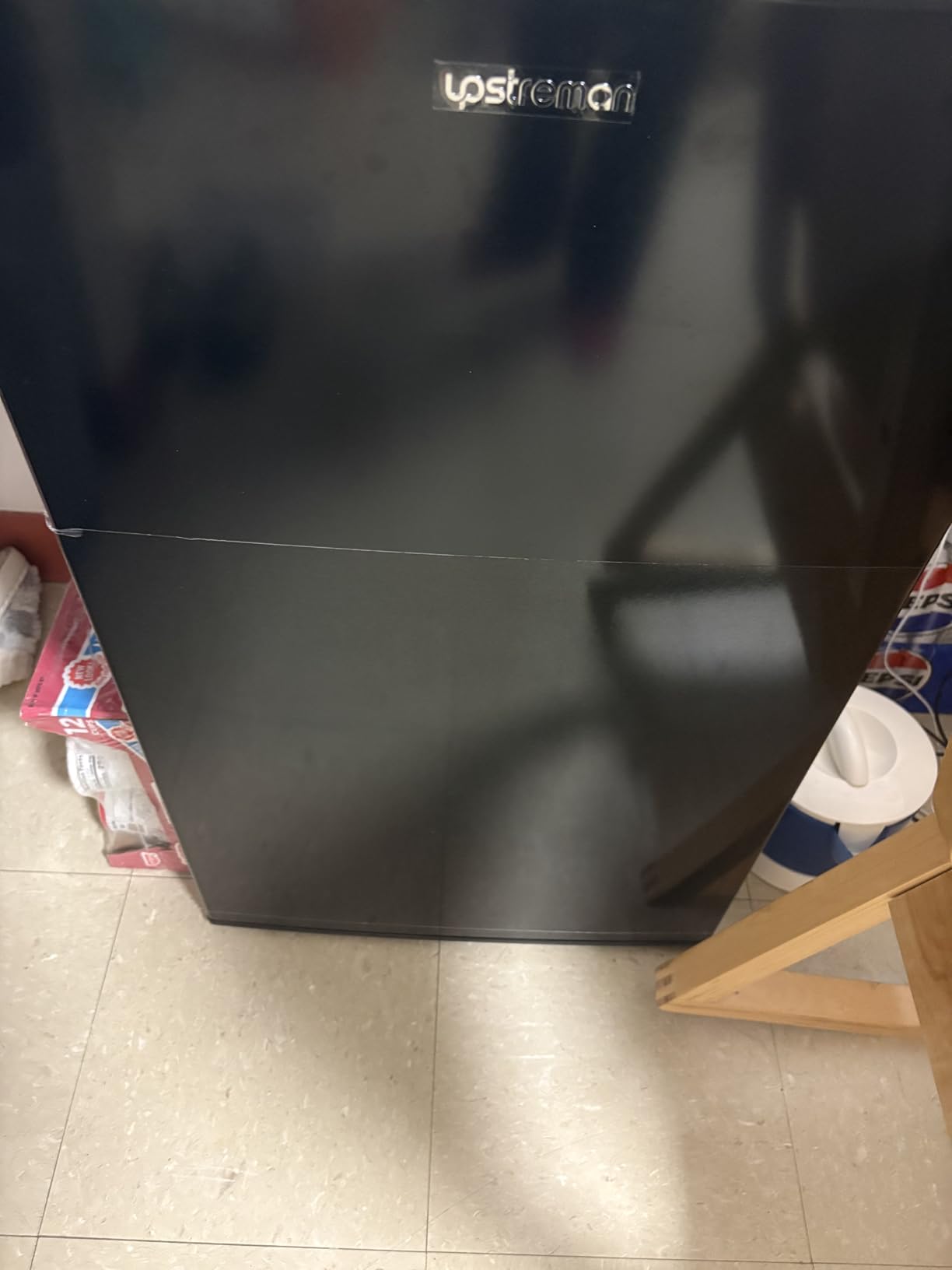
Two glass shelves and a crisper drawer do more for usable storage than the cubic-foot number suggests. The door is reversible, so you can flip the hinge to match the swing of a basement door that opens inward against a wall. Adjustable leveling feet took care of the slight slope our own concrete floor had.
Two things to plan around. There is no interior light at all, so a flashlight is part of the kit in a windowless corner. And the single thermostat controls the whole cabinet, so on cold settings liquids in the fresh-food section can freeze, which is a real risk in a basement that sits near 55°F.
What works well in a basement?
The narrow 18.7-inch width is the headline for basement work. Stairwells and finished-room doorways punish anything wider, and this one turns a corner where larger units simply will not go. Reversible hinges mean it also works against a side wall with the door facing the room.
At 38 dB, owners call it a hum rather than a compressor. In a finished rec room with a seating area, that level disappears under conversation and music. It is also the most widely reviewed unit here, which matters when you cannot test a compressor before it goes down twelve steps.
Where it falls short?
The manual-defrost freezer is the compromise. It keeps things cool for hours, not days, and owners who expected an actual freezer compartment end up disappointed. The included defrost tool helps, but you are doing that job yourself every few weeks in a humid room.
There is also no interior light, and a number of buyers report a chemical smell on arrival that needs a day of airing with the door open before you load food. A small share of owners report units that stopped cooling after a few months, which is the failure mode to watch for in year one.
2. Midea 1.6 Cu.Ft Mini Fridge for Low-Noise Rooms
- Compact footprint that fits a counter or shelf
- Genuinely cold for its size
- Energy Star certified
- Reversible door and removable shelf
- Light enough to reposition alone
- Open back panel needs several inches of rear clearance
- Temperature dial runs colder than expected
- Compressor kick-on is audible near a bed
- Cord stores in a rear recess and looks missing
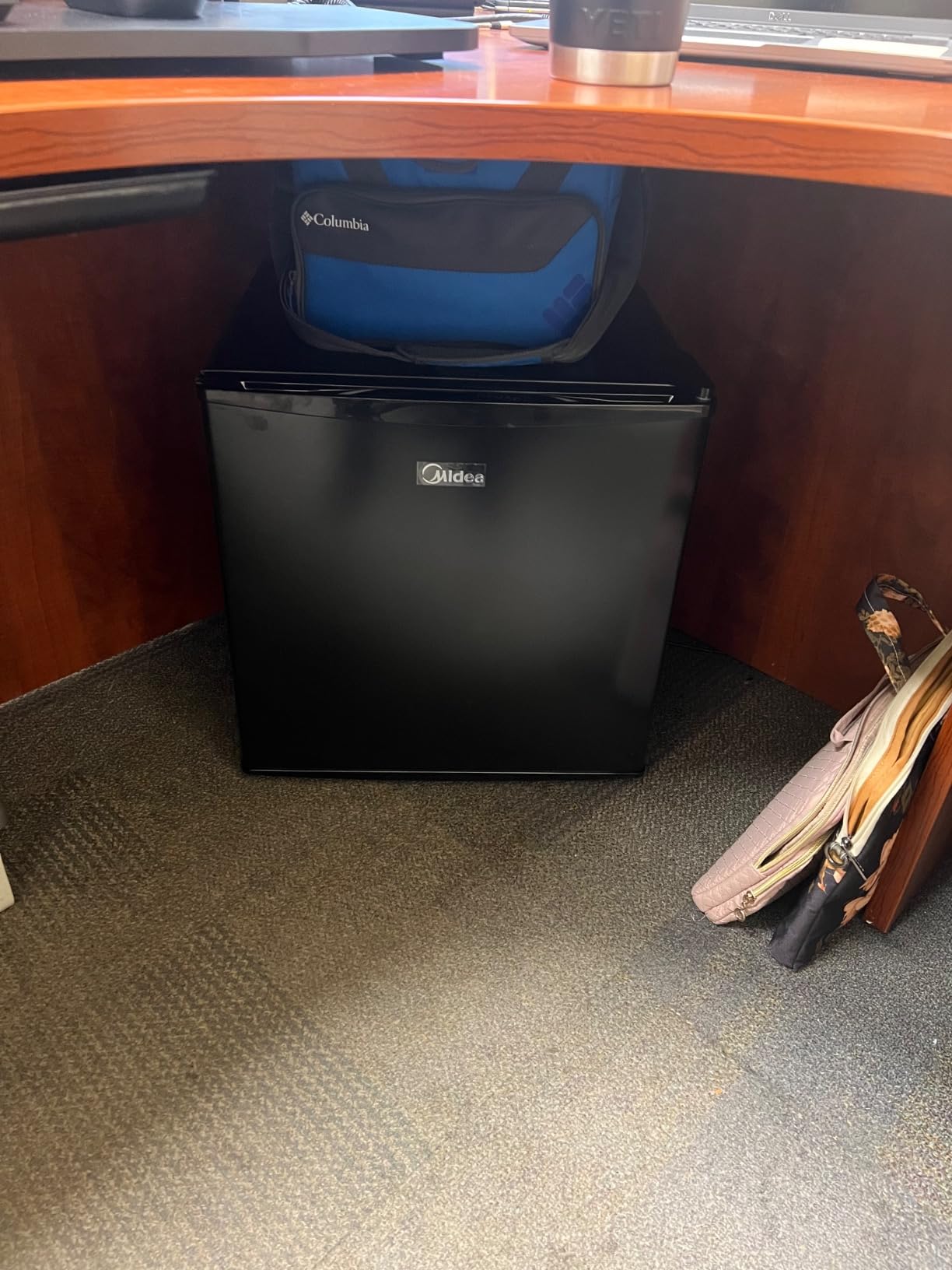
This is not a food fridge in the normal sense. At 1.6 cu.ft and 18.6 by 17.7 by 19.4 inches, it is a countertop and shelving unit built for drinks, medication, and a few snacks in a basement home office or a suite kitchenette. Rated 4.5 across more than 5,300 ratings, it shares the highest rating in this roundup.
An internal chiller box chills faster than the main cavity, and a 2L bottle rack keeps larger bottles off the single wire shelf. Energy Star certification and a listed 207 kWh per year make it a good pairing for a basement office where the fridge runs around the clock.
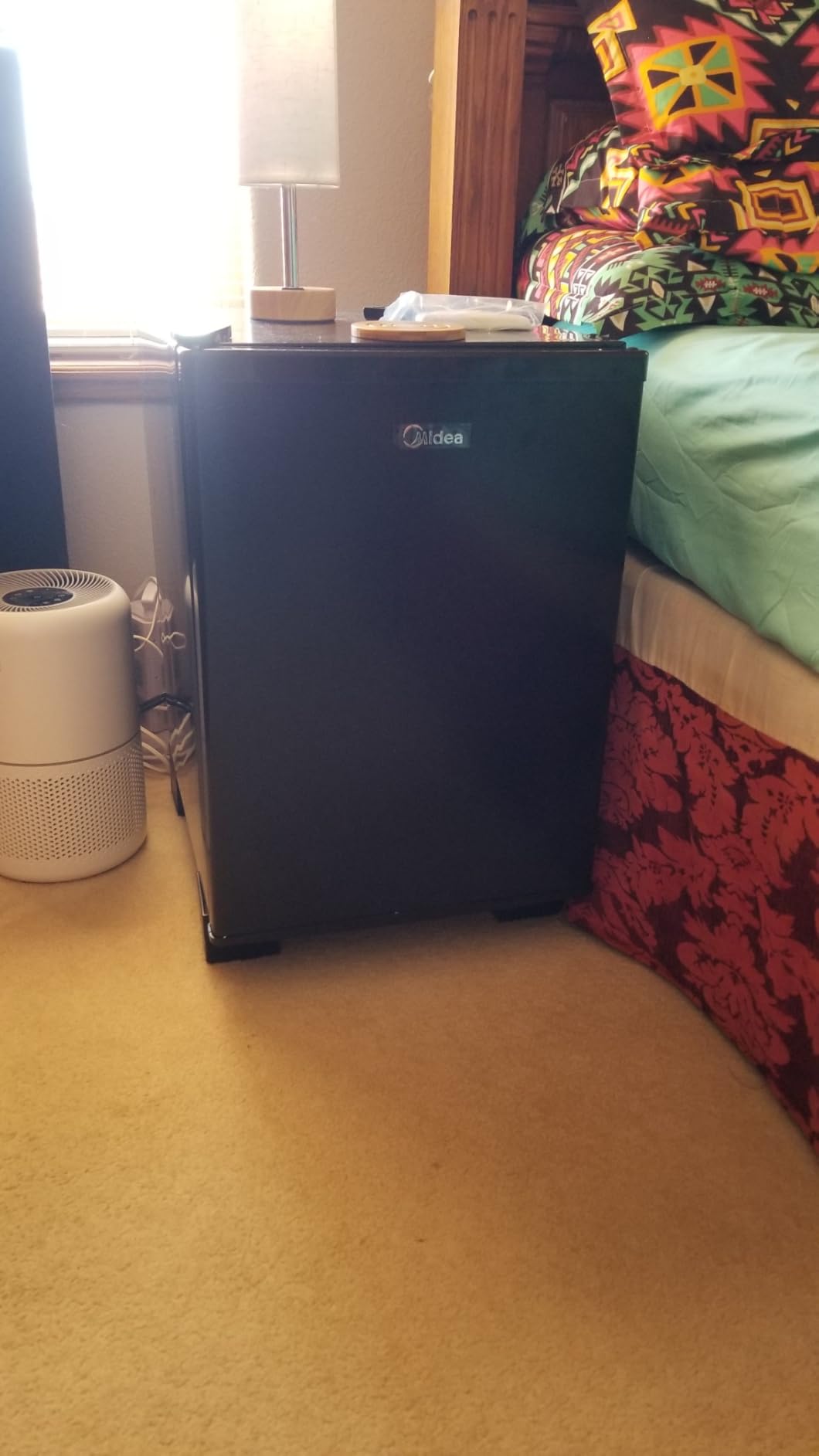
The mechanical thermostat runs from 28.4°F to 35.6°F. That sounds precise, but owners report it is easy to over-cool, and in a cool basement that means frozen bottles on the lowest settings. Start one notch warmer than you would in a kitchen.
Plan the rear clearance before you order. The back is open, exposing the compressor coils directly, and it needs several inches of space behind it or it runs hot and works harder. If your basement alcove is a tight box, this is the wrong unit.
What works well in a basement?
Weight is the underrated advantage here. At 32.6 pounds, one person can carry it down a stairwell, which removes the biggest logistical risk of a basement appliance purchase. Compare that to the 75-pound Frigidaire later in this list, and the trade-off becomes obvious.
The reversible door and single removable shelf make it flexible in a small room where orientation matters more than capacity. It is also the quietest everyday choice for a finished basement living space that is used at night.
Where it falls short?
There is no real freezer to speak of. Ice forms quickly in the tiny compartment if the door is left ajar, and frost in a basement room can go unnoticed for weeks. Owners also mention that the compressor kick-on noise carries in a completely silent room.
The power cord stores inside a recess in the back, so it can look like the unit arrived without one. The shipping box is thin and splits easily, which matters more than usual when the delivery path involves a stairwell.
3. EUHOMY 4.5 Cu.Ft Two-Door Fridge Freezer
EUHOMY 4.5 Cu.Ft Mini Fridge with Freezer, 2 Door Mini Refrigerator, Silver
- Separate 0.8 cu.ft freezer that reaches -7.6F
- Holds more than the footprint suggests
- Glass shelves keep bottles upright
- Interior LED light at this size
- Quick to freeze ice trays
- Glass shelves are fixed rather than adjustable
- Compressor hum is noticeable in a quiet room
- Long compressor runs raise energy use on some settings
- A minority of units arrive dented
Of the food fridges in this roundup, this one freezes properly. The freezer section reaches as low as -7.6°F while the fresh-food side holds between 32°F and 50°F, split across three cooling levels. For a basement pantry or a wet bar that needs real frozen storage, that is the difference between a fridge and a fridge-freezer.
It stands 42.9 inches tall and 18.1 inches wide, so check your stairwell ceiling height before ordering. The total footprint is still narrow enough for most basement alcoves, and the reversible door handles the wall-side placement problem.
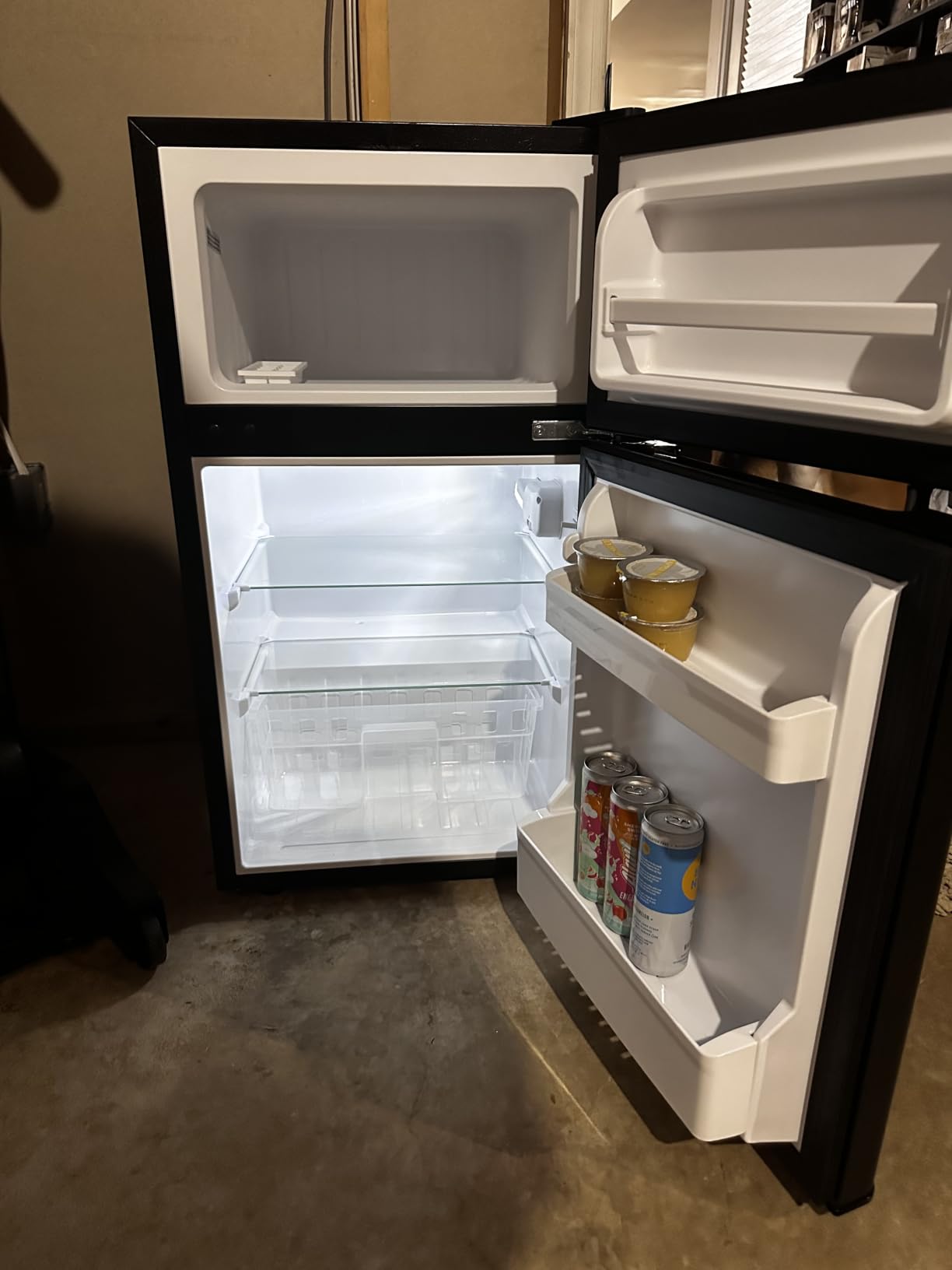
Owners are consistent about one thing: the interior holds more than the exterior dimensions suggest. Glass shelves, a fruit and vegetable box, and three glass partitions organize it well, and the included ice tray and ice shovel are small touches that matter more in a utility space than in a kitchen.
Energy draw is listed at 365 kWh per year, roughly 1 kWh per day. In a cool basement the compressor cycles less than it would upstairs, but owners do report long run stretches on higher settings, so the middle level is the sensible default.
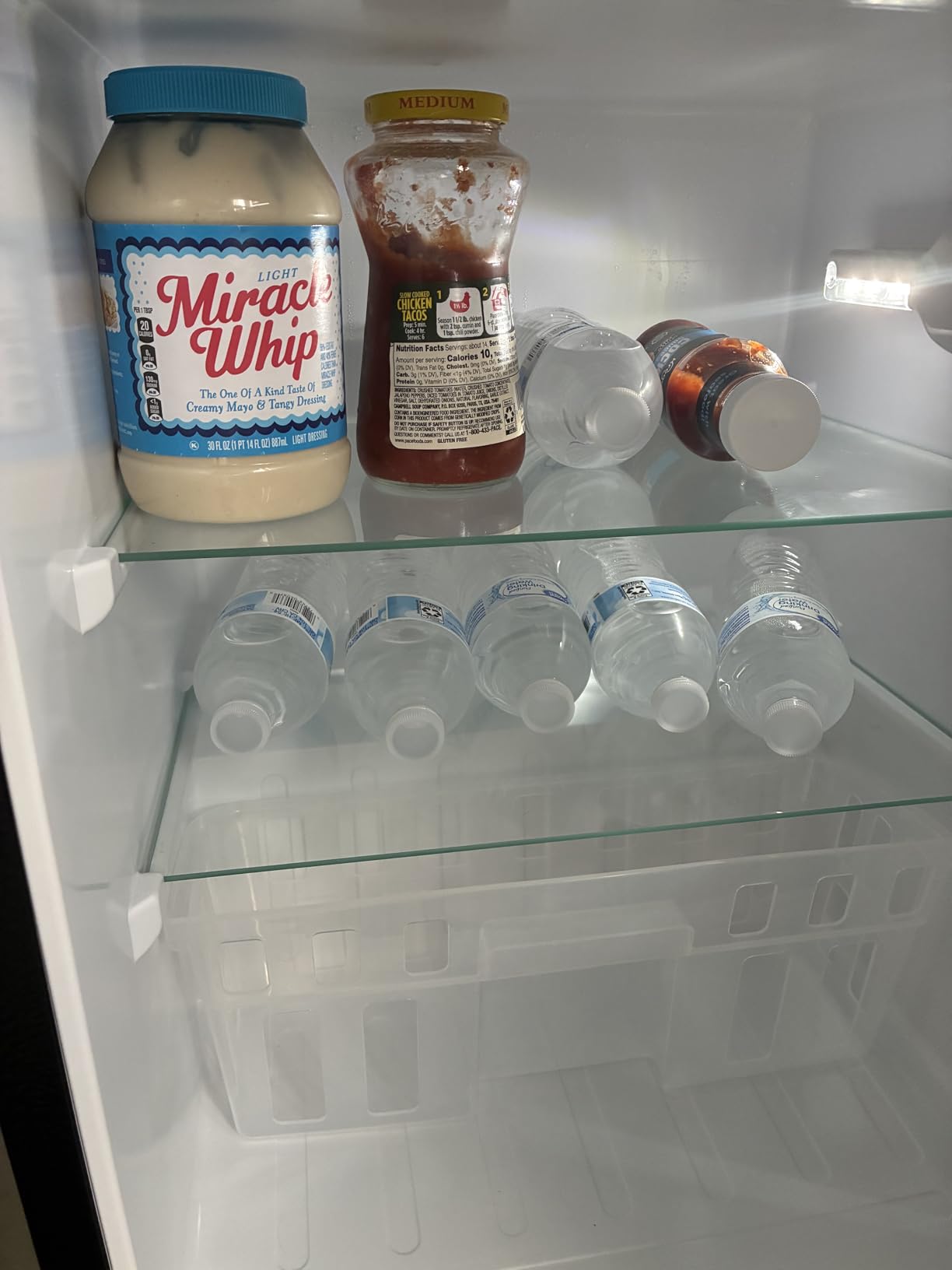
What works well in a basement?
A genuine cold freezer removes the frost worry that comes with micro-freezers. In an unheated space where the fresh-food section is already running cold, having an isolated freezer zone means frozen goods are not sitting next to your milk.
The 4.5 cu.ft cabinet is the best size-to-footprint ratio here. It fits beside a doorway or in a pantry nook, and 53 pounds is heavy enough to feel solid but light enough for two people to move down stairs.
Where it falls short?
The glass shelves are fixed, not adjustable, which limits vertical configuration when you are storing tall bottles or leftover containers. Owners who wanted shelf flexibility moved on.
The 38 dB figure is measured under lab conditions. In a silent finished room the hum carries, and a number of buyers mention it specifically. If the basement is a bedroom or an office where you sit for hours, read the noise notes on the quieter picks in this roundup first.
4. EUHOMY 145 Can 4.5 Cu.Ft Beverage Cooler
EUHOMY 145 Can Mini Fridge, 4.5 Cu.ft Beverage Refrigerator with Glass Door
- Very large can capacity for 4.5 cu.ft
- Digital display shows actual temperature
- Quiet once the unit has settled upright
- Double-pane glass door with UV blocking
- Even cooling throughout the cabinet
- Manufacturer advises against storing perishables or dairy
- One temperature zone for the whole cabinet
- Frost builds quickly when the cabinet is partly stocked
- No door-open alarm and the light does not switch on
This is a beverage and wine cooler, not a food fridge, and the manufacturer says so. If your basement plan is a home bar, a beer wall, or keeping bottles cold for a rec room, the 145-can capacity in a 4.5 cu.ft cabinet is hard to beat. If you need a place for milk and leftovers, look at one of the food fridges instead.
Digital temperature control runs from 32°F to 61°F, and the display reads the current cabinet temperature rather than only the setting. That matters in a basement, where the room temperature varies and a set-point display tells you less than a live reading does.
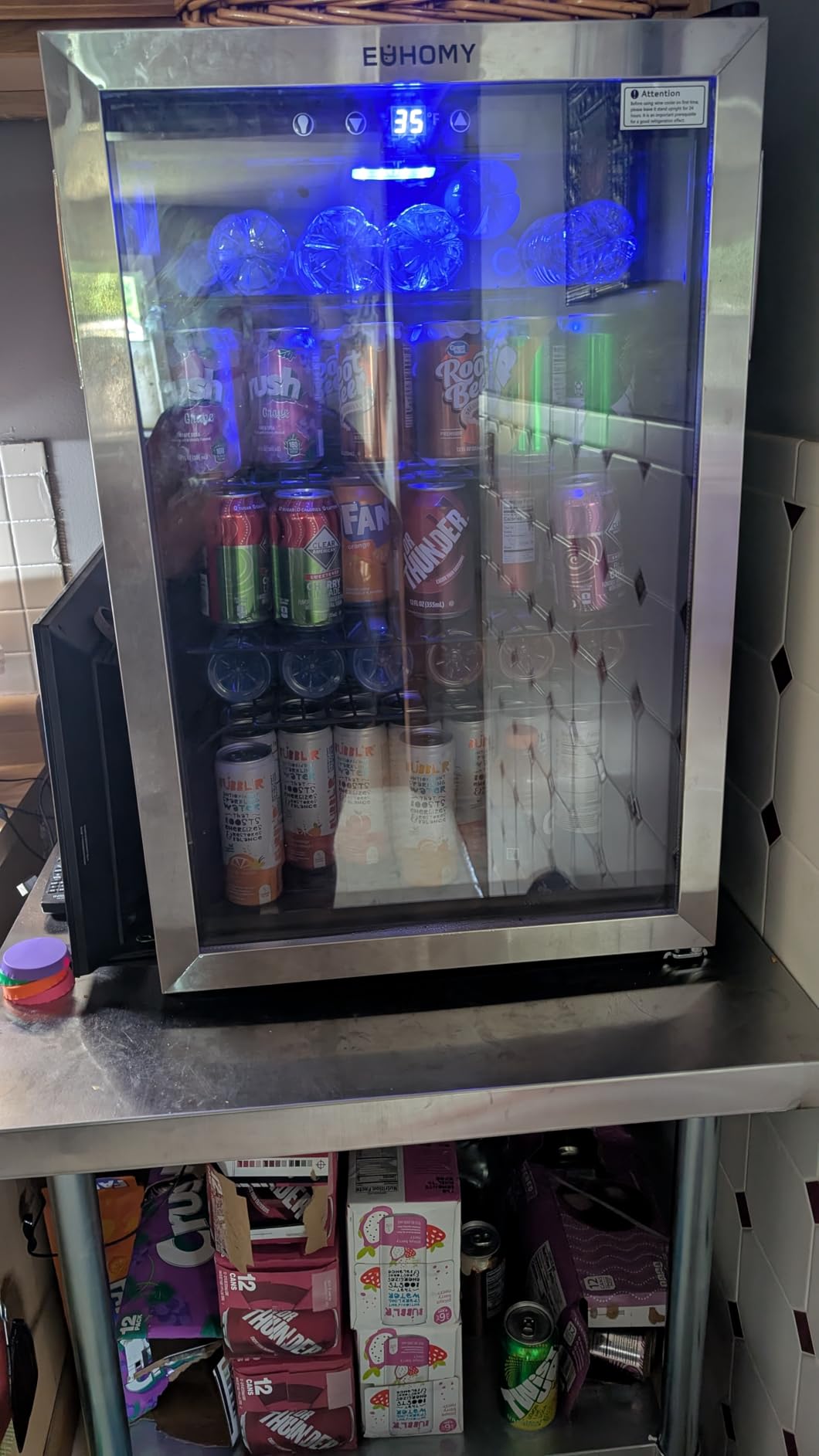
It measures 21.7 inches deep by 20.3 inches wide by 31.5 inches high and weighs 57.9 pounds. At just over 20 inches wide it is one of the wider units here, so measure the alcove and the stairwell before committing.
The compressor is rated below 40 dB and owners report it settles down once it has stood upright for a day. That 24-hour settling period is not optional advice; units powered on too early are the ones that generate the worst noise and icing complaints.
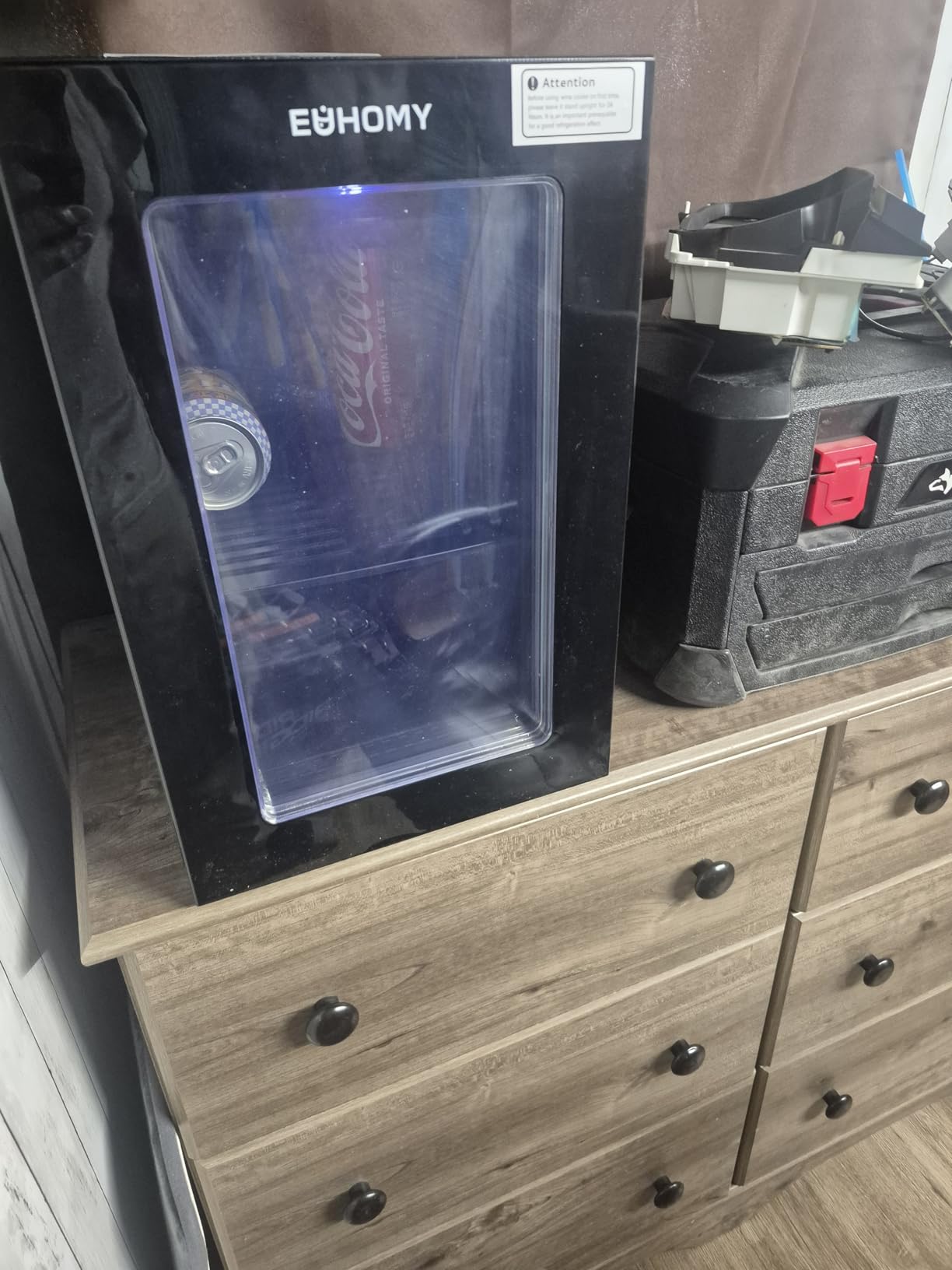
What works well in a basement?
A glass door with LED lighting means you can see your inventory without opening the door, which cuts warm-air exchange in a cool room and reduces how hard the compressor has to work. For a display fridge behind a basement bar, that is the single most useful feature.
Automatic defrost handles the one maintenance job that causes trouble in humid spaces. There is no drip tray to empty and no frost wall to scrape, which removes the most common failure path for a basement beverage fridge.
Where it falls short?
Frost still builds fast when the cabinet is only partly stocked, because empty air lets cold moisture settle on the walls. Owners who keep it full report noticeably better temperature stability, so plan your bar layout around filling it.
The light does not come on with the door and there is no door-open alarm, so in a room nobody checks regularly, the door can sit ajar and quietly warm the contents. A number of units also develop a laminate finish that scratches and peels over time.
5. Frigidaire 7.5 Cu.Ft Two-Door Apartment-Size Combo
Frigidaire, 2 Door Apartment Size Refrigerator/Freezer Combo, 7.5 cu ft, Platinum Series, Stainless, 23″ D x 21.5″ W x 55.5″ H
- Largest capacity here with a genuine 2 cu.ft freezer
- Slide-out glass shelves are easy to load and clean
- Lighting in both compartments
- Reversible door with castors and leveling legs
- Stainless finish suits a utility room
- Tall 55.5 inch height needs a full-height niche
- Highest energy draw in this roundup
- Manual defrost freezer needs periodic thawing
- Some buyers report the thermostat runs colder than set
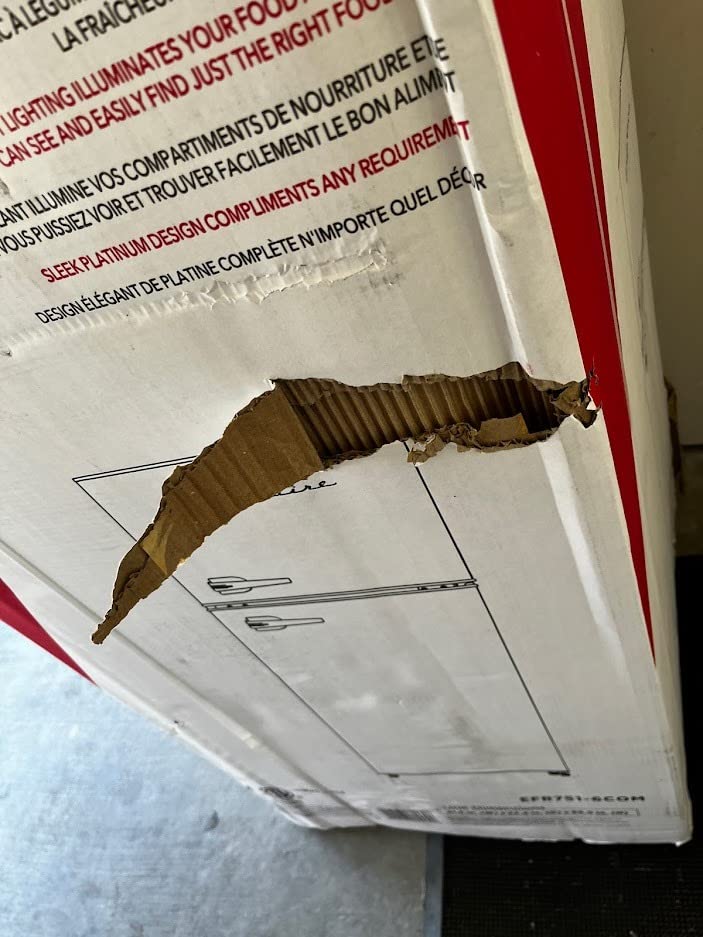
This is the largest unit in the roundup at 7.5 cu.ft, split into 6 cu.ft of fresh food and 2 cu.ft of freezer. For basement pantry overflow or a family that needs a genuine second refrigerator, the storage volume is the reason to buy it. Nothing else here comes close.
The trade is size and energy. At 55.5 inches tall, 23 inches deep, and 75 pounds, it needs a full-height niche, a doorway to match, and at least two people to get it down stairs. Listed draw is 378 kWh per year, the highest of the twelve.
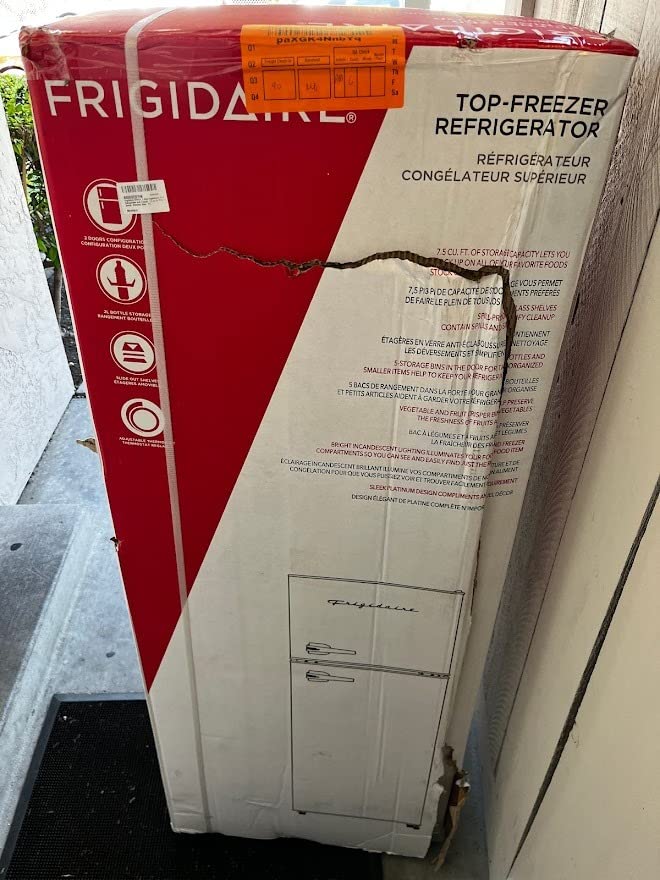
Slide-out glass shelves, a transparent crisper, and a full-width door bin make it easy to see what you have in a room with no windows. Both compartments have interior lighting, which sounds minor until you are reaching into an unlit basement corner.
Rear castors and adjustable front leveling legs handle uneven concrete better than units with feet alone. The reversible door handles the usual basement wall-placement problem, and the freezer has its own light and its own temperature control.
What works well in a basement?
A dedicated 2 cu.ft freezer compartment is the deciding factor. Every manual-defrost micro-freezer in this roundup keeps items cold for hours, while this one keeps them solid overnight, which is what makes it a real second refrigerator rather than a drinks box.
At 7.5 cu.ft it also solves a different problem: if your basement is your overflow storage, you can dedicate it entirely to bulk food and household stock instead of mixing cans and leftovers in the same cabinet.
Where it falls short?
The height is the hard constraint. Below a typical 6-foot basement ceiling it fits, but many drop ceilings and bulkheads do not give you the 55.5 inches plus rear clearance. Measure twice, and measure the top of the stair opening too.
The thermostat runs colder than the setting for some owners, which can partially freeze fresh food, and manual defrost means thawing the freezer compartment on a schedule. At 4.1 stars from 2,297 ratings, this is also the lowest-rated unit in the group, mostly on those two points.
6. Electactic 3.2 Cu.Ft 130 Can Under-Counter Cooler
Electactic Mini Fridge 130 Can Beverage Refrigerator Cooler, 3.2 Cu.Ft Drink Fridge for Soda Wine Beer, Adjustable Temperature Control for Home Office, Black
- High can count in an under-counter footprint
- Five adjustable wire racks for cans and wine
- LED lighting behind a sealed glass door
- Quiet enough for a man cave
- Reliable digital control across 37-61F
- Wire racks bow under a heavy load of bottled drinks
- Glass door does not switch the light on when opened
- Side and top panels run warm during operation
- Temperature display is hard to read at floor level
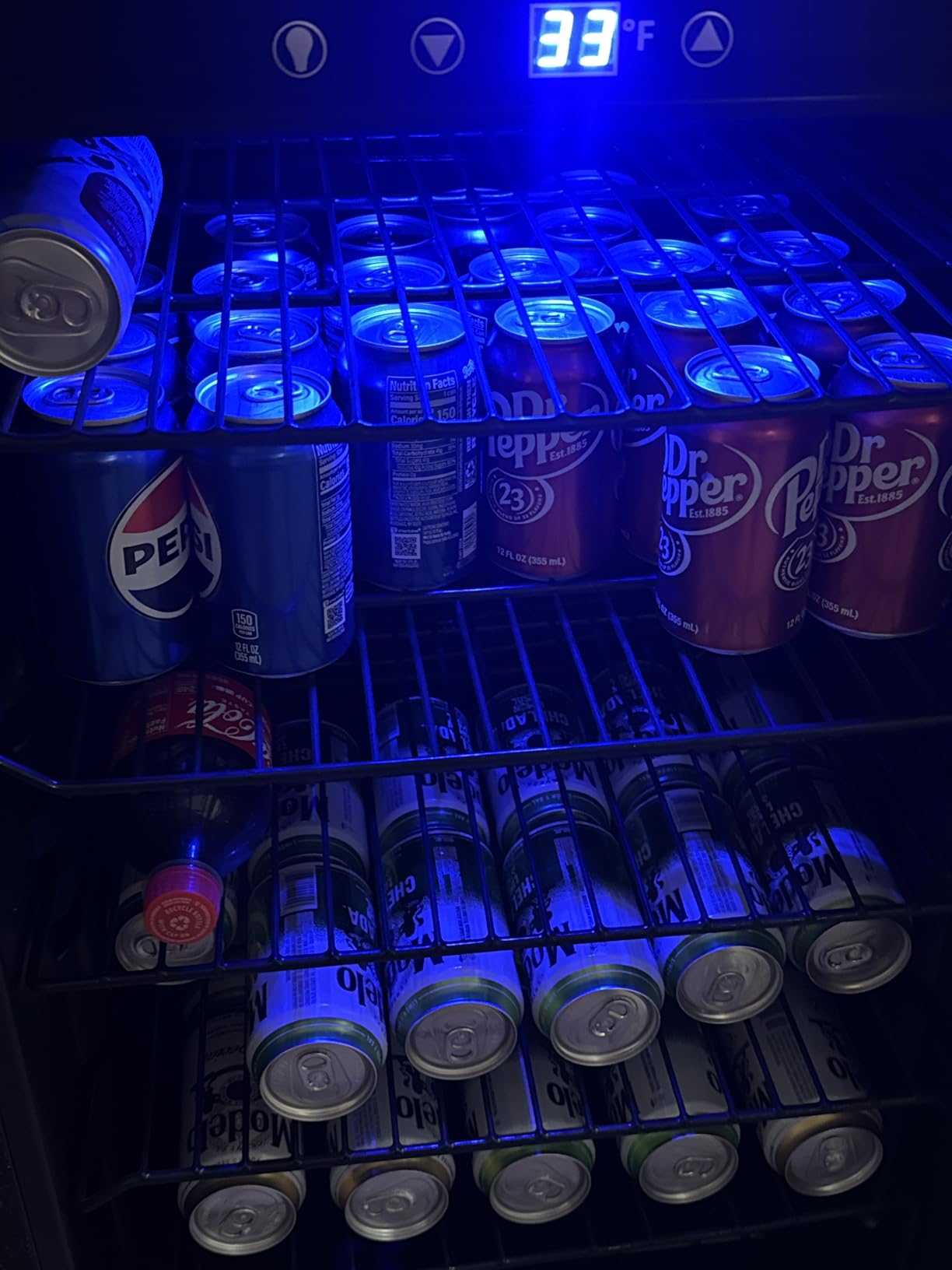
At 17.6 inches wide and 31.1 inches tall, this one is built to slide under a basement bar counter or wet-bar cabinet. It holds 130 standard cans on five adjustable wire racks, and the racks also take wine bottles and bottled water, which makes it more flexible than a pure can cooler.
Digital temperature control covers 37°F to 61°F, and the rotary scroll compressor gives even cooling rather than a cold spot at the back. Listed draw is 180 kWh per year, one of the lower figures here, which matters for a unit that stays plugged in year-round.
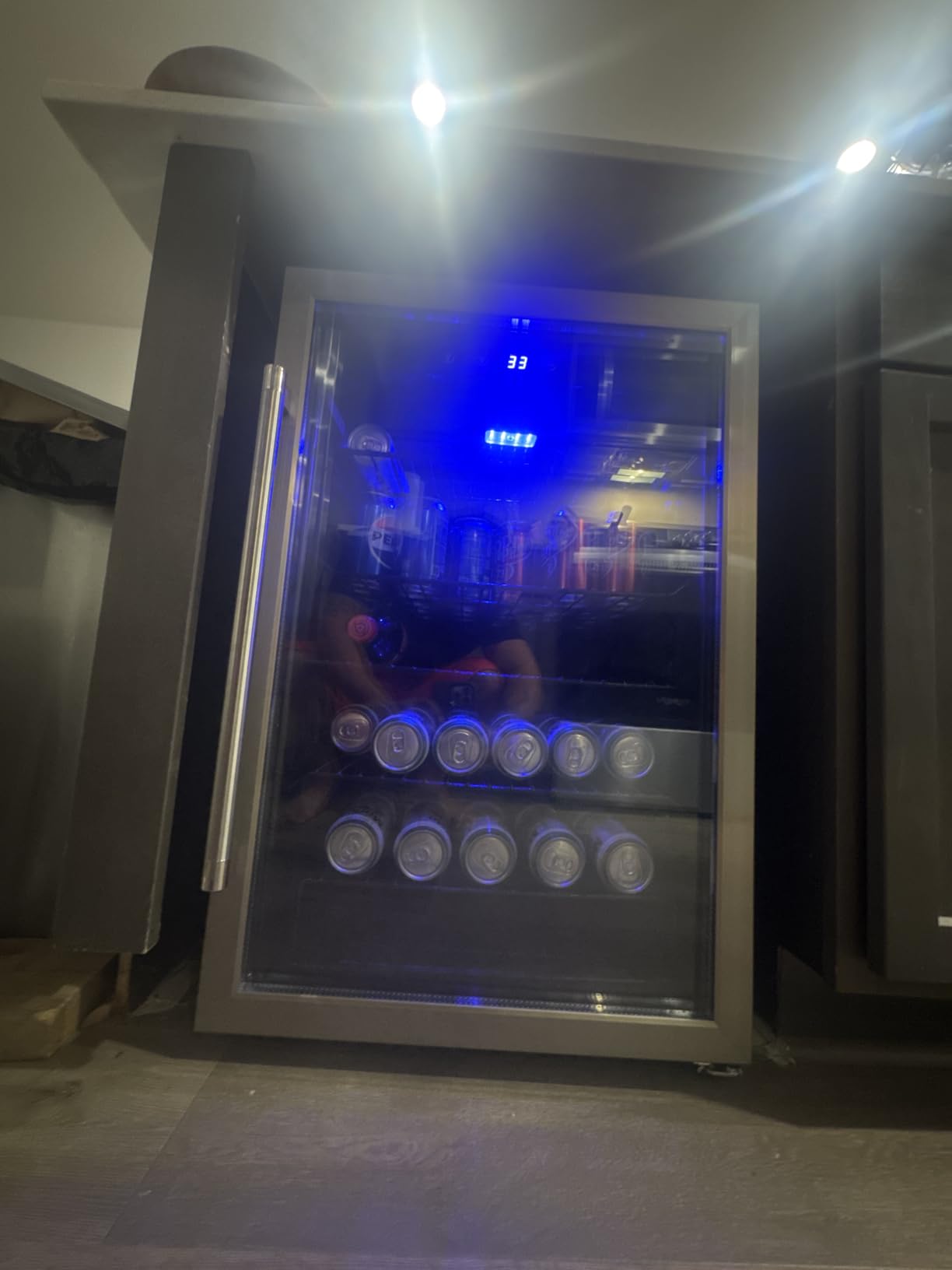
The glass door and LED interior lighting are what make it work as a bar station. You can find a bottle without opening the door, which keeps cold air in and warm basement air out. The sealed glass also means it does not sweat on the outside in a humid room.
Owners describe it as quiet enough for a man cave or game room, and the 48.3-pound weight keeps it manageable for two people on a stairwell. It runs freestanding too, if no counter space exists.
What works well in a basement?
The under-counter form is the whole point. A basement wet bar usually has a base cabinet with a wasted cavity, and a 31.1-inch-tall cooler fills it without stealing floor space in a rec room where circulation matters.
Rotary scroll compressors are known for low startup noise and even cooling, and the digital control holds a set point far more consistently in a variable-temperature basement than a mechanical dial does.
Where it falls short?
The wire racks bow under a heavy load of bottled drinks, which is a common complaint. If you plan to fill it with full six-packs rather than cans, expect the bottom shelf to sit unevenly.
The light does not come on when the door opens, the display is difficult to read if the unit sits low, and some buyers report warm side and top panels during operation. The manufacturer also states it is not intended for storing perishables.
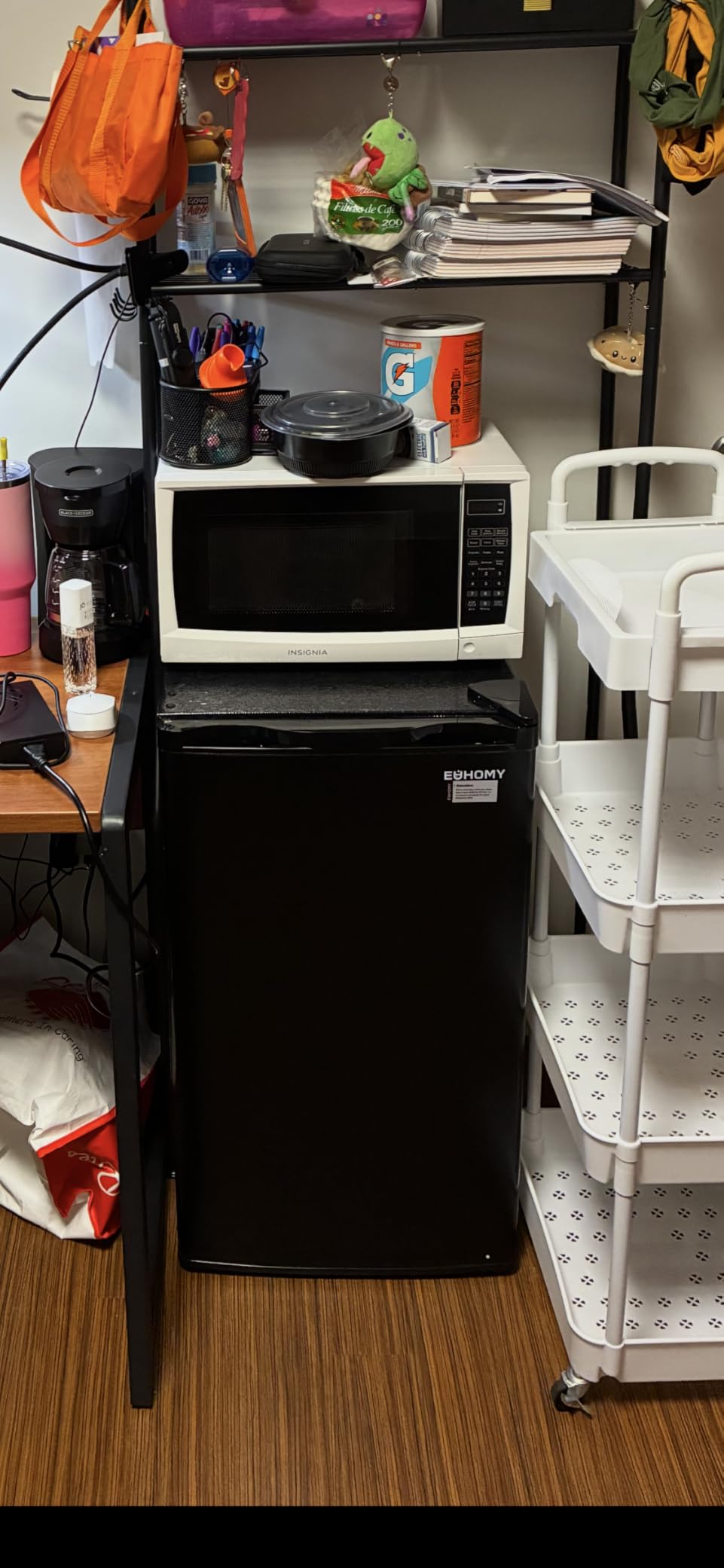
7. EUHOMY 3.2 Cu.Ft Single-Door Fridge and Micro-Freezer
- Runs very quietly at 38 dB
- Roomy interior for a 2.2 sq ft footprint
- Adjustable feet handle uneven concrete
- Low 0.66 kWh per day draw
- Arrives well packaged
- Runs colder than expected and can freeze produce
- Shelf and crisper layout must move for tall bottles
- Manual defrost means draining the micro-freezer drip pan
- Reversible hinge needs extra side clearance when flipped
This is the quiet-value pick. The 3.2 cu.ft cabinet divides into a 2.9 cu.ft refrigeration section holding 25-44°F and a 0.3 cu.ft micro-freezer holding 23-41°F, controlled by a single 7-position knob. Setting 3 is the recommended position for daily use.
It occupies about 2.2 square feet of floor area and weighs 41.9 pounds, so it moves down stairs without a dolly. At 0.66 kWh per day it keeps running costs low, which suits a basement pantry that stays plugged in all year.
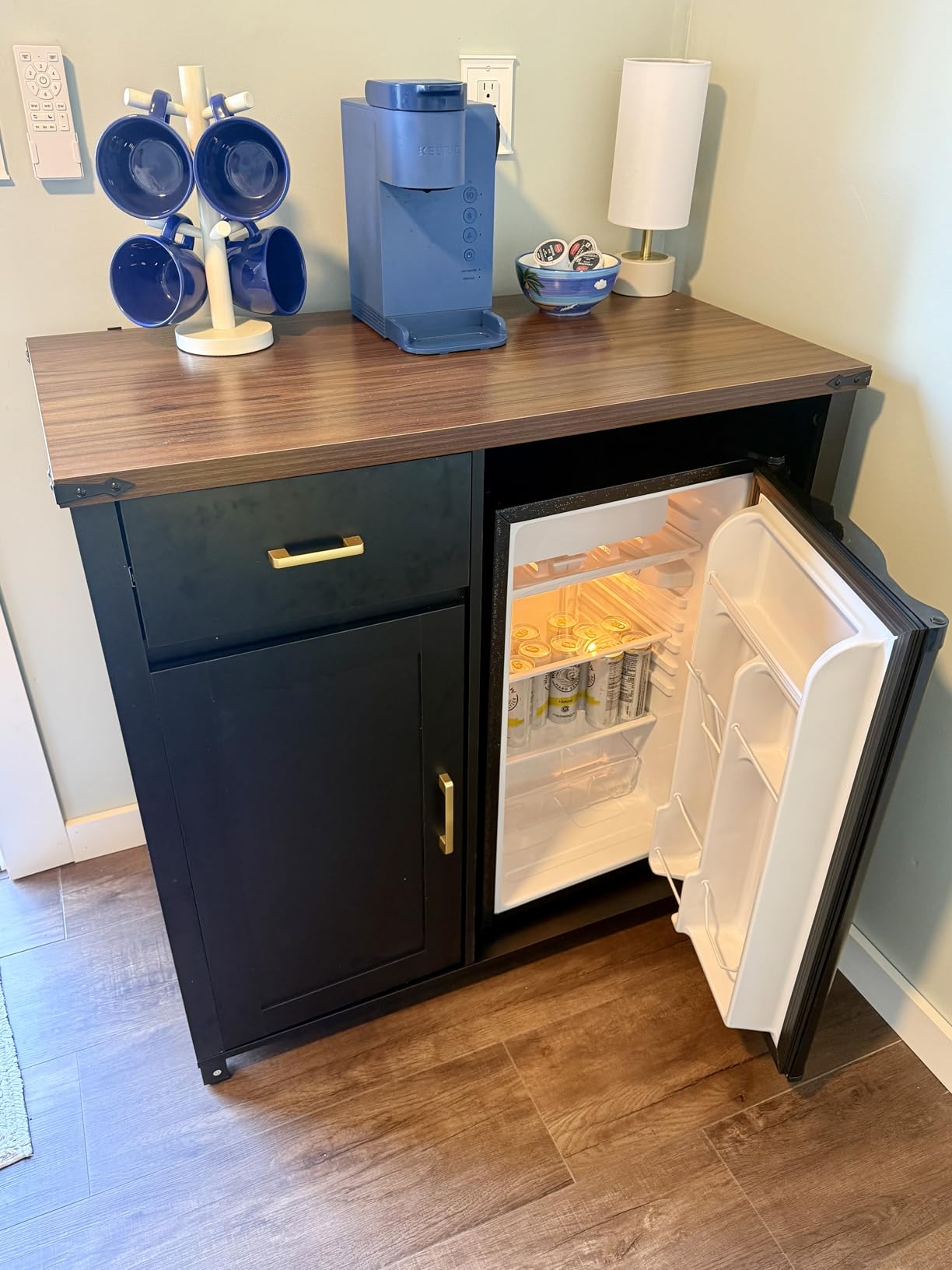
Owners repeatedly note it runs colder than they expect. In a basement that already sits below 65°F, produce and bottled water can freeze on a mid setting, so turn the knob down one or two notches from the start and check after a day.
The included drip tray, two removable glass shelves, and the LED interior light are better than most units at this price. The freezer micro-compartment needs manual draining on a schedule, which is the one recurring basement chore this model creates.
What works well in a basement?
At 38 dB with an LED light inside, this is one of the better picks for a finished basement where the fridge is visible rather than hidden in a utility corner. Adjustable feet were a genuine help on an uneven concrete floor.
Reversible hinges handle a wall placement, though the swing side needs extra clearance once flipped. In a narrow alcove, plan the orientation before you order so you are not fighting the wall at install.
Where it falls short?
The coldest complaint is over-cooling, and it is a basement-specific risk because the room contributes to it. A cold basement plus a mid-range knob setting can freeze a bottle of water sitting near the back wall.
Tall bottles force you to rearrange the shelves and crisper, and the manual-defrost drip pan needs draining on a schedule. If your basement regularly dips below 50°F, a standard compressor unit like this is not the right choice.
8. Frigidaire 1.6 Cu.Ft Countertop Refrigerator
Frigidaire EFR115 Mini Refrigerator – Energy Saving – CFC Free – Slide Out Shelves – Ideal for for Dorm, Office, RV, Garage, Apartment – 1.6 Cubic Feet, Black
- Among the quietest units here at under 37 dB
- Small 18-inch countertop footprint
- Reversible hinge and leveling legs
- Wide range of color options
- Numbered thermostat dial
- 1.6 cu.ft is genuinely limited storage
- Door rail is loose enough that bottles can fall out
- Thermostat has no usable middle setting
- Share of units arriving dented or scratched
At 18 inches wide and 20 inches tall, this is a countertop unit for a basement office, a suite kitchenette, or a small wet bar where a full mini fridge will not fit. The 1.6 cu.ft includes a 0.1 cu.ft ice compartment, which is for ice trays and nothing more.
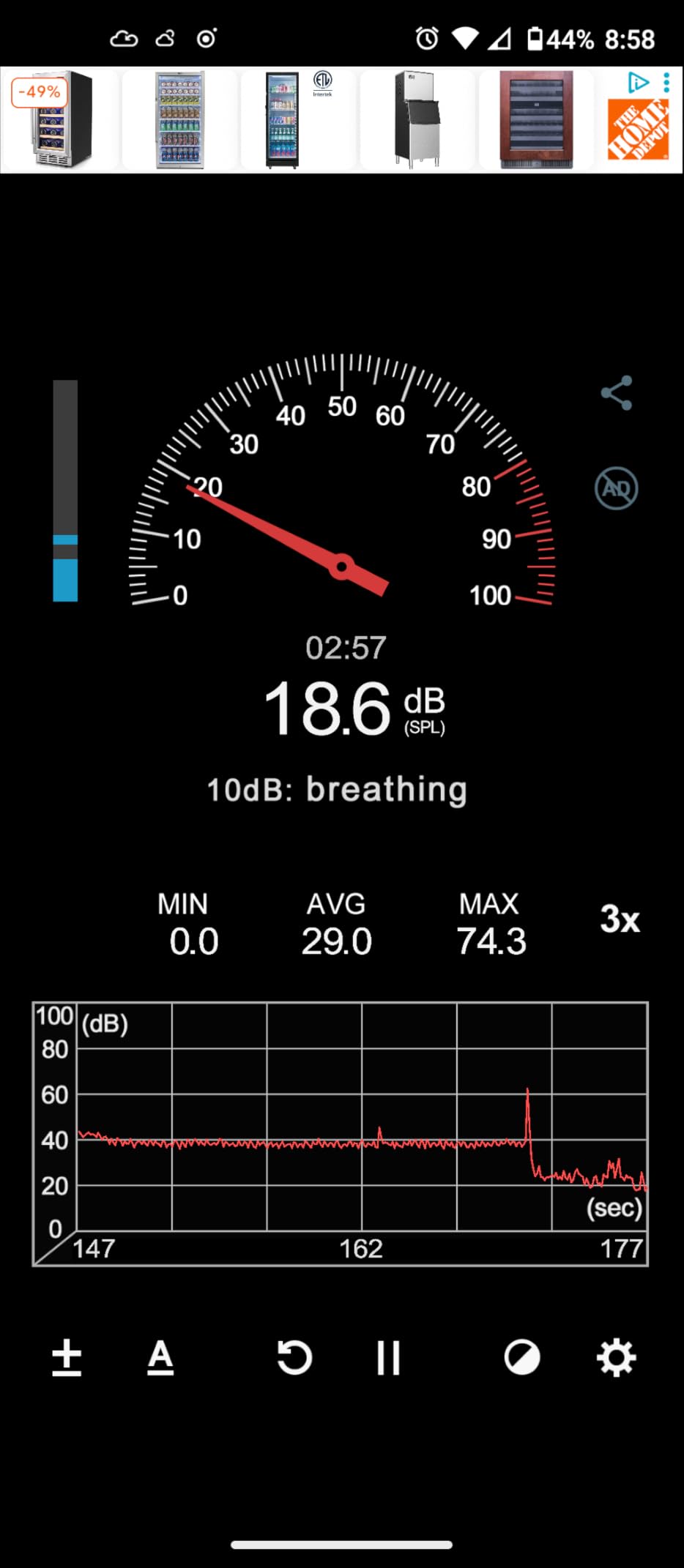
It runs under 37 dB and weighs 29.3 pounds. Those two numbers make it the easiest unit to place in a finished basement where noise matters and one person is doing the install.
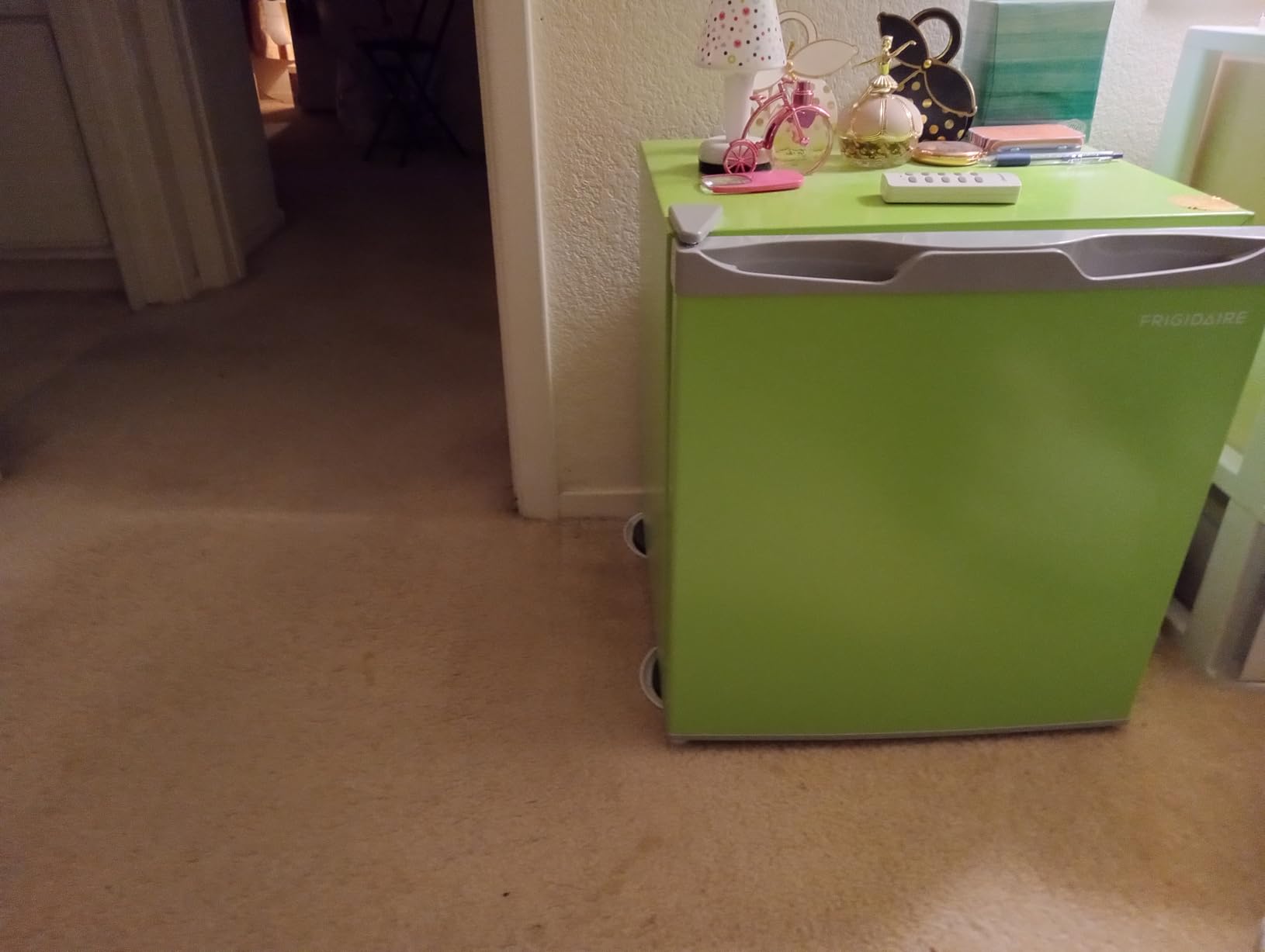
The numbered thermostat dial is a genuine step up from an unmarked knob, and the reversible door hinge plus adjustable leveling legs handle awkward placement. A side-mounted bottle opener is a small touch that gets used constantly in a rec room.
Draw is listed at 200 kWh per year. On a countertop spot near a basement dehumidifier or sump area, verify the outlet is dry and grounded before plugging anything in.
What works well in a basement?
Quietness and weight are the wins. In a basement bedroom, office, or short-stay rental suite, a unit that cycles under 37 dB and weighs less than 30 pounds is far easier to live with than a 50-pound cabinet appliance.
The 18-inch width fits countertop spaces where a 20-inch-plus unit will not, and the color range includes purple, blue, and green if you want a drinks fridge that reads as decor rather than an appliance.
Where it falls short?
Storage is genuinely limited at 1.6 cu.ft. This holds drinks and a few snacks, not a week’s food. Buyers expecting pantry storage come away disappointed, so match it to the job.
The door rail is loose enough that water bottles can fall out, and the thermostat has no usable middle setting, with the ice compartment soft at one position and nearby items freezing at the next. A noticeable share of units also arrive dented or scratched, which is worth inspecting on arrival.
9. Feelfunn 126 Can 3.2 Cu.Ft Glass Door Cooler
Feelfunn 126 Can Beverage Refrigerator, Glass Door Mini Fridge, 3.2 Cu.Ft
- Good can capacity with adjustable shelves for mixed sizes
- Quiet relative to larger beverage coolers
- Inventory visible without opening the door
- Digital display plus interior LED light
- Responsive customer service
- Wire shelf grates bow under a full load
- Display is hard to read when the unit sits low
- Blue interior light is bright at night
- Some units arrive with a smashed corner
This is a compact glass-door cooler sized for a rec room drink station rather than a bar build-out. At 3.2 cu.ft it holds 126 cans across four adjustable and removable shelves, with a digital display adjustable from 34°F to 64°F.
It measures 18.9 inches deep by 17.5 inches wide by 31.2 inches tall and weighs 50 pounds. The instruction to keep it upright for 24 hours before first use matters here as much as it does on any glass-door unit.
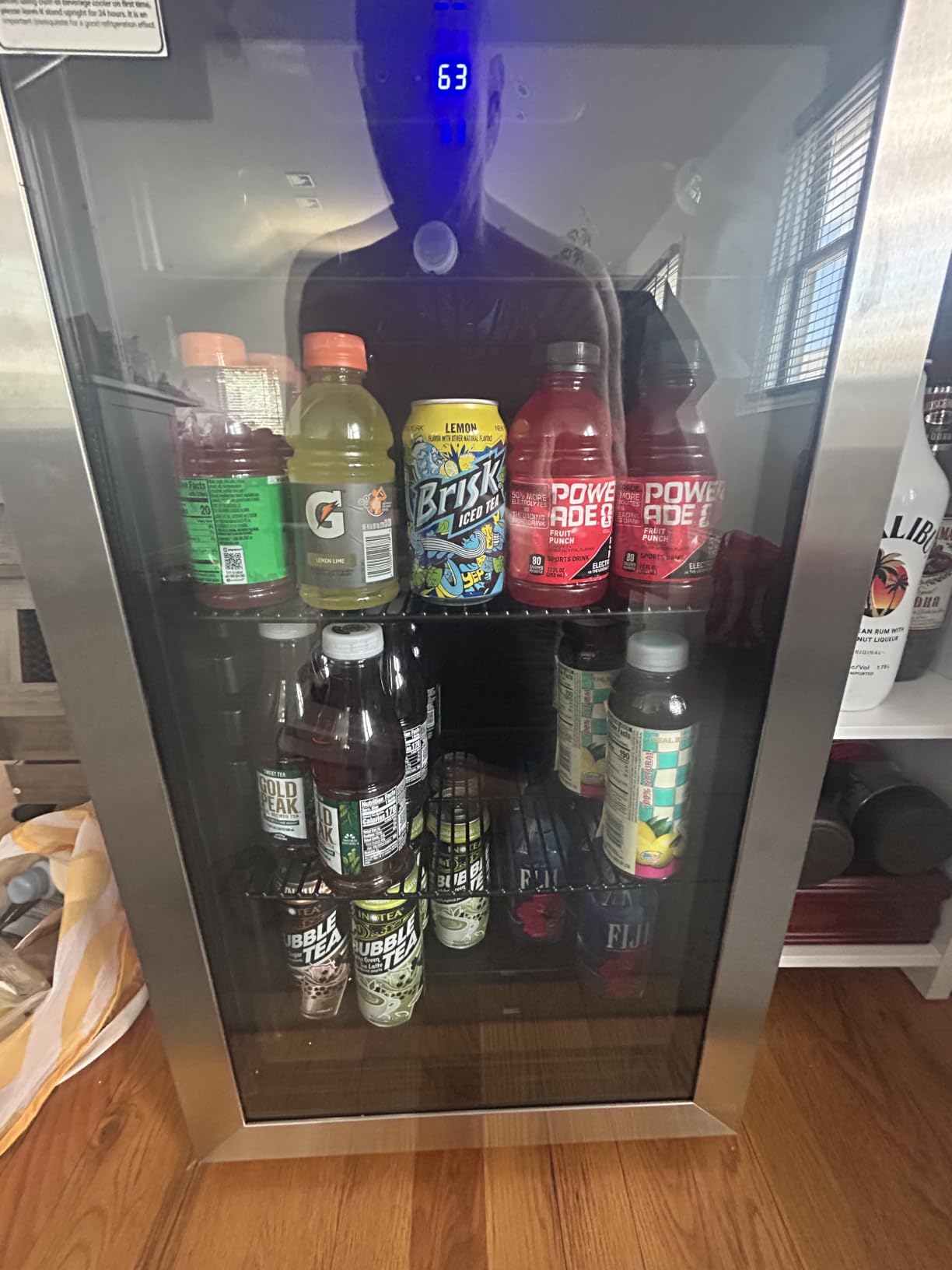
The double-layer LOW-E glass door does not sweat on the outside, which is a real advantage in a humid basement where a single-pane door would fog and drip. The 36 dB figure is among the lowest here for a glass-door model, and owners confirm it runs quietly once set up.
3D air-circulation compressor cooling evens out the temperature, so the top shelf and the bottom shelf are close to the same reading. For a cooler people reach into constantly, that evenness is what stops the back row going warm.
What works well in a basement?
The glass door plus blue LED lighting means no more opening the door to find a drink, which keeps the temperature stable and the compressor off. That efficiency shows up directly on the 288 kWh per year figure.
Four removable and adjustable shelves handle mixed can sizes better than a fixed rack layout, and the reversible hinge plus adjustable feet help when the alcove is against an odd wall.
Where it falls short?
Shelf grates bow under a full load of drinks, and bottles do not sit reliably on the bottom shelf. This is the most repeated complaint across the reviews, so load the bottom shelf lightly.
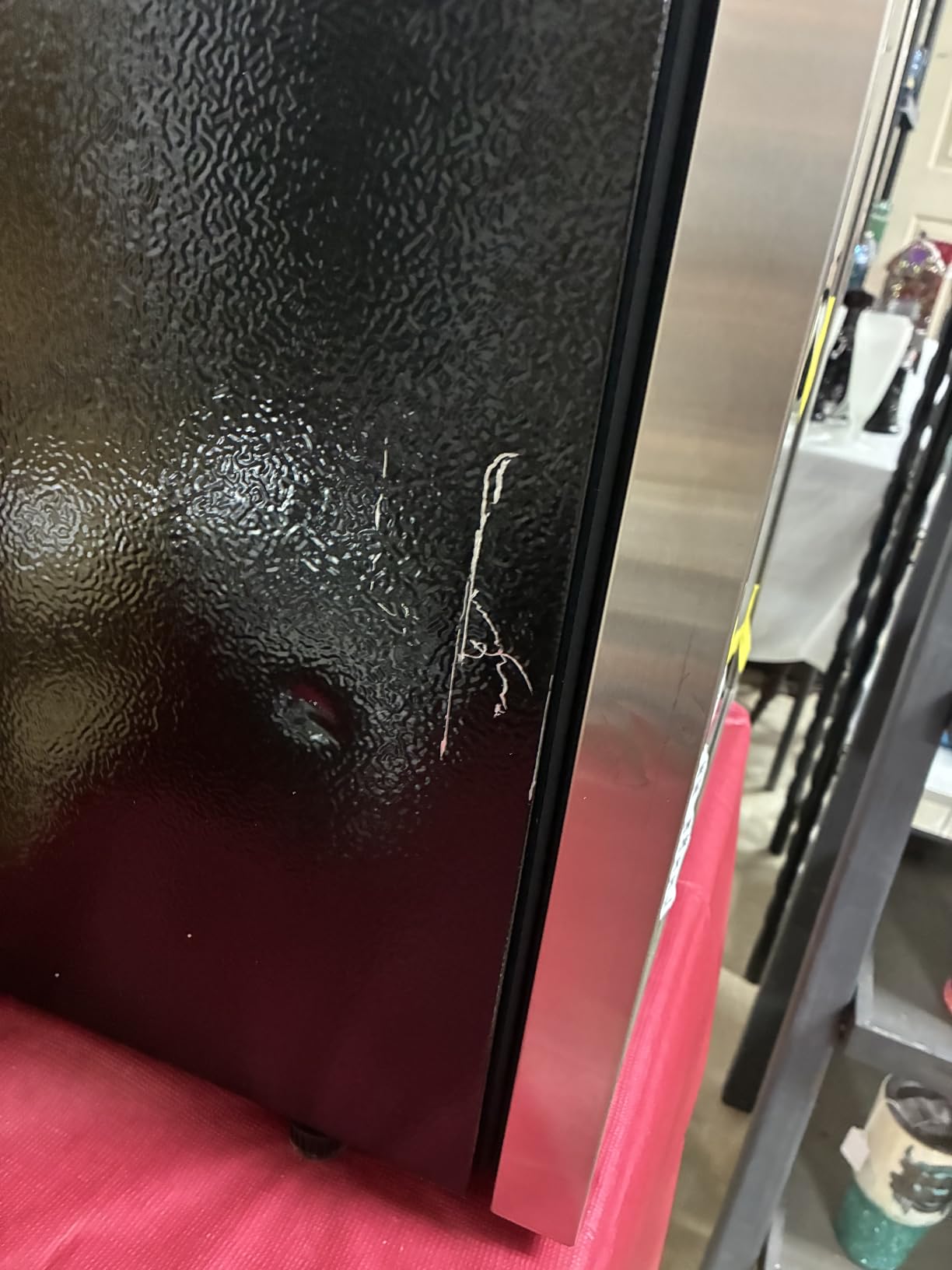
The temperature display sits high enough that the door blocks it when the unit is low, the blue interior light is bright at night, and some units arrive with a smashed corner or bent hinge. Inspect the box before you take it down the stairs.
10. Frigidaire 4.5 Cu.Ft Stainless Steel Compact Refrigerator
Frigidaire, 4.5 cu ft Refrigerator, Stainless Steel Door, Platinum Series
- Spacious interior for 4.5 cu.ft
- Flush back sits tight to a wall
- Stainless finish wipes clean of fingerprints
- Built-in can dispenser and 2L door basket
- Reversible door with leveling legs
- Internal freezer is too small for anything beyond ice trays
- Flip-up freezer door needs the main door opened past 90 degrees
- Thermostat is poorly calibrated and can freeze food
- No interior light
- Manual defrost roughly every three months
At 4.5 cu.ft this is one of the more spacious compact cabinets here, and the flush back lets it sit tight against a basement wall where a rear-vented model would need a gap. The stainless door and recessed handle give it the finished look of a kitchen appliance.
Extras include a built-in can dispenser, a 2L door basket, and a dedicated chiller compartment for quick chilling drinks. Energy Star certification is a plus in a room where the unit runs all year.
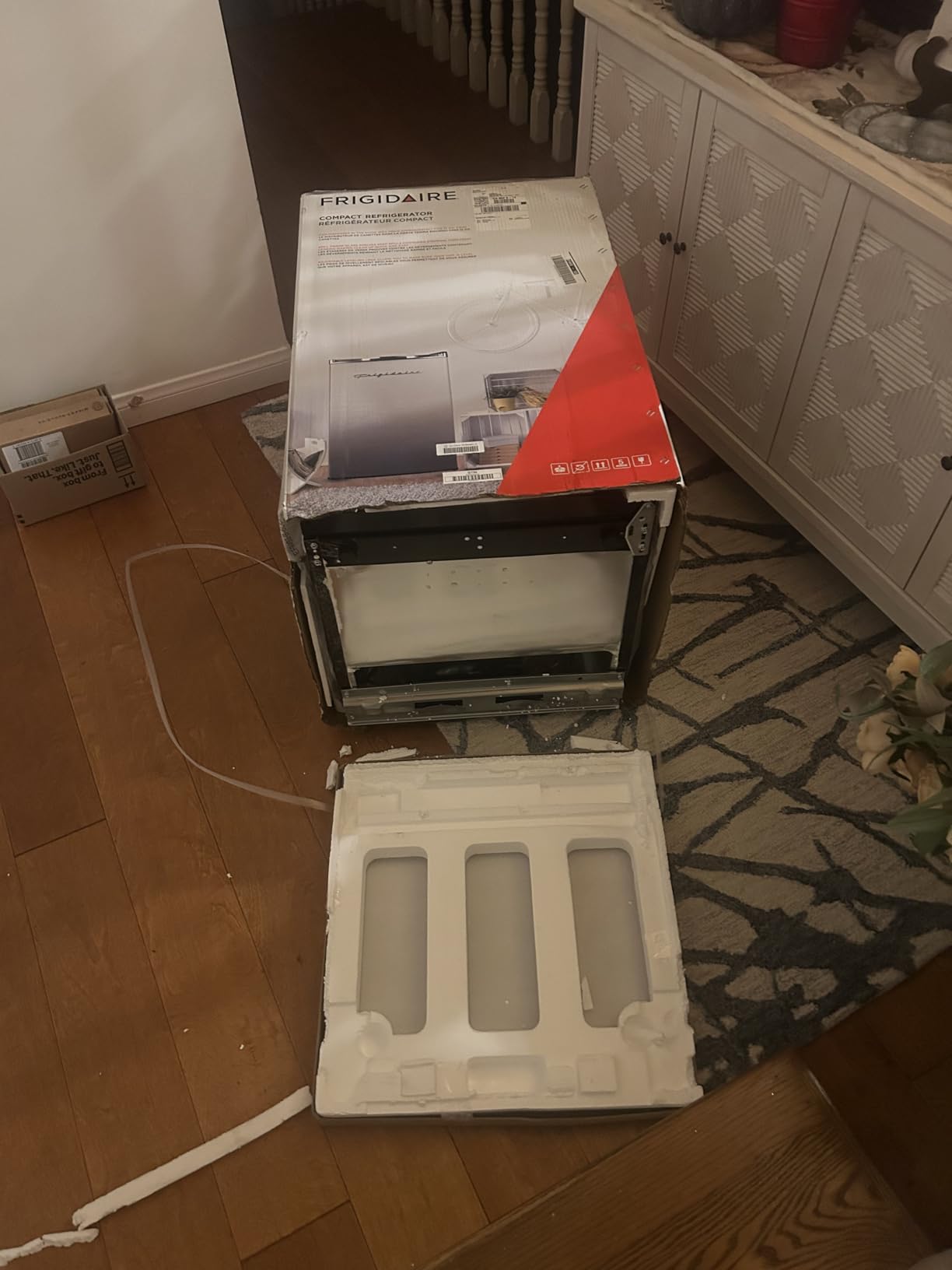
Treat the internal freezer as an ice-tray compartment, because that is what owners report it is. More significant is the flip-up design: reaching the freezer means opening the main door past 90 degrees, which is awkward when the fridge is installed in an alcove.
The thermostat is the other recurring complaint. It is poorly calibrated, and at the warmest setting fresh food can still freeze, which is a real hazard in a basement that runs cool on its own.
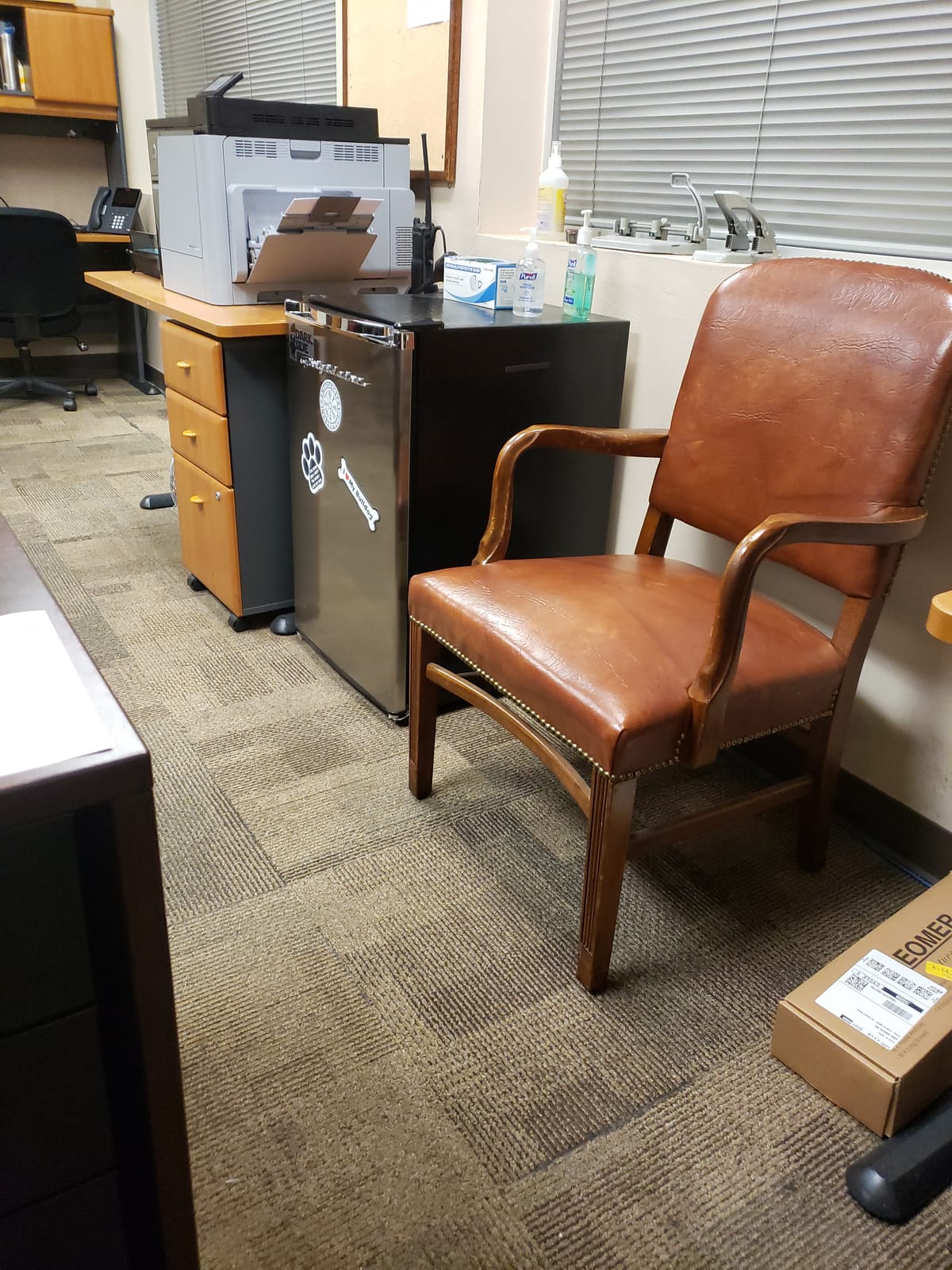
What works well in a basement?
The flush back is genuinely useful in tight basement alcoves, where every inch of rear clearance costs you walking room. Reversible doors and adjustable leveling legs handle uneven floors and wall placement.
The stainless finish wipes clean without showing fingerprints, and that matters in a basement where a plastic-shelled unit collects dust and shows every smear.
Where it falls short?
There is no interior light, and the freezer compartment is too small for real frozen storage. If you need frozen goods, pick a unit with a genuine freezer compartment.
Manual defrost is needed roughly every three months, some units arrive with a significant dent, and Frigidaire does not supply parts for the flip-up freezer door. On a 663-review base, the long-term reliability picture is also thinner here than for the higher-volume picks.
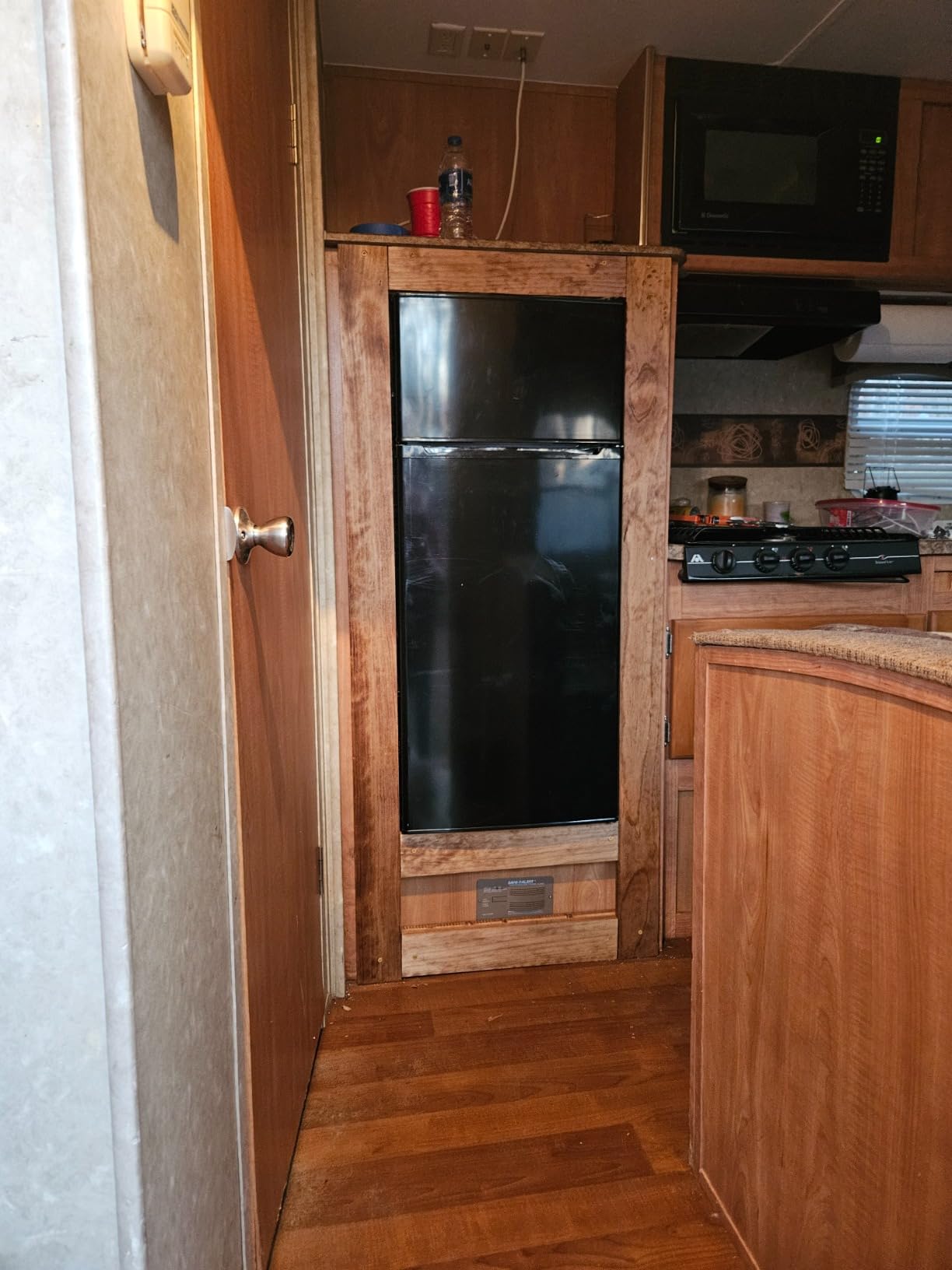
11. Tehanld 4.5 Cu.Ft Two-Door Fridge Freezer
Tehanld 4.5 Cu.Ft Mini Fridge Freezer for Dorm/Office, 2-Door, Quiet
- Quiet operation under 38 dB
- Usable split of 1.2 cu.ft freezer and 3.3 cu.ft fridge
- Seven thermostat levels give finer control
- Three adjustable glass shelves and a crisper
- Longest warranty in the group at three years
- Smallest review base of the twelve products
- Door hinge is fixed to the right side
- Glass shelves need careful loading
- Freezer is small relative to the cabinet
The 4.5 cu.ft here splits into 1.2 cu.ft of freezer and 3.3 cu.ft of fresh food, and the freezer and fridge doors open independently, which limits odor transfer in an enclosed basement room. Three adjustable glass shelves and a clear crisper make the interior flexible.
What sets it apart is the seven-position thermostat, which gives finer control than the five-level and knob-style units elsewhere in this roundup. In a basement where you are constantly compensating for room temperature, that granularity helps.
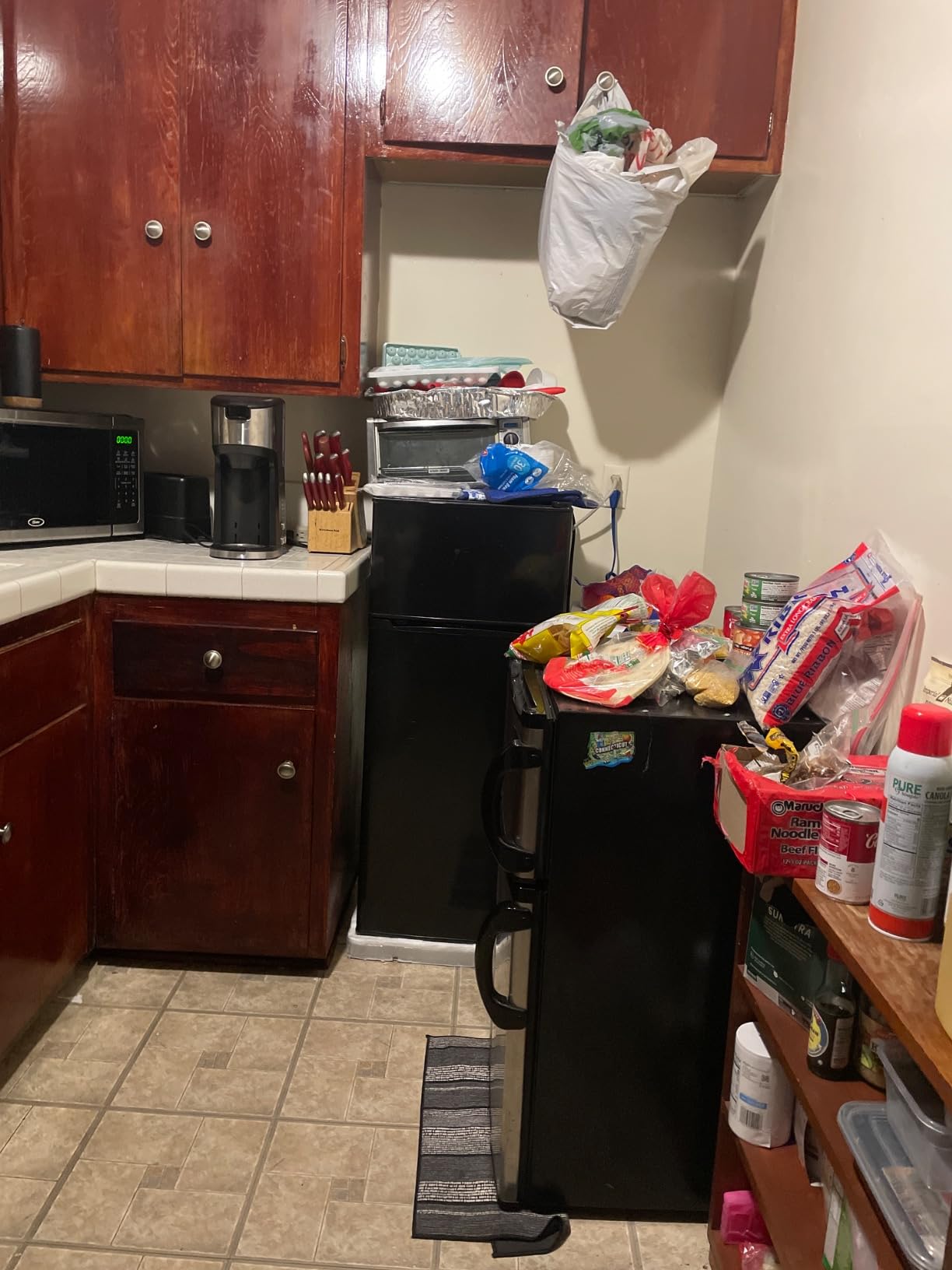
It measures 18.5 inches deep by 18.5 inches wide and 42.5 inches tall and weighs 47.4 pounds. The three-year warranty is the longest offered by any unit here, which is meaningful when you cannot easily return something down twelve stairs.
Automatic defrost handles the freezer section, so there is no drip tray to drain. That removes the basement chore that owners of the micro-freezer models complain about most often.
What works well in a basement?
The three-year warranty is the headline for a basement install, where a swap means hauling a fridge back up a staircase. Owners also like that the unit is quiet, at under 38 dB, in a finished rec room.
Independent doors mean you can grab frozen goods without warming the fresh-food section, which keeps the compressor cycling less in a cool room.
Where it falls short?
The review base is the smallest of any product here at 386 ratings, so the long-term reliability signal is thinner than for the higher-volume picks. For a first-time basement install, that is a fair thing to weigh.
The door hinge is fixed to the right side, so you cannot flip it for a left-wall alcove, which rules it out for some basement layouts. Glass shelves also need careful loading, and the freezer is still small relative to the cabinet.
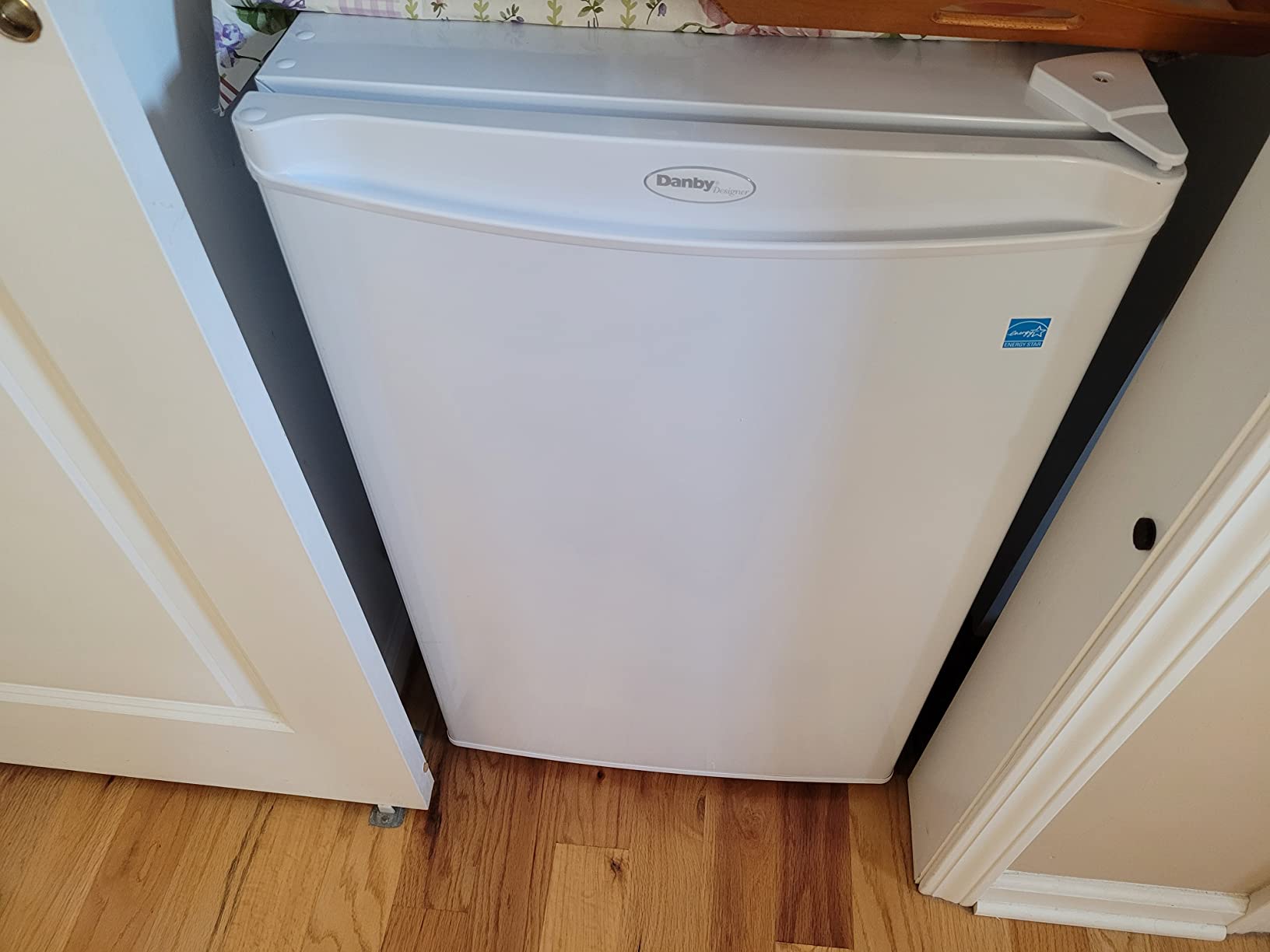
12. Danby 4.4 Cu.Ft Frost-Free Compact Refrigerator
- Frost-free design with no manual defrosting
- Runs extremely quietly and often inaudible
- Coils evenly and holds temperature accurately
- Three removable shelves and a long crisper
- Well-built packaging protects the corners
- No interior light on some units and the dial needs a tool
- Cans against the back cooling plate can freeze
- Light enough to slide when bumped
- Parts and customer support were hard to reach for some owners
This is the frost-free option in a roundup dominated by manual-defrost units. There is no separate freezer compartment and no defrost job, which is exactly what you want in a basement where humidity causes frost to build faster than it does in a conditioned kitchen.
Long-term owners describe it as quiet enough to be inaudible at a short distance, and it holds temperature accurately and evenly, coiling down below 40°F without the temperature swings that plague some standard units. At 268 kWh per year, the draw is moderate.
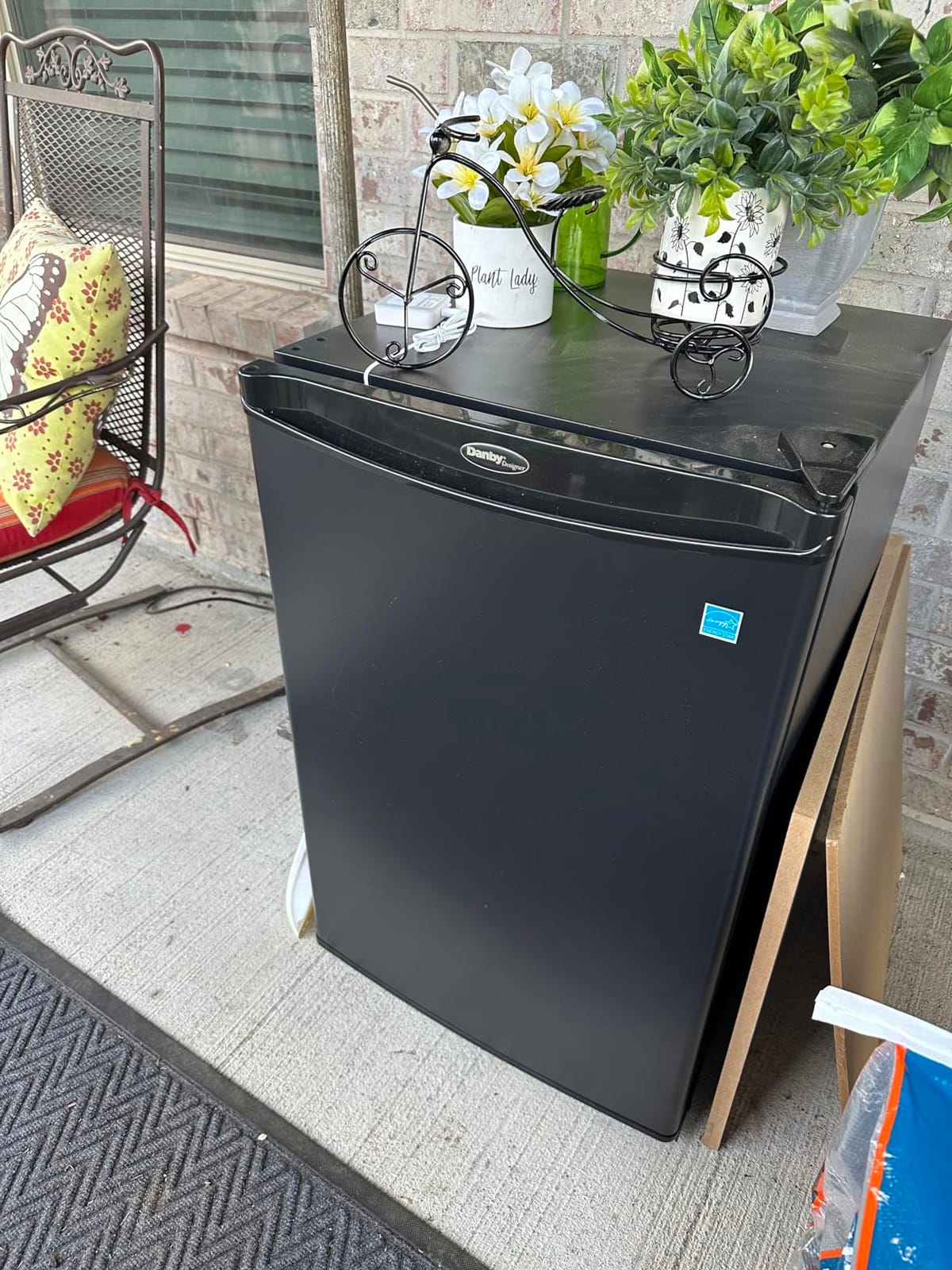
Check the dimensions before ordering. The published product record lists them in an unusual format that does not read like a standard cabinet measurement, so confirm the actual width, depth, and height with the manufacturer rather than assuming. It weighs 66 pounds, so plan for two people on the stairs.
Three removable wire shelves and a long crisper hold a good amount for 4.4 cu.ft. The reversible door and hinge make wall placement simple, and the packaging is solid enough that corner damage is uncommon.
What works well in a basement?
Frost-free operation is the deciding advantage in a damp room. There is no freezer wall to scrape and no drip tray to empty, so the maintenance routine is the shortest of any unit in this roundup.
Owners with several years of service report it running reliably and quietly, and the inverter compressor handles temperature changes without the on-off cycling that makes standard units loud in a quiet room.
Where it falls short?
Some units have no interior light, and the temperature dial needs a coin or knife to turn, which is awkward if you are adjusting it in the dark. A centered 2L door bump-out also wastes shelf space on both sides.
Because it is light, a bump can slide it across the floor, so add felt pads under the feet. Cans pushed against the back cooling plate can freeze, and a number of owners found parts and customer support hard to reach.
How to Measure Your Basement Opening and Stairwell?
Getting a fridge down basement stairs is a one-way mistake, because returning a unit means doing the whole job in reverse. Measure before you order, not after it arrives.
Measure the basement doorway. Take the tape to the narrowest point of the frame, not the door panel. A standard interior door opening gives roughly 32-36 inches, and a closed door eats several of those inches.
Measure the stairwell. Record the width between the stringers, the ceiling height at the tightest point along the run, and the length of the flat landing at the bottom. A landing shorter than the fridge depth forces you to turn the unit on its side, and a fridge laid down needs 24 hours upright before you power it on.
Add the rear clearance. Units with open back panels need several inches behind them. Flush-back models need less, but every unit needs air at the top for the condenser.
Measure door swing. The door plus its swing needs to fit in the alcove without hitting a wall or a shelf. Reversible hinges help, but only if you flip them before the unit is in place.
Check the path for corners. Any tight turn between the stair bottom and the alcove is where a 22-inch-wide unit can get stuck. Measure the diagonal of any corner you have to negotiate.
Write the numbers down. Keep the height, width, and depth of the unit you picked next to your doorway, stairwell, and alcove measurements. When two of the twelve models here differ by 1.5 inches, that margin decides the install.
Basement Buying Guide: Capacity, Temperature and Noise
Choosing a basement refrigerator is not the same as choosing a kitchen one. The room works against the appliance, so the deciding factors shift from shelf styling to ambient range, humidity tolerance, and how much noise you can live with in a space that is usually quiet at night.
How much capacity a basement actually needs?
For most basements, 3 to 5 cu.ft is the working range. That holds drinks, snacks, and a few days of food for a rec room or office. Below 2 cu.ft you are limited to drinks and medication, and above 8 cu.ft you are buying a second full refrigerator that needs a real niche and a two-person install.
Decide what the fridge is for before you size it. A wet bar needs depth and glass-door visibility, a pantry needs shelving and a real freezer, and a basement office needs almost nothing beyond drinks and lunch. Our table above lists the relevant capacity for each unit.
Garage-ready versus standard compressors
A standard compact refrigerator assumes a room roughly between 60 and 70°F. Below about 50°F, the compressor slows enough that the cabinet can drop into the freezing range, and frost builds on the interior walls. Garage-ready units are rated from the high 30s up toward 100°F, so they handle both ends of a seasonal basement.
If you are unsure where your basement falls in winter, put a cheap thermometer on the wall for a week before you shop. If it reads below 50°F on cold mornings, favor frost-free or garage-ready models like the Danby in this roundup, and be careful with manual-defrost units. Frost and ice build-up on those single-door units is the most common basement complaint we found in owner reviews.
Noise in a finished living space
Published figures here run from under 37 dB to 42 dB. Those numbers are measured under lab conditions, and owners consistently report the compressor kick-on carries further than the number suggests in a quiet room. For a rec room or wet bar, anything under 38 dB is comfortable. For a basement bedroom or an office where you sit for hours, stay at the quiet end and add clearance so the compressor is not against a wall.
Clearance helps more than buyers expect. A unit backed into a wall with no air gap runs its compressor longer and louder than the same model with a proper gap.
Reversible doors, shelving and humidity damage
A reversible door hinge is close to essential in a basement, where alcoves are usually against a side wall and you want the door opening into the room. Glass shelves hold bottles upright, which wire racks do not, but they chip more easily in a rough utility space.
Humidity is where most basement refrigerators fail. Above roughly 60 percent relative humidity, expect rust on steel panels and mildew on plastic door bins, and plastic shelving can crack after a season. Coating the interior surfaces with a washable liner and running a dehumidifier in the same room both help. Our basement dehumidifier guide covers placement, since putting the unit on the same circuit as a compressor fridge is a detail worth planning.
Energy use and what a second fridge costs
Listed annual consumption across these units runs from 180 kWh to about 378 kWh per year. Multiply by your local electricity rate to get a yearly figure. In a cool basement the compressor cycles less than it would in a kitchen, so the real cost usually lands below the label, but a non-certified unit running continuously is where bills creep up.
Preference goes to the ENERGY STAR certified models here, since a basement fridge is often plugged in permanently with no one noticing how often it runs.
Installation Checklist for a Basement Refrigerator
Let it settle first. If the unit was tilted or laid on its side during the move, stand it upright for 24 hours before plugging it in. Glass-door beverage models call this out explicitly.
Level it. Most units here have adjustable feet or legs. A concrete basement floor is rarely level, and an unleveled compressor is a noisy compressor.
Give it airflow. Leave clearance at the back and top per the manual. Open-back models need several inches at the rear.
Use the right outlet. Plug directly into a grounded wall outlet. In a finished basement, use a GFCI-protected receptacle, and a dedicated circuit is the safer choice. Avoid extension cords in a damp room.
Watch the room temperature. Give the unit several hours to reach set point before loading it, then check a bottle and a bag of ice against an independent thermometer.
Set the thermostat for the room. In a cool basement, start a notch warmer than the manual suggests, then adjust from there. Over-cooling is the most common complaint we saw in owner reviews.
Plan maintenance. Vacuum the condenser coils every few months, clean the door gaskets with warm water, and schedule manual defrosts if you chose a micro-freezer model.
Frequently Asked Questions
Is it okay to put a refrigerator in the basement?
Yes, as long as the room stays within the unit’s rated temperature range. Standard compact refrigerators assume a 60-70F room, so a basement that drops below 50F can over-cool food and build frost. Leave ventilation clearance at the back and top, plug directly into a grounded outlet, and keep room humidity below about 60 percent.
Do mini fridges work in cold temperatures?
Standard compact units struggle in a cold room. Below about 50F the compressor slows enough that the cabinet can fall into the freezing range and frost builds on the walls. Garage-ready models rated from the high 30s up to around 100F handle both ends of a seasonal basement, and frost-free models avoid the defrost problem entirely.
Who makes the best compact refrigerator?
There is no single winner, but Frigidaire, Midea, Danby, and EUHOMY appear most often across the highest-rated compact units we compared. Frigidaire covers the widest range, from a 1.6 cu.ft countertop model to a 7.5 cu.ft apartment-size combo. Midea and Danby stand out for quiet operation, and EUHOMY for capacity relative to footprint.
What brand of refrigerator has the least problems?
Look at the size of the review base rather than the star rating alone. In our comparison, the units with several thousand ratings gave the clearest signal on long-term reliability. Recurring complaints across the group were thermostats that run colder than set, frost build-up on manual-defrost units, and transit damage on arrival rather than compressor failures.
How much electricity does a mini fridge use?
The units in our roundup are listed between 180 kWh and about 378 kWh per year, depending on capacity and whether they are ENERGY STAR certified. Multiply that figure by your local electricity rate for a yearly cost. A cooler basement room reduces compressor runtime, so a second fridge in a basement usually costs less to run than the same unit in a kitchen.
How do I get a fridge down basement stairs?
Measure the doorway at its narrowest point, the stairwell width, the ceiling height along the run, and the bottom landing before ordering. Pick the lightest unit your capacity allows, use two people for anything over 50 pounds, and protect the door frame with moving blankets. If the unit must be laid on its side, stand it upright for 24 hours before powering it on.
Final Verdict: Which Compact Fridge Fits Your Basement?
For most basements, the Upstreman 3.2 Cu.Ft is the pick. It is narrow enough for a tight alcove, quiet at 38 dB, backed by the largest review base we found, and its reversible door solves the wall-placement problem in one step. It is our choice among the best compact refrigerators for basements in 2026 for the simple reason that it makes the fewest demands on the room.
Go elsewhere when your basement is specific. Choose the Midea 1.6 Cu.Ft for a countertop spot where noise and weight matter, the EUHOMY 4.5 Cu.Ft two-door when you need a freezer that actually freezes, the Frigidaire 7.5 Cu.Ft combo for pantry overflow, the Danby 4.4 Cu.Ft when frost-free operation is the priority, and one of the glass-door coolers for a bar or rec room drink station.
Before you order anything, measure the stairwell. And if your basement runs cold or damp, deal with that first, because a refrigerator is the wrong thing to lose to moisture. Our guides to radon detectors for basements and shuffleboard tables for basements cover the rest of getting that room right.