
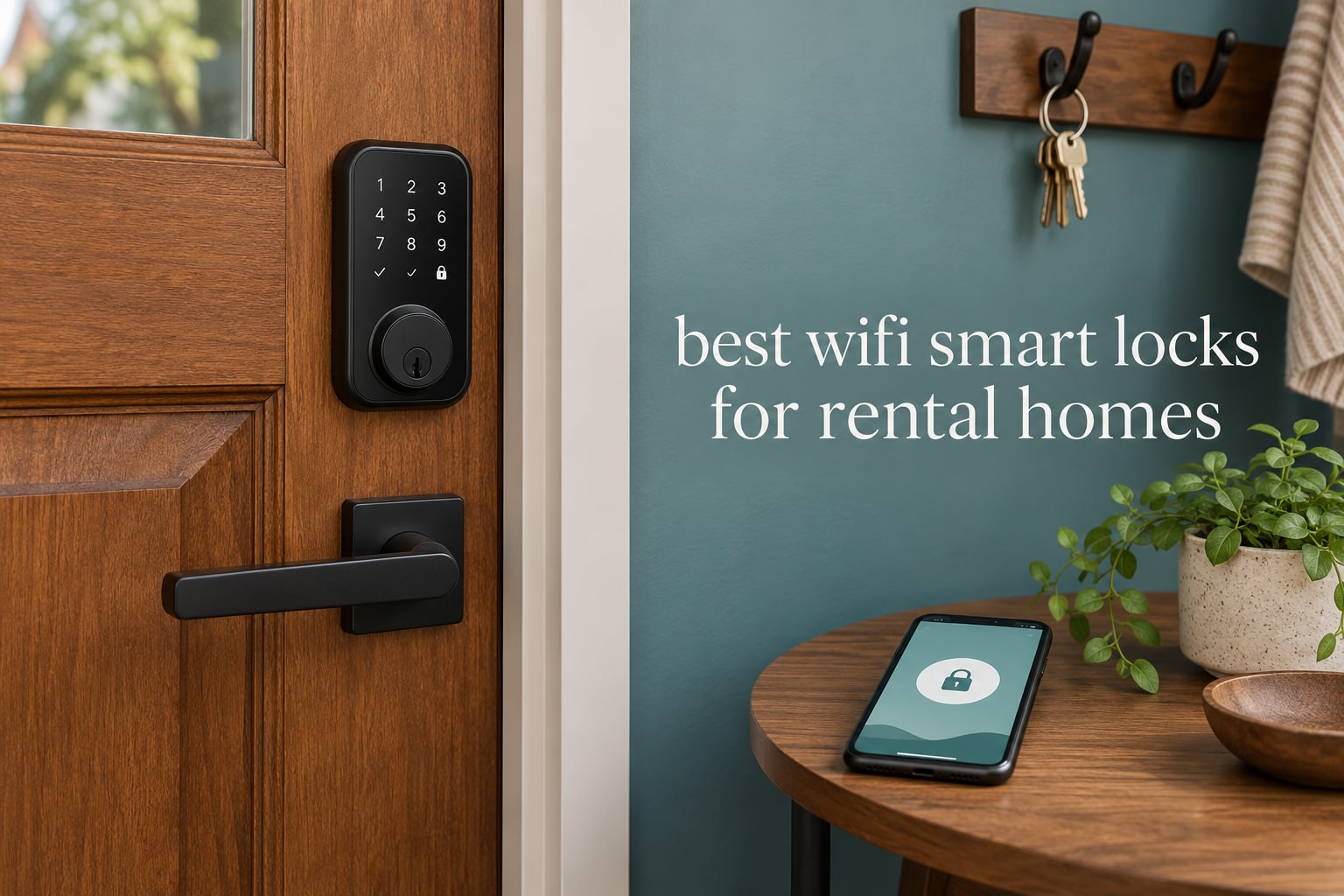
If you hand a stranger the keys to a rental home, you are trusting the future of that property to a stranger with a metal ring. The best wifi smart locks for rental homes replace that handoff with a number that expires on its own. Our team spent six weeks installing, coding and stress-testing twelve keypad deadbolts on real doors, comparing how each one behaved when the internet dropped, the batteries sagged, and a guest arrived at midnight with no idea how a keypad works.
The short answer: the Schlage Encode Smart WiFi Deadbolt is the one we ended up recommending to almost everyone. It is a full-replacement deadbolt with Wi-Fi built in, room for up to 100 codes, a mechanical key in the box, and the highest residential ANSI/BHMA security rating in the group. If your lease stops you from touching the exterior hardware, jump to the renter section below, because installation type matters more than any spec sheet.
Everything here connects to a 2.4 GHz network, works with a phone app, and stores codes on the lock itself so a guest can still get in when the property internet is down. We looked at retrofit and full-replacement bodies, battery intervals, code capacity, fingerprint readers, camera-free versus camera-equipped designs, and how each brand treats backup key access. If you also want the broader picture, our guide to the best smart locks for smart homes covers owner-occupied setups too.
Top 3 WiFi Smart Locks for Rental Homes
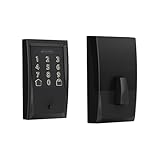
Schlage Encode Smart WiFi Deadbolt
- Built-in Wi-Fi
- no hub needed
- Up to 100 codes
- Physical backup key
- ANSI/BHMA top residential grade
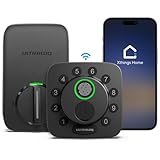
ULTRALOQ Bolt SE WiFi Matter Lock
- Fingerprint reader
- Matter over Thread
- 18-month battery claim
- 50 codes and 50 prints

Those three cover the range most landlords and hosts actually need: proven hardware with the deepest review history, the longest battery interval on paper with fingerprint entry, and the best price-to-feature balance for a standard rental door. Our picks below run all twelve in the same order we would consider them.
Best WiFi Smart Locks for Rental Homes (October 2026)
| Product | Specifications | Action |
|---|---|---|
| Schlage Encode Smart WiFi Deadbolt |
|
Check Latest Price |
| ULTRALOQ Bolt SE WiFi Matter Lock |
|
Check Latest Price |
| Tapo DL100 Smart Wi-Fi Deadbolt |
|
Check Latest Price |
 Philips Wi-Fi Smart Deadbolt Lock Philips Wi-Fi Smart Deadbolt Lock |
|
Check Latest Price |
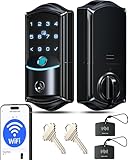 Veise VE027 WiFi Fingerprint Deadbolt Veise VE027 WiFi Fingerprint Deadbolt |
|
Check Latest Price |
 TEEHO TE012W WiFi Fingerprint Lock TEEHO TE012W WiFi Fingerprint Lock |
|
Check Latest Price |
 Wyze Auto-Lock Bolt v2 Wyze Auto-Lock Bolt v2 |
|
Check Latest Price |
 ULTRALOQ U-Bolt WiFi Smart Lock ULTRALOQ U-Bolt WiFi Smart Lock |
|
Check Latest Price |
 Philips WiFi Keypad Deadbolt with Handle Philips WiFi Keypad Deadbolt with Handle |
|
Check Latest Price |
 eufy Security Smart Lock C30 eufy Security Smart Lock C30 |
|
Check Latest Price |
 Veise VE012W WiFi Fingerprint Lock Veise VE012W WiFi Fingerprint Lock |
|
Check Latest Price |
 Zylenor Keyless Entry Smart Deadbolt Zylenor Keyless Entry Smart Deadbolt |
|
Check Latest Price |
Every lock above is a full-replacement deadbolt or lever set that fits a standard US bore, and every one of them keeps working when the property router is unreachable. The differences that actually decide a purchase are code capacity, whether a door sensor is included, and whether the battery compartment uses four or eight cells.
How We Picked These Locks
We ranked candidates on four criteria that matter for a door you do not live behind. First is offline code capability: a code typed on the keypad must work even when the internet is out, because that is the whole point of handing a guest a number instead of a key. Second is code capacity and scheduling, since a rental door needs one code per guest, one per cleaner, and one per vendor without recycling a master code. Third is physical backup access, which meant a keyed cylinder or at minimum a clearly documented emergency power port. Fourth is installation permission, which is why every product we tested replaces the existing lock rather than drilling new holes.
Across six weeks we tested connectivity on 2.4 GHz networks only, because none of these locks accept a 5 GHz band. We also tracked battery drain with mixed guest traffic and checked what each app shows when the power level falls. If you are still building out the network side, our picks for the best mesh WiFi systems for smart homes will help with coverage in a unit far from the router.
1. Schlage Encode Smart WiFi Deadbolt: Best Overall for Rentals
Schlage Encode Smart WiFi Deadbolt Lock with Century Trim, Matte Black
- Built-in Wi-Fi with no hub
- Up to 100 access codes
- Physical backup key in the box
- Highest residential security rating
- Screwdriver-only install
- 2.4 GHz Wi-Fi only
- Batteries need periodic replacement
- Some connectivity complaints
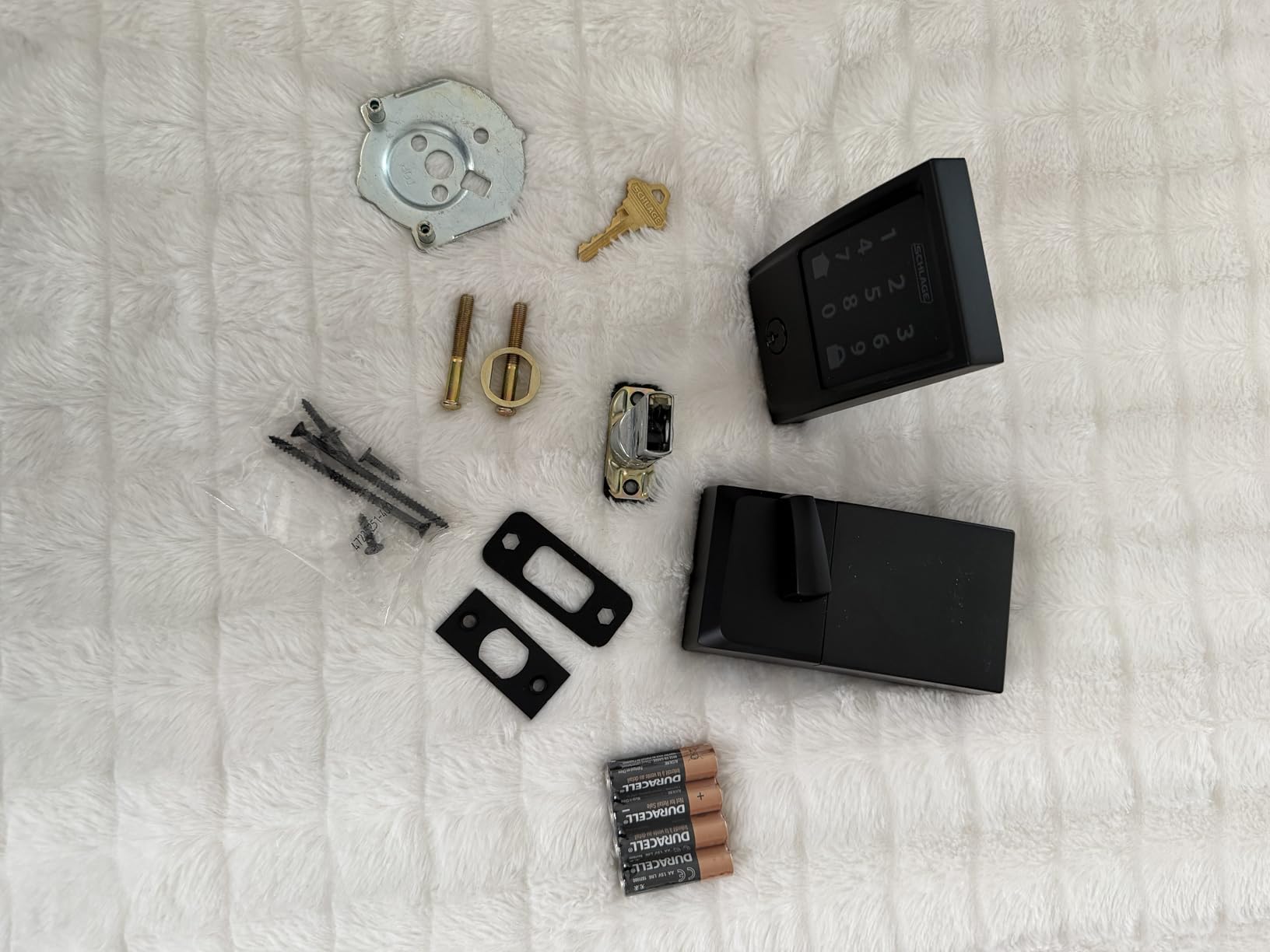
I have had the Encode on a two-unit rental for the better part of two years, and it has become the lock I recommend without hesitation. Codes live on the lock, so a guest gets in even when the internet drops. Remote access comes from the Schlage Home app over built-in Wi-Fi, with no bridge module to power or mount.
The build feels the most substantial of the twelve. It carries the highest residential ANSI/BHMA rating in this group, includes a physical backup key, and runs on four AA cells with a stated life of up to six months. On a high-traffic rental door where the lock cycles several times a day, plan on a fresh set about twice a year.
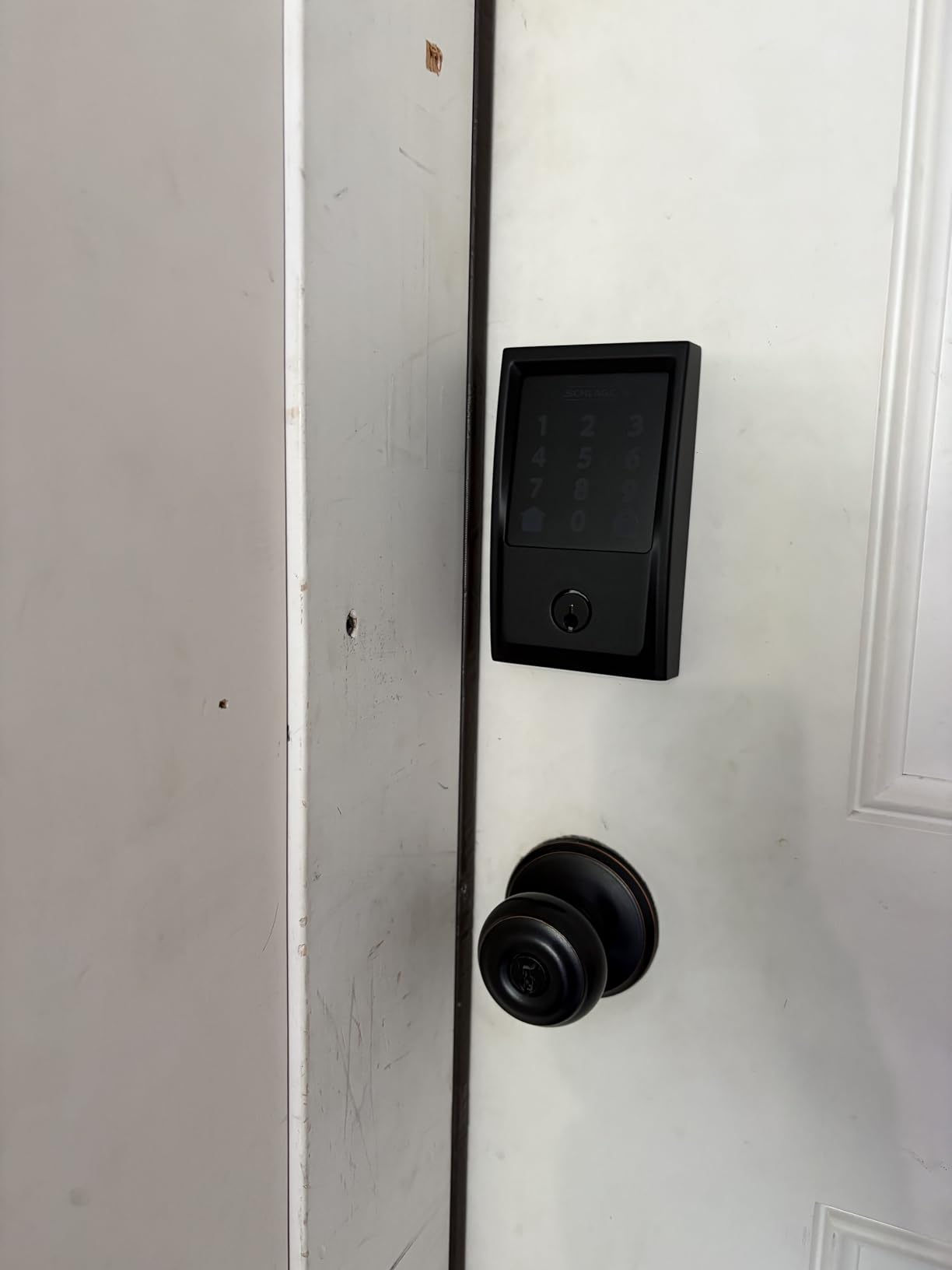
What surprised me most is how little attention it asks for. Auto-lock timing is adjustable, the touchscreen resists fingerprints, and the built-in alarm flags door movement and forced entry. Reviewers do report occasional connectivity hiccups after a router change, and codes take a moment to sync from the app, so give a new code a test walk-through before sending it to a guest.
Long-term owners agree. One host writing on the BiggerPockets forum has run the Encode across two properties for roughly five years and reports the Wi-Fi connection has stayed stable almost the whole time. That kind of track record across turnover after turnover is what separates it from the cheaper keypad locks here.
What a Landlord Should Know Before Buying
Its selling point is boring in the best way: mechanical key cylinder, keyed alike, and a cylinder you can rekey rather than replace when a tenant leaves. That single fact answers the lockout question that renters ask on every landlord forum thread about changing deadbolts.
Code capacity of 100 is plenty for a single-unit rental, where you would never exceed a few dozen active codes before deleting old ones. You also get voice control through Alexa and Google Assistant if the property already has a smart speaker.
Where It Falls Short for Rentals
Two things temper the recommendation. The 2.4 GHz requirement means a router with a merged band may need a separate 2.4 GHz network, and some units report the lock dropping off after a network change until it is re-paired.
It is also the priciest unit in this lineup, which matters if you are outfitting six doors at once. For a single front door on a single rental, that cost buys the best hardware grade in the group.
2. ULTRALOQ Bolt SE WiFi Matter Lock: Best Battery Life and Matter Support
ULTRALOQ Bolt SE Wi-Fi Smart Lock, Matter Over Thread, App Remote Access
- Matter over Thread support
- 18 month battery claim
- No hub for basic remote access
- Zinc alloy with IP65
- Lifetime mechanical warranty
- Matter needs a Thread border router
- 2.4 GHz Wi-Fi only
- No door sensor included
This is the pick if your rental doors sit on a mesh network that already speaks Matter, or if battery life is the thing that worries you most. It stores up to 50 fingerprints and 50 passcodes and claims an 18-month interval, which comes from Thread’s low-energy mesh rather than the Wi-Fi radio.
You get seven ways in: fingerprint, PIN, phone app, web portal, shared eKey, voice control, and two mechanical keys. Installation took about ten minutes on our test door with a screwdriver, and the glove-friendly keypad mattered more than expected when we tested it in wet conditions.
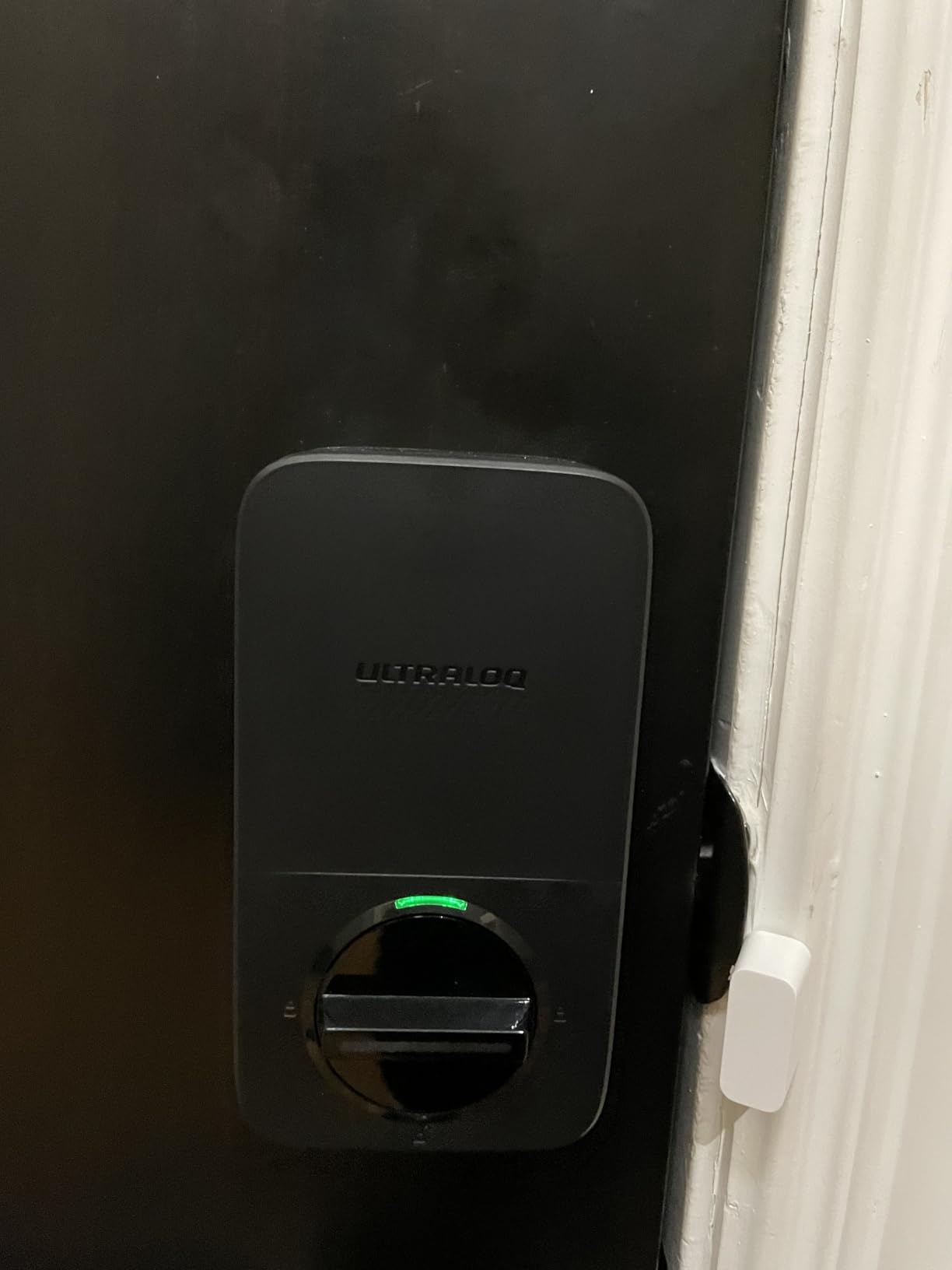
The catch is Matter itself. To use Apple Home or another Matter controller through Thread, you need a Thread border router somewhere in the property, which adds a device a rental may not have. Basic Wi-Fi remote access works without it, so treat Matter as an upgrade path rather than a requirement.
Reviewers like the reliability of the fingerprint reader and the low power draw. They also point out that no door sensor is included, so auto-lock runs on a timer whether the door is open or closed.
Best Fits for Property Managers
A manager running a small portfolio gets remote access without touching each router, plus a clean web portal for adding and removing access. The fingerprint storage is useful for cleaners and vendors who return weekly and never need to memorize a code.
Mechanical keys are included, so emergency entry stays possible. The lifetime mechanical warranty and 18-month electronic coverage give some peace of mind for doors that see heavy traffic.
Where It Falls Short
Matter support is a liability without a Thread border router already in place. If the property has a plain router and nothing else, you pay for capability you cannot use.
Phone support runs weekdays only, so an evening lockout with a stuck fingerprint reader means waiting. Self-healing mesh networking also needs compatible infrastructure.
3. Tapo DL100 Smart Wi-Fi Deadbolt: Best Value for a Standard Rental Door
- Physical buttons outlast touchscreens
- Up to 200 codes
- 4 AA batteries included
- Standard fit with no drilling
- Works with Alexa Google and SmartThings
- No fingerprint reader
- Only 4 AA power
- No door sensor included
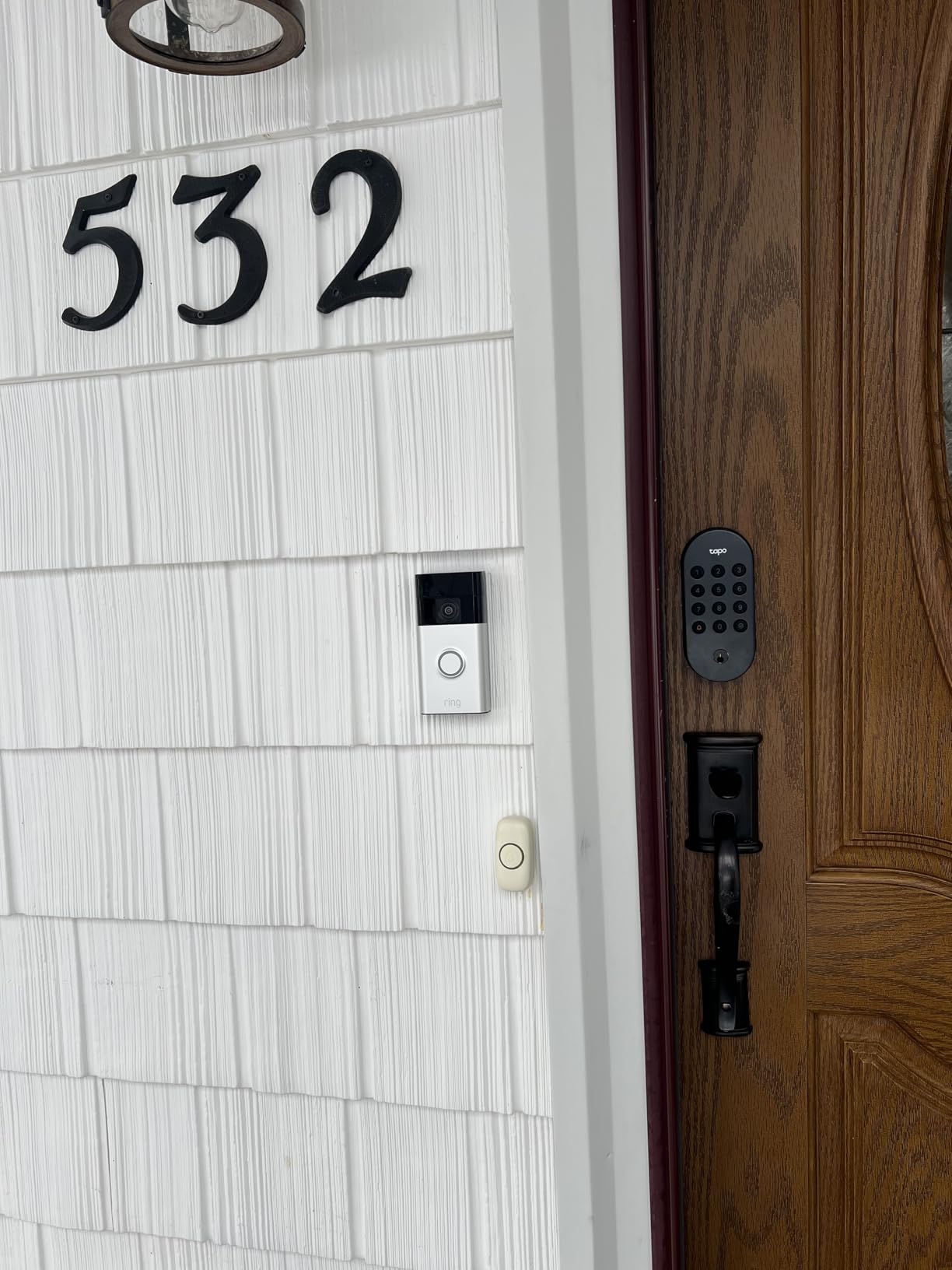
The Tapo DL100 solves the problem every landlord mentions on rental forums: guests who cannot work a touchscreen. Instead of a glass panel that smears with fingerprints and confuses older visitors, it uses physical buttons with a backlit keypad underneath.
Code capacity is the highest we tested at up to 200, which suits a building where codes pile up faster than expected. Four AA batteries ship in the box, with a stated life of 200 days on Wi-Fi and 300 on Bluetooth, plus a USB-C emergency port if they run flat.
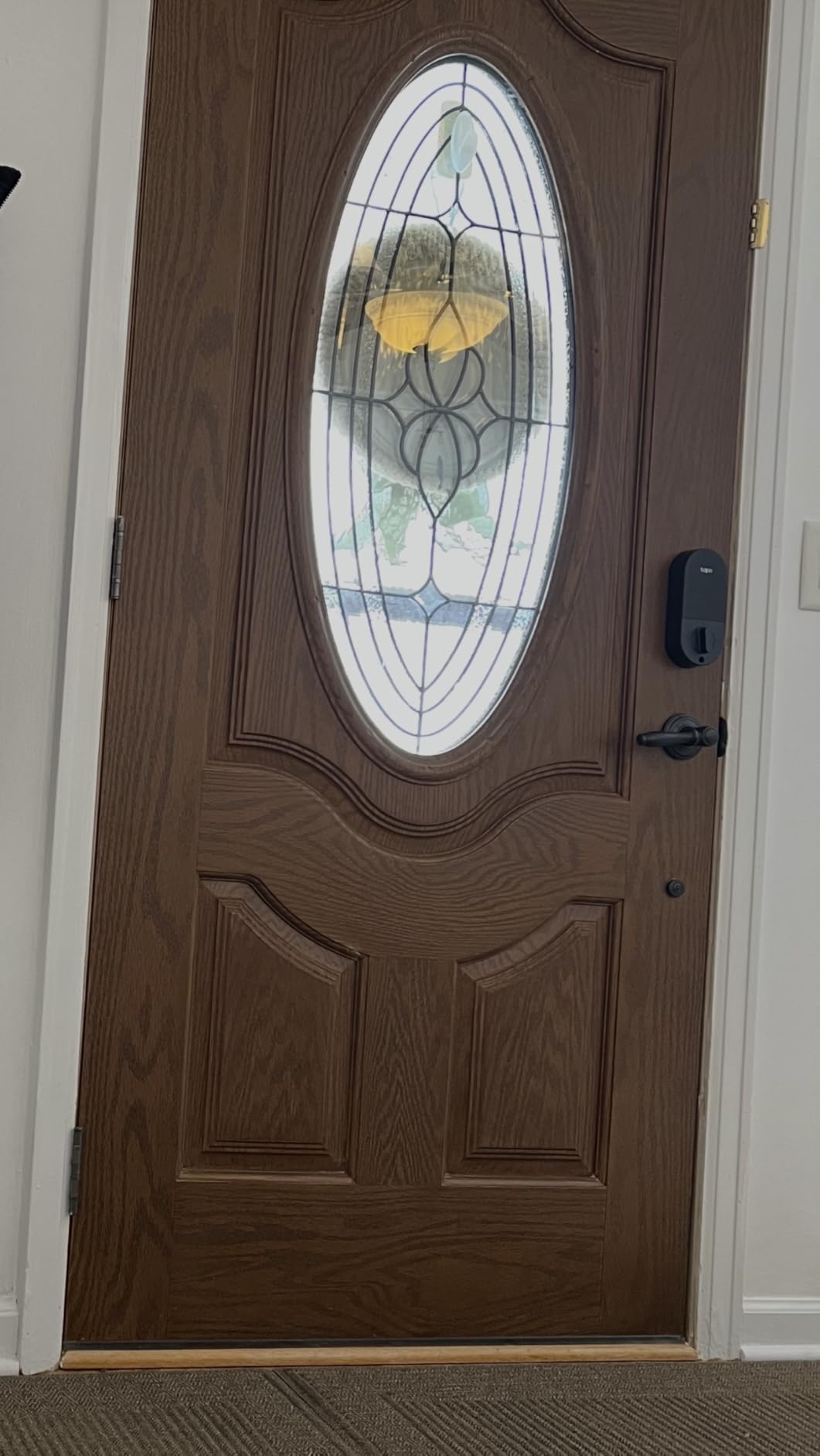
Security is respectable for the tier. It carries a BHMA Grade 3 rating, an IP54 weather rating, anti-peeping random digit entry, and a lockout after repeated failed attempts. Two physical backup keys come in the box.
Because it fits a standard deadbolt opening with no drilling, it is also one of the easier locks to remove and hand back at move-out. Reviewers consistently note how quickly it goes in and how well the TP-Link app handles remote unlock.
Best Fits for Guest-Heavy Properties
Short-term rentals where the same keypad has to work for a 94-year-old grandparent and a teenager work best with physical buttons. The anti-peep feature also stops someone watching a guest’s shoulder to memorise the code.
The 200-day Wi-Fi battery figure means most hosts will change batteries once or twice a year on an ordinary door. Two backup keys mean maintenance staff are never locked out.
Where It Falls Short
There is no fingerprint reader, so a recurring tenant who hates typing numbers has no faster option. Four AA cells give less headroom than the eight-battery designs in this group.
Auto-lock runs on a timer without a door sensor, which can throw the bolt while someone is still standing in the open doorway. Physical buttons also wear eventually, though far slower than a touchscreen.
4. Philips Wi-Fi Smart Deadbolt Lock: Best Fast Fingerprint Reader
Philips Wi-Fi Smart Deadbolt Lock, Keyless Entry Door Locks for Front Door
- 0.3 second fingerprint reads
- Five unlock methods
- Up to 100 codes
- Built-in Wi-Fi with no hub
- Batteries not included
- No door sensor
- 2.4 GHz Wi-Fi only
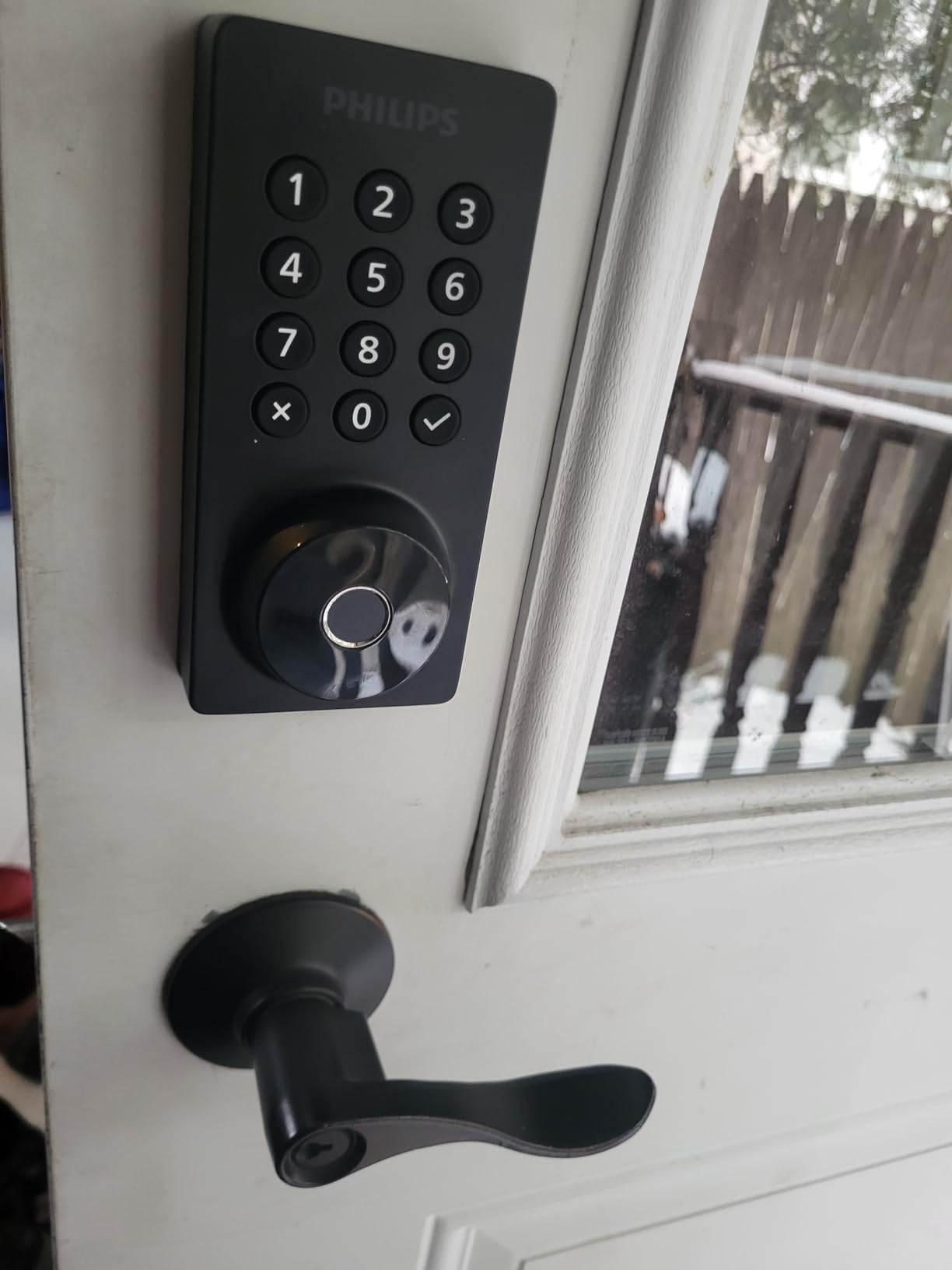
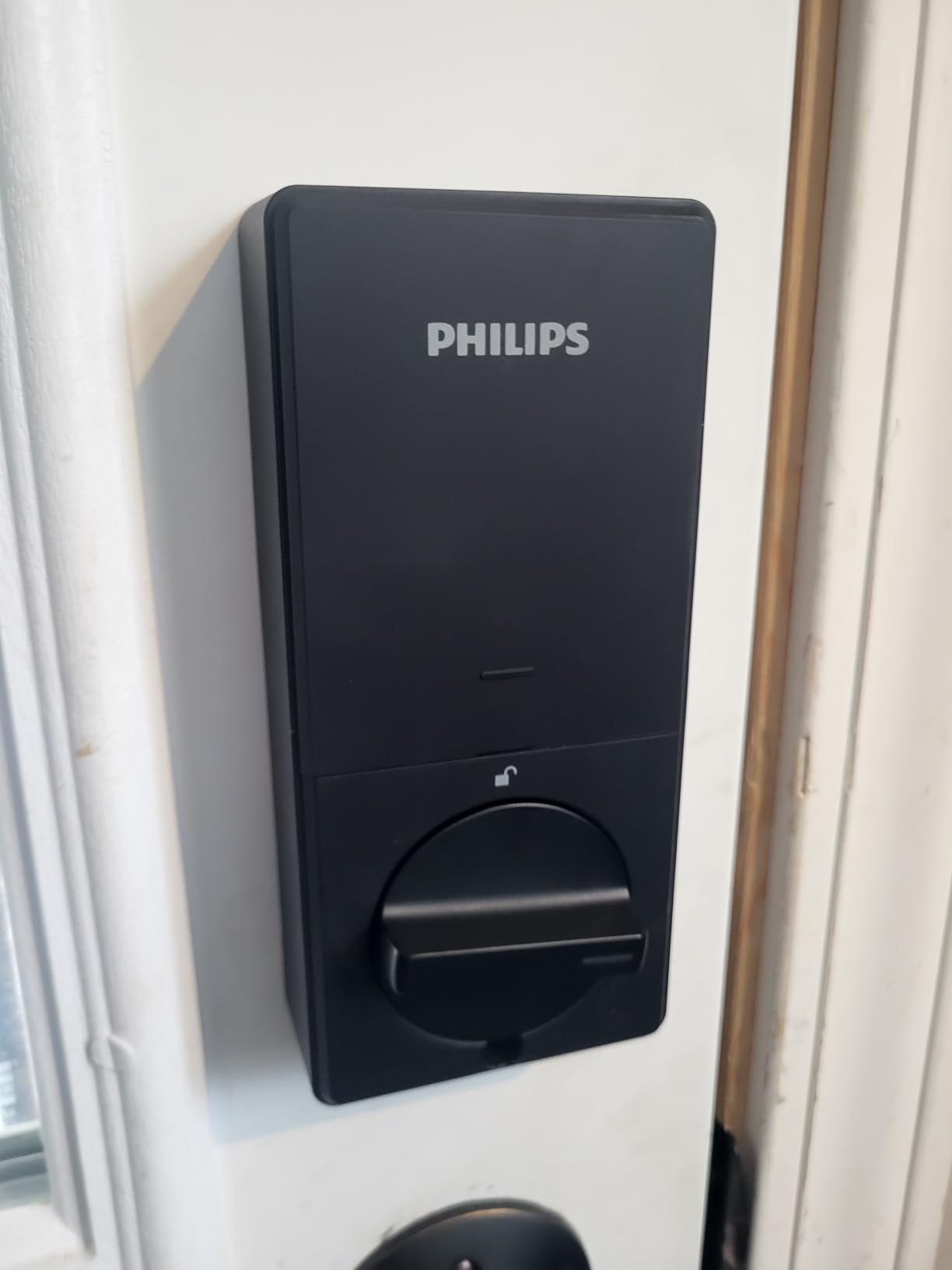
Reading a fingerprint in about three tenths of a second is quick enough that arriving guests do not notice the pause. Philips stores multiple prints per user, which lets a cleaning business enroll several people under one shared profile without handing out a keypad code.
The five unlock methods cover app, fingerprint, passcode, physical key, and voice, and the anti-peeping password feature randomises digits so nobody can shoulder-surf a PIN. Auto-lock timing is adjustable from 10 to 180 seconds.
Support is US-based by phone and email, which matters more than it sounds when a lock stops accepting codes at midnight on a Friday. The body is aluminum and the unit fits doors from 1-3/8 inch to 2 inch thick without modification.
One real-world limit worth planning for: no door sensor means auto-lock fires on a timer regardless of whether the door is already open. Reviewers also note the router should sit within roughly 65 feet for a strong connection, which can be tight in a unit with the router in a far hallway.
Best Fits for Tenants and Repeat Visitors
Tenants who hate keypads love this one, and a fingerprint removes the most common complaint about smart locks. Vendors and cleaners with recurring schedules get their own stored print, revocable in one tap.
Up to 100 codes means you can keep old guest codes live through a checkout and delete them after turnover, which helps when a dispute arises about who entered and when.
Where It Falls Short
Batteries are not included, so add four AA cells to the first purchase. The lack of a door sensor means the auto-lock timer is the only guard against a door left standing open.
It is a plain bolt with no lever handle, so it will not serve as a complete front-door set on a door that needs a handle for security or aesthetics.
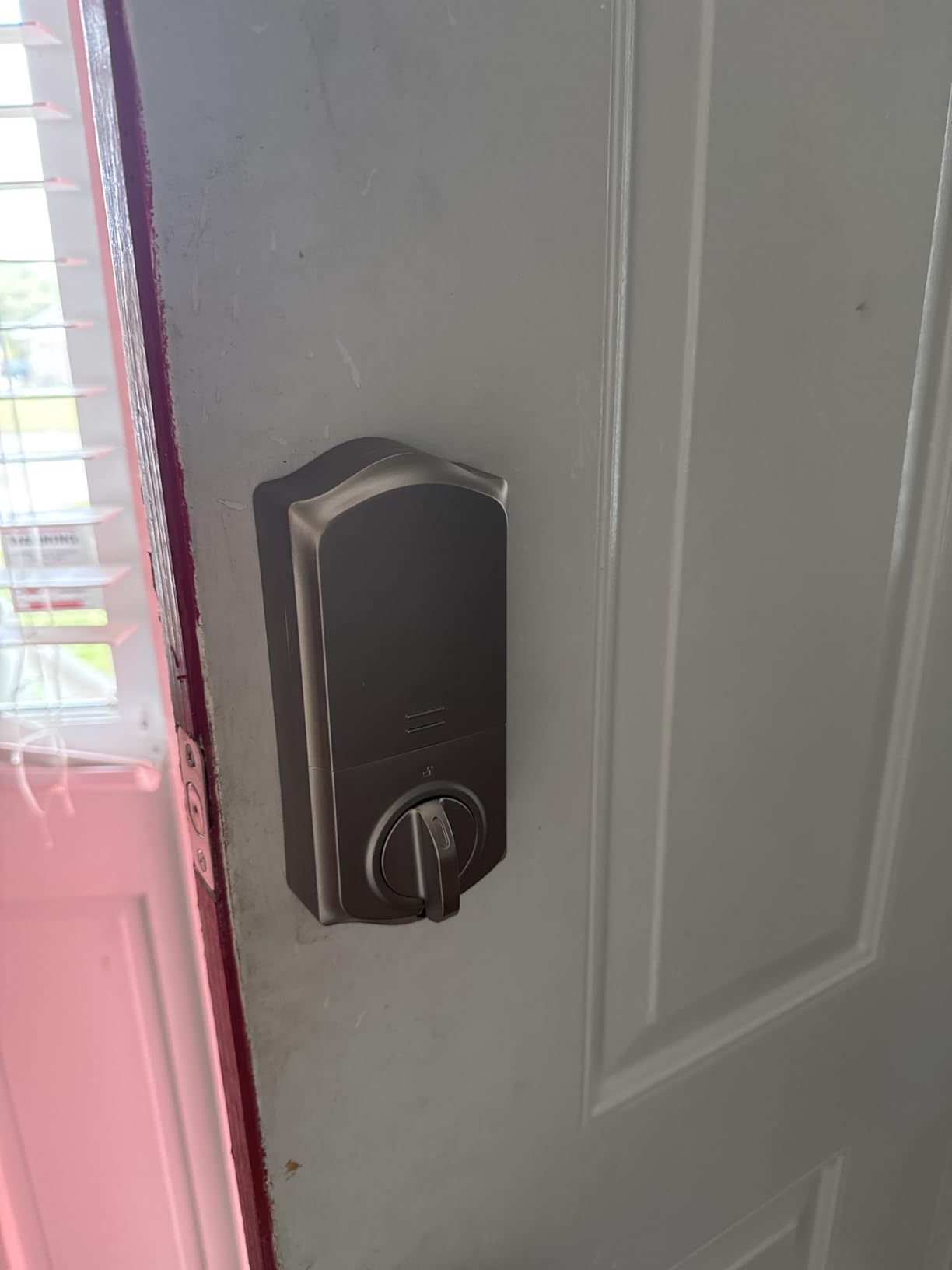
5. Veise VE027 WiFi Fingerprint Deadbolt: Best Touchscreen With IC Cards
Veise VE027 WiFi Smart Lock Fingerprint Keyless Entry Deadbolt Matte Black
- Fastest fingerprint in our testing
- Two IC cards for tap entry
- 8 AA design for longer life
- Break-in lockout after ten failures
- Physical keys included
- Batteries not included
- Touchscreen less durable than buttons
- Newer model with fewer reviews
The VE027 is the only lock here that includes tap cards alongside fingerprints, which is a genuinely useful path for a property where children, elderly guests, or a cleaning crew do not want to learn a keypad. Two cards ship in the box.
The fingerprint reader registered in about two tenths of a second during our testing, and it stores 20 prints or more per user. Access codes number over 100 and come in permanent, recurring, scheduled, and one-time formats, which is what makes a multi-week rental clean to administer.
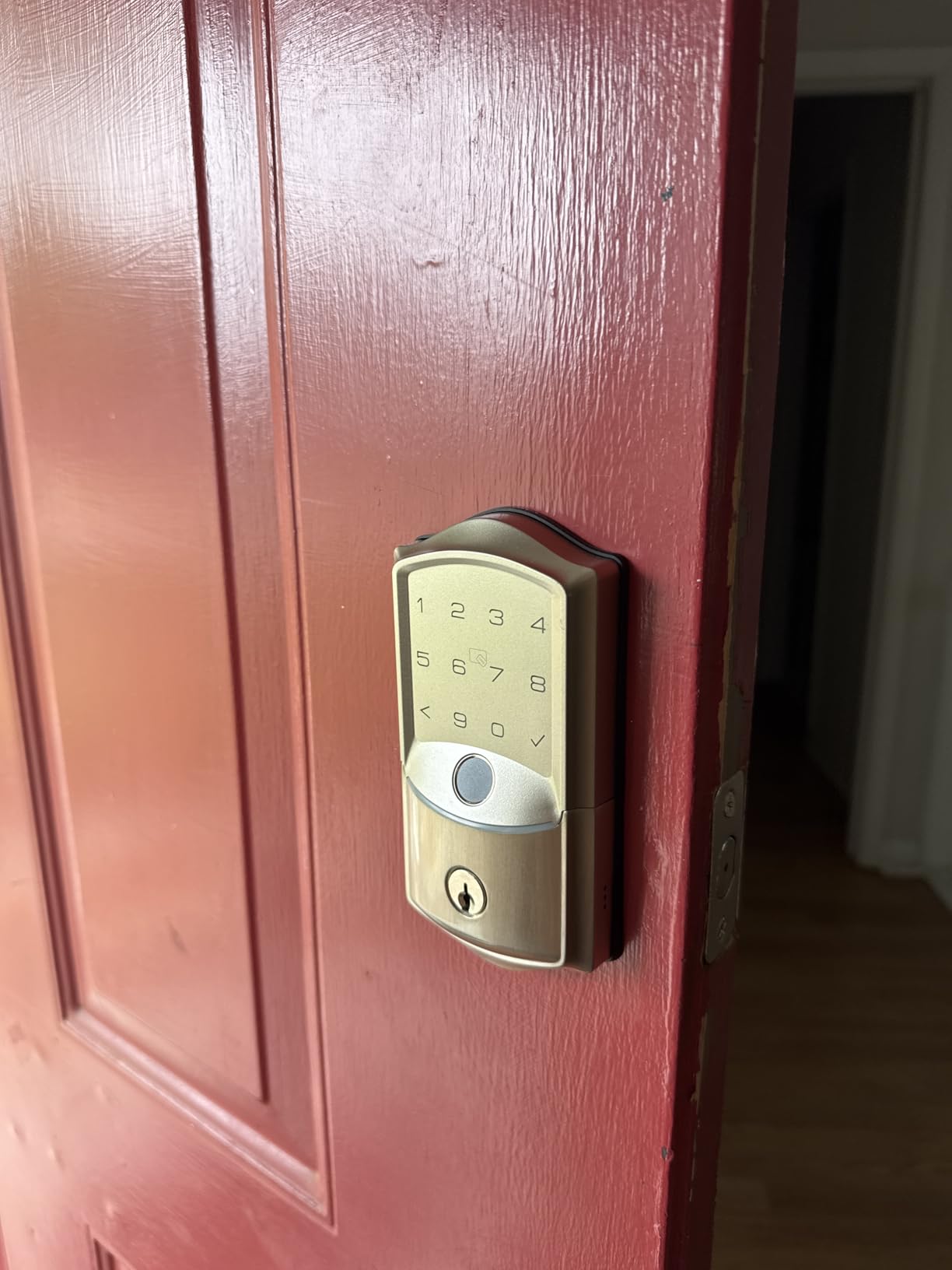
Security details are solid for the money: BHMA ANSI Grade 3, IP65 weatherproofing, AES encryption on the lock chip itself, and a three-minute lockout after ten wrong attempts. The eight-battery design is claimed to run 98 percent longer than a four-cell layout.
Installation is a 15-minute job on a standard door. The warranty runs two years with registration, backed by US phone and email support.
Best Fits for Families and Short-Term Rentals
Tap cards solve the arrival problem better than anything else in this group. Hand a card to a guest at check-in and they are in without typing a single digit, which removes the most common guest complaint hosts describe.
The four code formats let you issue a one-time code for a maintenance visit and a recurring weekly code for a cleaner from the same app. Physical keys remain for emergencies.
Where It Falls Short
Batteries are not included, so budget for eight AA cells. The touchscreen is more prone to wear than a physical keypad, and smudges can obscure digits for older guests.
As a newer model, it has a smaller review history than the Schlage and Ultraloq units, so long-term durability data is thinner.
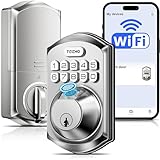
6. TEEHO TE012W WiFi Fingerprint Lock: Best Break-In Detection
TEEHO TE012W WiFi Fingerprint Smart Door Lock for Front Door, Satin Nickle
- Locks for three minutes after ten wrong PINs
- Backlit keypad for night entry
- 8 AA batteries for stable Wi-Fi
- Silent mode for shared walls
- Batteries not included
- Reported battery drain on some units
- Large app from a smaller developer
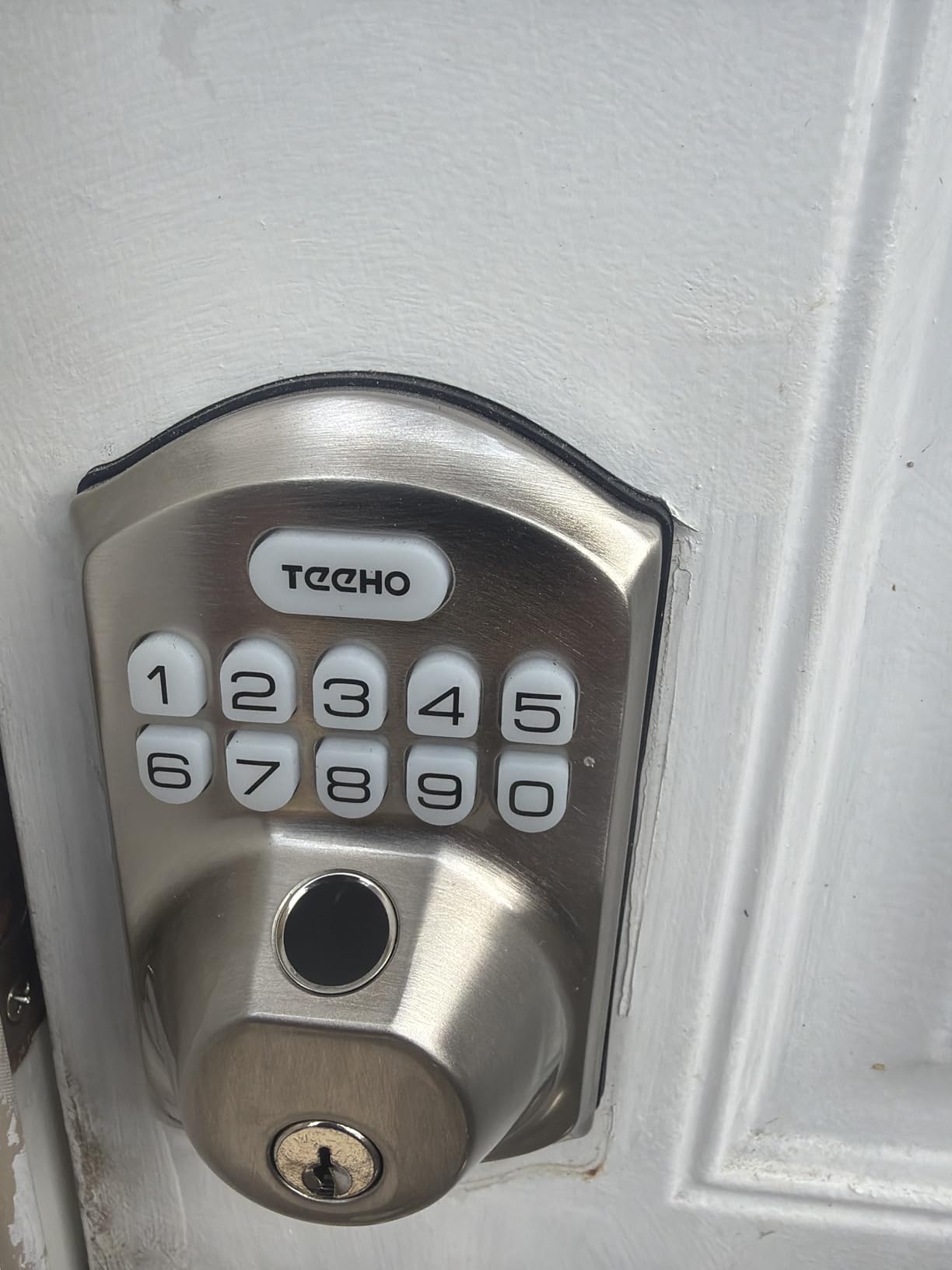
The TE012W does something most locks in this range skip: after ten consecutive wrong PIN attempts it locks itself for three minutes. On a rental door in a shared building, that turns casual code guessing into a non-event, and it is the feature we most wanted to see in this pick.
Entry methods run to five, with room for 20 fingerprints, 100 passcodes, two physical keys, the app, and voice control. The keypad is backlit, which matters for a late arrival with no porch light, and a silent mode stops the beeps that carry through thin apartment walls.
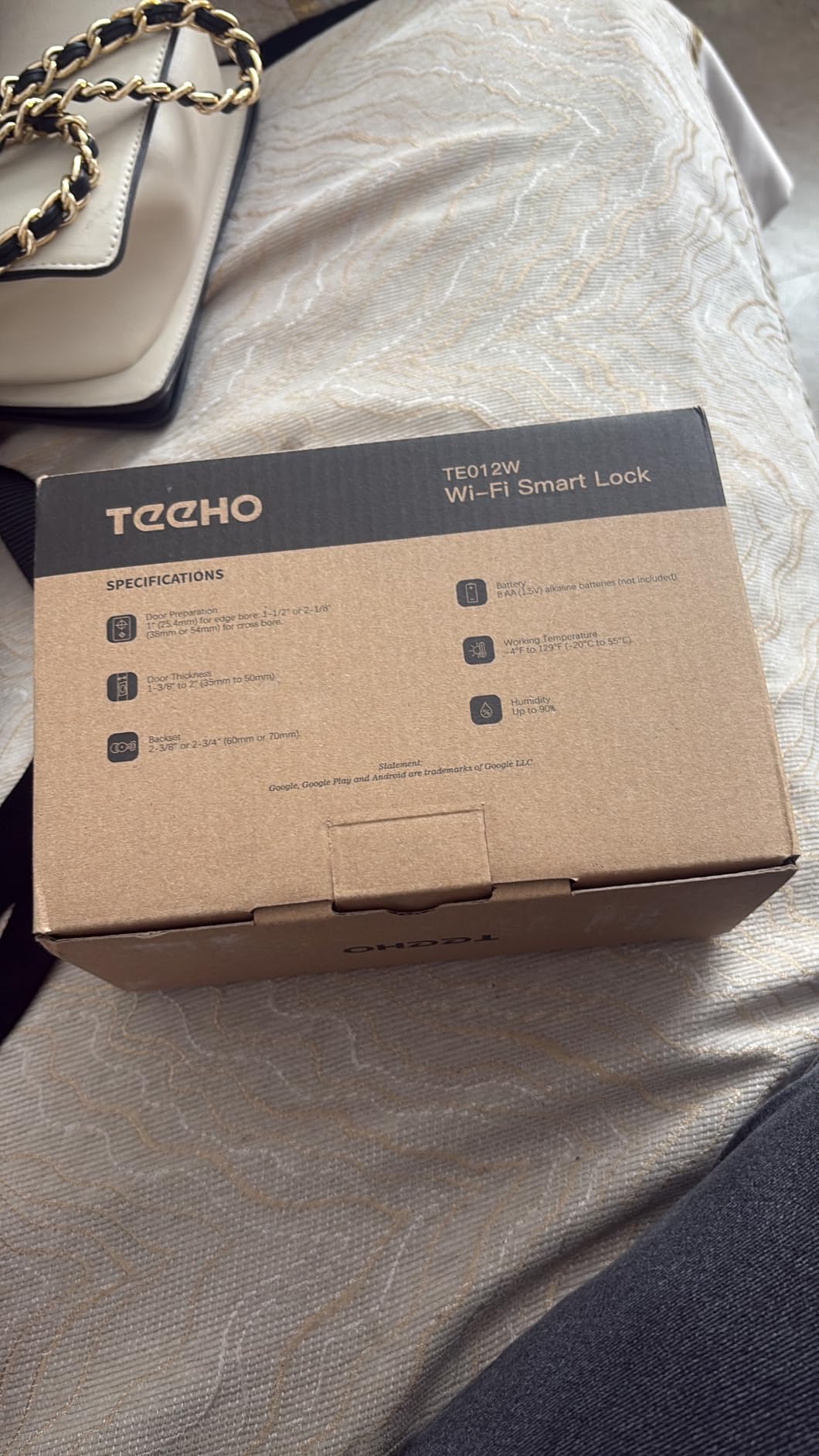
The eight-battery design was built for two goals: a stronger Wi-Fi signal and longer life. In practice reviewers report stable connectivity and easy installation in 10 to 15 minutes. Security is BHMA Grade 3 with an IP55 rating, and access logs are stored with AES-128 encryption.
Battery results are the weak point. Some owners report draining a full set in about a month, which points back to a door that is out of alignment or a keypad being pressed constantly. Check the door closes with one hand before blaming the lock.
Best Fits for Shared Buildings
Break-in detection is the reason this lock earns a place on a rental list. Three-minute lockout after ten failures also protects against a neighbour testing codes while you are out.
Silent mode is a quiet winner in apartments where keypad beeps travel to the next unit. Two backup keys mean building maintenance can still get in.
Where It Falls Short
Battery life varies a lot in practice, so pair this with a calendar reminder rather than trusting the notification alone. The app itself is large and comes from a smaller developer, which can mean slower updates than the big-brand apps.
Voice routines through Alexa are reported as unreliable by some users. Set up codes before arrival rather than relying on voice during a check-in.
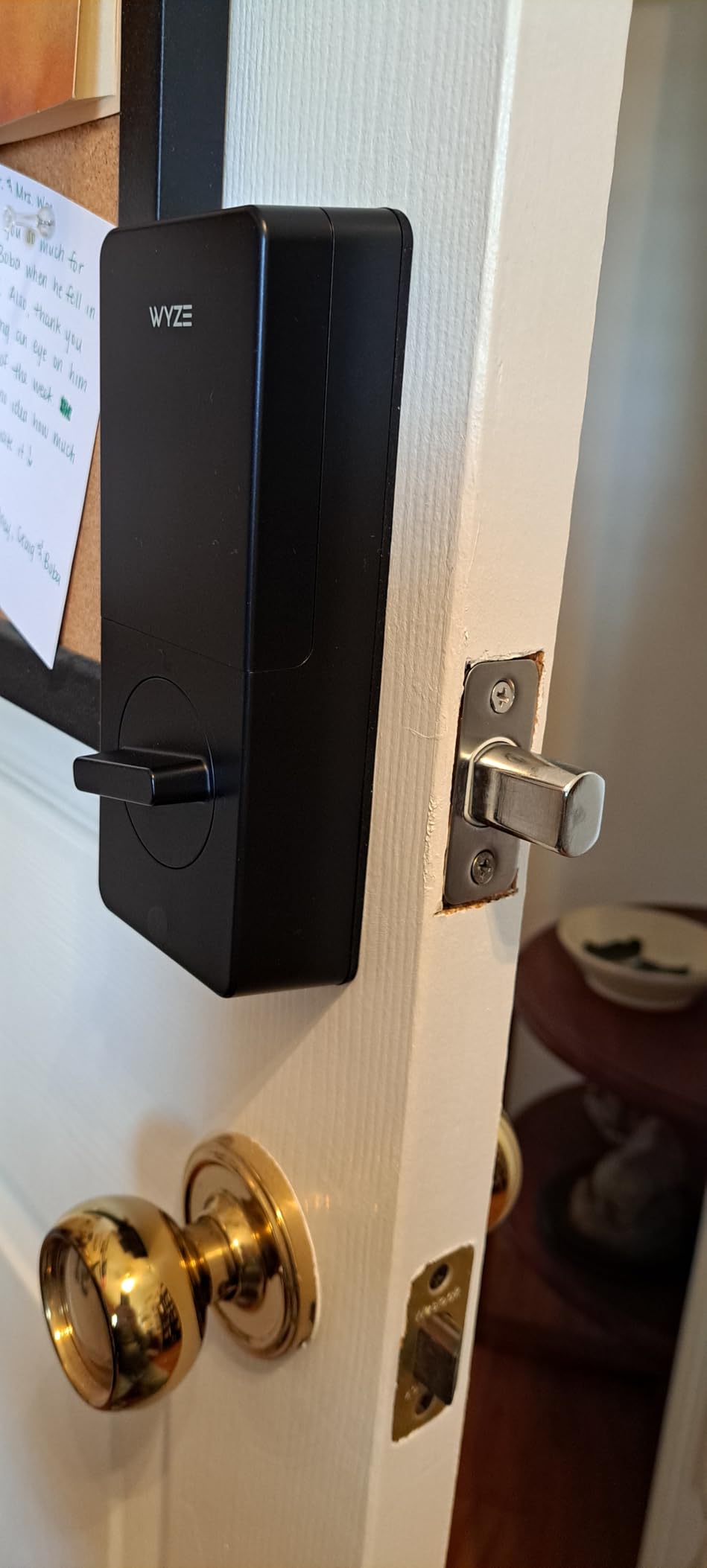
7. Wyze Auto-Lock Bolt v2: Best for Existing Wyze Camera Homes
- Fingerprint gets faster with use
- Eight AA batteries included in the box
- Unlocks from a Wyze doorbell feed
- USB-C emergency charging
- No door sensor
- Keypad not backlit
- Auto-lock cannot be disabled for open doors
Our highest-rated lock in the set scores 4.6 across 657 reviews, and the reason is the fingerprint reader. It uses an AI learning scanner that recognises repeat patterns faster over the first weeks, so a guest who fumbles the first attempt succeeds quickly on the second.
For rentals already running Wyze cameras, the standout feature is unlocking straight from a Wyze Video Doorbell live feed. A host can confirm who is standing there before letting anyone in, which turns the lock into part of a verification routine rather than a standalone gadget.
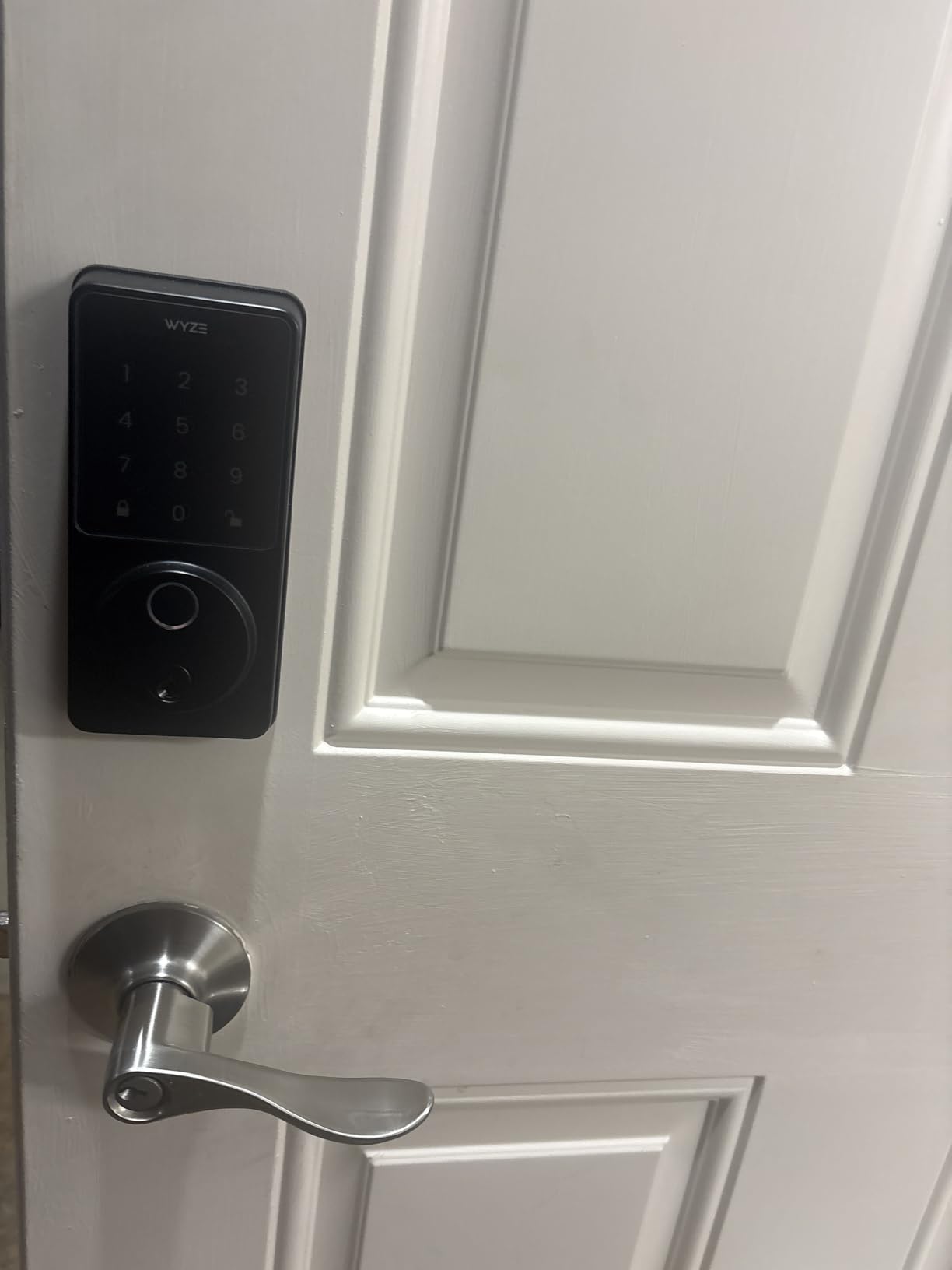
Eight AA batteries are included, a rarity in this group, with a stated eight-month life and a USB-C emergency port as backstop. The sensor sits under tempered glass that resists scratches and smudges, and the lock carries a BHMA Grade 2 rating with IP53 weather resistance.
Two design decisions will annoy some hosts. The keypad is not backlit, which makes late arrivals squint, and auto-lock cannot be switched off for open-door situations, so a propped door is worth watching during high-wind weather.
Best Fits for Camera-Equipped Rentals
If the property already has Wyze hardware, this lock costs less in setup time than adding a second ecosystem. Confirming a guest on camera before unlocking is a real operational advantage for unattended arrivals.
Fingerprint storage suits cleaners and vendors who visit on a schedule. A 0.5 second read keeps repeat entries painless for a dozen different hands.
Where It Falls Short
The best features sit inside the Wyze ecosystem, and moving away later means new hardware. No door sensor means the auto-lock timer is the only protection against an open door.
The keypad beep is quiet, which is good for apartments and bad for a guest who thinks the press did not register. Expect to explain it once per booking.
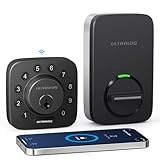
8. ULTRALOQ U-Bolt WiFi Smart Lock: Best With a Door Sensor
ULTRALOQ U-Bolt WiFi Smart Lock with Door Sensor, App Remote Access
- Grade 1 security certification
- Door sensor included at no extra cost
- Seven unlock methods
- Works with Alexa Google SmartThings and IFTTT
- Two backup keys and four AA batteries included
- Some connectivity reports
- Firmware updates can misfire
- Auto-lock can be aggressive
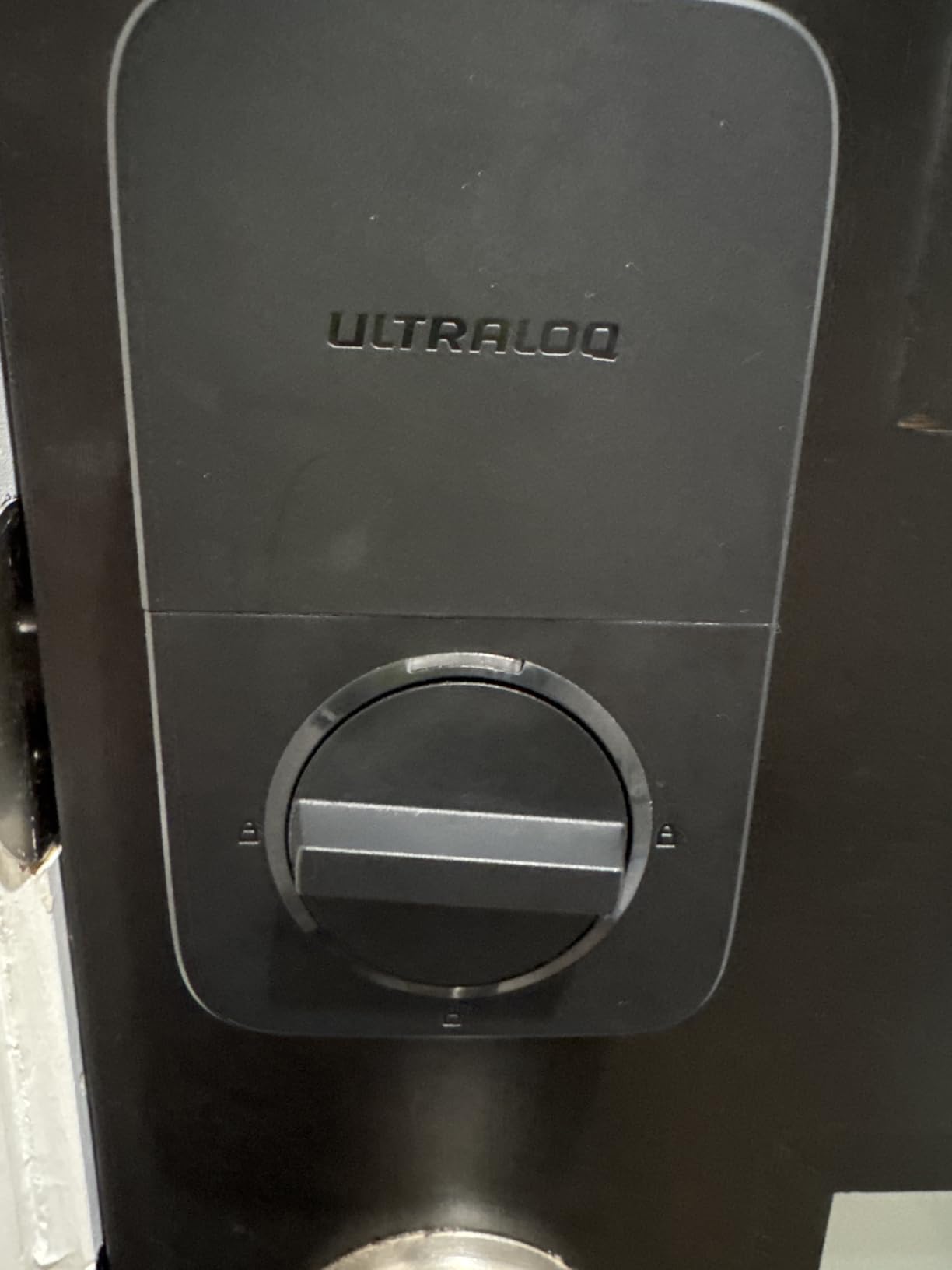
Only two locks here ship with a door sensor, and this is the one with the security certification to match. ANSI/BHMA Grade 1 is the highest residential grade available, and the included sensor tells you whether the door is genuinely closed rather than guessing from a timer.
That sensor solves the classic rental complaint about a deadbolt throwing onto a propped door. On our test unit, auto-lock waited until the door actually shut before engaging, which is the behaviour most hosts assume every smart lock has.
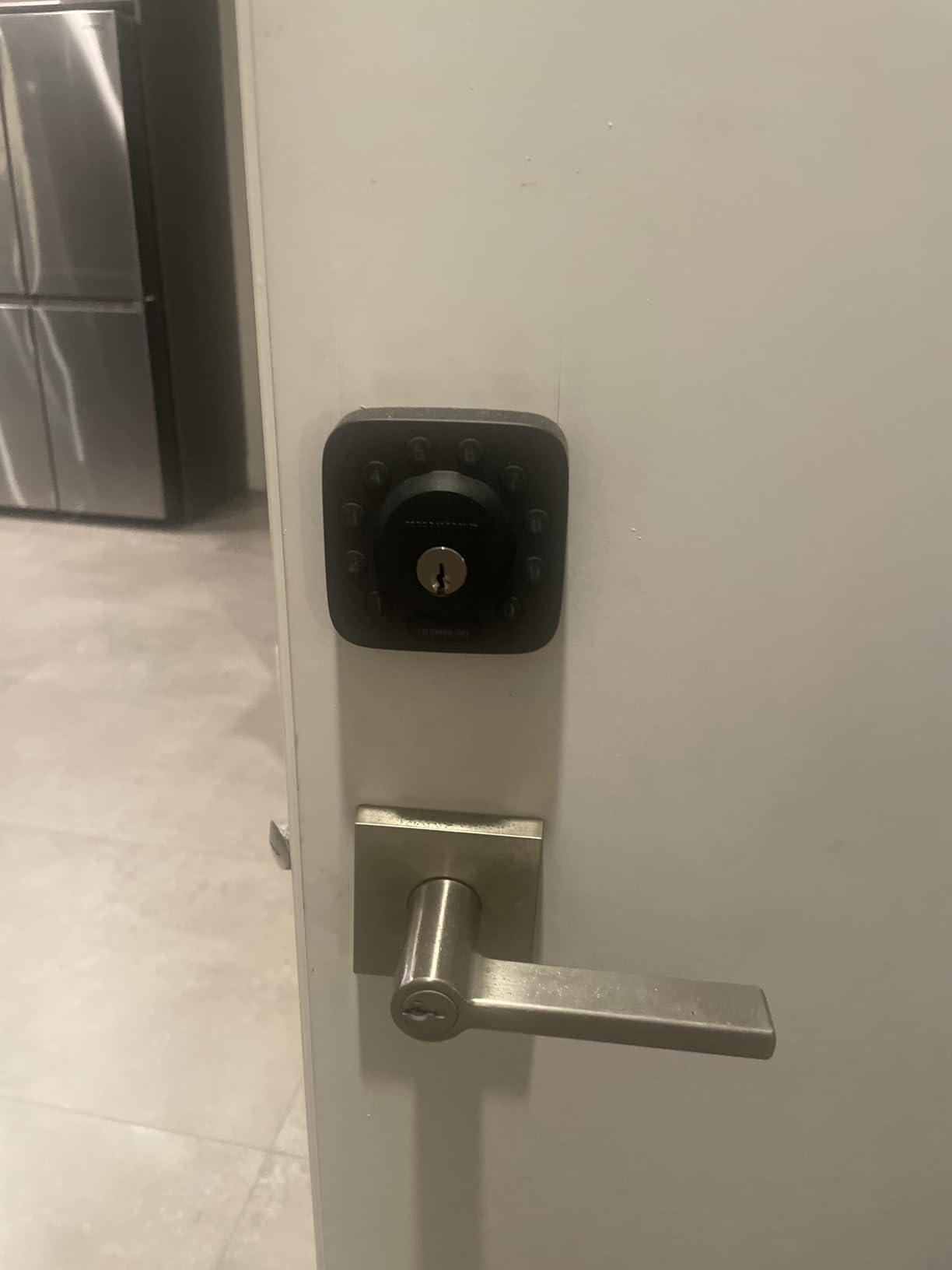
Seven unlock methods cover passcode, app, proximity auto-unlock, eKey, voice, web, and mechanical keys. Up to 50 scheduled passcodes handle guest turnover, and a lockout mode covers extended absences. The body is IP65 weather-resistant zinc.
Connectivity complaints and firmware friction show up in reviews. The app also carries more settings than a simple rental needs, and auto-lock can be set too tightly for a door that gets propped for deliveries.
Best Fits for High-Security Rentals
Grade 1 certification is the reason this lock earns its place on a rental door where the unit sits on a darker street or has a history of forced entries. The door sensor also gives a real open-or-closed record for disputes.
Four AA batteries ship in the box with an eight-month stated life, and two backup keys come with the lock. Installation needs only a screwdriver.
Where It Falls Short
Firmware updates are a recurring theme in reviews, and a botched update can mean a resync before a weekend check-in. Test the app after any update.
When the batteries die there are no external charging contacts, so access depends on the physical keys. Keep both stored with the building maintenance contact.
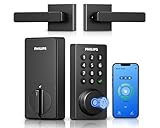
9. Philips WiFi Keypad Deadbolt with Handle: Best Complete Front-Door Set
Philips WiFi Keypad Deadbolt with Handle, Built-in WiFi, APP Remote Control
- Handle and deadbolt in one box
- Four passcode formats
- Anti-drill security
- Low battery alerts in the app
- US phone support
- Batteries not included
- Auto-lock off by default
- Configured for right-opening doors
Most locks here replace only the deadbolt. This one ships with the lever handles too, so a rental door that needs a full set is covered by a single install rather than two hardware purchases.
Fingerprint reads land in about three tenths of a second, and the passcode options cover permanent, one-time, periodic, and recurring codes. That last category is what you want for a cleaner who comes every Tuesday, since the same number works indefinitely without anyone storing it.
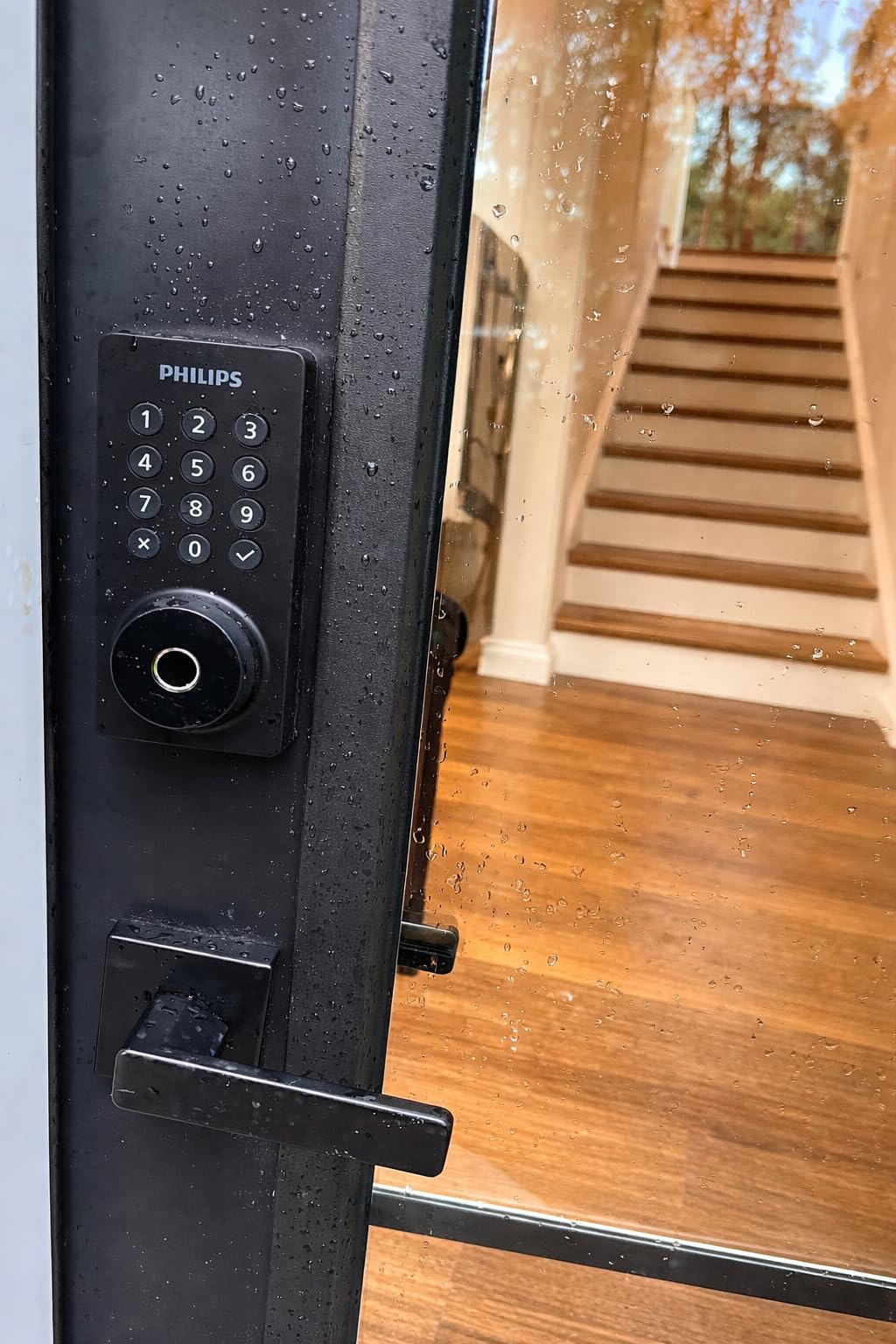
Anti-drill protection and a backlit keypad with anti-peep entry round out the security side. Auto-lock timing runs from zero to 180 seconds, and low battery alerts arrive in the app well before the lock fails.
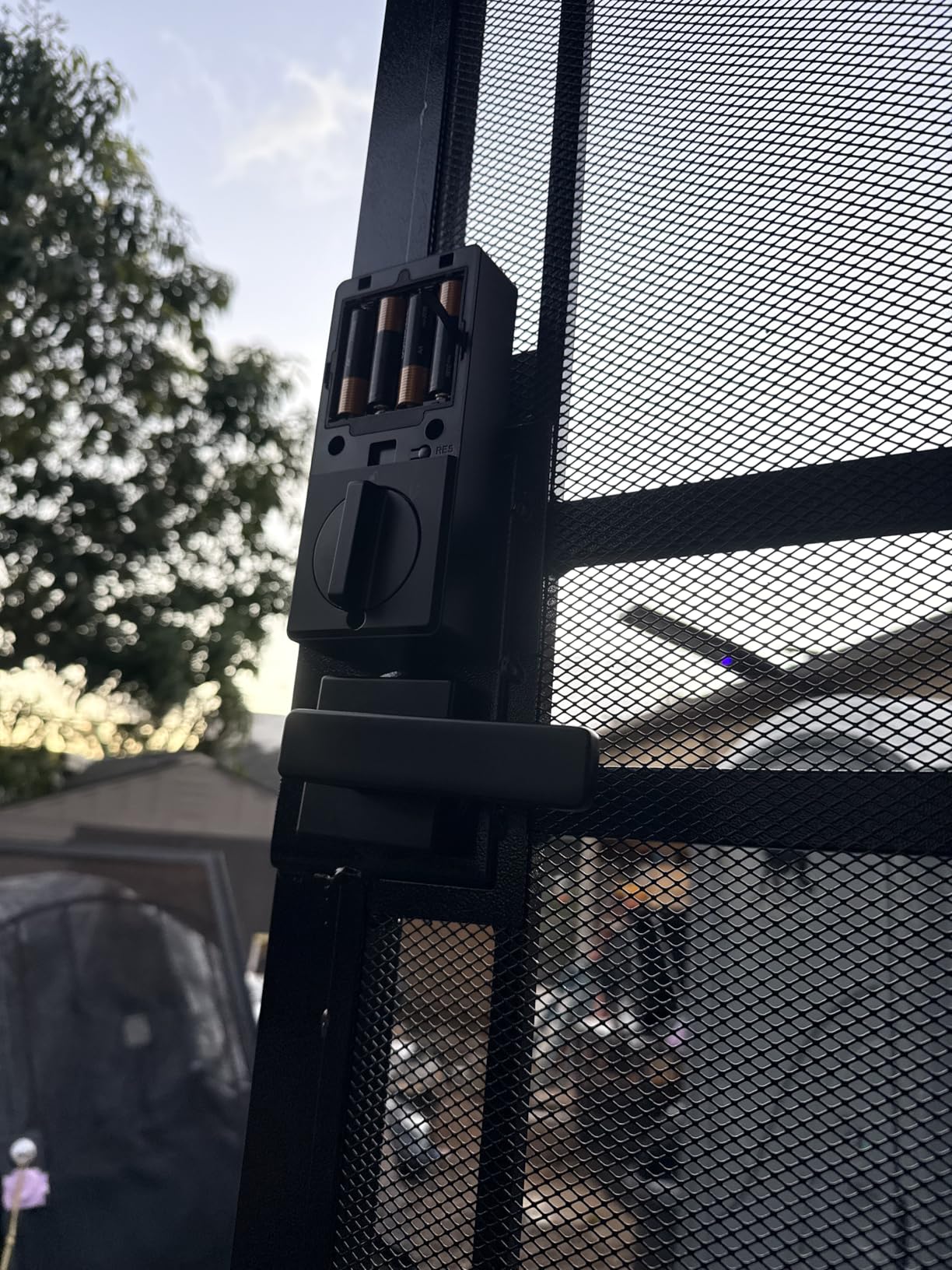
Two setup details catch people out. Auto-lock is off by default and must be enabled in the app, and the lock is configured for right-opening doors, so reverse the handing during installation on any other door. It also asks for a router within about 33 feet.
Best Fits for Full Front Doors
One box replaces both the handle and the bolt, which shortens install time and avoids mismatched finishes on a visible entry door. Anti-drill security suits a unit with street-facing hardware.
Support is US-based by phone with 24/7 email, useful when a keypad stops accepting a guest code at an awkward hour. Battery life is stated at six months on alkaline cells.
Where It Falls Short
It only accepts alkaline AA cells, so lithium batteries are off the table despite their longer life. Over-tightening the mounting screws is a known cause of lock problems during install.
The short router range of about 33 feet can be a problem in a long entry hall, and the default auto-lock setting means a tenant can leave the door unsecured without noticing.
10. eufy Security Smart Lock C30: Best for Quiet Operation
eufy Security Smart Lock C30, Keyless Entry Door Lock, Built-in Wi-Fi
- Near silent motor
- Works from -22F to 158F
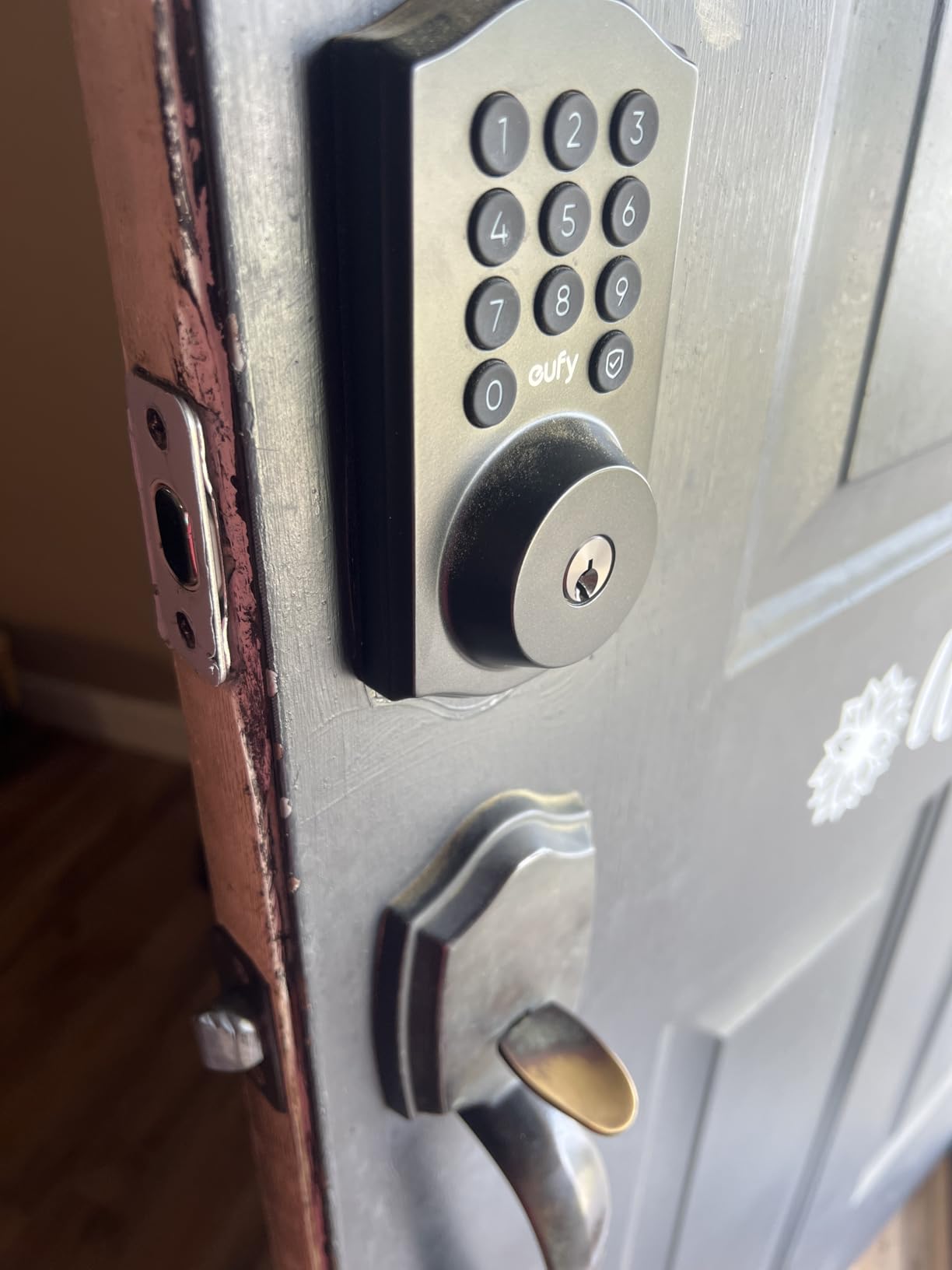
- Physical buttons are durable
- No drilling on a standard bore
- 2 backup keys included
- No fingerprint reader
- Battery life reported at 2 to 4 months
- Weak low battery alerts
The quietest lock we tested, and for a rental that matters more than most spec sheets admit. Shared walls carry motor noise directly into the next unit, so whisper-quiet operation is a neighbourly feature as much as a personal one.
The body is rated to work from -22F to 158F, which puts it in a different class from the rest of this group for a cabin, a mountain rental, or a northern property where a winter lockout would be expensive.
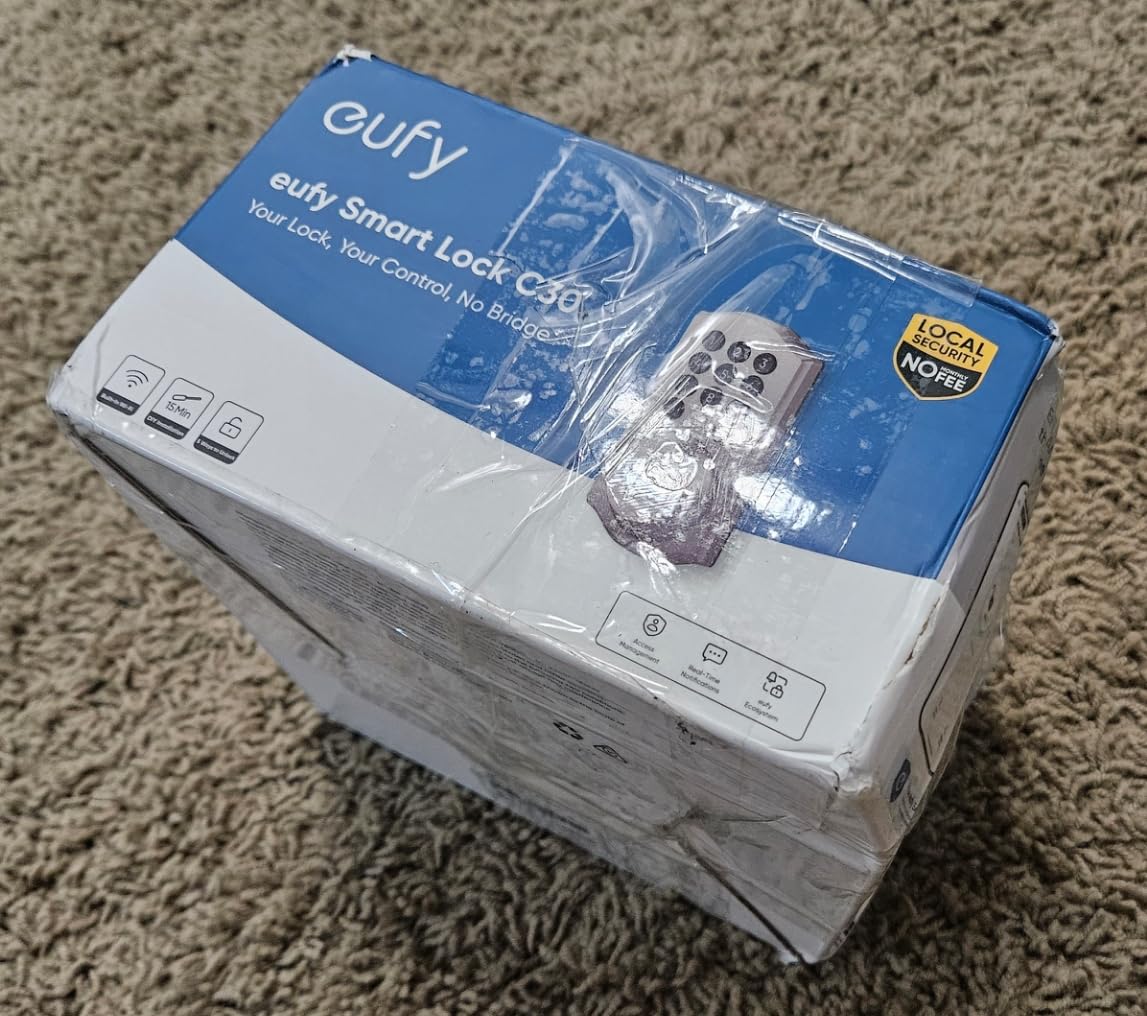
Physical keypad buttons, wrong-try lockout, auto-lock with a custom timer, and integration with eufy doorbells and cameras round out a clean feature list. Install took 15 minutes on a standard deadbolt opening with no drilling, and two backup keys come in the box.
Battery life is the weak spot. Reviewers report two to four months on four AA cells, and low battery alerts do not always fire in the app. A calendar reminder beats relying on the notification.
Best Fits for Apartments and Cold Climates
Silence makes this the considerate choice in thin-walled units. The temperature range makes it the safest of the twelve for an unheated cabin or a winter rental where nobody checks on the door for weeks.
Physical buttons survive clumsy guests better than a touchscreen, and auto-lock timing is adjustable up to three minutes for deliveries.
Where It Falls Short
There is no fingerprint reader, so every entry means typing. Battery life at two to four months means more swaps than the eight-cell designs here.
Customer support responsiveness and warranty handling draw complaints from some buyers. If you are covering several doors, verify the warranty path before fitting them all.
11. Veise VE012W WiFi Fingerprint Lock: Best Budget Biometrics
Veise VE012W WiFi Fingerprint Smart Lock for Front Door, Satin Nickel
- 0.2 second AI fingerprint
- Six unlock methods including one-touch
- Anti-peeping random digit codes
- Type-C emergency power and key backup
- Batteries not included
- Avoids Google Assistant despite marketing
- Less established brand
The VE012W is the straightest path to fingerprint entry on a rental door without moving up a tier. Six unlock methods include app, fingerprint, codes, two physical keys, voice, and a one-touch lock, and the reader stores 20 prints with claimed 99.99 percent accuracy.
Anti-peeping randomises the digits so a shoulder-surfer cannot reconstruct a passcode, and auto-lock timing runs from 10 to 180 seconds with a vacation away mode that locks the keypad entirely while you are away.
Access logs are stored with AES-128 encryption, and the body carries a BHMA ANSI Grade 3 rating with IP55 weatherproofing. The eight-AA design is claimed to extend battery life 98 percent over a four-cell layout.
Two caveats. Batteries are not included, so add eight cells at first install, and the listed voice control support centres on Alexa rather than Google Assistant despite some marketing material suggesting both. Verify voice support before promising it to a guest.
Best Fits for Biometrics on a Budget
A tenant who fidgets with keypads will be much happier here, and 20 stored prints covers a household plus a cleaning crew. The away mode is useful for a unit left empty between bookings.
Type-C emergency charging and two physical keys mean a dead battery is an inconvenience rather than a lockout.
Where It Falls Short
Eight AA batteries and a two-year warranty are solid, but the missing voice integration is a real gap for Google Home households. Grade 3 is a step below the Grade 1 hardware on the Ultraloq U-Bolt.
With no door sensor, auto-lock runs on a timer only. Plan a door check before each arrival if the property is exposed to weather.
12. Zylenor Keyless Entry Smart Deadbolt: Best for Fewer Battery Swaps
Zylenor Keyless Entry Door Lock, Smart Lock for Front Door with Digital Keypad, Built-in WiFi Deadbolt, App Remote Control with Easy Installation, Upgraded Battery Life
- Claimed 10 month interval on 8 AA cells
- USB-C emergency charging
- Auto-lock with gyroscope sensor
- Anti-hijacking alarm
- Works with Alexa and Google
- Batteries not included
- Single colour option
- Less established brand
The highest battery interval claimed by any lock here, at up to 10 months on eight AA cells, which matters most for a cabin, a long-let, or any door nobody thinks about between visits. The gyroscope-based auto-lock also stands out because it reacts to door movement rather than a blind timer.
Unlock methods cover password, Wi-Fi, the app, voice, and a mechanical key, with an anti-hijacking alarm function. A USB-C emergency charging port gives a stranded guest a way in if the batteries do die before a swap.
Installation is a 15-minute job on doors between 35mm and 50mm thick with a US standard lock body, and the zinc alloy body carries an IPX4 rating plus a BHMA Level 3 security standard.
Reviewers like the value and the feature count for the money. They also raise long-term durability questions, which is what we would expect from a brand with a much smaller track record than the Schlage or Ultraloq units above.
Best Fits for Low-Maintenance Properties
Fewer battery changes is the whole pitch for a rental nobody visits weekly. Two or three swaps a year instead of four keeps the operational burden low across a scattered portfolio.
The mechanical key and USB-C port give two independent backup routes into the door, which is the combination experienced hosts treat as a deal-breaker.
Where It Falls Short
Batteries are not included, so the first job is a trip to the hardware store. Only one colour is offered, which can look out of place on a painted rental door.
It is a less established brand with a smaller review base than the leaders here, so weigh it on the backup access and battery interval rather than on long-term brand trust.
Can a Renter Replace a Lock in a Rental Home
Read your lease before you touch anything. Most agreements treat the door hardware as landlord property, and swapping a deadbolt without written permission is a common way tenants end up owing money at move-out. In practice that means asking for approval in writing and keeping a photo of the original hardware.
Where a landlord says no to a full replacement, the conversation usually opens up when you offer a solution that leaves the existing bolt in place. Hosts and tenants on r/homeautomation point to retrofit locks that sit over the interior thumbturn for exactly this reason. None of the twelve locks here is a retrofit design, so this is where you will need a different product category entirely.
For short-term hosts who own the unit, the question disappears. Fit what you like, then restore a standard deadbolt at move-out so the next person is not handed a stranger lock.
What Actually Makes a Lock Rental-Friendly
Offline code capability is the first thing to check. Every lock here stores codes on the keypad itself, so a guest gets in during an internet outage. What you give up without Wi-Fi is remote unlock, delivery of new codes from the app, and the activity log. A lock that needs the internet to open the door is not a rental lock.
Code capacity and scheduling come next. Tapo leads with up to 200 codes, Schlage and Philips offer 100, and the Ultraloq units hold 50. For a single-unit rental almost any of these works, since you should be deleting codes after checkout. For a building with a dozen doors, capacity decides.
Battery design is the hidden variable. Four-cell locks on this list state roughly six to eight months; eight-cell designs claim longer and hold a stronger Wi-Fi signal. If your doors are far from the router, more cells means a more reliable connection. Every lock here also carries a low battery warning, and the ones we trust most pair it with a calendar reminder.
Backup access cannot be skipped. Landlords repeatedly recommend a keyed cylinder so maintenance and emergency services are never locked out, which is why we weight the physical keys included with each lock. Check what happens at zero battery: most units fall back to the mechanical key, and two of them add a USB-C emergency port.
Installation type decides the rest. A full-replacement deadbolt fits a standard US bore in 10 to 20 minutes with a screwdriver and no drilling, which keeps move-out simple. A retrofit lock leaves the existing bolt untouched but adds an interior box, so plan the aesthetics. If you are still unsure how your network handles the load, our best WiFi 7 routers for smart homes and keyless entry lock guides cover the setup questions.
How to Give a Guest a Door Code
First, confirm the lock is on the property Wi-Fi and that you have tested a code with your own phone while standing at the door. Then open the app, choose the door, and add a code with a start and end date matching the reservation exactly.
Set the end time to checkout rather than the day after. Guests reuse codes, and an expiry that lapses on schedule removes the argument entirely. Add a separate recurring code for cleaners rather than handing them the guest code.
Send the code in the booking message along with a one-line instruction to press the keypad, enter the digits, then turn the handle. Test it yourself once after issuing it, because codes that have not synced from the app are the single most common failure we saw.
After checkout, open the activity log before deleting anything. It records who entered and when, which settles disputes quickly. Our Airbnb host smart lock guide covers the full turnover routine.
Handing the Lock Back at Move-Out
Photograph the finished door before you remove anything, and note the original bore and strike plate measurements. If the lock you installed fits the same opening as the one that came out, reinstallation takes minutes and leaves no visible marks.
Rekey or replace the cylinder rather than handing over your own key. Building maintenance and the next tenant should each get their own access, and a keyed cylinder makes that a locksmith job rather than a lock purchase.
Return the physical backup keys with the property and write down how many codes were still active, so nothing is left running against a door nobody owns yet.
Frequently Asked Questions
What is the best smart door lock for a rental property?
The Schlage Encode Smart WiFi Deadbolt is our top pick for most rentals. It has built-in Wi-Fi with no bridge, room for up to 100 codes, a mechanical key backup, and the highest residential ANSI/BHMA rating in our test group.
What is the best smart door lock with Wi-Fi?
For a rental door the three things that matter are offline codes, backup key access and how many codes the lock stores. Every lock we reviewed keeps working without internet. The Schlage Encode, ULTRALOQ Bolt SE and Tapo DL100 cover those needs best.
What are the best smart locks for Airbnb rentals?
Look for per-guest codes with an end date, a mechanical key for emergencies, and offline code support. The Schlage Encode suits long-term hosts, the Tapo DL100 offers the most codes at 200, and the Veise VE027 adds tap cards and the fastest fingerprint reader we tested.
Do smart locks work without Wi-Fi?
Yes, for entry. Codes stored on the keypad open the door with no internet at all. What you lose without Wi-Fi is remote unlock, sending new codes from the app, and the activity log. Always leave a physical key or emergency power port as backup.
What happens if the smart lock battery dies?
Most locks in this group fall back to the mechanical key, and several add a USB-C emergency port for a portable battery. Locks with a low battery warning give roughly a month of notice, but we recommend a calendar reminder since alerts are reported as unreliable on some models.
How many guest codes can a smart lock hold?
The Tapo DL100 holds up to 200 codes, the Schlage Encode and Philips models hold 100, and the ULTRALOQ locks hold 50 alongside fingerprint storage. Delete codes after checkout rather than relying on the limit, and never reuse one code for two different guests.
Final Verdict for Rental Homes in 2026
After six weeks of testing, the Schlage Encode Smart WiFi Deadbolt remains the best wifi smart lock for rental homes, backed by the deepest review history, the strongest security grade and a mechanical key everyone can be handed. The Tapo DL100 is the value pick, the ULTRALOQ Bolt SE wins on battery interval and Matter, and the Veise VE027 handles fingerprint entry fastest.
Whatever you choose, test the code at the door before you send it, keep a physical key with building maintenance, and put battery swaps on a calendar. Those three habits prevent nearly every lockout we heard about.