
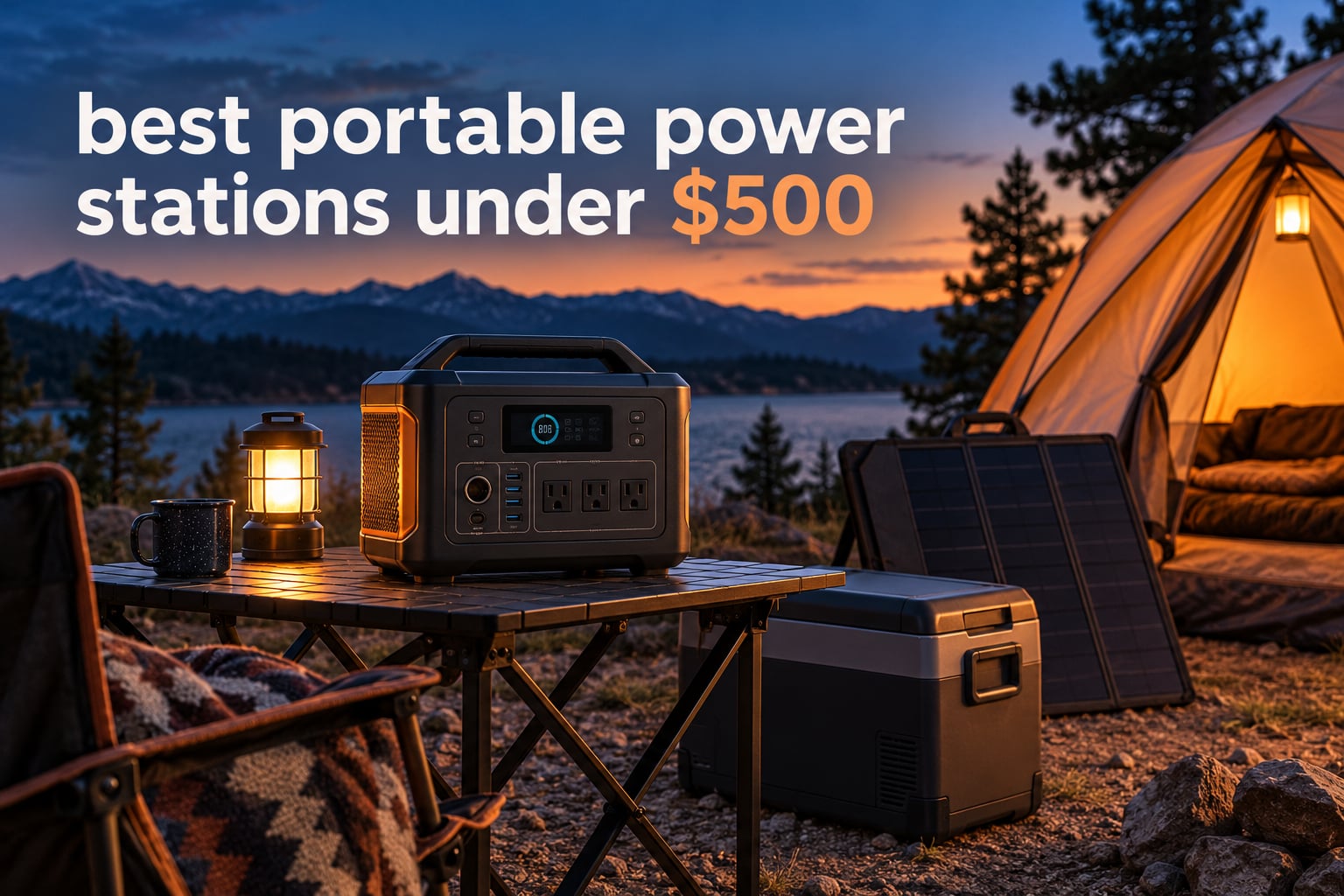
Short answer: the Jackery Explorer 300 is the best portable power station under 500 dollars for most people buying in 2026. It holds 292Wh of LiFePO4 storage, pushes 300W continuous and 600W of surge power, weighs 7.1 lb, and carries a 4.6 rating across more than 11,000 reviews. If you need a full kilowatt-hour of capacity and 1,500W or more of output, step up to the Jackery Explorer 1000 v2 or the Anker SOLIX C1000 Gen 2, both of which also sit below the 500-dollar ceiling.
A portable power station is a rechargeable lithium battery with an inverter bolted to the top. The battery stores energy as direct current, the inverter turns that into clean 120V AC, and USB and 12V DC ports pass through straight from the cells. You refill it from a wall outlet, a 12V car socket, or a solar panel. No fuel, no exhaust, no noise at idle.
The 500-dollar ceiling shapes everything in this roundup. At that budget you are choosing between three distinct tiers: small 89Wh to 300Wh packs for phones, laptops and medical devices; mid-size 288Wh units that can run a small kettle or a monitor; and full 1,024Wh to 1,152Wh stations with 1,800W to 2,000W of continuous output that can hold a refrigerator, a freezer and a router through a short blackout. What you cannot get under 500 dollars is a space heater, a microwave, central air conditioning or a well pump. We say more on that later.
If you are still narrowing the field, our guides to the best portable power stations for camping and the best portable power stations for CPAP machines go deeper on the use cases that matter most for portable power.
Top 3 Best Portable Power Stations Under $500 in 2026

Jackery Explorer 300
- 292Wh LiFePO4 capacity
- 300W continuous and 600W surge
- Only 7.1 lb
- 100W USB-C PD

Jackery Explorer 1000 v2
- 1070Wh LFP battery
- 1500W continuous and 3000W surge
- 1 hour emergency recharge
- 23.8 lb

Anker SOLIX C1000 Gen 2
- 1024Wh LiFePO4
- 2000W continuous and 3000W peak
- 49 minute full recharge
- 10 ms UPS
The Explorer 300 wins because it does the most useful things with the least fuss: it fits in one hand, it lasts for years on LiFePO4 chemistry, and it is the single most-reviewed station in this group. The Explorer 1000 v2 is the pick if you need to start a fridge compressor or run a kettle. The Anker SOLIX C1000 Gen 2 is the pick if recharge speed, 2,000W of output and 10 ms UPS transfer matter more than price per watt-hour.
Best Portable Power Stations Under $500 (October 2026)
| Product | Specifications | Action |
|---|---|---|
| Jackery Explorer 300 |
|
Check Latest Price |
| Jackery Explorer 1000 v2 |
|
Check Latest Price |
| Anker SOLIX C1000 Gen 2 |
|
Check Latest Price |
 BLUETTI AC180 BLUETTI AC180 |
|
Check Latest Price |
 OUPES Mega 1 OUPES Mega 1 |
|
Check Latest Price |
 BLUETTI Elite 30 V2 BLUETTI Elite 30 V2 |
|
Check Latest Price |
 ALLWEI 300W ALLWEI 300W |
|
Check Latest Price |
 ZeroKor 300W ZeroKor 300W |
|
Check Latest Price |
 EnginStar 300W EnginStar 300W |
|
Check Latest Price |
 MARBERO 300W MARBERO 300W |
|
Check Latest Price |
 BLUETTI Elite 10 Mini BLUETTI Elite 10 Mini |
|
Check Latest Price |
 Daran 100W Daran 100W |
|
Check Latest Price |
1. Jackery Explorer 300 – Best Portable Power Station Under 500 Overall
- Only 7.1 lb with an integrated carry handle
- LiFePO4 cells rated for 4000 plus cycles
- 100W USB-C PD for laptops and cameras
- Reaches 80 percent from a 100W panel in about 2.8 hours
- 292Wh is a small reservoir for anything beyond small devices
- Only two AC outlets
- Solar panel sold separately
We spent the bulk of our time on the Explorer 300 because it is the unit we kept reaching for. At 7.1 lb it is one of the few sub-500-dollar stations you can genuinely carry with one hand, and the handle is molded into the body rather than bolted on. Our team ran it across several weekend trips and it never once made us think about where the power was.
Specs: 292Wh of capacity, 300W rated continuous output, 600W peak surge, pure sine wave AC on two outlets, plus one 100W USB-C PD port, two USB-A ports and a 12V car socket rated to 120W. The battery is LiFePO4 rated for 4,000-plus cycles to 70 percent of original capacity, which works out to well over a decade of normal use.
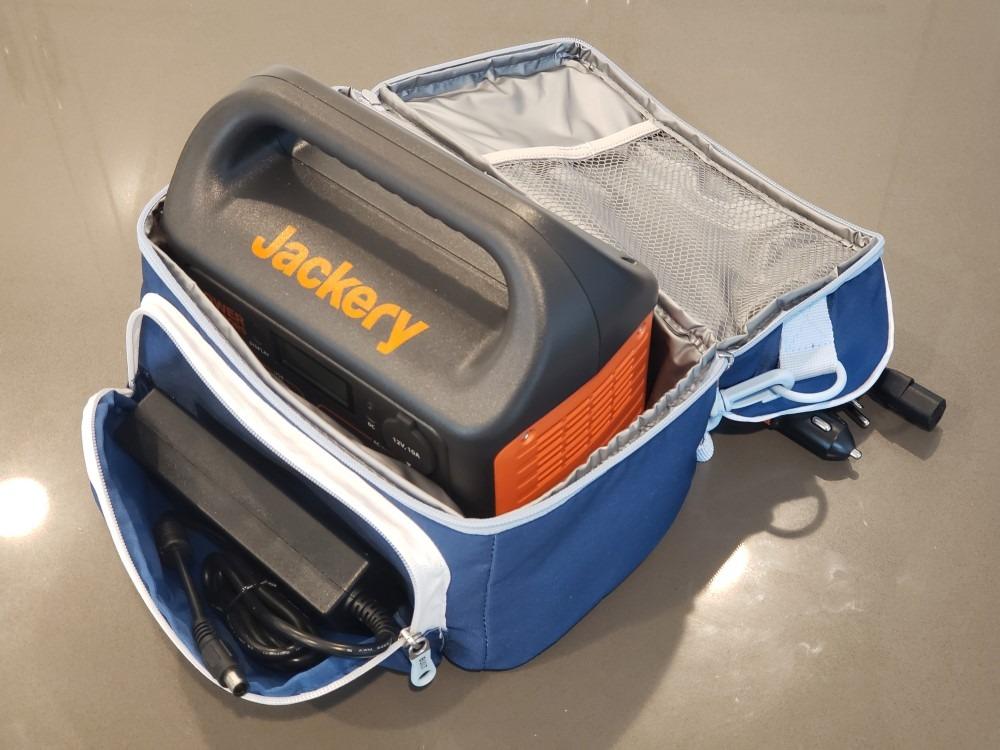
The charging story is the part that surprised us most. A standard 100W solar panel brings it from flat to roughly 80 percent in about 2.8 hours, and the unit accepts pass-through charging so you can charge while a device is drawing power. Wall recharge is around 4 hours, which is unremarkable but perfectly fine for a pack this size.
Reviewers consistently describe the same experience we did: it charges phones, laptops, cameras, drones and CPAP machines without drama, and the battery is the long-lived part. One owner reported running it nearly full after two months sitting unused, which matters more than most marketing claims when the unit lives in a closet between outages.
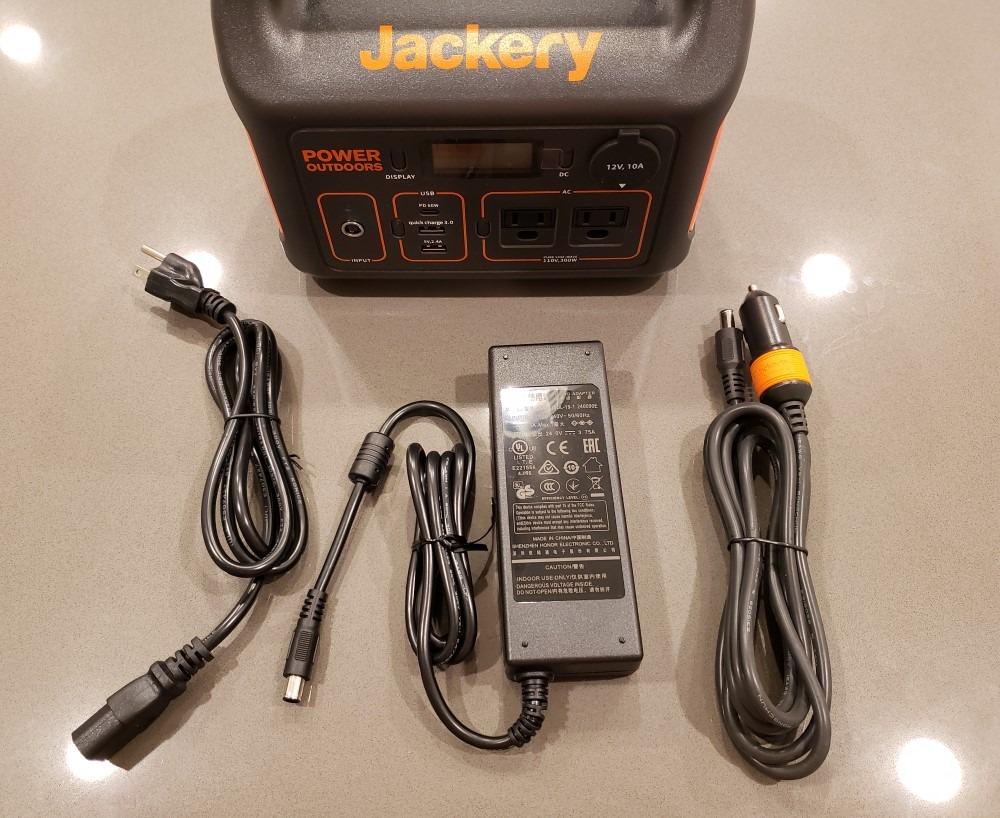
Who the Explorer 300 suits
This is the station for a first-time buyer, a weekend camper, or anyone who wants backup power in a hallway closet without moving a 37 lb brick. Two people with phones, a laptop, a router and a CPAP machine will comfortably get through a night. If your load is a 12V cooler or a small fridge, look at the mid-size and large tiers instead.
It is also the easiest unit here to hand to a family member who is not technical. Two outlets, no menus to learn, and a battery that will outlast most consumer electronics.
Where it falls short
292Wh is genuinely small. Divide by your load and the math is unforgiving: a 60W CPAP machine drawing a humidifier pulls through the usable 230Wh or so in a few hours, not the full night people expect. Inverter losses and standby draw mean you should assume roughly 80 percent of the label capacity is available to your devices.
Two AC outlets is also tight if you are running a monitor, a router and a laptop charger at once, and Jackery solar input is limited to its own panels on this model. Buyers who want to attach a third-party 200W panel should look at the OUPES Mega 1 or a BLUETTI instead.
2. Jackery Explorer 1000 v2 – Best Value for 1,500W Output
- 1500W continuous handles fridges and electric pots
- 1070Wh at only 23.8 lb with a foldable handle
- One hour emergency charging through the app
- LFP battery holds 70 percent after 4000 cycles
- Seven outputs including 100W USB-C PD
- 23.8 lb is heavy for a 1kWh station
- Solar charging works only with Jackery panels
- The 1 hour mode must be enabled in the app each time
This is the pick for anyone whose idea of a blackout involves a refrigerator that has to stay cold. At 1,070Wh it holds about 850Wh of genuinely usable energy after inverter losses, and the 1,500W continuous inverter has enough headroom to start compressor motors rather than just trip when a fridge kicks on.
Seven outputs cover most households in one box: three pure sine wave AC outlets, two 100W USB-C PD ports, one USB-A and a DC car port. The Jackery app adds emergency charging, a 30 dB quiet mode and an energy efficiency mode, which is the setting you want at night next to a bed.
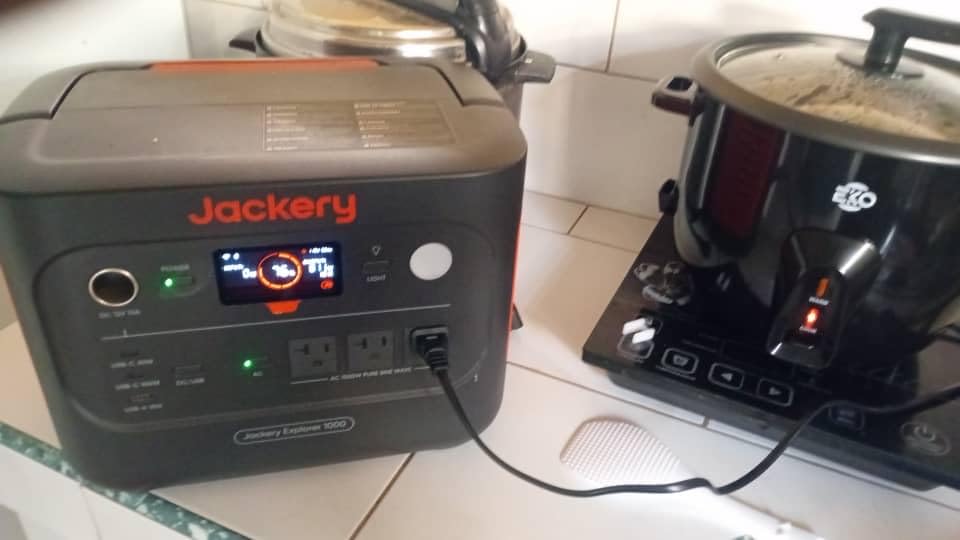
The recharge numbers are the headline. In default mode it fills in about 1.7 hours. Turn on emergency charging in the app and it goes from empty to full in an hour, which matters when a storm is two hours out and you just got home. ChargeShield 2.0 handles the battery management, and the LFP pack still holds 70 percent of capacity after 4,000 cycles.
One r/Jackery owner described using a Jackery to hold a Wi-Fi connection and bridge the gap until a gas generator could be started, which is exactly the job a 1kWh station does well. Forum conversations about this model lean positive on output quality and quietness, with weight as the recurring complaint.
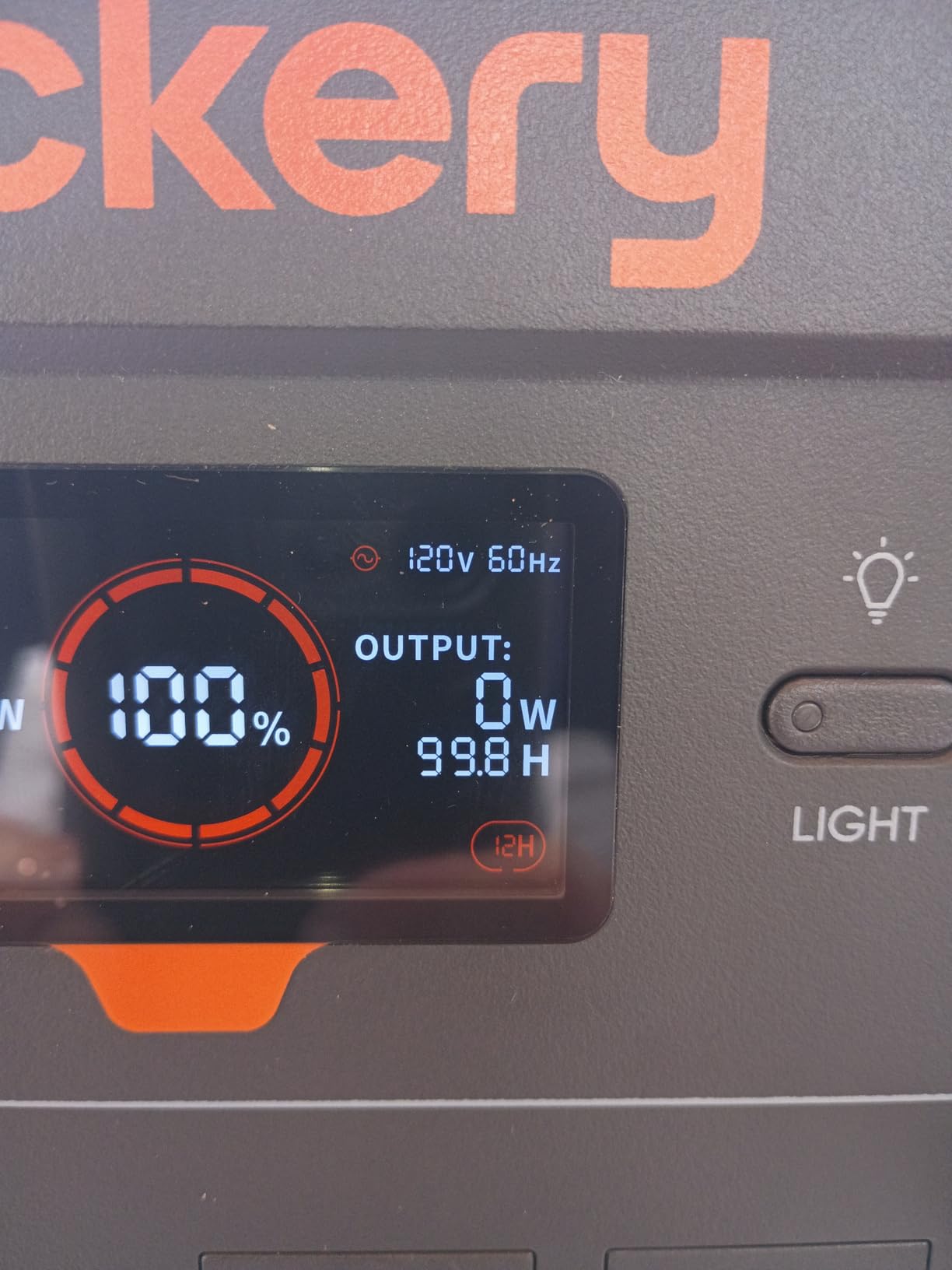
Who the Explorer 1000 v2 suits
Households with a fridge, a freezer, a router and a laptop who want one box instead of two. It is also the right size for car camping where you are running a 12V cooler, a projector and a phone charger simultaneously, and for van life where a 23.8 lb unit can live permanently in a cabinet rather than being carried.
If your load includes a kettle, a power tool or a small air conditioner, this is the cheapest way under 500 dollars to have the inverter headroom for it.
Where it falls short
23.8 lb is not a carry weight. Anyone planning to hike with it will find the Explorer 300 or the BLUETTI Elite 30 V2 a far more sensible choice, and the OUPES Mega 1 is lighter per watt-hour if you need to move a full kilowatt-hour around regularly.
Jackery’s solar input is closed to third-party panels on this model, and the fastest charging mode is buried in the app rather than on a button. The warranty listing is also thinner than some competitors in this group, which is worth weighing if you plan to keep the unit for a decade.
3. Anker SOLIX C1000 Gen 2 – Best for High Output and Fast Recharging
- Full recharge in 49 minutes at 1600W input
- 2000W continuous across 10 ports
- 10 ms UPS keeps CPAP and servers running
- Quiet enough to sit beside a bed
- 5 year warranty with responsive replacement service
- Gen 2 removed the expansion battery option from Gen 1
- One engineering report found 15-20 percent inverter distortion under microwave loads
- At roughly 25 lb it is a stationary unit rather than a hiking companion
The Anker SOLIX C1000 Gen 2 has the highest continuous output of any unit we cover under 500 dollars, and it gets there in 49 minutes flat. That combination of 1,024Wh, 2,000W continuous and 3,000W peak makes it the most capable machine here, and the 10 ms UPS switchover is the tightest we found in this group.
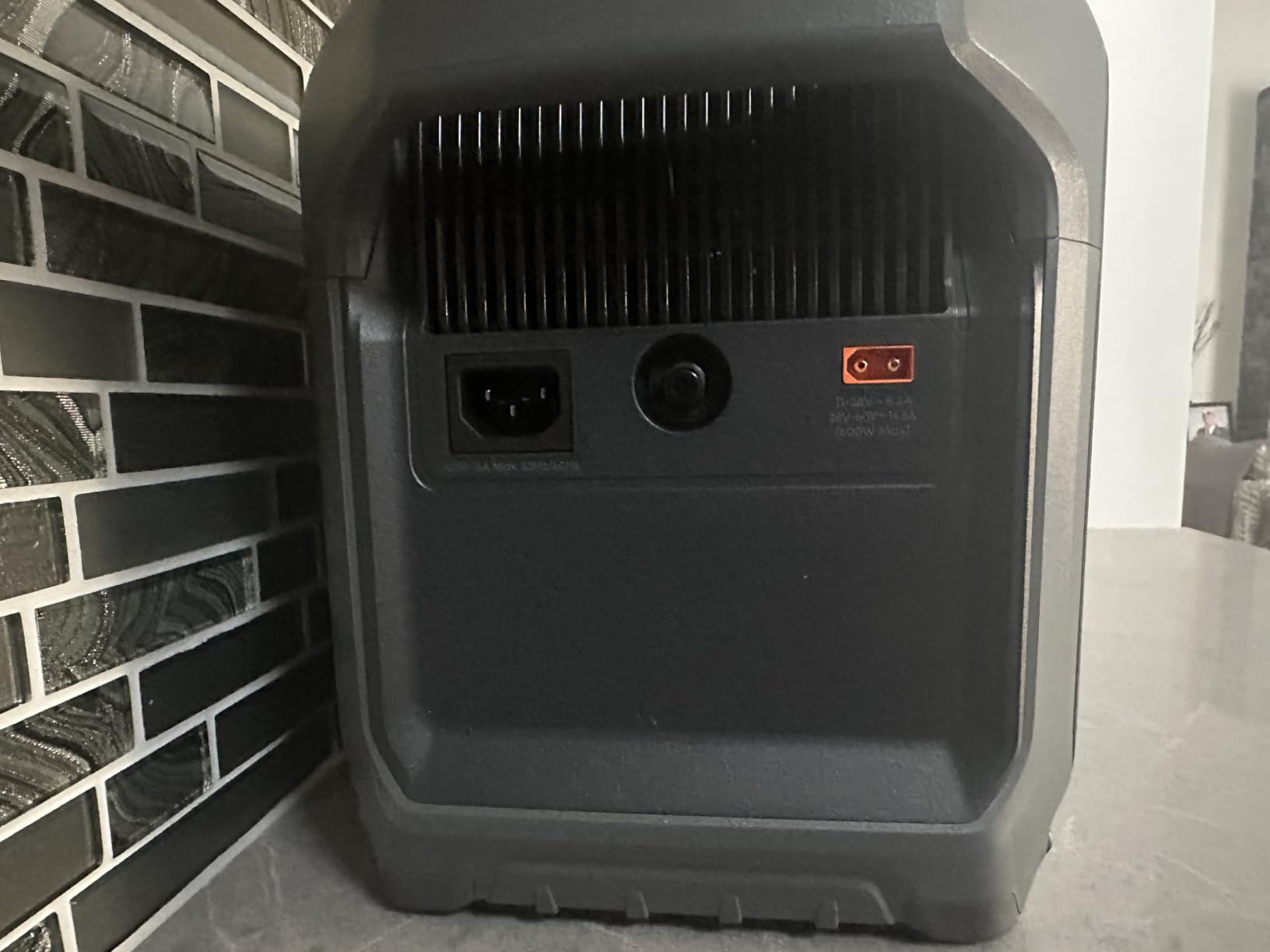
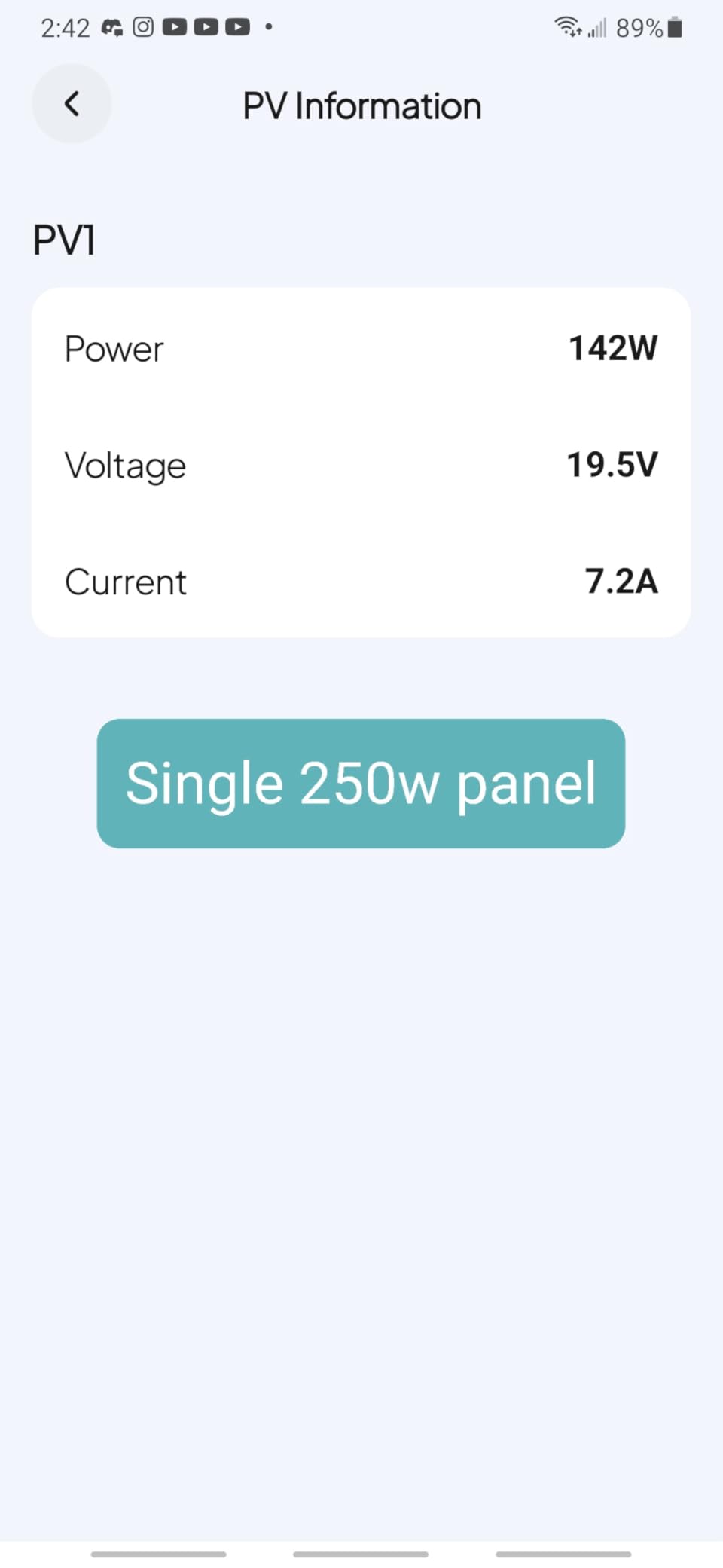
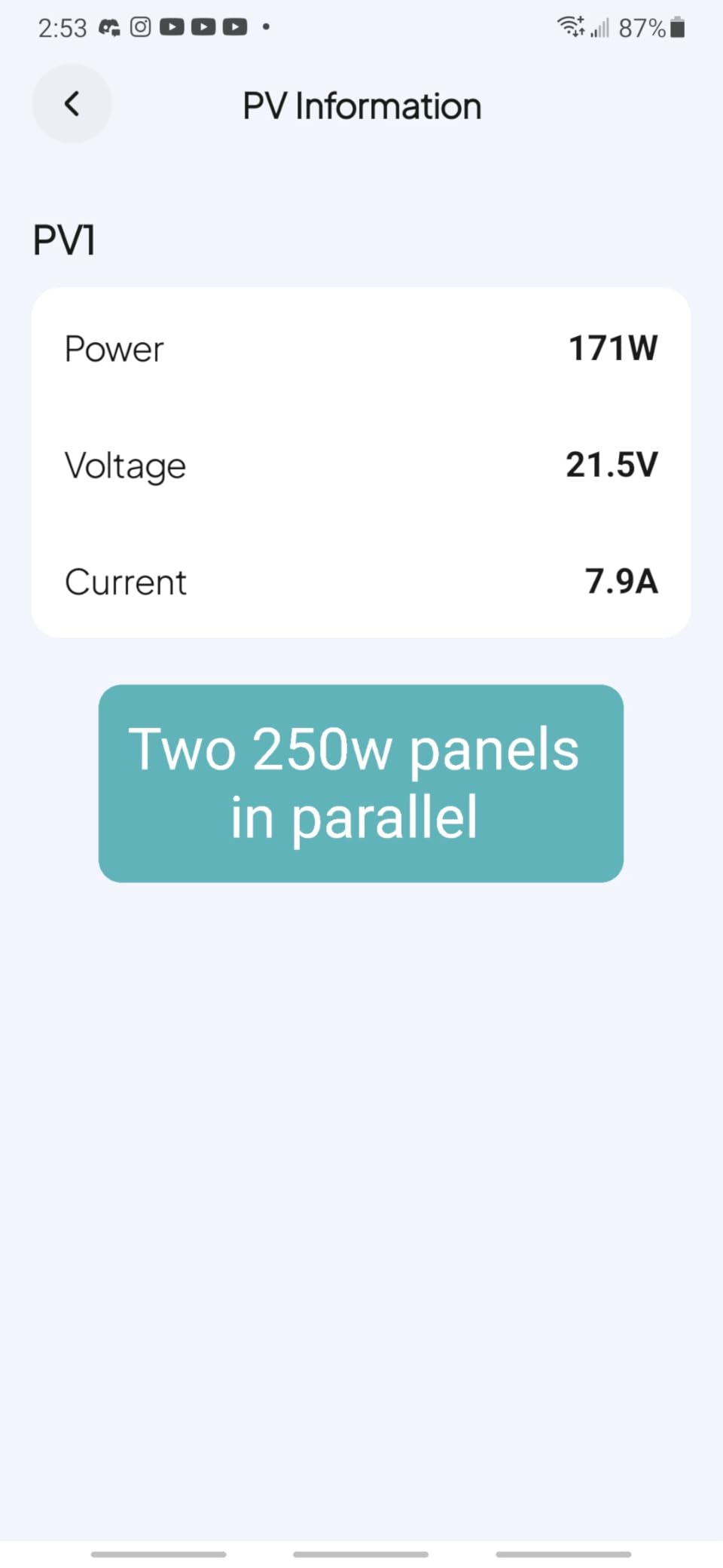
Nine power outlets and ten device connections cover a fridge, a router, a CPAP machine, a laptop and a phone all at once without a splitter. The 600W solar input at 60V max refills the whole pack in 1.8 hours on a good day, and the Anker app adds time-of-use power management alongside the usual status monitoring.
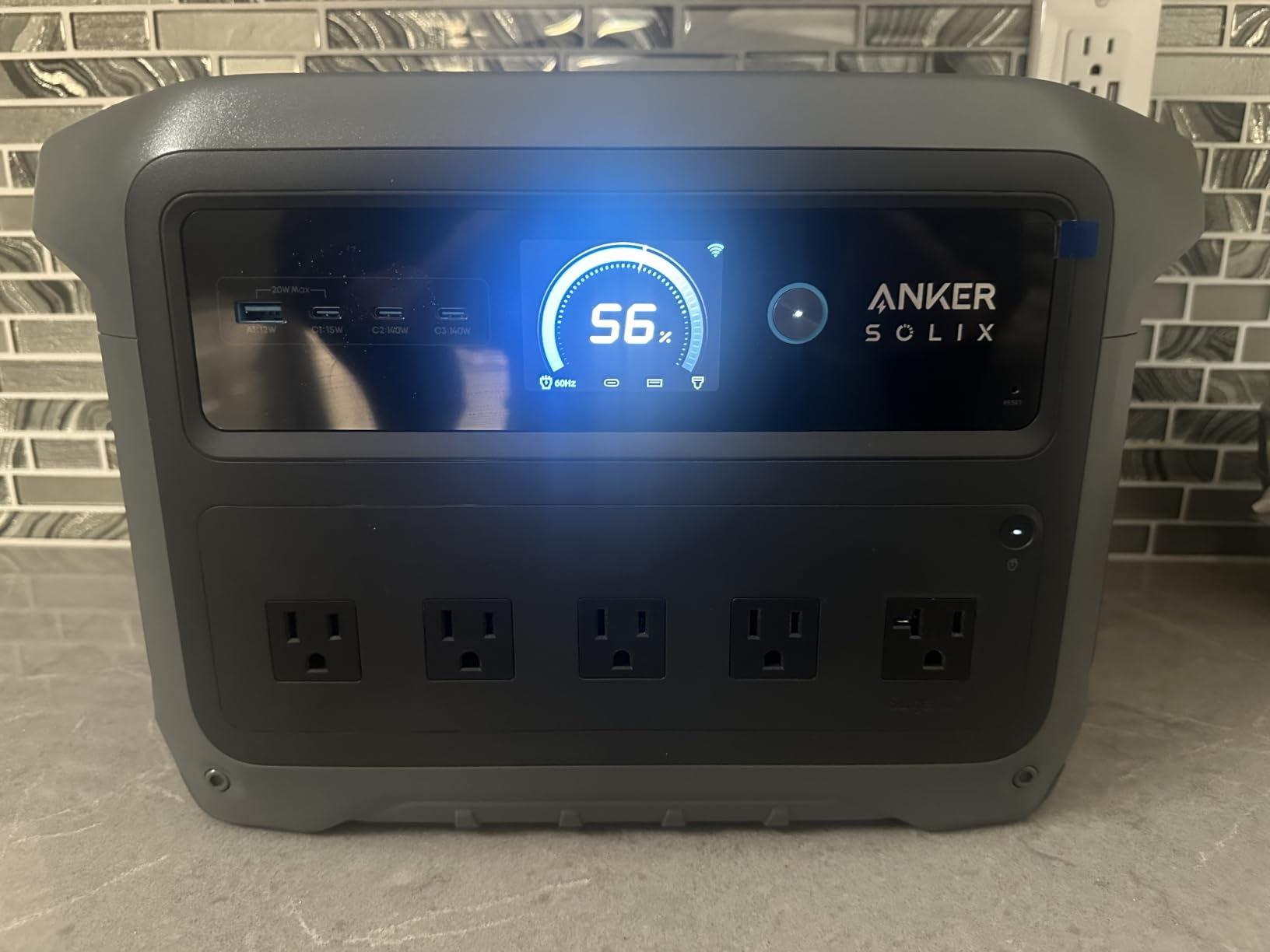
Real-world owners report overnight fridge and freezer backup lasting 6 to 12 hours and multi-night CPAP use, and one r/urbancarliving user runs a Dometic fridge, Starlink and device charging off this class of Anker with 100W panels attached. The recurring theme is silence: several owners say they cannot hear it running beside the bed, which is not something most reviewers can say about a 2,000W inverter.
Anker’s warranty service is repeatedly praised, with owners describing prompt replacement units for early Gen 1 issues. That matters when you are committing to a battery rated for more than four thousand cycles and expecting a company to still be there at year six.
Who the C1000 Gen 2 suits
Anyone with a home office that cannot go dark. A 10 ms transfer is short enough that a desktop, a NAS or a router does not notice the switchover, which is exactly the use case most budget guides skip past. It is also the right pick for someone who wants more output headroom than a 1,000W class unit gives without crossing into the much larger and more expensive tier.
If your main worry is runtime rather than output, the BLUETTI AC180 carries more watt-hours and the OUPES Mega 1 expands further. This is the one to buy when you want to run more things at once.
Where it falls short
Gen 2 dropped the expansion battery that Gen 1 accepted, so if you think you will need 2kWh or more in two years, this is the wrong door to walk through. One detailed engineering report also measured 15 to 20 percent harmonic distortion on the AC inverter under heavy microwave loads, which is worth knowing if you plan to run sensitive audio or medical gear on the AC side.
Status monitoring is Bluetooth-only, and at roughly 25 lb it is a stationary unit rather than a hiking companion.
4. BLUETTI AC180 – Best for Home Backup and the Most Capacity
- One hour full AC recharge is among the fastest in this class
- 1800W continuous covers high draw appliances
- Very quiet with no heat build up
- Wall solar car and alternator recharging
- 5 year warranty
- 37.4 lb makes it a basecamp unit not a carry unit
- Some units needed firmware updates and a calibration cycle
- The top wireless charging pad is unreliable and there is only one USB-C port
The AC180 holds more capacity than anything else in this roundup, at 1,152Wh, and it converts that into up to 16 hours of runtime on modest loads. If your blackout plan involves a refrigerator, a chest freezer and a router, this is the longest-running sub-500-dollar option available.
The inverter puts out 1,800W continuous with 2,700W of lifting power available through the BLUETTI app, and 11 outlets cover everything from USB-C laptops to a 12V car socket. Recharging is flexible: wall, 500W solar, 12V car and alternator, with a full AC charge in one hour at 1,440W input and 0 to 80 percent in about 45 minutes.
One review in our set is worth repeating for any buyer: the owner found their unit underperforming until two firmware updates and a full discharge and recharge calibration restored rated runtime. If you buy one, update it before you trust it. That same owner went on to rate the unit well, which tells you the fix works.
Customer service is widely praised here, including an exchange and firmware fix, and the 5-year warranty comes with EU spare part availability for five years. r/camping buyers also tend to favor BLUETTI over the big names purely on price per watt-hour, which tracks with what we saw in our own comparisons.
Who the AC180 suits
Homeowners who want the biggest buffer they can get below the ceiling, and who will leave the unit where it lives rather than carry it. The 20 ms UPS is fast enough for routers, modems and monitors, though not fast enough for a NAS with a hard disk array in the middle of a write.
It also suits anyone already running a small solar setup, since the 500W solar input fills it in 2.8 to 3.3 hours in good conditions.
Where it falls short
37.4 lb is the heaviest unit we list. Anyone considering hauling it up stairs or across a campground will be disappointed, and the same 15 to 20W of inverter overhead that shows up at low loads on other large units eats into runtime when you are only powering a router and a lamp.
The wireless charging pad on top frequently fails to engage a phone, and there is just one USB-C port, so plan on carrying your own cable if you have several USB-C devices.
5. OUPES Mega 1 – Best for Solar Input and Expansion
OUPES Mega 1 Portable Power Station 1024Wh 2000W (4500W Surge)
- Fastest recharge here at about 36 minutes from 0 to 80 percent
- 2000W continuous starts fridges and tools
- Expands to 5120Wh with two B2 batteries
- Under 30 lb for a full kilowatt-hour
- Standard MC4 solar connectors
- The 4500W surge rating is optimistic and tripped around 2050-2200W in one test
- Cooling fans run hard while charging and the app is thin
- The proprietary Anderson cable is hard to replace
The Mega 1 is the spec-sheet value pick of the 1kWh class. It delivers 1,024Wh of LiFePO4 capacity and 2,000W of continuous pure sine wave output, and it accepts up to 800W of solar through standard MC4 connectors, which means any mainstream portable panel will work with it.
The recharge speed is the part that stands out. Zero to 80 percent in 36 minutes on AC alone, or 26 minutes when you combine AC and solar. The expansion story is the other draw: two B2 extra batteries take the unit to 5,120Wh, so the sub-500-dollar purchase does not have to be your only purchase.
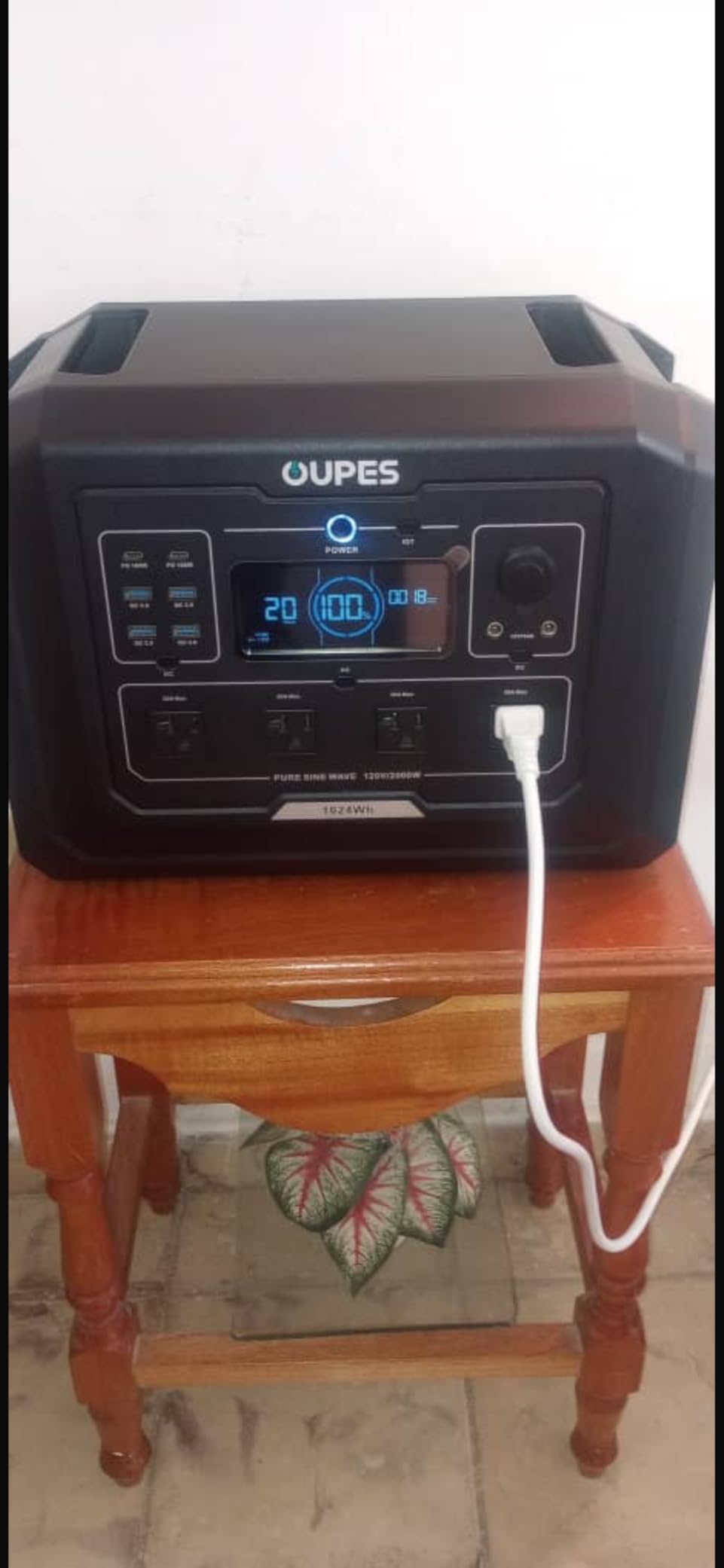
Port layout is unusually sensible for a unit this size: two 100W USB-C PD ports, four QC3.0 USB-A ports, 12V DC outputs and four AC outlets with real spacing between them. UPS transfer lands under 20 ms, and the Bluetooth app covers basic monitoring.
Reviewers treat this as the budget alternative to the Jackery, BLUETTI and EcoFlow units at the same capacity, and support resolved a BMS issue with a fast replacement for one owner. The one measurement that gives us pause is surge: the headline figure is 4,500W, and one tester recorded trips at 2,050 to 2,200W. Size compressor loads against the realistic number, not the printed one.
Who the Mega 1 suits
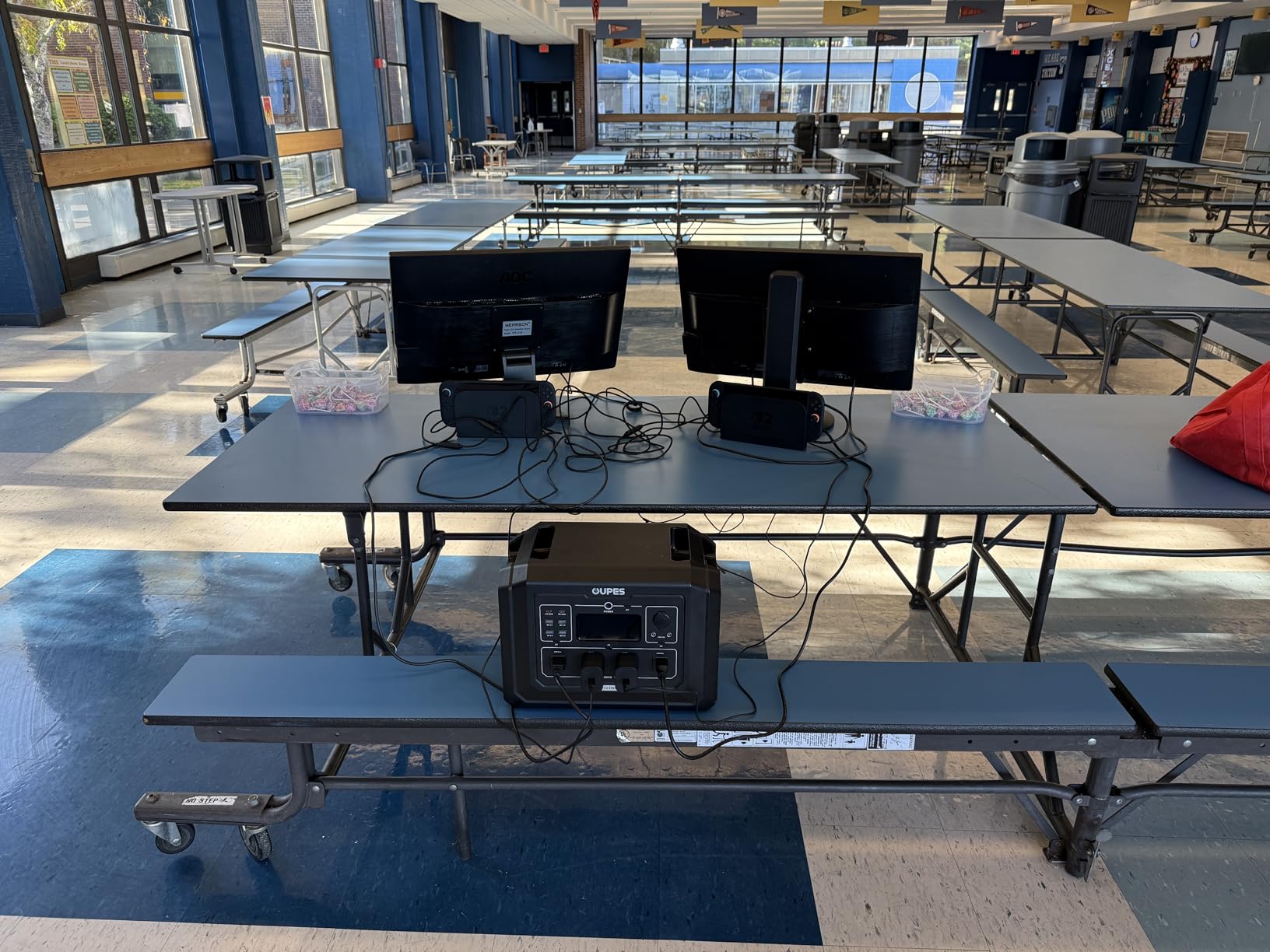
Buyers with a solar plan. The 800W input and standard connectors mean a single good 400W folding panel meaningfully tops you up, and 26-minute combined charging means an overcast afternoon still puts real energy back in. It is also the lightest full kilowatt-hour unit in this group at 27.8 lb, which matters if it lives in a truck bed or a closet rather than a cupboard.
If you expect to need more than a kilowatt-hour within two or three years, this is the only sub-500-dollar pick here that has a documented path there.
Where it falls short
The surge figure does not hold up, the fans get loud while charging, and the app is thin: no cell state or temperature data, and Wi-Fi connection is unreliable. The proprietary Anderson-style charging cable is genuinely difficult to source a replacement for, which is a real annoyance on a purchase this size.
Molded plastic handle edges are also uncomfortable on long carries, so treat it as a two-hand carry at best.
6. BLUETTI Elite 30 V2 – Best Compact Unit With 600W Output
BLUETTI Elite 30 V2 Portable Power Station 288Wh 600W LFP Solar Generator
- 600W continuous is double what most 288Wh units offer
- Power Lifting Mode delivers 1500W for small kettles and toasters
- Standby draw of only 4.5W
- 0-80% in 45 minutes
- Pairs with standard solar panels
- 288Wh drains faster than watt-hour math predicts
- No USB pass-through signalling for automatic PC shutdown
- Outputs must be re-enabled in the app after a full discharge
The Elite 30 V2 breaks the rule that small packs are weak packs. It holds 288Wh and delivers 600W of continuous output in a 9.5 lb body, which is roughly twice the continuous rating of most competitors at the same capacity. That headroom is what lets it run a small kettle or a toaster through Power Lifting Mode at 1,500W.
Nine ports include a 140W USB-C PD port, which is the fastest laptop charging we saw in the sub-600Wh group. Wall charging runs at 380W adjustable input for 0 to 80 percent in 45 minutes and a full charge in 70 minutes, and the 4.5W standby draw is roughly half what comparable units consume thanks to BLUETTI’s UltraCell technology.
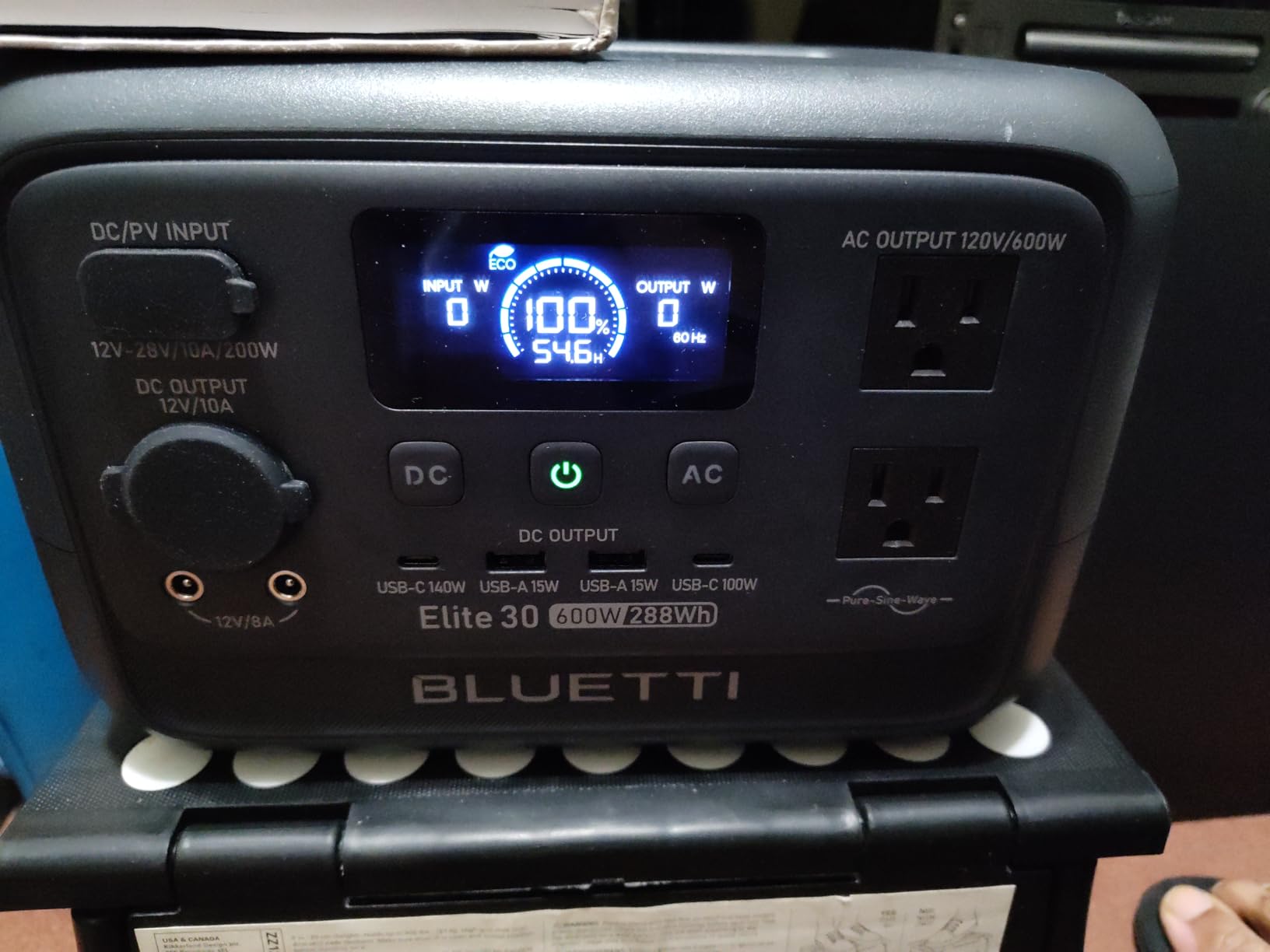
The under 10 ms UPS switchover is a genuine asset here. One owner replaced a four-year-old CyberPower UPS with this unit and roughly doubled their runtime at similar cost, running home servers and networking gear off clean pure sine wave output. It also works with standard BLUETTI panels like the PV60L rather than proprietary connectors.
The honest caveat is capacity. One 3-star review documented a CPAP machine pulling 47 percent of the pack overnight against a multi-night prediction, and that pattern is common across small stations: the inverter and conversion losses eat a bigger share of a small pack than a large one.
Who the Elite 30 V2 suits
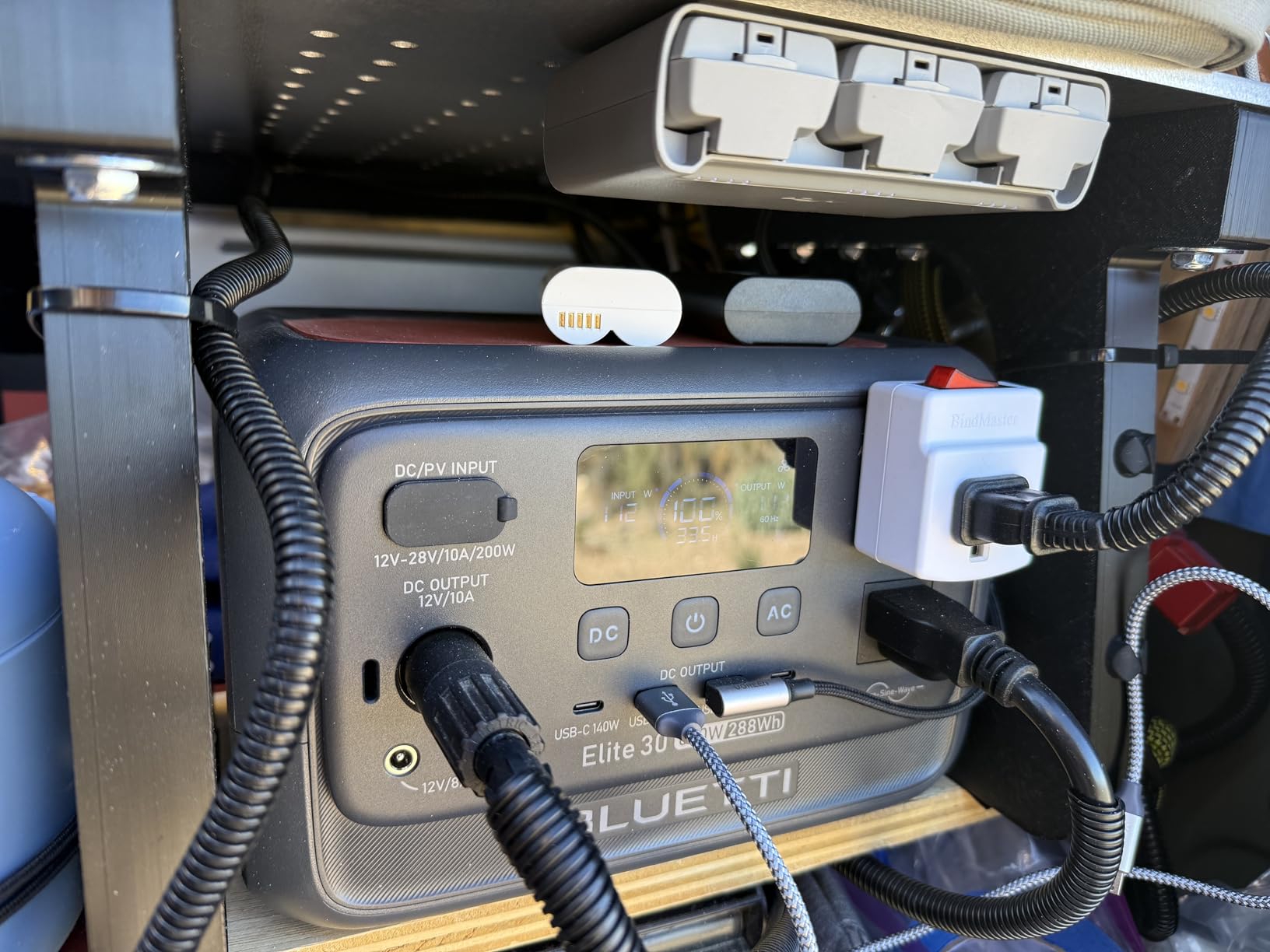
Anyone replacing a desktop UPS who wants more runtime and more ports, and campers who want a 600W inverter in a nine-pound package. The 140W USB-C port alone justifies it for anyone working from a laptop in a van, and you can read more in our guide to portable power stations for van life.
It is also a good fit for tailgating, where lights, a speaker and a cooler all need AC power at once. Our tailgating power station guide covers that scenario in more depth.
Where it falls short
There is no USB pass-through communication, so a desktop will not receive the shutdown signal a traditional UPS sends and may simply shut down abruptly when the pack empties. After a full discharge you also have to enable Pro Mode in the app before the outputs come back, which is a step most people will forget once.
At 288Wh it will not run a fridge, and the low capacity makes it a poor choice for anything overnight.
7. ALLWEI 300W – Best Budget Choice for Overnight CPAP Power
ALLWEI Portable Power Station 300W, 256Wh Solar Generator LiFePO4 Battery
- Thin 6.4 lb form factor that fits tight spaces
- Display shows estimated runtime and exact remaining percent
- True 2.4A USB ports sustain real high draw loads
- Exceptionally low self discharge
- 3000 cycle LiFePO4 battery
- Solar input limited to about 120W so 200W panels will not work
- One owner reported a unit stopped holding charge after about a year
- Fan can run continuously and be loud beside a bed
The ALLWEI 300W is the sleeper of the sub-200-dollar tier. It delivers 256Wh of LiFePO4 storage and 300W of continuous pure sine wave output in a 6.4 lb body, and the 3,000-cycle battery chemistry outlasts most of the cheaper packs in this list.
Six outputs cover one AC outlet, two DC5521 barrel ports, a car socket, an 18W USB-A and a 60W USB-C PD port. The built-in MPPT controller accepts AC, 12V car and solar, and combining wall and solar input gets you a full recharge in 2 to 2.5 hours. There is also a three-level LED light with an SOS mode on the front.
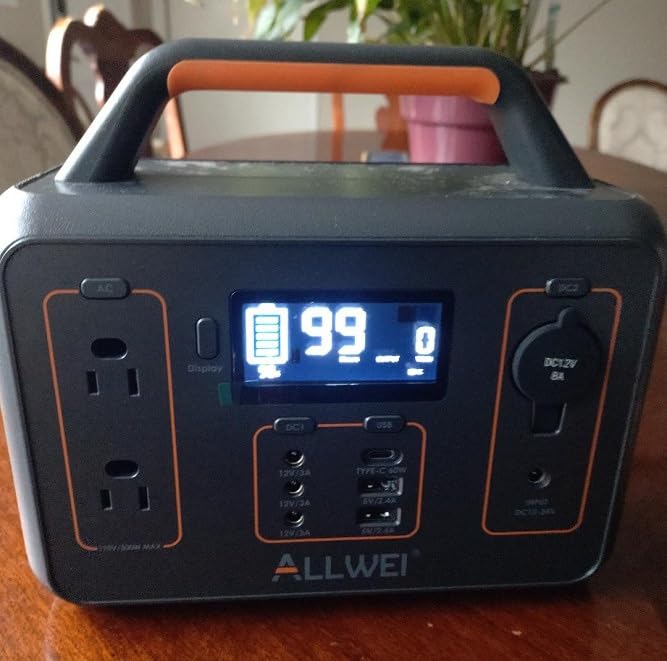
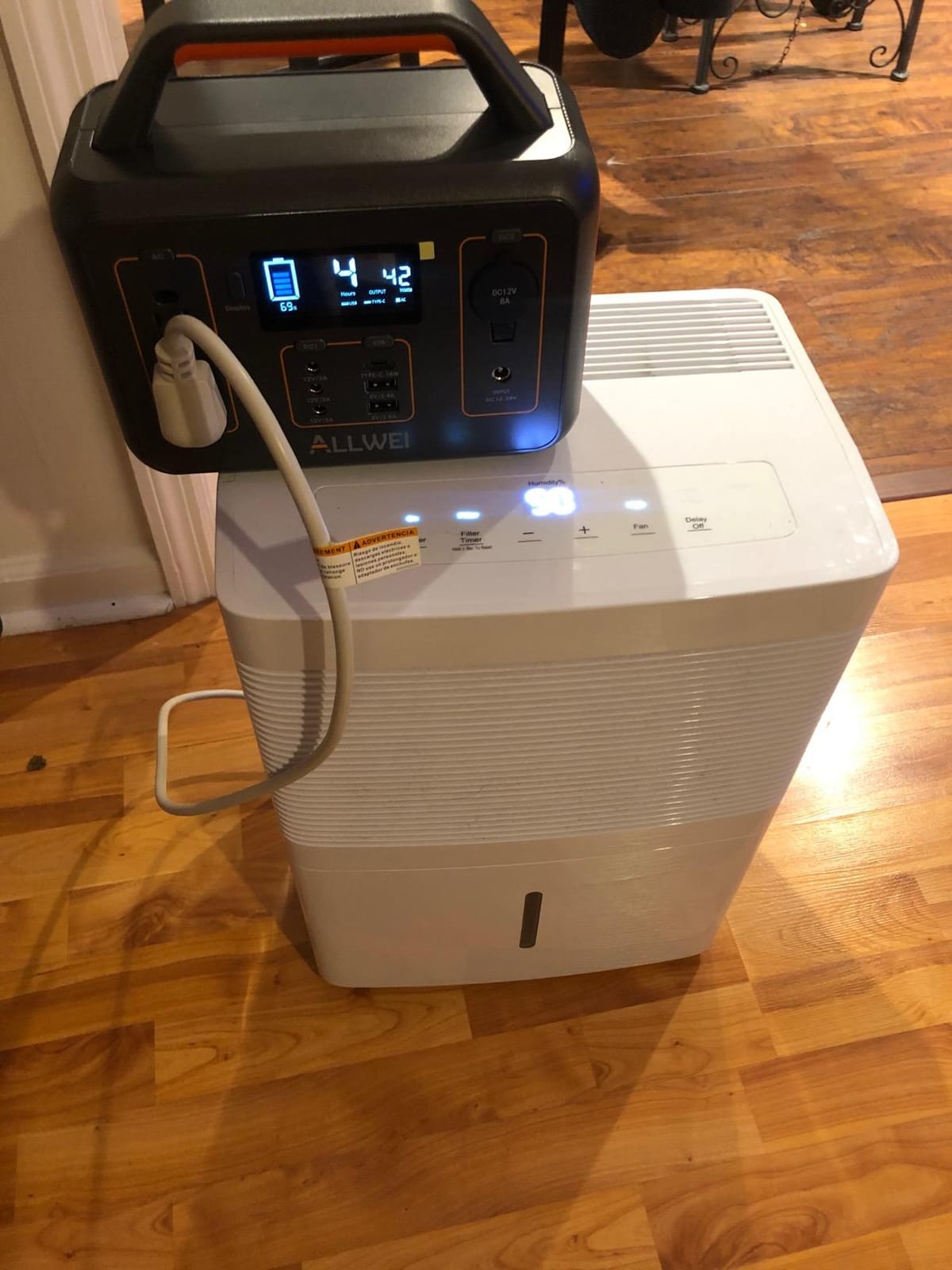
What stands out is the display. It shows estimated remaining runtime and exact battery percentage rather than just current wattage, which is more information than most units this size provide, and the USB ports are true 2.4A units that sustain real high-draw devices. Several owners report the pack still being nearly full after two months unused, and CPAP testing produced 12 to 20 hours of runtime across multiple nights.
One owner runs three units together to keep a fridge and freezer going through an outage, which is a workaround worth knowing about if you are in a repeat-outage area.
Who the ALLWEI 300W suits
Buyers who need a proven medical-device run overnight and who do not want to spend much. CPAP is the clearest case, where predictable multi-night runtime matters more than output headroom, and the pure sine wave AC is the right waveform for sensitive electronics. It is also a solid phone, camera and drone charging station for a car-camping trip.
If you want a second unit, the low weight and small footprint make pairing two far easier than any 20-plus-pound alternative.
Where it falls short
The solar input ceiling of roughly 120W means a 200W panel will not work at all, which limits it if your plan is to recharge on the road from a bigger panel. The continuous fan is loud enough to be impractical beside a bed on a still night, and customer support has asked at least one owner for extensive diagnostic data before engaging on a fault.
One 1-star review reported a unit that stopped holding charge after about a year, so treat it as a three-year tool rather than a ten-year one.
8. ZeroKor 300W – Best for Charging While You Use the Power
Portable Power Station 300W,110V Solar Generator 280Wh(without Solar Panel)
- Very low entry point for a 280Wh and 300W unit
- Light at about 5.1 lb with an integrated handle
- Intelligent cooling only activates when hot
- Charges while in use and still held charge after a 3 day trip
- One detailed test found continuous AC output well under 100W and not true pure sine wave
- Solar input measured far below the claimed MPPT performance
- Must be topped up every two weeks or it enters self protection
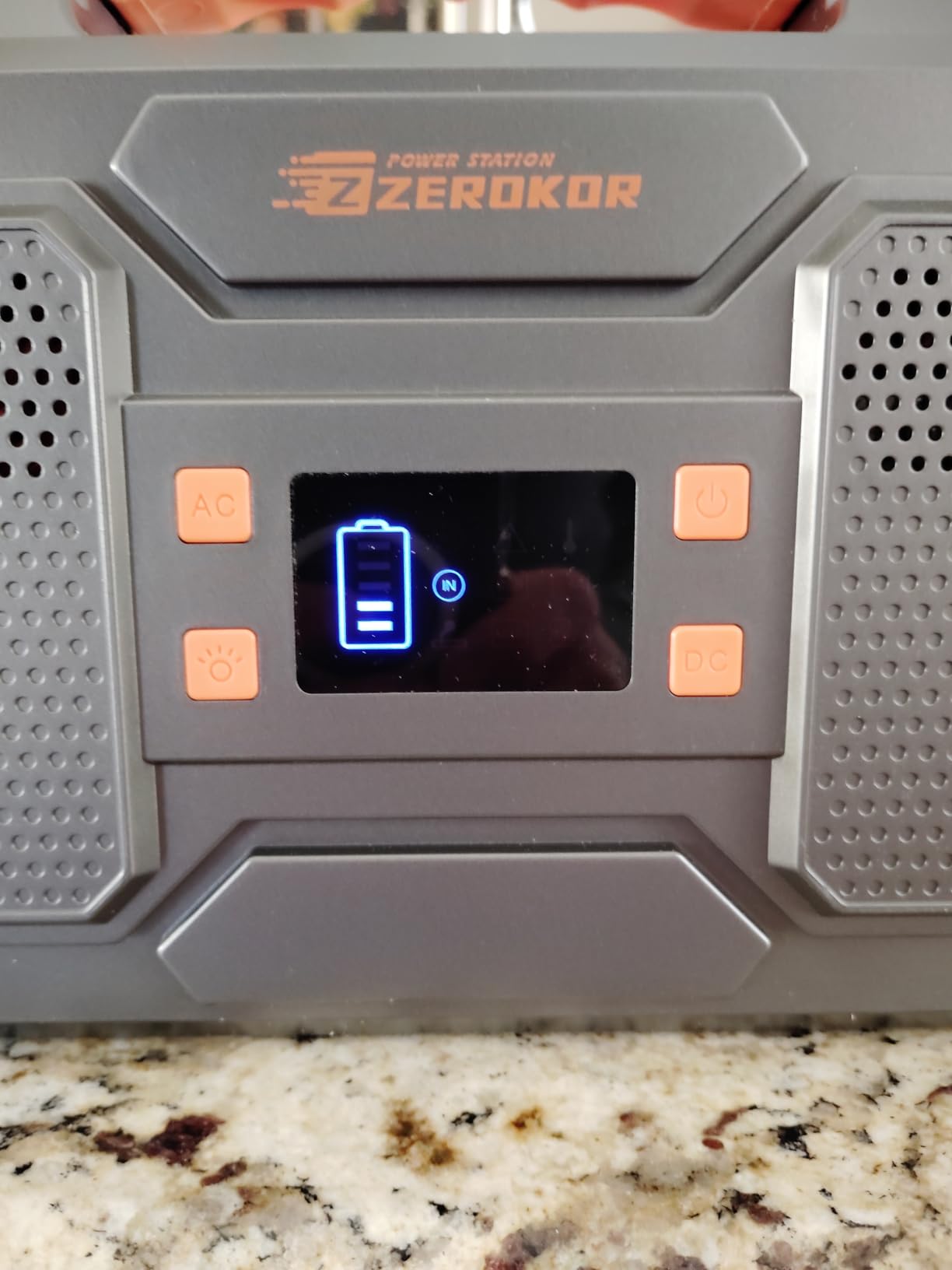
The ZeroKor 300W sits at the bottom of the price range and does something the others do not reliably do: it charges while you use it. Owners report running a trip on it and still finding several bars of charge left at the end, which is the pass-through behavior campers want from a station in a tent.
Seven outputs include two AC outlets rated to 300W max, a DC barrel port, three USB ports and a QC USB port. Recharging works from a wall outlet, the 12V car adapter or a 13V to 23V solar panel through the built-in MPPT controller. The intelligent cooling system only spins up when the unit gets hot, so it is genuinely quiet in normal use.
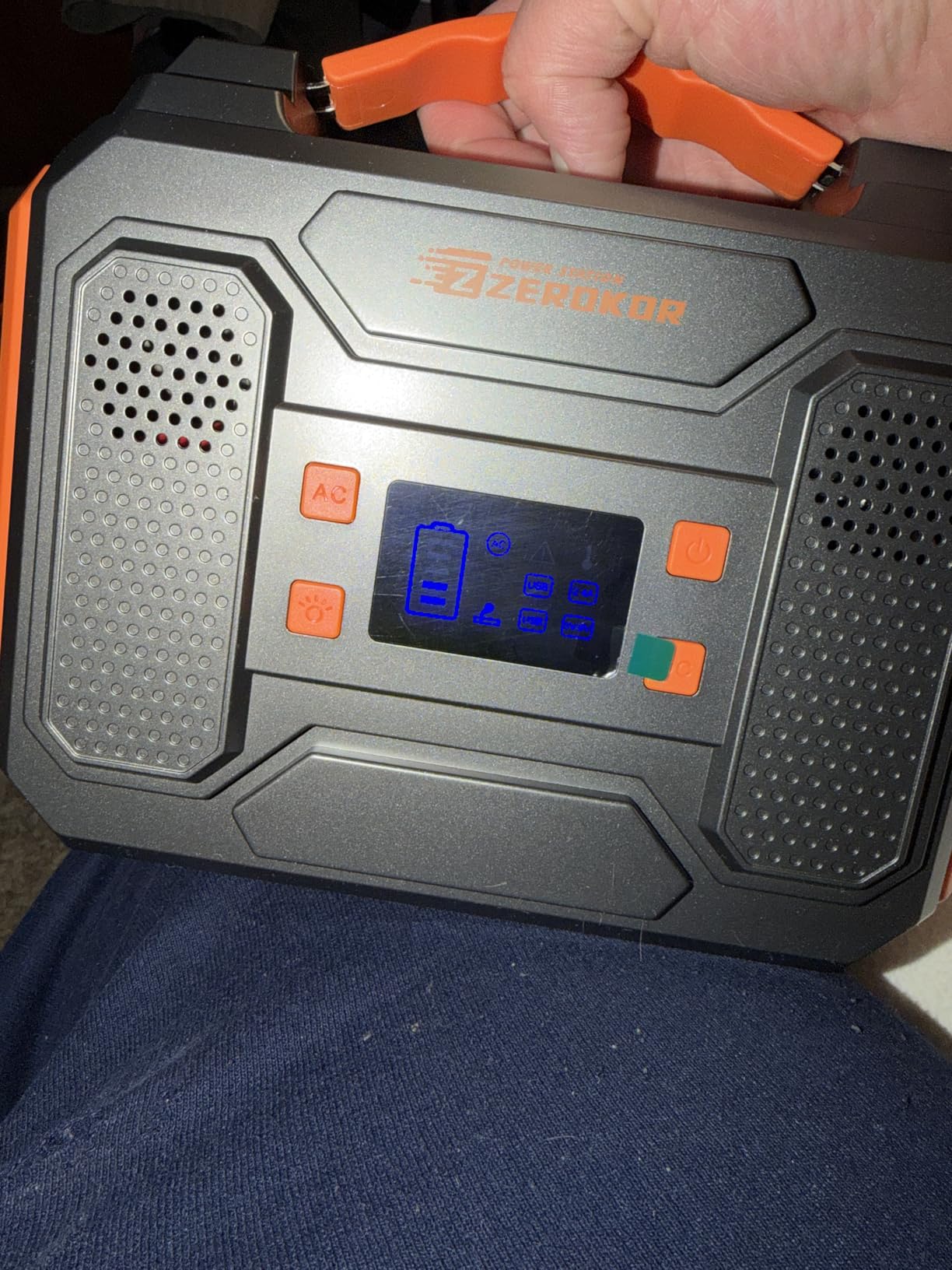
We need to be direct about the weak spot here. The most detailed technical review in the set, with 369 helpful votes, measured continuous AC output well under 100W against an advertised 300W, found the waveform is not a true pure sine wave, and found the DC port and solar MPPT charging did not deliver claimed performance. That is the single most important caveat anywhere in this roundup.
It also needs topping up at least every two weeks or it drops into a self-protection state, which is annoying for a unit meant to sit in a garage between uses. The 12-month warranty is the shortest in the group alongside MARBERO.
Who the ZeroKor 300W suits
Occasional users who want a station in the trunk for a weekend of charging phones, tablets and a USB fan, and who value not having to remember a recharge schedule. It is also fine for a 55-inch television for a few hours or an air mattress overnight, which are the loads people actually test it with.
At 5.1 lb it is one of the easier units here to move between the car and the campsite.
Where it falls short
Do not buy this one to run anything with a motor, a compressor or sensitive audio equipment. The measured output shortfall and the non-sinusoidal waveform rule those out, and no amount of headline wattage changes that. Solar charging underperformed in testing, the 12V DC port did not work, and the wall recharge is slow relative to the capacity.
Treat it as a big power bank with an AC outlet, which is exactly what many people at this price actually need.
9. EnginStar 300W – Best for 12V DC and Camping Gear
- Best display in its class showing per port wattage without an app
- Two true AC outlets with pass-through UPS style operation
- More output types than competing 300W units including a 24V barrel port
- Verified to run a 12V car fridge for 24 plus hours in desert heat
- Wall recharge takes about 7 hours which is the slowest here
- Not ruggedized and ports are exposed
- Will not power grills induction cookers microwaves fridges or heaters
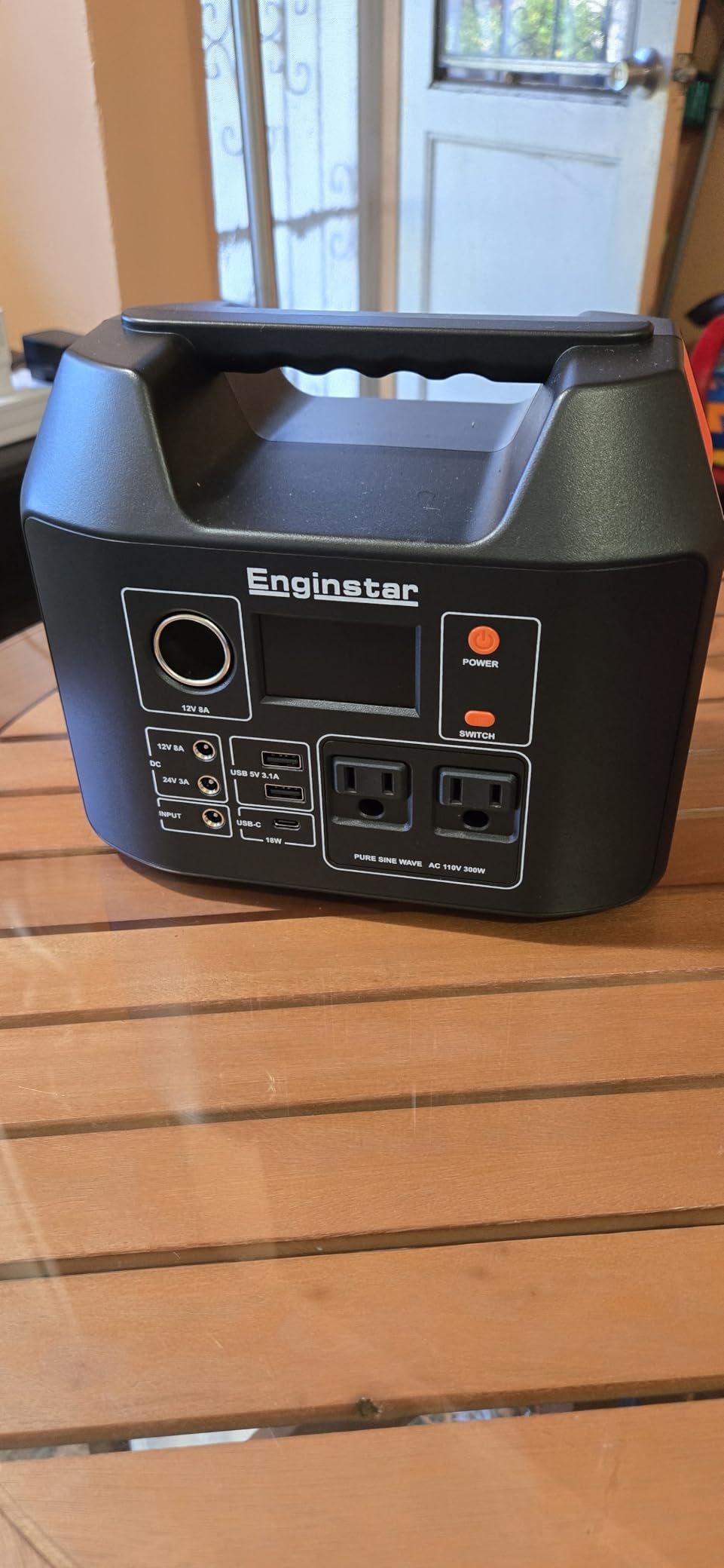
The EnginStar 300W is the one to buy if your camping load is DC rather than AC. It carries 296Wh of capacity and, unusually for a 300W-class unit, eight outputs including a 12V car port, a 12V DC barrel and a 24V DC barrel port alongside two pure sine wave 110V AC outlets.
Those two AC outlets support pass-through operation, so the unit can behave like a UPS for a router or a small network switch. The 12V car port is the reason to buy it: owners have documented a 12V car fridge holding 35 degrees for 24-plus hours in Arizona heat while recharging from the vehicle.
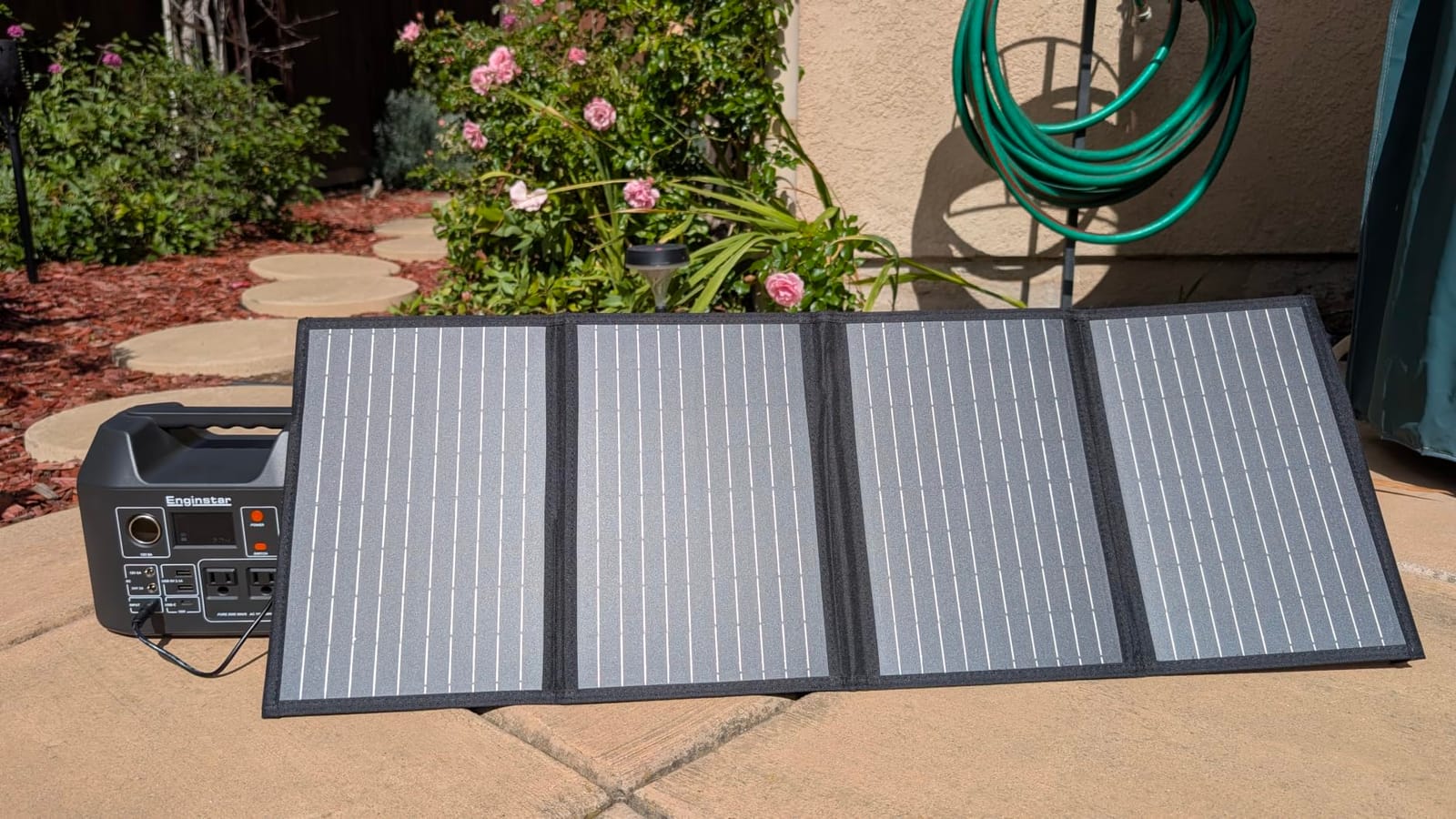
The display is the quiet winner feature. It reports per-port input and output wattage with no app and no Bluetooth pairing, which is the information you actually need when something is drawing more than you expected. CPAP testing also produced 3 days and 7.5 hours of runtime at full humidifier heat, the longest documented medical-device run we saw on a 296Wh pack.
Reviewers compare it favorably to Anker and Apowking 300W units specifically on display detail, port variety and pass-through capability at the low end of the price range.
Who the EnginStar 300W suits
Campers running 12V gear, van builders who need a 24V barrel output, and anyone replacing a small UPS for networking equipment. The full BMS suite covering overload, over-discharge, overcharge, overheating and short circuit is reassuring for medical or comms use, and the 6.5 lb body with a built-in flashlight is easy to pack.
It is also a good pick for anyone who does not want to deal with an app at all.
Where it falls short
Seven hours of wall recharge is the slowest in this roundup, which is painful if you are caught without power. The unit is not ruggedized and the ports are exposed, so it needs weatherproofing in wet or dusty conditions. The indicator LEDs cannot be dimmed and light up the whole room, and it will not power a grill, induction cooker, microwave, refrigerator or heater.
Budget planning time around that seven-hour recharge before you commit.
10. MARBERO 300W – Best for Backpacking and Lantern Light
- Very light at 4.6 lb and small enough for a backpack
- Most reviewed unit in this group with more than 9100 ratings
- Eight outputs covering 2-prong and 3-prong AC plus four USB-A and one USB-C
- Two LED lanterns with multiple brightness levels and SOS mode
- Several reviews report units failing to hold charge or cutting out within 1-3 years
- AC inverter output is too low for laptops and many appliances
- Proprietary round charging port with no standard replacement
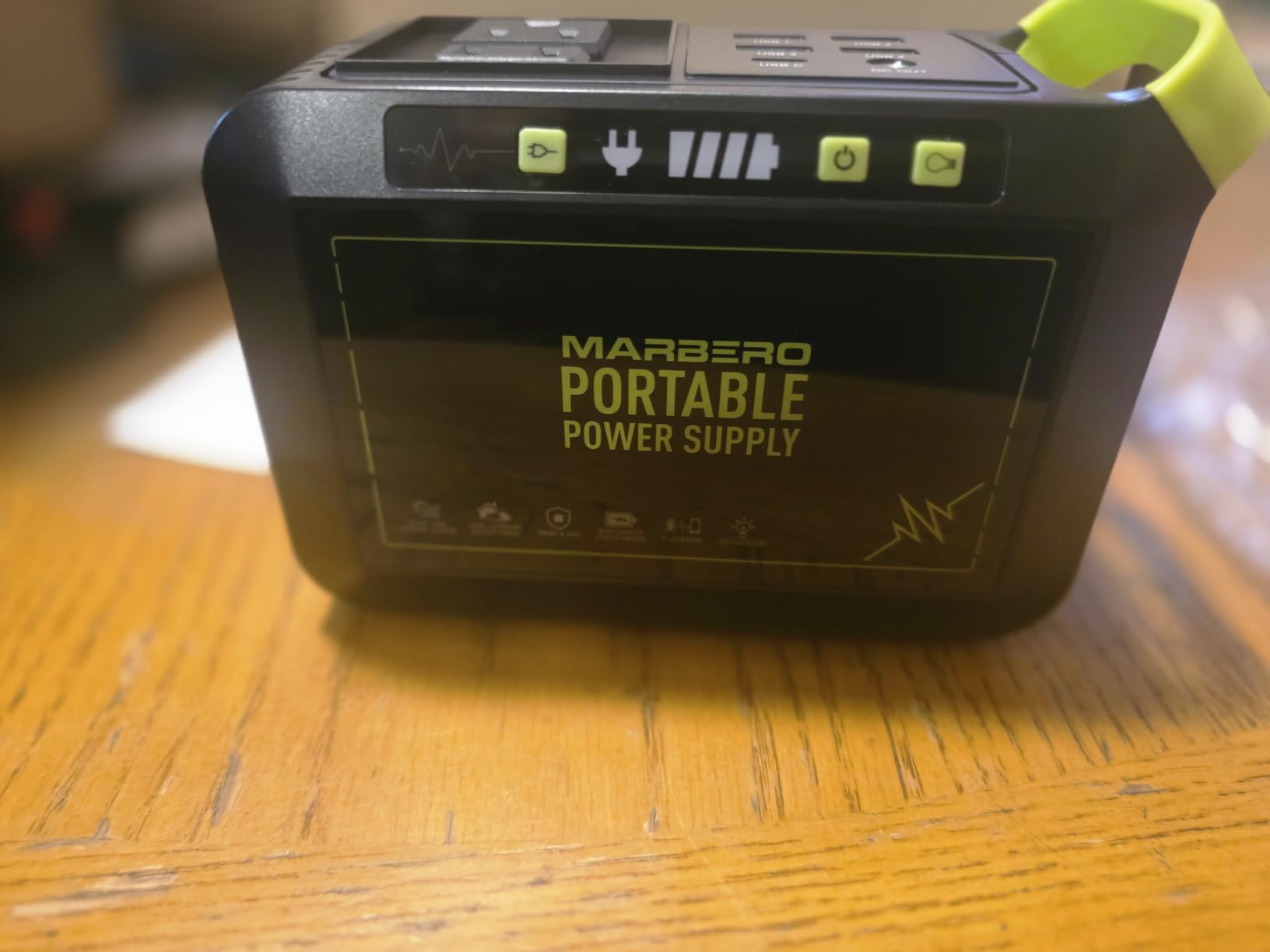
By review volume the MARBERO 300W is the market leader in this group, with more than 9,100 ratings, and at 4.6 lb it is the second-lightest unit we cover. If your load is small electronics and lighting, the sheer number of owners testing it makes the long-term data unusually easy to find.
Eight outputs cover two AC outlets, four USB-A ports including two QC3.0, one USB-C PD port and a DC car output. The dual LED lanterns are genuinely useful: one on top with two brightness levels and one on the side with three levels plus steady, twinkle and SOS modes. Recharging runs about 6 hours from a wall, 8 hours from a 12V car adapter, or from a 16.4V to 24V solar panel.
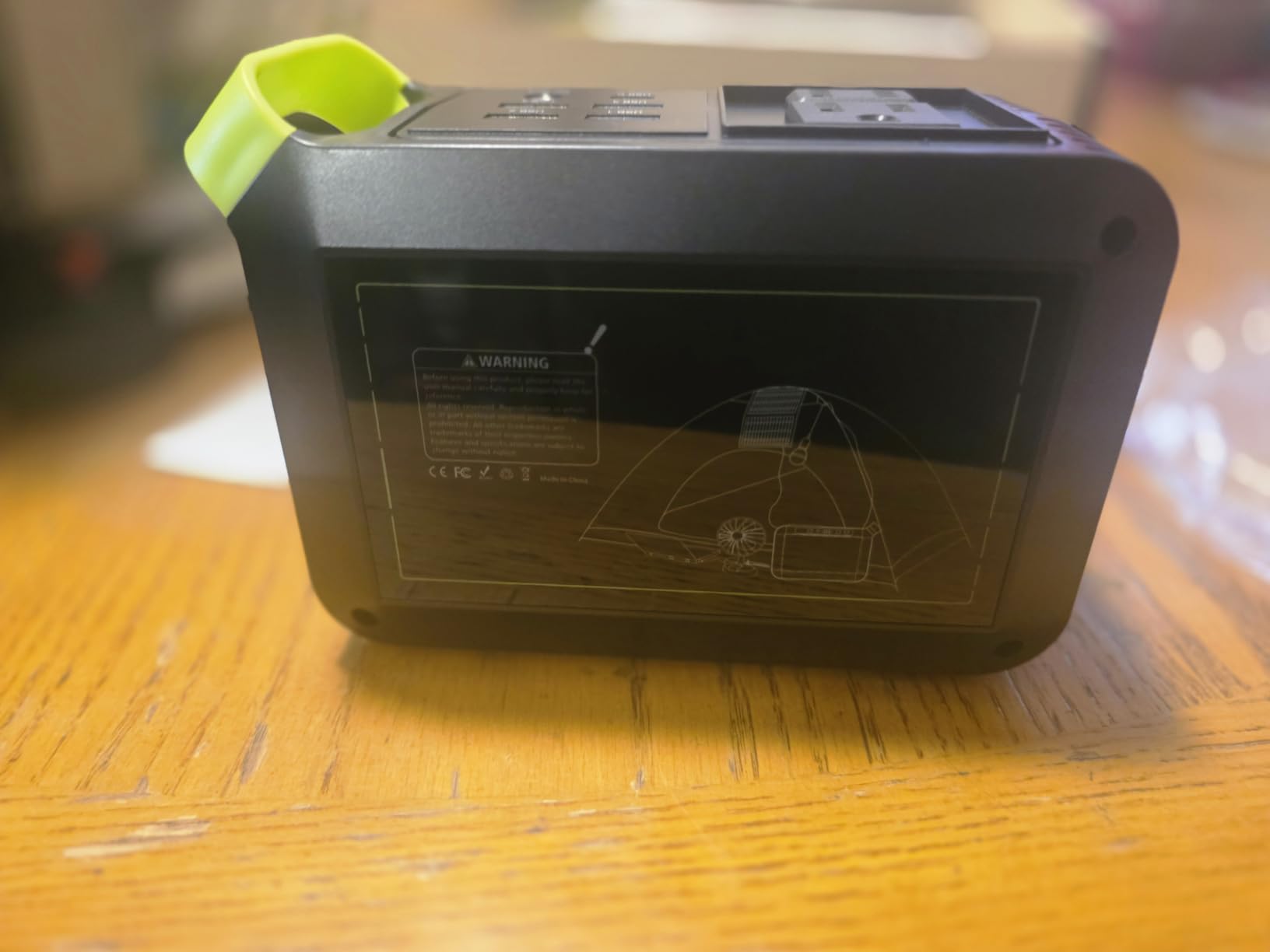
One owner documented a single weekend that inflated four air mattresses and charged three phones to full while using only two bars, which is the clearest demonstration of what 237Wh is actually good for. Size your expectations to that, not to a marketing chart.
The durability data is the concern. A 4.1 average with 12 percent one-star reviews points at a real longevity problem, and multiple owners report units dying or refusing to hold charge after one to three and a half years. One buyer returned theirs in favor of a Jackery Explorer 240D, which is a reasonable trade at this price.
Who the MARBERO 300W suits
Backpackers and anyone who wants emergency lighting built into the same box as a charger. It fits in a pack without becoming the heaviest thing you carry, and the lanterns remove the need to carry a separate light. It is also a reasonable gift for someone who needs a charger more than a power station.
If you want the review volume but not the longevity risk, the BLUETTI Elite 10 Mini is lighter on your wallet in exchange for a smaller capacity.
Where it falls short
The AC inverter is too weak for laptops and most everyday appliances, so the two AC outlets are more useful for a lamp than for anything with a compressor. The proprietary round charging port is not USB-C and has no standard replacement, which is a real problem if the cable is lost or damaged.
Construction feels flimsy at this price, and the one-year warranty is short. If you want a unit you keep for a decade, spend more.
11. BLUETTI Elite 10 Mini – Best for Air Travel and Carry-On Limits
BLUETTI Elite 10 Mini Portable Power Station, 128Wh 200W Solar Generator
- Only 4 lb with an ergonomic handle
- Stays within FAA carry-on limits so no airport friction
- 10 ms UPS plus 350W bypass keeps routers and laptops running
- 150W AC input gives a full recharge in about 70 minutes
- 128Wh is very small and a single fast phone charge can eat 20 percent
- Bluetooth must stay connected to reach the light or settings
- Several reviews of the sibling Elite AC2A report BMS fault errors and failures
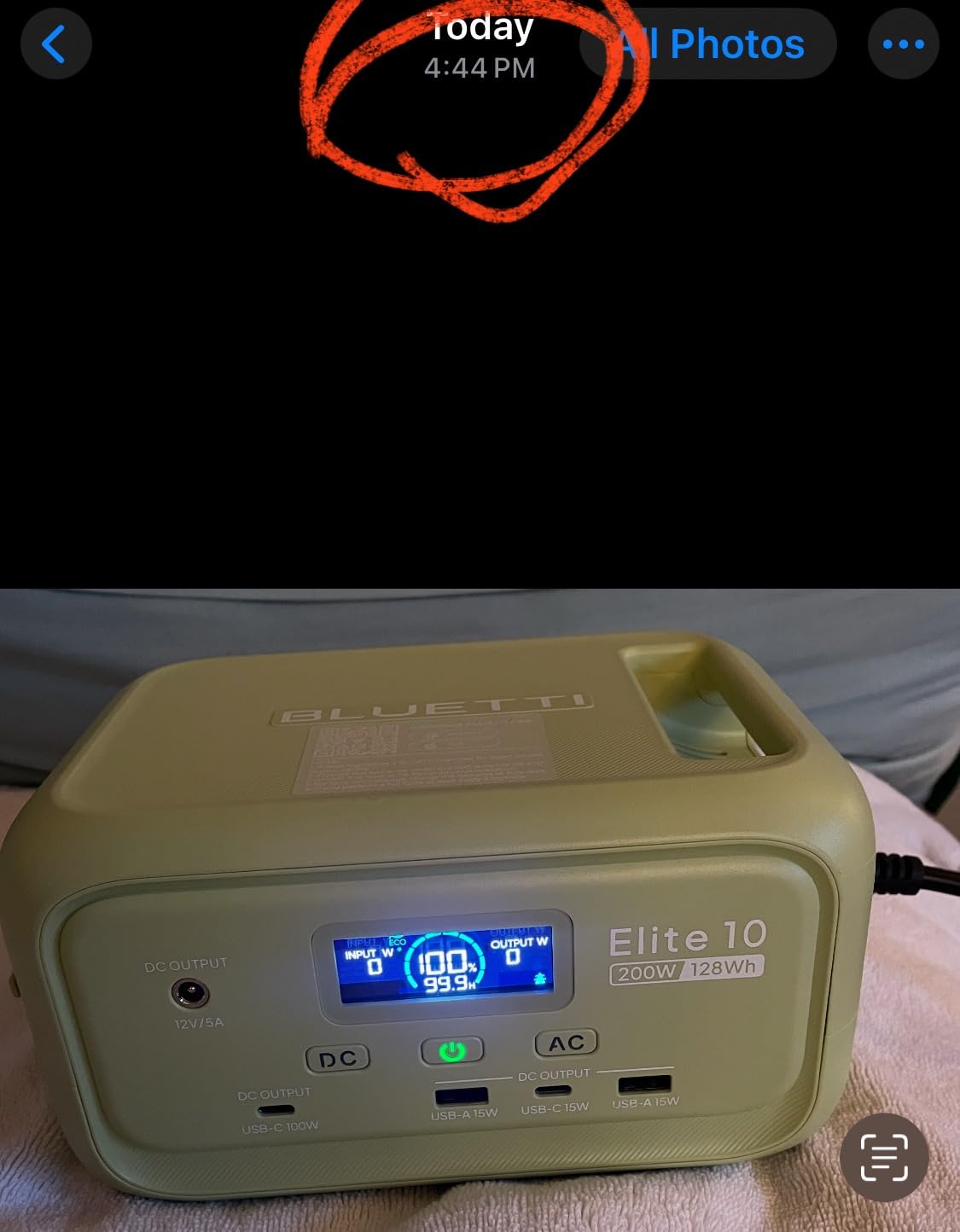
The Elite 10 Mini exists because of a rule most guides ignore: airlines cap lithium capacity in the cabin. At 128Wh it sits inside the 100Wh to 160Wh range that permits two units per passenger, so it goes through the airport with no special handling and no packing drama.
Output is 200W on the AC outlet with a 350W bypass mode, plus a 100W USB-C fast charging port and several DC ports. The 10 ms UPS switchover is the standout feature at this size, keeping laptops, routers, modems and security cameras running through short outages, and the 3,000-plus cycle LiFePO4 battery outlasts most of its size class.
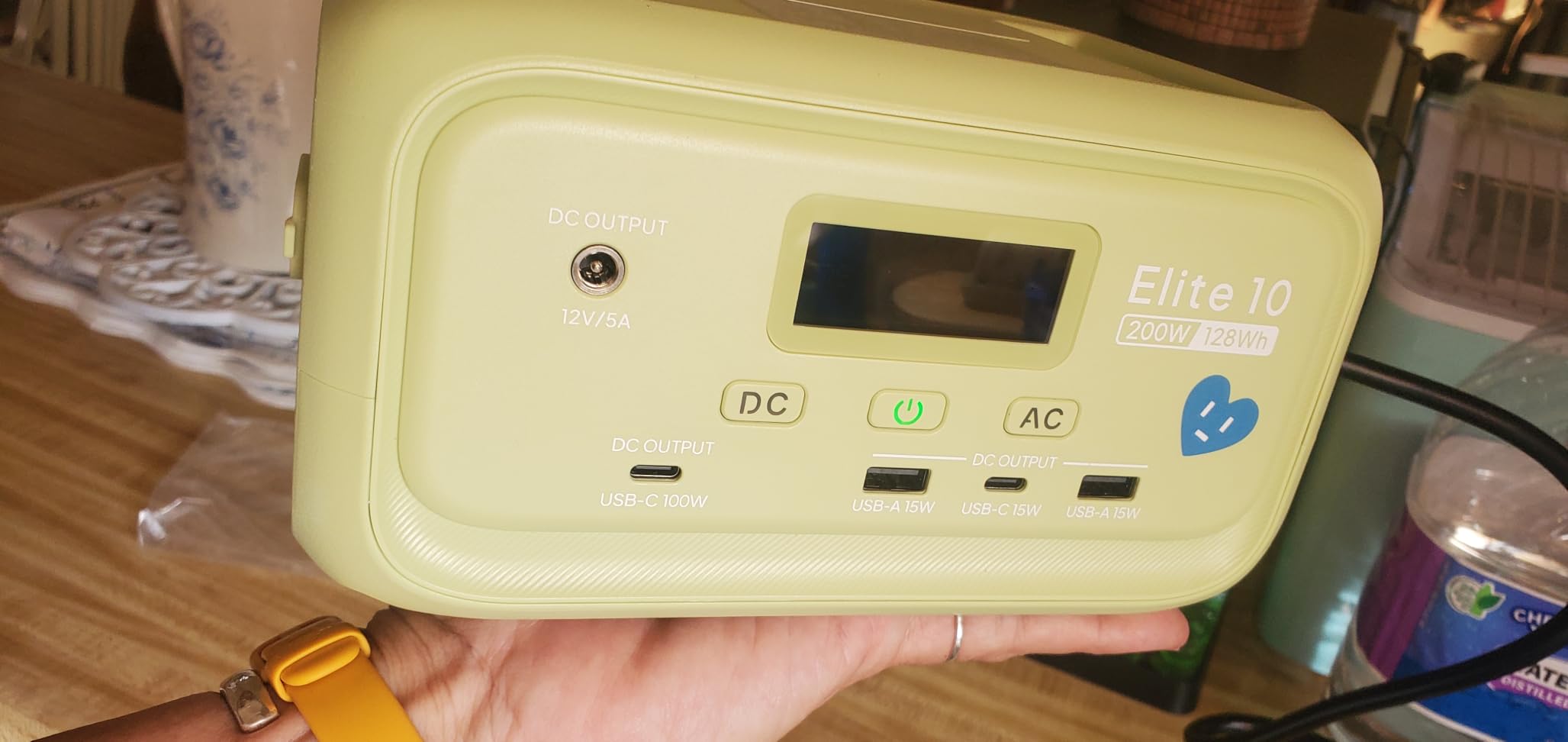
Charging is fast for a unit this small: 150W AC input fills it in about 70 minutes, and 100W solar plus 100W car charging are both supported. Buyers report handling a full 6-hour flight with power to spare, and one owner used UPS mode to keep a desktop computer alive for four hours during a work-from-home outage.
Capacity is the limit, and it is a hard one. A reviewer measured a single iPhone fast charge consuming 21 percent of the pack. Runtime on anything more demanding than a phone and a router is short, and Bluetooth has to stay connected to reach the light or change settings, with no way to turn it off.
Who the Elite 10 Mini suits
Frequent flyers and business travelers who need their router, modem and laptop alive in a hotel during an outage, and anyone who wants a genuine emergency pack that lives in a desk drawer. The 3,000-plus cycle battery means even with partial charges every few months it will hold up for years.
It is also a sensible first station for someone who only wants to keep phones alive during a power cut.
Where it falls short
128Wh is very small, and any device with a real draw will drain a meaningful share quickly. Several detailed reviews of the closely related Elite AC2A describe BMS fault errors leading to returns and replacements, so if you are buying in this size range, buy from a seller with an easy return path.
The forced-on Bluetooth requirement is annoying in a way that only shows up after a few weeks of ownership.
12. Daran 100W – Budget Pick for Small Electronics
- Smallest and lightest unit we cover at 2.5 lb
- Stays under the 100Wh FAA carry-on limit
- Recharges from dead to full in about 1.2 hours using AC and USB-C together
- LiFePO4 chemistry rated for 3500 plus cycles
- 100W ceiling rules out toasters microwaves and coffee makers
- USB-C PD caps at 85W which is insufficient for devices like the Starlink Mini
- Pass-through is charge and discharge type which wears the battery faster
The Daran 100W is the smallest and lightest unit in this roundup at 2.5 lb, with 89.6Wh of LiFePO4 storage that keeps it under the 100Wh airline carry-on limit. It is the right answer for a specific question: how small can a unit with a real AC outlet get.
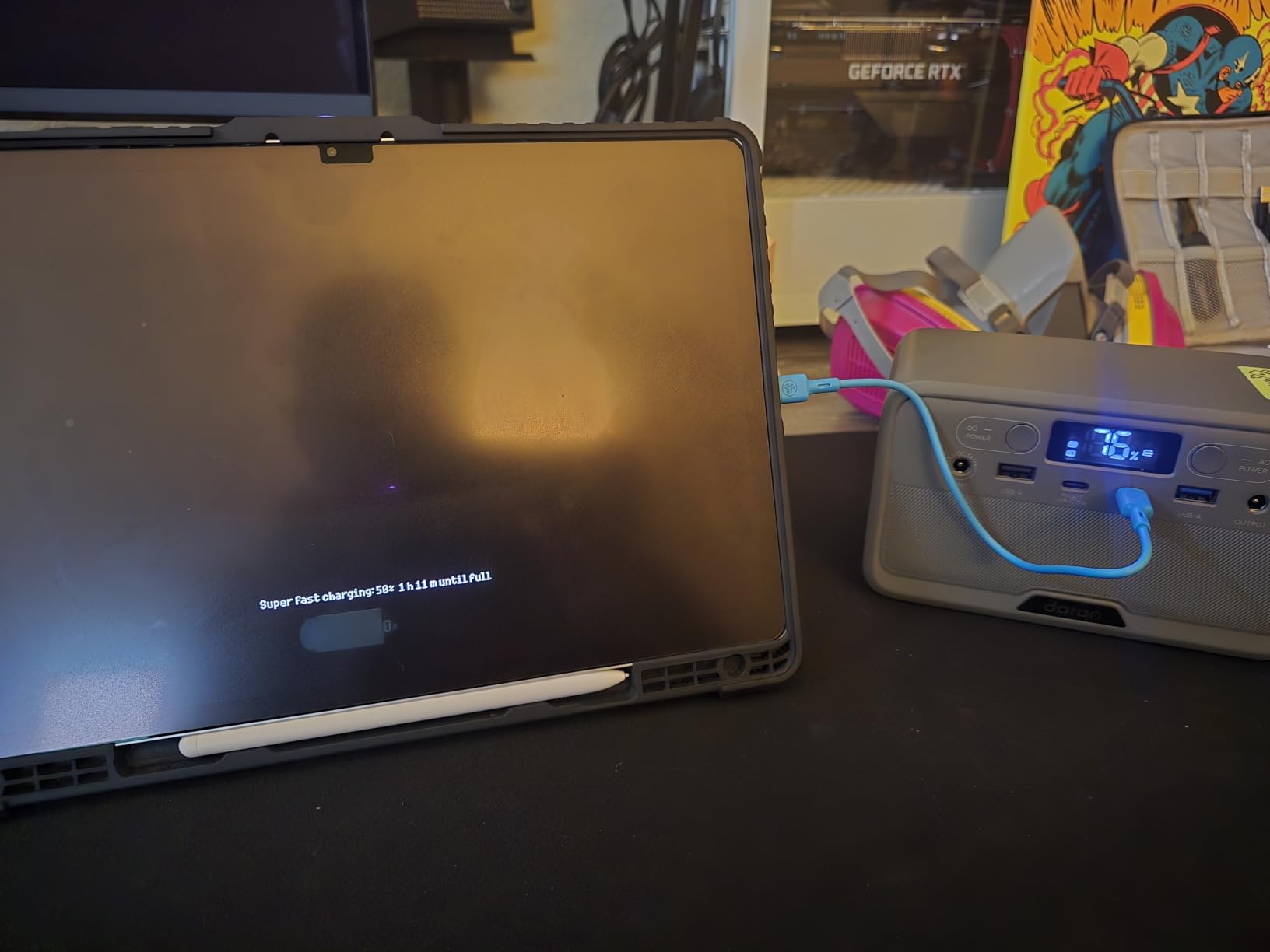
Seven ports for a unit this size is generous: two AC outlets, one 2-prong and one 3-prong, two USB-C ports at 45W and 15W, two USB-A ports at 18W and 15W, and a 60W DC5521 output. Charging is the standout, with 0 to 80 percent in about 1.5 hours and a full charge in 1.2 hours when you combine AC and USB-C two-way charging simultaneously.
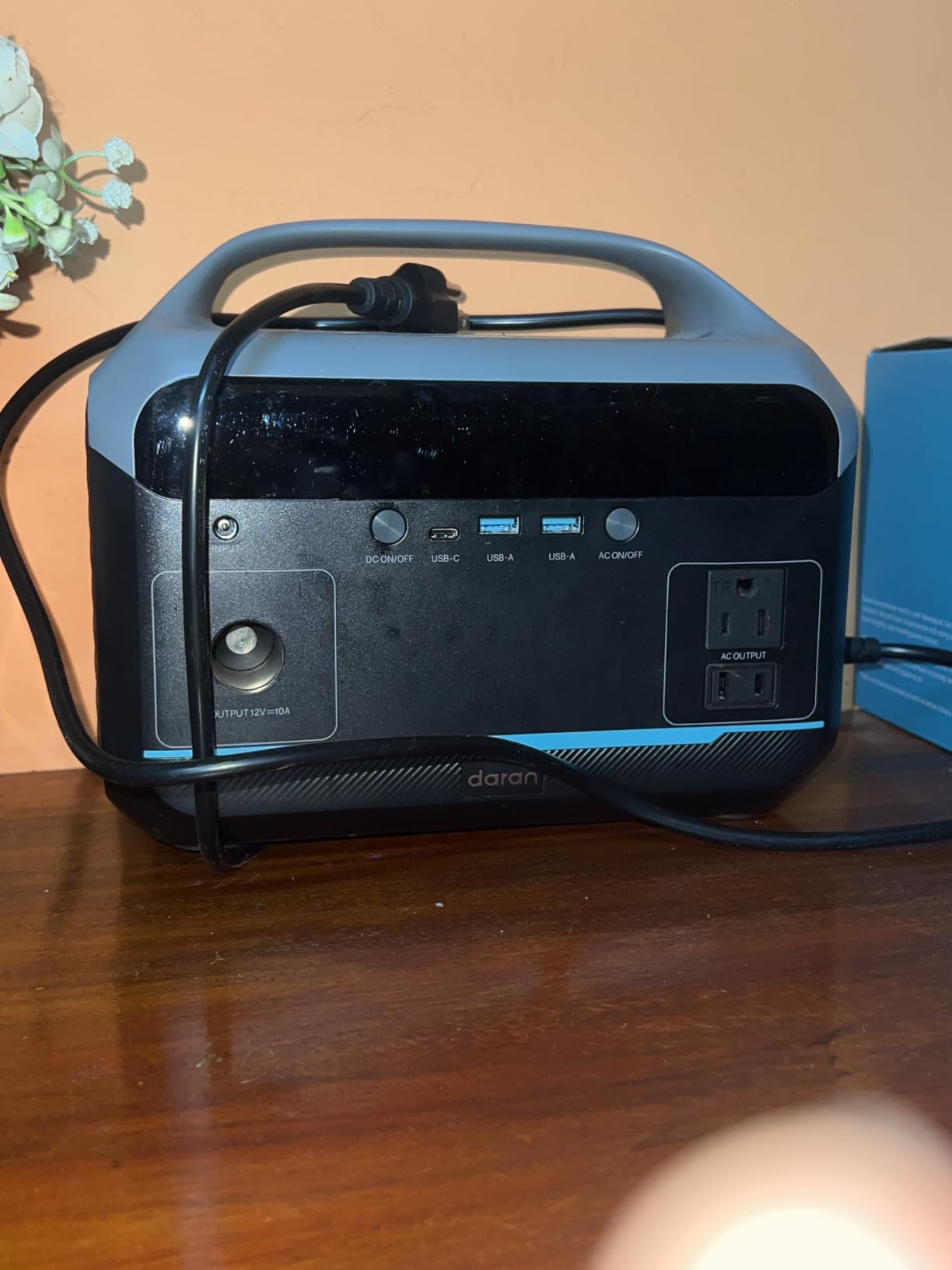
The 3,500-plus cycle LiFePO4 rating is better than several more expensive packs in this list, and the 12-layer BMS with 12 safety protections is reassuring. Reviewers use it for field work: one owner ran a portable recorder for 9 uninterrupted hours and 3 more the next day, and another kept a Starlink Mini powered in a Jeep, which tells you more about the USB-C ceiling below.
The four-level LED flashlight with SOS mode is genuinely useful in an emergency kit, and the long-press activation guards against the most obvious failure mode of a button this easy to hit.
Who the Daran 100W suits
Anyone building an emergency go-bag, an overlanding kit or a car kit where every ounce matters. It fits in a glove box, runs phones, tablets, laptops, cameras and radios for hours, and a 12-layer protection suite is reassuring when it lives in a trunk in summer heat.
It also works as a travel companion that will not trigger airline questions, unlike larger packs.
Where it falls short
The 100W ceiling is absolute: no toaster, no microwave, no coffee maker. The USB-C PD output caps at 85W at 19V, which is below what a Starlink Mini needs, and pass-through here is charge and discharge type rather than direct pass-through, which wears the battery faster over years.
It is not silent either. A light hum is audible under load, and the flashlight button is easy to trigger accidentally inside a bag despite the long-press guard.
Buying Guide: How to Choose a Portable Power Station Under $500
Size your watt-hours with the runtime formula
Start with the loads, not the marketing. Add up the running watts of everything you want powered at the same time, multiply by the hours you need it, then divide by 0.8 to cover inverter and conversion losses. A 100W device running for four hours needs 500Wh of raw capacity to deliver 400Wh, which means a 600Wh pack after losses.
This is the single most misunderstood number in the category. Buyers expect a 1,000Wh station to deliver 1,000Wh, and it will not. Large units carry 15 to 20W of inverter overhead at low loads, and small units lose a much larger percentage to the same fixed cost. The BLUETTI Elite 30 V2 addresses this with a 4.5W standby draw, roughly half the norm.
Continuous watts vs surge watts
Continuous output is what the unit sustains. Surge is a short burst for startup, and it matters for anything with a motor or compressor: fridges, freezers, pumps, power tools and coffee makers all draw several times their running wattage for a second or two at start.
Two caveats we found in testing reports. First, the OUPES Mega 1 advertises 4,500W of surge but one tester recorded trips at 2,050 to 2,200W, so size compressor loads against a conservative figure. Second, the “power lifting” mode found on the BLUETTI Elite 30 V2 and AC180 is a firmware trick for small resistive loads like kettles, not a real capability increase, so do not plan to start a fridge with it.
LiFePO4 vs Li-ion and why cycle life matters on a budget
Every unit in this roundup except the ZeroKor 300W and the MARBERO 300W uses LiFePO4 chemistry, and that choice is the reason a 500-dollar station can still be useful in five years. LiFePO4 packs here are rated between 3,000 and 4,000-plus cycles to 70 or 80 percent of original capacity. Older NMC lithium-ion designs typically manage a fraction of that before they need replacing.
The forum consensus is that cycle life is the most decisive spec for anyone buying long-term, and it is the one number that determines whether a budget station is cheap or a false economy. We also note that a few detailed reviews of the closely related BLUETTI Elite AC2A describe BMS fault errors, so update firmware the day your unit arrives.
EPS and UPS mode for routers, NAS and CPAP machines
UPS mode switches the AC output over to battery power when mains power drops, and the transfer time is what determines whether your equipment notices. The Anker SOLIX C1000 Gen 2 and the BLUETTI Elite 30 V2 both switch in 10 ms, the OUPES Mega 1 in under 20 ms, and the AC180 in 20 ms.
For a router, a modem and a monitor, any of those is invisible. For a NAS writing to a hard disk array, none of them is fast enough, and you should add a proper desktop UPS. The BLUETTI Elite 30 V2 also lacks USB pass-through signalling, so a connected PC will not receive the orderly shutdown command a traditional UPS sends.
Solar pairing math inside a 500-dollar ceiling
Be clear-eyed about what “solar generator” means: it is a marketing label for a portable power station with a solar input, and no unit in this roundup includes a panel. Budget for the panel separately, and check the input ceiling before you buy. The OUPES Mega 1 accepts 800W through standard MC4 connectors and the Anker C1000 Gen 2 takes 600W, while the ALLWEI caps out at roughly 120W and the BLUETTI Elite 10 Mini at 100W.
If your total budget is 500 dollars including the panel, the math changes the answer. A capable panel takes a large share of that budget, and the smaller 288Wh to 300Wh units recharge faster in real terms because they need less energy. The Jackery Explorer 300 reaching 80 percent in about 2.8 hours on a 100W panel is a better use of a small system than pairing a 200W panel with a 1kWh unit you cannot fill quickly.
What a sub-500 station cannot run
No unit in this roundup will run a space heater, a microwave, central air conditioning, a well pump, an electric range or a sump pump on a sustained basis. A 2,000W inverter can start some of those motors and then trip, which is worse than not trying. Forum backup users are routinely frustrated by exactly this, because pump loads exceed what most sub-500 stations can surge.
What these units do cover well: phone and laptop charging, a router and modem, LED lighting, a CPAP machine for a night, a 12V cooler for a day, and a refrigerator for most of a short outage on the 1kWh models. Plan your blackout kit around that list.
Brand reliability: Anker, Jackery, BLUETTI and the rest
On warranty and support, the forum picture is reasonably consistent. Anker, Jackery and EcoFlow are trusted for service, with Anker in particular praised for prompt replacement units on earlier-generation problems. BLUETTI hardware is widely liked on value, but its customer service and warranty experiences draw repeated criticism on forums, which is worth weighing against the 5-year warranty printed on the box.
Smaller brands in this roundup mostly ship 12-month warranties. The 5-year warranties on the Anker SOLIX C1000 Gen 2, the BLUETTI AC180, the BLUETTI Elite 30 V2 and the OUPES Mega 1 are the ones we consider real commitments, and they matter most if you plan to keep the unit past the first battery degradation.
Safety note: never backfeed a wall outlet
Plugging a portable power station into a wall outlet to power your house from the battery is called backfeeding, and it is dangerous unless you have a proper transfer switch installed by an electrician. It can backfeed utility lines that a lineworker believes are dead. If whole-home outage coverage is what you need, this category of product is the wrong tool and you need a professionally installed system.
Frequently Asked Questions
What is the best budget portable power station under 500?
The Jackery Explorer 300 is the strongest all-round choice under 500 dollars. It packs 292Wh of LiFePO4 storage, 300W of continuous output with 600W of surge, a 100W USB-C PD port and a 7.1 lb body, and it holds a 4.6 rating across more than 11,000 reviews. If you need a full kilowatt-hour instead, the Jackery Explorer 1000 v2 and the Anker SOLIX C1000 Gen 2 also fall under the same ceiling.
What is the most affordable portable power station that is actually worth buying?
In the sub-150-dollar range, the ALLWEI 300W at 256Wh stands out: it has a 3,000-cycle LiFePO4 battery, true 2.4A USB ports, very low self-discharge and documented 12 to 20 hours of CPAP runtime. The cheapest units in the category, including the ZeroKor 300W and the MARBERO 300W, carry more durability complaints and shorter warranties, so the small step up is usually money well spent.
Is Jackery or Anker better?
Both are trustworthy at this price, and the difference is in the details rather than the category. Jackery offers the broader range here, from the 7.1 lb Explorer 300 to the 1,070Wh Explorer 1000 v2, with a two-year warranty on the smaller model. Anker leads on output and recharge speed: the SOLIX C1000 Gen 2 delivers 2,000W continuous, a 49-minute full recharge, a 10 ms UPS switchover and a 5-year warranty.
Which brand of portable power station is the most reliable?
Reliability has two parts: hardware failure rates and whether the company answers when something goes wrong. On support, Anker, Jackery and EcoFlow are the most trusted on forums, with Anker in particular reported as issuing prompt replacement units. BLUETTI hardware is widely liked on value but its customer service draws repeated criticism, and the smallest brands here mostly offer 12-month warranties. Weight the warranty length as heavily as the star rating.
How long will a 1000Wh power station run a refrigerator?
Budget for roughly 800Wh of usable capacity once inverter losses and standby draw are removed. A typical compressor fridge averages about 100W while running and cycles on perhaps a third of the time, so a 1,024Wh unit like the Anker SOLIX C1000 Gen 2 realistically covers a fridge and a freezer for 6 to 12 hours overnight, which matches what owners report. A small 12V cooler drawing 40W on a 1,000Wh pack runs for far longer.
Can a portable power station run a space heater?
No, and that applies to every unit under 500 dollars. Space heaters, microwaves, central air conditioners, well pumps, sump pumps and electric ranges all exceed the continuous output of even the 2,000W class machines in this roundup, and many will trip the inverter during startup. The realistic blackout coverage for these units is phones, laptops, routers, lighting, a CPAP machine, a 12V cooler and a refrigerator for part of a night.
Conclusion: Our Verdict for 2026
The best portable power stations under 500 dollars in 2026 split into three clear groups, and picking the wrong one wastes money fast. The Jackery Explorer 300 is our pick overall: 292Wh, 300W continuous, 7.1 lb, a four-thousand-cycle LiFePO4 battery and the strongest review record in the group. It covers phones, laptops, cameras and an overnight CPAP run without fuss.
Move up a tier when your loads get bigger. The Jackery Explorer 1000 v2 handles a refrigerator and power tools at 1,500W continuous, the Anker SOLIX C1000 Gen 2 adds 2,000W of output, a 49-minute recharge and the fastest UPS switching we found, and the BLUETTI AC180 carries the most capacity in the roundup at 1,152Wh. The OUPES Mega 1 is the one to buy if you plan to add solar and extra batteries later.
Whatever you choose, buy the chemistry and the warranty, not the headline wattage. LiFePO4 with 3,000-plus cycles and a five-year warranty is what separates a station that still works a decade from now from one that joins the drawer of dead gadgets, and that calculation matters more at a 500-dollar ceiling than at any other.