
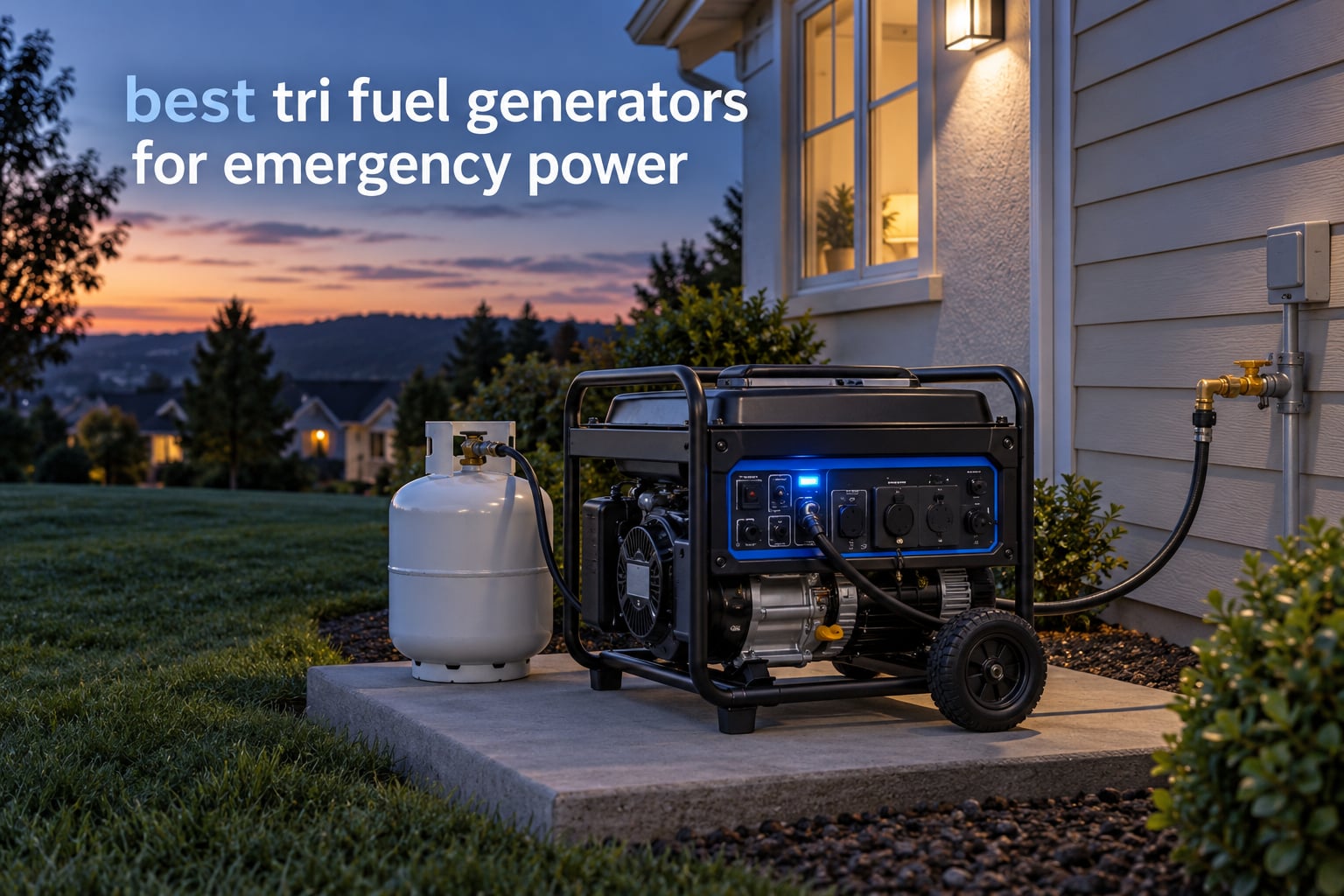
The best tri fuel generators for emergency power are the models that stay running when one fuel source does not. A tri fuel generator runs on gasoline, propane or natural gas, switched from a single fuel selector valve, so a fuel shortage that would stop a single-fuel machine does not stop it.
Our shortlist covers eight models from DuroMax, DuroStar, GENMAX, Champion and Westinghouse, from a 13,000-watt open frame to a 717cc V-Twin. We rated them on published per-fuel wattage, review volume and rating, safety hardware, noise data and the availability of parts. Last updated for 2026.
One thing to know before you read further: tri fuel capability is only useful if you can supply at least one of those fuels safely, and the natural gas option usually produces less power than the gasoline number on the box. Sizing for the lowest-output fuel, not the headline figure, is what keeps a generator from browning out mid-outage.
Top 3 Best Tri-Fuel Generators for Emergency Power (October 2026)

DuroMax XP13000HXT
- 13000 peak / 10500 running watts on gasoline
- 500cc OHV engine
- 7 outlets
- push button and remote start

DuroStar DS13000MXT
- 13000 peak / 10500 running watts
- 8.3 gallon tank
- 13 hour published runtime
- CO Alert

Champion 11000W Tri Fuel Inverter
- Inverter output for clean power
- wireless remote start to 80 feet
- per fuel wattage published
- CO Shield
All 8 Best Tri-Fuel Generators Side by Side (October 2026)
Every model below runs on gasoline, propane and natural gas. The published output differs a lot between fuels, and that difference decides whether a generator can carry your load list on a bad day.
| Product | Specifications | Action |
|---|---|---|
| DuroMax XP13000HXT |
|
Check Latest Price |
| DuroStar DS13000MXT |
|
Check Latest Price |
 GENMAX GM15000ET GENMAX GM15000ET |
|
Check Latest Price |
| Champion 11000W Tri Fuel Inverter |
|
Check Latest Price |
 Champion 12500W Tri Fuel Champion 12500W Tri Fuel |
|
Check Latest Price |
 Westinghouse iGen12000TFc Westinghouse iGen12000TFc |
|
Check Latest Price |
 Champion 15000W Tri Fuel Champion 15000W Tri Fuel |
|
Check Latest Price |
 Westinghouse WGen9500TFc EFI Westinghouse WGen9500TFc EFI |
|
Check Latest Price |
1. DuroMax XP13000HXT – Best Overall Tri-Fuel Generator for Emergency Power
DuroMax XP13000HXT 13,000-Watt 500cc Tri Fuel Gas Propane Natural Gas Portable Generator with CO Alert, Black/Blue
- 13000 starting and 10500 running watts cover whole home loads
- Runs on gasoline propane or natural gas
- Push button electric start plus remote control
- CO Alert carbon monoxide protection
- Transfer switch ready 50 amp outlet
- 240 pounds is heavy to move without the wheel and handle kit
- Open frame design is louder than enclosed inverter models
- Feature set is dated next to newer EFI and inverter designs
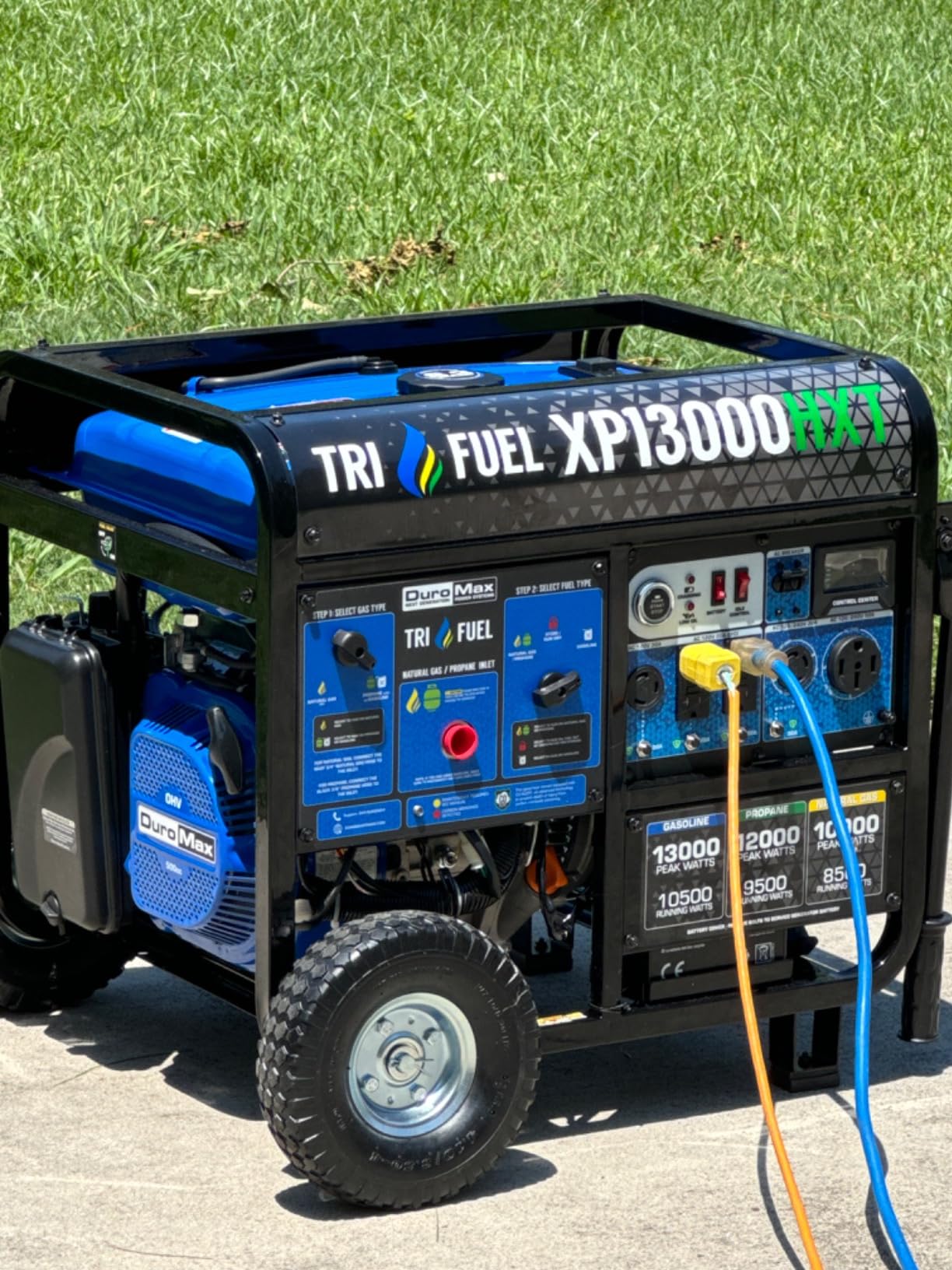
The DuroMax XP13000HXT is the pick I keep coming back to because it pairs real whole-home capacity with a review base large enough to trust. It rates 13000 starting watts and 10500 running watts on gasoline from a 500cc 4-stroke OHV engine, and it carries a 3-year limited factory warranty.
Reviewers consistently single out the same two strengths: the headroom above typical household loads, and the fuel flexibility. With a 50 amp outlet in the panel, this is the kind of machine that can be paired with a transfer switch and then left to run a refrigerator, a freezer, lights and a router without anyone rationing.
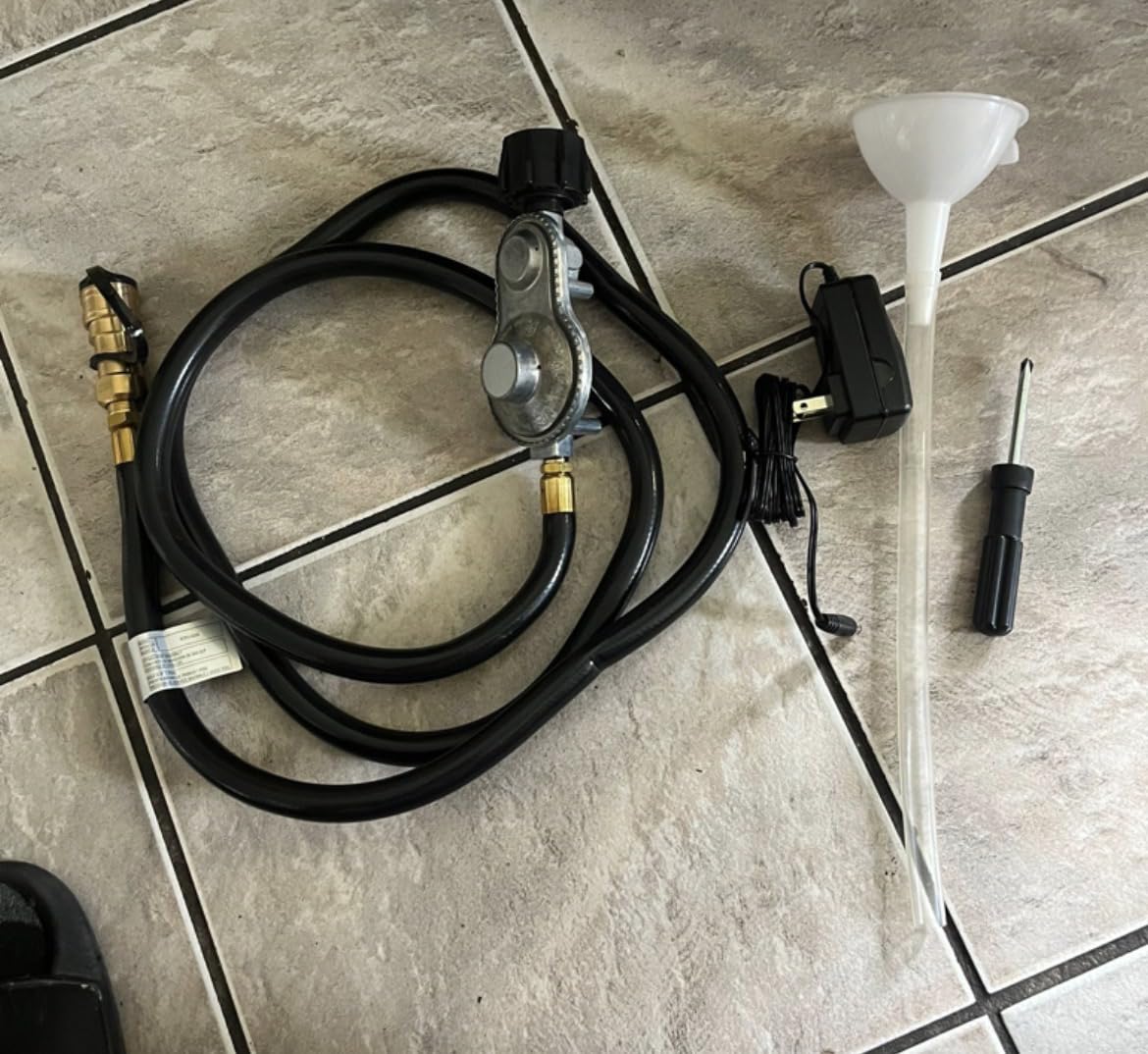
Operation is deliberately simple. A front-facing fuel selection interface lets you move between gasoline, propane and natural gas in seconds, and push button electric start is backed by a remote control and recoil start as backup. The included kit covers the essentials: a 15 foot natural gas hose, a propane regulator, an oil funnel, a spark plug wrench and a wheel and handle set.
At 240 pounds and 30 by 30 by 26 inches, this is not a unit you reposition by hand in a hurry. Plan its spot during prep rather than at 2am during an outage, and keep it on a pad with the clearance the manual specifies.
What the XP13000HXT does well during an outage
The 8.3 gallon tank and a 7 outlet panel mean you can run a wide load spread without daisy chaining extension cords across a wet floor. Reviewers report using it for multi-day events rather than single evening blackouts.
CO Alert shuts the engine down when harmful fumes are detected, which matters because a tri fuel machine sitting near a house through a week of outages is exactly the setup that draws safety complaints.
Where the XP13000HXT falls short
The open frame is loud. If you are running this beside a house where neighbors sleep, expect to be the reason someone mentions the outage rather than the grid.
Its feature set is conventional: no electronic fuel injection, no inverter clean power, no app. For sensitive electronics or a quiet driveway, one of the inverter models further down fits better.
2. DuroStar DS13000MXT – Best Value 13,000-Watt Tri-Fuel Generator
- 13000 starting watts in a lower cost tri fuel package
- Long 13 hour published runtime on the 8.3 gallon tank
- Push button start plus fuel selection knob
- CO Alert automatic shutdown
- Transfer switch ready 50 amp outlet
- Not an inverter design so less suited to sensitive electronics
- 11 percent of ratings are one star which is the second highest negative share in this group
- Only four outlets limits where you can plug in
The DuroStar DS13000MXT is the budget route into tri fuel capability, and the arithmetic is hard to argue with: 13000 starting watts and 10500 running watts from a 500cc 4-stroke OHV engine, a combination that costs more in the open frame category than it should.
Its published runtime of 13 hours on the 8.3 gallon tank is a strong figure for this output class, though treat it as a load-dependent marketing number rather than a promise. In practice your run time depends on the load and on which fuel the selector is set to.
Buyers highlight strong output and fuel flexibility for the money. The fuel selection knob and push button start are easy to find in the dark, and electric plus recoil ignition cover both a full battery and a dead one.
That said, the review distribution is worth reading before you buy. One-star ratings make up 11 percent of the total, and reviewers who left them tend to point at durability and support rather than at features. Buyers shopping purely on wattage will find value here; buyers who want a long service life with easy parts access should look higher up the list.
What the DS13000MXT does well during an outage
Four outlets and a 50 amp transfer switch ready outlet are enough to cover a fridge, a freezer, a lamp bank and internet equipment through a multi-day event. Electric start means no wrestling with a recoil handle in the rain.
It is also the most direct way in this roundup to own a tri fuel machine, which matters if you were previously choosing between a dual fuel unit and a single fuel unit.
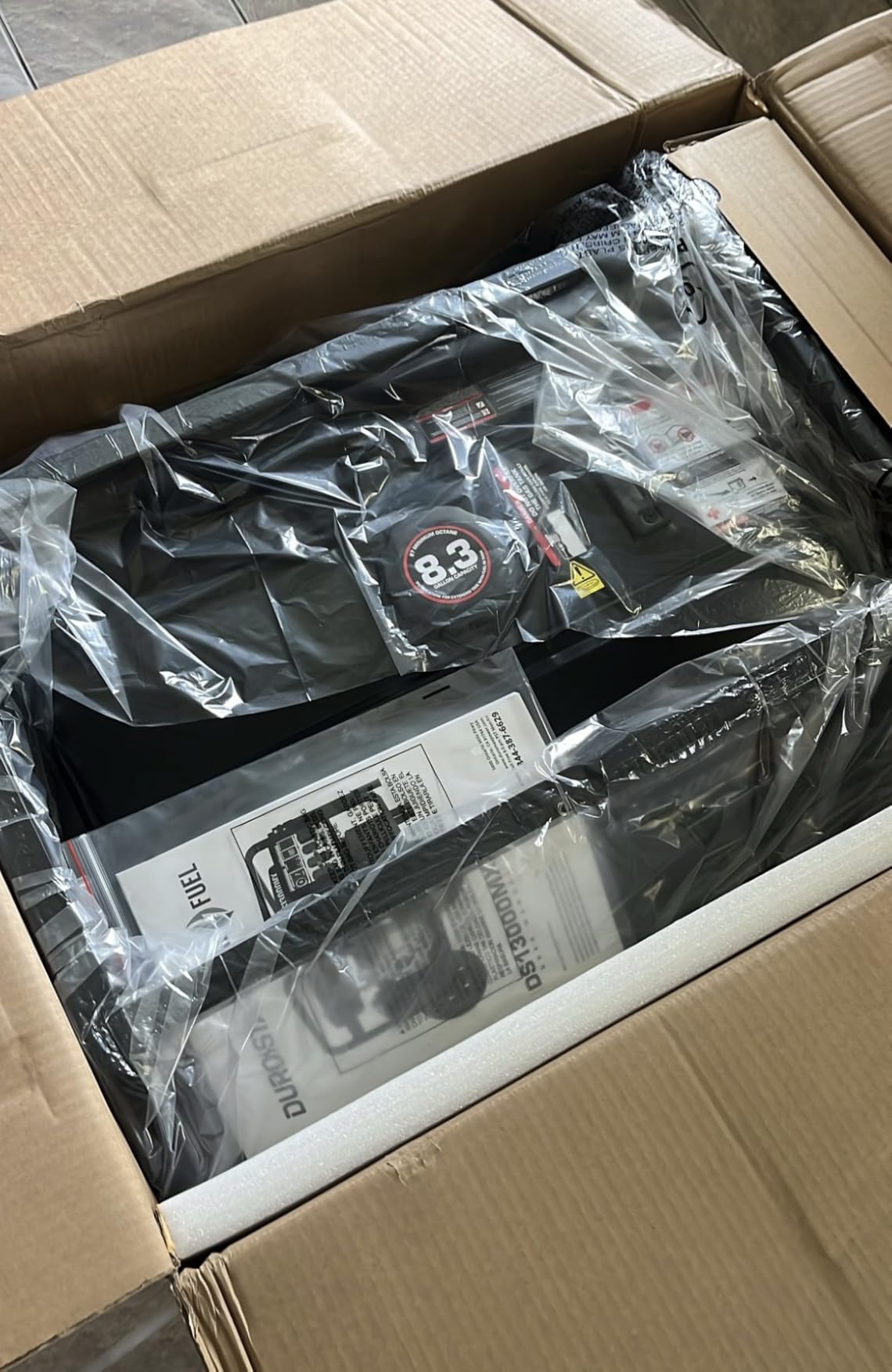
Where the DS13000MXT falls short
It is an open frame conventional generator, not an inverter. Sensitive electronics, medical devices and modern office gear are better served by one of the inverter picks further down.
With only four outlets in the panel, you will be making choices about what gets to plug in. Plan your load list before the storm rather than during it.
3. GENMAX GM15000ET – Best for 2-Wire Solar Battery Charging
- 15000 peak and 11000 running watts on a large 10.56 gallon tank
- 2 wire automatic start and stop works with solar battery charging setups
- Multifunctional digital display shows real time operating data
- LED flexible rope light for night time panel visibility
- One button remote and recoil start options
- 16 percent of ratings are one star which is the highest negative share in this lineup
- Not an inverter so less ideal for sensitive electronics
- Heavy at 242.5 pounds before fuel
The GENMAX GM15000ET is the only pick here with a 2-wire automatic start and stop output, and that single feature changes who should be looking at it. That two-wire control line is what many portable solar battery systems need in order to begin charging automatically once the generator is running.
On raw capacity it belongs near the top of the group: 15000 peak watts, 11000 running watts and a 10.56 gallon tank, with a 3-year warranty backed by free lifetime technical support.
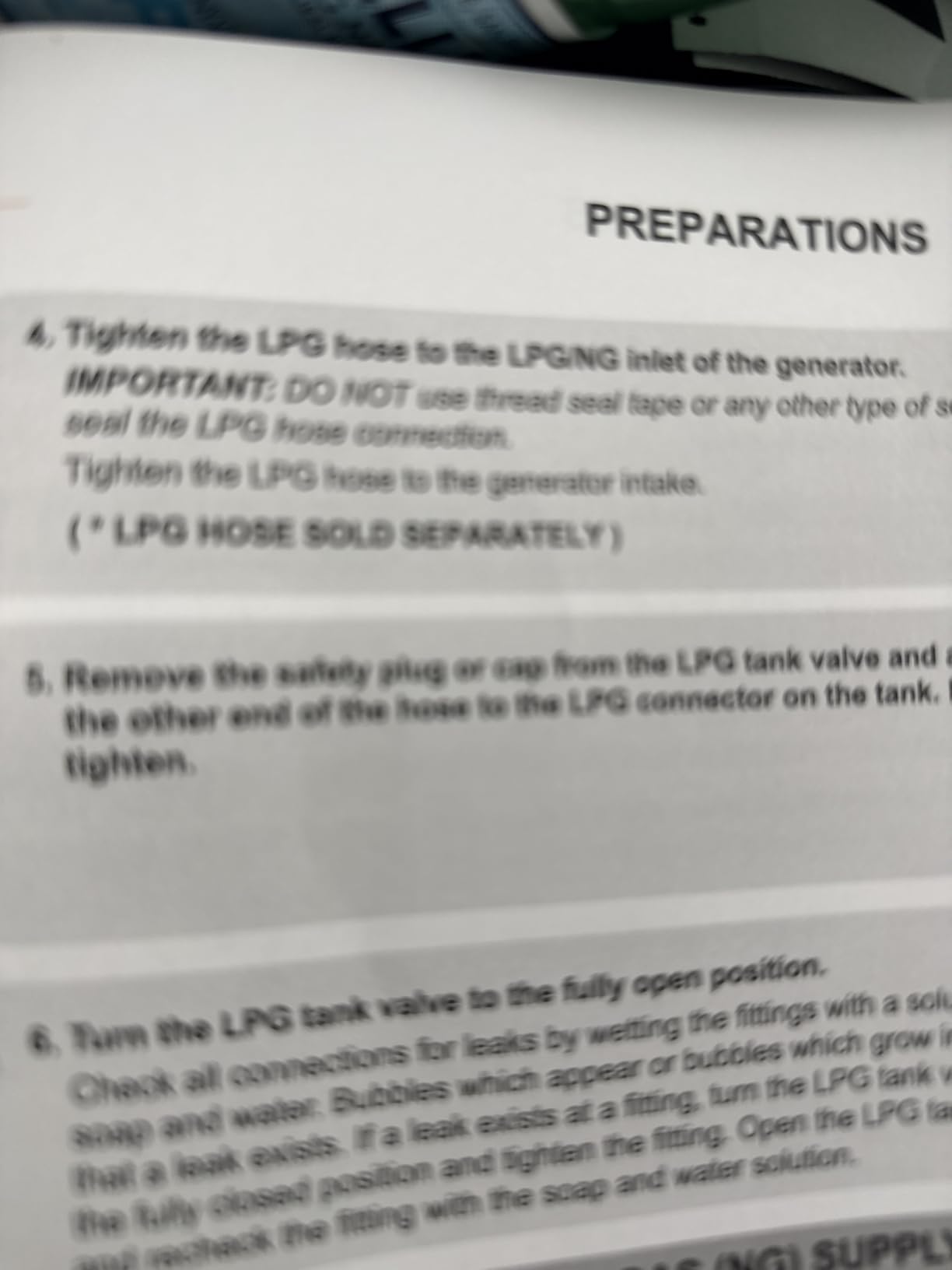
The box contents are unusually generous for this price tier. You get an automatic start and stop cable, an NG hose, an LPG hose, an NG quick connector, a remote control key, a bonding plug, a rain cover, a dual-purpose screwdriver and a full wrench set, so nothing has to be bought separately before first run.
Other details that show up in owner photos and reviews: an LED flexible rope light that lights the panel in the dark, a magnetic dipstick, 32mm frame tubes and a multifunctional digital display. During a long outage those small conveniences matter more than they do on paper.
What the GM15000ET does well during an outage
A 10.56 gallon tank paired with 11000 running watts gives you a large buffer on gasoline, which is useful when gas stations are the first thing to stop working in a storm.
Remote start, one-button start and recoil start all work, so you can start it from inside a house through a window rather than walking out into bad weather.
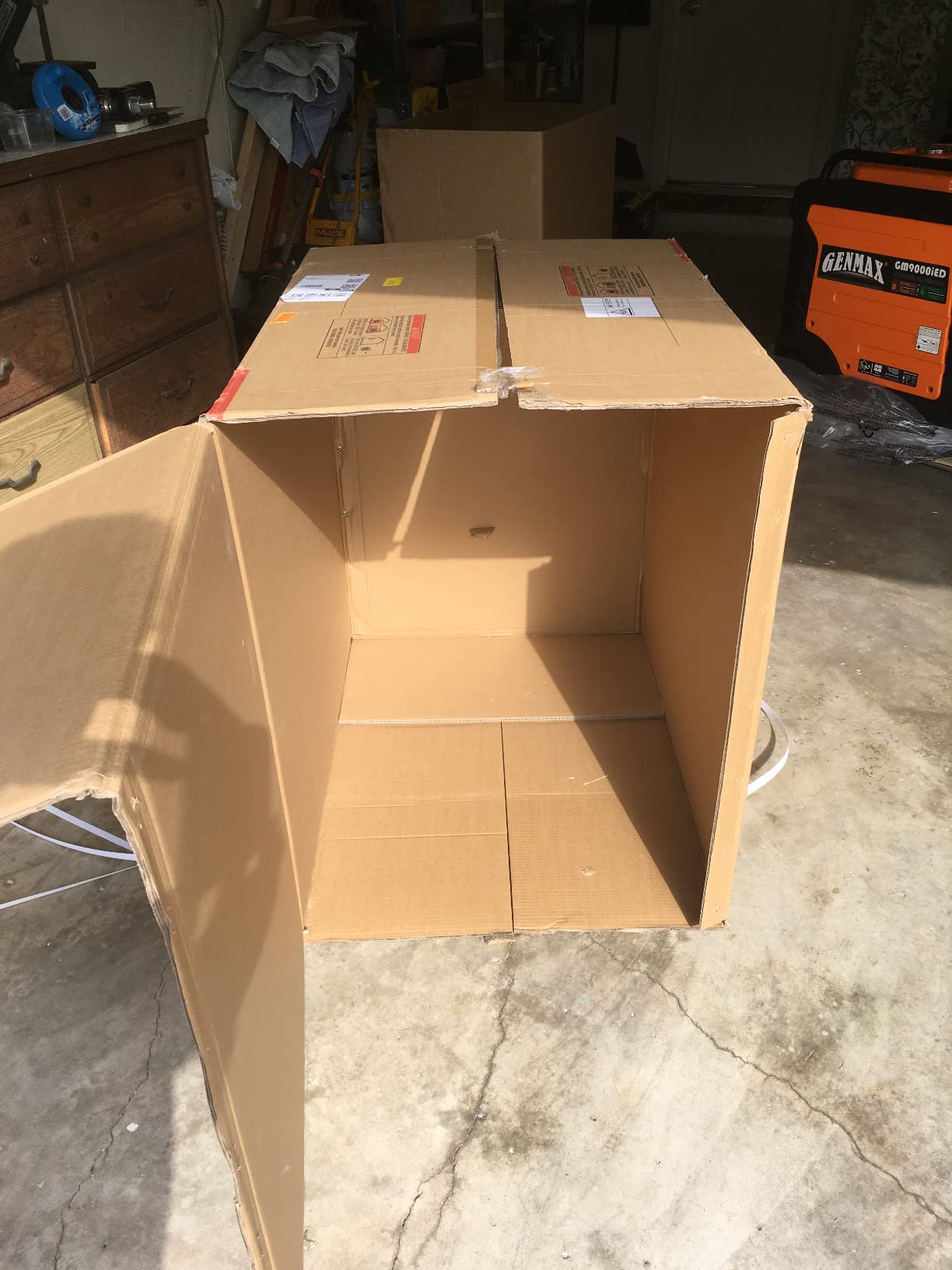
Where the GM15000ET falls short
Its review distribution is the weakest here, with one-star ratings at 16 percent. Reviewers who like it praise the output and the tank, while a meaningful group reports durability and support frustration, so buy it with an eye on your own service plan.
It is also a conventional open frame design at 242.5 pounds, so it is not the pick for a quiet driveway or for running a router and NAS off the same circuit as the fridge.
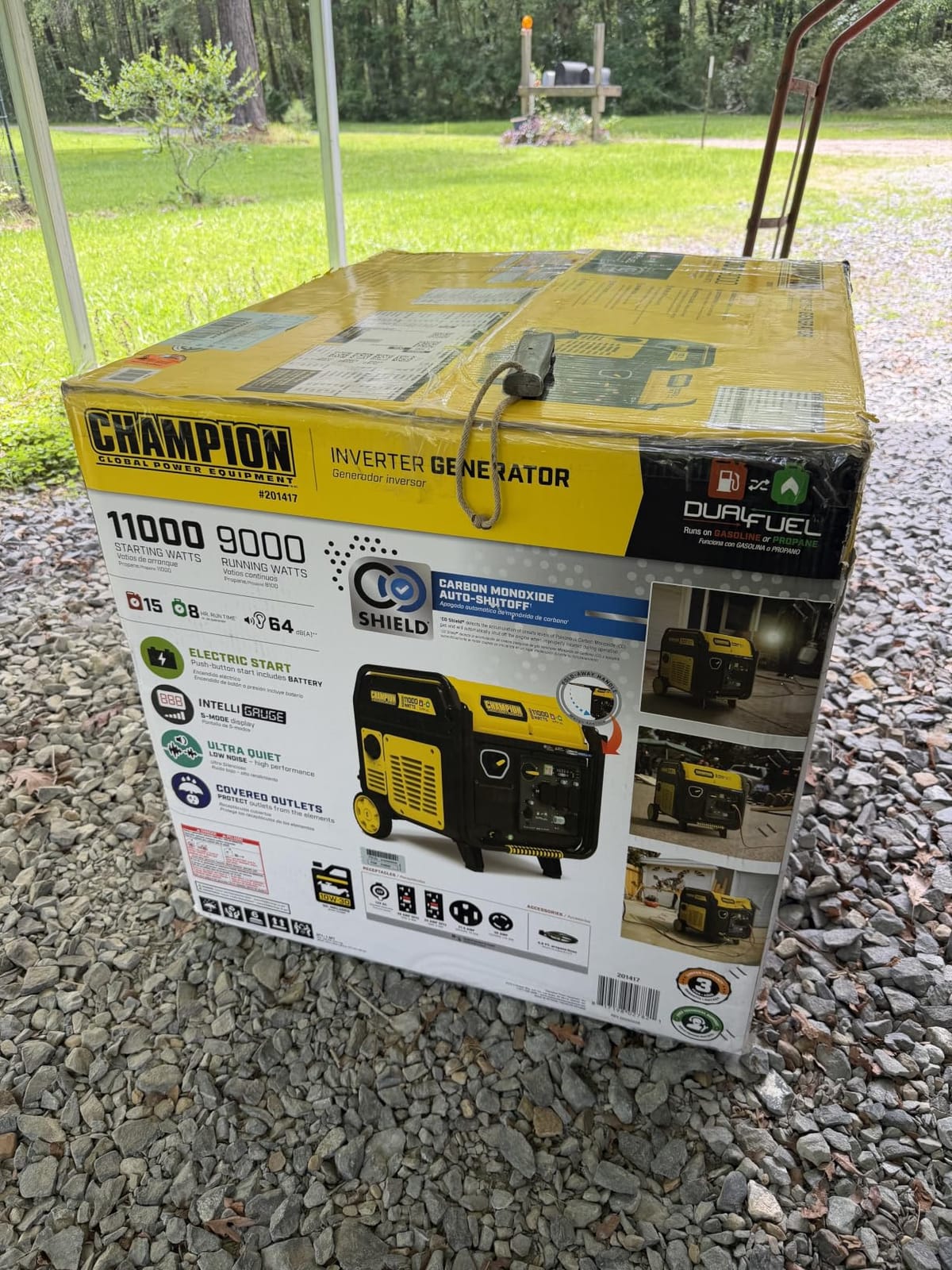
4. Champion 11,000-Watt Tri-Fuel Inverter – Best for Sensitive Electronics
Champion 11,000-Watt Remote Start Tri Fuel Portable Inverter Generator
- Inverter output delivers clean power for sensitive electronics
- Exceptionally quiet for an 11000 watt inverter class machine
- Wireless remote key fob start and stop from up to 80 feet
- Natural gas and propane hoses included so any fuel works out of the box
- Publishes per fuel wattage for gas propane and natural gas
- Natural gas hose lacks a quick connect on the supply side
- No cover included
- Standby mode is limited to 24 hours with no 2 wire start for solar charging
The Champion 11000-watt tri fuel inverter is the pick for anyone whose load list includes electronics rather than only motors. Inverter output produces a cleaner waveform, which is what you want for computers, medical equipment, network gear and modern refrigerators with compressor drives.
It is also one of four models here that publishes running watts for all three fuels: 9000 on gasoline, 8100 on propane and 7290 on natural gas, with 11000 starting watts across the board. That transparency is the single most useful spec on this machine.
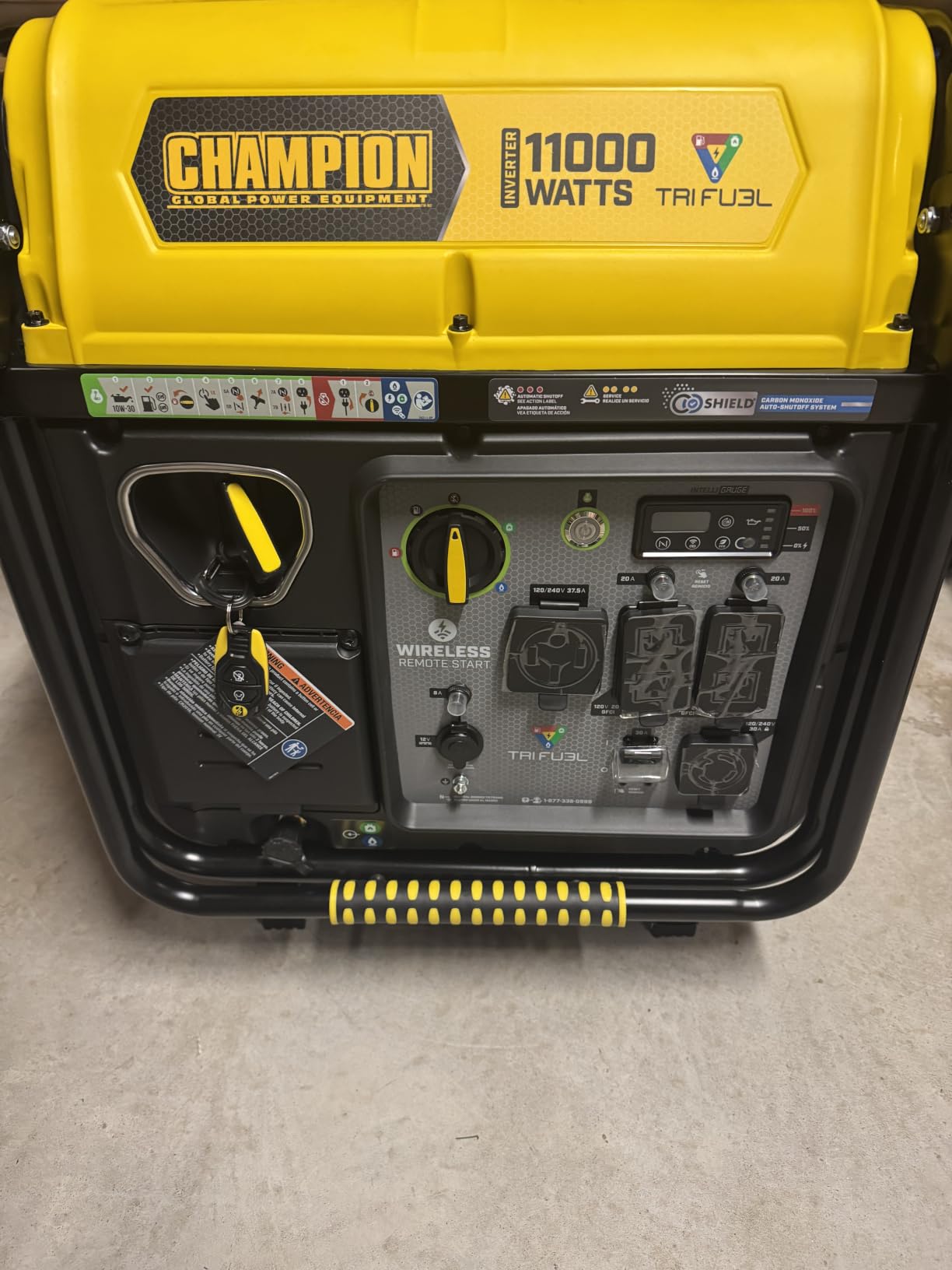
The wireless remote key fob reaches up to 80 feet, so you can start it without leaving a safe interior room. CO Shield provides automatic carbon monoxide shutoff, and a roller kit plus a sensible layout make oil changes and moves less of a chore.
Outlet coverage is good for a machine in this class: two 120V 20A GFCI duplex receptacles, a 120/240V 30A locking outlet, a 120/240V 37.5A outlet and a 12V automotive socket. A battery, engine oil, LPG and NG hoses, the remote key fob and a wheel kit are all in the box.
What the Champion 11000 does well during an outage
Owners consistently praise how quiet it is for an 11000 watt class machine, and reviewers report using the clean output for whole home and solar supplement duty. Quiet Technology plus inverter control is what lets it sit near a house without dominating the conversation.
Because both fuel hoses ship in the box, a propane cylinder or a natural gas line works the day it arrives, with no extra parts to source during an emergency.
Where the Champion 11000 falls short
Standby mode is limited to 24 hours, and there is no 2-wire start, so if your plan is to pair a generator with a solar battery bank for automatic charging, the GENMAX above is the more direct fit.
The included natural gas hose lacks a quick connect on the supply side, and no cover is included. Both are small, but both show up as complaints in owner reviews.
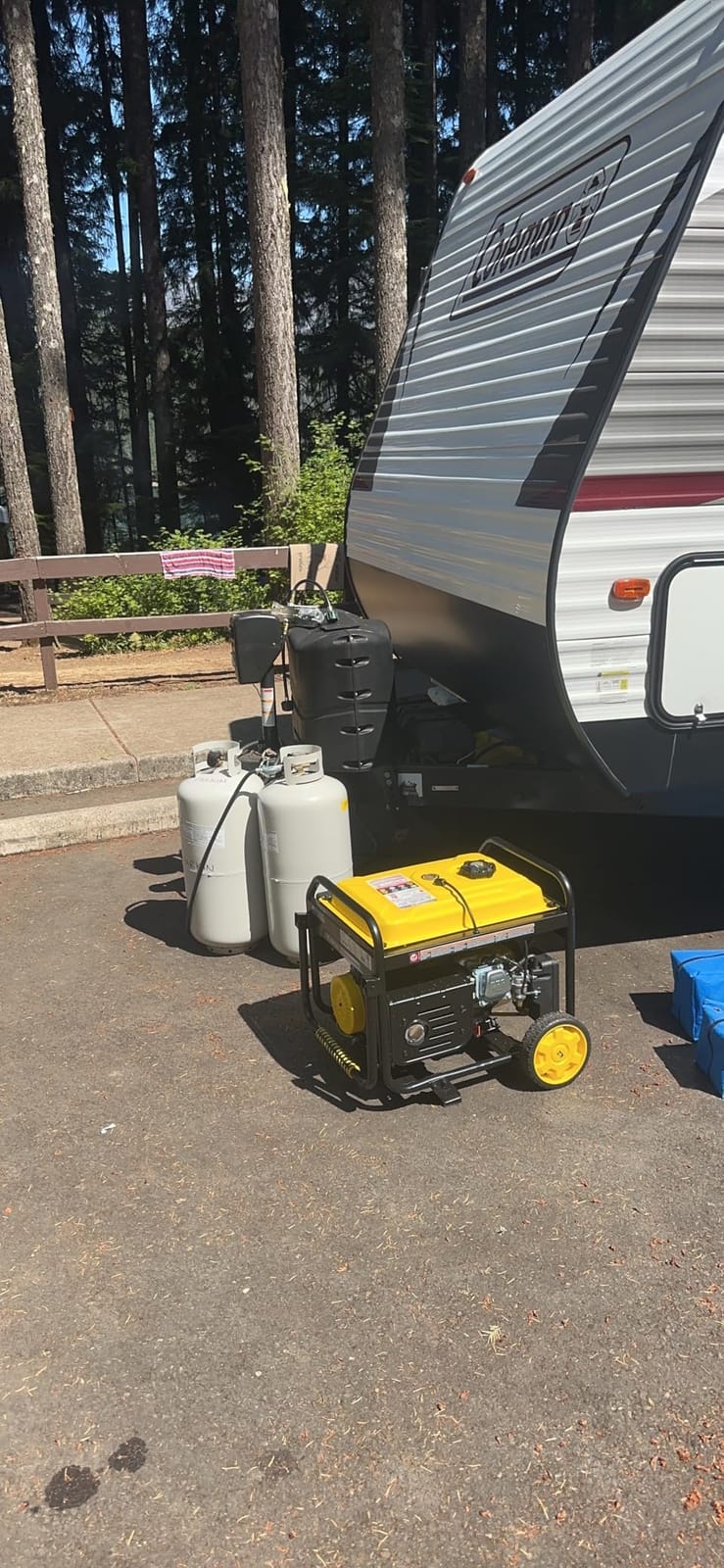
5. Champion 12,500-Watt Tri-Fuel – Best for Natural Gas Home Backup
Champion 12,500-Watt Electric Start Tri Fuel Home Backup Portable Generator
- Strong 12500 starting and 10000 running watt gas rating for the money
- Natural gas option removes gasoline can handling before a storm
- Electric rocker switch start with battery included
- Intelligauge tracks voltage frequency and run time
- CO Shield carbon monoxide auto shutoff
- Open frame design is noticeably noisier than inverter alternatives
- A few reports of bent frame tubing near the wheel bracing out of the box
- One owner reported panel fasteners loosening during break in
The Champion 12,500-watt tri fuel model is the version of this category that makes the most sense for a permanent natural gas hookup. It publishes all three fuel numbers clearly: 12500 starting and 10000 running watts on gasoline, 11250 starting and 9000 running on propane, and 10000 starting and 8000 running on natural gas.
That 8000 watt natural gas ceiling is the figure to plan against. If your household essentials load stays under 6400 watts, you have headroom on every fuel, which is the safe way to size a multi-fuel machine.
Reviewers describe the natural gas capability as the decisive feature for a fixed installation, largely because it removes the fuel logistics problem entirely. No gasoline storage, no rotation, and no stale fuel in a carburetor after a long idle period.
The Intelligauge tracks voltage, frequency, session time and total run hours, and CO Shield handles carbon monitoring. A battery, engine oil, the LPG and NG hoses, an oil funnel and a wheel kit are included, and the 500cc platform runs on a 3-year limited warranty with free lifetime technical support.
What the Champion 12500 does well during an outage
At 231 pounds with a wheel kit, it is easier to reposition than its size suggests, which matters if you are moving it away from a wind-driven rain wall.
Electric rocker switch start is quick and reliable out of the box, and reviewers find it quiet enough to compare favorably with much smaller units during normal household loads.
Where the Champion 12500 falls short
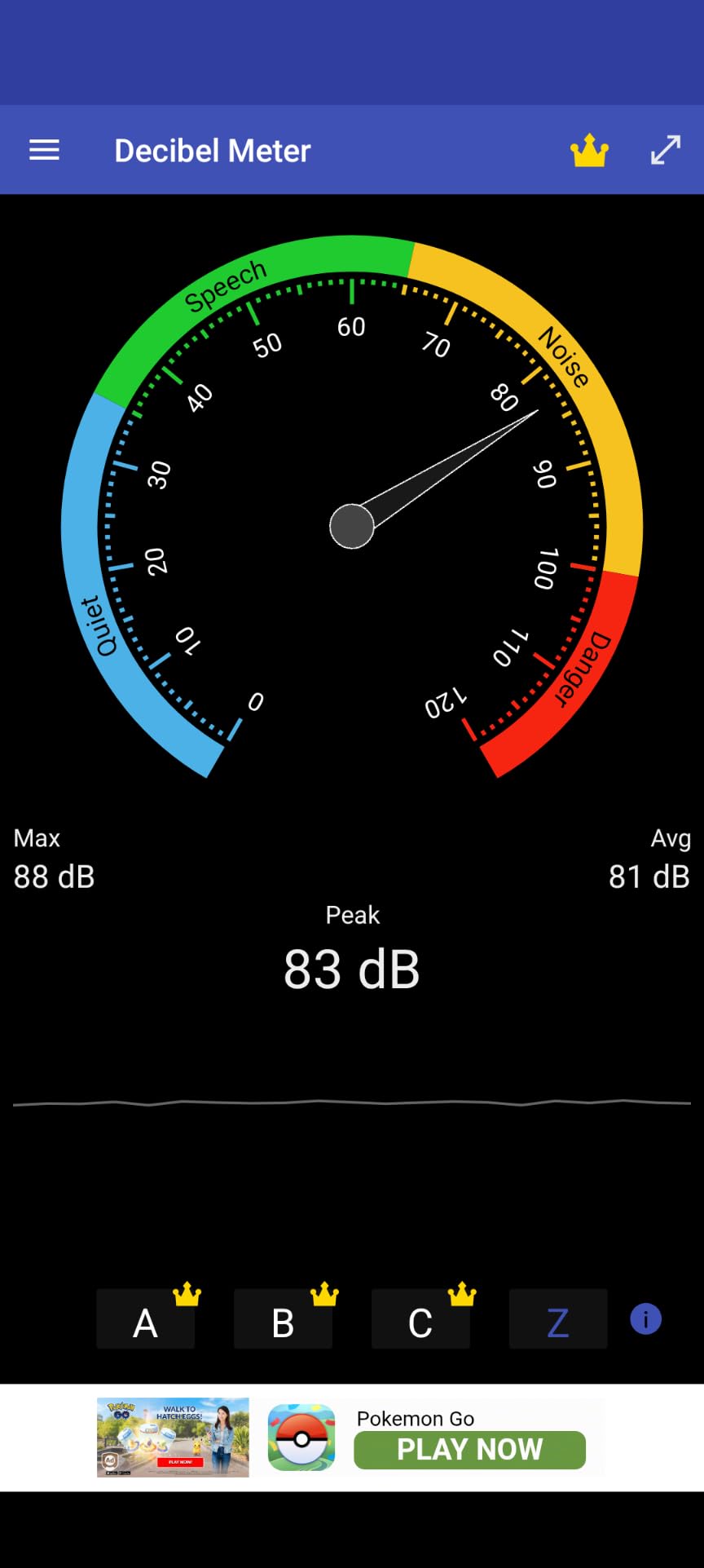
It is louder than the inverter alternatives in this roundup. If your outages overlap with sleeping hours in a close neighborhood, factor that in before you commit.
A small number of owners report bent frame tubing near the wheel bracing or loosening panel fasteners during break-in. Inspect the frame and tighten the panel hardware before the first storm, and keep the packaging in case a return is easier than a repair.
6. Westinghouse iGen12000TFc – Best Tri-Fuel Inverter for RV and Clean Power
- Under 3 percent total harmonic distortion keeps electronics safe
- As low as 64 dBA with Eco Mode
- Parallel ready to double output with a matching model
- 50A and 30A outlets are transfer switch or interlock ready
- LED data center shows fuel output run time voltage and lifetime hours
- One owner reports shorter than advertised propane runtime at low load
- Battery can drain during extended storage even with switches off
- Heavy at 191 pounds so plan for a ramp or a helper
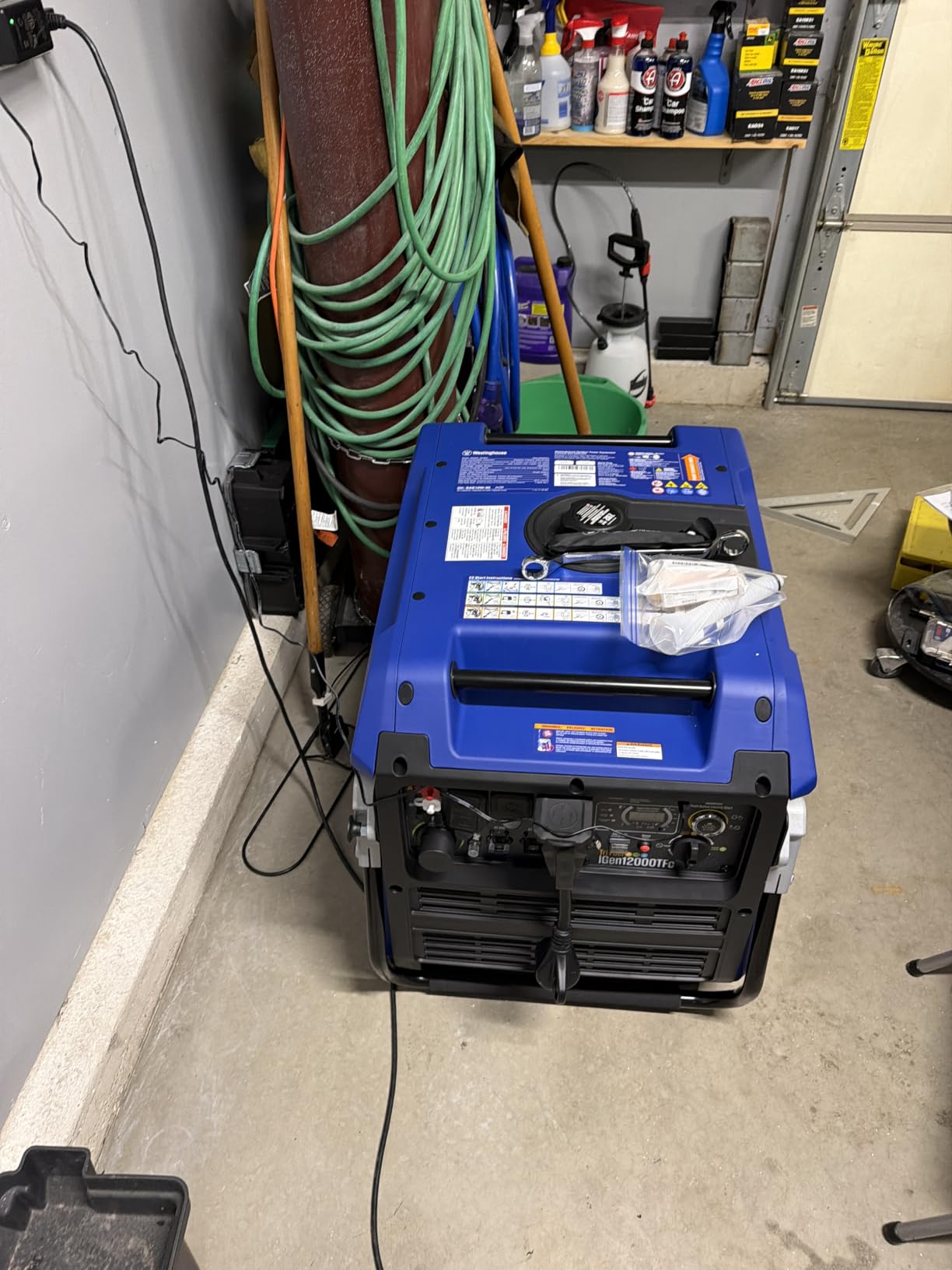
The Westinghouse iGen12000TFc is one of only two true inverter models in this group and the one that publishes an explicit noise figure, at as low as 64 dBA with Eco Mode. That makes it the pick if the generator has to sit near living space or feed sensitive loads. Output is listed at 12000 peak and 9000 running watts on gasoline, 11000 peak and 8100 running on propane, and 9800 peak and 7200 running on natural gas.
It is one of only two Westinghouse models here, alongside the EFI unit below, and it is the inverter in the pair. It is also the only pick here that states a total harmonic distortion figure, at 3 percent or less, which puts it ahead of the other inverter on the spec a sensitive-load buyer cares most about.
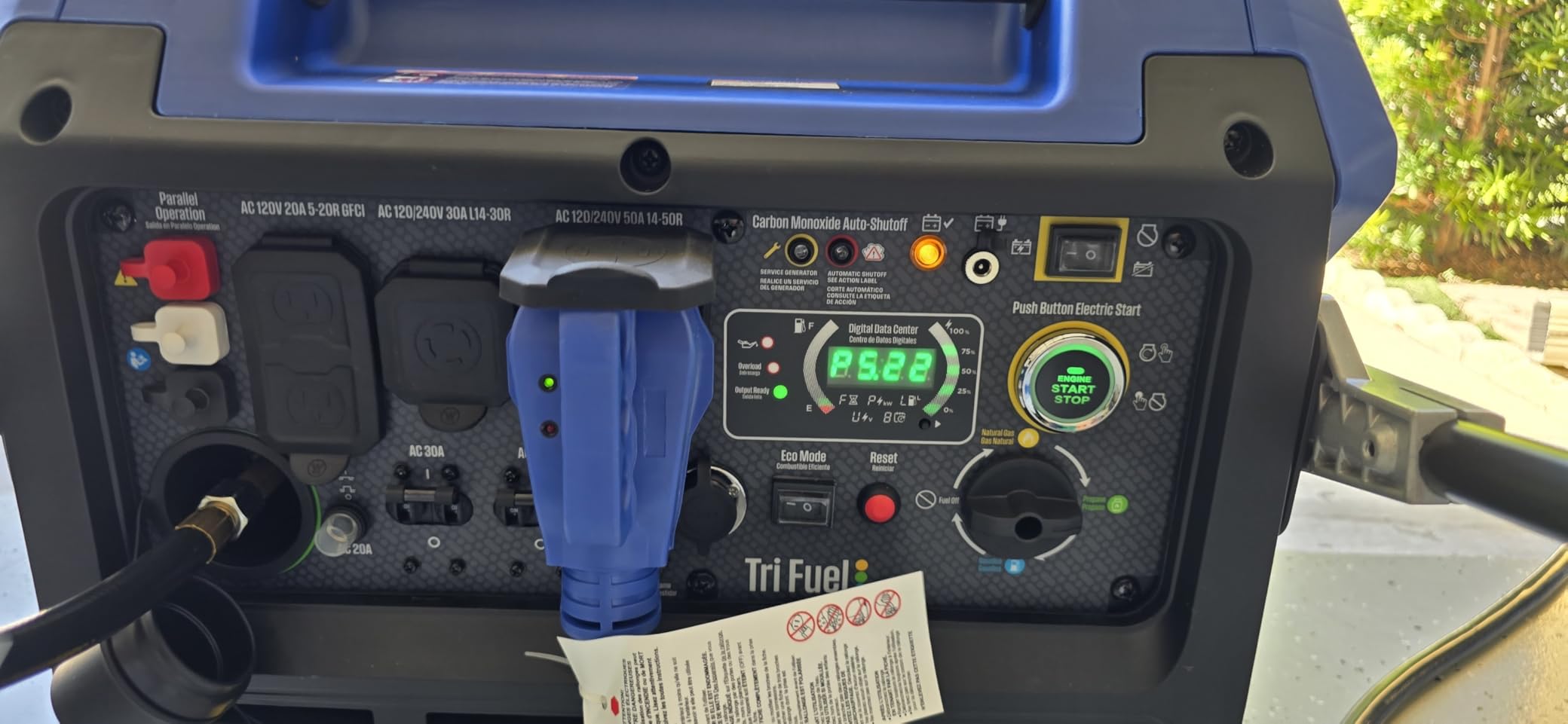
Total harmonic distortion of 3 percent or less is the figure to quote if you plan to run a router, a modem, a desktop or medical equipment. Noise is listed as low as 64 dBA with Eco Mode, which reviewers repeatedly compare favourably to much smaller machines.
The outlet set is well chosen for RV and selected circuit work: a 120/240V 14-50R 50A outlet, a 120/240V L14-30R 30A twist lock and a GFCI 120V duplex. The LED data center displays fuel level, output, run time, voltage and lifetime hours, and the unit is parallel ready if you later add a matching model.
What the iGen12000 does well during an outage
With a 30 liter fuel tank and a published 19 hours of runtime at 25 percent load, it is built for long low-draw events where the fridge and internet are the only things running.
Owners also praise accessible service points. The oil, battery, air filter and carburetor access areas are reachable without pulling the machine apart, which matters more in year three than on day one.
Where the iGen12000 falls short
Natural gas output of 7200 running watts is the lowest of the inverter models here. If your plan is to carry a mini-split and a well pump on natural gas, size up rather than assuming the gasoline number applies.
At 191 pounds it needs two people or a ramp, and one owner reported the battery draining during extended storage even with the switches off. Charge it before you store it and check it periodically.
7. Champion 15,000-Watt Tri-Fuel – Best for Heavy Surge Loads
Champion Power Equipment 15,000-Watt Electric Start Tri Fuel Home Backup Portable Generator with CO Shield
- 717cc Milwaukee Series V-Twin engine holds up under sustained load
- 15000 starting and 12000 running watts clears the largest motor loads
- Intelligauge tracks voltage frequency and run time hours
- CO Shield carbon monoxide auto shutoff
- Wheel kit and engineered frame for transport and lifting
- At 331 pounds it is the heaviest model here and needs help to move
- CO Shield sensor is very sensitive and can shut the unit down unexpectedly
- Second spark plug is difficult to access for maintenance
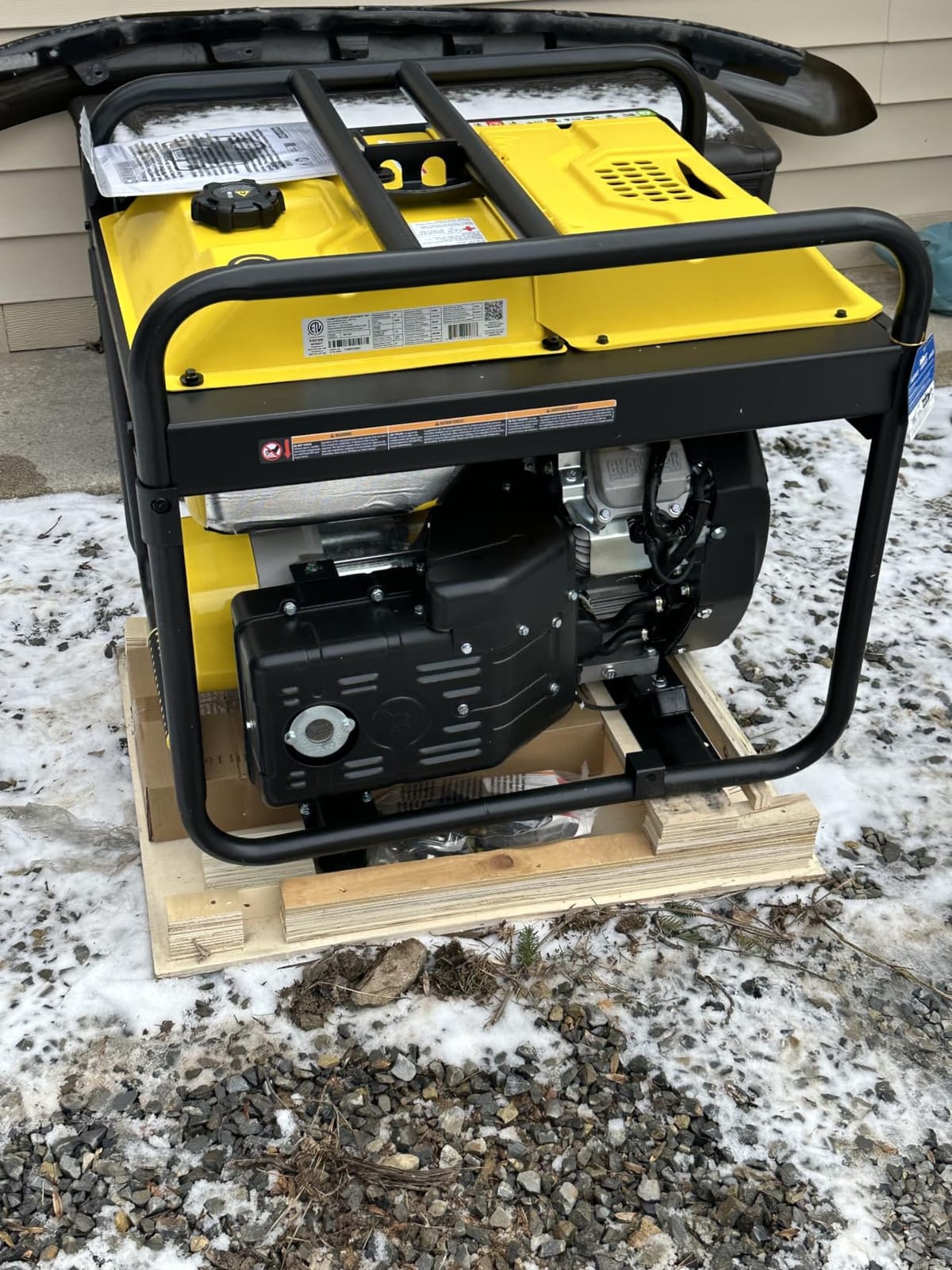
The Champion 15,000-watt tri fuel model is the surge specialist. With 15000 starting watts and 12000 running watts from a 717cc Milwaukee Series V-Twin engine, it is the pick when you are starting a well pump, a central air unit with a hard start compressor, or several motor loads that could trip a smaller machine.
Owners report running entire homes through extended outages including multi-day hurricane events, and one reviewer describes Champion replacing a unit that arrived with shipping damage.
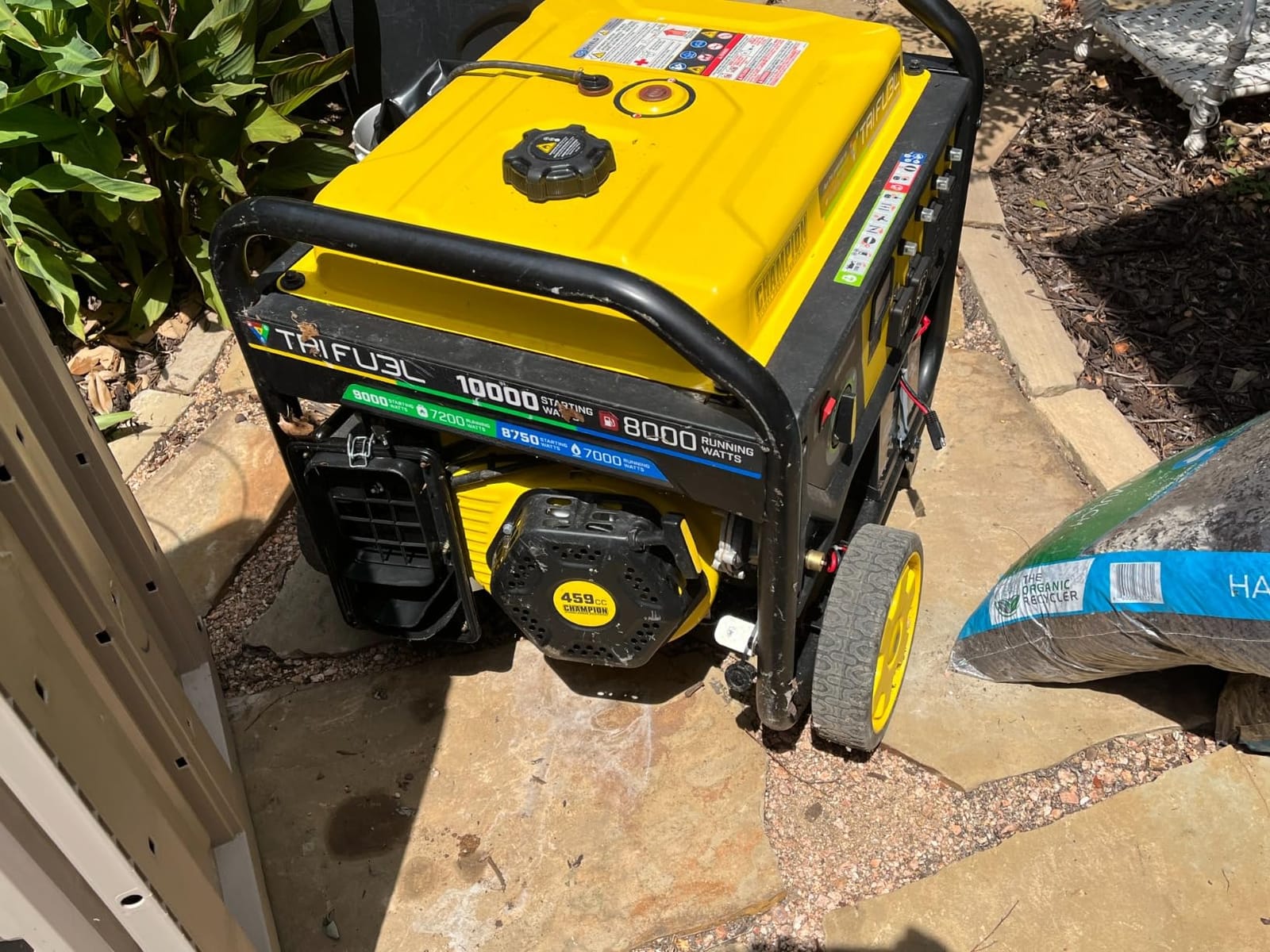
The 11 gallon tank is the largest in this roundup. Published runtime is listed as 3 hours, with the technical description also citing up to 9 hours on a full tank of gasoline, so read the manual for the load assumption behind whichever figure you rely on.
Intelligauge monitoring covers voltage, frequency and run-time hours, and a fuel gauge plus automatic voltage regulation handle day to day operation. An oil funnel, the LPG hose and a natural gas hose with an NPT adapter are included, along with a wheel kit.
What the Champion 15000 does well during an outage
The V-Twin engine is the reason this one holds rated power under sustained load rather than sagging when the compressor kicks in. That is the difference between a generator that starts your air conditioner and one that keeps it running.
At 12000 running watts, the headroom above a typical essentials load is wide enough that you would not be rationing circuits during a week-long event.
Where the Champion 15000 falls short
At 331 pounds it is the heaviest machine in this group, and moving it solo in an emergency is a real problem. Site it once, permanently, on a prepared pad before you need it.
The CO Shield sensor is reported as very sensitive and capable of shutting the unit down unexpectedly. Placement and clearance matter more here than with the other models, so follow the manual’s outdoor placement rules exactly.
8. Westinghouse WGen9500TFc EFI – Best for Small Footprints and Gasoline Starts
- Electronic fuel injection starts without a choke and cuts fuel use and emissions
- Compact 27.3 by 20.6 by 22.6 inch footprint
- 457cc 4 stroke OHV engine with a cast iron sleeve
- Remote electric and recoil start cover every starting preference
- 50A and 30A outlets plus GFCI household receptacles all transfer switch ready
- Only 40 reviews so the long term reliability picture is still forming
- Open frame design is louder than enclosed inverter models
- 9500 running watts leaves less headroom than the larger units in this group
The Westinghouse WGen9500TFc EFI is the highest rated model here and the one that solves a physical problem the others do not. At 27.3 by 20.6 by 22.6 inches it is the smallest footprint in a group where most 12500-watt tri fuel machines are near 30 inches square, which makes it easier to place beside a house or in a small garage bay.
It is the only open frame model here with a cast iron sleeve, and it publishes per fuel output: 12500 peak and 9500 running watts on gasoline, 11200 peak and 8500 running on propane, and 9500 peak and 7500 running on natural gas. The 7500 watt natural gas figure is the one to size against.
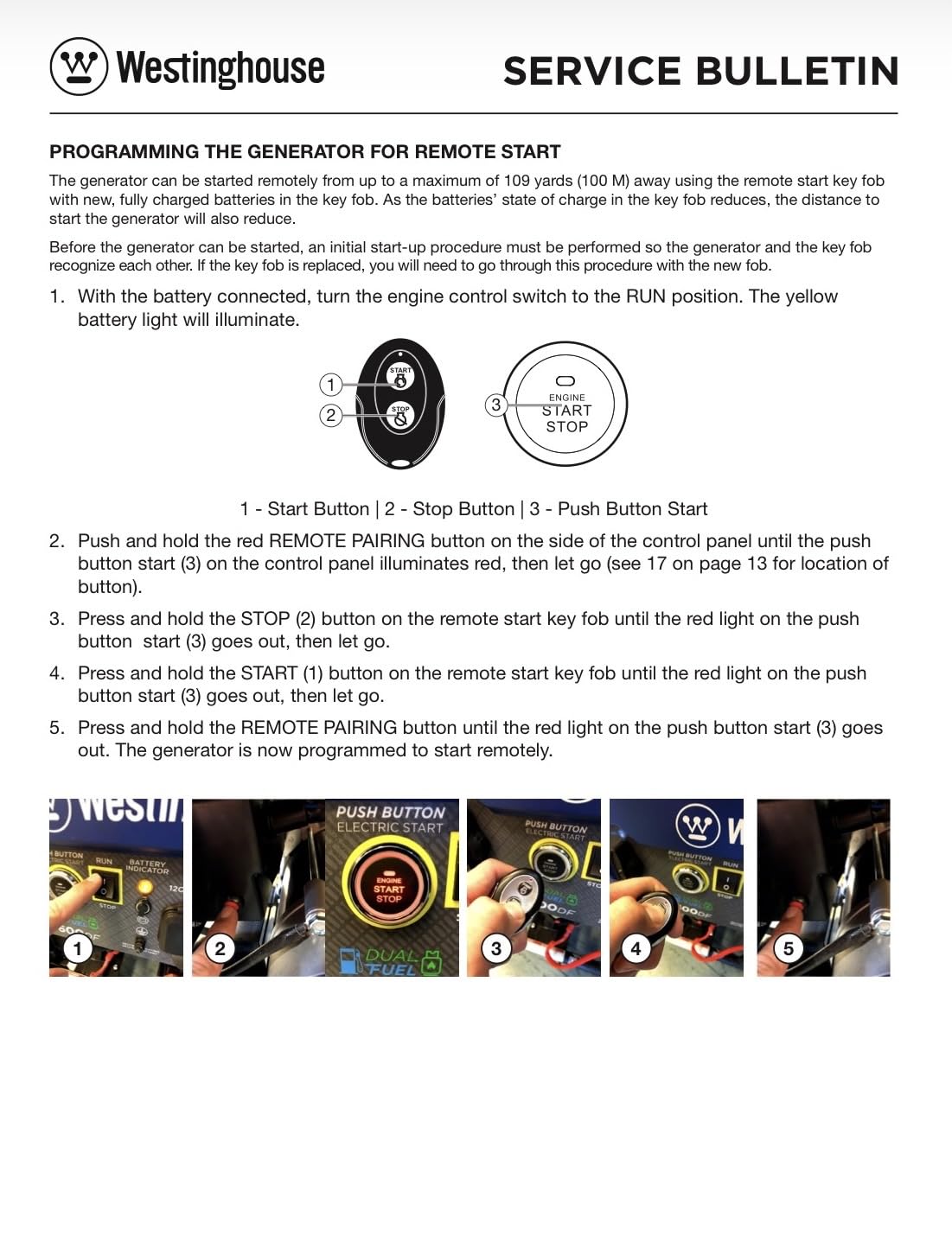
The advanced electronic fuel injection is the reason for the rating. There is no choke and no carburetor, so starting is a button press in cold or humid weather, which is exactly when a generator gets asked to perform.
Underneath is a 457cc 4-stroke OHV engine with a cast iron sleeve, which is a durability choice rather than a cost-cutting one. Outlets cover a 14-50R 50A, an L14-30R 30A twist lock and two GFCI 20A duplex receptacles with rubber covers, and low oil shutdown, a CO sensor and a digital hour meter are all standard.
What the WGen9500TFc does well during an outage
The 6.6 gallon tank and 15 hour published runtime give it a full day of low-draw essentials without a refuel stop, and the built-in fuel gauge means you are not opening the tank to check.
A foldable handle, a flat-free tire, a USB port and remote, electric and recoil start options cover everything from a rolling start at the curb to a key fob start from indoors.
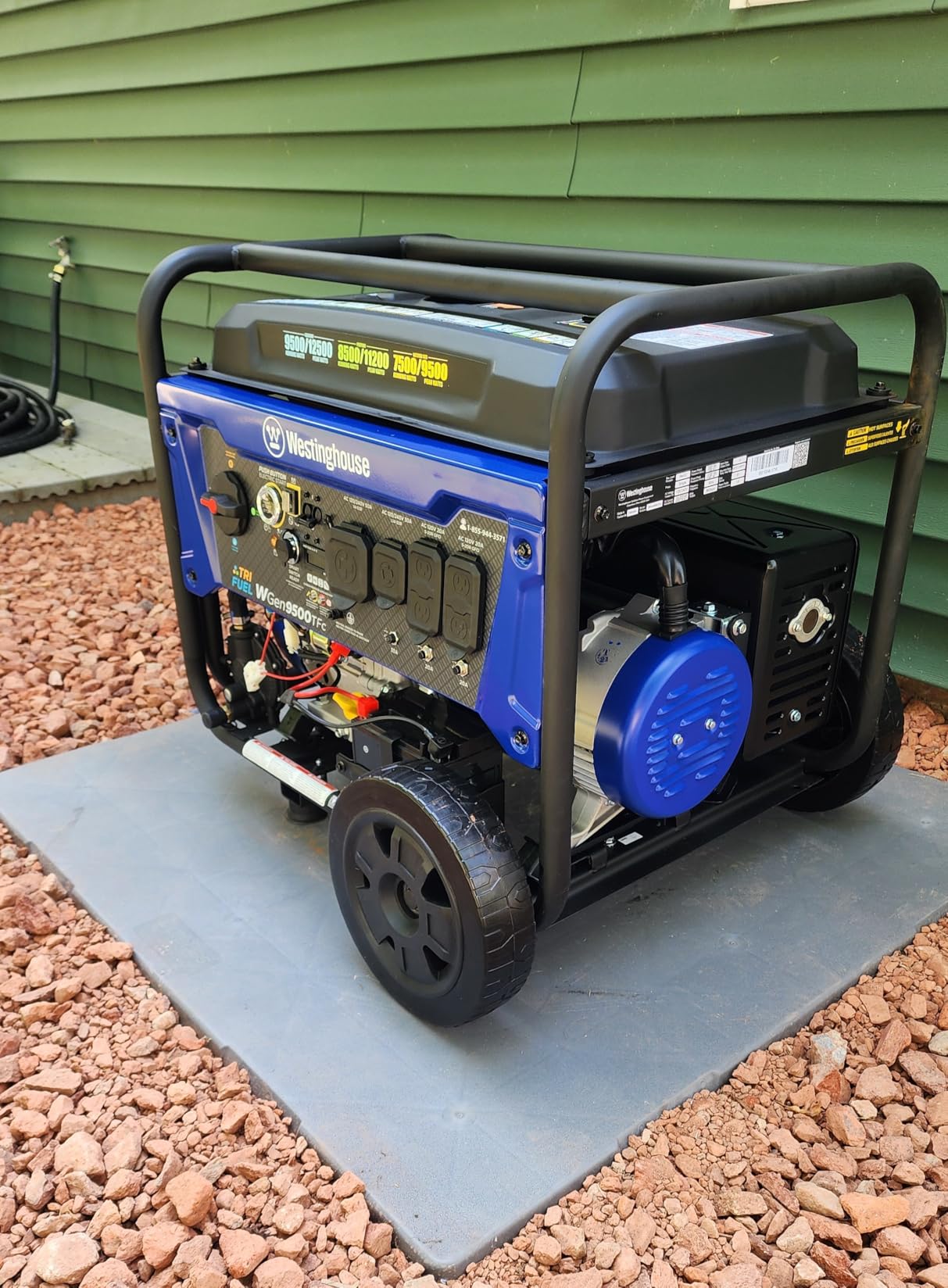
Where the WGen9500TFc falls short
It has 40 reviews, the smallest review base in this roundup. That 4.8 rating is encouraging, but a new model with a thin history is a different risk profile than a machine with hundreds of owners reporting back over years.
It is an open frame model and louder than the inverter picks, and its 9500 running watts on gasoline sit below several other machines here. Good for essentials; think twice before expecting it to carry central air on a hard start.
How Much Power Do You Need for an Emergency?
Size for the appliances you will actually run, not for the sum of everything in your house. Most households that take emergency power seriously run a refrigerator, a freezer, lights, a router, a sump pump or well pump, and sometimes one air conditioning unit. Add those running watts together, then apply the 80 percent rule.
The 80 percent rule is the guideline that a portable generator should carry no more than 80 percent of its rated running watts as a continuous load. A generator rated at 10000 running watts should therefore be treated as an 8000 watt continuous machine, which leaves headroom for motor starting surge and for the derating that happens when you switch to propane or natural gas.
Here is a practical load list to work from when you build your own.
Refrigerator: 150 to 400 running watts, with 2 to 3 times that in starting surge.
Chest freezer: 100 to 300 running watts, with 2 to 3 times that in starting surge.
Well pump, 1/3 to 1/2 HP: 750 to 1000 running watts, with 2 to 3 times that in starting surge.
Sump pump, 1/3 to 1/2 HP: 750 to 1000 running watts, with 2 to 3 times that in starting surge.
Window air conditioner: around 1200 running watts, with 2 to 3 times that in starting surge.
Mini-split air conditioner: 1500 to 3000 running watts, usually with a soft start and lower surge.
LED bulb: 10 to 15 running watts each, with negligible surge.
Router and modem: 15 to 20 running watts each, with negligible surge.
A worked example: a refrigerator at 300 watts, a freezer at 200, a well pump at 1000 with roughly 3000 of starting surge, a sump pump at 600, a mini-split at 2000, ten LED bulbs at 150 and a router plus modem at 40 gives about 4290 watts of running load. On natural gas, that means you need a machine rated at roughly 5360 running watts on gas, so a 7000 watt natural gas rating with margin is the realistic target.
If you want to compare fuel types in more detail before you size anything, our guide to dual fuel portable generators covers the two-fuel case, and solar generators for power outages covers the battery alternative.
Gasoline vs Propane vs Natural Gas: What Each Fuel Actually Delivers
Every tri fuel generator in this roundup burns the same fuel under different intake conditions, and because propane and natural gas carry less energy per unit volume than gasoline, output drops when you move away from the gasoline setting. The headline wattage on the box is almost always the gasoline number, and it is the number most people wrongly plan around.
Here is what the manufacturers publish, fuel by fuel, for the models in this roundup that state all three figures:
DuroMax XP13000HXT: 13000 starting and 10500 running watts on gasoline. Per fuel figures for propane and natural gas are not published in the listing.
Champion 11000W tri fuel inverter: 11000 starting watts across all fuels, with 9000 running on gasoline, 8100 running on propane and 7290 running on natural gas.
Champion 12500W tri fuel: 12500 starting and 10000 running on gasoline, 11250 starting and 9000 running on propane, 10000 starting and 8000 running on natural gas.
Westinghouse iGen12000TFc inverter: 12000 peak and 9000 running on gasoline, 11000 peak and 8100 running on propane, 9800 peak and 7200 running on natural gas.
Westinghouse WGen9500TFc EFI: 12500 peak and 9500 running on gasoline, 11200 peak and 8500 running on propane, 9500 peak and 7500 running on natural gas.
The pattern is consistent. On the Champion 11000, moving from gasoline to natural gas costs 1710 running watts, roughly 19 percent. On the Champion 12500, the same move costs 2000 watts. On the Westinghouse iGen12000, it costs 1800 watts.
The headroom rule that follows from this is simple: size the generator against the natural gas figure if you plan to run on natural gas during a long event, and keep the continuous load under 80 percent of that lower number. A generator that is comfortable on gasoline can still trip its overload protection on natural gas if you sized it against the wrong figure.
On runtime, gasoline gives the longest hours because the tank is the largest and energy density is highest. Propane gives less, and a 20 lb propane cylinder is a portable supply rather than a long term one, so plan on several cylinders per family per day rather than one. Natural gas is effectively unlimited in duration, which is the whole argument for a fixed hookup, and also the reason the fuel line installation is the biggest cost decision in this whole purchase.
Running on natural gas also sidesteps the storage problem. Forum advice in r/Generator is blunt that storing fuel is a massive pain and that owners should avoid putting gasoline in a tri fuel machine so it stays clean. A natural gas or propane default means no stale gasoline in the fuel system after a long idle period, and that is a real reliability argument for multi-fuel hardware rather than a convenience one.
How to Connect a Generator Safely: Transfer Switch, Interlock and CO
Run any generator outdoors only, at least 20 feet from the building, with the exhaust pointed away from doors, windows and vents. Carbon monoxide is odorless and colorless, and a running engine in a garage or an enclosed porch is the failure mode that turns an outage into an emergency.
Never backfeed a generator into a wall outlet. Plugging a portable generator into a household receptacle to power the whole house sends power back onto utility lines, which endangers lineworkers and can start fires during the restoration. Use a transfer switch or a listed interlock kit, installed by a licensed electrician, and confirm the generator has the right output for the switch.
Install working carbon monoxide alarms on every level of the home and near sleeping areas, and treat a generator CO sensor as a backup rather than a substitute. A sensor shutdown protects the machine; it does not protect the people inside.
If your generator has a 50 amp outlet, a transfer switch sized for continuous load at or under 80 percent of that rating is the correct pairing. If it only has 30A outlets, an interlock kit with a properly sized breaker is the typical route, and local electrical code governs either installation.
When NOT to Buy a Tri-Fuel Generator
Tri fuel is not always the right purchase, and the honest answer is that it is overkill in several common situations. If you only need to keep a refrigerator, a few lights and phone chargers alive for a few hours, a small single fuel inverter is simpler, lighter and cheaper to maintain.
If you have no natural gas supply and no plan to install one, the third fuel is decoration. In that case a dual fuel gasoline and propane machine gives you most of the supply insurance at a lower weight and a lower price, and you can read our dual fuel portable generator guide for that comparison.
If your outage history is one or two short events a year, the third fuel rarely pays for itself. Fuel flexibility matters in hurricane, wildfire and ice storm regions where supply is genuinely disrupted, and it matters much less where the grid comes back overnight.
A home battery system is the alternative worth weighing. It starts silently, needs no fuel logistics, has no combustion engine to maintain and can be placed indoors, and it covers electronics perfectly. Its weakness is that it is sized for a limited load and it does not start a well pump or central air. If your priority is refrigeration, internet and medical equipment with no noise and no exhaust, we would look at battery storage before a generator.
Multi fuel hardware also carries more maintenance overhead than a single fuel generator because of the added conversion and fuel selector components. That cost is worth it if you will use all three fuels, and largely wasted if you will not.
Fuel Storage Plan for a 3 to 7 Day Outage
Real outages last longer than the optimistic one or two days that most guides assume. Users in r/Generator describe going five days without power or water and concluding that a week of fuel is the realistic stocking target rather than a token amount.
On gasoline, plan on rotation rather than a stockpile. Store approved containers in a cool, ventilated space away from the house, add a fuel stabilizer, mark each container with the date it was filled, and run the oldest fuel through the generator first every few weeks so nothing sits long enough to varnish. Refill your vehicle tank before the storm, since a full tank is the safest storage you will ever have.
On propane, count cylinders by household and by day rather than by tank. A 20 lb cylinder is a portable supply, and with a family of four running essentials loads you will go through them. Keep full cylinders separate from empties, store them upright and outdoors, and know your local exchange refill pattern before the event.
On natural gas, the check is different. Confirm the line is intact, the regulator is the correct type for the generator, and nothing has been shut at a valve. Have a licensed gas fitter confirm the connection after installation, and keep the manual quick connect accessible so you can detach the unit if it needs servicing.
What a Natural Gas Setup Actually Requires
The hidden cost in this purchase is almost always the natural gas line, not the generator. Homeowners in r/Generator describe budgeting for a new gas line run from the main and a possible higher capacity meter upgrade, and both are unbudgeted costs in most buying guides.
A natural gas hookup typically requires a licensed gas fitter, a permit, a properly sized regulator, a manual shutoff valve accessible outside, and a connection that matches the hose supplied with the generator. Some utility meters cannot carry the additional load without an upgrade, and only the utility can tell you that.
Budget the installation as a separate line item, and get the gas line quoted before you commit to a machine. If the quote is large, a dual fuel unit that runs on propane plus a planned propane cylinder rotation may be the more realistic path for the same protection.
How Long These Last: Reliability and Service Life
The most repeated observation in r/Generator is uncomfortable but useful: most consumer generators start losing compression somewhere around 1500 hours, with some owners reporting units reaching the 2000 to 3000 hour range. That is a community observation rather than a measured figure, but planning around it changes how you buy.
For a 9500 to 12000 watt machine, a heavy outage year can add several hundred hours. Ten years of moderate use can plausibly consume most of the engine’s compression life, so think of a large tri fuel generator as a decade-scale purchase rather than a forever purchase, and set aside money for a replacement cycle.
Service life tracks a few concrete things: oil change intervals, a cast iron sleeve rather than an aluminium one, air filter cleanliness in dusty conditions, and fuel system discipline. The Westinghouse WGen9500TFc EFI uses a 457cc OHV engine with a cast iron sleeve, which is the construction detail most associated with durability in this category.
On what to avoid, we would steer away from lightly specified generic units with thin or absent review histories, and from any model where the maker does not publish per-fuel wattage. Units that hold up poorly above roughly 5500 watts of continuous load are repeatedly reported in forum discussion, and a manufacturer who will not commit to per-fuel numbers is telling you something. Prioritise brands with a real service network and a warranty you can claim, because parts availability matters more in year five than any feature list.
Frequently Asked Questions
What is the best home generator for emergency use?
The best home generator for emergency use is one sized to your real load list and matched to your fuel access. For most households, an inverter tri fuel model between 9000 and 12000 peak watts covers a refrigerator, freezer, lights, internet equipment and a pump. Our top pick, the DuroMax XP13000HXT, leads on capacity and review volume, while the Champion 11000W tri fuel inverter is the safer choice for electronics.
What size generator do I need for emergency power?
Add the running watts of everything you plan to run, then keep that total at or under 80 percent of the rated running watts. Most essential loads total between 3000 and 5000 watts, so a machine rated for 8000 to 10000 running watts on your lowest output fuel gives comfortable headroom. Add the starting surge of the largest motor, typically a well pump or sump pump, before you finalize the size.
What is the 80% rule for generators?
The 80% rule says a portable generator should not carry more than 80 percent of its rated running watts as a continuous load. A generator rated at 10000 running watts is therefore treated as an 8000 watt continuous machine. The remaining 20 percent covers motor starting surge and the output drop that happens when you switch to propane or natural gas, both of which are hard on the engine and the alternator.
Are tri-fuel generators worth it?
They are worth it if you are in a hurricane, wildfire or ice storm region, you have or can install a natural gas line, and you expect multi-day outages. They are not worth the extra weight and maintenance if you need only a refrigerator and lights for a few hours, or if you have no plan to supply a second fuel. A dual fuel unit is usually the better value in that case.
Can I run my house on a 3500 watt generator?
You can run a refrigerator, a freezer, several lights, a router and a small TV on a 3500 watt generator, provided you stay under 2800 watts of continuous load. You cannot also run a well pump, a sump pump, a space heater or central air, since those motor loads alone can exceed the entire rating. Most households add 10000 running watts to cover pumps and cooling alongside the essentials.
How long will a 20lb propane tank power a 3500 watt generator?
A 20 lb propane cylinder is a portable supply rather than a long term one, and it will need swapping several times a day on a household load. Propane also reduces available output relative to gasoline, so size the generator on the propane figure rather than the gasoline one. If you want a single fuel that does not run out, a natural gas line is the only real answer.
Which tri-fuel generator is the most reliable?
Reliability tracks engine construction, a cast iron sleeve, an established service network and a warranty you can actually claim. The Westinghouse WGen9500TFc EFI uses a 457cc OHV engine with a cast iron sleeve and electronic fuel injection, while Champion models in this roundup carry 3-year warranties with free lifetime technical support. Note that most consumer engines begin losing compression somewhere around 1500 hours, so plan for a replacement cycle.
What portable generators to stay away from?
Avoid lightly specified generic models with few or no customer reviews, and any brand that will not publish running watts for gasoline, propane and natural gas separately. Forum discussion also reports units from lesser known brands struggling above roughly 5500 watts of continuous load. Check that parts and service are available in your region, because a warranty you cannot exercise is worth very little.
Which Tri-Fuel Generator Should You Buy?
Start from your load list, not the wattage headline. A household running a refrigerator, a freezer, lights, internet and a pump needs a machine rated for 8000 to 10000 running watts on its lowest output fuel, and anything above that is headroom you may never use.
Choose the DuroMax XP13000HXT if you want the most capacity and the deepest review history in this group. Choose the DuroStar DS13000MXT if the same class of output is your priority and inverter clean power does not matter to you. Choose the Champion 11000W tri fuel inverter or the Westinghouse iGen12000TFc if electronics are on the list, and the latter if quiet operation matters.
Match the shape of your outage to the machine rather than to the price band.
Refrigerator, freezer, lights and internet only: prioritize a small inverter with low total harmonic distortion that you can lift by yourself.
Well pump or sump pump on the critical list: prioritize generous starting surge and a 500cc or larger engine.
One air conditioning unit: prioritize at least 10000 running watts and a published per-fuel figure you can trust.
Natural gas line installed or planned: prioritize a published natural gas rating of at least 1.25 times your continuous load.
Outages that run three days or longer: prioritize a large fuel tank, or a natural gas line that removes refuelling entirely.
Solar battery charging: prioritize a 2-wire automatic start and stop output.
Close neighbors or bedrooms nearby: prioritize an enclosed inverter with the lowest published noise figure.
Whatever you pick, plan the fuel strategy before the outage, get the natural gas line quoted early, and decide your transfer switch hardware at the same time. Those three decisions cost more time and money than the generator itself.