
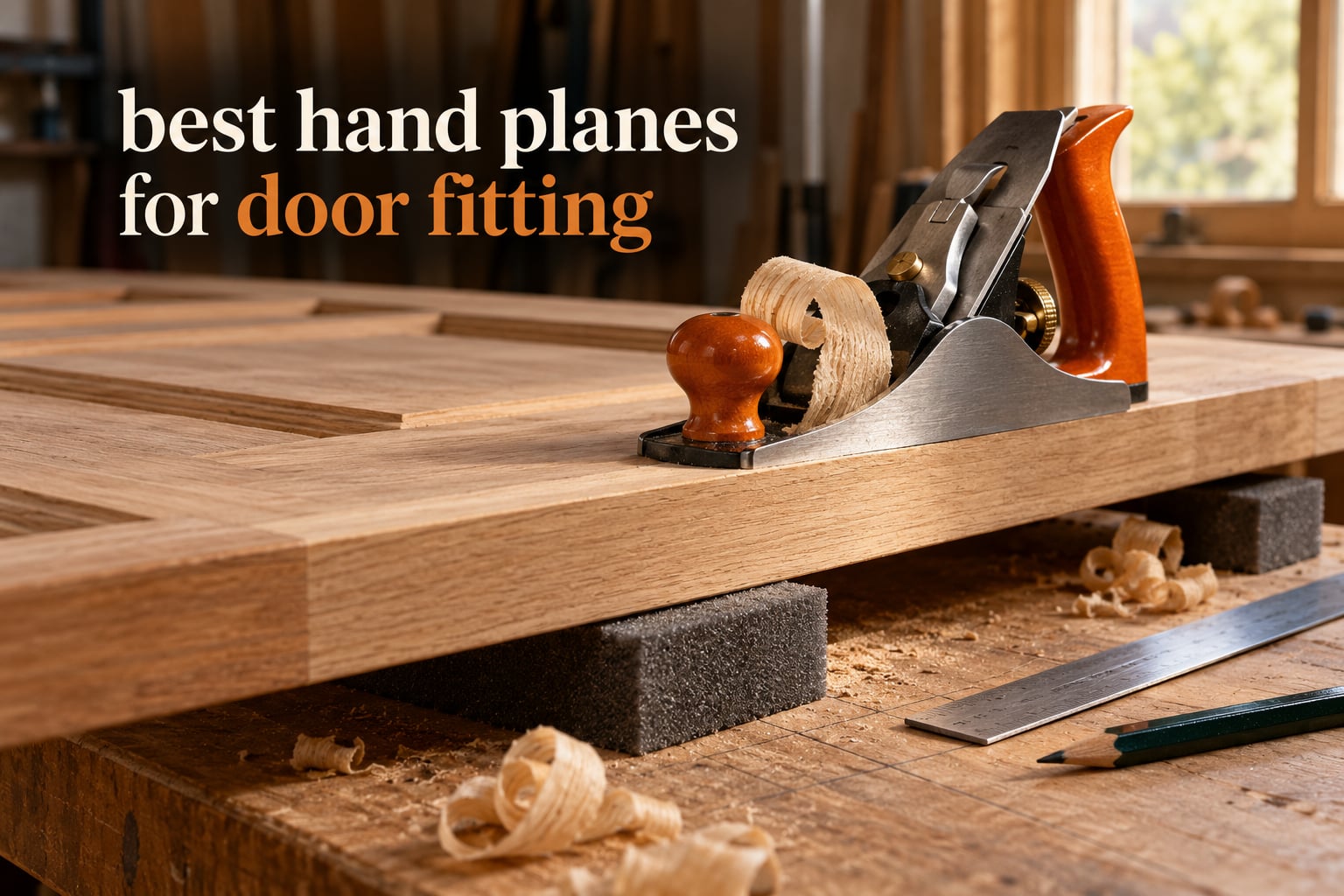
A door that swells in winter and jams in summer is one of the most common problems in any house with an old opening. The fix is normally a few thousandths of an inch off one edge, and that level of control is exactly where a power planer falls apart. This guide covers the best hand planes for door fitting: ten tools ranked for the specific jobs a door edge demands, from rough sizing to the final shaving pass.
We spent weeks with these planes on hollow-core, solid-core and painted doors, comparing how they handle end grain, how much they remove in one pass, and how forgiving they are when you are kneeling on a floor with one hand on the knob. Each pick below names the door problem it solves before anything else, so you can match a tool to your door in seconds.
One note first, because it trips up almost everyone searching this topic. People type “hand planer” when they mean “hand plane”. A hand plane is a hand-powered tool that shaves a controlled slice with a single-edged blade. A power planer is a different machine, and on a door it is the wrong tool. For the general-purpose background, our hand plane picks for furniture makers goes deeper on bench work.
What Is the Best Hand Plane for Planing Doors?
The best hand plane for planing doors is a low-angle block plane with a 12 degree bed, used on the latch and hinge side edges in light passes until the door swings freely. A jack or smoothing plane with a 9 inch sole comes next when more material needs to come off, and a long-sole jointer is the right choice only when the whole hinge side edge is bowed.
In ranked order for door work:
Low-angle block plane – best all-round answer. The shallow bed slices end grain cleanly, so it will not split the corner of a hollow-core door, and the short body is easy to control on site.
Jack plane – the traditional door trimmer. A 9 to 12 inch sole covers more of the edge per pass, which matters when a swollen top rail needs real material removed.
Smoothing plane – the finisher, for the last thinnest passes once sizing is done. Not the tool for paint buildup.
Two specialty planes earn their place for specific tasks: a skew block for chamfering an edge so the door clears a stop, and a shoulder plane for trimming a door stop where the sole cannot reach.
Top 3 Picks for Door Fitting

Quick Overview: Best Hand Planes for Door Fitting (October 2026)
All ten planes are judged on one thing: how well they shave a door edge without tearing it. Details on each follow the table.
| Product | Specifications | Action |
|---|---|---|
| Amazon Basics No. 4 Bench Plane |
|
Check Latest Price |
| KAKURI Japanese Pull Plane |
|
Check Latest Price |
| Jorgensen No. 101 Mini Block |
|
Check Latest Price |
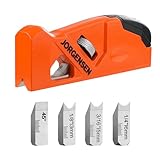 Jorgensen Chamfer Plane Jorgensen Chamfer Plane |
|
Check Latest Price |
 GreatNeck C4 Bench Plane GreatNeck C4 Bench Plane |
|
Check Latest Price |
 Jorgensen No. 60-1/2 Block Plane Jorgensen No. 60-1/2 Block Plane |
|
Check Latest Price |
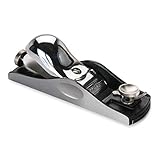 WoodRiver Low Angle Block WoodRiver Low Angle Block |
|
Check Latest Price |
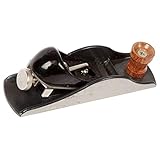 WORKPRO Block Plane WORKPRO Block Plane |
|
Check Latest Price |
 Hoteche No. 4 Bench Plane Hoteche No. 4 Bench Plane |
|
Check Latest Price |
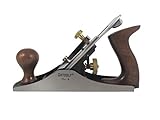 Taytools No. 4 Smoothing Plane Taytools No. 4 Smoothing Plane |
|
Check Latest Price |
1. Amazon Basics No. 4 Bench Plane – Best Overall for Sizing a Sticking Door
- 2 inch blade gives useful width on a door edge
- Cast iron body stays steady and quiet
- Front knob and rear tote control long passes
- Adjustable mouth and depth for fine work
- Heavy over long sessions
- Sole flatness needs checking before first cut
- Screw-driven depth lacks fine-dial precision
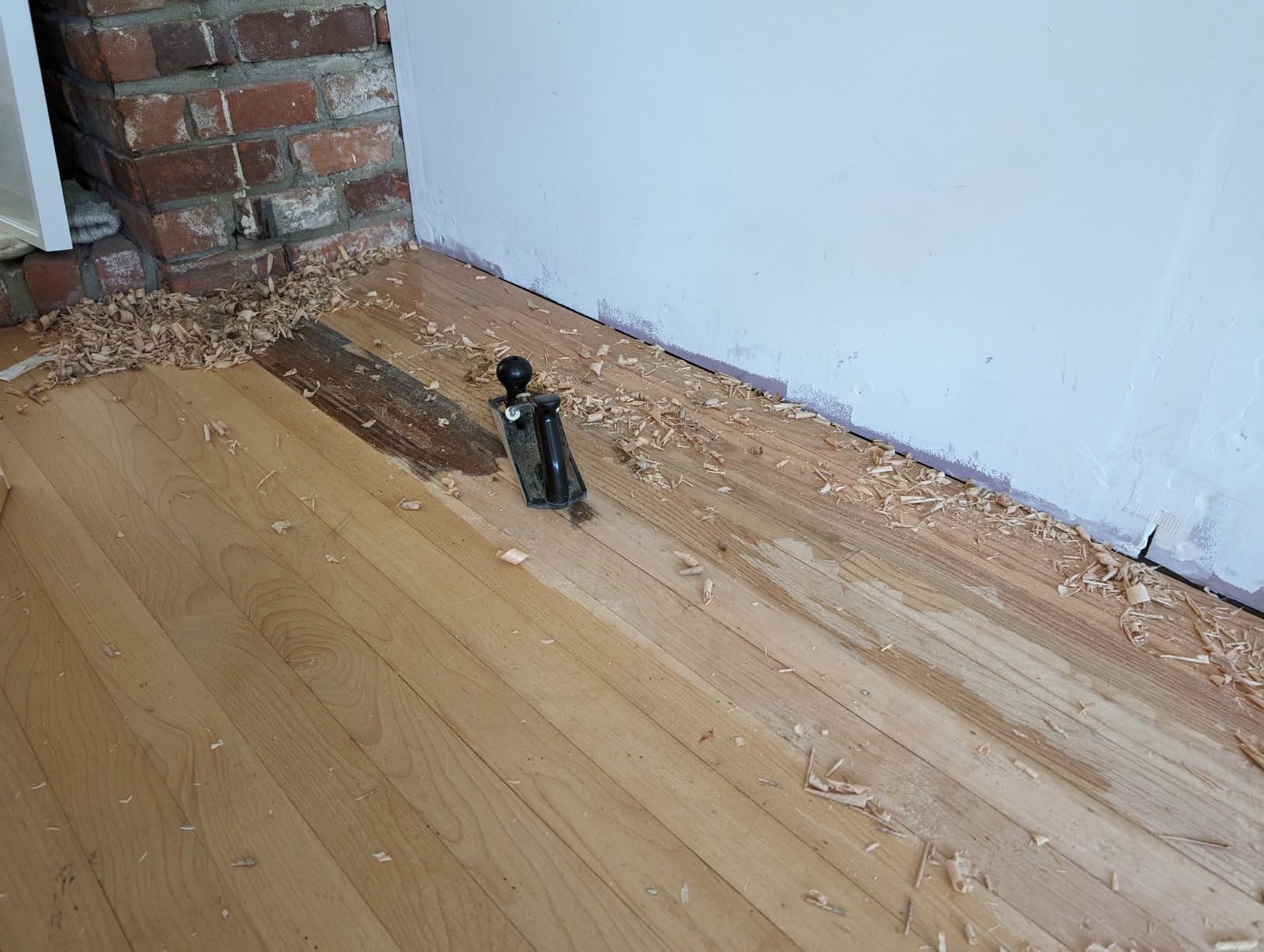
This is the plane we reach for when a door needs real material removed rather than a touch-up. At 2.7 pounds the cast iron body has enough mass to stay put when you are pushing downhill on a door lying flat.
The 9.8 inch overall length sits between a true jack and a short smoother, which suits a door edge well: long enough to benefit from coverage, short enough to control. The adjustable mouth and depth gauge let you work coarse, then dial down to a shaving you can almost read through.
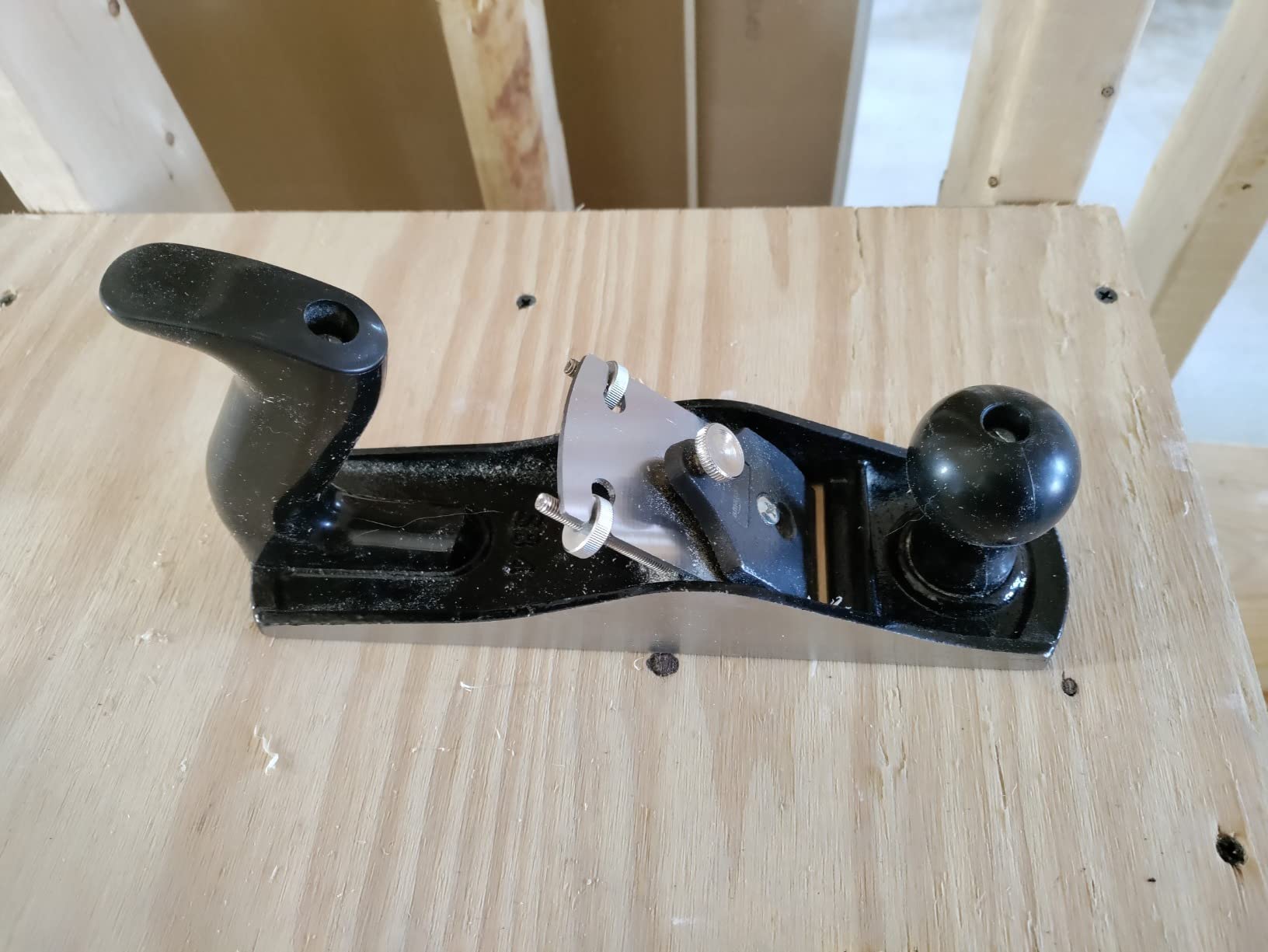
The honest drawback is weight. Two pounds and some adds up when you are on your knees for an hour. Reviewers also report checking the sole flatness before the first cut rather than trusting it, which is good practice with any bench plane.
How it handles end grain on a door edge
The blade sits at a standard bench-plane angle rather than a low one, so a coarse pass across end grain can lift a splinter at the far corner. Keep the cut thin and work hinge side toward latch side, and the shaving comes off in one piece.
Where it is the wrong tool
It is not the plane for a hollow-core door that needs a single deep cut, and it will not rescue a door whose frame has settled. For lighter finishing work, the bench plane comparison for furniture work covers smaller soles. This one is the sizing tool.
2. KAKURI Japanese Pull Plane – Best Hand Plane for End Grain
KAKURI Japanese Hand Plane 42mm, Woodworking Block Plane 5.9″ x 2.1″
- Very thin smooth shavings on end grain
- Lightweight oak body is easy on the wrist
- Sharp factory edge ready to work
- Integrated chipbreaker reduces splitting
- Tapping depth adjustment is a learning curve
- Bed often needs flattening on arrival
- Some blades arrive uneven and need honing
This is a Japanese kanna, a pull plane, and pulling rather than pushing changes how it feels on a door edge. The blade comes toward you, so you see the shaving as it forms and can stop the moment it gets thick.
That is why it handles end grain so well. Owners consistently report thin, translucent shavings on softwood, hardwood and end grain, and the chipbreaker does real work keeping the edge from splitting where a hollow-core skin is thin.
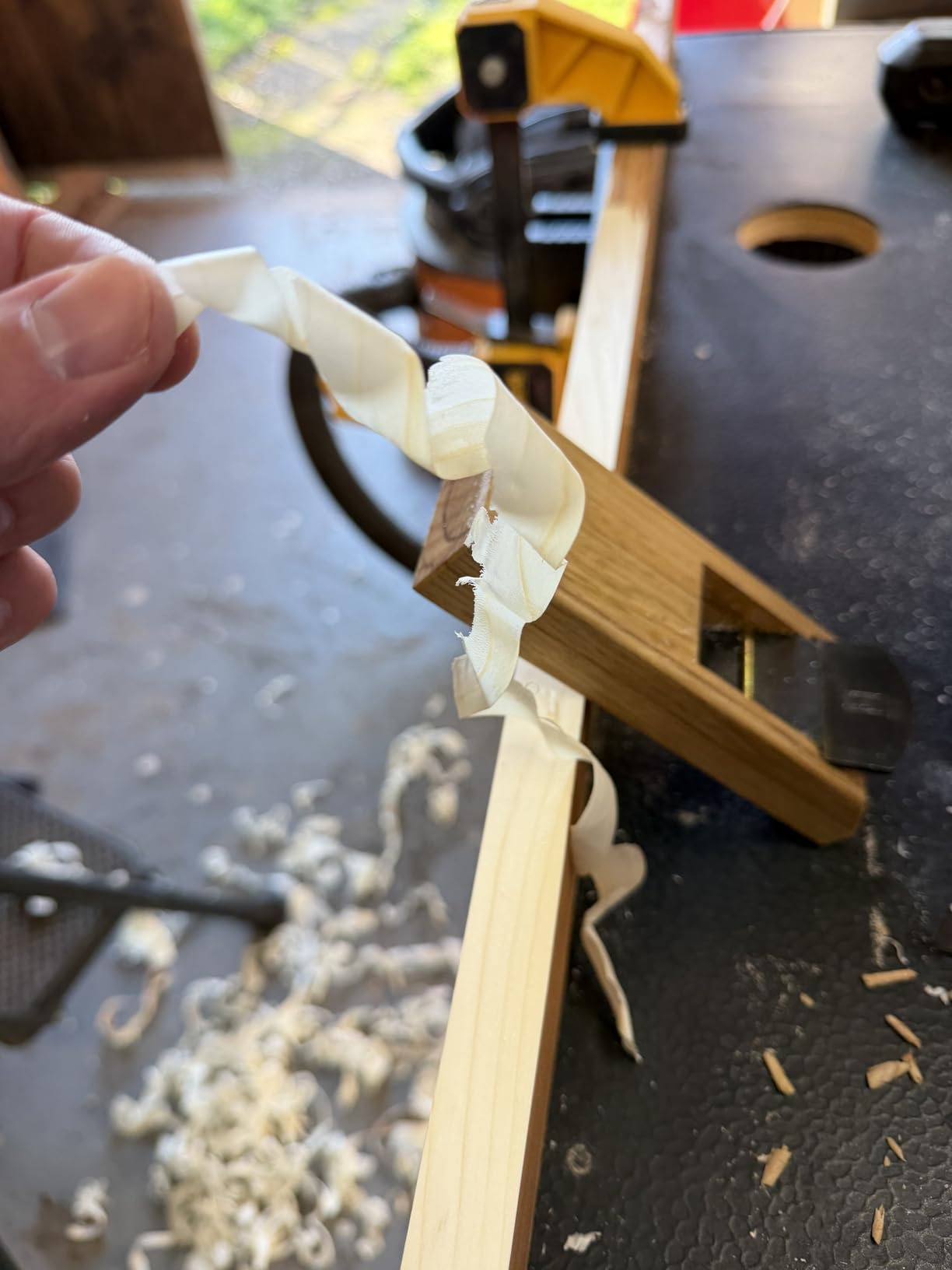
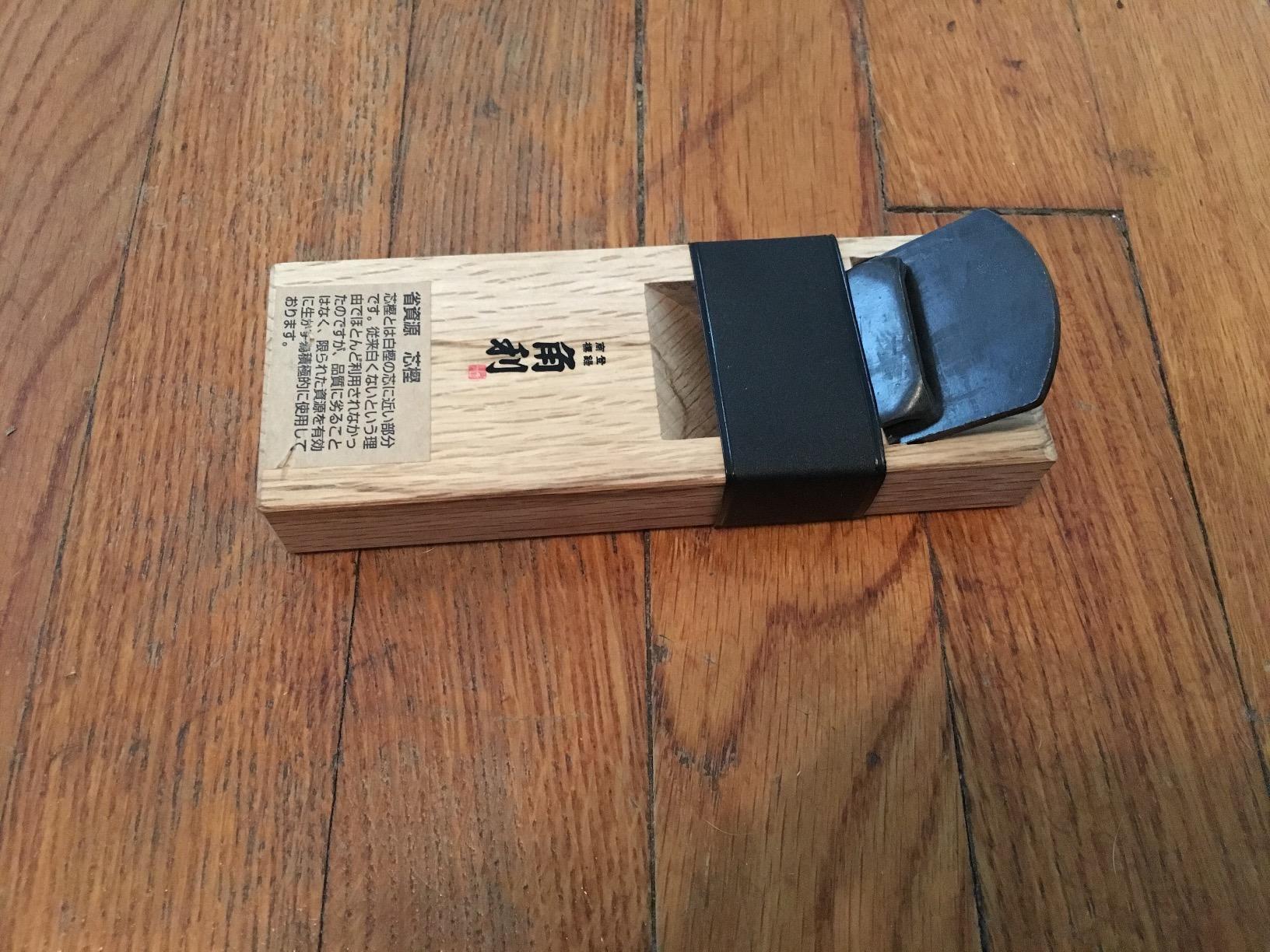
At 5.9 by 2.1 by 1.6 inches it is small enough to control one-handed with the door on sawhorses. The oak body will not damage a finished edge if you set it down on a door you have already trimmed.
Is it sharp enough out of the box?
Reviewers describe the factory edge as performing well after minimal setup, which is unusual at this tier. Some units arrive with an uneven edge or a rough slot and need a pass on a stone first. The bed is the other thing to check, since several owners report flattening it on arrival.
Where it is the wrong tool
The 36 mm cutting width is narrow, so it is slower than a bench plane along a full-length edge. It is a trim and finishing plane, and if a swollen top rail needs half an inch removed, this is the wrong instrument.
3. Jorgensen No. 101 Mini Block Plane – Best Budget Pick for Final Touch-Ups
- Arrives sharp and nearly dialled in
- Palm-sized body gives excellent control
- Ideal for door edge touch-ups and glue lines
- Ductile iron body feels solid
- Not for heavy material removal
- Depth knob takes a few tries to dial in
- Grip tires out over long sessions
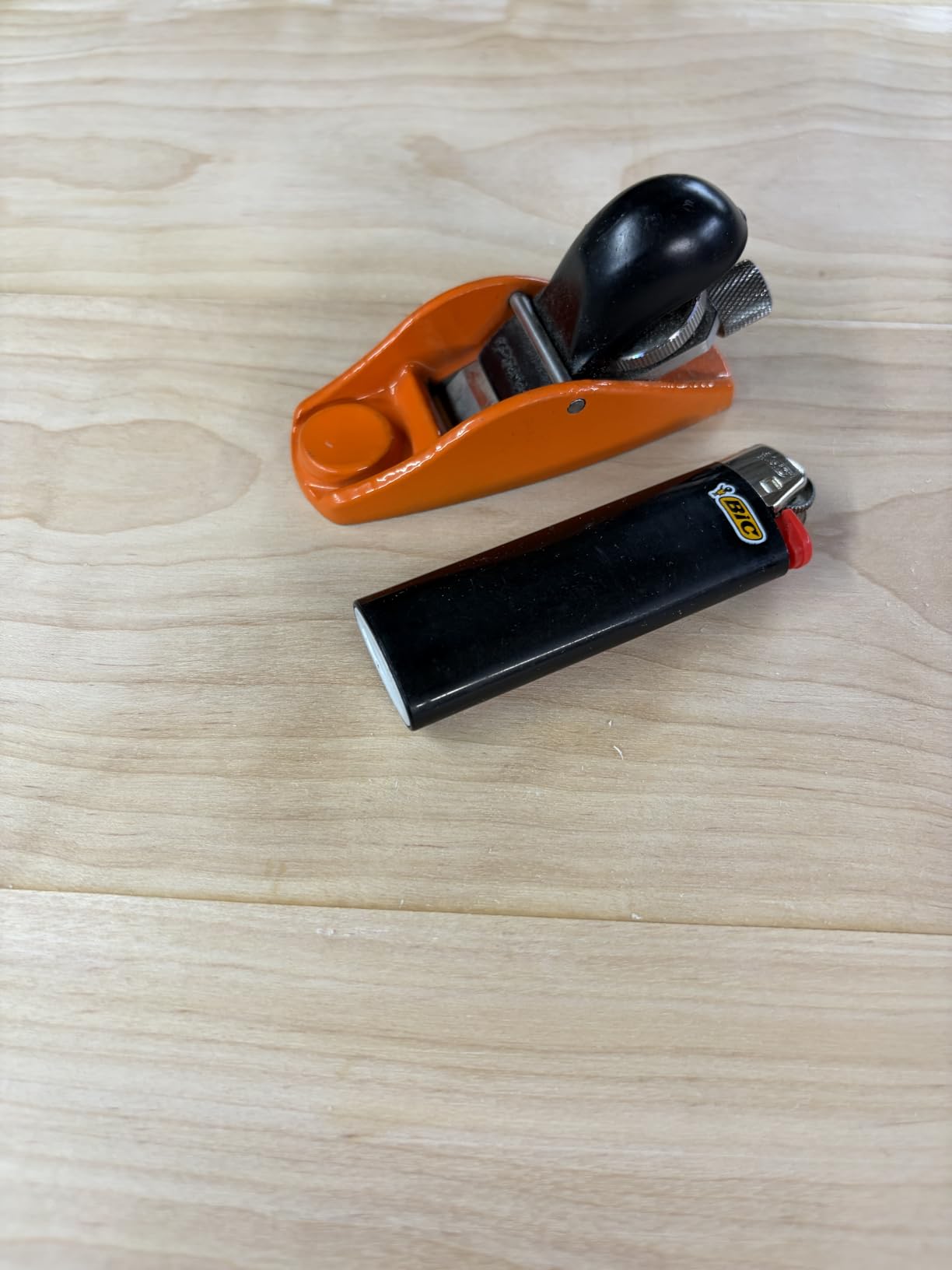
This is the plane to buy if you want to fix one sticking door and nothing else. It ranks first in block planes with a 4.5 average from more than 2,200 reviews, and 76 percent of owners gave it five stars.
For door work it lives in the last stage of the job. Once a bench plane has sized the edge, the No. 101 takes the final shaving so the door closes without a gap, and its palm-sized body makes that pass easy where a full bench plane will not fit.
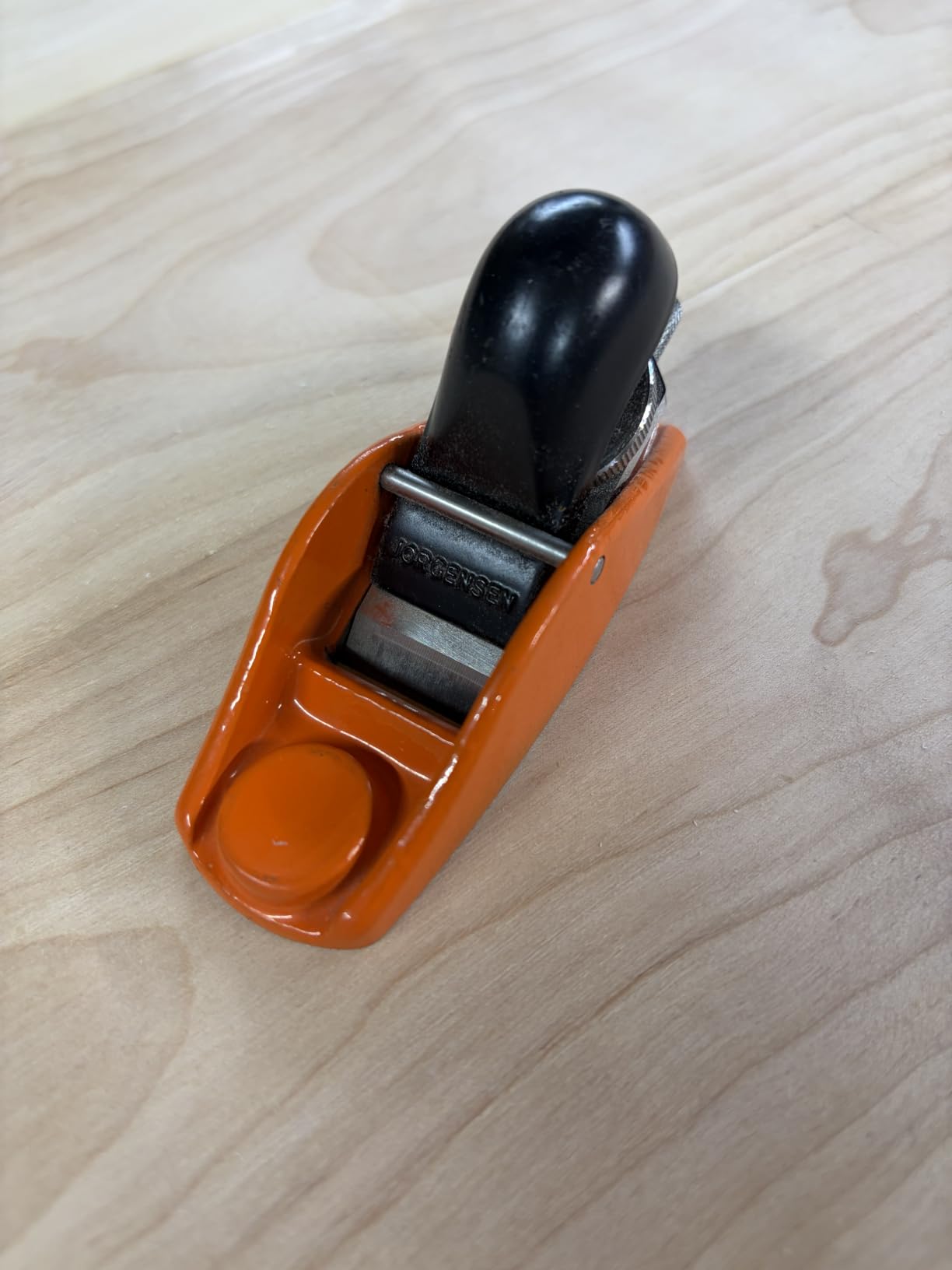
The O1 tool steel blade arrives finely sharpened, so a homeowner can open the box, set the knob and get a usable shaving without a sharpening session first. The polished flat sole also leaves no stain on a finished door edge.
How precise is the depth adjustment?
The knob works, and that is why this plane is easy to recommend to a first-time user. The common complaint is that it takes a few attempts to settle at the exact depth. Set the knob, take a test shaving, measure it with a ruler, and the rest of the door goes quickly.
Where it is the wrong tool
It is a light touch-up plane. A 1.25 inch cut on a 3.5 inch body cannot take off paint buildup or a swollen edge, and owners are clear about that. The grip is also the least comfortable here over a long session, which is fine for one door in an afternoon.
4. Jorgensen Chamfer Plane – Best for Breaking Door Edges After Trimming
JORGENSEN Chamfer Plane, Edge Corner Plane, 4 Cutter Heads Built-In Storage
- Four cutter heads cover flat and round profiles
- Built-in storage keeps heads from getting lost
- Polished sole will not stain the wood
- Enclosed cutter design is safer to handle
- Cutter heads often arrive needing sharpening
- Struggles on very hard woods
- Tiny depth markings are hard to read
A door that fits perfectly but scratches the frame every time it swings needs its edges chamfered, not thinned. That is what this plane does, and it is the one specialty tool in this list that earns its place for a reason no bench plane covers.
Four interchangeable cutter heads ship in the body: a 45 degree flat and three rounds at 1/4 inch, 1/8 inch and 3/16 inch. The rounded profiles take the sharp arris off an edge so it clears a stop or a hinge pin without binding.
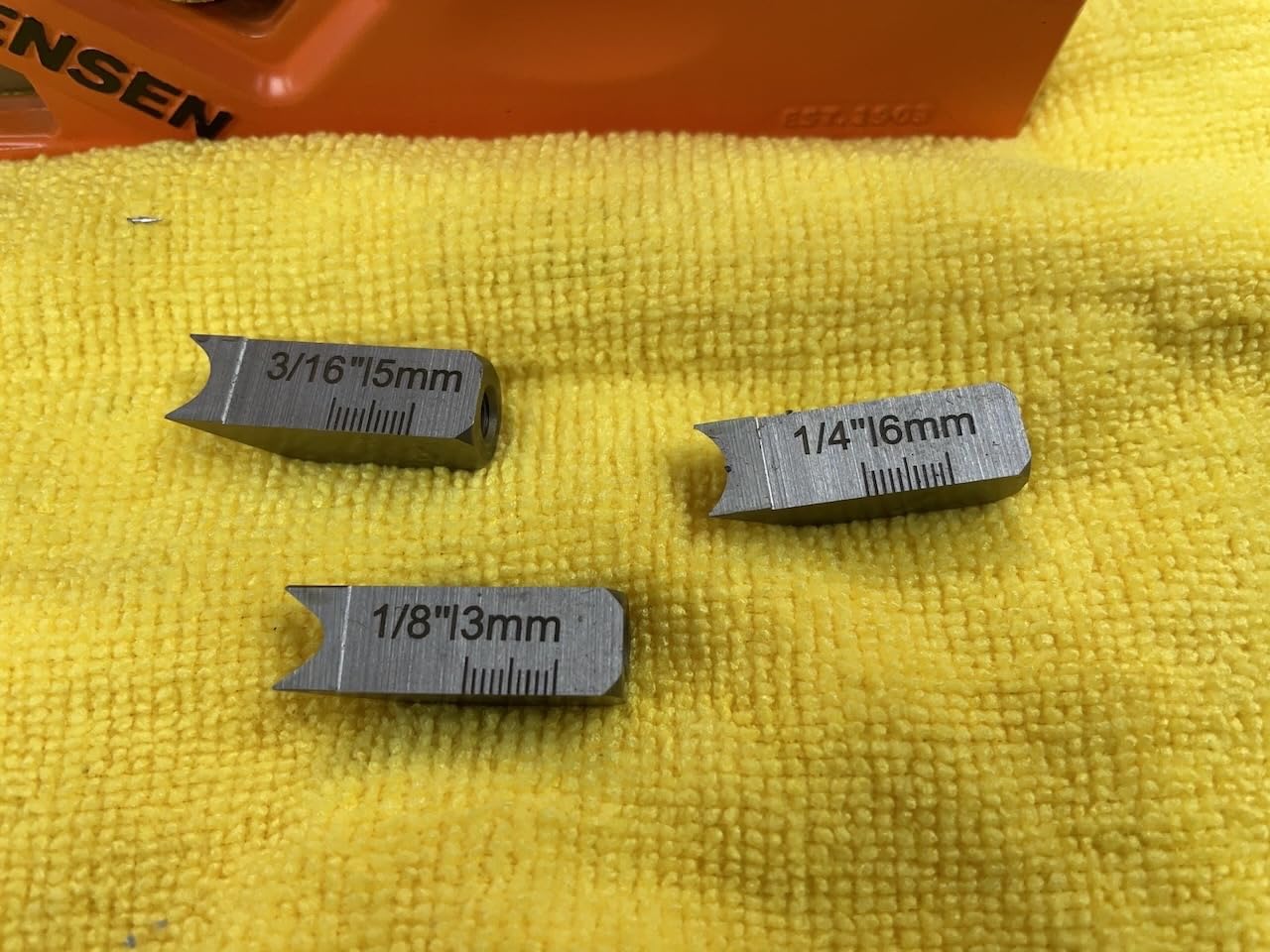
The built-in compartment in the end of the body with a firm clasp is the detail that converts it from a gimmick to a keeper. Small cutter heads disappear, and these are small enough to disappear into a drawer.
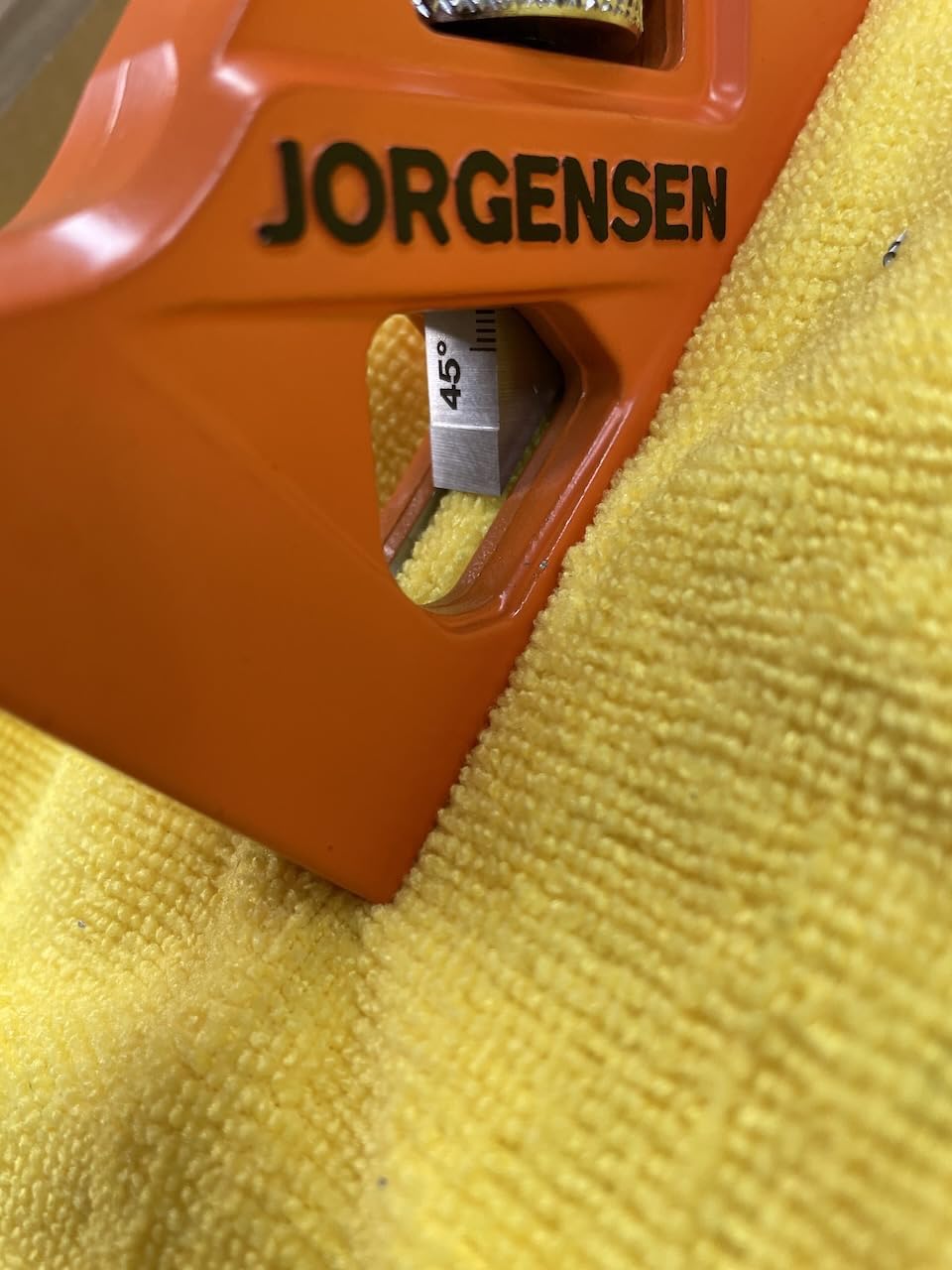
Do the cutter heads need sharpening first?
Most owners say yes. The heads commonly arrive dull, and the tiny concave rounds are fiddly to hone because there is nowhere to rest your fingers. The engraved depth markings are also hard to read, so expect trial passes on a scrap edge first.
Where it is the wrong tool
It is a 6 mm cut, fine for chamfers and useless for reducing a door edge. Owners also report it working hard on very dense hardwoods. Use it after a bench plane has sized the door, not before.
5. GreatNeck C4 Bench Plane – Best 9 Inch Sole for Covering a Long Edge
GreatNeck C4 Bench Hand Plane (9 Inch), 2 Inch Cutter, Adjustable to Control the Blade, Cast Iron Body, Quality Plastic Ergonomic Handles
- 9 inch sole covers a long edge quickly
- Dual handles spread pressure well
- Cutter is easy to sharpen and adjust
- Limited lifetime warranty
- Lowest rating in this group at 4.0
- Some report chipping on hard or figured wood
- Plastic handles feel less refined than wood
- Needs tuning for a chatter-free cut
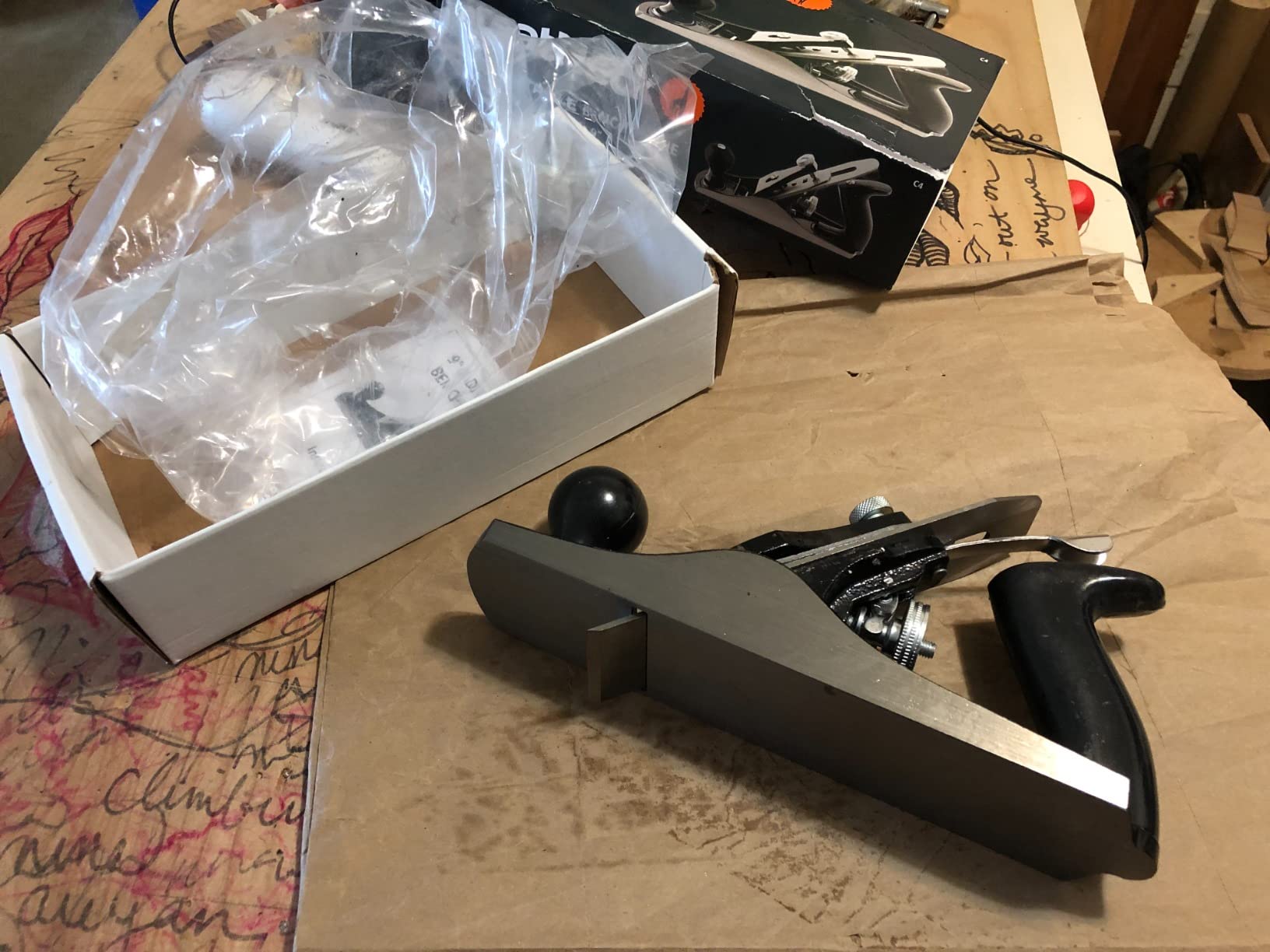
A 9 inch sole is a real advantage on a standard interior door, because the edge you are planing is about 80 inches long and you want the plane flat on it as you travel. This plane ranks first in jack planes, and the width of the sole is why.
The 2 inch hardened and tempered alloy steel cutter adjusts laterally by lever and in depth by screw. That two-axis control is what lets you follow a long edge without gouging, and it is the reason we would reach for this over a cheaper single-blade bench plane.
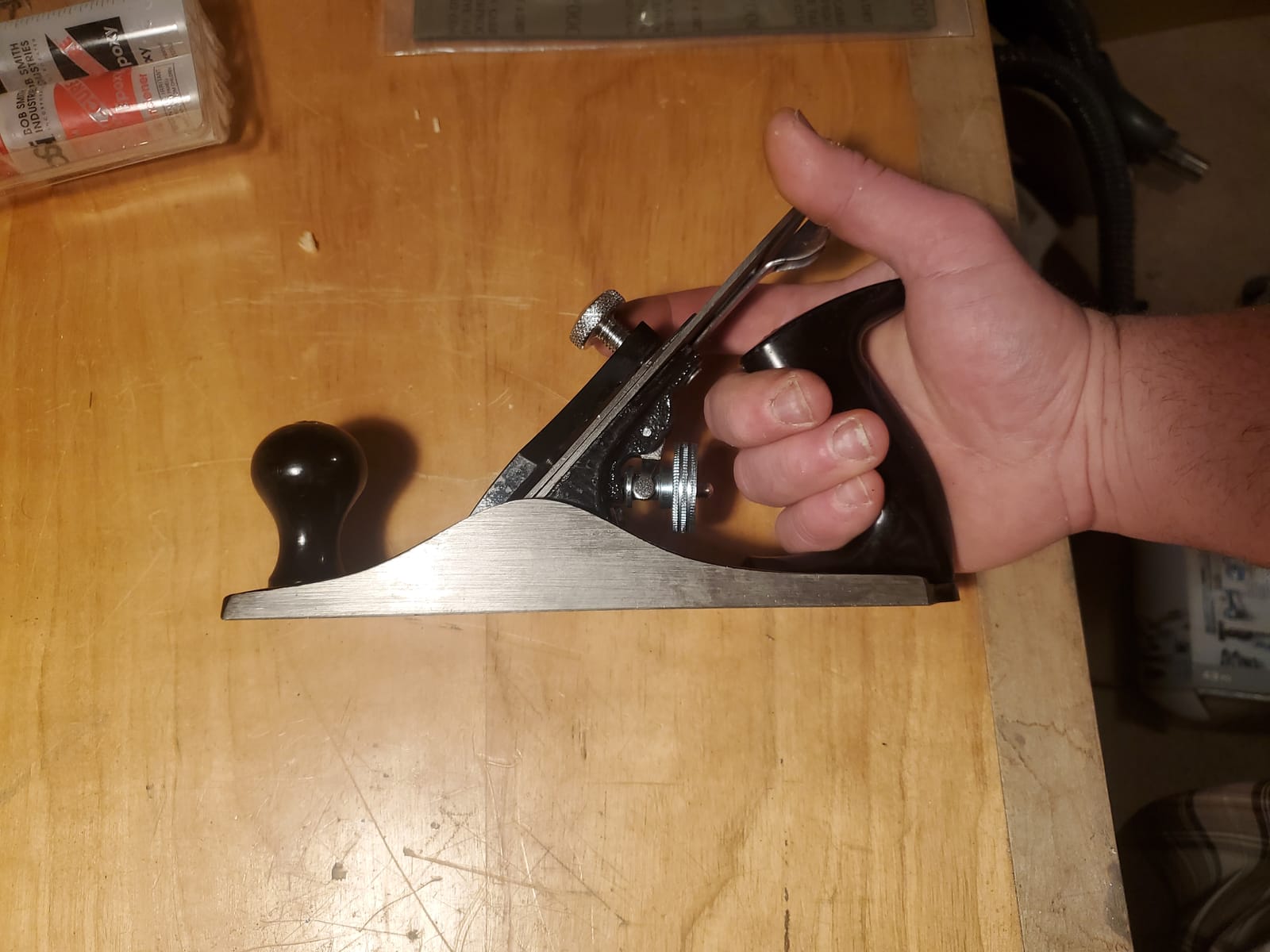
Dual plastic handles put both hands on the tool, which matters when planing a door standing on edge against a wall. The cast iron body is accurately machined and polished, and the limited lifetime warranty is rare at this tier.
Is a 9 inch sole too short for a door?
No. The sole is not there to cover the whole 80 inch run, it is there to stay flat across local hollows and high spots. More coverage means fewer times you start a pass over. A 22 inch jointer sole would cover more but is much harder to control in the confined space around a fitted door.
Where it is the wrong tool
It is not a plane you would buy for a single door, because it needs tuning before the cut becomes consistent. Owners also find the plastic handles less refined than a wooden tote. For one afternoon of trimming a solid-core door, a low-angle block plane gets there with less setup.
6. Jorgensen No. 60-1/2 Low-Angle Block Plane – Best All-Rounder for Door Fitting
JORGENSEN NO.60-1/2 6-1/4″ Wood Planer, Hand Planer for Woodworking
- Highest rated pick at 4.7 with 83 percent five stars
- Adjustable mouth and depth in one tool
- Compact body suits trimming and fitting
- O1 blade holds an edge well
- Knob depth takes several passes to settle
- Mouth adjustment is fiddly for very fine cuts
- Not built for heavy stock removal
If you buy one plane from this guide, this is the one. It carries the highest average rating of any pick here at 4.7, with 83 percent of owners giving five stars, and the low-angle profile is exactly right for a door edge that is mostly end grain.
The adjustable mouth and depth knob work together, and that combination is what makes it versatile. Widen the mouth for sizing a swollen edge, narrow it for a finishing shaving, and one tool covers most of a door job.
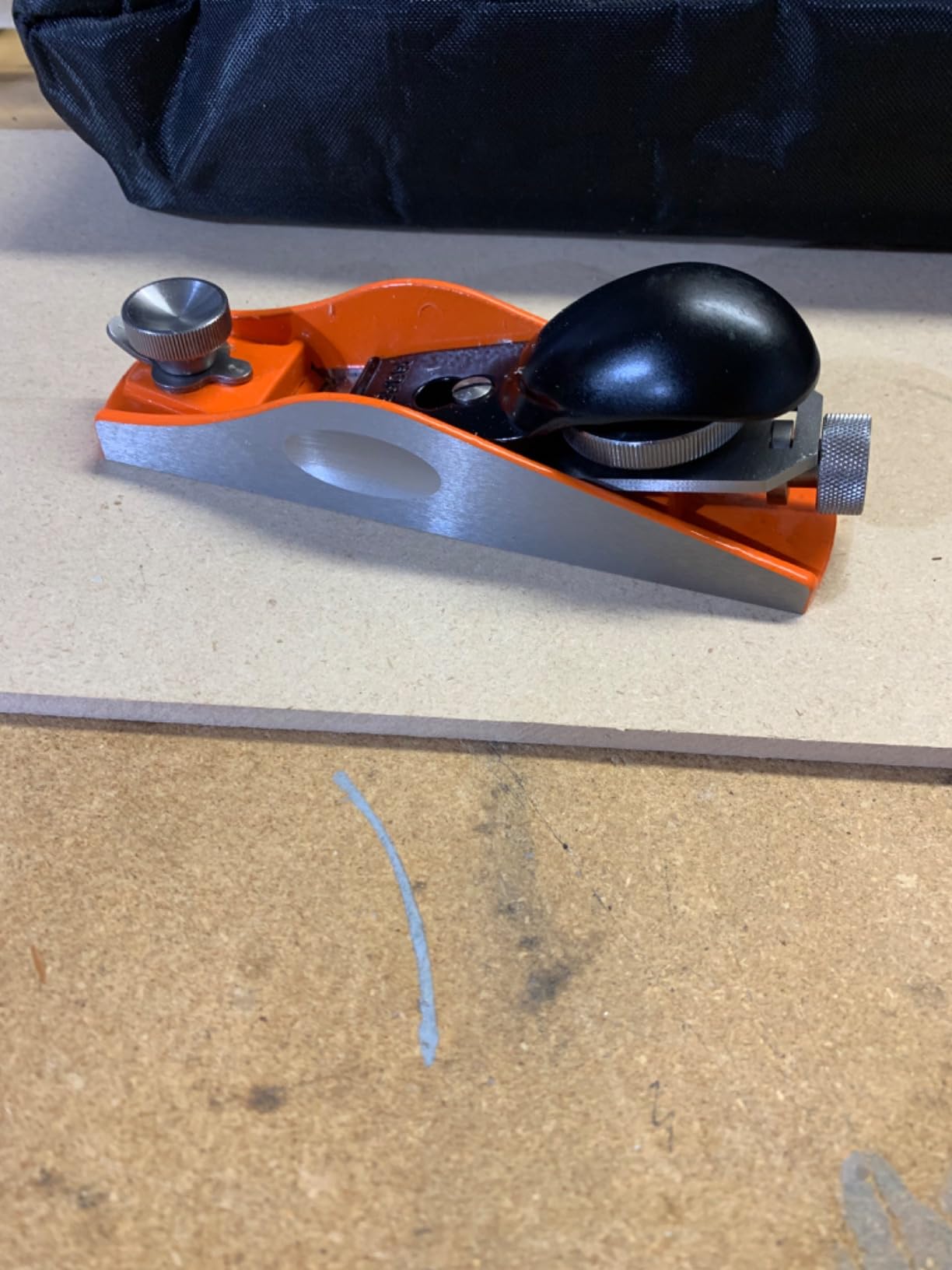
At 1.5 pounds and 6-1/4 inches long it sits in one hand comfortably and follows a long edge without wandering. The O1 blade holds a sharp edge through repeated adjustment, so the shaving thickness you set is the thickness you get.
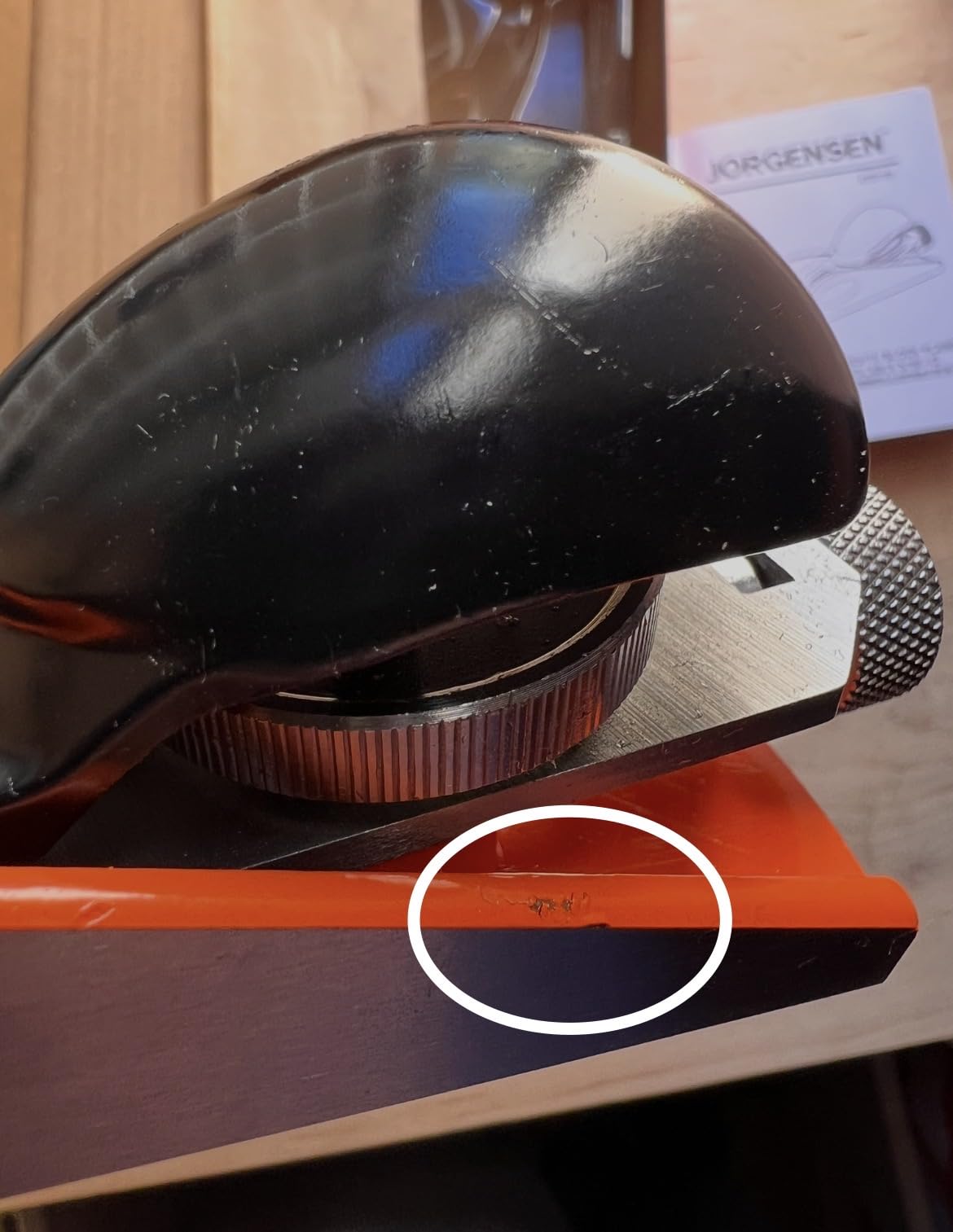
What does the adjustable mouth actually change?
It changes the opening the shaving must pass through. Close the mouth and only the thinnest shaving clears, which gives a fine finish and reduces splintering on end grain. Owners note that making the mouth adjustment very fine is fiddly, so set it roughly once and use the depth knob for fine work after that.
Where it is the wrong tool
It is not a material removal plane, and owners say so plainly. A 1.38 inch cut on a 6-1/4 inch body is a trim plane, and paint buildup on a painted door edge needs a bench plane first.
7. WoodRiver Low Angle Block Plane – Best 12 Degree Bed for End Grain
- Classic 12 degree design cuts end grain cleanly
- Adjustable mouth handles fine and coarse cuts
- High carbon blade is straightforward to sharpen
- Knuckle-style lever cap clamps firmly
- Most expensive tool in this group
- Under 150 reviews means less long-term feedback
- Light body gives less damping than a heavy casting
- Low-angle bed rules out rebates
The 12 degree bed is the whole point of this plane. A shallow bed angle with the bevel up means the blade slides along the top of the wood rather than down into it, which is why it produces a clean shaving on end grain instead of a chip.
That is the most common complaint homeowners have about door work, so the feature is worth paying for on a solid-core door or a trimmed stile. Owners rate it 4.5, with 75 percent at five stars.
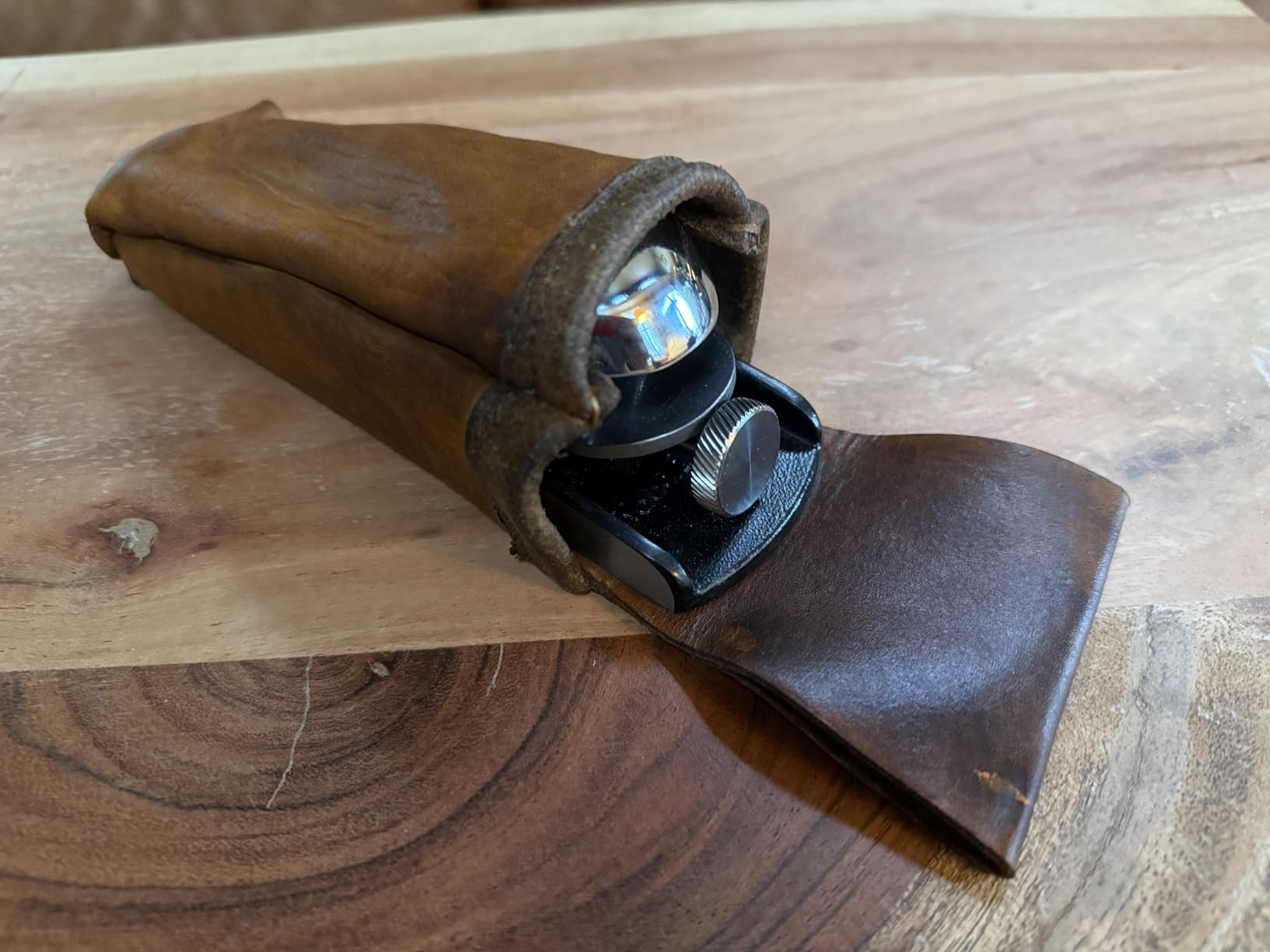
The adjustable mouth sets it apart from fixed-mouth block planes. Widen it to clear a thicker shaving when sizing, close it to a hairline for the last pass along the latch side. The 0.125 inch thick blade is stable at this shallow bed and resists chatter.
Is a lighter body a problem for a door edge?
It is a ductile iron body at 2 pounds, lighter than a traditional cast iron bench plane, and owners mention the resulting lack of damping. In practice that means taking slightly lighter passes, which is good practice on a door anyway. The other trade-off is the review count: at 149, there is far less long-term feedback here.
Where it is the wrong tool
It is the most expensive option in this roundup, which is hard to justify for a single door, and the low-angle bed means it is not intended for rebates or heavy jointing work. If you already own a bench plane, treat it as a finishing companion.
8. WORKPRO Block Plane – Best Lightweight Block Plane for One-Handed Control
WORKPRO W052002 Block Plane, 1-5/8 In. Wide Blade, Cast Iron Body, Adjustable Cutting Depth, Black (Single Pack)
- Shallow blade angle slices end grain efficiently
- Wooden front handle gives good feel
- Compact and light for fine finishing passes
- Inexpensive entry point
- Depth adjustment can creep during use
- Blade needs honing before first use
- Some report alignment and edge consistency issues
This is the plane to grab when the door is hung in its frame and you are working one-handed with a screwdriver in the other. At 0.7 kg it is the lightest plane here, and the shallow blade angle slices end grain efficiently by design.
The manual suggests holding it at up to 45 degrees when pushing or pulling, which is a different technique from a normal bench plane stroke. Get the angle right and the shaving comes off thin and even on a door edge or a casing.
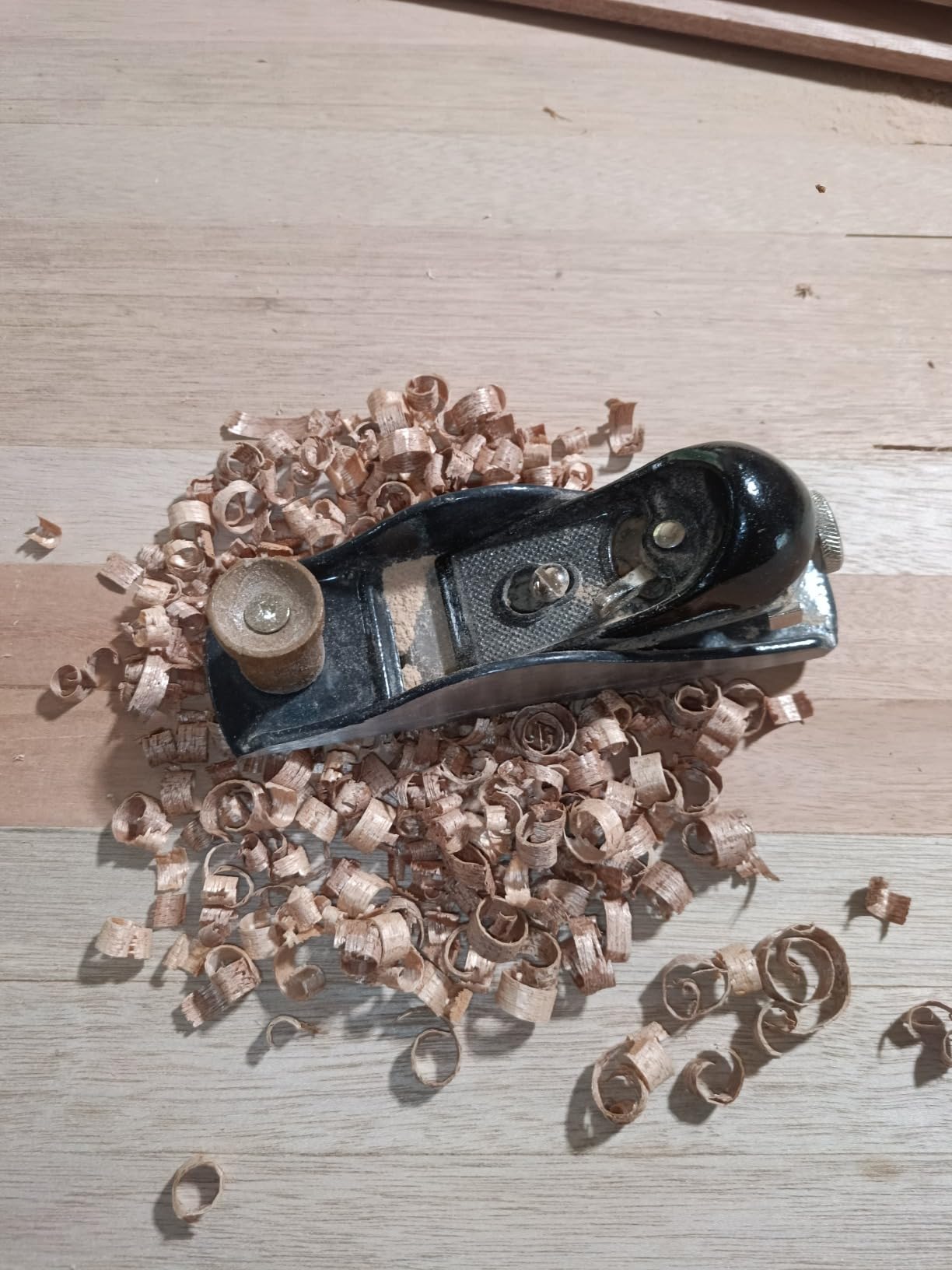
The front wooden handle gives better feedback than a knob, because your palm wraps around it and you can feel the blade meet the wood. At 4.1 from 237 reviews with 55 percent at five stars, treat it as an entry-level tool rather than the main plane for a door job.
What does “creep” mean in practice?
It means the depth setting shifts while the plane is in motion, so a pass set for a hairline shaving suddenly bites deeper. Owners report this most in a sustained push stroke, so test the setting on a scrap edge first. A short honing session on the blade also saves frustration.
Where it is the wrong tool
It is a 1-5/8 inch block plane, so it cannot take off paint buildup, and the cast iron body has little mass. A swollen door edge needs a bench plane. Occasional blade alignment and edge consistency issues also matter more on a door than on a scrap project, because a door edge is a visible finished surface.
9. Hoteche No. 4 Bench Plane – Best Bench Plane on a Budget
Hoteche No.4 Wood Plane – Adjustable Smoothing Bench Hand Planer for Woodworking and Trimming – 9.5-Inch Jointer Plane with 2-Inch Blade
- Very low cost for a bench-style plane
- Blade arrives sharp enough for light trimming
- Suitable for molding and jointed edges
- Adjustable depth works once dialled in
- Setup is tedious and adjustment is fiddly
- Blade may not be even across its width
- Some report gouging on door bottom trimming
- Light body feels less rigid than cast iron
The Hoteche gives you a 9.5 inch bench plane body and a 2 inch high carbon steel blade at a very low cost, which makes it tempting for a first door job. We want to set expectations honestly, because the owner feedback is mixed.
People like the manual back-and-forth push operation, which does give real control, and several use it for quick touch-ups. The 4.2 average from 129 reviews is respectable, with 63 percent at five stars.
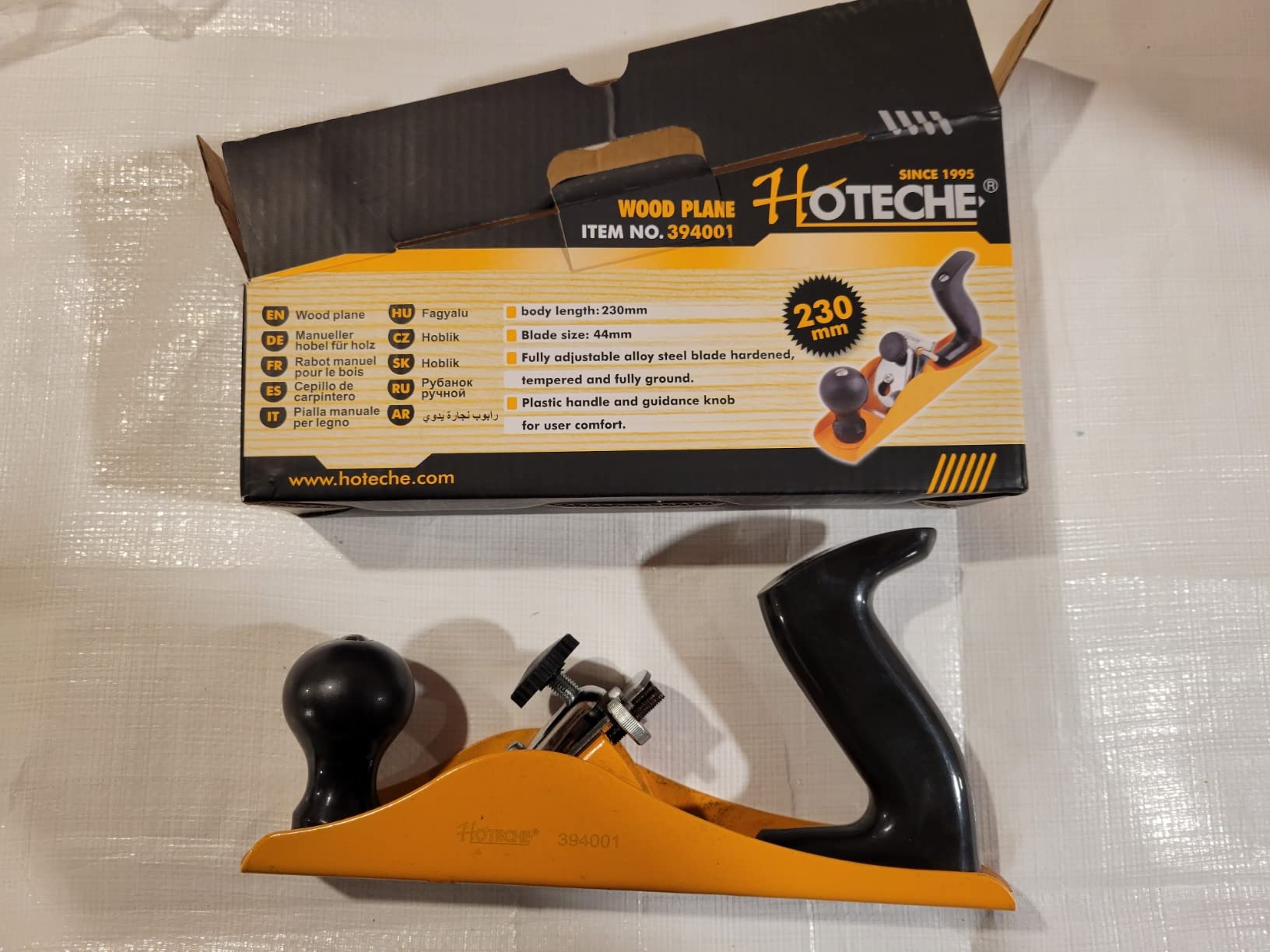
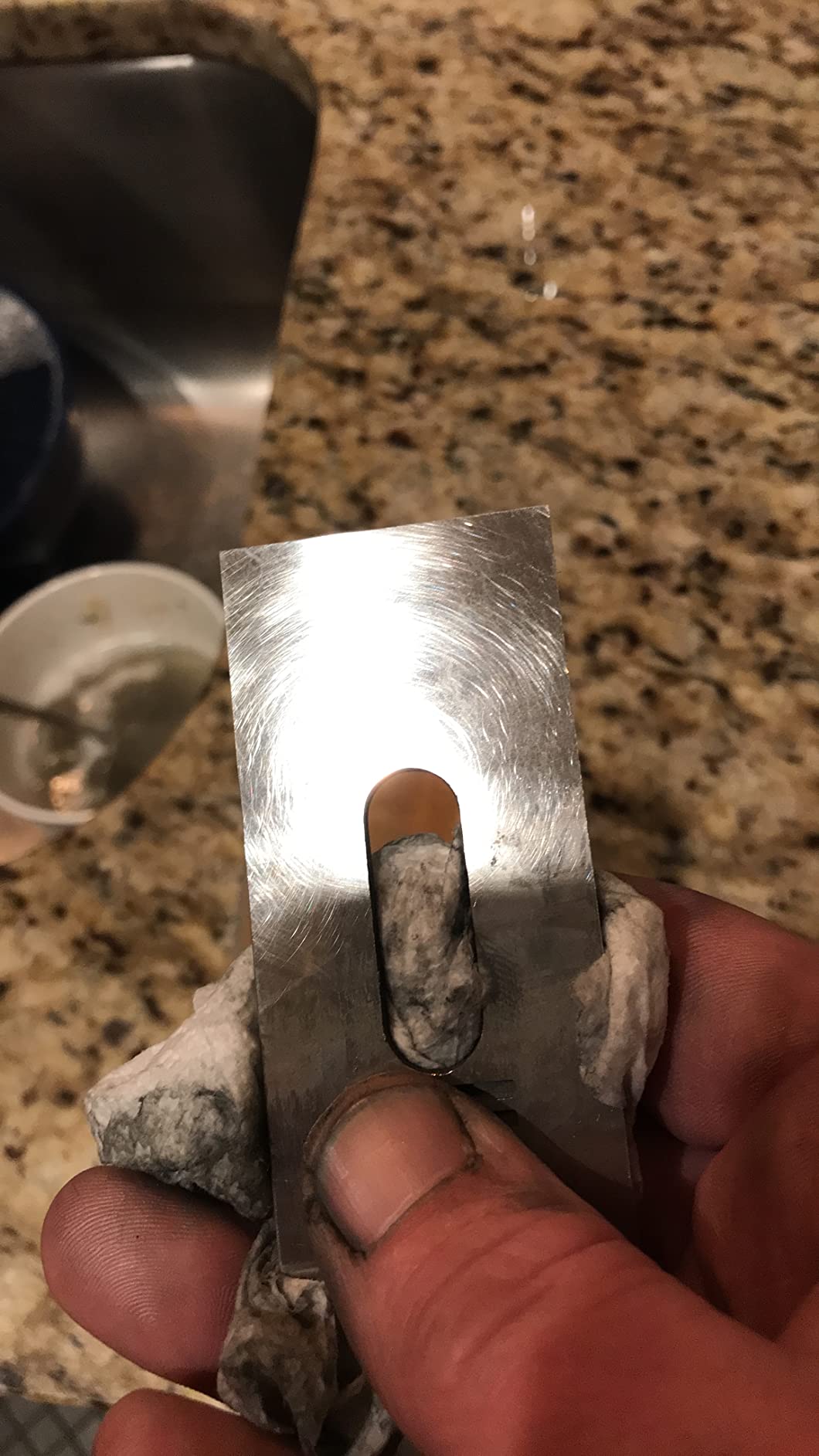
The most useful line in the reviews is that the blade may not be even across its width. An uneven blade makes an uneven shaving, and on a door edge that is a visible flat spot. Check across the width with a straightedge before you start.
Why do owners report gouging on door work?
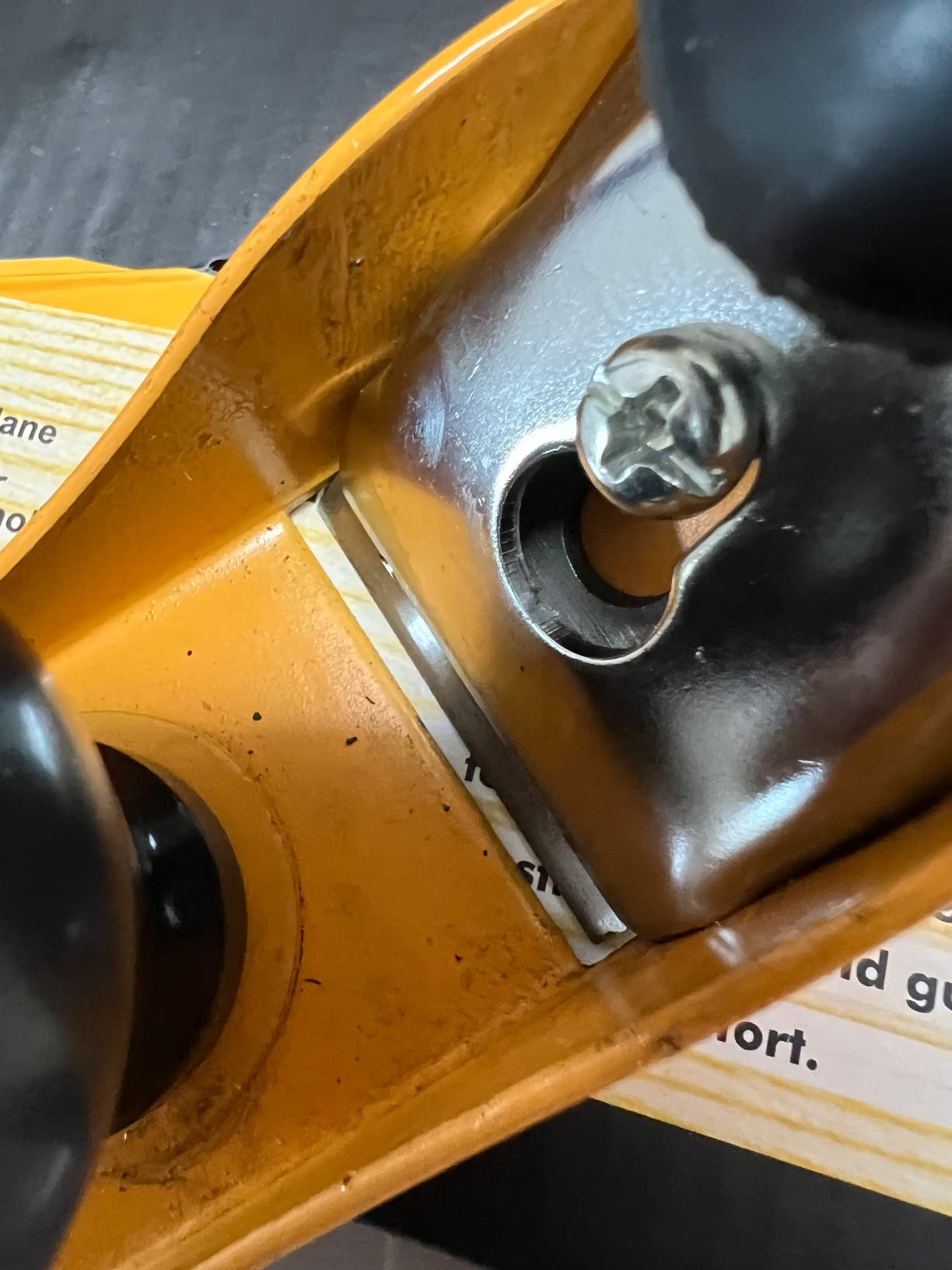
Three things line up. The blade is not even across its width, the setup is fiddly enough that depth is inconsistent until it is dialled in, and the body is light so it can dig in when a thick shaving forms. All three show up most on a door bottom edge.
Where it is the wrong tool
If the door is solid core and the work matters, we would not start here. Setup is described as tedious, and the construction does not feel as rigid as a true cast iron bench plane. It makes more sense as a shop practice plane than as a one-off door fix.
10. Taytools No. 4 Smoothing Bench Plane – Best Factory-Ground Sole
Taytools 469614 Smoothing Bench Hand Plane #4, 9-3/4 Inch Sole, Ductile Cast Body, Lapped Sides and Bottom, Blade RHC 55-60, Sapele Handle and Tote
- Sole precision ground to 0.003 inch over full length
- Factory lapped sides and bottom
- Oiled hand-rubbed Sapele tote and knob
- Tool steel blade hardened to RHC 55-60
- Blade often arrives concave and needs lapping
- Frog and cap iron need filing before use
- Depth knob has noticeable backlash
- Occasional casting defects reported
The headline spec is the sole. It is precision ground to within 0.003 inch over the entire 9-3/4 inch length to the British Standard, and the sides and bottom come factory lapped. On a door edge that means the first pass is already close to flat.
The body and frog are ductile cast iron, and the blade is 0.120 inch thick, 2 inch wide, tool steel hardened and tempered to RHC 55-60. The Sapele tote and knob are oiled and hand-rubbed, and they give clear feedback from the cut.
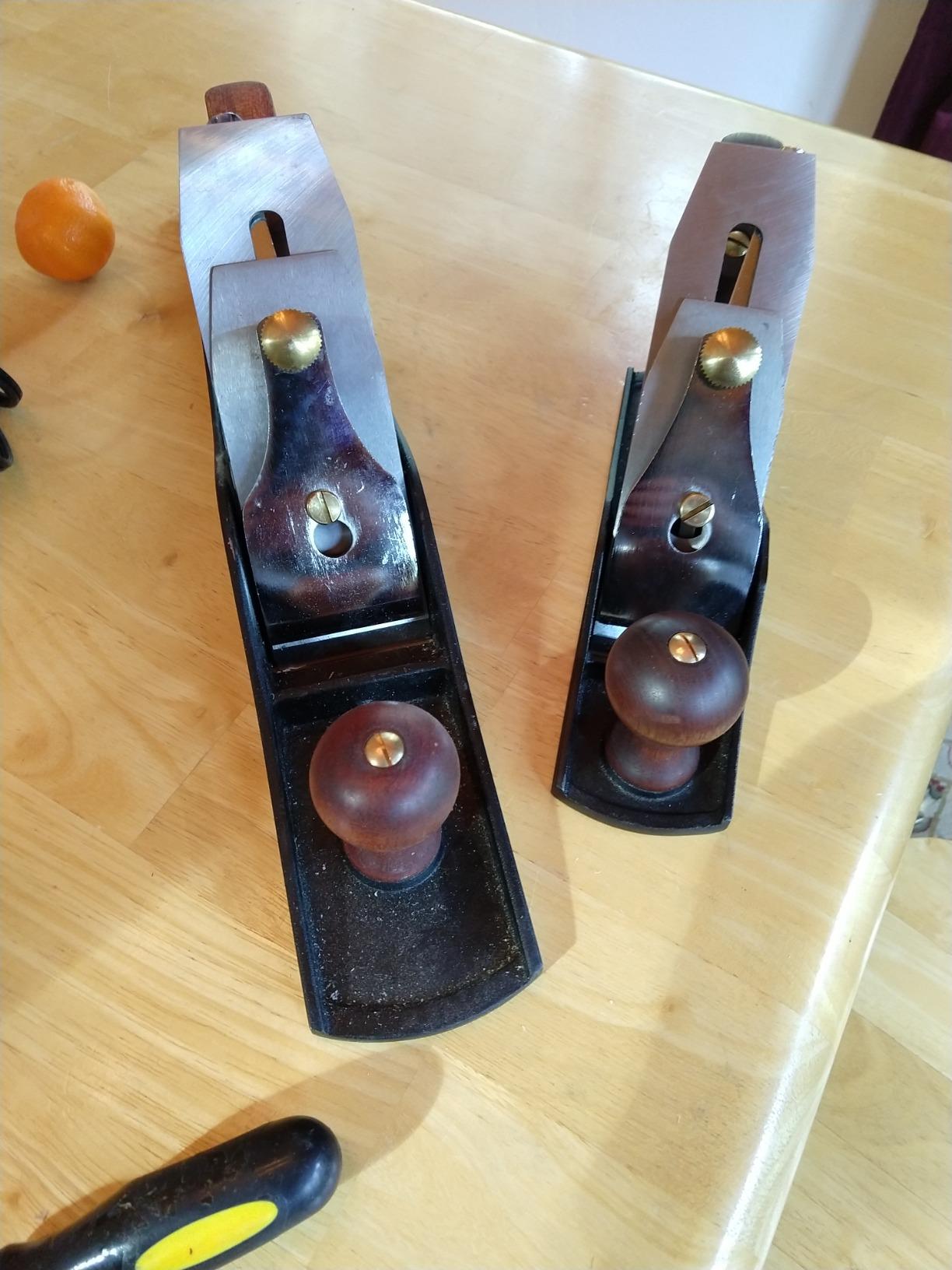
Owners single out the ground sole as saving hours of tuning against cheaper bench planes. At 4.1 pounds this is the heaviest smoothing plane here, and that mass keeps the cut steady and quiet on a long edge. We will not pretend it arrives ready to work, though.
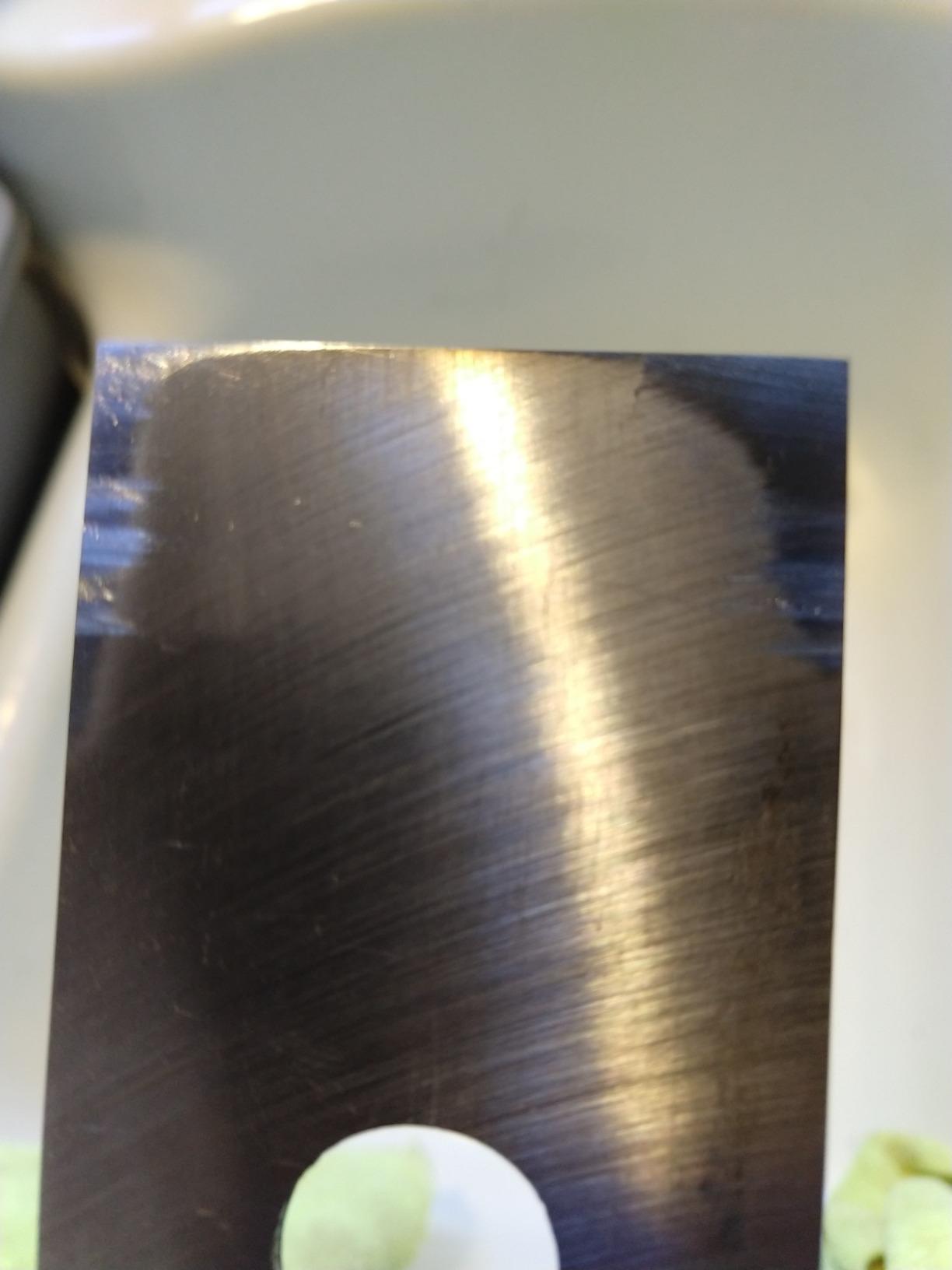
Is the concave blade a dealbreaker?
No, but you should know it is coming. A very concave blade is a common factory condition, and lapping it flat on coarse then fine grit is standard practice. Owners who did it report a plane that holds an edge well once set up. There are also reports of casting defects and a depth knob with backlash that takes close to a full turn to take up.
Where it is the wrong tool
It is a smoothing plane, so it belongs at the end of the job, after a coarser tool has removed paint buildup or swelling. It is not a low-angle plane either, so expect to work with the grain and keep the cut thin on end grain. For a single door, that setup work is more than the job requires.
Diagnose Your Door Before You Buy a Plane
Most doors that stick are not planing problems. A door moves seasonally, and if the gap changes between summer and winter you are looking at movement in the frame, the wall, or the door itself, and no hand plane will fix it.
Does the door rub at the top corner only? Check the hinges first. A sagging hinge drops the door on the latch side and the top corner catches. Rehang or adjust the hinge before removing any wood.
Does the gap widen or vanish with the season? That is seasonal movement. You need a weatherstrip or a planed relief, not a thinner door.
Is paint build-up thick on the edge? A door painted shut and later opened often has the interference in layers of paint on the hinge and latch sides. A bench plane removes paint, and a low-angle block plane finishes it.
Is the whole hinge-side edge bowed? A bowed edge will not seat flat against the jamb no matter how much you plane in one spot. A long-sole plane follows the bow so you remove a consistent amount along the whole edge.
Does the latch side bind while the hinge side has a big gap? The door is racked in the opening. Shorten the latch side, and check that the hinges are square to the jamb first.
Is it hollow-core? Never take a deep pass. The skin is thin, and a bench plane at full depth can crush the hollow and leave a dent no amount of planing will remove.
A pencil and a straightedge answer most of this in two minutes. Mark the high spots on the door edge, swing the door closed, and the marks transfer to the frame. Those marks are your removal map.
How to Fit a Door With a Hand Plane, Step by Step
Remove the door. Take it off its hinges and lay it flat on foamcloths or across two sawhorses. Working flat is faster and safer than planing a door on edge.
Mark the high spots. Close the door in its opening and pencil-mark where it touches the frame. Extend those marks the full length of the edge so you know how far to follow them.
Check the frame first. Run a straightedge down both jambs. A twisted jamb makes a perfectly fitted door still bind, and that is a five minute screw adjustment rather than a plane cut.
Set a fine depth. Start with a shaving you can almost see through. On a low-angle block plane, close the mouth down before the first pass.
Take three or four full-length passes. Work with the grain, follow your pencil marks, and stop as soon as the shaving gets heavier. Heavier shavings mean you are about to gouge.
Hang it and test. Rehang the door, close it, and check the gap with a coin. Repeat the shaving pass if it still catches, and aim for a coin-width gap at the latch so the door can swell without binding.
Refinish the edge. Sand the raw edge to 180 grit and seal it with the door’s finish, or bare wood will drink the next coat of paint differently from the rest of the door.
On how much to remove: most sticking doors need between one thirty-second and one sixteenth of an inch in total. If you are removing more than an eighth of an inch, the problem is not the surface. Look at hinges, jambs and seasonal movement.
Plane Types Explained for Door Work
Low-angle block plane. A 12 degree bed with the bevel up, a 6 to 7 inch sole and a 1.5 inch blade. It cuts end grain cleanly and is light enough to control one-handed, which makes it the default door plane.
Jack plane. The traditional workhorse, usually numbered 5, with a 9 to 12 inch sole. A wider sole covers more of a long edge per pass, so it removes material faster on a badly swollen door.
Smoothing plane. Usually numbered 4, with a 9 to 10 inch sole. Shorter than a jack and used for final passes on a face or an edge rather than rough sizing.
Jointer plane. Numbered 7 and up, with a 22 inch or longer sole. The long sole is for truing a bowed edge in one pass. Experienced hands like it for door edges; beginners find it hard to control in a tight space.
Shoulder plane. A narrow plane with a blade set to the side, used to trim a shoulder or tenon where the sole cannot reach. For doors, it is how you trim a door stop without dismantling the frame.
Skew block plane. A low-angle block with a skewed blade and an adjustable fence. The skew takes corner case off end grain, and the fence repeats a chamfer consistently along an edge.
None of these is a dedicated doorman. Every one is a general tool pressed into a specific job, which is why matching the plane to the defect matters more than buying the most capable one.
Hand Plane vs Power Planer on a Door
A power planer is the wrong tool for fitting a door, and the reason is precision. An electric planer removes a measurable amount on every pass across its whole width, which is a poor fit for a door edge that needed a few thousandths of a shaving.
It will also tear end grain, leave a fuzzy chamfer that snags on a stop, and on a hollow-core door it can crush the hollow outright. A hand plane is slower by design, and that slowness is the control: you set the depth to a few thousandths, take a shaving, measure it, and repeat.
Nobody has over-cut a door by a sixteenth of an inch with a sharp hand plane. That is the whole argument. Reach for a power planer only when fitting solid core doors in a workshop away from the frame, and even then keep the passes light against a marked reference.
What to Look for When Buying a Hand Plane for Doors
Bed angle beats everything else. A 12 degree low-angle bed cuts end grain cleanly, and door edges are largely end grain. This one spec changes the result more than any other.
Check sole flatness out of the box. Owners of cheap planes report flattening them before first use, and it is worth it. A hollow sole cuts only flat in the middle, no matter how sharp the blade is. The Taytools at number ten comes ground to 0.003 inch, the benchmark here.
Depth adjustment, and how it changes. A knob or fine thread beats a coarse screw for the repeated small changes a door job needs. Set the depth between passes rather than guessing a cut thickness each time.
An adjustable mouth earns its keep. Closing the mouth reduces tear-out on end grain and forces a finer shaving. On a door, that is the difference between an edge you can see and one that disappears.
Blade material and thickness. Blades around 1/8 inch thick hold a flat and resist chatter. High carbon tool steel and O1 both take repeated sharpening well. Very thin blades flex, which is fine in a smoothing plane and a nuisance in a block plane.
Sole length against the job. A 6 to 7 inch block sole is easy to control and fine for trimming. A 9 to 12 inch bench sole covers more per pass. A 22 inch jointer sole is for a bowed edge and needs confident handling.
Weight and handles. Cast iron gives a steady, quiet cut, and ductile iron gives most of that benefit at lower weight. Hardwood totes give better feedback than plastic, and for on-site work a lighter plane in one hand beats a heavier one in two.
Spare parts and resale. A plane you can service is worth more than a cheaper one you cannot. Blades, lever caps and depth knobs wear out eventually, and brands with common parts keep working for decades. It is also why experienced woodworkers buy brands they can resell later.
Three tools in this category were near-misses for us. A smoothing plane with a very narrow 1 inch blade cannot cover a door edge usefully. A hand scraper cannot remove enough material to fix a binding door. And a full 22 inch jointer, while rated highly by experienced users on woodworking forums for a bowed long edge, is genuinely hard to control around a fitted door.
Frequently Asked Questions
What is the best hand plane for planing doors?
A low-angle block plane with a 12 degree bed is the best all-round choice for door work, because the shallow bed slices end grain cleanly and will not split the corner of a hollow-core door. Use a jack or smoothing plane with a 9 inch sole when a swollen edge needs real material removed, and a long-sole jointer only when the whole hinge side edge is bowed.
Can I use a hand planer to plane a door?
You can, but a power planer is not the right tool. It removes far more than the few thousandths of an inch most sticking doors need, tears end grain on the door edge, and can crush the hollow inside a hollow-core door. A hand plane gives you a controlled shaving you can measure, which is what fitting a door requires.
What plane to use for a hollow core door?
Use a low-angle block plane or a small smoothing plane with the depth set to a very fine shaving. Never take a deep pass on a hollow-core door, because the thin skin can be dented permanently and the hollow crushed. If the door needs more than about a sixteenth of an inch removed, replace it rather than planing it thinner.
How much wood should I take off a door edge?
Most sticking doors need between one thirty-second and one sixteenth of an inch in total, spread across two or three light full-length passes. If you are removing more than an eighth of an inch, the problem is almost certainly a sagging hinge, a twisted jamb, or seasonal movement rather than the surface of the door.
Which side of a door do I plane?
Plane whichever edge is actually interfering, usually the latch side when the door binds on closing or the hinge side when the top corner catches. Check the hinges and jambs first, because a sagging hinge or a twisted jamb can make a perfectly fitted door still bind, and planing in that case removes wood you will want back later.
What is the best hand planer for the money?
Interpreting that as a hand plane, the Jorgensen No. 101 mini block plane is the lowest-cost option here that still arrives sharp and holds a 4.5 average from more than 2,200 reviews. For a door job needing material removed, the Amazon Basics No. 4 bench plane is better value because its 2 inch blade and cast iron body cover a long edge much faster.
Conclusion
The best hand planes for door fitting come down to one honest test: how much do you need to remove, and from what kind of wood. A swollen solid-core door edge wants the Amazon Basics No. 4 bench plane, our top pick, because its 2 inch blade and cast iron body cover a long edge quickly and its adjustable mouth lets you finish fine. A light touch-up on a door you do not want to thin further wants the Jorgensen No. 101, which arrives sharp and fits in one hand.
For end grain specifically, take a low-angle block. The Jorgensen No. 60-1/2 is our pick for a reason, with a 4.7 average and a mouth you can close down, and the KAKURI kanna gets there a different way with a chipbreaker that keeps a hollow-core skin from splitting. Buy the right sole for the defect, take thin passes, and check the hinges before you remove any wood at all.
Every tool above is one click away, and prices move constantly, so check the latest listing before you commit. If you are still torn between two, tell us what your door is made of and where it rubs, and we will point you at the right one.