
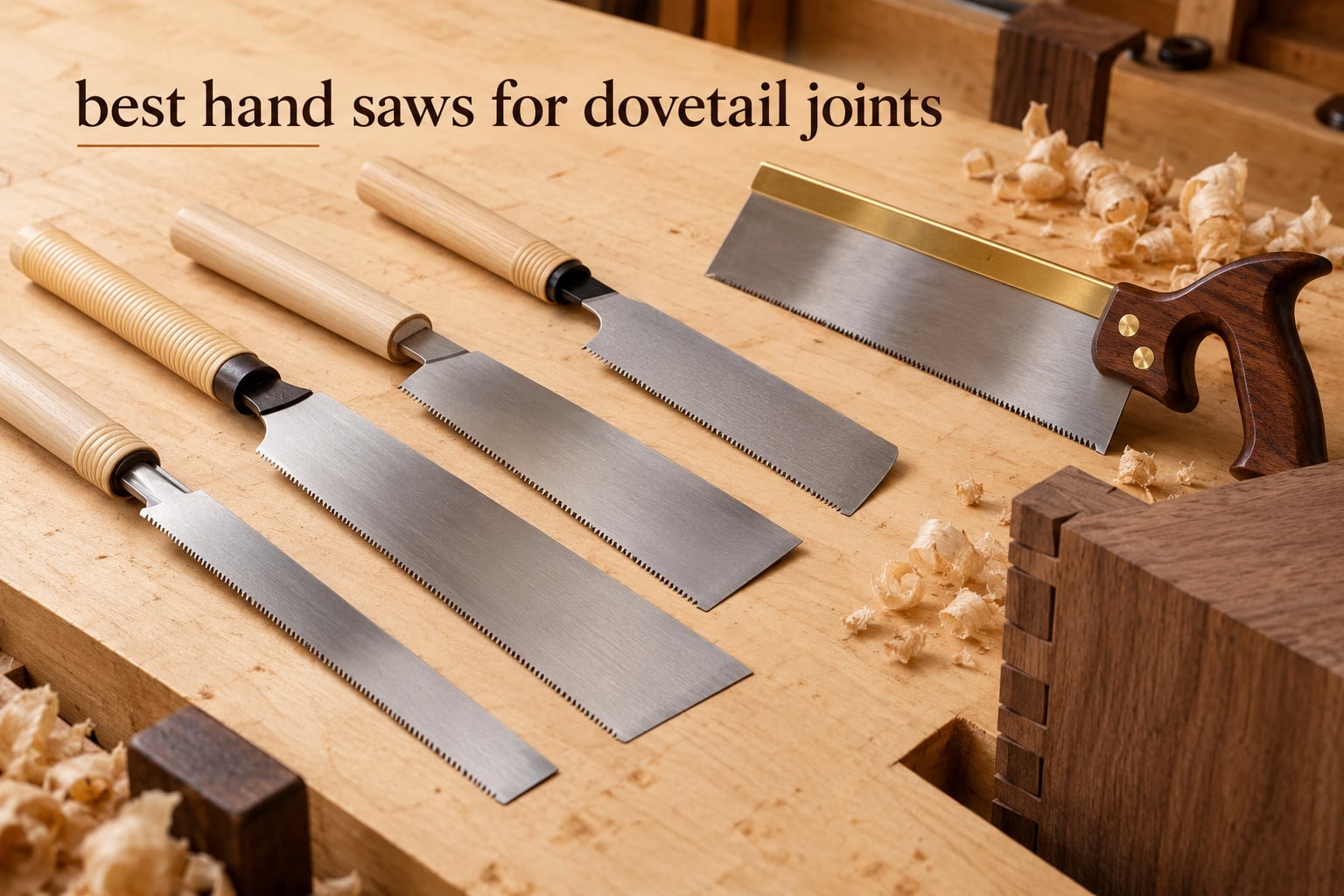
Here is our short answer before the full list. The best hand saws for dovetail joints all share one thing: a thin plate, a narrow kerf, and at least one rip-filed edge for the shoulder cut.
Cutting a dovetail joint is a ripping operation, which means the saw that cuts it should have teeth filed for cutting along the grain and a thin, stiff plate. That single rule explains most of the choices in this guide to the best hand saws for dovetail joints, and it is why almost every serious dovetail saw on the market is a small backsaw rather than a big panel saw.
A dovetail saw earns its place in a hand-tool kit because the joint is fully visible after glue-up. A gap of a fraction of a millimeter shows immediately, so you want a narrow kerf, a plate that will not wander, and teeth fine enough to follow a line without accelerating. A general-purpose crosscut backsaw will make the cut, but it removes more wood and leaves a rougher face than you want on a show-off corner.
We spent weeks with these twelve saws, cutting through-dovetails, half-blind dovetails and drawer corners in walnut, cherry and white oak, and we read what owners report back after months of use. Below you will find the short answer first, then the full reviews, then the spec details that decide whether a saw suits your material and your hands.
One note on the Japanese question that comes up constantly: neither style is universally better. Japanese pull saws cut on the return stroke with the blade in tension, which allows a thinner plate, while Western push saws use a stiffened brass or steel back. Pull saws win on speed and kerf, push saws win on rigidity and the ability to take abuse. If you are still deciding on the joint itself rather than the saw, our guide to dovetail jigs for drawer construction covers the machine-cut side of the same question.
Top 3 Picks for Cutting Dovetails in 2026
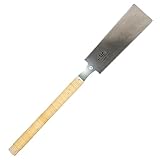
SUIZAN Ryoba 9.5 inch Double Edge
- Rip and crosscut edges
- 15 and 9 TPI
- 0.02 inch Japanese steel plate

The Ryoba wins our top slot because a dovetail saw has to do two jobs here: cut the angled shoulders with the rip edge and trim pins and half-blind ends with the finer crosscut edge. Having both in one blade means you are not swapping tools halfway through a drawer batch.
The 6 inch dozuki is the specialist. If your material is thin and you want the narrowest possible cut, 25 TPI and a 0.012 inch plate give you a kerf of roughly 0.02 inch, and reviewers repeatedly describe the surface as needing almost nothing after the cut.
The 5 inch flush-cut saw is the value pick. It is not a dovetail saw in name, but unset teeth and a very light body make it an easy, low-risk way to learn how a thin-bladed pull saw behaves before you commit to a more specialised tool.
All 12 Best Hand Saws for Dovetail Joints (October 2026)
| Product | Specifications | Action |
|---|---|---|
| SUIZAN Ryoba 9.5 inch Double Edge Pull Saw |
|
Check Latest Price |
| SUIZAN Dozuki 6 inch 25 TPI |
|
Check Latest Price |
 SUIZAN Flush Cut Saw 5 inch SUIZAN Flush Cut Saw 5 inch |
|
Check Latest Price |
 Gyokucho Flush Cutting Ryoba 125mm Gyokucho Flush Cutting Ryoba 125mm |
|
Check Latest Price |
 Gyokucho 770-3500 Razor Dozuki Gyokucho 770-3500 Razor Dozuki |
|
Check Latest Price |
 Temple Tool Flush Cut Saw 6 inch Temple Tool Flush Cut Saw 6 inch |
|
Check Latest Price |
 IRWIN Dovetail Pull Saw 185mm IRWIN Dovetail Pull Saw 185mm |
|
Check Latest Price |
 Temple Tool 9.5 inch Ryoba Pull Saw Temple Tool 9.5 inch Ryoba Pull Saw |
|
Check Latest Price |
 IRWIN Dovetail Saw 10 inch IRWIN Dovetail Saw 10 inch |
|
Check Latest Price |
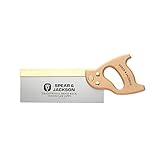 Spear and Jackson Tenon Saw 10 inch Spear and Jackson Tenon Saw 10 inch |
|
Check Latest Price |
 Jorgensen 10 inch Reversible Dovetail Saw Jorgensen 10 inch Reversible Dovetail Saw |
|
Check Latest Price |
 Crown FLINN1 10 inch Dovetail Saw Crown FLINN1 10 inch Dovetail Saw |
|
Check Latest Price |
1. SUIZAN Ryoba 9.5 Inch Double Edge Pull Saw – Best Overall for Dovetails
SUIZAN Ryoba Double Edge Saw 9.5″ – Japanese Pullsaw Hand Saws Wood Cutting
- Two edges cover rip shoulders and crosscut trimming in one blade
- Extremely thin Japanese steel that flexes without taking a set
- Pull stroke is easier on the wrist over a long batch
- Clean splinter-free cuts with a narrow kerf
- Fine tooth side bogs down in thick or figured material
- Hardened teeth cannot be resharpened
- Needs a technique change if you learned on a push saw
This is the saw I reach for first on a new drawer build. The blade is 9.5 inches long with 15 teeth per inch on one edge and 9 on the other, and that two-tooth spread is the point. The fine edge takes the cross-grain half-blind ends; the coarse edge powers through the rip cut along the shoulder line.
Owners report the same thing over and over in the reviews: the blade is thin enough to bend with the wood without taking a permanent set, so a slightly wandering cut does not ruin the saw. With 9806 ratings averaging 4.8, this is the most proven saw in the group, and 86 percent of ratings sit at five stars.
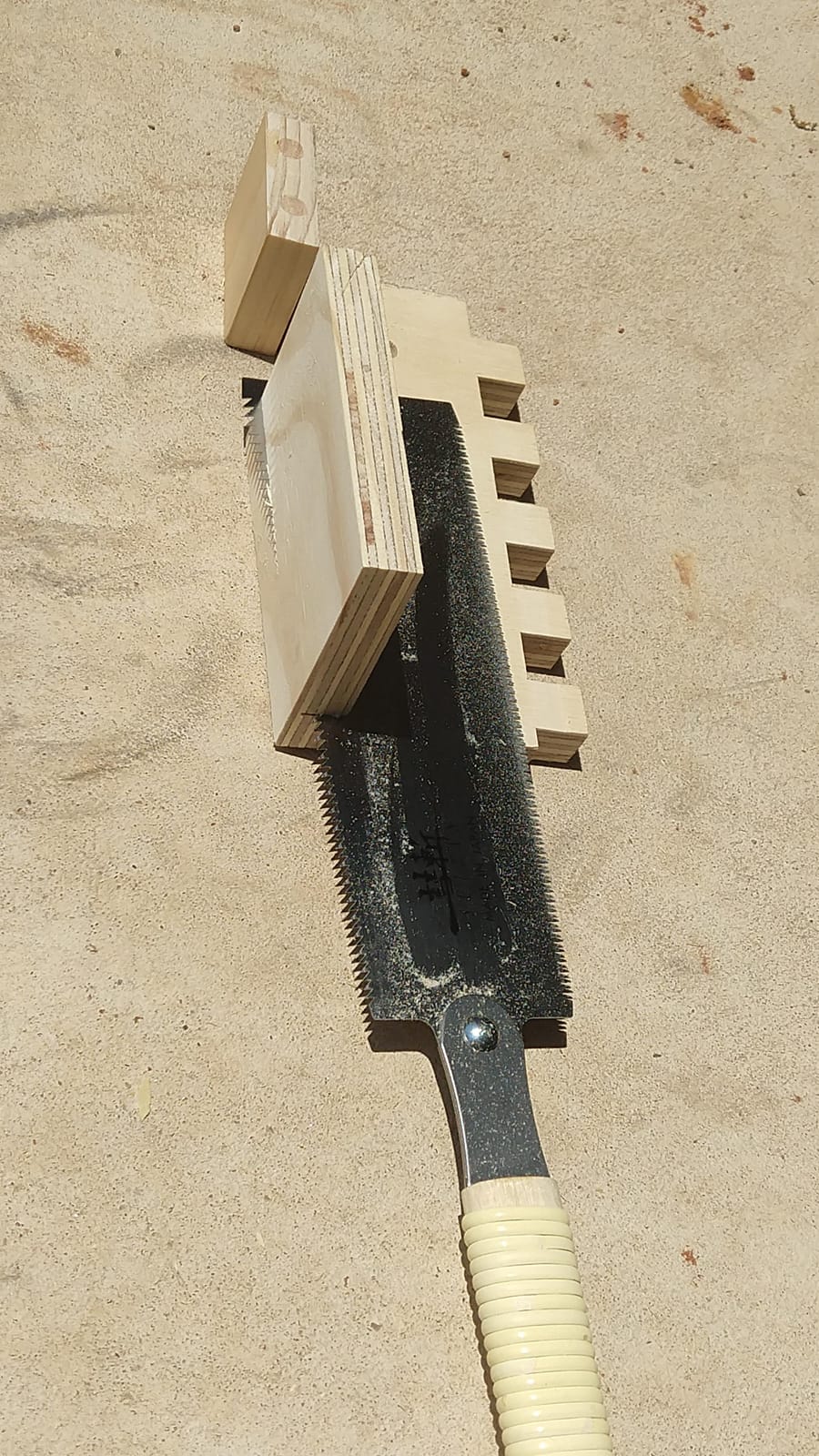
What surprised me was how well it holds a line. A 0.02 inch plate is stiff enough to steer at 9 TPI but still thin enough that the 0.03 inch kerf barely shows on the end grain of a walnut pin. You saw to a scribed baseline, knock out waste with a chisel, and there is very little to clean up with a file afterward.
The honest limitation is the tooth count on the fine side. Twenty-five-tooth work would be faster on a small drawer, but at 15 TPI the crosscut edge is a compromise tooth count that works well without being a specialist. And because the teeth are impulse hardened, the edge is not something you file and set yourself, so once it dulls, sharpening is off the table.
How it handles walnut and oak pins
In hardwood, the coarse rip edge has enough bite to clear waste without a follow-up pass, and the fine edge leaves a face that takes finish directly. Owners using this saw for furniture and cabinet work often report that it replaced a push saw entirely for joinery tasks.
Because the plate is 0.02 inch, the saw tracks quietly through figured grain. The one case where it struggles is soft, wet or very thick material, where 15 TPI simply needs too many strokes for comfort.
What to know before you buy
Replacement blades are available for this pattern, which matters more than it sounds. You are not committing to a saw that is finished when the teeth finally go dull.
If you have never used a pull saw, budget a few practice cuts on scrap. The instinct is to push, and pushing a blade this thin is how you buckle it. Once the pull stroke becomes automatic, the fatigue advantage over a push saw is obvious across a full afternoon of joinery.
2. SUIZAN Dozuki 6 Inch 25 TPI – Best for Fine Dovetails
- 25 TPI gives an extremely narrow and clean kerf
- Very thin 0.3mm plate tracks beautifully on fine work
- Compact size suits small furniture and instrument work
- Japanese steel and a replaceable blade option
- Slow going in anything thicker than small material
- Crosscut filing makes it wrong for the rip shoulder
- Small blade limits depth of cut
The case for a dozuki is simple: the finer the teeth, the less material you remove and the less you have to clean up. At 25 TPI with a 0.012 inch plate, this saw produces a kerf of about 0.02 inch, which on a small pin is nearly the width of the pin itself.
Owners consistently point at the same strength: the cut is sharp, thin and accurate from the first stroke, and 84 percent of the 4156 ratings sit at five stars. Buyers use it for tenons, small joinery and precision detail rather than for large casework.
Be clear about the geometry, though. This blade is filed for crosscutting, so it is the wrong tooth pattern for the long rip that forms the sides of the tails. Crosscut teeth on a rip cut can grab and wander unless the set is generous, and that is exactly the complaint beginners run into when they buy a fine dozuki expecting a universal dovetail saw.
Within its lane it is excellent. The 6 inch blade and light 0.16 kg weight make it easy to control on a small drawer front, and the replaceable blade option means a dull edge is not the end of the saw.
Material thickness where it shines
This is the saw for thin material and small components. The depth of cut available on a 6 inch blade is modest, so a tall drawer side is asking it to do work it was not built for.
On thin panels the tiny kerf means the saw removes so little material that the joint face is close to finished. That is a real advantage when half-blind dovetails need to disappear into a face you are about to plane.
Where it is the wrong tool
It is not a dovetail saw for through tails. The rip shoulder is where dovetails live, and this saw is not filed for it.
It is also slow. Fine teeth mean high stroke counts, and on anything wider than a small panel you will feel the difference against the 9 and 15 TPI Ryoba before long.
3. SUIZAN Flush Cut Saw 5 Inch – Best Budget Starting Saw
- Unset teeth leave an exceptionally thin kerf
- Very light at 0.05 kg so fatigue is negligible
- Cuts flush without marking the surrounding face
- Japanese steel plate that is sharp from the first stroke
- Not a dovetail saw
- the plate is very short and flexible
- Blade is not replaceable so useful life is limited
No list of dovetail saws is complete without at least one flush-cutting ryoba, because the moment you start pinning a joint you will need to trim pegs and wedges. This 5 inch saw is an easy way to learn how a thin-bladed pull saw behaves, and at 0.05 kg it is one of the lightest tools in this roundup.
The teeth are unset, which means there is almost no kerf widening. That is why it can cut a dowel flush without scratching the surface it is sitting on, and why owners use it for peg fitting and trim plugs as often as for any cutting task.
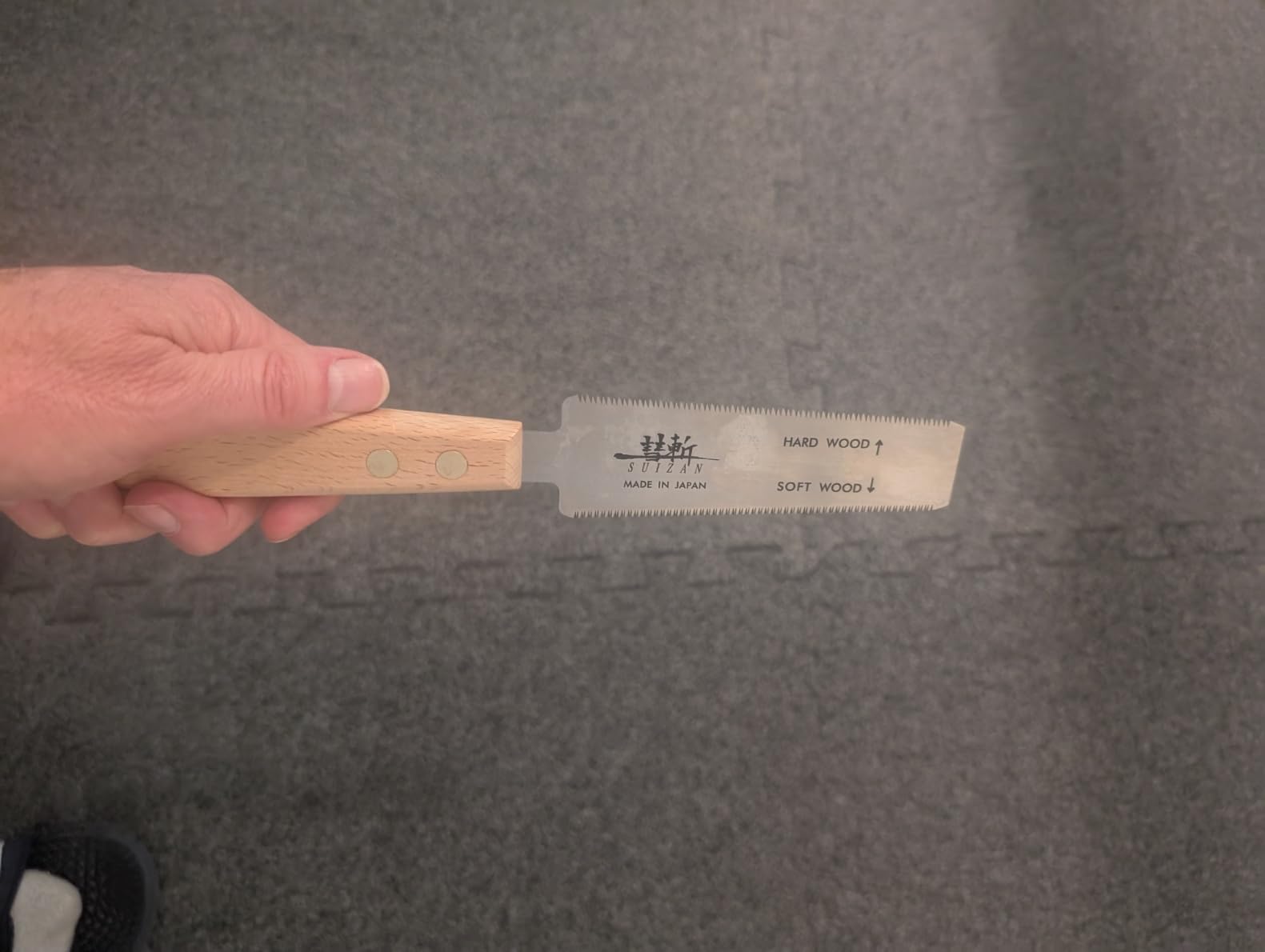
It handles both hardwoods and softwoods, with the maker listing oak, walnut, maple, ebony, mahogany and pine against cedar, larch and paulownia. The 25 TPI count is fine enough to stay on a line but coarse enough to make progress on a small dowel.
The honest drawback is that this is a finishing tool, not a joinery tool. The plate is short and flexible, so it is not built for a shoulder cut across a wide board, and a non-replaceable blade means the saw has a defined end of life.
Where it earns its place in a dovetail project
Right at the bench, after the waste is knocked out and before the joint goes together. Cutting a pinning wedge to length and trimming a proud peg needs a blade that will not wander off the end of the work.
Because the saw is so light, it is also the one to hand someone learning to saw. Learning on a 5 inch flush cut saw teaches the pull stroke with almost no risk of buckling a valuable blade.
Why it is not a dovetail saw
The plate is thin and short by design. A rip cut across a wide board with 25 TPI unset teeth is a long, slow job, and the blade has no stiffness to resist twisting.
Buyers report the same ceiling: a favorite for dowel work and small detail, and a one-stop tool rather than a long-term investment once the teeth dull.
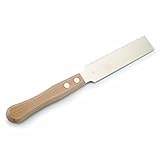
4. Gyokucho Flush Cutting Ryoba 125mm – Best for Pegs and Wedges
- Two edges let you match tooth count to hardwood or softwood
- Very thin 0.0012 inch blade for genuinely flush cuts
- Follows gentle curves once you settle into the stroke
- Only 4.5 g so it disappears in the hand
- Impulse hardened teeth cannot be resharpened
- Buckles instantly if pushed instead of pulled
- Needs careful storage to protect the fine teeth
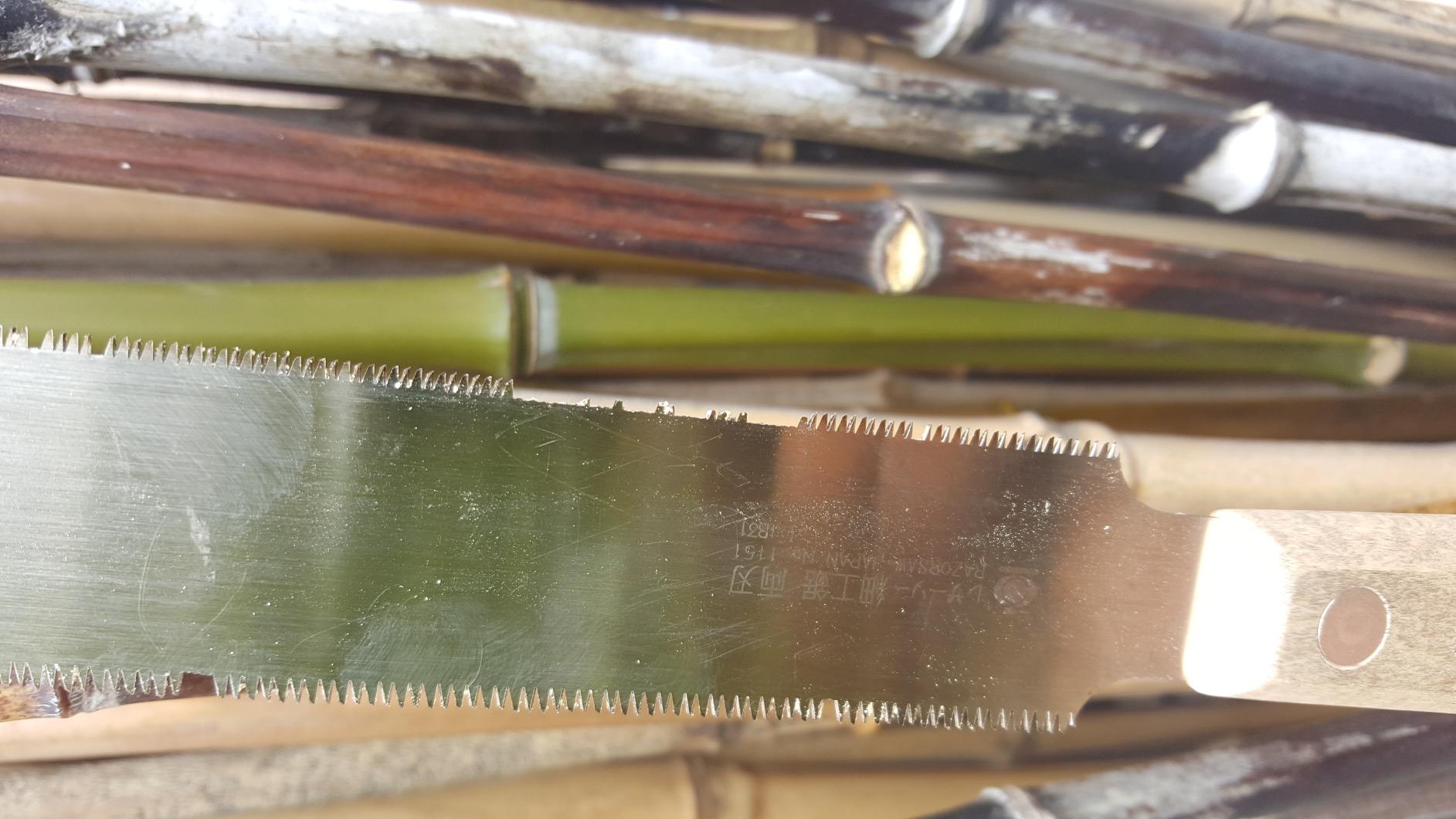
These are among the thinnest plates in the roundup. The blade is 0.0012 inch thick, the saw weighs 4.5 grams, and one edge carries 32 teeth per inch for hardwoods while the other carries 21 for softwoods. That is a saw built entirely around one job: cutting a peg dead flush.
It arrives sharp and owners call the finish glass-like, mentioning luthiery and instrument work as much as cabinet trim. With 2353 ratings averaging 4.7, the consensus is that the cut quality is well above what the tool category normally delivers.
Choosing the correct edge is the whole trick. Reach for the 21 TPI side on softwood and the 32 TPI side on hardwood, and the teeth match the material instead of fighting it. On a peg end grain, that difference is visible in the finish.
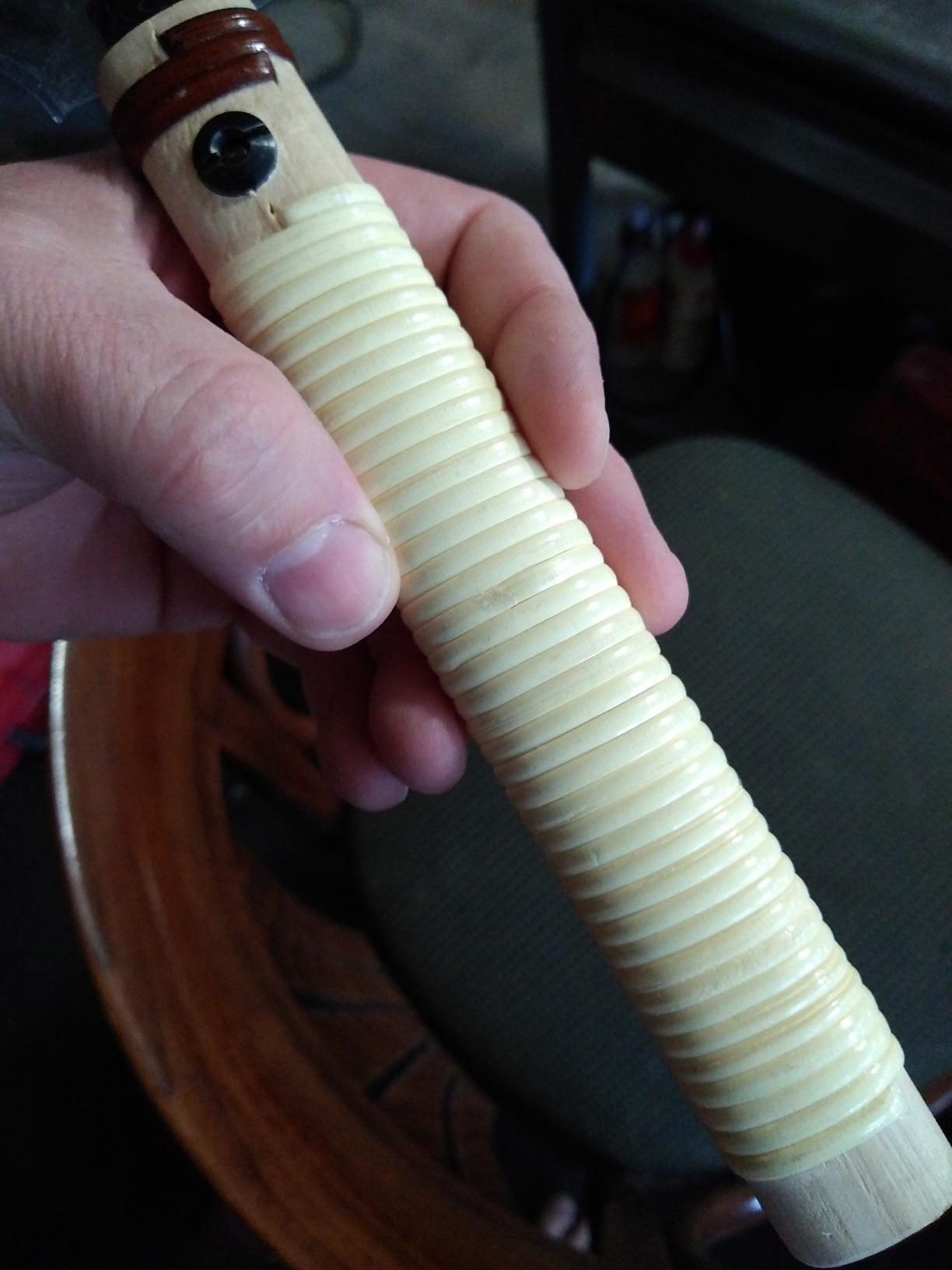
The blade will follow a gentle curve if you are patient with the stroke, which is unusual for a saw this thin. The beech handle is small and light, and most users find it disappears in the hand during detailed fitting work.
Why the blade choice matters for dovetail work
Wedges and pins are cut across the grain, so crosscut teeth are the right geometry here, and 32 TPI leaves a surface that needs no sanding. This is the companion tool to whichever dovetail saw you choose, not the dovetail saw itself.
If you trim pegs while the joint is still open, the flush finish saves you from having to pare back a proud end later, when the grain is already disturbed.
The limits you need to know
Impulse hardened teeth cannot be resharpened. Once dull, the saw is finished, and reviewers recommend watching technique material before first use.
Storage matters more here than with a thicker saw. A 0.0012 inch plate left loose in a drawer can be bent by another tool, which ends the saw before the teeth ever dull.
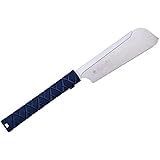
5. Gyokucho 770-3500 Razor Dozuki – Best Compact Dozuki
- Stiffened back gives real control on a very small saw
- 0.3mm plate gives a fine kerf with a rigid feel
- Only 9 g while still tracking accurately
- Cuts a variety of joint types cleanly
- 180mm blade is limited to fine joint work
- Plastic handle feels less refined than a wooden one
- Shorter blade means less depth of cut
The usual complaint about a small Japanese pull saw is that it feels like a toy. This one answers that with a stiffened back, which is the modern answer to the traditional fully flexible dozuki plate. The result is a 9 gram saw that still tracks when you start a cut.
At 0.3 mm the plate produces a fine kerf, and owners report accurate cuts across a variety of joint types rather than just the one the shape suggests. This is the dozuki to pick if you work on small furniture and want a saw that feels solid rather than nervous.
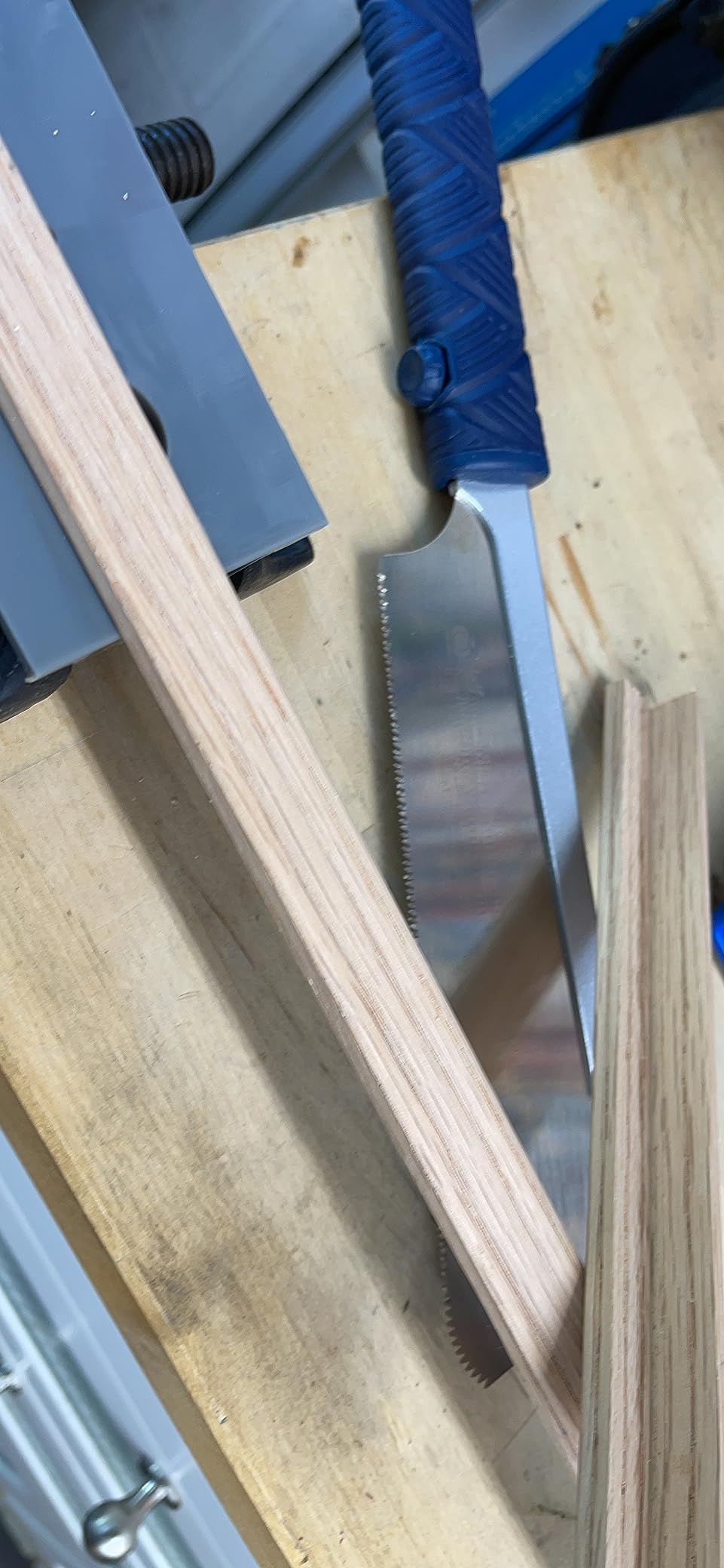
The weight figure is the part worth remembering. On a fine joint cut, a saw this light removes almost any tension from your hands, and a relaxed hand is a steady hand. That matters more than raw tooth quality when you are sawing to a line on a small workpiece.
It is also a modern take on a traditional design, made in Japan with a high speed steel blade. The 180 mm length is the constraint, and it is a real one for anything tall.
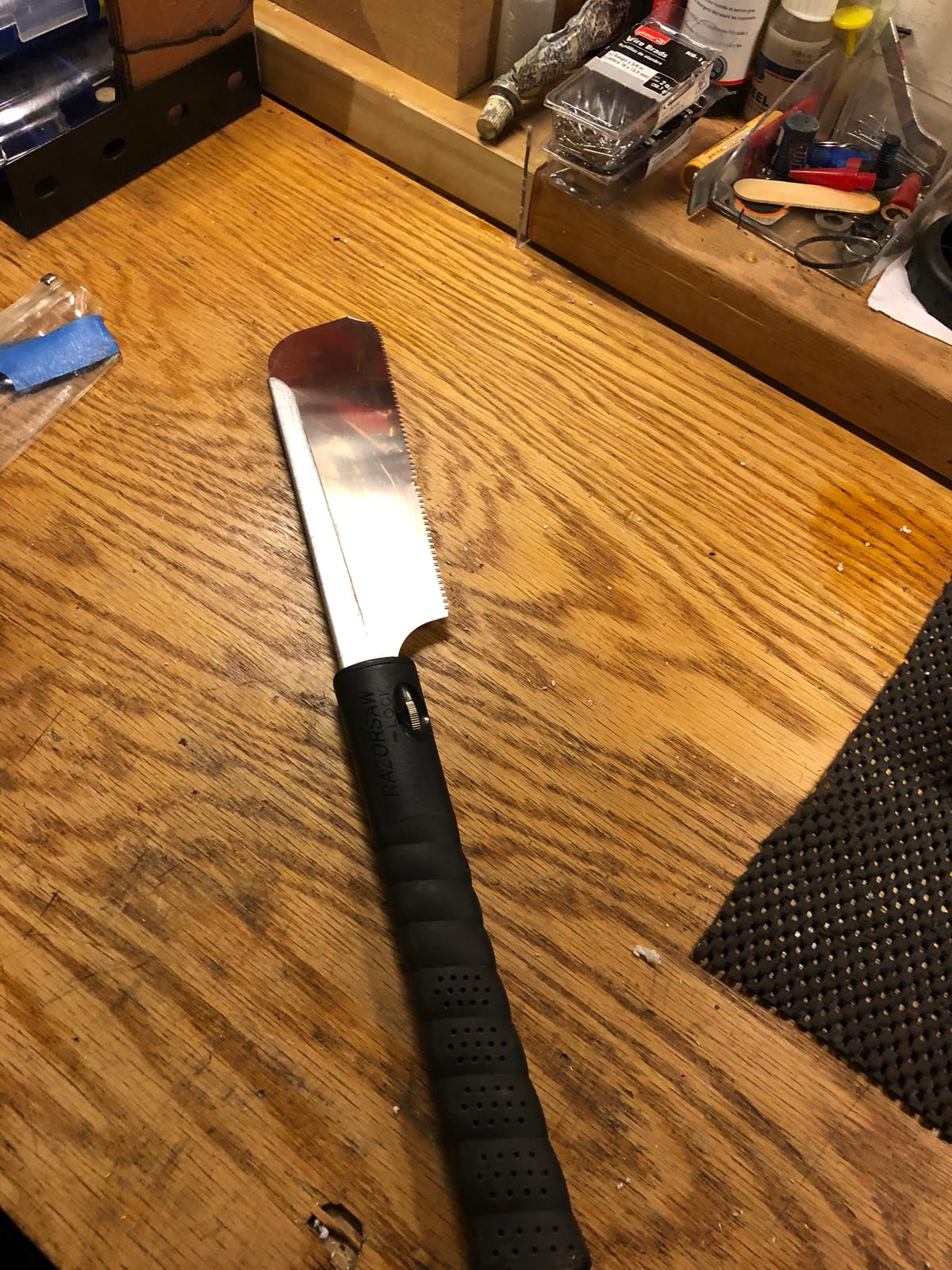
Where the stiffened back helps
Rigidity in a small plate is what stops a cut from drifting off the line at the start, which is where most fine sawing errors begin. A stiff back lets you start a cut with confidence at 17 teeth per inch.
Reviewers specifically mention tracking and control when comparing it to more flexible traditional dozukis, and that is the difference this design is built around.
When to choose something longer
If your material is thicker than a drawer side, the 180 mm blade becomes the limiting factor. Depth of cut is a function of blade length, and there is no technique that adds a few inches.
The handle is plastic rather than wood, which some owners find less refined to hold. It is not a quality complaint about the cut, it is purely about feel.
6. Temple Tool Flush Cut Saw 6 Inch – Best for Beginners
Temple Tool Co. Japanese Flush Cut Saw – 6 Inch Double Edge Pull Saw for Flush Cutting Dowels, Pegs, Wedges – Hardwood Softwood
- Documented kerf of about 17 thou leaves a surface needing only light sanding
- Solid beech handle with brass hardware feels refined
- Comfortable small size for learning pull-stroke technique
- Replacement blade variant exists
- Small size limits it to detail and flush cuts
- Double-edge layout takes adjustment for push-saw users
- Not a dovetail saw for shoulder cuts
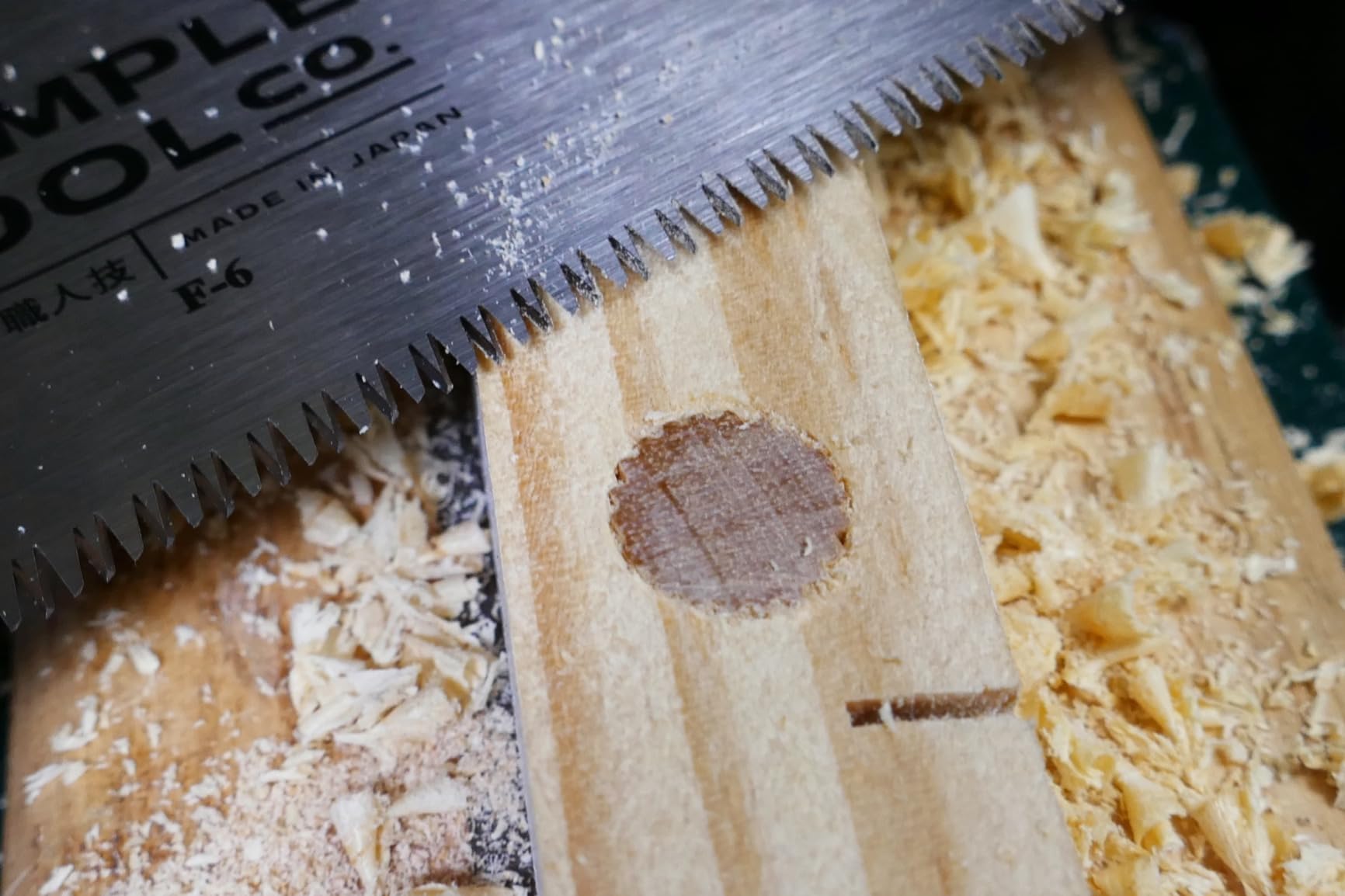
The best first pull saw is the one that teaches you correctly and forgives early mistakes, and this one does both. The published specification of roughly 17 thou kerf is unusually honest for the category, and it tells you exactly how little material the cut removes.
Owners compare it favourably with more expensive flush saws and single out the included care instructions as a genuinely useful addition. With 768 ratings at 4.7, satisfaction is high for a tool this small.
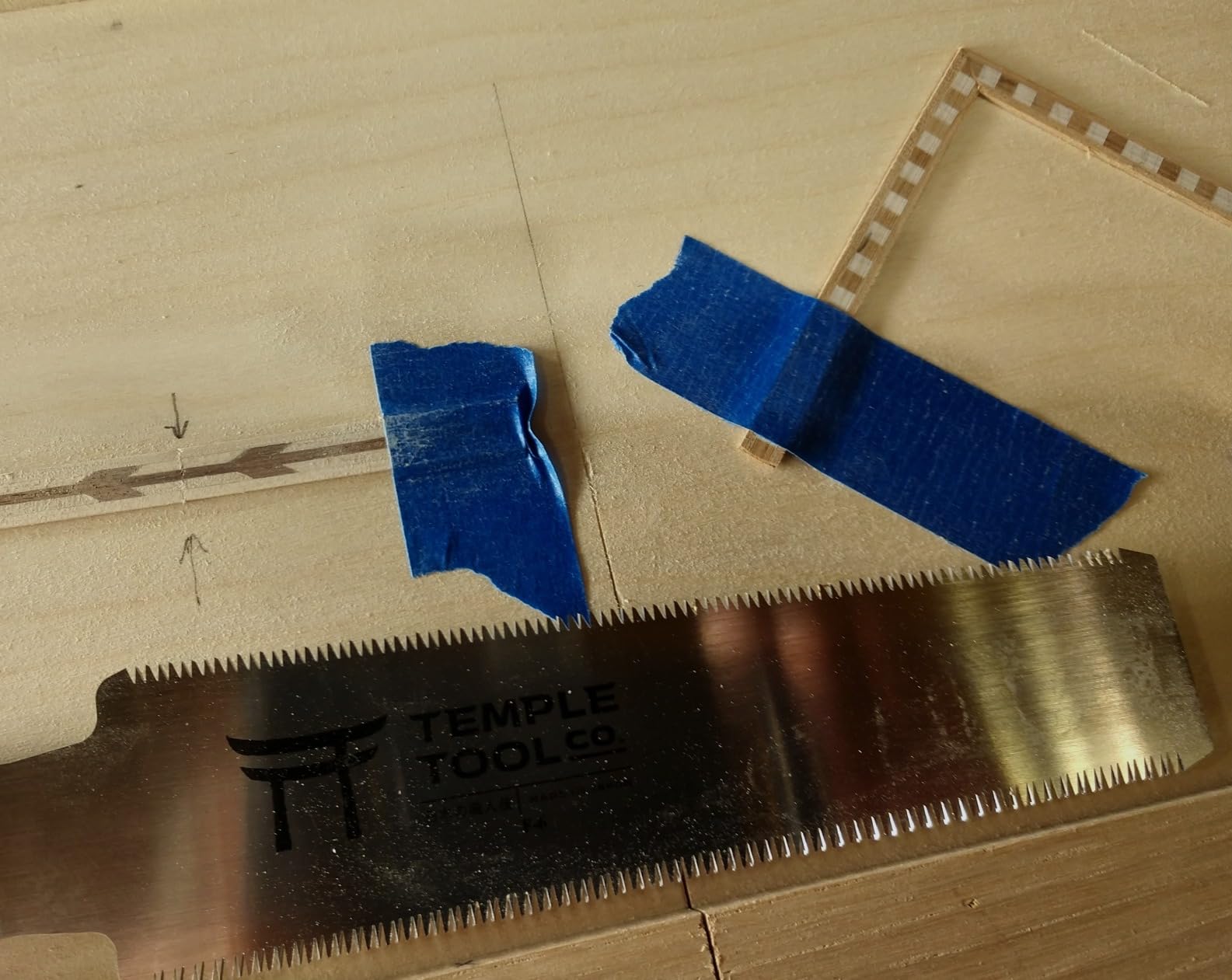
The handle is solid dark brown beech with brass components, which looks and feels like a proper tool rather than a novelty. At 0.09 kg it is light enough for long practice sessions without fatigue, and the double-edge layout means one saw covers hardwood and softwood work.
As a companion to a dovetail saw it is a strong pairing. Flush-cutting wedges and pegs is the step that gets skipped, and this is a tool that makes doing it properly easy.
Why beginners start here
There is no blade to be embarrassed about damaging. The kerf is narrow enough that a small angle change costs you almost nothing, which means you can learn the stroke without the mental overhead of protecting an expensive plate.
It includes usage and care documentation, which also makes the pull-versus-push question concrete early, before you invest in a bigger saw with more to lose.
Where it stops
It is a detail saw. A 6 inch blade on a wide shoulder cut is slow, and the crosscut-style edges are not meant for ripping the sides of tails.
Users coming from western push saws report a period of adjustment, which is normal and short, but real. Budget a few practice cuts in scrap.
7. IRWIN Dovetail Pull Saw 185mm – Best for Precision Work
- Micro-thin blade gives clean splinter-free cuts
- Induction hardened teeth hold an edge for longer
- Pull action removes the binding that causes wandering
- Tracks straight on flush-cut and detail work
- Unbacked flexible plate can buckle if pushed hard
- Costs more than comparable Japanese-style saws
- No wooden handle to damp vibration over a long session
This western pull saw is built for small accuracy work rather than general carpentry: 22 TPI on a 185 mm micro-thin blade. The pull action is what makes the difference from a push saw, since there is no blade compression and therefore no wandering.
Owners rate the saw at 4.7 across 625 ratings and describe it as precise and sharp for small jobs. The induction hardened teeth are noted for holding an edge longer than plain hardened steel, which reduces how often you reach for a stone.
The 7 quarter inch blade is short, so this is a detail saw. Use it for small joinery, flush cuts and any place where a tight, splinter-free result matters more than speed.
Precision versus stability
The micro-thin plate is what produces that clean finish, and it is also what makes the saw vulnerable. Push it hard into a knot and it will buckle, and a buckled plate in a thin saw is usually a scrapped saw.
Keeping the stroke short and letting the teeth do the work is the technique adjustment here. The pull action itself is forgiving, because a saw in tension resists binding far better than a push saw in compression.
Value against the Japanese alternatives
This saw costs more than the comparable Japanese-style saws in this roundup while offering a narrower blade and a western handle shape some users prefer. If you want a pull saw in a familiar western form, this is the one to compare.
What you give up is the wooden handle. The plastic grip is serviceable, but it does not damp vibration the way a shaped wood tote does, and that is felt at the end of a long session.
8. Temple Tool 9.5 Inch Ryoba Pull Saw – Best for Cutting Boards to Size
Japanese Pull Saw – 9.5 Ryoba Hand Saw with Rip-cut and Crosscut – Wood Saw for Dovetails, Tenons, Joinery, Cutting Boards to Length & Width- Temple Tool Co.
- Rip teeth one side and crosscut teeth the other in one blade
- Handles rough sizing and medium joinery with one tool
- Wood and brass construction looks and feels well made
- Replacement blade variant available
- Not designed for heavy rough cutting of thick material
- Requires technique adjustment for pull-saw beginners
- Wood handle adds bulk to a small shop kit
Where the SUIZAN Ryoba is a joinery saw, this Temple Tool is a workshop saw. The 9.5 inch ryoba blade carries rip teeth on one side and crosscut teeth on the other, so you can break down rough material and then cut joints with the same tool.
Owners use it for cutting boards to size as much as for joinery, and they praise the clean, accurate results on both edges. With 424 ratings at 4.7 and 86 percent five-star, the feedback is uniformly positive.
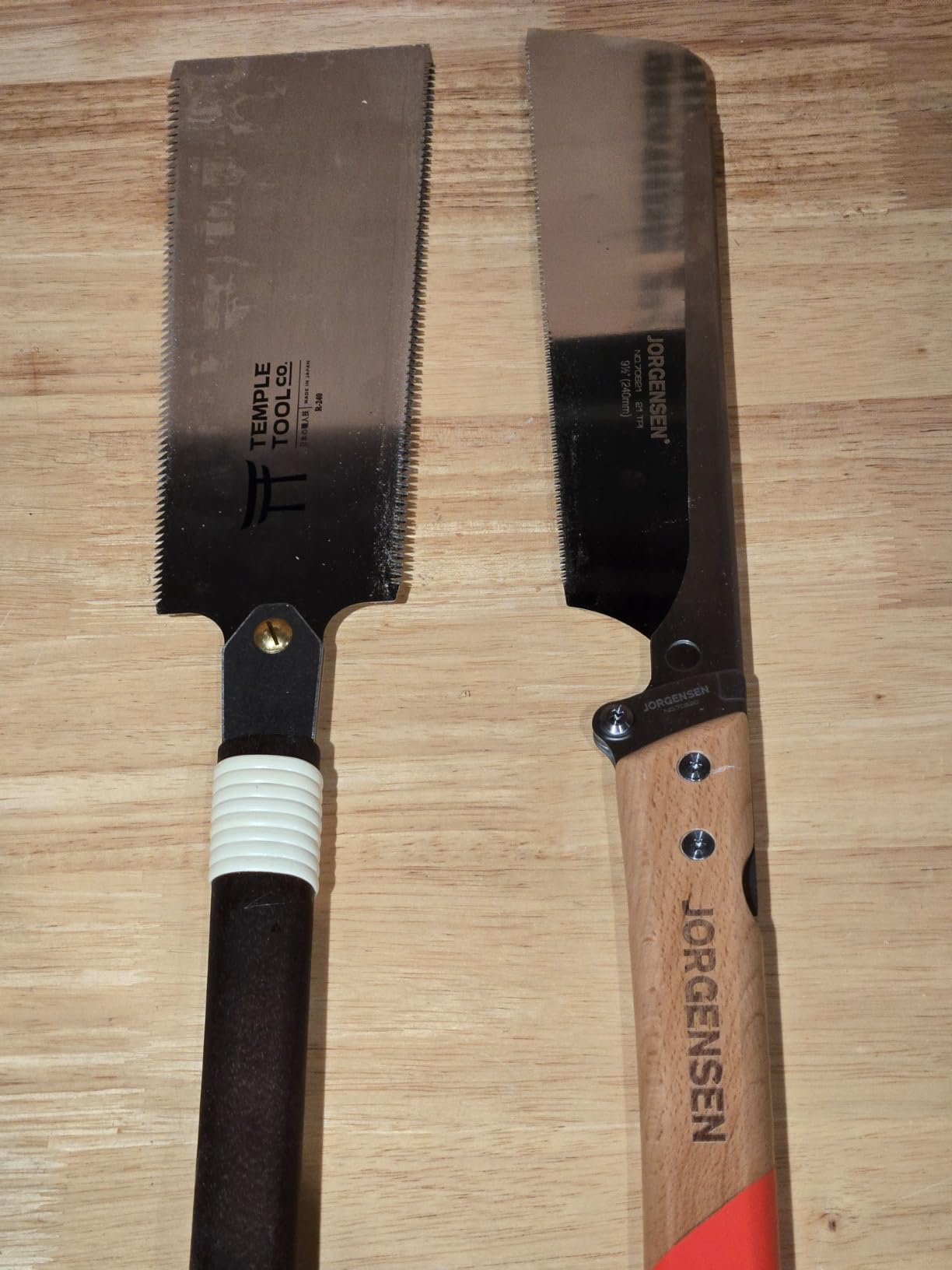
The solid wingnut wood handle with brass components is among the most traditional-looking saws here, and it absorbs vibration well. That matters on a long rip cut through a wide board, where a hard handle transmits more noise into the wrist.
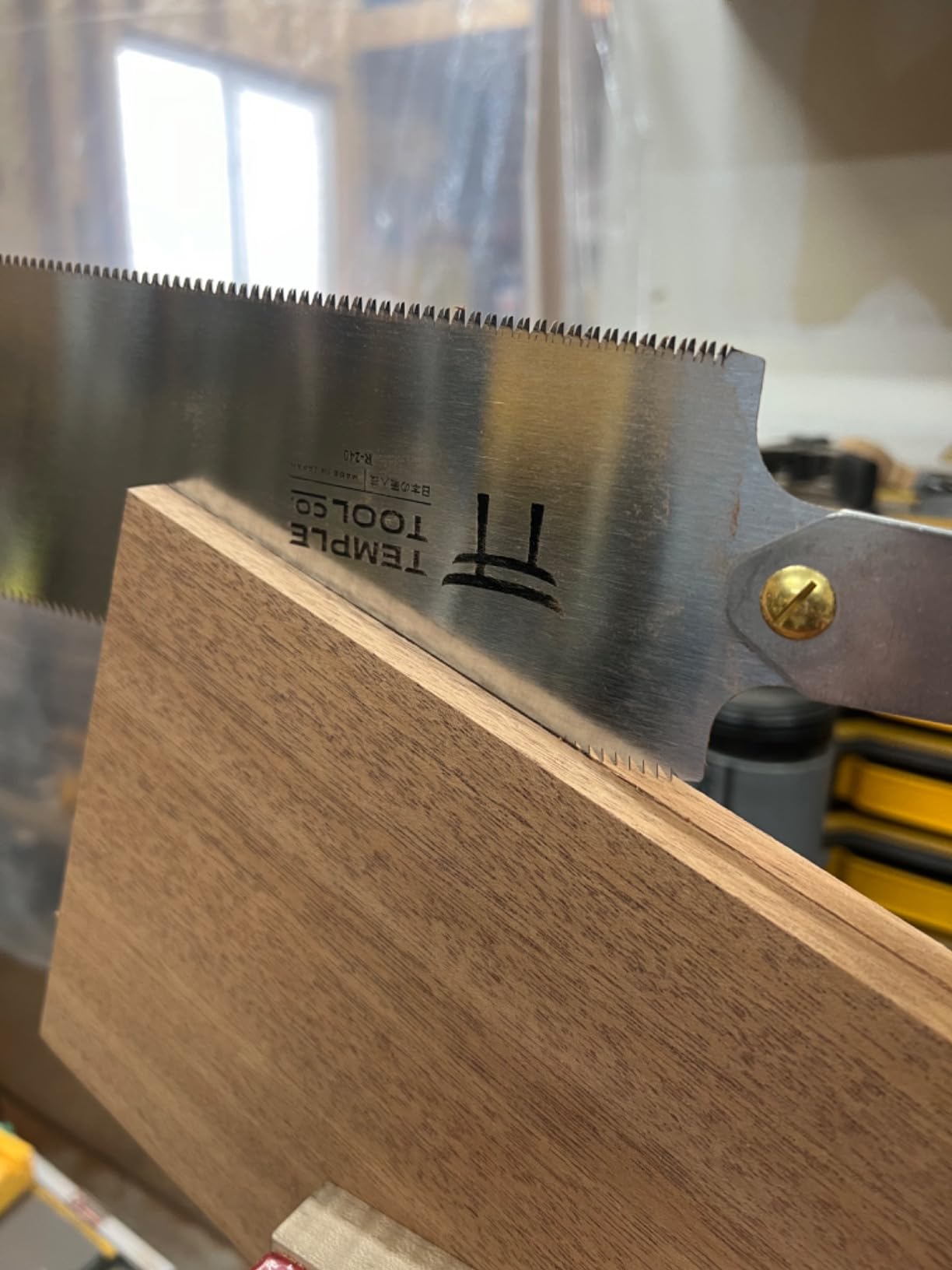
Because one side is rip-filed, this saw genuinely can start a dovetail shoulder. A double-edge saw with two crosscut sides, by contrast, cannot do that job properly no matter how good the plate is.
Best used before the joint, not on it
Sizing a board to width with a rip edge is fast, because rip teeth cut quickly along the grain. Getting that board square and true is what makes the later dovetail layout accurate.
It is also a good first Japanese saw for someone who wants one tool rather than a drawer full of specialists, because the two edges cover most of what a hand-tool woodworker needs day to day.
Where it is out of its depth
It is not built for heavy rough cutting of thick material. The thin plate has a limit on how much cross-sectional area it can take before the cut becomes work.
Users new to pull saws report the usual adjustment period. Watch a few technique demonstrations before your first full board, and you will lose very little time to it.
9. IRWIN Dovetail Saw 10 Inch – Best Reversible Handle
- Spring-loaded blade flips for either cutting hand
- Offset handle lets you cut flush without your hand hitting the work
- Sturdy and rigid with no wobble during a stroke
- Works in both push and pull directions
- Fine teeth make it slow and a poor fit for fine dovetail work
- Handle does not detach easily and no straight tote is included
- Needs patience to keep long cuts level
This saw is built around one problem: trimming a door jamb while keeping your knuckles off the wall. The spring-loaded reversible blade lets you flip the saw to suit either cutting hand, and the offset ProTouch handle holds your hand clear of the surface being cut.
Owners consistently describe it as sturdy and rigid, with no wobble in the stroke, and the 10 inch blade is long enough to make a full-depth cut in one pass. It carries a lifetime limited warranty, which is unusual in this category.
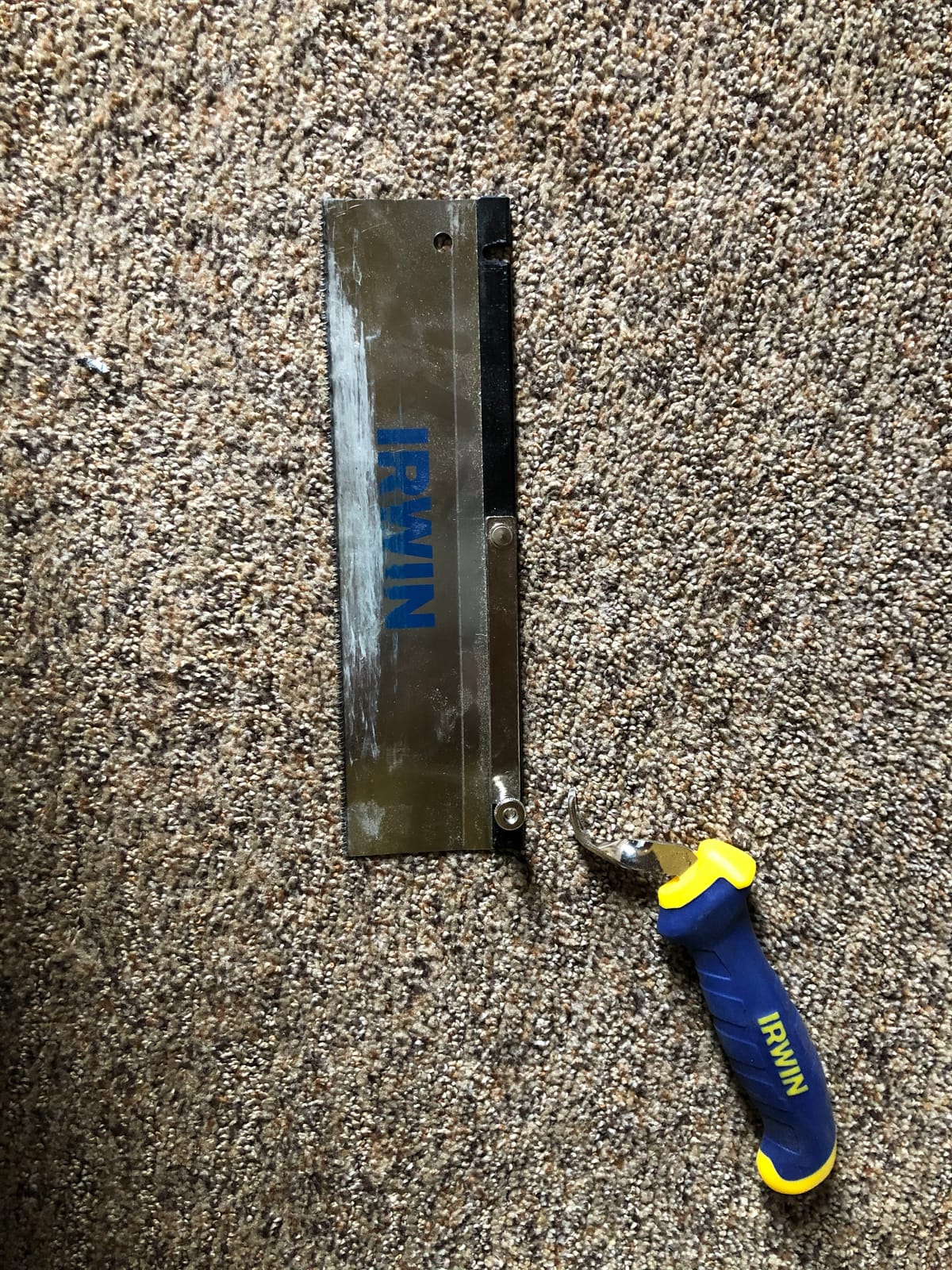
It cuts in both push and pull directions, which means the blade works whichever way you move it. For trimming work against a fixed surface that is a genuine advantage over the traditional tote-handled backsaw.
For dovetails, though, the 14 point tooth count is the problem. Fine teeth are slow, and this saw is not optimized for the small rip work that defines a dovetail shoulder. It is a fitting and trimming saw that happens to share a category name with the joinery saws.
Why the reversible handle is clever
Most backsaws are fixed to one handle angle, which forces anyone who cuts the other way into an awkward grip or into work they cannot do comfortably. The spring-loaded blade reverses in seconds and changes the effective hand position.
That single feature is why buyers recommend it for installation work, and it is worth remembering that the feature is specific to this saw rather than a general property of dovetail saws.
Why it is not on the dovetail shortlist
The fine teeth are slow, and slow matters when you are making twenty tails on a drawer. Owners also note that the handle does not detach easily and no straight handle is included, so it is not a general-purpose shop saw.
If your dovetail work is occasional, this is a fine saw. If you cut dovetails regularly, the speed difference will bother you within a project.
10. Spear and Jackson Tenon Saw 10 Inch – Best Sharpenable Blade
- Resharpenable high carbon steel rather than disposable hardened teeth
- Brass back gives real rigidity for accurate joint cuts
- Universal teeth cut both along and across the grain
- Riveted wooden handle is comfortable and solid
- Traditional push saw takes more effort than a pull saw
- Kerf is wider than the thin-plate pull saws here
- Heavier and slower on a full-depth cut
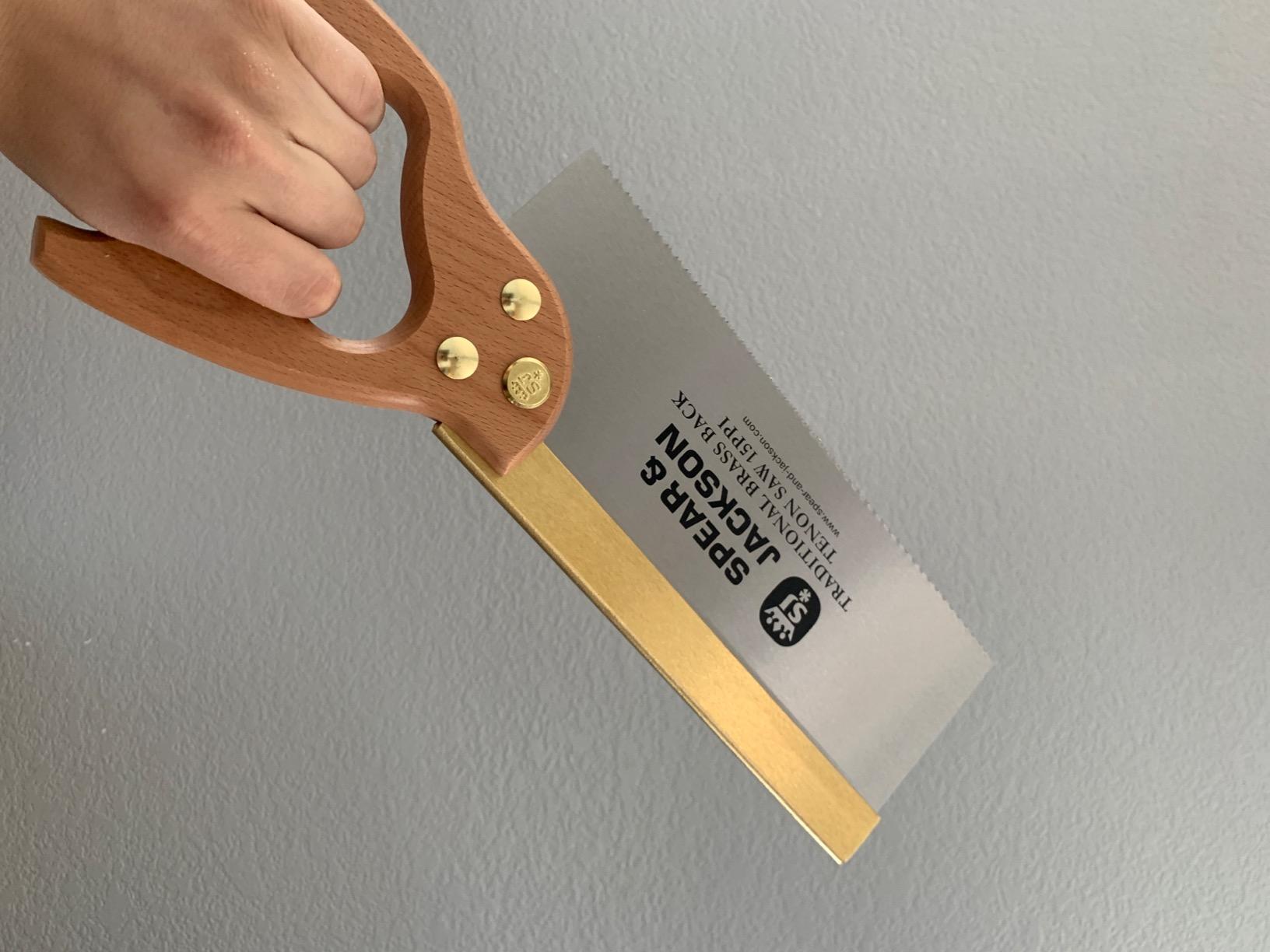
This is the tool for people who like maintaining their own saws. The blade is resharpenable high carbon steel, which means a stone and a little practice will keep it working indefinitely, unlike the impulse-hardened Japanese blades in this roundup that must be replaced when dull.
The brass back is the other traditional touch, and it is functional rather than decorative. A brass back resists flex, so the blade stays straight under load and the cut tracks reliably even at depth.
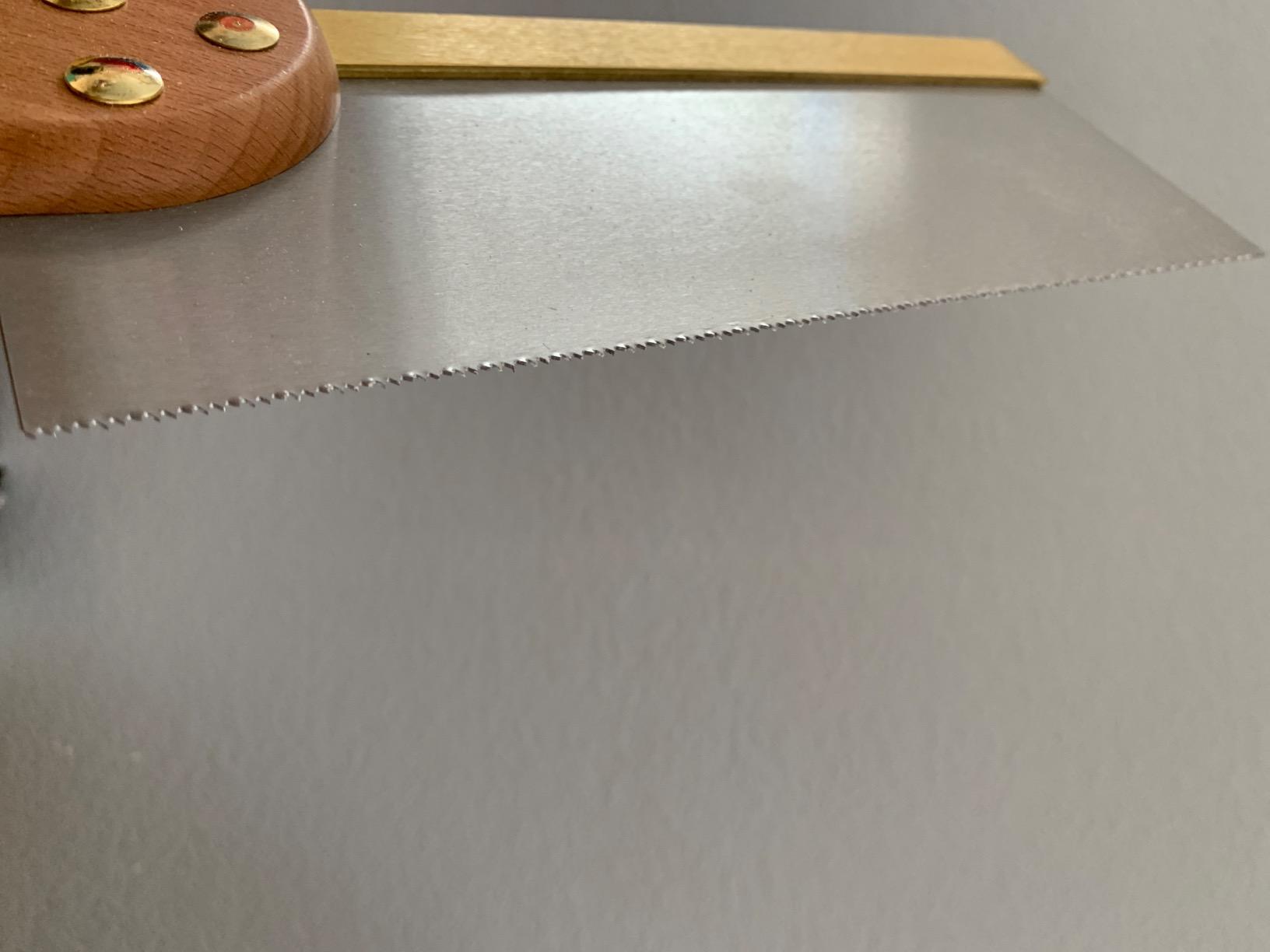
At 15 ppi the teeth are filed as universal, cutting along and across the grain. That is a compromise filing rather than a dedicated rip file, so a dovetail shoulder will work but will not be as clean as a purpose-filed rip blade.
Owners report satisfaction with the sharpness the blade arrives with and the accuracy on both tenon and cross-grain cuts, with 66 percent of the 413 ratings at five stars. The repeated caveat is effort: it is a push saw, and a push saw asks more of your arm.
When a tenon saw is the right dovetail saw
There is a consistent piece of advice on woodworking forums that a dovetail saw is a finesse saw, and for very large dovetails a tenon saw is the better tool. Workbench-scale dovetails on thick material are exactly that case.
Depth of cut is the deciding factor. A longer, braced blade stays straight through a deep cut where a fine dozuki would flex, and the brass back is what makes the 10 inch length usable at full depth.
What the brass back costs you
Rigidity comes with mass, and mass means a wider kerf and more effort per stroke than a thin pull saw. The cut is accurate but not as fine as the thin plates in this roundup.
The riveted wooden handle is a real advantage for a long session. It warms to your hand and stays comfortable where a plastic grip does not.
11. Jorgensen 10 Inch Reversible Dovetail Saw – Best Soft Grip
- Spring-loaded reversible blade suits either cutting hand
- Reinforced carbon steel back resists bending
- Bi-material soft grip reduces fatigue over long jobs
- Includes a tooth protector and storage box
- Weighs 310 g
- far more than the thin pull saws here
- 13 TPI is slow on thick material and not optimized for fine joinery
The handle is the story with this saw. A bi-material polypropylene and thermoplastic elastomer grip with a rubber inner core is genuinely comfortable over a long job, and owners doing installation work report noticeably less hand fatigue than with a hard plastic tote.
Underneath, the blade is SK5 high carbon steel at 0.6 mm with 13 TPI double ground induction hardened teeth rated to HRC58-68, and a reinforced carbon steel back that resists bending on a long stroke.
What the spring-loaded mechanism buys
The reversible blade suits either cutting hand and lets you approach the work at several angles, which is what makes it useful for door frames and tile prep rather than for anything square-edged.
It includes a reusable tooth tip protector and a storage box, which matters in practice. A saw this fine stored loose in a toolbox picks up damage long before it wears out.
Why it is heavy for the category
At 310 g this saw is far heavier than the thin pull saws in the same roundup, some of which come in under 50 g. That difference is felt clearly in a long session, and it exists because the back and handle are built for impact rather than for finesse.
The 13 TPI tooth count is fine, which is right for a controlled cut and wrong for speed. For dovetail joinery, the rigidity is not what limits it, the tooth count is.
12. Crown FLINN1 10 Inch Dovetail Saw – Best Traditional Dovetail Saw
- Made by Crown Hand Tools of Sheffield England with a steel blade
- Solid beech handle in the classic British workshop style
- Traditional 10 inch dovetail format for fine joinery
- Light weight for a braced western push saw
- 4.2 average is the lowest of the twelve saws here
- Push-cut format needs more effort than a pull saw
- Fixed blade with limited replaceability
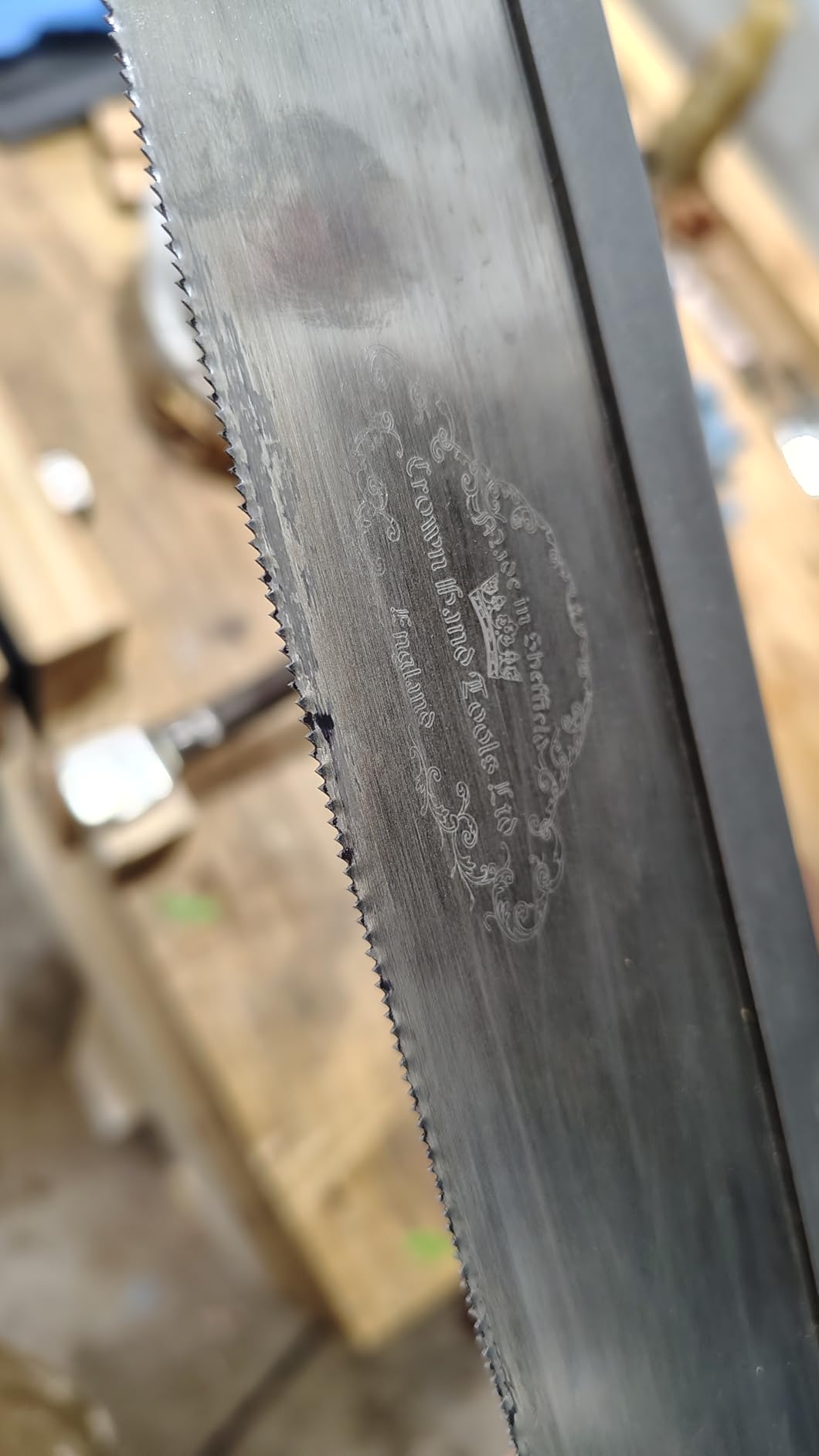
This is the classic western dovetail saw, and there is something appealing about buying one. Crown Hand Tools has made tools in Sheffield, and the beech handle and alloy steel blade are exactly the specification a traditional British workshop saw is supposed to have.
At 0.19 kg it is a light saw for a western push model, which is meaningful because the push stroke is the part that tires your arm. The 10 inch blade is a good length for fine joinery rather than heavy material.
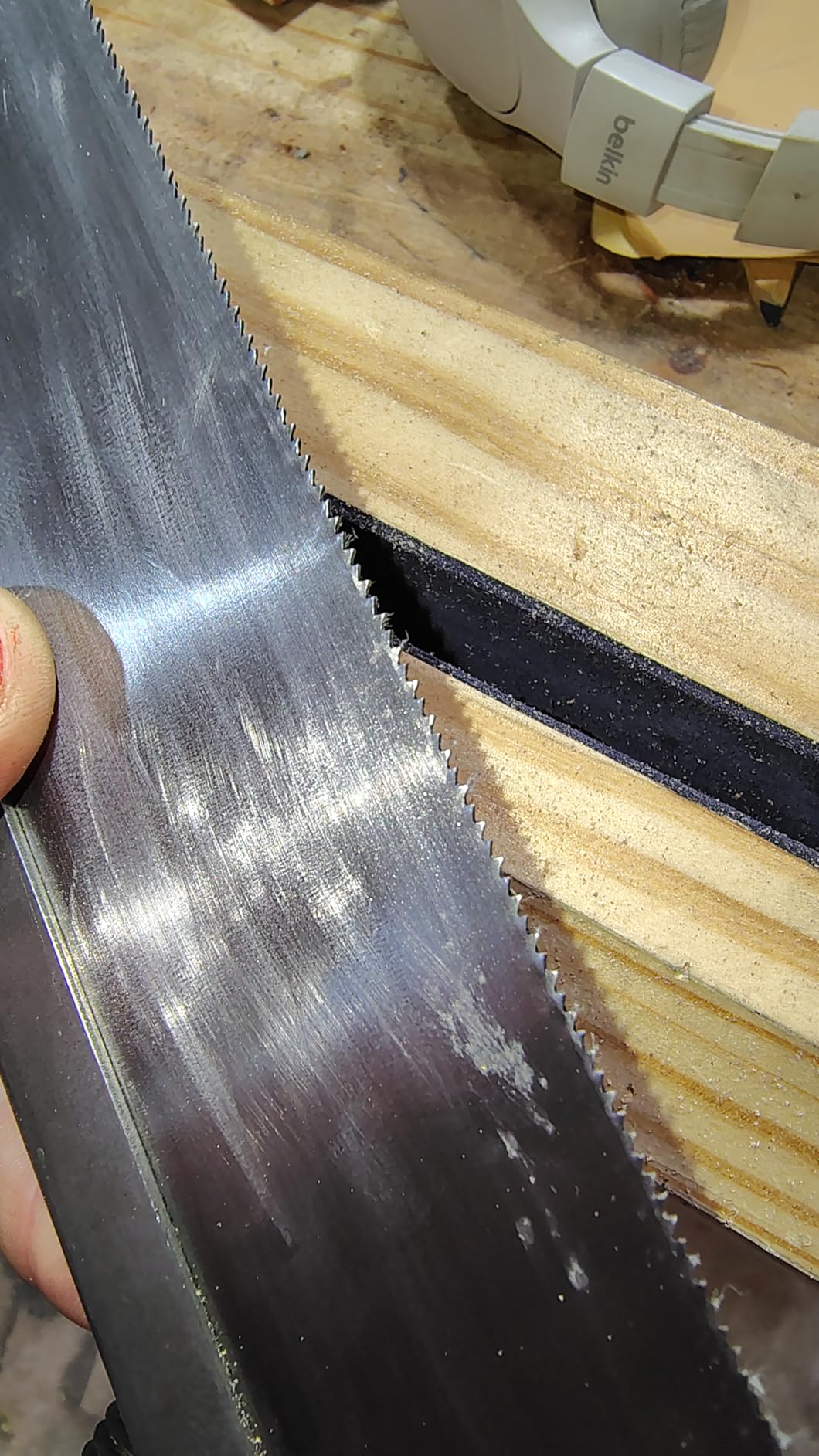
Owners appreciate the Sheffield provenance and the solid handle, and it is a genuinely pleasant tool to hold. What they are less sure about is how sharp the blade arrives, which several reviewers mention as lower than expected from a blade of this reputation.
The 4.2 average across 154 ratings is the lowest in the group, and the distribution shows it, with 7 percent two-star and 5 percent one-star ratings. That does not make it a bad saw, it makes it a traditional design in a group full of modern Japanese engineering.
What a traditional saw does differently
A push saw cuts in compression, so a braced back is essential rather than decorative. That rigidity is why traditional dovetail saws have always been long, and it is why this format has survived centuries of use.
The trade is effort for stability. If you already know how to saw, a push saw feels more powerful on a thick cut than a thin pull saw of the same length.
Where it falls short today
At a 4.2 average it sits behind every other saw in the list, and reviewers specifically note blade sharpness on arrival as a recurring theme. Sharpening it yourself is the fix, provided you have a stone and the patience.
The fixed blade with limited replaceability is the other limitation. If the teeth finally go, there is no straightforward path to a new blade, which is the opposite of the position a pull saw owner is in.
Japanese Pull Saws vs Western Push Saws
Japanese pull saws and western push saws are not competing versions of the same tool. They cut on opposite sides of the stroke, and that single fact explains every difference you will notice in use.
A pull saw has its blade in tension while cutting, so the plate can be extremely thin without flexing badly. That is why the Japanese saws here run 0.012 to 0.0012 inch plates and produce kerfs you can barely see. A push saw works in compression, so it needs a brass or steel back to stay straight, which adds weight and widens the kerf.
Cutting on the return stroke also means the teeth are pulled toward you rather than pushed, which removes the binding that makes a dull or badly set saw wander. In practice that is why pull saws stay on a line with less effort.
The Western advantage is durability and forgiveness. A braced saw tolerates rough treatment, thick material and a beginner who leans on it. It is the better tool for cutting a shelf to length; it is the worse tool for a show-off drawer corner.
The honest answer to whether Japanese handsaws are better is that they are better at the specific job of dovetails, provided the teeth are filed for ripping, and that they are worse at surviving a hard shop. Many woodworkers end up owning both, and plenty get through a decade of joinery with only the pull saw.
Dovetail Saw Specs Explained: TPI, Kerf, Plate Thickness and Hang Angle
Teeth per inch (TPI). This is the number buyers check first, and the useful range for dovetail work is roughly 15 to 25. Below 12 the saw is really a crosscut or rip saw wearing a dovetail label, and above 25 progress on anything but small material becomes slow. The saws here run from 9 and 15 TPI on the double-edge Ryoba up to 32 TPI on the fine edge of the Gyokucho flush saw.
Kerf. The kerf is the width of the cut the saw leaves behind. Narrow is better for dovetails because less material is removed from the joint face, so there is less to clean up before glue-up. Figures in this roundup run from about 0.0012 inch plate thickness on the thinnest saw to a 0.03 inch kerf on the widest.
Plate thickness. A thin plate is what allows a narrow kerf, and a narrow kerf is what allows a good joint. The tradeoff is heat and vibration. On very thin plates, aggressive ripping generates friction that shows up as a wandering cut, which is the reason several premium dovetail saws added a stiffened back rather than simply making the plate thinner.
Hang angle. The hang angle is the angle at which the blade plate sits relative to the handle, and it ranges from roughly 32 degrees on aggressive dovetail saws to 45 degrees on more relaxed models. A shallower hang angle gives you more mechanical advantage and a more aggressive cut but forces a lower wrist position, which becomes uncomfortable on a long batch. A steeper angle is easier on the wrist and cuts more gently. This is one of the few specifications that genuinely reflects a maker’s design intent rather than a measurement.
Rake angle. Rake is the angle of the tooth face relative to the blade surface, and it controls how much the tooth scrapes versus slices. Saws with too little rake angle tend to grab and stick, particularly on hardwood, and the sticking is a technique problem as much as a tool problem. Finer tooth counts naturally have a higher effective rake, which is part of why they feel sharper in hardwood.
Rip versus crosscut filing. This is the one that matters most for dovetails and the one buyers most often get wrong. A saw filed for crosscutting will wander and burnish the surface when you try to rip with it, and the result is a joint face that looks dull no matter how sharp the teeth are. Verify the filing before you buy, not after your first drawer.
How to Cut a Dovetail Joint by Hand
You need fewer tools than most people expect. A rip-filed dovetail saw, a marking gauge, a marking knife or dividers, and two chisels are the whole list. A half-blind variant adds a small square and a chisel narrow enough to reach the end of the cut.
Start by marking the baseline across the end grain with a sharp knife rather than a pencil, then set your gauge from that line to the full width of the board. Gauge in from both ends, and the lines will tell you immediately if the board is twisted.
Mark the tail first. Draw the tail faces with a bevel, checking the angle against a straightedge, and remember the pins will be narrower than the tails. Extend the shoulder line down both faces so you have a reference on the end grain.
Saw the shoulders along the line with slow, controlled strokes, keeping the blade vertical and using the handle rather than your wrist to move it. A thin pull saw wants a light touch, and pressing harder is what causes drift.
Chop out the waste just shy of the line, work from both faces, and keep the waste slightly thick so you do not undercut the shoulder. Pare down to the line with a chisel held bevel-up, taking light paring strokes.
Fit the joint before you go further. If it slides together under hand pressure alone, the fit is close to right, and any gap that remains after glue-up will be your finish schedule, not your saw.
Dovetail Saw vs Tenon Saw vs Carcass Saw
These three categories overlap confusingly, and picking the wrong one is a common reason a dovetail attempt goes badly. The distinction is blade length and depth of cut, not tooth pattern.
A dovetail saw is short, typically 6 to 10 inches, with fine teeth and a thin plate. It is built for a small, precise, fully visible joint and for nothing else. Its depth of cut is the limiting factor on any large workpiece.
A tenon saw sits in the middle, usually 10 to 14 inches, with a braced back and a tooth count around 13 to 20. The added length and rigidity make it the correct tool for large dovetails, and woodworking forum consensus repeatedly makes the same point: a dovetail saw is a finesse saw, and for very large tails a tenon saw is the right answer.
A carcass saw is the old framing saw, with a much longer blade and coarser teeth. It is superb at ripping and crosscutting long boards and genuinely poor at joinery, because the coarse teeth and heavy plate are wrong for a visible joint. There is no dovetail work in its job description.
The practical rule is to size the saw to the joint. Small drawer dovetails want a dovetail saw, workbench-scale tails want a tenon saw, and nothing in this list substitutes for the other.
Buying Guide: Choosing the Best Hand Saw for Dovetail Joints
Start with the joint, not the brand. Measure the thickest material you intend to cut and check the depth of cut available on the saw. A 6 inch dozuki is superb on thin drawer material and unusable on a thick case side, and no amount of quality fixes that mismatch.
Then check the tooth filing, because this is where buyers go wrong most often. Through and half-blind dovetails both involve a rip cut along the shoulder, so you want rip-filed teeth on at least one edge. A double-edge saw with rip teeth on one side and crosscut teeth on the other covers the whole job.
Next, think about whether you will sharpen it. The impulse-hardened Japanese blades here give a superb cut from the first stroke and cannot be resharpened, so blade life is finite and replacement blades matter. A resharpenable carbon steel blade, such as the Spear and Jackson tenon saw, is a different kind of purchase: more work to maintain, unlimited life.
For beginners, the honest debate is whether to learn on a cheap saw or buy once. The forum consensus is closer to the middle than either camp claims. Nobody learns to saw properly on a bad saw, but nobody needs a top-tier dovetail saw to practise either. A thin-bladed pull saw that is inexpensive and light is the right first purchase, and the skills transfer directly to whatever you buy next.
Handle style matters less than people assume, but not nothing. A pistol grip gives a knuckle-free line of sight and a shorter, stiffer saw. A straight tote offers more wrist freedom and more control of the plate. Wood absorbs vibration better than plastic, which is felt on a long rip cut. Folding saws are convenient for a small shop but add a hinge that slightly changes the feel.
If your dovetails are regular and repeated, a machine is a different answer entirely. Our guide to the best dovetail jigs covers the cases where a jig beats hand cutting on speed and consistency, and the cases where it does not.
Finally, buy for the maintenance you will actually do. If you enjoy sharpening, a resharpenable blade is a better long-term tool. If you do not, a saw that holds its edge and accepts a replacement blade will suit you better, and you should confirm replacement blades are easy to source before you buy.
Frequently Asked Questions
What is the best saw for cutting dovetail joints?
A thin-plated backsaw with rip-filed teeth in the 15 to 25 TPI range is the correct tool. A double-edge pull saw with 9 and 15 TPI is the most versatile option because one edge cuts the rip shoulder and the other trims pins and half-blind ends. Choose a blade length that gives enough depth of cut for your thickest material.
Are Japanese handsaws better for dovetails than western saws?
Japanese pull saws are better suited to dovetails because the blade stays in tension during the cut, which allows a plate as thin as 0.012 inch and an extremely narrow kerf. Western push saws are more rigid and durable for rough work but leave a wider kerf and take more effort. Many woodworkers use a pull saw for joinery and keep a braced push saw for material preparation.
What TPI is best for a dovetail saw?
Roughly 15 to 25 teeth per inch suits dovetail work. Finer teeth cut more slowly but remove less material, and coarser teeth move faster at the cost of a wider kerf. Double-edge saws often pair a coarse rip edge for the shoulder with a finer crosscut edge for trimming, which covers both ends of the range in one tool.
Can I use a tenon saw for dovetails?
Yes, and for very large dovetails it is the better tool. A tenon saw has a longer, braced blade that stays straight through a deep cut, while a short dovetail saw flexes once the work gets tall. A dovetail saw remains the right choice for small, visible joinery where a narrow kerf matters more than depth.
What is the best budget dovetail saw for a beginner?
A thin-bladed Japanese pull saw with fine teeth is the best starting tool, because the skills you learn on it transfer to any saw you buy later. A flush-cutting ryoba is an excellent inexpensive way to learn the pull stroke with almost no risk of damaging an expensive plate. Pair it with a proper rip-filed dovetail saw once you are cutting real joinery.
How do I start a cut with a dovetail saw?
Set the saw on the waste side of the line, keep the blade vertical, and take a short stroke to establish a kerf before lengthening it. Use the handle to move the saw rather than your wrist, and keep pressure light on a thin plate. On hardwood, marking the baseline with a sharp knife instead of a pencil gives you a visible edge to follow.
Final Verdict: Which Hand Saw to Buy for Dovetails
The best hand saws for dovetail joints share one trait: a thin plate and a narrow kerf. Our pick for most people is the SUIZAN Ryoba 9.5 inch double-edge saw, because rip teeth on one side and 15 TPI on the other cover the whole job in a single tool with a proven track record across thousands of owners.
Work on thin material and want the narrowest cut possible? The 6 inch dozuki at 25 TPI is the specialist, and it needs a companion flush saw for pegs and wedges. Learning to saw for the first time? Start with a light thin-bladed pull saw and move up once your technique is reliable.
Whatever you choose, check the tooth filing before you buy, size the blade to your thickest material, and practise on scrap first. Technique matters more than price, but the right saw makes the technique much easier to learn.