
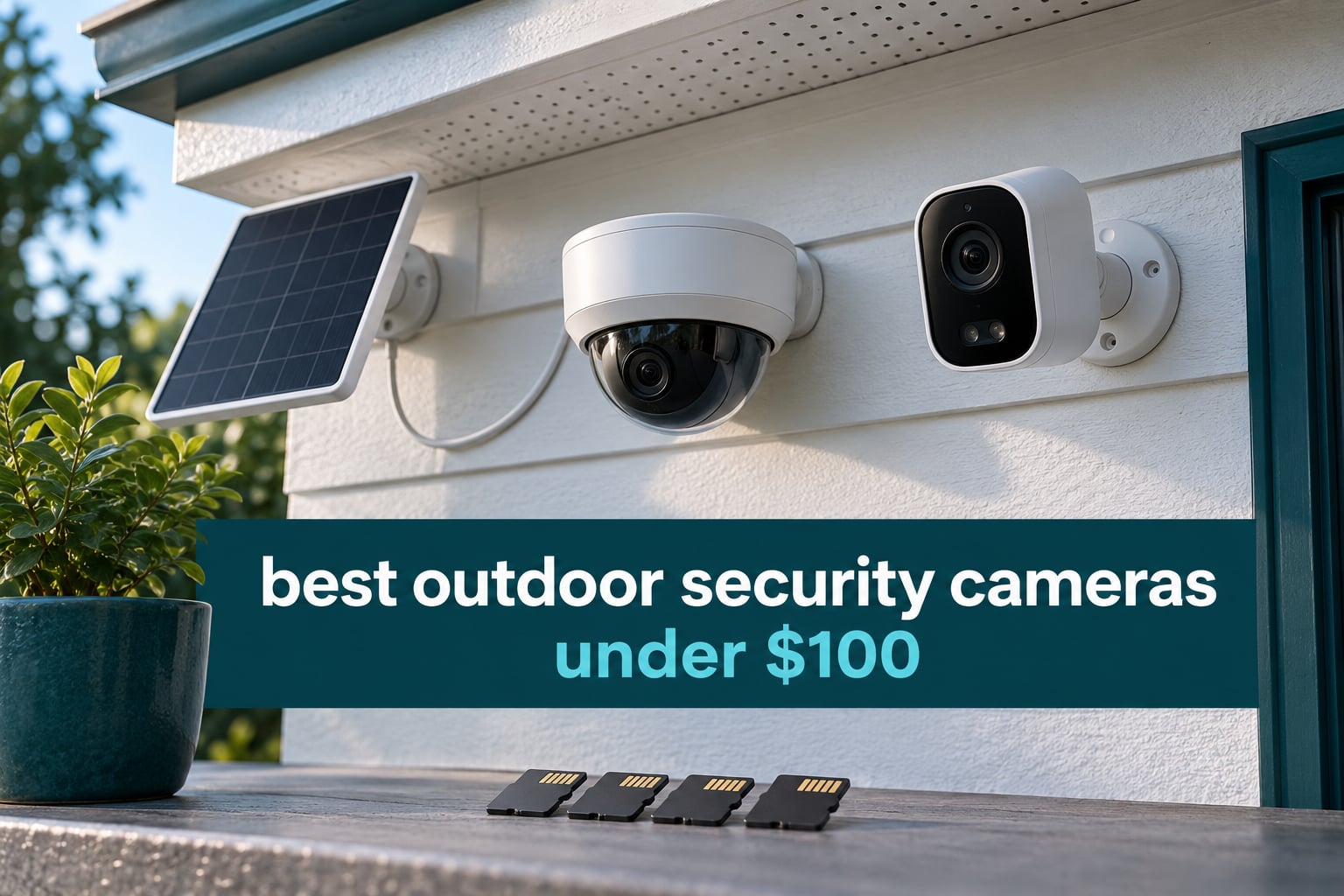
If you want the short version: the Ring Outdoor Cam is the best inexpensive outdoor security camera most people should buy in 2026, with a 4.5 rating across more than 65k reviews, color night vision and a magnetic-style bracket that takes minutes to mount. If free AI detection matters more to you than wireless freedom, the Tapo C500 is the smarter buy for a wired spot.
Every camera below sits under a hundred-dollar ceiling and carries a genuine outdoor weather rating, not a vague “weather-resistant” claim. We sorted the list by the things that actually decide whether a budget camera still works in month eight: whether recording is locked behind a monthly plan, whether night footage is black and white or usable in color, and whether the housing survived a winter.
How we picked: we read the rating and review volume for all eight models, then cross-checked the recurring complaints in buyer reviews rather than the marketing copy. Products with subscription-gated core recording were kept but flagged. We also leaned on what owners post in r/homesecurity and on ipcamtalk, where the same question comes up constantly: can I own my footage and skip the cloud plan entirely? Our wider guides cover the best outdoor security cameras without subscriptions and the best outdoor security cameras for driveways if your use case is more specific.
Top 3 Picks for Best Outdoor Security Cameras Under $100 (October 2026)

Ring Outdoor Cam (Stick Up Cam)
- Color night vision
- Two-way talk
- Rechargeable battery
- Motion alerts

Tapo C500 1080p Outdoor Pan/Tilt
- Free AI person detection
- 360 degree pan
- Night vision to 98 ft
- Physical privacy mode

ZEEPORTE Snap 30T Solar 2K
- 2K resolution
- Solar plus 5200mAh battery
- IP65
- Starlight color night vision
The Ring wins on proven reliability at volume. The Tapo C500 wins on features that competitors charge extra for. The ZEEPORTE wins on coverage angles and genuinely no-cable power.
Every Outdoor Security Camera at a Glance in 2026
| Product | Specifications | Action |
|---|---|---|
| Ring Outdoor Cam (Stick Up Cam) |
|
Check Latest Price |
| ZEEPORTE Snap 30T Solar 2K |
|
Check Latest Price |
 Blink Outdoor 4 with Sync Module Core Blink Outdoor 4 with Sync Module Core |
|
Check Latest Price |
| TP-Link Tapo C500 Outdoor Pan/Tilt |
|
Check Latest Price |
 SEHMUA RBX-S40 Solar 2K SEHMUA RBX-S40 Solar 2K |
|
Check Latest Price |
 Cinnado B6 Solar Two-Pack Cinnado B6 Solar Two-Pack |
|
Check Latest Price |
 Tapo C120 2K+ Indoor/Outdoor Tapo C120 2K+ Indoor/Outdoor |
|
Check Latest Price |
 HITELLARCAM CB54 2K Wireless HITELLARCAM CB54 2K Wireless |
|
Check Latest Price |
Two things stand out before you read further. Four of these eight record to a microSD card you supply, so ongoing cost is a one-time purchase rather than a monthly line item. And three of them are 2K, which is a meaningful jump over the 1080p ceiling most budget brands stop at.
1. Ring Outdoor Cam (Stick Up Cam) – Best Overall Pick
- Wide field of view from one unit
- Color night vision rivals daytime quality
- Quick Ring app setup
- Multiple cameras in one app
- Owners report 45+ days per charge
- Video playback requires Ring Protect subscription
- Battery drains faster at high sensitivity
- Motion zones cannot cover the outer edges of the frame
- Event recording only with no continuous mode
The Stick Up Cam is the model most people end up owning, and after working through the owner feedback it is easy to see why. It is a small stick that mounts on a wall, a shelf edge or under an eave, runs on a rechargeable battery, and shows a genuinely wide view of a porch, walkway or side yard from a single position.
Daytime image quality is unremarkable in the best possible way. It is sharp enough to identify a face at close range, and reviewers repeatedly note that the color night vision holds up as well as the daytime feed rather than dropping to a washed-out infrared frame. That matters most for the scenario people actually buy these for: someone walking up to a front door after dark.
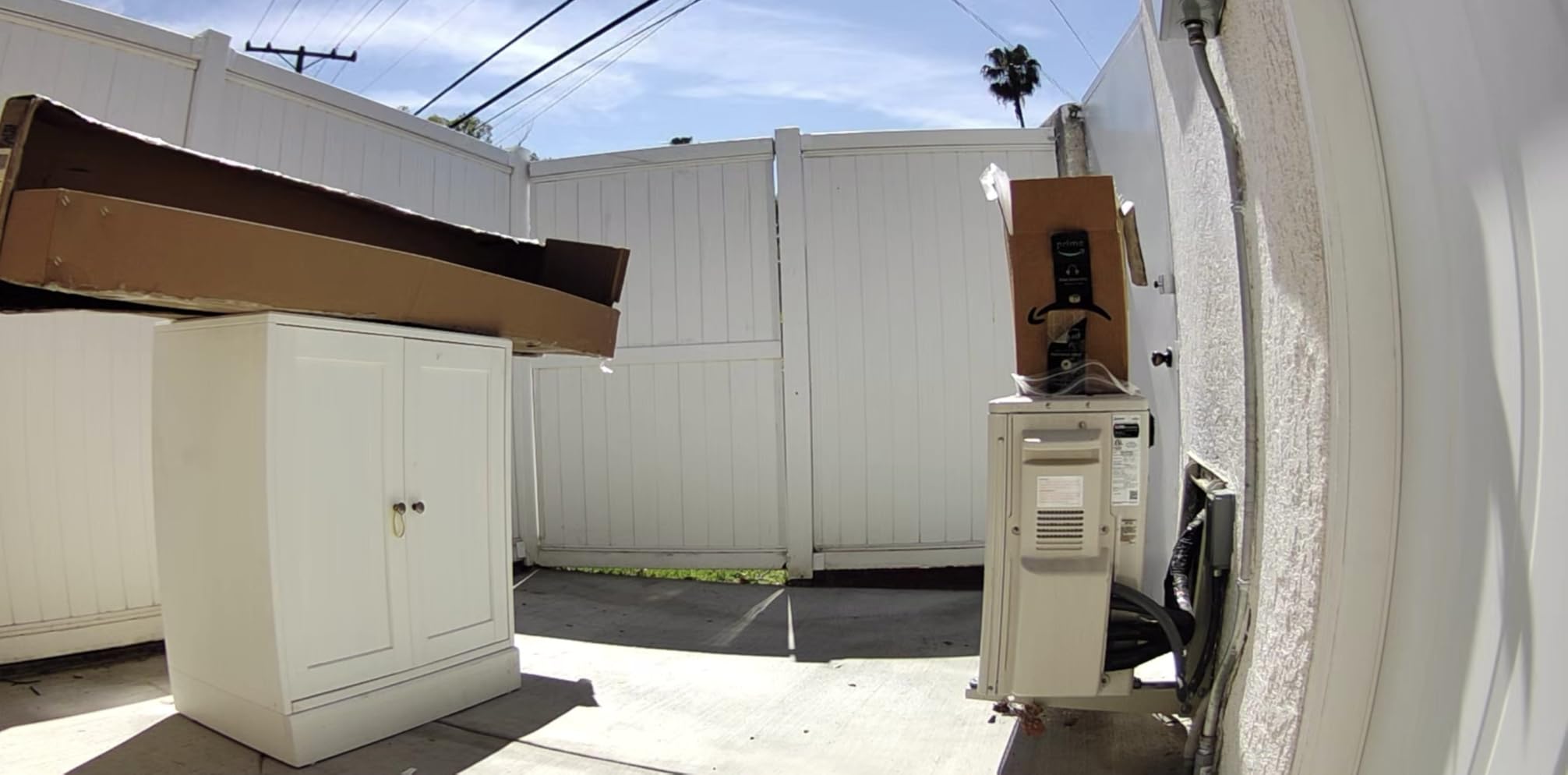
Two-way talk works, though owners rate audio clarity as mediocre. You can talk to a delivery driver through the app, but you will not win an argument over engine noise or wind. Battery life lands around 45 days or more per charge for most households, and since the battery is removable you can swap in a charged pack without touching the mount.
The real tradeoff is storage. Ring’s technical details are explicit that video playback requires a compatible Ring Protect subscription sold separately, so the camera itself is cheap and the history is not. If you want to own your clips, this is not the pick. If you want the smoothest app in the category and already pay for Ring elsewhere, it is still the most dependable unit here.
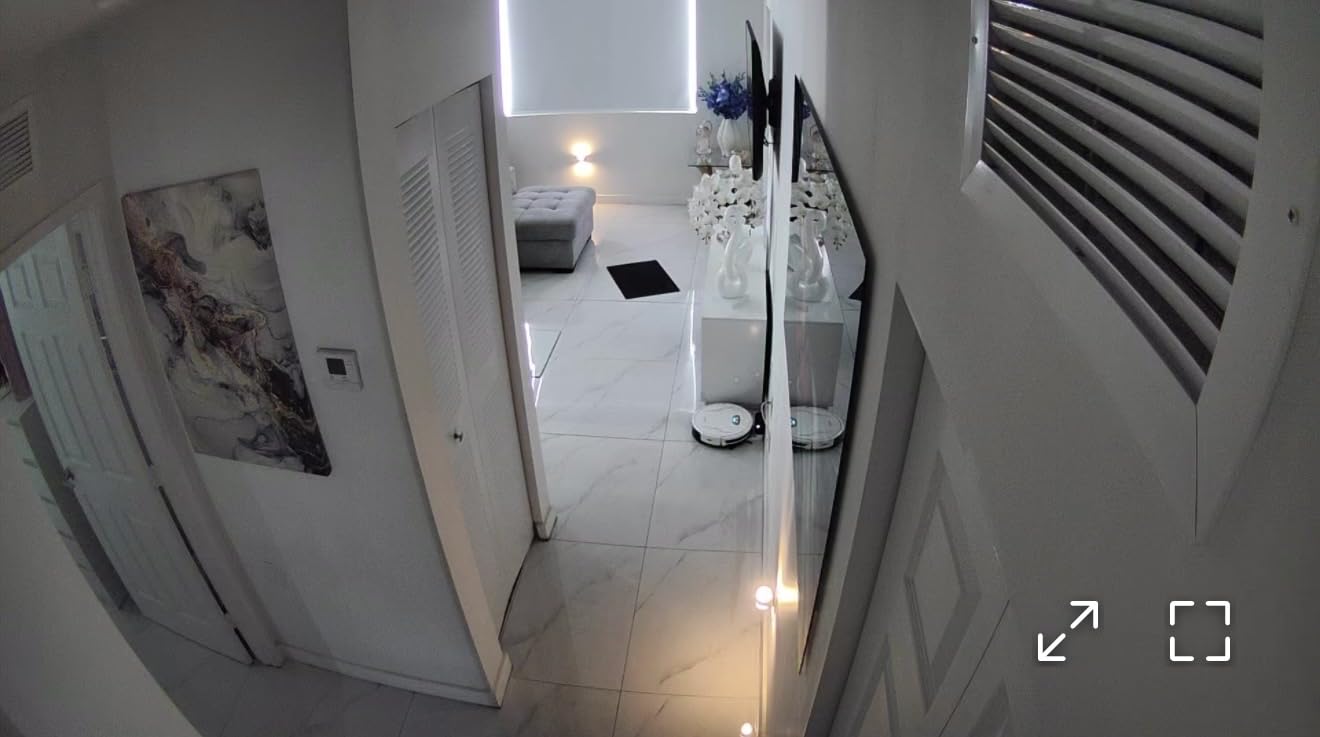
How It Performs At Night And In Bad Weather
Color night vision is the headline feature and it holds up in practice across owner photos. The body is rated weather-resistant for outdoor placement, which covers rain and cold, and the included bracket handles both wall and surface mounting. A ceiling mount is sold separately, which is the one accessory limitation worth knowing before you order.
Motion detection is the weak spot. Owners report zones that cannot reach the outer 10-20% of the frame, and slower or more distant movement sometimes fails to trigger. Slower-moving and distant targets are exactly what you want caught at the edge of a yard.
Who Should Buy This And Who Should Skip It
Buy it if you are inside the Ring ecosystem already, you want the least fiddly setup in this list, and you value a polished app over owning your recordings. It is also the safest first camera for anyone who has never installed security hardware.
Skip it if subscription-gated playback bothers you, which is the exact complaint that dominates r/homesecurity threads. One more practical note: you cannot power the camera down from the app, so silencing it for good means physically removing the battery.
2. TP-Link Tapo C500 – Best Wired Pan/Tilt With Free AI Detection
- Free AI person detection with tracking
- Physical privacy shutter blocks the lens
- Night vision reaching about 98 ft
- Wired power means no charging
- Works with Alexa and Google Assistant
- Requires running a power cable to the mount
- 2.4GHz Wi-Fi only
- 15 fps is modest
- No optical zoom
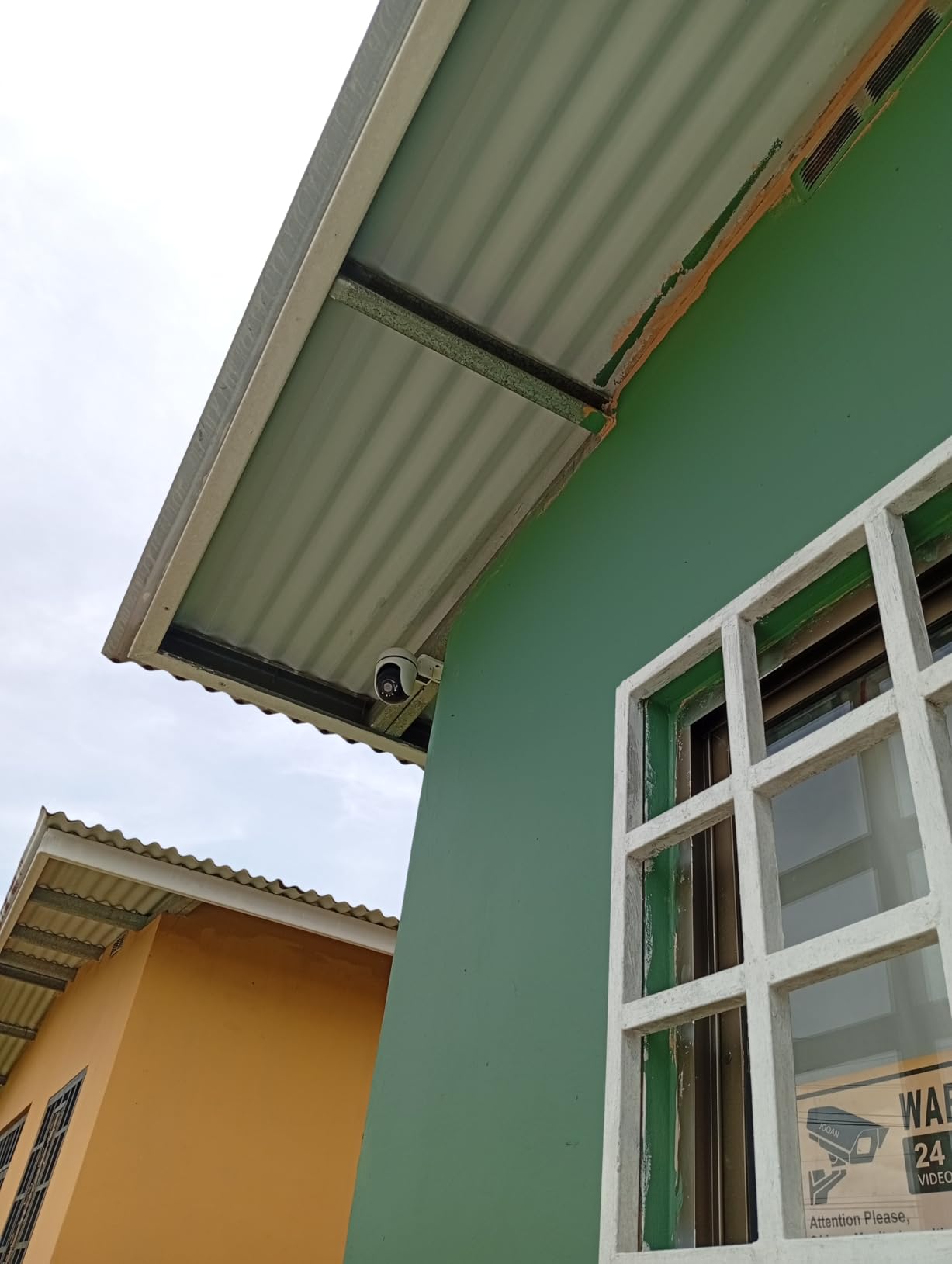
The C500 is the camera I keep coming back to for anyone with a socket near the mounting spot. It is a dome that pans 360 degrees horizontally and 130 degrees vertically from the app, so one unit can cover a driveway, a side path and a gate without a second camera.
The feature that separates it from the pack is free AI person detection with motion tracking. At this price most competitors put person detection behind a monthly plan. Tapo includes it, and it cuts the tree-and-shadow alert noise that makes people turn off notifications entirely. For a reviewer who wants alarms on without regret, that is worth more than extra resolution.
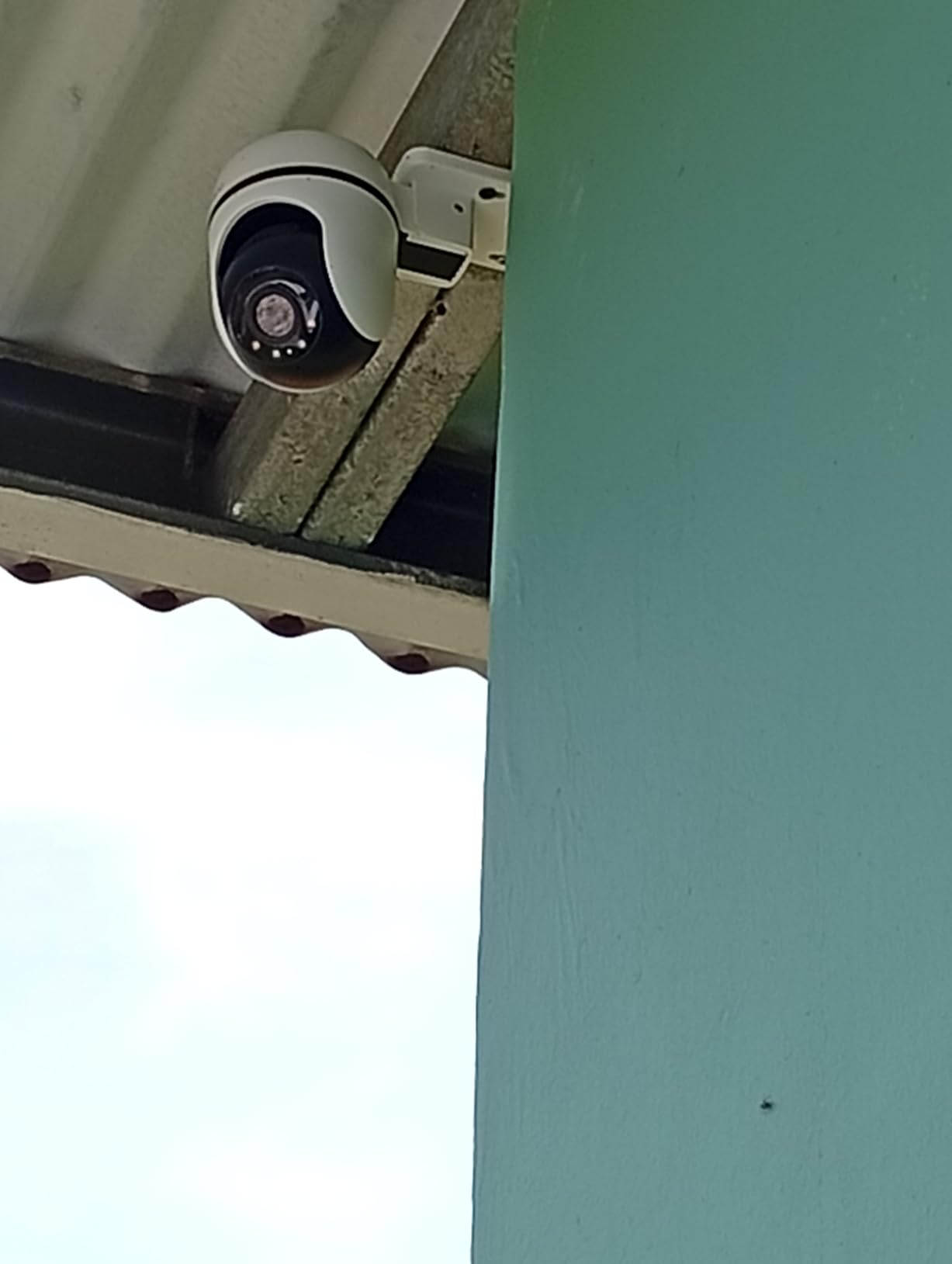
The privacy mode is genuinely physical. Instead of switching the feed to a black screen, the housing rotates to cover the lens, which is the difference between a software promise and a shutter. There is also a customizable recorded sound alarm you can trigger from the app as a deterrent.
Night vision is listed at up to 98 feet, or 30 meters, which is unusually long for this class and enough to cover a long driveway or a back garden edge. Storage goes to a microSD card up to 512GB sold separately, or to Tapo Care cloud if you choose it. The 2 year manufacturer warranty and a 360 g weight are both reasonable.
What The Trade-Offs Actually Are
The deal-breaker is wiring. The C500 is corded electric, so you need a power run to the mount, and for a rental or a detached garage that can be the dealbreaker on its own. The other compromises are modest: a 15 fps frame rate is lower than higher-end models, and 2.4GHz-only Wi-Fi restricts placement in a 5GHz-only home.
Note the IP65 rating. That covers dust and water jets, which is right for an under-eave or soffit position but worth thinking about for a camera taking full weather from a side wall.
Where It Fits In A Whole-Home Plan
This is my pick for a front door where an outdoor outlet already exists, because free person detection plus a real privacy shutter is the rare combination you normally pay double for. If you are building coverage piece by piece, our best outdoor security cameras for homes guide covers the placement side.
It also expands cleanly inside the Tapo app alongside the C120 below, so you can run two different mounts from one ecosystem and one set of notification settings. Just remember that both sit on the 2.4GHz band.
3. ZEEPORTE Snap 30T – Best 360 Degree Solar Coverage
- 2K resolution above the usual budget norm
- Solar panel plus 5200mAh battery
- IP65 all-weather body
- 355 degree pan and 120 degree tilt
- Two-way audio with siren alarm
- Free 7-day rolling cloud backup
- 2.4GHz Wi-Fi only
- Event clips with no continuous recording
- Package recognition needs a subscription
- No motion tracking
The Snap 30T model is the most complete no-cable option in this roundup. The box contains the camera, a solar panel, a charging cord and installation sets, so nothing else needs ordering before you can mount it on a wall, a post or a tree.
Video is 2K FHD at 2304 by 1296, and buyers notice the difference against 1080p rivals when the subject is more than a few metres out. The pan and tilt range of 355 degrees horizontal and 120 degrees vertical is the widest in this list, driven from the app. Starlight color night vision is listed to 33 feet, which keeps faces in colour at close range rather than dropping to black and white.
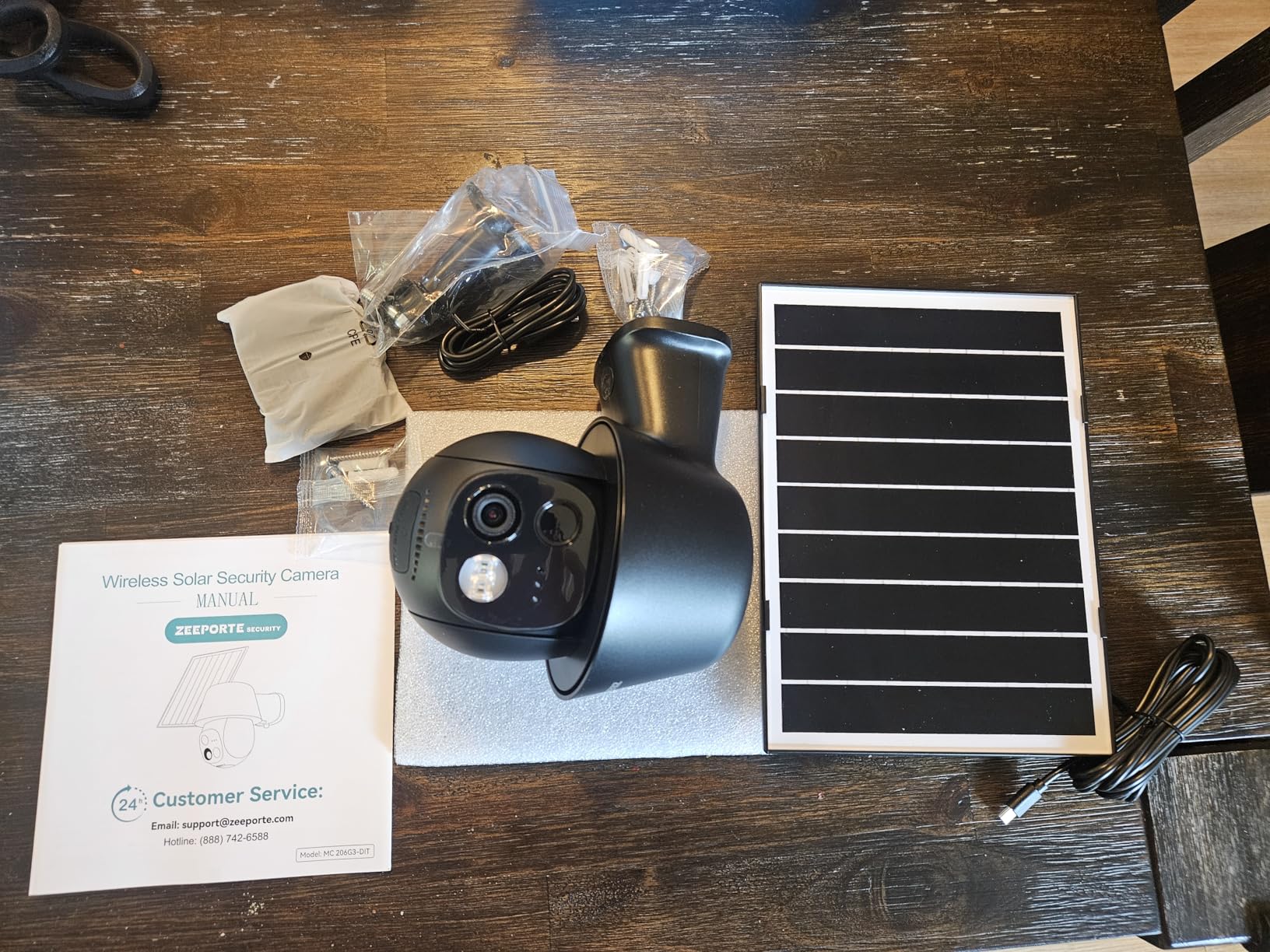
AI PIR detection classifies people, vehicles and pets rather than triggering on any movement, and there is a two-way talk function alongside a built-in siren and flashing LED for deterrence. Storage is a microSD card up to 256GB, not included, with seven days of rolling cloud backup included free on top.
Two limits are worth planning around. The radio is 2.4GHz only, so it will not join a 5GHz network and your phone needs to be on the 2.4GHz band during setup. And the smarter AI features, including package recognition, require a paid subscription, so treat that as an upsell rather than a core function.
How The Solar Setup Behaves In Practice
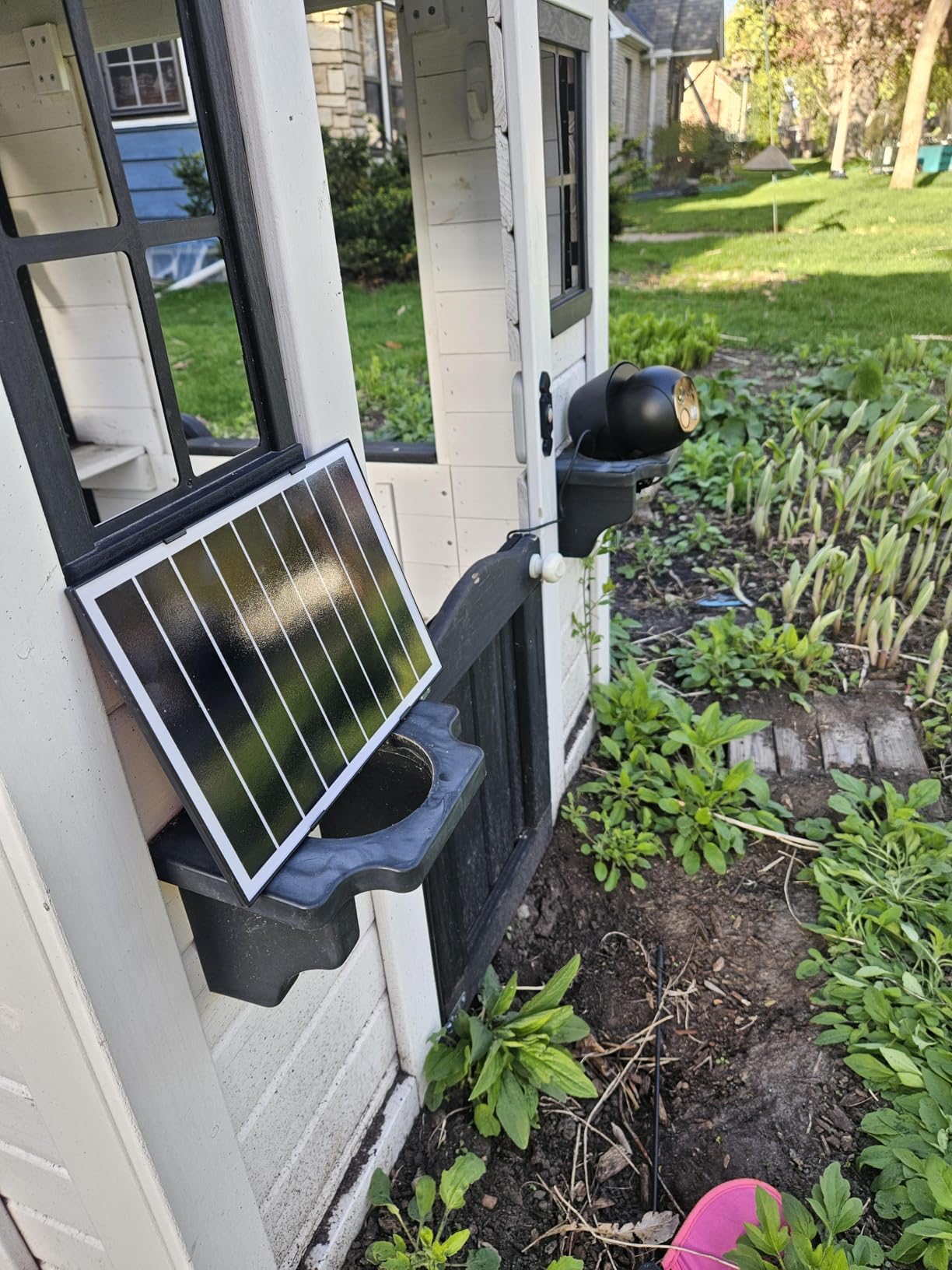
The 5200mAh battery backed by the integrated panel is the reason this works off-grid. Owners report running it without a charging ladder for months, which suits a shed, a side gate or an outbuilding with weak power. The panel does the charging and the battery covers the cloudy stretches.
Recording is event-based only. There is no 24/7 continuous mode and no motion tracking, so a slow approach from the edge of frame may not produce a clip.
When It Is The Right Call
Choose it when you want colour night footage, wide coverage and no cables at the same time, and you can live with a 2.4GHz network. It is also one of the few budget options where free cloud backup exists alongside local storage rather than instead of it.
Skip it if your router only broadcasts 5GHz, or if a package-detection subscription matters to you. IP65 handles rain and jets, so pick a shaded wall rather than an exposed post if you want the seal to last.
4. Blink Outdoor 4 – Longest Battery Life On A Budget
- Up to two-year battery life per change
- Very quick beginner-friendly install
- Solid 1080p day clarity
- Person detection cuts animal alerts
- Multi-camera and Alexa support
- Sync Module Core has no local storage
- 1080p is soft on distant detail
- Module can lock up after a power blip
- Firmware updates have taken cameras offline
The Blink Outdoor 4 is the least hands-on camera in this list. It runs on two AA lithium batteries for up to two years, and the Sync Module Core in the box handles the hub role so the camera itself is a single wall mount with no wiring. For a large property or a rental, that maintenance profile is the whole argument.
Daytime 1080p is serviceable and the field of view is improved over earlier generations. Night vision is infrared, so after dark you get the standard black-and-white image rather than colour, and reviewers rate low-light detail as weaker than premium units. Dual-zone enhanced motion detection helps, and optional person detection through a subscription plan is what cuts animal and shadow alerts.
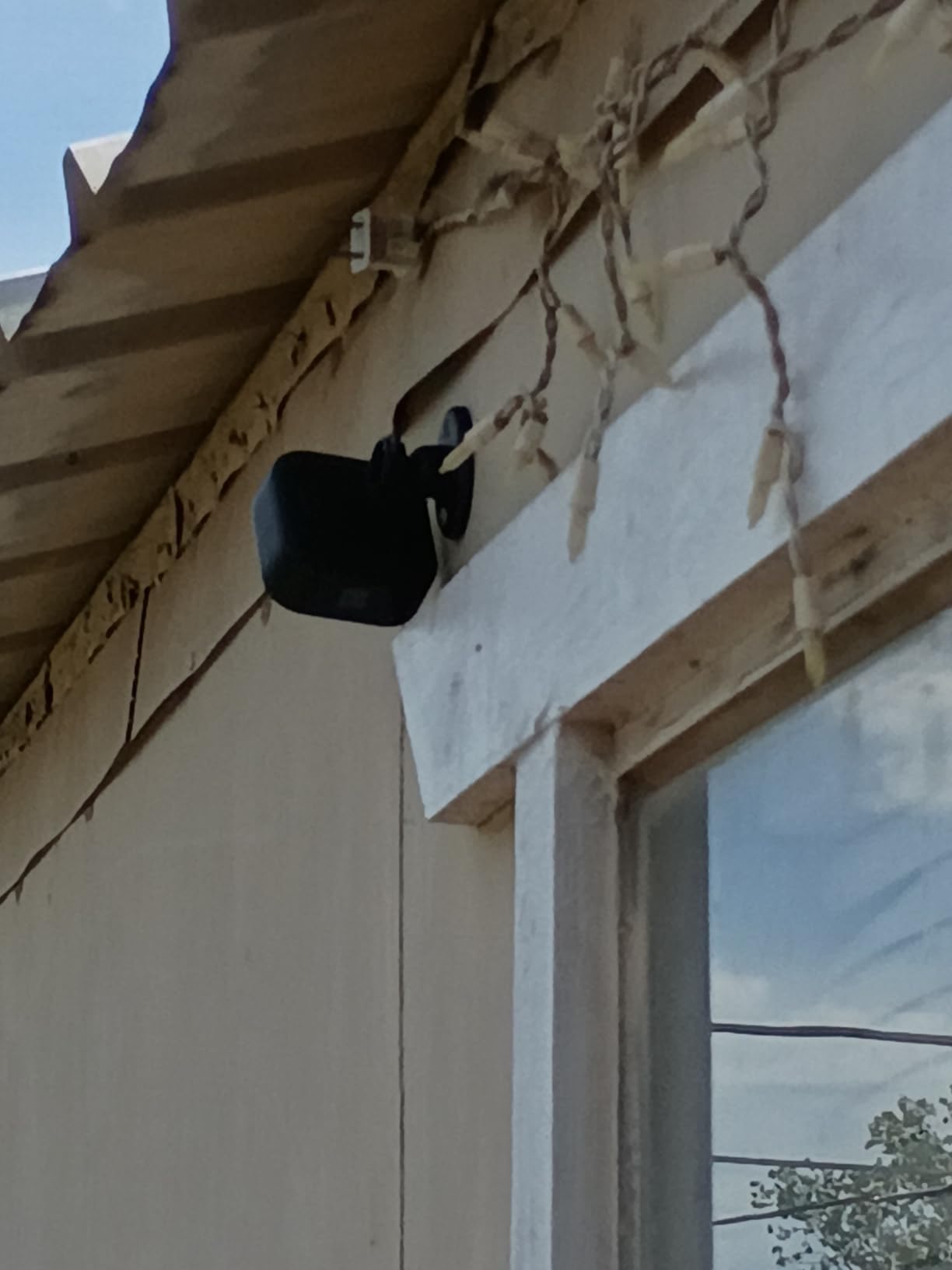
Setup and app pairing are quick enough that a beginner can do it unaided, and Alexa integration handles multi-camera live view and arming. The box includes the Outdoor 4 camera, the Sync Module Core, two AA Energizer lithium batteries, a mounting kit, a USB-C cable and a power adapter.
The storage situation is the real issue. The Sync Module Core included here does not support local storage, so keeping clips means a paid Blink plan or upgrading to a Sync Module 2 with a USB drive or a Sync Module XR with a microSD card. That extra cost should be factored in before you compare it to the SD-equipped models here.
Reliability Notes Worth Knowing
Two recurring complaints sit alongside the praise. Some owners report the module locking up after a brief power blip and needing a full app reinstall to recover, and firmware updates have occasionally taken cameras offline for a period. A few users also see alerts arrive without the matching clip recording.
Mounting hardware is also not always in the box, depending on the package, so check the included items for the variant you pick.
Who This Camera Is For
Buy it for the maintenance interval, not the image. If you are covering a rural property, several outbuildings or a driveway far from any outlet, swapping two AA batteries every year or two changes the total cost picture entirely.
Skip it if you need local storage out of the box, if you need to resolve licence plates or faces at distance, or if colour night footage is the priority. The 1080p sensor is the weakest of the group for long-range identification.
5. Tapo C120 2K+ – Best 2K Clarity In A Small Housing
- Sharp 2K QHD image in a 100 g housing
- Free person pet and vehicle detection
- Magnetic base needs no drilling
- IP66 plus wired power for real outdoor use
- Baby crying and sound alerts
- Fixed 120 degree field of view with no pan or zoom
- Requires a power cable at the mount
- Night vision reach limited to about 30 ft
- MicroSD card not included
The C120 is the smallest camera here at 100 g and the sharpest per pixel. It records 2K QHD at 4MP effective still resolution and 20 fps, with an IP66 rating that makes it a legitimate outdoor unit rather than an indoor camera with a weather-resistant sticker.
The magnetic base is the practical trick. It attaches to metal surfaces, railings and frames with no drilling at all, so it suits a railing, a metal post or a unit you may want to move later. The 120 degree field of view is fixed, which is the cost of that simplicity.
AI detection is free and unusually broad. Person, pet and vehicle detection all run at no extra cost, and baby crying detection turns it into a usable nursery monitor as well as a security camera. Full duplex two-way audio is better than the half-duplex implementations common at this price, so you can talk without the conversation cutting out every other word.
Night vision offers a starlight colour mode with two built-in spotlights plus an invisible IR mode reaching about 30 feet. The microSD slot takes cards up to 512GB, not included, and Tapo Care cloud is optional rather than required.
Reading The Spec Sheet Properly
Two details deserve a second look. The 2K QHD rating is paired with a 20 fps frame rate, which is smoother than the 15 fps on the C500 but still below what a 2K sensor is theoretically capable of. And the 30 foot night vision limit is much shorter than the C500, so this is a close-quarters camera, not a driveway camera.
It carries a 2 year manufacturer warranty, and the IP66 rating means it is protected against powerful water jets, which is a step up from the IP65 bodies most of this list carries.
Where It Earns Its Place
This is the pick for a balcony, a porch rail, a covered entry or a spot near the front door where drilling is not an option. The baby crying and sound detection also make it the natural choice if you want one camera covering both a nursery and an entryway.
Skip it for long-range work. A fixed lens with 30 foot night reach will not resolve a plate at the end of a driveway, and check card compatibility before you buy, since the microSD is not supplied.
6. Cinnado B6 Two-Pack – Best Two-Camera Solar Coverage
Cinnado 2K Solar Wireless Outdoor Cameras for Home Security White B6 2Pack
- Two cameras and two panels in one pack
- 2K sharp enough for plates at about 20 ft
- Auto-tracking follows a person
- Three night vision modes including full colour
- microSD not forced behind a subscription
- SD clips fixed at 10-second increments
- 2.4GHz Wi-Fi only
- No 24/7 continuous recording
- Two-way audio has noticeable delay
- Less polished app than Ring or Nest
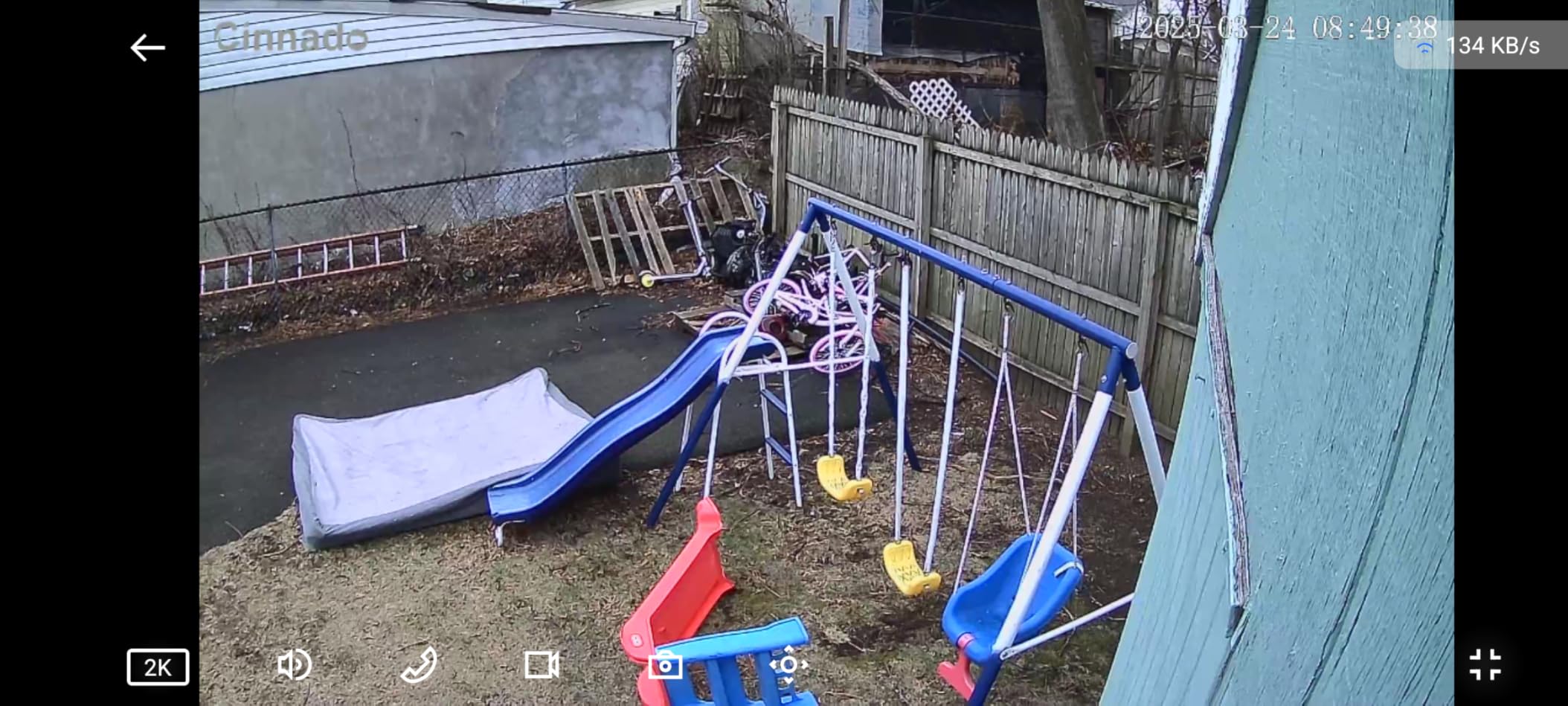
The B6 pack solves the coverage maths problem neatly. You get two cameras, two solar panels and two Type-C cables in a single box, so covering a front and back door costs one purchase instead of two, and neither position needs a cable run.
Both cameras record at 2K up to 2304 by 1296 and fall back to 768 by 432 on a weak network, which keeps the stream alive rather than dropping it. Reviewers report daytime clarity sharp enough to read a licence plate at roughly 20 feet, and auto-tracking follows a person across the view. The 360 degree pan, tilt and 4x zoom is digital rather than optical.
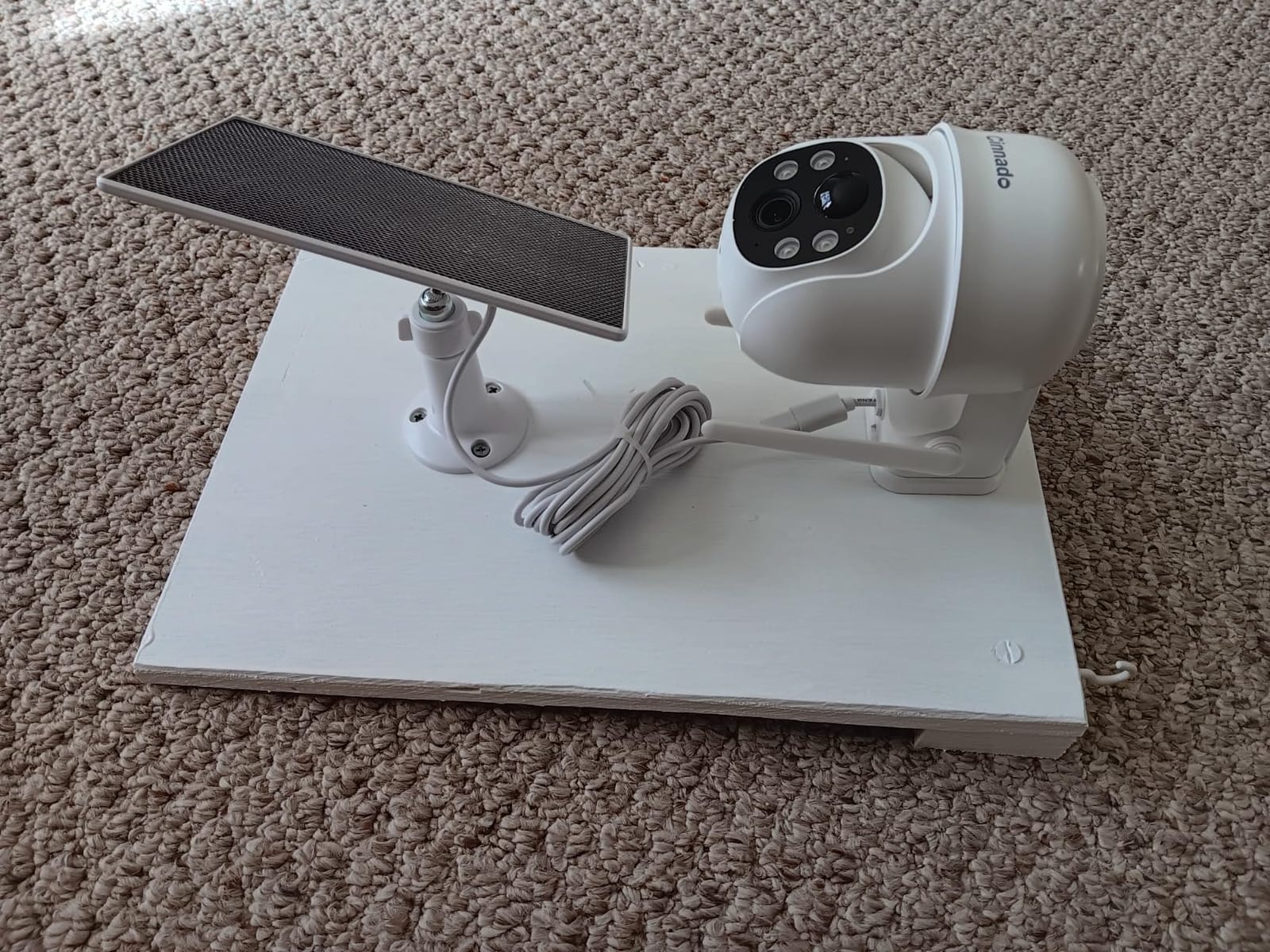
Night vision offers three modes, including full colour triggered by the spotlight and an automatic infrared mode. A 5000mAh battery covers low-light periods when the panel has not charged. Detection uses PIR and AI human recognition with three sensitivity levels covering 16 to 29 feet.
Storage is a microSD card up to 128GB, not included, plus optional cloud retention up to 30 days. Importantly, the SD route is not forced behind a plan, which is the detail that matters most for anyone avoiding recurring fees.
The Friction Points To Expect
SD clips default to 10-second increments with no user control, so you get many short files rather than longer events. Two-way audio has a noticeable delay, which makes conversation awkward, and the app is less polished than Ring or Nest. One reviewer also reported cameras randomly going offline and needing full re-pairing.
There is no 24/7 continuous recording, and the radio is 2.4GHz only, so the setup phone needs to be on that band. The solar panel may also need a screwdriver to hold an adjusted angle, which is a small thing that annoys people repeatedly.
When A Two-Pack Is The Smarter Buy
Buy the pack if you want two points of coverage without two installations, or you want a spare camera in a second location. Support has also been responsive for owners, including a replacement for a faulty unit, and the units handle sub-freezing temperatures without complaint.
Skip it if you want a single fixed camera you can aim once and forget, or if the 10-second clip limit would frustrate you. For a wider look at placement, our outdoor camera guide for homes covers the angles that matter.
7. SEHMUA RBX-S40 – Best For Freezing Climates
- Solar power removes cables and ladder climbs
- 2K resolution with 355 degree pan
- IP65 rated down to -4F
- PIR human-like detection cuts animal alerts
- Two-way audio for visitors
- Color night vision needs the spotlight turned on manually
- 2.4GHz Wi-Fi only
- 4x digital zoom with no optical zoom
- Event-based recording only
The RBX-S40 is the one to look at if your cameras live somewhere that genuinely freezes. Its listed operating range runs from -4F to 121F, and the IP65 body is a wide seal for a budget model, which together make it the most reassuring choice for a northern-facing wall or a garage side in winter.
Solar power with a rechargeable battery means no wiring and no scheduled ladder climbs to recharge. Video is 2K full HD, and the pan and tilt range is 355 degrees horizontal and 100 degrees vertical. A PIR sensor with human-like recognition is what reduces the animal and weather false alerts that plague cheaper passive sensors.
Two-way audio is present, so you can speak to someone at the gate or a delivery at the door. Storage capacity is listed at 128GB, which is built in or supported depending on configuration, and the unit weighs 0.85 kg across a 7 by 6 by 5 inch body.
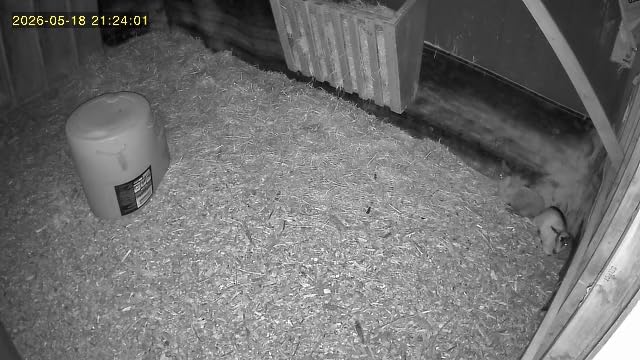
The catch is colour night vision. It only works when the spotlight is manually activated, so a passerby at 2am produces an infrared image unless someone opens the app first. That single behaviour is the difference between this camera and a genuinely all-weather, all-hours unit.
What Cold Actually Does To Budget Cameras
Battery capacity drops in low temperatures, so a solar unit in a shaded northern wall will draw harder on stored charge in winter than a unit with a clear southern aspect. The operating range spec matters, but the panel placement matters just as much. Aim the panel where it gets the most direct light for the longest part of the day.
Zoom is 4x digital only, so there is no optical zoom to pull detail back in. Recording is event-based rather than continuous.
Who Should Pick This One
Choose it for a cold-exposed position, a side gate or a rural outbuilding where the temperature spec genuinely matters and you will not often need colour at 2am. The wide pan range also means one unit can sweep a large garden or yard.
Skip it if colour night vision is a must-have or if your network is 5GHz only, since the radio is 2.4GHz. If you need a floodlight that lights an area rather than recording it, our smart outdoor floodlight guide is the other half of that solution.
8. HITELLARCAM CB54 – Budget Pick With Dual-Band WiFi
- Lowest entry point in this roundup
- Works on both 2.4GHz and 5GHz networks
- Free cloud storage tier from day one
- Compact and light for tight mounting spots
- 5200mAh battery outlasts most budget rivals
- LED spotlight gives usable colour night vision
- Free cloud stores SD-quality footage only
- Recommended detection distance just 5-8 meters
- Night vision range listed at 8 meters
- MicroSD card not included
The CB54 is the cheapest way into this list and the only one that handles both Wi-Fi bands. Every other wireless model here is 2.4GHz only, so if you have a mesh network that steers devices to 5GHz, this is the one that will actually join it.
On paper the specification is strong for the money: 2K UHD at 30 fps with 2304 effective video resolution, a 5200mAh rechargeable battery, full-colour night vision from a built-in LED, and IP66 waterproofing. Battery runtime is quoted at up to 60 days at 100 triggers per day, extending to as much as six months at lower activity.
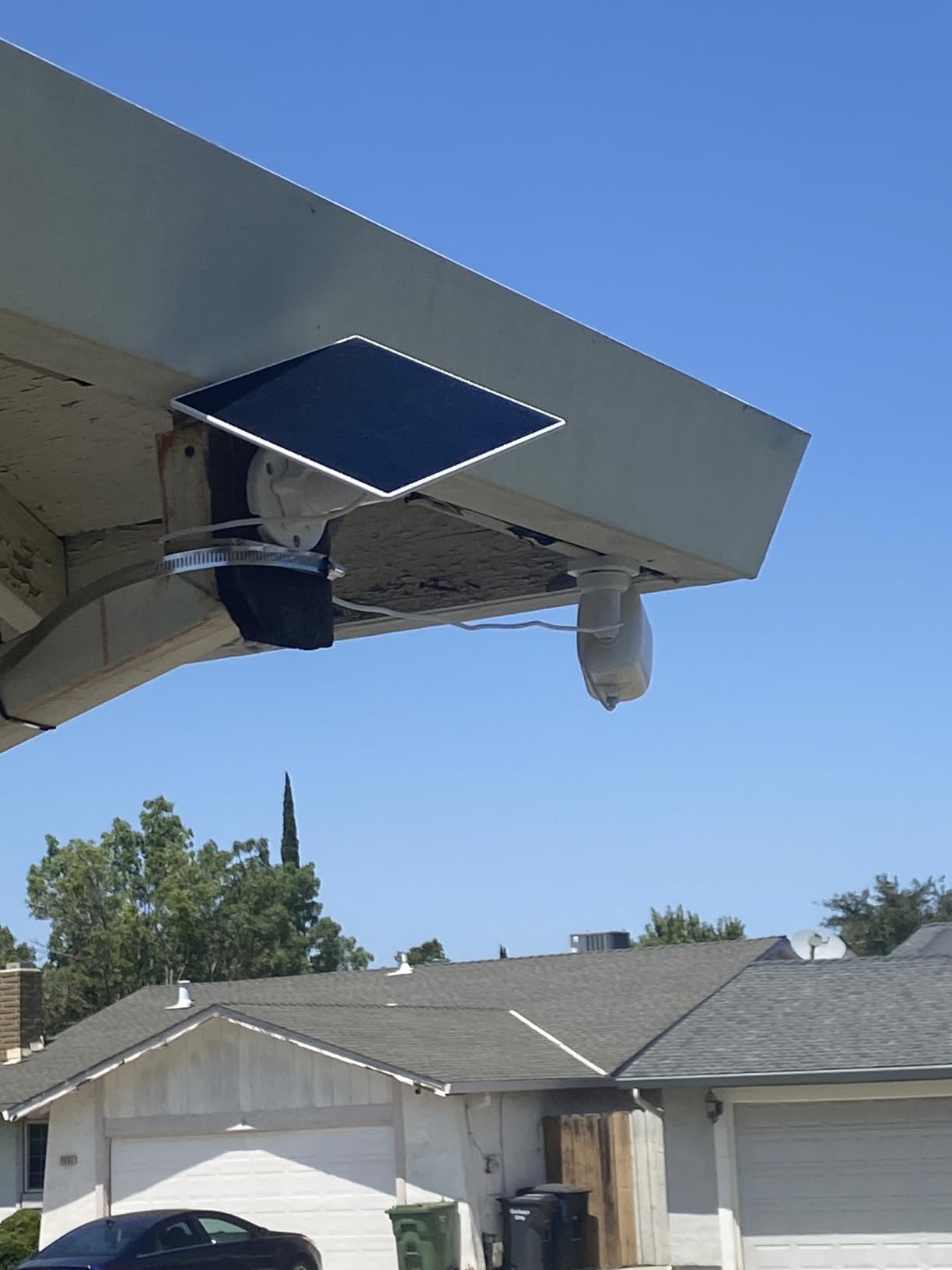
Free cloud storage is included at SD quality from day one, with HD requiring a paid plan, and a local microSD up to 256GB is supported with the card sold separately. AI motion detection sends instant phone alerts, and two-way audio runs through the built-in microphone and speaker. Alexa is supported.
The real constraint is reach. The recommended detection distance is 5 to 8 meters and night vision is listed at 8 meters, so this covers a doorstep, a porch or a bin store rather than a driveway. Battery life also varies sharply with trigger frequency and temperature.
Why Dual-Band WiFi Matters More Than It Sounds
A 2.4GHz-only camera in a modern mesh setup is a common support issue. Band steering pushes clients toward 5GHz, the camera cannot join, and the fix is either moving the router or standing at the camera with a phone. That is the single most useful thing this model does differently.
It is also genuinely small at 2.25 by 2.25 by 3.32 inches, which makes it easy to hide in a soffit, a porch corner or behind a planter where a larger body would be obvious.
Where It Fits And Where It Does Not
Buy it for a front door, a side passage or a low-cost camera on a second wall where 30 FPS matters more than range. Solar panel and multi-pack variants exist, so it scales if you start with one.
Skip it if you need to identify anything at distance. The 5 to 8 meter recommendation and 8 meter night vision make it a close-quarters tool, and the free cloud tier being SD rather than HD limits its usefulness as a primary history source.
How To Choose: Power, Night Vision And IP Ratings
Power source is the first decision because it dictates installation more than any other spec. A corded camera is the least fuss to run and the most reliable, but only if a cable can reach the spot. A battery camera is the right call when there is no power at the mount, and the tradeoff is a charging routine. Solar sits between them, adding a panel that costs install effort and gains you near-zero maintenance in return.
For a wired spot, the Tapo C500 gives the most coverage per camera and free AI detection. For a no-power spot, the SEHMUA or the ZEEPORTE covers a single wide area, and the Cinnado pack covers two areas with no cables at all. If the mount is far from your router, check the band before you buy, because seven of these eight models are 2.4GHz only.
Night vision is the second decision, and it is the one people regret most. Infrared-only cameras, like the Blink Outdoor 4, produce the standard black-and-white image that is serviceable for general movement but poor for identifying a face. Starlight sensors, as on the ZEEPORTE and the Tapo C120, keep colour at closer range. A built-in spotlight, as on the Cinnado and the SEHMUA, produces colour at any distance but only while the light is on, and on the SEHMUA it has to be switched on manually.
The third decision is the IP rating, and the letters are less opaque than they look. IP65 means protected against dust and water jets, which covers a wall under an eave in ordinary rain. IP66 adds protection against powerful water jets, so it is the safer pick for a position that takes driving rain from the side, as the Tapo C120 and the HITELLARCAM both rate. IP67 adds temporary immersion, which matters only for very exposed or low-mounted positions. None of these ratings prevent UV damage to a plastic housing over years, so a shaded mount still ages better.
Storage is where the recurring cost hides. Four models here take a microSD card, so a one-time card purchase gives you continuous local history with no monthly line item. A camera that only stores clips in the cloud, like the Ring Outdoor Cam, is cheap to buy and expensive to own over three years. If you refuse a subscription, the Tapo C500 and the Tapo C120 give you the most headroom at 512GB, while the Cinnado caps at 128GB.
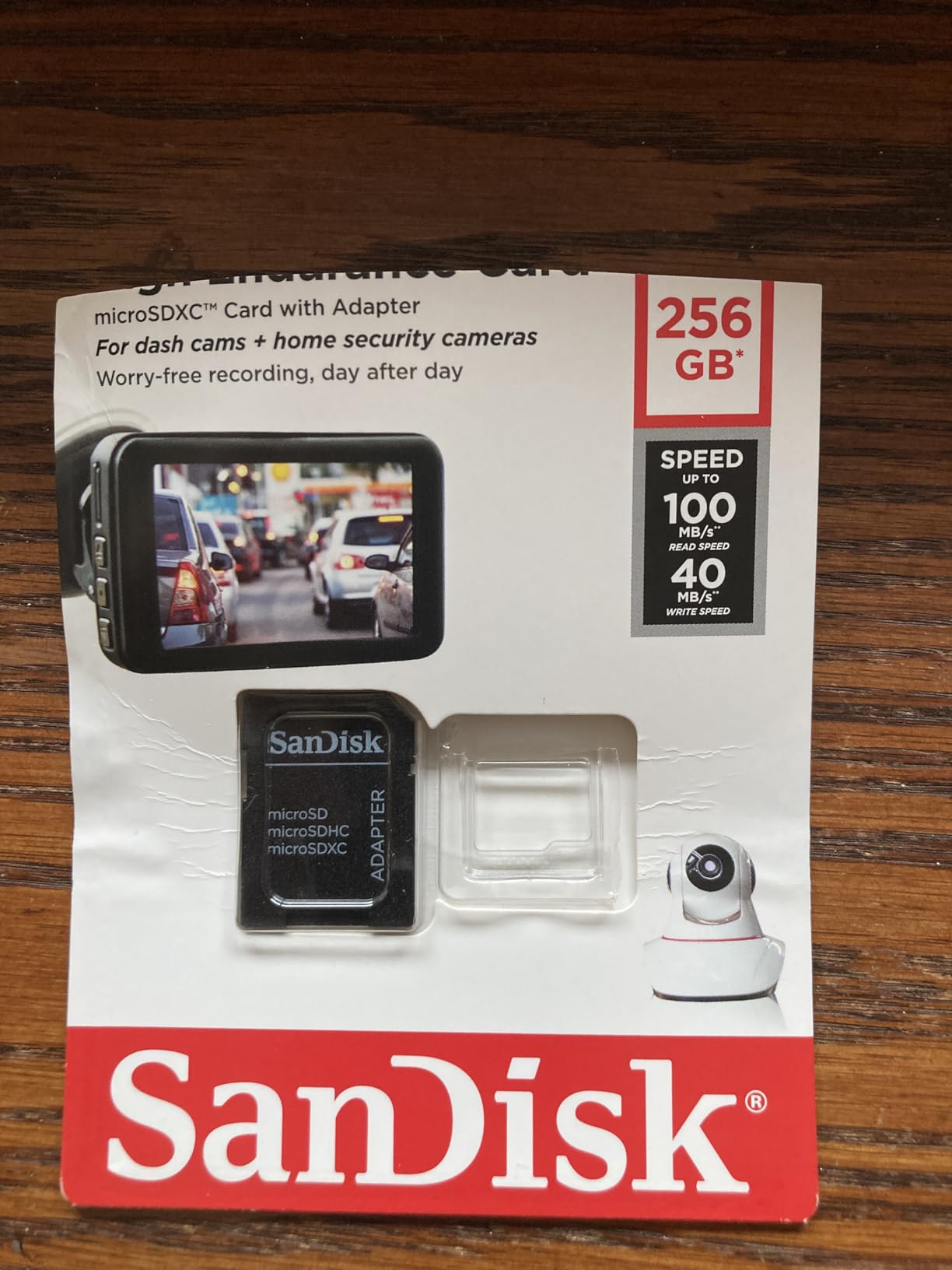
For the card itself, buy an endurance-rated microSD rather than a standard one. Class 10 with U1 is the practical minimum for constant write cycles, and U3 is the right call if the camera records at higher bitrates. A 128GB endurance card gives days rather than weeks of continuous coverage, so size it against how many cameras you run and how far back you want history.
One more practical step before you buy: check the signal at the mount, not at the router. Stand where the camera will go with your phone on the same network and look at the Wi-Fi reading. A camera that drops off at the edge of coverage generates more support frustration than a slightly softer image. Our guide to home security cameras for outdoor use goes deeper on placement and coverage overlap.
Frequently Asked Questions
What is the best inexpensive outdoor security camera?
The Ring Outdoor Cam is the best inexpensive outdoor security camera for most people, with a 4.5 rating, colour night vision and two-way talk in a body that mounts in minutes. If you refuse subscription-gated playback, the Tapo C500 is the better buy because person detection is free and recording goes to a microSD card.
Which outdoor camera is best without a subscription?
The Tapo C500 and the Tapo C120 are the strongest no-subscription choices in this range. Both include AI detection at no extra cost and record to a microSD card up to 512GB. The Cinnado B6 and the ZEEPORTE also offer local SD storage, though the Cinnado tops out at 128GB.
Is a wired or wireless outdoor security camera better?
A wired camera is better when a power cable can reach the mount, because it never needs charging and records continuously. Wireless is better for rental properties, gardens and side gates with no power. For wireless, solar models such as the SEHMUA, ZEEPORTE and Cinnado remove the charging routine, but they still record on motion events only.
What IP rating does an outdoor security camera need?
IP65 is enough for a camera under an eave or on a sheltered wall, since it covers dust and water jets. Choose IP66 for a position that takes driving rain from the side, and IP67 only for very exposed or low-mounted placements. All three still leave the plastic housing vulnerable to UV fade over time.
What microSD card should I use in a security camera?
Use an endurance-rated microSD, not a standard card. Class 10 with U1 is the minimum for constant write cycles, and U3 is better for higher bitrates. Expect a 128GB card to hold days rather than weeks of continuous footage, so match capacity to camera count and how much history you want.
The Verdict: Best Outdoor Security Cameras Under A Budget Ceiling In 2026
The best outdoor security cameras under a hundred dollars in 2026 come down to how much you care about storage. The Ring Outdoor Cam is the pick for reliability, colour night vision and the smoothest app, and it is the choice if a Ring Protect plan is already part of your setup. The Tapo C500 is the better overall value for most households because free AI detection, a real privacy shutter and 98 foot night vision are rarely found at this price.
For no-cable installs, the ZEEPORTE Snap 30T covers the widest area with 2K clarity and starlight colour, and the Cinnado B6 pack doubles that across two positions. The SEHMUA is the answer for genuinely freezing spots, and the HITELLARCAM CB54 is the cheapest way to add a close-quarters camera that joins a 5GHz network. Whichever you choose, buy an endurance-rated microSD and check the signal where the camera will actually hang.