
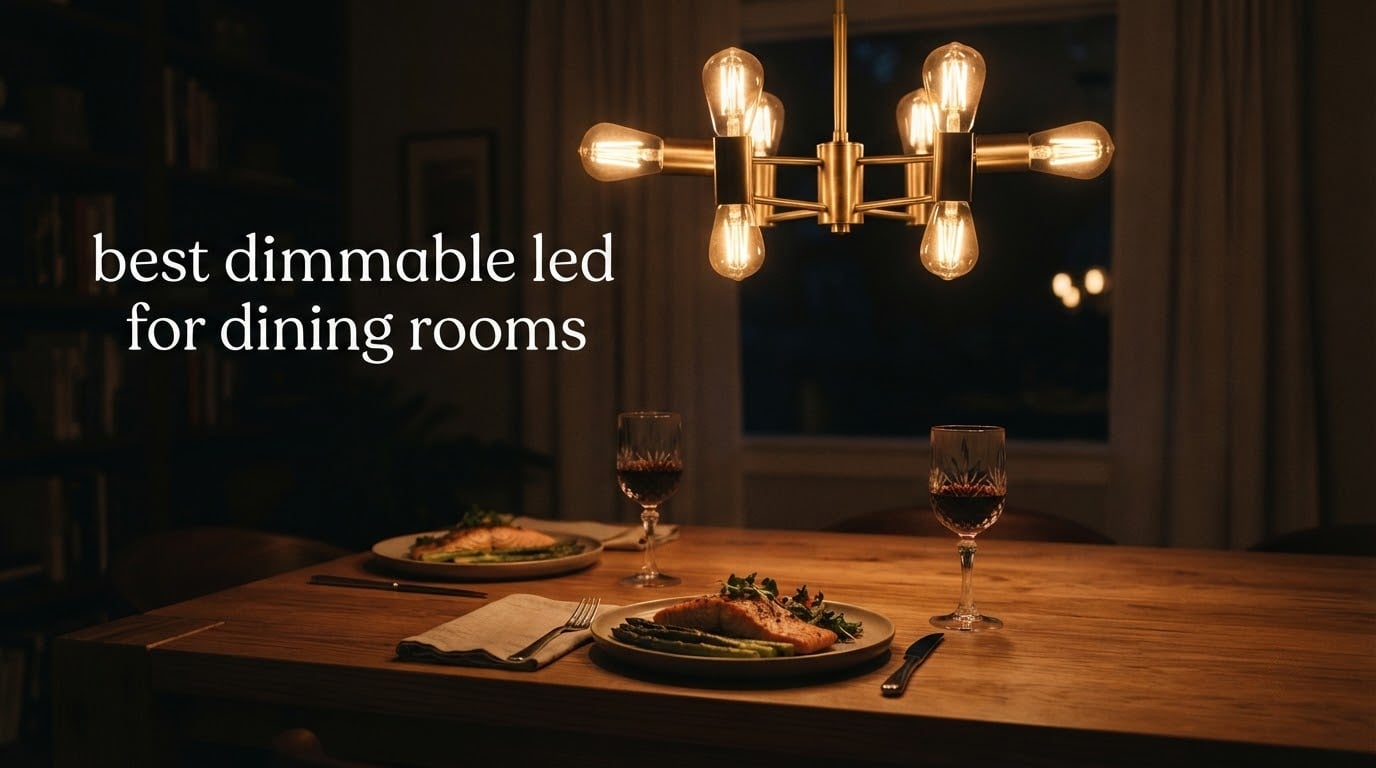
A good dimmable LED bulb for a dining room does three jobs at once: it lights the table brightly enough to read a menu and see the food, it drops low enough for a candlelit dinner, and it does not shift to a cold blue as it dims. That is why the best dimmable LED bulbs for dining rooms are narrower than a generic bulb list. Look for warm light between 2200K and 3000K, roughly 800 to 1,100 lumens per bulb, a stated dimming range rather than a bare dimmable label, and a base that actually fits your fixture.
The base question catches almost everyone out. Most dining chandeliers take E12 candelabra screw bases, while pendants and semi-flush fixtures usually take E26 standard bases. Order the wrong one and the bulbs sit on a counter collecting dust. Get the base right and dimming wrong, and you get flicker, buzz, or a bulb that never dims below 30 percent, which defeats the whole purpose.
I compared 10 dimmable LED bulbs built for dining fixtures and ranked them on the things that actually separate a good one from a disappointing one: stated dimming range, color temperature, CRI, lumen output, base and shape fit, certification marks, and how customers describe the dimming experience after living with the bulb. Every pick below is genuinely dimmable, which sounds obvious until you notice that plenty of roundups list non-dimmable bulbs in a dimmable list.
Why Dining Rooms Are a Different Lighting Job
Kitchen and bathroom bulbs get judged on brightness and efficiency. Dining room bulbs get judged on how they make food and faces look, which is a color problem, not a brightness problem.
Consider what sits under a dining pendant: a plate of food, a glass of wine, people’s faces across the table. A bulb with a CRI of 80 renders those colors adequately but flatterly. A bulb at CRI 90 or above makes the red in a tomato look red again, makes skin tones look like skin, and makes table linens read as their actual color.
That is also why a 5000K daylight bulb is the wrong recommendation for a dining room, even though it is technically the brightest-looking option in the store. Daylight tone flattens food and makes a room feel clinical. Warm light between 2200K and 3000K is what makes an evening meal feel like an evening meal.
There is a second reason dimmability matters more here than in any other room: the fixture has to work for both a Tuesday-night pasta dinner and a formal sitting. Dimming lets one fixture cover both. Without it, you are choosing between a room that is too bright for a dinner party and one that is too dim to serve food at. If you are still choosing the fixture itself, our guide to the best chandeliers for dining rooms covers the fitting side of that decision.
Top 3 Best Dimmable LED Bulbs for Dining Rooms (October 2026)
The three picks below are the ones we would reach for first, depending on whether your fixture takes candelabra bulbs and how much color accuracy you care about.

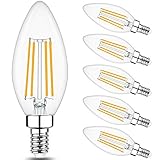
Cotanic B11 E12 60W Eq
- 2700K warm white
- 600 lumens
- Dimmable 5-100%
- 3-year warranty
- ETL listed
All 10 Bulbs Compared Side by Side In 2026
All ten are dimmable and all ten are warm-leaning or easily paired with warm variants. The differences that matter are base, lumen output, CRI and stated dimming range.
| Product | Specifications | Action |
|---|---|---|
| FLSNT B11 E12 60W Eq 6-Pack |
|
Check Latest Price |
| Cotanic B11 E12 60W Eq 6-Pack |
|
Check Latest Price |
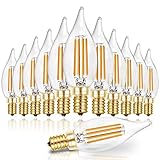 Hizashi CA10 E12 40W Eq 12-Pack Hizashi CA10 E12 40W Eq 12-Pack |
|
Check Latest Price |
 DAYBETTER ST19 E26 60W Eq 4-Pack DAYBETTER ST19 E26 60W Eq 4-Pack |
|
Check Latest Price |
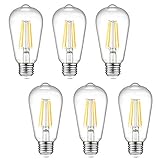 Ascher ST58 E26 60W Eq 6-Pack Ascher ST58 E26 60W Eq 6-Pack |
|
Check Latest Price |
 TJOY ST19 E26 60W Eq 6-Pack TJOY ST19 E26 60W Eq 6-Pack |
|
Check Latest Price |
 MAXvolador ST58 E26 60W Eq 4-Pack MAXvolador ST58 E26 60W Eq 4-Pack |
|
Check Latest Price |
 Yochoice B11 E12 40W Eq 12-Pack Yochoice B11 E12 40W Eq 12-Pack |
|
Check Latest Price |
 PARTPHONER ST58 E26 60W Eq 4-Pack PARTPHONER ST58 E26 60W Eq 4-Pack |
|
Check Latest Price |
 Gozelux ST19 E26 60W Eq 6-Pack Gozelux ST19 E26 60W Eq 6-Pack |
|
Check Latest Price |
1. FLSNT B11 E12 60W Equivalent 6-Pack – Best Overall Chandelier Bulb
- 2700K warm tone buyers describe as close to incandescent
- Large verified review base for a candelabra bulb
- Dims smoothly on most modern dimmers
- UL Listed and suitable for damp locations
- Six-pack suits most dining chandeliers
- Can flicker at the very bottom of the dim range on older dimmers
- CRI 80 is below the 90+ picks here
- Occasional early failures reported after a year or two
The FLSNT 60W equivalent B11 candelabra bulb is the one we would put in most dining chandeliers, and the reason is simply evidence volume. It carries more verified customer reviews than any other bulb we evaluated, which means the dimming behavior described below is not based on a handful of early adopters.
It draws 4.5 watts and puts out 450 lumens at 2700K, a warm white that reviewers repeatedly describe as close to the glow of an incandescent bulb. For a six-arm chandelier that adds up to roughly 2700 lumens of warm light over the table, which is a comfortable dining brightness rather than a room-flooding one.
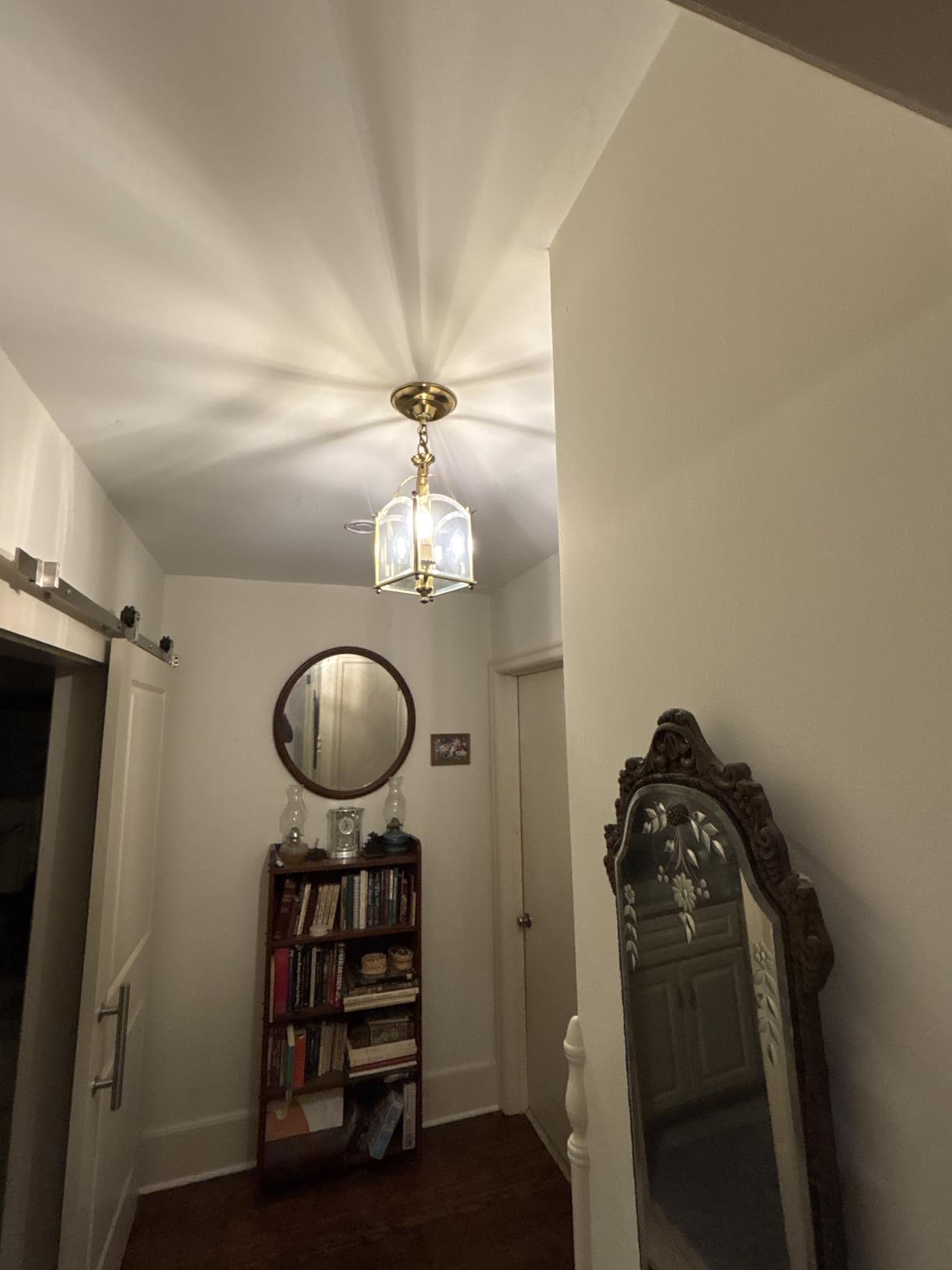
Two specs matter more than the rest here. The dimming range is stated as 10 to 100 percent, which is a genuine low floor rather than the 20 to 30 percent floor so many dimmable LEDs settle for. And the bulb is UL Listed, which for a fixture hanging directly over a table is worth more attention than most shoppers give it.
The clear glass B11 filament shape is the traditional candelabra profile, so it disappears into a shaded chandelier rather than announcing itself as an LED.
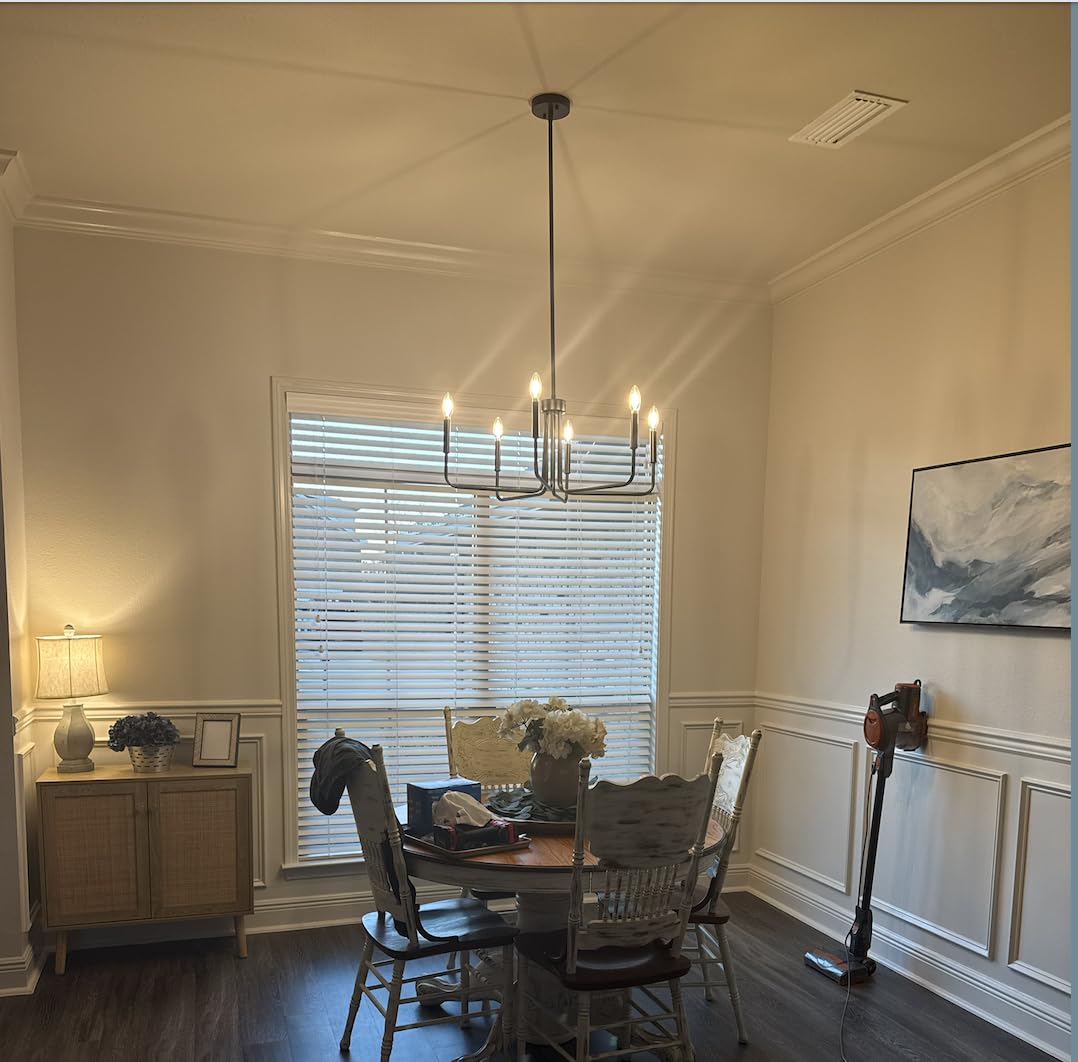
Buyers report that most of them dim well on modern dimmers, and the pack size works out well for a five or six light chandelier. A few note flicker at the absolute bottom of the range, which is the usual signature of an older leading-edge dimmer rather than a faulty bulb.
Is this the right bulb for your dimmer?
If your dining room already has a wall dimmer, this bulb is a safe bet on modern LED-capable dimmers but may hit its floor early on legacy leading-edge switches. Check the dimmer’s labeling before you buy, because the low-end behavior of the switch matters as much as the bulb.
Because the CRI is 80 rather than 90, food colors are accurate but not vivid. If your table is where most of your entertaining happens and color matters to you, the Hizashi pick further down is the stronger choice.
Where it falls short
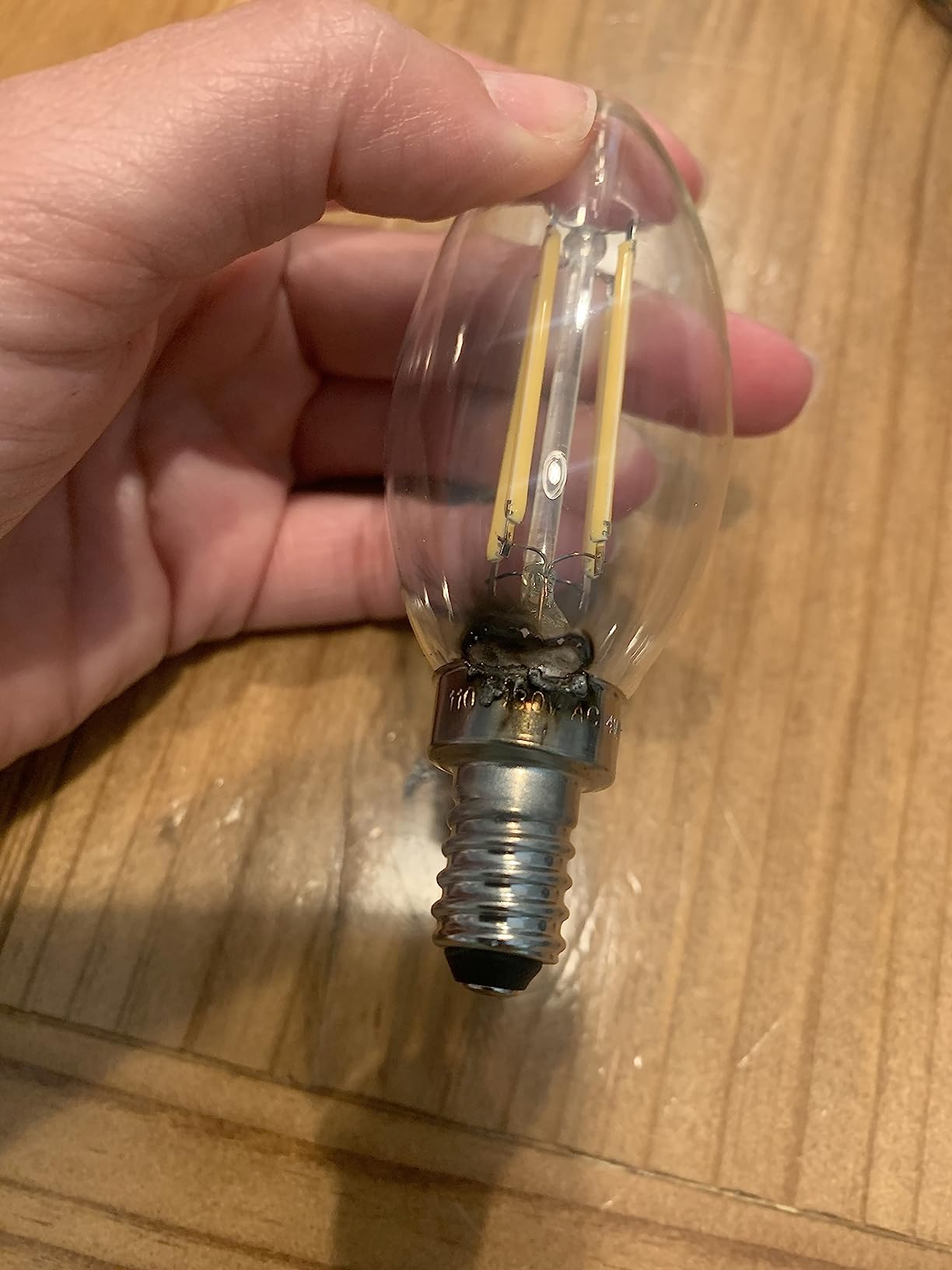
The most common complaint is early failure on a small share of units after a year or two of use, and a few reports of flicker at the very lowest dim setting. Neither is universal, but both are worth knowing about if you are fitting twelve sockets at once.
At 450 lumens it is dimmer per bulb than several picks here, which is fine in a multi-arm fixture and too low for a single-bulb pendant over a large table. If you have one socket and a big table, look at the 800-lumen options instead.
2. Cotanic B11 E12 60W Equivalent – Best Value Candelabra Pick
- 600 lumens from only 4 watts is the strongest output-to-power ratio in the candelabra group
- 5-100% dimming range gives a genuinely low floor
- ETL CE FCC and RoHS certified
- Backed by a 3-year warranty
- Instant on with no startup delay
- CRI 85 sits below the 90+ picks
- A small share of one-star reviews report early failure
- Base offering comes as a six-count pack only
The Cotanic candelabra bulb solves the problem most dining chandeliers actually have, which is not enough light per socket. At 600 lumens from 4 watts it delivers about a third more light than the typical 450-lumen candelabra bulb while drawing less power.
The dimming specification is the standout. A stated 5 to 100 percent range means this bulb will go properly low for a candlelit dinner, and buyers consistently describe the dimming as smooth across that range rather than stepping down in obvious jumps.
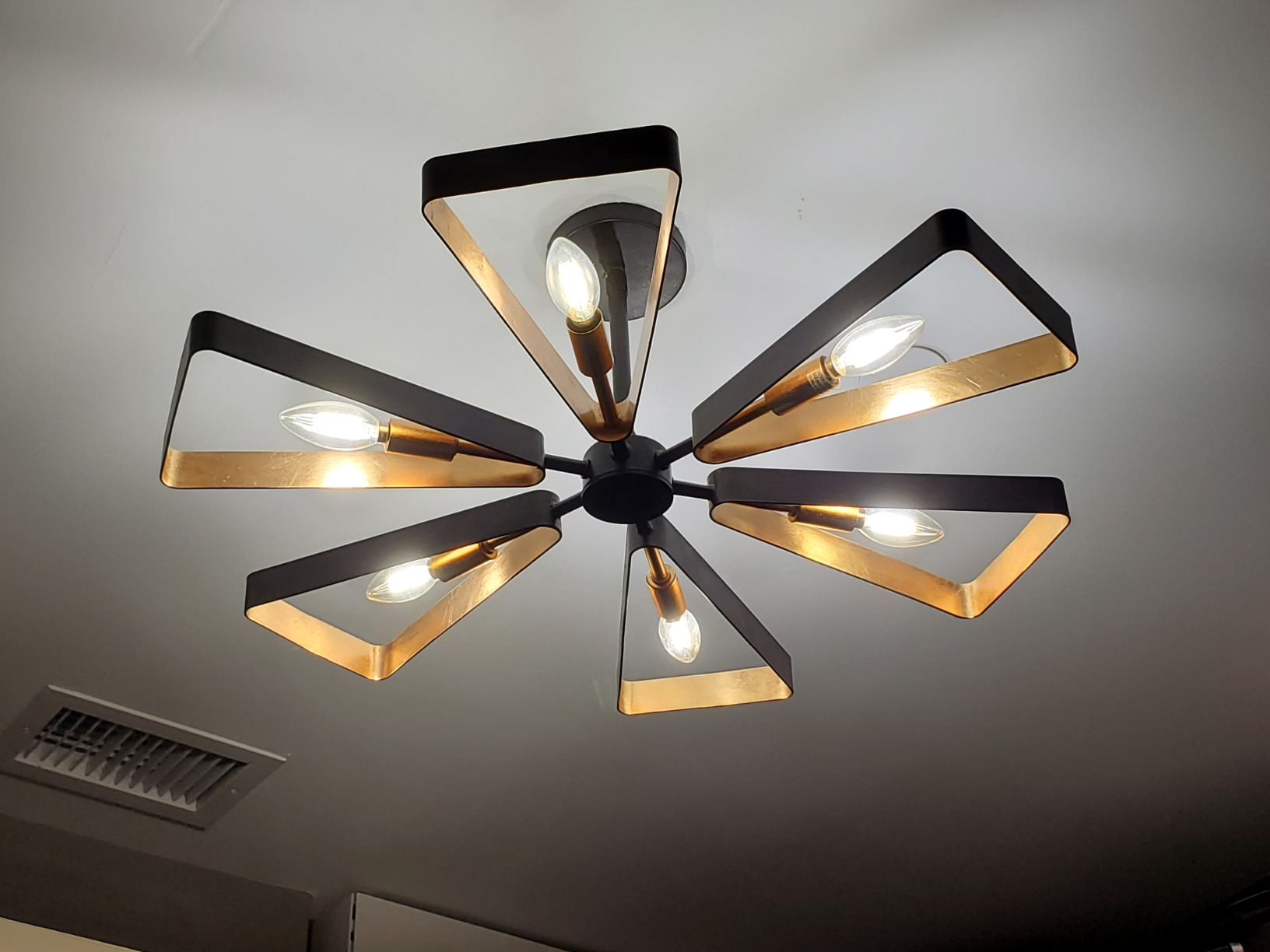
It is also instant on, with no warm-up delay, which sounds trivial until you have sat waiting for a dining room to brighten before guests arrive.
The certification list here is longer than most: ETL, CE, FCC and RoHS all appear in the specification. A 3-year warranty is longer than the one-year standard on most bulbs in this category and longer than the cover on two other picks in this roundup.
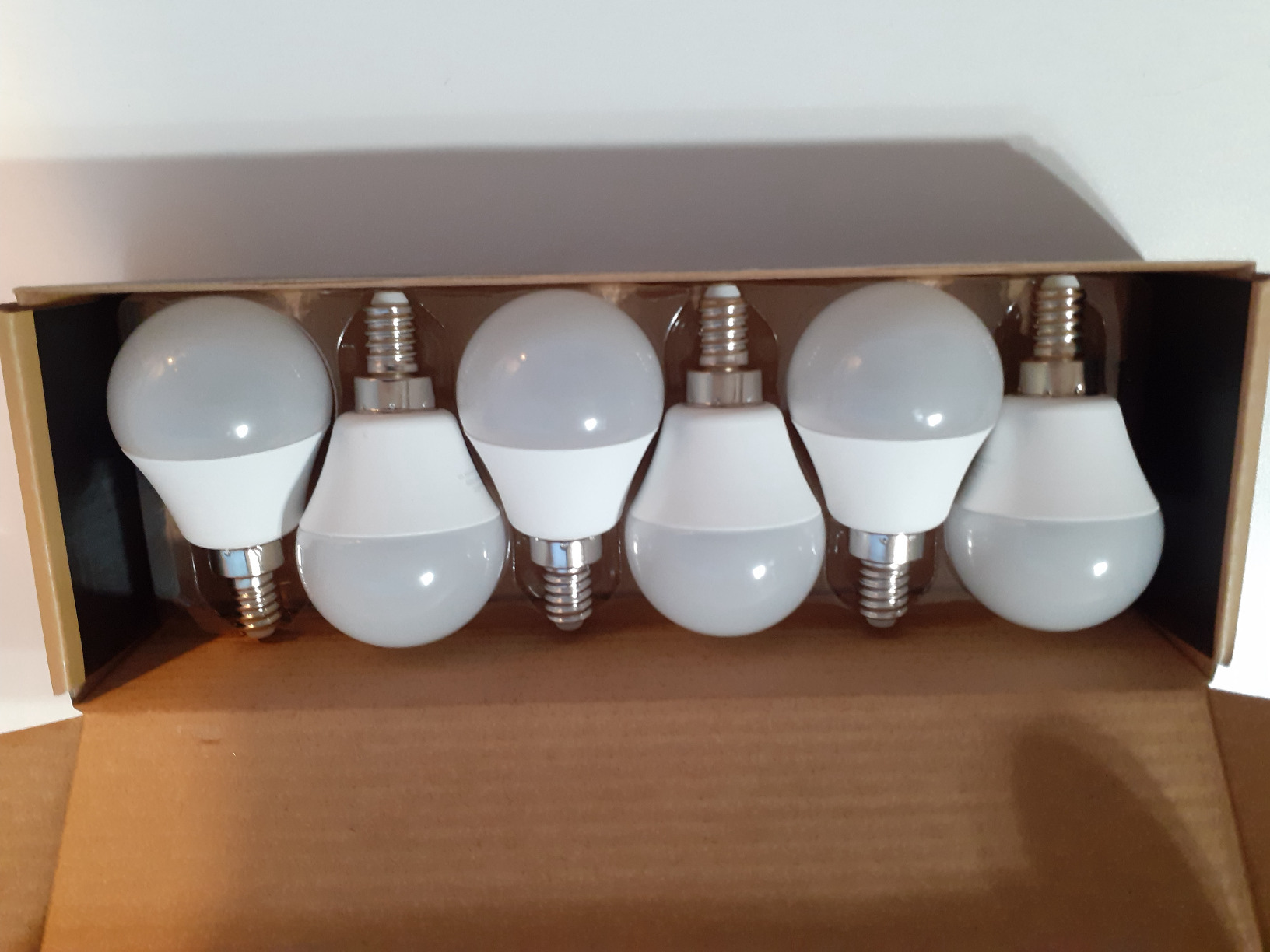
For a five or six-arm chandelier, six bulbs at 600 lumens gives you around 3600 lumens over the table, which handles a long dinner with a bright serving dish without needing the dimmer at all.
Does it dim low enough for mood lighting?
Yes. A 5 percent floor is one of the lowest stated ranges in this roundup, and it is the reason this bulb works for a romantic dinner rather than only for bright family meals. The tradeoff is that low-end behavior depends on the dimmer, so an LED-rated dimmer helps.
Reviewers also mention that brightness holds up well relative to the power draw, which is unusual at this lumen level for a candelabra form factor. Most 600-lumen bulbs in this size cost more power.
Where it falls short
CRI 85 is good but not the 90-plus color rendering you get from the Hizashi and Gozelux picks. On a table covered in richly colored food, the difference is visible if you look for it.
A small percentage of buyers report bulbs failing early, and the pack is fixed at six, so a fixture with a different socket count means leftovers. That is a minor inconvenience for most chandeliers, which commonly take five, six or eight bulbs.
3. Hizashi CA10 E12 40W Equivalent 12-Pack – Best for Color Accuracy
Hizashi Candelabra Light Bulbs 2700K, 40W Eq Dimmable E12 LED Bulb, 12PCS
- CRI 90+ is the best color rendering of any candelabra bulb here
- Makes food and skin tones look noticeably true
- UL Listed under a specific file number
- No buzz and no flicker reported on dimming
- Twelve bulbs cover the largest chandeliers
- 40W equivalent output is lower than the 60W equivalent options
- CA10 flame shape will not suit every shade
- Rating sits just below the top-rated picks
The Hizashi candelabra bulb is the pick for a dining room where what is on the plate matters. Its CRI 90 rating is the highest among the E12 bulbs we evaluated, and CRI is the specification that decides whether a salad looks like a salad.
It is also the only candelabra bulb here rated for both indoor and outdoor use, which matters if you also have a covered patio dining table or an outdoor kitchen that shares the same bulb type.
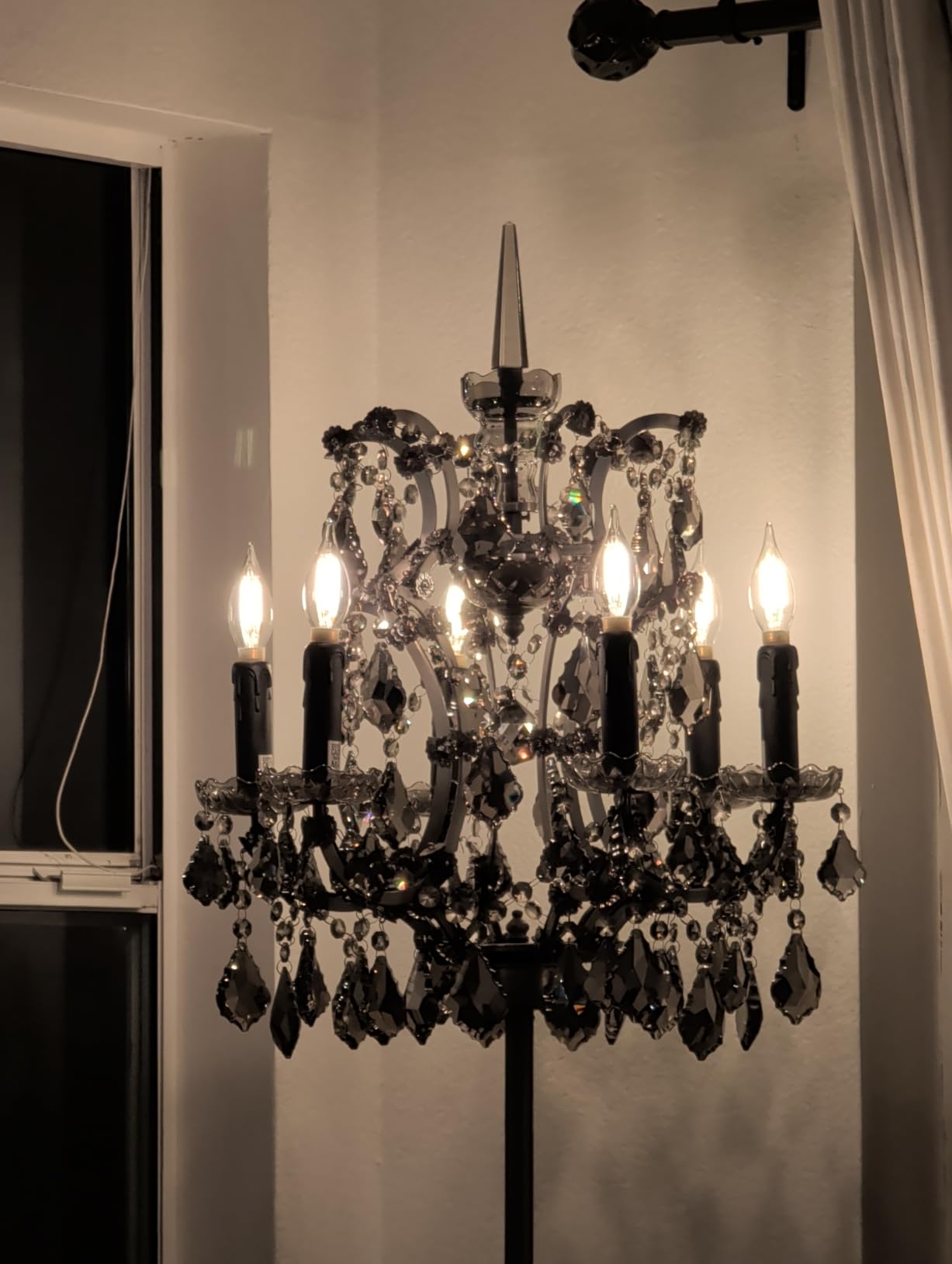
Buyers highlight three things repeatedly: the color accuracy, the absence of buzz during dimming, and the fact that it reaches full brightness in under half a second. The stated dimming range of 10 to 100 percent is a real low floor rather than a nominal claim.
The flame tip shape in clear glass is a different look from the plain B11 profile. It reads as a small candle flame, which is decorative and works well in a chandelier with open arms or a glass shade.
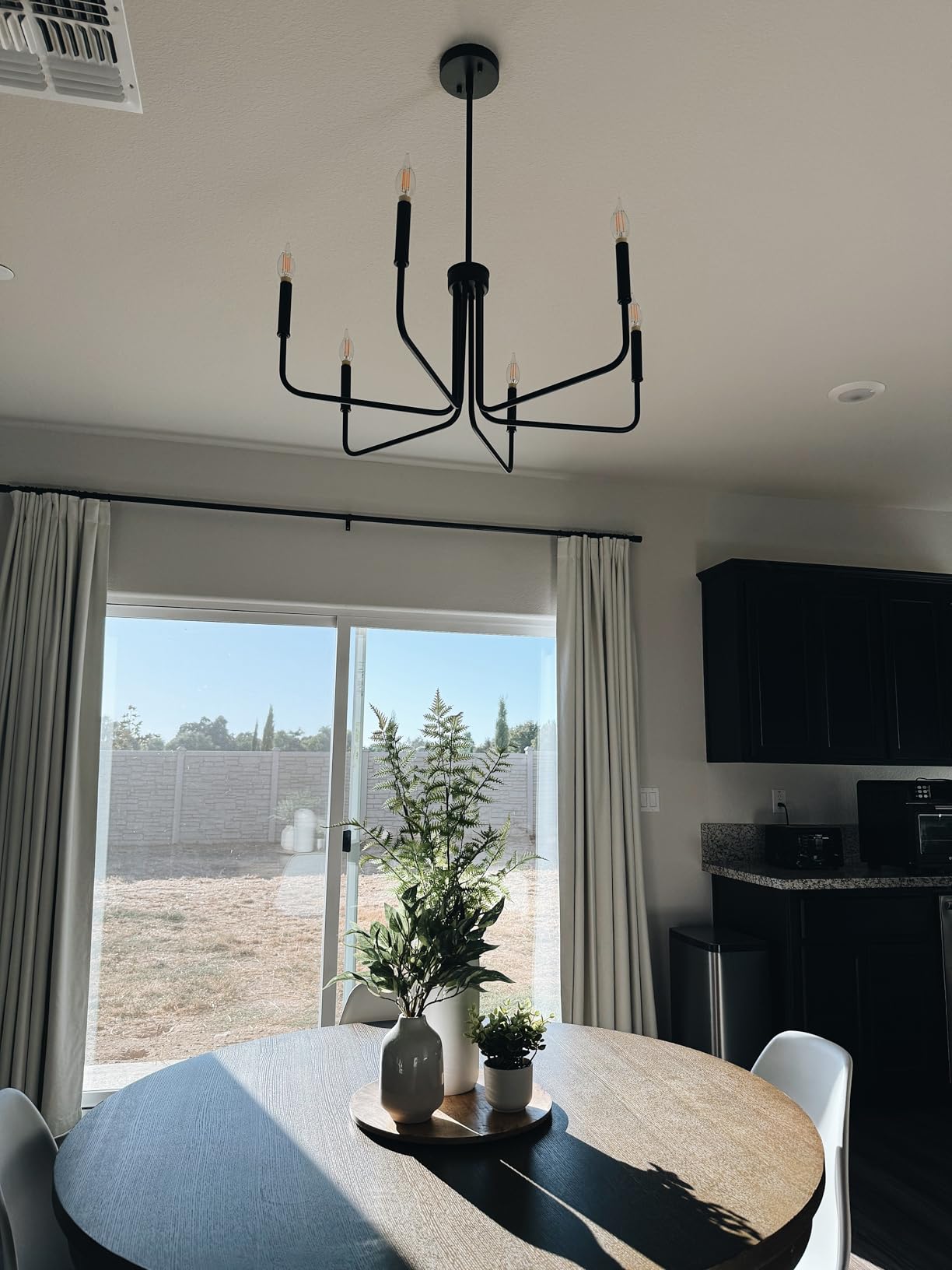
A 3-year manufacturer warranty and UL listing under a specific file number are both there, and UL listing is the mark we look for first on any bulb that hangs over a table.
Twelve bulbs in one pack is the practical reason this makes sense. A large dining chandelier with twelve arms needs exactly twelve, and buying one pack is simpler than combining two six-packs of a different brand.
Why does CRI matter more in a dining room?
CRI measures how accurately a light source reproduces colors compared to a reference source. At 80, colors are technically accurate but desaturated, and the difference is invisible on a wall and obvious on a plate of food or a face across the table.
At 90 and above, reds read red, greens read green, and skin tones look like skin. For a room where people sit and eat, that is a bigger quality jump than an extra 100 lumens.
Where it falls short
At 450 lumens and a 40W equivalent, this is one of the dimmer candelabra options here. In a twelve-arm chandelier the total output is more than enough, but in a two-arm fixture over a large table it may feel thin at full brightness.
The flame tip shape is narrower and taller than a standard B11, so it may not pass through a narrow shade collar. Measure your shade opening if the fixture is fussy about what fits.
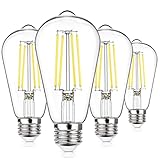
4. DAYBETTER ST19 E26 60W Equivalent 4-Pack – Best Vintage Filament Pick
- 800 lumens gives real table brightness from one socket
- Rated 4.7 out of 5 across more than 3700 reviews
- Vintage Edison filament look suits exposed-bulb pendants
- No flicker and no buzz reported while dimming
- Four bulbs cover most single-pendant setups
- 15000 hour lifespan is the shortest of the E26 options
- CRI 80 is the baseline rating
- Pack includes only four bulbs
The DAYBETTER ST19 is the bulb to buy when the fixture is an exposed-bulb pendant and the filament itself is part of the look. At 800 lumens it is also one of the brighter options here, which is unusual for a decorative filament shape.
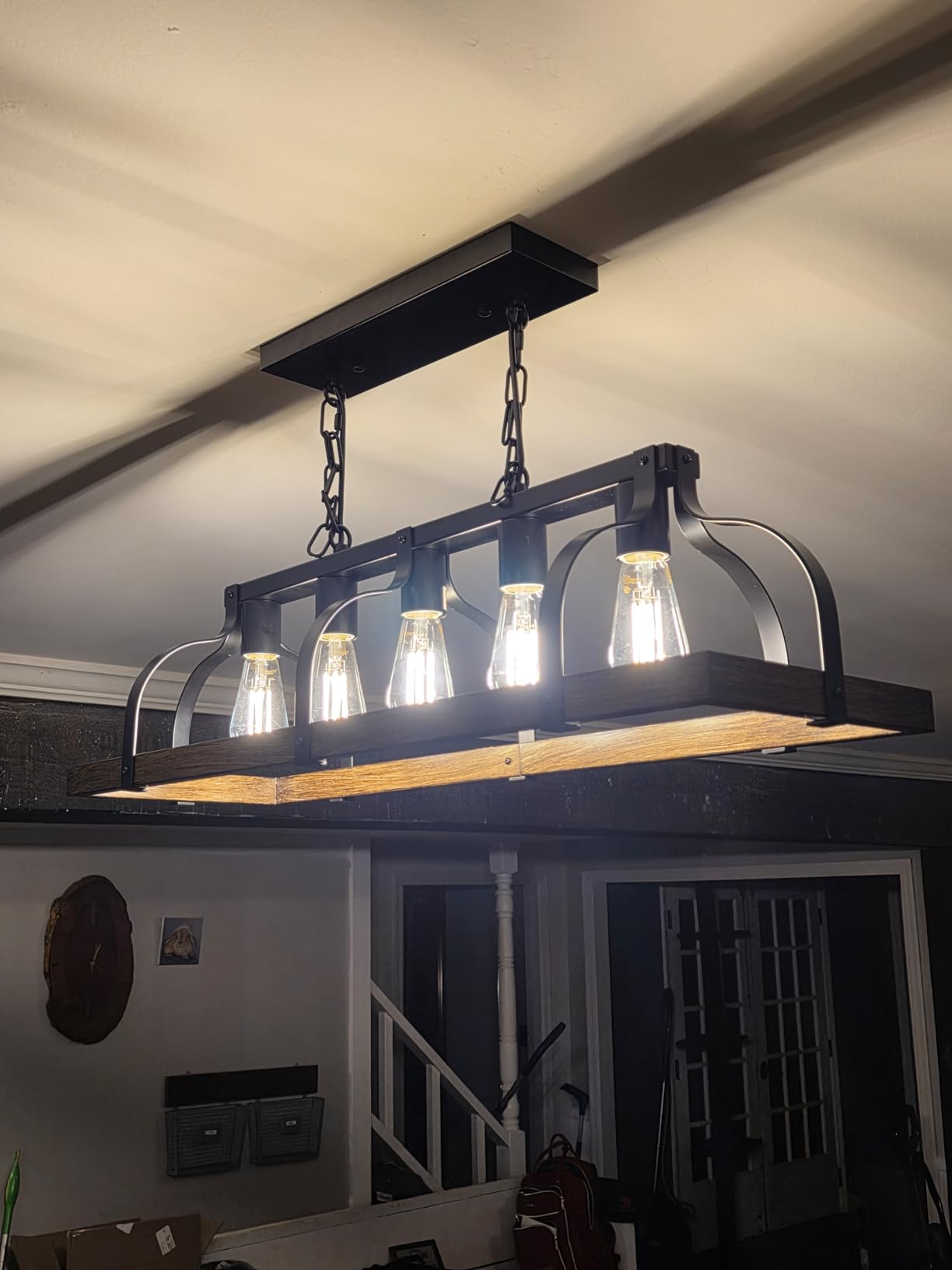
Most exposed-bulb pendants take a single E26 standard base, so this is the shape that actually fits. The antique-bulb silhouette with clear glass gives you the Edison look without the heat of a real filament.
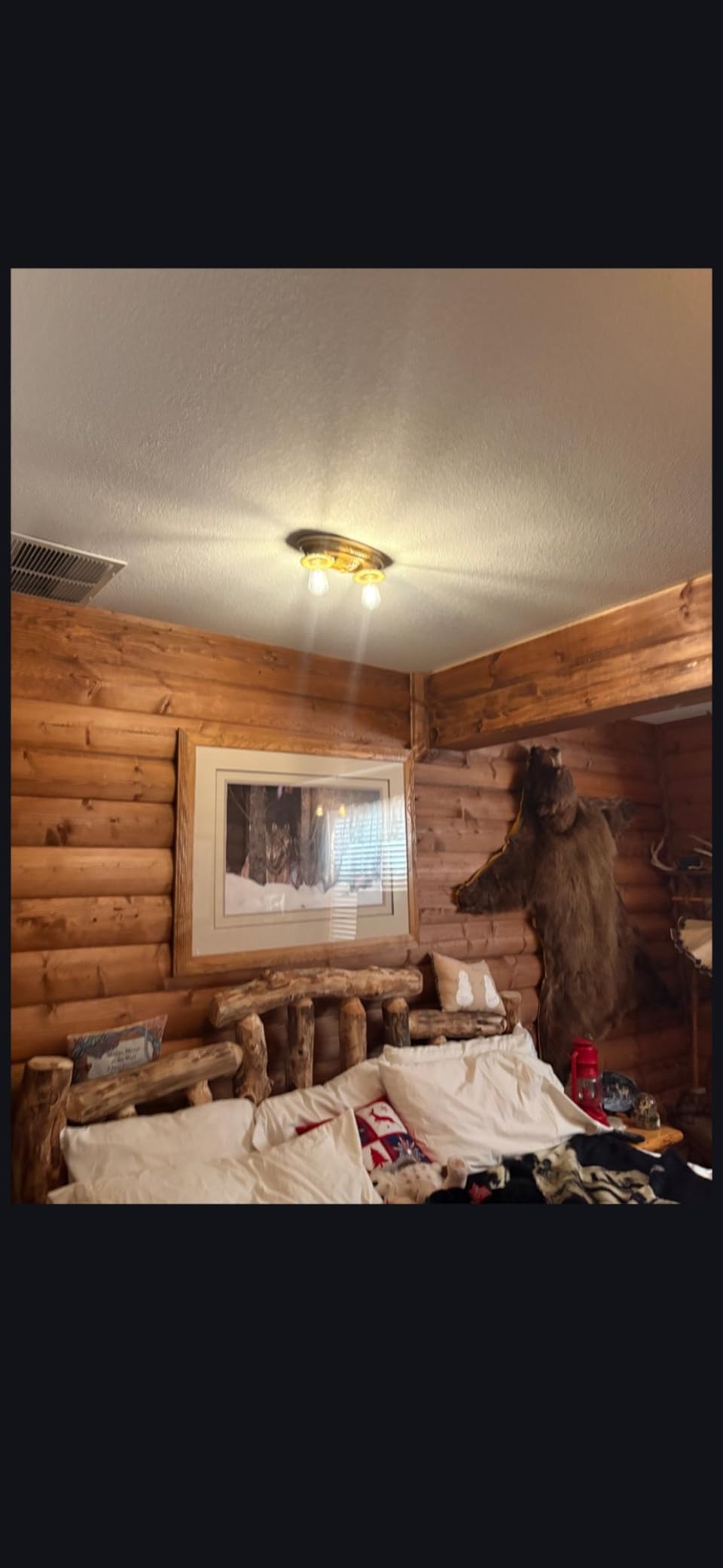
It dims across a stated 10 to 100 percent range, and reviewers describe both the low-end behavior and the absence of buzz as strong. The 4.7 rating across more than 3,700 reviews is the highest in this group.
A useful note on brightness: 800 lumens from an E26 base over a dining table is roughly the output people expect from a 60W incandescent. It is enough to serve food at full brightness and still dim down for an evening sitting.
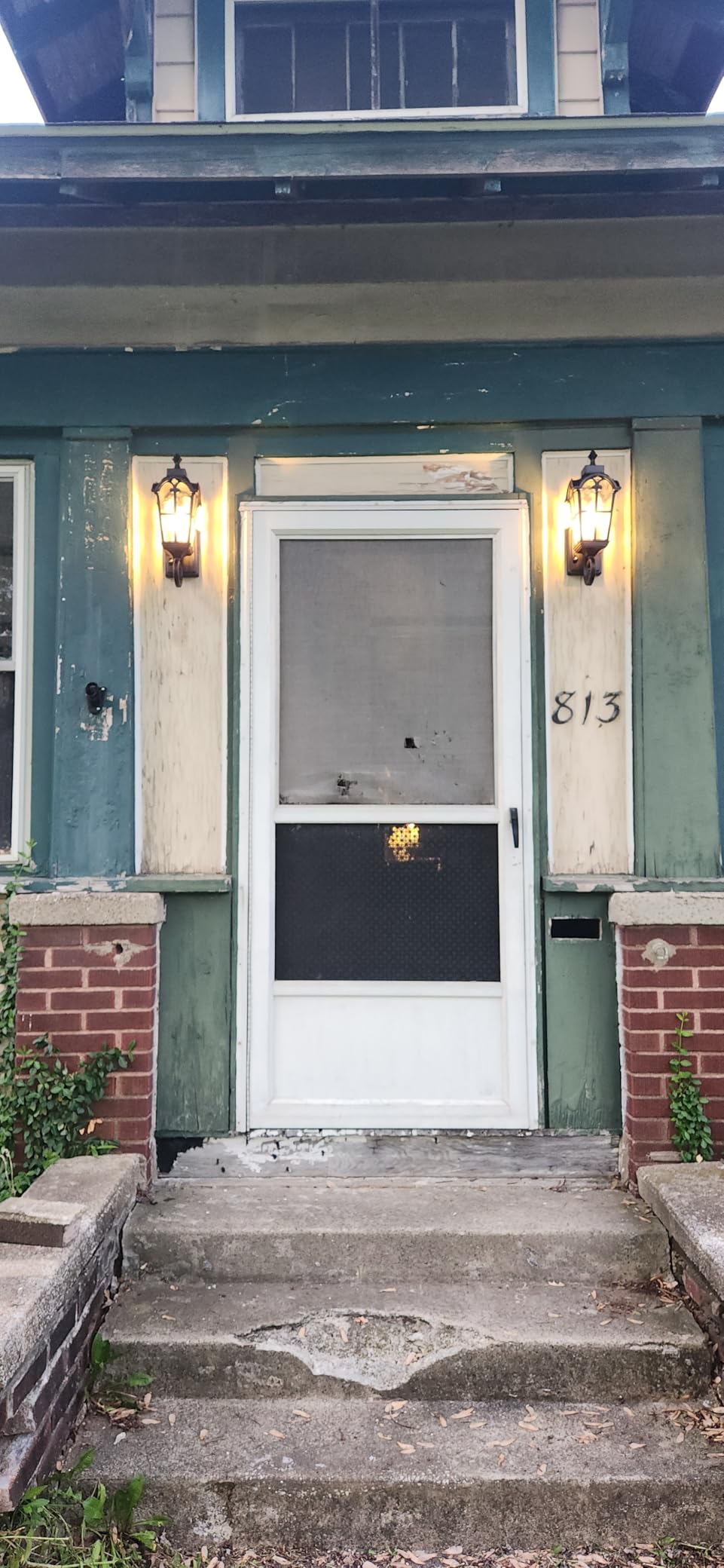
The tradeoffs are honest ones. A 15000 hour rated life is shorter than the 20000 to 30000 hour figures on several other picks, and CRI 80 is the baseline rather than the improved rendering you get at 90.
Four bulbs per pack is right for a single pendant or a two-light fixture. If you have six exposed sockets, buy two packs.
Is this bright enough for a single pendant?
Yes, at 800 lumens it handles a normal-size dining table on its own. This is one of the few bulbs in this roundup where a single socket gives you a properly lit table rather than a dim suggestion of one.
Buyers also mention the 2700K warm tone reads well over food, and the clear glass means the filament is visible from the side, which is the point for exposed pendants.
Where it falls short
The 15000 hour lifespan means roughly 13 years of typical evening use before the output degrades, which is fine for most people but shorter than the alternatives. If you plan to leave a fixture on for many hours a day, a longer-rated bulb is a better fit.
CRI 80 means the vintage aesthetic is the priority here rather than color accuracy. If you care more about how food looks than how the filament looks, look at the CRI 90 picks.
5. Ascher ST58 E26 60W Equivalent 6-Pack – Best for Six-Arm Chandeliers
Ascher Dimmable Vintage LED Edison Bulbs, 6W, Equivalent 60W, 700lm, Warm White 2700K, 80+ CRI, ST58 Antique LED Filament Bulbs, E26 Medium Base, Clear Glass, Pack of 6
- Six bulbs cover a six-arm chandelier in a single purchase
- 20000 hour rated life is longer than most E26 options
- Smooth dimming down to 10 percent
- No mercury UV or IR output
- Classic antique filament appearance
- 700 lumens is below the 800 lumen options
- CRI 80 rather than 90 plus
- No listed safety certification mark
The Ascher ST58 pack solves the awkward arithmetic of a six-arm chandelier. Six bulbs at 700 lumens give you 4200 lumens of warm light from one purchase, with matching color temperature and shape across every socket.
Matching matters more than most shoppers expect. Mixed brands in the same fixture often land at slightly different color temperatures, and when six bulbs over a table disagree about what warm white means, it is visible.
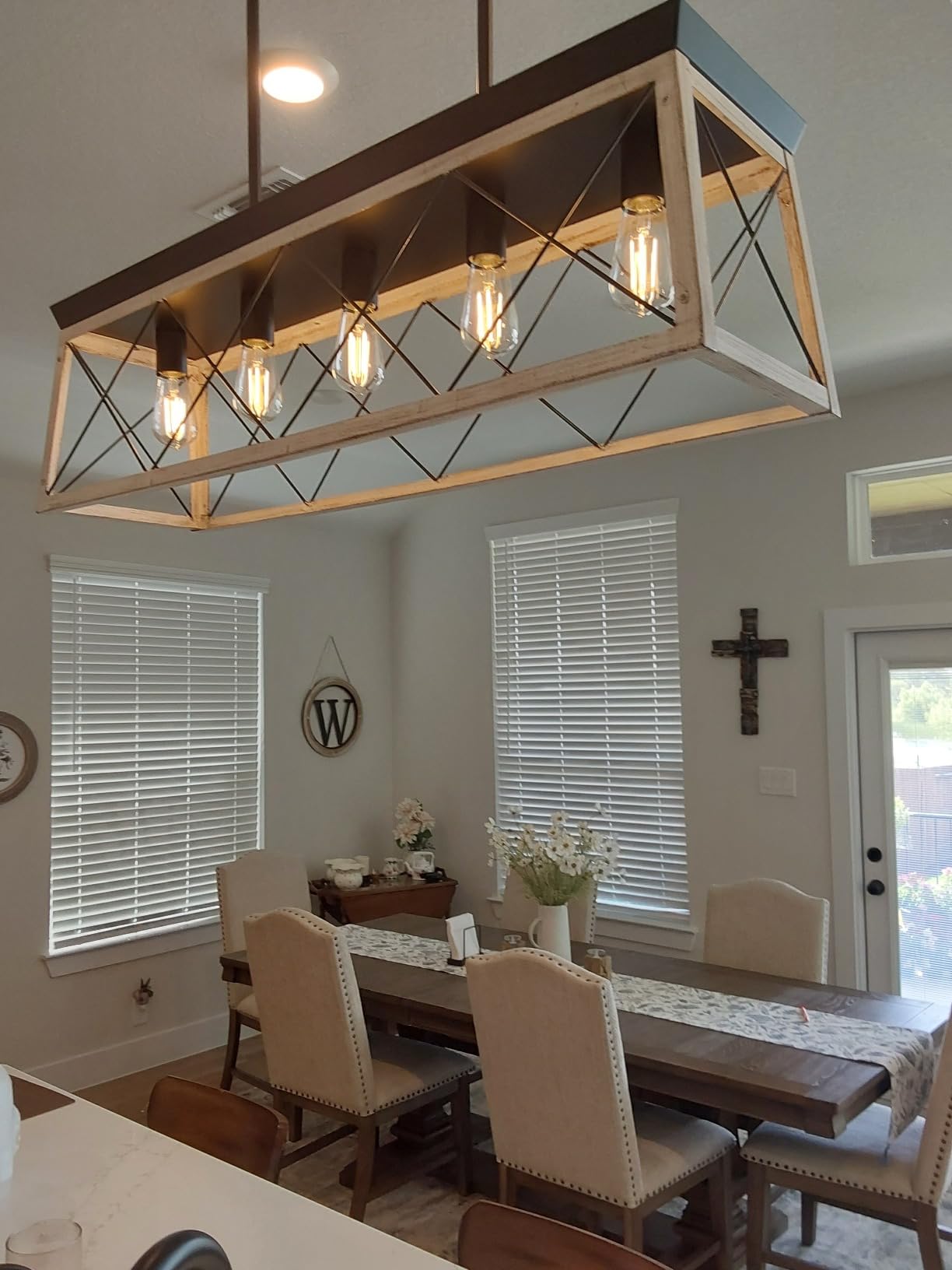
The 20000 hour rated lifespan is longer than two of the other E26 picks here, and the dimming goes down to a stated 10 percent with no reported flicker or noise.
It is also rated flicker-free with no mercury, UV or infrared output, which matters if anyone in the house is sensitive to glare when eating.
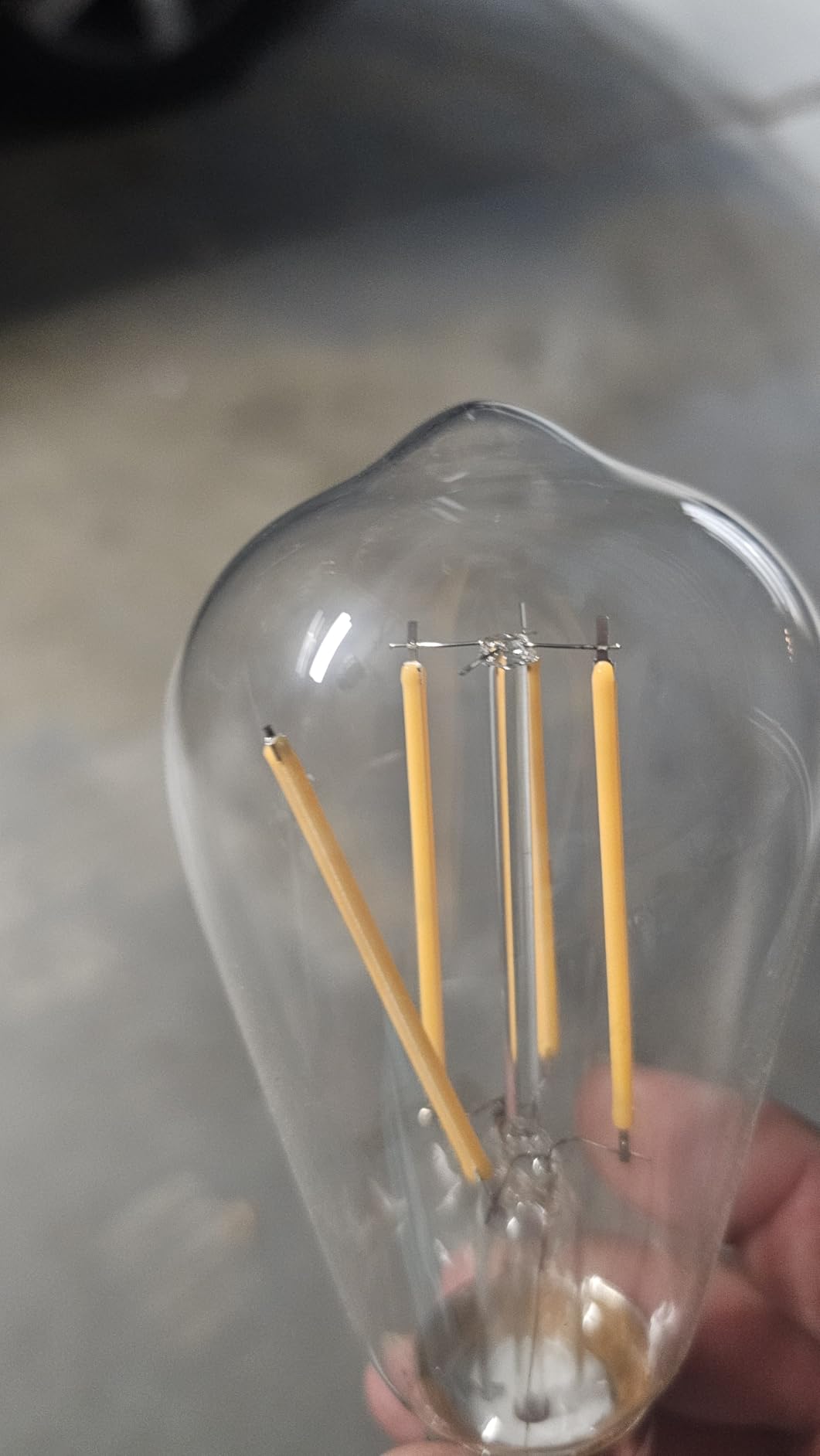
Reviewers consistently pair this bulb with chandelier use, and the six-pack format is the reason. Fixtures with a different socket count leave extras, but a six-arm chandelier takes the pack exactly.
How many bulbs does a dining chandelier actually need?
Count the sockets and match it. A six-arm fixture with six bulbs at 700 lumens gives you 4200 lumens across the table, which is bright for dinner and dimmable down for anything else. Buying more bulbs than sockets does not make a dining room brighter, it just makes it harder to reach the dimmer low.
Matching bulbs in the same fixture also keeps the color consistent, which is the practical reason to buy a full pack from one brand rather than mixing leftovers from two.
Where it falls short
At 700 lumens it sits below the 800-lumen options, so a single bulb over a large table feels a bit short. In a six-arm fixture the total is more than enough.
There is no listed certification mark in the specification, which is a small reliability signal you lose compared with the UL and ETL options in this roundup. The free-of-mercury and flicker-free claims are stated but not tied to a listed mark.
6. TJOY ST19 E26 60W Equivalent 6-Pack – Best Stated Dimmer Compatibility
TJOY LED Edison Light Bulbs, E26 Dimmable Vintage Bulb, 8W = 60W Equivalent
- Stated compatible with 95 percent of dimmers
- 800 lumens at a 60W equivalent
- UL Listed plus FCC and RoHS certified
- Rated for both indoor and outdoor use
- Six bulbs fit a mid-size chandelier
- 15000 hour rated lifespan is on the short side
- 280 degree beam is narrower than 360 degree options
- Only a 1-year warranty
The TJOY ST19 is the pick to choose if flicker is your main worry. It is the only bulb in this roundup that states a compatibility figure with dimmers rather than a vague compatible with most dimmers, and that figure is 95 percent.
That claim matters because most flicker complaints are a mismatch between the dimmer and the bulb driver. A manufacturer willing to name a compatibility percentage is telling you something useful about how they tested.
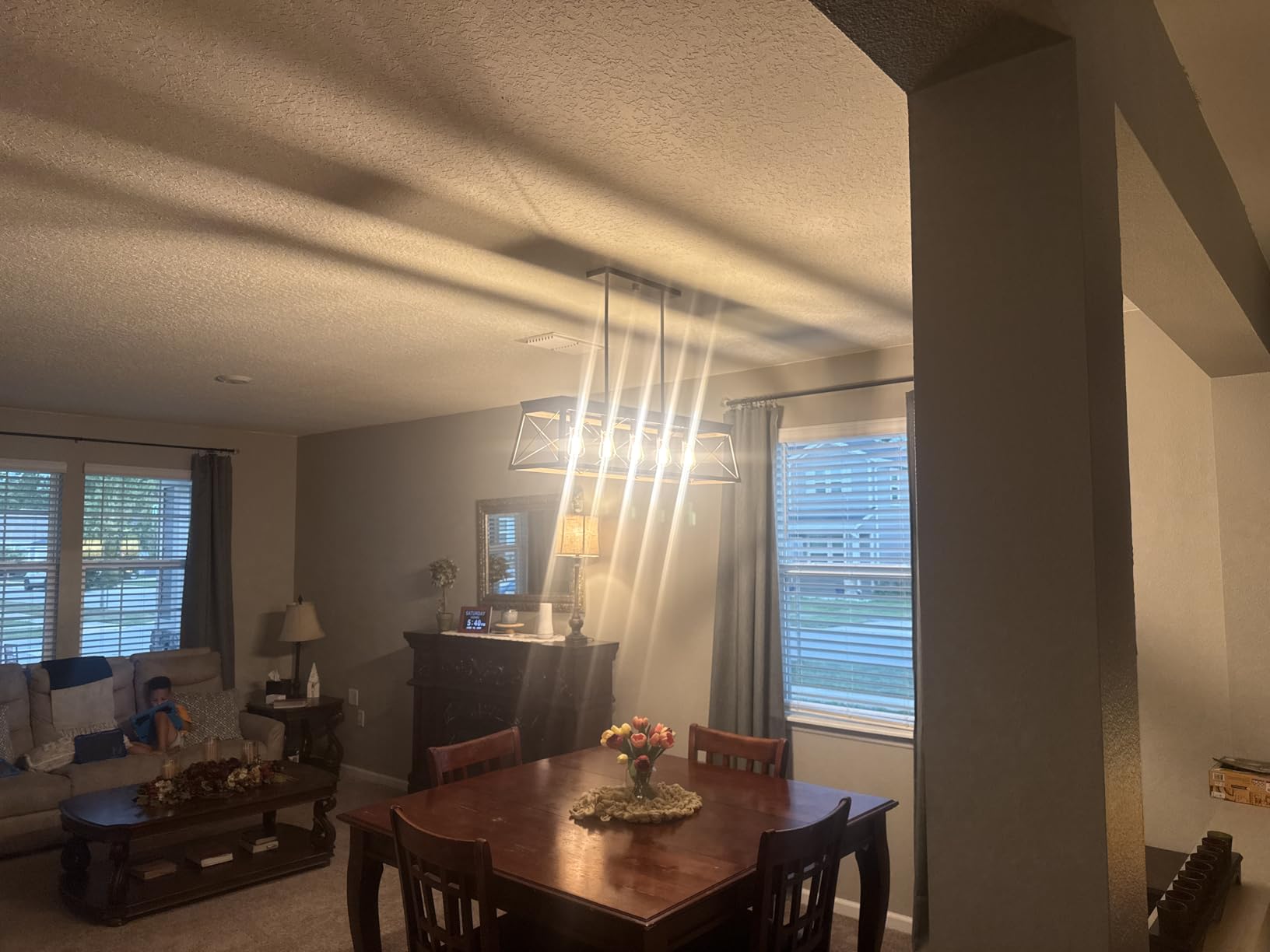
It also delivers 800 lumens at a 60W equivalent, which makes it one of the brighter decorative options, and it carries UL, FCC and RoHS certification together.
The 280 degree beam angle is narrower than the 360 degree options here. In a pendant where the bulb hangs below a shade that blocks upward light, that difference is irrelevant. In an open fixture it means less spill onto the ceiling.
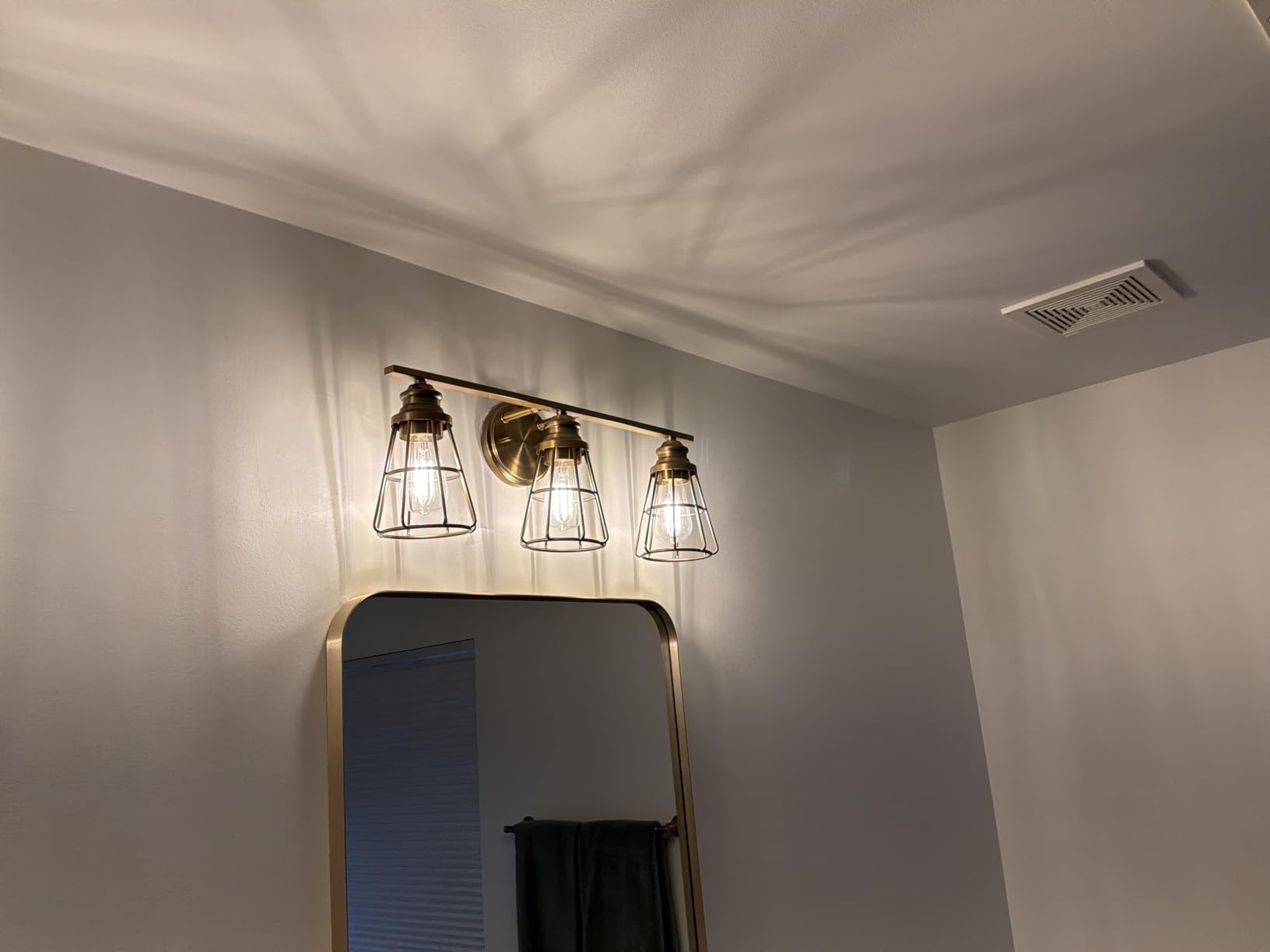
Indoor and outdoor rating means the same bulb works in a covered patio dining area, which most of the E26 filament options here cannot claim.
Buyers report no buzzing, humming or flickering in normal use, and the six-pack format suits a mid-size chandelier or a run of pendants over an island that opens into the dining area.
What does dimmer compatibility percentage actually tell you?
It is a manufacturer claim about how the bulb performed across a range of common dimmer models. It does not guarantee a perfect low end on any specific dimmer, but a higher stated figure generally means fewer surprises once the bulb is installed.
If your dining room dimmer is more than a decade old, no percentage will save you. Older leading-edge dimmers are the most common cause of LED flicker regardless of which bulb you fit.
Where it falls short
The 15000 hour rated life is the shortest of the E26 group, which works out to around 13 years of a few hours of evening use. That is usually plenty, but it is a real difference from the 25000 hour options.
The 1-year warranty is the shortest cover among the picks with named certifications, and the 280 degree beam is the narrowest listed here.
7. MAXvolador ST58 E26 60W Equivalent 4-Pack – Brightest Output, Coolest Tone
MAXvolador Vintage LED Edison Bulb Dimmable 60W Equivalent E26 Led Bulbs
- 850 lumens is the highest output of any bulb in this roundup
- 6 watts only
- CRI 85 color rendering
- 25000 hour rated lifespan
- 24-month warranty and 360 degree beam
- 5000K daylight tone is too cool for a traditional dining room
- Only four bulbs per pack
- Daylight tone flattens food colors
The MAXvolador ST58 puts out more light than anything else we evaluated, 850 lumens from 6 watts, and it dims across a stated 10 to 100 percent range with a 24-month warranty. On raw output it is the strongest bulb in the group.
Here is the honest catch: the standard variant is 5000K daylight white, which is not the tone most dining rooms want. Daylight white over food makes everything look a little institutional, and it is the single most common mistake people make when buying bulbs for a dining space.
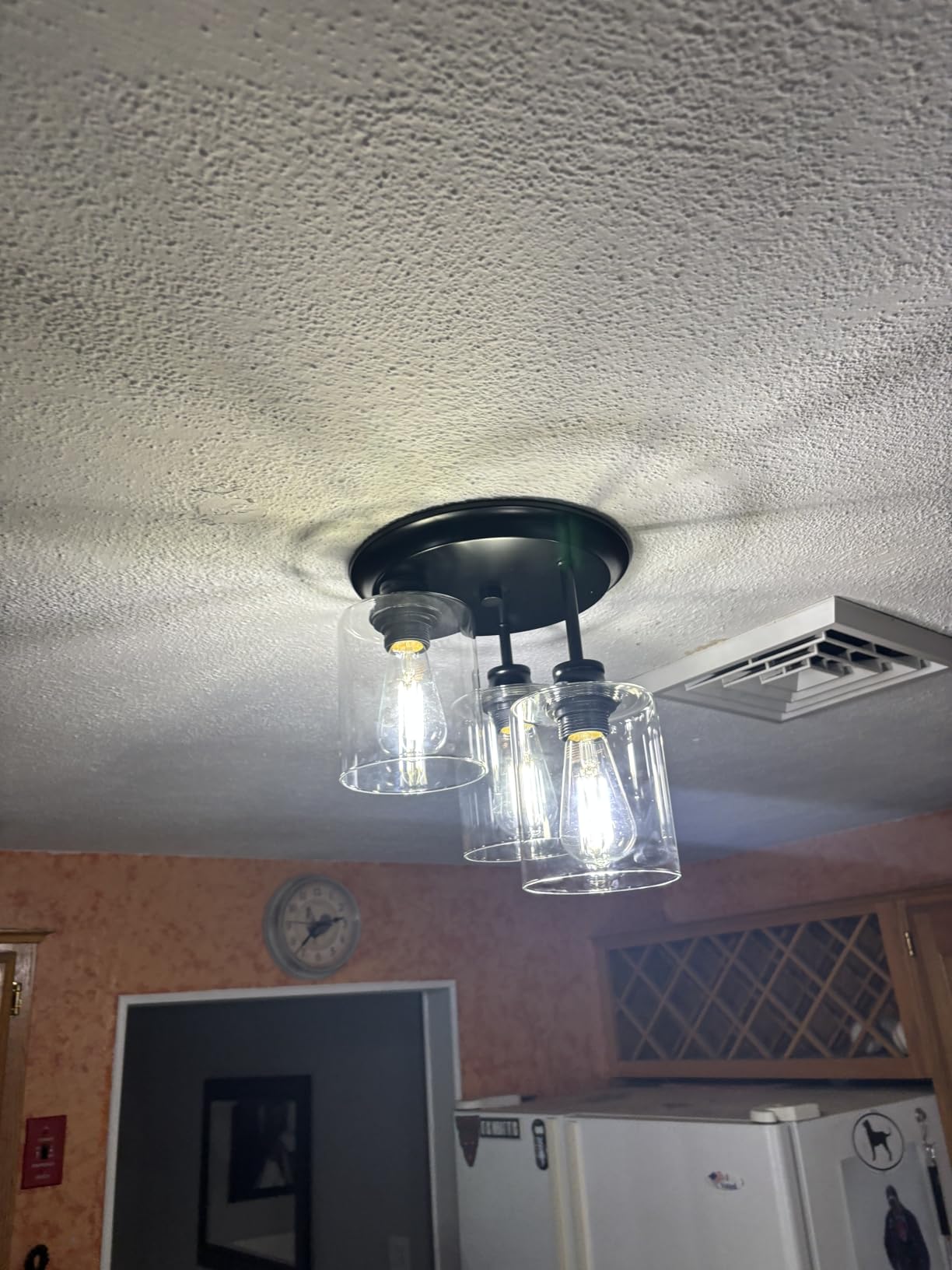
A warm white variant of this bulb exists in the same line. If you want the 850 lumen output and a 2700K tone, look specifically for the warm white version rather than assuming this listing is the one for you.
Where daylight tone genuinely works is an open kitchen and dining combination where the same bulbs need to serve a white island and a dining table. In a dedicated dining room, choose the warm variant.
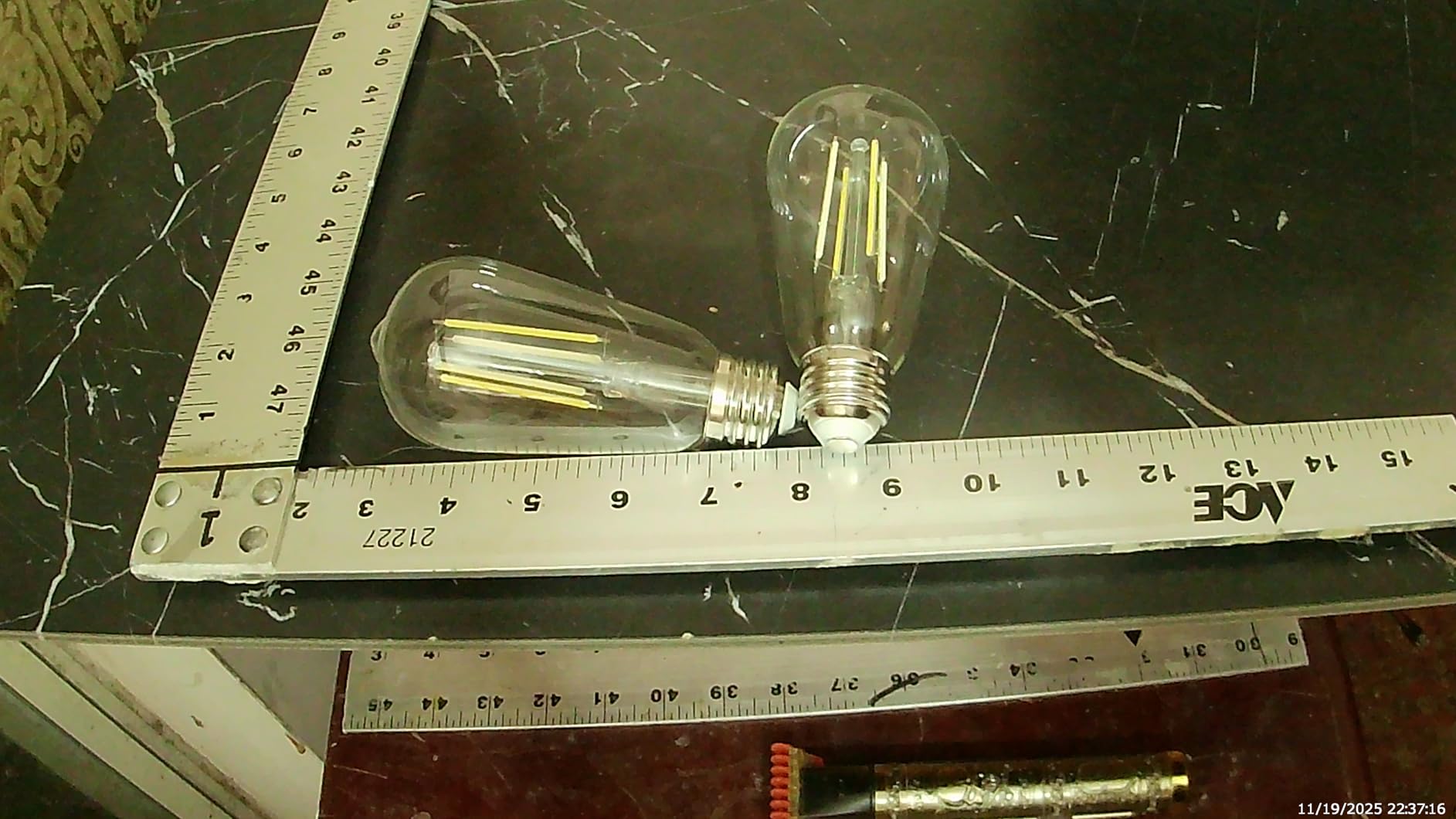
The 360 degree beam and 25000 hour rated life both beat most of the other E26 options, and CRI 85 is a step above the 80 baseline.
Four bulbs per pack suits a two-light pendant fixture or a four-socket chandelier. If your fixture takes six, buy two packs of the same variant.
Should I use this in a dining room at all?
Only in the warm white variant. 5000K in a dining room fights the food and makes skin tones look flat, and it is worth remembering that color temperature is a choice about mood, not about brightness. Two bulbs at the same wattage can look completely different at 5000K and 2700K.
If you are lighting an open plan space where the dining zone shares a circuit with a kitchen worktop, the daylight tone makes more sense than it would in a closed dining room.
Where it falls short
The default color temperature is the main issue, and it is the reason this bulb sits lower in the ranking despite having the best specifications on paper. Always confirm which variant you are ordering.
Four bulbs is the smallest pack among the six-pack options, so filling a large fixture costs more per socket, and there is no listed certification mark in the specification.
8. Yochoice B11 E12 40W Equivalent 12-Pack – Best for Large Chandeliers
- Twelve bulbs cover the largest dining chandeliers in one pack
- Stated 0-100 percent dimming range
- Compatible with 90 percent of dimmers
- 360 degree beam with no harsh shadows
- Warm 2700K tone suited to dining
- 450 lumens is modest per bulb
- Sellers report occasional dead bulbs in a pack
- 110V only with a 1-year seller warranty
The Yochoice twelve-pack is built for the fixture most people underestimate: a very large dining chandelier with twelve candelabra sockets. Twelve bulbs in one pack means one purchase, one color temperature and one dimming behavior across every arm.
The stated 0-100 percent dimming range is the widest claim in this roundup. If your idea of dining room dimming is a genuine candlelight level rather than a slightly darker version of full brightness, this is one of the few bulbs here that claims it.
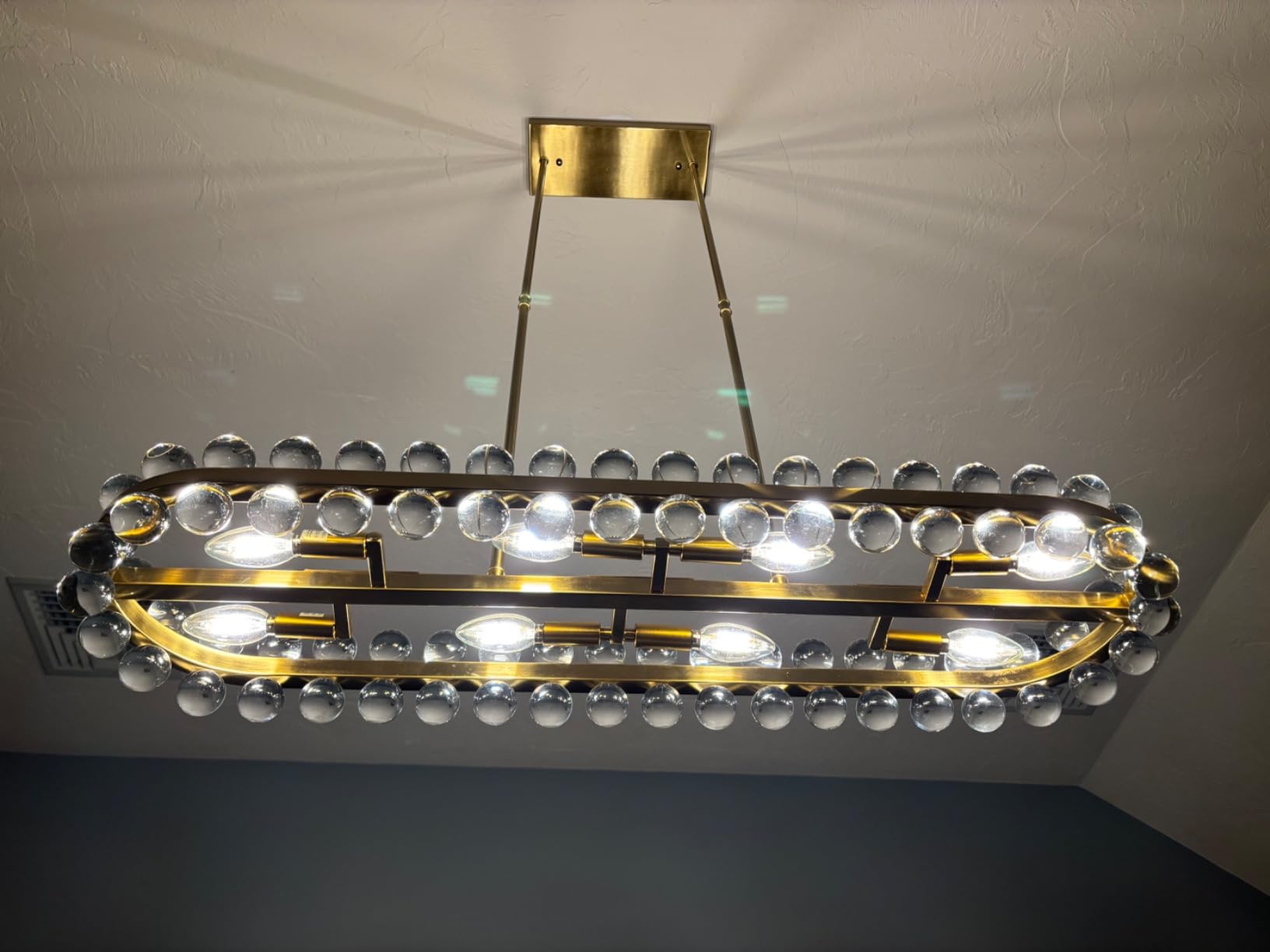
Compatibility with 90 percent of dimmers is the second named figure, which puts it close behind the TJOY on that measure. Buyers specifically note smooth dimming with no noise and no flicker.
The 360 degree beam means no harsh shadows under the bulb, which matters in a twelve-light fixture where shade direction is inconsistent from arm to arm.
A 25000 hour rated life is solid, and CRI 85 gives slightly better color rendering than the 80 baseline options.
The practical catch is quality control. Some buyers report one to three dead bulbs out of a twelve pack, which is a much larger percentage problem than a single failure in a six pack. Order spares if your fixture is hard to reach.
Is a twelve-bulb chandelier too much light?
Twelve bulbs at 450 lumens is 5400 lumens across the fixture, which sounds enormous until you dim it. A fixture that size is rarely used at full output, and having a bulb that genuinely reaches a low floor is what makes dimming it worthwhile.
The real reason large chandeliers are hard to dim well is not brightness, it is that the sheer number of sockets makes it obvious when a few bulbs are at a slightly different level. Matching a single twelve-pack solves that.
Where it falls short
At 450 lumens per bulb, this is one of the dimmer options here, and in a large fixture you may find yourself wanting more output per socket than the pack provides.
The 110V rating rules out international use, and the 1-year seller warranty is thinner than the 3-year covers available on two other candelabra picks here.
9. PARTPHONER ST58 E26 60W Equivalent 4-Pack – Most Versatile
- 720 lumens is solid table brightness for a decorative bulb
- 2700K warm tone is right for dining rooms
- 25000 hour rated lifespan
- CRI 85 rendering with a 360 degree beam
- Smooth dimming with no reported buzz
- Only four bulbs per pack
- Smallest review base in this roundup
- No listed safety certification mark
The PARTPHONER ST58 is the straightforward budget answer for an exposed-bulb pendant. It gets the three things that matter in a dining room right: warm 2700K tone, 720 lumens of output and a stated 10 to 100 percent dimming range.
At 6 watts and 25000 rated hours, the efficiency and lifetime figures sit in the middle of this group rather than at the bottom, which is unusual for the value tier.
CRI 85 is a step above the 80 baseline, and the 360 degree beam gives even spread in a pendant where the bulb is the only light source.
The standard E26 base is the most widely used screw base in home lighting, so this fits pendants, table lamps and most semi-flush fixtures without any adapter.
Buyers describe the dimming as smooth with no flicker or buzz, which is the single thing you cannot verify from a product page and the thing that matters most once it is installed.
Four bulbs is the smallest pack here, so a two-light pendant uses the pack exactly. Larger fixtures mean more than one order.
What do you give up at this price?
Primarily confidence. This bulb carries the smallest verified review base in the roundup, which means less long-term evidence about failure rates and driver consistency. For a single pendant, that is an easy trade. For a twelve-socket chandelier, we would pick a longer-warrantied option.
You also lose the listed certification mark. That does not make the bulb unsafe, but it removes one external check on build quality that the UL and ETL options provide.
Where it falls short
720 lumens is below the 800-lumen options, so a single bulb over a wide table needs the dimmer open further than you might like for serving food.
With fewer reviews, long-term claims like the 25000 hour rating have less real-world backing behind them than the bulbs with thousands of verified reviews.
10. Gozelux ST19 E26 60W Equivalent 6-Pack – Best Certified Pick
ST19 Vintage LED Edison Bulbs, 60W Eq, Dimmable, Warm White 2700K, 6-Pack
- Broadest certification list of any bulb in this roundup
- CRI 90 color rendering at 750 lumens
- Stated 0-100 percent dimming range
- Rated for indoor and outdoor use
- Flicker-free and non-buzzing by specification
- Smallest review base in the roundup at 1096 reviews
- 750 lumens sits mid-range
- Newer listing with less long-term evidence
The Gozelux ST19 is the pick if certification marks matter to you. It lists ANSI, CE, CSA, ETL, Energy Star, FCC, RoHS, UL and cUL together, which no other bulb in this roundup matches.
Those marks are not decoration. UL and cUL Listing is a third-party safety test, Energy Star is an efficiency standard with a lumen-per-watt threshold, and CSA covers the Canadian standard. Having all of them listed is a reasonable proxy for build quality.
The specifications are strong on their own terms as well: CRI 90 for color accuracy, 750 lumens of output, a 6-watt draw and a stated 0-100 percent dimming range.
It is rated for both indoor and outdoor use, so the same bulb works in a covered outdoor dining area, and the specification states flicker-free and non-buzzing operation.
Early customer ratings are strong at 4.7, though the review base is the smallest in this roundup at just over a thousand reviews, so there is less long-term evidence behind it than the other picks.
Six bulbs cover a six-arm chandelier or a run of pendants, and a 4.7 rating with the strongest certification list in the group makes this a defensible second purchase or a fixture you want to be certain about.
Are certification marks worth paying for?
They are a genuine quality signal, especially UL Listed, because it means an independent lab tested the product rather than the manufacturer describing it. Energy Star adds a verified efficiency floor, which tells you the lumens are real rather than optimistic.
What certification cannot tell you is whether the bulb will dim smoothly in your particular fixture with your particular dimmer. That still comes down to the stated dimming range and the dimmer type.
Where it falls short
A review base of 1,096 is thin next to the 7607 behind our top pick, and on a product with a long expected life, early ratings tell you less than accumulated ones would.
750 lumens is mid-range, which is fine in a six-arm chandelier but modest for a single-bulb pendant over a large table.
How to Pick the Right Bulb: A Buying Guide for Dining Rooms
These are the decisions that determine whether a dining room bulb works, in the order you should make them. Get the base right first, because nothing else matters if the bulb does not screw in.
Step 1: Identify your fixture’s socket base
Look at the socket, not the bulb you are replacing. A chandelier arm almost always takes E12, the small candelabra screw base, and most pendants, semi-flush fixtures and table lamps take E26, the standard medium screw base. The thread on E12 is noticeably finer and the bulb is roughly half the width.
Step 2: Check the wattage stamp inside the socket or on the fixture. Most dining fixtures are rated for 40 to 60 watts per socket, which is why bulb wattage equivalence matters, though an LED that draws under the rating can safely exceed the incandescent equivalent in brightness.
Step 3: Check what your dimmer is. Look for the word LED, electronic low voltage, ELV or trailing-edge on the faceplate. If it says nothing and looks like an older paddle or rotary switch, it is probably a leading-edge TRIAC type, and that is the single most common cause of LED flicker.
Color temperature: the biggest decision you will make
Color temperature is measured in Kelvins and describes the hue of the light. Lower numbers are warmer, more yellow and orange. Higher numbers are cooler, whiter and bluer.
For a dining room, stay between 2200K and 3000K. At 2200K you get a candle-like amber that flatters skin and food. At 2700K you get the familiar warm white that most people mean when they say cozy. At 3000K you get soft white, which is slightly brighter-feeling and works well in a room that also serves as a work surface.
Avoid 4000K and above in a dining space. Daylight white at 5000K is useful for a kitchen worktop and wrong for a dinner table, and roundups that recommend daylight bulbs for dining are optimizing for how bright the package looks in a store rather than how the room feels at eight in the evening.
Brightness: watt equivalent is not brightness
Watt equivalent tells you what incandescent bulb the LED replaces, not how bright it is. This is the root of the most common complaint about dimmable LEDs: a bulb labeled 60W equivalent produces around 800 lumens, which is a fraction of what a real 60W incandescent produced, and people conclude their new bulbs are too dim.
Read the lumen figure instead. For a dining room, 800 to 1,100 lumens per bulb is the useful range. A single pendant over a normal table wants 800 lumens or more. A five or six-arm chandelier can sit at the lower end per bulb because the total adds up. A large open plan room, or a dining table that doubles as a homework surface, wants the upper end or more than one fixture.
Dimmer compatibility: why LEDs flicker and how to stop it
Dimming an LED works by reducing the current sent to the driver electronics inside the bulb, not by thinning a heated filament as an incandescent does. That difference is the whole problem. A leading-edge TRIAC dimmer needs a minimum holding current to keep the circuit open; an LED driver draws so little that the dimmer can drop out, and the bulb strobes or buzzes.
On the ElectriciansForums, AllAboutCircuits and ElectricianForum.co.uk threads on this, the consensus is consistent: most flicker is a mismatch between the dimmer load type and the LED driver, and the practical fixes come in this order.
1. Replace the bulb with a genuinely dimmable one. On Houzz, the most repeated piece of diagnostic advice is to suspect the bulb first, because some LEDs are marked dimmable and others are not, and swapping one fixes it more often than people expect.
2. Confirm the dimmer is LED rated. A trailing-edge or ELV dimmer is designed for low-load electronics and is the most reliable pairing. If your dimmer is only rated for incandescent loads, replacing the switch is cheaper than replacing bulbs.
3. Adjust the low-end trim. Many LED-compatible dimmers have a setting that raises or lowers the bottom of the range. Turning it up often removes the flicker band without changing anything else.
4. Try a lower-lumen bulb. On the Audioholics forum, the concrete advice that comes up repeatedly is that a slightly lower wattage gives a better brightness range without dropping too dim, because a lower load is easier for the dimmer to hold.
One more note for listeners: on the AVS Forum, enthusiasts repeatedly single out the Lutron Maestro dimmers as the ones that work best with LED bulbs, with the MACL-153M named specifically. Named models from enthusiasts are worth more than a generic LED-compatible claim on a box.
CRI: the spec almost nobody checks
CRI, the color rendering index, measures how accurately a light reproduces colors. The baseline for commodity LEDs is 80, which is acceptable on a wall and visibly flat on food. At 90 and above, colors are noticeably truer.
In a dining room this is a bigger quality jump than extra lumens, because the things under your light are the things people look at. Two picks in this roundup reach CRI 90: the Hizashi CA10 for candelabra fixtures and the Gozelux ST19 for standard bases.
Certification marks and other specs worth a glance
UL Listed is the one to check first on any bulb that hangs over a table. Energy Star gives you a verified efficiency floor. JA8 and Title 20 compliance in California means the bulb meets that state’s efficiency and quality requirements.
Also worth checking: whether the bulb is rated for enclosed fixtures if your shade fully encloses it, and whether it is damp-location rated for a covered porch or unheated sunroom. A dining room itself is a dry location, so this only matters for outdoor dining spaces.
Dim-to-warm bulbs and what they change
Traditional LEDs hold one color temperature as they dim, so a 2700K bulb at 10 percent output is a dim 2700K. Dim-to-warm bulbs shift color as output falls, moving from around 2700K down to a 2200K amber at the bottom of the range.
That mimics incandescent behavior exactly, which is why it matters for a dining room: the lowest setting looks like candlelight rather than a dark version of the same light. If you want that effect, check the product listing for dim-to-warm or for a stated color shift as the bulb dims, and pair it with a dimmer that supports the extra low end.
None of the ten bulbs in this roundup use a dim-to-warm shift, so if that behavior is your priority, look for it as a named feature and expect a narrower range of options in decorative shapes.
Buying for a room that works as a dining room and a workspace
If people eat, read menus and do homework at the same table, you need the top of the brightness range rather than the bottom. In that case take a 60W equivalent at 800 lumens or more, use 3000K soft white instead of 2200K amber, and pick a CRI 90 option so reading material looks right.
For a dedicated formal dining room used mostly in the evening, the opposite applies: lower lumen bulbs in a decorative shape, dimmed low, look more considered than bright ones at full output. If you are still settling the room’s other pieces, our picks for dining room area rugs and freestanding wine coolers for dining rooms cover the rest of the setup.
Frequently Asked Questions
What type of light bulb is best for lighting a dining room?
Warm-white dimmable LEDs between 2200K and 3000K, delivering roughly 800 to 1,100 lumens per bulb, fitted to the base your fixture actually uses. Most dining chandeliers take E12 candelabra screw bases, while pendants and semi-flush fixtures usually take E26 standard bases. Check the socket before you buy, and look for a stated dimming range such as 10 to 100 percent rather than a bare dimmable label.
Why are my dimmable LED lights flickering on my dimmer switch?
Flicker is almost always a dimmer and LED driver mismatch rather than a bad bulb. 1. Replace the bulb with one genuinely rated dimmable. 2. Confirm the dimmer is LED or trailing-edge rated, since leading-edge TRIAC dimmers cannot hold the low current an LED driver draws. 3. Adjust the dimmer low-end trim setting if the dimmer has one. 4. Try a lower-lumen bulb, which gives the dimmer less load to hold. If it flickers with no dimmer installed, suspect a loose socket contact or a failing driver instead.
Do dimmable LED bulbs need a special dimmer?
Ideally yes. A dimmer rated for LED loads, usually a trailing-edge or ELV electronic type, is the most reliable pairing. A standard leading-edge TRIAC dimmer is the most common cause of flicker, buzz and a dimming range that bottoms out far too high. Legacy dimmers rated only for incandescent bulbs are worth replacing before you fit LEDs, since a dimmer switch is inexpensive compared with a new fixture.
Is 800 lumens bright enough for a dining room?
Yes for a single pendant over a normal-sized table or a small dining room. For most dining rooms 800 to 1,100 lumens per bulb is the useful range. Larger rooms, open kitchen-dining combinations, and tables that double as a work surface need more light per bulb or more than one fixture. Remember that watt equivalent is not brightness: a 60W equivalent LED produces about 800 lumens, far less than the incandescent it replaces.
Which brand of dimmable LED bulbs is the best?
There is no single best brand, so judge each bulb by its stated dimming range, CRI, color temperature and certification marks. Established names such as Philips, GE, Bulbrite and TCP tend to hold a narrower consistency band across dimmers and back their bulbs with longer warranties. Value-tier brands match them on warm tone and CRI at a lower cost. The bulbs in this roundup are grouped that way, with picks for both ends of the range.
Should chandelier bulbs be E12 or E26?
Most dining chandeliers take E12 candelabra screw bases, while pendants, semi-flush fixtures and floor or table lamps take E26 standard bases. The E12 thread is finer and the bulb is about half the width of E26. Remove a bulb and look at the thread, or check the fixture’s specification label. Buying the wrong base is the most common reason bulbs arrive unusable, and it is worth checking before you order a multi-pack.
What are the drawbacks of using dimmable light bulbs?
Four practical ones. They cost more per bulb than non-dimmable equivalents. They can flicker or buzz on an incompatible dimmer, particularly a leading-edge TRIAC type. Many models advertise dimmability but bottom out around 20 to 30 percent output rather than a genuinely low level. And a non-dimmable bulb fitted into a dimmer circuit will flicker, buzz or fail early, so never mix the two on one dimmer circuit.
Final Verdict
For most dining rooms, the FLSNT B11 E12 6-pack is the bulb we would install first: warm 2700K light, a stated 10 to 100 percent dimming range, UL Listing and the largest verified review base of any candelabra bulb we evaluated. Go to the Cotanic for more light per socket, to the Hizashi when food color matters most, and to the DAYBETTER or Ascher sets when the fixture takes E26 standard bases.
Two habits will settle almost every problem in this category. Check the socket base before you order, and confirm your dimmer is LED rated. Between the best dimmable LED bulbs for dining rooms and a compatible dimmer, even lighting is not close.