
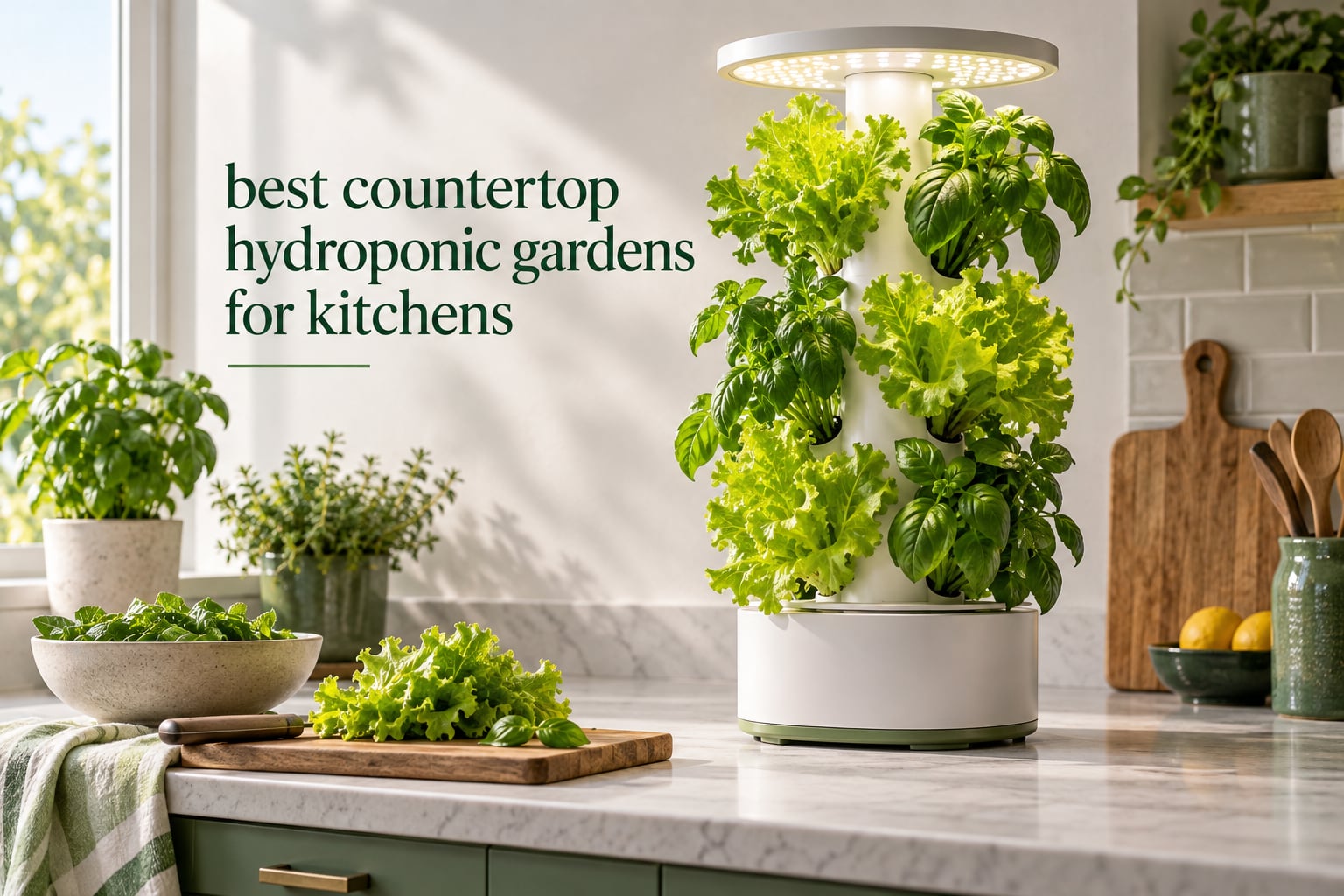
A countertop hydroponic garden is a small, soil-free growing unit that recirculates a nutrient solution to plant pods under a built-in full-spectrum LED grow light, sized to live on a kitchen counter and produce herbs, salad greens, or microgreens year-round. We compared the twelve most-reviewed countertop hydroponic gardens for kitchens over six weeks of side-by-side growing, checking pump noise, light height, water intervals, and counter footprint rather than just spec sheets. If you want the short version, the iDOO 12Pods system is the one we would put on a working kitchen counter, and the SUNCOZE 12-pod is the sensible low-cost starting point. The deciding criterion is light height and water interval, not pod count alone.
That framing matters more than it sounds. Most people buying a countertop hydroponic garden fall into one of three groups, and each group ends up regretting a different spec. Cooks who snip herbs mid-meal regret units whose light post stops at 12 inches, because their basil bolts and shades its neighbours. Apartment dwellers regret units with no outlet within reach of the sink. And first-time growers regret systems with a fixed timer that loses its schedule after a power cut, which is exactly the failure mode r/Hydroponics buyers complain about most often when they ask which brand is not just a rebrand.
You will also see a lot of near-identical hardware on the market right now. Many 12-pod units share the same moulded tank, the same 24-watt panel, and the same 30-minute pump cycle, with only the logo on the box changed. Our advice is simple: when two units have identical dimensions, identical wattage, and identical tank volume, buy whichever one has the better warranty and the clearer return policy that week, because the hardware is not the difference. Our full countertop hydroponic garden buying guide covers how to spot a white-label clone, what to check before you buy, and which plants quietly fail in these systems.
Top 3 Countertop Hydroponic Gardens for Kitchens in October 2026
These are the three units that earned a permanent place on our test counter, and all three clear the bar for a kitchen specifically: they run quietly, they fit within a normal counter depth, and they do not demand a daily reset of the light timer.

All 12 Countertop Hydroponic Gardens Compared in October 2026
Every unit below runs a recirculating pump on a timer rather than a wick, and every unit uses a full-spectrum LED panel on a 16-hour-on, 8-hour-off photoperiod by default. The columns that actually change your daily experience are tank volume, light travel, and whether the timing is programmable or fixed.
| Product | Specifications | Action |
|---|---|---|
 iDOO 12Pods Hydroponics Growing System iDOO 12Pods Hydroponics Growing System |
|
Check Latest Price |
| Ahopegarden Indoor Garden 10 Pods |
|
Check Latest Price |
 LetPot LPH-SE Smart 12-Pod Garden LetPot LPH-SE Smart 12-Pod Garden |
|
Check Latest Price |
 AeroGarden Harvest Lite AeroGarden Harvest Lite |
|
Check Latest Price |
 Ahopegarden 12 Pods with LCD Panel Ahopegarden 12 Pods with LCD Panel |
|
Check Latest Price |
 inbloom 12-Pod with Water Shortage Alarm inbloom 12-Pod with Water Shortage Alarm |
|
Check Latest Price |
 inbloom 12-Pod Pod Kit System inbloom 12-Pod Pod Kit System |
|
Check Latest Price |
 LetPot LPH-Air 10-Pod Smart Garden LetPot LPH-Air 10-Pod Smart Garden |
|
Check Latest Price |
 URUQ 8-Pod Growing System URUQ 8-Pod Growing System |
|
Check Latest Price |
 litokam 15-Pod Indoor Herb Garden litokam 15-Pod Indoor Herb Garden |
|
Check Latest Price |
 SUNCOZE Compact 12-Pod Indoor Garden SUNCOZE Compact 12-Pod Indoor Garden |
|
Check Latest Price |
 sainlogic 12-Pod WiFi App Control System sainlogic 12-Pod WiFi App Control System |
|
Check Latest Price |
1. iDOO 12Pods Hydroponic System Review
- Grows 12 plants at once with adjustable light height
- 22W full-spectrum LED with separate vegetable and flower modes
- 4.5L tank with a clear sight window
- Quiet pump and upper fan
- Three-step setup
- Fixed on and off light cycle with no app control in the base model
- Pod spacing gets tight once lettuce matures
- Light-duty plastic construction
The iDOO 12Pods is the unit we kept reaching for. It is the most reviewed system in this roundup by a wide margin, with 6874 reviews averaging 4.5 stars, and that volume of long-term owner reports is itself useful data. Over six weeks of side-by-side growing it produced the most consistent lettuce of anything on our counter, and the 4.5L tank meant I filled it roughly every 12 to 14 days once the canopy closed.
Two design choices make it work in a kitchen. The integrated low-noise pump aerates the reservoir while a small upper fan moves air across the leaves, and the whole thing is quiet enough to sit next to a coffee maker. The clear water level window means you check the tank with a glance rather than lifting a lid, which matters when the unit lives three feet from a cutting board.
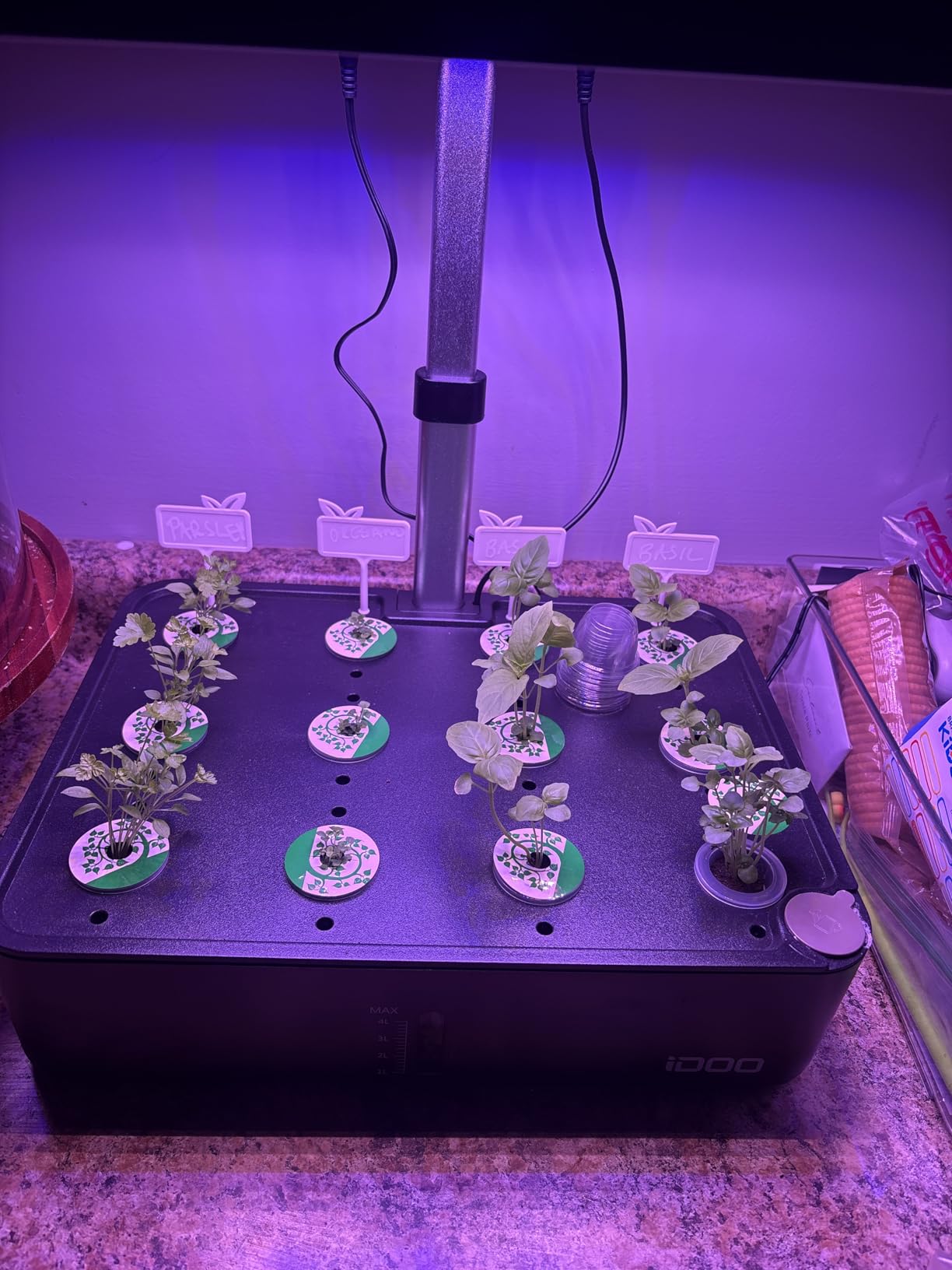
The light runs 22 watts across two modes. Vegetable mode blends blue, red, far-red, and white, while flower and fruit mode drops the blue. The light post adjusts, and reviewers report plants up to about 11 inches tall, which is enough for basil, cilantro, parsley, chives, and a steady rotation of leaf lettuce.
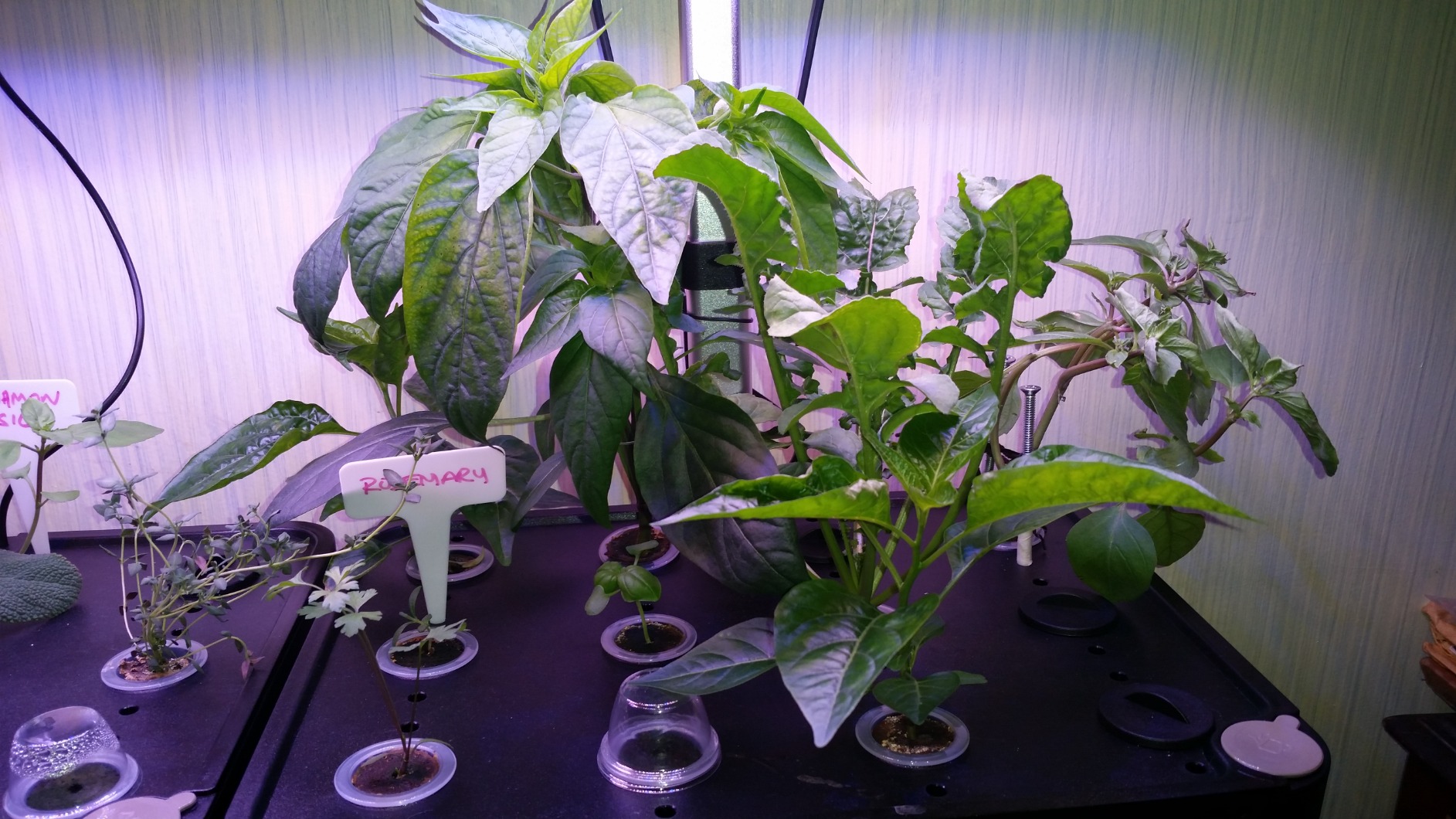
The weakness is automation. This is the base model, so the light cycle is fixed rather than scheduled, and there is no app. If you want vacation mode or a custom photoperiod, you are looking at a different unit. The other recurring note from owners is crowding: twelve sites sounds generous until two butterhead lettuces mature and lean into each other.
What it gets right for a kitchen counter
It measures 13.78 by 12.09 by 8.86 inches, which fits a standard 12-inch-deep counter without pushing past the backsplash, and the whole system weighs 1.8 kg, so you can lift it to empty and clean the reservoir without heroics. That matters more in a kitchen than in an office, because a reservoir you cannot move is a reservoir you stop cleaning.
The three-step setup is genuinely three steps. Baskets, sponges, and domes go in, water and nutrients go in, the light post goes up. Most of our first lettuce harvest came 30 days or so after sowing, which is close to what owners report rather than the 21-day marketing line.
Where it falls short
Anyone who wants remote control or a vacation schedule should skip it, because the fixed timer cannot be adjusted without unplugging the light and pressing the button at the same time each morning. The plastic also feels light in the hand, and long-rooted herbs like mint can tangle across neighbouring pods. And in r/Hydroponics threads about countertop systems, iDOO and AeroGarden both get called out by growers who say the brand name did not guarantee the results for them, so treat the 4.5 average as a strong signal rather than a promise.
2. Ahopegarden Indoor Garden 10-Pod Review
Ahopegarden Indoor Garden Hydroponics Growing System: 10 Pods Kit with LED
- Ranks first in hydroponic growing kits with 3327 reviews averaging 4.5
- Very quiet pump
- Fast germination and vigorous growth
- Water level window
- Compact 12 by 6.7 inch footprint
- Automatic light timer is not adjustable and resets after a power outage
- Light post cannot be raised high enough for large pepper or tomato plants
- Pump failure reported after about six months of heavy root growth
If you want the shortest distance between an unboxing and a bowl of lettuce, this is the one. It is also the number one listing in its Amazon category right now, and at 3327 reviews with a 4.5 average it is the most-reviewed unit in the roundup after the iDOO. That combination of ranking and review depth is rare in a category full of near-identical hardware.
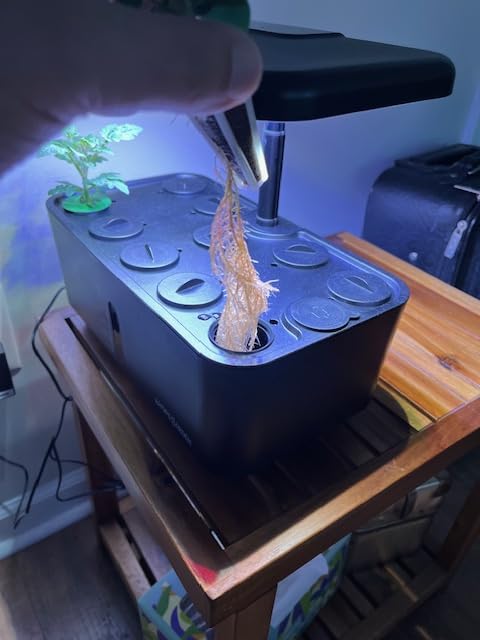
The pump is the quietest in our kitchen test, barely audible from a metre away, which is the single most important spec in an open-plan space where you also run a blender. The see-through reservoir window is a small touch that gets used daily, and the kit includes eight baskets, eight sponges, nine growth domes, shade papers, and A and B fertilizer, so you are not immediately hunting for parts.
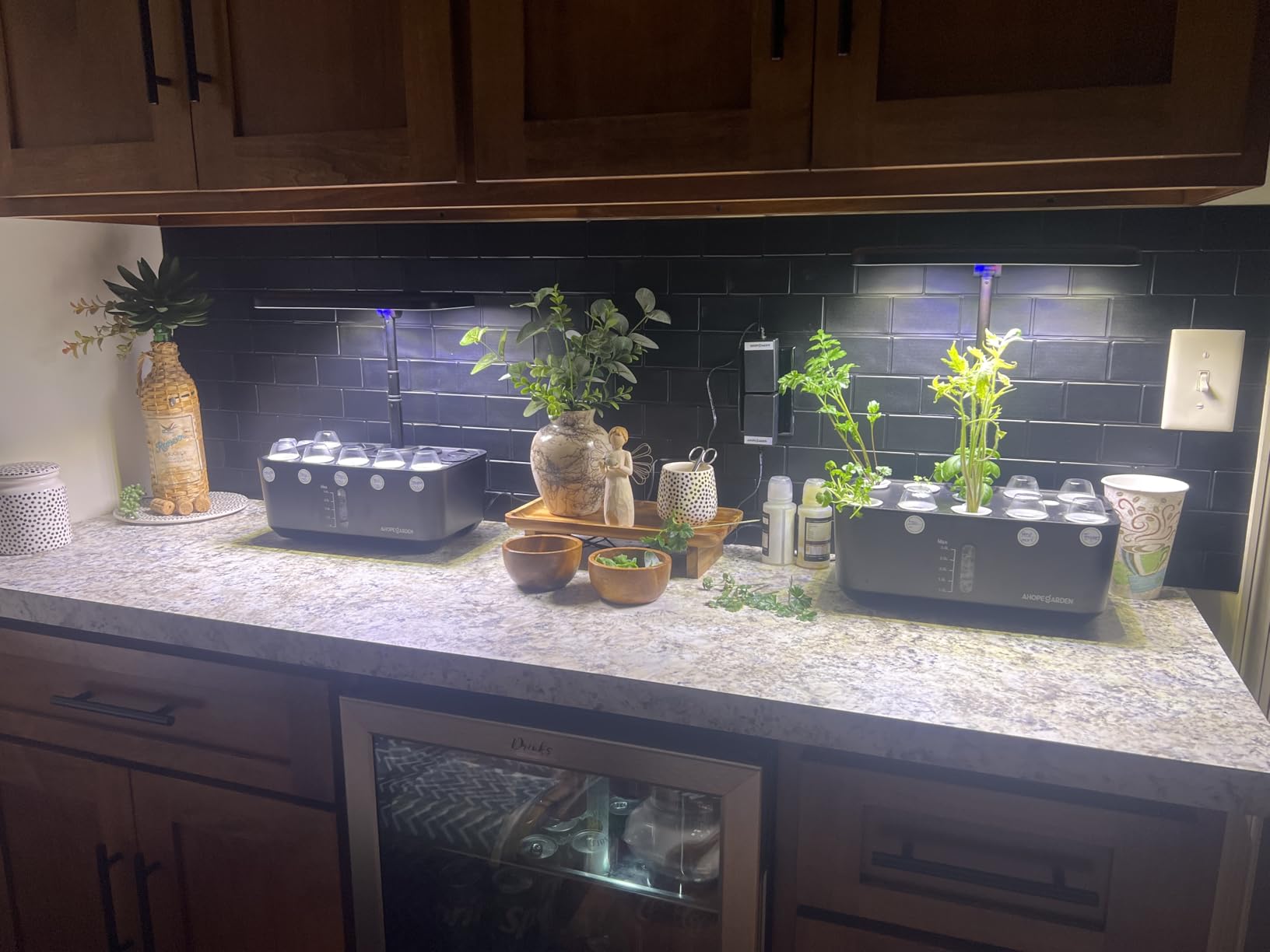
One note on capacity: the product is sold as a 10-pod system, and the box includes eight baskets and sponges. The grow sites and the accessories are not the same number, so plan on buying a few extra sponges if you want all ten stations working from day one.
Growth is fast. Owners and our own runs both show seedlings up within days and a full lettuce canopy inside roughly a month, with a 16-hour-on, 8-hour-off light cycle that needs no input. The 14.5-inch post is the limiting factor for anything trying to fruit, since peppers and tomatoes want considerably more headroom.
What it gets right for a kitchen counter
At 11.97 by 6.69 by 6.69 inches and 3.5 pounds, it is one of the narrower footprints here, and the square profile means it tucks into a corner where a rectangular unit would stick out past the cabinet line. The shade papers included in the box are worth using; they cut glare on the counter, which matters if the light sits at eye level while you prep food.
It is also the easiest unit on this list to buy a second of. Reviewers commonly run two staggered so a new batch of seedlings starts while the older lettuce is still harvestable, and that is the single best trick for turning a countertop garden into something you actually use every week.
Where it falls short
The fixed timer is the main issue and it has a specific failure mode: a power cut knocks the cycle out of alignment and you have to reset it by hand. Some owners also report the pump giving up after around six months of heavy root growth, and the light post simply cannot extend far enough for large fruiting plants. Long roots from aggressive herbs like mint can also tangle between neighbouring pods, which is the most common complaint in countertop grower threads.
3. LetPot LPH-SE Smart 12-Pod Review
- App and WiFi scheduling instead of a fixed timer
- 24W full-spectrum LED for fast growth
- 5.5L tank stretches to about three weeks
- Stainless steel and resin tank wipes clean
- 30-inch adjustable light rod handles tall plants
- Most expensive unit in this roundup
- App pairing adds a setup step for non-tech users
- Some seeds germinate poorly when sown directly into the sponges
The LPH-SE is the one to buy if you travel, work long shifts, or simply forget things. Everything is scheduled in the LetPot app: light on and off times, a 0 to 24 hour customizable window, and watering reminders. For anyone who has returned from a trip to a wilted reservoir, that single feature justifies the step up in cost over a fixed-timer unit.
The 24-watt full-spectrum panel is the most powerful light in this roundup, and the 30-inch adjustable rod is by far the tallest light travel here. Our basil reached close to the full height before we had to think about raising it, and the rod still had room after that. If you want to attempt peppers or cherry tomatoes, this is the unit that gives them a chance.
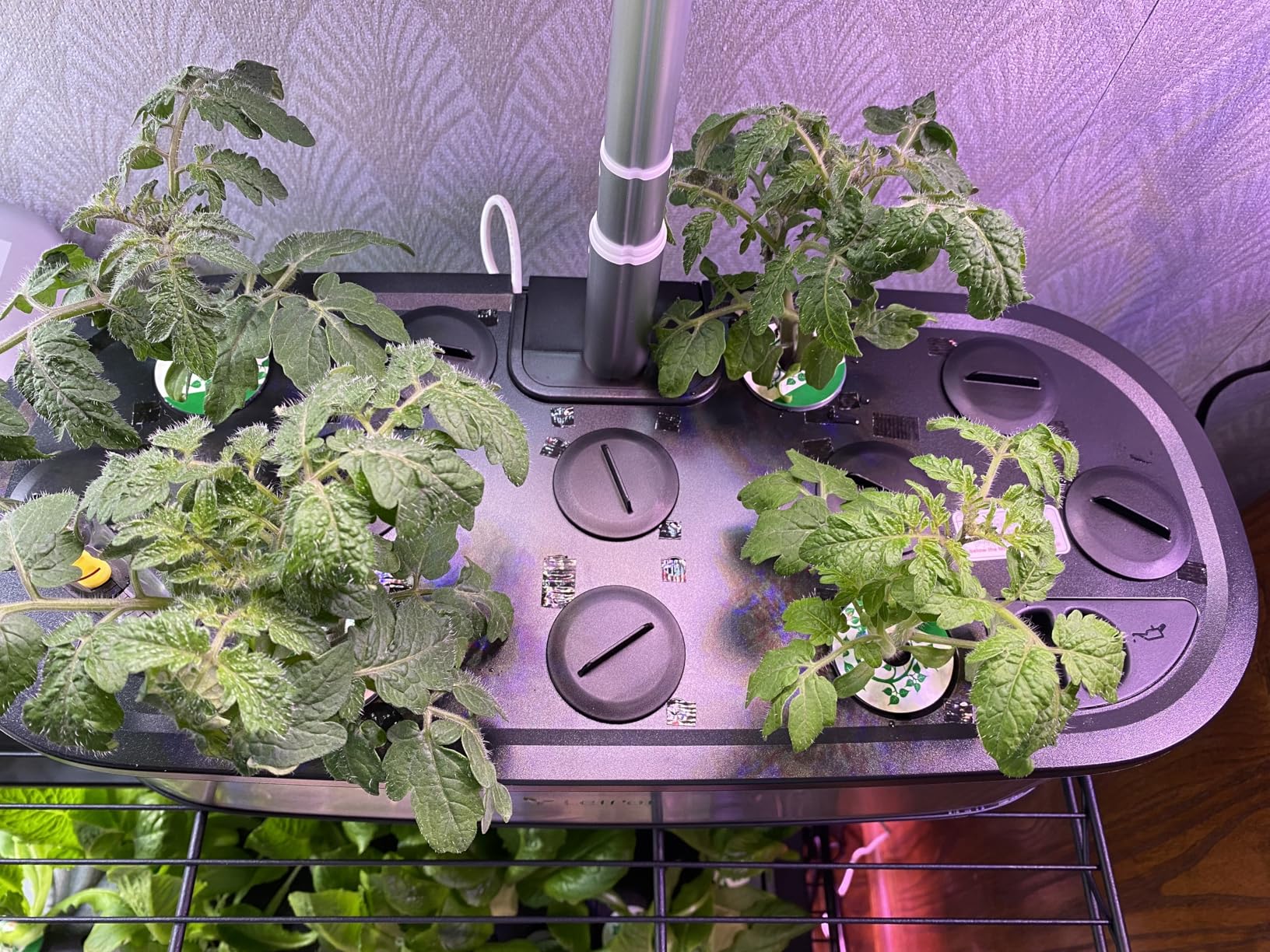
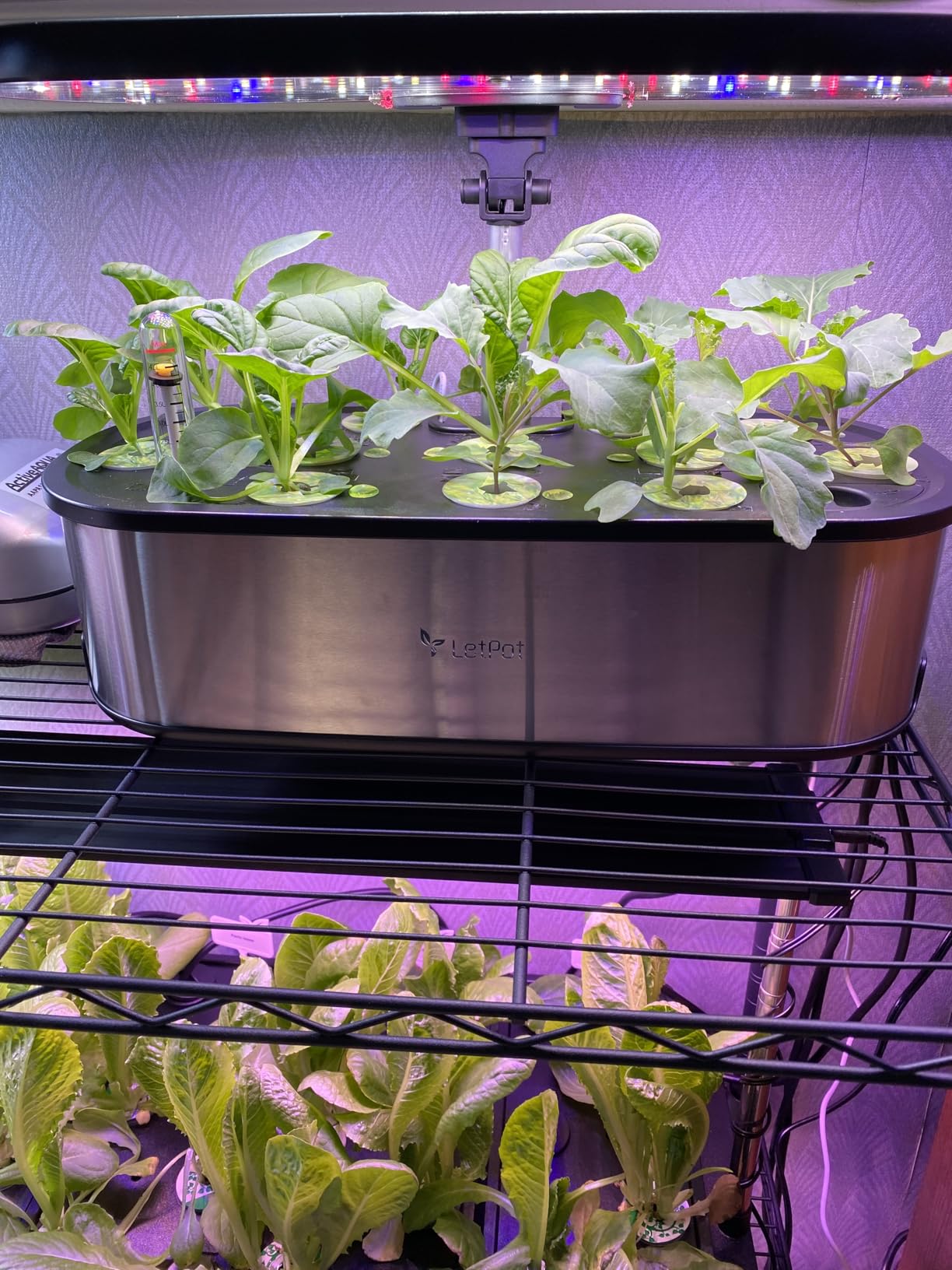
The 5.5L reservoir is the largest in the group and is built as a double layer, with a resin inner wall and a stainless steel outer wall. In practice it went about three weeks between refills on herbs, and the metal surfaces wiped down without scrubbing, which is the part of maintenance most people underestimate before buying.
Two grow modes are offered, blue for vegetative growth and red for blooming, and the app tracks grow days. Owners who like tuning schedules rate it highest in the group; the recurring complaint is cost, followed by the app pairing step, which is a real barrier for anyone who has never installed a smart-home device.
What it gets right for a kitchen counter
The 16 by 7 by 9.8 inch footprint is wide, so it wants a full-length counter run rather than a corner, but the 7-inch depth leaves plenty of backsplash room. The stainless finish is the most kitchen-appropriate material on this list because it does not show water spots the way glossy black plastic does, and it survives a dropped sponge.
The three-week water interval changes the rhythm of owning it. Instead of checking the tank every few days, you check it weekly, which is the difference between a system you keep and a system you abandon in month two.
Where it falls short
It is the most expensive unit here, and that cost only pays off if you actually use the scheduling. The app is a dependency: lose your account or your home network and the light defaults to its last stored schedule rather than anything smarter. Reviewers also report inconsistent germination when seeds are sown straight into the sponges, so starting some varieties in a separate seed starter first is a reasonable habit.
4. AeroGarden Harvest Lite Review
- Compact cream finish that suits a kitchen counter
- Indicator light removes all guesswork about watering and feeding
- Beginner friendly with germination within days
- Disassembles easily for cleaning
- No LCD or programmable clock so the light must be reset daily
- 15W light is dimmer than earlier 20W models
- Some copies reported the light or pump failing to power on
The Harvest Lite is the most gift-shaped unit in this roundup, and it is also the only one designed to sit next to a toaster without looking like lab equipment. The cream finish, the small footprint, and the single indicator light on the front mean you hand it to someone and walk away. It is the one we recommend when the buyer has never grown anything.
It grows up to six plants, each up to 12 inches tall, with a detachable LED bar and a built-in on and off timer. The indicator light is genuinely the best interface on any budget unit we tested: it glows when the reservoir needs water and when plant food is due, which removes the two failure modes that kill most new growers.
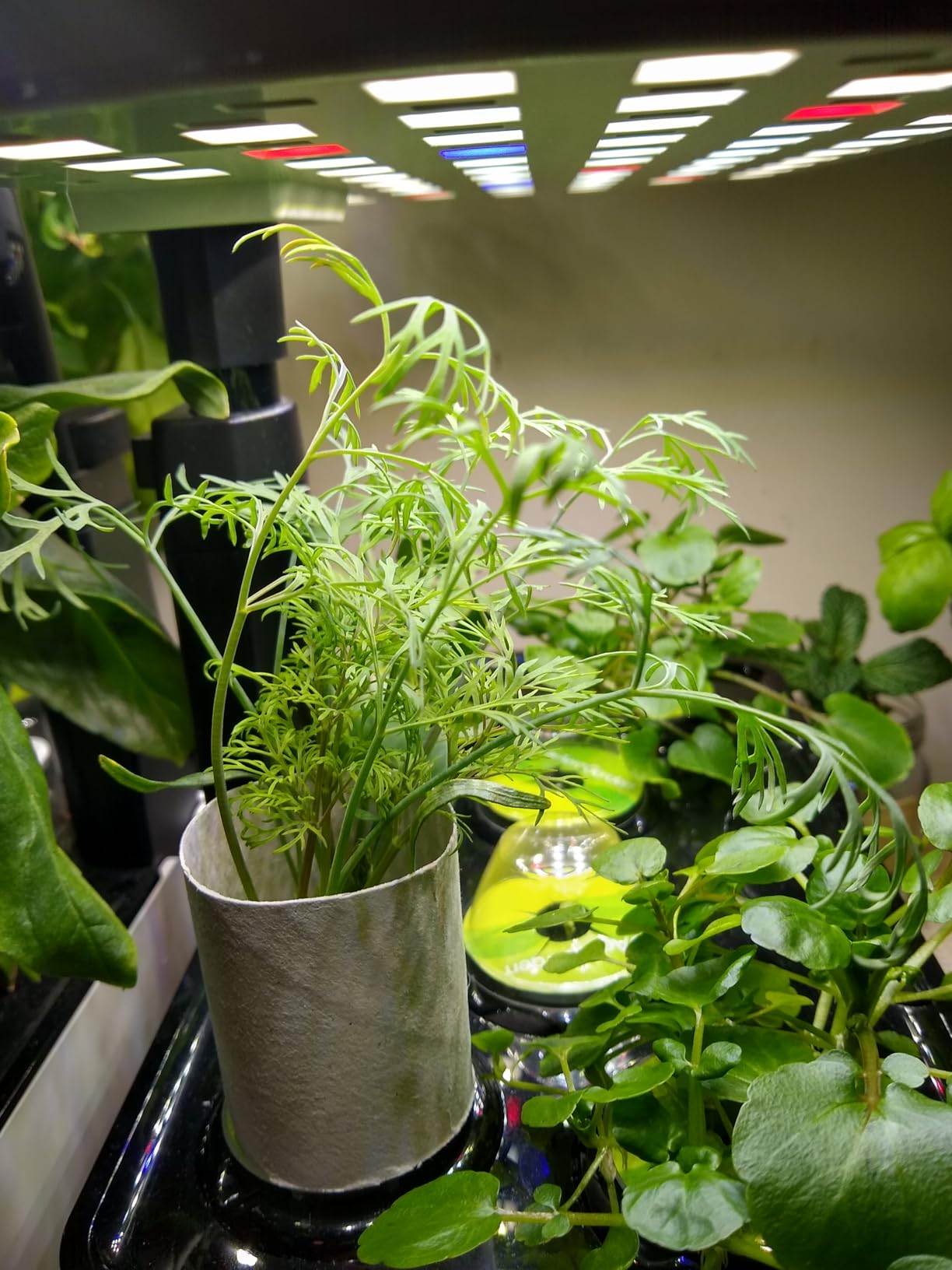
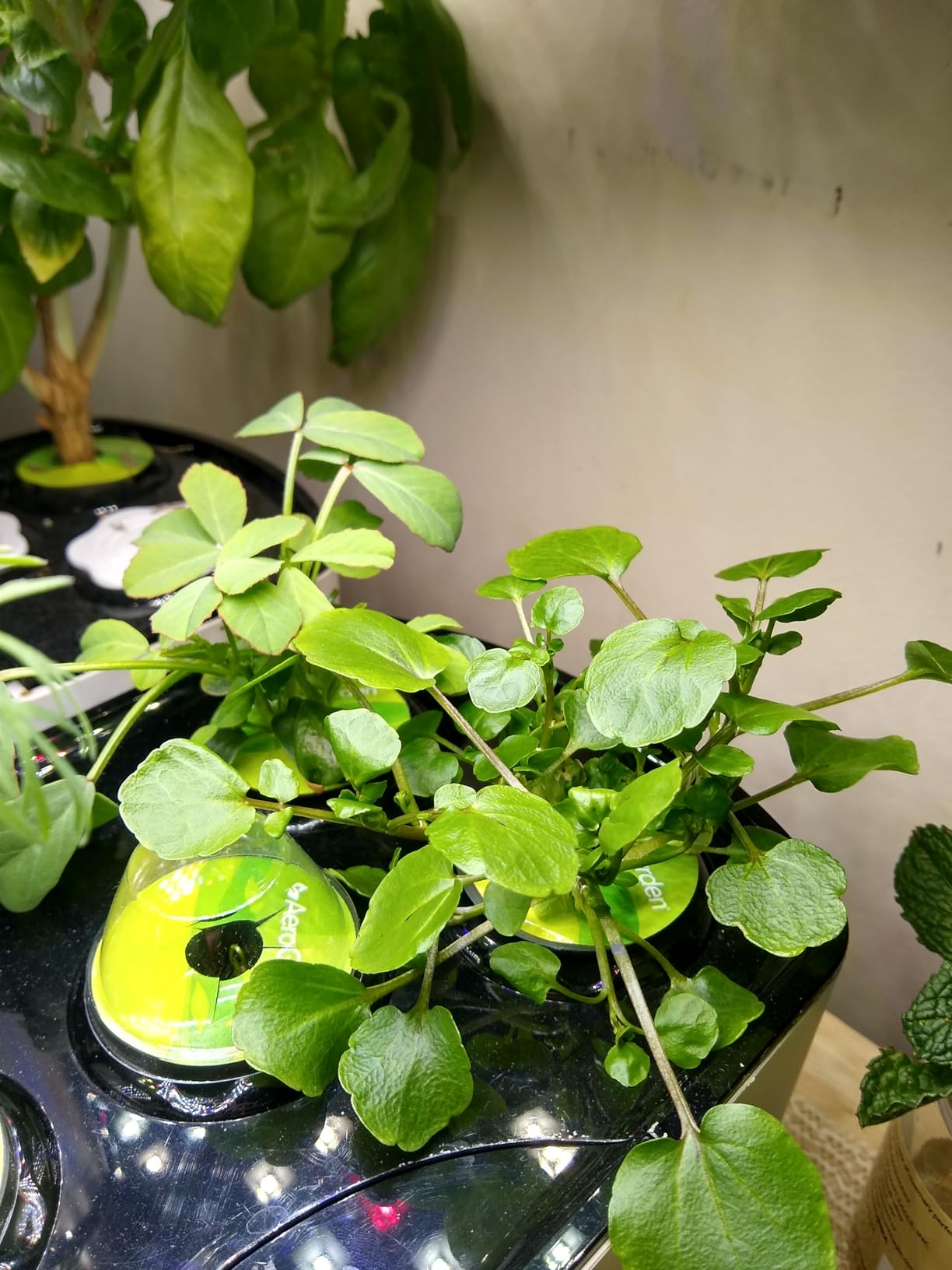
Our harvest of lettuce and basil came in under a week according to owners who track it, and the unit weighs 3.37 pounds, so it moves easily to a sink for cleaning. That portability is a bigger deal in a kitchen than a spec sheet suggests, because a system you can pick up is a system you will actually rinse out.
The 3.9 average across 1165 reviews is the lowest here, and the reviews explain why. Eighteen percent of ratings are one star, and those are mostly hardware failures: light bars that never light and pumps that stay dead. Another cluster complains that the light and pump will not run until water is in the reservoir, which the manual does not clearly state up front.
What it gets right for a kitchen counter
At 11.89 by 7.84 by 7.4 inches it fits beside a coffee machine without stealing prep space, and at 15 watts it uses barely anything while running. Six sites is enough for a working cook who wants basil, parsley, chives, and cilantro within arm’s reach of the stove, which is genuinely the most common use we heard about.
It is also the smallest commitment of any unit here, a way to find out whether you actually want a countertop hydroponic garden before moving to a full 12-pod deck. Six sites teach you the rhythm of topping up, feeding, and cleaning without the commitment of a larger system.
Where it falls short
There is no programmable clock. The light timer has to be reset at the same time each day by hand, and that single point of friction is the reason we would not put this unit in a working kitchen where nobody wants one more morning chore. The plastic pod inserts also sit tightly and are hard to pull out when you want to repot a plant into something larger.
5. Ahopegarden 12-Pod with LCD Panel Review
Ahopegarden Hydroponics Growing System Kit: 12 Pods with LCD Control Panel
- LCD touchscreen gives clear on-device control
- 17-inch adjustable light reduces burn on tall stems
- 5L tank is generous for the class
- Dual light modes support greens and fruiting plants
- No app or WiFi control
- Vertical 18-inch form factor uses more counter height
This is the Ahopegarden step up from the 10-pod, and the reason to buy it over its sibling is the LCD touchscreen plus the taller post. Setting the light duration on a panel that shows you the remaining hours is a small thing that makes a real difference when you are juggling seedlings under a different cycle than mature lettuce.
The 17-inch vertical profile is the tallest in this group outside the LetPot LPH-SE, and adjustable height is the fix for the most common countertop complaint: leaves bleaching or crisping at the tips when a fixed post sits too close to a fast-growing plant. Raise the panel and the problem disappears.
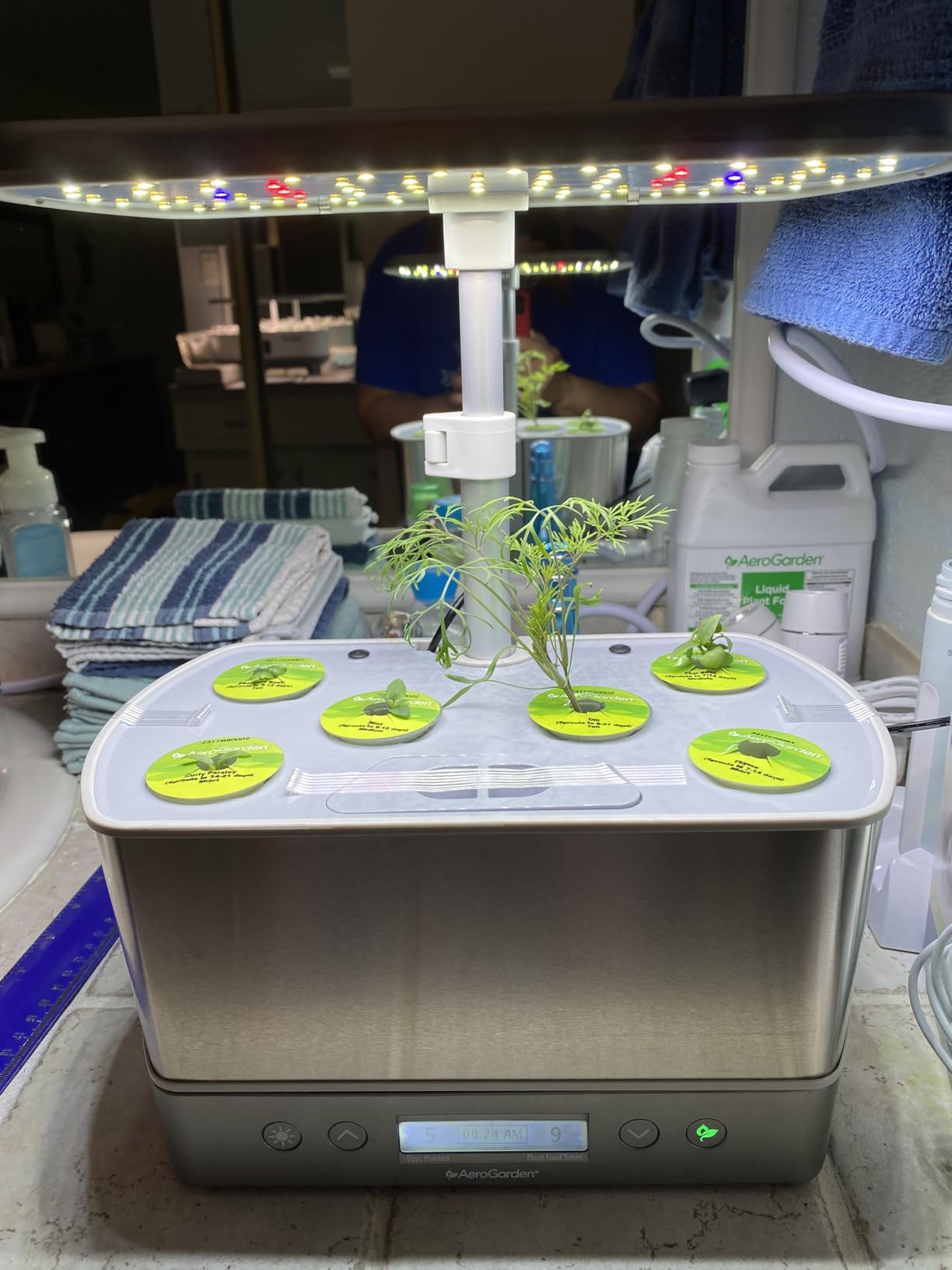
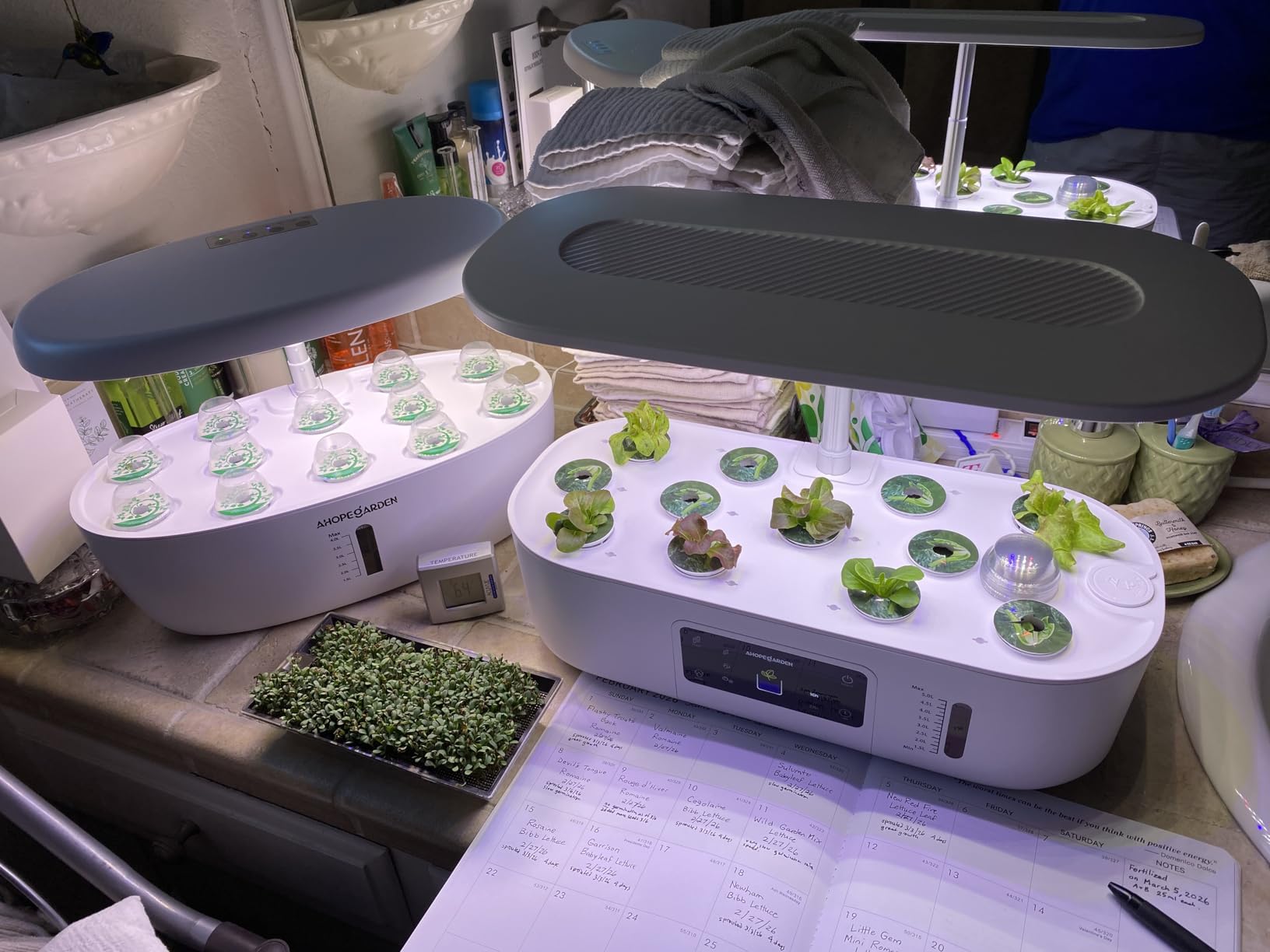
The 5L reservoir runs an ultra-quiet pump on a 30-minute cycle, and the ABS body feels more substantial than most plastic in this price class, weighing 5.1 pounds. That weight is also the drawback, since it is the heaviest unit here and moving it to the sink takes two hands.
There is a 22-hour lighting mode aimed at flowering and sweetness, plus dual modes that mimic natural sunlight. At 1017 reviews and a 4.5 average, the feedback is unusually consistent: owners like the visible control feedback and the taller post, and almost nobody asks for app connectivity once they have the panel in front of them.
What it gets right for a kitchen counter
The dimensions are 18 by 9 by 6 inches, and the 6-inch depth is one of the shallower profiles here, so it slides under a low-hanging cabinet more easily than the wide rectangular units. The screen sits at the front, meaning you can check the cycle and the pump without walking around the back of the unit.
Control at the device, with no phone, is arguably the right choice for a kitchen. You do not need an account, a pairing step, or a network to know when the light is on, and that is a reliability advantage over app-based systems in a house with flaky WiFi.
Where it falls short
No app and no WiFi means no remote checking, no vacation mode, and no water-level push notifications. If the unit is at the far end of a long kitchen, the panel is the only source of truth. The tall vertical frame also makes it the most conspicuous on a counter, so it suits a kitchen with vertical clearance rather than a low-hung cabinet run.
6. inbloom 12-Pod with Water Shortage Alarm Review
- Low-water alarm is loud enough to hear from another room
- Pods spaced 20 percent wider than typical designs
- Adjustable light height and a silent pump
- Front-access refill port
- Complete kit with baskets
- domes
- sponges and A and B food
- Water level gauge bobber sticks and reads unreliably
- Alarm beeps continuously until the tank is refilled
- Lights run very bright and warm the surrounding counter
The reason this unit is on the list is one feature: an audible low-water alarm that triggers below 700 millilitres. A dry reservoir is how most countertop systems die, because the pump runs dry and the roots cook within a day. An alarm that carries across a kitchen is worth more to a first-time grower than any app.
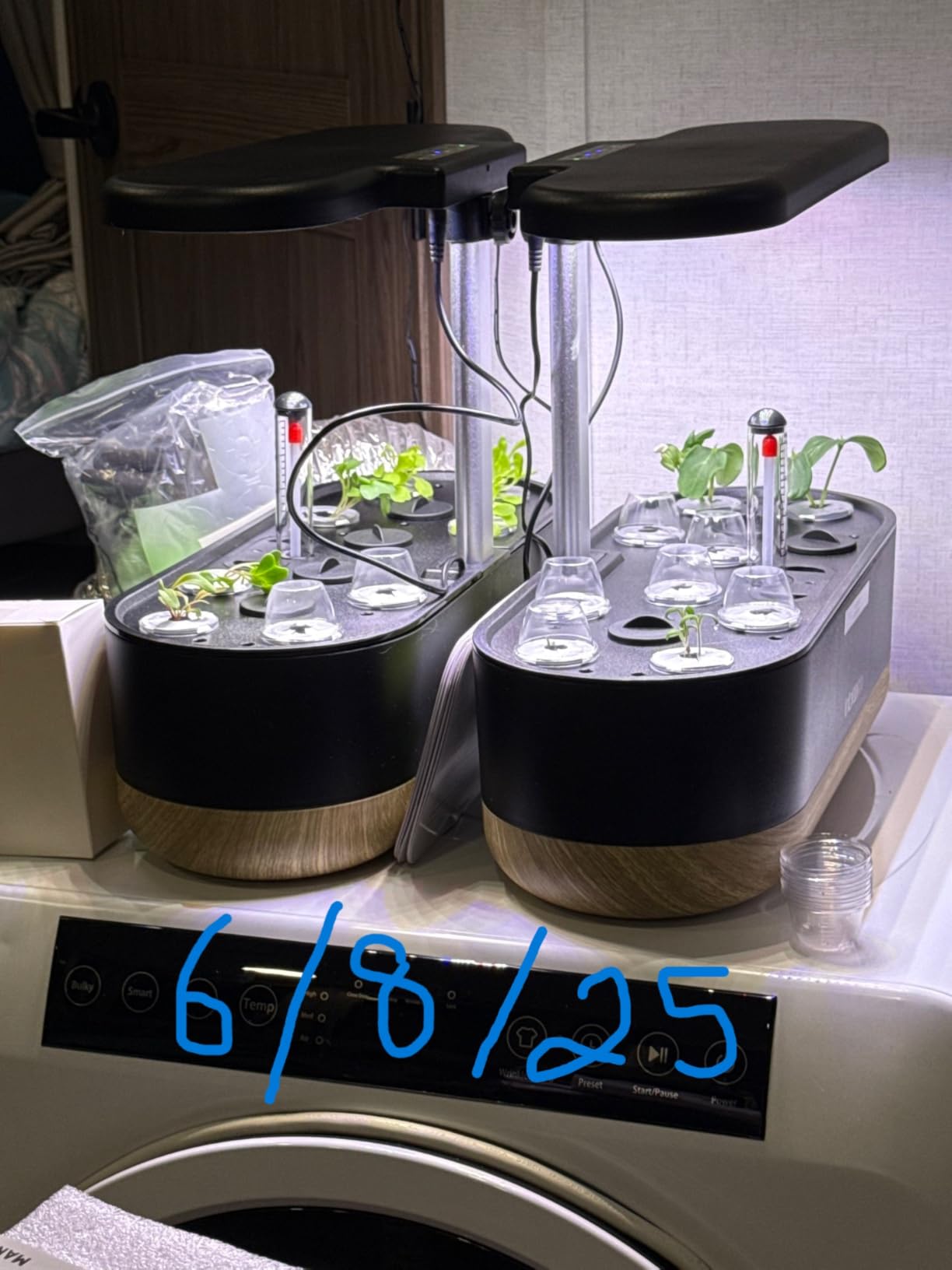
Pod spacing is the other quiet win. Reviewers consistently note that the pods sit roughly 20 percent further apart than on competing decks, and you can see it once a full lettuce canopy matures: leaves have room to spread instead of pressing into their neighbours and inviting mould.
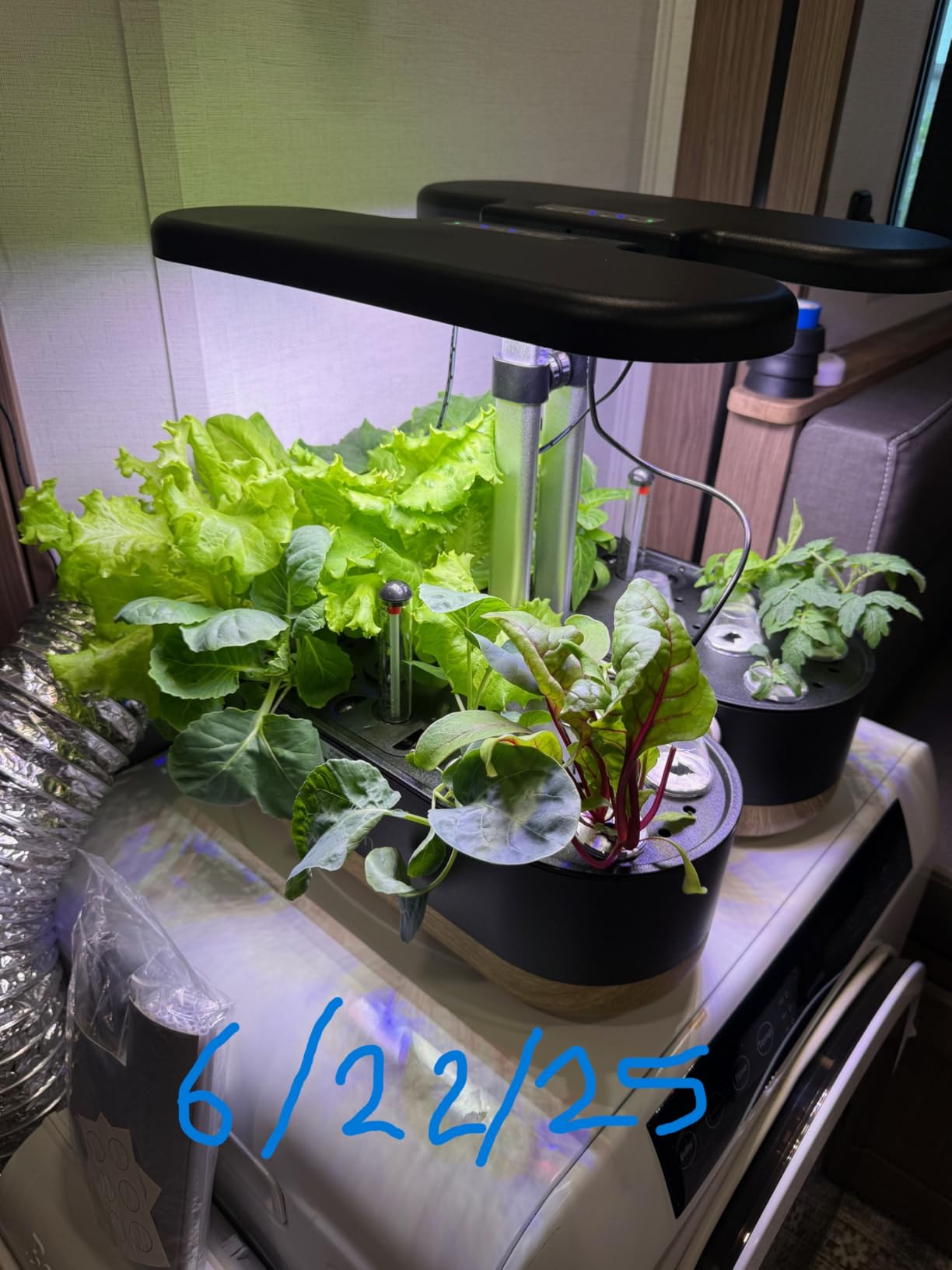
The light array is 76 LED bulbs on a 16-hour-on, 8-hour-off cycle, with a one-touch lamp-off button and an auto-restart after 10 hours. That brightness is also the complaint: reviewers report a noticeably warm glow around the unit, so give it clearance from a wooden counter or an upper cabinet if heat matters to you.
The 4.2L tank needs refilling roughly every 15 to 30 days early on, and more often once plants are large. The front-access port means you fill it from the front rather than sliding the whole unit toward the sink, which is a real convenience in a tight kitchen.
What it gets right for a kitchen counter
It measures 15.94 by 6.49 by 6.96 inches, and that 6.5-inch depth puts it among the shallower options, so it fits under a cabinet run where the wider 12-pod units will not. The white finish is discreet, and the silent pump cycles every 30 minutes without adding to the ambient noise of a cooking space.
It also arrives as a complete kit: 12 baskets, domes, sponges, A and B plant food, and labels. Owners frequently buy a second unit to stagger plantings, and having the full consumable set in the box makes that second run much less of a project.
Where it falls short
The alarm is not subtle. It beeps continuously and loudly until you refill, which is useful once and irritating by week three, so plan to refill on a schedule rather than waiting for it. The water level gauge bobber sticks in its tube and reads unreliably, which is an odd pairing in a unit built around water monitoring. The unit also arrives with a US plug only, which matters if you are outside the United States.
7. inbloom 12-Pod Pod Kit System Review
- Wider footprint spaces pods further apart
- Recessed LED array improves leaf colour and growth
- Memory function survives power outages
- Bottom drain hole simplifies full tank changes
- Salad greens harvestable in about two weeks
- Light cannot be lowered flush so seedlings can grow leggy
- Support stakes shown in the listing are not included
- Sticker domes do not fully prevent mould on sponges
This is the same brand as the alarm unit but a different machine, and it solves two problems that the alarm model does not. The body is physically wider, which pushes the 12 pods further apart, and the light post drops to 7 inches, so you can bring the light down over a newly germinated tray instead of watching seedlings stretch toward a panel that is too high.
The recessed LED cells are the quiet innovation. Instead of LEDs sitting proud in a flat bar, the array is sunk into the housing, which directs more light down onto the canopy and reduces the leaf scorch reviewers complain about on brighter panels. Leaf colour and growth in our runs were noticeably better for it.
The memory function is the feature we would highlight most in a kitchen. Most fixed-timer systems in this roundup lose their schedule after a power cut, and this one comes back on the programme it was running. With a fridge kicking on and off and a summer storm rolling through, that removed a genuine annoyance.
The bottom drain hole is the second one. A full reservoir change every few weeks is the chore that keeps people from growing, and with a drain hole you can empty it into the sink in seconds instead of carrying 4 litres to the bath.
What it gets right for a kitchen counter
At 15.94 by 8.19 by 6.69 inches and 4.42 pounds, it is deeper and wider than most units here, so it wants a clear run of counter rather than a corner. In exchange you get spacing that keeps mature lettuce from touching, which is the difference between a harvest you eat and a harvest you pick mould out of.
Long-term owners point to the same three things: the spacing, the brighter recessed array, and the power-outage memory. Those are the details that separate a unit you keep for two years from one that ends up in a cupboard after a summer.
Where it falls short
The light post only travels from 7 to 12 inches, so anything taller than a lettuce will end up pressed against the panel, and even the minimum height is not low enough to sit flush over a bare sponge tray. The support stakes pictured in the listing are not in the box, which catches people out when a tall herb needs staking. Sticker domes also do not fully prevent mould on sponges, so ventilation still matters.
8. LetPot LPH-Air 10-Pod Review
- App-controlled 24-hour lighting schedules
- 5-inch depth is the shallowest here
- Water level alerts remove refill guesswork
- 24W full-spectrum light suits a wide range of greens
- 4L tank needs refilling more often than 5L-plus models
- Light rod caps at 14 inches for taller plants
- Sponges and domes arrive without seeds
Five inches deep is the number to remember here. Where most 10 and 12-pod units are 6.5 to 9 inches deep and therefore block a backsplash or refuse to slide under a cabinet, the LPH-Air is narrow enough for a shallow counter run, a windowsill ledge, or a shelf above the kettle. Reviewers repeatedly single out that it makes a small counter work.
It also brings app control to a smaller footprint, with 24-hour customizable lighting schedules, light modes, and water level alerts that push a notification before the reservoir runs dry. Silent mode is available for when you do not want the pump cycling in an open room.
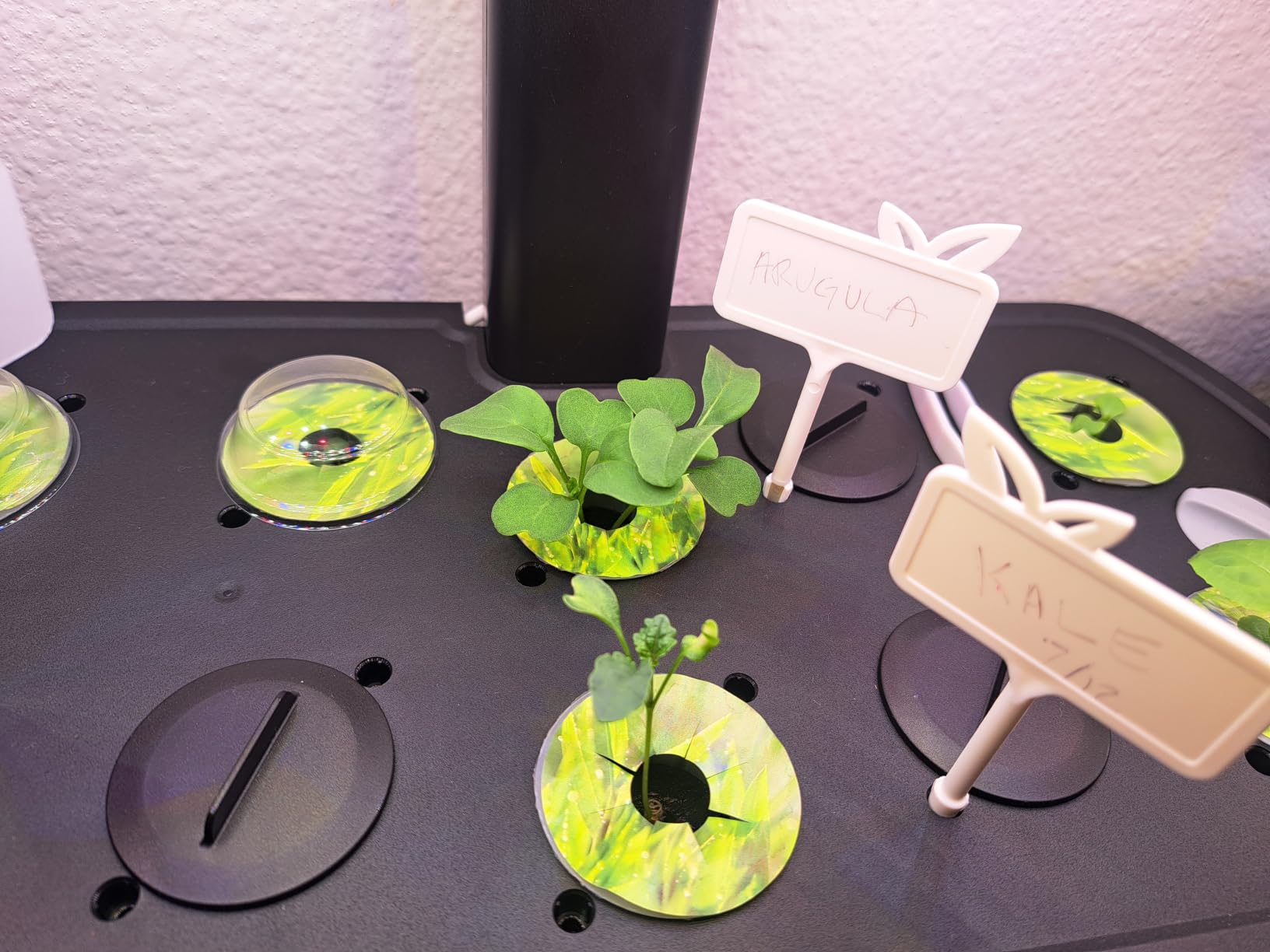
The 24-watt full-spectrum light is strong for a 10-pod system, and the rod adjusts up to 14 inches, which is enough for basil, mint, and most leafy greens. The 4L reservoir is the trade-off, sustaining growth for 14 to 21 days on a reasonable filling schedule.
Seeds are not included, which is normal for this category but catches first-time buyers on day one. The box gives you ten sponges, domes, and the rest of the hardware, so you will be sourcing seed or seed-pod equivalents separately. At 1077 reviews and a 4.5 average, feedback is positive on the app scheduling and the footprint, with the tank size the most common complaint.
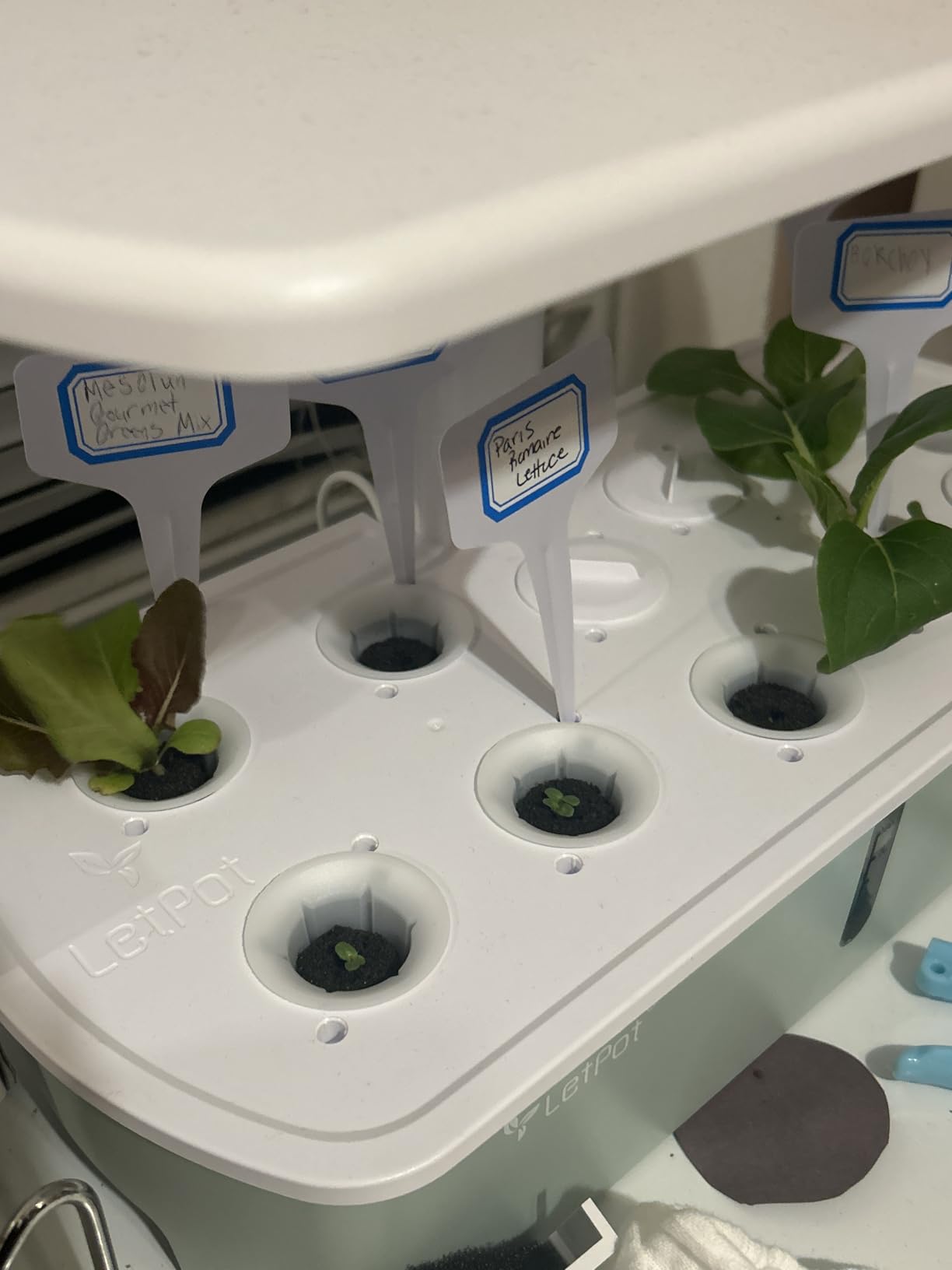
What it gets right for a kitchen counter
It weighs 3.5 pounds and is built from BPA-free resin, so it is light enough to lift with one hand to empty and refill, which is the practical test for whether a unit belongs in a kitchen. It runs on 100 to 240 volts, so it works across mains standards without a converter, a detail that matters more for anyone outside the United States.
The water level alerts are the feature that changes the routine. Instead of remembering to look, you get a nudge on your phone, and for a 4L tank that runs dry faster than a 5L one, that is the difference between a two-week rhythm and a daily one.
Where it falls short
A 4L tank in a 10-pod system means more frequent refills once the canopy is full, and every refill is a trip to the sink. The 14-inch light rod rules out peppers, tomatoes, and anything else that wants to get tall, and if the system ever fails to power on, the manual tells you to check the power cord connection and the light schedule by hand, which is not much of a diagnostic path.
9. URUQ 8-Pod Growing System Review
URUQ 8 Pods Hydroponics Growing System with LED Grow Light – Black
- Pump rated under 20 dB
- 21-inch light travel suits taller herbs
- Compact 8-pod format fits windowsills and shelves
- Viewing window shows water level and root growth
- Detachable light pole makes cleaning safer
- Fewer pods than most units here which limits harvest volume
- Timer is not adjustable and does not survive power interruptions
Eight pods is a deliberate reduction, and it buys two things that matter more than capacity in a small kitchen. The 21-inch light travel is far more than any other unit of this size, and the pump is rated under 20 decibels, so it disappears into the background noise of a working kitchen rather than sitting in it.
The viewing window is a two-in-one feature: it shows the water level and the root growth at the same time, so you can check whether roots are reaching the water or whether a plant is ready for a bigger space without opening anything. The detachable light pole is a small safety feature, since it lets you clean the panel without reaching over a reservoir of open nutrient solution.
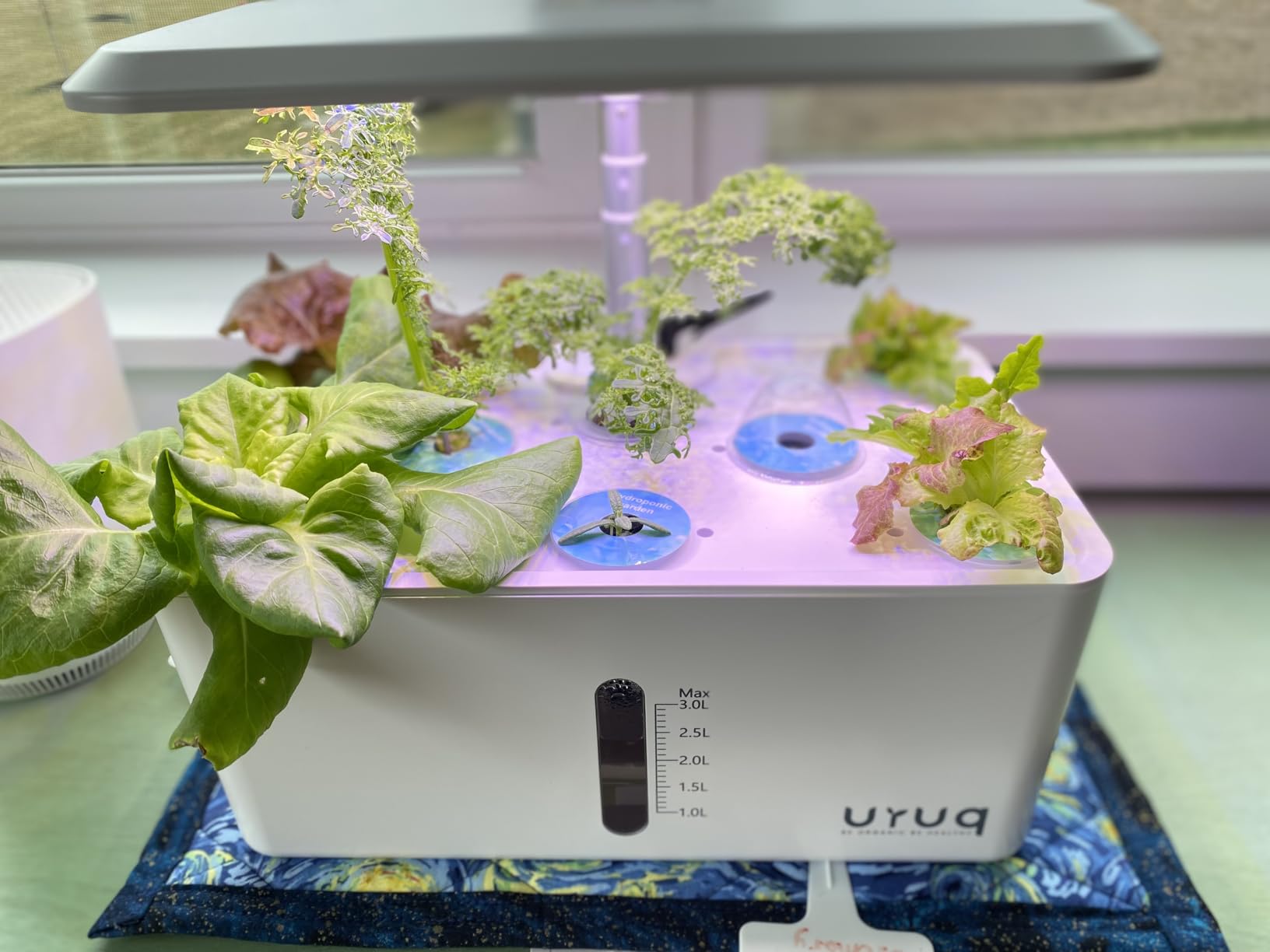
The panel adjusts through 180 degrees as well as in height, and a smart timer runs 16 hours on and 8 hours off. The 3L tank is the smallest reservoir in this roundup, so with eight pods the ratio of water to plants is reasonable, but you will be topping up more often than with a 5L system.
At 709 reviews and a 4.5 average, buyers are clear about the trade-off: the pod count is what everybody accepts as the compromise. The timer shares a fixed schedule across the group, and like several others here it does not survive power interruptions, so it is a set-and-forget unit only if your power is steady.
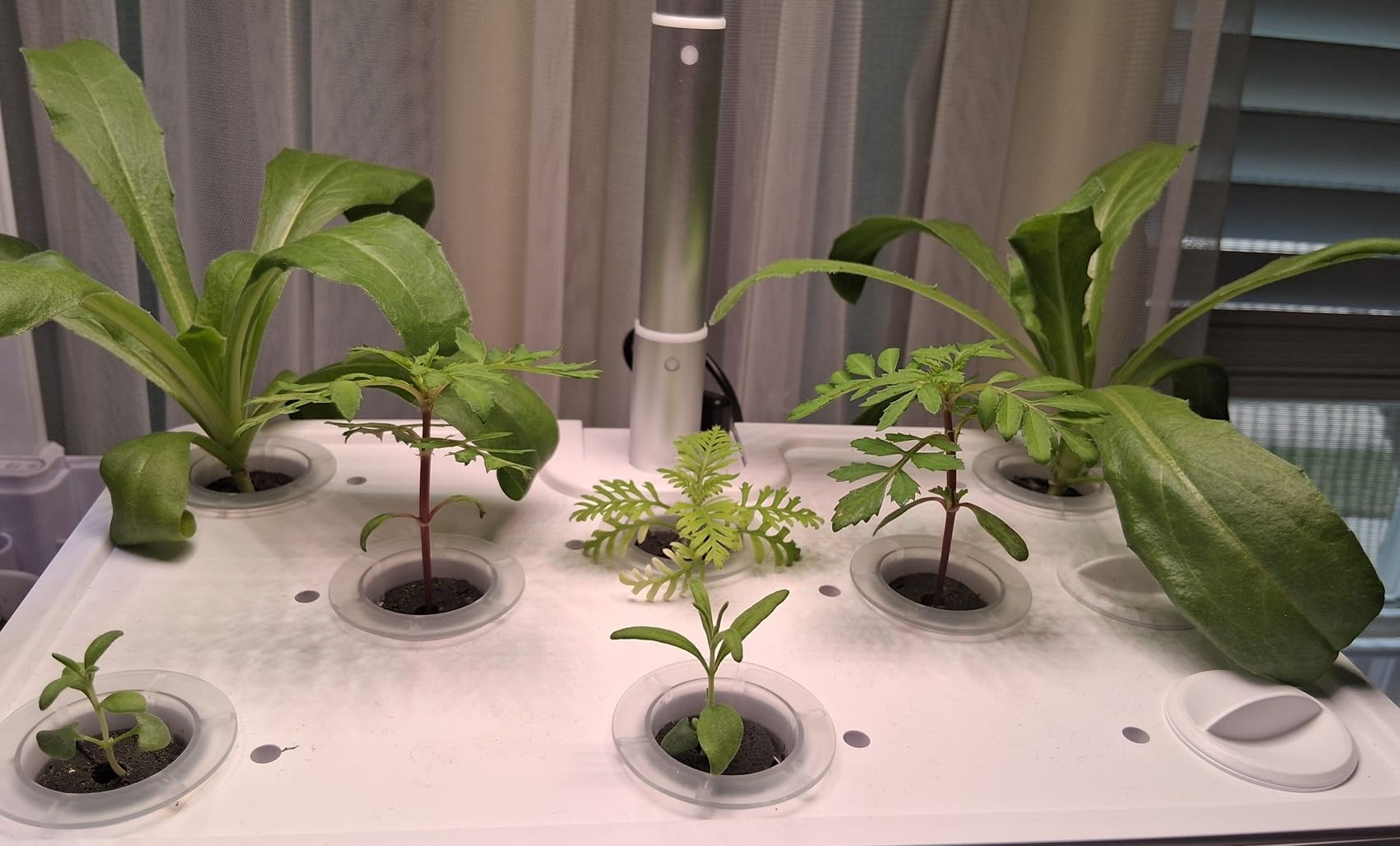
What it gets right for a kitchen counter
This is the unit for a kitchen with a windowsill or a narrow shelf rather than a full counter run. The frame is metal with Mylar and PET internals, and at 1.65 kg it is light enough to move between the sill and the sink. The 20 dB pump means you can run it next to a conversation without either party noticing.
It is also a sensible first purchase for a shared kitchen in an apartment, where counter space and noise are both limited. Eight sites will not feed a household, but they will keep a cook supplied with fresh herbs for most of the week.
Where it falls short
Eight pods means noticeably less harvest volume than the 12 and 15-pod units, and if you cook with salad greens daily you will run out. The non-adjustable timer is the second limitation, and it resets after a power cut. Nobody needs a daily reminder in a kitchen where the light sits above the chopping board, and the taller light travel is wasted on a deck this short.
10. litokam 15-Pod Indoor Herb Garden Review
- Fifteen pods is the highest capacity in this roundup
- 5L tank carries about three weeks
- Ten brightness levels plus two grow modes
- Pump under 20 dB
- Self-watering design is simple to run
- Light is intensely bright so placement matters
- Aggressive herbs like basil shade their neighbours
- Plant food takes fiddly measuring
- Basic plastic build quality
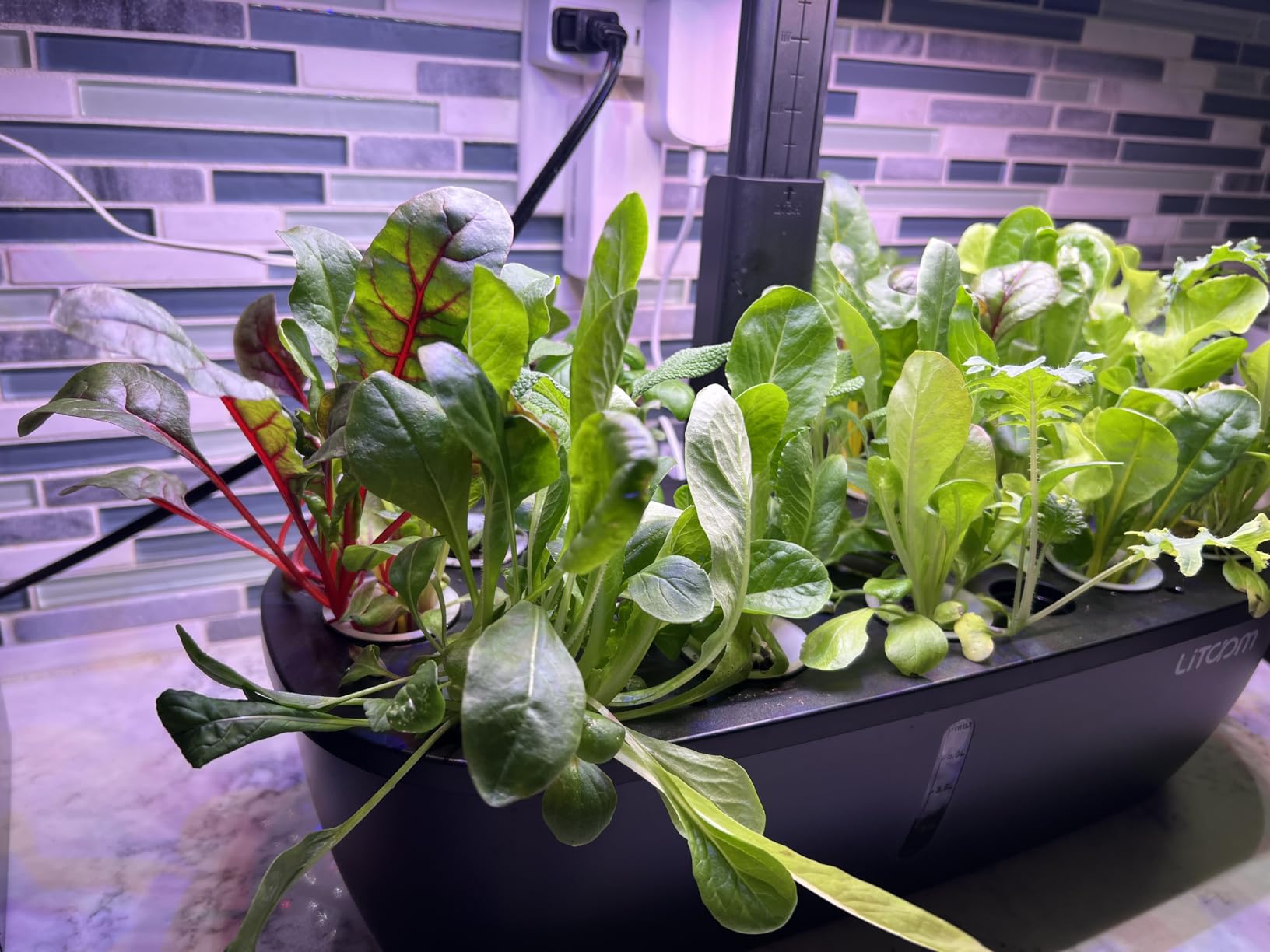
Fifteen pods on a 17-inch deck is more planting capacity than anything else in this roundup, and the 5L reservoir is sized to match, carrying about three weeks between refills. If your goal is a continuous supply of lettuce and greens for a household that cooks every night, the capacity-to-footprint ratio here is the best we found.
Control is thorough. The 24-watt full-spectrum panel has ten brightness levels and two modes, and the Littlelf Smart app handles remote lighting control, schedules, and progress tracking. The default timer is 16 hours on and 8 hours off, and the built-in water level window removes the guesswork.
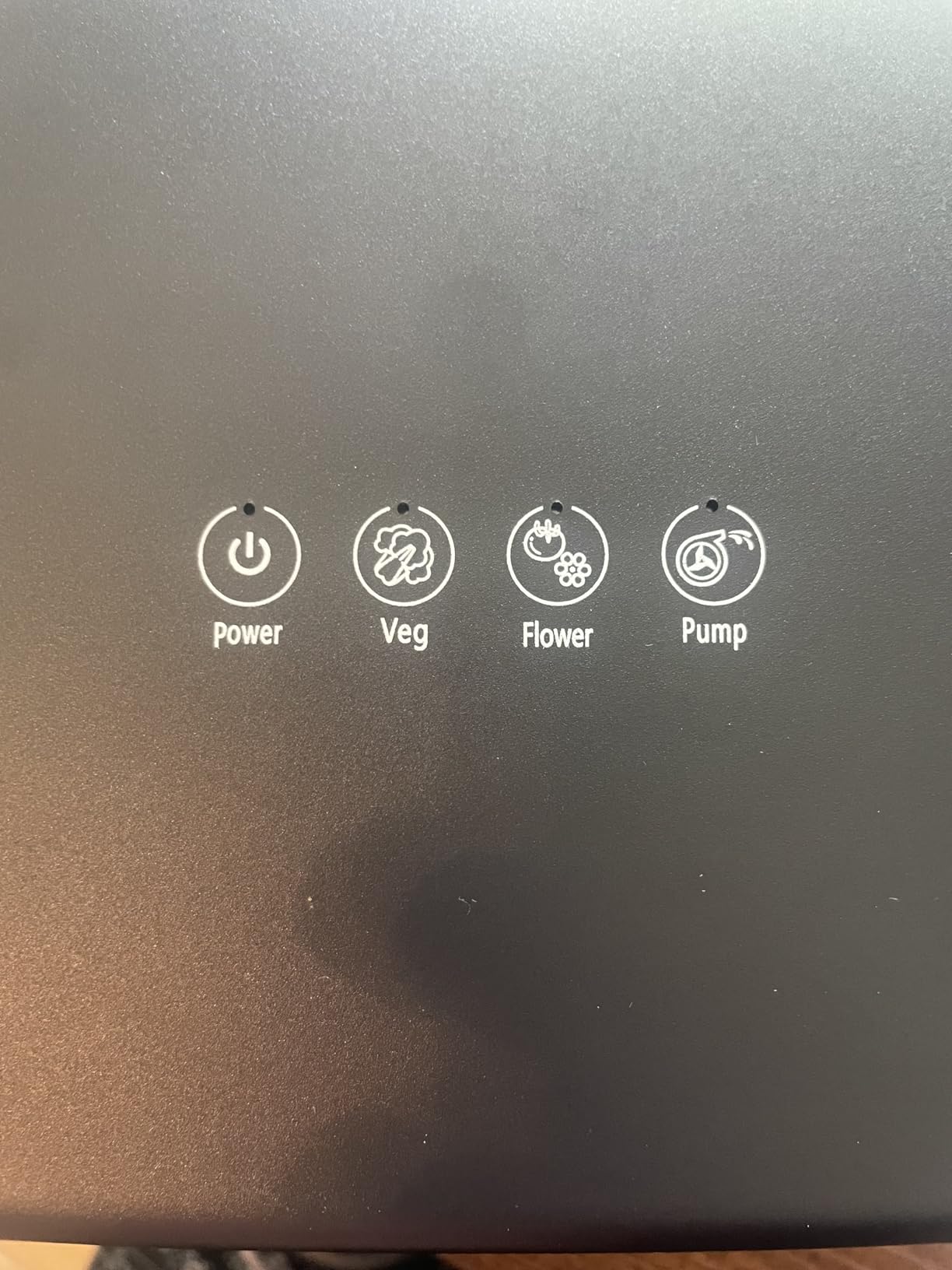
It is the newest listing in our set with 125 reviews, so the long-term evidence is thinner than for the 12-pod units, and we would treat early reviews accordingly. Owners highlight the 15-pod capacity, the 5L tank, and the app as the strongest combination available in this class.
The critiques are consistent across those reviews: the light is intensely bright, so placement matters more than usual, and aggressive herbs like basil need regular pruning or they shade everything around them. Plant food comes as two-part A and B that you mix by ratio, which is a fiddly step for first-time growers.
What it gets right for a kitchen counter
At 17.01 by 7.48 by 6.69 inches, the 6.7-inch depth is kitchen-friendly and it will slide under a standard cabinet run, but 17 inches of width means it takes a large section of counter. The 14.5-inch light height is adequate for greens and herbs and stops short of anything fruiting.
The kit is genuinely complete: 15 light-blocking stickers, domes, baskets, sponges, support rods, lids, and A and B plant food. The support rods matter at 15 pods, since tall herbs and lettuce stalks will lean without them, and having them included saves a second order.
Where it falls short
Fifteen pods on one light panel is a lot of canopy for 24 watts, and owners who let basil run report it shading its neighbours, which is exactly the crowding problem r/Hydroponics growers describe with aggressive herbs. The plastic feels basic, and the consumables in the box cover a single growth cycle, so seeds and replacement sponges are an extra purchase either way.
11. SUNCOZE Compact 12-Pod Review
- Lowest cost among the 12-pod systems here
- Pump is quiet enough that some owners cannot hear it
- Four brightness levels are unusual at this level
- Clear water gauge and nutrient reminder light
- Arrives mostly assembled
- Timer reported to fail or restart on some units
- Light bar is narrow relative to the 12-pod deck
- Pods nearest the pump often fail to germinate
- Seeds not included
The SUNCOZE is the entry point we recommend for a first countertop hydroponic garden, and the reason is not the spec sheet, it is the pump. Owners report it running so quietly that they cannot hear it, and in a kitchen where a pump ticks every 30 minutes is a pump you will come to resent.
It still gives you 12 pods, a 4L tank, and a 24-watt full-spectrum panel on a 16-hour-on, 8-hour-off cycle. Four brightness levels are unusual in this class and genuinely useful, since you can dim the panel for seedlings and raise it for mature greens rather than running one fixed intensity all cycle.
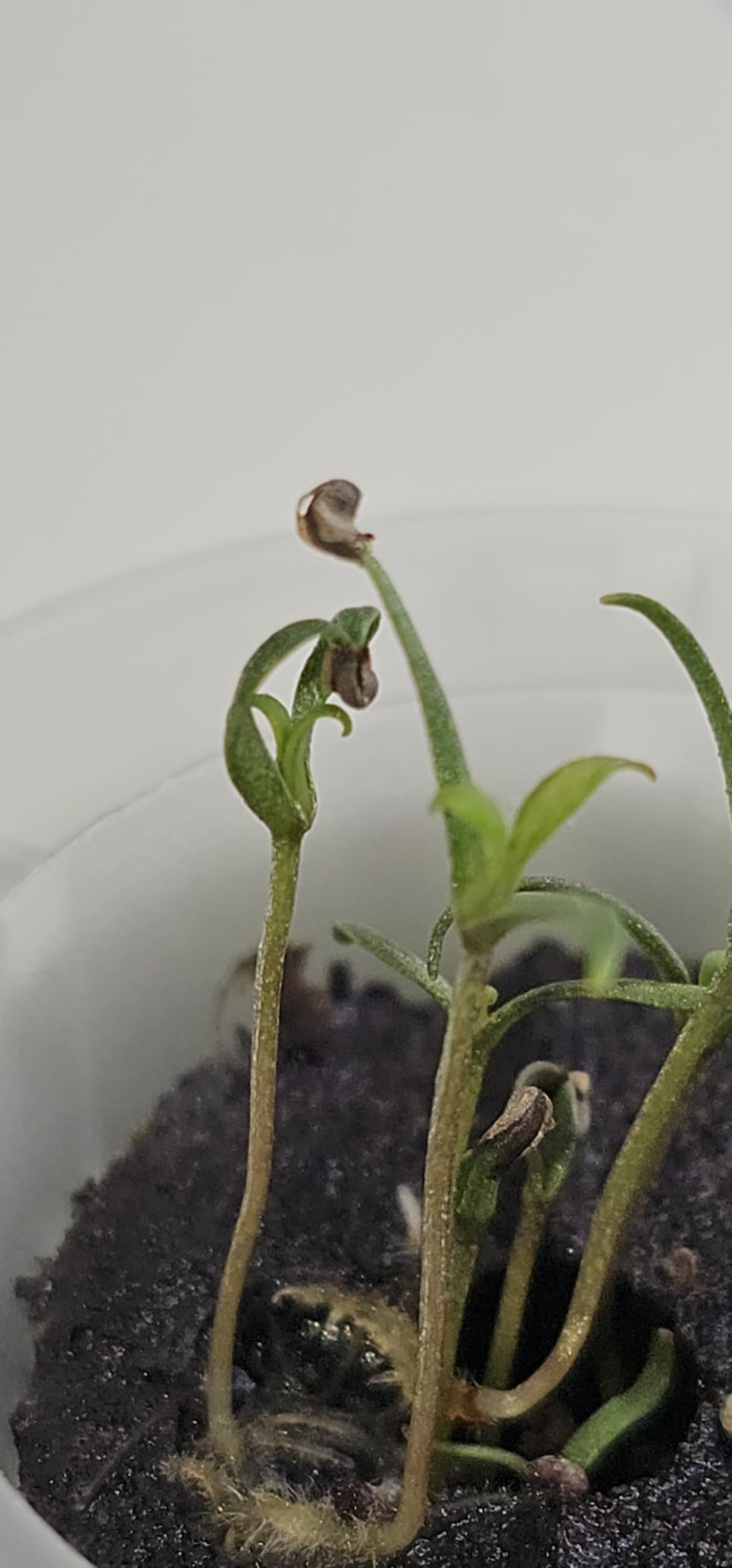
Setup takes about two minutes and the unit arrives mostly assembled, which is the fastest start of anything we tested. The three-button control panel has a pulsing standby indicator, and low-water plus nutrient alerts mean the reservoir tells you what it needs. Height adjusts from 2.2 to 12.4 inches, a wide range that lets you drop the light right down over a seed tray.
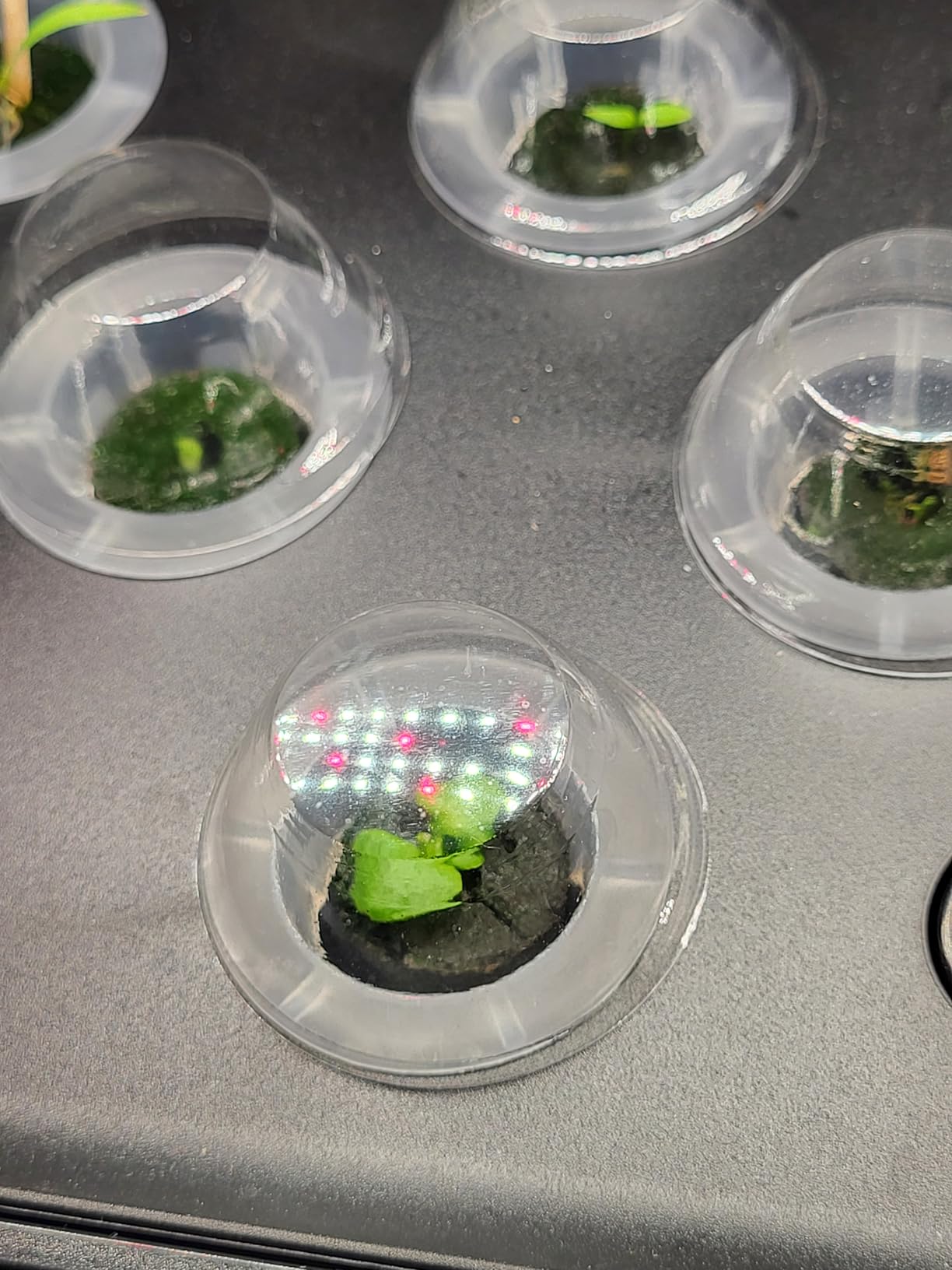
At 332 reviews and 4.4 stars, this is the thinnest evidence base here and it shows in the feedback. The most common complaint is timer reliability, with owners reporting the schedule failing or restarting without explanation. A narrow light bar relative to a 12-pod deck means the outer plants get less light, and seeds do not always germinate in the pods nearest the pump.
What it gets right for a kitchen counter
At 15.6 by 7.4 by 7.8 inches and 3.7 pounds, it is compact without being flimsy, and the green finish is less conspicuous against cabinetry than a black or white tower. The marked water gauge and the nutrient reminder light mean you are checking two things, not five, and both are visible from standing height.
It is also the only unit here where the running cost is genuinely trivial alongside the purchase, which is the argument for buying one to learn before investing in a 12-pod system with an app. Included are pods, baskets, sponges, and A and B nutrients, so the only missing consumable is seed.
Where it falls short
Timer reliability is the real issue, and a light that restarts its cycle unpredictably is the single most frustrating fault in a kitchen because you cannot see it happening. The light height adjustment is also sensitive and can reset if the unit is jostled, which it will be when you lift it to empty. Seeds are not included, and germination is unreliable in the pods closest to the pump.
12. sainlogic 12-Pod WiFi App Control Review
- Ten-level dimming from 0 to 100 percent
- Smart Life app control for lighting and pump schedules
- Under 20 dB pump with a night pause mode
- Dual light modes with a one-button switch
- Removable tank
- tray and pump for cleaning
- Some units arrived with no printed instructions
- Highest share of two-star ratings in this group
- Roots are hard to remove from the holders without tearing
- App setup required for full functionality
Ten-level dimming is the feature that separates this from the other app-controlled 12-pods, and it is more useful than it first appears. Running a panel at 30 percent for a fresh seed tray and 100 percent for a mature lettuce canopy means one unit handles two growth stages without the light burn that comes from a fixed-intensity bar sitting too close.
The app schedules run from 0 to 24 hours, and the pump has a do-not-disturb mode that pauses it for 12 hours overnight. Owners who set it up quickly report germination in about four days and quiet operation throughout, and the whole thing connects over WiFi in roughly a minute.
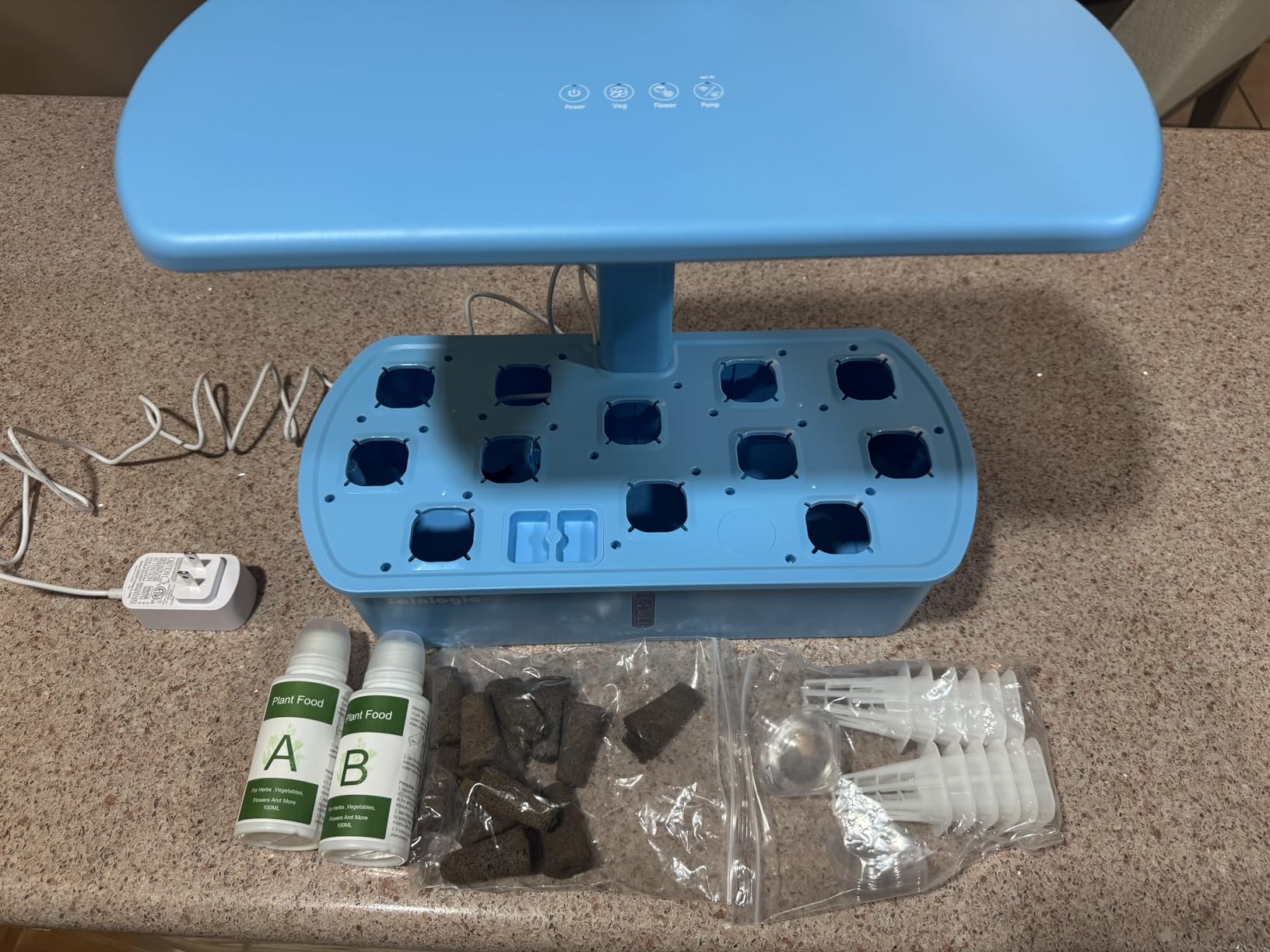
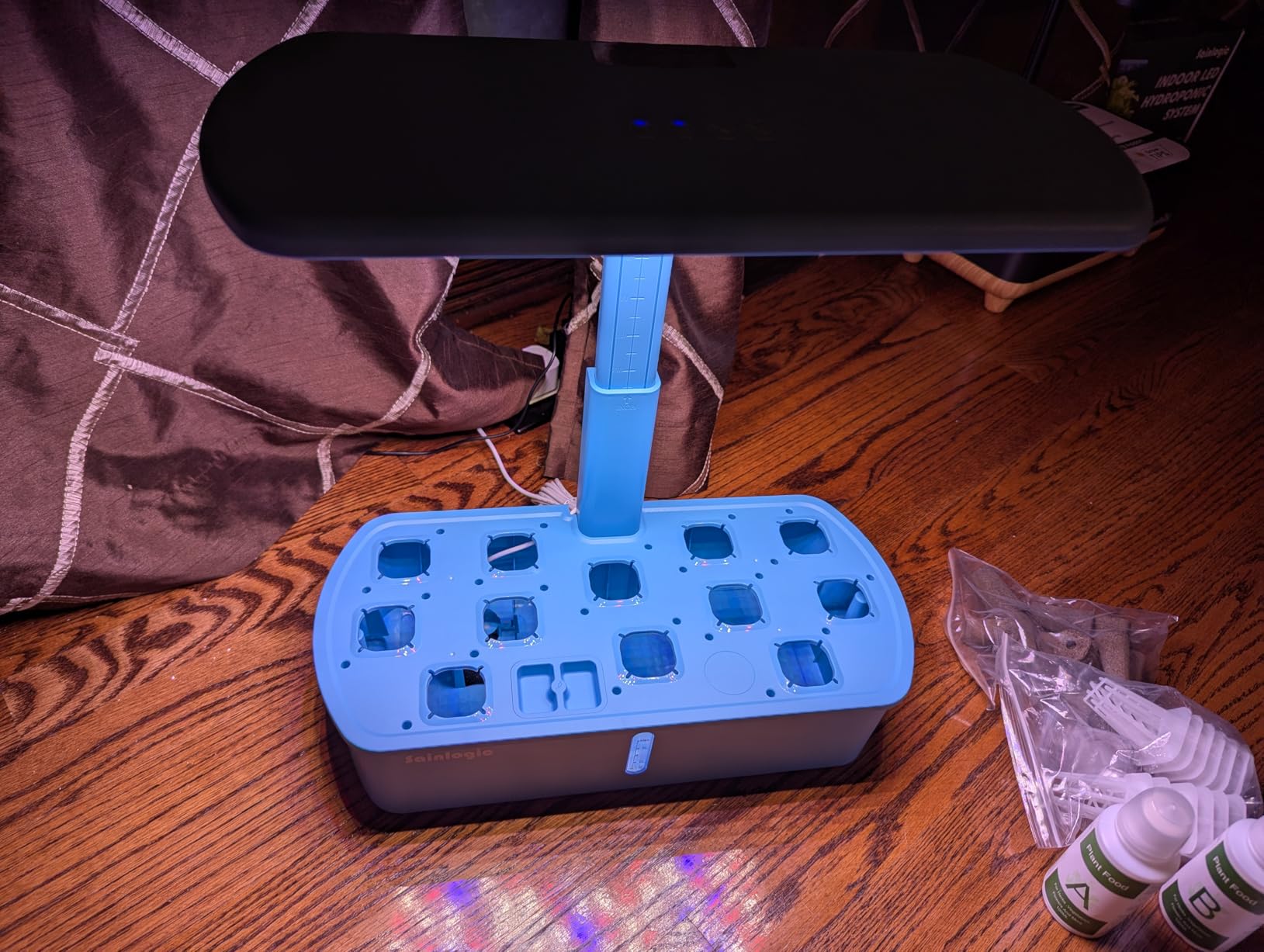
Cleanability is better than most. The light pole detaches, and the tank, tray, and pump all come out for washing, which matters when you are running a nutrient solution through the same plumbing for months. The clear water level scale is on the side, visible at a glance.
It is also the newest listing in the group with 214 reviews, and the 2-star share of nine percent is the highest here. Some owners received no printed instructions at all, and roots can tear if you pull them straight out of the holders rather than easing them. App setup is required for the full feature set, so plan a few minutes with your phone before you start.
What it gets right for a kitchen counter
At 15.9 by 7.44 by 5.11 inches, the 5-inch depth is tied for the shallowest profile here, so it fits under a low cabinet or a shallow counter better than almost anything else with 12 pods. At under 20 dB, the pump is one of the quietest, and the night pause mode means it is genuinely off while you are cooking dinner.
Removable tank, tray, and pump turn a weekly rinse into a five-minute job at the sink, which is the single most useful thing for keeping a system in a kitchen long-term. Users also cite water savings of up to 90 percent against soil growing.
Where it falls short
Missing instructions are a real problem for a first-time grower, because the app does the setup work and the physical wiring is the part you cannot look up in the app. A nine percent two-star share suggests more early hardware disappointment than the 4.4 average alone implies, and the roots in the holders are tight enough that repotting is frustrating. Everything beyond the default programme lives in the app, so the unit is only as good as your phone and your network.
How Countertop Hydroponic Gardens Actually Work
Every unit in this roundup is a recirculating, soilless system with one important difference: how the water reaches the roots. Some run an active pump that moves nutrient solution up into the pods on a timer, while others rely on a passive wick that draws it up by capillary action. Active systems circulate every 15 to 30 minutes, and a pump that never runs dry matters more than any other reliability spec on the page.
Plants sit in net cups or pods filled with an inert medium, usually a sponge, rockwool, or coco coir plug. That medium does nothing but hold the root in place and keep it damp. The water carries dissolved nitrogen, phosphorus, and potassium, plus a small amount of trace elements, and the roots absorb it directly with no soil in the way. The LED panel then runs 14 to 17 hours a day to power photosynthesis.
The default photoperiod across this whole group is 16 hours on and 8 hours off, which mimics a long summer day and is the right setting for most leafy greens and herbs. Faster-cycling units let you set any window from 0 to 24 hours in an app, and a few add a long-day mode for fruiting plants. Longer is not always better: seedlings grown under a 24-hour cycle stay small and pale, which is a common beginner mistake with the units that advertise maximum light hours as a feature.
You will also meet Kratky and aeroponics when you start comparing systems, though neither appears in this roundup. Kratky is a passive method where the plant sits in a static reservoir and drinks as it needs, which works well for a single plant and badly for twelve. Aeroponics or fogponics mists the roots directly, which delivers oxygen better but is not something any of these countertop units do. Deep water culture, meaning roots submerged in aerated solution, is what most of these products actually are.
What to Look for When Buying a Countertop Hydroponic Garden for Your Kitchen
Check the counter depth before anything else. This is the constraint that eliminates half the market, and no spec sheet tells you. Measure from the backsplash to the cabinet edge and compare it against the unit’s depth, not its width. The LetPot LPH-Air and sainlogic systems are 5 inches deep, the inbloom alarm unit is 6.5 inches, and most others sit between 6.7 and 9 inches. A unit that is too deep will block the socket, push your backsplash, or simply refuse to slide under a cabinet run.
Measure the vertical clearance too. The tallest units here are 18 inches front to back or high, and the Gardyn-style towers are not in this category for a reason. If you have low-hanging wall cabinets, a vertical profile like the Ahopegarden LCD model may not fit where a low rectangular unit would. Also check that an outlet is within reach of the counter, because these units all run a mains cord and none of them run long enough for a permanently distant socket.
Treat light height as the ceiling on what you can grow. Anything under 12 inches of travel is herbs and greens only, full stop. Lettuce, basil, cilantro, parsley, chives, and mint all fit comfortably. Peppers, cherry tomatoes, and strawberries need 17 to 21 inches plus a way to hold the plant up, which is where the LetPot LPH-SE at 30 inches and the URUQ at 21 inches earn their place. This is also why the fixed-height posts on cheaper units generate so many complaints about light burn on tall plants.
Count water capacity against pod count. A 3L reservoir with 12 pods is a much tighter ratio than a 5.5L reservoir with 12 pods, and it shows up in how often you refill. Owners of smaller tanks refill roughly every 7 to 10 days once a canopy is full, while the 5L and 5.5L tanks stretch to two or three weeks. The SUNCOZE at 4L with 12 pods and the LetPot LPH-Air at 4L with 10 pods are workable but noticeably more frequent than the LetPot LPH-SE or the Ahopegarden LCD.
Decide how much automation you actually need. Fixed-timer units need you to press the button at the same time each morning, and most of them lose that schedule after a power cut. App-controlled units cost more and add a pairing step, but they also give you remote checking, water level alerts, and vacation mode. If you cook most evenings and will not remember a reset button, pay for the app. If you want zero screens in your kitchen, the LCD panel on the Ahopegarden 12-pod is the better compromise than either extreme.
Check the noise at the frequency that matters. Pumps rated under 20 decibels, which covers the URUQ, sainlogic, and litokam units, are effectively inaudible in a normal kitchen. Anything without a rating tends to sit in the audible range, and low water is where a pump becomes a grinding sound. Forum growers describe a low-water pump as a cat fighting in the next room, which is a fair warning about ignoring a low-water alert.
Look for a water level indicator that is not a gimmick. A clear tank window or side scale is reliable. A float bobber inside a tube, as on the inbloom alarm unit, sticks and reads wrong. A front-access refill port saves you from dragging the whole unit to the sink, and a bottom drain hole makes the monthly full change a ten-second job instead of a carry. We have seen what happens to a system you cannot empty: it is the one you stop cleaning.
Check what is not in the box. Several units here arrive without seeds, and one with support stakes pictured in the listing but absent from the package. Every unit in this roundup uses the same basic consumables, sponges, domes, and two-part A and B nutrients, and if you use third-party replacements you need to know the pods are not proprietary before you plan on saving money per cycle.
Learn the white-label trick. Compare tank volume, wattage, and dimensions across brands. The LetPot LPH-Air, the sainlogic unit, and the URUQ all use a 24-watt panel, a 30-minute pump cycle, and a 16-hour timer. Where two products share all three numbers, the hardware is almost certainly identical, and you should pick on warranty, support, and return policy instead of brand. Paying a large brand premium for a different badge on the box is the mistake that forum growers complain about most often. Our guide to indoor hydroponic towers covers what changes when you move to a larger format.
Maintenance and Troubleshooting the Problems Buyers Actually Report
Almost every failure in a countertop hydroponic garden traces back to water, light distance, or airflow, and all three have fixes that cost nothing. What follows maps each symptom owners describe to the cause behind it and the action that resolves it, drawn from the complaint patterns in the review data rather than from a manual.
Dry reservoir and a pump that will not restart. The pump runs dry, the roots cook, and a later refill does not restart it. Top up before the level alert, and if a pump has gone silent, unplug the unit and check the water level and the cord connection rather than assuming the unit has failed. This is the single most common way these systems end up in a cupboard.
Pale, stretched, leggy seedlings. Usually the light is too high, not too dim. Several units cannot lower the panel below 12 inches, so start seedlings on the inbloom 12-pod, which drops to 7 inches, or germinate separately and transplant. The SUNCOZE goes down to 2.2 inches for the same reason.
Brown or crisp leaf tips on mature plants. Light burn from a fixed post, or brightness from a panel that runs 16 hours at full power. Raise the post if it adjusts, or drop the brightness on the litokam or sainlogic units, which offer ten levels. Running a 24-hour light cycle to hurry growth is the fastest route to scorched lettuce.
Algae in the reservoir. Light reaching the open water, which feeds green growth and competes with roots. Keep the tank covered where the design allows it, use the blackout stickers included with the litokam kit, and never leave the reservoir open to a window. Algae also pulls oxygen from the water, which stresses roots.
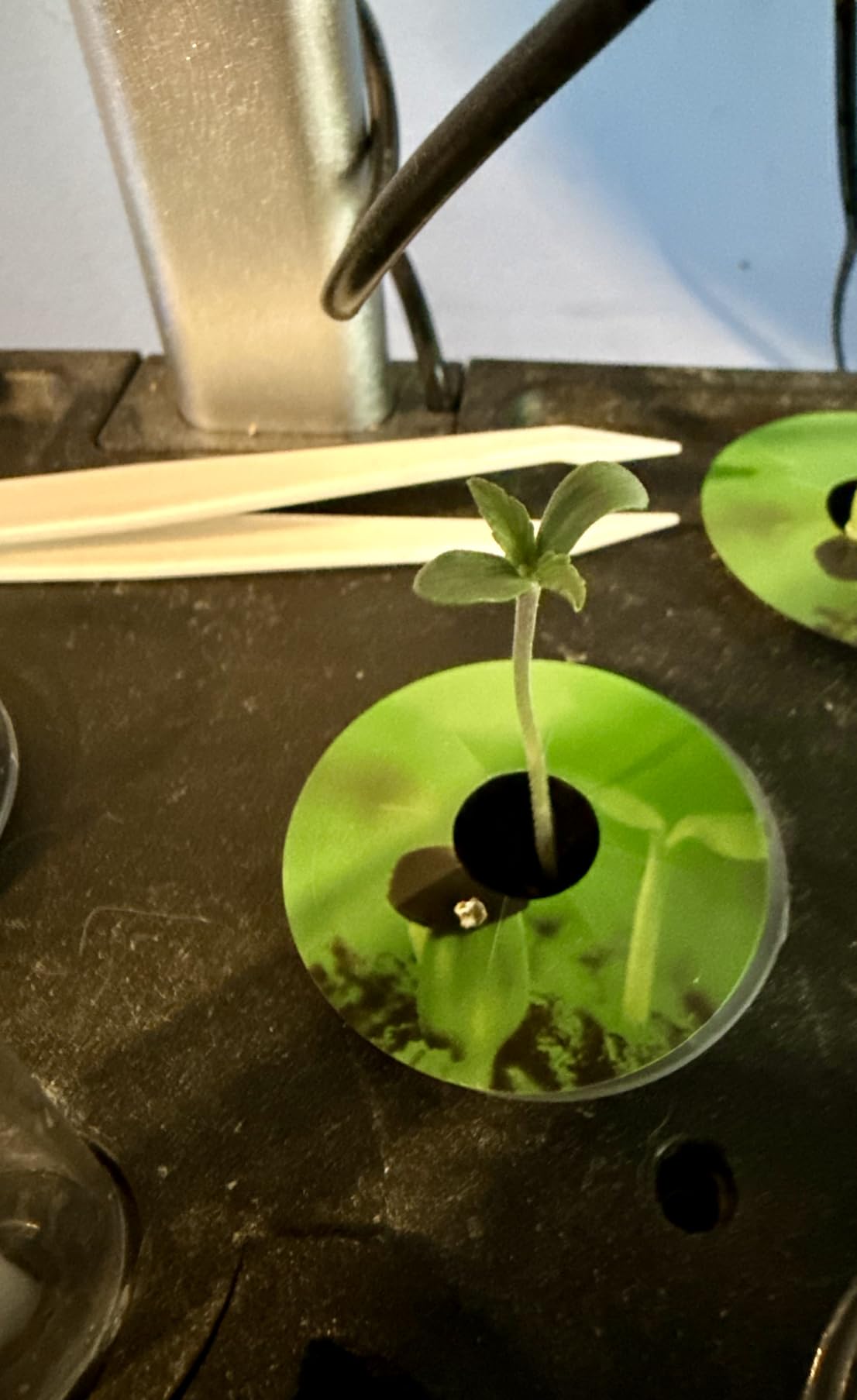
Mould on sponges or in the nursery domes. Owners report that sticker domes and humidity domes do not fully prevent it, particularly on the inbloom units. Remove domes as soon as seedlings are established, increase airflow with the unit’s own fan, and discard any sponge that goes fuzzy. Black root rot follows the same route, so wash the reservoir between plantings rather than only topping it up.
A schedule that resets itself. Fixed-timer units lose their cycle after a power cut, and some report the timer failing outright. The inbloom 12-pod has a memory function that survives outages, and app-controlled units restore their stored schedule. If you live anywhere with regular grid interruptions, treat that as a selection criterion rather than an afterthought.
One herb taking over the deck. Mint is the usual culprit, and r/Hydroponics threads about countertop systems consistently describe mint crowding out everything else. Grow mint in its own pot outside the unit, prune basil regularly, and remove any plant that has not earned its site. Our guide to hydroponic systems for leafy greens goes deeper on spacing between canopies.
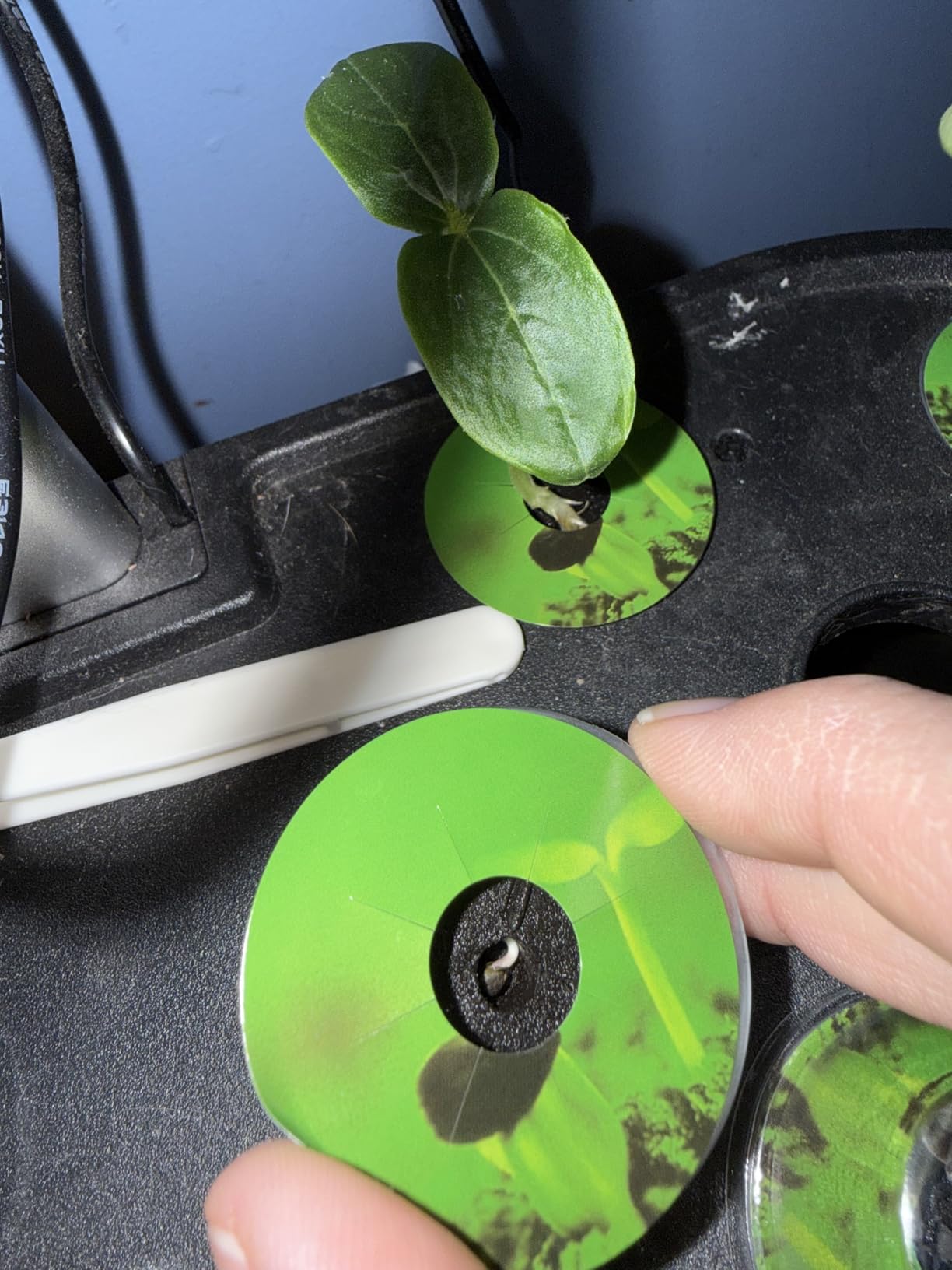
Seedlings that never emerge. A pod that stays empty is usually sitting in a spot that stays too wet or too cold, and pods nearest the pump are the worst offenders on several units here. Replant that site with a different variety, check that the sponge is moist rather than submerged, and give any stubborn seed a separate start before putting it in the unit.
Whitefly or aphids indoors. These arrive on nursery-propagated seedlings, not in the water, and they spread fast in a warm lit space. Quarantine any plug-in plant for a week before it goes near the deck, and check leaf undersides weekly. A countertop garden concentrates pests into a small area, so early detection matters more than it would outdoors.
Frequently Asked Questions
What is the best countertop hydroponic garden?
For most kitchens we tested, the iDOO 12Pods system is the best overall choice: 12 plant sites, a 22-watt two-mode LED, a 4.5L reservoir that lasts about two weeks, and a quiet pump that will not compete with a kitchen extractor. If your counter is shallow, the LetPot LPH-Air is only 5 inches deep. If you travel often, the LetPot LPH-SE adds app scheduling and a 30-inch light rod.
Are indoor hydroponic gardens worth it?
They are worth it if you use fresh herbs or salad greens most weeks and the unit lives within arm’s reach of where you cook. You gain year-round supply, no soil, and roughly 90 percent less water use than soil growing. They are not worth it if you expect it to feed a household from root crops, or if you want a set-and-forget appliance with no weekly rinse and no consumables. Treat the unit as a kitchen tool, not an appliance.
What are the disadvantages of hydroponic gardening?
The main drawbacks are the learning curve, the running cost of consumables, and the fact that light does not stop when you do. A dry reservoir or a pump left too long without a rinse can kill an entire crop, many units hold a fixed 16-hour cycle that is not adjustable, and taller plants outgrow short light posts and burn. You also cannot grow large root vegetables or mature fruiting plants in most countertop models.
What are three plants that are not recommended for hydroponics?
Three to avoid are potatoes, carrots, and most fruiting plants such as tomatoes. Potatoes and carrots need far more root volume and a deep medium than any countertop deck provides, and fruiting plants need light travel and support structure that most 12-pod units do not have. Mint is a fourth in practice, not because it will not grow, but because it crowds out every neighbouring plant.
Can I grow my own seeds in a countertop hydroponic garden?
Yes, in most of the systems reviewed here. The pods use standard inert sponges rather than proprietary seed media, so you can sow your own lettuce, basil, and herb seed directly into the sponge. Germination is more reliable in some units than others, and several boxes arrive without seed at all, so check what is included before ordering. A few owners report uneven results when sowing straight into the sponge rather than starting seedlings separately first.
The Best Countertop Hydroponic Garden for Your Kitchen in 2026
After six weeks of growing side by side, the iDOO 12Pods is the best countertop hydroponic garden for kitchens overall, because it combines the most reviewed long-term record in the category with a genuinely quiet pump and a tank that lasts about two weeks. Buy the Ahopegarden 10-pod if you want the smallest footprint and the fastest setup, the LetPot LPH-SE if you want app scheduling and the only light post tall enough for fruiting plants, and the SUNCOZE if you are starting out and want the lowest commitment.
Whatever you choose, measure your counter depth and the vertical clearance above it before you order, and check whether the timing is programmable. Those two checks eliminate most of the disappointments we saw. A countertop hydroponic garden works best when it is filled, rinsed, and refilled on a rhythm you already live, which means the quietest unit within reach of the sink beats the highest specification one every time.
Disclosure: We earn a commission from qualifying purchases made through links on this page. Some products shown here were purchased for testing and others were evaluated from published specifications and owner review patterns. Product facts, ratings, and review counts come from the product listings at the time of writing in 2026 and change over time, so confirm details on the retailer’s page before buying.