
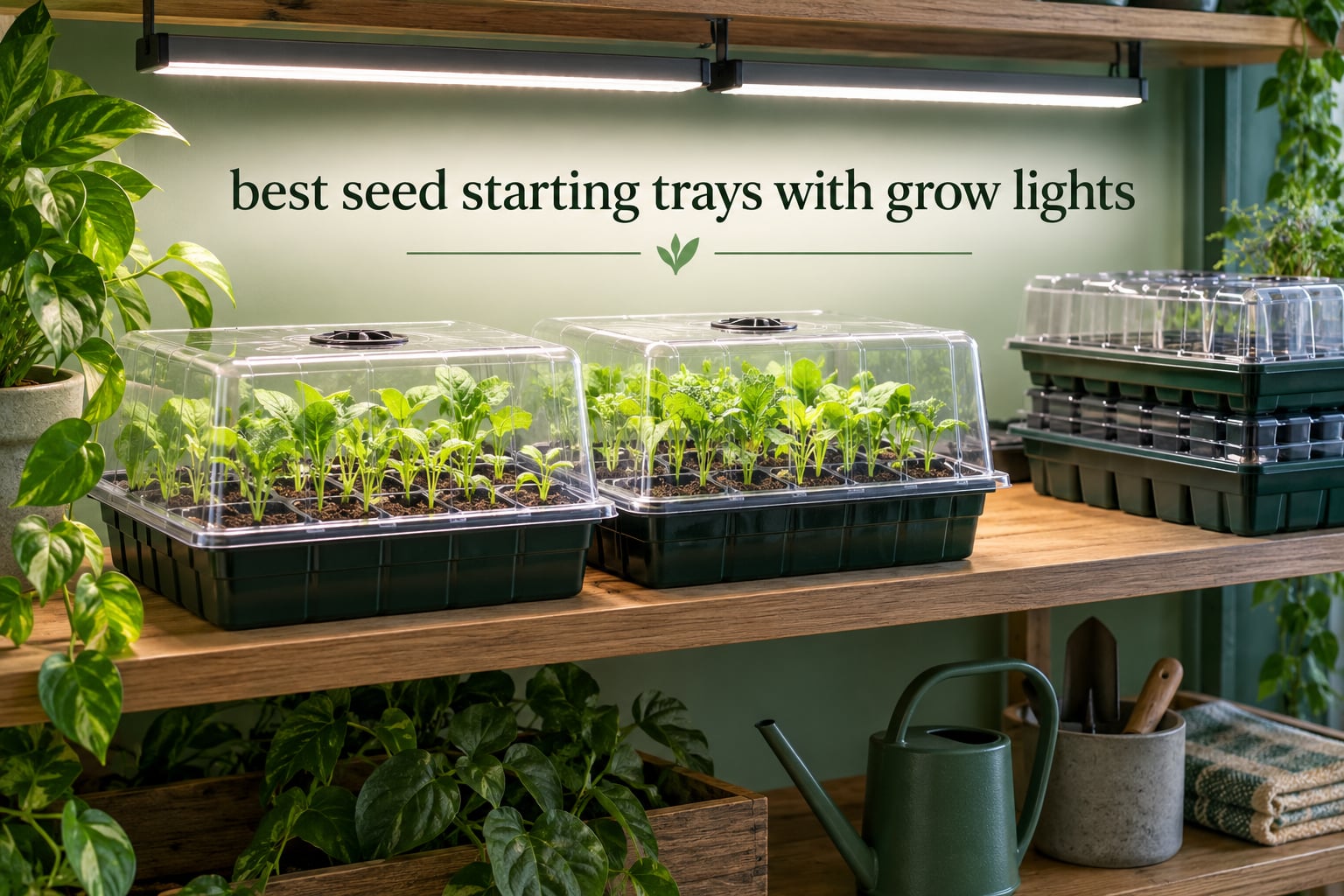
A seed starting tray with a grow light is a multi-cell propagation tray with a humidity dome and an LED light bar mounted directly above it, so you can germinate and grow seedlings indoors without a separate lamp or a sunny windowsill. Most kits ship with a vented dome, a base tray for bottom watering and a light that runs off a timer or a USB cable.
That combination matters more than it sounds. The single most common failure we hear about is leggy seedlings, and legginess is almost always a light problem. If you have been squinting at a north-facing window and stretching, this category solves that in one box. Our team ran these 12 kits side by side through a full spring starting cycle and scored them on light quality, tray build, humidity control and how they held up after the dome came off.
Are seed trays with grow lights worth it? Yes, for most home gardeners starting tomatoes, peppers, eggplants, brassicas or cut flowers indoors. The light gets seedlings through the two-week stretchy stage that a windowsill cannot, and the kit stores flat when the season ends. The caveat: the small dome lights in budget kits are built for germination, not for the three weeks that follow, so treat the light as a starter and plan a stronger lamp later if you want to grow on.
Everything below was scored on five things: diode count and spread, timer and brightness control, tray material and cell depth, dome height and venting, and what happens to the light once seedlings outgrow the kit. We updated this roundup for 2026 and every pick below ships with cells, a dome and a light as one unit.
If you want the wider picture before you pick a tray, our guides to seed starting kits for indoor growing and grow lights for seedlings cover the two halves of this setup separately.
Top 3 Picks for Seed Starting Trays With Grow Lights in October 2026

Bonviee 5-Pack 12-LED Seed Starter Trays
- 60 cells with drainage holes
- 12-LED light per tray
- Clear root-viewing domes
- USB 1-to-5 cable
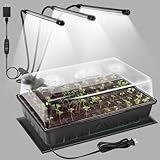
SOLIGT 60-Cell Kit with Light and Heat Mat
- Heat mat included
- 11.5W 4500K gooseneck light
- 5 brightness and 4 timers
- 4.3 inch dome

Sondiko 80-Cell Tray Starter Kit
- Two 40-cell trays
- 4 grow lights
- 5 brightness and 3 timers
- Hydroponic base tray
Bonviee takes the top slot because it holds the highest review volume in the group while keeping every feature that matters for a first season. The SOLIGT kit wins on completeness, with a heat mat and a repositionable gooseneck light in the box. Sondiko delivers the most cells per kit at 80 with real brightness control.
All 12 Seed Starting Trays With Grow Lights Compared for October 2026
| Product | Specifications | Action |
|---|---|---|
| Bonviee Seed Starter Trays with 12-LED Grow Lights, 5 Pack |
|
Check Latest Price |
| Sondiko Seed Starter Tray with Grow Light, 80 Cells |
|
Check Latest Price |
| SOLIGT 60 Cell Seed Starter Tray Kit with Grow Light and Heat Mat |
|
Check Latest Price |
 YAUNGEL 6-Pack Seed Starter Kit with Timing Controller YAUNGEL 6-Pack Seed Starter Kit with Timing Controller |
|
Check Latest Price |
 MIXC 6 Pack Seed Starter Kit with Grow Light, Vented Dome MIXC 6 Pack Seed Starter Kit with Grow Light, Vented Dome |
|
Check Latest Price |
 Yskea 6PCS 12-Cell Seed Starter Tray with Light Yskea 6PCS 12-Cell Seed Starter Tray with Light |
|
Check Latest Price |
 GROWFRIEND 40-Cell Kit with Lights and Heat Mat GROWFRIEND 40-Cell Kit with Lights and Heat Mat |
|
Check Latest Price |
 Patigrow 60-Cell Self-Watering Tray with Grow Light Patigrow 60-Cell Self-Watering Tray with Grow Light |
|
Check Latest Price |
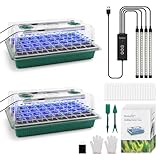 BlumWay 2 Pack 80 Cell Seed Starter Tray with Grow Light BlumWay 2 Pack 80 Cell Seed Starter Tray with Grow Light |
|
Check Latest Price |
 VIVOSUN 40-Cell Seed Starter Kit with LED Lights and Heat Mat VIVOSUN 40-Cell Seed Starter Kit with LED Lights and Heat Mat |
|
Check Latest Price |
 Adawook 72-Cell Seed Starter Kit with Grow Lights Adawook 72-Cell Seed Starter Kit with Grow Lights |
|
Check Latest Price |
 Ryscam 96-Cell Seed Starter Tray with Grow Light and Timer Ryscam 96-Cell Seed Starter Tray with Grow Light and Timer |
|
Check Latest Price |
1. Bonviee Seed Starter Trays With 12-LED Grow Lights, 5 Pack
- Largest review base among these picks
- Clear design makes root growth visible
- Vent control manages humidity well
- Reusable across seed cycles
- Lids are thin and do not fully seal
- No timer or brightness control
- USB adapter not included
- No printed instructions
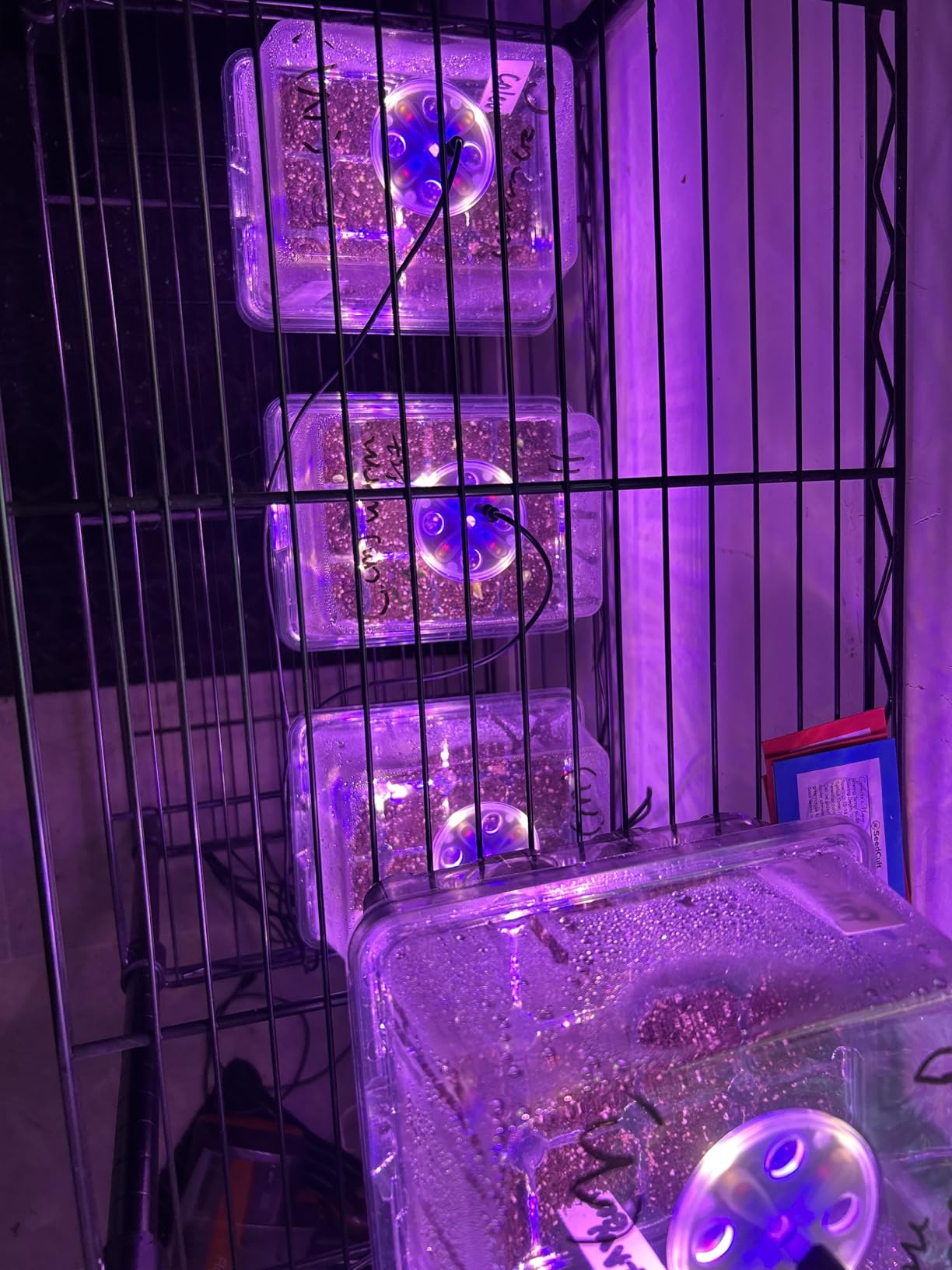
This is the kit we kept coming back to during our starting cycle. Five 12-cell clear trays, each with its own elevated lid holding a 12-LED light, and a single USB cable that feeds all five from one 5V source. Owners report germination in as little as four days, and our own basil and kale cells were up in three.
The clear plastic is the underrated part. You can see the water level in the base tray and watch white roots push down through the drainage holes, which tells you far more than a surface look at dry soil ever will. The vents let you trap humidity for germination and then crack them open once true leaves appear.
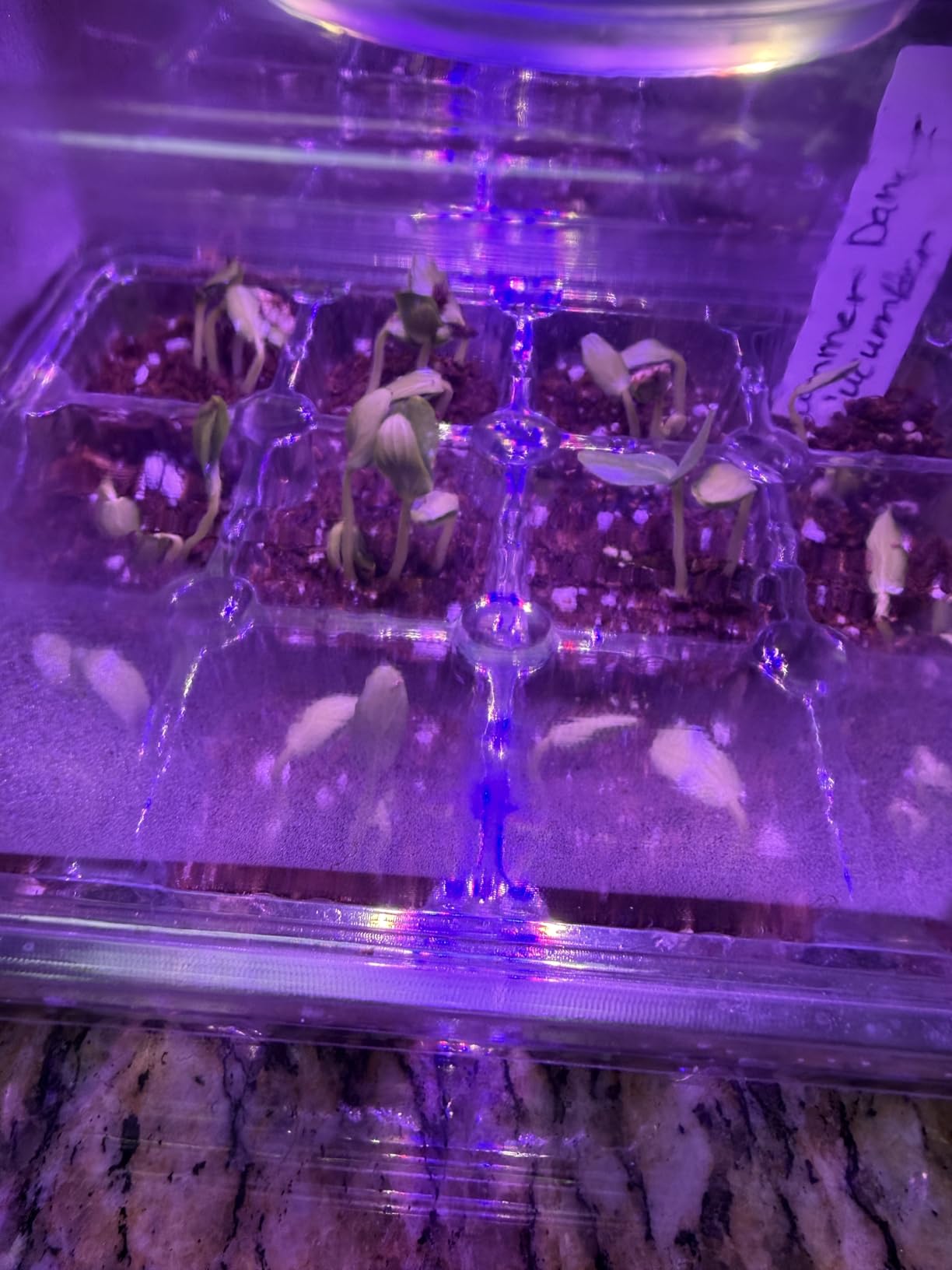
Where it falls short is the light. Twelve LEDs per tray is enough to prevent a seedling from stretching in the first week, and most of our cells came through that phase upright. But this is not a lamp you would leave running for three weeks of vegetative growth, and there is no timer, so you are switching it on and off by hand every morning.
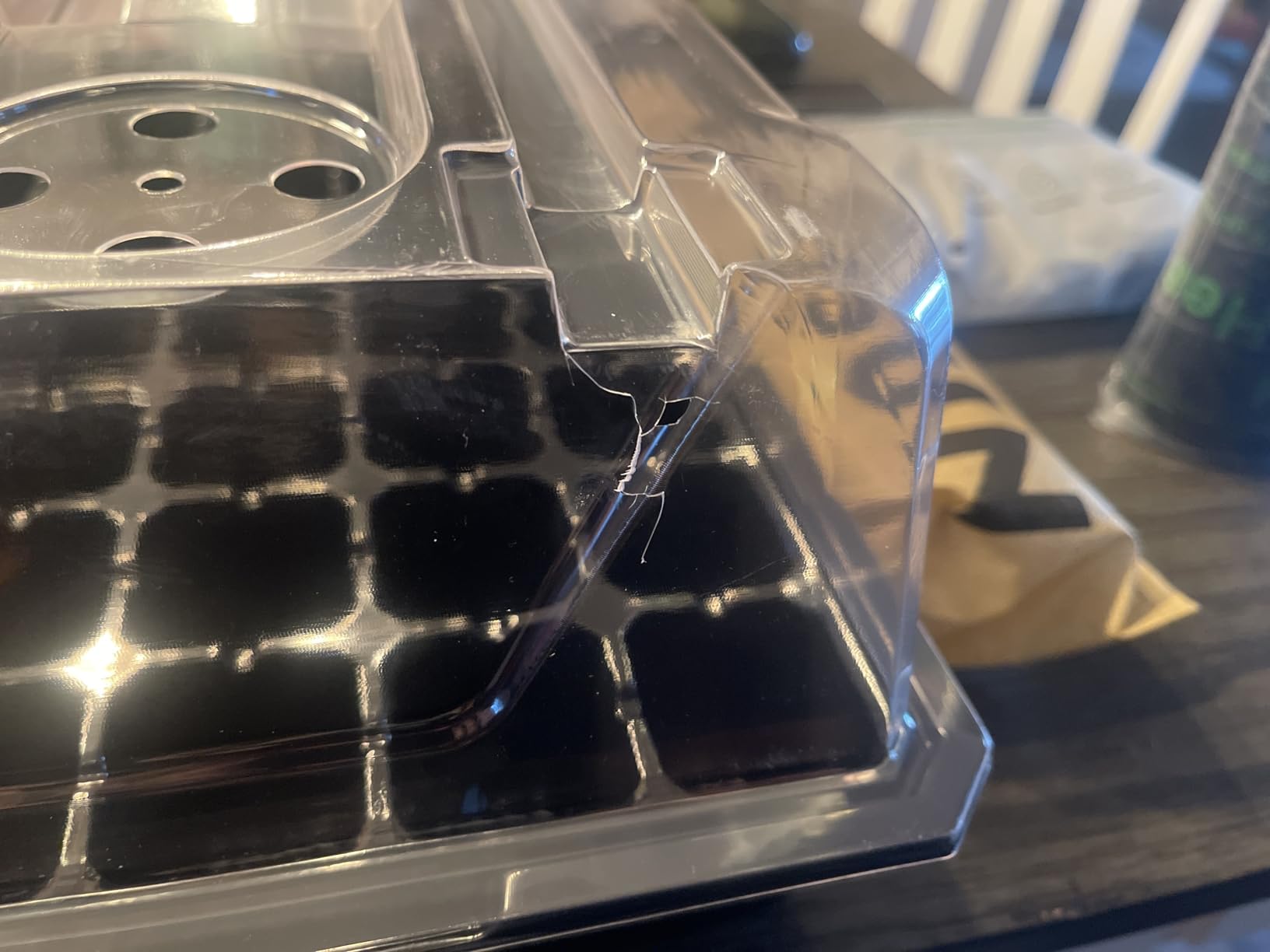
The lids are the other weak point. They rest on top rather than clipping, and they are thin enough that a brush of your hand can flip one off. We propped ours open with a butter knife during watering. The tray bodies themselves are sturdy and survived a full season of reuse without cracking.
Who this kit works for
Beginners starting a moderate number of seeds will like that everything is in one box and the domes are clear. If you want to watch germination happen rather than guess at it, the root-viewing design is one of the clearest in the group. It also stacks neatly, which matters if your starting shelf doubles as kitchen counter for six months of the year.
Who should skip it
Skip it if you forget things. There is no timer, no brightness control and no instructions in the box, so this kit punishes a busy week more than most. Growers running a large spring batch will also find that hand-daily switching across five trays adds up fast.
2. Sondiko Seed Starter Tray With Grow Light, 80 Cells
- Two 40-cell trays in one kit
- Real brightness and timer control
- Hydroponic base tray
- Sturdy cells that release plants easily
- Lights weaker than standalone grow lamps
- Dome must come off quickly after germination
- Higher price than tray-only kits
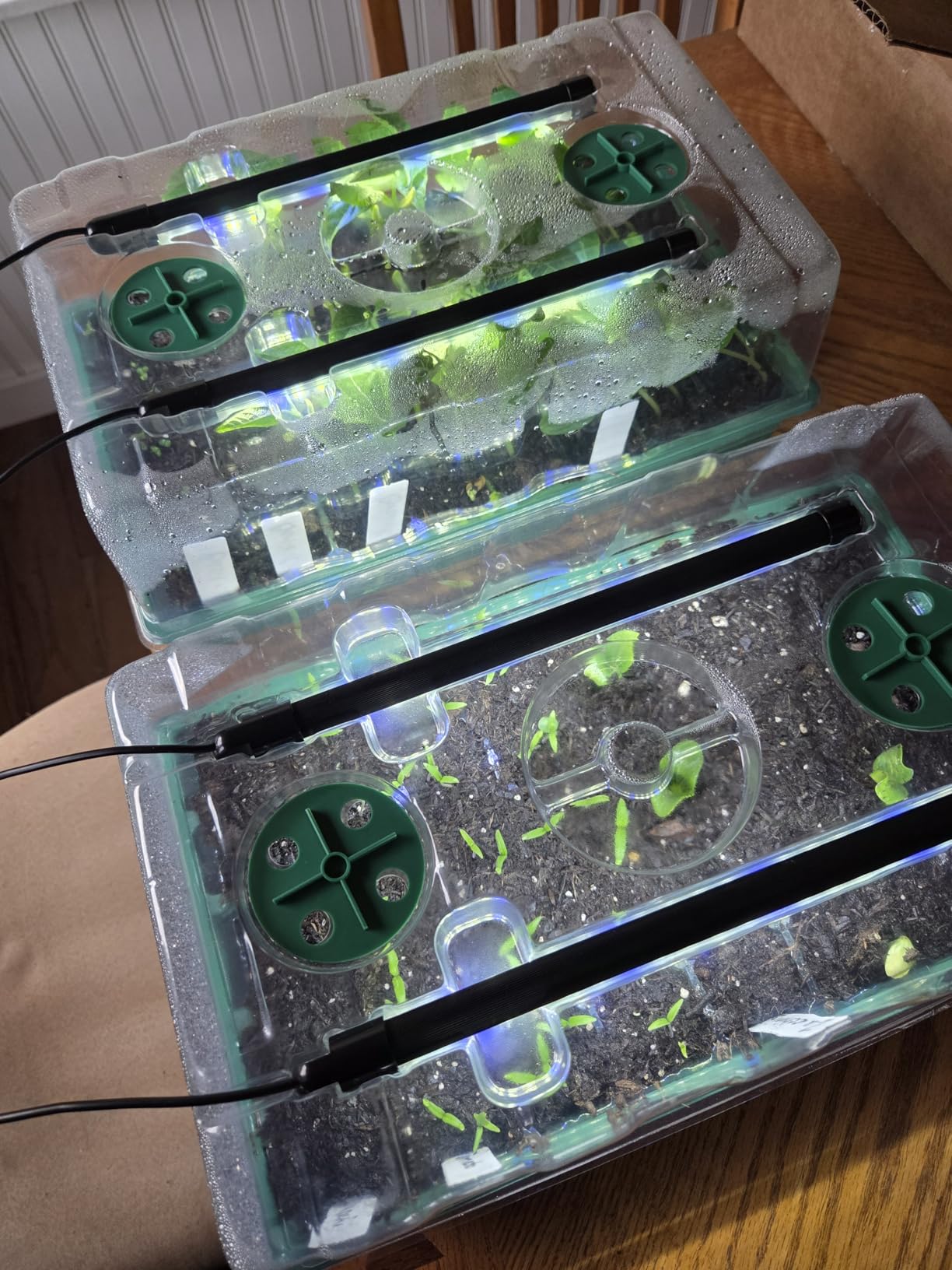
Eighty cells across two 40-cell trays makes this one of the roomier multi-tray kits here without stepping up to a rack-sized unit. Each tray gets two adjustable plant lights, and the base tray can be filled with water for a simple hydroponic run once the seedlings are established.
Five brightness levels and three timer settings put it ahead of every other kit in this roundup. That control is what separates a kit that gets seedlings through germination from one that keeps them stocky afterward. Buyers also like that the cells release cleanly at transplant time instead of tearing roots.
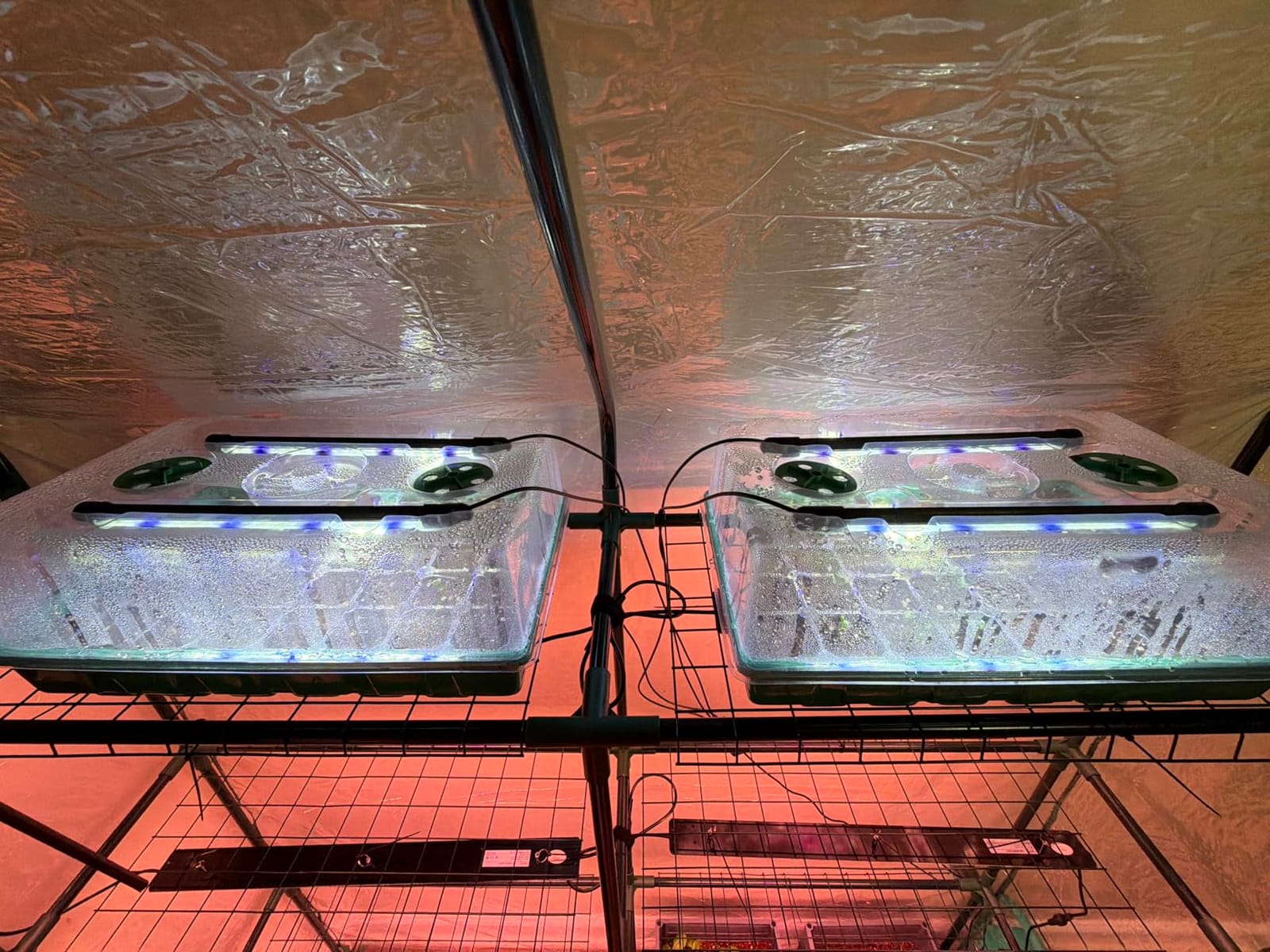
The recurring complaint is that the dome lights are weaker than a standalone grow lamp, and that seedlings stretch if you keep the dome on too long after germination. Eight adjustable vents per cover help, but the honest read is that this light is a bridge to your next stage, not a destination.
Cell size is worth noting. At 1.57 by 1.37 inches with 1.96-inch depth, these are generous cells that handle a deeper root run than most budget trays, which means you can leave seedlings in them a bit longer without root binding.
Who this kit works for
Choose this if you are sowing a lot at once and want more seedlings per tray than the 12-cell kits give you. Repeat buyers rate it very highly for durability, and the base tray doubles as a reservoir if you want to move to a wet cycle later in the season.
Who should skip it
Skip it if your seedlings will need strong light for weeks before you can move them outside. Second, this is one of the pricier kits in the group, and buyers who only need a dozen starts are paying for capacity they will not use that season.
3. SOLIGT 60 Cell Seed Starter Tray Kit With Grow Light and Heat Mat
- Complete matched set with heat mat
- Highest 4.5-star rating in the group
- Thick reusable plastic
- Tall dome and per-cell drainage
- Costs more than tray and dome kits
- Heat mat adds bulk for small batches
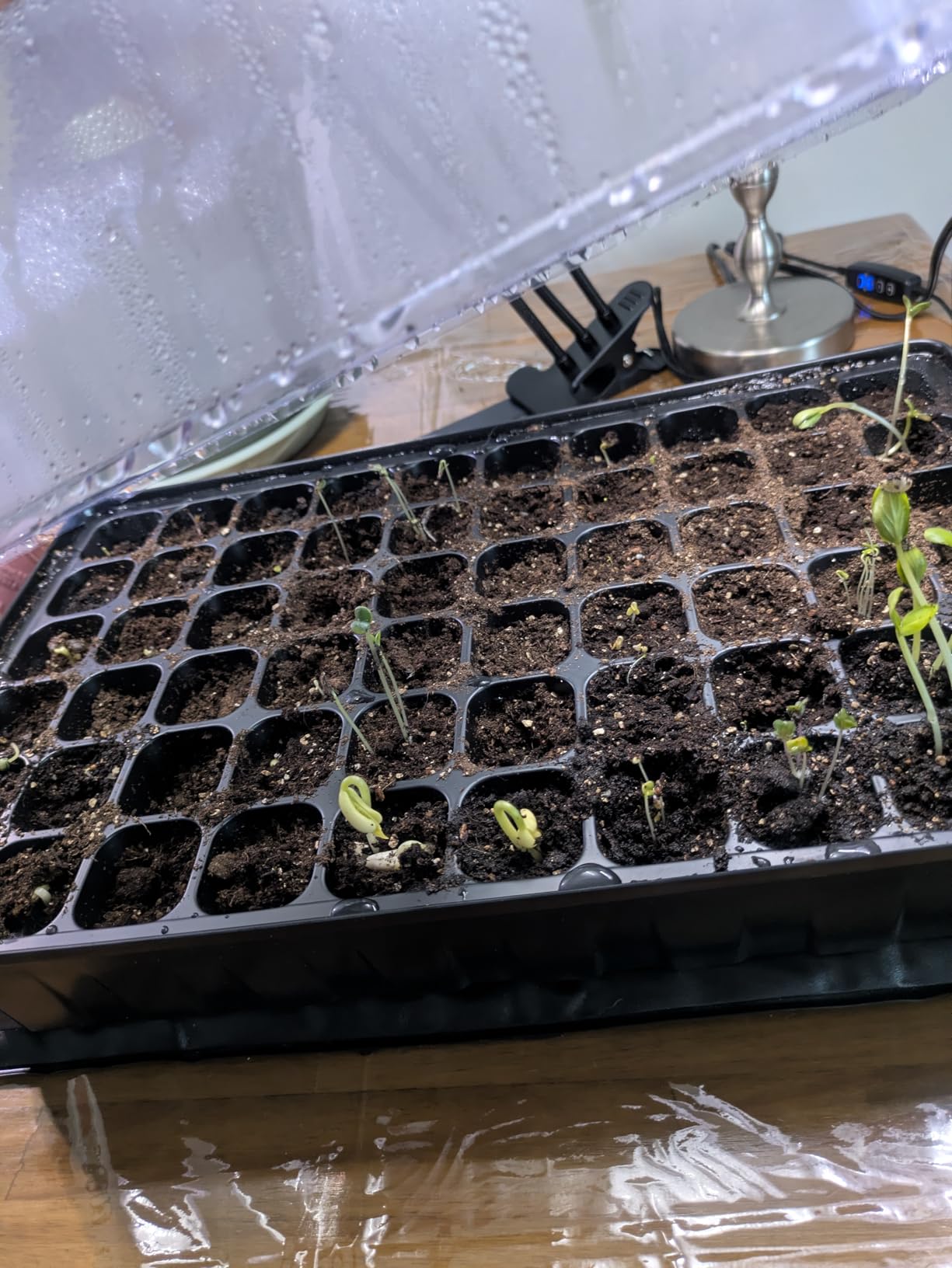
Most kits make you buy the heat mat separately. This one includes a 1020 waterproof mat, a 60-cell tray, an extra-high humidity dome and a grow light with a flexible three-head gooseneck, which is why it tops our completeness ranking among the mid-size kits.
The light is among the best specified in the group. It runs 11.5 watts at 4500K with 15 red and 111 white LEDs, five brightness levels and four timer settings including an 18-hour mode that matches a standard seedling photoperiod without you touching a switch.
The gooseneck is the detail we did not expect to care about but now rely on. Once seedlings outgrow the dome, you detach the light from the tray and reposition it over the same cells, so the kit does not become dead weight at week three. Cells measure 1.5 inches square and 2.3 inches deep, which is a comfortable root volume.
The 4.3-inch dome is among the tallest in a tray-and-light kit at this size, and the per-cell drainage holes work well with the mat underneath. Our peppers germinated in six days with the mat running, and the tray plastic is thick enough that we expect several seasons from it.
Who this kit works for
This suits anyone starting warm-loving crops such as tomatoes, peppers and eggplants, where soil temperature decides whether germination happens at all. It also suits people who want one box to open in February instead of four separate orders.
Who should skip it
Skip it if you are only sowing a few dozen seeds and already own a heat mat. You will be paying for the mat whether you use it or not, and the extra bulk takes up real counter space for a season-limited product.
4. YAUNGEL Seed Starter Tray With Grow Light, 6 Pack With Timing Controller
- Central controller automates the light cycle
- Adjustable brightness suits growth stages
- Raised dome gives extra vertical room
- Thickened trays with drainage
- Power plug not included
- Small 6-cell footprint limits tray count
The thing that sets this kit apart is the central intelligent controller. One box handles timing and brightness for all six tray lids, so you set a 4, 8, 12 or 18-hour cycle once and never walk over to switch a light again.
Each lid carries 16 full-spectrum LED beads, and the raised dome has a humidity adjustment window that slides from 50 to 100 percent. The trays are thickened with drainage holes, and twenty plant labels come in the box, which sounds minor until you are labelling ninety-six cells at once.
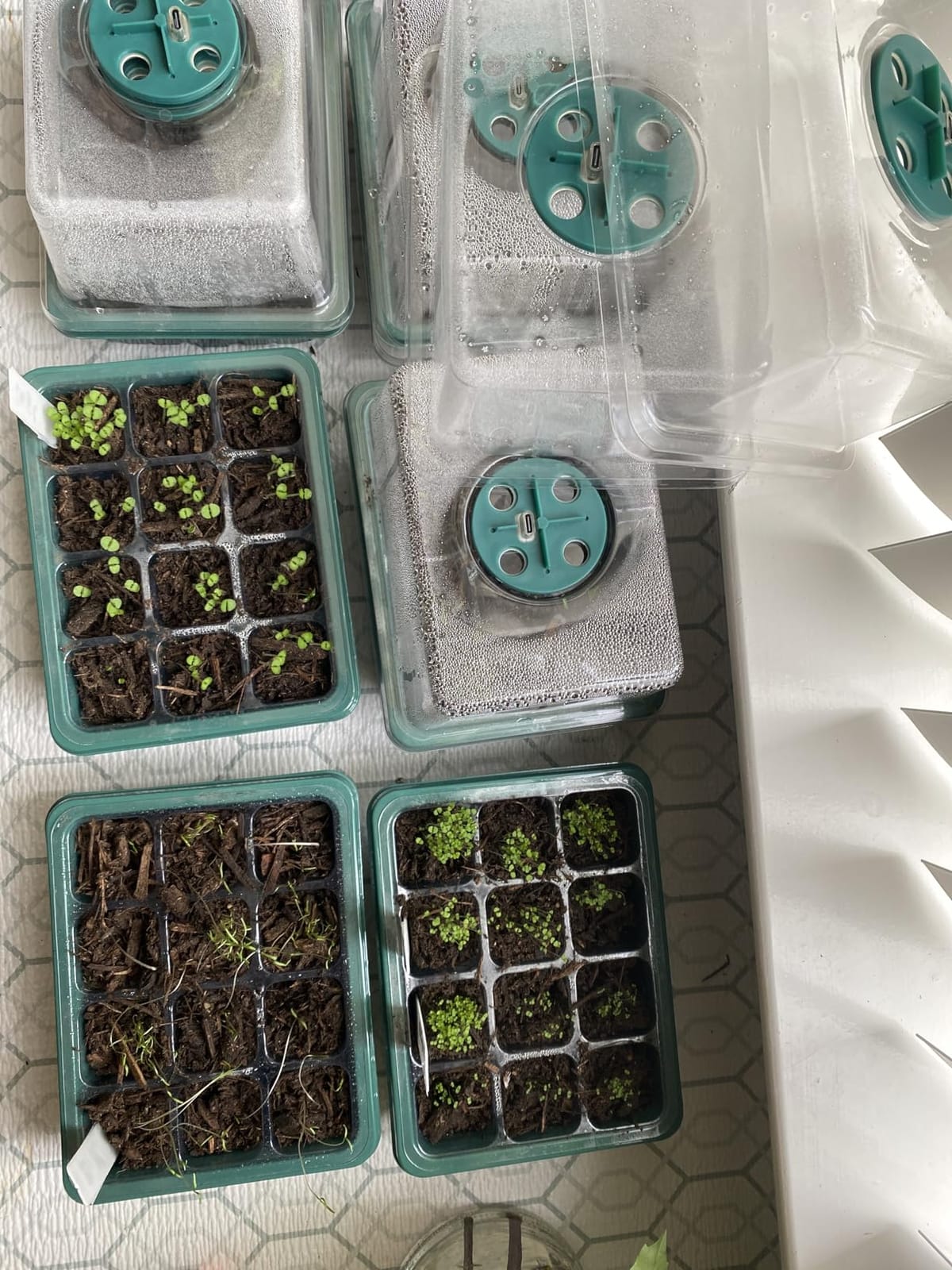
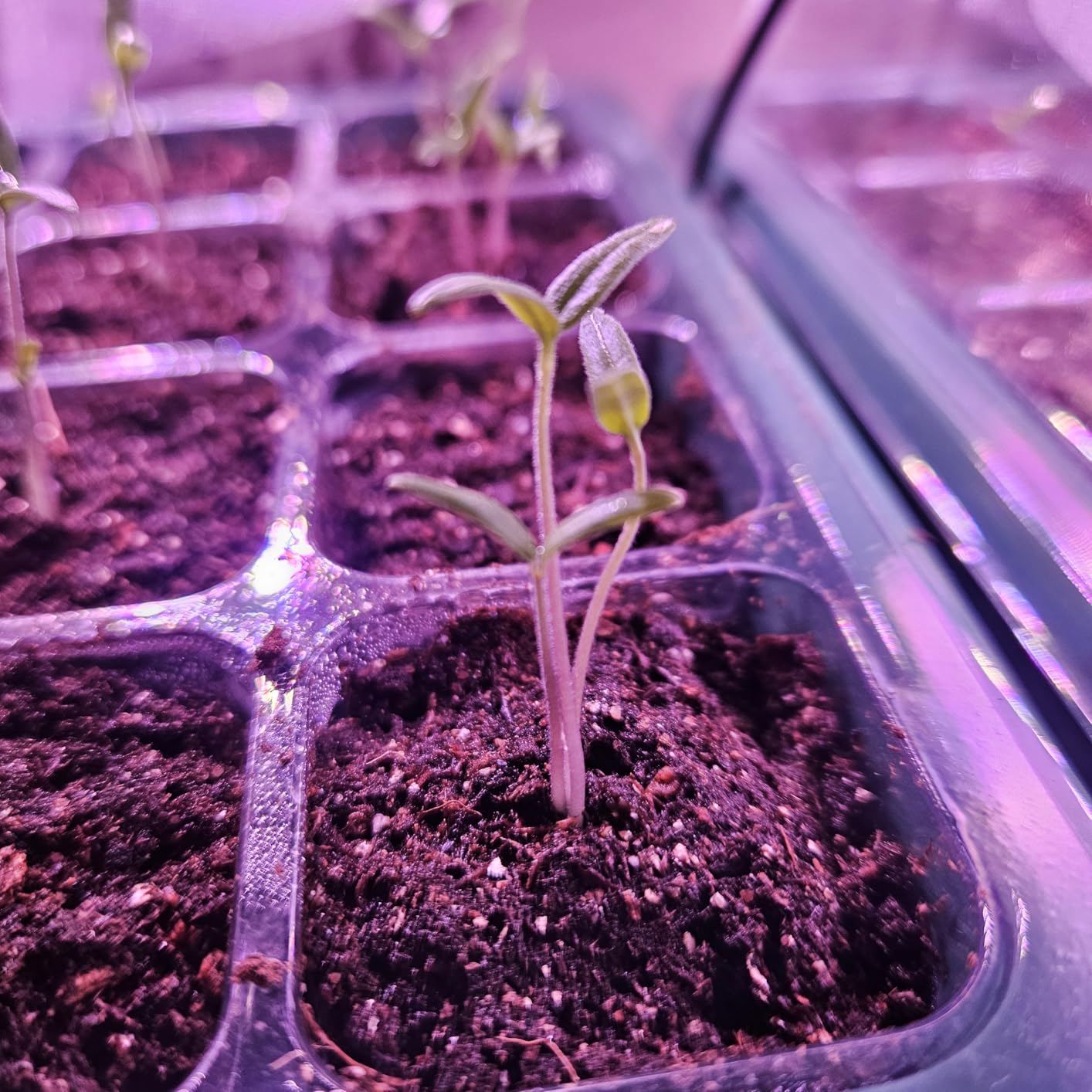
The trade-off is tray size. Six cells per tray is small, and while six trays gives you 36 cells, none of them will take a full root run, so this is a germination and early-growth box rather than a place to hold seedlings until transplant.
The other recurring note is that the power plug is not included. You will need a USB adapter of your own, which is a small cost but also a small trip to another store before you can start.
Who this kit works for
If your main worry is forgetting the light, this is the kit to buy. It also packs well as a gift, and the domes being raised means leggy seedlings have somewhere to go before they hit the lid.
Who should skip it
Skip it if you want to raise seedlings past the first week or need more than a handful of cells per tray. Flower and vegetable growers sowing broadcast quantities will outgrow six cells quickly.
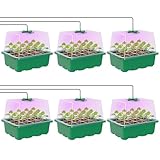
5. MIXC 6 Pack Seed Starter Kit With Grow Light and Vented Dome
MIXC 6 Pack Seed Starter Kit with Grow Light, Vented Humidity Dome, Green
- Build quality better than the price suggests
- Clear cells show roots and water level
- Stacks neatly for storage
- Side grips make transplanting easier
- Dome height limited for tall seedlings
- Lights and wiring run hot
- Lids rest on top instead of clipping
At the budget end, this is the one that does not feel like a toy. Reviewers repeatedly contrast the thicker reusable PVC with cheaper trays they have owned, and the side grip on the base tray lets you lift the inner cell tray out one-handed when you are potting up.
Cells measure 1.5 by 1.5 inches with 2 inches of depth and bottom drainage holes, and the base trays are watertight so overflow stays contained. First-time gardeners report high germination rates across the set.
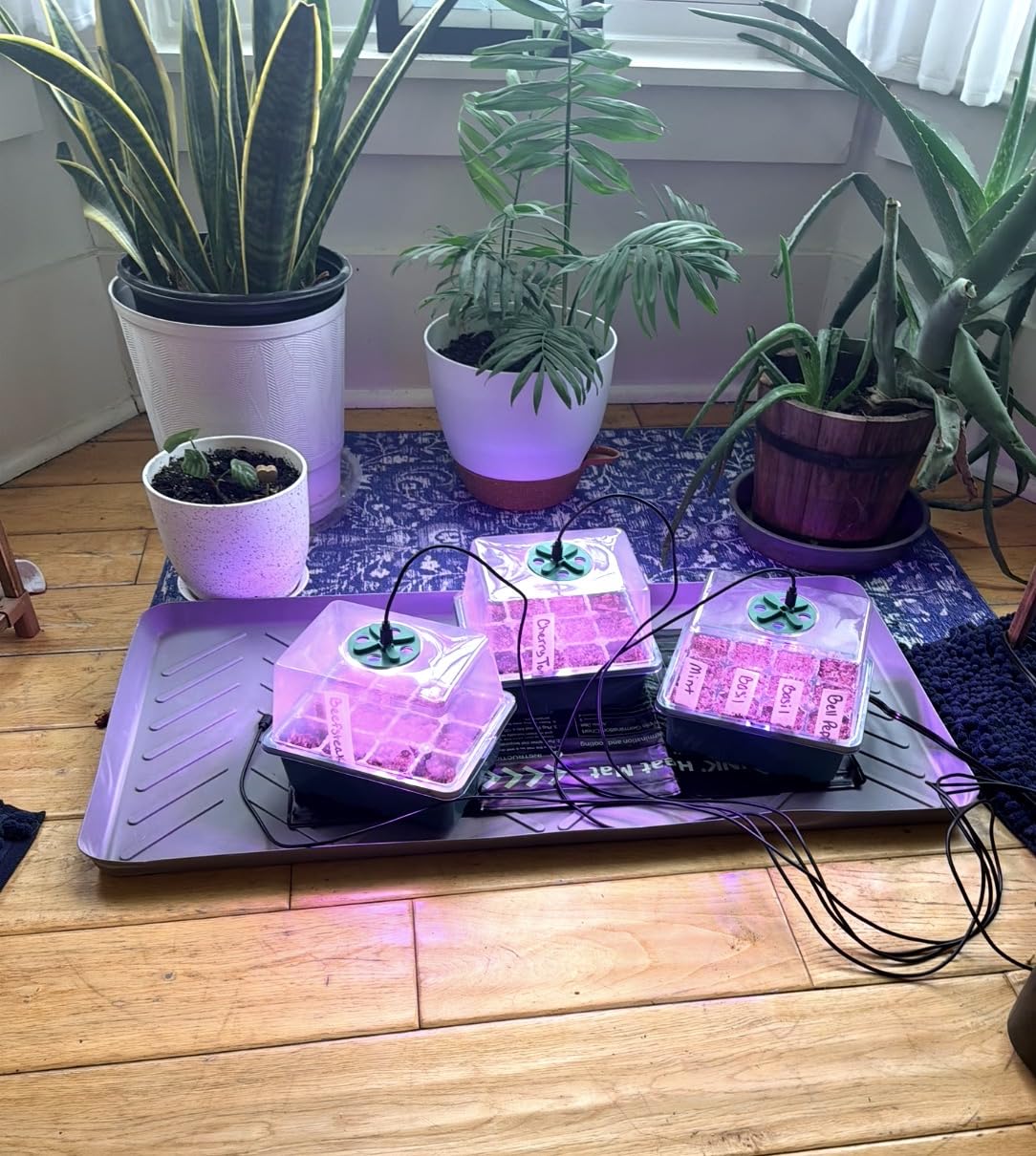
Two honest limitations. The dome is not tall, so anything leggy or fast-growing hits the lid and needs propping open. And the lights and their wiring run hot, which is worth thinking about if the kit lives on a shelf in a warm room or you are running several sets together.
The lids also rest on top rather than clipping, the same design you will see on most kits at this price. We used a small weight to hold ours in place during a draft.
Who this kit works for
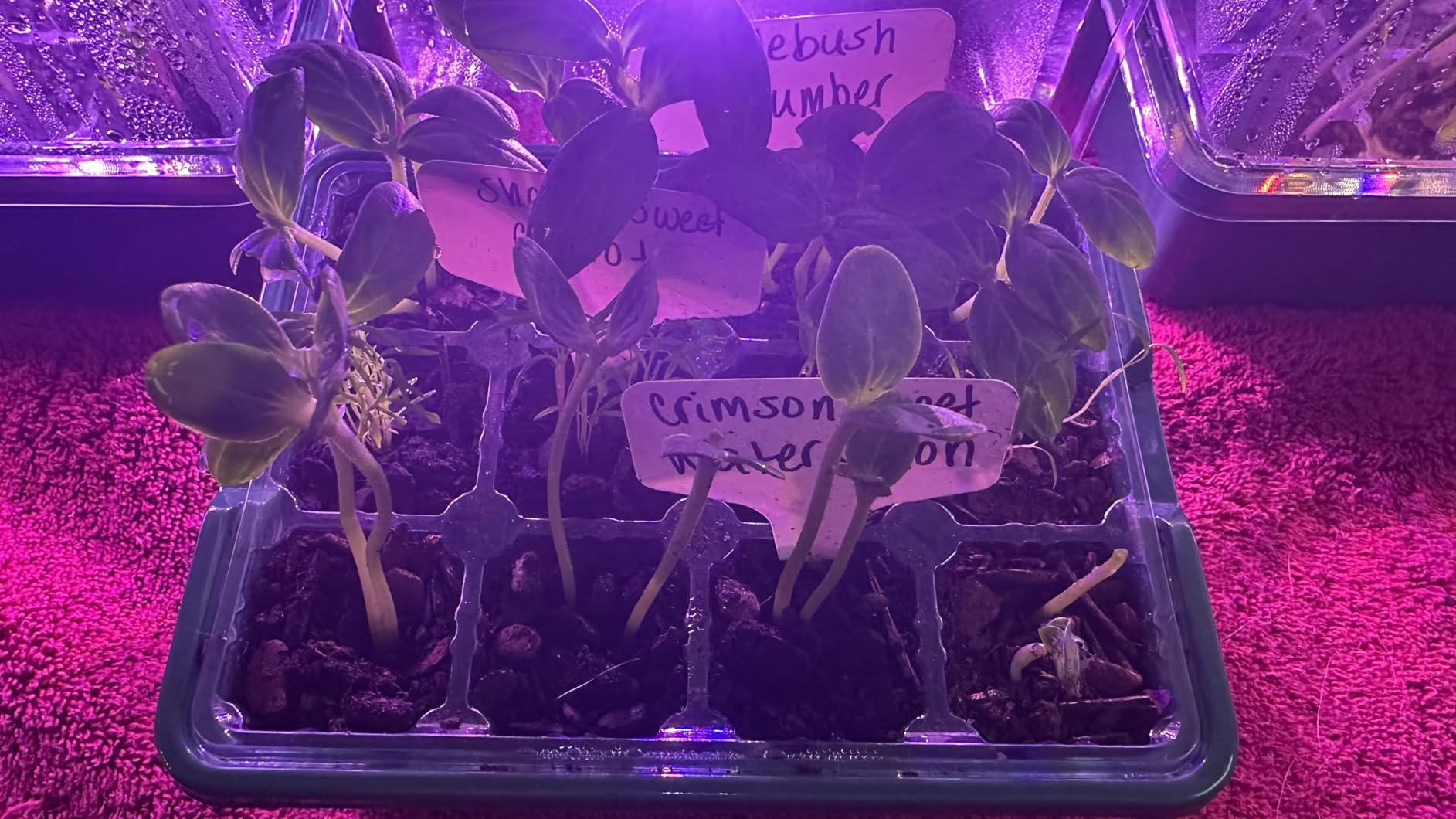
This is our pick for a first garden on a budget, especially for herbs, lettuce and other fast crops that do not need much root room. The clear cells make it a good teaching tool if you want to show a child what is happening under the soil.
Who should skip it
Skip it if you raise tomatoes, peppers or eggplants, where the low dome becomes a problem within about a week. Buyers occasionally also report the delivered pack count not matching the listing, so check the box on arrival.
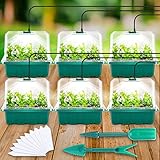
6. Yskea Seed Starter Tray With Light, 6 Packs of 12 Cells
- Lowest cost of any kit we reviewed with lights and domes
- Simple adjustable vents
- Durable reusable plastic
- Good fit for small indoor batches
- Dome height only 3.9 inch
- Light output is basic
- Germination focused rather than grow on
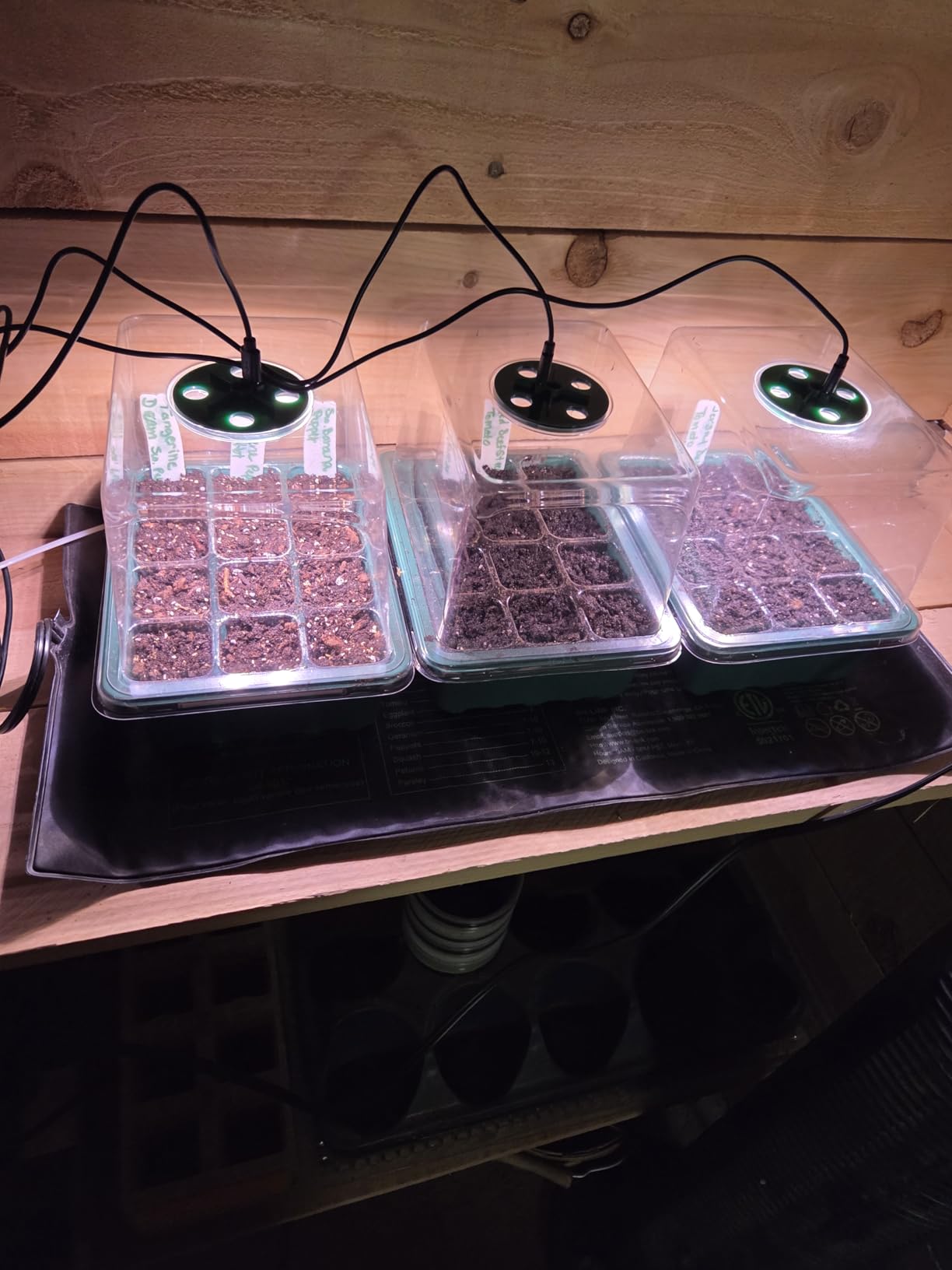
This is the cheapest way into the category we reviewed, and it still ships six 12-cell trays, six transparent domes with adjustable circular vents and a full-spectrum light for each. For a first attempt at indoor seed starting, that is enough equipment to learn with and cheap enough that a mistake does not sting.
Construction is straightforward non-toxic polypropylene that reviewers say holds up to reuse. The vents dial humidity from 50 to 100 percent, which is the single most useful control in the first two weeks after sowing.
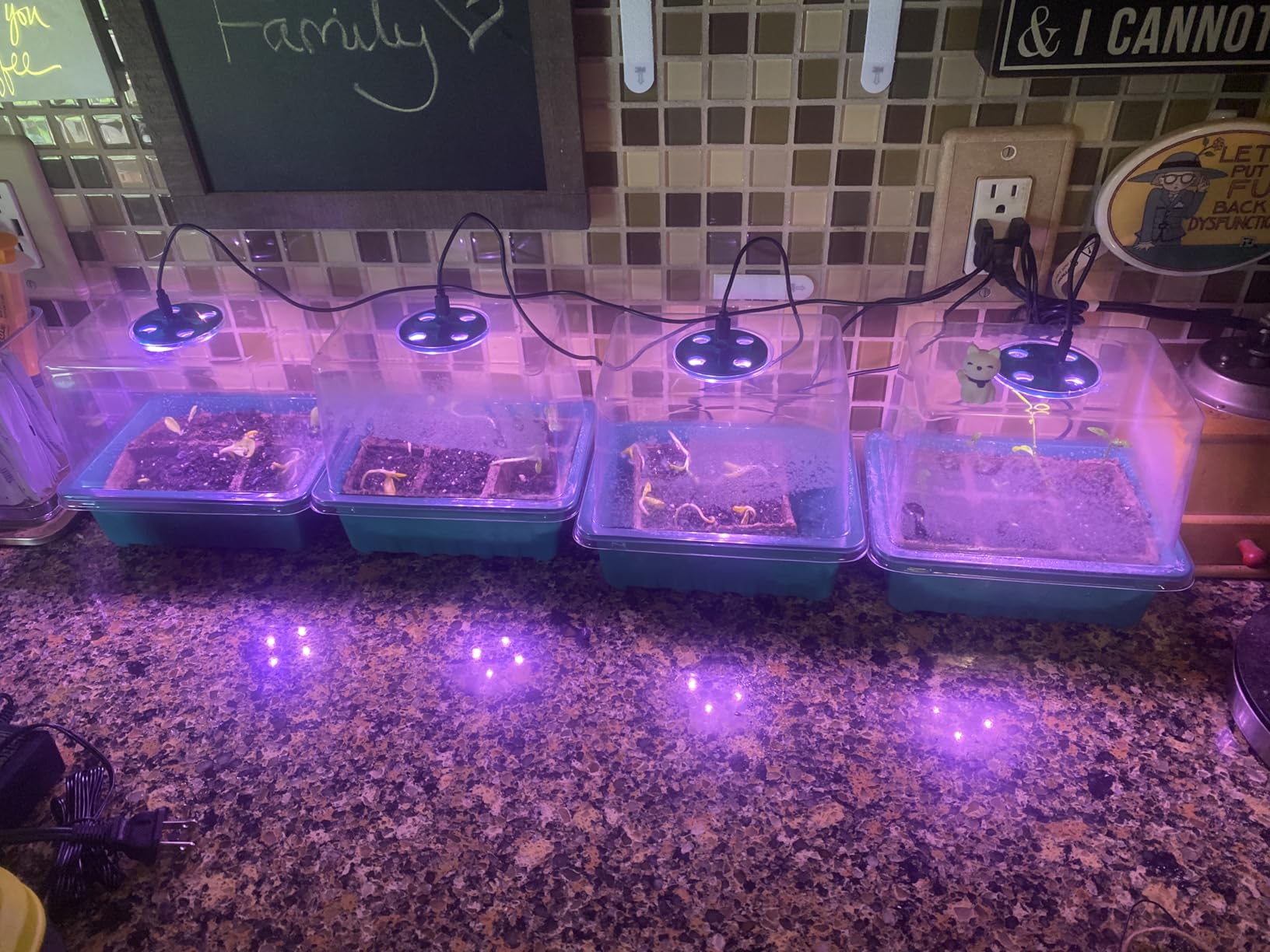
The 3.9-inch dome is the constraint to plan around. Anything that grows tall quickly will reach the lid, so you will want to remove or prop the dome early. The light is also more basic than the higher-tier kits, aimed at getting seeds up rather than keeping them stocky afterward.
Cell dimensions are standard for the class, and drainage holes are present, so bottom watering works the same way it does in the more expensive kits. Nothing here is complicated, which is a virtue when you are learning the routine.
Who this kit works for
Budget-conscious beginners, and anyone who wants one kit per windowsill or shelf position. It is also a sensible second box if you already have a good light and just need more trays and domes.
Who should skip it
Skip it for tall or fast crops, or if you want light control. There is no timer or brightness adjustment here, so you are managing the cycle by hand and losing intensity control as seedlings grow.
7. GROWFRIEND 40-Cell Seed Starter Kit With Grow Lights and Heat Mat
- One of the largest accessories bundles we reviewed
- Thick plastic that resists bending
- Dome vents reduce mold risk
- Works as a gift for beginners
- Lowest rating of the top ten kits
- Light and mat add weight and cost
- Quality complaints on light and mat
Very few kits in this roundup arrive with as many extras as this one. You get a 40-cell tray with an adjustable humidity dome, dual LED bars, a 10 by 20 inch waterproof heat mat, a three-in-one soil moisture meter, sticky gnat traps and a gardening eBook.
The tray itself is the strongest part here. It is thick polypropylene designed to resist bending and cracking, and the dome vents cut mold risk while still holding humidity. If you can find a kit whose box matches your gift recipient’s needs exactly, this one does.
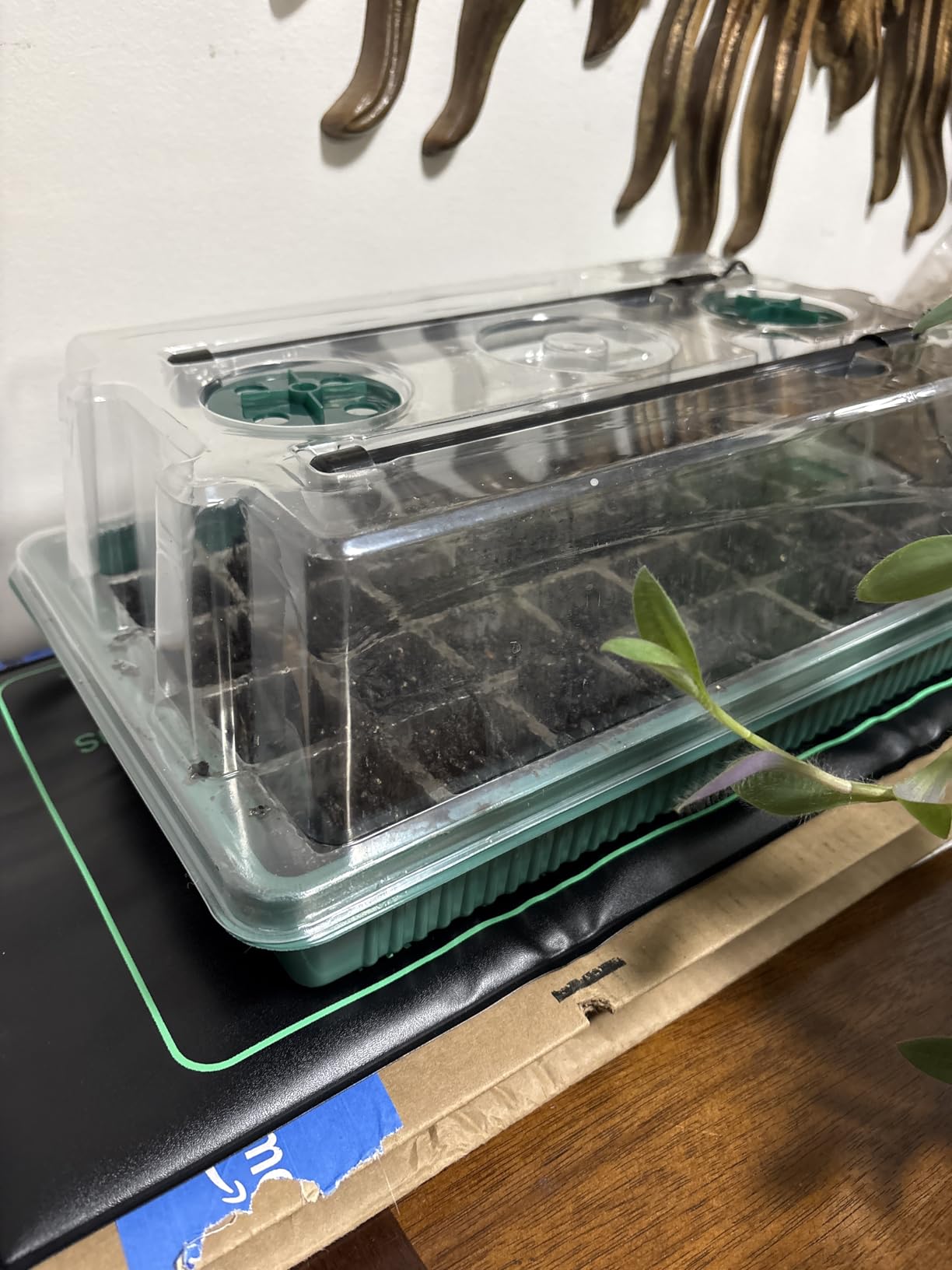
But it also carries the second-lowest average rating in our group at 4.1 stars with a 12 percent one-star share, and the complaints are consistent: problems with the light and the mat specifically, not the tray. A meaningful minority found the light or heat mat underperforming, and both add weight you did not ask for.
The dual bars run 16 white and 4 blue LEDs each with adjustable brightness, which is more than some cheaper kits, but the light quality did not stand up as well as the tray quality in our use.
Who this kit works for
Buy it if you want one box to cover every accessory a beginner needs, or if you are gifting someone who will not research the list themselves. The moisture meter alone saves you from overwatering, which is the most common indoor seed starting mistake.
Who should skip it
Skip it if you already own a heat mat, a moisture meter or decent lights. You would be paying twice for those parts, and the components most likely to disappoint are the ones you would have bought separately anyway.
8. Patigrow 60-Cell Self-Watering Seed Starter Tray With Grow Light
- Self-watering capillary system
- One of the highest five-star shares here
- Support stand improves light reach
- Two adjustable humidity vents
- Costs more than basic tray and dome kits
- Self-watering needs care in humid conditions
The differentiator is the capillary mat system. It sits between the base tray and the cell tray, drawing moisture upward so seeds stay evenly moist from germination through to transplant. For anyone who travels or forgets a watering round, that removes the most common cause of failure.
The lighting is unusually well specified: two strips with 56 high-efficiency beads each, adjustable brightness and timer functions, mounted on a support stand that raises the cells and improves light reach. The dome and base are 1.5mm high-density BPA-free PET, noticeably stiffer than the thin plastic used elsewhere.
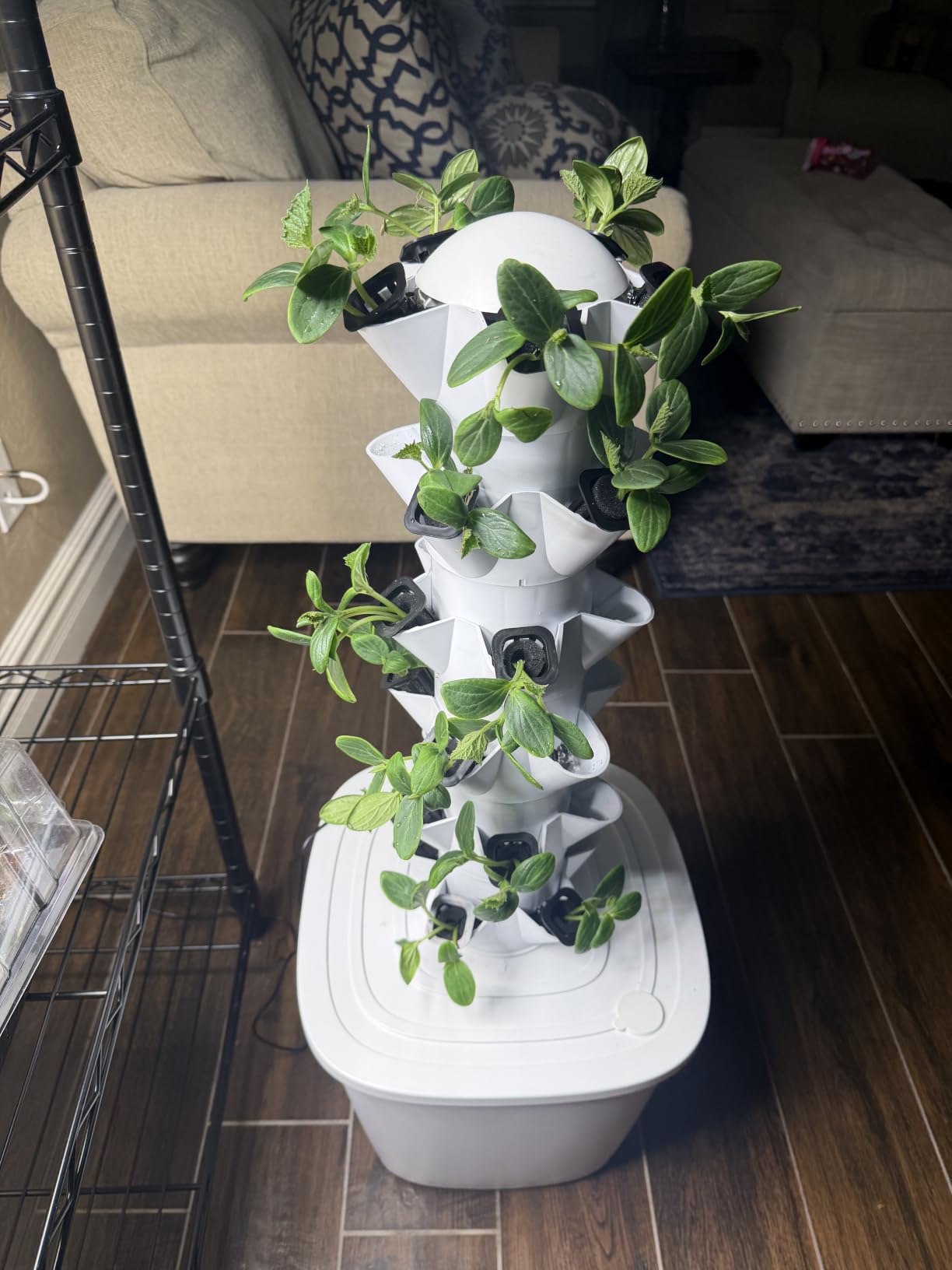
Two caveats. It costs more than a basic tray and dome kit, and a self-watering system still needs judgment: in a humid room or a cool spot, the mat moves less water and you can end up with soggy cells. Watch it for the first week.
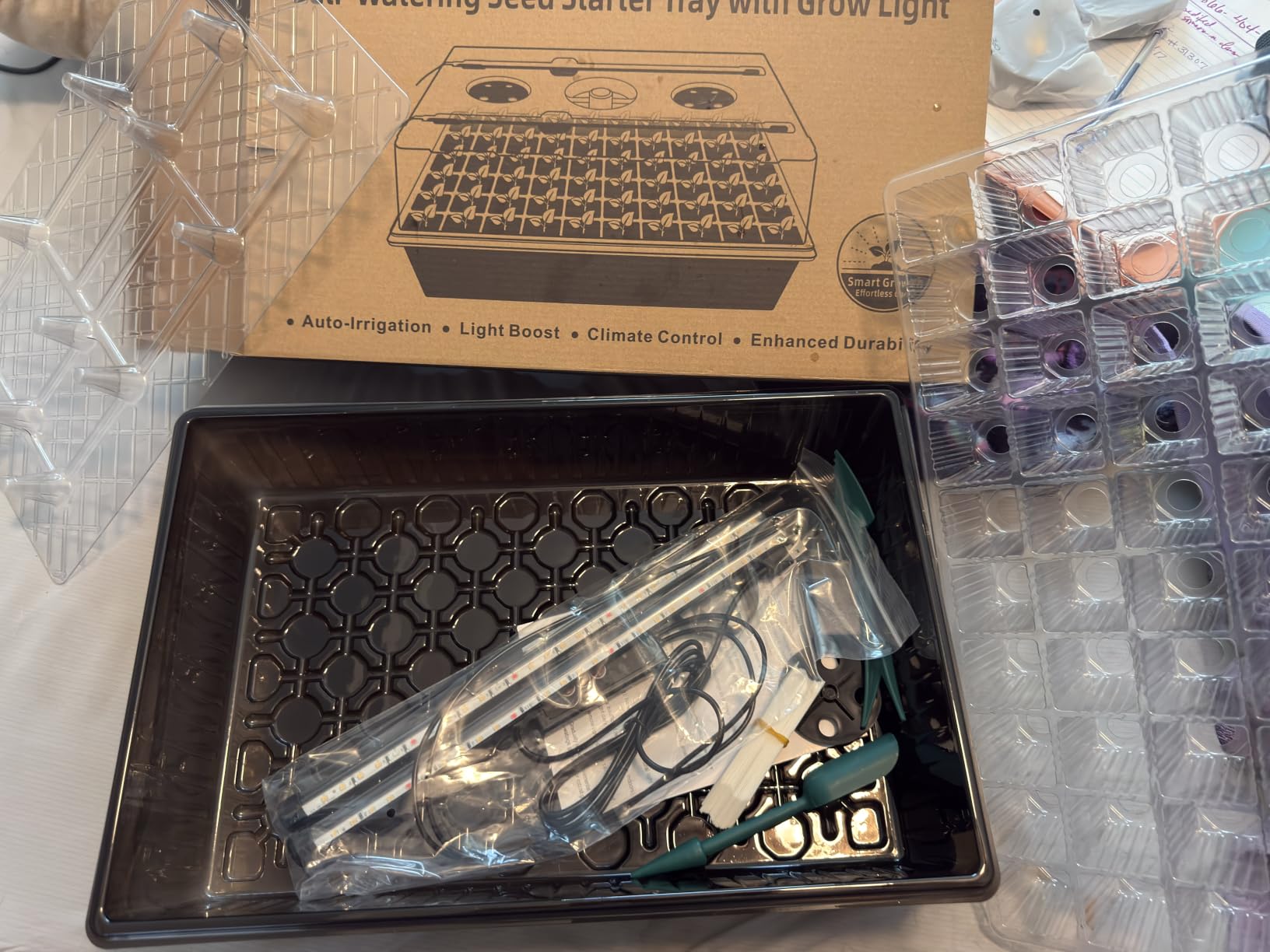
The box also includes a plant box, twenty labels, two gardening tools and two power cords, so the setup is genuinely turnkey once you add seed starting mix.
Who this kit works for
Travelers, busy households and anyone who has killed a tray by forgetting to water. It is also a good choice if you are starting seeds in a room that stays cool, because the capillary action keeps the mix at a steadier moisture level.
Who should skip it
Skip it if you are on a tight budget or if you already have a reliable watering routine you do not want to change. Paying more for automatic watering is wasted if you are at the tray twice a day anyway.
9. BlumWay Seed Starter Tray With Grow Light, 2 Pack, 80 Cells
BlumWay Seed Starter Tray with Grow Light, Humidity Dome, 2 Pack 80 Cells
- Deep cells accommodate vigorous growth
- Tall dome with adjustable humidity
- 360 degree strips give even coverage
- USB or plug-in adapter both work
- Timer settings shown by indicator colors only
- Strips sit low for fast growers
Cell depth is the story here. At 1.96 inches deep with 0.31 inch drainage holes, these trays let you hold seedlings longer before root binding becomes a problem, which means a longer window before you have to pot up.
The lights are long 360-degree strips with 40 beads each, 80 total, wrapped around the dome rather than mounted as a single bar. Reviewers consistently prefer that layout to small round pucks because coverage across the tray is more even, and with 73 percent five-star feedback this is among the best-rated kits here.
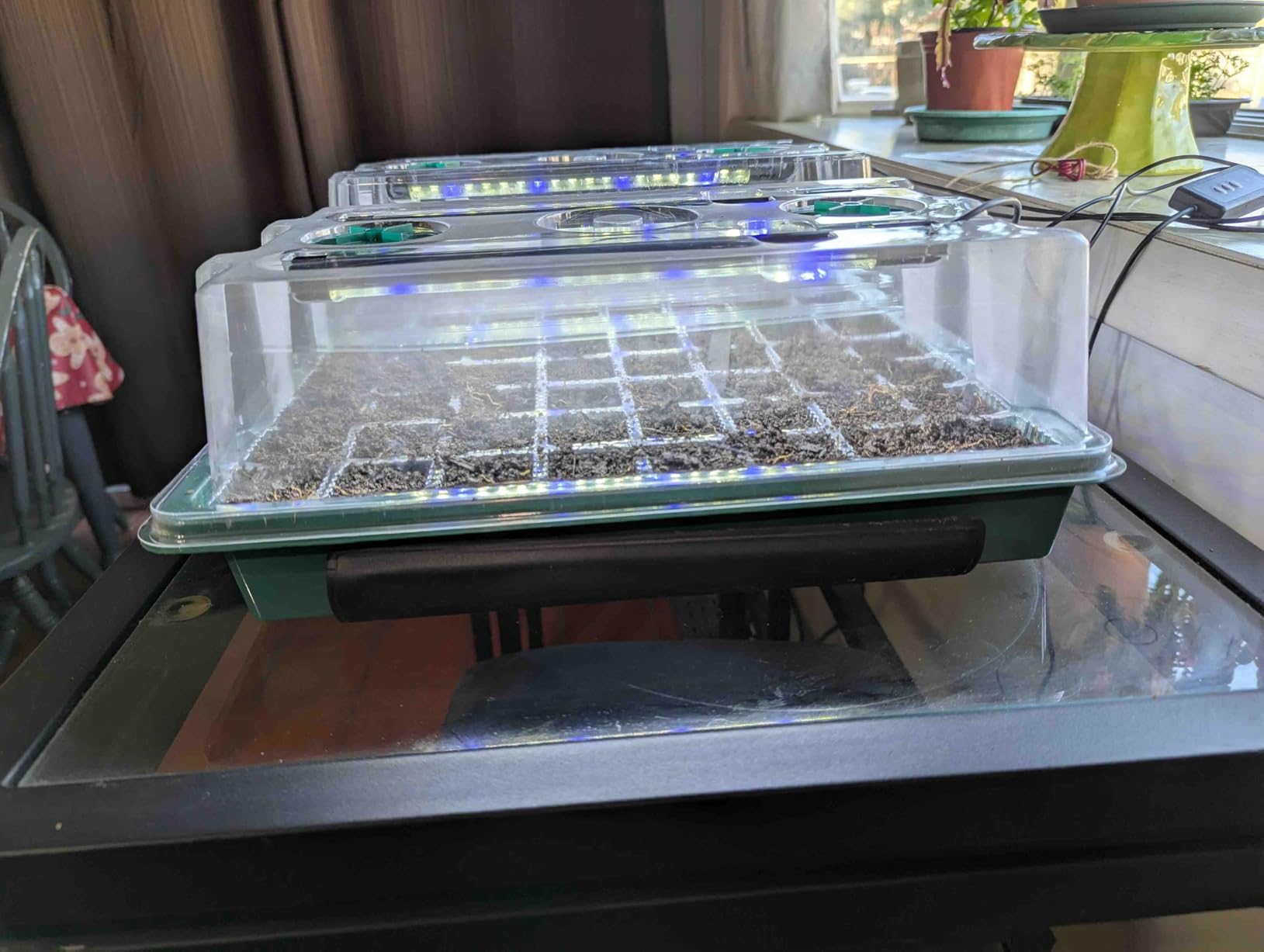
Controls cover three lighting modes, three timer settings and five brightness levels, which is more than most kits at this size. The one friction point is the timer readout: red indicator for three hours, blue for six, red and blue together for twelve, so you are learning a colour code instead of reading a display.
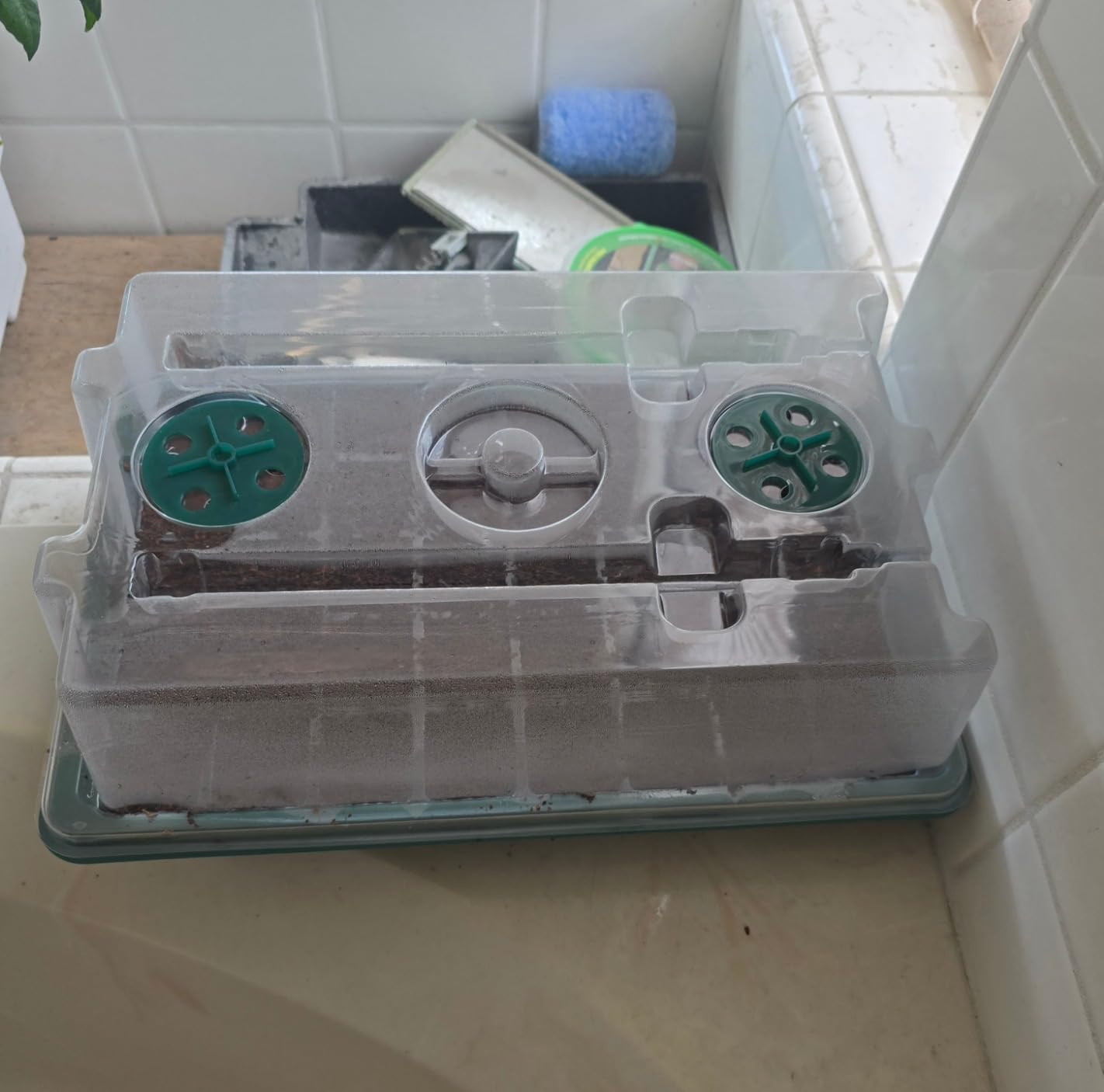
The 9cm dome is tall enough that our tomato seedlings grew into it without immediately needing removal, and the thickened ABS body is described as anti-UV and corrosion resistant. Power works by USB or the included plug-in adapter.
Who this kit works for
Best for tomatoes, peppers and squash, anything you want to grow tall in cells before moving on. It is also a good choice if uneven light across a tray has been an issue for you in cheaper kits.
Who should skip it
Skip it if you dislike decoding indicator lights or if your seedlings grow extremely fast and reach the strip height. Two trays at 40 cells also make this a smaller batch than it first appears.
10. VIVOSUN 40-Cell Seed Starter Kit With LED Lights and Heat Mat
VIVOSUN 1-Pack Seed Starter Kit, 40-Cell Tray, LED Lights and Heat Mat
- Digital thermostat lets you set and check mat temperature
- Light bars stay useful after the dome comes off
- Dome handle and vents aid daily checks
- Works with soil or rockwool
- Light bar count is modest for 40 cells
- Bundle costs more than tray-only kits
- Accessories add bulk to a single tray
The thermostat is the reason this kit earns its slot. A dual digital display with an internal sensor chip lets you set the mat temperature and read it back, instead of trusting a dial or guessing. Mat compatibility is rated from 0 to 120F, and the PET and PP trays are built to sit on one.
The LED bars are removable, which matters more than it sounds. Once seedlings outgrow the 3.6-inch higher cover, you lift the bars off and set them over the same cells rather than discarding the whole unit. They also handle rockwool cubes as well as soil.
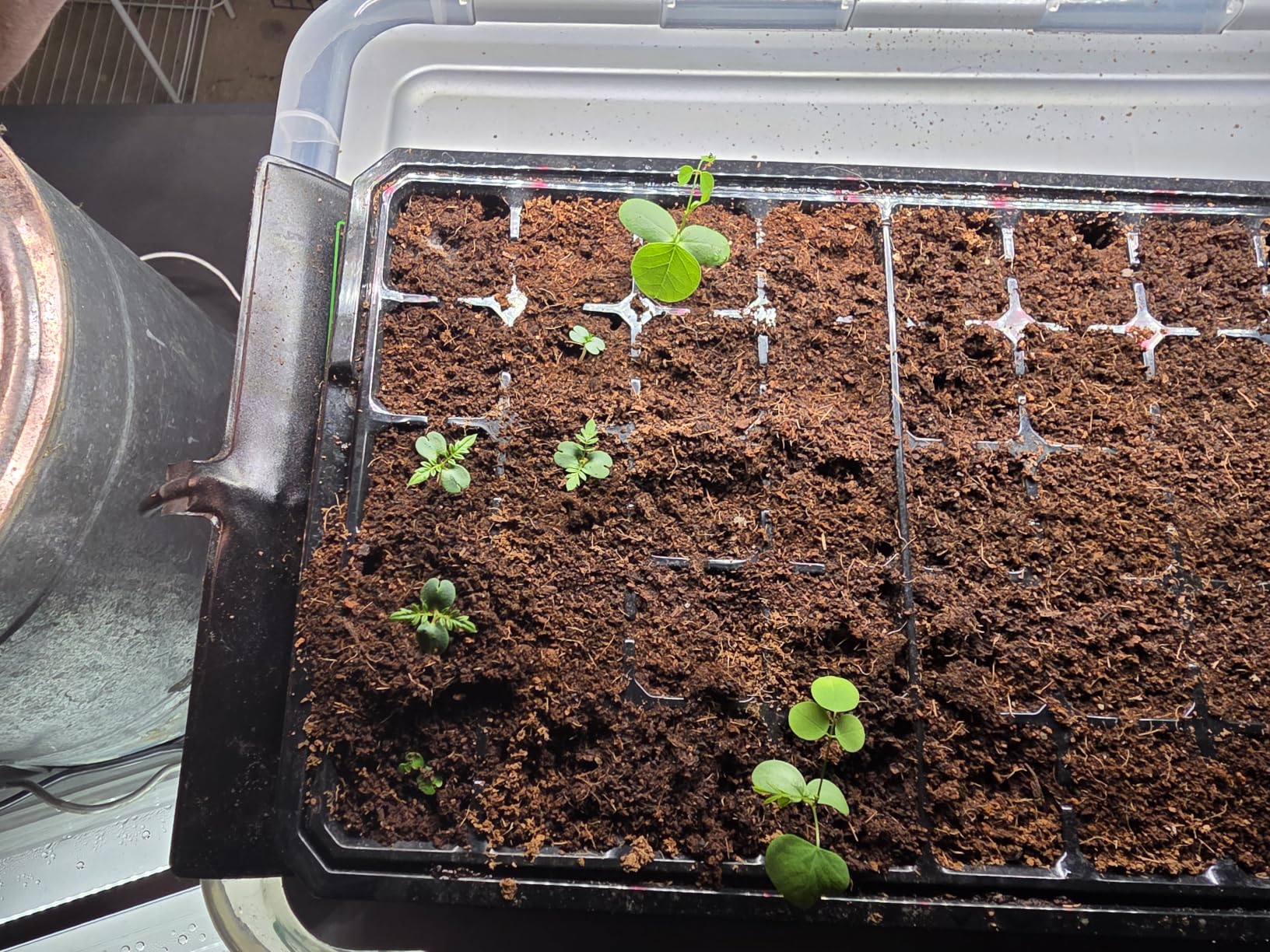
Two things temper it. The light bar count is modest for a 40-cell tray, and buyers often report the bundle runs expensive once you account for every accessory. Several people also note 8 percent one-star feedback, among the weaker splits we saw.
The black base tray with drainage holes is a nice touch that some growers like for root development, and the transparent dome has two adjustable air vents plus a lifting handle for checking progress without tearing the lid off.
Who this kit works for
If you are starting warm crops in a cool room, the controllable heat mat is the feature that earns its place. It is also a good single-tray option if you only need to start one batch at a time on a limited shelf.
Who should skip it
Skip it if you already own a thermostat heat mat or if you want the highest light output per tray. There are cheaper ways to add heat, and the light bars are the weaker half of this bundle.
11. Adawook 72-Cell Seed Starter Kit With Grow Lights, 3 Lighting Modes
- Separate blue and red channels
- 72 cells at a low per-cell cost
- Sturdy reusable trays
- Responsive customer service
- Light output only strong enough for germination
- Some boxes arrive with fewer trays
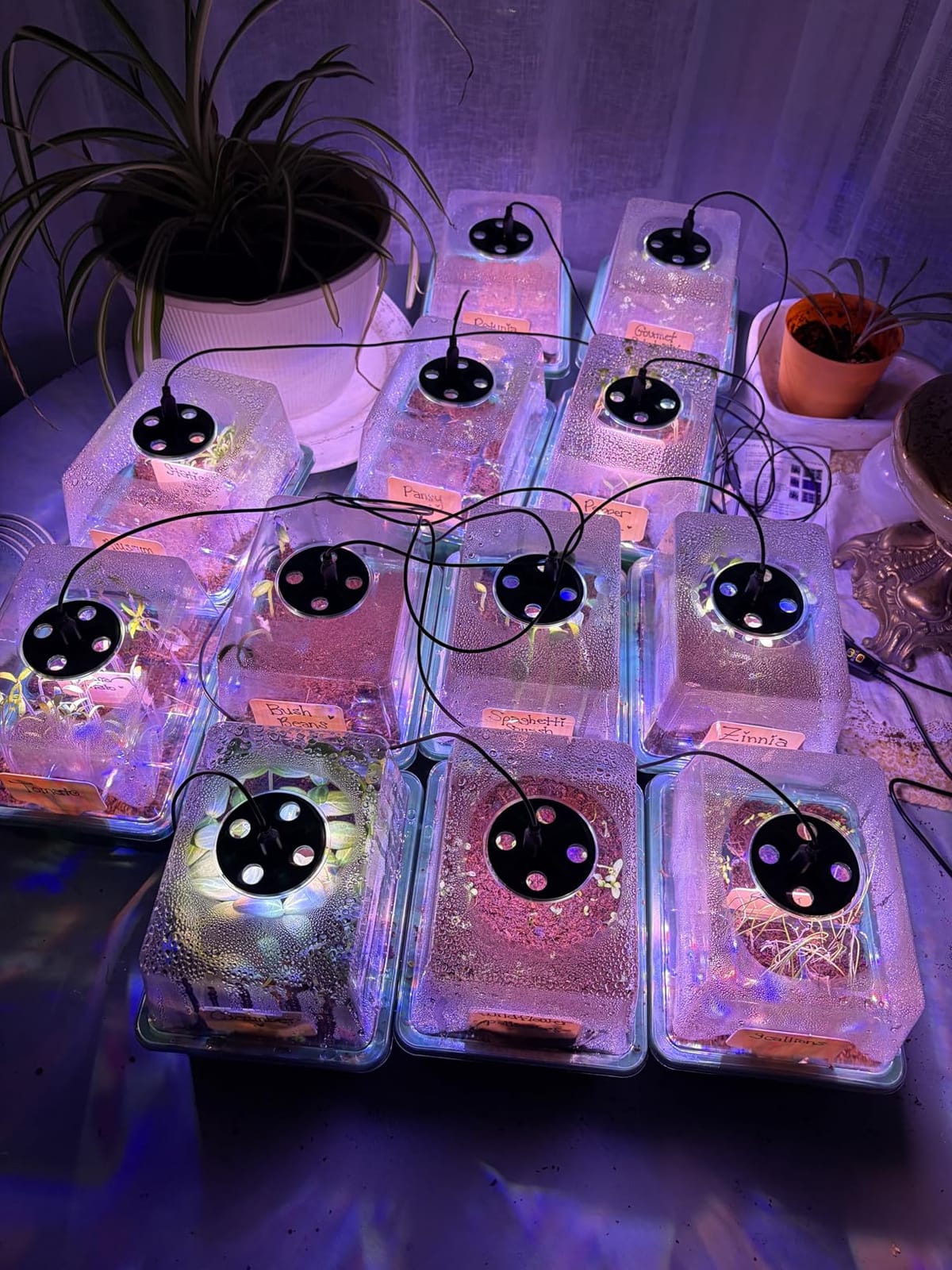
This is the only kit in the group with three separately selectable lighting modes: white only, blue plus red, and white plus blue plus red. That control matters if you want to lean on blue early to suppress stretching and red later to support stem and flower development, and it costs nothing extra to try.
Capacity is good for the class at 72 cells across six trays, with 1.6-inch-square cells at 1.97 inches deep and bottom drainage holes. A 73 percent five-star share and a two percent one-star share make this one of the most consistently well-received kits we tested.
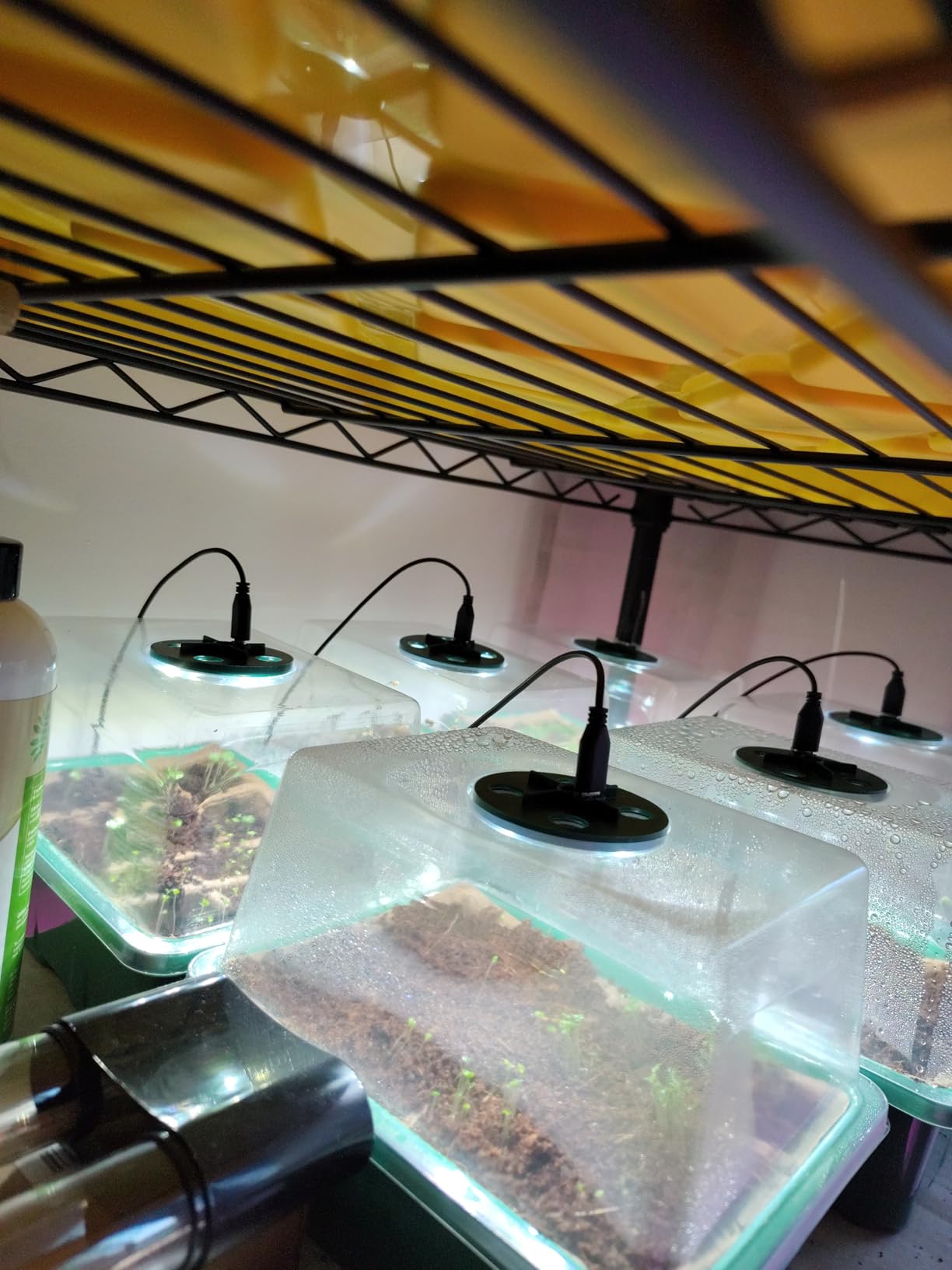
The catch is that several users stress the lights are germination-grade. Seedlings that stay under them too long go leggy and decline, so plan to move to a stronger light within a couple of weeks of emergence, the same caveat that applies to most kits here.
A few buyers also report boxes arriving with fewer trays than the six advertised. Customer service replaced faulty parts quickly when that happened, which is worth noting as a positive rather than a problem.
Who this kit works for
Choose this if you want to experiment with spectrum without buying separate red and blue fixtures, or if you are starting a large mixed batch of flowers and vegetables at once. Cell depth is a real plus for holding seedlings longer.
Who should skip it
Skip it if you need strong sustained light. Having three modes on a weak diode count does not replace a proper grow lamp, and paying for mode selection you will not use twice is not the best trade.
12. Ryscam 96-Cell Seed Starter Tray With Grow Light and Automatic Timer
- Highest cell count here for a low per-cell cost
- Tube bars preferred over small LED pucks
- Timer removes the daily switch
- Trays stack for storage
- Lowest average rating of the twelve kits
- Light bars too weak to prevent legginess
- Domes must stay on to hold the bars
Ninety-six cells makes this the highest-capacity kit in the roundup, and if you are sowing large quantities of brassicas, herbs or cut flowers, the per-cell cost works out lowest. The trays stack for storage and the plastic is noticeably sturdier than the flattest budget options.
Light bars are long tube-style fixtures with a switch for growth-stage selection and an automatic timer, which is the right feature to have. Reviewers consistently prefer tube bars to small round pucks for even spread across a wide tray.
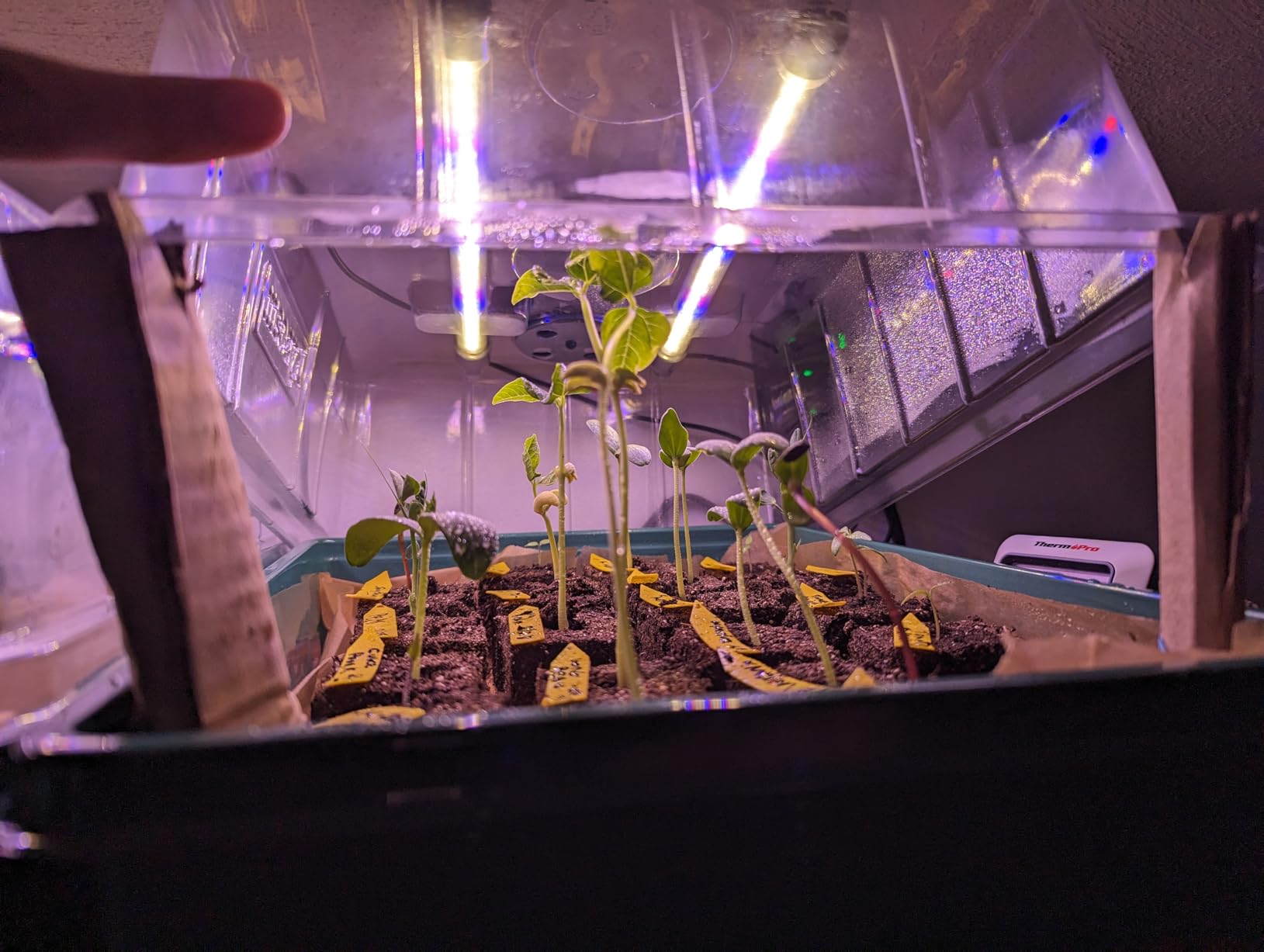
This is the lowest-rated kit in our group at a 4.0 average with 15 percent one-star feedback, and the complaints point in one direction: light strength. Buyers say the bars are not enough to prevent leggy seedlings, which is precisely the problem this product category is supposed to solve.
Two structural quirks also show up repeatedly. The domes have to stay on because they hold the light bars in position, which traps humidity and invites damping-off, and the small drainage holes with deep cells make seedlings hard to extract, with some buyers cutting cells open to free them.
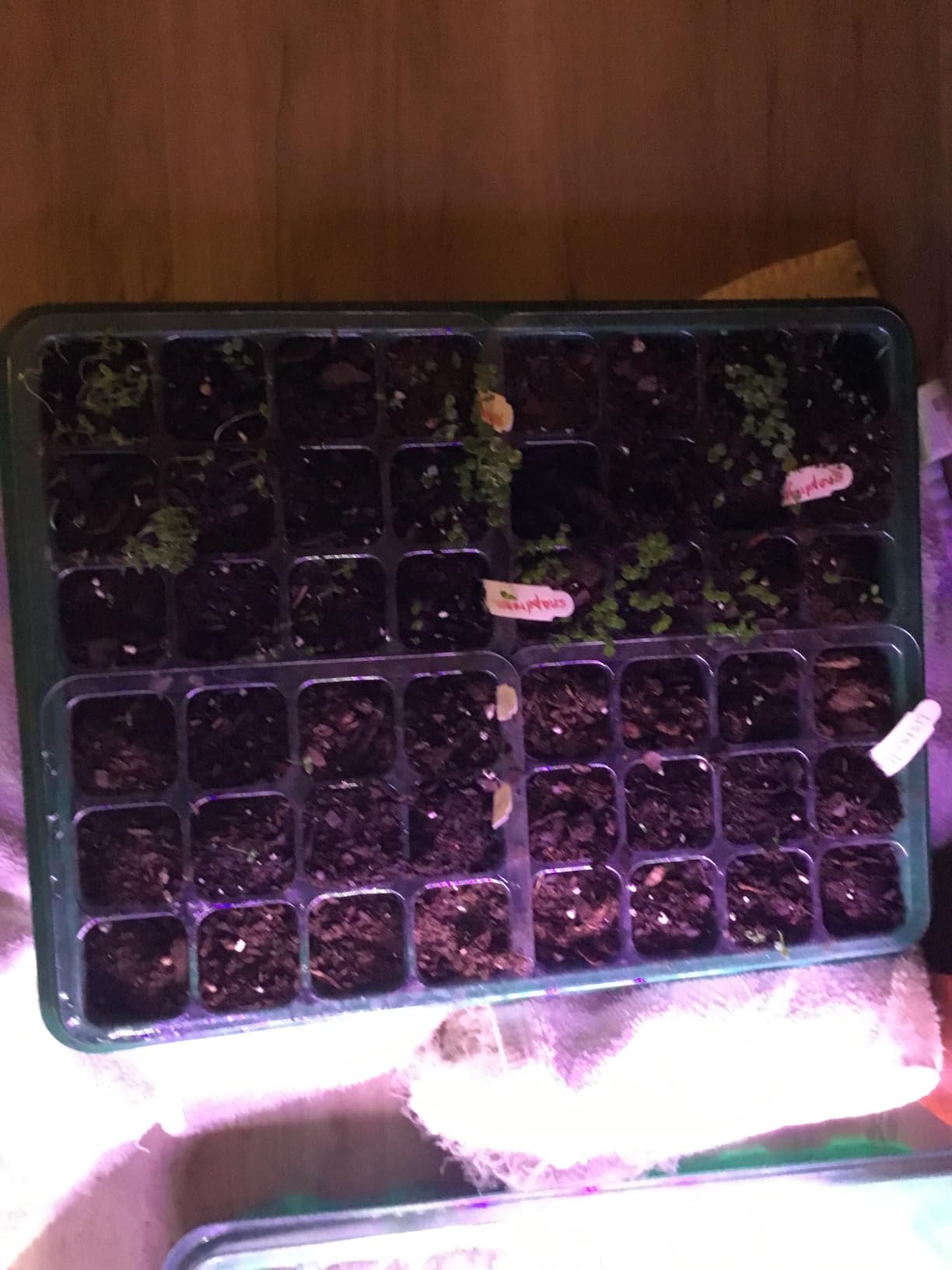
Who this kit works for
This suits a gardener who sows in big numbers and only needs light for germination, with a plan to transfer to a stronger lamp immediately afterward. Storage-minded growers will like that the whole thing collapses flat.
Who should skip it
Skip it for any crop where you want sturdy seedlings in the tray. With the lowest rating, the weakest light and the most difficult plant extraction, a smaller kit with better lighting will serve most people better.
How to Tell If a Kit’s Grow Light Is Any Good
Diode count is the first filter. Anything under about 12 LEDs per tray is a germination light, not a grow light. Above that, look at how the diodes are mounted: long strips and 360-degree wraps spread light more evenly than a single bar or a cluster of pucks, and even coverage is what keeps a whole tray from leaning toward one side.
Second, check for a timer. A kit without one makes you a daily chore, and skipping the light one morning is enough to set a tray back. Brightness control matters less at week one and more at week three, when you want to lower intensity as leaves grow closer to the diodes.
Third, look for red and white diodes together. White alone is acceptable, red-heavy fixtures are less useful for seedlings, and a blue channel gives you a lever against legginess. Fourth, match the light width to the tray footprint, because a standard 10 by 20 inch tray needs coverage across all ten inches.
Finally, ignore headline wattage claims. Forum discussions about this category are full of buyers who were sold a nominal watt figure that meant nothing in practice. Diode count, mounting layout and timer control tell you far more about real performance.
What Type of Grow Light Is Best for Starting Seeds?
A full-spectrum white LED bar with a red channel, mounted as a wide strip above a standard tray, is the best light for starting seeds. Here is what actually matters when you compare fixtures:
Coverage width: match or exceed the tray footprint, ideally 10 inches for a standard tray
Diode count: 12 or more per tray, with 40 or more across a larger unit
Spectrum: full-spectrum white plus red, with blue as a useful extra channel
Timer: a 12-hour or 18-hour setting saves you the daily switch
Brightness control: needed once seedlings grow within a few inches of the diodes
Height and angle: the fixture should be raisable, since seedlings grow into it fast
Seedlings are not demanding. They need enough intensity to stay compact for two to three weeks, which is a fraction of what a mature plant requires, and a light you can dim or raise handles both ends of that.
Should You Start Seeds Under Grow Lights?
Yes if you have no reliable south-facing window, if you are starting in winter or a short season, or if you have already dealt with leggy seedlings. If you have a bright south window that gets six hours of direct sun, a tray without a light can work, and you can move seedlings to the window after germination.
Crop choice also decides it. Tomatoes, peppers and eggplants almost always benefit from supplemental light, while lettuce, radishes, beans and most herbs germinate and grow fine with less. Brassicas tolerate moderate light but stretch noticeably in a dim corner.
One practical test: sow ten seeds of a fast crop ten days before you plan to buy anything, then look at them. If they are all leaning hard toward the glass, you have your answer and you have lost nothing but a few seeds and some mix.
Light Height, Hours and Photoperiod by Growth Stage
Keep the light close early and raise it as the seedlings grow. Four to six inches works for germination and emergence, eight to twelve inches suits the cotyledon stage, and sixteen to twenty-four inches covers the run from true leaves through hardening off.
Run the cycle for 16 to 18 hours a day during seedling growth. That gives seedlings a long day without the dark-period confusion of leaving a light on continuously, which is the most common mistake in this category.
Lower brightness rather than moving the light further away once leaves approach the diodes, because closer light at full output is what causes bleached or burnt patches. If you notice pale, flat or curled leaves at the top of a seedling, that is almost always intensity rather than a nutrient problem.
How to Set Up a Seed Starting Tray With a Grow Light
Fill the cells. Moisten seed starting mix before it goes in, filling each cell to the top so there is no air pocket at the bottom. Tap the tray down once to settle it.
Sow at the right depth. Most seeds go one to three times their own diameter deep. Tiny seeds sit on the surface with a light press; large bean seeds go deeper.
Dome and place the light. Put the humidity dome on with vents closed, and set the light four to six inches above the tray on a 16 to 18 hour cycle.
Water from below. Pour water into the base tray so the mix wicks it up. Watering from the top dislodges seeds and encourages surface algae.
Open the vents at first true leaves. This is the moment to crack the vents, then remove the dome entirely within a day or two. Leaving a closed dome on under a warm LED traps moisture and grows mold.
Raise the light and start feeding lightly. Move the fixture up to eight to twelve inches, and begin a dilute feed once the first true leaves are established.
Harden off before transplant. Spend a week easing daytime exposure outdoors before planting out, and transplant when the root ball fills the cell.
That sequence takes roughly six to eight weeks from sowing to a transplantable tomato seedling, depending on crop and temperature. Plan backward from your last frost date and subtract the weeks your variety needs.
Troubleshooting: Leggy Seedlings, Mold and Weak Lights
Leggy seedlings are a light problem far more often than a soil problem. The fix is to move the fixture closer, raise brightness or extend the photoperiod, and never remove a leggy seedling from under a light, because that makes it worse. If a seedling is already stretched, support it with a label or a small stake while it thickens.
Mold and damping-off appear as a fuzzy white film or collapsing stems, and both mean moisture and airflow are wrong. Remove the dome, increase ventilation, cut watering frequency and scrape off surface algae. Prevention is easier: ventilate from the first true leaves and never leave standing water in the base tray.
Dim or flickering LEDs usually mean a marginal power supply rather than a bad diode. If the kit runs off USB, use a proper 5V adapter at the current the manufacturer specifies, and check the connector seating. Red or purple-seeming light with no green growth usually means the tray is buried under mix or the light is set too low.
Burnt or bleached tips show up as pale, papery patches on leaves nearest the diodes. Move the light up and drop a brightness step, and avoid wetting leaves with a top-down spray while the light is hot.
For a broader view of diagnosing plant problems in this setup, our guide to grow lights for seedlings goes deeper on intensity and heat signatures.
Kit vs Separate Components: What a Full Setup Actually Costs
Assembling a seed starting tray with a grow light means buying a tray, a dome, a light and a heat mat. Doing it from separate pieces gives you a better light and a tray you already own, but you are assembling four products instead of opening one box.
A thread on a popular homesteading forum put it plainly: complete kits provoke sticker shock when you price all the components, and a repurposed shelf with a separate bar light covers far more space per unit. That is true here. A single kit lights one tray well. Two kits at a similar total cost light two.
What the integrated version does win on is friction. There is no guessing which dome fits which tray, no mismatched wattage, no missing adapter, and it stores as one flat object. For someone starting seeds for the first time, that is worth paying for.
The reusable math favors keeping the tray too. A plastic cell tray that survives three seasons divides its cost across three batches, while a disposable tray is written off each year. The light is the part most likely to become the limiting factor, which is why kits with removable or repositionable bars hold their value longest.
Our honest guidance: buy an integrated kit for your first tray, then move to a shelf and a separate bar light when you want to scale past it. Apartment growers with limited vertical space should also read our guide to indoor grow tents before committing to a permanent setup.
Frequently Asked Questions
What is the best seed starter kit with a grow light?
For most home gardeners the best seed starter kit with a grow light is the Bonviee 5-Pack, which combines 60 clear cells, five 12-LED lights and vented domes with a USB cable that powers all five trays from one point. If you want the most complete box, the SOLIGT 60-cell kit adds a waterproof heat mat and a repositionable gooseneck light. If you need the most cells and real brightness control, the Sondiko 80-cell kit runs five brightness levels and three timers.
Are seed trays with grow lights worth it?
Yes, for most people starting tomatoes, peppers, eggplants, brassicas or cut flowers indoors. An integrated light removes the two hardest parts of indoor seed starting, which are finding a bright window and rigging a lamp above the tray. The caveat is that dome lights are built for germination and the first two weeks, so you may want a stronger lamp later.
What type of grow light is best for starting seeds?
A full-spectrum white LED bar with a red channel, mounted as a wide strip that covers the full tray width, works best. Judge fixtures on diode count, coverage width, timer settings and brightness levels rather than headline wattage. Seedlings need far less light than mature plants, but they do need consistent intensity and a daily photoperiod to stay compact.
Should I start seeds under grow lights?
Start seeds under grow lights if you have no reliable south-facing window, if you are sowing in winter or a short season, or if your seedlings have gone leggy before. Tomatoes, peppers and eggplants benefit most. Fast crops such as lettuce, radishes and beans can germinate and grow with less light, and a bright south window can replace a fixture for those.
How many hours a day do seedlings need grow light?
Run seedlings on a 16 to 18 hour photoperiod, which is the range most kit timers cover with a 12 or 18 hour setting. Leave the light off for several consecutive hours rather than running it around the clock, since a continuous dark period is part of what keeps seedlings compact and prevents premature flowering in sensitive crops.
When should I remove the humidity dome?
Remove the dome as soon as true leaves appear, which is usually within a day or two of first emergence. Before that, keep the vents closed to hold heat and humidity. Leaving a closed dome on under a warm LED traps moisture, encourages surface algae and creates the conditions for damping-off, which is the most common way a good tray is lost.
Final Verdict
The Bonviee 5-Pack is our pick for the best seed starting trays with grow lights because it pairs the largest review base in the group with the features that actually matter, namely clear root viewing, working vents and a USB cable that runs the whole set. Take the SOLIGT kit if you want heat included and a light that follows the seedlings after the dome comes off, and choose the Sondiko 80-cell set when cell count and brightness control matter more than anything else.
Whichever you pick, the light gets seedlings through the two-week stretchy stage and no further. Plan a stronger lamp or a move outdoors once true leaves are up, open the vents on schedule, and you will not lose a tray to damping-off. Use the buttons below to check the current price of any of these kits.