
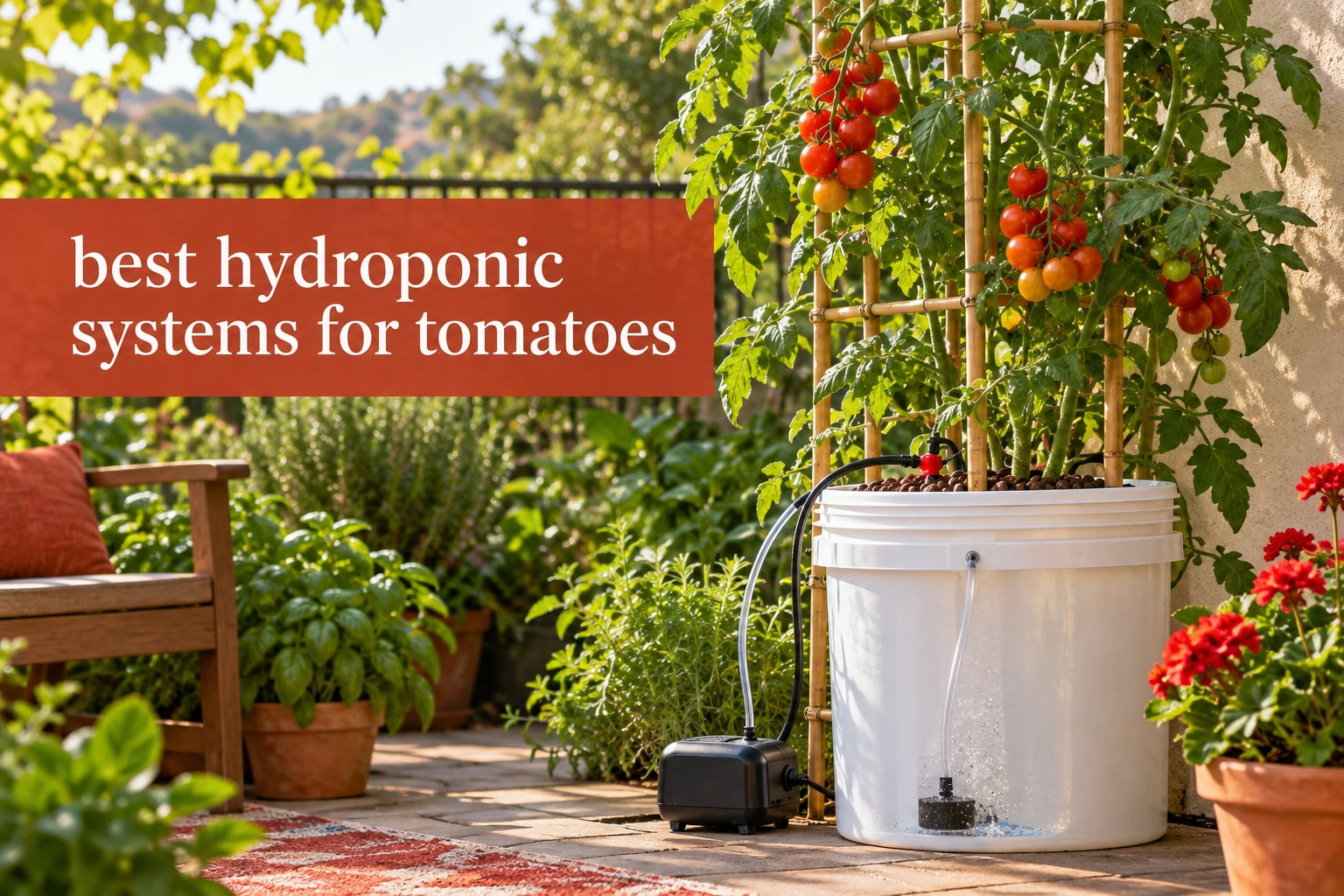
Dutch bucket systems are the best overall hydroponic choice for large, heavy-yielding tomato plants, because they give a fruiting vine a generous root volume, a constant drip of oxygen-rich solution and a place to tie the plant in as fruit loads up. That is the short answer, and it is the answer this whole roundup is built around.
The trouble is that the best hydroponic systems for tomatoes are not one product, they are four different architectures. A countertop pod garden that looks impressive in a photo will cap a tomato at eleven inches, while a bucket kit on the floor will carry a full-size indeterminate vine to six feet without complaining.
Our team read the spec sheets, drained the review sections and compared all twelve systems in this guide against tomato-specific criteria rather than generic hydroponics criteria. In 2026, that means root volume, grow-light height, trellis support, nutrient delivery for a heavy calcium and potassium demand, and how much hands-on attention the system asks of you once a plant is loaded with fruit.
Everything below is scored for tomatoes first. Where a system is genuinely good for lettuce and weak for tomatoes, we say so in the section for that product rather than burying it.
Top 3 Hydroponic Systems for Tomatoes in October 2026
These three cover the three ways most people grow tomatoes at home: a countertop unit for cherry types, a four-bucket floor kit for a real harvest, and a single-bucket system for anyone who wants to start with one plant and learn dosing.

iDOO 12-Pod Hydroponic Garden
- 12 planting sites
- 22W full-spectrum LED
- Vegetable and flower/fruit modes
- 4.5L tank

VIVOSUN DWC Top Drip Kit
- 4x 5 gallon buckets
- Top drip irrigation rings
- 25 L/min air pump
- Clay pebbles included
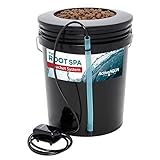
Hydrofarm Root Spa 5 Gal
- 5 gallon DWC bucket
- 8 inch net pot basket
- Air pump and air hose
- Leak-tight grommet fittings
All 12 Hydroponic Systems at a Glance for October 2026
This table is the short version of the guide. Each row gives you the system type, the plant capacity and the feature that actually decides whether tomatoes will do well in it.
| Product | Specifications | Action |
|---|---|---|
| iDOO 12Pods Hydroponics Growing System |
|
Check Latest Price |
 Ahopegarden Indoor Garden 10 Pods Ahopegarden Indoor Garden 10 Pods |
|
Check Latest Price |
 LETPOT LPH-SE 12 Pods Smart System LETPOT LPH-SE 12 Pods Smart System |
|
Check Latest Price |
| Hydrofarm Root Spa DWC 5 Gallon |
|
Check Latest Price |
| VIVOSUN DWC Top Drip Kit 4 Buckets |
|
Check Latest Price |
 Hydrofarm GCTR Tomato Grow System Hydrofarm GCTR Tomato Grow System |
|
Check Latest Price |
 VEVOR DWC 8 Bucket System VEVOR DWC 8 Bucket System |
|
Check Latest Price |
 E SUPEREGROW Tall Kit with Trellis E SUPEREGROW Tall Kit with Trellis |
|
Check Latest Price |
 LAWNFUL 4 Hydroponic Bucket Kit LAWNFUL 4 Hydroponic Bucket Kit |
|
Check Latest Price |
 MARS HYDRO DWC 2 Buckets Top Drip MARS HYDRO DWC 2 Buckets Top Drip |
|
Check Latest Price |
 Ahopegarden 44 Pod Double-Layer System Ahopegarden 44 Pod Double-Layer System |
|
Check Latest Price |
 Spider Farmer DWC 4 Buckets Top Drip Spider Farmer DWC 4 Buckets Top Drip |
|
Check Latest Price |
1. iDOO 12Pods Hydroponics Growing System – Best Overall for Cherry Tomatoes
- Twelve sites in a compact countertop footprint
- Low-noise pump and circulation fan
- Vegetable and flower/fruit light modes
- Best-reviewed system in this guide
- Around 11 inch height ceiling caps plant size
- 4.5L tank needs frequent refills across 12 sites
The iDOO 12Pods is the most reviewed hydroponic system in this roundup by a wide margin, and for a reason: it packs twelve planting sites into a footprint that fits beside a toaster. At 13.78 by 12.09 by 8.86 inches and 1.8 kilograms, it is the smallest serious unit we tested, which matters a lot if your growing space is a kitchen counter.
The flower and fruit mode is the detail that makes it a tomato machine rather than a herb machine. Rather than running one fixed spectrum, the 22-watt LED switches to a red-heavy profile once you set it manually, which is roughly what a fruiting crop wants.
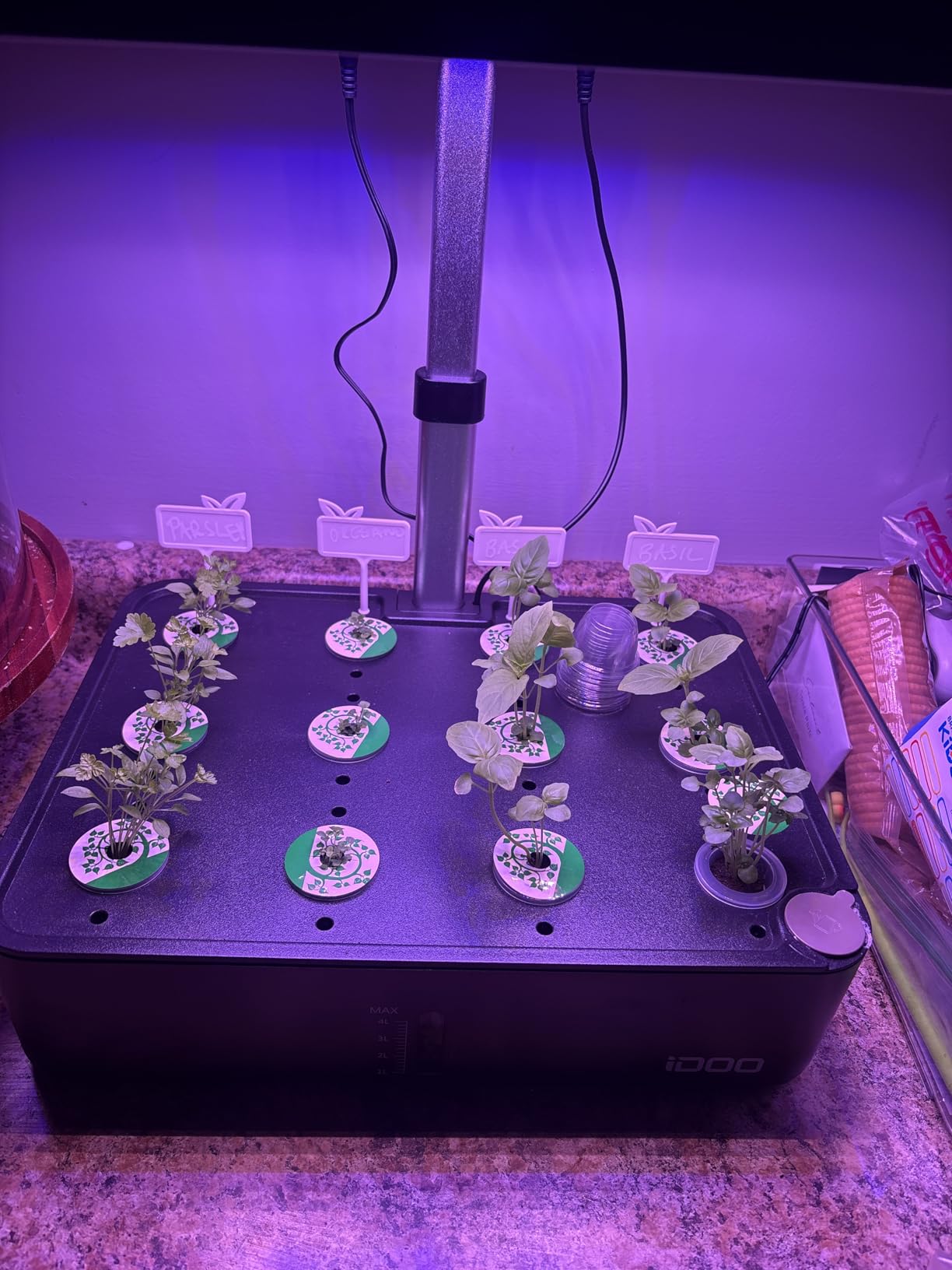
What you give up is height. The lighting post adjusts to roughly eleven inches, and that number decides what you can grow. Cherry and micro-dwarf varieties fruit comfortably inside it. Anything with an indeterminate habit will reach the light and get scorched.
The 4.5-litre tank is the other constraint. Twelve sites drawing from a small reservoir means you are topping it up more often than the marketing implies, and the integrated pump runs to keep that volume circulated.
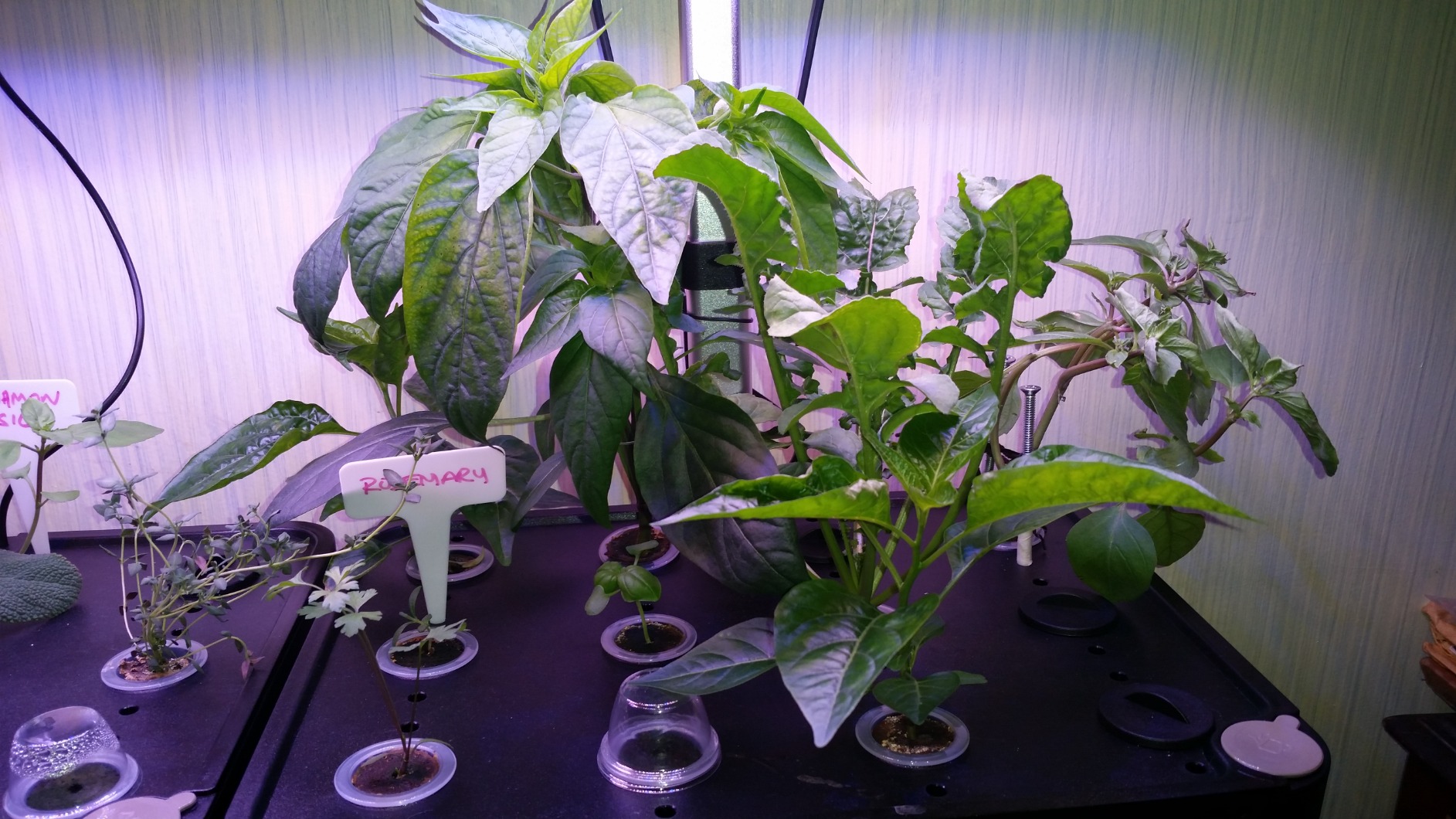
Where this system earns its place
If you want a year-round supply of Sungold or Red Robin in a flat with no outdoor space, this is the pick. Twelve sites means you can run a rotation and never have zero ripe fruit, and the low-noise pump will not wake anyone at three in the morning.
It also makes a good first system. Nothing is sealed, the nutrient tank is open, and you can pour in any tomato feed you like rather than being locked into branded refills.
Where it will disappoint you
It will not carry a beefsteak, and no upgrade path changes that. Growers who bought it for full-size tomatoes consistently report hitting the light before fruiting.
The small tank also means frequent refills, which is the single most common complaint attached to twelve-site countertop units. If you are not willing to top up water every few days, choose a two-bucket floor system instead.
2. Ahopegarden Indoor Garden 10 Pods – Best Quiet Countertop Pick
Ahopegarden Indoor Garden Hydroponics Growing System: 10 Pods Kit with LED
- Reviewers report vigorous cherry tomato growth
- Very quiet pump
- Simple 16 hour automatic timer
- Helpful customer support
- Timer resets after a power interruption
- Light post is stiff to raise and lower
- Height limit near 14.5 inches
The Ahopegarden 10 Pods has a 14.5-inch adjustable light post, which makes it the tallest of the compact countertop units here and the most forgiving of a medium-sized cherry variety. At 3 litres it holds less water than the iDOO, but the see-through level window takes much of the guesswork out of checking it.
Owners frequently report cherry tomato harvests from this unit specifically, which is more than many competing pod gardens can claim. The included components are unusually complete for the tier: baskets, sponges, domes, shade papers, tweezers and A and B fertilizer in one box.
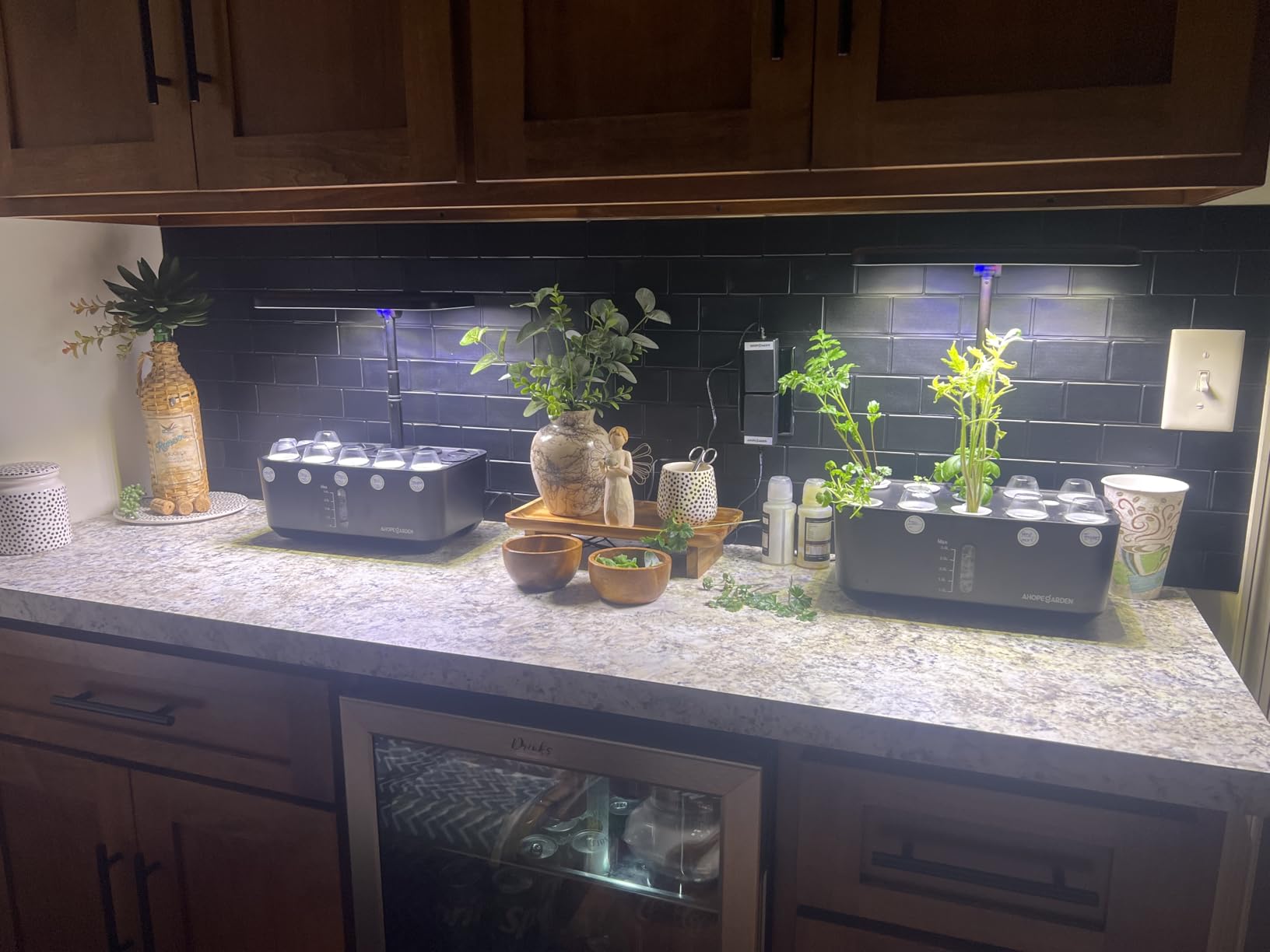
The pump is the quiet standout. Multiple reviews describe it as barely audible, which matters when the unit sits on a counter you use for other things.
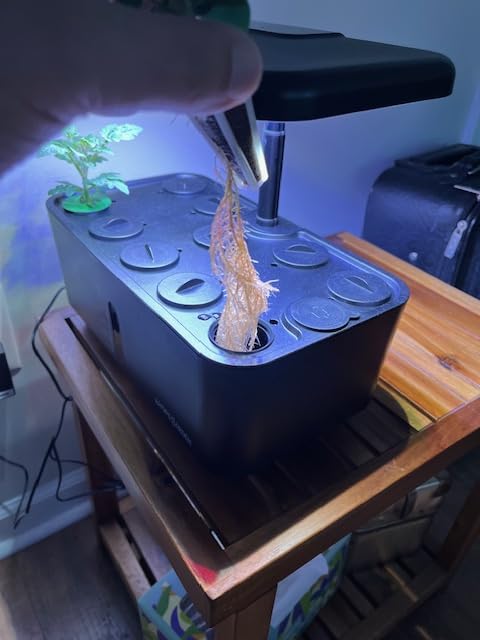
Roots do grow long and downward in this design, so a seasonal root trim is part of the routine. It is not a fault, just a maintenance task nobody mentions in the product photos.
Where this system earns its place
Choose this over the iDOO if noise is your main objection, or if you want the tallest growth in the smallest footprint. The 14.5-inch post gives a cherry tomato noticeably more room before it hits the light.
It is also the easiest unit here to hand to someone as a gift, because the timer does the scheduling without a phone and the whole thing assembles in a few steps.
Where it will disappoint you
The automatic light timer resets after a power cut, and that is the most-reported complaint in the reviews. If your kitchen has flaky power, expect to reset it.
At 3 litres across ten sites it is the smallest reservoir in the guide relative to its plant count. Plan on checking the window more than once a day in warm weather.
3. LETPOT LPH-SE 12 Pods – Best App-Controlled System
- 30 inch light rod handles upright vines
- App and WiFi scheduling with watering reminders
- 5.5L tank runs up to three weeks
- Stainless steel and resin body is easy to clean
- Scheduling depends on a phone and app
- Higher entry cost than basic pod gardens
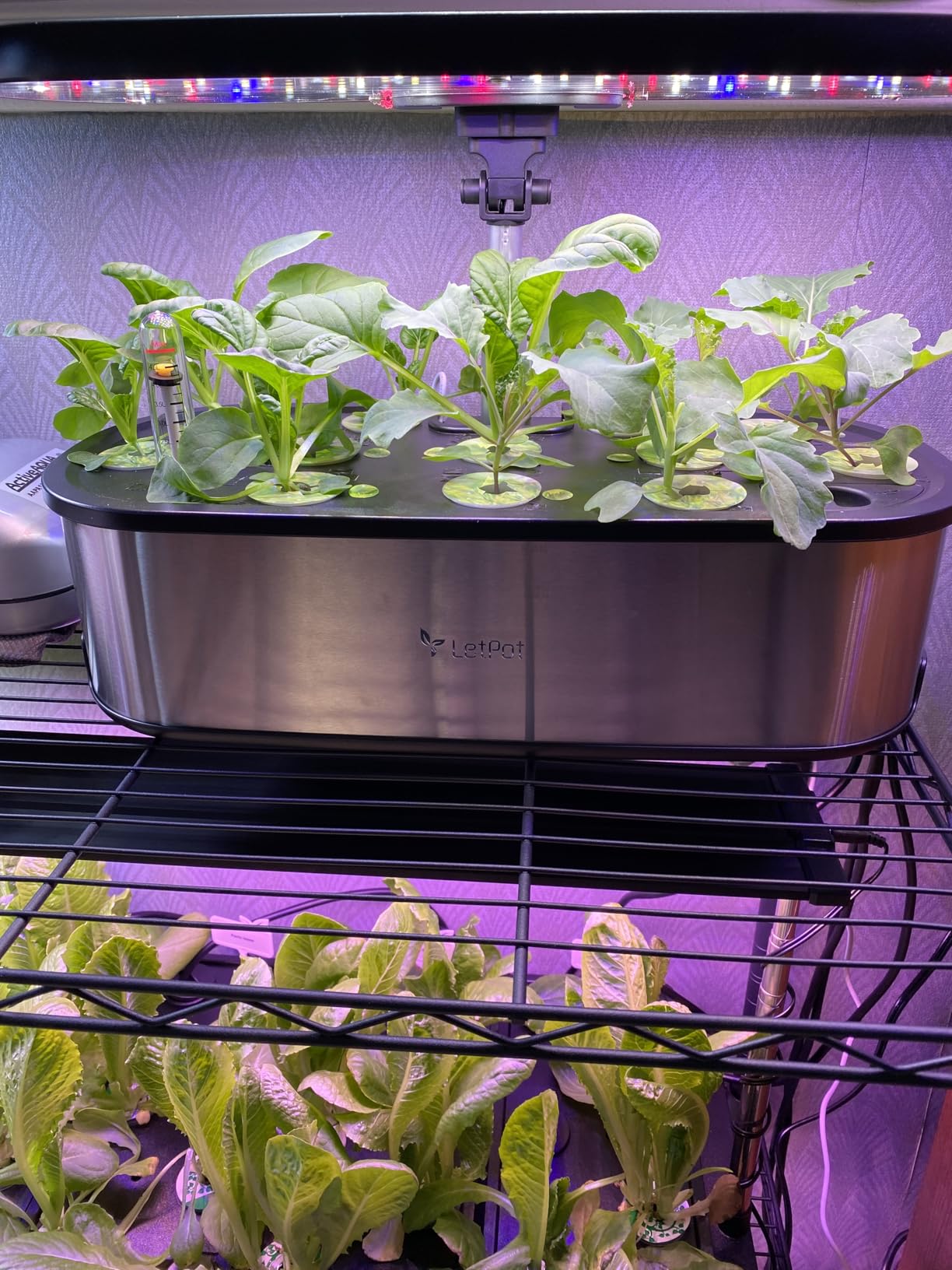
The LETPOT LPH-SE is the only countertop unit in this guide whose light rod reaches 30 inches, and that single specification moves it into a different conversation. A tomato at 24 inches with room left above it is a viable proposition rather than a compromise.
The 5.5-litre tank is also the largest countertop reservoir here, and buyers report running three weeks between waterings at a typical plant count. Combined with 24 watts of full-spectrum light, this is the most tomato-capable appliance in the roundup.
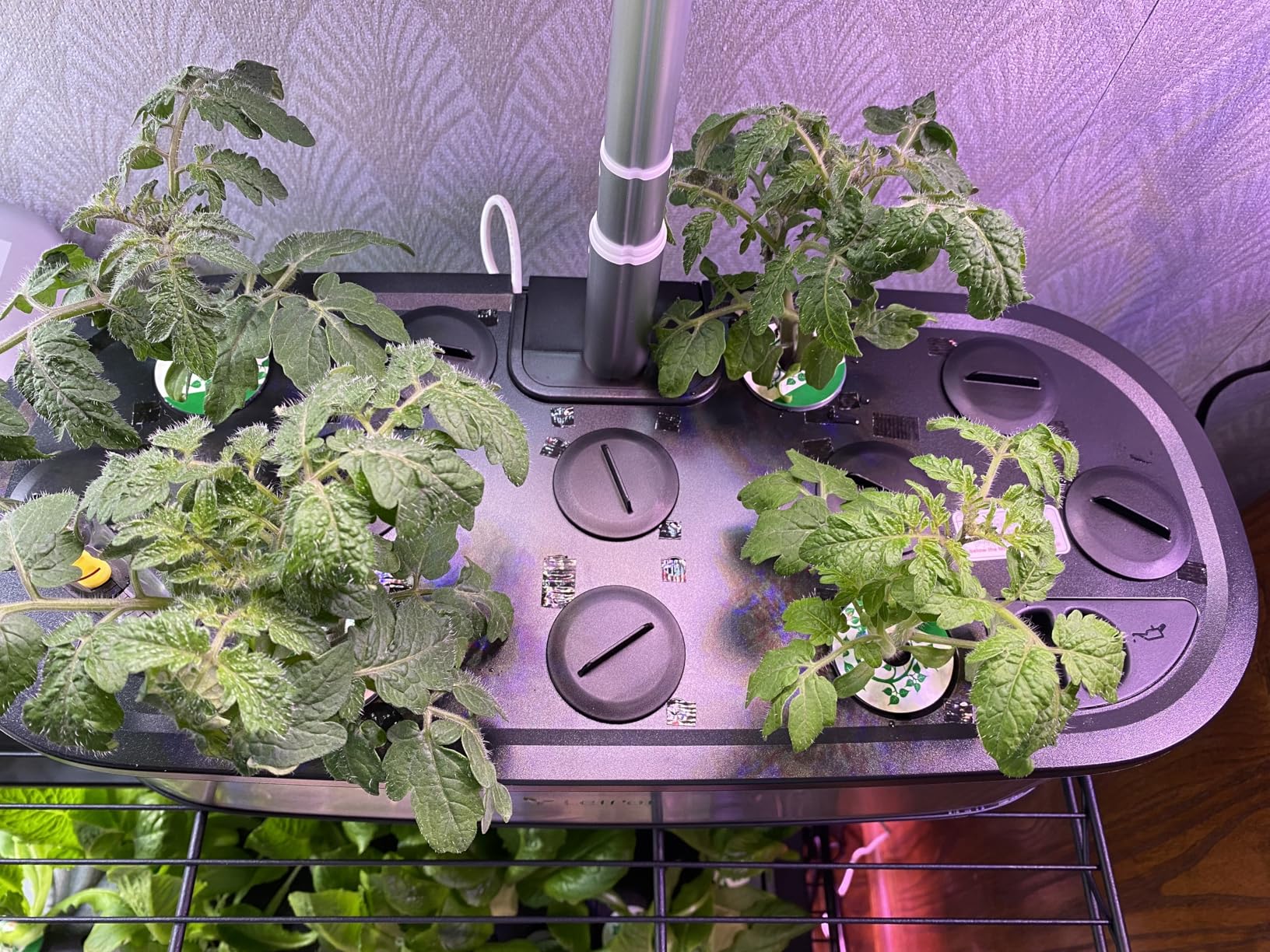
App control is the real differentiator. You set a zero to 24 hour lighting schedule, pick a vegetative or blooming profile, and get watering reminders on your phone, which is genuinely useful when the system lives in a room you do not walk through every morning.
Construction is a double layer of resin and stainless steel, and that combination wipes clean in a way the all-plastic units do not. Hydroponics gets messy around the root zone, and cleanability matters more than it sounds.
Where this system earns its place
This is the one to buy if you want an appliance rather than a project, and if you can accept managing a nutrient tank in a small volume. Thirty inches of headroom plus a 24-watt light is enough for cherry and mid-size determinate varieties.
It is also the only unit here you can schedule from your phone, which matters for anyone travelling or working long shifts.
Where it will disappoint you
It carries a higher entry cost than the basic pod gardens, and a minority of buyers object to needing a phone for basic scheduling. If the app stops being maintained, your schedule stops with it.
Twelve cups in 5.5 litres is still a shared reservoir. Twelve mature tomatoes transpire more water than three weeks of top-ups assumes, so expect to refill sooner once plants are heavy with fruit.
4. Hydrofarm Root Spa DWC Bucket System – Most Versatile Starter Bucket
Hydrofarm RS5GALSYS Root Spa Deep Water Culture Bucket System, 5 Gallon, black
- Leak-tight grommet fittings that survive being bumped
- Lids interchangeable across 5 gallon buckets
- Reviewers report tomato and pepper harvests
- Compatible with clay pebble media
- Buckets are not plumbed together so water changes are manual
- Included air pump is underpowered for some setups
- Clay media sold separately
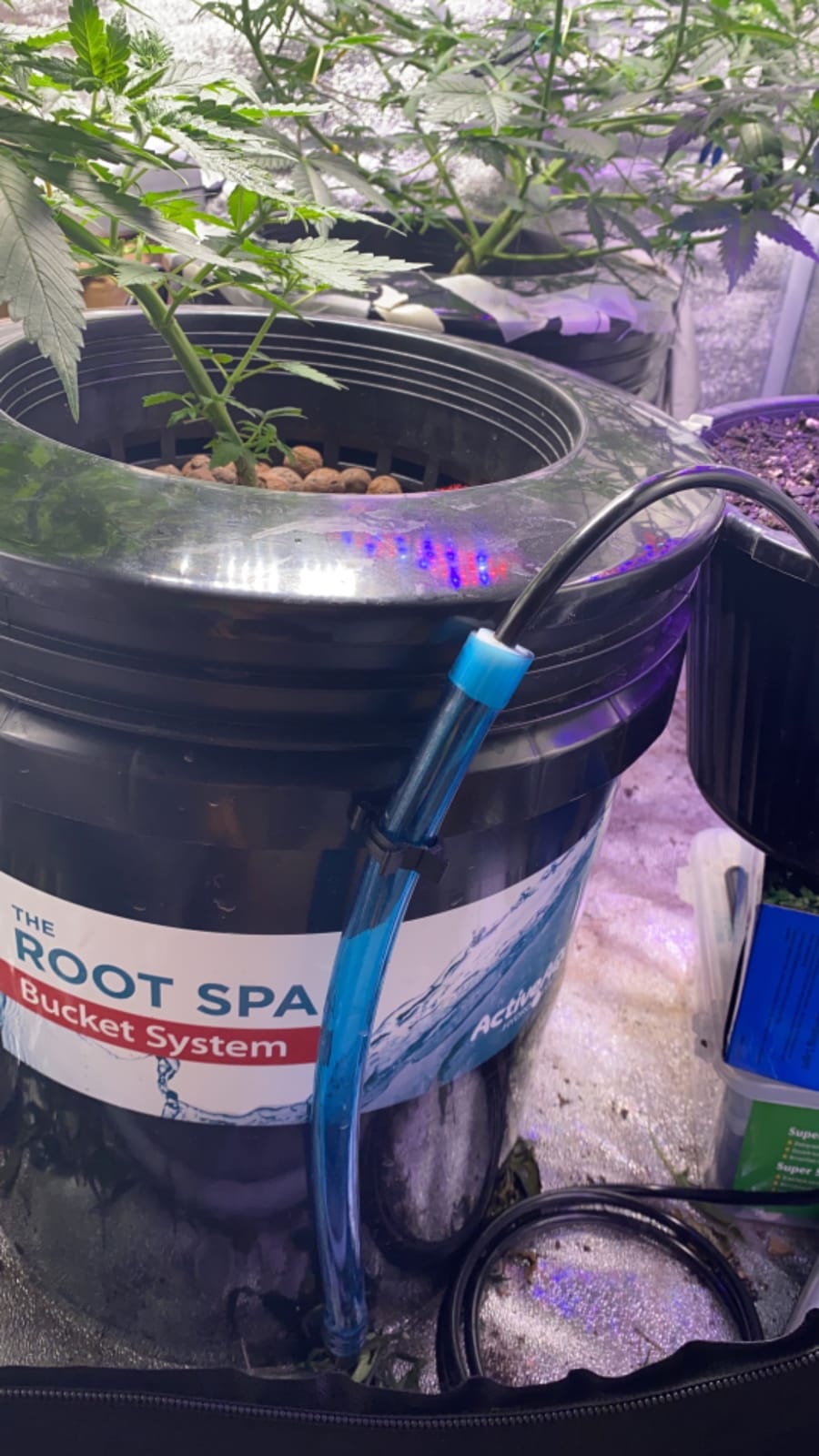
The Root Spa is the system we would hand someone who wants to learn deep water culture with one tomato plant instead of twelve. A five gallon bucket, an eight inch net pot, a lid, an air pump and the fittings to connect them. Nothing about it is clever, and that is the point.
Experienced growers rate the hardware quality highest of anything in this roundup. The grommet and elbow fittings seal properly and stay sealed when a bucket gets knocked, which is the single most common failure in DIY bucket builds.
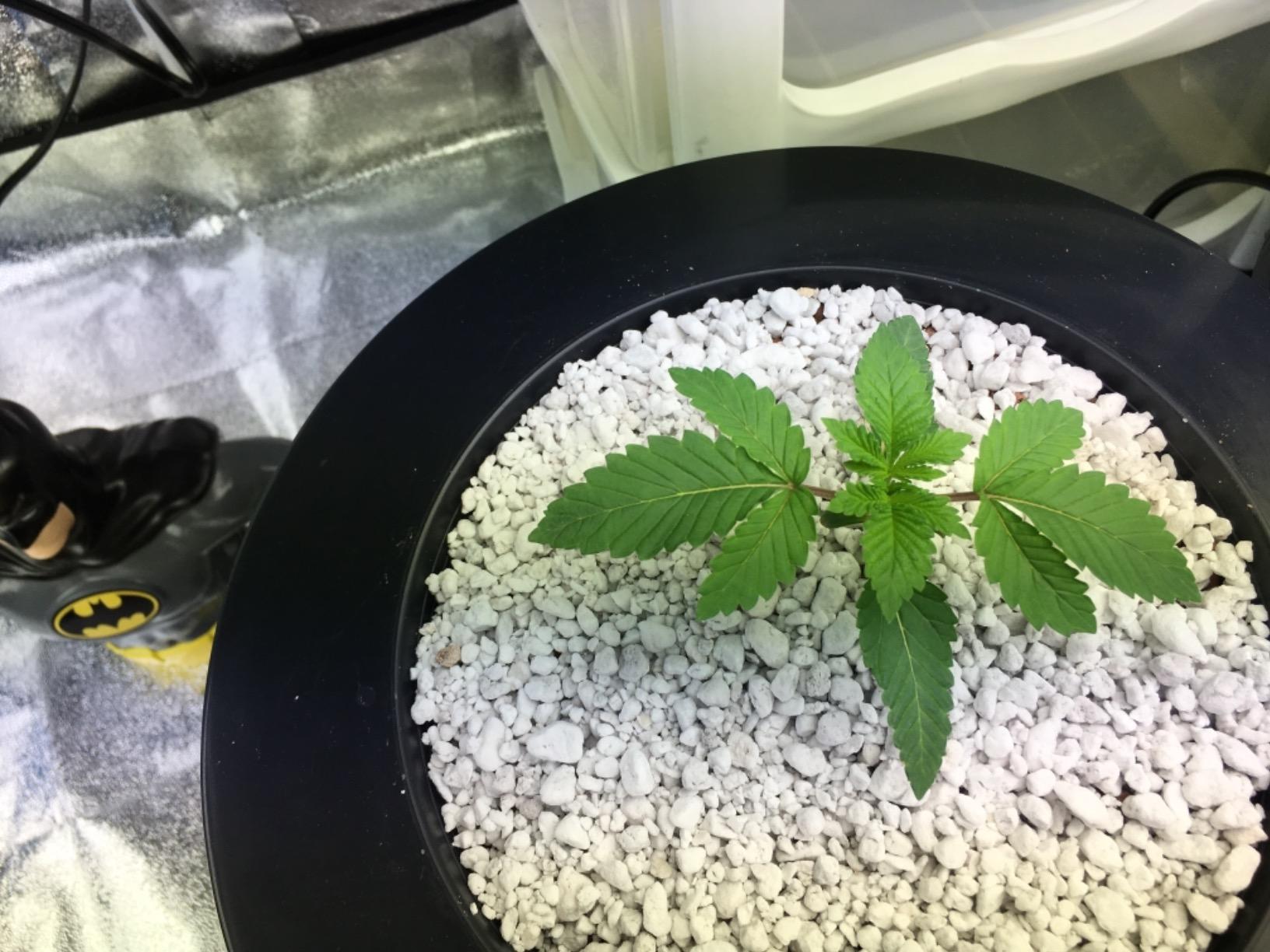
Because the lid is a standard eight inch net pot design, you can swap it for a lid from any other five gallon bucket you own. That means water changes are easy, which is the main daily chore in DWC.
The included air pump is the weak point. Several reviews note it is underpowered for larger setups, and that without an air stone the bubbles are large and the noise is higher. Budget for a better pump once you know the system works.
Where this system earns its place
One plant, one bucket, no ambiguity. This is a straightforward way to learn nutrient dosing, and experienced growers use it that way deliberately before scaling to a multi-bucket system.
It also works outdoors on a patio or in a greenhouse, where a bucket is easier to move than any assembled kit. Clay pebbles are sold separately, so add those to your list.
Where it will disappoint you
One site. If your goal is a harvest rather than a lesson, you will outgrow it within a season.
It is not plumbed for recirculation and has no filtration, so every water change is manual and every reservoir is a separate job. Growers running more than two of these end up wishing they had bought a linked system.
5. VIVOSUN DWC Top Drip Kit, 4 Buckets – Best Value for a Real Harvest
- Complete 36 piece kit in one box
- Top drip ring keeps nutrient solution moving
- Buyers report strong growth versus media mixes
- Silent once all tubing is connected
- Drip ring sputters instead of flowing smoothly
- Flow control valves only stop or start
- Each bucket drains and refills separately
Four five gallon buckets, four net pot baskets, a 15-watt air pump rated at 25 litres per minute, four drip rings, four air stones, twelve metres of tubing, clay pebbles and a set of regulators. For the money, nothing else in this guide gives you four genuine tomato root zones.
The top drip design is what separates it from a plain DWC bucket. A ring above the root mass keeps the medium damp and the solution moving, which growers credit for the dramatic growth they report compared with coco and perlite mixes.
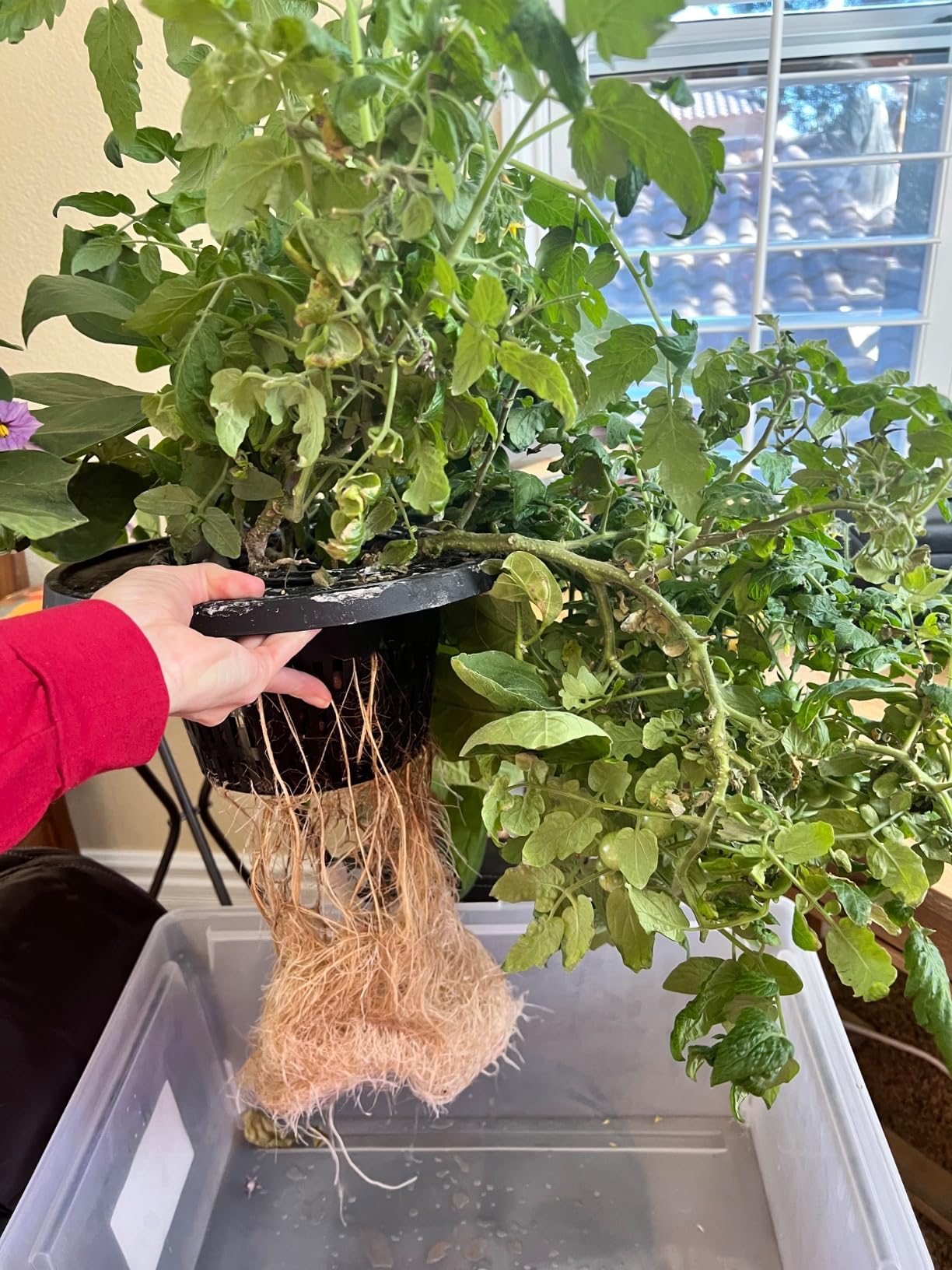
Assembly is the main task. Getting the drip tubing through four separate grommets is fiddly and takes longer than the booklet suggests, and a few owners report a small first-fill leak around the water level tube that settles once everything is seated.
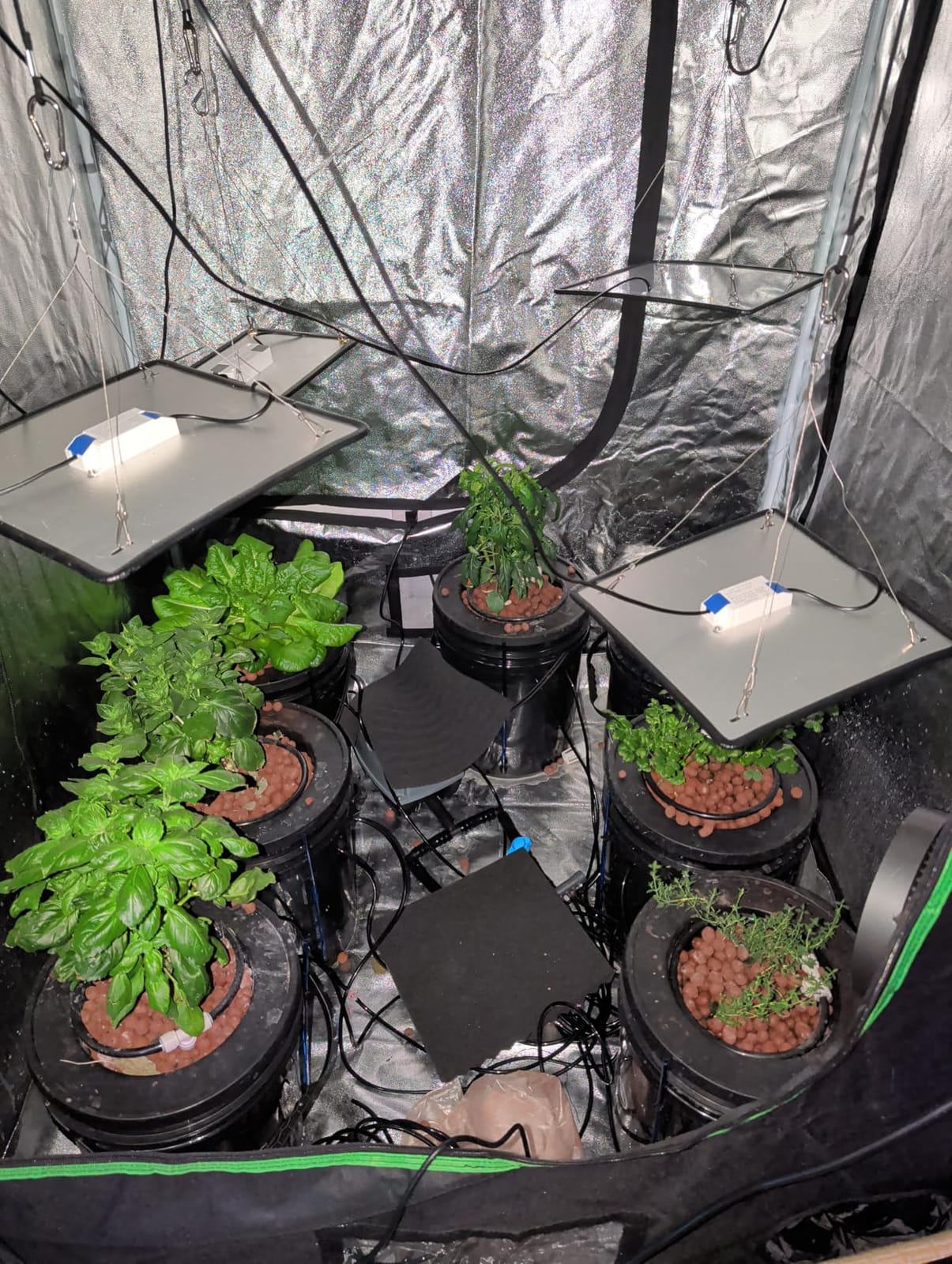
Once assembled the pump is quiet, and the buckets use a standard five gallon form factor, so lids and net pots are interchangeable with other hardware you already own.
Where this system earns its place
Four plants is the sweet spot for a household. You can run two tomatoes and two peppers, stagger plantings so you are never between harvests, and still have enough reservoir per plant to keep the solution stable.
It is the system we would build a small greenhouse around. Buckets sit under a bench, drip lines run up to a trellis, and the clay pebbles are already in the box.
Where it will disappoint you
The blue flow control valves turn about a quarter turn, so the drip rings are on or off rather than adjustable. If you want to dial irrigation down in cooler weather, you cannot with the parts supplied.
Four separate buckets means four water changes. That is the price of the kit, and it is the reason this sits at best-value rather than best overall.
6. Hydrofarm GCTR Tomato Grow System – Best Support Frame for a Full-Size Vine
Hydrofarm GCTR Tomato Grow System, 10 Gal Planter, 4 Ft Trellis, Wheels
- Four foot trellis supports heavy vines
- 10 gallon volume cuts watering frequency
- Wheels make it easy to reposition indoors or outside
- Simple lightweight frame assembly
- Soil based planter rather than a hydroponic system
- No built-in lighting
- Fixed trellis height once risers are installed
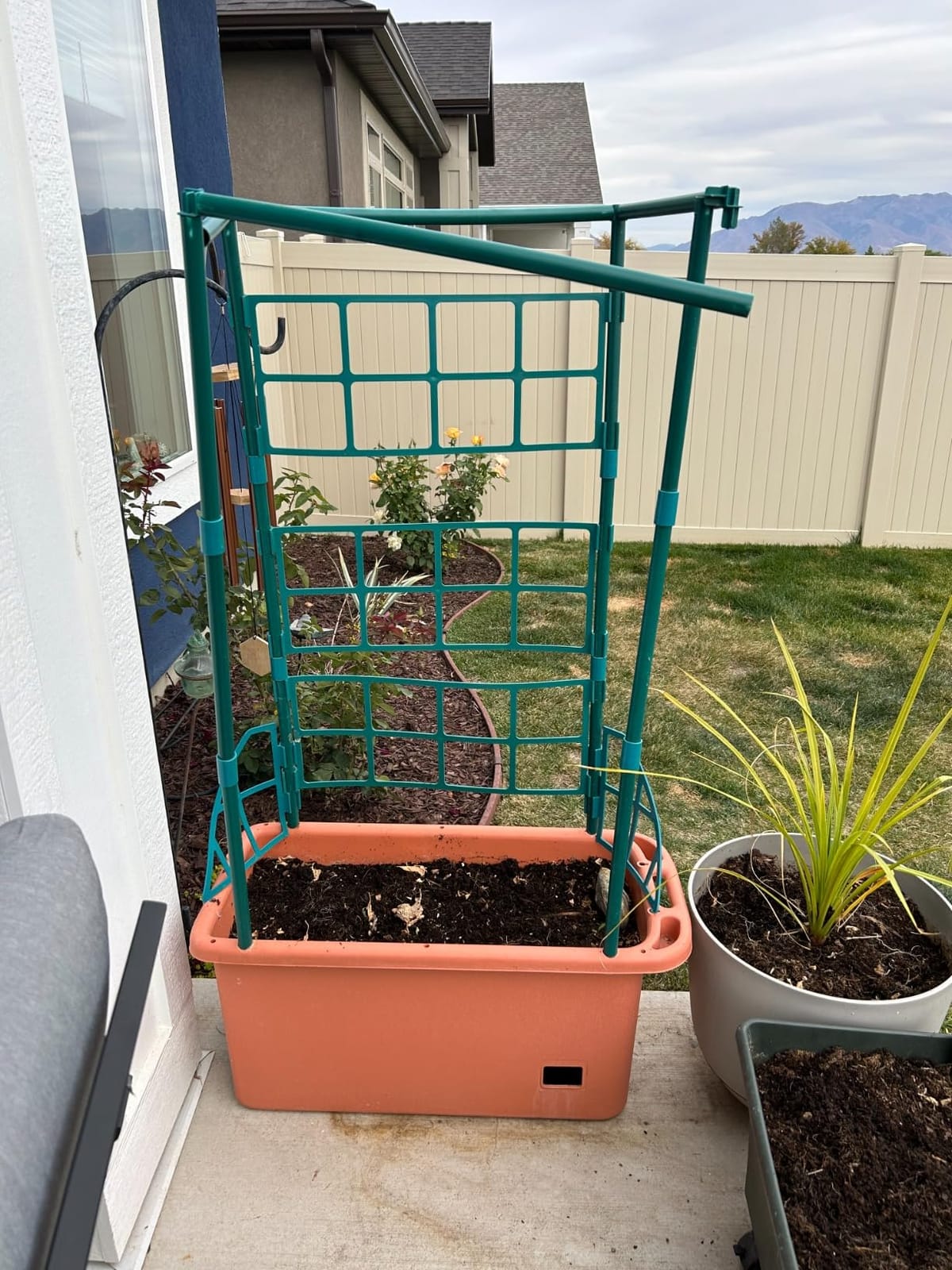
The GCTR is the only system in this guide built by a hydroponic manufacturer specifically for tomatoes, and the only one where the support structure is the main event. A 10 gallon rolling planter with a trellis that expands past four feet, rated for tomatoes, beans, peas and other climbers.
We are including it with a clear caveat: this is a soil and media planter with a bottom-fill reservoir, not a recirculating hydroponic system. Nutrients and irrigation are entirely manual. If you want a true nutrient film loop, this is not it.
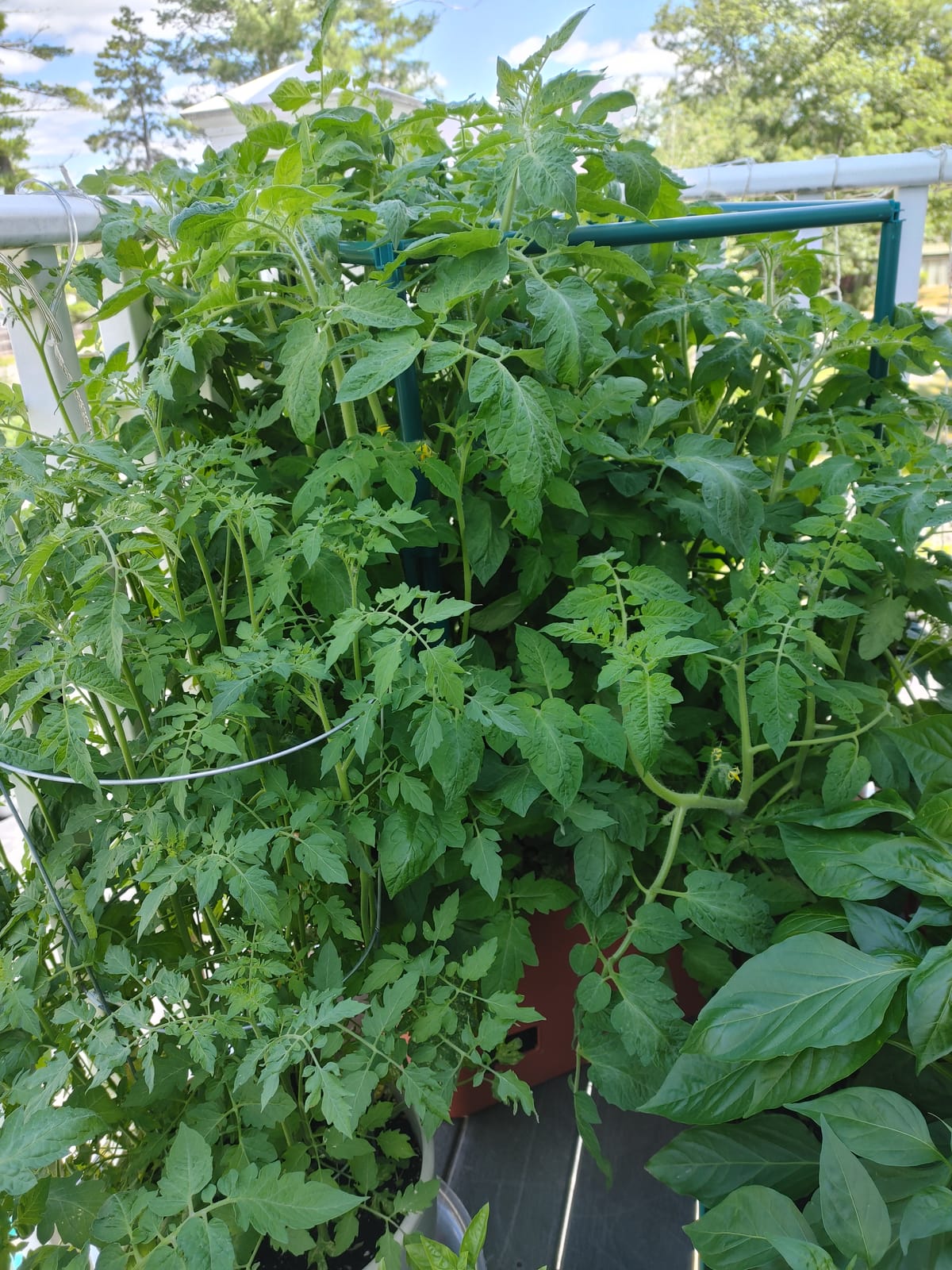
What it does give you is the thing countertop units cannot. Four feet of vertical support means an indeterminate vine can run to its natural height with fruit clusters at multiple levels, and the two casters mean you can move the whole thing from a balcony to a sunny corner.
Owners value the ten gallon volume mainly because it reduces how often they water in summer heat, which is the deciding factor for anyone growing outdoors on a patio.
Where this system earns its place
Outdoor and greenhouse growers. If you already have a way to feed nutrients, or you want to grow in coco or perlite with a sub-irrigated reservoir, the support frame is the best in this roundup for a full-size plant.
It is also the natural companion to a bucket system. Run a Dutch bucket or DWC bucket at the base for solution, and use this frame for a second plant that needs more height than a bucket lid allows.
Where it will disappoint you
Anyone expecting an all-in-one hydroponic system will be disappointed. You manage feed and irrigation yourself, and there is no pump in the box.
There is no lighting, so indoors it needs a separate grow light, and the trellis height is fixed once the risers are installed. Plan the final height before you assemble it.
7. VEVOR DWC Hydroponic System, 8 Buckets – Best for Mixed Crops
- Eight sites allow mixed crops in one run
- Water level device on every bucket
- Tight seals and inline check valves reduce leaks
- Complete accessory package with clay pebbles
- Eight independent reservoirs mean eight water changes
- 25.4 pound footprint needs dedicated floor space
- No shared plumbing between buckets
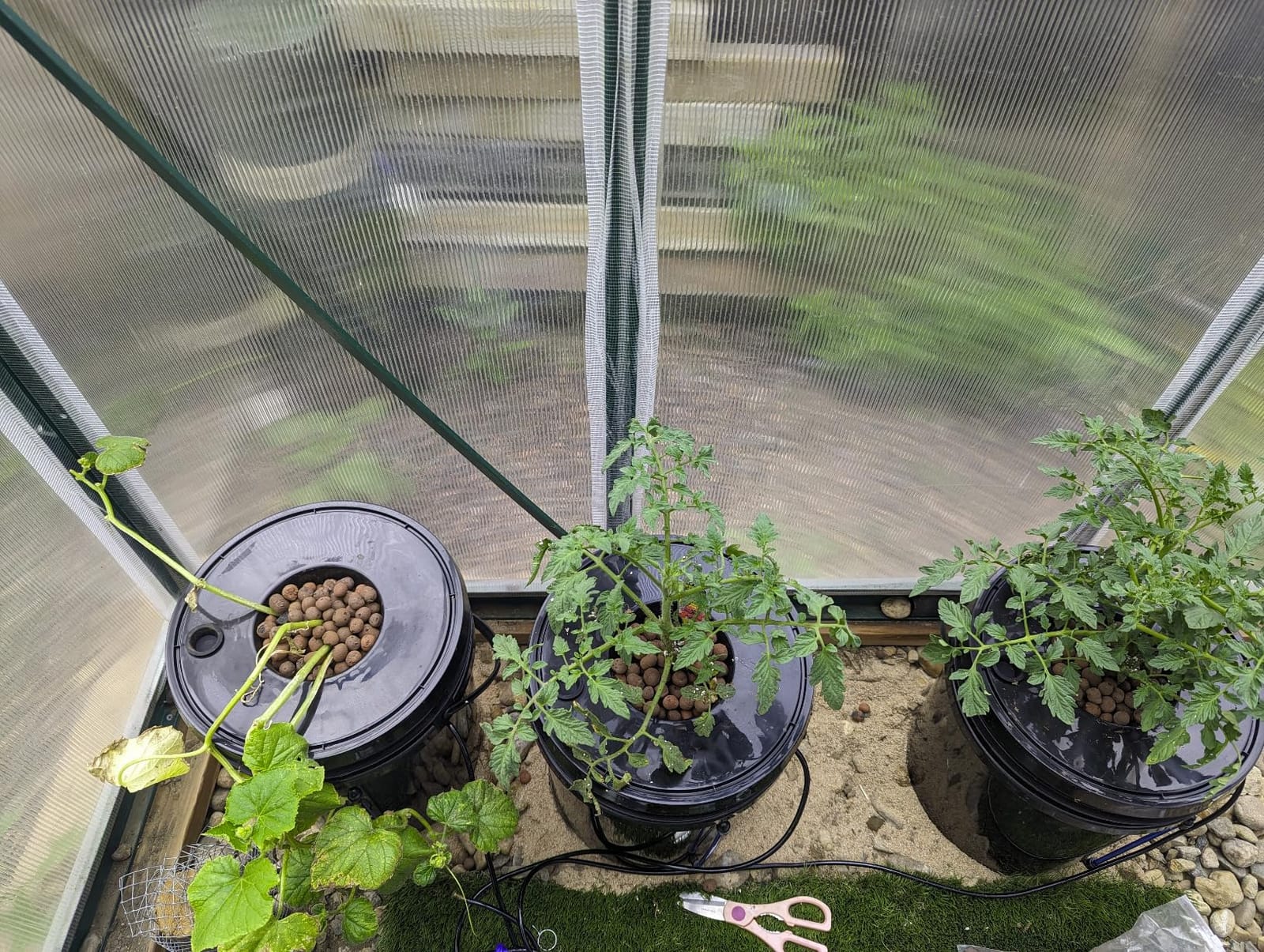
Eight five gallon buckets, eight net pots, a ten watt air pump at 25 litres per minute, eight air stones, a water level device per bucket, inline check valves, twelve metres of hose and clay pebbles. The VEVOR is the highest plant count in this roundup, and the only kit that scales a full season of tomatoes without a second purchase.
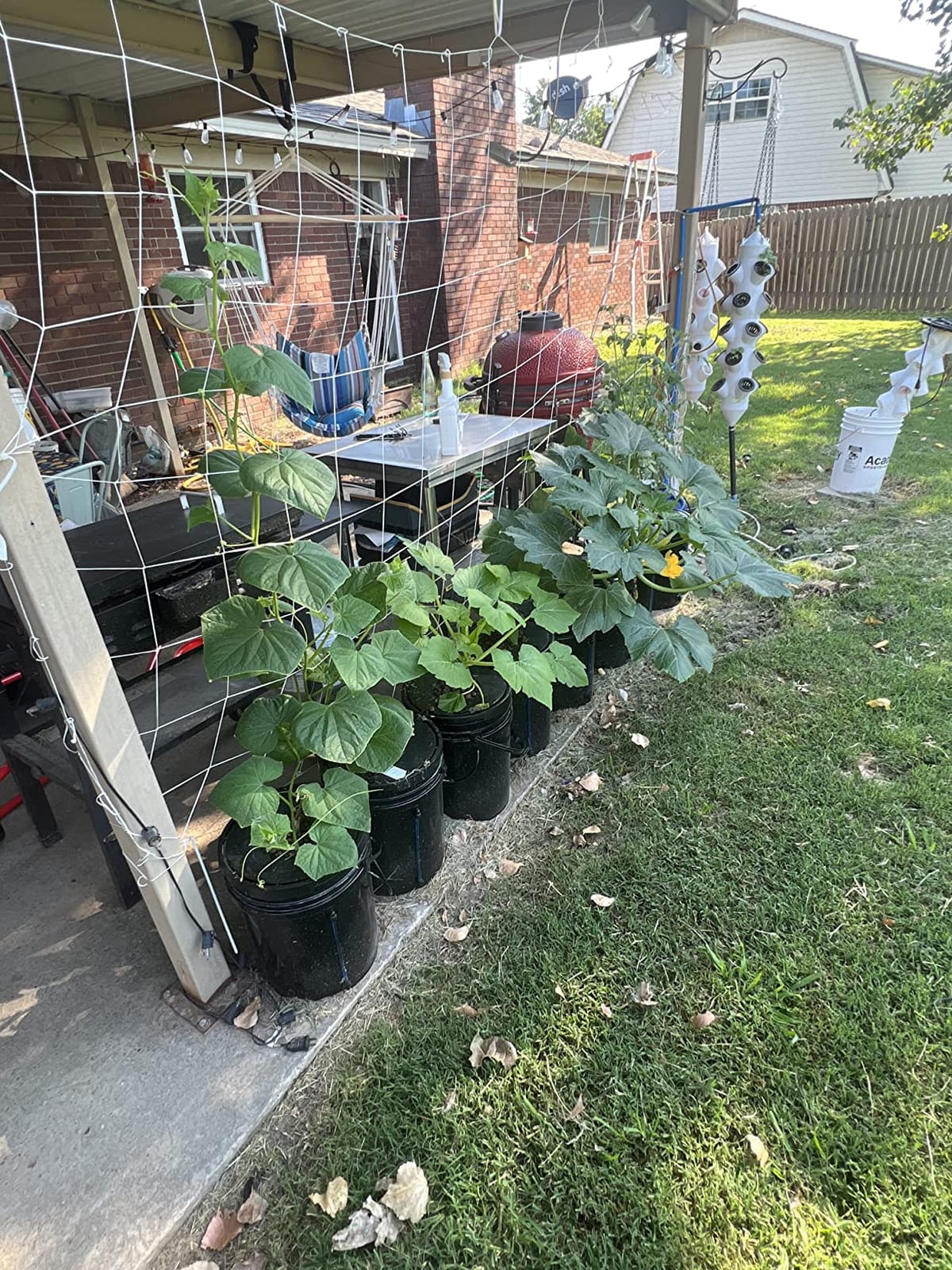
Multi-site capacity is where this earns its keep. Community growers repeatedly ask about running tomatoes, peppers and cucumbers together, and eight independent sites is the first kit here that answers that question without doubling the floor space.
The water level device on every bucket is quietly the most useful component. You can check all eight reservoirs at a glance instead of lifting lids, which is the difference between a two-minute check and a fifteen-minute one.
Check valves stop air from being siphoned back into the pump, and the tight seals have a good track record in reviews for not weeping once everything is running.
Where this system earns its place
Anyone running a mixed operation: four tomatoes, two peppers, two cucumbers. Each bucket is a separate nutrient zone, so a crop with a different EC band can sit beside one that wants more potassium.
It also suits a greenhouse or grow tent, where eight sites under a fixed light rig make far more sense than eight separate countertop gardens.
Where it will disappoint you
Eight independent five gallon reservoirs means eight manual water changes. That is a real weekly commitment once plants are fruiting, and it is the main reason this is not our top pick.
At 25.4 pounds it needs floor space you can give up permanently. In a small flat, that footprint is the deal-breaker, not the plant count.
8. E SUPEREGROW Tall Kit with Trellis – Best Budget Setup with a Built-In Trellis
Tall Hydroponics Growing System kit with Height Adjustable Light & Trellis
- Built-in trellis and 28 inch height suit tomatoes and cucumbers
- Reusable clay media instead of single-use sponges
- Three timer modes and two brightness levels
- Very quiet submersible pump
- Small growing volume for the footprint
- LED brightness reportedly dims after several weeks
- Weak grow light for fruiting crops
Most budget systems give you a light on a post and leave you to find something for the plant to lean on. This one has a trellis built into the frame and a maximum grow stand height of 28 inches, which is why it appears in a tomato roundup at all.
The double-layer structure has its own submerged pump for circulation, plus a second mode that runs 24 hours. Two pump modes matter in summer, when a tomato in a warm room transpires faster than a cool-mode cycle can replace.
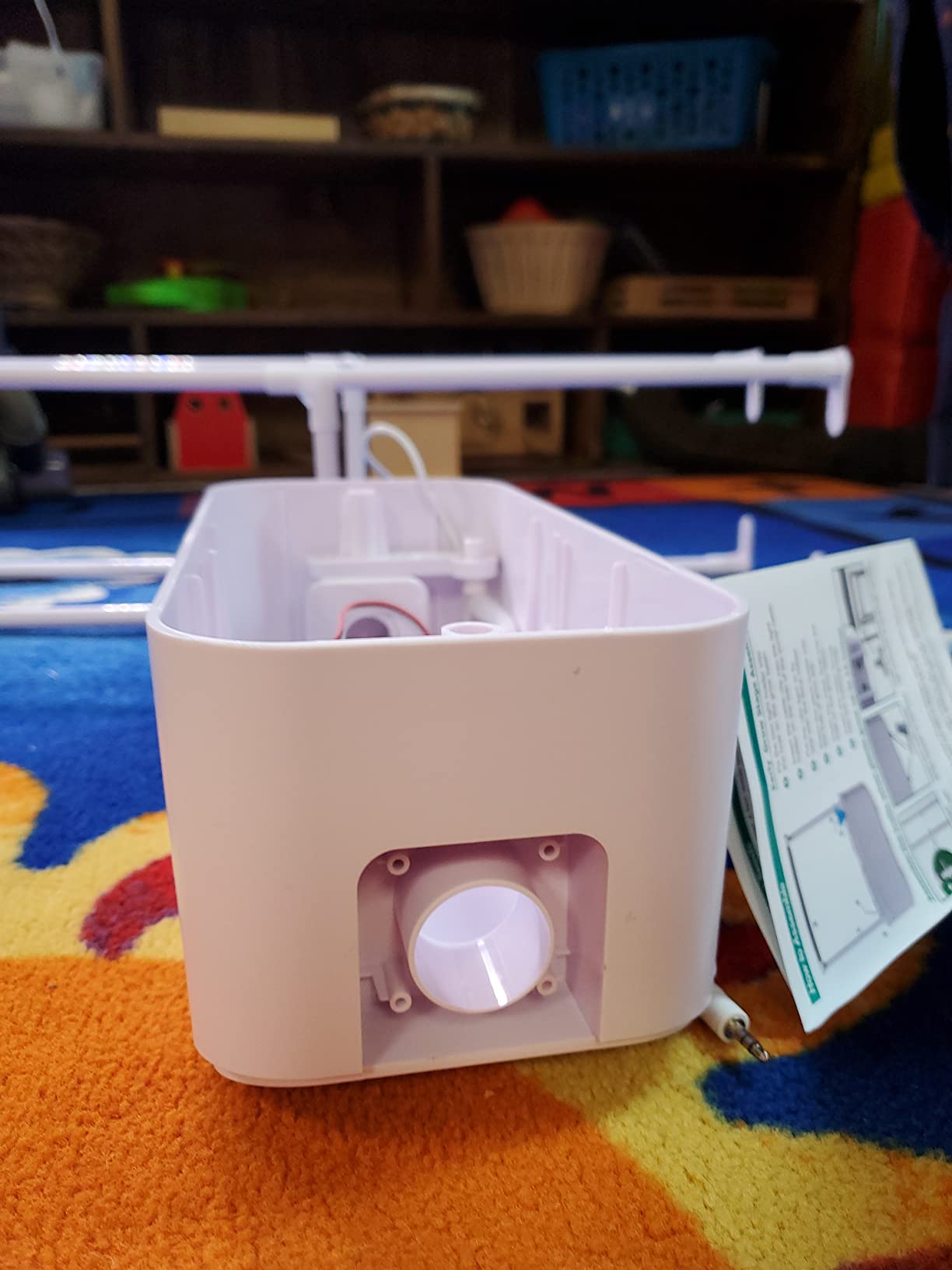
It ships with reusable clay media rather than single-use sponges, and the food-grade ABS basin wipes down easily. Assembly takes roughly fifteen minutes with the illustrated guide, and a strong plastic odour on first unboxing is normal and fades after a wash.
One important limitation, and it is the big one: reviewers report the LED brightness dropping noticeably after several weeks of use. On a leafy crop that is cosmetic. On a fruiting tomato it is a yield problem.
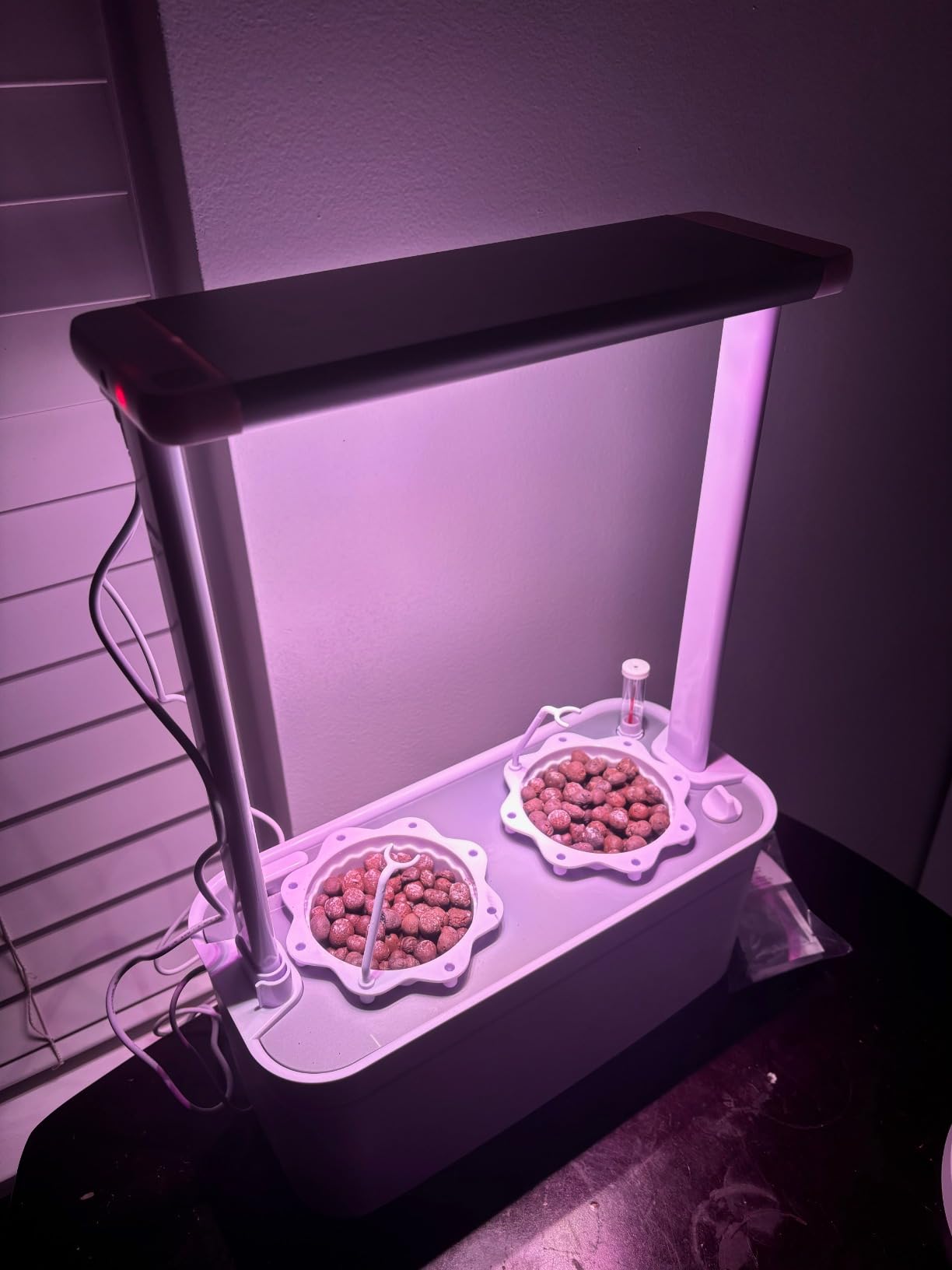
Where this system earns its place
A single plant, a small space and a firm budget. For one cherry tomato trained up a built-in trellis, nothing else at this tier gives you both the height and the support.
It also works as a propagation station for a larger bucket setup, since the same clay media transfers straight into net pots.
Where it will disappoint you
The growing volume is small. Several buyers found it smaller than expected once the trellis is fitted, and there is a single central basin rather than separate sites.
The light is the real limit for tomatoes. Plan on adding a supplementary grow light if you expect actual fruit, and keep the submersible pump clear of roots, which is where the occasional reported failures come from.
9. LAWNFUL 4 Hydroponic Bucket Kit – Best All-in-One Starter Box
- Germination trays and domes included in the same box
- Up to 20 planting sites across four lids
- Water level indicator on every bucket
- Compact footprint for balconies and rooftops
- 10L buckets hold less than 5 gallon models
- Buckets are not plumbed together for recirculation
What makes the LAWNFUL kit different is that it starts before the tomatoes do. Two germination trays with humidity domes, 24 grow sponges, 24 baskets and 16 sponge cubes are in the box, so you can take a seedling from germination to a fruiting plant without buying anything else.
Each 10-litre lid takes five growing pods, which gives 20 nominal sites across four buckets. In practice you would run one tomato per bucket and use the spare sites for basil and herbs alongside.
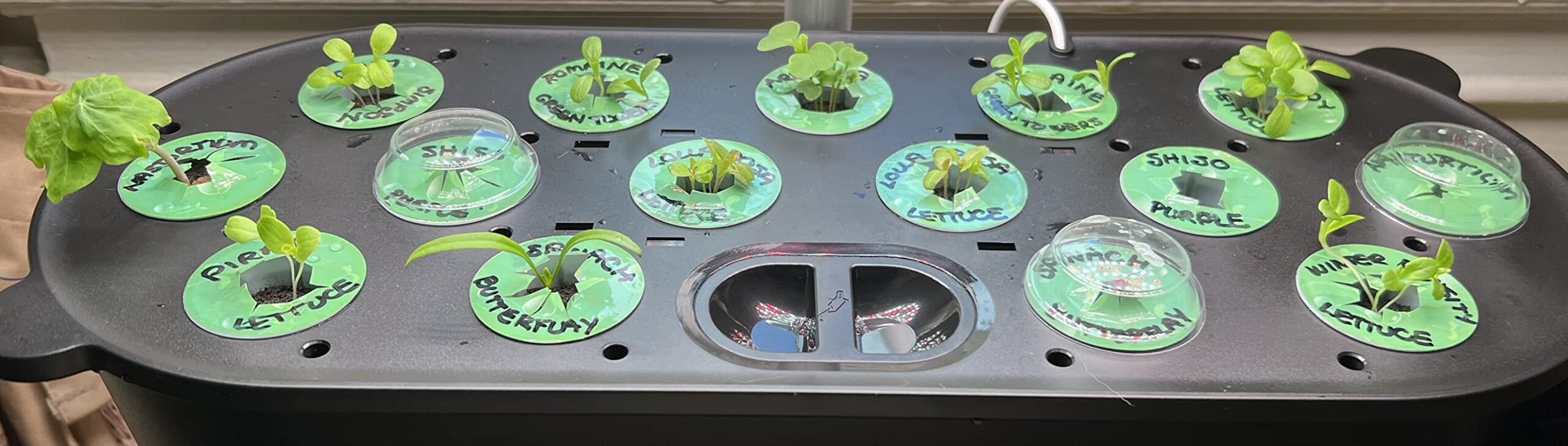
The four-outlet air pump feeds all four buckets through individual check valves and air stones, and a water level indicator on each lid removes most of the guesswork from daily checks.
It is a genuinely complete box for someone starting from nothing, and the footprint is designed for a balcony, greenhouse or rooftop rather than a spare room.
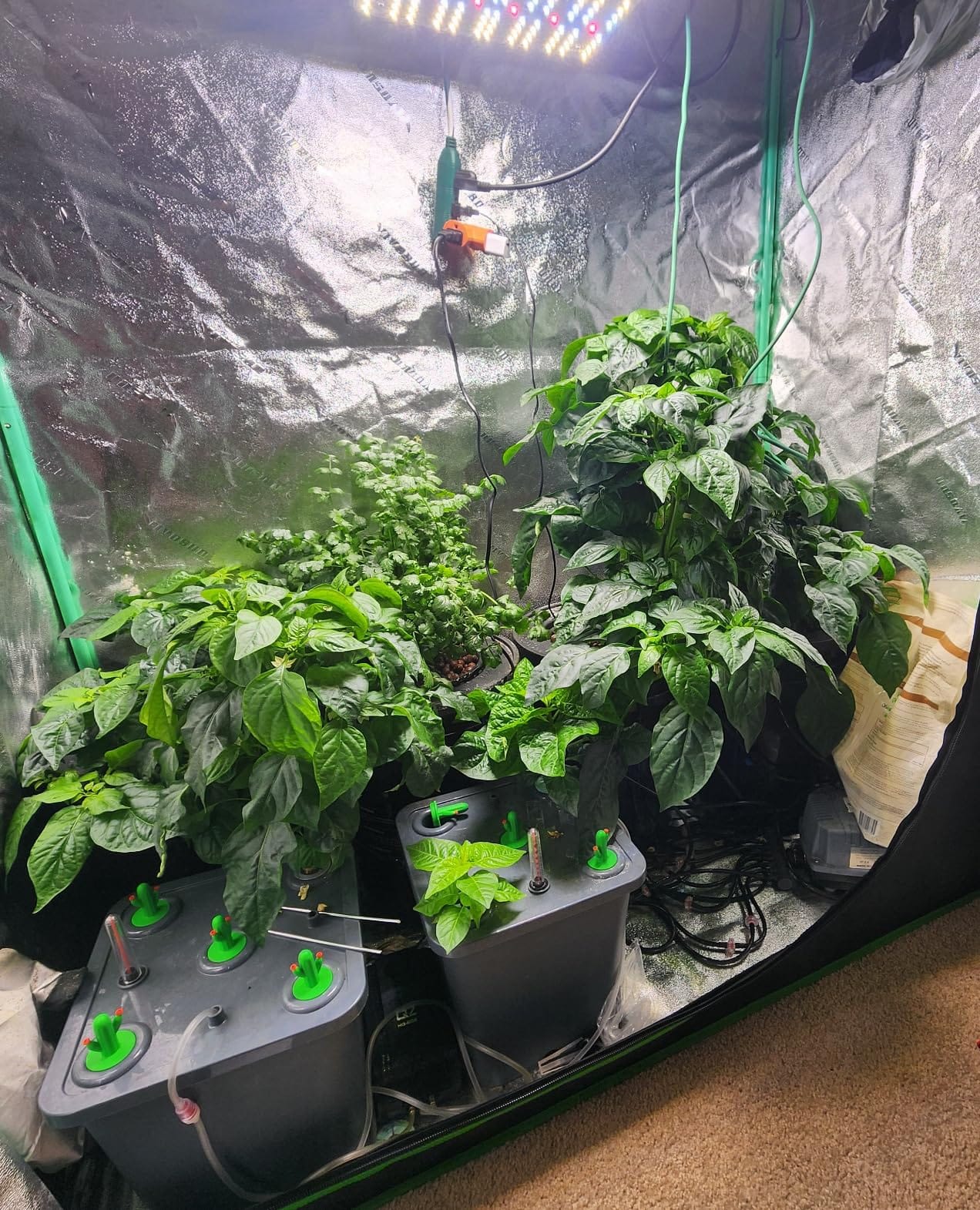
Where this system earns its place
First-time growers who want the seedling stage solved for them. Including germination domes in a bucket kit is unusual, and it removes the fiddliest week of a tomato grow.
It is also a sensible companion system for a larger setup: a seed tray that feeds four buckets outside without taking up indoor counter space.
Where it will disappoint you
Ten-litre buckets are roughly half the volume of a five gallon bucket, and a fruiting tomato in 2.6 gallons means more frequent top-ups and faster swings in nutrient temperature.
It also has the lowest average rating of the bucket kits we reviewed, with the smaller reservoir and lack of shared plumbing cited most often. Buyers wanting capacity should look at the VEVOR or Spider Farmer instead.
10. MARS HYDRO DWC System, 2 Buckets with Top Drip – Best Two-Plant Starter
Mars Hydro DWC Hydroponics Grow System 5 Gallon Deep Water Culture with 8W Air Pump, Multi-Purpose Air Hose, Air Stone, 2 Buckets and Top Drip Kit
- Strong aeration keeps roots bright white and healthy
- Flow adjustable drip rings
- Two bucket format suits small spaces
- Quiet operation reported by growers
- Air pump noise varies between units
- Minor weeping at the top of the buckets
- Included 4mm tubing is the wrong size for some setups
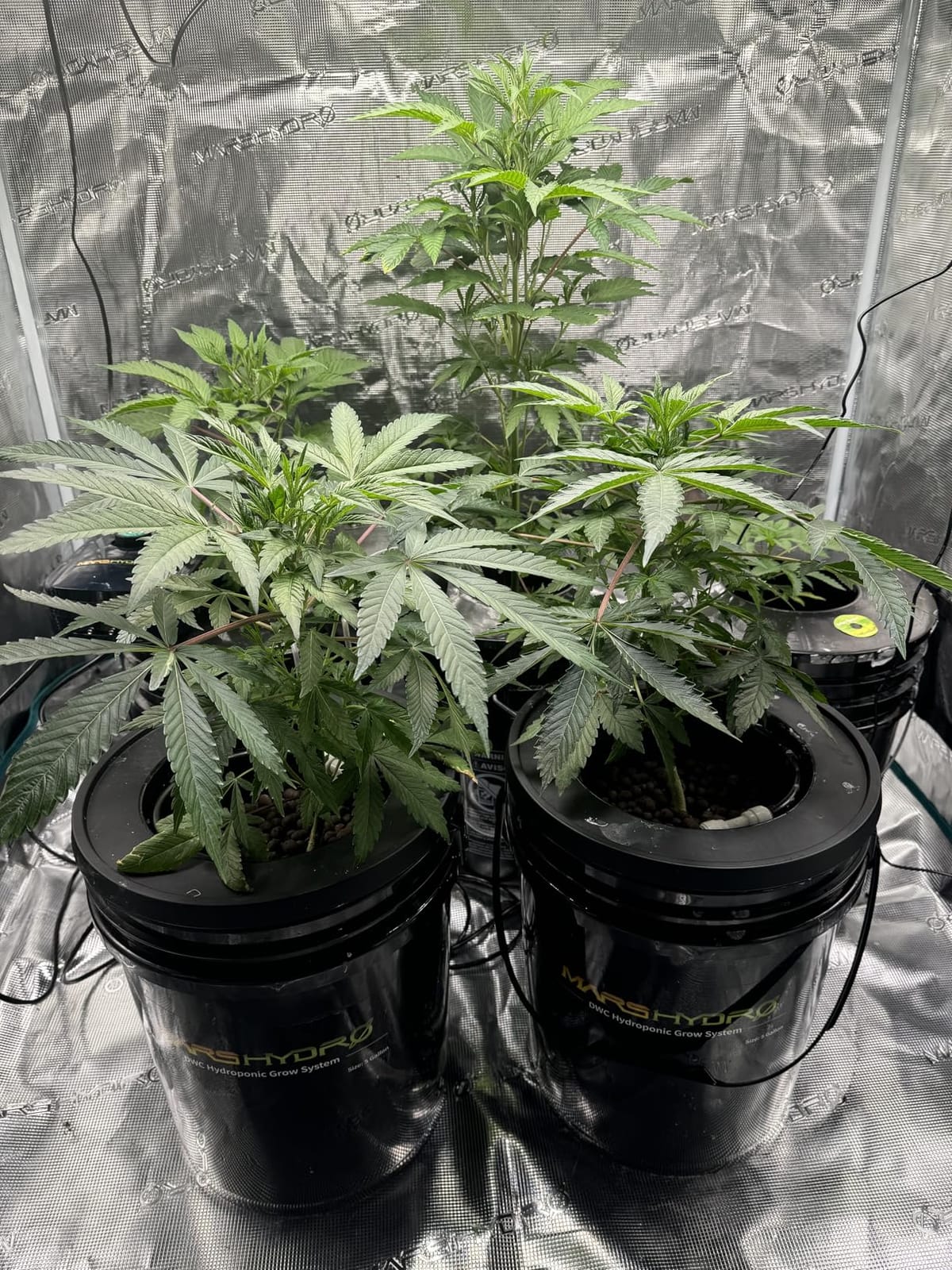
Two five gallon buckets is the minimum viable number for tomatoes, and this kit gets there with less assembly than the four-bucket options. Thick food-grade PP walls hold nutrient temperature more steadily than thin plastic, which matters more than most buyers expect in a warm room.
Growers consistently report healthy white root mass, and the air pump at 8 watts with two air stones is the reason. Root colour is the single most reliable indicator that a DWC bucket is working, and this is where the feedback is best.
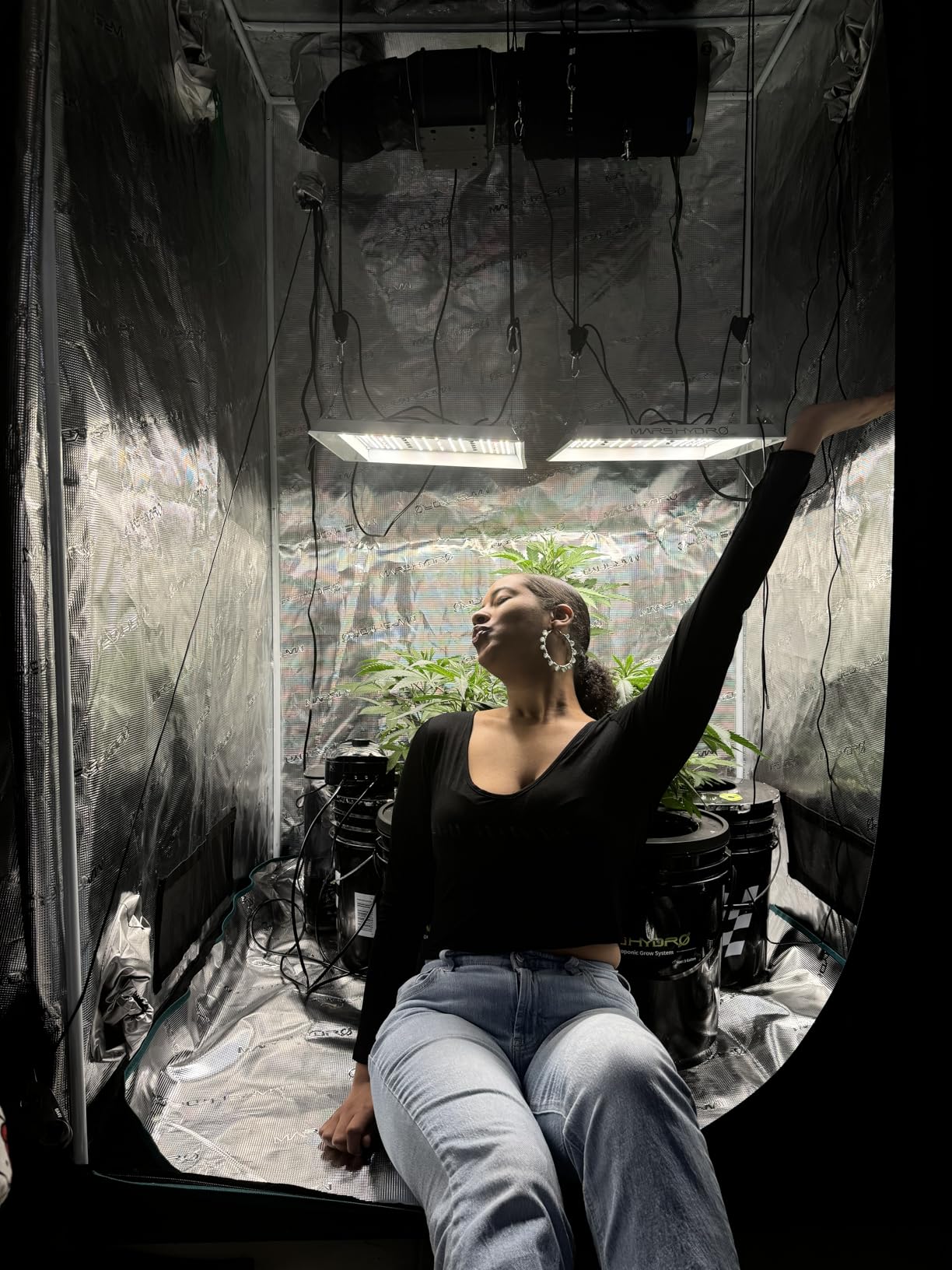
The top drip rings are flow adjustable, which is an improvement on the quarter-turn valves supplied with the VIVOSUN kit. You can reduce irrigation in a cool room instead of running it flat out all year.
Documentation is the weak spot. The printed instructions and parts list are described as unclear or incomplete, so budget extra time on assembly and check the included parts against the online list.
Where this system earns its place
A household that wants two or three plants and no more. Two five gallon buckets is a full harvest, and running fewer plants means each one gets more of your attention when something drifts.
It is also the natural second system after a single Root Spa bucket. Same concept, more plants, better aeration and drip irrigation added.
Where it will disappoint you
Some owners replace the air pump because of noise, and others report minor weeping at the top of the buckets where the fittings seat. Neither is dangerous, both are annoying.
The included four millimetre tubing does not suit every setup, so check what you already have before you start. Two buckets also means two manual water changes, as with every kit in this roundup.
11. Ahopegarden 44 Pod Double-Layer System – Best Plant Count on a Countertop
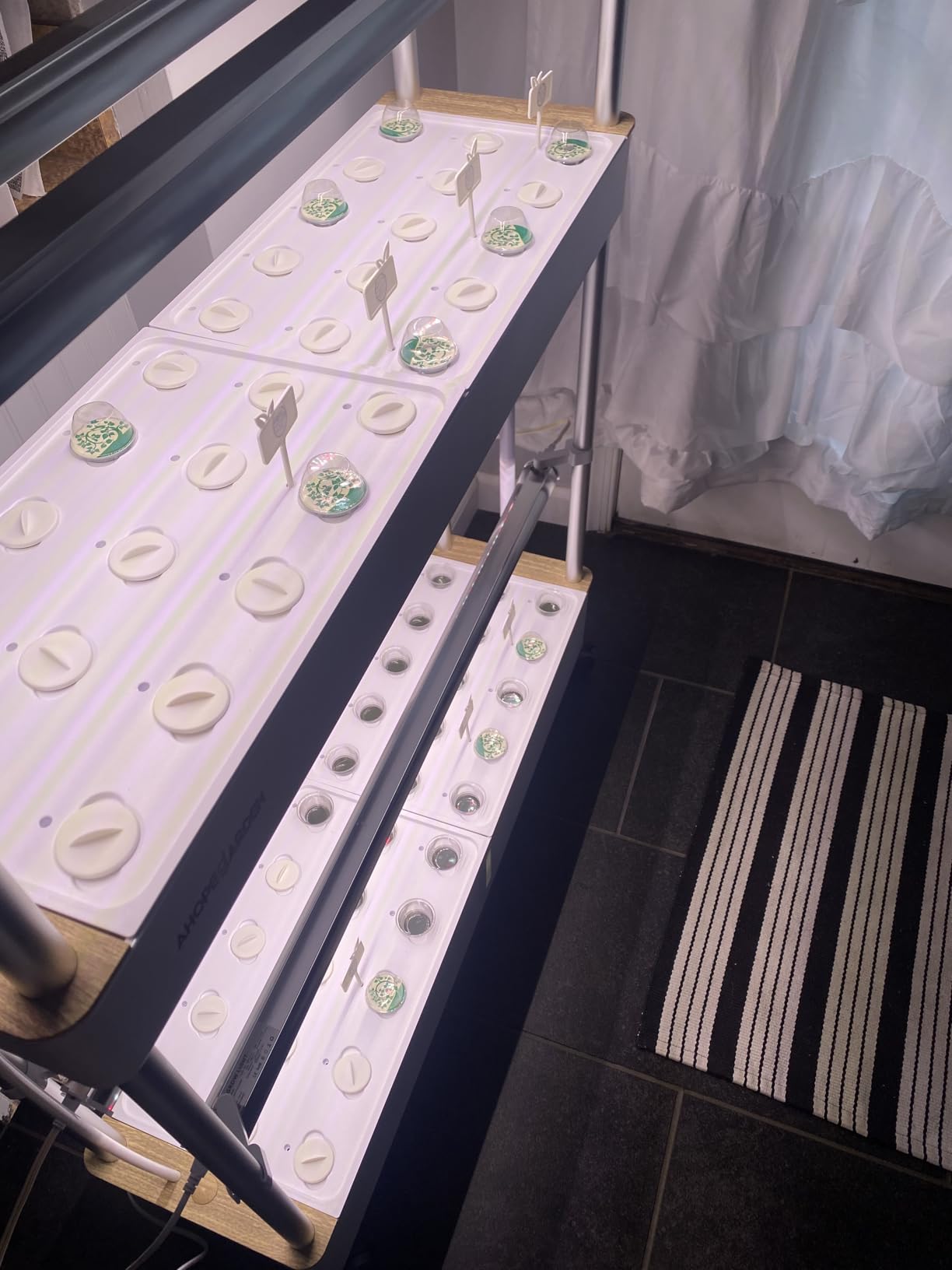
- 44 sites with tighter plant spacing than comparable decks
- Two separately pumped tanks allow zone planting
- Low-water audible alarm cuts losses
- 22 hour mode credited with sweeter fruit
- Light output is low for tomatoes and peppers
- Light clearance of just over 14 inches
- Control panel labels peel off over time
Forty-four grow sites sounds like a tomato system and behaves like a herb system, and the reviews are unusually direct about that. Owners love the capacity and the plant spacing, then warn that the light is too weak for tomatoes and peppers without an upgrade.
Two independent 10-litre tanks with separate pumps is the interesting part. You can run a nutrient solution tuned for one zone of plants and a different one for the other, which is closer to how a real greenhouse works than anything else here.
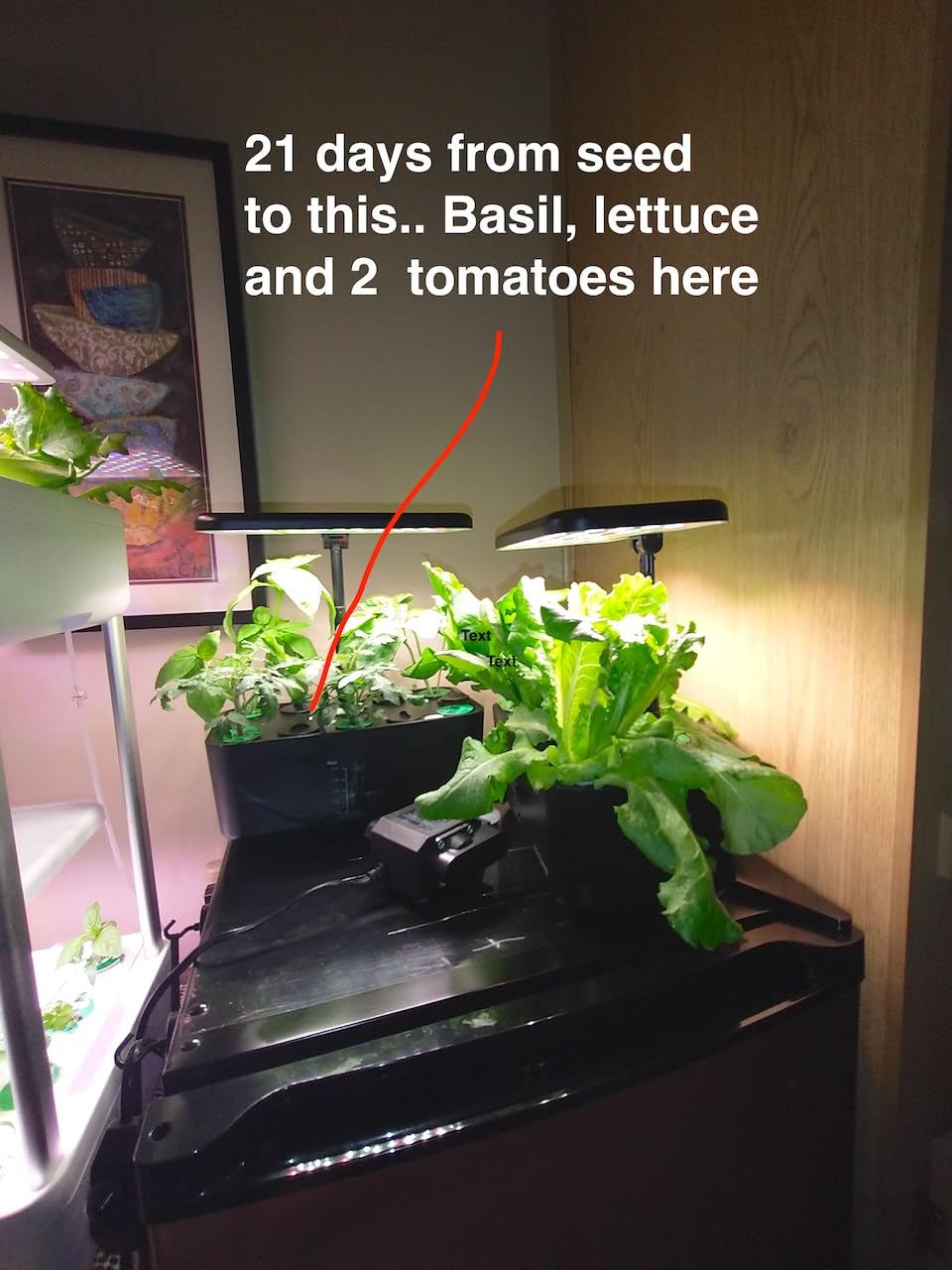
The 22-hour lighting mode is aimed squarely at fruiting crops, and growers credit it with faster growth and sweeter fruit. It is a real feature, but it cannot create light output the diodes do not have.
The low-water audible alarm is genuinely useful at this scale. Losing forty-four plants to a dry tank because nobody heard the pump stop is a real and frequently reported failure of large pod systems, and this one warns you.
Where this system earns its place
Volume. If you want cherry tomatoes, strawberries, herbs and greens running at once in a single footprint, 44 sites with tighter spacing beats four separate countertop units and uses one power socket.
It is a strong propagation and salad system, and the two-zone tank design is a genuine advantage once you start mixing crops with different nutrient needs.
Where it will disappoint you
Light clearance of just over 14 inches forces constant trimming, and reviewers specifically rate the intensity as low for tomatoes and peppers compared with dedicated grow lights.
At 14.3 pounds and 21.65 by 14.98 by 17.72 inches it is not a small appliance either, and the lower deck is awkward to reach when it is on the floor. Pod baskets are interchangeable with other AeroGarden-style setups, which helps if you outgrow the light.
12. Spider Farmer DWC Kit, 4 Buckets – Best for Full-Size Fruiting Varieties
Spider Farmer DWC Hydroponics Growing System Kit 4 Buckets for Indoor Plant
- Seven gallon buckets are deep for a heavy tomato root mass
- Removable triangle covers ease refilling and testing
- 6 inch net cups and adjustable drip rings support large plants
- 11W air pump with regulator for strong oxygenation
- Buckets drain and refill individually
- Air pump noise is a recurring complaint
- 26 inch frame takes floor space
The Spider Farmer is the last system in this guide and the one we would build around a beefsteak. Seven gallon buckets are the deepest here, and root volume is the number that separates a plant that fruits heavily from one that runs to leaf and stalls.
The triangular covers lift off entirely, which turns refilling and pH or EC testing from a wrestling match into a ten-second job. On a system you have to drain and refill by hand, that counts for more than any other single feature here.
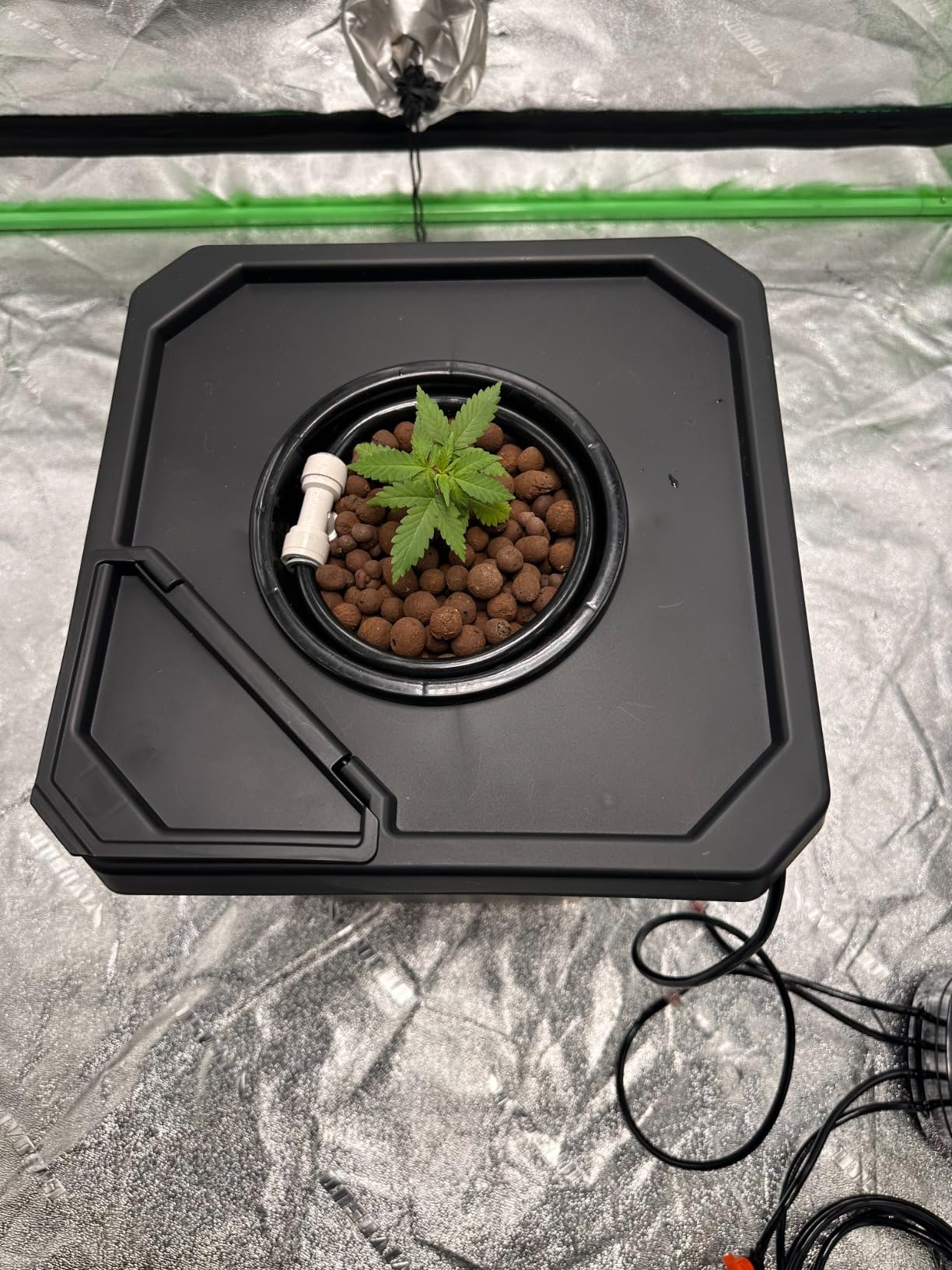
Six inch net cups give a full medium volume per plant, and the drip rings adjust the irrigation rate rather than switching on and off. Growers report the top ring keeping the root zone consistently moist, which is what stops dry lower roots in a bucket this deep.
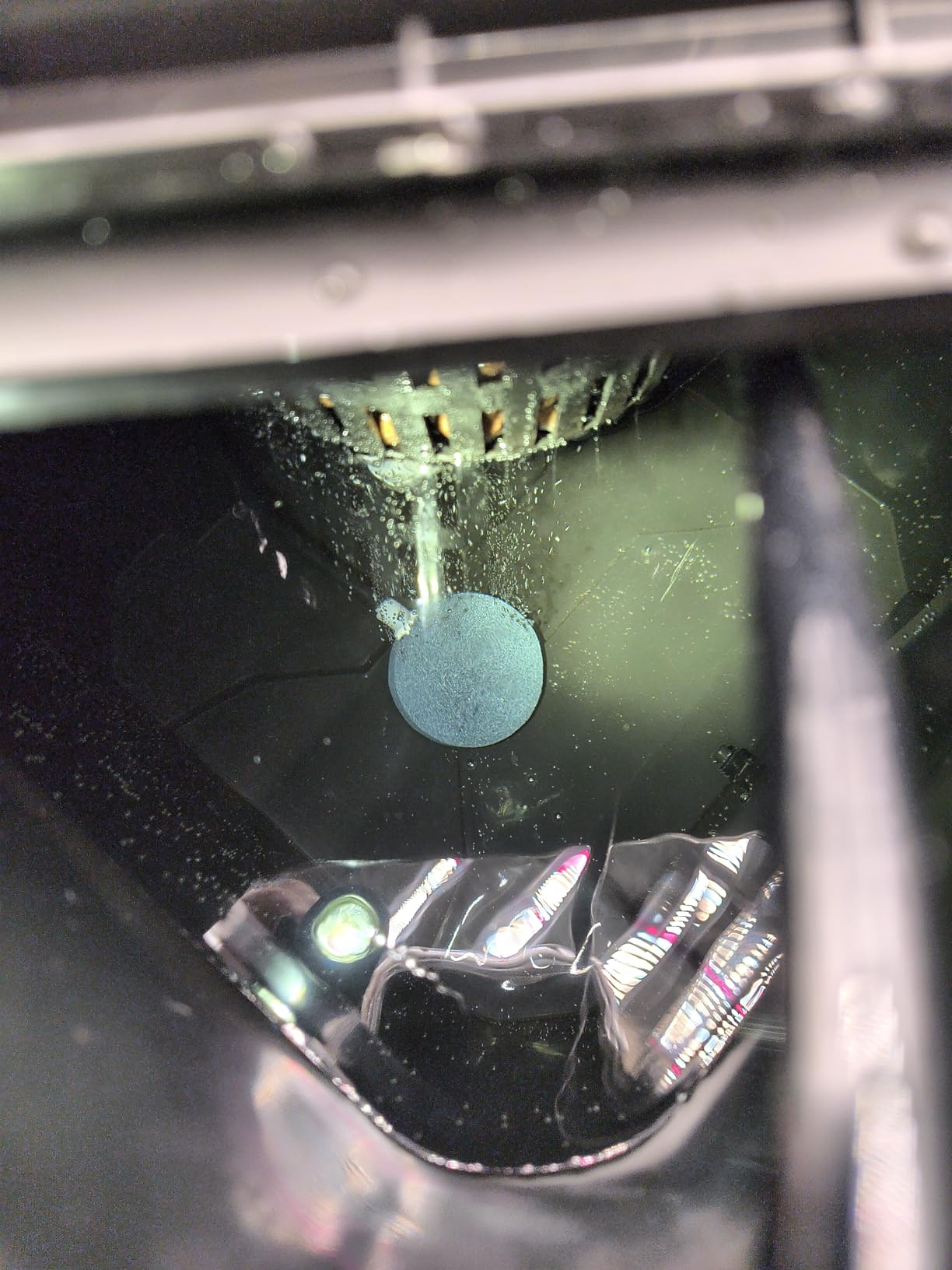
The 11-watt air pump pushes 28 litres per minute with an adjustable regulator, which is the strongest aeration figure among the kits here and shows up in the reviews as healthy, active roots.
Where this system earns its place
Full-size indeterminate varieties. Seven gallons per plant with six inch cups and strong aeration is the closest any pre-made kit gets to a Dutch bucket’s root environment, and the removable covers make the manual water changes far less painful.
It works in a grow tent, greenhouse or balcony, and the reflective covers help limit both light spill and heat gain in a warm room.
Where it will disappoint you
There is no light in the box. You will need a separate grow light to power the full cycle, which adds meaningfully to what this setup costs overall.
Buckets still drain and refill individually, the air pump noise is a recurring complaint, and the 26.18 inch frame is a floor-standing unit rather than something for a small room.
Choosing a Hydroponic System for Tomatoes
Once you have decided a system type, five numbers decide whether the plant actually fruits. Get these right and most hydroponic tomato problems never appear.
Light: 16 to 18 hours a day, and as high above the plant as the frame allows
Tomatoes need 16 to 18 hours of light daily indoors. Below that, flowers drop and fruit set stalls; far more than 18 hours on a fixed schedule gives a tomato no dark period to recover. Position the light as close to the canopy as the frame allows without scorching leaves.
Height is the number buyers check last and regret first. Under 15 inches, grow cherry varieties only. From 15 to 30 inches, you can handle determinate and mid-size types. Beyond 30 inches, or with no ceiling at all, an indeterminate vine has room to run.
Reservoir size: at least five gallons per plant for DWC
The sizing rule that matters is simple: in deep water culture, budget five gallons of reservoir per plant, and that is a floor rather than a target. A small reservoir heats and concentrates fast, and a tomato drinks enough on a hot day to change both in a single afternoon.
Work backwards from that. Four plants means a twenty gallon total system, which in practice is four separate five gallon buckets, since nothing in this roundup is plumbed together. Six plants means you need floor space, not a bigger tank.
Nutrients: EC 2.0-3.5 and pH 5.5-6.5, with a switch at flowering
Hold your nutrient solution at an EC of 2.0 to 3.5 and a pH of 5.5 to 6.5. Plants survive below 2.0 but fruit poorly, and above 3.5 they lock out calcium first, which is the fast route to blossom end rot.
Then change the formula. In vegetative growth, feed a nitrogen-forward mix around a 10-5-14 ratio. From first flower, switch to a fruiting formula weighted toward potassium and calcium, around 5-15-14, and add a calcium-magnesium supplement on the schedule your nutrient maker recommends.
Blossom end rot is a system problem before it is a nutrient problem
Blossom end rot shows up as a dark, leathery patch on the bottom of the fruit, and it is the most common complaint from new hydroponic tomato growers. The cause is usually not a lack of calcium in the feed. It is an inconsistent supply, driven by a reservoir that swings in temperature or pH, or by irregular watering.
That makes it a selection criterion. A larger, more stable reservoir, an air pump that keeps the solution mixed, and a system that makes daily checks easy will prevent more blossom end rot than any amount of extra calcium dosing. A 3-litre tank shared across ten pods cannot hold a stable temperature in a warm room.
Support and pollination, the two things nobody sells you
A tomato above ten inches needs a stake, a cage or a trellis, and the frame must carry the plant once several clusters are heavy. Check the maximum grow height against the variety you are growing, and install the risers before you need them.
Tomatoes are self-fertile, but they still need movement. Shake the branch or run a small fan at low speed for a few minutes a day, and remember that indoor air is still air. A trellis that sways when you walk past is doing some of this job for you.
What about a Dutch bucket, and the DIY route?
No pre-made kit in this guide is a true Dutch bucket, and that is a real gap. A Dutch bucket is easy to build: a five gallon bucket, a net pot lid, a top drip line, a submersible pump and a reservoir tub, with the bucket raised on a stand so the solution drains back by gravity.
One point comes up constantly and is easy to get wrong. In a Dutch bucket you fill the net pot with growing medium, typically a perlite and coco coir mix, and you do not need an air pump in the reservoir. The recirculating drip keeps the medium oxygenated. Community advice is to start with a Kratky jar or a single DWC bucket anyway, so you learn dosing before you build anything permanent.
Kratky is the cheapest way in and needs almost no hardware. A jar of nutrient solution, a net pot, and a lid so only the bottom of the pot sits in solution. It works for a single cherry tomato and it teaches you how plants draw down water, which is the concept behind every bigger system.
Indoor, Outdoor and Greenhouse Setups
Where you grow changes the answer more than most buyers expect. Lighting, water temperature and pest pressure all differ, and the right system indoors is frequently the wrong one outdoors.
Indoors, the light is the constraint. Every failure in this roundup traces back to a light that is too weak, too short, or too close to the plant. If you have no room for a floor-standing unit, a countertop system plus a strict cherry variety is a workable pair, and our best hydroponic systems for leafy greens picks cover the same class of unit for salad crops.
Outdoors, sunlight replaces the grow light and you gain space and a wider variety range. Bucket systems on a patio or in a greenhouse suit full-size vines, and a trellis like the Hydrofarm GCTR becomes the most important part of the purchase. Our guide to hydroponic growing systems for apartments covers the small-footprint end if you need both.
Two related questions come up for outdoor growers. The season matters more than the system: tomatoes set fruit best in long days, so a late planting will run out of light before it ripens, which is the real answer to when it is too late to plant. And in a greenhouse, avoid the sealed pod ecosystems, since their pumps and lids are sized for room temperature rather than a glasshouse in July.
Vertical towers are worth a word here too. They are excellent for greens and marginal for tomatoes, because fruit weight and light height work against a vertical layout. Our indoor hydroponic tower picks explain where towers earn their keep.
Frequently Asked Questions
What is the best hydroponic system for growing tomatoes?
A Dutch bucket or drip-with-media system is the best choice for large, heavy-yielding tomato plants, because it gives each plant a large root volume and steady oxygenated nutrient delivery. Deep water culture works well too if you allow at least five gallons of reservoir per plant and monitor pH and EC daily.
What are the best tomatoes to grow hydroponically?
Cherry and micro-dwarf varieties are the easiest, including Sungold, Sweet 100, Orange Hat and Red Robin, because they stay under 24 inches and fruit in small countertop systems. Determinate types such as Celebrity also perform well. Full-size indeterminate beefsteaks need a floor-standing bucket system and a trellis.
How long does it take tomatoes to grow in a hydroponic system?
Expect 2 to 3 months from seed to first harvest indoors with a full 16 to 18 hour light cycle. Plants grown with sloppy light or nutrient practices can take closer to 5 months, which is the variance most growers report when a cycle drags on.
What pH and EC do tomato plants need in hydroponics?
Hold the nutrient solution at pH 5.5 to 6.5 and an EC of 2.0 to 3.5. Below 2.0 the plant survives but fruits poorly, and above 3.5 it locks out calcium first, which is the most common route to blossom end rot.
What are the 5 disadvantages of hydroponics?
1. Up-front equipment cost is higher than buying soil and containers. 2. Consumables run continuously, especially with proprietary pod systems. 3. You must monitor pH, EC and water temperature constantly, and drift causes crop loss. 4. Only certain crops thrive, and root vegetables are largely unsuitable. 5. There is no soil biology or natural ecosystem, so every nutrient has to be supplied correctly by you.
What are three plants that are not recommended for hydroponics?
Root vegetables such as carrots, beets and parsnips are unsuitable because they need soil depth to size their roots. Tall crops like corn and most fruit trees exceed any grow light height available indoors. And any plant that sprawls wider than its system allows, including vining squash, crowds out its neighbours.
What month is too late to plant tomatoes?
For outdoor growing, the practical deadline is four to six weeks before your first expected frost, because tomatoes need a long warm run to set and ripen fruit. Indoors the calendar is less important than the light cycle, since a 16 to 18 hour daily light schedule can carry a crop through any month.
The Bottom Line
The best hydroponic systems for tomatoes in 2026 depend on one thing: how big the plant gets. Grow cherry and micro-dwarf varieties indoors and the iDOO 12Pods gives you the most sites and the most proven results in a countertop footprint, while the Ahopegarden 10 Pods is quieter and taller if noise is your objection.
Grow full-size or indeterminate varieties and you need floor space, five gallons of reservoir per plant and a trellis. The VIVOSUN four-bucket top drip kit is the best value of that group, the Spider Farmer gives you the deepest buckets and the easiest refilling, and the Hydrofarm GCTR supplies the support frame most of those setups lack.
Start with one plant rather than twelve. A single Hydrofarm Root Spa bucket or a Kratky jar teaches you nutrient dosing in a way no app can, and it is the step most growers skip and later regret. If you want the full side-by-side and never want to cut fresh tomatoes, our guide to serrated knives for tomatoes is a good second investment.