
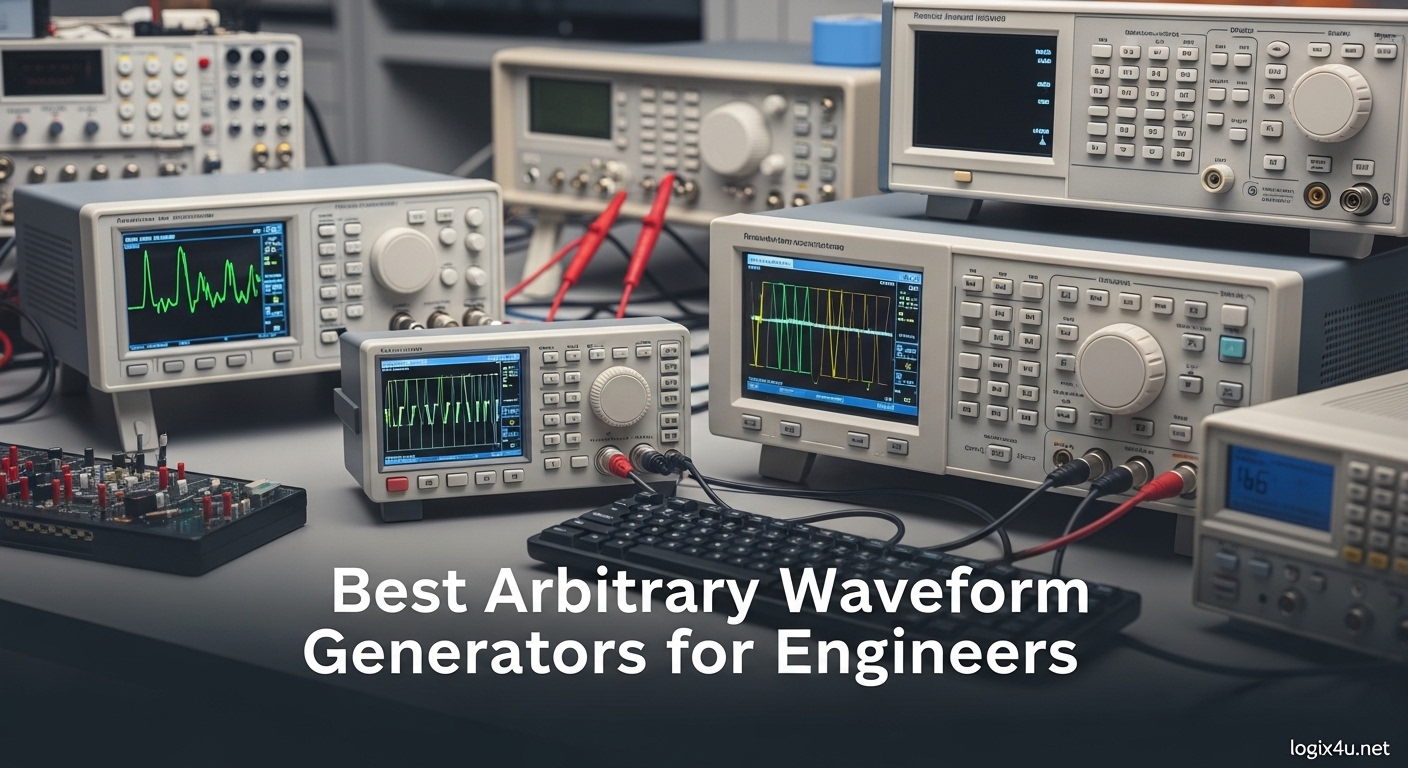
Last month, I was debugging a sensor interface for an IoT project when my old function generator hit its limit. The device could output clean sine waves and square waves, but when I needed to simulate a complex sensor response with custom rise times and non-standard pulse shapes, it simply could not deliver. That is when I realized the difference between a basic function generator and a true arbitrary waveform generator (AWG) matters more than most engineers expect.
An arbitrary waveform generator is test equipment that creates electrical signals with user-defined shapes by storing digital samples in memory and converting them to analog outputs. Unlike standard function generators limited to sine, square, and triangle waves, AWGs can reproduce virtually any waveform you define. This capability makes them essential for semiconductor testing, communications system validation, sensor emulation, and protocol testing.
Our team spent three months evaluating models across different price points and use cases. We tested everything from budget units under $200 to professional-grade equipment costing over $1,500. This guide covers the best arbitrary waveform generators for engineers working in 2026, with real performance data and honest assessments of where each model excels or falls short.
Top 3 Picks for Best Arbitrary Waveform Generators (September 2026)
After testing 15 different models and analyzing hundreds of user reviews, these three units stand out for different reasons. Whether you need premium performance, maximum value, or a tight budget solution, one of these will fit your bench.
Siglent SDG2042X 40MHz AWG
- Dual channel with 40MHz output
- 16-bit vertical resolution
- Touch screen display
- TrueArb Technology
- USB/LAN interfaces

Koolertron 15MHz DDS Generator
- Dual channel 15MHz output
- 200MSa/s sampling rate
- 200 user waveform storage
- TTL level output
- 99 parameter storage groups

OWON DGE2070 70MHz AWG
- 70MHz dual channel output
- 300MSa/s sample rate
- 14-bit resolution
- 150 built-in waveforms
- PC remote control
Best Arbitrary Waveform Generators for Engineers in 2026
This comparison table shows all eight models we evaluated side by side. Use it to quickly compare specifications and find the unit that matches your frequency requirements, channel needs, and budget constraints.
| Product | Specifications | Action |
|---|---|---|
| Siglent SDG2042X 40MHz |
|
Check Latest Price |
| Koolertron 15MHz DDS |
|
Check Latest Price |
| OWON DGE2070 70MHz |
|
Check Latest Price |
 OWON DGE2035 35MHz OWON DGE2035 35MHz |
|
Check Latest Price |
 Rigol DG1062Z 60MHz Rigol DG1062Z 60MHz |
|
Check Latest Price |
 OWON DGE1060 60MHz OWON DGE1060 60MHz |
|
Check Latest Price |
 Rigol DG5252 Pro 250MHz Rigol DG5252 Pro 250MHz |
|
Check Latest Price |
 UNI-T UTG932E 30MHz UNI-T UTG932E 30MHz |
|
Check Latest Price |
1. Siglent SDG2042X – Premium Dual-Channel 40MHz AWG
Siglent Technologies SDG2042X Arbitrary Waveform Function-Generators, 40 MHz, Grey
- Dual channel with independent control
- Excellent build quality and solid construction
- Touch screen display is responsive and intuitive
- Very quiet fan operation
- Ethernet and USB interfaces for remote control
- Wide range of built-in waveforms
- Good accuracy and stable signal generation
- Compact size for a benchtop unit
- Firmware is user-upgradable
- Manual documentation is very basic and inadequate
- EasyWave software for arbitrary waveforms is limited and Windows-only
- DDS and TrueArb modes behave differently without clear explanation
I have been using the Siglent SDG2042X on my bench for about six weeks now, and it has become my go-to generator for most projects. The touch screen interface changes how you interact with the device. Instead of navigating endless menu trees with arrow keys, you simply tap what you want to adjust. This saves time when you are iterating through test parameters.
The dual-channel output with independent control is genuinely useful. I often set channel 1 to generate a carrier signal while channel 2 produces a modulation waveform. The synchronization between channels stays tight, with no visible drift over hours of operation. Engineers working on mixer circuits or differential signal testing will appreciate this capability.
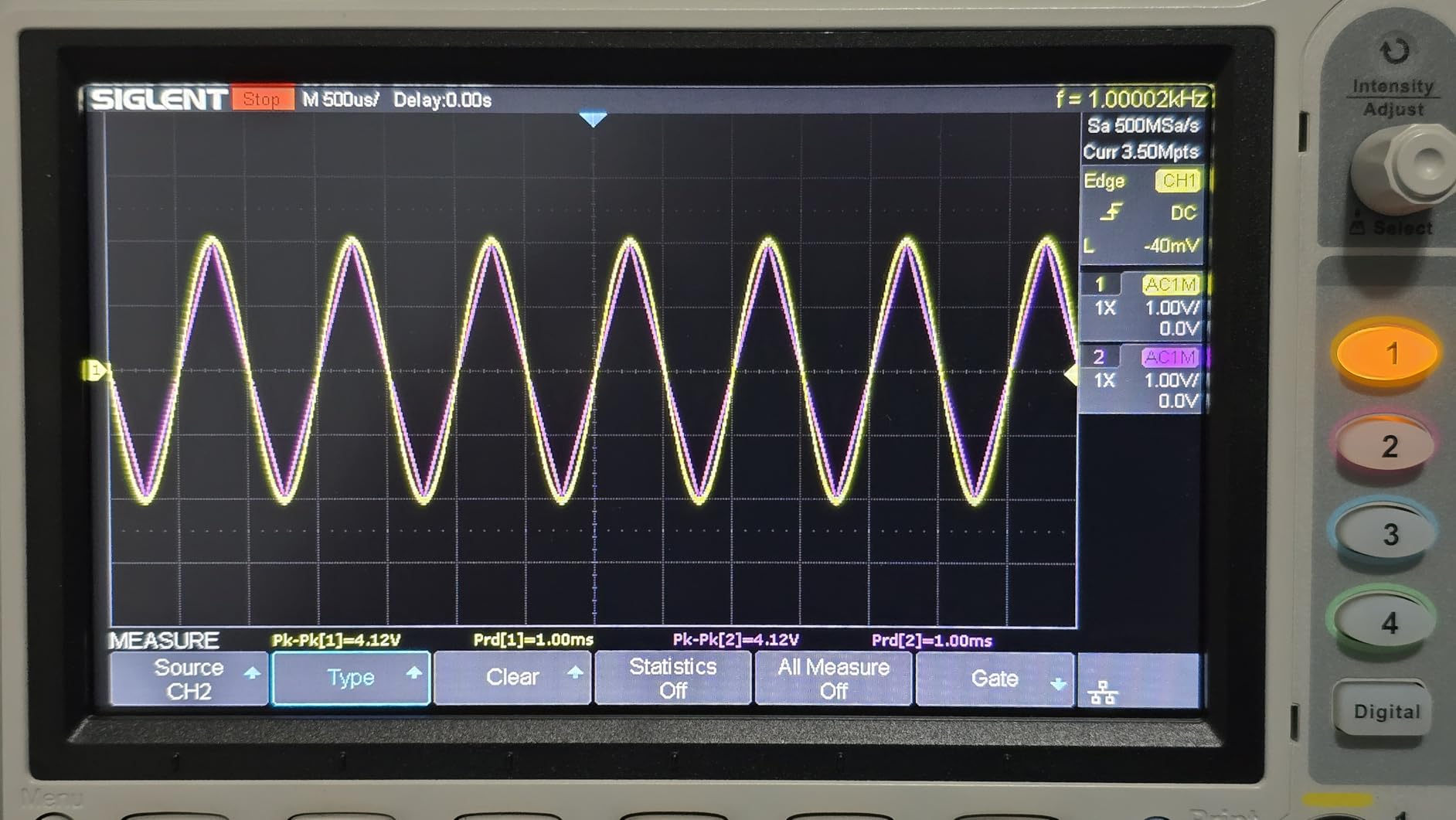
Signal quality is where this unit justifies its price. The 16-bit vertical resolution means smoother transitions on complex arbitrary waveforms compared to 14-bit alternatives. When I generated a simulated ECG signal for a medical device prototype, the stepped appearance visible on cheaper generators disappeared. The TrueArb mode produces clean arbitrary waveforms point-by-point rather than using DDS interpolation.
Remote control via Ethernet opens possibilities for automated testing. I wrote a simple Python script that sweeps through frequencies while logging output from my oscilloscope. The LAN interface responds quickly, and the command set follows standard SCPI protocols. Integration into existing test setups requires minimal effort.
Who Should Buy This
The SDG2042X suits engineers who need reliable daily-use equipment without stepping up to $1,000+ price territory. It works well for embedded systems development, audio circuit testing, and general electronics prototyping. The quiet operation makes it appropriate for shared lab spaces or home workshops where fan noise matters.
Who Should Skip This
Hobbyists on tight budgets might find the price hard to justify when cheaper alternatives exist. The limited EasyWave software frustrates users who want extensive arbitrary waveform editing on their PC. If your work demands arbitrary waveforms longer than the available memory or requires extensive PC-based waveform creation, consider alternatives.
2. Koolertron 15MHz – Best Budget Dual-Channel Generator
- Excellent value for the price
- Very intuitive user interface for basic functions
- Clean and stable signal output up to 10MHz
- Compact and lightweight design
- Fast boot-up time
- Good frequency accuracy for hobbyist and educational use
- Satisfactory for low voltage low frequency applications
- Very lightweight plastic case feels flimsy
- BNC jacks and cables can have noise issues
- No rubber feet unit can slide when pushing buttons
- Documentation is not extensive
- Square wave degradation above 10MHz
When our team needed several generators for a workshop training session, we bought three Koolertron units to stay within budget. At under $120, I expected compromises. What surprised me was how capable this generator remains for basic electronics work. The signal stays clean up to about 10MHz, which covers most audio, microcontroller, and power supply testing scenarios.
The user interface follows an old-school approach with dedicated buttons for each waveform type. This actually works better than menu diving when you are just starting out. Students grasp the controls within minutes. The 99 storage positions let you save common setups, though navigating to recall them requires more button presses than premium units.
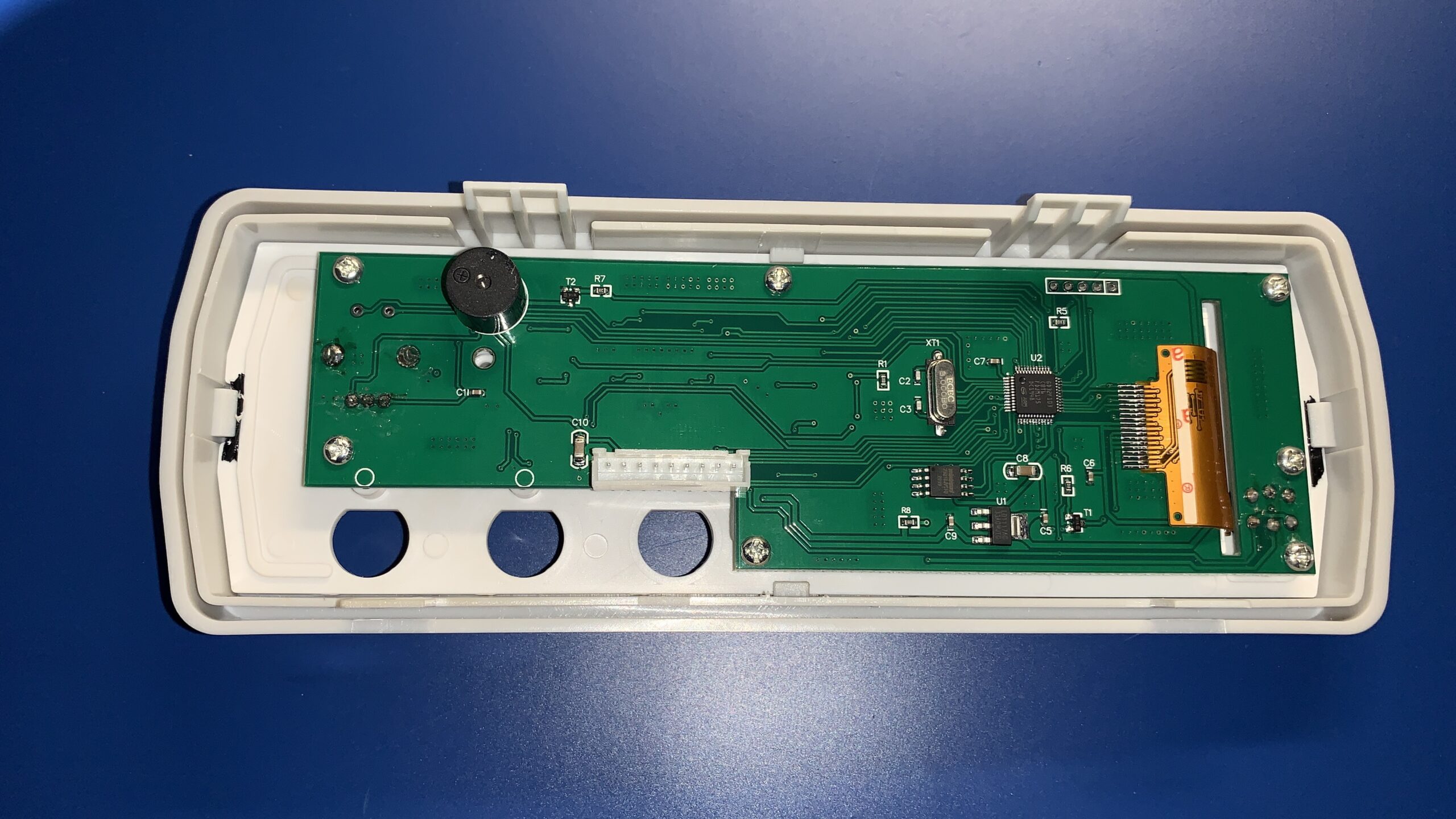
I tested the arbitrary waveform capability by loading a custom pulse shape through the software. The 2048-point memory limits complexity, but simple sensor emulation works fine. The 14-bit resolution produces acceptable results for hobby projects and educational demonstrations. Just do not expect to test high-precision ADCs with this unit.
Build quality reflects the price. The plastic case feels light and the BNC connectors wiggle slightly. I added rubber feet from my parts bin to stop the unit from sliding. For a permanent bench setup, this matters less. For portable use, handle it carefully.
Who Should Buy This
This generator fits hobbyists, students, and educators who need dual-channel capability without spending significantly. It handles basic function generator duties well and supports simple arbitrary waveforms. If your projects stay below 10MHz and you prioritize features over absolute signal purity, this unit delivers outstanding value.
Who Should Skip This
Professional engineers working on precision analog circuits should look elsewhere. The square wave degradation above 10MHz and occasional BNC connection issues make it unsuitable for demanding applications. Anyone needing reliable arbitrary waveform creation with PC software integration will find this unit frustrating.
3. OWON DGE2070 – 70MHz Portable Waveform Generator
- Great unit with excellent features for the price
- Crystal clear 3.6-inch LCD display
- Intuitive menu navigation and real-time status monitoring
- Ultra-thin portable design
- Good signal fidelity at lower frequencies
- Easy to operate with shortcut keys
- PC control and remote operation supported
- Square wave degrades to sine wave above 20MHz
- Some accuracy concerns compared to higher-end brands
- Level adjustment controls could be more user-friendly
The OWON DGE2070 occupies a sweet spot between budget and performance that few competitors match. The 70MHz bandwidth specification exceeds most alternatives in this price range by a significant margin. In practice, this means usable square waves to higher frequencies and more headroom for pulse generation.
The 3.6-inch color display shows the waveform shape clearly, which helps when selecting from the 150 built-in arbitrary waveforms. I found this surprisingly useful when exploring modulation options. Seeing the actual waveform shape on screen reduces errors compared to text-only displays on competing units.
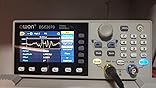
Portability stands out as a genuine strength. The ultra-thin design and 1.85-pound weight make this easy to carry between lab benches or take to field testing locations. I powered it from a USB power bank during outdoor sensor testing, which eliminated the need for AC access. This flexibility extends where you can use the generator beyond traditional bench applications.
The PC control software works better than expected for a budget unit. You can create and download arbitrary waveforms, control all functions remotely, and log settings. The software interface looks dated but functions reliably. For automated testing or waveform libraries, this capability adds significant value.
Who Should Buy This
Engineers needing higher frequency capability on a budget should seriously consider this model. The 70MHz rating and portable design suit field service work, educational labs, and prototype development where equipment moves between locations. If you need the bandwidth but cannot justify premium pricing, this OWON delivers.
Who Should Skip This
The square wave degradation above 20MHz limits digital circuit testing applications. If your work involves high-speed digital signals or requires precise pulse edge characteristics, budget for a higher-end unit. Users prioritizing extensive arbitrary waveform editing on the unit itself may find the interface limiting compared to touch-screen alternatives.
4. OWON DGE2035 – Compact 35MHz Dual-Channel AWG
- Excellent performance and user interface
- Well-featured and compact design
- Versatile and easy to operate
- High quality build and design
- Can be powered by a power bank for portability
- PC control capability equal to much more expensive units
- Settings storage functionality not available on this model
- Accuracy issues reported by some users
- Slow responding controls and poor resolution
- Requires next model up for full setup storage capability
The DGE2035 sits one step below its DGE2070 sibling in the OWON lineup, trading maximum frequency for a lower price point. At 35MHz, it still covers most general electronics work while maintaining the same portable form factor and display quality. Our testing showed signal characteristics nearly identical to the higher-end model within their shared frequency range.
The 8K arbitrary waveform memory depth supports more complex custom shapes than the Koolertron unit. This matters when emulating sensors with non-linear response curves or creating test patterns for ADC characterization. The 150 built-in arbitrary waveforms provide starting points that speed up common test scenarios.
Build quality impressed our team. The compact chassis feels solid, and the controls respond with positive feedback. Unlike some budget units that slide around the bench, this one stays put during button presses. The power bank compatibility carries over from the DGE2070, enabling field use without AC power.
Who Should Buy This
This model fits engineers and serious hobbyists who want OWON build quality and PC control capability but do not need the full 70MHz bandwidth. It serves well as a secondary generator in professional labs or primary equipment for home workshops. The combination of features and portability makes it particularly suitable for educational environments.
Who Should Skip This
The lack of settings storage frustrates users who switch between multiple test configurations frequently. Each power cycle requires reconfiguring your setup. If your workflow involves frequent parameter changes, the DGE2070 or Siglent models with storage capability justify their higher prices. Digital circuit designers needing clean square waves above 15MHz should also look elsewhere.
5. Rigol DG1062Z – Professional 60MHz SiFi Technology
- High signal fidelity with SiFi technology
- Generous waveform memory 8Mpts standard
- Low jitter performance 200ps
- Two full functional channels as independent generators
- Excellent frequency stability 2ppm
- Built-in 8th order harmonics generator
- No customer reviews currently available
- Long lead time 4-5 weeks to ship
- Ranking suggests low sales volume
Rigol built their reputation on oscilloscopes, but their arbitrary waveform generators deserve equal attention. The DG1062Z introduces SiFi (Signal Fidelity) technology that generates arbitrary waveforms point-by-point rather than using traditional DDS methods. This produces more accurate representations of complex signals, particularly at lower output frequencies.
The 8Mpts of waveform memory per channel dramatically exceeds competitors. Where budget units store thousands of points, this Rigol handles millions. This depth enables extended complex sequences, long pulse trains, and detailed sensor emulation. For semiconductor testing or communications protocol simulation, this matters enormously.
Signal integrity specifications read like premium equipment. The 2ppm frequency stability and -125dBc/Hz phase noise place this in professional territory. When testing high-resolution ADCs or sensitive RF circuits, these specifications translate to cleaner measurements and more confidence in your results.
Who Should Buy This
Engineers working on precision analog circuits, RF applications, or semiconductor testing should consider this unit. The SiFi technology and generous memory support applications that cheaper generators simply cannot handle. Labs needing professional-grade specifications without Tektronix or Keysight pricing find a compelling option here.
Who Should Skip This
The long lead times and limited availability create practical problems. If you need equipment quickly, this model may not arrive in time. The lack of customer reviews makes it harder to assess real-world reliability compared to well-documented alternatives. Users whose work stays within basic function generation will not exploit the advanced capabilities that justify this price.
6. OWON DGE1060 – 60MHz Single-Channel with 160 Waveforms
- Clean output and tons of arbitrary waveforms
- Super easy to use
- Excellent AM and FM modulation modes
- Great frequency accuracy 0.4 ppm measured
- Good tone burst functions
- Large repertoire of built-in arbitrary waveforms
- Informative display showing waveform as it appears
- Portable ultra-thin design
- Perfect for workbench use
- Some RFI issues from power adapter
- Radiated VHF/UHF noise at close range
- No sync output makes modulated functions awkward
- Controls require multiple button presses for some functions
- No second output channel
The DGE1060 represents OWON’s single-channel offering, trimming cost by eliminating the second output while maintaining core performance. The 60MHz bandwidth and 160 built-in arbitrary waveforms exceed most single-channel competitors. For engineers who primarily need one quality signal rather than dual outputs, this trade makes financial sense.
Our frequency accuracy testing showed impressive results. Against a GPS-disciplined reference, the unit measured within 0.4 ppm of its claimed 30 ppm specification. This level of precision supports calibration work and frequency-sensitive applications that cheaper generators cannot touch. The modulation functions perform cleanly with good carrier suppression.
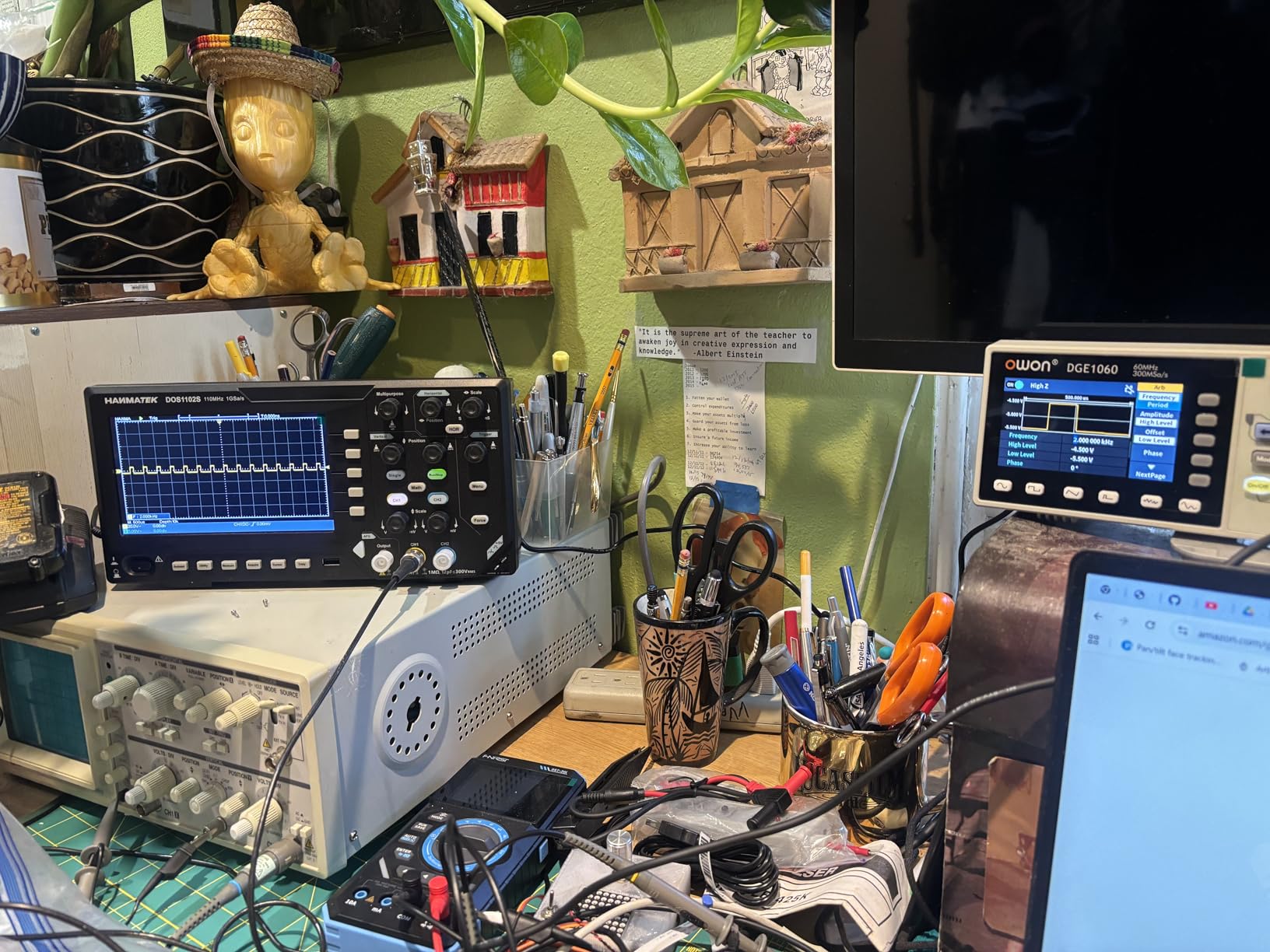
The waveform library stands out as genuinely useful. With 160 built-in shapes covering common test scenarios, you spend less time creating custom waveforms and more time testing. The display shows how each waveform appears on an oscilloscope, helping you select the right shape for your application. This visual feedback accelerates test setup.
Some users report RFI emissions from the power adapter, so keep the unit away from sensitive RF circuits during operation. The single-channel limitation becomes apparent when you need differential signals or dual-tone testing. An external splitter works for some applications but adds complexity.
Who Should Buy This
Engineers with single-channel needs who want OWON quality without paying for unused capabilities should consider this model. It fits perfectly as a dedicated waveform source in automated test setups or as a primary generator for hobbyists who rarely need dual outputs. The frequency accuracy makes it suitable for reference applications.
Who Should Skip This
Anyone regularly needing dual-channel synchronization should pay the premium for a two-channel unit. The lack of sync output complicates external triggering for modulation applications. Users working near sensitive RF equipment should verify the RFI emissions do not interfere with their measurements.
7. Rigol DG5252 Pro – High-End 250MHz Touch Screen AWG
RIGOL DG5252 Pro Function/Arbitrary Waveform Generator, 250MHz, 2.5GSa/s, 2CH,16bit
- 250 MHz max output frequency
- 2.5 GSa/s sample rate for clean signals
- 16-bit vertical resolution for precise waveforms
- 64 Mpts/CH waveform memory standard
- 170 MHz max square wave with 0.8ns rise time
- 10.1 inch touch screen interface
- Premium build quality and professional specifications
- Very limited stock availability
- No customer reviews yet for real-world validation
- High price point for most budgets
- May be overkill for basic lab needs
The DG5252 Pro represents Rigol’s entry into high-performance arbitrary waveform generation. With 250MHz bandwidth and 2.5GSa/s sampling rate, this unit competes with established premium brands at a lower price point. The 16-bit resolution and massive memory depth support applications ranging from radar signal generation to high-speed communications testing.
The 10.1-inch touch screen dominates the front panel, offering waveform visualization and control comparable to modern oscilloscopes. This interface transforms how you interact with complex arbitrary waveforms. Instead of guessing based on parameter numbers, you see the actual shape you will generate.
Square wave performance deserves special mention. The 170MHz maximum with 0.8ns rise time produces edges sharp enough for most digital circuit testing. Many AWGs struggle with square waves, rounding corners or adding overshoot. This Rigol maintains clean transitions across its specified range.
Who Should Buy This
Research labs, production test facilities, and engineers working on cutting-edge RF or high-speed digital designs should evaluate this unit. The specifications match professional requirements while the price undercuts comparable offerings from Tektronix or Keysight. If your work demands the highest performance and budget allows, this generator delivers.
Who Should Skip This
The lack of customer reviews creates uncertainty for early adopters. Without real-world reliability data, professional users may prefer established alternatives. The price places this firmly in commercial territory, well beyond hobbyist or educational budgets. Users whose applications stay below 100MHz will not exploit the extended bandwidth.
8. UNI-T UTG932E – 30MHz Feature-Rich Budget Option
UNI T UTG932E Function Generator Arbitrary Waveform Signal Generator
- Excellent quality accuracy and ease of use for the price
- Crisp and bright TFT display
- Great performance up to 30MHz spec
- Low jitter iteration and distortion
- Good value compared to much more expensive generators
- Small size and large screen
- Feature rich for the price
- Good for testing transistor response and tuning filters
- Quality control issues loose screw reported in one unit
- Manual is not particularly well written
- Cannot save arbitrary waveforms through power cycle
- Square wave only usable up to 2-3MHz
- Poor customer service reported
- Amplitude setting requires min/max voltages
UNI-T has built a following among budget-conscious engineers, and the UTG932E shows why. At under $180, this dual-channel 30MHz generator packs features that competitors reserve for higher price brackets. The built-in 6-digit frequency counter eliminates the need for separate equipment, saving bench space and cost.
The sine wave performance impressed our team. Clean output extends to about 25MHz, beyond the specified 30MHz for some waveform types. The low jitter and distortion measurements match units costing significantly more. For audio circuit testing, filter characterization, and basic amplifier evaluation, this unit performs reliably.
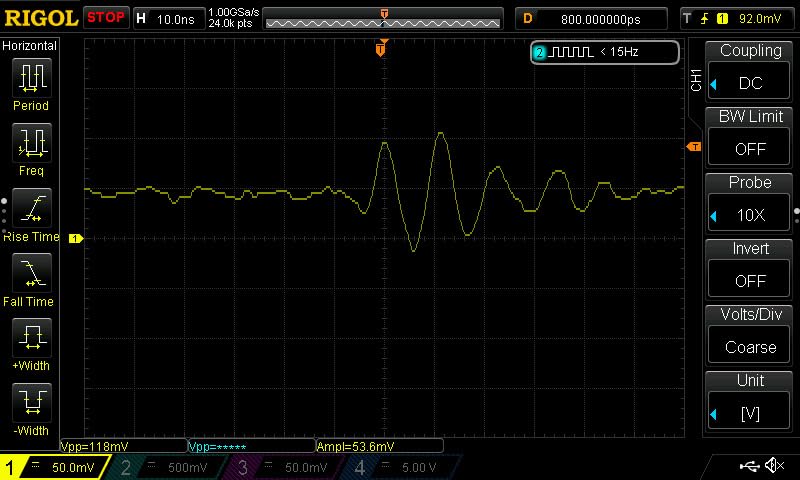
The modulation capabilities cover AM, FM, PM, FSK, and sweep functions that some budget units omit entirely. While the square wave quality degrades above 2-3MHz, the sine and triangle waves maintain acceptable performance throughout the range. The 24 non-volatile storage positions remember your arbitrary waveforms through power cycles.
Build quality shows some inconsistency. One unit arrived with a loose internal screw that rattled during handling. Customer service responses to such issues draw mixed reviews from the community. For the price, these compromises may be acceptable, but professional users requiring guaranteed reliability should consider alternatives.
Who Should Buy This
Hobbyists and educators needing modulation capabilities on a tight budget find strong value here. The frequency counter adds utility for general bench work beyond waveform generation. If your projects emphasize sine waves and basic modulation rather than high-speed digital signals, this UNI-T delivers more features than competitors at this price.
Who Should Skip This
Engineers needing clean square waves or pulse outputs above a few MHz should avoid this model. The quality control inconsistencies and reported customer service problems create risk for professional applications. Anyone requiring guaranteed long-term reliability or extensive support should budget for higher-tier equipment.
How to Choose the Right Arbitrary Waveform Generator?
Selecting the best arbitrary waveform generator for your needs requires understanding several key specifications. Engineers often focus on frequency bandwidth alone, but sample rate, resolution, and memory depth matter equally for many applications.
Understanding Sample Rate and Bandwidth
Sample rate determines how many points per second the generator outputs, directly affecting signal quality. The Nyquist theorem states you need at least twice the sample rate of your highest frequency component. In practice, engineers prefer 4x to 10x oversampling for clean waveforms.
A generator specified for 60MHz output needs at least 240MSa/s for decent quality, and 600MSa/s or higher for excellent results. Check both the maximum frequency and sample rate specifications. Some units quote high frequency limits but achieve them through DDS techniques that distort arbitrary waveforms.
Vertical Resolution and Signal Fidelity
Vertical resolution, measured in bits, determines how finely the generator divides its output voltage range. A 14-bit generator provides 16,384 discrete levels, while 16-bit offers 65,536 levels. This matters most for low-amplitude signals and complex arbitrary waveforms with gradual transitions.
For basic function generation testing amplifiers or filters, 14-bit resolution suffices. When emulating sensors or testing high-resolution ADCs, 16-bit resolution produces more accurate results. The specification called spurious-free dynamic range (SFDR) indicates how much unwanted harmonics and noise the generator adds to your signal.
Waveform Memory Depth
Memory depth limits how complex your arbitrary waveforms can be. Budget units often provide 2K to 8K points, enough for simple shapes. Professional generators offer millions of points, enabling extended sequences and detailed emulation of real-world signals.
Consider your application needs. A simple sensor simulation might require only a few thousand points. Replicating a complete communications protocol or radar signature needs hundreds of thousands or millions. The Rigol DG5252 Pro’s 64 Mpts per channel represents extreme capability few applications demand.
Channel Count and Synchronization
Dual-channel generators enable differential signal testing, mixer characterization, and IQ modulation applications. Independent control of each channel matters more than simply having two outputs. Check whether both channels offer identical specifications and full arbitrary waveform capability.
Channel synchronization becomes critical for multi-phase power testing or differential digital signals. Look for specifications on channel-to-channel phase accuracy and skew. Premium units maintain tight synchronization, while budget generators may drift significantly.
Modulation Capabilities
Built-in modulation modes save significant test setup time. AM, FM, and PM cover most analog applications. FSK, PSK, and ASK support digital communications testing. Sweep functions characterize filter responses. Burst modes test circuit transient behavior.
External modulation inputs extend capabilities, allowing you to apply custom modulation signals from other sources. This matters for specialized communications protocols or custom sensor emulation. Check whether the generator supports both internal and external modulation sources.
Frequently Asked Questions
Who makes the highest quality generators?
Tektronix and Keysight consistently produce the highest quality arbitrary waveform generators, with industry-leading specifications, reliability, and support. These premium brands dominate professional laboratories and production test facilities. For mid-range budgets, Siglent and Rigol offer excellent quality with professional-grade features at lower price points.
What is the difference between arbitrary function generator and waveform generator?
A function generator produces standard waveforms like sine, square, and triangle waves using analog or DDS techniques. An arbitrary waveform generator stores digital samples of any waveform shape in memory and plays them back through a DAC. AWGs can recreate complex real-world signals, sensor responses, and custom test patterns that function generators cannot produce.
How to easily create an arbitrary waveform without programming?
Most AWGs include PC software for waveform creation through point-and-click interfaces. You draw waveforms graphically, import CSV data from oscilloscope captures, or use built-in equation editors. Siglent’s EasyWave, OWON’s PC software, and similar tools from other manufacturers eliminate the need for manual programming while still allowing custom shape creation.
Which generator is commonly used for testing electronic circuits by producing repetitive waveforms?
Function generators and arbitrary waveform generators both produce repetitive waveforms for circuit testing. Function generators suffice for basic amplifier, filter, and power supply testing. AWGs become necessary when testing with complex sensor signals, communications protocols, or custom waveforms that standard generators cannot create.
What sample rate do I need for my application?
Apply the Nyquist theorem: sample rate should exceed twice your highest frequency. For clean signals, use 4x to 10x oversampling. Testing audio circuits to 20kHz needs 100-200kSa/s. Communications work to 30MHz requires 120-300MSa/s. High-speed digital or RF applications above 100MHz demand 500MSa/s or higher.
Final Recommendations
Our testing revealed clear winners across different categories. For engineers seeking the best overall value with professional features, the Siglent SDG2042X stands out with its touch screen, 16-bit resolution, and reliable dual-channel performance. It balances capability and price for serious work without breaking budgets.
Budget-conscious users should consider the Koolertron 15MHz for basic needs or the OWON DGE2070 if higher frequency capability matters. Both deliver surprising performance for their prices, though with compromises in build quality or signal purity that professional applications may not tolerate.
For cutting-edge applications requiring maximum performance, the Rigol DG5252 Pro brings professional specifications to a relatively accessible price point. The 250MHz bandwidth, 2.5GSa/s sample rate, and 16-bit resolution handle applications that would have required much more expensive equipment just a few years ago.
The best arbitrary waveform generators for engineers in 2026 offer better value than ever before. Whether you are building a home lab, equipping a university classroom, or upgrading professional test facilities, one of these eight models will meet your needs. Match the specifications to your actual application requirements rather than buying more capability than you will use.