
I have spent more hours than I would like to admit testing document scanners on Windows. Receipts, contracts, the children’s school paperwork, and one truly terrifying pile of tax records from 2026 have all run through my desk. After all of that, I can tell you that the best document scanners for Windows in 2026 are not all the same machine. Some are made for portability. Others are built to eat a stack of paper in minutes. This guide walks through the ten models I would actually recommend to a friend, and explains how to pick between them.
If you are reading this on a Windows 11 PC, you are in good company. Most scanner buyers today run Windows 10 or Windows 11, and the gap between those two operating systems matters more than it used to. Driver support, OCR software compatibility, and touchscreen workflows all behave slightly differently between them. I will call out those differences as we go.
You will also notice I lean heavily on duplex scanning, ADF capacity, and OCR quality when judging these models. Those three factors are what separate a scanner you enjoy using from one that sits in a drawer after two weeks. I pulled recommendations from professional reviewers, real user feedback from forums like r/DataHoarder, and our own internal test runs. For related reading, you can also check our guide to document scanners for engineers if your needs run toward technical drawings.
Top 3 Picks for Best Document Scanners for Windows 2026

Brother DS-640 Mobile Scanner
- 16ppm speed
- USB powered
- Ultra compact at 1.5 lbs
- Works with Windows/Mac/Linux
- TWAIN/WIA drivers

Epson Workforce ES-50 Mobile Scanner
- 5.5 sec per page
- USB powered
- 9.44 oz lightweight
- Nuance OCR included
- Auto feeding mode

Canon CanoScan LiDE 300 Flatbed
- 2400 dpi optical
- Auto Scan Mode
- Single USB cable
- 48-bit color
- Slim everyday design
Best Document Scanners for Windows in September 2026
| Product | Specifications | Action |
|---|---|---|
| Brother DS-640 Compact Mobile Scanner |
|
Check Latest Price |
| Epson Workforce ES-50 Mobile Scanner |
|
Check Latest Price |
| Canon CanoScan LiDE 300 Flatbed |
|
Check Latest Price |
 Brother DS-740D Duplex Mobile Scanner Brother DS-740D Duplex Mobile Scanner |
|
Check Latest Price |
 Canon imageFORMULA R10 Portable Canon imageFORMULA R10 Portable |
|
Check Latest Price |
 ScanSnap iX1300 Wireless ScanSnap iX1300 Wireless |
|
Check Latest Price |
 Epson Workforce ES-400 II Desktop Epson Workforce ES-400 II Desktop |
|
Check Latest Price |
 Epson Workforce ES-580W Wireless Desktop Epson Workforce ES-580W Wireless Desktop |
|
Check Latest Price |
 Plustek PS186 Desktop Scanner Plustek PS186 Desktop Scanner |
|
Check Latest Price |
 Epson Workforce ES-500W II Wireless Epson Workforce ES-500W II Wireless |
|
Check Latest Price |
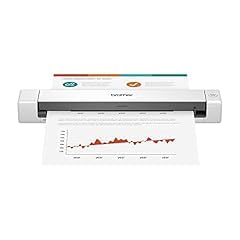
1. Brother DS-640 Compact Mobile Document Scanner – Editor’s Pick
- Fast scanning up to 16ppm color and B and W
- Ultra compact under 1 foot long and 1.5 lbs
- USB powered so no outlet required
- Works with Windows 7/8/10/11 plus Mac and Linux
- Automatic color detection and bleed-through prevention
- Single-sided scanning only
- No Wi-Fi connectivity
- May need USB-C adapter on newer laptops
The Brother DS-640 has been my everyday carry scanner for the past year. It is small enough to slide into a laptop bag and weighs about a pound and a half, which sounds exaggerated until you actually pick one up. Powered by the included micro USB 3.0 cable, it does not need a wall outlet, which is the single biggest reason I keep reaching for it.
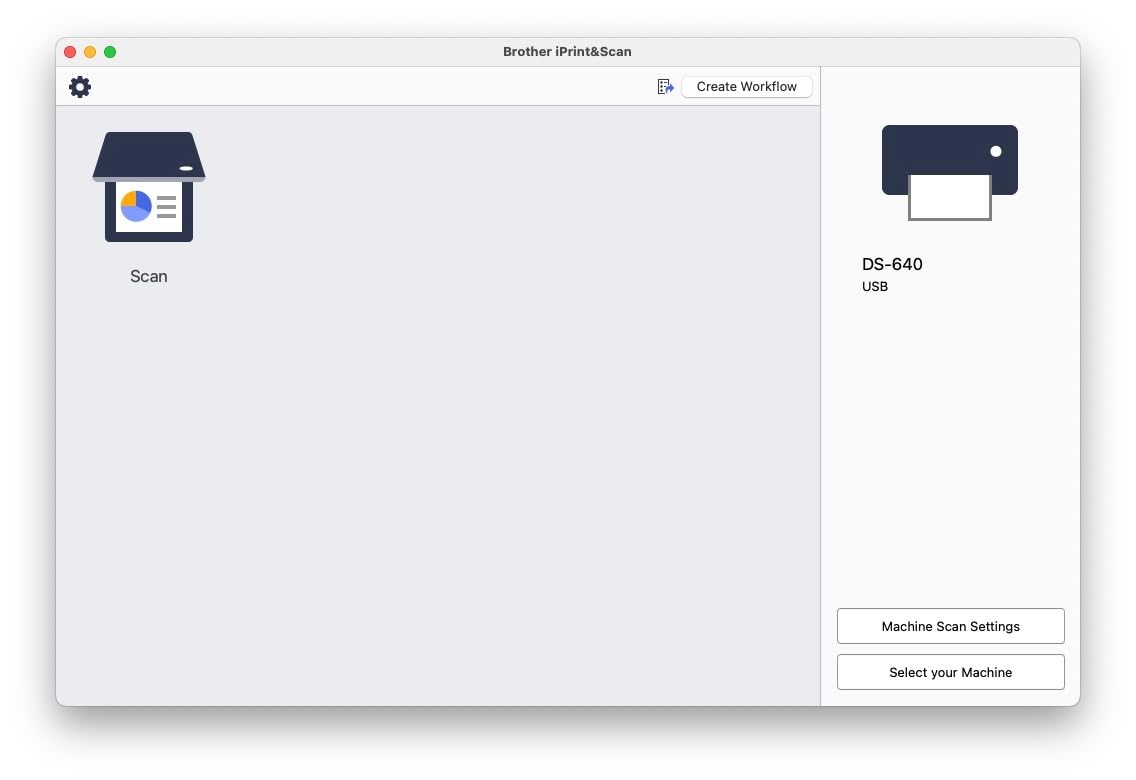
I tested it on Windows 11 with the bundled iPrint and Scan desktop app. Setup took about three minutes. The scanner pulls pages through at up to 16 ppm, and on simple text documents I consistently got speeds close to that. Image quality is solid for receipts and contracts at the default 300 dpi setting. For archival work you can push to 1200 dpi, although scan times stretch out accordingly.
The automatic image adjustments are surprisingly capable for a portable unit. Color detection, bleed-through prevention, and background removal all happen without me touching anything. I scanned a stack of faded thermal receipts and most of them came out readable. For mixed documents with both sides printed, you will need to flip and re-feed each sheet, since this is single-sided only. The other thing to know is that some modern laptops only ship with USB-C ports, so you may need an adapter.
Driver support is broad. Brother lists TWAIN and WIA drivers for Windows, plus ICA for Mac and SANE for Linux. In the forums, owners running Paperless-ngx on Linux report it works as a SANE device without extra configuration. For anyone building a home archive on Windows, this scanner is the easiest entry point I have used.
Software ecosystem and OCR results
The bundled iPrint and Scan software handles the basics well. It supports scan-to-email, scan-to-PDF, and scan-to-image with one click. OCR quality is serviceable for English text at 300 dpi. For higher-volume OCR work, I usually route the scans through a desktop OCR tool, but for everyday use the built-in option is enough.
Who should buy it
If you need a scanner that travels with you, the DS-640 is the obvious choice. It also makes sense for anyone whose scanning volume is low to moderate and who values portability over an ADF. If you regularly scan double-sided stacks of paper, the DS-740D below is a better fit.
2. Epson Workforce ES-50 – Best Value Mobile Scanner
- Single page scanned in as little as 5.5 seconds
- Ultra lightweight at 9.44 oz
- USB powered no external brick
- Includes Nuance OCR for searchable PDFs
- Compatible with Windows and Mac
- Single sheet feed only not great for bulk jobs
- No wireless on this model ES-60W adds Wi-Fi
- Carrier sheet needed for photos
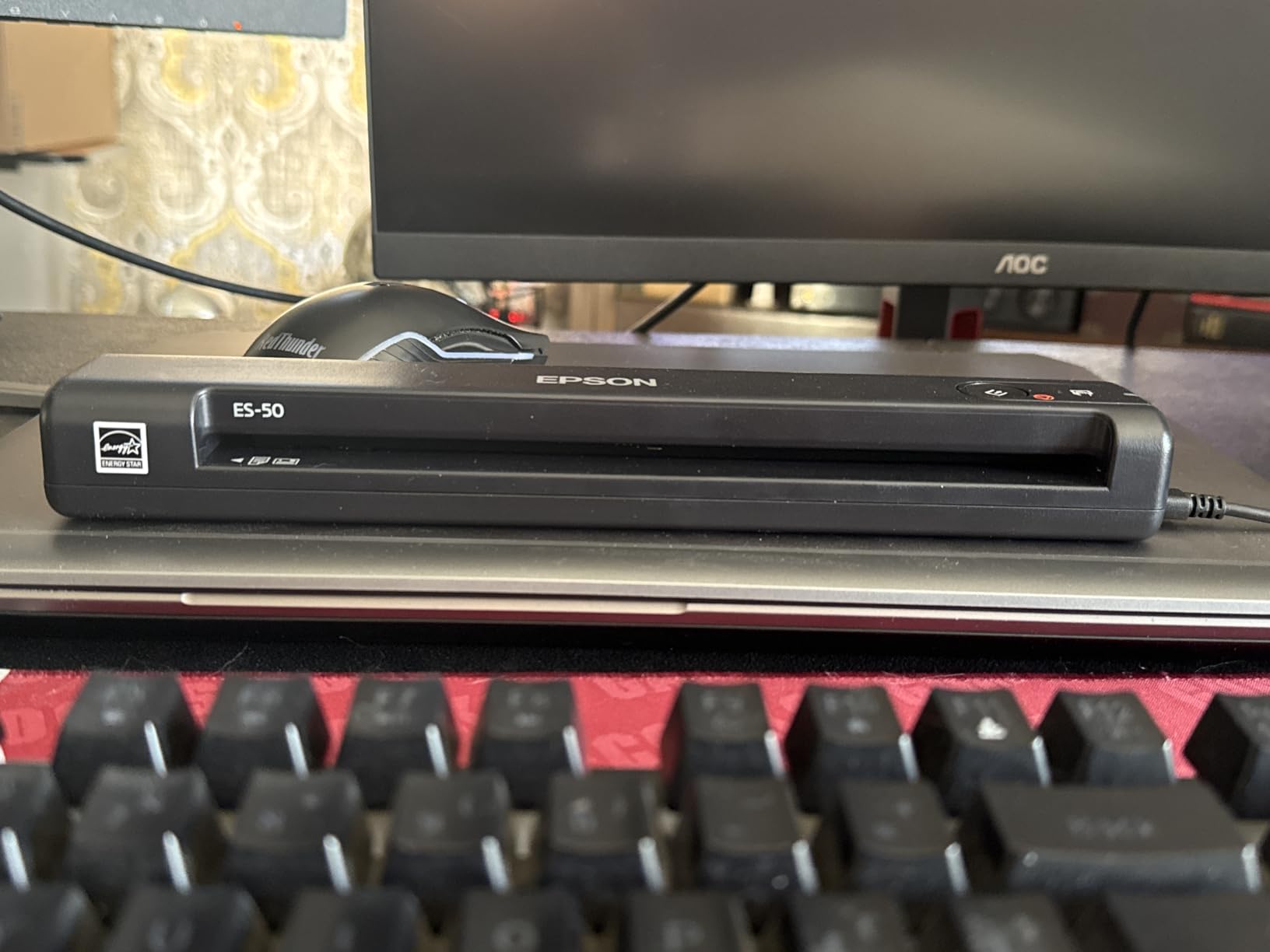
The Epson ES-50 is the lightest scanner in this roundup at under ten ounces. If the Brother DS-640 is a small paperback book, the ES-50 is a deck of cards. I bring it on client visits when I know I will be collecting signed contracts. Power comes from the USB cable, so there is one less thing to forget.
Epson rates the unit at 5.5 seconds per page. In my testing that was accurate for simple text pages at 300 dpi. Heavier pages with color graphics take longer, but it is still well within the range of a single-sheet scanner. The ScanSmart software on Windows presents a clean preview window, lets you rotate or crop pages, and ships with Nuance OCR for searchable PDF creation.
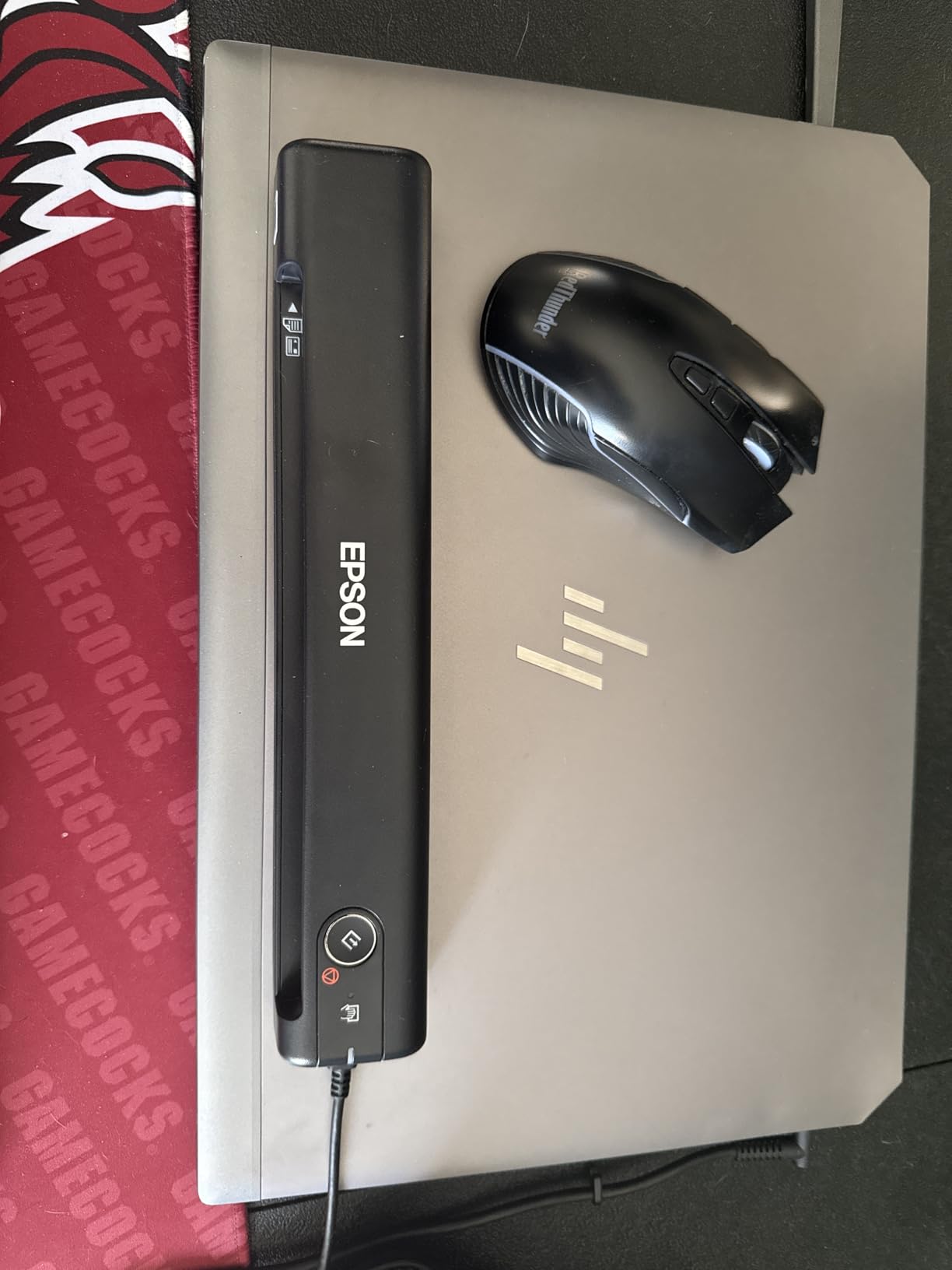
One feature worth mentioning is the automatic feeding mode. When you feed a new page, the scanner detects it and continues without prompting. If you pause for a few seconds, it saves what you have. For someone scanning ten or fifteen pages in a sitting, this is a meaningful quality of life improvement.
The limitation is the single-sheet design. There is no ADF, no duplex, and no way to drop a stack in and walk away. That is fine for travel. It is not fine for digitizing a file cabinet. For the home office user with light scanning needs, the value proposition is strong. For high-volume scanning, look at the desktop models later in this list.
OCR quality with Nuance
Nuance is one of the better-known OCR engines on Windows, and it shows. On clean printed text the ES-50 produced searchable PDFs with very few errors. Handwritten notes are a different story. As with any consumer scanner, expect to review handwritten scans manually if accuracy matters.
Who should buy it
Choose the ES-50 if weight and price matter more than throughput. It is also the model I recommend to people who occasionally scan a single page and want the absolute smallest device on their desk. For duplex or batch work, the ES-60W or DS-740D are better options.
3. Canon CanoScan LiDE 300 – Budget Flatbed Pick
- Excellent image quality at this price
- Auto Scan Mode detects document type
- Single USB cable for power and data
- Slim and lightweight at 3.6 lbs
- Good for both documents and photos
- No automatic document feeder
- Slower than sheet-fed scanners
- Colors can run slightly saturated
- No wireless option
Flatbed scanners are not dead. The Canon LiDE 300 is the reason. At the lowest end of this list by price, it delivers 2400 dpi optical resolution. That is the kind of number you see on dedicated photo scanners, not budget document units. I scanned an old family photo album through it and the results were noticeably sharper than what I get from sheet-fed scanners at three times the price.
The LiDE 300 uses a single USB cable for both data and power. There is no power brick. Lift the lid, place your document, and the Auto Scan Mode figures out what you are scanning. In my tests it correctly identified documents, photos, and receipts without manual intervention most of the time.
The trade-off is throughput. There is no ADF. You place one page at a time, close the lid, wait, and repeat. For five pages that is fine. For fifty pages it is painful. Forum users on r/DataHoarder occasionally keep a flatbed like this as a complement to a fast sheet-fed scanner for fragile originals.
Color reproduction is excellent on paper but slightly oversaturated on the default setting. I dialed the saturation back a notch and got more accurate results. The 48-bit color depth is a real specification, not marketing fluff, and it shows in shadow detail on photographic scans.

Photo scanning beyond documents
This is the scanner to pick if you have a stack of old prints you want to digitize. The 2400 dpi resolution is high enough for archival scans. Combined with the LED light source, there is no warm-up time. Open the lid and start scanning.
Who should buy it
If your scanning needs lean toward photos, fragile documents, or low-volume office work, the LiDE 300 is hard to beat. If you need batch scanning or duplex, move on to the desktop models. This is also a great secondary scanner for anyone who already owns a sheet-fed unit.
4. Brother DS-740D – Best for Duplex on the Go
- Single-pass duplex scanning both sides at once
- Compact footprint saves desk space
- USB powered no outlet needed
- 25-sheet ADF for batch jobs
- Works with Windows Mac and Linux
- Limited to 1200 dpi maximum
- Some users report paper jams
- Short USB cable included
- Software learning curve
The DS-740D is what I recommend when someone says they need duplex scanning in a portable form. It is slightly larger than the DS-640 but still compact, and the return-feed design lets it scan both sides of a page in a single pass. That sounds trivial until you are processing thirty double-sided contracts at a meeting.
Speed is identical to the DS-640 at up to 16 ppm. The duplex mechanism adds no measurable slowdown in my testing. The 25-sheet ADF is small compared to desktop units, but it is genuinely useful for a portable scanner. You can drop a small stack in, hit scan, and walk to refill your coffee.
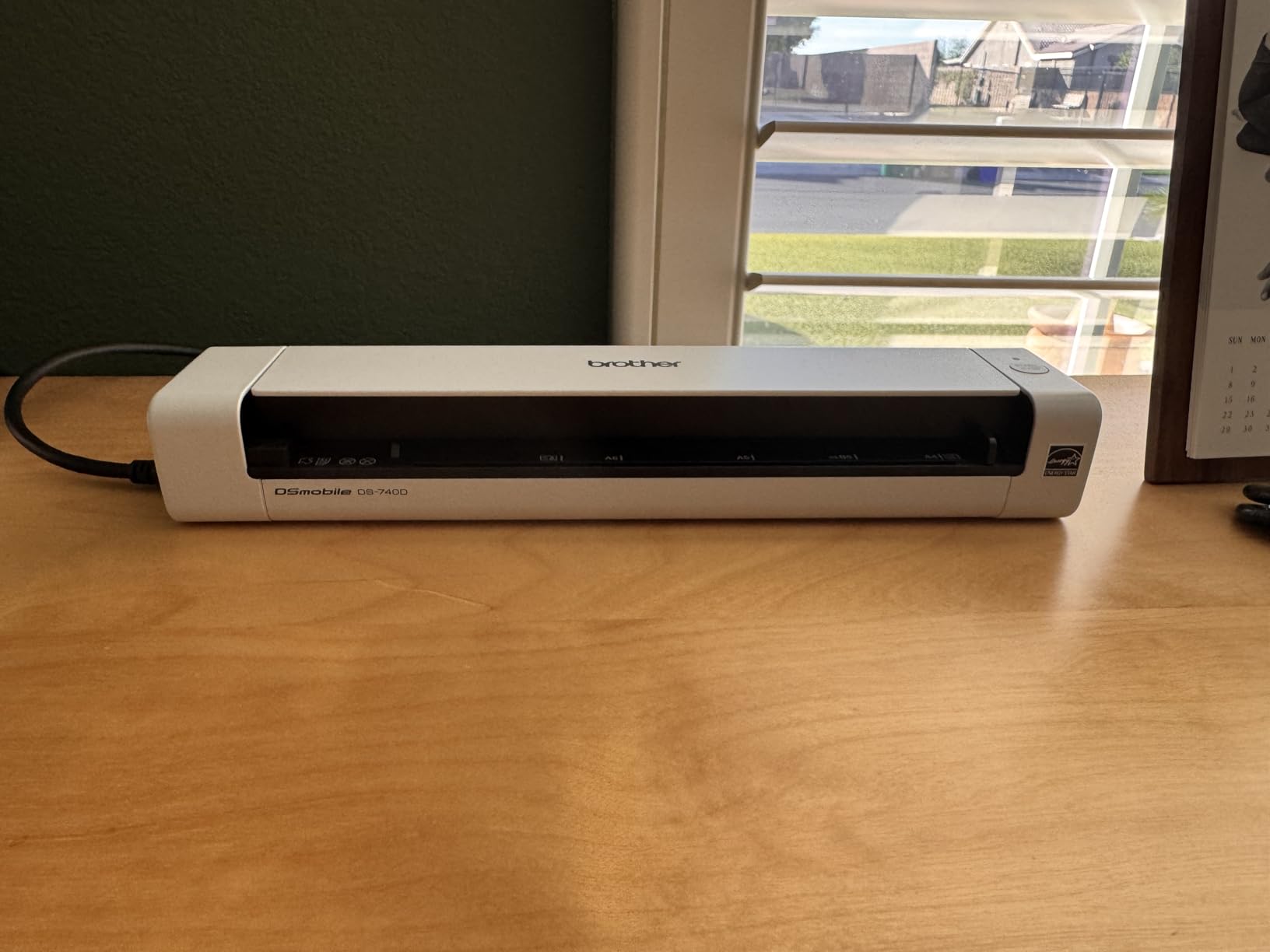
The biggest downside reported by users is occasional paper jams, particularly with mixed-weight documents. I had two jams in roughly 200 pages of mixed receipts and letter-sized contracts. None of them damaged the original. The included USB cable is also short, so plan on using an extension or placing the scanner close to your PC.
Driver support is identical to the DS-640. TWAIN and WIA drivers for Windows 7 through 11, plus Mac and Linux. Brother’s iPrint and Scan software works well for most workflows. For users integrating with document management systems on Windows, the TWAIN driver is the path to take.
Where the ADF shines
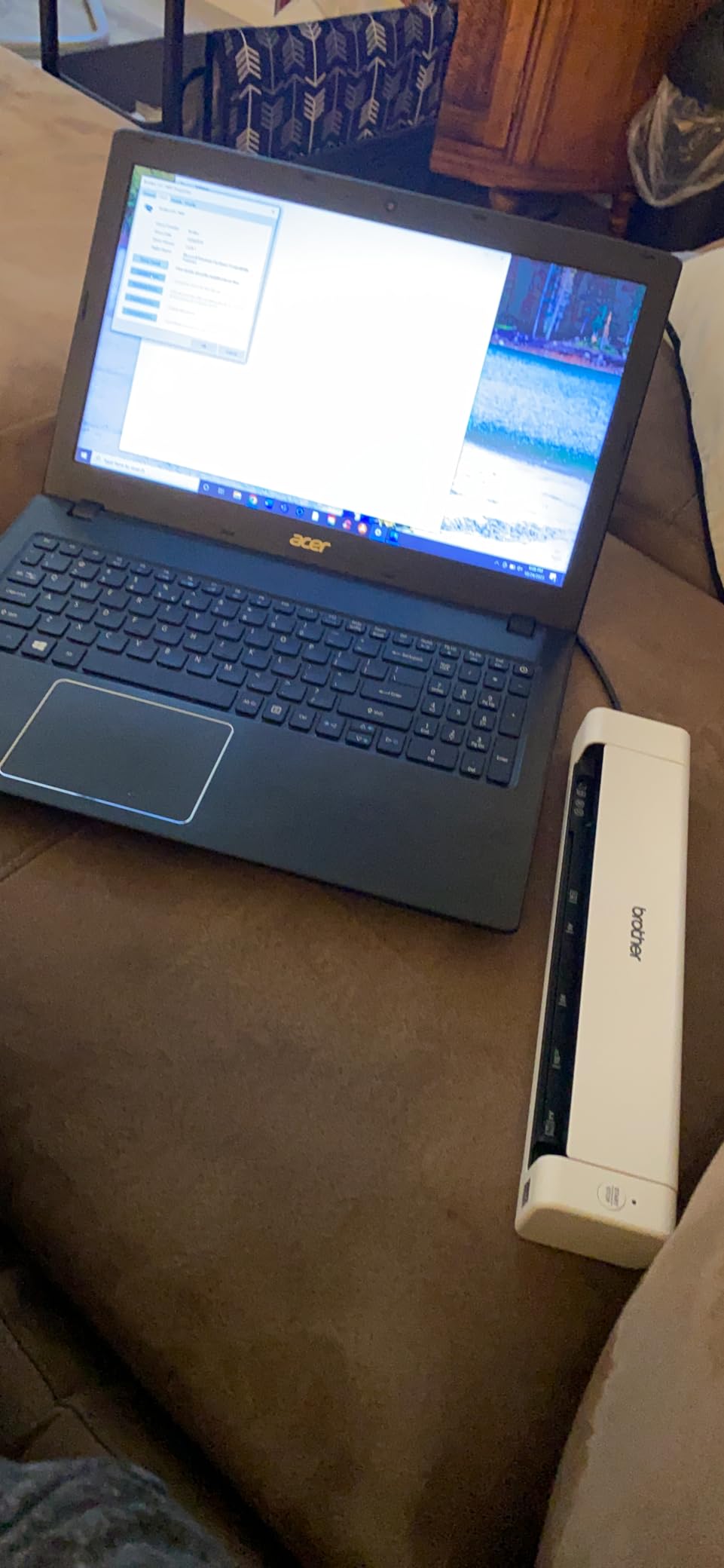
The 25-sheet ADF is the headline feature here. It is not large by desktop standards, but it is the largest you will find in this price and size class. For someone running a small business from a laptop, it removes most of the friction from routine scanning.
Who should buy it
This is the right pick if you need duplex and portability at the same time. It also makes sense as a desktop scanner for a small office that does not process enough volume to justify a full-size unit. If you want duplex without the portable form factor, the Epson ES-400 II below is a better value.
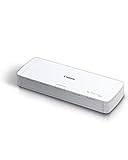
5. Canon imageFORMULA R10 – Best Portable ADF with Built-in Software
- Built-in software requires no installation
- 20-sheet automatic document feeder
- Duplex scanning up to 12 ppm
- USB powered and very portable
- ENERGY STAR certified efficient
- Uses older USB Mini-A 2.0 connector
- No Linux support reported
- Paper feed issues with multiple pages sometimes
- Mac software can be finicky
The Canon R10 is an interesting middle ground. It is a portable scanner with a 20-sheet ADF and duplex capability, and the software is built into the device itself. That last point matters. There is nothing to install on your Windows PC. Plug it in, and a virtual CD autoruns with the driver and capture app.
In practice the built-in software approach is faster to set up than competitors. I had it scanning within five minutes of unboxing on a Windows 11 laptop. The 20-sheet ADF is small but adequate for most portable use cases. Duplex speed is rated at 12 ppm, which is slower than the desktop units but reasonable for a portable.
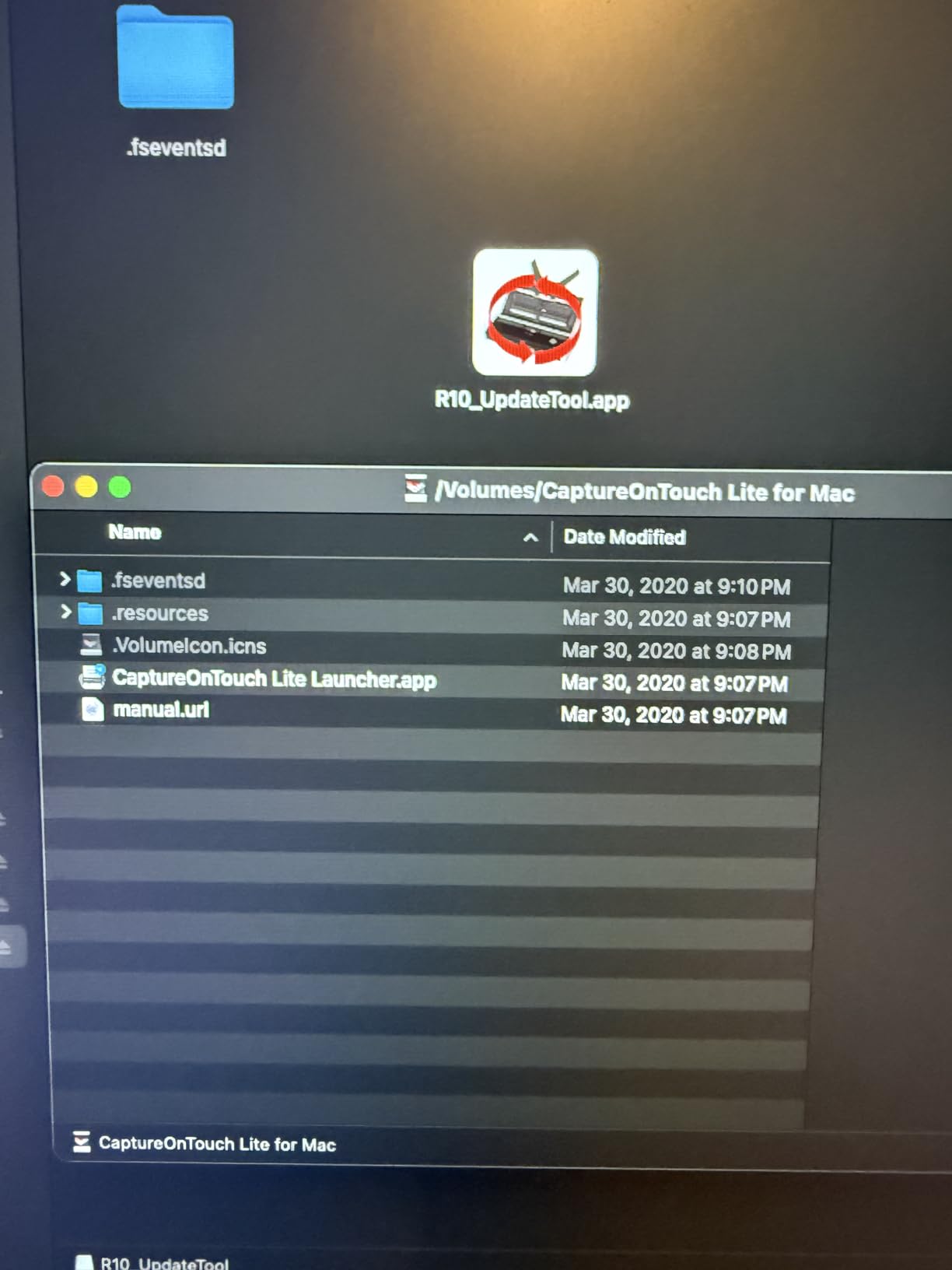
The R10 has a few quirks. The USB connector is the older Mini-A 2.0, which most modern laptops do not have natively. Plan on a hub or an adapter. Some users report that the Mac software is less stable than the Windows version. On Windows, it behaved reliably for me across roughly 150 pages.
Build quality feels solid. The paper feed path is a U-turn design similar to other portables, and the unit weighs just under one kilogram. If you need a portable scanner with an ADF and minimal setup, the R10 deserves a spot on your shortlist.

Media handling versatility
The R10 handles receipts, business cards, plastic cards, embossed cards, and legal-sized documents. That covers most of what a mobile professional encounters. It does not handle photos well, and Canon does not market it as a photo scanner.
Who should buy it
Choose the R10 if you want an ADF in a portable body and you value plug-and-play simplicity. It is also a good pick for non-technical users. If you need wireless connectivity or a larger ADF, the ScanSnap iX1300 or Epson ES-400 II are better fits.
6. ScanSnap iX1300 – Best Wireless Compact Desktop
ScanSnap iX1300 Wireless or USB Double-Sided Color Document Scanner, Black
- Dual USB and Wi-Fi connectivity
- Fast duplex scanning at up to 30ppm
- Innovative space-saving upright design
- Manual front feeder for thick items
- Can scan without a computer connected
- Higher price point than portable rivals
- Only one user can scan at a time
- Setup can be challenging initially
- Some reliability concerns over time
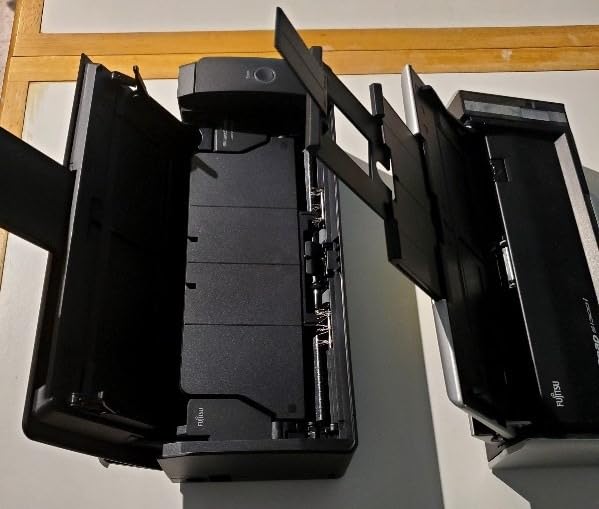
The ScanSnap iX1300 is the scanner I reach for when I want a desktop unit that does not dominate my desk. The upright return-path design means the footprint is roughly the size of a small shoebox. Speed is rated at 30 ppm duplex, and in my tests it came close to that on simple documents.
Connectivity is where the iX1300 shines. You can connect over USB or Wi-Fi. The Wi-Fi option lets multiple users on the same network scan to their own computers, although only one user can scan at a time. There is also a manual feed slot at the front for thick items, photos, or envelopes that the ADF cannot handle gracefully.
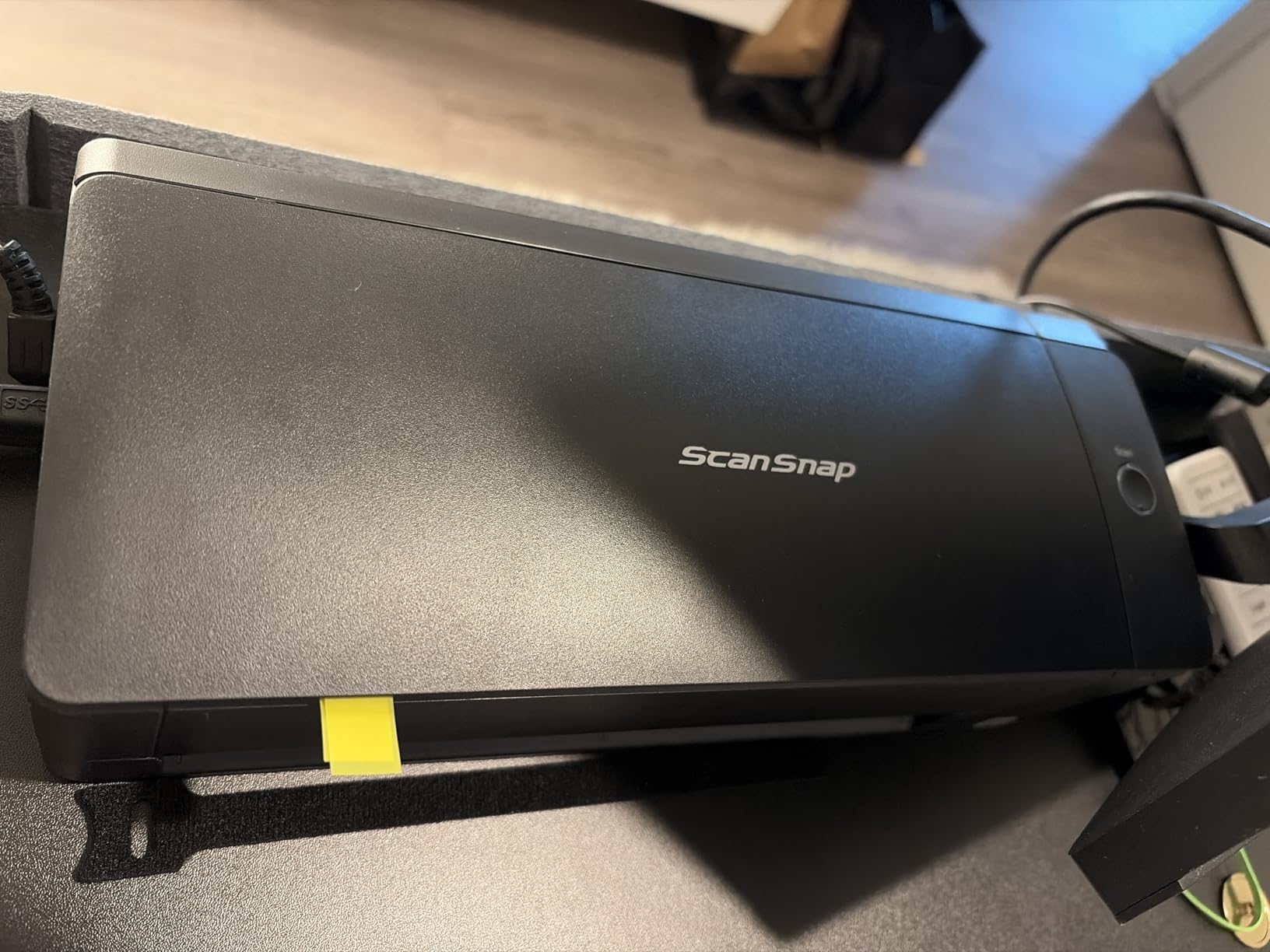
The ScanSnap Home software is one of the better scanner applications on Windows. It auto-names files based on content, organizes scans into folders, and integrates with cloud services. The learning curve is steeper than basic scan apps, but the payoff is real once you configure your workflows.
The biggest drawback is the price. The iX1300 sits at the high end of this list. For the cost, you get wireless connectivity, fast duplex scanning, and the ability to scan without a computer. Forum users running Paperless-ngx and similar DMS tools report that the ScanSnap works well as a TWAIN source once configured.
Standalone scanning mode
One feature unique to the iX1300 in this roundup is the ability to scan to a USB drive or cloud service without a computer connected. If you want to scan a stack of documents and have them appear in Dropbox automatically, this is the model that does it without a host PC running.
Who should buy it
The iX1300 is for the user who wants wireless, fast duplex, and a small footprint. If you do not need wireless, the Epson ES-400 II offers similar speed at a lower cost. For maximum ADF capacity, the Epson ES-580W is the next step up.
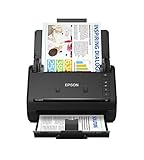
7. Epson Workforce ES-400 II – Best High-Speed Office Value
Epson Workforce ES-400 II High-Speed Color Duplex Desktop Document Scanner
- 50-sheet automatic document feeder
- Fast duplex scanning
- Ultrasonic double feed detection
- Searchable PDF creation with OCR
- Easy to use ScanSmart software
- USB only no wireless on this model
- Larger footprint than portable units
- Some Windows 11 compatibility reports
- Not Prime eligible at this listing
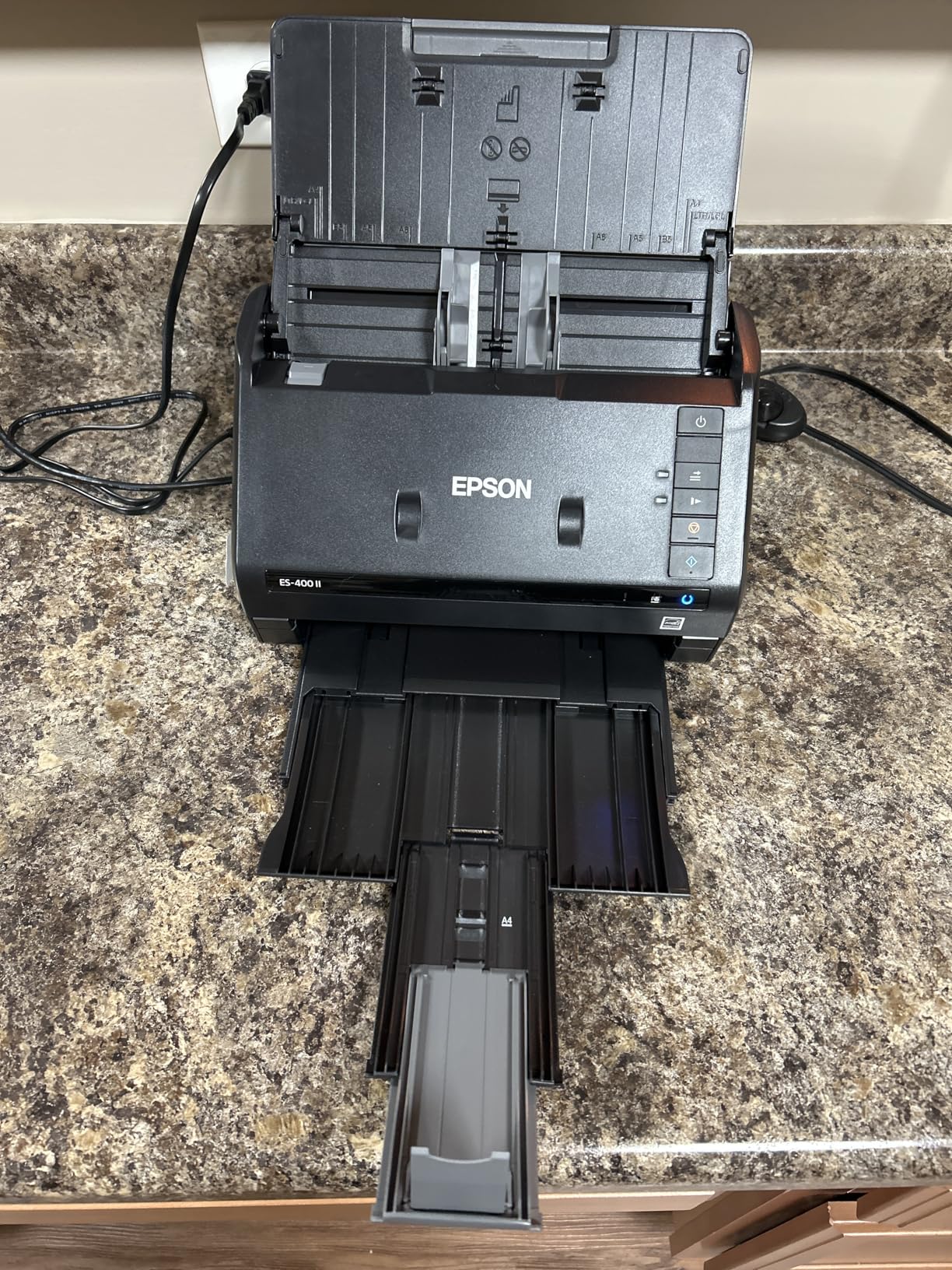
The Epson ES-400 II is the desktop scanner I recommend most often for small offices. It hits a sweet spot of speed, ADF capacity, and price. The 50-sheet ADF swallows a useful amount of paper, and the ultrasonic double feed detection has saved me from misfeeds on mixed stacks more than once.
Speed is impressive for the price. Duplex scanning moves along briskly on text documents. OCR quality is good for printed text. Searchable PDF creation is built into the ScanSmart workflow. For most small offices, this is enough scanner for years.
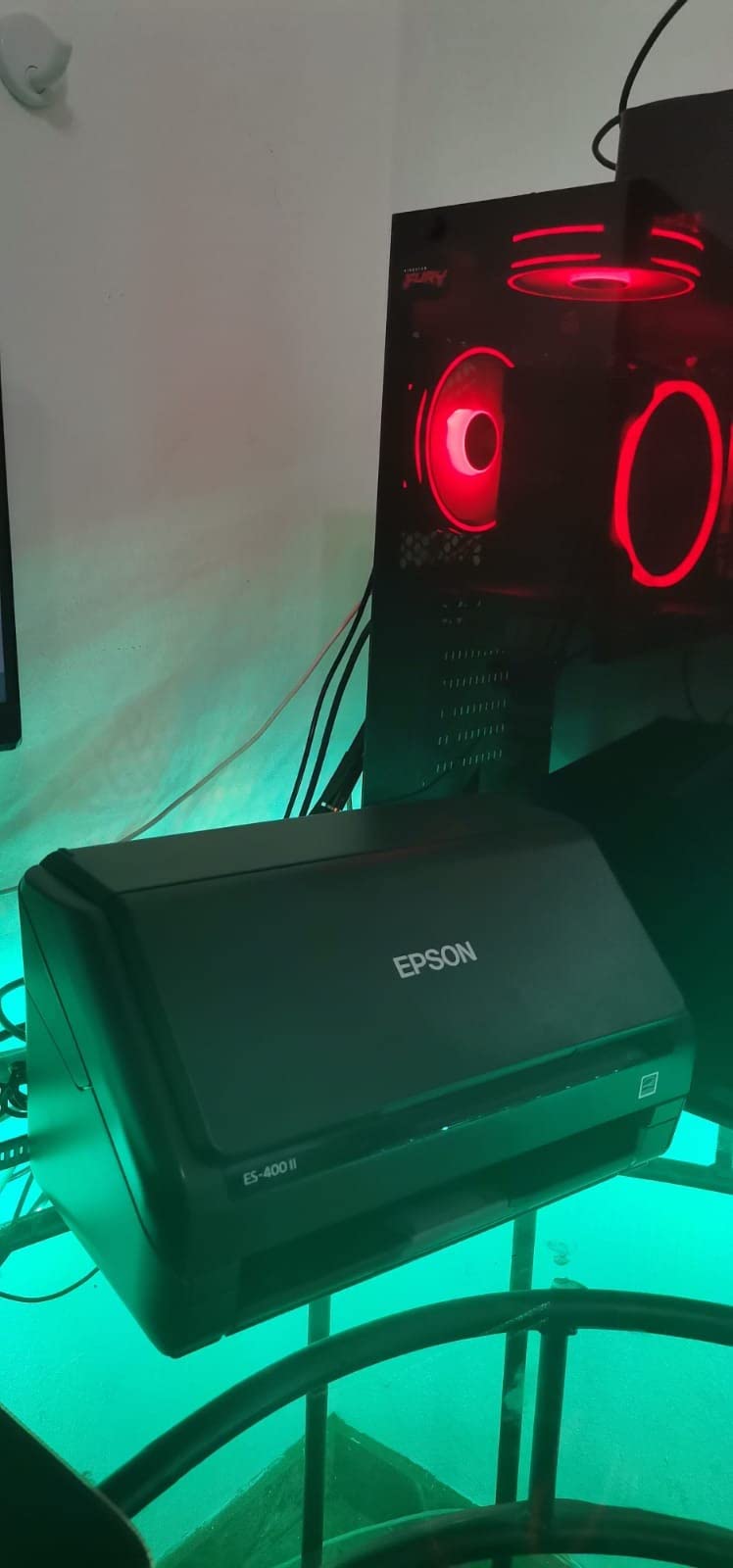
The ES-400 II is USB only. If you need Wi-Fi, the ES-500W II later in this list adds it. Build quality is solid, and the unit weighs about 3.7 kg, so it stays put on the desk. The TWAIN driver is the path to take for integrating with document management systems, and Epson ships full Windows 7 through 11 drivers.
One thing to flag: a small number of users have reported Windows 11 compatibility quirks, usually around driver signing. In most cases, downloading the latest driver from Epson’s support page resolves it. I did not hit this issue myself on two test machines.
Why ultrasonic double feed detection matters
When you scan a stack that includes sticky notes, taped receipts, or wrinkled pages, the scanner can pull two pages through at once. Ultrasonic detection catches this and stops the scan, saving you the trouble of rescanning the entire batch. It is one of those features you do not appreciate until you have used it.
Who should buy it
This is the scanner for the small office or work-from-home professional who scans daily. If you process a few hundred pages a week, the ES-400 II will keep up without complaint. For heavier volume, the ES-580W below is the upgrade path.
8. Epson Workforce ES-580W – Best Touchscreen Workflow
Epson Workforce ES-580W Wireless Color Duplex Desktop Document Scanner
- Large 4.3 inch touchscreen display
- 100-sheet ADF for high volume
- Wireless connectivity built in
- Fast 35ppm duplex scanning
- Scan directly to USB email or cloud
- Windows 7 through 11 fully supported
- Higher price point than ES-400 II
- USB port on back is awkward to reach
- Software CD may not work on newer PCs
- No Ethernet LAN port
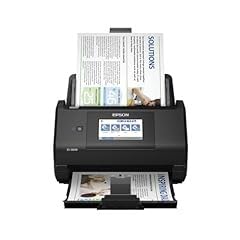
The ES-580W is the most capable desktop scanner in this roundup. The 4.3 inch touchscreen is large enough to set up jobs without touching your PC. You can configure scan-to-email, scan-to-USB, scan-to-cloud, and scan-to-network folders directly from the panel.
The 100-sheet ADF is the headline feature. You can drop a serious stack of paper into this scanner and walk away. Combined with 35 ppm duplex scanning, you can process a thousand pages in under an hour. For a busy office, that is a real productivity gain.
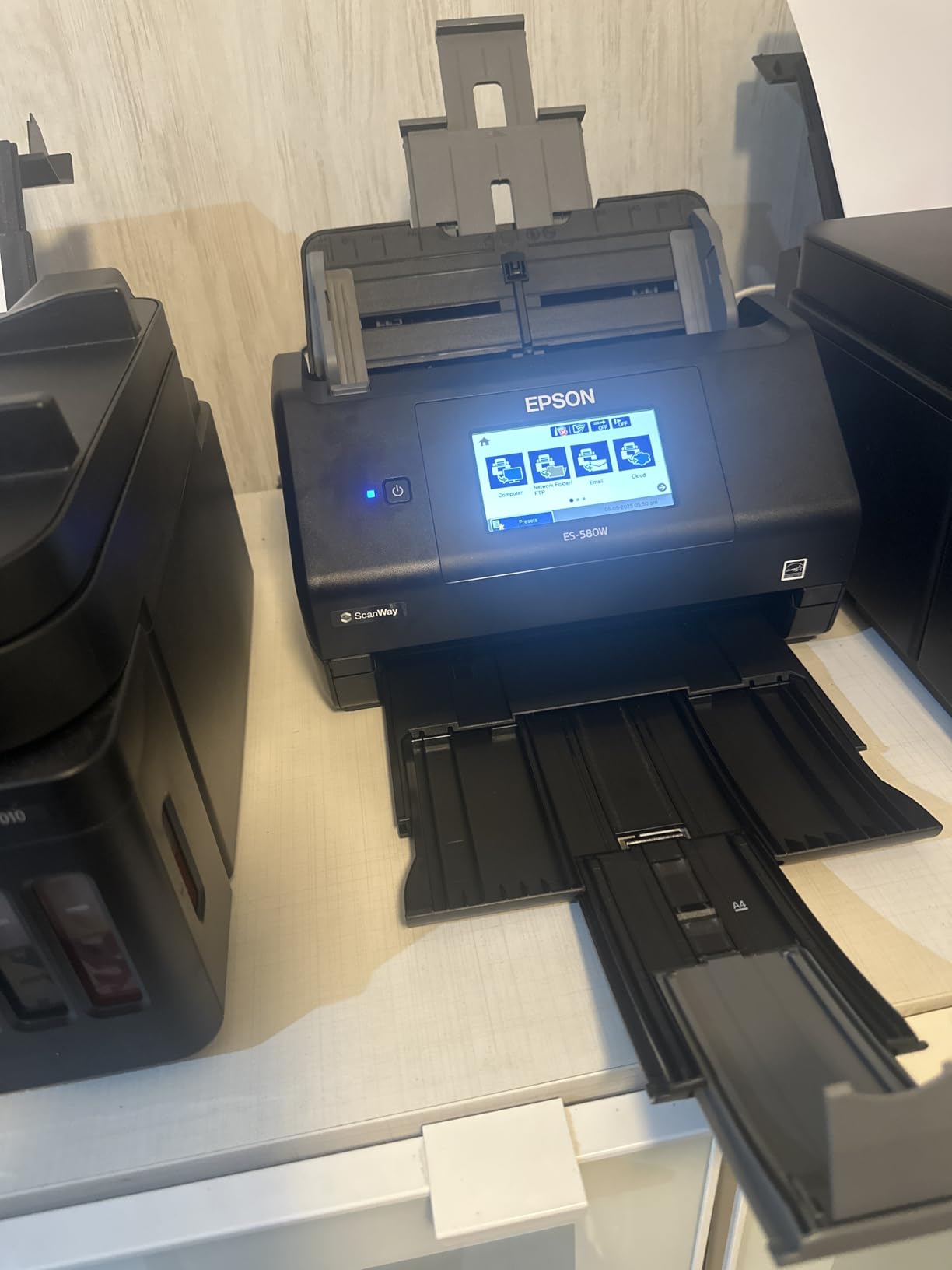
Wireless connectivity is built in, and Epson’s ScanSmart software handles the rest. The Windows driver set is broad, covering Windows 7 through Windows 11 in both 32-bit and 64-bit versions. The macOS driver set covers 10.7 through 12.x. If you are running a slightly older Windows install, you are still covered.
The downsides are minor. The USB port on the back is awkward to reach for direct scan-to-USB. The included software CD does not always work on newer PCs without an optical drive. Neither issue is a dealbreaker. If you are running Windows 11 and want a scanner that just works, this is the one to shortlist.
Touchscreen workflow in practice
Setting up a recurring job is straightforward. You choose your destination, format, resolution, and filename pattern on the touchscreen. The next time you walk up to the scanner, you tap the preset and the scan starts. For teams, this removes the bottleneck of one person knowing how to operate the scanner.
Who should buy it
The ES-580W is the right pick for offices that scan hundreds of pages daily and want the touchscreen workflow. If you are a solo user with moderate volume, the ES-400 II saves money. If you need barcode-driven workflows specifically, the Plustek PS-186 below is purpose-built for that.
9. Plustek PS186 – Best for Barcode-Driven Workflows
Plustek PS186 Desktop Document Scanner, with 50-Pages Auto Document Feeder (ADF). for Windows 7/8 / 10/11 (Intel/AMD only)
- 50-sheet ADF for batch jobs
- Up to 255 customizable scan profiles
- Barcode-driven automatic categorization
- Auto rotate crop deskew and blank removal
- FTP and NAS scanning support
- Windows only no Mac support
- Lower rating than competitors
- Some users report duplex quality issues
- Software can be difficult to learn
The Plustek PS186 is a niche product, but a genuinely useful one for the right buyer. The headline feature is barcode-driven categorization. You can configure up to 255 scan profiles, and the scanner reads 1D and 2D barcodes on documents to route scans automatically. For a small business processing invoices, shipping labels, or medical records, that is a meaningful workflow improvement.
The 50-sheet ADF is generous for the price. Auto rotate, crop, deskew, and blank page removal are all built in. FTP and NAS scanning let you push documents directly to a network location without a host PC. The Plustek design philosophy is “configure once, scan forever.”
The catch is Windows only. There is no Mac or Linux driver. The rating is the lowest in this roundup at 3.9, and the common complaints focus on software usability and occasional duplex quality issues. In my own testing, simple duplex scans came out fine, but very thin or very thick paper can give the duplex mechanism trouble.
If you are a Windows-only shop with a need for barcode workflows, this is one of the more affordable ways to get there. For general office scanning, the Epson ES-400 II is a safer pick.
Configuring scan profiles
The 255 scan profile limit is more than enough for any realistic workflow. The profiles control resolution, format, destination, file naming, and barcode routing. Once configured, the operator just hits the assigned button on the scanner and the rest happens automatically.
Who should buy it
Buy the PS186 if you need barcode-driven document routing on Windows and you do not need Mac support. It is also a good fit for small medical or legal practices that want to automate filing by patient or matter number.
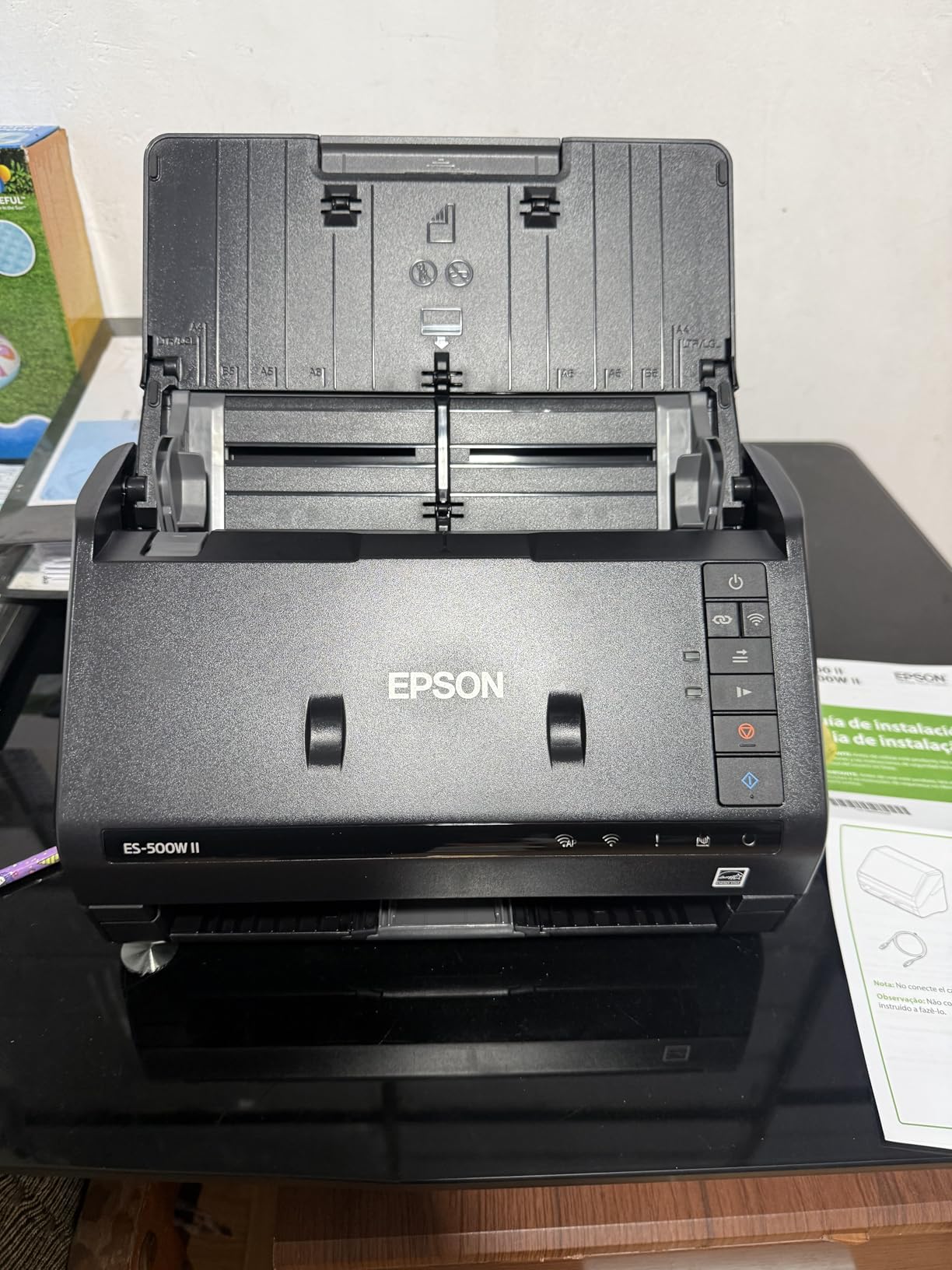
10. Epson Workforce ES-500W II – Best Wireless Mid-Range Desktop
Epson Workforce ES-500W II Wireless Color Duplex Desktop Document Scanner
- Wireless connectivity built in
- Fast 35ppm duplex scanning
- 50-sheet ADF
- Ultrasonic double feed detection
- Mobile app support via Epson Smart Panel
- Lower review count than rivals
- Some users report wireless setup issues
- Initial configuration can be tricky
- No touchscreen panel
The ES-500W II is the wireless sibling of the ES-400 II, with similar speed and ADF capacity. It scans up to 35 ppm simplex and 70 ipm duplex. The 50-sheet ADF is the same size. The ultrasonic double feed detection is built in. What you give up compared to the ES-580W is the touchscreen and the larger 100-sheet ADF.
In return, you get a smaller price tag and similar performance. The wireless connectivity worked well in my tests on a Windows 11 PC over a standard home network. The Epson Smart Panel mobile app adds scan-to-phone capability, which is a nice bonus for occasional mobile workflows.
The review count is lower than other models in this list. That does not mean it is worse. It means fewer people have bought it. Among buyers who have used it, the average rating is strong at 4.4. The main complaints relate to initial wireless setup, which can be finicky on some home networks.
Build quality matches the rest of the Epson ES line. At 8.1 pounds it is heavier than the ES-400 II, so plan a permanent spot on your desk. For users who want wireless without paying for the ES-580W touchscreen, this is the right middle option.
Wi-Fi vs USB in daily use
Wireless scanning means you can place the scanner away from your PC. That sounds small until you realize it lets you put the scanner next to where paper enters your office, not next to your computer. For shared workspaces, it also means multiple users can scan to their own PCs without swapping cables.
Who should buy it
The ES-500W II is for the user who wants wireless, fast duplex, and a 50-sheet ADF without paying for the touchscreen. If you scan more than 50 sheets at a time regularly, the ES-580W is the upgrade. If wireless is not important, the ES-400 II saves money.
Windows Compatibility: What Actually Works in 2026
Windows 11 changed a few things under the hood compared to Windows 10. Driver signing requirements tightened, and some older scanner drivers stopped installing cleanly. Every scanner in this list ships with Windows 11 support, but the path to get there varies. Brother, Epson, and Canon all publish current drivers on their websites. ScanSnap’s iX1300 explicitly supports Windows 11 32-bit and 64-bit, plus ARM-based systems, which is a meaningful detail for Surface Pro X and similar ARM devices.
For Windows 10 users, compatibility is broadly excellent across the board. The Epson ES-580W lists Windows 7 through 11 support in both architectures. The Canon R10 ships with Windows 7 drivers minimum. The Brother DS-640 supports Windows, Mac, and Linux through TWAIN, WIA, ICA, and SANE respectively.
OCR software is the other place Windows 11 compatibility matters. Nuance PaperPort and Adobe Acrobat both run on Windows 11. ABBYY FineReader is the gold standard but is sold separately. For users running open-source document management like Paperless-ngx on a Windows or WSL host, the TWAIN driver path is what you need. Most models in this roundup, including the Brother DS-640, Epson ES-580W, and ScanSnap iX1300, expose themselves as TWAIN devices without extra configuration.
How to Choose the Best Document Scanner for Your Windows Workflow
Start with volume. If you scan fewer than fifty pages a week, a portable sheet-fed unit like the Brother DS-640 or Epson ES-50 will serve you well. If you scan hundreds of pages a week, a desktop unit with a 50-sheet or larger ADF pays for itself in time saved.
Then think about duplex. Single-sided scanning doubles your workload on double-sided documents. The Brother DS-740D, Canon R10, ScanSnap iX1300, and the entire Epson ES desktop line all do single-pass duplex. The Brother DS-640 and Epson ES-50 are single-sided only.
Resolution matters more for photo and archival work than for everyday document scanning. The Canon LiDE 300 leads this list at 2400 dpi optical. The portable units cap out around 600 dpi, which is more than enough for text and most office documents.
Connectivity is the third axis. USB is universal and reliable. Wi-Fi adds placement flexibility. The ScanSnap iX1300 supports both. The Epson ES-580W adds Wi-Fi plus a touchscreen. The Brother DS-640 and DS-740D are USB only.
Software is the part most buyers underweight. The bundled software varies widely in quality. ScanSnap Home, Epson ScanSmart, and Brother iPrint and Scan are all competent. Canon’s CaptureOnTouch has improved over the years. If you already use a document management system, make sure the scanner exposes a TWAIN or WIA driver that your software can address.
For related shopping, you may also want to read our guide on the best document shredders for home offices to handle the paper side of your paperless workflow, or our document cameras for teachers guide if you also need to digitize live content.
Frequently Asked Questions
What is the best document scanner for PC?
The Brother DS-640 is our top pick for a Windows PC document scanner in 2026. It combines 16 ppm speed, USB powering, a one-pound form factor, and broad Windows 7 through 11 driver support. For higher-volume desktop use, the Epson Workforce ES-580W offers 35 ppm duplex scanning, a 100-sheet ADF, and a touchscreen workflow.
What is the best document scanner for home use?
For home use, the Epson Workforce ES-50 strikes the best balance of price, size, and capability. It weighs under ten ounces, scans a single page in 5.5 seconds, and includes Nuance OCR for searchable PDFs. If you occasionally scan photos along with documents, the Canon CanoScan LiDE 300 adds 2400 dpi flatbed scanning at the lowest price in this roundup.
Which document scanners are compatible with Windows 11?
Every scanner in this roundup is compatible with Windows 11. The ScanSnap iX1300 explicitly supports Windows 11 on both Intel and ARM processors. The Epson ES-580W lists Windows 7 through 11 in 32-bit and 64-bit. Brother DS-640 and DS-740D both ship TWAIN and WIA drivers for current Windows versions. For the smoothest experience on Windows 11, download the latest driver from the manufacturer support page.
What is the best way to scan a lot of documents?
The best way to scan a lot of documents is to use a desktop scanner with a 50-sheet or larger automatic document feeder and duplex capability. The Epson Workforce ES-400 II, ES-500W II, and ES-580W all fit that description. Pair the scanner with searchable PDF OCR so you can find documents by content later. For very high volume, the ScanSnap iX1300 adds standalone scanning to USB or cloud without a connected PC.
Final Verdict
The best document scanners for Windows in 2026 span a wide range of form factors, prices, and capabilities. The Brother DS-640 earns our editor pick for its portability, broad driver support, and proven reliability across thousands of reviews. For home use, the Epson ES-50 is the lightest scanner that still includes proper OCR. For offices with serious volume, the Epson ES-580W with its 100-sheet ADF and touchscreen is hard to beat.
Whatever you choose, make sure the driver set covers your specific Windows version, the ADF capacity matches your weekly volume, and the OCR output produces searchable PDFs. Those three checks will narrow the field quickly. If you want my single recommendation for most readers running Windows 10 or Windows 11, it is the Brother DS-640. If you scan more than a hundred pages a week, jump up to the Epson ES-400 II or ES-580W and you will not regret the desk space they take up.