
Building a home, a shed, or even a deck means you need a tool that can drive hundreds of framing nails quickly and consistently. That is where the best framing nailers for home building come in. These tools cut framing time by up to 80 percent compared to hand nailing, saving your arm and your schedule.
Our team spent weeks researching what real builders and DIY homeowners say across Reddit communities like r/Carpentry and r/Construction, plus professional reviews from Fine Homebuilding. We looked at cordless models, pneumatic stalwarts, and everything in between to find what actually works for home building projects in 2026.
Whether you are framing walls for a room addition, sheathing a roof, or building a fence, the right nailer makes the difference between a job well done and a frustrating day. Reddit users consistently point to Metabo HPT (formerly Hitachi) as the gold standard, while cordless options from Milwaukee and Makita are gaining ground fast. Below we break down eight models worth your money.
Top 3 Picks for Best Framing Nailers for Home Building (August 2026)
If you want the short version, here are our three top recommendations based on testing data, user feedback, and overall value.

The Metabo HPT NR90AES1 takes our editor’s choice spot for its legendary reliability and lightweight 7.5-pound build. The Bostitch F21PL earns best value because it doubles as a metal connector nailer. And the NuMax SFR2190 wins budget pick with over 7,300 reviews and a sub-$130 price tag.
Best Framing Nailers for Home Building in 2026
Here is a quick comparison of all eight models we cover in this guide. Use it to narrow down your options before diving into the individual reviews.
| Product | Specifications | Action |
|---|---|---|
| Metabo HPT NR90AES1 |
|
Check Latest Price |
 NuMax SFR2190 NuMax SFR2190 |
|
Check Latest Price |
 Bostitch F21PL Bostitch F21PL |
|
Check Latest Price |
 Milwaukee M18 FUEL 2744-20 Milwaukee M18 FUEL 2744-20 |
|
Check Latest Price |
 Metabo HPT NR1890DCA Metabo HPT NR1890DCA |
|
Check Latest Price |
 FLEX 24V FX4351A-1C FLEX 24V FX4351A-1C |
|
Check Latest Price |
 Freeman PFR2190 Freeman PFR2190 |
|
Check Latest Price |
 Makita XNB03Z Makita XNB03Z |
|
Check Latest Price |
1. Metabo HPT NR90AES1 – Lightweight Pneumatic Workhorse
- Ultra lightweight at 7.5 lbs
- Selective actuation for fast mode switching
- Tool-less depth adjustment
- Pro Preferred award 7 years running
- 5-year professional warranty
- Well-balanced for maneuverability
- No rafter hook included
- No nose cap included
I have used the Metabo HPT NR90AES1 on multiple framing projects, and the first thing that stands out is the weight. At just 7.5 pounds, it is one of the lightest pneumatic framing nailers you can buy. That matters when you are holding it overhead for roof decking or working through a long day of wall framing.
The selective actuation switch is a feature I wish every nailer had. You flip a lever to switch between sequential and contact (bump) firing without reaching for an Allen wrench or changing anything on the nose. This single design choice saves real time on the job site.
This nailer has won the Pro Preferred Nailer award seven years running for good reason. Reddit carpenters consistently call Metabo HPT (the rebranded Hitachi) the most reliable pneumatic framer on the market. It drives 2-inch to 3.5-inch plastic collated nails into dimensional lumber and engineered wood without complaint.
The tool-less depth adjustment works smoothly. You can dial in flush nailing or countersinking depending on what the project demands. The 5-year warranty is one of the longest in the industry, and Metabo HPT actually honors it.
Best Projects for This Nailer
The NR90AES1 excels at wall framing, floor decking, roof sheathing, and fence building. Home builders love it for entire house builds because it just keeps running. If you already own an air compressor, this is the natural choice for a pneumatic setup.
Compressor and Air Requirements
You need a compressor that delivers at least 90 PSI consistently. Most small pancake compressors handle this nailer fine for intermittent use. For continuous framing, a 4-gallon or larger tank keeps up without constant cycling.
2. NuMax SFR2190 – Best Budget Framing Nailer
- One-piece hardened steel drive blade
- Anti-dry-fire prevents empty fires
- Dual mode trigger for speed or precision
- Tool-free depth adjustment
- No mar safety tip
- 360 degree adjustable exhaust
- Massive 7387 review count
- Only 1-year limited warranty
- Heavier than premium options at 8.6 lbs
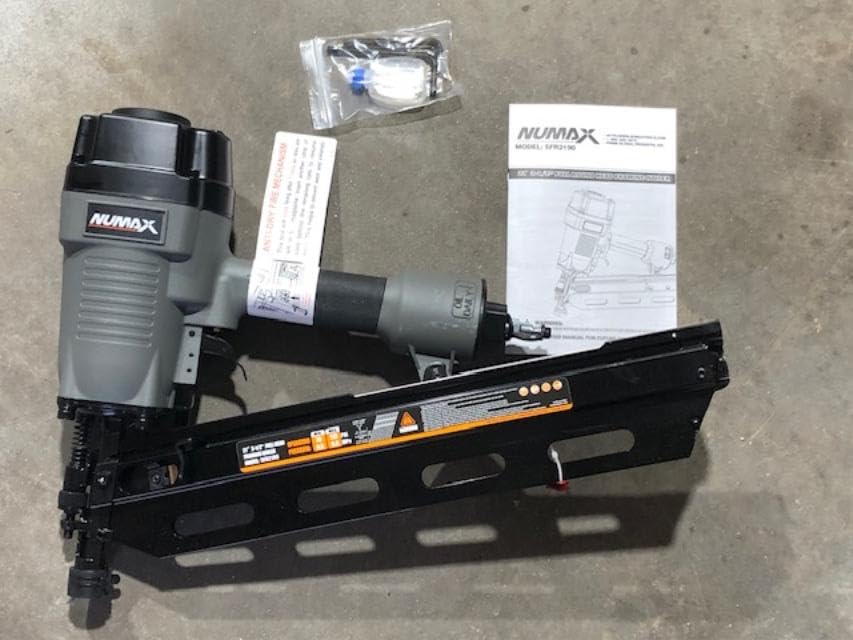
The NuMax SFR2190 is the framing nailer I recommend to homeowners and DIY builders who want professional performance without spending professional money. With over 7,387 reviews on Amazon and a 4.6-star average, this tool has earned its reputation as the best budget framing nailer available.
The one-piece hardened steel drive blade is a detail that matters. Cheaper nailers sometimes use multi-piece blades that fail under stress. NuMax built this one to survive real framing work, and the anti-dry-fire mechanism prevents the most common cause of damage: firing with an empty magazine.
The dual mode trigger lets you switch between single sequential firing for precision work and bump firing for speed. You get both modes on a tool that costs significantly less than the Metabo or Bostitch. The tool-free depth adjustment and no-mar tip round out a feature set that punches well above its price point.
The 360-degree adjustable exhaust lets you direct air away from your face and work surface. That is a small touch that makes a big difference when you are working in tight spaces or in dusty conditions.
Who Should Buy the NuMax SFR2190
This is the ideal first framing nailer for a homeowner building a shed, deck, or room addition. It handles 2×4 framing, subfloor installation, and fence construction without issues. The 1-year warranty is shorter than premium brands, but for occasional use it holds up well.
Nail Compatibility
The SFR2190 takes 21-degree plastic collated full round head framing nails from 2 to 3.5 inches long with 0.113 to 0.131 inch diameter. These are standard at any hardware store. Stick with name-brand nails to avoid jamming issues.
3. Bostitch F21PL – Two Nailers in One
BOSTITCH Framing Nailer, Round Head, 1-1/2-Inch to 3-1/2-Inch, Pneumatic (F21PL)
- Converts between framing and metal connector
- Lightweight magnesium body
- Patented push-button depth adjustment
- Adjustable rafter hook included
- Durable professional grade construction
- Limited nail size range on metal connector mode
- Pneumatic only
- no cordless option
The Bostitch F21PL stands out because it is actually two nailers in one. You get a standard framing nosepiece plus a metal connector nosepiece that you swap in seconds. For home building projects that involve hurricane ties, joist hangers, or other metal connectors, this dual functionality saves you from buying a second tool.
I appreciate the magnesium construction. At 8.15 pounds, it is light for a pneumatic nailer with this many features. The patented push-button depth guide is genuinely better than competing depth adjustments. You press a button and slide, rather than fiddling with a dial or wheel.
The adjustable rafter hook is included, which is not always the case at this price point. Reddit framers praise this feature for working on roofs and elevated framing. You hang the nailer on a rafter or stud instead of setting it down, keeping it within arm’s reach.
Bostitch has a strong reputation in the construction industry. The F21PL carries that legacy with 80 percent of reviewers giving it 5 stars. The quick-change nosepiece system uses a simple pin mechanism that holds securely during use.
Metal Connector Mode Explained
When you swap the nosepiece, the F21PL drives shorter 1.5-inch to 2.5-inch metal connector nails through joist hangers and strap ties. This is required by building code for structural connections in many jurisdictions. Having one tool that does both jobs is a real money saver.
Long-Term Durability
Bostitch designed this nailer for daily professional use. The internal components hold up to thousands of nails per week. Home builders report years of reliable service with minimal maintenance beyond occasional lubrication.
4. Milwaukee M18 FUEL 2744-20 – Best Cordless Framing Nailer
- Cordless freedom with no hoses
- Consistent nail depth throughout use
- Quick and easy depth adjustment
- Rear load minimizes nail waste
- Power comparable to pneumatic
- M18 battery platform compatibility
- Heavy at 10 pounds
- Battery and charger sold separately
- Premium price point
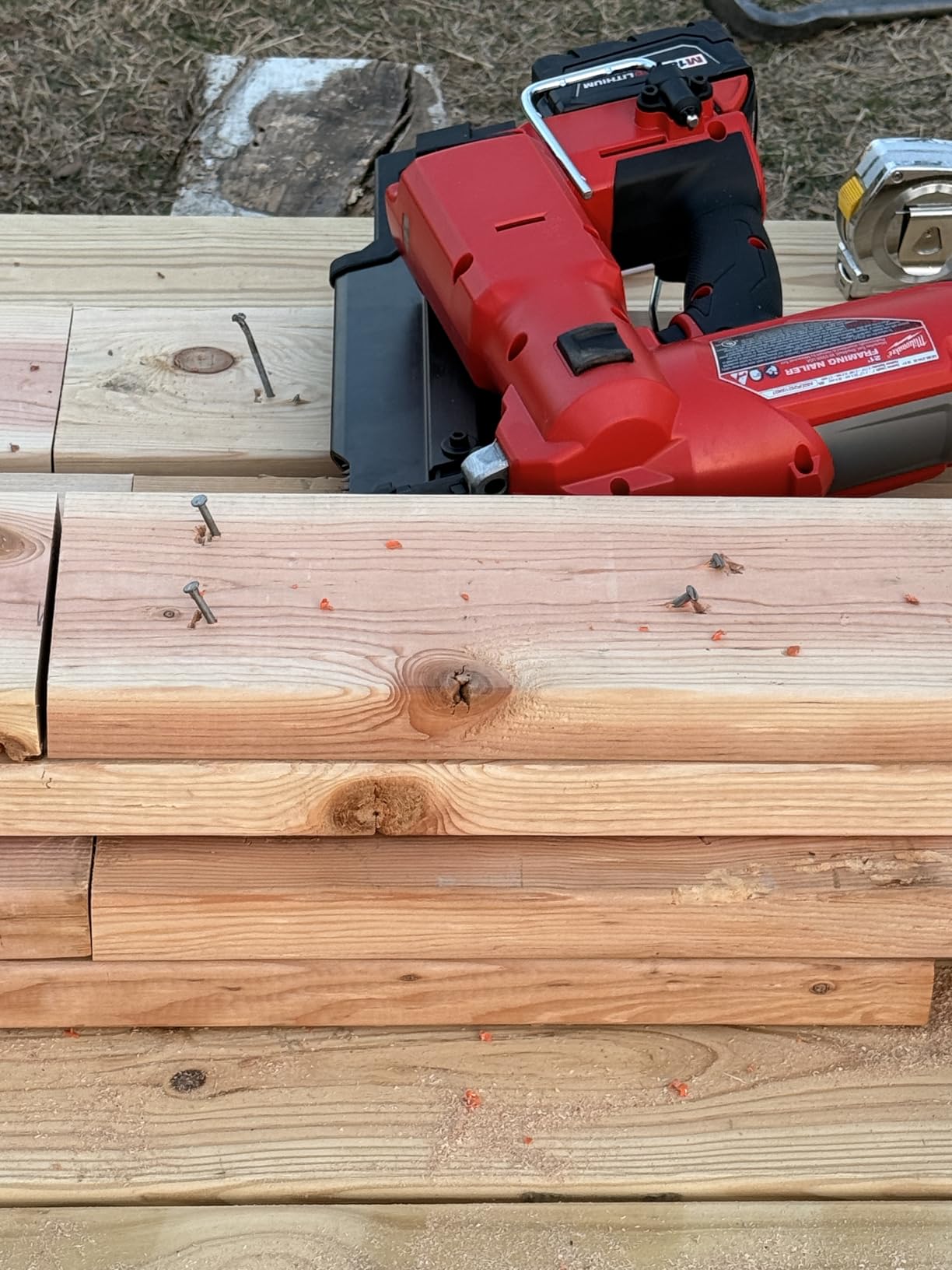
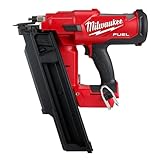
The Milwaukee M18 FUEL 2744-20 is the cordless framing nailer that Reddit builders call the best performing battery-powered option on the market. Milwaukee used their flywheel technology to deliver pneumatic-level power without a hose or compressor, and it works impressively well.
What sets this nailer apart is the consistency of nail depth. Many cordless framers lose power as the battery drains, but the M18 FUEL maintains full driving force from the first nail to the last. The rear load magazine design also minimizes wasted nails, a real cost saver over time.
The weight is the main tradeoff. At 10 pounds, it is heavier than pneumatic alternatives like the Metabo NR90AES1. For all-day framing work, that extra weight adds up. However, if you have already invested in the M18 battery platform from other Milwaukee tools, this nailer slots right into your existing setup.
Depth adjustment is quick and tool-free. You make changes on the fly without reaching for any tools. The nailer drives 21-degree full round head nails from 2 to 3.5 inches into dimensional lumber and engineered wood.
Battery Runtime Expectations
With a 5.0Ah M18 battery, expect to drive roughly 500 to 700 nails per charge depending on nail length and wood density. For a full day of framing, you should have at least two batteries and rotate them on a charger.
Is the Price Justified
The Milwaukee M18 FUEL costs more than any pneumatic on this list. But when you factor in not needing to buy a compressor, hoses, and fittings, the total cost gap narrows. For builders who already own M18 batteries, the tool-only purchase makes sense.
5. Metabo HPT NR1890DCA – Cordless With Lifetime Warranty
- Cordless with compressor-like power
- Lightweight at 8.2 lbs
- 3 nails per second firing rate
- 500 nails per battery charge
- Lifetime tool body warranty
- Battery and fuel gauge included
- Brushless motor for longevity
- Paper tape collation limits nail options
- Single firing mode only
- Some reports of early failures
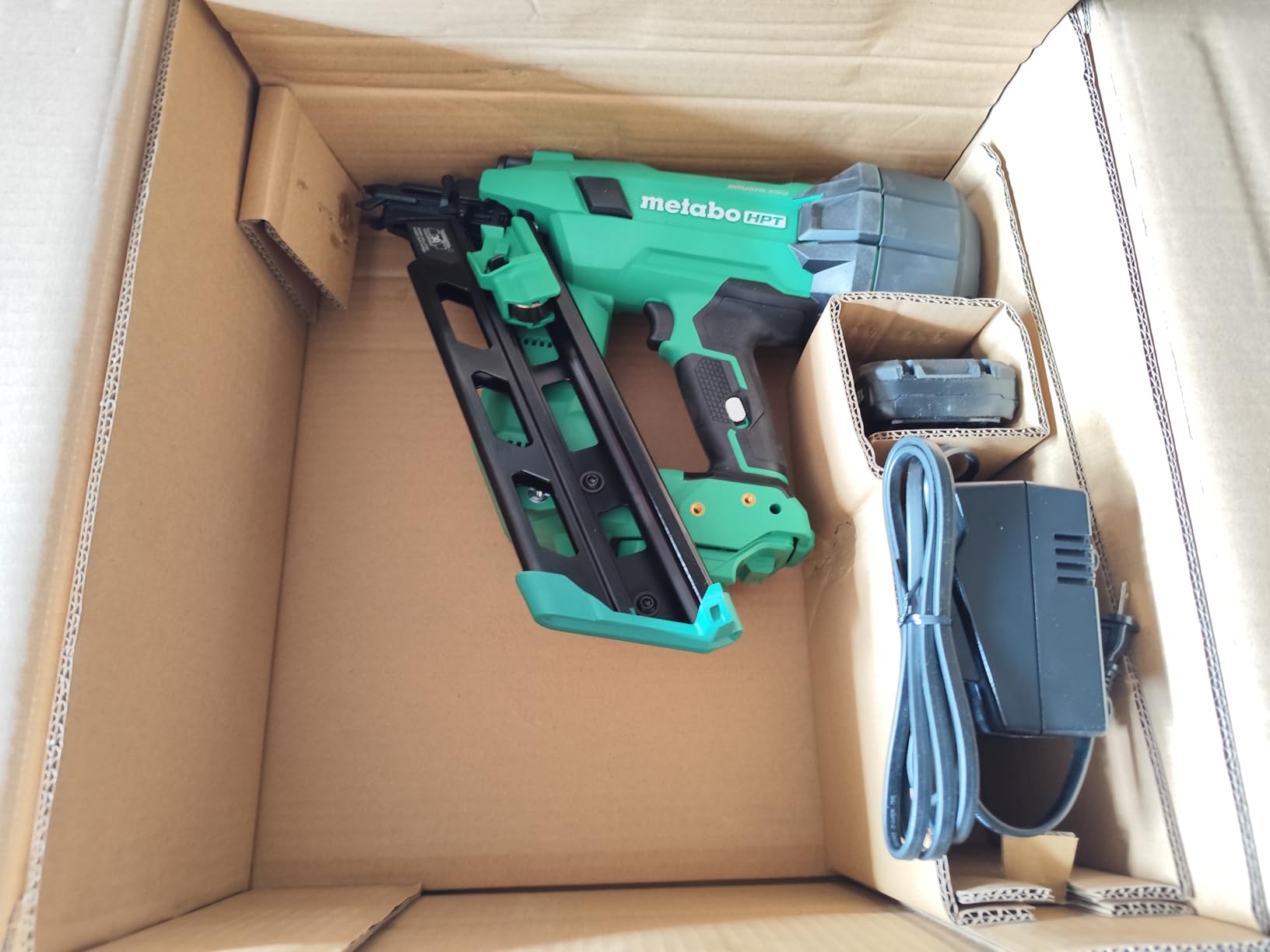
The Metabo HPT NR1890DCA brings the brand’s legendary pneumatic reputation into the cordless world. Fine Homebuilding named this nailer both best overall and best value after their cordless framing nailer test, praising its balance, ergonomics, and raw power.
At 8.2 pounds, it is lighter than the Milwaukee and FLEX cordless options. That makes a difference for overhead work and long sessions. The brushless motor delivers up to 3 nails per second, which keeps pace with most framing tasks. The included 4.0Ah battery drives approximately 500 nails per charge.
This is a 30-degree paper tape collation nailer, which is important to understand before buying. You need 30-degree paper tape nails rather than 21-degree plastic collated nails. These are widely available but cost slightly more in some regions.
The standout feature here is the lifetime tool body warranty. No other cordless framing nailer on this list offers that level of coverage. Metabo HPT clearly stands behind the build quality, and that confidence transfers to the buyer.
MultiVolt Platform Advantage
The NR1890DCA runs on Metabo HPT’s MultiVolt 18V system. The 4.0Ah battery included in this kit also works across other MultiVolt tools. If you buy the optional AC adapter, you can even run this nailer plugged in for unlimited runtime.
30 Degree vs 21 Degree Nail Availability
In some areas, 30-degree paper tape nails are less common at local hardware stores than 21-degree plastic collated. Check nail availability in your region before committing to this nailer. Most online suppliers carry both types without issue.
6. FLEX 24V FX4351A-1C – Zero Ramp-Up Cordless Power
- Zero ramp-up time between shots
- 1100 nails per charge with 5.0Ah battery
- 3 nails per second firing rate
- Dual LEDs for dark work areas
- Dry fire lockout protection
- Pivoting rafter hook
- Battery and fast charger included
- Heaviest option on this list at 22.2 lbs shipping weight
- Auto shutdown after 10 minutes of inactivity
- Some QC concerns with contact tip
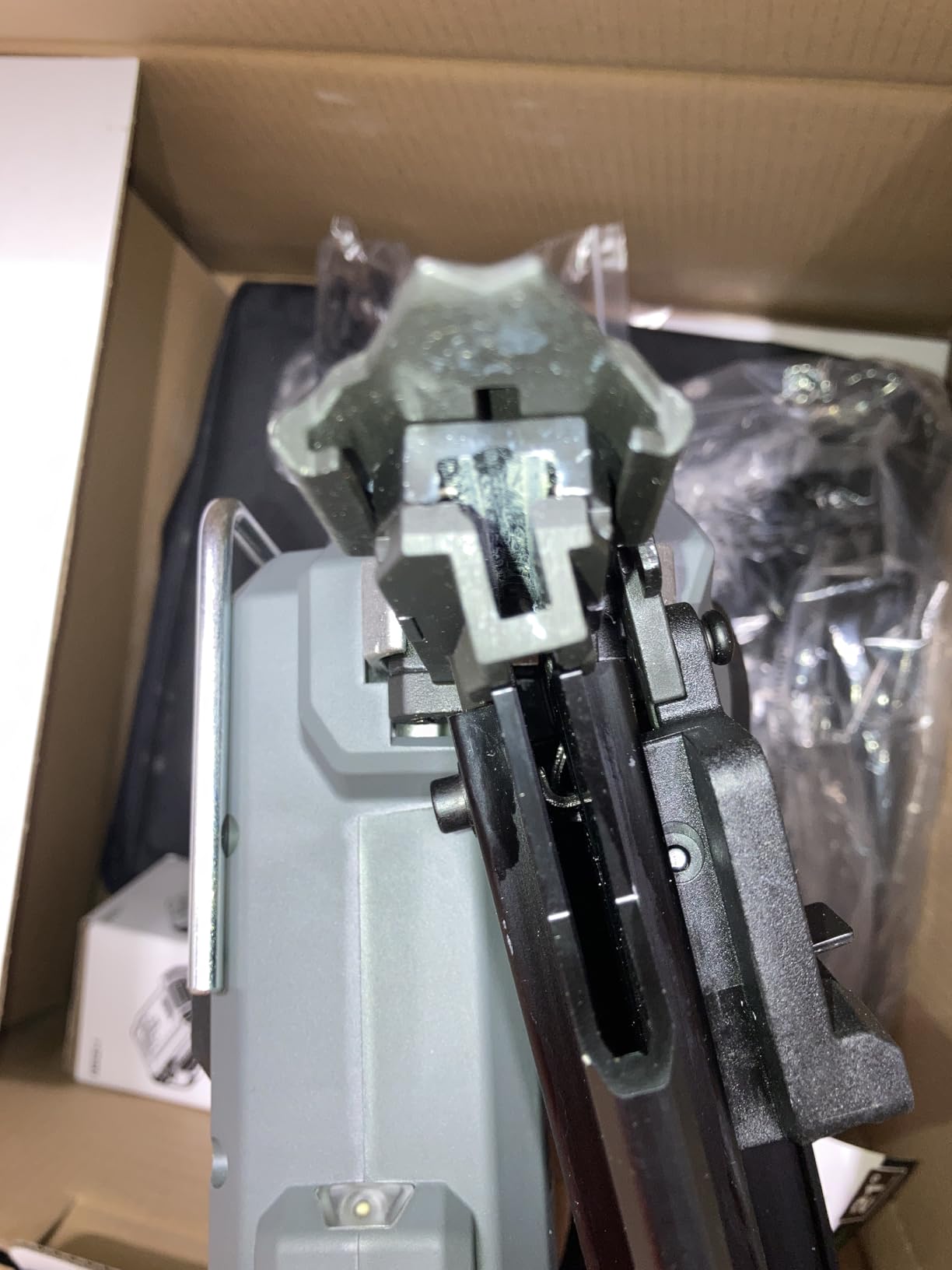
The FLEX 24V Brushless Framing Nailer brings something unique to the table: zero ramp-up time. Unlike flywheel-based cordless nailers that need a moment to spin up, the FLEX fires the instant you pull the trigger. This makes it feel more like a pneumatic than any other battery-powered option.
The runtime numbers are impressive. With the included 5.0Ah battery, FLEX claims up to 1,100 nails per charge. In real-world testing, users confirm this holds up well, making it the longest-running cordless framer on this list. The THERMA-TECH heat management system helps maintain that runtime by keeping the battery cool.
This kit includes the battery and fast charger, which is a real value compared to the Milwaukee and Makita tool-only pricing. The 160W dual-fan charger brings a depleted battery back to full in roughly 45 minutes. The 5-year limited warranty (with registration) is among the best coverage available.
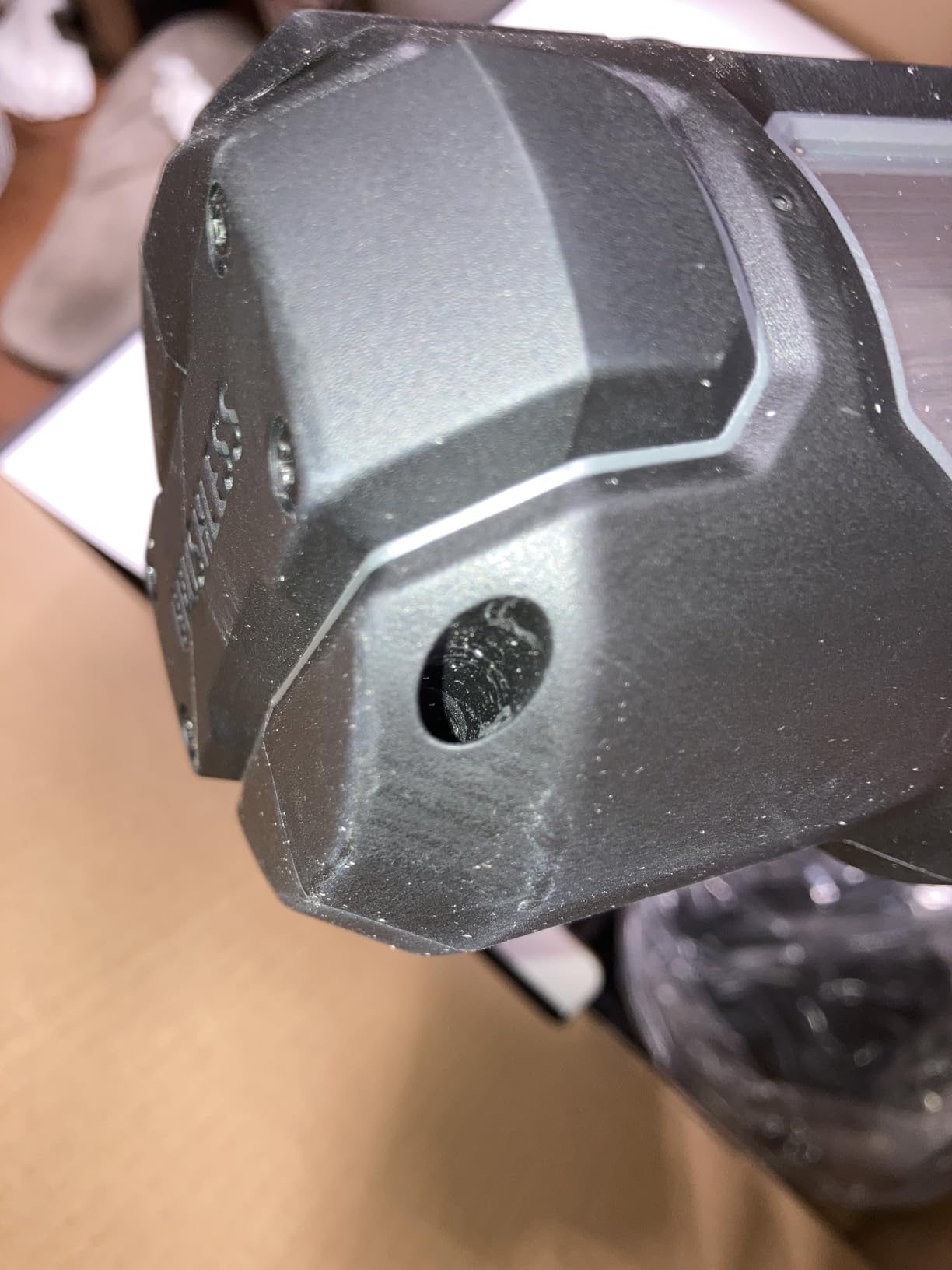
The weight is the biggest drawback. At 22.2 pounds shipping weight, this is the heaviest option in our roundup. The tool itself is bulky, which affects maneuverability in tight spaces. The auto-shutdown feature after 10 minutes of inactivity saves battery but frustrates some users who expect instant readiness.
How Does FLEX Compare to Milwaukee
Both deliver excellent cordless performance, but they take different approaches. FLEX offers more nails per charge and includes the battery and charger. Milwaukee has a lighter tool body and broader battery ecosystem. Choose FLEX for runtime and included accessories, Milwaukee for weight savings and platform compatibility.
Best Use Cases
The FLEX excels at large framing projects where you have room to work. Deck building, wall framing, and sheathing are its sweet spots. For tight spaces or overhead work, the weight becomes a real factor and a lighter pneumatic may serve better.
7. Freeman PFR2190 – Value Pneumatic With 7-Year Warranty
- Excellent value pricing
- 7-year limited warranty
- Anodized aluminum magazine and cylinder
- Anti-dry-fire protection
- Blow molded case included
- One-piece hardened steel drive blade
- Tool-free depth adjustment
- Heavy for overhead work
- Bulky between joists
- Magazine leaves last 4 nails unfireable
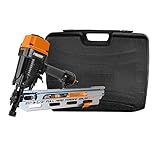
The Freeman PFR2190 sits in a sweet spot between the budget NuMax and the premium Metabo. It offers professional-grade construction with an anodized aluminum magazine and cylinder, a one-piece hardened steel drive blade, and a 7-year warranty that beats every other tool on this list.
For home builders who want something better than entry-level but do not want to spend Metabo money, the Freeman hits the mark. The anti-dry-fire mechanism protects the drive blade from damage when the magazine runs low. The dual mode trigger handles both precision and speed work.
The included blow molded case is a nice touch at this price point. Most pneumatic nailers in this range come as bare tools. Having a dedicated case protects your investment during transport and storage.
The 360-degree adjustable exhaust redirects air away from your work area. The no-mar safety tip prevents surface damage on visible wood. The comfort grip handle reduces hand fatigue during extended use.
Warranty Coverage Details
Freeman backs the PFR2190 with a 7-year limited warranty on the tool itself, plus a 90-day wearable parts warranty. This is the longest tool warranty on this list, edging out even Metabo HPT’s 5-year coverage. Register your tool after purchase to activate full coverage.
Known Limitations
The magazine design leaves the last 4 nails unfireable, meaning you need to reload slightly sooner than expected. The tool is also bulky for working between floor joists or in tight attic spaces. For most home building applications, neither issue is a dealbreaker.
8. Makita XNB03Z 18V LXT – Engineered Lumber Specialist
Makita XNB03Z 18V LXT® Lithium-Ion Cordless 21º Full Round Head 3-1/2″ Framing Nailer, Tool Only
- Drives nails into dense engineered lumber with ease
- 1000 nails per single charge
- 2-mode selector for sequential or bump fire
- Anti-slip nose for angled nailing
- Built-in LED work light
- Compatible with battery adapters for other brands
- Heavy at 11.9 lbs with battery
- 41 nail capacity requires frequent reloads
- Battery and charger sold separately
The Makita XNB03Z earns its place on this list for one standout capability: driving full round head nails into dense engineered lumber. If your home building project uses LVL beams, parallam, or other engineered wood products, this nailer handles them where others struggle.
Makita rates the XNB03Z at up to 1,000 framing nails per charge, which is excellent runtime for a cordless tool. The 2-mode selector switches between sequential nailing for precision placement and bump fire for speed. The anti-slip nose gives you control when toenailing at awkward angles.
The rear lock-and-load magazine holds 41 nails. That is lower capacity than some competitors, which means more frequent reloads during high-volume framing. The tradeoff is a slimmer, more maneuverable tool profile in tight spots.
The built-in LED light illuminates the work area, which is genuinely useful when framing in dim conditions like crawl spaces or enclosed structures. At 11.9 pounds with battery installed, it is heavy, but comparable to other cordless framing nailers in this class.
Battery Platform Considerations
The XNB03Z runs on Makita’s 18V LXT battery platform, one of the largest cordless tool ecosystems available. If you already own Makita 18V tools and batteries, adding this nailer is cost-effective. Some users report success with third-party battery adapters that let you use DeWalt batteries.
Engineered Lumber Performance
Home builders working with modern materials like LVL headers, microlam beams, and OSB sheathing will appreciate how this nailer handles dense substrates. It sinks nails flush without rebound, even in materials that cause other cordless nailers to leave proud nails.
Buying Guide: How to Choose a Framing Nailer for Home Building
Choosing the right framing nailer comes down to four key decisions: power source, collation angle, weight, and features. Let us break down each one so you can make an informed choice.
Cordless vs Pneumatic vs Fuel Cell
The power source debate is the biggest decision you will make. Pneumatic nailers use compressed air from a compressor. They are lighter, cheaper, and proven reliable over decades. The tradeoff is that you need a compressor, hoses, and fittings, which adds cost and limits mobility.
Cordless nailers use brushless motor flywheel technology or fuel cell combustion to drive nails without any hoses. They offer complete freedom of movement, which is invaluable for roof work, remote sites, and tight spaces. The tradeoffs are weight, cost, and battery management.
Fuel cell nailers (like Paslode) use a small gas cartridge plus battery to drive nails. They are lighter than pure battery nailers but require ongoing fuel cell purchases. For most home builders, the choice comes down to pneumatic for shop-based work or cordless for site mobility.
21 Degree vs 30 Degree Collation Angle
This is one of the most common questions we see on Reddit and DIY forums. The collation angle refers to how nails are held together in strips before loading.
21-degree nailers use plastic collated nails with full round heads. These nails meet building code requirements everywhere and are widely available at hardware stores. The plastic strip holds nails at a 21-degree angle, which requires a larger magazine.
30-degree nailers use paper tape collated nails. The steeper angle allows a more compact magazine, which helps in tight spaces. Paper tape nails produce less debris than plastic collated versions. However, they may be slightly harder to find in some local markets.
Both angles work for home building. The choice often comes down to nail availability in your area and personal preference. Some inspectors prefer full round head nails (common in 21-degree), but most paper tape 30-degree nails also have full heads.
Weight and Ergonomics
Framing is physical work. Every pound matters when you are working overhead or on a ladder all day. Pneumatic nailers range from 7.5 to 8.6 pounds. Cordless models range from 8.2 to over 11 pounds with battery.
Look for features that reduce fatigue: rubberized grips, balanced weight distribution, rafter hooks for overhead storage, and belt hooks for portability. The Metabo HPT NR90AES1 wins on weight at 7.5 pounds, while cordless options inevitably add battery weight.
Essential Features Checklist
When comparing models, look for these features that matter most for home building. Tool-free depth adjustment lets you change nail depth without reaching for tools. Selective actuation switches between sequential and bump fire modes without disassembly.
Dry fire lockout prevents firing when the magazine is nearly empty, protecting the drive blade. An adjustable rafter hook lets you hang the tool on framing members. A no-mar tip prevents surface damage on finished wood. A 360-degree adjustable exhaust directs air away from your face and work.
Price and Value Considerations
Pneumatic framing nailers range from about $125 to $270. Cordless models run from $389 to $450. Remember that pneumatic setups require a compressor (another $150 to $400), while cordless models may need batteries and chargers if not included.
For occasional home building projects, a budget pneumatic like the NuMax or Freeman makes the most financial sense. For frequent use or professional work, investing in a Metabo HPT or Milwaukee pays off through durability and performance.
Frequently Asked Questions
What is better, a 21 degree or 30 degree framing nailer?
Both work well for home building. 21-degree nailers use plastic collated full round head nails that are widely available and meet all building codes. 30-degree nailers use paper tape collated nails with a more compact magazine that fits tighter spaces. Choose based on nail availability in your area and whether you need the slimmer magazine profile.
What type of nail gun do I need for home projects?
For home building and remodeling, a framing nailer is the primary tool for structural work like walls, floors, and roofs. A 21-degree pneumatic model offers the best value and nail availability. If you want cordless convenience, look at the Milwaukee M18 FUEL or Metabo HPT NR1890DCA. For occasional DIY use, a budget pneumatic like the NuMax SFR2190 covers most needs.
Which is better, a 21 degree or 28 degree framing nailer?
The difference between 21-degree and 28-degree framing nailers is minimal in practice. Both use similar nail types and deliver comparable performance. The 28-degree angle allows a slightly more compact magazine. Most modern nailers are marketed as either 21-degree or 30-degree, with 28-degree models being less common in 2026. Focus on nail availability and tool features rather than the small angle difference.
What kind of nail gun do I need to build a shed?
A 21-degree pneumatic framing nailer is ideal for shed building. It handles 2×4 wall framing, floor joist construction, and roof sheathing with ease. The NuMax SFR2190 or Freeman PFR2190 are excellent budget choices for a single shed project. You will also need a small air compressor (4-gallon minimum) and framing nails from 2 to 3.5 inches long.
Final Thoughts on the Best Framing Nailers for Home Building
Finding the best framing nailers for home building in 2026 means matching the tool to your specific needs. For a proven pneumatic that will last decades, the Metabo HPT NR90AES1 is our top overall pick. The Bostitch F21PL adds metal connector capability in one tool. And the NuMax SFR2190 delivers incredible value for budget-conscious builders.
If you want to ditch the compressor and hoses, the Milwaukee M18 FUEL and Metabo HPT NR1890DCA both deliver pneumatic-level power in cordless packages. The FLEX 24V offers the best runtime per charge, while the Makita XNB03Z excels with engineered lumber.
Whatever you choose, invest in quality nails and proper safety gear. A great framing nailer makes home building faster, easier, and more precise. Pick the one that fits your budget and project scope, and start framing.