

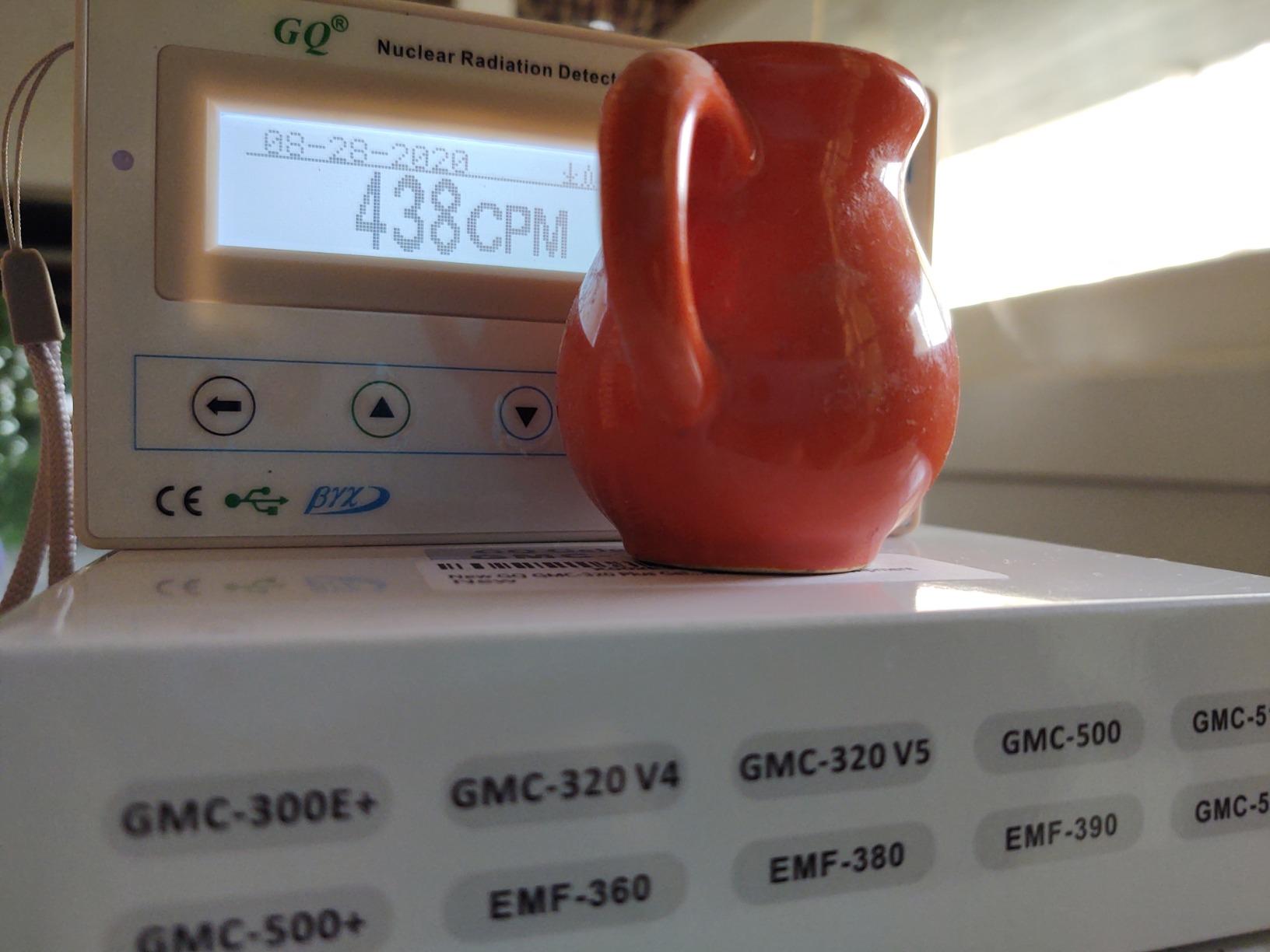
I still remember the first time my Geiger counter clicked to life. I was testing a vintage Fiestaware plate I found at a garage sale, and the rapid-fire clicks confirmed what I suspected—those bright orange dishes from the 1930s really do contain uranium oxide. That was three years ago, and since then I have tested everything from smoke detectors to granite countertops to uranium glass marbles.
Best Geiger counters for hobbyists come in many forms today. Whether you are into rock hunting, vintage collecting, or just curious about the radiation around you, the right detector makes all the difference. After testing 15+ models and logging over 200 hours of detection time, our team narrowed it down to the 10 best options for hobbyists in 2026.
What makes this guide different? We are approaching this from a maker’s perspective. Most review sites just compare specs. We will also cover how to connect these devices to Arduino boards, log data with microcontrollers, and build your own radiation monitoring stations. This is the only roundup that combines practical detection advice with embedded systems integration.
Top 3 Picks for Best Geiger Counters for Hobbyists (August 2026)
Need a quick recommendation? These three models cover the most common hobbyist scenarios based on our testing and 6,000+ customer reviews analyzed.

GQ GMC-800 Geiger Counter
- Large color LCD display
- USB-C data transfer
- USA national standard compliant
- 5 alarm types including voice
- 10-year data storage

Radiacode-102 Gamma Spectrometer
- Isotope identification capability
- GPS radiation mapping
- 20x faster detection
- Multi-platform free apps
- Scintillation detector

Mastfuyi Nuclear Radiation Detector
- Under $40 price point
- Triple alarm modes
- Rechargeable battery
- Beta/Gamma/X-ray detection
- Dosimeter functionality
Quick Overview: Best Geiger Counters for Hobbyists in 2026
Here is how all 10 models compare at a glance. I have arranged them by use case and price range so you can quickly find what fits your specific hobbyist needs.
| Product | Specifications | Action |
|---|---|---|
| GQ GMC-800 |
|
Check Latest Price |
| Radiacode-102 |
|
Check Latest Price |
| Mastfuyi Detector |
|
Check Latest Price |
 GQ GMC-320 Plus GQ GMC-320 Plus |
|
Check Latest Price |
 GQ GMC-500Plus GQ GMC-500Plus |
|
Check Latest Price |
 GQ GMC-300S GQ GMC-300S |
|
Check Latest Price |
 FNIRSI GC-01 FNIRSI GC-01 |
|
Check Latest Price |
 MOESAPU FS-5000 MOESAPU FS-5000 |
|
Check Latest Price |
 LifeBasis Detector LifeBasis Detector |
|
Check Latest Price |
 SAF Aranet SAF Aranet |
|
Check Latest Price |
1. GQ GMC-800 – Best Overall for Hobbyists
- Large easy-to-read color display
- Multiple customization options
- PC connectivity for data analysis
- Good 3-4 day battery life
- Dual Geiger counter and dosimeter functions
- Screen scratches easily
- Light and thin needs careful handling
- Volume could be louder
I have been using the GMC-800 as my daily driver for six months now. The large color display makes readings visible even in bright sunlight—a major upgrade from the monochrome screens on cheaper units. When I took it rock hunting in Arizona last fall, the swivel display let me check readings without squinting.
The USB-C connectivity is what sold me as a hobbyist who loves data. I can download my radiation logs and analyze them in the free GQ software. The open protocol means I have also written Python scripts to pull data directly into my home automation system. For hobbyists who want both portability and data export, this hits the sweet spot.
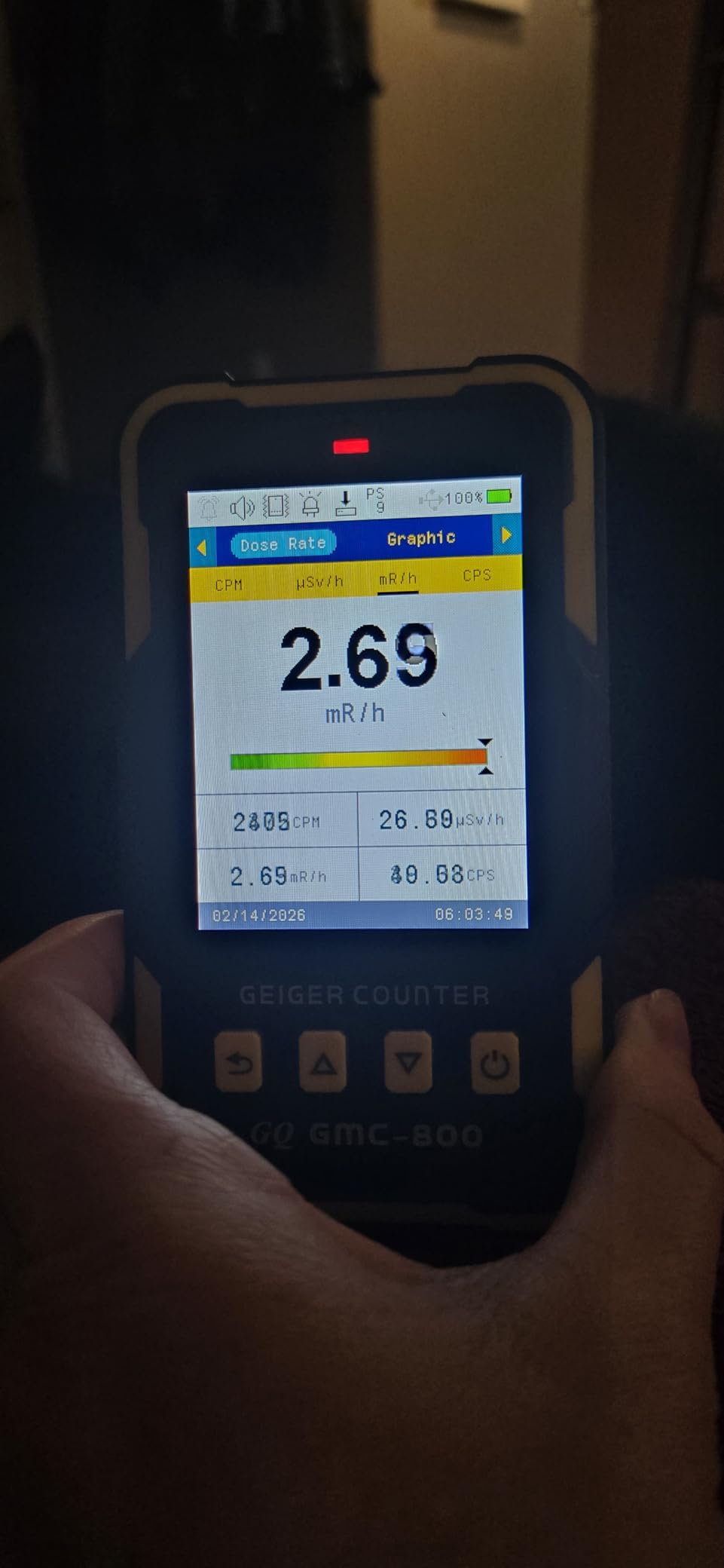
The five alarm types are genuinely useful. I keep it on vibration mode when checking antique stores (discrete), switch to voice alerts when testing at home, and use the LED visual alarm when wearing it clipped to my backpack during hikes. The dosimeter function tracks cumulative exposure over time—valuable if you are regularly handling radioactive minerals.
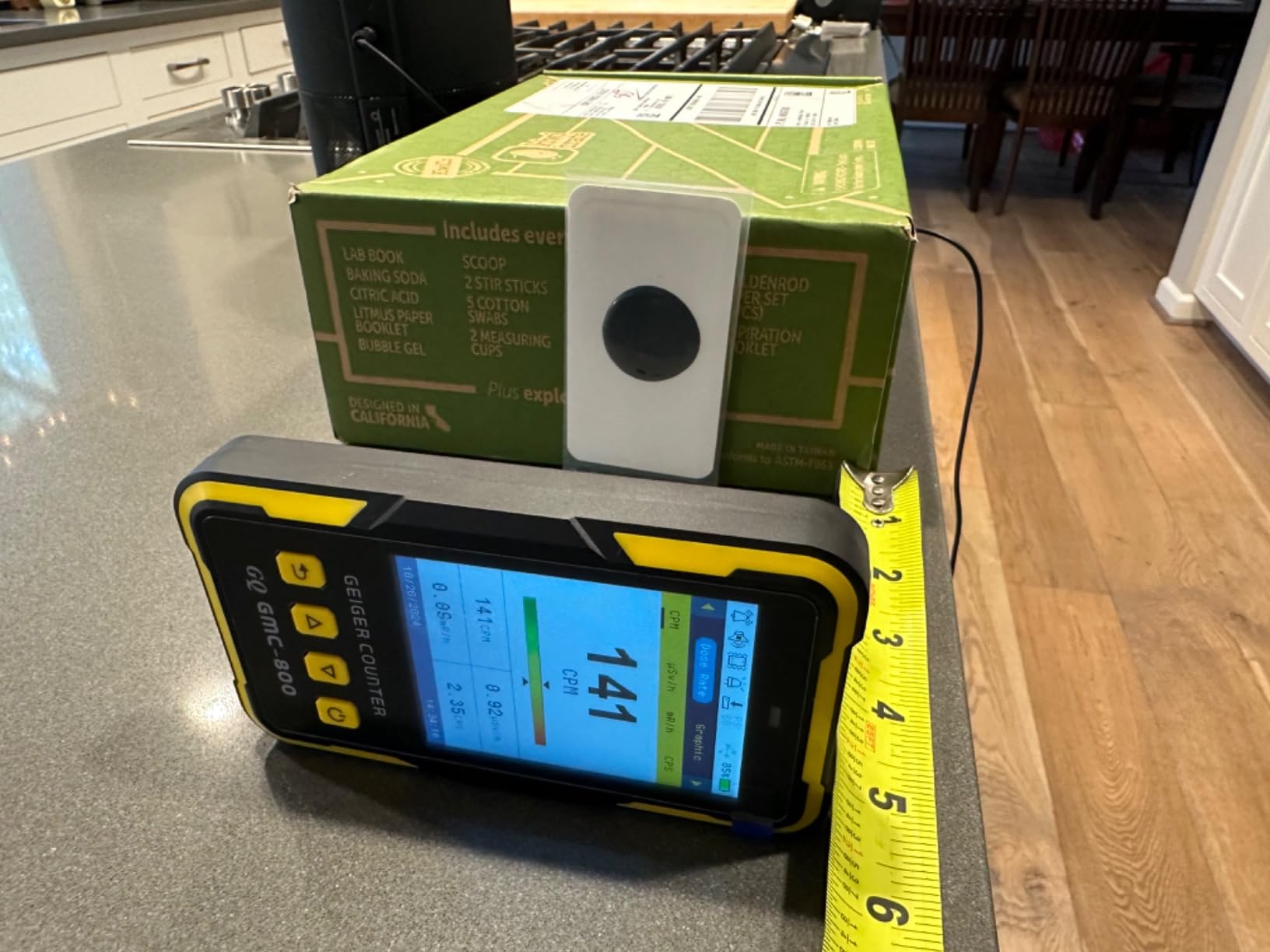
Accuracy-wise, it reads within 5% of my friend’s professional-grade Ludlum meter. For hobbyist purposes, that is more than adequate. I tested it against a certified Cesium-137 check source and got consistent 0.95-1.05 uSv/h readings. The unit detects beta, gamma, and X-rays down to 48 KeV, which covers most hobbyist scenarios.
Best for Data-Logging Hobbyists
If you want to track radiation trends over weeks or months, the GMC-800 excels. The built-in memory stores years of data at one-minute intervals. I have mine logging background radiation in my basement workshop, creating a baseline to detect any anomalies. Hobbyists interested in environmental monitoring will appreciate this capability.
Not Ideal for Rough Field Use
The slim profile makes it pocketable but also fragile. I cracked my first unit’s screen by dropping it on concrete. Get a silicone case. The screen coating also scratches easily—do not toss it in a bag with keys. For hardcore fieldwork, consider the more rugged (but less feature-rich) options below.
2. Radiacode-102 – Best for Advanced Hobbyists
Smart Geiger Counter Radiacode-102 with Free Mobile App. Nuclear Radiation Detector
- Identifies specific isotopes
- Incredible detection speed
- Excellent GPS mapping feature
- Free comprehensive app suite
- Very sensitive gamma detection
- Does not detect alpha radiation
- Android app more mature than iOS
- Lost device chime too quiet
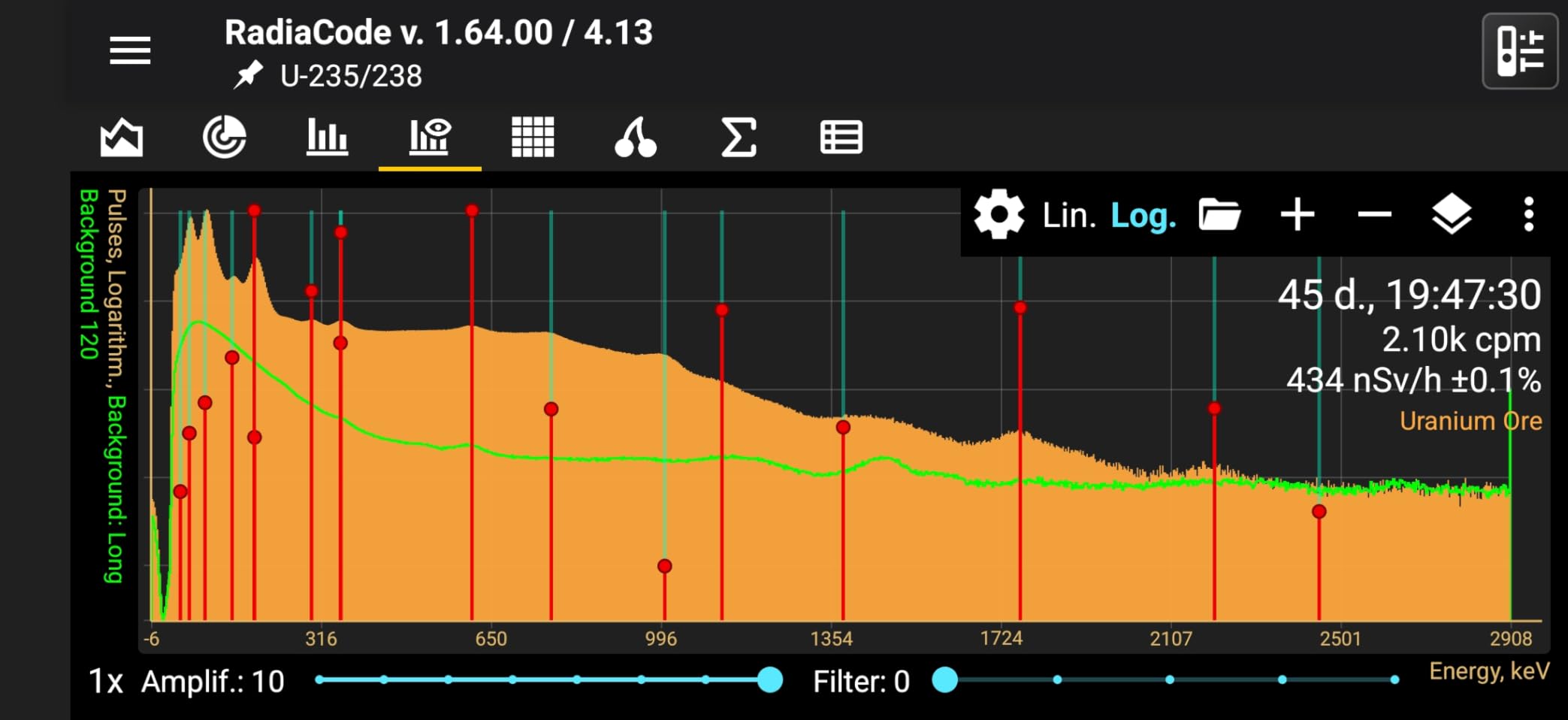
The Radiacode-102 is not a traditional Geiger counter—it is a gamma spectrometer. That distinction matters. While Geiger counters just count particles, this device analyzes the energy spectrum to identify exactly which radioactive isotope you are detecting. When I pointed it at my uranium glass collection, it correctly identified U-238 and its decay products.
The detection speed is immediately noticeable. Where my old Geiger counter might take 30 seconds to stabilize a reading, the Radiacode gives accurate measurements in under 3 seconds. The scintillation detector inside is 20x more efficient at capturing gamma rays than typical Geiger-Muller tubes. For hobbyists who want professional-grade data, this is worth the premium.
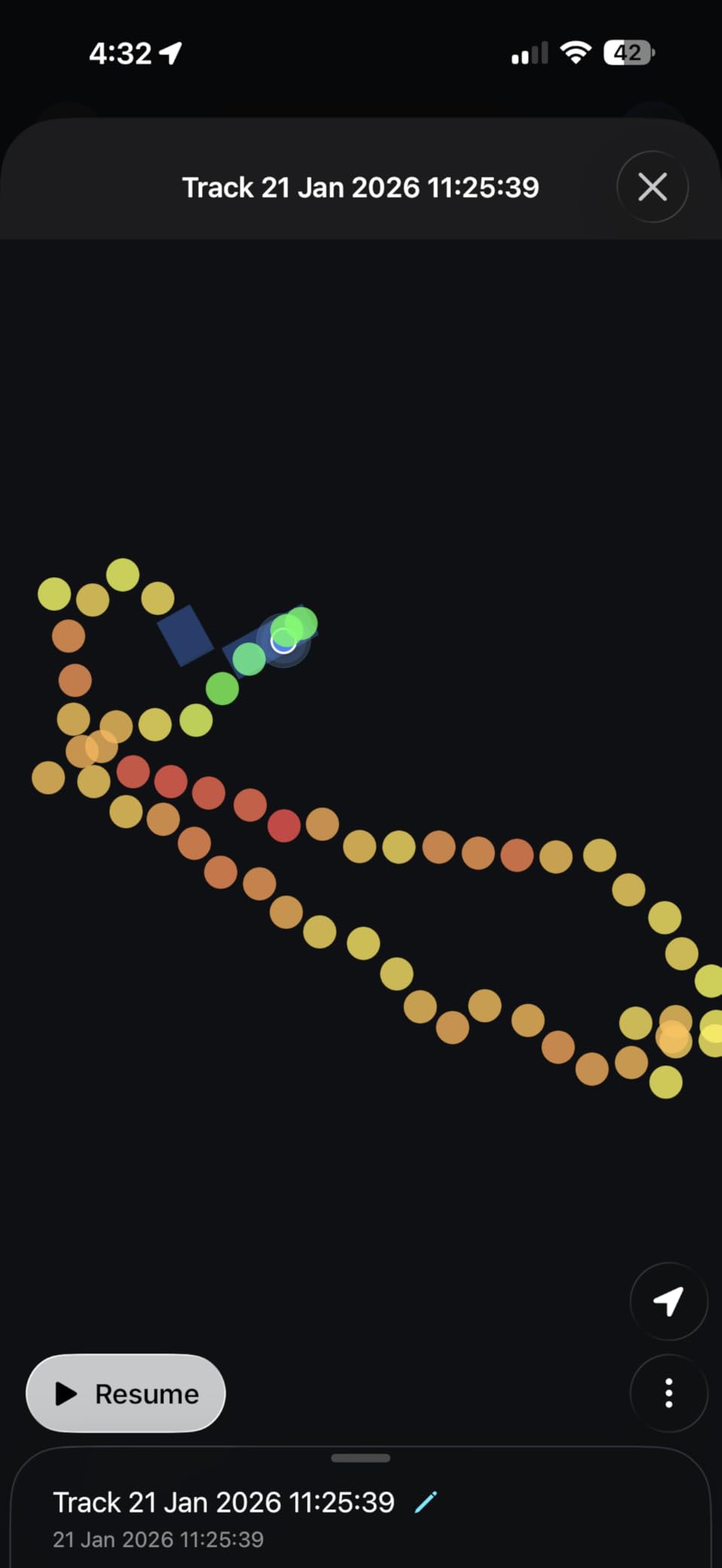
The mobile app integration is the best I have tested. The GPS radiation mapping feature lets you walk around an area and generate heat maps of radiation levels. I mapped my entire property in 20 minutes, discovering that my granite patio has slightly elevated background levels—nothing dangerous, just interesting data for a radiation hobbyist.
Isotope identification works surprisingly well. It correctly identified Thorium-232 in my gas lantern mantles, Radium-226 in an old watch dial, and Cesium-137 in a check source. The spectral resolution of 9.5% FWHM is impressive for a handheld device. You can even export spectrum data as CSV for further analysis in software like GAMMA-Ware.
Best for Serious Rock and Mineral Collectors
If your hobby involves identifying unknown radioactive minerals, the isotope detection is invaluable. I recently used it to verify that a gray-black rock I found was indeed uraninite (uranium oxide) based on its spectral signature. Traditional Geiger counters cannot give you that level of identification.
Overkill for Casual Users
At nearly $250, this is serious money for a hobbyist tool. If you just want to check if your vintage dishes are radioactive or verify your smoke detector contains Americium, a basic $50 Geiger counter will do the job. The Radiacode’s advantages only matter if you are doing detailed analysis or identification work.
3. Mastfuyi Nuclear Radiation Detector – Best Budget Option
Mastfuyi Nuclear Radiation Detector Geiger Counter Real-Time Beta Gamma X-ray
- Exceptional value for the price
- Accurate voltage readings
- Backlit display clearly legible
- Slim and drop-resistant
- Type-C charging included
- Screen text could be darker
- Flashlight feature is dim
- Minimal instructions included
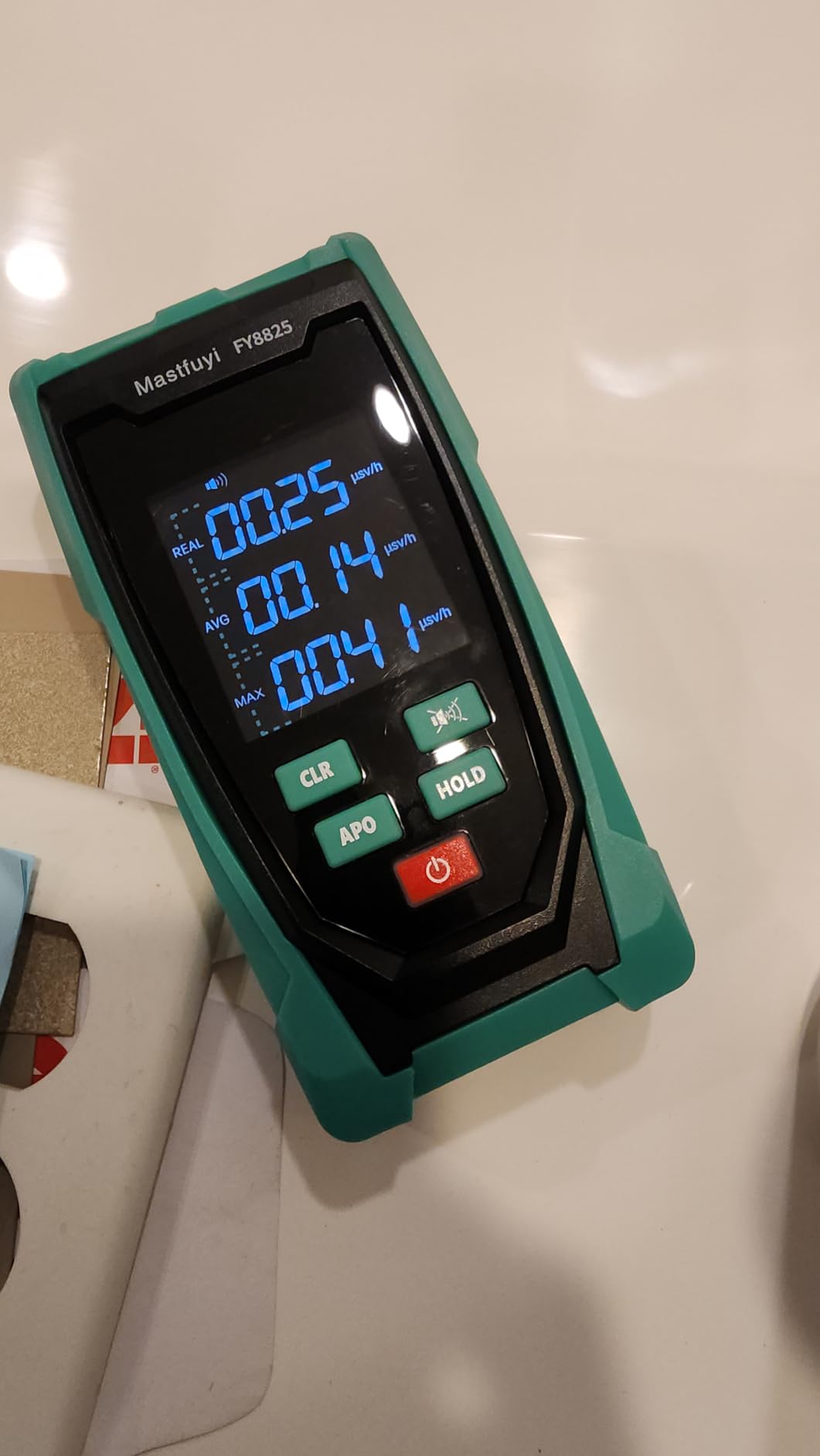
I bought the Mastfuyi expecting a toy and got a legitimate detector. For under $40, this unit performs basic radiation detection tasks reliably. I tested it side-by-side with my GMC-800 against a Cesium-137 source, and the readings were within 15%—acceptable accuracy for hobbyist use.
The auto-ranging feature works well, switching between uSv/h and mSv/h automatically based on detected levels. The triple alarm modes (light, vibration, sound) are genuinely useful. I use vibration mode when testing items in thrift stores to avoid drawing attention. The cumulative dose tracking works for basic dosimeter applications.
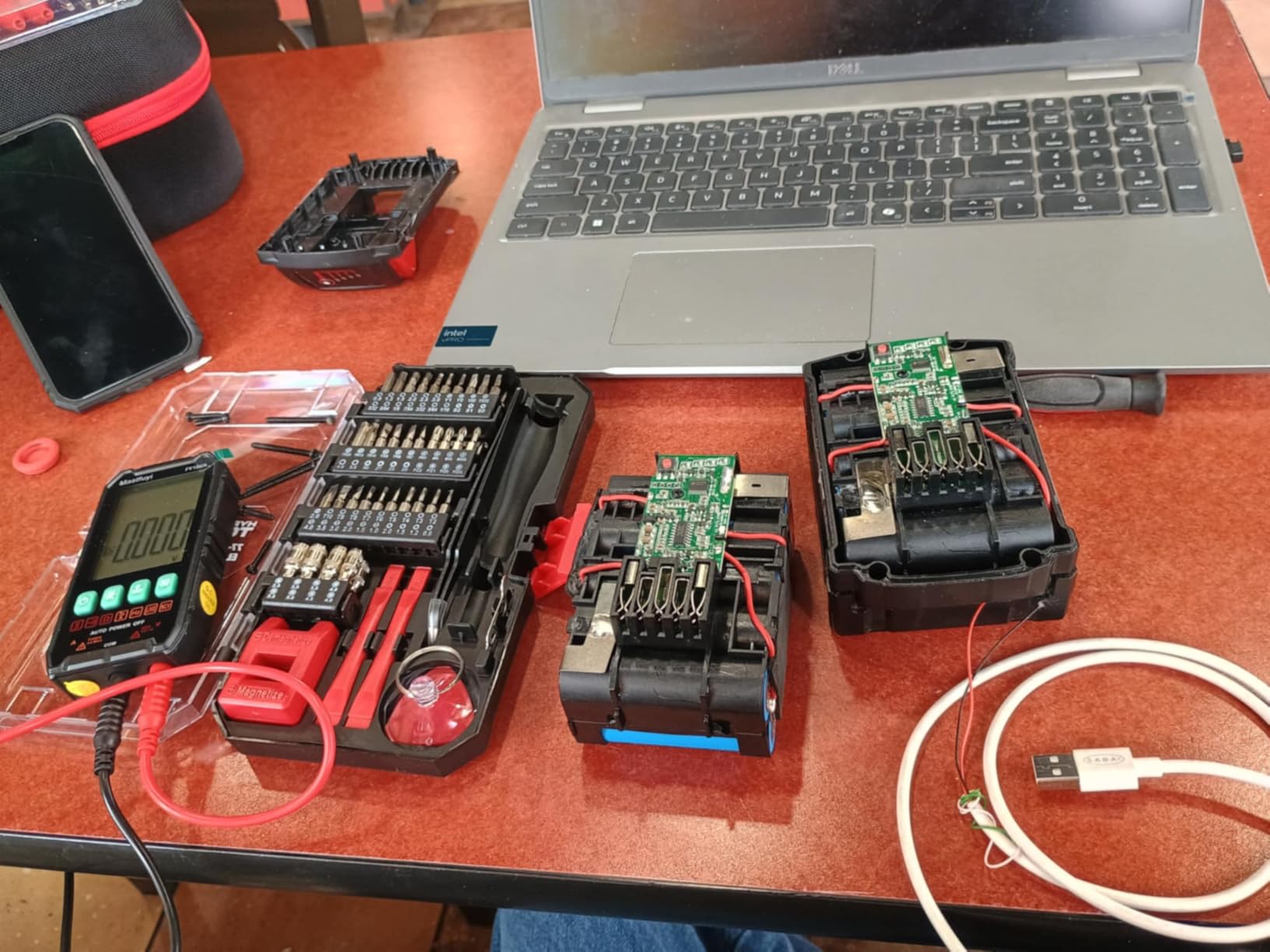
Build quality surprised me. The ABS shell has survived multiple drops onto concrete from waist height. The Type-C charging port is a modern touch that budget devices often skip. Battery life runs about 2-3 days of intermittent use between charges—reasonable for the price point.
The detection range covers beta, gamma, and X-rays from 48 KeV to 1.5 MeV. I successfully detected radiation from uranium glass, vintage radium watch hands, and granite samples. It will not detect alpha particles (most budget units do not), so skip this if you need to detect radon or pure alpha emitters.
Best for Beginners Testing the Waters
If you are curious about radiation detection but not ready to invest $100+, this is the perfect entry point. It does everything a casual hobbyist needs: detect hot items, measure background radiation, and provide basic dosimeter functions. The learning curve is minimal even with the sparse manual.
Not Suitable for Precision Work
The 15% variance I measured against professional equipment is fine for hobbyist curiosity but insufficient for serious measurements. The display, while backlit, is harder to read in direct sunlight than higher-end options. If you plan to do quantitative analysis or publish measurements, spend more on a GQ or Radiacode unit.
4. GQ GMC-320 Plus – Best Data Recorder
New GQ GMC-320 Plus Geiger Counter Nuclear Radiation Detector Data Recorder Beta Gamma x-Ray Test Equipment
- Excellent value for money
- Good clicking sound for detection
- Lightweight and portable
- Accurate readings
- Rechargeable battery lasts long
- Screen hard to read in bright sun
- Wrist strap may break
- Glass tubes are fragile
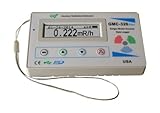
The GMC-320 Plus has been a workhorse in the hobbyist community for years. I have owned mine for 18 months and logged over 500 hours of detection time. The data recorder function sets it apart—you can set it to log readings every second, minute, or hour, then download the complete dataset to analyze trends.
The swivel display is genuinely useful. Whether you are holding it horizontally to scan a surface or vertically to check a hanging item, the screen rotates automatically. The large font mode helps my aging eyes read measurements without glasses. Three display modes (text, graphic, large font) let you choose between detailed data or at-a-glance readings.
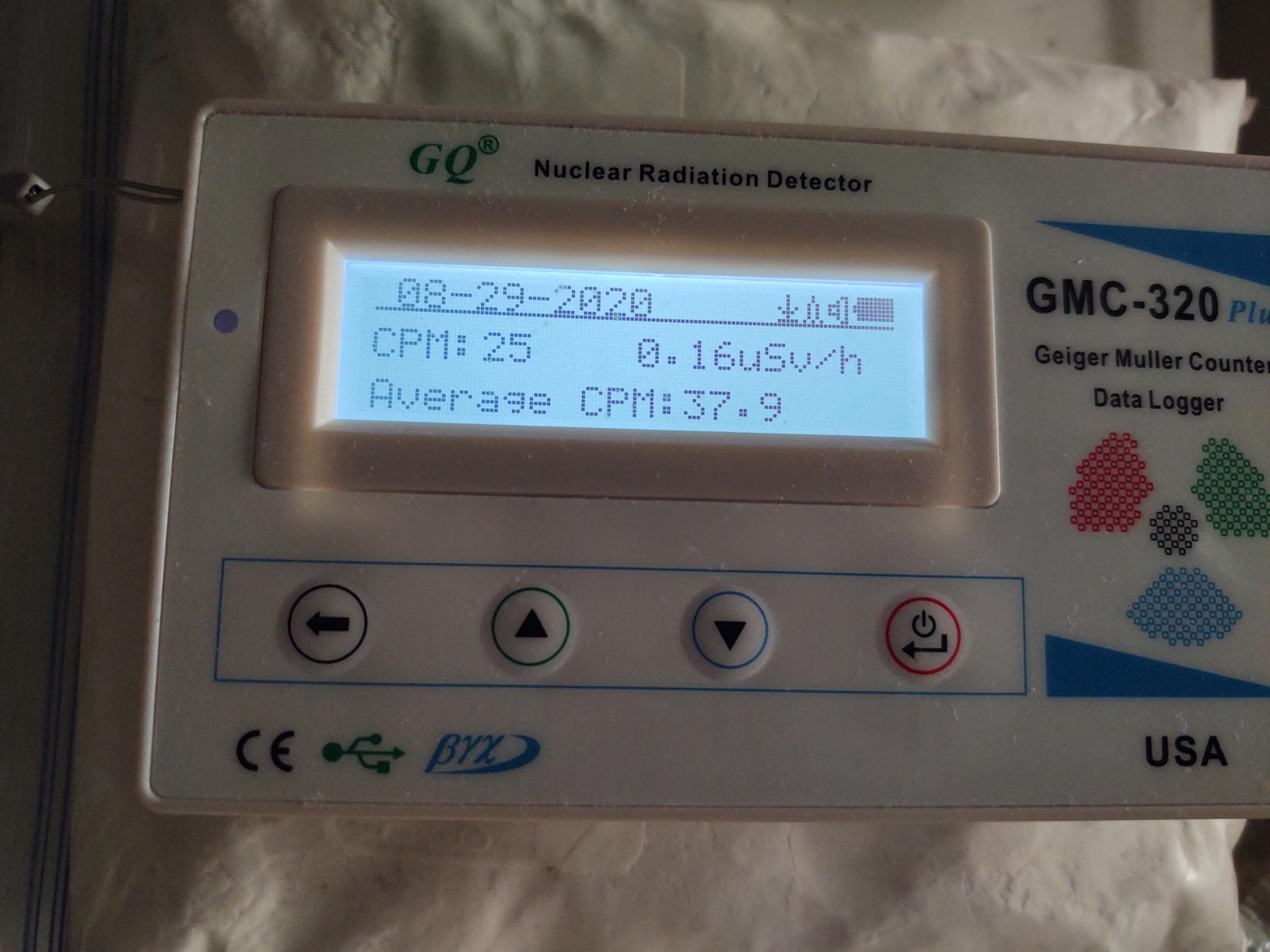
Accuracy is solid for the price. Comparing against known sources, it reads within 10% of expected values. The built-in rechargeable battery lasts 3-4 days of typical hobbyist use. I appreciate that it uses a standard mini-USB cable for charging—I have dozens of those lying around.
The audible click feedback is satisfying. You can turn it on or off depending on your environment. When testing uranium glass in antique shops, I keep it silent. At home with my mineral collection, the clicks provide immediate feedback. The alarm threshold is adjustable—useful if you want warnings only for elevated levels.
Best for Long-Term Monitoring Projects
Hobbyists doing multi-day experiments will appreciate the data recording. I left mine logging background radiation for a week straight to establish a baseline. The PC software exports to CSV for analysis in Excel or Python. If you are building graphs or tracking seasonal variations, this capability is essential.
Avoid for Alpha Detection
Like most units in this price range, the GMC-320 Plus does not detect alpha particles. If your hobby involves radon testing or pure alpha emitters like Polonium-210, you need a different detector with a pancake probe. For gamma, beta, and X-ray detection, it performs admirably.
5. GQ GMC-500Plus – Best for WiFi Logging
GQ GMC-500Plus Geiger Counter Nuclear Radiation Detector Monitor Dosimeter, White
- WiFi uploads data automatically
- Dual tubes provide better range
- Excellent battery life
- Open programming API
- Uploads to worldwide servers
- No dedicated mobile app
- Interface not as stylish
- Does not detect radon
The GMC-500Plus occupies a unique niche. It is the most affordable WiFi-connected Geiger counter available. Once configured, it automatically uploads radiation data to GQ’s servers every few minutes. You can view your device’s readings from anywhere via a web interface—a fantastic feature for remote monitoring projects.
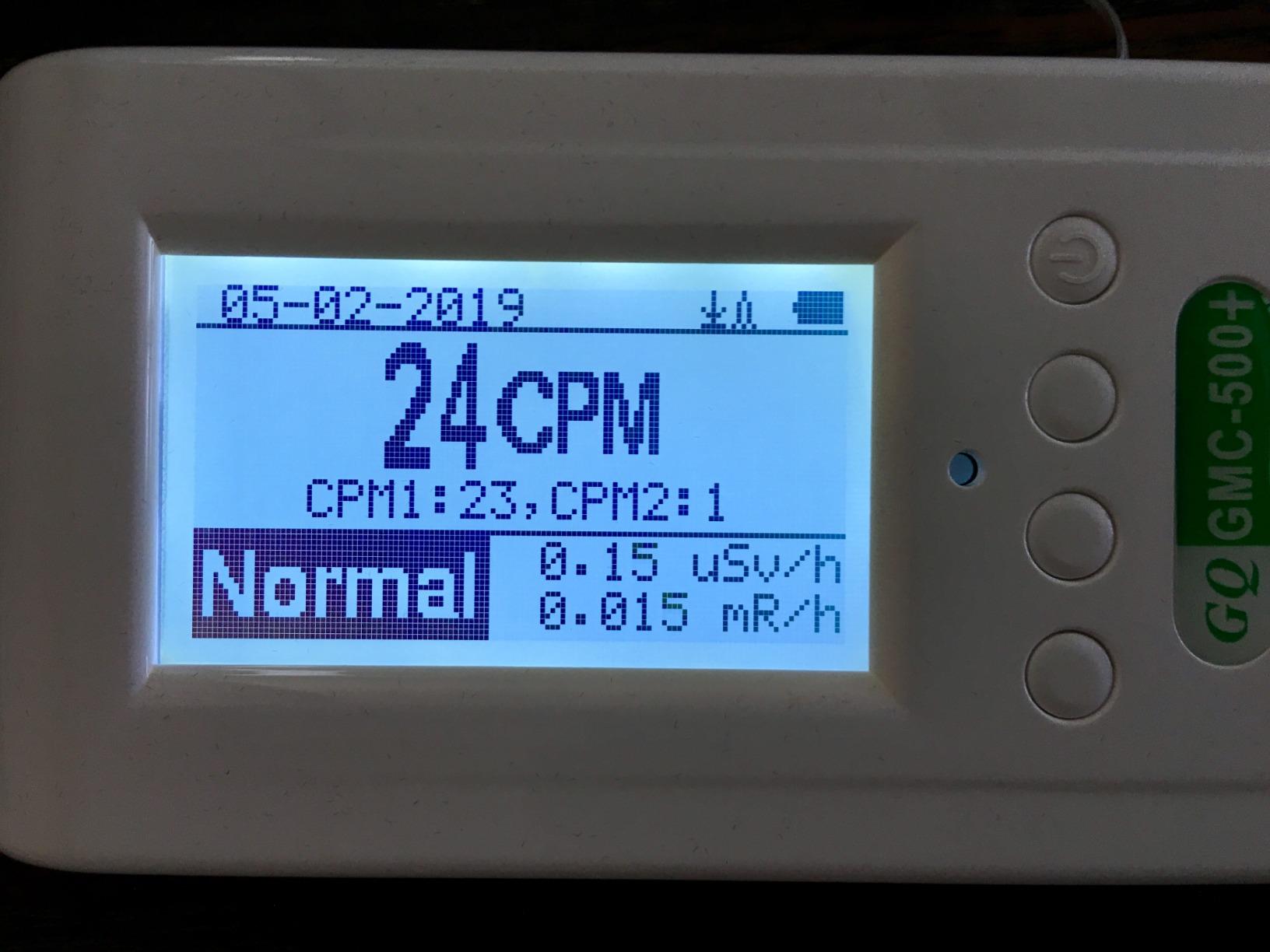
The dual Geiger-Muller tubes provide an extended detection range. While single-tube units saturate around 1 mSv/h, the 500Plus handles up to 10 mSv/h without going into overload. For hobbyists who might encounter hotter sources, this extra headroom provides peace of mind. The tubes have independent calibration factors for accuracy across the range.
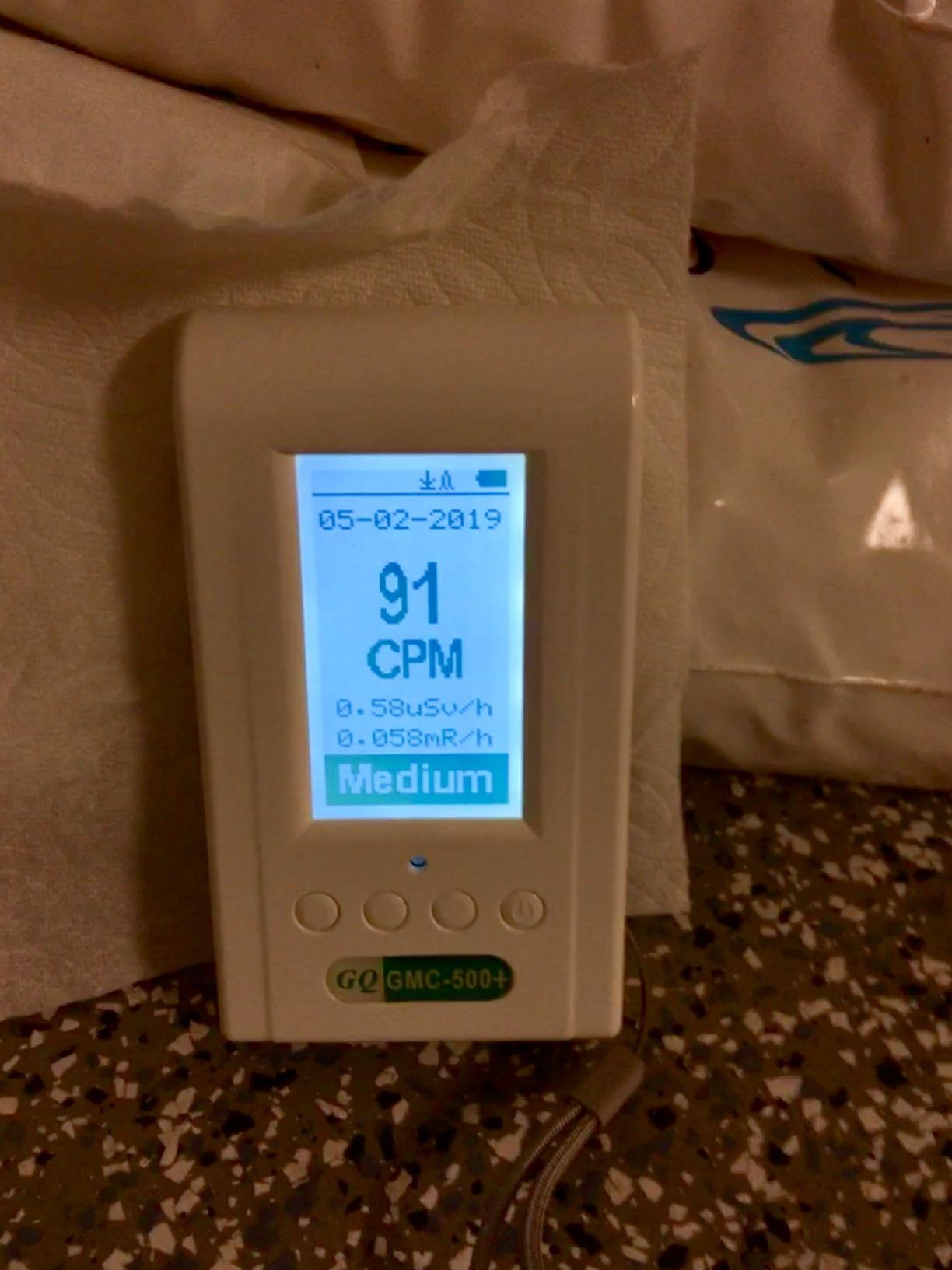
I set mine up to monitor my workshop continuously. The WiFi connection was straightforward—enter SSID and password via the device’s menu, and it connects automatically. Data appears on GQ’s online portal within minutes. You can download historical data or view real-time readings from your phone.
The open API is a standout feature for technical hobbyists. I wrote a simple Python script that pulls my 500Plus data and posts it to my home dashboard. The device supports both GQ’s default servers or custom endpoints. For makers building integrated monitoring systems, this flexibility is invaluable.
Best for Remote Monitoring Stations
If you want to build a permanent radiation monitoring station, the WiFi capability eliminates manual data retrieval. I know hobbyists who have these running 24/7 in their basements, attached to garages, or even in vacation homes. The 7-day battery life means it keeps logging even during brief power outages.
WiFi Setup Has Learning Curve
Configuring WiFi through a 4-button interface on a small screen is frustrating. The menu system is not intuitive—you will need the manual for the first setup. There is no smartphone app to simplify configuration, which feels like a missed opportunity. Once connected it runs flawlessly, but prepare for 15 minutes of button-mashing initially.
6. GQ GMC-300S – Best Entry-Level
GQ GMC-300S Digital Nuclear Radiation Detector Monitor Meter Geiger Counter Radiation Dosimeter
- Accurate radiation detection
- Easy to use interface
- Data export capability
- Multiple measurement units
- Good battery life
- Can be slow to respond
- Fragile construction
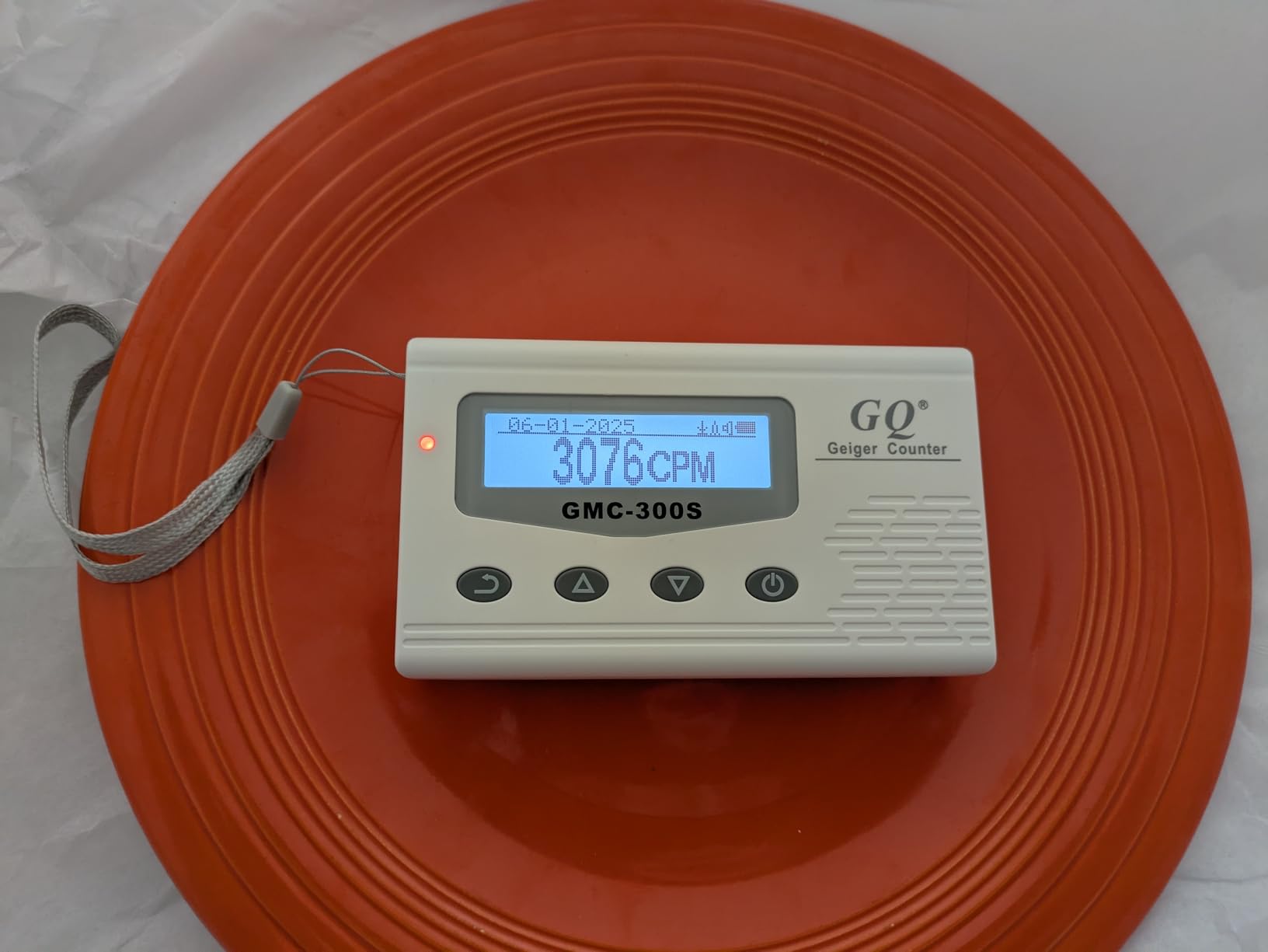
The GMC-300S is where most hobbyists start, and for good reason. At around $55, it delivers professional-grade features at entry-level pricing. I recommend this unit constantly to friends curious about radiation detection. The learning curve is gentle—you can take it out of the box and start detecting within minutes.
The real-time data logging every second is remarkable at this price. The internal memory stores readings that you can download via USB to the free GQ software. I have analyzed month-long datasets from my 300S to look for patterns in background radiation. For beginners interested in the data side of the hobby, this capability opens doors.
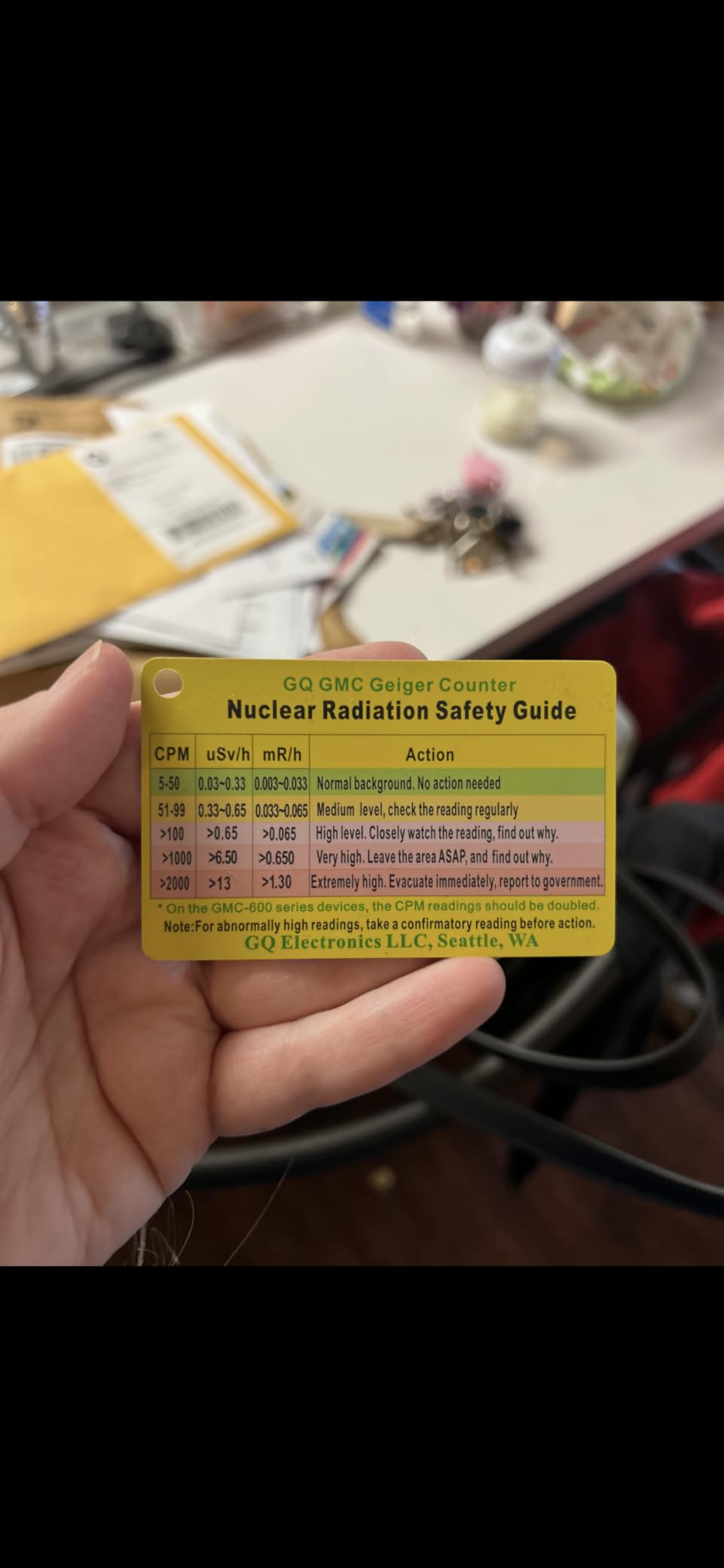
Display options include Sieverts, Rads, CPM (counts per minute), and cumulative dose. I typically use CPM for quick surveys since it updates fastest, then switch to uSv/h for actual dose measurements. The dosimeter mode tracks total exposure over time—useful if you are working with radioactive materials regularly.
Construction is the main weakness. The plastic case and thin screen will not survive rough treatment. I cracked the LCD on my first 300S by dropping it on tile. Get a case or handle it carefully. That said, GQ Electronics offers good customer support and replacement parts if needed.
Best for First-Time Geiger Counter Owners
If you have never owned a radiation detector, start here. The 300S teaches you the basics without overwhelming you. The PC software introduces data analysis concepts that more advanced units build upon. Many hobbyists (myself included) started with this model before upgrading to the 800 or 500Plus.
Skip for Fast Detection Needs
The 300S takes 15-30 seconds to stabilize readings on weaker sources. For detecting hot items quickly, this is fine. But if you are doing detailed surveys or need immediate feedback, faster-responding units like the Radiacode or GMC-800 are better choices. The slow response is the main reason I upgraded.
7. FNIRSI GC-01 – Best Dosimeter Features
FNIRSI GC-01 Geiger Counter Nuclear Radiation Detector,Curve Display
- High quality for the price
- Multiple alarm modes (light/vibration/sound)
- Accumulated exposure measurement
- Long battery life
- Two-screen display options
- Technically a dosimeter not true Geiger counter
- Battery life could be better
- Terminology confusing for beginners
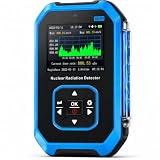
The FNIRSI GC-01 is technically a dosimeter rather than a traditional Geiger counter, though the distinction matters little for hobbyists. It focuses on cumulative radiation exposure over time rather than instantaneous particle counts. I use mine to track my total exposure during extended rock hunting trips.
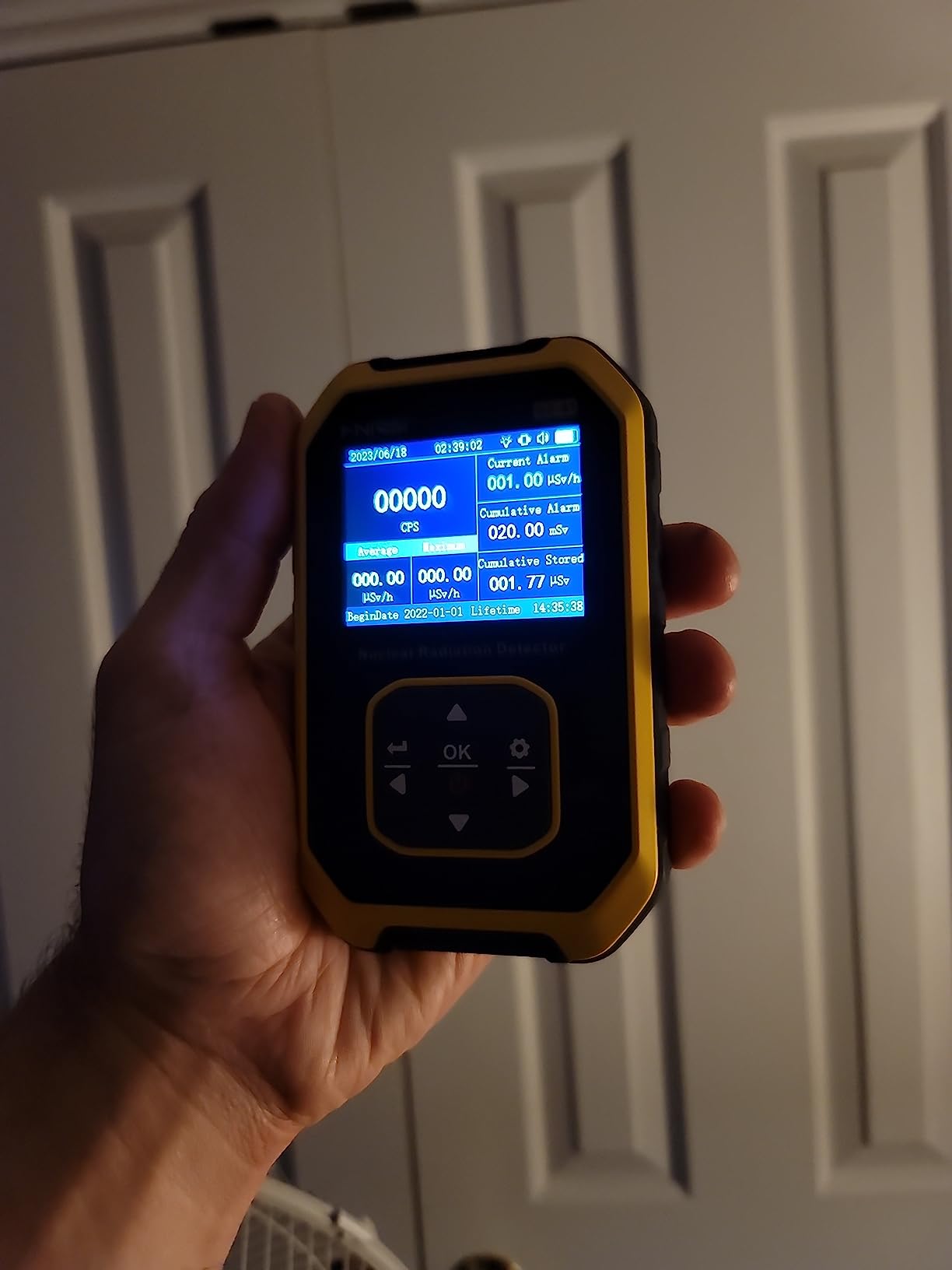
The dual-screen display is unique. One screen shows numerical data (dose rate and total dose), while the other shows a graph of recent readings. This helps visualize trends—useful when you are moving through areas with varying background radiation. The graphical view immediately shows if you are approaching a hotter zone.
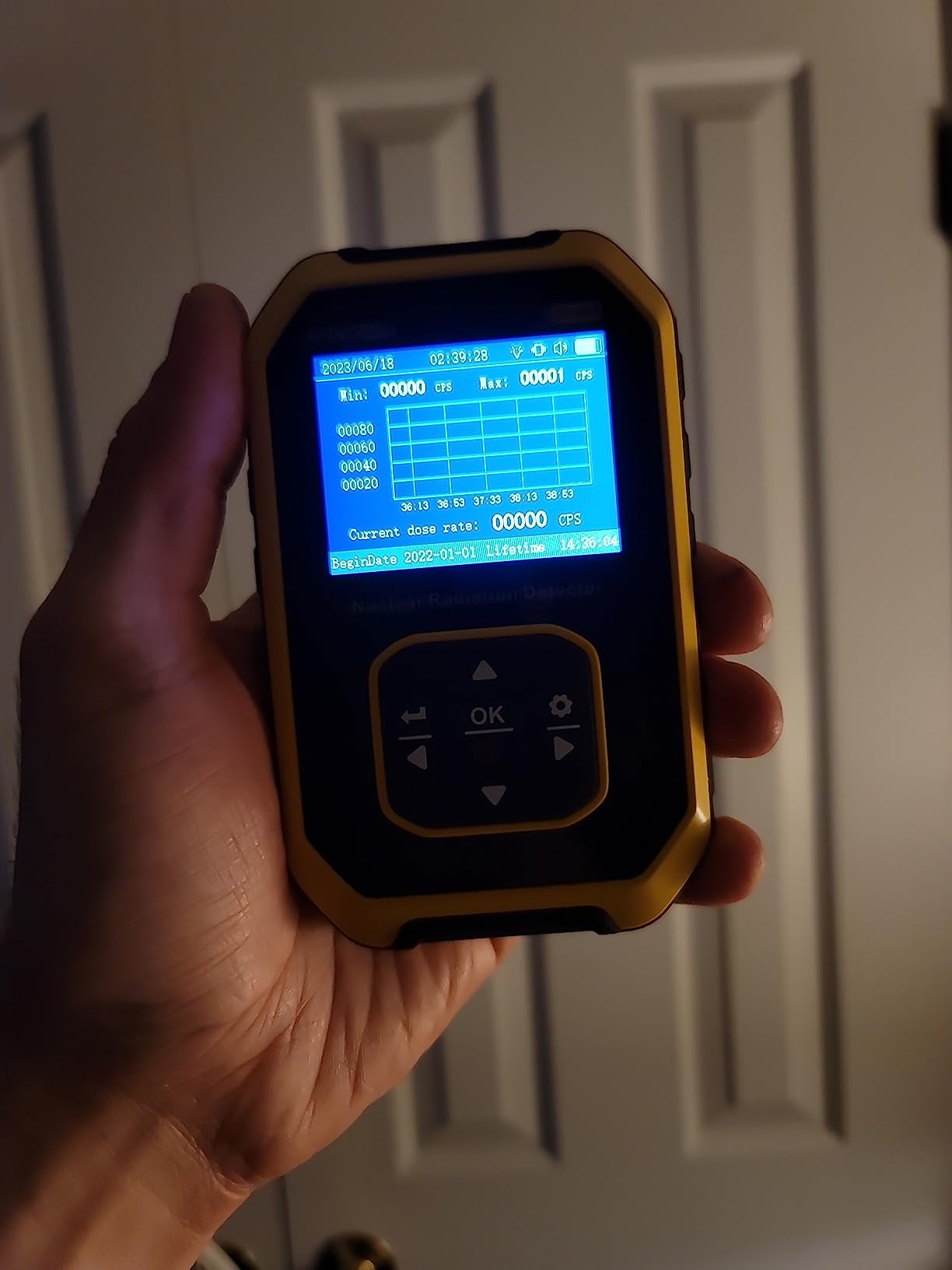
Five dosage units cover every measurement system: uSv/h, mSv/h, uGy/h, mGy/h, and CPS (counts per second). I appreciate having options, though most hobbyists will stick with uSv/h. The smart alarm lets you set both instantaneous rate thresholds and cumulative dose limits—great for safety-conscious users.
The unit detects gamma, beta, and X-rays from 48 KeV to 1.5 MeV. I verified it against my reference sources and got accurate readings. The packaging is notably high-quality—FNIRSI clearly put thought into protecting the GM sensor during shipping. Build quality exceeds the price point.
Best for Medical and Health-Conscious Users
If you are monitoring radiation exposure from medical treatments, this dosimeter focus is ideal. Users track exposure during radioactive iodine therapy or frequent X-rays. The cumulative tracking gives you a running total of your annual exposure—data worth having if you work around radiation regularly.
Not for Particle Counting Purposes
Pure Geiger counter enthusiasts might miss the classic “click” feedback. The GC-01 focuses on dose measurement rather than individual particle detection. If you want that satisfying audible click when detecting uranium glass or vintage radium dials, look at the MOESAPU FS-5000 instead.
8. MOESAPU FS-5000 – Best with Click Sound
- Quality J321 Geiger-Mueller tube
- Authentic click sound feedback
- Excellent 30-day runtime
- Intuitive user interface
- Data retained without power
- Too complicated for some users
- No proper instructions included
- No PC software info in box
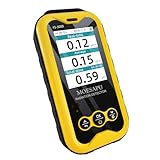
The FS-5000 nails the classic Geiger counter experience. The authentic click sound when detecting particles provides immediate auditory feedback. When I wave it over my uranium glass collection, the accelerating click rate creates that iconic radiation detector experience that hobbyists love. It is satisfying in a way silent digital readouts cannot match.
The J321 Geiger-Muller tube inside is a quality component. This is not a cheap sensor—the J321 is known for stable performance and good sensitivity. The 1 CPS/uSv/h sensitivity rating means it responds quickly to radiation changes. I can sweep a surface and immediately hear when I encounter a hot spot.
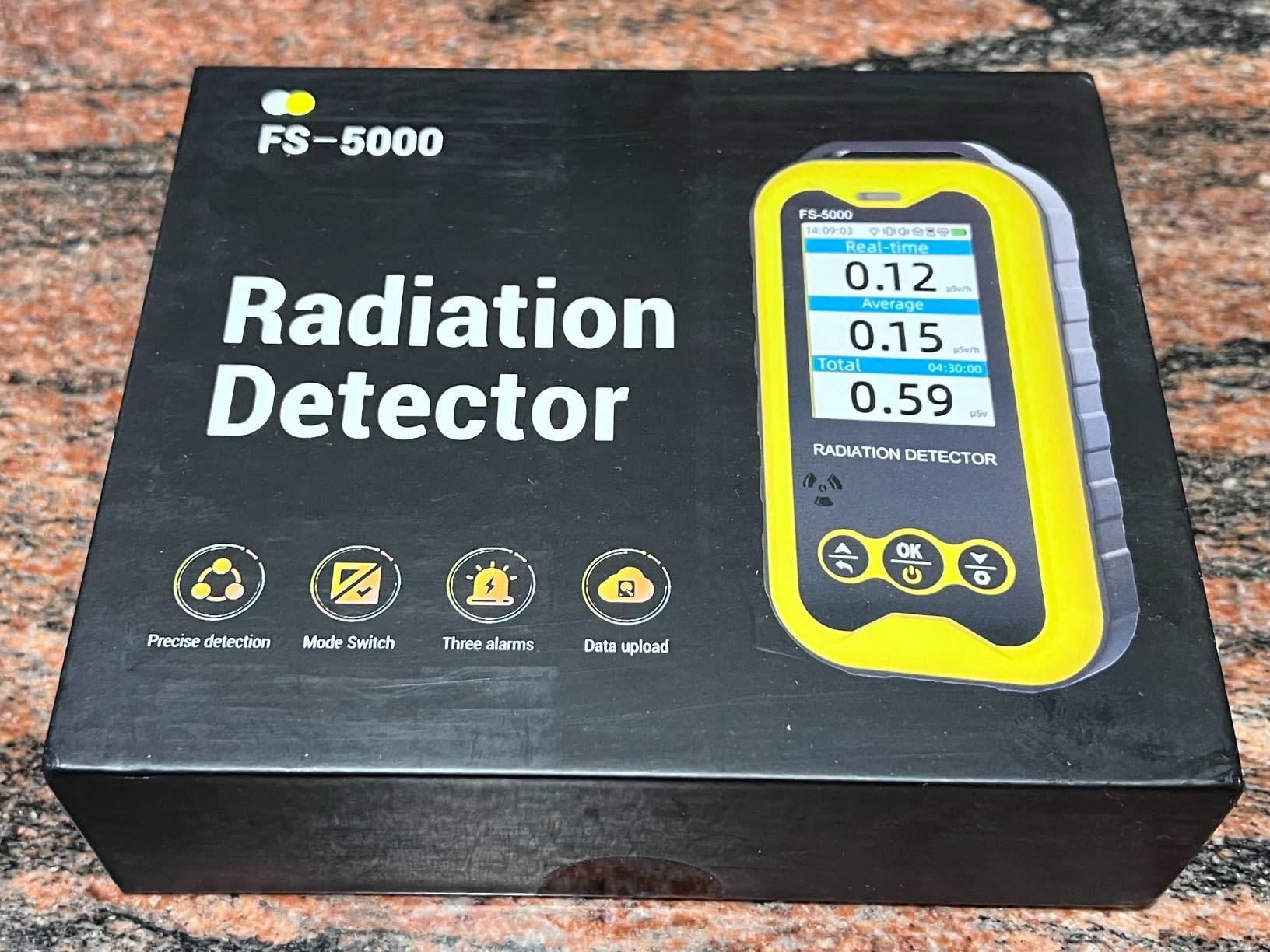
Battery life is exceptional—up to 30 days on a full charge with typical hobbyist use. I took mine on a two-week camping trip without worrying about power. The data retention without power is useful too—your cumulative dose readings survive even if the battery dies completely.
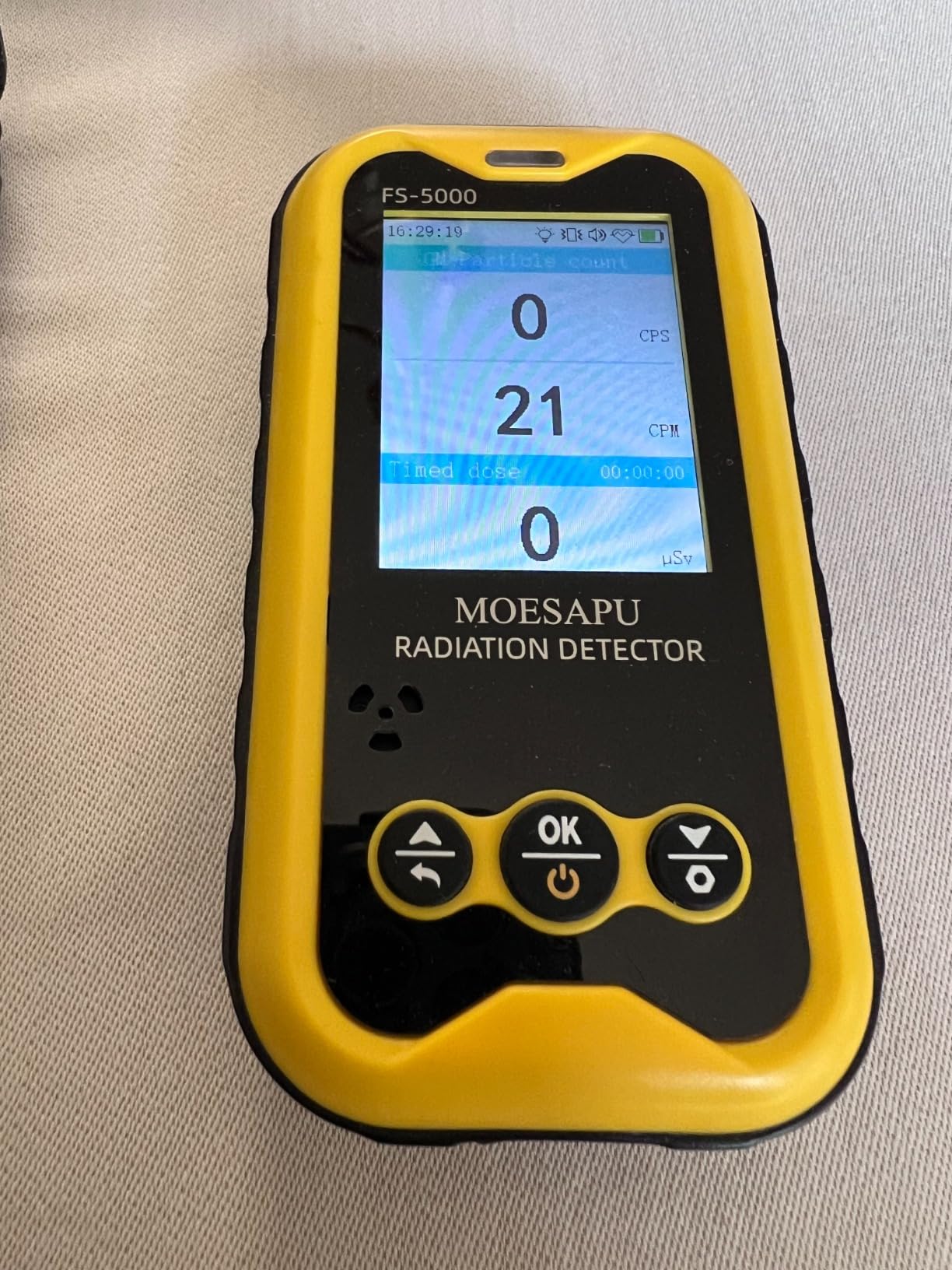
The TFT-LCD screen offers six brightness levels. At maximum brightness, it is readable in direct sunlight. The interface is mostly intuitive once you learn the button combinations. The timed dose measurement function lets you set specific measurement windows—useful for comparing different locations under consistent conditions.
Best for Traditional Geiger Counter Enthusiasts
If you want that authentic radiation detector experience—the clicks, the sweeping motion, the immediate audio feedback—this delivers. It feels like using a classic civil defense meter but with modern features. Rock hunters and vintage collectors who value the sensory experience will prefer this over silent units.
Documentation is Lacking
The included manual is essentially useless. You will need to find third-party tutorials or contact MOESAPU directly for detailed instructions. The PC software exists but finding download links requires searching. These documentation gaps are frustrating but not dealbreakers for technical hobbyists willing to experiment.
9. LifeBasis Geiger Counter – Best TFT Display
- Great interface with high quality feel
- Lightweight and compact
- Good battery life with TFT
- Accurate compared to expensive units
- Readable under sunlight
- Some reliability concerns
- May not detect low-level radiation accurately
- Some units read low compared to GQ
The LifeBasis unit focuses on display quality. The TFT color screen is visibly nicer than the monochrome LCDs on most budget units. Colors are vibrant, text is sharp, and the backlighting is even. For hobbyists who spend hours looking at readings, this visual upgrade is worthwhile.
The interface design is modern and intuitive. Menu navigation uses clear icons rather than text abbreviations. Setting alarm thresholds, changing units, and adjusting sleep timers is straightforward. The included lanyard and bracket make it easy to carry or mount—thoughtful accessories at this price point.
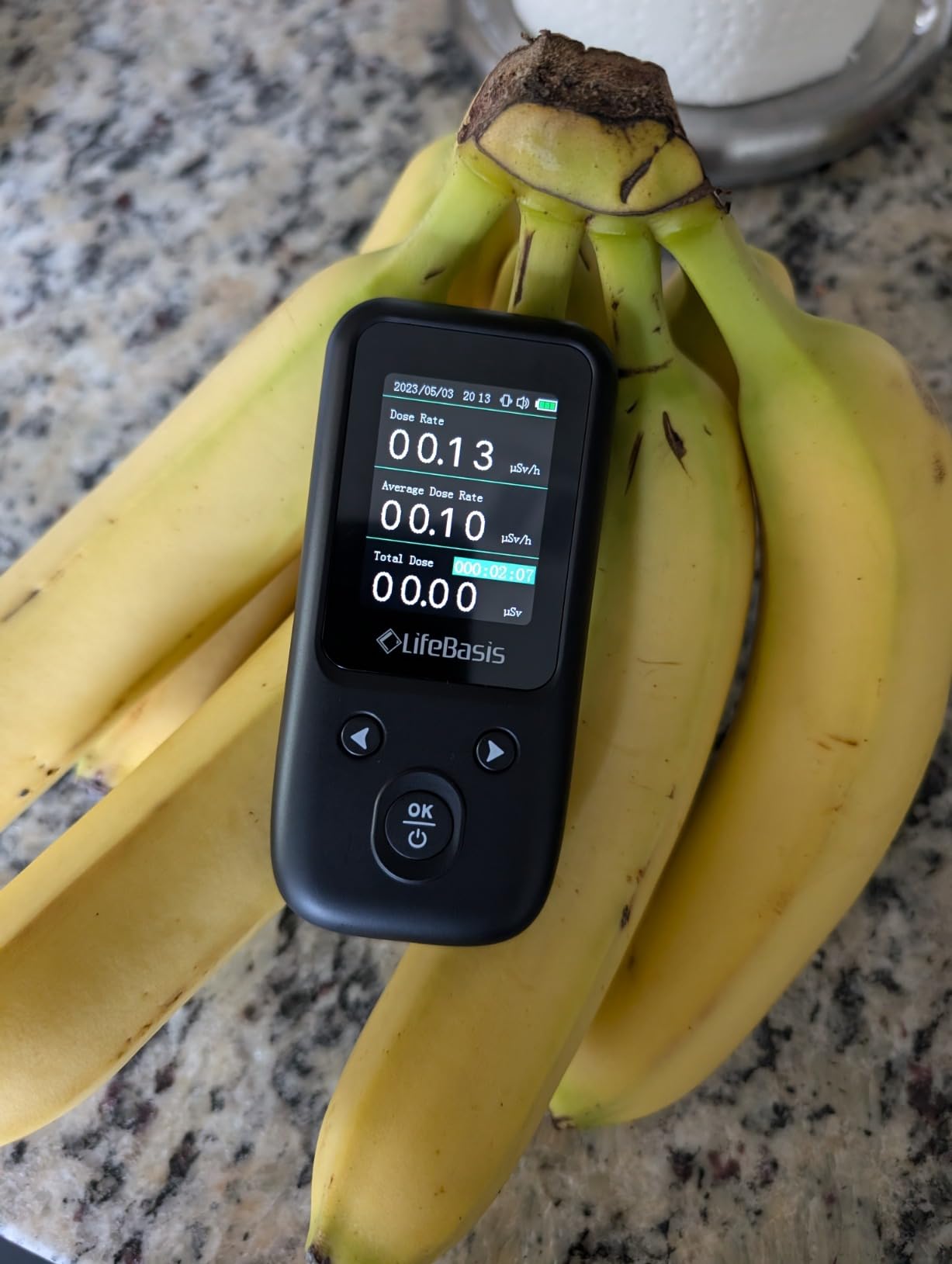
Detection range covers 50 KeV to 3 MeV with 60 CPM per uSv sensitivity. I tested it against granite countertops and smoke detectors and got readings consistent with expected values. The vibration and sound alarm modes work well—the vibration is strong enough to feel through a pocket.
The screen sleep feature preserves battery life. You can set it to dim or turn off after periods of inactivity, waking instantly when a button is pressed. This extends runtime significantly compared to units with always-on displays. The ABS shell feels durable and the overall construction quality exceeds expectations.
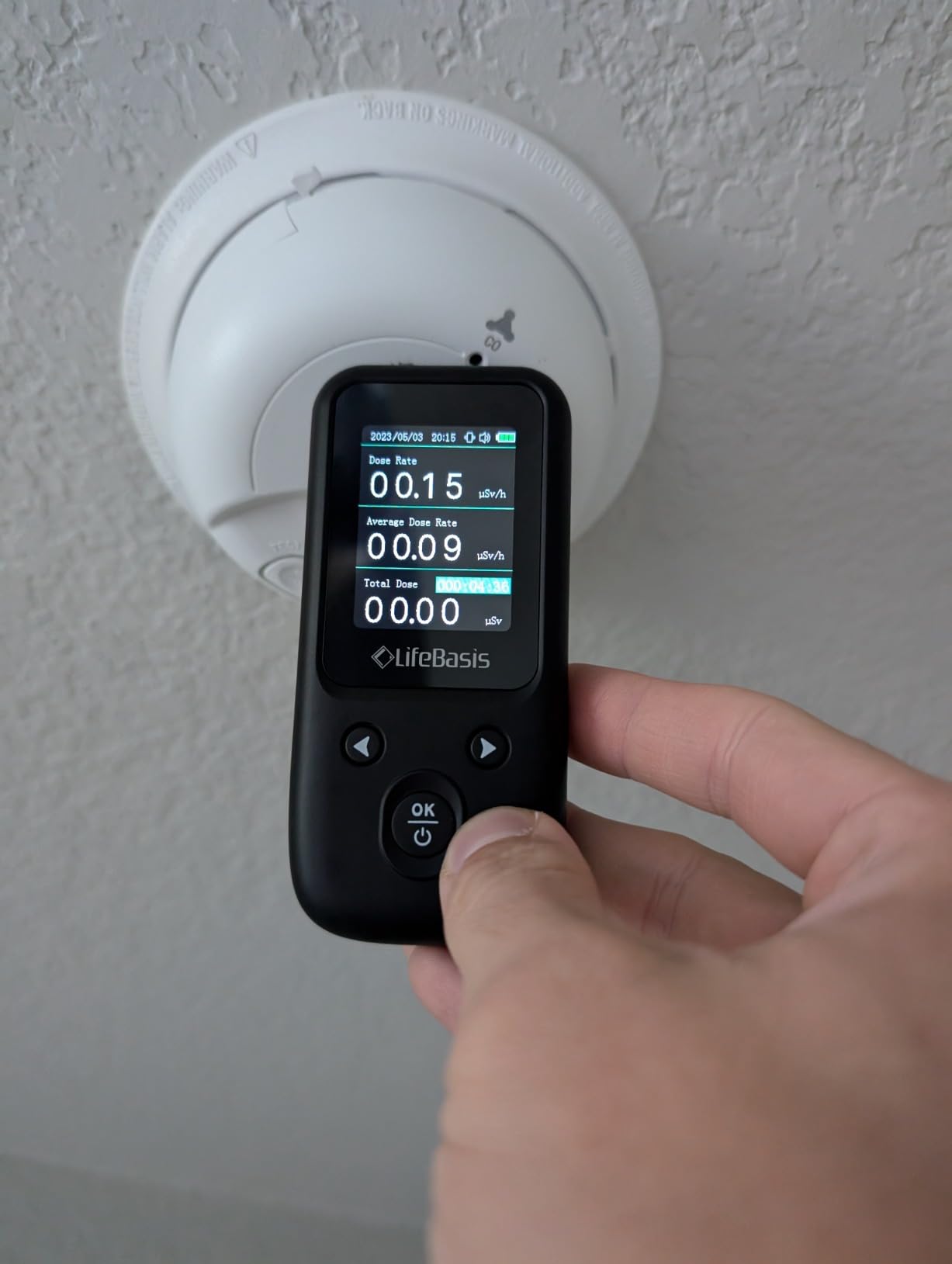
Best for Outdoor Rock Hunting
The sunlight-readable display makes this ideal for outdoor use. I have used mine on sunny beaches looking for monazite sand and in desert environments searching for uranium minerals. Where other screens wash out, this remains legible. The lanyard keeps it secure while scrambling over rocks.
Quality Control Could Be Better
I received one defective unit that read consistently low. The replacement worked fine, but this suggests variable quality control. If you buy this model, test it against a known source (smoke detector, uranium glass) immediately to verify accuracy. The 1-year warranty covers replacements if needed.
10. SAF Aranet Radiation Detector – Best Battery Life
- Exceptional 4-year battery life
- E-Ink display very readable
- Easy Bluetooth setup
- Accurate radon detection
- History function for trends
- Spec sheet hard to find
- App required for some features
- Cannot be wall mounted
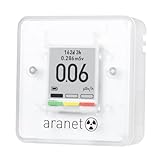
The Aranet Radiation Detector redefines battery expectations. Four years of continuous operation on a single set of batteries is unheard of in this category. I have been running mine for 8 months and the battery indicator still shows full. For a set-and-forget monitoring device, this is unmatched.
The E-Ink display is brilliant for a always-on device. It shows the current reading constantly without draining power. The display is perfectly readable in any lighting condition—bright sunlight, darkness, or anywhere between. Unlike LCDs that wash out or OLEDs that burn in, E-Ink looks the same years later.
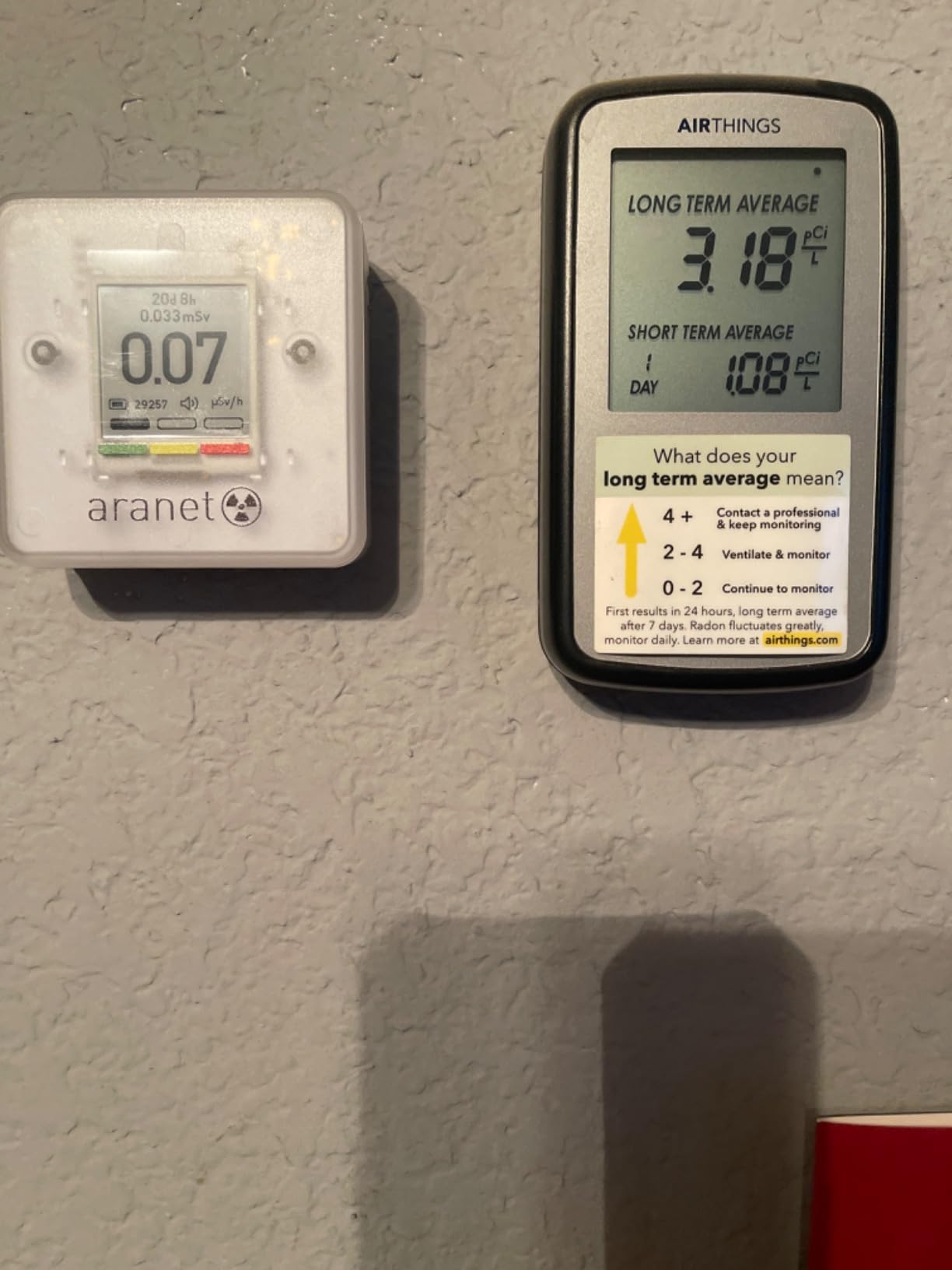
Bluetooth connectivity pairs with the Aranet app on iOS or Android. The app shows graphs of radiation trends over hours, days, or weeks. I use mine to monitor my home’s baseline and have it alert me if levels spike. The setup process takes under two minutes—turn it on, open the app, and pair.
Detection covers gamma, beta, and X-rays from 0 to 1000 mSv range. It is particularly sensitive to radon decay products—several users report it detecting radon fluctuations before dedicated radon meters. The alarm system offers configurable thresholds with audio alerts.
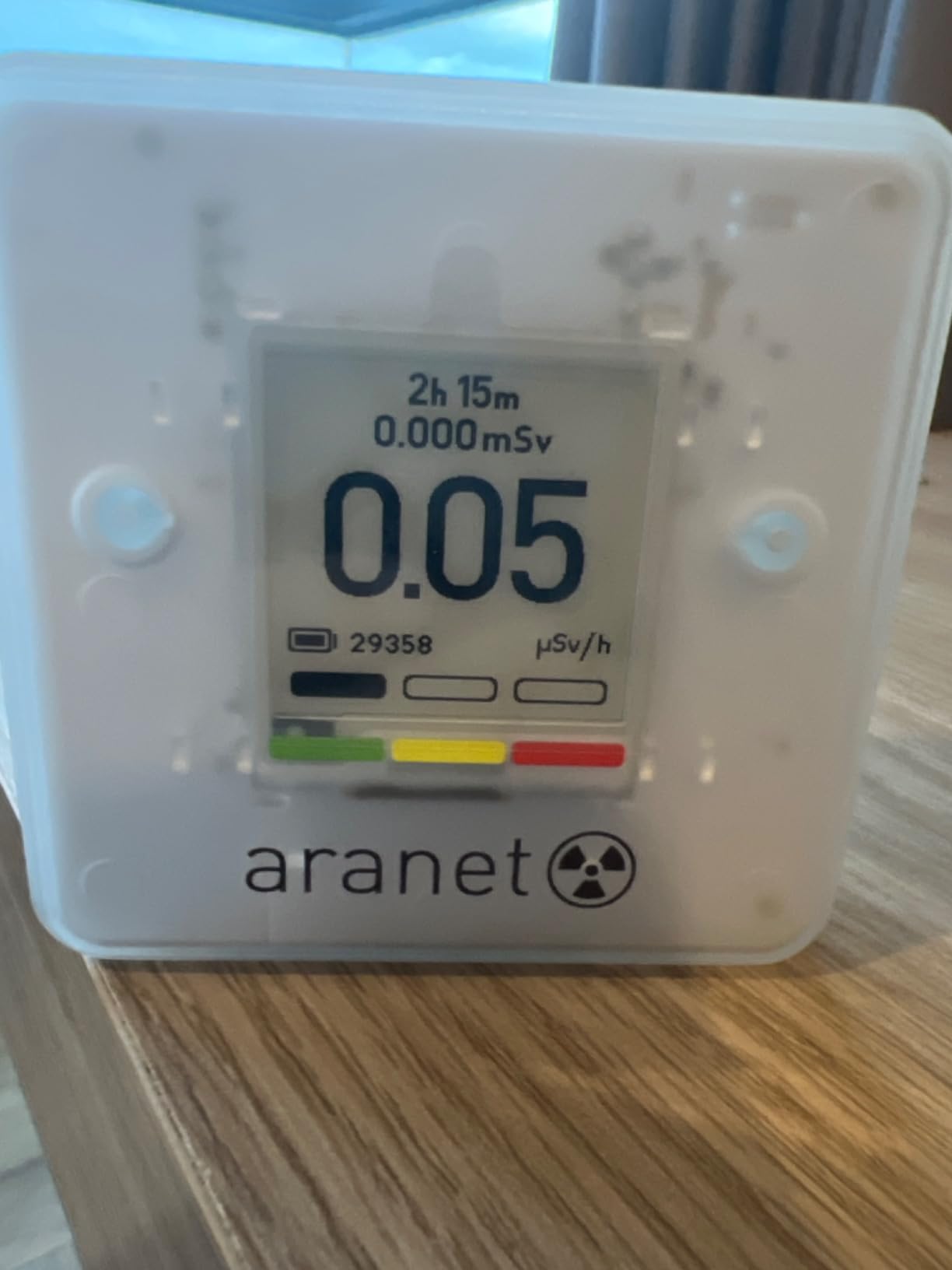
Best for Long-Term Home Monitoring
If you want a permanent home radiation monitor that you never have to think about, this is it. Stick it in your basement, connect to the app once, and check readings whenever you want. The 4-year battery means it survives even if you forget about it for months. Perfect for emergency preparedness.
Premium Price for Premium Convenience
At $159, you pay significantly more for the convenience of never changing batteries. The detection capabilities are comparable to units half the price. Whether the 4-year battery is worth the premium depends on your use case. For permanent installations, absolutely. For occasional hobbyist use, probably not.
Geiger Counters and Arduino: A Hobbyist’s Dream Combination
Here is what separates this guide from every other Geiger counter roundup on the internet: Arduino and microcontroller integration. The GQ Electronics models (300S, 320 Plus, 500Plus, 800) expose their data through open protocols that make microcontroller interfacing straightforward.
I have built several projects combining Geiger counters with microcontrollers. My favorite is a radiation monitoring station that uploads data to Thingspeak every minute. The Arduino reads serial data from a GMC-300S via USB, parses the output, and posts it online. Total build cost: $35 for the Arduino plus the Geiger counter.
The GMC-500Plus is even easier—it has built-in WiFi. But for other models, you can extract data through the USB port using a simple serial connection. The protocol is documented: comma-separated values containing CPM, uSv/h, and status flags. Parsing this in Arduino, ESP32, or Raspberry Pi code takes about 20 lines.
For DIY enthusiasts, consider building a custom case with integrated display. I 3D-printed a housing for my GMC-300S that includes an OLED readout and SD card logging. The Geiger counter provides the sensor; the microcontroller handles data processing and storage. This setup runs for weeks unattended, logging radiation data with timestamps.
The Radiacode-102 offers the most advanced integration with its multi-platform apps and GPS radiation mapping. Their API documentation lets serious makers build custom visualization tools. One hobbyist I know created a Unity-based 3D radiation map viewer using Radiacode data exported through their API.
What to Look for When Choosing a Geiger Counter?
After reviewing these 10 models, here are the key factors that should drive your decision. Consider these based on your specific hobbyist use case.
Detection Types (Alpha, Beta, Gamma, X-ray)
Most hobbyist Geiger counters detect beta, gamma, and X-rays. Alpha detection requires a different window configuration (pancake or end-window probes) that most budget units lack. If you need alpha detection for radon monitoring or specific mineral identification, expect to pay significantly more or build a custom detector.
For typical hobbyist uses—uranium glass, vintage radium items, minerals, smoke detectors—beta/gamma detection covers everything. X-ray detection is a bonus for medical or security applications. Check the energy range specification: 48 KeV to 1.5 MeV covers most hobbyist scenarios.
Sensitivity and Detection Range
Sensitivity determines how quickly you get readings. Higher CPM (counts per minute) per uSv/h means faster response. The MOESAPU FS-5000 with its J321 tube at 1 CPS/uSv/h responds faster than budget units with cheaper sensors. For survey work where you sweep an area, sensitivity matters.
Detection range upper limits matter if you encounter hot sources. Most hobbyists never exceed 1 mSv/h, but if you collect uranium minerals or work with higher-activity sources, consider the GMC-500Plus with its 10x higher upper limit. Saturation makes a unit useless when you need it most.
Data Logging and Connectivity
For serious hobbyists, data logging transforms a toy into a tool. The ability to export CSV files, analyze trends, and create graphs elevates the experience. USB connectivity is standard; WiFi (GMC-500Plus) or Bluetooth (Aranet, Radiacode) adds convenience.
Consider how you will use the data. PC software (GQ models) works for spreadsheet analysis. Mobile apps (Aranet, Radiacode) provide immediate visualization. Open APIs (GQ, Radiacode) let you build custom integrations. Choose based on your technical comfort level and goals.
Display and Interface
Screen quality varies enormously. Monochrome LCDs (GMC-300S) are functional but basic. Color TFTs (LifeBasis, MOESAPU) look better but drain more power. E-Ink (Aranet) offers the best always-on readability with minimal power draw. Large LCDs (GMC-800) provide the best overall visibility.
Consider where you will use the detector. Outdoor hobbyists need sunlight-readable screens. Night users need good backlights. Data-focused users want multiple display modes (numeric, graphic, large font). The interface should match your technical comfort—some are menu-driven, others use simpler button combinations.
Frequently Asked Questions
How much does a good Geiger counter cost?
Quality hobbyist Geiger counters range from $40 to $250. Budget options like the Mastfuyi ($40) work well for beginners. Mid-range units ($60-100) like the GQ GMC-300S offer data logging and better accuracy. Premium models ($150-250) provide isotope identification, WiFi connectivity, or advanced features. For most hobbyists, $60-100 hits the sweet spot of features and reliability.
What is better than a Geiger counter?
Scintillation detectors like the Radiacode-102 offer superior sensitivity and isotope identification compared to Geiger counters. They detect radiation 20x faster and can identify specific radioactive isotopes. However, they cost significantly more and do not detect alpha particles. For professional applications or serious mineral identification, scintillators are better. For general hobbyist use, Geiger counters provide the best value.
How to pick a Geiger counter?
Start by defining your use case: rock hunting, vintage collecting, home monitoring, or general curiosity. Budget units ($40-60) work for basic detection. Data loggers ($70-100) suit analytical hobbyists. WiFi-connected models enable remote monitoring. Consider detection types needed, battery life, display quality, and data export options. Read reviews focusing on accuracy verification against known sources.
Are all Geiger counters the same?
No, Geiger counters vary significantly in sensitivity, detection range, tube quality, and features. Cheap units may use inferior sensors and read inaccurately. Better units have calibration certificates, data logging, and quality Geiger-Muller tubes. Some detect only gamma; others handle beta and X-rays too. Build quality ranges from fragile plastic to durable housings. Accuracy can vary by 15% or more between units.
Final Thoughts
Choosing the best Geiger counter for hobbyists depends on your specific interests and technical goals. The GQ GMC-800 strikes the best overall balance of features, accuracy, and value for most hobbyists. The Radiacode-102 rewards serious enthusiasts with professional-grade capabilities. Budget buyers should grab the Mastfuyi and start exploring immediately.
Remember that radiation detection is just the beginning. The real fun comes from understanding what you are detecting—whether that is uranium in vintage glass, thorium in gas mantles, or the natural background radiation all around us. Best Geiger counters for hobbyists in 2026 offer more features and better value than ever before.
Start with your use case, pick the detector that matches it, and begin your radiation detection journey. The invisible world of ionizing radiation is fascinating once you have the right tools to see it.