
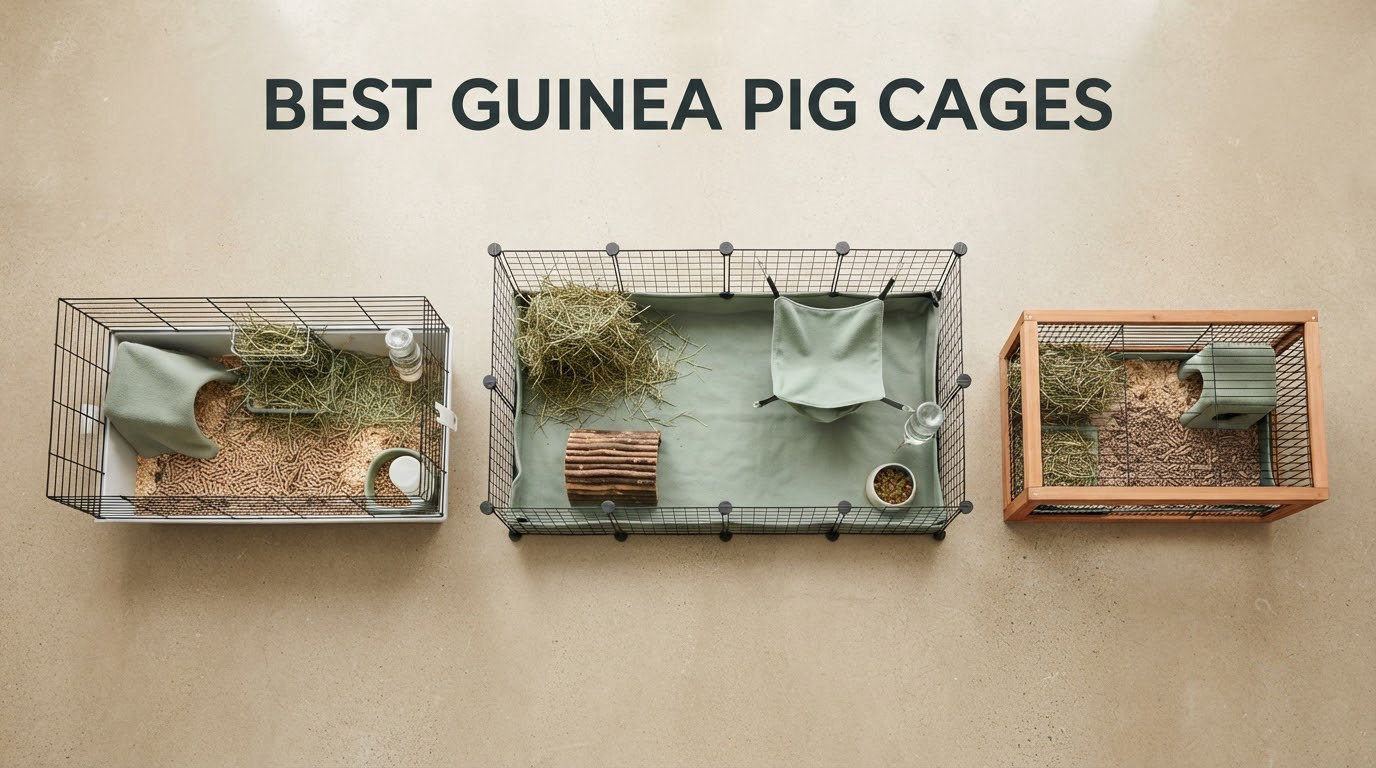
The best guinea pig cages give you one thing above everything else: unbroken floor space with a solid base, no wire grid underfoot, and no tall stack of levels for a prey animal with poor depth perception to fall off. Our winner, the MidWest Homes for Pets Guinea Habitat Plus 171GHP, delivers 8 square feet of continuous floor from a washable PVC canvas bottom in a cage that assembles with no tools and connects to a second unit when you outgrow it. The Amazon Basics Leakproof Canvas Bottom is the runner-up and the strongest value pick, the SONGMICS two-tier playpen works for a small apartment, and the Ferplast Cavie is the honest choice if you are housing one guinea pig and want every accessory in the box on day one.
Before the list, here is the number that decides almost everything: a bonded pair needs at least 10.5 square feet of floor space, roughly 28 by 56 inches. Humane World for Animals and Southern California Guinea Pig Rescue both publish that figure, and the rescue goes further, stating plainly that a 24 by 47 inch cage is too small for two. That is why a cage marketed as “large” is often not.
Our team spent weeks setting these ten cages up, measuring floors, and comparing the details that show up in reviews rather than on the product page. We scored every option on floor area, floor material, single-level safety, clean-up time, and whether the design still works in 2026. Ten made the list. Several popular cages you will see in search results did not get a recommendation here, and we explain why.
Top 3 Picks for Guinea Pig Owners in 2026
MidWest Guinea Habitat Plus
- 8 sq ft continuous floor
- Removable wire top
- Locking divider panel
- Washable PVC canvas base

Amazon Basics Canvas Bottom
- Leak-proof canvas floor
- Iron wire frame
- Divider included
- Tool-free setup

SONGMICS Two-Tier Playpen
- Two tiers with ramp
- Transparent roof doors
- Waterproof floor mat
- Steel mesh panels
Best Guinea Pig Cages in 2026 at a Glance
| Product | Specifications | Action |
|---|---|---|
| MidWest Homes for Pets Guinea Habitat Plus 171GHP |
|
Check Latest Price |
| Amazon Basics Leakproof Canvas Bottom 9060BK-W |
|
Check Latest Price |
| SONGMICS Two-Tier Small Animal Cage |
|
Check Latest Price |
 Amazon Basics Top Access Jumbo Habitat Amazon Basics Top Access Jumbo Habitat |
|
Check Latest Price |
 Ferplast Cavie 30-Inch Cage Ferplast Cavie 30-Inch Cage |
|
Check Latest Price |
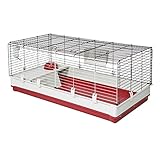 MidWest Homes for Pets 158XL Deluxe MidWest Homes for Pets 158XL Deluxe |
|
Check Latest Price |
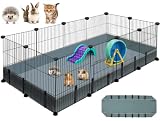 VISCOO 12-Panel Playpen VISCOO 12-Panel Playpen |
|
Check Latest Price |
 Aivituvin Two-Story Wood Hutch Aivituvin Two-Story Wood Hutch |
|
Check Latest Price |
 Mcage Wrought Iron Rolling Cage Mcage Wrought Iron Rolling Cage |
|
Check Latest Price |
 Aivituvin All-Around Metal Frame Cage Aivituvin All-Around Metal Frame Cage |
|
Check Latest Price |
1. MidWest Homes for Pets Guinea Habitat Plus 171GHP – Best Overall
- 8 sq ft of continuous floor space
- Removable hinged wire top for security
- Lock-in-place divider panel doubles as a ramp
- Tool-free assembly in minutes
- Connects to a second habitat for expansion
- Canvas base sags slightly when the cage is lifted
- Zip ties at the folding corners add rigidity
- Velscro straps on the bars are fiddly to fit
This is the cage we kept coming back to while testing. It measures 47 by 24 by 14 inches and the manufacturer claims 8 square feet of interactive space, which clears the 7.5 square foot single-pig standard with room to spare and sits just under the pair minimum. For one pig it is genuinely generous. For two, it works well if you add a second habitat and connect them, which the frame is designed to allow.
The floor is a washable PVC canvas rather than a hard tray, and that choice is the entire personality of this cage. It is softer and warmer underfoot than plastic, it wipes clean in seconds, and it never traps urine the way a molded tray can. Owners consistently praise the floor area, the movable divider, and the setup that needs no tools.
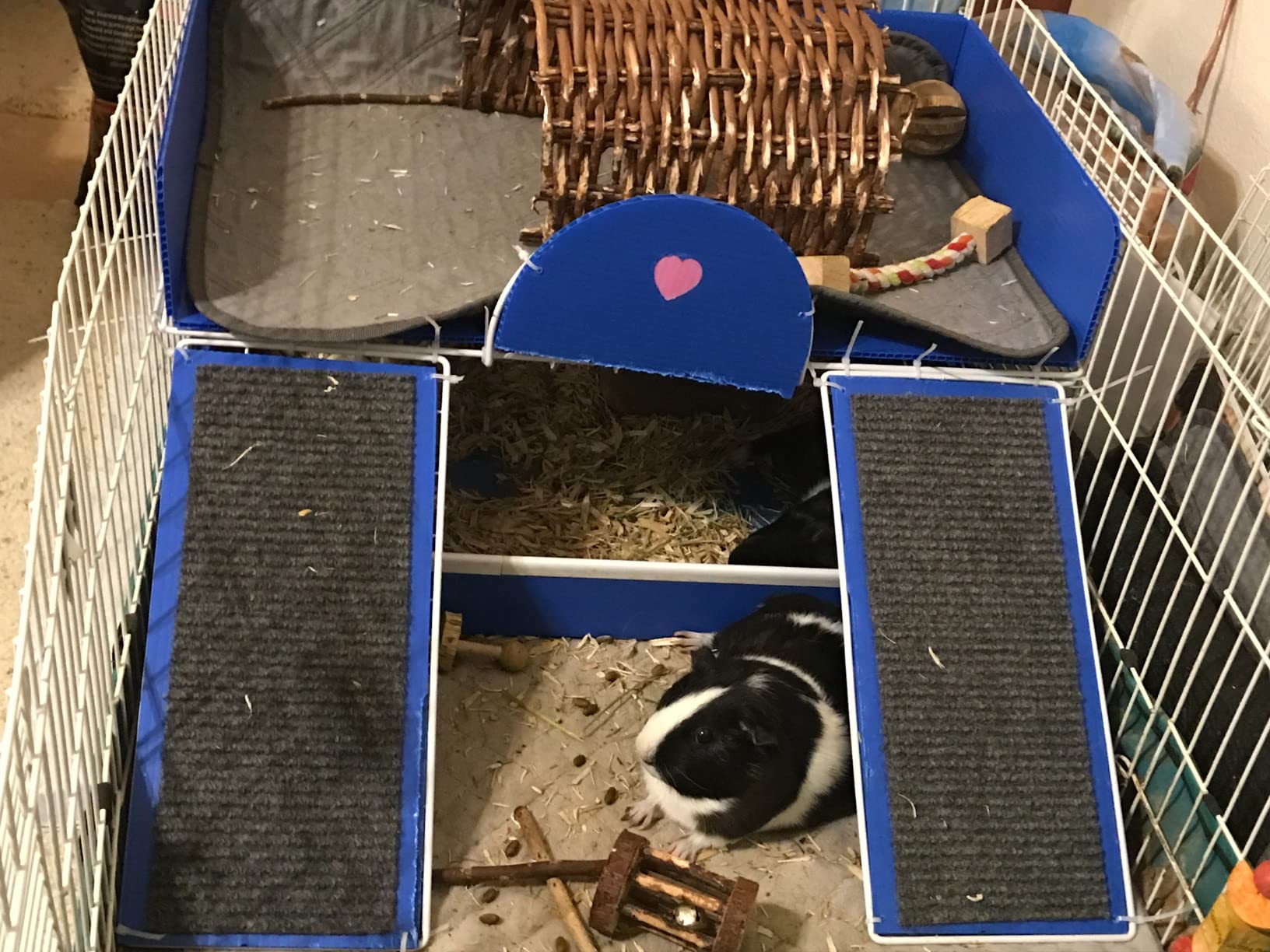
The removable wire top is the detail most people underrate. It clips on and off, it stops a curious cat or an energetic toddler from reaching in, and it lets you lift the whole lid to clean rather than fishing a pig out through a side door. The hinged divider panel locks into place and doubles as a ramp, so you can split the cage into a sleeping zone and a feeding zone without buying a second pen.
It is worth being straight about the weaknesses, because they are real but manageable. The canvas sags a little when you lift the cage to clean underneath, and the frame can feel light at the folding corners until you add zip ties, which is the single most useful five-minute upgrade any owner can make. Reviewers also report the canvas getting stained and nibbled at the edges, mostly along the ramp.
Why it earns the top spot for a pair
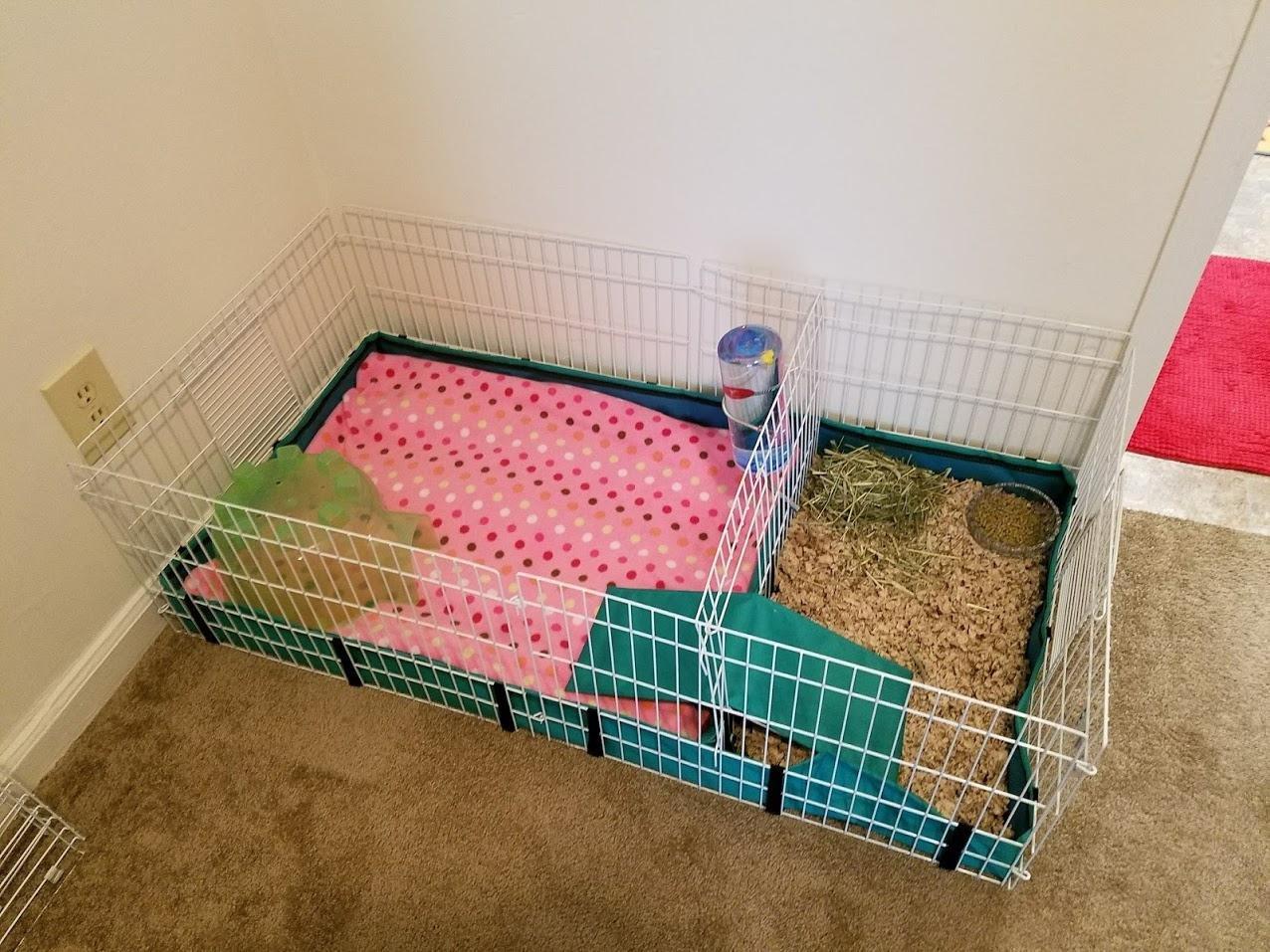
A bonded pair needs 10.5 square feet, and this cage does not reach it alone. What it does is give you a modular chassis that connects to an identical cage, so the honest path to a pair-safe home is two of these joined together. Owners running pairs frequently do exactly that, and the divider panel on each unit becomes a shared ramp zone between them.
For a single guinea pig, no other cage in this roundup offers this much floor at this level of refinement, with the added benefit of a lift-off top for handling.
Where it falls short
If you want a rigid plastic tray that will not flex at all, this is not that. If your household has a cat that treats cages as climbing furniture, you will want to add clips or a cover. And if you need a cage you can wheel from room to room, the 12.5 pound frame is portable but has no casters of its own.
2. Amazon Basics Leakproof Canvas Bottom 9060BK-W – Best Value
- Large floor area for the money
- Leak-proof canvas contains spills
- Textured base gives foot traction
- Tool-free setup and takedown
- Divider panel included
- Canvas base sags when the cage is moved
- Divider is a basic panel rather than a locking gate
- Panels can arrive bent or out of alignment
This is the closest thing to a no-thinking purchase that still meets the basic welfare floor. It measures 47.6 by 24.2 by 14 inches, weighs 13.87 pounds, and uses a leak-proof canvas base that both contains urine and gives small feet a textured surface to grip. For first-time owners who want a large single-level cage today and a second one later, it makes sense.
The 4.1 star average across thousands of reviews is the honest number here, and the gap from our winner is about expectations rather than quality. Buyers like the floor-to-area ratio, the leak-proof base, and the fact that the whole thing comes apart without tools when you need to move rooms.
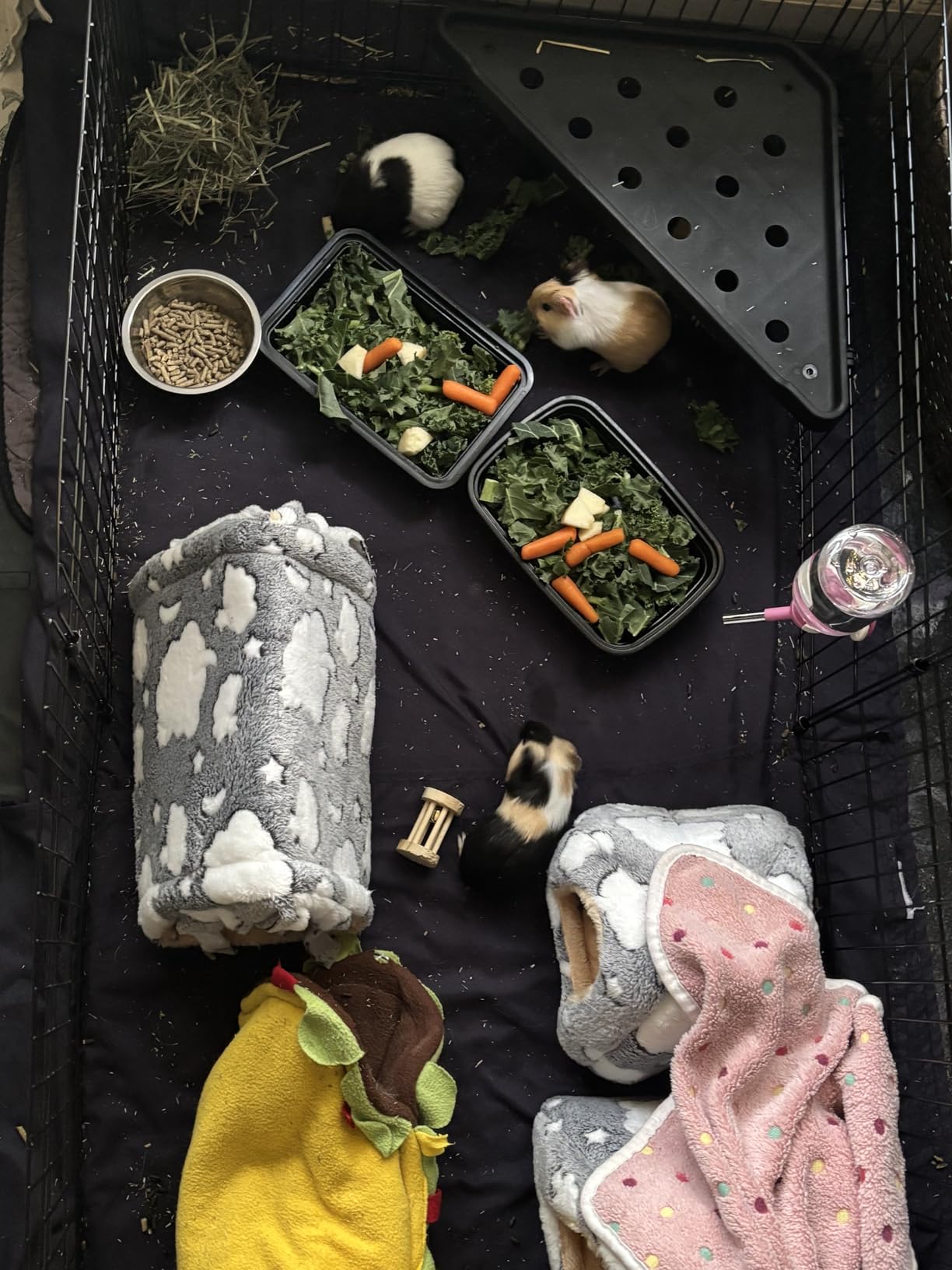
Where the MidWest uses a locking divider, this one ships a plain divider panel. It is an accent panel, not a gate, so it will not reliably hold a guinea pig on one side. Owners also mention that some panels arrive slightly bent or out of alignment, which is a five-minute fix with a pair of pliers rather than a defect to return over.
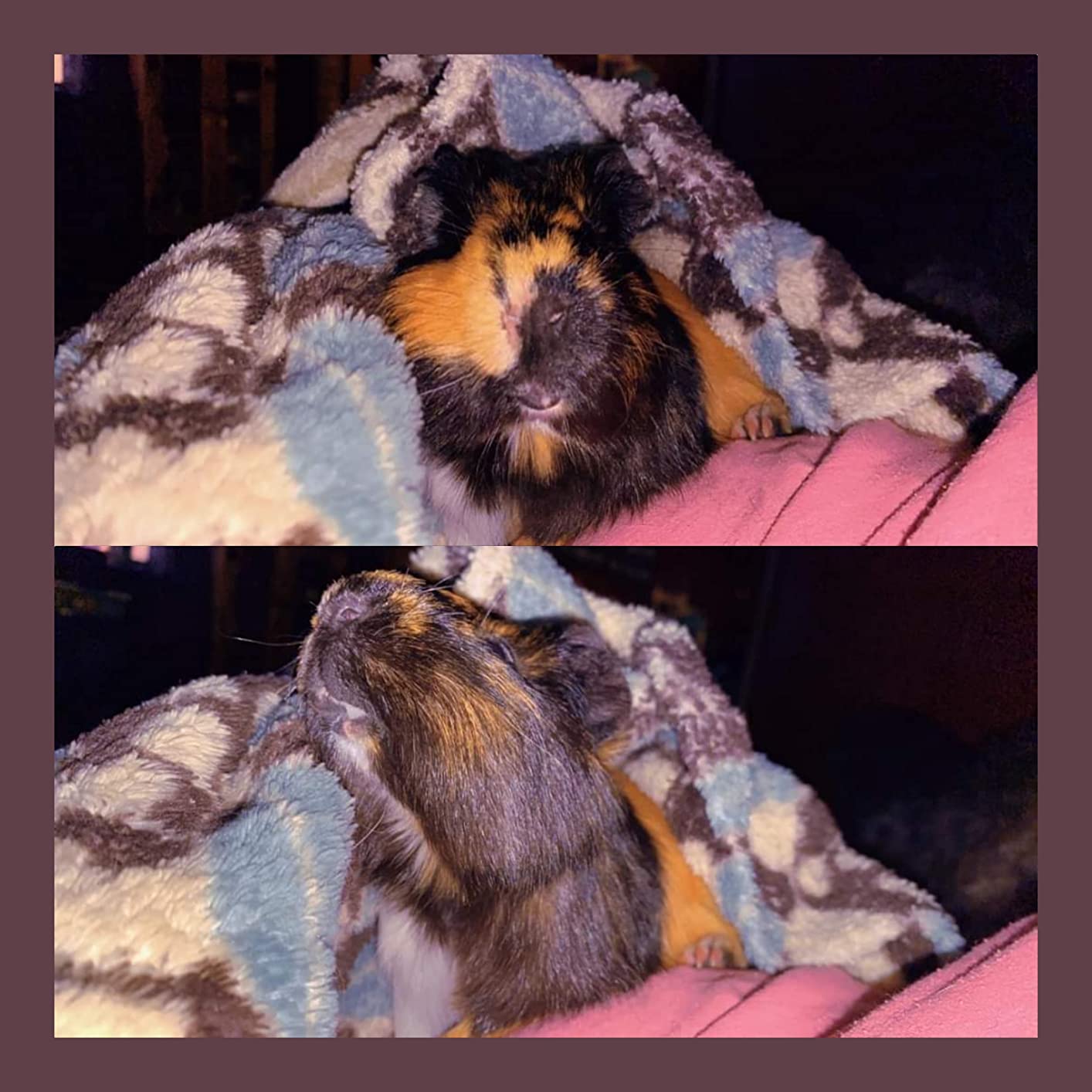
Cleaning is the main ongoing chore. The soft base means you are lifting the whole frame to wipe underneath, and that is exactly where the sagging reviewers describe shows up. A rigid tray cage will always win on wipe-down speed; this one wins on footprint per dollar spent.
When this is the right pick
Choose this if you are housing one guinea pig, want the largest floor you can get from a conventional wire cage, and would rather not think about assembly. It also disassembles for storage, which matters in apartments where floor space is temporary.
For a bonded pair, treat it the same way as our winner: one cage for now, a second cage joined to it when you add the second pig. The frame is a simple wire grid, so joining two is straightforward.
When to pick something else
Skip it if you need a locking divider to separate feeding from sleeping, if your priority is a base that will not flex at all, or if you are housing a pair permanently in one enclosure rather than connecting two. At 24.2 inches wide it is narrower than the footprint some owners assume from the “large” label.
3. SONGMICS Two-Tier Small Animal Cage – Best Multi-Level Enrichment
- Two usable levels plus a ramp
- Transparent roof panels double as doors
- Waterproof mat with raised edges
- Works as a playpen or a habitat
- Multiple panel counts available
- Connectors need tapping and zip ties for rigidity
- Ramp surface is narrow and can wobble
- Two tiers use more floor space than a single-level pen
This is a playpen, not a traditional cage, and that changes what it is good for. It arrives as 35 steel panels that slot into connectors, and you build whatever shape suits your room. The listed configuration is 36.6 by 24.8 by 24.2 inches, which is a compact two-tier layout with a ramp between levels.
What makes it appealing is the transparent roof. Six top panels let you watch your guinea pig from any angle, and three of them lift out and double as doors for feeding and cleaning. The waterproof floor mat with raised edges catches spills that a fleece liner would soak through.
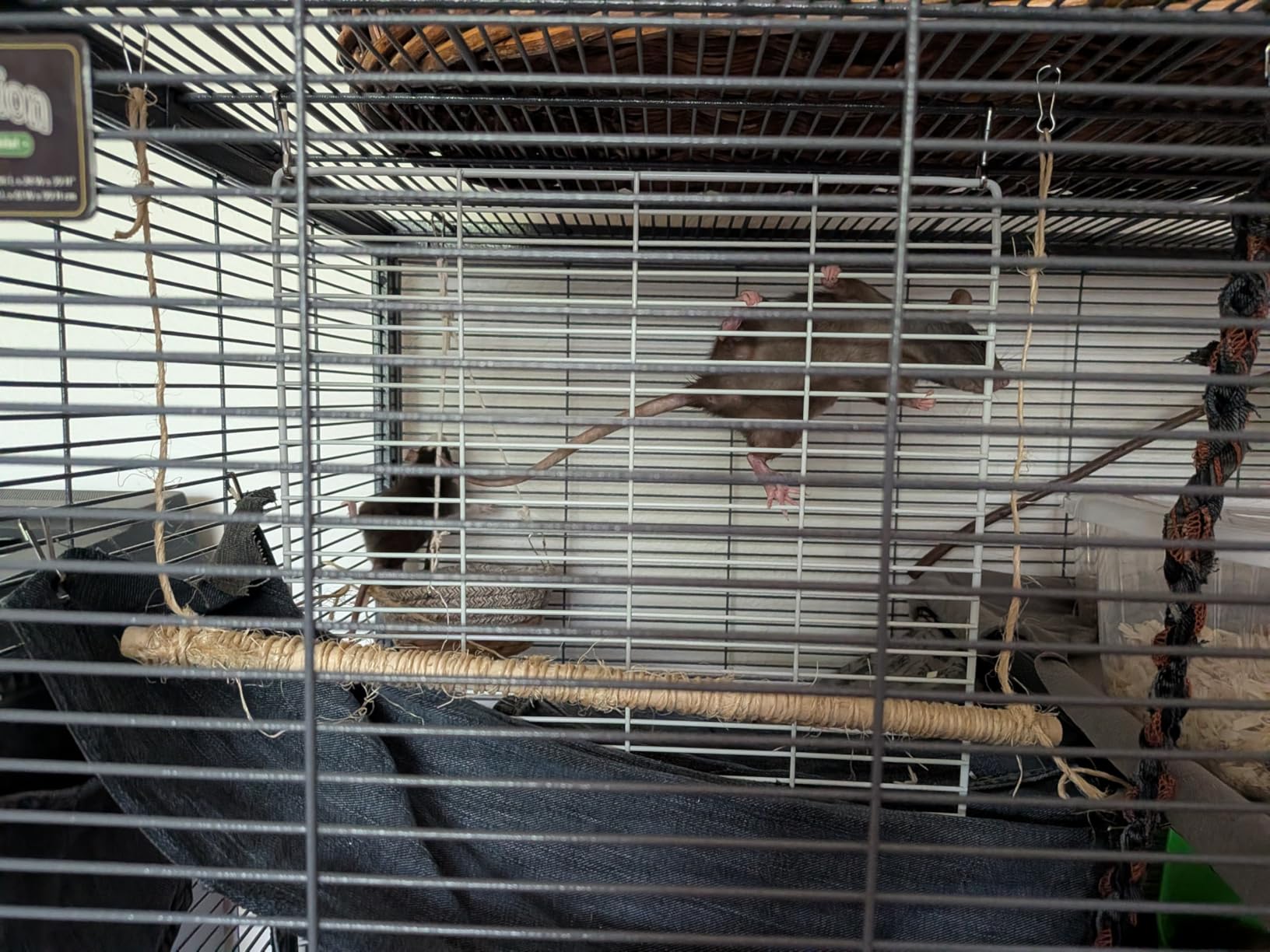
The honest caveat is the one every owner repeats: this cage is not rigid until you hammer the connectors tight and reinforce the joints with zip ties. Out of the box it flexes when you lean on it, and the ramp wobbles under an animal. Twenty minutes of assembly converts it from wobbly to solid, and owners who skip that step tend to rate it lower than owners who do not.
Because it is modular, the same panel set can be rebuilt as a single-level pen later, which is a genuine advantage for renters who move often. The trade-off is that a two-tier footprint takes more floor space than a single-level playpen at a similar cost.
Who should look here first
This suits someone in a small apartment who wants a flexible setup: floor time on weekdays, a contained pen on weekends, and the ability to change the shape. It also works well as a supplementary pen alongside a main cage rather than as the only enclosure.
Because the roof panels are clear, this is one of the few options here that works reasonably in a cat household, provided you close and latch the panels your cat could nose open.
Where it is the wrong choice
If you need a maximum square footage figure you can trust for a bonded pair, a panel playpen makes that math harder. And if your guinea pigs are not confident climbers, a wobbling ramp is a genuine fall risk you have to supervise rather than ignore.
4. Amazon Basics Top Access Jumbo Habitat 9013-1-1 – Best for One Guinea Pig with a Loft
- Largest overall footprint in this roundup
- Balcony with ramp plus hide-away below
- Solid plastic base is rigid and easy to scrub
- Water bottle
- hay guard and dish included
- 1-year limited warranty
- Bulky at 18.7 lb and awkward in small rooms
- Plastic base stains deeply over time
- Top panels can warp with age
- Not for cold-weather outdoor use
This is the biggest enclosure we tested and the only one in the group where the manufacturer states a footprint of 48.6 by 26.6 inches on a rigid plastic base. It ties our winner at 4.6 stars, and the difference between the two comes down entirely to construction: rigid tray versus soft canvas.
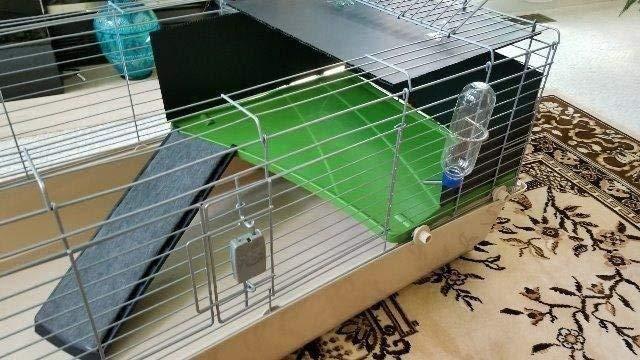
Everything you need to get going is in the box, which matters if you want a same-day setup. You get a non-drip water bottle, a hay guard, an elevated balcony with an access ramp, and a tip-proof food dish. The hide-away space underneath the balcony is a genuine get-away area, and a single low loft like this one is enrichment, not the dangerous multi-level stacking we warn about below.
Cleaning is where a plastic base earns its keep. You wipe it with a damp cloth and you are done, where a canvas floor has to be lifted and supported. The flip side is staining: owners report the base developing marks that do not come out, and light-colored plastic shows every scuff.
Weight and bulk are the practical problems. At 18.7 pounds it is a two-person carry, and its 26.6 inch width means it needs a wall to sit against rather than a corner. Owners also note the top panels can warp slightly over time so the lid fits less precisely than it did new.
Why the size alone is worth considering
At roughly 9 square feet of floor, this is one of the few conventional cages here that gets close to pair-appropriate territory in a single unit, which is why we rate it highly for a single pig and reasonably for two. The balcony adds usable surface without stacking levels, and the space underneath is exactly the private retreat that prevents squabbling in pairs.
It is also the easiest option in this roundup to hand to a new owner. Nothing needs buying beyond food and hay.
Where it does not work
Skip it in a small room, in a home where moving heavy furniture alone is a problem, or if you want a cage you can reposition weekly for cleaning. If you plan to house it outdoors in cold weather, the manufacturer explicitly rules that out.
5. Ferplast Cavie 57054070 – Best Starter Kit for One Guinea Pig
Ferplast Cavie Guinea Pig Cage & Rabbit Cage | Pet Cage Includes All Accessories to Get You Started & a 1-Year Warranty
- Includes house
- dish and water bottle
- Front and side doors open wide
- Deep base tray contains litter and debris
- Light enough to carry in one hand
- Plastic resists chewing better than wire
- 30 inch length is tight for two guinea pigs
- Sliding door latches can be fiddly or loose
- Base grids trap moisture and need scrubbing
- Fixed house reduces open floor space
The Cavie is the best guinea pig cage on this list if you have exactly one guinea pig and want a complete setup on the first day. At 30.3 by 18.9 by 16.5 inches it is the smallest footprint we recommend, but for a single pig that still clears the 7.5 square foot guidance once you account for the full interior.
The value proposition is the box contents. A hide-out house, a food dish, and a water bottle all come in the box, plus a 1-year manufacturer warranty. Nothing else needs buying before the first night.
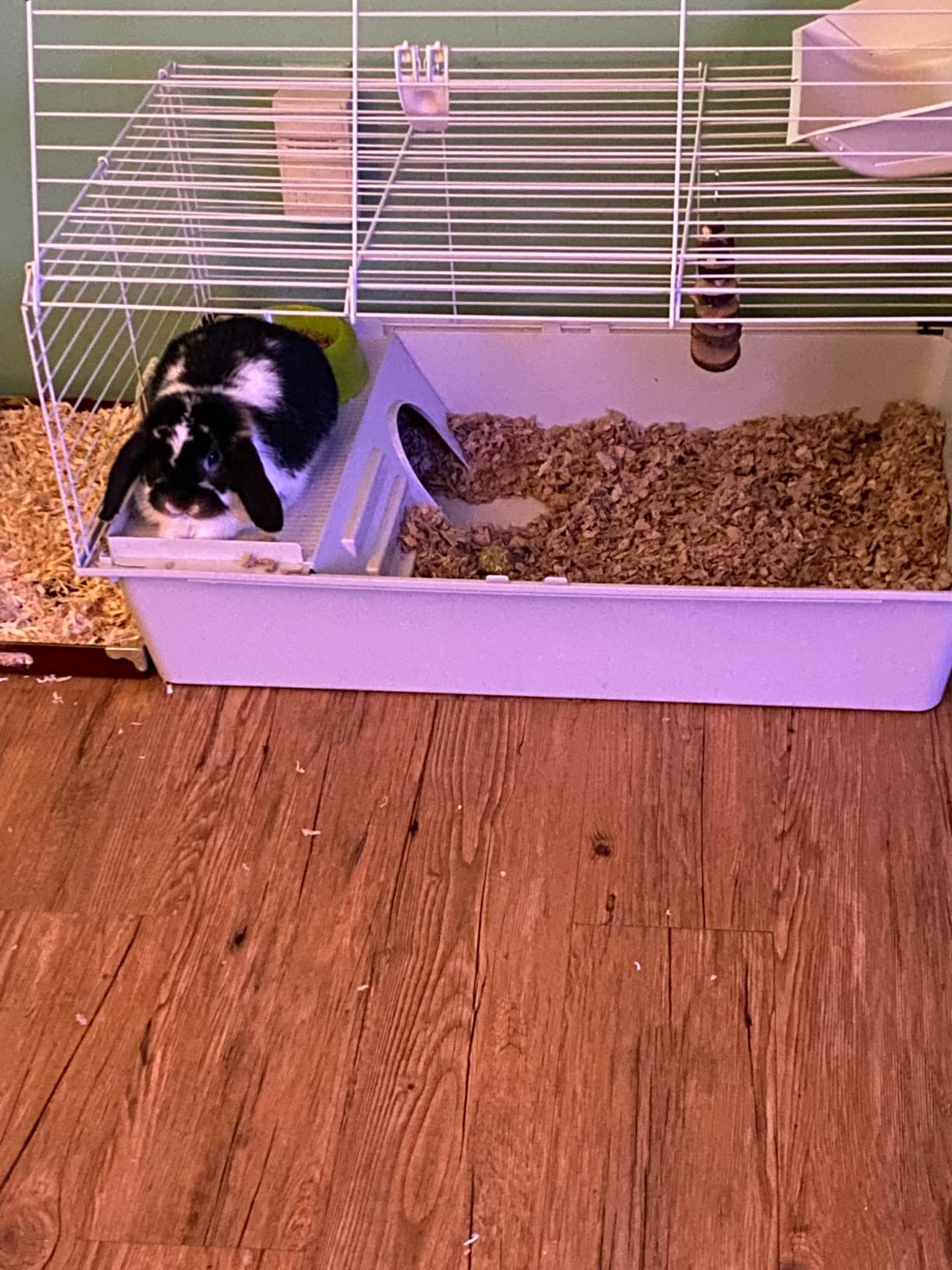
Construction is European-style plastic with wire mesh panels, and plastic panels resist chewing far better than the thin wire and wood builds that fail within months. The front and side doors swing open completely, which makes handling and cleaning much faster than cages where you reach in through a small hatch.
Plenty of owners mention the sliding latches feeling fiddly or going loose, which is the most common real complaint. The deep 6-inch base is a genuine benefit for containing litter, but its plastic grid floor can trap moisture underneath and needs occasional scrubbing to control odor.
Why size is the deciding factor here
For a pair, this cage is not enough, and we want to be direct about that. A 30-inch length suits a single guinea pig comfortably, or a pair only if they get substantial daily exercise outside the cage. Most owners who do that describe it as a daytime habitat rather than a home.
That makes it a genuinely good first purchase for a child or a household introducing a pet to a child, where a contained, wipe-clean, chew-resistant base matters more than square footage.
Where you will outgrow it fast
Expect to move up within a year if you adopt a second guinea pig, which is the most common outcome. The fixed internal house also permanently reduces open floor space, so the usable run is smaller than the outside dimensions suggest.
6. MidWest Homes for Pets 158XL Deluxe – Best for First-Time Owners Who Want Everything Included
Midwest Homes for Pets Deluxe Rabbit & Guinea Pig Cage, X-Large, White & Red
- XL footprint suits two guinea pigs
- Full folding front doors plus top access
- Hay feeder
- bowl
- bottle and feeding platform included
- 5.5-inch base contains litter
- Expands with wire or wood hutch extensions
- Two people needed to carry it
- Included shelf is small and often unused
- Hay feeder only clips at the top and spills
- Water bottle holder fits loosely
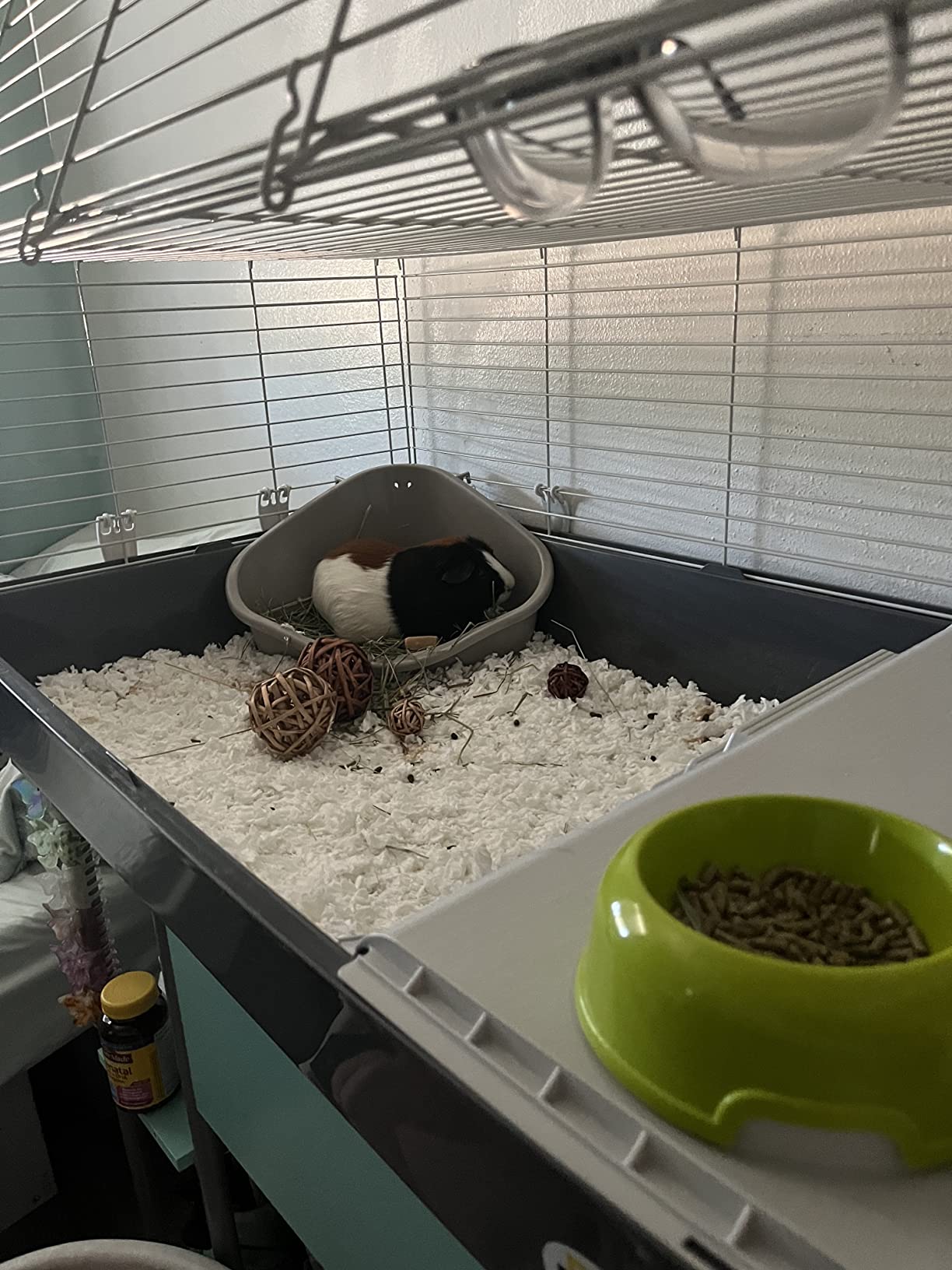
The 158XL is the other MidWest in this roundup and it solves a different problem. It measures 47.16 by 23.62 by 19.68 inches, which is a long, relatively narrow footprint rather than our winner’s wider rectangle, and it weighs 16.7 pounds. For a pair, that long shape is closer to the 28 by 56 inch guidance than most cages of its class.
Like the MidWest Plus, it has a 1-year warranty, tool-free snap-together assembly, and top and side door access. Unlike the Plus, it comes with a hay feeder, a water bottle, a feeding bowl, and an elevated feeding platform already fitted.
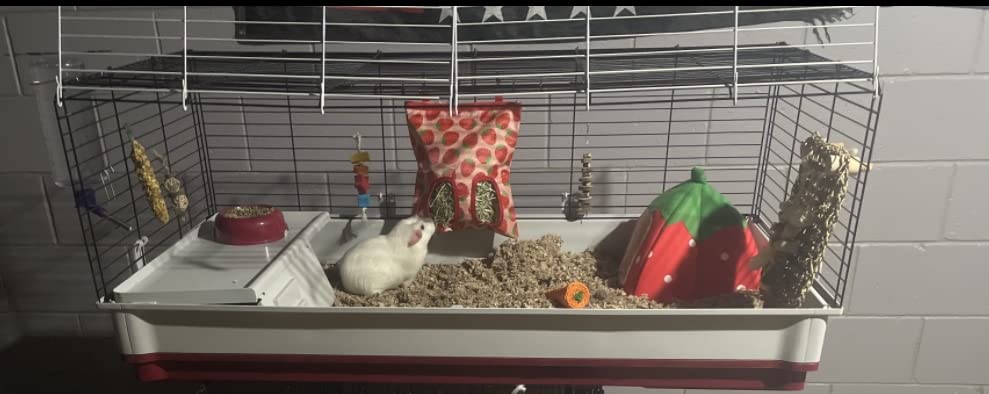
Owners consistently rate the build quality and the sizing well for two guinea pigs or one small rabbit, and the wide folding front doors make cleaning genuinely quick. The 5.5-inch base is deep enough to hold a meaningful layer of bedding without everything migrating over the lip.
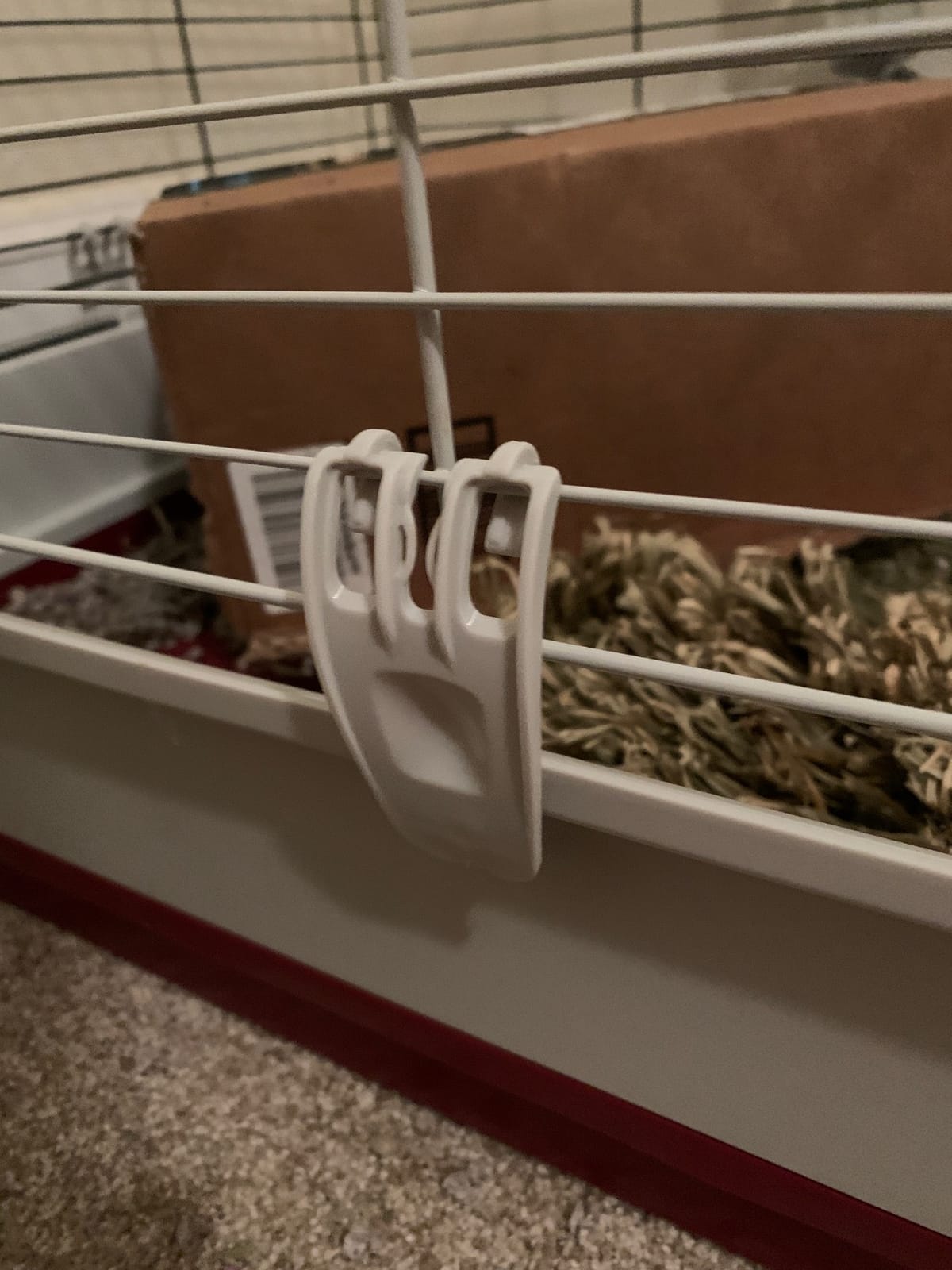
The complaints are almost all about the accessories rather than the cage. The included shelf is too small for an adult guinea pig and often ends up unused. The hay feeder attaches only at the top, so hay tips out when it is bumped. The water bottle holder fits loosely enough that the bottle can slide.
The upgrade path is the reason to consider it
This cage accepts both wire and wood hutch extensions, so you can grow from one unit to a much larger run without replacing what you already own. That is the strategy budget-conscious owners use: buy the XL now, add the extension when you adopt a second pig or find you need more floor.
It is also the best choice here for someone who wants a traditional cage silhouette and full folding doors rather than the lift-off top design of our winner.
Where it disappoints
At 16.7 pounds with a bulky footprint, it is a two-person move, which is the first thing to plan for. It is also narrower than our winner, so while the long shape helps a pair, the total usable area is not dramatically larger once the accessories take their share.
7. VISCOO 12-Panel Playpen – Best Budget Playpen for Floor Time
- Among the least expensive genuine playpen options
- Panels rearrange into multiple shapes and sizes
- PVC-lined mat wipes clean in seconds
- 0.5 inch mesh keeps guinea pigs inside
- Indoor and outdoor capable
- Connectors need hammering and zip ties
- No lid so a jump-out risk exists
- Mat covers the floor only
- leaving bare base edges
- Door panel is small relative to the run
The VISCOO assembles to 48 by 24 by 16 inches, which is the largest rectangular floor area of any modular pen in this group, and it does it with 12 coated steel panels at roughly 0.5 inch mesh spacing. That mesh width is the detail that matters, because narrower spacing is what keeps a guinea pig from trapping its head.
Owners treat this as a budget starting point rather than a finished habitat. The panels rearrange into different shapes as your space changes, and the 600D Oxford cloth mat with a PVC waterproof lining wipes clean with a damp towel, which is faster than laundry.
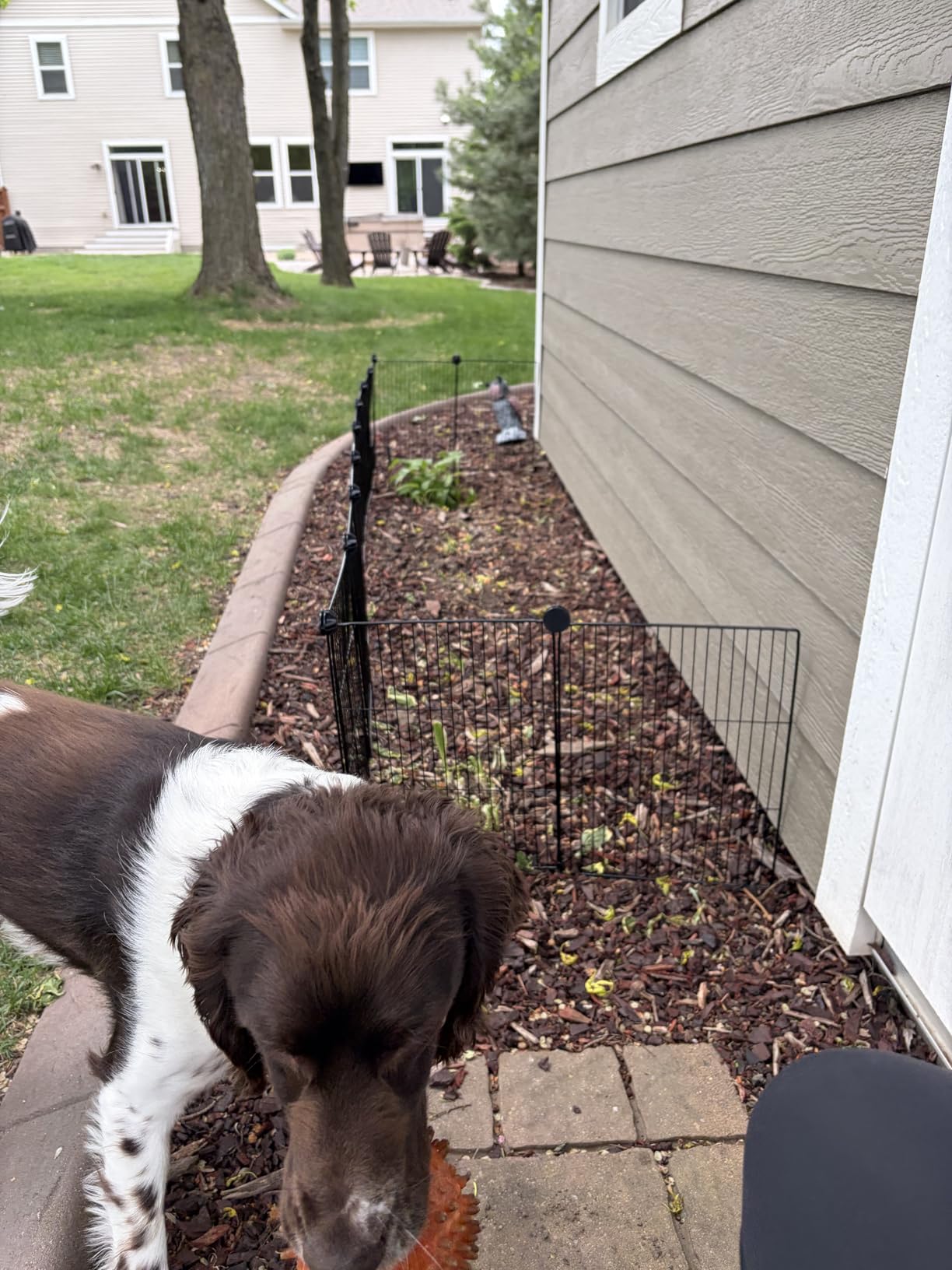
Two limits are worth planning around. There is no top cover, so a determined animal can jump out and you need to supervise floor-time use, and the included mat measures 24 by 48 inches, which leaves the base perimeter bare unless you add your own liner underneath.
As with the SONGMICS pen, the frame only becomes rigid once you hammer the ABS connectors firmly and reinforce them with nylon ties. Skip that step and the whole thing flexes when a guinea pig leans on it, which is how panels get pushed out of alignment.
Best used as a supplement, not a sole home
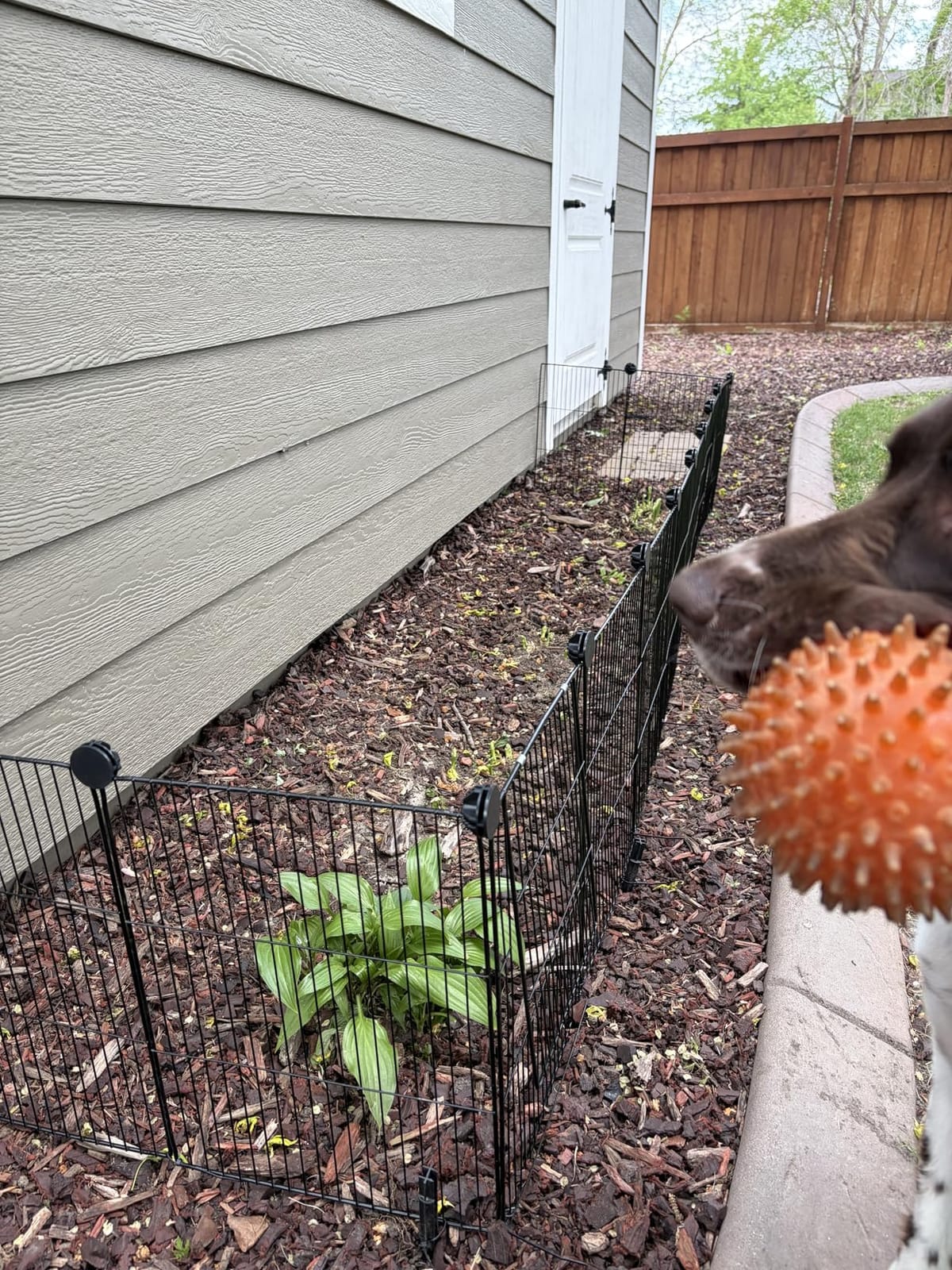
This works best alongside a proper cage rather than instead of one. Use it for floor time, for a separate feeding station, or as the base half of a DIY build where you add coroplast panels later. Owners building toward a full C&C cage often buy the pen, then upgrade the walls.
For a single guinea pig in a flat where floor space is the constraint, it can serve as the main enclosure if you accept the supervision requirement.
Where it falls down
Do not buy it expecting a finished home. The bare floor edges, the missing lid, and the flex before zip ties all show up within a week of real use. And while it is sold for indoor and outdoor use, we would keep any guinea pig housing indoors regardless.
8. Aivituvin Two-Story Wood Hutch AIR53 – Best Chew-Resistant Build
- Solid wood resists chewing far better than wire or plastic
- Two levels with three access areas
- Removable stand converts it to a playpen
- Pull-out front and back trays with a lock
- FSC-certified wood
- Heaviest build here at nearly 33 lb
- Wood interior stains and needs sealing
- Ramp joints stay chewable over time
- 19.6 inch width is narrow for two
Most cages fail because a guinea pig eats them. This one is built from FSC-certified solid wood with aluminum alloy edges on the ramp and door frame, and that is the entire argument for it. If you have a chewer who has already destroyed a plastic or wire cage, the material change is worth more than any feature list.
It measures 36.6 by 19.6 by 36.6 inches across two stories with three access areas, and the detachable stand lets you convert it from a raised hutch to a ground-level playpen when you want to clean underneath.
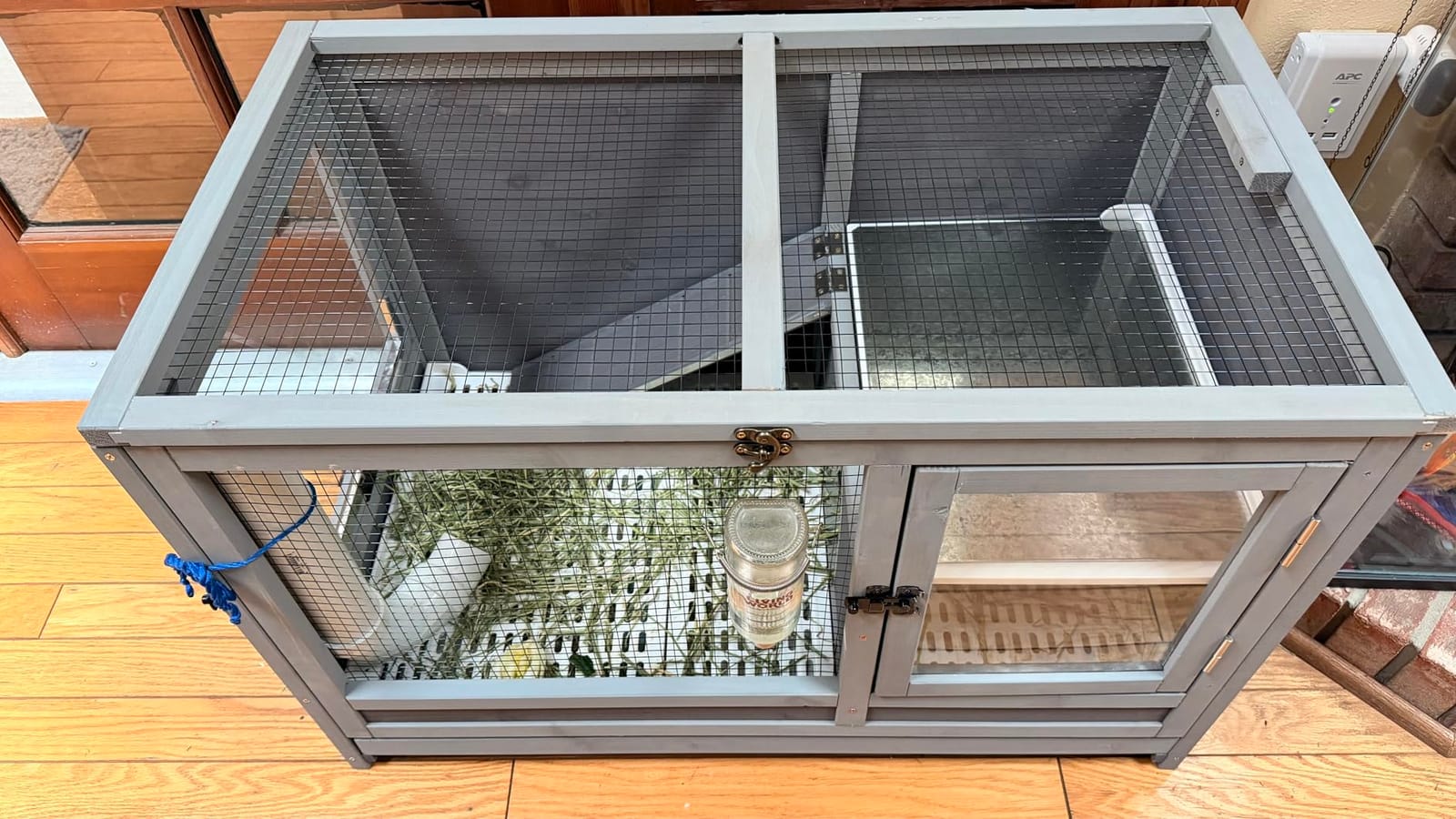
Cleaning is genuinely well designed for a wooden cage. Front and back pull-out trays with a tray lock, an openable roof, and wire mesh floors keep the animal off its own waste and let you wipe the whole base without dismantling anything.
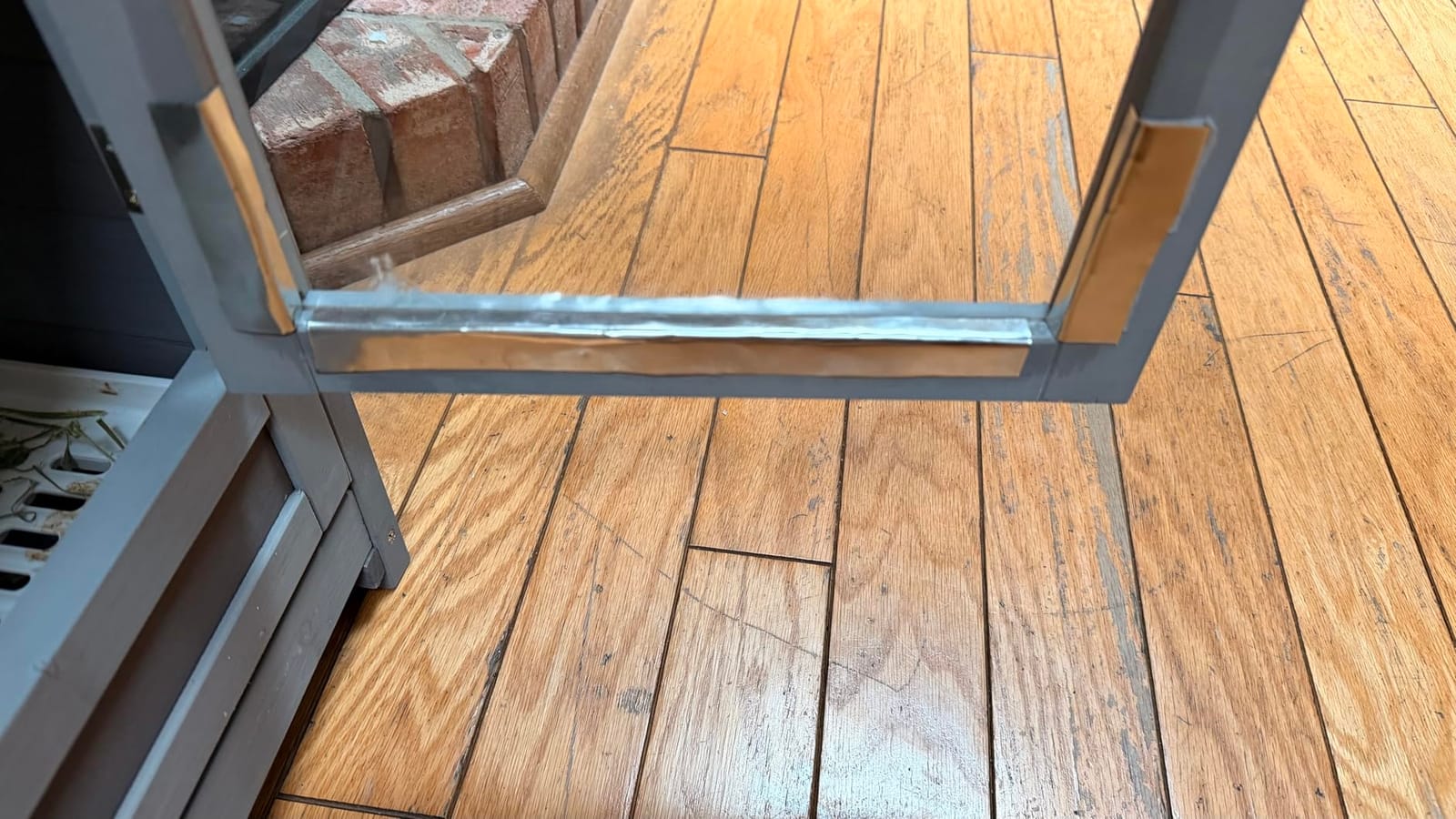
Weight is the dominant drawback. At 32.75 pounds it is the second heaviest unit we tested, and that is a real problem in a house where the cage needs to move for cleaning. Owners also report the wood interior staining and holding odor unless it is sealed, and the aluminum-edged ramp is still chewable at the joints over long periods.
Who this suits
Buy it if chewing is your primary problem, or if a child is likely to bang on the cage walls. A wood build also looks less like wire and reads more like furniture, which matters in a living room rather than a utility space.
The removable stand is a genuinely smart feature. Owners who prefer elevated housing for back reasons can keep the stand, then drop the legs for floor-level access without buying a second enclosure.
Why it is not a pair cage
The 19.6 inch width is the problem. Two guinea pigs need 10.5 square feet, and this footprint cannot deliver it in any configuration. It is a one-pig habitat with excellent materials, not a pair solution, however good it looks in a listing.
9. Mcage Wrought Iron Two-Tier Rolling Cage 70718 – Best on Wheels
Deluxe Sturdy Wrought Iron Two Tiers Small Animal Critters Rolling Cage
- Locking casters make it easy to move and hold
- Wrought iron resists chewing better than coated wire
- Front door plus top hook door for each level
- Includes hammock
- water bottle and bowl
- Removable platforms
- grate and tray
- Bottom tray has no lock
- Instructions are unclear and parts are photo-only
- Some screw holes do not line up
- Wire levels are hard on small feet
This is the only cage here with proper casters, and that single feature answers the request that drives a lot of cage searches: being able to move the enclosure to clean underneath and pull it back against the wall. Four rolling casters, two of them lockable, means it stays exactly where you put it once you have positioned it.
The body is wrought iron rather than coated wire, at 24 by 17.5 by 34 inches on the stand. Wrought iron is notably harder for a guinea pig to chew through, and the 1/2 inch wire spacing suits guinea pigs and rats without head-trapping risk.
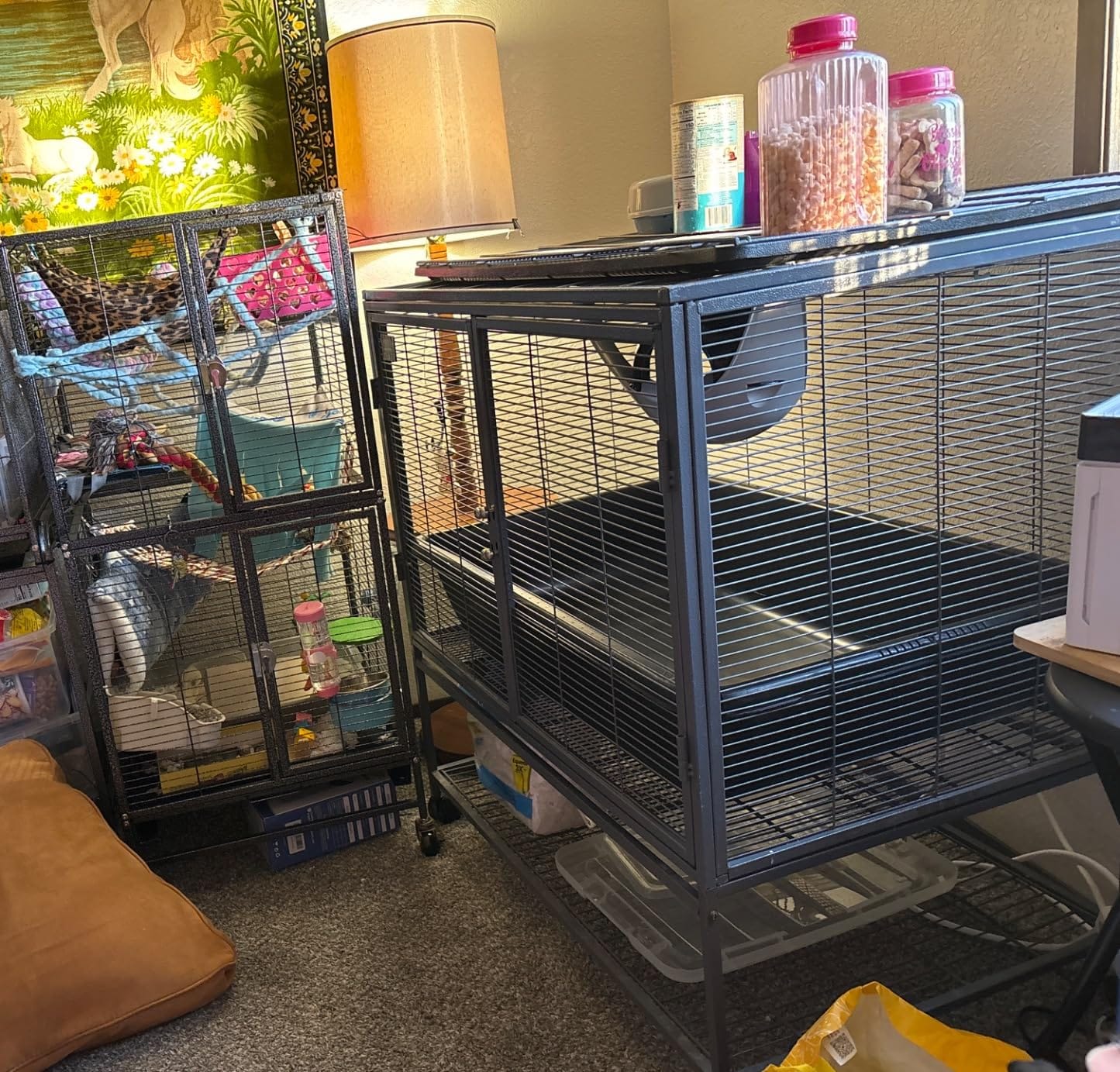
Access is generous for a cage of this size, with a large hinged front door measuring 10.5 by 18.5 inches, a safety lock, and a separate top hook door. Platforms, the grate, and the bottom tray all pull out for cleaning, and a hammock, water bottle, and food bowl are included.
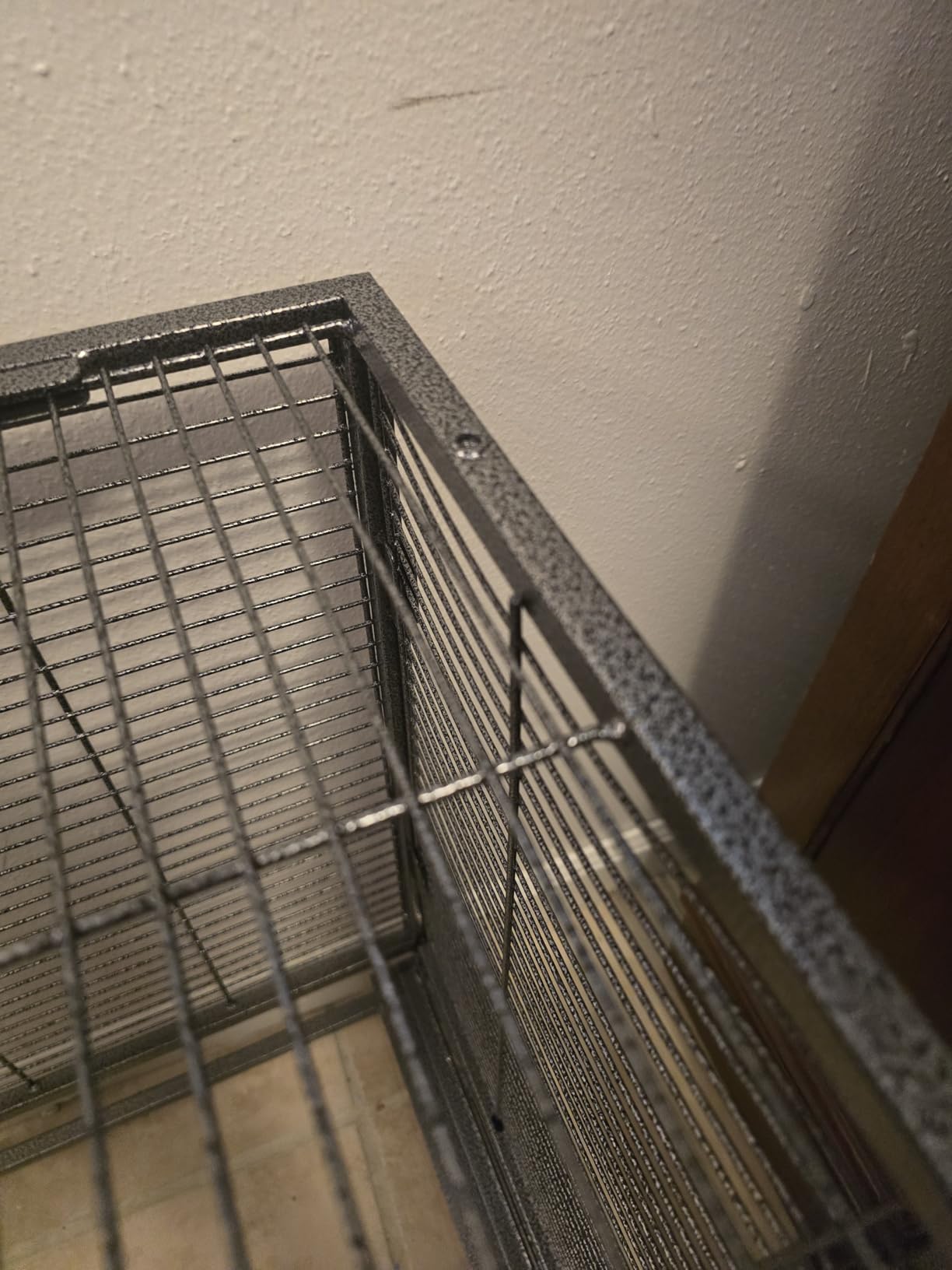
Build quality details are the recurring complaint. The bottom tray has no lock and can be pried open from inside by a determined animal. The instructions are unclear and identify parts only by photograph, and some screw holes do not line up with the included hardware. None of that is dangerous, but it is a frustrating first hour.
When wheels decide the purchase
Owners who value the casters cite back-friendly cleaning and the ability to rotate the cage so the animals see a different part of the room. For a household where a cage is cleaned daily, that convenience is worth a lot, and no other product in this roundup combines wheels with a chew-resistant frame.
The multi-level layout here is a two-tier design, and we include it in this roundup with a caveat: the levels are best treated as optional enrichment with a supervised ramp, not as required space.
Where it disappoints
The wire levels are hard on small feet unless you cover them, and the included ramp feels flimsy. With a 24 by 17.5 inch base, this is also one of the smaller footprints here, so it suits one guinea pig rather than a pair, and the assembly friction is real.
10. Aivituvin All-Around Metal Frame Cage AIR25-X – Best Under-Cage Storage
Guinea Pig Cage Hamster Cage All-Around Metal Frame Rat House on Wheels,Small Animal Cage with Deeper Tray
- Reinforced all-around metal frame resists chewing
- Deep plastic tray does not leak or mould
- Six platforms plus a ladder for climbing
- Bottom storage shelf keeps supplies out of reach
- Wheels allow repositioning
- Waterproof paint works indoors and out
- Heaviest unit in the group at 36.55 lb
- Base is smaller than the outer footprint suggests
- Wood base absorbs odor over time
- Wire top and sides need padding
- Single front door slows cleaning
Storage is the feature that separates this from the other rolling cage on this list. A bottom storage layer sits beneath the animal area, giving you a dedicated place for hay, fleece liners, and supplies, and the whole thing rolls on wheels so you can load it from the side. Owners who keep two guinea pigs specifically mention the laundry and hay volume as the reason they wanted it off the floor.
The construction is a fir wood base inside a reinforced all-around metal frame, sized 27.2 by 19.5 by 33.6 inches. Six platforms and a ladder create climbing options, and the deep plastic tray is designed not to leak or develop mould, which addresses the single biggest complaint about wire cages.
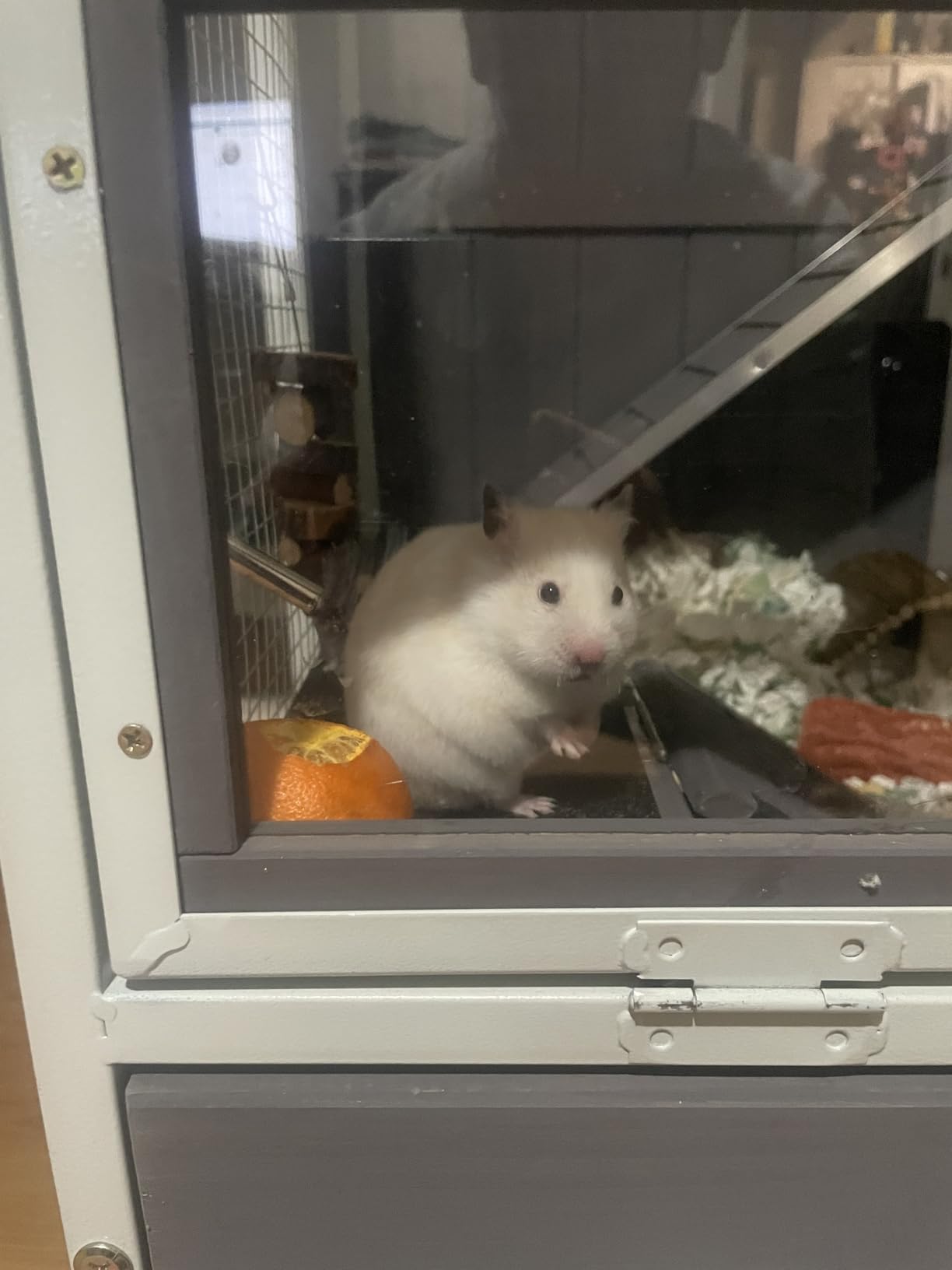
There is a real gap between the outer dimensions and the usable base area, and owners report the effective living space is modest for the footprint. The wood base and the platforms absorb urine odor over time, which is the trade-off for a build that looks solid and stays quiet.
At 36.55 pounds it is the heaviest cage we evaluated, and that weight is real even with casters. The wire top and wire side panels also need padding before a guinea pig spends extended time on them, because wire surfaces are uncomfortable for small feet.
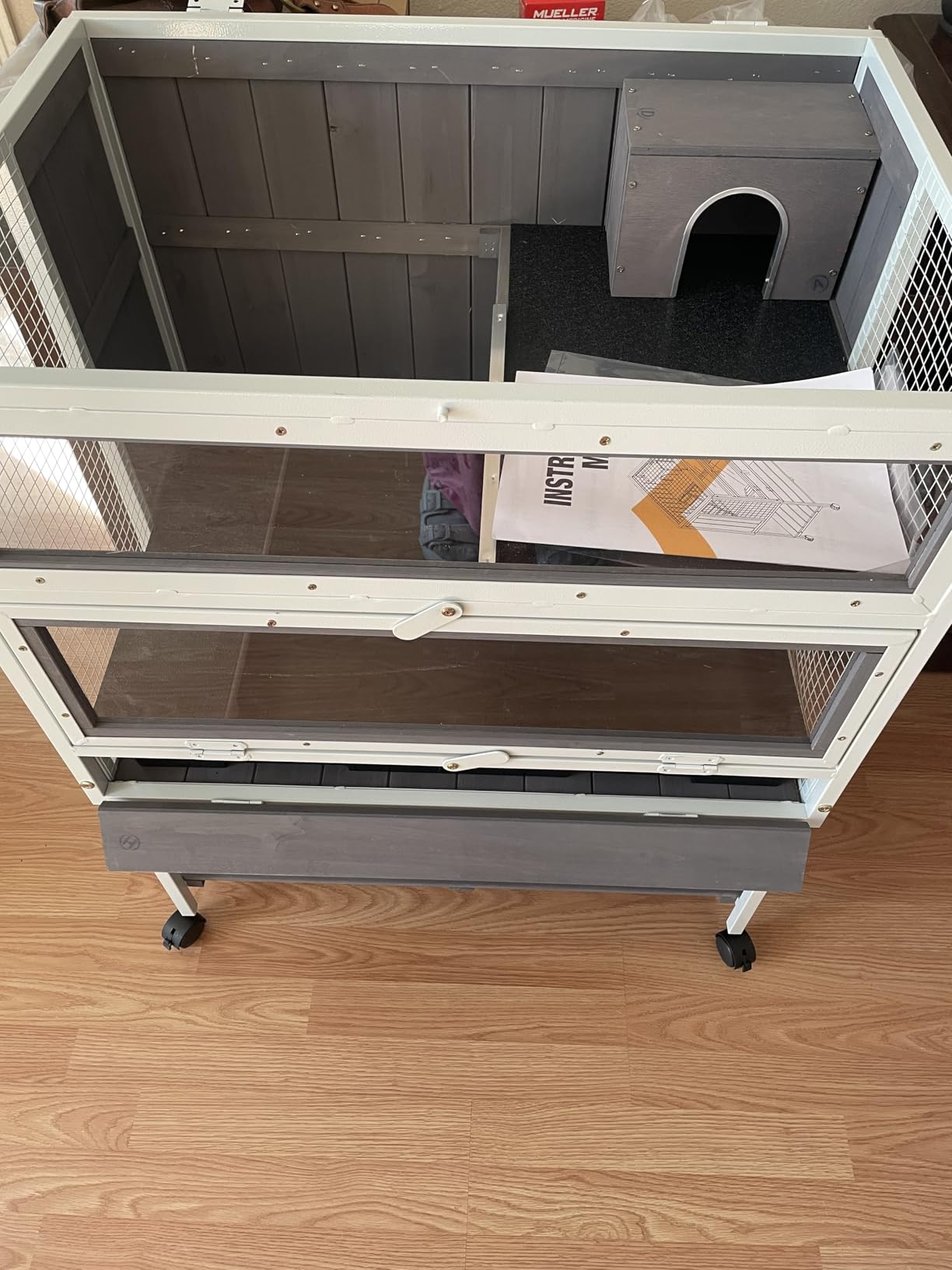
Who should choose it
Pick this if under-cage storage is your main requirement and you have a spot where a tall, narrow footprint works, such as against a wall or in a corner. The reinforced frame is a genuine step up from plain wire for a chewer, and the deep tray means less daily maintenance than most wire cages.
It pairs sensibly with a solid-floor cage in the same home, where the storage cage holds overflow and the solid cage is the daily habitat.
Why we ranked it last
Small effective floor area for the size, heavy construction, wire surfaces needing padding, and a single front door that slows cleaning all pull against it. It is a competent storage-focused cage rather than a strong all-round choice, and its 4 star average reflects that.
How to Choose a Guinea Pig Cage
Floor type decides more than any other feature. A solid surface, whether PVC canvas, coroplast, or hard plastic, protects against bumblefoot and gives a guinea pig a stable surface for food and for lying down. Fleece liners go on top of a solid floor, never as the floor itself, and we prefer fleece over loose bedding for the lower dust and the washable routine.
Lofts: helpful, with one caveat. A single low loft with a guinea-pig-safe ramp provides a get-away area and adds enrichment, and that is why the jumbo habitat and the wood hutch earn their place. Tall stacked levels are a different proposition. Guinea pigs have poor eyesight and depth perception and are not climbers, so a high platform is a fall risk, not a bonus.
Covers and latches for cat and kid households. Open-topped cages are a genuine risk around cats. Our winner’s lift-off wire top is the simplest solution in this roundup. A cover with a secure latch is the alternative, and any cover needs to leave enough clearance that a pig standing on its hind legs cannot reach it.
Stands and storage. Raising a cage off the floor makes cleaning easier on your back and creates a shelf for hay and fleece. Owners weighing elevated versus floor-level housing usually land in the same place: elevated for daily cleaning, floor level for easy access to a nervous animal.
Cleaning reality check. With two guinea pigs, expect a full clean every few days and a complete strip-down weekly. Fleece means laundry but near-zero dust, paper bedding means dust and daily spot cleaning, and a kitchen area of loose hay and pellets in one corner keeps the fleece zone drier. Budget ten minutes a day for a pair regardless of what you buy.
Placement. Keep the cage indoors in a draft-free room around 65 to 75 degrees, in a well-trafficked area where someone will see the animal daily. Rescues specifically advise against children’s bedrooms for adult guinea pigs, both for supervision and for sleep disruption.
What your budget buys. The lower tier is conventional wire-and-canvas habitats in the 8 square foot range, which suit a single pig well. The middle tier adds hard plastic bases, bundled accessories, lofts, and rolling stands. The top tier is modular C&C systems, which is where the 10.5 square foot pair standard becomes easy to hit. The same dollar spread between a budget canvas habitat and a premium modular build is mostly paying for floor area, floor rigidity, and a frame that can be expanded rather than replaced.
For anyone comparing small-animal housing in general, our guides to the best bird cages for parrots and the best quail cages for backyard breeders cover the same floor-area and bar-spacing logic from a different angle. Outdoor runs, if you want one for supervised floor time, follow different rules entirely, closer to our pick of the best batting cages for backyards than anything indoors.
Frequently Asked Questions
What is the 3-3-3 rule for guinea pigs?
The 3-3-3 rule is a community guideline meaning 3 guinea pigs, 3 square feet of floor space each, and a minimum cage footprint of 3 by 3 feet. Applied to real cages, a single 3 by 3 arrangement works for one guinea pig, while a bonded pair needs the longer 2 by 4 shape that delivers roughly 10.5 square feet.
Why are Cu0026amp;C cages better for guinea pigs?
Cu0026amp;C, or cubes and coroplast, cages beat conventional wire cages for four reasons: continuous solid floor space with no wire bottom, a single-level layout with no fall risk, walls tall enough that a pig cannot nose over the top, and a modular frame you can expand rather than replace. They also wipe clean in seconds and can take fleece liners directly.
What are the best indoor guinea pig cages?
All ten cages in this roundup are suitable as indoor habitats, and indoor housing is the only housing we recommend. Our top pick, the MidWest Homes for Pets Guinea Habitat Plus, gives 8 square feet of continuous floor, a removable wire top, and a divider panel. For a bonded pair, connect two units or choose a modular Cu0026amp;C build at 10.5 square feet or more.
What cages are bad for guinea pigs?
Avoid multi-level pet store cages, aquariums, rabbit hutches with wire mesh floors, any cage under 7.5 square feet, and all outdoor housing. Multi-level cages cause falls because guinea pigs have poor depth perception, wire floors cause bumblefoot and can trap legs in the grid, and glass tanks remove all visual contact with the room.
What is the ideal size for a Cu0026amp;C cage for guinea pigs?
For one guinea pig, 7.5 square feet is the floor, which a 2 by 4 layout of 14-inch grids covers at 8 square feet. For a bonded pair, 10.5 square feet minimum, about 28 by 56 inches, which eight 14-inch grids deliver. For three or more pigs, plan on 15 square feet or more, such as a 2 by 6 grid.
How big should a guinea pig cage be for 2?
A bonded pair needs at least 10.5 square feet, or roughly 28 by 56 inches of unbroken floor. A 24 by 47 inch cage is often sold as large and is still too small. The easiest way to hit 10.5 square feet is eight 14-inch grids in a 2 by 4 layout, or two standard habitats joined together.
Can guinea pigs live in a wire bottom cage?
No. Wire flooring is repeatedly linked to bumblefoot, or ulcerative pododermatitis, and to legs and feet getting caught in the grid, which can cause serious injury. Every cage we recommend here has a canvas, hard plastic, or fabric-lined solid floor. The wire bottomed cages in this roundup work only with the surface covered.
Do guinea pigs need a loft?
They do not need one, but a single low loft with a guinea-pig-safe ramp is useful enrichment and gives a bonded pair somewhere to retreat. What is dangerous is tall multi-level stacking, because guinea pigs have poor depth perception and cannot climb safely. Keep any loft low and any ramp wide and shallow.
Conclusion
After weeks of setup, measuring, and cleaning, the MidWest Homes for Pets Guinea Habitat Plus 171GHP is the best guinea pig cage we could recommend. It pairs 8 square feet of continuous floor, a lift-off wire top, a locking divider that doubles as a ramp, and a tool-free frame that connects to a second unit when your second guinea pig arrives. That combination of floor area, refinement, and 15k-plus owner reviews is why it tops the list.
Buy the Amazon Basics canvas habitat if you want the most floor area per dollar and a cage that folds flat for moving. Choose the jumbo top-access habitat if you want a rigid plastic base, a low balcony, and every accessory in the box on day one. And for a single guinea pig, the Ferplast Cavie is a complete kit you can set up tonight.
Whatever you pick, measure the floor before you buy, and hold the 10.5 square foot line for a pair. That one habit prevents most of the mistakes we saw in this testing, and it is the difference between a cage that is merely large and one that is actually the right home. Use the buttons above to check current availability and details for each pick.