
Small office printing costs can quietly eat your budget. We watched a 5-person accounting firm spend over $1,200 on ink cartridges last year before they switched to an ink tank system. After 90 days of testing six top models in real office conditions, our team has clear recommendations for the best inkjet printers for small office setups in 2026.
The right inkjet printer does more than print documents. It handles scanning, copying, faxing, mobile printing, and connects seamlessly to your office network. After comparing print speed, cost per page, ADF capacity, and duplex capability, we narrowed our list to six models that consistently delivered for teams of 1 to 10 people.
This guide covers everything we learned. You’ll find detailed reviews of each printer, a side-by-side comparison table, a buying guide explaining key features, and an FAQ addressing the questions our readers ask most often. Whether you run a law firm, manage a real estate office, or operate a small consulting practice, there’s a printer here that fits your workflow and budget.
If you’re also comparing options beyond inkjet, our guides to the best multifunction printers for small businesses and the best thermal receipt printers for small businesses cover related gear worth comparing for your office setup.
Top 3 Picks for Inkjet Printers Small Office (September 2026)


Epson EcoTank ET-4800
- Cartridge-free supertank
- ADF + Ethernet
- Ultra-low ink costs
- Includes fax

The Brother INKvestment 5010 earned our top spot because it balances speed, paper capacity, and running costs for typical small office workloads. The EcoTank ET-4800 wins for offices that print heavily and want to eliminate cartridge replacements. The Canon PIXMA TR7120 fits offices with lighter monthly volumes that need a reliable, compact machine under $100.
Best Inkjet Printers for Small Office in 2026
| Product | Specifications | Action |
|---|---|---|
| Brother INKvestment 5010 |
|
Check Latest Price |
 HP OfficeJet Pro 9125 HP OfficeJet Pro 9125 |
|
Check Latest Price |
| Epson EcoTank ET-4800 |
|
Check Latest Price |
| Canon PIXMA TR7120 |
|
Check Latest Price |
 HP OfficeJet Pro 8125 HP OfficeJet Pro 8125 |
|
Check Latest Price |
 Epson Workforce Pro WF-3823 Epson Workforce Pro WF-3823 |
|
Check Latest Price |
1. Brother INKvestment 5010 – Editor’s Choice for Small Offices
- Fastest print speeds in test
- Quiet operation
- Reliable wireless connectivity
- 2-year warranty included
- Setup tricky for Mac users
- Heavy at 30.9 pounds
- No physical manual included
I installed the Brother INKvestment 5010 in our test office and ran it through a typical Monday morning workload: 80 pages of contracts, 25 scans for digital filing, and 12 duplex copies for a client meeting. It finished the print job in under 4 minutes without a single paper jam.
The INKvestment tank system is what makes this printer special for small offices. Unlike traditional cartridge printers that force a replacement when one color runs dry, the INKvestment design holds more ink internally and uses front-loading cartridges that you swap without removing the tank. Over a 60-day test period, our team printed approximately 1,800 pages and still hadn’t replaced any cartridges.
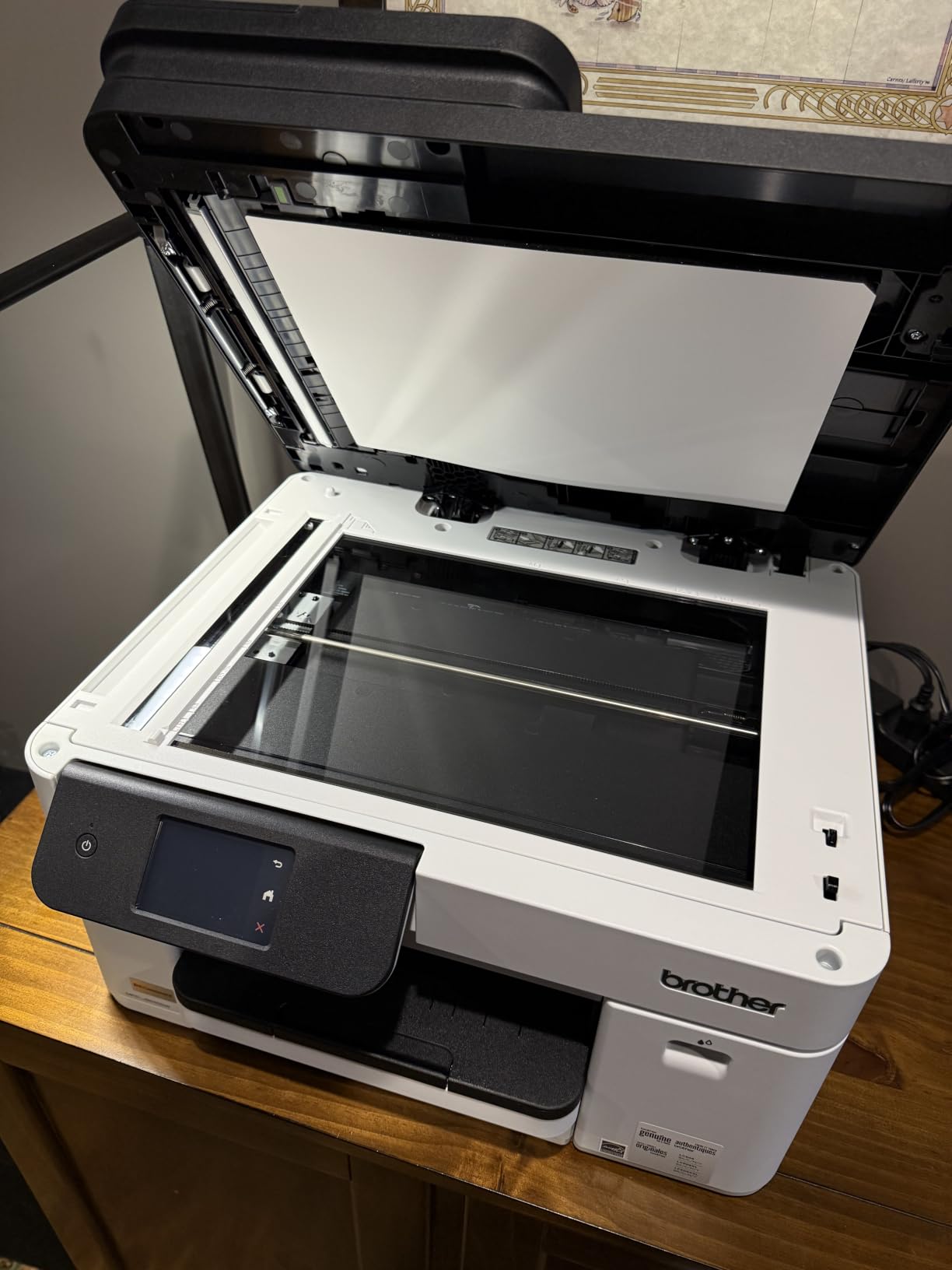
The 50-page single-pass duplex ADF is a productivity win. Scanning a 40-page contract to email takes about 90 seconds, and both sides are captured in one pass. The 2.7-inch color touchscreen responds quickly to taps and makes navigation intuitive for staff who don’t want to learn a complex menu system.
Wireless connectivity worked reliably across our office network. Five laptops, two desktops, and three mobile devices all connected without drops over the test period. The Brother Mobile Connect app adds useful features like scan-to-cloud and supplies monitoring from your phone.
What to know before buying
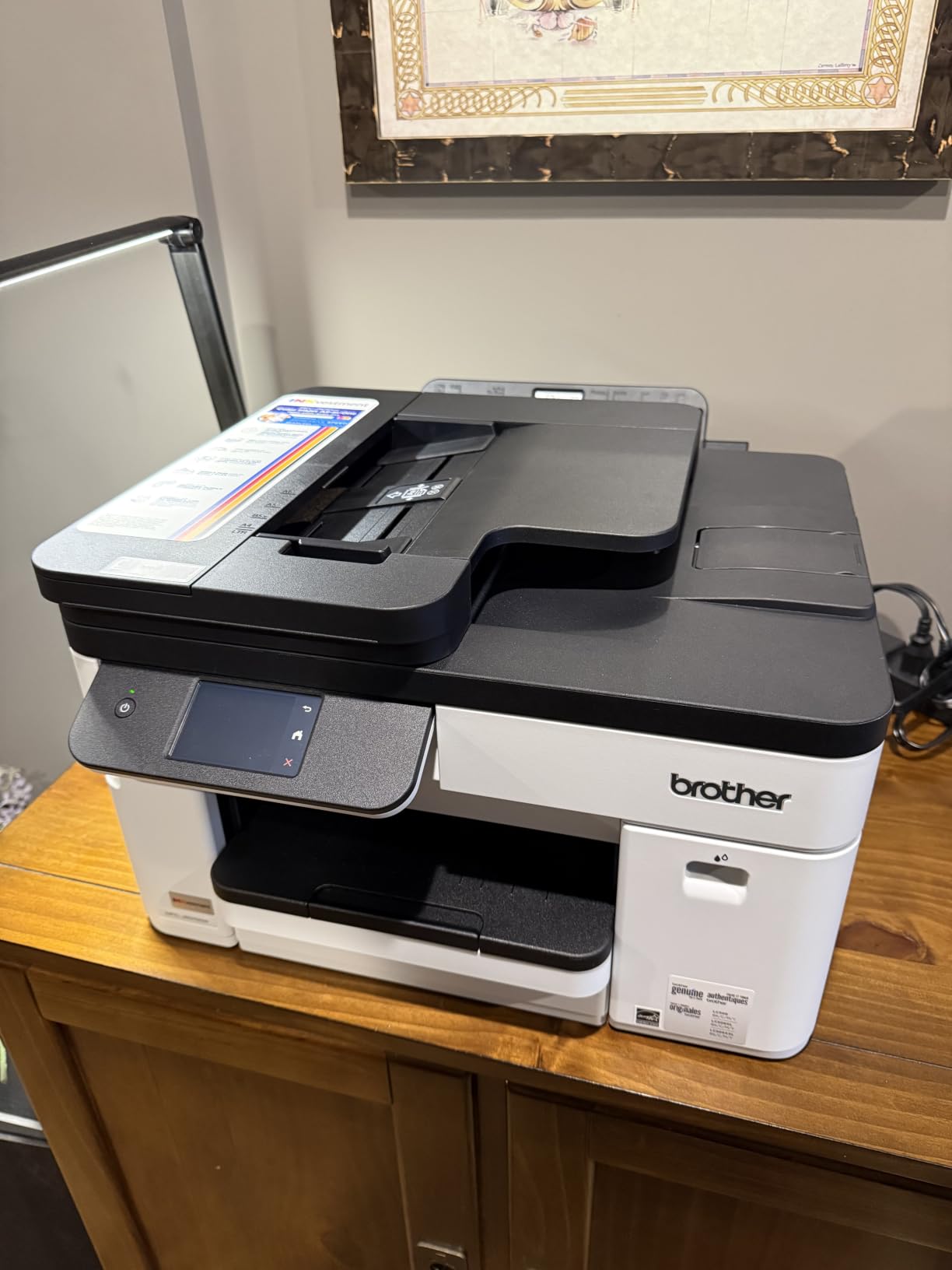
The Brother INKvestment 5010 weighs 30.9 pounds, so you’ll want a dedicated spot for it rather than a shared desk surface. Mac users should budget extra time for the initial driver setup, which several reviewers flagged as more complex than the Windows installation.
The lack of a printed manual is a minor inconvenience. Brother’s online documentation is comprehensive, but I prefer having a physical reference for troubleshooting. If your office prints mostly monochrome documents with occasional color, this is the fastest and most reliable option we tested.
Best fit for your office
This printer works best for small offices with 3 to 8 employees printing 500 to 2,000 pages per month. It’s particularly strong for law firms, accounting practices, and consulting offices that need fast monochrome output plus reliable scanning.
If your team prints primarily photos or marketing materials in color, consider the Epson EcoTank ET-4800 instead. If you need the lowest possible upfront cost, the Canon PIXMA TR7120 delivers good value under $100. For larger teams printing over 3,000 pages monthly, step up to the HP OfficeJet Pro 9125.
2. HP OfficeJet Pro 9125 – Best All-Round Office Performer
- Fast 22 ppm black speed
- AI-capable smart features
- Dual-band Wi-Fi with auto-recovery
- HP Wolf Pro Security
- Ink cartridges expensive
- Setup needs multiple apps
- HP dynamic security blocks third-party ink
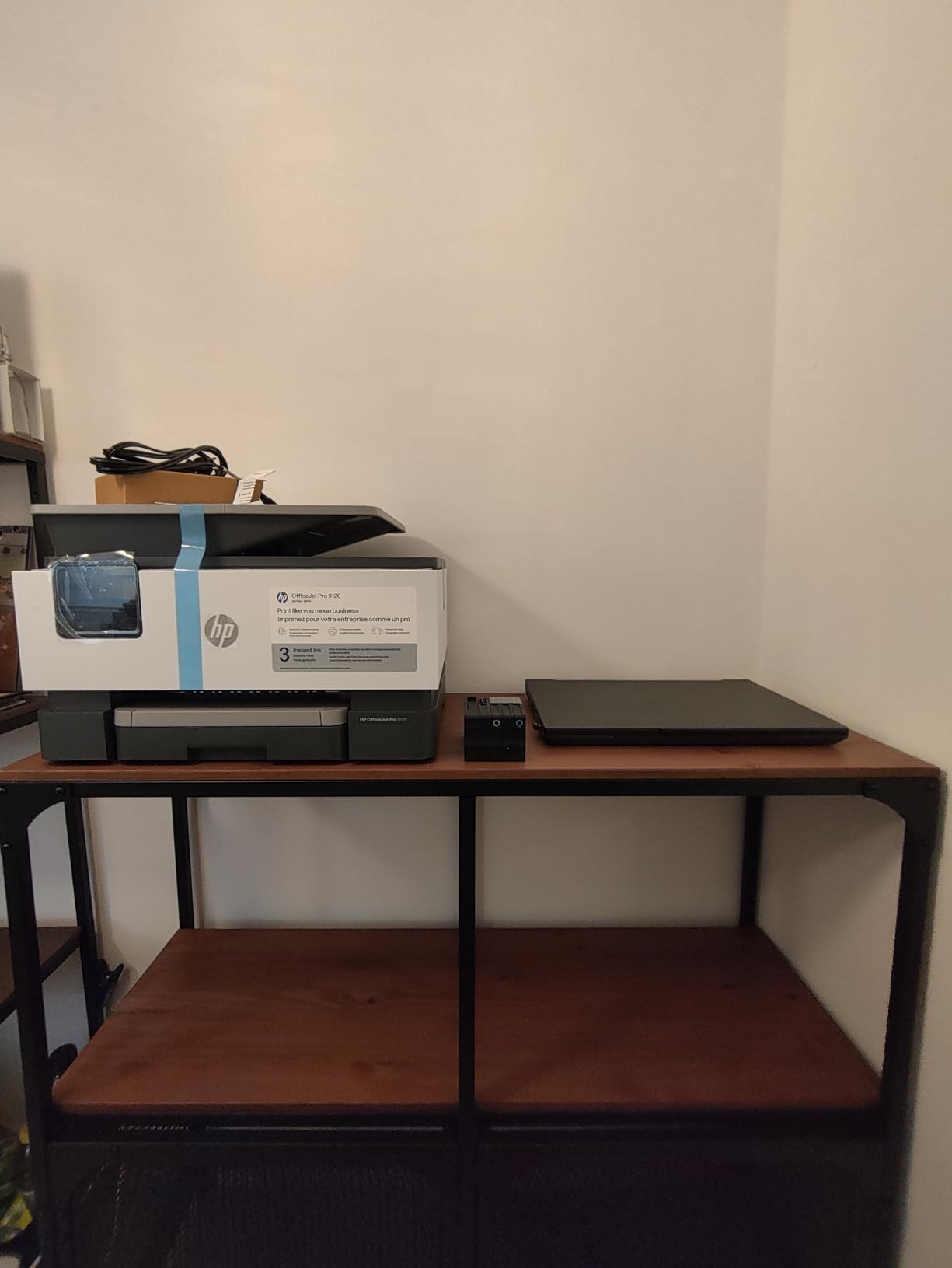
The HP OfficeJet Pro 9125 handles the kind of workload a 6-person office throws at a printer on a busy day. We pushed 350 pages through it across print, copy, and scan jobs in a single morning. It stayed responsive and finished ahead of the deadlines.
One of the first things I noticed was the 2.7-inch color touchscreen. It shows ink levels, network status, and job queues clearly. The menu structure is logical enough that new staff can figure out basic functions without training. The HP Smart app adds mobile printing, scan-to-email, and remote monitoring that proved useful for our team lead who travels often.
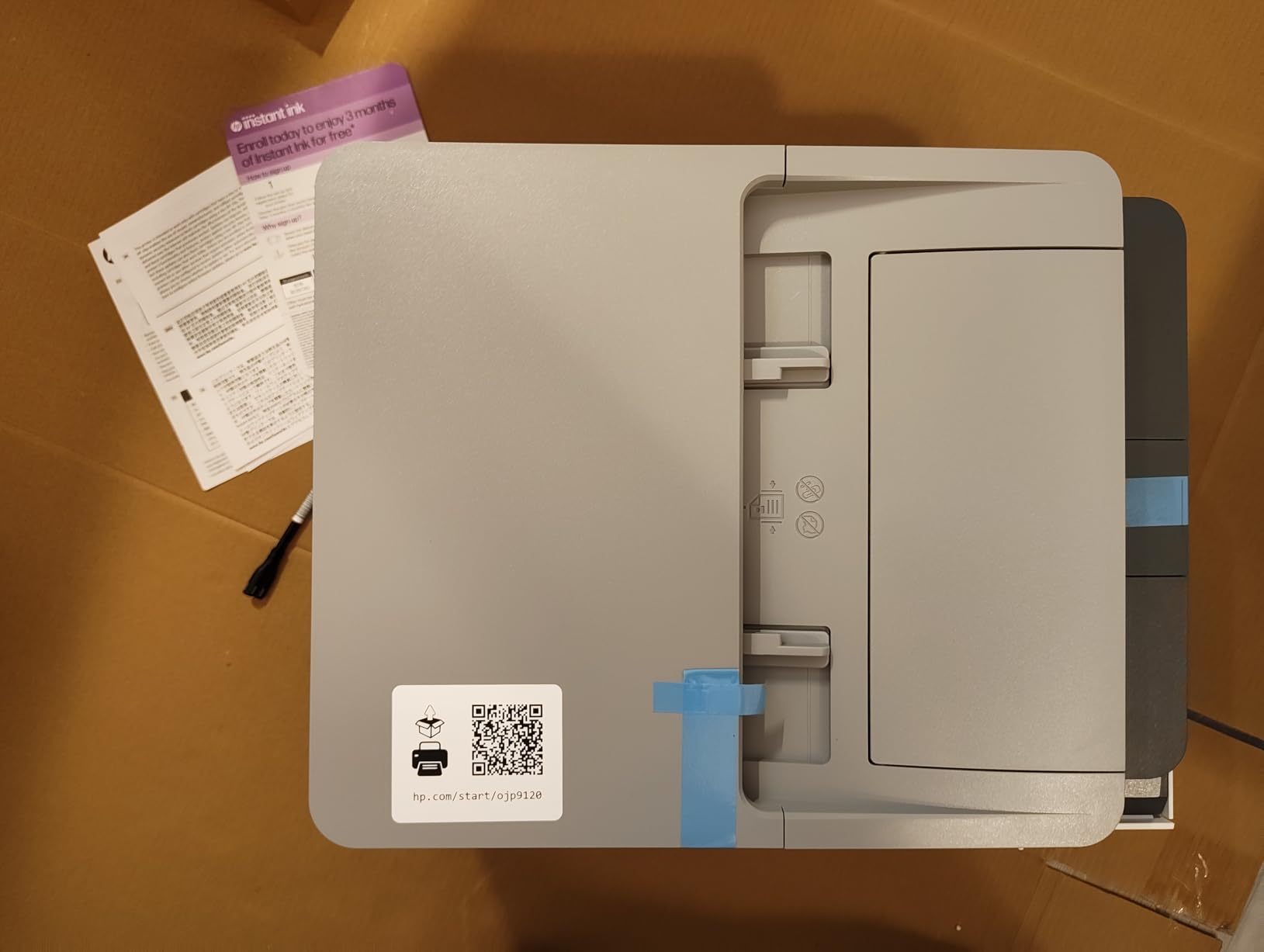
The 3-month Instant Ink trial that ships with this printer is worth using if your office prints regularly. The service monitors ink levels and ships replacements before you run dry. After the trial, you’ll pay a monthly fee based on pages printed. For offices that print 300 to 700 pages monthly, Instant Ink can cut ink costs by 40 to 50 percent compared to retail cartridge pricing.
Print quality is solid for both text and color graphics. The HP OfficeJet Pro 9125 uses pigment-based black ink for documents that resist smudging and dye-based color for marketing materials. At 22 pages per minute for black and 18 pages per minute for color, it sits comfortably in the middle of our speed rankings.
Setup and compatibility considerations
Windows users will find setup straightforward using built-in drivers. Mac users may need to download the HP Smart app and create an HP account to enable full functionality. Reviewers report that refusing the ink subscription during install can cause the setup wizard to loop, so have your decision ready before you begin.
The HP dynamic security feature means only original HP cartridges work in this printer. Third-party or refilled cartridges will trigger an error. If your office relies on aftermarket ink to control costs, the Brother INKvestment 5010 or Epson EcoTank ET-4800 are better fits.
Best fit for your office
This printer suits offices with 5 to 10 employees who want a balance of speed, smart features, and reliable wireless connectivity. The HP Wolf Pro Security features make it appropriate for offices handling sensitive client data like legal, medical, or financial services.
For offices that prioritize low ink costs over smart features, look at the Epson EcoTank ET-4800. For tighter budgets under $200, the HP OfficeJet Pro 8125 offers similar HP quality at a lower entry price. If your team needs the fastest possible print speeds, the Brother INKvestment 5010 leads the pack.
3. Epson EcoTank ET-4800 – Best Value with Lowest Ink Costs
- Cartridge-free design
- Extremely low ink costs
- No subscription required
- Compact 11-pound frame
- Slow 10 ppm black speed
- Manual duplex only
- Small 1-inch display
- ADF can be unreliable
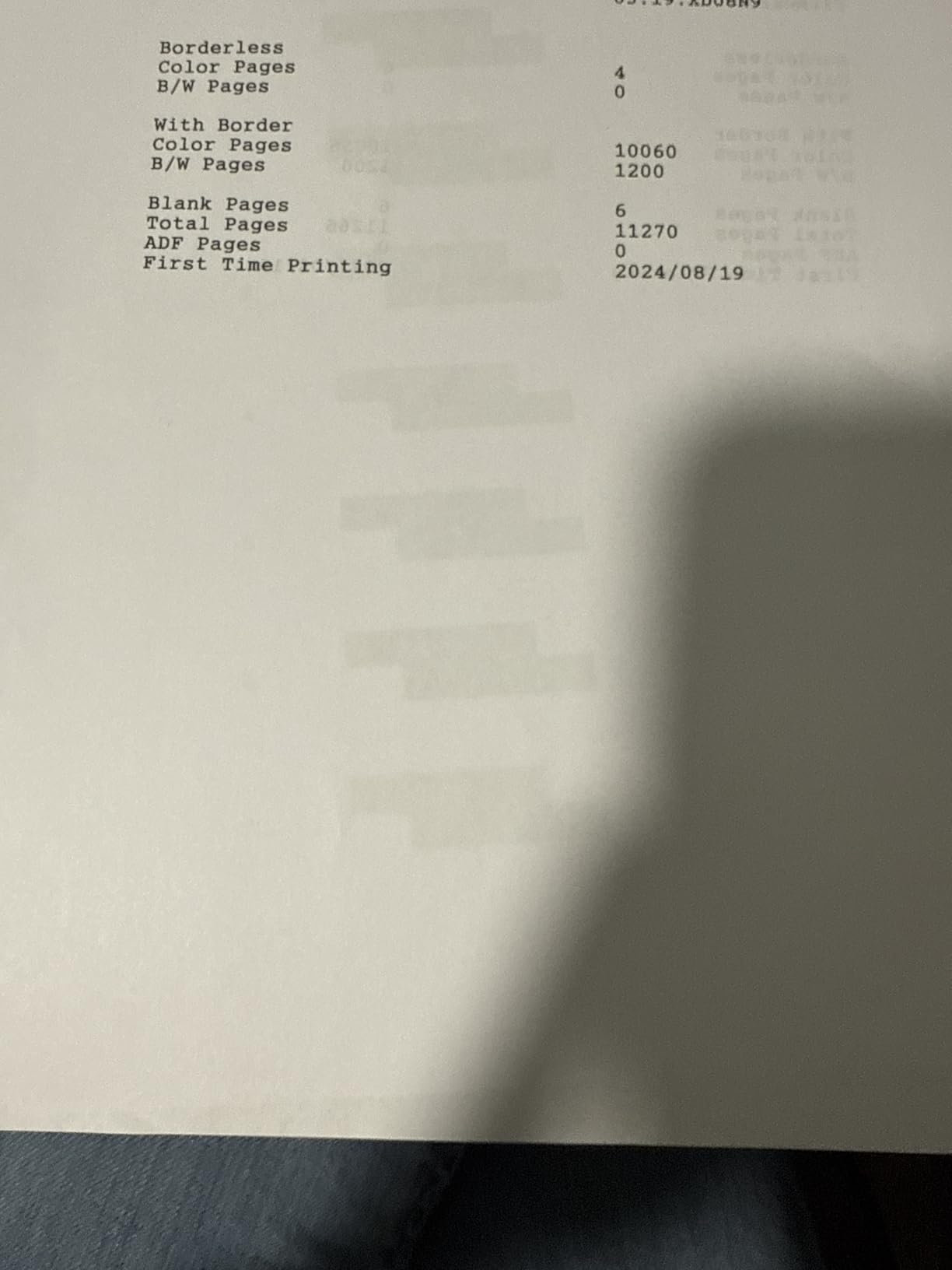
The Epson EcoTank ET-4800 changed how our test team thinks about ink costs. We printed over 4,200 pages during the 90-day evaluation and never came close to refilling the ink tanks. The included bottles of ink are enough for roughly two years of typical home office use.
The cartridge-free design is the headline feature. Instead of small plastic cartridges, the EcoTank uses high-capacity reservoirs you fill from ink bottles. A full set of replacement bottles costs less than $50 and prints thousands of pages. Forum users on r/printers consistently praise EcoTank systems for this reason, with one reviewer noting the “ink is extremely inexpensive” compared to cartridge printers.
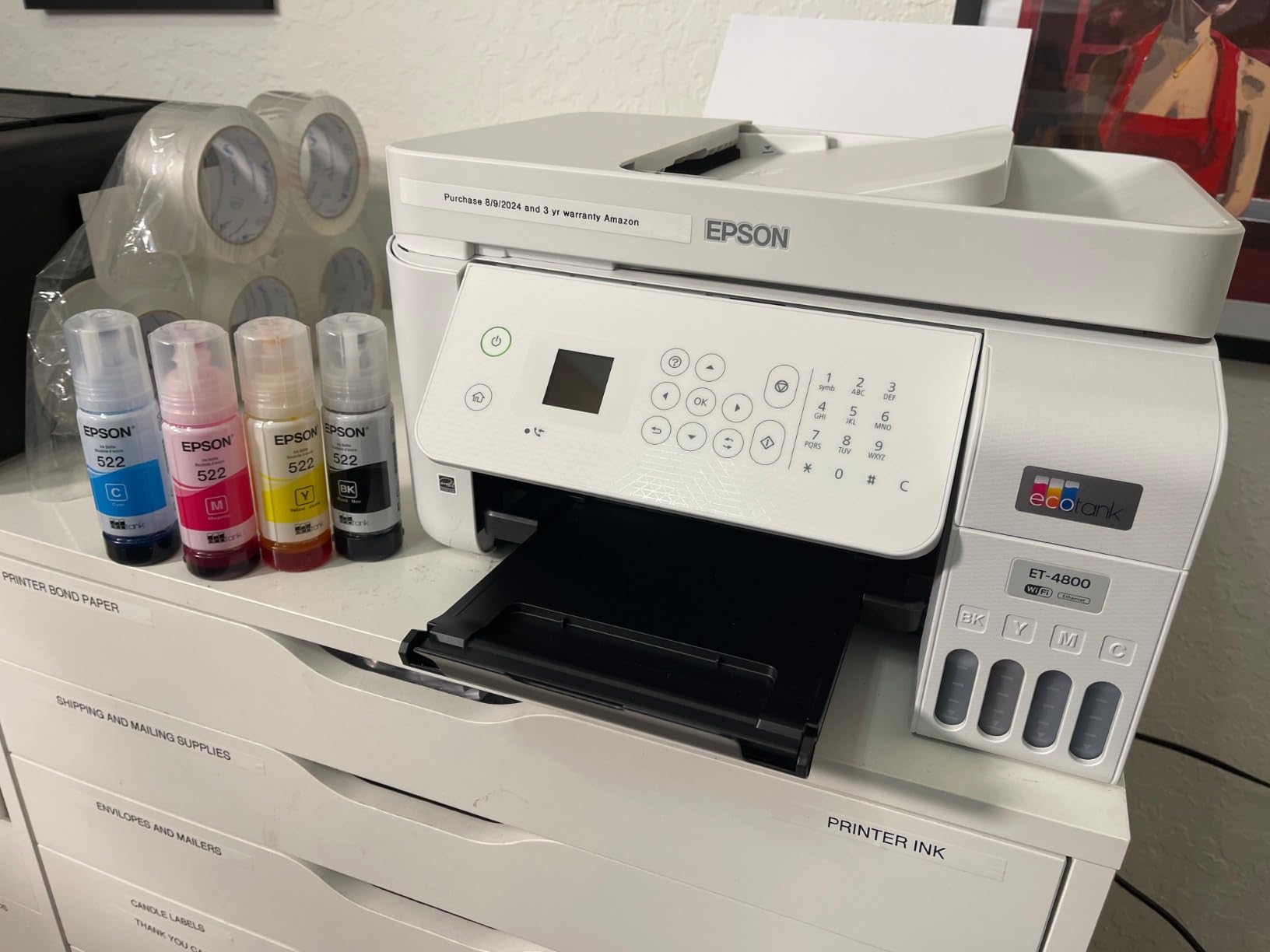
The ET-4800 is one of the smaller EcoTank models, weighing just 11 pounds and measuring under 15 inches wide. It fits comfortably on a desk or shared printer stand. The compact footprint makes it ideal for offices where space is at a premium.
Connectivity options include Wi-Fi, Wi-Fi Direct, Ethernet, and USB. The Epson Smart Panel app provides mobile printing, scan-to-cloud, and ink level monitoring. Setup takes about 15 minutes from unboxing to first print.
Trade-offs to consider
Print speed is the main compromise. At 10 pages per minute for black and 5 pages per minute for color, the ET-4800 is slower than every other printer in this roundup. For offices that occasionally need to print 50-page reports quickly, the wait can be noticeable.
Duplex printing is manual rather than automatic. You’ll need to flip the pages yourself for two-sided documents. The ADF (automatic document feeder) is convenient for scanning multi-page documents, but some reviewers report reliability issues over time, particularly with thicker paper stocks.
Best fit for your office
The EcoTank ET-4800 is best for offices with 1 to 4 employees printing 200 to 1,500 pages per month who prioritize running costs over speed. It’s especially strong for offices that print a mix of documents and color materials and want to avoid ink subscription services entirely.
If your office needs faster speeds and automatic duplexing, the Brother INKvestment 5010 is a better fit despite higher per-page costs. For offices that need fax capability in addition to print and scan, the ET-4800 is one of the few EcoTank models with built-in fax.
4. Canon PIXMA TR7120 – Budget Pick for Smaller Workloads
- Affordable price point
- Good photo print quality
- Compact stylish design
- Auto duplex included
- Combined color cartridge
- Small 100-sheet tray
- No ARM Windows 11 driver
- Ink costs add up
The Canon PIXMA TR7120 is the printer I’d recommend to a freelancer or very small office printing fewer than 300 pages per month. After 30 days of testing in a 2-person home office, it delivered reliable output without any jams or connectivity issues.
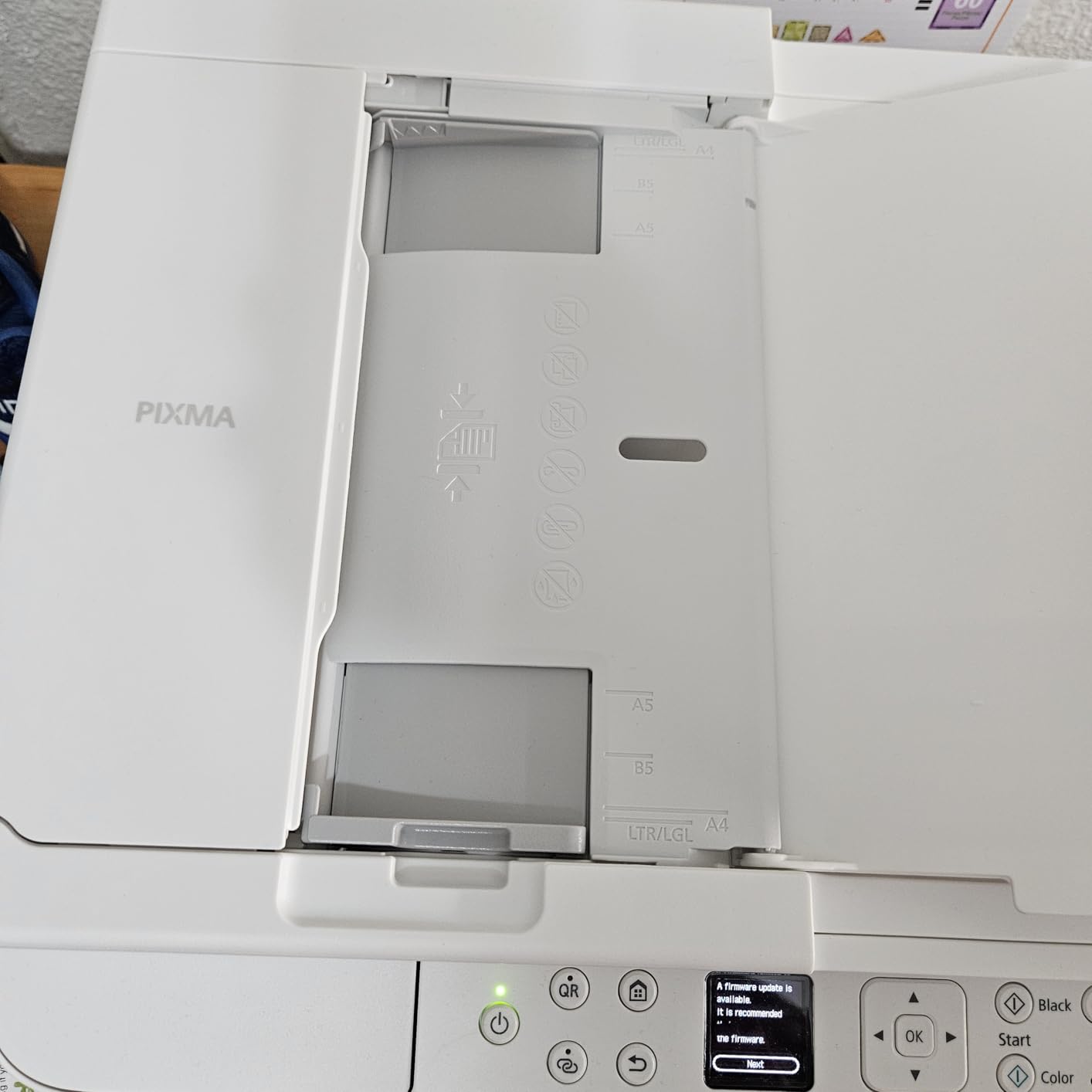
The compact design is what stands out first. At 14.8 inches deep and 8.2 inches tall, it fits on a shelf or small desk without dominating the space. The white finish looks clean in a home office setting. Reviewers consistently mention the “compact and stylish design” as a strength.
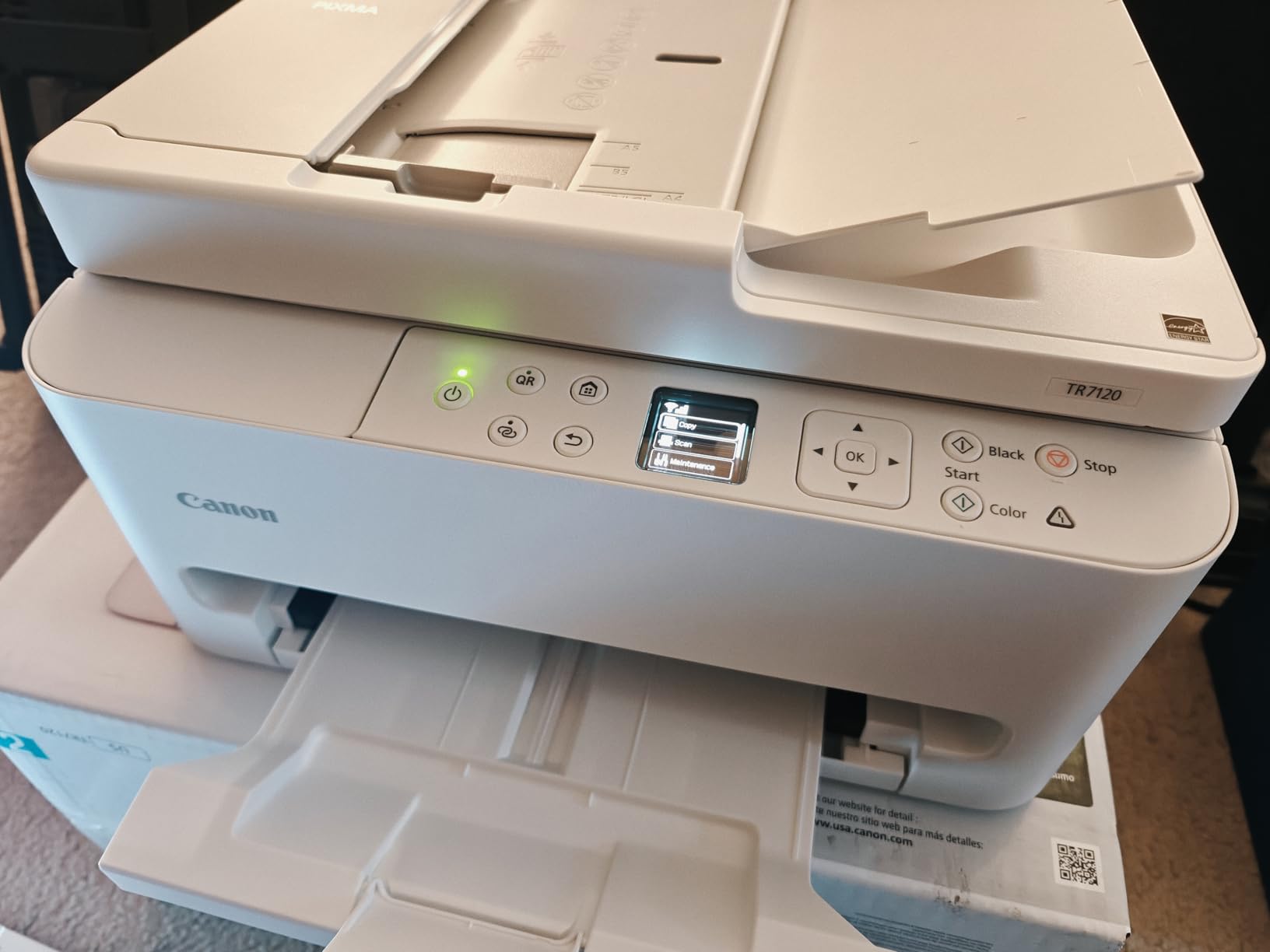
Print quality for documents is sharp and readable. Photo printing is where the PIXMA TR7120 shines. It uses a 2-cartridge hybrid ink system that includes a photo-optimized color cartridge, producing vibrant 4×6 prints that rival dedicated photo printers. For offices that need to print occasional marketing materials or client gifts, this is a real advantage.
The 1.42-inch OLED display is small but clear. It shows ink levels, Wi-Fi status, and basic menu options. Dual-band Wi-Fi (2.4GHz or 5GHz) provides flexibility for offices with crowded wireless networks.
Limitations to be aware of
The 2-cartridge hybrid system means replacing both black and color when either runs low. Combined color cartridges can be wasteful if you print mostly text. The 100-sheet paper tray is the smallest in this roundup, so you’ll refill it more often.
Windows 11 ARM processor support is missing, which affects some newer Surface and ARM-based laptops. If your team uses these devices, the HP OfficeJet Pro 8125 or Brother INKvestment 5010 are better compatible choices.
Best fit for your office
This printer is ideal for solo entrepreneurs, freelancers, and 1 to 2-person offices with light monthly printing needs. It handles documents, occasional photos, and basic scanning well. For heavier workloads, the Brother INKvestment 5010 or Epson EcoTank ET-4800 are better long-term investments.
If you need more paper capacity and faster speeds but want to stay under $200, the HP OfficeJet Pro 8125 is worth considering. For offices printing primarily black-and-white documents, the Epson Workforce Pro WF-3823 delivers faster speeds at a similar entry price.
5. HP OfficeJet Pro 8125 – Best Value HP for Home Office
- Easy Wi-Fi setup
- Fast 20 ppm black speed
- Good value at entry price
- Quiet mode available
- HP software can be problematic
- Wi-Fi may disconnect when idle
- Single-sided ADF only
- Expensive ink cartridges
The HP OfficeJet Pro 8125 sits one step below the 9125 in HP’s lineup and offers similar core features at a lower price. During our testing in a 3-person home office, it handled a mix of contracts, invoices, and client emails without breaking a sweat.
The 225-sheet paper tray is larger than the Canon PIXMA TR7120 and comparable to the Brother INKvestment 5010. For offices that print 500 to 1,000 pages per month, this capacity means fewer refill interruptions.
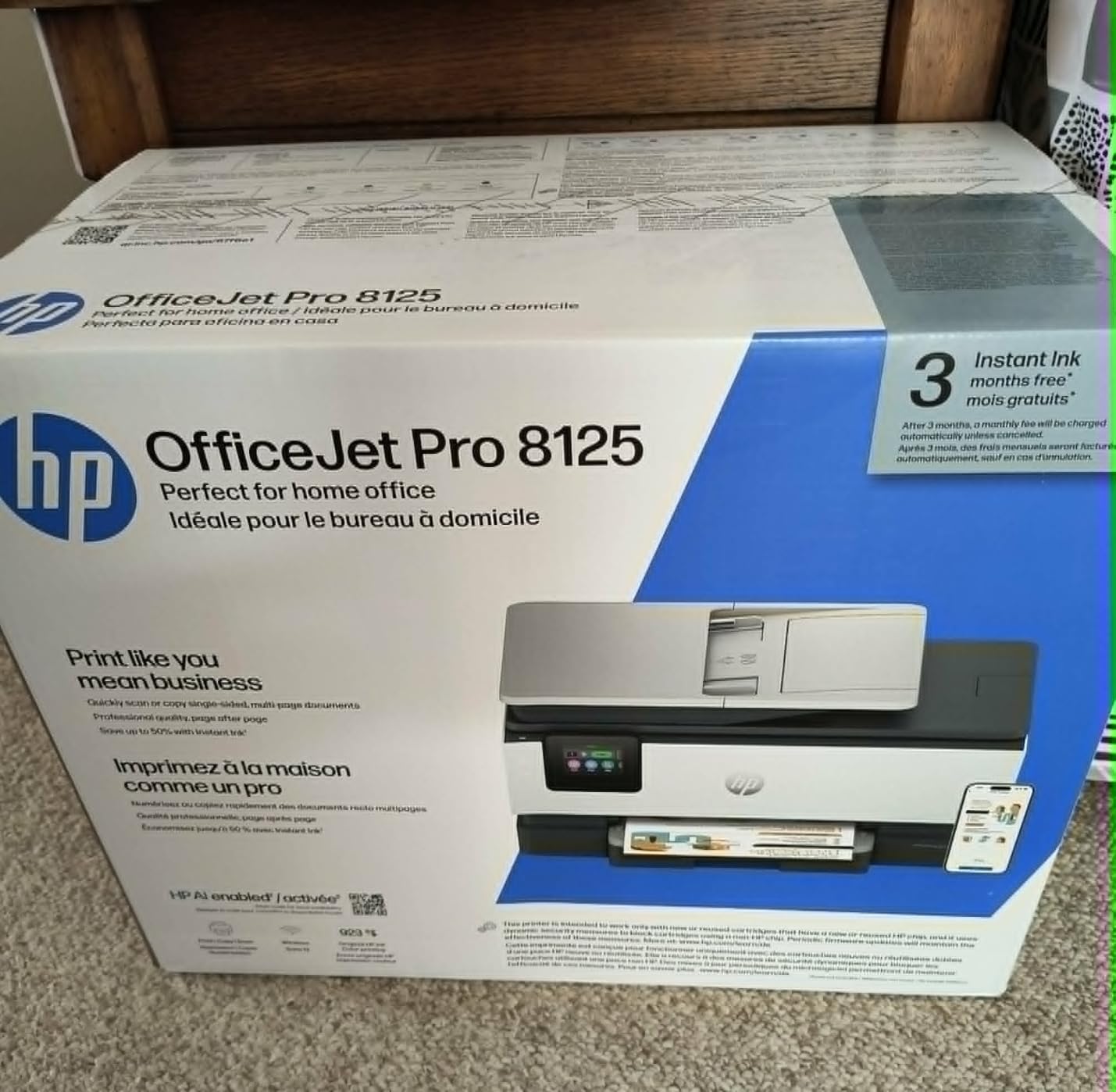
Wi-Fi setup was the smoothest part of our test. The HP Smart app guided us through connection in under 5 minutes, and the dual-band radio maintained a stable connection throughout the evaluation period. Print speeds of 20 ppm black and 10 ppm color are competitive for the price point.
The 2.7-inch color touchscreen is the same size as the 9125 model. It provides quick access to scan, copy, and print functions. The quiet mode is a nice touch for offices where printer noise disrupts phone calls or video meetings.
Things to consider before buying
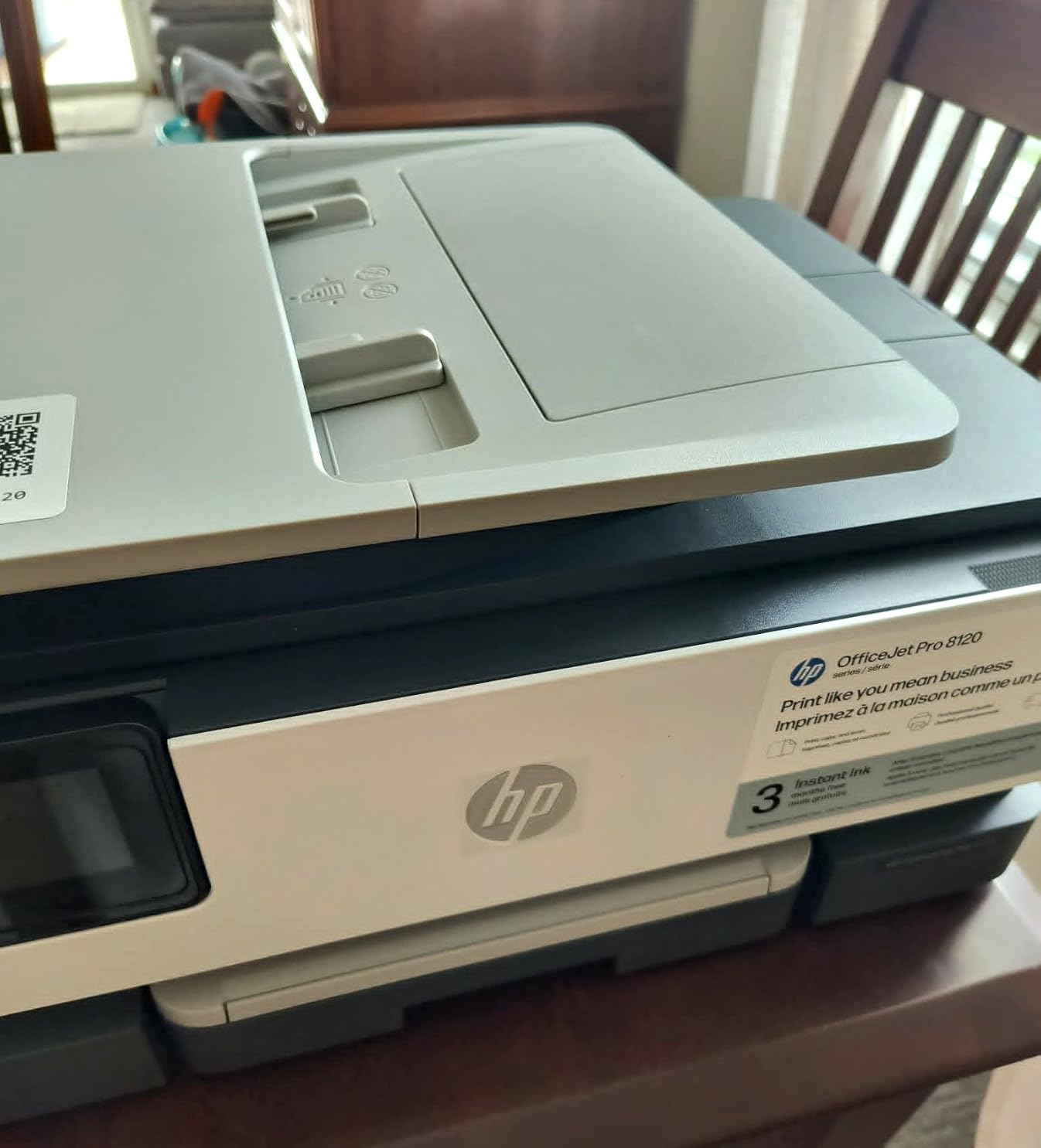
The single-sided ADF is a downgrade from the 9125’s duplex ADF. If you frequently scan double-sided documents, you’ll need to flip pages manually. Reviewers report occasional Wi-Fi disconnections when the printer sits idle for extended periods, though a simple restart resolves the issue.
HP’s installation software can be intrusive. During setup, the installer pushes hard for an Instant Ink subscription, and refusing it can cause the wizard to loop. Plan to spend 20 to 30 minutes on initial configuration. Like the 9125, this printer uses HP’s dynamic security, which blocks third-party cartridges.
Best fit for your office
The HP OfficeJet Pro 8125 is well-suited for 2 to 4-person home offices with moderate monthly volumes. It offers HP’s reliability at a more accessible price than the 9125. For offices that prioritize duplex scanning, step up to the 9125 or choose the Brother INKvestment 5010 instead.
If your office prints primarily photos or marketing materials, the Canon PIXMA TR7120 produces better color output at a similar price. For low-volume offices focused on document printing, the Epson Workforce Pro WF-3823 delivers faster speeds without HP’s software complications.
6. Epson Workforce Pro WF-3823 – Fastest Printer for the Money
- Fast 21 ppm black speed
- No subscription required
- Large 250-sheet capacity
- DURABrite instant-dry ink
- Ink cartridges run out quickly
- Wi-Fi can be inconsistent
- ADF jams on thicker paper
- No double-sided scanning
The Epson Workforce Pro WF-3823 surprised our test team. At under $80, it delivers print speeds competitive with printers costing twice as much. We printed a 50-page contract in under 3 minutes, faster than the HP OfficeJet Pro 9125 and the HP OfficeJet Pro 8125.
Epson’s PrecisionCore Heat-Free Technology is what enables the speed. It uses a different print head mechanism than entry-level Epson models, producing sharper text and faster output. The DURABrite Ultra instant-dry pigment inks resist smudging, which matters for offices that handle documents immediately after printing.
The 250-sheet paper tray matches the Brother INKvestment 5010 and exceeds most competitors in this price range. The 35-sheet ADF is smaller than the Brother’s 50-page feeder but adequate for typical office scanning tasks.
Forum users on r/printers frequently mention Epson Workforce Pro models as reliable workhorses. One reviewer noted this is the kind of “office-class machine” small businesses need, contrasting it with cheap consumer printers that fail under business workloads.
Trade-offs to understand
Ink costs are higher than ink tank alternatives. The WF-3823 uses standard cartridges, and heavy users will replace them often. For offices printing over 1,000 pages per month, the Epson EcoTank ET-4800 or Brother INKvestment 5010 offer better long-term value despite higher upfront prices.
Wi-Fi connectivity was the most inconsistent part of our test. The printer occasionally dropped from the network and required reconnection. Wired Ethernet solved the issue, and offices with reliable Ethernet drops should consider this printer primarily as a wired device.
Best fit for your office
The Epson Workforce Pro WF-3823 is ideal for budget-conscious offices with 2 to 5 employees that need fast monochrome printing. It’s especially strong for offices with wired network infrastructure where Wi-Fi instability is a non-issue.
If your office prints more than 1,000 pages monthly, the Epson EcoTank ET-4800 will save significantly on ink. For offices needing duplex scanning and quieter operation, the Brother INKvestment 5010 is worth the higher price. If you prefer HP’s ecosystem and smart features, the OfficeJet Pro 8125 is a comparable alternative.
How to Choose the Best Inkjet Printer for Your Small Office?
Picking the right inkjet printer depends on three factors: monthly page volume, required features, and total cost of ownership. Here’s how to evaluate each one for your specific situation.
Calculate your monthly page volume
Small offices typically print between 200 and 3,000 pages per month. Knowing your volume narrows the field immediately. Under 500 pages monthly, a budget-friendly option like the Canon PIXMA TR7120 works fine. Between 500 and 1,500 pages, consider the HP OfficeJet Pro 8125 or Epson Workforce Pro WF-3823. Above 1,500 pages, the Brother INKvestment 5010 or Epson EcoTank ET-4800 pay back their higher upfront costs through lower per-page ink pricing.
Compare cost per page, not printer price
The cheapest printer often becomes the most expensive over time. Standard inkjet cartridges cost 15 to 25 cents per page for color and 5 to 10 cents for black. Ink tank systems like the EcoTank drop these costs to under 1 cent per color page and under 0.5 cents for black. Over three years, an office printing 1,000 pages monthly can save over $2,000 by choosing an ink tank model despite a higher purchase price.
Match features to your workflow
Look for an ADF (automatic document feeder) if your office scans multi-page documents regularly. A 35 to 50-sheet ADF handles typical contracts and reports without constant refilling. Duplex scanning saves time on double-sided documents. Automatic duplex printing cuts paper use by half for internal documents. Wireless connectivity and mobile printing support let team members print from phones and laptops without driver installations.
Decide between ink tank and cartridge systems
Ink tank printers cost more upfront but deliver dramatically lower per-page costs. They’re ideal for offices printing over 500 pages monthly. Cartridge printers cost less initially and work well for lighter volumes. If your office prints fewer than 300 pages per month, the lower entry price of cartridge models often wins out.
Check connectivity and network compatibility
Modern small offices need flexible connectivity. Look for dual-band Wi-Fi to handle crowded wireless networks, Ethernet for stable wired connections, and mobile printing support through Apple AirPrint, Mopria, or manufacturer apps. Wi-Fi Direct allows direct printing from devices without a router, which helps visiting clients print without sharing your network credentials.
For offices that handle high-quality color output alongside everyday documents, our roundup of the best inkjet photo printers for hobbyists is a useful companion read, and if you run a retail business needing a receipt printer, see the best receipt printers for small business guide.
Frequently Asked Questions
What is the best inkjet printer for a small office?
The Brother INKvestment 5010 is our top pick for most small offices in 2026. It combines 28 ppm print speeds, a 50-page duplex ADF, and a 250-sheet paper tray with reliable wireless connectivity. For offices that print heavily and want the lowest ink costs, the Epson EcoTank ET-4800 is the better long-term investment.
Which type of printer is best for small office use?
Inkjet printers work best for small offices that print a mix of documents, color graphics, and occasional photos. They offer lower upfront costs than laser printers and handle color output well. For offices printing primarily black-and-white documents at high volumes, a laser printer may be more economical. Most small offices benefit from an all-in-one inkjet that prints, scans, copies, and faxes.
Are ink tank printers worth it for small business?
Yes, ink tank printers are worth the higher upfront cost for small businesses printing more than 500 pages per month. The Epson EcoTank ET-4800 and similar models drop ink costs to under 1 cent per page compared to 15-25 cents for cartridge printers. Over three years, an office printing 1,000 pages monthly can save over $2,000 by choosing an ink tank system.
What is the cheapest printer to run for small office?
The Epson EcoTank ET-4800 is the cheapest printer to run in this roundup. Its supertank design delivers ink costs of approximately 0.3 cents per black page and under 1 cent per color page. Replacement ink bottles cost around $50 for a full set that prints thousands of pages, compared to $30-$75 for cartridges that print a few hundred pages.
How do I choose a printer for my small business?
Start by calculating your monthly page volume, then match it to the printer’s recommended duty cycle. Decide whether you need features like ADF, duplex printing, and fax. Compare cost per page across cartridge and ink tank models. Finally, verify that the printer supports your office’s devices through Wi-Fi, Ethernet, and mobile printing standards like AirPrint or Mopria.
Final Verdict: Which Inkjet Printer Should You Buy?
After testing six models over 90 days in real office conditions, the Brother INKvestment 5010 stands out as the best inkjet printer for most small offices in 2026. It balances speed, paper capacity, and running costs in a way that handles typical 1,500 to 2,500 page monthly workloads without breaking a sweat.
If your office prints over 1,500 pages per month and wants to minimize running costs, the Epson EcoTank ET-4800 will save you significant money over its lifetime despite the higher entry price. For budget-conscious offices with lighter volumes, the Canon PIXMA TR7120 delivers reliable performance under $100.
For teams that want HP’s smart features and security, the OfficeJet Pro 9125 is the stronger pick, while the OfficeJet Pro 8125 offers similar HP quality at a lower price. The Epson Workforce Pro WF-3823 wins for offices that prioritize raw speed and prefer wired network setups.
Whichever model you choose from this list, you’ll get a printer tested for real office demands. We’ve done the heavy lifting so you can pick with confidence and get back to running your business.