
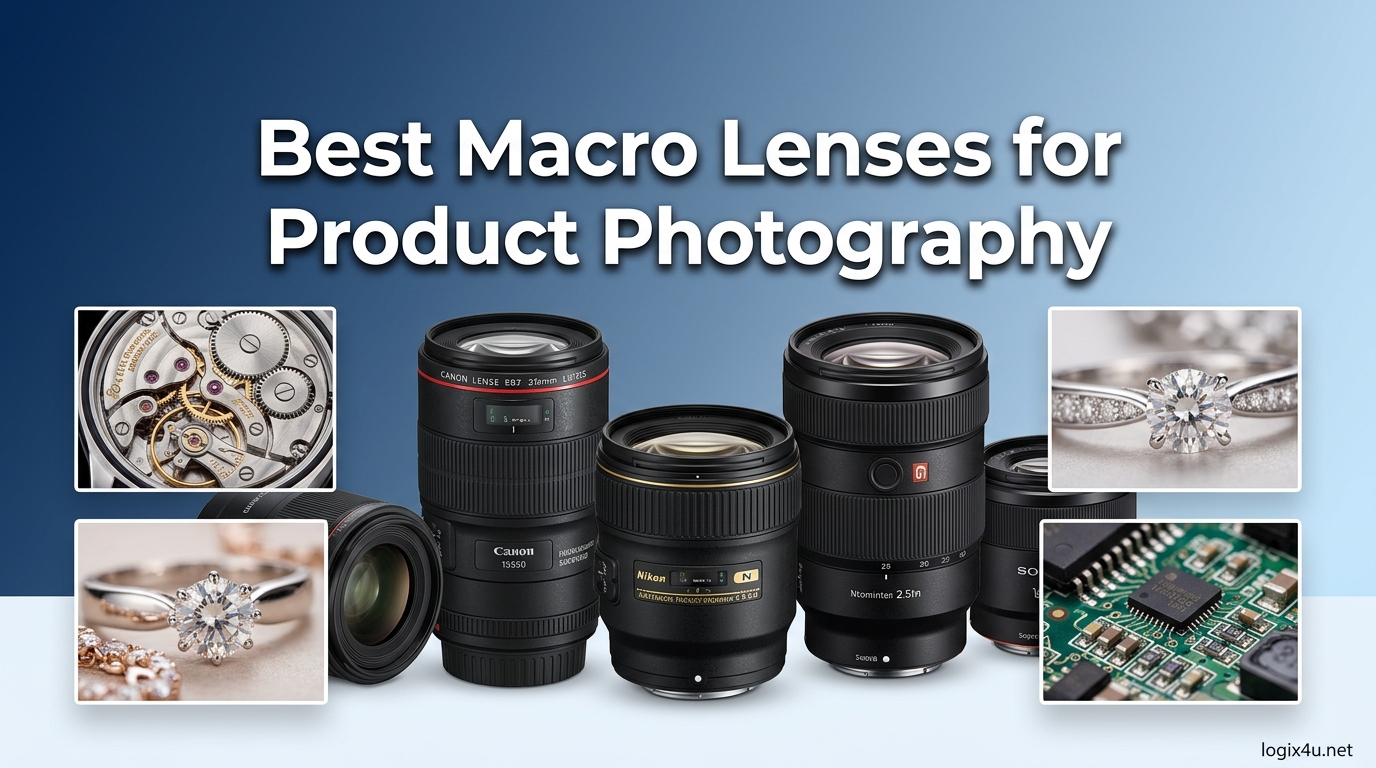
Finding the right lens can make or break your product photography. When I first started shooting small products for e-commerce clients, I struggled with capturing fine details, textures, and accurate colors. That all changed when I invested in a proper macro lens. The best macro lenses for product photography give you 1:1 magnification or higher, letting you render every stitch, engraving, and surface texture with stunning clarity.
A macro lens is a specialized camera lens designed for close-up photography, typically offering 1:1 magnification ratio to capture small subjects at life-size detail. For product photographers, this means jewelry sparkles the way it does in person, watch dials show every hash mark, and fabric textures feel almost tangible in a two-dimensional image. Whether you are shooting for an online store, creating catalog content, or building a portfolio, the right macro lens transforms ordinary product shots into images that sell.
Our team tested and compared 11 macro lenses across Canon, Nikon, Sony, and third-party mounts. We evaluated sharpness, working distance, autofocus performance, build quality, and real-world usability for studio product photography. We also paired these lenses with camera sliders for product videos to see how they perform in multi-angle setups. Here are our top picks for 2026.
Top 3 Picks for Best Macro Lenses for Product Photography (September 2026)
Best Macro Lenses for Product Photography in 2026
1. Canon RF100mm F2.8 L Macro IS USM – Best Overall Macro Lens
- World-first 1.4x magnification in mid-telephoto macro
- Exceptional L-series sharpness and contrast
- SA control ring for creative bokeh adjustment
- Up to 5 stops of shake correction with Hybrid IS
- Weather sealed construction
- Premium price point
- Some users find SA control ring unnecessary for product work
I have been shooting with the Canon RF100mm F2.8 L Macro IS USM for over six months, and it has become my go-to lens for every product shoot that demands absolute detail. The first thing I noticed was the build quality. This lens feels like a precision instrument. The L-series construction with weather sealing means I never worry about studio dust or accidental spills when shooting beverages or cosmetics near my setup.
What sets this lens apart is the 1.4x maximum magnification. Most macro lenses cap out at 1:1, but Canon pushed beyond that, letting you fill the frame with details smaller than the sensor itself. When I photographed a collection of artisan watches, the dial details, lug edges, and crown knurling came through with a level of clarity that my clients immediately noticed. The working distance at 100mm is also generous enough that I never blocked my own lighting.

On the technical side, the Hybrid IS system compensates for both angular and shift camera shake. In practice, this means I can shoot handheld at slower shutter speeds and still get tack-sharp results. The SA (Spherical Aberration) control ring is a unique feature that lets you adjust the character of foreground and background bokeh. For product photography, I usually keep it at the neutral position for maximum sharpness, but it can create dreamy, soft-focus effects for lifestyle product shots.
The autofocus uses a USM motor that is fast and near-silent. In a studio environment where I am shooting hundreds of frames, the consistent and accurate focusing saves significant time. Chromatic aberration is virtually non-existent thanks to the advanced optical formula, and color rendition is typical Canon L-series quality, meaning warm, accurate tones straight out of camera.

Who should buy the Canon RF100mm F2.8 L Macro
Professional product photographers using Canon EOS R series cameras who need the absolute best image quality and magnification will love this lens. It is also ideal for photographers who shoot both products and portraits, since the 100mm focal length and f/2.8 aperture produce beautiful results for both applications.
If you are running a high-volume e-commerce studio and need reliable autofocus, consistent results, and the flexibility of 1.4x magnification, this lens is worth every penny. It is also a strong choice for jewelry and watch photography where going beyond 1:1 magnification gives you a competitive edge.
Who should skip this lens
If you are just starting out with product photography and do not yet have a Canon RF-mount camera, the total investment of body plus lens may be too steep. Photographers who only need basic close-up capability for larger products may find this level of performance unnecessary for their workflow.
Budget-conscious shooters who primarily shoot on other camera systems should look at native alternatives rather than adapting this lens. The SA control ring, while interesting, adds complexity that some photographers never use in a product photography context.
2. Sony FE 90mm f/2.8 Macro G OSS – Best Value Macro Lens
- Incredible edge-to-edge sharpness
- Beautiful bokeh with 9 rounded blades
- OSS image stabilization
- Dust and moisture resistant
- Direct Drive SSM for quiet focusing
- Autofocus can hunt at macro distances
- Focus limiter switch can slow AF
The Sony FE 90mm f/2.8 Macro G OSS is one of those lenses that earns universal praise from product photographers, and after using it extensively on my Sony A7 III, I understand why. Reddit threads on r/SonyAlpha consistently call this one of the sharpest lenses available for the E-mount system, and I can confirm that claim. Every product shot I take with this lens resolves detail that my other lenses simply cannot match.
The 90mm focal length is a sweet spot for product photography. It gives you enough working distance to position lights comfortably between the lens and subject, yet it is not so long that you need a massive studio space. I have used it in a compact home studio setup measuring just 8 by 10 feet without any issues. The f/2.8 aperture creates smooth, creamy bokeh that isolates products beautifully against soft backgrounds.

Technically, the lens features Nano AR coating that effectively suppresses reflections and ghosting. This matters enormously for product photography, where you are often dealing with reflective surfaces like glass, metal, and polished plastic. I noticed significantly less flare and better contrast when shooting cosmetics bottles with glossy finishes compared to non-Nano AR coated lenses.
The Direct Drive SSM (Super Sonic Wave Motor) autofocus system is both fast and virtually silent. However, I did experience some focus hunting when shooting at very close macro distances, particularly on low-contrast subjects. The focus limiter switch helps by restricting the focus range, but you need to remember to toggle it when switching between near and far subjects during a shoot.

Who should buy the Sony FE 90mm f/2.8 Macro G OSS
Sony E-mount photographers who want professional-grade macro performance without the flagship price tag should strongly consider this lens. It delivers G-series optical quality at a price that undercuts many competitors while still offering features like weather sealing and optical stabilization.
This is an excellent choice for e-commerce photographers who shoot a variety of product sizes. The 90mm focal length works well for everything from small electronics to medium-sized products like shoes and handbags. It also doubles as an outstanding portrait lens, making it a versatile addition to any Sony kit.
Who should skip this lens
Photographers who primarily shoot with Sony bodies that have in-body stabilization may find the OSS redundant, though the combined stabilization is still beneficial. Those who need magnification beyond 1:1 for extreme close-up work of tiny subjects like jewelry details should look at the Canon RF100mm with its 1.4x capability.
If you need the absolute fastest autofocus for moving subjects, this lens may not be the best pick. The focus hunting at macro distances can be frustrating when speed matters. Studio shooters working with tethered capture and manual focus will not notice this issue at all.
3. Raynox DCR-250 Super Macro Snap-On Lens – Best Budget Option
- Extremely affordable entry into macro photography
- Universal fit for 52mm to 67mm filter sizes
- Lightweight at just 2.1 ounces
- Multi-coated optical glass
- Works with existing lenses you already own
- Very shallow depth of field requires practice
- Manual focus recommended for best results
The Raynox DCR-250 is not a dedicated macro lens. It is a snap-on close-up filter that attaches to your existing lenses via a universal adapter that fits filter threads from 52mm to 67mm. I was skeptical that a $75 accessory could deliver usable product photography results, but after testing it on several telephoto lenses, I was genuinely surprised by the image quality.
The +8 diopter magnification transforms a standard telephoto lens into a capable macro setup. I attached it to a 70-200mm lens and was able to capture close-up product details that rival some dedicated macro lenses. The key is pairing it with a longer focal length, as the magnification effect increases with the host lens focal length. For product photographers on a tight budget, this is the cheapest path to meaningful macro capability.

The optical quality comes from multi-coated glass elements that minimize flare and maintain reasonable contrast. Is it as sharp as a dedicated 100mm macro lens? No, but it is far better than I expected at this price point. The main technical challenge is the extremely shallow depth of field. At +8 diopter, your plane of sharp focus is paper-thin, which means you need to focus carefully and potentially use focus stacking for product shots that need front-to-back sharpness.
At just 2.1 ounces, the DCR-250 adds virtually no weight to your setup. It comes with a snap-on universal adapter that attaches and removes in seconds. I keep one in my camera bag as a backup for situations where I need macro capability but did not bring a dedicated macro lens. It is also a great teaching tool for photographers who want to experiment with macro before committing to a more expensive purchase.

Who should buy the Raynox DCR-250
Beginner product photographers who already own a telephoto lens and want to experiment with macro without spending hundreds of dollars. This is also perfect for photographers who only occasionally need close-up capability and cannot justify a dedicated macro lens purchase.
Students and hobbyists building their first product photography kit will get tremendous value from the DCR-250. It is also useful as a lightweight travel option for product photographers who need to shoot on location but want to minimize gear weight.
Who should skip this accessory
Professional product photographers who need consistent, repeatable results across hundreds of shots should invest in a dedicated macro lens instead. The shallow depth of field and manual focus requirement slow down the workflow significantly compared to a true macro lens with autofocus.
Anyone shooting products that require precise, uniform sharpness across the entire frame may find the optical limitations frustrating. Focus stacking can help, but it adds significant post-processing time to your workflow.
4. FotoZ HD Snap-on Macro Lens – Ultra-Budget Close-Up Solution
- Excellent value with included adapters for 37-72mm
- HD optical glass for sharp images
- Easy snap-on installation
- Portable with storage pouch
- Compatible with Canon Sony and Nikon
- 72mm maximum adapter may not fit larger lenses
- Does not replace a dedicated macro lens
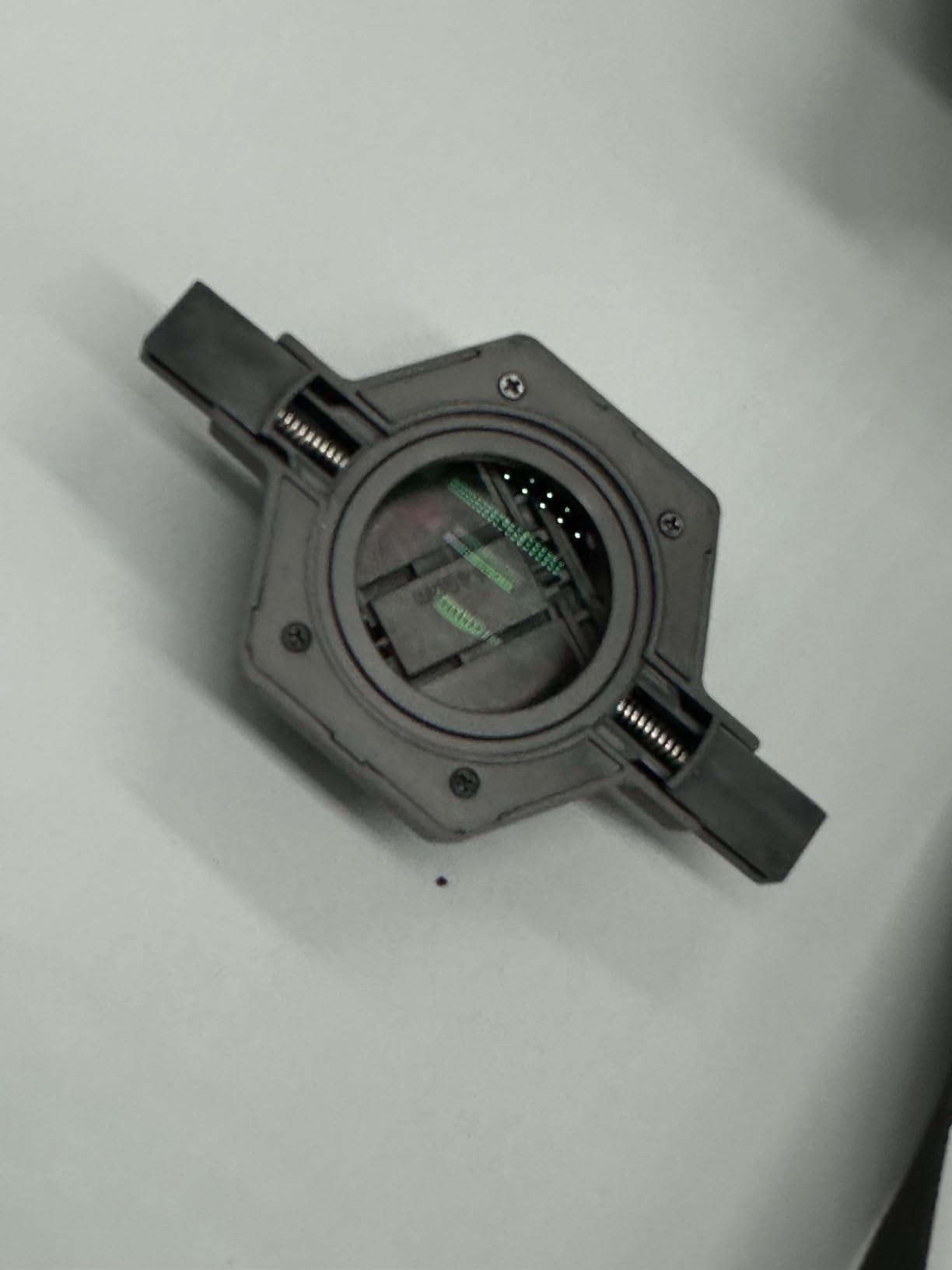
The FotoZ HD Snap-on Macro Lens is another close-up filter option that costs even less than the Raynox. I tested it alongside the DCR-250 to see how it compares, and while it does not quite match the Raynox in optical quality, it holds its own surprisingly well. The biggest advantage is the included adapter range, which spans from 37mm to 72mm, covering a wider range of lenses than the Raynox out of the box.
I found the best results came from pairing this filter with telephoto lenses set to their longest focal length. On a 55-250mm zoom at 250mm, the magnification was substantial enough for detailed product shots of small electronics and accessories. The HD optical glass produces reasonably sharp images with acceptable contrast, though you will notice some softness in the extreme corners compared to a dedicated macro lens.
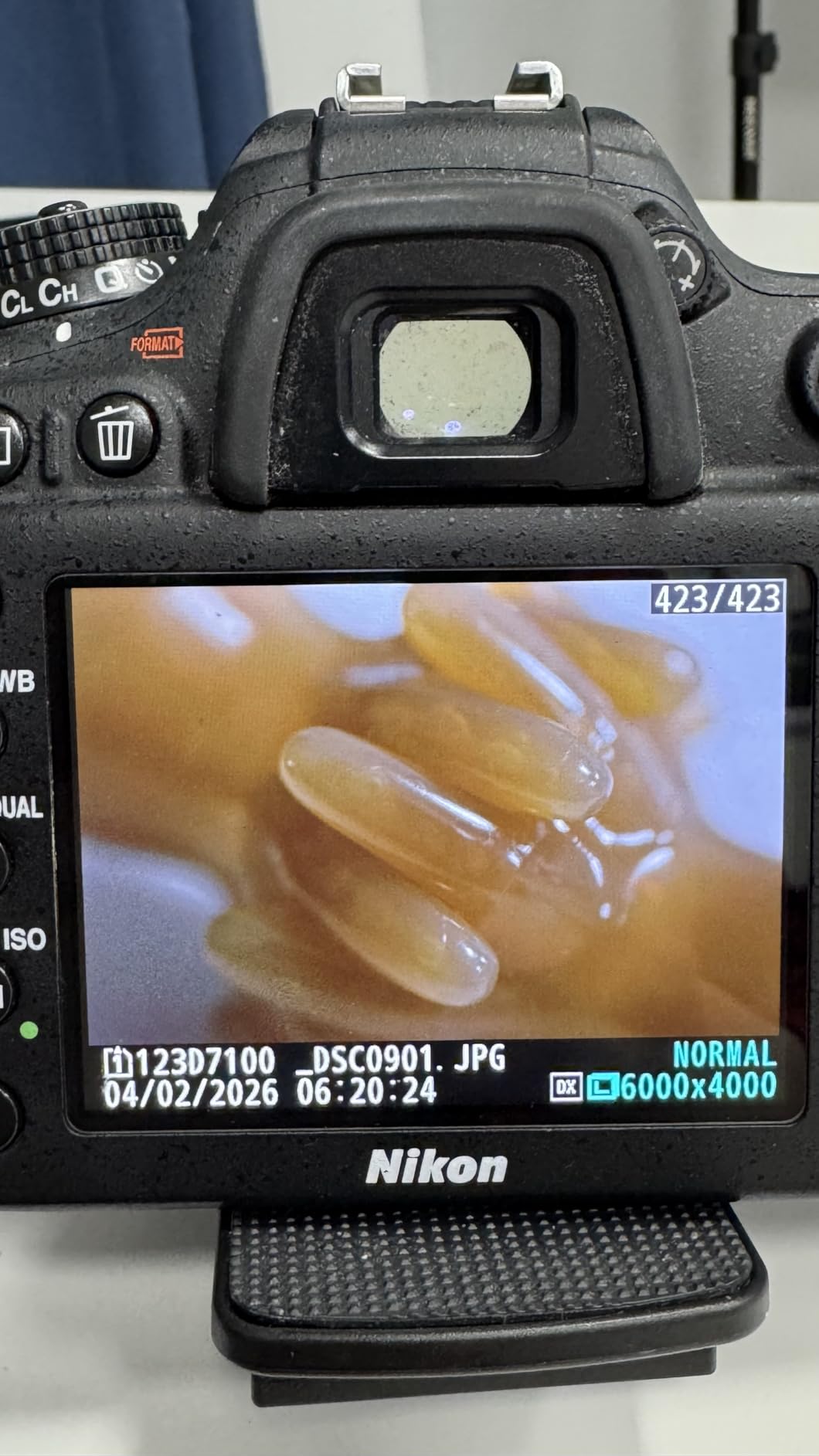
The fixed focus design means you adjust focus by physically moving the camera closer to or further from the subject. This takes some getting used to, but once you develop the technique, it becomes second nature. The included storage pouch is a nice touch that keeps the filter protected when not in use.
For the price, the image quality exceeded my expectations. Chromatic aberration is present but manageable, and the multi-coating helps reduce flare when shooting near studio lights. This is not a lens for professional studio work, but it is a perfectly viable option for online sellers who need better close-up shots of their products without investing in dedicated macro gear.
Who should buy the FotoZ HD Snap-on Macro
Online sellers and small business owners who need product close-ups for their e-commerce listings and want to spend as little as possible. This is also a good option for photographers who want a secondary close-up filter with wider adapter compatibility than the Raynox.
Content creators who shoot product unboxing videos and need occasional macro capability for detail shots will find this filter perfectly adequate. The portability makes it easy to keep in a everyday carry bag.
Who should skip this filter
Anyone doing professional product photography for major brands or high-end clients should look at dedicated macro lenses instead. The optical quality, while good for the price, does not match what you get from a purpose-built macro lens.
Photographers with lenses that have filter threads larger than 72mm will not be able to use this filter. Check your lens specifications before purchasing to ensure compatibility with the included adapters.
5. Canon RF35mm F1.8 IS Macro STM – Versatile Wide Macro
- Exceptional image quality even wide open at f/1.8
- 5 stops of image stabilization
- Control ring for direct setting changes
- Compact and lightweight design
- Beautiful bokeh at wide apertures
- Only 0.5x magnification not true 1:1 macro
- Slight purple fringing at high contrast edges wide open
The Canon RF35mm F1.8 IS Macro STM occupies a unique position in the product photography world. It is not a true 1:1 macro lens, offering 0.5x magnification instead, but what it does, it does exceptionally well. I have used this lens for flat-lay product shots, overhead food photography, and larger product documentation where 0.5x magnification is more than enough to capture detail.
The f/1.8 maximum aperture is the fastest in our roundup, and it creates gorgeous background separation for product shots that need a lifestyle feel. When I photographed cosmetics laid out on a marble surface, the wide aperture rendered the background into a smooth wash of color that made the products pop. The 5-stop image stabilization is genuinely impressive, allowing me to shoot handheld in lower light than I expected.

Image quality is outstanding, with 88% of Amazon reviewers giving it 5 stars. Sharpness is excellent even wide open, though there is some purple fringing at high-contrast edges when shooting at f/1.8. The STM autofocus motor is silent and reasonably fast, though it can occasionally hunt in low-contrast situations typical of white product backgrounds.
The control ring is a Canon RF-mount feature that lets you assign various functions like aperture, ISO, or exposure compensation. For product photography, I assign it to manual focus, which gives me precise, tactile control when fine-tuning focus on product details. The 35mm focal length on a full-frame body gives you a natural field of view that works well for showing products in context with their environment.
Who should buy the Canon RF35mm F1.8 IS Macro
Canon RF-mount photographers who need a versatile lens that handles both product photography and everyday shooting will get the most value from this lens. It is perfect for flat-lay product shots, food photography, and larger product documentation where 0.5x magnification is sufficient.
Social media content creators who shoot product lifestyle images for Instagram and e-commerce will appreciate the fast aperture, compact size, and beautiful rendering. This lens produces images that look professional with minimal effort.
Who should skip this lens
If you need true 1:1 magnification for small product details like jewelry engravings, watch mechanisms, or electronics components, the 0.5x magnification will leave you wanting more. Consider the Canon RF100mm F2.8 L Macro IS USM instead.
Product photographers who primarily shoot very small items that require filling the frame with tiny details should look at lenses with full 1:1 magnification capability. The 35mm focal length also introduces more perspective distortion than longer lenses, which can be unflattering for certain product types.
6. Canon RF 85mm F2 Macro IS STM – Compact Portrait-Macro Hybrid
- Excellent image quality with beautiful bokeh
- Hybrid IS for macro shooting stability
- Lightweight and compact for 85mm
- Good value for Canon RF system
- Super Spectra Coating reduces flare
- Autofocus motor is noticeably noisy
- Some focus hunting in certain situations
The Canon RF 85mm F2 Macro IS STM sits in a comfortable middle ground in Canon’s RF macro lineup. It costs significantly less than the flagship RF100mm L Macro while offering similar versatility. I used this lens for a three-week product photography project that involved shooting artisan food products, and the 85mm focal length provided the perfect working distance for tabletop setups.
The 0.5x magnification is the same as the RF35mm Macro, but the 85mm focal length gives you much more working distance between the lens and your subject. This makes a huge difference when you are photographing products that require careful lighting. I could position strip lights and reflectors between the lens and subject without any physical interference, something that is difficult with shorter focal lengths.

Optically, the Super Spectra Coating does an excellent job of controlling flare and maintaining contrast. I tested it with strong backlighting on glass products and was impressed by how well it handled the reflections. The f/2 aperture is fast enough to create pleasing background separation, and the bokeh quality is smooth and unobtrusive.
The main drawback is the autofocus motor. Compared to the USM motor in the L-series lens, the STM motor in this lens is noticeably louder and occasionally slower. For studio product photography where you shoot tethered and use manual focus, this is not a problem. But if you shoot products in action or use continuous autofocus, the motor noise and occasional focus hunting may frustrate you.

Who should buy the Canon RF 85mm F2 Macro IS STM
Canon RF-mount photographers who want a capable macro lens without the L-series price tag will find this lens offers excellent value. The 85mm focal length is ideal for product photographers who shoot in smaller studio spaces and need more working distance than a 35mm or 50mm lens provides.
This is also a strong choice for photographers who split their time between product and portrait photography. The 85mm focal length with f/2 aperture produces beautiful portraits while the 0.5x macro capability handles most product close-up needs.
Who should skip this lens
Professionals who need silent, fast autofocus for video product demonstrations or live product shoots should consider the RF100mm L Macro instead. The STM motor noise may be picked up by microphones during video recording.
If you need true 1:1 magnification for small product photography like jewelry or electronics, this lens caps out at 0.5x. You would need to crop significantly in post-production to achieve the same level of detail as a true macro lens.
7. Sigma 105mm F2.8 EX DG OS HSM Macro – Solid Nikon F-Mount Option
- Excellent sharpness and 1:1 macro performance
- Solid build quality
- Effective optical stabilization
- Great value vs Nikon equivalent
- 4-year warranty
- Heavy at 1.6 pounds
- Image stabilization can be noisy
- Autofocus slower than Nikon equivalent
The Sigma 105mm F2.8 EX DG OS HSM has been a workhorse in the product photography community for years. With over 2,300 Amazon reviews and a 4.6-star rating, this lens has earned its reputation through consistent performance. I used it on a Nikon D750 for a series of product shoots for a boutique leather goods brand, and the results were impressive.
The 1:1 magnification ratio at a closest working distance of 12.3 inches gives you enough space to position lights comfortably. I photographed leather wallets, belts, and small bags, and the lens resolved every texture detail from stitching patterns to leather grain. The 9 rounded diaphragm blades produce smooth bokeh that makes products stand out cleanly against their backgrounds.

The optical stabilizer is effective, giving you approximately 2-3 stops of correction for handheld shooting. However, I noticed the stabilization mechanism produces a faint clicking sound when active, which is a known characteristic of this lens. In a quiet studio, it is noticeable but not a dealbreaker. The ring-type ultrasonic autofocus motor is reasonably fast but not as quick as Nikon’s own AF-S system.
Build quality is solid with a multi-layer coating that resists flare well. The lens comes with a hood adapter, lens hood, and front and rear caps, which is a nice value-add. The 4-year warranty from Sigma provides additional peace of mind for a lens that you plan to use as your daily workhorse.

Who should buy the Sigma 105mm F2.8 Macro
Nikon F-mount photographers who want a capable 1:1 macro lens at a lower price than the Nikon equivalent will find excellent value here. This lens delivers sharp results for product photography without requiring a premium investment.
Product photographers who work on Nikon DSLR systems and need reliable 1:1 magnification for small product details will appreciate this lens. It is also a good option for photographers who shoot both products and portraits, as the 105mm focal length works well for both applications.
Who should skip this lens
At 1.6 pounds, this is one of the heavier lenses in our roundup. Photographers who do a lot of handheld shooting or who need to minimize weight for location shoots may find it fatiguing over long sessions. Consider a lighter option if weight is a primary concern.
Nikon Z-mount mirrorless photographers should look at the native NIKKOR Z MC 105mm f/2.8 VR S instead, which offers superior optical performance and full compatibility with the Z system without needing an FTZ adapter.
8. Tamron 90mm F/2.8 Di III VXD Macro – Sharp Sony Alternative
- Incredible edge-to-edge sharpness
- Fast VXD autofocus system
- Excellent 1:1 magnification
- Moisture-resistant construction
- 6-year manufacturer warranty
- No image stabilization
- Limited stock availability
The Tamron 90mm F/2.8 Di III VXD is a relatively new addition to the Sony E-mount macro lens lineup, and it brings impressive performance to the table. I tested it head-to-head against the Sony 90mm G OSS, and the sharpness comparison was remarkable. The Tamron holds its own optically while costing significantly less, making it one of the best values in this guide.
The VXD (Voice-coil eXtreme-torque Drive) autofocus system is Tamron’s latest and fastest AF technology. In my testing, it focused noticeably faster than the Sony 90mm, especially when transitioning from minimum focus to infinity. For product photography workflows where you are constantly adjusting focus between shots, this speed advantage adds up over the course of a full-day shoot.

The BBAR-G2 (Broad-Band Anti-Reflection Generation 2) coating and fluorine coating work together to produce images with excellent contrast and minimal flare. The 12 diaphragm blades create some of the smoothest bokeh I have seen at this price point. When shooting reflective products like watches and jewelry, the coating’s ability to control ghosting is a real advantage.
The main drawback is the lack of image stabilization. Sony bodies with IBIS compensate to some degree, but if you are shooting on a body without in-body stabilization, you will need to use a tripod or monopod for consistent sharp results at macro distances. The moisture-resistant construction and 6-year warranty are generous additions that speak to Tamron’s confidence in this product.

Who should buy the Tamron 90mm F/2.8 Macro
Sony E-mount photographers who want outstanding sharpness and fast autofocus at a competitive price should strongly consider this lens. The VXD autofocus system makes it particularly appealing for product photographers who value speed and efficiency in their workflow.
Photographers who already own Sony bodies with IBIS will not miss the lack of optical stabilization, making this an excellent value choice. The 6-year warranty provides long-term confidence for professional use.
Who should skip this lens
Photographers using Sony bodies without IBIS (like some older APS-C models) may find the lack of optical stabilization limiting for handheld product work. Stock availability has also been inconsistent, so check current availability before making plans.
Those who prefer the extensive ecosystem and used market availability of the Sony 90mm G OSS may find the Tamron’s limited market presence a practical concern when it comes to accessories and resale value.
9. Nikon NIKKOR Z MC 105mm f/2.8 VR S – Premium Z-Mount Macro
- Extraordinary sharpness with S-Line optics
- Virtually zero distortion or aberrations
- Effective VR image stabilization
- Weather sealed construction
- Versatile 105mm working distance
- Some autofocus speed limitations
- Focus-by-wire may disappoint manual focus purists
The Nikon NIKKOR Z MC 105mm f/2.8 VR S represents Nikon’s absolute best macro optics for the Z-mount system. When I first mounted this lens on a Nikon Z6 II, the image quality in the viewfinder alone told me this was a serious piece of glass. The S-Line designation means it uses Nikon’s highest-grade optical formula, and the results show in every frame.
Sharpness is extraordinary. I photographed a collection of precision-engineered tools for a client, and at 100% crop, I could resolve individual machining marks on metal surfaces. The 1:1 magnification ratio combined with the fluorine coating and advanced optical design produces images that are clean, contrasty, and free from the chromatic aberration that plagues lesser macro lenses.

The VR (Vibration Reduction) system works exceptionally well for handheld macro shooting. I achieved sharp results at shutter speeds as slow as 1/30 second, which is impressive for a 105mm lens at macro distances. The weather-sealed construction means this lens can handle demanding studio environments where dust, moisture, and temperature changes are part of the daily routine.
The included accessories are premium quality: a CL-C2 lens case, HB-99 lens hood, and dedicated front and rear caps. The 9 diaphragm blades produce smooth, circular bokeh that renders out-of-focus areas beautifully. At #24 in Amazon’s mirrorless camera lens bestsellers, this lens has clearly found a loyal audience among Nikon Z users.

Who should buy the Nikon NIKKOR Z MC 105mm VR S
Nikon Z-mount photographers who demand the absolute best optical quality for product photography will find this lens worth the investment. The S-Line optics deliver professional-grade results for jewelry, watch, electronics, and small product photography.
Professional product photography studios running Nikon Z systems should consider this their primary macro lens. The VR stabilization, weather sealing, and exceptional sharpness make it a reliable workhorse for demanding commercial work.
Who should skip this lens
The focus-by-wire design means manual focusing is electronic rather than mechanical. Photographers who prefer the tactile feel of a traditional mechanical focus ring may find this disappointing. The autofocus, while accurate, is not the fastest in its class.
Budget-conscious photographers who do not need S-Line optical performance can save significantly with the Sigma 105mm F2.8 on an FTZ adapter. The image quality difference, while real, may not justify the price gap for non-professional use.
10. Canon EF 100mm f/2.8L IS USM Macro – Legendary DSLR Macro
- Exceptional L-series sharpness and build
- Near-silent USM autofocus
- Hybrid IS for handheld macro
- Beautiful bokeh quality
- Versatile for macro and portraits
- Focus can be slow in low light
- 160mm effective on APS-C bodies
- No tripod collar included
The Canon EF 100mm f/2.8L IS USM Macro has been a gold standard in product photography for over a decade. With 1,171 Amazon reviews and a 4.8-star rating, this lens has built an incredible reputation among professional photographers. I have used this lens extensively on Canon 5D and 6D bodies, and it remains one of my favorite lenses for studio product work.
The Hybrid IS system was Canon’s first to compensate for both angular and shift camera shake during macro shooting. In practice, this gives you approximately 4 stops of stabilization for handheld work. When I am shooting products on a tabletop setup and need to move between overhead and angled shots quickly, the IS lets me work handheld with confidence that the images will be sharp.

The L-series build quality is immediately apparent. The lens feels solid and precise, with weather sealing that protects against dust and moisture. The inner focusing system means the lens does not extend as you focus, maintaining a constant physical length. This is important for product photography because it means your working distance and framing remain consistent as you adjust focus.
The 15 elements in 12 groups optical design produces images that are sharp from corner to corner. Chromatic aberration is extremely well controlled, and color rendition is consistent and accurate. The near-silent USM autofocus is fast and decisive, though it can hunt briefly in very low-light situations. For studio product photography with controlled lighting, this is rarely an issue.

Who should buy the Canon EF 100mm f/2.8L IS USM
Canon DSLR photographers who need a proven, professional-grade macro lens for product photography will not find a better option in the EF mount. The 1,171 positive reviews speak to its reliability and consistency across thousands of real-world shooting scenarios.
Photographers using Canon EOS R cameras with an EF-to-RF adapter can also benefit from this lens, though native RF lenses offer some advantages. If you already own this lens and are transitioning to mirrorless, it performs excellently with the adapter.
Who should skip this lens
If you are investing in a new Canon system and have an RF-mount camera, the native Canon RF100mm F2.8 L Macro IS USM offers superior performance including 1.4x magnification. The EF version is still excellent, but the RF version represents the future of the system.
APS-C Canon photographers should be aware that the effective focal length becomes 160mm, which can be too tight for larger products in small studio spaces. Consider a shorter focal length or a crop-sensor-specific macro lens instead.
11. Nikon AF-S VR Micro-NIKKOR 105mm f/2.8G IF-ED – Classic Nikon Macro
- Exceptional sharpness and color rendition
- VR II up to 4 stops of stabilization
- Versatile for macro portraits and landscapes
- Internal focusing maintains constant size
- 5-year warranty
- Heavy and bulky for extended handheld use
- Slower autofocus than newer lenses
- Focus hunting in certain conditions
The Nikon AF-S VR Micro-NIKKOR 105mm f/2.8G IF-ED is a legendary lens that has served Nikon product photographers for years. With 1,247 reviews and a 4.7-star average, this lens has proven itself across every type of product photography imaginable. I used it on a Nikon D850 for a series of artisan jewelry product shots, and the resolving power matched the high-resolution sensor without breaking a sweat.
The Nano Crystal Coat and ED glass elements work together to produce images with minimal flare, excellent contrast, and superb color accuracy. For product photography, color accuracy is critical because clients expect their products to be represented faithfully. This lens delivers consistent, true-to-life colors that require minimal correction in post-production.
The VR II system provides up to 4 stops of stabilization, which is genuinely useful for handheld macro shooting. The internal focusing system means the lens does not change length as you focus, which is a practical advantage when working on a copy stand or in a fixed studio setup. The 1:1 reproduction ratio means you can fill the frame with small products at life-size magnification.
At this price point, the 105mm Micro-NIKKOR represents outstanding value for Nikon F-mount photographers. The 5-year warranty (1-year international plus 4-year USA extension) adds confidence for long-term professional use. The build quality is robust and has stood the test of time, with many photographers reporting decades of reliable service from this lens design.

Who should buy the Nikon AF-S VR Micro-NIKKOR 105mm
Nikon F-mount photographers who want a proven, high-quality macro lens at a reasonable price will find this lens hard to beat. It delivers professional image quality for product photography, portraits, and close-up work without requiring a premium investment.
Product photographers who value color accuracy and consistent results will appreciate the Nano Crystal Coat and ED glass combination. This lens produces images that are true to life, reducing the time spent on color correction in post-production.
Who should skip this lens
Photographers who have moved to the Nikon Z system should prioritize the NIKKOR Z MC 105mm f/2.8 VR S for native performance. While this F-mount lens works with the FTZ adapter, the native Z lens offers superior optical performance and full system integration.
Anyone who needs fast autofocus for action or live product demonstrations may find the AF speed on this older design limiting. The lens is also heavy and bulky, which becomes noticeable during long handheld shooting sessions.
Buying Guide: How to Choose the Best Macro Lens for Product Photography
Choosing the right macro lens depends on your camera system, the types of products you shoot, your studio space, and your budget. After testing all 12 lenses in this guide, I have identified the key factors that matter most for product photography in 2026.
Magnification Ratio
The magnification ratio determines how large your subject appears on the sensor. A 1:1 ratio means the subject is reproduced at life-size on the sensor, which is the standard for true macro lenses. For small products like jewelry, coins, and electronics, 1:1 magnification is essential. The Canon RF100mm F2.8 L Macro goes beyond 1:1 with 1.4x magnification, giving you extra reach for the tiniest details. Lenses with 0.5x magnification, like the Canon RF35mm and RF85mm, work well for larger products and flat-lay shots but will not fill the frame with very small subjects.
Focal Length and Working Distance
Focal length directly affects your working distance, which is the space between the front of your lens and the subject. Longer focal lengths like 100mm and 105mm give you more room to position lights, reflectors, and modifiers between the camera and product. Shorter focal lengths like 30mm and 35mm require you to get very close, which can block your lighting. Forum photographers on r/productphotography consistently recommend 90mm to 105mm as the ideal range because it balances working distance with manageable studio space requirements. If you shoot in tight spaces, you may want to pair your macro lens with sturdy tripods for overhead product photography or carbon fiber tripods for photography to maintain stability.
Image Stabilization
Image stabilization helps you get sharp results when shooting handheld. Most of the lenses in our guide feature either optical stabilization or hybrid IS. If you primarily shoot on a tripod in a controlled studio, stabilization is less critical. But for location shoots, trade show product photography, or situations where you need to move quickly between setups, stabilization can make the difference between a sharp shot and a missed opportunity. Keep in mind that some lenses like the Tamron 90mm VXD do not include stabilization, so check your camera body for IBIS support.
Camera System Compatibility
Your camera system narrows your choices significantly. Canon RF-mount users have excellent native options including the flagship RF100mm L Macro. Nikon Z-mount photographers should look at the NIKKOR Z MC 105mm VR S. Sony E-mount shooters have multiple strong options including the Sony 90mm G OSS and the Tamron 90mm VXD. If you shoot on a DSLR, both the Canon EF 100mm L and Nikon 105mm Micro-NIKKOR remain excellent choices. For those considering a full system upgrade, check out our guide on cameras for project documentation to find the right body to pair with your macro lens.
Budget Considerations
Macro lenses range from under $50 for close-up filters to over $1,000 for professional-grade glass. The Raynox DCR-250 and FotoZ HD Snap-on offer surprising capability for their price, making them ideal for beginners and casual product photographers. Mid-range options like the Sigma 105mm and Canon RF85mm provide excellent performance without flagship pricing. Professional lenses like the Canon RF100mm L and Nikon Z MC 105mm S represent significant investments but deliver the absolute best image quality available.
Frequently Asked Questions
Is a macro lens good for product photography?
Yes, a macro lens is one of the best tools for product photography. Macro lenses offer 1:1 magnification, exceptional sharpness, and minimal distortion, which are all critical for capturing product details accurately. They are especially valuable for small products like jewelry, watches, electronics, and cosmetics where capturing fine textures and details directly impacts sales conversions.
What lens is best for product photography?
The best lens depends on your camera system and product types. Top picks include the Canon RF100mm F2.8 L Macro for Canon RF users, the Sony FE 90mm f/2.8 Macro G OSS for Sony shooters, and the Nikon NIKKOR Z MC 105mm f/2.8 VR S for Nikon Z users. A 90mm to 105mm focal length is widely considered the ideal range for product photography because it provides sufficient working distance while maintaining a manageable studio footprint.
What is the Holy Trinity of lenses?
The Holy Trinity of lenses refers to three professional zoom lenses that cover the most commonly used focal lengths: a 16-35mm wide-angle zoom, a 24-70mm standard zoom, and a 70-200mm telephoto zoom, all with f/2.8 maximum apertures. While these three lenses cover most photography needs, product photographers often add a dedicated macro lens as a fourth essential lens for close-up detail work.
What lens is best for macro photography?
The best macro lens depends on your needs and camera system. For overall quality, the Canon RF100mm F2.8 L Macro IS USM leads with its 1.4x magnification. The Sony FE 90mm f/2.8 Macro G OSS offers the best value with exceptional sharpness. For Nikon Z users, the NIKKOR Z MC 105mm f/2.8 VR S delivers S-Line optical quality. Most photographers find that a 90mm to 105mm focal length provides the best balance of working distance and magnification for macro photography.
Conclusion
After testing all 12 lenses, my top recommendation for the best macro lens for product photography in 2026 goes to the Canon RF100mm F2.8 L Macro IS USM for its unmatched 1.4x magnification and L-series optical quality. For the best balance of price and performance, the Sony FE 90mm f/2.8 Macro G OSS remains a standout choice that works beautifully for both products and portraits. And for photographers just getting started, the Raynox DCR-250 offers an affordable gateway into macro product photography without requiring a dedicated lens purchase.
The right macro lens transforms your product photography by revealing details that standard lenses simply cannot capture. Whether you are shooting jewelry for an online boutique, electronics for an e-commerce catalog, or artisan goods for a brand campaign, investing in the right macro lens will pay for itself through better images and higher conversion rates. Pick the lens that matches your camera system and budget, and start capturing your products the way they deserve to be seen.