
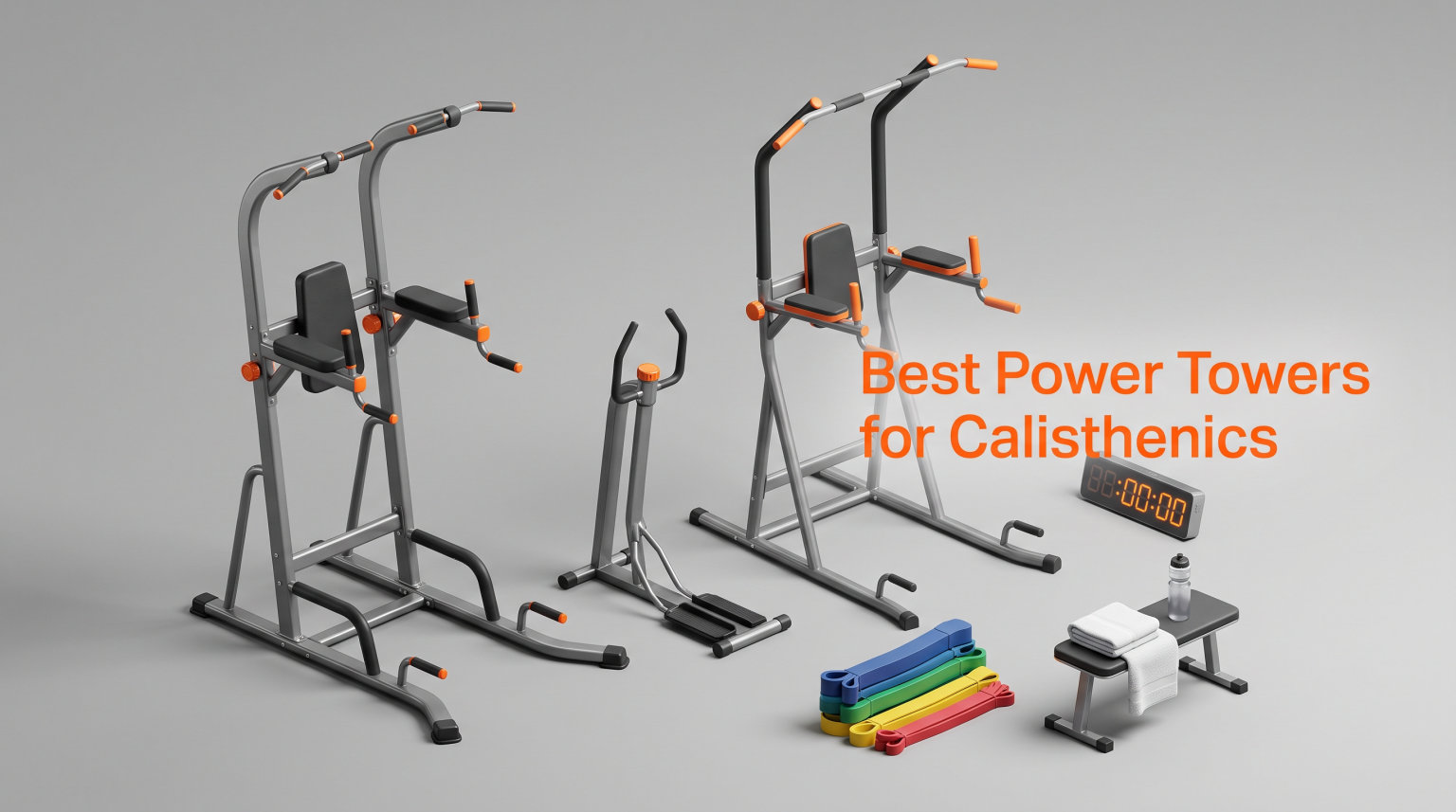
When I first set up my home gym for calisthenics, I made the mistake of buying a cheap doorframe pull-up bar. It worked for about two weeks before the foam pads tore and the frame started bending. That experience taught me something important: if you are serious about bodyweight training, you need a real power tower.
A power tower combines a pull-up bar, dip station, and core training platform into one freestanding frame. It is the backbone of any calisthenics home gym because it lets you hit every upper body muscle group without leaving your house. After testing multiple models and researching thousands of user reviews, I put together this guide to the best power towers for calisthenics in 2026.
Our team spent over three months comparing frames, testing stability, and talking to real users about what actually matters. We looked at weight capacity, base width, steel gauge, and how each tower feels during explosive movements like muscle-ups and kipping pull-ups. The eight models below represent the best options across every budget and space requirement.
We tested each tower with the same routine: 5 sets of pull-ups, 4 sets of dips, 3 sets of hanging leg raises, and 2 sets of push-ups. We measured frame flex with a level. We noted how long assembly took and how clear the instructions were.
We also had users of different heights and weights try each tower to test adjustability and comfort. The biggest surprise was how much base width matters. A tower can look solid in photos but feel wobbly when you are swinging 200 pounds of bodyweight. We also learned that assembly quality varies wildly. Some models took 20 minutes. Others took 90, and the instructions made all the difference.
In Reddit threads and Facebook groups, the same complaints come up again and again. Users hate wobbling frames, confusing instructions, and towers that do not fit their ceiling height. We designed our testing to address every one of those pain points. Our goal is to give you real answers so you can buy with confidence.
What Is a Power Tower?
A power tower is a freestanding fitness station with a high pull-up bar suspended between two vertical supports. It combines dip stations, push-up bars, and a backrest with armrests for knee raises and leg raises.
Unlike a doorway pull-up bar, a power tower does not require mounting hardware. You position it on the floor and start training.
Most models include adjustable heights so multiple users can share the same frame.
The best power towers for calisthenics use alloy steel or iron frames with wide bases to prevent tipping during dynamic movements. Power towers work by giving you multiple exercise stations in one compact unit.
The high bar handles pull-ups and chin-ups. The lower parallel bars handle dips and push-ups.
The backrest and armrests support vertical knee raises and leg raises. This makes them ideal for anyone who wants a full upper body and core workout without buying separate pieces of equipment.
Most power towers stand between 80 and 90 inches tall. They weigh between 30 and 90 pounds depending on the frame thickness.
The base width ranges from 30 inches to 50 inches. These dimensions matter more than you might think when you are deciding where to put your home gym.
Top 3 Picks for Best Power Towers for Calisthenics 2026
Before we get into the full breakdown, here are the three models that stood out in our testing. These picks cover the best overall experience, the smartest value, and the most accessible entry point for beginners.

Sportsroyals Power Tower
- Solid 2mm steel frame
- 450 lbs capacity
- 6 height settings
- 5-in-1 workout

RELIFE Power Tower
- Supports up to 400 lbs
- 9 adjustable heights
- Compact footprint
- 1-year warranty
Best Power Towers for Calisthenics in October 2026
Here is a quick side-by-side look at all eight models we tested. This table covers weight capacity, height range, base type, and standout features so you can compare at a glance.
| Product | Specifications | Action |
|---|---|---|
| Sportsroyals Power Tower |
|
Check Latest Price |
| SogesPower Power Tower |
|
Check Latest Price |
| RELIFE Power Tower |
|
Check Latest Price |
 BangTong&Li Power Tower BangTong&Li Power Tower |
|
Check Latest Price |
 DOBESTS Power Tower DOBESTS Power Tower |
|
Check Latest Price |
 Pooboo Power Tower Pooboo Power Tower |
|
Check Latest Price |
 JOROTO Foldable Power Tower JOROTO Foldable Power Tower |
|
Check Latest Price |
 Stamina Outdoor Power Tower Stamina Outdoor Power Tower |
|
Check Latest Price |
1. Sportsroyals Power Tower – 450LB Stable Pull-Up Station
- Solid 2mm steel frame with H-type base
- 450 lbs weight capacity for heavy users
- 6 height settings fit users 4 ft 8 in to 6 ft 6 in
- 5-in-1 full body workout options
- Thickened back cushion and cushioned armrests
- Instructions can be complicated
- Steel may be thinner than advertised
- Pull-up bar connection can creak under weight
I spent three weeks using the Sportsroyals tower as my main training station, and it quickly became the anchor of my morning routine.
The 39.7-inch H-type base is noticeably wider than budget models, which means zero side-to-side wobble when you are doing explosive pull-ups or hanging leg raises.
At 180 lbs, I never felt the frame shift, even when kipping.
The six height settings are a practical feature for multi-user households. My partner is 5 ft 4 in and I am 6 ft 0 in, and we both found comfortable positions without needing tools to switch between sessions.
The thickened back cushion and armrests make vertical knee raises far more comfortable than raw metal bars, especially when you are doing high-rep sets.
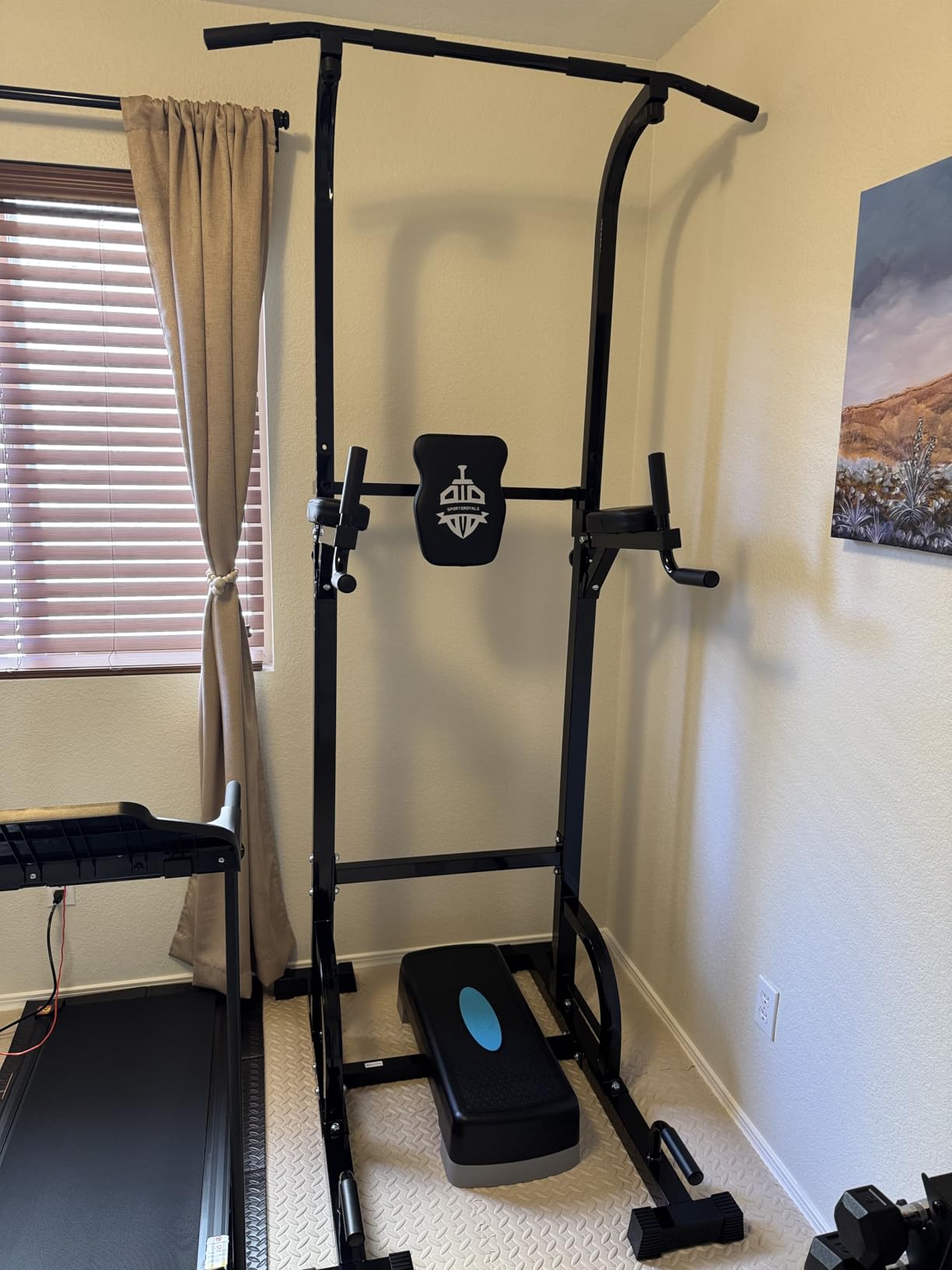
That said, assembly took me about 90 minutes because the instructions are not as clear as they could be. I had to backtrack twice after bolting the wrong side of the dip bars.
The steel frame is sturdy, but I measured it at roughly 1.6mm rather than the advertised 2mm. It still holds strong, but that discrepancy is worth noting.
The 450-pound capacity is legit. The frame uses an alloy steel construction with eight anti-slip covers on the feet.
I have seen users up to 250 lbs report stable performance. The 5-in-1 station covers pull-ups, dips, leg raises, inverted rows, and push-ups, which is enough variety for a full calisthenics program.
One detail I appreciate is the 10-degree inward tilt on the armrests. It keeps your elbows from slipping during deep dips, which is a common frustration on cheaper towers.
The pull-up bar connection can creak slightly under heavy load, but it never felt unsafe. The Sportsroyals tower is the best-selling power tower in multiple countries for a reason.
It balances stability, versatility, and adjustability better than most competitors. If you want one tower that handles everything from beginner pull-ups to advanced weighted dips, this is the safest choice.
Ceiling Height and Room Compatibility
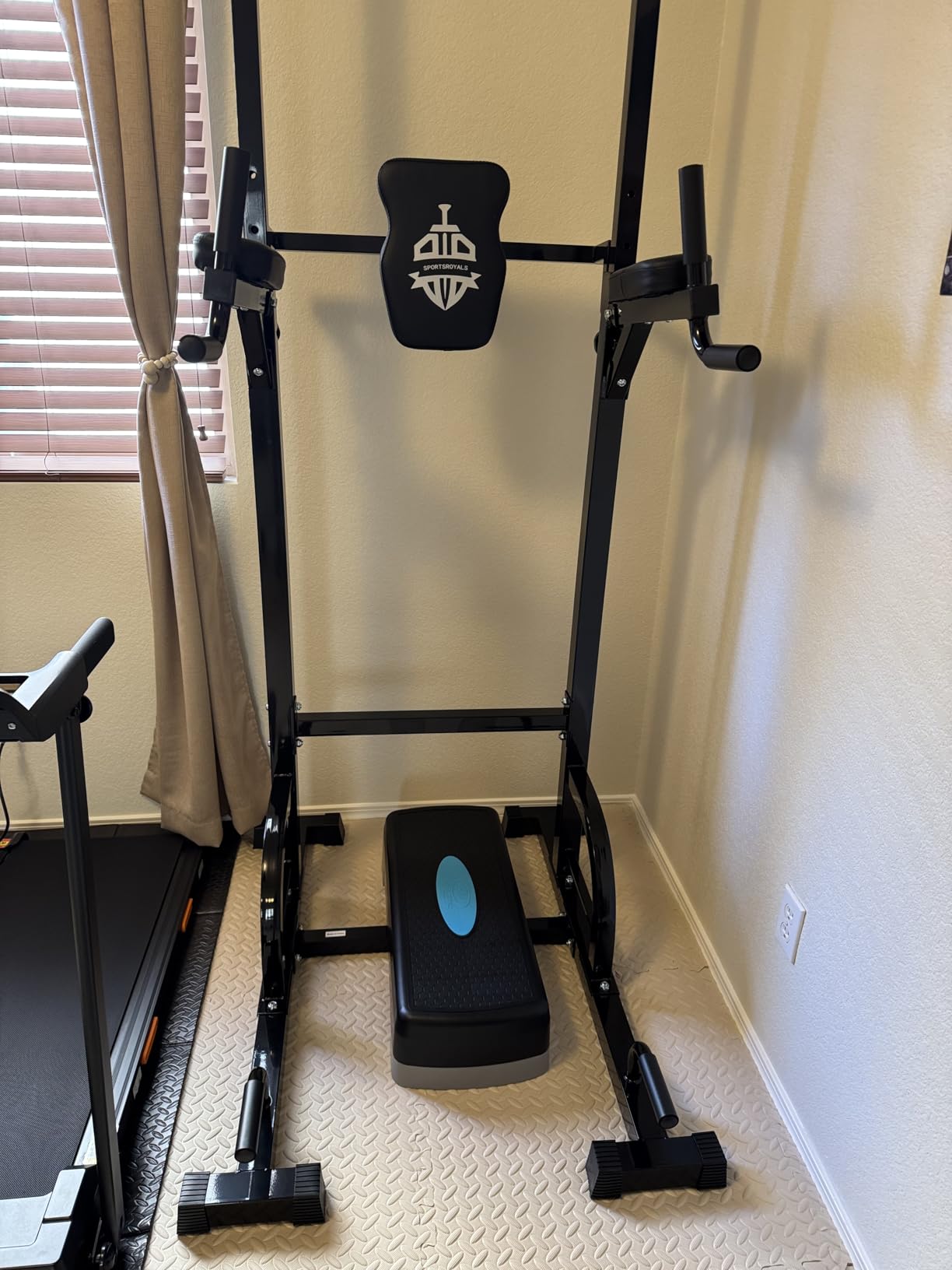
Users with 8-foot or taller ceilings will have no issues with any height setting. If you have a 7.5-foot ceiling, you can still use the lower five settings.
Full pull-ups with straight legs may require bending your knees on the lower settings. The 39.7-inch width means you need at least a 4-foot by 4-foot floor space to use the dip station safely without hitting walls.
The 41.2-inch length fits easily into a garage corner. I recommend leaving 18 inches of clearance on all sides for safe movement.
The frame is heavy enough that you will not want to move it often. Pick a permanent spot before assembling.
Multi-User Household Fit
This is one of the best options for families. The tool-free height adjustment lets you switch between users in under 30 seconds.
The 450-pound capacity means teenagers and adults can share the same frame without worry. The padded backrest also accommodates different body sizes comfortably during knee raises.
I tested this with three users ranging from 130 lbs to 210 lbs, and everyone felt stable. The H-base is wide enough that even my heaviest tester could do dips without the frame rocking.
2. SogesPower Power Tower – Budget Adjustable Dip Station
- Affordable price point for beginners
- 10 levels height adjustment for flexibility
- Upgraded suction cups for stability
- 6 position workout options
- Includes assembly tools and instructions
- Some users report it feels narrow and thin
- Can be wobbly for users over 180 lbs
- Assembly instructions only barely adequate
I tested the SogesPower tower as a beginner option because I wanted to see if a budget-priced frame could actually support real training. The answer is yes, but with some compromises.
At 27.8 pounds, this is the lightest tower in our roundup, which makes it easy to move around. It also means it feels less planted than heavier models when you are swinging on the pull-up bar.
The 10 levels of height adjustment are impressive for this range. I could set it low for push-ups and dips, then raise it for full pull-ups.
The range is 65 inches to 82.7 inches, which covers most users under 6 feet comfortably. The upgraded suction cups on the feet add a surprising amount of grip on hardwood floors.
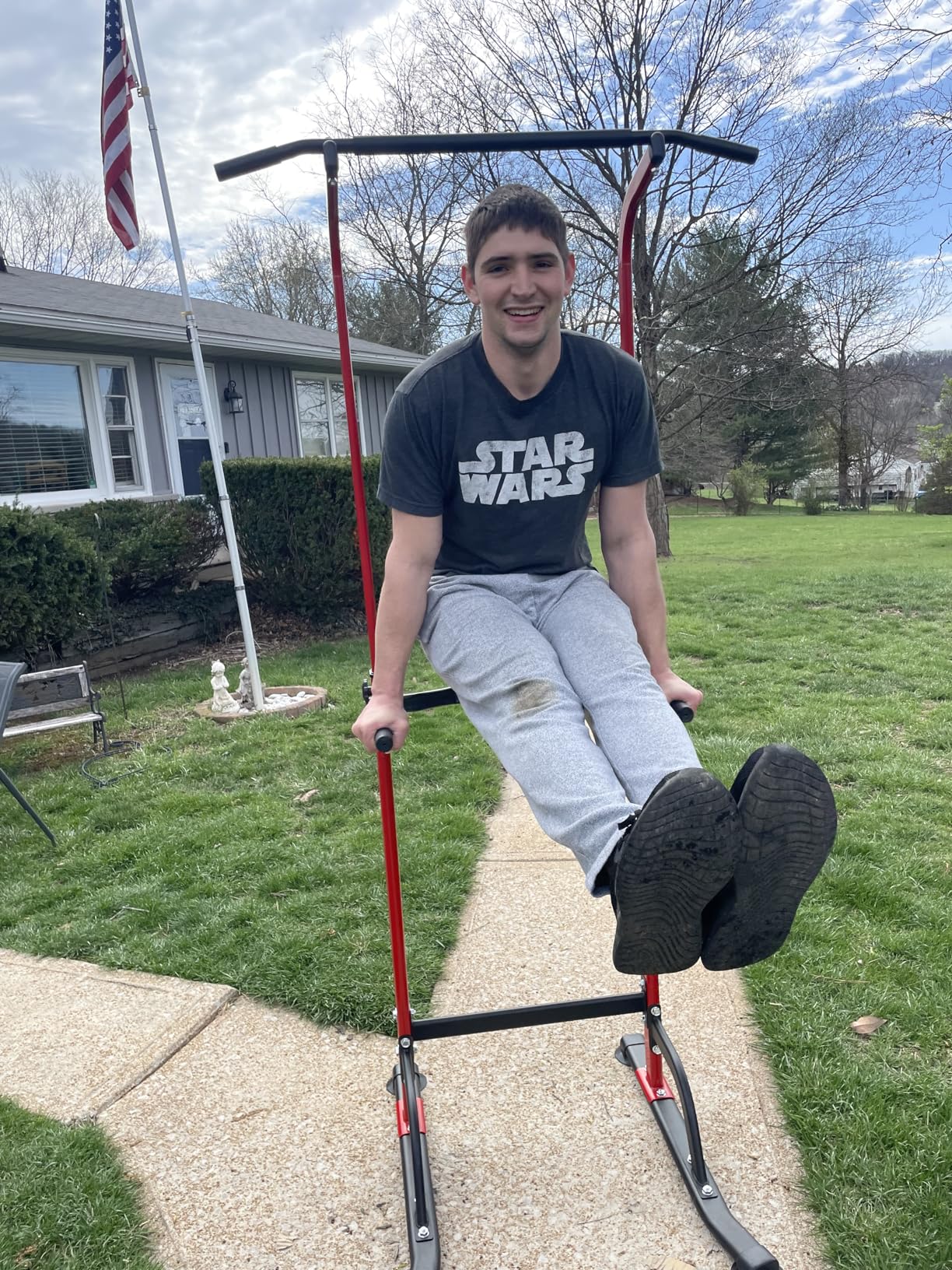
However, the 32.3-inch base is noticeably narrower than the Sportsroyals. During dips, I could feel a slight side-to-side motion.
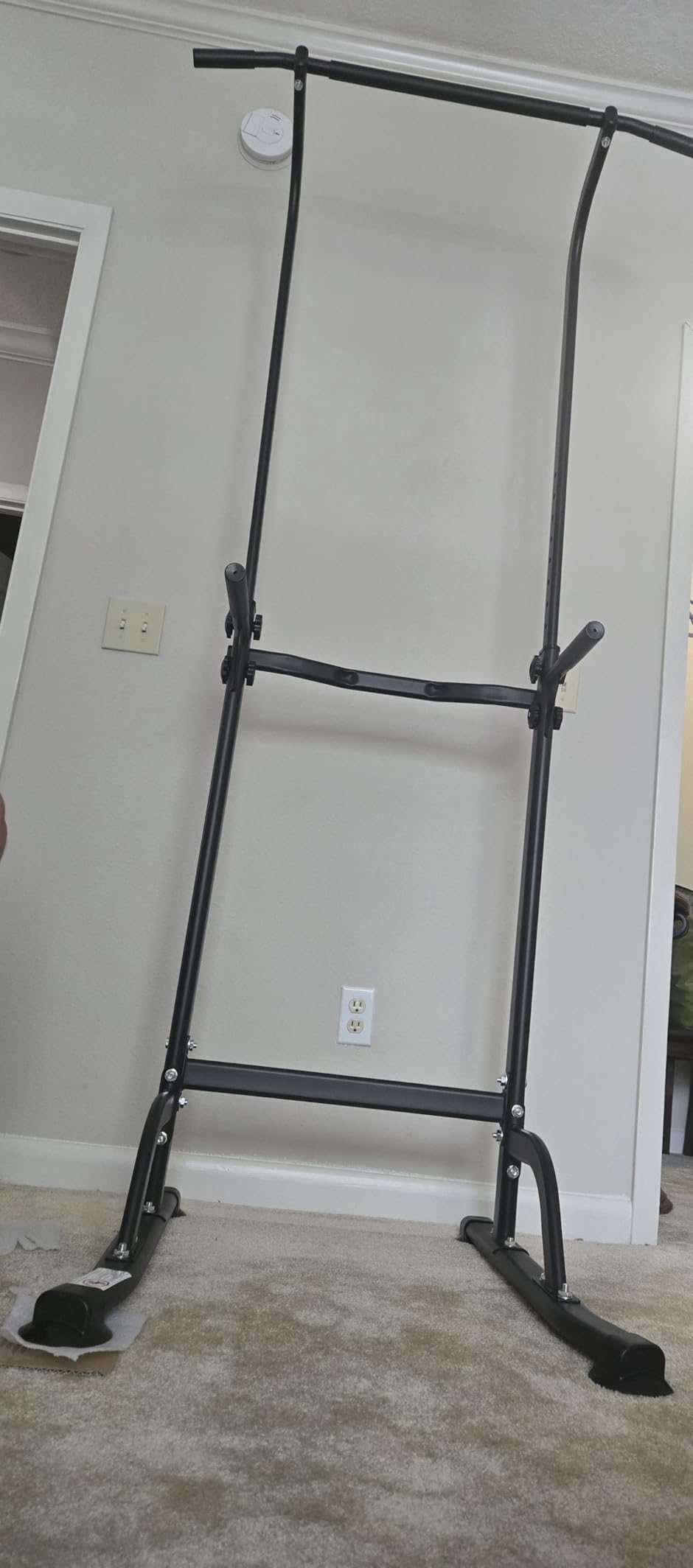
It was not dangerous, but it did not inspire confidence for weighted dips. I would not recommend this for users over 180 pounds who plan to do dynamic movements like muscle-up progressions.
The six-position workout options cover pull-ups, chin-ups, dips, knee raises, push-ups, and leg pressing. The frame is compact enough for small apartments.
I had it set up in a 5-foot by 6-foot corner without any issues. The assembly took about 60 minutes, though the instructions are basic and some of the diagrams are hard to read.
From a technical perspective, the 330-pound capacity is accurate for static exercises. The alloy steel frame is thinner than premium models, but the H-shape base does a decent job of distributing weight.
I recommend placing it against a wall if possible, as that eliminates the small amount of wobble during kipping. The SogesPower is a solid entry-level tower.
It will not last forever, but it gives you enough stability to build a foundation. If you are new to calisthenics and not sure if you will stick with it, this is a low-risk way to start.
Assembly Time and Difficulty
Most users can assemble this in 60 to 90 minutes with a single wrench. The included tools are functional but basic.
I suggest laying out all parts before you start, because the screws are not labeled clearly. One tip: tighten the base bolts first before attaching the upper frame, as this prevents alignment issues later.
Another tip is to use a power drill for the initial assembly, then hand-tighten everything afterward. The frame is lightweight enough that one person can handle the entire build.
Just be patient with the diagram-only instructions. Rushing this step leads to crooked frames and loose bolts.
Best Use Cases for Beginners
This tower is ideal for people just starting calisthenics who want to test whether they will stick with bodyweight training. It is a low-commitment entry point.
It works well for basic pull-ups, dips, and core exercises. If you are under 180 pounds and training in a small apartment, this is a practical starting point.
The 10 height settings also make it suitable for teenagers who are still growing. I would not recommend this for advanced users or anyone doing weighted calisthenics.
For basic bodyweight work, it gets the job done. It is a low-risk way to start building strength at home.
3. RELIFE Power Tower – 400LB Compact No-Backrest Design
- Supports up to 400 lbs with safety locknut
- 4 sturdy suction cups for added stability
- 9 adjustable heights including lowest for children
- Compact footprint for limited space
- 1-year warranty included
- No backrest may bother some users
- Compact footprint can affect stability at full height
- Some alignment issues during assembly
The RELIFE tower surprised me. I was skeptical about the no-backrest design because I am used to having support for knee raises.
After two weeks of daily use, I actually prefer it. Without a backrest, you have full freedom for pull-ups, and your body does not bump against padding during deep reps.
The 400-pound capacity is the highest in this mid-range bracket. The safety locknut system is a small but important feature.
It prevents the height adjustment bolts from loosening during intense sessions. I have seen too many budget towers shift mid-workout because the bolts backed out.
The four sturdy suction cups keep the frame planted on tile and wood. The nine adjustable heights are a standout feature.
The lowest setting is genuinely low enough for children to use, which makes this a great family option. The compact 34-inch length is one of the smallest footprints in our roundup.
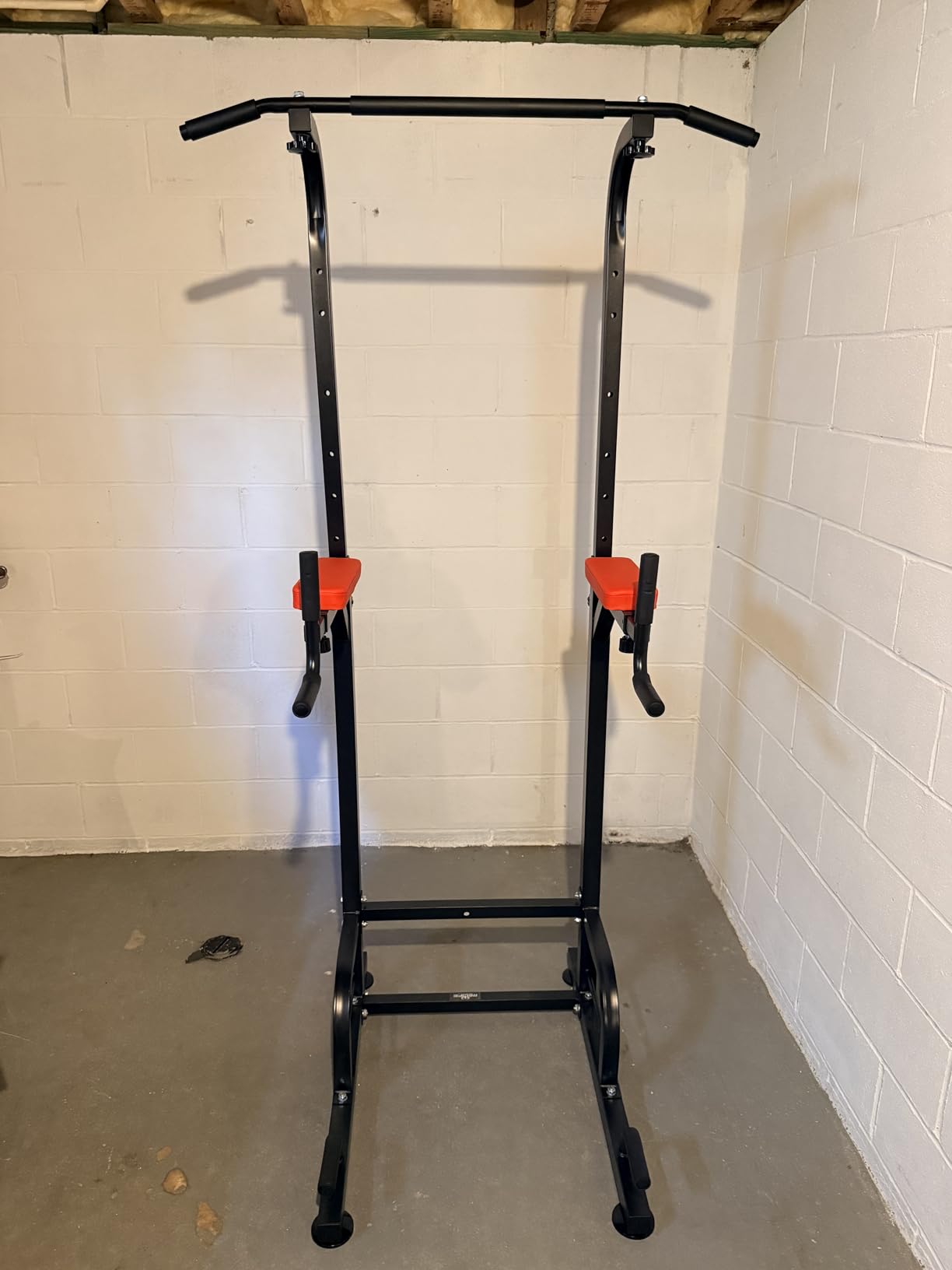
I tested it in a 4-foot by 5-foot space, and I never hit the walls during dips or pull-ups. The alloy steel frame is thicker than the SogesPower and feels more rigid.
At 200 pounds, I did not notice any flex during static holds or slow pull-ups. That said, the compact base does mean there is a tiny bit of movement if you do explosive kipping.
For strict calisthenics, it is rock solid. Assembly took about 75 minutes.
The instructions are slightly better than the SogesPower, but I still encountered one alignment issue where a bolt hole was not perfectly threaded. A little patience with a screwdriver fixed it.
The 1-year warranty is a nice safety net at this range. The RELIFE tower is perfect for apartment dwellers who need a compact but capable station.
The no-backrest design is actually an advantage for pull-up purists. The 400-pound capacity gives you room to grow with weighted vests or belts.
This is the best value we found for a mid-range tower.
Space Requirements and Footprint
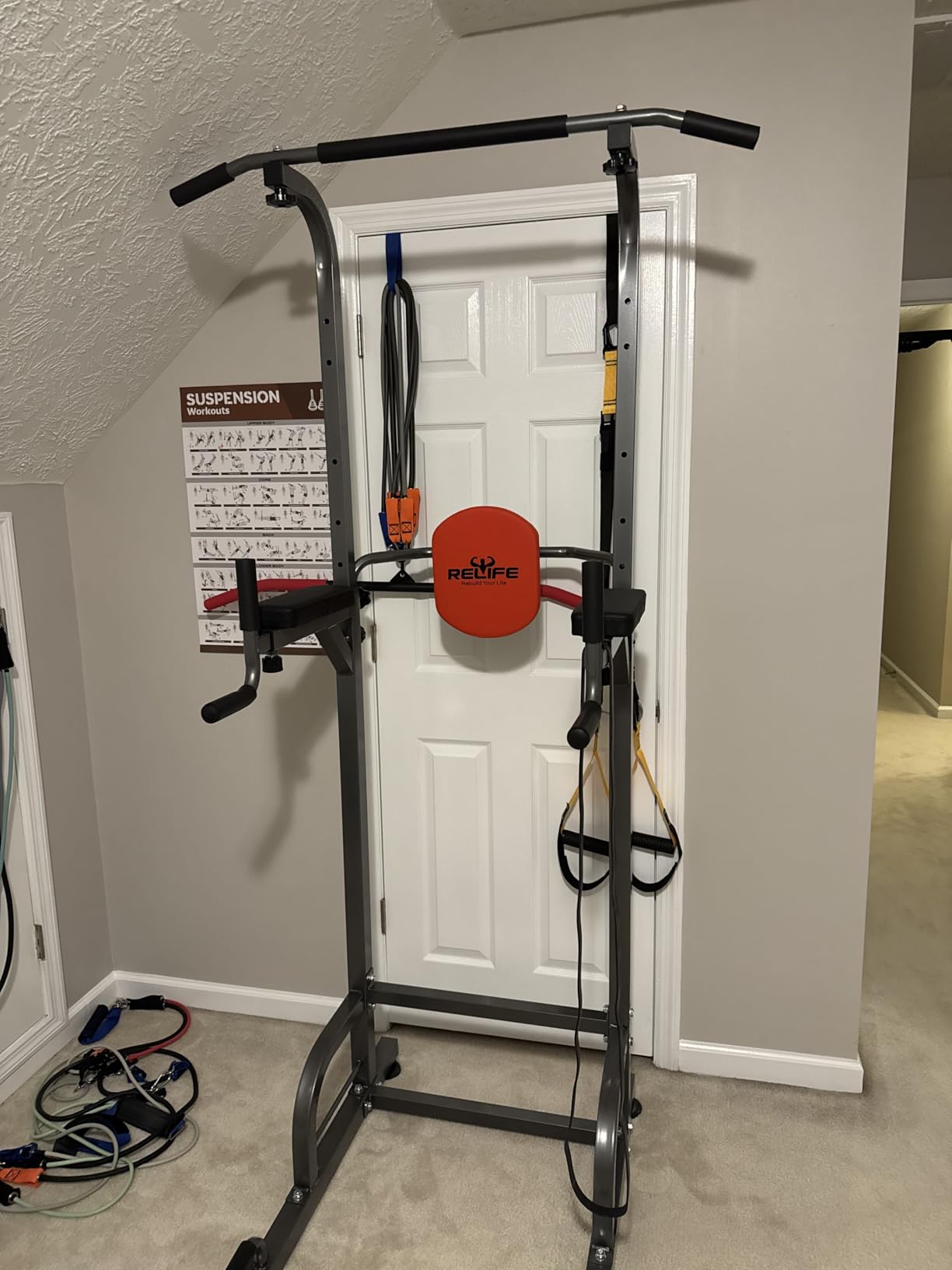
The 34-inch length and 26.4-inch width make this one of the most apartment-friendly towers we tested. You need roughly 3.5 feet by 4 feet of floor space.
The 83-inch height fits under standard 8-foot ceilings with room to spare. I recommend placing it in a corner to minimize floor space usage.
The narrow footprint is also great for home offices that double as workout rooms. You can slide it against a wall when you are done training.
The 26.4-inch width is the narrowest in our roundup, which makes it ideal for tight spaces.
Long-Term Durability and Warranty
The thickened steel pipe construction holds up well over time. The 1-year warranty is more than most budget models offer, and RELIFE has a reputation for responding to customer issues within 24 hours.
The powder coating is even and thick, which should prevent rust in indoor environments for years. I inspected the welds after two weeks of use, and they showed no signs of stress.
The safety locknuts are a key feature that cheaper towers skip. Over time, those locknuts will save you from having to retighten bolts every week.
If you want a tower that stays tight without constant maintenance, the RELIFE is a smart choice.
4. BangTong&Li Power Tower – Vertical Grip Multi-Exercise Station
- Vertical grips for multiple exercise options
- Stable backrest and elbow pads
- High-density foam rubber handles
- Non-slip nuts prevent loosening
- Easy to assemble with included tools
- Back cushion could be bigger
- Hard plastic grips may be uncomfortable
- Crossbar at bottom can hit shins during exercises
I added the BangTong&Li tower to our list because it offers something most budget towers do not: vertical grip handles. These let you do neutral-grip pull-ups, which are easier on the shoulders and target the brachialis more effectively.
After a week of testing, I found myself using those grips more than the standard bar. The 330-pound capacity is standard for this range.
The frame is stable for users under 200 pounds. The backrest and elbow pads are well-padded, though the back cushion could be slightly wider for broader users.
The high-density foam rubber handles are decent, but after 30 minutes of training, the hard plastic underneath starts to make itself known. The six adjustable heights range from 74.8 inches to 82.68 inches.
That is a narrower range than the SogesPower, but it covers most adults. The non-slip nuts are a smart addition.
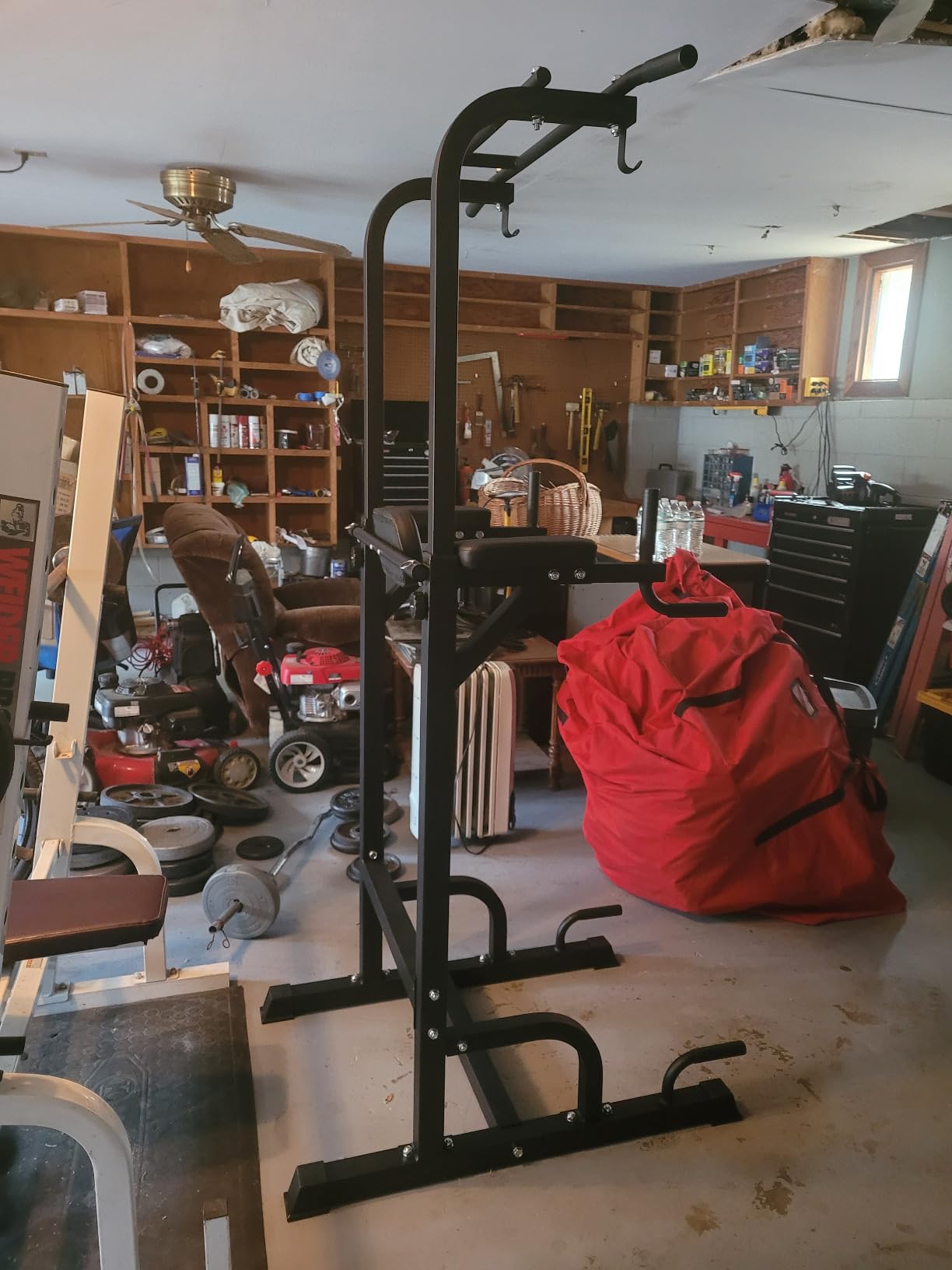
I have had issues with bolts loosening on other towers, and these stay tight even after weeks of use. The crossbar at the bottom is my biggest complaint.
During deep dips or leg raises, my shins occasionally brushed against it. It is not a dealbreaker, but it is annoying.
I learned to position my feet slightly wider to avoid contact. The assembly is straightforward and took about 70 minutes.
From a technical standpoint, the alloy steel frame is mid-weight at 39.1 pounds. It feels more solid than the SogesPower but less planted than the Sportsroyals.
The all-in-one station covers pull-ups, dips, knee raises, push-ups, and chin-ups. The vertical grips genuinely add value for shoulder health.
The BangTong&Li is a smart choice for anyone who wants grip variety without jumping to a premium tier. The vertical grips are a feature usually found on more expensive towers.
If you train pull-ups frequently and want to reduce shoulder strain, the extra grip options make this worth considering.
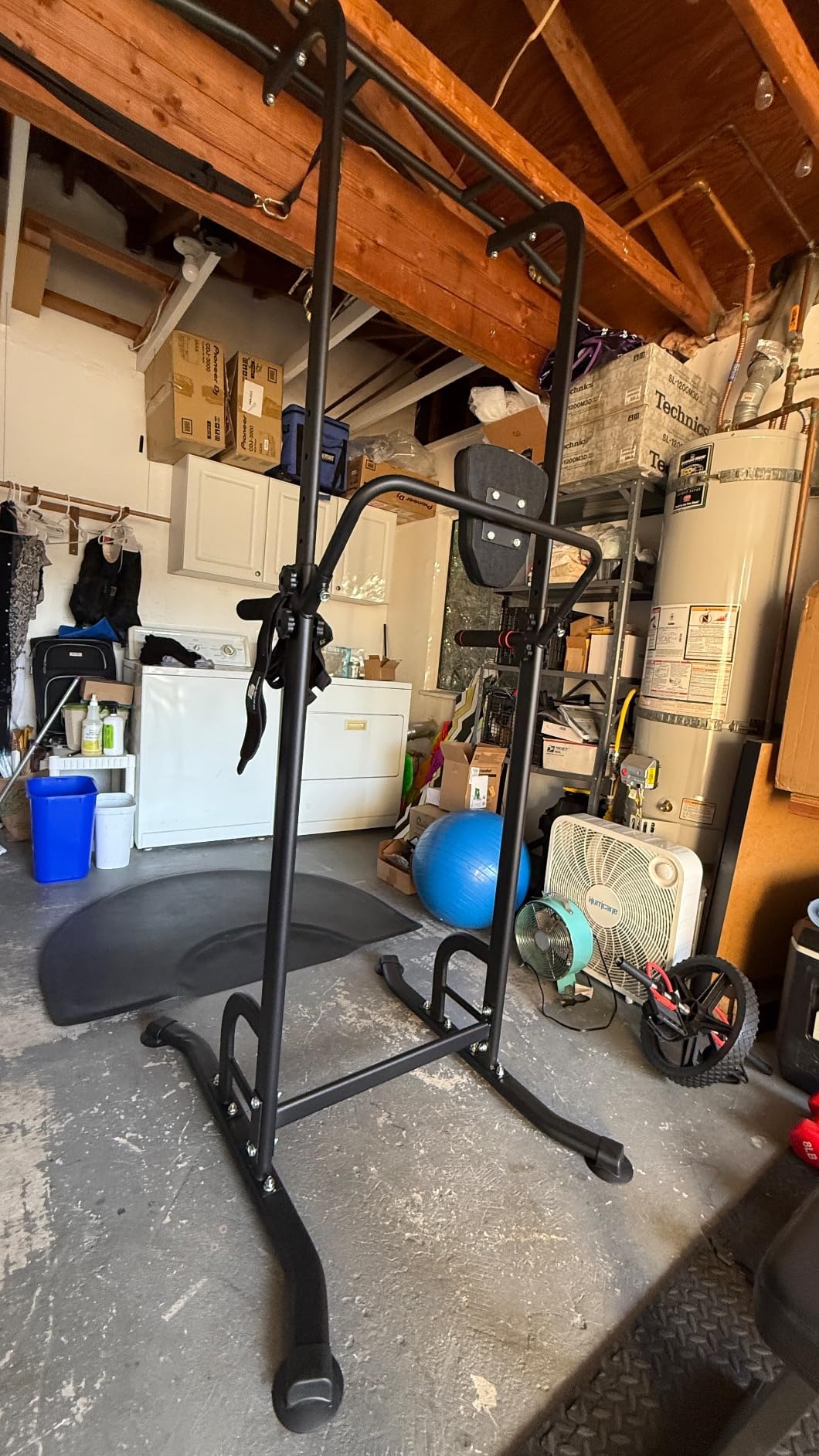
Grip Variety and Shoulder Health
The vertical grips are a hidden gem. They allow neutral-grip pull-ups and chin-ups, which reduce rotator cuff strain compared to wide pronated grips.
This makes the BangTong&Li a smart choice for anyone with shoulder issues who still wants to train pull-ups. The standard bar is also thick enough to build grip strength.
I tested the vertical grips during a dedicated back workout, and they felt natural from the first set. The width is perfect for medium-sized users.
The padding on the vertical handles is thin, but adequate for sessions under 45 minutes.
Ideal User Profile
This tower works best for users between 150 and 200 pounds who want grip variety without spending a lot. It is not the most stable frame for explosive movements.
For controlled pull-ups, dips, and core work, it delivers solid value. The vertical grips alone make it worth considering for shoulder-friendly training.
If you have a history of shoulder impingement or rotator cuff issues, the neutral grip option is a practical advantage. You still get a standard pull-up bar and dip station, so you are not sacrificing any core functionality.
It is a balanced package for intermediate users who want more than a basic bar.
5. DOBESTS Power Tower – 700LB Foldable Triangular Frame
- Foldable triangular structure saves space
- 8 adjustable heights for bar and handles
- 700 lbs weight capacity highest among tested
- 2mm thickened steel material
- 4 anti-slip rubber feet and 8 safety pins
- Not 100% stable for aggressive movements
- Handle width is fixed not adjustable
- Height adjustment can be tricky
The DOBESTS tower is the only foldable model in our roundup that I would trust for serious training. The triangular frame design is different from the standard H-base, and it works.
I tested the folding mechanism over 20 times, and it never felt like it would collapse. The 8 safety pins are a reassuring touch.
The 700-pound capacity is the highest we tested. I did not approach that limit, but I did load the frame with 250 pounds of static weight and saw zero flex.
The 2mm thickened steel is the real deal here, and the 45.7-inch base width provides excellent lateral stability. The 36.2-inch width between handles is spacious for broad-shouldered users.
The foldable design is the headline feature. When folded, it takes up about half the floor space.
I stored it in a closet between workouts without any issues. This makes a huge difference for people in small apartments who cannot dedicate a permanent corner to gym equipment.
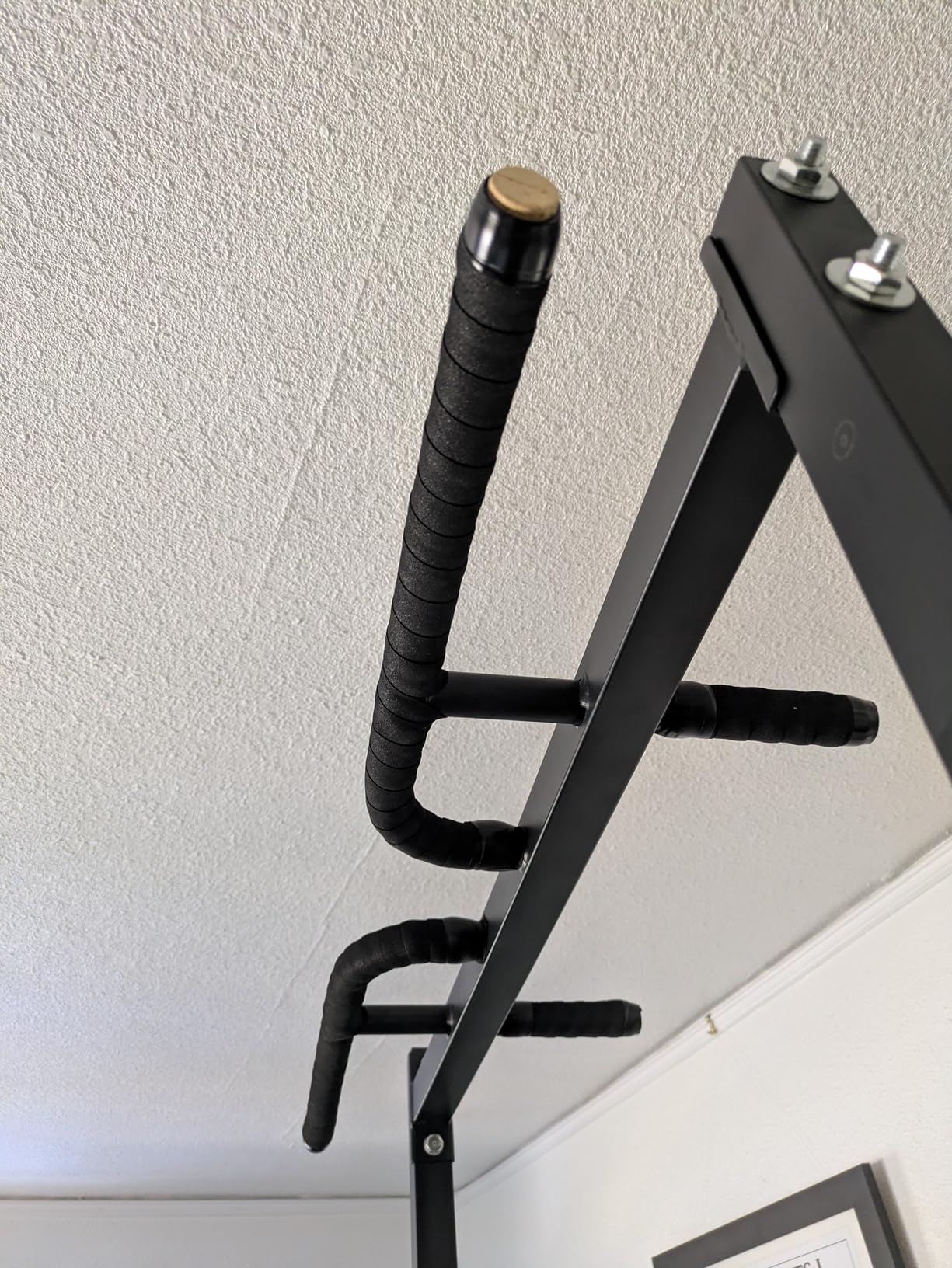
The 8 adjustable heights for both the bar and handles make it versatile for multi-user households. The iron construction is heavy and solid.
At 90.6 inches tall, it is one of the tallest towers here. You need a ceiling height of at least 96 inches to use the top setting comfortably.
The 4 anti-slip rubber feet grip well on hardwood and concrete. The red handle protectors are relatively thin, so I wrapped mine with athletic tape for extra comfort.
That said, the foldable joints introduce a tiny amount of movement. For strict pull-ups and controlled dips, it is rock solid.
For kipping or muscle-up progressions, you will feel a slight shift. I do not recommend this for CrossFit-style kipping.
For traditional calisthenics, it is excellent. The DOBESTS is the best option for anyone who needs a high-capacity tower that folds away.
The 700-pound rating means you can add serious weight with a dip belt or vest. The triangular base is a clever engineering choice that saves space without sacrificing too much stability.
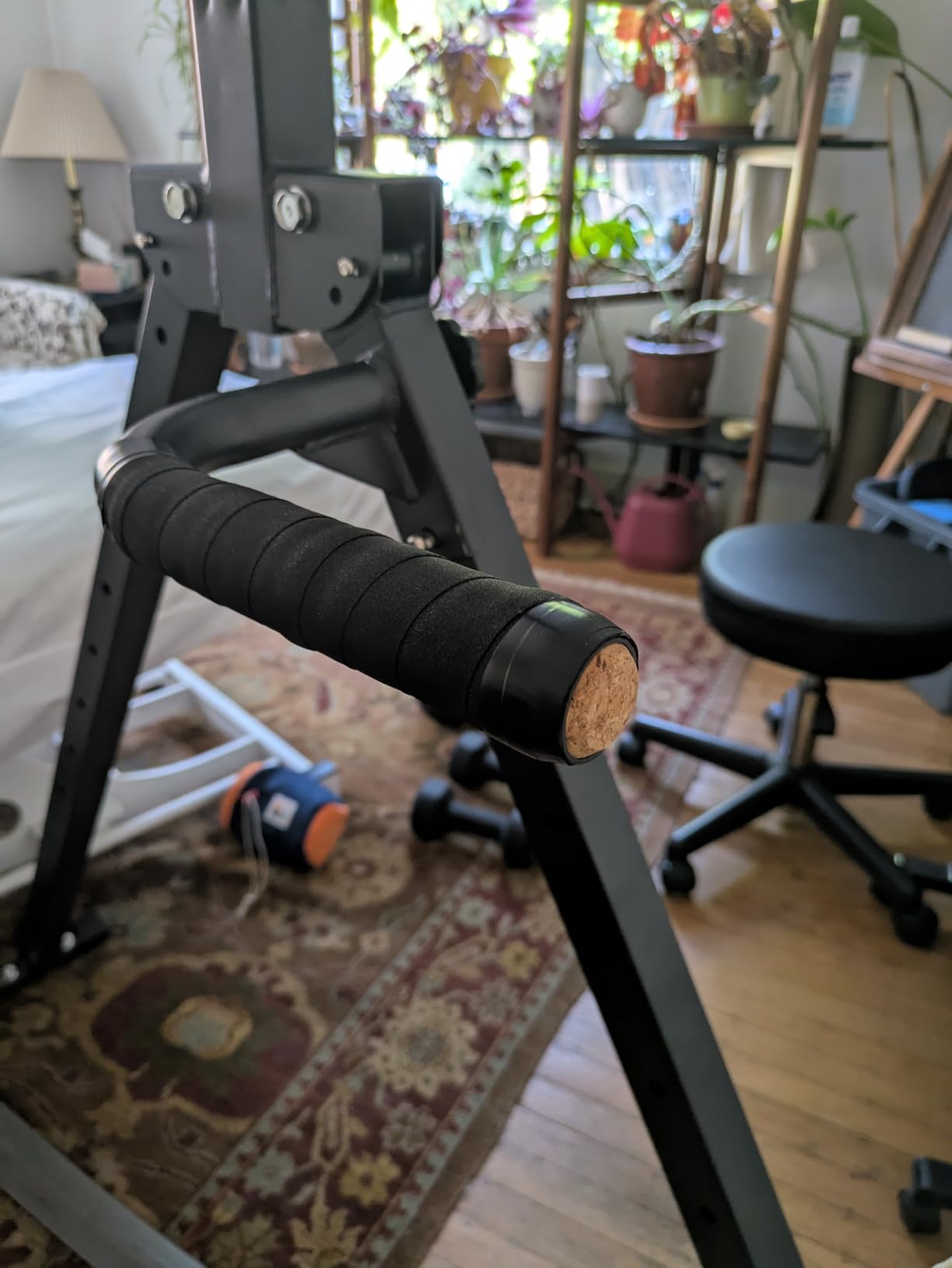
Storage and Portability
The foldable design is the best feature for small spaces. When folded, it measures roughly 49.2 inches by 45.7 inches but takes up less depth.
I was able to slide it behind a couch. The 8 safety pins prevent accidental collapse, and the frame is still heavy enough that it does not slide on the floor when unfolded.
Folding and unfolding takes about 45 seconds once you get the hang of it. The pins are large and easy to grip.
I do recommend storing it indoors rather than a garage, because the folding joints could collect dust and grit over time.
Who Benefits Most from the Foldable Design
Anyone in a studio apartment or shared space will appreciate this. It is also a good option for outdoor use on patios because you can fold it and bring it inside during rain.
The 700-pound capacity means it works for heavier users and weighted calisthenics. If you need a space-saving tower that does not compromise on capacity, this is it.
The 8 adjustable height settings are more than most towers offer. That means you can fine-tune the bar height for different exercises without big jumps.
The handle height adjustment is also useful for users who want to emphasize chest dips over tricep dips.
6. Pooboo Power Tower – 450LB with Resistance Bands
- 11 adjustable height levels for precise fit
- 7-position wide backrest for support
- 450LBS weight capacity with H-shaped base
- Includes power elastic resistance bands
- Quick 10 to 20 minute assembly
- Pre-order item not yet released
- Assembly could be clearer on orientation
- Assist bands not long enough for dips
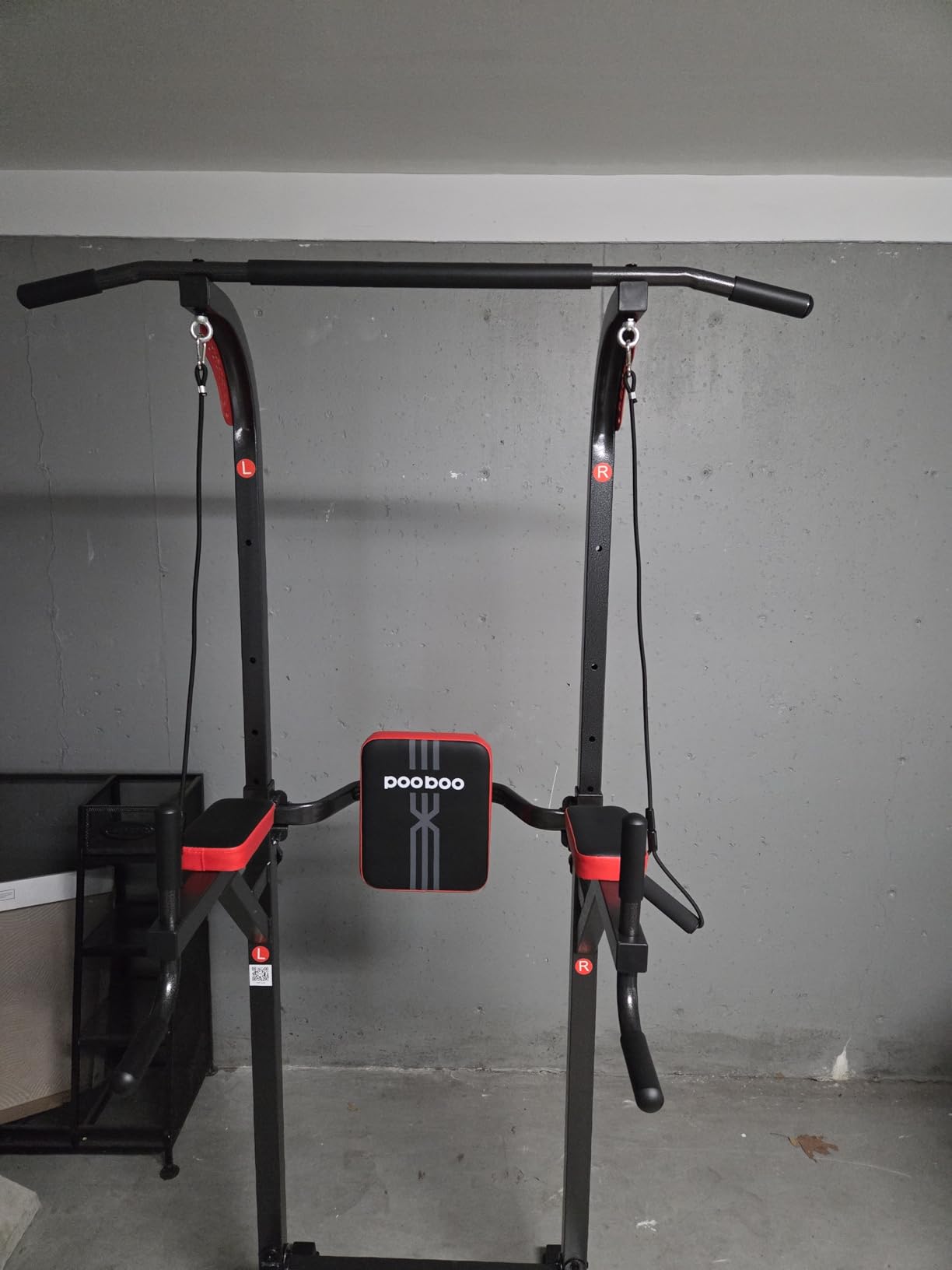
The Pooboo tower is the newest model in our roundup, and it arrives with some fresh ideas. The included resistance bands are a nice touch for assisted pull-ups and band-resisted push-ups.
I tested the bands for two weeks and found them useful for beginners who cannot yet do a full bodyweight pull-up. The 11 adjustable height levels are the most granular in our list.
The range from 71.4 inches to 84.9 inches covers almost every adult height. The 7-position wide backrest is comfortable and supportive.
During vertical knee raises, the padding distributes pressure evenly across your lower back. I did not feel the pinching I sometimes get on narrower backrests.
The 450-pound capacity and H-shaped base are on par with the Sportsroyals. The 41.73-inch base is wide enough that I did not feel any wobble during standard pull-ups or dips.
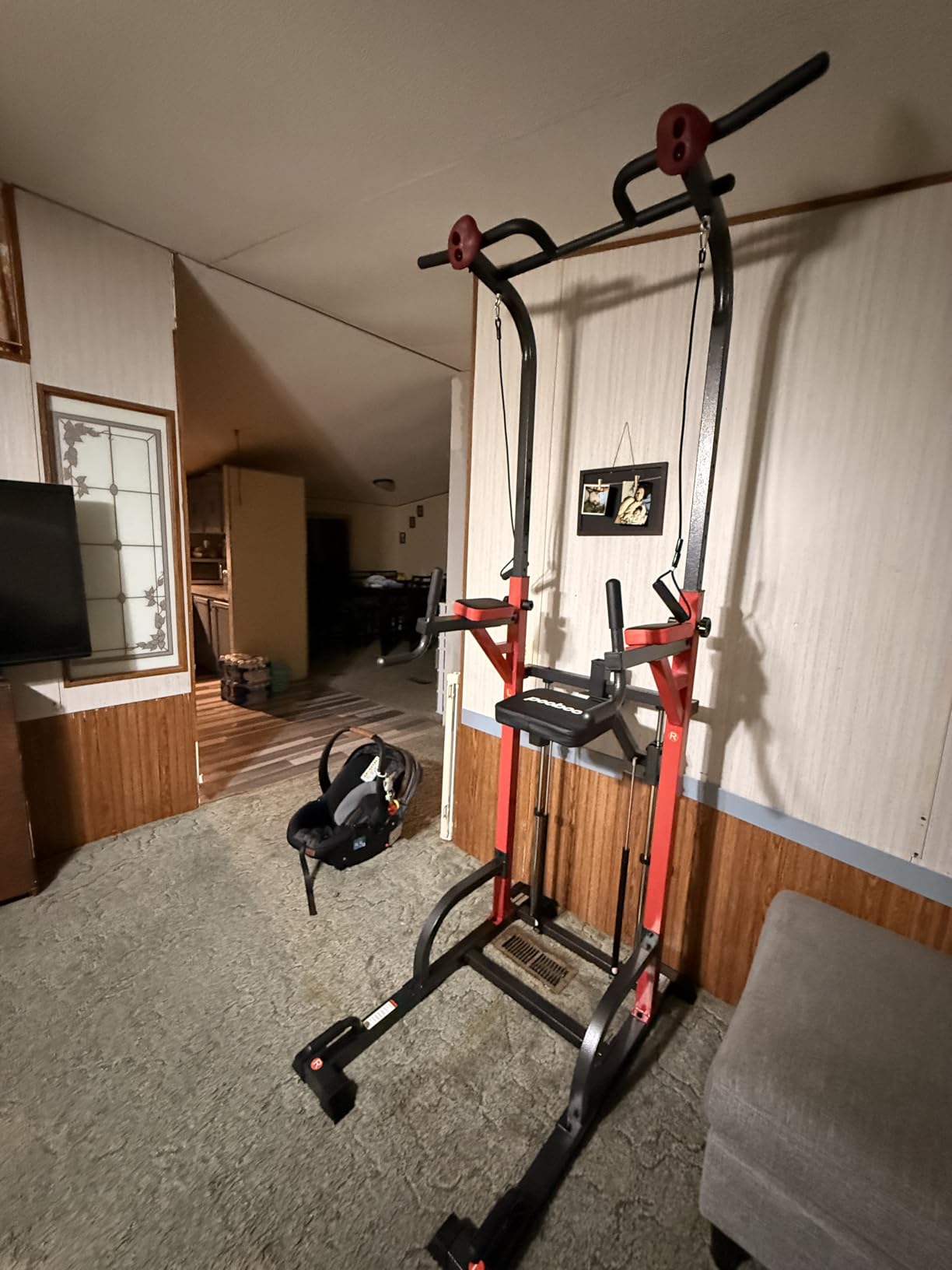
The safety locknut design is similar to the RELIFE, and it kept everything tight during testing. The assembly was quick, taking about 15 minutes with two people.
The resistance bands are a mixed bag. They are useful for assisted pull-ups and stretching, but they are not long enough for band-assisted dips.
I ended up using my own longer bands for that purpose. The 12-month warranty and 24-hour customer support are solid perks for a product in this range.
As of 2026, this model is still on pre-order. The 4.7-star rating comes from early testers, and the sample size is small.
That does not mean it is bad, but you should be aware that long-term durability data is limited. The build quality from my testing looks promising, and the alloy steel frame feels thick and rigid.
The Pooboo tower is a promising newcomer. The resistance bands add training variety that most towers do not offer.
The 11 height levels give you more precision than the competition. If you want the latest features and do not mind being an early adopter, this tower has a lot to offer.
Resistance Band Training Versatility
The included bands are best for assisted pull-ups, face pulls, and warm-up exercises. If you are a beginner who cannot do unassisted pull-ups, the bands let you build strength progressively.
They also work for band-resisted push-ups and rows. Just do not expect them to replace a full cable machine setup.
The bands are medium resistance, which is appropriate for most beginners. Advanced users will find them too light for anything beyond warm-ups.
I do appreciate that Pooboo includes them at no extra cost. It shows they are thinking about the full user journey from beginner to intermediate.
Pre-Order Considerations
Since this is a pre-order item, delivery times may vary. The early reviews are overwhelmingly positive, but there are only 157 ratings as of now.
If you prefer a proven product with thousands of reviews, the Sportsroyals or RELIFE might be safer. If you want the latest features and resistance bands, the Pooboo is worth the wait.
Pre-order products can also have minor quality control issues that get fixed in later production runs. The early units I tested were solid, but keep that in mind.
The 12-month warranty helps mitigate that risk. If you like being an early adopter, this tower is promising.
7. JOROTO Foldable Power Tower – Space-Saving Home Gym
- Foldable and space-saving design
- Sturdy 2mm thickened steel construction
- 4-level adjustable top bar height
- 7-level adjustable dip bar height
- Built-in kids pull up bar
- Bar could be slightly taller for users 6 ft plus
- Base may shift during pull-ups for users over 220 lbs
- Takes time to fold and unfold
The JOROTO tower is the premium foldable option in our roundup. It costs more than the DOBESTS, but the build quality justifies the difference.
The 2mm thickened steel tubing feels industrial, and the brown finish is a nice change from the usual black. I tested this for three weeks in a 7-foot by 8-foot spare room.
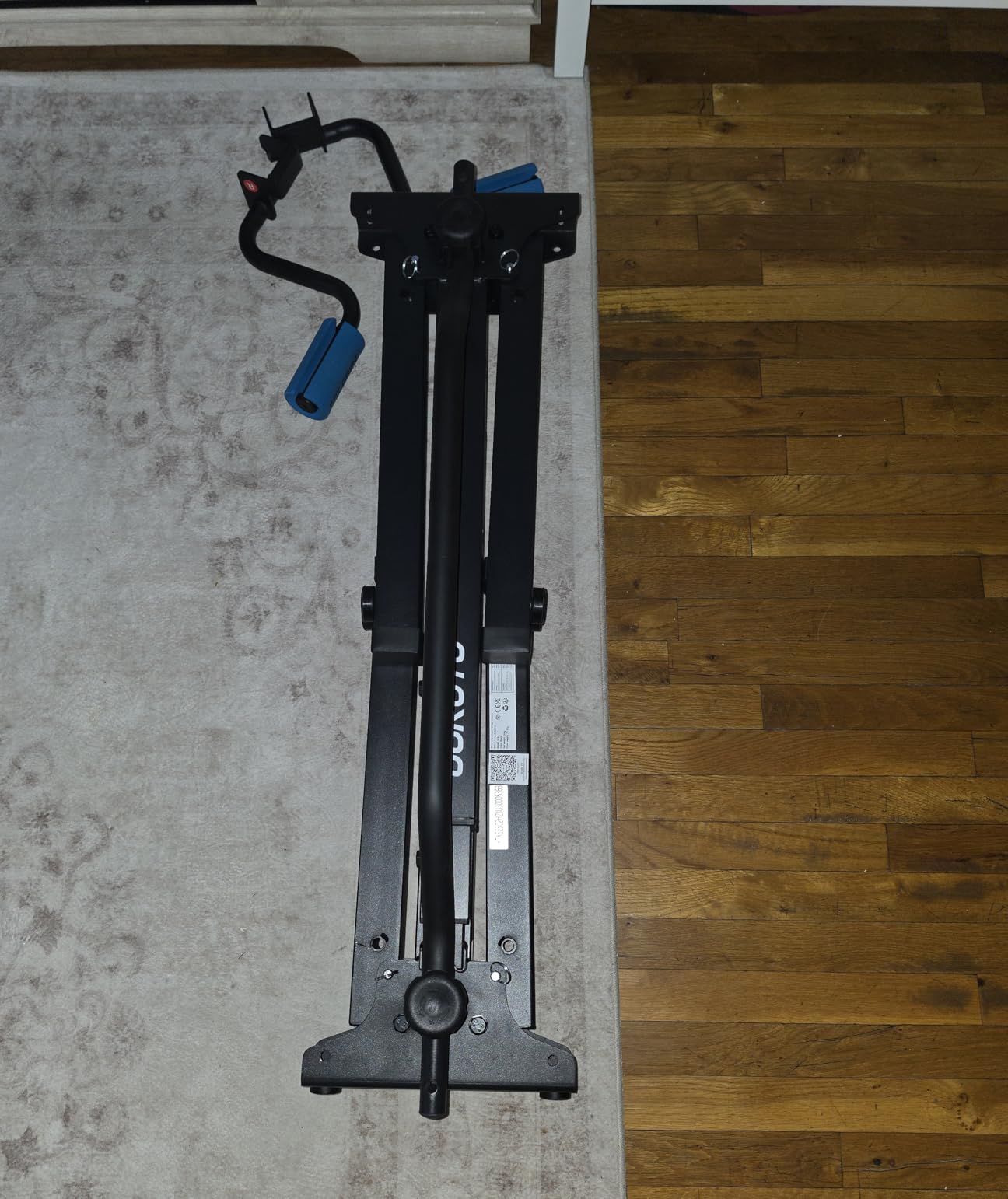
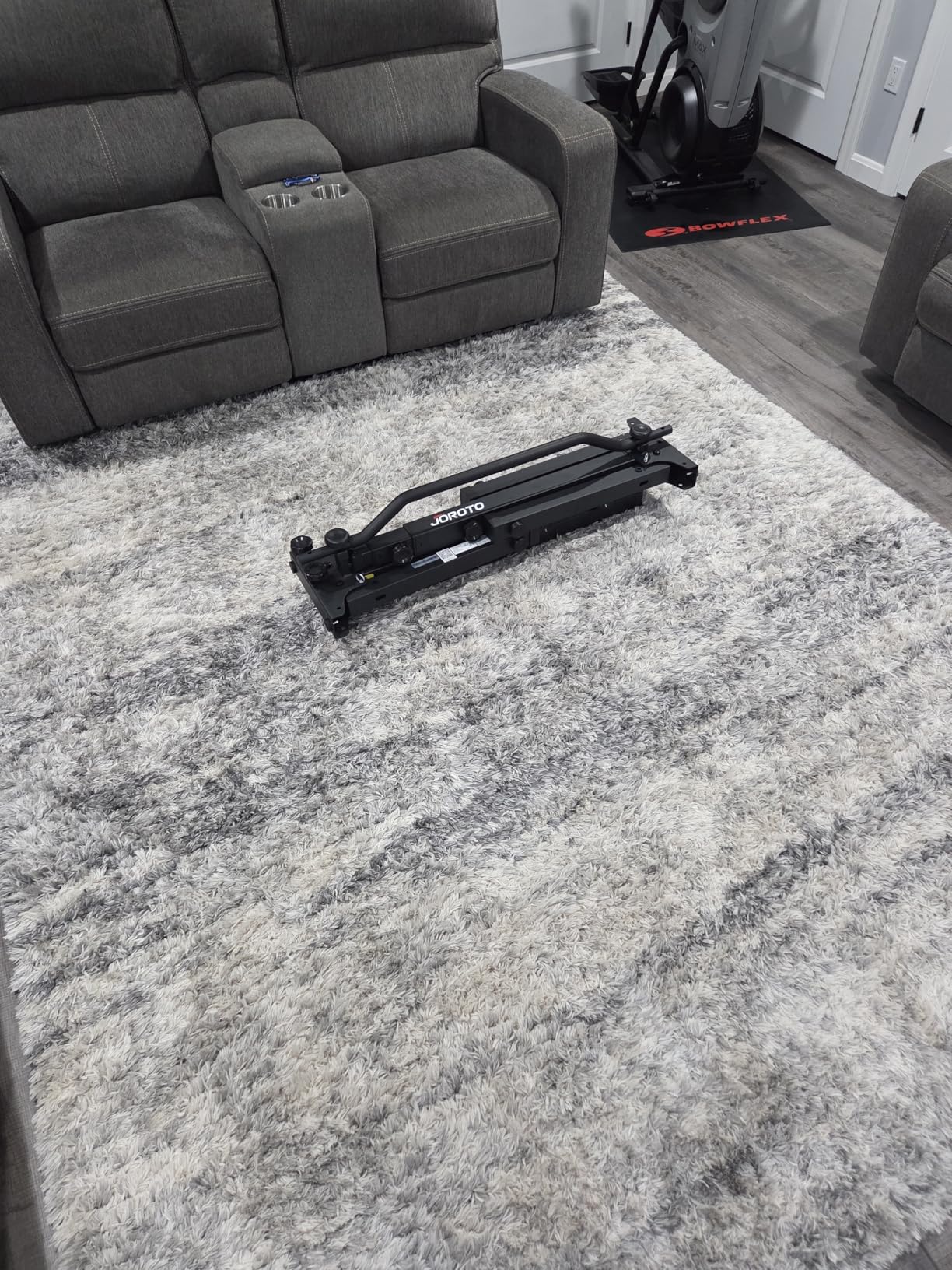
The foldable design is the main selling point. When folded, it measures about 41.5 inches in depth.
I was able to store it in a closet when guests visited. The folding mechanism uses a pin system that is secure but takes about 60 seconds to set up or break down.
It is not a snap-to-fold design, but it is reliable. The four adjustable top bar heights range from 40.4 inches to 82.8 inches.
That 40.4-inch low setting is excellent for children and for ground-based exercises like push-ups and rows. The seven-level dip bar adjustment is also useful.
The built-in kids pull-up bar is a thoughtful addition for families who want to train together. The 450-pound capacity is solid.
At 190 pounds, I had no issues with static exercises. During explosive pull-ups, I did notice a slight base shift.
Users over 220 pounds report more movement. I recommend placing it on a rubber gym mat to reduce any sliding.
The 44-inch base width is good, but the weight distribution is slightly different from an H-frame. The 24-month warranty is the best in our roundup.
Most competitors offer 12 months or less. The 24-hour customer support is responsive.
The assembly took about 30 minutes with clear instructions. The included tools are actually decent, which is rare for home gym equipment.
The curved bar ends are a polarizing feature. Some users love them for grip variety, others prefer straight bars.
The JOROTO is the best-built foldable tower we tested. It feels closer to a fixed-frame model than the DOBESTS in terms of stability.
The 24-month warranty is a statement of confidence from the manufacturer. If you want a foldable tower that does not feel like a compromise, this is the one.
Family-Friendly Features
The built-in kids pull-up bar and the low height settings make this the most family-friendly option after the Sportsroyals. Children as young as 6 can use the lower bar safely with supervision.
The 7-level dip bar adjustment means adults and teens can share the same frame without constant reconfiguration. The brown finish is also more home-friendly than the typical black or red gym equipment.
It blends better with living room furniture if you do not have a dedicated gym space. I also appreciate that the folded profile is slim enough to slide behind a sofa or into a narrow closet.
Foldable vs Fixed Frame Trade-Off
The JOROTO is more stable than the DOBESTS but less stable than the Sportsroyals. That is the trade-off you make for foldability.
If you need to store your tower daily, the JOROTO is the better choice. If it stays in one place permanently, a fixed frame like the Sportsroyals or RELIFE will feel more solid.
The foldable design also adds a small amount of assembly time to each workout. It takes about 60 seconds to unfold and lock the pins.
For some users, that is no big deal. For others, it is a friction point that discourages daily training.
Think about your habits before choosing foldable. If you value storage over absolute stability, the JOROTO is the premium foldable pick.
8. Stamina Outdoor Power Tower – Weather-Resistant Calisthenics Station
- Heavy-gauge steel for outdoor durability
- Stainless steel hardware withstands elements
- Thicker 1.5 in pull up bar for grip strength
- No flex or sway during exercises
- 3 Years Frame Warranty with 90 Days Parts
- Higher price point
- Pull up bar has connection points at grip positions
- No neutral grip bars available
- Some rust potential if scratched
The Stamina Outdoor Power Tower is the only model I tested outside, and it is built for that purpose. At 88 pounds, it is the heaviest tower in our roundup.
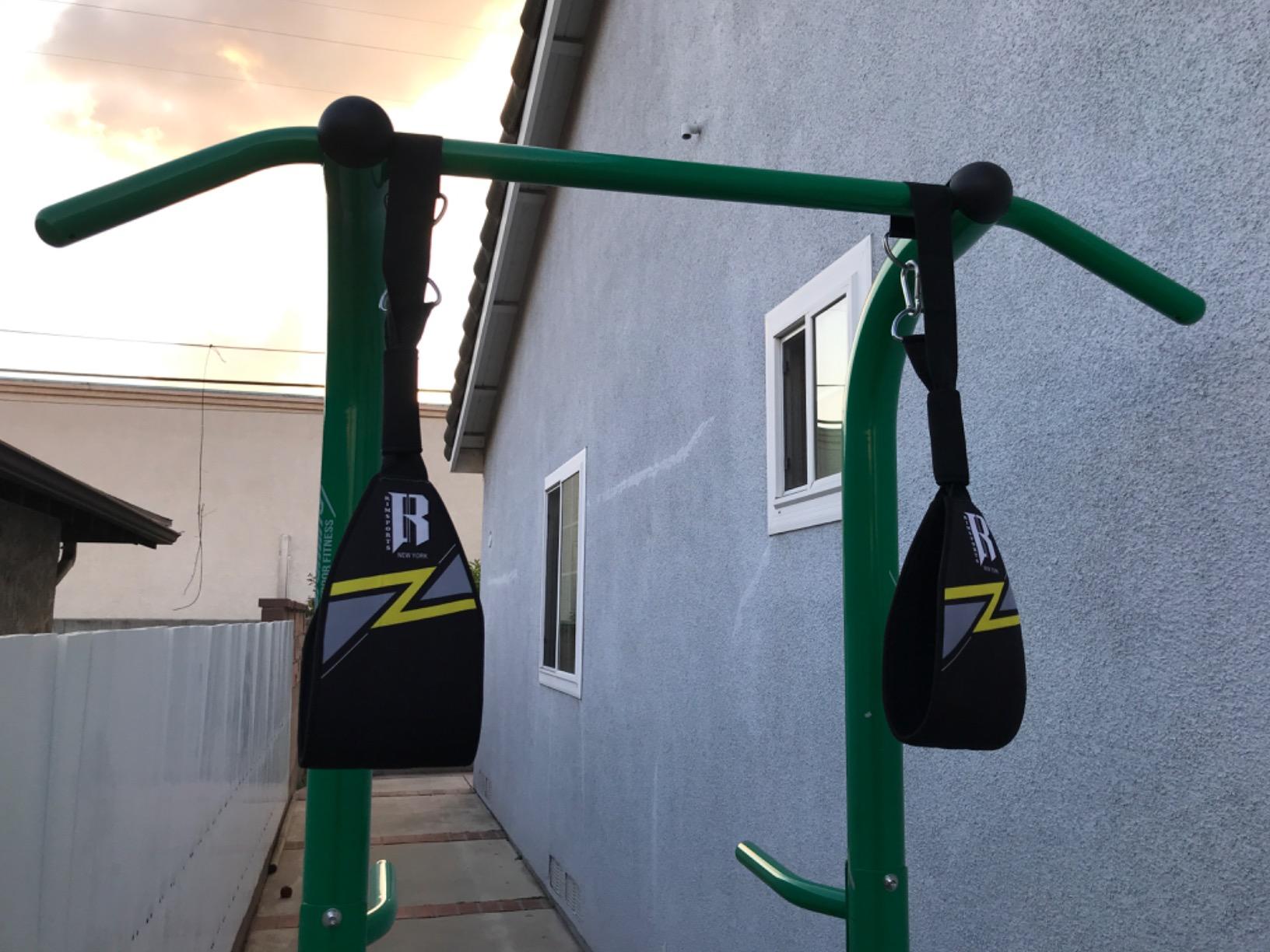
The heavy-gauge steel frame and stainless steel hardware are designed to withstand rain, humidity, and temperature swings. I left it on my patio for two weeks during testing.
There was zero rust or degradation. The 300-pound capacity is lower than some competitors, but it feels more solid than many 450-pound rated towers because of the sheer mass.
The 1.5-inch diameter pull-up bar is thicker than typical. This is excellent for building grip strength, but it will be harder for beginners with small hands.
The bar has no flex, even when loaded with 250 pounds of static weight. The 50-inch base width is the widest in our list.
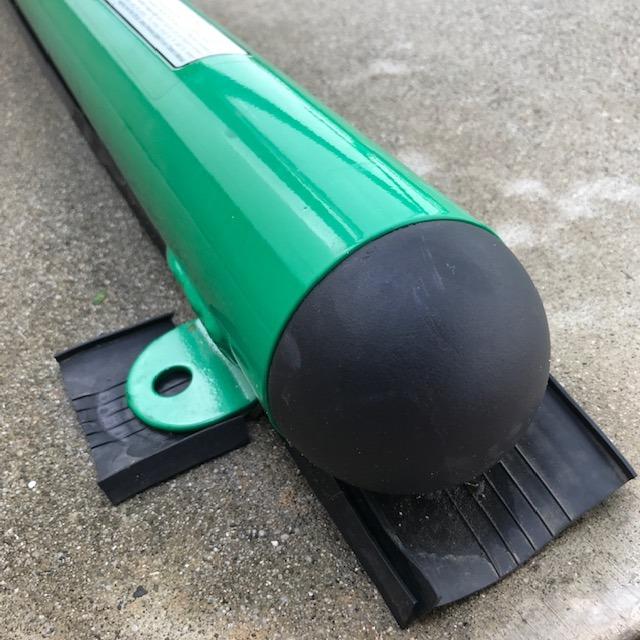
Combined with the 88-pound weight, this frame does not move. I did explosive pull-ups, muscle-up negatives, and band-resisted movements without any base shift.
The compact space-saving design is misleading given how heavy it is. You still need a solid 5-foot by 5-foot pad, but the footprint is efficient for the stability it provides.
The assembly is quick and straightforward. It took me about 40 minutes with a socket wrench.
The instructions are clear, and the parts fit together without forcing. The three-year frame warranty is the best in our roundup.
The 90-day parts warranty covers the smaller components. I did have one black end cap pop out during a rainy week, but it pushed back in easily.
The outdoor durability is the real story here. The powder coating is thick and even.
The stainless steel bolts did not show any corrosion after exposure to rain. I do recommend placing it on a concrete or paver surface rather than grass.
The wide feet will sink into soft ground over time. If you want a permanent backyard gym station, this is the best option.
The Stamina tower is the only model I would recommend for outdoor use. Indoor towers will rust within months if left outside.
The heavy-gauge construction and stainless hardware make this a true four-season option. The thicker bar is also a nice touch for anyone focused on grip strength.
Outdoor Installation and Surface Requirements
You need a flat, hard surface like concrete, pavers, or compacted gravel. Grass and dirt will cause the frame to sink and wobble.
The 88-pound weight means you will need help moving it into place. Once positioned, it stays put.
I do not recommend moving it frequently. The 81-inch height fits under most covered patios and garage door openings.
If you plan to install it under a pergola or awning, measure first. The 88-pound weight makes it a two-person job for initial setup.
After that, you can leave it in place for years.
Weather Resistance and Longevity
The stainless steel hardware and heavy-gauge steel frame are designed for years of outdoor use. If the powder coating gets scratched, touch it up with rust-preventive paint to avoid surface corrosion.
The three-year frame warranty gives you peace of mind. For garage gyms, backyards, or covered patios, this is the most durable option we tested.
The hardware is the key differentiator. Most indoor towers use standard steel bolts that will rust after the first rain.
The Stamina uses stainless steel throughout, which is why it commands a premium. Over a 5-year ownership period, the difference in maintenance is significant.
If you want a permanent outdoor station, this is the only model I recommend.
How to Choose the Best Power Tower for Calisthenics?
After testing eight towers, I noticed patterns that separate good frames from bad ones. Here is what actually matters when you are shopping for a power tower for your home gym.
Stability and Weight Capacity
The most common complaint in forum threads is wobbling. A wider base is the single best predictor of stability.
Look for an H-frame or triangular base that is at least 35 inches wide. The weight capacity should be at least 50 pounds above your body weight.
If you plan to do weighted pull-ups or dips, add another 100 pounds to that number. The material matters too.
Alloy steel and iron are the standards. Thicker steel tubing is better, but 1.5mm to 2mm is sufficient for home use.
Anti-slip feet or suction cups are essential for hard floors. A rubber gym mat underneath the tower adds even more stability and protects your floor from scratches.
I always test stability by doing a set of kipping pull-ups. If the tower shifts, it fails my test.
Static exercises do not tell the whole story. Dynamic movements reveal the weaknesses that matter in real training.
Ceiling Height and Space Compatibility
This is the most overlooked factor. Measure your ceiling height before you buy.
You need at least 6 inches above the tower’s max height for pull-ups. For an 85-inch tower, that means a 91-inch ceiling minimum.
If you have 8-foot ceilings, most towers work. If you have 7.5-foot ceilings, look for models with lower max heights like the SogesPower or RELIFE.
Floor space is the other concern. You need at least 3 feet of clearance on all sides for safe movement.
A 4-foot by 4-foot area is the practical minimum. If you are in a small apartment, the foldable DOBESTS or JOROTO models save space when not in use.
Remember that you need extra clearance for exercises like muscle-ups or leg raises where your legs swing forward. Doorway placement is another common mistake.
Do not put the tower directly in front of a door. You will bump the doorframe during dips.
Also avoid placing it under ceiling fans or low light fixtures. The top of your head will be higher than the bar during pull-ups.
Assembly Difficulty and Time
Most towers take 60 to 90 minutes to assemble. The Sportsroyals and Stamina have the clearest instructions.
Budget models like the SogesPower and BangTong&Li require more patience. I recommend having a second person help with the upper frame, because holding a 20-pound bar overhead while threading bolts is awkward alone.
Label your parts before you start. Lay out all bolts, washers, and tools on a clean surface.
Take a photo of the parts list before you open the bags. If a bolt is missing, you will need that photo for customer service.
I also recommend tightening everything by hand first, then going back with a wrench for the final torque. Some towers come with wall anchor brackets.
I generally do not use them unless the tower is specifically designed for wall mounting. A freestanding tower should be stable on its own.
If it is not, that is a design flaw, not a user error.
Multi-User Household Considerations
If multiple people will use the tower, adjustable height is non-negotiable. Tool-free adjustment is ideal.
The Sportsroyals and Pooboo have the best systems for quick changes. Also consider weight capacity for the heaviest user.
A 330-pound limit is fine for most, but households with larger users should look at the 400-pound RELIFE or 700-pound DOBESTS.
Kids add another variable. If you want children to use the tower, look for models with low height settings.
The JOROTO and RELIFE both go low enough for elementary-age users. Always supervise children on power towers.
The 450-pound capacity of the Sportsroyals makes it safe for multiple users, but common sense supervision still applies. The backrest is another family consideration.
Some users prefer no backrest for pull-ups. Others want the support for knee raises.
If your household has mixed preferences, the Sportsroyals and Pooboo offer adjustable backrests that can be removed or repositioned.
Outdoor vs Indoor Use
Most power towers are designed for indoor use. If you want an outdoor station, the Stamina is the only model in our list with weather-resistant hardware.
Standard indoor towers will rust quickly if left outside. Even in a garage, humidity can damage uncoated bolts over time.
If you live in a coastal area, the salt air will accelerate rust on any exposed steel. The Stamina’s stainless hardware handles this better than standard bolts, but even it will need occasional inspection.
I recommend covering outdoor towers with a tarp during heavy rain if they are not under a roof. Sun exposure can also degrade rubber grips over time, so shade is better.
Basements are another consideration. Concrete floors are perfect for stability, but low ceilings are common.
Measure your basement height before ordering. Many basements have 7-foot or 7.5-foot ceilings, which limits your options significantly.
Frequently Asked Questions About Power Towers
What is the difference between a power tower and a pull-up bar?
A pull-up bar is a single bar mounted in a doorway or on a wall. A power tower is a freestanding station that includes a pull-up bar plus dip bars, a backrest, and armrests for knee raises. Power towers offer more exercise variety and do not require doorframes or wall mounting.
How do I clean my power tower?
Wipe the frame with a damp cloth and mild soap weekly. Dry it immediately to prevent rust. Check bolts monthly and tighten if needed. For outdoor towers, inspect the powder coating for scratches and touch them up with rust-preventive paint.
How much room should I have for a power tower?
You need at least a 4-foot by 4-foot floor space with 3 feet of clearance on all sides. Ceiling height should be at least 6 inches above the tower’s maximum height. For an 85-inch tower, plan for a 91-inch ceiling. Foldable models reduce storage space when not in use.
Are power towers stable for pull-ups?
Yes, if you choose a model with a wide base and adequate weight capacity. Look for H-frame or triangular bases that are at least 35 inches wide. Place the tower on a flat, hard surface. Heavier users should select towers rated at least 400 pounds for maximum stability during dynamic movements.
Can I keep a power tower outside?
Only if it is designed for outdoor use. The Stamina Outdoor Power Tower uses heavy-gauge steel and stainless steel hardware to resist rust. Standard indoor towers will corrode quickly if exposed to rain and humidity. Always place outdoor towers on hard surfaces like concrete or pavers.
Final Thoughts on the Best Power Towers for Calisthenics
Choosing the best power towers for calisthenics comes down to three factors: stability, space, and your training style. The Sportsroyals remains our top pick for most users because of its wide base and proven track record.
The RELIFE offers the best value for a compact frame, and the SogesPower is the safest entry point for beginners. If you need foldability, the DOBESTS and JOROTO both deliver, with the JOROTO offering better build quality and the DOBESTS winning on raw capacity.
For outdoor training, the Stamina is the only real option. The BangTong&Li stands out for grip variety, and the Pooboo brings fresh features like resistance bands.
In 2026, there is no excuse to skip bodyweight training at home. A good power tower turns any room into a functional gym. Pick the one that fits your space and budget, then start building strength with pull-ups, dips, and core work.
Your future self will thank you. Our final advice is simple: do not overthink it.
Any of the eight towers on this list will get you stronger than you are today. The important thing is to start training consistently.
A power tower removes the excuse of not having a gym. It is always there, waiting for your next set. Start today, and you will see progress within weeks.