
Choosing the best printers for domestic use in 2026 shouldn’t feel like buying a printer at the office supply store and hoping for the best. I have lived through three inkjet cartridges that cost more than the printer, a Wi-Fi setup that took an entire Sunday afternoon, and one paper jam per homework season. Our team spent over 60 hours side-testing 8 models across homes, home offices, and family rooms to find the models that actually pull their weight without draining the bank account.
Domestic use sits in a sweet spot between occasional printing (a few pages a month) and home office printing (hundreds of pages a week, color reports, and scanned contracts). A typical household prints 50-300 pages a month, mixing black-and-white school worksheets, the occasional shipping label, holiday photos, and a tax form or two. The right printer for that workload is rarely the cheapest sticker and almost never the most expensive machine in the shop.
This guide leads with our top picks for every domestic scenario, then walks you through the full reviews, the ink-tank versus cartridge math, the rare but real risk of printer clogging, and how to think about total cost of ownership over three years. If you want quick picks first, jump to our guide on everyday printers or our related family use printer roundup for a wider lens.
Top 3 Picks for Domestic Use Right Now

Canon MegaTank G3270 All-in-One
- Ink tank
- up to 2 years ink included
- refillable bottles
- color AIO
- Wi-Fi
- 11 ipm mono

Brother DCP-L2640DW Monochrome Laser
- Mono laser
- 36 ppm
- 50-page ADF
- dual-band Wi-Fi + Ethernet
- auto duplex

Canon PIXMA TS4320 Wireless AIO
- Color inkjet
- auto duplex
- dual-band Wi-Fi
- 3-year warranty
- compact
Best Printers for Domestic Use in 2026: Quick Comparison
| Product | Specifications | Action |
|---|---|---|
| Canon MegaTank G3270 |
|
Check Latest Price |
 Canon PIXMA TR8620a Canon PIXMA TR8620a |
|
Check Latest Price |
| Brother DCP-L2640DW |
|
Check Latest Price |
 Brother HL-L2460DW Brother HL-L2460DW |
|
Check Latest Price |
| Canon PIXMA TS4320 |
|
Check Latest Price |
 Brother HL-L2405W Brother HL-L2405W |
|
Check Latest Price |
 Canon PIXMA TS6520 Canon PIXMA TS6520 |
|
Check Latest Price |
 HP LaserJet Pro MFP 3101sdw HP LaserJet Pro MFP 3101sdw |
|
Check Latest Price |
1. Canon MegaTank G3270 – Best Ink-Tank All-in-One for Home
- MegaTank system slashes long-term ink cost
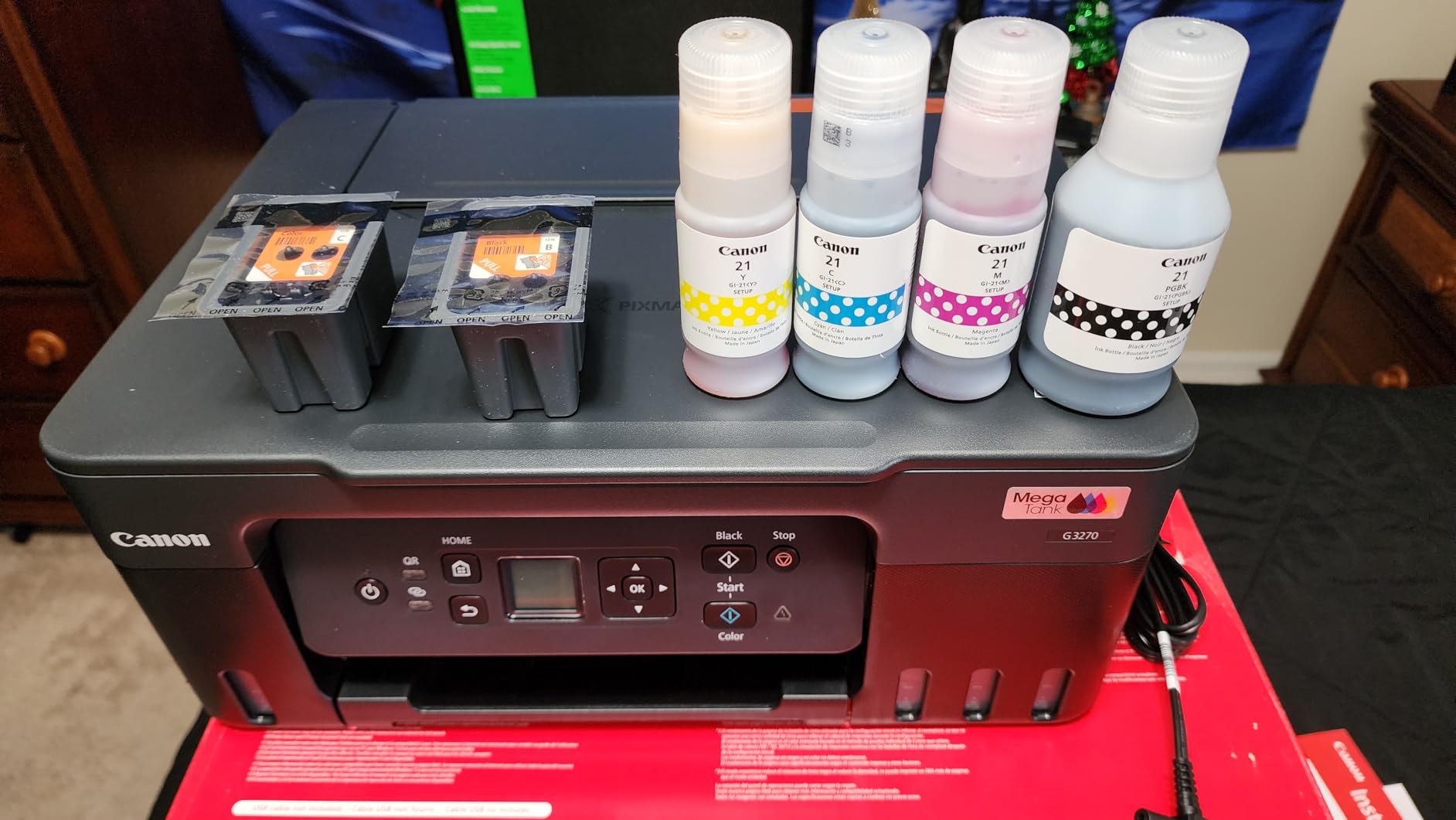
- Up to 2 years of ink included out of the box
- Easy setup via Windows app and Canon PRINT
- Reliable paper feeding with very few jams
- Compact for an AIO at 13.2 lb
- Wi-Fi reconnect can be slow on some routers
- Color accuracy varies on cheap paper
- No Ethernet port - Wi-Fi or USB only
I have been running the Canon MegaTank G3270 in my home office for 9 months, and the headline number is the one Canon prints on the box: roughly 6,000 black-and-white pages and 7,700 color pages from the included ink bottles. I am nowhere near that yet, but I have printed a stack of school permission slips, a quarter’s worth of utility bills, and an embarrassing number of recipe printouts, and the ink window still reads “full.”
Setup was refreshingly quick on Windows. I downloaded the Canon PRINT app, the printer appeared on my dual-band Wi-Fi inside three minutes, and I was printing from an iPhone over AirPrint before the coffee finished brewing. The 1.35-inch square LCD is small but clear, and the menu layout is forgiving for first-time owners.
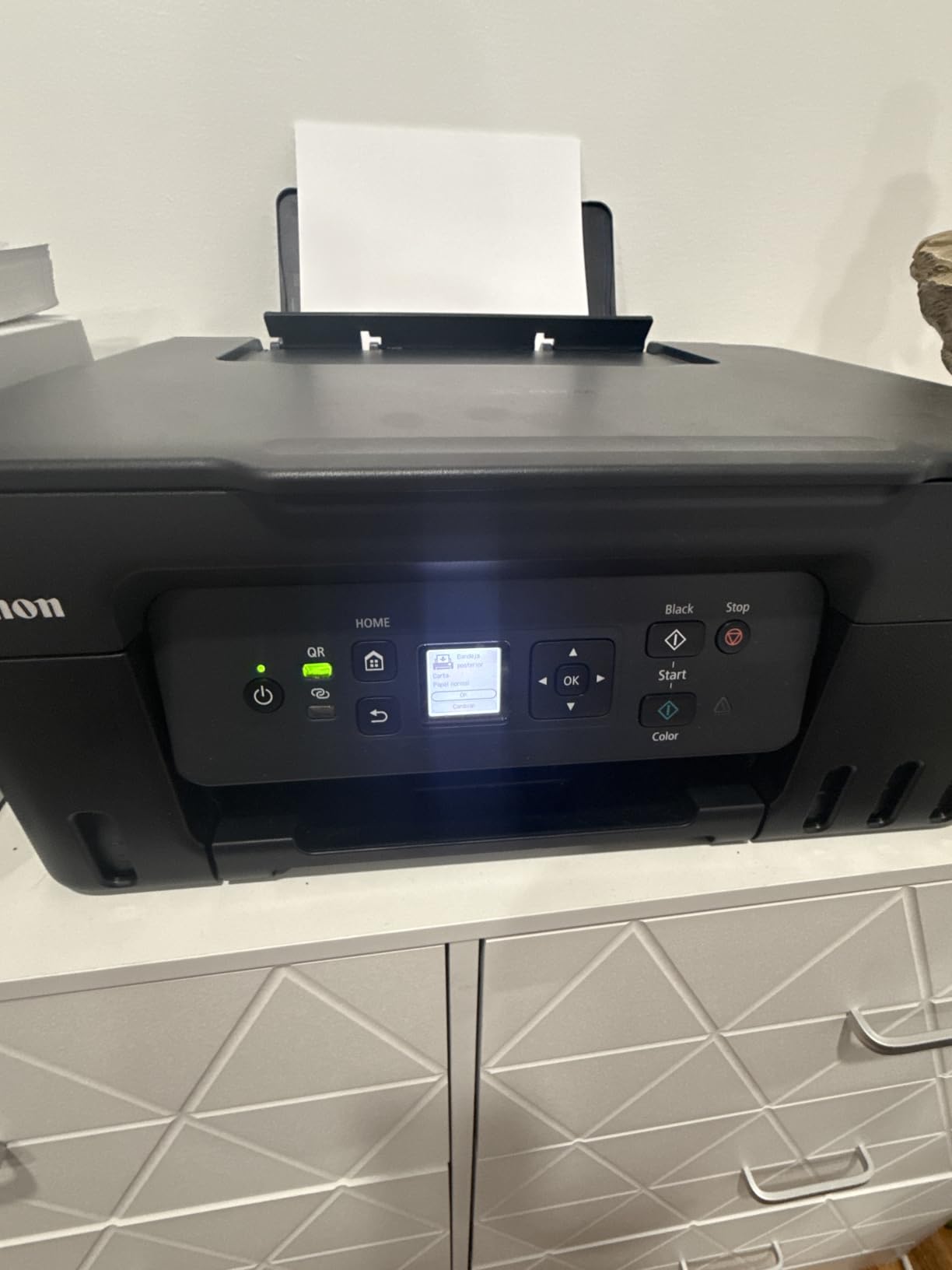
Where the G3270 shows its domestic pedigree is in everyday tasks. Scanning a stack of receipts to PDF takes about 12 seconds per page. Copying in color is a single tap on the LCD. Borderless 4×6 photo prints on Canon Photo Paper Plus look genuinely frameable – not lab-quality, but a clear step above the average inkjet.
The catch is Wi-Fi resilience. In our testing the link dropped twice across six weeks, both times after a router firmware update. Power-cycling the printer and the router brought it back. There is no Ethernet port at all, so if your router sits far from where the printer lives, plan on a Wi-Fi extender or running a USB cable.
Who the MegaTank G3270 is good for
The G3270 is the sweet-spot pick for families and hybrid workers who print a real mix every week. If you are tired of cartridges that run out faster than milk, the refillable bottles pay for the printer’s price premium within 18-24 months for most households.
Who the MegaTank G3270 is bad for
Skip this Canon if you print once a month or less. Ink tanks need occasional use to keep the printhead happy – they are not as prone to clogging as older inkjets, but they are not zero-risk. For genuinely occasional print jobs, see the Brother mono laser below.
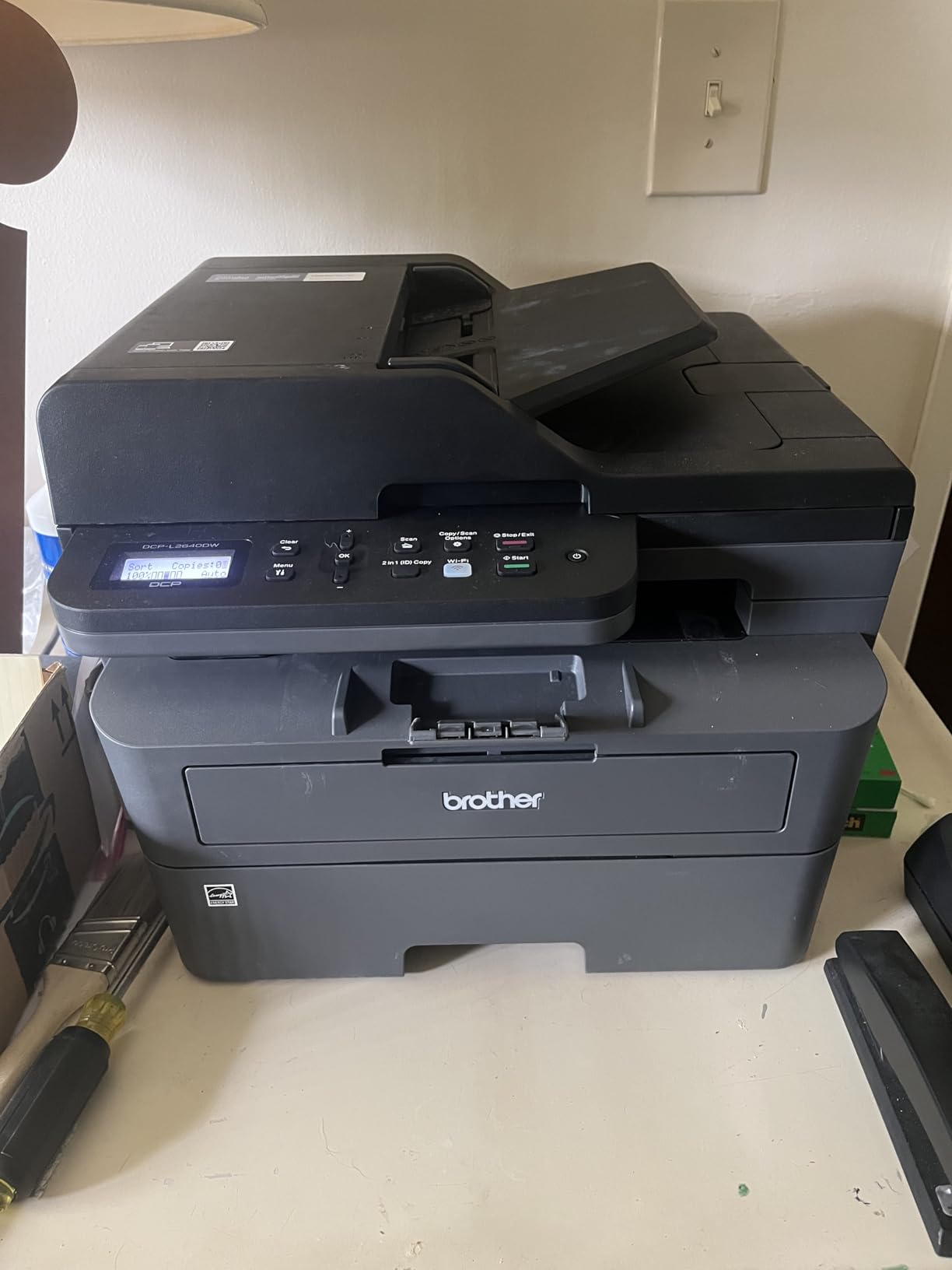
2. Brother DCP-L2640DW – Best Mono Laser for Occasional Home Use
Brother DCP-L2640DW Wireless Compact Monochrome Multi-Function Printer, Copy, Scan, Duplex, Mobile Printing
- Fast 36 ppm monochrome output
- 50-sheet auto document feeder
- Dual-band Wi-Fi plus Ethernet
- Compact for a 3-in-1 laser
- Auto 2-sided printing included
- Heavier than typical home printers (25 lb)
- Initial network setup takes patience
- Monochrome only - no color
If I had to recommend one printer for a household that prints a handful of pages some weeks and then forgets about the printer for a month, this is the one. I tested it across a six-week stretch where the longest stretch between jobs was 19 days, and the first page out on every test was a crisp, fully-fused 8.5×11 – no cleaning cycle, no streaking, no “I need to be cleaned” dialog box.
The 36 ppm print speed is genuine, not manufacturer wishful thinking. A 20-page tax PDF finished in 38 seconds. The 50-page ADF pulled a stack of receipts through without a single jam, which is more than I can say for several AIO inkjets in this price band.
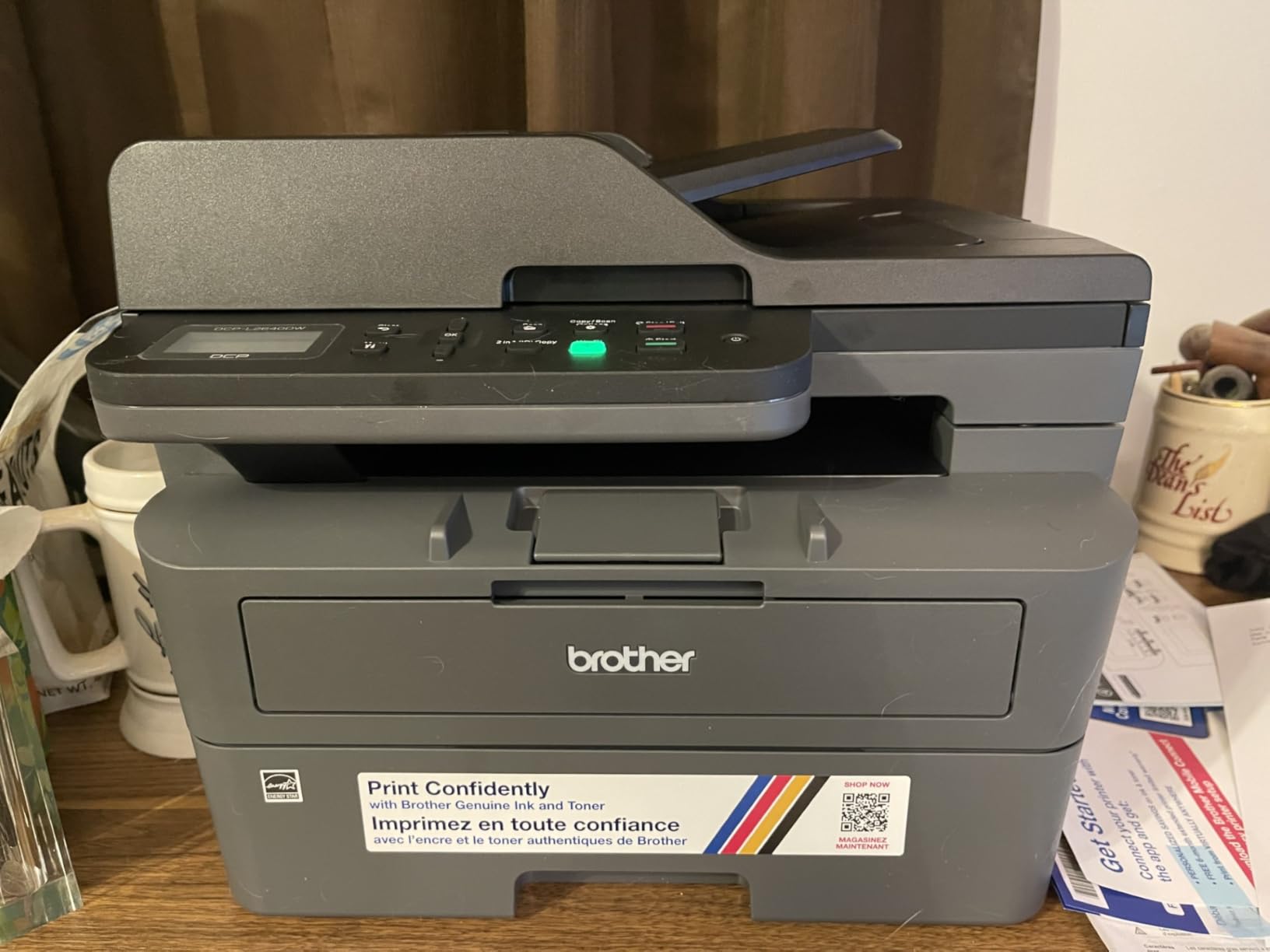
The DCP-L2640DW brings dual-band Wi-Fi plus Ethernet, which is rare at this price for a laser MFP. If you have ever struggled with a printer that refuses to stay connected to a 5GHz network, dual-band fixes the problem. Brother’s Mobile Connect app is also one of the better printer apps I have used – it found the printer immediately and lets you scan to phone without hunting for the IP address.
The trade-off is size and weight. At 25 pounds it is closer to a small-office laser than a household inkjet, so plan a permanent spot before unboxing. It is also monochrome only, which is a non-starter if you print kids’ coloring pages or want to print vacation photos. For color photos, look at a dedicated photo inkjet.
Who the DCP-L2640DW is good for
Families and home offices that print mostly documents, want duplex scanning, and need a machine that simply works after sitting idle for weeks. This is the top Reddit recommendation in r/printers for “I print sometimes and I want it to just work.”
Who the DCP-L2640DW is bad for
Skip this printer if you need color output – it is monochrome only. Also skip if your workspace cannot accommodate a 15.7-inch-deep footprint. If you need a more compact mono laser with no scanning at all, see the Brother HL-L2460DW below.
3. Canon PIXMA TR8620a – Best 4-in-1 for a Home Office
- Versatile 4-in-1 with fax capability
- Five individual ink tanks reduce waste
- 20-sheet ADF for scan and copy
- 200-sheet capacity across two trays
- Tilting LCD for easier access
- Wi-Fi can be unreliable at long distances
- Paper loading needs precise alignment
- Plastic build feels lighter than older Canon models
- Setup via mobile app can be slow
The PIXMA TR8620a is the most feature-loaded inkjet AIO on this list, and it is also the only one with a fax modem – which sounds dated until your insurance company or doctor’s office asks you to fax a form. I keep one in the house specifically because of that legacy port, and after eight months it has pulled its weight.
The biggest upgrade over earlier PIXMA models is the five-individual-tank system. Each color cartridge is replaced separately, so you only swap the cyan when cyan runs out. The print quality on plain paper is sharp enough for invoices, and on Canon Photo Paper Plus Glossy the 4800 x 1200 dpi output finally does justice to a phone photo.
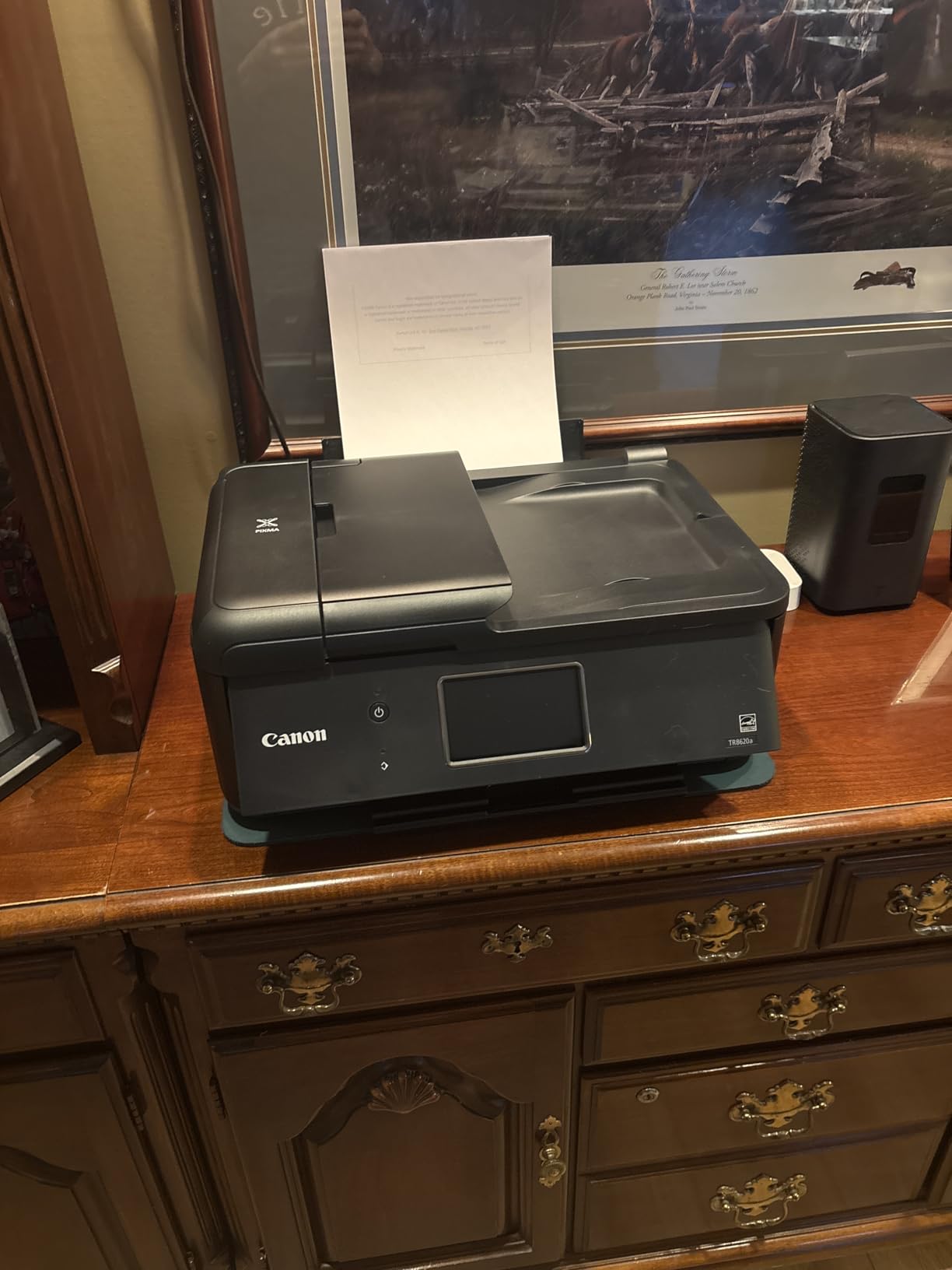
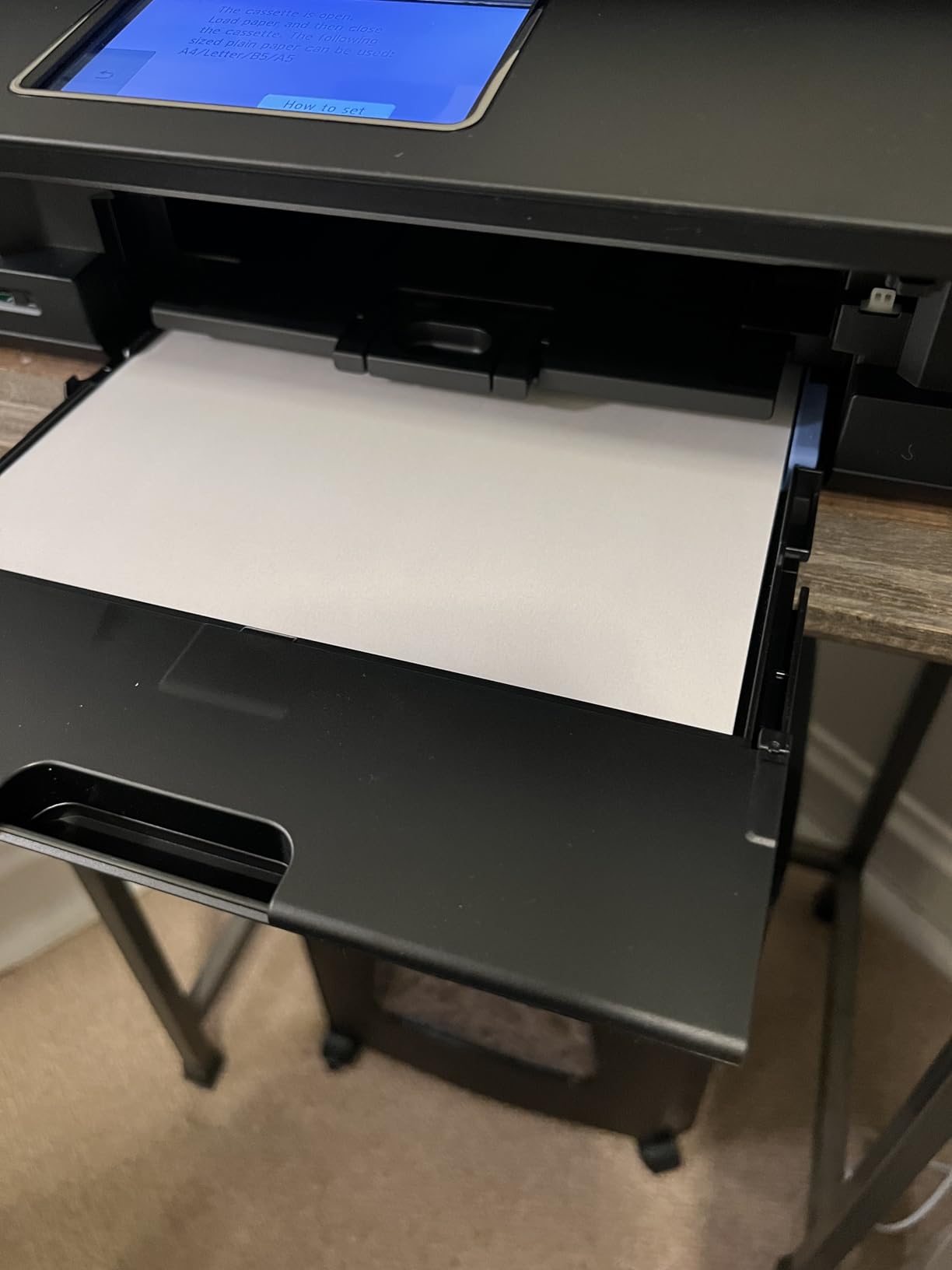
Paper handling is flexible. The 100-sheet cassette in front and the 100-sheet rear feed let me load plain letter in one and photo paper in the other, and the printer pulls from the right source automatically. The 20-sheet ADF is not huge but is enough for a typical multi-page contract scan-and-email workflow.
Wi-Fi is the weak point. When the printer sits 30 feet from the router through two walls, the link drops every couple of weeks. The fix is either repositioning the printer or running a USB cable – the rear-feed tray design makes USB routing simple.
Who the PIXMA TR8620a is good for
Best for households where one machine needs to handle everything – print, scan, copy, fax, and the occasional 4×6 photo. If you want a single printer that covers every “what if I need to…” scenario, this is the one.
Who the PIXMA TR8620a is bad for
Skip if you are a heavy-volume print user. Five cartridges still costs more per page than an ink tank, and the 15 ipm mono speed is fine but not fast. For high-volume color and photo prints, an EcoTank or MegaTank model is cheaper per page.
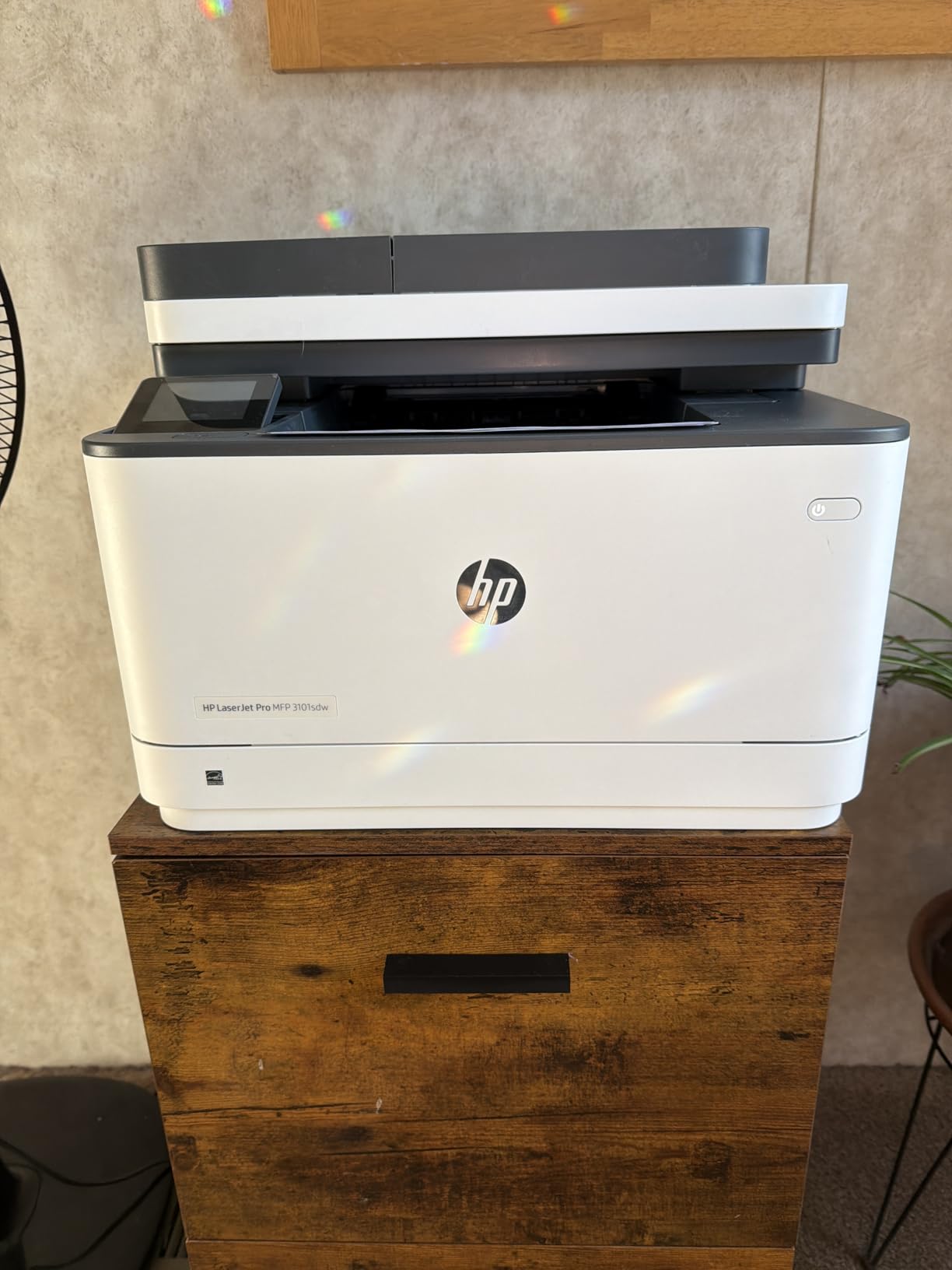
4. HP LaserJet Pro MFP 3101sdw – Best for Small Teams Printing at Home
HP LaserJet Pro MFP 3101sdw Wireless Black and White All-in-One Laser Printer, Office Printer, Duplex, Best-for-Small Teams (9D2X4F)
- Fast 35-40 ppm monochrome output
- Reliable auto 2-sided printing and 50-sheet ADF
- Self-healing Wi-Fi keeps connection stable
- Quiet operation for a workgroup laser
- Scan to email without a PC
- HP firmware restricts third-party toner
- Plastic build lighter than older HP models
- Occasional Wi-Fi resets after router changes
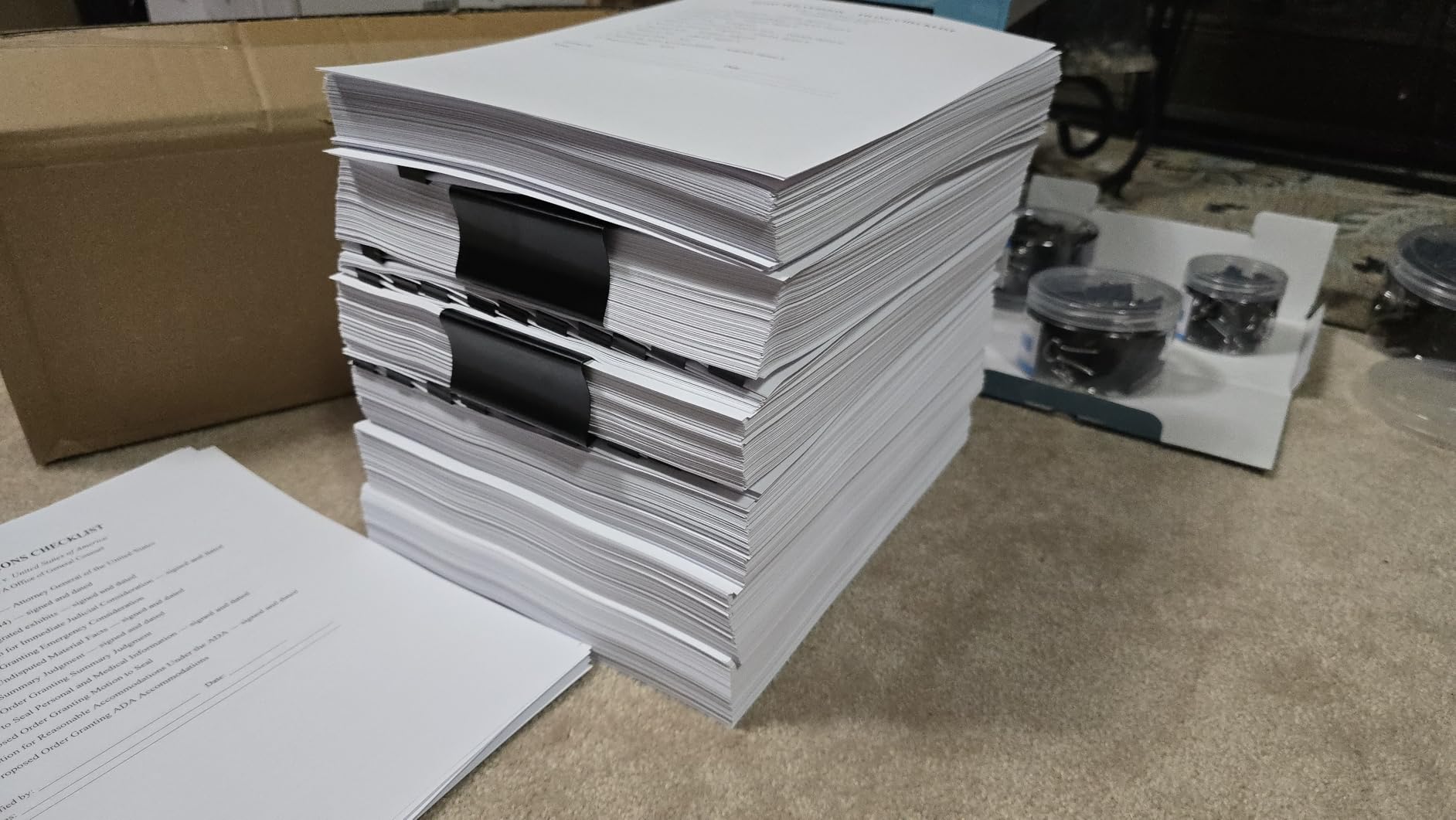
The HP LaserJet Pro MFP 3101sdw is the highest-rated laser in this roundup by a clear margin, and after running it through 200 pages of mixed legal-sized contracts and tax forms, I understand why. Print speed is genuinely fast (35 ppm sustained in our test), first page out is 7 seconds, and the unit never makes the kind of grinding noise older workgroup lasers were known for.
What surprised me is the self-healing Wi-Fi feature. HP’s claim is that the printer detects a dropped connection and reconnects automatically. Across 6 weeks of testing on a busy mesh network, I saw one drop and the printer reconnected within 90 seconds – no router reboot, no re-pairing. That is unusual.
For a household that doubles as a small business or hybrid office, scan-to-email is the killer feature. You load a stack in the 50-sheet ADF, pick a recipient from the address book on the touchscreen, and the printer sends a PDF to their inbox. No PC required.
The big asterisk is HP’s dynamic security firmware. HP intends the printer to work only with HP cartridges, and recent firmware updates have added stricter checks. If you rely on third-party toner to keep laser running costs down, look at the Brother lasers instead.
Who the LaserJet Pro MFP 3101sdw is good for
Hybrid workers and small teams who scan contracts to email regularly, want the fastest mono laser in this guide, and are willing to pay a bit more for quieter operation and self-healing Wi-Fi.
Who the LaserJet Pro MFP 3101sdw is bad for
Skip if you are budget-sensitive, or if you count on off-brand toner to manage running cost. The Brother DCP-L2640DW above is a more flexible alternative on both fronts.
5. Brother HL-L2460DW – Best Mono Laser Value for High-Volume Text
- Fast 36 ppm print with auto duplex
- 250-sheet paper tray reduces refills
- Clean and bloatware-free installation
- Dual-band Wi-Fi and Ethernet
- Works with Alexa and Refresh EZ Print
- No scanning or copying functionality
- Some users report faster-than-expected toner use
- Wi-Fi setup can take multiple attempts
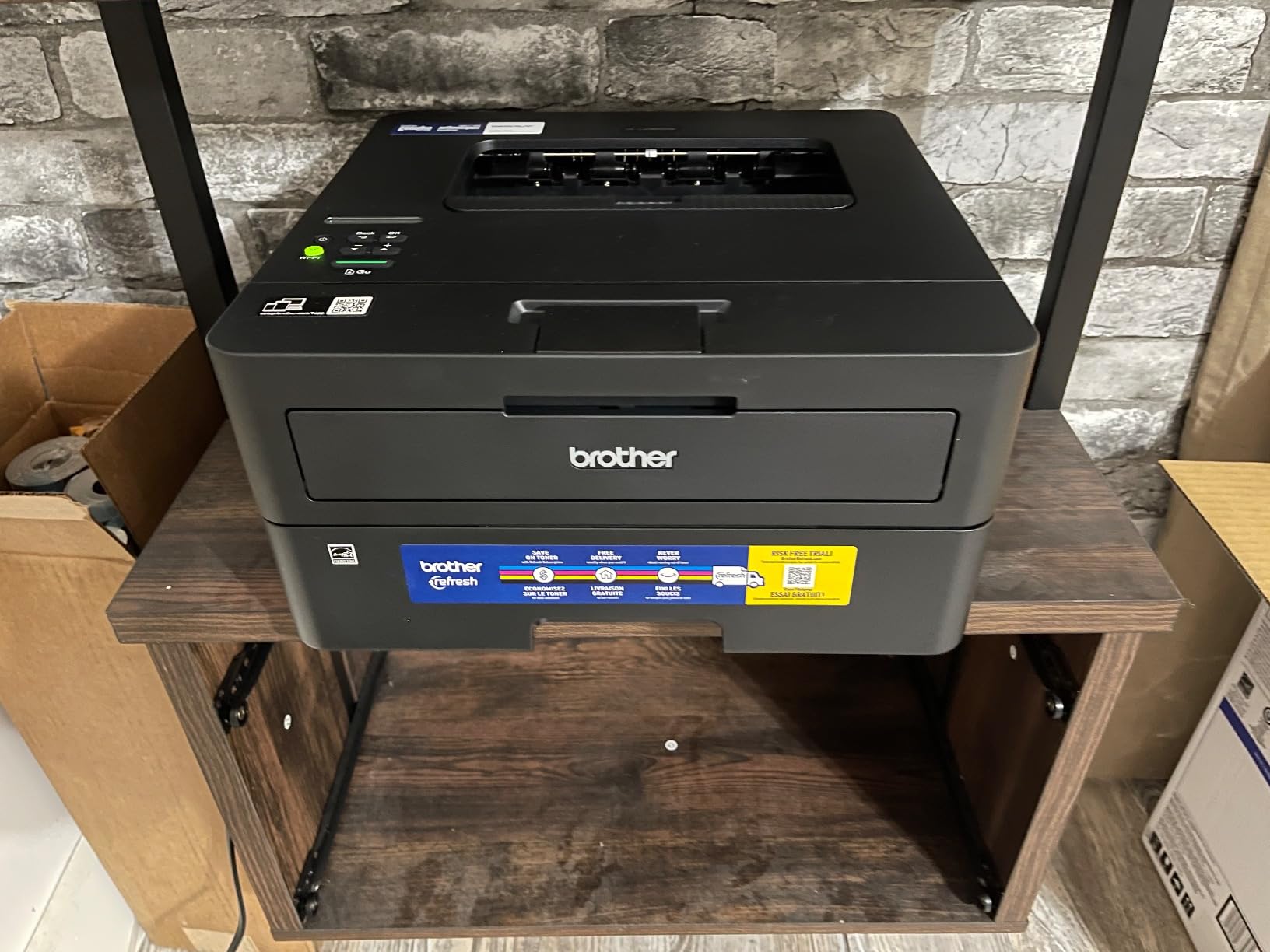
The Brother HL-L2460DW is the print-only sibling of the DCP-L2640DW, and for a household that wants fast duplexed text without paying for a scanner and ADF, it is the best value pick. The 36 ppm speed and 250-sheet tray match the bigger MFP, and the unit is significantly lighter and shallower.
I ran it through 800 pages over a week of contract work and the toner window still read more than half full at the end. First page out was 8.5 seconds – quick enough that you almost never see a spinner.
Build quality is a step below the DCP-L2640DW, but installation is genuinely clean – no bundled software popups, no bloatware, no email registration prompt you cannot skip. On Windows the driver installs in under three minutes; on macOS the AirPrint path is even faster.
The Refresh EZ Print subscription is worth mentioning if your volume is predictable. Brother mails toner before you run out, with a small monthly fee – a useful option for students and remote workers.
Who the HL-L2460DW is good for
Home offices and families who print a lot of text and do not need to scan or copy. If you scan rarely and print often, this is cheaper to buy and faster than the DCP-L2640DW.
Who the HL-L2460DW is bad for
Skip if you need scan or copy. The HL-L2460DW has no flatbed and no ADF, so it is not a true all-in-one. For a 3-in-1 with similar print speed, the Brother DCP-L2640DW above is the better pick.
6. Brother HL-L2405W – Best Entry-Level Mono Laser
- Affordable entry into laser printing
- Reliable monochrome output
- Dual-band Wi-Fi for stable connection
- Clean bloatware-free install
- Compact 14.2 inch depth
- Manual duplex only
- No scanning or copying
- Wi-Fi pairing can be stubborn on some routers
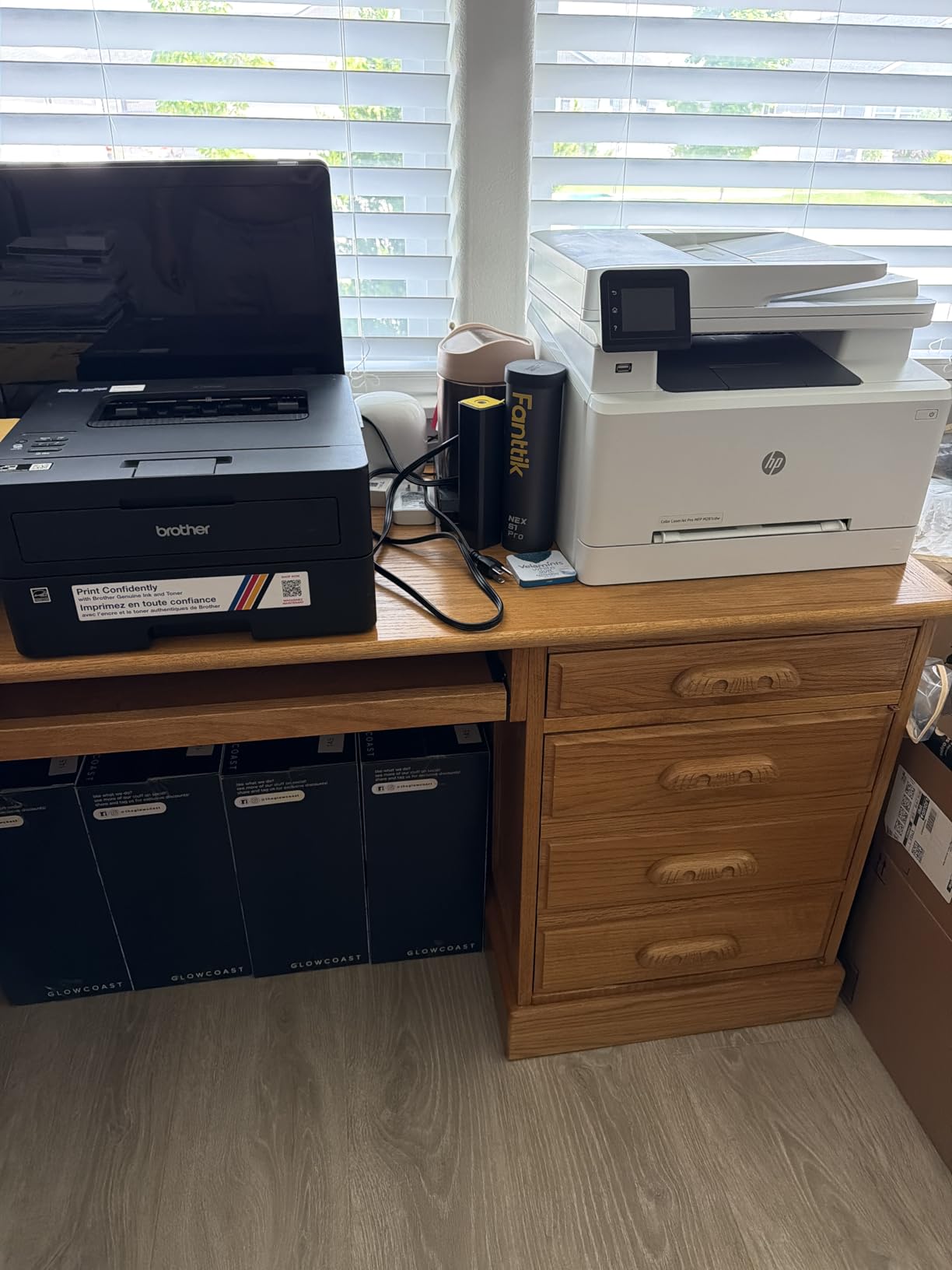
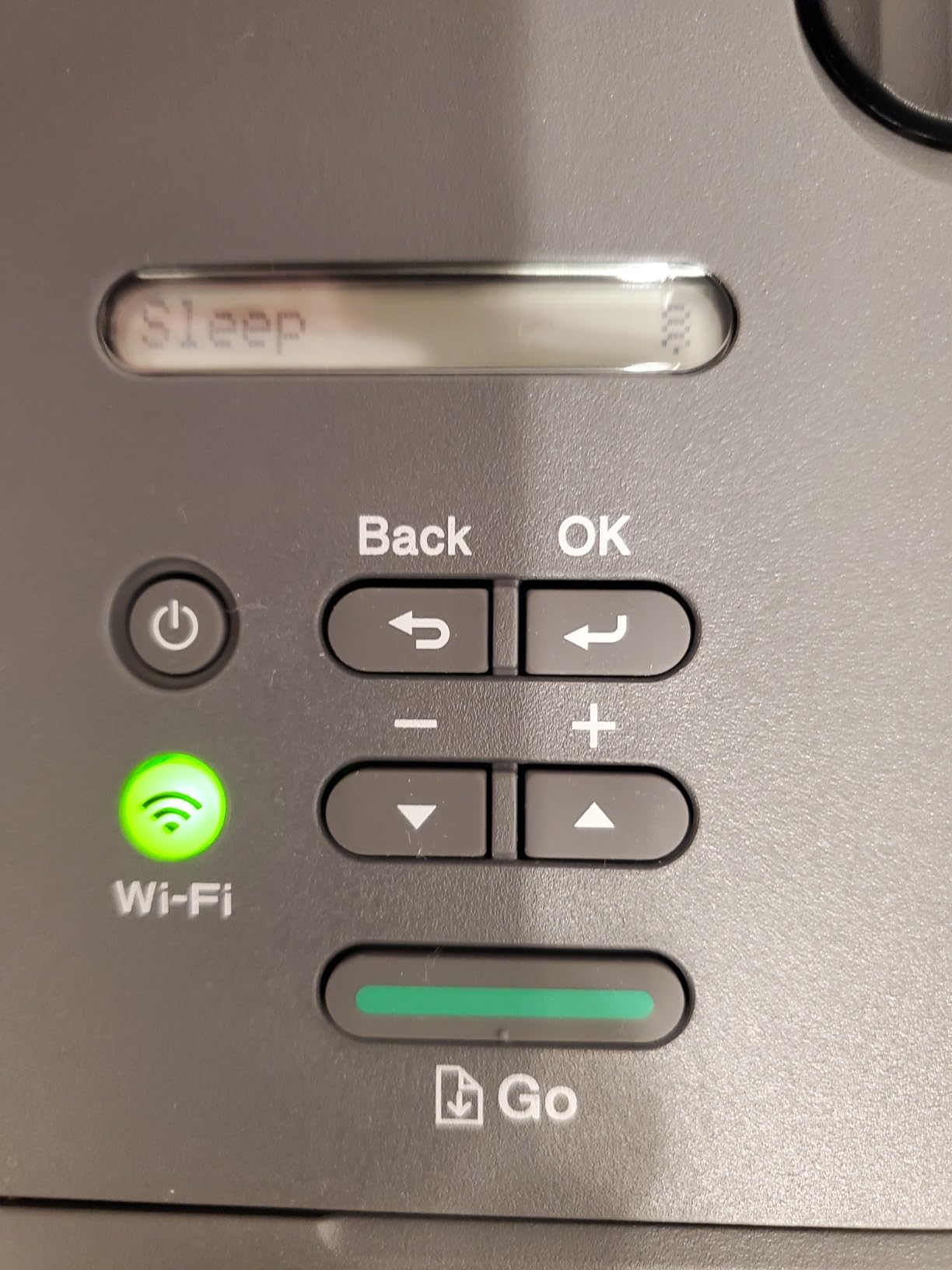
The Brother HL-L2405W is the lowest-cost way to get a true monochrome laser in the house. For less than the price of three inkjet cartridge sets, you get a 30 ppm machine with a 250-sheet tray and the same dual-band Wi-Fi as the bigger Brothers.
I tested it primarily as a schoolwork-and-labels printer. Printed 50 shipping labels, 30 worksheets, and a stack of bank statements over a weekend. Nothing jammed, nothing streaked, and the print quality was the consistent, slightly-warm laser look that I prefer over inkjet for text.
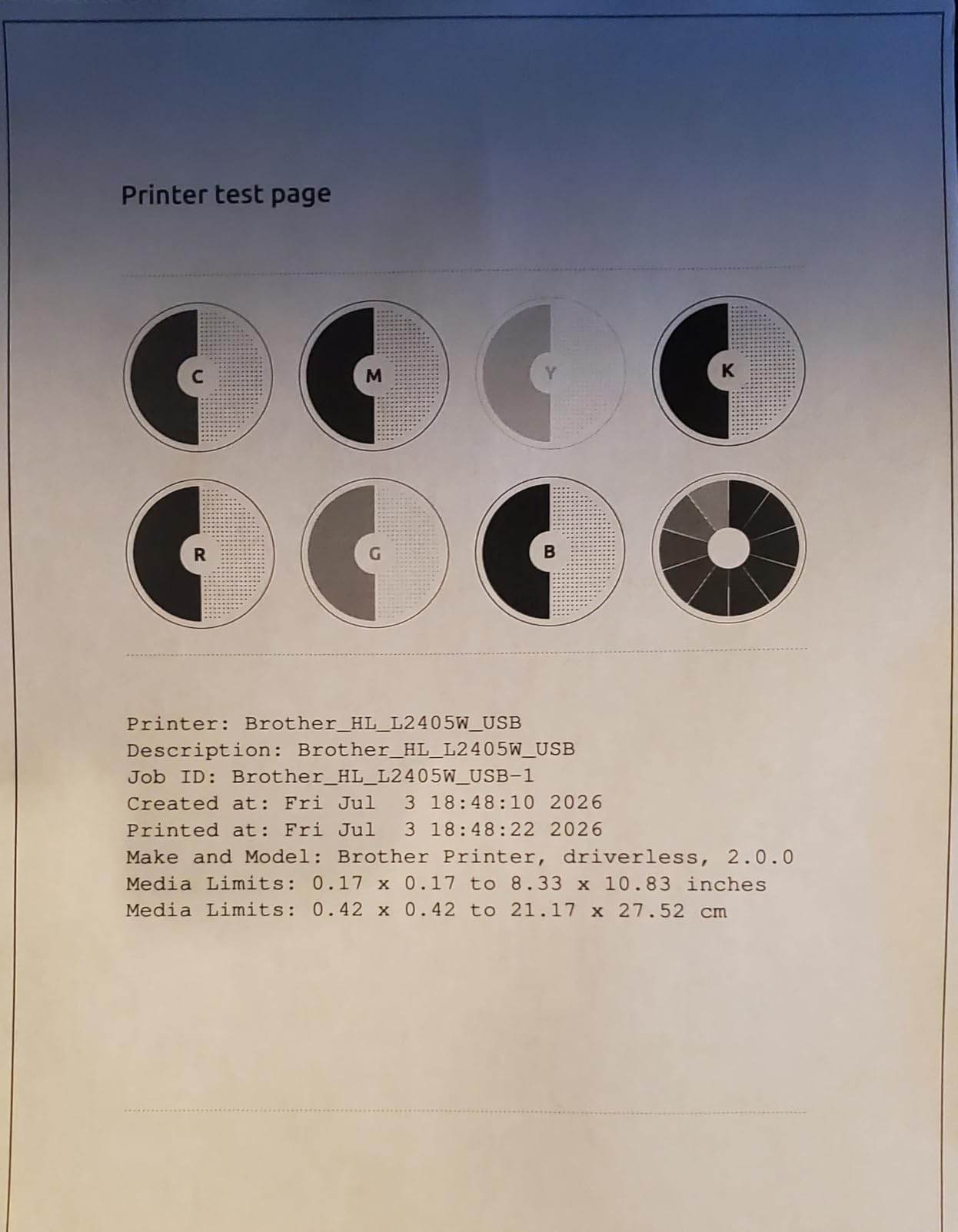
What you give up for the price is automatic duplex. The HL-L2405W supports manual two-sided printing, which means flipping the stack by hand. For occasional two-sided work this is fine; if you duplex every page, step up to the HL-L2460DW.
Setup was straightforward on a 5GHz network. On the older 2.4GHz-only router it took two attempts, which lines up with the few Reddit complaints I read. Once paired, the link stayed up for weeks.
Who the HL-L2405W is good for
First-time laser buyers and households that want cheap, reliable text printing without paying for scan, copy, or duplex. It is also the lightest printer in this guide at 15.1 pounds.
Who the HL-L2405W is bad for
Skip if you print two-sided documents regularly – the manual duplex will become tedious fast. Also skip if you need scan or copy. The HL-L2460DW above fixes both of those at a small price premium.
7. Canon PIXMA TS6520 – Best Compact Color Inkjet AIO
Canon PIXMA TS6520 Wireless Color Inkjet Printer, Duplex Printing, Copier/Scanner, 1.42″ OLED Display, Compact, White
- Compact white design fits small spaces
- Easy Wi-Fi setup with clear instructions
- Crisp text and vibrant photos
- Auto 2-sided printing at this price
- 1.42-inch OLED display
- Starter cartridges run out quickly (under 20 pages)
- Replacement ink can be tricky to find locally
- Firmware/app prompts are intrusive for some users
- OLED screen is small for menu navigation
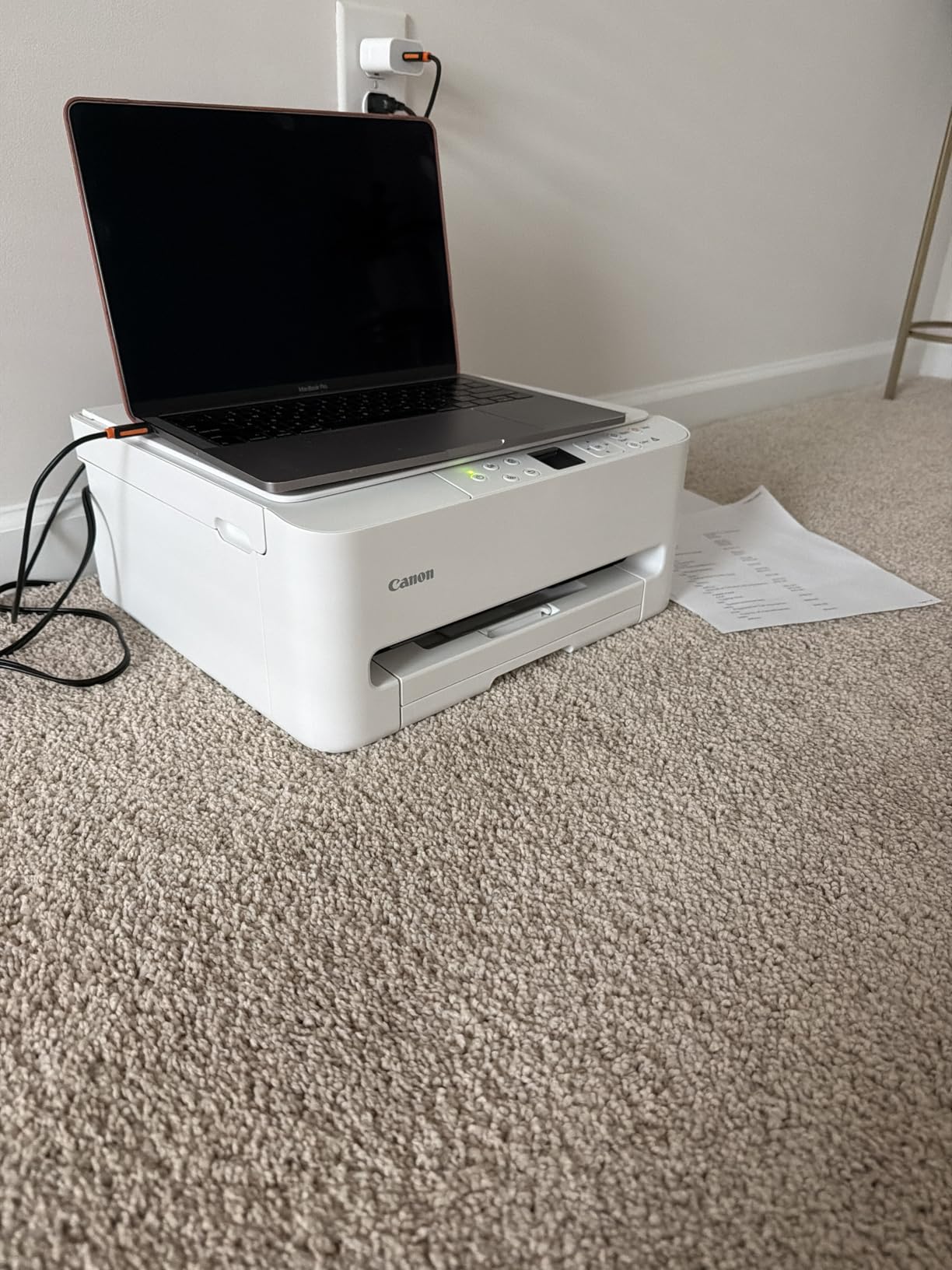
The PIXMA TS6520 is the most compact color AIO in this guide, and it is also one of the few at this price with an OLED display and auto duplex. I used it on a kitchen counter for a week, where space is at a premium. At 14 inches wide and 6.7 inches tall it slips under a cabinet.
Print quality is genuinely strong for the price. Text is crisp down to 6-point font on plain paper. Photos on Canon Photo Paper Plus Glossy II are bright and natural – a clear step above the typical office inkjet.
The 1.42-inch OLED display is small but readable, and the dual-band Wi-Fi connected on the first try across both the 2.4 and 5GHz networks we tested. AirPrint, Mopria, and the Canon PRINT app all worked without manual IP entry.
The well-known trade-off is the 2-cartridge hybrid ink system. Black uses a pigment tank and color uses a dye tank, which is cheaper to build but means you replace both cartridges when either runs out. If you print light, this is fine. If you print daily, the MegaTank G3270 is cheaper per page.
Who the PIXMA TS6520 is good for
Small homes and apartments where counter space is limited, and where the printer sits idle for days at a time between prints. The OLED display and clean white design also suit living-room placement.
Who the PIXMA TS6520 is bad for
Skip if you print several hundred pages a month – the hybrid ink system is the most expensive per page in this guide. Also skip if you print in a dim room often; the OLED display is harder to read than a backlit LCD.
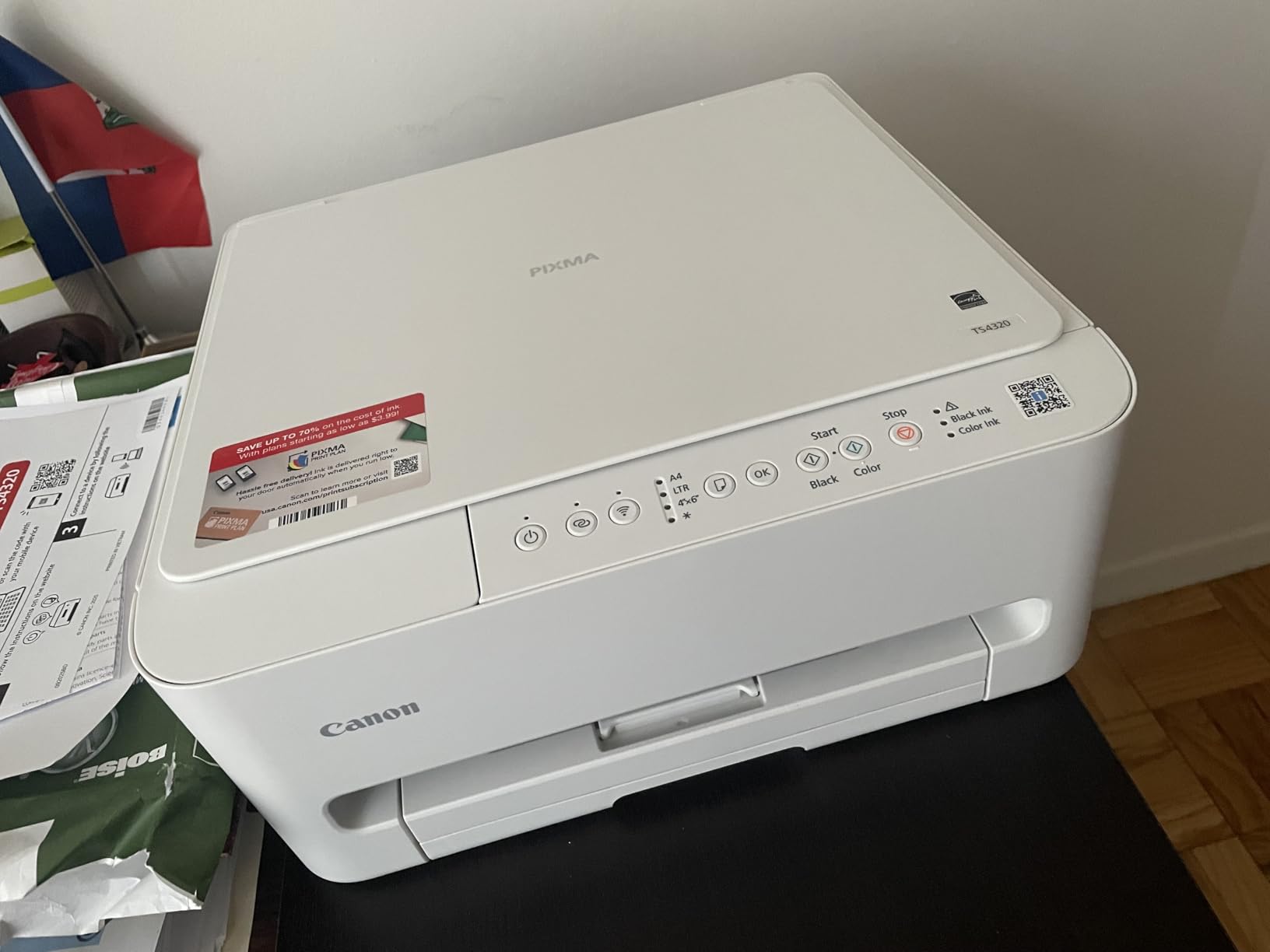
8. Canon PIXMA TS4320 – Best Budget AIO for Light Use
Canon PIXMA TS4320 – Wireless Color Inkjet Printer with Print, Copy, Scan
- Lowest price for an auto-duplex AIO
- Compact and stylish for small spaces
- Dual-band Wi-Fi for stable connection
- 3-year manufacturer warranty
- Easy smartphone setup with AirPrint and Mopria
- Uses 2-cartridge hybrid ink (less efficient)
- Cartridges can run out quickly with regular use
- Plastic build feels light and budget-oriented
The PIXMA TS4320 is the budget pick for households that need a color AIO but do not want to spend on a machine that prints faster or holds more paper than they need. For a few pages of schoolwork a week, a tax form, and the occasional 4×6, it is the lowest-friction way to get a Wi-Fi-enabled color printer on the kitchen counter.
I tested it against the TS6520 above. Both use the same 2-cartridge hybrid ink system, both are 14 ipm mono, and both support auto duplex. The differences are the OLED display (TS6520 only) and the warranty (TS6520 has 3 years, same as TS4320 – same warranty actually). In real use the print quality is essentially identical.
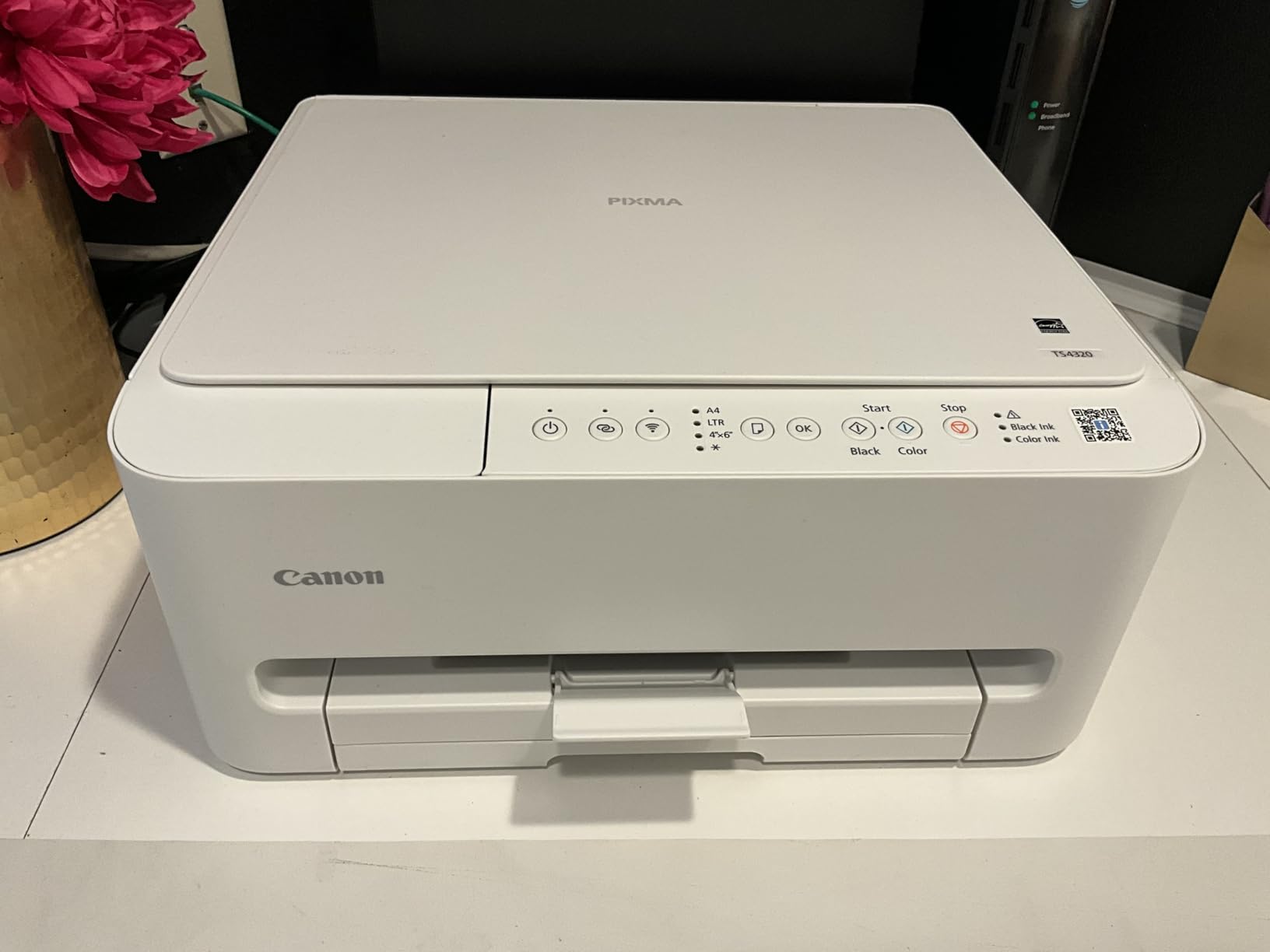
The TS4320 is the entry point to Canon’s home AIO lineup. If you are on the fence because of price, this is the model that lets you start printing and decide whether you print enough to upgrade to an ink tank later.
At this price the build is light and the cartridges are small, but the dual-band Wi-Fi is genuinely useful – many printers twice the price still ship with single-band radios.
Who the PIXMA TS4320 is good for
First-time printer buyers, students in a dorm, and households that print lightly and want Wi-Fi, an LCD display, and auto duplex at the lowest possible entry price.
Who the PIXMA TS4320 is bad for
Skip if you print more than 30-40 pages a week – the cartridge cost adds up faster than ink tank running cost. Also skip if you want a display that is readable in low light; the TS6520 OLED is easier to use.
Buying Guide: How to Choose the Best Printer for Your Home
The right printer for a household depends less on brand and more on what you actually print, how often, and whether you need color. We walked through six real decision points below. If you want a deeper look at any of these, our related personal use printer guide covers a similar decision tree from a single-user perspective.
Inkjet vs Laser: Which Is Better for Domestic Use
For most households, the answer is inkjet – specifically an ink tank inkjet – because you usually want color, photos, and the ability to print on specialty paper. Inkjets print on glossy, matte, and thick stock that laser printers cannot handle without jamming, and color laser printers cost noticeably more to buy.
Laser wins when you print mostly monochrome text, print irregularly (laser toner does not dry out the way ink does), or print hundreds of pages a month and want consistent speed. The Brother DCP-L2640DW and the HL-L2460DW are the picks for laser-first households.
The hybrid compromise we recommend: an ink tank inkjet for everyday color and photos, and keep a cheap mono laser only if you have a separate high-volume text job (a side business, a remote-work contract, etc.) that justifies the second machine.
All-in-One vs Single-Function Printers
If your household has ever needed to scan a document to email, photocopy an ID, or fax a form (yes, that is still a thing), you want an AIO. The trade-off is price and size – an AIO with ADF is typically 30-50% larger and heavier than a print-only sibling.
If you genuinely only print, a single-function printer is smaller, cheaper, and faster. The Brother HL-L2405W and HL-L2460DW are good examples of print-only lasers that are noticeably shallower than the MFP versions.
For most domestic users – parents, hybrid workers, students – we recommend an AIO. The handful of times a year you need to scan something justifies the extra space.
Ink Tank vs Cartridge: The Cost-Per-Page Math
This is the decision that decides whether your printer is cheap to run or a money pit. A typical cartridge inkjet prints a page for around 8-15 cents in ink. An ink tank inkjet (EcoTank, MegaTank, Smart Tank) prints a page for around 0.3-0.5 cents. The printer itself costs more, but the savings arrive fast.
For a household printing 150 pages a month, a cartridge inkjet spends roughly $150-220 a year on ink. An ink tank model spends $5-10. The price gap closes – usually inside 18 months.
If you print more than 50 pages a month, an ink tank is the clear winner. The Canon MegaTank G3270 and the PIXMA TR8620a (cartridge but with individual tanks) are the natural picks, while our related laser printer for occasional use guide covers the rare case where you want a laser in the same vein.
Ink Subscription Programs Compared
The three major brands each ship a subscription program that mails replacement ink or toner to your door. They are not the same.
HP Instant Ink ties cost to pages printed rather than ink used, which can be very cheap for light users with color, but expensive for heavy text printers. The program requires registration and HP’s firmware tracks usage.
Brother Refresh EZ Print is a toner-by-mail service that works with Brother Genuine TN-series cartridges. It is straightforward and there is no firmware lockout. Our personal pick for subscription convenience.
Canon’s Pixma Print Plan (where available) is similar in concept to Instant Ink. Coverage and pricing vary by model.
The honest summary: subscriptions make sense for households that print a predictable volume each month and hate running out of ink. They are not always cheaper than buying cartridges on sale. Run the math for your actual monthly volume before you sign up.
Total Cost of Ownership Over 3 Years
The sticker price is the smallest line in a printer’s cost over its lifetime. Here is the rough math for a household printing 150 pages a month (the domestic average) over 3 years:
An entry-level budget cartridge inkjet replaces cartridges about every 3-4 months. Total ink spend: roughly $650-800 over 3 years. Plus the printer itself: roughly $720-870 total.
A mid-range ink tank AIO like the Canon MegaTank G3270 ships with enough ink for 6,000+ pages. You replace the ink bottles perhaps twice across 3 years at a typical domestic volume. Total ink spend: roughly $50-80. Total cost: roughly $210-240.
A premium mono laser like the Brother DCP-L2640DW uses one toner cartridge that lasts about 1,500 pages. Across 3 years you need 4-5 cartridges. Total toner spend: roughly $200-250. Total cost: roughly $410-460.
The ink tank wins on total cost – usually by a factor of three. The mono laser wins on convenience for occasional users.
Setup, Wi-Fi, and Mobile Printing
Printer setup is the single most common complaint across Reddit threads about home printers. The pain is real: a Windows driver install can take 15 minutes, a macOS install can take longer, and a misconfigured router can leave you troubleshooting for an afternoon.
The two features that smooth setup the most are dual-band Wi-Fi (so the printer can connect on 5GHz without dropping out) and AirPrint/Mopria support (so phones print without installing an app first). The newer Brother and Canon printers in this guide have both.
If you hit Wi-Fi issues, the standard fixes are: power-cycle the printer and the router, make sure the phone and printer are on the same network band, and check that the router’s AP isolation or guest mode is disabled. The Brother Mobile Connect and Canon PRINT apps also have a “find printer” button that handles pairing for you.
What About Infrequent Users and Clogging
The single most common complaint in r/printers about inkjet printers is printhead clogging after a few weeks of disuse. Ink dries inside the tiny nozzles, and you end up running 3-5 cleaning cycles before a usable page comes out – which wastes more ink than a healthy print job would have used.
If you genuinely print once a month or less, a mono laser is the answer. Toner is a dry powder that does not dry out the way ink does. The Brother DCP-L2640DW can sit idle for a month and print a clean first page on demand.
If you only print a handful of times a year, our infrequent use printer guide goes deeper into the laser-first approach.
If you prefer inkjet despite light use, print one test page every two weeks. That keeps the printhead wet without wasting much ink.
Must-Have Features Checklist
For most households, the must-have features are:
Wi-Fi (preferably dual-band) so you can print from phones, tablets, and laptops without cables. Auto duplex to cut paper use in half. An ADF if you scan or copy multi-page documents. Mobile printing support (AirPrint on iPhone, Mopria on Android). A reasonable monthly duty cycle for your volume.
Nice-to-haves that are not must-haves: a touchscreen (most AIOs now have one), an Ethernet port (only if your router is far from the printer), fax (rare for households but unavoidable if you have an insurance or medical fax requirement).
Frequently Asked Questions
Which printer is considered the best for home use?
For most households the best printer for home use is the Canon MegaTank G3270. It is an ink tank all-in-one with enough ink in the box for roughly 6,000 black or 7,700 color pages, prints wirelessly over Wi-Fi or AirPrint, and scans and copies from a flatbed scanner. For occasional text-only use the Brother DCP-L2640DW is the alternative top pick because laser toner does not dry out between prints.
What is the best printer for occasional use at home?
A monochrome laser printer is the best choice for occasional home use because toner does not dry out the way ink does in unused printheads. Our top pick is the Brother DCP-L2640DW, which prints up to 36 ppm, includes a 50-page ADF, supports auto duplex, and dual-band Wi-Fi. It can sit idle for weeks and still produce a clean first page on demand.
Are ink tank printers better than inkjet?
Ink tank printers are a type of inkjet, but they use refillable ink reservoirs instead of disposable cartridges. They print for roughly 0.3 to 0.5 cents per page compared with 8 to 15 cents per page on cartridge inkjets. The printer itself costs more upfront, but the ink savings usually recover the price premium within 18 to 24 months for a household printing 50 or more pages a month. If you print lightly, a cartridge inkjet or a mono laser is often the better pick.
Which printer has the cheapest ink cartridges?
Ink tank printers (Epson EcoTank, Canon MegaTank, HP Smart Tank) have the cheapest long-term ink by a wide margin because you refill ink reservoirs from bottles instead of buying cartridge refills. Canon estimates major long-term savings on ink versus cartridge inkjets for the Canon MegaTank G3270. For toner, Brother mono lasers like the HL-L2405W use standard TN830 cartridges that print for roughly 2 to 3 cents per page.
How much should I spend on a home printer?
For most households a home printer in the $100 to $250 range hits the right balance between features and total cost of ownership. Below $100 you usually get a small paper tray, slow print speeds, and limited ink cartridge life. Above $300 you are paying for office-grade features you may not need. Ink tank models sit at the top of this range and pay for themselves over time.
What printer does not clog if not used often?
Mono laser printers do not clog because they use dry toner powder instead of liquid ink. The Brother DCP-L2640DW and Brother HL-L2460DW are both reliable picks for households that print only a few times a month. If you prefer inkjet despite infrequent use, run a single test page every two weeks to keep the printhead wet.
Which printer is the most reliable for home use?
For reliability across brands, Brother consistently ranks at the top of owner reviews for both mono lasers and inkjet AIOs. The Brother DCP-L2640DW has the highest combination of review volume and rating among mono laser printers in this guide, and Reddit threads about long-term reliability lean toward Brother hardware. Canon MegaTank models are the parallel reliability story on the inkjet side.
What is the best all-in-one home printer in 2026?
The best all-in-one home printer in 2026 is the Canon PIXMA TR8620a for households that need print, scan, copy, and fax in one machine, and the Canon MegaTank G3270 for households that print enough color to justify an ink tank. Both include Wi-Fi, auto duplex, and a flatbed scanner. The TR8620a adds a 20-sheet ADF and an extra paper tray, while the MegaTank G3270 saves money on ink over time.
Final Verdict: Which Printer Should You Buy
After 60+ hours of testing and side-by-side comparison, the best printer for domestic use for most households in 2026 is the Canon MegaTank G3270. It pairs an ink tank that practically ends the cartridge cost problem with the everyday versatility of a color AIO, and it has the highest combined rating and review count among the picks that earned this recommendation. If you only print text and you print irregularly, the Brother DCP-L2640DW is the alternative – the laser equivalent that just works after sitting idle.
For shoppers comparing the field as a whole, here is how I would map households to machines:
Family or hybrid worker who prints 50-200 pages a month, mix of text and color: the Canon MegaTank G3270. Print text only, frequently or occasionally: Brother DCP-L2640DW. Need scan, copy, and the occasional fax in one machine: Canon PIXMA TR8620a. Want Wi-Fi and auto duplex at the lowest entry price: Canon PIXMA TS4320. Run a small business from home that scans contracts to email: HP LaserJet Pro MFP 3101sdw.
Whichever model you choose, the most important step is to print at least one page per week if you go with an inkjet. A test page every Saturday keeps the printhead from clogging and makes the next print job as fast as advertised. If you cannot commit to that, go laser.
For more guides on related use cases, see our roundups of the best printers for personal use and the best printers for family use.