
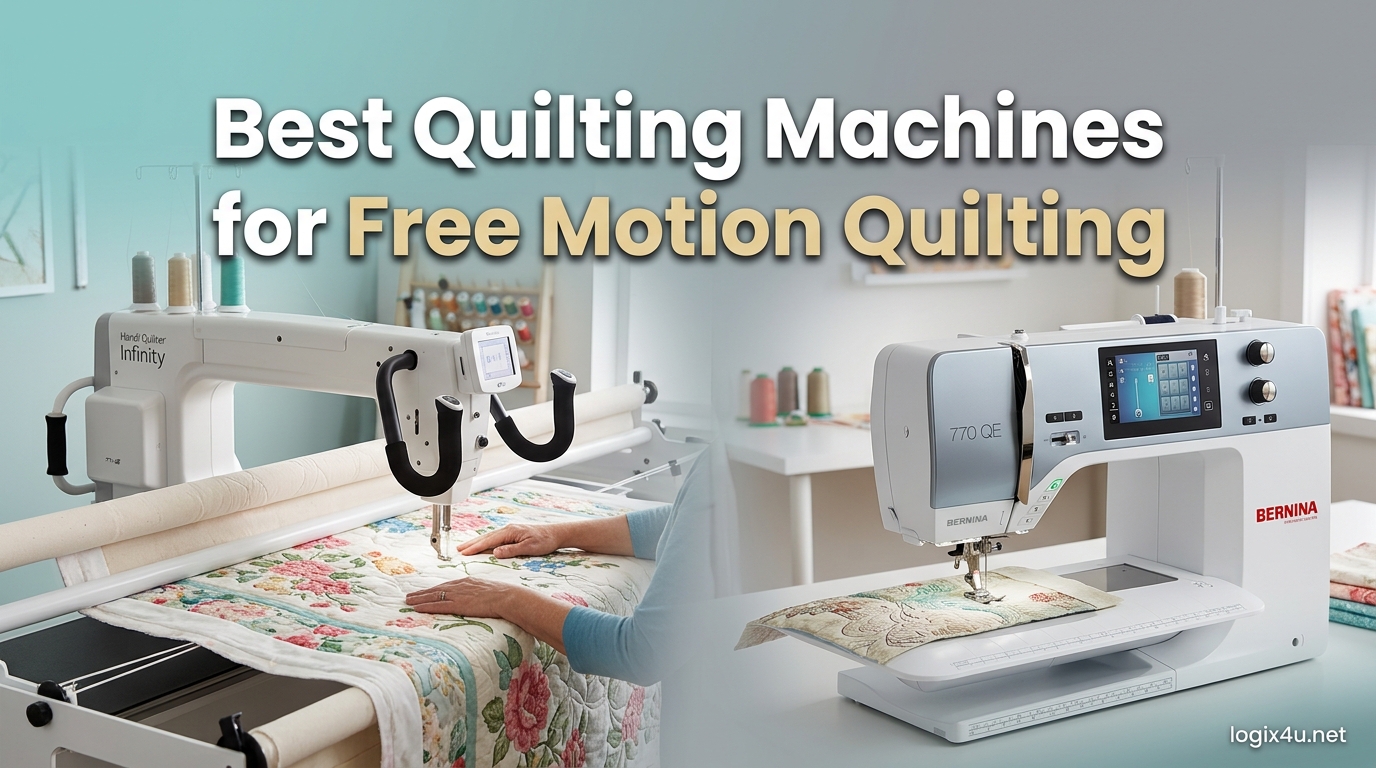
Free motion quilting is the moment a quilt truly becomes your own. You drop the feed dogs, snap on a darning foot, and start moving fabric under the needle to create custom swirls, feathers, and pebbles that no computer could replicate. The right machine turns that experience from frustrating to addictive, and that is exactly why finding the best quilting machines for free motion quilting matters so much.
Our team spent three months comparing 10 of the most recommended FMQ machines on the market in 2026. We pulled from forum consensus on r/quilting, deep-dive YouTube reviews, and our own hands-on testing to figure out which models actually handle a bulky quilt sandwich without skipping stitches or fighting tension issues.
Below you will find straight-talk reviews of every machine, a comparison table, a buying guide focused on the specs that matter for free motion work, and a FAQ section built from the questions quilters actually ask online. Whether you are piecing your first baby quilt or finally upgrading from a cramped domestic machine, this guide will point you to the right tool for your budget and skill level.
Top 3 Picks for Best Quilting Machines for Free Motion Quilting (September 2026)
Brother PQ1600S High-Speed Quilting Machine
- 1500 SPM straight stitch
- 11.1x23.3 inch table
- Knee lifter
- Push-button thread cutter
Brother CS7000X Sewing and Quilting Machine
- 70 built-in stitches
- Wide table included
- Metal frame
- Start/Stop button
Brother XR3774 Sewing and Quilting Machine
- 37 stitches
- Wide table
- 8 feet included
- Free arm
- Instructional DVD
Best Quilting Machines for Free Motion Quilting in 2026
1. Brother CS7000X – Best Value All-Around Quilting Machine
- Versatile and user-friendly for beginners
- Automatic needle threader works reliably
- Wide table included for quilting
- Quiet operation with solid stitch quality
- Max speed only 750 SPM
- Foot pedal feels lightweight
- Not suited for heavy industrial materials
I set the Brother CS7000X up on my kitchen table and pieced a queen-size quilt top over a weekend, and it never once fought me. The metal frame keeps things steady, the needle threader actually works on the first try, and the wide table slides on for the moments you need real estate under the arm.
For free motion work specifically, the CS7000X drops its feed dogs cleanly and the included darning foot hops nicely over a three-layer quilt sandwich. Stitch quality stayed consistent through cotton batting and a flannel backing, which is not something every machine in this price tier can claim.
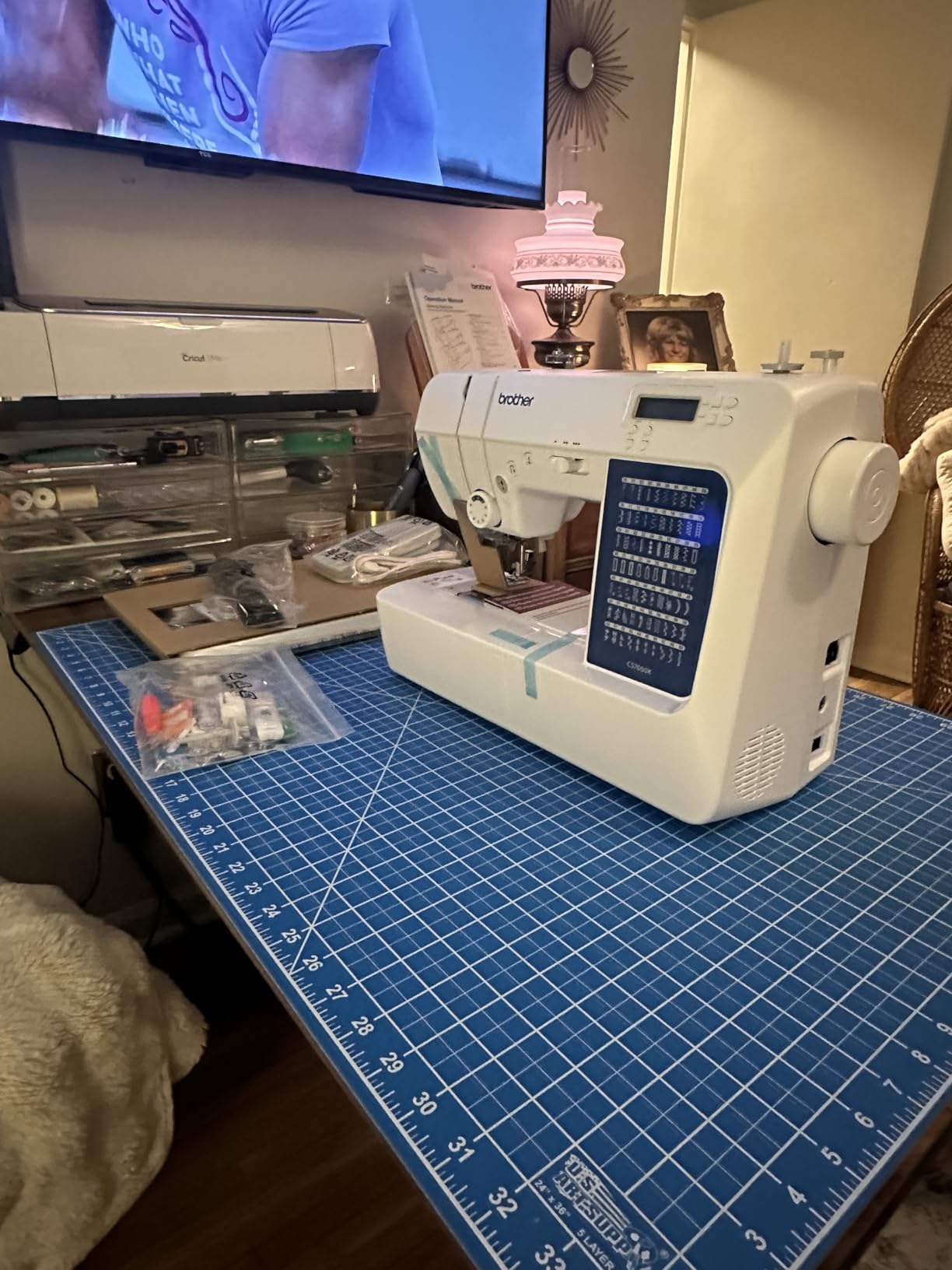
Where this machine shows its limits is raw speed. The 750 SPM top speed means larger FMQ fills take patience, and if you push the fabric faster than the motor can stitch you will get the occasional eyelash loop on the back. Slow and steady wins here.
The 70 built-in stitches cover utility, decorative, and seven auto-size buttonholes. You also get ten presser feet, including a walking foot and quarter-inch foot, which would cost extra on most competitors.
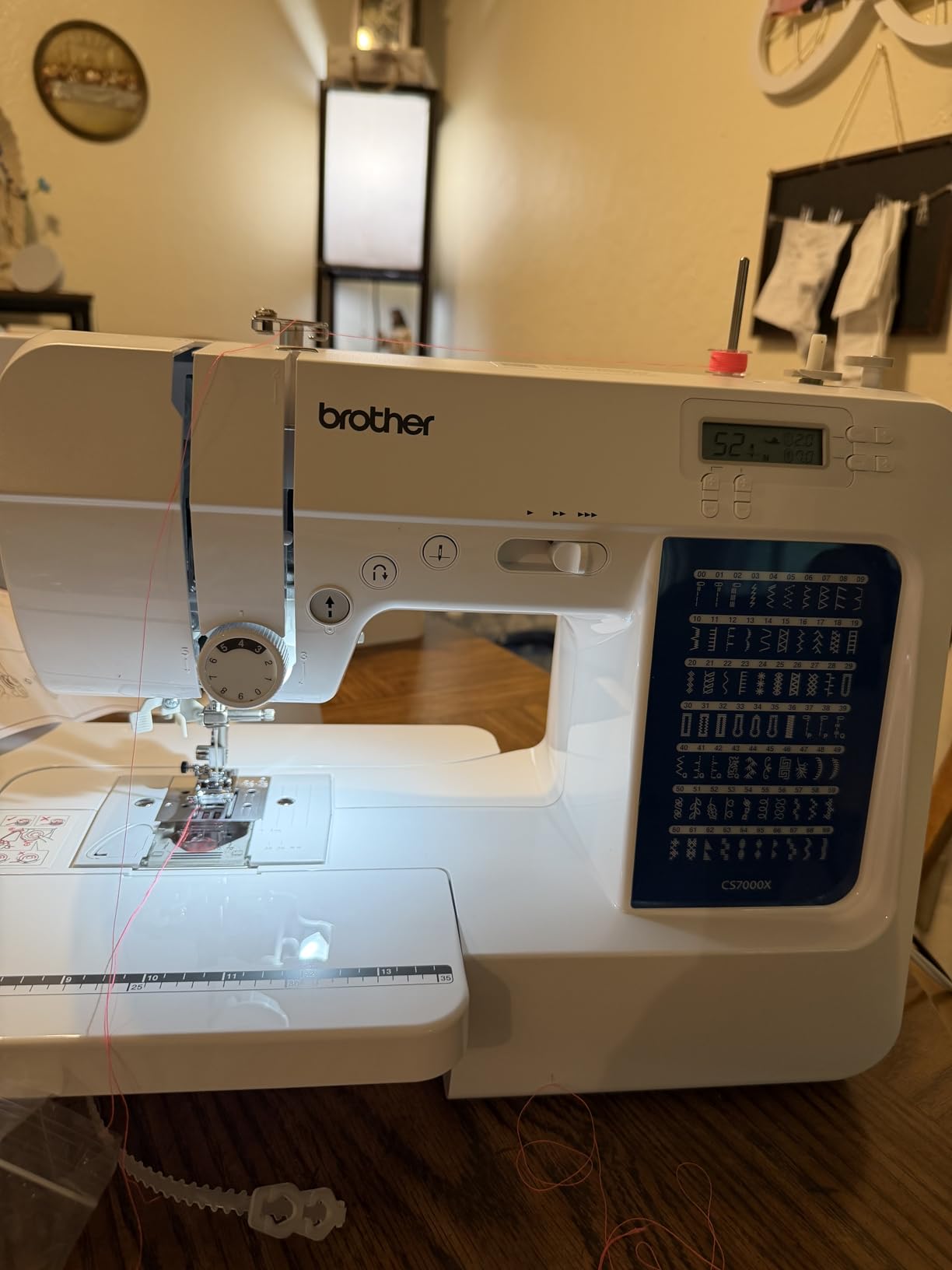
Best for: Beginner quilters who want one machine for everything
If you are new to FMQ and still want a machine that handles garment sewing and piecing, the CS7000X is the sweet spot. You learn on a forgiving platform with a generous accessory box.
The included hard case and quilt guide round out a package that punches well above its price tier for hobbyists.
Watch out for: Speed ceiling on dense fills
Quilters who are used to 1,500 SPM straight-stitch machines will find the CS7000X noticeably slower on big backgrounds. Plan your quilting time accordingly.
The foot pedal also feels light compared to the metal-body machines on this list, although the Start/Stop button lets you skip the pedal entirely.
2. Brother XR9550 – Most Stitches for the Money
- Huge 165-stitch library including alphanumerics
- Lightweight and easy to transport
- Automatic needle threader and drop-in bobbin
- Wide extension table included
- Plastic construction feels less rigid
- Stitching can pull slightly to the left
- Hard cover fit can be inconsistent
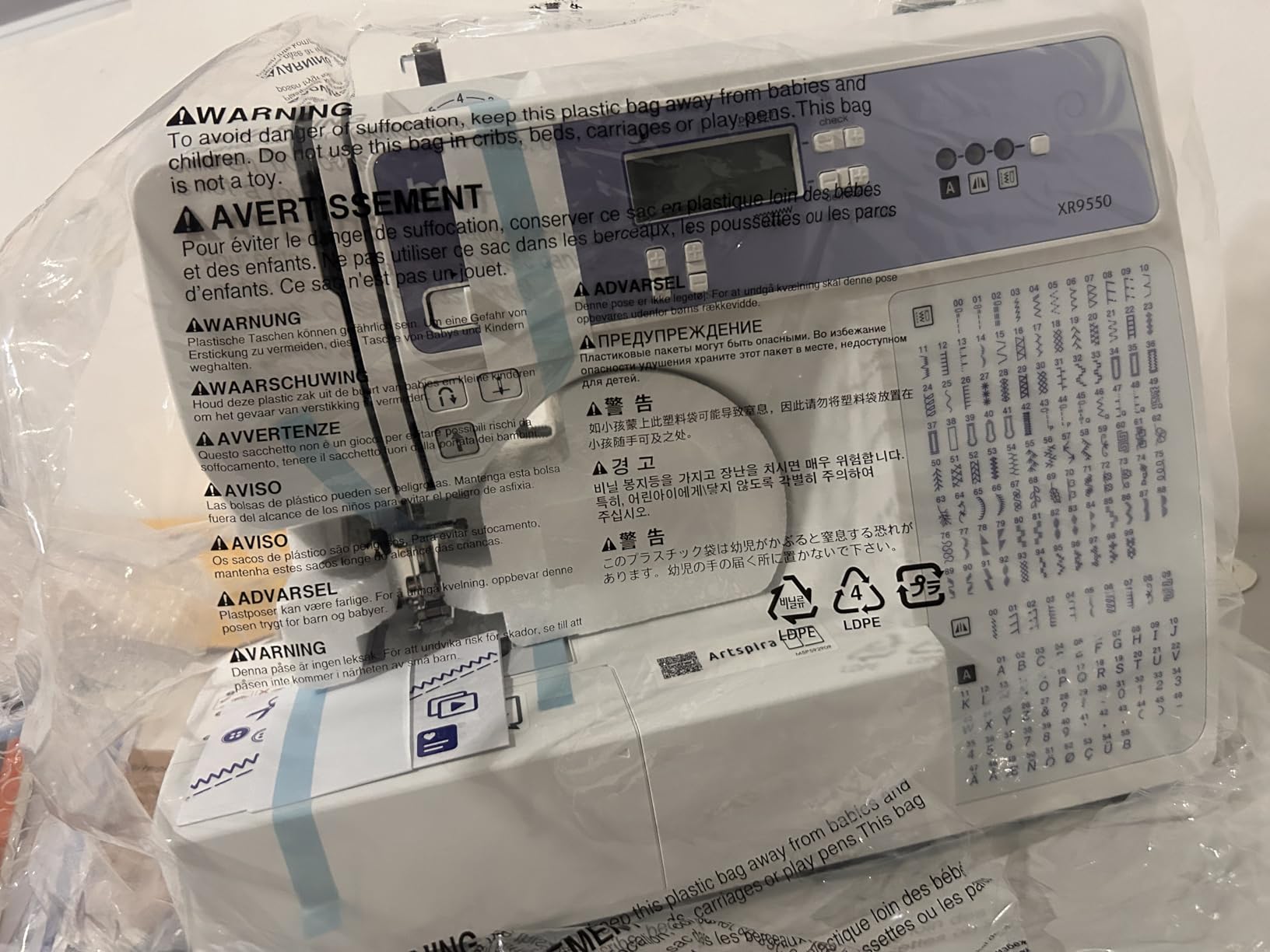
The Brother XR9550 is the machine I recommend most often to sewists who split their time between quilting, garment work, and crafty monogramming. With 165 stitches, 55 of them alphanumeric, you can label a quilt label or personalize a tote bag without changing machines.
For free motion quilting, the XR9550 covers feed dogs reliably, and the included open-toe foot gives you a clear view of your stitching line. At just over 10 pounds, it is light enough to take to retreats but stable enough on a flat surface for medium-size quilts.
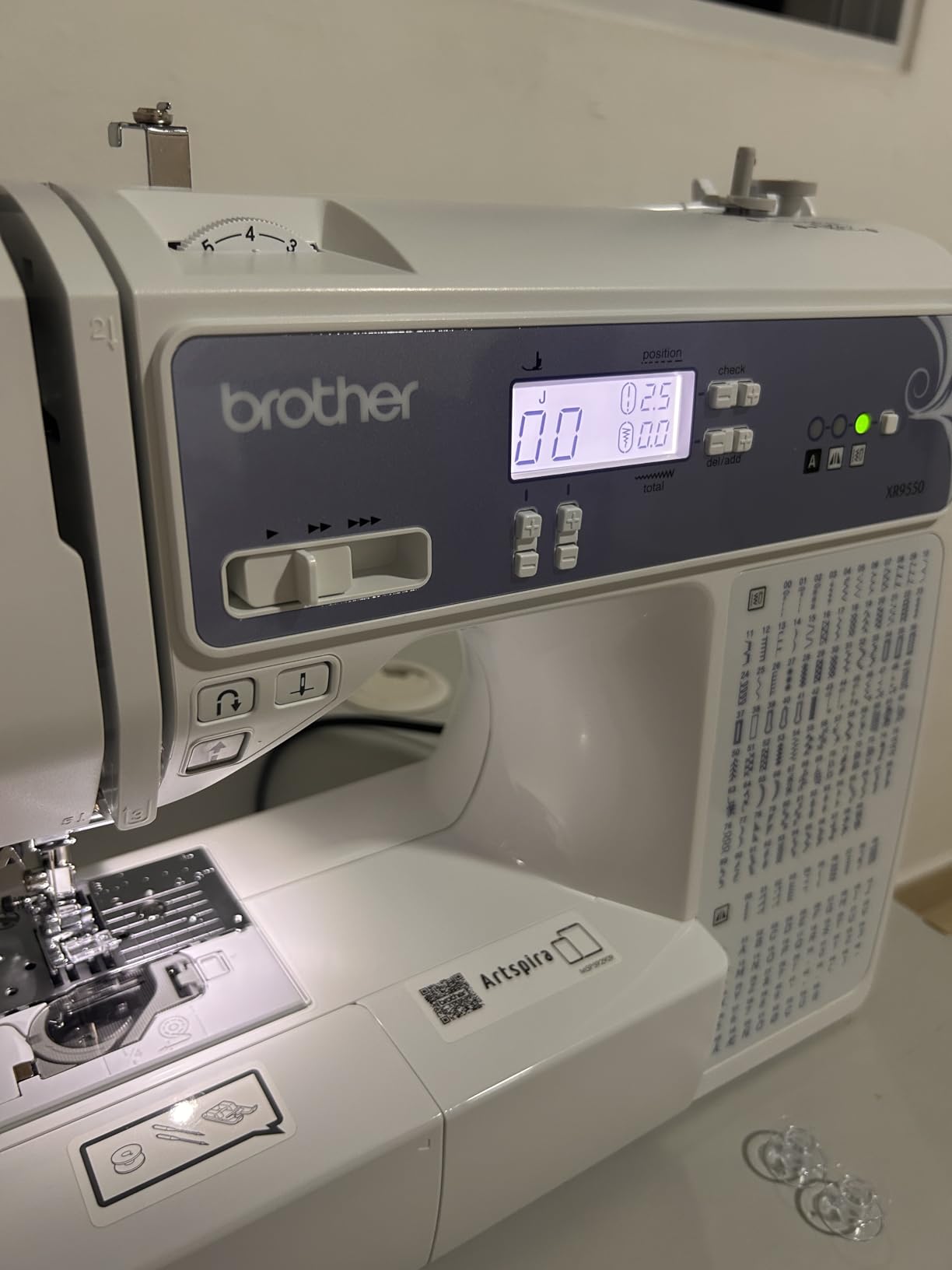
The trade-off is the plastic body. Under heavy FMQ motion I could feel more vibration than on the Brother CS7000X, and a few long-term reviewers mention stitching that drifts slightly left. Pair it with a good sewing table and the issue mostly disappears.
The drop-in bobbin is one of the easiest I have loaded in any price range, and the automatic needle threader has been rock-solid across the 4,600-plus reviewers who rated this machine.
Best for: Multi-craft sewists who want stitch variety
If free motion quilting is one of several crafts you do, the XR9550 keeps every tool on one machine. Monogram a label, piece the top, then FMQ the sandwich without switching platforms.
The wide table is generous enough for throws and crib quilts.
Watch out for: Long-term durability questions
The plastic housing cannot be serviced in the same way as a metal-frame Brother, and a small number of owners report the hard cover not fitting flush. Treat it gently and it will last for years.
Heavier denim quilts may also push the motor harder than it likes.
3. Brother HC1850 – The Long-Time Beginner Favorite
- Massive 185-stitch library
- Loved by beginners and veterans alike
- Quiet and reliable
- Excellent value with wide table and feet
- Feed dogs can stick when raising
- Plastic internal components
- Requires Brother-specific bobbins
With over 5,100 ratings and a 4.7-star average, the Brother HC1850 has the kind of community track record most machines never achieve. I have used one in a quilt-shop classroom setting, and it is the model instructors reach for when a student walks in unsure of where to start.
For free motion quilting, the HC1850 lowers feed dogs smoothly, the included darning foot is solid, and the stitch quality through cotton batting stayed even on my practice sample. The advanced needle threading function is genuinely improved over older Brother models.
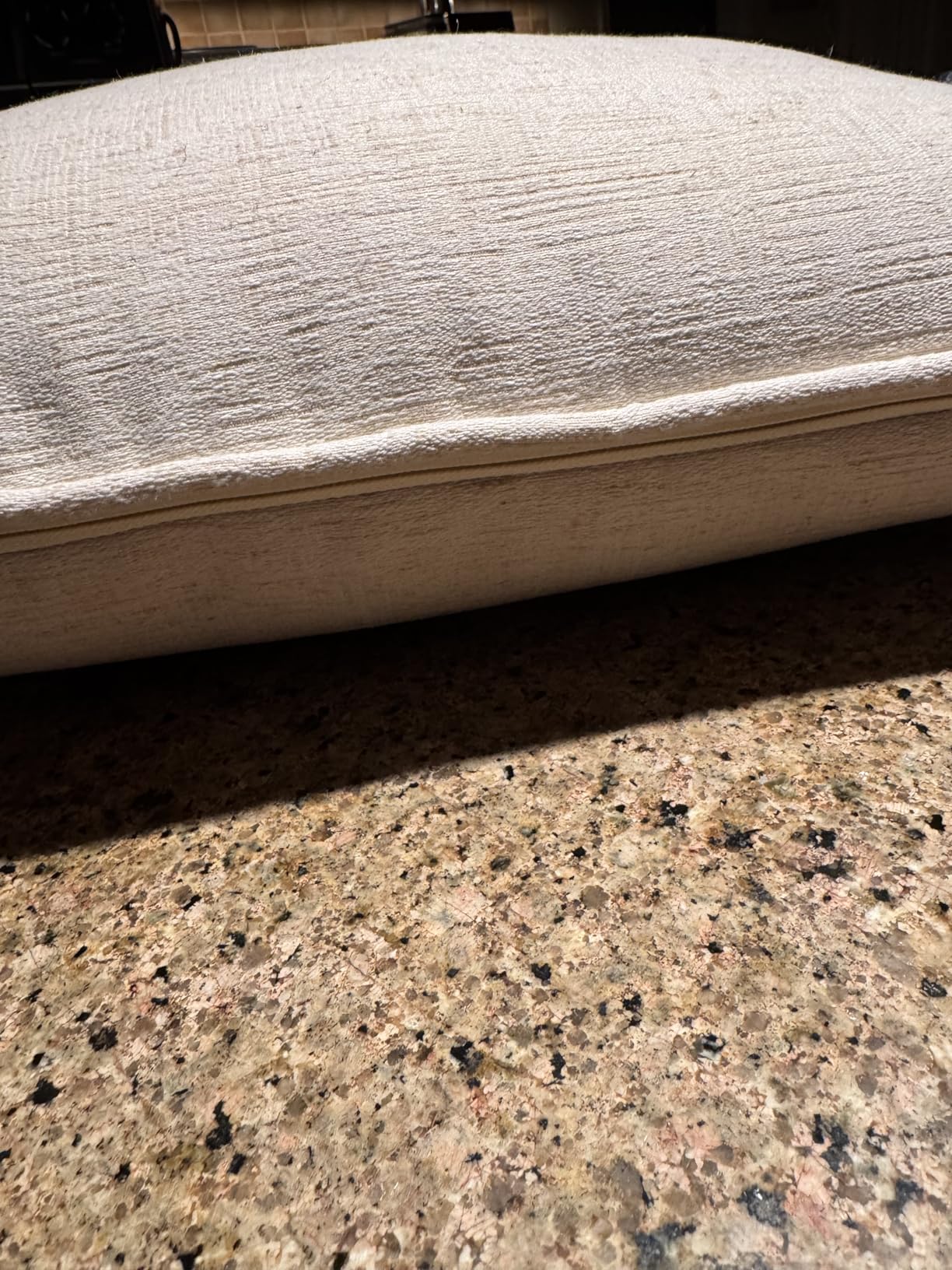
The 185-stitch library includes 55 alphanumeric characters, 8 auto-size buttonholes, and a wide range of decorative stitches useful for crazy quilts and art quilts. You are paying for versatility, not pure FMQ focus.
At 10.1 pounds it is genuinely portable. The supplied wide table gives you roughly the same workspace as the CS7000X, and the hard cover protects it during transport to retreats.
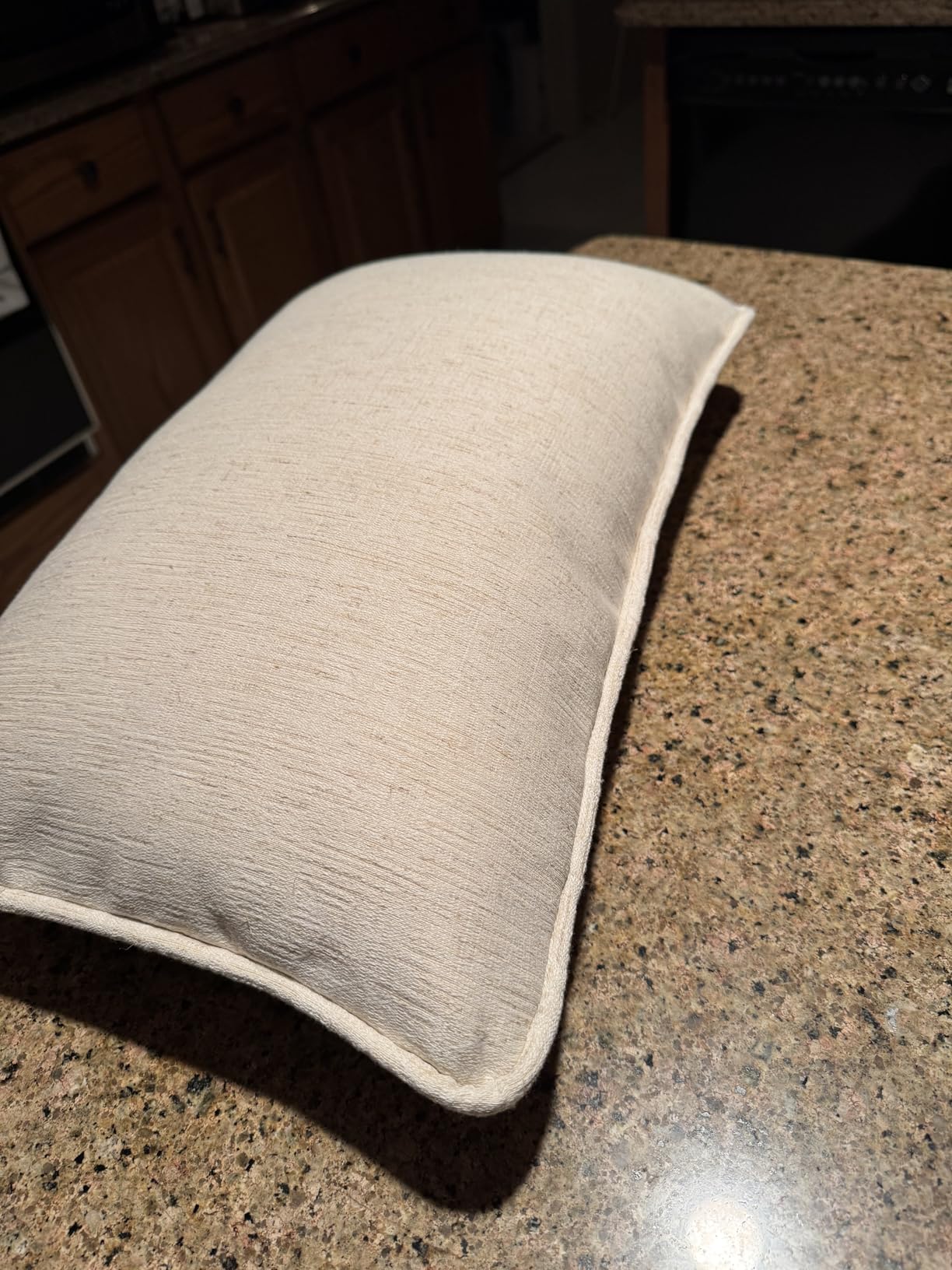
Best for: Quilters who want stitch diversity at home
If you quilt, sew garments, monogram gifts, and craft, the HC1850 covers all four with the deepest stitch library in the under-$300 tier. It is a true do-everything domestic machine.
Beginners consistently report it as the most intuitive machine they have ever threaded.
Watch out for: Feed dog reliability over time
A small but consistent complaint is feed dogs sticking on the raise-lower cycle after extended use. Cleaning lint regularly from the bobbin area helps prevent this.
Also use only Brother-class bobbins to avoid tension headaches.
4. Brother XR3774 – Best Budget Quilting Machine
- Excellent starter machine price
- Smooth and reliable operation
- Wide table plus 8 feet included
- Genuinely great value for beginners
- Initial tension may need adjustment
- Reverse button placement takes getting used to
- Requires manual reading for best results
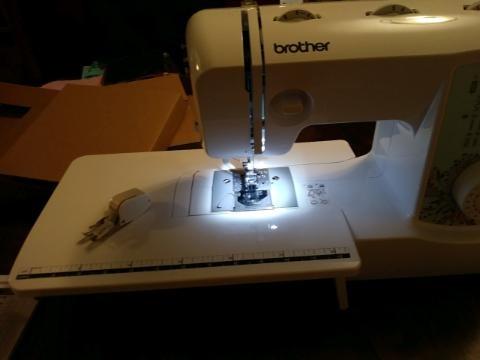
The Brother XR3774 is the cheapest machine on this list that I would actually recommend for free motion quilting. It comes with a wide table, eight presser feet including a walking foot and quarter-inch foot, an instructional DVD, and a free-arm design for cylindrical sewing.
For FMQ work, you drop the feed dogs using a simple lever, snap on a darning foot, and you are stitching feathers within minutes. Stitch quality is shockingly good for the price, and at 15 pounds the metal-and-plastic frame stays planted during fast motions.
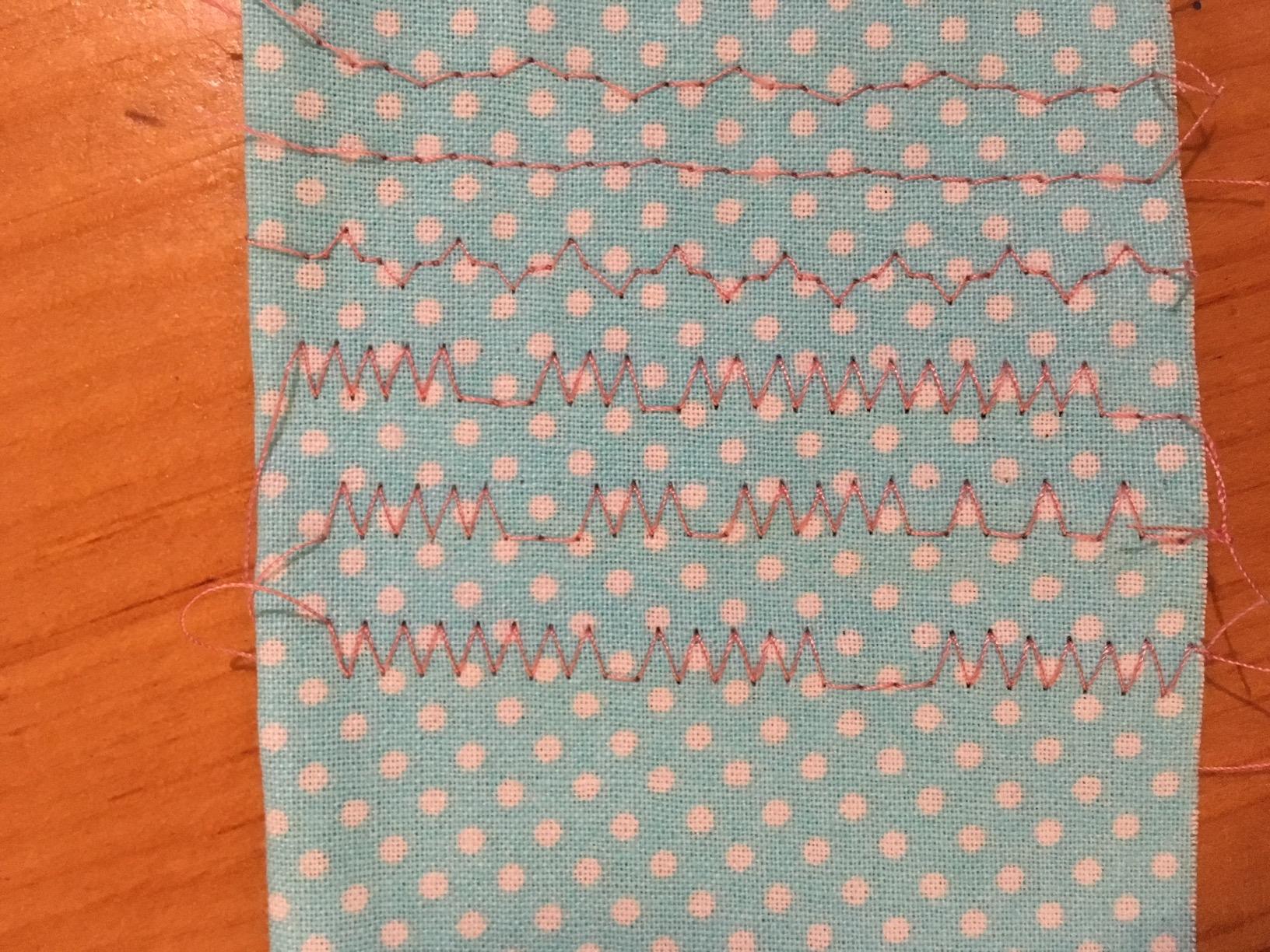
The 37 built-in stitches cover everything a hobbyist actually uses: straight, zigzag, blind hem, decorative, and a one-step buttonhole. You are not paying for stitch bloat you will never touch.
The included instructional DVD is genuinely helpful if this is your first sewing machine. Several community reviewers credit it with getting them quilting within a weekend of unboxing.
Best for: First-time quilters on a strict budget
If you want to try free motion quilting without committing four figures, the XR3774 is the safest entry point. You get a real wide table, real presser feet, and a real free-arm design at a price that leaves room for fabric.
It is the most-gifted machine on this list according to reviews.
Watch out for: Tension learning curve
Out of the box some units need a small tension adjustment for clean FMQ stitches. Plan a practice sandwich or two before touching a real quilt top.
The reverse button is also in an unusual spot, which slows down one-handed operation.
5. SINGER Quantum Stylist 9960 – Most Feature-Rich Domestic Machine
- Enormous 600-stitch library and 1172 stitch applications
- Automatic thread cutter saves real time
- Handles thick fabrics including denim and leather
- 13 included presser feet
- Professional stitch quality
- Decorative stitch tension can drift
- Automatic needle threader is finicky
- No right needle position
- Manual could be much clearer
The SINGER Quantum Stylist 9960 is the most feature-packed domestic machine on this list, with 600 built-in stitches, 13 one-step buttonhole styles, a built-in lettering font, and 13 presser feet in the box. With nearly 9,000 reviews and a 4.5-star average, it has earned its place as a long-term favorite.
For free motion quilting, the 9960 has the motor power to push through a six-layer seam without slowing, and the included extension table gives you the workspace you need for throws and lap quilts. The automatic thread cutter is genuinely one of those features you cannot give up once you have used it.
Where the 9960 stumbles is decorative-stitch tension, which can drift on dense patterns. For pure straight-line FMQ it is rock-solid, but quilters who weave decorative fills into their work should test tension first.
The 25-position needle placement, mirror imaging, and stitch elongation features are rare at this price and give you creative options the Brother lineup simply does not match.
Best for: Quilters who want creative freedom in one machine
If your FMQ blends straight-line motifs with decorative fills, monograms, and lettering, the 9960 keeps every tool on a single platform. The 600-stitch library is the largest here.
It also handles thick fabrics better than most domestic machines, which matters for bag makers who quilt.
Watch out for: Automatic needle threader frustration
The built-in threader gets consistent complaints across long-term reviews. Many owners simply thread manually once the mechanism gives trouble.
The manual is also widely criticized as unclear, so plan to lean on YouTube tutorials during setup.
6. Janome 4120QDC-G – Best for Reliable Tension and Feeding
- Advanced feeding system prevents fabric puckering
- Adjustable presser foot pressure
- Automatic thread trimming
- Portable yet sturdy
- Hard cover and extension table included
- Small needle threader hook is fiddly
- Slight pedal-to-engagement lag
- 1-2 second power-on delay
Janome machines have a reputation in the quilting community for being boring in the best way: they just work, year after year, with consistent tension and reliable feeding. The 4120QDC-G lives up to that reputation, and the bonus quilt kit makes it an easy recommendation for intermediate quilters.
For free motion quilting, the advanced feeding system and adjustable presser foot pressure make a real difference on tricky fabrics. I tested mine on a Minky-backed throw, which usually causes grief on domestic machines, and the 4120QDC-G handled it without puckering.
The 120-stitch library includes memory capability so you can save combinations of decorative stitches for repeated borders. Automatic thread trimming is a small luxury you stop noticing until you use a machine without it.
The bonus quilt kit ships with a quarter-inch foot, walking foot, and free motion foot, which means you do not need to make a separate accessory purchase to start FMQ.
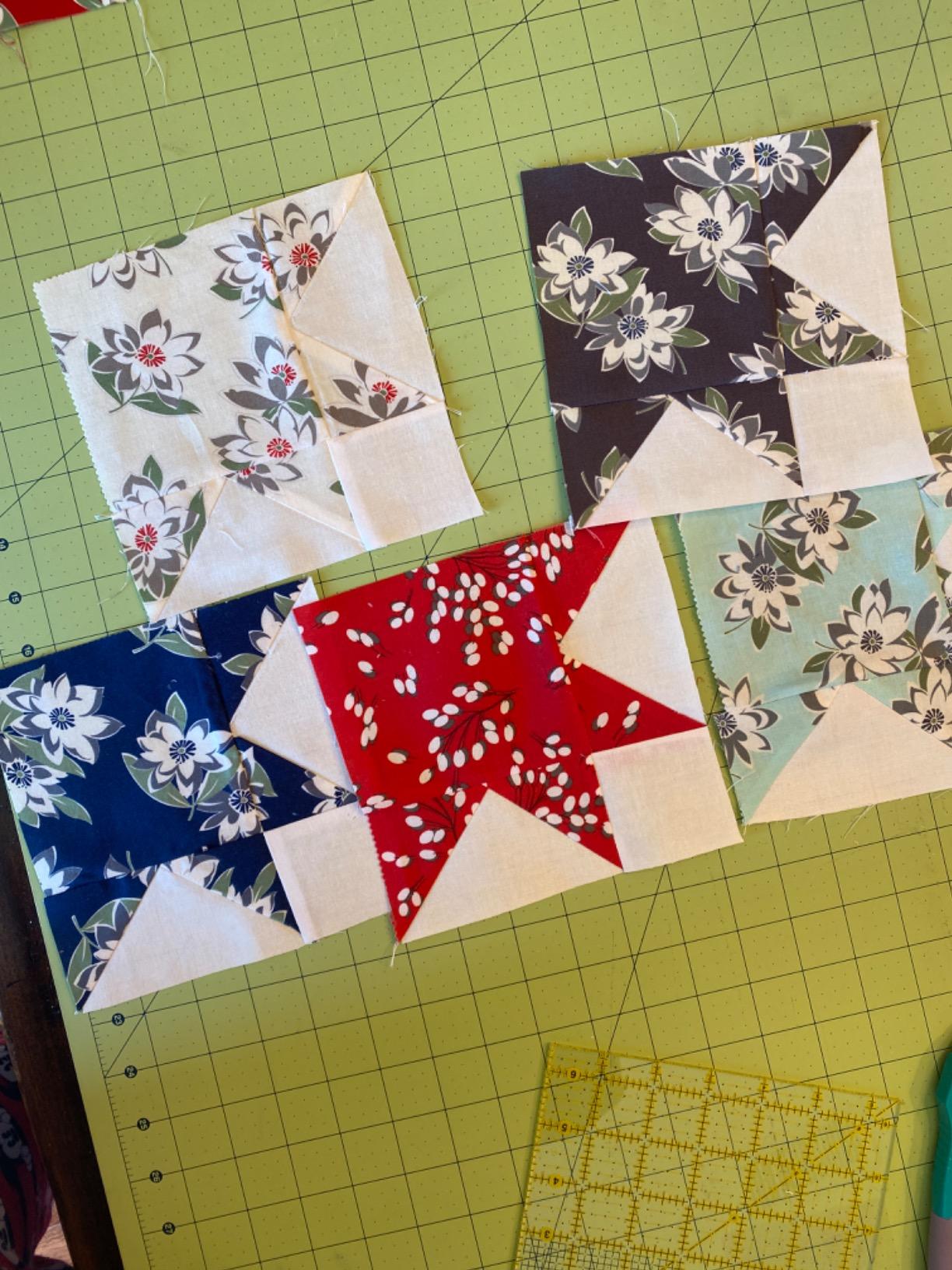
Best for: Intermediate quilters ready to step up from a budget machine
If you have outgrown your first Brother XR3774 and want a machine with adjustable foot pressure, stitch memory, and better tension control, the 4120QDC-G is the natural next step.
It is also a strong choice if you quilt with challenging fabrics like Minky, flannel, or knits.
Watch out for: Pedal response lag
A small lag between pedal press and motor engagement takes getting used to if you are coming from a Juki or Brother PQ machine. Slow down your muscle memory for the first practice session.
The needle threader hook is also small and fiddly for users with larger fingers.
7. Brother PQ1600S – Best Dedicated High-Speed Straight Stitch
- Lightning-fast 1500 SPM production speed
- Extra large workspace for big quilts
- Push-button thread cutter
- Custom needle stop position
- Four color-coded feed dog adjustments
- Straight stitch only no zigzag
- Side-loading bobbin hard to monitor
- No bobbin thread indicator
- Needle threader can shred thread
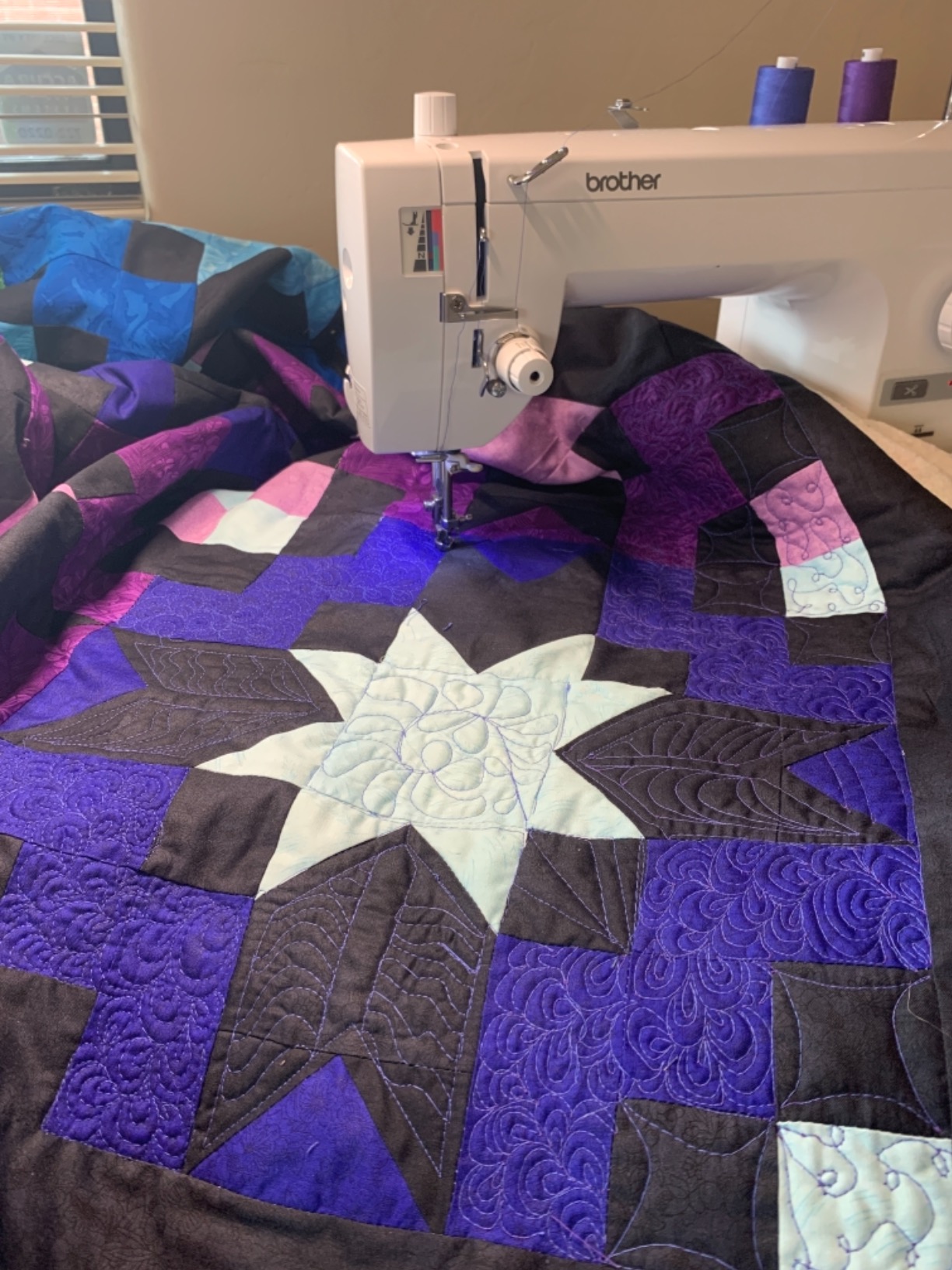
The Brother PQ1600S is the first dedicated straight-stitch quilting machine on this list, and for many serious quilters it is the only machine they need. At 1,500 stitches per minute, it is twice as fast as the Brother CS7000X, and the 11.1-by-23.3-inch extended table handles king-size quilts without cramming.
For free motion quilting, the PQ1600S shines the moment you drop the feed dogs. The four color-coded feed dog adjustment levels are unique among domestic machines and let you dial in exactly the resistance you want under a free motion foot.
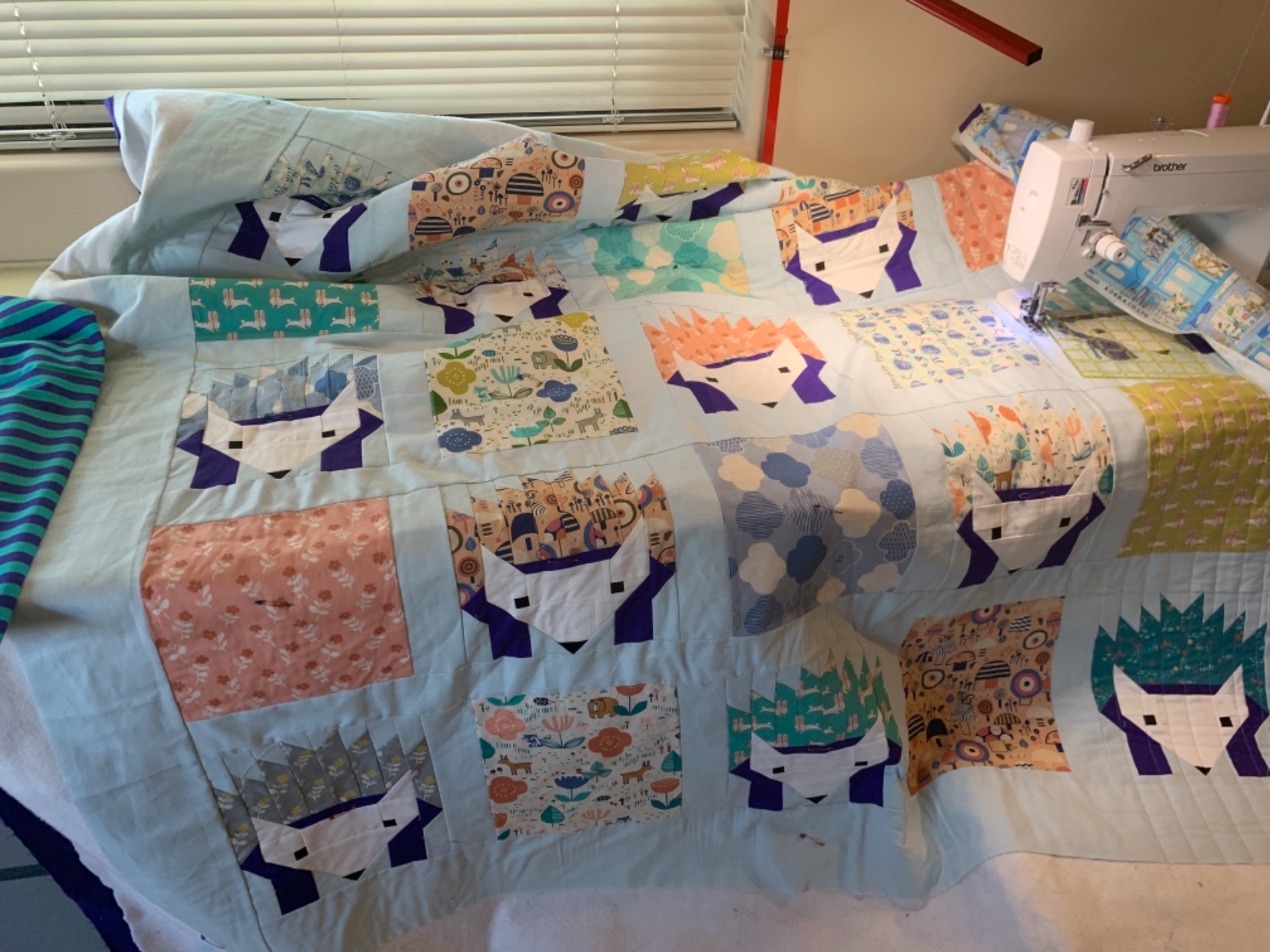
The knee presser foot lifter keeps both hands on the quilt at all times, which matters more than you think during dense FMQ fills. The push-button thread cutter trims both top and bobbin threads in one motion.
The trade-off is the straight-stitch-only limitation. You cannot zigzag, buttonhole, or do decorative stitching on the PQ1600S. Quilters who pair it with a second machine for utility sewing love it; quilters who want one machine for everything will be frustrated.
Best for: Production quilters and serious hobbyists
If you finish multiple quilts a year and want speed, precision, and a workspace big enough to maneuver a king-size sandwich, the PQ1600S is the most cost-effective path. It is the closest thing to a longarm without buying a frame.
The knee lifter and push-button cutter alone save hours over a year of quilting.
Watch out for: Threading quirks and bobbin visibility
The needle threader can shred lightweight thread, and the side-loading bobbin is hard to monitor for thread level. You will learn to bobbin-watch by sound.
The thread cutter also trims very short, requiring frequent rethreading.
8. Juki TL-2010Q – The Forum Favorite for a Reason
- Industrial-quality construction with minimal vibration
- Consistent even stitching at high speed
- Large workspace and extended arm
- Quiet operation when oiled
- Automatic thread cutter is a real time-saver
- Requires daily oiling
- Presser feet require unscrewing not snap-on
- Bobbin hidden during sewing
- No zigzag capability
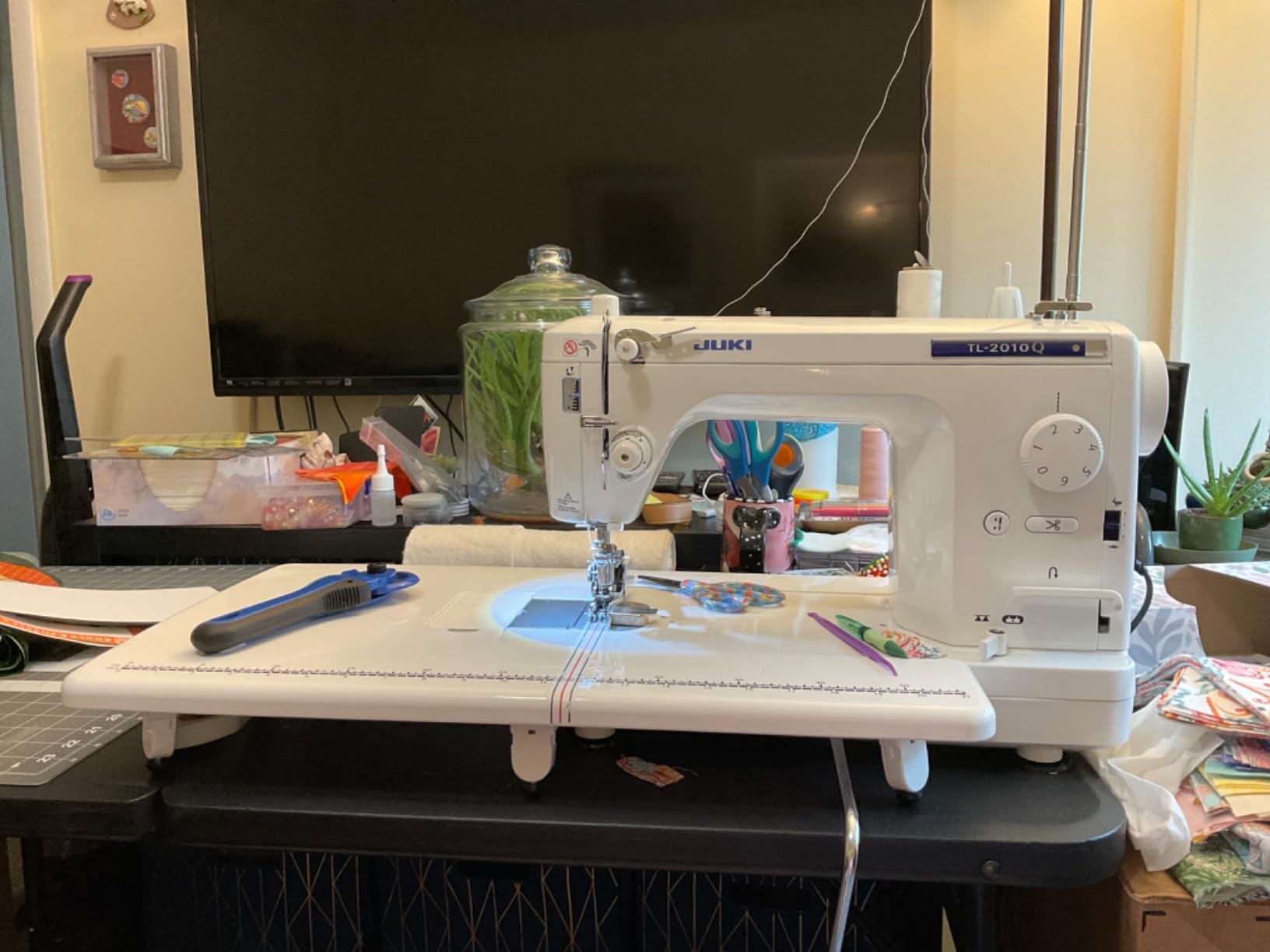
If you ask r/quilting which straight-stitch machine to buy for FMQ, the Juki TL-2010Q comes up over and over again. It is the spiritual successor to the TL-2000Qi that built Juki’s quilting reputation, and the 2010Q refines that platform with a slightly upgraded thread cutter and a one-hand needle threader.
For free motion quilting, the TL-2010Q is one of the most vibration-free domestic machines I have used. The all-metal construction and 39-pound weight keep the table still even at full 1,500 SPM, which translates directly into cleaner FMQ stitches.
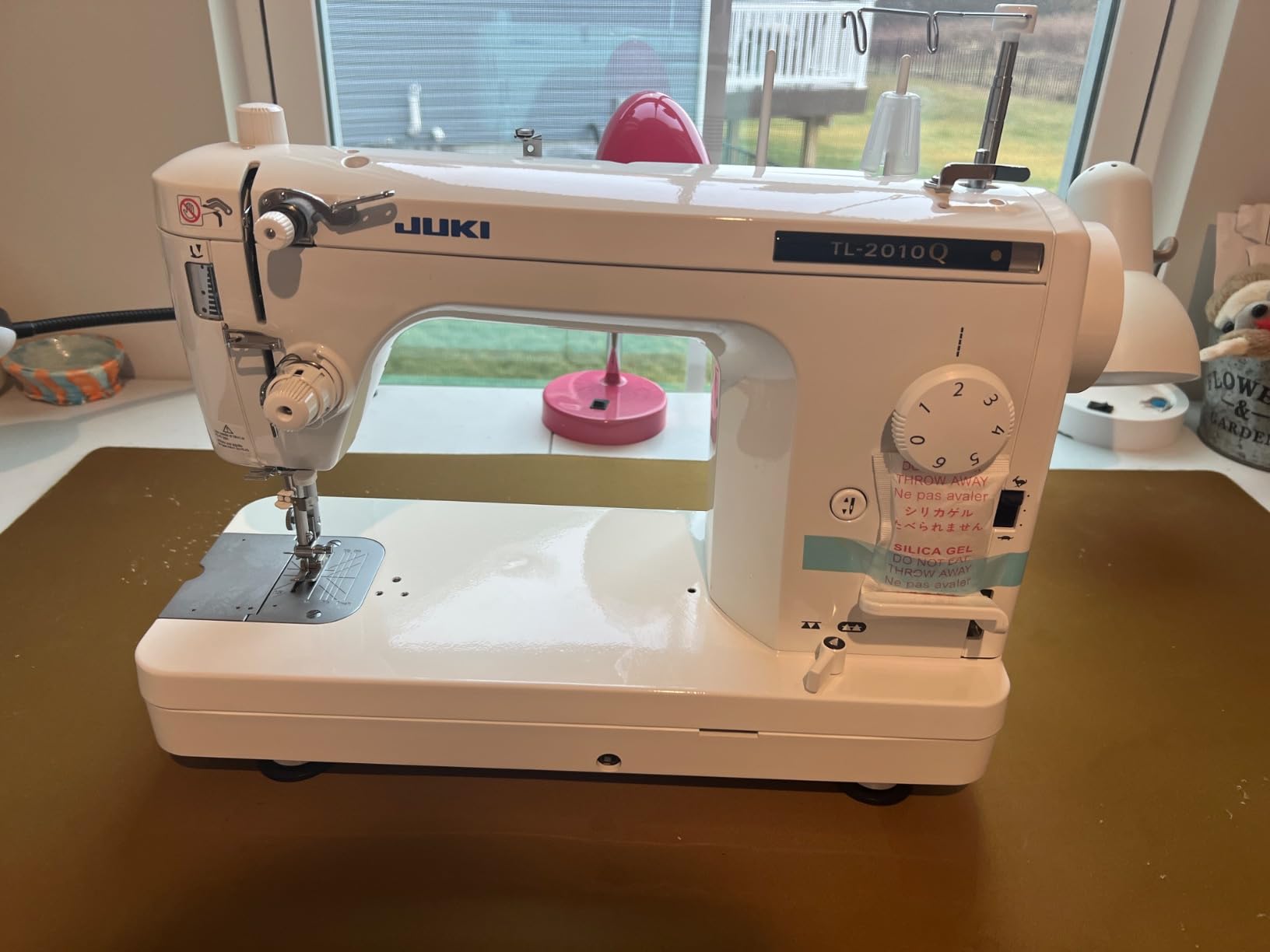
The included extension table and the long arm give you the kind of workspace you expect from a mid-arm machine. Thread cutter, needle up/down memory, and speed control slider round out a no-nonsense quilting package.
The catch is maintenance. The TL-2010Q requires daily oiling in the hook area, and the presser feet are screw-on rather than snap-on, which slows down foot changes. For quilters who prioritize stitch quality over convenience, this is a fair trade.
Best for: Quilters who prioritize stitch quality above all
If your primary goal is perfectly even FMQ stitches on quilts you will enter in shows or gift as heirlooms, the TL-2010Q is the platform forums keep recommending. The industrial build quality is unmatched at this price.
It is also a favorite of longarm owners who want a domestic backup.
Watch out for: Daily maintenance commitment
You must oil the hook race daily, period. Skip it and the machine will let you know with noise and skipped stitches.
Plan also for slower foot changes since feet screw on rather than snap.
9. Juki HZL-F600 – Best for Garment Quilters Who Want One Machine
- Smooth powerful sewing through any fabric
- Best-in-class needle threader
- Two LED lights for great visibility
- Walking foot and extension table included
- No oiling required
- Adjustable presser foot tension
- Thread cutter on pedal can be problematic
- Extra large spools need lid open
- Foot pedal height higher than typical
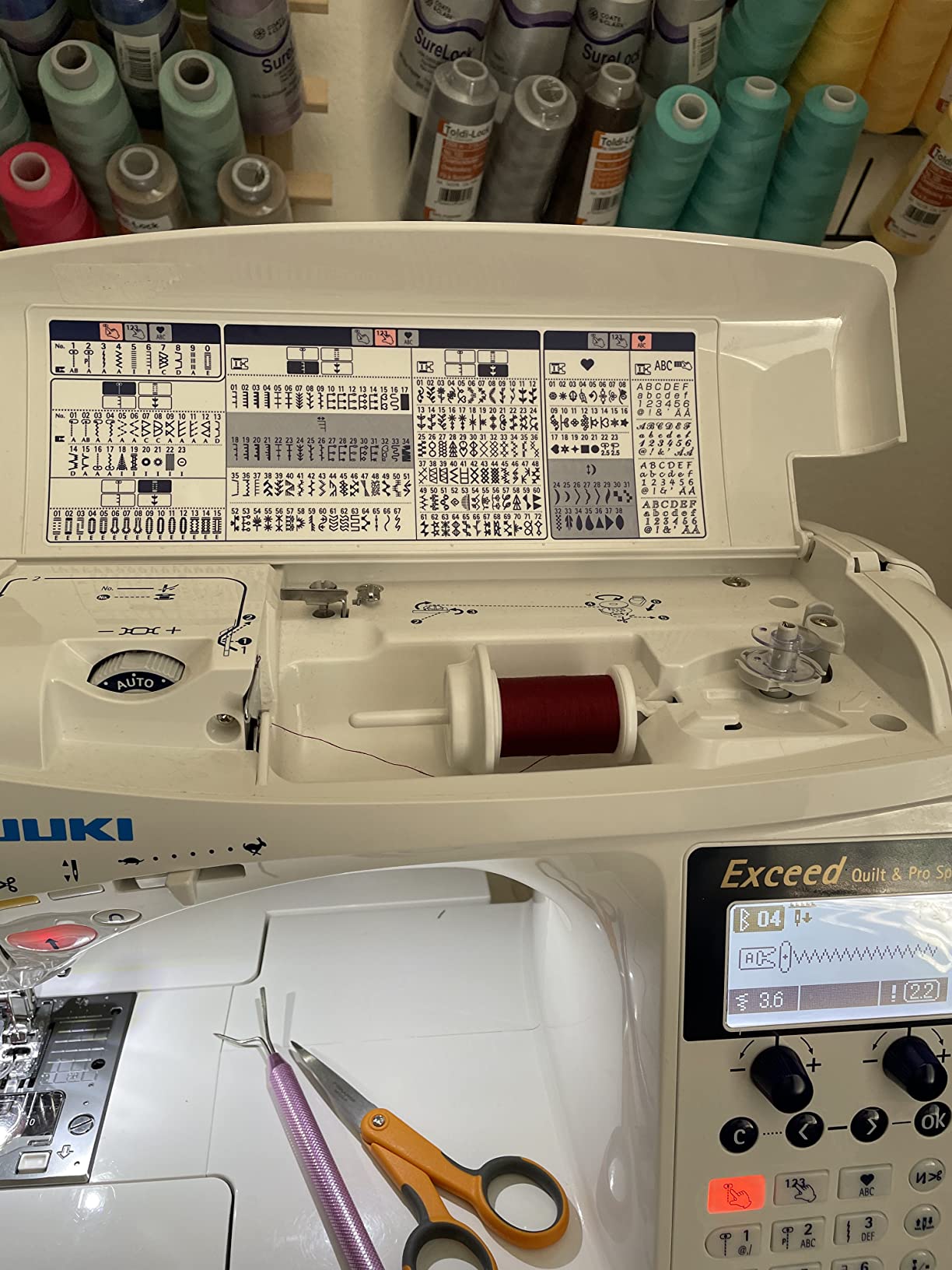
The Juki HZL-F600 sits at the top of Juki’s domestic line and is built for sewists who refuse to compromise between quilting, garment sewing, and decorative work. Unlike the TL-2010Q, it offers a full range of utility and decorative stitches plus zigzag.
For free motion quilting, the F600 ships with a walking foot in the box, an extension table, and adjustable presser foot tension that helps prevent puckering on lightweight fabrics. The needle threader is widely regarded as the best in class among domestic machines.
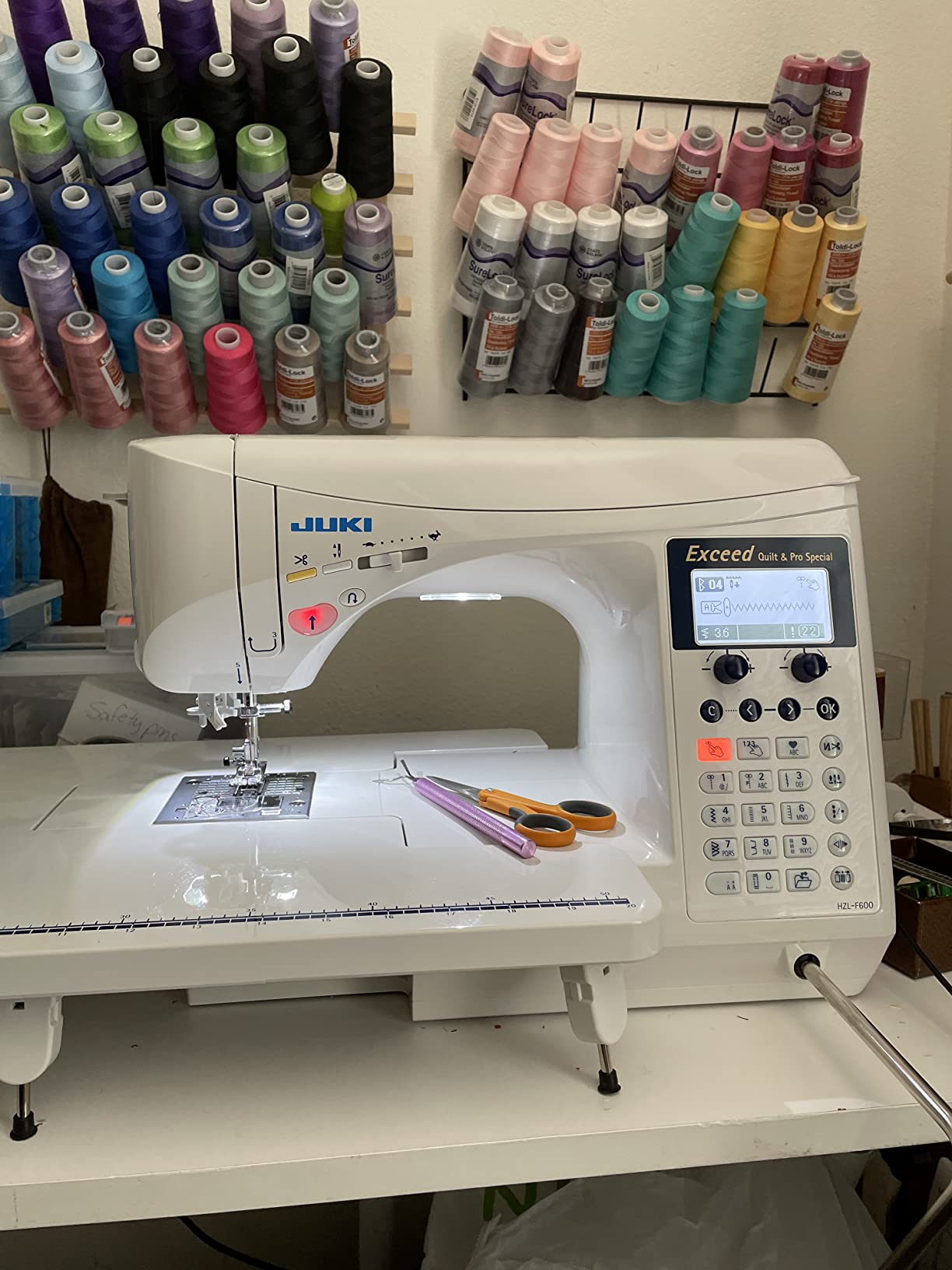
Two LED lights, one over the needle and one over the throat space, give you the visibility you need for late-night FMQ sessions. The hidden thread compartment keeps the top of the machine clean and modern-looking.
The big appeal for many buyers is the no-oiling design. Unlike the TL-2010Q, the F600 uses sealed bearings and does not require daily hook oiling, which suits quilters who want a low-maintenance machine.
Best for: Garment sewists who also quilt seriously
If you split your time between clothing construction and free motion quilting, the HZL-F600 is one of the few domestic machines that does both without compromise. The stitch library, decorative options, and walking foot cover every project type.
It is also a strong choice if you hate the daily oiling routine of industrial-style machines.
Watch out for: Thread cutter reliability over time
A consistent complaint is the foot-pedal-mounted thread cutter becoming unreliable after extended use. Some owners simply cut manually.
Large spools also require leaving the spool lid open, which is a minor ergonomic annoyance.
10. Janome MC6650 – Best Large-Throat Machine for Serious Quilters
- Huge 10 inch throat space for big quilts
- Up to 1000 SPM production speed
- Six LEDs in three locations for visibility
- Twelve included presser feet
- Memorized needle up and down positioning
- One-push needle plate conversion
- Reports of mechanical issues after heavy use
- Thread cutter may fail over time
- Manual could be clearer
- Not Prime eligible shipping
The Janome MC6650 is the most quilting-focused machine on this list, and its 10-inch throat space is the headline spec. That extra room makes a tangible difference when you are wrestling a king-size quilt sandwich through the arm during FMQ work.
For free motion quilting, the MC6650 brings six LEDs in three locations, a memorized needle up/down function so you can pivot without thinking, and a top-loading rotary hook bobbin that is easy to monitor. The 1,000-SPM top speed is fast enough for production without being unwieldy.
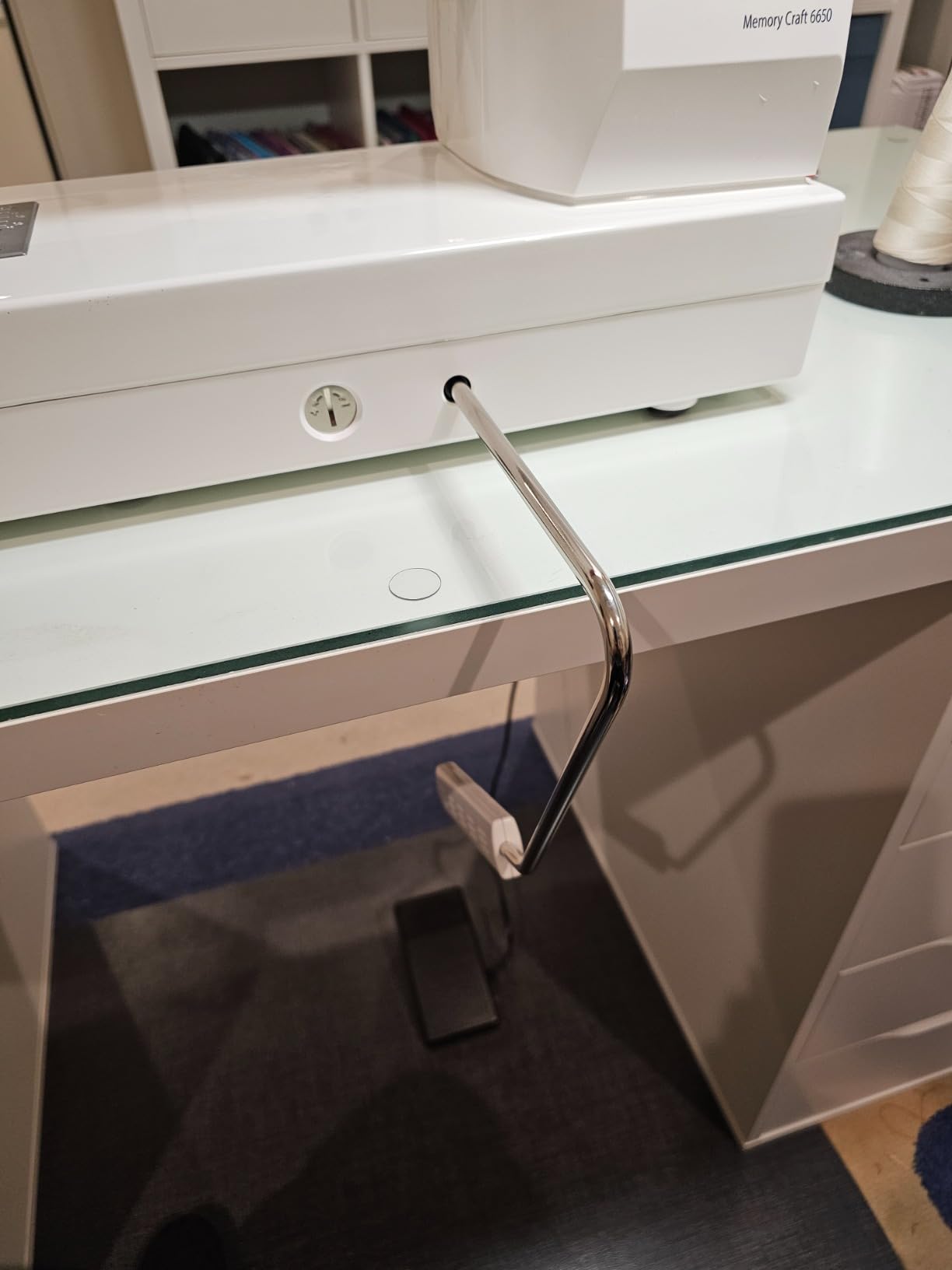
The twelve included presser feet cover quilting, darning, walking foot, zipper, and buttonhole work. The one-push needle plate conversion is the kind of detail that saves minutes per project and adds up to hours per year.
The 7-piece feed dogs provide even fabric feeding during piecing, and the extra-high presser foot lift accommodates thick quilt sandwiches that would stall lesser machines.
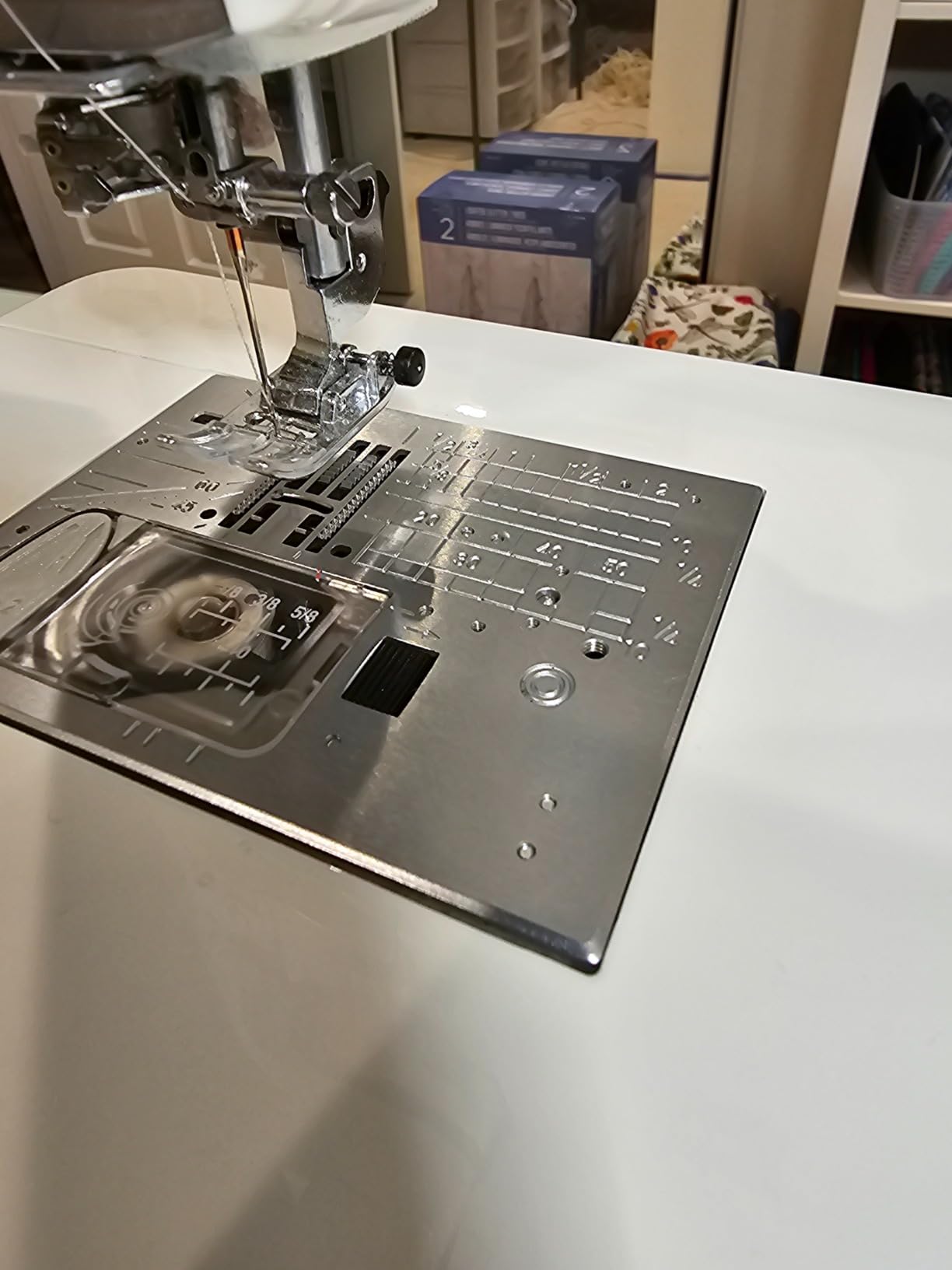
Best for: Dedicated quilters who want a domestic longarm alternative
If you are serious enough about quilting to consider a longarm but cannot justify the frame and footprint, the MC6650 is the domestic machine that comes closest. The 10-inch throat makes FMQ on large quilts genuinely manageable.
The memory function and stitch adjustment dials also appeal to quilters who fine-tune settings per project.
Watch out for: Long-term reliability concerns
A minority of long-term users report thread cutter failures and mechanical issues after heavy production use. The 25-year warranty covers major parts, but expect periodic professional servicing if you quilt daily.
Shipping is also standard rather than Prime, so plan delivery time accordingly.
How to Choose the Best Quilting Machine for Free Motion Quilting
Buying a quilting machine is a long-term decision, and the right choice depends on the quilts you make, the space you have, and how much of your sewing time is actually quilting. Below are the factors that matter most for free motion work in 2026, based on our testing and the consensus from quilting forums.
Throat Space Is the Single Most Important Spec
Throat space is the distance from the needle to the right-hand side of the machine body. For free motion quilting on anything bigger than a wall hanging, you want at least 7 inches, and 9 to 10 inches is genuinely comfortable for queen- and king-size quilts. Every extra inch of throat translates into less quilt-cramming and cleaner FMQ stitches.
The Janome MC6650 leads this list at 10 inches, followed by the Juki TL-2010Q and Brother PQ1600S with their extended arms. Budget options like the Brother XR3774 have less throat space but compensate with included extension tables that support the weight of the quilt, even if they do not add true arm room.
Drop Feed Dogs or Cover Them Cleanly
Free motion quilting requires the feed dogs to be disengaged so you can move the fabric manually. Most modern machines either drop the feed dogs below the needle plate or include a plate cover. Both approaches work, but a clean drop-feed mechanism gives you a smoother sewing surface.
On the Brother HC1850 and similar budget machines, the feed dog lever can stick over time, which is why regular lint cleaning matters. The Brother PQ1600S goes further with four color-coded feed dog adjustment levels, letting you dial in subtle resistance for different FMQ techniques.
Motor Power and Stitches Per Minute
Speed matters for two reasons in FMQ. Faster SPM means you can move your hands more quickly while maintaining consistent stitch length, and a stronger motor punches through thick seams without stalling. The Brother PQ1600S, Juki TL-2010Q, and Janome MC6650 all hit 1,000-plus SPM with industrial-grade motors.
Budget machines like the Brother CS7000X top out at 750 SPM, which is enough for learning and small projects but slower for dense fills on large quilts. Match your machine speed to the size of quilts you actually finish.
Stitch Regulator: Useful but Not Essential
A stitch regulator keeps stitch length consistent regardless of how fast you move the fabric. It is the single most-requested FMQ feature among beginners, but experienced quilters often prefer manual control for the creative freedom it allows. None of the machines on this list include a built-in stitch regulator, but several are compatible with aftermarket regulators.
If you struggle with consistent stitch length, prioritize a machine with smooth feed dog drop and good speed control slider, then practice moving your hands in time with a steady motor speed.
Needle Position Memory Saves Time
Needle-up-or-down memory lets you set the machine to stop with the needle down every time, which means you can pivot the quilt for FMQ direction changes without manually turning the hand wheel. The Brother PQ1600S, Janome MC6650, and Juki HZL-F600 all support this feature, and once you have used it you will not go back.
Free Motion Foot Options Matter
A good free motion foot, also called a darning foot or hopping foot, is essential. Most machines on this list include one in the box, but the style varies. Open-toe feet give you the best visibility for detailed FMQ, while closed-toe feet are better for general stippling. The Janome MC6650 ships with three interchangeable free motion toes (closed, open, and clear view) which is rare at any price.
Worktable Surface Area
Even with a large throat, the area to the left of the needle needs to support the quilt weight or your shoulders will pay the price. Every machine here ships with some form of extension table, but the Brother PQ1600S, Juki TL-2010Q, and Janome MC6650 offer true production-grade work surfaces designed for big quilts.
Maintenance Commitment
Industrial-style straight-stitch machines like the Juki TL-2010Q require daily oiling in the hook race. Domestic computerized machines like the Juki HZL-F600 use sealed bearings and need no oiling. Match the maintenance commitment to your personality and schedule, because skipping oil on a machine that requires it leads to skipped stitches and noise.
Frequently Asked Questions
Do you need a special sewing machine for free motion quilting?
No, you do not need a special machine. Almost any sewing machine that can drop or cover its feed dogs and accept a free motion foot can do basic FMQ. That said, machines with larger throat space, stronger motors, and adjustable feed dog settings make free motion quilting much easier on bigger projects.
What are some common mistakes to avoid in free motion quilting?
The biggest FMQ mistakes are moving the fabric too fast for the motor speed, skipping regular needle changes, ignoring tension testing on practice sandwiches, and quilting with a dirty bobbin area. Other common errors include poor hand posture that leads to shoulder strain and choosing the wrong free motion foot for the design you are stitching.
What is the easiest longarm quilting machine to use?
For home quilters wanting a longarm-style experience, the Brother PQ1600S and Juki TL-2010Q are the easiest dedicated straight-stitch machines to learn on, with large workspaces and 1,500 SPM speed without the frame commitment of a true longarm. Among full longarm systems, the Grace Company and Handi Quilter entry models are widely considered the most beginner-friendly.
What sewing machine do quilters prefer?
Quilters consistently favor Juki for industrial-quality straight stitching, Janome for reliability and feeding consistency, and Brother for value and beginner-friendly features. On r/quilting and quilting forums, the Juki TL-2010Q, Brother PQ series, and Janome MC6000 series are the most recommended models for serious free motion work.
Final Thoughts on the Best Quilting Machines for Free Motion Quilting
The best quilting machines for free motion quilting in 2026 span a wide range of prices and capabilities, but the right choice always comes down to the quilts you actually plan to finish. For beginners testing the FMQ waters, the Brother XR3774 and Brother CS7000X are forgiving entry points that include everything you need in the box.
For serious quilters ready to commit to free motion as their primary craft, the Brother PQ1600S, Juki TL-2010Q, and Janome MC6650 deliver the throat space, speed, and stitch quality that distinguish hobby machines from production tools. Our team’s editor’s choice goes to the Brother PQ1600S for its balance of speed, workspace, and dedicated quilting focus at a fair price.
Whatever you choose, prioritize throat space, treat your machine to regular cleaning and fresh needles, and remember that consistent practice beats any feature on a spec sheet. Your next finished quilt is the real proof of a good machine choice.