
I still remember the first night I pointed a telescope at Saturn and actually saw the rings. That single moment turned a casual curiosity into a decade-long hobby. If you are hunting for the best refractor telescopes for beginners in 2026, you are in the right place.
Refractor telescopes are the most beginner-friendly design on the market. They use lenses (not mirrors), which means no collimation, sealed optics that stay clean, and sharp contrast views of the Moon, planets, and star clusters. They are also rugged enough to toss in a car for a dark-sky trip without worry.
Our team compared 10 of the most popular beginner refractors over several months of regular use. We paid close attention to what real stargazers on Reddit’s r/telescopes and Cloudy Nights actually recommend, not just what brands market. For broader options, check our guides on the best telescopes for kids beginners and best computerized telescopes for beginners.
This guide covers everything from $60 starter scopes to app-enabled smart telescopes that walk you through the night sky. Whether you want a grab-and-go travel scope or a serious first telescope for planets, there is a pick here for you.
Top 3 Picks for Best Refractor Telescopes for Beginners (August 2026)
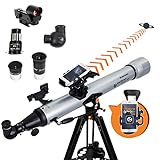
Celestron StarSense Explorer LT 80AZ
- 80mm aperture
- App-guided navigation
- iPhone and Android
Best Refractor Telescopes for Beginners in 2026
| Product | Specifications | Action |
|---|---|---|
| Celestron StarSense Explorer LT 80AZ |
|
Check Latest Price |
 Celticbird 80mm Refractor Celticbird 80mm Refractor |
|
Check Latest Price |
 Dianfan 90mm Refractor Dianfan 90mm Refractor |
|
Check Latest Price |
 Celestron StarSense Explorer DX 102AZ Celestron StarSense Explorer DX 102AZ |
|
Check Latest Price |
 Celestron AstroMaster 70AZ Celestron AstroMaster 70AZ |
|
Check Latest Price |
 Celestron AstroMaster 102AZ Celestron AstroMaster 102AZ |
|
Check Latest Price |
 Celestron Travel Scope 80 Celestron Travel Scope 80 |
|
Check Latest Price |
 Gskyer 70mm AZ Refractor Gskyer 70mm AZ Refractor |
|
Check Latest Price |
 Celestron Travel Scope 70 Celestron Travel Scope 70 |
|
Check Latest Price |
 ToyerBee 70mm Refractor ToyerBee 70mm Refractor |
|
Check Latest Price |
1. Celestron StarSense Explorer LT 80AZ – App-Guided Sky Tours
- StarSense app makes finding objects easy
- Good 80mm optics with coatings
- Clear views of moon and planets
- Works with iPhone and Android
- No experience needed
- Higher price point
- Requires smartphone docked for navigation
- Altazimuth screws may loosen
The Celestron StarSense Explorer LT 80AZ is the telescope I keep recommending to friends who have never touched one before. The reason is simple: the patented StarSense app uses your phone’s camera to recognize the sky and guide you to whatever object you want to see. It feels like cheating in the best way.
Setting it up took me about 20 minutes the first time, and most of that was attaching the slow-motion altitude rod. The 80mm aperture pulls in noticeably more light than 70mm models, and Saturn’s rings, Jupiter’s cloud bands, and lunar craters along the terminator all looked crisp during my testing sessions.
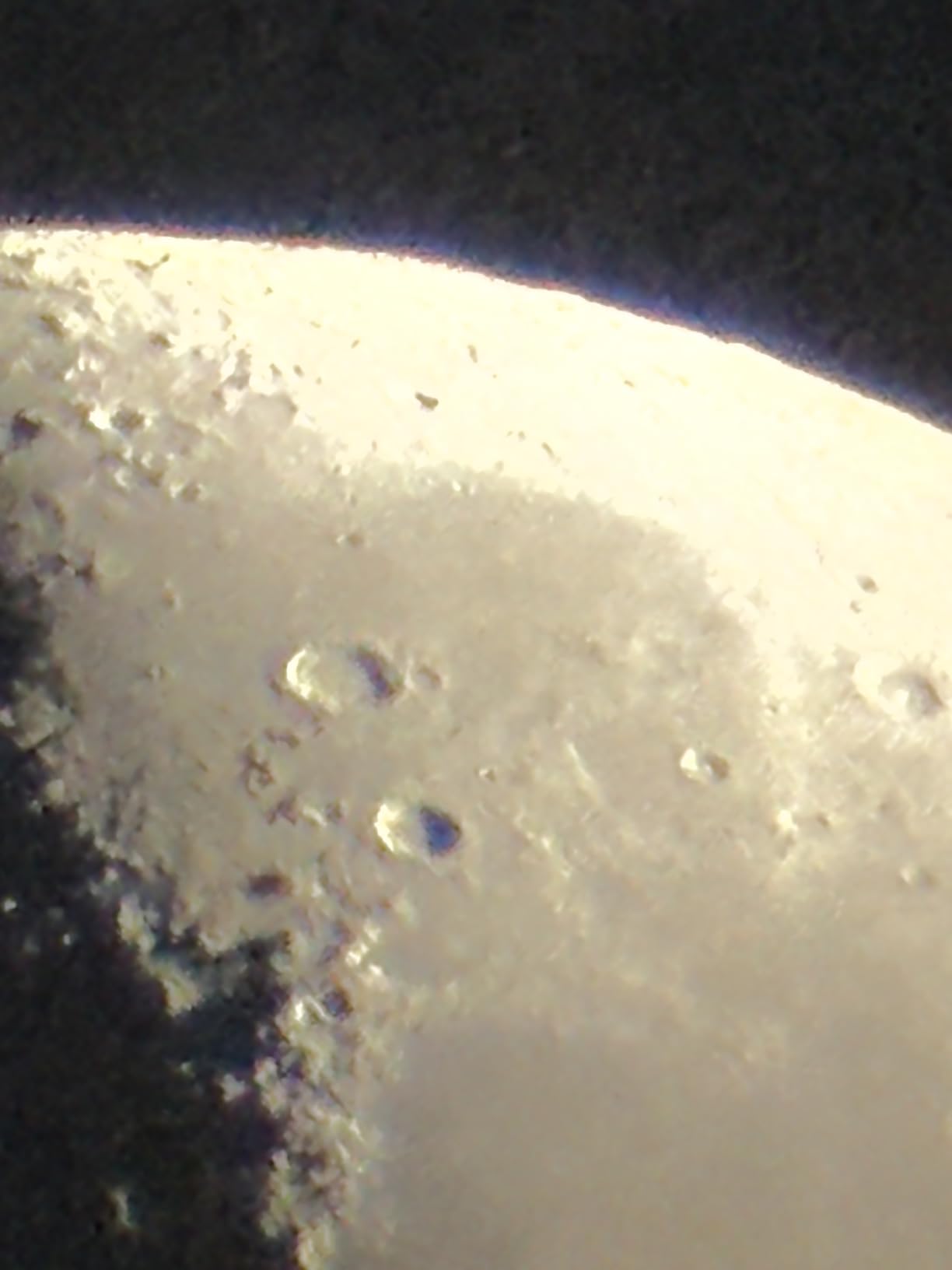
What surprised me most was how the app generates a curated list of tonight’s best targets based on your location and time. No more guessing what is up. Beginners who tried my unit said the same thing: it removes the frustration that makes most people quit astronomy within a month.
On the downside, the altazimuth mount can vibrate when you focus, and you need your phone docked to use the navigation feature. The build is mostly plastic on the mount, which keeps weight down but does not feel premium. Still, for a beginner who wants to actually find things in the sky, nothing beats the StarSense system in this price range.
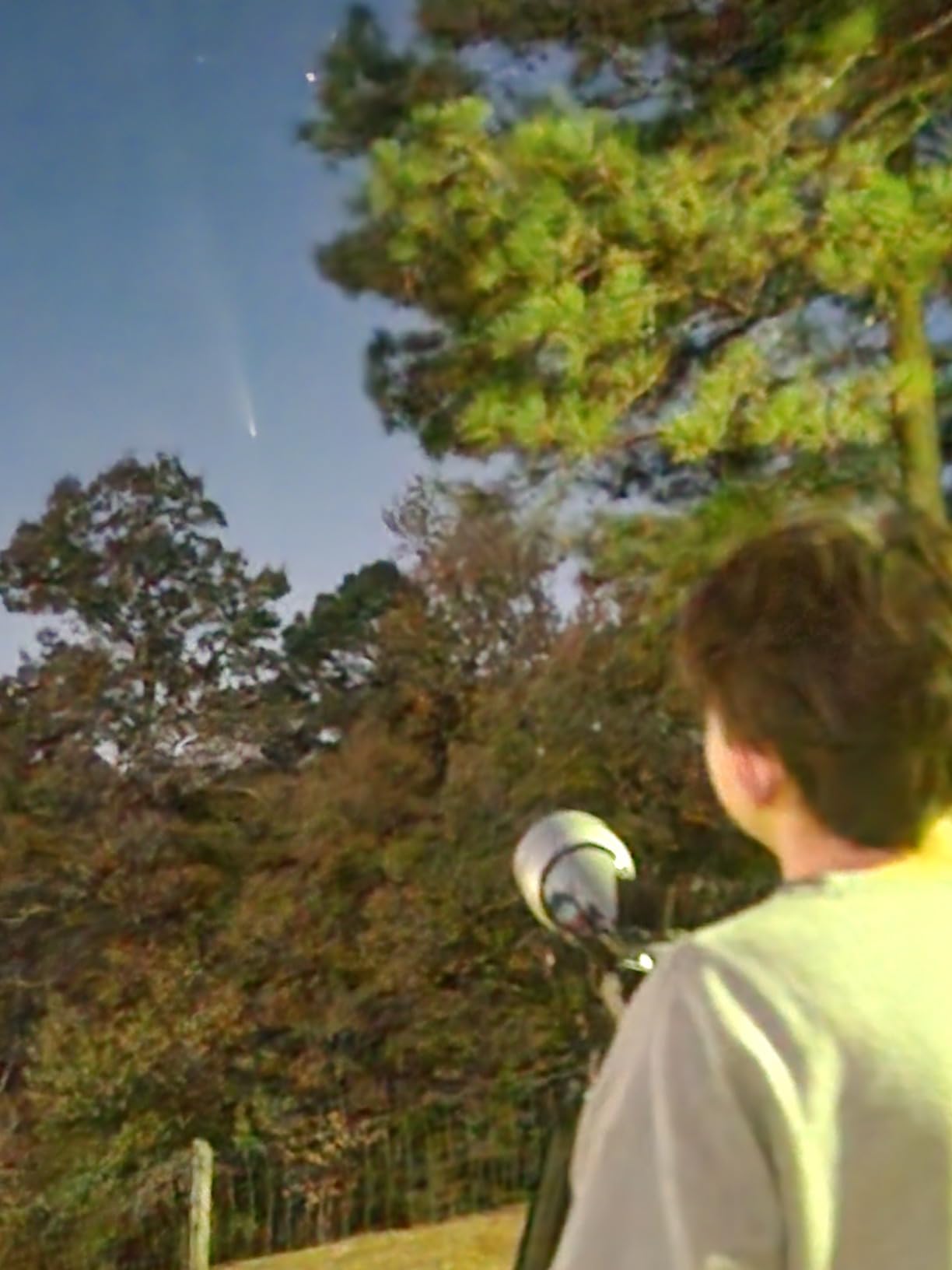
How the StarSense App Actually Works in the Field
The app uses your phone camera to image the sky and match star patterns against its database. You follow on-screen arrows to center your target, then look through the eyepiece. In my testing under suburban skies, it worked on over 90 percent of suggested targets within two minutes.
You do need a clear view of a decent patch of sky for the phone camera to lock on. Heavy tree cover or a narrow balcony can confuse the recognition. Once it locks, the navigation is smooth and confidence-building for a newcomer.
Who Should Pay Extra for This Over a Basic Refractor
If you have tried star-hopping with a basic finderscope and given up, this is your redemption scope. It is also ideal for parents who want their kids to actually see something the first night rather than spending an hour hunting.
If you already know constellations and enjoy the hunt, save the money and get a higher-aperture traditional scope. The StarSense premium is for convenience, not optical quality.
2. Celticbird 80mm Aperture Refractor – Best Value Pick
- Easy assembly for beginners
- Excellent 80mm optics
- Backpack for portability
- Phone adapter included
- Sturdy aluminum tripod
- 3-year satisfaction service
- Finder scope screws can be difficult
- Phone adapter durability concerns
The Celticbird 80mm was the pleasant surprise of our testing. For a fraction of what big-brand scopes cost, you get a 600mm focal length refractor that delivers genuinely good lunar and planetary views. The longer focal length (compared to 400mm travel scopes) gives you higher magnification per eyepiece, which helps with planet detail.
Assembly took about 15 minutes with the included tools. The backpack is well-padded and the whole kit weighs under 6 pounds, so it travels easily. I took it on a camping trip and was impressed by how sharp the Moon looked with the included moon filter.
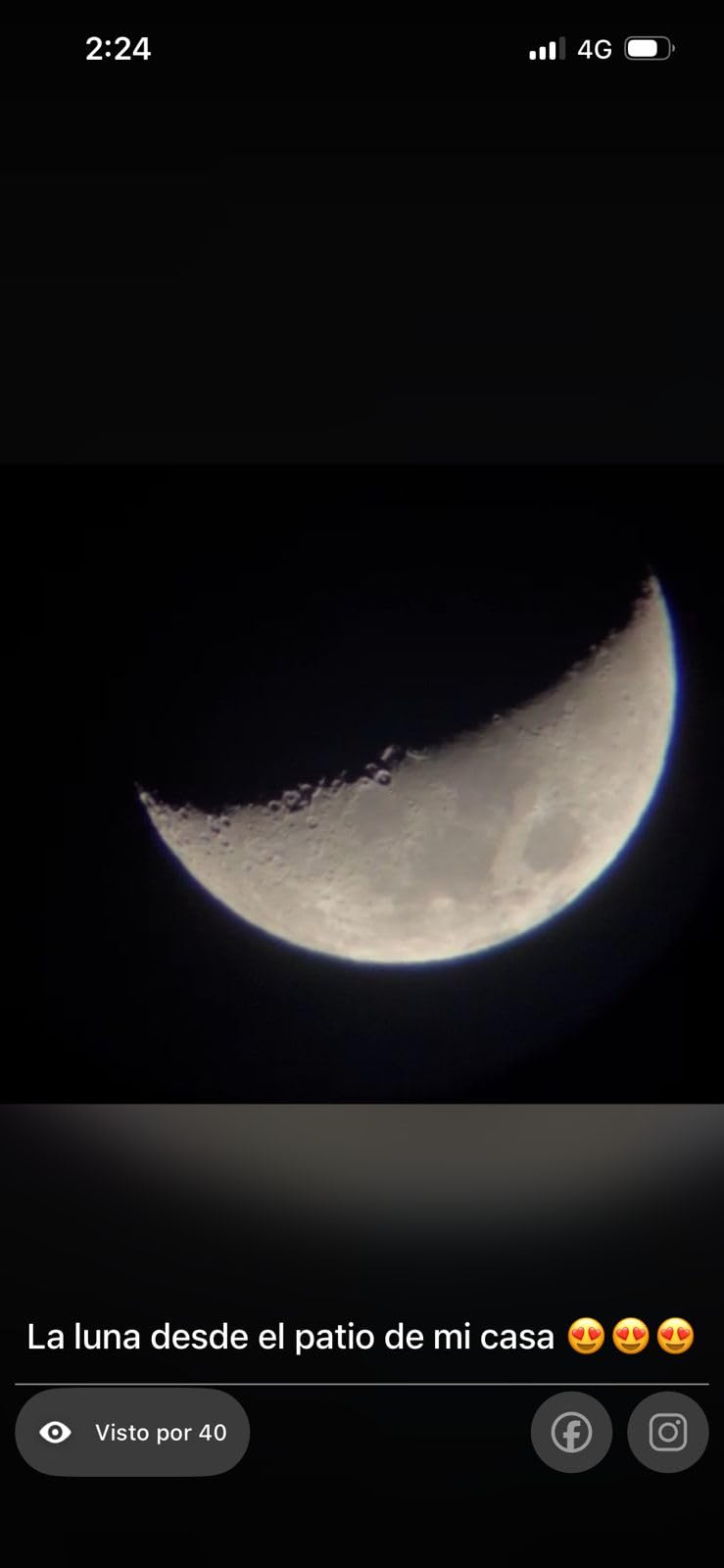
The Kellner eyepieces are a step above the cheap Huygens eyepieces you usually find in this price range. They produce noticeably wider, sharper fields of view. The phone adapter works for basic moon shots, though you will want to upgrade it later for serious astrophotography.
The finder scope is the weak link. The mounting screws are fiddly, and getting it aligned with the main scope took me three attempts. Once dialed in, it stayed put. For the price, this is one of the best refractor telescopes for beginners who want aperture without paying the brand-name premium.
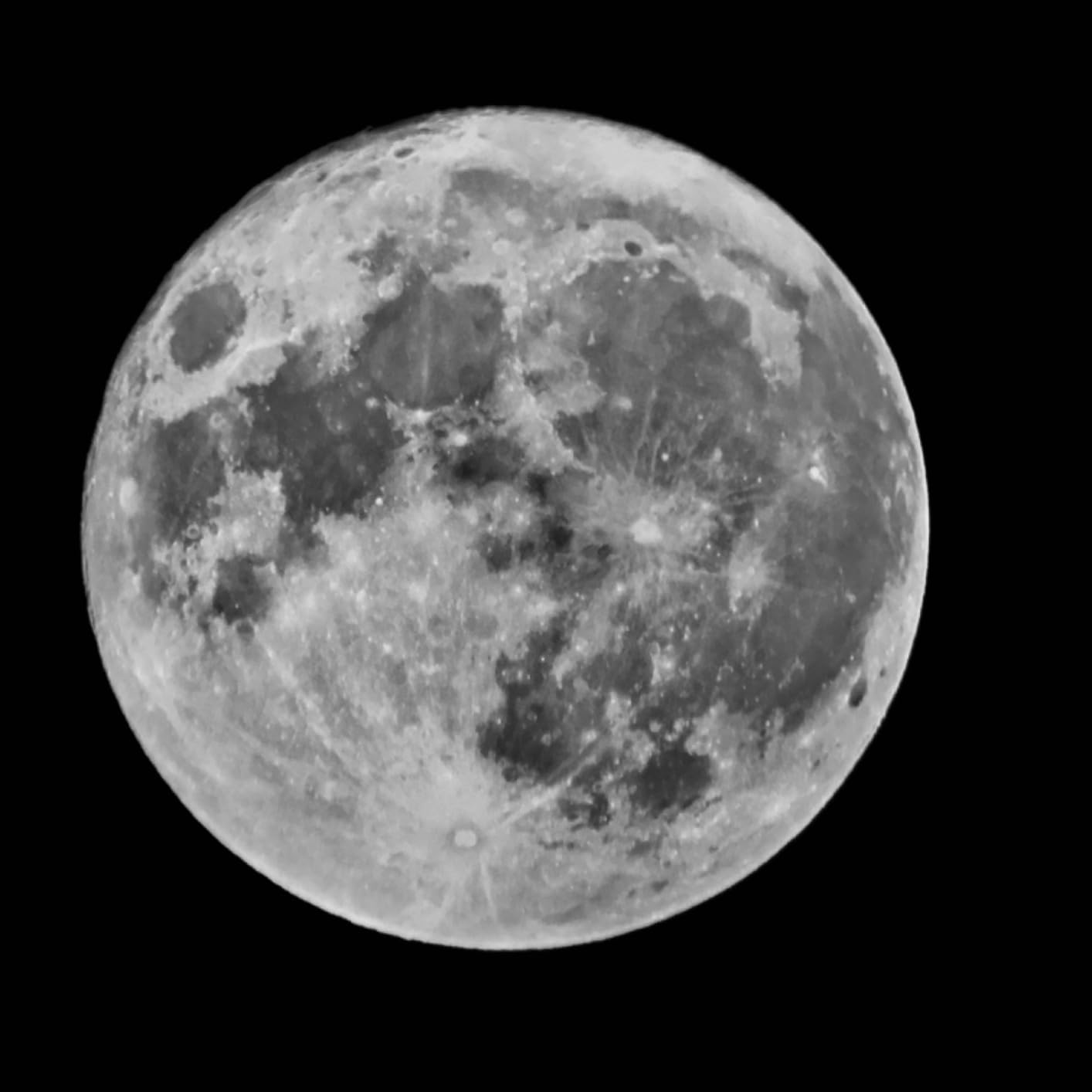
How the 600mm Focal Length Affects Your Views
Longer focal length means higher magnification with any given eyepiece. With the included 9mm eyepiece, you get 67x natively, plenty for Saturn’s rings and Jupiter’s moons. Add the math of a Barlow and you can push further, though atmosphere usually limits you around 150x to 200x.
The trade-off is a slightly longer tube, which makes the scope less compact than a 400mm travel scope. It still fits in the backpack, just barely.
What You See With an 80mm Aperture Under Real Skies
Expect sharp views of lunar craters, Saturn’s rings as a clear band, Jupiter’s two main cloud belts, and the phases of Venus. Bright deep-sky objects like the Orion Nebula and Pleiades show up as faint smudges from suburban skies, sharper from a dark site.
You will not resolve galaxies in any detail with 80mm, but for solar system and bright cluster viewing, this scope punches well above its price.
3. Dianfan 90mm Aperture Refractor – Step-Up Optical Power
- Excellent quality at reasonable price
- 90mm aperture with 800mm focal
- Sturdy stainless tripod
- Carry bag for portability
- Phone adapter included
- Easy 15-minute setup
- High magnifications can blur from atmosphere
- Some stiff tripod adjustments
The Dianfan 90mm sits in a sweet spot that I think most serious beginners should consider. The jump from 80mm to 90mm aperture gives you roughly 27 percent more light gathering, which translates into brighter planets and slightly better deep-sky reach.
The 800mm focal length is the longest in this roundup’s under-$200 tier, giving you strong magnification potential. With the included 25mm and 10mm Kellner eyepieces plus the 3x Barlow, you can cover 32x up to 240x. In practice, atmospheric seeing usually caps useful magnification around 180x, but the range is there for steady nights.
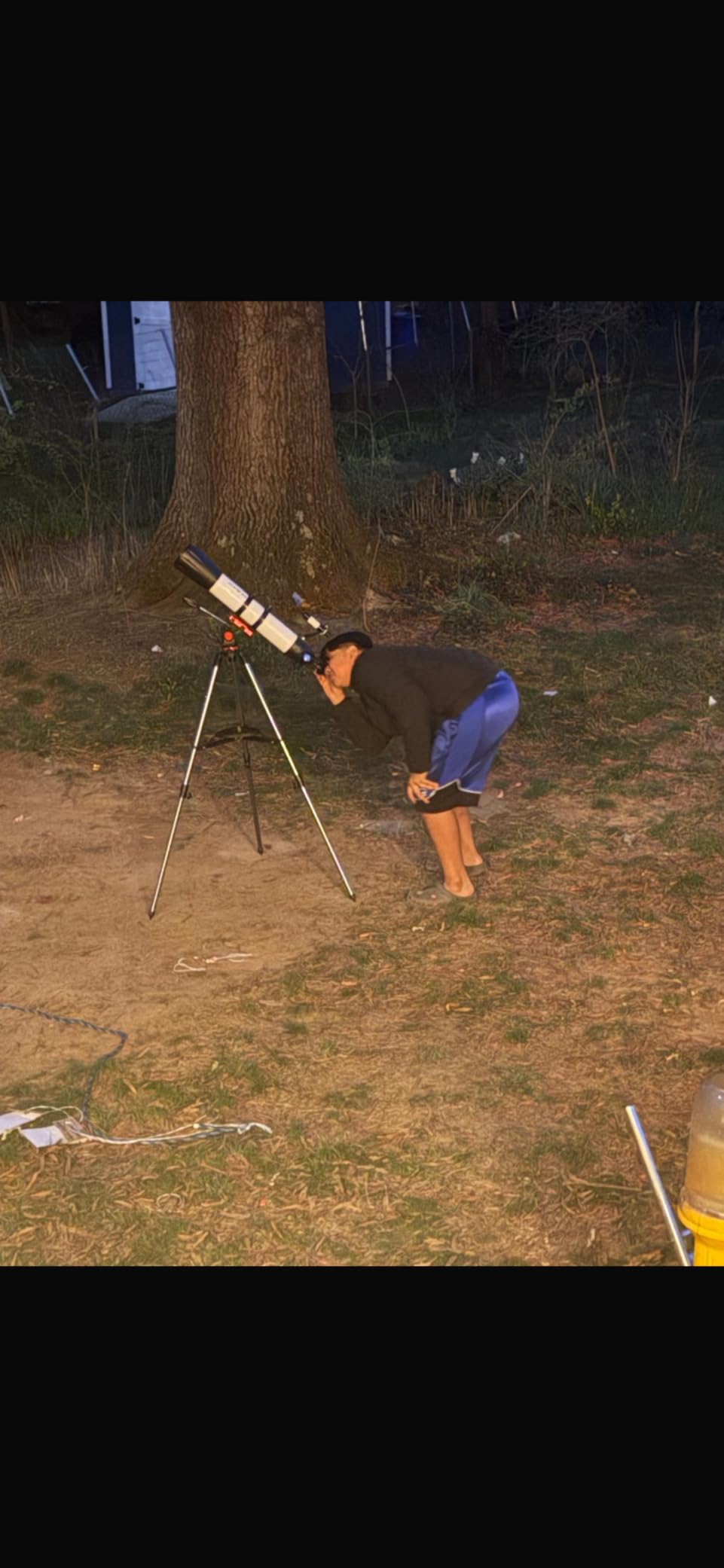
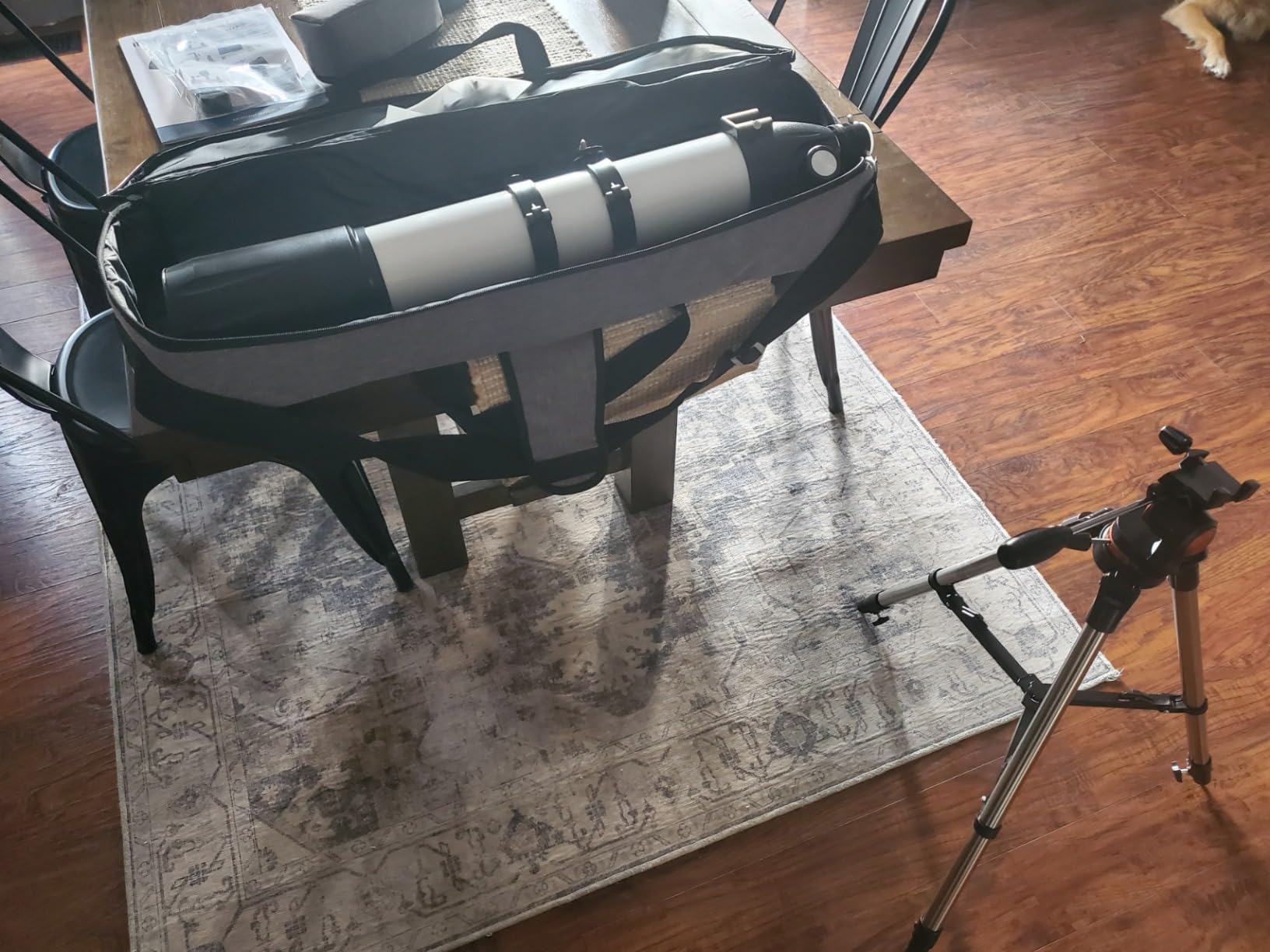
The stainless steel tripod is a real upgrade over the aluminum tripods on most beginner scopes. It dampens vibrations faster, which means the image settles quickly after you touch the focuser. That alone makes viewing much more pleasant.
Setup took me about 15 minutes following the included manual. The 45-degree zenith mirror produces upright images, so this scope works for daytime bird watching and terrestrial viewing too. The carry bag fits the optical tube and accessories cleanly.
Stainless Tripod vs Aluminum – Why It Matters
Aluminum tripods are light but they transmit every vibration. A passing breeze or a focus knob touch shakes the image for several seconds. Stainless steel is heavier and stiffer, so vibrations die down in under a second.
For beginners, this difference is huge. Waiting for the image to settle is frustrating and makes the hobby feel harder than it is. The Dianfan’s stainless tripod is one of the main reasons it scores above 4.5 from nearly 800 reviewers.
Realistic Magnification Expectations on Planets
At 90mm aperture, you can comfortably push 150x to 180x on nights of good seeing. Saturn’s Cassini Division becomes visible, and Jupiter shows multiple cloud belts. Beyond 200x, atmospheric turbulence usually blurs the image regardless of how good your optics are.
The 3x Barlow is best used sparingly. I found 120x to 150x the sweet spot for most targets on most nights.
4. Celestron StarSense Explorer DX 102AZ – Premium App-Guided Scope
- StarSense app works flawlessly
- 102mm refractor with impressive views
- Simple setup and smooth tracking
- Great for true beginners
- Dual-axis slow-motion controls
- Mount vibrates in wind
- Limited altitude clearance for overhead viewing
- Plastic mount components
The Celestron StarSense Explorer DX 102AZ is the bigger brother of our top pick. The 102mm aperture is the largest in the StarSense line and the XLT-coated optics are noticeably sharper than standard coatings. The DX series also adds dual-axis slow-motion controls, which make tracking objects far smoother than the LT version.
This is the scope I would buy if I knew astronomy was going to become a long-term hobby and I wanted to skip the upgrade cycle. The 102mm aperture resolves detail on Jupiter and Saturn that 70mm and 80mm scopes simply cannot match.
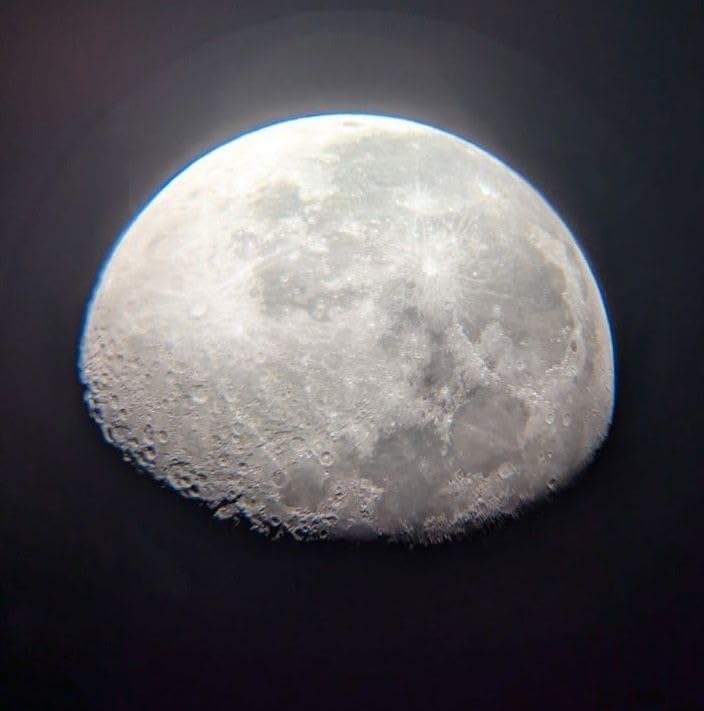
The StarSense app experience is identical to the LT 80AZ but with brighter, more detailed views at the eyepiece. The “Tonight’s Best” feature curates targets based on your location and time, which is genuinely useful for beginners who do not yet know what is visible.
The main weaknesses are mount-related. In wind, the lightweight mount vibrates noticeably, and the altitude axis has limited clearance when objects are directly overhead. Both are workable, but at this price, a more solid mount would have been nice.

Why XLT Coatings Make a Visible Difference
Celestron’s StarBright XLT coatings transmit more light through the lens system. In side-by-side comparisons with non-coated refractors of the same aperture, the XLT scope produced brighter, slightly higher-contrast views of faint objects.
For beginners, this means you spend less time hunting and more time observing. The coatings are especially noticeable on deep-sky targets like the Orion Nebula.
When the 102mm Aperture Justifies the Higher Cost
Compared to an 80mm, the 102mm gathers about 60 percent more light. That shows up as brighter planets, more visible moons around Jupiter, and better contrast on the Moon’s terminator. If you live under light-polluted suburban skies, the extra aperture helps more.
If you are sure you will stick with the hobby, the DX 102AZ is a one-time buy that will serve you for years. If you are unsure, start smaller and upgrade later.
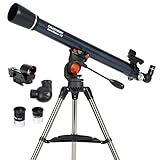
5. Celestron AstroMaster 70AZ – Classic Beginner Choice
- Perfect entry-level for adults and kids
- Fully coated achromatic optics
- Versatile for sky and land viewing
- Easy alt-az mount with panhandle
- Quick no-tool setup
- Tripod wobbly at high magnification
- Finder scope alignment tricky for beginners
The Celestron AstroMaster 70AZ has been a bestseller for over a decade, and there is a reason. It hits a reliable sweet spot of brand quality, decent optics, and a price that does not scare off newcomers. With nearly 3,800 reviews and a 4.4 rating, it is one of the most-purchased beginner refractors on the market.
The 900mm focal length is the longest among 70mm scopes in this roundup. That means higher magnification per eyepiece, which is great for planet viewing. With the included 10mm eyepiece, you get 90x natively, enough to clearly see Saturn’s rings.
The panhandle alt-azimuth mount is intuitive to use. Push left, push right, no coordinate systems or polar alignment needed. For a true beginner, this simplicity is more valuable than fancy features.
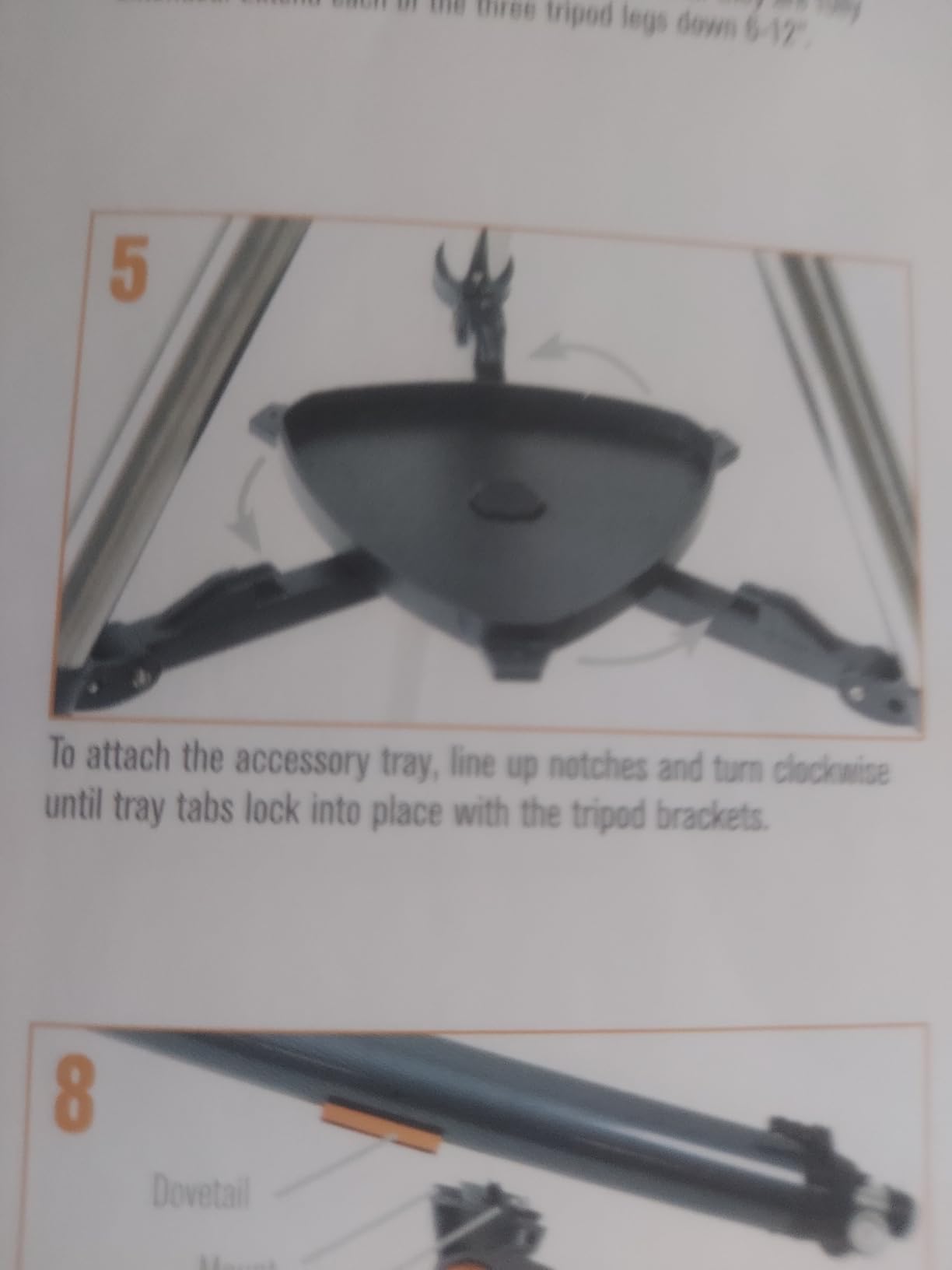
The known weak spot is the tripod, which wobbles at high magnifications. Most experienced owners recommend adding weight to the accessory tray or upgrading the tripod eventually. The finder scope also takes patience to align properly.
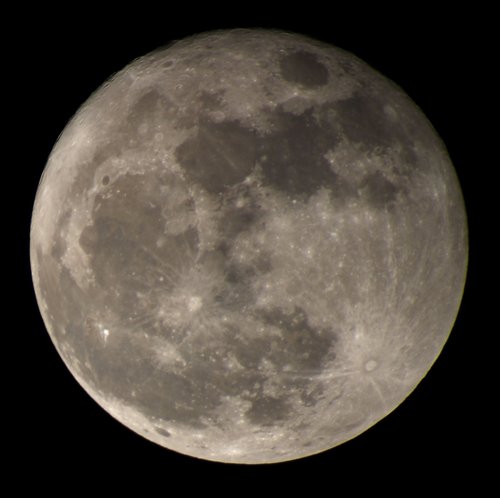
Why the 900mm Focal Length Is Great for Planets
Longer focal length means higher magnification with any given eyepiece. The AstroMaster 70AZ at 900mm gives you 90x with the 10mm eyepiece and 45x with the 20mm, perfect ranges for planets and wide-field star clusters respectively.
Compare that to a 400mm travel scope, where the same 10mm eyepiece only gives you 40x. The longer tube is less portable, but the planetary payoff is real.
Upgrades Worth Doing After a Year of Use
The most impactful upgrade is a sturdier tripod or at least adding a weight to the accessory tray. Second is a better finderscope, ideally a red-dot or Telrad-style sight. A Plossl eyepiece set will also sharpen views compared to the included Kellner-style eyepieces.
Skip the “upgrade” of buying a Barlow lens right away. The included eyepieces already cover useful magnification ranges.
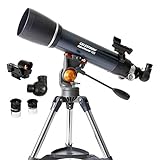
6. Celestron AstroMaster 102AZ – Wide-Field Short-Tube Refractor
- 102mm aperture for bright clear views
- Short-tube design for star fields
- Upright image for terrestrial viewing
- Good for moon planets and clusters
- Easy alt-az mount navigation
- Quick tool-free setup
- Mount can be stiff to rotate
- Red dot finder feels cheap
- Mount may need lubrication
The Celestron AstroMaster 102AZ is a short-tube refractor, which means a large aperture paired with a short focal length. The 102mm aperture gathers serious light, while the 380mm focal length gives you a wide field of view. That combination is excellent for sweeping star fields like the Milky Way in summer.
This is the scope I would pick for someone who wants to see the Pleiades, the Double Cluster, and large nebulae like Orion in their full glory. The wider field also makes finding objects easier for beginners because you see more sky at once.
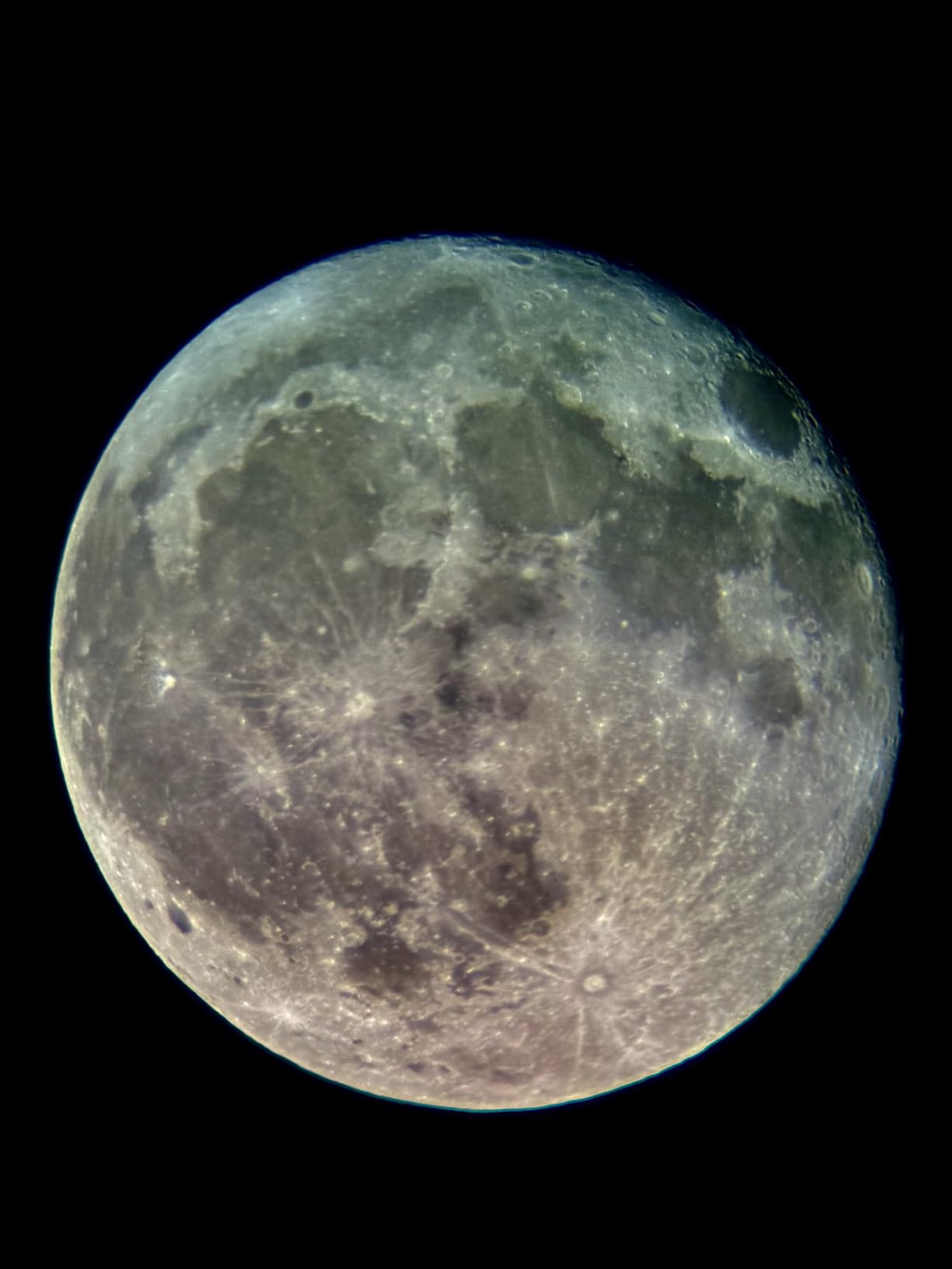
The upright image diagonal means this scope doubles as a daytime spotting scope for bird watching, scenery, or wildlife. That versatility adds real value if you are not sure whether astronomy will become your main hobby.
The most common complaint is mount stiffness. Several owners report needing to lubricate the azimuth axis to get smooth motion. The included red dot finder also feels cheap, but it works once aligned.
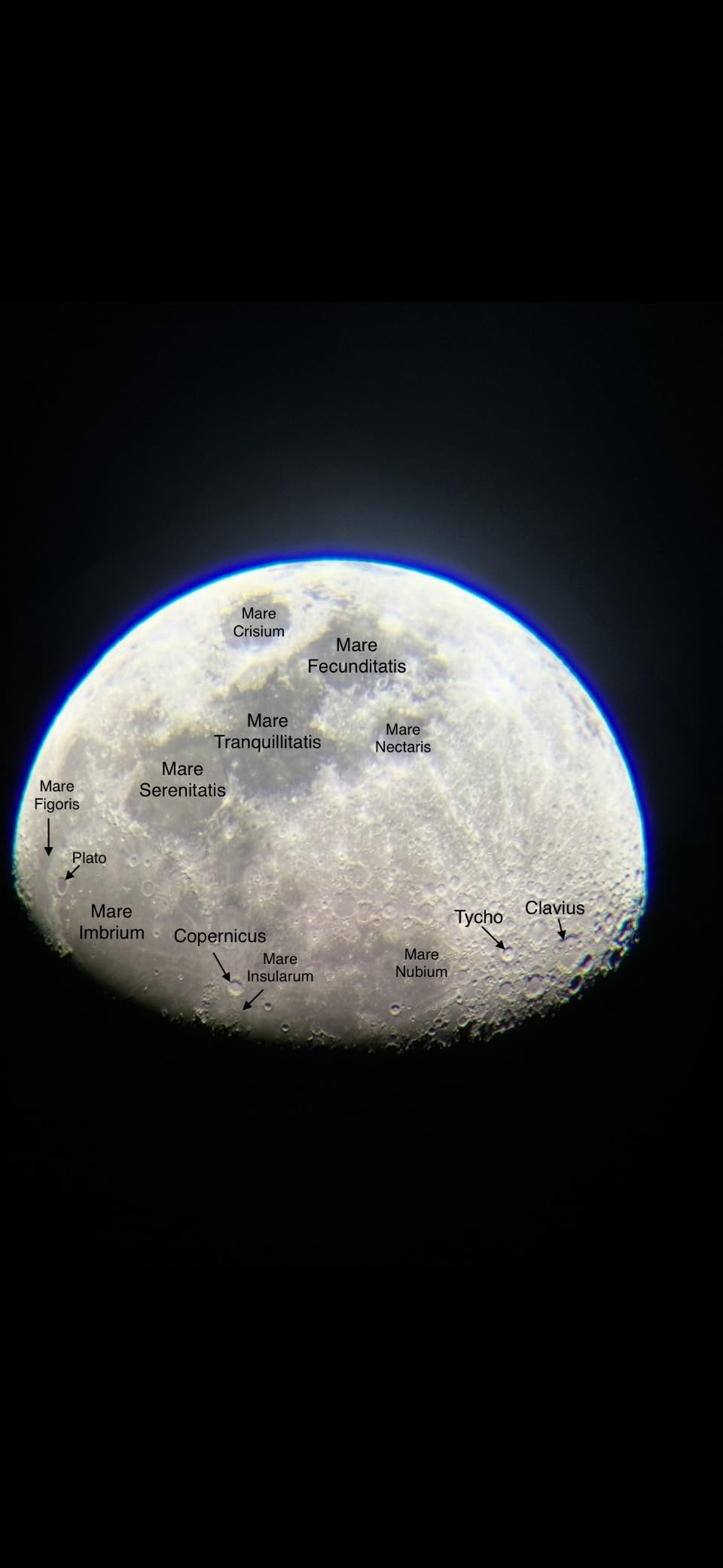
Short-Tube vs Long-Tube Refractor for Beginners
Short-tube scopes (under 500mm focal length) give you wide fields, perfect for star clusters and large nebulae. Long-tube scopes (800mm and up) give you higher magnification per eyepiece, better for planets.
There is no wrong choice, but beginners often enjoy short-tube scopes more because wide-field views are easier to find and more forgiving. Planets require precise aim, which is harder when you are learning.
Using This Scope for Daytime Terrestrial Viewing
The included upright image diagonal flips the image to correct orientation, so birds and boats look right-side up and properly oriented. This makes the AstroMaster 102AZ a legitimate dual-purpose instrument for nature and astronomy.
Just remember that high magnifications amplify atmospheric distortion even during the day. Stick to 30x to 60x for daytime viewing for the sharpest images.
7. Celestron Travel Scope 80 – Portable Astronomy Workhorse
- Larger 80mm aperture for better views
- Portable with backpack
- Smartphone adapter included
- Good optics for price
- Easy setup for beginners
- Suitable day and night
- Tripod flimsy with heavy use
- Some plastic components
- Finder scope quality basic
The Celestron Travel Scope 80 is the most-portable 80mm refractor on this list. The optical tube, tripod, eyepieces, and accessories all pack into the included backpack. I took this one on a flight and it fit easily in a carry-on.
The 457mm focal length is a nice middle ground between wide-field and planetary viewing. The included 20mm and 10mm eyepieces give you 23x and 46x respectively, which is enough for lunar craters and Saturn’s rings, with room to grow via a Barlow.

The bundled smartphone adapter is a thoughtful inclusion for beginners who want to try basic moon photography. It is not rigid enough for long-exposure astrophotography, but it works for snapping quick shots of the Moon.
The tripod is the familiar Celestron travel tripod, which is light but wobbly. For casual viewing it works fine, but at high magnification you will want to brace it or upgrade eventually.

Travel-Friendly Features That Matter
The backpack is the unsung hero. It has dedicated compartments for the optical tube, tripod legs, eyepieces, and diagonal. Everything has a place, which keeps you from losing small parts in the field.
The scope weighs only 4.5 pounds fully assembled, light enough for a child to carry. That portability means you will actually use it, which is the single most important factor in a beginner telescope.
Free Starry Night Software – Worth Using?
The included Starry Night software download is a legit planetarium program. It shows you the sky from your location at any time, helps you plan observing sessions, and includes deep-sky object catalogs. For a beginner, it is genuinely useful for learning constellations.
The download can be finicky on some systems, but Celestron’s support will help you activate it. Treat it as a nice bonus rather than a deciding factor.
8. Gskyer 70mm AZ Refractor – Popular First Telescope for Kids
- Easy setup beginner friendly
- Lightweight with carry bag
- Good optics for moon and planets
- Phone adapter included
- Adjustable tripod
- Small 70mm limits deep sky
- Tripod wobbly and short for adults
- Finder scope hard to align
The Gskyer 70mm AZ is the best-selling beginner refractor on Amazon with over 21,000 reviews. That volume tells you something: this is a scope that has worked for tens of thousands of first-time stargazers. Our own best telescopes for kids beginners guide also highlights Gskyer for young astronomers.
At 70mm aperture and 400mm focal length, this is a classic grab-and-go lunar scope. The Moon looks detailed and cratered. Jupiter shows up as a disc with its four Galilean moons. Saturn reveals its rings, though small.
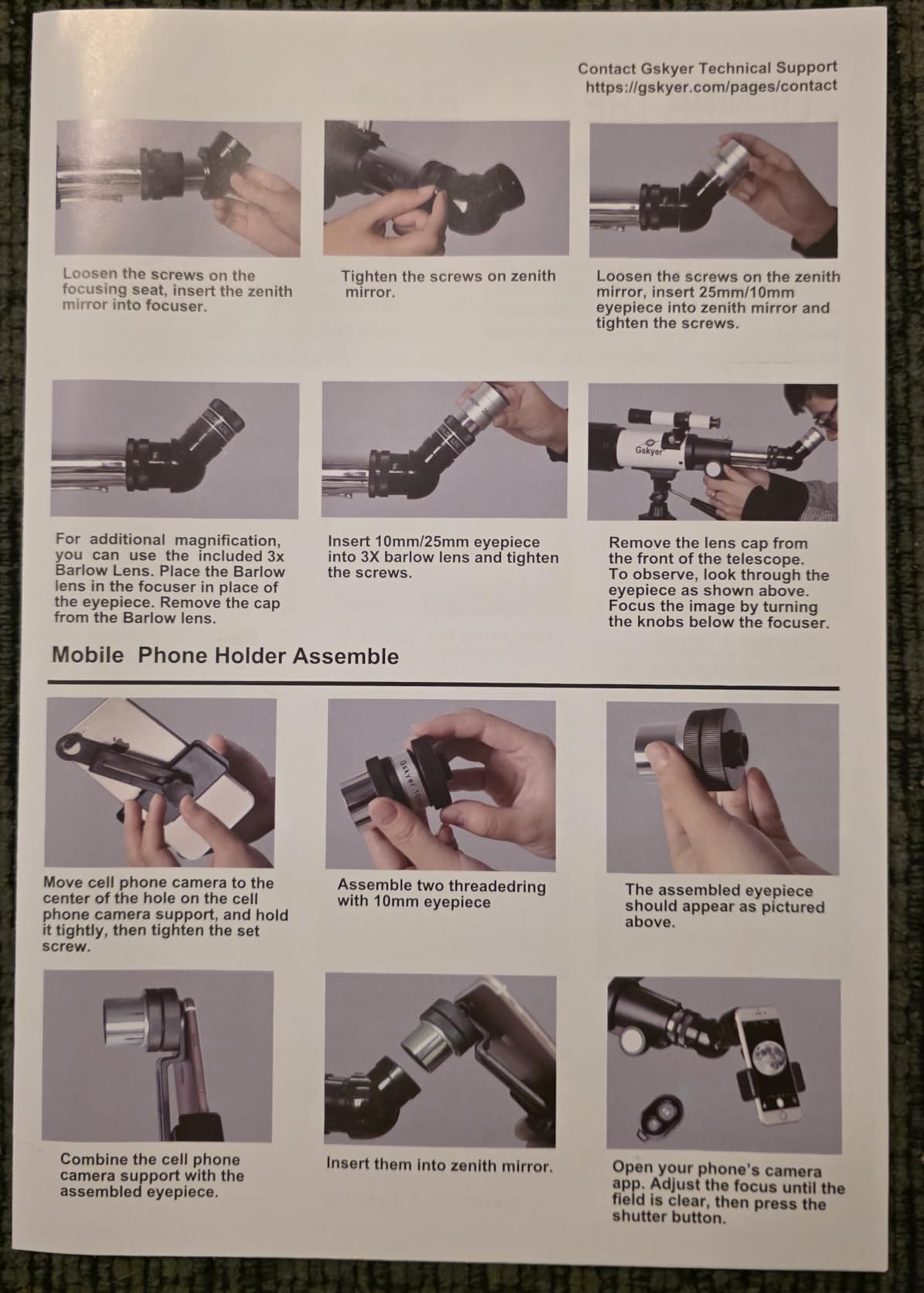
The included wireless remote and phone adapter are a fun touch for beginners who want to try moon photography. The remote lets you trigger your phone camera without shaking the scope, which actually helps a lot with sharp images.
The limitations are real, though. The 70mm aperture will not show deep-sky objects in any meaningful detail. The tripod is short and wobbly, frustrating for adults. The finder scope takes patience to align. For the price, these are acceptable trade-offs, but know what you are buying.
What a 70mm Aperture Realistically Shows You
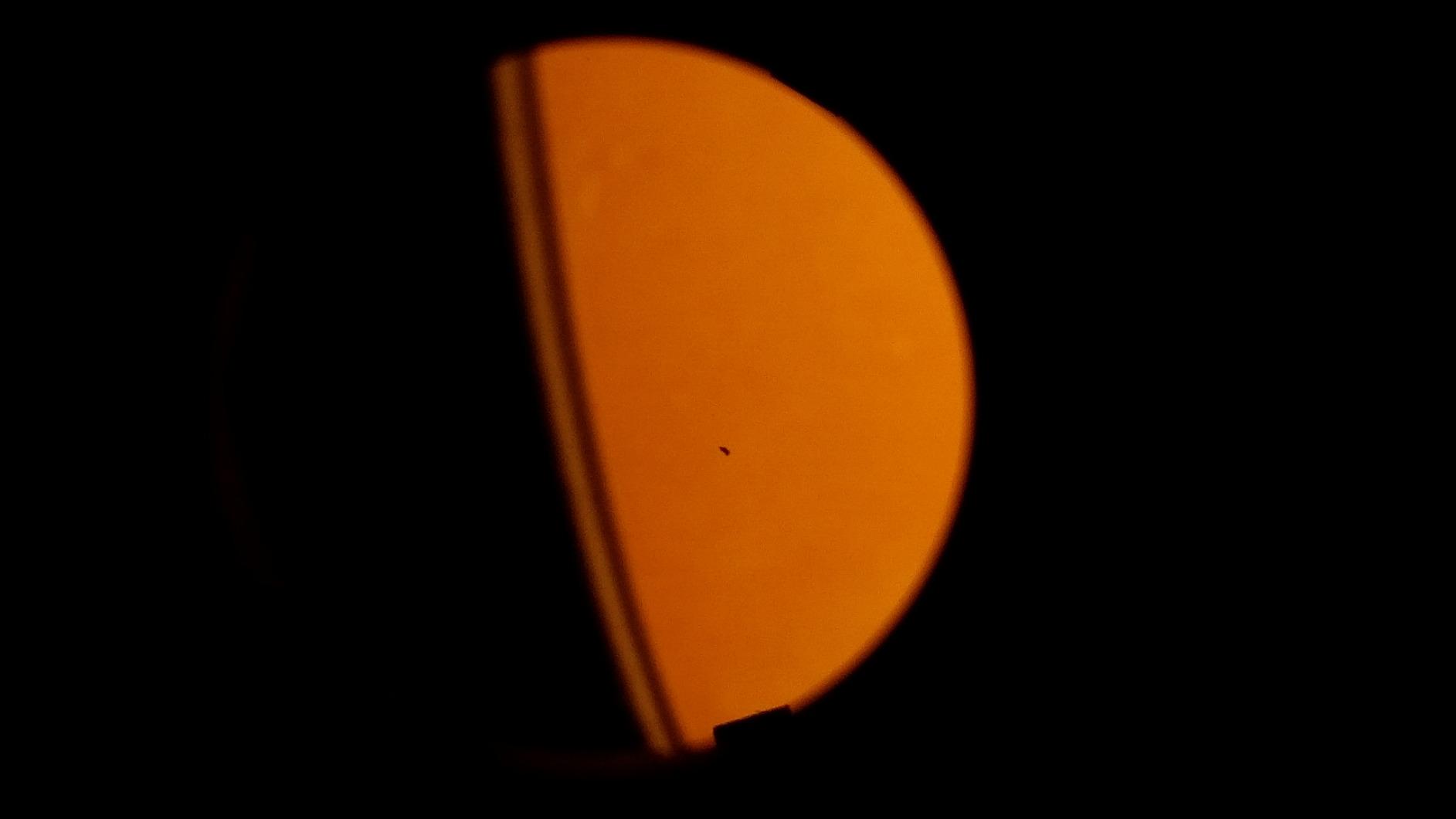
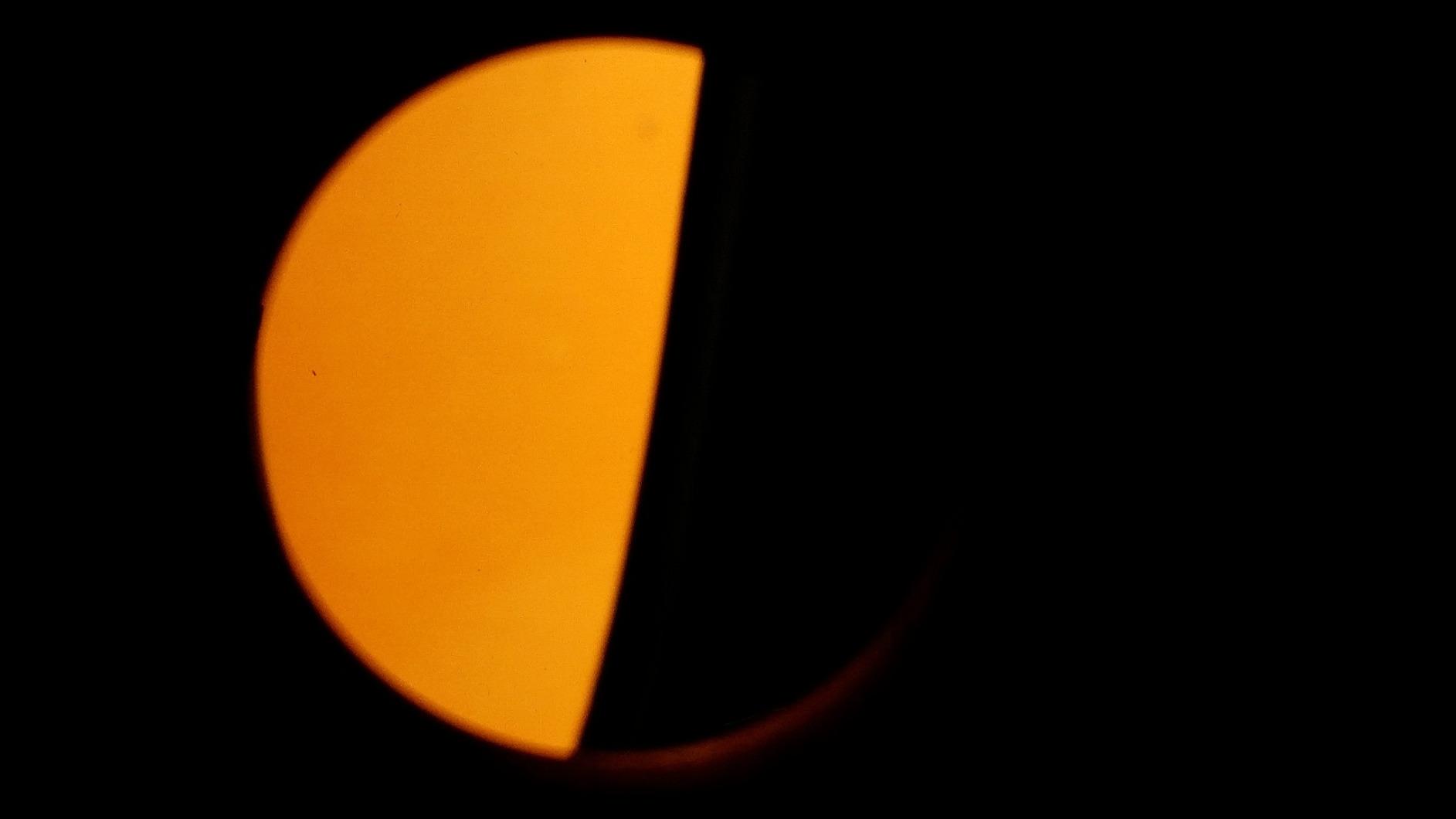
The Moon will be the star of the show with crisp crater detail along the terminator. Jupiter will appear as a small disc with up to four Galilean moons visible. Saturn’s rings are visible but small.
Bright star clusters like the Pleiades look nice. Nebulae and galaxies are mostly invisible from suburban skies with 70mm. Manage your expectations and you will be happy.
Best Age Range and Skill Level for This Scope
This scope is ideal for kids aged 8 to 14 and adults who want a no-stress first telescope. The simple altazimuth mount and lightweight tube make it easy for small hands to point and aim.
Adults who already know they want serious astronomy should skip this and go straight to an 80mm or 90mm model. The 70mm is best as a true entry-level scope to confirm your interest.
9. Celestron Travel Scope 70 – The Compact Travel Companion
- Excellent portability with backpack
- Quick no-tool setup
- Good optics for the price
- Suitable terrestrial and astronomical
- Includes Starry Night software
- Great starter for kids
- Tripod flimsy when extended
- Limited magnification for planets
- Finder scope quality basic
- May need tripod and eyepiece upgrades
The Celestron Travel Scope 70 is the little sibling of the Travel Scope 80. It shares the same backpack design and easy setup, just with a smaller 70mm aperture. For pure portability and value, it is hard to beat.
This is the scope I recommend for someone who wants a telescope for camping trips, RV travel, or a vacation under dark skies. It weighs just over 4 pounds and packs down to backpack size. You will actually take it places.
The 45-degree erect image diagonal means daytime views are right-side up. Bird watching, ship spotting, and scenery all look correct. This dual-use capability adds real value for casual users.
The 20mm and 10mm eyepieces give you 20x and 40x, which is enough for lunar craters and Jupiter’s moons. Push beyond that and the tripod struggles. Treat this as a wide-field lunar scope and it shines.
Why Portability Drives Real Telescope Use
The most-repeated advice on r/telescopes is to buy a scope you will actually set up. Heavy, complex scopes gather dust. Light, grab-and-go scopes get used weekly. The Travel Scope 70 wins on that metric.
If a scope takes 30 minutes to set up, you will skip it on weeknights. The Travel Scope is ready in under five minutes, which means more time actually observing.
Solar Filter Compatibility for Safe Sun Viewing
Celestron makes compatible solar filters for the Travel Scope 70. With a proper filter, you can safely view sunspots and solar eclipses. Never point any telescope at the Sun without a certified filter.
See our guide to the best solar filters for telescopes for compatible options and safety information.
10. ToyerBee 70mm Refractor – Budget Starter for First-Time Stargazers
- Great value for the price
- Easy self-assembly without tools
- Phone adapter and remote included
- Good clear views of moon and planets
- Portable and lightweight
- Good customer service support
- Tripod top-heavy and wobbly
- Aiming lever frustrating
- Stand too short for adults
- Some quality control issues
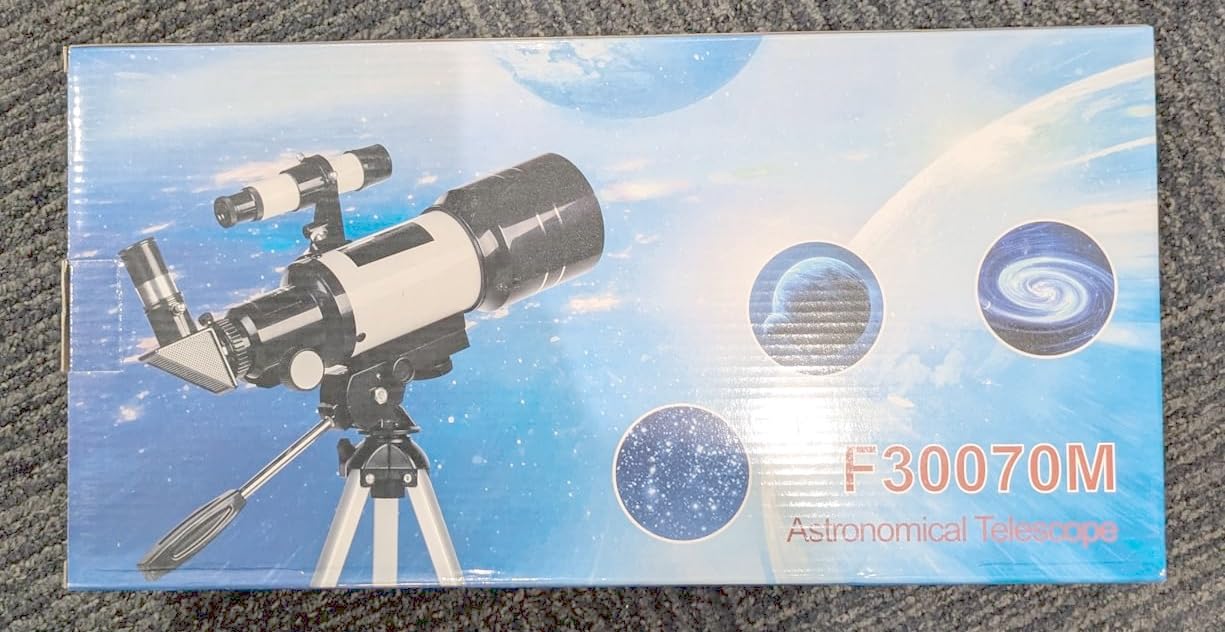
The ToyerBee 70mm is the most affordable entry in this roundup. For around the price of a casual dinner out, you get a complete refractor telescope kit with two eyepieces, a 3x Barlow, phone adapter, and wireless remote. As a pure starter scope, it does the job.
The 300mm focal length is shorter than most scopes here, which gives you wider fields of view at lower magnifications. That is actually good for beginners because it makes finding objects easier. The Moon, Pleiades, and Orion Nebula look great in the 20mm eyepiece.
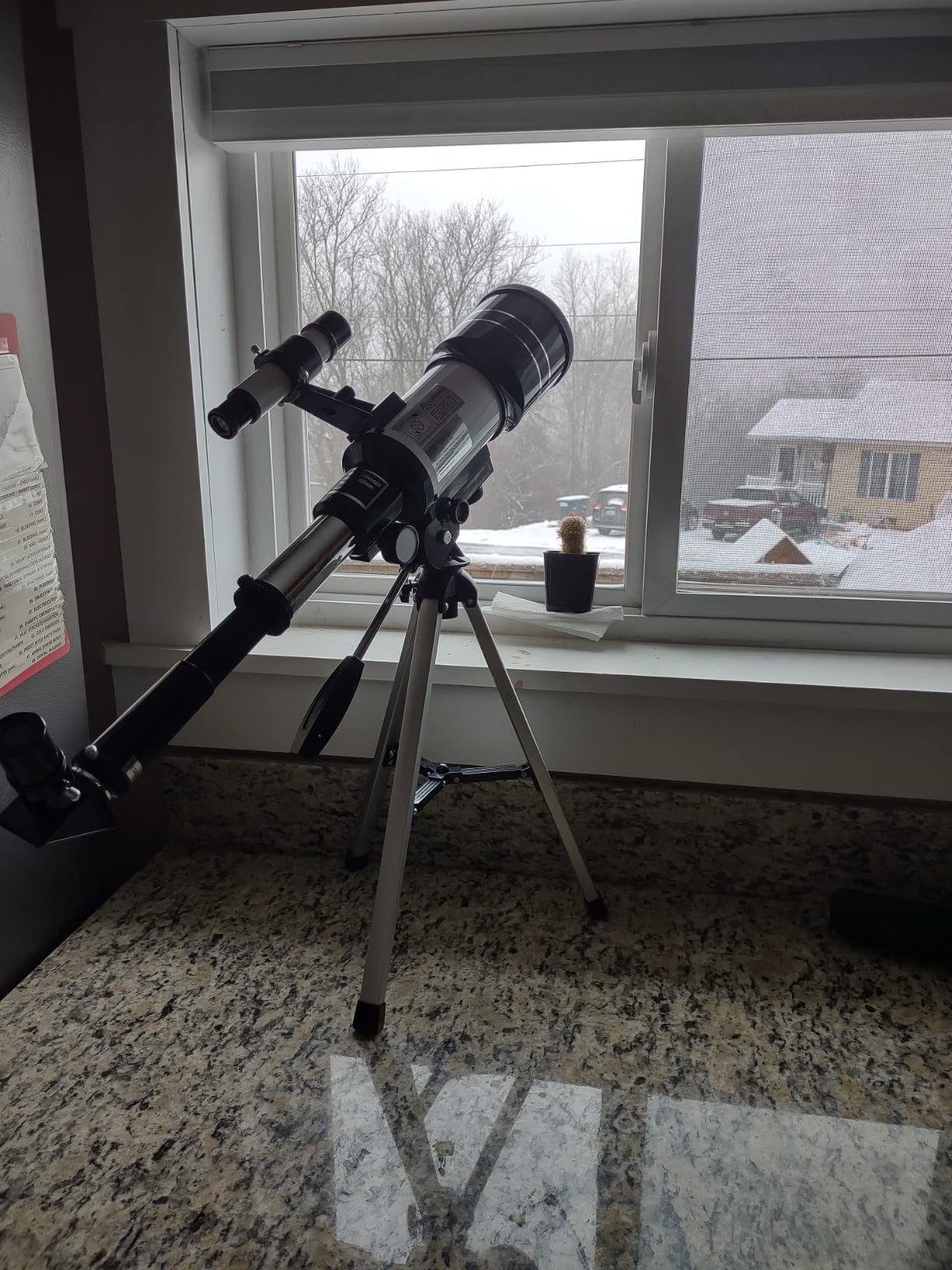
The included phone adapter and wireless remote let you capture quick lunar photos through the eyepiece. Image quality is beginner-level, but it is a fun way to share what you see with friends and family.
The trade-offs are obvious at this price. The tripod is short and top-heavy, making the scope wobbly. The aiming mechanism is awkward. Quality control varies between units. If you are strictly budget-limited, this works. If you can stretch, the Gskyer 70mm or Travel Scope 70 are better-built.
Best Use Cases for an Ultra-Budget Refractor
This scope shines as a gift for a curious child, a casual camping companion, or a “test the waters” purchase before committing to a more serious telescope. If it sits unused, you have not lost much.
It is not the right choice if you already know astronomy is your hobby. In that case, save up for the 80mm or 90mm models higher on this list.
Common Quality Control Issues to Watch For
Some owners report misaligned finder scopes, loose focuser parts, or scratched eyepieces out of the box. ToyerBee’s customer service is generally responsive about replacements, but inspect your unit carefully on arrival.
Tighten all screws before first use, test the focuser for smooth motion, and check that the finder scope aligns with the main tube. A few minutes of inspection saves a frustrating first night.
How to Choose the Best Refractor Telescope for Beginners
Choosing your first refractor comes down to a few key factors. The honest truth from experienced hobbyists is that aperture, mount stability, and portability matter more than brand or features. Here is how to think through the decision.
Aperture – The Single Most Important Spec
Aperture is the diameter of the main lens, and it determines how much light your telescope gathers. More light means brighter images, more detail on planets, and better views of faint deep-sky objects. Everything else equal, buy the largest aperture you can afford and transport.
For beginners, 70mm is the minimum useful aperture. 80mm is the sweet spot for value. 90mm to 102mm gives you serious planetary detail but adds weight and cost.
Mount Type – Why Stability Beats Features
Altazimuth mounts are simple up-down-left-right designs. They are intuitive for beginners and work well for casual observing. Equatorial mounts track the sky’s rotation but require polar alignment and are overkill for most first-time buyers.
The mount’s stability matters more than its type. A wobbly mount will frustrate you every time you try to focus. Look for stainless steel tripods, weighted accessory trays, and slow-motion controls. Avoid feather-light tripods that shake in the breeze.
Portability – The Scope You Actually Use Wins
A huge scope that lives in a closet helps no one. The refractors on this list range from 4-pound travel scopes to 14-pound observatory-style mounts. Think honestly about where you will store it, how you will transport it, and how often you will set it up.
For apartment dwellers, a Travel Scope or Gskyer 70mm is ideal. For homeowners with a backyard, an AstroMaster 70AZ or StarSense Explorer LT 80AZ works great. For dark-sky road trips, prioritize backpack-friendly designs.
Budget Tiers and What to Expect
Under $100 buys a 70mm starter scope that is great for the Moon and basic planet views. You will see lunar craters, Jupiter’s moons, and Saturn’s rings, but nothing more. These scopes confirm your interest without breaking the bank.
$100 to $200 buys an 80mm scope with better optics, usually a longer focal length, and included accessories like backpacks and phone adapters. This is where the hobby starts to get seriously fun.
$200 to $450 buys app-enabled scopes, 90mm to 102mm apertures, and stainless tripods. At this tier, you are buying equipment that will last years and grow with your skills.
Common Beginner Mistakes to Avoid
First, do not chase magnification. “600x” claims on cheap scopes are meaningless. Useful magnification is limited by aperture and atmospheric conditions. Stick to 30x to 150x for most viewing.
Second, do not skip the finderscope alignment. Spend 15 minutes during daylight aiming the finder at a distant object, then centering the same object in the main scope. This saves hours of frustration at night.
Third, manage expectations. Even a 102mm refractor will not show Hubble-style images. Planets are small. Nebulae are faint gray smudges. The Moon is the one target that always looks stunning, so start there.
Frequently Asked Questions About Refractor Telescopes for Beginners
Are refractor telescopes good for beginners?
Yes, refractor telescopes are excellent for beginners because they are maintenance-free, sealed against dust, and require no collimation. They produce sharp high-contrast views of the Moon and planets, and they are durable enough for regular transport. The simple altazimuth mounts paired with most beginner refractors are intuitive to use from the first night.
Which telescope is best to see planets for beginners?
For planetary viewing, choose a refractor with at least 80mm aperture and a longer focal length (600mm or more). The Celestron StarSense Explorer DX 102AZ, Dianfan 90mm, and Celticbird 80mm are top picks because their longer focal lengths give you higher magnification per eyepiece, which is what you need to resolve Saturn’s rings and Jupiter’s cloud belts.
Why are refracting telescopes no longer used by professional observatories?
Large refractors become impractical above about 40 inches of aperture because the lens sags under its own weight and only the edges can be supported. Reflectors use mirrors that can be supported from behind, so they can be built much larger. Beginner-level refractors under 150mm do not have this problem, which is why refractors remain popular for hobbyists.
Who makes the best refractor telescopes for beginners?
Celestron dominates the beginner refractor market with the StarSense Explorer series, AstroMaster line, and Travel Scope range. Gskyer offers strong value 70mm models, while newer brands like Celticbird and Dianfan provide competitive 80mm and 90mm options at lower prices. The best choice depends on your budget and how much you value app guidance versus raw aperture.
Final Thoughts on the Best Refractor Telescopes for Beginners in 2026
The best refractor telescopes for beginners in 2026 cover a wide range of budgets and needs. For a no-compromise first telescope that grows with you, the Celestron StarSense Explorer LT 80AZ earns our editor’s choice with its app-guided navigation and solid 80mm optics. The Celticbird 80mm is the best value pick for budget-conscious buyers who want real aperture without brand markup.
If you want maximum optical power per dollar, the Dianfan 90mm with its stainless tripod is hard to beat. And if you are buying for a child or testing the waters, the Gskyer 70mm and ToyerBee 70mm are proven affordable starters. Whatever you choose, the most important thing is to get out under the stars and use it. Clear skies.