
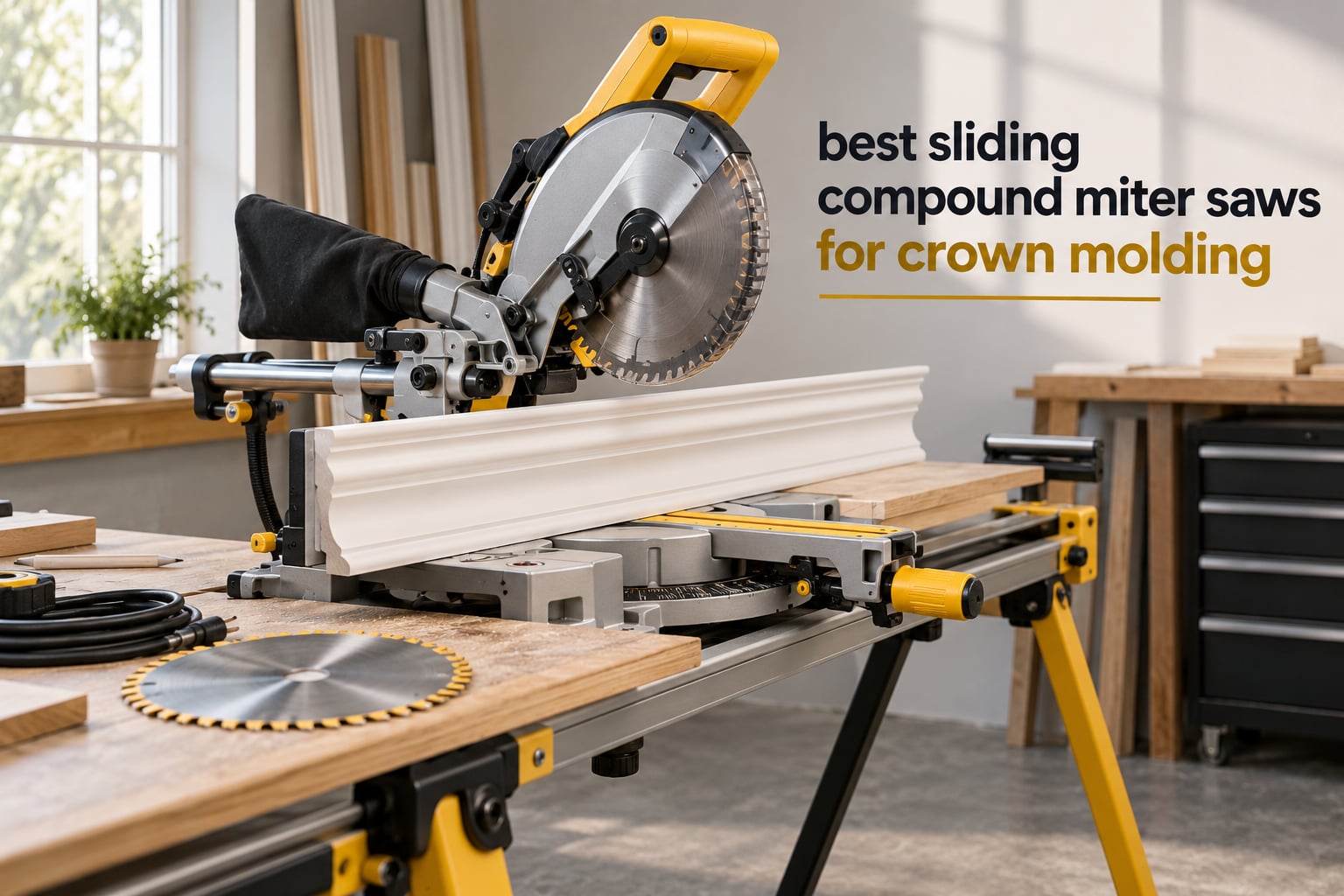
Crown molding is the least forgiving cut in finish carpentry. A gap of half a degree at a ceiling corner is visible from across the room, which is why the saw you choose matters more here than on almost any other trim job. The three things that decide the outcome are a head that tilts in both directions, a fence tall enough to hold the molding in its nested position, and miter detents that return to the same angle twice in a row.
This list of the best sliding compound miter saws for crown molding ranks all twelve saws on exactly those points, with the published nested crown height as the primary metric. That is the number no competitor ranks on, and it is the one that actually determines whether your 6-5/8 inch colonial profile cuts flat on a 9 foot ceiling.
A sliding compound miter saw, also called a sliding miter saw or a slider, is a saw whose blade carriage rides on rails so it can crosscut material wider than the blade itself, while the head tilts left and right so it can cut compound angles without flipping the workpiece over. For crown molding those two features are not extras. The rails give you the fence height you need to support tall stock, and the dual bevel head cuts both sides of a room with the crown sitting flat against the table every time.
Last updated in 2026. We compared published specifications across twelve models and read the owner feedback behind more than 8,000 ratings, then ranked on the criteria that decide whether a crown joint closes or gaps.
Top 3 Sliding Compound Miter Saws for Crown Molding for October 2026


Every Saw Ranked by Nested Crown Capacity for October 2026
| Product | Specifications | Action |
|---|---|---|
| DEWALT DWS780 12 inch Double Bevel |
|
Check Latest Price |
 SKIL MS6305-00 10 inch Dual Bevel SKIL MS6305-00 10 inch Dual Bevel |
|
Check Latest Price |
 DOVAMAN DMS01A 10 inch Sliding DOVAMAN DMS01A 10 inch Sliding |
|
Check Latest Price |
 Bosch CM10GD 10 inch Glide Bosch CM10GD 10 inch Glide |
|
Check Latest Price |
 Delta S26-263L 10 inch Slide Delta S26-263L 10 inch Slide |
|
Check Latest Price |
| Makita LS1019L 10 inch Dual Bevel |
|
Check Latest Price |
 Makita LS1219L 12 inch Dual Bevel Makita LS1219L 12 inch Dual Bevel |
|
Check Latest Price |
 DOVAMAN DMS03G 12 inch Dual Bevel DOVAMAN DMS03G 12 inch Dual Bevel |
|
Check Latest Price |
 EVOLUTION R255SMS-DB+ 10 inch EVOLUTION R255SMS-DB+ 10 inch |
|
Check Latest Price |
 Makita XSL06PT 36V Cordless Makita XSL06PT 36V Cordless |
|
Check Latest Price |
 MarvTool JS-1013C4 12 inch MarvTool JS-1013C4 12 inch |
|
Check Latest Price |
 VEVOR 12 inch Dual Bevel VEVOR 12 inch Dual Bevel |
|
Check Latest Price |
1. DEWALT DWS780 12 Inch Double Bevel – Best Nested Crown Capacity Under 8 Inches
- Tall sliding fences hold 7-1/2 in. crown nested
- XPS LED shadow line reads clearly in a bright room
- Dual steel rails with linear ball bearings glide smoothly
- Stainless detent plate with 10 positive stops
- Dust system captures over 75 percent of cut dust
- Belt drive design is more involved to service than a direct drive saw
- Bundled dust bag is supplemental rather than a real extraction answer
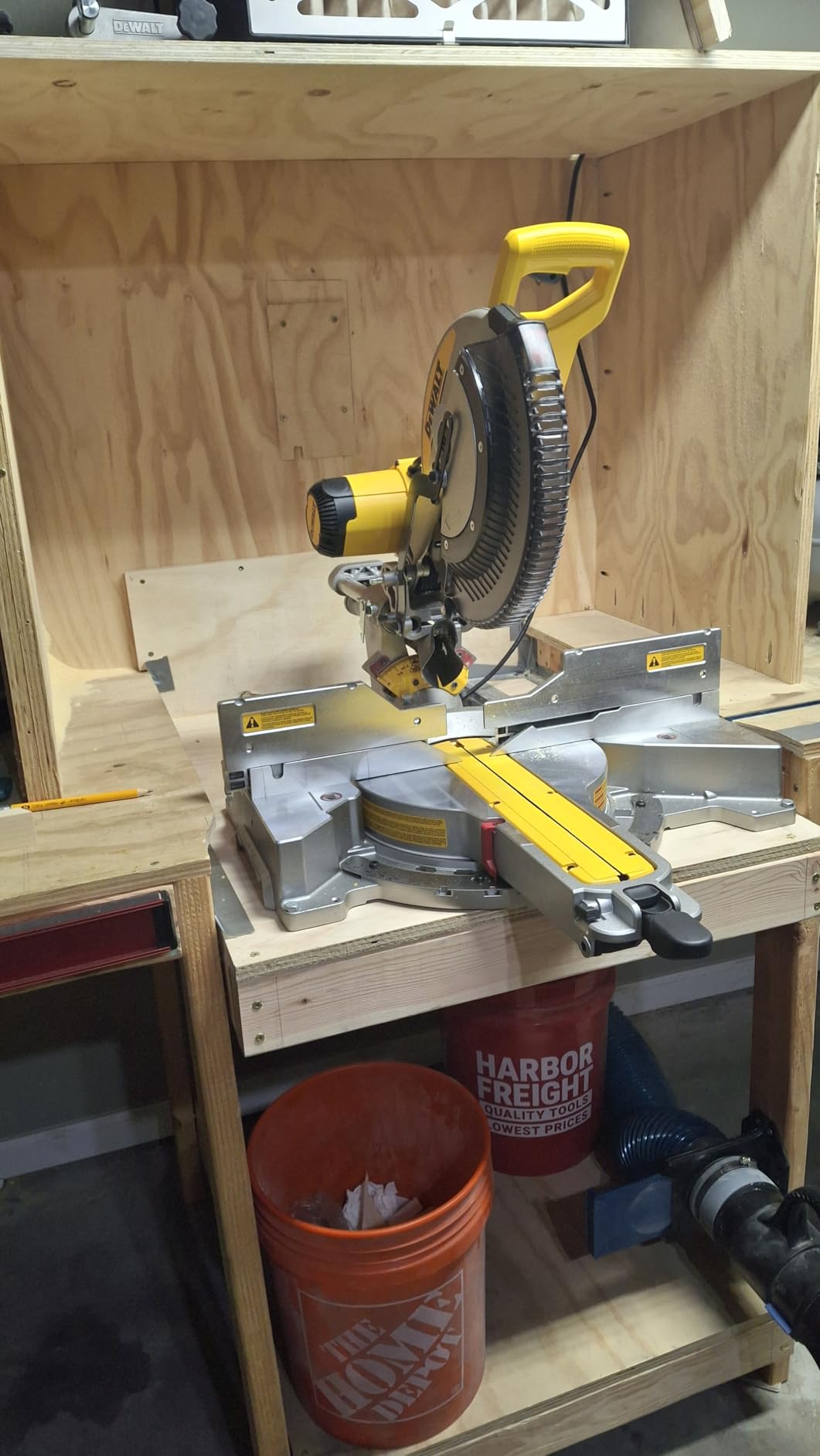
The DWS780 is the one I would put in a finish carpenter’s truck on the strength of the fence alone. Seven and a half inches of nested crown capacity is the widest of any 12 inch saw here that still weighs less than 60 pounds, and that combination is unusual.
In practice, a 6-5/8 inch colonial profile sits flat and stays flat through the cut, with the crown supported on both the table and the fence the whole way down. The XPS LED shadow line is the reason this saw ranks first for us on trim work. It is a projected line, not a laser dot, so it stays visible under shop lighting and on a dim stairwell where a laser washes out entirely.
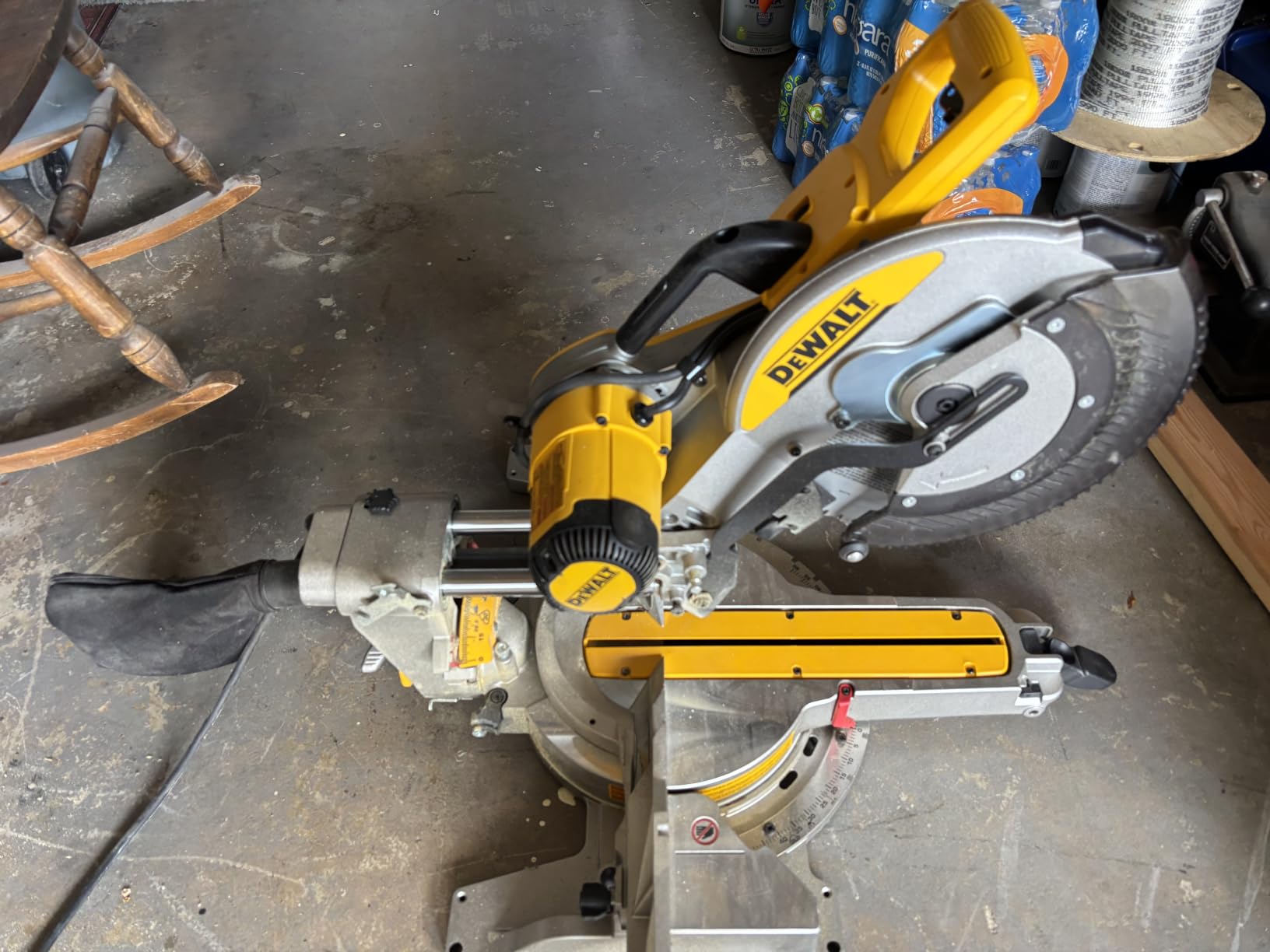
The 3,800 rpm 15 amp motor has plenty of headroom for dense hardwood, and the dual horizontal rails with linear ball bearings are the reason the head does not wander under load. Ten positive stops on a stainless detent plate mean the same angle comes back every time you release the handle, which is the whole game when you are fitting four walls of crown.
Two honest drawbacks. The belt drive is more complex to service than a direct drive gearbox, and the included dust bag is a starting point rather than a solution, so plan on a shop vacuum for interior work.
Who the DWS780 suits
It suits finish carpenters and serious DIYers who install tall crown in occupied homes where carrying a 90 pound saw up a staircase is not an option. At 58 pounds it moves between rooms with one person and still mounts permanently on a shop stand when you are doing production trim.
Who should skip the DWS780
Skip it if your crown never exceeds 6-1/4 inches and your budget is tight, because the best sliding miter saws for crown molding in the lower tiers handle standard 5-1/2 inch profiles with less mass and less cost. The Makita LS1219L is the only saw here that cuts 8 inches nested.
2. SKIL MS6305-00 10 Inch Dual Bevel – Best Value for Standard Crown Profiles
- Dual bevel cuts left and right for compound crown work
- LED shadow line more reliable than a laser for alignment
- 4800 rpm motor handles dense molding cleanly
- Side extensions give real 2x12 crosscut capacity
- Light at 39.4 lb for a slider
- 10 inch blade caps crosscut below 12 inch saws
- 40 tooth blade is general purpose rather than a crown finish blade
- Fence is shorter than dedicated tall-fence models
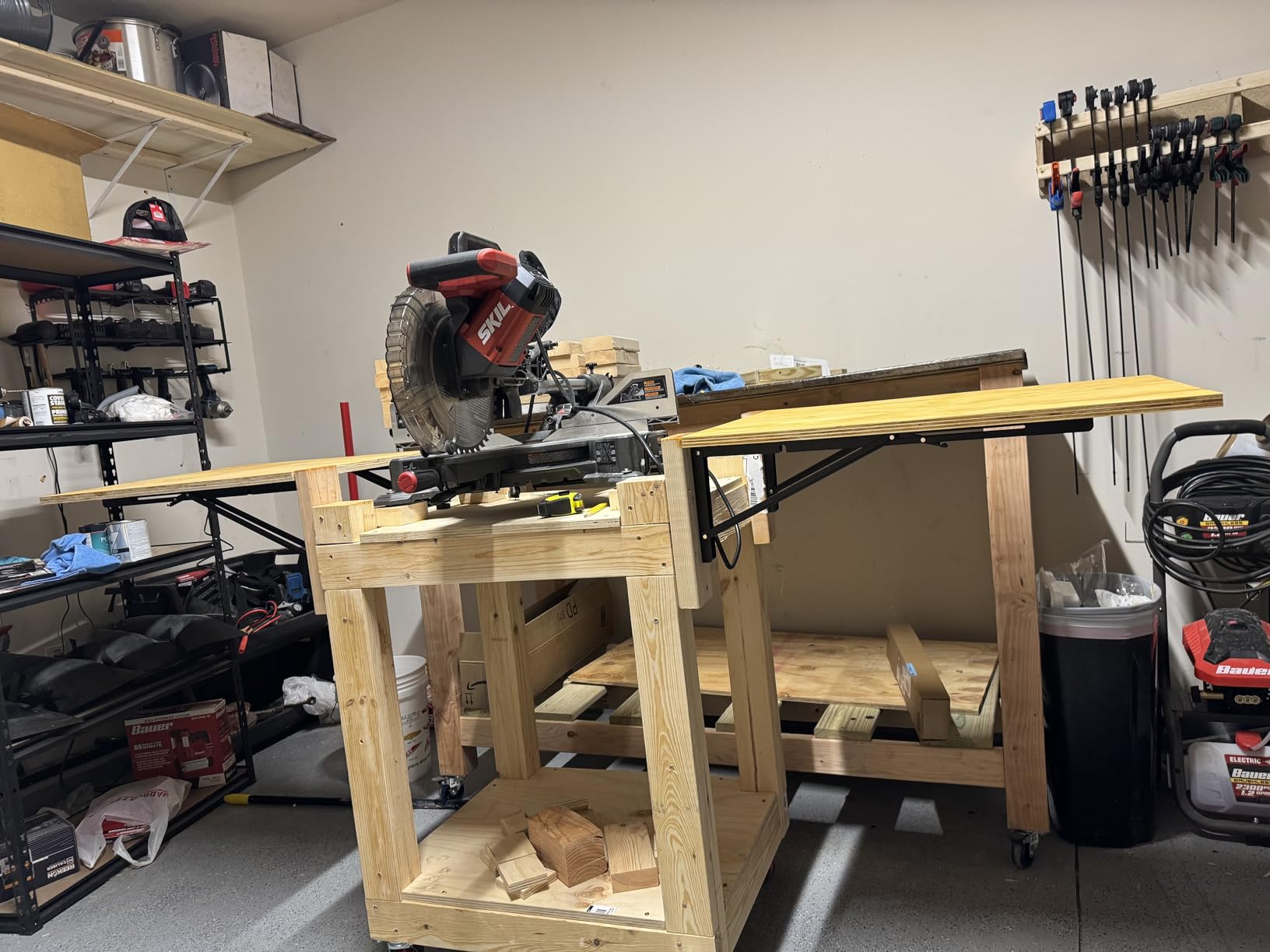
This is the pick for anyone fitting 4-1/2 inch to 5-1/2 inch colonial and Victorian profiles in a house with standard ceiling heights. It dual bevels, which is the non-negotiable feature, and it does so at 39.4 pounds, so one person can move it from the garage to the room.
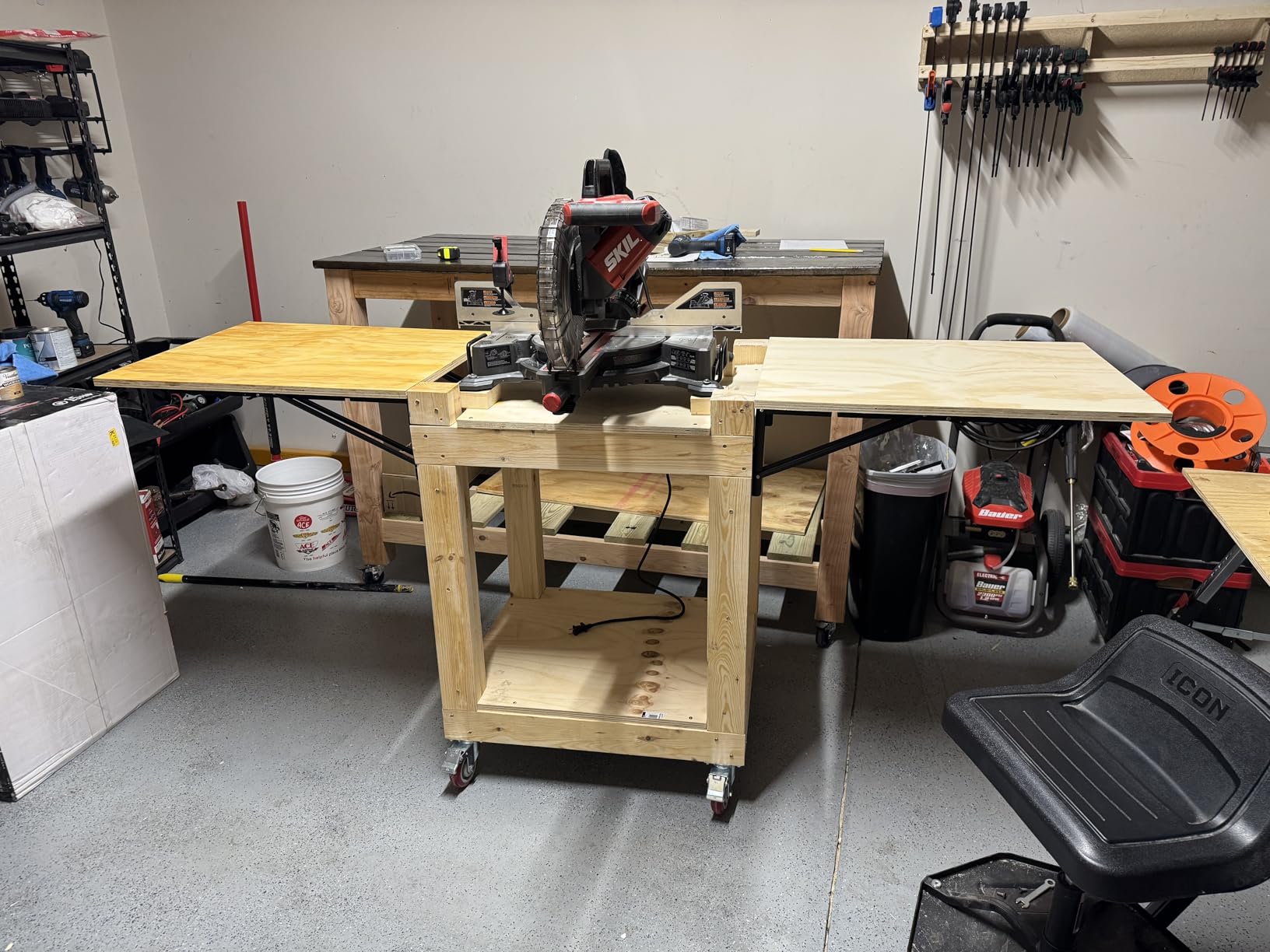
The 4,800 rpm 15 amp motor spins faster than most 12 inch saws in this list and moves through softwood trim quickly. The side extensions pull out to give a genuine 2×12 crosscut at 90 degrees, which is more capacity than most owners expect from a 10 inch slider.
There are four positive stop positions, with 11 positive stops overall and bevel capability to 50 degrees left and right. That range covers a 45 degree miter with the head tilted, which is what a crown cut at the standard spring angle requires.
The limitations are honest ones. A 40 tooth blade is a framing and general carpentry blade, and the fence is not the tall type. Treat this as a saw that handles most residential crown well, not one that takes 7 inch monumental profiles.
Who the SKIL MS6305-00 suits
It suits a weekend renovator or a trim installer working standard residential crown in 4×4 and larger rooms. The combination of dual bevel, light weight and low cost is the best balance in this list for that job, and our broader 10 inch sliding compound miter saw picks cover the alternatives if you need more.
Who should skip the SKIL MS6305-00
Skip it if your crown profile is taller than about 5-3/4 inches, or if you are cutting solid oak, walnut or mahogany where a 40 tooth blade will tear the face. For hardwood, buy an 80 tooth finish blade before your first cut.
3. DOVAMAN DMS01A 10 Inch Multi-Material Slider – Best Three Blade Starting Kit
DOVAMAN 10-Inch Sliding Miter Saw, Multi-Material, 2-Speed, 15A
- Three TCT blades cover wood
- PVC and soft metal
- Dual speed control suits different materials
- 13 inch sliding rail with extendable side tables
- Ambidextrous dual handle design
- Laser is reported accurate and easy to keep clean
- Bevels one side only
- which rules out one-pass crown work
- Side wings may need leveling out of the box
- Manual is minimal
- Holder must be bolted down because the sliding head makes it tip-prone
The selling point here is the box contents. Two 40 tooth blades and one 48 tooth TCT blade ship with the saw, and a dual speed control lets you drop to 3,200 RPM for PVC and soft metal or run 4,500 RPM for wood. Very few sliders at this level give you a real multi-material setup.
It is also the lightest dual-rail slider here at 37.5 pounds, and the ambidextrous handle layout is a genuine advantage for left-handed users, who are often overlooked in saw design.
Here is the honest problem. The bevel works to one side only, which means a full room of crown requires either flipping the workpiece or accepting extra setup on every piece. For baseboard, casing and picture frame work that is a non-issue. For a whole-house crown job it is a real tax on your time.
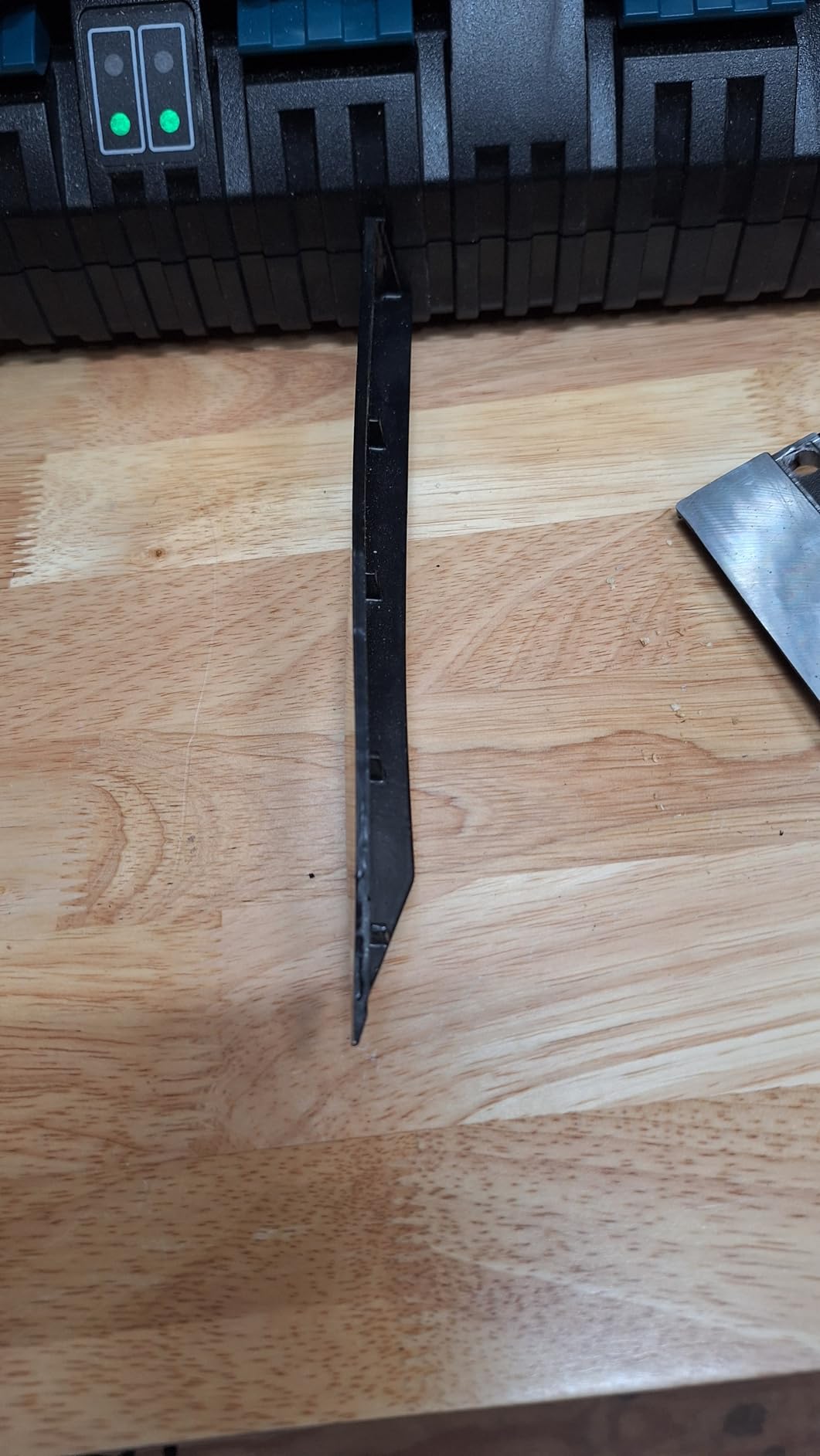
Owners also report that the saw can arrive slightly out of square and need a backplate adjustment, and that the extension wings may need leveling. Budget an hour of setup before the first cut, and bolt the holder down because the sliding head makes it tip-prone.
Who the DOVAMAN DMS01A suits
It suits a homeowner or handyman who cuts a mix of trim, PVC and light metal and wants one saw to do all of it. Three blades and two speeds out of the box removes the most common early frustration.
Who should skip the DOVAMAN DMS01A
Skip it for crown specifically. Single bevel is the wrong architecture for compound crown, and our dual bevel saw guide explains why a one-sided head doubles your setup on a room run.
4. Bosch CM10GD 10 Inch Glide – Best for Crown in a Tight Workshop
BOSCH 15.0 Amp CM10GD 10 In. Dual-Bevel Glide Miter Saw for Woodworking
- Axial glide saves roughly 10 inches of bench depth versus rear rail saws
- Bevel lock
- range selector and miter override sit at the front
- Accurate out of the box for most owners
- 60 tooth carbide blade leaves a clean edge in oak
- 4-1/4 in. tall fences raise crown capacity
- No built-in laser or shadow line
- No soft start so the motor jolts at spin-up
- Included dust nozzle is weak
- 64 lb is heavy to move between jobs
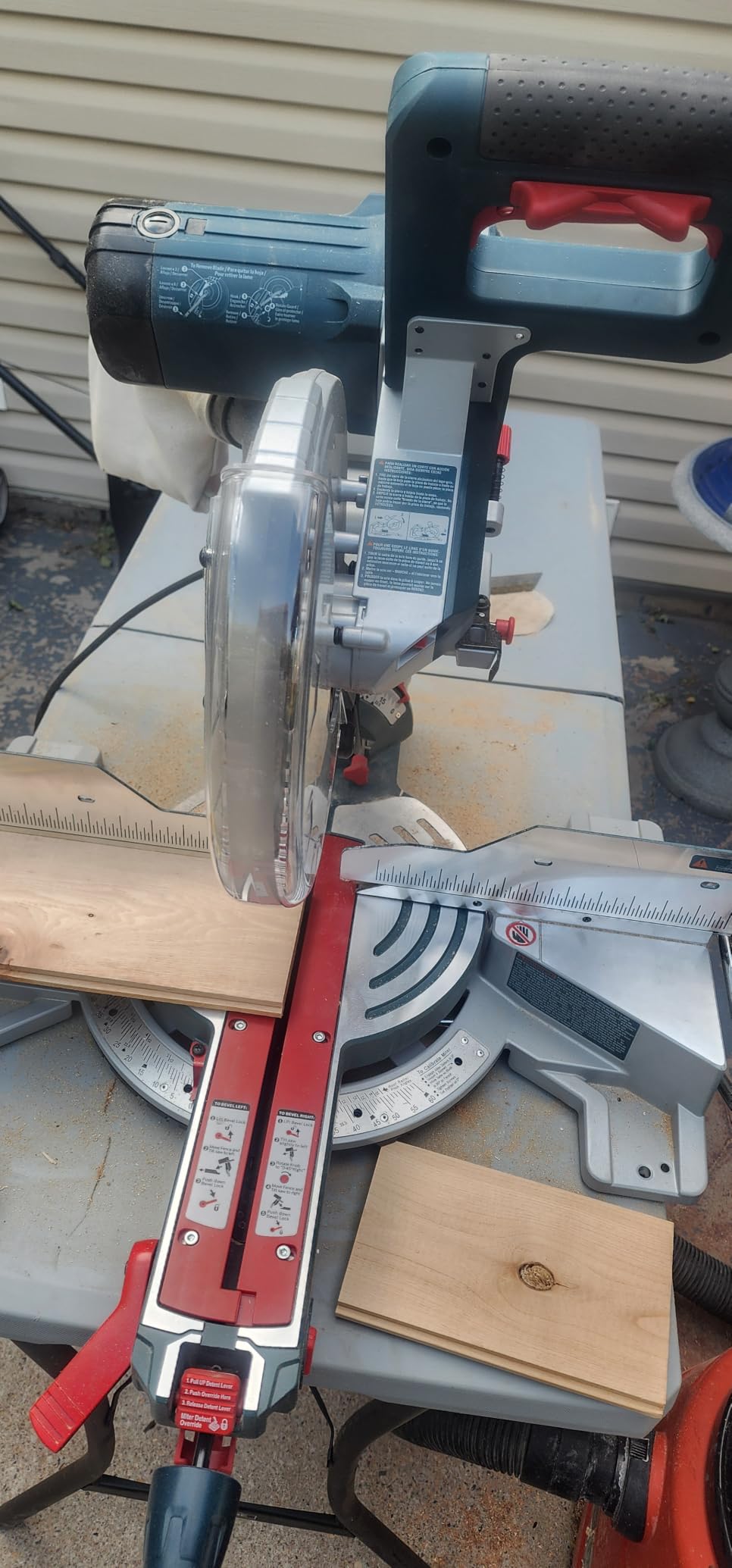
The Bosch solves a problem the other saws here do not: footprint. The axial glide system uses articulated hinge arms instead of rear rails, cutting the front-to-back depth by up to 10 inches compared with a conventional slider. In a small workshop where the saw has to sit close to a wall, that is the difference between a workable station and a compromise.
Six inches of nested crown capacity and 4-1/4 inch tall sliding fences cover the standard 5-1/2 inch crown with room to spare, and 5-1/2 inches of vertical baseboard capacity handles base runs in the same session. Owners report it needs little or no calibration out of the box, which is a good sign for a saw you will use for straight cut-to-length work as well as trim.
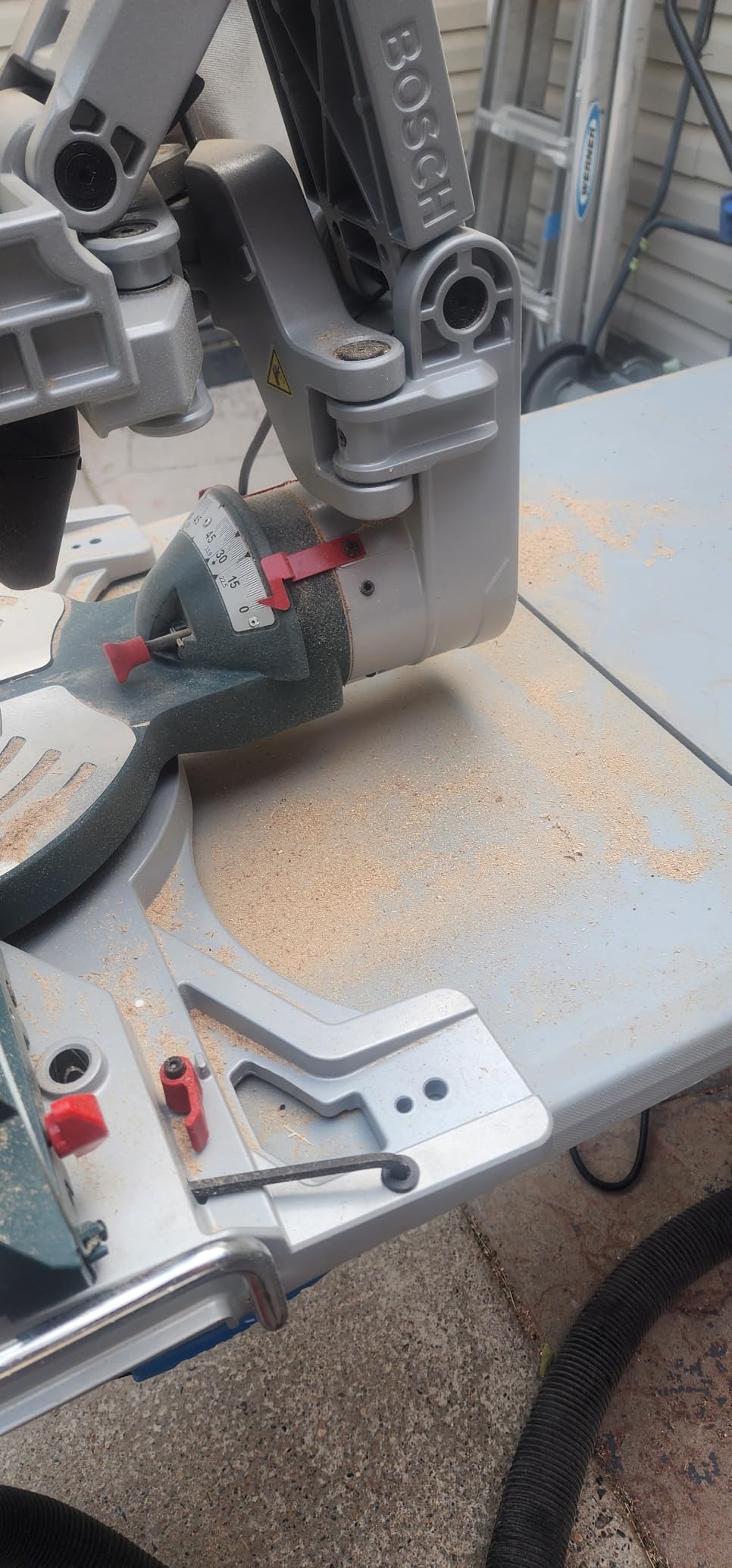
All the controls are at the front, which saves real time. You are not reaching behind the head to release the bevel or override the miter detent, and the detent set includes 31.6 degrees, which is the angle you need for standard crown.
The negatives are consistent across owner feedback. There is no laser or shadow line, the motor has no soft start so it jolts at spin-up, and the included dust nozzle does very little. At 64 pounds it is a two-person move if it is going to a job site.
Who the Bosch CM10GD suits
It suits cabinet and millwork builders working in a shop with limited floor space, and finish carpenters who want a saw they can square once and leave alone. The 60 tooth carbide blade is also the best factory blade for hardwood in a 10 inch saw here.
Who should skip the Bosch CM10GD
Skip it if you need crown above 6 inches or if you work outdoors where the lack of any cutline guide will slow you down. The DWS780 fence is a full inch and a half taller.
5. Delta S26-263L 10 Inch Shopmaster – Best Lightweight Saw You Can Carry Alone
- Lightest slider here at about 30 lb for one-person moves
- Deep throat handles 2x12 stock at full left bevel
- Solid metal construction with no flexy plastic joints
- Spindle lock makes blade changes straightforward
- Left bevel only
- so one side of every room is awkward
- Dust bag is ineffective and covers the slide rails
- Laser is weak and slightly crooked
- Included blade is a framing blade rather than a finish blade
At 29.5 pounds the Delta is the only saw in this list that one person can genuinely carry between rooms, up a set of stairs, or out to a covered porch without a second pair of hands. For a remodeller working room by room, that single fact can outweigh a foot of fence height.
The 5,500 rpm motor is the fastest spindle here, and the deep throat takes nominal 2×12 stock at full left bevel, so it doubles as a capable framing saw. The spindle lock is a small feature that you will thank yourself for every time you change blades.
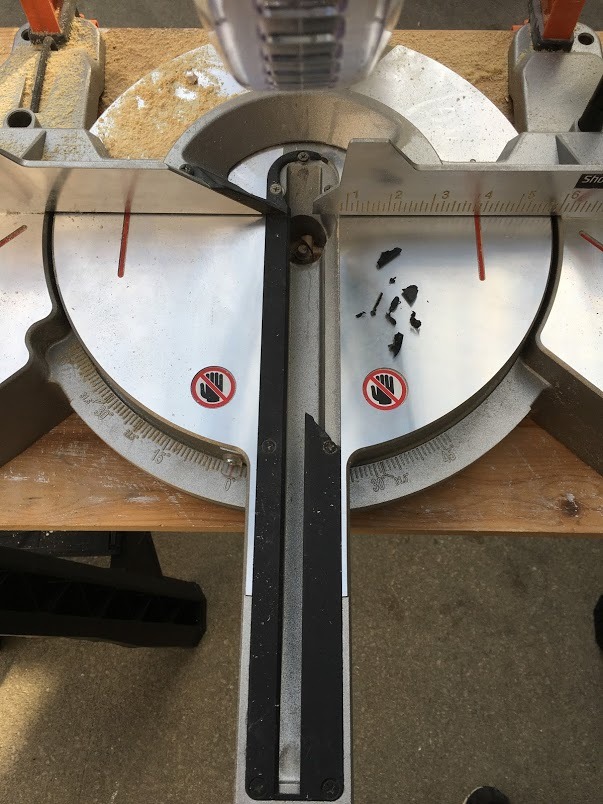
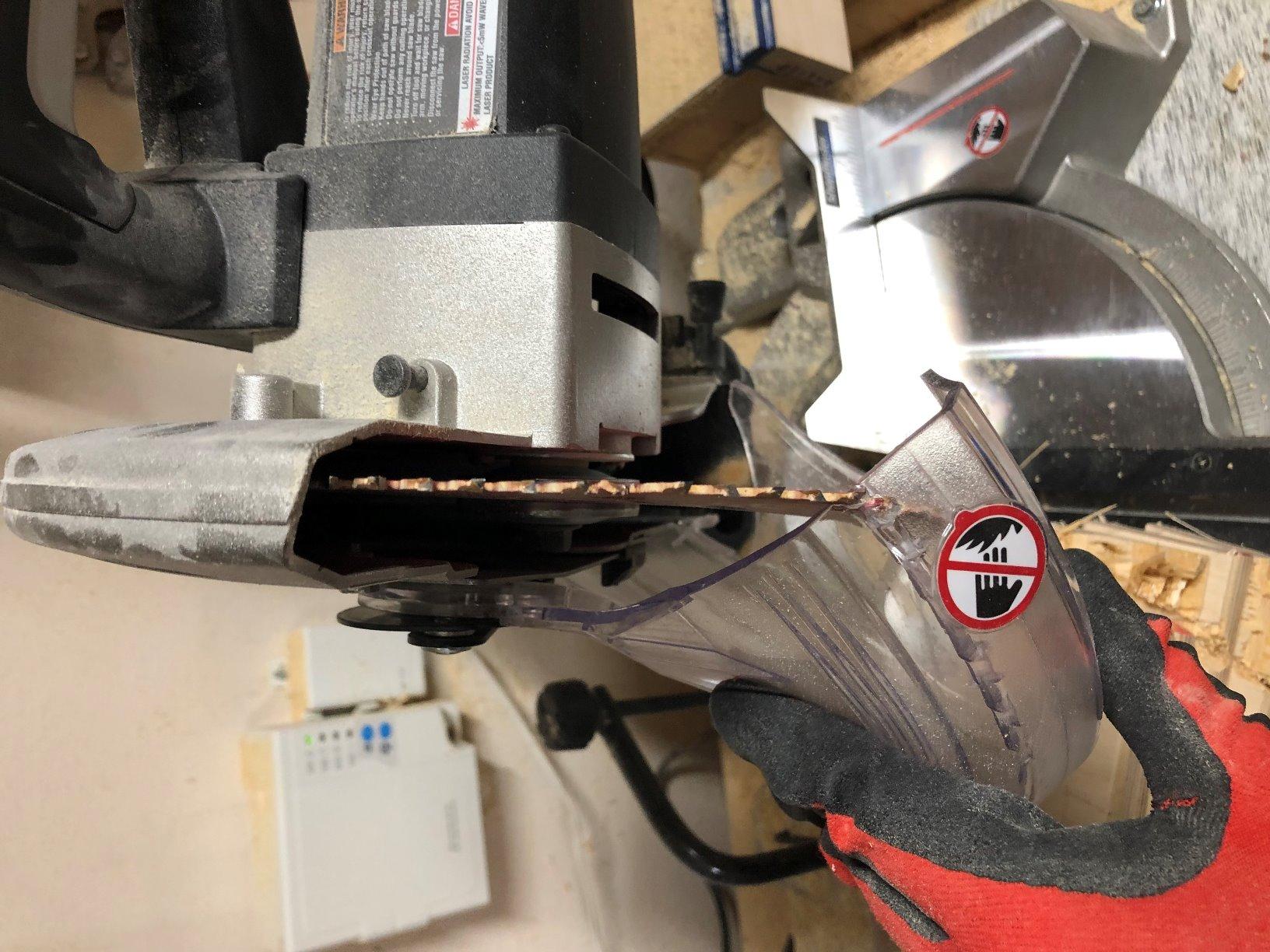
For crown specifically, be clear-eyed about the compromise. The head tilts left only, so half your crown runs are cut in a flipped orientation with the molding’s face no longer flat against the table. It is workable, and experienced carpenters do it routinely, but it is more setup per piece than a dual bevel head.
Reported weaknesses are the weak and slightly crooked laser, a dust bag that does little and sits over the slide rails, and above-average noise. The blade that comes with it is a framing blade, so plan on a finish blade from day one.
Who the Delta S26-263L suits
It suits a solo installer working scattered rooms, or anyone with a mobility or storage constraint who needs a slider they can move without help. It also works well as a second saw alongside a larger one.
Who should skip the Delta S26-263L
Skip it if crown is your primary trade. Single bevel is a poor match for volume crown work, and a dual bevel slider of similar weight, like the SKIL, will save you time on every piece.
6. Makita LS1019L 10 Inch Dual Bevel – Most Versatile for 6-5/8 Inch Crown
- Delivers 12 inch saw crown capacity from a 10 inch blade
- Linear ball bearing slide gives repeatable accuracy
- Two rail design runs flush against a wall
- Direct drive gearbox raises vertical capacity to 5-1/4 in.
- Compact for its class
- Slower 3200 rpm spindle than most rivals
- Laser needs occasional realignment checks
- Heaviest of the compact 10 inch class
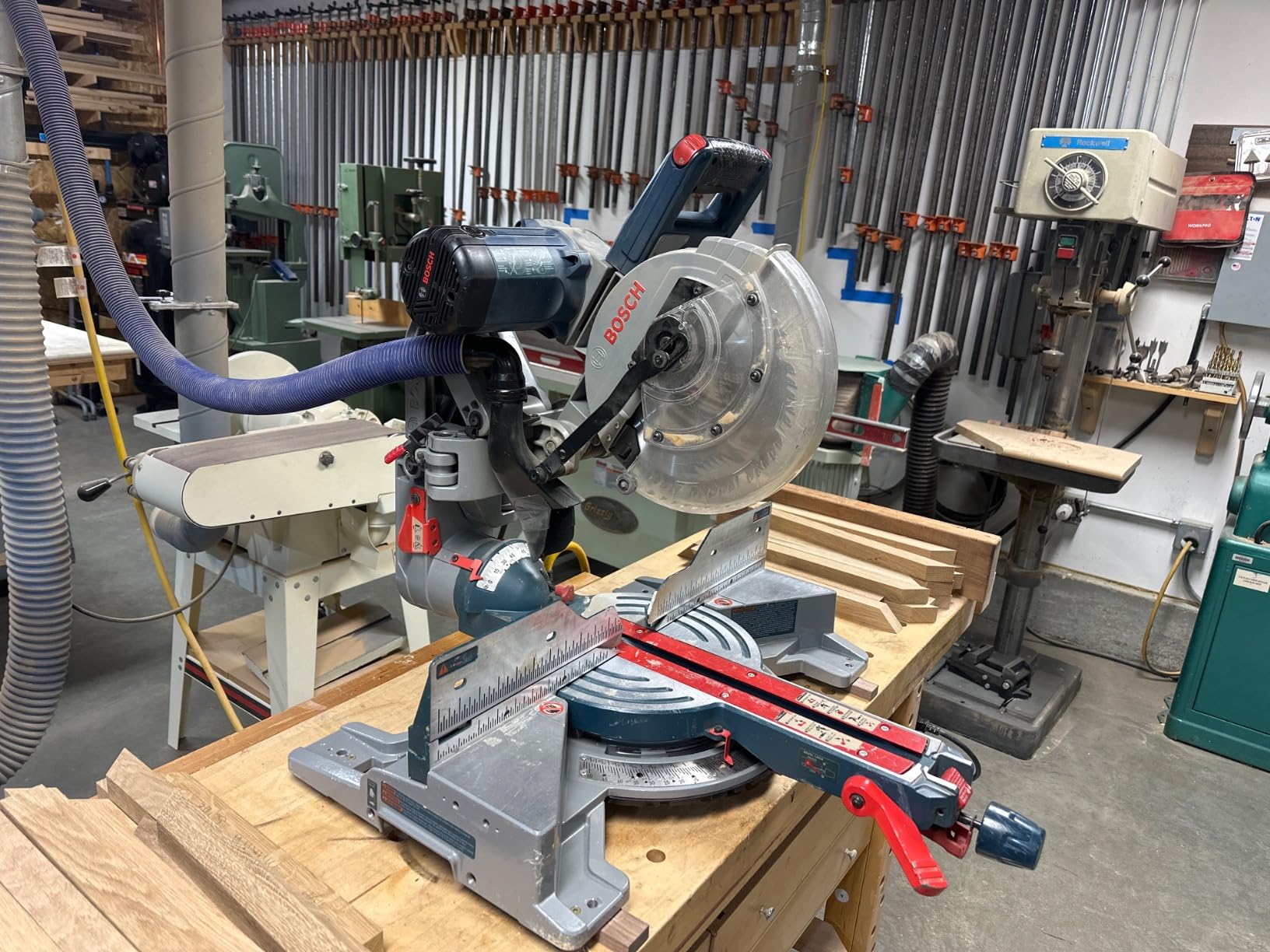
This is the saw we recommend to a finish carpenter who works in older homes with tall ceilings and does not want a 12 inch machine in the truck. Six and five-eighth inches of nested crown from a 10 inch blade is a rare amount of capacity for the size, and it covers nearly every residential profile made.
The linear ball bearing slide is the reason cuts repeat. It resists the side load that a crown cut puts on the head, and combined with the dual bevel that means the same miter angle comes back on piece ten as on piece one. The two-steel rail glide also lets the saw run close to a wall, which helps in tight rooms.
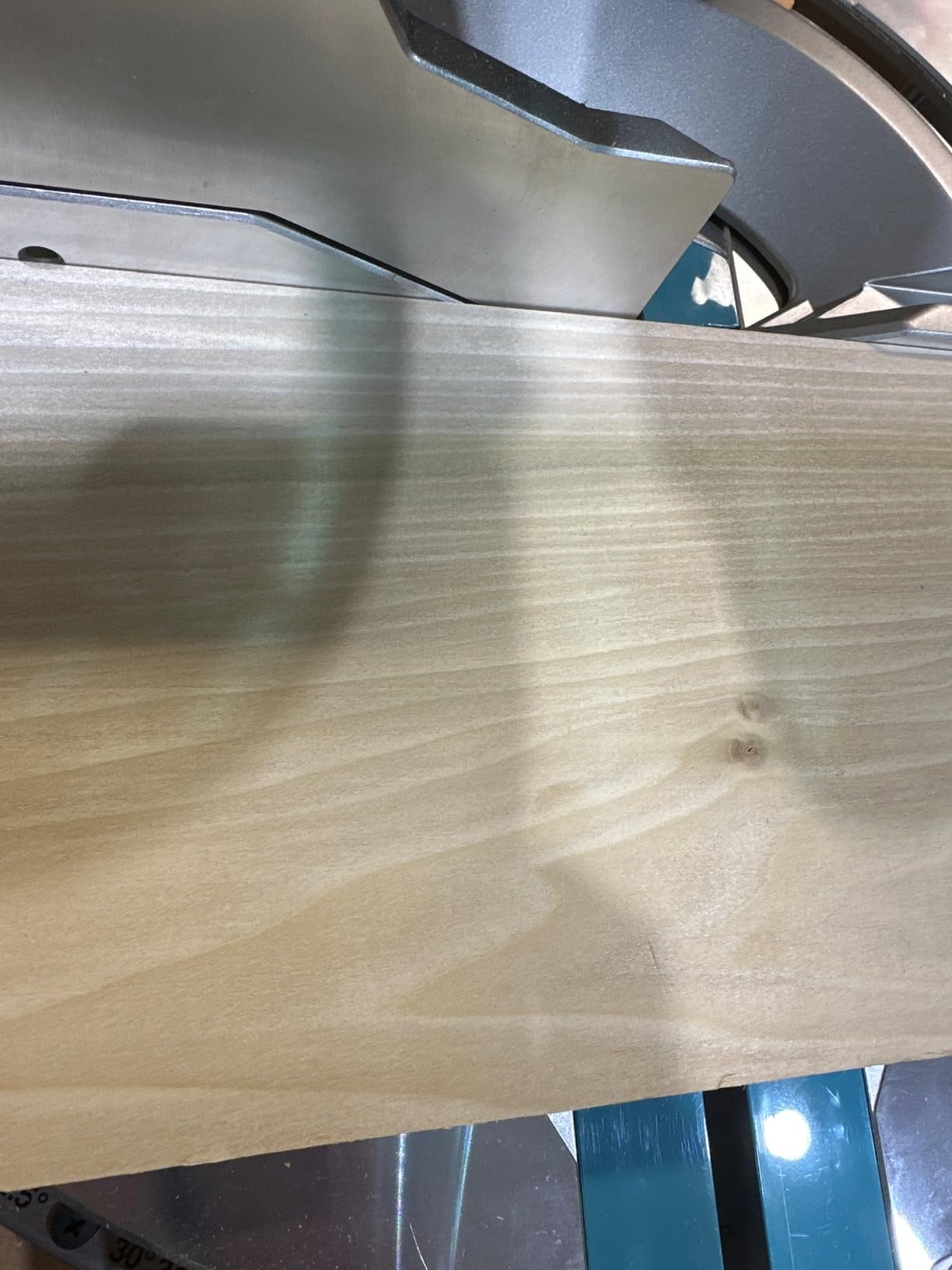
The direct drive gearbox and guard system raise vertical cutting capacity to 5-1/4 inches, which is a useful figure for baseboard work. At 57.9 pounds it sits in the middle of the weight range, heavy enough to feel stable and light enough to move between jobs with some effort.
Two things to know. The 3,200 rpm spindle is slower than nearly everything else here, so dense hardwood takes longer. And the laser needs occasional alignment checks, so verify it against a square before a trim run rather than trusting it.
Who the Makita LS1019L suits
It suits professionals and advanced hobbyists who want 12 inch class crown capacity without 12 inch class weight, and anyone working in older housing where 6-5/8 inch crown is standard. Our finish carpentry miter saw picks cover the alternatives for lighter work.
Who should skip the Makita LS1019L
Skip it if you cut solid hardwood daily and want the fastest possible cut rate, or if you need more than 6-5/8 inches nested. The LS1219L is the capacity answer and the DWS780 is the speed answer.
7. Makita LS1219L 12 Inch Dual Bevel – Best for Tall Crown and Wide Crosscuts
Makita LS1219L 12″ Dual-Bevel Sliding Compound Miter Saw with Laser
- Widest nested crown capacity of any saw here at 8 inches
- Dual dust ports extract better than most rivals
- In-front bevel lock is convenient during setup
- Direct drive guard gives 6-3/4 in. vertical capacity
- Handles wide dimensional lumber at 90 degrees
- Heaviest saw in this list at 81.6 lb
- Slow 3200 rpm spindle for heavy stock
- Sits in the premium bracket for a corded 12 inch saw
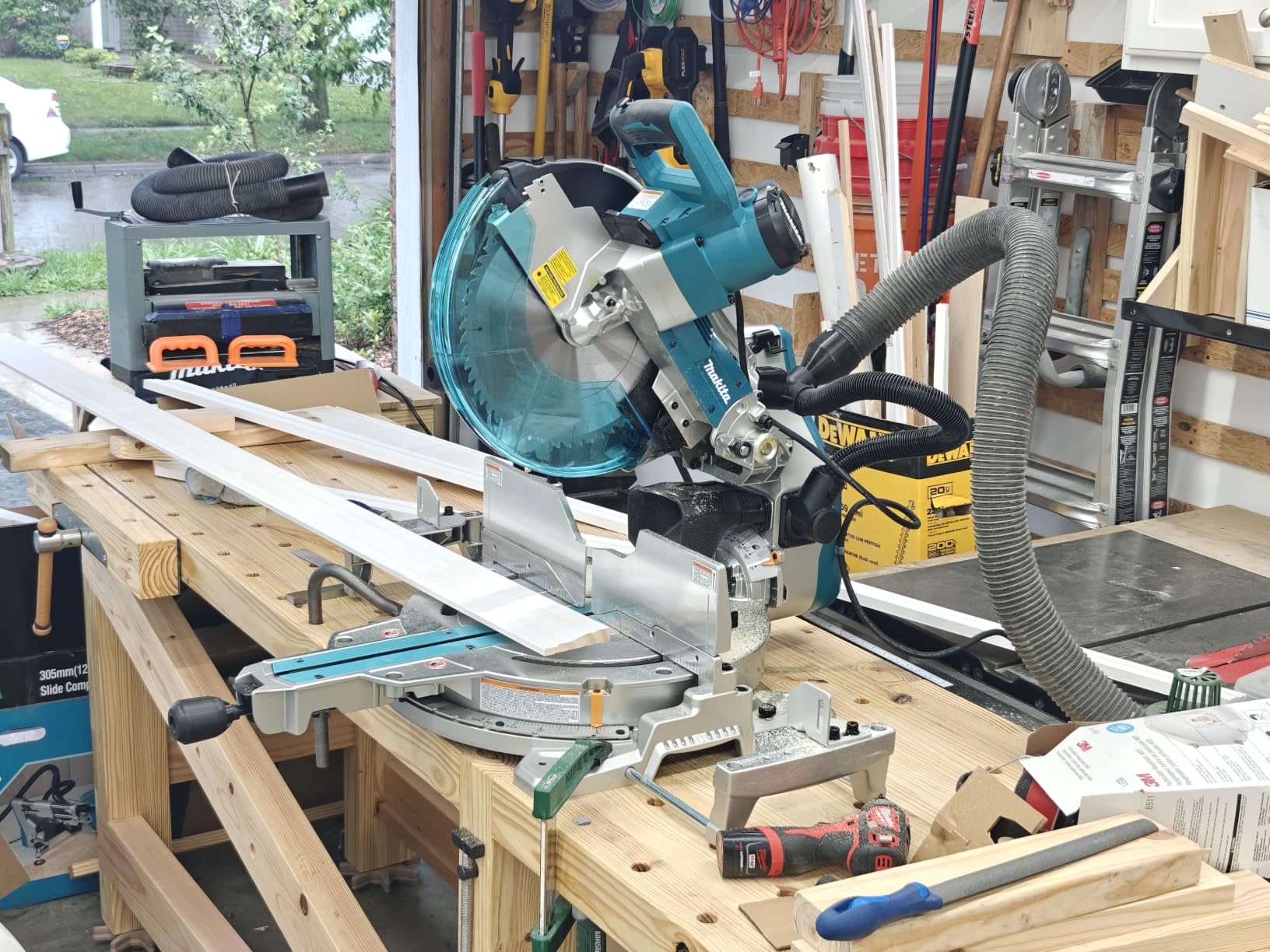
Eight inches of nested crown capacity makes this the capacity benchmark in the list. If a customer hands you a 7-3/4 inch profile from a 1910 house, this is one of the few saws here that takes it flat with full fence support rather than letting the back of the molding hang in the air.
The crosscut figure is equally useful. Fifteen inches at 90 degrees means 4×12 and 2×12 dimensional lumber goes through without a reposition, which turns the saw into a production cut-off station as well as a trim saw.
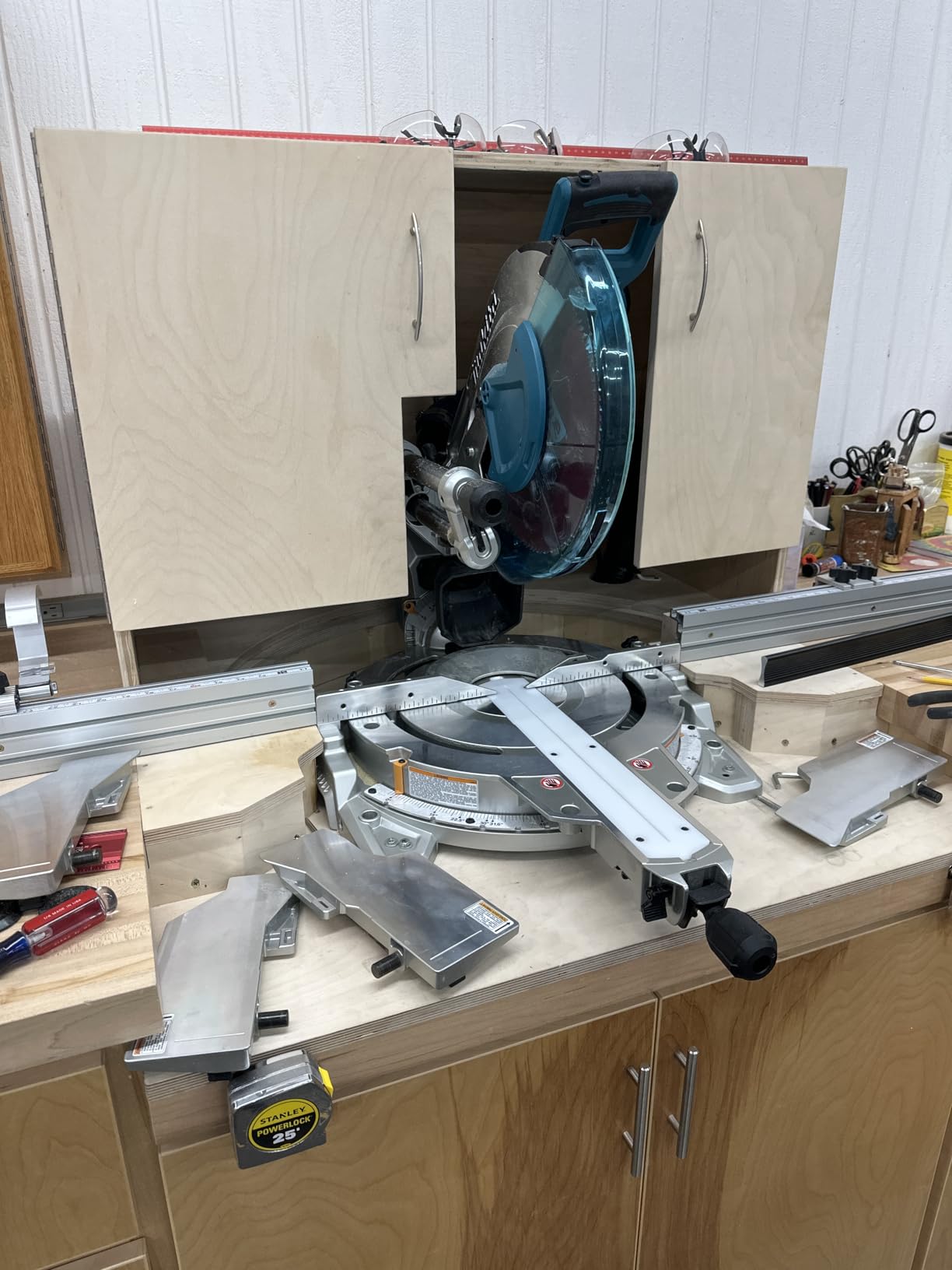
Dust extraction is the quiet strength here. Two dust ports pull more debris than the single-port designs most competitors ship, and in a finished house during a trim-only remodel that difference decides whether you are cleaning the ceiling grid or not. The in-front bevel lock keeps your hand away from the back of the head during setup.
Weight is the cost. At 81.6 pounds it is the heaviest saw on this list, and a single person moving it is a two-handed proposition. The 3,200 rpm spindle is also slow for ripping heavy stock. If it will live on a permanent stand in a shop, the weight matters much less.
Who the Makita LS1219L suits
It suits cabinet shops, millwork builders and restoration contractors working tall historic profiles, and shop-based trim businesses that will leave the saw on a stand. It is the right machine when capacity is the deciding factor.
Who should skip the Makita LS1219L
Skip it if you are a one-person operation moving between client homes, or if your crown never exceeds 6 inches. The DWS780 covers most residential work at 23 pounds less.
8. DOVAMAN DMS03G 12 Inch Dual Bevel – Best Budget Route to 12 Inch Dual Bevel
- 12 inch dual bevel at a fraction of branded pricing
- Bevels 0 to 45 degrees on both sides
- Laser guide with nine stops on left and right
- Transparent blade guard improves cutline visibility
- Package includes spare carbon brushes and clamp
- Alignment drifts out of square and needs periodic re-adjustment
- 40 tooth TCT blade is coarse for finish trim
- Fence height limits nested crown capacity
- Build quality trails the established brands
A 12 inch dual bevel saw with a laser, nine positive stops on both sides, a transparent blade guard and a transparent price point is unusual. The 4.2 inch by 13 inch cutting capacity and 3,800 rpm copper motor give it genuine crosscut reach for a first slider.
The upgraded switch with a safety lock can be operated from either hand, which matters more than it sounds on a saw with a side extension table. The accessory package is generous, including spare carbon brushes that would otherwise be a service call.
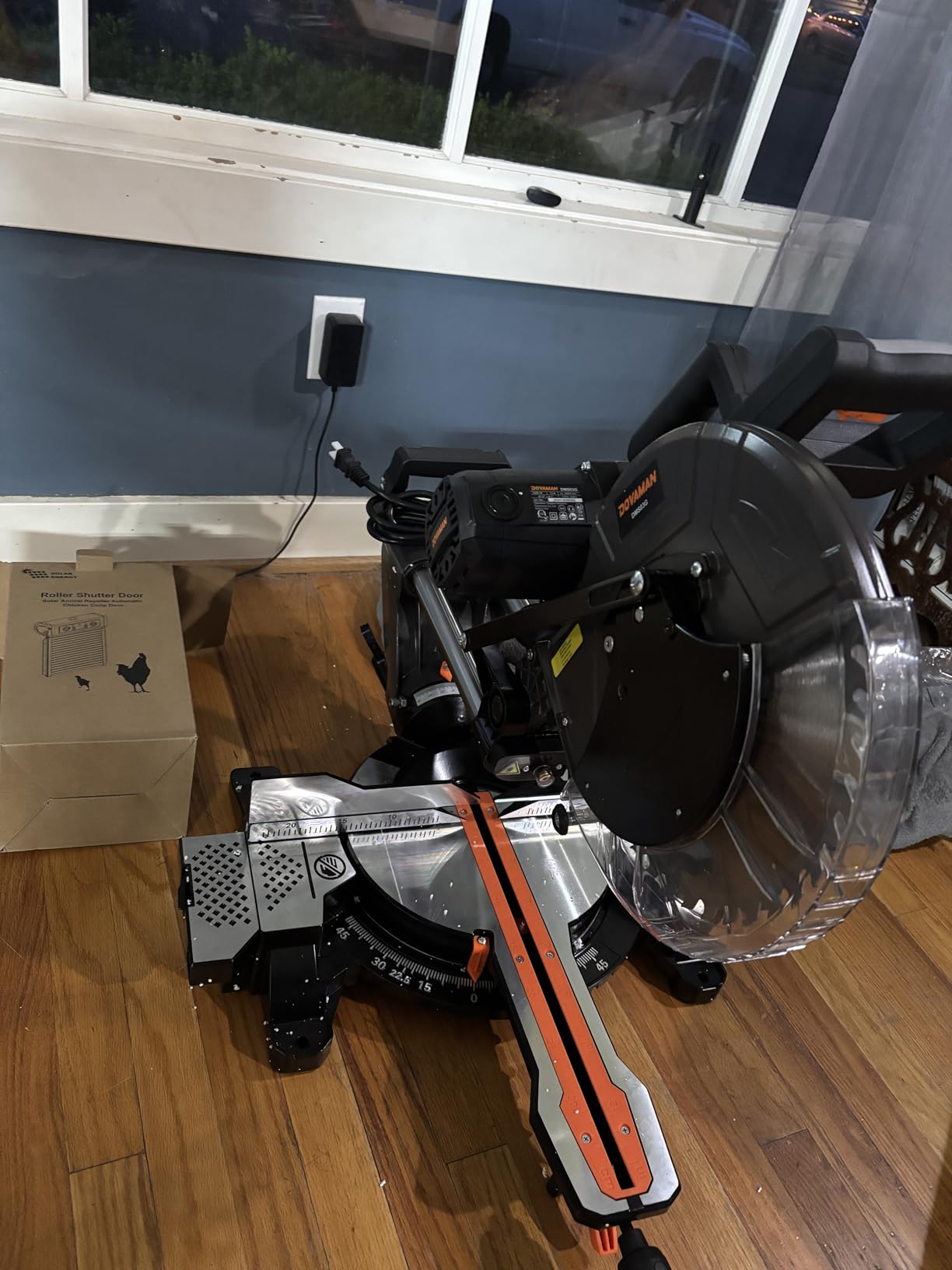
For crown work, two limitations are decisive. The 40 tooth TCT blade is a rough tooth count for a painted or stained face, and the fence is not a tall sliding type, so nested crown capacity is meaningfully below what the 12 inch label implies. Owners report the saw also drifts out of square over time and needs periodic readjustment.
That last point is the one to weigh most carefully. A saw that needs weekly alignment is fine for framing and general cutting. For a month-long crown install, you want detents and a table that hold a setting.
Who the DOVAMAN DMS03G suits
It suits a first-time slider buyer on a tight budget who mainly cuts baseboard, casing and shelving, and wants a 12 inch dual bevel footprint they can grow into. It is a reasonable step up from a non-sliding saw.
Who should skip the DOVAMAN DMS03G
Skip it for tall crown or high-visibility painted trim. If the face of the molding will be seen from three feet away, buy an 80 tooth finish blade and check the fence height against your profile first.
9. EVOLUTION R255SMS-DB+ 10 Inch Multi-Material – Best for Decking and Steel Trim
- One TCT blade cuts wood
- composite decking
- mild steel and plastic
- Cuts mild steel with virtually no sparks
- Edges come out cool with no burrs and immediately workable
- 45 and 45 dual bevel with 50 degree miter both sides
- Three year warranty and responsive parts support
- Needs lengthy initial squaring and leveling
- Fine adjustment grub screws strip if overtightened
- 2600 rpm is the slowest spindle here
- Laser is nearly useless out of the box
No other saw in this list uses a single blade for wood, composite decking, mild steel and plastic. The TCT blade included cuts steel without throwing sparks and leaves an edge that is cool to the touch and needs no deburring, which matters if you are fitting metal trim or aluminum reveals alongside the crown.
Bevel capability is 45 degrees left and right with a 50 degree miter on both sides, so the compound crown geometry is fully covered. At 44.8 pounds it moves without a second person, and the three year warranty is the longest stated here.
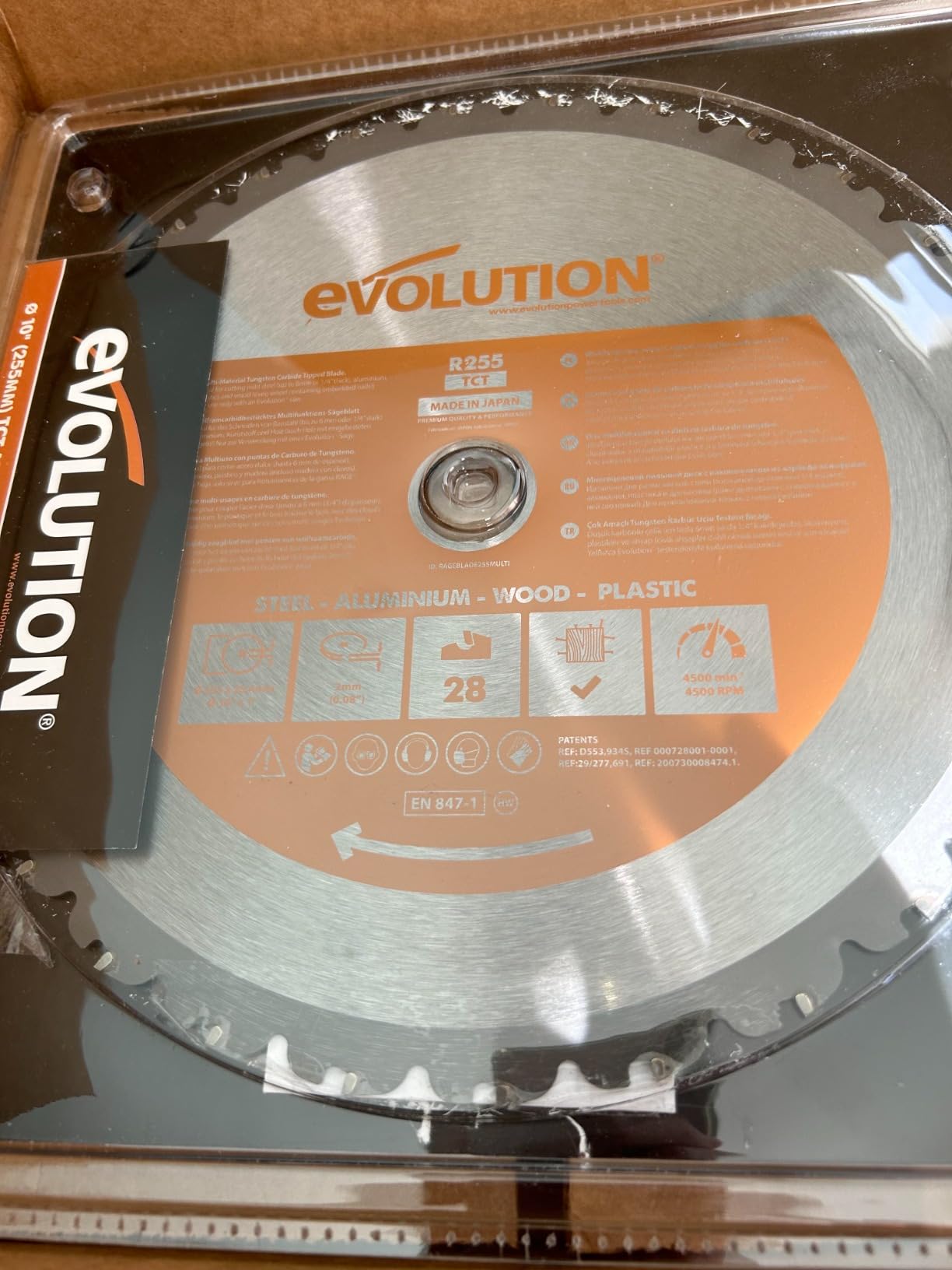
The trade is setup and speed. Owners who get it dialed in rate it very highly, but the consensus is that initial squaring and leveling takes real patience. The fine adjustment grub screws strip easily if you overtighten them, and at 2,600 rpm the spindle is the slowest in the list, so a tall crown cut in hardwood takes noticeably longer.
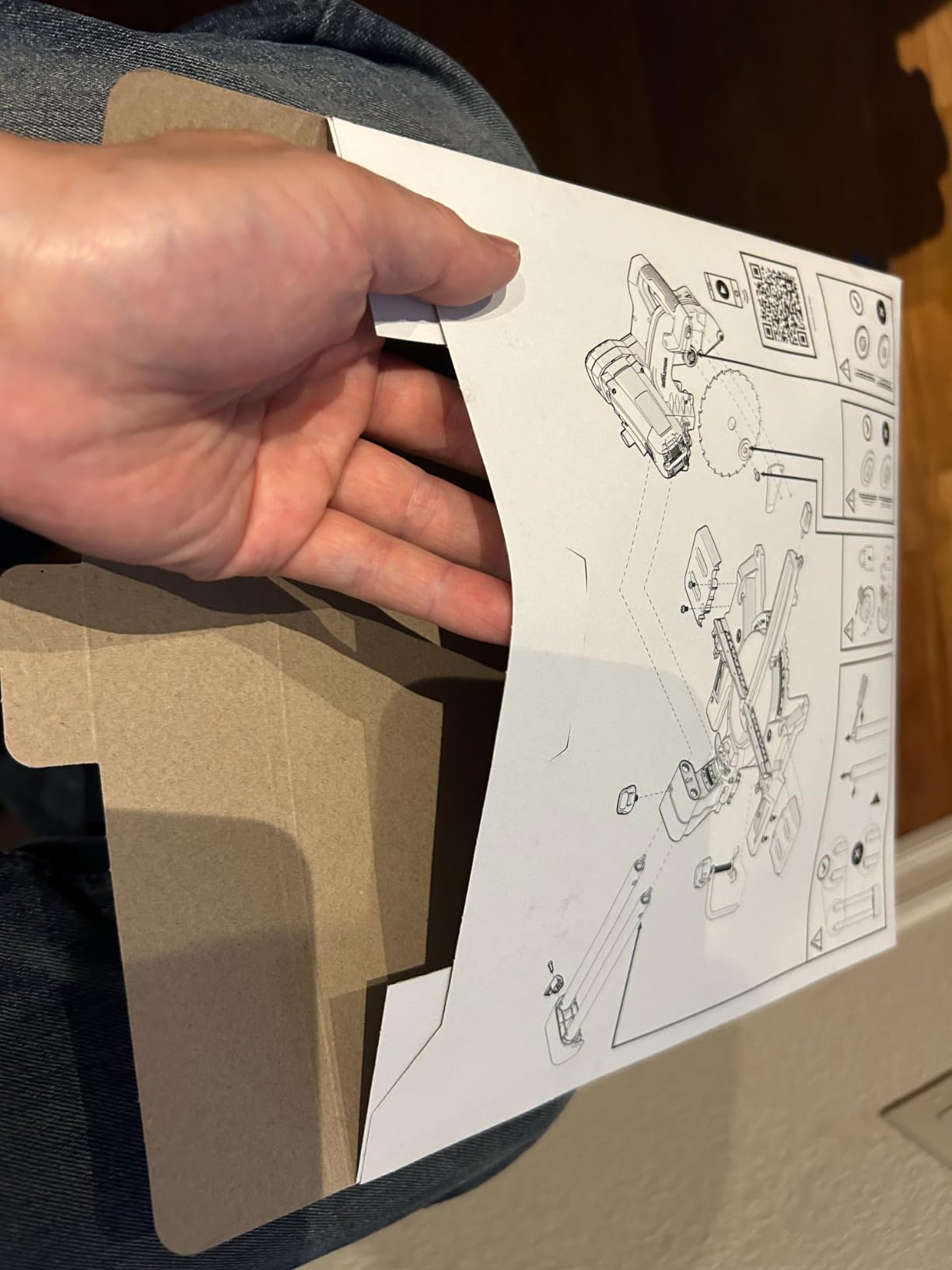
The laser is described as nearly useless as delivered, so plan on the blade and a square instead. The US version also arrives without the front clamp, which is worth ordering separately before you start trim work.
Who the EVOLUTION R255SMS-DB+ suits
It suits installers who mix materials on the same job, such as a contractor fitting composite deck skirts, aluminum base and steel handrail trim. The best 12 inch miter saws for framing picks cover the wood-only alternative if steel never enters the picture.
Who should skip the EVOLUTION R255SMS-DB+
Skip it if you want to start cutting the day it arrives. The setup time and slow spindle make it a poor first crown saw for a beginner who needs a satisfying result quickly.
10. Makita XSL06PT 36V Cordless – Best Cordless Saw for Crown Without a Cord Run
- No cord to drag or trip on an unfinished floor
- 4400 rpm brushless motor matches most corded saws here
- Up to 334 cuts per charge in 2x4 and 192 in 2x12
- Shares batteries with the wider Makita LXT platform
- Extendable side supports for long material
- About 80 lb even without a cord
- Torque dips as batteries drain on thick material
- Laser is slightly off and unreliable for critical cuts
- Bundled hold-down clamp is mediocre
- Dust port is only marginally effective
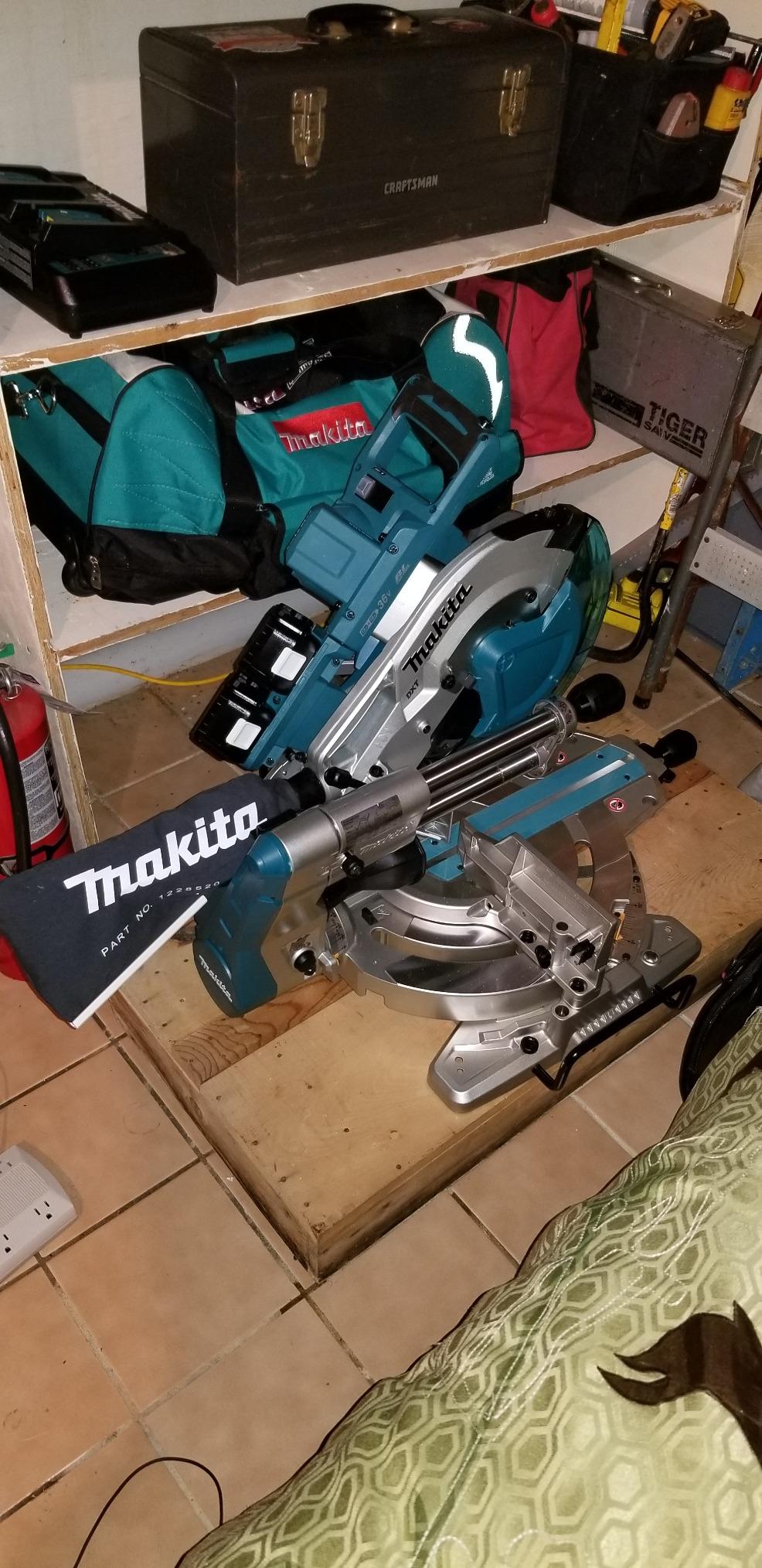
This is the answer for a saw that has to move between rooms, floors, or unfinished jobsites with no power installed. It is the only cordless option here, and it includes two 5.0Ah batteries and a charger, so there is no separate battery purchase to make.
The brushless motor delivers 4,400 rpm, which is faster than most corded saws in this list, and automatic speed change adjusts rpm and torque during the cut. Rated output is up to 334 cuts per charge in 2×4 and 192 cuts in 2×12, which covers a full room of trim in one battery for most homeowners.
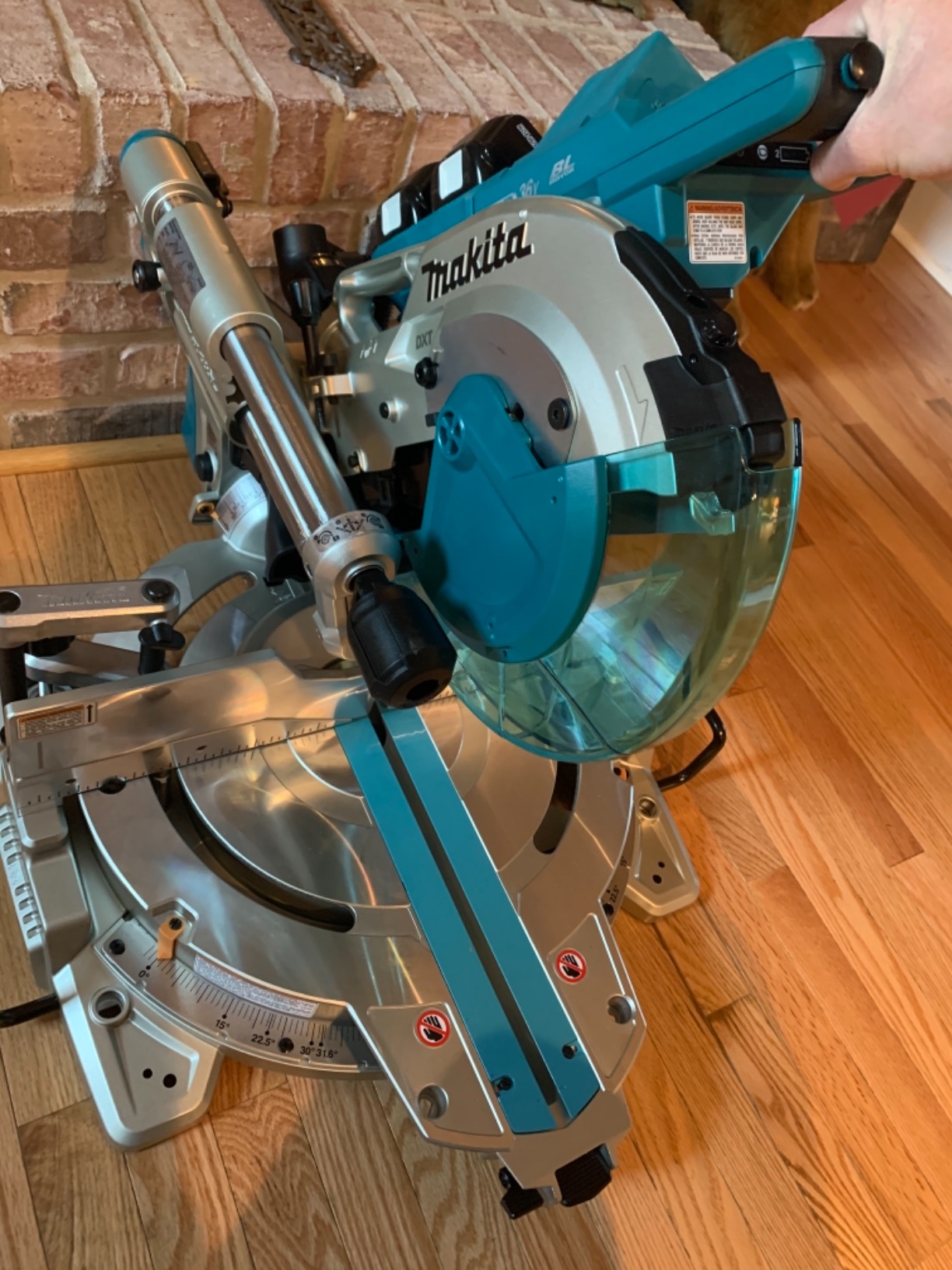
The 80 tooth micro-polished blade is the best factory blade for trim in this entire list, so you can start cutting painted crown on day one. Slide accuracy is reported as very good with essentially no deflection, and the extendable side supports help with long casing and shelf stock.
Owners who already own LXT batteries rate it as the best of its class. Everyone else notes the weight, which is about 80 pounds even with no cord attached, the torque drop as the batteries drain through thick stock, and a laser that is slightly off. Add a shop vacuum, because the dust port alone will not keep a room clean.
Who the Makita XSL06PT suits
It suits remodelers working in unpowered or distant parts of a house, and anyone already invested in the LXT platform who gets two batteries and a charger in the box. It is also our pick among cordless miter saws for trim work.
Who should skip the Makita XSL06PT
Skip it if you do not own LXT batteries already, since the cost of entry includes the platform. Also skip it for high volume crown runs, where sustained torque as the battery drains matters more than cord freedom.
11. MarvTool JS-1013C4 12 Inch Dual Bevel – Best Lightweight 12 Inch Saw
- Only 39.6 lb for a 12 inch dual bevel slider
- Owners report accurate square cuts on 4x4 stock
- Head locks into the base to save storage space
- Blade ships installed and two extension tables are included
- Two year warranty with support
- No laser or shadow line
- included dust bag does almost nothing
- 36 tooth blade is too coarse for finish trim
- Support is hard to reach for parts
- Light enough to be tippy unless clamped down
A 12 inch dual bevel slider at 39.6 pounds is a genuinely useful combination, and this saw delivers it with a head release knob that locks the carriage into the base for storage. It fits in a small van or a closet corner in a way that an 80 pound saw does not.
Bevel runs 0 to 45 degrees on both sides with an adjustable base, so compound crown geometry is covered. The 3,800 rpm 15 amp motor is mid-pack in speed, and multiple owners report accurate square cuts on 4×4 material without calibration.
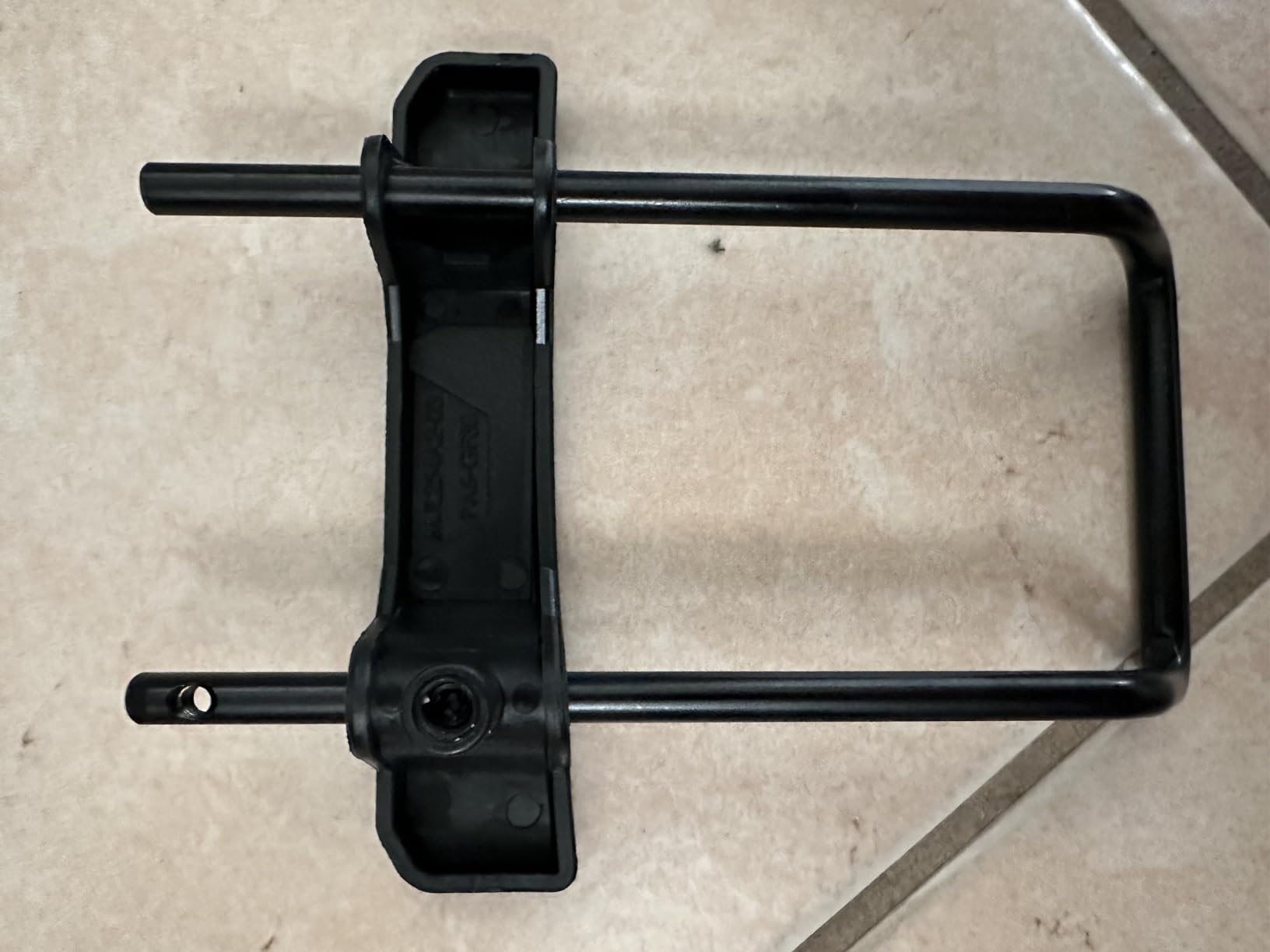
Three cautions for trim work. There is no laser or shadow line, so you set by trial cut and the blade itself. The 36 tooth TCT blade included is a rough tooth count that will mark up a painted face, so an 80 tooth finish blade is effectively mandatory. And the dust bag does almost nothing even with a vacuum attached.
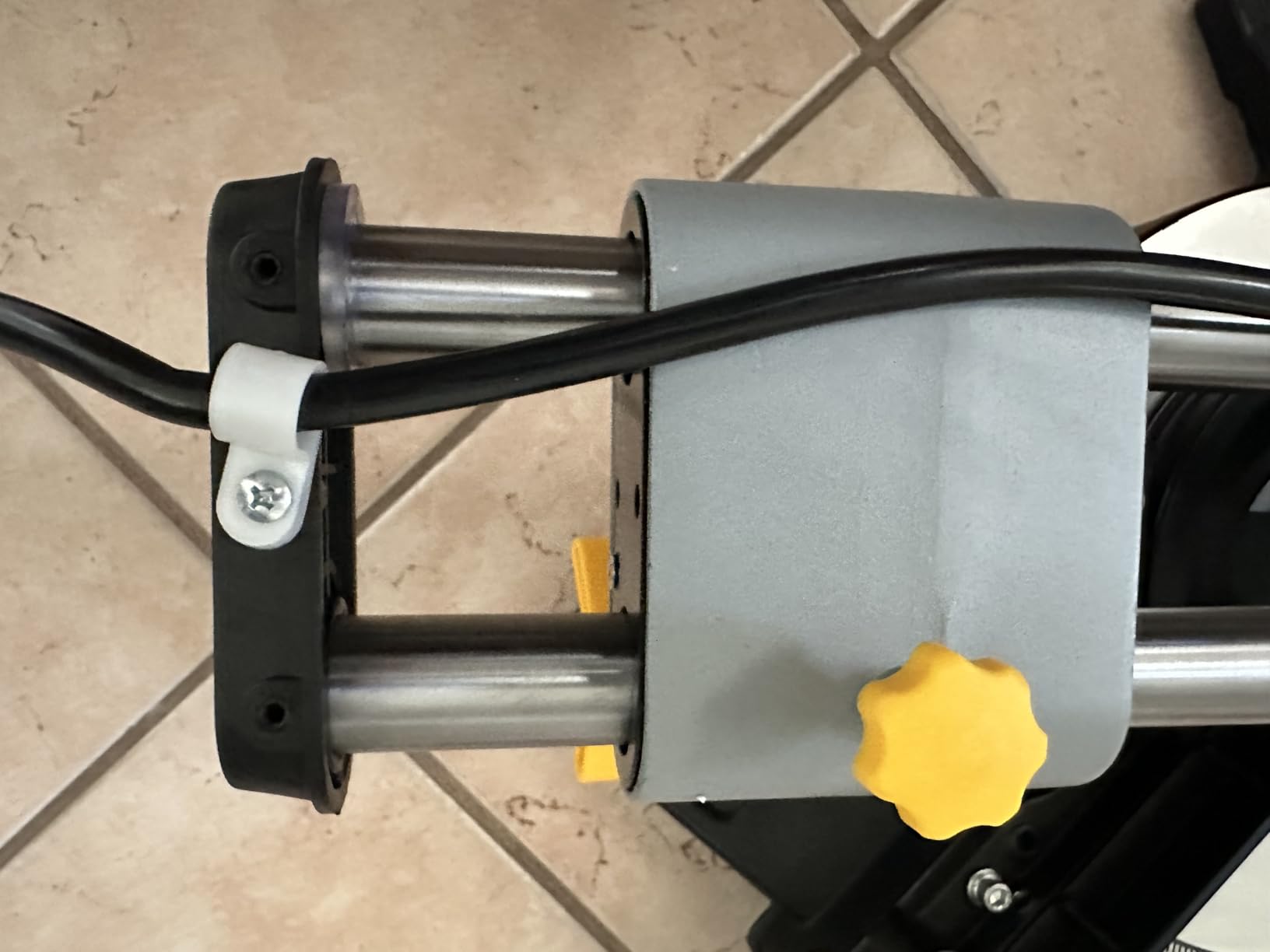
The light weight cuts both ways. It is easy to move but tippy on a stand unless clamped, and getting replacement parts from the manufacturer is reported to be difficult, so check support availability in your region before committing.
Who the MarvTool JS-1013C4 suits
It suits a homeowner with a small workshop, a rental or van-based installer, and anyone who wants 12 inch capacity they can still lift alone. The lockable head is a real bonus in a shared shop where space is tight.
Who should skip the MarvTool JS-1013C4
Skip it if visible finish quality on painted crown is the goal without any further spending, since the blade and the missing cutline guide both need fixing first. For a first-time trim saw, the SKIL is a more complete package.
12. VEVOR 12 Inch Dual Bevel LED Guide – Best for a Wall-Side Shop Setup
- Fastest spindle here at 5000 rpm with a 60 tooth blade
- LED alignment guide is visible without buying a laser module
- Aluminum base is light and sheds heat well in continuous cutting
- Axial slide lets the saw sit close to a wall
- Dual bevel 0 to 45 degrees on both sides
- Aluminum base has less mass than cast iron and can feel less stable
- 60 tooth blade and blade length field are inconsistent across listings
- Long term support is less proven than the major brands
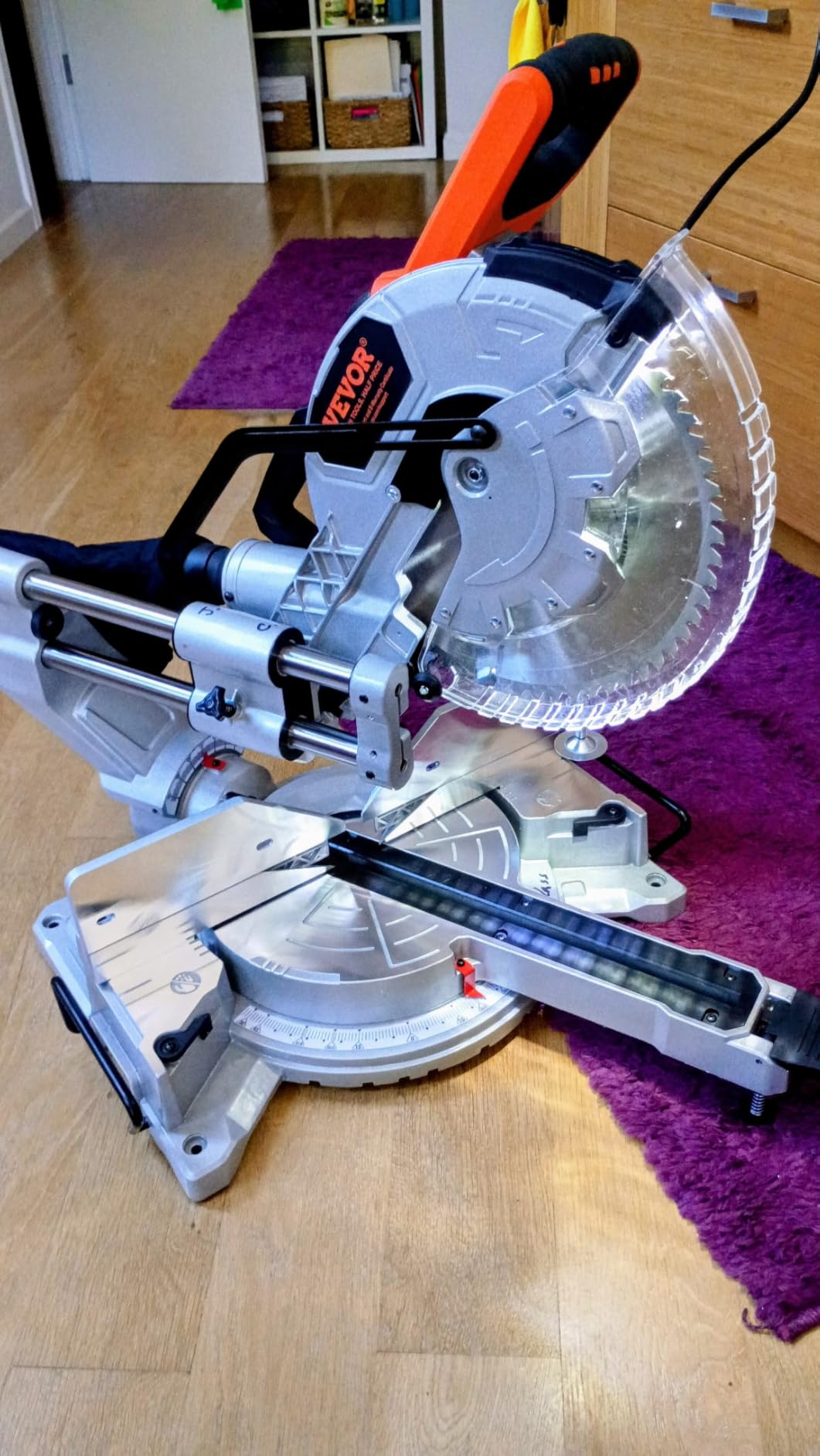
The 5,000 rpm spindle is the fastest in this list, and paired with a 60 tooth blade it cuts molding quickly with an edge clean enough for most painted trim. For long production runs on casing or baseboard, that speed is the main argument for this saw.
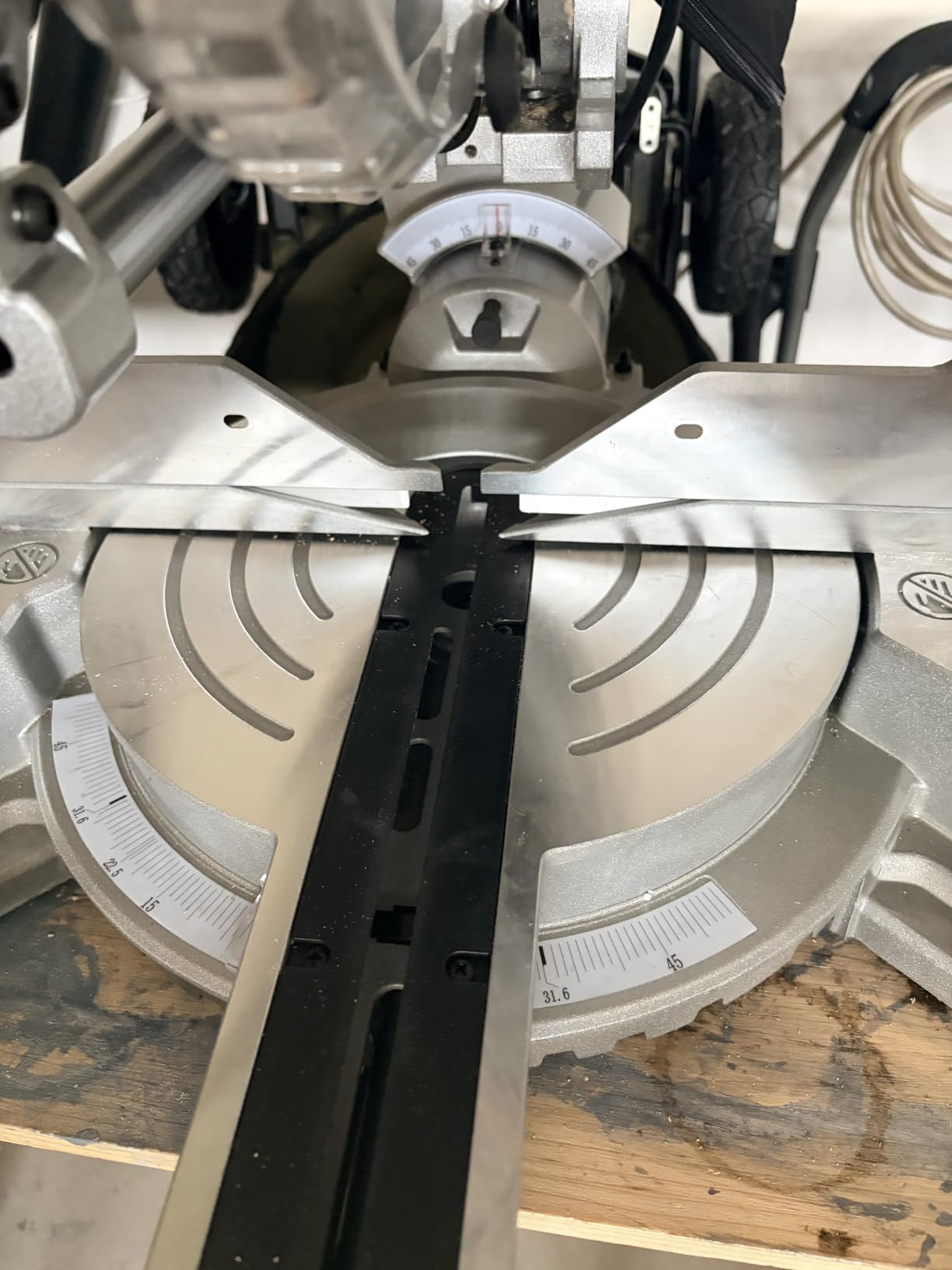
The axial sliding system means the saw can be placed against a wall to save floor space, which matters in a garage shop. The LED guide projects an alignment line without needing a separate laser module, and unlike a laser dot it stays readable when you are leaning over the cut.
The aluminum base is a deliberate choice, and it cuts both ways. It weighs 46.4 pounds and dissipates heat well during continuous cutting, but it has less mass and damping than a cast iron base, so it can feel less stable on long stock unless the material is well supported.
Owners also note that the 60 tooth blade and blade length details are not consistent across the brand listings, so verify what actually ships before you plan a crown job around it. At the time of writing, long term support for parts is less established than the major brands.
Who the VEVOR 12 Inch suits
It suits a garage-based installer who wants 12 inch dual bevel capacity, a fast spindle for production casing work, and a footprint that lets the saw sit against a wall. The LED guide is a good match for daylight shop conditions.
Who should skip the VEVOR 12 Inch
Skip it if you are fitting a room of tall crown, since the fence is not a tall sliding type and nested capacity is limited. Confirm the blade that ships, and keep an 80 tooth finish blade on hand.
Buying Guide: Crown Mitering Done Right in 2026
Why crown molding is cut at 31.6 degrees
Crown molding ships in a spring angle, which is the angle of the face relative to the back, and most North American profiles are 52 degrees, giving a spring angle of 90 minus 52, or 38 degrees. When you set the crown flat on the saw table with its back on the fence and the table swung to 45 degrees, the two half angles add together, so a 45 degree miter meets the 38 degree spring as 22 plus 22 plus 38, which equals 82. You need 90 to close the joint flat.
To find your saw’s crown setting, take the miter angle you need and subtract half the molding’s spring angle. For a 52 degree spring profile that is 45 minus 19, which is 26 degrees of miter each way. Where people get 31.6 is a 38 degree spring angle, giving 45 minus 7.7. Set the saw to the number your molding calls for and stop worrying about a universal answer.
This is also why the Bosch CM10GD scores well for us. Its miter detents include 31.6 degrees, so a saw with that detent saves a lookup on every job.
How tall your fence has to be for nested crown
The crown sits nested, meaning flat on the saw table and back against the fence, at the same angle it has in the room. The saw then makes two cuts at once, the miter from the table and the bevel from the tilted head. If the fence is shorter than the face of the molding, the back of the piece drops away and the cut twists, which shows up as a gap on the ceiling side.
Published nested crown heights run from 6 inches on the Bosch CM10GD, through 6-5/8 inches on the Makita LS1019L, to 7-1/2 inches on the DEWALT DWS780 and 8 inches on the Makita LS1219L. Measure your tallest profile from the back of the crown to the bottom edge of the face, then buy the saw with the next number up. Several saws here do not publish a nested figure at all, which is a good reason to look elsewhere for tall profiles.
Dual bevel versus single bevel for crown work
A single bevel head tilts one way only, so half your crown runs get cut with the workpiece flipped and the face no longer flat on the table. It works, and experienced carpenters do it daily, but it doubles your setup and makes it easier to misread the cut line. Two saws in this list are single bevel, the DOVAMAN DMS01A and the Delta S26-263L, and both are honest tools for the right job.
For a full house of crown, a dual bevel head pays for itself in setup time alone. For a single room, or for baseboard and casing work, the single bevel saws are fine and lighter.
10 inch versus 12 inch blade for crown molding
The real answer is that blade diameter matters less than fence height, which is exactly why the Makita LS1019L is on this list. It delivers 6-5/8 inches of nested crown from a 10 inch blade through a taller fence and a direct drive guard system, while the 12 inch Bosch CM10GD manages 6 inches.
Choose 12 inch when your crown exceeds 6-5/8 inches, when you regularly cut dimensional lumber wider than 10 inches, or when you want a single saw for both framing and trim. Choose 10 inch when weight and price drive the decision, since the 12 inch saws here span 53.9 to 81.6 pounds while several 10 inch sliders sit below 50. Every saw here is a sliding compound saw, so the sliding requirement is satisfied across the board.
The blade that actually matters for trim
The blade shipped with most of these saws is not a finish blade, and that is the single most common complaint in owner feedback. Buyers routinely replace it before the first cut and report an immediate improvement in edge quality. For crown molding, use an 80 tooth finish blade with a thin kerf and an alternate top bevel grind, which shears the fibers from both sides and dramatically reduces tear-out on the face.
Two saws here ship with a blade you can use from day one. The DEWALT DWS780 includes an 80 tooth blade, and the Makita XSL06PT includes an 80 tooth micro-polished blade. The Makita XSL06PT is also the only cordless option here, so it pairs well with our cordless trim saw coverage.
The four step nested crown cutting procedure
First, identify the spring angle of your molding from the manufacturer or by measuring the face angle, then set the miter angle to half the corner angle minus half the spring angle. For a 90 degree corner with a 52 degree spring, that is 45 minus 26, so 26 degrees each way.
Second, install crown molding stops or blocks on the fence at the height of the molding, and set the table to your calculated miter angle with the head tilted to the matching bevel. Third, lay the crown in its nested position against the fence, flat on the table, back against the stop, and let the head come down without forcing it. Fourth, support the material, keep the blade sharp, and always make a test cut on scrap before you cut the visible piece.
Remember that inside corners are almost never truly square. Coping the second piece of an inside corner, rather than mitering both, is the technique most experienced finish carpenters use, and it needs a cope saw or a jigsaw rather than the miter saw itself.
Dust collection and moving the saw to the job
Poor dust collection is the most common complaint across owner feedback for this whole category. Most of the included dust bags do little, and on several saws the bag sits in a position that blocks the handle or covers the slide rails. Connecting a shop vacuum to the port changes the experience more than any other single accessory.
On weight, the spread here runs from 29.5 pounds for the Delta to 81.6 pounds for the Makita LS1219L. Above about 60 pounds, plan on two people or a stand with wheels. Most buyers keep the slider mounted permanently on a dedicated shop stand and bring a lighter non-sliding saw to the job, which is the arrangement we would set up too.
Frequently Asked Questions
Why 31.6 degrees for crown molding?
Crown molding has a spring angle, usually 38 degrees for a 52 degree profile, and when the table is at 45 degrees the miter angle must be reduced so the two cuts add up to 90. Half of 38 is 19, and 45 minus 19 gives 26 degrees, not 31.6. The 31.6 figure comes from a different profile: 45 minus half of 26.8. Always calculate the miter from your molding’s actual spring angle instead of trusting a universal number.
What is a sliding miter saw called?
It is usually called a sliding compound miter saw, a sliding miter saw, or simply a slider. It is called compound because the head tilts to cut a bevel, and sliding because the carriage rides on rails to crosscut material wider than the blade diameter.
Do I need a sliding miter saw for crown molding?
You need a dual bevel head for crown, but not necessarily rails. Rails matter when your crown is tall or your stock is wide, because the sliding fence provides the support height that keeps a tall profile flat. If your crown is under about 4 inches and your stock fits the blade diameter, a good non-sliding dual bevel saw can do the job.
What is the best miter saw blade for crown moulding?
An 80 tooth finish blade with a thin kerf and an alternate top bevel grind is the standard answer for crown. The high tooth count keeps the edge from chipping on the face and the ATB grind shears fibers from both sides, which cuts tear-out on painted or stained molding. Replace the factory framing or general purpose blade before your first trim cut.
What are the best mitre saw settings for cutting crown moulding?
Set the table to half your corner angle minus half the spring angle, then tilt the head to the matching bevel on the same side. For a 90 degree corner with a 52 degree profile, that is 26 degrees of miter with a 26 degree bevel. The crown lies flat on the table and flat against the fence the whole time, which is what nested means.
Conclusion
After weighing all twelve saws on nested crown capacity, detent repeatability, fence height, dust extraction and weight, the DEWALT DWS780 is our pick as the best sliding compound miter saw for crown molding. It combines 7-1/2 inches of nested capacity with a shadow line cutline system that stays readable in real working light, and at 58 pounds it is still a one-person move.
Buy the SKIL MS6305-00 if you are fitting standard residential profiles and want to spend less. Buy the Makita LS1219L if 8 inches of nested capacity is the deciding factor, and leave it on a stand. In every case, buy an 80 tooth finish blade and set up the crown stops before the first cut, because the saw and the blade are half the result and the setup is the other half.