

A benchtop thickness planer is the single machine that turns cheap rough-sawn boards into flat consistent stock, and picking the right one comes down to three numbers: how much thickness you need to remove, how hard the species is, and how many board feet you push through a month. Get those three right and the machine choice nearly picks itself. Our team compared nine benchtop planers against owner reports to find the best benchtop planers for rough lumber, from heavy two-speed straight-knife workhorses to spiral and helical heads that shrug off figured stock.
The trap most buyers fall into is treating a planer like a jointer. A planer makes the two faces of a board parallel, and it will not flatten a cupped, bowed or twisted board, because the feed rollers press that board against a flat bed and hold it there. If your rough lumber comes off the mill warped, you need one pass on a jointer first, and we cover that distinction in our guide to benchtop jointers for small shops.
Everything below reflects manufacturer documentation and owner feedback gathered in 2026. Specs like cutterhead diameter, feed rate and maximum depth of cut come from the machine documentation; the complaints about snipe, blade life and chip mess come from people who own these machines. If you want the wider picture on the format, our wood planers for lumber guide and thickness planers for furniture makers roundup cover the jobs each machine handles best.
Top 3 Benchtop Planers for Rough Lumber for October 2026
Three machines stand out once you weight them for rough work specifically: the DeWalt DW735X for feed power and two-speed control, the DeWalt DW734 for shops that want that same architecture in a narrower body, and the WEN PL1326 for owners who want a spiral head without a premium price tag.

DeWalt DW735X 13-Inch Two-Speed Planer
- 15 amp 20000 rpm motor
- Three-knife cutterhead
- Two speeds at 96 and 179 CPI
- Fan-assisted chip ejection

DeWalt DW734 12-1/2 Inch Planer
- 15 amp 20000 rpm motor
- Three-knife head at 96 CPI
- Four-column carriage lock
- 33-1/2 in table support

WEN PL1326 13-Inch Spiral Planer
- 26 rotatable HSS spiral blades
- 13 inch width and 6 inch thickness
- 15 amp at 10000 rpm
- Cast iron bed
Best Benchtop Planers for Rough Lumber in October 2026
Here is every machine in the lineup with the specs that actually change the result on rough stock. Read across the rows: two-speed machines give you a slow finish feed, helical and spiral heads cut quieter and resist tearout, and cast iron or heavy aluminum bases keep long rough boards flat.
| Product | Specifications | Action |
|---|---|---|
| DeWalt DW735X 13-Inch Two-Speed Planer |
|
Check Latest Price |
| DeWalt DW734 12-1/2 Inch Planer |
|
Check Latest Price |
 CRAFTSMAN CMEW320 12.25 Inch Planer CRAFTSMAN CMEW320 12.25 Inch Planer |
|
Check Latest Price |
 Makita 2012NB 12 Inch Planer Makita 2012NB 12 Inch Planer |
|
Check Latest Price |
| WEN PL1326 13-Inch Spiral Planer |
|
Check Latest Price |
 VEVOR 13-Inch Three-Blade Two-Speed Planer VEVOR 13-Inch Three-Blade Two-Speed Planer |
|
Check Latest Price |
 JET JWP-13BT 13-Inch Helical Planer JET JWP-13BT 13-Inch Helical Planer |
|
Check Latest Price |
 VEVOR 13-Inch Spiral Planer VEVOR 13-Inch Spiral Planer |
|
Check Latest Price |
 RIKON 25-135H 13-Inch Helical Planer RIKON 25-135H 13-Inch Helical Planer |
|
Check Latest Price |
1. DeWalt DW735X 13-Inch Two-Speed Planer: Best Overall for Rough Lumber
DEWALT Thickness Planer, 13-inch Wood Planer, Three Knife Two Speed, 15 Amp, 20,000 RPM Motor (DW735X)
- Handles deep rough passes on wide hardwood
- Two speeds trade chip rate against finish quality
- Automatic carriage lock limits snipe
- Folding infeed and outfeed tables included
- Spare knife set included in the box
- Heavy enough that it stays bolted to a bench
- Stock knives dull relatively fast
- Very loud
- Draws heavy current and can trip a 15 amp circuit
The DW735X is the machine most people end up buying, and after reading several thousand owner reports it is hard to argue with the consensus. The 15 amp 20,000 rpm motor drives a three-knife head turning at 10,000 rpm, which gives it the feed muscle to pull a wide ash or oak board through without the rollers bogging. On rough stock that means you can take a real first pass instead of nibbling at it.
For a rough-lumber buyer, the gearbox is the feature that matters most. Low speed gives 179 cuts per inch for a fine finish after the heavy work is done, high speed gives 96 CPI when you are just knocking stock down to size. The automatic carriage lock is the quiet hero: it removes bed movement on the critical part of the cut, which is where snipe starts.
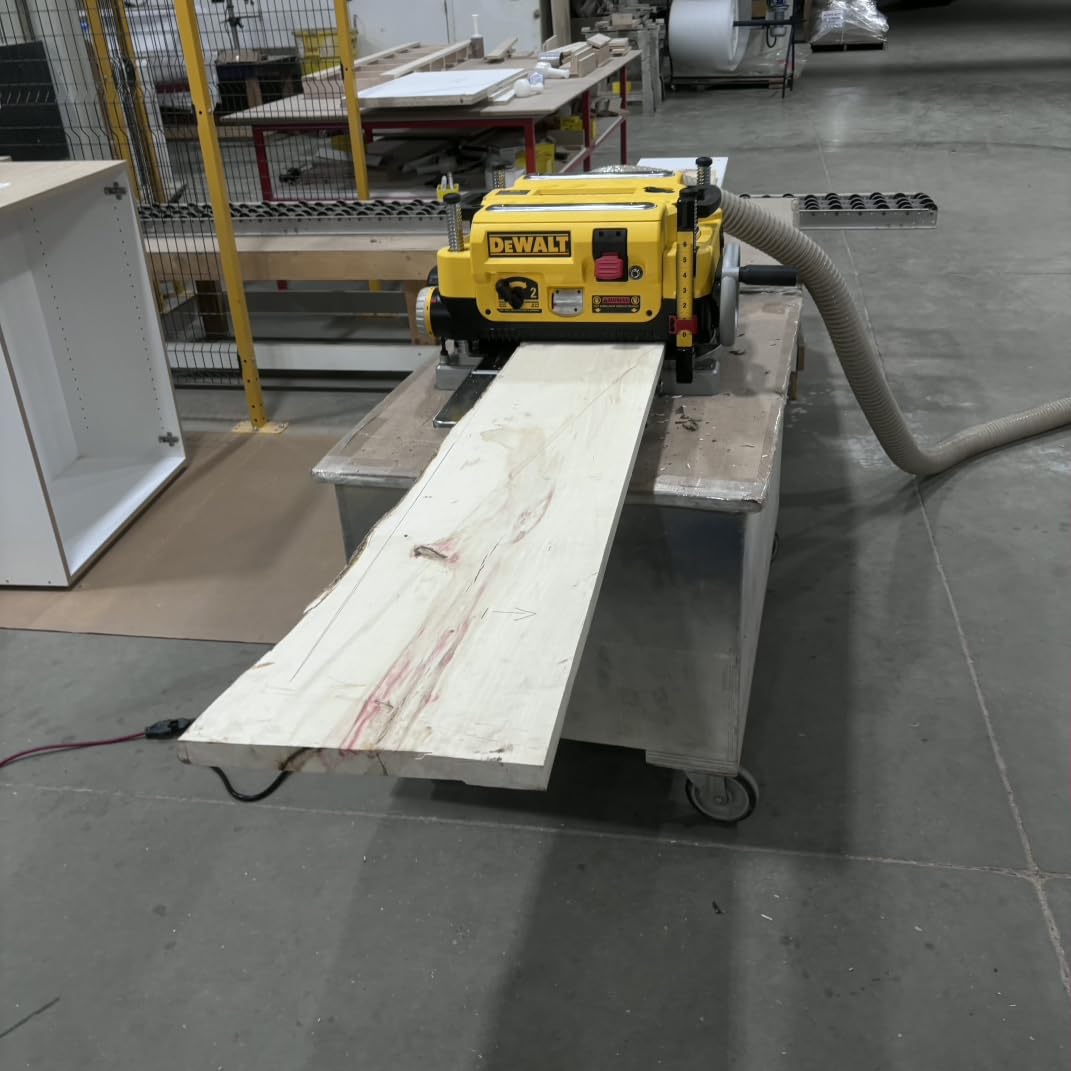
Owners report that rough ash, pine, cherry and oak come out needing very little sanding, and several describe the surface as comparable to a light sanding pass. The 19-3/4 inch cast aluminum base and the folding infeed and outfeed tables mean you can handle full-length boards without propping your knees on a stack of lumber.
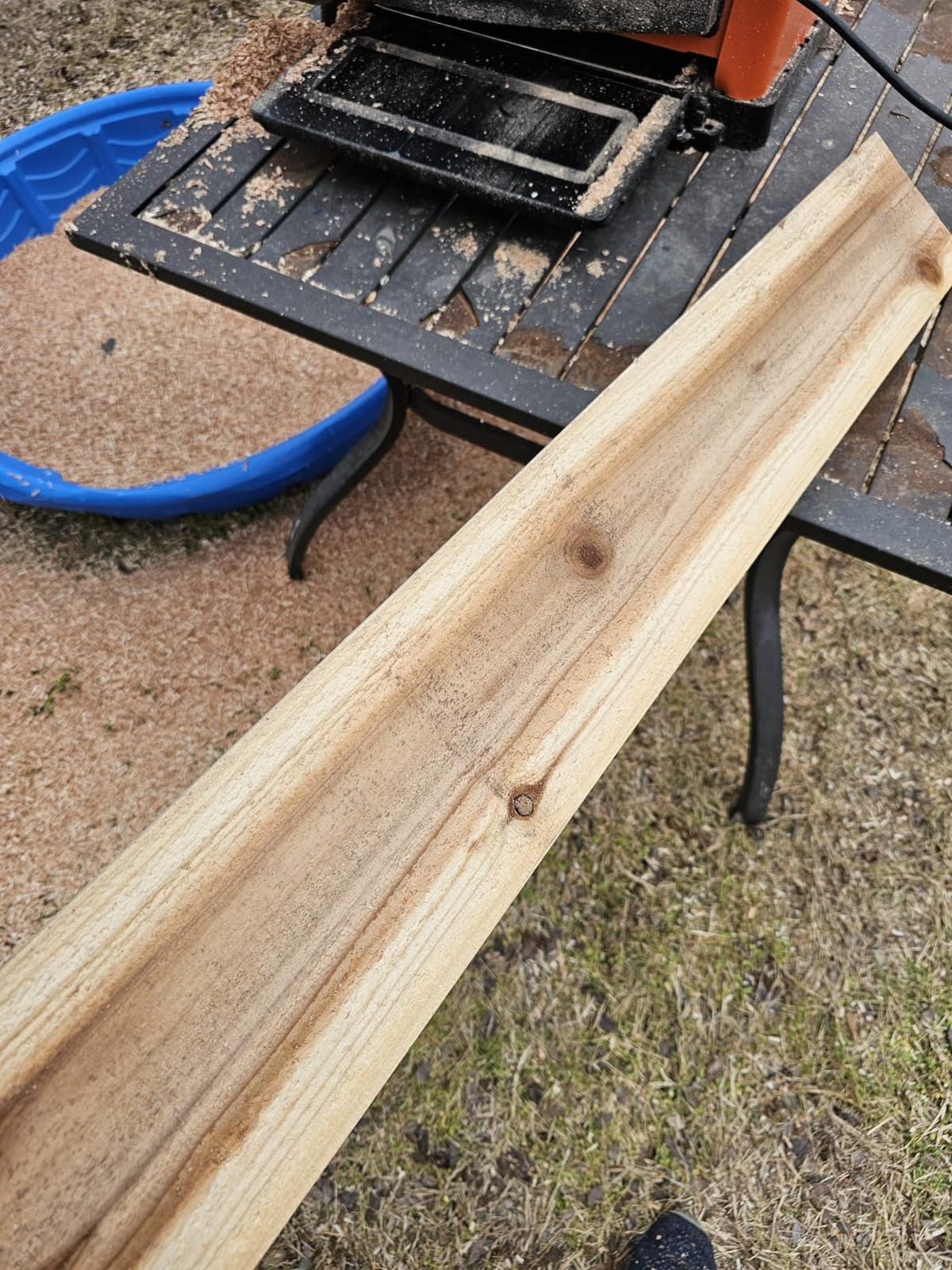
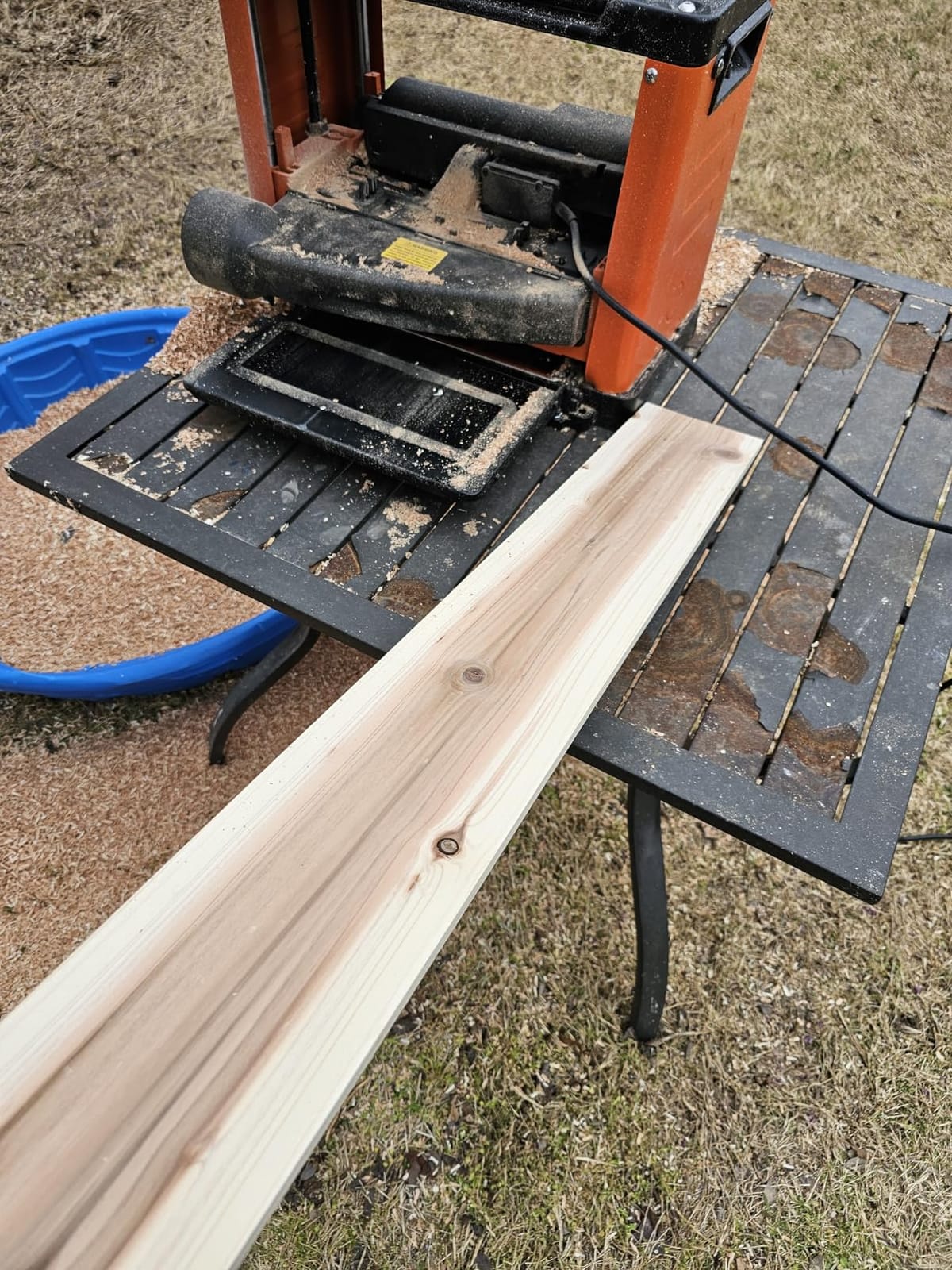
The honest complaints are practical rather than performance related. At 102 pounds it does not move without a dolly, and the fan-assisted chip ejection throws shavings forcefully enough that a shop vac alone will not contain everything. A measurement taken during a cedar run on a published shootout found shavings flying more than 10 feet, and owners on woodworking talk forums typically run a 4 inch hose into a barrel and let the blower do the work.
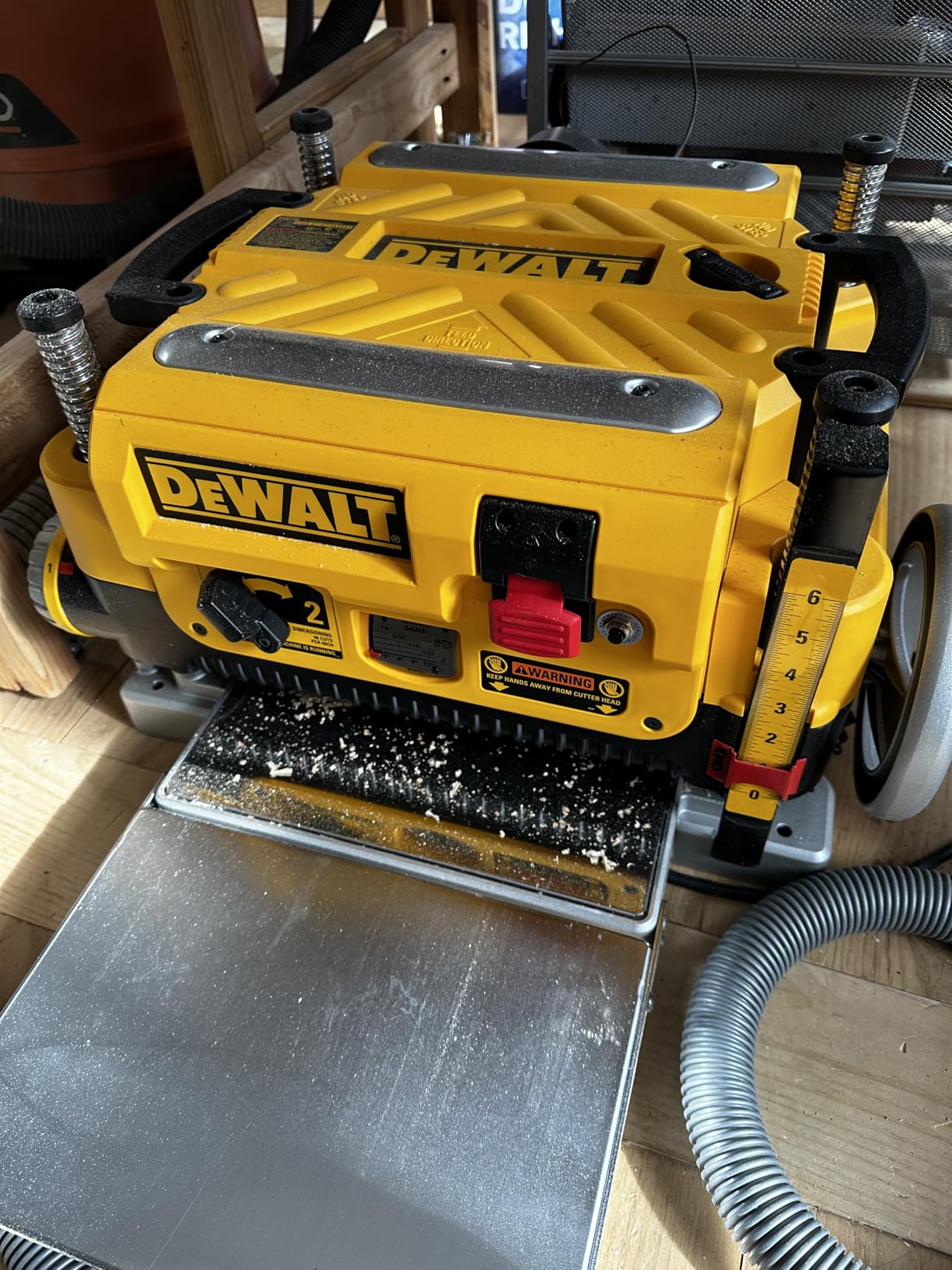
What to check before you feed it rough boards
Set a depth of cut of 1/16 inch on your first pass across a full-width board and watch the sound. A steady whir means the head is cutting cleanly; a growl means the load is too high for the pass. Take a second light pass and repeat until the scale reads your target thickness, then switch to the low feed speed for the final pass.
Knife quality is where the DW735 draws its most persistent complaint. Multiple owners report ridge marks appearing on a freshly planed face after only a handful of passes. Sharp new reversible knives fix it, and the spare set in the box means you are not waiting on a delivery.
Where the DW735X is the wrong choice
If your work is mostly figured maple, quilted mahogany or anything with reversing grain, the straight knives will tear out. Several owners solve this by swapping in an aftermarket helical cutterhead for the 735, which is a real option but an added cost and a recalibration job. If you want helical from day one, look at the JET or RIKON instead.
It also draws peak current, so plan on a dedicated 15 amp circuit rather than sharing one with a table saw. Owners also report a recurring failure point on this machine: the drive sprocket on the feed roller deteriorating, with local service shops unable to source the part.
2. DeWalt DW734 12-1/2 Inch Planer: Best When 13 Inches Is More Than You Need
DEWALT Benchtop Planer, 15-Amp, 12-1/2-Inch, 3-Knife Cutter, 20,000 RPM, Corded (DW734)
- Fine 96 CPI finish from the three-knife head
- Four-column carriage lock cuts down snipe
- Extra-long tables give 33-1/2 in of support
- Reversible knives change in minutes
- Consistent repeat cuts with the turret stop
- Half inch narrower than 13 inch machines
- Disposable knives are a recurring consumable cost
- 80 lb is not a portable machine
The DW734 is the same basic architecture as the 735 with a narrower body and a lighter chassis, and for a lot of rough-lumber buyers that is the more honest purchase. If your stock is boards, 2x material and dimensional lumber rather than full-width slabs, half an inch of planing width is capacity you never touch.
What you keep is the part that does the work. A 15 amp 20,000 rpm motor, a three-knife head running at 10,000 rpm and 96 cuts per inch, and a four-column carriage lock that holds bed height steady through the cut. The extra-long infeed and outfeed tables give 33-1/2 inches of material support, which is what keeps a long rough board from levering into the head as it exits.
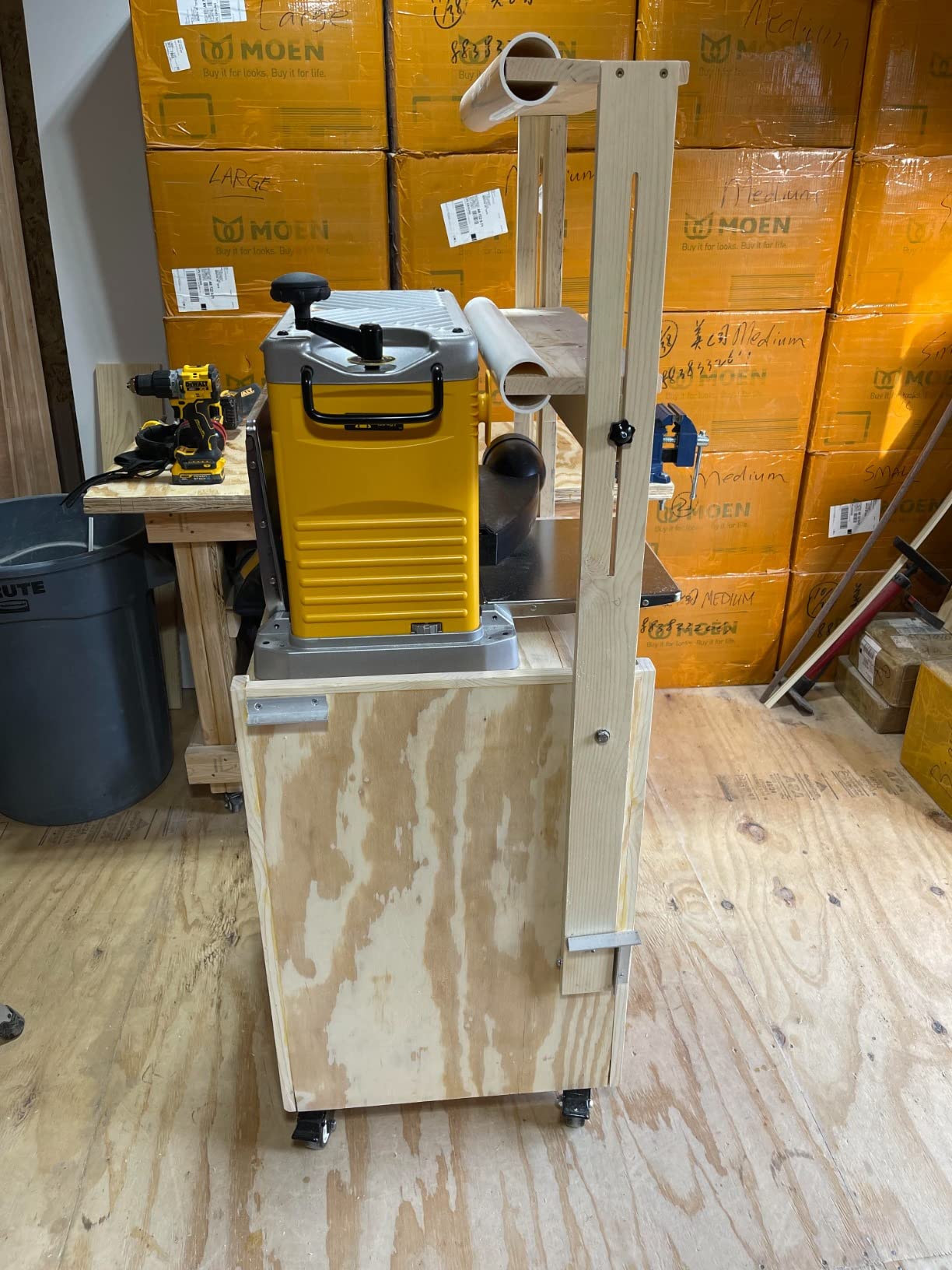
Owners consistently single out the surface quality and the accuracy. The thickness scale and turret depth stop make repeated cuts to the same dimension repeatable, which matters when you are matching parts for a glue-up. The reversible double-edged knives are a quick swap, and the three-year limited warranty is the same as the larger DeWalt.
There is a single-speed gearbox here. The 96 CPI finish is good, but you cannot drop to a slower feed for a final figure-heavy pass, and that is the one capability gap against the 735X. If your rough lumber includes knotty pine or reclaimed material where you want to slow down, that difference shows.
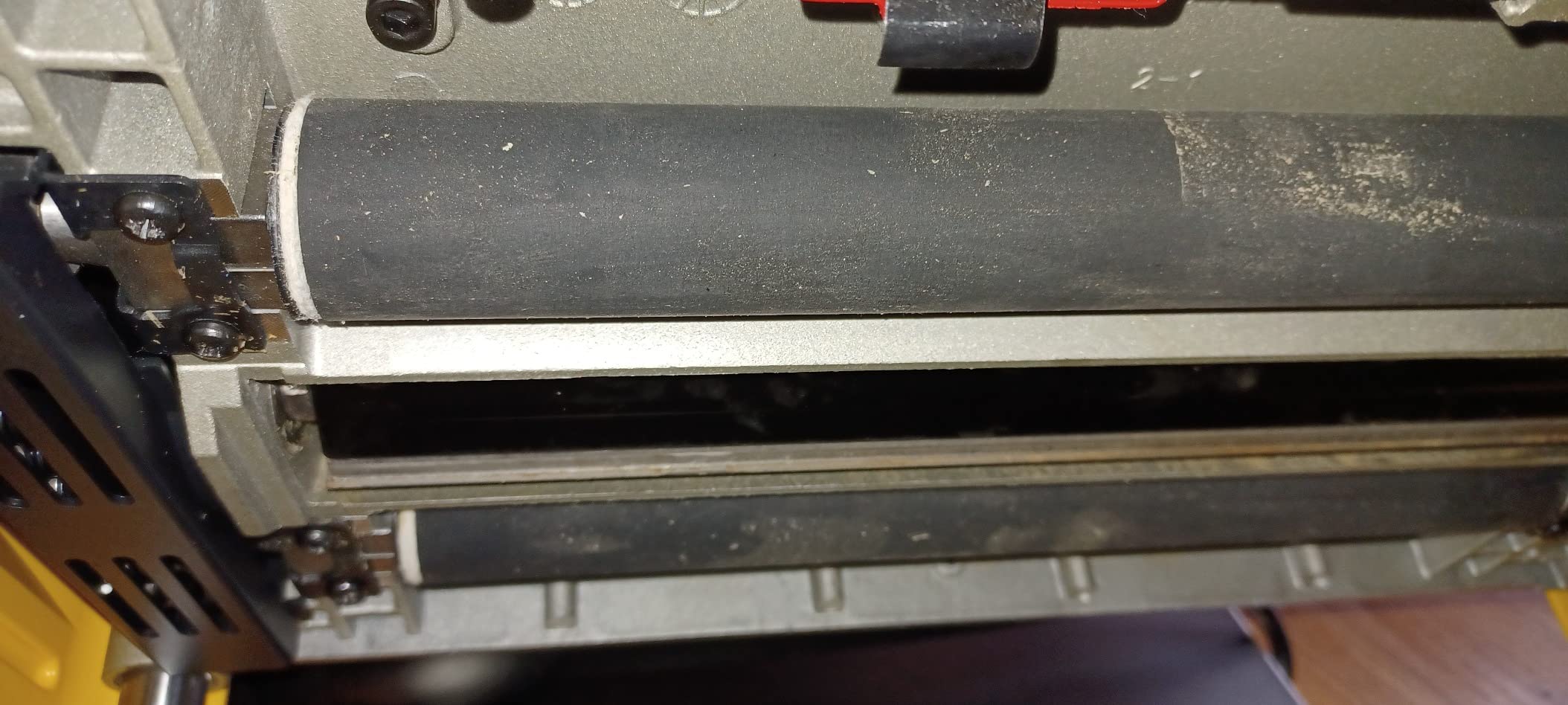
When the 12-1/2 inch width is the right call
Measure your widest board you actually intend to run. If the answer is under 12-1/2 inches, this machine handles the same stock as a 13 inch model at a lower weight and a smaller footprint on the bench. That is a real gain in a small shop where floor space is the constraint.
Check that you have stock support for full-length boards. The folding tables are good but finite, and a 10 foot rough board still wants roller stands at the outfeed end. Owners who add stands report the snipe problem largely disappears.
Where the DW734 falls short
The narrow cutting width is the honest limitation, and it is not adjustable. If you ever buy a wide slab or a glued-up panel that runs past 12-1/2 inches, this machine simply is not the tool.
Disposable knives add a running cost that never goes away, and straight knives will always be less forgiving on reversing grain than a spiral or helical head. Owners who push this machine hard on hardwood report changing blades more often than they would like.
3. CRAFTSMAN CMEW320 12.25 Inch Planer: Best Budget Starter Machine
CRAFTSMAN Planer, 15 Amp, For Benchtops, Two Knife Solid Steel Cutter Head (CMEW320)
- Still cutting well after heavy board footage
- Light enough to reposition without a dolly
- Base mounting holes make bolting down easy
- Accurate scale and smooth thickness crank
- Handles rough and pallet lumber
- Two-knife head shows more snipe at board ends
- Blades wear quickly on hardwoods
- Loud in a small shop
- Power cord exits at an awkward front corner
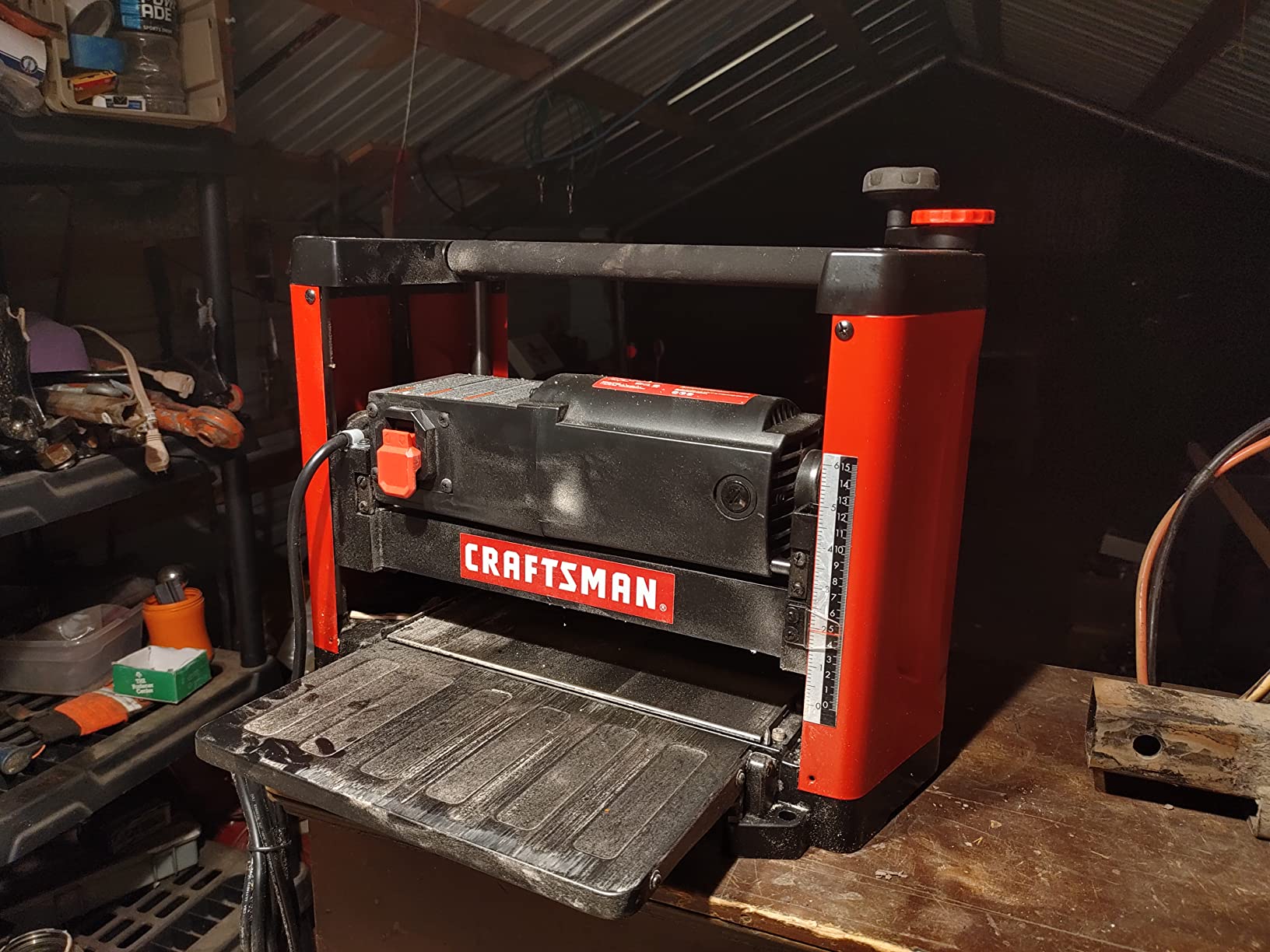
The CMEW320 is the entry point most first-time rough-lumber owners should look at first. It is a 12.25 inch two-knife machine with a 15 amp motor, a solid steel cutterhead on ball bearings and a carbon steel base, and owners report it still cutting well after something like 1,200 board feet.
Weight is its underrated advantage. At 61 pounds it is heavy enough to stay put under load but light enough to carry to a different bench without a dolly, and the base mounting holes mean you can bolt it down when you settle on a permanent home. The thickness scale is accurate and the crank moves smoothly, which is more than you can say for some budget machines.
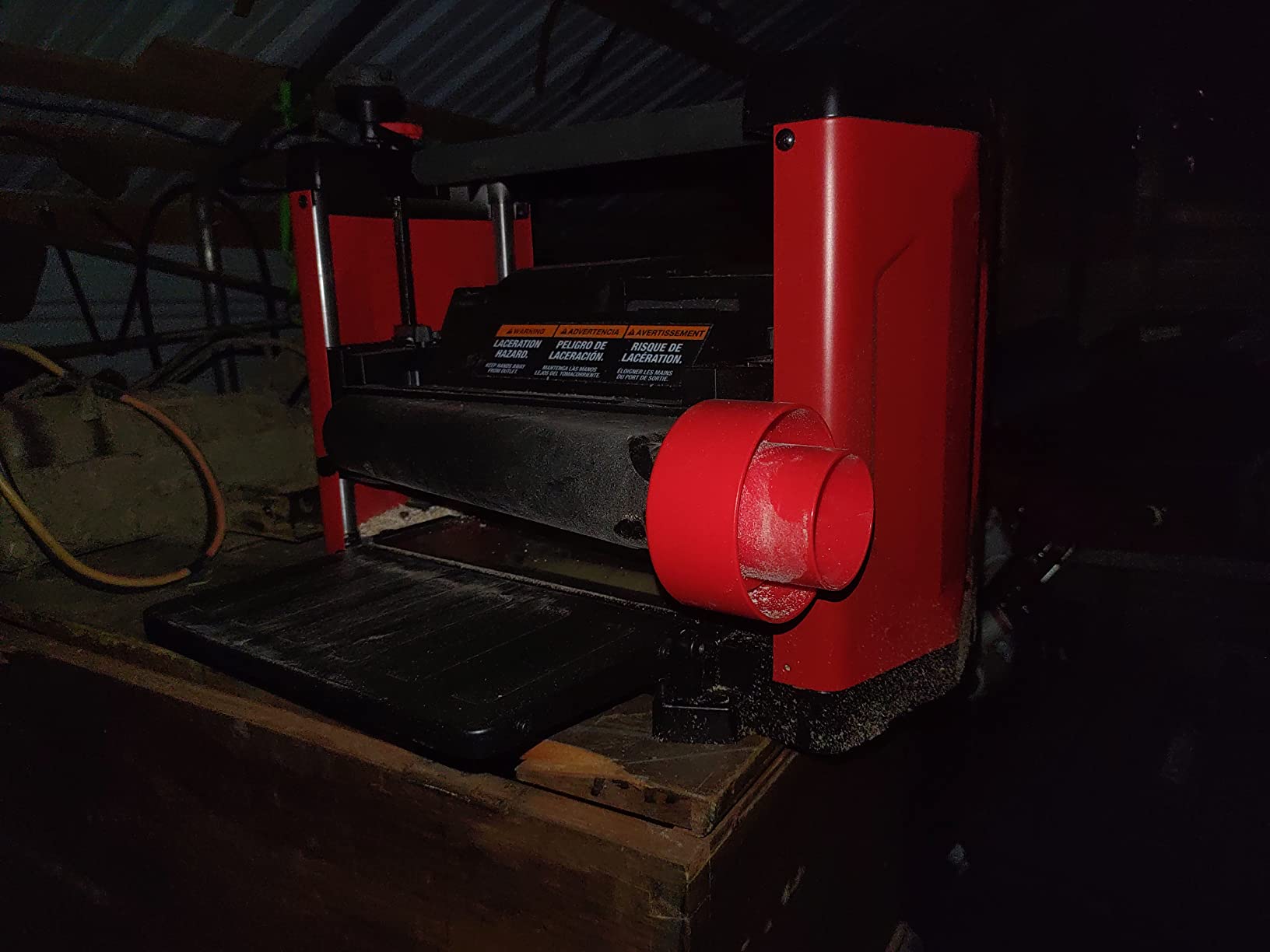
Owners use it to turn rough and pallet lumber into usable project stock, and the reported results need very little sanding. A dust collection port is fitted, and a properly rated vacuum handles the chip volume. There is a three-year limited warranty and the review record is unusually clean for an entry machine, with a very low share of one-star reports.
What you accept is the two-knife head. Two knives means a bigger gouge at the start and end of each board, so snipe is noticeably more visible than on the three-knife and helical machines here. It does not go away entirely, though lighter passes make it much less obvious.
Who this machine is right for
If you are building a first shop, working mostly with softwood and construction lumber, and want to learn thicknessing without a large commitment, this is a sensible place to start. The accuracy and the ability to handle rough and pallet stock are the two things owners praise most consistently.
It also makes a good second machine in a two-shop setup: keep the CMEW320 portable for cleanup lumber and slab prep, and put your better machine on finish passes. Just keep spare knife sets on hand, because hardwood work will consume them faster than the machine itself wears out.
Where the CMEW320 disappoints
Blades wear quickly on hardwoods, and because there is no slow feed speed you cannot compensate for a dull knife by slowing the board down. You change the knives instead. That is a recurring cost the purchase price does not cover.
The 12.25 inch width is also narrower than the machines most people picture. And the power cord exiting from the side of the machine is a small thing that irritates everyone who hits it. Expect snipe on short boards unless you add outfeed support.
4. Makita 2012NB 12 Inch Planer: Best for Quiet Shops and Long Ownership
- Owners document 10 to 20+ years of service
- Noticeably quiet at 83 dB
- Stays accurate after years of heavy use
- Fastest blade change in class with spares stored in the machine
- Handles ipe and azek without complaint
- Dust collection hood sold separately
- Feed rollers slip if pitch is not cleaned off
- Narrow cutting width
- Highest cost per inch of capacity
The Makita 2012NB wins on one dimension nothing else here can match: time. Multiple owners report 10 to 20 years or more of continuous service across hardwoods and composites with almost no maintenance beyond blade changes and cleaning. If you buy one machine and keep it for the life of the shop, this is the strongest candidate in the lineup.
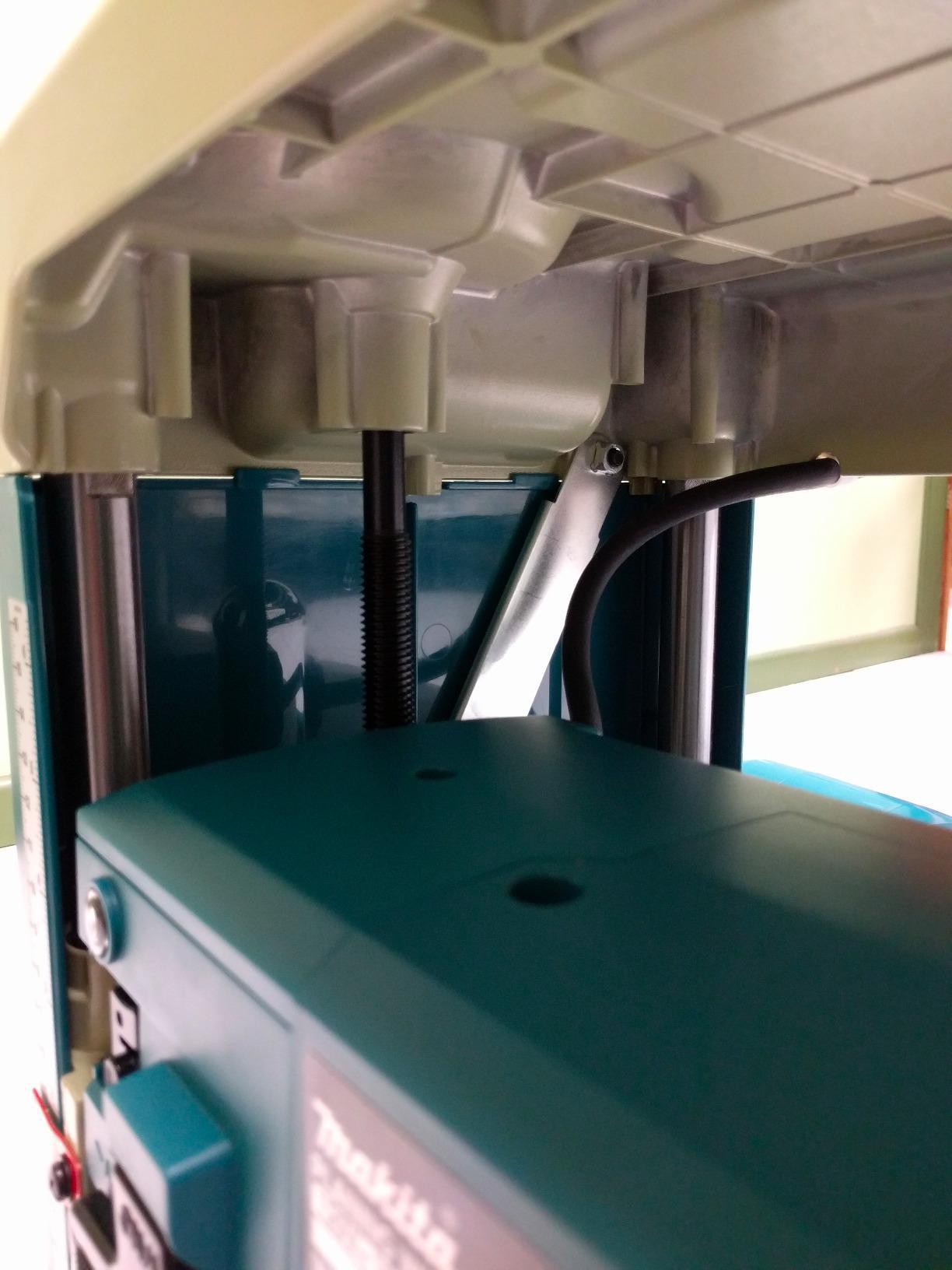
It is also the one machine here with a published decibel rating, at 83 dB. In a small shop or a shared space that is a real quality-of-life difference, and it partly explains why owners report results that need very little hand sanding. A four-post design with diagonal cross supports gives it stability, and the large table extensions do a decent job of supporting the workpiece.
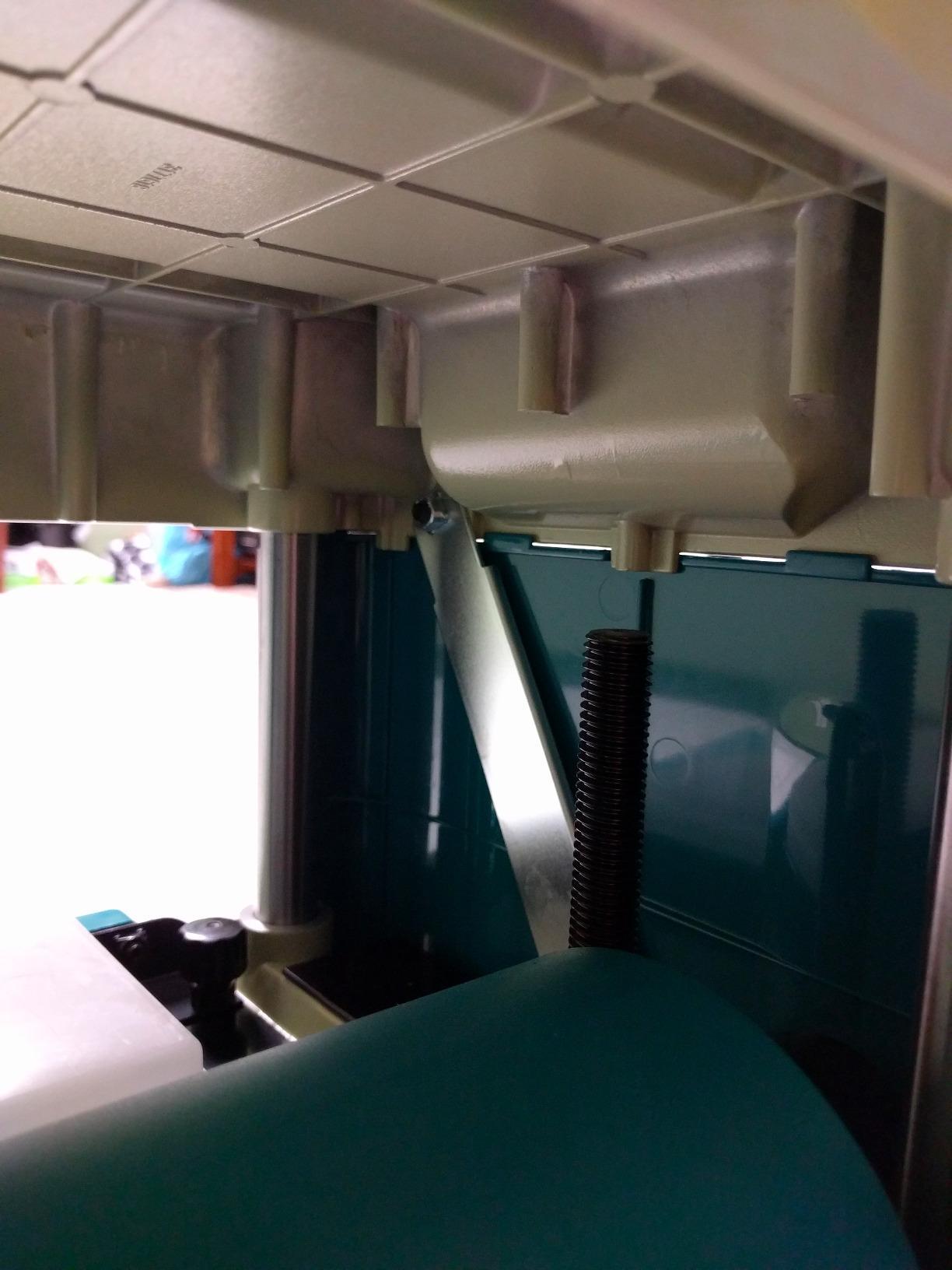
The blade change system is the fastest in this class, using disposable double-edged blades with spares stored in a compartment inside the machine. Owners note the accuracy holds out of the box and keeps holding through years of heavy use, and several mention it chewing through ipe, azek, maple and oak without complaint.
What you give up for that durability is width and accessories. The planing width is 11.86 inches, the narrowest cutting capacity here, and the dust collection hood is not included. At 62 pounds it is portable enough for a job site, which is where a lot of owners first used it.
What the Makita is built for
Tough material and long horizons. Dense exotics, reclaimed lumber and anything that will punish a lesser machine are where the Makita earns its place, because a machine that stays accurate for two decades never needs re-setting mid-project. If your shop is in a home or a shared space, the 83 dB rating is a genuine reason on its own.
Keep a short list of maintenance habits and it will stay accurate. Clean pitch off the feed rollers periodically or they begin to slip, and wax the bed. The four-post frame and the disposable blade system mean almost nothing wears that you cannot replace with a blade swap.
Where the Makita is the wrong tool
It is not the machine for wide stock. At 11.86 inches, a 12 inch board is out of reach, and a lot of rough lumber is bought in exactly 12 inch widths. If that describes your material, look at a 13 inch machine instead.
There is also a storage warning. Owners report corrosion problems after machines sit in damp conditions, attributed to the alloy casing and alloy-on-metal wind rods that can jam and break. Store it dry and covered if it will live in an unheated garage, and note that the one-year warranty is the shortest here.
5. WEN PL1326 13-Inch Spiral Planer: Best Value Helical-Class Finish
- 26 staggered rotatable HSS blades
- Cast iron base and bed add stability
- Handles construction lumber and rough cedar
- Clean finish with little snipe once tables are set
- Brush motor noise negates the spiral head advantage
- 50 mm dust port does not fit common 4 in hose
- Material indicator is a small pin rather than a full gauge
- 120V only design
The PL1326 is the machine to buy if you want a spiral cutterhead finish without paying a helical-head premium. The head carries 26 staggered rotatable HSS blades, so each insert gets flipped before it is replaced, and owners with expensive equipment behind them report finishes comparable to machines costing considerably more.
It handles the rough-lumber job directly: boards up to 6 inches thick and 13 inches wide, driven by a 15 amp motor turning 10,000 rpm at a 26 feet per minute feed rate. The cast iron base and bed do more than add heft at 81 pounds, because they keep long rough boards flat through the pass.
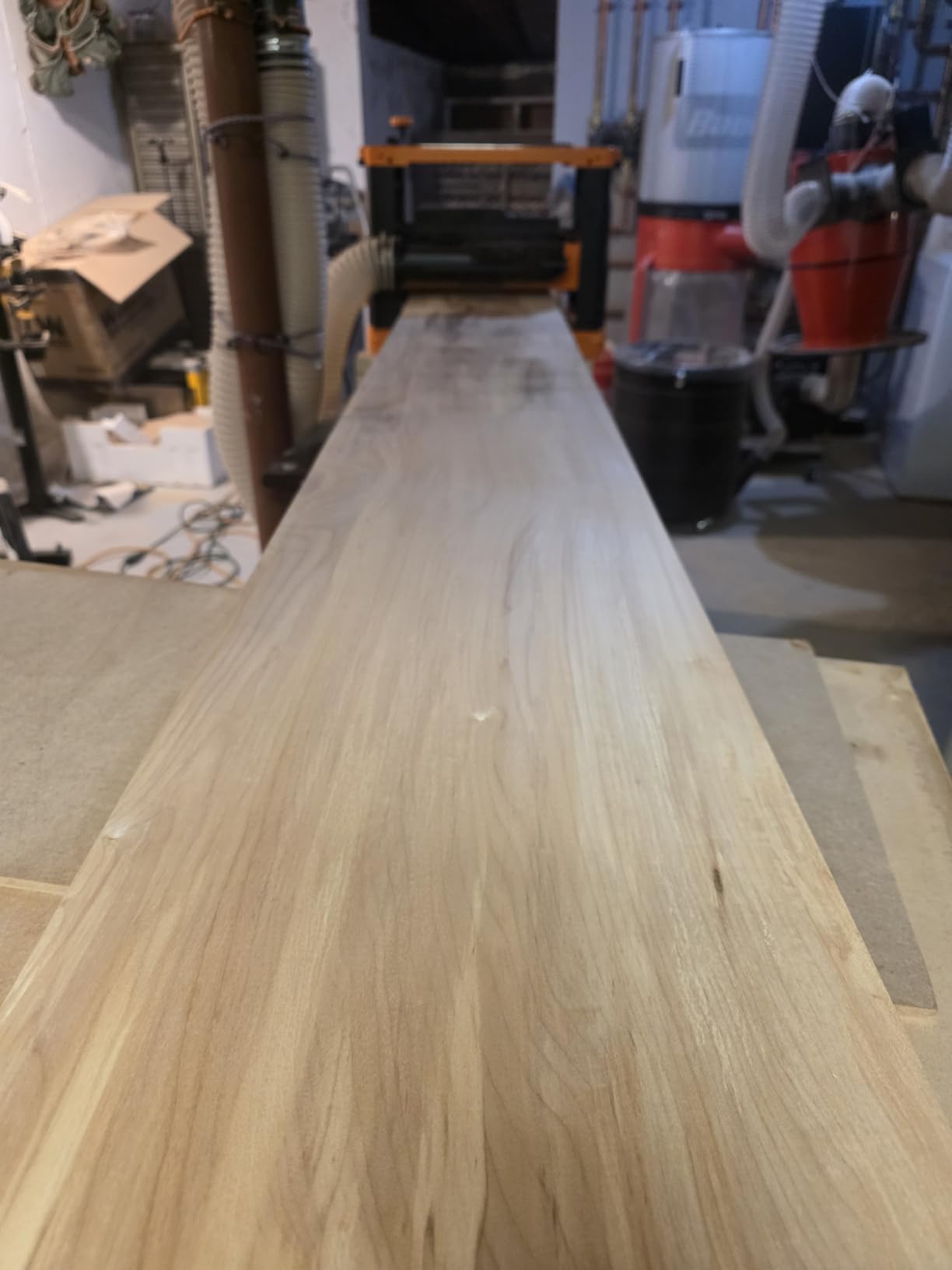
Owners report near-zero snipe once the tables are adjusted properly, and several use it on rough cedar posts and construction lumber. The onboard material removal gauge shows the depth of each pass, and a depth stop plus an adjustable dust port are included.
The main disappointment is the noise. The spiral head should be quiet and this machine is not, because the universal brush motor dominates. A second issue is the dust port: it is a 50 mm outlet that does not match a standard 4 inch hose and sits in the chip exit path, so plan your adapter before you commit.
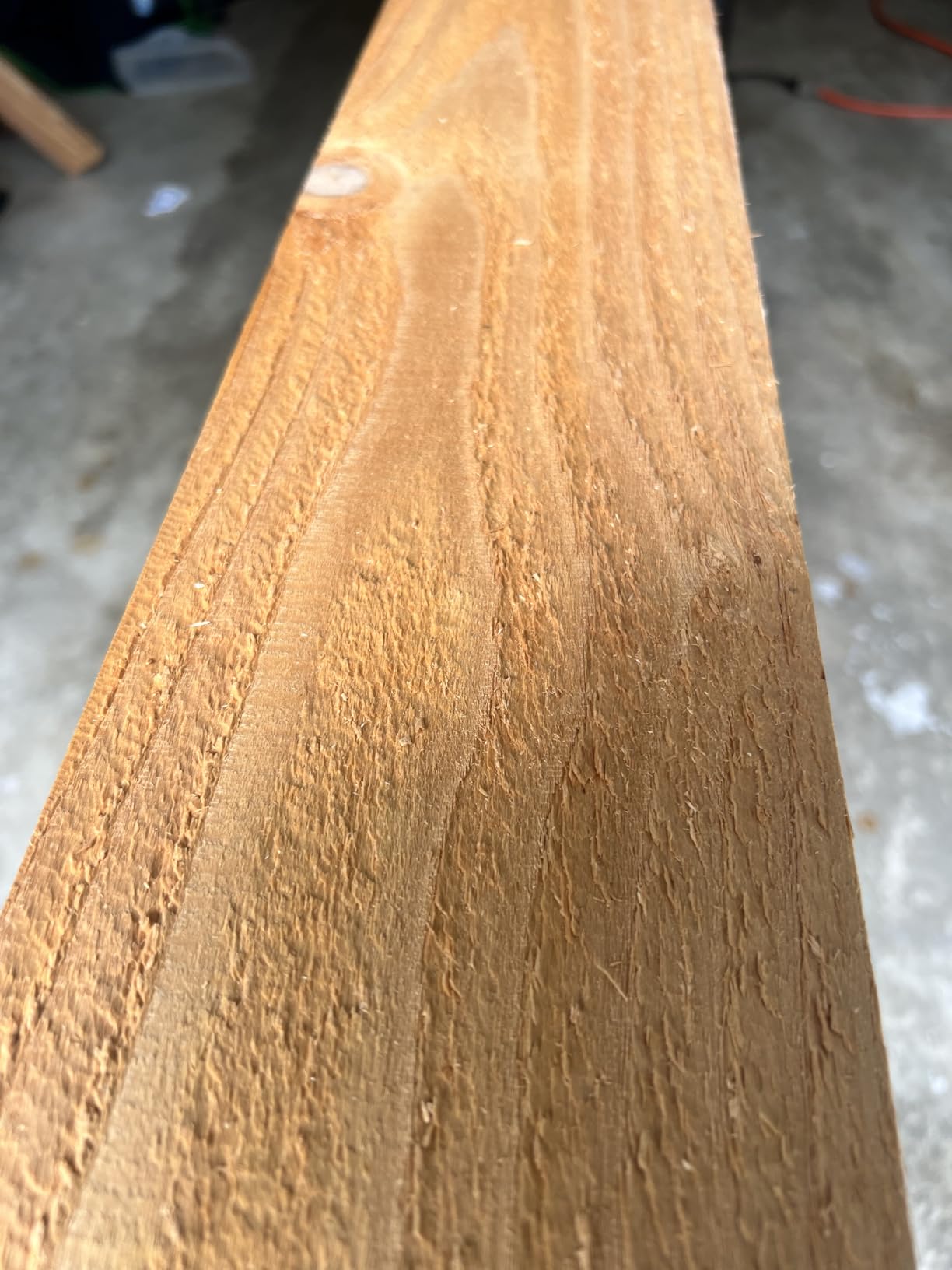
Why a spiral head earns its place on rough wood
Staggered inserts cut in small overlapping bites rather than one full-width slice, and the shearing action resists the tearout that straight knives produce on rough and reversing grain. On reclaimed or knotty material that is the difference between a usable face and a face you sand for twenty minutes.
Because the inserts are rotatable, they last roughly twice as long as a single-edge set before you replace anything. If you plan to run a lot of hardwood, step up to carbide inserts, which several owners have done and which outlast HSS on abrasive species. The single 26 FPM feed suits most rough breakdown work as it is.
Where the WEN falls short
The dust connection is the most annoying real-world limitation. A 50 mm port does not accept a common 4 inch hose, and you will be adapting rather than plugging in. The material removal indicator is a small round pin rather than the full-width gauge you get on the DeWalt machines, so reading the cut depth takes more attention.
It is also a 120V single-speed design with no slow feed for figured stock, and snipe still appears at board ends if you trim short instead of running long boards out. For most rough-lumber shops those are acceptable compromises, but they are compromises.
6. VEVOR 13-Inch Three-Blade Two-Speed Planer: Best for High-Speed Motor Headroom
VEVOR Power Benchtop Planer Three-Blade Two Speed 13″ Thickness Planer
- 23500 rpm motor handles hard pecan and oak well
- Two feed speeds including a slow option for figured stock
- 35 in of total table length
- Metal cone gears and relatively quiet running
- Runs accurately with sharp knives
- Supplied knives arrived dull on multiple units
- Outboard table extensions are hard to level
- Rear table extension will not lock raised
- Dust hood clogs and can dimple the surface
This is the entry machine in our lineup with the highest stated no-load motor speed, and speed is what lets it keep a cut moving on hard species. A 2000W motor running at 23,500 rpm with a built-in 20A over-current protector pulls hard pecan and oak through and leaves an excellent surface.
It is also a two-speed machine at 24 FPM for quick thicknessing and 15 FPM for a smoother cut on figured stock, which is not something the cheaper straight-knife alternatives offer. The precision machined cast iron bed and steel plate are real quality, and the adjustable tables and extensions give 35 inches of total length for long stock support.
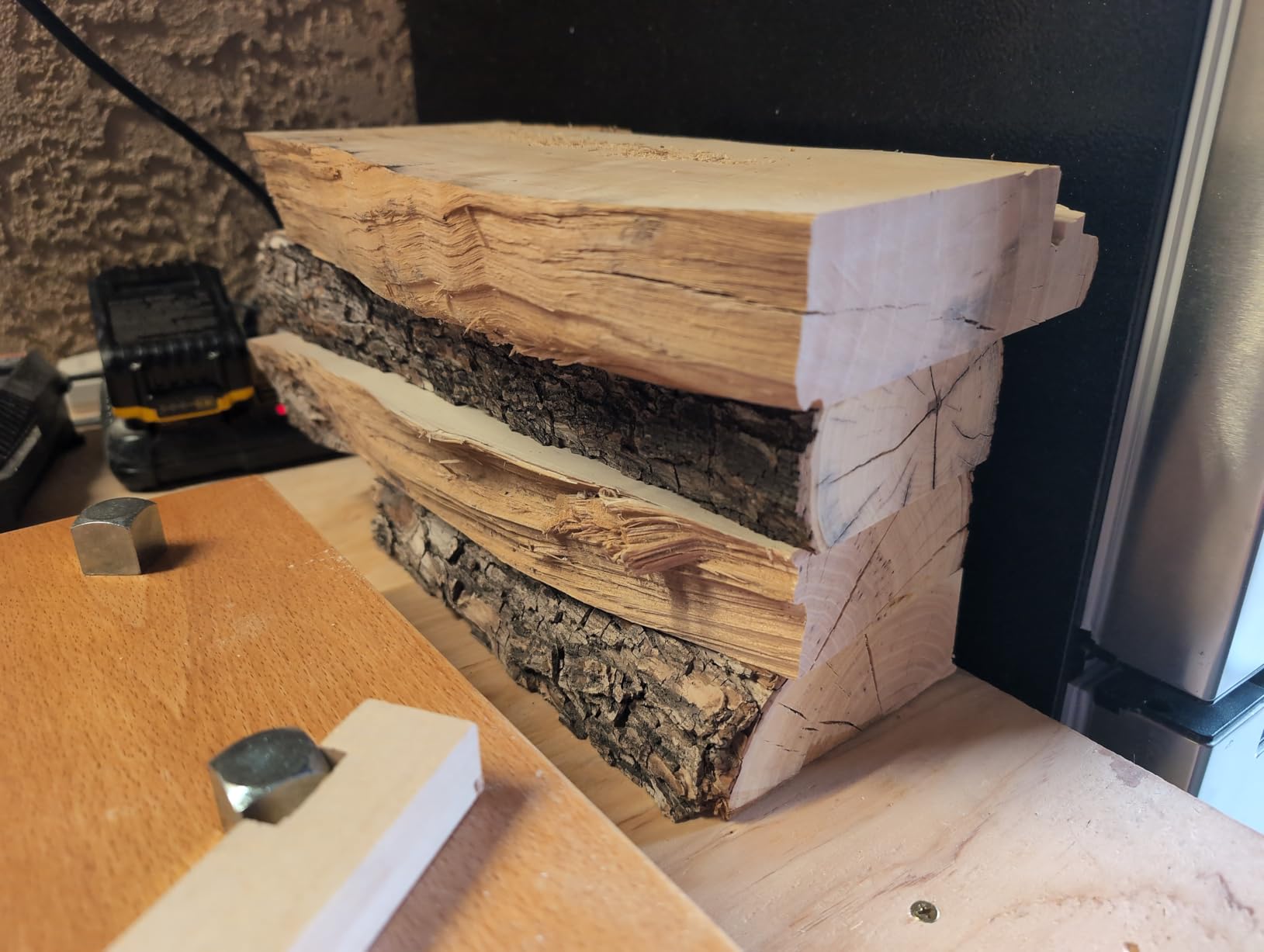
Owners who install sharp knives report accurate, repeatable results, and the metal cone gears are noted as a step up from older plastic-geared machines. Chip ejection from the cutterhead and a vacuum port are both present, and a properly rated vacuum gives good pickup.
The split reputation comes down to assembly quality rather than performance. Multiple owners received knives that were dull or unsharpened out of the box, and the outboard table extensions are hard to level, so a board can come out only roughly flat if you skip that step. The rear table extension also will not lock in its raised position.
What this machine does better than its tier
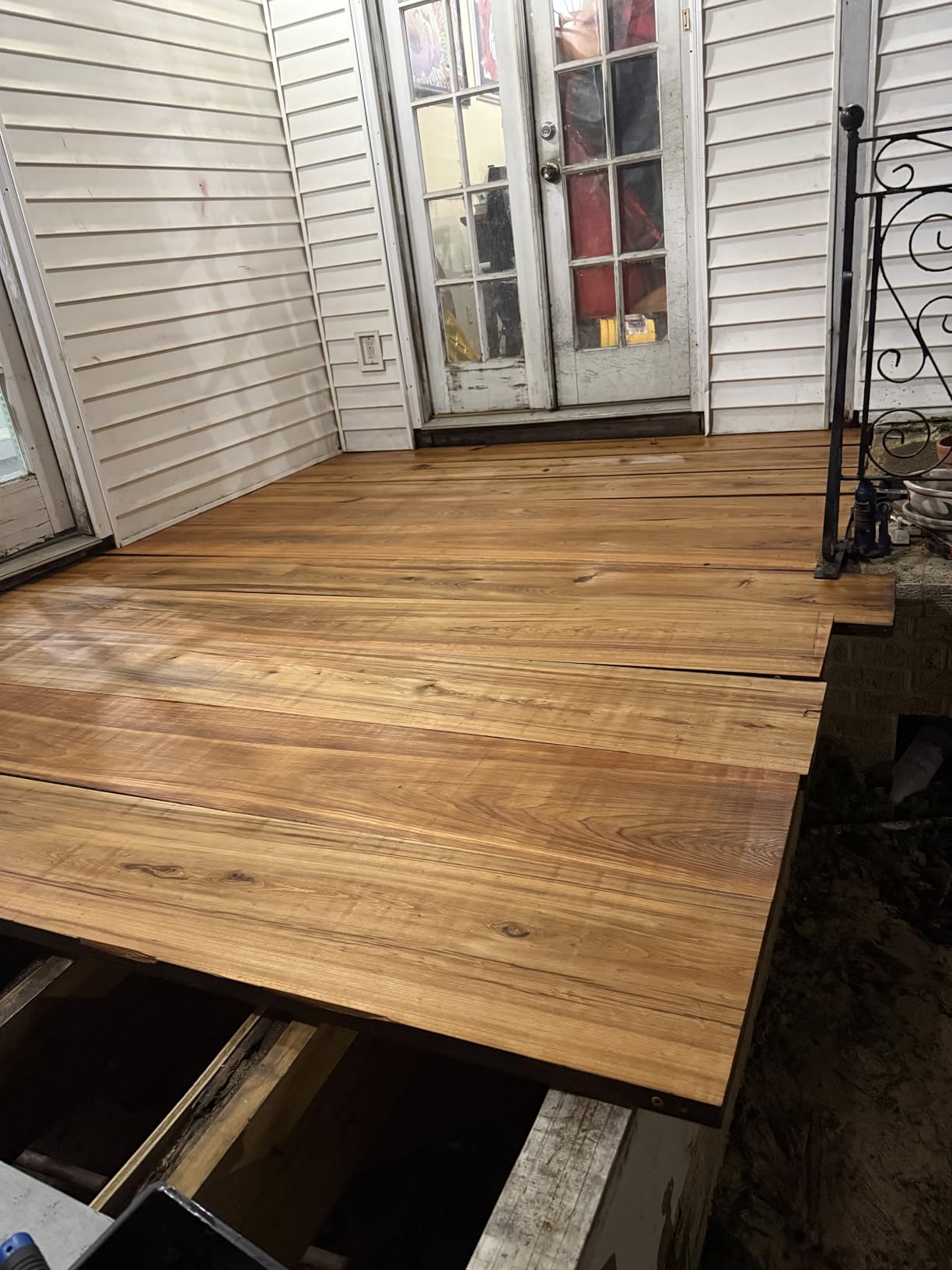
Two feed speeds at a budget price is the headline. A 15 FPM slow feed lets you handle figured and curly stock that would tear out on the single-speed machines, and a hard-surface cutterhead quenched to HRC55-60 holds an edge better than the standard steel in this class. The 13 inch width and 6 inch thickness capacity cover standard rough lumber.
If you buy it, sharpen or replace the supplied knives before your first board.
Where it causes problems
The dust hood clogs with large shavings, and once it does the surface picks up dimples that look like planer marks but are not. Empty it frequently during a rough-lumber run rather than at the end.
Support and replacement parts are reported as limited once the initial return window closes, so research service before you buy rather than after. The included wrench is flimsy and slips on the blade bolts, and the one-star share in owner reviews runs higher than for the DeWalt and WEN machines here. If reliable support matters to you, this is where a step up in tier pays off.
7. JET JWP-13BT 13-Inch Helical Planer: Best Dedicated Helical Head
JET 13-Inch Benchtop Thickness Planer for Woodworking, Helical Style Cutterhead with 2-Speed (18 FPM / 26 FPM) Feed Rate, 2 HP, 120V 1Ph (JWP-13BT)
- 26 quick-change HSS inserts in six rows
- Cast iron bed and four-post design hold boards flat
- Two feed speeds for rough and finish work
- Folding tables aid leveling and save space
- Five-year warranty
- One-star share runs high for the price
- HSS inserts dull faster than carbide on abrasive hardwoods
- 75 lb is awkward to reposition
- Higher cost than three-knife alternatives
The JWP-13BT is a purpose-built helical machine rather than a straight-knife planer with a conversion kit. The cutterhead carries six rows of 26 individual quick-change high-speed steel inserts, and owners consistently point to the smooth, quiet cut as the reason it is worth choosing over a conventional head.
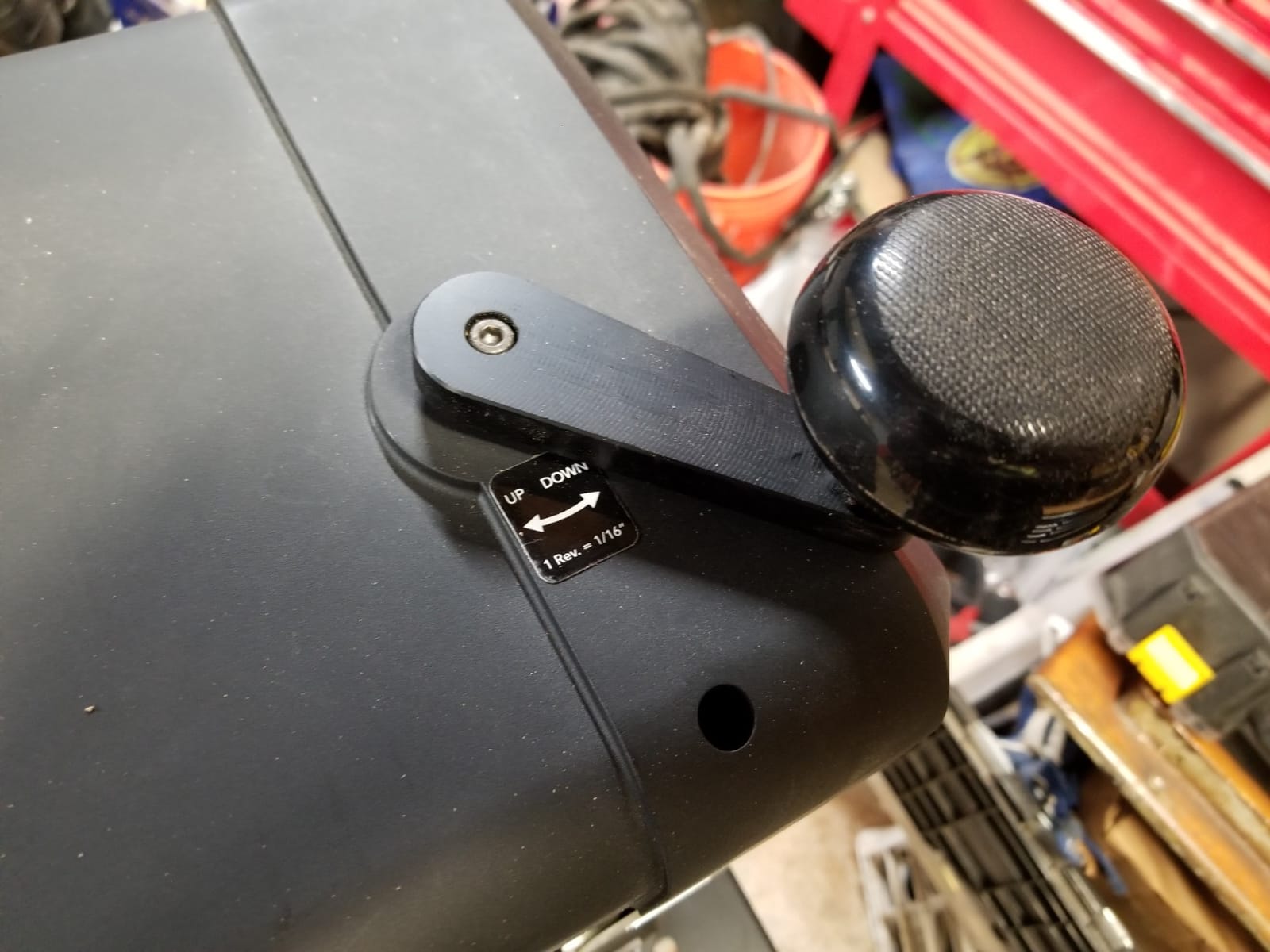
The bed matters as much as the head. A precision-machined cast iron bed and steel cover keep boards flat, and a four-post design supports the head against the load of a deep rough pass. A 2 HP 15 amp motor turns the cutterhead at 10,000 rpm with feeds at 18 and 26 FPM, and capacity is the standard 1/8 inch depth of cut, 6 inch thickness and 13 inch width.
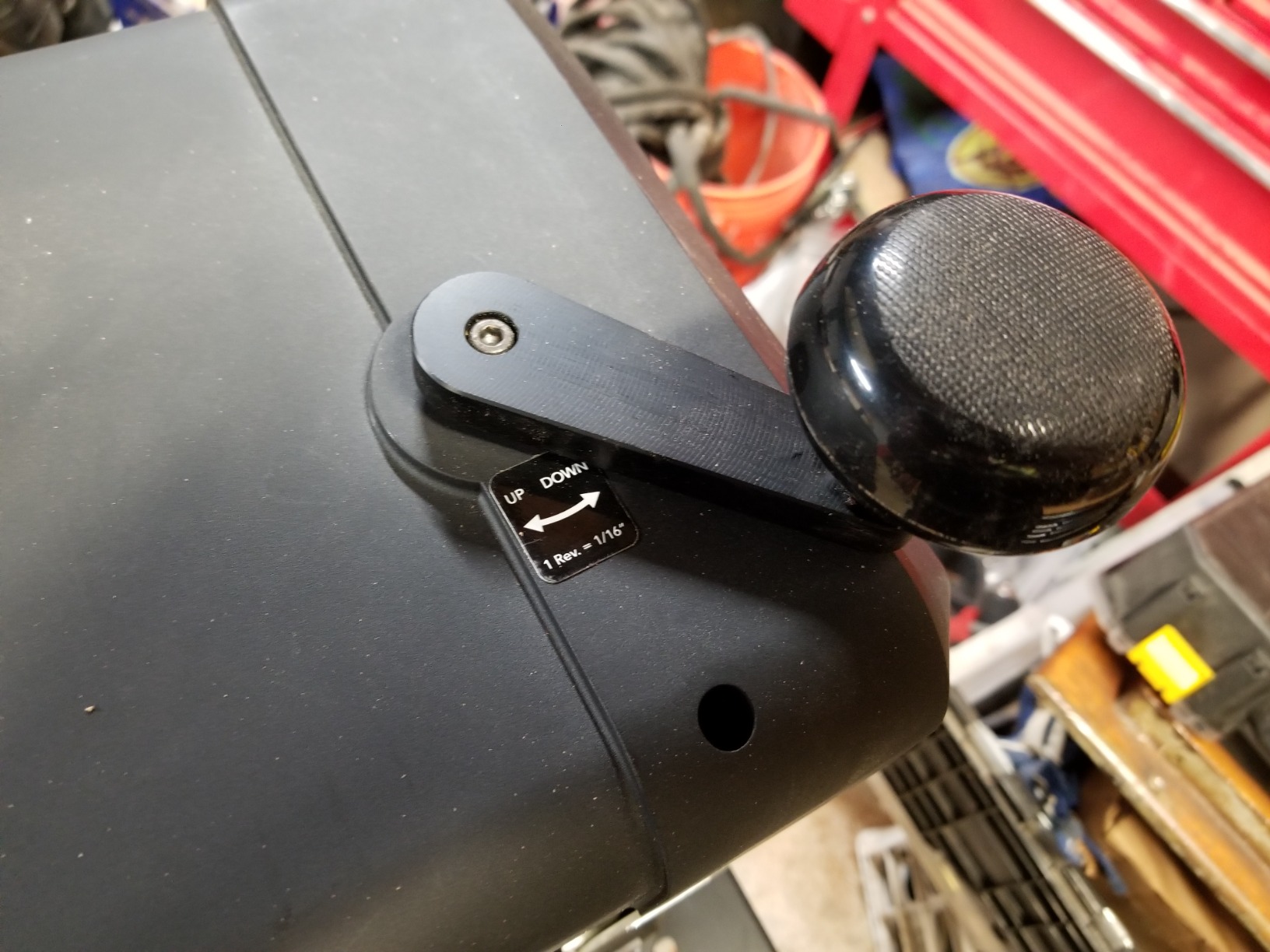
The folding infeed and outfeed tables are a genuinely useful feature. They fold down for storage, and they adjust for leveling to the bed, which matters more on a rough-lumber setup than it does on clean milled stock because it lets you match the machine to an uneven floor or bench. An adjustable depth stop handles repetitive cuts, and the warranty runs five years.
Against that, the owner record is thinner and more mixed than the DeWalt entries, with 175 ratings and a one-star share that owners and reviewers alike note as high for a machine at this tier. Plan for that when you weigh support and long-term parts availability.
Why a dedicated helical head earns the premium
Helical inserts shear the wood rather than chopping straight down into it, which is why this class of head is the standard answer for figured and reversing grain. The cuts land in sequence rather than all at once, so the load on each insert is smaller and the head runs cooler and quieter than a straight-knife head of the same class.
Inserts are indexable, so a nicked edge is rotated out rather than the whole head being stripped and reground. If you own hardwood, exotics or reclaimed material, that difference in tearout control and insert economics pays back over time in both surface quality and consumable cost.
Where the JET is the wrong spend
The inserts here are HSS, and HSS dulls faster than carbide on abrasive hardwoods like maple and oak. If heavy hardwood work is your norm, budget for a carbide set rather than discovering the cost later. The 75-pound weight is also awkward to reposition alone.
And the one-star share is a fair signal. With 175 ratings there is less long-term evidence here than behind the DeWalt, Makita and WEN machines. If your shop depends on the machine daily and a service visit would be expensive, a machine with a deeper service network is the safer bet.
8. VEVOR 13-Inch Spiral Planer: Best Dust Hose Flexibility
- 24 spiral alloy blades cut splinter free
- 28.2 in worktable steadies long or warped stock
- Dual-roller feed reduces vibration
- Accepts both 2 in and 4 in dust hoses
- Stepped 1/8 in depth control repeats well
- Lowest-rated machine here at 3.9
- Single speed with no low feed for figured stock
- Thinnest review history in the lineup
- Aluminum alloy base is lighter and less rigid than cast iron
This newer VEVOR listing is the one machine in the lineup where the owner record is still forming, with 57 ratings. What is visible centers on the spiral alloy blade design, the dual-roller feed and an unusually long 28.2 inch worktable that steadies long or warped boards better than most 13 inch machines manage.
It has one genuine advantage no other machine here offers: it works with both 2 inch and 4 inch dust hoses. A 2000W motor delivering up to 8,000 cuts per minute is rated for oak, maple and other hardwoods.
The dual-roller feeding system advances boards with precision, which is meant to reduce vibration and alignment issues on warped rough stock. Depth adjustment comes in 1/8 inch steps, which makes repeated cuts at the same setting repeatable but coarse for fine thicknessing, and 13 inch width with 6 inch height capacity covers standard material.
At 3.9 average it is the lowest-rated machine here, with 15 percent of owner reviews at one star. The functional gap against the other VEVOR is real too: single speed only, so there is no low-feed option for figured stock, and the aluminum alloy base is lighter and less rigid than the cast iron bed on its sibling.
Where the long table earns its place
Rough lumber arrives warped, and a warped board on a short table lifts as it leaves the cutterhead. That is the mechanism behind most of the snipe people complain about. A 28.2 inch worktable stays under the workpiece longer, which is why this machine is worth a look if you are running bark-edged or reclaimed stock.
The 24 spiral alloy blades cut clean edges with little splintering, and the flexible dust connection means you can connect whatever collector you already own. For a shop with an existing 2 inch hose and no adapter budget, that is a practical win.
Where it falls short
Single speed is the functional problem. Without a low feed you cannot slow down for figured stock, and without a second gear you cannot trade chip rate against finish quality on a rough-lumber run the way the DW735X and RIKON do.
The 3.9 average and 15 percent one-star share tell you early experiences are mixed, and with only 57 ratings there is no long-term record to lean on. The aluminum alloy base is also the least rigid structure in the lineup. If your budget stretches to a machine with an established service history, that is the safer place to be.
9. RIKON 25-135H 13-Inch Planer: Best for Repeat Cuts and Long Footage
RIKON 25-135H 13-Inch Portable Planer with Helical-Style Cutterhead
- 26 two-edge HSS inserts are rotatable when worn
- Threaded 4-post head support holds repeatable thickness
- Two feed speeds for rough and finish work
- Long 34 in footprint with large table extensions
- Dust hood and hose adapter both included
- Smallest review base here at 54 ratings
- HSS inserts wear faster than carbide
- 67.9 lb is a substantial unit to move
The RIKON 25-135H is the machine here built explicitly around repeatability. A threaded 4-post head support clamps the cutterhead firmly, and combined with the repeat-cut control and depth gauge it holds the same thickness cut after cut, which is exactly what you want when you are matching a batch of parts from rough lumber.
Capacity is the standard 13 inch width and 6 inch thickness, with up to 1/8 inch depth of cut on boards 6 inches wide or less. Feeds run at 16 or 26 SFPM, so you can take rough passes fast and finish passes slow. The cutterhead uses 26 two-edge HSS inserts in a six-row helical-style arrangement that rotate when worn or nicked.
Two practical details stand out. The 34 inch footprint with large table extensions gives more support for long stock than most 13 inch machines, and the dust hood plus a 4 inch to 2-1/2 inch adapter is included, so you are not hunting for parts after delivery.
Who should buy the RIKON
Anyone doing batch work where every part has to come off the same thickness. Panel glue-ups, matched drawer parts, and any run of rough boards headed for the same final dimension are where the threaded 4-post support and repeat-cut control pay back. The two feed speeds let you rough down fast and then slow for a clean finish pass.
Rotatable two-edge inserts also stretch the consumable budget, since each insert serves two edges before it is discarded. The low one-star rate in the owner record suggests a stable machine, and the long footprint is a genuine advantage for full-length boards.
What the thin review record means for you
With 54 ratings this is the smallest sample in the lineup, so you are buying on specifications and early reports rather than on a decade of owner history. The 4.6 average is encouraging, but it has not been tested by time the way the Makita or the DeWalt entries have.
At 67.9 pounds it is a substantial unit to move, and HSS inserts still wear faster than carbide if you work abrasive hardwoods daily. If your shop needs a machine it can rely on for a decade, weigh the thinner record against a more established one before deciding.
How to Choose a Benchtop Planer for Rough Lumber?
Cutterhead type: straight knife vs spiral vs helical
Straight knives are the cheapest way to flatten a board and the noisiest. Three knives at 10,000 rpm give roughly 96 cuts per inch, which looks good on clean softwood and tears out badly on reversing grain. Spiral and helical heads stagger smaller inserts so each cut shears rather than chops, which means far less tearout, more inserts in the cut, and a quieter machine.
The trade is cost and consumables. Straight knives are cheap to replace as a set, while a single carbide insert costs a fraction of a straight-knife set and can be rotated through several edges before replacement. Helical heads also run at lower peak amperage because the load is spread over many small cuts. For a shop that processes figured maple, quilted mahogany or reclaimed lumber, the helical class is worth the premium; for framing lumber, a straight-knife machine is enough.
Motor amperage and feed speed
Every machine here runs on 15 amps, and that is the number that matters for rough work. A 15 amp motor has the reserve to pull a wide board through a deep pass instead of stalling and burning roller marks into the face. Motors that bog down sound different: a steady whir is cutting, a growl means the pass is too deep for the feed.
Feed speed is the second lever, and only some machines give you two. A fast feed clears stock quickly during rough breakdown; a slow feed lays down more cuts per inch for the finish pass. Two-speed machines like the DW735X, the VEVOR three-blade and the RIKON let you match the feed to the job. Single-speed machines force one compromise across everything you run.
Planing width and board support
Measure the widest board you actually intend to run before you buy. Capacities here range from 11.86 inches on the Makita through 12 inch, 12.25 inch and 12-1/2 inch models up to 13 inches on six machines. Buying wide capacity you never use wastes money and bench space; buying narrow and then hitting a 12 inch board is frustrating.
Board support is the spec nobody lists. Snipe happens when the board lifts as it leaves the cutterhead, and extended infeed and outfeed tables are the cheapest fix available. The DW734 gives 33-1/2 inches of combined table support, the VEVOR three-blade 35 inches total, and the RIKON a 34 inch footprint, so add roller stands at the outfeed for full-length 8 to 10 foot boards.
Maximum depth of cut and how to set pass depth
Most machines in this class are rated to a maximum depth of cut of 0.13 inches, and the RIKON states the same figure for boards 6 inches wide or less. That rating is a ceiling, not a recommendation. Light passes beat heavy passes, and that is the most repeated piece of shop advice across every forum thread we read.
Our working rule is 1/16 inch per pass on boards under 6 inches wide and 1/32 inch above that, then a final pass at 1/64 inch. For very thick stock, experienced shop owners recommend resawing to roughly 3/16 to 1/4 inch before planing instead of running a series of heavy passes. The knives last longer and the whole job goes faster.
Dust collection and chip management
A shop vacuum alone will not keep up with a planer making real chips, and recirculated shavings get re-cut into the surface as scratches that only show up later under stain. Plan for a collector sized to the chip volume, and empty it during the run rather than after.
Port sizes vary more than the spec sheets suggest. Owners run a 4 inch hose into a barrel on the DW735X, whose fan-assisted blower otherwise throws shavings more than 10 feet. The WEN uses a 50 mm outlet that needs an adapter, the RIKON ships a hood with a 4 inch to 2-1/2 inch adapter, and the VEVOR spiral machine accepts either 2 inch or 4 inch hose. The Makita hood is a separate purchase. Work out the connection before the machine arrives.
Weight, bolting down and shop fit
Weights here run from 61 pounds on the CRAFTSMAN and the VEVOR spiral machine to 102 pounds on the DW735X. Heavier is generally better for stability under load, but it decides whether you can move the machine yourself. Lighter units also walk on the bench, so bolt them down.
Mounting holes are worth checking before purchase. The CRAFTSMAN has them in its base, which makes a permanent home easy. A planer that stays put stops vibrating, and vibration is what shows up as chatter marks on figured stock. If you also want to compare jointer options for the reference-face step, our planers for woodworking roundup covers the wider format.
Maintenance, Blade Changes and Rough-Lumber Passing
Two habits keep a planer accurate: wax the bed and clean pitch off the feed rollers. A thin wax film on the bed lets the board slide rather than drag, and rollers coated in pine pitch lose grip and burn marks into the face. Do both every few hours on softwood work, and check the rollers whenever the sound changes.
Knife changes are straightforward on a straight-knife machine. Reverse the knives rather than replacing them, which effectively doubles the life of a set, and change them before they dull rather than after they start marking. On the spiral and helical machines, rotate a single insert to a fresh edge or swap the head, and if you run heavy hardwood work on an HSS machine, move to carbide inserts.
For thick rough stock, the fastest method is not the deepest passes. Resaw first to roughly 3/16 to 1/4 inch, then take repeated light passes at the depth rule above. Restick and re-pass anything that moves, and remember that a planer makes faces parallel, not flat. A twisted board still needs a jointer.
Frequently Asked Questions
Will a planer smooth rough cut lumber?
Yes, with one condition. A benchtop planer makes the two faces of a board parallel to an exact thickness, so rough-sawn stock comes out smooth and consistent. It will not flatten a cupped, bowed or twisted board, because the feed rollers press the board against a flat bed and hold it there. Run warped stock through a jointer first to create a flat reference face.
Which is better, a spiral or a helical cutterhead?
Both beat straight knives on tearout, and the difference is smaller than the price gap suggests. Spiral heads use inserts aligned close to the cutterhead axis, which makes them quieter and less prone to kickback. Helical heads arrange inserts at a steeper angle in multiple rows, spreading the load more evenly for cooler, more consistent cutting. Spiral is the common value choice, helical the premium one.
What is the best benchtop planer with a helical cutterhead?
For rough lumber, the JET JWP-13BT is the strongest dedicated helical option in this lineup, with 26 quick-change HSS inserts in six rows, a cast iron bed and a four-post head support. The RIKON 25-135H is the value alternative with rotatable two-edge inserts and a threaded 4-post design. The WEN PL1326 uses a spiral head and gives helical-class finish at a lower tier.
How deep should I cut per pass on a benchtop planer?
Take 1/16 inch per pass on boards under 6 inches wide and 1/32 inch on wider boards, then finish with a 1/64 inch pass. The advertised maximum depth of cut of 0.13 inches is a ceiling rather than a working figure. For very thick stock, resaw to roughly 3/16 to 1/4 inch first, which saves time and extends knife life.
What is the commonest problem with the DeWalt DW735?
Blade quality is the most common complaint, with owners reporting ridge marks on a freshly planed face after only a few passes. Sharp new reversible knives resolve it and a spare set ships in the box. The other recurring reports are feed roller drive sprocket failures that local service shops struggle to source, and blade dulling faster than expected on hardwood.
What is the dust port size on a DeWalt DW735?
Owners typically connect a 4 inch hose to the DW735 outlet, and the built-in fan-assisted chip blower throws shavings more than 10 feet when nothing is attached. A shop vacuum alone will not contain the chip volume, so use a collector sized for the machine and empty it during the run. Note that the WEN PL1326 uses a 50 mm port that needs an adapter to a standard hose.
How do I stop snipe on a benchtop planer?
Snipe is the deeper cut at the first and last few inches of a board, caused by unsupported ends. Fix it by adding infeed and outfeed roller stands, keeping the outfeed table close to the machine, and running boards long enough to trim off both ends after planing. A sacrificial lead-in board and a thickness stop for repeated cuts also help.
Which Benchtop Planer Should You Buy?
The DeWalt DW735X is the pick we would buy first for rough lumber. A 15 amp 20,000 rpm motor, a three-knife head, two feed speeds and a carriage lock that suppresses snipe add up to the most complete tool here, and 7,505 owner ratings at 4.7 make its record the deepest in the lineup. Its weight and its parts support are the price you pay.
Buy the WEN PL1326 instead if you want a spiral head and a cast iron bed at a lower tier, the DeWalt DW734 if 12-1/2 inches is all the width you will ever use, and the JET JWP-13BT or RIKON 25-135H if figured and reversing grain is a regular part of the work. Start with the CRAFTSMAN CMEW320 if a first planer should be small, light and forgiving, and test the VEVOR three-blade only if you are willing to sharpen the supplied knives first.
Whatever you choose, the machine matters less than the habit: light passes, a waxed bed, clean rollers and roller stands at the outfeed. Do those four things and any of these nine will turn rough lumber into project stock that needs very little sanding. Check the latest price for the models above before you commit.