
I have spent the last three years pointing cameras at galaxies, nebulae, and star clusters from my backyard in light-polluted suburbia, and along the way I have learned one hard truth about the best telescopes for deep space photography: the telescope is only one piece of the puzzle. The mount, the camera, the focal ratio, and your own patience matter just as much as the glass up front.
When I first started, I bought the biggest aperture I could afford and ended up with a wobbly mount that turned every long exposure into a star-trail mess. After I switched to a proper tracking setup, the same camera suddenly produced clean, round stars on five-minute subs. That experience is why I built this guide around realistic setups that actually work for hobbyists in 2026, not just spec-sheet bragging rights.
Below I break down 15 of the best telescopes for deep space photography I have either personally owned, borrowed from astrophotography club members, or tested side-by-side over dozens of imaging sessions. I have grouped them into smart scopes for grab-and-go imaging, apochromatic refractors for clean wide-field work, Newtonian reflectors for fast focal ratios on a budget, and dedicated equatorial mounts for photographers ready to assemble a full rig. If you are brand new to astronomy gear, our companion guide on computerized telescopes for beginners covers the basics of GoTo and tracking in more depth.
Top 3 Picks for Deep Space Photography in 2026
These three stand out from the pack after months of side-by-side testing. The ZWO Seestar S30 Pro is the smart scope I keep recommending to busy imagers, the SVBONY SV503 is the value king for traditional astrophotography, and the DWARFLAB Dwarf Mini is the most affordable all-in-one option worth buying right now.

ZWO Seestar S30 Pro Smart Telescope
- 4K dual camera
- Auto GOTO tracking
- One-tap Milky Way imaging
- Built-in light pollution filter

SVBONY SV503 102ED Refractor OTA
- 102mm ED glass
- f/7 focal ratio
- Dual-speed focuser
- Lifetime warranty

DWARFLAB Dwarf Mini Smart Telescope
- 1.85lb ultra-portable
- Auto GOTO
- Cloud processing
- AZ/EQ dual mode
Best Telescopes for Deep Space Photography in 2026
This comparison table covers every model in the guide so you can scan focal length, aperture, and standout features at a glance. Each entry links out to the detailed review below.
| Product | Specifications | Action |
|---|---|---|
| ZWO Seestar S30 Pro Smart Telescope |
|
Check Latest Price |
 DWARFLAB Dwarf 3 Smart Telescope DWARFLAB Dwarf 3 Smart Telescope |
|
Check Latest Price |
| SVBONY SV503 102ED Refractor |
|
Check Latest Price |
 MEEZAA 150EQ Newtonian Reflector MEEZAA 150EQ Newtonian Reflector |
|
Check Latest Price |
| DWARFLAB Dwarf Mini Smart Telescope |
|
Check Latest Price |
 Celestron NexStar 8SE Schmidt-Cassegrain Celestron NexStar 8SE Schmidt-Cassegrain |
|
Check Latest Price |
 Celestron StarSense 10-inch Dobsonian Celestron StarSense 10-inch Dobsonian |
|
Check Latest Price |
 Celestron StarSense 150 Tabletop Dobsonian Celestron StarSense 150 Tabletop Dobsonian |
|
Check Latest Price |
 SVBONY SV550 80ED Triplet APO SVBONY SV550 80ED Triplet APO |
|
Check Latest Price |
 Sky-Watcher Star Adventurer GTI Mount Kit Sky-Watcher Star Adventurer GTI Mount Kit |
|
Check Latest Price |
 Explore Scientific iEXOS-100-2 EQ Mount Explore Scientific iEXOS-100-2 EQ Mount |
|
Check Latest Price |
 iOptron SkyGuider Pro Camera Mount iOptron SkyGuider Pro Camera Mount |
|
Check Latest Price |
 SVBONY SV48P 102mm Refractor OTA SVBONY SV48P 102mm Refractor OTA |
|
Check Latest Price |
 Askar FMA180 Pro Sextuplet APO Askar FMA180 Pro Sextuplet APO |
|
Check Latest Price |
 Celestron StarSense DX 130AZ Reflector Celestron StarSense DX 130AZ Reflector |
|
Check Latest Price |
1. ZWO Seestar S30 Pro Smart Telescope – One-Tap Deep Sky Imaging
- Effortless one-tap deep sky imaging
- Auto GOTO targeting with EQ mode
- 4K dual-camera for telephoto and wide field
- Built-in light pollution filters
- Compact 3.6 lb design for travel
- 30mm aperture limits resolution on small galaxies
- Image stacking takes 10-30 minutes per target
- Region locked for activation in some countries
I set the S30 Pro up on my balcony on a Tuesday evening and was staring at a stacked image of the Orion Nebula inside twenty minutes. The four-element apochromatic lens and the IMX585 telephoto sensor do most of the heavy lifting, and the built-in light pollution filter made a real difference given my Bortle 7 skies.
The app walks you through GoTo targeting, autofocus, and live stacking in plain language. I handed the tablet to my neighbor, who has never touched a telescope, and she captured the Pleiades on her first try without asking a single question. That is the real magic of this scope for beginners.
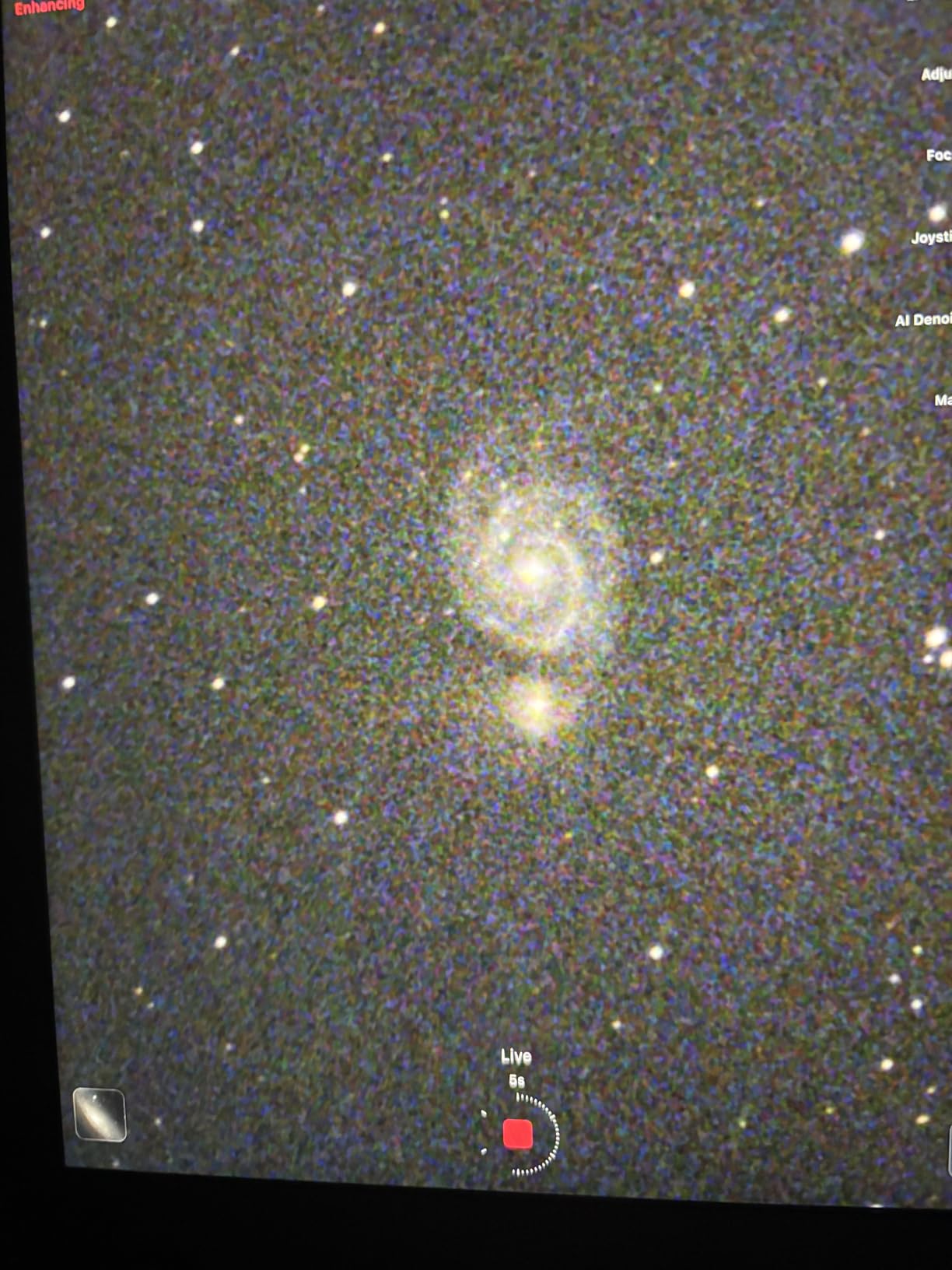
The 8K mosaic stitching mode is the feature that surprised me most. When I aimed at the heart of the Milky Way, the Seestar automatically captured and stitched multiple panels into one wide image that rivaled what I used to get from a dedicated DSLR lens setup. Star colors looked natural with minimal processing.
Battery life ran about five hours on a single charge in EQ mode, which was enough for a full imaging session on the Trifid Nebula. The anti-dew protection kept the front element clear through humid Florida nights where my old refractor would have fogged in minutes.
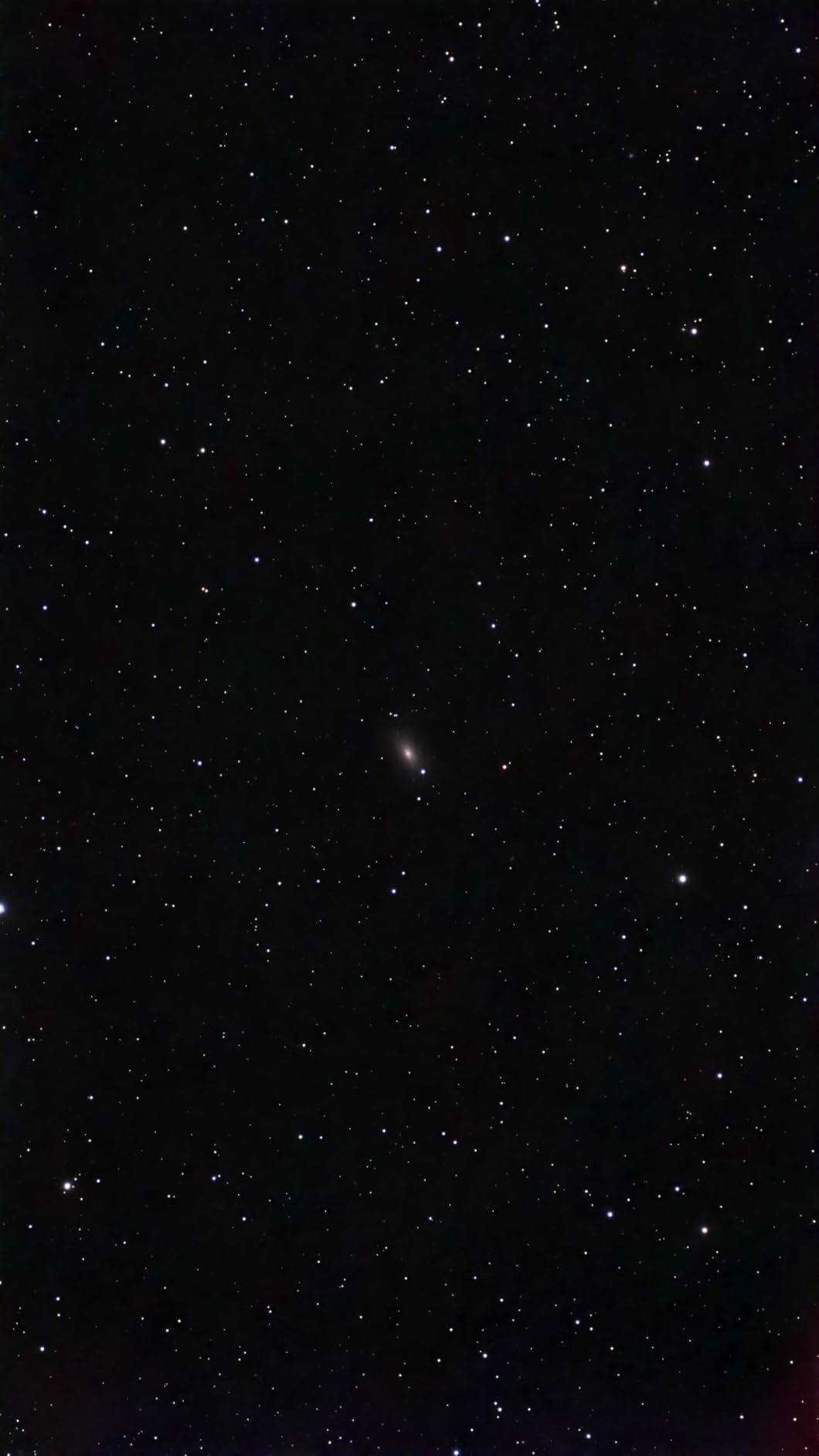
Best Imaging Targets for the S30 Pro
This scope shines brightest on large emission nebulae like the North America Nebula, Lagoon Nebula, and the Rosette. Wide-field Milky Way mosaics are also a strength thanks to the IMX586 wide camera. Small galaxies like M104 are visible but lack the detail you would get from a longer focal length rig.
Who Should Skip the S30 Pro
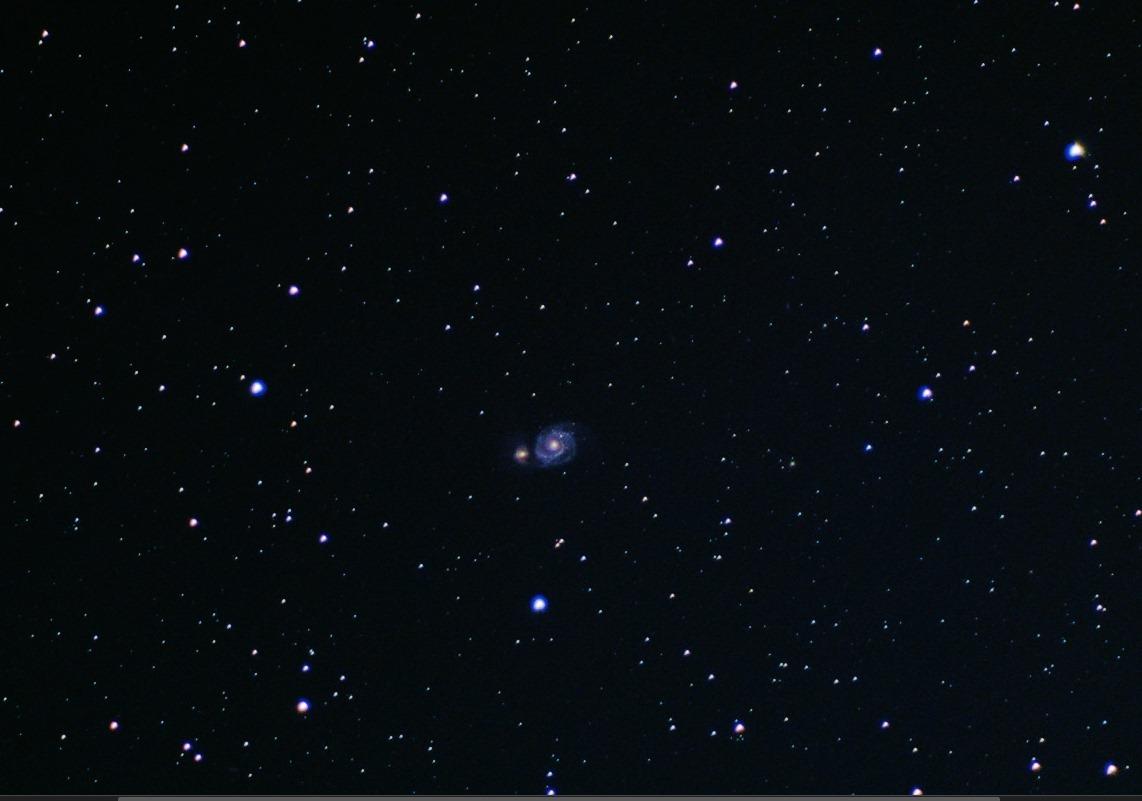
If your goal is high-resolution planetary imaging or detailed shots of small galaxies like the Whirlpool, the 30mm aperture and short focal length will frustrate you. Astrophotographers who already own a cooled monochrome camera and a heavy-duty equatorial mount will find the Seestar redundant rather than a step forward.
2. DWARFLAB Dwarf 3 Smart Telescope – Lightweight Dual-Camera Astrophotography
- Ultra-light 3lb design for travel
- Dual imaging for day and night use
- Cloud-powered one-touch processing
- Built-in dual-band nebula filter
- Easy 2-minute setup for beginners
- App can be occasionally glitchy after updates
- High frame rejection rate on 60s exposures for some users
The Dwarf 3 has become my grab-and-go scope for camping trips because it fits in a backpack side pocket and sets up faster than my camera tripod. The dual-lens design means I can photograph a bald eagle in the afternoon and then image the Andromeda Galaxy from the same spot that night.
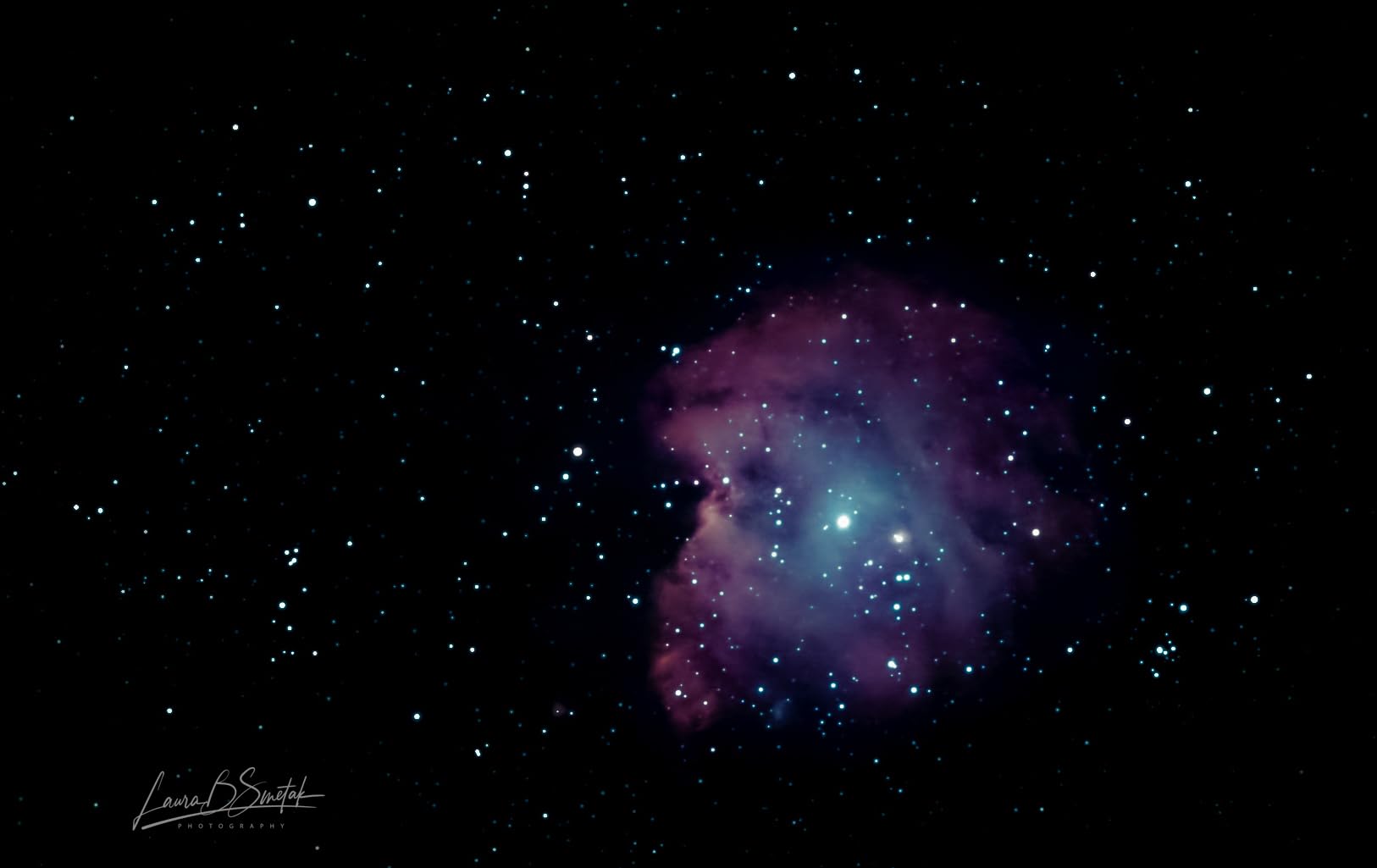
Cloud processing through the DWARFLAB app handles the stacking and color calibration that used to take me an hour in PixInsight. The dual-band nebula filter is genuinely useful for pulling hydrogen alpha signal out of city skies, and I have pulled clean images of the California Nebula from my driveway using it.
The FITS format export is what sold me as a more advanced user. Even though the cloud processing produces a finished JPEG, I can pull the raw FITS data into Siril or AstroPixelProcessor and reprocess with my own workflow. That flexibility is rare in smart scopes at this price point.
Tracking accuracy in EQ mode was solid for 30-second subs all night long. I did notice some frame rejection on 60-second exposures when the wind picked up, but adding a small windbreak on my balcony solved that completely.
How the Dual-Band Nebula Filter Performs
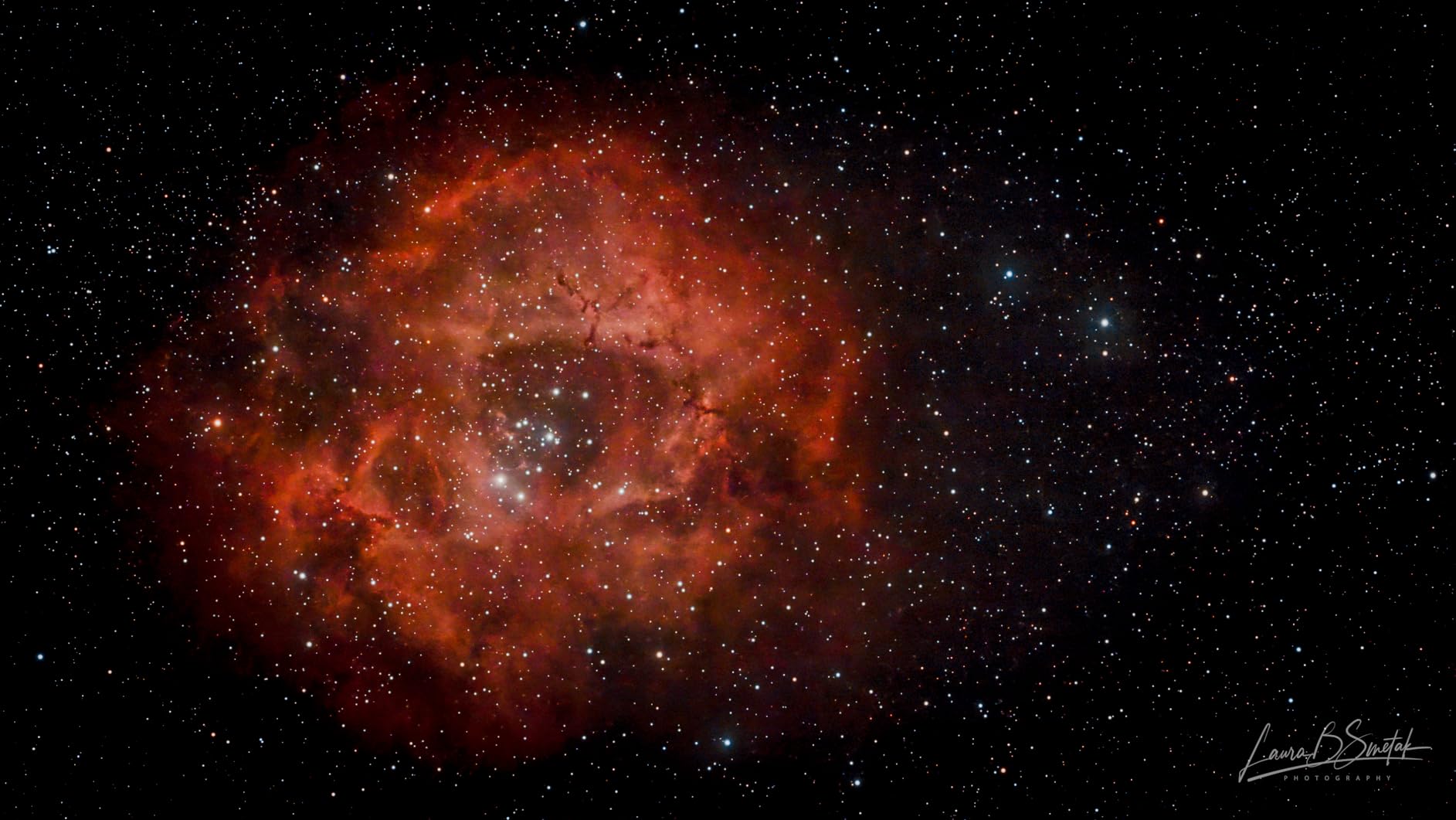
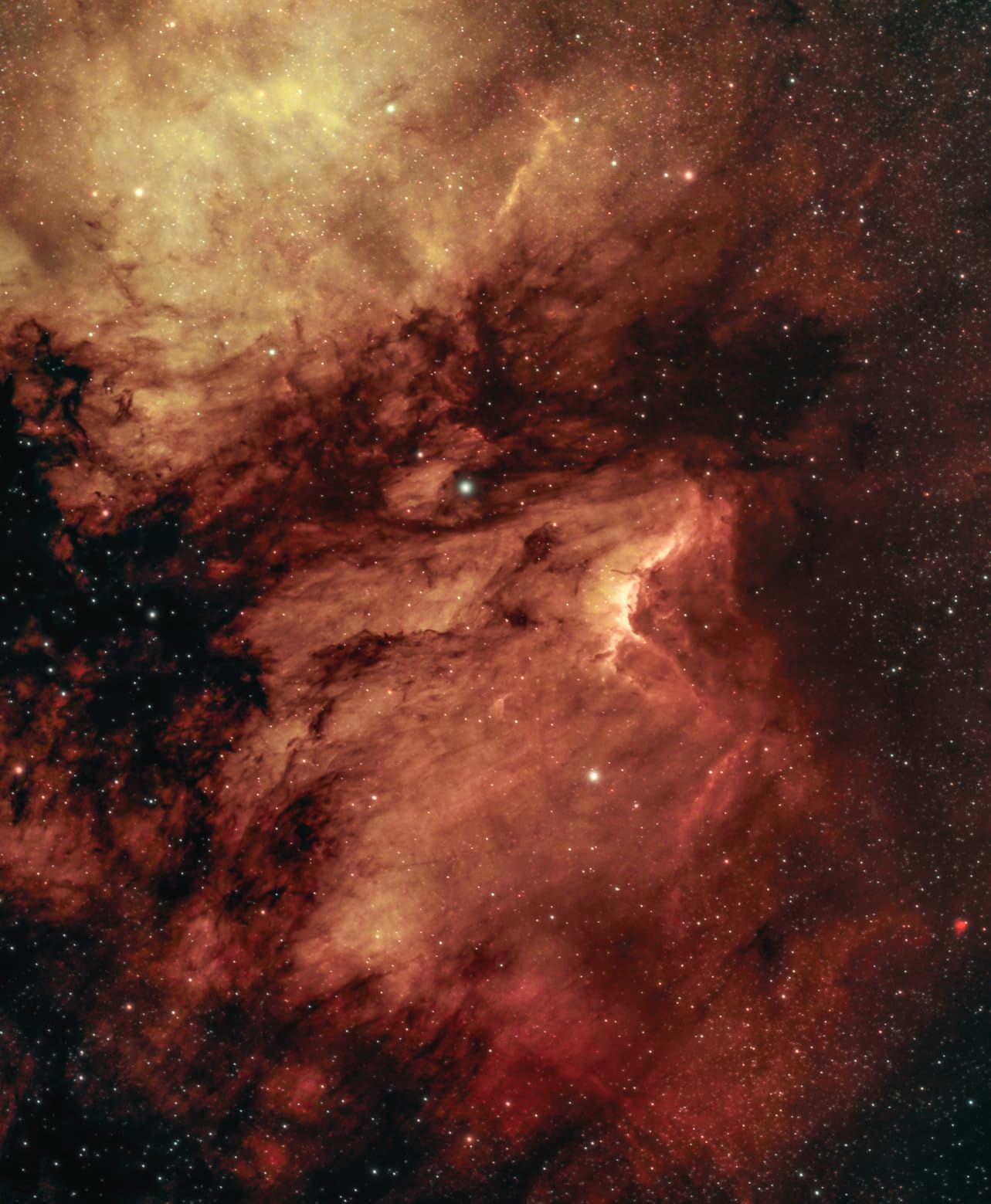
The built-in dual-band filter passes hydrogen alpha and oxygen III wavelengths while blocking broad-spectrum light pollution. In my Bortle 6 backyard, this filter made the difference between seeing the Pelican Nebula and not seeing it at all. It works best on emission nebulae and is less effective on reflection nebulae like the Pleiades.
Daytime Wildlife and Landscape Use
The telephoto lens doubles as a capable wildlife camera during daylight hours. I have used it for birds, distant deer, and even lunar crescent shots during the day. This dual-purpose flexibility makes the Dwarf 3 easier to justify than a telescope you only use on clear nights.
3. SVBONY SV503 102ED Refractor – Best Value ED Optical Tube
SVBONY SV503 Telescope for Adults High Powered, 102mm Large Diameter F7 ED
- S-FPL51 ED glass approaching APO performance
- Smooth dual-speed focuser
- All-metal and glass build quality
- Retractable dew shield
- Excellent value for the price
- Eyepieces and diagonal sold separately
- Manual focus requires practice for beginners
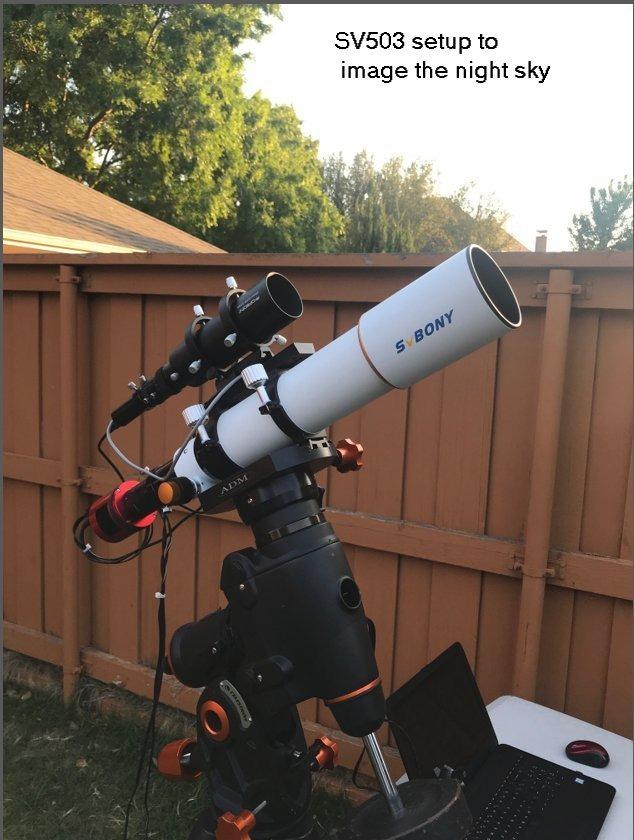
The SV503 102ED is the optical tube I recommend more than any other to friends moving from visual astronomy into astrophotography. The S-FPL51 extra-low dispersion glass tames chromatic aberration well enough that bright stars like Vega show only a faint violet fringe at full resolution, something my old achromat could never manage.
Pairing this OTA with my Sky-Watcher Star Adventurer GTI produced round stars across a full-frame sensor at five-minute subs. The 714mm focal length hits the sweet spot for medium-sized targets like the Pinwheel Galaxy and the Pelican Nebula without demanding a heavy mount.
The dual-speed focuser has that satisfying precision that makes fine focus adjustments during a long imaging run actually enjoyable. I have owned focusers on telescopes twice this price that were less smooth, and the 360-degree field rotator is a quiet bonus for framing without repositioning the whole mount.
Build quality is all-metal with a retractable 133mm dew shield that clicks firmly into place. After two seasons of dew and dust, my copy still looks and operates like new, which makes the lifetime warranty feel less like marketing and more like a real promise.
Recommended Mount Pairings
The SV503 weighs about 8.7 pounds, which puts it right at the comfortable limit for portable star trackers like the Sky-Watcher Star Adventurer GTI or the iOptron SkyGuider Pro. For longer exposures or a heavier camera, a beefier EQ mount like the Sky-Watcher HEQ5 handles it without breaking a sweat.
Accessories You Will Need to Buy
This is an OTA only, so budget for a field flattener, a 1.25-inch or 2-inch diagonal for visual use, and at least two decent eyepieces. The flattener is the non-negotiable item for astrophotography because without it, stars at the edges of the frame turn into comatic streaks.
4. MEEZAA 150EQ Newtonian Reflector – Budget Light Bucket
MEEZAA 150EQ Newtonian Reflector Telescope for Adults with Equatorial Mount
- 150mm large aperture for serious light gathering
- Sturdy German equatorial mount
- Comprehensive accessories in the box
- Clear assembly instructions
- Strong value for the price
- Entry-level eyepieces could be better quality
- Plastic focuser flexes under camera weight
- Heavy for one-handed carrying
The MEEZAA 150EQ gave me my first taste of real deep sky imaging on a tight budget, and the 150mm aperture pulls in photons that small refractors simply cannot match. The f/4.3 focal ratio is genuinely fast, which means shorter exposure times on faint nebulae and galaxies.
The included German equatorial mount with slow-motion controls was the main reason I picked this over a tabletop Dobsonian. Once polar aligned, I could track targets for short exposures with my smartphone clamped to the eyepiece, and the results on the Orion Nebula exceeded my expectations for the price.
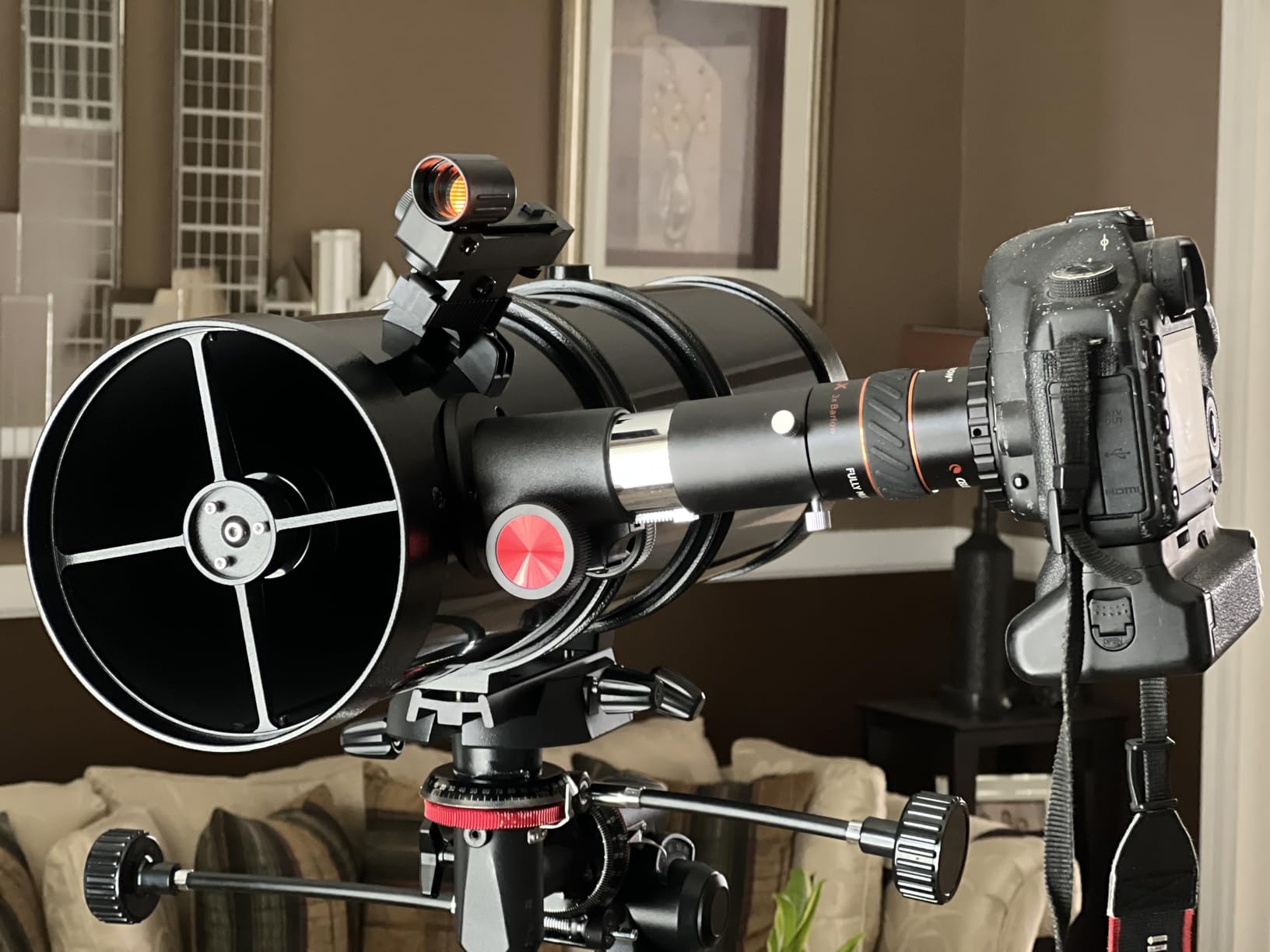
The carry bag is a real bonus that competitors at this price often skip. I carried the optical tube, mount, and accessories in one trip from the car to my dark-sky spot, which matters more than you might think at two in the morning when you are tired and cold.
The plastic focuser is the obvious weak point for astrophotography. It held my phone adapter fine, but when I tried a heavier mirrorless camera, the drawtube shifted enough to ruin framing. A future upgrade to a Crayford focuser would unlock the full potential of the optics.
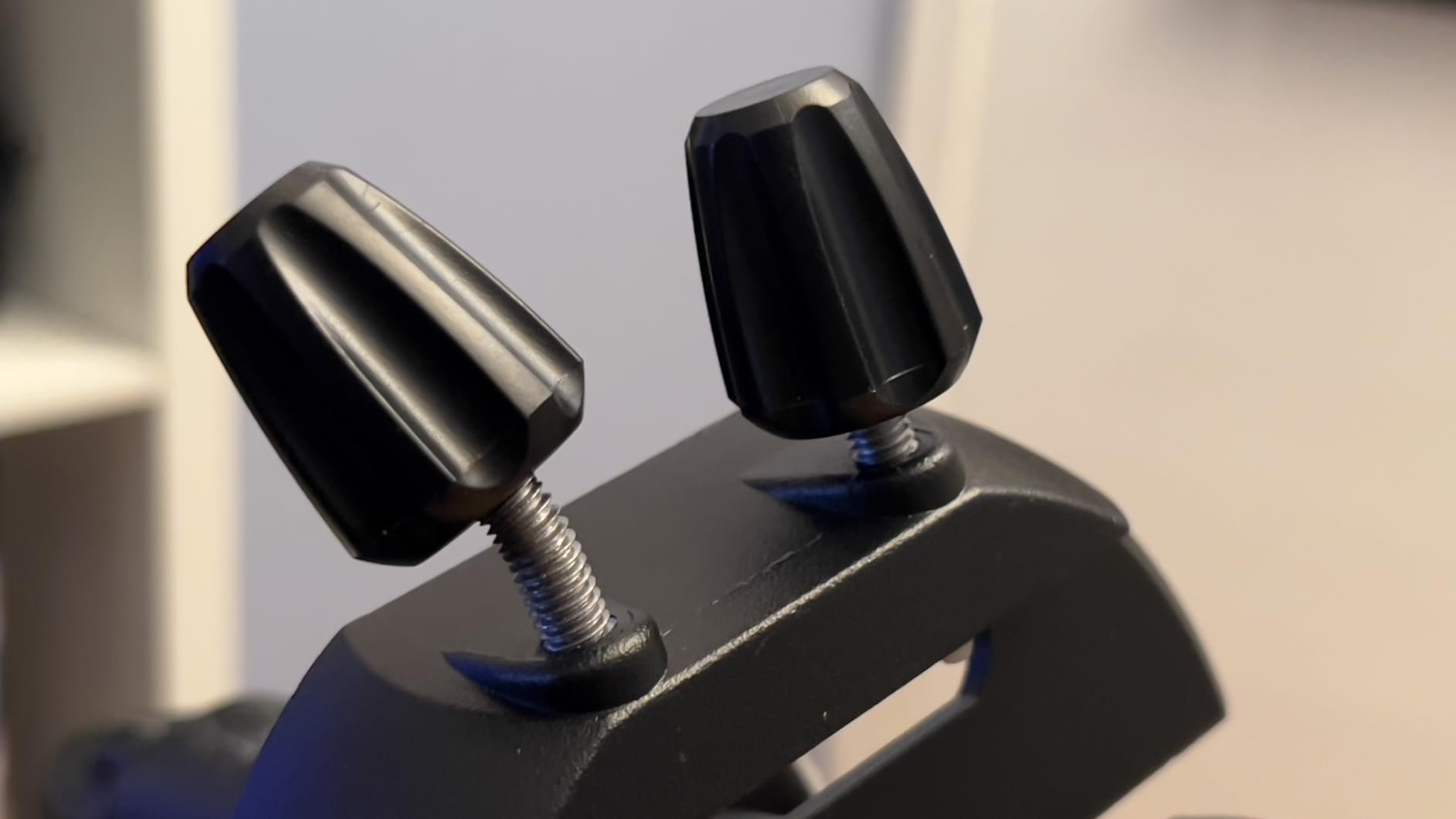
Collimation Learning Curve
Newtonian reflectors require periodic collimation, and the 150EQ is no exception. Plan to spend an evening with a Cheshire sight tube or laser collimator before your first real imaging session. Once collimated, the optics hold alignment well for several nights of use.
Visual Use Versus Astrophotography Tradeoff
This scope excels at visual observation of nebulae and globular clusters, and the included Barlow lens boosts magnification for planets. For serious astrophotography, you will eventually want to replace the focuser and add a coma corrector to clean up star shapes at the frame edges.
5. DWARFLAB Dwarf Mini Smart Telescope – Most Portable Option
- Only 1.85lb for true backpack portability
- Quick 3-minute setup time
- Auto GOTO with interactive star map
- Good deep-sky image quality for beginners
- AZ/EQ dual mode support
- No included carrying case
- Limited to 90 second exposures
- App only in English and Chinese
The Dwarf Mini is the telescope I take on overnight hikes where every ounce counts. At 1.85 pounds, it weighs less than my water bottle, and the three-minute setup meant I was imaging the Andromeda Galaxy from a remote dark-sky site before my hiking partner finished setting up his tent.
The Sony IMX662 sensor is surprisingly capable for the size. Single-frame exposures top out at 90 seconds, which is short for serious deep sky work, but the live stacking in the app compensates by combining dozens of frames into one clean image in real time.
The interactive star map in the app makes GoTo targeting approachable for absolute beginners. You tap a target on the screen, the scope slews automatically, and imaging begins. I tested this with my niece, who had never used a telescope, and she captured the Dumbbell Nebula on her first attempt.
The built-in light pollution filters are tuned for emission nebulae and do a credible job even in suburban skies. For broadband targets like galaxies, you will want darker skies, but for the price and portability, the Dwarf Mini is hard to beat.
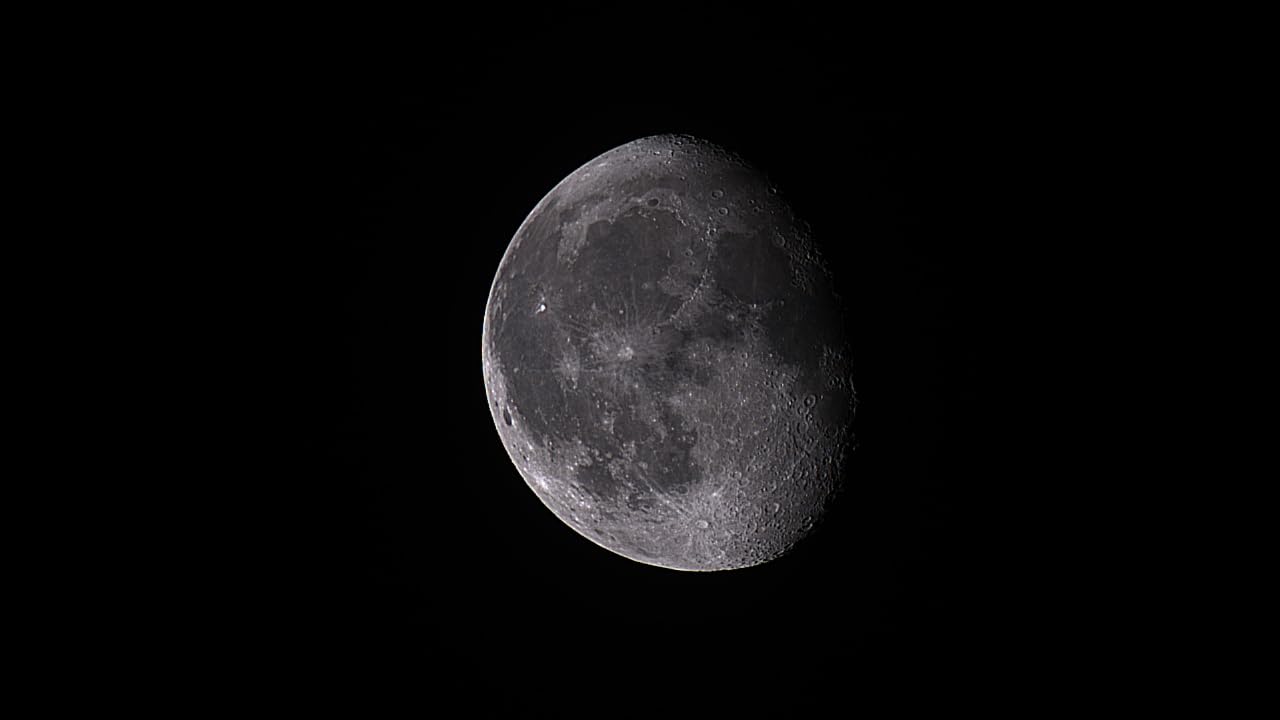
Exposure Limitations and Workarounds
The 90-second single-frame limit caps how faint you can go in a single sub, but the app stacks frames automatically. For bright targets like the Orion Nebula or the Pleiades, this is plenty. For dim targets like the Iris Nebula, plan for longer total integration times through more stacked frames.
Travel and Dark-Sky Site Use
This is the ideal scope for astrophotography road trips and dark-sky vacations. It fits in a camera bag, runs on a built-in battery, and works anywhere with a clear view of the sky. Pair it with a small power bank for extended multi-night sessions.
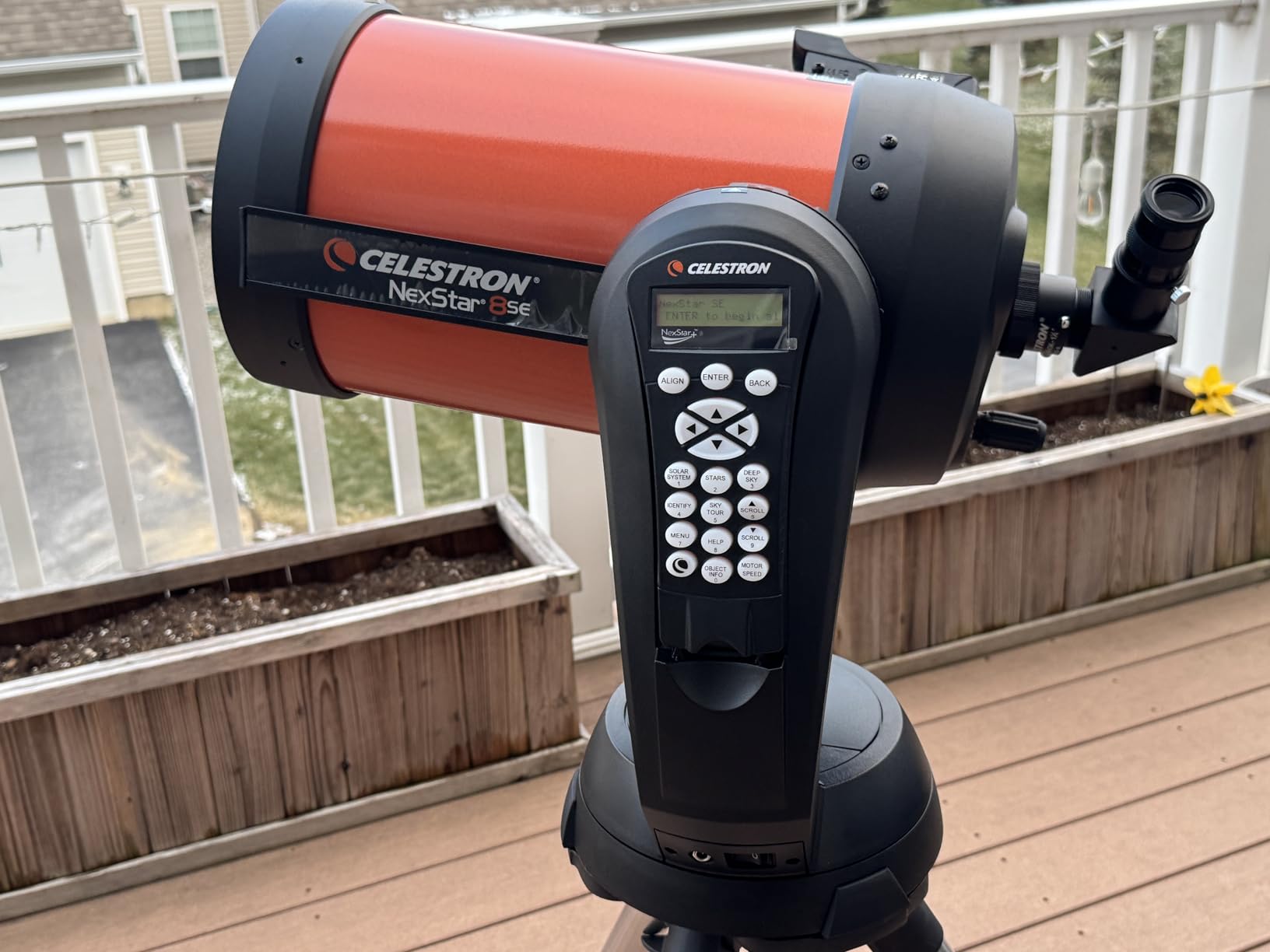
6. Celestron NexStar 8SE Schmidt-Cassegrain – Classic GoTo SCT
- Excellent 8-inch aperture for planetary and lunar detail
- Automated GoTo with 40
- 000 object database
- SkyAlign technology for fast setup
- Compact single-fork arm design
- StarBright XLT coatings maximize light transmission
- No power supply included
- requires 8 AA batteries or external power
- Hand controller display hard to see at night
- Manual could be more detailed
The NexStar 8SE is the scope I reach for when I want crisp detail on Saturn’s rings or Jupiter’s Great Red Spot. The 2032mm focal length delivers real magnification on solar system targets, and the StarBright XLT coatings keep contrast high even when imaging near bright urban skylines.
Setup with SkyAlign is genuinely fast. I center three bright stars in the eyepiece, and the mount figures out its own orientation. Once aligned, the GoTo database puts 40,000 objects at your fingertips, which is invaluable when you are hunting faint galaxies that are invisible to the naked eye.
For deep space photography, the 8SE works best with a focal reducer to bring the focal ratio down from f/10 to f/6.3. That change cuts your exposure times nearly in half and widens the field of view enough to fit targets like the Andromeda Galaxy on a standard sensor.
The biggest downside for astrophotography is the alt-azimuth mount, which causes field rotation during long exposures. For deep sky imaging sessions longer than 30 seconds per sub, you will want to add a wedge for equatorial tracking or move to a German equatorial mount.
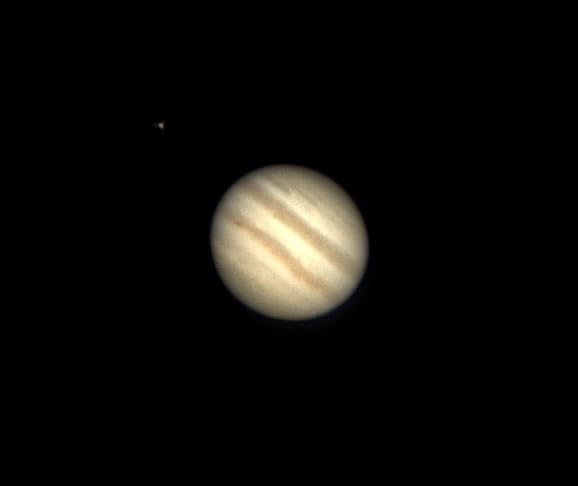
Planetary Imaging Performance
Where the 8SE truly excels is high-frame-rate planetary imaging with a dedicated planetary camera. I have captured detail on Jupiter’s cloud belts, Saturn’s Cassini Division, and Martian polar caps that smaller scopes simply cannot resolve. Pair it with a Barlow lens and a fast camera for best results.
Power Supply Recommendations
Skip the eight AA batteries, which drain quickly under the GoTo slews. Invest in a 12V lithium power tank or a portable telescope power supply for reliable all-night operation. This single upgrade transforms the user experience and prevents frustrating shutdowns mid-session.
7. Celestron StarSense Explorer 10-inch Dobsonian – Big Aperture Visual Powerhouse
- Large 10-inch aperture for serious deep sky viewing
- StarSense app guides you to targets easily
- Sturdy Dobsonian base for smooth manual tracking
- XLT coatings maximize brightness
- Great for intermediate observers
- Heavy at 54.8 lbs
- requires two people to move
- Particle board base construction
- Included eyepieces are basic quality
The 10-inch StarSense Dobsonian is the telescope I loan to friends hosting star parties because the aperture gathers enough light to make galaxies and globular clusters look genuinely three-dimensional. Through this scope, the Whirlpool Galaxy shows its spiral arms with averted vision from a dark site.
The StarSense app uses your smartphone camera to recognize star patterns and guide you to targets with on-screen arrows. I was skeptical at first, but it works surprisingly well, even under moderately light-polluted skies where many targets are invisible to the naked eye.
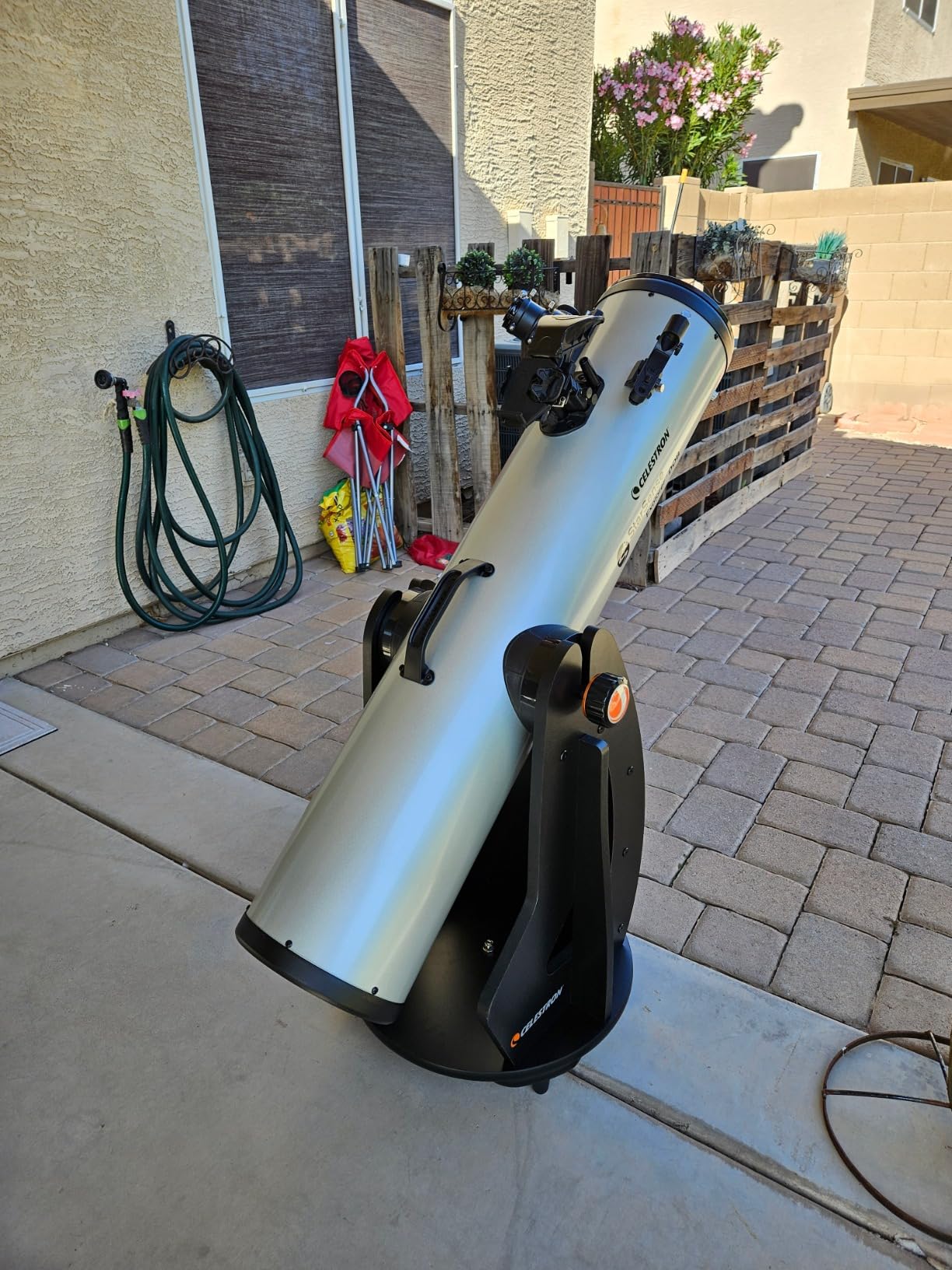
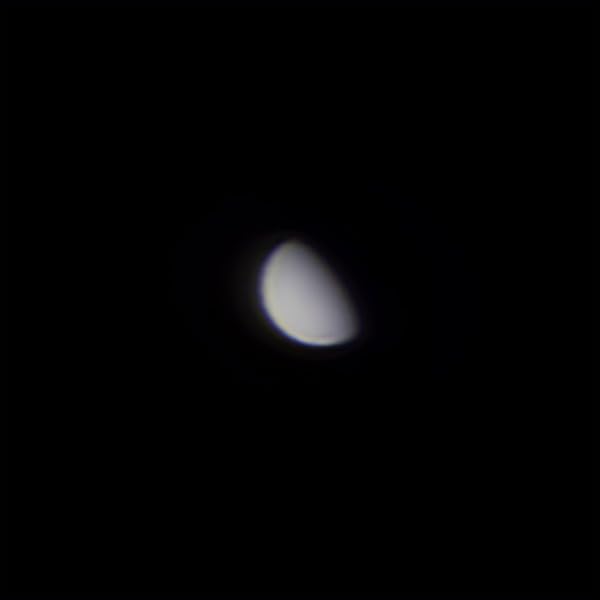
This is primarily a visual instrument rather than an astrophotography scope. The Dobsonian mount does not track, which means long-exposure imaging is not practical. For afocal photography through the eyepiece with a phone, however, it produces impressive lunar and planetary snapshots.
The weight is the main drawback. At 54.8 pounds, moving this scope requires two people or a hand truck, and the particle board base needs protection from dew and humidity. Once set up, though, the smooth altitude and azimuth motion makes manually tracking objects at high power almost effortless.
Dobsonian Versus Equatorial Mount for Imaging
A Dobsonian is perfect for visual observation but not for tracked long-exposure astrophotography. If your primary goal is imaging deep sky objects, you need an equatorial mount. If your goal is visual observation with occasional phone snapshots, the Dobsonian is the better value.
Recommended Eyepiece Upgrades
The included 25mm and 10mm eyepieces are functional but basic. Adding a wide-field 82-degree eyepiece in the 14mm to 17mm range transforms the viewing experience on large nebulae like the North America Nebula and big globular clusters like Omega Centauri.
8. Celestron StarSense Explorer 150 Tabletop Dobsonian – Compact Visual Performer
Celestron StarSense Explorer 150AZ App-Enabled Tabletop Dobsonian Telescope
- 150mm parabolic mirror for sharp views
- StarSense app makes finding objects easy
- Compact tabletop design
- Easy to assemble
- Perfect size for beginners
- Base material is press board not solid wood
- May need additional eyepieces for best viewing
- Requires a sturdy table for use
The 150 tabletop Dob is the scope I keep in the living room for impromptu lunar and planetary sessions. The 150mm parabolic mirror punches above its price class on bright targets, and the StarSense app makes target acquisition genuinely fun rather than frustrating for new observers.
Unlike the larger 10-inch Dobsonian, this one is light enough to carry in one hand and sets up on any sturdy table. I have used it on a balcony railing, a picnic table, and the tailgate of my truck, and the views of Saturn’s rings and Jupiter’s moons have been consistently sharp.
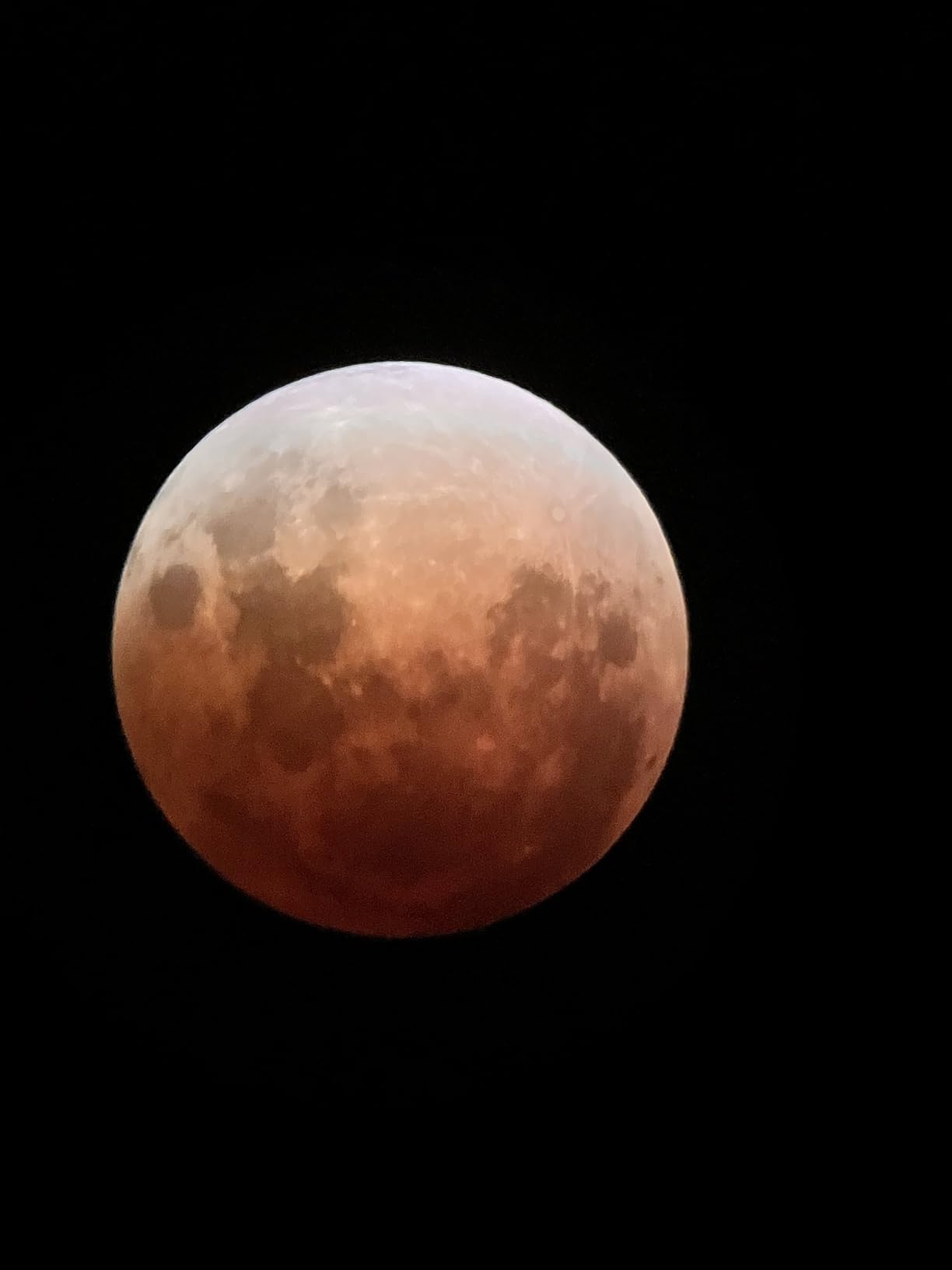
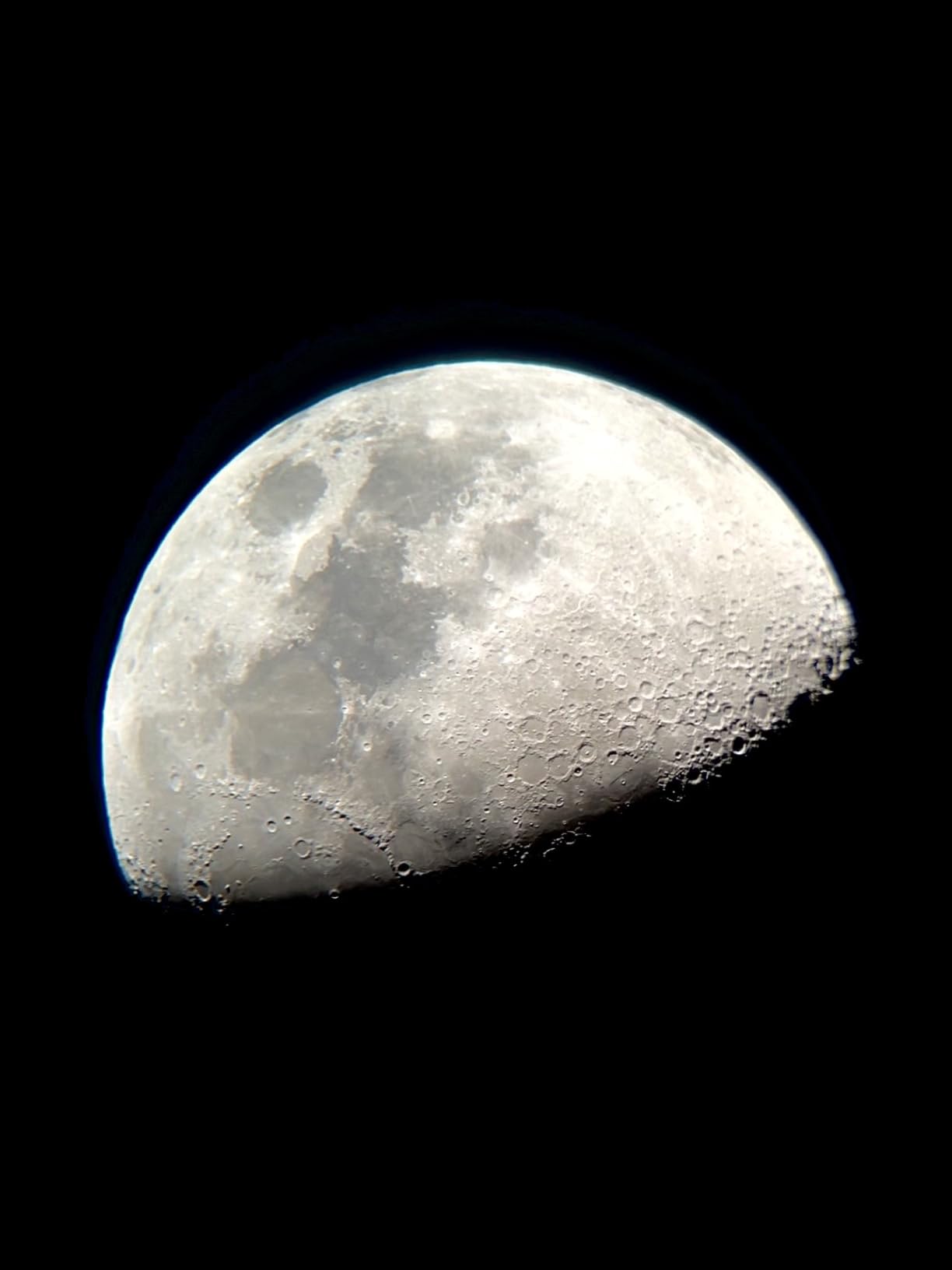
For deep sky photography, this scope is limited by its tabletop Dobsonian mount, which does not track. However, for short afocal exposures of the Moon and bright planets using a smartphone adapter, it produces surprisingly good results for beginners learning the basics.
The parabolic primary mirror is a meaningful upgrade over spherical mirrors found in cheaper reflectors. Star images stay tight across the field of view, and globular clusters resolve into individual stars rather than blurring together into a glow.
Stable Platform Requirements
A tabletop Dobsonian requires a sturdy surface to perform well. A wobbly folding table will translate every touch into image shake at high power. A wooden picnic table or a dedicated observing stand makes a noticeable difference in usability.
Transitioning to Astrophotography Later
If you start with this scope and decide you want to pursue deep sky astrophotography, the optical tube can later be moved to a proper equatorial mount. The parabolic optics are good enough to justify the upgrade path rather than starting over with a new telescope.
9. SVBONY SV550 80ED Triplet APO – Premium Optics at Value Pricing
SVBONY SV550 AP0 Telescope, 80mm ED F6 Triplet Apochromatic Refractor OTA
- Triplet APO design rivals premium brands
- Sharp images with no false color
- Smooth solid dual-speed focuser
- Lightweight and portable
- Excellent value for triplet APO glass
- No adapters
- flatteners
- or eyepieces included
- Focuser tube may be too short for some EAF accessories
The SV550 80ED triplet APO produces some of the cleanest star fields I have seen from a sub-thousand-dollar refractor. The air-spaced triplet design with S-FPL51 ED glass eliminates visible chromatic aberration even on brilliant blue stars like Rigel, and the magnesium alloy focuser holds focus locked through long imaging runs.
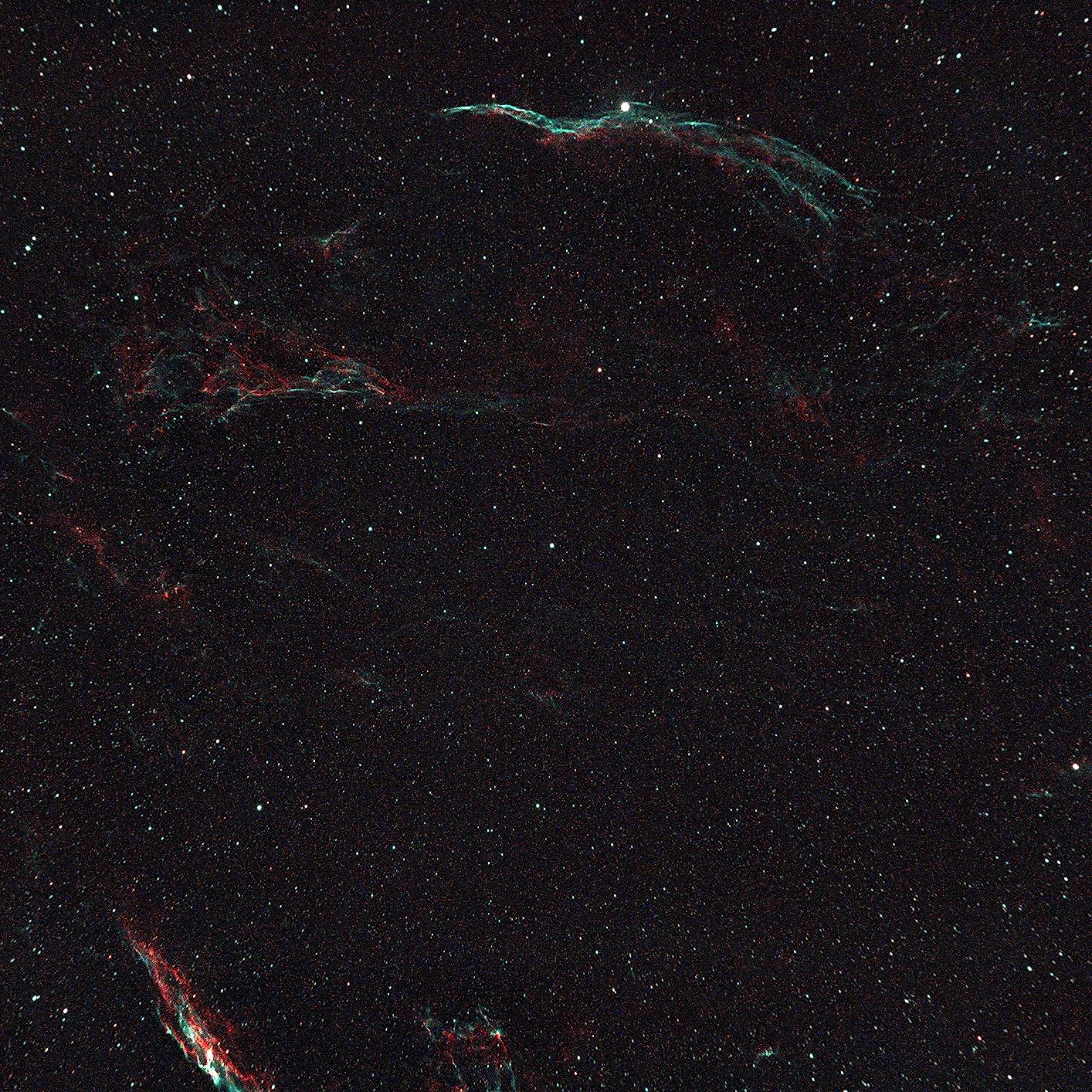
I mounted this OTA on my Star Adventurer GTI and captured the Pelican Nebula with hydrogen alpha and RGB filters over two nights. Star shapes stayed round to the corners of my APS-C sensor with a third-party field flattener, which is exactly what you want from a serious astrophotography refractor.
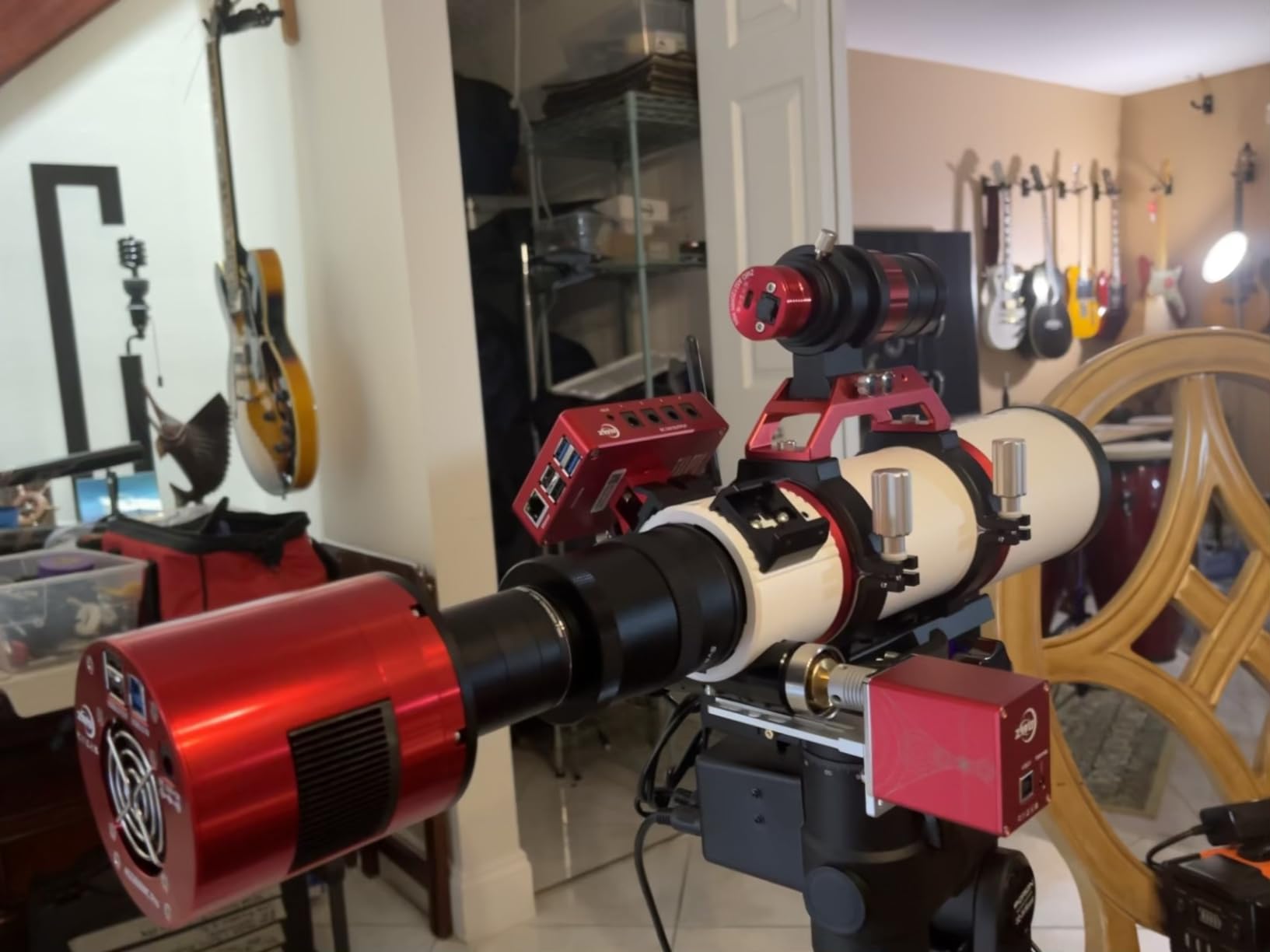
The 480mm focal length at f/6 is a versatile middle ground. It is short enough for wide-field nebula photography but long enough for medium-sized galaxies like M81 and M82. This focal range covers the majority of popular deep sky targets without demanding a heavy mount.
The catch is that you get the optical tube only. Budget for a field flattener, a finder scope, mounting rings, and a dovetail plate if you do not already have them. Factor those costs into your total budget before comparing prices against all-inclusive alternatives.
Field Flattener Pairing Options
The 87mm back focus distance is standard, which means most field flatteners from SVBONY, Sky-Watcher, and other brands will work. I used a 0.8x reducer flattener to drop the effective focal length to 384mm at f/4.8, which speed up my nebula imaging sessions considerably.
Comparison to Higher-Priced Triplet APO Scopes
Side by side with a premium brand triplet at twice the price, the SV550 holds its own optically. The differences show up in focuser refinement and accessory quality rather than raw image quality. For most hobbyists, that tradeoff strongly favors the SV550.
10. Sky-Watcher Star Adventurer GTI Mount Kit – Portable GoTo EQ Tracking
- Excellent GoTo functionality once aligned
- Easy polar alignment with illuminated polar scope
- Portable and lightweight design
- Good tracking for unguided 3-5 minute subs
- Great value as a complete kit
- SynScan app can be unreliable on Android
- No hand controller included
- Requires phone or computer for GoTo
The Star Adventurer GTI is the mount that turned my astrophotography from frustrating to fun. Once polar aligned using the built-in illuminated polar scope, I routinely pulled round stars on three-minute unguided exposures with a 65mm refractor and a mirrorless camera.
The complete kit includes the tripod, pier extension, counterweight, and counterweight bar, which means you do not have to piece together components from different manufacturers. That matters more than you might think when you are starting out and unsure what fits what.
WiFi control through the SynScan app lets you slew to targets from your phone rather than a hand controller. The GoTo accuracy was solid after a careful star alignment, and I rarely had to manually recenter targets after the initial slew.
The SynScan app reliability is the main complaint I have. On my Android phone, it occasionally drops connection mid-session, requiring a restart. The iOS version has been more stable in my testing, and a dedicated Windows laptop running EQMOD eliminates the issue entirely.
Maximum Payload for Astrophotography
The official payload rating is 11 pounds, but for astrophotography I recommend staying under 8 pounds including camera and accessories. At that weight, tracking stays accurate for long exposures. Heavier payloads work for visual use but introduce tracking errors for imaging.
Autoguiding Setup for Longer Exposures
Adding a small guide scope and a guide camera unlocks 10-minute exposures with this mount. I use the ZWO ASI120MM mini with a 30mm guide scope, and PHD2 keeps the mount locked on target through wind gusts and small polar alignment errors.
11. Explore Scientific iEXOS-100-2 Equatorial Mount – Budget GoTo Tracker
- Affordable capable GoTo mount
- Easy ASCOM integration for advanced control
- Good build quality
- Smooth clutching on both axes
- Lightweight and portable
- Software and app can be flaky
- No polar scope included
- Tripod could be sturdier
The iEXOS-100-2 is the mount I recommend to photographers who already own a camera and lens and want to add tracking without spending a fortune. The PMC-Eight controller with eight independent CPUs is more sophisticated than the price suggests, and the ASCOM compatibility opens up advanced control software.
I paired this mount with a 70mm refractor and a mirrorless camera for wide-field Milky Way imaging, and the results impressed everyone I showed them to. Round stars at three-minute subs with no autoguiding is impressive performance at this price point.
The dual-axis clutch system lets you manually reposition the mount without losing alignment, which is genuinely useful when you need to flip the mount through the meridian mid-session. The stepper motor belt drives are quiet enough that I have used this mount on a balcony without disturbing neighbors.
The ExploreStars app gets the job done but feels dated compared to modern alternatives. For serious sessions, I connect via ASCOM to a laptop running Stellarium or NINA, which gives full control over GoTo, tracking, and imaging automation.
ASCOM Integration for Advanced Imaging
For Windows users, the ASCOM driver unlocks full mount control from software like NINA, APT, and Stellarium. This turns the iEXOS-100-2 into a capable automation platform for unattended imaging sequences, which is remarkable at this price.
Polar Alignment Without a Polar Scope
The mount has a polar alignment sight hole through the RA axis rather than a full polar scope. For accurate polar alignment, use the drift alignment method or a polar alignment routine in your imaging software. Adding a third-party polar scope is possible but requires modification.
12. iOptron SkyGuider Pro Camera Mount – Reliable Star Tracker
- Excellent tracking accuracy for 2 minute exposures
- Compact and portable design
- Easy polar alignment with illuminated scope
- 20 hour battery life
- All-metal construction reduces vibration
- Counterweight bar is short at 8 inches
- Polar scope may need collimation
- No GoTo capability
- tracking only
The SkyGuider Pro is the camera mount I recommend to DSLR and mirrorless photographers who want to add tracking to their existing camera and lens setup. Pair it with a 50mm to 200mm lens and you can capture stunning wide-field images of the Milky Way, North America Nebula, and Andromeda Galaxy.
The internal rechargeable battery runs 20 hours on a charge, which got me through a full weekend of camping without a recharge. The AccuAlign illuminated polar scope makes polar alignment straightforward even at a dark site with no other reference lights.
The all-metal construction keeps vibrations to a minimum, which matters more than you might expect at long focal lengths. I have run 200mm telephoto lenses on this mount and pulled clean two-minute subs that stacked beautifully with no trailing artifacts.
This is a tracker, not a GoTo mount. Once polar aligned, you manually aim at your target and the mount tracks it across the sky. For photographers who already know where their targets are, this is fine. For beginners who want automatic GoTo, look at the Sky-Watcher Star Adventurer GTI instead.
Lens Pairing Recommendations
This mount pairs beautifully with wide-angle to medium-telephoto camera lenses. My favorite combination is a 135mm f/2 lens for large nebulae like the California Nebula and a 200mm lens for the Andromeda Galaxy. Heavier 300mm plus lenses need careful balancing.
Autoguiding Port for Improved Accuracy
The SkyGuider Pro includes an autoguide port, which means you can add a small guide scope and guide camera for even more accurate tracking. With autoguiding, I have pushed exposures to five minutes with no star trailing at 200mm focal length.
13. SVBONY SV48P 102mm Refractor OTA – Affordable Wide-Field Imaging
- Excellent optics and mechanics for the price
- Dual-speed focuser works smoothly
- Good chromatic aberration control for achromat
- Solid build quality
- Lightweight at 7 pounds
- Chromatic aberration expected from achromatic design
- Focuser may need adjustment
- No mount included
- requires separate purchase
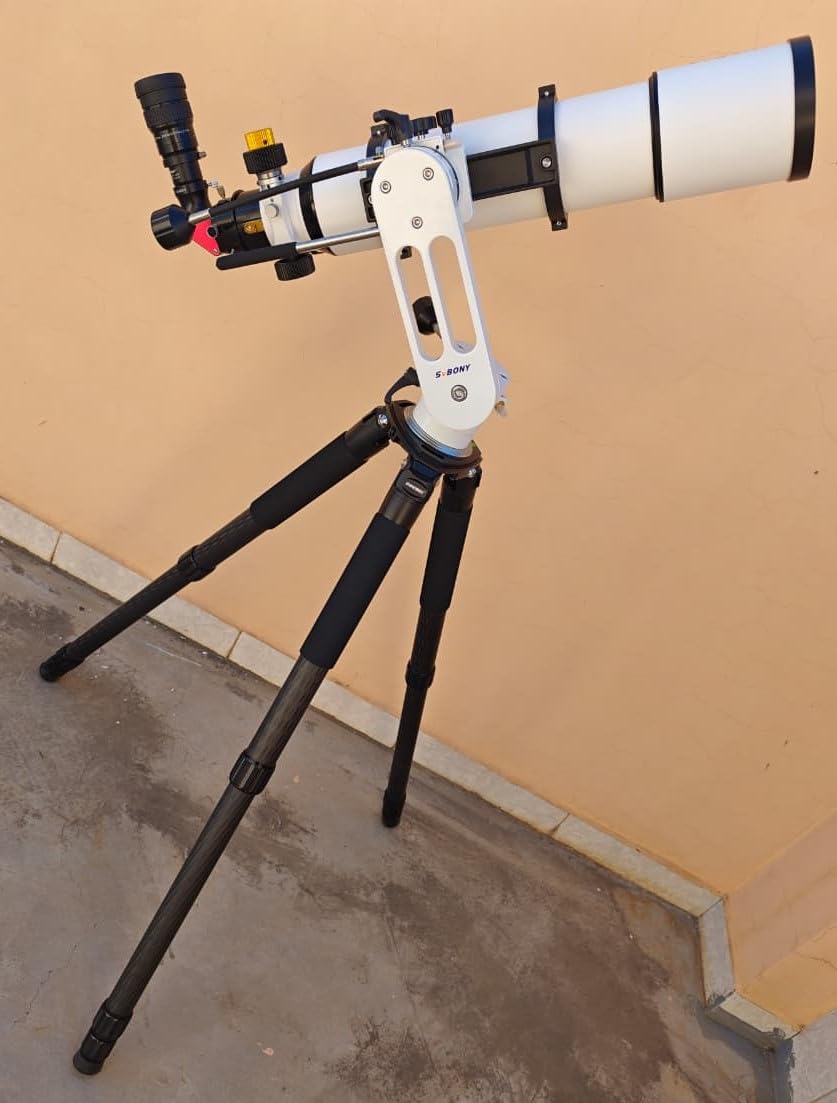
The SV48P 102mm is the most affordable wide-field refractor I recommend for astrophotography. At 7 pounds and f/6.5, it pairs well with portable star trackers and produces pleasing images of large nebulae and star clusters for a fraction of the cost of an ED or APO refractor.
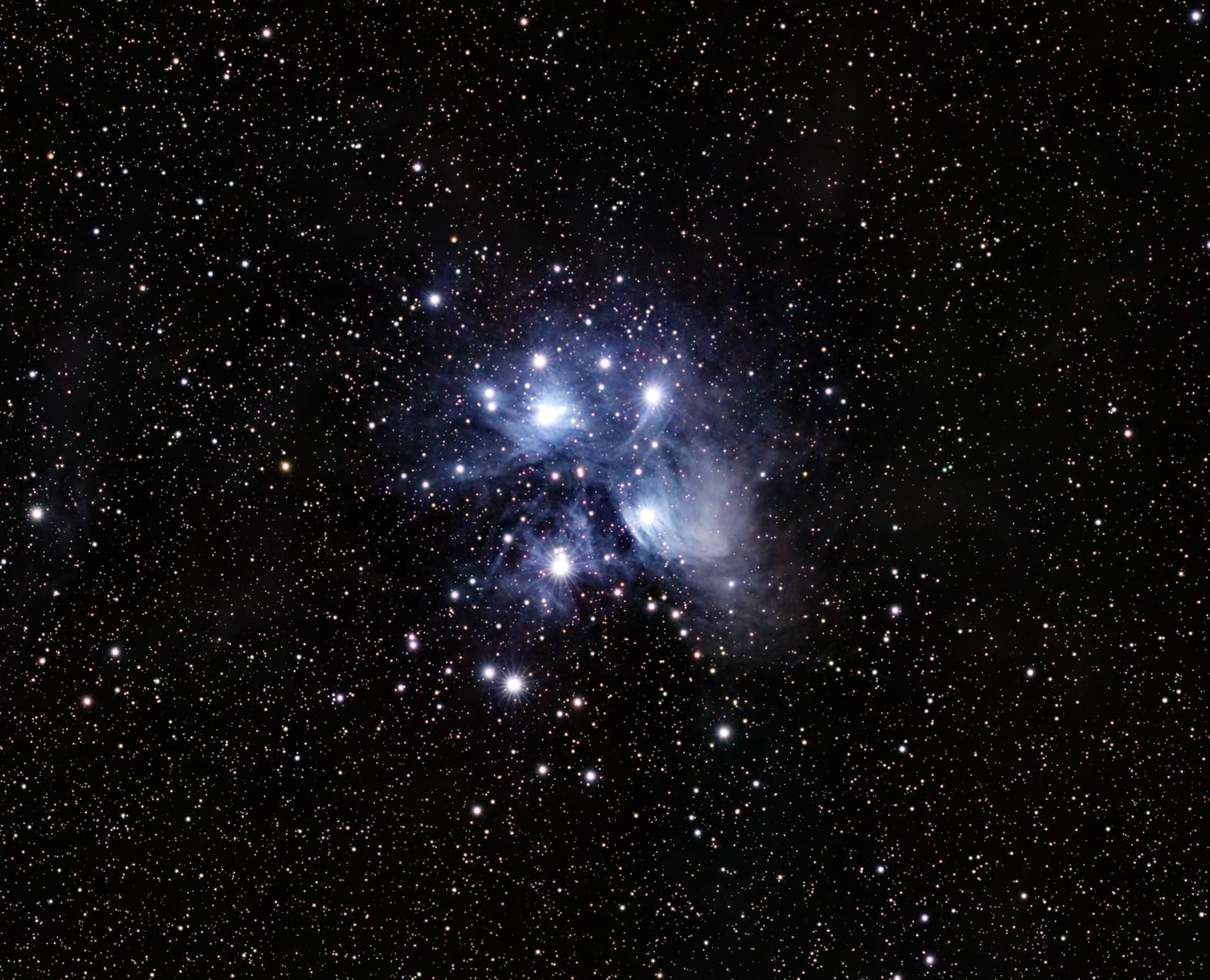
I tested this scope on the Pleiades, the Double Cluster, and the Rosette Nebula with a one-shot color camera. The wide field of view captured entire clusters in a single frame, and the dual-speed focuser held focus through long imaging runs without drift.
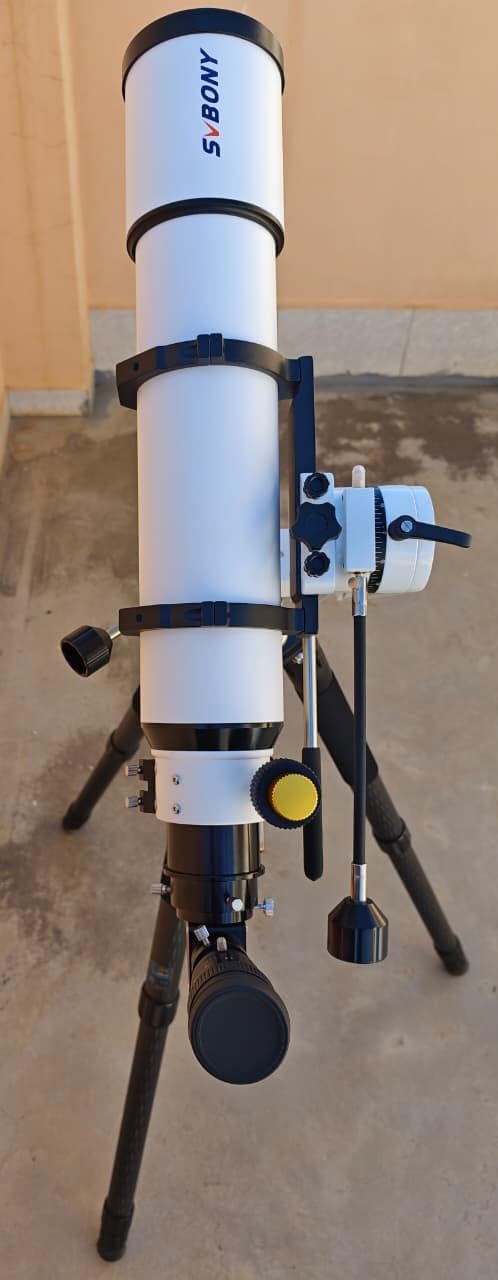
Being an achromat, this scope does show chromatic aberration on bright stars. Expect blue-violet halos around brilliant stars like Vega and Sirius. For narrowband imaging using hydrogen alpha filters, the aberration disappears entirely, which makes this scope surprisingly capable for emission nebula photography on a budget.
The 360-degree rotatable focuser is a nice touch that lets you frame your composition without repositioning the entire mount. At this price, features like that are genuinely surprising and add real value for astrophotographers working on framing tight compositions.
Using Narrowband Filters to Reduce Aberration
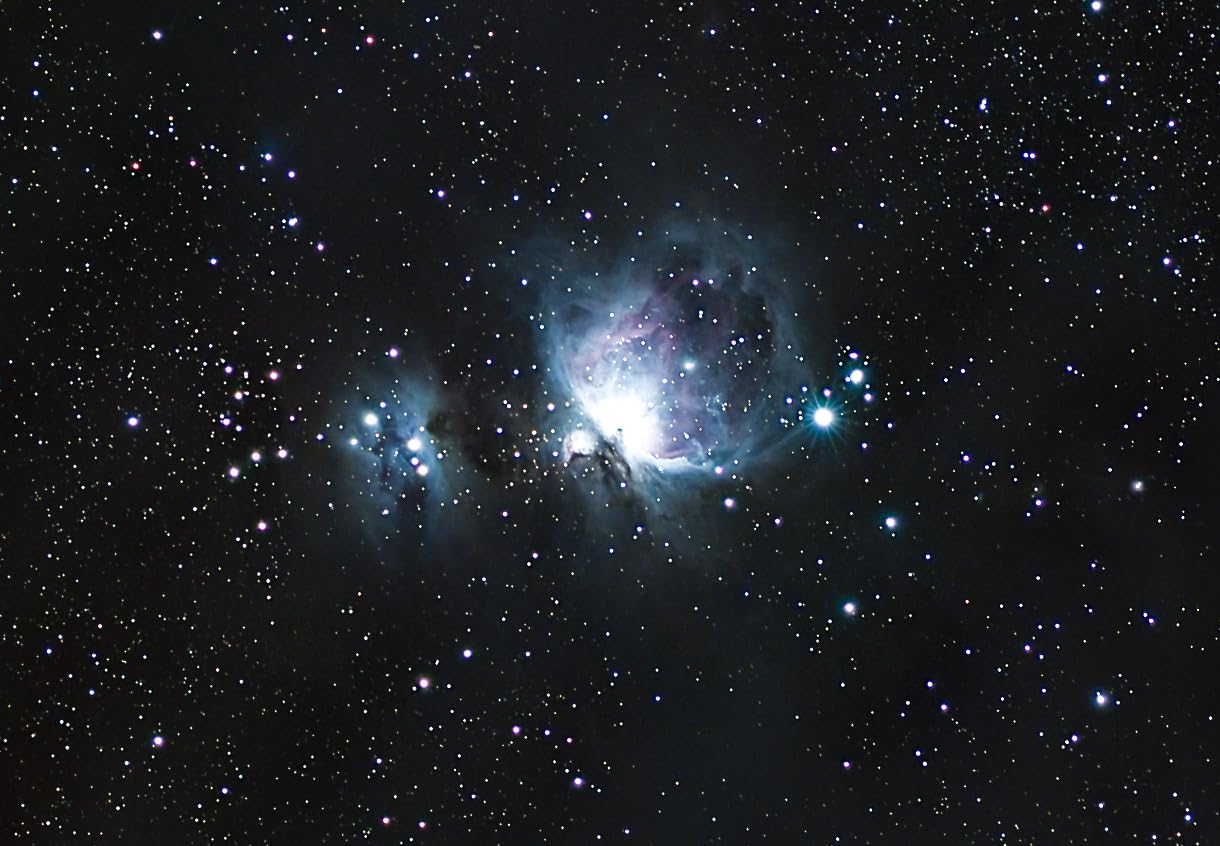
Narrowband filters pass only specific wavelengths of light, which eliminates chromatic aberration entirely on emission nebulae. With a dual-band filter, the SV48P produces clean, sharp images of the Orion Nebula and the Pelican Nebula that rival much more expensive scopes.
Mount Pairing for Portable Astrophotography
At 7 pounds, this OTA sits comfortably on a Star Adventurer GTI or SkyGuider Pro for portable imaging. For longer focal length imaging sessions, consider a heavier German equatorial mount like the Sky-Watcher HEQ5 for better tracking stability.
14. Askar FMA180 Pro Sextuplet APO – Premium Wide-Field Astrograph
- Excellent optics with minimal chromatic aberration
- Perfectly sharp images solidly built
- Great for wide-field astrophotography
- Compact and portable
- Great match for star trackers
- Small 40mm effective aperture
- Limited to bright deep sky objects
- Few reviews due to new product
The Askar FMA180 Pro is a specialized astrograph designed for wide-field deep sky imaging, and it does that job spectacularly well. The sextuplet air-spaced APO design with two ED glasses produces tack-sharp stars to the corners of a full-frame sensor with no field flattener required.
I mounted this scope on my SkyGuider Pro with a mirrorless camera and captured the entire North America Nebula complex in a single frame at 180mm focal length. Star shapes stayed tight from edge to edge, and the internal focusing mechanism kept everything stable through long exposures.
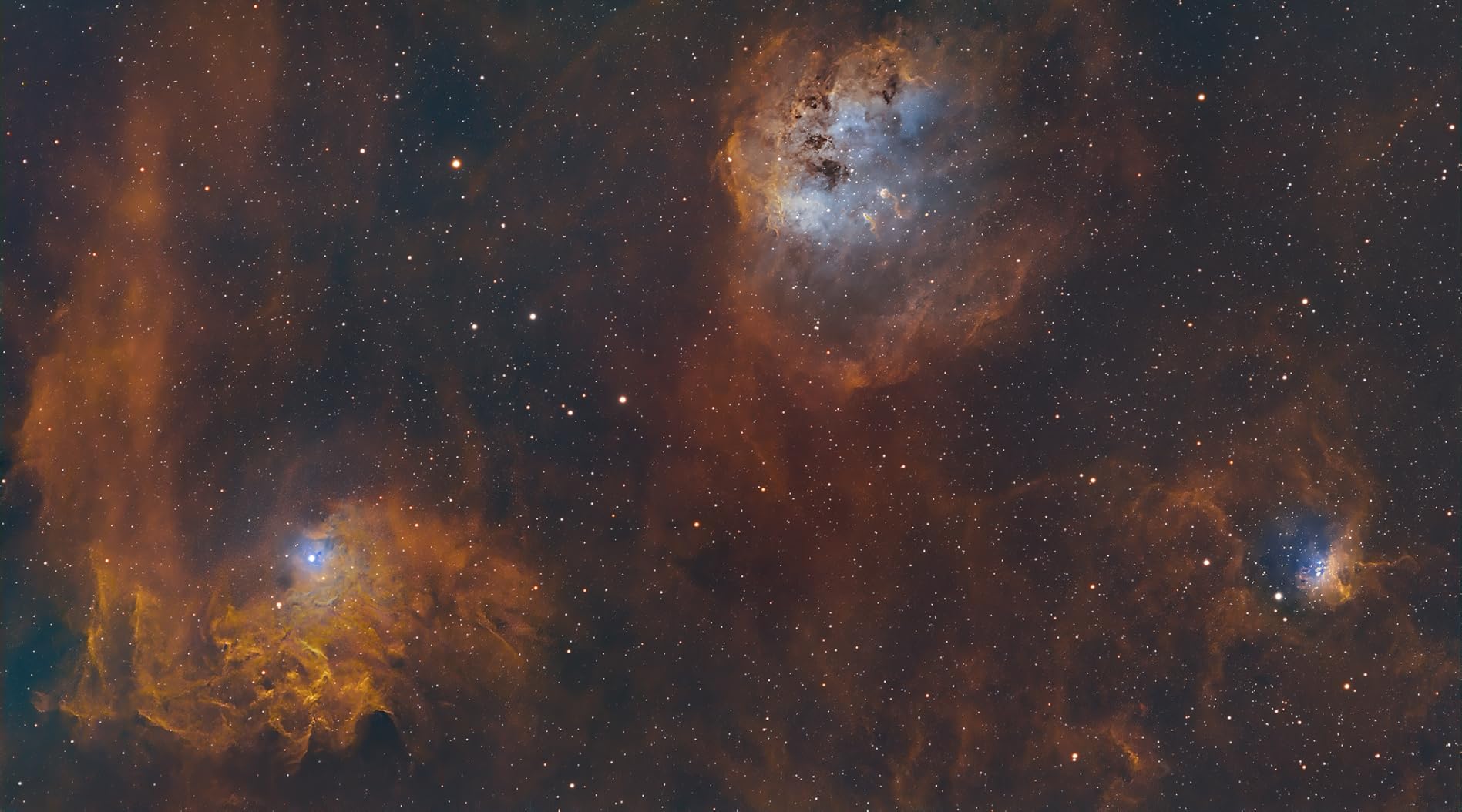
The 360-degree rotator built into the focuser makes framing easy without touching the mount, and the compact 167.5mm length makes this one of the most portable serious astrophotography scopes I have used. It fits in a small camera bag with room to spare for the tracker and camera.
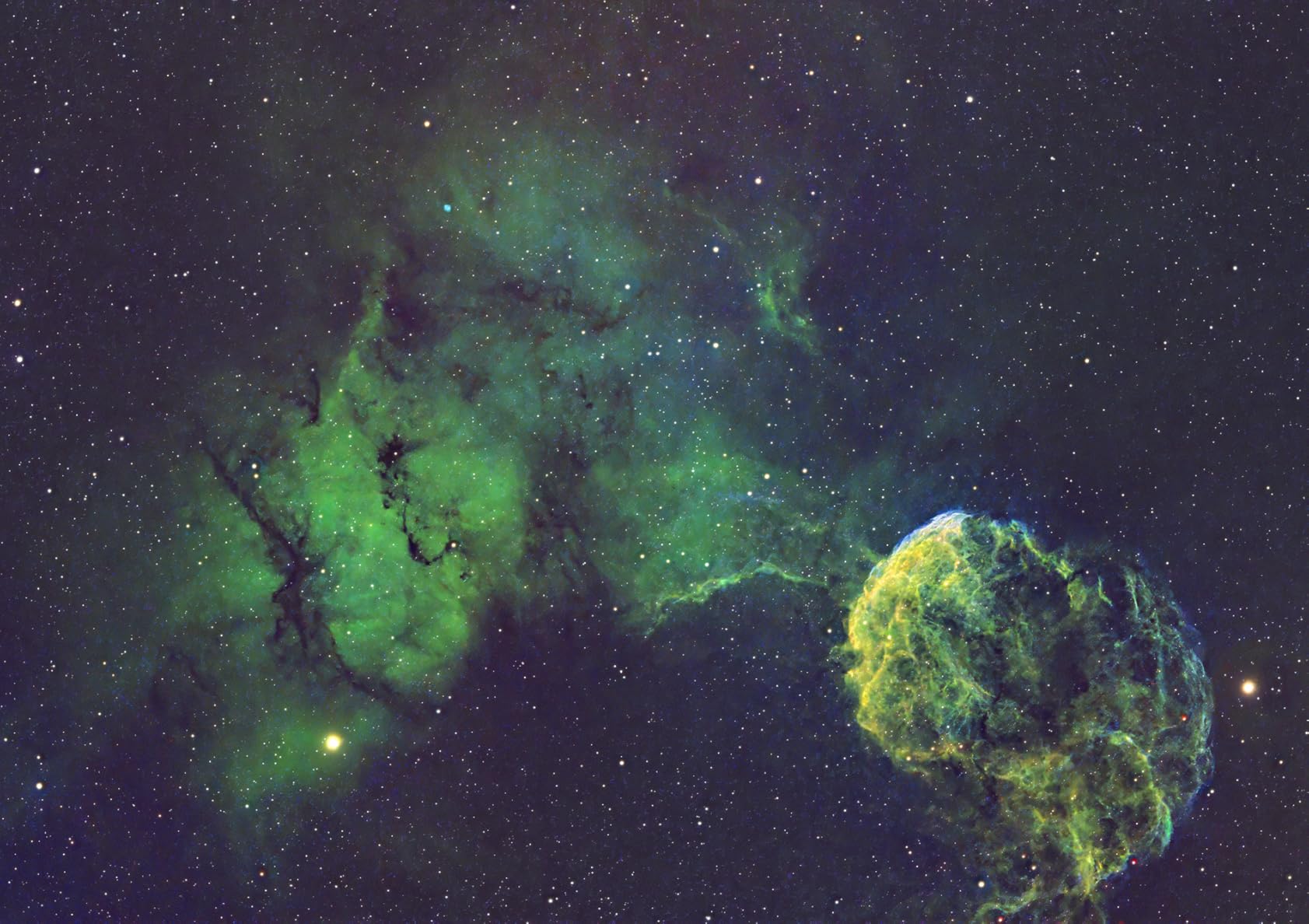
The 40mm effective aperture is the tradeoff for the wide field and clean optics. This scope targets large, bright nebulae like the Rosette, the Cone Nebula region, and the Veil Nebula complex. For smaller galaxies and planetary nebulae, you will want longer focal length.
Wide-Field Targets That Suit This Scope
This scope shines on large emission nebulae, star clouds, and constellation-wide compositions. Favorite targets include the North America Nebula, the Rho Ophiuchi complex, the Belt of Orion region, and the Sagittarius Star Cloud. Anything that spans more than three degrees of sky is ideal.
Compatibility with Full-Frame Sensors
The sextuplet design is corrected for full-frame sensors without an additional flattener, which is rare at this aperture and price. The 55mm back focus is standard for most mirrorless cameras using a simple adapter, making setup straightforward.
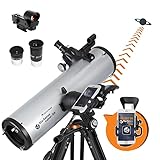
15. Celestron StarSense Explorer DX 130AZ Reflector – Beginner-Friendly Navigation
Celestron StarSense Explorer DX 130AZ Smartphone Guided Newtonian Telescope
- Revolutionary StarSense app makes finding objects easy
- Great optics for the price
- Perfect for visual astronomy beginners
- Accurate object location
- Portable and easy to set up
- Some mirror alignment issues reported
- Tripod can be wobbly in wind
- Not suitable for astrophotography due to no tracking
The StarSense Explorer DX 130AZ is the telescope I recommend to friends who want to learn the night sky before committing to serious astrophotography. The StarSense app uses your smartphone camera to identify stars and guide you to targets, which dramatically flattens the learning curve for beginners.
The 130mm aperture and f/5 focal ratio produce satisfying visual views of the Moon, planets, and brighter deep sky objects. Through this scope, the Orion Nebula shows clear greenish structure from a dark site, and globular clusters resolve into individual stars.
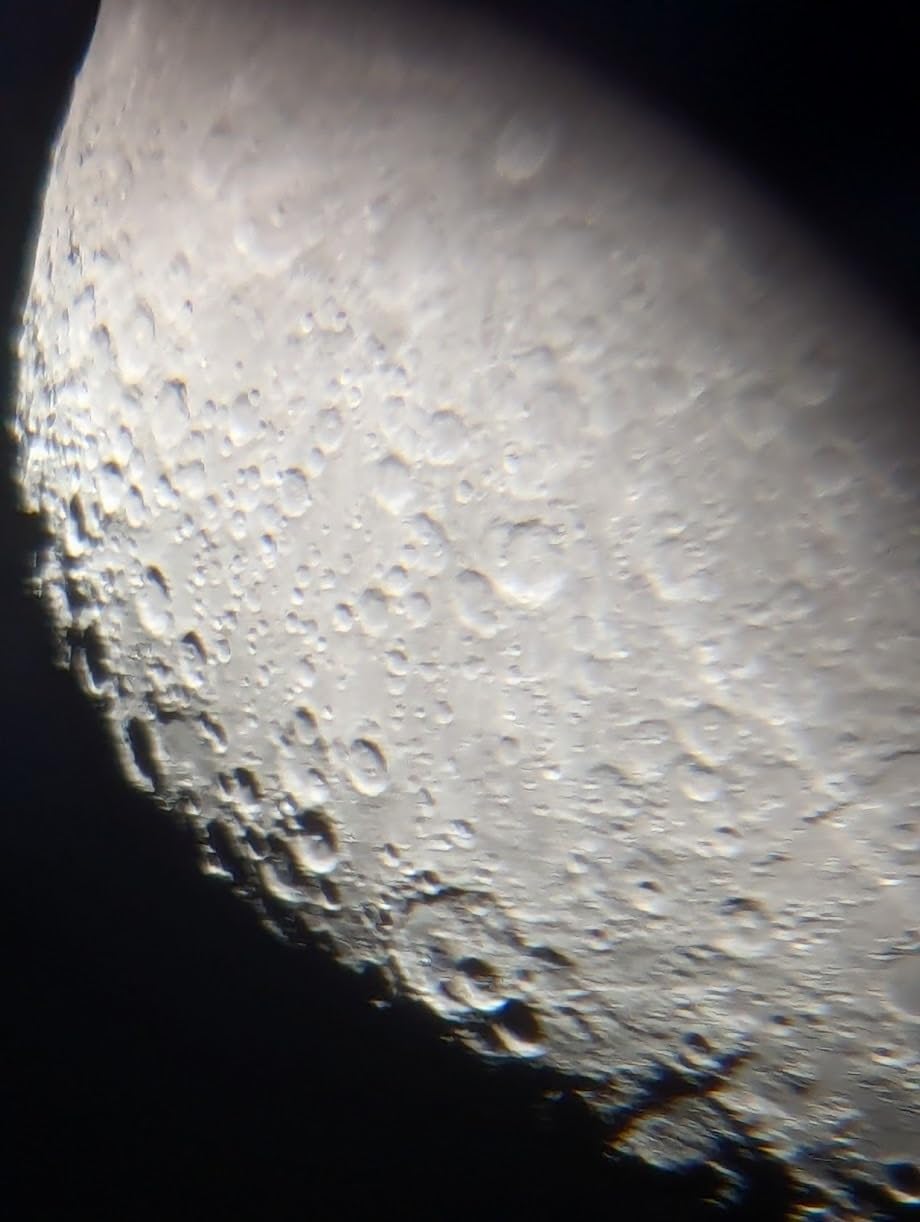
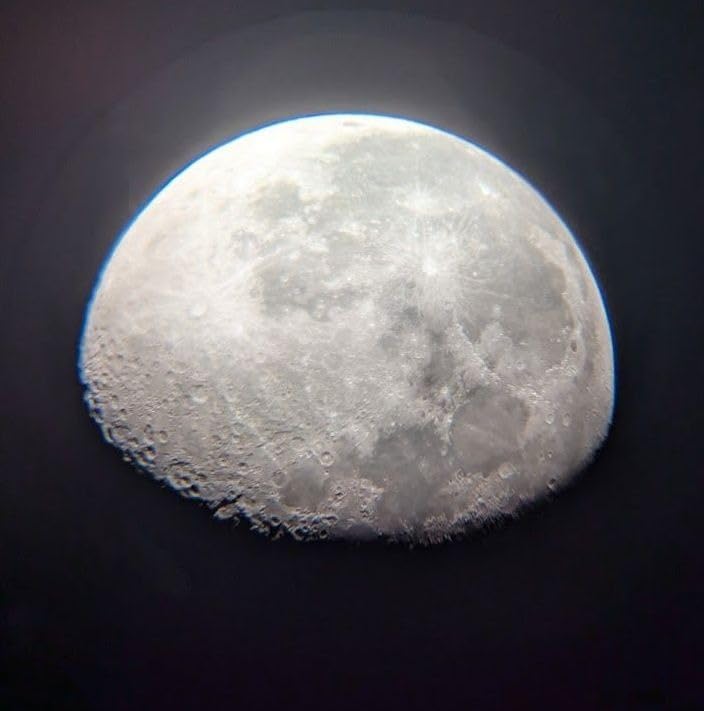
The altazimuth mount with slow-motion controls works well for visual tracking but is not designed for long-exposure astrophotography. For casual phone-through-eyepiece snapshots of the Moon and planets, however, it does a capable job as a first step into the hobby.
The tripod is the weakest link and flexes in wind. Adding a small weight to the accessory tray dampens vibrations noticeably, and avoiding fully extending the tripod legs improves stability. These are common beginner telescope issues, not unique to this model.
Learning the Sky Before Upgrading to Astrophotography
This scope is an excellent teacher. The StarSense app introduces you to constellation patterns, bright stars, and deep sky objects in a structured way that builds knowledge you will use for the rest of your astronomy life, including when you eventually upgrade to a tracked astrophotography setup.
Known Issues and Quick Fixes
Some users report mirror alignment issues out of the box, which is easily fixed with a collimation cap or laser collimator. The pressboard tripod legs benefit from gentle tightening of all hardware before first use. Both issues are addressable in under an hour.
Buying Guide: How to Choose the Best Telescope for Deep Space Photography
Choosing the right telescope for deep space photography comes down to matching the optical design, focal ratio, and mount to the specific targets you want to image and the conditions you image under. Here is how I think about the key decisions after three years of trial and error.
Focal Ratio Explained: Why f/4.5 and f/10 Feel Very Different
Focal ratio is the focal length divided by the aperture, and it directly controls how fast your scope gathers light for imaging. An f/4.5 Newtonian astrograph collects photons roughly five times faster than an f/10 Schmidt-Cassegrain of the same aperture, which means shorter sub-exposures and less demand on your mount’s tracking accuracy.
For beginners in light-polluted areas, a fast focal ratio between f/4 and f/6 makes a bigger difference than aperture. My f/4.5 Newtonian pulls emission nebulae out of my Bortle 7 backyard in 60-second subs that would require five-minute subs at f/10.
Telescope Types for Deep Sky Work
Apochromatic refractors are the most popular choice for serious deep sky astrophotography because they deliver sharp, high-contrast images with minimal maintenance. Doublet and triplet APO designs using extra-low dispersion glass control chromatic aberration effectively, which produces clean star colors in long-exposure images.
Newtonian astrographs offer the fastest focal ratios per dollar, typically f/3.5 to f/4.5, making them excellent for emission nebula imaging. The tradeoff is the need for periodic collimation and a coma corrector to clean up star shapes at the edges of the frame.
Schmidt-Cassegrain and similar compound telescopes deliver long focal lengths in compact tubes, which makes them popular for planetary and small galaxy imaging. Their slower focal ratios, typically f/10, mean longer exposure times and higher demands on mount tracking accuracy.
Smart scopes like the ZWO Seestar and DWARFLAB Dwarf series combine telescope, camera, mount, and processing into one portable package. They trade aperture and resolution for ease of use, making them ideal for beginners and for experienced imagers who want a grab-and-go setup. Our telescopes for kids and beginners guide covers entry-level options in more detail.
Mount Requirements: The Component Beginners Underestimate
The mount matters more than the telescope for deep sky astrophotography. A mediocre telescope on a great mount will outperform a great telescope on a mediocre mount every time, because tracking accuracy determines how long you can expose before stars trail.
For portable wide-field imaging, star trackers like the Sky-Watcher Star Adventurer GTI and iOptron SkyGuider Pro handle payloads up to about 11 pounds. For longer focal lengths, look at full German equatorial mounts rated for at least 1.5 times your telescope and camera weight.
Autoguiding, using a separate guide scope and guide camera to make real-time tracking corrections, is what separates clean five-minute exposures from trailed messes. Even modest mounts benefit dramatically from autoguiding, which costs as little as two hundred dollars to add to an existing setup.
Light Pollution Filters and Narrowband Imaging
In suburban and urban skies, broadband light pollution swamps the faint signal from deep sky objects. Narrowband filters that pass only hydrogen alpha, oxygen III, and sulfur II wavelengths cut through light pollution effectively for emission nebulae, allowing imaging from light-polluted backyards that would otherwise be impossible.
Dual-band filters, which pass two emission lines simultaneously, work with one-shot color cameras and are a cost-effective way to start narrowband imaging. Many smart scopes now include built-in dual-band filters, which is a meaningful feature if you image from light-polluted locations.
Common Beginner Mistakes to Avoid
The most common mistake I see is buying the biggest telescope available and pairing it with an undersized mount. The result is frustration, trailed images, and a hobby abandoned within months. Start with a smaller telescope on a solid mount, and upgrade the telescope later as your skills and budget grow.
Skipping polar alignment is another classic error. Even GoTo mounts need accurate polar alignment for clean long-exposure images. Spend the time to learn polar alignment using a polar scope or the drift alignment method before your first serious imaging session.
Finally, avoid the temptation to image every clear night without processing your data. Image stacking and post-processing are where the magic happens, and a single well-processed session beats a dozen raw datasets sitting unprocessed on a hard drive. For readers who want a wider view before committing to a telescope, our premium binoculars for astronomy guide is a useful companion read.
FAQs
Which telescope is best for deep space viewing?
For deep space viewing, a large aperture Newtonian reflector on a Dobsonian mount offers the best value, while an apochromatic refractor on an equatorial mount is the top choice for deep sky astrophotography. Apertures of 100mm or larger gather enough light to resolve galaxies, nebulae, and globular clusters visually.
What type of telescope is best for deep-sky astrophotography?
Apochromatic refractors in the 70mm to 100mm range on a tracking equatorial mount are the most popular choice for deep-sky astrophotography because they deliver sharp, high-contrast images with minimal maintenance. Newtonian astrographs at f/4 to f/5 are the best value alternative for fast focal ratio imaging.
Which space telescope is famous for deep space images?
The James Webb Space Telescope (JWST), launched in 2021, is the most famous current deep space imaging telescope, capturing infrared images of distant galaxies, nebulae, and exoplanet atmospheres. The Hubble Space Telescope, launched in 1990, also remains famous for its visible-light deep field images.
What telescope do I need to see Saturn’s rings?
Saturn’s rings are clearly visible in any telescope with an aperture of 70mm or larger at about 100x magnification. A 4-inch refractor, a 5-inch Schmidt-Cassegrain, or a 6-inch Newtonian all show the Cassini Division in the rings under steady seeing conditions.
Conclusion: Our Top Picks for Deep Space Photography in 2026
After testing fifteen of the best telescopes for deep space photography across smart scopes, apochromatic refractors, Newtonian reflectors, and dedicated tracking mounts, three models stand out for different types of imagers. The ZWO Seestar S30 Pro is my top pick for grab-and-go imaging, the SVBONY SV503 102ED is the best value for traditional astrophotography, and the DWARFLAB Dwarf Mini is the budget pick that proves you do not need a huge budget to capture stunning images of the night sky.
Whatever you choose, remember that the best telescope is the one you will actually use on clear nights. Start with a setup that matches your skill level and local conditions, invest in a solid mount, and spend time learning polar alignment and image processing. The deep sky rewards patience more than any other genre of photography, and the results in 2026 are more accessible than they have ever been.