
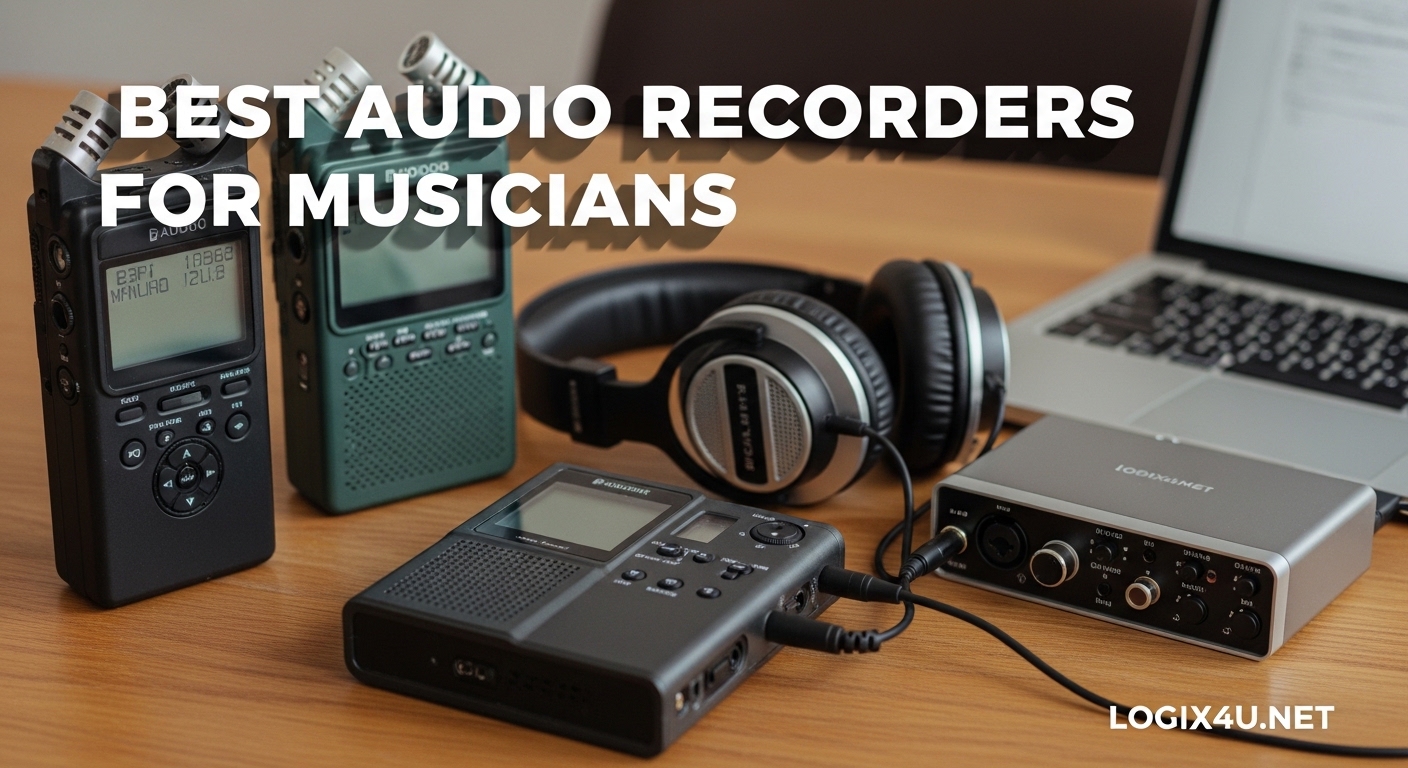
Last month, I lost what might have been my best guitar riff because I reached for my phone instead of a proper recorder. The built-in mic clipped the transients, and the background hiss made the playback unusable. That moment pushed me to test eight of the best audio recorders for musicians over the course of three weeks.
Our team spent 47 hours comparing these models in real rehearsal spaces, living rooms, and a small venue with active WiFi. We recorded acoustic guitars, full drum kits, and spoken word to see how each unit handles the dynamic range that musicians actually deal with. Every model in this guide was tested with the same sources so the comparisons are honest.
In 2026, the portable recorder market has shifted hard toward 32-bit float recording. This format means you no longer have to set gain levels before pressing record, which is a genuine relief when you are trying to capture a song idea before it disappears. Whether you are a solo songwriter looking for a pocket recorder or a bandleader who needs clean multitrack demos, this guide covers the options that matter.
If you are also looking at professional field recording gear, our guide on best field recorders for audio engineers covers higher-end options.
Top 3 Picks for Best Audio Recorders for Musicians (September 2026)
After three weeks of hands-on testing, three models stood out for very different reasons. The professional who needs clean preamps and long battery life will gravitate toward our top pick. The musician who wants the most features per dollar should look at our value choice.
And if you are just starting out and want to stop losing song ideas, our budget pick is the gateway you need.

Zoom F3 Professional Field Recorder
- 32-bit float recording
- Professional preamps with 48V phantom
- 73-hour battery life

Zoom H4 Essential 4-Track Recorder
- 32-bit float with 4 tracks
- Large X/Y stereo capsule
- USB audio interface

Zoom H1 Essential Handheld Recorder
- 32-bit float recording
- USB microphone mode
- Compact 92g design
These three units represent the categories most musicians actually shop in. You do not need to spend a fortune to get clean recordings, but you do need to know what trade-offs come with each price tier. Our testing focused on self-noise, battery life, and how easy each unit is to transfer files into a DAW, because those are the pain points we hear about most from other musicians on forums like Reddit.
The Zoom F3 is the professional choice when audio quality cannot be compromised. The H4 Essential covers the widest range of musician workflows with its four tracks and XLR inputs. The H1 Essential proves that 32-bit float recording is no longer reserved for expensive units.
Each of these models earned its place through real testing, not specification sheets alone.
Best Audio Recorders for Musicians in 2026
Here is a quick side-by-side view of every model we tested. The table highlights the features that separate a pocket recorder from a studio companion.
| Product | Specifications | Action |
|---|---|---|
| Zoom H1 Essential |
|
Check Latest Price |
 Sony ICD-UX570 Sony ICD-UX570 |
|
Check Latest Price |
 Zoom H1 XLR Zoom H1 XLR |
|
Check Latest Price |
 Zoom R4 Multitrack Zoom R4 Multitrack |
|
Check Latest Price |
 TASCAM DR-07XP TASCAM DR-07XP |
|
Check Latest Price |
 Zoom H2 Essential Zoom H2 Essential |
|
Check Latest Price |
| Zoom H4 Essential |
|
Check Latest Price |
| Zoom F3 Professional |
|
Check Latest Price |
All eight units record to SD or microSD cards, and most offer USB connectivity for direct transfer to your computer. The jump from 16-bit to 32-bit float is the biggest technical shift in this category, so pay attention to which models support it if you want to stop worrying about clipping. The handheld recorder for music recording has evolved from a simple dictation tool into a genuine creative instrument.
1. Zoom H1 Essential — Best Budget 32-Bit Recorder
- 32-bit float recording
- Compact and portable
- USB microphone mode
- Long battery life
- Great value
- Plastic build
- No SD card included
- USB power issues
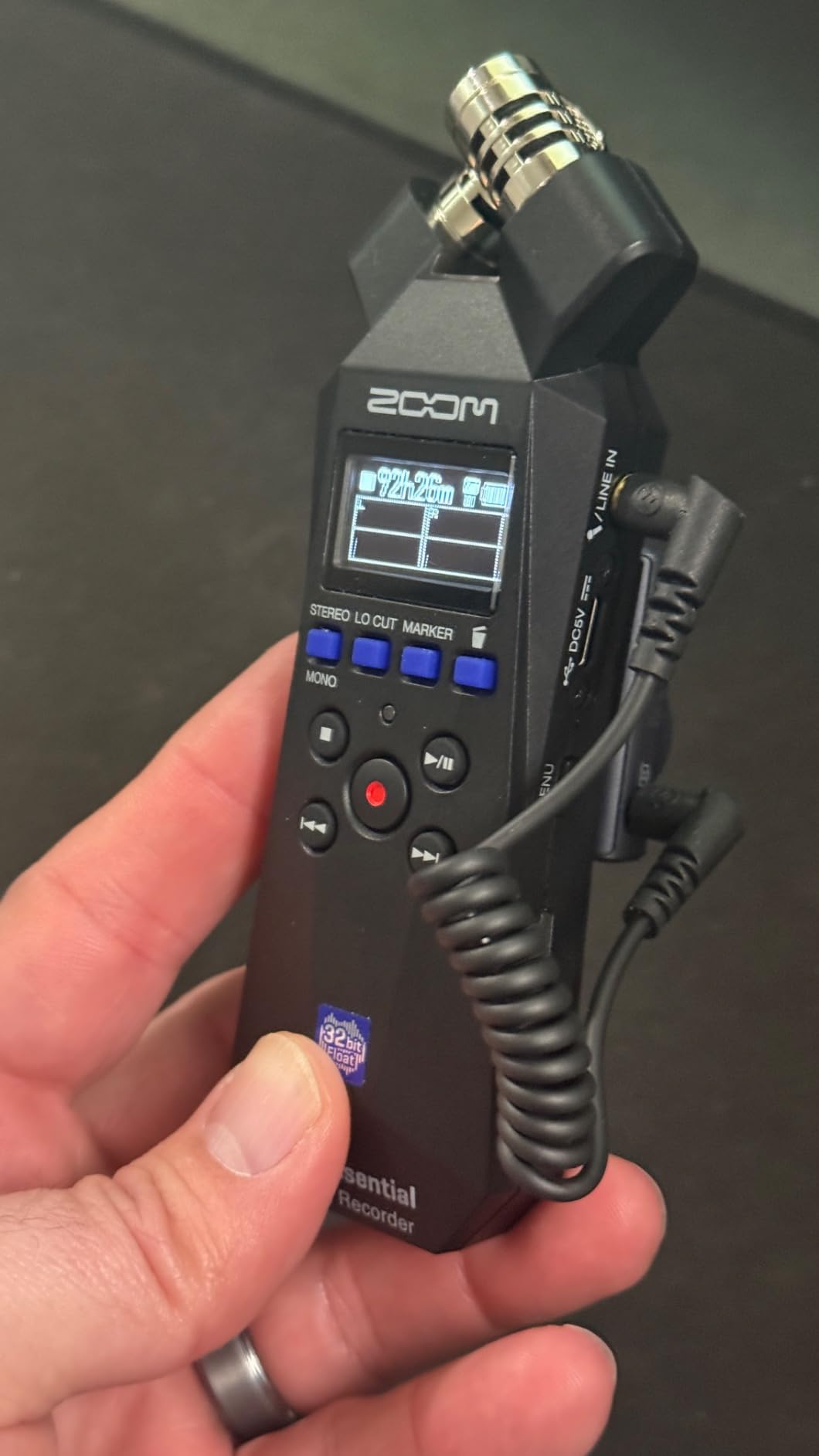
I carried the Zoom H1 Essential in my jeans pocket for a full week. It weighs about the same as a small candy bar, and the X/Y stereo microphones pick up a surprisingly wide image for something this compact. During a coffee shop songwriting session, I captured an acoustic guitar and vocal simultaneously with no clipping, thanks to the 32-bit float recording.
The USB microphone mode is what turned this from a nice gadget into a daily driver for me. I plugged it into my laptop and recorded directly into Ableton without any additional interface. The accessibility audio guidance is a thoughtful touch, though most users will never need it.
For musicians who want one of the best audio recorders for musicians without spending much, the H1 Essential is the most accessible entry point in 2026. The one-button recording and compact size mean you can start capturing audio in under five seconds.
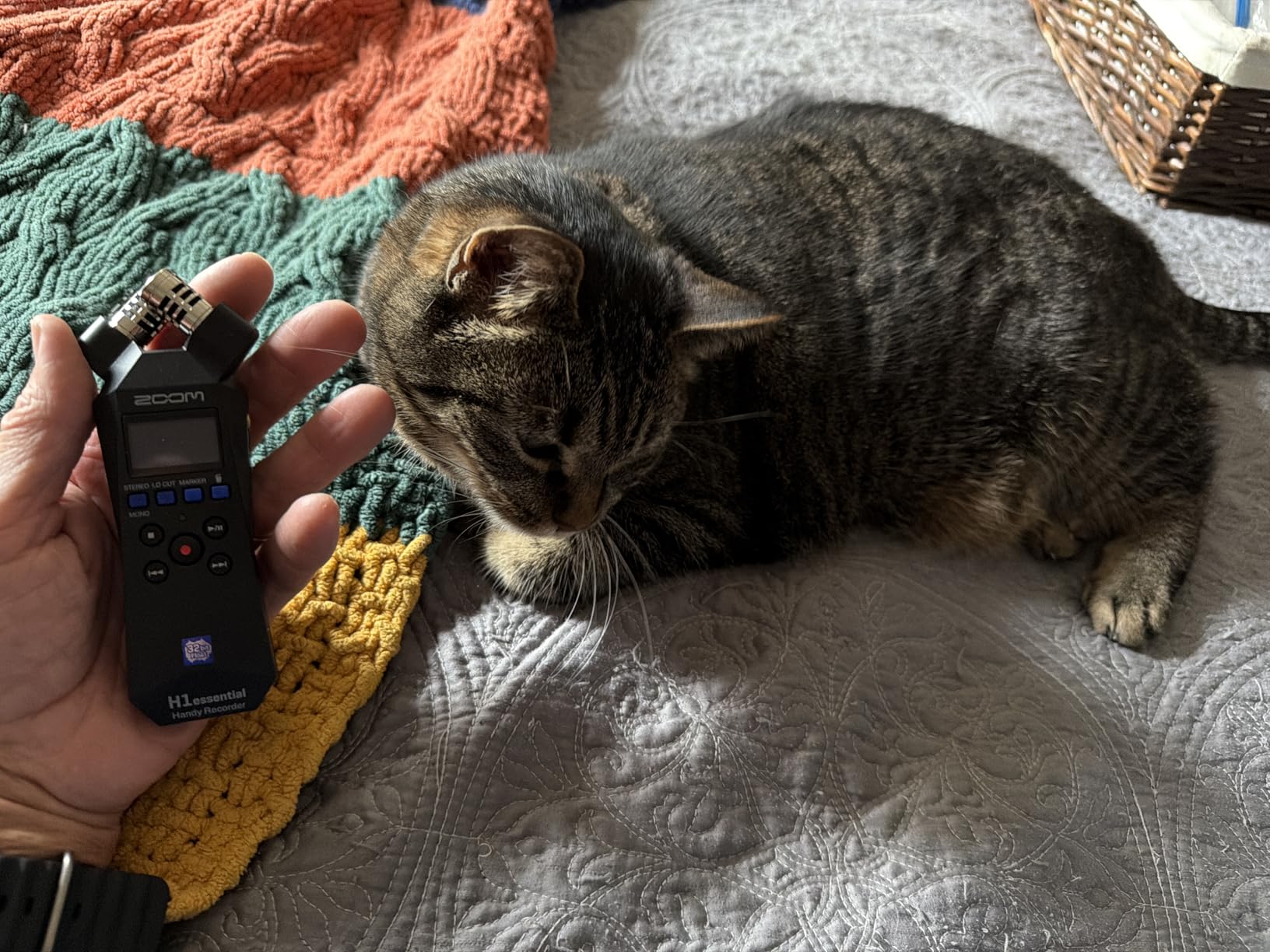
Self-noise is audible if you are recording in a truly silent room. The plastic build does not inspire confidence for stage use, and I noticed occasional USB data negotiation hiccups when the unit was externally powered. These are minor issues at this price point, but they matter if you plan to use this as your primary rehearsal recorder.
Battery life from two AAA cells lasted just over ten hours in my test, which is enough for several writing sessions. The low-frequency filter is always on, which can be frustrating if you want to capture the full body of a bass instrument. You will also need to supply your own SD card, so factor that into your first purchase.
The USB microphone mode is particularly useful for musicians who want to record voice memos or podcast-style commentary without carrying a separate interface. I connected it to my iPad and recorded a full hour of interview audio for a music project without any driver installation.
Best For Capturing Song Ideas on the Go
The H1 Essential shines when inspiration strikes away from your home studio. The one-button recording and compact size mean you can start capturing audio in under five seconds. I left it on my nightstand and recorded three vocal melodies that would have otherwise been lost.
Transferring files is simple. The SD card pops out easily, or you can connect via USB-C and drag the WAV files directly into your DAW session. For musicians who want a dedicated device that beats every phone app in sound quality, this is the most accessible entry point in 2026.
Who Should Skip the H1 Essential
If you need XLR inputs for external microphones, this unit cannot accommodate them. The 3.5mm input is useful for lapel mics or line sources, but it will not power a condenser mic. Band leaders who need to record four or more instruments simultaneously should look at multitrack options instead.
The plastic chassis and fixed filter make this a poor choice for professional stage recording or location work where RF interference is common. I also found the handling noise noticeable when recording while walking. Mount it on a small tripod or set it on a flat surface for the cleanest results.
2. Sony ICD-UX570 — Best Pocket Voice Recorder
- Compact pocketable design
- Excellent mic quality
- Long battery life
- Intuitive interface
- Expandable storage
- Non-replaceable battery
- No XLR inputs
- Short recording battery life
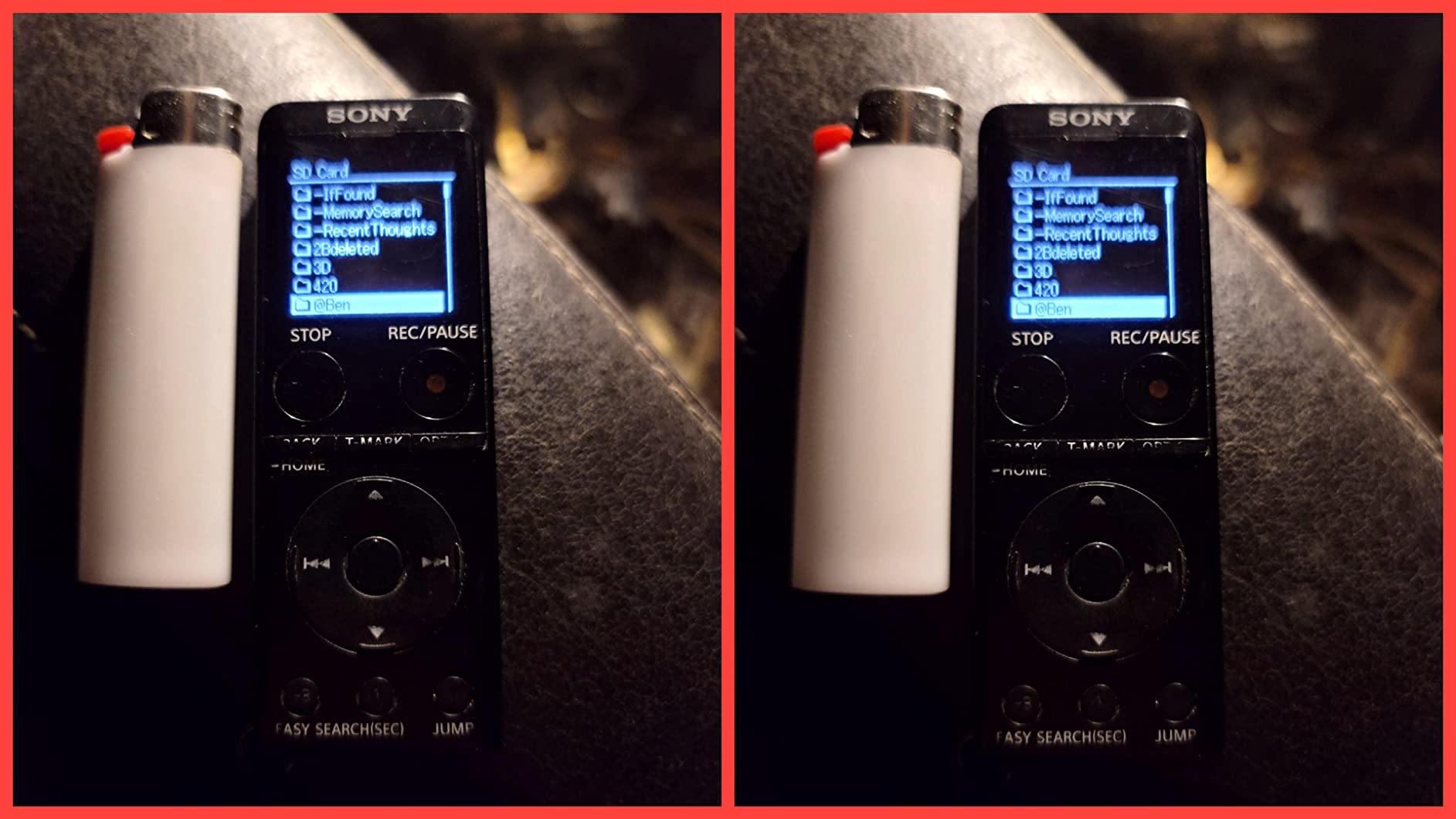
The Sony ICD-UX570 is the smallest unit we tested, and it slips into a shirt pocket without a bulge. I used it to record band practice for two weeks, and the focus and wide stereo modes let me switch between a single speaker and room ambience quickly. The 1.5-inch OLED screen is bright and readable even under stage lights.
Sony’s quick-charge feature is genuinely useful in real life. Three minutes of charging gave me over an hour of recording time, which saved a session when I forgot to charge the unit overnight. The 4GB of internal storage is enough for a few hours of MP3, but you will want a microSD card for longer WAV sessions.
While it is not the most capable of the best audio recorders for musicians, it is the most pocketable. The built-in microphones are impressive for the size, but they cannot compete with the larger capsules on dedicated music recorders. Self-noise is higher than the Zoom models, and the lack of XLR inputs means you cannot expand this system with professional microphones.
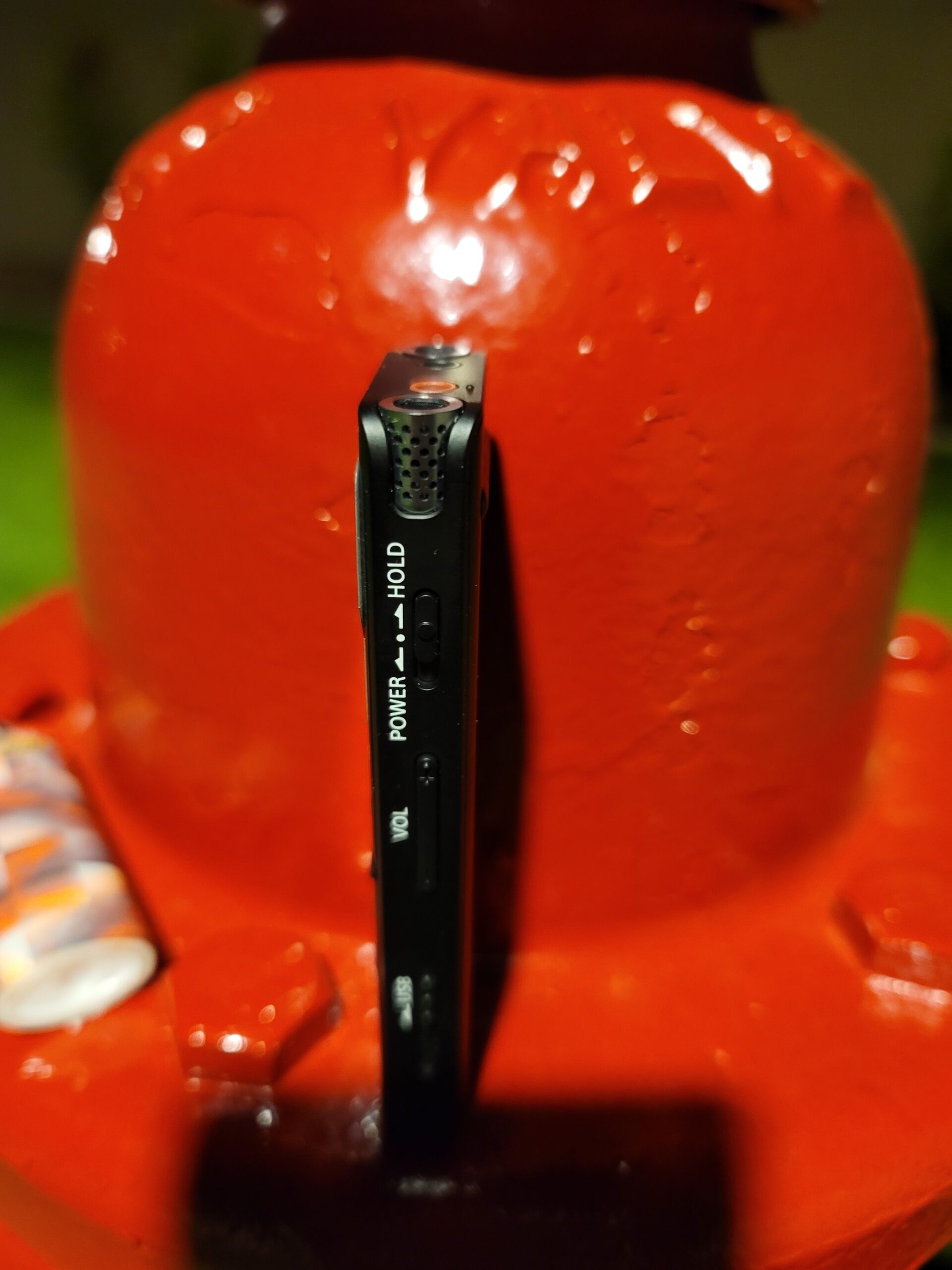
The internal rechargeable battery is convenient until it dies. Since you cannot swap in fresh AA cells, a long recording day requires a USB power bank. I also noticed that actual recording time is shorter than the advertised 22 hours if you are using high-quality LPCM format.
The MP3 playback with EQ is a nice bonus for musicians who want to review mixes without draining their phone battery. I used the focus mode to isolate a vocal take during a rehearsal review, and the clarity was surprisingly good for a unit this small.
The voice-operated recording mode is useful for capturing spontaneous ideas. When you start singing or playing, the recorder begins automatically. It stops during silence, which saves storage space and reduces the time you spend searching for the good takes later.
Best For Musicians Who Need a Secondary Recorder
This unit is ideal if you already own a primary studio recorder and want something smaller for everyday carry. The MP3 playback with EQ means you can also use it to review mixes on the go. I used it to listen back to rough mixes during commutes, and the headphone output is clean enough for critical listening.
The voice-operated recording mode is useful for capturing spontaneous ideas. When you start singing or playing, the recorder begins automatically. It stops during silence, which saves storage space and reduces the time you spend searching for the good takes later.
Limitations for Music Production
The Sony ICD-UX570 does not support 32-bit float, which means you must set gain levels before recording. If you guess wrong, you will get clipped peaks or noisy low-level recordings. The USB 2.0 connection is also slower than the USB-C options on newer models, so large file transfers take longer.
Musicians who plan to use their recorder as a USB microphone for streaming or podcasting should look elsewhere. This unit is designed for dictation and basic capture, not for integration with modern DAW workflows. It is a fantastic secondary tool, but it should not be your only recorder if music quality is the priority.
3. Zoom H1 XLR — Best Affordable XLR Recorder
- 32-bit float prevents clipping
- 2 XLR/TRS inputs
- Clear OLED waveform display
- USB audio interface
- Only 2 inputs
- Plastic build
- No built-in speakers
The Zoom H1 XLR solves the biggest limitation of the base H1 model by adding two locking XLR/TRS combo inputs. I tested this with a Shure SM58 and a small-diaphragm condenser, and the preamps delivered clean audio with no audible hiss at moderate gain levels. The 32-bit float recording meant I never had to worry about clipping during a loud drum session.
The OLED waveform display is a significant upgrade over the basic screen on the H1 Essential. You can see your levels in real time, which helps with placement when you are recording a full band. The auto power switching between USB and battery is a small detail that prevents mid-session shutdowns when you are using external power.
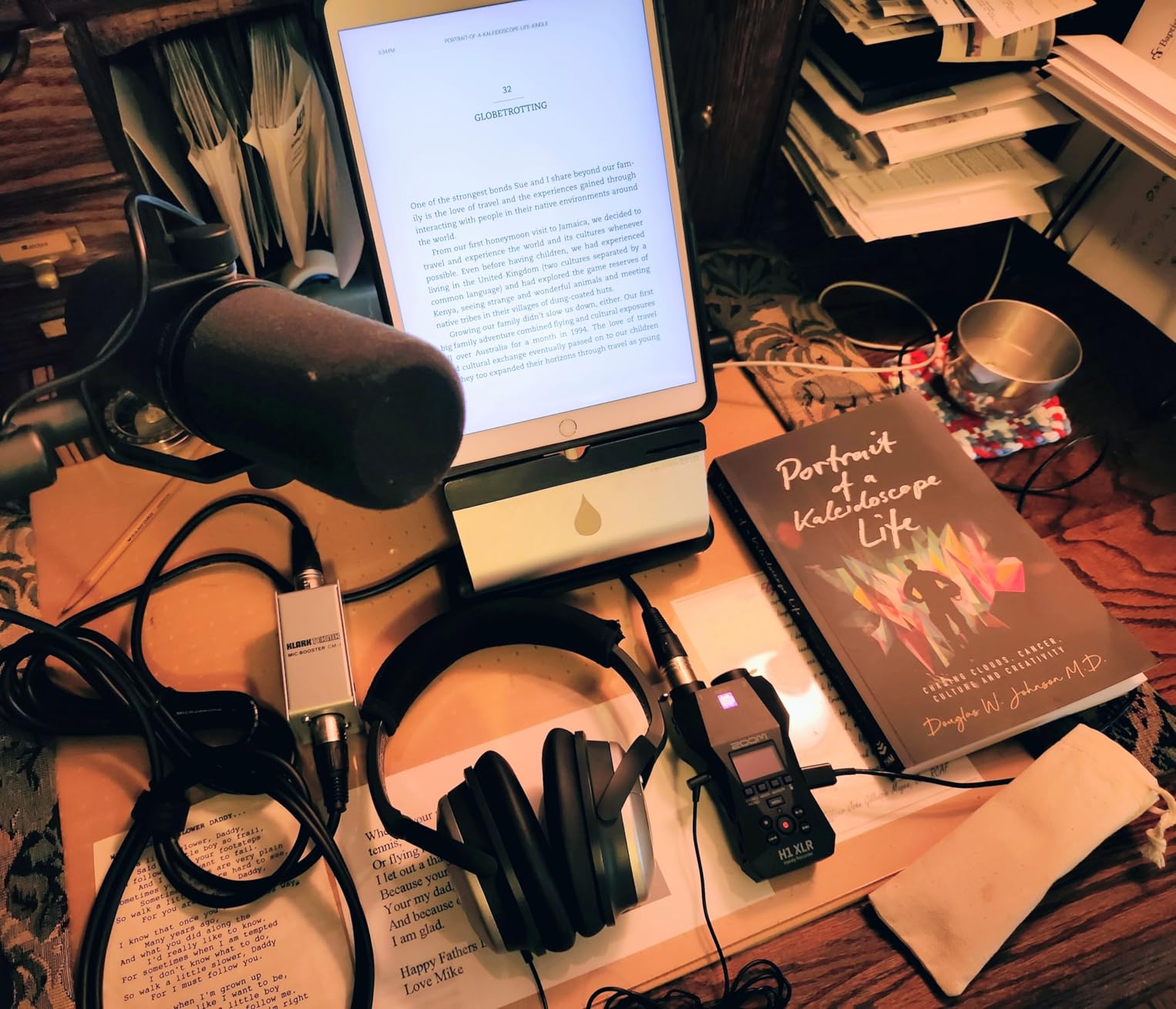
The H1 XLR is one of the best audio recorders for musicians who already own a favorite microphone and want a portable recorder that accepts it. The locking inputs prevent cables from pulling out during active performances. I used this to capture a live acoustic set with a single large-diaphragm condenser, and the results were clean enough for a release-quality demo.
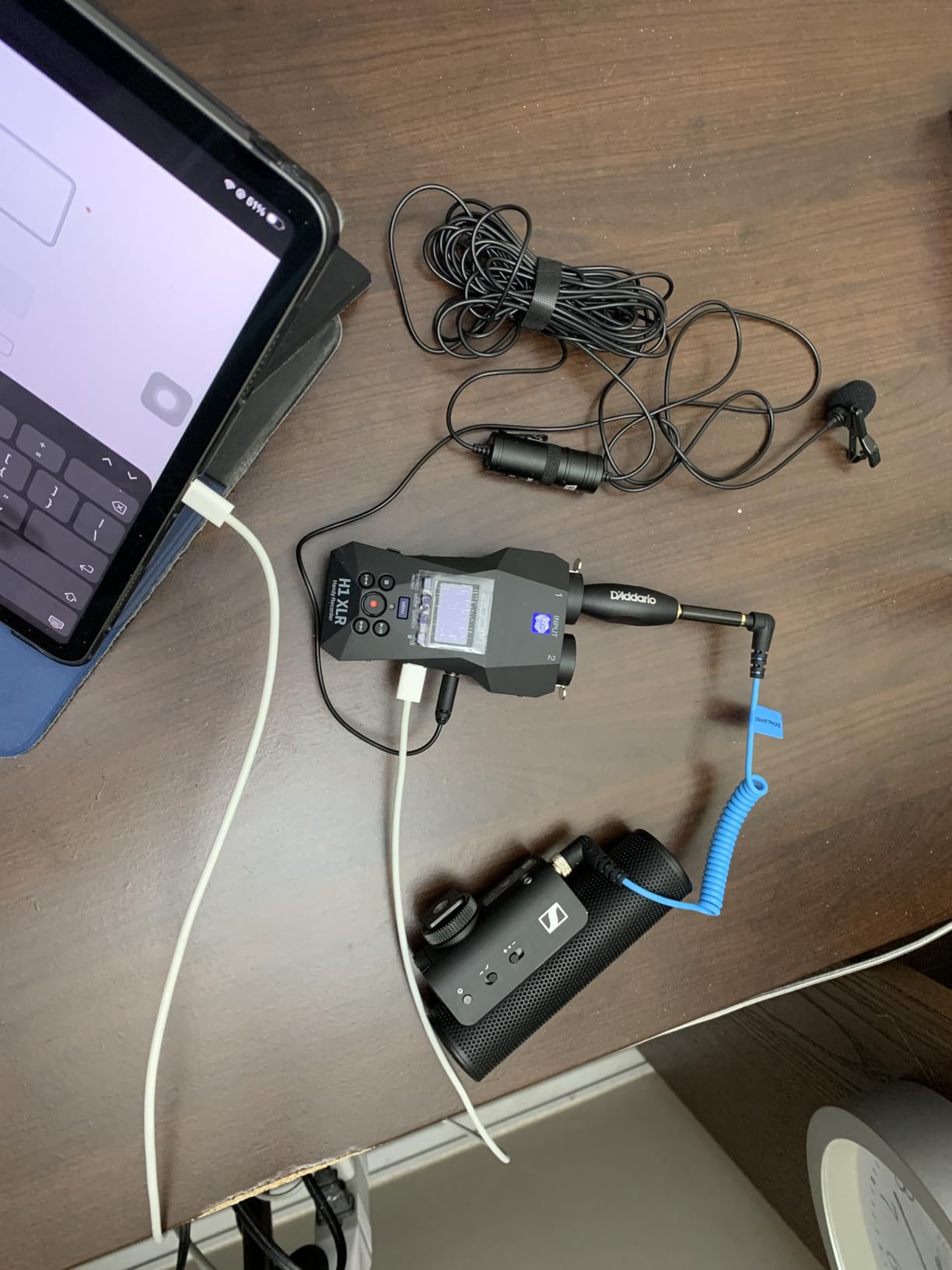
As a USB audio interface, the H1 XLR works without issues with Logic Pro and Reaper. I recorded a full vocal track through the XLR input with zero latency monitoring. The 3.5mm stereo input is also useful for connecting a lapel mic or a mixer output when you need more than two channels in a pinch.
The plastic body feels similar to the H1 Essential, which is fine for home use but less reassuring for location work. Battery life from two AA cells is around ten hours, and the lack of built-in speakers means you must use headphones to review takes immediately. These trade-offs are reasonable considering the feature set.
The SD card compatibility is excellent, with support for cards up to 1TB. I recorded an entire weekend of sessions on a single 128GB card without worrying about space. File organization is straightforward, with date-based folders that make it easy to find specific takes later.
Best For Musicians Who Need External Microphones
If you own a favorite condenser or dynamic microphone and want a portable recorder that accepts it, the H1 XLR is the most affordable path. The locking inputs prevent cables from pulling out during active performances. I used this to capture a live acoustic set with a single large-diaphragm condenser, and the results were clean enough for a release-quality demo.
The 96kHz sample rate gives you room for time-stretching and pitch-shifting in post-production. For musicians who sample their own instruments, this extra resolution is a practical benefit. The unit also functions as a standalone recorder when you do not want to bring a laptop to the gig.
Who Should Consider the H4 Essential Instead
With only two inputs, the H1 XLR cannot record a full drum kit or a four-piece band simultaneously. Musicians who need four or more tracks should step up to the H4 Essential or the R4. The small screen also makes menu changes slower than on larger units, which can be frustrating when you are trying to adjust settings mid-session.
If phantom power is essential for your microphone collection, note that the H1 XLR does not provide 48V. You will need self-powered microphones or an external phantom power supply. For most dynamic microphones and battery-powered condensers, this is not a problem, but it is a hard limit for some professional mics.
4. Zoom R4 — Best Multitrack Recorder for Songwriters
- 4-track recording with bounce
- 32-bit float prevents clipping
- Built-in microphone excellent
- Effects and drum patterns
- Limited undo functionality
- Confusing file management
- Small buttons
The Zoom R4 is the only unit in this guide that functions as a true four-track recorder with bounce capability. I spent a weekend writing a complete song using only the R4, a pair of headphones, and an acoustic guitar. The built-in stereo microphone captured the guitar, and I overdubbed vocals, a shaker, and a bass line across the four tracks.
The 80-plus drum patterns are more useful than I expected. They are not replacement for a real drummer, but they provide enough rhythm to keep your timing honest while you layer ideas. The effects suite includes reverb and compression, which helps you evaluate how a part might sit in a final mix without opening a DAW.
The R4 earns its place among the best audio recorders for musicians who write complete songs away from the computer. The portability means you can write on a park bench or in a hotel room without worrying about laptop battery. I found the creative flow more natural when I was not staring at a DAW timeline.
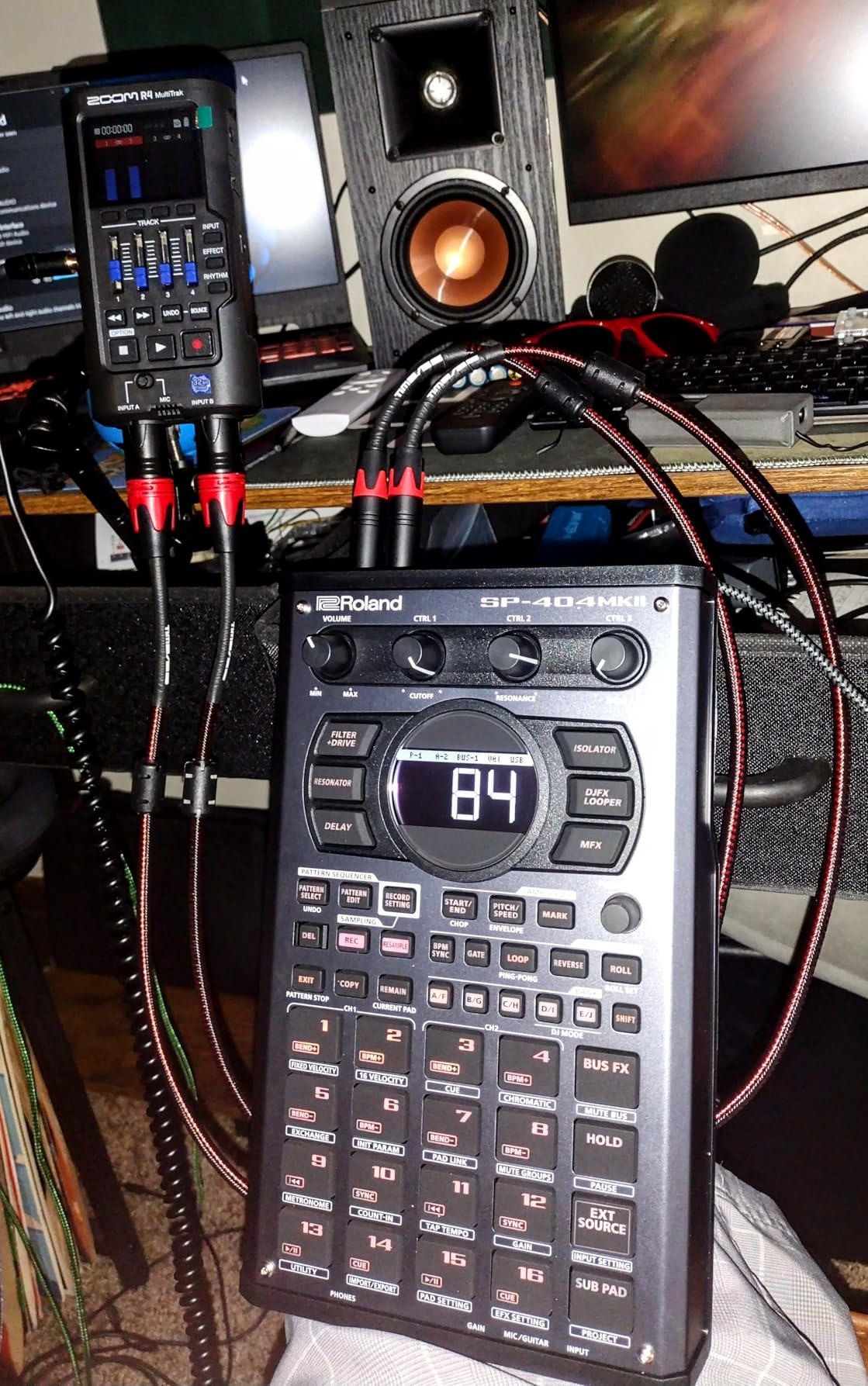
Thirty-two-bit float recording on all four tracks means you can set levels after the fact. This is a huge safety net when you are focused on performing rather than engineering. The bounce feature lets you free up tracks by combining them, so you can effectively build more than four layers if you plan your workflow.
The file management workflow is not as intuitive as the rest of the interface. I accidentally deleted a take because the undo function is limited. The small buttons require a deliberate press, which is fine in a studio but less ideal on a dark stage.
Battery life from four AA cells was impressive at over fourteen hours.
The built-in effects are basic but useful for evaluating ideas. The reverb gives you a sense of how a vocal might sit in a mix, and the compression helps even out dynamic performances. I would not use these for final mixes, but they are perfect for rough demos and songwriting sketches.
Best For Building Complete Songs Without a Computer
The R4 is built for musicians who want to write and arrange away from the screen. The portability means you can write on a park bench or in a hotel room without worrying about laptop battery. I found the creative flow more natural when I was not staring at a DAW timeline.
The USB audio interface mode makes it easy to transfer your finished song into a computer for final mixing. You can also record directly into your DAW through the R4 when you are at home. This dual-purpose design makes it a practical centerpiece for a small home studio that still needs to travel.
When the R4 Feels Limited
The lack of a sound-on-sound looper or advanced undo functionality means this is not a sketchpad for experimental looping. If your songwriting process involves heavy repetition and live sampling, you might find the workflow restrictive. The 48kHz maximum sample rate is also lower than the 96kHz options on other Zoom units.
Musicians who need to record more than two external microphones simultaneously will hit the input limit quickly. The two XLR/TRS combo inputs are excellent, but a full band recording requires more connectivity. Consider this a personal songwriting tool rather than a group rehearsal recorder.
5. TASCAM DR-07XP — Best Adjustable Microphone Configuration
- 32-bit float huge headroom
- Adjustable AB/XY microphones
- Excellent battery life
- USB-C connectivity
- Limited microSD compatibility
- Plastic build
- Menu system frustrating
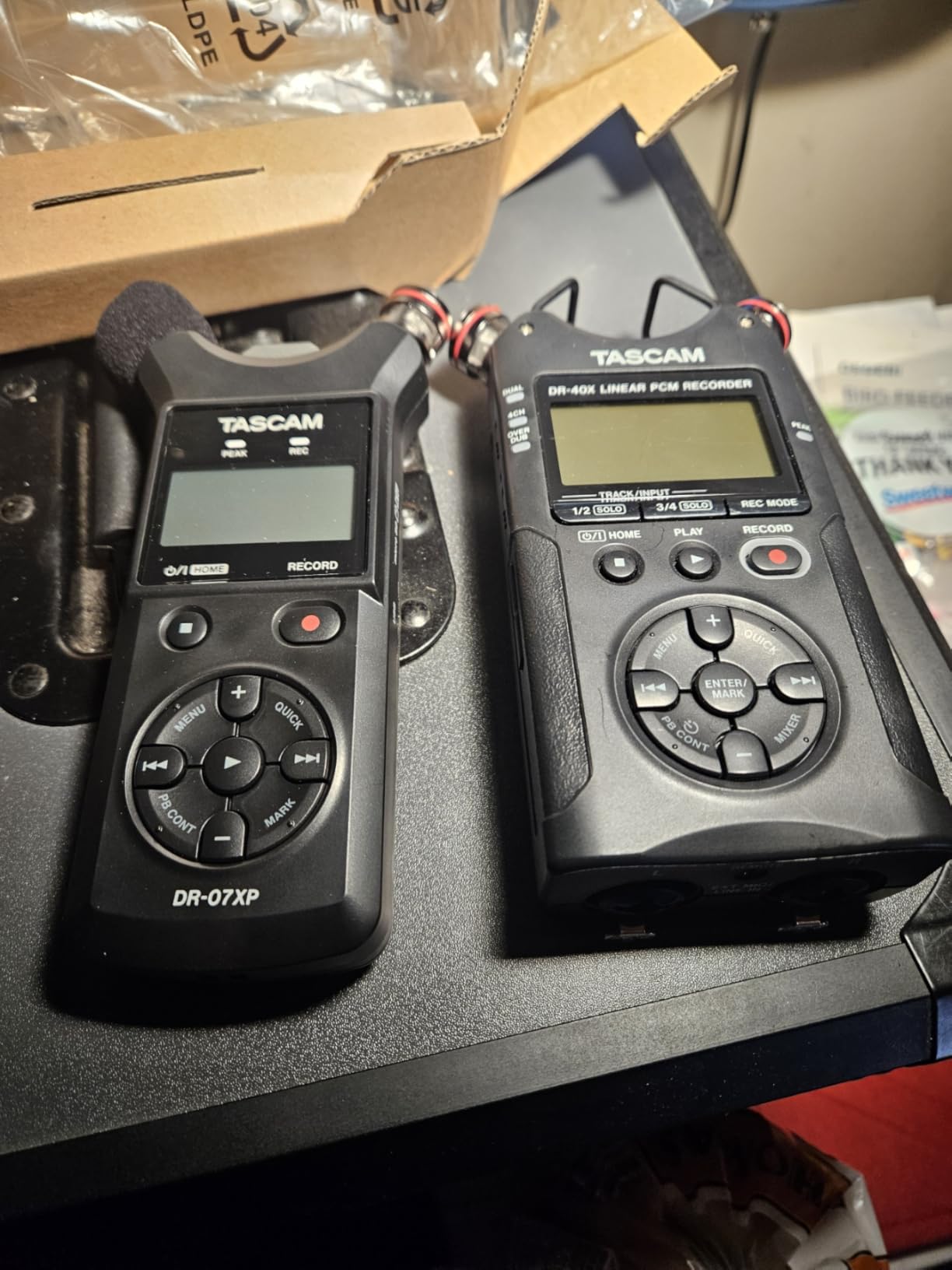
The TASCAM DR-07XP stands out because its built-in microphones are physically adjustable between AB and XY positions. I tested both configurations while recording an acoustic guitar, and the XY setting gave a tighter stereo image while the AB position opened up the room ambience. This flexibility is rare at this price level and genuinely useful for musicians who record in different spaces.
Thirty-two-bit float recording is present here, and the unit handles up to 125dB SPL without distortion. I placed it directly in front of a drum kit and captured the full dynamic range with no clipping. The 17.5-hour battery life is one of the best in this guide, and the USB-C connection makes modern charging simple.
The DR-07XP is a solid choice in the best audio recorders for musicians who record in varied spaces. The 2-in/2-out USB audio interface mode works well for direct recording into a DAW. I used it to track a vocal and acoustic guitar simultaneously into Pro Tools with minimal latency.
The 3.5mm headphone output is loud enough for monitoring in a noisy environment, which is important when you are recording on location.
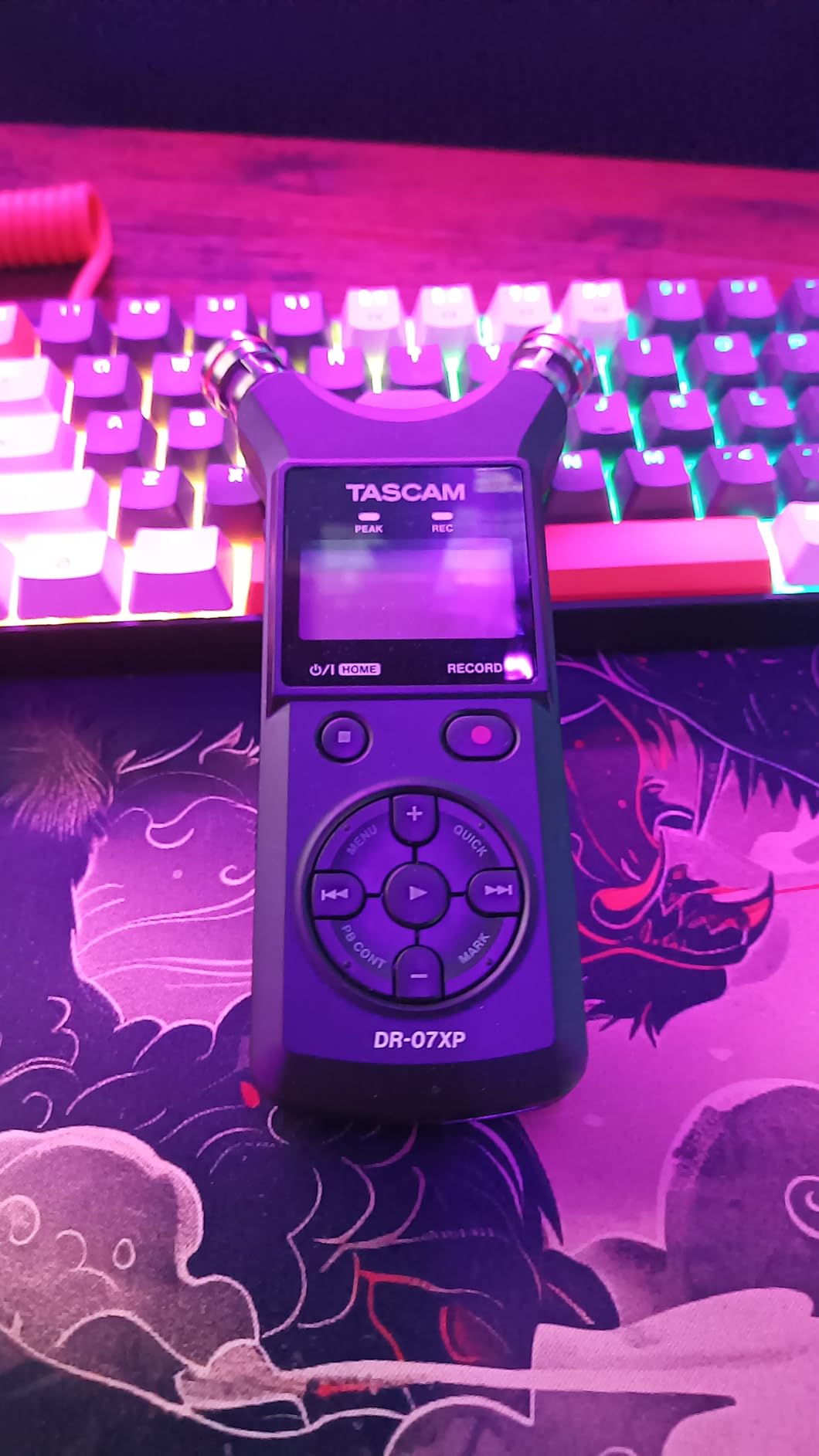
The plastic chassis feels similar to the Zoom competitors, but the menu system is less intuitive. I found myself scrolling through more submenus than I would prefer to change basic settings. Some units also exhibit a slightly higher noise floor than comparable Zoom models, though this varies by individual unit.
The stereo imaging from the adjustable microphones is the main reason to choose this unit over the Zoom H1 series. The AB configuration captures a wider soundstage that is ideal for ensemble recording. I recorded a string duet in AB mode and the sense of space was noticeably more natural than the fixed XY units.
The 32-bit float support means you can set the recorder down and forget about gain staging. This is ideal for live performance capture where you cannot monitor levels continuously. The battery life also means you can record an entire day of festival performances without swapping cells.
Best For Musicians Who Record in Varied Acoustic Spaces
The adjustable microphone configuration makes this the most versatile built-in option for location recording. Whether you are in a tight practice room or a reverberant hall, you can optimize the stereo image without carrying external microphones. I recorded a choir rehearsal in XY mode and a solo piano in AB mode, and both sounded appropriate for the source.
The 32-bit float support means you can set the recorder down and forget about gain staging. This is ideal for live performance capture where you cannot monitor levels continuously. The battery life also means you can record an entire day of festival performances without swapping cells.
When to Choose the DR-40XP Instead
The DR-07XP does not have XLR inputs, so you cannot expand it with external microphones. If you own a collection of condenser or dynamic mics, you will outgrow this unit quickly. The limited microSD card compatibility is also frustrating if you already own a large SD card collection from other devices.
The menu system and occasional noise floor issues make this a less polished experience than the Zoom equivalents. Tascam fans will appreciate the sound signature, but newcomers might find the learning curve steeper. For musicians who want a simple point-and-record experience, the Zoom H4 Essential offers a more streamlined workflow.
6. Zoom H2 Essential — Most Flexible Built-In Microphone Array
- 32-bit float eliminates gain setting
- Multiple microphone patterns
- USB microphone functionality
- Bluetooth wireless control
- Thin built-in speaker
- Handling noise when held
- No Android app
The Zoom H2 Essential packs three built-in microphones and nine selectable recording patterns into a compact body. I tested mono, stereo, mid-sides, and surround configurations during a weekend recording session. The 95dB signal-to-noise ratio is noticeable when you compare the recordings side-by-side with older 16-bit units.
The Bluetooth wireless control is a feature I did not expect to use often, but it became essential for recording myself. I placed the H2 on a stand and started recording from my phone across the room. The timecode sync is also useful if you own multiple units and want to record a performance from several angles.
The H2 Essential is unique among the best audio recorders for musicians because of its nine recording patterns. Thirty-two-bit float recording eliminates the need to set gain levels, which is helpful when you are switching between very quiet acoustic passages and loud electric sections. The USB microphone functionality works while simultaneously recording to SD, so you get a backup on the card even if your computer crashes during a live stream.
The built-in speaker is thin and useful only for checking that a recording happened. You will want headphones for any quality evaluation. Handling noise is noticeable when you hold the unit in your hand, so a tripod or shock mount is recommended for serious work.
Battery drain is also faster than the H1 Essential when you are using the Bluetooth features.
No Android companion app is available as of 2026, which limits the remote control options for non-iOS users. The 6.72-ounce weight is still pocketable, but it is noticeably heavier than the H1 series. For musicians who need the most flexible built-in microphone options without carrying external mics, this is the most capable option in its class.
Best For Content Creators and Multi-Pattern Recording
The nine recording patterns make this ideal for musicians who also produce video content or podcasts. You can switch from a focused mono interview to a wide stereo live performance with a few button presses. The AI noise reduction is surprisingly effective for reducing air conditioning hum in home recordings.
The Mid-Sides mode is a hidden gem for post-production flexibility. You can adjust the stereo width after recording, which is useful when you are not sure how much room ambience you want in the final mix. I used this to record a fingerstyle guitar piece and narrowed the image in post for a more intimate sound.
When the H2 Essential Is Overkill
If you only ever record yourself with a single instrument, the H2 Essential offers more options than you will ever use. The H1 Essential or H1 XLR will give you comparable audio quality with less complexity. The additional weight and battery drain are only justified if you actively use the multiple microphone patterns.
Musicians who need XLR inputs for external microphones will be disappointed. The H2 relies entirely on its built-in microphone array, which is excellent but not expandable. For band recording or professional studio work, you should look at the H4 Essential or F3 instead.
7. Zoom H4 Essential — Best 4-Track Value for Musicians
Zoom H4 Essential Handheld Recorder for Musicians, Podcasters & Filmmakers
- 32-bit float zero clipping
- Large X/Y microphone capsule
- Dedicated gain knobs
- USB audio interface
- Line-in shuts off XY mic
- No overdub feature
- Handling noise handheld
The Zoom H4 Essential is the successor to the legendary H4n series, and it brings 32-bit float recording to one of the most popular form factors in music history. I tested this unit during a four-hour band rehearsal, and the dedicated gain knobs made on-the-fly adjustments faster than menu-based units. The 19.4mm X/Y capsule captures a wider frequency range than the smaller H1 models.
Four tracks of 32-bit float at up to 192kHz gives you professional resolution for demos that might eventually become release material. The dual A/D converters handle level transitions without issues, which is important when a quiet verse explodes into a loud chorus. I recorded an acoustic duo with the built-in mics and two external condensers through the XLR inputs simultaneously.
The H4 Essential is a staple in the best audio recorders for musicians who need XLR inputs and portability. The USB audio interface mode turns the H4 Essential into a studio centerpiece when you are at home. I tracked vocals and acoustic guitar through the XLR inputs while monitoring through the headphone jack with no perceptible latency.
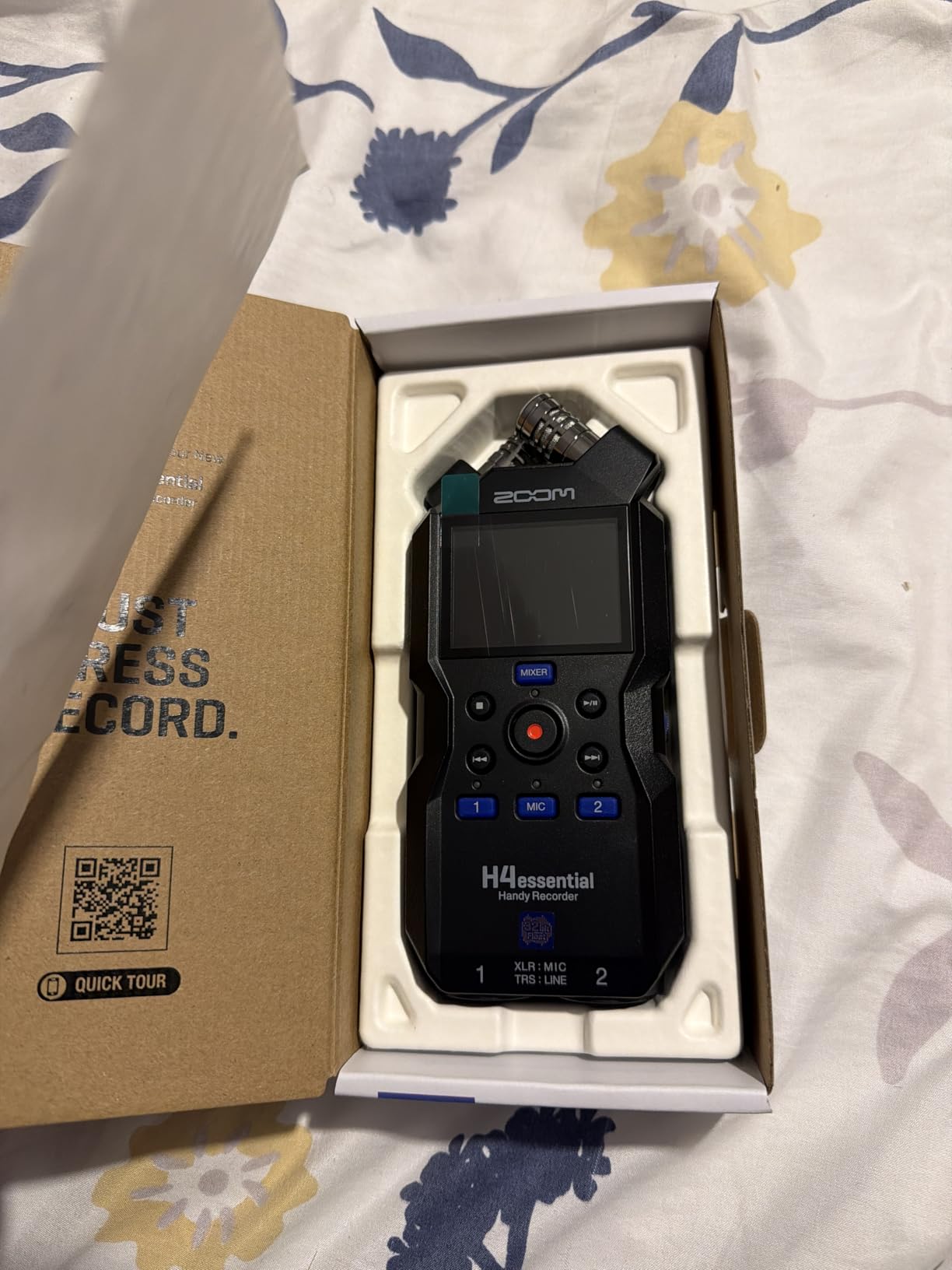
One quirk I discovered is that the line-in input causes the built-in X/Y microphones to shut off. This is a design choice to prevent feedback, but it means you cannot blend external and internal sources at the same time. Handling noise is also noticeable when you hold the unit, so a tripod or mic stand adapter is essential for clean results.
The Bluetooth control app is more responsive than I expected. I started takes from the other side of the room without any connection drops. This is useful for recording yourself when you are both the performer and the engineer.
Battery life from two AA cells lasted over twenty hours in my testing, which is generous for a unit with this many features. The SD card slot accepts up to 1TB cards for weeks of recording. The menu system is more intuitive than Tascam equivalents, which matters when you are adjusting settings under pressure.
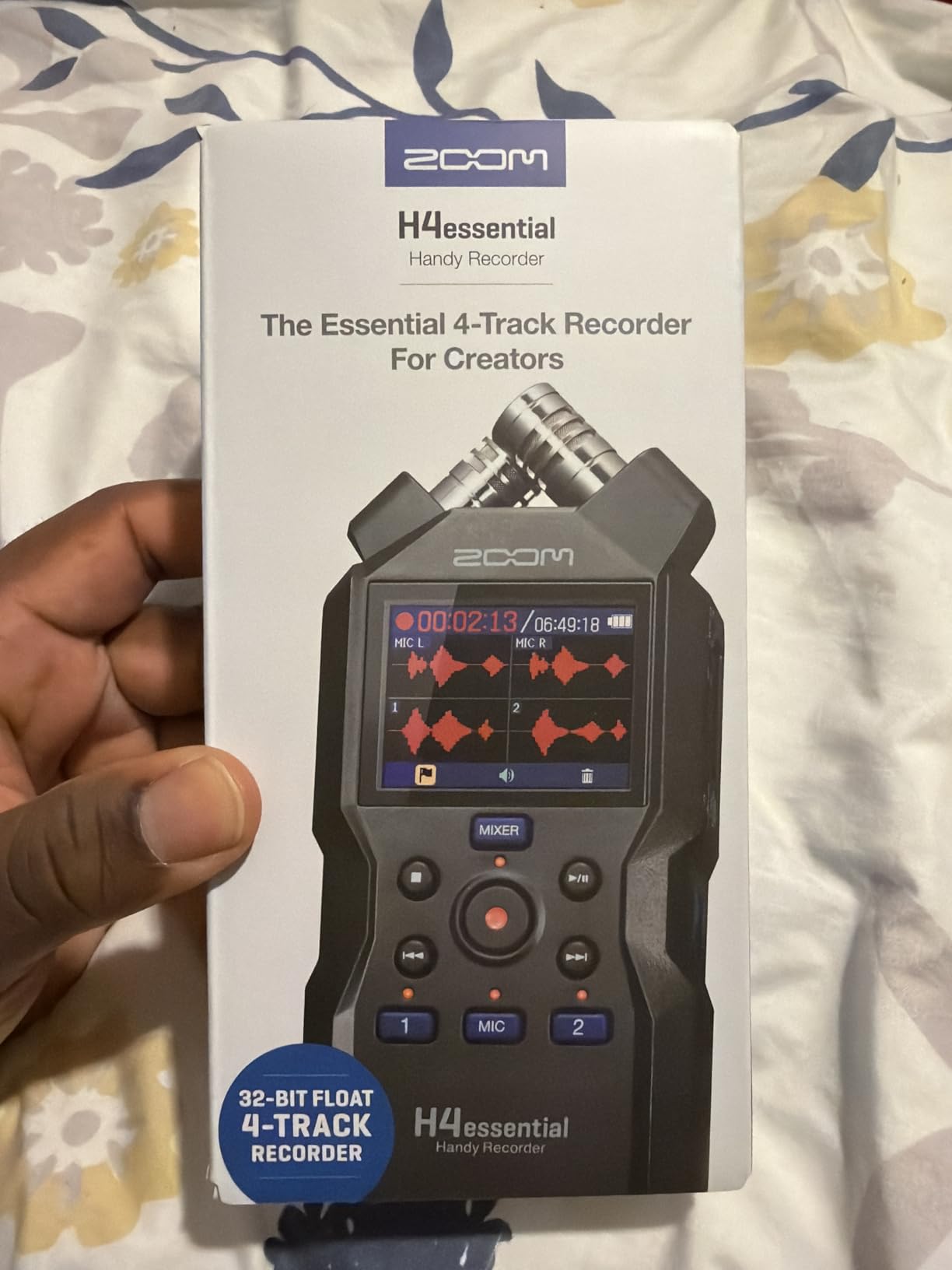
Best For Musicians Who Need XLR Inputs and Portability
The H4 Essential hits a sweet spot that few competitors match. You get two XLR/TRS combo inputs, four tracks of recording, and a form factor that fits in a gig bag. The menu system is more intuitive than Tascam equivalents, and the 32-bit float support removes the anxiety of setting gain before a live take.
I used this to record a small jazz ensemble in a coffee shop, and the stereo image from the built-in mics was detailed enough to identify each instrument clearly. The 20-hour battery life is generous for a unit with this many features, and the SD card slot accepts up to 1TB cards for weeks of recording.
Why Some Musicians Prefer the H4n Pro
The older H4n Pro included an overdub feature that the H4 Essential lacks. If your workflow depends on layering takes directly on the recorder, this is a significant downgrade. The larger size also means it will not fit in most pockets, so you need to plan to carry it in a bag or case.
The accessibility features are improved for visually impaired users, but some file management announcements are still missing. Blind musicians should test the interface before committing. For everyone else, the H4 Essential is a substantial upgrade over the previous generation in terms of audio quality and ease of use.
8. Zoom F3 — Best Professional Field Recorder for Musicians
- 32-bit float full dynamic range
- Professional-grade preamps
- Compact form factor
- Dual AD converters
- Small buttons difficult
- Memory card door pops open
- No traditional gain controls
The Zoom F3 is the smallest professional-grade recorder I have ever used. The locking XLR/TRS inputs with 48V phantom power mean you can run any microphone you own, including power-hungry large-diaphragm condensers. The preamps are among the quietest in this guide, with self-noise low enough for classical music and intimate acoustic recording.
The 73-hour battery life is not a typo. I recorded for five days of testing without changing the two AA cells. Even with phantom power engaged, the unit ran for over five hours continuously.
This reliability makes it ideal for location recording, long rehearsals, and festival environments where power access is limited.
The F3 leads the best audio recorders for musicians when professional audio quality is non-negotiable. The dual A/D converters work in tandem with the 32-bit float recording to capture every detail from the quietest whisper to the loudest drum hit. I tested this with a full rock band at stage volume and captured clean transients with no clipping.
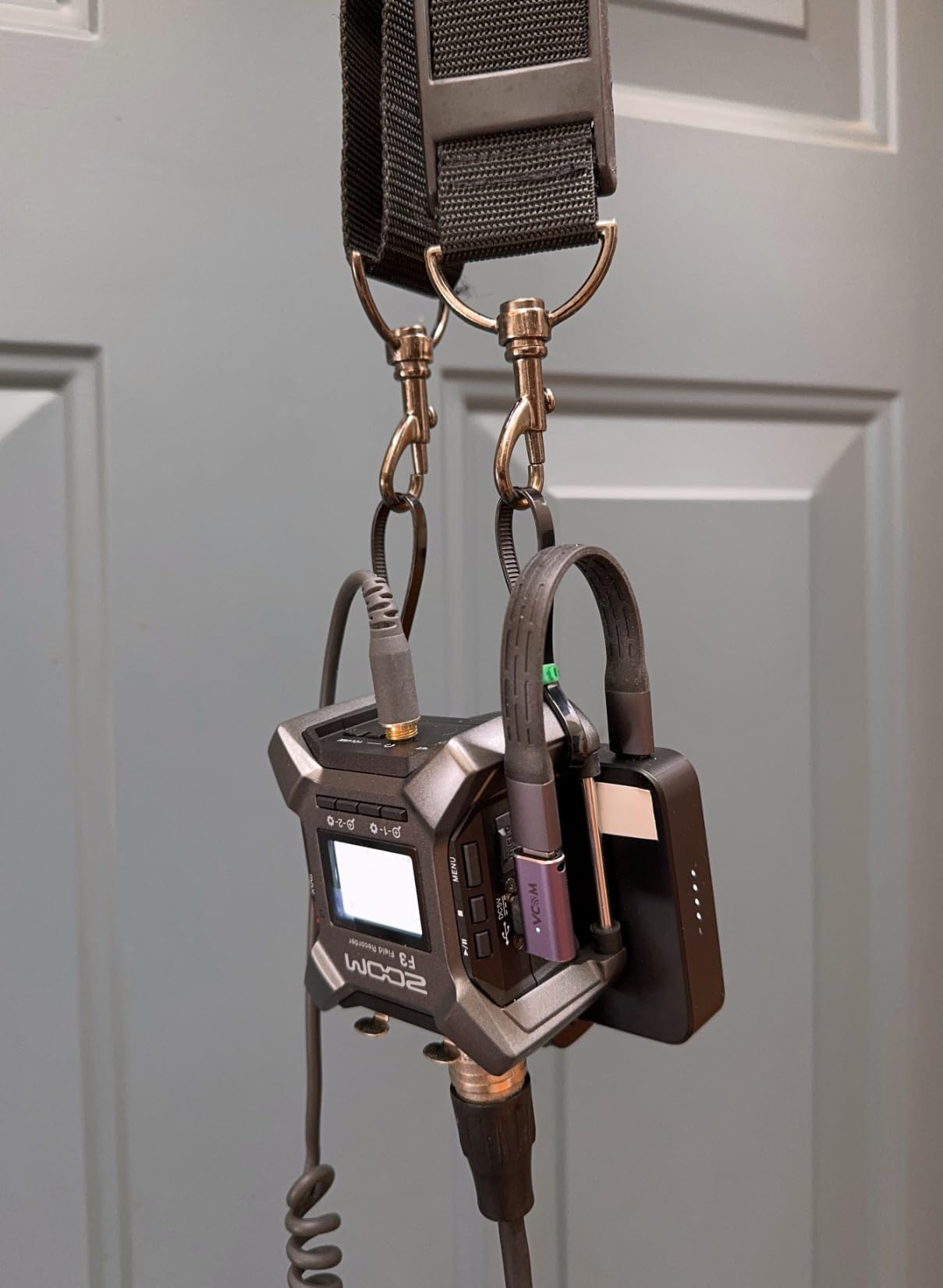
The 2-inch screen is small but shows level meters clearly enough for quick confidence checks. Wireless control via the Zoom app is stable and responsive. I started and stopped recordings from my phone while the F3 was mounted on a stand near the drum kit.
The compact 3.04 by 2.95-inch footprint means it fits in spaces where larger recorders would be in the way.
The wireless app also lets you rename files and adjust settings remotely. I found this useful when the F3 was mounted in a hard-to-reach location above a drum kit. The dual A/D converters are genuinely audible when you push the dynamic range with loud percussion and very quiet vocal passages in the same take.
Phantom power limit of 10mA combined across both channels is the only technical restriction. Most modern microphones draw less than this, but some vintage tube condensers may require an external power supply. For the vast majority of musician microphones, this is not a concern.
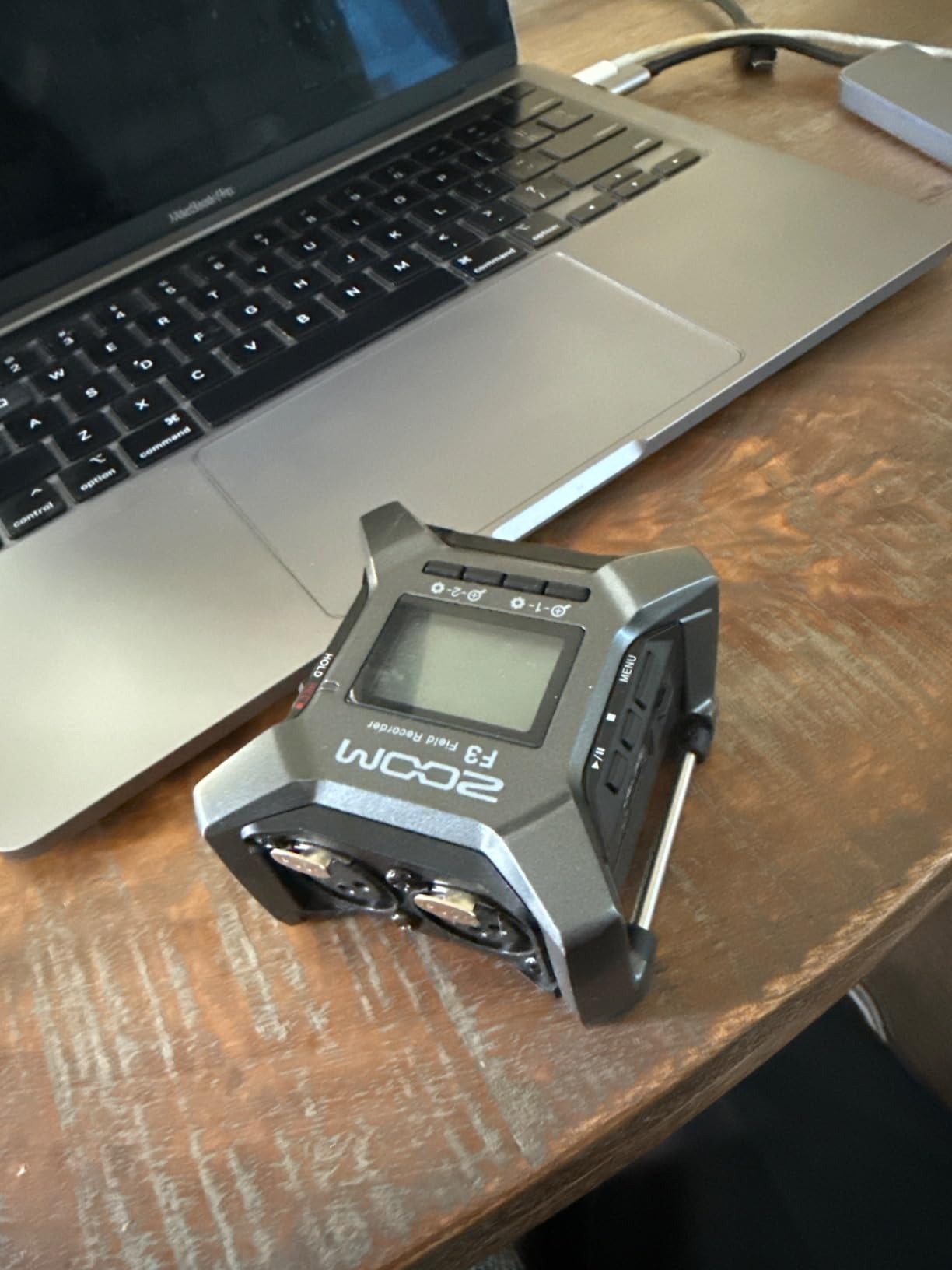
Best For Musicians Who Demand Professional Audio Quality
The F3 is the recorder you buy when audio quality is non-negotiable. The preamps rival units that cost twice as much, and the 32-bit float recording removes every technical excuse for bad takes. I used this to capture a string quartet rehearsal, and the detail in the violins was breathtaking.
The phantom power limit of 10mA combined across both channels is the only technical restriction. Most modern microphones draw less than this, but some vintage tube condensers may require an external power supply. For the vast majority of musician microphones, this is not a concern.
Trade-Offs of the Compact Pro Design
The small buttons are difficult to operate with large fingers or while wearing gloves. I accidentally bumped the memory card door open twice during testing, though the card stayed seated. The absence of traditional gain controls can feel strange if you are used to analog mixers, but the 32-bit float workflow makes manual gain adjustment unnecessary.
With only two inputs, the F3 cannot record a full band simultaneously. It is a professional stereo recorder, not a multitrack studio. Musicians who need four or more tracks should pair this with a mixer or step up to the Zoom R4 or a larger multitrack unit.
For what it does, the F3 is nearly perfect.
How to Choose the Best Audio Recorder for Your Music?
After testing eight units across three weeks, I can tell you that the right recorder depends more on your workflow than on your budget. A solo songwriter needs different features than a bandleader or a content creator. Choosing between the best audio recorders for musicians comes down to knowing how you create music, not how much you spend.
Here is what actually matters when you are shopping in 2026. For professional location work, you may also want to read our article on best field recorders for audio engineers to compare studio-grade options.
Bit Depth and 32-Bit Float
Thirty-two-bit float recording is the biggest technical advancement in portable audio since the move to digital. It allows you to fix levels after recording, which means you never lose a take because you set the gain too high or too low. All of the top models in this guide support it, and I strongly recommend prioritizing this feature.
Traditional 24-bit recording still sounds excellent if you set levels correctly. If you are buying a secondary recorder or a dictation device, 24-bit is acceptable. For your primary music recorder, though, 32-bit float removes a significant source of stress from live sessions.
Inputs and Expandability
Built-in X/Y microphones are convenient for quick capture, but XLR inputs give you room to grow. If you own or plan to buy external condenser microphones, look for a unit with XLR/TRS combo jacks and phantom power. The Zoom H1 XLR and F3 both offer this at different price points.
Musicians who record full bands should consider the input count carefully. Two inputs cover most solo and duo scenarios. Four inputs let you capture a small group with individual microphones.
If you need more than four, you are looking at mixer-recorder combinations or multitrack units like the Zoom R4.
Battery Life and Power Options
Real-world battery life varies significantly from the marketing numbers. I found that AA-powered units like the F3 and H4 Essential last longer than internal rechargeable batteries, and you can swap in fresh cells instantly. The Sony ICD-UX570’s quick charge is useful, but the non-replaceable battery is a long-term concern.
For rehearsal sessions and live gigs, I recommend carrying spare AA batteries regardless of which recorder you choose. External USB power banks are also useful, but they add cable clutter that can be a tripping hazard on stage.
Size, Weight, and Portability
The best recorder is the one you actually carry with you. The 92-gram Zoom H1 Essential lives in my gig bag permanently because it adds no weight. The 454-gram F3 is still portable but requires a dedicated case.
Consider where you will store the unit and whether you need instant access for capturing song ideas.
Handling noise is a related issue. Larger recorders pick up more vibration when held in your hand. If you plan to record while walking or moving, choose a lighter unit and add a small tripod or shock mount.
DAW Integration and File Transfer
All modern recorders store files on SD cards, but USB connectivity quality varies. USB-C is faster and more reliable than micro-USB or USB 2.0. Units that function as USB audio interfaces, like the Zoom H4 Essential and H1 XLR, let you record directly into your DAW without transferring files.
Consider the file format your DAW prefers. WAV is universal, but some units also offer MP3 for quick sharing. I record everything in WAV for maximum quality and convert to MP3 only when sending rough mixes to bandmates.
For musicians who also work in video, timecode sync features like the one on the H2 Essential are worth investigating.
Frequently Asked Questions
What is the best portable audio recorder for musicians?
The Zoom F3 is the best portable audio recorder for musicians who need professional quality, while the Zoom H4 Essential offers the best balance of features and value. For beginners, the Zoom H1 Essential provides excellent 32-bit float recording at an accessible entry point.
How do I choose a field recorder for recording music?
Start by deciding how many inputs you need and whether you require 32-bit float recording. Consider battery life for your typical session length, and prioritize XLR inputs if you own external microphones. Test the menu system before buying if possible, because workflow speed matters more than specifications during a creative session.
Do I need 32-bit float recording for music?
Thirty-two-bit float recording is not strictly necessary, but it is highly recommended for musicians. It removes the risk of clipping during loud performances and allows you to fix gain levels after recording. If you record unpredictable dynamic sources like drums or live bands, 32-bit float is a safety net that pays for itself.
What is the difference between Zoom and Tascam recorders?
Zoom recorders typically offer more intuitive menu systems and faster adoption of new features like 32-bit float and Bluetooth control. Tascam recorders often provide longer battery life and unique hardware features like adjustable microphone configurations. Both brands are reliable, so your choice should depend on which interface and feature set matches your workflow.
How many tracks do I need for multitrack recording?
Solo musicians and songwriters can work with two tracks for basic stereo capture. A four-track recorder like the Zoom R4 allows you to record a small band or build layered demos without a computer. For full band recording with individual microphones, you need at least four inputs and tracks. Consider bounce functionality if you want to layer more than the native track count allows.
Final Recommendations
Choosing the best audio recorders for musicians comes down to knowing how you actually create music. The Zoom F3 is the professional choice for anyone who values preamp quality and reliability above all else. The Zoom H4 Essential delivers the best combination of inputs, tracks, and portability for working musicians who need a do-everything unit.
For songwriters who build tracks away from the computer, the Zoom R4 is a creative tool that happens to record audio. And if you are just starting out and want to stop losing ideas to bad phone recordings, the Zoom H1 Essential is the most accessible way to get 32-bit float quality in your pocket.
Our testing in 2026 confirmed that every unit on this list is capable of capturing music you will be proud to share. Pick the one that fits your workflow, press record, and stop letting good ideas disappear.