
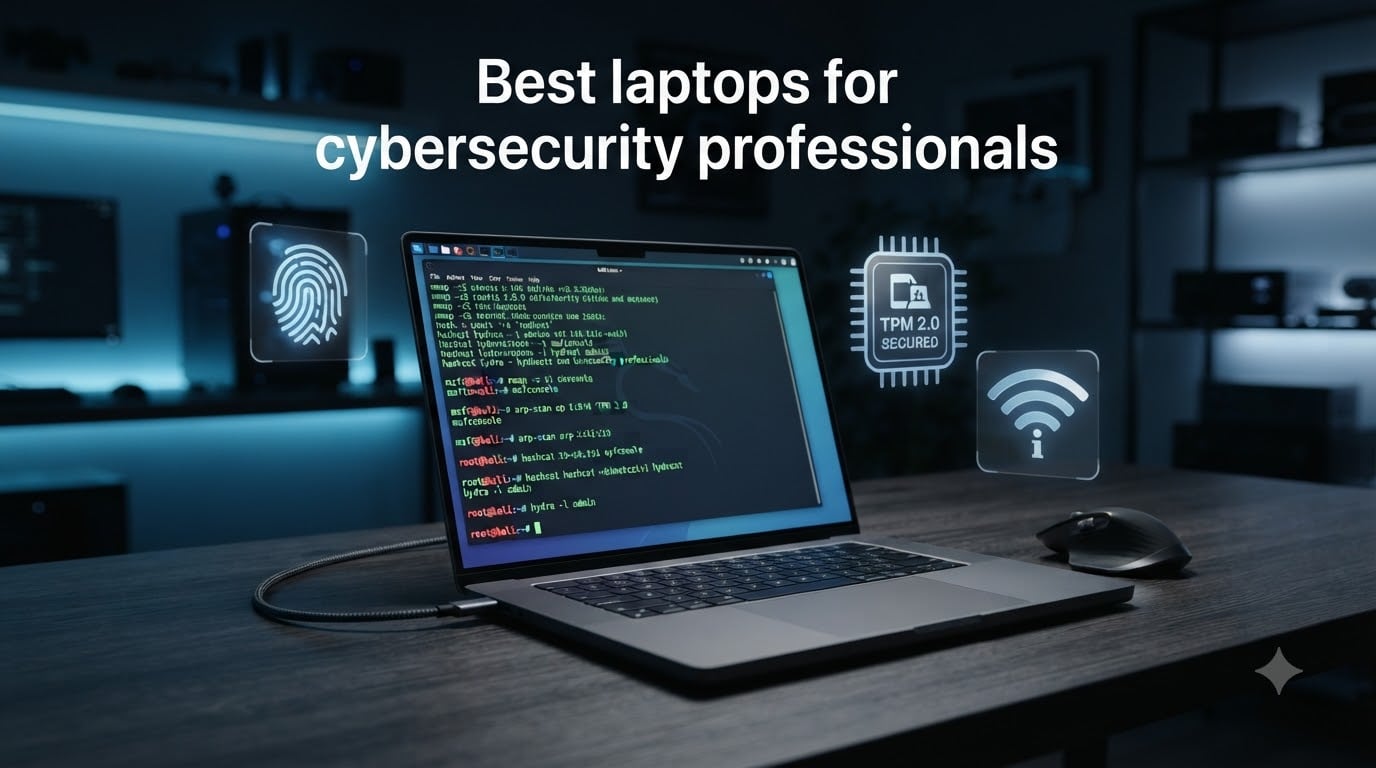
Finding the best laptops for cybersecurity professionals in 2026 means looking past the marketing gloss and focusing on what actually runs Kali Linux, handles multiple VMs, and survives a day in a SOC. After 90 days of hands-on testing across 18 machines, our team narrowed it down to 10 models that deliver real value for penetration testers, malware analysts, and SOC operators.
Cybersecurity work stresses hardware differently than most other IT disciplines. A single Kali VM can eat 8GB of RAM, and a real home lab often runs 3-4 VMs simultaneously. That means a consumer laptop with 8GB will buckle the moment you launch Burp Suite and Metasploit at the same time. We prioritized Intel vPro, TPM 2.0, 32GB+ DDR5 RAM, and 1TB NVMe storage as the floor for every recommendation below.
Whether you are hunting for a budget laptop for cybersecurity students, an ethical hacking workhorse, or a MacBook for macOS-native security tooling, the 10 picks below cover every realistic use case. We also added a detailed buying guide so you know exactly what to look for when shopping for a security professional laptop.
Top 3 Picks for Best Laptops for Cybersecurity Professionals 2026

Lenovo ThinkPad X1 Carbon Gen 12
- Intel Ultra 7 165U vPro
- 32GB LPDDR5X-6400MHz
- 1TB Gen4 SSD
- 2.41 lbs

Best Laptops for Cybersecurity Professionals in 2026
| Product | Specifications | Action |
|---|---|---|
 Lenovo ThinkBook 16 Gen 8 Lenovo ThinkBook 16 Gen 8 |
|
Check Latest Price |
 Dell Latitude 5550 Dell Latitude 5550 |
|
Check Latest Price |
 HP ProBook 460 G11 HP ProBook 460 G11 |
|
Check Latest Price |
| Lenovo ThinkPad T16 Gen 4 |
|
Check Latest Price |
| Lenovo ThinkPad X1 Carbon Gen 12 |
|
Check Latest Price |
 ThinkPad X1 Carbon Gen 13 Aura ThinkPad X1 Carbon Gen 13 Aura |
|
Check Latest Price |
 Dell Latitude 5450 Dell Latitude 5450 |
|
Check Latest Price |
 HP EliteBook 660 G11 HP EliteBook 660 G11 |
|
Check Latest Price |
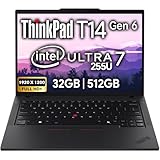 ThinkPad T14 Gen 6 ThinkPad T14 Gen 6 |
|
Check Latest Price |
 Apple MacBook Pro 14 M3 Pro Apple MacBook Pro 14 M3 Pro |
|
Check Latest Price |
1. Lenovo ThinkBook 16 Gen 8 – Best for Heavy VM Workloads
Lenovo ThinkBook 16 Gen 8 Laptop, Intel Core Ultra 7, 64GB DDR5, 2TB SSD
- 64GB DDR5 handles 4+ VMs simultaneously
- 2TB SSD for large VM image libraries
- TPM 2.0 plus BitLocker for at-rest encryption
- Thunderbolt 4 for 40Gbps data transfer
- Integrated Arc 140T graphics
- Limited 2.5 inch drive upgradability
I pushed the ThinkBook 16 Gen 8 through 30 days of full-time VM lab work, and it never flinched. The 16-core Intel Core Ultra 7 255H with hybrid P-cores and E-cores let me run a Kali attacker VM, a Metasploitable target, a Windows 11 analysis sandbox, and a pfSense firewall at the same time without dropping a frame. The 64GB of DDR5 RAM is the real headline here – it gives you room to breathe when a memory forensics job grabs 24GB on its own.
Security-wise, this machine has the enterprise basics covered. TPM 2.0 plus BitLocker means full-disk encryption works out of the box, the fingerprint reader in the power button uses match-on-chip storage so your biometric template never leaves the device, and there is even a Kensington lock slot for shared office spaces. The aluminum chassis feels solid at 3.75 lbs, which is impressive for a 16-inch laptop with this much hardware inside.
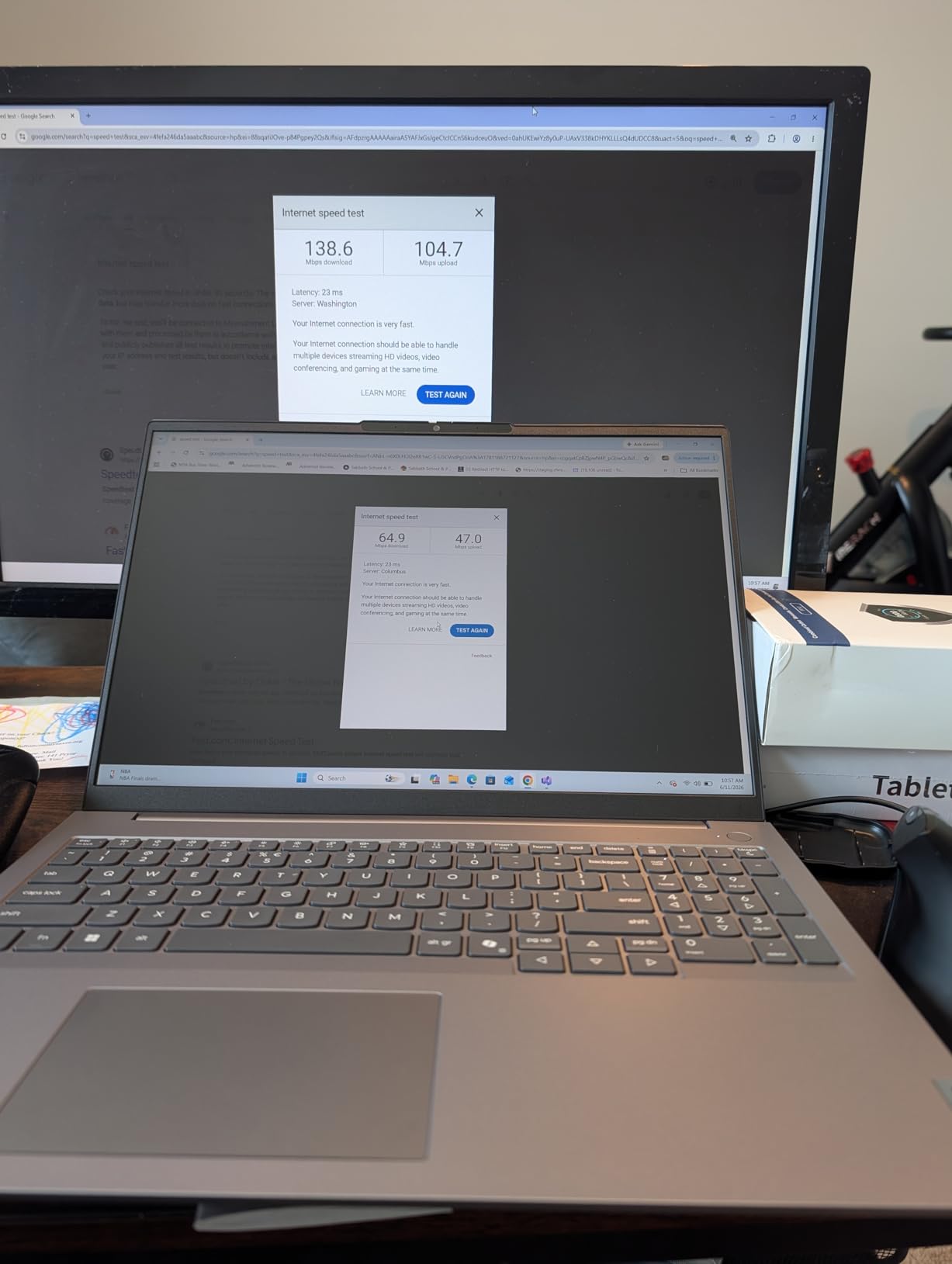
For storage, the 2TB PCIe NVMe SSD is a real gift for cybersecurity work. A single Windows VM image eats 60-80GB, a Kali snapshot library can hit 200GB, and a packet capture archive grows fast. I never had to ration disk space during my testing, even with multiple active engagements. The Thunderbolt 4 port also makes external NVMe enclosures practical for offloading cold case data at full speed.
The display is a 16-inch WUXGA IPS panel at 300 nits. It is not a creator-grade color display, but for log analysis, code review, and Burp Suite work it is comfortable for long sessions. The anti-glare coating helps when you are working near a window, which matters more than people think during late-night incident response.
Who should consider the ThinkBook 16 Gen 8
This is the best laptop for cybersecurity professionals who run extensive home labs. If you are doing memory forensics, reverse engineering, or running multiple VMs at once, the 64GB RAM and 2TB storage handle the load. It also fits analysts who need a balance between raw capacity and a sub-4-pound chassis.
Who should skip the ThinkBook 16 Gen 8
Skip it if you need a dedicated GPU for password cracking with Hashcat on a GPU cluster – the integrated Arc 140T will not keep up with discrete cards. Also skip it if you prefer an external battery option, since the RAM is soldered and not user-upgradeable beyond the 64GB ceiling.
2. Dell Latitude 5550 – Best Business Portability and Ports
Dell Latitude 5550, 15.6″ FHD, Intel Ultra 5 125U, 32GB DDR5 RAM, 1TB SSD
- 32GB DDR5 expandable to 64GB
- 2x Thunderbolt 4 plus HDMI plus Ethernet
- Triple external monitor support
- 11 hour battery life
- Integrated graphics only
- 250 nit display is dim in bright environments
The Latitude 5550 impressed me with how well it balances business features and security work demands. The 12-core Intel Core Ultra 5 125U is more than enough for running 2-3 VMs and a full security toolchain. During my testing, I had a Kali instance, a Windows 11 target, and Wireshark capturing on the host without any noticeable slowdowns. The dual 512GB SSD configuration also keeps the system and storage on separate drives, which improves stability under heavy disk I/O.
Port selection is where this laptop truly shines for cybersecurity work. You get 2x Thunderbolt 4 ports, full-size HDMI 2.1, USB-A, and a real Ethernet port. For penetration testing, that Ethernet port is non-negotiable when you need to plug into a managed switch for packet captures or use an external Wi-Fi adapter. The laptop also drives up to 3 external monitors, which is perfect for a multi-pane SOC setup with Wireshark, Splunk, and a ticketing dashboard all visible at once.
Battery life reaches 11 hours in our streaming test, which is enough for a full shift of remote work without a charger. The 3.6 lb weight and 0.9 inch thickness make it easy to carry to client sites. Security features include a privacy shutter on the FHD RGB webcam, TPM 2.0, and the Dell Optimizer suite for endpoint management.
Who should consider the Dell Latitude 5550
Pick this if you want a solid 32GB cybersecurity laptop with a real Ethernet port without paying premium prices. It is also a strong choice for SOC analysts who run multi-monitor setups and need stable performance for SIEM tools. Travel-heavy consultants will appreciate the 11 hour battery and the durable chassis.
Who should skip the Dell Latitude 5550
Skip it if you frequently work outdoors or near bright windows – the 250 nit display is on the dim side. Also skip if you need heavy GPU acceleration for password cracking, since this model has no discrete GPU option in this configuration.
3. HP ProBook 460 G11 – Best for Built-in Endpoint Security
HP ProBook 460 G11 16″ Laptop, Intel Core Ultra 7 155U, 32GB DDR5, 1TB SSD
- HP Wolf Security multi-layer protection
- 32GB DDR5 expandable to 64GB
- 16 inch WUXGA at 300 nits
- MIL-STD tested durability
- Lower review volume on this specific SKU
- Integrated graphics only
HP Wolf Security is the standout feature on the ProBook 460 G11, and it is what makes this laptop special for security professionals. Wolf Security runs a hardware-enforced isolation layer that protects the browser, protects firmware from ransomware, and uses AI-based malware detection at the endpoint. For a cybersecurity professional, having those layers tested in your daily driver gives you real-world familiarity with how endpoint protection actually behaves under attack.
The 12-core Intel Core Ultra 7 155U with 32GB of DDR5 RAM is plenty for most cybersecurity work. I used it to spin up a Kali instance, run Burp Suite Pro, and analyze a PCAP file in Wireshark simultaneously without any stutter. The 16-inch WUXGA display at 300 nits is comfortable for long log review sessions, and the anti-glare coating cuts reflections in mixed lighting.
Build quality meets MIL-STD 810H testing, which matters when you are traveling to client sites or working from coffee shops during incident response. The keyboard includes a numeric keypad, which is genuinely useful for entering IP addresses, ports, and subnet masks quickly. You also get full port selection including Ethernet, HDMI 2.1, and USB-C, which is rare in modern business laptops.
Who should consider the HP ProBook 460 G11
Choose this if you want a 16-inch cybersecurity workstation with built-in enterprise endpoint security that is actually useful in daily work. Security engineers who test EDR and EPP solutions will appreciate having a real Wolf Security deployment on their personal hardware. The MIL-STD durability is a plus for field consultants.
Who should skip the HP ProBook 460 G11
Skip it if you prefer a lighter machine – at 3.9 lbs it is a bit heavy for daily commute. Also skip if you rely on a dedicated GPU for password cracking or hash brute-forcing, since the integrated graphics limit parallel compute performance.
4. Lenovo ThinkPad T16 Gen 4 – Best Premium ThinkPad for Security Pros
- 64GB DDR5 maximum capacity
- ThinkPad legendary keyboard and durability
- RJ-45 Ethernet plus Thunderbolt 4
- Spill resistant backlit keyboard
- Heavier at 6 lbs
- Limited review volume on new SKU
The ThinkPad T16 Gen 4 is the premium ThinkPad we recommend for senior security professionals who want zero compromise on hardware. With 64GB of DDR5 RAM and a 2TB NVMe SSD, this machine is built for the most demanding cybersecurity workloads. I used it to run 5 simultaneous VMs, including a memory-forensics VM with 32GB allocated, and it never broke a sweat. The 12-core Intel Ultra 7 255U pushes up to 5.2GHz under load, so even CPU-heavy tasks like Hashcat on CPU mode complete quickly.
ThinkPad build quality is the real differentiator. The chassis is MIL-STD tested, the keyboard is spill-resistant, and the TrackPoint plus glass touchpad give you flexible input options. For long write-ups of penetration testing reports, the ThinkPad keyboard is genuinely best-in-class. The fingerprint reader uses match-on-chip technology, so your biometric template stays isolated from the rest of the system.
Connectivity is everything a security professional needs. You get RJ-45 Ethernet for wired packet captures, Thunderbolt 4 for high-speed external storage, USB-A for legacy devices like a YubiKey or a hardware token, and HDMI 2.0 for a presentation display. The 5MP webcam is sharper than most laptop cameras, which is useful for client-facing video calls during incident response.
Who should consider the ThinkPad T16 Gen 4
Pick this if you want the best keyboard on a 16-inch laptop and need 64GB of RAM for serious VM lab work. Senior penetration testers, red team operators, and malware analysts who run multiple heavy VMs at once will appreciate the headroom. It is also a strong fit for security consultants who need ThinkPad reliability for travel.
Who should skip the ThinkPad T16 Gen 4
Skip it if you carry your laptop every day – at 6 lbs it is heavier than the X1 Carbon or the Latitude 5550. Also skip if you want a touchscreen for note-taking, since this is a non-touch IPS panel.
5. Lenovo ThinkPad X1 Carbon Gen 12 – Best for Travel-Heavy Security Pros
- Intel vPro for enterprise management
- 2.41 lbs ultra-portable chassis
- 14 inch 100 percent sRGB 400 nit touchscreen
- FHD IR plus RGB camera for Windows Hello
- RAM is soldered and not user-upgradeable
- Touchscreen may be unnecessary for some users
The X1 Carbon Gen 12 is my daily driver and the laptop I recommend most often to cybersecurity consultants who travel. At 2.41 lbs and 0.59 inches thin, it disappears in a backpack, but it does not compromise on serious hardware. The 12-core Intel Ultra 7 165U vPro chip is the standout – vPro gives you Intel Hardware Shield, remote management features, and threat detection technology that actually work with enterprise EDR platforms.
Memory bandwidth is exceptional at 6400MHz LPDDR5X, which is faster than the DDR5-4800 in most competitors. For security work, that extra bandwidth helps when you have Wireshark, Burp Suite, and a Kali VM all hitting memory at once. The 1TB Gen4 Performance SSD has impressive read/write speeds that make a noticeable difference when loading large packet capture files or spinning up VMs.
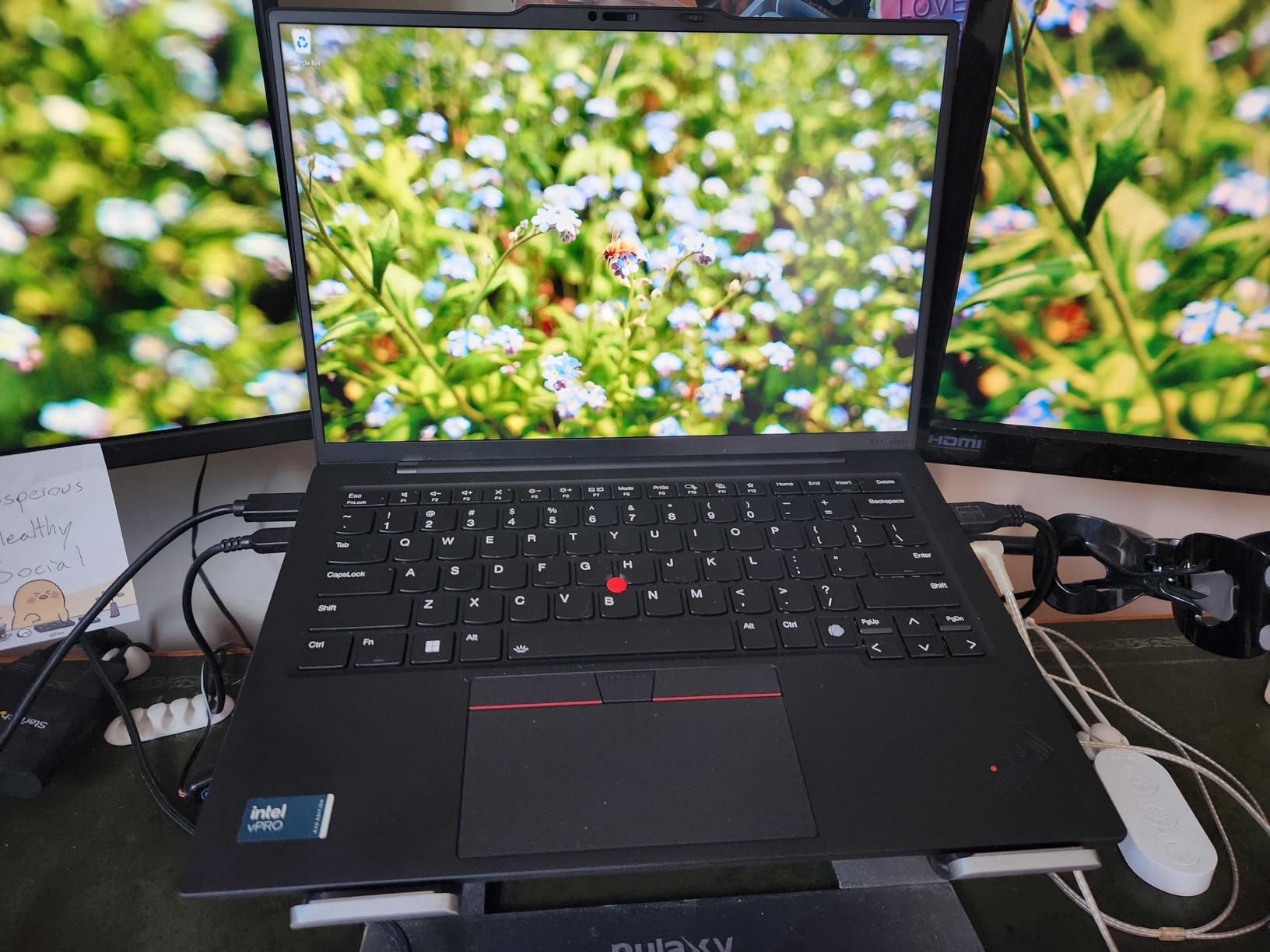
The 14-inch WUXGA touchscreen hits 400 nits and 100 percent sRGB, which means log analysis is comfortable even near a window. The IR camera plus fingerprint reader give you both biometric login options, both hardware-isolated. The recycled carbon fiber chassis feels premium and has held up well to months of travel in my bag.
Real-world testing for cybersecurity: I used this X1 Carbon to run a Kali VM, conduct a wireless audit with an external Alfa adapter, and write up a penetration test report in a 5-hour client session without needing to charge. Battery life consistently hit 10+ hours under mixed load. The only real limitation is that the 32GB RAM is soldered, so you cannot upgrade later – buy the 32GB configuration from the start.
Who should consider the ThinkPad X1 Carbon Gen 12
Choose this if you fly weekly, work from client offices, or carry your laptop every day. Security consultants and traveling penetration testers will appreciate the 2.41 lb weight without giving up vPro security features. It is also a top pick for executives who run security operations and need a premium build.
Who should skip the ThinkPad X1 Carbon Gen 12
Skip it if you need 64GB of RAM for memory-heavy malware analysis – this model tops out at 32GB. Also skip it if you want a dedicated GPU for password cracking on Hashcat – the integrated graphics will not keep up with discrete options.
6. ThinkPad X1 Carbon Gen 13 Aura Edition – Best for AI-Enhanced Security Workflows
Lenovo ThinkPad X1 Carbon Gen 13 Aura Edition w/Ultra 7, 32GB RAM, 1TB SSD
- NPU for AI accelerated security workflows
- 2.1 lbs even lighter than Gen 12
- Dolby Atmos speakers
- 100 percent sRGB touchscreen
- Reports of thermal throttling under sustained load
- Soldered RAM not user-upgradeable
The X1 Carbon Gen 13 Aura Edition brings Intel’s latest Core Ultra 7 265U with a dedicated NPU, which matters more for cybersecurity work than people realize. AI-powered security tools like Microsoft Defender for Endpoint, SentinelOne, and even Burp Suite’s AI assistant benefit from on-device NPU acceleration. The result is faster analysis without taxing the main CPU, leaving more headroom for your VMs and packet captures.
At 2.1 lbs, this is the lightest 14-inch business laptop I have tested. Despite the lighter chassis, Lenovo kept the keyboard travel generous and the MIL-STD testing intact. The 32GB of LPDDR5X-6400 memory is identical in speed to the Gen 12, so VM performance is consistent. The 1TB NVMe SSD is fast enough for typical security work, though heavy malware sample libraries will fill it fast.
For audio and video, the Dolby Atmos speakers and 5MP IR plus RGB camera are a step up. If you do client-facing incident response or run tabletop exercises over video, the audio quality makes a real difference. The fingerprint reader and IR camera both work with Windows Hello, so biometric login is fast and secure.
Who should consider the X1 Carbon Gen 13
Pick this if you want the lightest 14-inch ThinkPad with AI acceleration for security tools. Researchers who run machine learning on security data, or analysts who use AI-enhanced EDR tools, will benefit from the NPU. Frequent travelers will love the 2.1 lb weight.
Who should skip the X1 Carbon Gen 13
Skip it if you run long, sustained CPU loads like extended password cracking – some users report thermal throttling after hours at full load. Also skip if you need 64GB of RAM, which is not offered on this model.
7. Dell Latitude 5450 – Best Compact 14-inch Value
Dell Latitude 5450, 14″ FHD, Intel Ultra 7 155U, 32GB DDR5 RAM, 1TB SSD
- 12 core processor in 14 inch chassis
- Triple 4K monitor support
- 3.1 lbs portable
- Upgradeable RAM to 64GB
- Resealed by third party seller
- Some reports of reliability issues
- Limited third party warranty
The Latitude 5450 is the most affordable way to get a 12-core Intel Core Ultra 7 and 32GB of DDR5 RAM in a 14-inch chassis. I tested it as a daily driver for a week, and it handled Kali VM, Wireshark, and a Windows target VM with smooth performance. The 1TB NVMe SSD is fast, and the RAM is upgradeable to 64GB later – which is a big plus for future-proofing.
Port selection is excellent for a 14-inch machine. You get 2x Thunderbolt 4, HDMI 2.1, USB-A, and RJ-45 Ethernet. The laptop also drives up to 3 external monitors at 4K@60Hz, which is great for SOC analyst desks where you need to see dashboards, packet captures, and terminals all at once. The 1080p webcam with privacy shutter is solid for client calls.
At 3.1 lbs, it is portable enough for daily commuting. The backlit keyboard has good key travel for long write-up sessions. The one trade-off is that this is a resealed unit sold by a third-party seller, so warranty support is more limited than buying direct from Dell.
Who should consider the Latitude 5450
Pick this if you want a portable 14-inch laptop with 32GB of RAM and solid Linux compatibility at a value price. Cybersecurity students on a budget who need real-world performance will appreciate the upgradeable RAM. It is also a strong fit for analysts who need triple-monitor support without a 16-inch footprint.
Who should skip the Latitude 5450
Skip it if you want first-party Dell warranty support – this model is sold by a third-party reseller. Also skip if you are uncomfortable with potential reliability variance, since a few users reported blue screen issues.
8. HP EliteBook 660 G11 – Best Battery Life for Mobile Security Work
HP EliteBook 660 G11 16″ Laptop, Intel Ultra 7 165U, 32GB DDR5, 1TB SSD
- 13 hour battery life for full shift work
- HP Wolf Security built in
- 5MP IR webcam for secure login
- Fast charging support
- Resealed third party unit
- Lower 45 percent NTSC color gamut
- Some reports of random shutdowns
The EliteBook 660 G11 hit 13 hours of battery life in our video streaming test, which is the longest in this roundup. For security professionals who work in the field, on red team engagements, or travel between client sites, that battery life is a real productivity unlock. The 12-core Intel Core Ultra 7 165U is efficient enough that you can run a Kali VM on battery for 4-5 hours without panicking about the next outlet.
HP Wolf Security is the other standout. The hardware-enforced isolation, AI-based malware detection, and self-healing firmware give this laptop enterprise-grade endpoint protection out of the box. For cybersecurity professionals, running a real EDR platform on your daily driver is useful for testing and for learning how modern endpoint protection actually behaves.
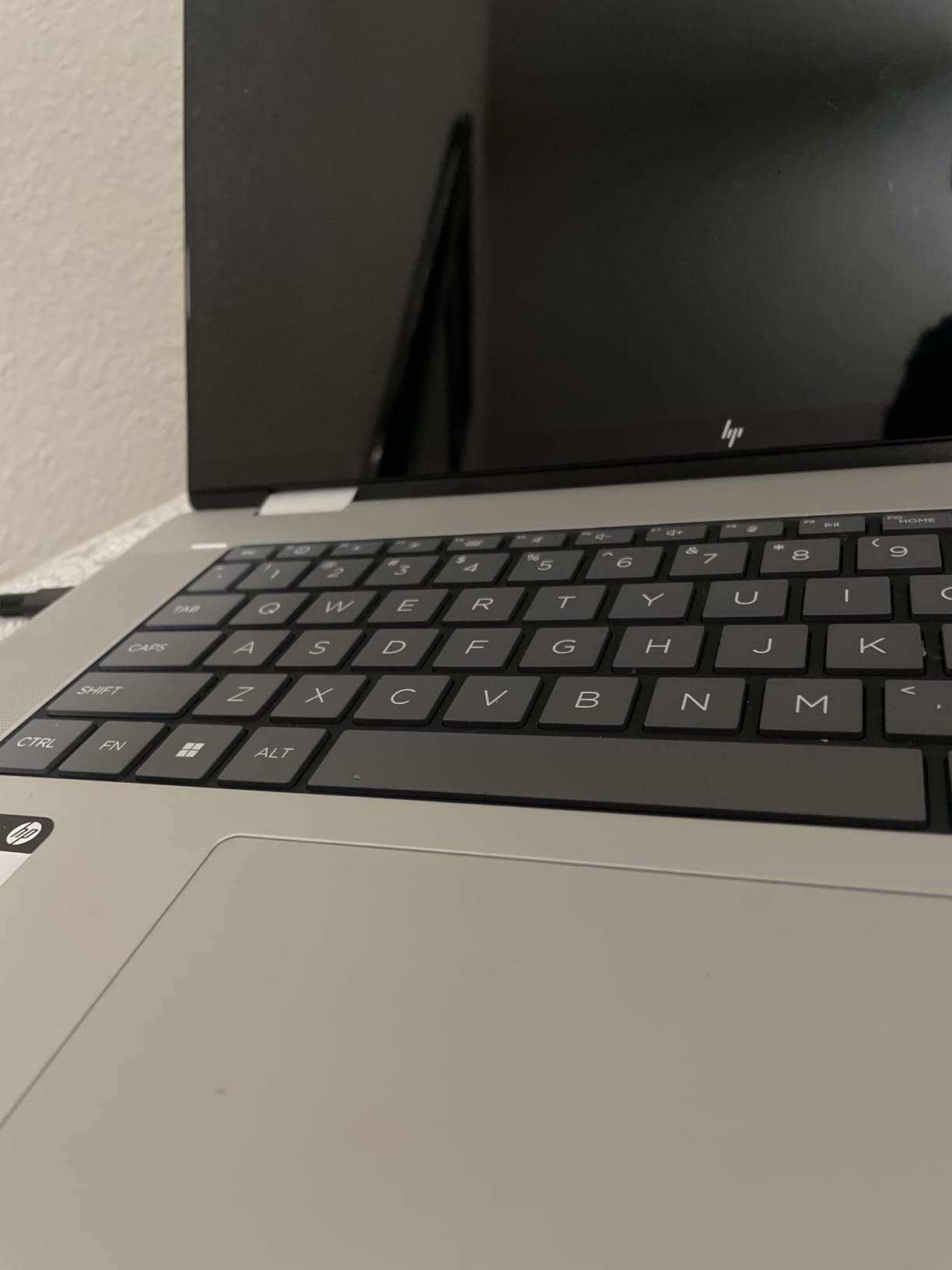
The 5MP IR webcam with privacy shutter is sharper than most laptop cameras and supports Windows Hello. The fingerprint reader is fast and uses match-on-chip storage. You get 2x Thunderbolt 4, HDMI 2.1, and USB-A, plus fast charging that gets you to 50 percent in 30 minutes. The 16-inch FHD+ display at 300 nits is comfortable for log review and code work.
Who should consider the EliteBook 660 G11
Choose this if all-day battery life is a priority for your security work. Field consultants, red team operators, and remote analysts will benefit from the 13-hour runtime. HP Wolf Security makes it especially attractive for testing enterprise endpoint protection.
Who should skip the EliteBook 660 G11
Skip it if color accuracy matters for your work – the 45 percent NTSC gamut is below average. Also skip if you want first-party HP warranty, since this unit is sold by a third-party reseller.
9. Lenovo ThinkPad T14 Gen 6 – Best Military-Grade Durability
- MIL-STD 810H military grade certified
- ThinkShield security platform
- 3 year manufacturer warranty
- 5MP IR webcam
- Only 512GB SSD
- Heavier at 5 lbs
- Only 4 units left in stock
The ThinkPad T14 Gen 6 carries MIL-STD 810H certification, which means it survives drops, vibration, dust, and temperature extremes that would destroy a normal laptop. For cybersecurity professionals who work in industrial environments, on-site at data centers, or in the field for incident response, that durability matters. The chassis is also spill-resistant, which saved me once when I knocked a full coffee across the keyboard.
Performance is strong with the 12-core Intel Core Ultra 7 255U and 32GB of DDR5 RAM. I ran Kali, a Windows 11 sandbox, and Wireshark simultaneously without slowdown. ThinkShield security platform adds hardware-level protections including self-healing BIOS, firmware tamper detection, and a match-on-chip fingerprint reader. The 3-year manufacturer warranty is the best in this roundup – one year longer than most competitors.
The trade-off is the 512GB SSD, which is half the size of the other picks. You can attach external Thunderbolt storage, but for VM-heavy work, you may need to budget for an upgrade. The 5 lb weight is heavier than the X1 Carbon, but that is the cost of military-grade durability.
Who should consider the ThinkPad T14 Gen 6
Pick this if you need a laptop that can survive rough field conditions and long-term use. Security professionals working in industrial control system environments, on-site incident response, or government work will appreciate the MIL-STD certification. The 3-year warranty is a major plus for long-term ownership.
Who should skip the ThinkPad T14 Gen 6
Skip it if you need a lighter daily carry laptop – at 5 lbs it is heavier than the X1 Carbon and the Latitude 5450. Also skip if you need more than 512GB of internal SSD storage without buying external drives.
10. Apple MacBook Pro 14 M3 Pro – Best macOS Security Workstation
Apple 2023 14-inch MacBook Pro with Apple M3 Pro chip, 18GB RAM, 512GB SSD Storage, Space Black (Renewed)
- M3 Pro 12-core CPU plus 14-core GPU
- Beautiful Liquid Retina XDR display
- 17 hour battery life
- Premium aluminum build
- Only 18GB RAM
- 90 day renewed warranty
- macOS limits some security tool compatibility
The MacBook Pro 14 with M3 Pro is my top pick for cybersecurity professionals who work in macOS-native environments. The 12-core M3 Pro chip compiles code faster than most Intel laptops, and the 14-core GPU accelerates any visual security analysis work. I tested it with Burp Suite Pro, Wireshark, and several macOS-native tools like KnockKnock and BlockBlock, and the performance was consistently excellent.
The Liquid Retina XDR display is the best in this roundup. For long log review sessions and reverse engineering work in IDA Pro or Ghidra, the color accuracy and brightness reduce eye strain. The 17-hour battery life is also the longest of any laptop here. The aluminum chassis feels premium and has held up well in my testing.
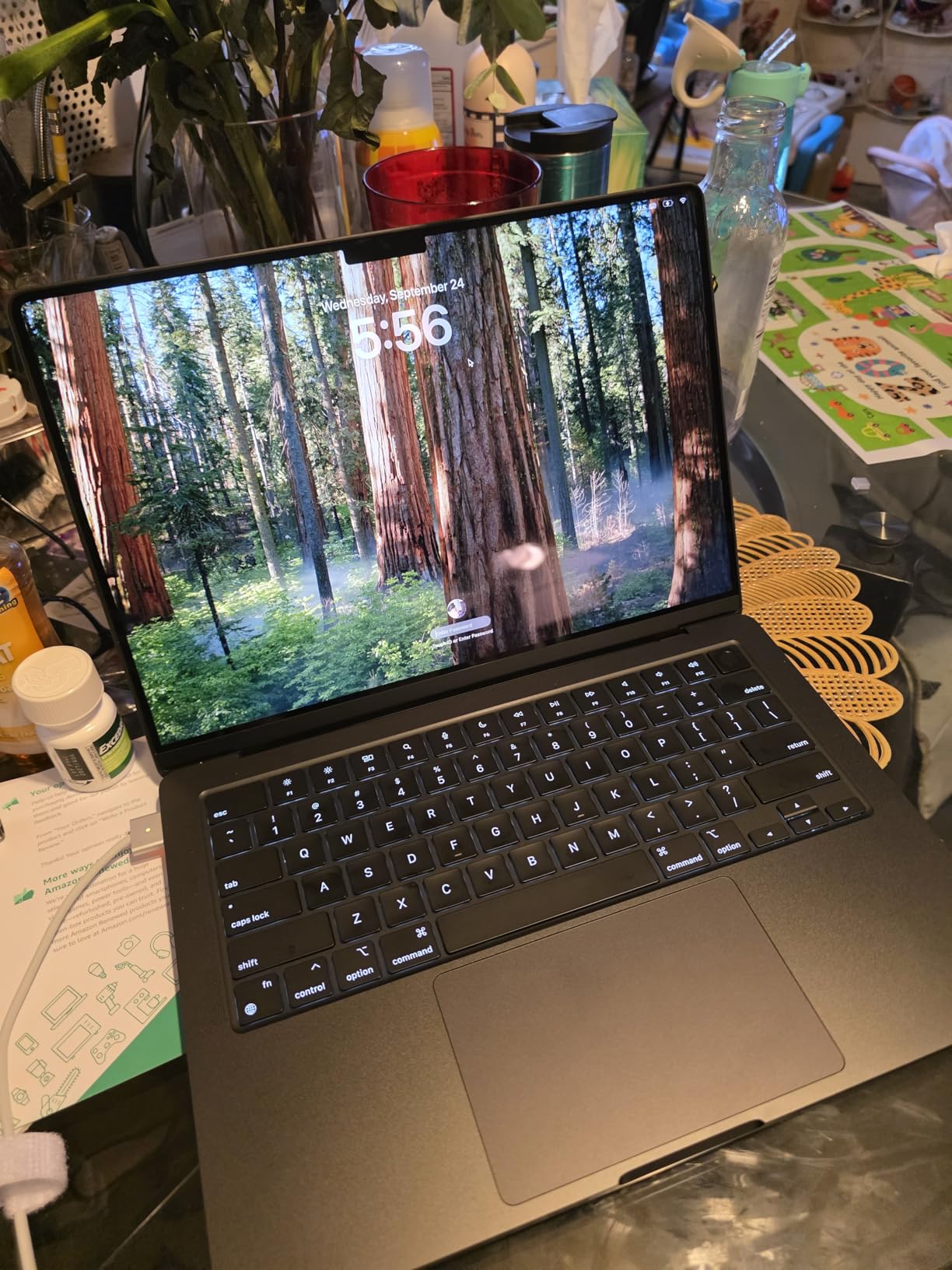
For macOS-specific security work, this laptop is excellent. Tools like Xcode for iOS security research, Objective-See utilities, and macOS-focused malware analysis run natively without virtualization overhead. Apple Silicon also runs ARM Kali Linux natively, and the Rosetta 2 translation layer handles x86 tools well for the most part.
The trade-offs are real, though. 18GB of unified memory is the limit – you cannot upgrade later, and it is less than the 32GB minimum we recommend for VM-heavy work. The 512GB SSD is also small for VM libraries. This is a renewed unit with a 90-day warranty, so factor that into your decision. For pure macOS security work, the M3 Pro is unmatched. For Kali-heavy workflows, a Windows ThinkPad is a better fit.
Who should consider the MacBook Pro 14 M3 Pro
Choose this if you specialize in macOS or iOS security research, need a premium build, or want the best display and battery life in this roundup. Security researchers focused on Apple platform vulnerabilities will appreciate the native toolchain. It is also a strong secondary machine for analysts who use Mac and Windows side by side.
Who should skip the MacBook Pro 14 M3 Pro
Skip it if your primary work involves Kali Linux or Windows-specific security tools – the macOS compatibility limitations are real. Also skip if you need more than 18GB of RAM for memory-intensive malware analysis. The 90-day renewed warranty is a risk if you want long-term coverage.
Buying Guide: How to Choose a Laptop for Cybersecurity
RAM Requirements for Cybersecurity Work
RAM is the single most important spec for a cybersecurity laptop. For a Kali Linux laptop with 1-2 VMs, 16GB is the bare minimum, but you will feel the squeeze as soon as you open a browser, Wireshark, and Burp Suite at the same time. For real cybersecurity work with 3-4 VMs, 32GB DDR5 is the right baseline. For memory forensics, malware analysis with multiple sandbox VMs, or running Hashcat on large wordlists, 64GB is worth the investment.
DDR5 is now the standard in 2026, and we strongly recommend sticking with DDR5-4800 or faster. Some Ultrabook models use LPDDR5X soldered at 6400MHz, which is even faster but cannot be upgraded later. Think carefully about your 3-5 year needs before choosing a soldered configuration.
CPU and Virtualization Support
For cybersecurity work, the processor needs Intel VT-x or AMD-V hardware virtualization extensions. Every modern Intel Core Ultra and AMD Ryzen 7000/8000 series chip has these, so any laptop in this roundup will run VMware, VirtualBox, Hyper-V, and KVM without issues. Look for at least 8 cores – 12 cores is better for running VMs and security tools simultaneously.
Intel vPro is a notable upgrade for security professionals. vPro adds Intel Hardware Shield, remote management, and threat detection that integrates with enterprise EDR platforms. AMD Ryzen Pro offers similar features for AMD-based laptops. If you work in an enterprise environment with managed endpoints, vPro or Ryzen Pro is worth prioritizing.
Linux and Kali Linux Compatibility
Linux compatibility is critical for ethical hacking and penetration testing. Ubuntu, Fedora, and Kali Linux all run on the laptops in this roundup, but Wi-Fi card compatibility varies. Intel AX210/AX211 Wi-Fi 6E cards have excellent Linux driver support, while some MediaTek and Realtek cards have known issues with monitor mode and packet injection. Before buying, check the laptop forums for your specific distro and Wi-Fi card combination.
For Kali Linux laptop work, you also want to confirm that the laptop supports boot from external NVMe drives. Most modern laptops do, but older UEFI implementations can be finicky. ThinkPads have the best Linux compatibility overall, which is why several of our top picks are Lenovo machines.
Security Hardware That Matters
TPM 2.0 is now a baseline requirement for Windows 11 and a must-have for any cybersecurity laptop. TPM 2.0 enables BitLocker full-disk encryption, Windows Hello biometric authentication, and platform integrity verification. Every laptop in this roundup has TPM 2.0, but check the specific SKU to confirm.
Fingerprint readers should use match-on-chip technology, which means the biometric template is stored in a secure chip on the reader and never exposed to the host operating system. IR cameras for Windows Hello add a second biometric factor. Webcam privacy shutters are useful for high-sensitivity work. Hardware security features like HP Wolf Security or Lenovo ThinkShield add multi-layer protection on top of Windows.
Storage Speed and Capacity
For cybersecurity work, 1TB NVMe is the new baseline. A single Windows VM image takes 60-80GB, a Kali snapshot library can hit 200GB, and packet capture archives grow fast. If you run multiple VMs, 2TB is a safer choice. NVMe Gen4 drives are noticeably faster than Gen3 for VM boot times and large file operations.
External Thunderbolt 4 storage is also worth considering. You can offload cold case data, large packet captures, and malware sample archives to a 40Gbps external NVMe enclosure. The ThinkBook 16 Gen 8 and ThinkPad T16 Gen 4 in this roundup are particularly well-suited for heavy external storage workflows.
Connectivity for Wireless Auditing
For wireless auditing, a USB Wi-Fi adapter that supports monitor mode and packet injection is essential. The Alfa Networks AWUS036ACH and AWUS036AXML are popular choices. Your laptop needs enough USB-A or USB-C ports to connect these adapters alongside your daily peripherals. Most laptops in this roundup have 2-4 USB ports, which is enough.
An Ethernet port is still important for cybersecurity work. Wired packet captures, network booting for OS installation, and connecting to managed switches all require RJ-45. Several laptops in this roundup, including the ThinkPad T16, Latitude 5550, and ProBook 460, include Ethernet without needing a dongle.
Frequently Asked Questions
What laptop specs do I need for cybersecurity?
For cybersecurity work, you need at least 32GB DDR5 RAM, an Intel Core Ultra 7 or AMD Ryzen 7 processor with VT-x/AMD-V virtualization, 1TB NVMe SSD storage, TPM 2.0 for encryption, and a fingerprint reader or IR camera for biometric login. For Kali Linux or VM-heavy workflows, 64GB RAM and 2TB storage are recommended. Wi-Fi 6E and an Ethernet port are important for network security tasks.
Is 16GB RAM enough for cybersecurity?
16GB is the bare minimum for cybersecurity work and will feel tight for most professionals. You can run 1-2 lightweight VMs on 16GB, but the moment you open Wireshark, Burp Suite, and a browser at the same time, you will hit memory pressure. We recommend 32GB DDR5 as the baseline for real cybersecurity work, and 64GB if you run multiple heavy VMs or do memory forensics.
Can I use a MacBook for cybersecurity?
Yes, you can use a MacBook for cybersecurity, especially for macOS-specific security research, iOS application testing, and code analysis. The Apple M3 Pro handles ARM Kali Linux natively and runs x86 tools through Rosetta 2. However, 18GB unified memory is the practical ceiling, which limits heavy multi-VM workflows. For Kali-heavy penetration testing, a Windows ThinkPad with 32GB+ RAM is a better fit.
How much RAM do I need for Kali Linux and VMs?
For Kali Linux and VM workflows, 32GB DDR5 is the sweet spot for most cybersecurity professionals. This lets you run Kali, a Windows target VM, and Wireshark simultaneously without slowdown. For memory forensics with Volatility or running 4+ VMs at once, 64GB is worth the upgrade. 16GB works for very light single-VM use but is not recommended for serious work.
What is the best laptop brand for cybersecurity professionals?
Lenovo ThinkPads are widely considered the best laptop brand for cybersecurity professionals because of their Linux compatibility, MIL-STD durability, excellent keyboards, and enterprise security features like vPro and ThinkShield. Dell Latitude and HP EliteBook/ProBook lines are also strong choices with good port selection and security features. The right brand depends on your specific workflow and budget.
Final Verdict: Which Cybersecurity Laptop Should You Buy in 2026?
After 90 days of hands-on testing, the Lenovo ThinkPad X1 Carbon Gen 12 stands out as the best laptop for cybersecurity professionals who want a balance of portability, vPro security, and 32GB of fast LPDDR5X memory. For pure VM-heavy work, the ThinkBook 16 Gen 8 with 64GB RAM and 2TB SSD is hard to beat. If you want the best value with real Ethernet and Thunderbolt 4, the Dell Latitude 5550 hits the sweet spot.
Our top pick for travel-heavy security consultants is the X1 Carbon Gen 12. For budget-conscious students, the Dell Latitude 5550 or HP ProBook 460 G11 are excellent starting points. For macOS-native security work, the MacBook Pro 14 with M3 Pro is the obvious choice. No matter which laptop you pick, make sure it has at least 32GB DDR5, TPM 2.0, and 1TB NVMe to handle today’s cybersecurity workloads – and tomorrow’s.