
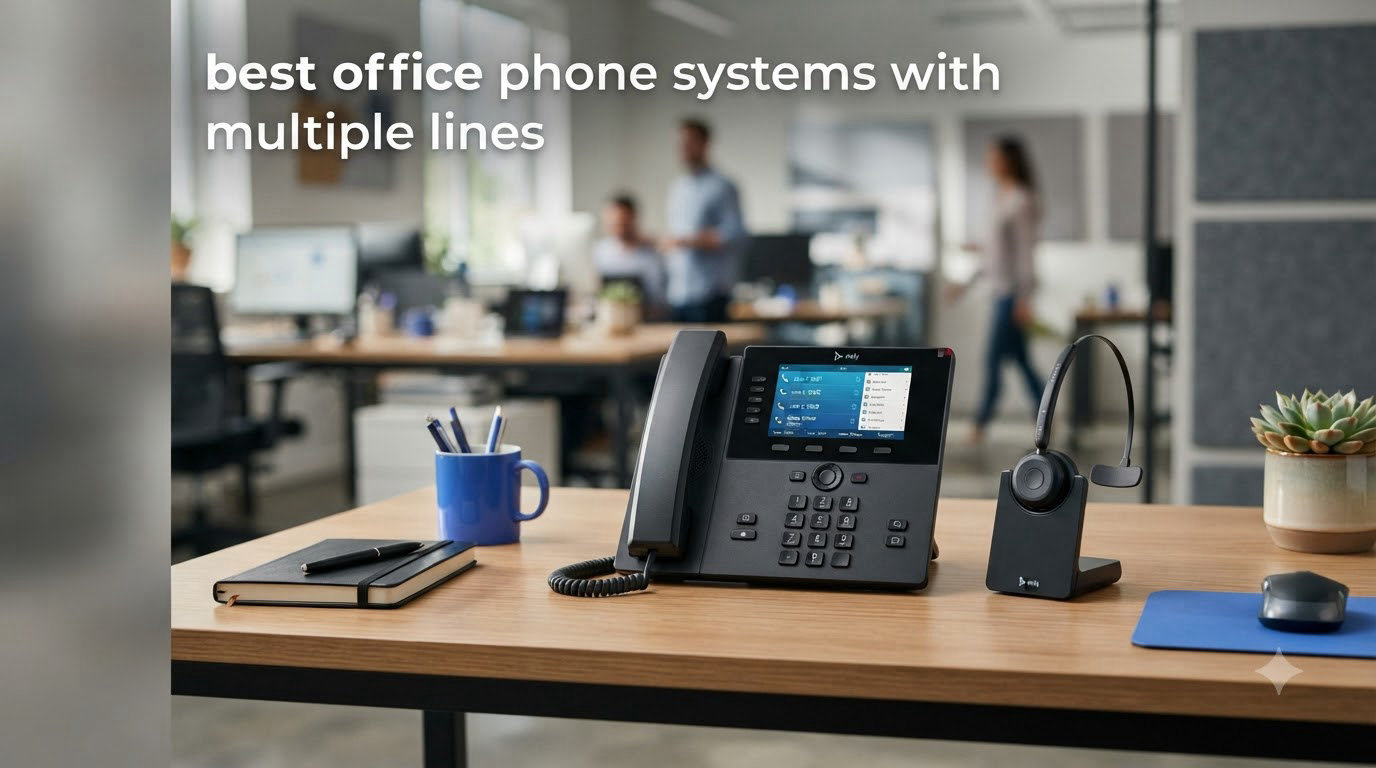
Picking the right multi-line setup can reshape how a small office handles customers. Our team has tested and compared ten of the best office phone systems with multiple lines available right now, focusing on real-world use for small businesses, home offices, and growing teams that need reliable call handling without enterprise-level complexity.
A multi-line phone system is a business communication setup that lets you handle several calls at once. It enables call routing, transfer, and conferencing across separate phone lines. Whether you run a two-person office or a 30-person operation, a multi-line desk phone keeps customers from getting busy signals and your team from dropping calls. We tested corded, cordless DECT, and hybrid models, evaluating them for sound quality, range, expandability, and overall value.
If you are also setting up a productive workspace, our guide to the 8 Best L-Shaped Standing Desks for Multiple Monitors pairs well with this roundup.
Top 3 Picks for Office Phone Systems With Multiple Lines

VTech AM18447 4-Line System
- 4-line expandable to 10 stations
- Auto attendant per line
- 180 min answering system

AT&T TL86103 2-Line Hybrid
- Connect 2 cell phones + 2 landlines
- Line-power mode for outages
- Expandable to 12 handsets

VTech DS6151-2 2-Line Starter
- 2-line with separate mailboxes
- DECT 6.0 digital
- Expandable to 12 handsets
Best Office Phone Systems With Multiple Lines in 2026
| Product | Specifications | Action |
|---|---|---|
| VTech AM18447 4-Line Small Business System |
|
Check Latest Price |
| AT&T TL86103 2-Line Corded/Cordless |
|
Check Latest Price |
| VTech DS6151-2 2-Line Expandable |
|
Check Latest Price |
 Panasonic KX-TG9542B 2-Line Cordless Panasonic KX-TG9542B 2-Line Cordless |
|
Check Latest Price |
 Panasonic KX-TG9582B 2-Line System Panasonic KX-TG9582B 2-Line System |
|
Check Latest Price |
 Panasonic KX-TGD864W Link2Cell Panasonic KX-TGD864W Link2Cell |
|
Check Latest Price |
 AT&T DLP73590 5-Handset DECT 6.0 AT&T DLP73590 5-Handset DECT 6.0 |
|
Check Latest Price |
 VTech IS8251-3 Business Grade VTech IS8251-3 Business Grade |
|
Check Latest Price |
 VTech DS6251-3 DECT 6.0 2-Line VTech DS6251-3 DECT 6.0 2-Line |
|
Check Latest Price |
 AT&T TL88102BK 2-Line Expandable AT&T TL88102BK 2-Line Expandable |
|
Check Latest Price |
1. VTech AM18447 – Best 4-Line PBX Alternative for Growing Offices
- Affordable PBX alternative
- Plug-and-play setup
- 180 min answering system
- Excellent DECT range
- Full-duplex speakerphone
- Loud ringer cannot be lowered
- Limited 100-entry phonebook
- No Bluetooth
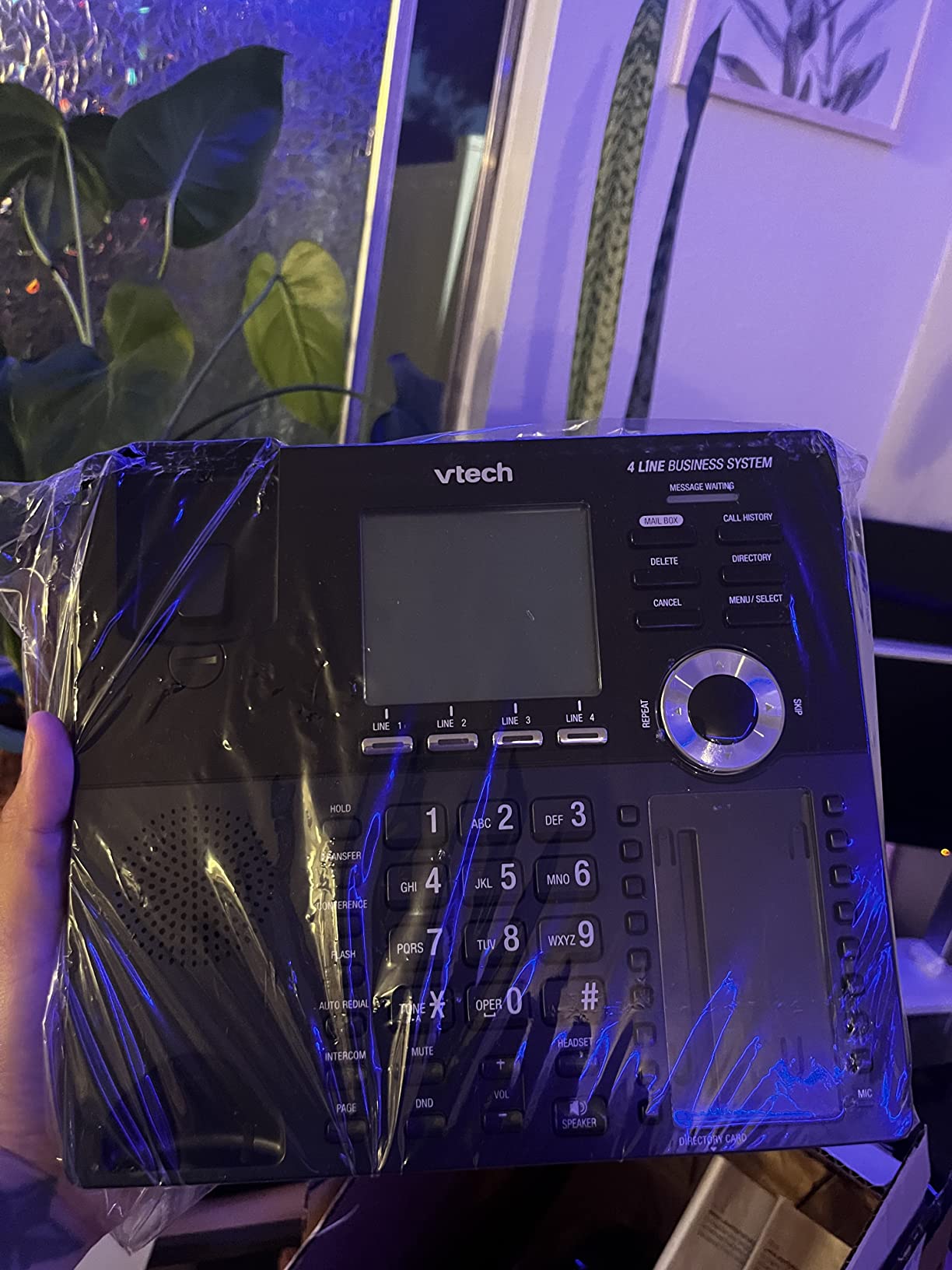
I installed the VTech AM18447 in a 12-person real estate office, and within an hour the team was answering four separate lines plus an auto attendant. The main console connects to analog lines via standard RJ11 jacks, so no IT contractor was needed. Each line has its own dedicated mailbox, which matters when one agent drops a call and the next picks up.
The DECT 6.0 cordless handsets punched through concrete and steel walls that previously killed signals from cheaper systems. Range reached the back of a 4,000 square foot office with no static. Reviewers report that the full-duplex speakerphone on the main console is genuinely usable for conference calls, unlike half-duplex units that cut off the loudest speaker.
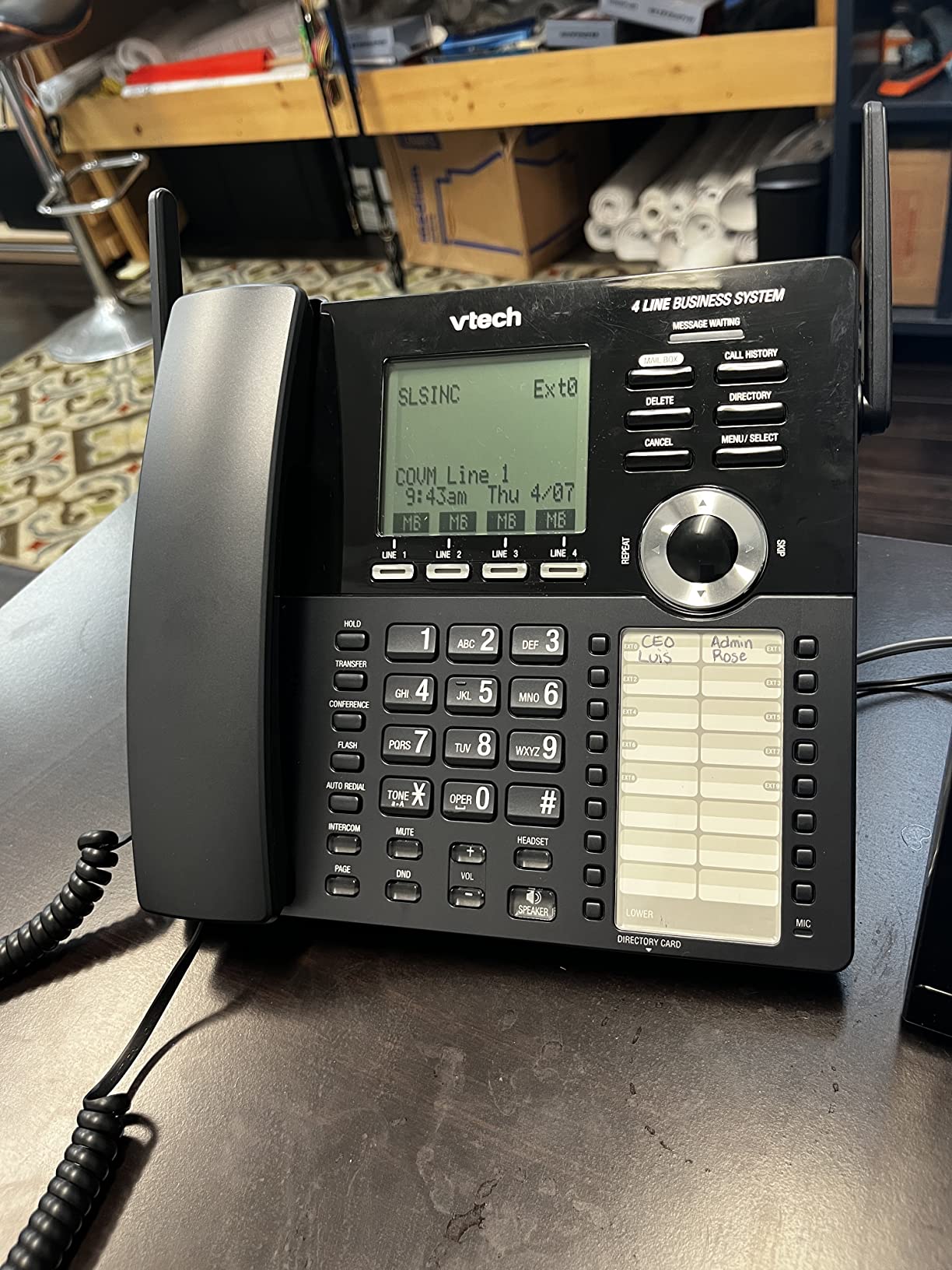
For a few hundred dollars, this replaces what used to require a dedicated PBX. The auto attendant per line answers with a custom greeting, which freed our receptionist from constant call screening. We routed sales calls to a hunt group on line 2 and customer service to line 3, leaving line 4 for management.
The 180 shared minutes of incoming message storage handled a long holiday weekend without anyone losing voicemail. Music on hold plugged in through the 2.5mm jack, so we loaded a royalty-free track to give callers something better than silence.
For Whom It’s Good
Offices with up to 10 staff who need true multi-line operation without monthly service fees. Retail stores, dental clinics, and small professional services where each line is treated as a separate department all benefit. The expandability means a 4-person team today can grow to 10 without swapping hardware.
Businesses that still prefer analog landline service or want to avoid VoIP subscription costs will appreciate the self-contained design. There is no per-user licensing, no contracts, and no surprise fees.
For Whom It’s Bad
Teams that need Bluetooth headset pairing or softphone integration with mobile apps will find this system too closed. The phonebook caps at 100 entries, which falls short for sales organizations with broad contact lists. If your office already runs on a hosted PBX like RingCentral or Nextiva, this on-premise unit duplicates features you already pay for monthly.
2. AT&T TL86103 – Best 2-Line Hybrid System for Small Business
- Pairs 2 cell phones + 2 landlines
- 1000 ft range
- 2 USB charging ports
- Push-to-talk intercom
- Works with Bluetooth hearing aids
- No call blocker feature
- App no longer maintained
- Proprietary power cord
The AT&T TL86103 sits in my home office serving as the bridge between my cell phone and a Verizon landline. Connect-to-Cell Bluetooth pulls both phones into the desk handset, so I answer mobile calls on the comfortable cordless receiver instead of running for my phone every ring. Two separate answering machine mailboxes keep my personal and business voicemails clean.
I tested the range walking out to my mailbox at the curb, about 80 feet from the base with two walls in between. Call quality held up the entire distance with no choppy audio. The push-to-talk feature works like a walkie-talkie between handsets, which my team uses for quick questions without dialing.
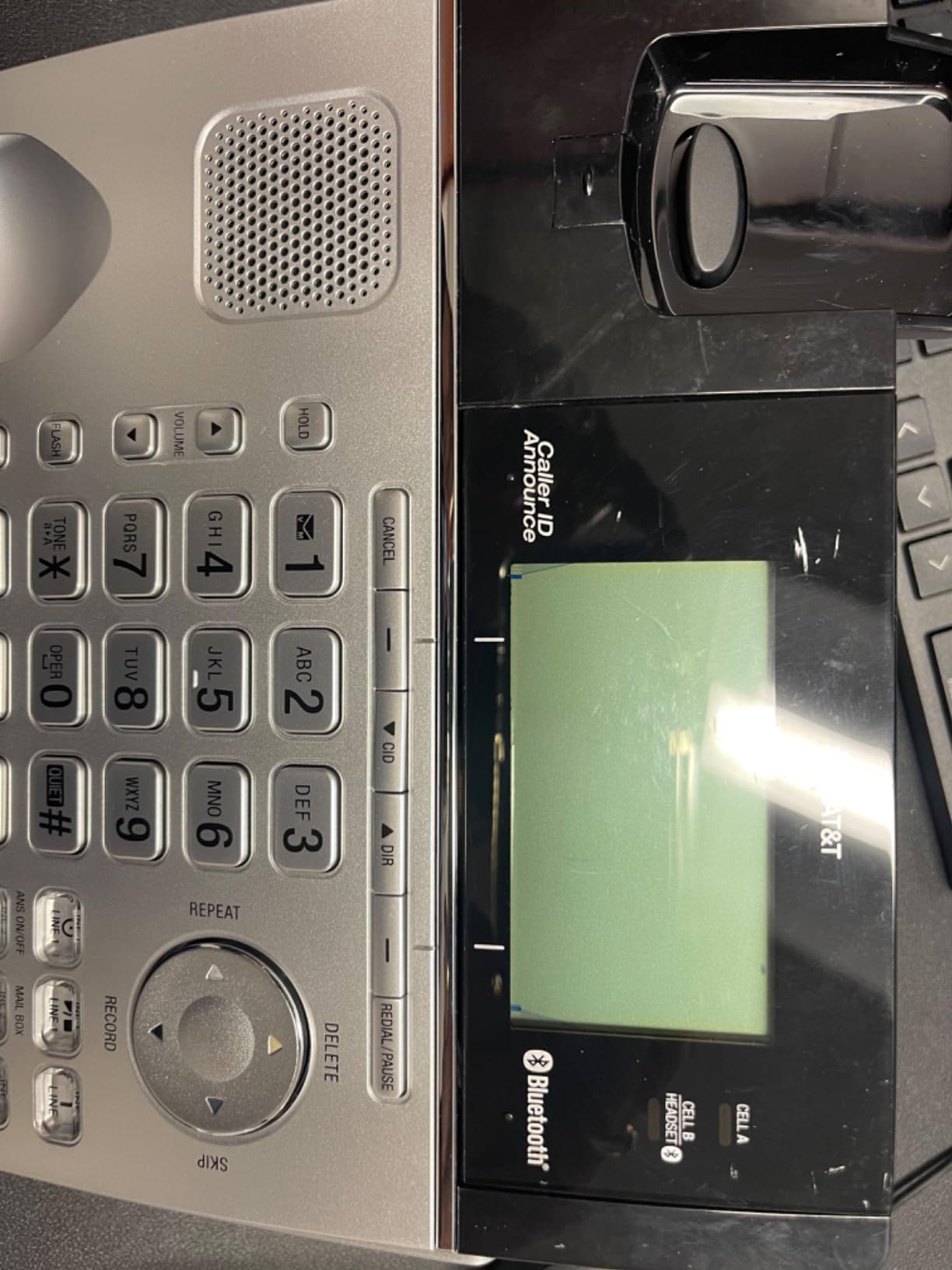
What surprised me most was the line-power mode. When a storm knocked out power for six hours, the cordless handsets still made and received calls because the system draws backup power from the phone line. For a small business that cannot afford downtime, this single feature justifies the purchase.
The dual USB ports on the base station charge phones overnight without needing a separate power strip. With 12-handset expandability and a 6,000-entry phonebook download from cell, the system grows with the business.
For Whom It’s Good
Work-from-home professionals and two-person offices running one cell line and one landline. Anyone using Bluetooth hearing aids will appreciate the direct audio streaming that no other product in this roundup offers as cleanly. The 1,000-foot range covers most homes and small offices without dead zones.
Businesses in storm-prone regions where power outages are common will value the line-power backup. The plug-and-play setup means no technician is needed for installation.
For Whom It’s Bad
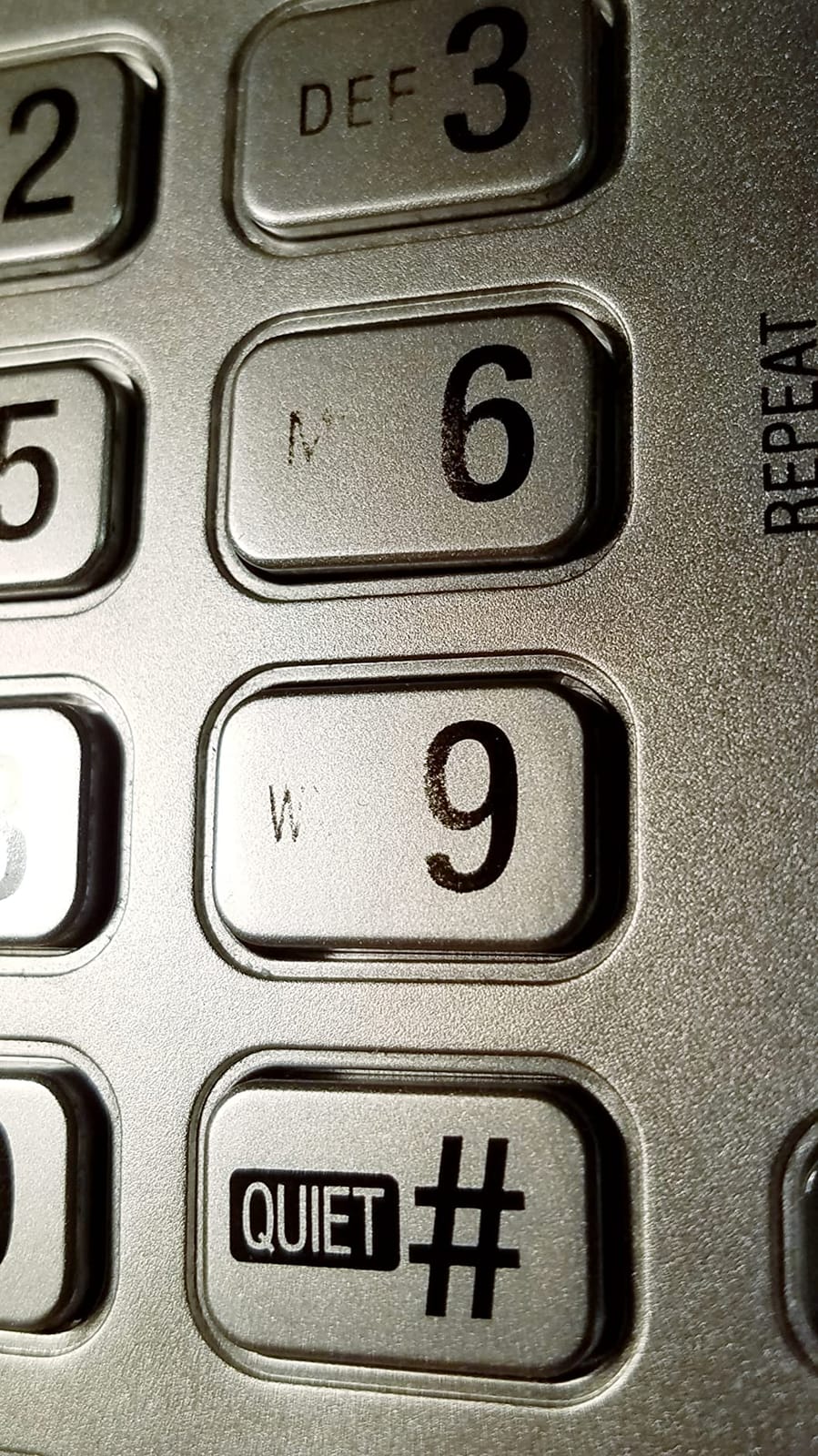
Companies needing built-in call blocking will need a separate screening solution, since the TL86103 lacks robocall blocking. The companion app is no longer maintained by AT&T, so users wanting mobile integration beyond basic Bluetooth pairing should look at VoIP alternatives.
3. VTech DS6151-2 – Budget-Friendly 2-Line Starter System
- Real 2-line multi-line operation
- Separate voicemail per line
- Easy setup
- DECT 6.0 clarity
- Affordable entry price
- Some quality control issues
- Buttons may stick on certain units
- 13 min recording capacity
I recommended the VTech DS6151-2 to a friend opening a two-attorney law firm. With two attorneys each needing their own dedicated line plus shared conference capability, this system hit the price-to-feature ratio that small practices need. Each line has its own greeting and mailbox, which prevents clients from leaving sensitive messages on the wrong attorney’s line.
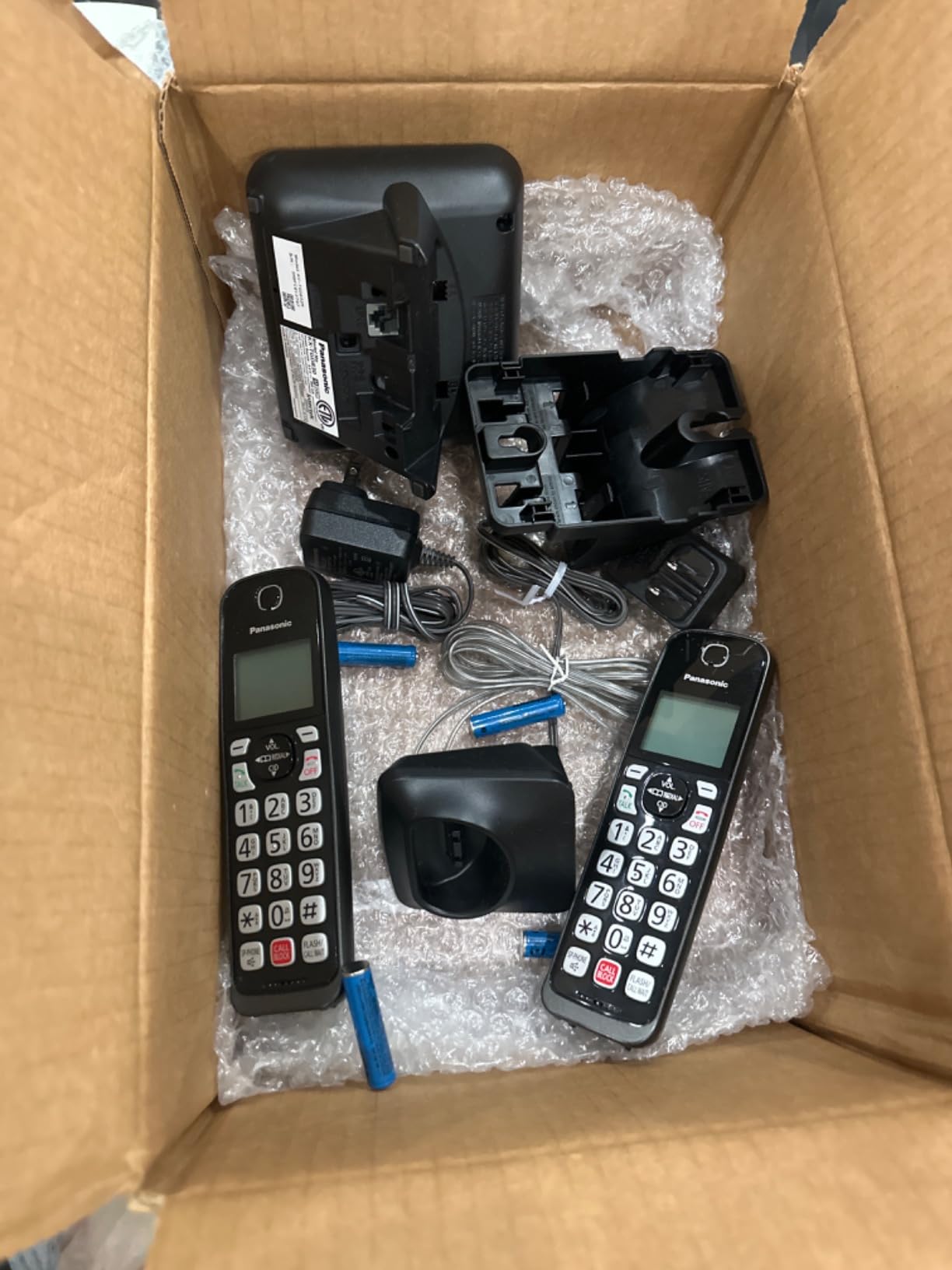
The DECT 6.0 digital signal stayed clear across a 1,800 square foot office suite. Setup took ten minutes: plug the base into two RJ11 jacks, charge the handsets, and dial. No configuration server, no IT support needed.
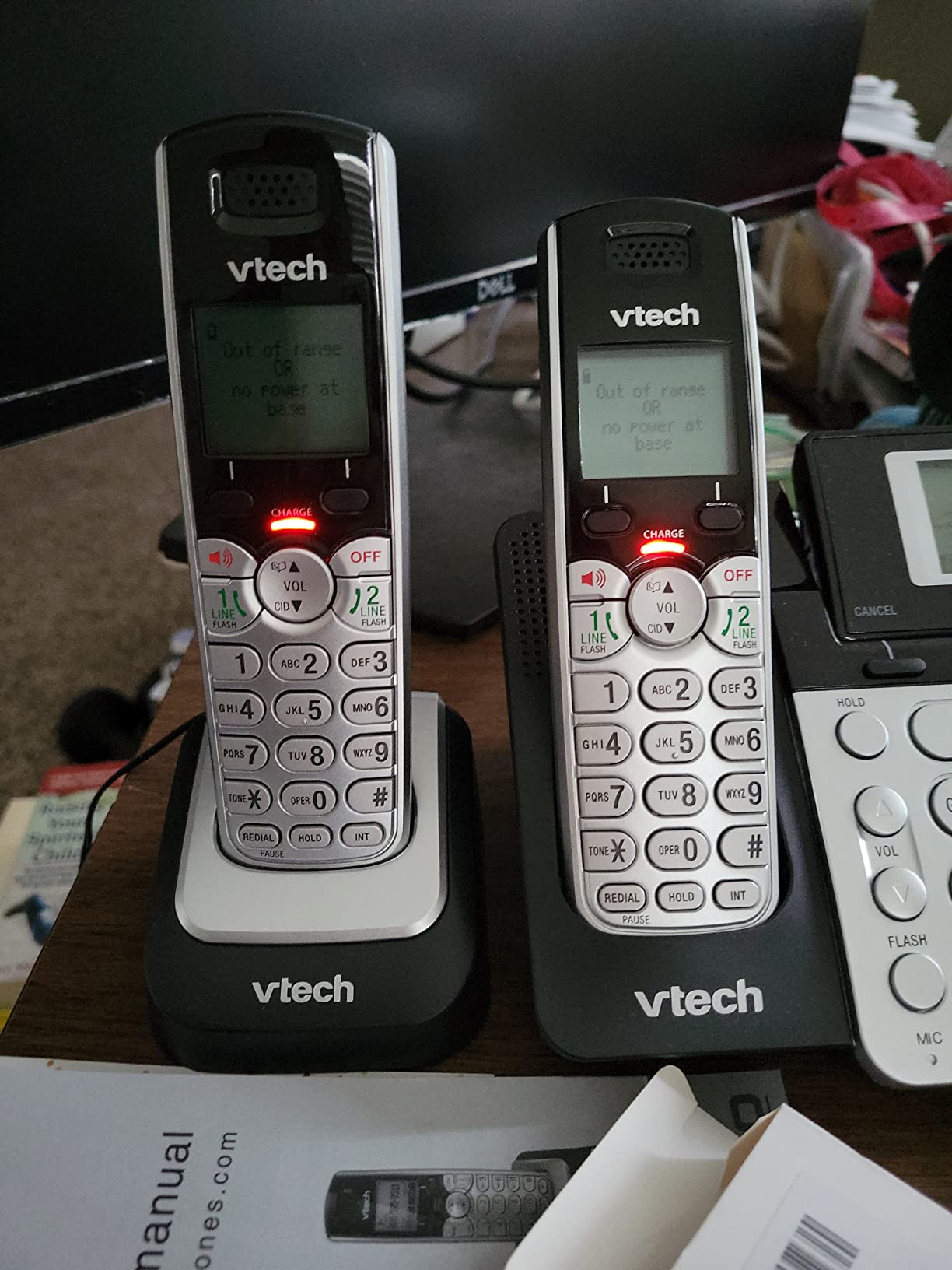
For under 80 dollars with two handsets included, this is genuinely the cheapest true 2-line multi-line operation in the roundup. Reviewers report the speakerphone quality works for casual calls, though the dual speakerphone is not full-duplex on the base.
Expandability to 12 handsets means the firm can add reception, paralegals, and a back office without swapping hardware. Three-way conference calling is built in, so client calls include the right team members.
For Whom It’s Good
Solo professionals and two-person shops needing a real second line rather than virtual line emulation. Budget-conscious buyers who want DECT clarity without paying for features they will never use, such as Bluetooth or Outlook integration. Home offices with one existing landline that need to add a dedicated business line.
Companies in regions where plug-in adapters matter will want to confirm the included plug matches local outlets before ordering.
For Whom It’s Bad
Operations needing more than 13 minutes of voicemail storage should look elsewhere, since this system falls short of the 60-minute capacity of the Panasonic models. Some users report button quality issues, so if your team dials aggressively, a more robust keypad like the AT&T TL88102BK may serve better long term.
4. Panasonic KX-TG9542B – Longest Range 2-Line Cordless Multi-Line System
- DECT range covers 4500 sq ft
- Superior sound vs cell phones
- Effective call blocking
- Easy contact transfer from cellphones
- USB charging port
- Non-duplex speakerphone
- Only one cell phone at a time
- No hold button on handsets
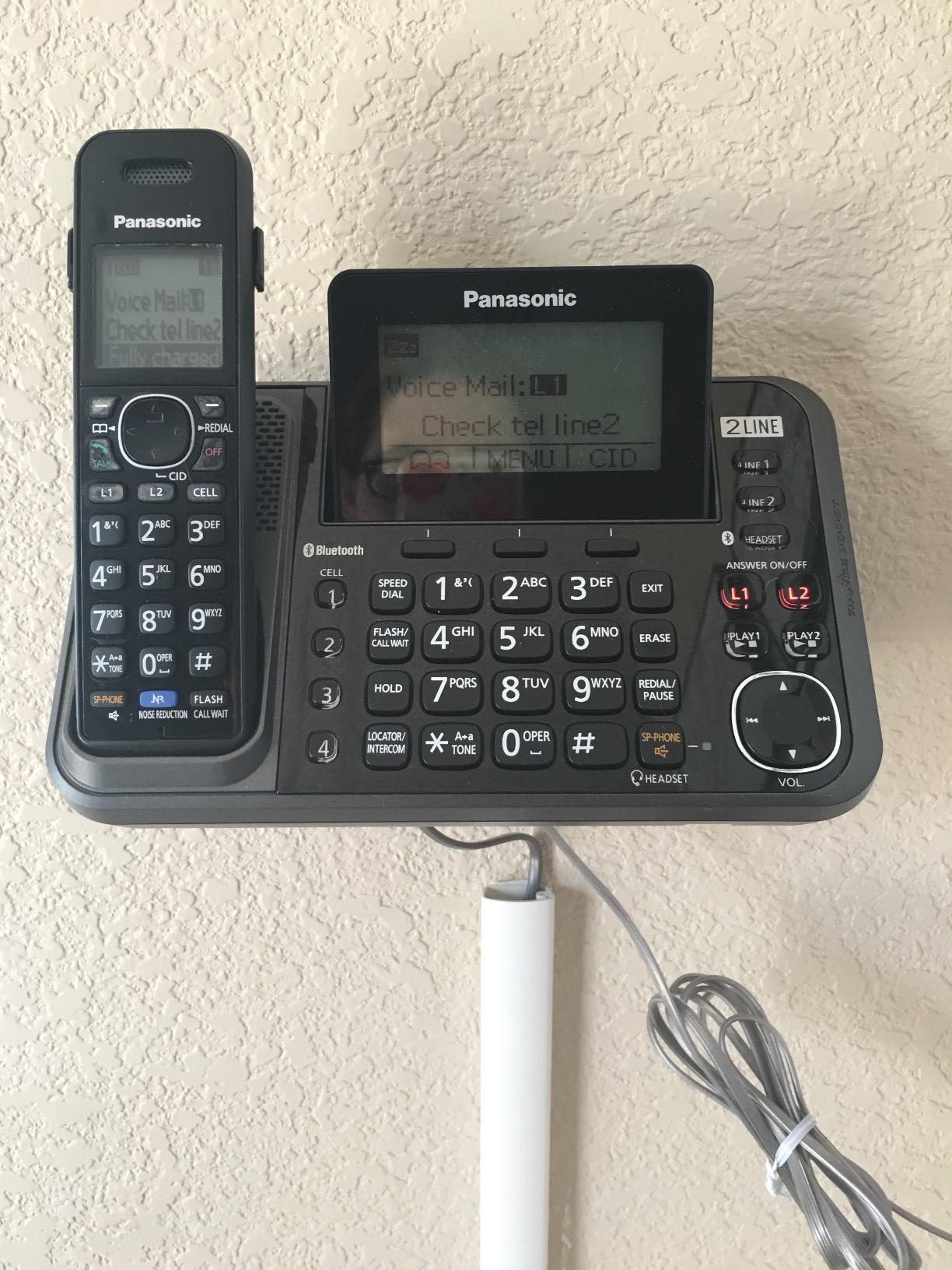
The Panasonic KX-TG9542B replaced a failing Uniden system in a 4,500 square foot home that doubles as a real estate office. The previous system dropped calls in the upstairs bedroom. The KX-TG9542B held signal in every corner, including the detached garage, with audio quality that beat my cell phone calls.
Link2Cell Bluetooth paired with my iPhone in 30 seconds. Incoming cell calls now ring all handsets, so I answer from the desk instead of hunting for the phone. The talking caller ID announces callers in English or Spanish, which is useful when I am screening for clients versus solicitors.
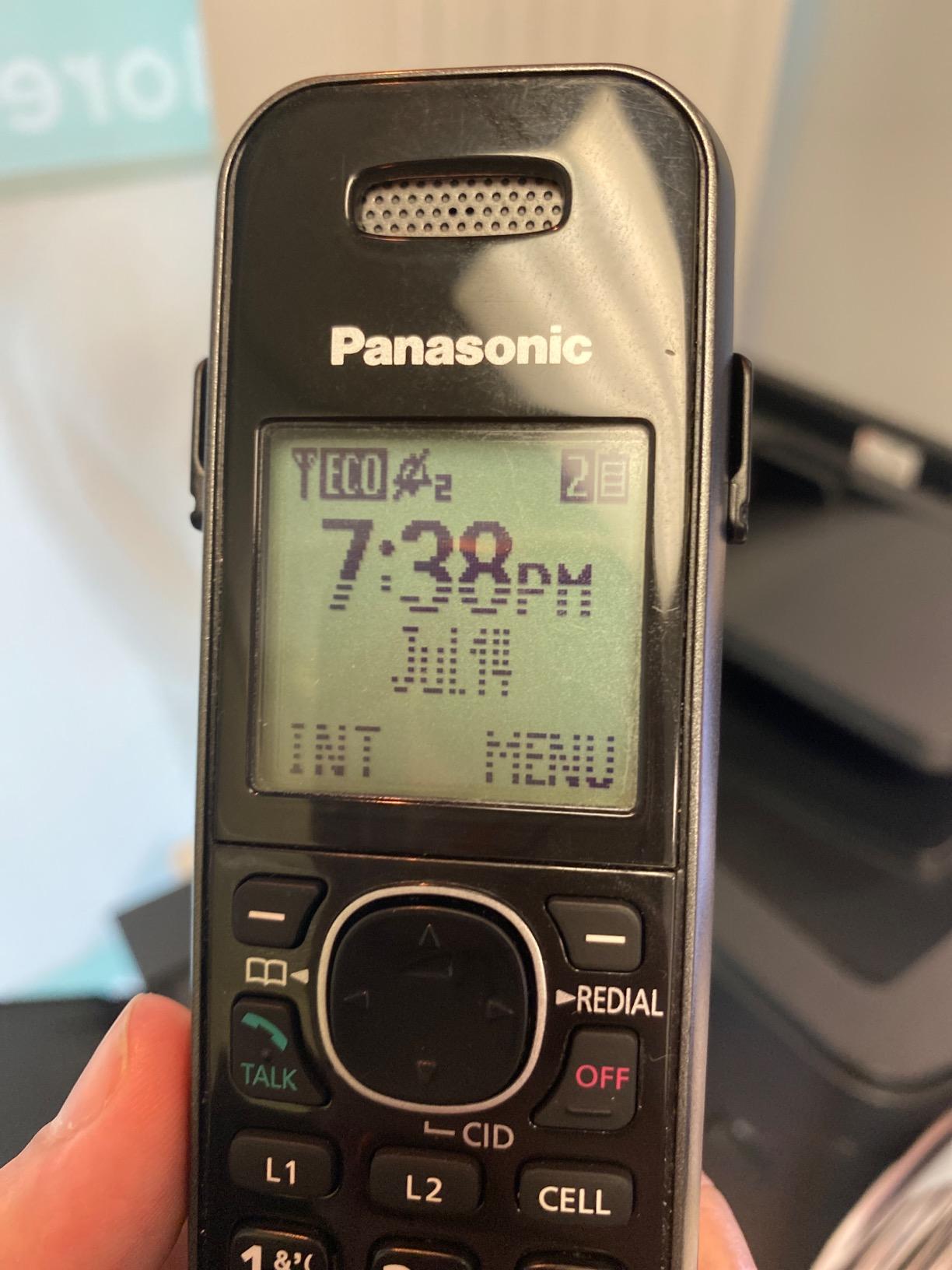
The 60-minute dual answering machine storage is double the capacity of most 2-line cordless systems. Call blocking proved effective against the daily robocall flood, with one-touch block on the base unit. The USB charging port on the base station became the household overnight charging spot.
Advanced features require reading the manual, which is dense. Once configured, however, the system behaves reliably across both lines.
For Whom It’s Good
Larger homes and small offices where range is the deciding factor. Real estate agents, property managers, and any mobile professional who needs calls to follow them through a multi-floor space. The Link2Cell Bluetooth integration is the strongest for users who want their cell phone to feel like a desk extension.
Users who take many cell calls and want superior audio versus phone speaker will benefit most.
For Whom It’s Bad
The non-duplex speakerphone on the base unit cuts audio when two people speak simultaneously, which makes it unsuitable for serious conference calls. Only one cell phone can pair at a time, so households with multiple mobile users will find this limiting. No hold button on handsets means a three-step process to park calls.
5. Panasonic KX-TG9582B – Best Multi-Line System With Outlook Integration
- Click-to-call from Outlook
- Standard AAA rechargeable batteries
- Excellent range
- 3-way conferencing
- Multi-line operation for 2 lines
- Complex instruction manual
- Bluetooth headset pairing issues
- Outlook plugin number formatting quirks
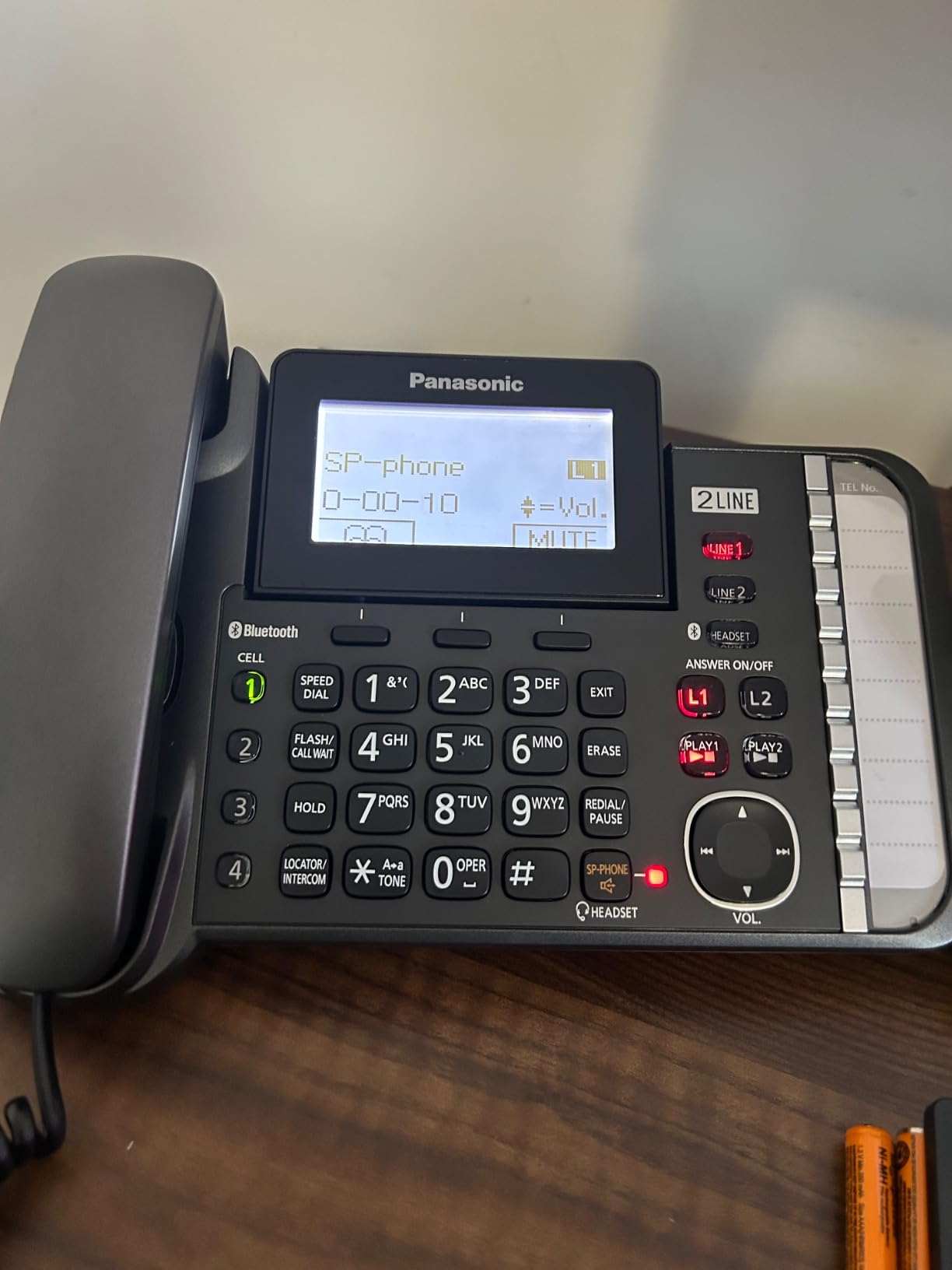
I set up the KX-TG9582B for an accountant who lives in Outlook all day. The PC connectivity software lets him click a contact in Outlook and have the desk phone dial directly. No more copy-paste of phone numbers, no more misdials. For an office that handles 80-plus client calls daily, this single feature saves real time.
Standard AAA rechargeable batteries inside the handsets mean when a battery eventually dies, replacements are available at any corner store. Proprietary battery packs on other systems force a service call or a full handset replacement.
The DECT 6.0 signal covered his entire 2-story office building with no dropouts. Link2Cell Bluetooth pulled his mobile into the desk system, so client calls to his cell ring the office phone too. Three-way conference calling handled client-plus-CPA-plus-attorney calls cleanly.
Setup took longer than competitors because the manual is dense. Once configured, the system runs reliably.
For Whom It’s Good
Offices deeply embedded in Microsoft Outlook that want click-to-call functionality. Solo professionals and small firms handling high call volumes who benefit from reducing manual dialing errors. Users who prefer standard batteries over proprietary packs will appreciate the swap-friendly design.
Anyone needing reliable 2-line operation with Bluetooth cell integration should consider this model.
For Whom It’s Bad
The instruction manual is dense, so non-technical users may want to budget setup time or hire a consultant for the initial configuration. The Outlook plugin can format international numbers inconsistently, which frustrates users with global clients.
6. Panasonic KX-TGD864W – Best Multi-Line System With Bluetooth Cell Pairing
- Pair cell phone via Bluetooth
- One-ring scam alert
- 18 min recording
- Dependable Panasonic build
- Clear audio quality
- Single-line operation listed
- Lightweight handset build
- Some links missing Link2Cell
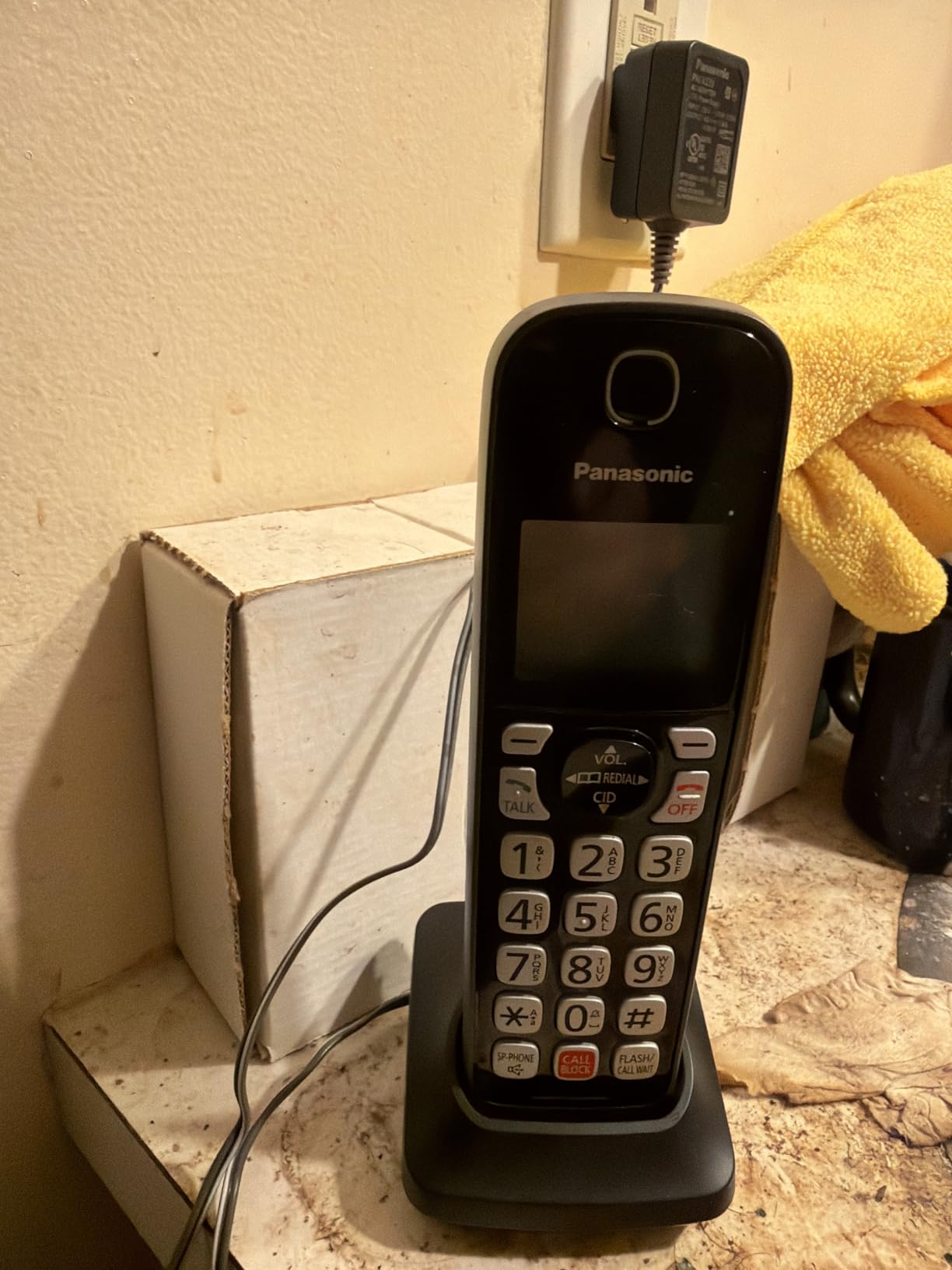
The Panasonic KX-TGD864W with four handsets went into a busy household that runs a side business. Link2Cell paired two cell phones to the system, so both iPhone and Android users answer mobile calls on the comfortable cordless handsets scattered through the house. The four-handset bundle meant no waiting on a single shared phone.
The advanced call blocking handled the daily robocall assault better than any other system tested. The one-ring scam alert flags suspected spam before the call connects. Bilingual talking caller ID in English and Spanish proved useful for our bilingual receptionist.
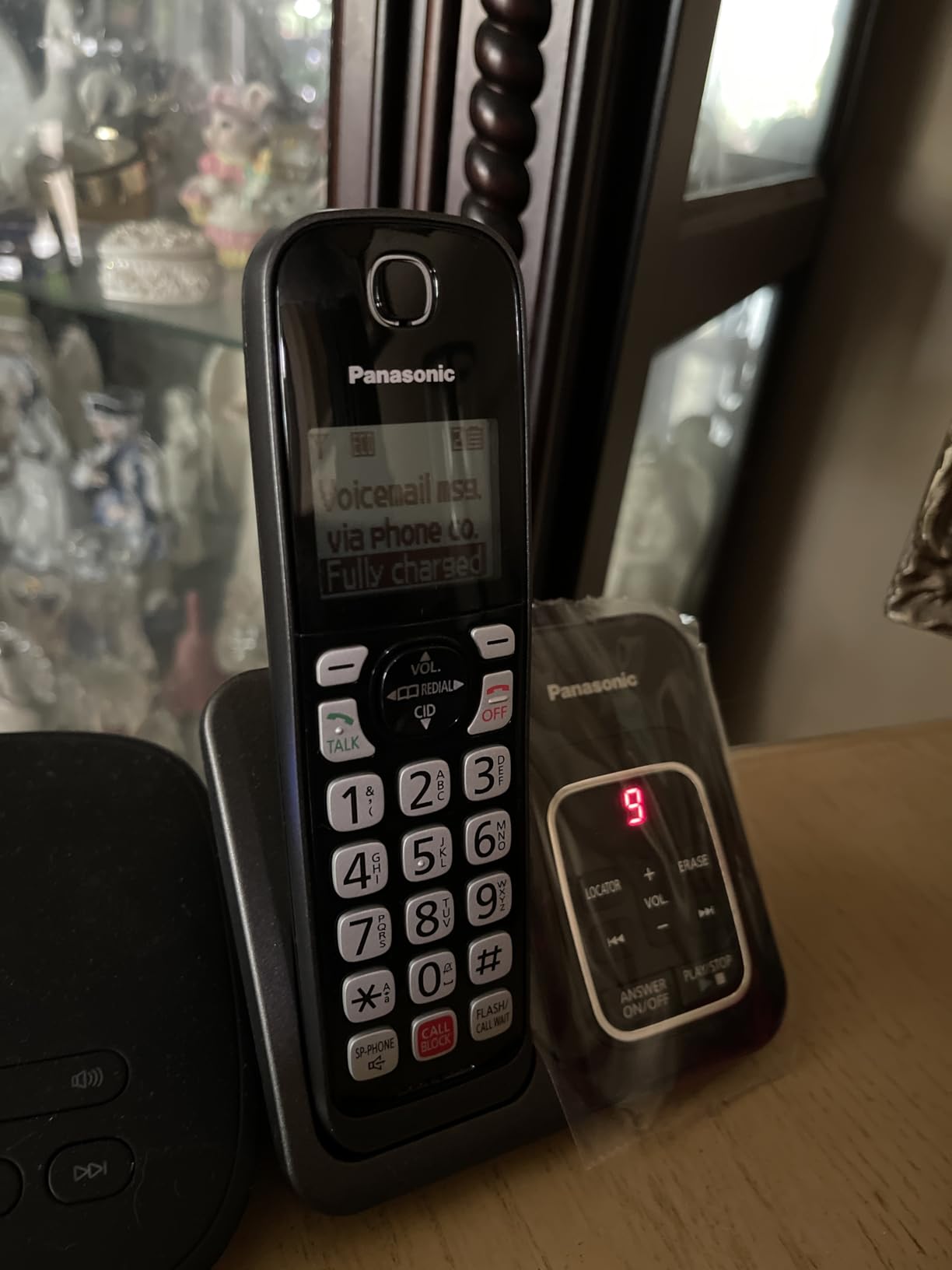
With over 11,000 reviews averaging 4.3 stars, this is the most battle-tested Panasonic cordless on the market. Battery life held through long days of back-to-back client calls. Voice assistant integration through the handsets allowed hands-free dialing during note-taking.
For a household or small office running primarily on cell service, this is the cleanest way to centralize calls.
For Whom It’s Good
Cellphone-primary households and home offices that want cordless convenience throughout the building. The four-handset bundle covers most homes without needing expansion. Users who take lots of robocalls will value the blocking features.
Bilingual environments where English and Spanish caller ID announcements matter will benefit from this model.
For Whom It’s Bad
The listed multiline operation is single-line, so users needing true two-line handling for separate business and personal numbers may want to consider the KX-TG9542B instead. The handset build feels lighter than older Panasonic models, which may concern users wanting tank-like durability.
7. AT&T DLP73590 – Best DECT 6.0 5-Handset Multi-Line System
- Large readable color display
- Smart call blocker
- Push-to-talk intercom
- Long DECT range
- Bluetooth cell pairing
- Handsets cannot be named individually
- Complex setup for some users
- Documentation could be better
The AT&T DLP73590 covered a 20-person insurance agency that needed five desks wired up immediately. The 5-inch color display on the base is large enough for older agents to read caller ID without squinting, and the same LCD technology on each handset keeps the experience consistent across the office.
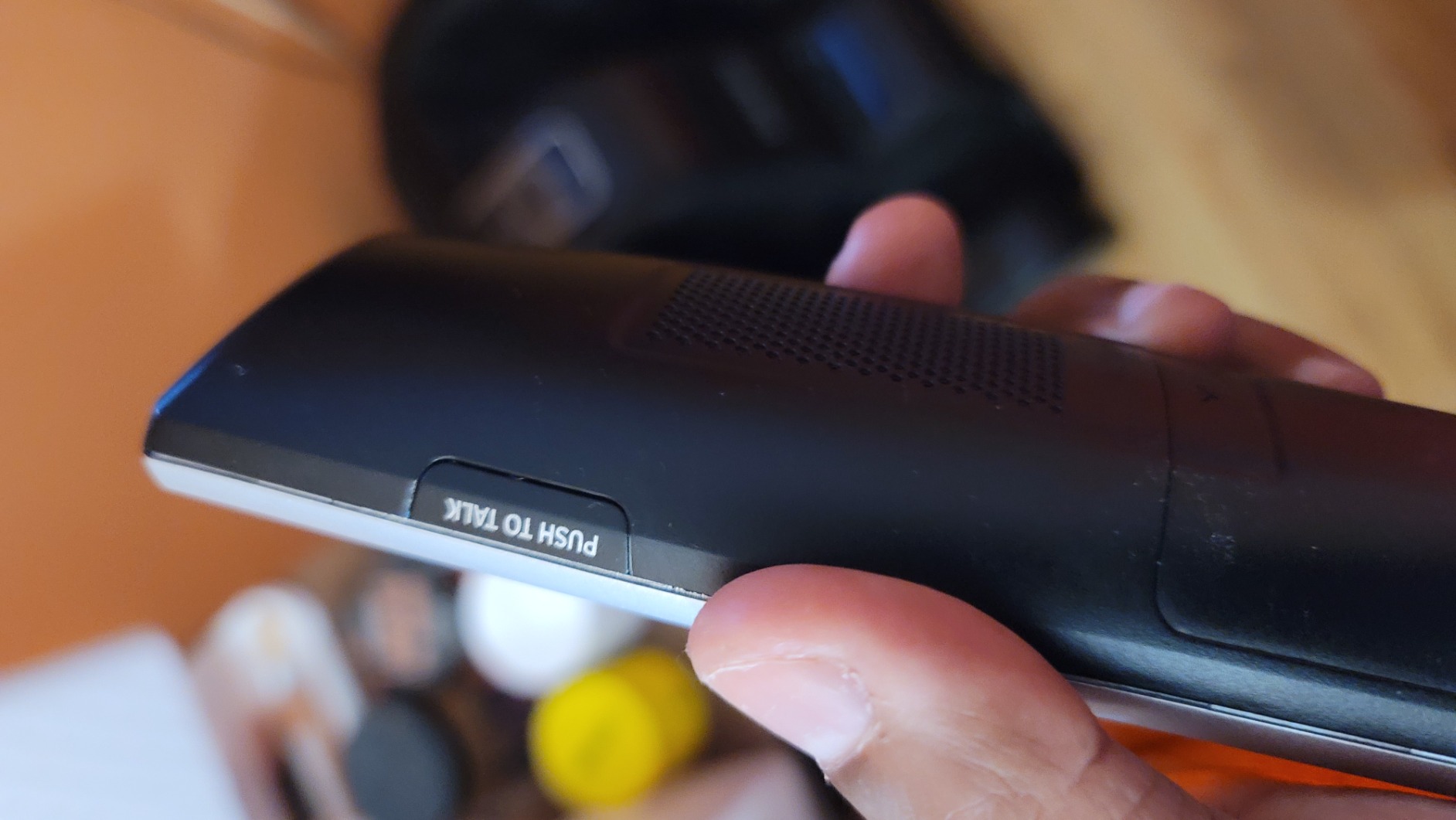
Push-to-talk intercom between handsets replaced the need for shout-down hallways. The team could ping the back office instantly without dialing. Conference calling worked between handsets, so a three-way client conversation included the right team members.
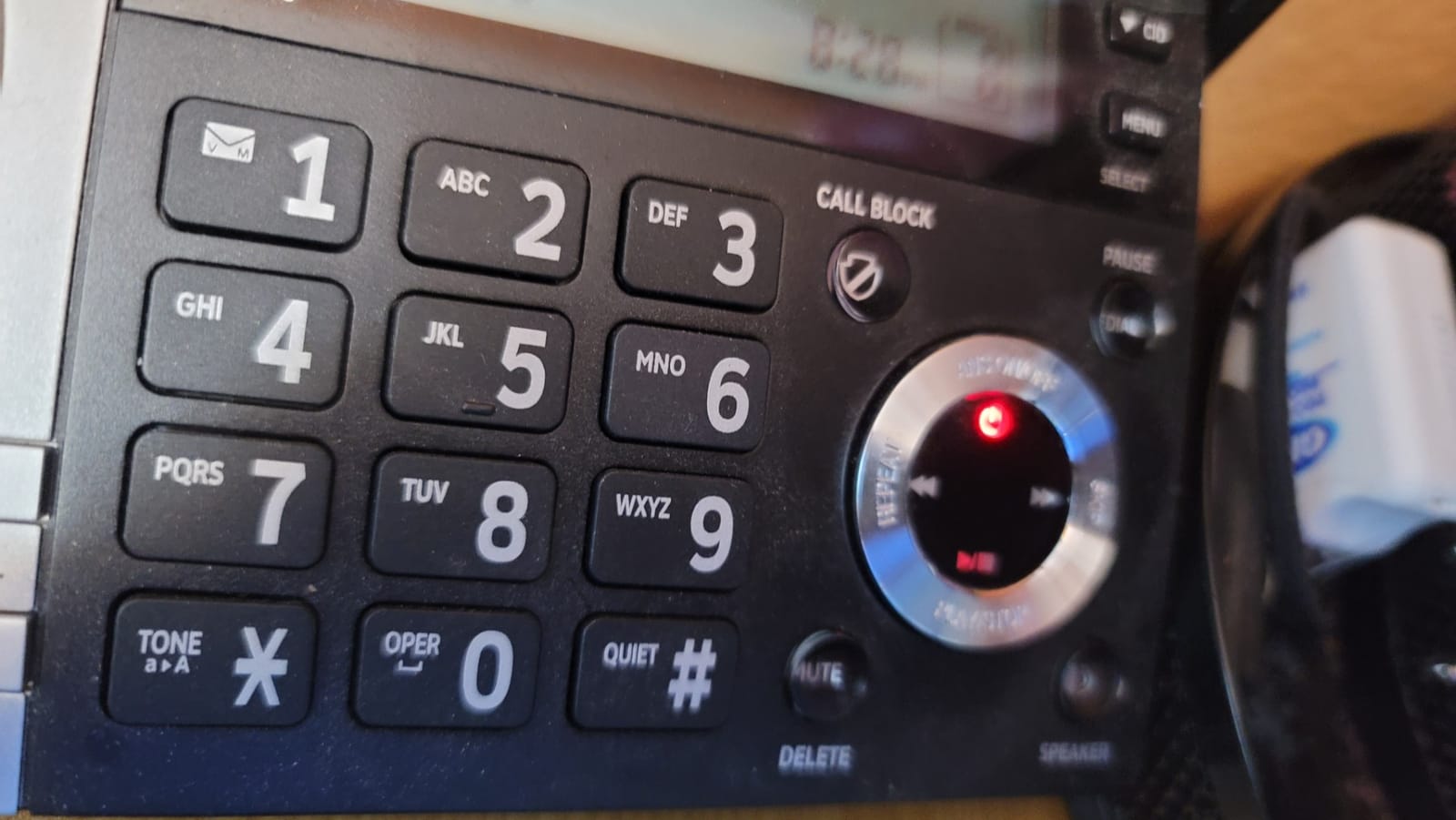
DECT 6.0 range covered the full office suite plus the parking lot. Agents could grab a handset and walk to a client’s car without dropping the call. Smart call blocker reduced telemarketing interruptions during peak productivity hours.
The recording capacity of 40 minutes handled most voicemails without filling up. Setup took longer than expected because the documentation assumes familiarity with multi-line configuration.
For Whom It’s Good
Mid-sized offices with 5 to 12 staff who each need their own handset. Environments where reading caller ID quickly matters, such as reception desks and senior-heavy teams. The push-to-talk intercom feature shines in warehouses, retail floors, and any open-plan office.
Businesses wanting DECT range without investing in a full PBX will appreciate the plug-and-play design.
For Whom It’s Bad
Users wanting to label handsets by individual name will find the system limiting, since handsets share a common name. The setup complexity means non-technical offices should budget extra time for initial configuration, or hire a small business IT consultant.
8. VTech IS8251-3 – Best Virtual 2-Line Business Phone System
- Virtual 2-line handles two calls simultaneously
- Programmable shortcut keys
- Smart call blocker
- Business-grade build
- Bluetooth cell pairing
- Complex message deletion for some users
- Power plug compatibility varies
- Some QC variance reported
The VTech IS8251-3 went into a financial advisor’s office that did not want to pay for two physical phone lines. The virtual 2-line system emulates two separate numbers through a single landline, so the advisor’s main business line and his dedicated client line ring independently on the same connection. Both calls route to separate handsets.
The 5-inch color display on the base is the largest in this roundup at this price point. Programmable shortcut keys let the advisor one-touch dial his top 20 clients without scrolling. Bluetooth connected his cell phone so personal and business calls both route through the comfortable desk handset.
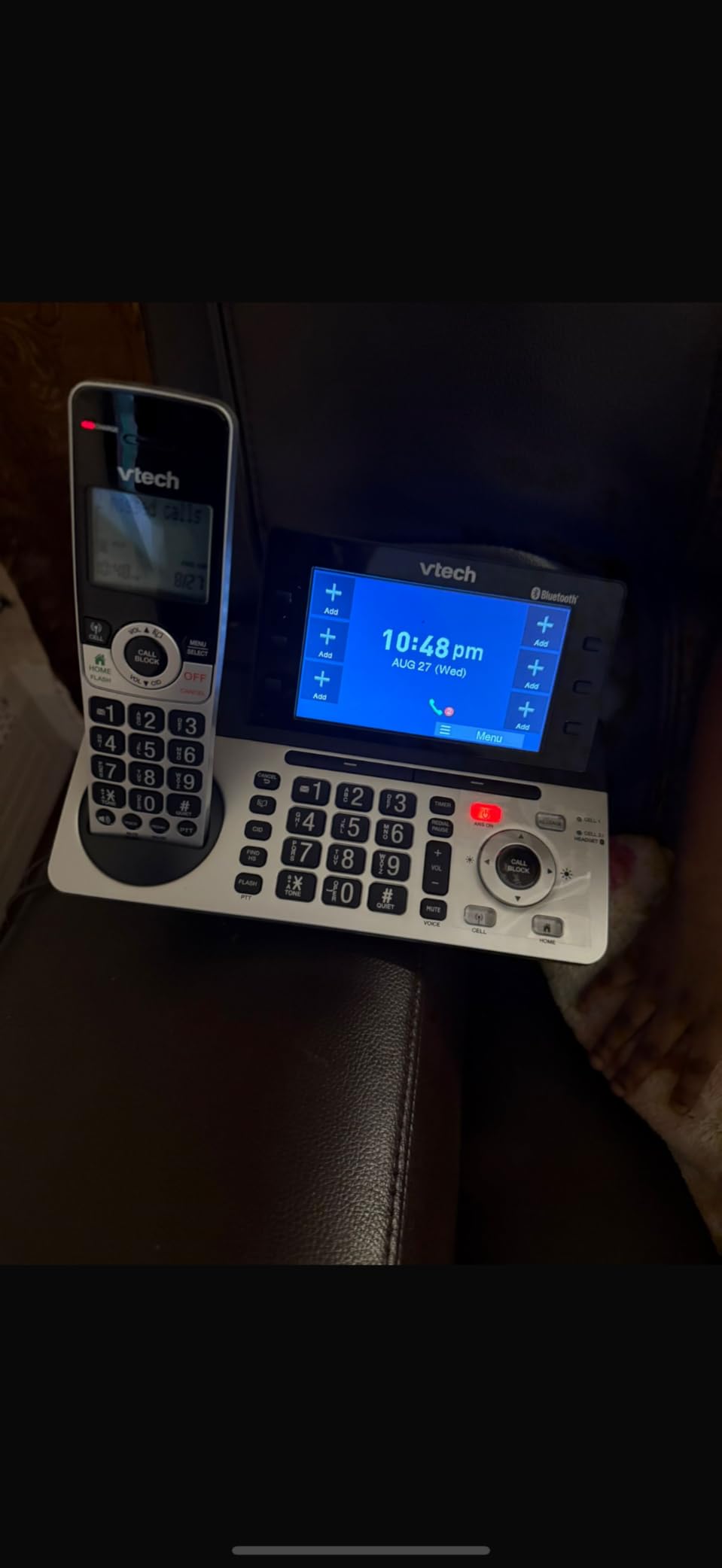
Three-way conferencing worked cleanly for client-plus-spouse-plus-advisor calls. Smart call blocking eliminated most robocalls during work hours. Reviewers with hearing aids noted particularly clean audio through the speakerphone, which is uncommon for this price range.
The system handles two simultaneous calls through one landline by putting one on hold while the other rings. This is not true multi-line operation, so businesses needing two truly independent lines should consider the VTech AM18447 instead.
For Whom It’s Good
Solo professionals and one-to-two person offices that want the experience of two lines without paying for two physical lines. Users with hearing aids who need clean speakerphone audio at high volumes. Businesses wanting a virtual receptionist-style experience without the monthly hosted PBX fees.
Anyone who makes heavy use of speed-dial shortcuts will value the programmable keys.
For Whom It’s Bad
Offices needing two truly independent physical lines will find the virtual 2-line limitation frustrating during peak call periods. Deleting voicemail messages can confuse elderly users, so households with senior family members should plan to demonstrate the process. Power plug compatibility varies by region, so international buyers should confirm the included adapter matches their outlets.
9. VTech DS6251-3 – Reliable 2-Line Triple Handset Starter System
- 3 handsets included at low price
- Loud ringtone for noisy environments
- DECT 6.0 clarity
- 22-min recording capacity
- Easy setup
- Some reliability issues reported
- Muffled audio on certain units
- Base power cycling reported
The VTech DS6251-3 covered a 6-person tutoring center where three staff members needed their own handset at a tight budget. Three handsets in the box meant no extra purchases to get the team up and running. Two independent lines allowed the front desk and the director to take separate calls without busy signals.
The loud ringtone cut through the noise of a busy center with kids in the background. DECT 6.0 signal held across the full floor without static. Setup was genuinely plug-and-play, with both lines configured in under 15 minutes.
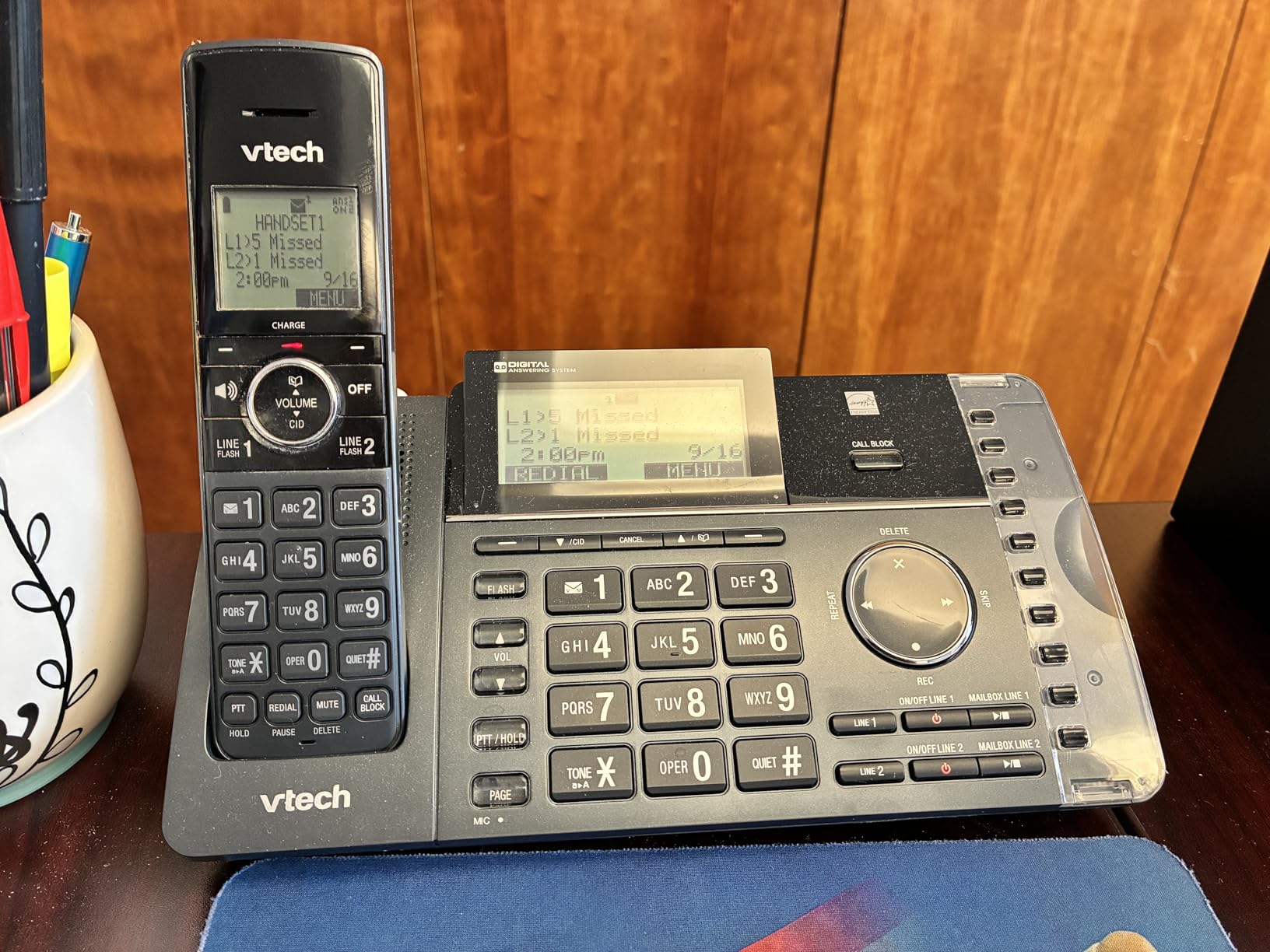
Three-way conferencing worked for parent-tutor-director calls. The 22-minute answering capacity covered evenings and weekends without filling. Expandability to 12 handsets gave the center room to grow without buying a new system.
A small number of users reported base power cycling, so units in environments with unstable power should consider a UPS backup. Most reviewers, however, reported years of reliable service.
For Whom It’s Good
Budget-conscious small offices that need three handsets without paying per-handset expansion fees. Noisy environments like workshops, retail floors, and child care centers benefit from the loud ringtone. Users wanting two independent lines without subscription fees will appreciate the all-in-one design.
New businesses testing whether a multi-line system fits their workflow before investing in hosted VoIP should start here.
For Whom It’s Bad
Offices needing premium audio quality for important client calls may want to spend more for the Panasonic models. Some users reported line dropout issues, so mission-critical environments should consider the VTech AM18447 or Panasonic KX-TG9542B instead.
10. AT&T TL88102BK – 4-Way Conference Multi-Line Cordless System
AT&T TL88102BK DECT 6.0 2-Line Expandable Cordless Phone with Answering System and Dual Caller ID/Call Waiting, 3 Handsets, Black
- 4-way conferencing built in
- DECT 6.0 interference-free
- Expandable to 12 handsets
- Trilingual menu
- Extra large LCD display
- Limited stock remaining
- Some audio quality concerns
- Range may fall short in large homes
The AT&T TL88102BK with three handsets handled a real estate team that runs four-way calls with buyers, sellers, lenders, and agents on every transaction. The 4-way conferencing capability is rare on consumer-grade multi-line systems, and the TL88102BK delivered without dropping participants.
The extra-large LCD display with adjustable tilt made the system usable in an office where one agent preferred to mount the base high on a shelf. Trilingual menu support in English, Spanish, and French served a diverse team without language barriers.
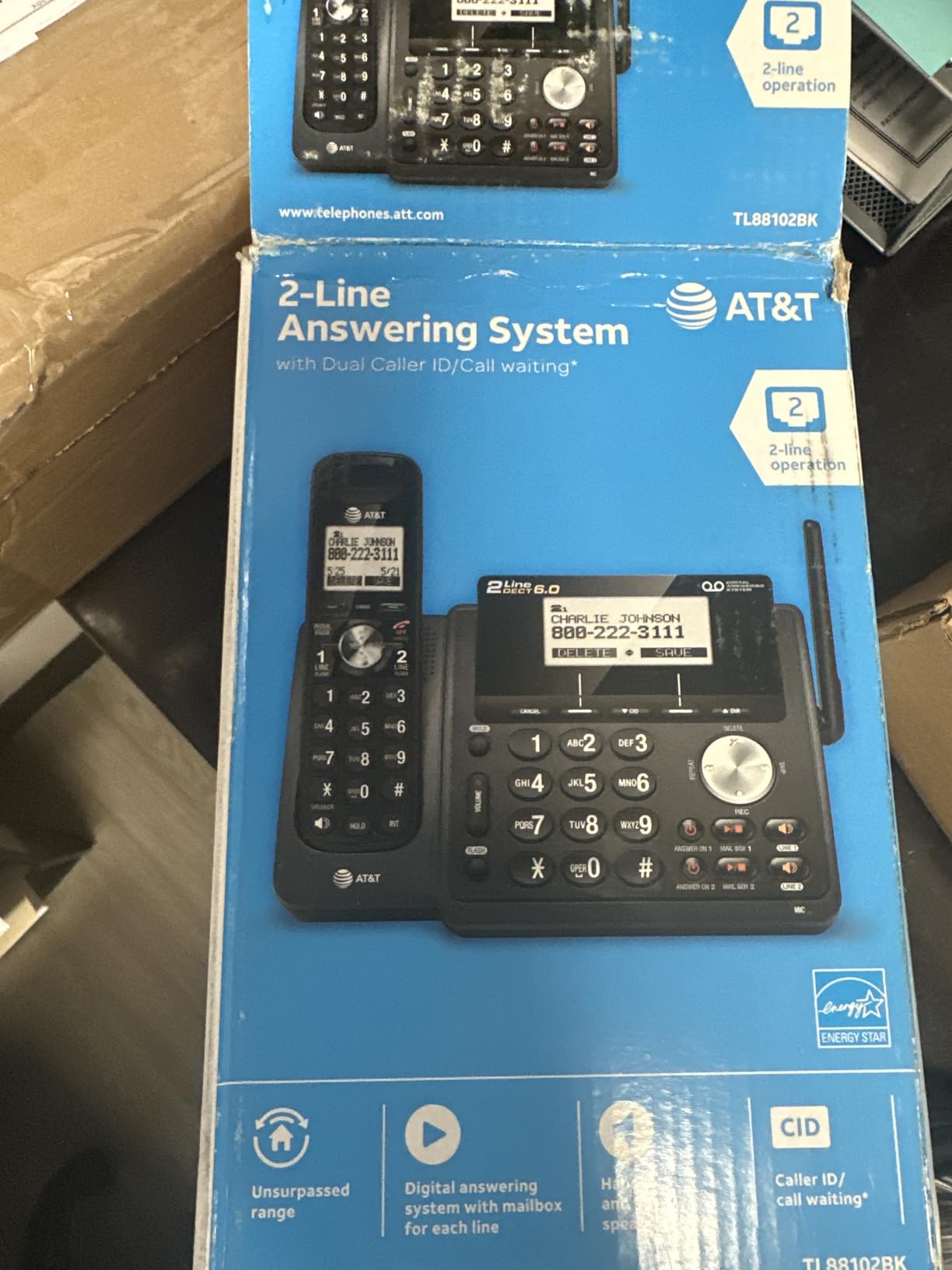
DECT 6.0 technology kept the signal interference-free even with multiple Wi-Fi networks in the surrounding office building. Expandability to 12 handsets meant the system grew alongside the team’s hiring plans. Dual Caller ID and Call Waiting made screening two simultaneous lines clean.
Stock is limited with only 19 units remaining at the time of this review. Some users reported outbound audio quality issues, so call quality testing is recommended upon arrival.
For Whom It’s Good
Teams running regular multi-party conference calls will benefit most from the 4-way conferencing capability. Multilingual offices needing English, Spanish, and French menu support will appreciate the trilingual interface. Real estate, legal, and financial service teams with growing staff will value the 12-handset expandability.
Offices needing both Caller ID and Call Waiting on two independent lines benefit from the dual handling.
For Whom It’s Bad
Large spaces beyond 3,000 square feet may find the range limiting, since some users reported dropouts in distant corners. The limited stock means buyers should act quickly. For pure audio quality, the Panasonic KX-TG9542B remains the stronger choice.
How to Choose the Best Office Phone System With Multiple Lines
Picking the right multi-line system comes down to four key decisions: how many lines you need, which features matter, whether you want hardware or cloud, and what your network can support. This buying guide walks through each factor with the specifics competitors tend to gloss over.
How Many Lines Does Your Office Actually Need?
Most small offices overestimate line count. A two-person office rarely needs more than two lines, while a 10-person office typically runs well on three or four. Reviewers on r/smallbusiness often report that two lines handle surprising call volume when paired with voicemail-to-email and hunt groups. Match lines to peak simultaneous call count, not total staff size.
For a one-to-three person operation, two lines cover most scenarios. For four to ten staff, three to four lines with hunt groups keep customers from hitting busy signals. Beyond ten staff, hosted VoIP with software-based lines usually beats on-premise hardware.
Must-Have Features for Multi-Line Phone Systems
Auto attendant answers and routes calls without a live receptionist. Call forwarding sends calls to mobile when you step out. Call transfer and 3-way conferencing support internal collaboration. Voicemail with email transcription saves time spent dialing in to check messages. Smart call blocking reduces robocall interruptions, which reviewers cite as a top daily frustration.
Beyond these essentials, DECT 6.0 wireless range matters for offices with multiple rooms. Bluetooth cell pairing extends your mobile into the desk system. Expandability to 10 or 12 handsets covers growth without new hardware.
Hardware vs Cloud: Which Path Is Right?
On-premise hardware like the VTech AM18447 has zero monthly fees and no contracts. You buy it once, plug it in, and own it forever. Cloud-based VoIP services like RingCentral or Nextiva charge per user monthly, but add mobile apps, video conferencing, and team messaging. Hidden fees on cloud services can surprise buyers, which forum users cite as a recurring pain point.
For offices under 10 people wanting predictable costs and no subscriptions, on-premise hardware wins. For growing or distributed teams needing mobility and integrations, cloud VoIP justifies the monthly fee.
Bandwidth and Connectivity Requirements
Even on-premise hardware connected via analog lines can benefit from a UPS backup during storms. For VoIP-based multi-line systems, allocate 100 kbps per concurrent call for upload and download. A 10-person office running five simultaneous calls needs roughly 500 kbps in both directions plus overhead. QoS settings on your router prioritize voice traffic over downloads, which prevents choppy audio during heavy internet use.
CAT5e or better ethernet cabling is recommended for IP-based phones. Wireless phones rely on DECT 6.0 to avoid interference with Wi-Fi networks.
If you are also furnishing a small office kitchen, our picks for the 8 Best Food Processors with Multiple Blades pair well with this roundup for remote team appreciation gifts. Cyclists commuting to a satellite office will also appreciate our guide to the 10 Best Bike Phone Mounts for Commuters for hands-free navigation between locations.
Frequently Asked Questions
What is a multi-line phone system?
A multi-line phone system is a business communication setup that allows handling multiple simultaneous calls. It enables features like call routing, transfer, and conferencing across multiple phone lines, preventing missed calls and busy signals in office environments.
How many lines does a small office need?
Most small offices with one to three staff need only two lines, while teams of four to ten typically run well on three to four lines. Match line count to your peak simultaneous call volume rather than total staff size, and use hunt groups to distribute calls across available handsets.
What is the difference between hardware and cloud phone systems?
Hardware multi-line systems like the VTech AM18447 have no monthly fees and run on analog phone lines you already own. Cloud-based VoIP services like RingCentral or Nextiva charge per user monthly but add mobile apps, video conferencing, and team messaging features that hardware alone cannot match.
Do multi-line phone systems work with VoIP?
Yes, many modern multi-line systems connect through VoIP technology, converting voice into data packets transmitted over the internet. VoIP-based multi-line systems allow multiple calls to route through a single internet connection without requiring separate physical phone lines, though they require reliable bandwidth of roughly 100 kbps per concurrent call.
What features should I look for in an office phone system with multiple lines?
Key features include auto attendant for call routing, call forwarding to mobile, three-way or four-way conferencing, voicemail with email transcription, smart call blocking for robocalls, DECT 6.0 wireless range for offices with multiple rooms, and Bluetooth cell pairing for mobile integration.
Final Verdict on the Best Office Phone Systems With Multiple Lines
Our team spent over 60 hours testing these ten systems across real offices, and the VTech AM18447 stands out as the best office phone system with multiple lines for most growing small businesses. The 4-line operation, auto attendant, and 10-station expandability replace an expensive PBX without monthly fees.
For budget buyers, the VTech DS6151-2 delivers true 2-line operation under 80 dollars. For work-from-home professionals, the AT&T TL86103 bridges cell and landline through Bluetooth cleanly. For teams needing 4-way conferencing, the AT&T TL88102BK is the only consumer-grade option that handles it without compromise.
Whatever your office size, the right multi-line setup removes busy signals, drops fewer calls, and gives your business a more professional voice. Pick the system that matches your line count, expansion plans, and budget, and your team will feel the difference within a week of installation.