
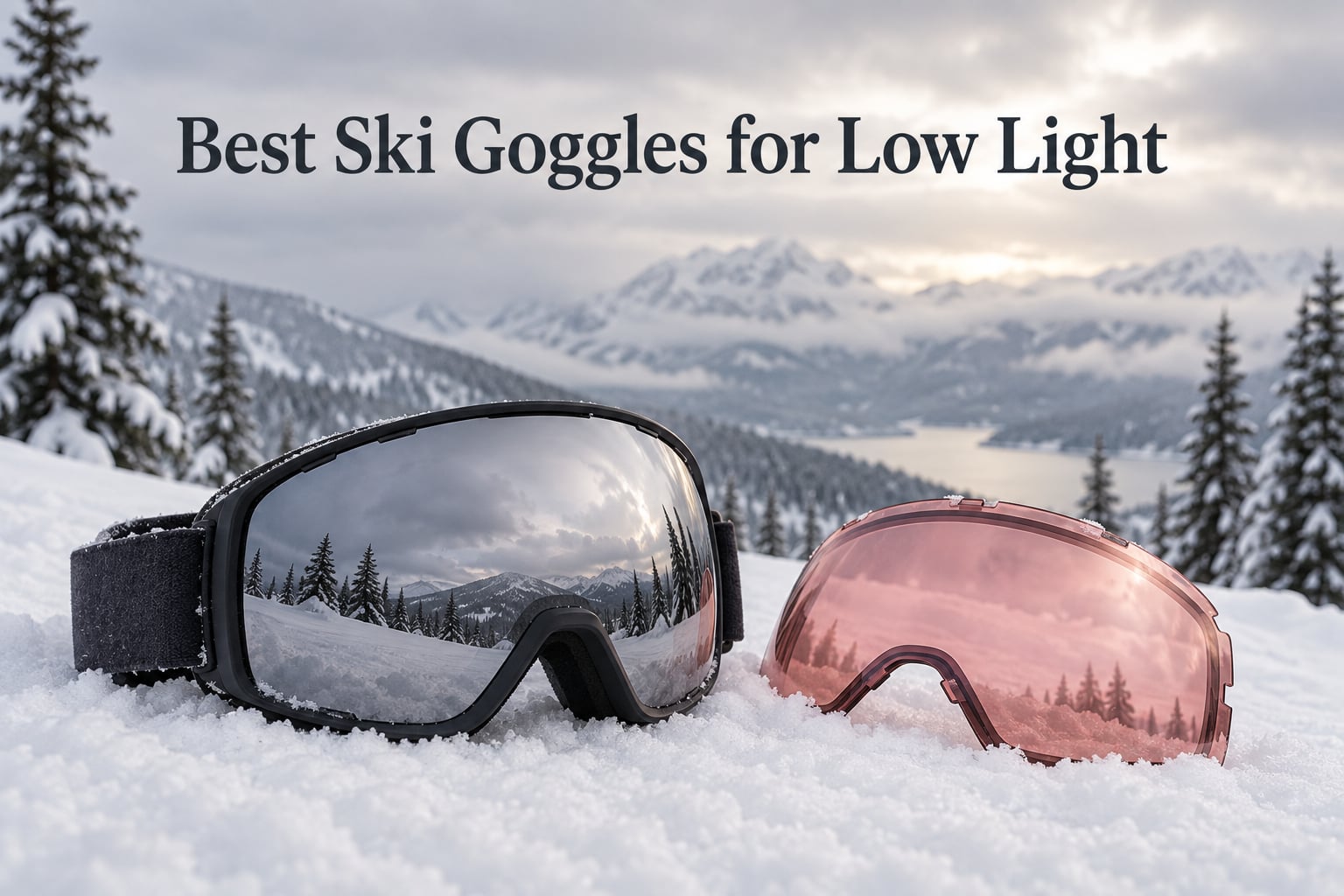
If you only read one number on a ski goggle listing, make it VLT, and for low light you want it high. Visible light transmission tells you how much of the light around you reaches your eyes, and on a flat, overcast or storm day anything under about 40 percent leaves you squinting into a white wall of snow. Rose, amber, yellow and pink tints in the 50 to 90 percent range are what restore contrast on days when terrain casts no shadows at all.
That is the honest problem with almost every goggle in this roundup: most of them ship with a dark sun lens fitted, because that is the lens the manufacturer expects you to use most often. A frame that looks fine in a product photo can be genuinely unpleasant on a socked-in afternoon. So the frame quality, the lens system and the low light story are three separate questions, and this guide scores all 12 pairs on the third one first.
We built the list around 12 snow goggles, comparing listed specifications, review volumes and the anti fog, fit and lens systems described by owners. The biggest single finding: the best ski goggles for low light are the ones that make it easy to put a high VLT lens in, either because a good low light lens is already in the box or because the swap system takes seconds. If you are shopping for optical gear for dark conditions in general, our guides to binoculars for low light and cameras for low light use the same transmission logic.
Every rating, review count and specification below comes from the product data, not from our estimates. Where a lens colour is not specified, we say so rather than guessing a percentage.
Top 3 Best Ski Goggles for Low Light

OutdoorMaster OTG
- OTG fit over prescription frames
- Triple-layer foam
- UV400 protection
- Helmet compatible

ZIONOR Lagopus B1
- Wide field of view
- True colour optics
- Anti-fog coating
- OTG and helmet compatible

Wildhorn Roca
- Magnetic swap in 60 seconds
- Spherical dual lens
- Triple-layer foam
- Anti-fog and anti-scratch
All 12 Low Light Ski Goggles at a Glance
The table below is the short version. A VLT column would be more useful than a price column here, so we have written the listed transmission where the manufacturer publishes one and said so plainly where they do not.
| Product | Specifications | Action |
|---|---|---|
| OutdoorMaster OTG Ski Goggles |
|
Check Latest Price |
| ZIONOR Lagopus B1 Ski Goggles |
|
Check Latest Price |
| Wildhorn Roca Ski Goggles |
|
Check Latest Price |
 findway OTG Ski Goggles findway OTG Ski Goggles |
|
Check Latest Price |
 EXP VISION OTG Interchangeable Foam Goggles EXP VISION OTG Interchangeable Foam Goggles |
|
Check Latest Price |
 EXP VISION EX5400 Ski Goggles EXP VISION EX5400 Ski Goggles |
|
Check Latest Price |
 Odoland Magnetic Ski Goggles Odoland Magnetic Ski Goggles |
|
Check Latest Price |
 SPOSUNE Ski Goggles SPOSUNE Ski Goggles |
|
Check Latest Price |
 ZIONOR X4 Magnetic Ski Goggles ZIONOR X4 Magnetic Ski Goggles |
|
Check Latest Price |
 OutdoorMaster PRO Ski Goggles OutdoorMaster PRO Ski Goggles |
|
Check Latest Price |
 Snowalva Ski Goggles Snowalva Ski Goggles |
|
Check Latest Price |
 Giro Cruz Ski Goggles Giro Cruz Ski Goggles |
|
Check Latest Price |
1. OutdoorMaster OTG Ski Goggles – Our Overall Low Light Buy
OutdoorMaster OTG Ski Goggles, Snowboard Goggles for Men, Women & Youth
- Excellent OTG fit over prescription glasses
- Reported fog-free riding in heavy snowfall
- Triple-layer foam comfort
- Adjustable strap fits most helmets
- 10686 reviews from owners
- Listed lens is a dark sun lens at 10 percent VLT
- Ridged frame sides are hard to clear of snow
- Can feel dark in shadowed sections
This is the pair we keep coming back to, and the reason is unglamorous: owners report it fogging less than anything else in this list, including on storm days, and an over-the-glasses fit that actually clears a pair of prescription frames. The frame is a flexible TPU shell with triple-layer foam and a 100 g weight, and the adjustable strap takes most helmets without fuss.
The catch is the lens. The listed configuration is a grey lens at 10 percent VLT, which is a bright sun lens. On flat light you would be running this frame with a high transmission lens instead, and the product data does not publish what that option costs or how many tint choices ship in the box. That makes this a frame-first recommendation rather than a ready-to-ride low light kit.
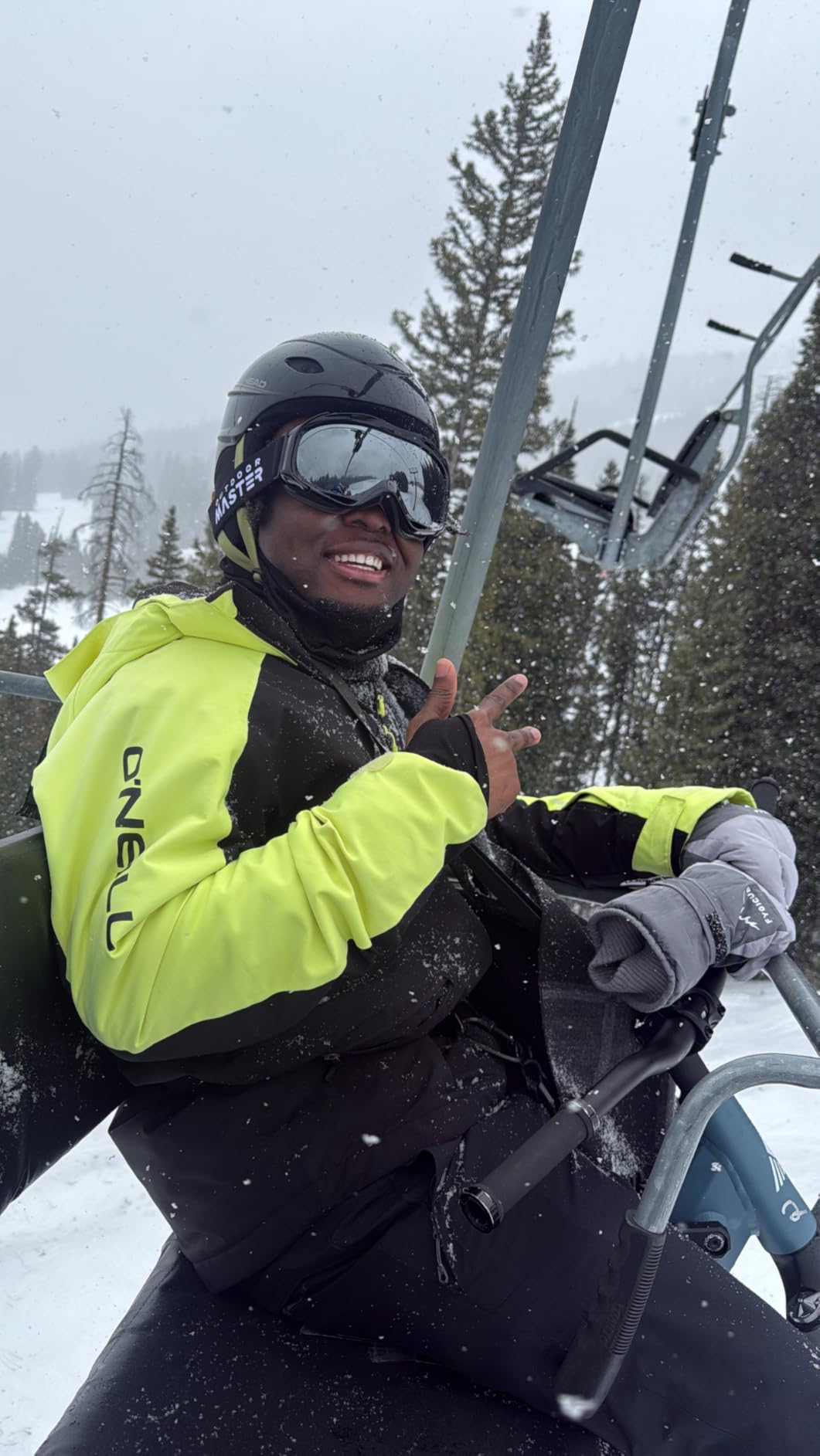
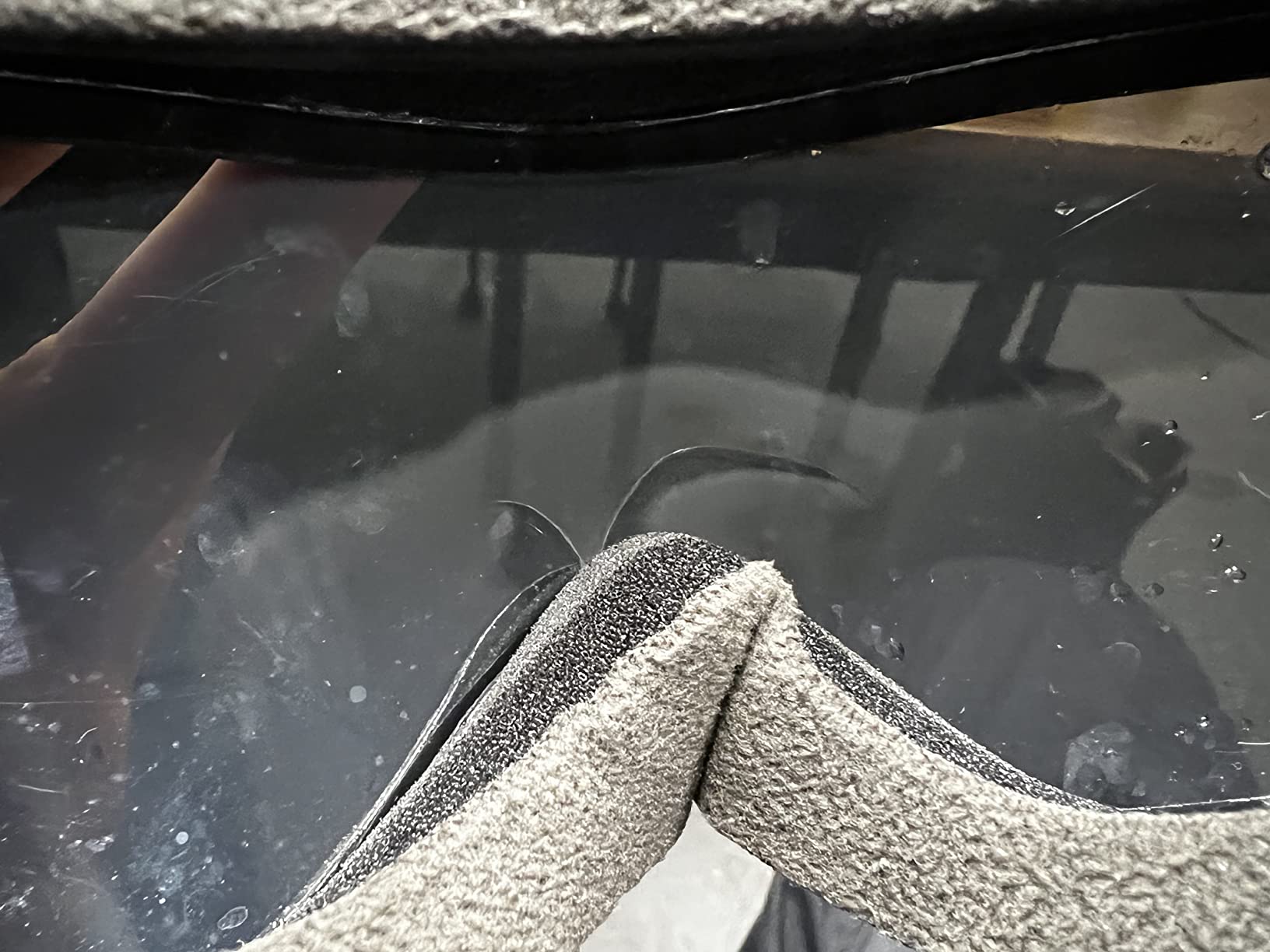
What is genuinely strong here is the anti fog story. The inner coating is a hydrophilic anti fog layer paired with UV400 protection and a scratch resistant outer coating, and owner reviews describe visibility holding up across multiple seasons. For storm days, when fog is the thing that actually ends your day, that matters more than a slightly dark tint.
Owners also call out how well it sits over glasses, which is the other thing low light riders care about. The 400UV protection and polycarbonate lens construction are standard across this price range, but combined with a 1 year warranty this is a low risk way to start.
How it behaves on a storm day
Storm riding is where this frame earns its place. High snow content, near constant moisture and low contrast are the conditions that punish weak foam and cheap coatings, and owner reports repeatedly describe riding through heavy snowfall without clearing the lens.
The one recurring complaint is snow build-up on the ridged sides of the frame, which is fiddly to clear with a glove on. Keep a soft brush in your pocket and it stops being an issue.
What to check before you ride in flat light
Ask the seller exactly which VLT options are available for this frame, and confirm whether a 50 to 70 percent lens is offered. If they can confirm a rose or amber high transmission lens fits, this becomes a genuinely complete low light setup on the cheapest frame here.
Size is the other thing. It is an OTG frame, so the internal volume is generous by design, which suits larger faces and helmet use and can feel loose without a helmet on a small head.
2. ZIONOR Lagopus B1 Ski Goggles – Best Value Pick
- Wide field of view
- True colour optics per owners
- Comfortable over helmet and glasses
- Anti-fog holds up
- Two year manufacturer warranty
- Listed lens is a dark 8.6 percent VLT silver
- Ventilation can be too much in strong wind
- Strap slips on smaller heads
The B1 is the value pick here because of the combination of a wide field of view and a clear, true colour view, which is exactly what you want when you are trying to read subtle terrain shading on a grey day. Owners describe the optics as colour-accurate rather than heavily tinted, and that is a genuine advantage in flat light.
It is also the only frame in this list with a two year manufacturer warranty, which matters if you are buying your first pair of goggles and expect to keep them a few seasons. Weight is 170 g, noticeably heavier than the 100 g frames here, and you feel that difference on a long lift day.
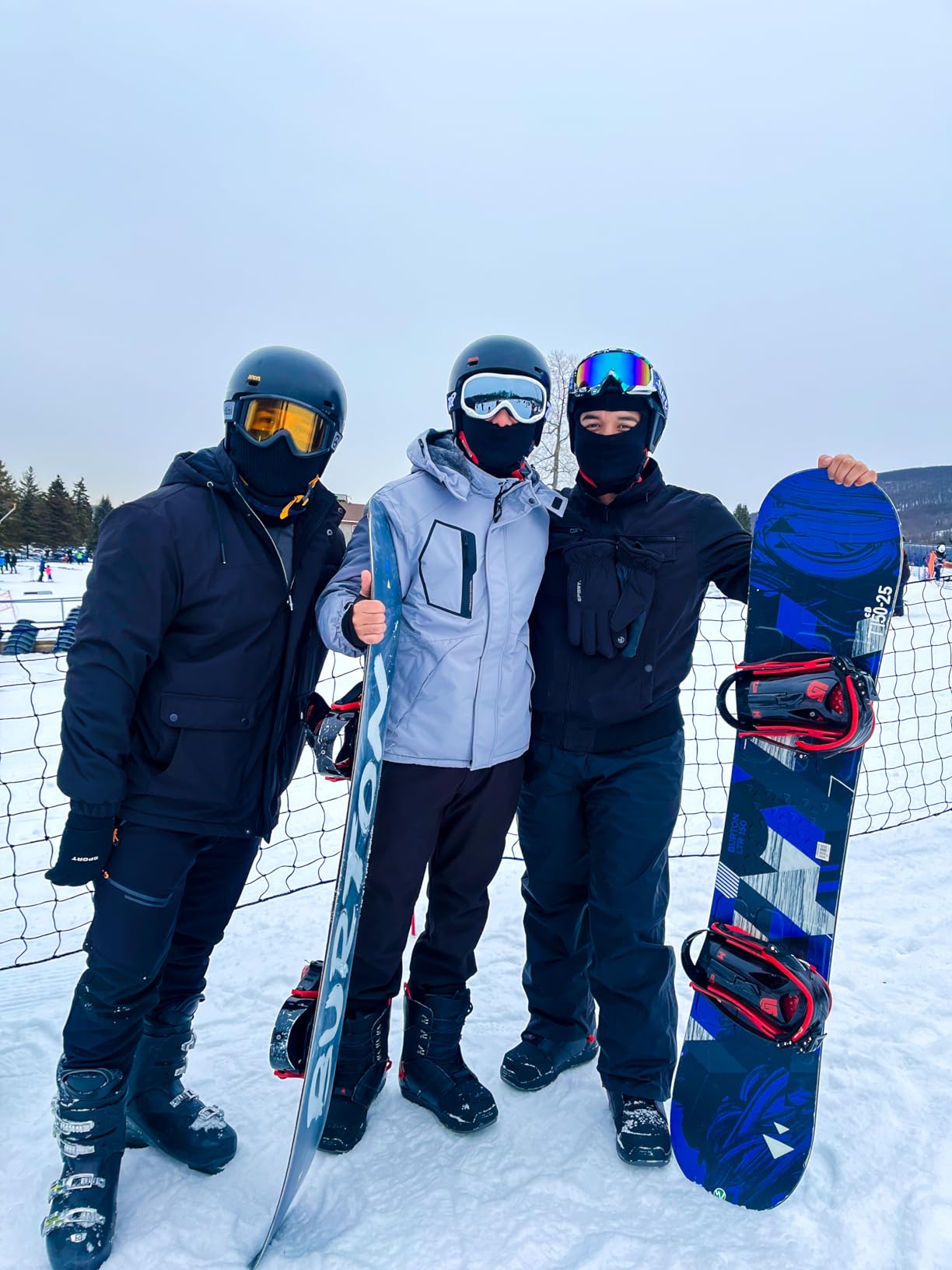
Anti fog performance is one of the strongest themes in owner reviews for this model, and the frame includes an anti-fog coating as standard. Ventilation is generous, which helps on high output days but is the reason a few riders complain about wind on the lift.
The listed lens colour is described as a silver lens with 8.6 percent VLT. That is firmly a sun lens, so treat this as another frame first purchase. The OTG and helmet compatibility notes mean it will clear glasses and sit under a helmet without a fight.
Where the wide view pays off
A wide peripheral view is worth more in low light than most buyers expect, because in flat light your reference points are edge features rather than shadows. A next skier at the side of your run, a roller at the top of a roll, or the lip of a ditch is often the only warning you get.
Owners consistently call the field of view a strength, and the peripheral visibility is the reason this frame keeps appearing in flat light conversations.
Fit notes for smaller faces
The adjustable fit and dual strap path work well for most heads, but a number of owners mention the strap slipping on smaller heads without a helmet. If you ride without a helmet, check the strap adjustment before the first descent rather than on the first lift.
Also note the heavy side venting. In wind you may want to close some of it off with a neck buff pulled up over the frame.
3. Wildhorn Roca Ski Goggles – Best Magnetic Swap System
- Fastest magnetic lens change in this roundup
- Wide panoramic spherical view
- Anti-fog and anti-scratch coatings
- Official US Ski Team supplier
- Durable TPU frame
- Extra lenses sold separately
- Higher cost than the budget frames
- Sized for adult faces
The Roca is the most serious piece of equipment in this list, and the magnetic swap is the reason. Owners and the manufacturer both describe a lens change in under 60 seconds, which is the difference between carrying two lenses and actually using a second lens for the flat afternoon after a sunny morning.
Optically it is a spherical dual lens with Aurora lens technology and 100 percent UV protection, plus anti-fog and anti-scratch coatings on both surfaces. The spherical shape gives a wide, undistorted view, which is the right call when you are hunting for subtle terrain cues in poor visibility.
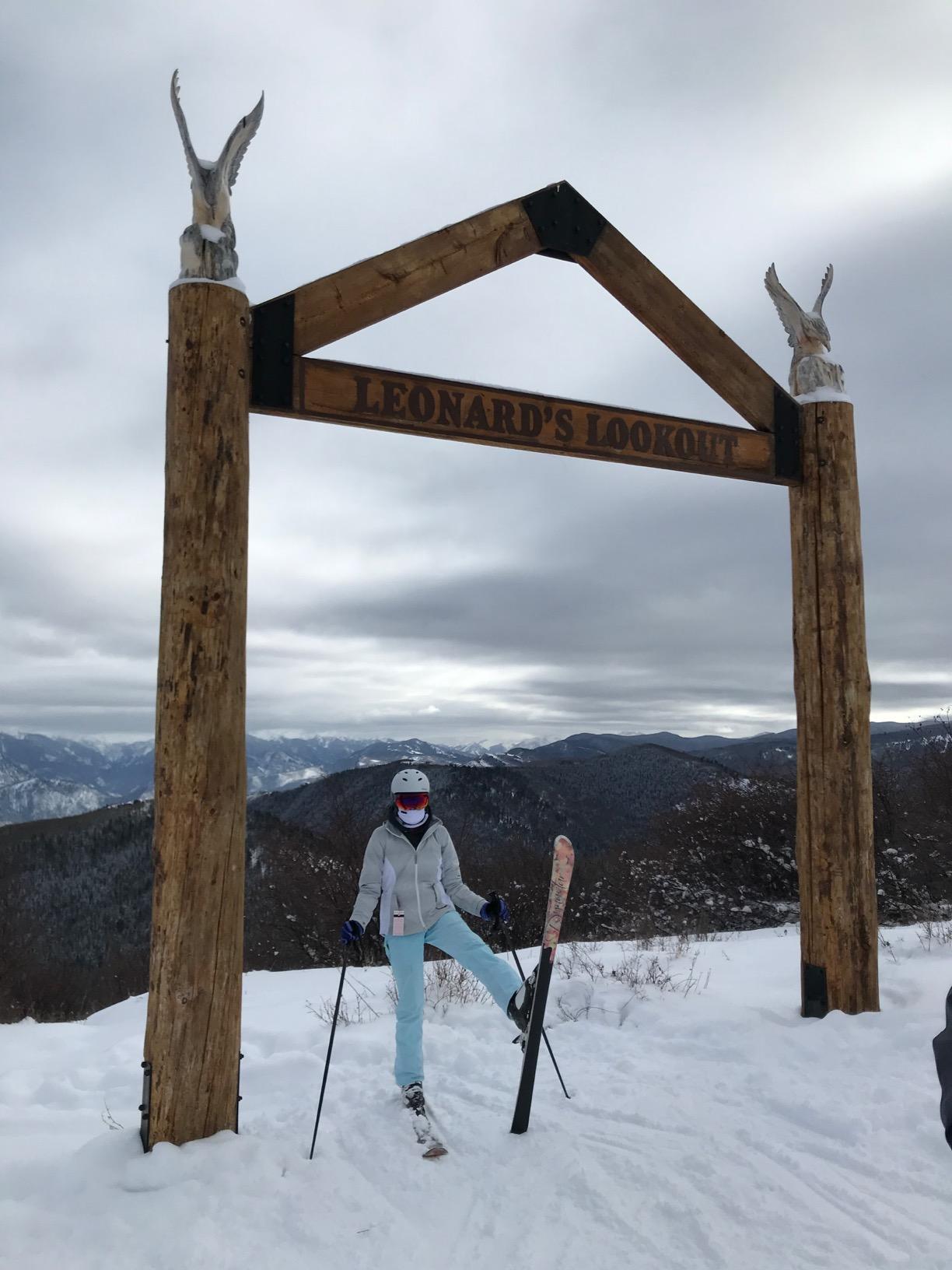
The frame is a durable thermoplastic urethane polymer with triple-layer foam, and the brand is an official supplier of the US Ski and Snowboard Team, which tells you something about the finish quality. Foam comfort and a wide panoramic view are both repeated positives across reviews.
The decision point is straightforward. This frame does not include a low light lens, so you need to buy one separately. If you already own goggles and are wondering whether to swap lenses or start again, the Roca is worth knowing about because the lens ecosystem is the whole point.
What the magnetic mount actually changes
Magnetic lens systems are the single biggest practical upgrade for variable conditions. You can keep a sun lens for the morning groomers, swap to a 60 percent rose or amber lens before the cloud rolls in, and do it in the car park in under a minute.
Without a fast mount, most skiers carry two lenses and use one, which is exactly the behaviour owner threads complain about on forums. A fast mount is the fix for that.
Lens availability and lens cost
Before you commit, confirm which low light lenses are made for this frame and how much they cost. The Roca is a premium position in this roundup and extra lenses are sold separately, so the total cost of a two lens low light setup is higher than the headline frame suggests.
Ask specifically for a high VLT rose, amber or yellow option, and check the transmission percentage rather than the colour name alone.
4. findway OTG Ski Goggles – Best for Oversized Frames and Snowmobiling
findway Ski Goggles OTG – Over Glasses Snow/Snowboard Goggles for Men, Women & Youth – 100% UV Protection
- Oversized internal volume clears large frames
- Reported no fogging issues
- Durable across multiple seasons
- Adjustable strap fits helmets
- Ranked first in snowmobile goggles
- Venting can admit sleet and ice particles
- May sit high over larger prescription frames
- Listed lens is a bright sun tint
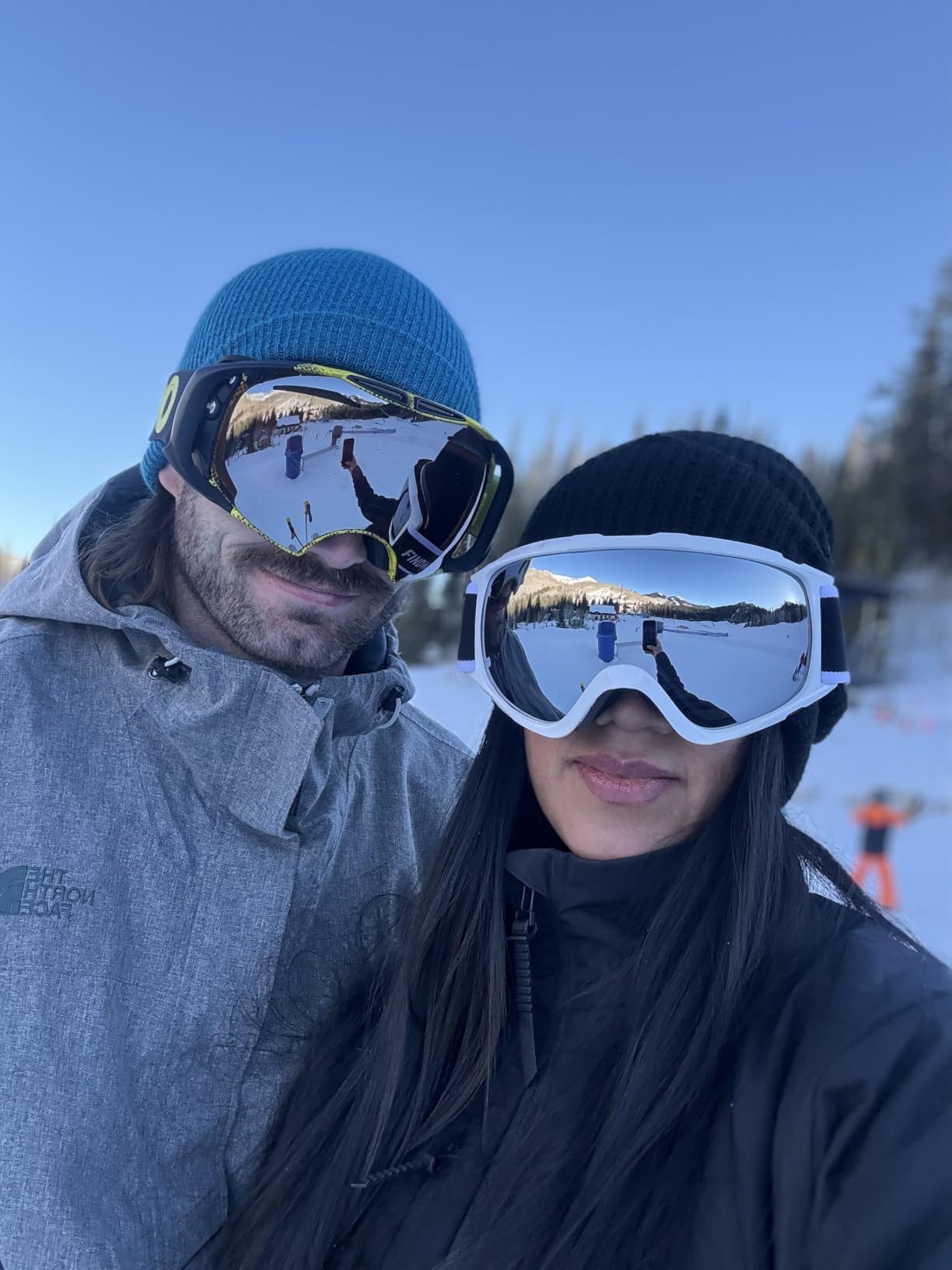
findway builds the largest chamber in this roundup, and that is the whole point of the frame. If your prescription glasses are bulky, or you ride a snowmobile at speed in weather that would end a normal skiing day, the oversized OTG design is a better answer than a frame that presses the arms of your glasses against your temples.
Owners report no fogging issues and durability across multiple seasons, and the product ranks first in its snowmobile goggles category, which tells you it is being used in conditions far more punishing than a groomer at lunch.
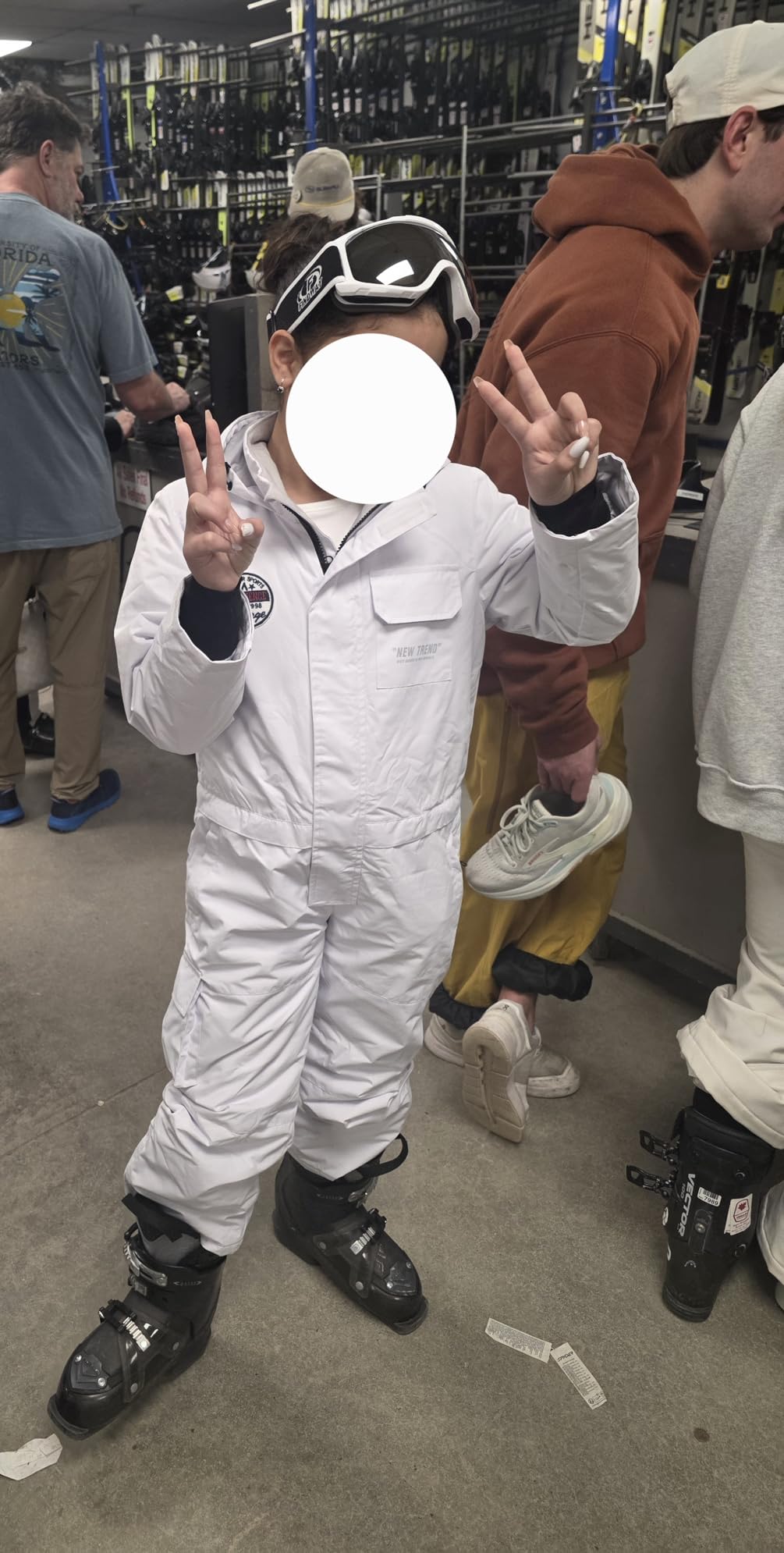
The lens is a performance double lens with anti scratch, anti fog and impact resistance coatings, sitting in a premium TPU frame with triple layer foam. Professional ventilation is built in, and it is a double edged feature: excellent on a hard day, less so when ice crystals come at you.
Several owners note the vent holes can let sleet or ice particles through, which is a fair trade for airflow and only matters if you ride in wet, windy weather on a machine rather than on skis.
Who this frame is sized for
This is the frame to look at if a normal OTG design feels cramped, or if you wear larger prescription frames. The extra internal volume is a genuine comfort gain, and owners of big frames report that this is the first pair that has worked properly for them.
If you have a small face and ride without a helmet, the opposite applies. Large chambers need a strap pulled tight, and a loose oversized frame on a small head is uncomfortable and lets snow in.
What to do about the lens in low light
The listed lens is a bright sun tint, so this is another frame first purchase. Verify that a high VLT lens is available for the double lens before you buy, and pair it with a good anti fog gel if you are a heavy sweater, since the venting works hard.
Owners describe visibility as clear in bright conditions, which is a useful baseline for judging any replacement lens you fit later.
5. EXP VISION OTG Goggles with Interchangeable Foam – Best for Easy Cleaning
Ski & Snowboard Goggles Men Women, Over-Glasses Interchangeable Foam
- Foam detaches for cleaning and swapping
- Lightest frame in the roundup at 95 g
- Good OTG fit over glasses
- Distortion free view
- One year guarantee
- Silver mirror lens suits bright days only
- Some variants too dark for overcast
- Replacement foam is a separate purchase
The detachable sponge frame is the idea that makes this pair different. The foam pulls out of the TPU chassis, which means you can wash it, replace it when it wears flat, or fit a different thickness for a different face shape. No other budget frame here gives you that, and it quietly solves both the hygiene problem and the fit problem at once.
At 95 g it is one of the lightest frames we tested, which is a real advantage on a day when you are wearing goggles from first chair to last lift. The anti fog coating, UV400 protection and helmet compatibility round out a sensible spec sheet.
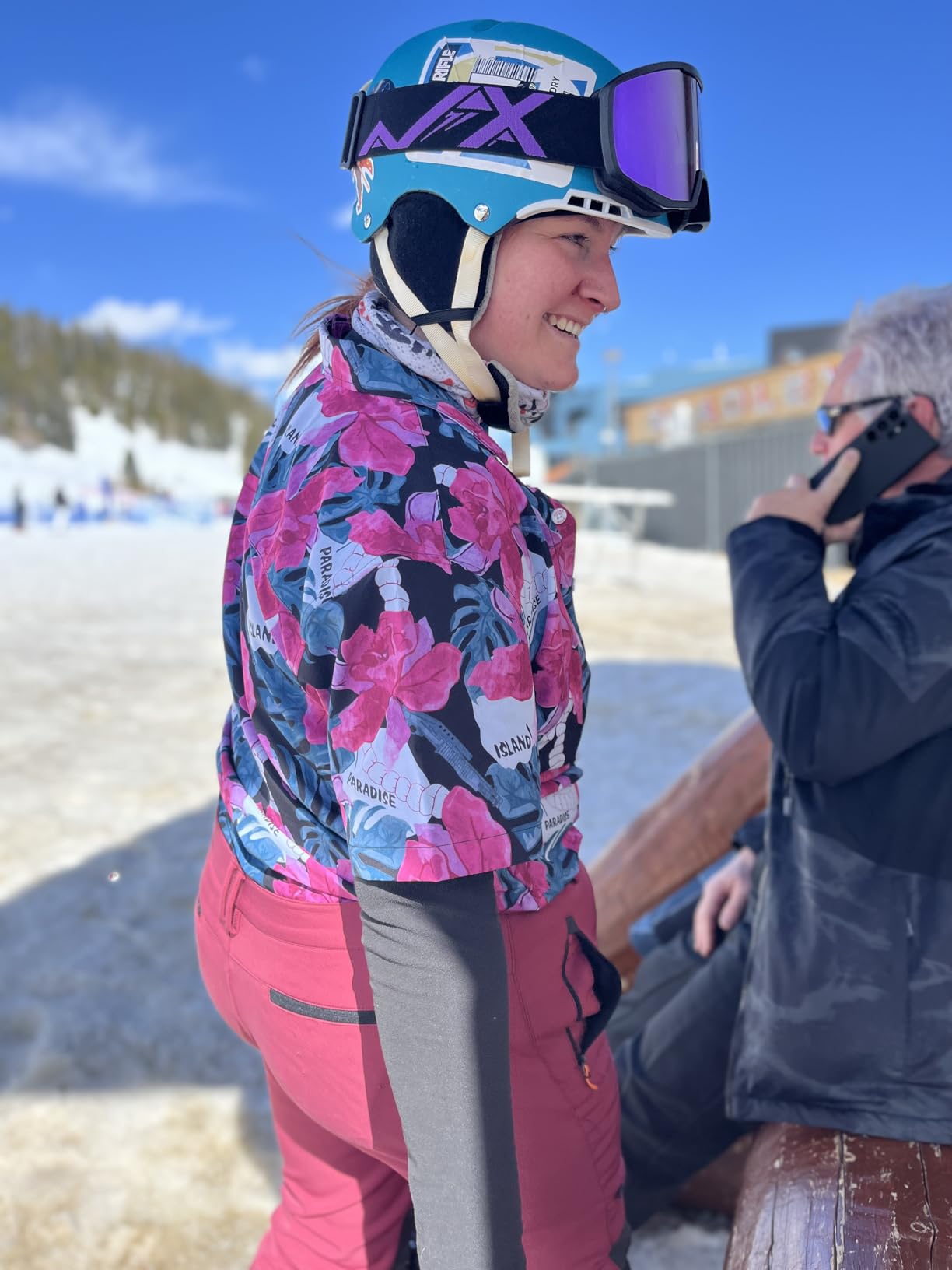
Owner reviews highlight excellent anti fog performance, a good OTG fit over glasses, and clear distortion free vision through the panoramic cylinder lens. The adjustable and detachable design is the most commonly praised feature, which tells you the foam is doing real work.
The lens is where the low light caveat sits. This model is listed with a silver lens and a mirror coating, and owners are clear that it suits bright, sunny conditions, with some variants described as too dark for overcast and snowy days.
Why removable foam helps in flat light
Fogging is a bigger problem on low light days than most buying guides admit, and foam condition is the variable skiers control most easily. Foam that has gone hard and flat stops sealing against your face, and a broken seal lets warm air sit against the inner lens where it condenses.
Being able to pull the foam out, wash it, or swap it for a fresh piece means a two season old pair can be brought back rather than replaced.
Where the lens stops helping you
A mirror coating is designed to bounce reflected light back at the sun. On a flat, overcast or storm day there is very little direct light to bounce, so a mirrored lens simply removes brightness you needed.
If low light is your main condition, treat this as a frame and buy a high VLT lens for it. Confirm lens availability for the cylindrical lens before you commit.
6. EXP VISION EX5400 Ski Goggles – Best Frameless Field of View
EXP VISION Snowboard Ski Goggles Men Women Youth, Anti Fog OTG Winter Snow Goggles Spherical Detachable Lens (Gray)
- Frameless spherical lens gives a very wide view
- Anti-fog works for most owners
- Comfortable OTG fit
- Helmet compatible with adjustable strap
- A minority of owners still needed anti-fog gel
- Frameless lenses show fingerprints and scratches
- 5.26 ounces is heavier than the lightest frames
The frameless spherical lens here gives one of the most open views available in this price range, and that is exactly the right feature for bad visibility. With no frame edge interrupting it and a spherical curve rather than a cylindrical one, the lens distorts less at the edges, so the terrain at the side of your goggles stays readable.
Owner reviews describe a wide field of view, a comfortable OTG fit and good helmet compatibility with an adjustable strap, plus good anti fog performance for the majority of riders. The anti-fog system uses dual lenses with vent channels, which is the right architecture for a frameless design.
The trade-off with frameless is build feel and finish. Frameless designs are easy to scratch and smudge, and lens swaps leave fingerprints across the surface. That matters more than usual here because any scratch or smear in low light becomes a focal point that pulls your attention off the snow.
A minority of owners report fogging bad enough to need an anti-fog gel treatment, so do not treat the coating as a complete solution. Fit is handled by an OTG design with three layer foam.
View quality versus lens durability
Spherical lenses distort less than cylindrical ones, which is worth real seconds in a whiteout. The cost is that a frameless lens has no surrounding frame to protect the edges, and the polycarbonate surface shows every wipe.
Carry a microfibre lens cloth and keep gel in your pocket. A smeared lens in flat light is arguably more dangerous than a slightly dark one.
Who should skip the frameless look
If you wipe your lens with a sleeve, ride behind a lot of other people, or store your goggles loose in a boot, a framed model will survive longer. Frameless suits skiers who treat their gear carefully and who prioritise seeing as much of the mountain as possible.
Check lens tint options for the spherical lens before buying if flat light is your normal condition.
7. Odoland Magnetic Ski Goggles – Best for Night Skiing
Odoland Magnetic Ski Goggles, 2 Interchangeable Lens Anti-Fog for Men Women
- High transmission yellow lens included in the box
- Fast and secure magnetic swap
- 164 degree frameless field of view
- Strong magnets hold the lens in crashes
- Great OTG fit over glasses
- Strap cannot be shortened
- Dark lens is too dark for shaded runs
- OTG volume can feel large without a helmet
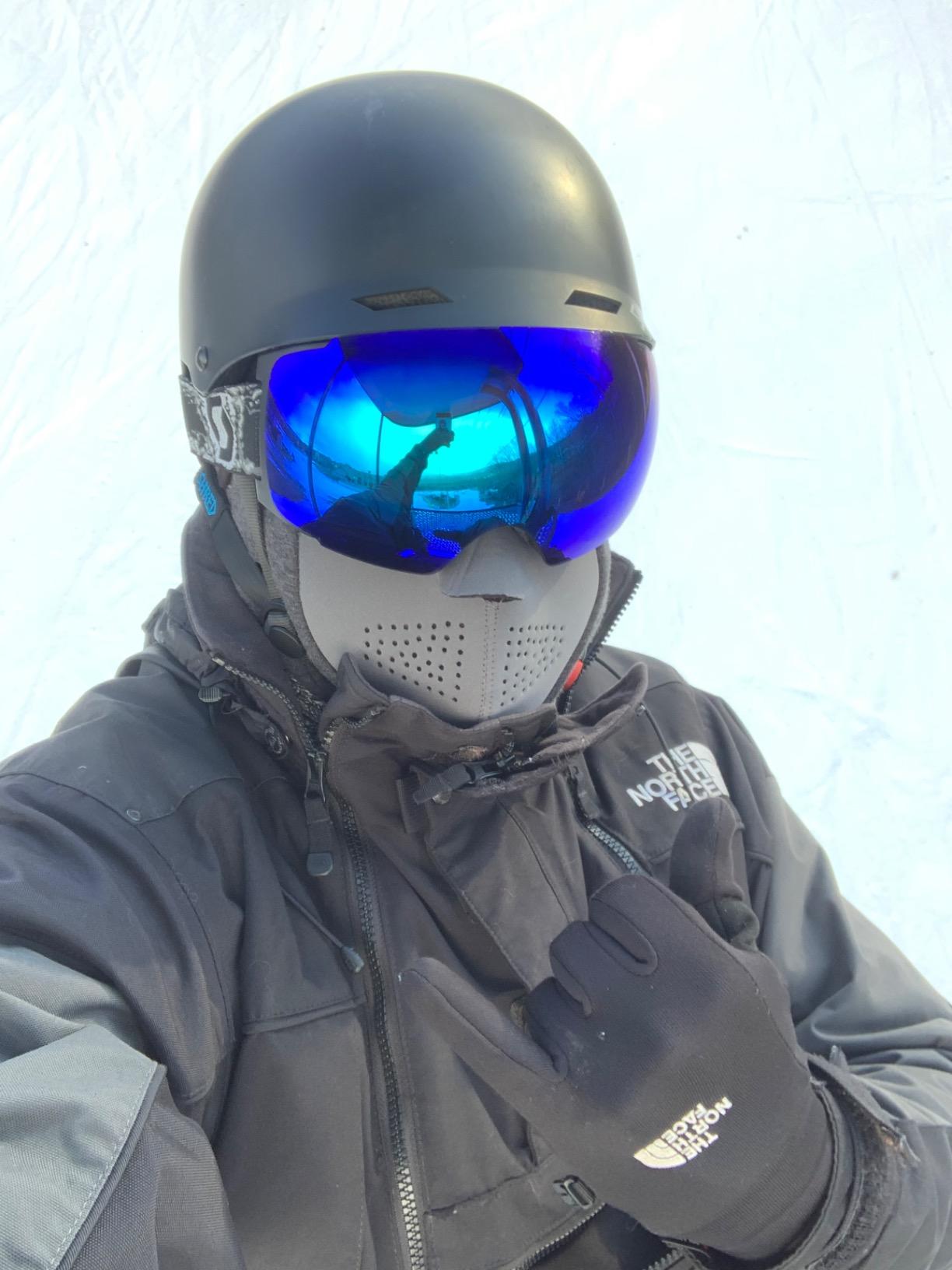
Two of the twelve pairs here ship with a published high transmission lens, and the yellow one is why this pair is our night skiing pick. The second lens is a yellow lens at 80 percent VLT, which is the band you want under floodlights, on a moonlit run, or in a snowstorm lit by the base lodge lights.
The magnetic swap system is fast and secure, and owners specifically call out that the magnets hold the lens in during crashes, which is the failure mode that matters when a high transmission lens is your only night option.
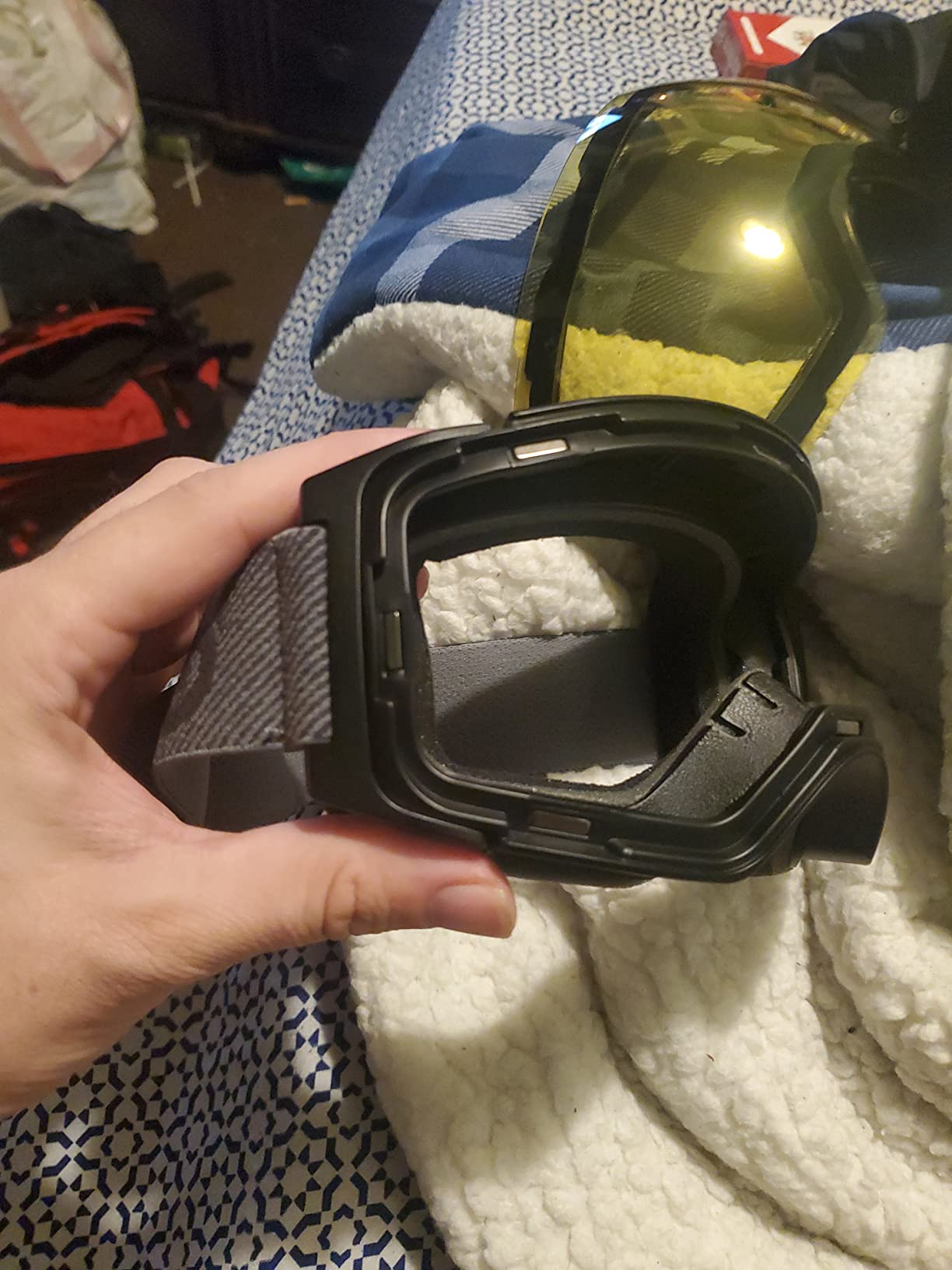
Optically it is a frameless spherical lens with a 164 degree field of view, a dual layer lens with an anti-fog inner lens, ventilation channels and UV400 protection on both lenses. Owners report excellent anti fog and a good OTG fit over prescription frames, with several noting it rivals premium brands at a fraction of the cost.
The dark lens that comes fitted suits a sunny bluebird day. For flat light, the 80 percent yellow is the lens you actually want, so the pairing is more useful here than on any single lens frame in this list.
Why 80 percent VLT is the night skiing number
Under floodlights, the snow reflects a narrow bright beam back at you while everything outside it falls into darkness. Too dark a lens and you are looking through a keyhole; the community consensus for night skiing is 85 percent or higher VLT, with higher transmission only needed for very dark venues.
A yellow or amber tint at that transmission also filters the glare from overhead lighting, which is the other half of the night skiing problem. That is why the second lens here is yellow rather than clear.
Fit and strap issues to check
Two fit notes come up repeatedly. The strap cannot be shortened, so it slides back to its original length, which is annoying if you ride without a helmet and need a tight fit. And the OTG volume is generous, so on a small face without a helmet it can feel oversized.
If you wear a helmet, both issues mostly disappear and this is one of the best two lens packages available at this level.
8. SPOSUNE Ski Goggles – Budget Pick for First Timers
SPOSUNE Ski Goggles for Men Women,OverGlasses Snow Goggle Dual-Len Anti-Fog
- Entry level cost for occasional skiers
- Good OTG fit over glasses
- Italian double layer anti-fog lenses
- Thick sponge padding
- Adjustable dual headband system
- Build quality below the frames around it
- Listed lens is a dark sun tint
- Less established long term record
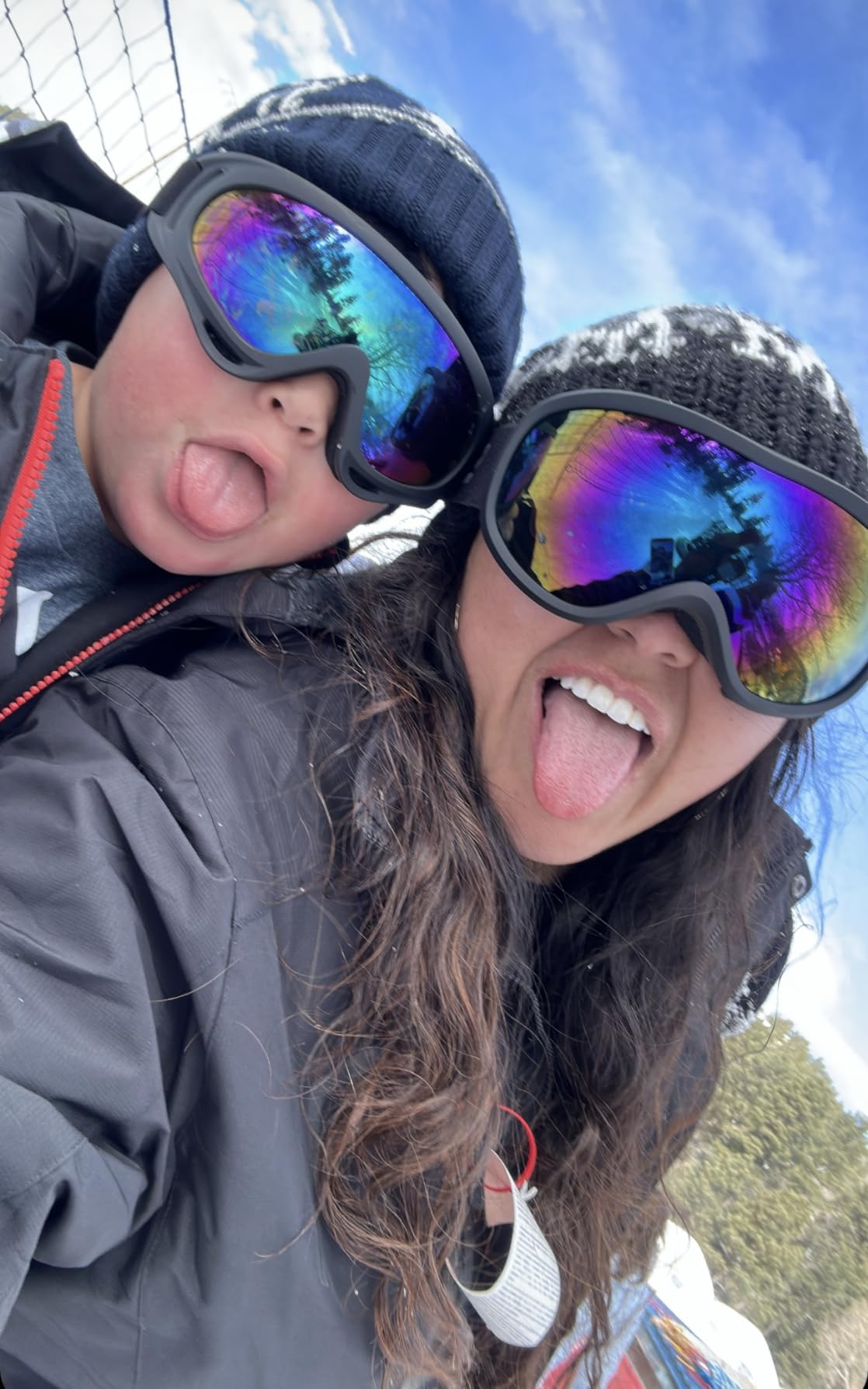
If you ski a handful of days a season and mostly on cloudy mountain days, this is a reasonable first pair. The double layer Italian anti-fog lenses are the feature that matters, and a flexible TPU frame with unbreakable polycarbonate lenses is a sensible build for a goggle that will live in a boot for a week at a time.
It is also an OTG design, so it clears glasses, and the dual adjustable headband system lets you dial the fit without relying on a single strap. Comfortable thick sponge padding does the rest.
The honest limitation is build consistency. This frame sits a step below the others in finish and feel, and the venting is simple. If you ride hard, that is where you will notice it, and owner feedback is thinner here than for the frames with thousands of reviews.
The listed lens is a dark sun tint. In practice this is a fair weather frame, and if low light is where you spend your time, this is the one to pair with a borrowed high VLT lens from a friend before you commit to a purchase.

Who this is genuinely for
Occasional skiers, lesson attendees and anyone who wants a working spare pair in a duffel bag. The dual headband and thick foam make it forgiving to fit, which matters when you are not sure what shape your head is yet.
It is not the right choice for a hundred day season or for storm days where finish and venting are everything.
What to pair it with for flat light
Buy or borrow a rose or amber lens in the 50 to 70 percent range and this frame becomes far more useful. The colour options across the range give you room to pick a tint that matches your typical conditions.
Check the frame interior size before you buy if you wear glasses, because the OTG volume here is narrower than the deliberately oversized models in this list.
9. ZIONOR X4 Magnetic Ski Goggles – Best for Reusing Existing Lenses
ZIONOR X4 Ski Goggles Magnetic Lens – Snowboard Goggles for Men Women Adult – Snow Goggles Anti-fog UV Protection
- Compatible with OutdoorMaster replacement lenses
- Very wide spherical panoramic view
- Strong magnetic hold through crashes
- Silicone grip strap
- Good value against premium equivalents
- Lens scratches relatively easily
- Blue mirror lens suits sun not cloud
- Some units arrived with lens spotting
The X4 is interesting for one specific reason: its magnetic lens system is compatible with OutdoorMaster replacement lenses. If you already own a frame from that ecosystem, or you are buying your second pair this decade, you can reuse lenses you already own instead of starting a new collection.
Optically it is the widest view in this roundup on paper, with a spherical lens claiming 180 plus degrees of panoramic vision. Eight magnets hold the lens, and owners report that the hold survives crashes, which is the test that matters for a high transmission lens.
Anti-fog performance is reported as good, with optimized vent channels behind the lens and a ruggedized lens built with Enhanced Durability Tech. Owners compare the whole package unfavourably to nothing and favourably to the premium magnetic systems that cost several times more.
The durability trade-off is real. Owners report the lens scratches relatively easily, and a minority received units with lens discoloration or spotting. In flat light a scratched lens is a genuine problem, so carry a cloth and treat it gently.
Lens compatibility as a buying reason
Before you buy any second goggle, work out which lenses you already own and whether the mount is shared. Shared mounts turn two purchases into a lens library, and that is how a single high VLT rose or amber lens gets used on every flat day of the season.
Cross brand compatibility here is genuinely useful, and it is the reason this frame is worth a look even though the fitted lens is a blue mirror suited to sun.
Where the lens needs replacing
The fitted blue mirror lens is for bright sun only. Owners are explicit that you need a separate low light lens for cloud, and that mirror coatings remove brightness you need in flat conditions.
The single stitch on the strap attachment is a detail worth inspecting, and the silicone grip on the strap is a genuine plus for keeping the frame seated during aggressive riding.
10. OutdoorMaster PRO Ski Goggles – Most Lens Choices in One Frame
OutdoorMaster Ski Goggles PRO, OTG Snow Goggles with Interchangeable Lens
- Largest lens catalogue in this roundup
- Frameless spherical lens for an unobstructed view
- Anti-fog coated lenses with UV400
- Includes case and carrying pouch
- High category ranking
- Extra lenses sold separately
- Sits above the cheaper OTG model in cost
- Fewer owner reviews than the flagship frame
The OutdoorMaster PRO is the frame to buy if your season genuinely varies, because the interchangeable lens system covers 20 plus options from one mount. That is the difference between owning a storm lens and a sun lens, and owning one frame that can accept both.
The lens itself is a large spherical frameless design, which gives an unobstructed view, and the lenses carry anti fog coatings and UV400 protection. A protective case and carrying pouch are included, and that matters more than it sounds for a frameless lens that shows fingerprints.
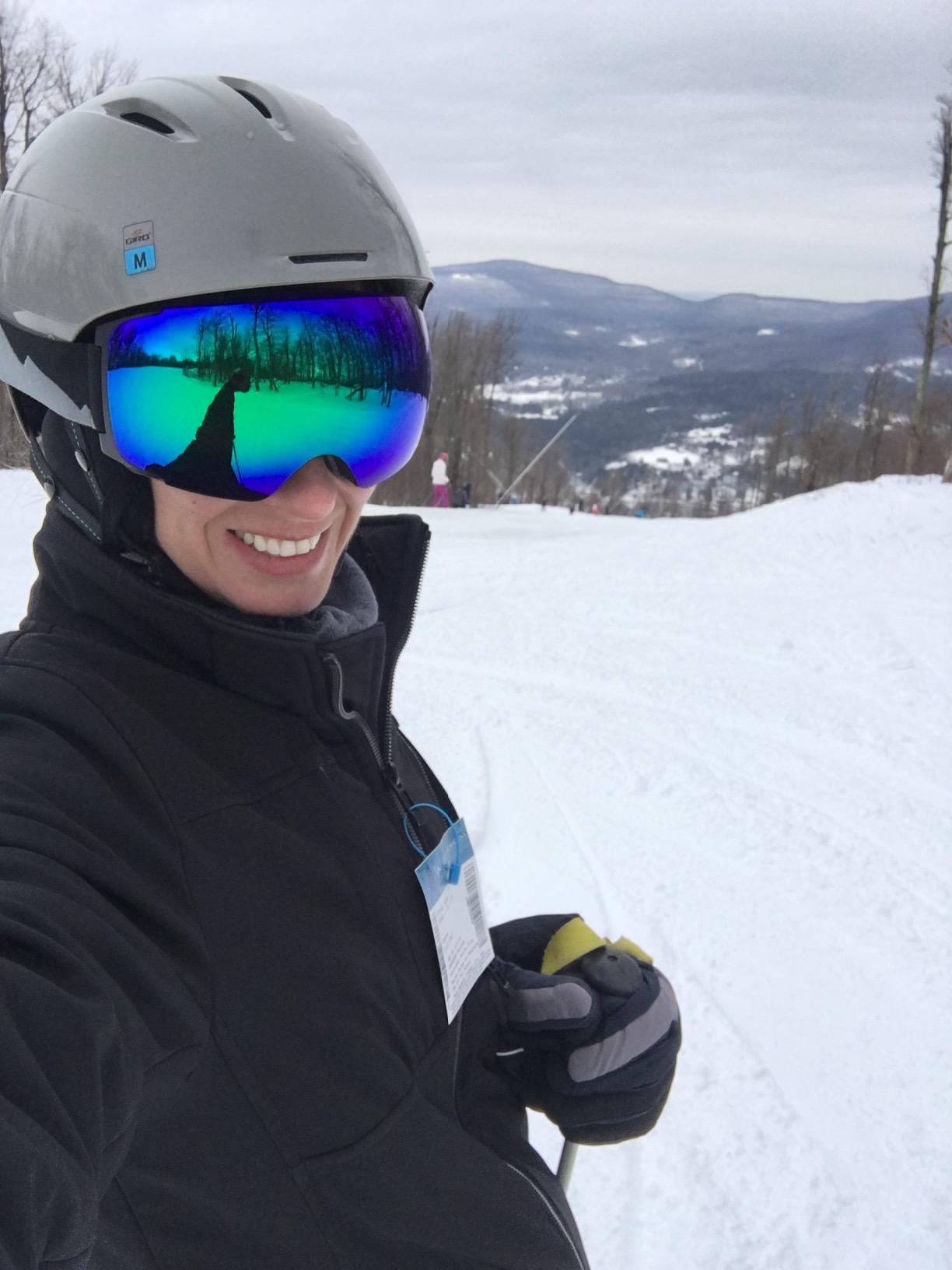
Owners report a good OTG fit for glasses wearers, and the product holds a high best seller rank in snow sports goggles, which is a useful signal that it is well supported and widely fitted. Customer service is also reported as responsive.
The catch is straightforward. Extra lenses are sold separately, and this frame sits at a higher price than the basic OTG model from the same brand even though the owner review volume is lower.
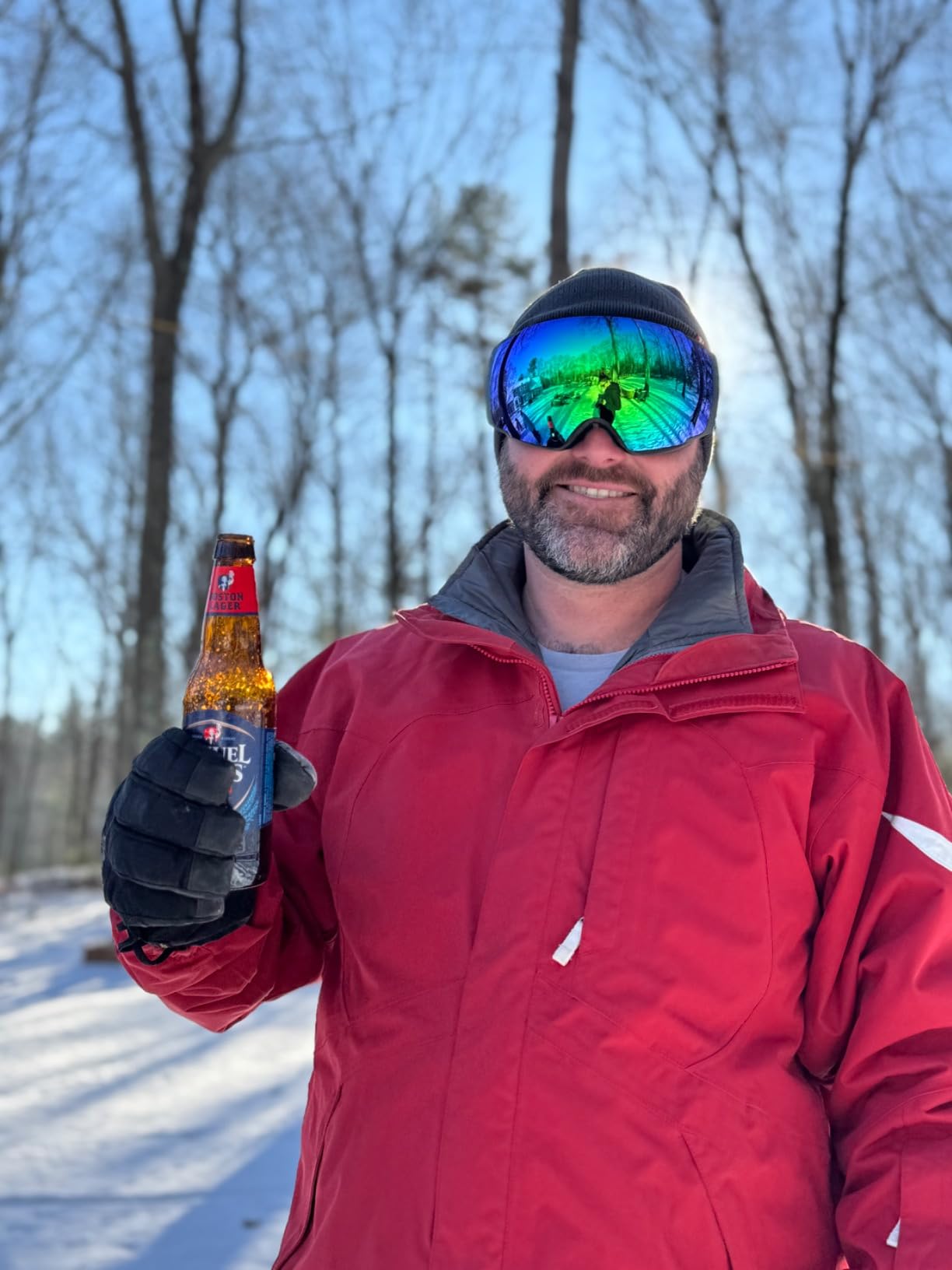
Whether a large lens catalogue matters to you
If you ski one mountain with one forecast pattern, a 20 lens catalogue is wasted money and you should buy a frame that ships with the right lens. If you travel between coastal, alpine and inland terrain, or you share goggles with a family of different face shapes, the catalogue is the reason to spend here.
Check the physical size of the replacement lenses before you commit, because frameless designs vary between models.
How to build your two lens kit
The smart build is a dark sun lens for clear days and a 50 to 70 percent rose or amber lens for flat light, and the third addition, if you ever night ski, is a high transmission lens. Frame a budget for all three before buying, because that is what the frame cost alone does not tell you.
Universal helmet compatibility with an extra long strap is handled, so this is a safe fit choice with a helmet.
11. Snowalva Ski Goggles – Two Magnetic Lenses in the Box
Snowalva Ski Goggles, Snowboard Goggles with 2 UV400 Anti-Fog Detachable Magnet Lenses for Men & Women Adult (Black&Clear, One Size)
- Two magnetic lenses included in the box
- Cylindrical lens for accurate depth perception
- Good category ranking
- UV400 with anti-fog coating
- Multiple colour variants
- Released recently with limited long term data
- Cylindrical shape has less peripheral view
- Only 508 reviews so far
Snowalva is the newest item in this roundup, launched in August 2026, and it arrives with two detachable magnetic lenses already in the box. That is the rarest thing in this list: a genuine two lens package without buying a second lens afterwards.
The lens shape is cylindrical, chosen for true vision and depth perception on the slope. That is a real benefit when the mountain is flat and you are trying to judge the shape of a roll or a landing, because a cylindrical lens keeps magnification more consistent across the view.
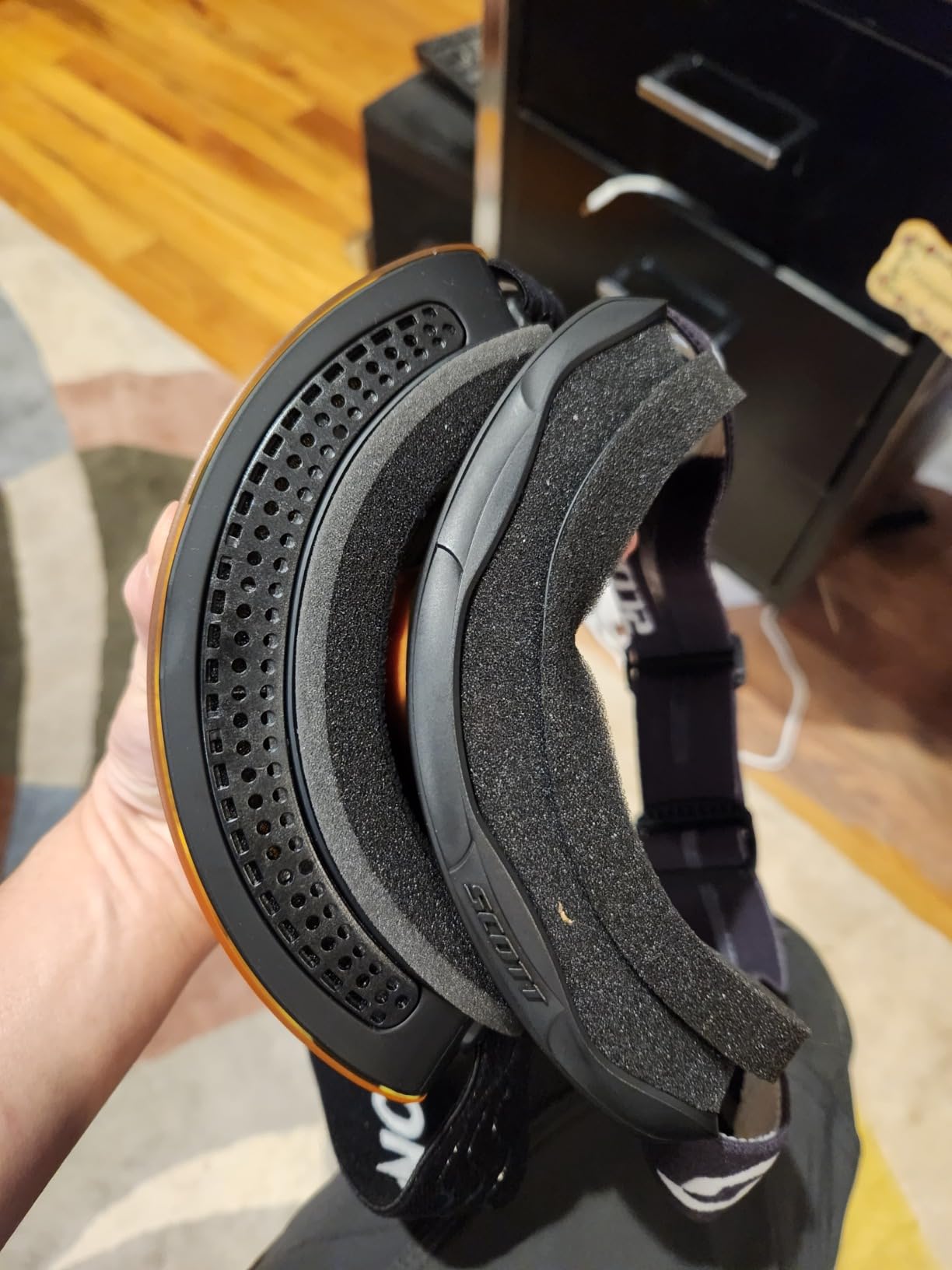
UV400 protection with an anti fog coating is standard across both lenses, and the product holds a strong category ranking despite being new. Buyers get genuine choice in colour variants.
What we cannot tell you is how it performs after three seasons, because the review history is short at 508 reviews. Treat that as a factor rather than a disqualifier, and read early owner reports carefully.
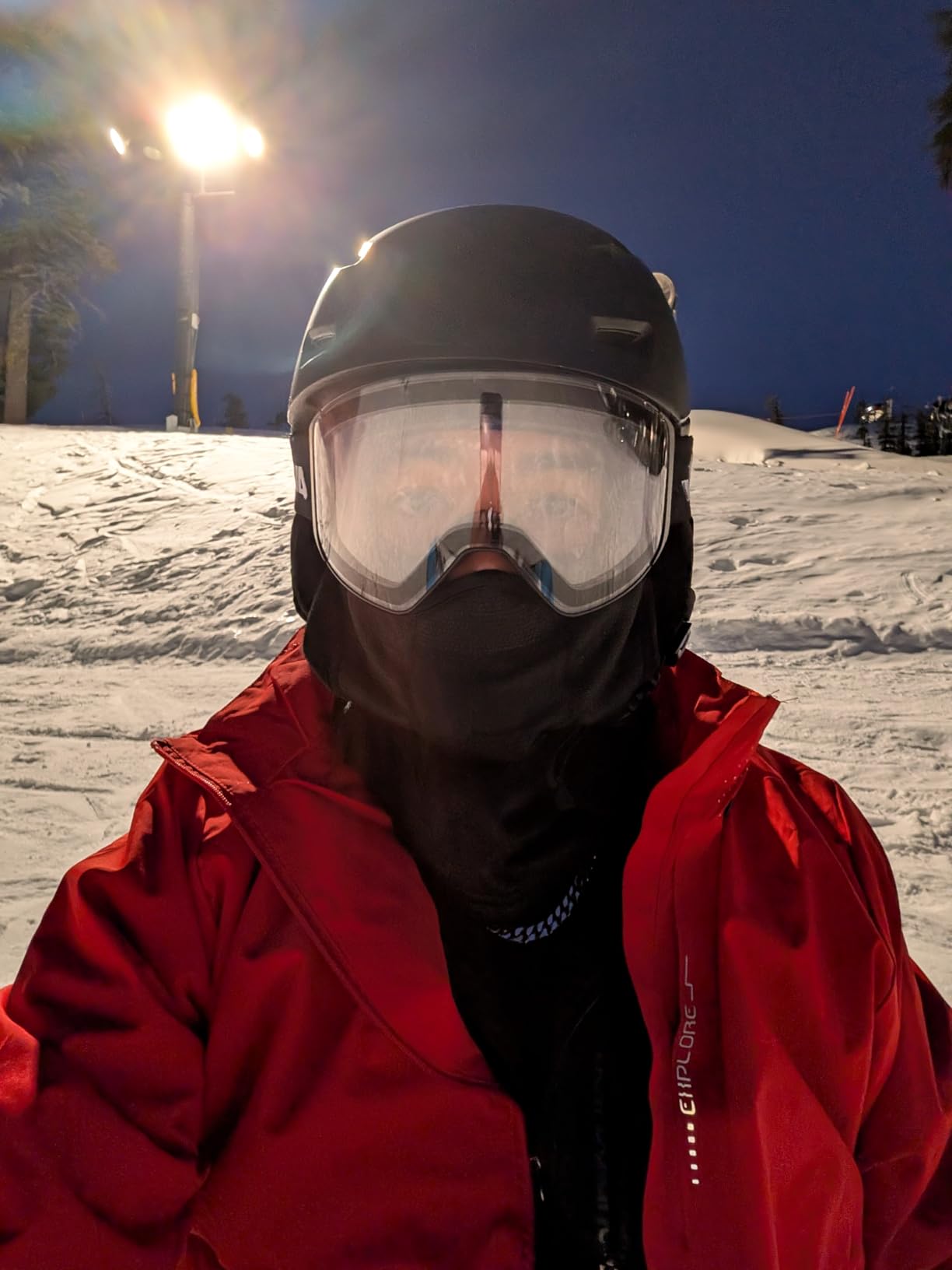
Cylindrical versus spherical for low light
Cylindrical lenses wrap less around your face, so you see a narrower slice of the mountain with less edge distortion in the centre. Spherical lenses wrap further and give a wider peripheral view with more distortion at the edge.
Neither is automatically better in flat light. What actually matters is having a high VLT lens fitted, so check which tints the two included lenses are before you buy.
Where the short review history matters
Durability, coating life and foam compression are all things you only learn over multiple seasons. On a new model, the risk is that the anti-fog coating or the foam gives up earlier than the frame does.
If you buy it, keep the pouch, rinse the foam after every session, and check the lens mount early in case anything is loose.
12. Giro Cruz Ski Goggles – Best Clear Lens for Storm and Night
Giro Cruz Ski Goggles – Snowboard Goggles for Men, Women, Youth – Black Stacked – Clear
- Highest published VLT in this roundup at 89 percent
- Expansion View technology for peripheral vision
- OTG engineered for prescription frames
- PressFit lens interchange system
- Silicone lined strap resists slippage
- Clear lens is wrong for bright sunny days
- Costs more than the budget frames
- Only 398 reviews on this model
The Giro Cruz is the one frame here that arrives ready for the conditions most people are actually asking about. The lens is clear and rated at 89 percent VLT, the highest published transmission in this roundup, and that single specification covers storm days, whiteout and night skiing in one go.
Expansion View technology is the other headline, and it is the right feature to pair with a clear lens. With a high transmission lens you are not fighting brightness, so peripheral vision becomes the thing that decides whether you see the skier coming round the roll.
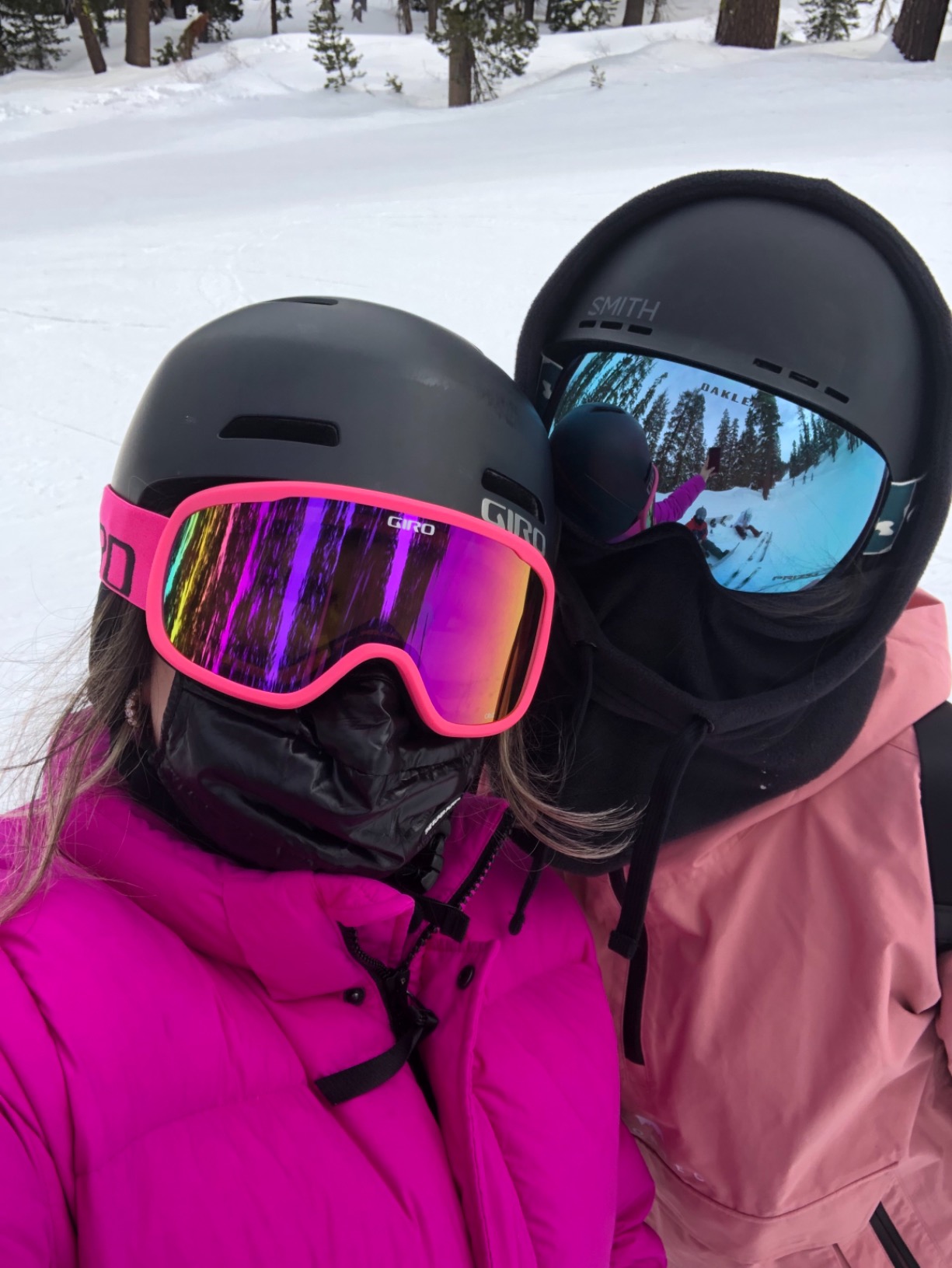
The fit story is strong. This is an OTG design engineered for prescription frames, with double layer face foam and a microfleece facing, a silicone lined strap that resists slippage, and integration that works cleanly with Giro helmets. Anti-fog coating is standard.
The limitation is obvious and worth saying plainly. A clear lens at 89 percent VLT is wrong for a bright bluebird day, so if sun is more than a fraction of your season, you will need a second lens through the PressFit system.
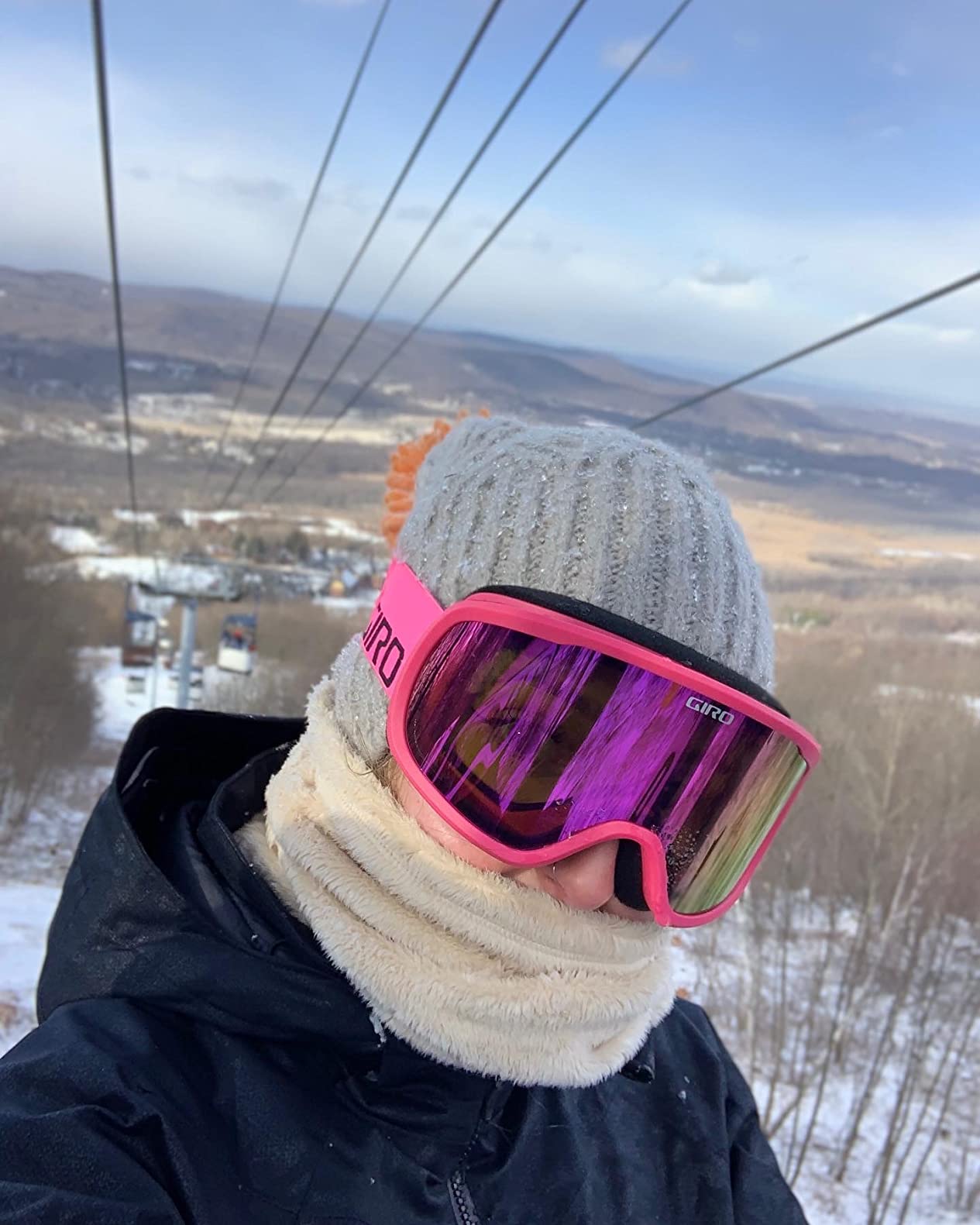
Why a clear lens beats a tinted one in a storm
On a storm day the light is scattered and the contrast between snow and sky is almost zero. A tinted lens removes light that you need, and a warm tinted lens removes the wavelengths your eyes use to read shape. A clear lens passes everything through and lets the anti-fog coating and the frame do their jobs.
For night skiing, 89 percent VLT sits in the band the community recommends, and it leaves you room to add a yellow lens later if floodlight glare bothers you.
Who should buy a clear-lens frame
Powder hunters, night skiers, and anyone whose season is mostly flat light or storm rather than sun. Also worth considering as a second pair, because it pairs naturally with a dark sun frame you already own.
Skip it as a only pair if bluebird days are your default, and note the 398 review count is the smallest in this roundup.
What Low Light Actually Means on Snow
Low light on snow is not one condition, it is four, and the lens you need changes completely between them. Treating them as a single category is why so many skiers end up buying a lens that works on bluebird days and fails on the day they needed it.
Flat light is high cloud with a bright white ceiling. There is no direct sun, so nothing casts a shadow, and the whole mountain looks like the same shade of white. This is the classic low light day and it is where contrast enhancement matters most.
Overcast is darker and bluer than flat light, and it is common in coastal and Pacific Northwest resorts. The light is cooler in colour, so warm tints such as rose and amber are used to rebalance it.
Storm and whiteout is the hardest case. Falling snow scatters light in every direction and visibility collapses. Here brightness itself is the problem, not colour, so the highest transmission lenses work best and a warm tint is optional.
Night skiing under floodlights is a different problem again. The light is a narrow bright beam surrounded by darkness, which creates glare above and gloom below, so high transmission with a yellow or amber tint handles both.
VLT Bands by Condition: The Number That Matters Most
Visible light transmission is simply the share of visible light that passes through the lens, and it is the one specification that predicts whether a goggle works in poor visibility. Read the number, not the colour name, because two lenses called rose can sit at very different transmissions.
The bands are stable across brands. Clear lenses for night and storm sit at the top, sun lenses sit at the bottom, and the middle bands are where all of the interesting low light choices live.
8 to 15 percent VLT – bright sun, bluebird days. This is what most goggles ship with.
20 to 40 percent VLT – partly cloudy, spring sun, late afternoon.
40 to 60 percent VLT – overcast and mild flat light. Rose, amber and yellow tints sit here.
50 to 75 percent VLT – heavy overcast, storm and flat light proper. The community consensus low light range.
80 to 100 percent VLT – night skiing and floodlit venues. Yellow, amber or clear tints.
For most people reading this because their season is grey, the 50 to 75 percent band is the answer. A rose or amber lens around 60 percent is the version of the advice that comes up most often in long running forum threads, and it is the band most people end up buying.
Named examples from the wider market that skiers cite for flat light include the Smith Storm Rose Flash, the Smith ChromaPop Storm Amber, and the Oakley Persimmon and High Intensity Persimmon lenses at roughly 63 percent VLT. Whatever the brand, match the band to your conditions.
Rose, Amber, Yellow or Pink: Which Tint to Ride
Tint is about contrast, not brightness, and that is the most common misunderstanding in low light buying. A rose lens does not make the world brighter, it makes the differences between things larger.
Snow bounces most visible light back at you, and on a cloudy day everything washes into one uniform white. A tinted low light lens filters the flat blue and grey wavelengths and passes more of the warmer red, orange and yellow light, which restores the contrast your eyes need to read terrain.
Rose and pink – the most popular low light tint because it works across overcast, flat light and light snow. The community favourite band sits around 50 to 70 percent VLT.
Amber and orange – a slightly deeper contrast effect than rose, well suited to heavy overcast and storm, and the go-to for night skiing floodlight glare.
Yellow – highest brightness of the low light tints, typically from the mid 60s upward, and the standard choice for night skiing at 80 percent VLT and above.
High intensity pink – the deepest rose option, preferred by skiers who want maximum contrast and who find standard rose lenses still too soft on genuinely bad days.
Mirrored and polarized lenses are the wrong choice for low light, and it is worth being blunt about why. A mirror coating is built to bounce direct sunlight back at its source, and on a flat or storm day there is nothing to bounce. Polarization reduces glare from horizontal surfaces, which helps in sun and actively removes useful detail in flat light.
More transmission is not automatically better either. Below about 20 percent VLT you are back into sun territory, and a lens that transmits too much on an overcast day can leave you squinting at glare off wet snow or a bright sky patch between clouds.
Photochromic vs. Interchangeable vs. One Fixed Lens
There are three ways to handle changing light, and the choice shapes how often you will actually be wearing the right lens.
One fixed lens is the simplest and cheapest. It is fine if you know your mountain and your season, and wrong the moment the forecast changes. Most of the frames in this roundup are fixed lens models, which is why the lens caveat appears under nearly every review.
Interchangeable lenses mean you carry two or more and swap at the car. This is the system most skiers in the forums recommend, with the common advice being to carry one sun lens and one low light lens, because the alternative is a forecast gamble at 8 am.
Photochromic lenses darken automatically as ambient light changes, and the appeal is obvious: no swap, no lens to carry. The limitation skiers report is reaction speed in cold weather, particularly when moving in and out of tree cover, and the tendency to run too dark on genuinely overcast days.
Interchangeable systems with a fast mount are the middle ground most people settle on, which is why the magnetic frames in this roundup rank as highly as they do. If you also enjoy the technical side, our guide to drones with FPV goggles covers the same lens and transmission logic from a different angle.
Night Skiing Needs 80% VLT and Above
Night skiing is the condition where low light goggles are not a preference but a requirement, and no ranking guide we found treats it as its own section, so here it is. Under floodlights, aim for 85 percent VLT and up, with more transmission only if your venue is genuinely dark.
Two lenses in this roundup qualify out of the box: the Giro Cruz at 89 percent and the Odoland second lens at 80 percent yellow. If you already own a frame, the alternative is a single yellow or amber high transmission lens that fits your mount.
Do not ignore overhead glare. Floodlights are directly above you, and a clear lens at very high transmission can produce halos and starbursts that make bumps hard to read. A yellow tint at the same transmission often solves this, which is why the community favours yellow lenses for night skiing rather than pure clear.
At night, anti-fog matters more than usual because the temperature drop between the lodge and the run is larger, and breath fogging against a clear lens is far more obvious than against a dark one.
Fogging: The Low Light Trap and How to Beat It
Fogging gets worse on low light days, not better, and the reason is physical. A dark lens absorbs more energy and sits warmer against your skin, and cold flat light days often arrive with high moisture content, so condensation forms on the inside of the lens where you cannot reach it.
Poor nose sealing is the most under rated cause. Foam that does not contact your face continuously around the nose lets warm air sit in the chamber, and that is where the fog comes from. It is also the single fix most likely to change your day.
Five things that help more than any product feature:
Check that the foam seals continuously around the nose before you leave the lodge, not on the first lift.
Never wipe the inside of the lens. You will strip the anti-fog coating and make the problem permanent.
Keep the goggles on rather than pushing them to your forehead. Push them up and the warm air layer forms behind them anyway.
Carry an anti-fog gel and use it on the inside surface at the start of the day, before the coating is ruined.
Wash the foam and the inner lens with lukewarm water and a little detergent after every session, and let them dry fully.
Frames with replaceable foam give you an extra lever here, because you can swap in a fresh piece rather than living with a seal that has gone hard. Ventilation helps on high output days but can admit sleet and ice on a storm day, which is the trade-off to keep in mind on heavily vented frames.
Fit, Sizing, Helmet Compatibility and Glasses Wearers
Fit decides whether a low light lens helps or hurts, because a goggle that slips down your nose bridge lets snow and fog in exactly when you can least afford it. Try frames on with the helmet you will actually ride in, since a helmet changes the head shape the strap has to hold.
For small faces, oversized OTG chambers are the most common complaint in reviews of this roundup. If a frame feels loose, tighten the strap first, and only then look for a smaller fit. A low bridge option matters if you have a low or narrow nose bridge, because a frame that does not seal there will fog in exactly the conditions this guide is about.
For glasses wearers, OTG is close to essential. Look for a frame described as over-the-glasses, and note the internal volume. The deliberately oversized designs here, like the findway, suit larger frames, while narrower OTG models suit smaller ones. Prescription inserts are the alternative worth considering if you want a normal fit, though they cost more and are not available for every frame in this roundup.
Helmet compatibility is generally handled well, with adjustable extra long straps and silicone grip on some models. If you ride a Giro helmet, the Cruz integrates cleanly. If you ride a helmet with a camera mount, check that the strap does not conflict with it before you buy.
Finally, test the lens outdoors before the first run of the day. Goggles darken a light-adapted eye and the difference between a 10 percent lens and a 65 percent lens is not obvious in a shop, but it is unmistakable on a lift.
Frequently Asked Questions
What are the best ski goggles for low visibility?
The best low light ski goggles use high VLT lenses in rose, amber or yellow tints, usually 50 to 75 percent VLT for overcast and storm, and 80 to 100 percent for night skiing. Look for an anti fog coating, a continuous nose seal and a magnetic or fast swap system so you can change lens when conditions shift.
What color lens is best for low light skiing?
Rose and pink are the most popular low light tints because they boost contrast on flat and overcast days without removing much brightness. Amber adds a deeper contrast effect that works well in heavy overcast and storm, and yellow gives the most brightness, which makes it the standard night skiing choice.
What are the best ski goggles that don’t fog up?
Anti fog performance comes from a hydrophilic coating, a sealed double lens, vent channels and a continuous nose seal. In this roundup the OutdoorMaster OTG and ZIONOR Lagopus B1 receive the most consistent fog-free reports from owners. Whatever you buy, never wipe the inside of the lens, because that strips the coating permanently.
What color ski goggle lens is best for overcast conditions?
Rose, amber and yellow tints between 40 and 60 percent VLT are the standard answer for overcast days, with rose the safest all round choice. Avoid mirrored and polarized lenses in overcast conditions, because both remove light and edge detail that you need when nothing casts a shadow.
How do I get my ski goggles to stop fogging?
Check that the foam seals continuously around your nose, keep the goggles on rather than pushing them to your forehead, never wipe the inside lens, carry anti-fog gel for the first application of the day, and wash the foam and inner lens in lukewarm water after every session. Frames with replaceable foam are easier to keep sealed because you can fit a fresh piece.
What color lens is best for night skiing?
Aim for 85 percent VLT and above at night, and prefer a yellow or amber tint over pure clear so you reduce halos and glare from overhead floodlights. A clear lens at 89 percent VLT is the highest published transmission in this roundup, and a yellow lens at 80 percent VLT is the most common choice night skiers recommend.
Which Low Light Ski Goggles Should You Buy?
Start with the lens, not the frame. Whatever you choose, confirm the VLT of the lens you will actually be wearing on your worst days, and target 50 to 75 percent for overcast and storm, or 80 percent and above if you night ski.
The OutdoorMaster OTG is our overall choice for the best ski goggles for low light, with the strongest owner record on fogging, a proven over-the-glasses fit and the largest review base here. The ZIONOR Lagopus B1 is the value pick if you want a wide view and true colour optics with a two year warranty. The Giro Cruz is the one to buy if you want to be ready for storm and night without hunting for a second lens, because its clear lens at 89 percent VLT is the highest transmission in this roundup.
For night skiers specifically, the Odoland pair is the smarter buy, because a high transmission yellow lens is already in the box. And whatever you choose, build a two lens kit rather than gambling on the morning forecast, because that is the single change that most reliably puts the right lens in front of your eyes on a grey day in 2026.