
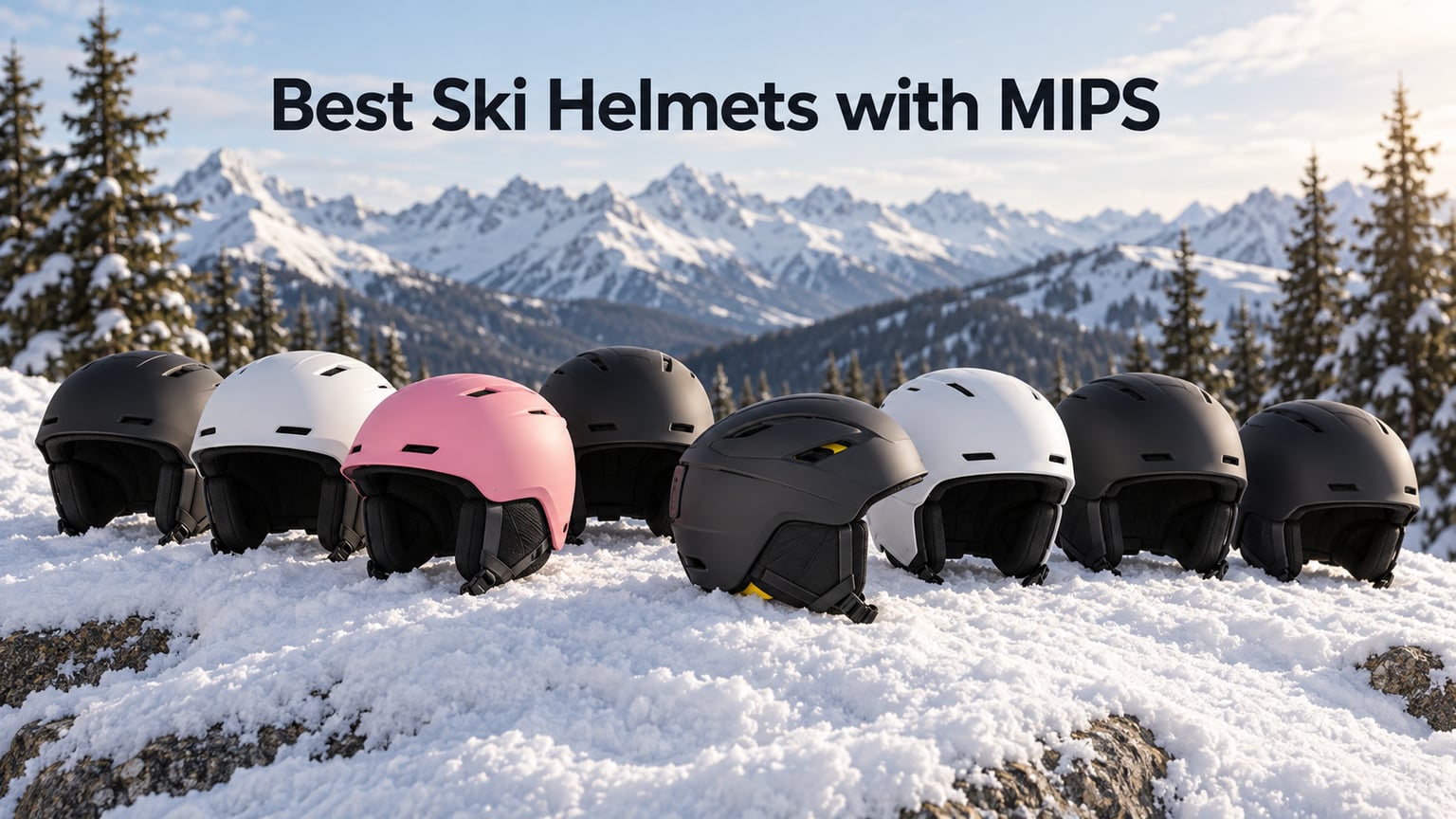
Most falls on snow are not straight-down drops. They are glances off a mogul, slow tumbles through a tree well, awkward landings where the back of the head clips first. That rotation, not the straight-on hit, is what separates a good day from a concussion, and it is the entire reason a ski helmet with MIPS behaves differently from a helmet without one.
That is the filter we applied to this list of the best ski helmets with MIPS in 2026. Every helmet below carries a genuine rotational-impact slip layer, either MIPS, MIPS Evolve, or a combined MIPS and Zonal Koroyd build. We left out plenty of well-reviewed helmets that only pass the linear-impact test, because that is not the question most skiers are asking right now.
We weighed fit, venting, goggle integration, shell construction, warranty, and the size of the verified review base behind each model. The forums get this right more often than the spec sheets do: riders consistently rank fit first, then venting, then safety tech, and only then price. Our picks follow that order. If you also ride on two wheels, our mountain biking helmet guide covers the fit side of things in more depth.
Top 3 Best Ski Helmets With Mips (October 2026)

Giro Ledge MIPS Snow Helmet
- MIPS slip plane
- Auto Loc 2 self-adjusting fit
- Stack vent and Super Cool Vents
- Removable ear pads

Smith Mission MIPS
- MIPS plus Zonal Koroyd
- 14 one-hand vents with AirEvac
- Dial fit
- Snapfit SL2 ear pads

Giro Avera MIPS
- Integrated MIPS slip plane
- Thermostat Control venting
- In Form Fit with 6cm adjustment
- Women's styling
Quick Overview: Best Ski Helmets with MIPS in 2026
| Product | Specifications | Action |
|---|---|---|
| Giro Ledge MIPS Snow Helmet |
|
Check Latest Price |
| SMITH Mission MIPS |
|
Check Latest Price |
| Giro Avera MIPS Ski Helmet |
|
Check Latest Price |
 SMITH Vantage MIPS SMITH Vantage MIPS |
|
Check Latest Price |
 POC Obex MIPS Ski Helmet POC Obex MIPS Ski Helmet |
|
Check Latest Price |
 Giro Ratio MIPS Ski Helmet Giro Ratio MIPS Ski Helmet |
|
Check Latest Price |
 OutdoorMaster ELK MIPS Ski Helmet OutdoorMaster ELK MIPS Ski Helmet |
|
Check Latest Price |
 OutdoorMaster Kelvin II MIPS Ski Helmet OutdoorMaster Kelvin II MIPS Ski Helmet |
|
Check Latest Price |
The short list
Best overall: Giro Ledge MIPS. Self-adjusting fit, a hard-shell build, and the deepest verified review base in this group at a 4.7 rating across more than a thousand ratings.
Best for the money: Smith Mission MIPS. MIPS plus Zonal Koroyd, fourteen one-hand vents, and audio-compatible ear pads in the mid tier.
Best for a women’s fit: Giro Avera MIPS. Integrated MIPS, Thermostat Control venting, and styling cut specifically for a narrower head shape.
Best for venting control: Smith Vantage MIPS. Twenty-one vents with a dual regulator and BOA 360 fit for genuine micro-adjustment.
Best all-mountain: POC Obex MIPS. The most current MIPS platform here, a polycarbonate shell, sliding vents, and a two-year warranty.
Best for a low-profile shape: Giro Ratio MIPS. Contoured and slim, so neck warmers and face masks sit flat underneath it.
Best budget pick: OutdoorMaster ELK MIPS. A reinforced in-mold polycarbonate shell with MIPS and a detachable liner at the entry point of this list.
Best for budget venting and warmth control: OutdoorMaster Kelvin II MIPS. Fourteen vents and detachable earmuffs, with three published shell sizes.
What Is MIPS in a Ski Helmet?
MIPS stands for Multi-directional Impact Protection System. It is a low-friction slip layer fitted between the helmet’s EPS foam liner and your head, designed to let the head slide a few millimetres relative to the shell on an angled impact instead of driving straight through the liner.
On an oblique or tumbling hit, that relative movement dissipates part of the rotational energy across the interface rather than transmitting all of it into the skull. Snow falls almost always include a glance, a spin, or an off-axis component, which makes rotational management the part of protection that matters most on a piste or in the trees.
Here is the part the marketing pages usually skip. Neither ASTM F2040 nor CE EN 1077 requires MIPS, and a certified helmet without a slip layer is not unsafe.
What MIPS adds is margin against the specific mechanism that causes most snow-sports concussions. You will also hear the opposite claim in forum threads, that MIPS is a marketing sticker and the extra layer is just weight.
Treat both extremes with suspicion. The honest version is that this is a real mechanism with a modest benefit that is hard to verify independently, which is exactly why it is worth choosing when two otherwise equal helmets sit in the same tier.
Two other technologies show up constantly in the same conversations. Zonal Koroyd uses a thin layer of crushable tubes over the crown to absorb low-energy impacts, and it stacks with MIPS rather than replacing it. Sweet Protection’s 2Vi is a different approach again, built on a MIPS slip plane with VPD pads at specific impact zones. VPD, or viscoelastic polymer, is a material that stays hard until struck and then hardens further, which is a different physical idea from a slip layer.
1. Giro Ledge MIPS Snow Helmet – Best Overall MIPS Helmet
- Self-adjusting fit dials in without taking the helmet off
- Stack vent clears fogging goggles
- Removable ear pads and goggle retainer
- MIPS protection in a hard-shell freestyle shape
- MIPS layer can feel snug on first wear
- ABS shell is heavier than polycarbonate builds
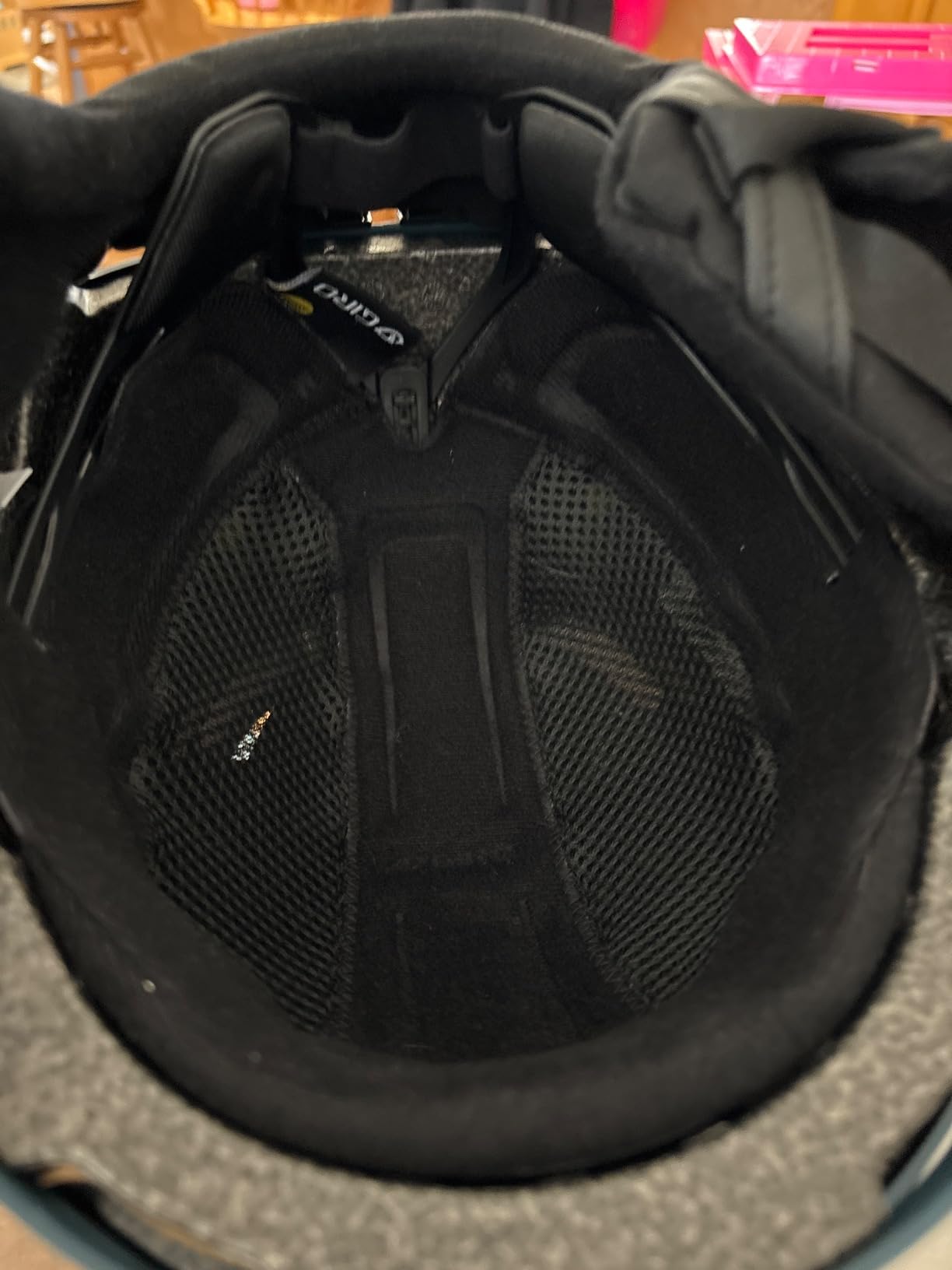
The Giro Ledge is the one we ended up recommending to the most people, for one reason above all others: it fits itself. The Auto Loc 2 system is a self-adjusting elastic band that merges with fixed straps across three circumference settings, with vertical tuning on top. In practice you pull the band, the helmet settles, and you do not spend a season fiddling with dials while standing in a lift line.
It is a hard-shell build, an ABS outer attached to an EPS liner, which is the construction that survives a decade of being thrown in a car boot. Freestyle styling means it looks less like a race helmet than most, and the Stack Vent sits directly behind the goggle lens so warm air leaves through the same channel your goggles use to stay clear.
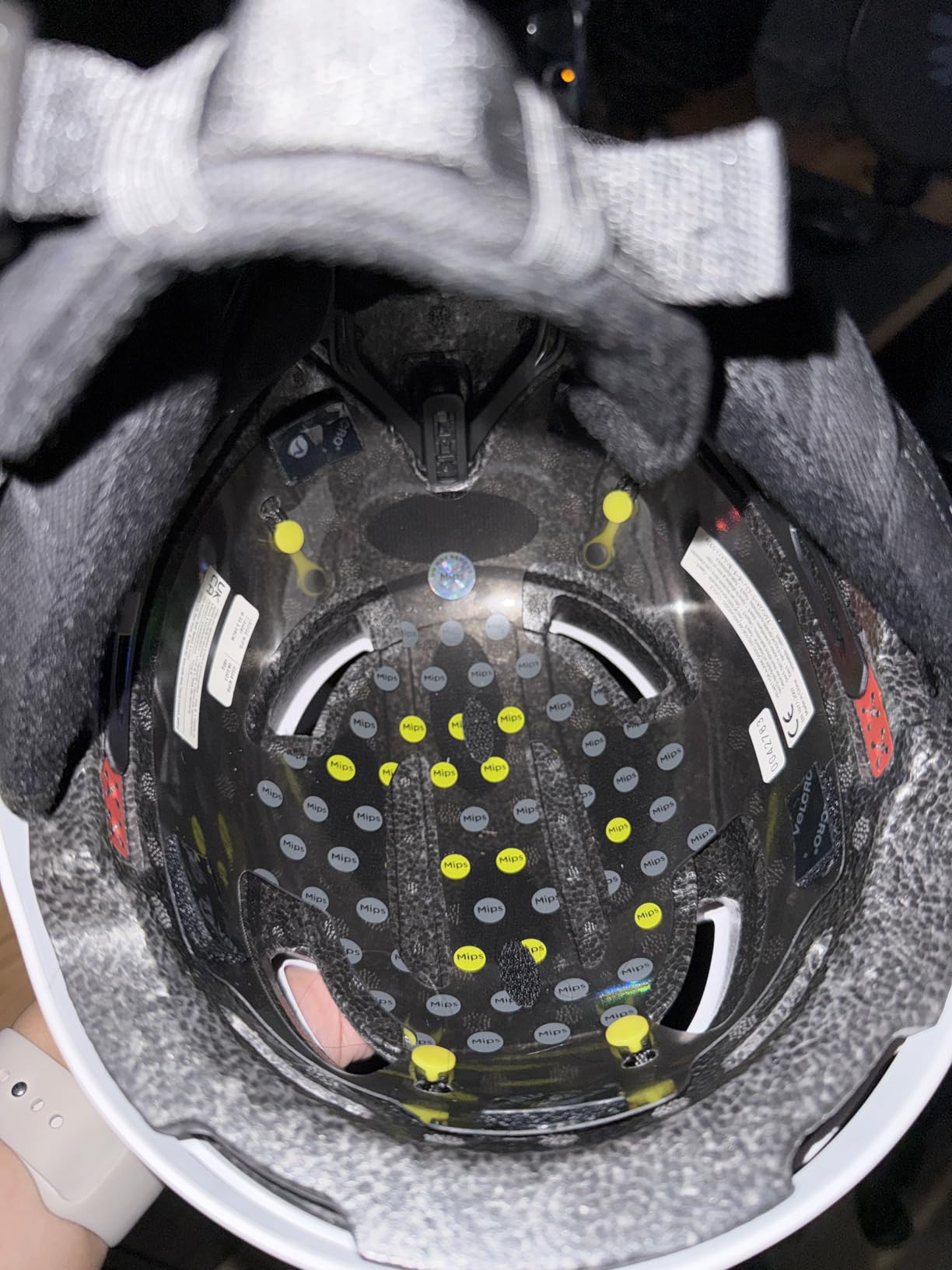
The number behind this pick is the reason it leads. It carries 1172 verified ratings at 4.7, with 84 percent of them at five stars, which is the largest confirmed review base of any MIPS helmet we examined. Buyers repeatedly point at the self-adjusting fit, the venting, and the fact that the ear pads and goggle retainer both come out.
Compatibility is a quieter strength. The removable goggle retainer works with any strap, not only a matched brand, and the ear pads are shaped to accept aftermarket audio systems. Stack alignment with the goggle lens means the vent sits where it does the most work, and vertical tuning at the rear lets you settle the shell without a second dial to lose on a lift ride.
The single year warranty from the brand is on the shorter side compared with the two-year coverage on the premium pick further down, and the shell is a glued hard-shell rather than an in-mold bond. Neither matters much if the fit is right, and here it usually is.
Why it works for most skiers?
Because the fit system does the fitting. If you are between sizes or your head shape is somewhere unusual, the three circumference settings plus vertical tuning absorb a surprising amount of variation. A rider who says the helmet can run small is telling you to check the size chart before ordering, not that the helmet is badly made.
Where it falls short?
The ABS shell is heavier than the polycarbonate builds on this list, and the added bulk of a slip-plane layer is noticeable on a long skin-in. Ear pads are removable, which helps, but anyone chasing the lightest helmet for ski touring will not find it here. Vent count is also modest rather than generous.
2. Smith Mission MIPS – Best MIPS Helmet for the Money
- Two impact systems working together
- Fourteen vents adjustable with one hand
- Lightweight enough for full days
- Audio-chip compatible Snapfit SL2 ear pads
- Fewer vents than the premium Smith models
- Dial gives less micro-adjustment than a BOA rear dial
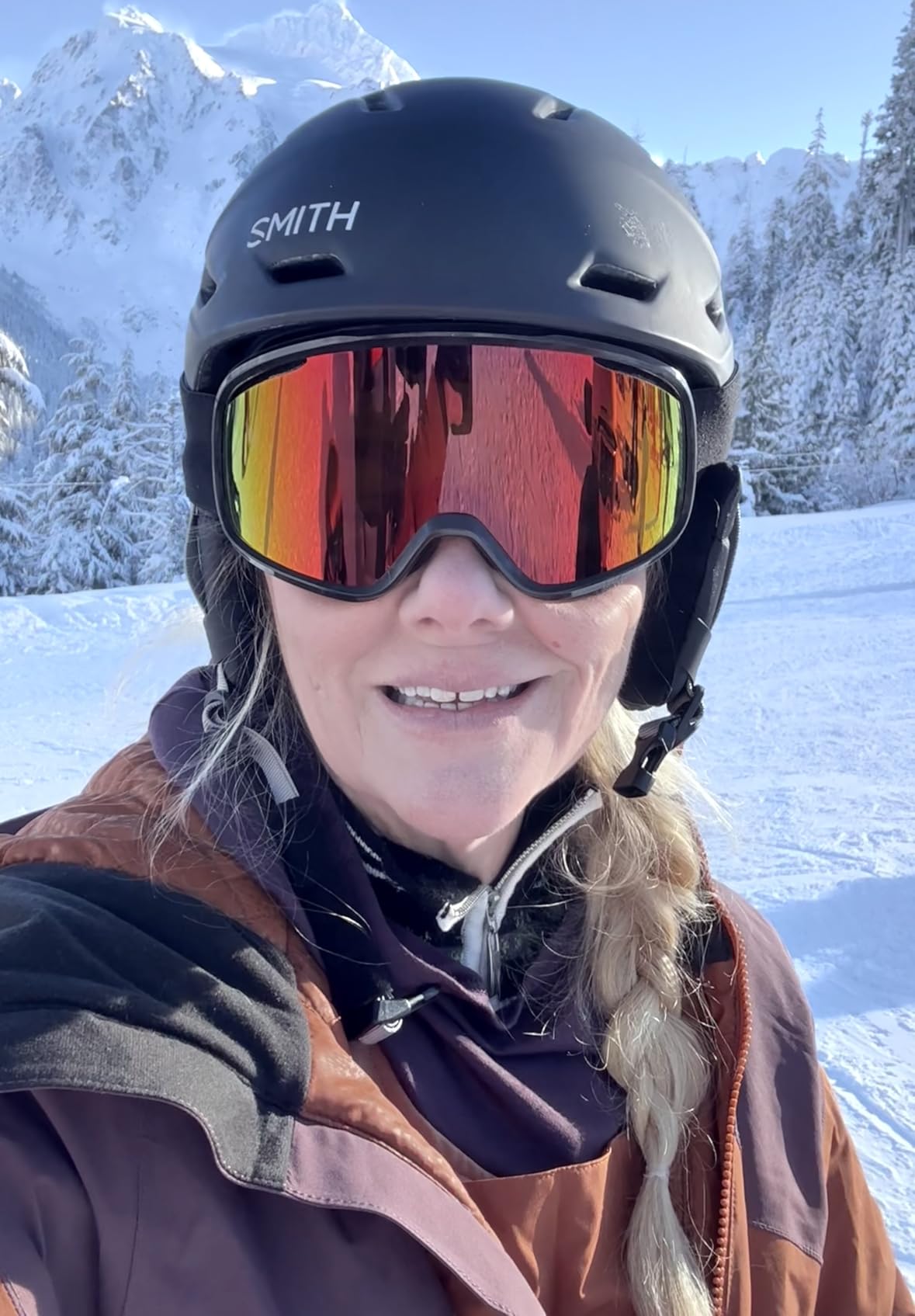
The Mission is the pick if you want MIPS without paying flagship money, and it is the only helmet here that stacks two different impact systems. The MIPS slip plane handles rotation, and Zonal Koroyd adds crushable coverage over the crown for the low-energy top-of-head hits that happen constantly in tree terrain.
Ventilation is the standout. Fourteen vents are all adjustable with one hand through a single control, and the AirEvac system routes air through the shell and into the goggle lens to keep it clear. Reviewers who own premium Smith helmets tend to come back to this one because the fog performance holds up on a wet day.
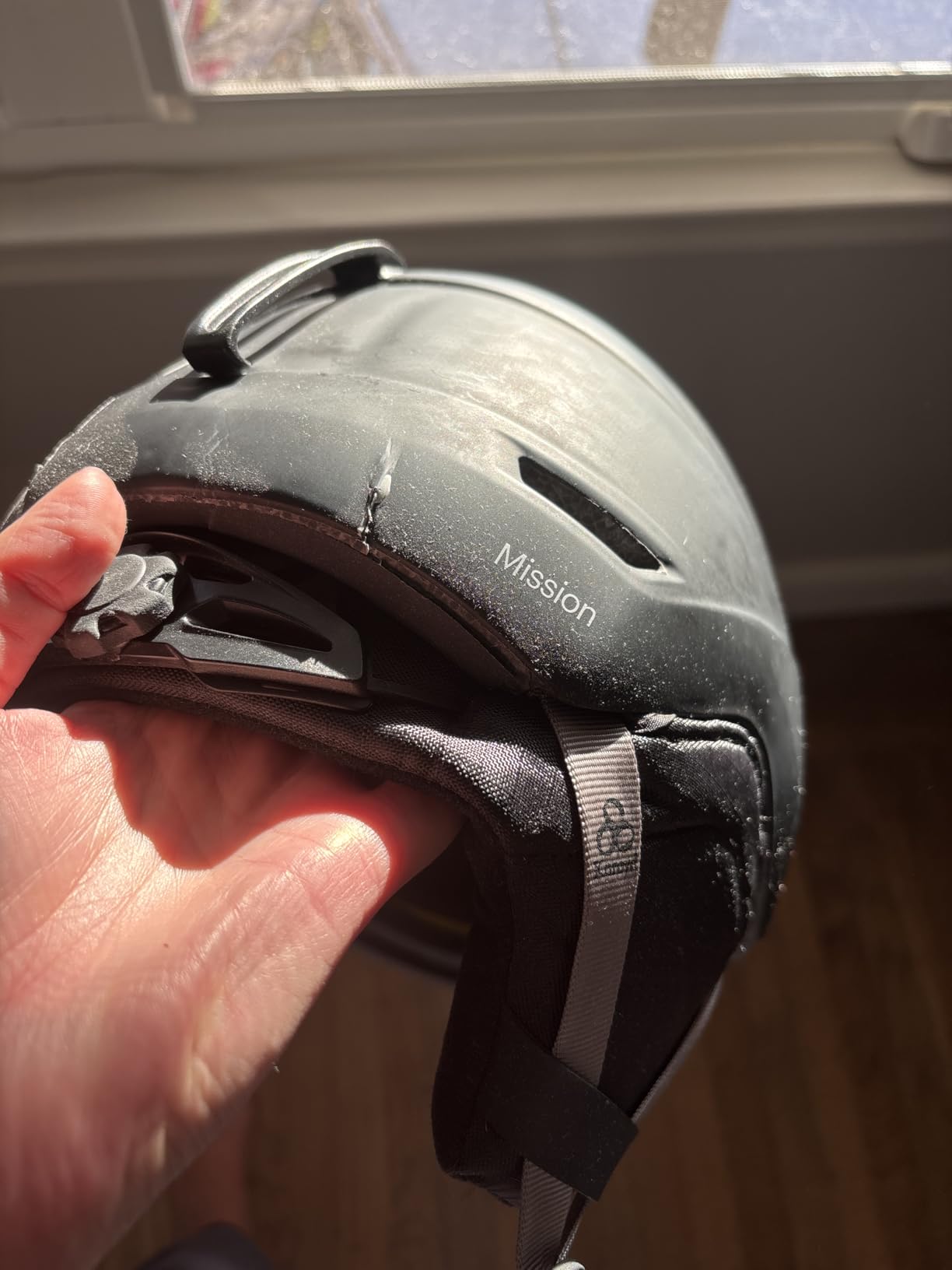
Certification is broad, with ASTM F2040, CE EN 1077 Class B, CPSC, and CE EN 178 all listed, and the Snapfit SL2 ear pads are removable and audio-chip compatible if you run Bluetooth in the helmet. It weighs in around 1.5 pounds and stays comfortable across a full day.
The shell is a hard ABS outer over an EPS liner, which is the classic durable construction rather than the lighter in-mold bond, and it is why the helmet feels planted rather than feather-light. Ear pads remove cleanly for washing between trips, and the AirEvac path is integrated into the shell rather than being an add-on port.
One practical note for touring riders: this is a resort-shaped lid with a fixed brim and full ear coverage, which is right for lift days and slightly warm for long skin-ins. For genuinely weight-critical touring, look at the polycarbonate builds in this roundup instead.
Where it earns its slot?
This is the helmet to shortlist first if you ski a lot in poor weather and care more about a clear lens than about weight. The combination of dual impact protection, real venting control, and audio-ready ear pads in the mid tier is genuinely hard to match. Buyers call it comfortable enough to forget about, and 82 percent of ratings sit at five stars.
Where you will feel the trade-off?
The dial fit is coarser than the BOA 360 system on the Vantage, so if you are fussy about millimetre-level tension, this is not it. A minority of reviewers also find the fit snug and recommend sizing up, which is worth doing before you commit.
3. Giro Avera MIPS – Best MIPS Helmet for a Women’s Fit
Giro Avera MIPS Womens Snow Helmet – Matte White (Limited) – Size S (52-55.5cm)
- Highest average rating in the roundup
- Thermostat Control venting adjusts instantly
- Styling and sizing cut for a narrower head
- Lower wrap shell resists scuffing
- Published product dimensions are inconsistent with a full-size helmet
- Two-piece shell may wear sooner under heavy use
- Smaller review base than the other picks
The Avera is the one to look at if off-the-shelf helmets have always sat oddly on your head. Rather than a smaller version of a men’s shell, it is built around women’s styling and details, and the integrated MIPS slip plane merges with the fit system instead of being a separate floating layer. That integration is the interesting engineering here: fewer gaps between the protection and the retention, less movement over a long day.
Thermostat Control venting uses a low-profile button on the outside of the shell, so you can open and close the airflow with a glove on and without stopping. The In Form Fit dial at the base of the helmet gives up to 6cm of adjustment and is usable with gloves on too, which matters when the lifts are slow and cold.
At a 4.8 average with 87 percent five-star ratings, it has the highest rating of any helmet in this roundup. The catch is honest and simple: 109 ratings is a much smaller base than the other picks, so there is less long-term durability feedback to lean on. The two-piece shell with an I.M. Hardbody lower wrap adds toughness where knocks happen, but a fused single shell would wear better over the years.
Who it suits?
Anyone who has struggled to find a MIPS helmet in a narrow head shape, or who wants a helmet that does not look like a race lid. The vertical tuning also lets you match different goggle and head shapes and close the gap at the front, which is where most fit complaints start.
Where it is imperfect?
The listed product dimensions on some variants do not match a real helmet size, so trust the circumference chart rather than the packaging numbers. And if you want the benefit of a decade of buyer feedback, the review volume here is thinner than the rest of the list.
4. Smith Vantage MIPS – Best for Ventilation Control
- Strongest venting feedback in this group
- BOA 360 gives true micro-adjustment
- Removable audio-chip compatible ear pads
- Polycarbonate shell keeps the weight down
- Sizing runs small against the published size chart
- Step-up over cheaper Smith models is debatable
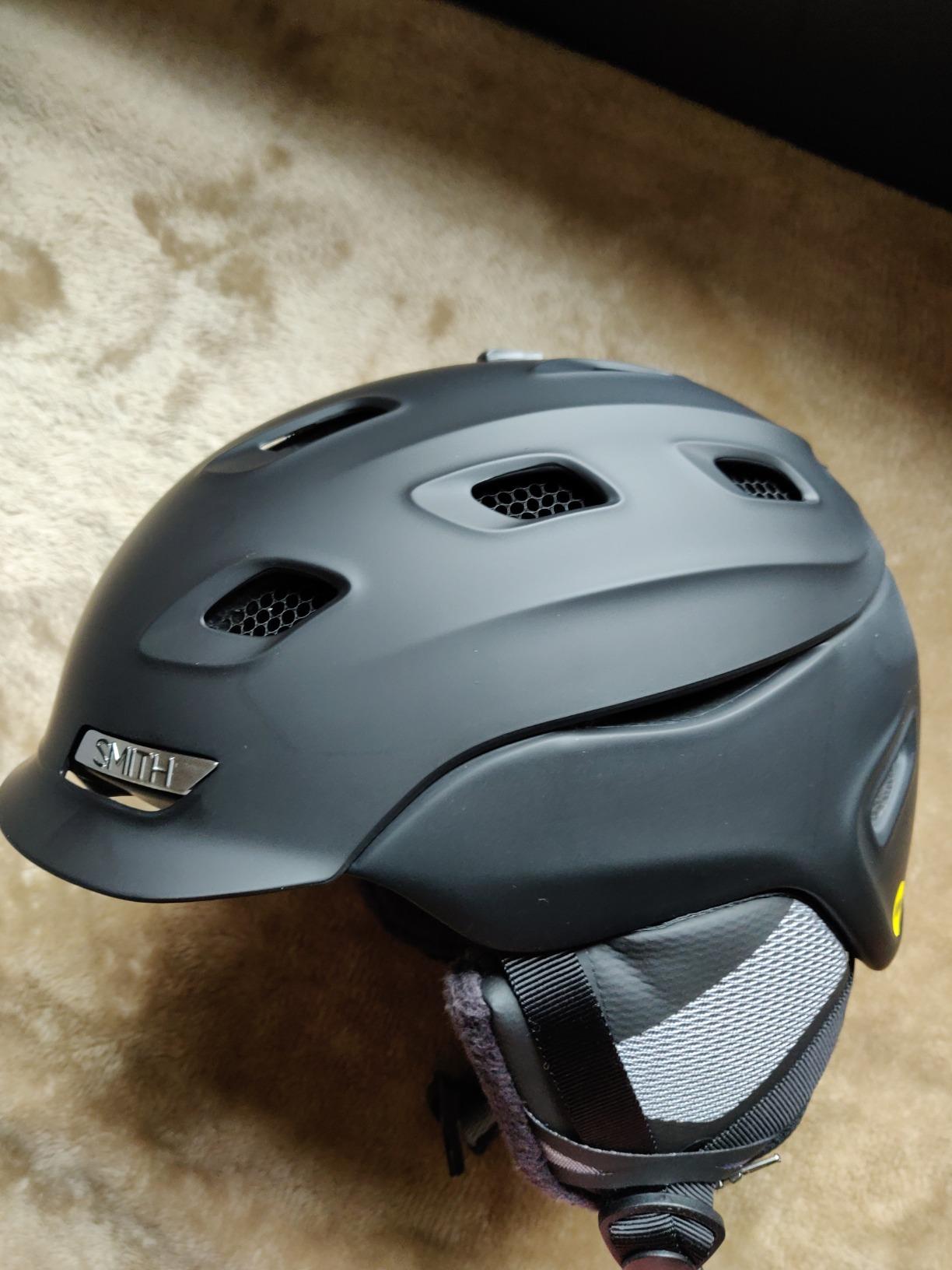
Venting is the single most repeated complaint in ski helmet discussions, and the Vantage is the direct answer to it. Twenty-one vents are split front and rear under a dual regulator climate system, adjustable with one hand, plus AirEvac integration that pulls air through the shell and pushes it into the goggle lens. If you have ever taken your helmet off on the climb because the inside got damp, this is the helmet built to stop that.
Fit is handled by the BOA 360 system, a cable-guided dial that micro-adjusts tension evenly around the whole head rather than pinching at a dial on one side. That even tension is the part that keeps a helmet level on the head, which riders tell us is their own top safety worry, ahead of any technology in the shell.
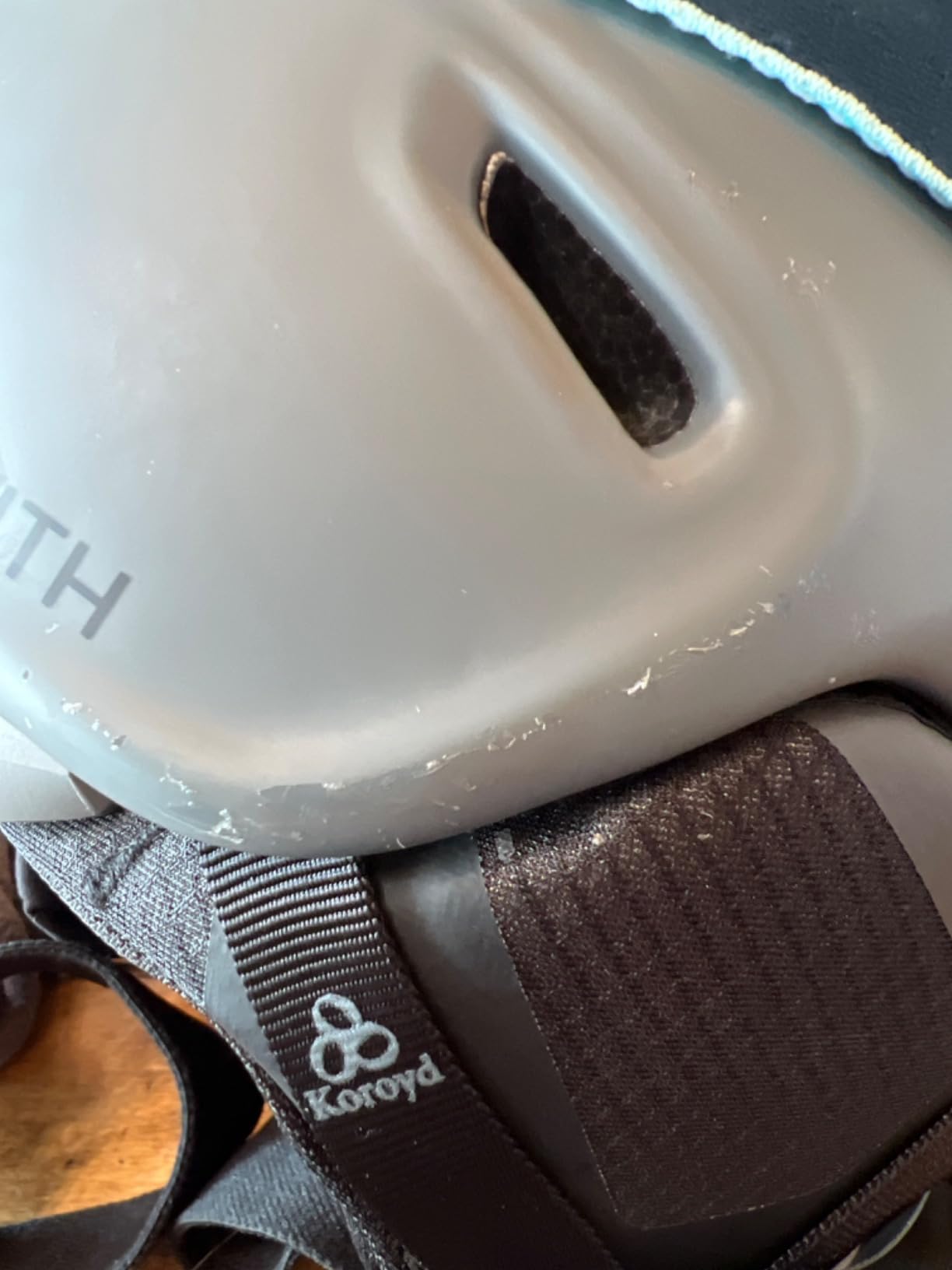
It is also one of the lighter shells here, using polycarbonate rather than ABS, and the Snapfit SL2 ear pads are removable and accept an audio chip. Eighty-five percent of reviews are five stars, with unprompted praise for ventilation, comfort, and adjustability.
What makes it different?
The dual regulator is the feature to try before you buy, if you can. Venting that you can open on the descent and close on the lift gives you a much bigger range than a fixed or single-slider design, and it is the reason this helmet suits spring skiing and warm afternoons as well as cold tree days.
How to buy it?
Size up. The most repeated theme in the reviews is that it runs small against the manufacturer’s chart, and several buyers ended up in an XL. A few also decided the step up from a cheaper Smith model was hard to justify, which is a fair call if venting is not your problem.
5. POC Obex MIPS – Best All-Mountain MIPS Helmet
- Most current rotational protection platform here
- Longest warranty in the group
- Sliding vents work with gloves on
- Removable ear pads and stable 360 fit
- Top of the tier in this roundup
- Lowest average rating of the picks
- Shape suits fewer head profiles
POC builds the Obex around what it calls the whole helmet concept: protection, comfort, and performance balanced rather than one at the expense of the others. The MIPS Evolve layer is the most current version of the slip-plane technology in this roundup, which is a real technical difference and not just a version bump on the label.
The shell mixes a polycarbonate lower structure with an ABS top, so you get the light feel of a modern in-mold-style build in the places that get hit and the tougher material where scuffs happen. Vents slide rather than click, which sounds minor until you try operating a small control with a stiff ski glove on.
Even with 76 percent of reviewers giving five stars, the one-star share of 5 percent is the highest in this group, and the reason is nearly always shape rather than build. If you have a rounder or larger head profile, the shell is less accommodating and you should try it in a shop before committing.
Why it earns a place?
Two years of manufacturer warranty, the longest warranty of any pick here, which is a reasonable proxy for how long POC expects the shell to last. It is also the only helmet on this list built around a genuinely all-mountain brief, covering park, boot, and long tour days without needing a second helmet for the resort.
What you give up?
It sits at the top of the tier in this roundup and carries the lowest average rating of the eight, which is a fair warning that the spend buys a platform rather than a flawless fit. The 360 fit system avoids pad changes, which is convenient, but it also means fewer ways to fine-tune for an unusual shape.
6. Giro Ratio MIPS – Best for a Low-Profile Shape
Giro Ratio MIPS Snow Helmet – Matte Black (Limited) – Size S (52-55.5cm)
- Low-profile shape sits flat under neck warmers
- Dial micro-adjusts in seconds
- Light ear pads accept Bluetooth speakers
- Vertical Tuning closes the gaper gap
- Can sit high on larger head shapes
- Padding is light for riders who run cold
The Ratio is the one we recommend to skiers who wear a neck warmer or a face mask. Its contoured, low-profile shape does not bunch fabric underneath the rear edge, which sounds cosmetic until you have tried to tuck a gaiter under a helmet with a high rear profile. It is also comfortable worn over a balaclava or a tight ski cap, according to owners.
Vent control is Thermostat Control, a single low-profile external button that opens and closes the vents, paired with a Stack Vent aligned with the goggle lens to keep it clear. The In Form Fit dial gives up to 6cm of adjustment and dialed micro-adjustment takes seconds rather than a fitting session.
With 366 verified ratings at 4.6 and 80 percent at five stars, this is the most review-rich Giro option here and it ranks 43rd in Snow Sport Helmets, which tells you something about how commonly it is actually worn. It is also compatible with aftermarket audio systems, and the light ear pads do not block hearing.
Why it stands apart?
Vertical Tuning is the feature to understand. It lets you shift the internal padding height to suit different goggle and head shapes, which closes the gaper gap at the front and stops a helmet riding back on the forehead. It is the closest thing to a custom fit you will find on a mid-priced helmet.
Where it does not suit?
On larger head shapes it can still ride slightly high, and the padding is light for anyone who runs cold, so you will want a thin liner underneath on a January morning. If warmth matters more than a clean profile, the Avera’s detachable liner option is the better direction.
7. OutdoorMaster ELK MIPS – Best Budget MIPS Pick
OutdoorMaster ELK MIPS Ski Helmet – Snow Sport Helmet Snowboard Helmet for Men Women & Youth
- Strongest category demand signal among budget picks
- Detachable lining adapts to warmer days
- Goggle strap retainer keeps lenses stable
- In-mold PC shell is light and durable
- Only eight vents in the roundout
- Stated age range skews younger than adult rivals
The ELK is an entry-level certified MIPS helmet and one of the most widely bought, ranking 24th in Snow Sport Helmets. The construction is better than its tier suggests: a reinforced polycarbonate outer shell with in-mold bonding to a shock-absorbing EPS core, which is a better shell than a glued-on plastic cap on a far more expensive lid.
Eight air vent holes is the whole ventilation story, and the apertures are shaped to shield against freezing wind rather than to move a large volume of air. That is a deliberate trade for a lower price, and it shows most on a warm spring afternoon rather than on a cold day.
What you do get is a detachable lining and earmuffs, a soft chin band that relieves pressure points, and an adjustment dial with a goggle strap retainer to stop lenses shifting in a fall. Eighty-one percent of 459 ratings are five stars, and the most common complaint owners report is simply the modest vent count.
Who should buy it?
Occasional skiers, first-season riders, families fitting out a second helmet, or anyone who needs a certified MIPS lid for the least money. A detachable liner that can come off when the temperature climbs makes it more useful across a season than the vent count suggests.
Where it runs out?
Deep-trail days in spring are where eight vents stop being enough, and the stated age range skews younger than the adult-focused picks. The build will not be the most durable over a decade either, so plan on replacing it sooner than a polycarbonate-and-EPS shell from a full-service brand.
8. OutdoorMaster Kelvin II MIPS – Best Budget Venting and Warmth Control
- Best overall demand signal in the roundup
- Fourteen vents beat most rivals at this tier
- Detachable lining and earmuffs for temperature control
- Printed circumference chart helps with sizing
- No model number published in the listing
- ABS shell is heavier than polycarbonate alternatives
The Kelvin II solves the ELK’s biggest weakness. Fourteen air vents give it noticeably more airflow than the eight-vent budget option, and the vent apertures are again shaped to block freezing wind rather than let it straight in. The shell is a reinforced ABS with an in-mold EPS core, so it is heavier than the polycarbonate builds, but this is the pick if you are skiing hard and cold rather than posing for a photo.
Warmth is adjustable rather than fixed. The detachable lining and earmuffs come out when the temperature climbs, and a soft chin band relieves the pressure point under the jaw that most cheap helmets get wrong. Fit is handled with an adjustable dial, and the published sizing chart is unusually clear: small from 48 to 54cm, medium from 54 to 58cm, large from 58 to 62cm.
It ranks 11th in Snow Sport Helmets, the strongest demand signal of any helmet in this roundup, with 324 ratings at 4.6 and 83 percent at five stars. Owners consistently mention ventilation, warmth from the detachable liner, and how straightforward the dial is.
Why it earns the eighth slot?
For anyone buying their first certified MIPS helmet on a budget, the combination of vent count, seasonal liner, three published sizes, and a clear sizing chart is more useful than a cheaper shell with two vents. Fit feedback is positive when buyers actually follow the circumference ranges printed on the listing.
What to know before ordering?
No model number is published, which makes warranty support harder to trace, and the ABS shell is the heaviest material on this list. If you care about longevity, factor in replacing this sooner than a polycarbonate build would need replacing.
How to Choose a Ski Helmet with MIPS?
Check the certification before anything else
In the United States, ASTM F2040 is the snow-sports standard. In Europe, CE EN 1077 is the standard, and its classes differ: Class A covers downhill skiing and speed riding, Class B covers the conventional piste and freestyle use most skiers want, and Class C is for slow-speed use such as children’s helmets and tobogganing. Several helmets on this list carry both, so they travel well.
Watch out for the CPSC marking on snow helmets. CPSC is the US bicycle helmet standard, and a bike-only certification is not a substitute for snow certification even if the two use the same EPS and MIPS. The Smith Mission, for example, lists both because it genuinely holds them, which is a good sign of how the spec sheets should be read.
Understand the different rotational systems
MIPS is a slip layer, so the head slides a few millimetres on an angled hit. Zonal Koroyd is a lattice of crushable tubes spread over the crown, absorbing lower-energy impacts without adding much weight. 2Vi, used by Sweet Protection, combines a MIPS slip plane with VPD pads at chosen impact zones. VPD is a viscoelastic material that stays soft in normal conditions and hardens when struck, so it behaves differently from both.
None of these replaces basic impact absorption. All of them sit inside a certified shell and EPS liner, and the first question on any purchase is still whether that shell is certified for snow and fits your head. Our beginner welding helmet guide covers the same principle in a different category, where certification markings are just as easy to misread.
Get the fit system right
There are three common approaches. A dial at the base, like Giro’s In Form Fit or the Smith dial fit, gives a short range of circumference change in coarse steps. A BOA-style cable dial, like the 360 Fit System, applies tension evenly around the head for finer control. A self-adjusting band, like the Giro Auto Loc 2, uses elastic and fixed straps across a few settings and needs no adjustment at all once it is on.
For most people the self-adjusting system is the least frustrating and the dial is the most flexible. What matters more than the system is whether the helmet sits level and low on the forehead, because a helmet that shifts back after the first fall is useless for the second one.
Judge venting by the vents you can reach
Vent count is a poor proxy for usable airflow. What separates good from poor is whether you can adjust the vents with a glove on while standing still, and whether the air path is routed into the goggle lens to clear fog. AirEvac on the Smith helmets and the Stack Vent on the Giro models both do the second part, and it is the reason those brands attract so much fog-related praise.
Check the two things that are easy to forget
Glasses and audio. If you wear prescription glasses or glasses under your goggles, check that the ear pads sit flat without pressing the temple arm, and that the shell has enough clearance for a goggle strap sitting over a frame. For audio, look for removable ear pads marked audio-chip compatible, such as the Snapfit SL2 pads on both Smith models here, or compatibility with aftermarket systems on the Giro Ratio and Giro Ledge. Built-in audio and audio-ready are different things, and only the second lets you choose the headset.
For ski touring, weight matters more than for resort days. The polycarbonate builds here, particularly the Giro Ratio and the POC Obex, are the ones to weigh, since you will be carrying the helmet on your head for every climb.
How to Measure Your Head and Get the Right Ski Helmet Fit?
Most fit problems come from a measurement taken over hair, or from trusting a size chart when the shape does not match. Measure once, properly, then use the adjustment system to finish the job.
Measure your circumference. Wrap a soft tape measure around your head just above the eyebrows and the top of the ears, level all the way around. Keep it snug but not tight, and read the number in centimetres if the listing uses them.
Check the published range, not the letter. Compare against the size chart on the listing. If you sit on the boundary between two sizes, that is a reason to try on, and usually a reason to size up.
Test the position. On your head, the lowest edge of the shell should sit one to two finger-widths above your eyebrows, level across the front, with no pressure points at the temples or the back of the skull.
Shake test it. Push the shell front to back and side to side. It should not move independently of your head, and the ear pads should stay put rather than shifting with the shell.
Test it over a liner. If you plan to wear a beanie or a thin balaclava, put it on before you judge the fit, and never size a helmet to fit a thick beanie. Wear the liner instead and buy for the bare head.
Riders rank fit first, style second, ventilation third, and MIPS fourth, which is worth remembering when a spec sheet tries to sell you on layer four. Our beginner water ski guide follows the same logic, in that the equipment that fits gets used and the equipment that does not, does not.
When to Replace a Ski Helmet?
A helmet that took a hard impact should be retired immediately, whatever it looks like. EPS is designed to crush once and stay crushed, so the structure that absorbed the blow is gone even if the shell looks fine. Check the liner for a deep dent or a crack, and check the shell for a split.
After a light scrape or a topple where you barely moved, inspect rather than discard. Look for MIPS slip-plane separation or visible movement of the layer relative to the liner, crushed or split foam, deformed shell edges, and any crack around vents or the goggle clip. If you find the slip plane has shifted, that helmet is finished.
Without a major impact, plan on the manufacturer’s guidance plus your usage. A shell used daily in a ski rack, in a car, and in a wet boot bag ages faster than one that lives on a shelf, and sun exposure and sweat both break down foam and webbing. Riders who justify a premium helmet over a budget one almost always use the same math, which is cost per season rather than cost per purchase. A hard shell worn for half a decade often comes out ahead, provided the fit still works, and the fit changes before the shell does.
Do not buy a used MIPS helmet as a step down. Check for cracks, foam dents, a flattened liner, an expired or missing warranty, and a slip plane that has separated. A used helmet with no known impact history is still a helmet with an unknown impact history.
Frequently Asked Questions
Is MIPS necessary in a ski helmet?
No. Neither ASTM F2040 nor CE EN 1077 requires a slip layer, so a certified helmet without MIPS is not unsafe. What MIPS adds is protection against the angled and rotational impacts that cause most snow-sports concussions, which is a real margin rather than a requirement.
Does MIPS actually make a difference?
It works by letting the head slide a few millimetres relative to the shell on an oblique hit, so some rotational energy is dissipated across the interface rather than driven into the skull. The measured benefit is meaningful but hard to verify independently, which is why we treat it as one factor alongside fit and certification, not the only factor.
Is a helmet without MIPS still good?
Yes, as long as it is certified to ASTM F2040 or CE EN 1077 Class B and fits well. You give up rotational-impact margin, which matters most in trees, powder, and variable snow. On groomed beginner terrain, fit and certification still matter more than the slip layer.
What is the best MIPS helmet for the money?
The Smith Mission MIPS is our value pick because it combines a MIPS slip plane with Zonal Koroyd, fourteen one-hand adjustable vents, AirEvac goggle integration, and audio-compatible ear pads in the mid tier. Below that tier, the OutdoorMaster ELK MIPS gives you certified MIPS protection on an entry budget, with venting as the compromise.
How are ski helmets supposed to fit?
The lowest edge of the shell should sit one to two finger-widths above your eyebrows, level across the front, with no pressure at the temples. A shake test should produce no independent movement of the shell, and you should size to your bare head rather than sizing up to fit a beanie.
Can I wear glasses with a ski helmet?
Usually yes, provided the ear pads lie flat and the frame temple does not get pinched. Try it on in a shop with your actual glasses and your intended goggle strap over the top. A low-profile shell such as the Giro Ratio leaves more room at the temples than a tall rear profile.
Do I need to replace a ski helmet after a crash?
After a hard impact, yes, replace it. EPS crushes once to absorb a blow and stays crushed, so the liner has done its job even when the shell looks undamaged. After a light topple, inspect the shell, the foam, and whether the MIPS slip plane has shifted relative to the liner before deciding.
Is it worth getting a helmet with MIPS?
Worth it when the alternatives sit in the same bracket, which is often the case in the mid tier. Riders who keep a hard shell for five or more seasons get the best cost per season of any safety purchase on the mountain, and MIPS is the one upgrade that does not need replacing separately from the shell.
Final Verdict: The Best Ski Helmets with MIPS in 2026
The Giro Ledge MIPS wins this roundup because it solves the problem riders actually have, which is fit, and then adds a MIPS slip plane, a stack vent, and removable ear pads on top. Its 1172 ratings at 4.7 give us more confidence in it than any other helmet we looked at this season.
Buy the Smith Mission MIPS if you want two impact systems and full vent control in the mid tier, the Giro Avera MIPS if standard shells have never fit properly, the Smith Vantage MIPS if fogging is your recurring complaint, and the POC Obex MIPS if you want the newest slip-plane platform and a two-year warranty. Whatever you choose, measure your head, wear the liner you will actually use, and replace the helmet after any hard fall.
Full coverage for our other auto-darkening and protection gear sits in the auto-darkening welding helmet guide, if you are putting together a full kit.