
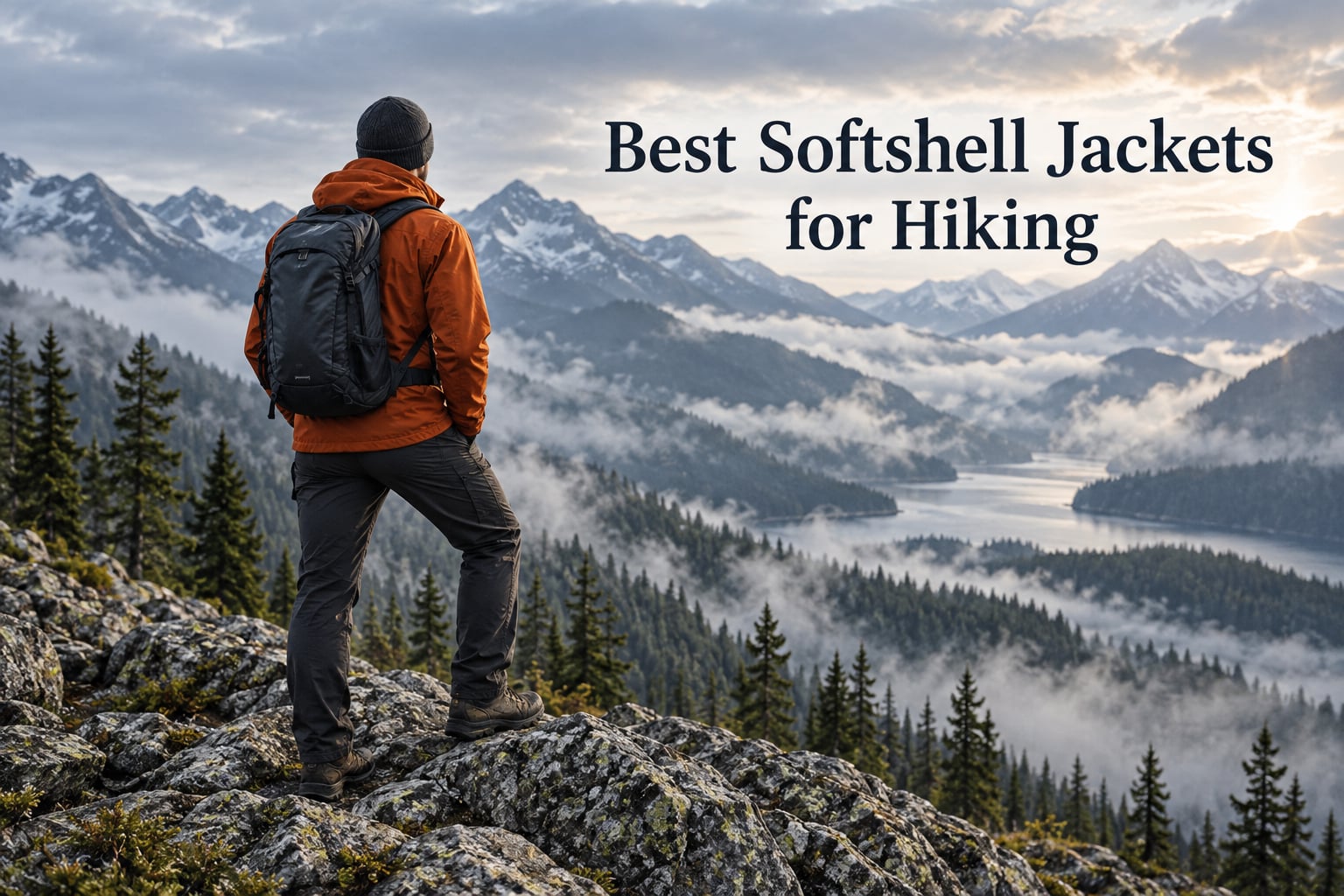
If you are picking one jacket to cover wind, drizzle and the chill you feel after an hour of climbing, the best softshell jackets for hiking are the softest answer to the question and the most common piece of kit we see on a shoulder-season trail. A softshell is a stretchy woven shell with a water-repellent finish, and it sits in a gap between a windbreaker and a rain jacket: warmer and more protective than a shirt, far more breathable than a hardshell.
That trade-off matters more than any brand name. Hiking makes heat fast, and sweat trapped under a waterproof membrane chills you within minutes, so a breathable layer you never take off usually beats a sealed one you shrug in and out of. The jackets below all breathe and move; none of them replace a taped rain shell in sustained weather, and we say so product by product rather than glossing over it.
We compared twelve softshells across fabric construction, published waterproof and breathability ratings, warmth, pocket layout, packability and the complaints owners actually report. We also line up what to carry alongside them, and if your trips run long or remote, our picks for satellite communicators for backcountry hiking and camera backpacks for hiking photographers cover the rest of the kit list.
Top 3 Best Softshell Jackets for Hiking in 2026

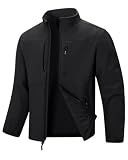
Outdoor Ventures Men’s Softshell
- Quiet non-crinkly shell
- Fleece-lined midweight
- Removable hood
- 5 pockets
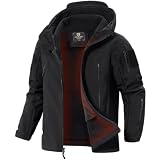
33,000ft Men’s Lightweight Softshell
- 8000mm waterproof rating
- 3-layer TPU membrane
- 7 pockets
Quick Overview: All 12 Softshell Jackets Side by Side
Every jacket below earned its place by doing something specific well. Read the award column first, then scroll to the full review for the fit, warmth and ownership details that never fit in a table.
| Product | Specifications | Action |
|---|---|---|
| Outdoor Ventures Men’s Softshell Jacket |
|
Check Latest Price |
| 33,000ft Men’s Lightweight Softshell |
|
Check Latest Price |
| FREE SOLDIER Waterproof Softshell Jacket |
|
Check Latest Price |
 Columbia Men’s Ascender Softshell Columbia Men’s Ascender Softshell |
|
Check Latest Price |
 Outdoor Ventures Women’s Fleece Lined Softshell Outdoor Ventures Women’s Fleece Lined Softshell |
|
Check Latest Price |
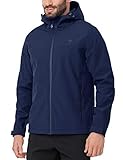 CAMEL CROWN Fleece Lined Softshell Jacket CAMEL CROWN Fleece Lined Softshell Jacket |
|
Check Latest Price |
 G Gradual Women’s Fleece Lined Softshell G Gradual Women’s Fleece Lined Softshell |
|
Check Latest Price |
 33,000ft Women’s Lightweight Softshell 33,000ft Women’s Lightweight Softshell |
|
Check Latest Price |
 Rdruko Men’s Lightweight Softshell Rdruko Men’s Lightweight Softshell |
|
Check Latest Price |
 MAGCOMSEN Men’s Fleece Lined Softshell MAGCOMSEN Men’s Fleece Lined Softshell |
|
Check Latest Price |
 TACVASEN Hooded Fleece Waterproof Softshell TACVASEN Hooded Fleece Waterproof Softshell |
|
Check Latest Price |
 33,000ft Men’s Hooded Waterproof Softshell 33,000ft Men’s Hooded Waterproof Softshell |
|
Check Latest Price |
1. Outdoor Ventures Men’s Softshell Jacket – Editor’s Choice All-Rounder
Outdoor Ventures Men’s Softshell Jacket Waterproof Fleece Rain Shell Coat
- Quiet non-crinkly fabric
- Survives repeated machine washing
- Packs small for travel
- Generous pocket count
- Runs small so size up
- Not fully waterproof in heavy rain
- Too light for deep cold
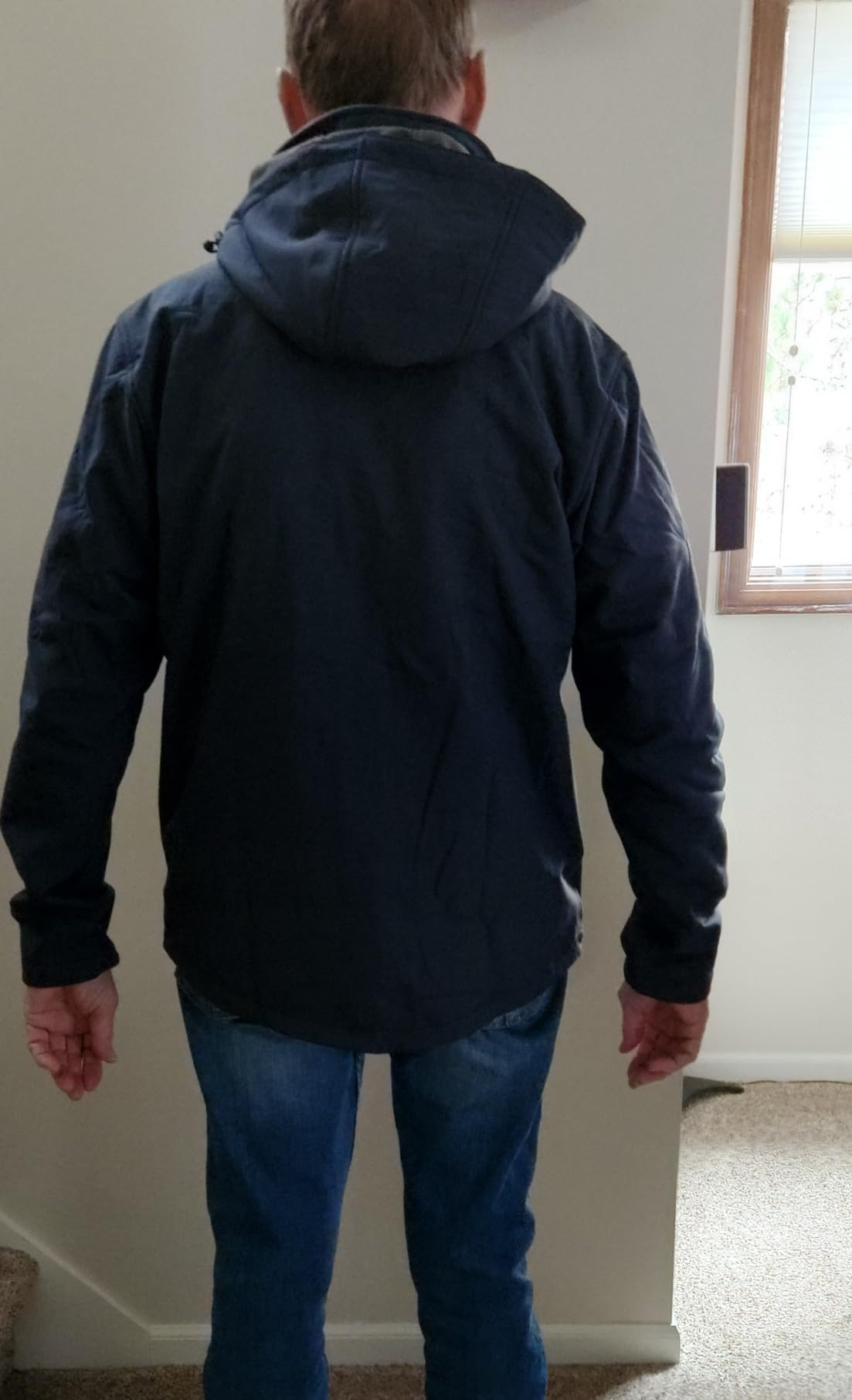
This is the jacket we hand to friends who ask for one softshell and want it to work on a trail in the morning and a car park at lunch. The midweight stretch face fabric has a soft brushed fleece lining, and the treated outer sheds light rain, moisture and snow without any crinkle when you move.
That quietness is the detail we did not expect to care about and now do. On a scramble or a fast descent, a face fabric that crackles every time you reach overhead is genuinely distracting, and this one stays silent.
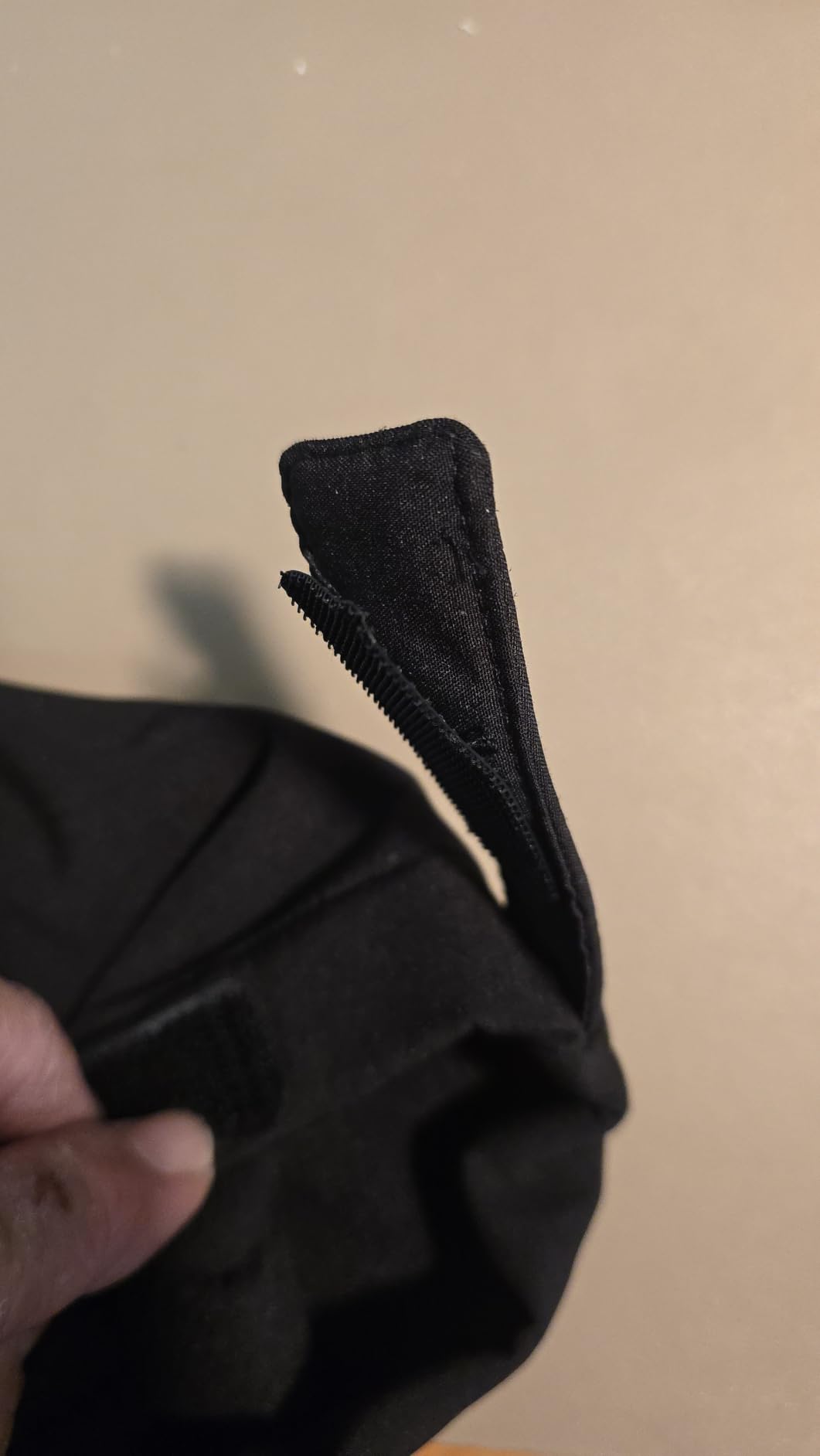
The hood, cuffs and hem all adjust, and the hood detaches entirely, which is a small convenience that matters when the jacket doubles as a town jacket through the winter. Adjustable drawcords at the hem and cuffs let you seal out a cold wind on a ridge without cinching the body.
Pocket count is good rather than extravagant: three outside zippered pockets with reflective pullers plus two inside pockets, one of which is chest-sized enough for a phone. That layout suits day hiking, cycling, climbing, fishing and commuting without looking like a technical uniform.
When this is the right jacket
If your hiking happens between roughly mild and genuinely cool conditions, in wind or passing drizzle, this is the one. It layers cleanly over a baselayer and under a pack shell, and owners consistently report it staying quiet, warm and undramatic after years of washes.
It also works well for anyone who needs one jacket for two contexts. Reviewers describe wearing it for hiking, cycling, climbing, fishing, camping and everyday wear without changing gear.
Where it falls short
Sizing is the main trap. Multiple owners say it runs small and they had to size up, so read the size chart rather than ordering your usual. If you are between sizes on the chest, size up.
It repels water rather than blocking it, so heavy rain can leak through the stitching seams. It is also a midweight layer, not a deep winter coat, and it is not the warmest option in this list.
2. 33,000ft Men’s Lightweight Softshell Jacket – Best Value
- Published waterproof and breathability figures
- Strong stretch for range of motion
- Seven pockets for gear
- Quiet performance fabric
- Slim cut feels restrictive over layers
- Warmth suits cool rather than cold weather
Most softshells in this roundup make vague claims about staying dry. This one prints the numbers: 8000mm waterproof and 1000g per square metre per 24 hours of breathability, achieved through a three-layer build of softshell outer, TPU membrane and inner fleece.
For a hiker who likes knowing what a jacket is doing, published specs are worth a lot. They also let you compare it honestly against the 10000mm jackets further down this list, which have more water headroom and less breathability headroom.
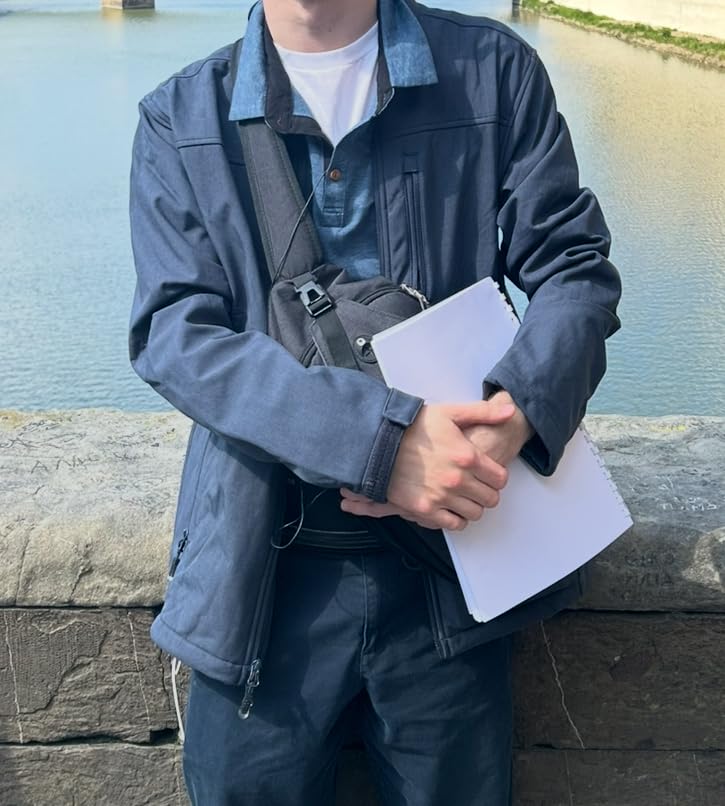
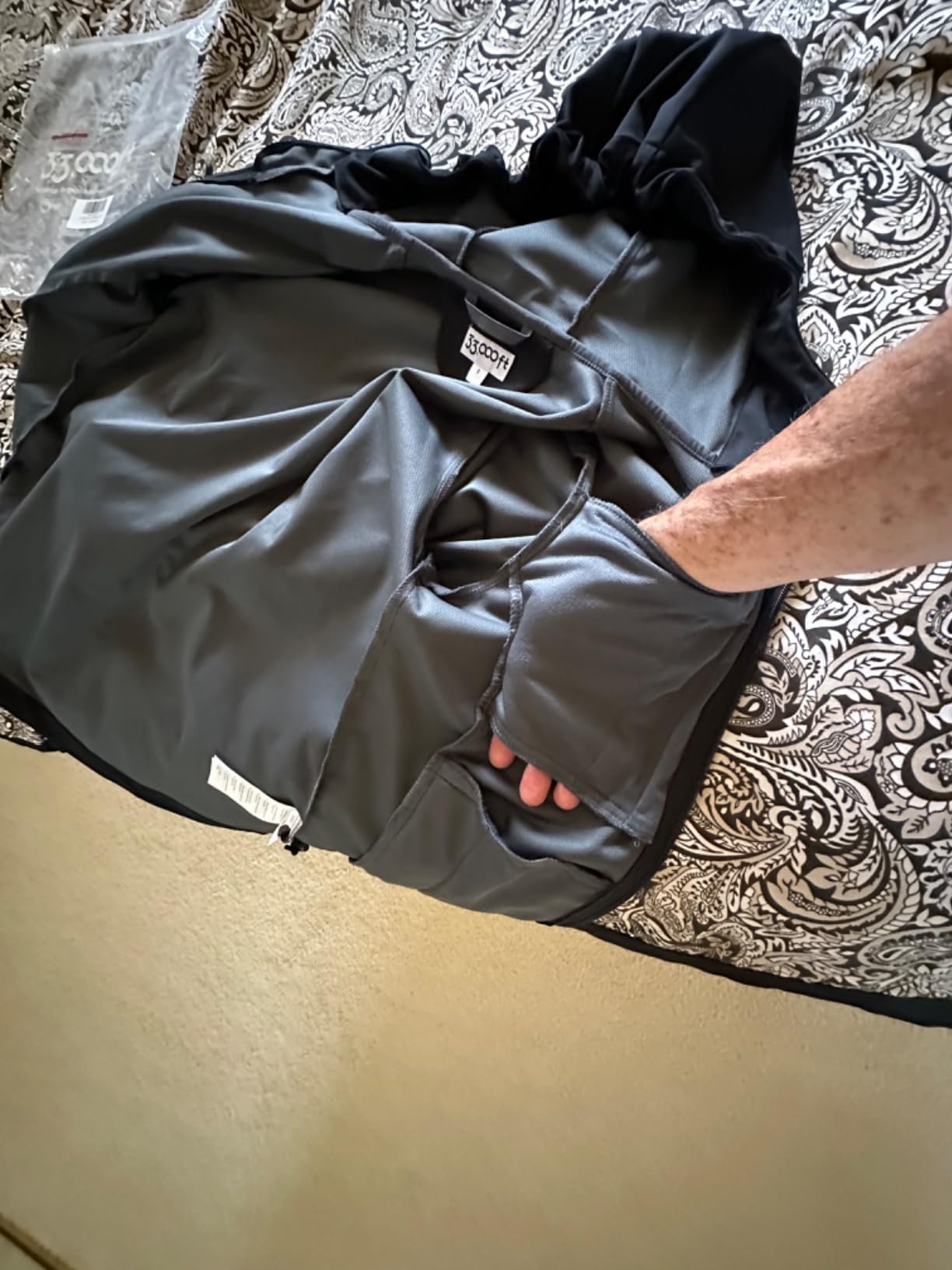
The pocket layout is the real talking point: seven in total, including two zip hand-warmers, two chest pockets with one zipped, an inner zip pocket and two patch pockets. On a long day with a map, gloves and a spare layer, that is more organisation than most of the jackets here offer.
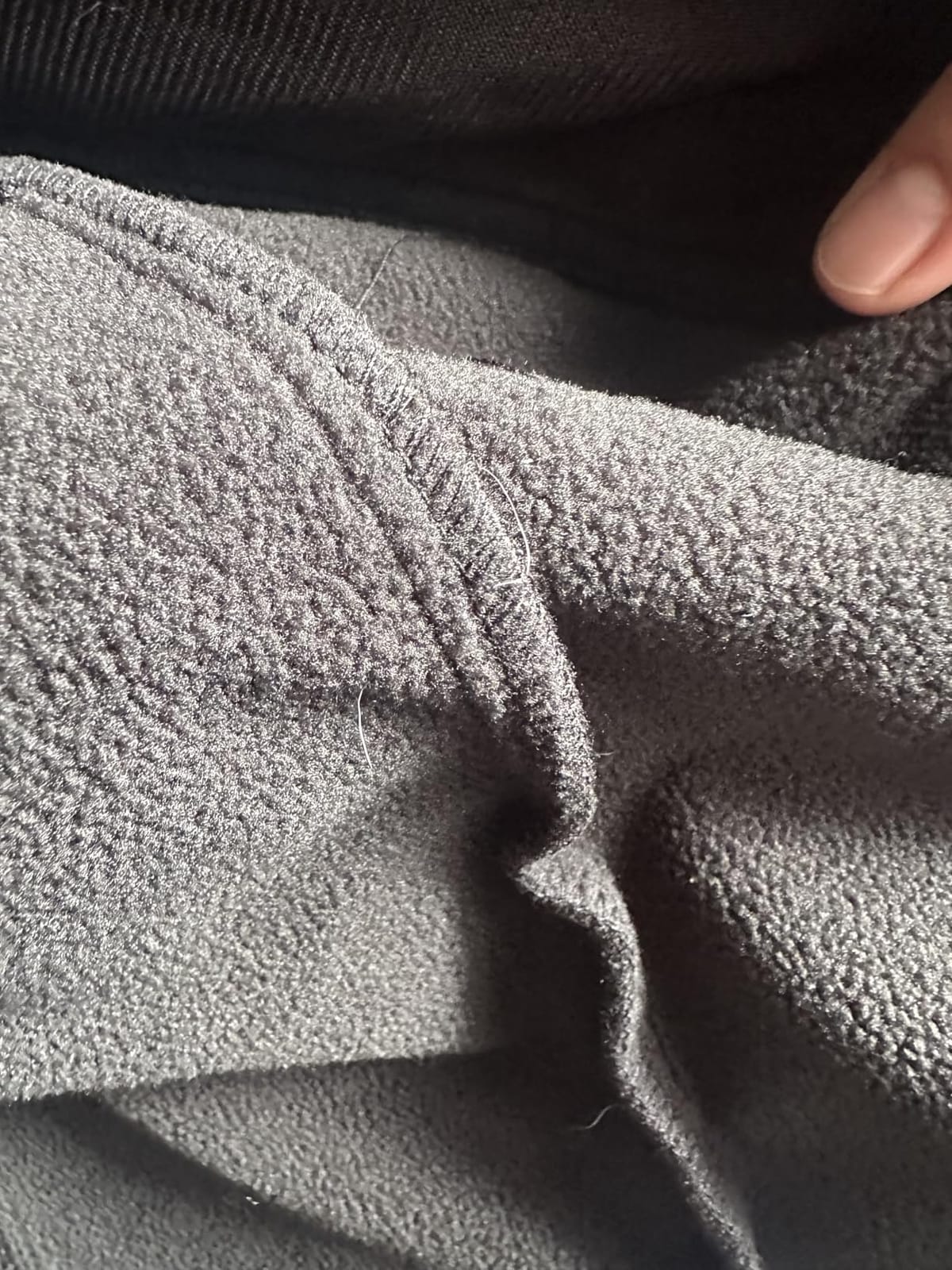
Stretchy smooth fabric supports a wide range of motion, and owners mention golf swings and cycling as much as hiking. That makes it a genuinely multi-purpose jacket rather than a specialist one.
When this is the right jacket
Choose this if you move constantly and want a jacket that stretches with you: hiking, cycling, golf, commuting or yard work. The TPU mid-layer and collar with drawcord hem seal out wind on a cold start, and the fabric is stain and abrasion resistant.
It works as a midlayer on freezing mornings or a standalone outer layer in mild weather, which makes it a good two-season piece for most hikers.
Where it falls short
The slim fit is the recurring complaint. Reviewers who layer heavily or have a broader build say it feels restrictive, and the athletic cut is noticeable once you add a fleece underneath.
At 1000g breathability it is not the airiest jacket here, so on a hot climb you will feel moisture build up sooner than in an unfleeced shell. It is also midweight warmth, aimed at cool weather rather than deep winter cold.
3. FREE SOLDIER Men’s Waterproof Softshell Jacket – Best Pocket Capacity
FREE SOLDIER Men’s Hooded Waterproof Softshell Jacket(Black,L)
- Nine pockets with D-rings and pen sleeve
- Published 10000mm and 3000g ratings
- Axillary ventilation zippers
- Hood hides as a stand-up collar
- Tactical styling looks bulky
- Best as a midlayer in cold weather
Nine pockets is not a marketing line here, it is the spec: chest organisers, D-rings, a pen sleeve, shoulder zip pockets, a forearm pocket and a rear dual-zipper pocket. For anyone carrying more than a phone and keys, this is the most capable storage layout we looked at.
The published performance figures are 10000mm waterproof with a durable water repellent finish and 3000g per square metre per 24 hours of permeability. That is a strong balance, and the axillary ventilation zippers help move heat out when you are working hard.
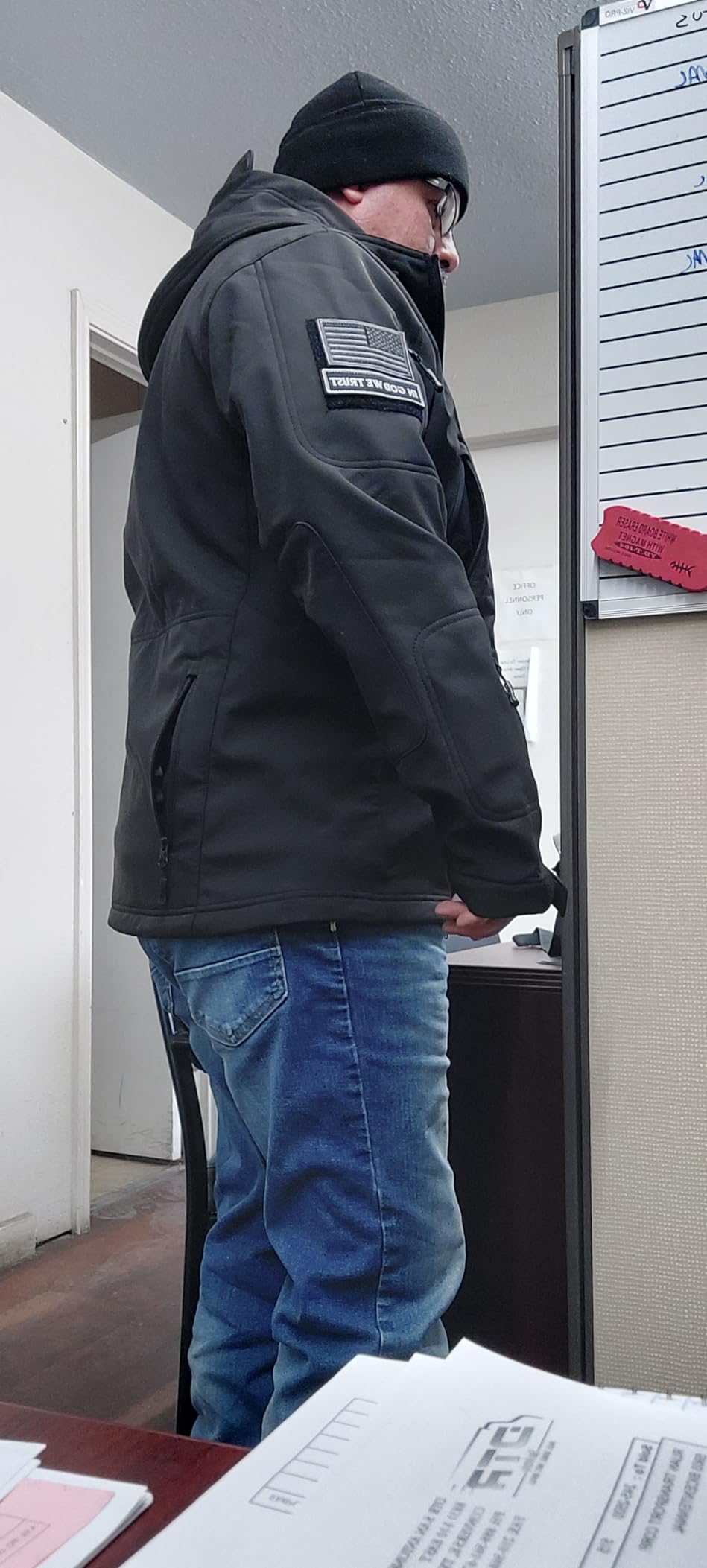
The hood is the clever bit. It is a 3D rim hood that hides away into the stand-up collar when you do not want it, which means no flapping fabric behind your neck on a climb and no bulk when the jacket is worn as a midlayer.
Construction is 94% polyester and 6% spandex with a thermal fleece liner, and articulated elbows plus drawstrings at the waist and hood let you dial in the fit. Reviewers use it for hiking, hunting, camping, cycling, work and commuting.
When this is the right jacket
This suits people whose days involve gear: photographers, technicians, anyone who wants a phone, a flask, a snack and spare gloves all within reach without opening a pack. The rear dual-zipper pocket in particular is the kind of feature you notice on a long ascent.
It also works well in mixed weather, because the ventilation zippers and the convertible hood let you regulate temperature without stopping to strip layers.
Where it falls short
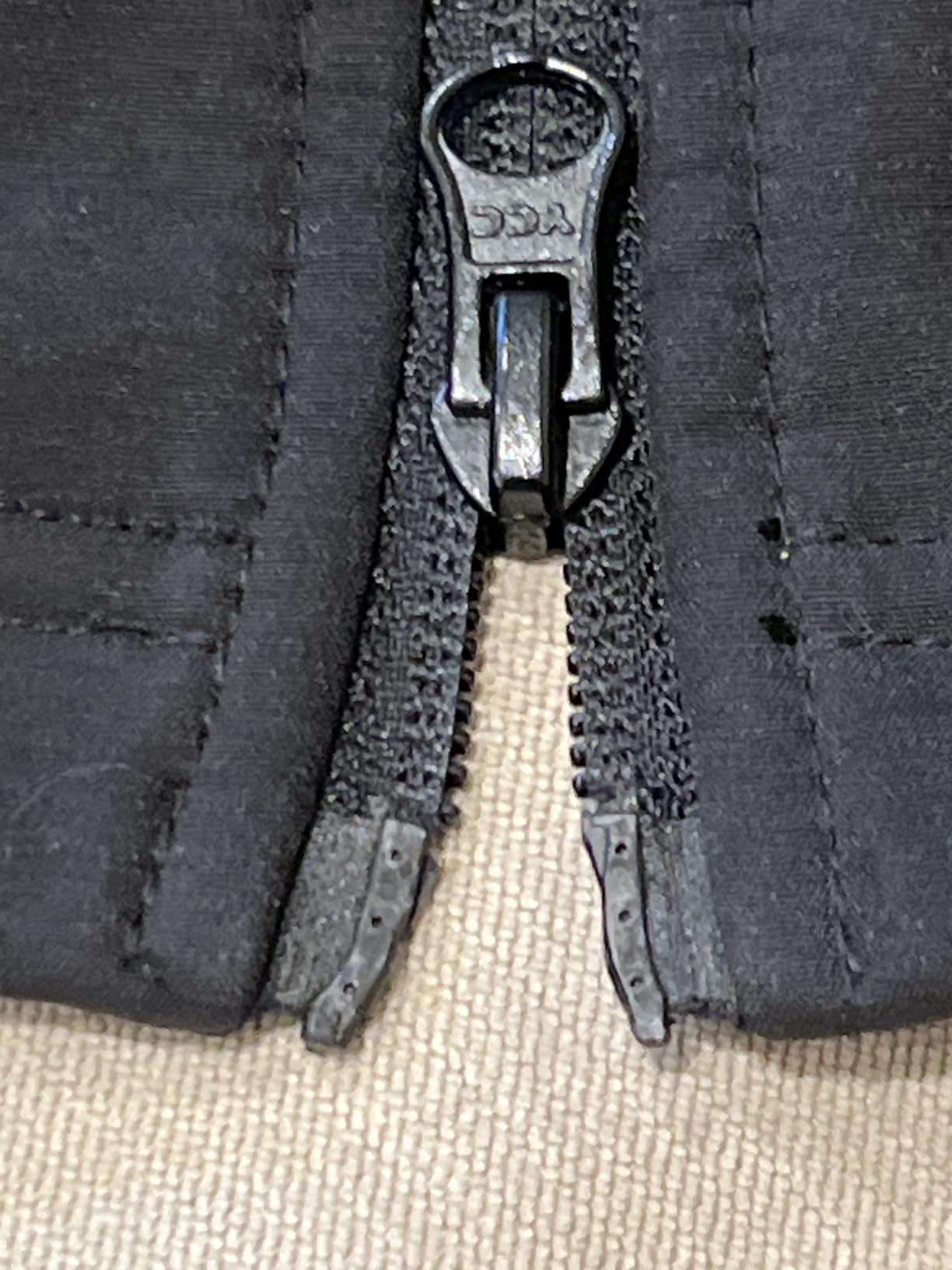
The styling is tactical, not streamlined, and buyers who want a clean town look find the extra features visually loud. The cuff and pocket hardware also adds bulk under a pack strap.
The fleece lining makes it a midlayer rather than a standalone winter coat. In genuinely cold conditions you will want an insulated layer or a hardshell over the top, not this jacket alone.
4. Columbia Men’s Ascender Softshell Jacket – Best for Trail-to-Town Wear
Columbia Mens Ascender Softshell Full Zip Rain Jacket, Black, Large
- Quiet comfort stretch fabric
- Clean enough for the office
- Zipped chest and hand pockets
- Sealed cuffs and hem
- No fleece so it is a shell-level layer
- Classic fit can feel boxy
The Ascender is the answer to a specific problem: a jacket you can wear to a trailhead, on the trail and straight into a meeting. The 100% polyester comfort stretch softshell has a clean, quiet finish with nothing shiny on it.
It resists water and wind rather than promising a membrane rating, and the abrasion-resistant chin guard is a small sign that the brand thought about where a pack strap and a zip pull actually wear the garment out.
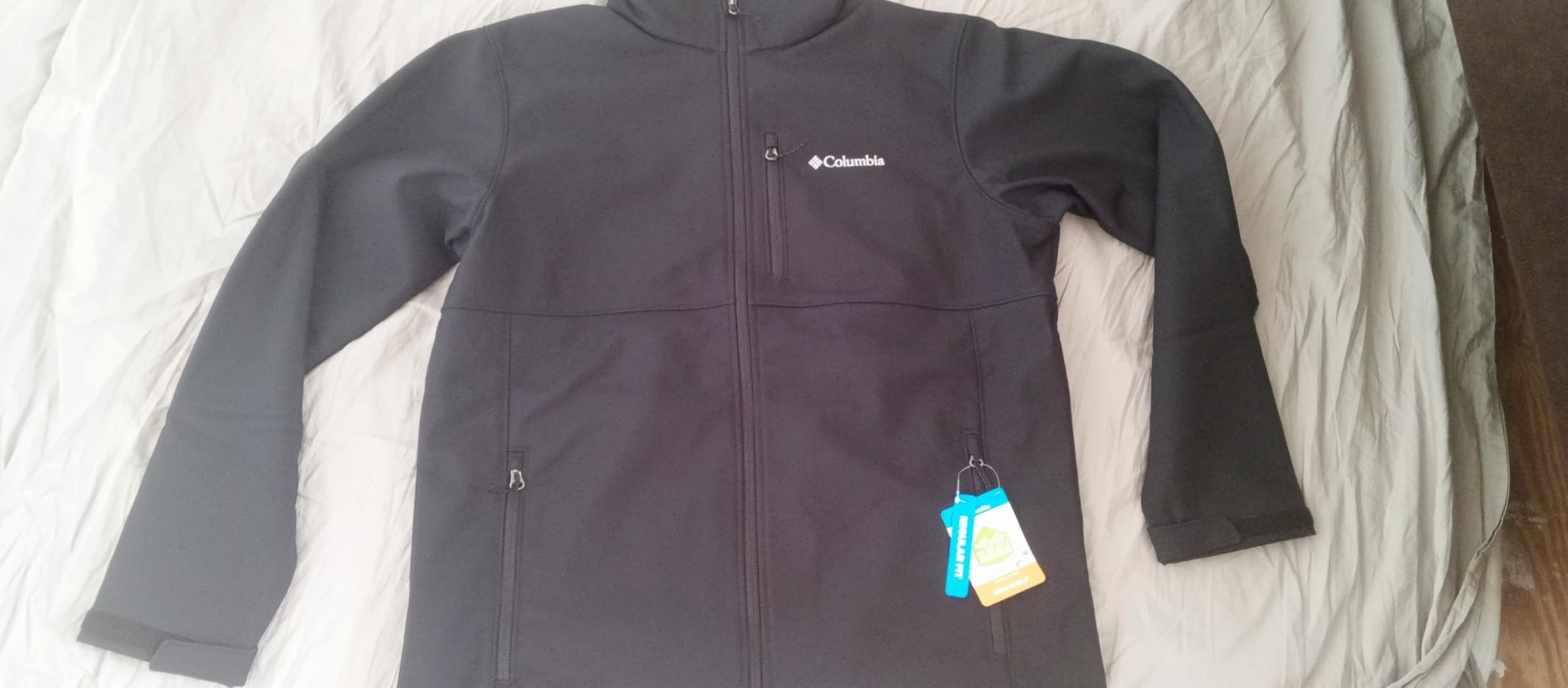
Storage is straightforward with zipped chest and hand pockets, and both the cuffs and hem adjust so you can close the jacket down against a cold wind on an exposed ridge. Stretch construction is what lets it sit comfortably over a midlayer.
It is a long-running favourite in its own Amazon category, which means replacement sizes and colours are straightforward to find. Reviewers describe it as a workhorse that handles trail and office equally well.
When this is the right jacket
Pick this for shoulder-season hiking, travel and commuting where one jacket has to look acceptable indoors. If you spend your weekends walking and your weekdays in a car park, it is a sensible single purchase.
It also works as an outer shell over a fleece for anyone who does not need serious weather protection and dislikes the rustle of lighter packable shells.
Where it falls short
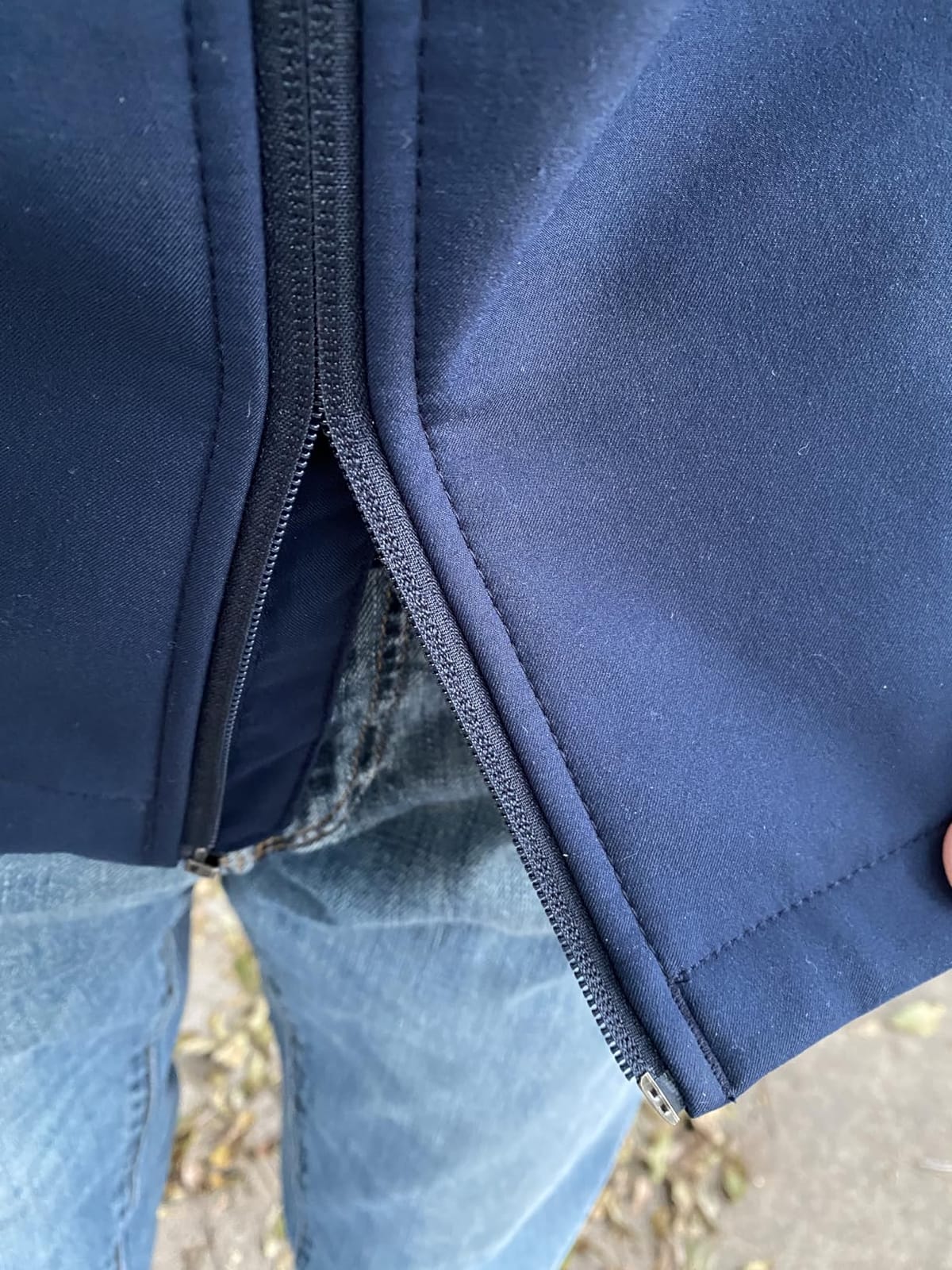
There is no fleece lining, so warmth comes entirely from what you wear underneath. In cold weather you need a midlayer, and this is not a jacket that will keep you warm on its own.
The classic regular cut is roomier than an athletic fit, and wearers who prefer a closer shape find it boxy. It also has no hood, so in wind you will want a buff or a shell over it.
5. Outdoor Ventures Women’s Waterproof Fleece Lined Softshell – Best for Cold and Wet Weather
Outdoor Ventures Women’s Waterproof Fleece Lined Hooded Softshell Rain Coat
- Holds up in real sustained rain
- Two-way front zip for temperature control
- Cinchable waist flatters
- Packs down small
- Outer pockets sit low
- Heavier than lightweight wording suggests
- Velcro cuffs catch wool
This is the one to look at if your hiking weather is genuinely wet. The construction puts a waterproof membrane in the mid-layer under a treated outer fabric, which is a step up from a DWR-only shell and is why owners report wearing it through weeks of rain without complaint.
Warmth comes from a 144F micro fleece lining, and the fabric beneath is polyester synthetic for moisture transfer. The result is warm and protective without the stiffness that makes some rain jackets unpleasant to wear for hours.
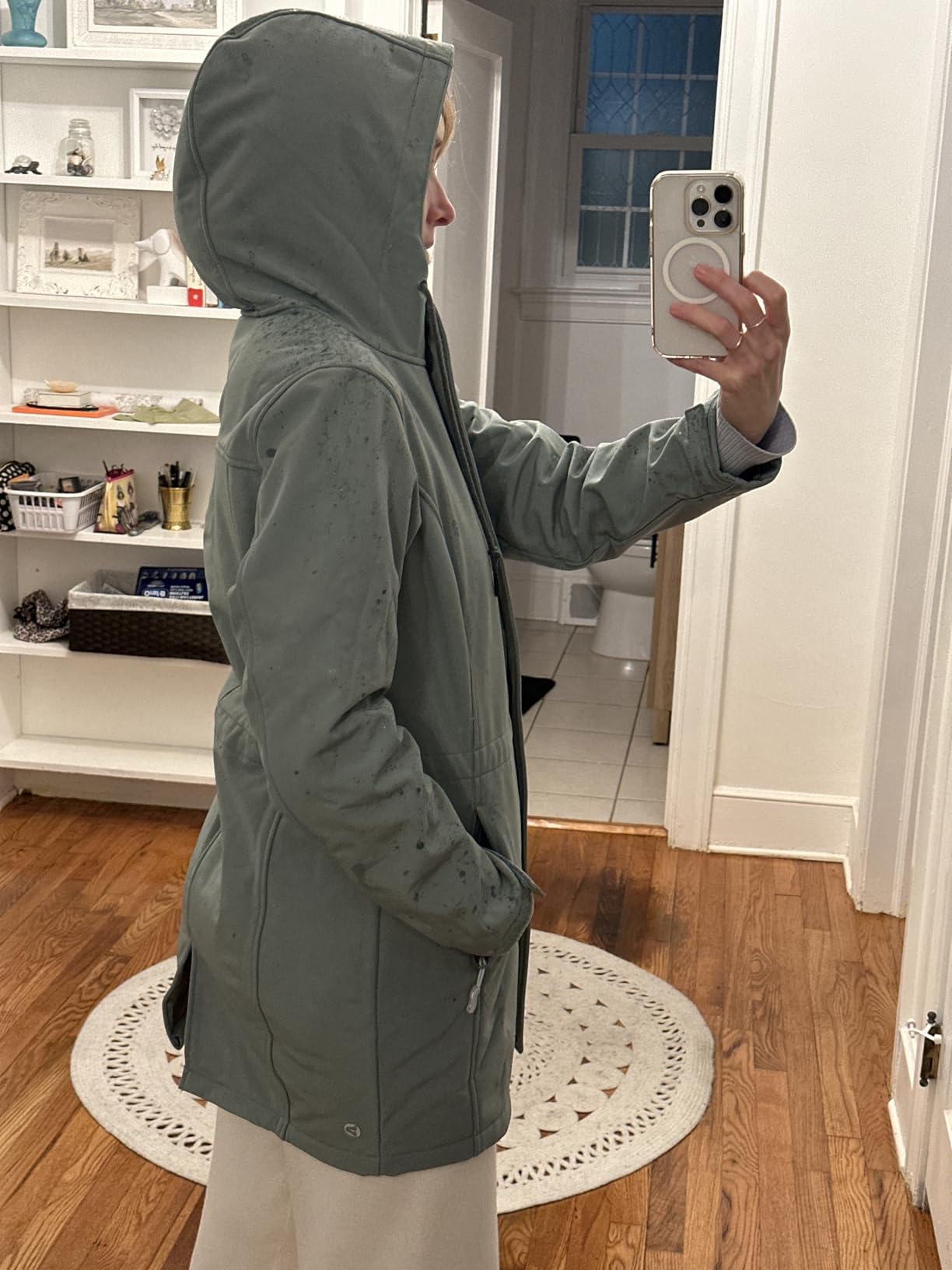
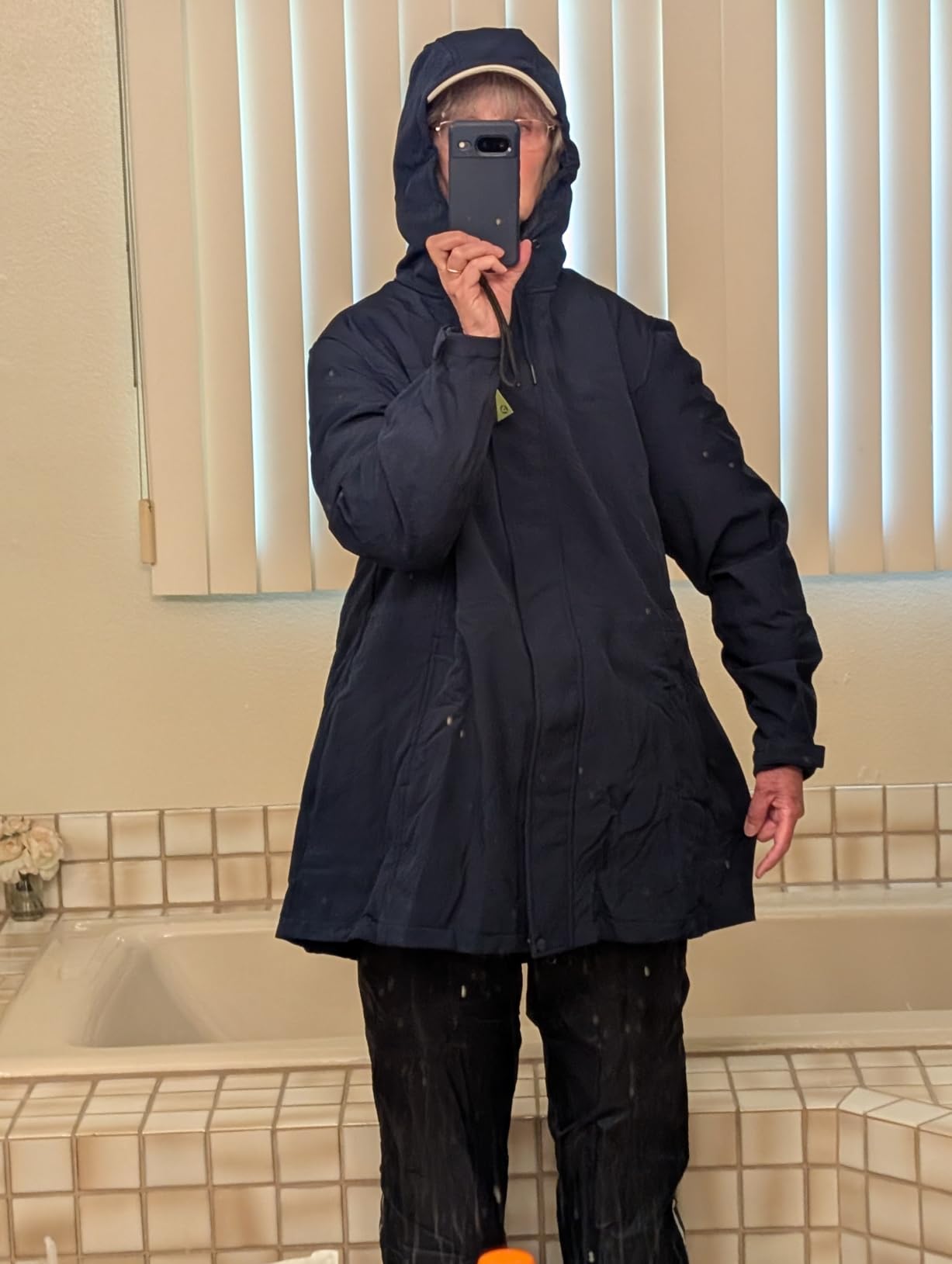
There is a central two-way full zip with interior storm flaps, a fixed oversized hood with an adjuster and a high zipper collar that covers the chin. The hideaway drawcord waist changes the silhouette completely, so it works as clothing and not just as kit.
Two outside zippered security pockets and interior pockets finish it off, and deep zipped inside pockets are a real benefit in a crowded trailhead car park or a busy town. The long cut covers the hips, which is useful when rain is coming from behind.
When this is the right jacket
If you walk in climates where drizzle lasts for hours, or you want one jacket that works as both wet-weather outer and midlayer on a cool morning, this is the strongest option in the roundup for the job.
Owners describe travel, camping, mountaineering, climbing, fishing, hunting and everyday wear, and the two-way zip plus adjustable cuffs make it easy to manage temperature on the move.
Where it falls short
The outside pockets sit low on the body, so resting your hands in them is awkward for shorter wearers. The fleece cuff velcro can also grab wool garments and form a stiff fold.
It is heavier than the lightweight wording suggests, and water can still find the stitching in genuinely heavy rain. Because of the 144F lining it is also the warmest-feeling option here, so it is not the one to pack for fast-and-light trips.
6. CAMEL CROWN Fleece Lined Softshell Jacket – Best for Low-Cost Everyday Wear
CAMEL CROWN Softshell Jacket Men Hooded Fleece Lined Outdoor Jackets Windproof Water Resistant for Hiking Casual Work Blue XXL
- Soft fleece lining for all-day comfort
- Water and wind resistant with adjustable trim
- Four secure pockets
- Lightweight at 1.43 pounds
- Water-resistant rather than fully waterproof
- Unisex cut runs loose on smaller frames
- Limited sizing in larger sizes
The simplest jacket in the roundup, with no membrane, no brand reputation and nothing to learn. A 96% polyester and 4% spandex shell over a brushed 100% polyester fleece interior gives you warmth and stretch without any complication.
It weighs 1.43 pounds, which is light for a lined jacket, and that combination of warmth-to-weight is exactly what reviewers praise. For a jacket you grab on the way out the door, the low fuss is the feature.
Wind protection comes from an adjustable drawcord hood, elastic cuffs with a hook and loop fastener and an adjustable drawcord hem, so you can close the jacket down when the wind picks up.
Storage is four pockets: two zippered hand pockets and two inside pockets, which covers a phone, keys, money and travel documents. Owners use it for hiking, outdoor work and travel, and the stretchy shell fabric keeps it comfortable through movement.
When this is the right jacket
This is the pick for cool, dry or lightly breezy days when you want warmth more than waterproofing. It works well as a midlayer under a shell in winter and as a standalone jacket in autumn.
Because it is light and uncomplicated, it also works for travel and everyday wear, and for anyone who wants fleece-lined comfort without a technical look.
Where it falls short
The shell is water-resistant rather than fully waterproof, so sustained heavy rain can still soak through where the fabric flexes. If you walk in real rain, look at a jacket with a published waterproof rating instead.
The cut is unisex and can look loose on smaller frames, and some sizes run limited. If you need a specific size, check availability carefully before committing.
7. G Gradual Women’s Fleece Lined Softshell – Best for Rainy Climates
G Gradual Women’s Fleece Lined Softshell Jacket Windproof Warm Light Waterproof Hooded Jacket for Women Winter/Fall/Spring
- Quiet outer unlike crinkly cheap nylon
- Light warmth without overheating
- Six zipped pockets
- Knit cuffs block drafts
- Runs large so consider sizing down
- Not warm enough for severe winters
- Light rain only in practice
This has the highest average rating in the roundup, and the reason is straightforward: three-layer fabric with TPU film lamination that blocks wind and water, plus a fleece lining for warmth, and a face fabric that stays quiet instead of crackling.
That combination of quiet and water-resistant is unusual at this level. Most lightweight shells trade noise for cost, and owners specifically call this one out as a jacket they can move in without distraction.
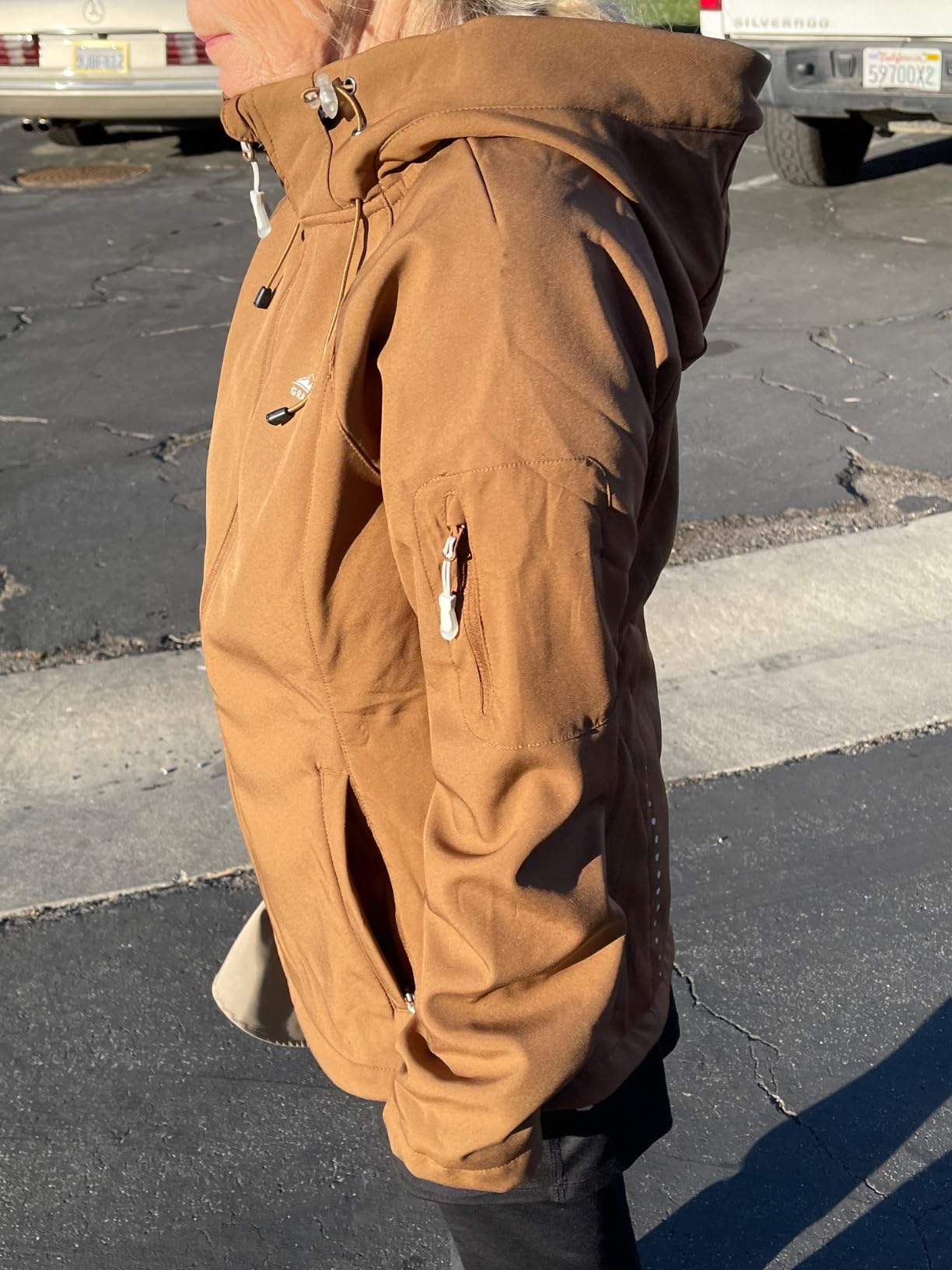
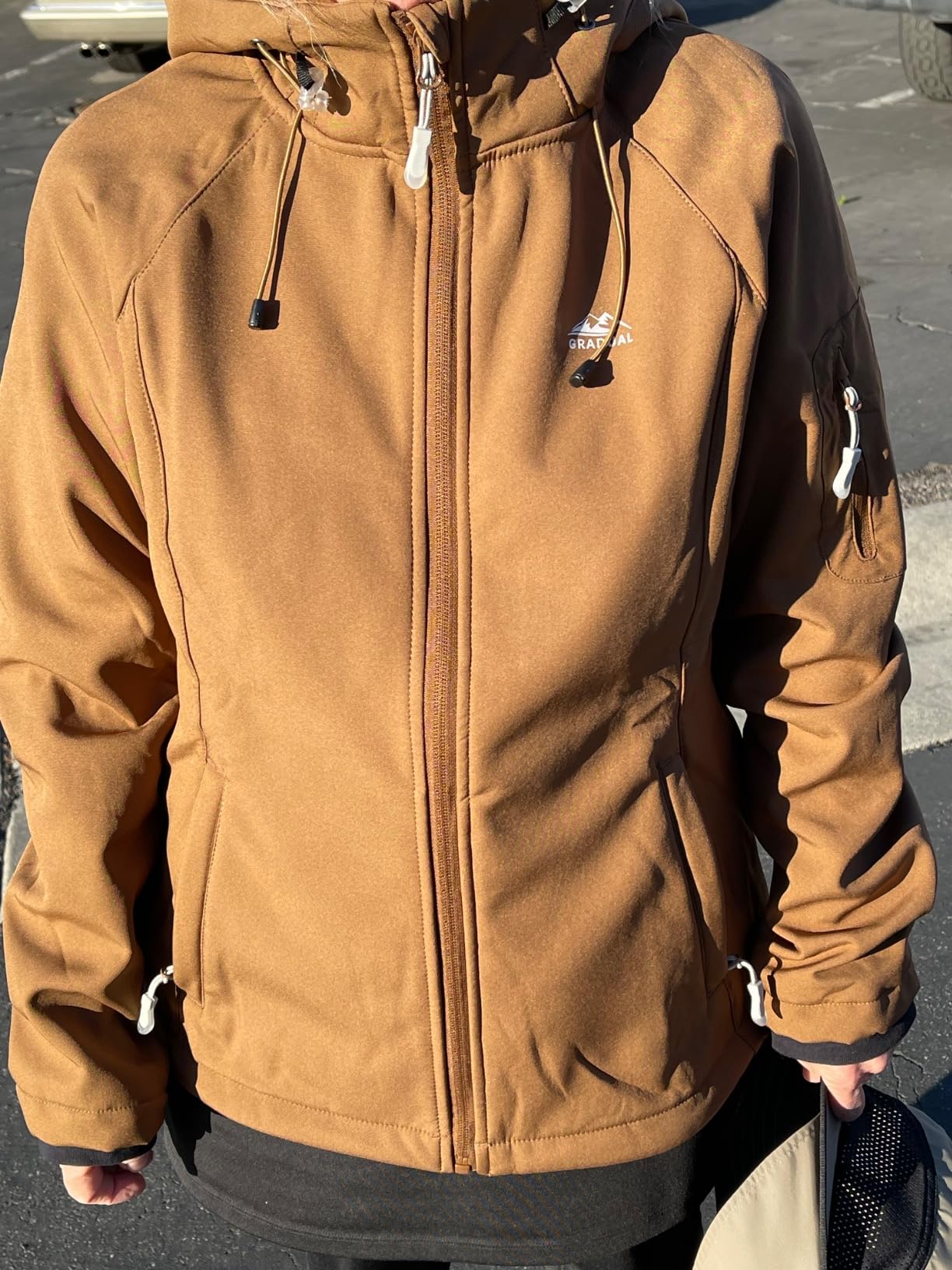
Six pockets is the standout feature: two arm zipper pockets, two side zipper pockets and internal pockets. The adjustable hood, hem toggles and knit cuffs let you tune the fit, and the knit cuffs block drafts effectively when the temperature drops.
Owners use it for hiking, travel, dog walking, camping, daily wear and work, and report that the fleece adds warmth without pushing you into overheating in mild conditions. The cut is described as flattering and true to size for most buyers.
When this is the right jacket
This suits anyone who wants fleece-lined warmth in wet conditions without the noise, and who will not be far from a vehicle when the rain turns serious. It is a strong pick for hill walking in changeable weather.
It also works well for travel and commuting in cool, damp conditions, where a quiet, packable, wind-resistant jacket is easier to live in than a loud one. The generous cut also makes it forgiving over a fleece on a colder morning.
Where it falls short
Sizing is generous. Several buyers size down, and one larger-framed owner found it oversized, so check the size guidance before ordering your usual.
It is not warm enough for genuinely cold winters, and the waterproofing is trusted with light rain rather than heavy downpours. The styling is also closer to a casual winter jacket than a technical shell, which some buyers prefer and others do not.
8. 33,000ft Women’s Lightweight Softshell – Best for Light Layering
33,000ft Women’s Waterproof Softshell Jacket Lightweight Fleece Lined Coat
- 4-way stretch for wide range of motion
- Four deep pockets for phone and gloves
- Stand-up collar and chin guard
- Works as midlayer or outer
- Only four pockets
- Fleece weight limits it to cool weather
A lightweight option for people who want one jacket that flexes with them. The four-way stretch, soft abrasion-resistant fleece lined shell gives real range of motion, and owners specifically mention yard work, gardening, driving, hiking and golf as situations where the stretch makes a difference.
The stand-up collar with chin guard and drawcord hem do the practical work of stopping wind at the neck and waist, which is where hikers lose heat first on a cold start.
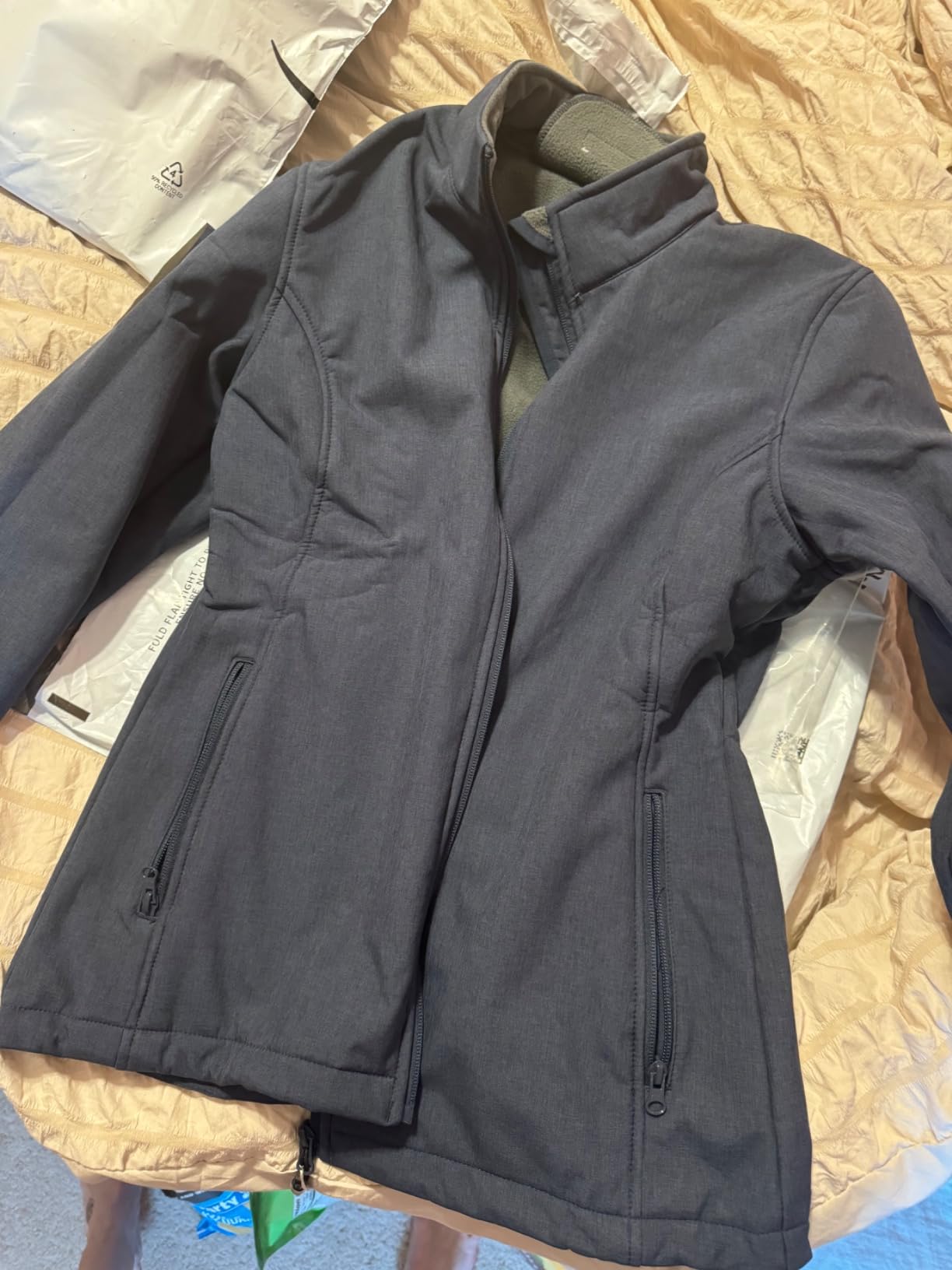
Four deep pockets is the specification that comes up most in reviews, and they are described as large enough for a big phone, a wallet and a pair of gloves. Depth matters more than count when you are putting a phone away with cold hands.
The fabric is water resistant and breathable with stain resistance for work use, and the jacket is described as working as a midlayer on cold days or a standalone layer in cool weather. That versatility is the reason it appeals to people who layer in different seasons.

When this is the right jacket
Choose this for cool-weather hiking, walking, running and travel where you move a lot and want a layer that does not restrict you. It is a sensible shoulder-season piece that packs down easily.
It is also a good pick for anyone who splits their year between active weekends and outdoor work, since the same jacket handles both without looking out of place.
Where it falls short
Four pockets is fewer than several jackets in this list, and if you carry a lot of gear you will notice. The inner patch pockets are the ones that give way on pocket count.
The fleece weight caps it at cool weather rather than cold winters, and there is no hood, so a separate hood or buff is needed in wind. Water resistance is a surface treatment, not a membrane.
9. Rdruko Men’s Lightweight Softshell – Most Versatile
- Holds up in sustained rain
- Breathable enough to avoid clammy sweat
- Reflective strips for low light
- Zipper on the correct side
- Runs small so order two sizes up
- Thin fleece for colder weather
- Arrives with a factory smell
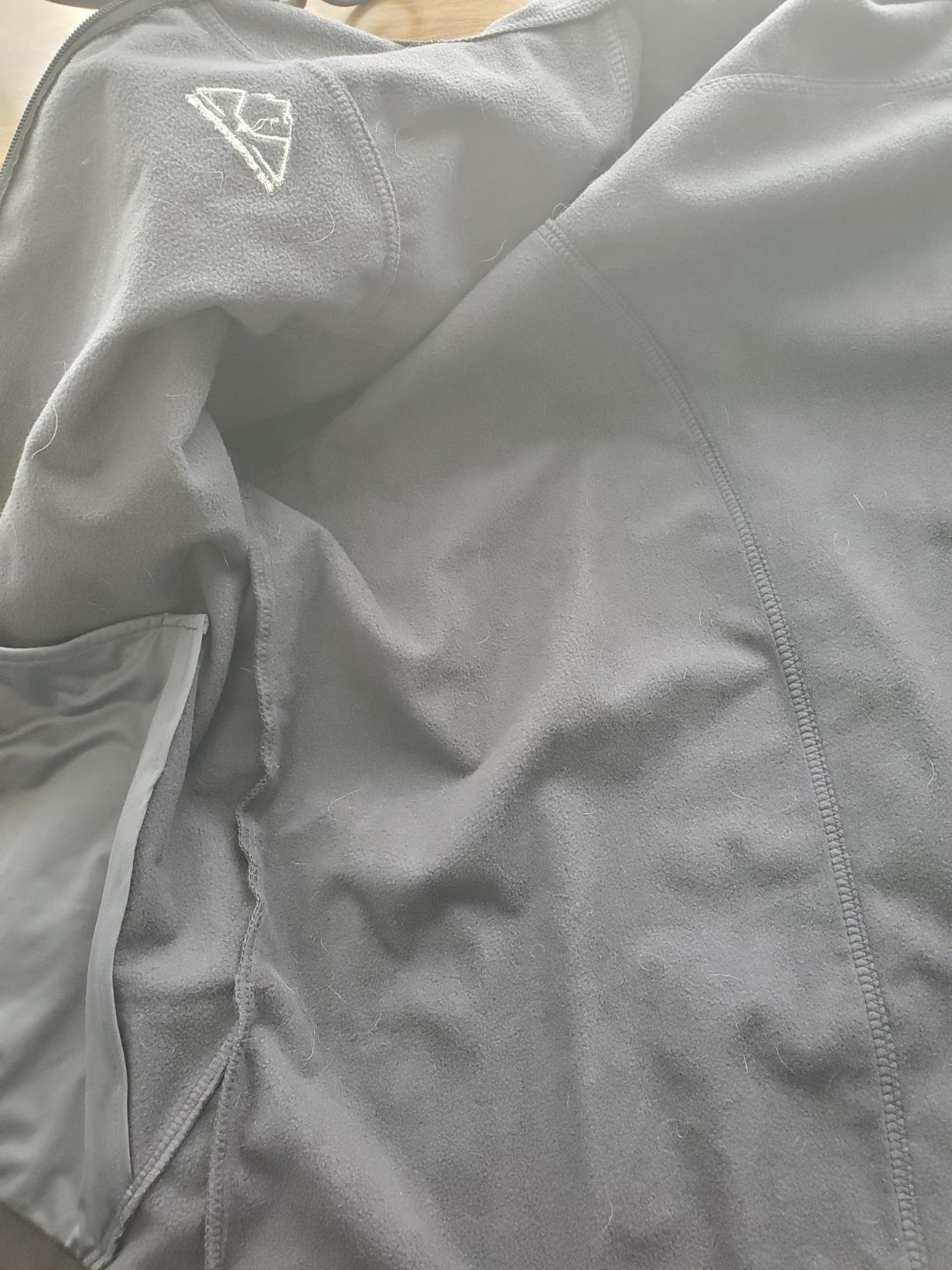
Owners of this jacket keep describing the same result: they wore it through sustained rain and stayed dry. That is a three-layer build with a water resistant softshell outer, a TPU membrane mid-layer and a fleece lining, which is more membrane protection than most jackets in this bracket offer.
Breathability is the other half of the story. Wearers say sweat evaporates rather than building up, which is the problem that actually ends a hike badly, not the drizzle.
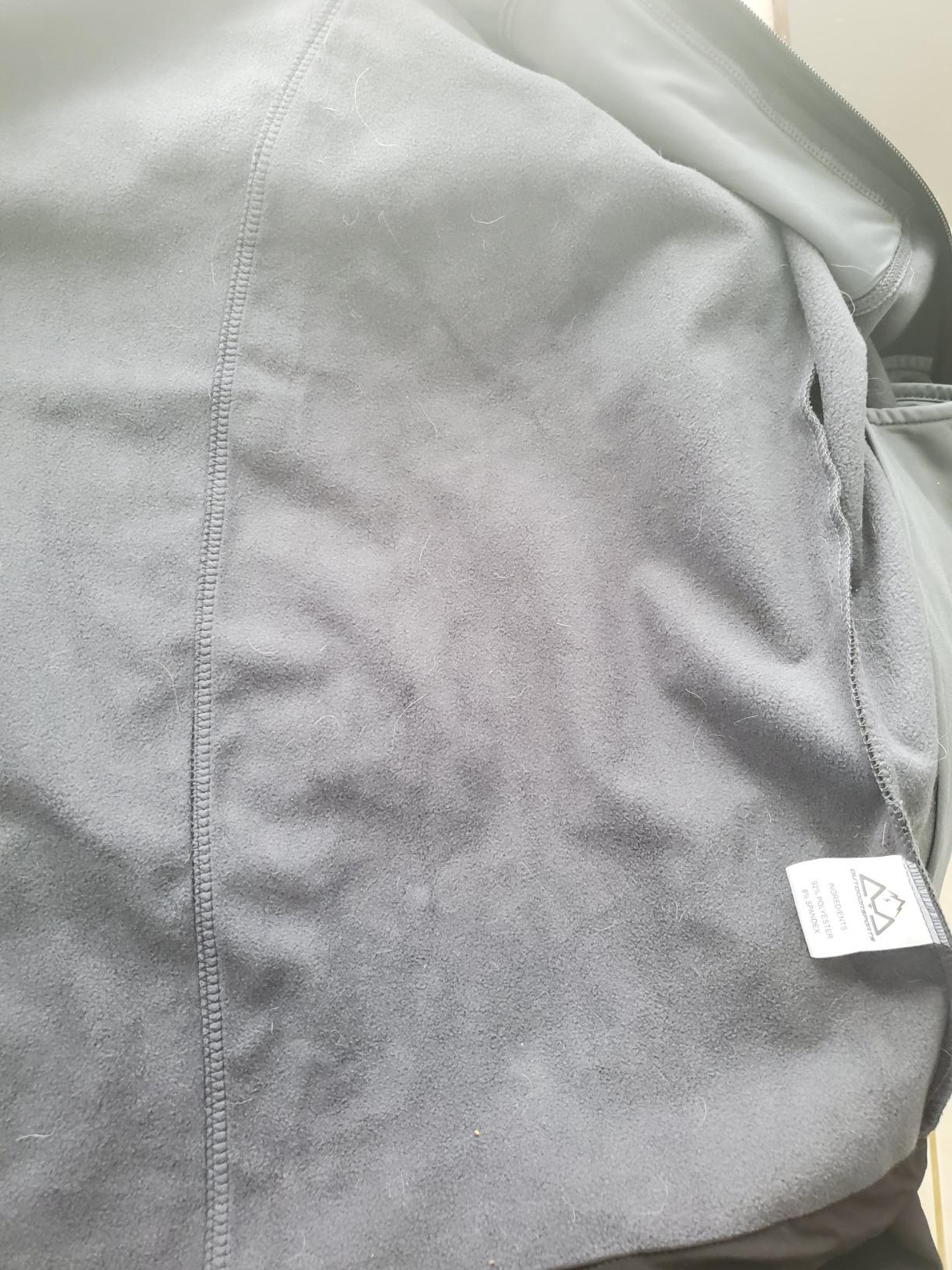
Reflective strips on the front and back are a genuinely useful detail for anyone walking or cycling before dawn or after dark, and there are five pockets including a zipped chest pocket and two interior pockets.
The full zip front sits on the correct side with solid pulls, and the adjustable hood and hem plus hook and loop cuffs block cold wind. Owners use it for fall and winter hiking, camping, travel, outdoor work and ice fishing.
When this is the right jacket
This works for dog walking, hunting, everyday cold-weather wear and short winter hikes where you want genuine rain protection for a modest outlay. It is a good first softshell for someone building a kit list.
It also suits anyone who is out in poor light regularly, because the reflective strips do real work on an early start or a late return.
Where it falls short
Sizing is the dominant complaint. Multiple buyers advise ordering two sizes up, and sleeves can run short on larger sizes, so treat the size chart as advice rather than a suggestion.
The fleece insulation is thin, and some owners report it is not warm enough in low-50s Fahrenheit weather. It also arrives with a factory smell and light wrinkling from folded packaging, which wears off after the first wash.
10. MAGCOMSEN Men’s Fleece Lined Softshell – Best for Fleece Warmth
MAGCOMSEN Mens Lightweight Softshell jacket Fleece Lined Waterproof Jackets Rain Winter Coats Hiking Work Windbreaker Black L
- 10000mm waterproofing and 5000 g breathability
- Warm enough into the 50s Fahrenheit
- Sharp front and pocket zippers
- Clean look for commuting
- Snug through chest and body
- Length sleeves run long on medium sizes
- Colour can differ from listing
The claim that makes this worth considering is the published pairing of 10000mm waterproofing with 5000g per square metre per 24 hours of breathability. That is a lot of water headroom for a fleece-lined jacket, and it matches the best breathability figure of any 10000mm option we reviewed.
Testers report the fleece lining is warm enough down into the 50s Fahrenheit, and some buyers say it holds up even in the low 30s. For a shoulder-season softshell that still carries a lining, that is a good result.
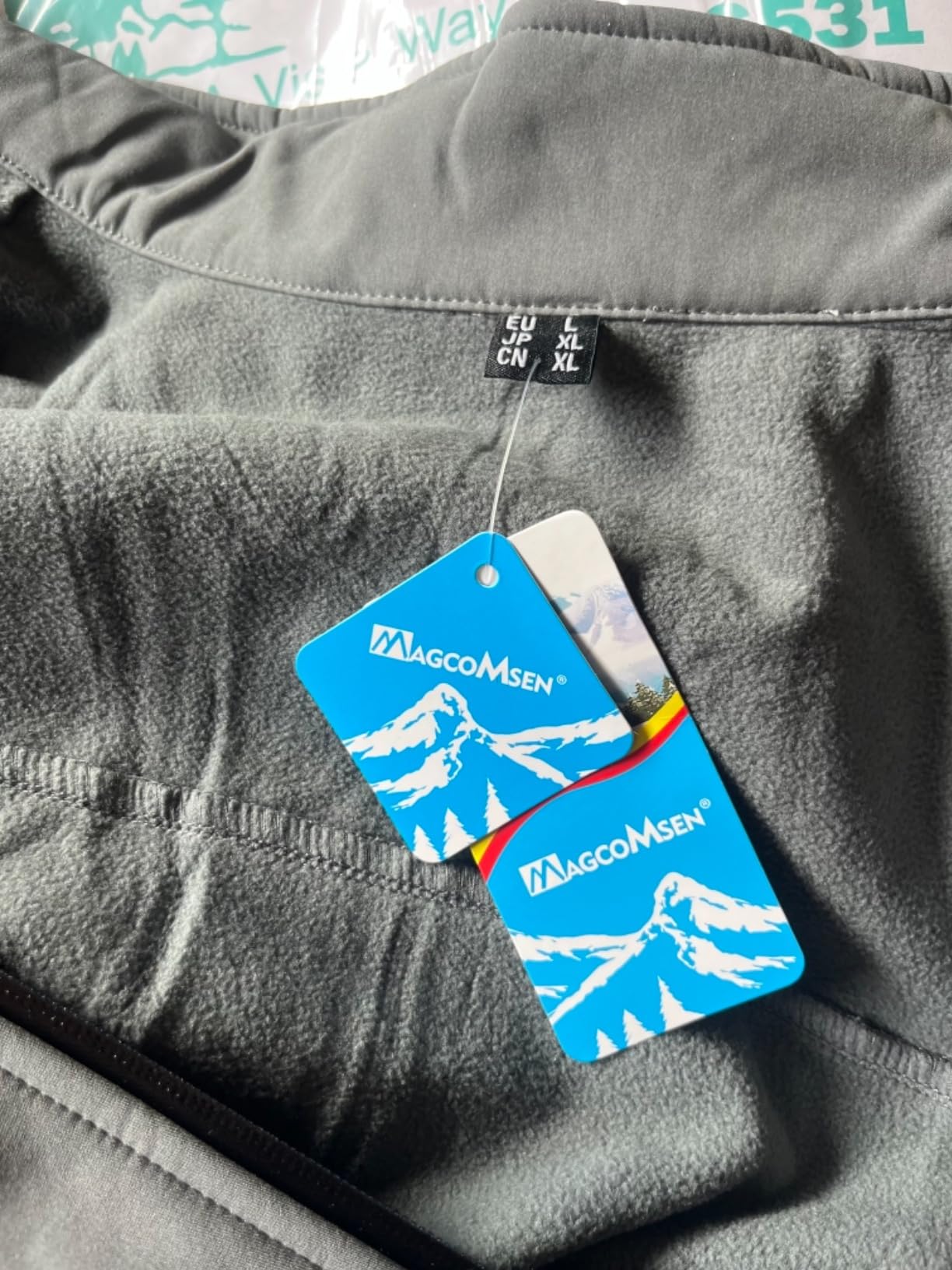
A stand-up collar, drawstring hem and elastic cuffs block cold wind, and the full zip tactical jacket design keeps the lines clean enough to wear for commuting as well as hiking.
Zipping is the quiet strength: owners comment on the quality of the front and pocket zippers and the smooth pulls, which matters more than it sounds on a jacket you open and close dozens of times a day. There are two large front zipped pockets and two roomy inside pockets.
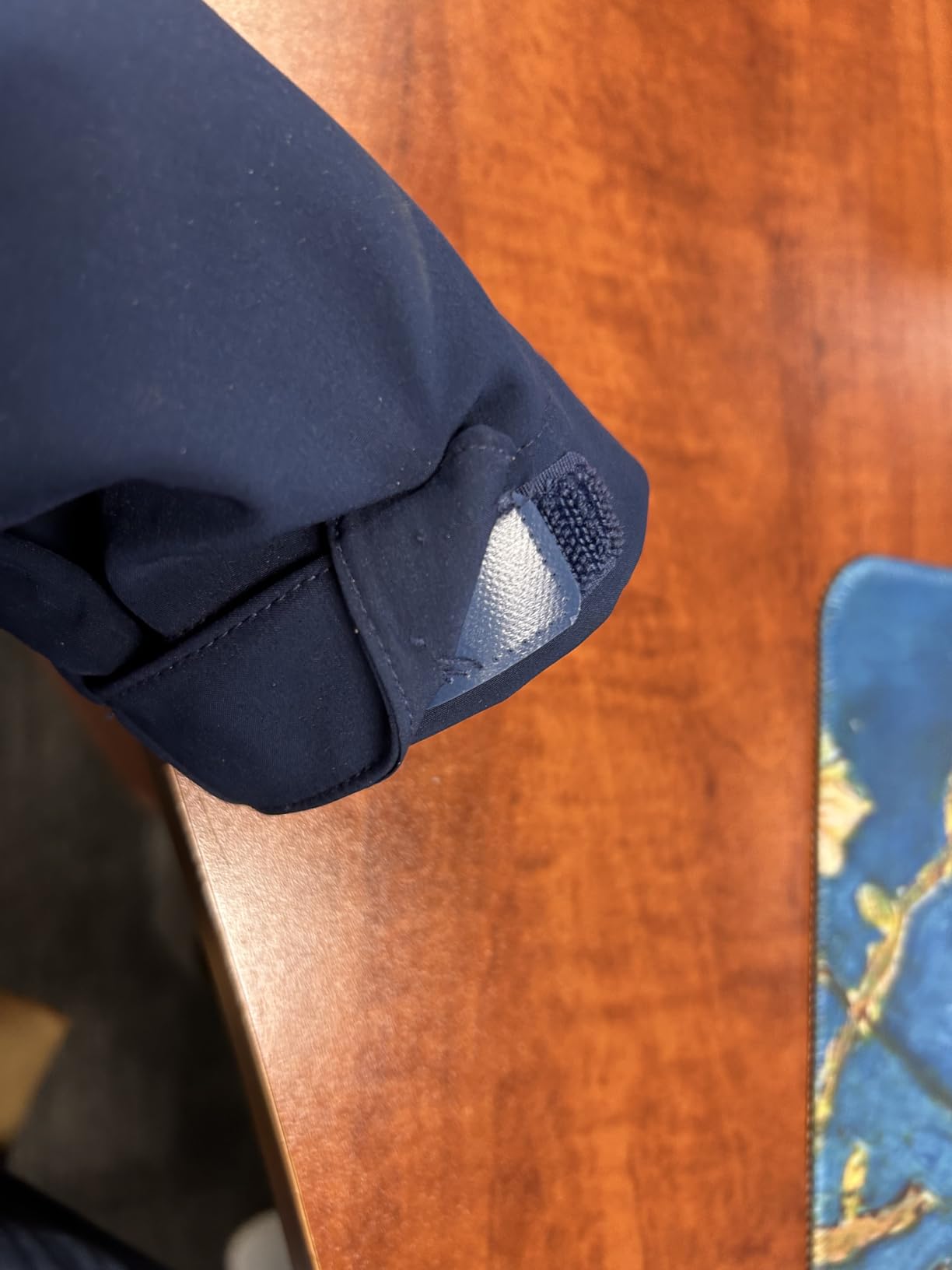
When this is the right jacket
Pick this for autumn and early winter hiking, commuting and travel where you want one warm, water-resistant layer and do not want to carry a shell. It is listed for work, hiking, travel, camping, golf and winter commuting.
It suits hikers who run cold and want a lined layer rather than a bare shell, without carrying a second jacket. If you regularly stand around at a viewpoint in the cold, a light insulated layer over the top is still worth adding.
Where it falls short
The fit is snug through the chest and body, and several buyers recommend sizing up. If you are between sizes, go up, and check the sleeve length against a medium if that is your usual.
One buyer reported a colour mismatch between the ordered grey and the received item, so check the listing photos carefully. The pocket count is also modest at four.
11. TACVASEN Men’s Fleece Waterproof Softshell – Best for Specified Waterproofing
TACVASEN Men’s Waterproof Softshell Jacket Fleece Lightweight Rain Coat
- 10000mm waterproof and 5000 g breathability
- Five deep utility pockets
- Accurate sizing and colour
- Good hood coverage
- Hood can run oversized
- Fit can run slightly small
- Fleece adds bulk in warm weather
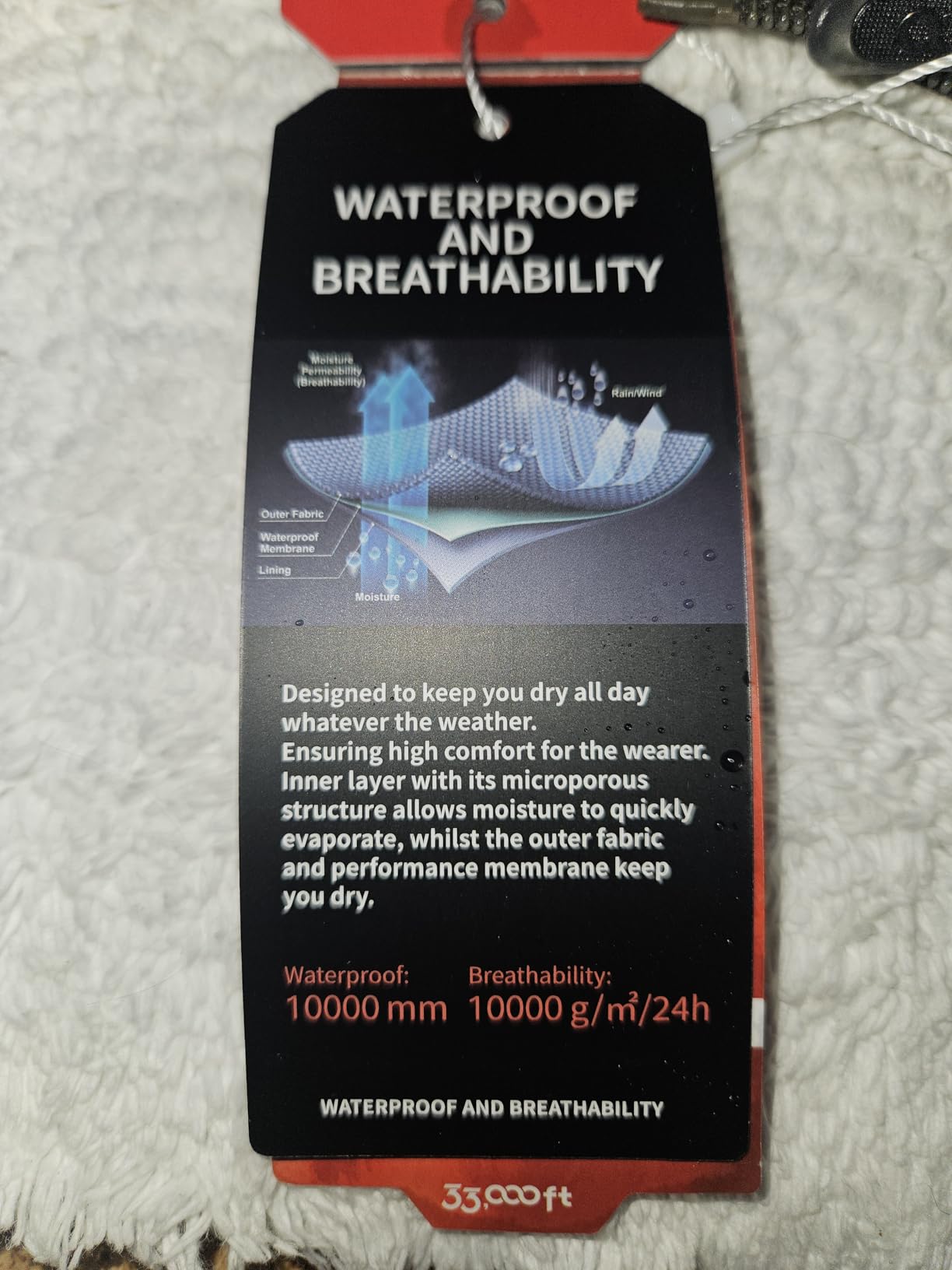
The construction here is a three-layer build with a DWR-treated abrasion-resistant softshell outer, a TPU membrane mid-layer and an inner fleece lining, rated at 10000mm waterproof and 5000g per square metre per 24 hours of breathability.
Owners describe it as not a skimpy windbreaker and not a heavy coat, which is precisely the middle ground a hiker wants. One owner reports wearing it at Niagara Falls and staying dry, which is a real-world test of the membrane rather than a lab figure.
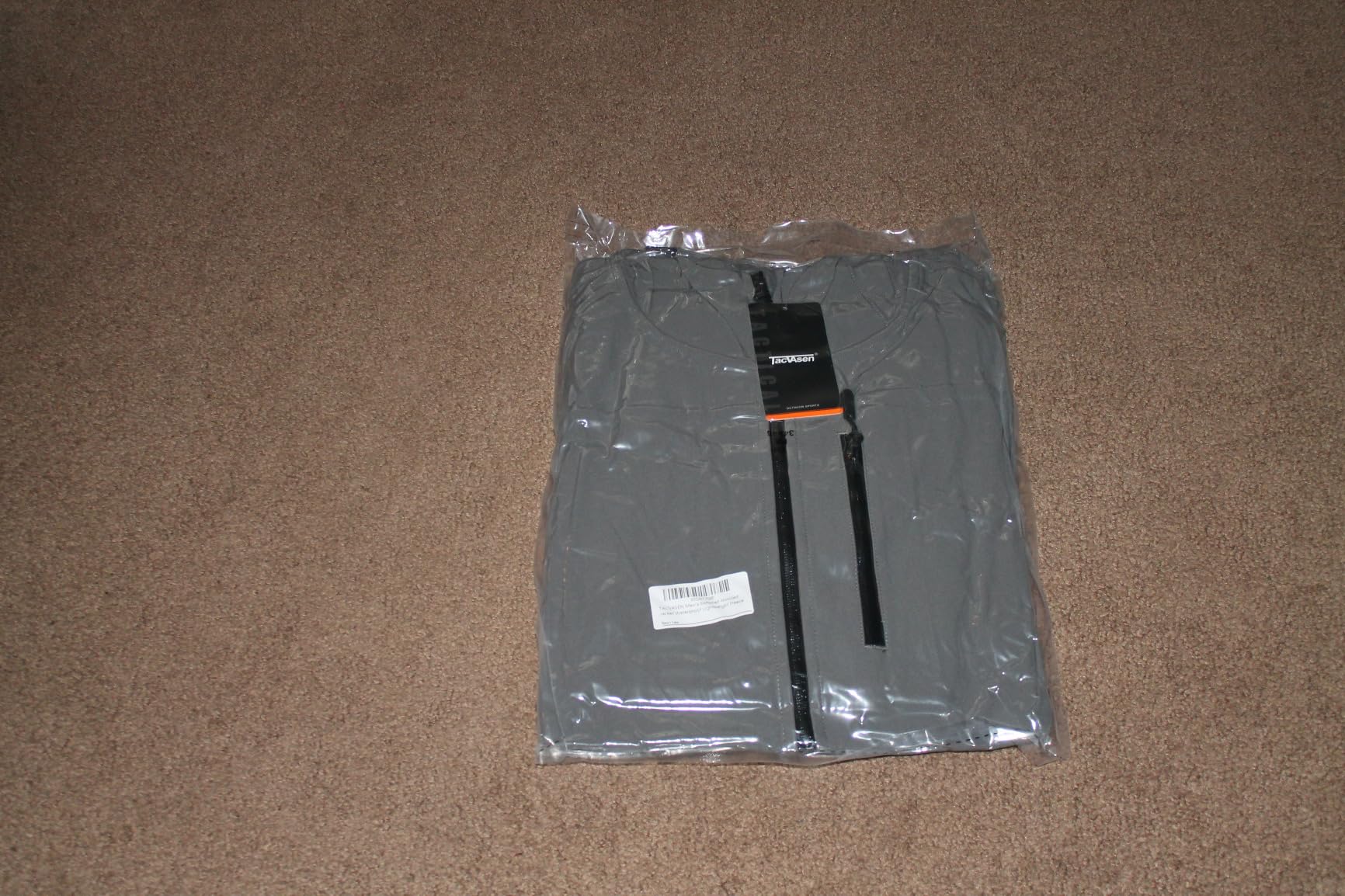
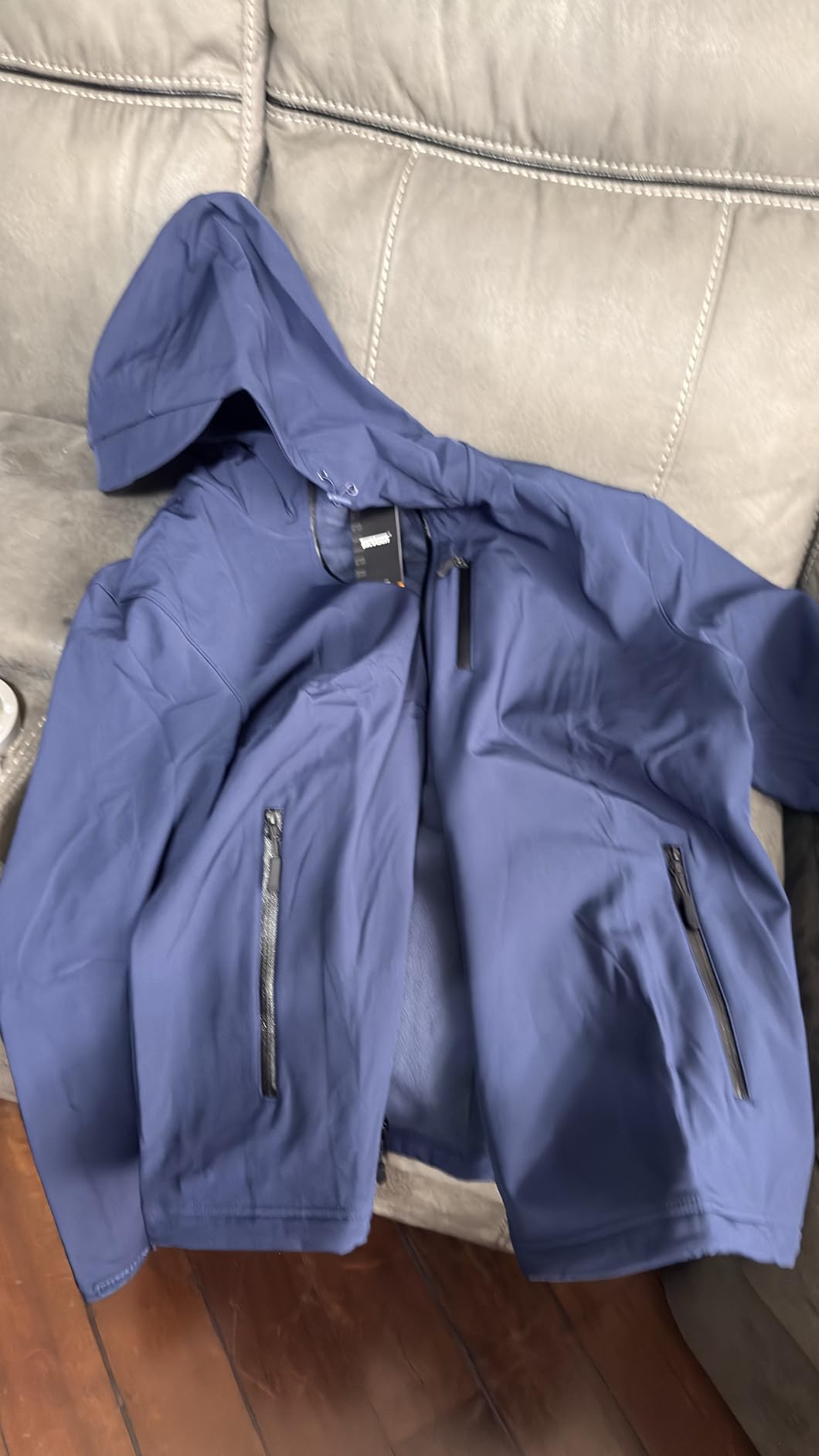
The pocket layout gets called out repeatedly: five functional utility pockets, with two zipped hand pockets, one zipped chest pocket and two large inner pockets. Deep pockets that actually hold a phone without it sliding out are worth more than extra count.
Windproof detailing is complete, with an adjustable hood, full zip front, hook and loop cuffs and a drawcord hem. The fabric has slight stretch for active movement, and the fleece absorbs sweat while the TPU membrane lets moisture vapour escape.
When this is the right jacket
This suits hikers who want a specified, credible waterproof rating and a warm lining in one piece, without carrying two jackets. It is listed for hiking, work, running, fishing, camping, cycling, golf and travel.
It can double as a jacket for the drive in and the walk out, which is worth considering before you buy a separate rain shell.
Where it falls short
The hood can run a bit oversized, which some wearers find loose around the face. The fit can also run slightly small, so consider sizing up if you are between sizes.
The fleece lining adds bulk for genuinely warm conditions, and with a smaller review base than most jackets here, long-term durability feedback is thinner. It is also a hooded design that will not suit anyone who prefers a collar.
12. 33,000ft Men’s Softshell Waterproof Windbreaker – Best for Stretch and Mobility
33,000ft Men’s Softshell Jacket Hooded Waterproof Windbreaker Rain Jacket
- 4-way stretch for hiking and climbing
- Deep pockets for phone and gloves
- Adjustable hood cuffs and hem
- Broad size range
- 8000mm rating suits light rain only
- 1000 g breathability can feel clammy
- Generic branding and styling
This is the jacket to shortlist if your hiking involves a lot of reaching. Four-way stretch fabric moves freely for hiking, running and climbing, and the 100% polyester build with a waterproof coating and breathable inner lining keeps wind and light rain out.
At 8000mm waterproof and 1000g per square metre per 24 hours of breathability, the figures match the lightweight 33,000ft jacket in this roundup, so it sits in the same performance band rather than above it.
Five functional pockets are laid out as two outside hand zipped, two inner patch and one chest zipped, and owners highlight the depth, saying they hold a phone, wallet, keys and gloves securely rather than a phone falling out on a scramble.
Adjustable hook and loop cuffs, a soft chin guard, an adjustable hood and a drawstring hem close off the points where wind gets in. The jacket is designed for spring, autumn and winter layering, which is exactly how most hikers will use it.
When this is the right jacket
It is available in a broad size range, which makes it an accessible pick for families or anyone who struggles to find a size in specialist outdoor gear.
For trail running and fast hiking where you sweat hard, the stretch and four-way movement are the reasons to choose it over a stiffer shell.
Where it falls short
The 8000mm rating is suited to light rain, not sustained downpours, and the 1000g breathability rating is modest, so it can feel clammy during high-output activity. That is the honest trade-off of a light, stretchy, unfleeced-feel design.
Branding and styling are generic compared with established outdoor labels, and the inner lining, while breathable, is a plain polyester layer rather than a mesh or technical knit. On a hot day you will feel that directly against your skin.
How to Choose a Softshell Jacket for Hiking
Start with the weather, not the brand. Decide whether you need to stay dry in sustained rain or stay comfortable while moving hard in cool and windy conditions, because the jacket that wins the second job is usually the wrong choice for the first. Then work through these eight points.
Decide wind or water first. A DWR-treated woven face blocks wind and drizzle. A jacket with a TPU or PU membrane mid-layer and a published waterproof rating buys real rain protection at the cost of some breathability.
Read the published numbers. Waterproofness is measured in millimetres and breathability in grams per square metre per 24 hours. Anything around 5000g of breathability suits high-output hiking; below roughly 1000g you should expect dampness on a hard climb.
Check the face fabric weight. GSM measures the face fabric in grams per square meter. Higher numbers usually mean better abrasion resistance and wind blocking, with more weight; a lower number suits fast-and-light trips where pack weight matters most.
Match warmth to the season. Unfleeced softshells work as an outer layer above freezing. Fleece-lined softshells work as a midlayer in cold conditions or a standalone jacket in cool ones. Fleeced jackets will not replace a proper insulated layer in deep cold.
Get the fit right. Try it with the layers you will actually wear underneath. A softshell should be close but not restrictive, and cuffs that sit over your gloves matter more on cold mornings than most people expect.
Sort out the hood before you buy. A hood that fits under a helmet works for hiking and climbing. A hood that fits over a helmet is needed for ski touring and mountaineering. Some of the best hiking softshells have no hood at all, which is fine with a buff.
Count pockets against your load. If you carry a phone, gloves and a flask, deep zippered hand pockets and one chest pocket matter more than a high total. Harness and hip-belt access is a separate question and only relevant if you climb or ski.
Budget for care. Wash softshells on a gentle cycle with a technical wash and reproof the DWR when water stops beading. A softshell that has gone wet-through quickly will stay that way until it is reproofed.
On fit, the most common question we see is whether a softshell should be tight. It should not be skin tight, because you need room for a midlayer, but it should not be loose enough that your arms shift the whole garment when you reach. A slight athletic cut with stretch is the most practical compromise.
Softshell vs Hardshell vs Windbreaker
A windbreaker blocks wind and nothing else. It is the cheapest, lightest and quietest option, and it works for a sheltered walk on a dry day. Add water and it becomes a short-lived jacket, because most windbreakers have no membrane and no DWR worth speaking of.
A softshell adds a DWR-treated face fabric, more warmth through lining and far more pocket and adjustment features. It is the right answer for cool, windy, changeable conditions, which is the majority of hiking weather in shoulder season.
A hardshell puts a waterproof membrane between you and the rain, usually with taped seams. It is what you want for sustained rain or for exposed terrain, and it is the layer to pack in your bag on a hike rather than wear the whole way. The trade-off is breathability: hardshells are the piece of kit most likely to leave you soaked in sweat from the inside.
For most hikers the system is simple. Wear the softshell on the move, and carry a packable hardshell in case the front arrives. If you only ever buy one piece, buy the softshell for dry-to-drizzly climates and a hardshell if you walk somewhere it rains properly.
How to Layer a Softshell for Hiking
Layering is what makes a softshell work twice as hard. A midweight fleeced softshell over a baselayer handles cool mornings, and the same jacket becomes your outer layer over a fleece once the temperature climbs or the wind drops.
Match roughly to the conditions you expect. Around 60F or above, an unfleeced stretch softshell over a short-sleeve baselayer is enough on a moving hike. Between about 45F and 60F, a fleeced softshell over a baselayer is the most flexible single choice.
Below roughly 40F, use the softshell as a midlayer and add a puffy or a waterproof shell over the top, because fleece lining alone is not insulation for standing around at a summit. The same applies in sustained rain, whatever the temperature.
A couple of practical notes from people who layer regularly. Avoid cotton next to the skin, because it holds sweat and chills you, and carry a packable hardshell in shoulder season rather than relying on your softshell to stop a downpour. If your trips run long or remote, our picks for satellite communicators for backcountry hiking and camera backpacks for hiking photographers cover the rest of the kit list.
Frequently Asked Questions
What is a softshell jacket and what is it good for?
A softshell jacket is a stretchy woven nylon or polyester outer layer with a durable water repellent finish that balances wind and light rain protection with high breathability and freedom of movement. That balance makes it the go-to mid or outer layer for hiking in cool, windy or lightly wet weather, and it can be worn through a whole hike without overheating.
Can a softshell jacket be waterproof?
Most softshells are water-resistant rather than waterproof, because they use a DWR coating instead of a taped membrane. A few budget and mid-range models add a TPU or PU mid-layer and publish a waterproof rating of 8000mm to 10000mm, which handles real rain better. In sustained heavy rain, a taped hardshell is still the safer choice.
How do I choose the right softshell jacket?
Choose by conditions first, then by fabric, fit and features. If you need sustained rain protection, look for a published waterproof rating. For high-output hiking, prioritise breathability above 5000g. For weight, check the listed fabric weight in GSM. Finally, confirm fit over your normal layers, hood compatibility and pocket depth before buying.
Should a softshell jacket be tight?
It should be close and comfortable but not restrictive. You need enough room to wear the layers you will actually use underneath, and a little stretch in the fabric helps with range of motion. Skipping sizes are the most common cause of poor fit reviews in this category, and cuff length over your gloves matters on cold mornings.
What is a softshell vs a hardshell?
A softshell is breathable, stretchy and warm enough to wear while moving, but it only resists water. A hardshell has a waterproof membrane and taped seams, so it blocks sustained rain, but it is less breathable and usually worn as an outer layer over a midlayer. Most hikers wear the softshell on the move and pack a hardshell for the front.
Are shell jackets good for hiking?
Yes. Shell jackets come in softshell and hardshell forms, and both are standard hiking kit. Softshells suit cool, windy and changeable conditions because they move and breathe. Hardshells suit wet weather because they keep rain out. The right answer depends on your climate and how hard you hike.
Do softshell jackets keep you warm?
Fleece-lined softshells add meaningful warmth and work well as a midlayer or a standalone jacket in cool conditions. Unfleeced softshells provide no real insulation, so they need a warm layer underneath. Neither type replaces a proper insulated jacket in genuinely cold weather.
Final Verdict
After comparing all twelve, the Outdoor Ventures Men’s Softshell Jacket is our pick for the best softshell jackets for hiking overall, because it stays quiet when you move, survives repeated washing without complaint and doubles as an everyday jacket without looking like technical kit. If you need more storage or a convertible hood, the FREE SOLDIER jacket handles that job better than anything else here, and if published waterproof figures matter to you, the 10000mm options give you more rain headroom.
Whichever you choose, wear it over a proper baselayer, keep a packable hardshell in your bag for shoulder season, and wash it with a technical wash so the DWR keeps beading. Check the fit over the layers you will actually wear, and buy the size the chart recommends rather than the one you usually take.