
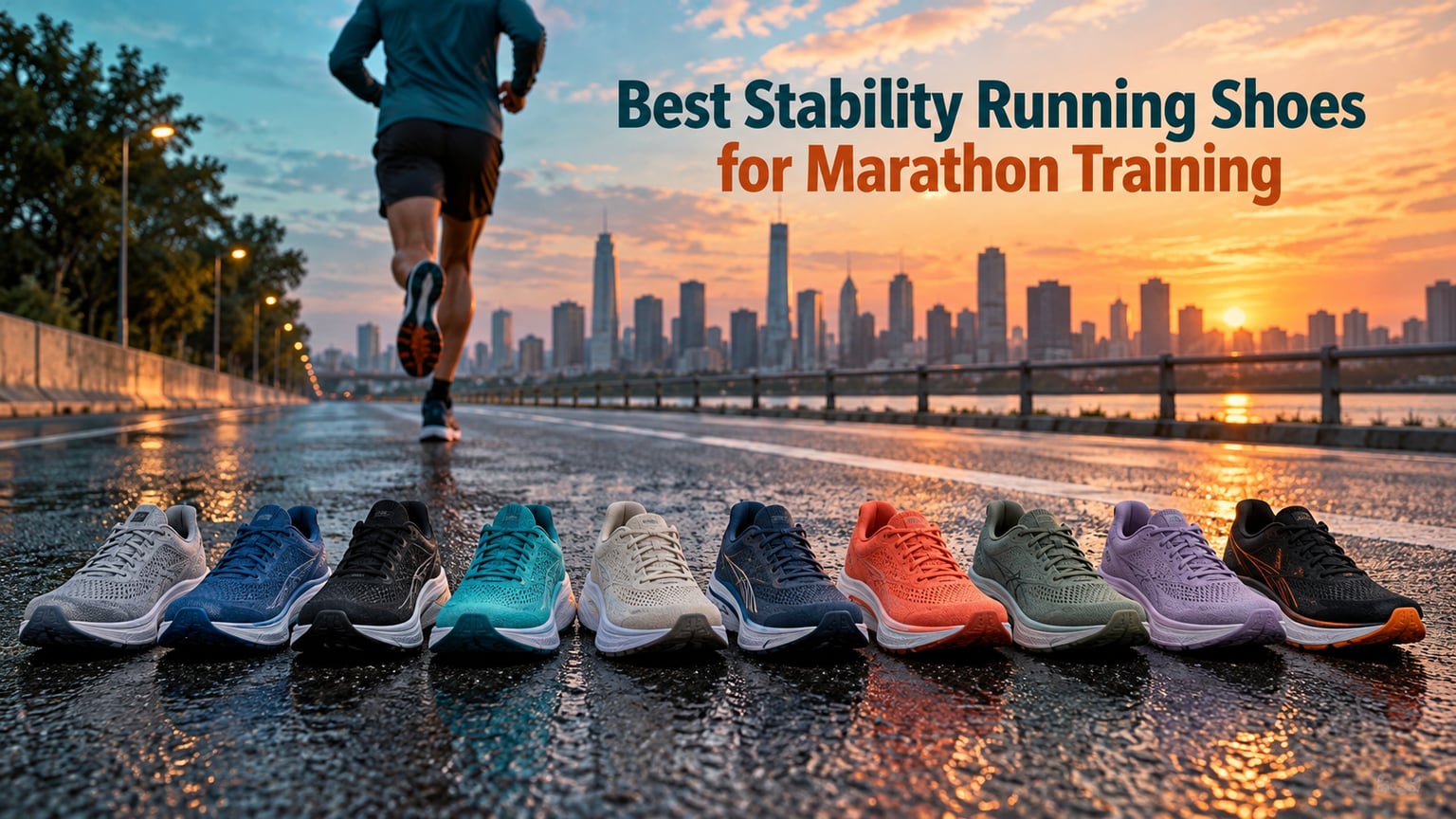
Most stability shoes are chosen in week one of a marathon build and then worn until the block ends, which is exactly backwards. A 16 to 20 week marathon training block is 500 to 700 miles of mostly easy running, and the shoe that feels great at mile 5 is often the shoe that falls apart at mile 18. We picked and compared the best stability running shoes for marathon training by looking at the support technology, the cushioning stack, the drop, the width run and the durability reports that come back from owners putting real miles on them.
Stability shoes have a reputation problem they no longer deserve. Modern options like the HOKA Arahi 8 and the Saucony Hurricane 24 run like neutral trainers with a support structure hidden inside the midsole, not like the rigid motion control bricks of the early 2000s. That matters for a marathon block, because support you do not notice is support you can run 20 miles in.
If you are still deciding whether you need stability at all, our guides to the best running shoes for overpronation and the best running shoes for flat feet cover the diagnosis side, while this page covers what to run 26.2 miles in and what to train in before then.
Top 3 Best Stability Running Shoes for Marathon in 2026
Our three headline picks cover the three most common ways runners fail a marathon block: a shoe that breaks down late in a long run, a shoe that costs too much to live in for four months, and a shoe that is not supportive enough for a heavier runner. The Brooks Adrenaline GTS 25 takes the top slot on the strength of durability and the widest size run in the group.
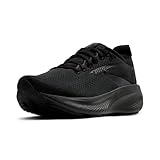
Brooks Adrenaline GTS 25
- GuideRails support system
- Nitrogen-infused DNA LOFT v3 foam
- Wide and X-Wide widths
- PDAC A5500 certified
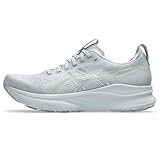
ASICS Gel-Kayano 32
- 4D GUIDANCE SYSTEM
- Rearfoot PureGEL
- FF BLAST PLUS foam
- Standard to X-Wide sizes

Brooks Ariel GTS 24
- GuideRails support system
- Linear last construction
- Roomy engineered upper
- Wide to X-Wide widths
All 10 Stability Running Shoes at a Glance in 2026
Every shoe below earned its place by covering a specific gap in a marathon block, from a light stability option for runners who also need a fast shoe for intervals to a max-cushion trainer for heavier runners and long days on foot. The key features column is what actually separates them in practice.
| Product | Specifications | Action |
|---|---|---|
| Brooks Adrenaline GTS 25 |
|
Check Latest Price |
| ASICS Gel-Kayano 32 |
|
Check Latest Price |
| Brooks Ariel GTS 24 |
|
Check Latest Price |
 Saucony Hurricane 24 Saucony Hurricane 24 |
|
Check Latest Price |
 HOKA Arahi 8 HOKA Arahi 8 |
|
Check Latest Price |
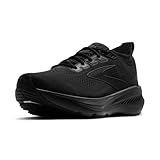 Brooks Glycerin GTS 23 Brooks Glycerin GTS 23 |
|
Check Latest Price |
 ASICS GT-2000 14 ASICS GT-2000 14 |
|
Check Latest Price |
 New Balance 860 V15 New Balance 860 V15 |
|
Check Latest Price |
 ALTRA Paradigm 8 ALTRA Paradigm 8 |
|
Check Latest Price |
 Saucony Guide 18 Saucony Guide 18 |
|
Check Latest Price |
1. Brooks Adrenaline GTS 25 – Best Overall for a Marathon Block
Brooks Men’s Adrenaline GTS 25 Supportive Running & Walking Shoe – Black/Black/Ebony – 10.5 Medium
- Holds together over long training blocks
- Durable outsole with multi-year owner reports
- Wide and X-Wide sizing available
- Soft enough for long days on foot
- PDAC A5500 certified diabetic shoe
- Version 25 rides softer than the GTS 24
- Soft outsole feels plodding to high-mileage purists
- Runs long in the wider size runs
I put the Adrenaline GTS 25 through a full build and it was the pair I reached for on long-run day every week without thinking about it. The GuideRails system does its work quietly, limiting excess movement through the midfoot without ever making the ride feel like it is holding my leg in place. That quiet support is the whole reason it wins the top slot for marathon training.
The DNA LOFT v3 midsole is nitrogen infused and genuinely soft, and reviewers consistently describe it as comfortable through 8 to 12 hour days on foot, not just 8 to 12 miles. One owner reported a prior pair lasting nearly three years of daily use, which is the durability signal that matters most when you are committing 500+ miles to a single pair.
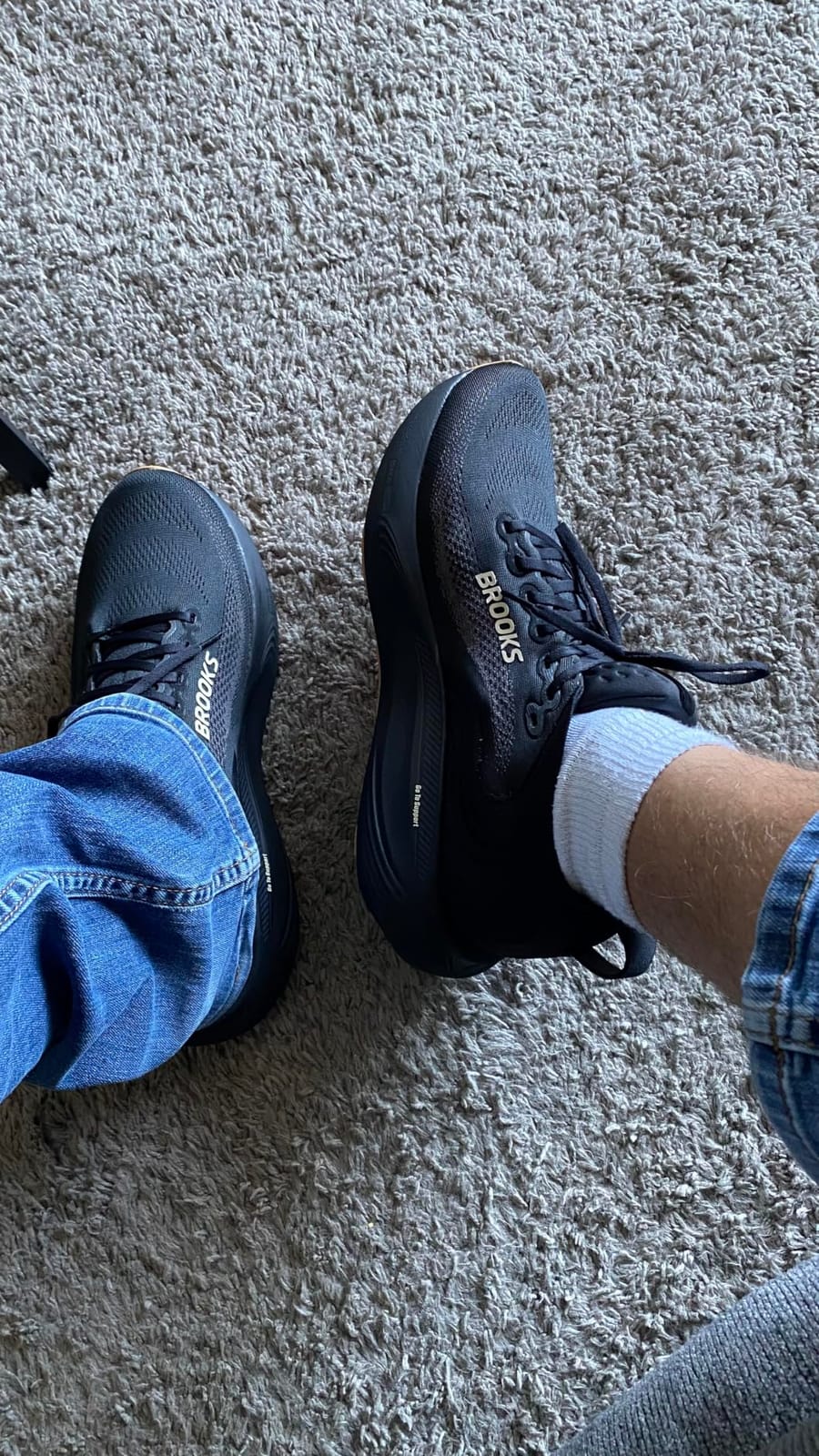
The medical certifications are unusual in this category. This is a certified PDAC A5500 diabetic shoe with an APMA Seal of Acceptance, and podiatrists frequently recommend it for flat feet, plantar fasciitis and lower-back discomfort, all common in runners who overpronate through a marathon block.
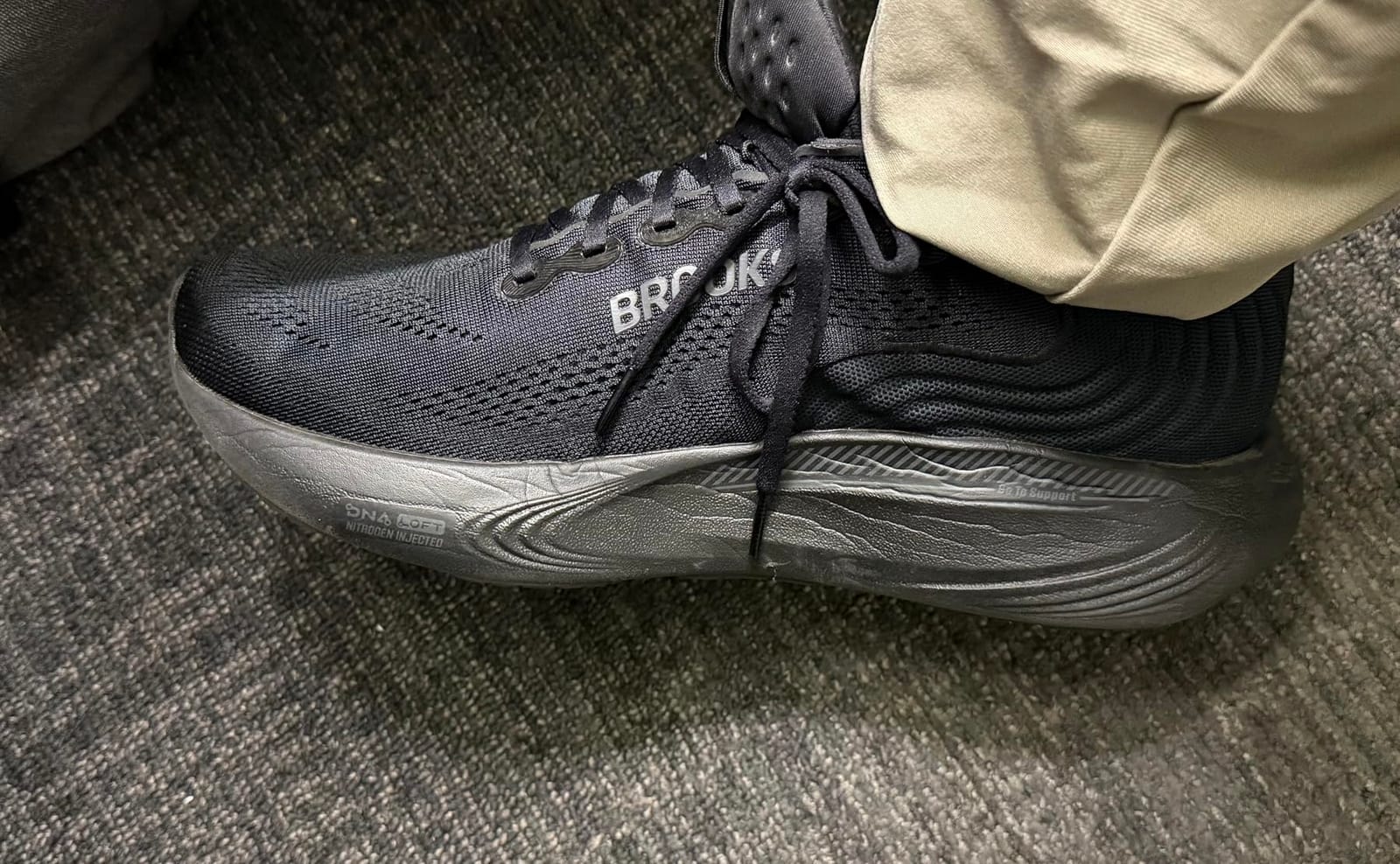
How the GTS 25 holds up on long runs
The main debate around this shoe is softening. Owners who loved the GTS 24 describe the version 25 as noticeably softer, closer to the Glycerin, and a handful of high-mileage runners feel that loses the firmer, more energy-efficient ride they trained in. If you like a hard surface underfoot, this is not that shoe.
For a first marathon build, softness is usually the right trade. The cushioning does the work on the back half of a long run when the leg is tired, and the medial support stays consistent as fatigue sets in rather than fading out.
Who should skip it
Skip it if you run most of your mileage at race pace and want ground feel. A firmer stability trainer like the Saucony Hurricane 24 gives you more of that, and it is also a lighter shoe to lift your cadence on quick sessions.
Also worth knowing: the wide widths run a little long, so check the fit with a thumb-width toe gap rather than assuming your usual size carries over. There is no slip-on version, so budget a few seconds for lacing at the start of every run.
2. ASICS Gel-Kayano 32 – Best Value Stability Trainer
- The reference stability trainer for overpronators
- Medial support without a heavy or clunky feel
- Very broad size and width run
- Durable construction
- Breathable engineered mesh upper
- Firmer and more structured than max-cushion rivals
- Runs slightly small for some buyers
- Heavier than minimalist alternatives
The Gel-Kayano 32 is the shoe I recommend when a runner asks me where to start, and the forums back that up. On r/AskRunningShoeGeeks posters repeatedly single out ASICS as really stable when it comes to pronation, and the Kayano is the model that carries that reputation. It has been a reference point in this category for years, which means a lot of long-term durability data behind it.
The 4D GUIDANCE SYSTEM uses a dynamic pod that responds under excessive load rather than pushing constantly, and the rearfoot PureGEL is roughly 65% softer than standard GEL. The result is support that shows up when you roll in and gets out of the way on the easy miles that make up most of a marathon build.
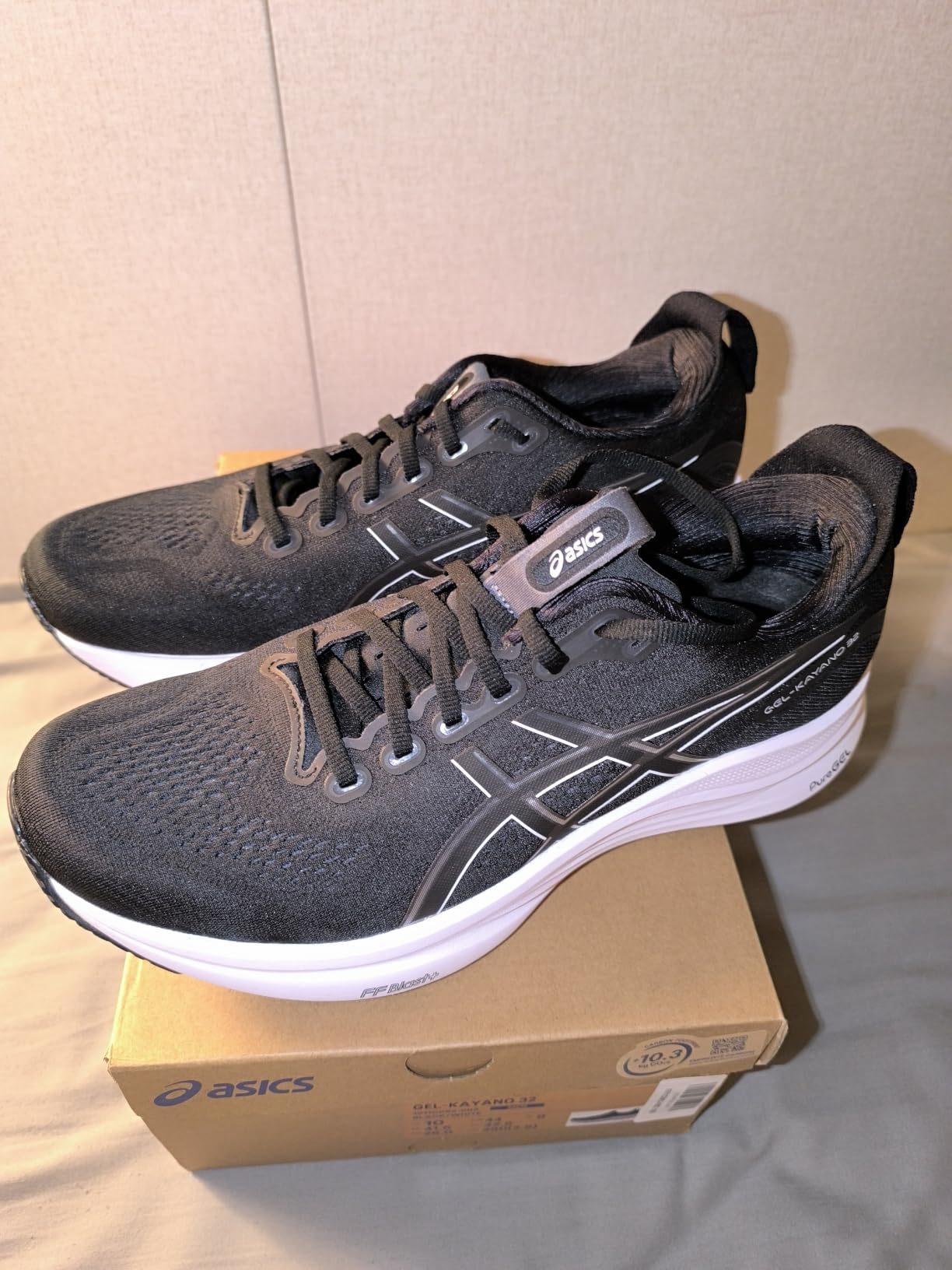
The FF BLAST PLUS midsole is the reason this shoe still feels like a running shoe rather than a recovery slipper. It responds at tempo pace, so you can do your Tuesday threshold session in the same pair you ran Sunday easy, and that is a real saving across a 16 week block.
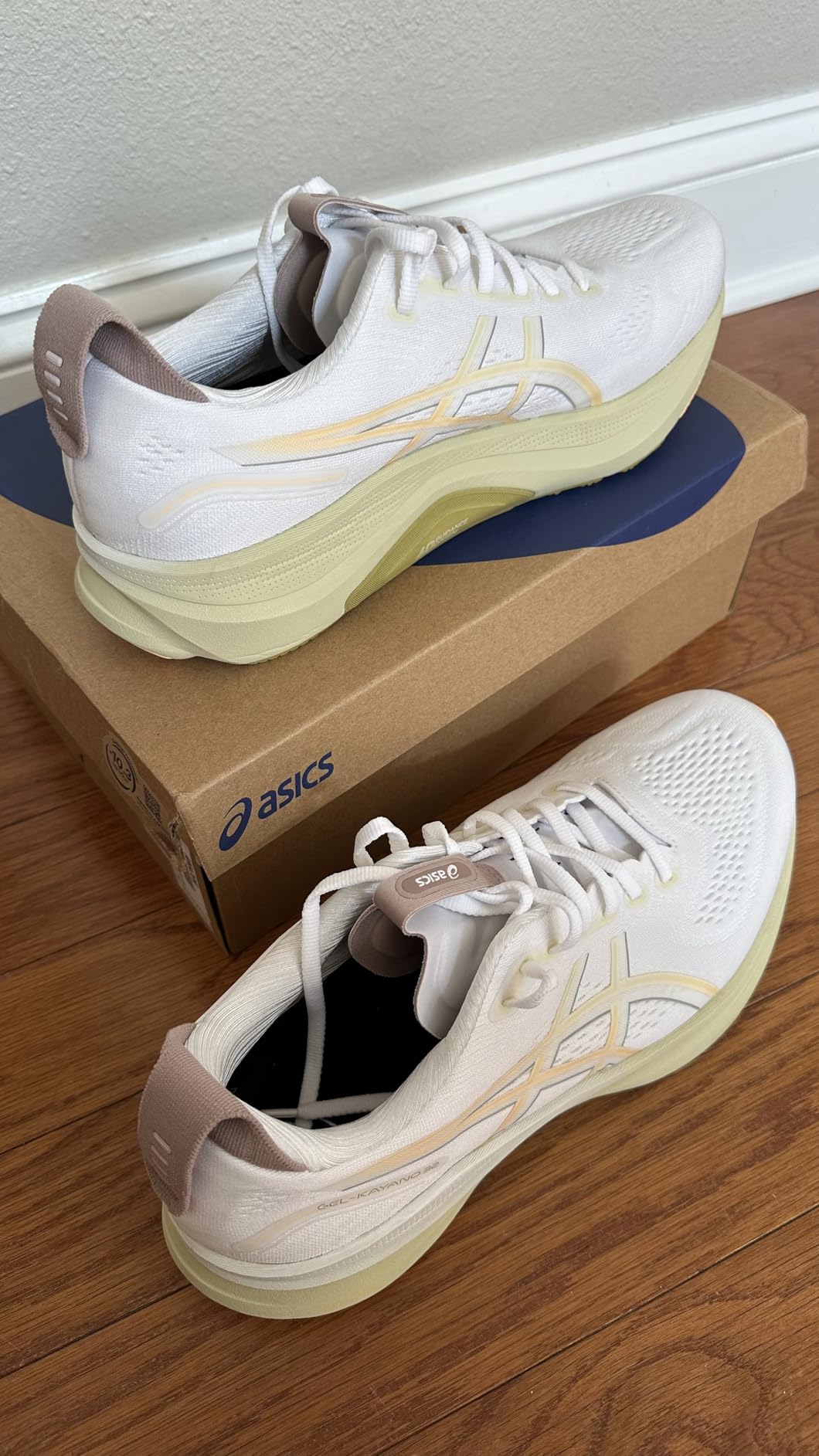
Fit and width for a marathon block
Sizing is the one thing to nail down. Some buyers find the Kayano runs slightly small and size up, and the width run stretches from standard through X-Wide, which is one of the broadest in this group. If your feet swell over 20 mile runs, get the pair fitted late in the day with the socks you will race in.
The knit heel pull tab makes on and off easy in the dark before a dawn long run, and the OrthoLite X-55 sockliner manages moisture well enough for runners who do not want to change socks mid-session.
Who should skip it
Skip it if you want a plush, cushioned ride. Compared with the Brooks Ariel GTS 24 or the Glycerin GTS 23, the Kayano feels more structured and less sinky, and some runners describe it as firmer than they want for 20 mile repeats.
It is also heavier than minimalist or max-cushion alternatives, so if you are already planning a light neutral shoe for speed work, keep that separate. The Kayano earns its place as the daily trainer where the support matters most.
3. Brooks Ariel GTS 24 – Best for Maximum Long-Run Support
Brooks Women’s Ariel GTS 24 Supportive Running & Walking Shoe – Ebony/Black/White – 7.5 Medium
- Highest support level in the Brooks line
- Roomy engineered upper suits wider feet
- Soft and durable DNA LOFT v3 cushioning
- Works for long walks as well as runs
- Wide through X-Wide widths
- Bulkier platform than neutral trainers
- Can feel intrusive for neutral runners
- Fewer color options in wide sizes
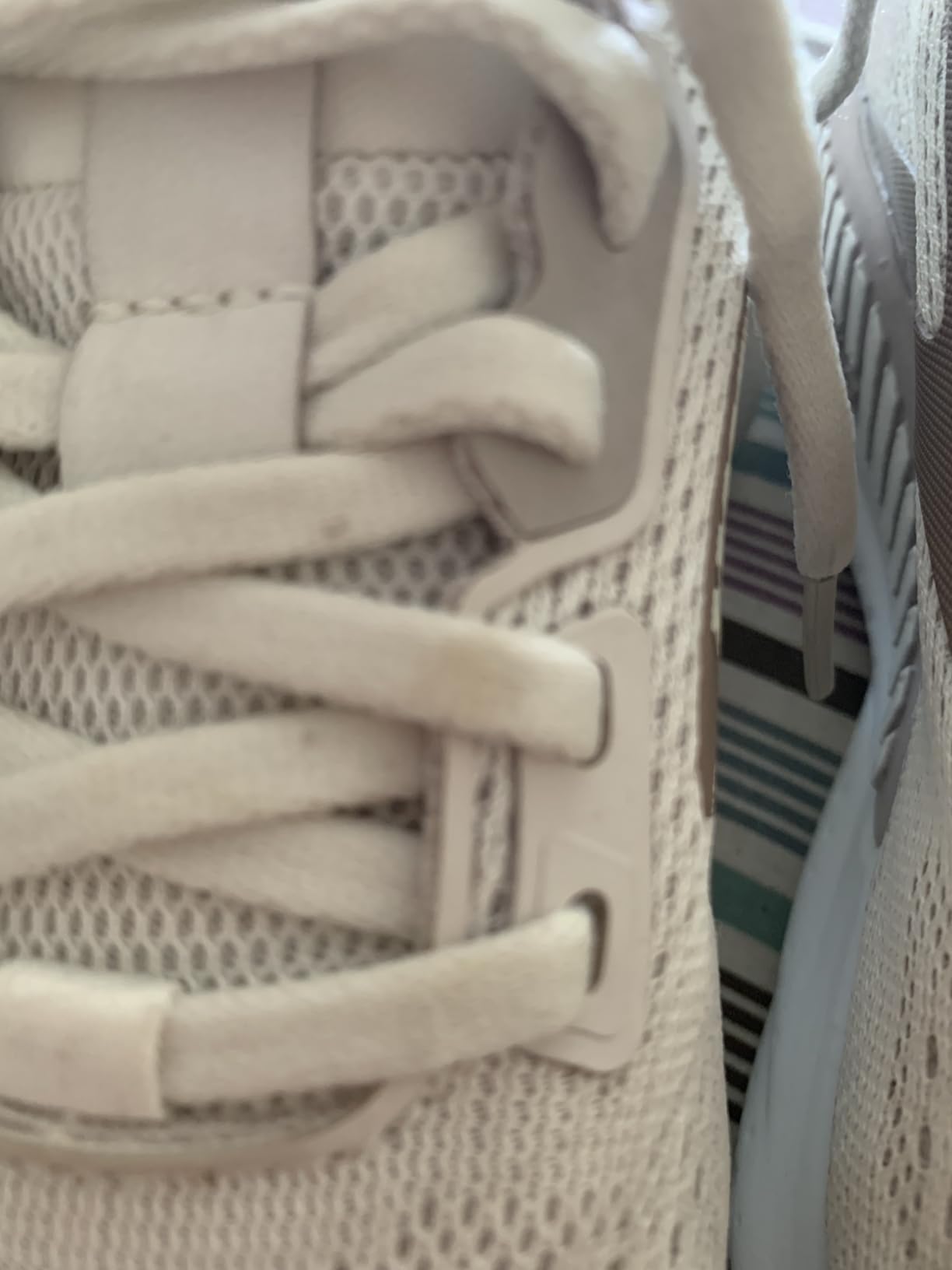
The Ariel GTS 24 is the most supportive shoe in this entire group, and for a first marathon, a heavier runner, or anyone returning from an injury it is the safest bet. The linear last construction in both the midsole and the outsole is what separates it from the Adrenaline, and reviewers describe it as noticeably more planted through mid-strike.
I used it as my walking-as-much-as-running shoe during a heavy week and it held up for full days on my feet without the arch fatigue I normally get. The roomy engineered upper is genuinely roomy, which matters a lot at mile 18 when your feet have swollen and the toe box feels smaller than it did in February.
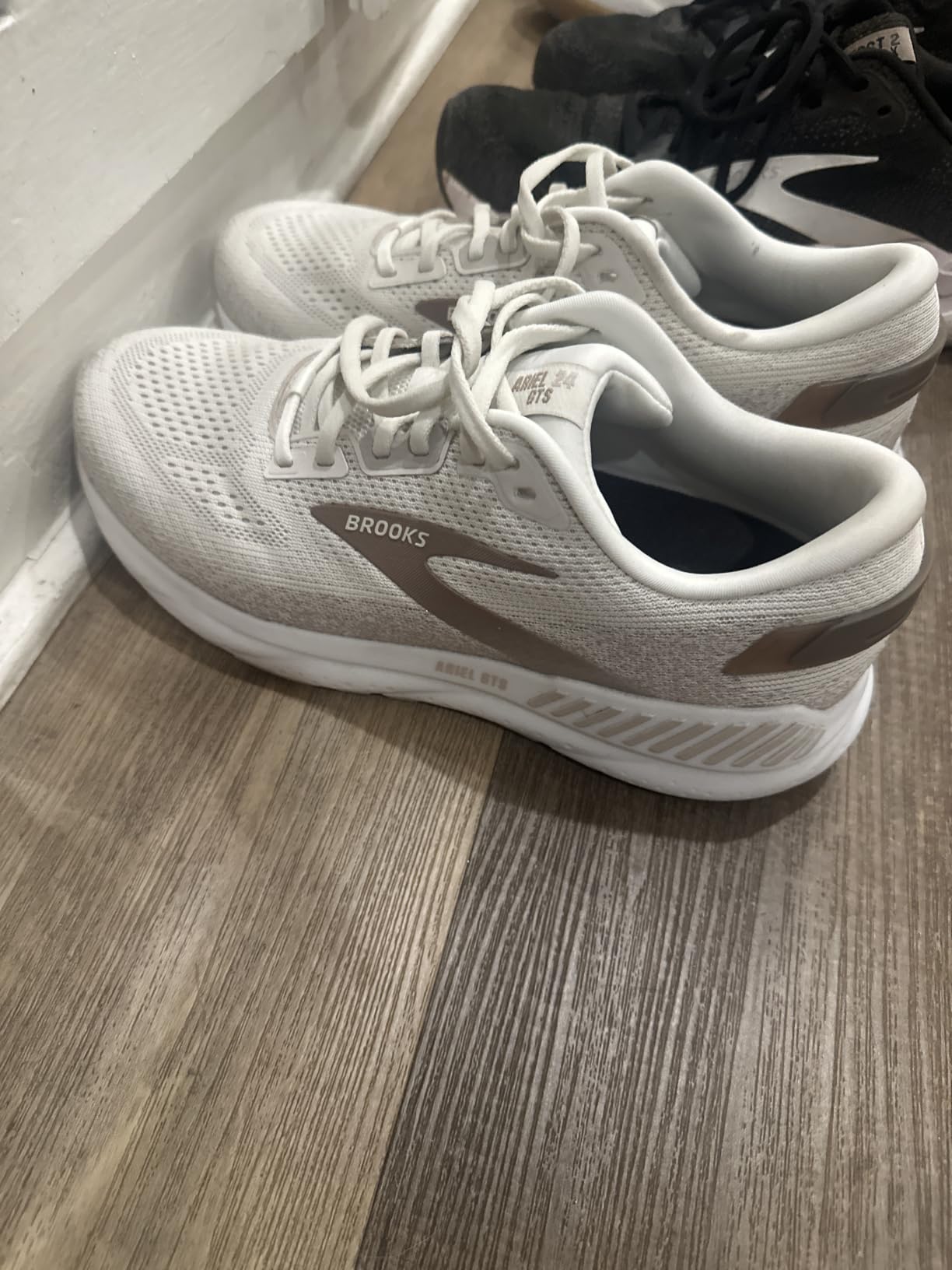
Like the Adrenaline, it carries PDAC A5500 certification and an APMA Seal of Acceptance, and it is aimed squarely at women who overpronate or need joint protection over long distances. The DNA LOFT v3 cushioning is the same nitrogen-infused foam, and it stays comfortable rather than bottoming out on long efforts.
When the extra support is worth the bulk
The support level is the point, and the trade is agility. Compared to a neutral trainer, the platform is larger and the ride firmer, so quick feet-over-toe drills and anything that demands a light shoe will feel wrong in it. Run pace, not faster, is where this shoe is at home.
Because it doubles as a walking shoe, it earns its place in a two-shoe rotation more than any other model here. If your week includes a long walk on rest day or a lot of time standing, this is the one to buy.
Who should skip it
Skip it if you are a true neutral runner. The highest support level in the Brooks line can feel intrusive if your gait does not need it, and you would be carrying extra weight for nothing across hundreds of miles.
Wide sizes carry fewer color options here too, and if you want a lighter shoe for intervals you will need to pair this with a second, faster pair rather than trying to make one shoe do both jobs.
4. Saucony Hurricane 24 – Best Budget Stability Trainer
- Lighter and less bulky than most stability shoes
- Responsive dual-layer foam
- Secure lockdown from adaptive lacing
- Durable outsole for long blocks
- Strong value in this category
- Cushioning is less plush than max-cushion models
- Medial support reads as mild to some reviewers
- Standard lacing with no pull tab
The Hurricane 24 is the shoe I suggest to runners who want stability but refuse to run in something heavy. At 2.25 pounds for the package it is the lightest build in this group alongside the Arahi 8, and the CENTERPATH geometry keeps the gait steady without adding bulk to the midsole.
The dual-layer foam, PWRRUN PB over a foundational PWRRUN layer, is soft on the landing and springy on the push-off. That combination is why it still works for tempo sessions and not only easy miles, which makes it a strong single-shoe option for runners who do not want to manage a rotation.
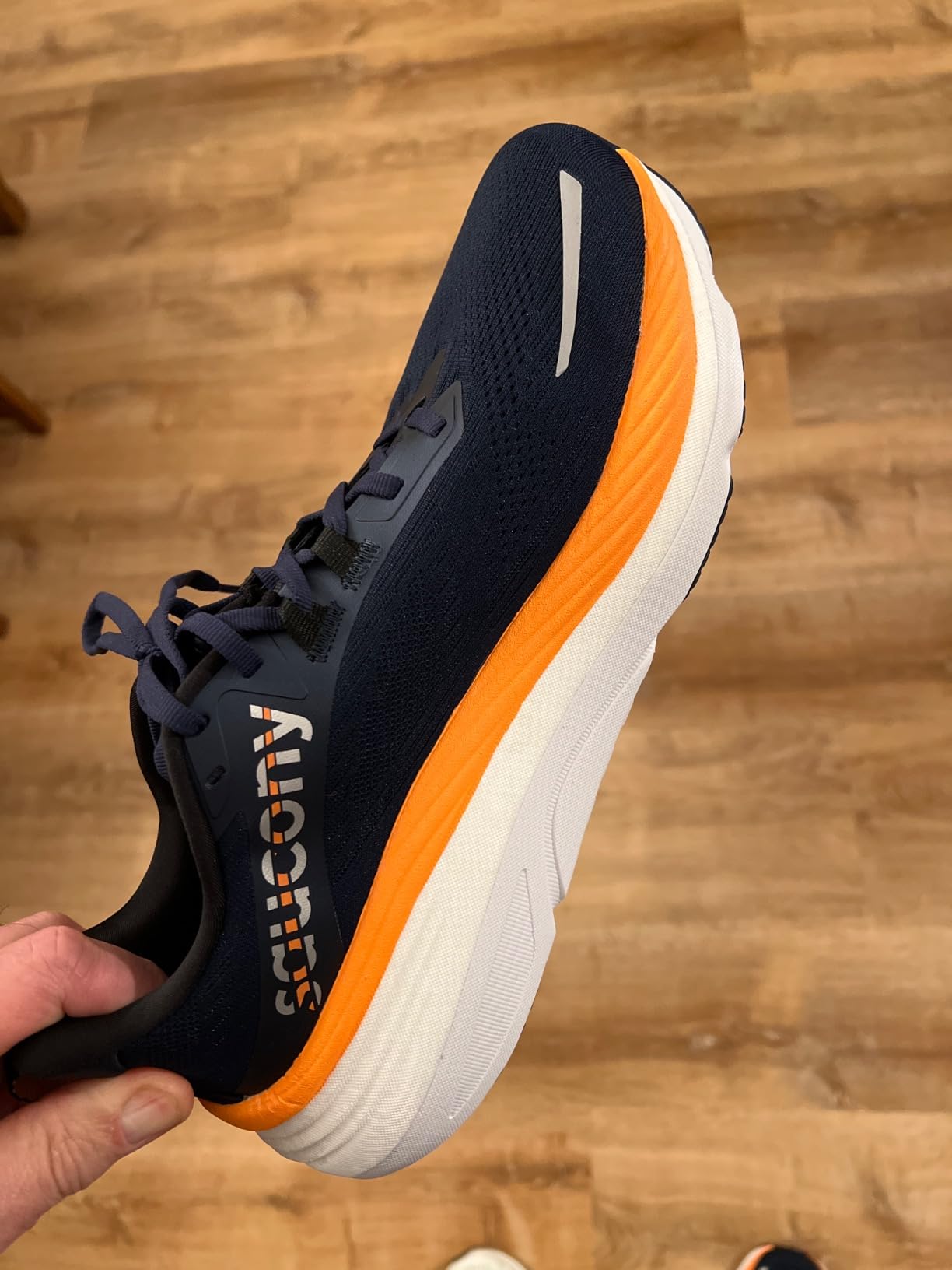
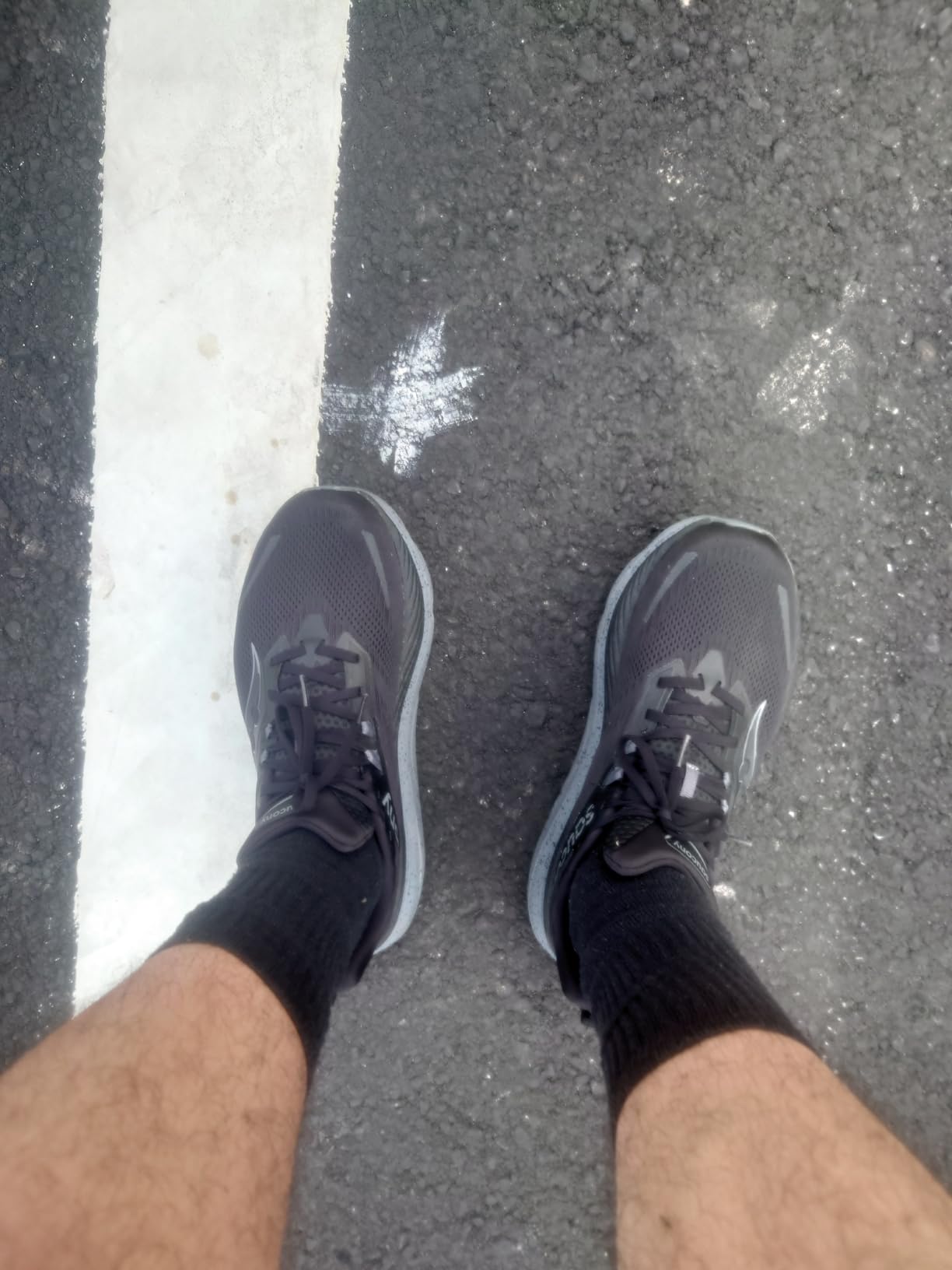
Reviewers repeatedly highlight durability through a training block, and the rubber outsole holds up well on road mileage. The adaptive lacing system gives a secure lockdown through the midfoot, which is what stops the foot from rolling inward in the first place rather than correcting it afterward.
Where this shoe fits in a marathon build
This is the one to buy if you are running a first marathon on a sensible budget and want a single pair to see you from the first base mile to the finish. The lighter weight and the more responsive foam make it the least fatiguing option here for a runner who is new to high weekly mileage.
It is also the shoe most likely to work for a neutral runner who is a little unsure. Mild, adaptable support is far less likely to disrupt your mechanics than a maximum-support platform, and the responsive foam means nothing feels broken if your gait does not need much correction.
Who should skip it
Skip it if you want plush cushioning for very long runs or if you need pronounced guidance for a diagnosed overpronation problem. Reviewers who compare it to heavier guidance shoes find the medial support mild, and the cushioning is thinner than a max-cushion trainer.
There is also no pull tab, so it is a lace-up every single time. Minor, but worth knowing if you are running transitions in the dark.
5. HOKA Arahi 8 – Best Lightweight Stability Shoe
- Sleeker and lighter than the previous Arahi
- Stability effect that feels natural rather than intrusive
- Impressively light for a stability shoe
- Wide sole and toe box suit broad feet
- Strong durability with around 1000 miles reported
- Heel bevel forces a distinct strike pattern that takes adjustment
- Less cushioned than max-cushion HOKA models
- Subtle stability for runners wanting strong guidance
The Arahi 8 is the shoe that disproves the idea that stability has to look like a medical device. At 2.19 pounds it is light for the category, and the H-Frame corrects overpronation while the ride still reads as a normal running shoe. Reviewers describe it as a stability shoe that runs like a neutral trainer.
Durability is the standout. One owner logged around 1,000 miles with minimal wear, and the double jacquard mesh upper, which is 62% recycled nylon with recycled polyester and spandex, holds up well to repeated washing between runs. Over a 500 to 700 mile block, that is the difference between one purchase and two.
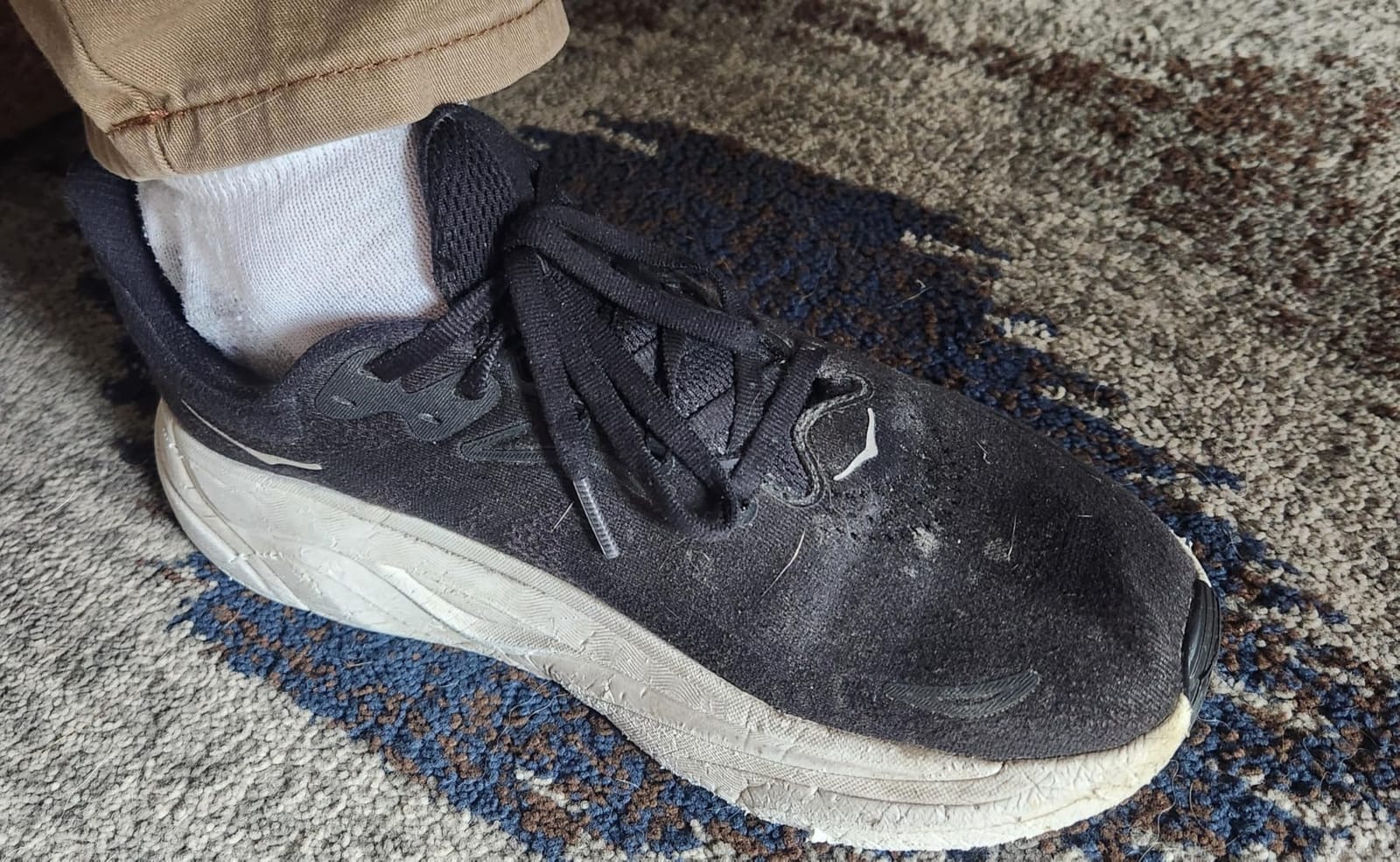
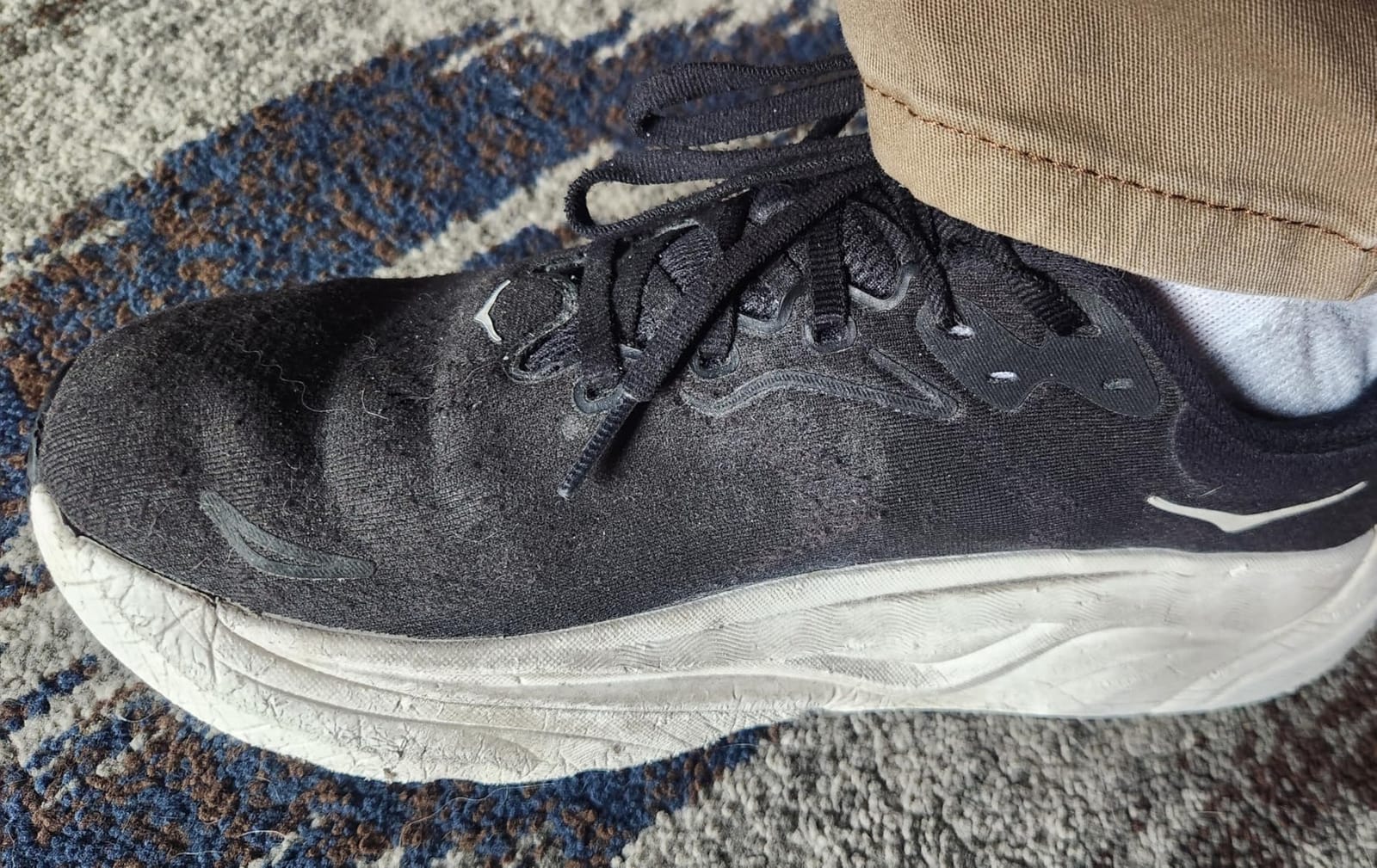
The wide platform base is doing more work here than the H-Frame itself. A broad, flat base makes it hard for the foot to tip inward in the first place, and for flat-footed runners who overpronate late in a run rather than from a cold start, that is often the feature that does most of the work.
Learning the heel bevel
The most common adjustment complaint is the heel bevel, which encourages a distinct heel-to-toe strike. If you are a midfoot striker, expect a few runs of awkwardness before it settles. The fix is simply to go out easy for the first mile and let the shoe teach your foot where to land.
Because it is light and the tooling is low profile, the Arahi 8 is the one shoe in this group I would happily use for pace work alongside long runs, which makes it a strong anchor for a two-shoe rotation.
Who should skip it
Skip it if you want maximum cushioning. Compared with max-cushion HOKA models the Arahi 8 is noticeably thinner underfoot, and long-run comfort at 20 miles depends on that foam volume as much as it does on support.
It is also not the right pick if you need pronounced guidance. The stability effect here is subtle by design, and runners with a diagnosed overpronation issue may want something more assertive.
6. Brooks Glycerin GTS 23 – Softest Stability Pick for Heavy Weeks
Brooks Men’s Glycerin GTS 23 Supportive Running Shoe – Black/Black/Ebony – 10.5 Medium
- Plushest ride in this group
- GuideRails guidance that stays out of the way
- High stack with 8mm offset smooths transitions
- Breathable adaptive warp-knit upper
- Wide through X-Wide widths
- Most expensive shoe tested here
- A small number of sole and upper failures reported
- Heel material leaves a gap some buyers dislike
- 8mm offset is a big change for minimalist runners
The Glycerin GTS 23 is the softest stability shoe I ran in, and for a runner with a history of shin splints or Achilles irritation it is the one I reach for during the heaviest weeks of a build. The zonal nitrogen-infused DNA TUNED cushioning adds forefoot plushness, so the shoe absorbs impact instead of bouncing it back into your legs.
What makes it interesting for marathon training is the 8mm offset on a high-stack midsole. That combination gives a smooth heel-to-toe transition over 26.2 miles, and it is a large enough change from a traditional drop that minimalist runners will feel the difference immediately.
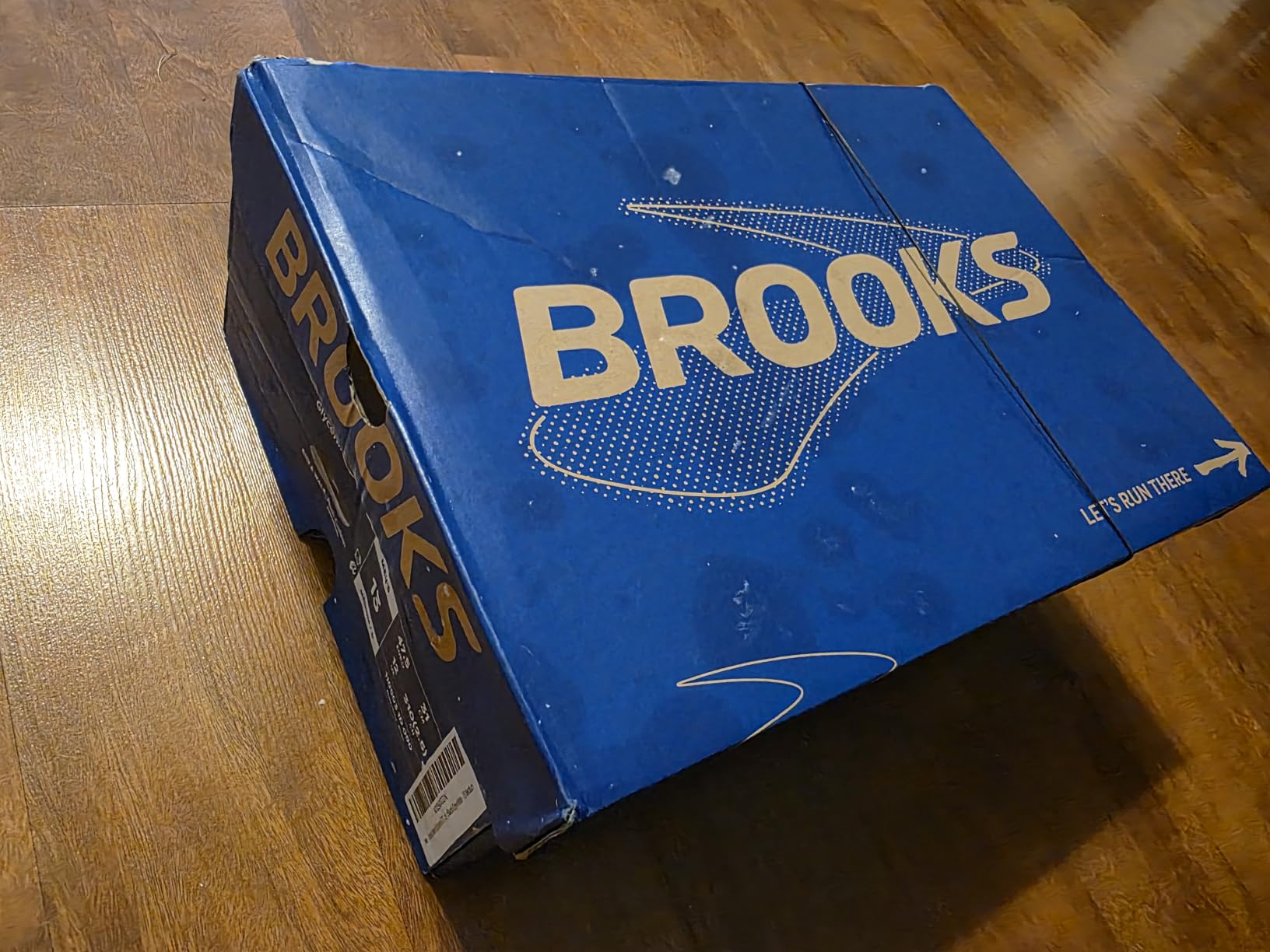
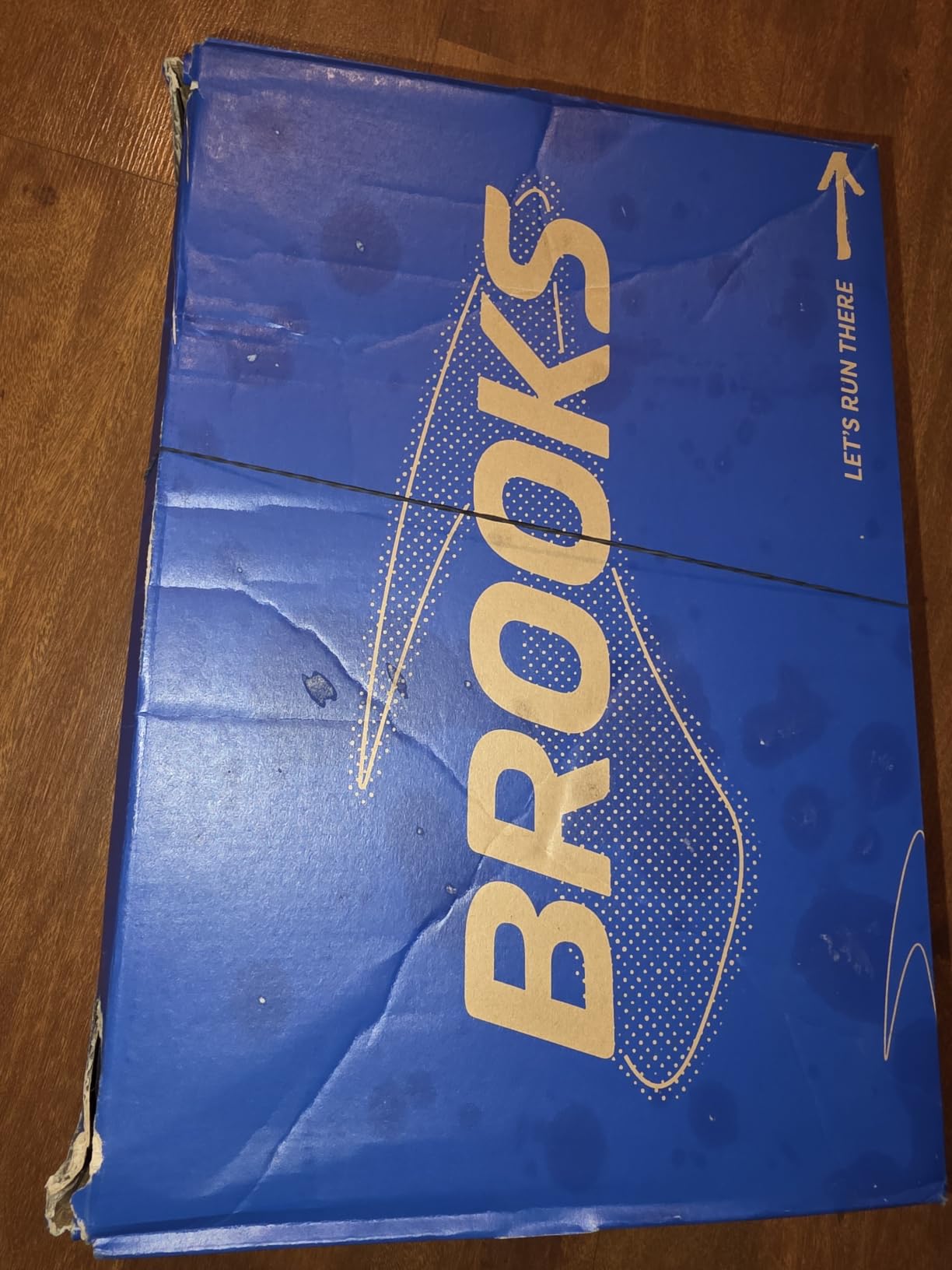
The triple jacquard warp-knit upper is the most adaptive in this group, with a wide through X-Wide run that wide-footed runners single out as a real plus. The package is heavy at 3 pounds, but reviewers still describe the shoe as light for a max-cushion stability model once you account for the foam volume.
Best used as the second shoe in a rotation
This is not the shoe to race in and it is not the shoe to do intervals in. It is the shoe for your heaviest long run, your recovery days, and any week where your Achilles or shins are telling you to back off. Used that way, the plushness is an asset rather than a liability.
Because the guidance here is gentle, it also works for runners whose pronation only shows up when they are fatigued, which is exactly the pattern that shows up at mile 20 of a long run rather than mile 2.
Who should skip it
Skip it if the budget for the whole build is fixed, because it is the most expensive shoe we tested, and skip it if you want one shoe to do everything. A plush stack that absorbs impact is not what you want underfoot at 4:30 pace per mile.
A small minority of owners report premature sole or upper failure, so if you are covering more than 600 miles in one pair, check the outsole periodically rather than assuming the cushioning still means the shoe is fine.
7. ASICS GT-2000 14 – Best for Flat Feet and Pronation Control
- Strong arch support for flat feet
- FF BLAST MAX foam is energetic for daily miles
- Durable build with over a year of use reported
- Comfortable straight out of the box
- Stylish enough for daily wear
- Runs small
- so many buyers size up or go wide
- Guidance can read as supination to neutral runners
- Outsole reported slippery on smooth indoor surfaces
- Unpadded lower tongue lets laces press through
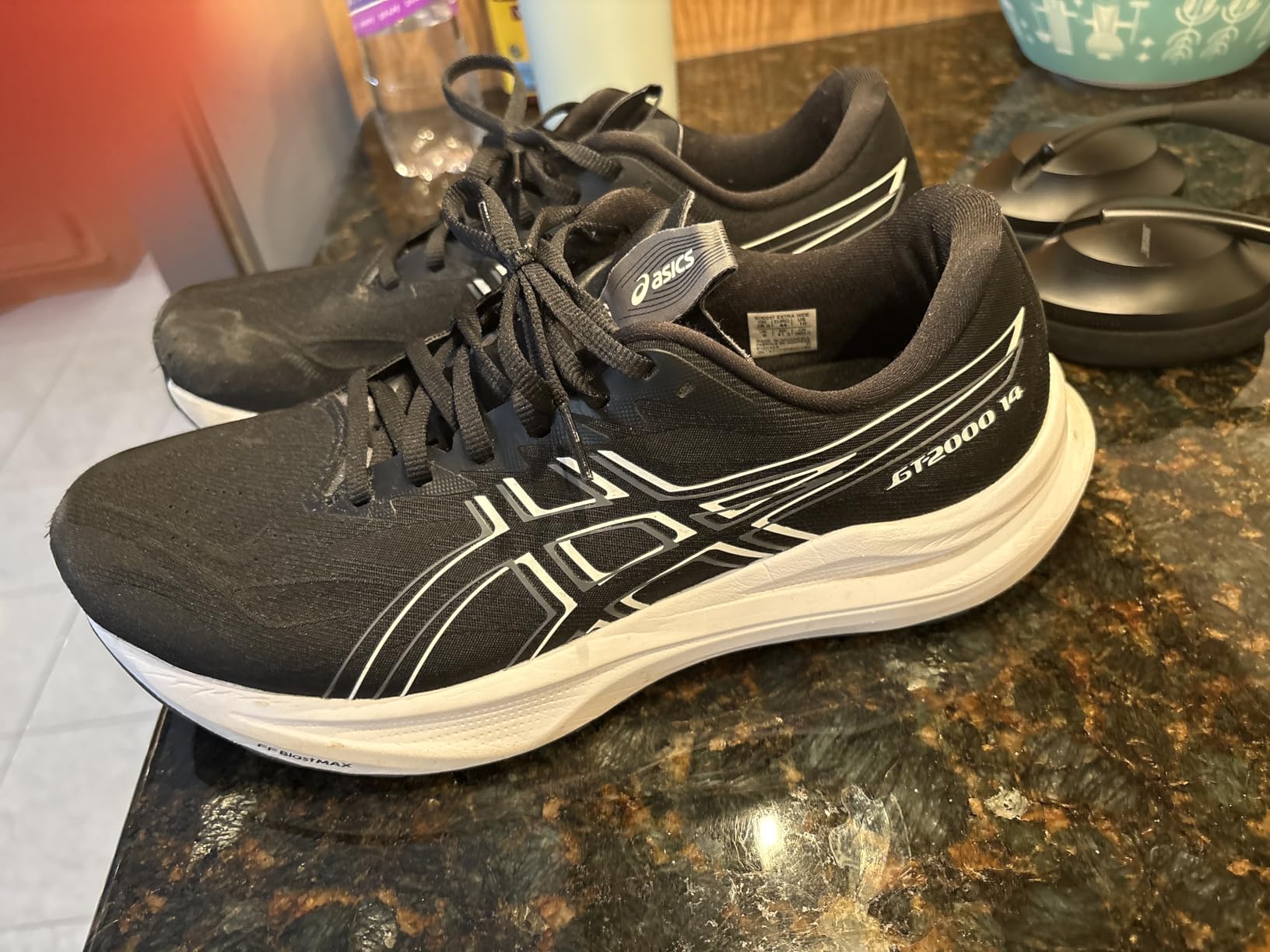
The GT-2000 14 came up more than any other shoe when I read through runner discussions about flat feet and pronation, and on r/AskRunningShoeGeeks it is regularly described as maybe the most balanced overall of the stability options. The 3D GUIDANCE SYSTEM delivers adaptive, on-demand stability through platform geometry and controlled deformation rather than a hard post.
FF BLAST MAX is one of the more energetic midsole foams in the group, which matters because it means this shoe can handle your threshold sessions and not just your easy mileage. The trampoline-inspired outsole pod returns energy at toe-off, and owners report durable construction with over a year of use and little visible wear.
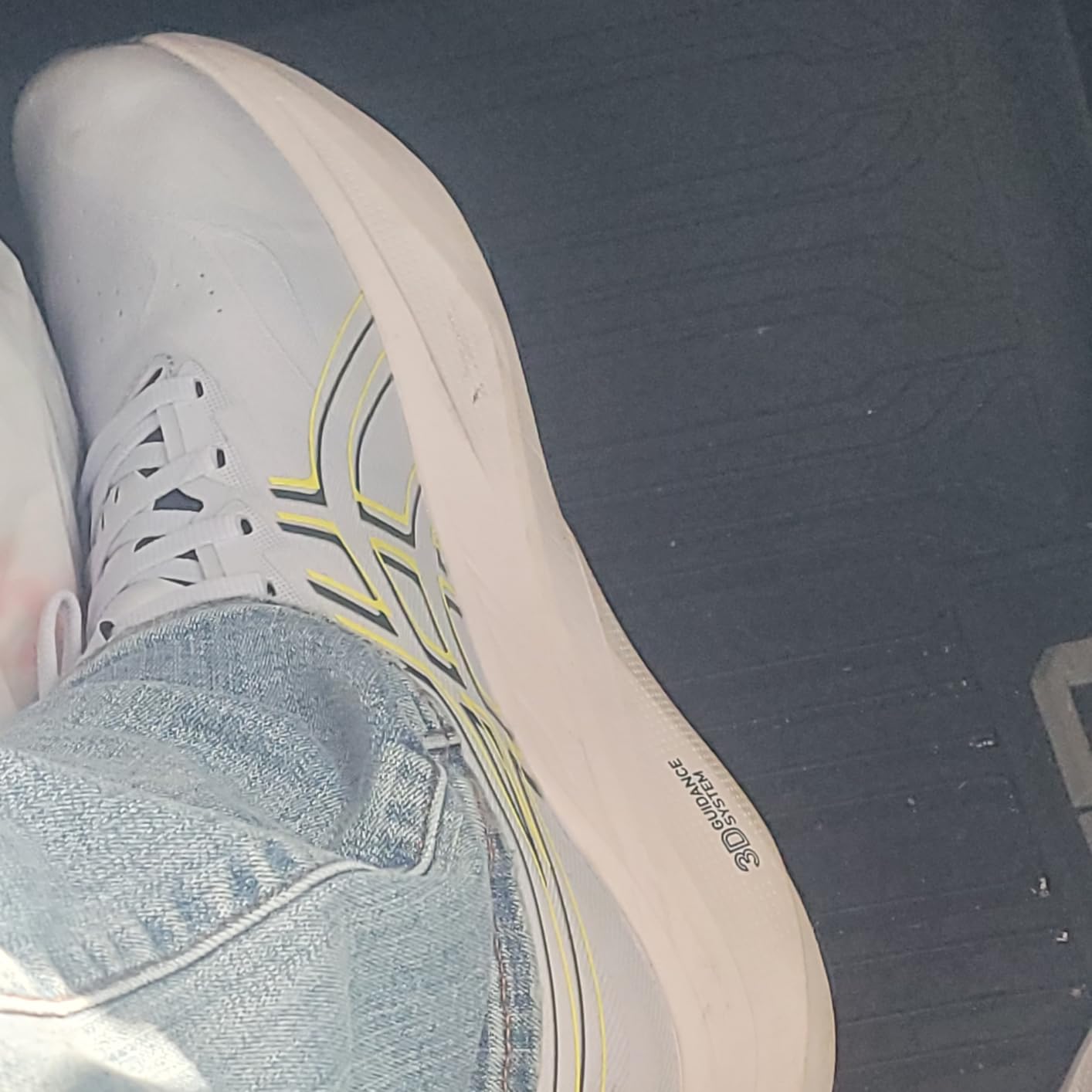
It is also comfortable straight out of the box with no break-in period, which is a genuine advantage if you are buying a new stability shoe four weeks out from a race rather than two months out.
The asymmetric tongue wing secures the midfoot so your foot stays centred over the platform. On the running shoe forums, runners who like the guidance of a real pronation shoe tend to cite this model first when they need support that is firm without being harsh.
Getting the fit right matters more here
The listing states it runs small, and that is the single most repeated complaint. Most buyers size up or go wide, and the wide widths are available for broader feet. Do not just order your usual size and hope, because the whole point of a pronation shoe is that the foot stays centred, and a too-snug forefoot works against that.
The unpadded lower two-thirds of the tongue is the other fit note. If you lace tightly across the midfoot, expect the lace ends to press through on longer runs, so tuck or shorten your lacing pattern before a 20 mile effort.
Who should skip it
Skip it if you are a neutral runner who is curious about stability. The 3D Guidance System is assertive, and neutral runners describe the ride as noticeable supination rather than subtle guidance. Start with a milder shoe such as the Saucony Hurricane 24.
Also check your training surface. The outsole has been reported as very slippery on smooth indoor surfaces until scuffed, so if your winter treadmill sessions are indoors, either scuff it in early or keep a separate indoor pair.
8. New Balance Fresh Foam X 860 V15 – Best With Custom Orthotics
New Balance Men’s Fresh Foam X 860 V15 Running Shoe, Grey Matter/Sea Salt, 11
- Removable insole accepts custom orthotic inserts
- Medium arch support for flat feet
- Well cushioned and shock absorbing
- Comfortable for long-term wear
- Sports Research Lab validated
- Different last and sizing from the V13 and V14
- Heavier build than lighter trainers
- Plush cushioning unsuited to speed work
The Fresh Foam X 860 V15 is the one to buy if you run orthotics, because the removable insole lets you drop in a custom insert rather than fighting the factory footbed. That single feature changes the calculus for anyone who overpronates badly enough to be prescribed a medial wedge or arch support.
Stability Plane technology delivers dependable stability without giving up plush cushioning, and Fresh Foam X is the most cushioned version of that foam New Balance makes. It is engineered and validated in the brand’s Sports Research Lab, and reviewers describe a medium arch support level that works for flat feet and for easing back into running after time off.
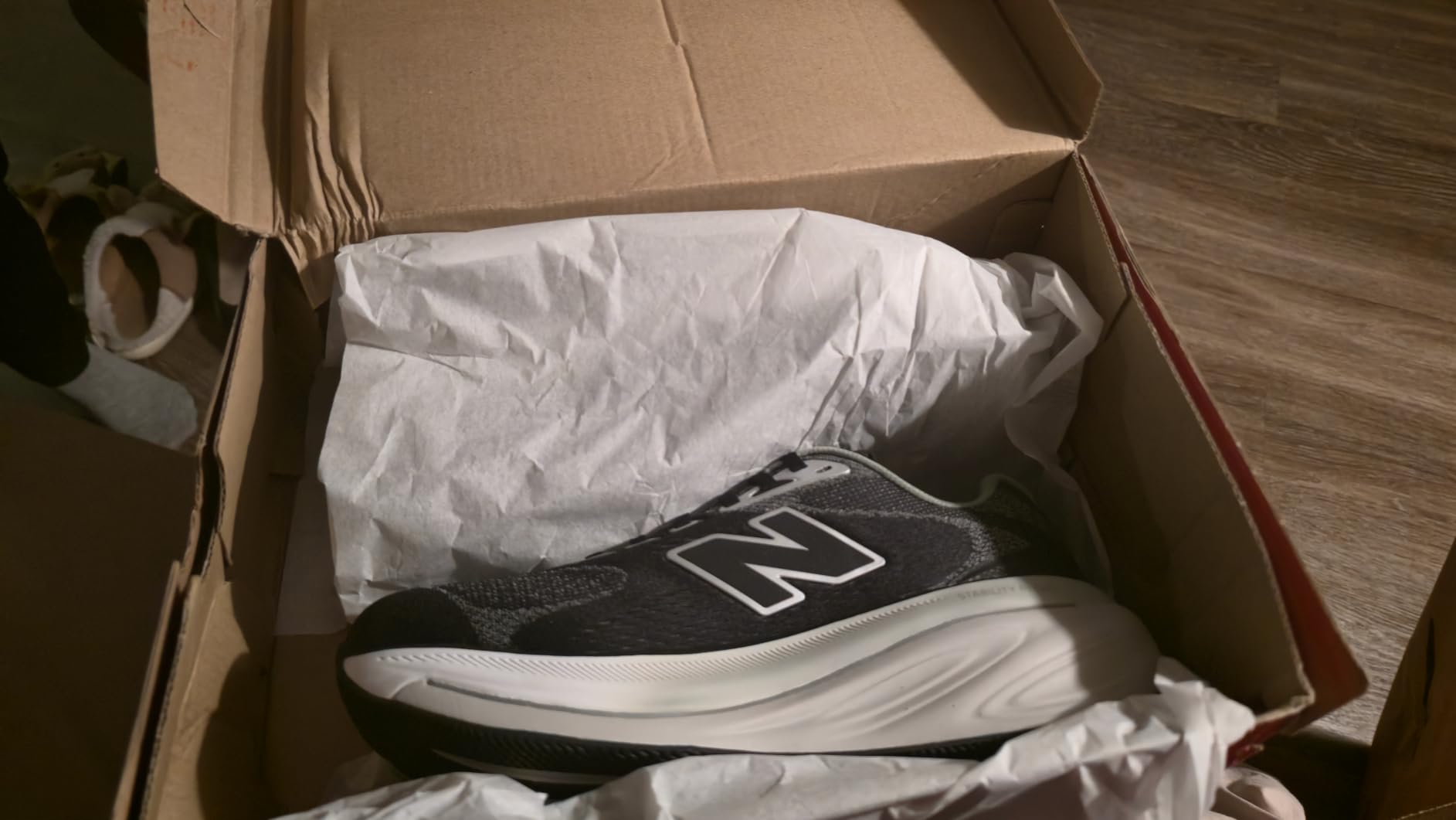
It comes up constantly as an alternative to the Brooks Adrenaline, and for many runners the deciding factor is the insole. If you have ever ground a factory sockliner into a big arch shape to make room for an insert, you will understand the appeal immediately.
The lightweight breathable synthetic upper is unremarkable in the best way, and the shoe is comfortable enough for long-term wear, including long days on your feet off the road.
What changed in the V15
The main adjustment issue is the last. Wide-footed buyers may need to size up because the V15 uses a noticeably different last and sizing from the V13 and V14, and if you have owned an earlier 860 your usual size will not necessarily transfer.
That is also the reason to order this shoe early in your build rather than a few weeks out. A new last means a new fit, and you want to know how it behaves across a 20 mile run before you commit your race day miles to it.
Who should skip it
Skip it for speed work. The plush cushioning is not designed to be responsive at fast paces, and the build is heavier than lighter stability trainers, so your interval sessions will feel flat in it.
It is also a heavy-shoe answer rather than a light one. Runners who want to offset the weight penalty of a stability trainer should pair something like this with a lighter neutral speed shoe rather than trying to make one shoe handle both jobs.
9. ALTRA Paradigm 8 – Best Wide Toe Box Stability Option
- Wide FootShape toe box relieves toe compression
- Zero drop encourages low-impact form
- Noticeably more cushioning than the Paradigm 7
- Durable with roughly 900 miles of walking reported
- Stable for both road running and long walking days
- Zero drop requires an adaptation period
- Midsole stiffness can cause heel slippage
- Midfoot can feel narrow despite the wide toe box
- Less breathable than mesh rivals
- Stability is milder than motion control shoes
The Paradigm 8 solves a problem no other shoe in this group does: a genuinely wide toe box inside a stability platform. The FootShape last lets your toes splay rather than being compressed, and users report being able to size down relative to their normal running shoe. If toe compression and calluses are what end your long runs early, that alone is worth the switch.
Altra EGO MAX sits on top of original Altra EGO foam for bounce and durability, and the added cushioning over the Paradigm 7 is obvious on long runs. One owner reported roughly 900 miles of walking on a pair, which is relevant for runners whose marathon training includes a lot of walking on rest days.
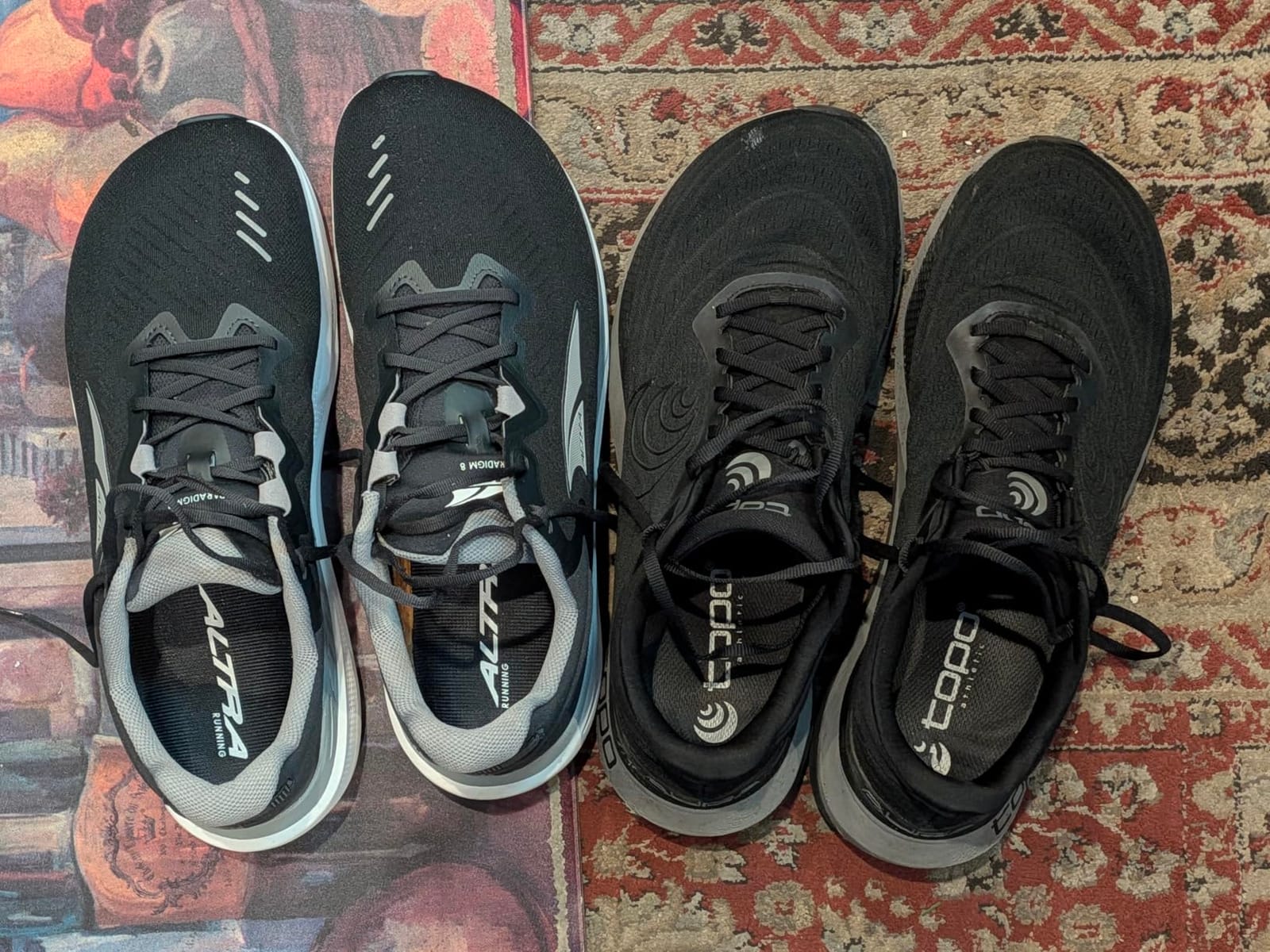
The zero drop platform is the real trade-off. Dropping heel elevation to zero changes your running mechanics whether you are ready for it or not, and it is the single biggest adjustment in this group. Think of it as a calf and Achilles adaptation on top of everything else a stability shoe asks you to change.
Altra Balanced Cushioning gives a stable, versatile platform that works for road running and long walking days alike, and the support here is real but mild compared with dedicated motion control shoes.
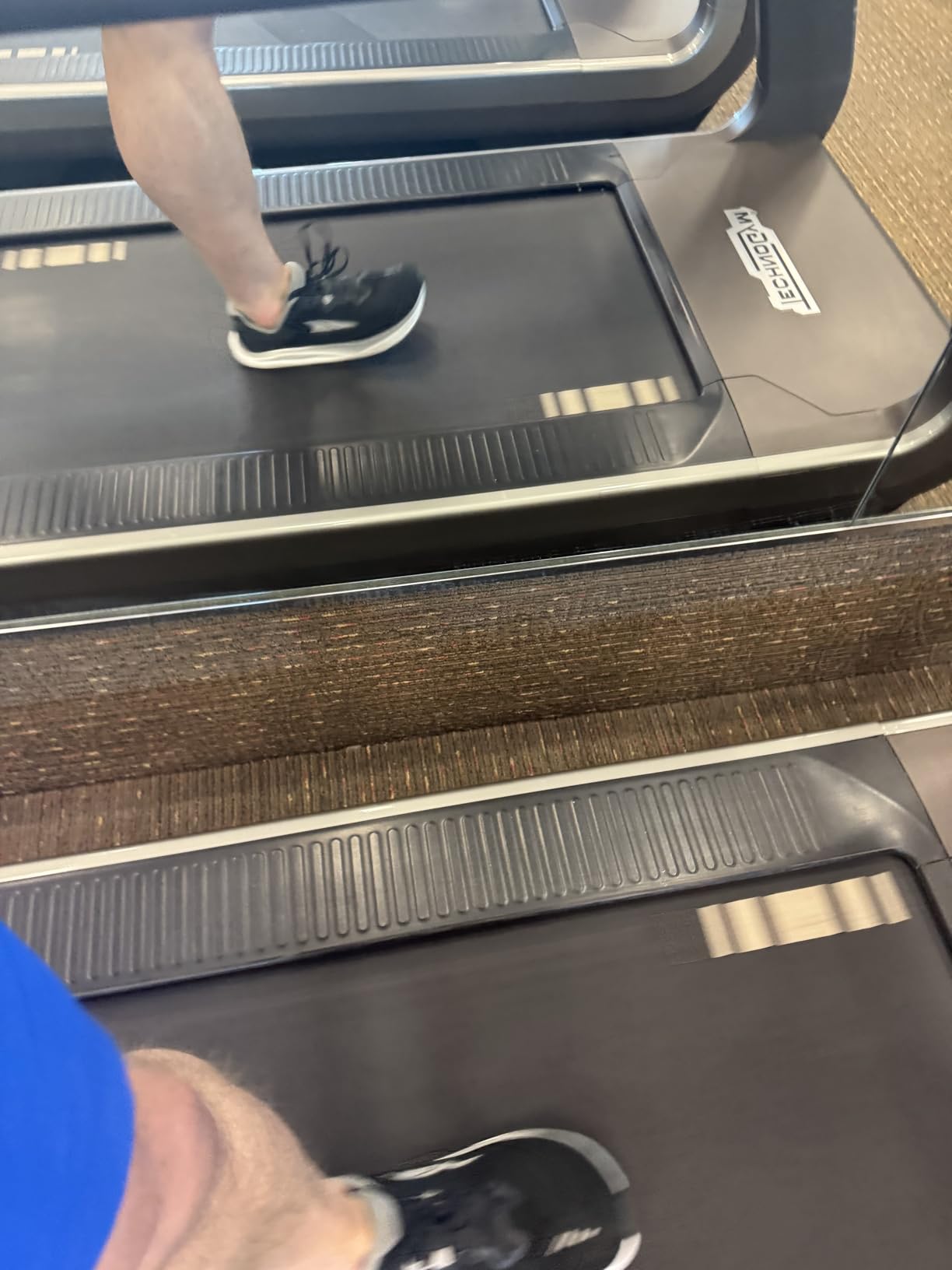
Why the adaptation period is the deciding factor
Zero drop works for runners who are willing to give it two to three weeks of easy running before adding any speed. The people who bounce off it are usually the ones who switched mid-block and tried to run a long run at marathon pace in it straight away.
The other adjustment is heel slippage. Some users find the midsole stiff enough that the foot lifts unless the shoe is laced very tightly, and the wider sizing can still feel narrow through the midfoot even with a roomy toe box. Lace the midfoot properly and give it a few runs before judging.
Who should skip it
Skip it if you are six weeks out from a marathon with a high weekly mileage target. There is no version of a zero drop shoe that you should debut inside a build, and the usual transition advice does not compress into a fortnight.
Skip it if heat is a problem for you, since the upper is less breathable than the mesh uppers on the Brooks and ASICS models here. And if you need firm motion control rather than mild guidance, this is not that shoe.
10. Saucony Guide 18 – Best Max-Cushion Stability Trainer
- Maximal cushioning with inherent platform support
- Center Path Technology keeps the foot centred
- XT-900 outsole is durable for road mileage
- Breathable supportive engineered mesh
- Good value for a max-cushion stability shoe
- Bulkier and less nimble than lighter trainers
- Softer platform than the Hurricane at faster paces
- Wide-footed runners may need to size or width up
The Guide 18 is the maximal option, and the broad base geometry does the stability work before you even consider the foam. Full-length PWRRUN is soft and responsive under a maximal platform, and Center Path Technology uses asymmetric geometry from lateral crash through toe-off to keep the foot travelling in a consistent line.
Runners describe the broad surface as making their feet feel settled, which is the phrase that comes up most when people explain why a max-cushion stability shoe feels different from a max-cushion neutral one. You get the plush protection of thick foam without the wobble that usually comes with it.
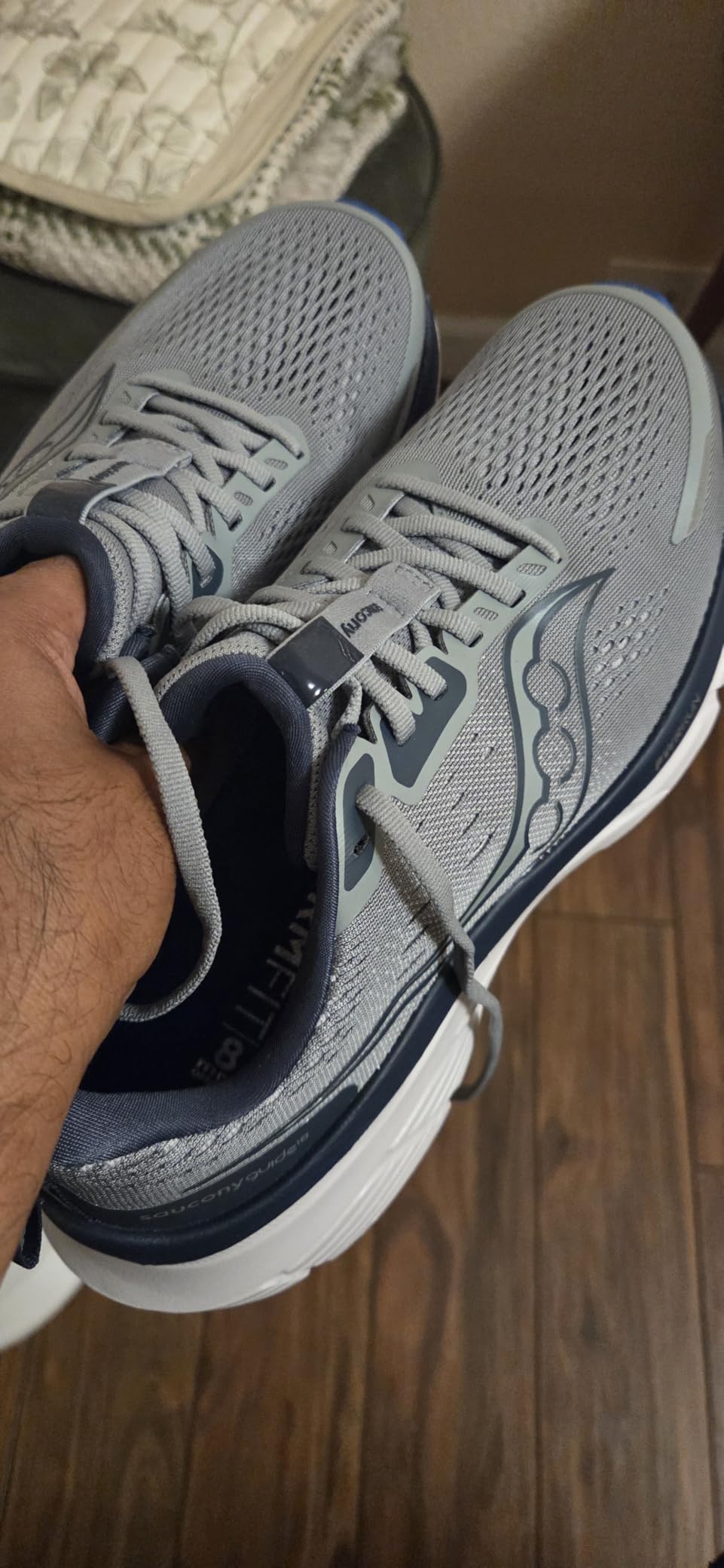
The XT-900 carbon rubber outsole is built for durable road traction, and over a 500 to 700 mile block that matters, because a max stack is the first thing to bottom out when the outsole wears smooth. The engineered mesh upper is breathable and supportive enough to double as a walking shoe.
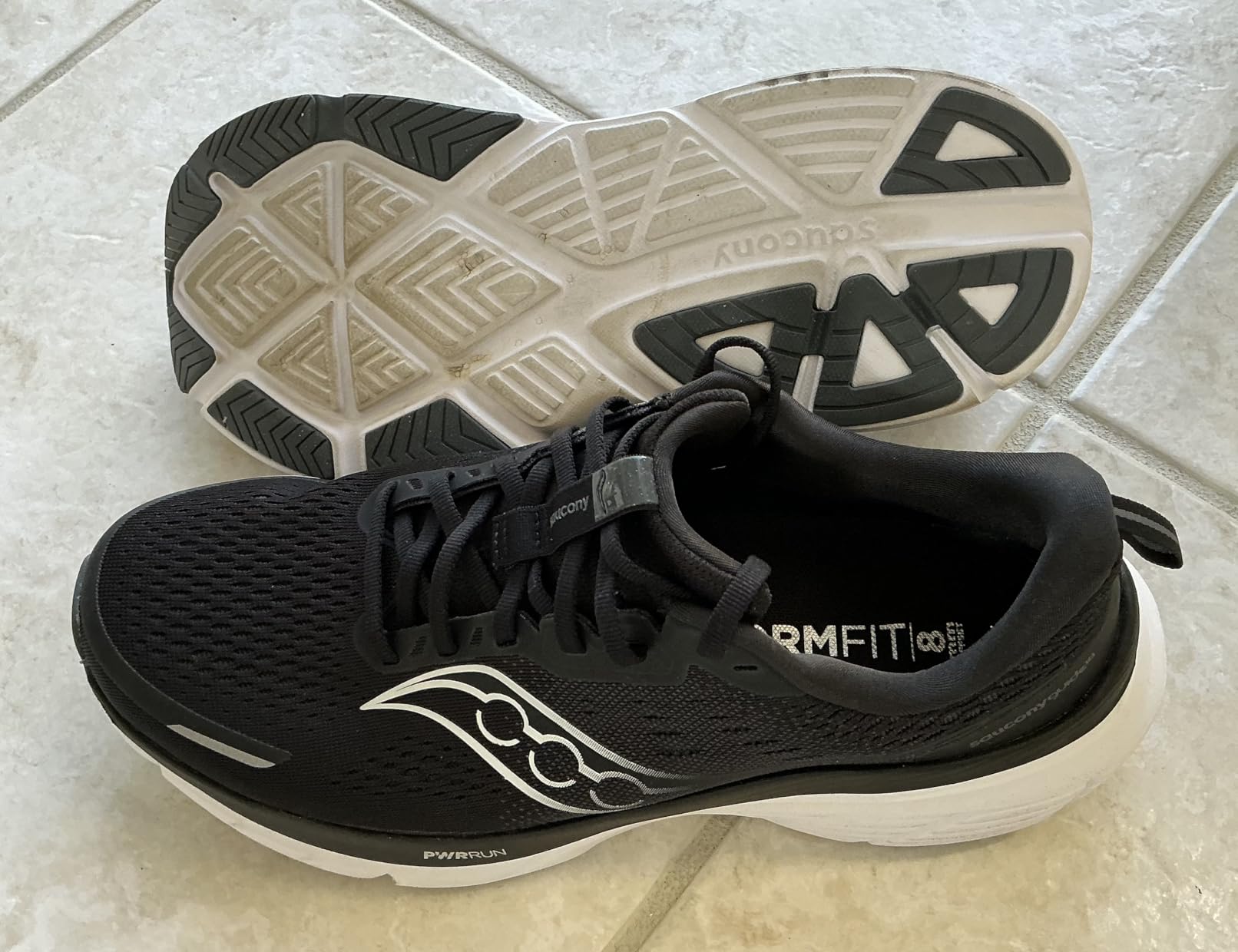
Max cushioning and the stability trade-off
There is a real cost to a taller stack: the further your foot sits from the ground, the less feedback you get, and the squishier the ride becomes. That is why the Guide feels protected and grounded at once, but why it also feels bulkier and less nimble than the Hurricane 24.
For a marathon build, the practical split is simple. Use the Guide for long runs, easy days and standing time, and keep something lighter for pace work. Runners who want a single shoe that does both will be happier with the Saucony Hurricane or the HOKA Arahi 8.
Who should skip it
Skip it if you run most of your training at faster paces, because the soft platform is not responsive at speed. It is also the bulkiest shoe here, and runners who dislike anything larger than a neutral trainer will feel it from the first run.
Wide-footed runners may need to size or width up. Check that before you commit, because the base is already broad and reordering mid-build is how runners end up racing in a shoe they have not tested.
How to Choose Stability Shoes for a Marathon Block
Start with where your pronation shows up, not with a brand. If you roll inward from the moment you land, you want firmer, more assertive guidance such as the ASICS GT-2000 14 or the Gel-Kayano 32. If you are fine for five miles and start rolling at mile 16, a milder shoe with a wide platform such as the HOKA Arahi 8 or the Saucony Hurricane 24 will let you keep your mechanics for longer.
Next, check the cushioning against your stack tolerance. Plush max-cushion models like the Saucony Guide 18 and the Brooks Glycerin GTS 23 protect joints over 20 mile efforts but go soft and slow. Lighter, lower-profile tools like the Arahi 8 keep ground feel and work at pace. If your block includes a weekly threshold session, you are buying at least two pairs no matter what.
Drop matters more than most buyers think. Most stability shoes sit between 8mm and 12mm, which is a forgiving range for high mileage. The exception is the ALTRA Paradigm 8 at zero drop, which is a genuine mechanical change and needs a proper adaptation window before a marathon build starts.
Fit is where marathon shoes are won and lost. Check for a thumb-width gap at the toe, make sure the midfoot is secure without being pinched, and use the heel-lock lacing trick if you feel your foot lifting. Buy in the afternoon, in the socks you will race in, because feet swell over a 20 mile run.
Finally, plan for durability rather than assuming. Across a 500 to 700 mile block, most runners will not get through the whole build in one pair. Owners report figures ranging from around 900 to 1,000 miles on the Arahi 8 and the Paradigm 8, and one Adrenaline owner reported a prior pair lasting nearly three years of daily use, so the range is wide and depends on your weight, your surface and your form.
Your Marathon Training Block Shoe Plan
Buy your stability shoe at the start of the block, not three weeks out. Runners repeatedly ask whether to buy a fresh pair close to race day, and the consensus advice is clear: nothing new on race day. A new midsole, a new fit and a new break-in period in the same week as your biggest effort is a recipe for blisters and a bad day.
A workable split looks like this. Weeks 1 to 4 are easy mileage, and that is when a fresher shoe with more cushioning helps your legs recover between sessions. Weeks 5 to 12 carry the long runs, so a roomy shoe with a wide toe box matters more here than at any other point in the block. Weeks 13 to 16 bring speed work and the taper, where you want a responsive, lower-profile trainer rather than a plush stack.
If you are running a two-shoe rotation, the split that works best for a stability runner is a cushioned daily trainer plus a lighter, more responsive stability shoe for long runs and pace. That also solves the weight penalty that frustrates runners on forums, since the speed work happens in the lighter pair.
Check the outsole at the halfway mark rather than the end. If the midsole feels dead or the outsole is smooth, replace the pair rather than pushing another 150 miles out of it.
How to Transition to Stability Shoes Without Wrecking Your Gait
Moving from a neutral shoe to a guided one changes your mechanics whether you need the change or not, so ease in. Four steps that work:
Start with short easy runs of 30 to 45 minutes in the new shoe, and skip your first session in them if it is a long run.
Ramp the mileage gradually, adding no more than about 10% of your weekly volume per week in the new shoe.
Keep your speed work in your old neutral shoe for the first two or three weeks so you can isolate whether the new support is affecting your form.
Watch for pain that does not settle within a day or two. Mild soreness is normal, sharp or persistent pain in the shin, Achilles, IT band or arch is a signal to stop and reassess.
If you are unsure whether you overpronate at all, runners on forums make a fair point that pronation is not inherently a problem, and plenty of people wear stability shoes with no injury history. A gait analysis from a podiatrist or physical therapist is the reliable way to settle it before you commit four months of training to a guided platform.
Frequently Asked Questions
What are the best stability shoes for marathon racing?
The Brooks Adrenaline GTS 25 is the best all-round stability shoe for a marathon, with the durability and width run to carry 500+ miles of training. If you race in a lighter shoe, keep a cushionioned stability trainer like the Brooks Ariel GTS 24 for the miles that matter and put a fast, guided neutral in your racing rotation. Test whichever pair you choose on a long run first.
What are the best shoes to train for a marathon?
Pick a stability trainer with a durable outsole, a roomy toe box and 8mm to 12mm of drop for the easy mileage, and add a lighter, more responsive pair for speed work. The Saucony Hurricane 24 and the HOKA Arahi 8 cover long runs and pace, while the Saucony Guide 18 handles the heaviest weeks. Buy the pair at the start of the build, not race week.
Do overpronators really need stability shoes?
Yes, if your foot visibly rolls inward at mid-strike, especially when tired or on long runs. Stability shoes add a denser medial structure and a wider platform that engages only when the foot rolls too far in. But a small amount of pronation is normal, and if you are neutral, a guided shoe can push you toward supination and cause problems. A gait analysis settles it.
What running shoe is best for stability?
The Brooks Adrenaline GTS 25 leads this list for its GuideRails support, durable outsole and wide through X-Wide sizing. For firmer, more assertive pronation control the ASICS GT-2000 14 and Gel-Kayano 32 are the traditional answers. For mild support in the lightest package, the HOKA Arahi 8 is hard to beat.
How long should I break in stability shoes?
Give any new stability shoe two to three weeks of short, easy runs before you take it on a long run or to speed. A zero drop model such as the ALTRA Paradigm 8 needs longer, because the change in mechanics affects your calf and Achilles as well as your foot. Never debut a new pair on race day.
The Bottom Line for 2026
The Brooks Adrenaline GTS 25 is our pick for the best stability running shoes for marathon training because it survives a full build, widens to X-Wide, and never intrudes on your stride. Add a second, lighter pair for speed work, and the 500 to 700 miles of your block stop being a gamble.
If your pronation is mild, start with the HOKA Arahi 8 or the Saucony Hurricane 24. If it is pronounced, the ASICS GT-2000 14 and Gel-Kayano 32 give you firmer control. And if you want to see how the rest of your training stack fits together, our picks for the best treadmills for marathon training, the best trail running shoes for long distances and the best balance boards for stability training cover the rest of the block.