
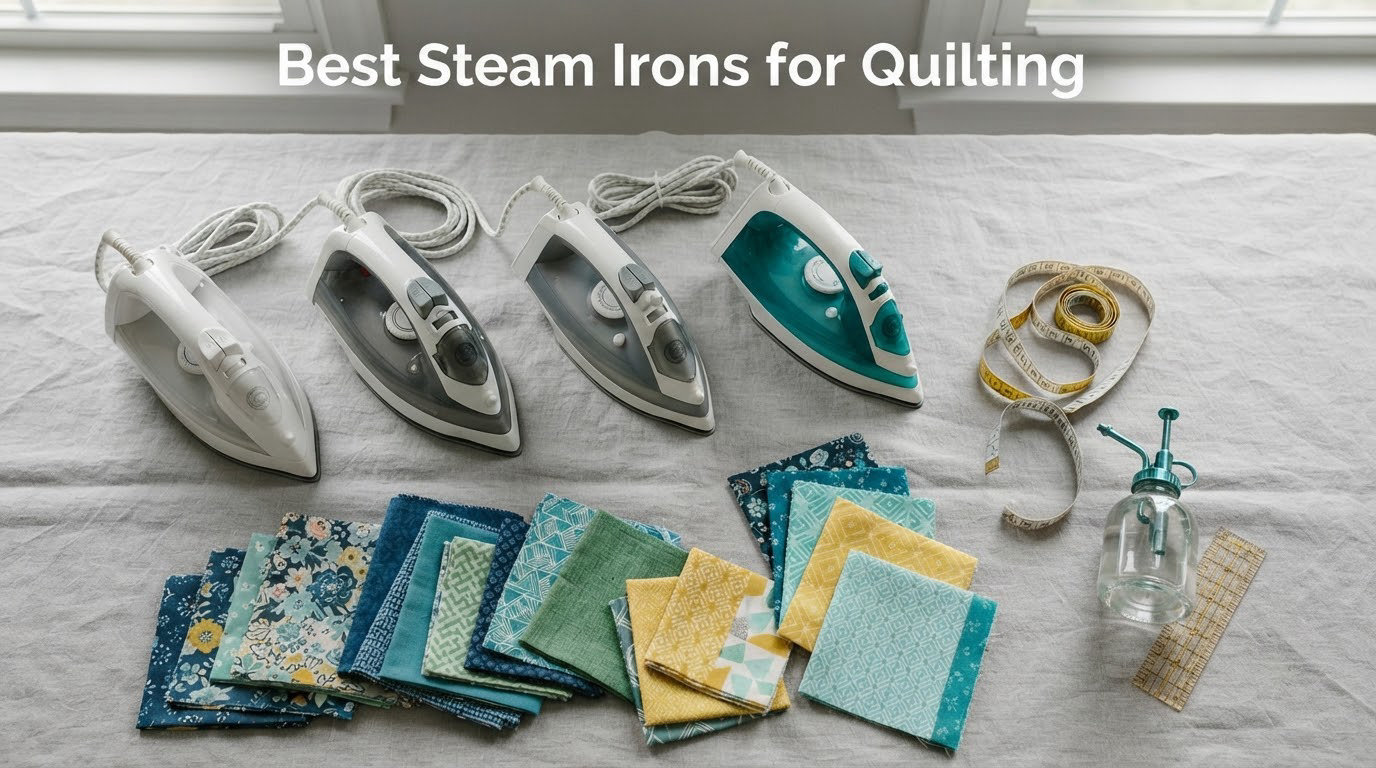
The best steam irons for quilting fall into four clear groups: a full-size corded steam iron for everyday pressing, a cordless model if cord drag bothers you while you piece, a mini iron for classes and retreats, and a steam generator if you press yardage every week. Our top pick in 2026 is the Quilted Bear Mini Steam Iron, the proven budget buy is the PurSteam SteamBurst+, and the strongest all-rounder is the Oliso TG1600 ProPlus at 1800 watts.
Quilters do not iron. You press, which means lowering the iron onto the fabric, holding it, and lifting it away, so the job of a quilting iron is very different from the job of an iron in a laundry pile. It needs a steady soleplate temperature, a pointed tip for the intersections where four seams meet, and a design that does not dribble water onto a dark batik. Those three things matter more than any brand name.
We compared ten irons across every type quilters actually ask about, from a 400W detail iron to a boiler-backed steam station. We also weighed the things spec sheets leave out: whether the iron spits when you open the steam switch cold, whether it can stand upright, and whether its auto shut-off interrupts a long pressing session. If you are still choosing a machine, our sewing machine guide for quilting and free motion quilting machine picks cover the other half of the setup.
Top 3 Best Steam Irons for Quilting in 2026
All 10 Quilting Irons at a Glance in 2026
Every iron below is in the list because reviewers use them for quilting work, not because it topped a spec sheet. Read the table for the type match, then jump to the full review for the trade-offs.
| Product | Specifications | Action |
|---|---|---|
 Quilted Bear Mini Iron Quilted Bear Mini Iron |
|
Check Latest Price |
 Oliso M3Pro Project Mini Oliso M3Pro Project Mini |
|
Check Latest Price |
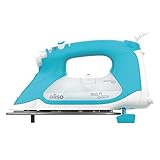 Oliso TG1600 ProPlus Oliso TG1600 ProPlus |
|
Check Latest Price |
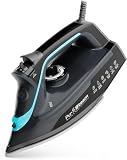 PurSteam SteamBurst+ PurSteam SteamBurst+ |
|
Check Latest Price |
 Rowenta Focus Excel DW5280 Rowenta Focus Excel DW5280 |
|
Check Latest Price |
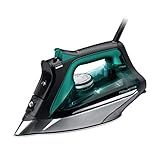 Rowenta Pro Master DW8360 Rowenta Pro Master DW8360 |
|
Check Latest Price |
 BEAUTURAL Mini Travel Iron BEAUTURAL Mini Travel Iron |
|
Check Latest Price |
 Ivation Mini Travel Iron Ivation Mini Travel Iron |
|
Check Latest Price |
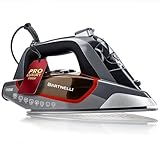 Bartnelli Pro Luxury Bartnelli Pro Luxury |
|
Check Latest Price |
 Martisan Steam Generator Martisan Steam Generator |
|
Check Latest Price |
1. Quilted Bear Mini Steam Iron – The Best All-Rounder for Classes and Retreats
- Compact body reaches tight curves and small seam areas
- Heats quickly and holds an even temperature
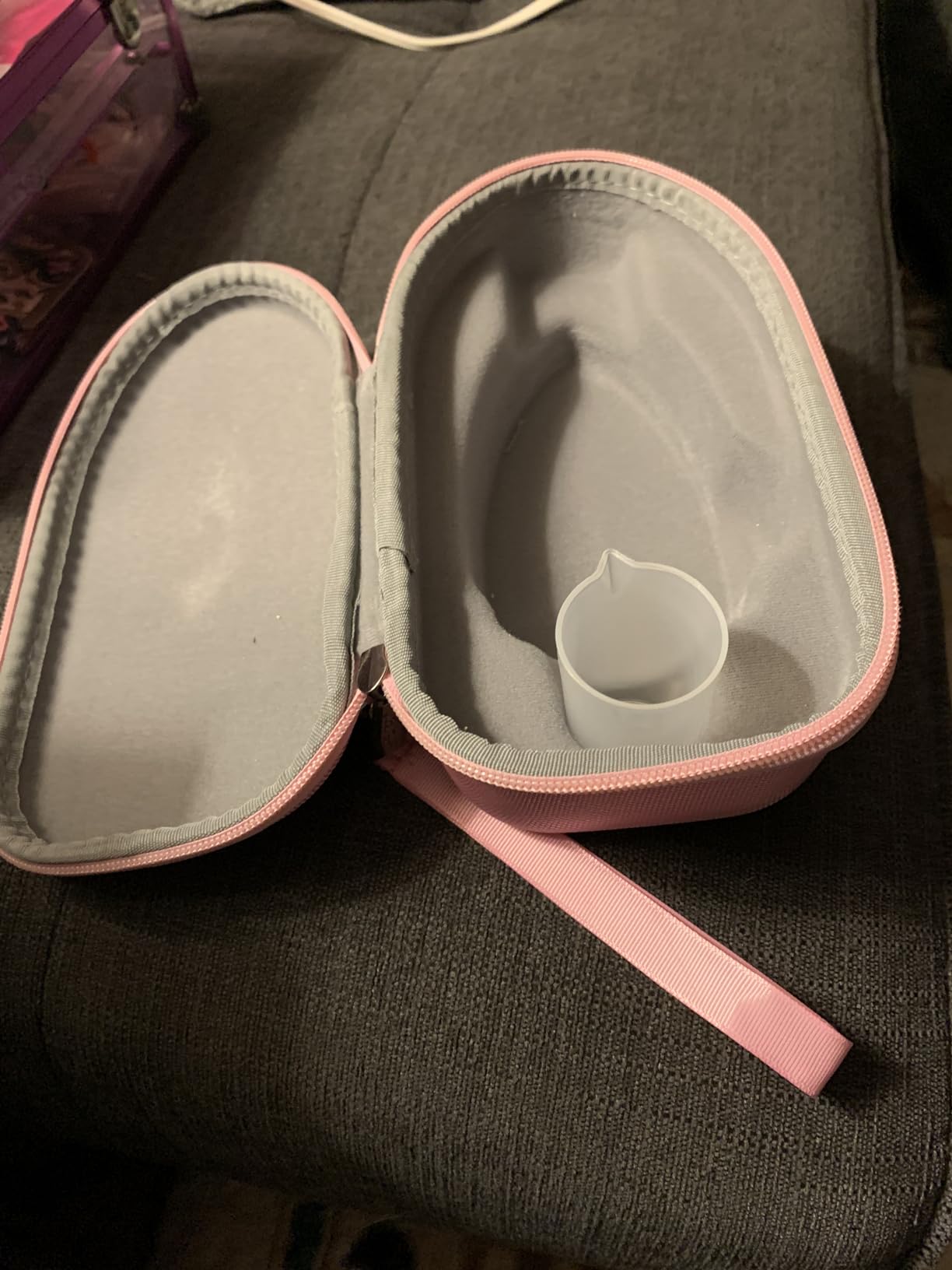
- Hard shell case is genuinely protective in a suitcase
- Dual voltage works in and out of the country
- Water reservoir runs short during sustained steaming
- Very small pressing area makes large blocks slow
- Lower wattage than full-size irons
I keep this one in the car with my class supplies, and it has replaced the full-size iron for most of my appliqué and English paper piecing. At 420 watts it is not going to press a quilt back in one pass, but the ceramic soleplate glides across a cotton block without catching, and the pointed end fits into the little valleys where seams converge.
Reviewers consistently describe it as an iron that does not fight you. Its 495 g body is roughly the weight of the other mini irons in this roundup, which means an hour of detail work does not leave your wrist aching the way a full-size iron would. The 7.08 by 3.54 inch footprint packs into a tote bag and the included hard shell case has survived a couple of checked bags.
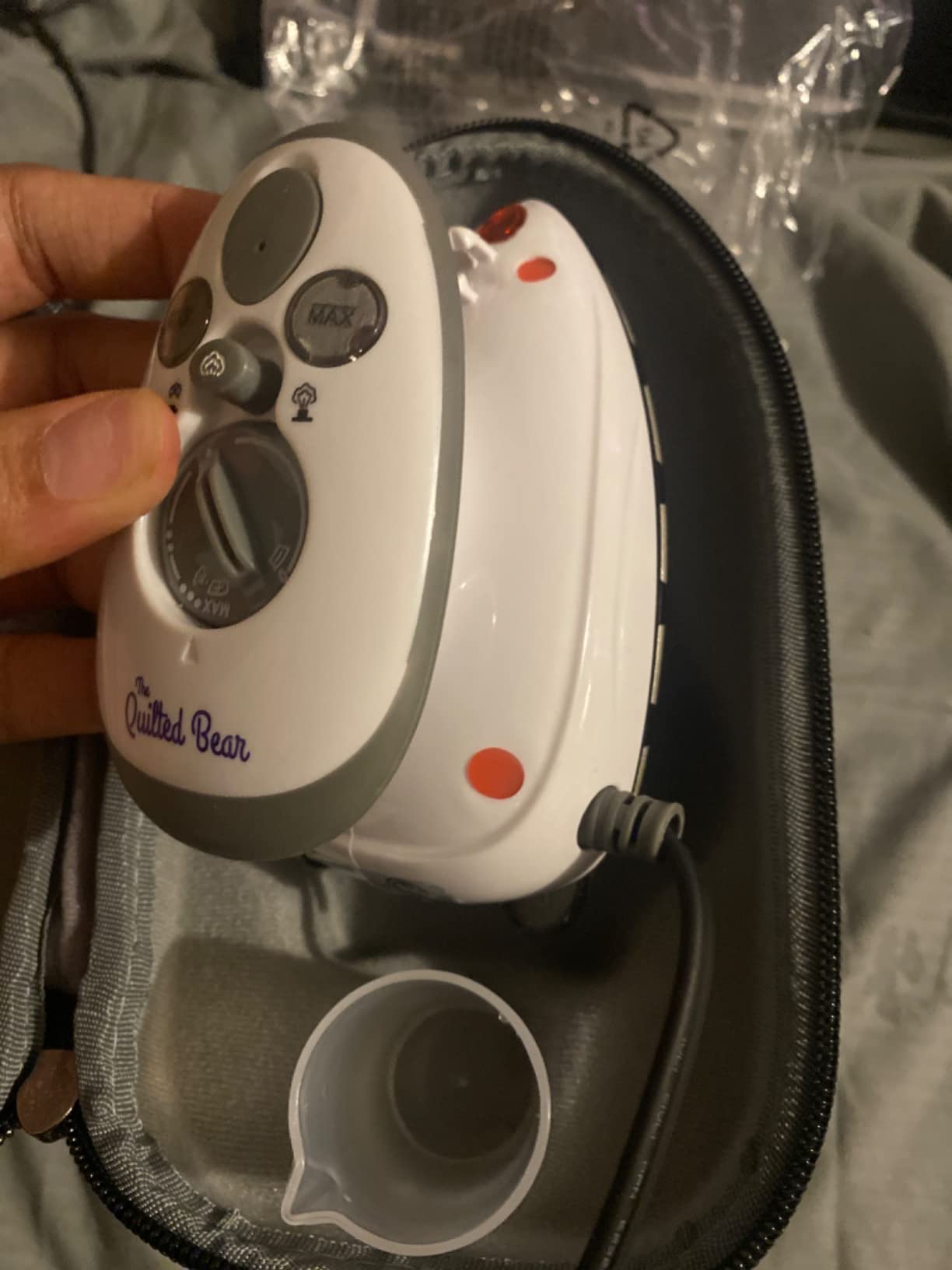
The complaint repeated most often in the reviews is the water reservoir running dry during a long steam run, which is the honest trade-off of any sub-500 gram iron. It is also not a garment iron: there is no full-size soleplate for a shirt collar or a pair of trousers.
When this mini iron earns its place
It wins for retreats, classes, hotel rooms and small-project work, and it is our pick for anyone who quilts in more than one location. The 4.6 rating across more than 2,000 reviews makes it the top-rated iron in this group, and the strong showing of five-star feedback suggests a low disappointment rate.
If you press one quilt at a time on a small board and travel to guild nights, this is the only tool you need. It also makes a sensible second iron for the craft table.
When you should skip it
Skip it if your pressing sessions run long on large blocks, batting sandwiches or yardage. A 420W element with a small reservoir means refilling mid-quilt, and the tiny soleplate will not flatten a seam allowance the way a 1700W iron does.
It is also the wrong choice if you press garments regularly, or if you need an auto shut-off for a shared or child-heavy craft room, because it does not have one.
2. Oliso M3Pro Project Mini – Best Precision Iron for Piecing and Detail Work
oliso M3Pro Project Mini Steam Iron – Sewing, Quilting, Travel – Raspberry
- Two-inch precision tip reaches corners and seam intersections
- LED ProLight lights the fabric ahead of the soleplate
- Cord converts to either side of the handle
- Stands upright reliably
- Small tank needs frequent refills
- Not a replacement for a full-size iron on yardage
- Cord rotation is not explained in the manual
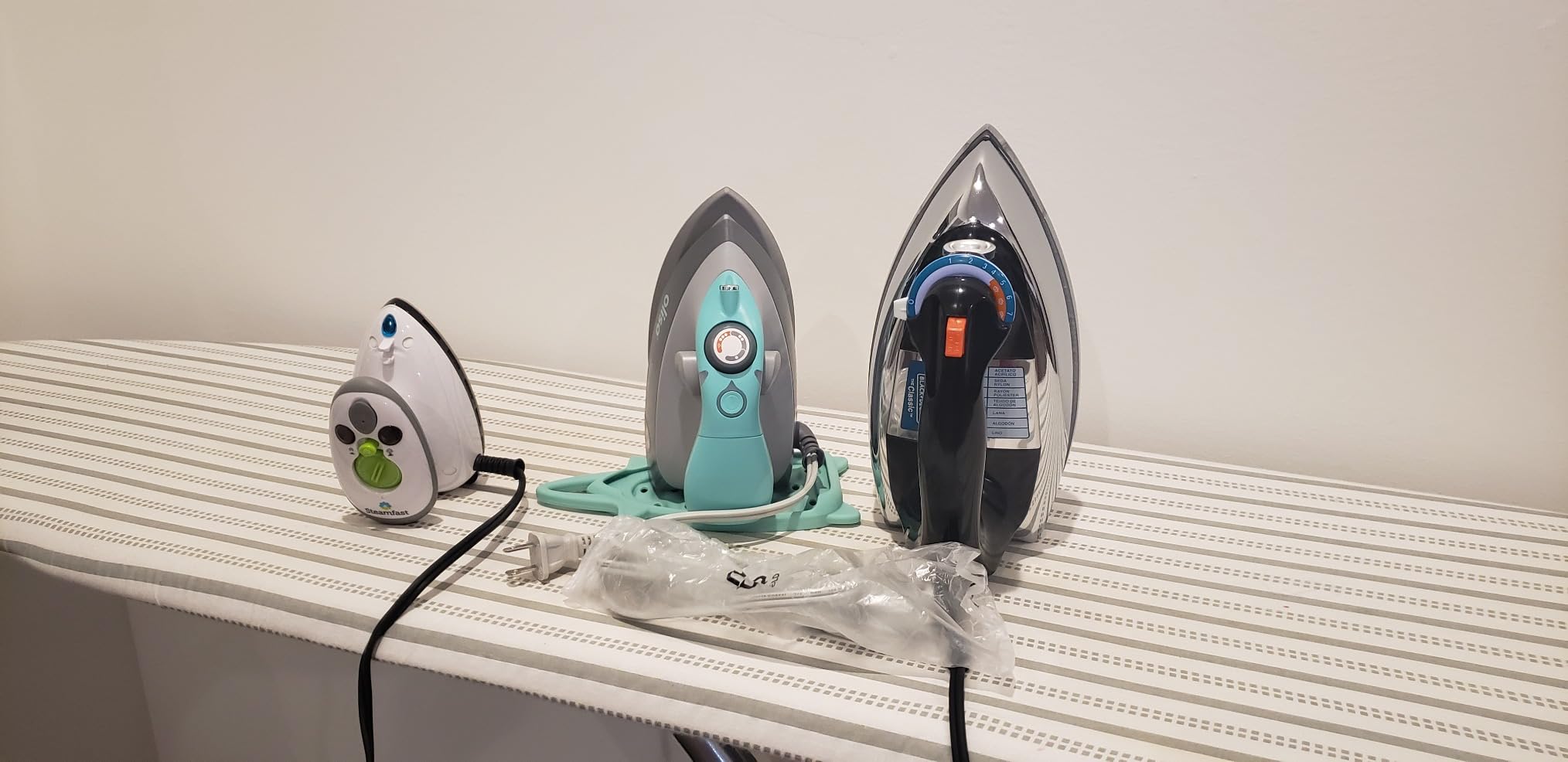
This is the iron I would hand a beginner who already owns a decent full-size iron. Oliso built it as a project iron rather than a garment iron, and you can feel that in the first minute: a two-inch precision tip, a fabric selector dial with three positions, and a body that stands on its heel without wobbling.
The LED ProLight is the feature I did not expect to care about and now rely on. It throws light onto the fabric immediately ahead of the soleplate, which matters when you are pressing a dark navy triangle against a black intersection and need to see the seam you are about to flatten. Owners working foundation paper piecing report the same effect.
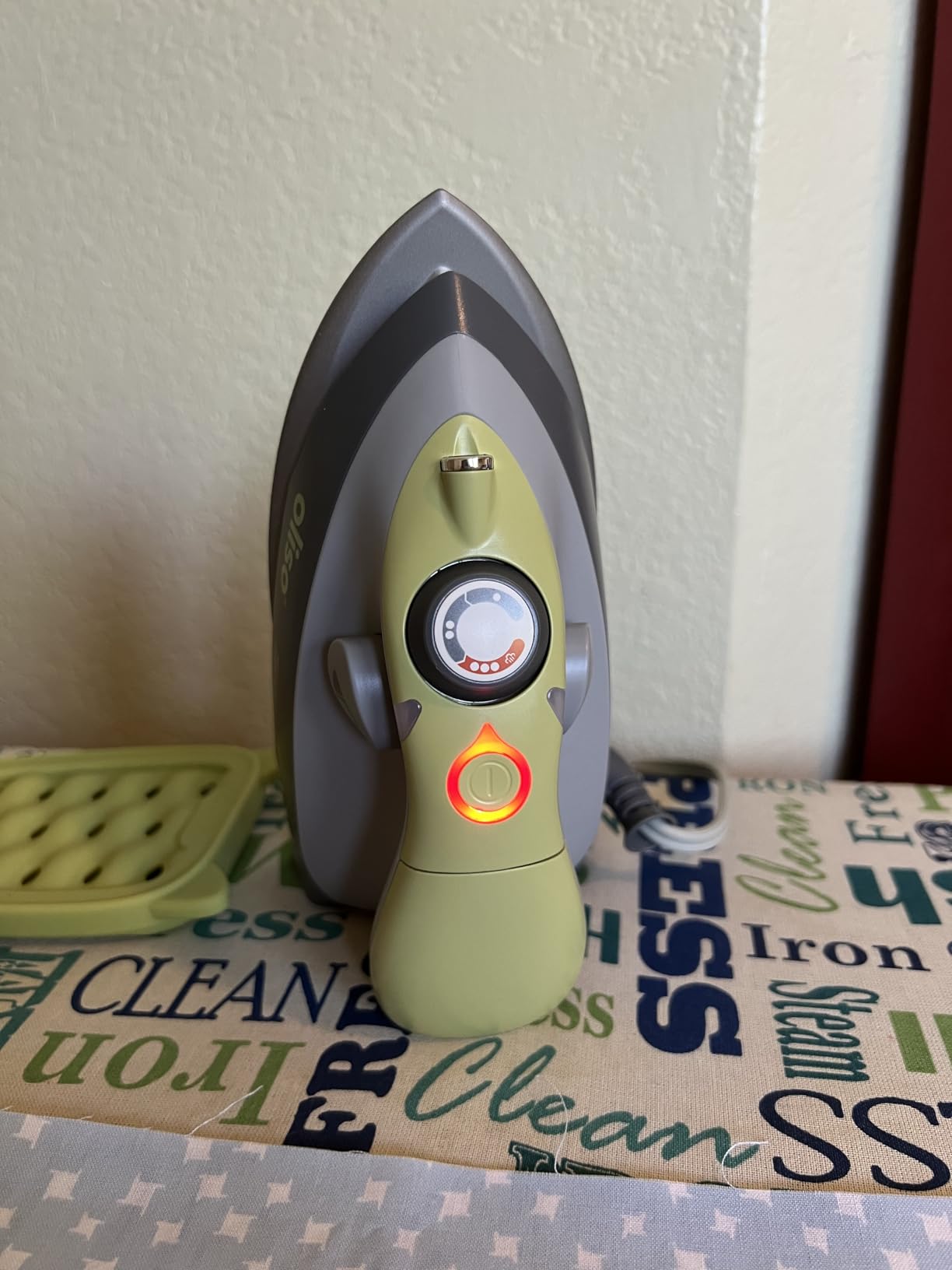
At 1000 watts it draws more heat than the other mini irons here, and reviewers report genuinely strong steam from a 1.7 fl oz tank, with no leaking mentioned anywhere in the feedback we looked at. The cord converting to either side of the handle is a small thing that matters enormously for sewists who are not right-handed, and a lot of sewists single it out as the upgrade over the previous generation.
What you get for the money
You get a tool that lives next to the sewing machine and handles binding, appliqué, zipper ends and seam intersections without you having to fight the tool. The three-position dial covers synthetic, silk or wool, and cotton or linen, which maps almost exactly onto the quilting cottons most people press.
The review consensus is unusually warm, with 78 percent of ratings at five stars and no common hardware complaint.
Where it falls short
The 1.7 fl oz tank is the real limit. It refills often during a long steam session, and pressing a bulky block means topping it up mid-quilt. It is also not a substitute for a full-size iron on backing fabric or yardage.
One more irritant: the manual does not explain how to rotate the cord to the alternate side, so you may need to work that out yourself.
3. Oliso TG1600 ProPlus – The 1800W Full-Size Workhorse
Oliso TG1600 ProPlus Auto-Lift Steam Iron, Quilting Sewing & Clothes, 1800W
- Auto-lift raises the iron when you release the handle
- 1800W handles 100 percent cotton yardage
- 12-foot 360-degree swivel cord
- Large tank with a wide funnel
- Auto-lift cannot be disabled
- Heaviest body in this roundup
- Auto-lift mechanism has been reported failing
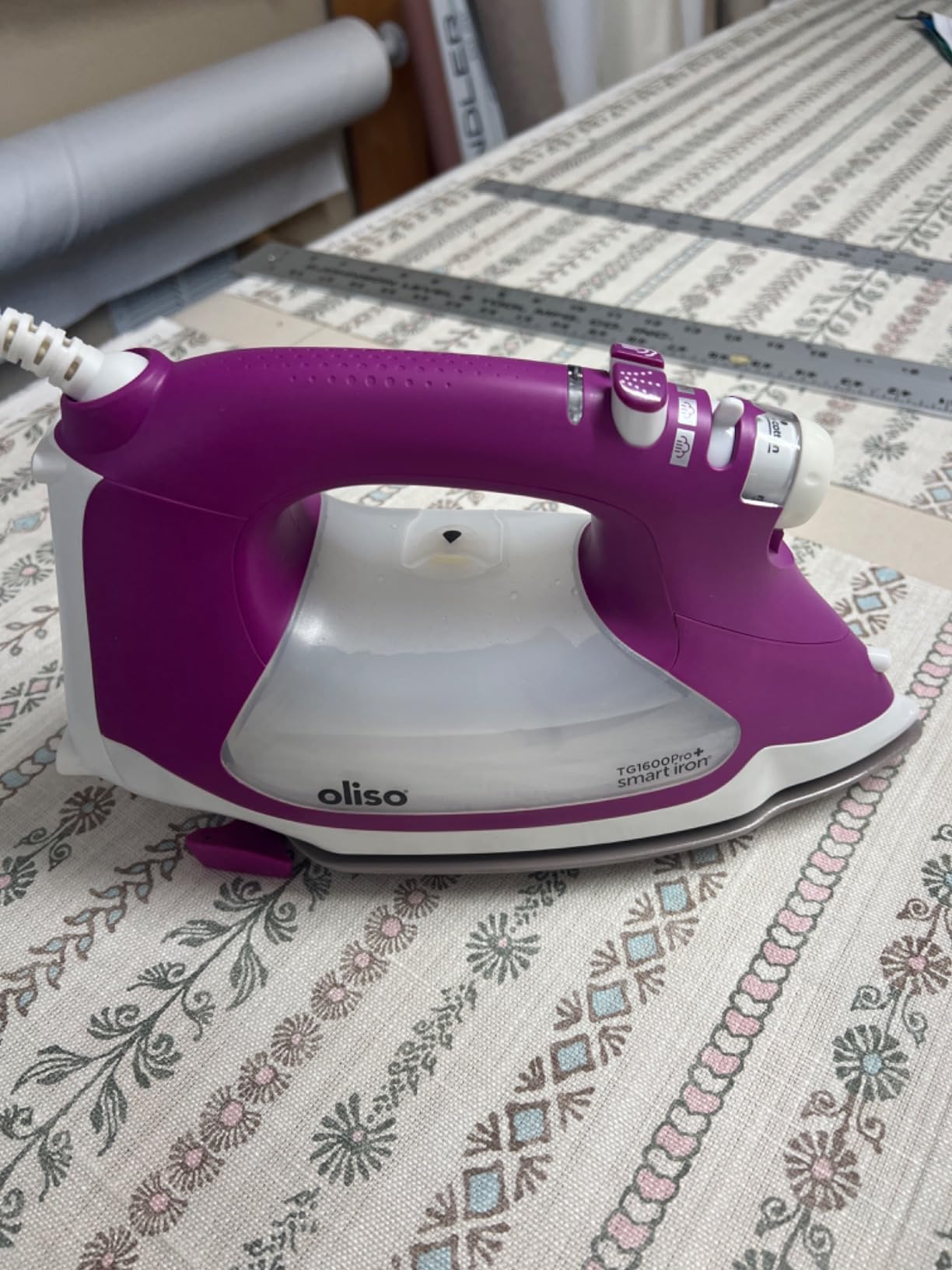
Two thousand nine hundred twenty owners have rated this one, and the reason most of them give is the same: the auto-lift handle. For quilters who step away to check a seam, grab a ruler or answer the door, that turns a scorched quilt block into a non-event.
Underneath the gimmick, this is a genuinely capable iron. 1800 watts heats fast and holds heat across a large ceramic soleplate, and reviewers report it pressing 100 percent cotton yardage rather than only craft-weight fabric. The 12.7 ounce side-fill tank with a wide funnel refills without spilling, which matters when you are filling at a laundry sink.
The TriplePlay steam system covers horizontal, vertical and burst output, so a pieced block can be hung from a design wall and steamed without laying it on the board. That is how we use it during longarm prep.
Who this iron is built for
It suits the quilter pressing quilt backs, batting sandwiches and long seam runs, and anyone who values protecting fabric over saving three seconds. Several repeat owners call it the best iron they have owned, which is a strong statement in a category full of long relationships.
If you quilt large tops and work through yardage regularly, this handles that job without moving up to a boiler-based steam station.
What you give up for it
At 3.7 pounds it is the heaviest iron in this roundup, and quilters who piece for hours report wrist fatigue. Heavy irons also make it easier to over-press, which stretches bias edges and distorts blocks.
The auto-lift has an adjustment period, it cannot be switched off, and a small number of owners report the mechanism failing after a few months. If you rely on leaving the iron parked in place for a long stationary press, this is the wrong choice.
4. PurSteam SteamBurst+ – A Proven Budget Steam Iron
- Reaches temperature in about 30 seconds
- Stainless soleplate glides smoothly and resists scratching
- Anti-drip reduces spotting at low temperatures
- Three-way auto shut-off in all orientations
- Steam settings take practice to learn
- Self-clean is a multi-step manual routine
- Burst button can spit residue after long idle periods
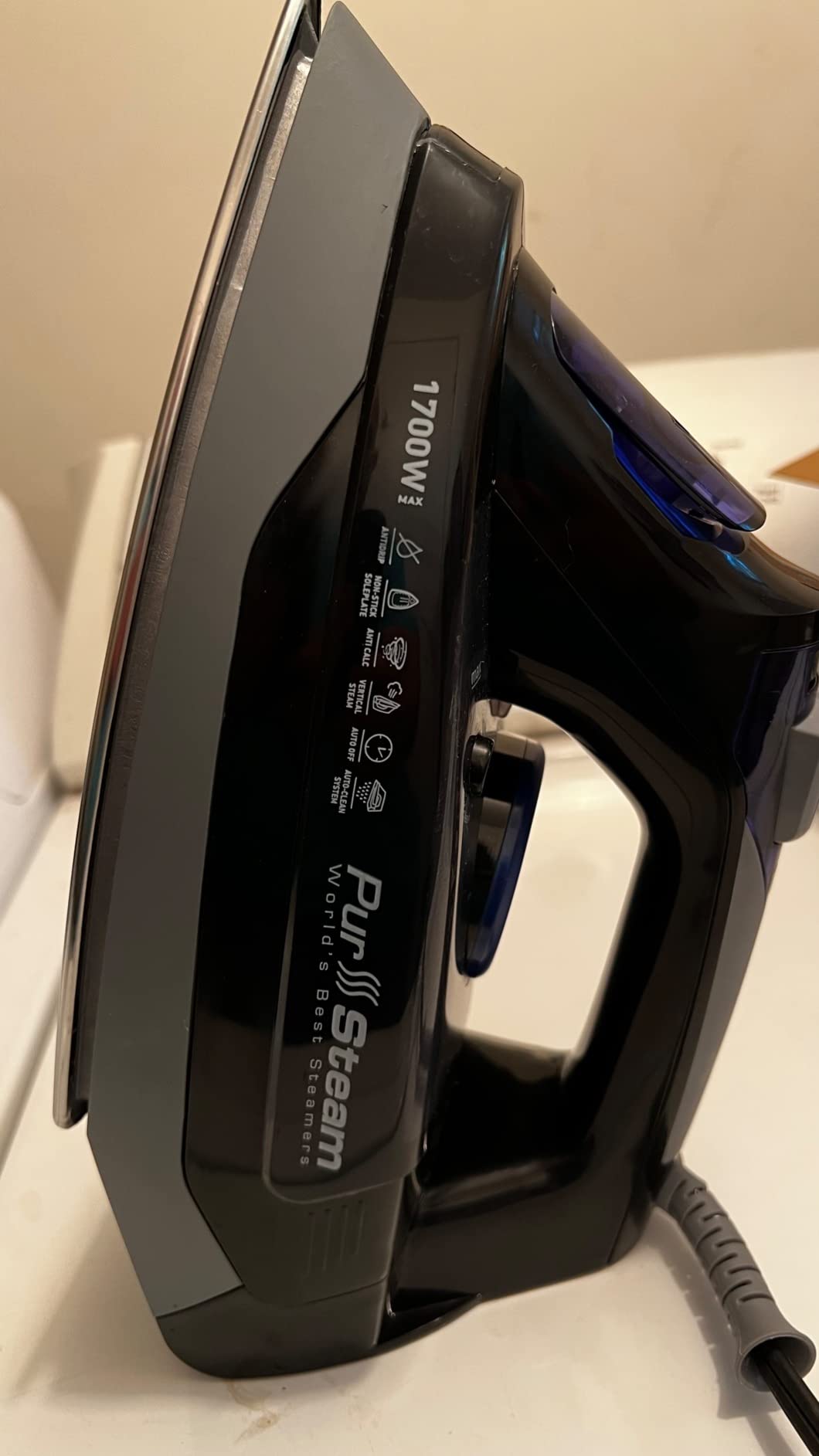
With more than 39k reviews this is the most thoroughly proven iron we looked at, and quilters and sewists specifically name the smooth stainless soleplate and the even steam distribution as the reasons it keeps working year after year. For most people pressing cotton tops, that combination is the whole job.
It reaches temperature in about 30 seconds, which suits a session built around short bursts of pressing, and the axial steam hole layout spreads output across the whole soleplate instead of concentrating it at the tip. The 2.2 pound body is light enough for a long piecing session and still heavy enough to set a seam.
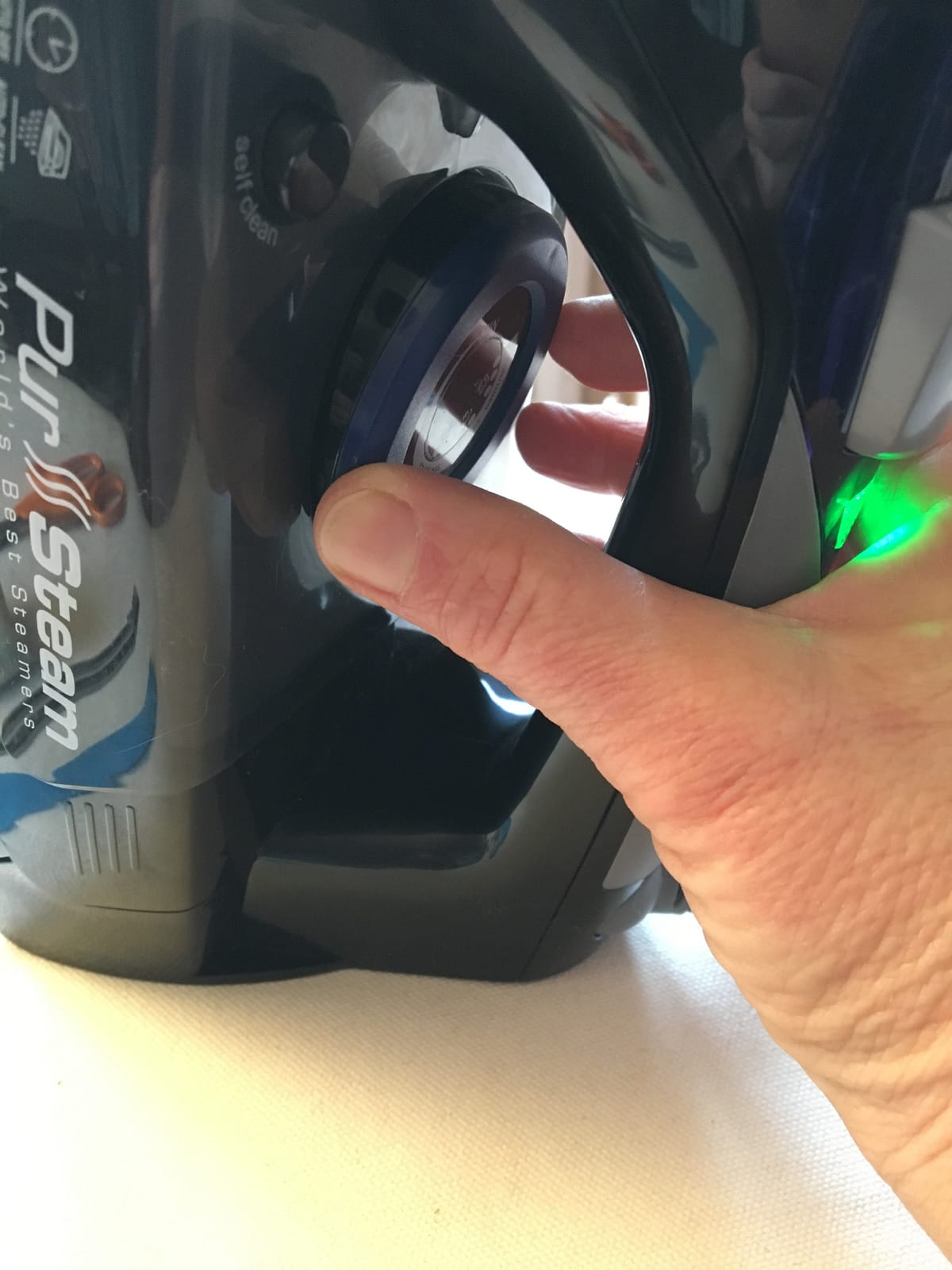
The three-way auto shut-off triggers after 30 seconds flat, 8 minutes upright and 30 seconds tipped. In a craft room shared with kids or a cat, that is a genuine safety win, and it is the reason this iron shows up in class and retreat recommendations despite being a full-size model.
Anti-drip, an anti-calc system and a self-cleaning function handle the long-term maintenance that kills cheap irons, and it is designed to work with ordinary tap water rather than forcing you to buy distilled water.
What the reviews keep telling people to do
Read the manual first. The steam dial has more positions than most owners expect, and the self-clean cycle is a sequence of steps rather than a single button. Reviewers who spent ten minutes learning it report no problems at all.
Buyers who keep their water tank topped up and empty it after each session report the iron keeps working indefinitely. The habits matter more than the badge.
Where the compromises show
Low and medium fabric settings confuse first-time owners, and the burst button can spit mineral residue if the iron has been sitting idle. That is a real risk on dark batik quilting cotton, so give the iron a minute of heat before you burst.
At 2.2 pounds it is on the light side for a full-size iron, so if you press thick batting sandwiches regularly you may want more mass behind the soleplate.
5. Rowenta Focus Excel DW5280 – Best for Heavy Cotton and Thick Batting
Rowenta Focus Excel Steam Iron for Clothes, Anti-Drip Protection, Iron Steamer for Clothes, 1725 Watts, DW5280, Grey
- Solid 3.2 lb body does the work instead of your wrist
- Steam boost clears stubborn creases in one pass
- 400-plus holes give unusually even coverage
- Self-cleaning and anti-calc suit long-term use
- Spray and steam buttons sit close to the handle
- Matte soleplate drags slightly
- Can dribble at low settings with steam wide open
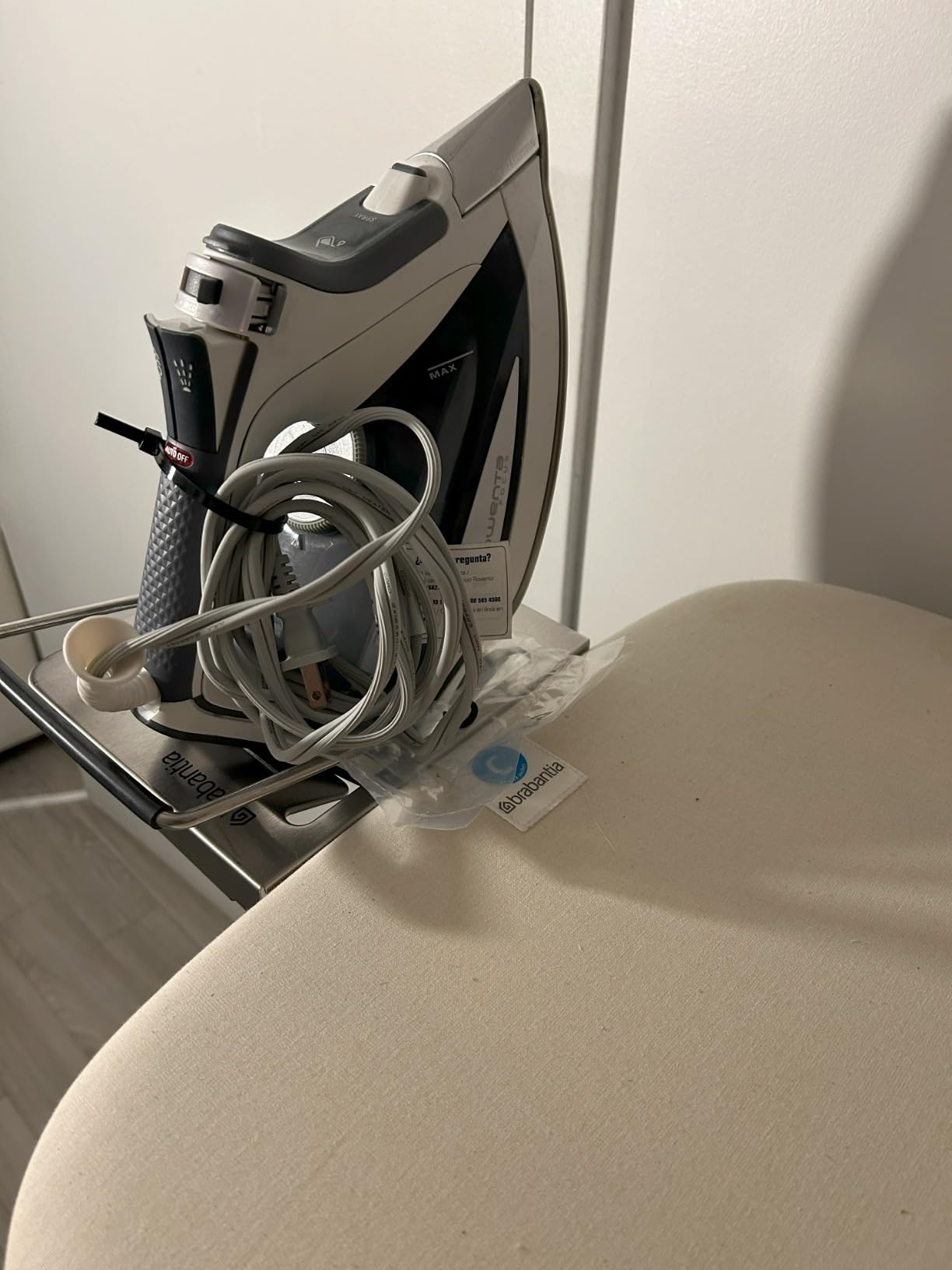
This is the iron experienced sewers reach for when the work is heavy. At 3.2 pounds it does not feel light, and that is the point: a heavier soleplate presses seam allowances flat so you do not have to bear down and stretch a bias edge. Experienced sewers and drapery makers consistently credit the weight and the steam output for doing the heavy lifting.
Steam output runs up to 135 grams per minute on boost with 35 grams per minute continuous, spread across more than 400 evenly distributed active steam holes. In practice that means batting sandwiches and thick cotton blocks flatten without a second pass, and the cotton setting is a real full-cotton temperature rather than a compromise.
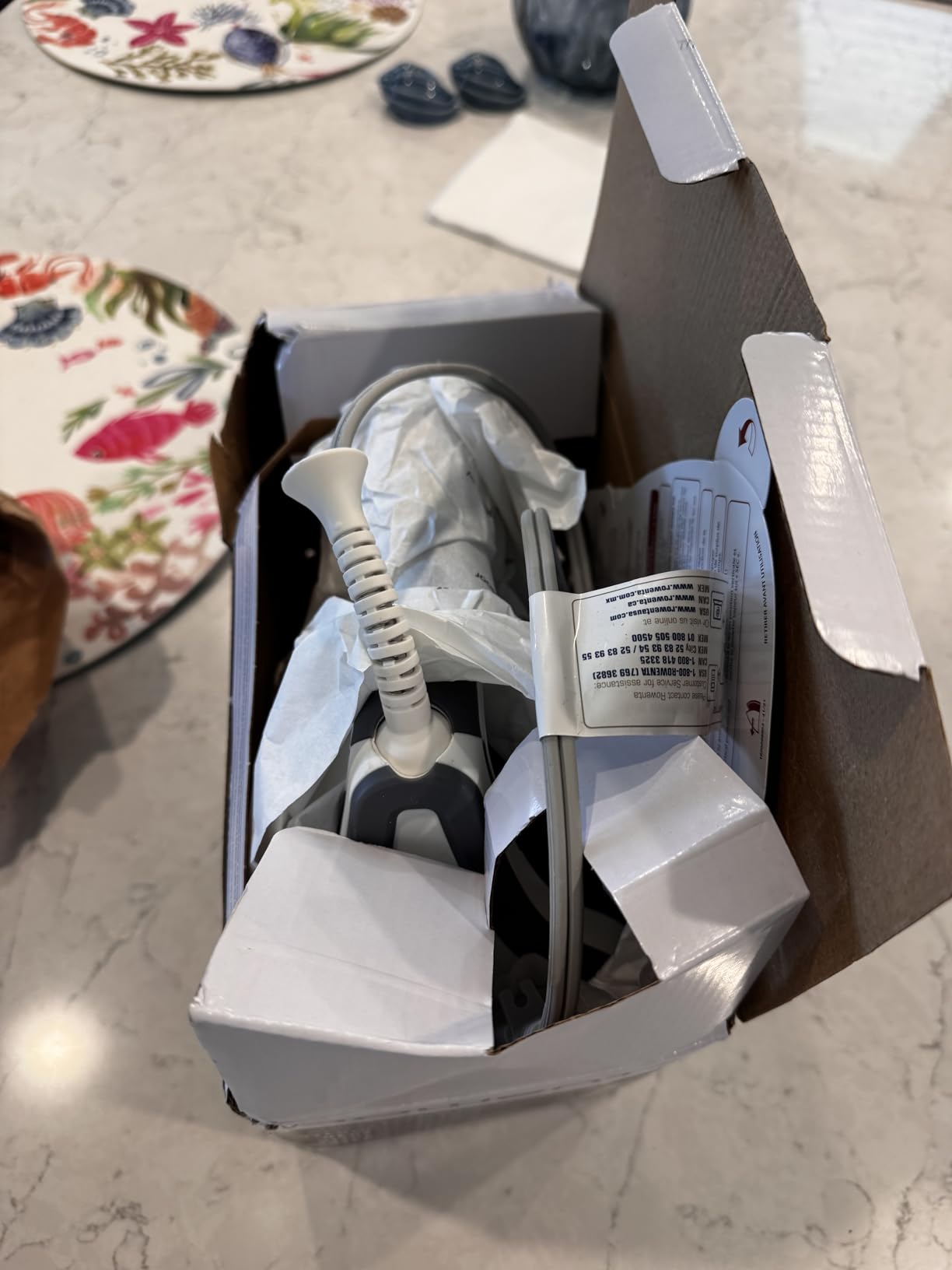
Self-cleaning and anti-calc systems have kept long-term owners pressing weekly for years without mineral damage, and a number of reviewers with years of ownership report the iron still heats evenly. The precision tip handles appliqué and pleats, and the three-position steam dial plus spray covers cotton, wool, polyester, rayon and silk.
Why the weight is a feature
If your pressing sessions involve quilt backs, bulky batting sandwiches or heavy yardage, mass is a big ergonomic factor. A heavier iron reduces the hand pressure you need, which reduces wrist fatigue over a long afternoon.
The trade-off is real, though: a 3.2 pound body is tiring for someone doing small detail work all day, and the 11.78 by 5.46 inch footprint is not built for tight corners.
What to watch for
The spray and steam buttons sit close to the handle and get knocked during a pressing rhythm, which is the most common complaint in the feedback. Several owners report the occasional dribble at low temperatures with the steam switch wide open, so ease the dial up gradually rather than snapping it to maximum.
The matte soleplate also drags a little compared with older polished plates on the same model family.
6. Rowenta Pro Master DW8360 – Built for Thick Multi-Layer Seams
- Flattens thick multilayer seams on the cotton setting
- Large tank with a transparent level window
- Pointed precision tip handles corners and pleats
- Pivoting ball cord keeps the cable clear
- Some units spit or leak from the soleplate
- Steam output described as weaker than older models
There is a specific thing this iron does well: a fat intersection. Owners report it flattening thick multilayer seams on the cotton setting, including sandwiches of many layers, and the pointed tip gets into corners and pleats that a blunt soleplate skates over. The pivoting ball cord connection keeps the cable from dragging while you work, which is the quiet benefit most sewists notice first.
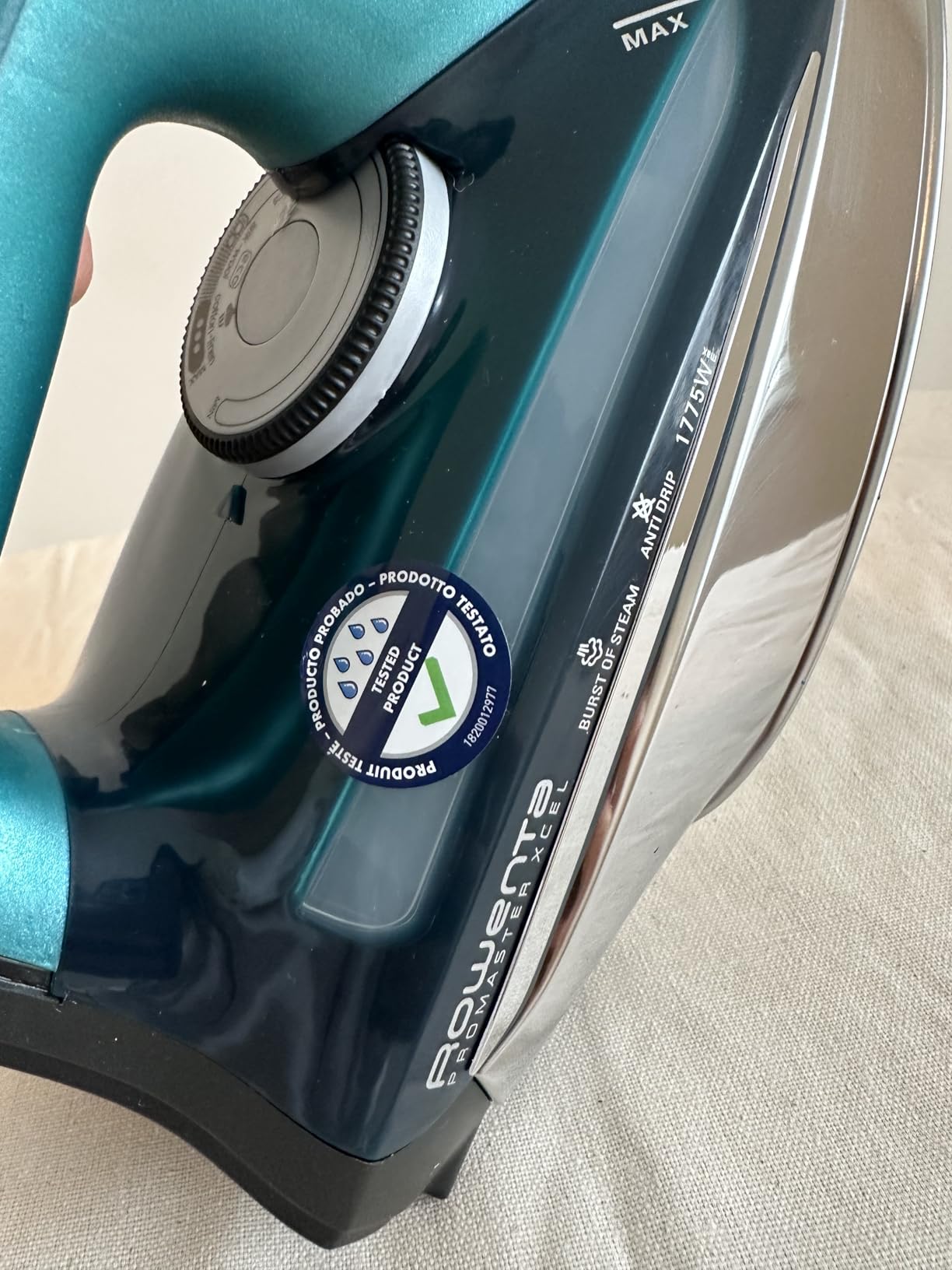
At 1775 watts with roughly 400 to 430 steam holes and steam output quoted at up to 210 grams per minute, the numbers are strong. The large tank with a transparent water-level window and a wide refill opening is a genuine convenience, and the integrated anti-calc system is aimed at the mineral deposits that leave brown spotting on light cotton.
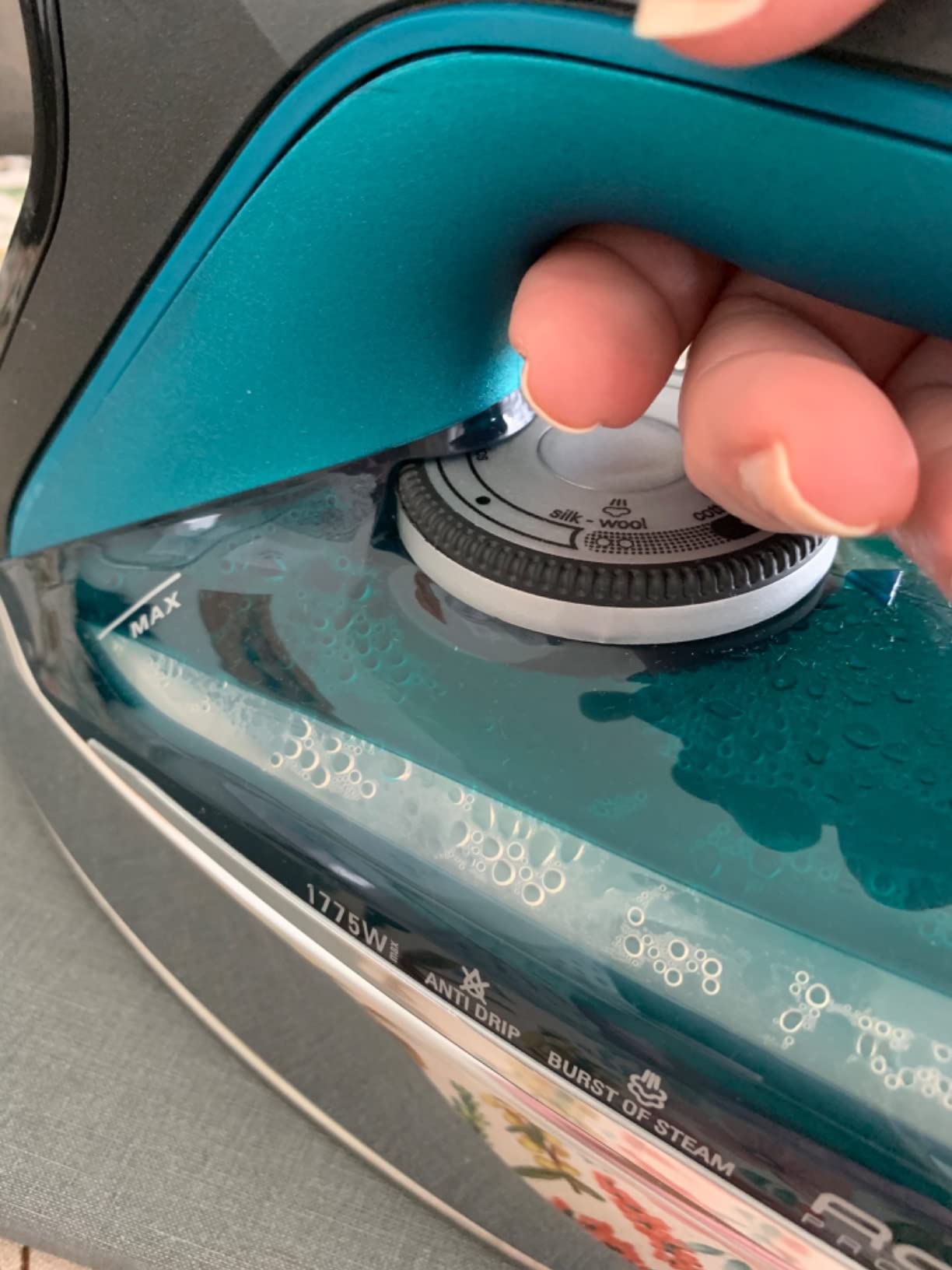
This is also the lowest-rated pick in our roundup, tied at 4.1, and the rating reflects durability doubt rather than pressing ability. Experienced sewers like the heat retention, the tip and the cord joint, and one long-term owner reports two years of daily use with no mineral build-up on the soleplate.
What sits behind the rating is a recurring thread of reviews reporting water spitting or leaking from the soleplate within months, and long-time quilters comparing it unfavourably with older German-made Rowenta models. Quilters on quilting forums mention spitting Rowenta irons by name as a general complaint, so if a dark quilt top is at stake, buy the anti-drip feature you need, not the brand.
Where this iron earns its place
It suits sewers pressing heavy multilayer work, yardage and dense cotton, and anyone who likes a pointed tip and a cord joint that stays out of the way. The 3.3 pound body has good weight distribution for large pieces.
The clear water-level window and the auto shut-off with an eco energy setting are useful touches for long sessions in a shared room.
Why the rating is the lowest here
The spitting and leaking reports are the reason. On dark batik quilting cotton a single dribble can mean washing the whole block, and that risk is what separates this model from the safer picks in this list.
Reviewers also describe the steam output as weaker than older Rowenta models, and the fabric selection guide tucked under the handle is hard to read while you are mid-press.
7. BEAUTURAL Mini Travel Iron – A Light Detail Iron for Appliqué
- Leaf double-tipped soleplate pushes into tight corners
- 1.1 lb body removes shoulder strain
- Heats in roughly 35 seconds
- Dual voltage makes it usable abroad
- Cannot stand upright so the rest is required
- Short cord drags across fabric
- No automatic shut-off
The shape is the story here. This is a leaf: pointed at both ends, so you can press into a seam intersection from either direction without rotating your wrist. Owners working appliqué, patchwork and rag doll making say it handles the fiddly work that full-size irons cannot reach.
At 1.1 pounds it is among the lightest irons in this roundup, and that weight is the point for anyone whose shoulders hurt after an afternoon of detail pressing. It heats to temperature in roughly 35 seconds on 400 watts, so it is ready before you have finished cutting the next piece, and dual voltage means it works in other countries too.
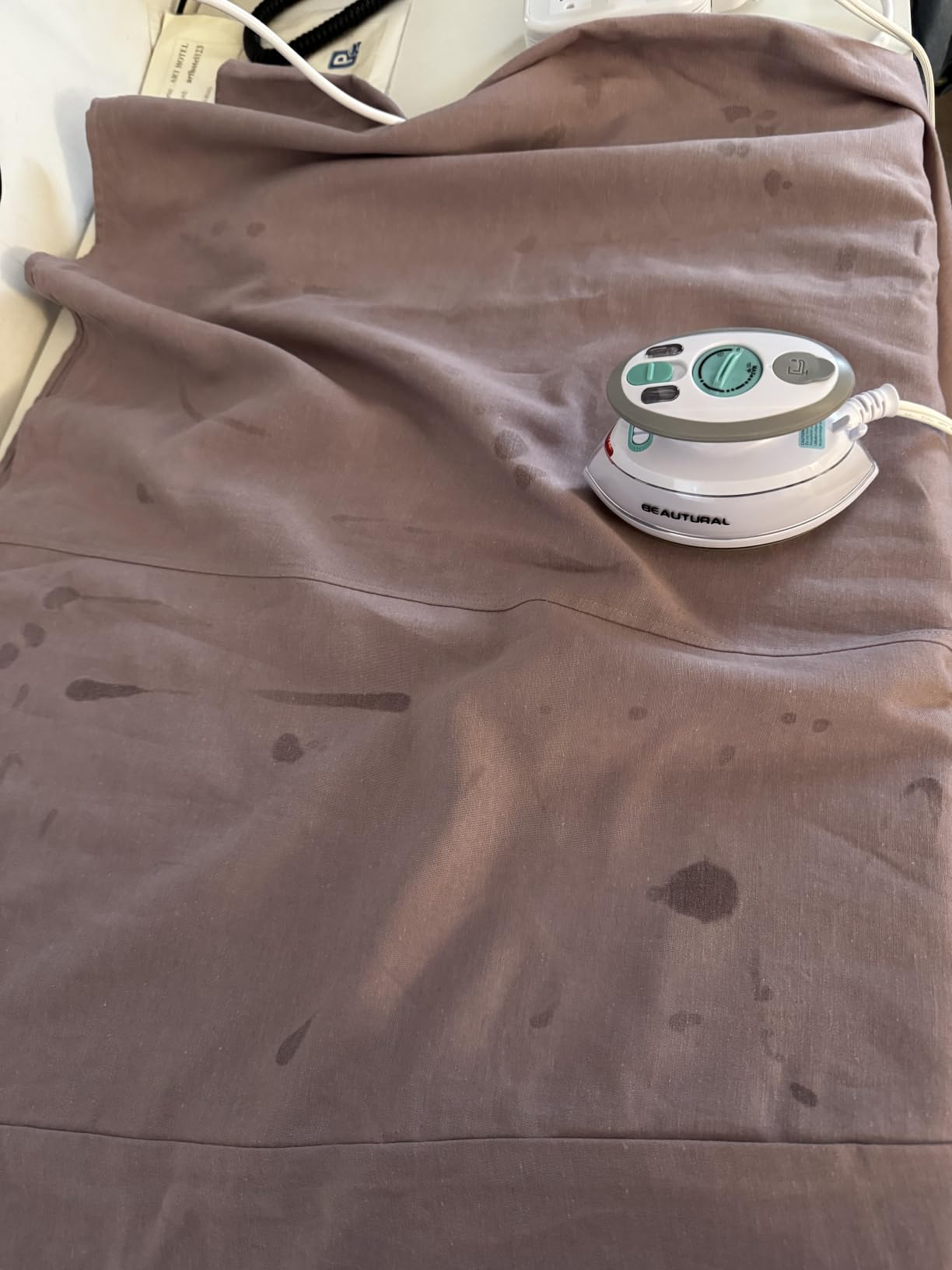
The variable heat dial sits on top of the iron with a separate steam on and off switch, which is simple enough for a first-time quilter to understand without a manual. A silicone resting mat and a measuring cup come in the box, which matters because of the next point.
It cannot be stood on its heel the way a full-size iron can. The tapered body has to be laid on the mat, and if you are used to parking an iron upright between steps, the change in habit takes a session or two.
Where it works well
It is built for appliqué, patchwork, small hand-piecing and flower pressing, and for anyone who quilts at a table rather than at a full ironing board. The non-slip handle stays comfortable through a long detail session.
For beginners, it is an inexpensive way to find out whether you enjoy small pressing work before committing to a full setup.
Why it is not a do-everything iron
No automatic shut-off means you have to remember to unplug it, which some quilters in forums actually prefer for classes and retreats where outlets are shared and shut-off behaviour is unpredictable. Others will not go near it for that reason.
The short cord drags across the fabric unless you drape it over your arm, some units report leaking water after sitting unused for days, and it is far too small for garments or yardage.
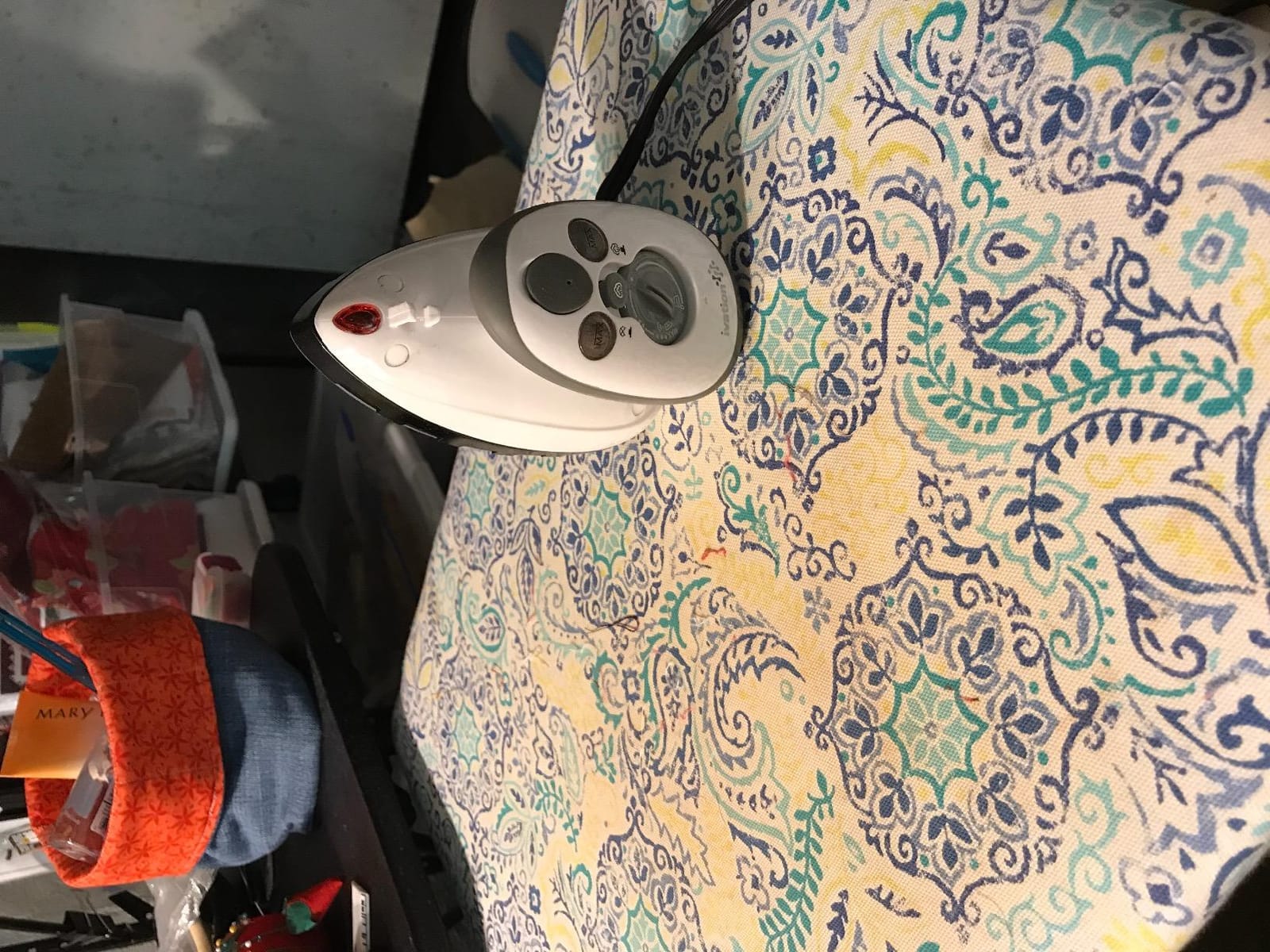
8. Ivation Mini Travel Iron – A Mini Iron Built for Long Ownership
Ivation Mini Travel Iron, 420W, Dual Voltage, Ceramic Soleplate, Steam
- Nonstick ceramic plate resists sticking and scorching
- Long 7.5-foot cord for a mini iron
- Dual voltage selector for overseas use
- Wraps and clips around the handle for storage
- Light weight means less pressing pressure
- Heat-up is closer to a minute or two
- No automatic shut-off
The story here is durability. One owner describes using this as their only iron several times a week for six years, and a long-term buyer returned to purchase the same model again. That kind of ownership report matters more than any wattage figure, and it is why this sits so high for anyone who travels.
At 4.5, it is one of the two best rated in this roundup, and the ceramic nonstick soleplate glides smoothly while resisting the sticking and scorching that plagues cheap coated plates near fusible interfacing. Three heat power levels and a one-touch steam control that switches between dry and steam keep the operation simple.
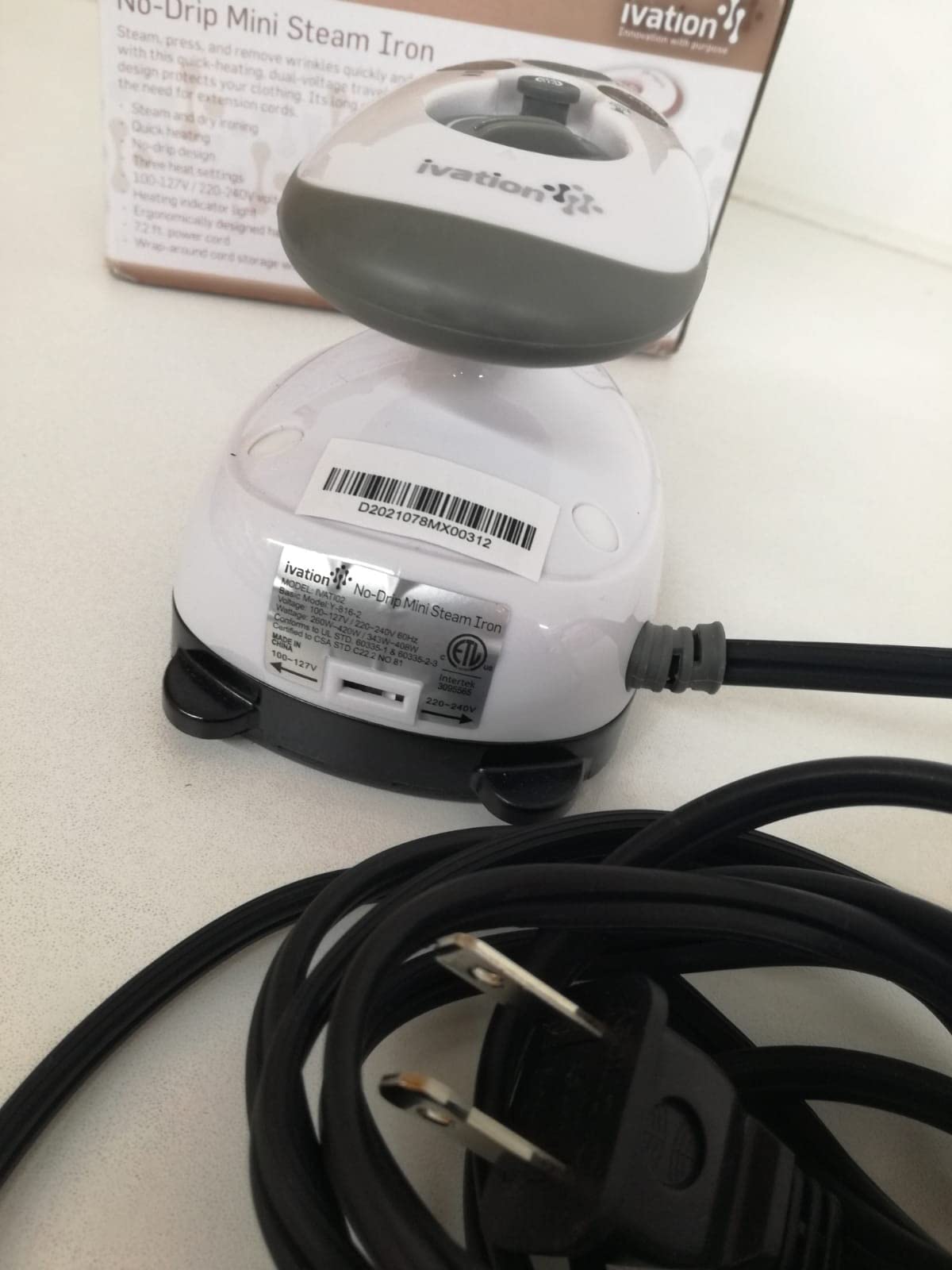
The 7.5-foot cord is unusually long for a mini iron, and it wraps and clips around the handle for packing, so it does not become a tangle in a suitcase. The 5.3 by 2.9 by 3.1 inch body sits easily beside a sewing machine, and an anti-drip design reduces the risk of water spots on your work.
Why quilters keep buying it
It is the simplest package here: light, dual voltage, cord that packs, plate that does not stick. Reviewers value longevity above features, and multi-year ownership reports suggest the plate and element hold up.
It suits retreats, guild nights and anyone who quilts in a spare room with limited storage, where a full-size iron on a full-size board is impractical.
What you trade away
It lacks the mass of a full-size iron, so it presses less firmly and you lean into it more. Heat-up is closer to a minute or two rather than the fast claims on the box, and the temperature settings are unmarked, so you learn which level is cotton by feel.
There is no automatic shut-off. For a craft room shared with children that is a real consideration, and for travel it means remembering to unplug.
9. Bartnelli Pro Luxury – Heavy-Duty Weight With Anti-Drip Protection
- 3.47 lb commercial weight flattens seams with less wrist effort
- Anti-drip lock seals engage at lower temperatures
- Three-way auto shut-off in 30 seconds flat or tipped
- Tap water safe with dual-action anti-calc
- Do not press the steam burst before the iron is fully heated
- Substantial weight can tire lighter hands
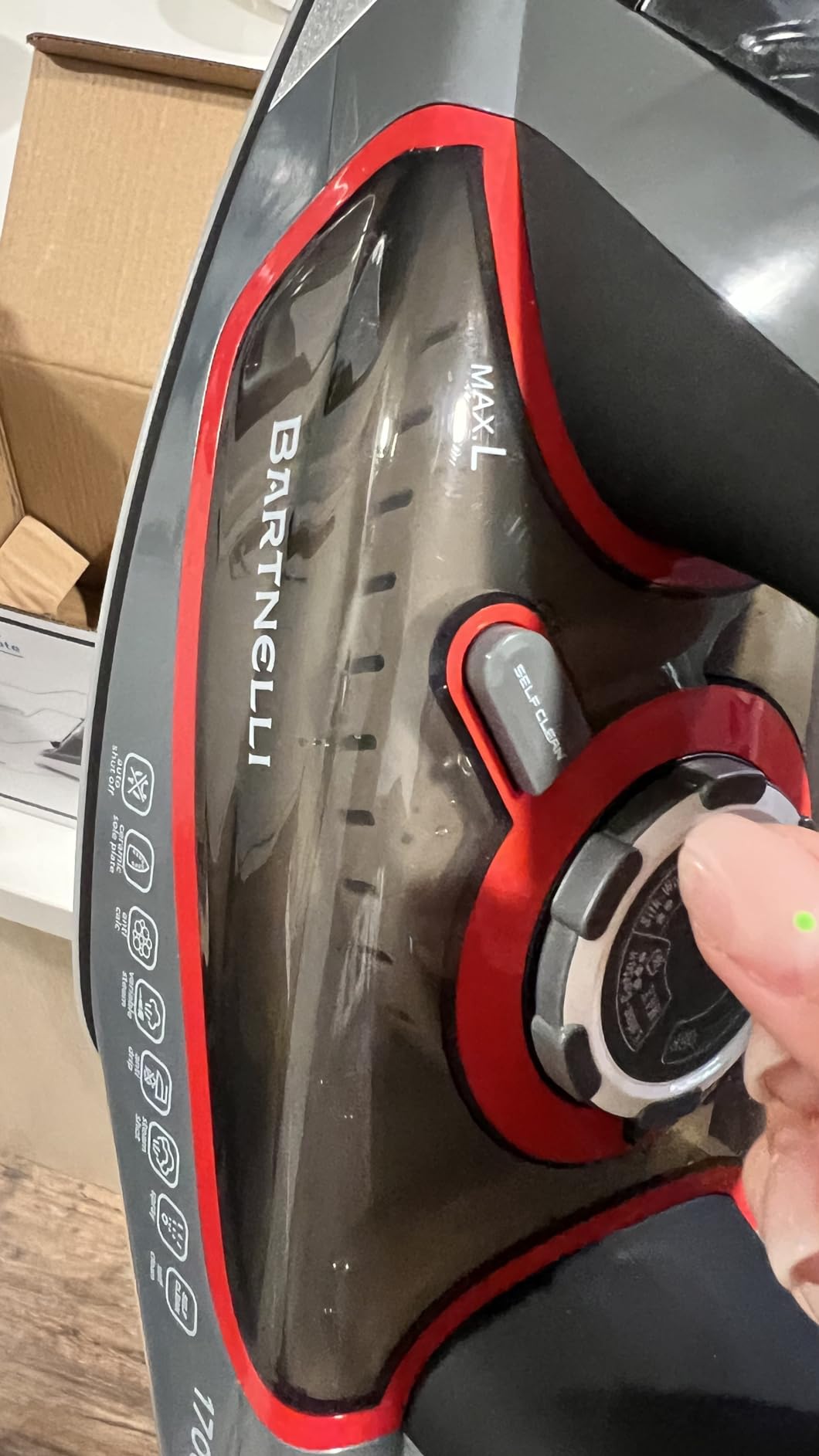
This is the iron we would put in front of someone whose main fear is water spots. The active anti-drip lock is designed to seal at lower temperatures, which is exactly the window where irons spit, and reviewers respond to it by naming the spitting and dribbling problem directly rather than ignoring it.
The 3.47 pound commercial weight does the pressing for you, so you need less downward force to flatten a seam allowance. That is a genuine win for anyone with wrist or hand trouble, and the 1700 watt element reaches temperature in under 60 seconds. The multi-layer stainless core with a scratch-resistant ceramic coating glides over silk, wool and synthetics without catching.
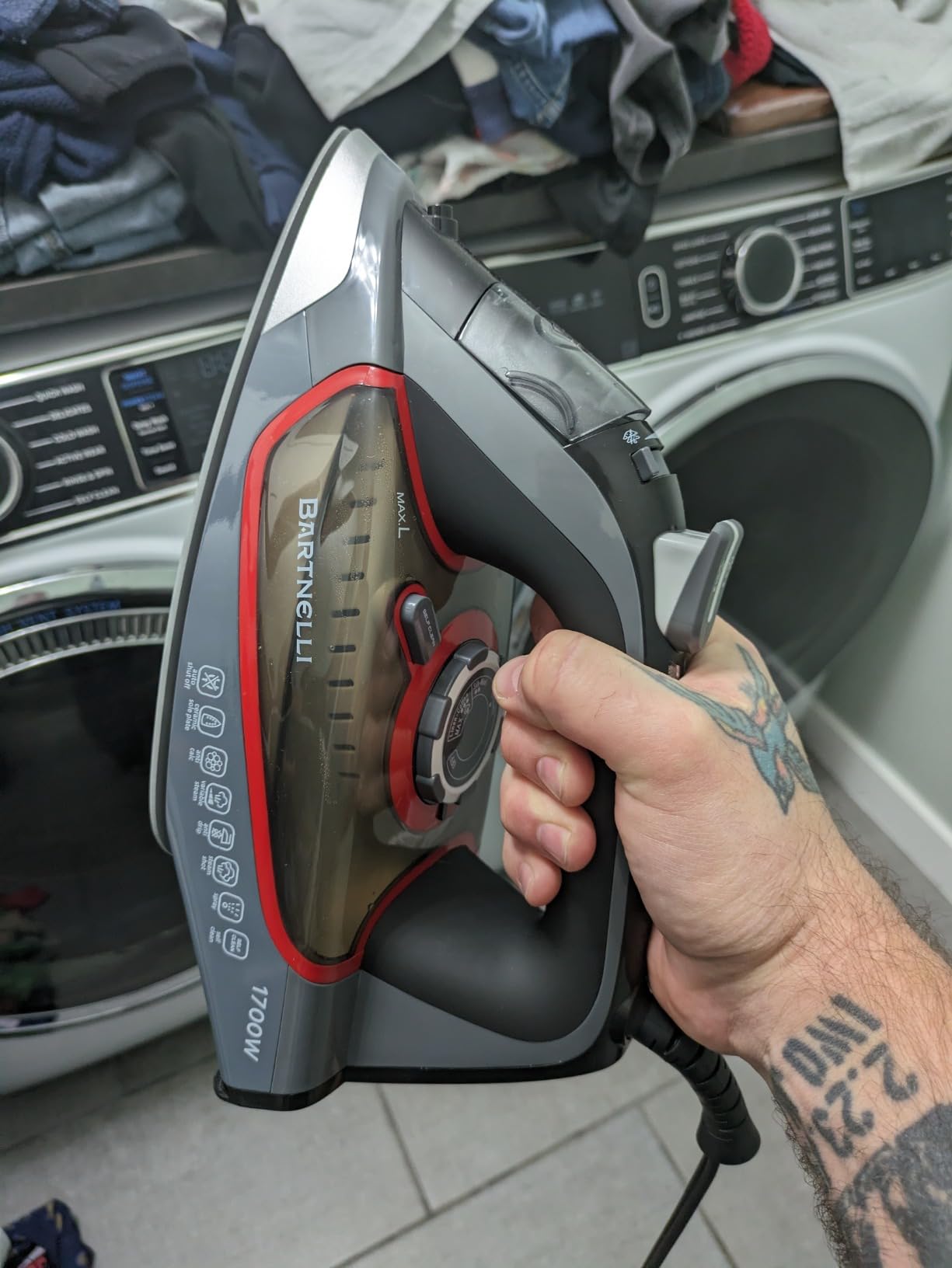
Safety features are unusually complete for this class: three-way auto shut-off triggers after 8 minutes upright and 30 seconds flat or tipped, and the dual-action anti-calc system means ordinary tap water works without distilled water. The ultra-precision pointed tip and 360-degree swivel cord help you navigate pleats, buttons and tight quilting seams.
What makes it different from a generic budget iron
Two things: real mass and a genuine anti-drip system. Many irons at this tier trade weight for a cheaper element, and this one does the opposite. The commercial weight is what separates it from featherweight irons for people pressing heavy work.
It suits quilters pressing batting sandwiches, thicker quilt tops and yardage who also want short auto shut-off timers in the room.
The one operating rule that matters
Let the iron heat fully before you press the steam burst, or it will spit. That single habit accounts for most of the complaints in the feedback, and it is a fixable one rather than a hardware fault.
The 3.47 pound weight is substantial and will tire lighter hands over a very long session, and reviewers note that results depend on following the manufacturer advice about full warm-up.
10. Martisan Steam Generator – Best for High-Volume Yardage Pressing
Martisan Steam Generator Iron for Clothes, LED Steam Station, 1800W Power, 8 Bar Max Pressure, 1.9L Water Tank, 550g/min Steam Burst, Auto Off, Ceramic Soleplate, Fast Wrinkle Removal, Purple
- Boiler pressure pushes far beyond a single-chamber iron
- Ceramic soleplate glides without scratching
- Large detachable tank suits long sessions
- LED-guided temperature display reduces guesswork
- Needs periodic de-caling following the procedure
- Base unit takes up counter and shelf space
- Distilled water is recommended for the large tank
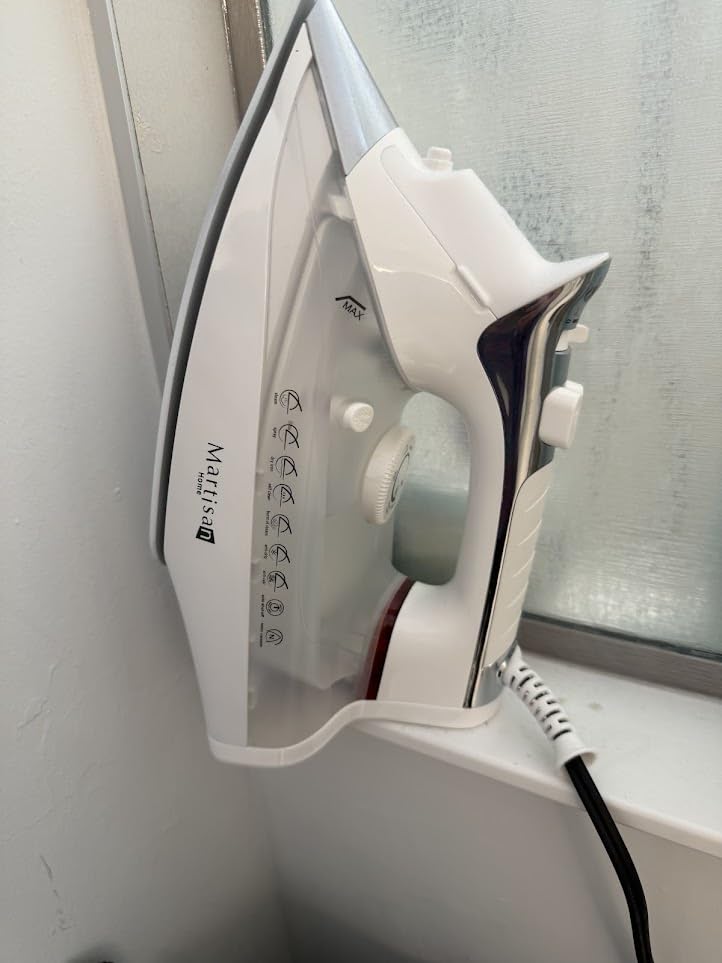
A steam generator is a different category, not a bigger iron. The Martisan puts the water in a separate boiler base and delivers up to 550 grams per minute of steam at 8 bar of pressure, which is far beyond anything a single-chamber iron can push. Creases fall out in a single pass, and reviewers credit the boiler pressure for why.
Constant temperature thermostat technology and the LED-guided temperature display take guesswork out of fabric settings, and the interactive touch screen includes an eco mode. The 1.9 litre detachable tank supports long sessions and whole loads of fabric, which is exactly what longarm prep and a quilting business involve.
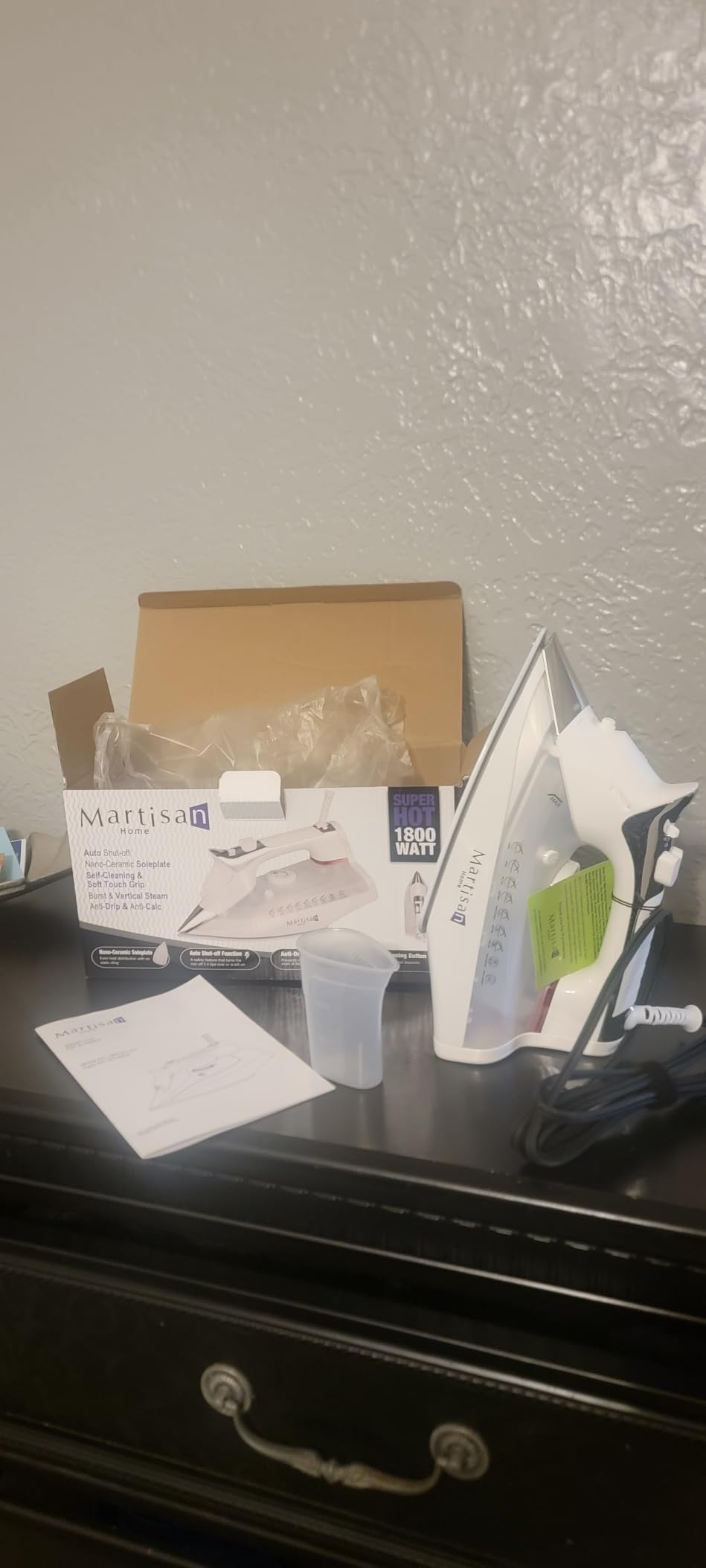
The ceramic soleplate glides smoothly without scratching, and 1800 watts heats quickly. Anti-drip, anti-scale functions and a de-calc reminder light keep output consistent, and an inactivity auto-off handles the safety side.
This is the pick for someone pressing large volumes of fabric or yardage quickly, or running a small quilting business where an iron sits on the board all day.
Who a steam station is right for
It makes sense when you press quilt backs in batches, prepare several tops for longarm quilting in a week, or press fabric yardage before cutting. The boiler pressure and the large tank exist for volume, and for those jobs the output difference is obvious.
It is also a good fit if you press on a schedule rather than in one long session, since the tank holds enough for a full morning of work.
Why it is not on everyone’s bench
The 4.1 rating reflects the maintenance side of the bargain. The large tank wants distilled water, it needs periodic de-caling following the manual, and the separate base takes up more counter or shelf space than a standard iron.
It is also not designed for small detail pressing the way a mini iron is, so a quilting setup serious about appliqué still wants a small companion tool beside the machine.
Which Type of Iron Is Right for Your Quilting?
The four types solve different problems, and picking the wrong one is the most common reason a quilter is disappointed with an iron. Ask what you are pressing, how often, and where, and the answer usually narrows quickly.
Traditional corded steam iron
A full-size corded iron is the default and the safest bet for one person pressing one quilt at a time. It heats quickly, holds a large soleplate steady, and costs nothing to maintain beyond descaling. Our picks above cover the range: the PurSteam SteamBurst+ for the proven budget route, the Rowenta Focus Excel for heavy cotton, and the Oliso TG1600 ProPlus for higher wattage.
Cordless iron
A cordless iron removes the cable that drags across the board and gets in the way of the press, lift and rotate rhythm you use on pieced blocks. The trade-off is recharge time, since you wait between charges instead of plugging in. Cordless also means paying more for less steam in many cases, so it suits a quilter who does detail and piecing rather than someone pressing yardage.
Mini and travel iron
Mini irons exist for three reasons: classes and retreats, small apartments with no pressing station, and detail work beside the sewing machine. They heat fast, weigh about a pound, and pack into a bag. They do not press garments or yardage, and most lack auto shut-off, which is why some quilters deliberately prefer that.
Steam generator
A steam generator moves the water into a separate boiler and trades counter space, distilled water and de-calc routines for dramatically higher steam output. It pays off only at volume, meaning quilt backs in batches or a business pressing daily. If you quilt one top a week and store your equipment in a cupboard, the maintenance is not worth it.
What to look for in any quilting iron
Soleplate temperature consistency. A plate that runs hot in the middle and cool at the edges will set some seams and not others, and that unevenness is what makes strips look wavy. Ceramic and stainless steel plates both hold temperature well; a matte textured plate can drag a little.
Anti-drip and anti-spit. This is the criterion that protects dark batiks and layered tops. Dribbling usually happens at low temperatures or when the steam switch is opened before the iron is warm.
Wattage. Anything from 1700 watts upward handles full cotton yardage. Mini irons in the 400 to 1000 watt range are for detail work, and the difference shows on thick batting sandwiches.
Weight. A heavier soleplate does the pressing so you do not have to bear down, but it tires the wrist during long detail sessions. Somewhere in the middle, around 2 to 3.5 pounds, suits most quilters.
Pointed tip. Needed for seam intersections, appliqué points and binding corners. Rounded detailer tips work but require more care around curves.
Auto shut-off and its trade-off. A safety win in a shared craft room, and a workflow interruption when it cuts out mid-quilt. Look for a long upright timer rather than a short one.
Water tank access. A wide refill opening and a transparent level window save real time. Small tanks that need refilling mid-block are the most common small frustration with mini irons.
Long sessions also have a body cost. Our picks for chairs built for quilting and frames for hand quilting matter as much as the iron when you spend an afternoon at the board.
How to Press a Quilt Top and Backing Without Burnishing It
Pressing is not ironing. You lower the iron onto the seam, hold it, and lift it. Moving the iron back and forth stretches the fabric and distorts the block, which is why a heavy soleplate and a pointed tip matter.
Press in sections, top first
Press the quilt top in manageable sections before you press the batting and backing. A fresh top goes on first, then the batting, then the backing, and you press each layer from the centre out so you work out the wrinkles instead of pushing them sideways.
Keep the iron moving in small circles over a muslin pressing cloth. That cloth is what protects a dark solid, a batik or a printed cotton from shine, and it is also what stops adhesive from a fusible web from transferring to your soleplate.
Handle plush and minky differently
Minky, Shannon Cuddle and similar plush backings are synthetic piles that melt, flatten and glaze permanently. Use a lower temperature, hover the iron rather than bearing down, and never press the pile side flat under pressure. Work from the backing side where the project allows, and use a pressing cloth between iron and fabric.
How to Maintain Your Iron and Keep the Soleplate Clean
Most iron complaints are maintenance complaints. A few habits cover nearly all of them.
Empty the tank after every session
Standing water is what turns into brown spotting and mineral crust. Empty the tank, wipe the plate with a damp cloth and let the iron cool upright. If you have hard water, run the de-calc procedure on the schedule the manual gives rather than waiting for spitting to start.
Keep fusible residue off the plate
Use a pressing cloth whenever a fusible interfacing, vinyl or Wonder Under is involved, and if adhesive does transfer, let the plate cool and rub it with a dry cloth rather than a metal tool that can scratch the finish.
Follow the fabric dial, not the label guess
Cotton quilting weight is usually one notch lower than a garment label suggests when you are pressing a thick intersection. Start low, add a second, and you will avoid shine and scorching. Steam helps set the seam, but too much water at a low temperature is what causes the dribbling that ruins a dark top.
Frequently Asked Questions
What type of iron is best for quilting?
A full-size corded steam iron with a pointed tip, 1700 watts or more, and anti-drip protection is the best default for quilting. Cordless suits quilters who piece and dislike cord drag. Mini irons are for classes, retreats and detail work. A steam generator only pays off if you press yardage or quilt backs in batches.
What is the best steam iron for quilters?
The best steam iron for quilters in 2026 depends on volume. For everyday pressing, the PurSteam SteamBurst+ at 1700 watts with anti-drip and a three-way auto shut-off is the proven choice. For the higher-wattage option, the Oliso TG1600 ProPlus at 1800 watts lifts off the fabric when you release the handle. For travel, the Quilted Bear Mini carries the top rating at 4.6.
Which Rowenta iron is best for quilting?
Among the Rowenta models we compared, the Focus Excel DW5280 is the safer pick for quilting, at 1725 watts with 400-plus steam holes, anti-drip protection and a 3.2 pound body that presses thick batting. The Pro Master DW8360 offers more steam at up to 210 g/min, but reviews report spitting and leaking on some units, which is a real risk on dark batiks.
What brand makes the best steam iron?
Brand matters less than three things: even soleplate temperature, anti-drip behaviour and a pointed tip. Owners on quilting forums and Reddit describe Oliso irons as precise and powerful for pressing backs and yardage, and Rowenta for steam output, while noting that some Rowenta units spit or leak.
Why do quilters use mini irons?
Quilters use mini irons for three reasons: classes and retreats where a full-size board is impractical, small apartments with no pressing station, and detail work beside the sewing machine. A mini iron heats in under a minute, weighs about a pound, and reaches tight seam intersections that a full-size soleplate cannot. They are not a replacement for pressing yardage.
Is a cordless iron good for quilting?
A cordless iron is good for quilting if you piece more than you press yardage. Removing the cord eliminates the drag that gets in the way of the press, lift and rotate rhythm on pieced blocks. The trade-off is recharge time between sessions and typically less steam output, so cordless is rarely the answer for a quilter pressing quilt backs in batches.
The Best Steam Iron for Quilting Verdict in 2026
The best steam irons for quilting in 2026 come down to volume and fabric. Pressing cotton tops and batting at home means the PurSteam SteamBurst+ is the proven workhorse, the Oliso TG1600 ProPlus is the strongest all-rounder, and the Quilted Bear Mini covers classes and detail work at the top rating in the group. Pressing yardage every week is the one case where a steam station earns its counter space.
Whatever you pick, buy for even soleplate heat, anti-drip protection and a pointed tip, and give it a pressing cloth. Those three habits solve more problems than any brand on the box.