
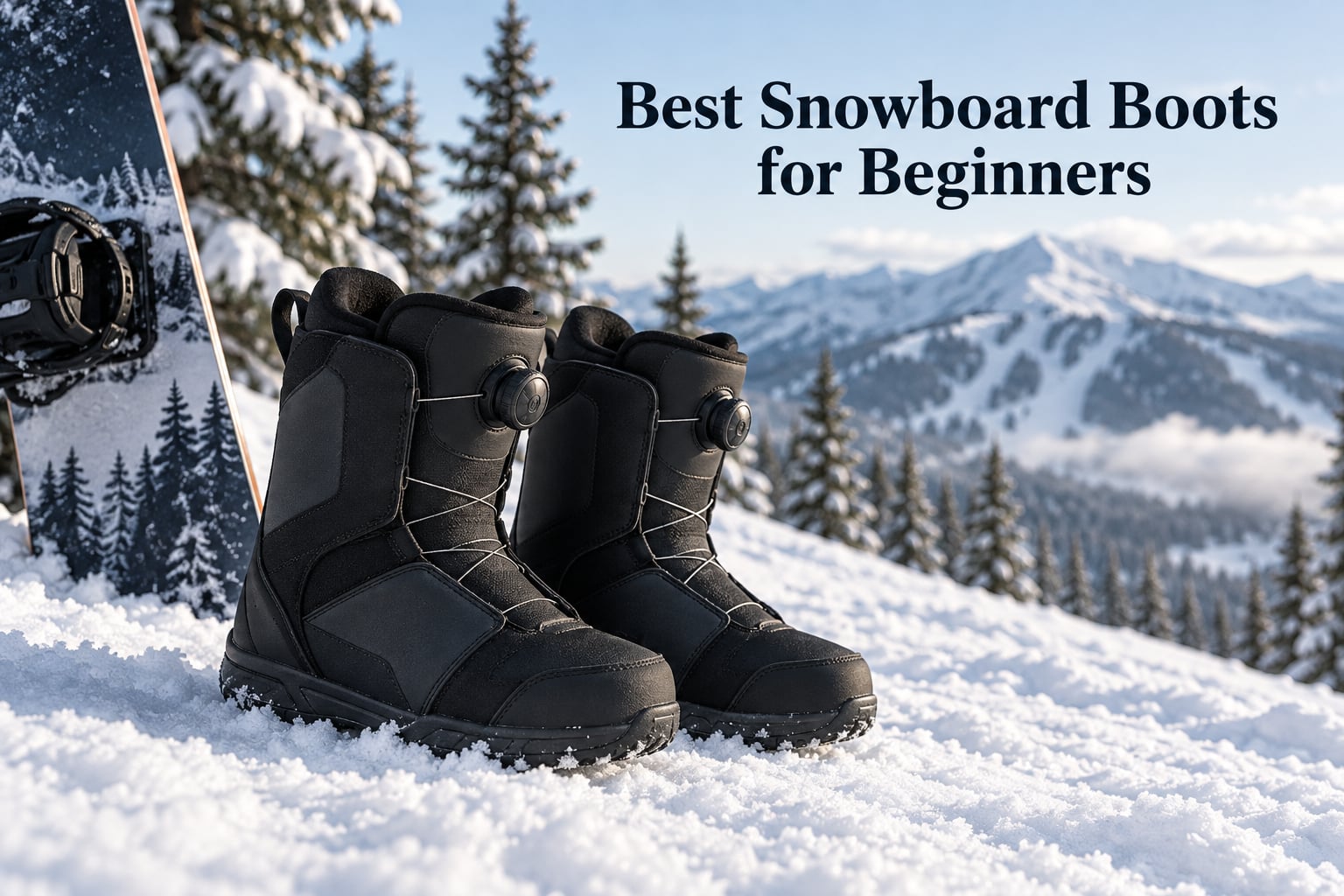
Short answer: for your first season, look for a soft-to-medium flex, roughly 3/10 to 6/10 on the flex scale, with a heat-moldable liner and a closure you can adjust on a chairlift with frozen hands. Boots decide more about your first winter than any other part of the setup, and a pair that fits properly will keep you riding after a few painful lessons instead of quietly ending your season.
Boots are where your body actually connects to the board. A mediocre board still works, but a badly fitting boot produces cold feet, numb toes, and slow learning, and those three problems are what push beginners off the sport. Experienced riders on r/snowboardingnoobs say it constantly: boots are the one place in a beginner setup worth spending more on.
We compared ten of the most-reviewed beginner-friendly snowboard boots currently on the market, weighting the size of each review pool, the warmth and comfort feedback, and — most heavily — how each one fits. Sizing is the detail that decides whether a first season is fun, and most brands in this group run small enough that you need to know it before you order.
Our default recommendation is the System APX, which has the largest review base here and a heat-moldable liner that shapes to your foot. If you want a dial instead of laces, the Burton Moto BOA is the most comfortable-feeling boot in the group. We also cover the women’s fits and the boots that suit wide feet, plus what to do when your feet hurt. If you also need winter footwear off the mountain, our guide to the best snow boots for women covers that side.
Top 3 Best Snowboard Boots For Beginners (October 2026)
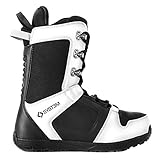
System APX Men’s Snowboard Boots
- Thermofit heat-moldable liner
- Traditional lacing with metal loops
- Mid-calf height
- 3 year warranty
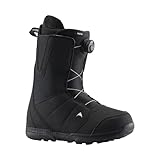
Burton Moto BOA Snowboard Boots
- Single-zone BOA fit system
- Imprint 1+ heat-moldable liner
- Waterproof gusset
- DynoLITE outsole

Alpine Swiss Men’s Snowboard Boots
- Medium flex with flex notches
- Removable heat-moldable EVA liner
- Rubber outsole with ice spikes
- Waterproof upper
The APX wins our top slot on evidence rather than hype. Five hundred and twenty-six ratings at 4.4 out of 5 is the deepest pool of real-world fit feedback in this group, and the recurring themes are warmth, durability, and a liner that molds properly. The Burton Moto BOA takes the highest rating at 4.6 with 83% of buyers handing over five stars, and it is the easiest boot in the group to get on and off. Alpine Swiss rounds out the top three with the roomiest fit and a removable liner that parents buying for younger riders keep recommending.
What Beginners Should Look For in Snowboard Boots?
Soft-to-medium flex. Choose a flex rating between 3/10 and 6/10. A softer shell bends more easily, so you need less effort to start and finish a turn, which is exactly what makes linked turns feel achievable in week one rather than week six.
Fit you can check in thirty seconds. Your toes should lightly touch the toecap when you stand straight, then pull back a few millimeters when you bend your knees. If they disappear completely or press hard into the front of the boot, the size is wrong.
A closure you can operate with gloves on. Traditional laces give you the most zonal control, quick-pull systems are faster to adjust, and a single BOA dial is by far the easiest to tighten on a chairlift. For a first-timer, ease of use usually beats fine adjustment.
Two things matter more than brand loyalty. A boot that fits your foot without compressing it beats a better-made boot in the wrong last, and a boot you can adjust yourself in thirty seconds beats one that needs a shop to re-lace. Fit over brand is the consensus in every beginner thread we read.
All 10 Snowboard Boots at a Glance
| Product | Specifications | Action |
|---|---|---|
| System APX Men’s Snowboard Boots |
|
Check Latest Price |
| Burton Moto BOA Snowboard Boots |
|
Check Latest Price |
 5th Element Lace and Dial Snowboard Boots 5th Element Lace and Dial Snowboard Boots |
|
Check Latest Price |
| Alpine Swiss Men’s Snowboard Boots |
|
Check Latest Price |
 Siren Lux Women’s Snowboard Boots Siren Lux Women’s Snowboard Boots |
|
Check Latest Price |
 Burton Men’s Moto Snowboard Boots Burton Men’s Moto Snowboard Boots |
|
Check Latest Price |
 K2 Market BOA Men’s Snowboard Boots K2 Market BOA Men’s Snowboard Boots |
|
Check Latest Price |
 DC Phase BOA Snowboard Boots DC Phase BOA Snowboard Boots |
|
Check Latest Price |
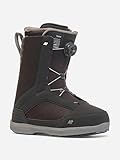 K2 Raider BOA Men’s Snowboard Boots K2 Raider BOA Men’s Snowboard Boots |
|
Check Latest Price |
 K2 Belief BOA Women’s Snowboard Boots K2 Belief BOA Women’s Snowboard Boots |
|
Check Latest Price |
1. System APX Men’s Snowboard Boots — The Best Snowboard Boots for Beginners Overall
- Largest review base in the group at 526 ratings
- Heat-moldable liner removes pressure points
- Traditional lacing gives zoned tension control
- Metal lace loops add real durability
- Narrow last may not suit wide feet
- Soft flex can feel unstable on edge
- Occasional reports of the lacing system or fittings letting go
This is the boot we kept coming back to while comparing the ten, because a 4.4 rating built on 526 reviews tells you more than a 4.5 built on 18. Seventy percent of those ratings are five stars, and the fit feedback is consistent enough to act on: true to size for most feet, warm through a full season, sturdy enough to survive a season of rental-garage life.
The Thermofit heat-moldable liner is the reason it works for a first-timer. Once molded, it stops pressing on the sides of your foot, which is the single most common source of the lateral foot pain that beginners report. The mid-calf height gives ankle support without the bulk of a taller boot, and the boot weighs in as one of the lighter-feeling options here.
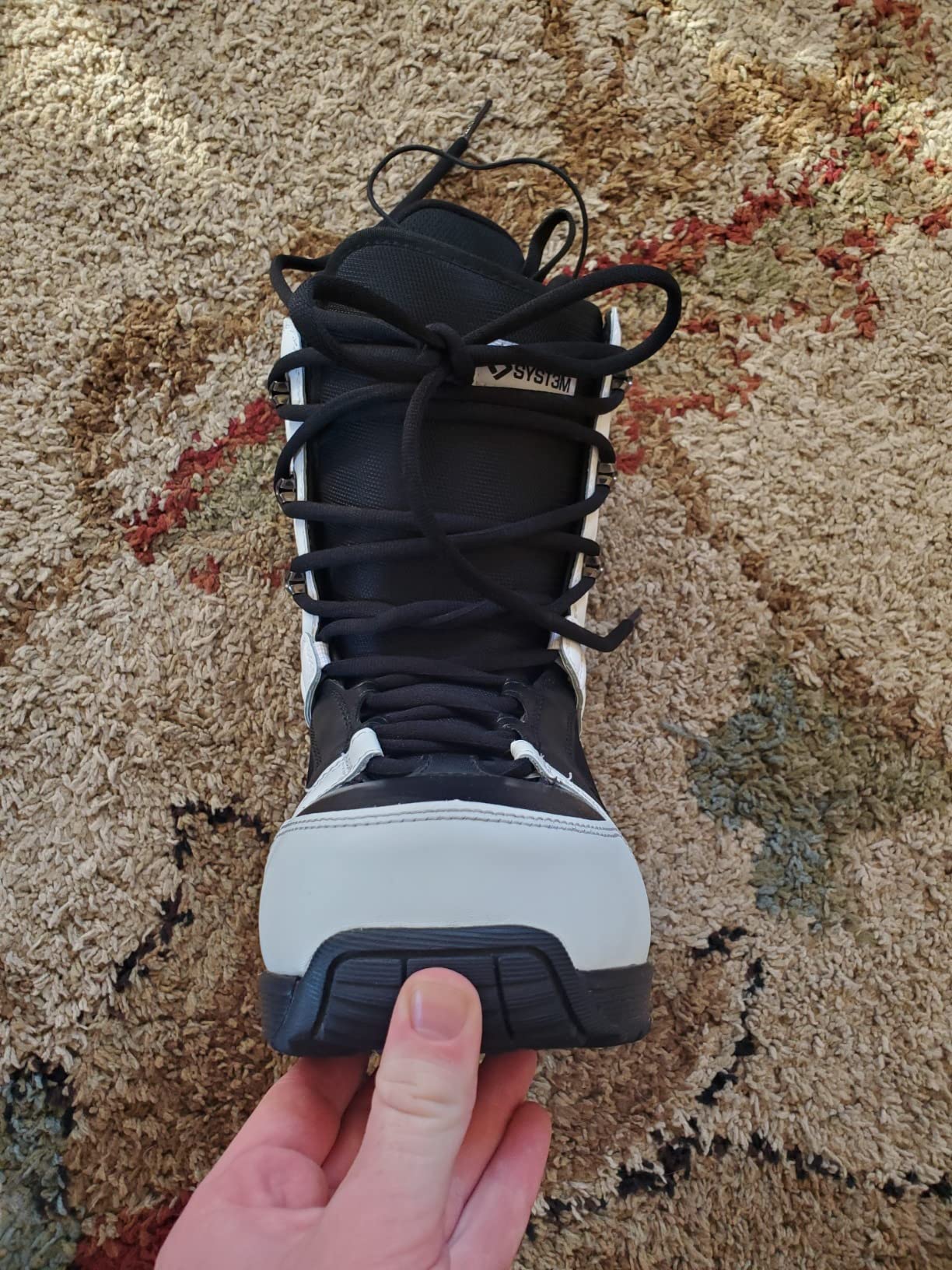
The traditional lacing is a real advantage here, even though dials are more fashionable. You can pull the forefoot tight and leave the calf looser, or tighten the top two hooks only, which is how you stop your heel from lifting on a long run. Metal lace loops instead of plastic ones are a small detail that reviewers single out as the reason the laces survive.
It carries a 3 year manufacturer warranty, which is the longest in this group, and the outsole is rubber with a polyurethane upper. Reviewers describe it as lightweight, sturdy, and warm, and the style name is APX Traditional Lace, which tells you exactly what closure you are getting.
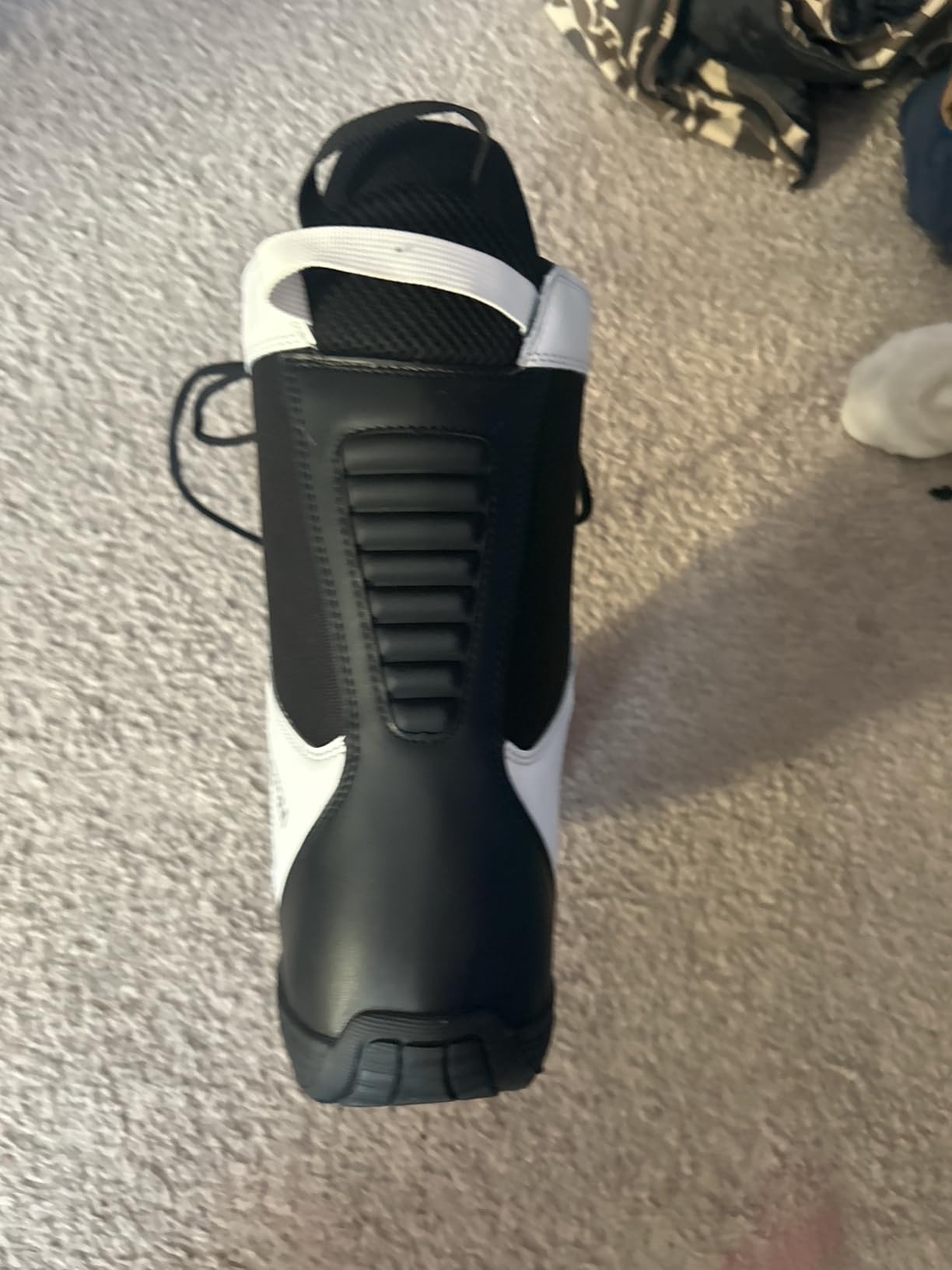
How the APX fits wide and narrow feet?
The APX is not the boot to pick if you have wide feet. The narrow last is the most repeated complaint in the reviews, alongside a soft flex that some new riders feel on edge. If you have ever had lateral foot pain that lacing adjustments did not fix, the last is the reason, not the liner.
For a normal-width foot it is a genuinely safe first purchase. The heat-moldable liner gives a little give, the toe box is not aggressively narrow, and 526 buyers have already found out whether the last works for them. That depth of feedback is worth something at a moment when you cannot try the boot on before it arrives.
Where the APX will frustrate you?
A few reviewers report the lacing system being awkward to use, and a small number report a lace fitting coming loose during a session. Neither is common enough to worry about, but both are the kind of small annoyance that shows up when you are standing in the cold trying to get to a lift.
The other limitation is the soft flex. Riders who quickly progressed past the beginner stage found it less stable on edge, which is a reasonable trade for comfort at the start. If you already know you will be riding firm terrain by the middle of your first season, look at a medium-flex boot such as the Alpine Swiss instead.
2. Burton Moto BOA Mens Snowboard Boots — The Most Comfortable Boot in the Group
- Highest rating in the set at 4.6 with 83% five-star reviews
- Easiest boot here to get on and off
- BOA dial adjusts in seconds with cold hands
- Sleeping bag foil underfoot adds real warmth
- Runs small
- most buyers size up a full size
- Fit can stay slightly loose across the top of the foot
- Cuff can feel tight at the shin
This is the highest-rated boot in the group at 4.6 out of 5, and 83% of its reviews are five stars. It also weighs 2.1 pounds, which is the lightest-feeling option here, and that combination of warmth, weight, and dial adjustment is why it keeps surfacing as the beginner default in community recommendations.
The closure is a single-zone BOA fit system with inner spool lace routing, which means one dial tightens the whole lower section evenly rather than pulling on one side of the foot. For a rider whose hands are cold and wet at the bottom of a lift line, that is a bigger deal than it sounds. The 1:1 soft flex PowerUp tongue and the snow-proof internal gusset seal the lower zone against snow ingress.
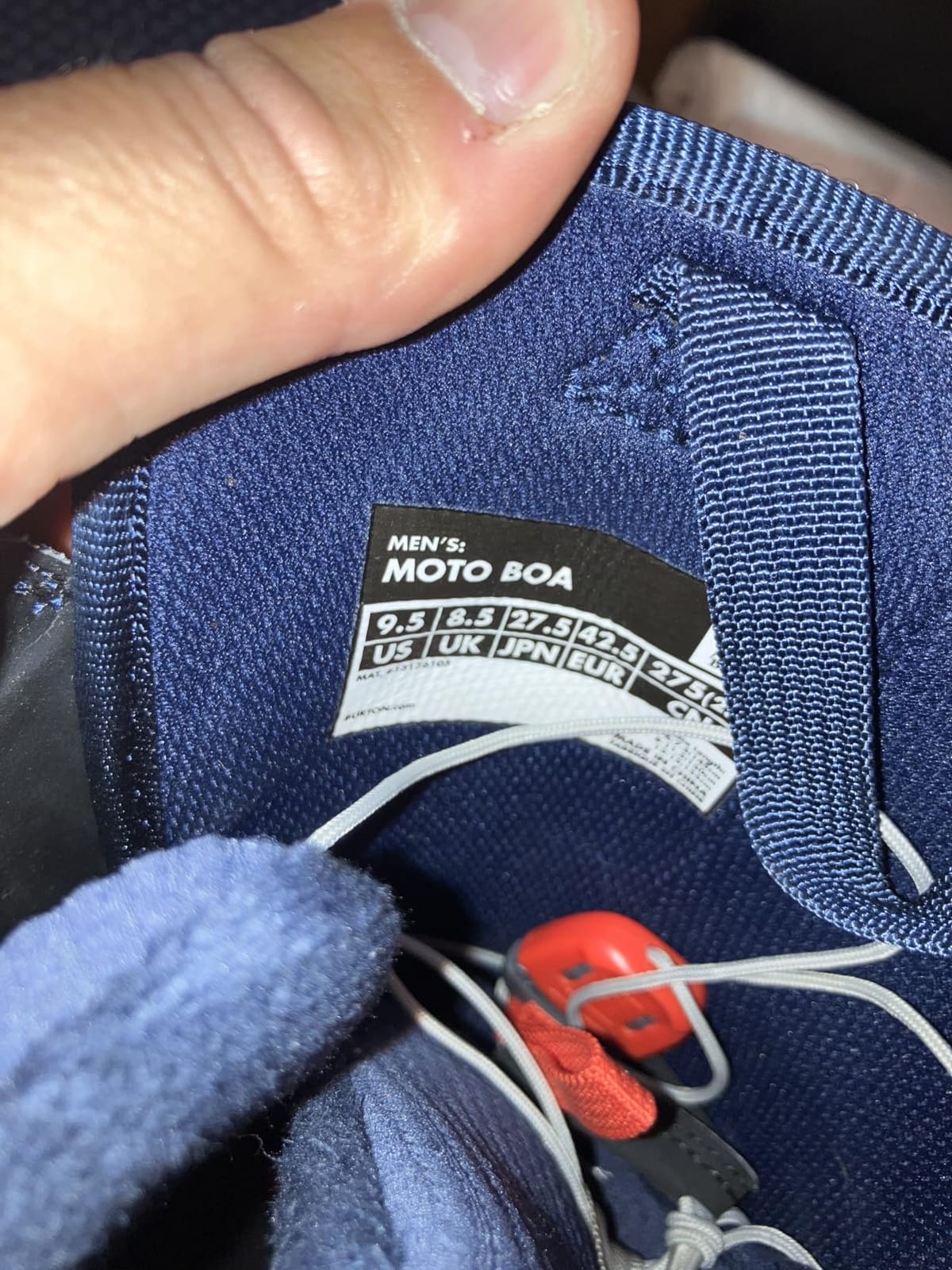
The Imprint 1+ heat-moldable liner with integrated lacing is the technology that gets named most often when people describe why this boot feels good on day one. Add the reflective sleeping bag foil underfoot for warmth and a man-fur boot entrance, and you have a boot that is forgiving before you have even done your first lesson.
The catch is sizing, and it is the most important line in this whole roundup: this boot runs small. Most buyers recommend sizing up a full size, and the fit advice dominates the reviews far more than any complaint about performance. The shaft height is 10.5 inches at the mid-calf, and the DynoLITE outsole handles cushioning and board feel.
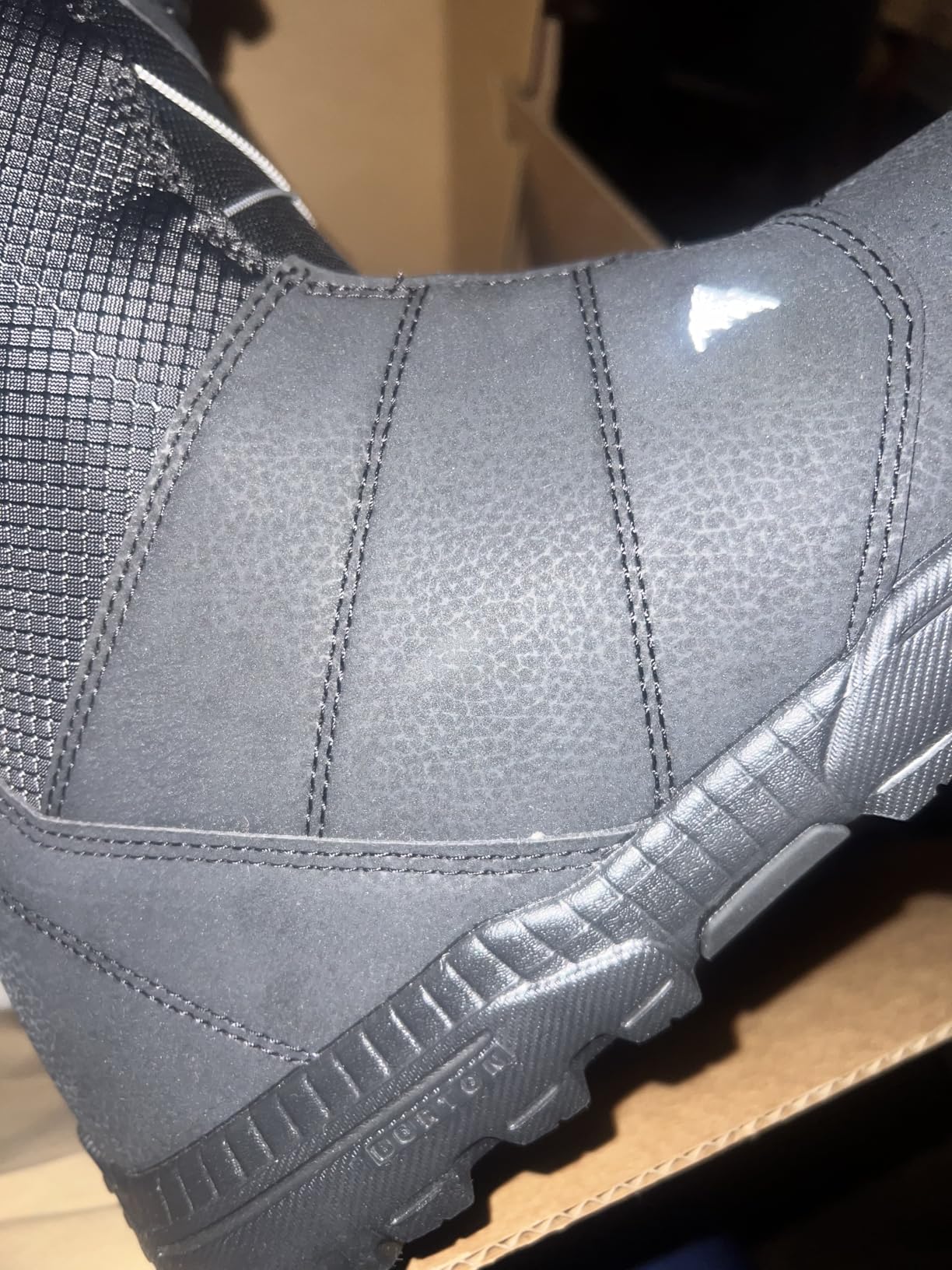
How to size the Moto BOA correctly?
Size up. The dominant theme across the 295 reviews is fit advice rather than performance criticism, and it points one direction: most buyers needed a full size larger than their street shoe. A handful also report the fit staying slightly loose across the top of the foot even after sizing up, so the liner may need a second molding session.
Ask yourself one question before ordering: would you rather have a snug boot that you can heat-mold, or a roomy boot that is comfortable from the first lift? This boot rewards the first answer, and that is exactly the situation a beginner is in.
Where the Moto BOA falls short?
The cuff can feel tight at the shin and calf, particularly for riders with larger calf muscle. That tightness is not the same as pain in your foot, but it does create the sensation of pressure that makes people think their boots are too small.
It is also one of the more expensive boots in this group, and the flexible fit means it suits a specific last. If you have a narrow foot or a low instep, the sizing guidance above matters more than the rating. It carries a limited warranty rather than a fixed multi-year one.
3. 5th Element Men’s Lace and Dial Snowboard Boots — Best on a Tight Budget
- Lowest cost in the roundup
- ATOP dial tightens and wraps the whole foot
- Solid heel hold that stops the foot sliding
- Comfortable to walk in outside the bindings
- Runs small
- most buyers order 1 to 1.5 sizes up
- Bulky shell may not fit some bindings
- Reports of grommets popping in the first month
If your first-season budget is the main constraint, this is the boot that gets you into your own gear without a second thought. It is the least expensive in the group, it carries a 4.3 rating across 172 reviews, and 72% of those reviewers gave it five stars. Seventy-two percent is a strong score for the cheapest option here.
The ATOP dial lacing system tightens, wraps, and supports the whole foot in one adjustment, which is a different mechanism from a BOA cable and arguably more supportive across the midfoot. The liner is waterproof, the outsole is rubber, and the whole boot weighs 16 ounces, so it is light enough that walking to a lift is not a workout.
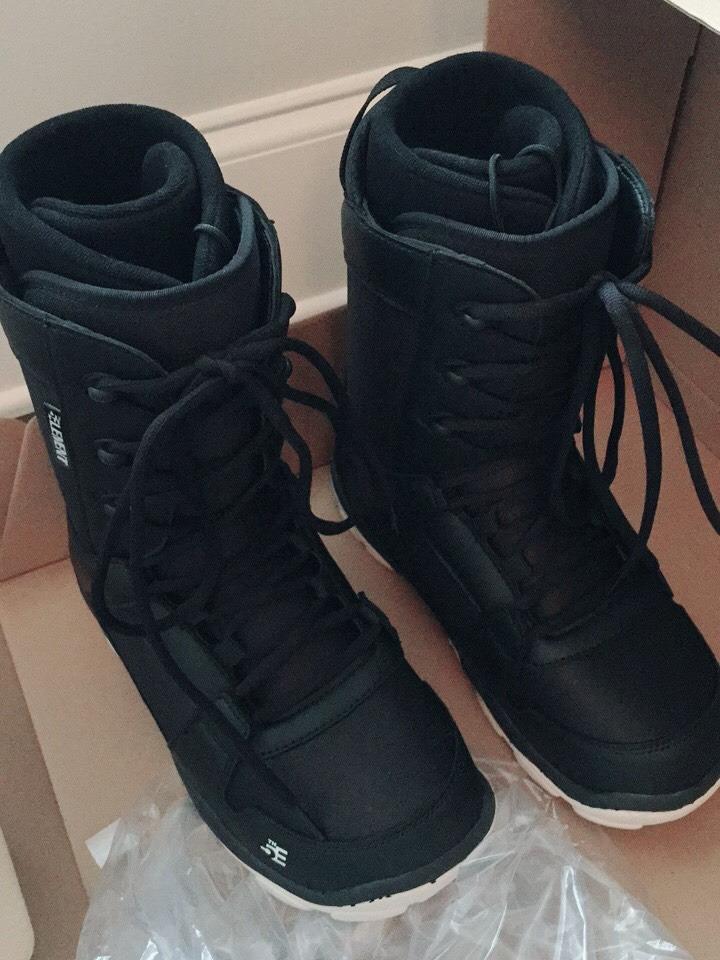
What reviewers appreciate most is heel hold. Several describe the foot staying put instead of sliding forward as the day goes on, and that is the property that stops a new rider from feeling like they are standing on a plank. The brand positions it for beginner and intermediate all-mountain riders, which is the right target.
It comes with a 2 year limited manufacture warranty, and the distribution is healthy, with 72% five stars and 13% three stars. That spread suggests a boot that does one job well rather than one that tries to be premium. The style name is performance, the color is Lace Black 26.
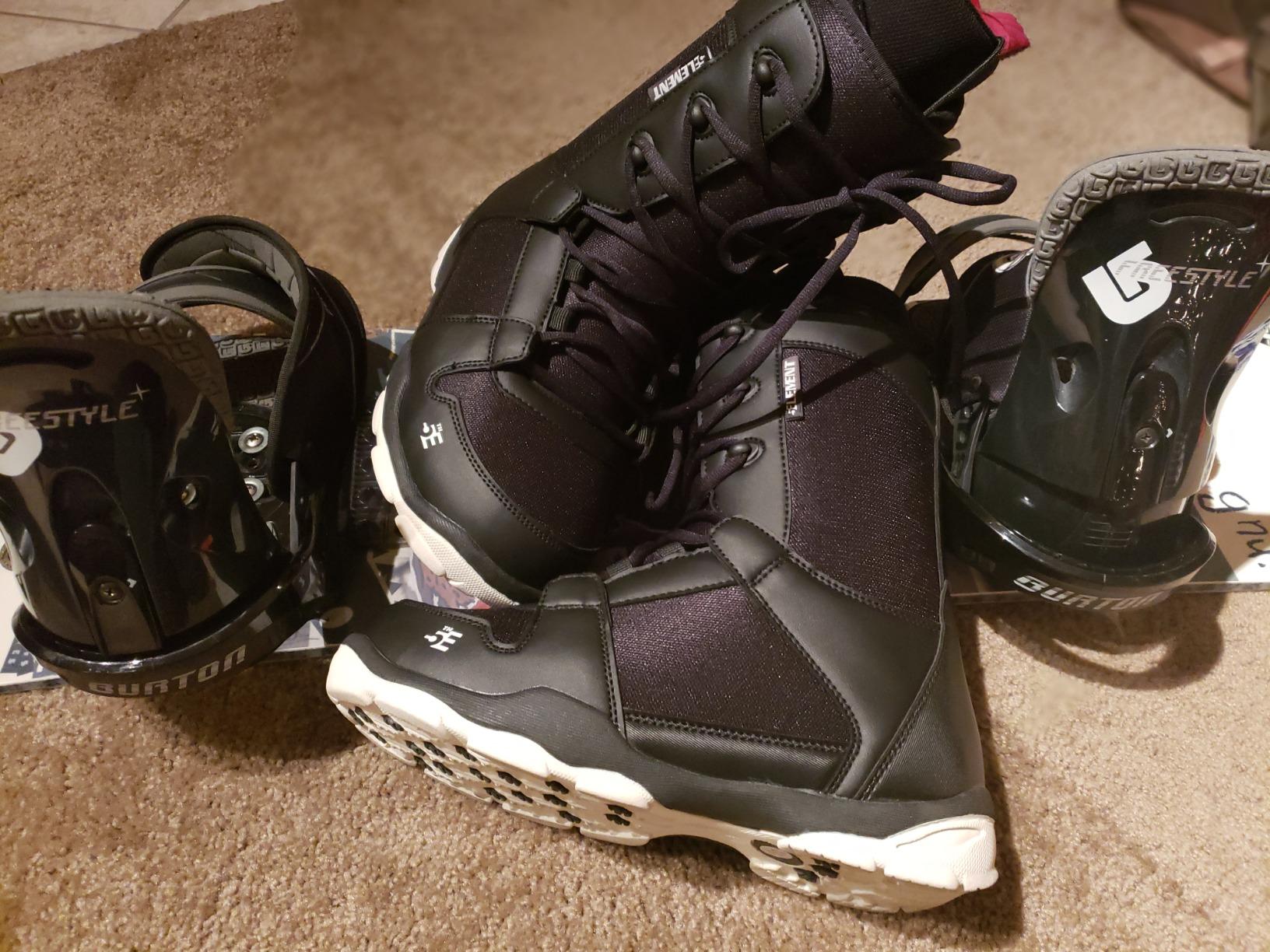
What running small actually means for this boot?
Order 1 to 1.5 sizes up, and treat that as a hard rule rather than a suggestion. This is the most consistent sizing warning in the entire roundup, and it repeats across reviews spanning multiple seasons of use. A boot that runs small and a liner that has not been molded yet will feel much worse than it performs.
The counterpoint is bulk. Several buyers found the shell too large to fit properly into their bindings once they had sized up, which is the classic tradeoff with a roomy last. Measure the binding strap adjustment before you order, and buy bindings with wide strap ranges if you go this route.
Where this budget boot will frustrate you?
There are reports of grommets popping during the first month of use, and the build quality is described as mid-tier. Neither is a dealbreaker for a boot whose main job is to get you through a first season, but both are reasons to inspect the hardware before a big trip.
The ATOP dial is also a single mechanism with a single point of failure, so it is worth asking how the shop handles a dial failure. At this price the answer is usually a replacement rather than a repair, and a rider who rides every weekend in a cold climate will feel that more than a casual one will.
4. Alpine Swiss Men’s Snowboard Boots — Best Value for Roomier Feet
- Removable 5mm EVA insole footbed
- True to size with a roomy fit for wider feet
- Flex notches make the medium flex easy to flex
- Repeatedly recommended by parents buying first boots
- Sizing advice is inconsistent
- some buyers went up 1 to 2 sizes
- One report of the carrying straps breaking
- Long fulfillment time
This is the only medium-flex boot in the group, and that is exactly why we rate it best value. A soft boot is forgiving in week one; a medium flex is still forgiving but does not fall apart the day you start riding steeper groomers. Flex notches cut into the shell make that medium rating easy to work with rather than demanding.
The liner is the selling point. It is a removable heat-moldable EVA liner with internal 3D J-bars around the ankle, and because it comes out, you can heat-mold it, dry it overnight, and swap it rather than baking the whole boot. There is also a removable 5mm EVA insole footbed underneath, which is a rarity at this price.
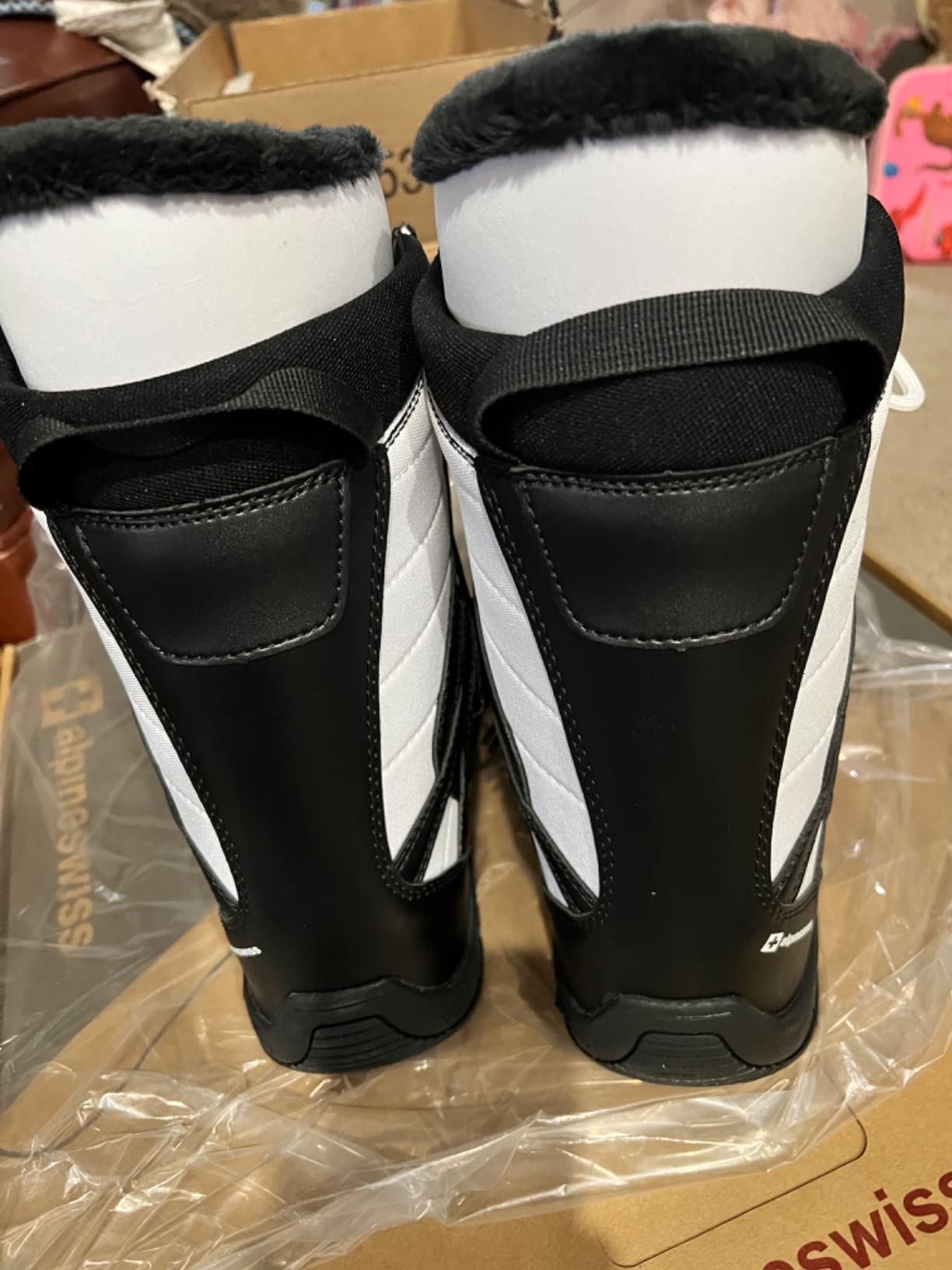
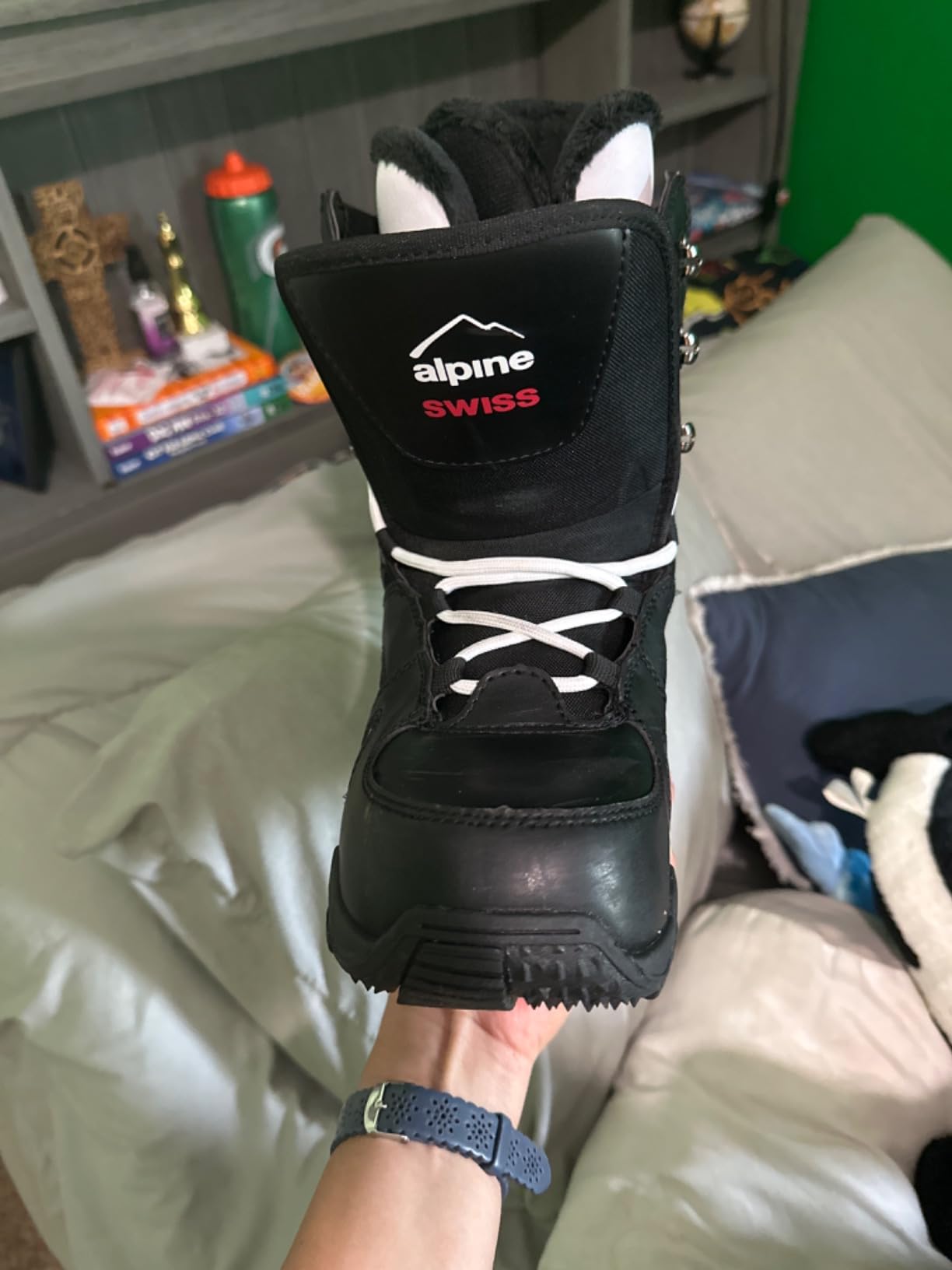
The outsole is a rubber anti-grinding design with ice spikes built in, which is genuinely useful on a boot walk across a frozen parking lot. The upper is waterproof synthetic leather and nylon with reinforced stitching, and the shell carries a nylon upper with double-posted lace hooks for zonal tension control.
Reviewers highlight comfort, a well-molded liner, and durability through a full season, and several mention buying them for a child learning to ride. Seventy-five percent five-star and 4.4 overall is a good score from 153 buyers, and the parents who recommended them are the most reassuring reviewers in this section because their criteria are comfort first.
Why this is the pick if you have wide feet?
The roomy last is the reason. Reviews repeatedly describe the fit as true to size with room for wider feet, and the internal J-bars wrap the ankle without squeezing the sides of the foot the way a narrow last does. If you have spent a season in rental boots and blamed the rental boots, the last is often the actual culprit.
Wide feet are the number one reason beginners report lateral foot pain that lacing adjustments and insoles never fix. Insoles add support under the arch but do nothing about compression on the outside of the foot, so a roomy last is the real solution. Of the ten boots here, this and the DC Phase are the two we would point a wide-footed rider toward.
Where the sizing advice gets confusing?
Reviews split on sizing. Some buyers say it is true to size, and a meaningful number recommend going up 1 to 2 sizes, so the feedback is genuinely inconsistent rather than uniformly small. The heat-moldable liner contributes to that, because a molded liner fills space a boot sized perfectly would have left empty.
There is also a report of the rear carrying straps breaking on a second wear, and a longer fulfillment time than most boots here. Neither affects how the boot rides, but the strap report suggests checking them before heading out, since a broken strap means carrying rather than walking.
5. Siren Lux Women’s Snowboard Boots — Best Women’s Fit With a Two-Speed Closure
- Women's last with a narrower heel pocket
- Quicklace inner locks the foot before you lace up
- True to size for most buyers
- Waterproof and warm season after season
- Laces can go flimsy with extended use
- Stiffness makes them tiring to tighten for some riders
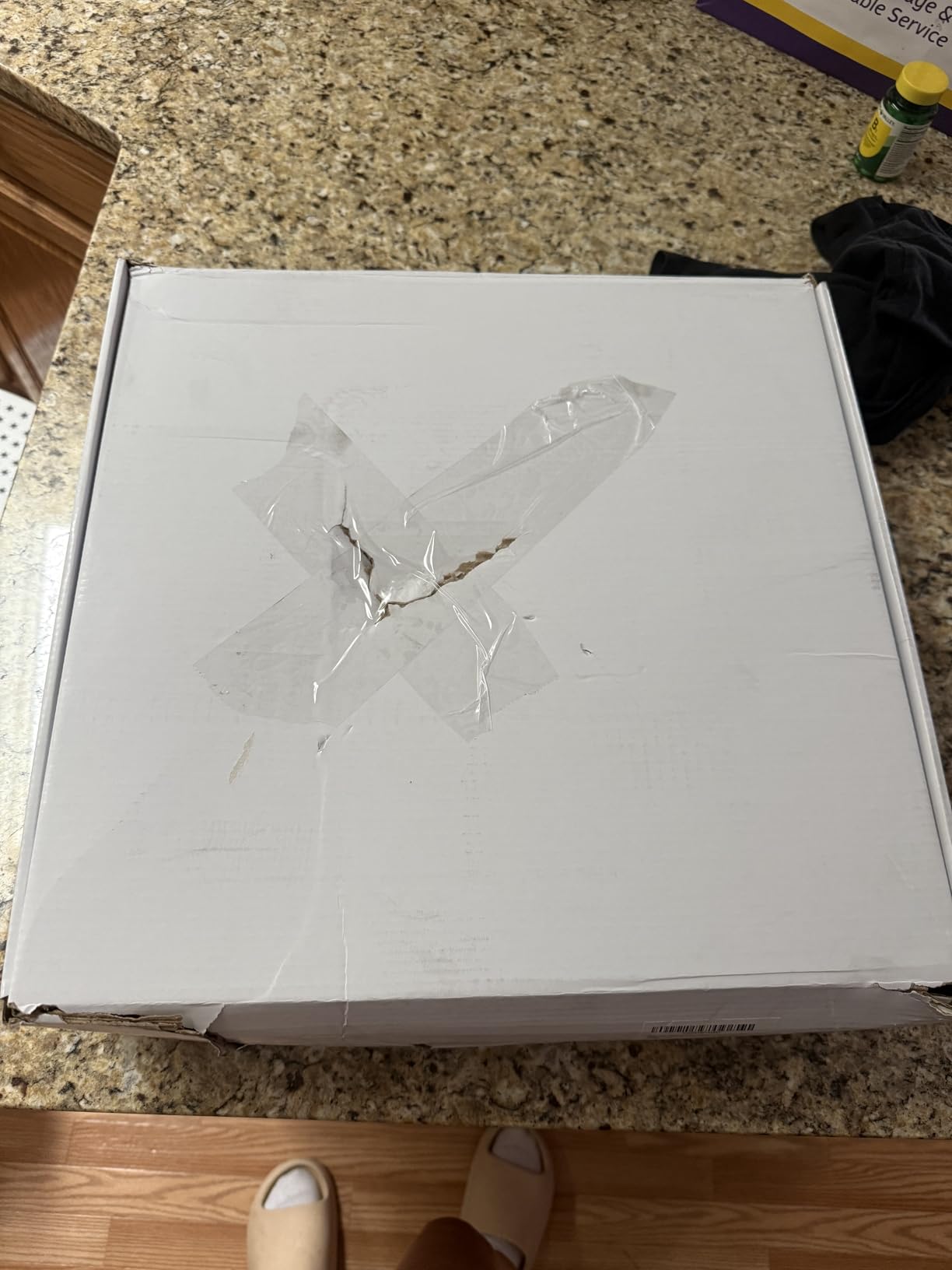
- One report of damaged goods arriving in a taped box
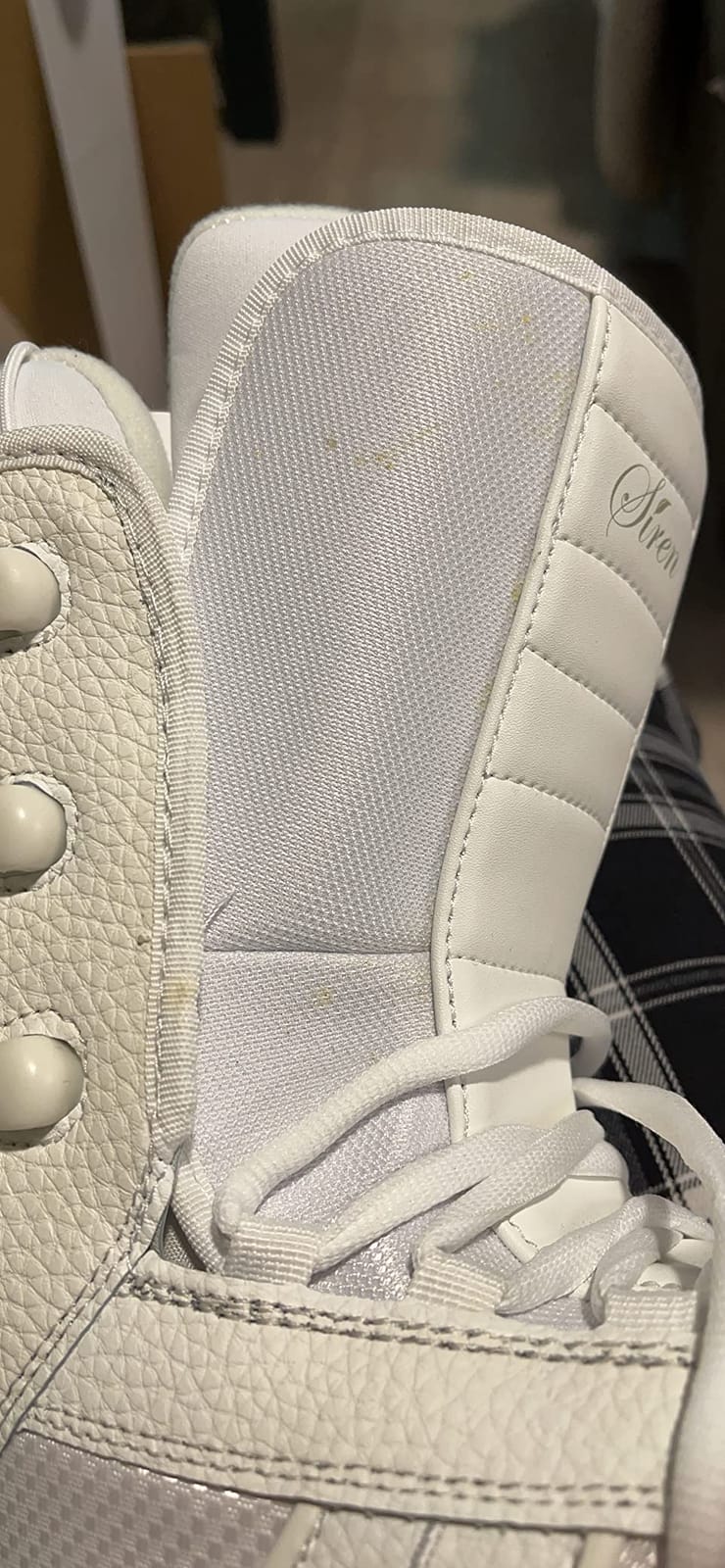
Most of the boots in this roundup are men’s lasts, and a men’s last is the reason many women end up with boots that compress the sides of their feet. The Siren Lux is built on a narrower women’s last, which is why it fits comfortably without the compensation most riders are told to accept. It ranks in the top eight of women’s snowboard boots on the platform, which is a real signal.
The closure is the interesting part: a quicklace inner liner with a slide lock handles the foot first, then traditional outer lacing gives you zoned tension control on the outside. In practice you lock the liner down, then adjust the shell over the top, which is a different order from most boots and it works well for a beginner who does not yet know how tight each zone should be.
The Thermofit heat-moldable liner handles the custom fit, metal lace loops add durability, and the nylon upper is waterproof. The warranty is 3 years from the manufacturer, matching the System APX for the longest coverage in this group, and 70% of the 150 ratings are five stars.
Reviewers describe these as warm, comfortable, and true to size for most buyers, and several note that they hold up season after season for the money. If you are shopping for a first season on a budget, the value case is straightforward: the fit is the correct fit, and the price is the lower end of the range.
What a women’s last actually changes?
A women’s last is narrower through the forefoot and heel, with a different arch and ankle profile than a men’s shell of the same labeled size. That is the difference between a boot that wraps your foot and one that squeezes it. Sizing your snowboard boot to a men’s chart on a women’s shell is the most common reason women report boot pain, and it is entirely avoidable.
Boot sizing follows shoe size but is not shoe sizing. Measure both feet in the afternoon in thin socks, use the larger foot, and remember that snowboard boots trade some toe room for heel hold. The Lux is described as true to size by most of its buyers, which is a good sign that the last is behaving as intended.
Where these will frustrate you?
The laces can become flimsy after extended use, and a few riders find the boot stiff enough that tightening it becomes tiring by the end of the day. If you are someone who re-laces a boot every run, that stiffness will register faster than it would in a single-dial design.
There is also one report of receiving damaged goods inside a taped box, so inspect the shell and the liner before your first trip. It is a shipping and packaging issue rather than a product flaw, but it is the kind of thing worth ten seconds of attention before you walk to a lift.
6. Burton Men’s Moto Snowboard Boots — Best for Traditional Lacing Enthusiasts
- Speed Zone lacing with re-laceable New England Ropes
- Broken-in feel straight out of the box
- Lightweight DynoLITE outsole improves board feel
- 4.5 rating with 77% five stars
- Shorter warranty than several rivals in this range
This is the traditional-lace version of the Burton Moto, and if you dislike dials it is the better buy. The Speed Zone lacing system uses durable New England Ropes that you can re-lace yourself when they stretch, which is the main practical advantage over a sealed cable system you cannot replace.
Total Comfort Construction is the reason it feels broken in from day one, and the Imprint 1+ heat-moldable liner with integrated lacing is the same liner used in the BOA version. A 1:1 soft flex PowerUp tongue and a snow-proof internal gusset keep the flex consistent and the snow out, and the reflective sleeping bag foil underfoot handles warmth.
It rates 4.5 out of 5 from 132 reviews with 77% five stars, which is a strong score and a useful contrast to the BOA Moto, where buyers obsess over sizing. The faux leather upper with a durable synthetic leather backstay feels robust, and the DynoLITE outsole with a shrinkage footbed keeps the ride light.
Reviewers highlight the broken-in feel, a supportive wrap from the liner, and quick lacing. The whole boot weighs 4 pounds, which sounds heavy next to the 2.1 pound BOA version but reflects the different shell and closure construction rather than a real difference in ride.
Why a re-laceable system matters over time?
New England Ropes in the Speed Zone system are meant to be replaced. When a boot has been ridden all season, the ropes stretch and the tension goes soft, and on this boot you can swap them in an afternoon rather than replace the whole closure. That is a maintenance cost you will not get on a cable-based dial.
It is also the system a boot fitter can tune more precisely. Traditional lacing gives you the ability to pull the forefoot tight and the calf loose on the same boot, which is how you stop heel lift without crushing your instep. For a rider who wants to adjust rather than just tighten, that is worth more than convenience.
Where this Burton falls short?
The warranty is the one documented drawback. A limited warranty of shorter duration than several rivals in this range is the only complaint that appears in the reviews, and it matters more over a second season than it does during the first.
There is no customer photo set to check, so the visual feedback trail here is thinner than for the other boots in this roundup. The rider sizing question that dominates the BOA Moto reviews is also less prominent for this version, which is a positive if you want to avoid a sizing-up experiment.
7. K2 Market BOA Men’s Snowboard Boots — Best for Easy Step-In
- Very easy to get into and out of
- Keeps feet warm and dry in single-digit temperatures
- Good grip walking on steep icy stairs
- Lightweight 16-ounce build
- Runs small
- several buyers went up a full size
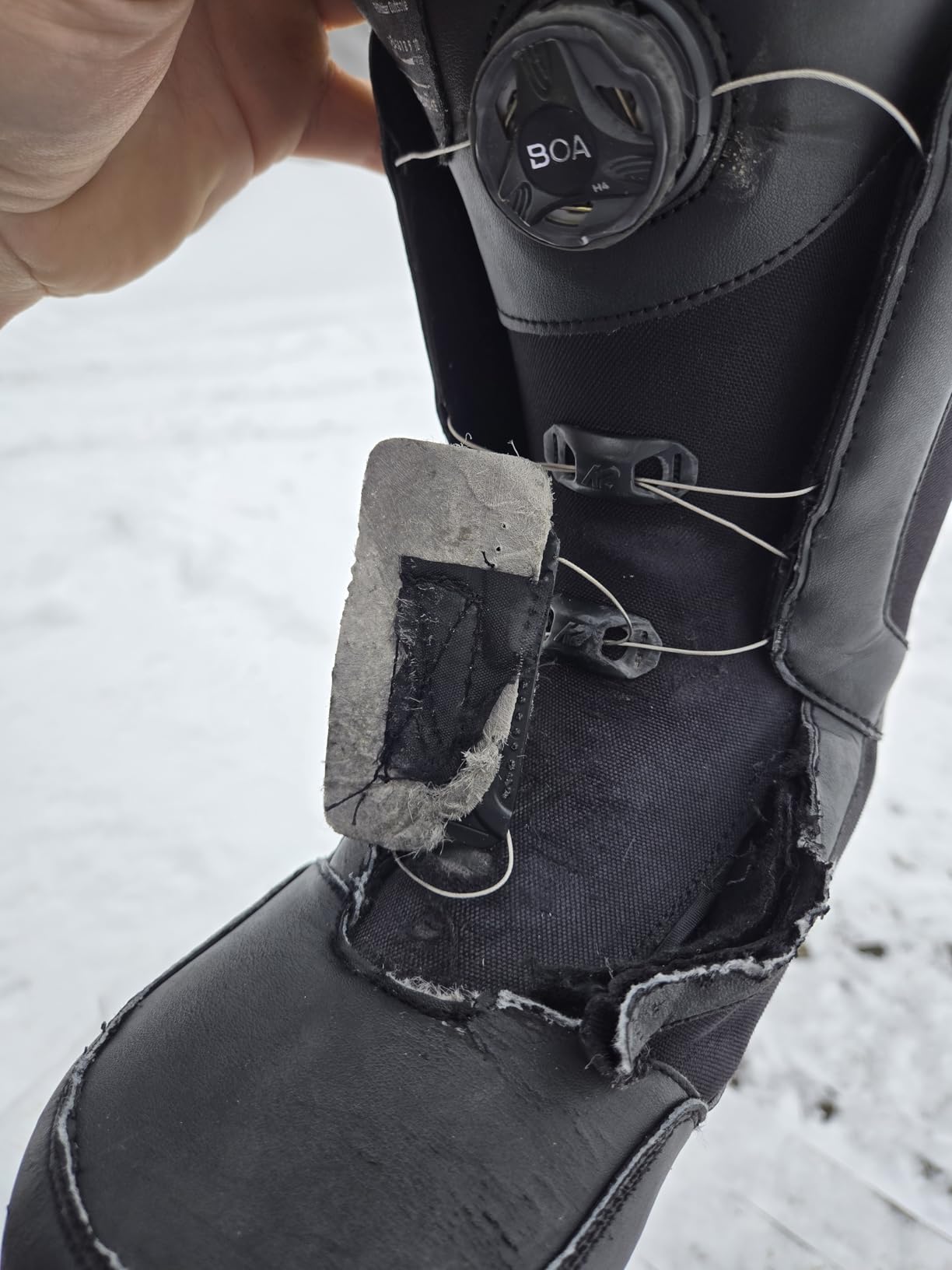
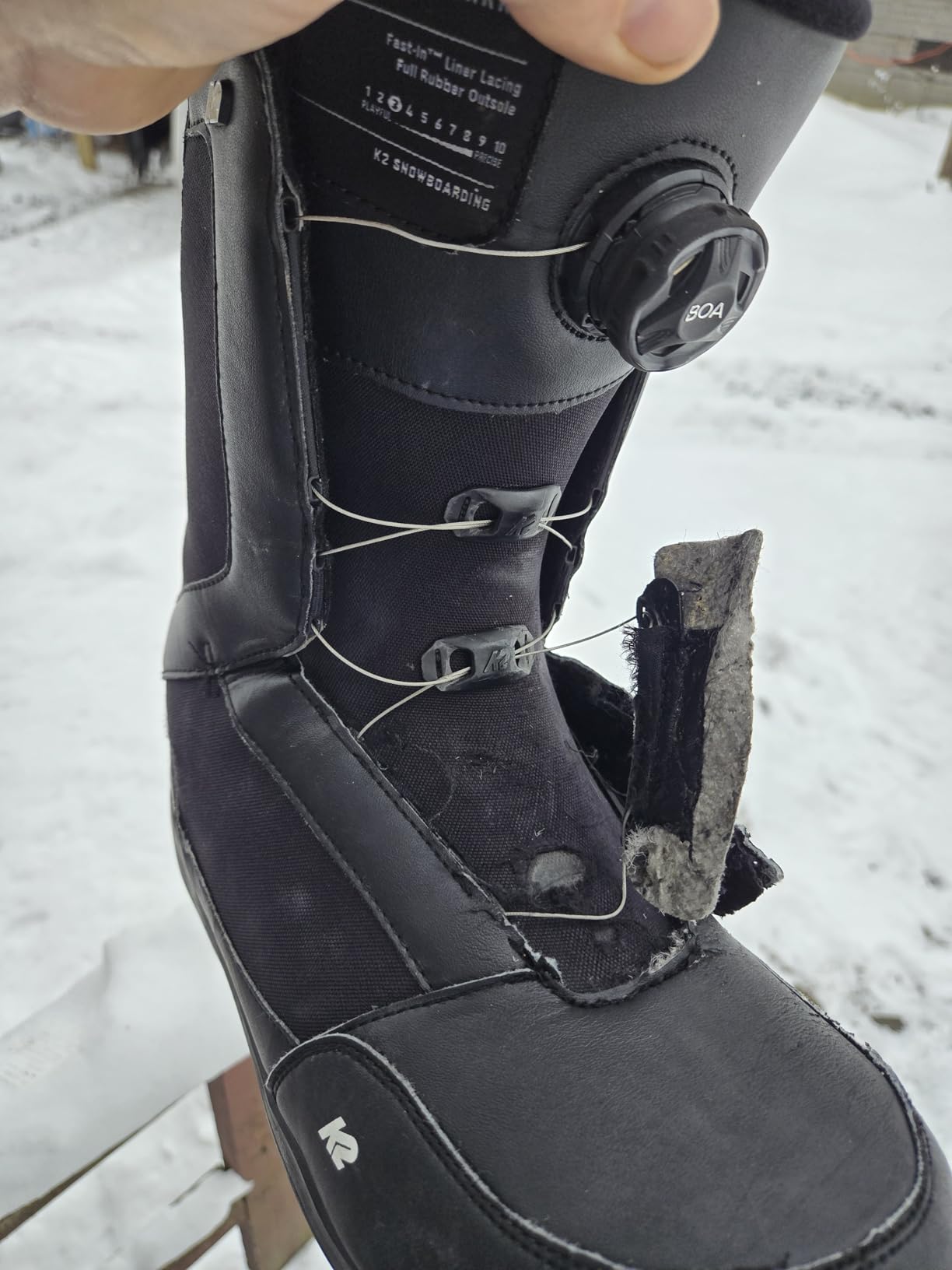
- One report of failure after only two seasons
The K2 Market BOA is the no-frills choice in this roundup, and for a first-season rider who wants the least fuss, it does its job cleanly. A 4.4 rating from 78 buyers with 74% five stars is a respectable score, and the reviews describe it as comfortable, warm, and easy to adjust without any of the premium extras.
The closure is an H4 BOA Focus Fit System, and the liner is a Comfort Foam EVA liner with internal J-bars and fast-in liner lacing. The J-bars sit around the ankle to hold the heel down, and the Flex Zone Upper Cuff flexes where your shin bends so the boot does not fight you in a crouch.
Warmth in genuinely cold conditions comes up repeatedly. Owners report keeping feet warm and dry in single-digit temperatures, which is a useful data point if you are riding early-season mornings on the East Coast or in the Alps. The outsole grip gets specific mention too, with owners noting it holds on steep, icy stairs during the walk from the car.
The boot weighs 16 ounces, the construction is a foam and shell upper, and it is water resistant rather than fully waterproof. That distinction matters on wet days: expect to keep moisture out of a snowfall, not out of a long walk through slush. The warranty runs one year against manufacturer defect.
How the H4 BOA Focus Fit compares to a Burton dial?
The H4 Focus Fit is a single-dial system, which is the same broad category as the Burton Moto BOA but with a different coiler and cable path. In practice the difference is minor for a beginner. One dial tightens the lower zone evenly, and the Flex Zone Upper Cuff handles the flex point above it.
The bigger difference is the liner. The Comfort Foam EVA liner with J-bars is a supportive wrap, but it is not the same thermoformable construction as the Imprint 1+ liner, so expect less long-term mold-to-your-foot behavior. If you intend to keep the same boot for several seasons, factor that in.
Where this one will frustrate you?
Sizing advice again points up. Several buyers had to go up a full size, so the same rule applies as with the other BOA boots in this group. It is water resistant rather than waterproof, and one owner reported the boots failing after only two seasons, which is a single report but a reminder to check the dial and the shell condition each season.
At 78 reviews the feedback pool is thinner than the top four boots here, so the durability picture is less settled. If you ride hard every weekend, the longer review trails on the System APX and the Burton Motos are worth considering for that reason alone.
8. DC Shoes DC Mens Phase Boa Snowboard Boots — Best for Wide Feet on a Soft Flex
- Soft sneaker-like feel that beginners like
- Fits wide feet better than most
- Waterproof and durable in frequent use
- True to size for most buyers
- 4/10 flex gives limited support as you progress
- One report of BOA cables breaking after about a year
- Finish sometimes differs from the in-store pair
The DC Phase is the one boot here that publishes its flex rating, and it is 4/10, which is squarely in the beginner range described across the SERP. That transparency is genuinely useful: you know what you are buying before it arrives, rather than guessing from adjectives like soft and comfortable.
Owners describe the feel as sneaker-like, which is not a criticism so much as a description of the category. A softer shell flexes from the toe with less effort, and beginners consistently report that a boot that is easy to move in is a boot they can learn on. The Response Liner I and the IMPACT ALG insole handle the interior, and the Foundation UniLite outsole sits underfoot.
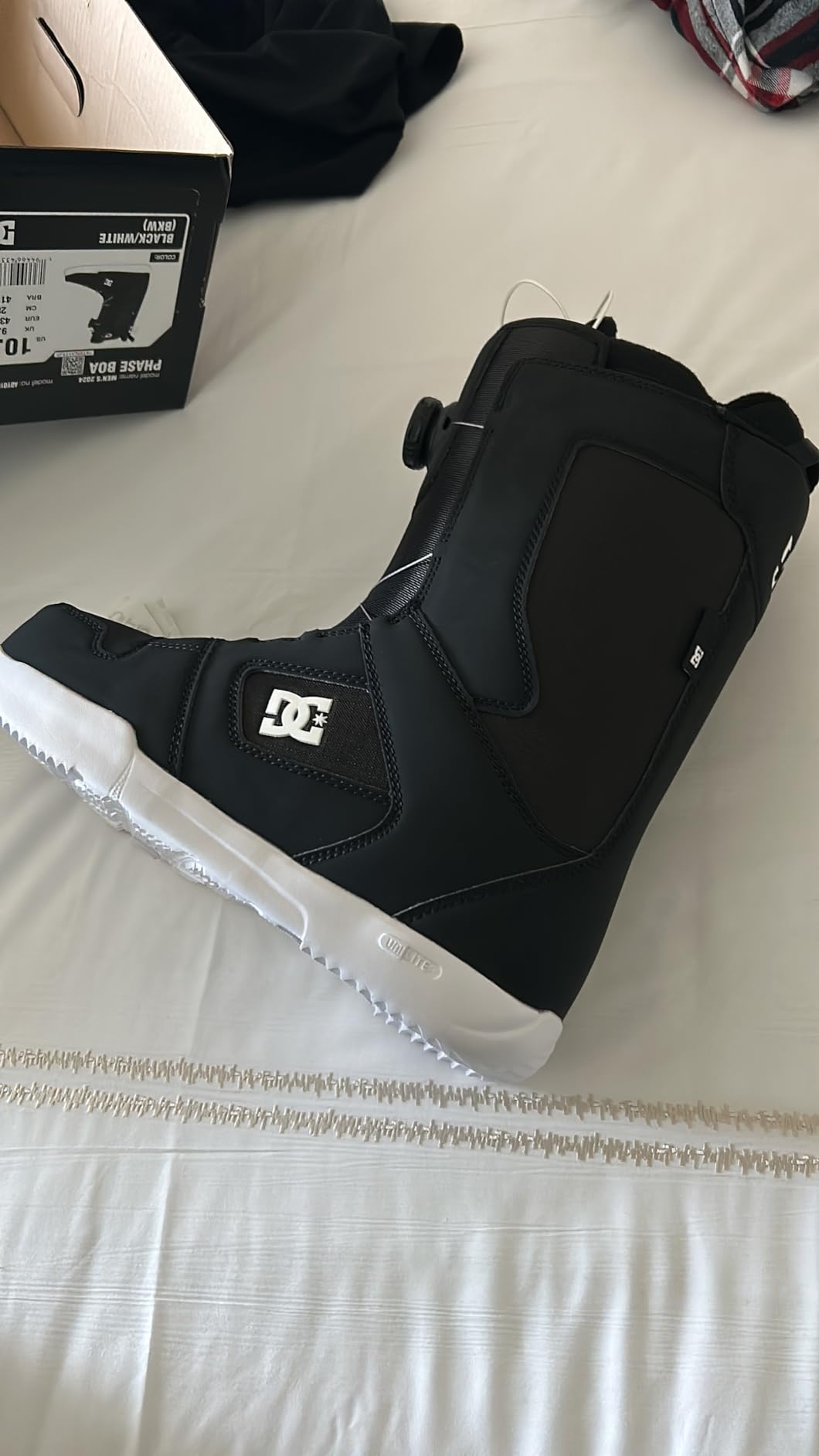
The wide fit is the headline. Multiple reviewers call out that these fit wide feet well, and that is the pairing we would highlight for a rider whose rental boots have been pressing on the outside of their feet. The synthetic upper is waterproof, and the 16-ounce weight keeps the walk to the lift easy.
At 4.2 out of 5 from 73 reviews this is the lowest-rated boot in the group, and the ratings spread shows why, with 11% one-star ratings against 72% five stars. That is a normal curve for a comfort-first boot rather than a warning sign, but read the rating with the 11% in mind.
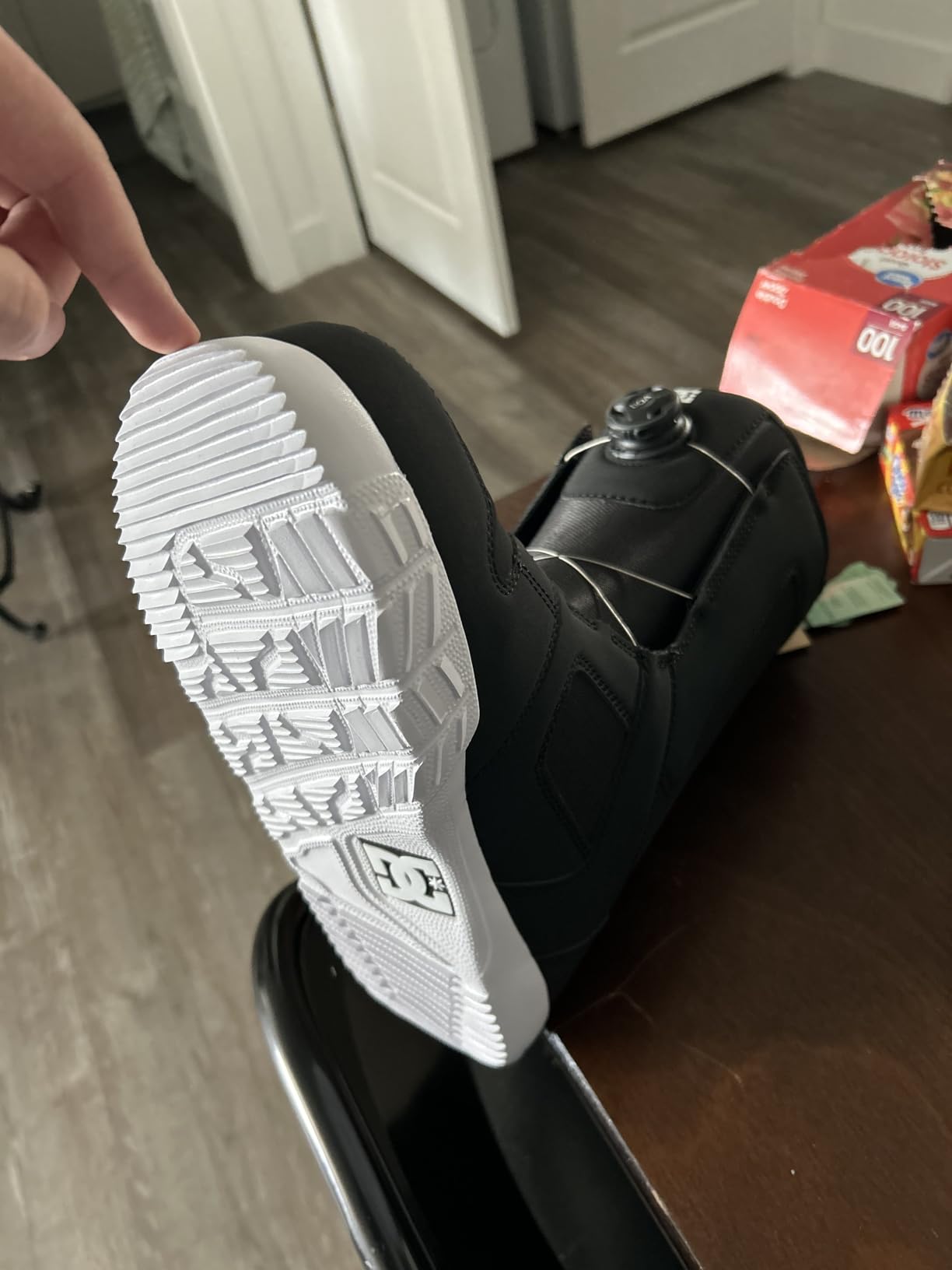
When a 4/10 flex is right and when it is not?
A 4/10 flex is right when you are spending most of your time on groomed green runs and want turning to start and stop with minimal effort. It is not right if you plan to ride firm, icy, or steep terrain early, because a soft shell gives you less support when the edge is loaded up.
The most common progression question on beginner forums is whether to buy soft to learn easily or stiff so the boot lasts. The answer most experienced riders give is that stiffer lasts longer, while the opposite camp pairs soft boots with a medium binding and a flex-5 board to keep things forgiving. Both camps are right for different riders, and the flex number is how you decide which camp you are in.
Where the DC Phase falls short?
The soft flex is the limitation the reviews name most often, specifically limited support for riders who progress quickly. If you already know you will be riding steeper terrain within a season, the Alpine Swiss with its medium flex is the more sensible pairing.
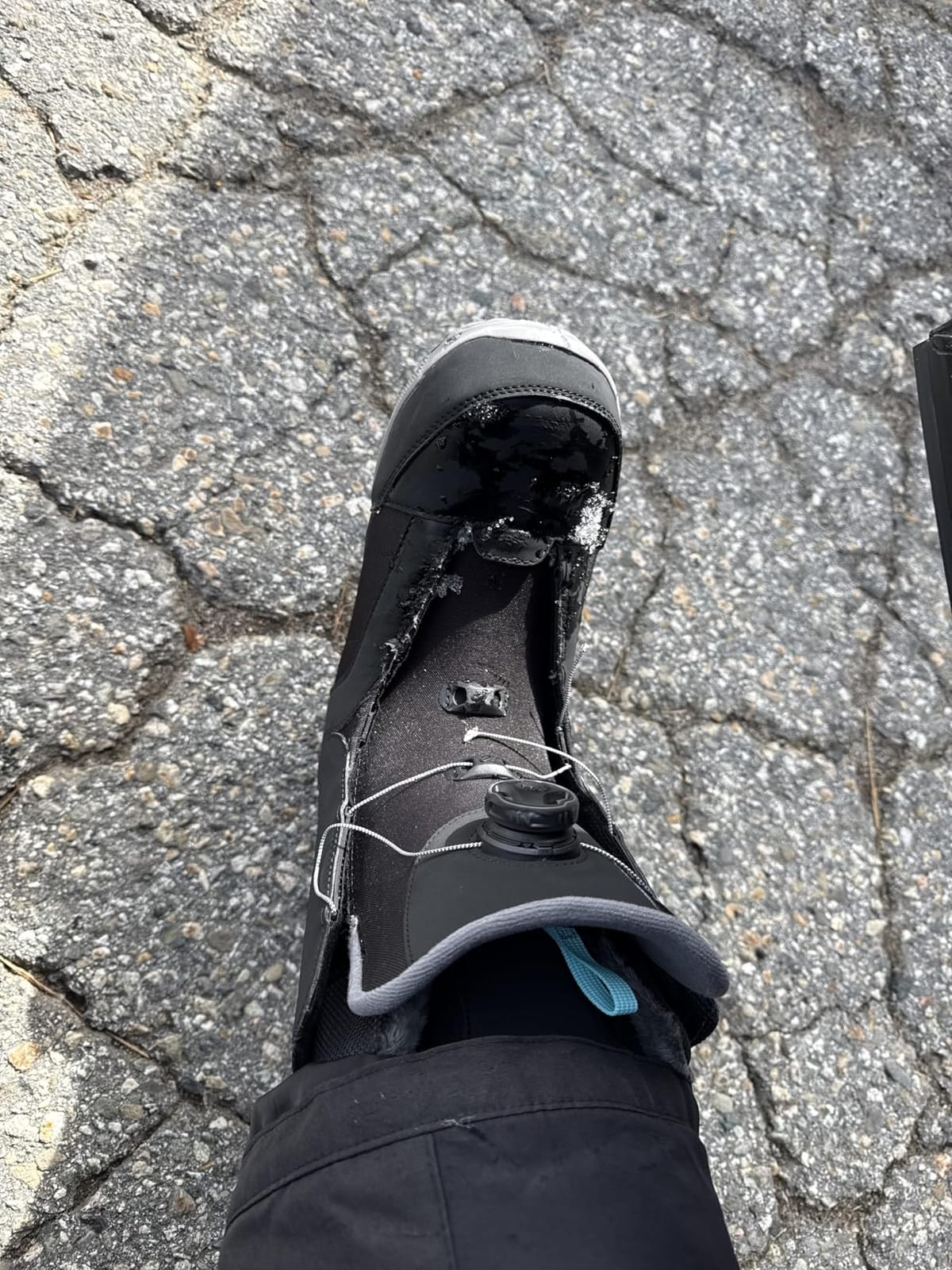
There is one report of the BOA cables breaking after about a year, and a few buyers mention the finish differing from the pair they saw in a shop. Both are isolated reports rather than patterns, but both are reasons to check the boot on arrival rather than strapping in at the first lift.
9. K2 Raider BOA Men’s Snowboard Boots — Best Modern BOA Setup
- Coiler spreads tension evenly across the foot
- 3D foam liner and J-bars give a supportive wrap
- Modern styling and a lightweight 16-ounce build
- Mid-range price for a complete BOA setup
- Thinner review base than the other boots here
- Water resistant rather than fully waterproof
The K2 Raider is the boot to look at if you want the most modern closure and liner combination in this roundup. The closure is an H4 Coiler BOA fit system with TX3 BOA rope lacing, and the coiler is what spreads the tension across the top of the foot instead of pinching along a line.
The liner is an Intuition Comfort Foam 3D liner with internal J-bars, which is a 3D-molded foam construction rather than the flat EVA liner used in the cheaper K2 boots here. It wraps rather than pinches, and the J-bars sit behind the ankle to stop the foot rolling forward on a heel-side turn.
The Flex Zone Upper Cuff handles the flex point, the polyurethane upper keeps weight down, and the whole boot is 16 ounces. For a rider who spends long days on their feet, that weight matters more than any spec sheet number, and 73% of the 52 ratings are five stars with 14% at four.
Read the 4.4 rating alongside the review count. Fifty-two ratings is a thin base compared with 526 on the System APX, so the long-term durability picture here is less settled than the comfort picture. Treat it as a well-specified boot with limited history rather than a proven one.
What a coiler actually changes on the hill?
A coiler is a mechanism inside the dial that redirects the cable so the tightening force spreads around the shell rather than pulling from a single direction. In practice this means fewer pressure points on the top of the foot, which is the exact area where beginners report soreness after a few runs.
The TX3 rope lacing is a different material from a standard steel cable, and it flexes with the shell rather than resisting it. Combined with the 3D liner, this is a configuration that should stay comfortable over a full day, which is the practical test that matters most to a beginner.
Where the Raider falls short?
Water resistant is not waterproof. That distinction decides whether the boot keeps your feet dry during a full day of wet spring snow, and riders who ski rather than snowboard often find the difference immediately. Both K2 BOA boots in this roundup share it, and the Alpine Swiss and Siren Lux are the waterproof alternatives here.
The warranty runs one year against manufacturer defect. With 52 reviews there is simply not enough long-term feedback yet to say how the shell, the coiler, and the 3D liner hold up across several seasons, and that is the honest caveat on an otherwise well-specified boot.
10. K2 Belief BOA Women’s Snowboard Boots — Best Lightweight BOA for Women
- No one-star ratings in the entire review set
- Comfort foam liner and J-bars give a supportive fit
- BOA dial is quick and easy to adjust
- Lightweight 16-ounce build at a mid-range price
- Only 18 reviews
- the smallest sample in the roundup
- Water resistant rather than fully waterproof
The K2 Belief is the women’s BOA option in this roundup, and the reason to consider it is the consistency of its ratings. Every single rating is three stars or above, with 65% at five stars and 24% at four, and there are no one-star ratings at all. That is a cleaner distribution than any other boot here.
On a sample of 18 reviews, that is worth something and also not much. The rating is 4.5 out of 5, which would place it near the top of this list, but the feedback pool is too small to treat that number as proven. We would call it a promising pick for a woman who wants a dial closure and a lightweight shell.
The build mirrors the K2 Market: an H4 BOA Focus Fit System, a Comfort Foam EVA liner with internal J-bars, a Flex Zone Upper Cuff, and fast-in liner lacing. At 16 ounces it is among the lightest boots in the group, and the upper is a women’s last rather than a men’s shell relabelled.
How the Belief compares to the Siren Lux?
Both are women’s lasts in this roundup, and they solve the same problem in different ways. The Lux uses a quicklace inner plus traditional outer lacing, which gives more precise zonal control if you want to learn that skill. The Belief uses a single BOA dial, which is faster to adjust and easier to operate with gloves on.
The Lux has 150 reviews behind it and a 4.3 rating, so its fit information is much better documented. The Belief has 18 reviews and a 4.5. We would point a first-season rider who values certainty toward the Siren Lux, and toward the K2 Belief if a dial closure matters more to her than volume of feedback.
Where the Belief falls short?
Eighteen reviews is simply too small a sample to judge long-term fit, and that is the honest limitation here. Sizing runs and last shapes only become clear after a season of feedback from real riders, so expect to be part of that learning curve rather than reading it.
It is water resistant rather than fully waterproof, and the warranty is one year against manufacturer defect. If you ride in wet spring conditions, choose a waterproof option such as the Siren Lux or the Alpine Swiss instead.
Why Your Feet Hurt in New Snowboard Boots (And How to Fix It)?
Foot pain that shows up after two or three runs is almost never normal break-in. It is a sizing signal, and treating it as a rite of passage is the single most common reason beginners quit or downgrade themselves to cheap rental boots for another season. The difference between snug and painful is not a matter of toughness.
There are four usual causes. The first is a boot that is simply too small, which compresses the toes and the sides of the foot. The second is a liner that has never been heat-molded, so the foam is still pushing back in a shape that does not match your foot. The third is a last that is wrong for your foot, most often a men’s last on a wider foot. The fourth is sock choice.
On socks, the rule is simple and frequently ignored: one pair of thin snowboard socks, no cotton, and no layering. Too few socks means cold feet, which feels similar to pain. Too many or too bulky means compressed toes, which is actual pain. Riders who switch to a single thin technical pair often report the biggest immediate improvement.
The heat-molding protocol is the fix that works for the second cause. Pull the liner out of the shell, or at least open it fully, and warm it according to the manufacturer’s instructions. Put on your thin socks, slide the foot in, lace or dial the boot to a snug-but-not-painful tension, and sit still in the boots for 20 to 60 minutes. Then take the foot out, leave the liner out of the shell overnight to dry, and repeat the next day.
Two or three sessions is usually enough to see a clear difference, and the process is often free with the purchase. Plenty of shops will heat-mold boots for people who did not buy from them, and riders consistently recommend going to a boot fitter rather than trying to guess at home.
If pain remains after a proper molding, the answer is a size up, not more break-in time. If the pain is on the outside of your foot rather than in your toes, the answer is a wider last, not an insole. Insoles add arch support and cushioning but they do nothing about a shell that compresses the side of your foot, which is why we highlight the Alpine Swiss and the DC Phase for wide feet.
For more on how the rest of a first-season setup fits together, our picks for compression boots for athletes cover the recovery side, and it is worth remembering that boots are where recovery quality starts.
When Should a Beginner Actually Buy Boots?
Buy your own boots once you have ridden a few times on rental boots and know your feet hurt in them, or once a full day on the mountain no longer exhausts you. That is usually somewhere in the range of a handful of lessons to a full season, and it is a much better signal than how many times you have been to the mountain.
The reason to wait is sizing. Rental boots are never your size in a meaningful sense, so riding in them tells you about the sport but not about your feet. What a rental season does give you is the answer to the question everybody asks on forums: is this something I want to keep doing?
If the answer is yes and the budget is tight, secondhand and demo boots are legitimate options rather than compromises. Riders report mixed results, with secondhand boards and boots getting a rough reception, and the reason is almost always condition rather than the idea itself. A liner that is torn, a shell with a delaminated seam, or a footbed that has flattened will not mold to a new foot.
Check for three things if you buy used: fresh liner foam with no hard spots or cracks, intact stitching and no separation at the shell, and a footbed that still springs back. A boot fitter can inspect a pair in a few minutes, and that inspection is cheaper than a season of cold feet. Demo boots from a shop are usually better still, because they have been heat-molded for many feet already and will need a fresh molding for yours.
One caution: do not buy boots before you own or have committed to a board and bindings. Boots set the binding size and strap range, so buying them first frequently means buying a second pair once the board arrives.
Beginner Snowboard Boot Buying Guide: Flex, Fit, Lacing and Liners
Flex rating is the number brands print to tell you how easily the shell bends, on a scale from 1 to 10. The practical bands are simple: 1 to 2 is floppy, 3 to 4 is soft and beginner-friendly, 5 to 6 is medium, 7 to 8 is stiff, and 9 to 10 is very stiff for advanced riders. A beginner should be looking at 3 to 6.
One important caveat, which almost every expert guide repeats: flex ratings are not comparable between brands. A 4 from one manufacturer and a 4 from another can behave differently because of shell materials, tongue construction, and the way the flex is measured. Use the number as a within-brand guide, not a cross-brand one.
Soft flex makes turning easier because the shell bends from the toe with less effort, which is exactly the forgiveness a new rider needs while learning to link turns. Stiff flex gives more support, more board feel, and a longer useful life as you progress. The experienced-rider consensus is that buying slightly stiffer than you prefer buys you more seasons, and the beginner consensus is that a forgiving boot gets you through the first month. Both are correct, and the tie-breaker is how quickly you expect to progress.
Fit is the second system, and it matters more than flex. Your toes should lightly touch the toecap when you stand straight, and pull back a few millimeters when you bend your knees into a riding stance. That single test catches most sizing errors. The second test is heel lift: with the boot laced, lift your heel and see how much it moves. Heel lift breaks your connection to the edge, and a boot with too much of it will never feel connected no matter how good the flex is.
On sizing runs, the pattern in this roundup is consistent enough to act on. The Burton Moto BOA, the 5th Element, and the K2 Market all run small, and the standard advice is to size up a full size or more. The Alpine Swiss feedback is mixed, with some buyers going up 1 to 2 sizes and others finding it true to size. Boots from the Siren Lux and the DC Phase are described as true to size by most buyers. Measure your feet in the afternoon, in thin socks, and use the larger foot.
There are three closure systems and each has a clear beginner use case. Traditional laces give the most zonal control and are the only system you can fully re-lace yourself, which is why the System APX and the Burton Moto lace-up earn their places here. Quick-pull systems, like the inner liner on the Siren Lux, are faster without giving up all adjustment. BOA dials are a single cable and one dial, which is the easiest to operate with cold hands and the least precise for fine tension work.
Liners fall into three categories. Non-moldable liners are flat foam and cheap, and they will never match your foot. Thermoformable liners, like the Thermofit and the Imprint 1+, are heat-moldable EVA or similar foam and cover most of the boots in this roundup. Custom-moldable Intuition liners are the premium option, shaped three-dimensionally for a wrap that pinches less. For a beginner, any heat-moldable liner is the minimum worth having.
Finally, match the whole system. A soft-flex boot on a stiff board feels worse than a medium boot on a soft beginner board, and beginners who struggle often have a board that is too firm rather than boots that are wrong. If you are pairing new boots with a rental board, a medium flex is the safer match. We also covered related fit questions in our guide to the best compression therapy boots for recovery, which matter more later in the season than in your first week.
Frequently Asked Questions
What snowboard boots should I get as a beginner?
Aim for a soft-to-medium flex between 3/10 and 6/10 with a heat-mouldable liner, and start by buying the boot, then the bindings, then the board. Our default pick is the System APX, which has the largest review base in this roundup at 526 ratings, a Thermofit heat-mouldable liner, and traditional lacing that lets you adjust each zone separately. If you prefer a dial, the Burton Moto BOA is the most comfortable-feeling option, but it runs small and most buyers size up a full size.
Do I want stiff or soft snowboard boots?
For a first season, soft-to-medium beats stiff. A softer flex bends more easily, so you need less effort to start and finish a turn, which is what makes linked turns feel achievable early. The experienced-rider counter-argument is that stiffer boots last longer and give you more board feel as you progress, so buying slightly stiffer than you prefer buys more seasons. Decide by how quickly you expect to move beyond groomed green runs, not by brand reputation.
Are snowboard boots supposed to fit tight?
They should be snug, not painful. Standing straight, your toes should lightly touch the toecap, and they should pull back a few millimeters when you bend your knees into a riding stance. Pain after two or three runs is a sizing error rather than normal break-in. If the pain is in your toes, size up. If the pain is on the outside of your foot, the last is wrong for you and you need a wide fit rather than a tighter liner.
Why do my feet hurt so bad in snowboarding boots?
There are four usual causes: a boot that is too small, a liner that has never been heat-moulded, a last that does not suit your foot, or the wrong socks. Heat moulding fixes the second cause, and socks fix the fourth, so try those first. One pair of thin technical snowboard socks and no cotton is the rule, since too many socks compress your toes and too few leave your feet cold. If pain persists, size up or change to a wider last rather than waiting for a break-in that will not come.
Is it worth buying your own snowboard boots?
Yes, once you know rental boots hurt your feet or a day on the mountain leaves you exhausted. Boots are where your body connects to the board, and a correct fit produces faster learning, warmer feet, and a season you actually want to finish. Buy boots after a handful of lessons and before your own board and bindings, since boot size sets binding compatibility. If the budget is tight, a demo or well-inspected secondhand pair is a legitimate first-season option.
Final Verdict: Which Beginner Snowboard Boots Should You Buy?
Buy the System APX if you want one default answer. It has the largest review base of any boot we compared, a heat-moldable liner that removes the pressure points that cause most beginner foot pain, traditional lacing for real zonal control, and the longest warranty in the group. It is the best snowboard boots for beginners pick we would hand to a friend without a follow-up conversation.
Buy the Burton Moto BOA if cold hands and quick adjustment matter more to you than lacing precision, and size up a full size first. Buy the Alpine Swiss if you have wide feet or want a medium flex that will not need replacing next season. Buy the Siren Lux if you are sizing a women’s last, and the DC Phase if a published 4/10 flex and a roomy shell describe what you want.
One last prompt, the same one that decides most of these purchases: tell us whether the boot is for a man, a woman, or a youth rider, what your budget range is, and whether you want traditional laces or a BOA dial, and the choice narrows to a single pair. Whatever you pick, heat-mold the liner and wear one pair of thin socks.