
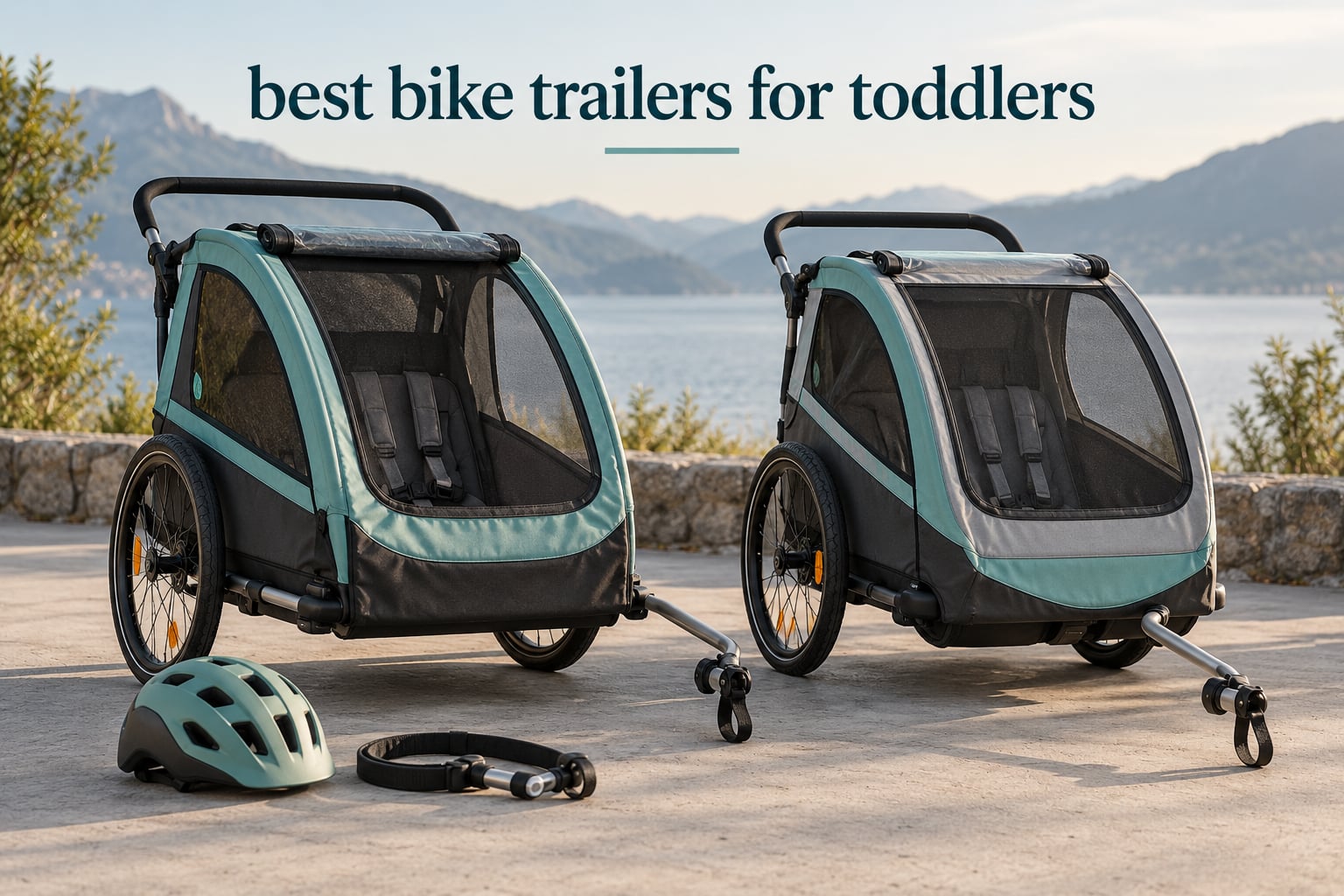
A child can start riding in a bike trailer at around 12 months old, once they have solid head and neck control, can sit unassisted, and a properly fitted helmet stays on without shifting. Before that, a trailer will hold your child but their head will bob with every bump.
That is the short answer to the question parents search for most. The longer answer is that the best bike trailers for toddlers all do the same core job, and the differences come down to wheel size, how the cabin fits a helmet, whether the frame folds flat enough for your car, and whether you want stroller mode later. We compared 12 of them on exactly those points.
Everything below is based on manufacturer specifications and on the patterns that show up again and again in the review data. We also leaned on parent discussions in cycling and parenting forums, because the tipping fear, the awkward lift into a trunk, and the harness fight with a squirming two-year-old are the parts no spec sheet covers. Where we give a recommendation, we tell you who it suits and where it falls short.
Top 3 Best Bike Trailers for Toddlers in 2026
The three below cover the most common family setups: one toddler who needs a trailer that also works as a stroller, a family watching what they spend, and riders who hit gravel and farm roads as often as pavement.

Allen Sports Deluxe Trailer and Stroller
- Converts to a two-child stroller
- 100 lb total payload
- Folds to 6.7 inches thick
InStep Sync Single Seat Trailer
- Single seat rated to 40 lb
- Five-point harness and safety flag
- 16-inch air-filled tires
Allen Sports Deluxe Steel Child Trailer
- Steel frame
- 100 lb max payload
- 16-inch quick-release steel wheels
If you buy one trailer for one toddler and you also want to walk them to the park without unclipping anything, the Allen Sports Deluxe is the one I would pick. It carries two, but one child can sit in the middle, and the tool-free conversion takes seconds.
Best Bike Trailers for Toddlers at a Glance
All twelve trailers below fit the toddler window, and every one has a five-point harness. The numbers that actually change the decision are payload, wheel diameter, and how small the thing gets when you fold it.
| Product | Specifications | Action |
|---|---|---|
| Allen Sports Deluxe Bike Trailer and Stroller |
|
Check Latest Price |
 Schwinn Trailblazer Plus Single Seat Schwinn Trailblazer Plus Single Seat |
|
Check Latest Price |
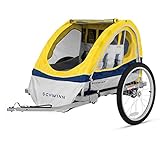 Schwinn Echo Two Child Schwinn Echo Two Child |
|
Check Latest Price |
| InStep Sync Single Seat |
|
Check Latest Price |
| Allen Sports Deluxe Steel Child Trailer |
|
Check Latest Price |
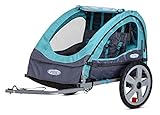 InStep Take 2 Kids InStep Take 2 Kids |
|
Check Latest Price |
 Allen Sports Hi-Viz ET2 Allen Sports Hi-Viz ET2 |
|
Check Latest Price |
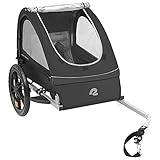 Retrospec Rover Retrospec Rover |
|
Check Latest Price |
 Aosom Elite 360 Swivel Aosom Elite 360 Swivel |
|
Check Latest Price |
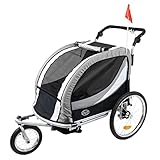 ClevrPlus Deluxe 3-in-1 ClevrPlus Deluxe 3-in-1 |
|
Check Latest Price |
 Sepnine 2-in-1 Trailer and Pushcart Sepnine 2-in-1 Trailer and Pushcart |
|
Check Latest Price |
 Thule Coaster XT 2-Seat Thule Coaster XT 2-Seat |
|
Check Latest Price |
Two things to notice. First, most of these are two-child trailers even when you have one child, because a wider wheelbase is calmer in a turn. Second, the lightest trailers are not the smallest when folded, and the smallest folded trailers are not always the strongest.
1. Allen Sports Deluxe Bike Trailer and Stroller: the One That Does Both Jobs
Allen Sports Deluxe Steel 2-Child Bicycle Trailer and Stroller, Model AS2-O, Orange
- Tool-free conversion between bike trailer and two-child stroller
- Limited lifetime warranty
- 100 lb total payload
- Folds to about 6.7 inches thin
- Secure padded five-point harness with footguard
- Pin-lock springs take effort to release
- Plastic side panels get warm
- No recline so the child must sit upright
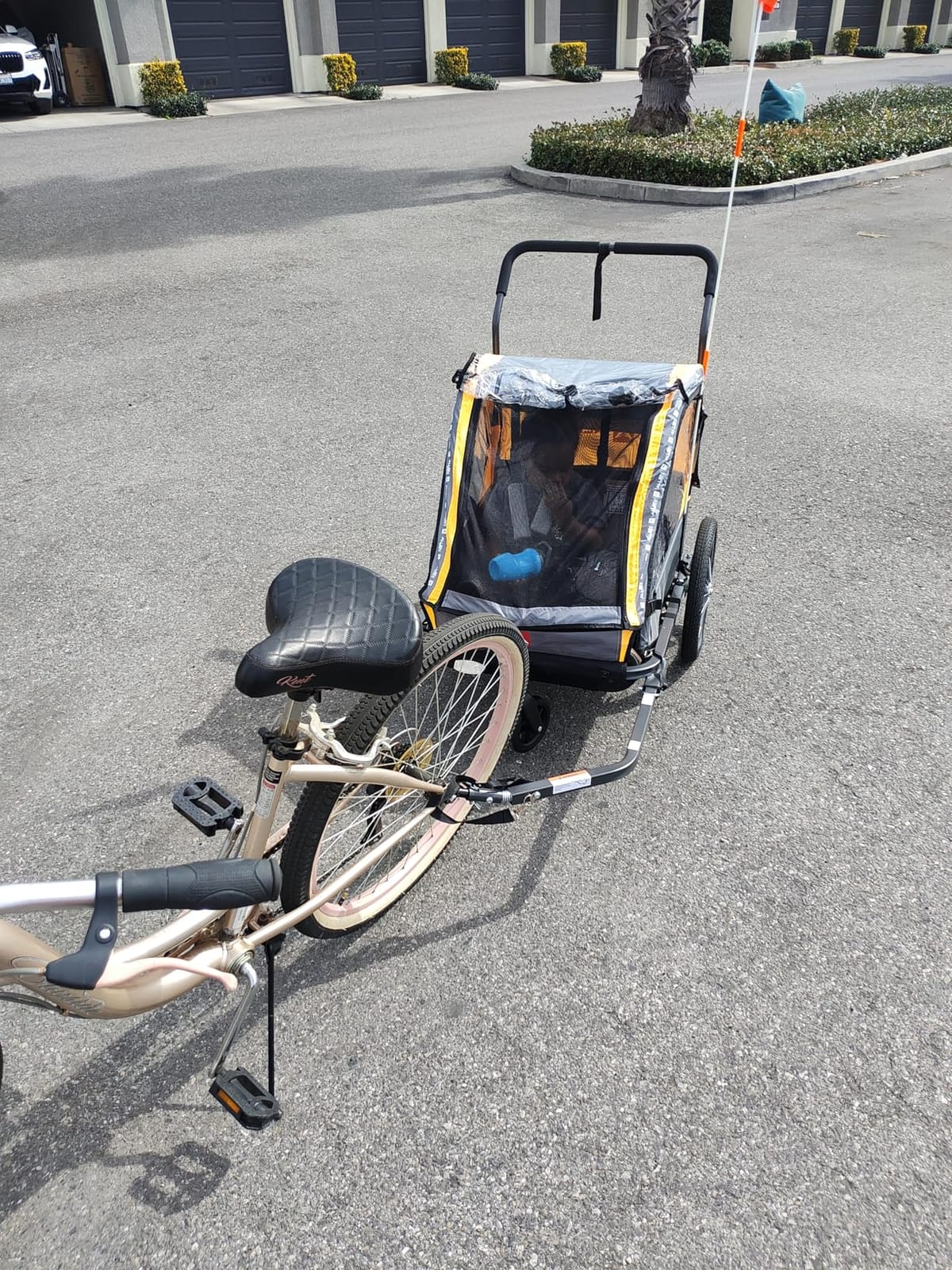
This is the trailer I keep coming back to for a family with exactly one toddler. You clip it to the bike, ride to the park, unclip it, and turn the same cabin into a two-child stroller without buying a second piece of equipment. The conversion is tool-free, which matters more than it sounds when you are doing it in a parking lot with a toddler under your arm.
The payload is 100 lb across two seats, and the padded five-point harness sits alongside a footguard tube that keeps small feet inside the cabin. For a two-year-old that is more room than they need, which is the point. Later, when a sibling arrives, the same trailer carries both.
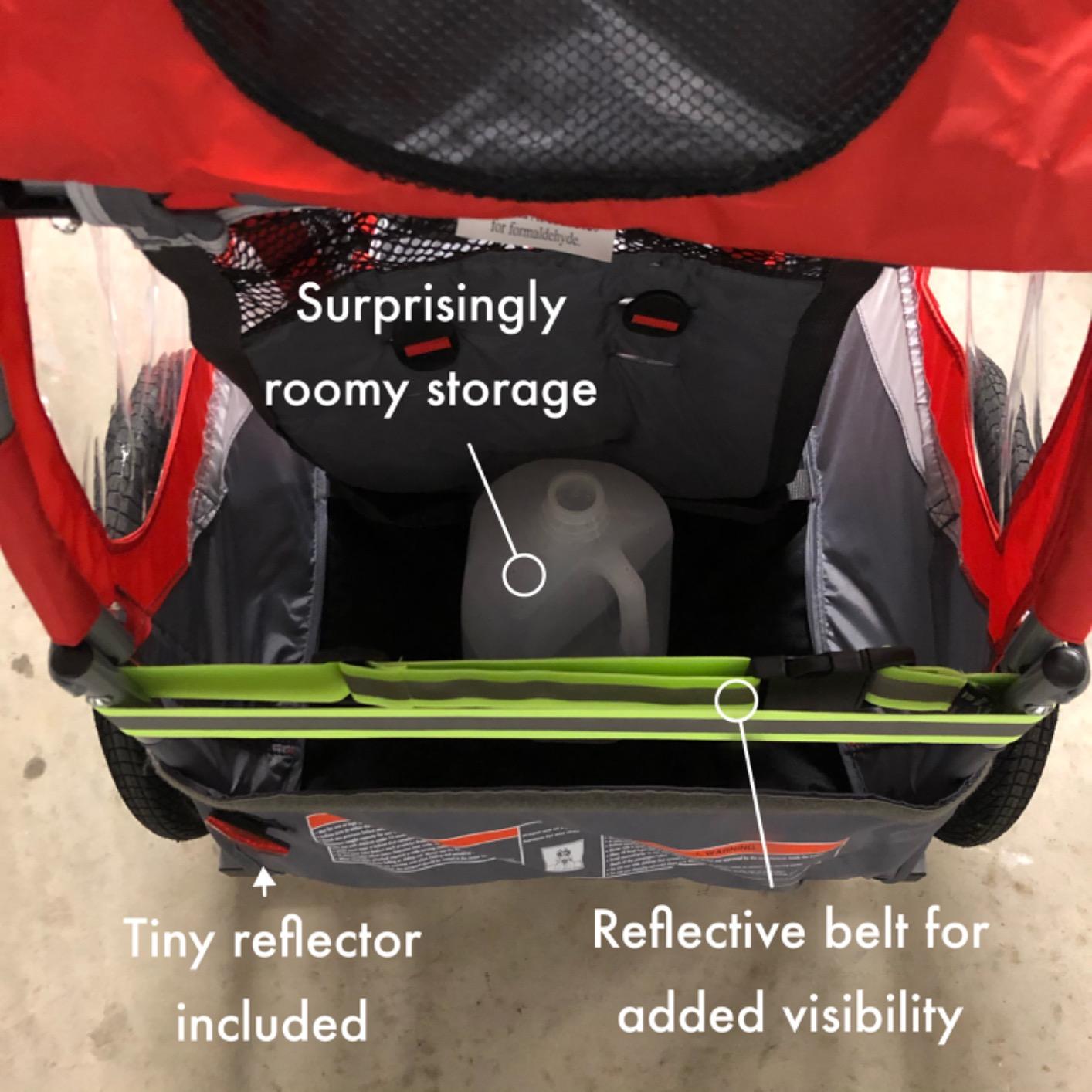
Storage is the quiet strength here. The area behind the seat is genuinely useful, and owners regularly report loading it with diapers, wipes, jackets, and snacks for long rides to a trailhead. The frame folds flat to roughly 6.7 inches thick, so it slides into a trunk or stands against a closet wall rather than taking over a hallway.
Ride quality is stable and smooth at speed for a cabin this size, and the trailer tracks straight rather than swinging behind you. That straight tracking is the answer to the tipping fear that dominates parent forums, because the low cabin sits close to the ground and the wide stance resists lean in a turn.
What to check before you buy it
The release pins on the wheel and frame attachment are stiff, so budget a few extra seconds each time you convert. If you are converting several times a week, that friction is real and worth mentioning out loud.
The side panels are plastic rather than mesh, so the cabin warms up on a hot afternoon and ventilation depends on the canopy openings. Keep the canopy rolled back in summer and the problem mostly disappears.
There is no recline. A toddler who falls asleep will sleep sitting upright, which is fine at two and less pleasant at four. If you expect long naps on the ride, look at a model with a reclining or hammock seat.
Who should skip it
Skip this one if your child is already tall enough that an upright seat pushes their helmeted head forward, because the cabin depth is fixed. It is also the wrong pick if you plan to use the trailer as a heavy cargo hauler, since the soft floor is built for diapers rather than firewood.
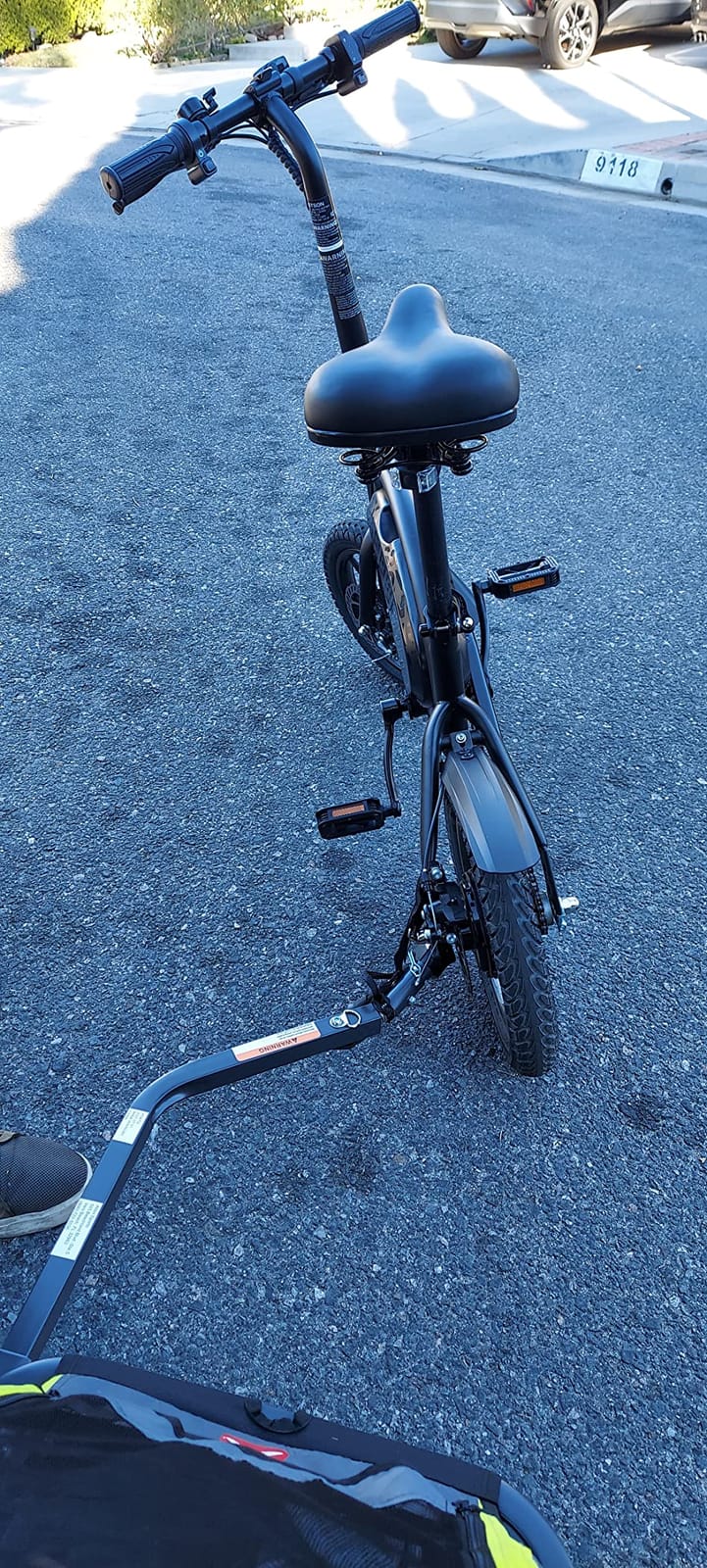
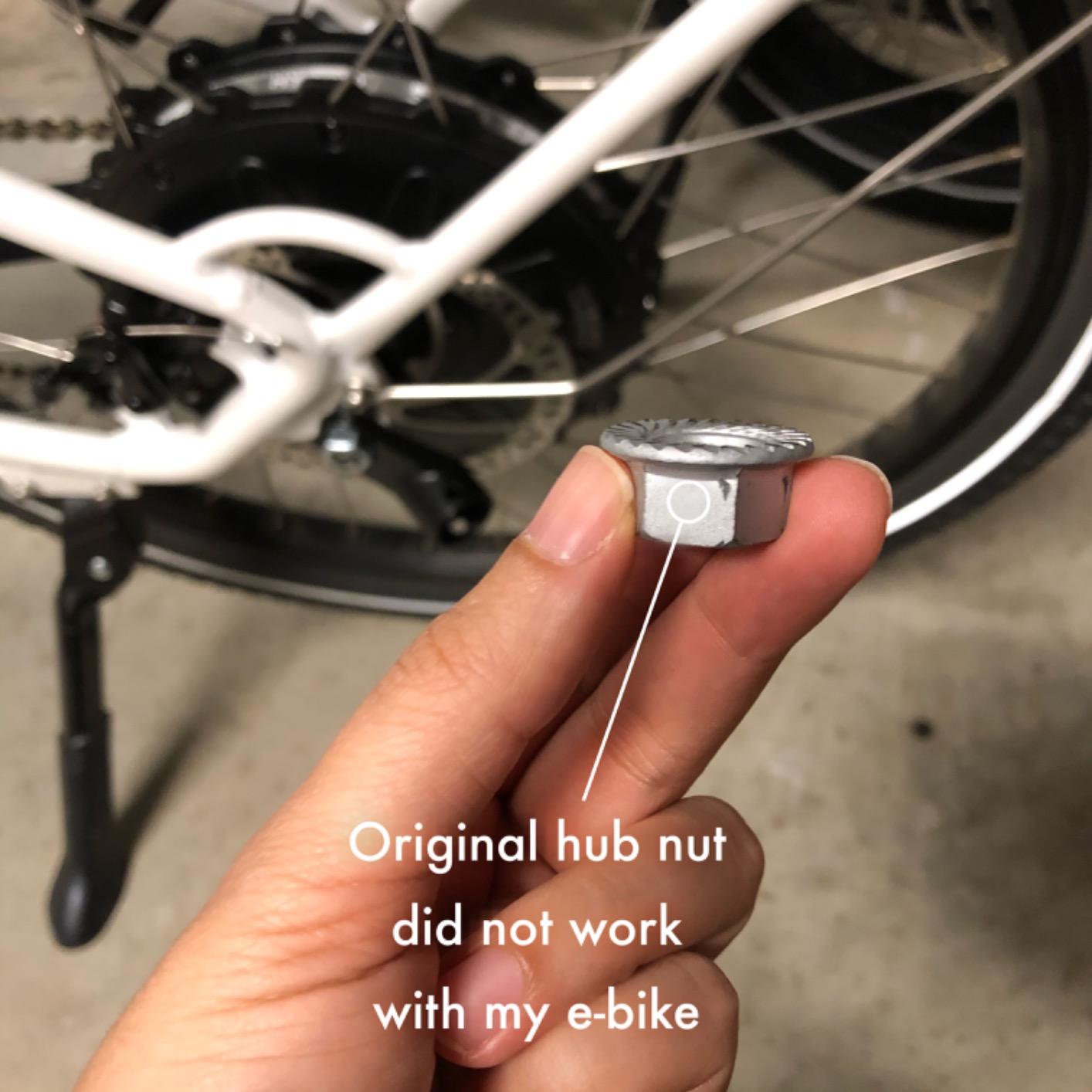
If you ride an e-bike, check your axle before you commit. This trailer uses a standard coupler, and hub-motor e-bikes with a thick axle can need an adapter that is not included.
2. Schwinn Trailblazer Plus: Best Single Seat Fit for a Helmeted Toddler
- Highest average rating in the group at 4.8
- Aluminum frame
- Quick-release wheels and folding frame
- Two-in-one canopy with bug screen and weather shield
- One year limited warranty
- Not compatible with thru-axle bikes
- Manufacturer advises staying at or under 10 mph
- Seat does not recline
If your toddler is helmet-dependent and you are not converting to a stroller, this is the single-seat trailer to look at. It carries a 4.8 average across 887 reviews, the highest rating in this roundup, and the build is a straightforward aluminum frame with quick-release wheels.
The cabin is long front to back at a little over 53 inches, which gives a helmeted head more room than the shallower single-seat designs here. That extra depth is what stops a helmeted head from tipping forward on bumps, a fit problem owners raise repeatedly.
Behind the seat there is 12 lb of storage, and the two-in-one canopy doubles as a bug screen and a weather shield, so you are not buying a separate rain cover on day one. Owners commonly use it for toddler plus diaper bag plus picnic gear without thinking about it.
Folding is handled by a collapsing frame and quick-release wheels, and the universal coupler attaches to most bicycles without tools. Setup is quick enough that a spontaneous ride to the far end of the block is realistic.
What to check before you buy it
Check your rear axle first. This trailer will not work on a thru-axle bike, nut-and-bolt or otherwise, and that rules it out for a lot of modern bikes and almost every e-bike. It is a quick-release-only coupler.
Read the speed guidance. Schwinn advises against exceeding 10 mph with this trailer, and on a fast greenway you may need to pick a pace deliberately rather than follow the rider in front of you.
The floor of the rear storage area is fabric and unsupported, so heavy or sharp items sag it. Keep it to soft gear and a diaper bag.
Who should skip it
Skip it if you plan to add a second child. The seat does not recline and there is one seating position only, so a family of three is looking at a different trailer entirely.
It also does not convert to a stroller. If the walk-to-the-car portion of your day is a daily reality rather than an occasional thing, the conversion models are worth the extra spend.
3. Schwinn Echo: The Smoothest Ride on 20-Inch Wheels
Schwinn Echo Child Bike Trailer, Max of 2 Children with Total Weight of 80 lbs., Canopy, 20-Inch Air-Filled Tires, Yellow/Grey
- 20-inch alloy spoked wheels roll over rough pavement
- Assembles in under three minutes
- Converts between one and two riders by flipping straps
- Collapsible frame with removable wheels
- Limited lifetime warranty
- No suspension so paved surfaces suit it best
- Fabric is not breathable and the cabin can get hot
- Shallow depth tips a helmeted head forward
Wheel size is what decides how a trailer feels over cracked pavement, and the Echo is the only trailer here on 20-inch alloy spoked wheels with air-filled tires. Most of the others run 16-inch wheels on molded rims. Bigger wheels roll over broken tarmac instead of absorbing every impact, and the child feels the difference on a street with a bad patch.
It seats two at up to 40 lb each, and you can run it with a single child by flipping the harness straps into the center position. That flexibility is useful during the stage when one child is outgrowing the trailer and the other has not arrived yet.
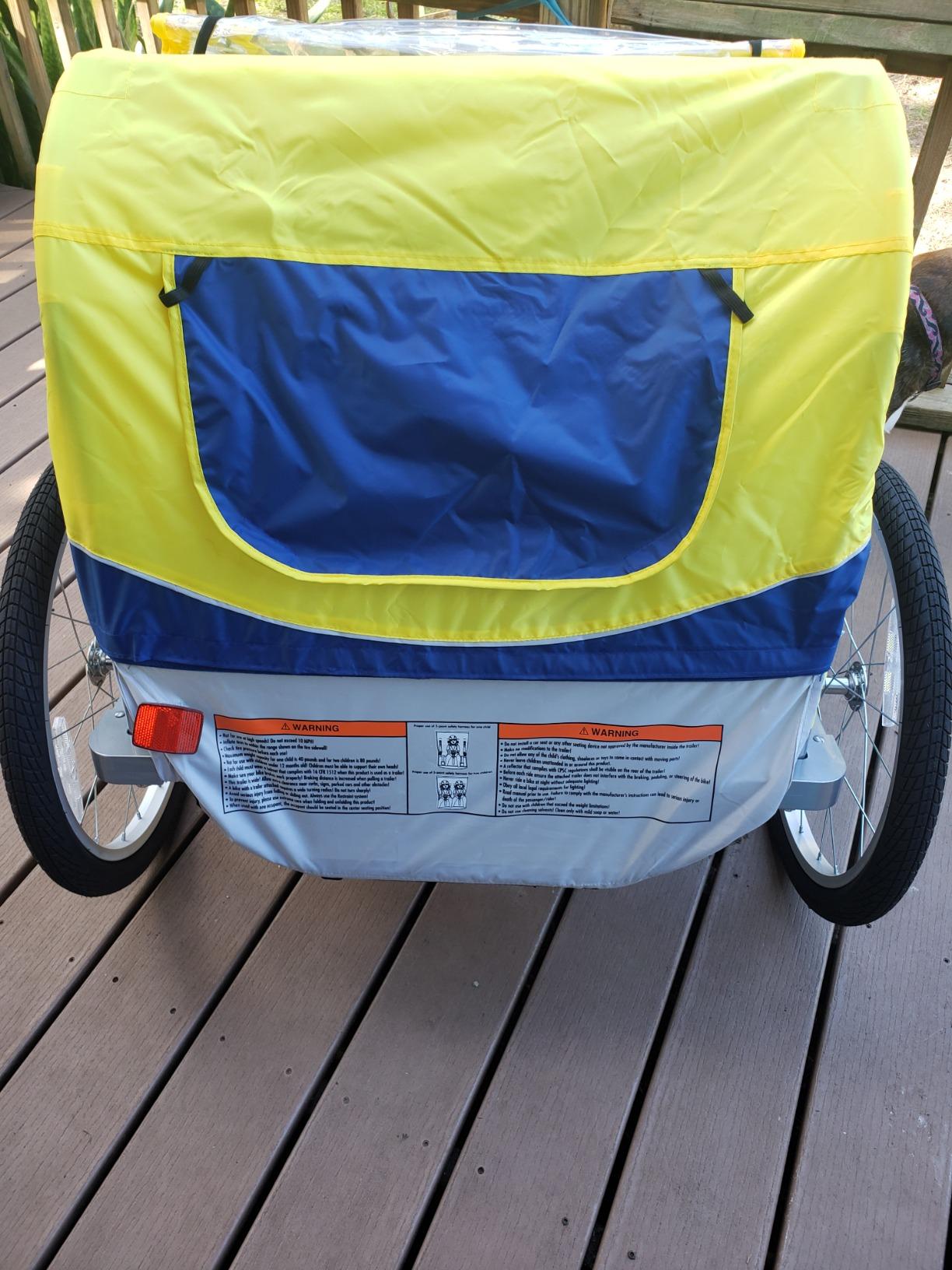
Assembly takes under three minutes because the wheels pop straight in, and the frame collapses with the wheels removed for storage. Behind the seat there is 12 lb of space, plus a rear ventilation window and a two-in-one canopy that works as a bug screen or a weather shield.
The universal coupler and a safety flag come in the box, and the yellow shell is easy to spot in a parking lot or at the back of a line of bikes.
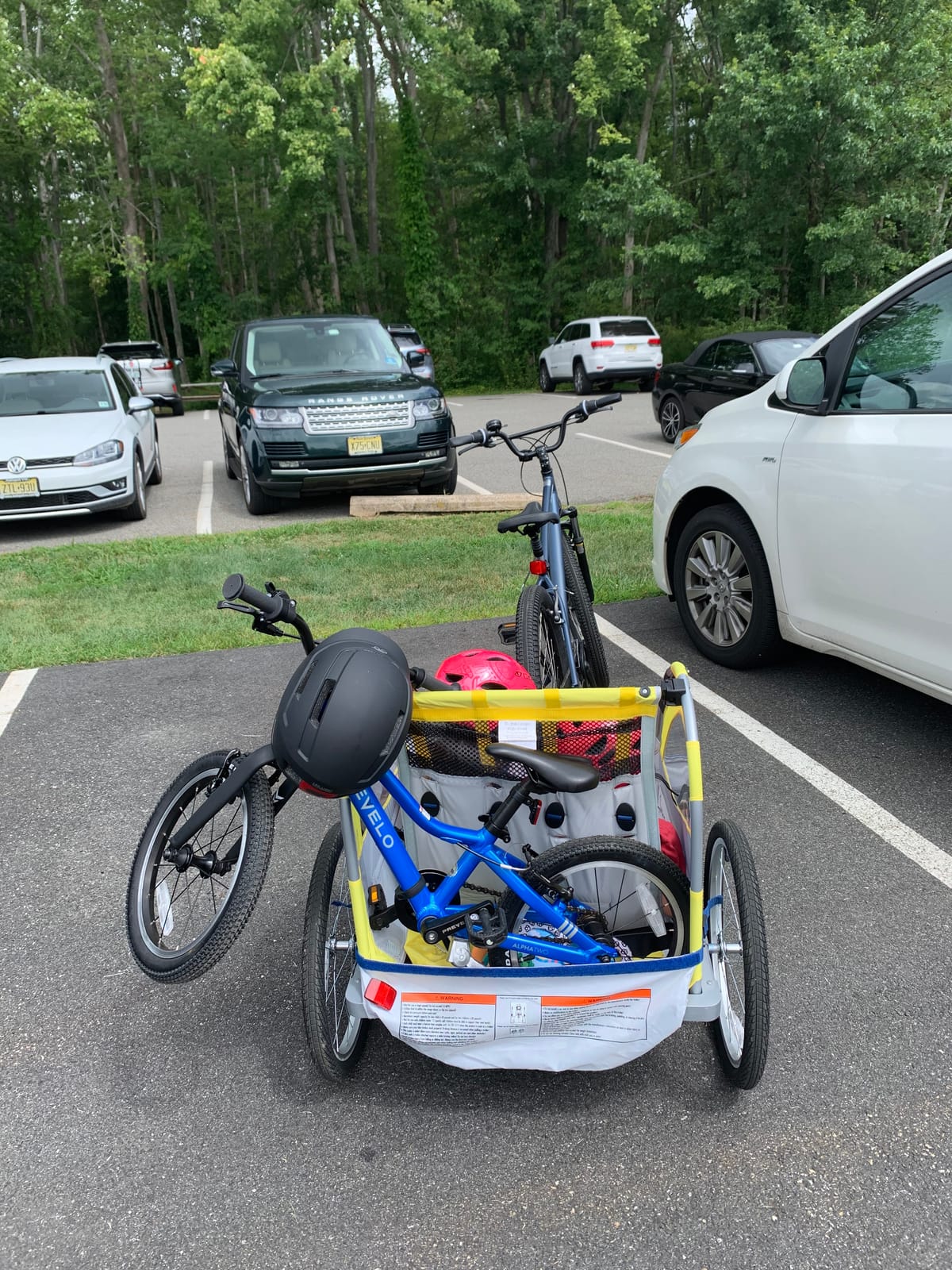
What to check before you buy it
There is no suspension on this model. On a greenway or a smooth neighborhood street that is a non-issue, but on gravel, grass, or a rutted farm track you will feel every stone through the frame.
The fabric is not breathable, so the cabin heats up on warm days. Roll the canopy back and use the rear vent rather than running with everything sealed.
Check the internal depth against your child’s height. Owners report that a helmeted child’s head tips forward, and a tall toddler will outgrow the cabin sooner than the weight rating suggests.
Who should skip it
Skip it if you ride rough gravel regularly or want a trailer that converts to a stroller. The Echo is a bike trailer and nothing else, and its strength is ride quality rather than versatility.
It is also worth a second look if you have two children who are both over about three years old. The cabin is snug for taller riders, even though the 40 lb per-seat rating suggests otherwise.
4. InStep Sync Single Seat: The One With the Long Track Record
- 2996 reviews give it the longest track record in the group
- Limited lifetime warranty
- Steel frame handles mixed surfaces
- Five-point harness plus safety flag
- Folds in about five minutes
- No suspension so bumps reach the passenger
- High seat back pushes a helmeted head forward
- Clear vinyl side windows do not open for airflow
Nearly 3000 reviews makes this the most battle-tested trailer here, and the pattern in them is consistency. Long-term owners report using the same Sync across multiple children, plus pets and grocery hauls, which is the durability track record a budget buyer is really shopping for.
The frame is alloy steel rather than aluminum, and the 16-inch pneumatic tires sit on molded rims. A 40 lb single seat plus a rear storage compartment is a straightforward layout with nothing clever about it, and that simplicity is part of why it has lasted.
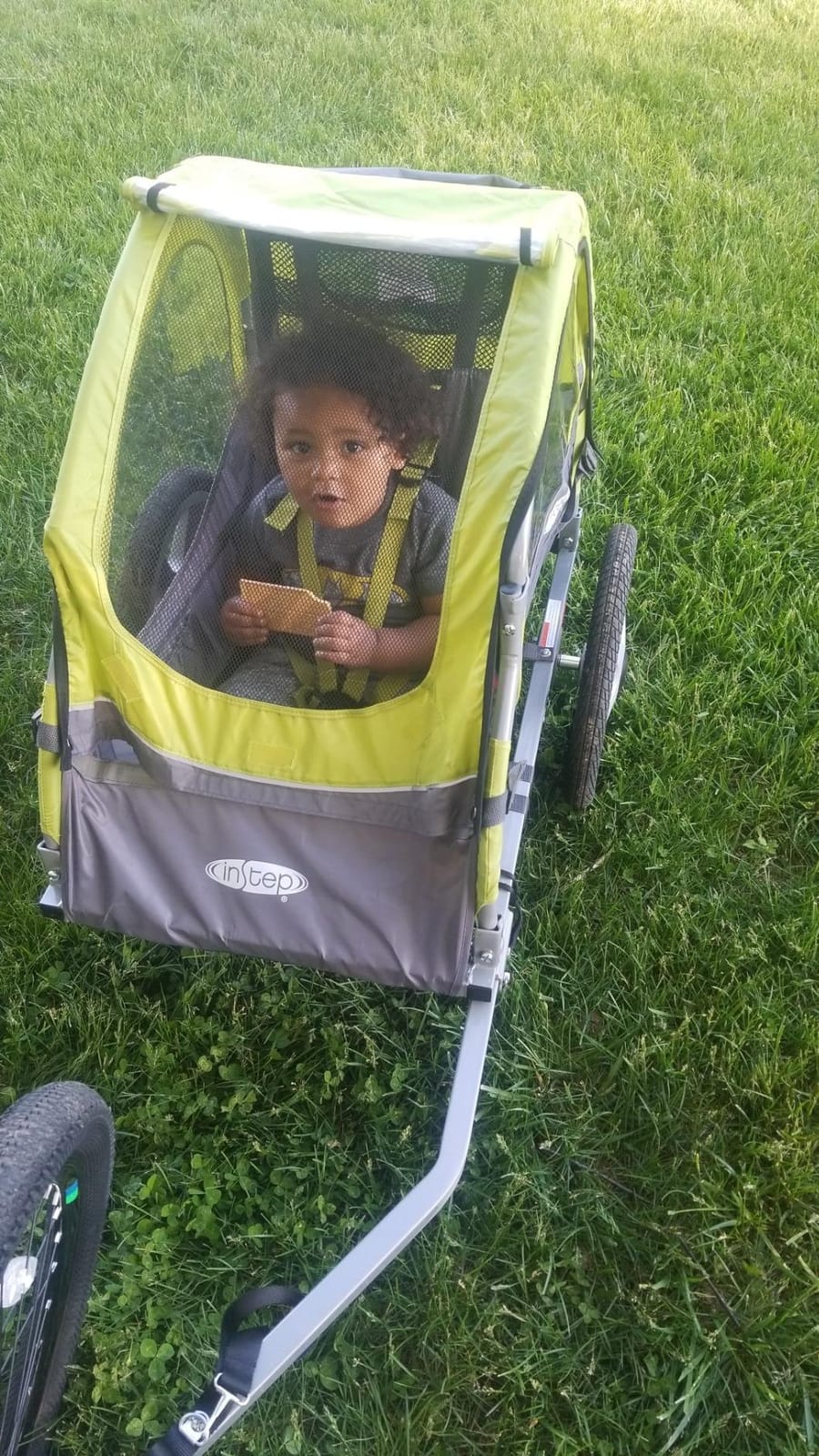
The narrow profile is a genuine advantage. It fits through doorways and down narrow bike lanes where a wide double trailer makes you flinch, which is a real consideration on shared paths.
Folding takes about five minutes and the result stores compactly, and the universal coupler means it attaches to most bicycles including bikes with internal gear hubs.
What to check before you buy it
There is no suspension. Small impacts are felt directly by the child, and on anything rougher than smooth pavement you will be riding slowly.
The side windows are clear vinyl, not mesh, and they do not open. In summer the cabin gets warm and the child has no cross-breeze, which is a common source of complaints.
The seat back is high, which pushes a helmeted child’s head forward. Measure before you commit, especially if your child is on the taller side for their age.
Who should skip it
Skip it if you want the premium finish or the ability to convert to a stroller later. The Sync is a bike trailer only, and the fabric and trim are functional rather than refined.
It is also the wrong shape for a family with two children. The single seat is narrow, and the pair of them in one cabin is a different purchase with a different decision to make.
5. Allen Sports Deluxe Steel Child Trailer: Built for Bad Surfaces
- Steel frame and steel-spoked wheels hold up off-road
- Sharp turning radius with no rear tire skids
- Assembles in about five minutes
- Rear trunk fits lunch boxes and spare helmets
- Folding design for transport
- Listed weight of 57.3 lb makes it the hardest to lift into a car
- Seat offers limited support so smaller children can slide
- Flag pole can tear through the fabric
If your riding takes you off the pavement, this is the one to look at. The frame is steel and the wheels are 16-inch steel with quick-release hubs, which is a heavier, more durable combination than the molded plastic rims used by most of the trailers in this roundup.
Buyers consistently compare it favorably to premium trailers and point to the sharp turning radius as the standout. A trailer that turns into a corner rather than pushing wide is what keeps a nervous rider relaxed, and the wide stance also resists the tipping sensation that worries new parents.
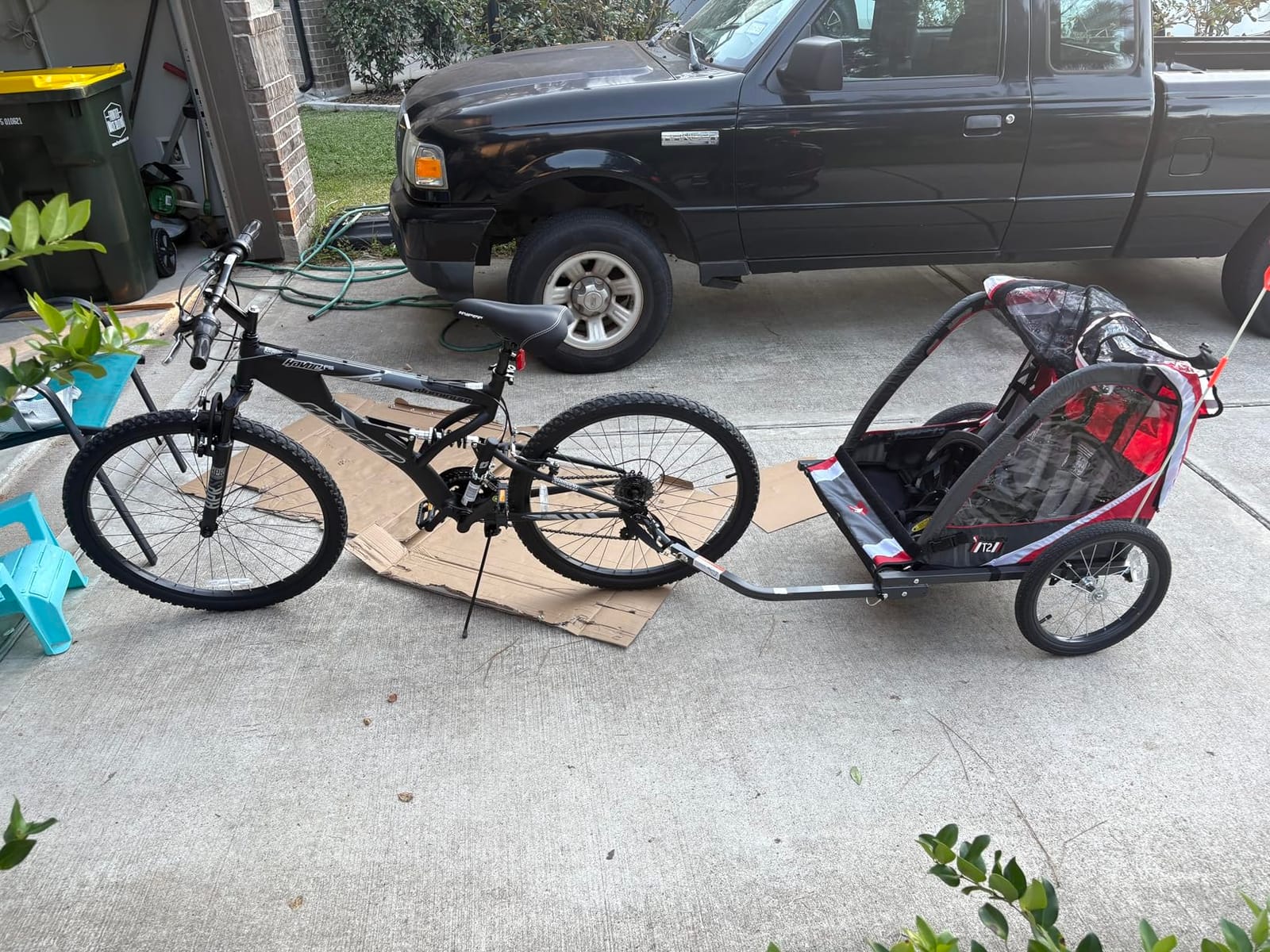
Large front and side windows keep the cabin bright, a footguard tube protects the child’s feet, and a five-point harness holds them in place. The rear trunk is the feature owners mention most after the frame, because it swallows lunch boxes and an extra helmet.
Assembly is about five minutes with quick-release pins, and the folding design lets you take it to a trailhead that is not reachable by car.
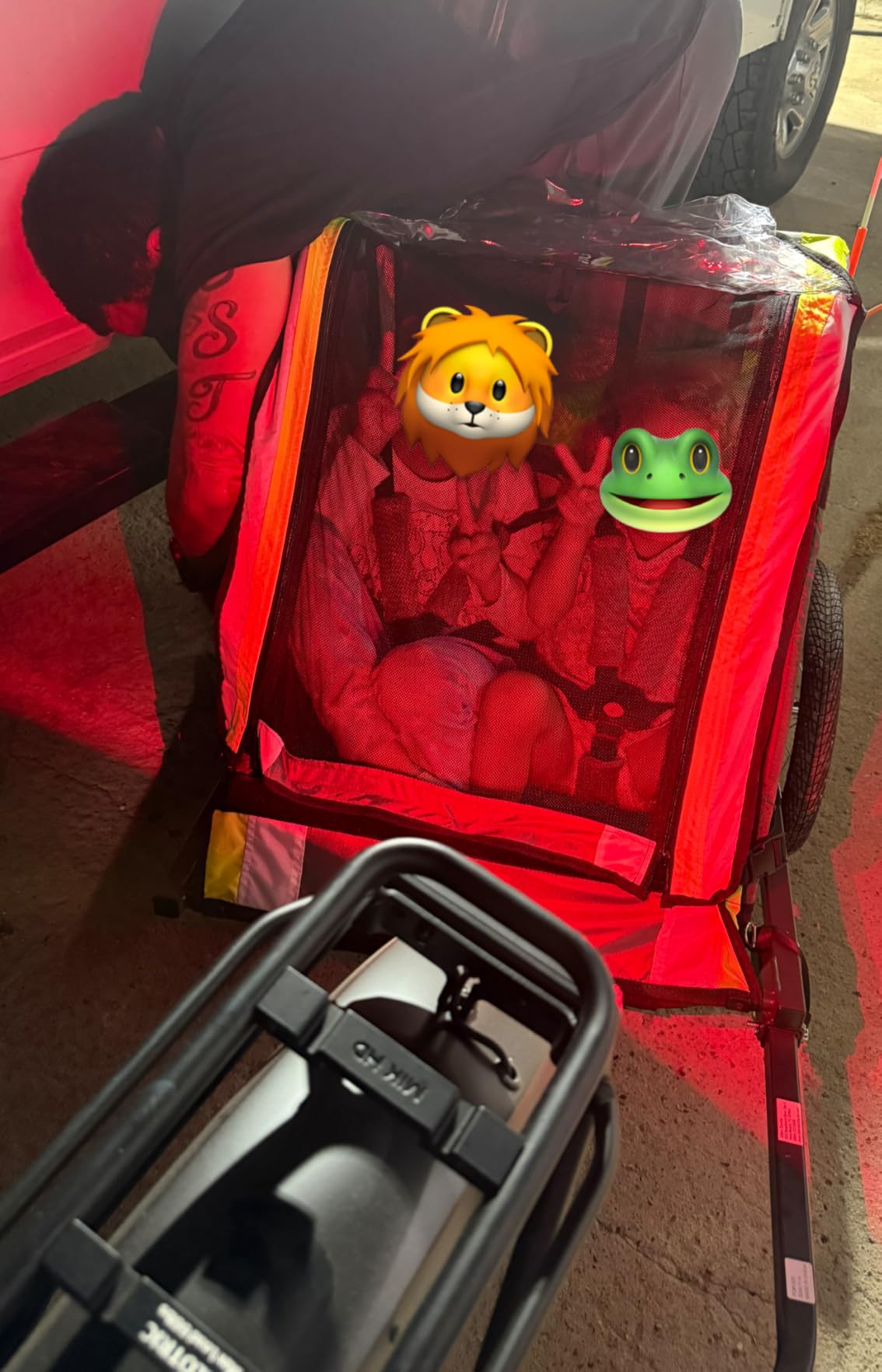
What to check before you buy it
The listed weight of 57.3 lb makes this the heaviest unit in the group by a wide margin, and that is a car-loading problem rather than a riding problem. If you are loading it solo while holding a toddler, plan for two trips or get help.
The tires often arrive under-inflated and need pumping before the first ride. Budget ten minutes for that and check pressure every few weeks after.
The seat support is shallow, so a smaller child can slide down over a long ride. A rolled towel behind their back fixes it, and a padded insert works too.
Who should skip it
Skip it if car transport is a regular part of your routine and you are the only adult lifting. The weight is the single biggest reason to choose a lighter trailer, and nothing else about it is a problem.
It is also not a stroller. If you want to walk the child to the shops without unhitching, this is the wrong shape of purchase.
6. InStep Take 2 Kids: The Best Call When You Have Two
- Real 80 lb combined capacity
- Center harness option lets one child ride in the middle
- Attaches in about 15 seconds once the coupler is installed
- Large rear cargo area
- Minimal maintenance over years of use
- 16-inch plastic rims make it heavy to tow on rough ground
- Tight fit for two larger toddlers
- Fabric and canopy rods wear with rough handling
The Take 2 is the trailer to buy when a second child arrives before the first has outgrown the cabin. It seats two with a combined 80 lb rating, and the harness can be configured so a single child sits in the center instead of off to one side.
That center position matters more than the numbers suggest. Parents repeatedly describe the off-center seating in a double trailer as cramped and unbalanced, and the center buckle removes that problem during the years when you are hauling one child through a double cabin.
Once the coupler is installed on the bike, attaching the trailer takes about fifteen seconds, which makes spontaneous departures realistic. Owners report multi-year durability across children, dogs, and groceries, with very little maintenance beyond tire pressure.
The rear cargo area sits behind the seats and the two-in-one canopy handles both bugs and weather, with five-point harnesses and a safety flag in the box.
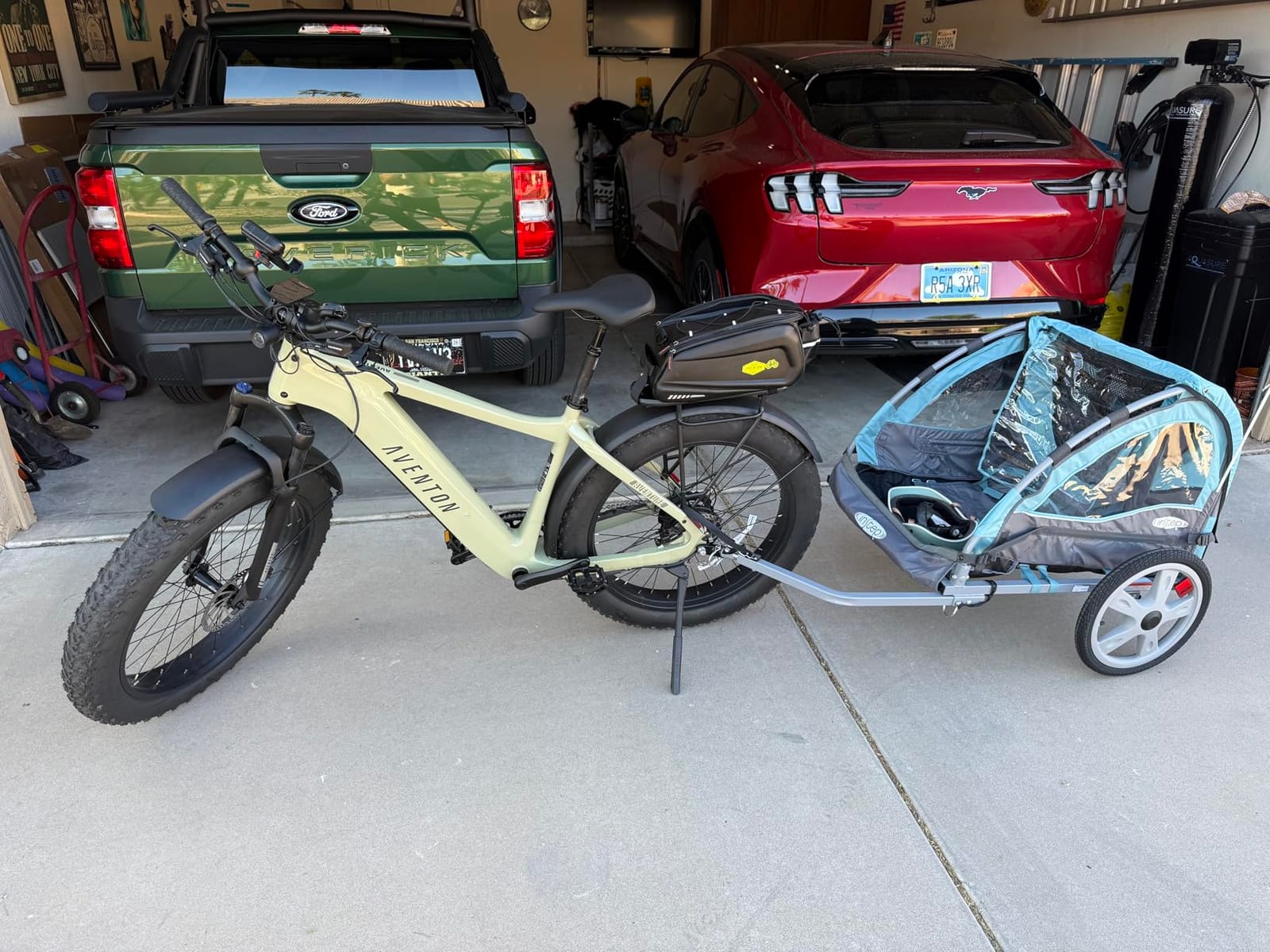
What to check before you buy it
Two children fit snugly. The 80 lb rating is a combined figure, and owners of two larger toddlers report limited head and leg room, so measure both children before buying.
The 16-inch wheels run on plastic rims, so towing is heavier and harsher on gravel than it is on a 20-inch wheel or a steel-spoked setup.
Tire pressure guidance is easy to over-inflate, and the fabric and canopy rods show wear sooner if the trailer is folded roughly or loaded heavily.
Who should skip it
Skip it if you have one child under three. A double cabin is a wider, heavier thing to handle and park, and the single-seat models in this roundup do the same job more simply.
It is also not the choice for very rough terrain, where the plastic rims and the tight two-child fit work against you.
7. Allen Sports Hi-Viz ET2: A Good Fit if You Ride an E-Bike
- Works with e-bikes
- Very light for a two-child trailer
- Folds very flat for compact storage
- Quick five-minute assembly with locking pins
- Padded five-point harness and footguard tube
- Small interior realistically fits two children under about age three
- Narrow tires pass more bumps to the child
- Protective fabric described as low quality
E-bike riders have a specific problem, which is that motor torque and speed can overwhelm a trailer coupler, and this is one of the trailers in the group that owners specifically report pairing with an e-bike without complaint. The universal fit mounting and the light alloy steel frame are the reasons.
It is also the easiest of the double trailers here to move, and that combination of low weight and flat fold means it lives in a car more happily than the heavier steel builds.
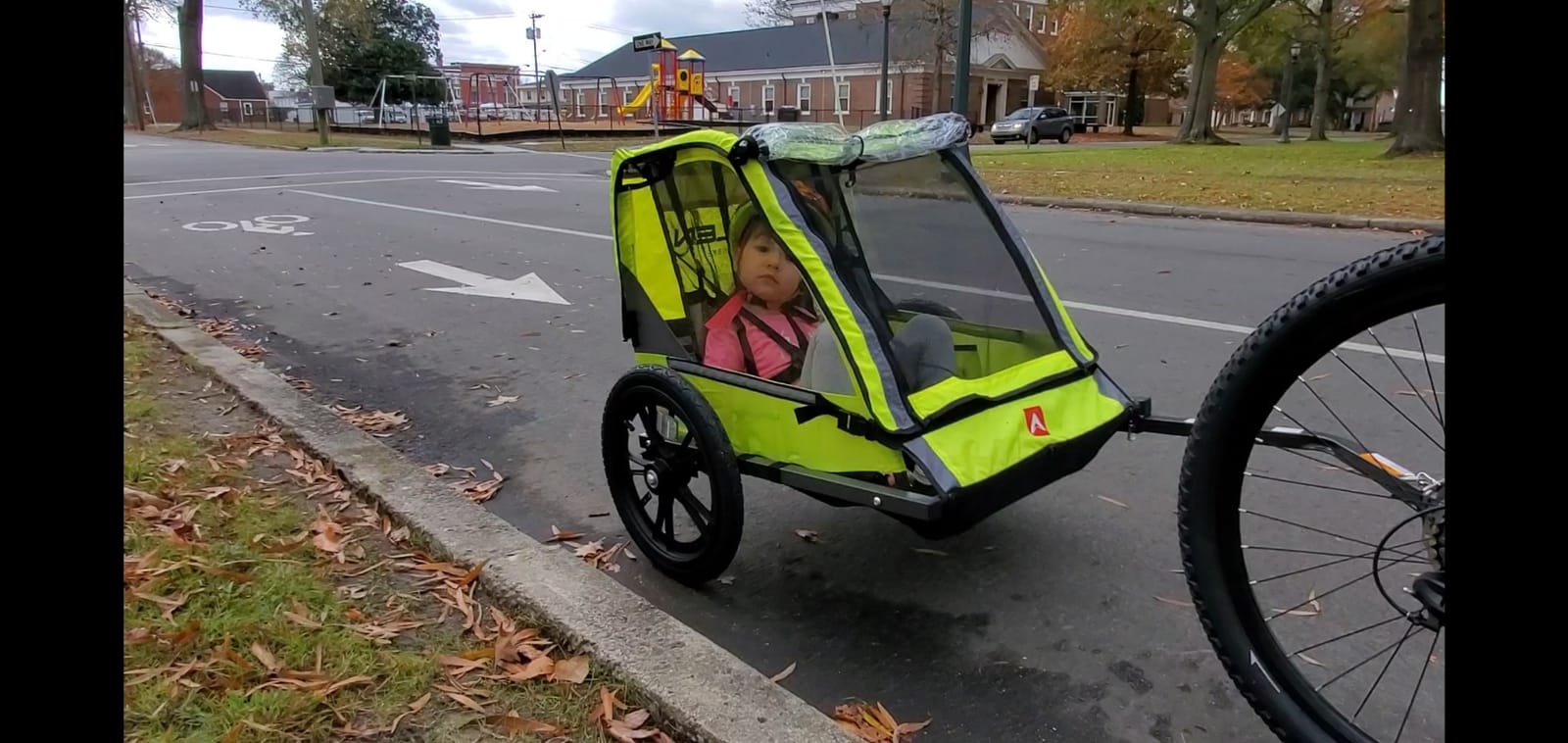
Large front and side windows keep the cabin bright and airy, the harness is padded, and a footguard tube keeps feet inside. Reviewers regularly mention that the rear storage is roomier than the photos imply.
Owners also use it as a pet or cargo carrier, and the fold-down design makes that mode easy. Assembly runs about five minutes with removable locking pins.
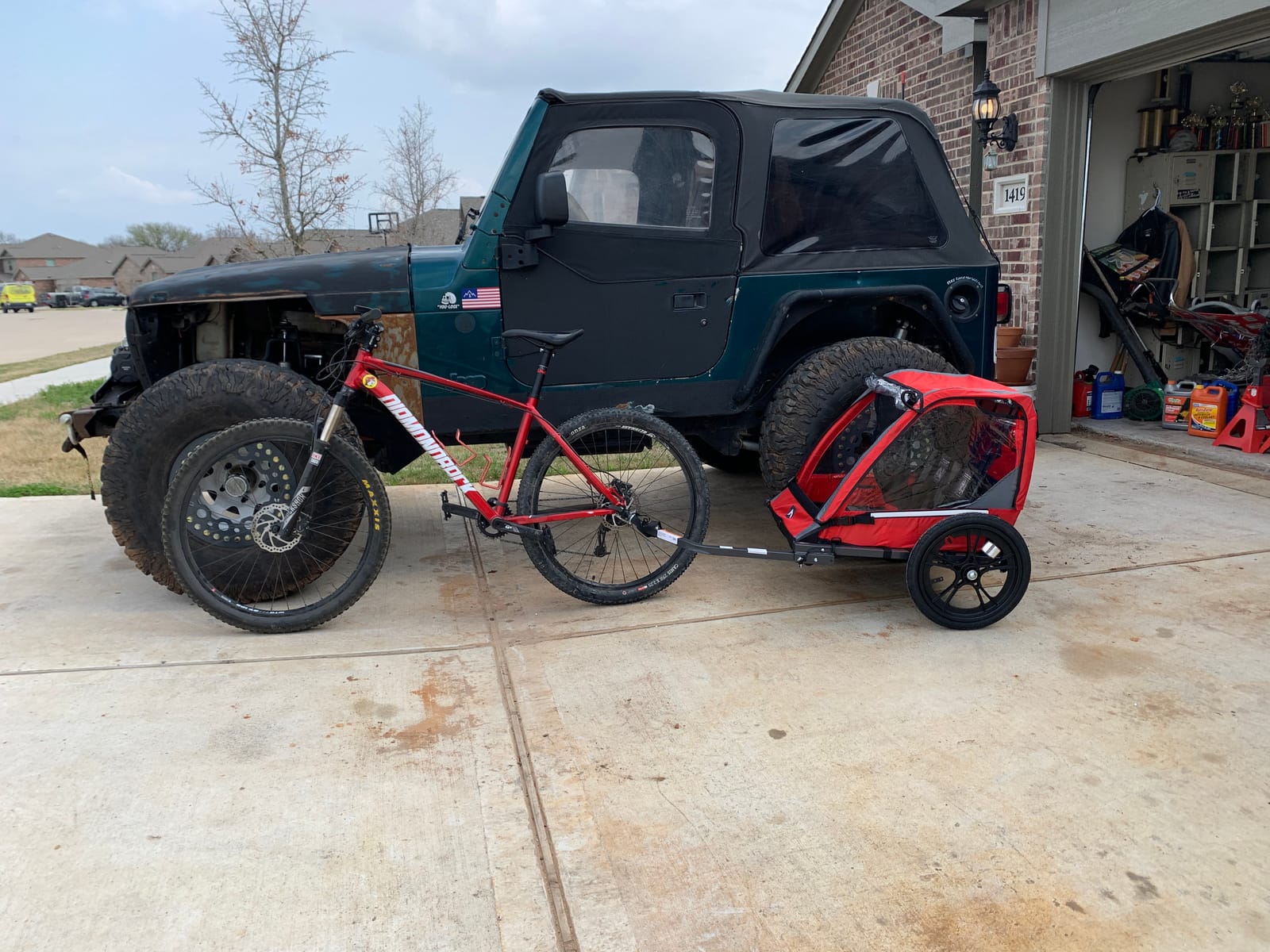
What to check before you buy it
The interior is small. It realistically fits two children under about age three, and taller riders will be cramped well before the 100 lb payload figure suggests.
Narrow tires mean more of the road surface reaches the cabin, so budget for a smoother route if you can choose one.
Measure your e-bike’s rear axle before ordering anyway. A small number of orders have arrived with the bicycle hitch missing, so check the box contents before you assemble.
Who should skip it
Skip it if you will be using it past the age of three with two children. The cabin is the constraint, not the weight limit.
It is also the wrong pick if fabric longevity matters to you. Owners describe the protective fabric as low quality, which is the most common reason to step up a tier.
8. Retrospec Rover: The Aluminium Build That Handles Gravel
- Aluminium frame with suspension and a sturdy build
- Built-in safety flag and reflective accents
- Large rear storage compartment
- Quick-fold design stores easily
- Barely adds drag behind the towing bike
- Fabric and stitching tear at the foot-side seams
- Front cover is hard to close and the Velcro does not fully fasten
- Narrow track width needs care in traffic
The Rover is the only trailer in this group with an aluminium frame and a suspension setup, and that combination is what earns it a place on mixed-surface routes. The aluminium keeps the weight down and the suspension takes the edge off gravel and packed dirt.
Owners frequently report that the build quality exceeded expectations, and more than one describes a tip-over incident in which the child stayed safely inside the cabin. The low, enclosed structure is doing the work there, and it is the core argument for a trailer over a mounted seat.
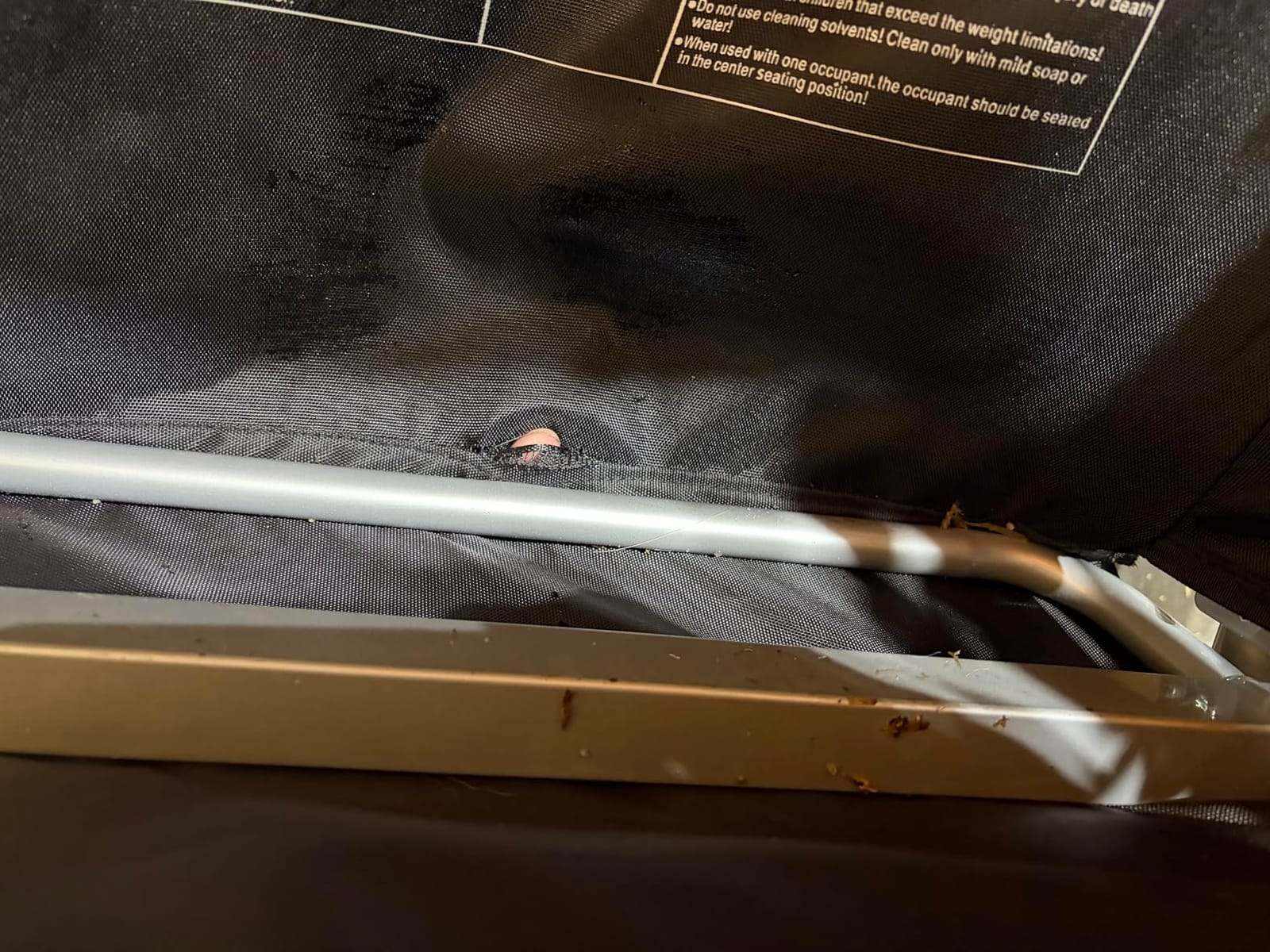
Seating adjusts between single and double configurations, which is useful if you are moving between one child and two. Reflective accents and a built-in safety flag improve visibility, and the large rear compartment takes a diaper bag or a picnic blanket.
The quick-fold design takes the trailer from full size to compact in seconds, and owners note that it barely adds weight or drag behind the towing bike, which matters on longer routes.
What to check before you buy it
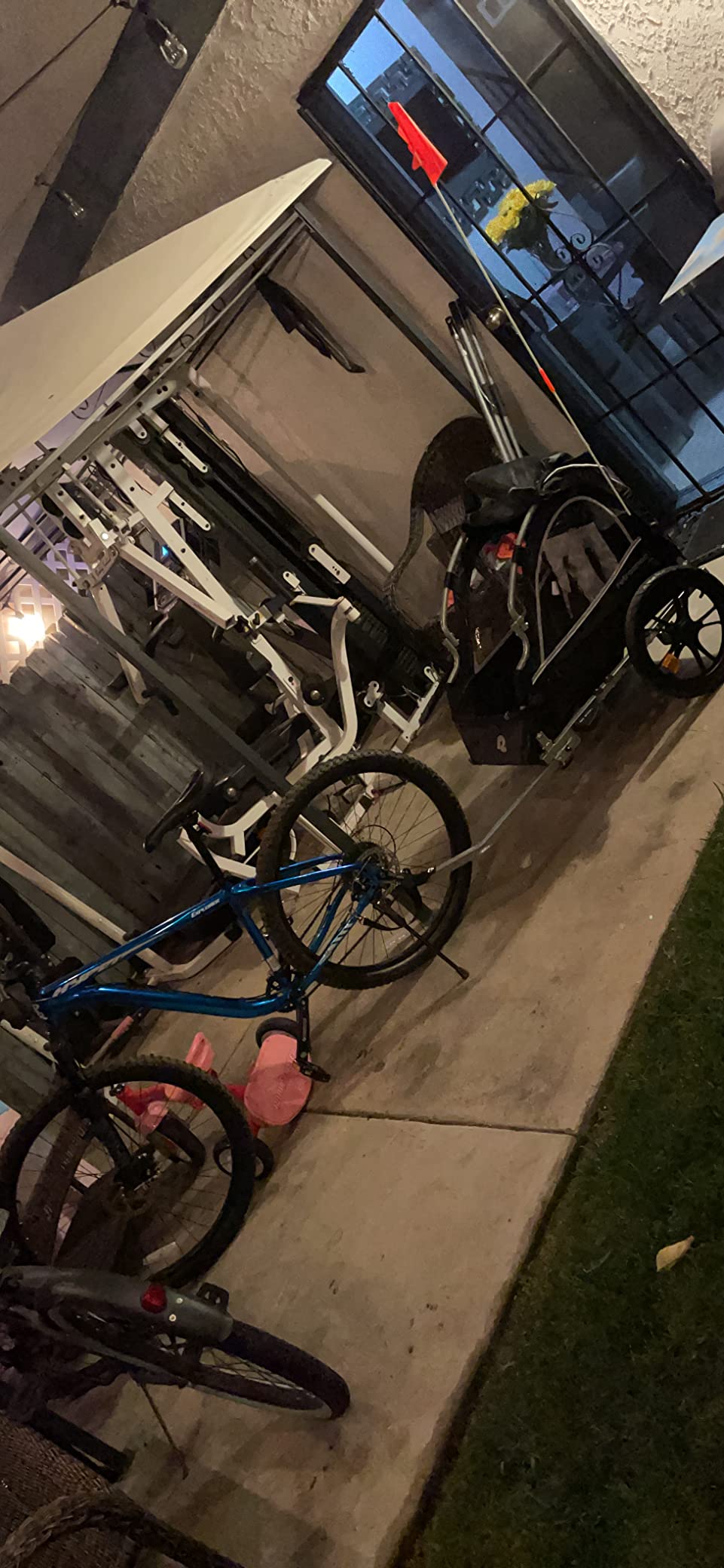
Durability is the weak point, and it is fabric rather than frame. Owners report tearing at the foot-side seams and Velcro closures that show stress after repeated use, so treat the fabric as a consumable part of the purchase.
The front cover is hard to close and the Velcro does not always fasten fully, which leaves a gap in cold or wet weather.
The track width is narrow enough that you need to watch your line in traffic and at gates. Also note that attaching it may require removing your bike’s kickstand.
Who should skip it
Skip it if you ride in traffic every day or live somewhere with narrow paths, because the width is the trade-off for the suspension and low weight.
It also carries one of the lowest average ratings in the roundup at 4.4, and the fabric complaints are consistent enough that we would not pick it for a trailer that has to survive hard daily use.
9. Aosom Elite 360 Swivel: Best When the Trailer Is Also a Cart
Aosom Elite 360 Swivel Bike Trailer for Kids Double Child Two-Wheel Yellow
- 360-degree swivel design eases turning in tight spaces
- Large open cabin doubles as a grocery hauler
- Folds down to a compact 4.5 inch thickness
- Removable canopy blocks wind
- Generous rear storage
- Heaviest build among the aluminum and steel options at 41 lb
- Largest footprint makes it wider than most competitors
- Sling-style seat is less structured for larger toddlers
The swivel front is the idea that makes this trailer different. Instead of a fixed axle, the front pivots, so it turns in tight spaces the way a stroller does. In a car park, at a market, or on a path that doubles as a walkway, that is a genuine convenience.
The cabin is unusually open and unsegmented, which lets it carry two children or a serious amount of shopping. Several owners use it for groceries, and the sling seat with a five-point harness keeps a toddler secure while you load up.
Folding is excellent. It collapses to about 4.5 inches thick and 29 inches long, which is one of the more compact results in the group, and the removable canopy lets you vary the weather protection.
What to check before you buy it
At 41 lb it is one of the heavier trailers here, and the assembled footprint of 61 by 33.1 by 42.5 inches is the largest. That width is a real factor on narrow paths and in traffic.
The sling-style seat is less structured than a bench or hammock seat, so it suits younger toddlers better than a three-year-old who needs support through corners.
Assembly is required, and the 4.3 average rating is the lowest in this roundup, which points to more mixed satisfaction than the rest of the field.
Who should skip it
Skip it if you have a tight car trunk or a small storage space, because the weight and the unfolded dimensions are both on the high side.
It is also the wrong choice for a tall toddler who needs a structured seat, and for riders who care most about how the trailer feels behind the bike rather than how it handles on foot.
10. ClevrPlus Deluxe 3-in-1: The One That Becomes a Jogger
- Three-in-one design covers bike
- stroller
- and jogger use
- Removable pivoting front wheel enables jogging
- Large cargo area behind the two seats
- Reflectors on all four sides and on the rear wheels
- Steel frame folds flat
- Bike mode will not work with a quick-release axle
- Hitch may not suit hub-motor e-bikes without measuring the bolts
- Several pins must be removed to fold it
Almost every trailer stroller needs a separate jogger wheel kit. This one ships with a removable pivoting front wheel already in the box, so jogging mode is available immediately rather than after a second purchase.
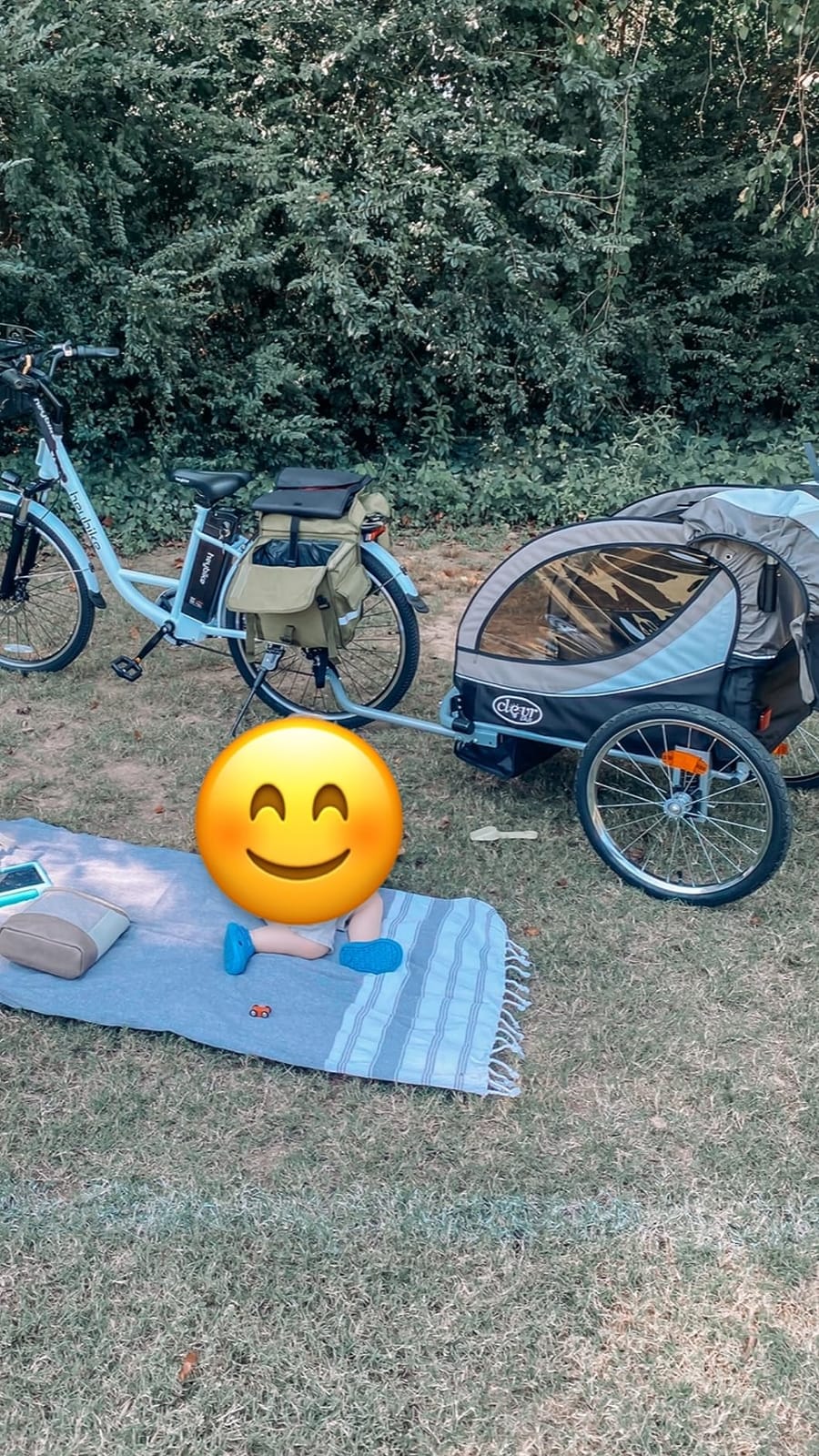
That matters most if you run alongside a stroller regularly. The same unit works as a bike trailer, a stroller, and a jogger, and the interior cargo area of roughly 22 inches wide by 24 inches deep is large enough to double as a gear locker.

Visibility is handled well, with reflectors on all four sides and on the rear wheels, plus a plastic top cover, a mesh window, and tinted side panels. Two sets of seat belts cover the two seats, and the suggested minimum child age is 12 months.
The tow arm design means the trailer stays upright even if the bike tips, which is the standard construction across this whole roundup and the reason trailers are generally considered safer than mounted seats in a fall.
What to check before you buy it
The bike mode will not work with a quick-release bike axle. That is a hard limitation rather than a preference, so confirm your bike type before ordering.
The hitch may not be compatible with e-bikes, so measure your rear axle bolts first. The manufacturer flags this directly.
Folding is a multi-step job involving the handlebar, safety knobs, safety pins, and a push pin for the rear wheels. It is not a one-hand fold, and the front wheel has to come off for bike mode.
Who should skip it
Skip it if your bike has a quick-release axle, since the trailer half of the product simply will not function.
It is also the heavy option relative to its 88 lb capacity, and the warranty terms on this listing are thinner than the lifetime warranties offered by InStep and Allen.
11. Sepnine 2-in-1: Simple Bike to Pushcart Conversion
- Converts easily from bike trailer to pushcart
- 16-inch inflatable rubber tires give a smooth tow
- Intuitive quick-release assembly
- Front tarpaulin blocks sun and rain with side ventilation
- Rear trunk plus interior side pouches
- Full disassembly is needed to fold it for transport
- Only a 3-month warranty
- Some units arrive with chipped frame edges from shipping
This is the simplest conversion on the list. It goes from a bike trailer to a pushcart with a quick-release design and no separate wheel kit, and it holds up to 88 lb for children aged 12 months and older.
The 16-inch inflatable rubber tires give it one of the smoother tows of the budget group, and the two five-point seat belt systems with ergonomic seats are a step up on the flattest interiors here.
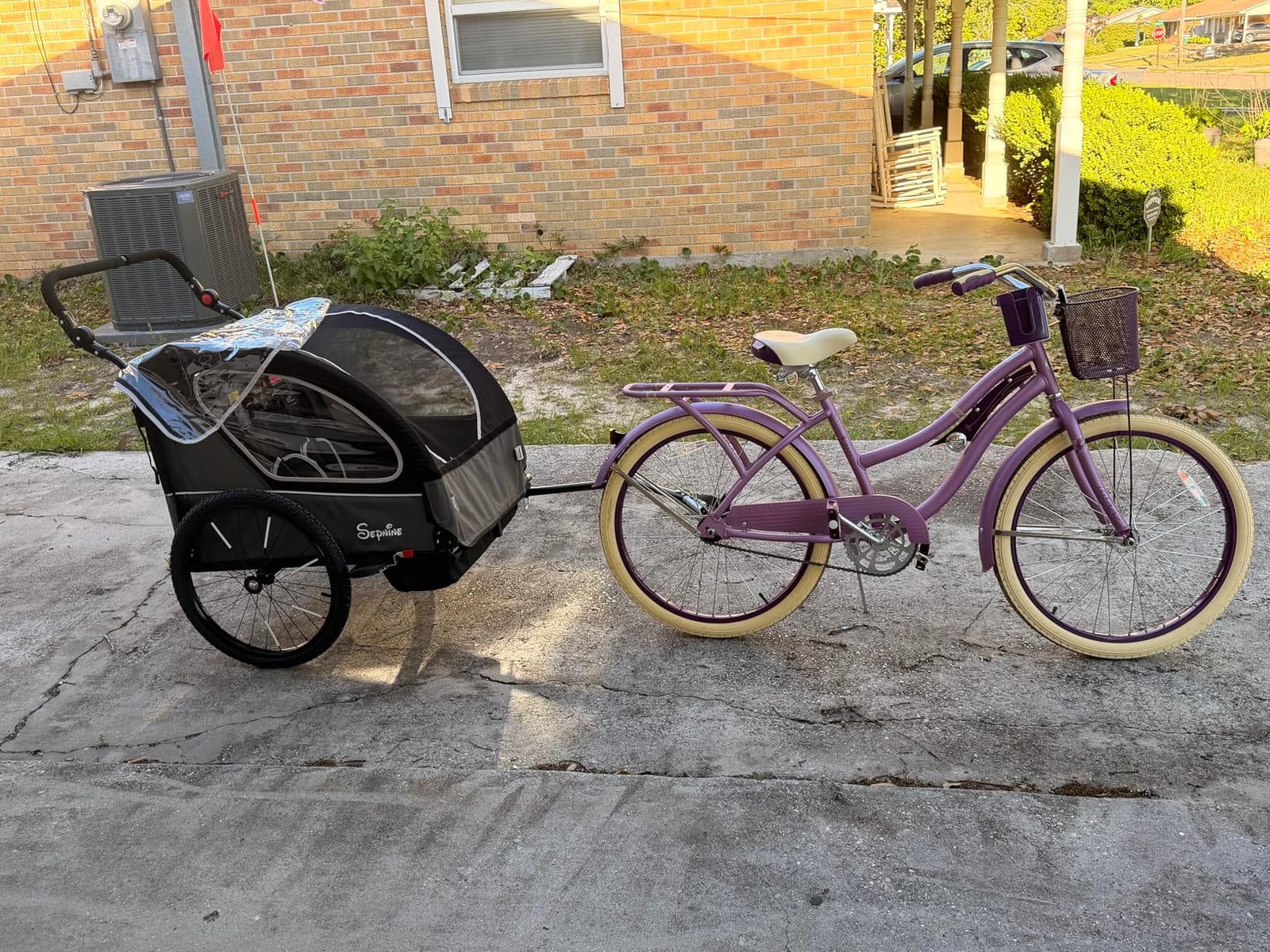
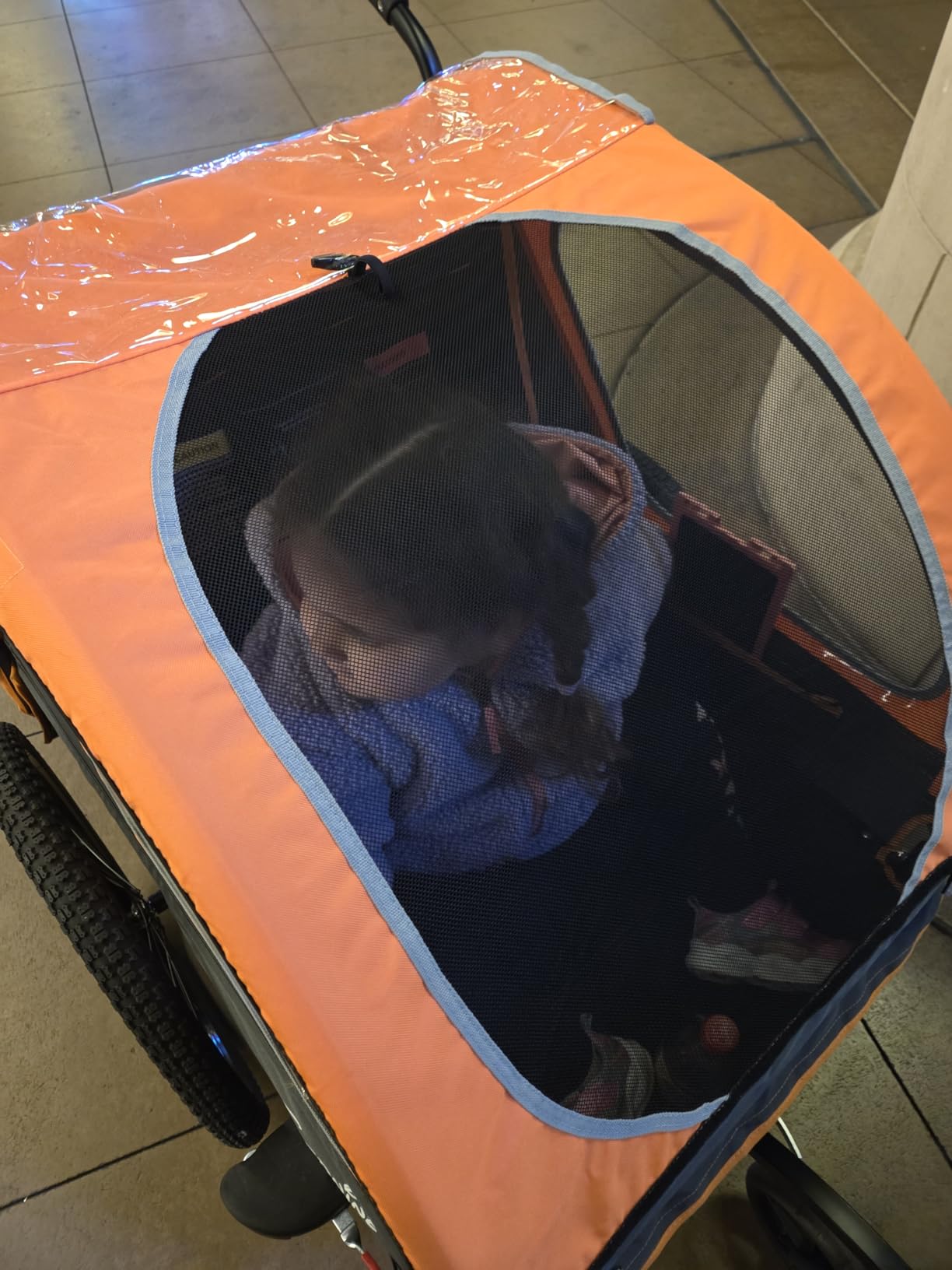
Weather protection is a front plastic tarpaulin that shields from sun and rain while keeping bugs out and letting air move through the side ventilation pockets. Reflectors, safety signage, and reflective strips on both sides handle the visibility side of things.
Storage is generous for a trailer at this level, with a large rear pocket plus interior side pouches for snacks and small toys.
What to check before you buy it
Folding requires a full disassembly, including the wheels and the handle. That is a significant step up in effort compared with the quick folds on the Allen and InStep models, and it matters if you load the car daily.
The warranty is three months, which is the shortest in this roundup by a wide margin. That is the main reason to look elsewhere for a trailer you intend to keep for years.
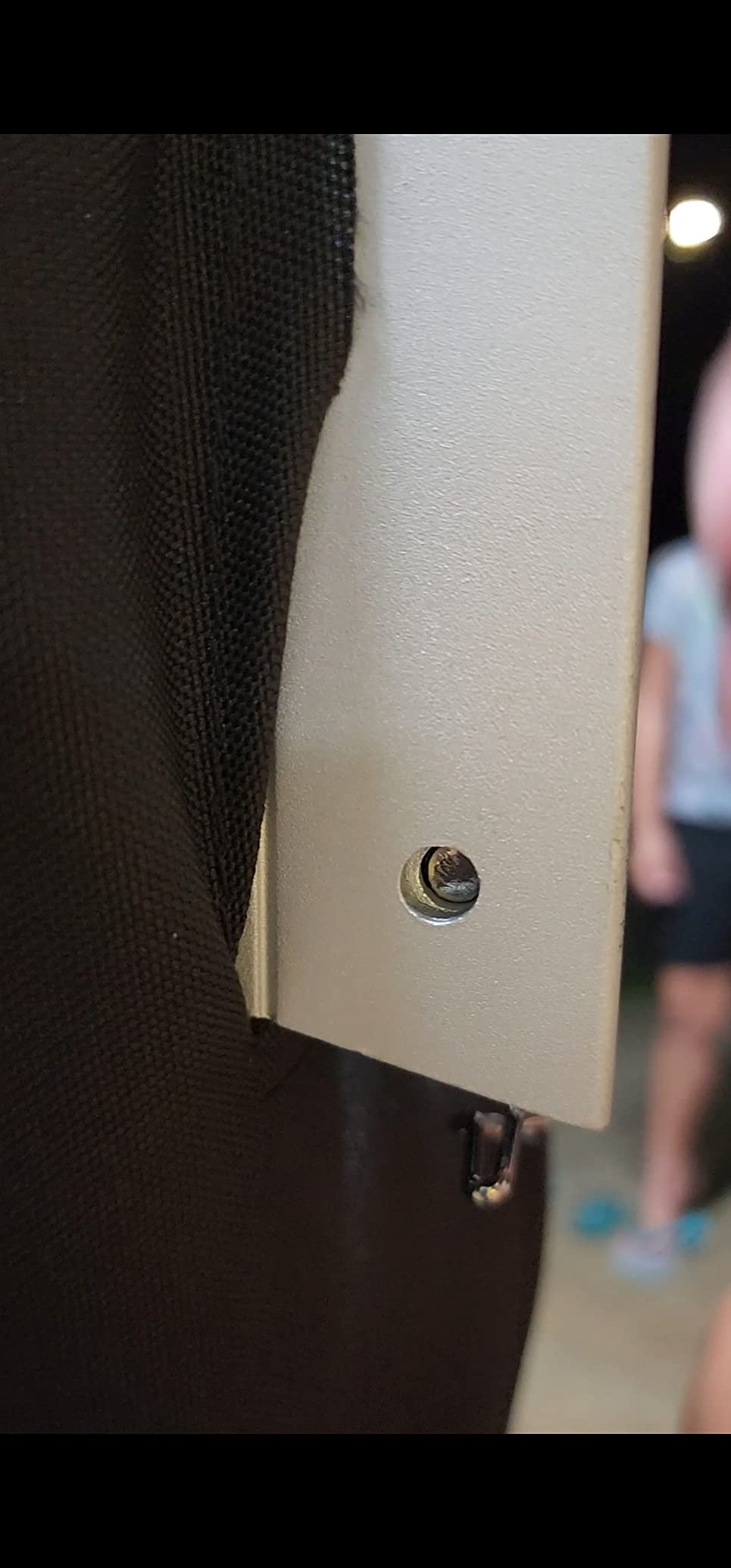
Some trailers have arrived with scraped and chipped frame edges from transit, so inspect the frame and finish before assembly, and expect the instructions to be hard to find in the box.
Who should skip it
Skip it if you plan to load it into a car every day or keep it past the toddler years. The disassembly-to-fold process and the short warranty both argue against it.
It is also worth checking the canopy clearance in pushcart mode if your child is near four, since a taller child can reach the front canopy while seated.
12. Thule Coaster XT: The Premium Build Worth the Step Up
Thule Coaster XT Child Bike Trailer, Fits 2 Kids, 100lb Total Capacity, 5-Point Safety Harness, Converts to Stroller
- Quiet
- smooth ride that is barely felt behind the bike
- Both bicycle trailer kit and stroller kit in the box
- Tool-free conversion between modes
- Large rear cargo area
- Limited lifetime warranty
- Stroller wheel release hook is difficult to unhook
- Included hitch may not fit hub-motor e-bikes
- Heavier than most budget trailers
- Stiff brake lever
The Coaster XT is the most refined trailer in the roundup, and owners upgrading from budget models describe it as a clear step up in smoothness, safety, and build quality. The ride is quiet enough that you stop noticing it is behind you, which is exactly what you want with a sleeping child.
Both the bicycle trailer kit and the stroller kit come in the box, so the stroller mode is available on day one with tool-free adjustments and an ergonomic adjustable handlebar. The strolling wheel stows on board rather than disappearing into a garage.
The cabin is spacious and well ventilated for two children, rated at 49 lb per child and 100 lb total, and the large rear cargo space handles a beach bag or a grocery run. The frame folds down flat for transport.
It attaches with the Thule ezHitch axle mount and meets or exceeds international safety standards, and it carries a limited lifetime warranty rather than a one-year one.
What to check before you buy it
Check your e-bike first. The included 10 mm hitch and quick-release axle may not fit hub-motor e-bikes, and owners upgrading their whole setup hit that wall more often than they expect.
The stroller wheel release hook is fiddly to unhook, and the brake lever is stiff, so both need a moment of practice before you need them in a hurry.
At 30.2 lb it is heavier than most of the trailers here, and the front wheel can rattle during jogging unless your weight is shifted forward.
Who should skip it
Skip it if you only ever ride a bike and never use the stroller mode. You would be paying for the premium chassis, the warranty, and the handlebar without using the feature that justifies the price.
It is also a heavier lift than the budget models, so check the trunk space and whether you can get it into a car without help.
Toddler Age and Safety Rules for Bike Trailers
The minimum age for a bike trailer is 12 months, and the milestones matter more than the number. A child should have dependable head and neck control, be able to sit unassisted, and be able to keep a properly fitted helmet in place without it shifting or sliding off.
Helmets are required in a trailer even though the child is not exposed to the wind. The cabin protects against falls and collisions, but the jolt of a curb or a pothole can still injure a head that is not yet stable. Fit the helmet so it sits level, two finger widths above the eyebrows, with the side straps forming a V under each ear.
Fit the five-point harness snugly on every ride, and re-check it halfway through a long one. Toddlers shift in a seat, and a harness that was snug at the start of a twenty-minute ride can be loose by the end.
Speed ratings matter. The manufacturer guidance on the budget models in this roundup sits at or below 10 mph, and exceeding it is where hitch bounce and sway start. Slow down before a turn, and lift a foot or slow to a walk for speed bumps and curbs.
Two more rules that new riders break constantly. Never tow a trailer on a road with fast mixed traffic, and never unclip the trailer while the child is inside it. Both are covered in the manufacturer instructions and both matter.
Bike Trailer vs. Bike Seat for Toddlers
A bike trailer is safer than a rear-mount bike seat in a fall, because the child sits low inside a rigid frame with a low center of gravity. A mounted seat puts your child above the bike’s center of mass, where a fall ends very differently.
A bike seat is lighter, narrower, and adds nothing to the width of the bike. That makes it better on narrow paths, in traffic, and anywhere storage space is tight. It also lets your child see your back and your movement, which some toddlers find reassuring and some find frustrating.
A trailer is wider and heavier but carries storage, a canopy, a bug screen, and usually a convertible stroller mode. It fits a younger child better and gives you a place to put the napping bag.
A tag-along bike, the third option, attaches a child’s bike to yours by a short tow arm. It suits a child around four and up, so it is the answer to the next stage rather than the toddler stage.
For a one-year-old or a two-year-old, a trailer is the correct choice. Choose a seat when your child is old enough to sit up unaided without support and hold on, and choose the tag-along when they can pedal a pedal bike reliably.
How to Choose a Toddler Bike Trailer
Decide single or double first, and do not let price make the decision for you. Most parents with one toddler end up in a double because the wider wheelbase is calmer in a turn and a single rider can be positioned in the center.
Then check the axle. Quick-release bikes accept most trailers, thru-axle bikes need a trailer with a thru-axle-compatible coupler or an adapter, and hub-motor e-bikes need extra care because of the axle thickness.
Look at wheel size next. 20-inch wheels on metal rims roll over rough pavement with less shock reaching the child, and 16-inch wheels on molded plastic rims cost less and weigh less. Match the wheel to the surface rather than to the budget.
Check internal cabin depth, not just the weight rating. A tall toddler in a shallow cabin will have a helmeted head tipping forward, and that is the most common fit complaint in this whole category.
Look for suspension if you ride anything other than smooth pavement, and check the material. Steel frames and steel-spoked wheels are heavier and tougher, aluminium frames are lighter and smoother, and molded plastic rims wear out first.
Confirm the harness is a true five-point and check the shoulder pad, because toddlers lean on it constantly. Then confirm what converts: trailer only, trailer and stroller, or trailer and stroller and jogger.
Finally, measure the folded size and the lift weight before you buy. A 13 lb trailer and a 57 lb steel trailer that folds flat differ a lot every time you load a car solo while holding a toddler, and the trunk is where most regret in parent forums comes from.
And if your plan involves hauling a dog alongside the child, read our guide to the best dog bike trailers, because pet trailers are built to different standards and different loads.
If the same car also has to move gear, bikes, or camping equipment on a tow bar, our picks for the best utility trailers for hauling cover that side of the equation and the load ratings that matter.
Stroller and Jogger Conversion Explained
A trailer stroller conversion adds a front wheel and a handlebar so the same cabin can be pushed instead of towed. A jogger conversion adds a single fixed front wheel that locks straight for running, rather than the swiveling wheel used for strolling.
Some models ship with the stroller kit included. The Allen Sports Deluxe and the Thule Coaster XT both include a stroller kit in the box and convert with tool-free adjustments. The ClevrPlus adds a pivoting front wheel for jogging in the same package.
Other models need a separate purchase, and that cost is easy to miss when comparing two listings. Check whether the stroller kit is in the box before assuming two trailers at a similar price do the same thing.
Jogging mode deserves a caution. Running with a child in a trailer is faster and more jarring than strolling, and the manufacturer guidance on these models sets a lower speed limit in that mode. Check the stated maximum for jogger use before your first run.
When Your Toddler Outgrows the Trailer
Most toddlers ride in a trailer from about 12 months to three years, and the exit signal is headroom rather than weight. When the helmet starts touching the canopy or the child’s head tips forward in corners, the cabin is finished even if they are under the weight limit.
Before that happens, buy an age-appropriate pedal or balance bike so the transition is something you have already started. Many families spend a summer on a balance bike in the trailer and stroller, then move straight onto a pedal bike with training wheels.
A tag-along bike is the step between the trailer and independent riding, and it works well for a child around four who can already pedal a pedal bike. If your child is riding balance bikes confidently, our guide to electric tricycles for toddlers covers the powered option for younger riders who are not ready to pedal.
Once the trailer is retired, the same towing habits carry over to water. Our roundup of the best kayak trailers for anglers is worth reading if family trips by car are part of the plan.
Sell the trailer at that point rather than storing it. A well-made trailer from a named brand holds value well because parents pass them to the next child, and a used trailer is a normal purchase for this category.
Frequently Asked Questions
Are bike trailers safe for toddlers?
Yes. A bike trailer is generally considered safer than a rear-mount bike seat in a fall, because the child sits low inside a rigid frame with a low center of gravity, and the tow arm keeps the cabin upright if the bike tips. A properly fitted helmet is still required, and the child must be at least 12 months old with solid head and neck control.
At what age can a child start using a bike trailer?
Most manufacturers and child safety guidance put the minimum at 12 months, provided the child can sit unassisted and has dependable head and neck control. A helmet must also fit and stay in place without shifting. Under that age the cabin will hold your child, but their head will bob with every bump.
Is a bike seat safer than a bike trailer for a toddler?
For a fall, a trailer is safer, because the child is enclosed in a low, rigid cabin rather than strapped above the bike’s center of mass. A bike seat is lighter, narrower, and better on tight paths and in traffic. For a toddler under three, we would choose a trailer; a seat suits a child who can sit up unaided.
Can I use a bike trailer with an electric bike?
Sometimes. Many trailers use a coupler that clears a standard quick-release axle but not a thicker thru-axle, and hub-motor e-bikes often have a rear axle that needs an adapter. Measure your rear axle bolts before buying, keep your speed at or below the trailer’s rated maximum, and set the assist level low enough that the bike does not surge away from the trailer.
Can bike trailers convert to jogging strollers?
Most can convert to a stroller, and some convert to a jogger as well. A stroller conversion adds a swiveling front wheel and handlebar. A jogger conversion adds a single fixed front wheel that locks straight for running. Models such as the Allen Sports Deluxe and the Thule Coaster XT include a stroller kit in the box, and the ClevrPlus includes a pivoting front wheel for jogging.
The Bottom Line on the Best Bike Trailers for Toddlers
If you have one toddler and want a single piece of equipment that works on the bike and on foot, the Allen Sports Deluxe Bike Trailer and Stroller is our pick. It converts without tools, carries 100 lb, and folds to about 6.7 inches, which is the combination that survives daily use.
Buy the Schwinn Trailblazer Plus if you want a single seat and the highest average rating in the group, and the Schwinn Echo if rough pavement is your regular route. Parents watching what they spend will find the InStep Sync hard to argue with, given the review volume behind it.
Every one of these carries a five-point harness, and every one assumes a helmet and a 12-month minimum. Check your axle type before you order, and check the folded size against your trunk. We may earn a commission from purchases made through the links on this page, which does not change the rankings above.