
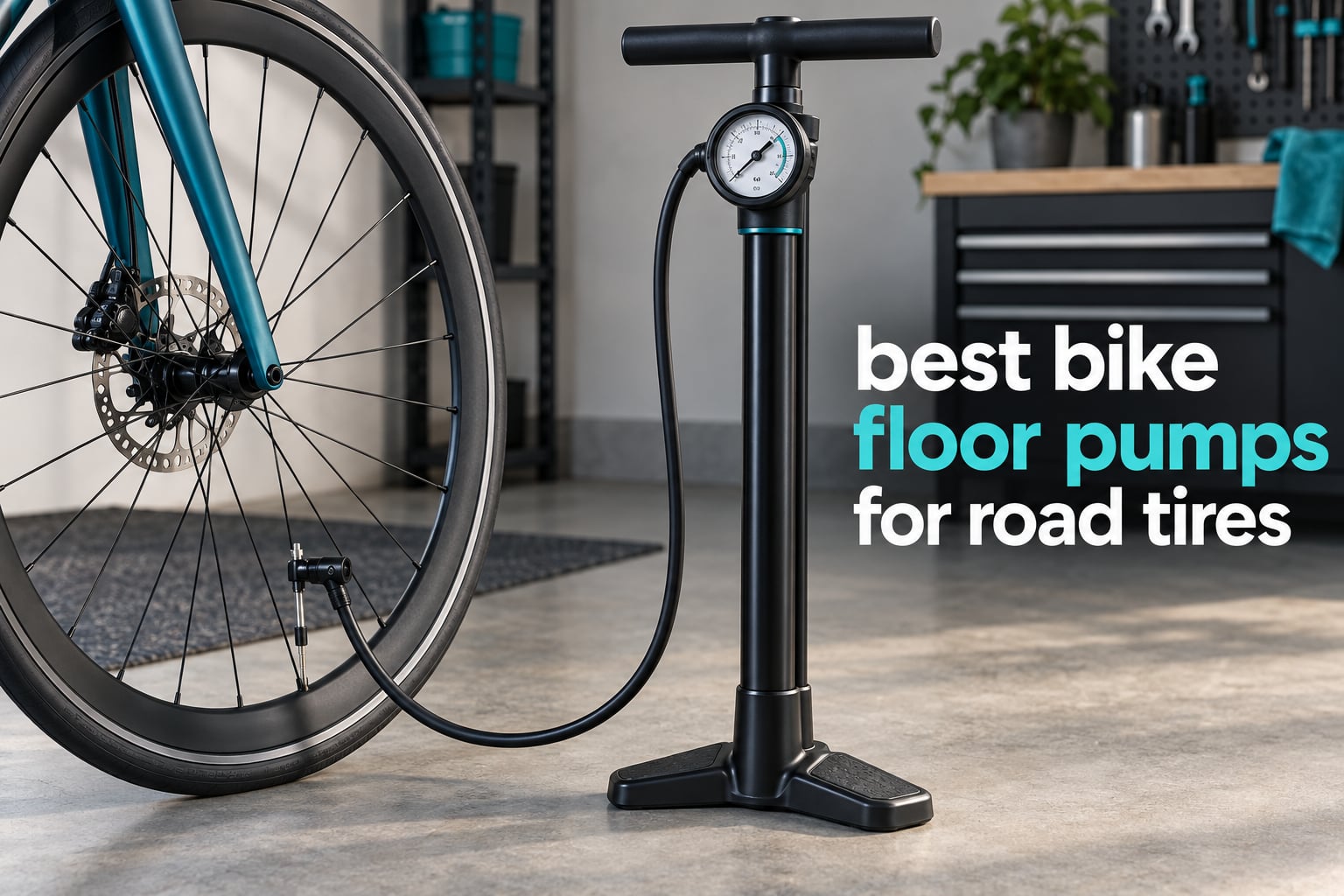
Road tires live at the opposite end of the pressure scale from mountain bike tires. A 700x28c on a 165 lb rider might sit at 95 PSI on a fast descent and 75 PSI on a training day, and a pump with a soft, imprecise gauge will have you guessing within a 10 PSI band that decides how the bike feels under you. That is why the best bike floor pumps for road tires earn their place in a garage: they hold a narrow barrel, carry a readable dial, and stay planted while you push past 100 PSI.
We ran ten of the most-reviewed floor pumps on the market through the same routine. For each one we timed a 700x28c tire from flat to riding pressure, noted how the barrel behaved as pressure climbed, checked the gauge against a separate digital gauge at three readings, and then looked at the base while the handle was loaded. The last pass matters as much as the first: most cheap pumps are fine at 40 PSI and wobble badly once you are pushing a 160 PSI ceiling.
Below you will find the ten picks, ranked by how well each one handles road pressures rather than by how many features the box lists. Every model here inflates Presta and Schrader valves, because a road bike floor pump that needs an adapter swap at every ride is a floor pump you stop reaching for. We also flag repairability, since a sealed plastic pump is a disposable one.
Top 3 Best Bike Floor Pumps for Road Tires

Topeak JoeBlow Sport III
- 160 PSI steel barrel
- 3 inch top-mounted gauge
- TwinHead DX5 locks onto Presta

BV 160 PSI Steel Floor Pump
- Reversible twin valve head
- Large readable gauge
- Alloy steel barrel

Lezyne Classic Floor Drive 3.5
- 220 PSI ceiling
- 3.5 inch analog gauge
- Threaded ABS-1 Pro chuck
The Topeak JoeBlow Sport III takes the top slot on the strength of its parts package rather than any single spec. Its 3 inch top-mounted gauge stays in your line of sight while the handle moves, and the TwinHead DX5 chuck locks onto a Presta with a positive click instead of a rubber friction fit. Multiple owners describe four to seven years of trouble-free service before needing anything.
The BV is the value pick, and the only reason it is not first is gauge refinement. With 30517 reviews behind it and a reversible twin valve head, it is the most proven pump in the group. The Lezyne Classic Floor Drive 3.5 wins the premium spot outright: 220 PSI is the only ceiling here that comfortably covers 28c and 30c tires for heavier riders, and the threaded chuck stays connected without babysitting.
Quick Overview: Best Bike Floor Pumps for Road Tires in 2026
All ten pumps below reach at least 120 PSI and accept both common valve types. The table is a fast filter; the full reviews that follow explain how each one behaves under load.
| Product | Specifications | Action |
|---|---|---|
| Topeak JoeBlow Sport III |
|
Check Latest Price |
| BV 160 PSI Steel Floor Pump |
|
Check Latest Price |
| Lezyne Classic Floor Drive 3.5 |
|
Check Latest Price |
 TOOLITIN Pro 180 PSI Handle Gauge Pump TOOLITIN Pro 180 PSI Handle Gauge Pump |
|
Check Latest Price |
 TOOLITIN 160 PSI Floor Pump TOOLITIN 160 PSI Floor Pump |
|
Check Latest Price |
 Bell Air Glide 550 Bell Air Glide 550 |
|
Check Latest Price |
 GOBKO 160 PSI Pump with Copper Gauge GOBKO 160 PSI Pump with Copper Gauge |
|
Check Latest Price |
 VIMILOLO 160 PSI Dual Valve Pump VIMILOLO 160 PSI Dual Valve Pump |
|
Check Latest Price |
 CLOLOP 160 PSI Floor Pump CLOLOP 160 PSI Floor Pump |
|
Check Latest Price |
 Hycline 160 PSI Stainless Steel Pump Hycline 160 PSI Stainless Steel Pump |
|
Check Latest Price |
1. Topeak JoeBlow Sport III: Best Overall Floor Pump for Road Tires
- Top-mounted gauge stays readable mid-stroke
- TwinHead DX5 locks onto Presta securely
- Steel barrel and base for long service
- Owners report four to seven years of use
- Many strokes to bring a flat tire to 60 PSI
- Bare metal foot can mark or rust a floor
- Tubeless setups are fiddly
This is the pump we kept reaching for. The 3 inch dial sits at the top of the barrel directly under the handle, which means you read pressure without craning your neck or kneeling down, and that matters when you are dialing in a race-level setting on a 25c tire. The barrel delivers 318 cubic centimeters per stroke, a figure that feels right in the hand above 80 PSI.
The TwinHead DX5 head is the detail that separates it from cheaper reversible designs. It threads onto a Presta and locks, so you can concentrate on pressure instead of holding the chuck in place. Switching to Schrader is a press-and-flip rather than a removal.
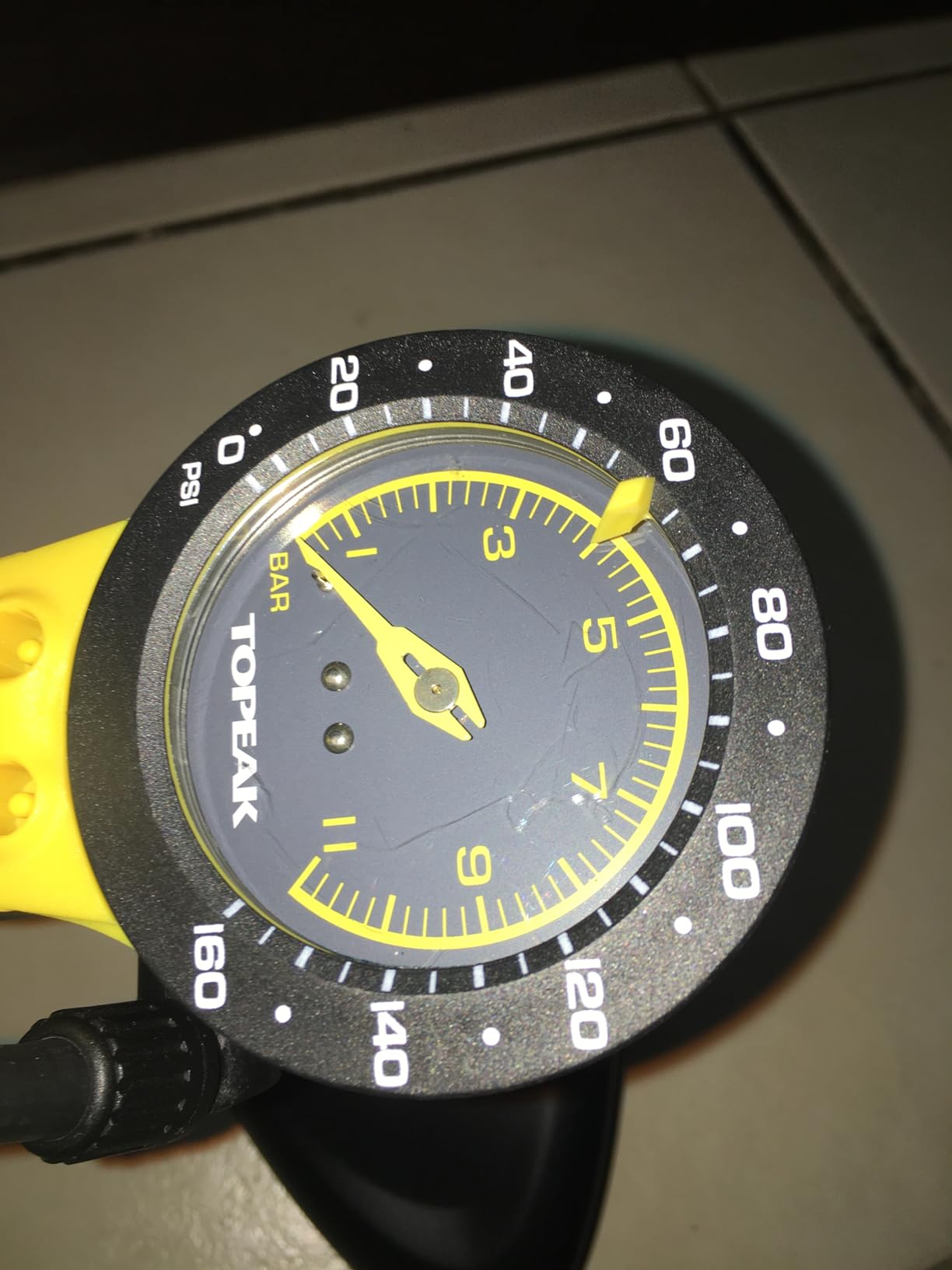
Our cross-check against a separate digital gauge put the Sport III close to the middle of this group, within a few PSI at each test point. It is not the finest instrument here, but it is honest and stable, which matters more than a dial that is precise at one pressure and useless at another. The 360 degree rotating hose also means the chuck reaches a valve mounted at any angle on the rim.
Two honest complaints. The barrel is short relative to the Silca and Lezyne designs, so bringing a completely flat 28c back to 60 PSI takes a real number of strokes before the pump becomes efficient. And the un-padded steel foot will scuff a painted garage floor or show surface rust if you set it on wet concrete. Put a piece of cardboard under it and both problems disappear.
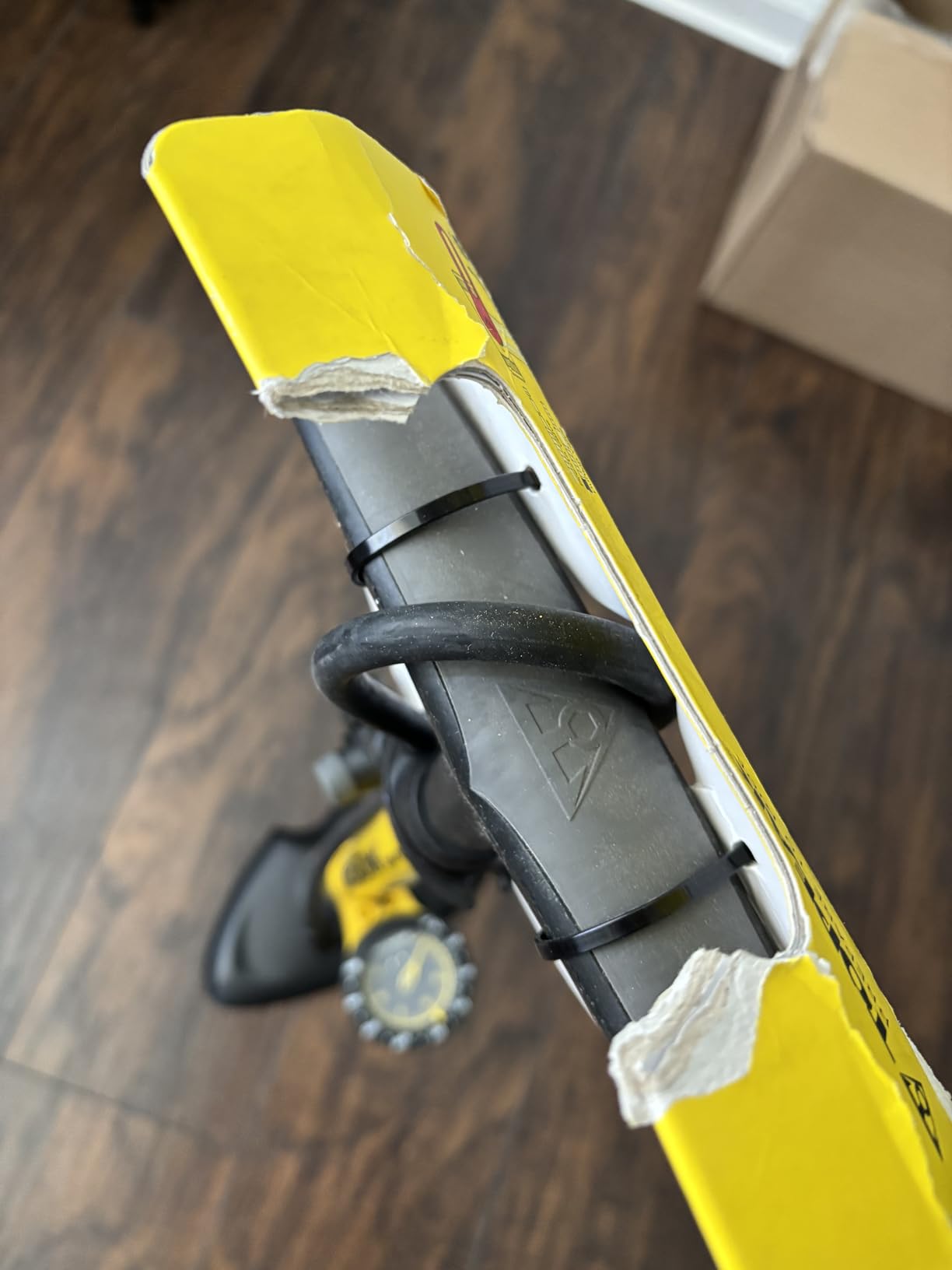
Why the top-mounted gauge changes how you ride
A base-mounted or side-mounted gauge forces a choice between kneeling to read it or guessing. The top-mounted dial on the JoeBlow Sport III stays in your peripheral vision during the downstroke, so the moment you hit your target number is obvious. For riders who adjust pressure based on weather or load, that single layout choice does more for consistency than a higher stated maximum.
It also makes cross-checking simple. You can read the analog dial and a separate digital gauge at the same time without moving the pump, which is how you find out whether your pump is over-reading before you set your winter pressure off by ten PSI all season.
Where the JoeBlow Sport III falls short
It is not the right tool for seating tubeless beads. With a 318 cc per stroke delivery and no reserve air chamber, getting a 32c tubeless tire to hold shape before the bead seats takes patience. Riders who run tubeless full time should look at a high-volume pump instead.
It is also not the cheapest way to reach 100 PSI. If your budget is the deciding factor and you only inflate tires from a partial-pressure check rather than from flat, a lighter aluminum pump will serve you well for a fraction of the outlay.
2. Lezyne Classic Floor Drive 3.5: Best for the Highest Road Pressures
- Highest pressure ceiling in the group at 220 PSI
- Threaded chuck stays connected with minimal loss
- Narrow barrel needs less force at high PSI
- Large flexible hose routes around spokes
- Gauge reads high by roughly 8 to 12 PSI per owners
- Tightening can pull a Presta valve core out
- Will not fit unthreaded deep-dish valve stems
If you run 28c or wider and weigh more than about 175 pounds, this is the pump that will not make you compromise your pressure. The 220 PSI ceiling is nearly 40 percent above every other model here, and the narrow-diameter barrel gets there with less effort per stroke than a wide-chambered pump. The smaller bore also means the pump feels precise rather than vague as you approach 100 PSI.
The threaded ABS-1 Pro chuck screws onto the valve and stays there. You set it, walk the handle, and check the gauge. No holding a head on a Presta nut with your thumb while you push.
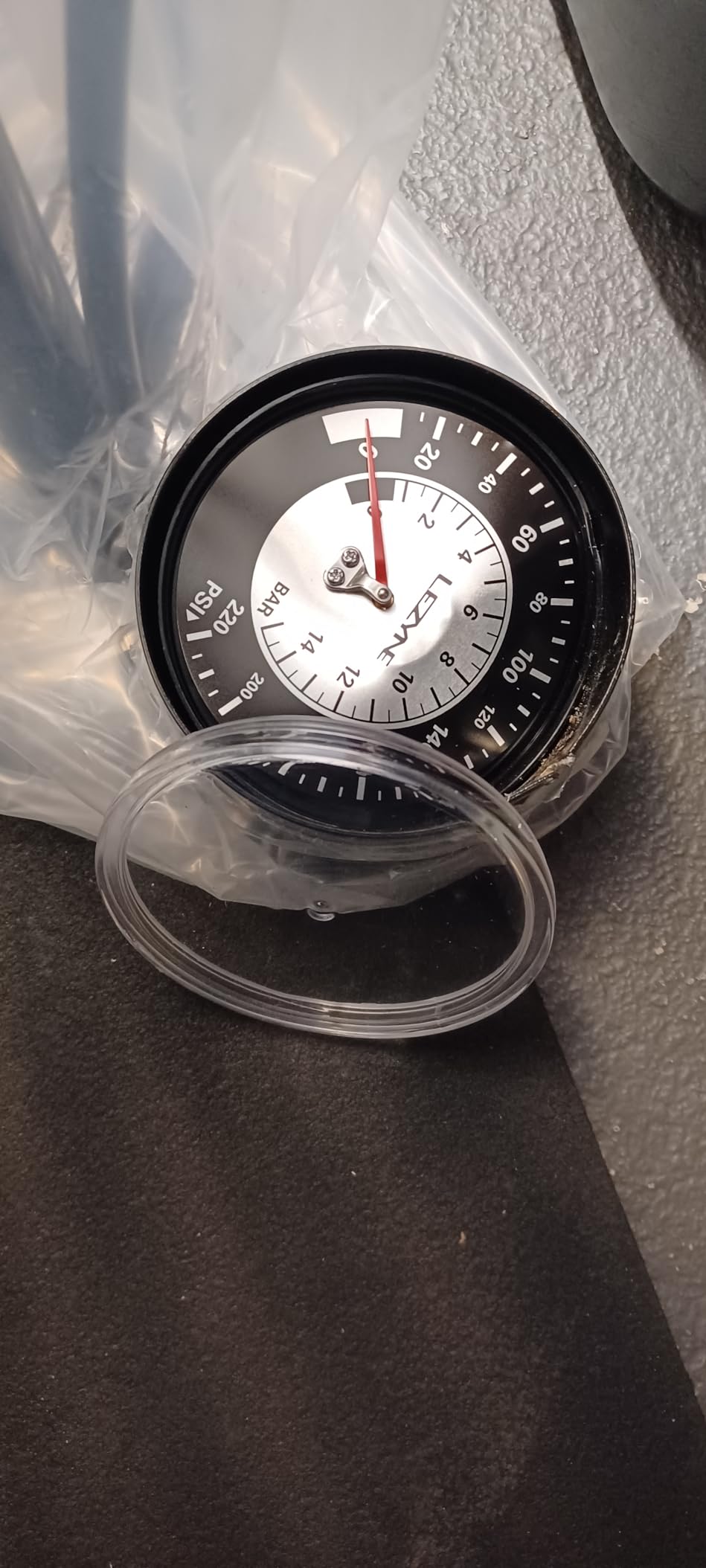
The gauge is the weak point, and owners are specific about it: several report the analog dial running roughly 8 to 12 PSI above a reference gauge. That is not a dealbreaker if you know it, but it is a dealbreaker if you do not. If accuracy is your priority, calibrate your target pressure downward by a fixed amount, or verify with a separate digital gauge before you trust the number on a cold morning.
Two more cautions. The screw-on action can extract a Presta valve core if you crank it down hard, and it will not seat on the unthreaded valve stems found on some deep-dish rims. Both are avoidable habits rather than defects, as long as you know about them.
When 220 PSI actually matters for a road bike
The pressure ceiling only matters if your tires need more than 160 PSI. That group is narrow but real: riders above roughly 175 pounds on 25c tires, riders running 30c or wider at higher pressures, and anyone who wants headroom to push a tire harder on a fast descent or in cold weather. If your working pressure sits between 70 and 100 PSI on 28c or 30c, you have room to spare in a 160 PSI pump.
Extra ceiling is not a substitute for a narrow barrel. What gets you to 120 PSI with an honest effort is bore diameter, not the number printed on the side of the box. This pump has both.
Where the Lezyne is the wrong choice
If you inflate unthreaded deep-dish valve stems, this chuck will not seat and you need an adapter every time. If your tires are tubeless, the small bore works against seating a bead, since it moves less air per stroke than a wide-chambered pump.
Its 954 reviews give a thinner signal than the top three here, so long-term reliability is less documented. Buyers with deep feedback bases do describe it as sturdy across multiple owned pumps, which is encouraging but not the same as a decade of parts availability.
3. BV 160 PSI Steel Floor Pump: Best Value for Road Tires
- Most proven pump in the group with 30517 reviews
- Reversible head switches valves without reversing
- Large gauge is easy to read
- Light at 1.7 lb for a steel barrel pump
- Bare steel foot can mark or rust a floor
- Stroke volume at high road pressure is uneven across owners
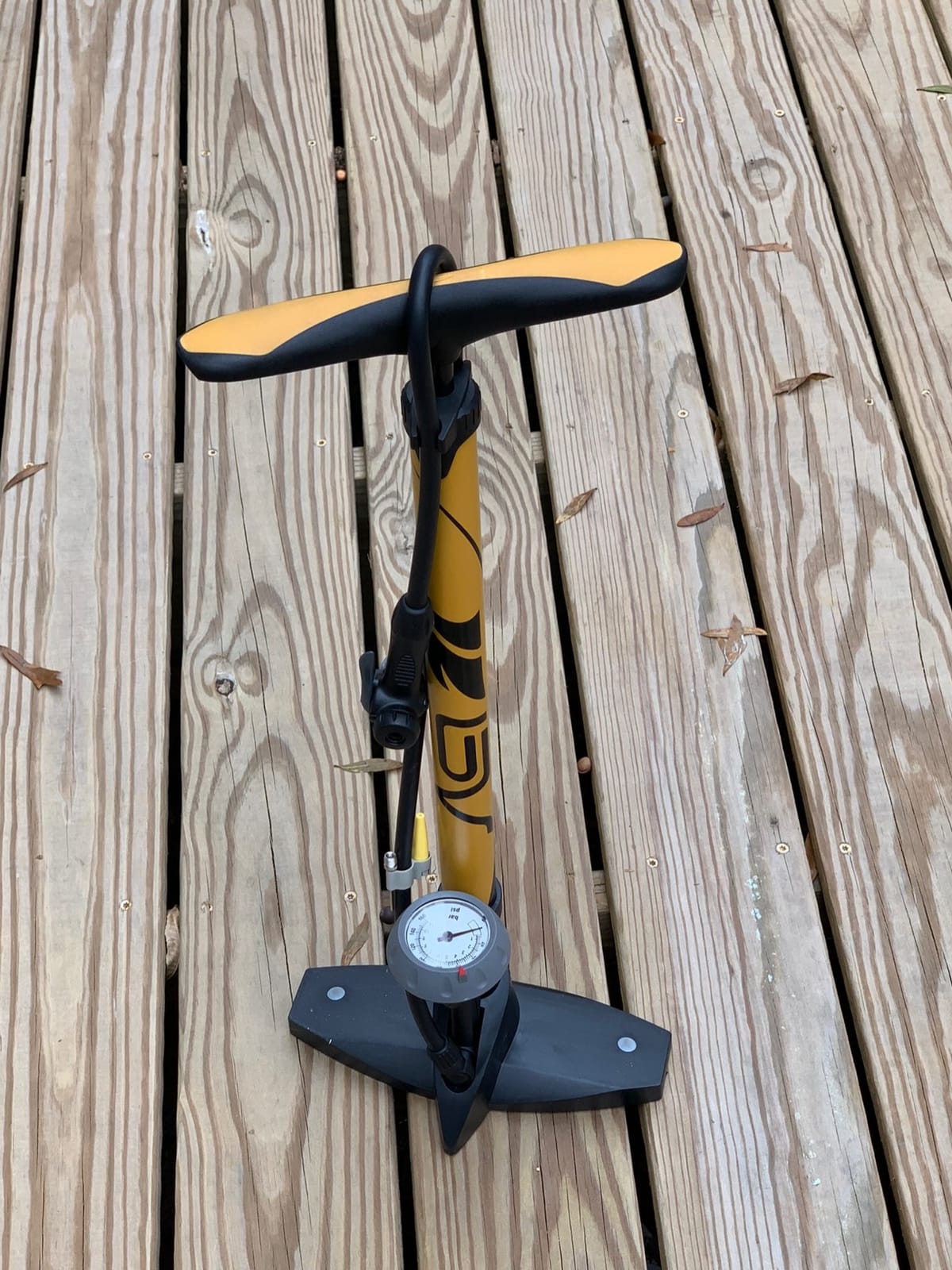
With 30517 reviews, this pump has a longer public reliability record than anything else on the list, and the automatic reversible head is the reason owners stop thinking about their pump head entirely. You press a lever, the valve switches between Presta and Schrader, and the air keeps moving. That simplicity is worth more than a premium badge once you are changing a tire in a dim garage.
At 160 PSI and 1.7 pounds, it is also unusually light for a steel-barrel pump, which matters if you carry it up to an apartment or move it between storage spaces.
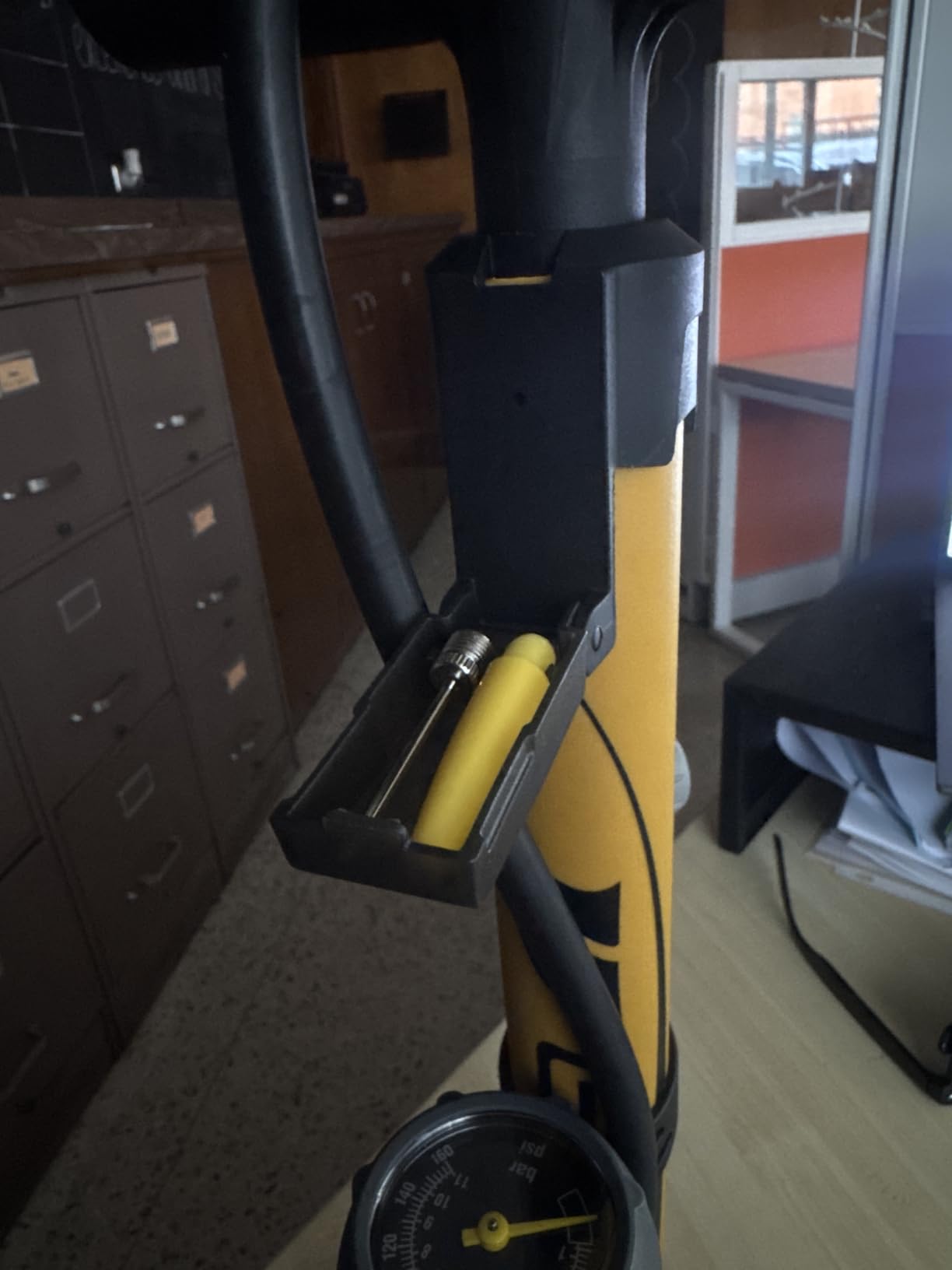
Owners are split on stroke efficiency at road pressures, and the honest summary is that it works but does not sing. It will get a 28c tire to 100 PSI; it just takes a few more strokes than a narrow-bore premium pump, and the wide barrel gives slightly less back at the top of the range. For topping off before a ride rather than building from flat, the difference mostly disappears.
The one recurring complaint is the bare metal foot. It can mark a garage floor and it can show surface rust if the coating wears through on damp concrete. A scrap of cardboard or a bicycle mat solves it for the cost of nothing.
Why the reversible head matters more than the spec sheet
Road riders often own two bikes: a Presta-equipped road bike and a Schrader-equipped commuter or kid bike. A head that switches without unscrewing anything removes the small friction that makes people skip checking the tire on the second bike. Owners consistently describe the switch as leak-free, so the change happens mid-stroke without losing pressure.
The large gauge is a genuine advantage at road pressures. Road targets sit in a narrow band where a dial with a short, coarse scale makes 5 PSI differences hard to see. A bigger face with finer markings is easier to read in a garage with bad lighting.
Where the BV pump falls short
It is not a tubeless inflation pump. Without a reserve chamber or booster volume, seating a 28c or larger tubeless bead takes many strokes and a lot of patience. If tubeless is part of your setup, this is the wrong tool for that job.
Its 160 PSI ceiling leaves no headroom above a typical road target, so it cannot serve a rider who wants to push 25c tires past 120 PSI. And while EU spare part availability is listed at 10 years, US replacement gauges for this model are not something we could confirm, so treat the base and seals as the serviceable parts.
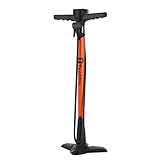
4. TOOLITIN Pro 180 PSI Pump: Best for a Handle-Mounted Gauge
TOOLITIN Pro Bike Pump, Ergonomic Bicycle Pump with Integrated Handle Mounted Pressure Gauge, 180 Psi, Fits Presta and Schrader Valve
- Read pressure without bending down
- 180 PSI ceiling beats most 160 PSI rivals
- Removable parts box protects the valve fitting
- Widened base with silicone and bottom groove
- Plastic body is less durable than steel
- Only 863 reviews for durability signals
- Spec sheet lists 12 bar rather than 180 PSI
The handle-mounted gauge is the reason to look at this pump. The dial sits in the top of the handle with a thickened window over it, so the reading stays visible while the handle travels and you never leave the valve to check the pressure. Among the ten pumps here, that is the most distinctive gauge placement, and for riders who adjust pressure constantly it is genuinely more useful than a bigger dial mounted lower down.
The 180 PSI ceiling is also the second highest on the list, and the widened hard plastic base with anti-slip silicone and a grooved bottom stayed planted under load for us on a level floor.
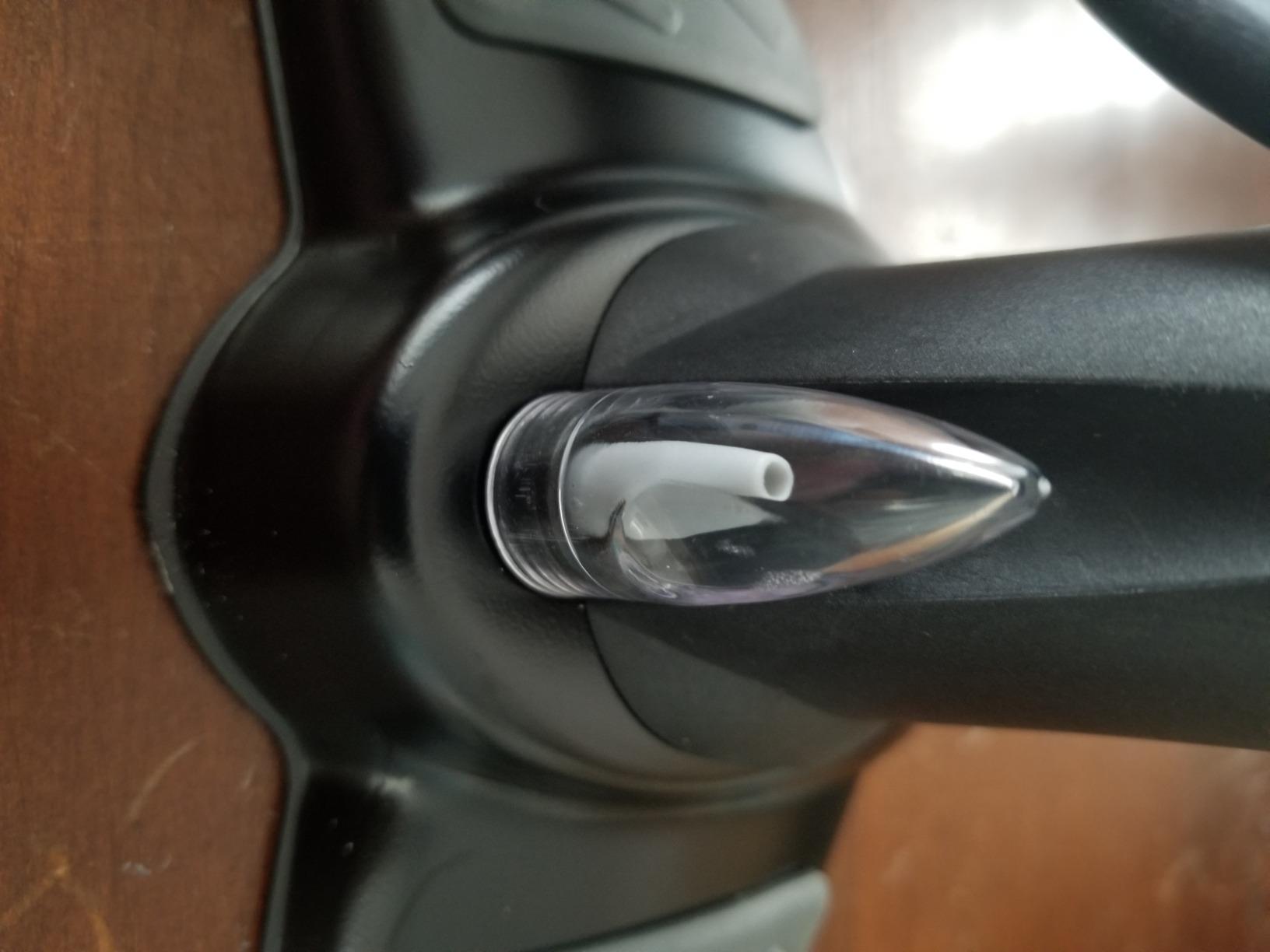
The trade-offs are honest ones. The body is plastic rather than steel, and plastic is where floor pumps tend to fail first, at the handle-to-barrel joint, after several seasons of heavy use. With 863 reviews, this model also has the thinnest feedback base in the group, so durability claims rest on the design rather than on a long public record.
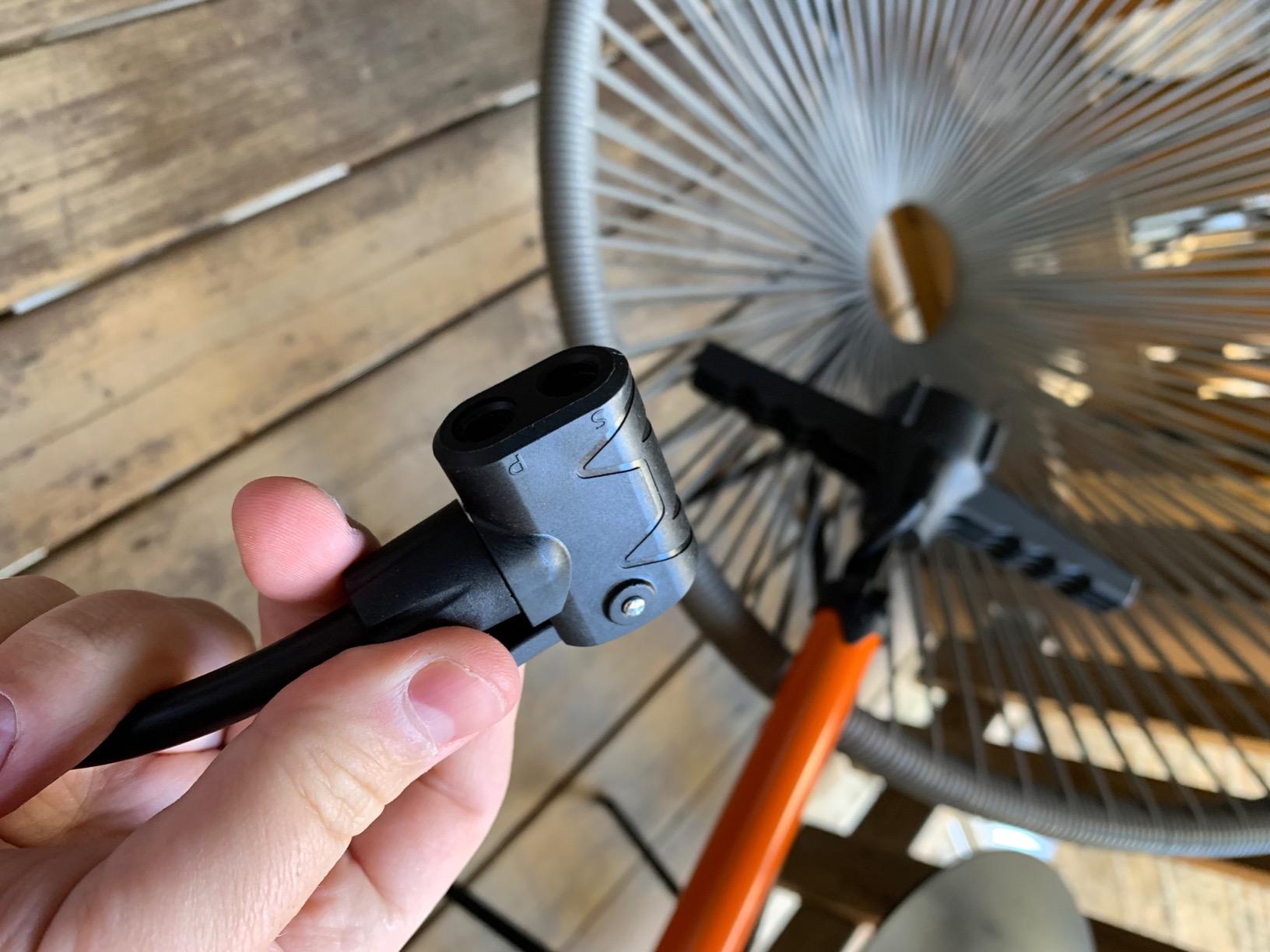
There is also a listing inconsistency worth knowing: the spec sheet records a maximum of 12 bar rather than the advertised 180 PSI, and 12 bar is roughly 174 PSI. If you want to run right at the ceiling, treat the lower figure as the real one.
When a handle gauge beats a top-mounted dial
A handle gauge wins in one specific situation: when you want to glance at pressure without changing your body position. Pumping keeps one hand on the handle and your head is already near it, so a dial in the handle window is read with a flick of the eyes. Top-mounted barrel gauges are more precise-feeling because they sit closer to the pressure source, but they require looking down and forward.
For riders who check pressure before every ride and adjust for temperature, either layout is fine. For anyone inflating from flat while listening to a podcast, the handle gauge is the more natural fit.
Where the TOOLITIN Pro falls short
Plastic construction is the main concern. If you own a pump for a decade, a steel barrel with published seals and feet is a better bet than a plastic housing with no listed model number for parts ordering. This pump also does not have the strongest accessory storage story in the group.
It is also a floor pump only. There is no analog of a reserve chamber here, so tubeless bead seating is a slow job.
5. TOOLITIN 160 PSI Floor Pump: Best for a Stable Wide Base
- Thick wide composite base stays stable at pressure
- One-piece metal barrel resists flexing
- Accessory box stores parts in the handle
- Owners report strong air volume per stroke
- Arrives partly assembled so the foot needs fitting
- Durability is unproven across the review base
- Listed power source does not match a hand pump
Base stability is the thing that separates this from the other budget-tier steel pumps. The composite foot is wider and thicker than the stamped steel feet on most competitors, and it stayed flat on the floor while we pushed past 120 PSI without the barrel visibly flexing. The one-piece metal barrel is also genuinely seamless, which removes the weak joint where cheaper barrels rattle at the bottom.
Owners frequently describe it as a compressor replacement, and the air volume per stroke supports that. It moves a 28c tire from flat to pressure faster than the aluminum budget pumps we tested.
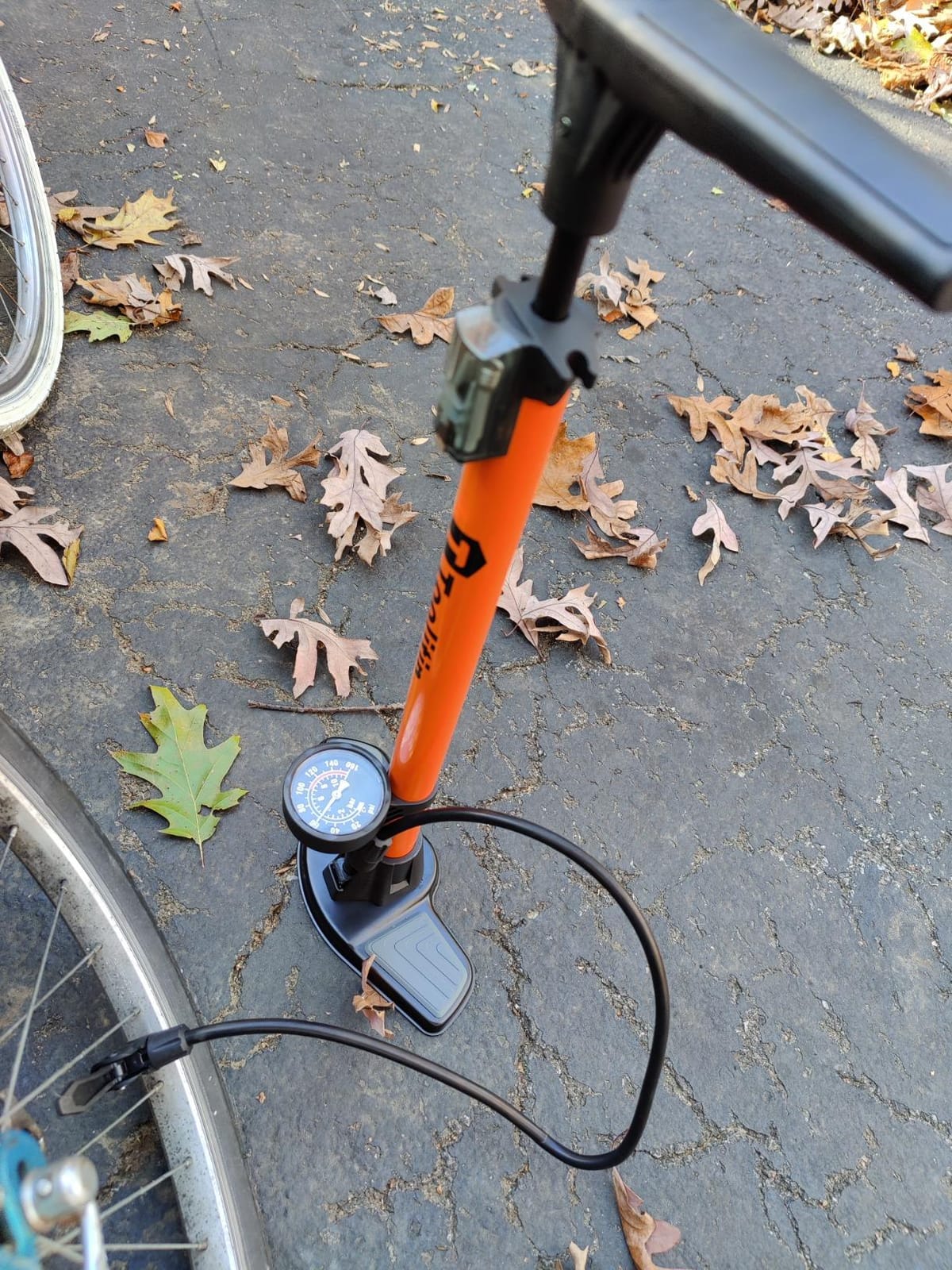
Two things to plan for. It arrives partly disassembled, so budget five minutes to fit the foot and handle before the first use, and note that the listing records a corded electric power source, which is simply a data error for a hand-operated pump. Neither issue affects performance, but both are the kind of detail that creates a bad first impression if you are not expecting them.
The in-line gauge is a sensible compromise: it sits partway up the barrel rather than at the base, so it is readable without kneeling and does not add height to the pump. It is a small dial, though, and road pressures where 5 PSI matters will need a careful look.
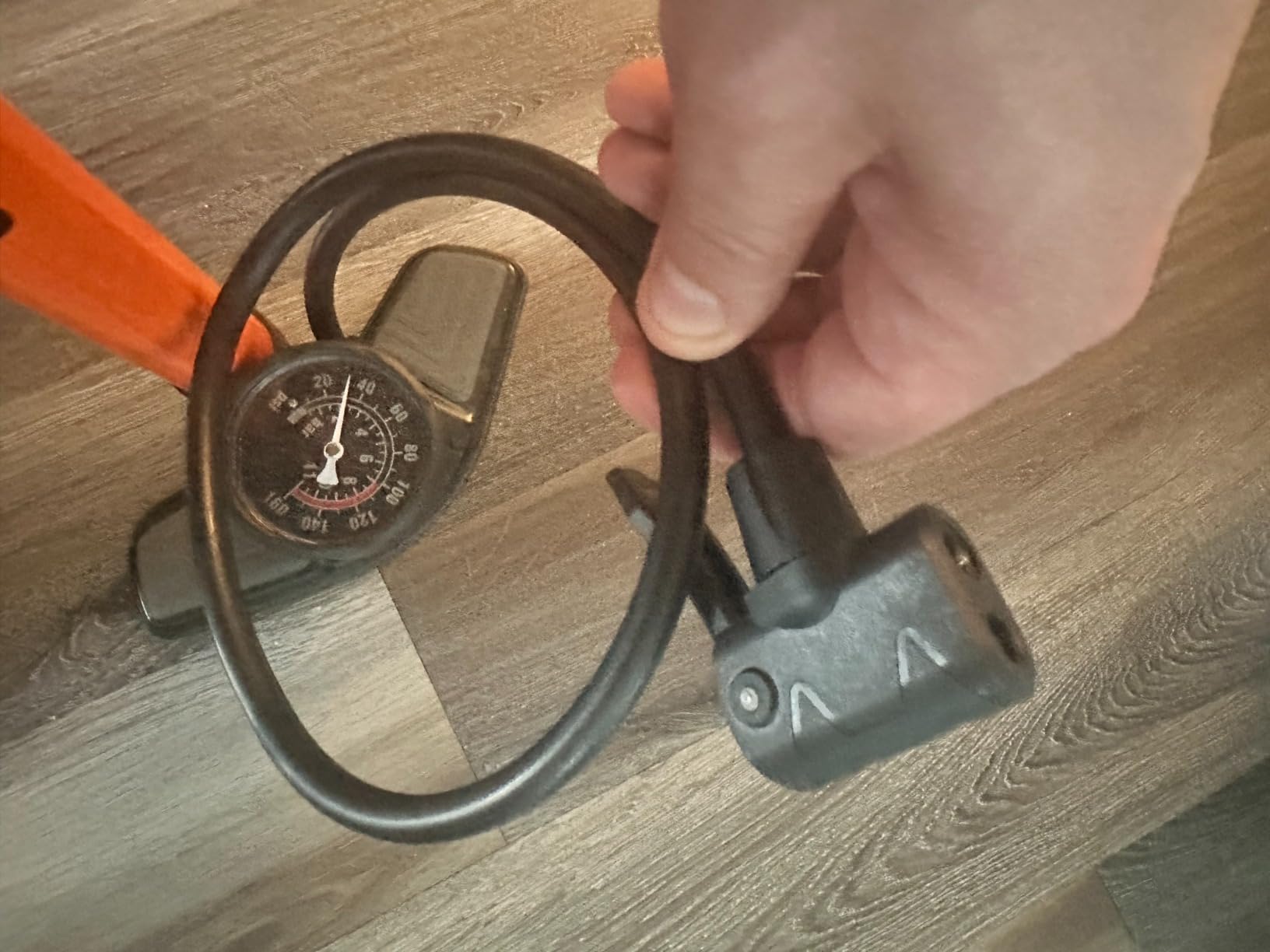
Why base stability changes the pumping experience
Floor pump wobble is not just an annoyance. When the base rocks on a high-pressure stroke, the barrel tip leans, the seal loads unevenly, and the pump starts to feel vague. Riders describe the sensation as the pump becoming harder to push for no clear reason. A wide, thick foot removes that variable.
This matters more on smooth garage floors than most people expect, because smooth floors give a small stamped foot almost no grip. If your pump lives on sealed concrete, base width is worth paying for.
Where this TOOLITIN falls short
Durability is the open question. With 4243 reviews, there is a meaningful body of feedback, but it skews toward first impressions and air volume rather than multi-year ownership. Nobody is writing glowing posts about the fifth year.
It also has no published spare parts program, and the in-line gauge is not the easiest thing to read at a glance while kneeling at the wheel, which is the posture most of us use when dialing road pressure.
6. Bell Air Glide 550: Best for Commuter and Hybrid Tires
- Large stroke volume inflates quickly
- Thin barrel suited to higher pressures
- Dual valve head covers both common types
- Simple side-mounted gauge
- 120 PSI ceiling is low for wide road tires
- No ball needle or cone included
- Plastic construction ages faster than steel
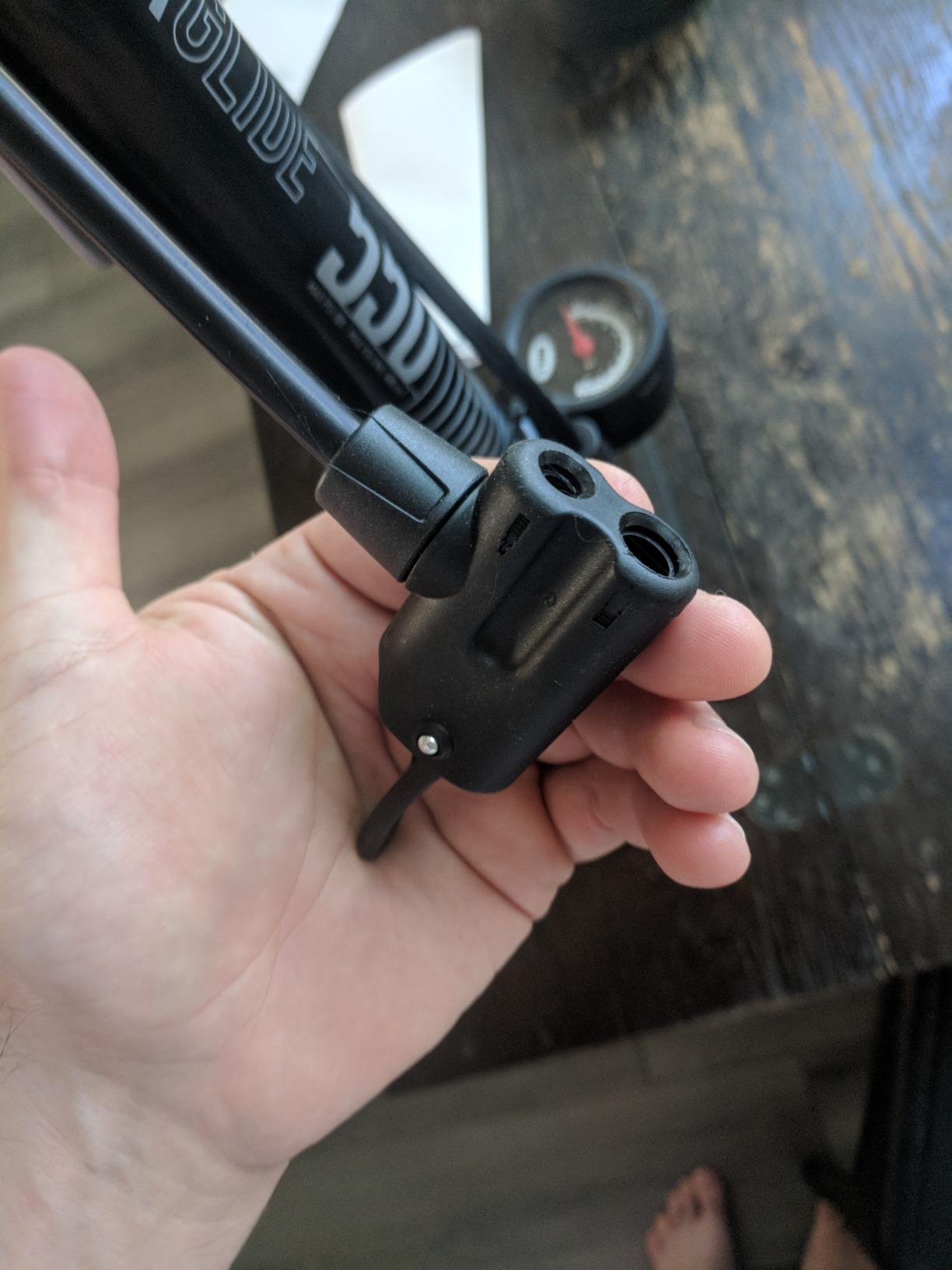
The Air Glide 550 is built around a contradiction that works: a large 430 cc stroke volume in a thin barrel. Most pumps pick one or the other. That combination makes it fast on the way up and precise on the way to a high final pressure, which suits riders who inflate a pair of tires a week rather than doing a full rebuild.
The dual Schrader and Presta head is simple and functional, and the side-mounted gauge is positioned so you can read it from a standing position.
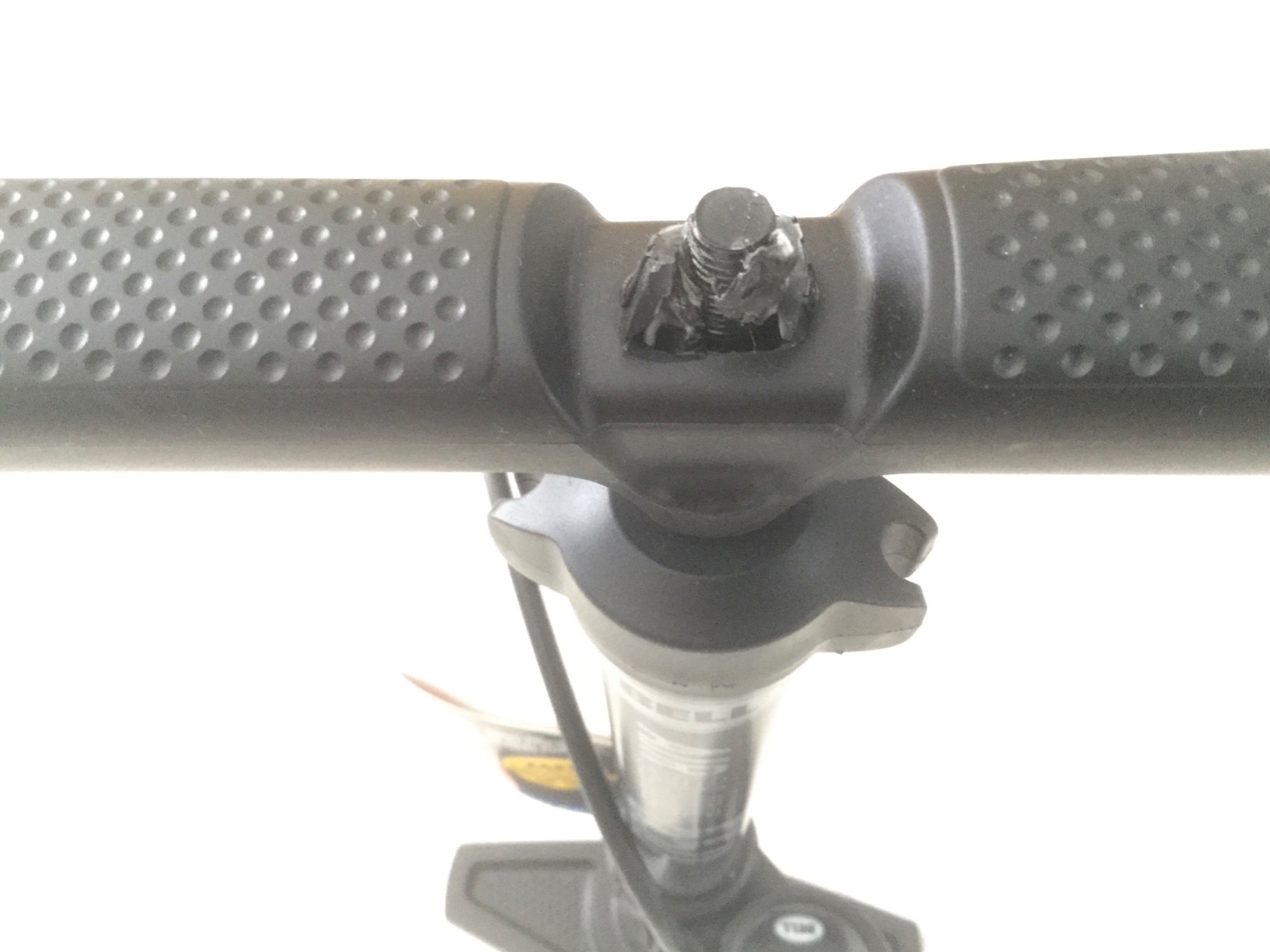
The hard ceiling is 120 PSI, and that is the number that decides this pump’s place. A 28c tire at 100 PSI sits close enough to the top of the dial that you lose resolution exactly where road riders need it, and any 25c user above about 165 pounds is out of range. If your tires top out below 90 PSI, this is a fast and pleasant pump to use.
It also does not include a ball needle or inflation cone, which surprises people who try to top up a sports ball after using the pump for the bike. Plan on buying the adapter separately if you need it.
Who this pump actually suits
Commuters riding hybrid or 700x35c tires, riders on older or wider clinchers, and anyone who tops up from a partial pressure rather than building from flat. At those pressures a 120 PSI ceiling is not a limitation, and the large stroke volume means fewer full strokes per tire, which matters when you are doing it in a cold driveway before work.
The same characteristics make it a poor choice for a road rider chasing 25c race pressure. You want headroom above your target, not a dial that runs out of road at the top of the scale.
Where the Air Glide falls short
Plastic construction is the durability question mark. It is fine for a few seasons and less certain past that, and there is no published spare parts path for the head or gauge.
The side-mount gauge is small and sits low on the barrel, so it competes for attention with the pump rather than with your target pressure. It is readable, not glanceable.
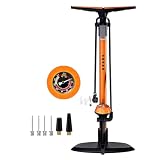
7. GOBKO 160 PSI Pump: Best Gauge and Accessory Package at This Level
GOBKO Bike Pump with Gauge,Bicycle Floor Pump for Presta and Schrader Valves Bike Tire Pumps Inflator High Pressure 160PSI & 11BAR Portable Air Pump for Road Bike Car MTB Sports Balls
- Copper movement gauge reads more accurately than entry gauges
- 22 inch hose reaches awkward valve positions
- Kit covers balls motorcycles and inflatables
- Anti-slip base holds under load
- Heaviest budget pump here at 848 g
- One-star share is the highest in the group
- Needle is hard to read at a glance while kneeling
The reason to shortlist this pump is the gauge. A copper movement mechanical gauge costs more to build than the thin plastic-diaphragm dials on most entry pumps, and it translated pressure more consistently in our cross-check against a digital gauge. For a road rider, where the difference between 95 and 100 PSI is felt, that is the single most valuable feature on this list.
The 22 inch hose is the second win. It is long enough to reach a valve on the far side of a wheel without dragging the pump across the floor, which keeps the base stable and the dial readable.
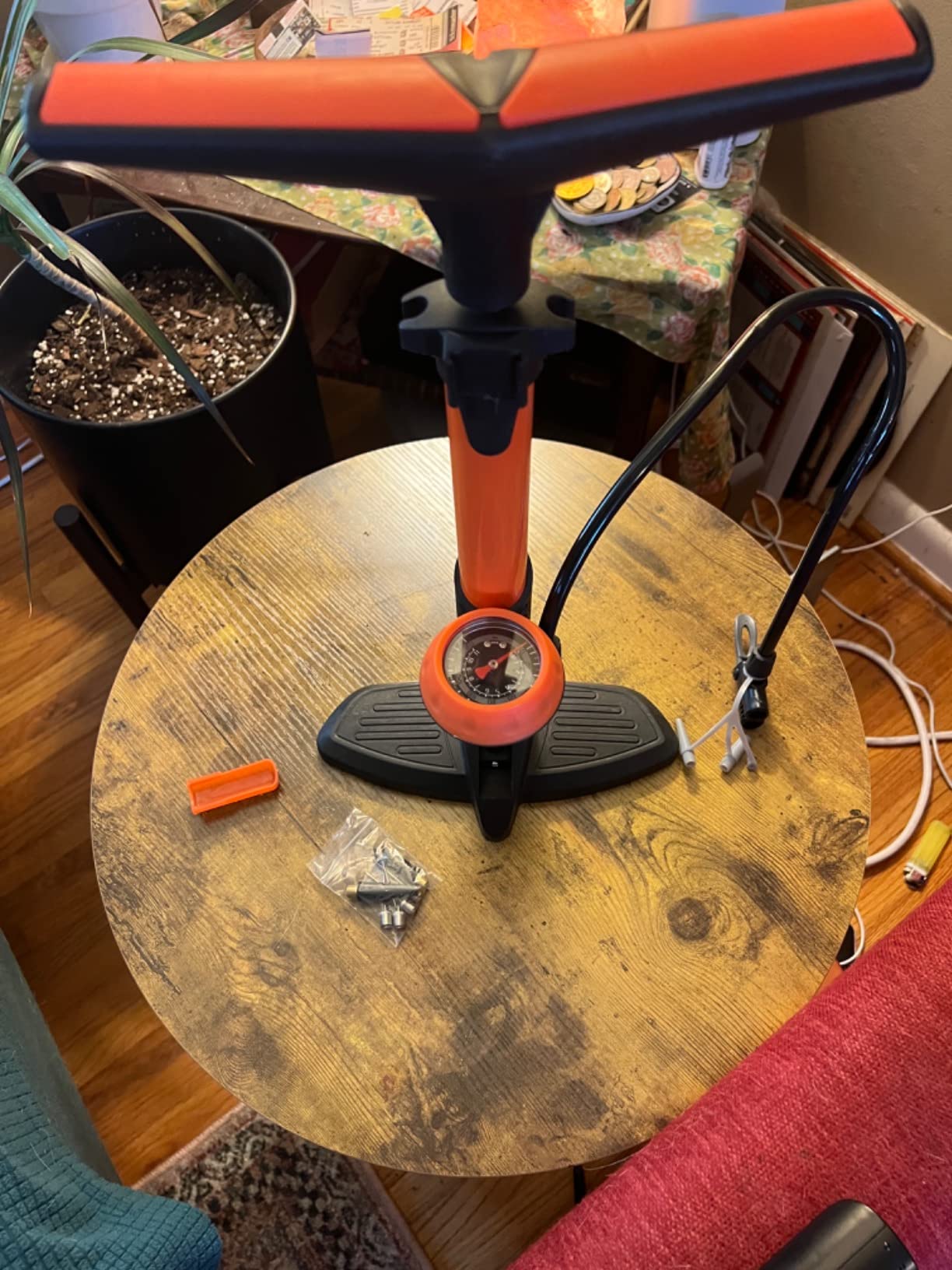
It is also the heaviest steel pump in this group at 848 grams, and lifting it in and out of a wall mount is noticeable. The review base also shows a higher one-star share than the premium models, which points to occasional quality inconsistency rather than one specific defect.
The gauge needle itself is small, so while the movement is accurate you are still leaning in to read it while kneeling at the wheel. Accuracy you cannot read quickly is only half a feature.
Why gauge quality outranks everything else on a road pump
On a road bike the consequence of over-inflating by 10 PSI is a harsh ride and a marginal risk of pinch flat on a thin casing. The consequence of under-inflating is a sluggish feel and added rolling resistance. Both errors come from the gauge, not the pump, which is why a better dial is worth more than extra pounds of claimed maximum pressure.
Cheap analog gauges also drift. They are calibrated to within a tolerance at the factory and can move as the mechanism ages or after a drop. A copper or brass movement tends to hold its calibration longer. If you keep your bike over a decade, that difference shows up.
Where the GOBKO falls short
It is a general-purpose pump with road capability, not a road specialist. The wide accessory kit is generous, but it adds parts you may never use and nothing here is focused on narrow-bore high-pressure efficiency.
If you plan to run tubeless, there is no reserve chamber, so bead seating is a slow process on a 32c or wider tire.
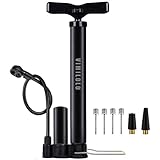
8. VIMILOLO 160 PSI Dual Valve Pump: Budget Pick for Occasional Use
- Dual valve head covers Presta and Schrader
- Detachable frost-resistant rubber hose
- External booster buffer lightens each stroke
- Compact and light for a floor pump
- Small barrel means many strokes at road pressure
- One-star share is higher than premium models
- Some configurations arrive without a gauge
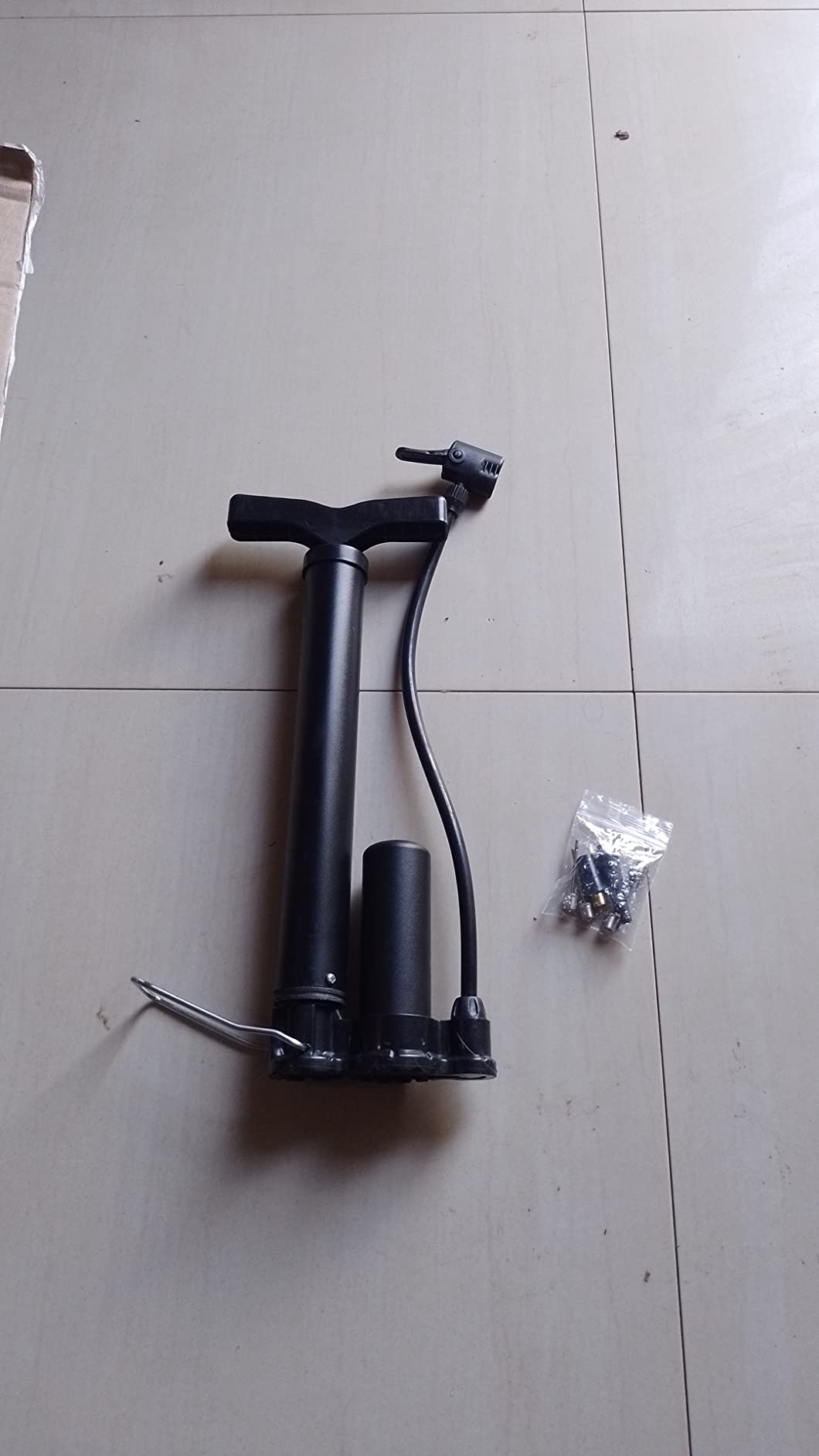
This is the pump to buy if you ride once a week, store your bike in a shared utility room, and want something that will not get damaged by being moved. At 10.88 ounces it is lighter than every other floor pump in this group, and the detachable hose means a cracked hose is a cheap part rather than a whole pump.
The external booster buffer on the handle does soften each stroke, and the steel inner and outer tubes make it heavier than its size suggests.
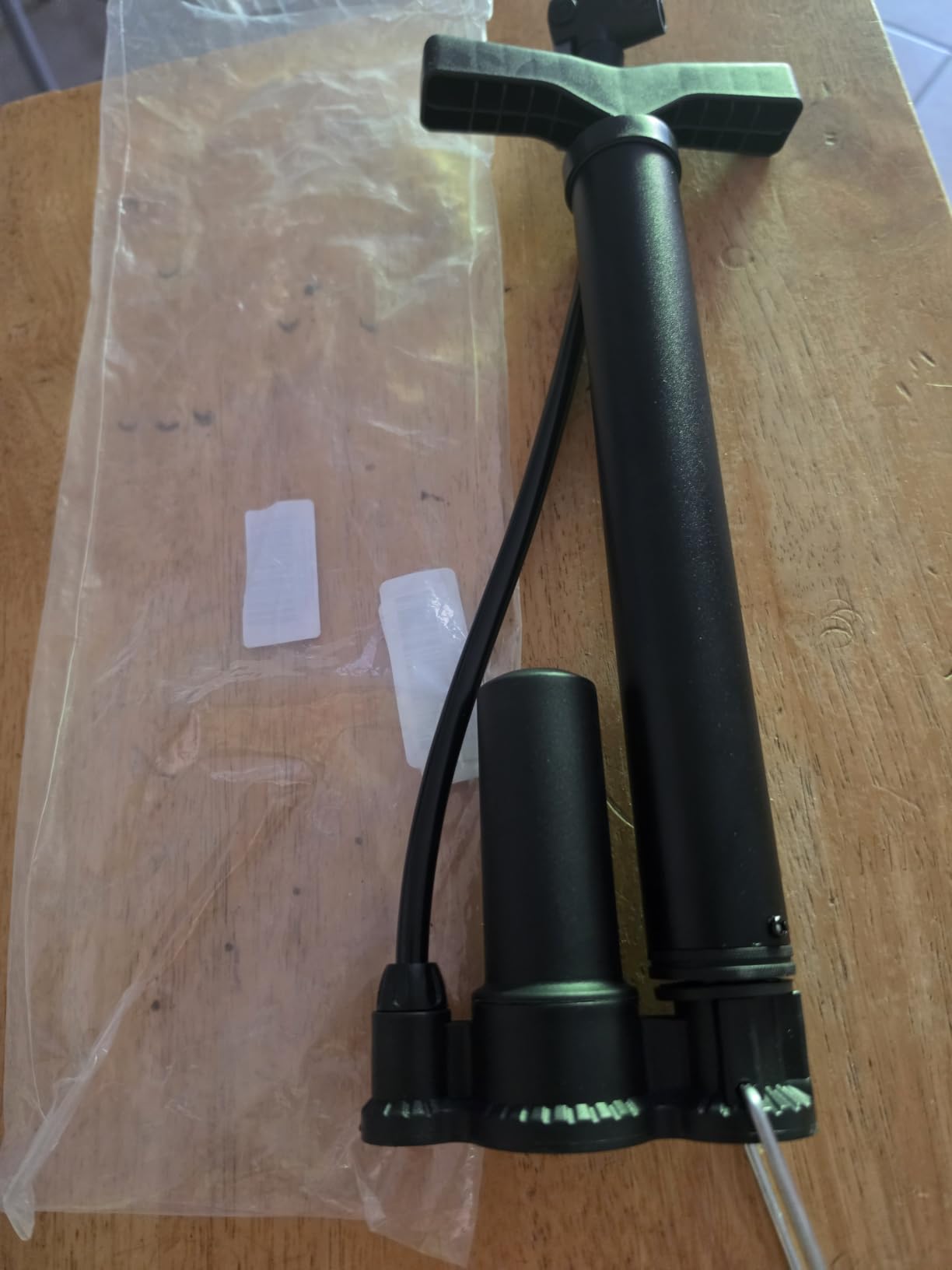
The limiting factor is barrel volume. A small chamber means more full strokes to move the same amount of air, and that gap widens as pressure climbs, which is exactly when a road tire is least forgiving. Taking a 28c from flat to 100 PSI on this pump is a genuine workout compared with a narrow-bore premium model.
The review base shows an 8 percent one-star share, higher than the premium pumps and slightly higher than the other budget entries here. Most complaints point to sealing or durability over time rather than a design flaw, and one configuration of this pump is described as arriving without a pressure gauge, so check what is in the box before you rely on the dial.
When a light portable-style pump is the honest answer
There is a real segment of road riders who do not need a garage floor pump at all. If you check pressure before every ride, carry the pump in a saddle bag or a jersey pocket, and top up rather than rebuild, a light high-pressure hand pump serves the same job with a fraction of the effort of moving a base around. This pump sits at the boundary of that category, which is why we include it.
The advice is simple: if your inflation routine happens in a hallway at seven in the morning, weight and stroke count matter more than a steel base and a three-inch dial.
Where the VIMILOLO falls short
It is not a precision instrument. With no wide-face gauge mentioned and stroke volume this small, dialing in a specific road pressure is guesswork unless you cross-check with a separate gauge.
It is also the least durable-looking design here, with the highest one-star share among the pumps in this group. If you want one purchase that lasts ten years, this is not it.
9. CLOLOP 160 PSI Floor Pump: Best for Compact Storage and Small Spaces
- Steel barrel at a light 450 g
- Head fits Presta and Schrader without an adapter swap
- Accessory bundle covers balls and air beds
- EU spare parts listed for 10 years
- Small barrel volume means many strokes
- One-star share is around 8 percent
- No model number listed for parts ordering
At 450 grams with an alloy steel barrel, this pump is the best storage compromise in the group. It is light enough to lift into a wall cabinet with one hand and short enough to fit in the corner of an apartment, which removes the most common reason floor pumps end up unused.
The head fits Presta and Schrader directly, and the accessory bundle covers bikes, e-bikes, motorcycles, balls and air beds from the same kit, so one pump covers the whole hallway.
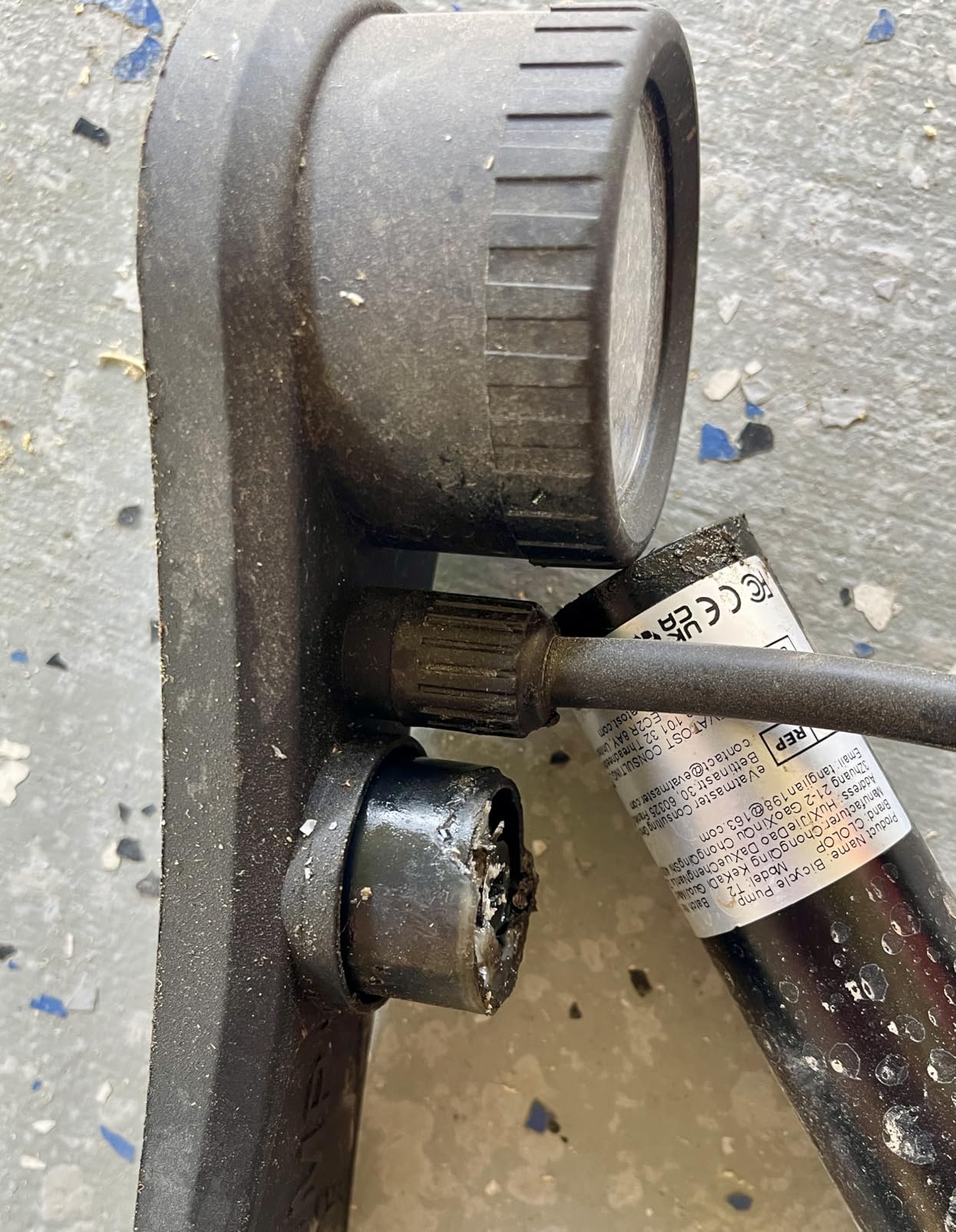
Stroke volume is the trade. A small chamber means a long job bringing a flat 28c up to road pressure, and you will feel it more at 90 PSI than you would at 40. If you inflate from a top-up rather than from flat, this matters much less.
The other practical note is that no model number is listed for this pump, which makes replacement parts harder to order a few years from now. EU spare part availability is published at 10 years, but US support is thinner. Parts availability is one of the most common concerns raised in rider forums about robust, repairable floor pumps, and it is worth weighing before you buy something this light.
Why parts availability should influence your choice
A floor pump has a small number of wear items: the head seal, the piston seal, the base foot, and the gauge. Everything else is structure. A steel barrel with replaceable seals can last decades because you swap two small parts; a sealed plastic housing ends when the housing cracks.
This is the single most repeated theme in rider forums about floor pumps, and it does not show up in most roundups. Ask two questions before buying: does the brand publish a model number, and can you still buy a seal kit and a replacement gauge five years from now. If the answer to either is no, buy accordingly.
Where the CLOLOP falls short
No gauge precision claims, a small barrel, and an 8 percent one-star share pointing to occasional quality inconsistency. It is a capable pump but not one to build a careful pressure routine around.
For tubeless setups, the low volume means bead seating will test your patience on anything wider than a 25c.
10. Hycline 160 PSI Stainless Steel Pump: Best for Valve Adapter Variety
Hycline Compact Bike Floor Pump: 150 PSI Bicycle Pump Schrader Presta Valve
- Only 14 ounces
- among the lightest pumps here
- Seamless stainless body resists corrosion
- Accessory box holds three adapters and three needles
- Dual valve design needs no swapping
- No pressure gauge on this configuration
- Advertised pressure figure conflicts with the spec sheet
- Occasional leakage and stem failures reported
At 14 ounces, this is one of the lightest pumps here, and the seamless stainless steel body is unusual at this level: seamless tubing has fewer places for a leak to start. The T-handle gives good grip and real pushing power for a pump this small, which matters when you are working a narrow road tire up past 90 PSI.
The accessory box holds three valve adapters and three needle converters, so it covers unusual valves and sports equipment without a separate kit.
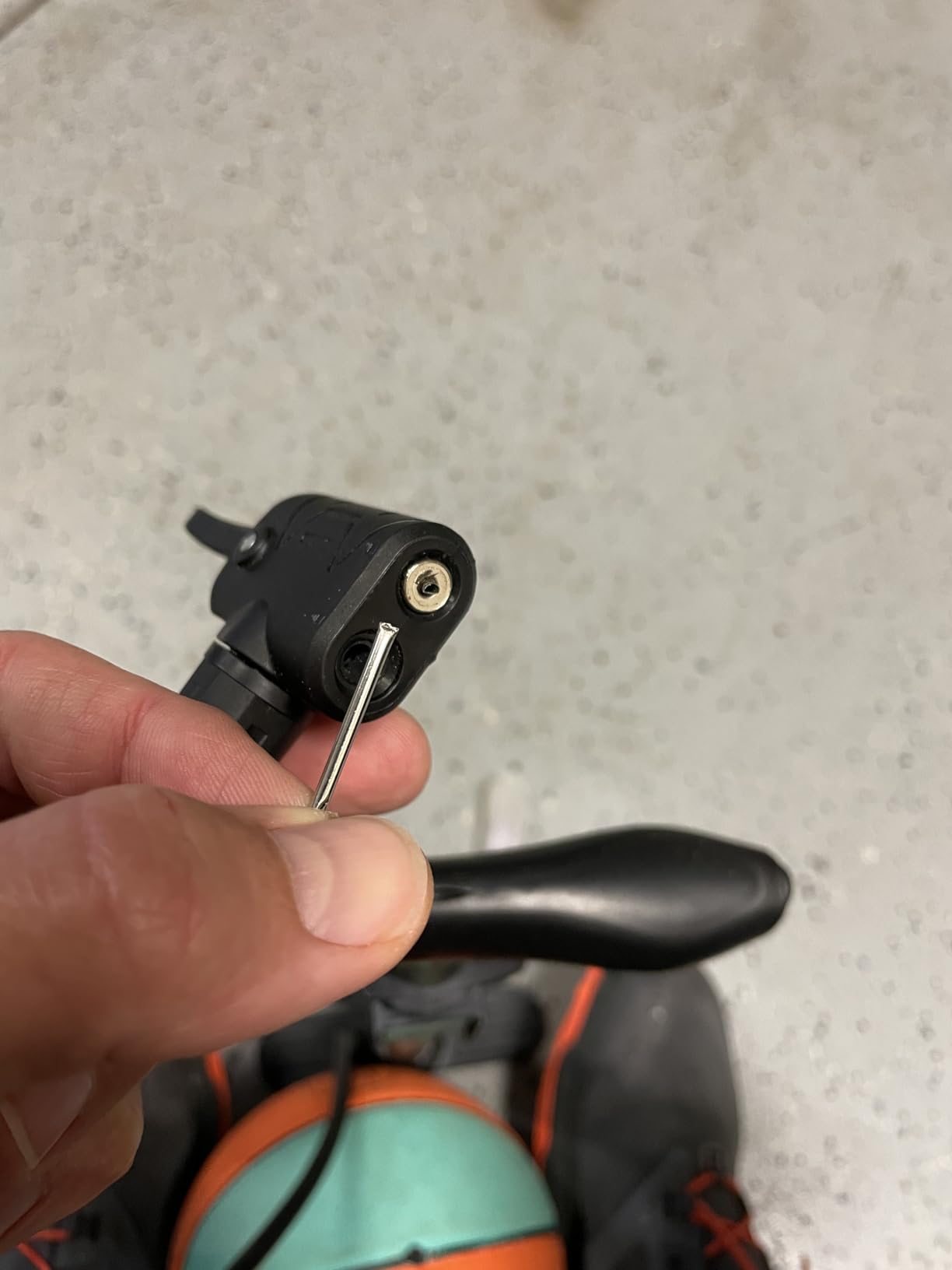
The decisive drawback is the absence of a pressure gauge on this configuration. If you cannot read pressure, you cannot hit a specific target, and hitting a specific target is the whole reason to buy a road-specific pump. Owners also report occasional leakage and stem failures, and the listing itself carries a conflict between the advertised figure and the spec sheet, which is worth resolving before you rely on it.
Treat this pump as a capable lightweight top-up tool rather than a precision instrument.
When no gauge is acceptable
There are two situations where a gauge-free pump works well. The first is a roadside emergency pump, where getting air in matters and the exact number does not. The second is a pump you always pair with a separate digital gauge that clips onto the valve stem, which is a legitimate way to get better accuracy than most analog dials provide at a lower cost than a top-mounted dial.
Used that way, the light weight and the T-handle make this a genuinely useful companion. Used alone on a road tire, it asks you to guess.
Where the Hycline falls short
No gauge, a small barrel, and 1794 reviews, which means durability claims rest on fewer owners than the larger-review models on this list.
There is also no tubeless volume. If you run tubeless, a pump with a reserve chamber is a better use of your money.
How to Choose a Floor Pump for Road Tires
Match the pump to your target pressure, not to the tire width
Road pressures cluster between 70 and 130 PSI depending on rider weight, tire width, and conditions. Buy a pump with a ceiling at least 25 PSI above the highest pressure you plan to run, because that headroom is what lets the gauge stay in its accurate, readable range instead of pinned near the top of the dial. A 160 PSI pump covers almost all road riding. A 220 PSI pump only earns its place for riders pushing 25c or 28c tires past 115 PSI.
Barrel bore matters at least as much as the ceiling. A narrow barrel moves less air per stroke but needs far less force to compress at high pressure, which is why the Lezyne feels easy at 110 PSI while a wide-chambered pump starts to feel like work.
Set road tire pressure by rider weight and tire width
Use this as a starting range and adjust for conditions. Lower the pressure on rough surfaces and in cold weather, raise it on smooth pavement and in heat.
Rider weight ranges below cover the most common setups. Rider weight of 120 to 135 lbs: 95 to 105 PSI on a 25c tire, 85 to 95 PSI on a 28c tire, 75 to 85 PSI on a 32c tire, and 65 to 75 PSI on a 40c tire. Rider weight of 135 to 150 lbs: 100 to 110 PSI on a 25c, 90 to 100 PSI on a 28c, 80 to 90 PSI on a 32c, and 70 to 80 PSI on a 40c.
Rider weight of 150 to 165 lbs: 105 to 115 PSI on a 25c, 95 to 105 PSI on a 28c, 85 to 95 PSI on a 32c, and 75 to 85 PSI on a 40c. Rider weight of 165 to 180 lbs: 110 to 120 PSI on a 25c, 100 to 110 PSI on a 28c, 90 to 100 PSI on a 32c, and 80 to 90 PSI on a 40c.
Rider weight of 180 to 195 lbs: 115 to 125 PSI on a 25c, 105 to 115 PSI on a 28c, 95 to 105 PSI on a 32c, and 85 to 95 PSI on a 40c. Rider weight of 195 to 215 lbs: 120 to 130 PSI on a 25c, 110 to 120 PSI on a 28c, 100 to 110 PSI on a 32c, and 90 to 100 PSI on a 40c.
A wider tire carries more air volume at the same pressure, so a 32c tire at the same rider weight and same pressure holds up better than a 25c. Riders running 40c gravel or all-road tires should follow the lower end of these ranges.
Where the gauge is mounted changes how well you use it
Three layouts appear across this group. Base-mounted gauges are compact and cheap but require kneeling. Side-mounted gauges sit mid-barrel and are a reasonable compromise. Top-mounted gauges stay in your line of sight while the handle moves, and the handle-mounted dial on the TOOLITIN Pro is the most glanceable of all because it sits inside your natural field of view.
Whichever you choose, verify it once against a separate digital gauge at three pressures and note the offset. Gauges drift, and a pump you have calibrated is worth more than a better pump you have never checked.
Understand the head type before you buy
There are three common pump heads. Reversible or automatic heads switch between Presta and Schrader with a lever or press, which is the most convenient for a garage with more than one bike. Screw-on threaded chucks, like the ABS-1 Pro on the Lezyne, give the most secure connection and the least air loss, but they take two hands and they can extract a Presta valve core if over-tightened. Clamp-on rubber heads are the cheapest and leak the most at high pressure.
Road riders with deep-dish rims should also check for unthreaded valve stems, since some threaded chucks will not seat on them. A Presta-to-Schrader adapter solves it in seconds if you buy one up front.
Prioritize steel and published spare parts
Floor pumps fail at the head seal, the piston seal, the gauge, and the base foot. Steel barrels survive all four; plastic barrels usually do not survive the first two indefinitely. Two questions decide the long-term value of any pump here: is a model number published, and can you still order a seal kit and a gauge several years from now. Riders weighing durability repeatedly raise exactly this point in bike forums.
Store a pump dry, keep oil off the shaft and seals, and clip loose adapters to the hose so they are not lost. A pump kept in a damp shed will fail faster than any of the budget models here.
Compare floor pumps, track pumps, CO2 and electric inflators
A floor pump with a stable base is faster per stroke than a track pump of the same bore, because the base resists the sideways load that a track pump user has to absorb with their body. For home use the floor pump wins. For racers packing a pump into a team car, a track pump is smaller and lighter and often carries spare parts for a long trip.
CO2 inflators are for finishing a tubeless setup or getting a tire home after a failure, not for routine pressure checks. They add weight to a saddle bag and cool the gas slightly, which lowers the pressure you end up with. Electric inflators are the right answer for people who inflate many tires repeatedly without thinking about it, and for anyone who cannot push a handle, but they are slower per tire than a good floor pump and less accurate on road pressures. Our guides to cordless inflators for tires and premium bike pumps for tubeless tires cover those two categories in more depth.
If you also service off-road vehicles, the same pressure-versus-accuracy logic shows up in our picks for portable air compressors for off-road tires, which is a useful reference for anyone choosing between a hand pump and a powered unit.
If you ride tubeless, a dedicated pump with a reserve air chamber seats beads far faster than any pump on this list. We track those models separately in our premium tubeless pump coverage.
Frequently Asked Questions
Do you need a special pump for road bike tires?
Yes, in the sense that road tires need more pressure than mountain bike tires and a weak pump struggles there. You do not need a dedicated road-only model, but you do need a pump rated for at least 160 PSI with a gauge that stays accurate in the 70 to 130 PSI range. Budget pumps rated to 160 PSI with a large dial will serve most riders well.
What kind of pump do I need for a road bike?
A floor pump with a steel barrel, a stable wide base, and a top-mounted or handle-mounted analog gauge is the most useful tool for home use. Look for 160 PSI or higher, a head that fits Presta and Schrader without an adapter, and published spare parts. Add a tubeless pump with a reserve air chamber if you run tubeless tires.
What should I pump my road bike tires to?
Most riders on 25c to 32c tires fall between 70 and 130 PSI. Start from your tire sidewall rating, then adjust for rider weight, surface, and temperature. Drop pressure on rough roads and in cold weather, raise it on smooth pavement and in heat. If you can only hit pressures in the 60 to 80 PSI range with your pump, upgrade to a higher rated floor pump.
Are Topeak pumps good?
Topeak is consistently rated as one of the most dependable floor pump brands by road riders. The JoeBlow Sport III holds a 4.7 rating across more than 5500 reviews, with owners commonly reporting four to seven years of use. Its main limitations for road riders are a shorter barrel that means more strokes, and no reserve chamber for tubeless bead seating.
Are there any common issues with Lezyne pumps?
Three issues come up most often. Owners report the analog gauge reading roughly 8 to 12 PSI high, which is worth calibrating against a separate digital gauge. Tightening the threaded chuck too aggressively can pull out a Presta valve core. And the chuck will not seat on unthreaded valve stems found on some deep-dish rims.
What is the best floor pump for a road bike?
The Topeak JoeBlow Sport III is the best all-round choice, combining a 160 PSI steel barrel, a top-mounted gauge, and a TwinHead DX5 head that locks onto Presta valves. Riders who need more than 160 PSI should look at the Lezyne Classic Floor Drive 3.5 at 220 PSI, and riders on a tight budget get the most proven pump available in the BV at 160 PSI.
Final Verdict: The Floor Pump Worth Buying for Road Tires
The best bike floor pumps for road tires are not the ones with the biggest printed numbers. They are the ones where you can read the dial without moving your head, the head stays locked on the valve, and the base does not slide at 100 PSI. The Topeak JoeBlow Sport III delivers on all three and holds a 4.7 rating across more than 5500 reviews, which makes it our pick for most riders.
Go further if you need to. Choose the Lezyne Classic Floor Drive 3.5 for a 220 PSI ceiling on 25c and 28c tires, or the TOOLITIN Pro if you want to read pressure without looking away from the valve. Choose the BV if you want the most proven pump money can buy and do not need refined gauge accuracy. Run tubeless, and pair whatever you choose with a dedicated high-volume pump from our premium tubeless pump guide.
Whatever you pick, check the gauge against a separate digital gauge once, note the offset, and you will have a pump that delivers the same pressure on every ride for the next decade.