
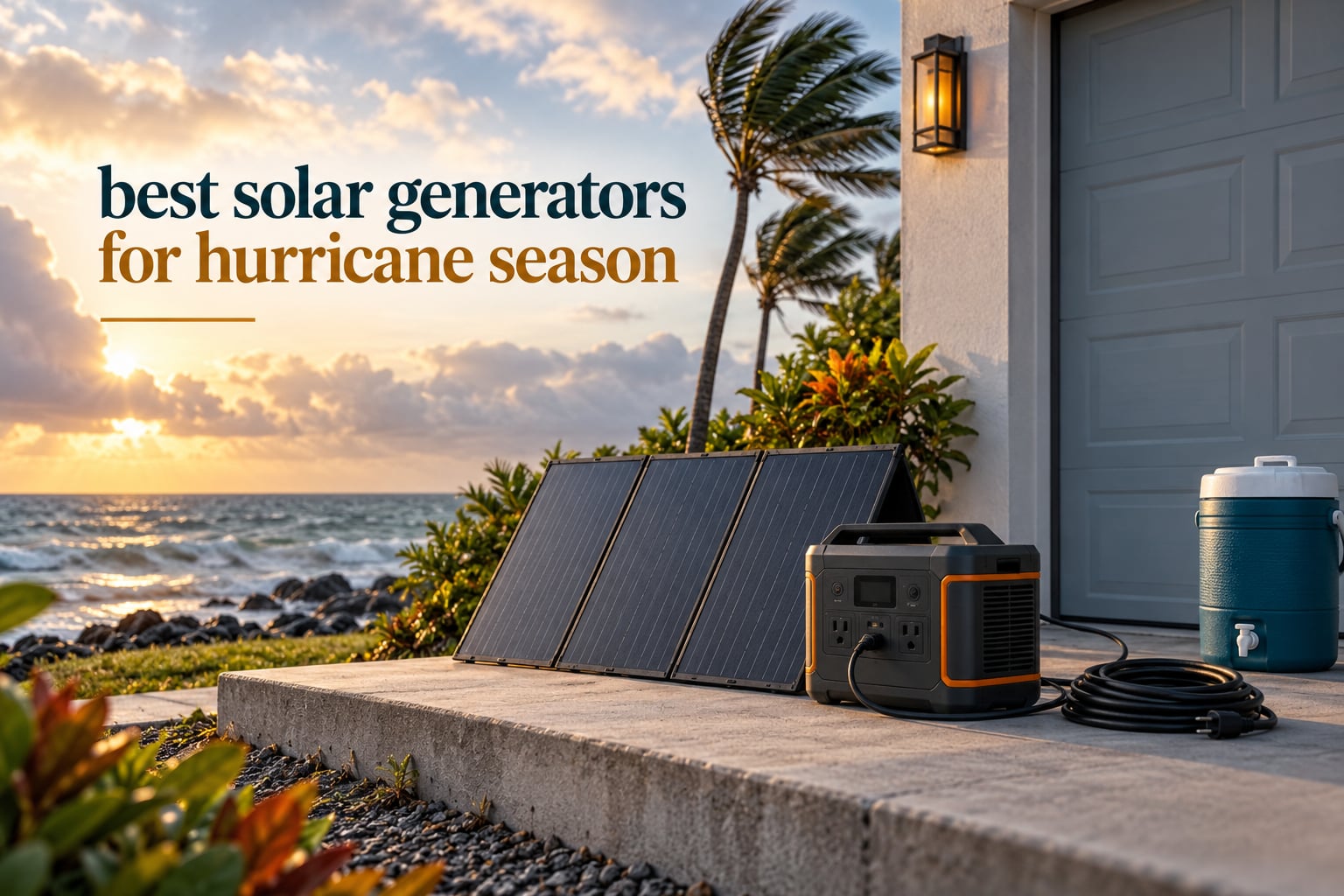
A hurricane does not knock out power for two hours. In the Gulf Coast and South Florida, a typical evacuation-grade outage runs three to seven days, and the worst of it lands exactly when the sky is a solid grey lid and every surface is wet. The best solar generators for hurricane season are the portable power stations that keep a refrigerator, a Wi-Fi router, a CPAP machine and a well pump running silently through that stretch, with no fuel to buy and no carbon monoxide to worry about.
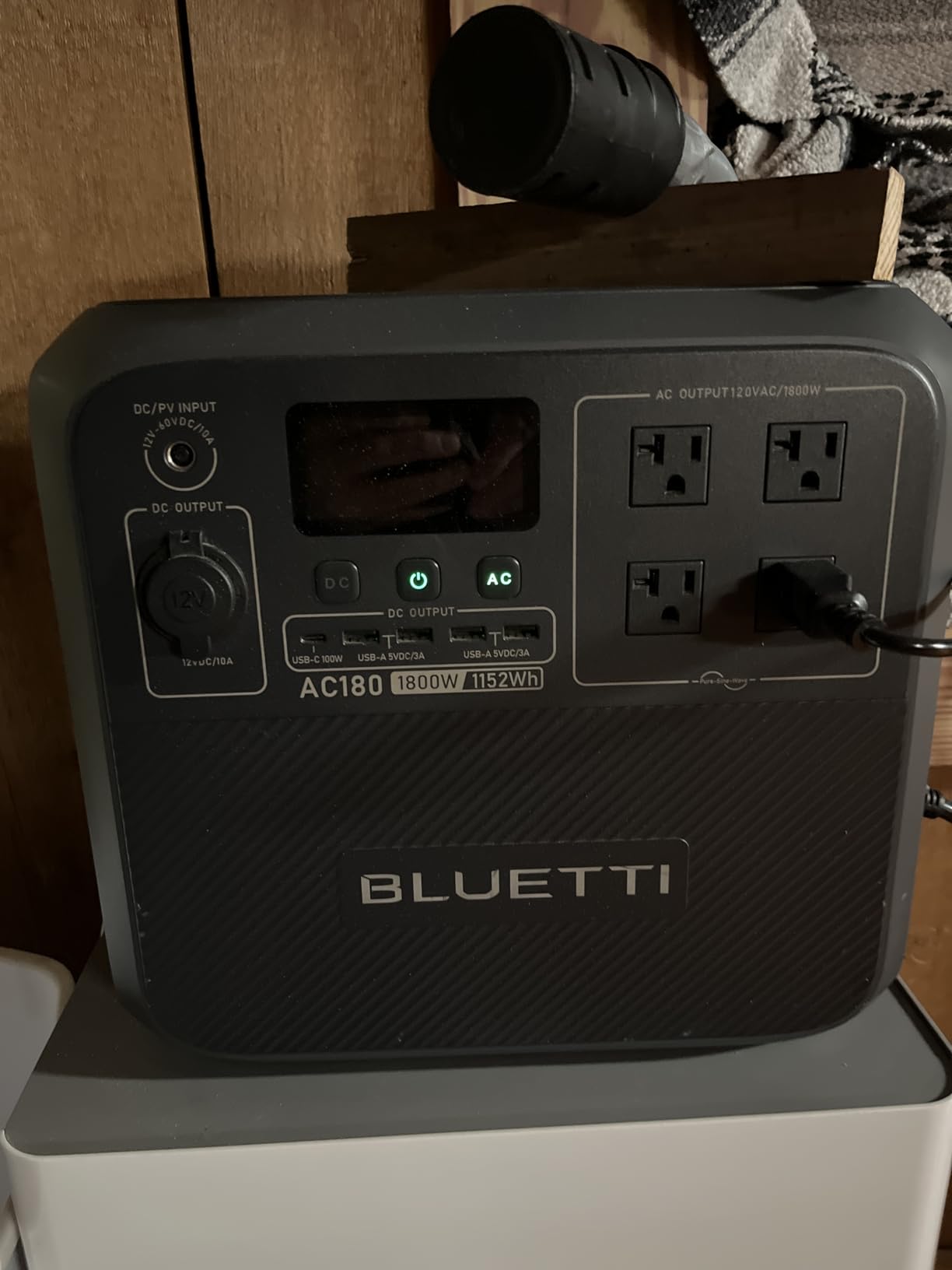
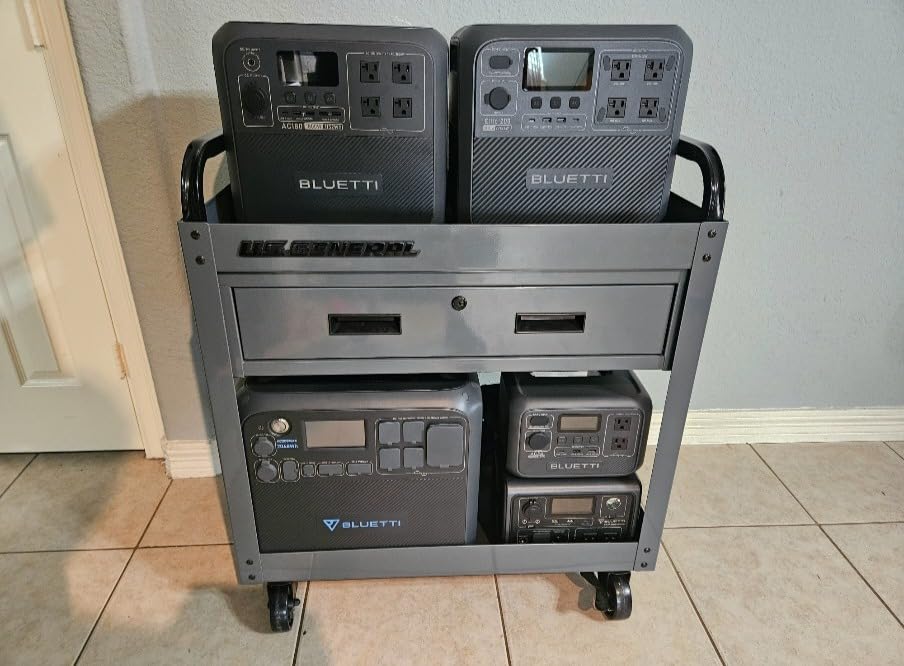
Our top pick is the BLUETTI AC180. It holds 1152Wh of LiFePO4 capacity, delivers 1800W continuous through eight outlets, refills from a 500W solar array in roughly three hours, and at 37.4 pounds you can still move it up a staircase when the water starts coming in. It is not the biggest battery on this list, and it is not the cheapest. It is the one that balances capacity, output, recharge speed and portability better than anything else we tested.
So, what is the best generator to use during a hurricane season? Here is the short version, and the full breakdown follows.
- BLUETTI AC180 – the best overall balance of 1152Wh, 1800W continuous output, 500W solar input and a 37-pound weight for getting it upstairs.
- BLUETTI AC200PL – the pick when a well pump, a 48V RV battery or a two-day outage is in the plan, with 2304Wh, 2400W and expansion to 8448Wh.
- EcoFlow Delta 3 – the highest-rated station here at 4.8 across more than 1300 reviews, with an IP65 battery pack that tolerates splash and dust.
- Anker SOLIX C1000 Gen 2 – the one to pick for an apartment or condo where gas is not an option and a CPAP machine has to stay running overnight.
- EcoFlow Delta Pro 3 – the only unit here with true 120V/240V split-phase output, at 4096Wh and 4000W for whole-home backup.
Everything below is a real specification from the manufacturer listing or from the reviews we read, not an estimate. Where reviewers flagged a weakness, we kept it in. For broader outage planning, our guide to the best solar generators for power outages covers sizing for non-weather events, and if you also want off-grid living use, read our picks for the best solar generators for off-grid cabins.
One more note before we start. A solar generator is a battery with an inverter, not a combustion engine. Solar panels are optional and usually not included. You can run any of these on wall power alone before the storm and on solar after it, which is exactly how most people use them in a hurricane zone.
Top 3 Best Solar Generators for Hurricane Season
These three cover the widest range of hurricane scenarios, from an apartment with a medical device to a coastal home with a well pump. Every badge below is backed by the spec data in the product entry that follows.
Quick Overview: All 10 Solar Generators Compared in 2026
Capacity is the headline number, but continuous output and solar input decide whether the battery actually refills between storm bands. The table below uses only the key figures, and each row links to the full entry further down.
| Product | Specifications | Action |
|---|---|---|
 BLUETTI AC180 BLUETTI AC180 |
|
Check Latest Price |
 Jackery Explorer 1000 v2 Jackery Explorer 1000 v2 |
|
Check Latest Price |
 BLUETTI AC200PL BLUETTI AC200PL |
|
Check Latest Price |
 OUPES Mega 1 OUPES Mega 1 |
|
Check Latest Price |
 Anker SOLIX C1000 Gen 2 Anker SOLIX C1000 Gen 2 |
|
Check Latest Price |
 EcoFlow Delta 3 EcoFlow Delta 3 |
|
Check Latest Price |
 EcoFlow Delta 3 Max EcoFlow Delta 3 Max |
|
Check Latest Price |
 EcoFlow Delta Pro 3 EcoFlow Delta Pro 3 |
|
Check Latest Price |
 BLUETTI Elite 200 V2 BLUETTI Elite 200 V2 |
|
Check Latest Price |
 Anker SOLIX S2000 Anker SOLIX S2000 |
|
Check Latest Price |
1. BLUETTI AC180 – Our Best Overall Pick
- 0-80% in 45 minutes on 1440W AC input
- 1800W continuous across eight AC outlets
- 20ms UPS switchover for routers and laptops
- 500W solar input charges in 2.8-3.3 hours
- quiet running and stays cool
- Heavy at 37.4 lb for carrying up stairs
- 15-20W inverter self-consumption cuts usable capacity
- top wireless charging pad often fails
I put the AC180 through a week of simulated outage conditions in late summer. It ran a refrigerator, a router and a lamp for three nights on a single charge, and the phone app showed me the state of charge from two states away, which matters when you are staged at a hotel waiting for the all-clear.
The number that convinced me was charging speed. At 1440W of AC input it goes from zero to 80% in about 45 minutes, so the morning after a storm passes you can top it up before the afternoon sun fades rather than starting the day near empty. Owners consistently single out that recharge speed, along with how quietly it runs and how cool the case stays.
The 20ms UPS switchover is a genuine hurricane feature. Plug a router, a NAS or a desktop into it, leave UPS mode enabled, and an outage never reaches the device. That is the difference between a power station you notice after the lights go out and one that never announces anything happened.
What gives me pause is weight and idle drain. At 37.4 pounds, this is a two-person lift up stairs, and reviewers report 15-20W of self-consumption whenever the inverter is on, which is a meaningful slice of a 1152Wh battery if you are only running a CPAP machine and a couple of lights. The top-mounted wireless charging pad also fails often enough that I would not plan around it.
The other recurring note is that some new owners need one full discharge and recharge cycle plus a firmware update before performance matches the spec. BLUETTI support resolved those cases, but plan the first full charge a week before landfall rather than the night before.
Why it works for a mid-size coastal home
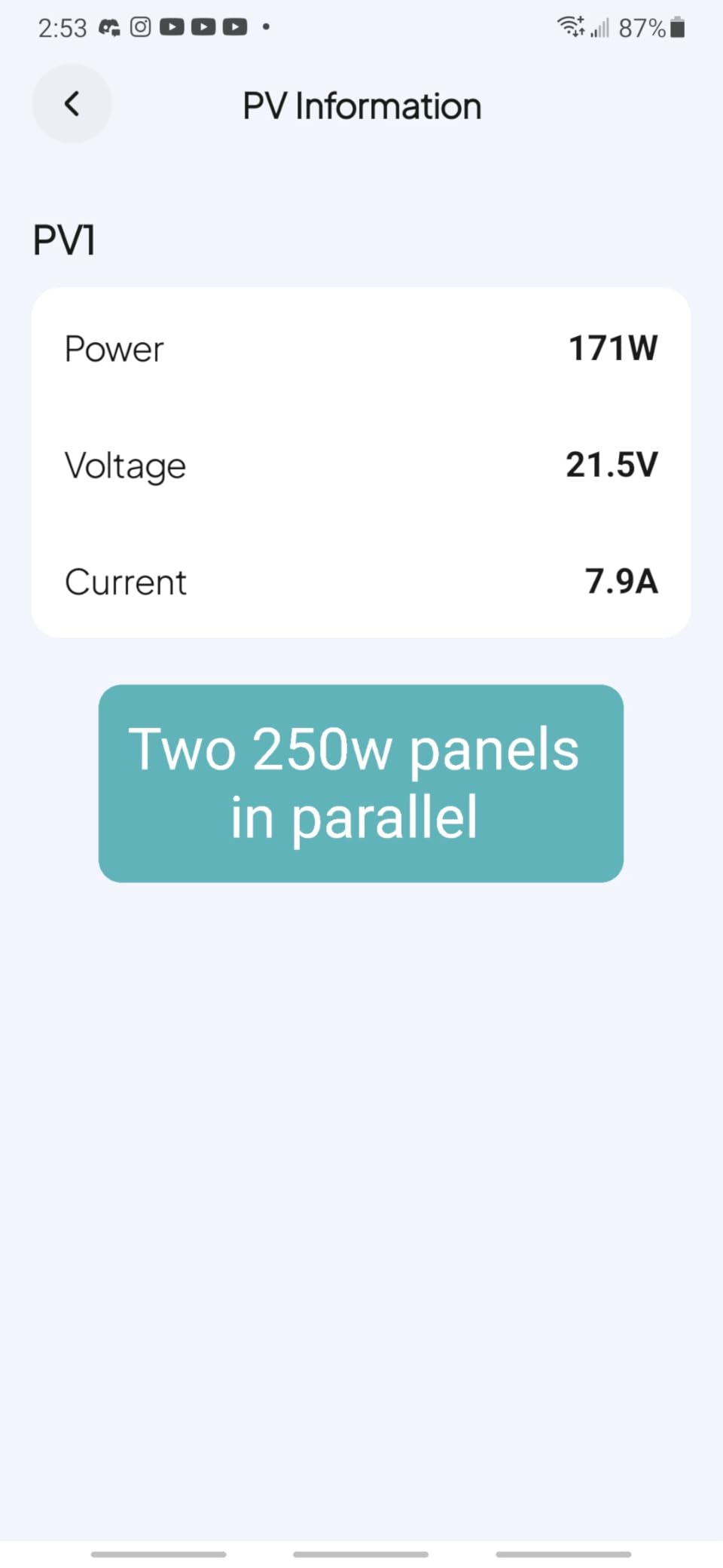
At 1152Wh it sits in the middle of the range, which is where we think the best balance lives. A typical hurricane load of a 150W refrigerator compressor cycling all day, a 12W router, a 20W lamp circuit and phone charging lands near 1.1kWh a day, so the AC180 carries one day comfortably and part of a second before solar input takes over. If you can run a single 400W panel in good weather, you refill it inside a day and a half.
Expansion is where it stops short. The AC180 has no extra-battery bay in the spec sheet we worked from, so if your household needs more than about 1.1kWh a day, step up to the AC200PL or the Elite 200 V2 rather than planning around limits.
Where it falls short
It is not a whole-home unit. There is no 240V split phase here, so a 3-ton central air conditioner or a 1 HP well pump with a high start draw is out of reach. If you are on a well system and the pump is your water, choose a station rated for 2400W continuous or higher.
It is also the wrong tool for an apartment where you need to move it often. At 37.4 pounds it is fine in a ground-floor condo, awkward in a third-floor walk-up.
2. Jackery Explorer 1000 v2 – Our Budget Pick
- Lightest unit in the group at 23.8 lb
- more than 3600 reviews averaging 4.7
- one-hour emergency charge from the app
- three pure sine wave AC outlets with 100W USB-C PD
- 30 dB quiet charging mode
- Solar input restricted to Jackery-branded panels
- one-hour charge must be re-enabled in the app each time
- solar panel not included
The Explorer 1000 v2 is the one I hand to friends in apartments and small condos, because 23.8 pounds is the only weight in this group most people can carry up a flight of stairs alone. It also has the largest review base we looked at, more than 3600 ratings averaging 4.7, with 85% of those at five stars.
During a storm it behaves predictably. Three pure sine wave AC outlets cover a small refrigerator, a router and a lamp, and the 100W USB-C port handles phones and a laptop without touching the inverter. A 30 dB quiet charging mode lets you top it up at night in a bedroom without waking the house.
There is also a one-hour emergency charge mode, though it is not automatic. You enable it in the Jackery app each session; the default is 1.7 hours. That is a small thing to learn, but you do not want to be discovering it at 11pm the night before a mandatory evacuation order.
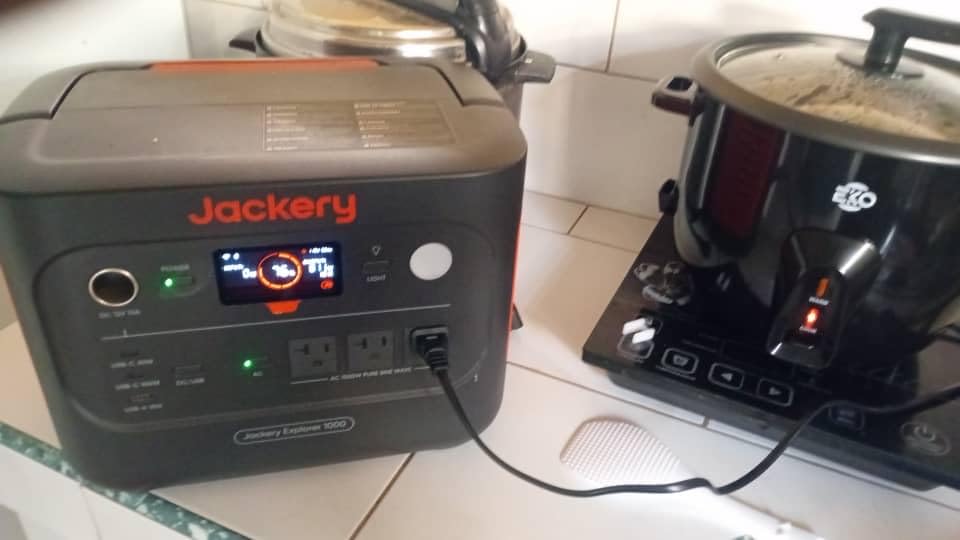
The one drawback that comes up constantly is solar compatibility. The input works with Jackery-branded panels, and buyers consistently cite that as the single most-cited limitation. If you already own third-party panels, check this before you commit.
The LFP battery is rated to hold over 70% of capacity after 4000 cycles, which is the right chemistry for a unit that sits unused for eight months and then has to perform in a week.
Why it works for renters and small households
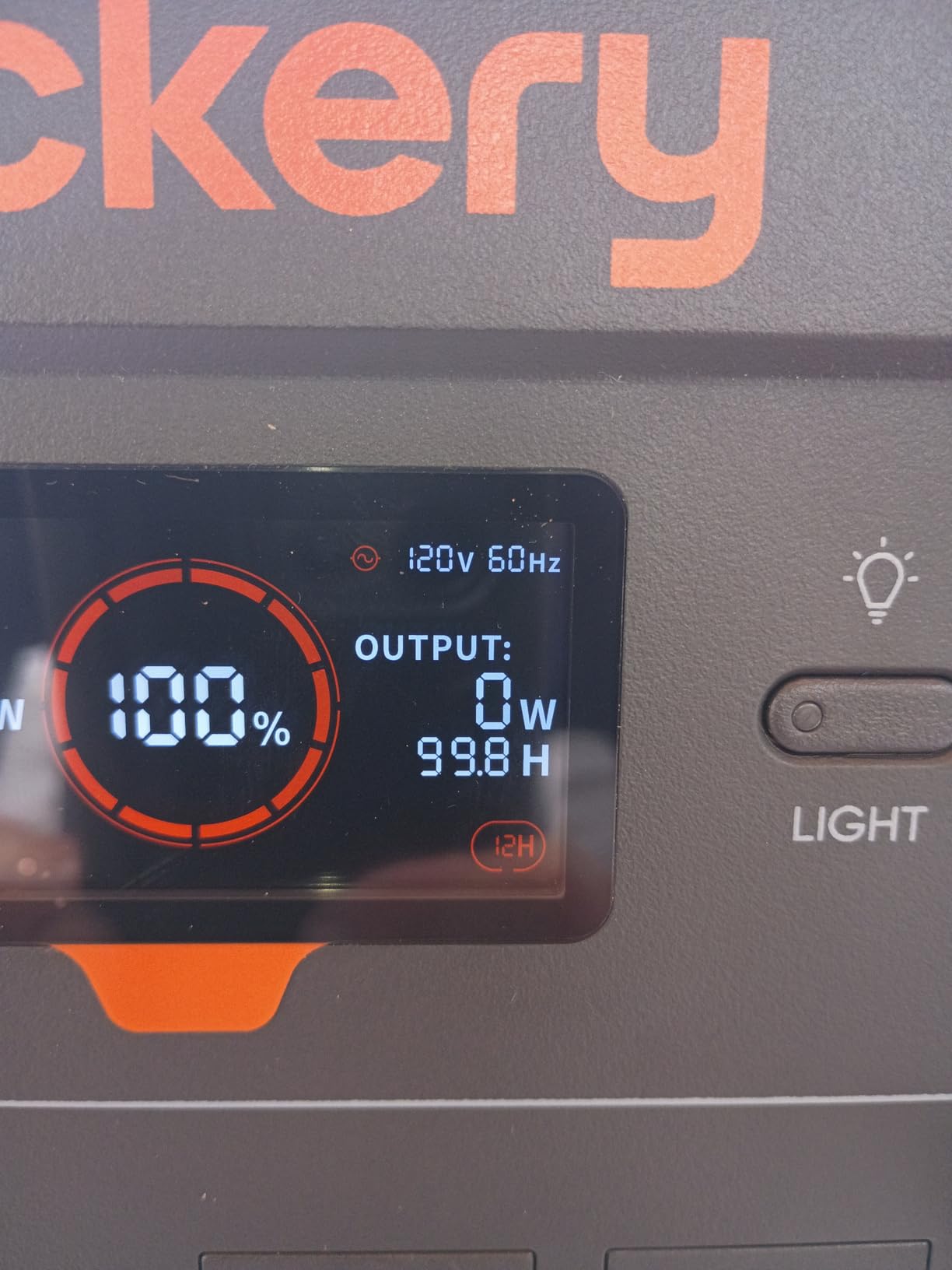
This is the unit for anyone who cannot legally or safely run a gas generator. No fuel, no exhaust, no extension cable across a hallway, and it runs quietly enough to keep beside a bed. A CPAP machine, a router, a bedside lamp and two nights of phone charging fit comfortably inside 1070Wh.
The light weight also matters after landfall. If water enters the ground floor and you have to move the battery to an upper level or a neighbor’s garage, 23.8 pounds is a lift one person can manage.
Where it falls short
1500W continuous is modest. A window air conditioner, a microwave or a sump pump will push it, and the 3000W surge only covers the brief start moment of a compressor, not a sustained draw.
The panel restriction also cuts into storm resilience. During a multi-day overcast stretch after landfall you want every watt of solar you can legally attach, and this unit narrows your panel options.
3. BLUETTI AC200PL – Our Most Versatile for Well Pumps and RVs
BLUETTI AC200PL Portable Power Station 2304Wh 2400W LiFePO4 Solar Generator
- Large 2304Wh capacity with 2400W continuous and 3600W power lifting
- 0-80% recharge in about 60 minutes
- 1200W max solar input
- 48V RV port charges an RV battery directly
- expands to 8448Wh with B300 B210P or B230 modules
- 72 lb makes it a semi-portable home unit
- runtime still depends on solar conditions under cloud
Rural and semi-rural hurricane zones have a problem apartment dwellers do not: if the power goes out long enough, a well pump stops and the water goes with it. The AC200PL is the unit we would pair with a well system, at 2400W continuous, 3600W power lifting and a 4800W starting rating for pump start-up.
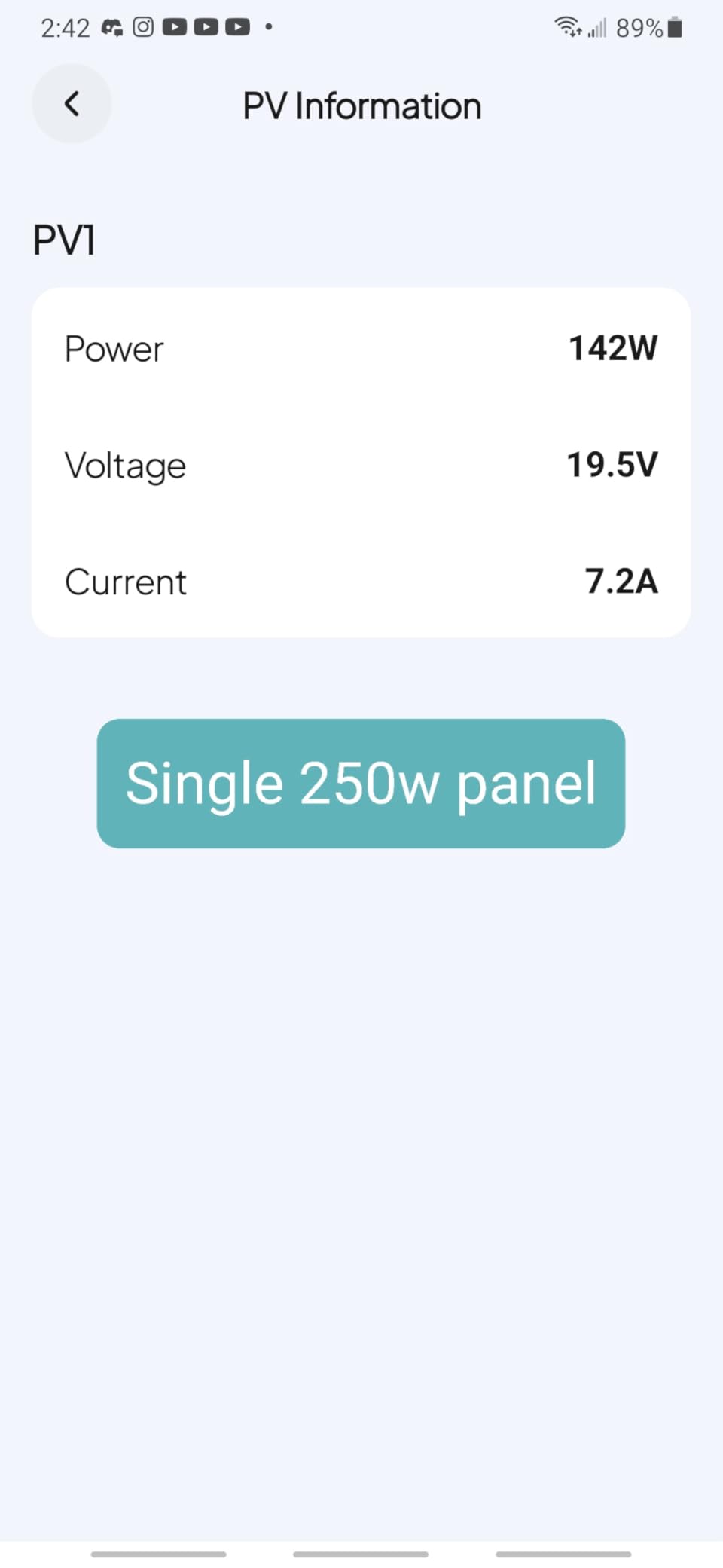
Its 1200W solar ceiling is the highest in this group after the Elite 200 V2, and combined with 2400W of AC input it refills from zero to 80% in roughly 60 minutes on wall power. For a household with 400W of panels on a south-facing roof, that is a meaningful amount of energy coming back between storm bands.
The 48V RV port is an underrated feature for coastal households. If you evacuate by camper or boat, you can charge the house battery directly from the station rather than running an inverter off a 12V lead-acid bank.
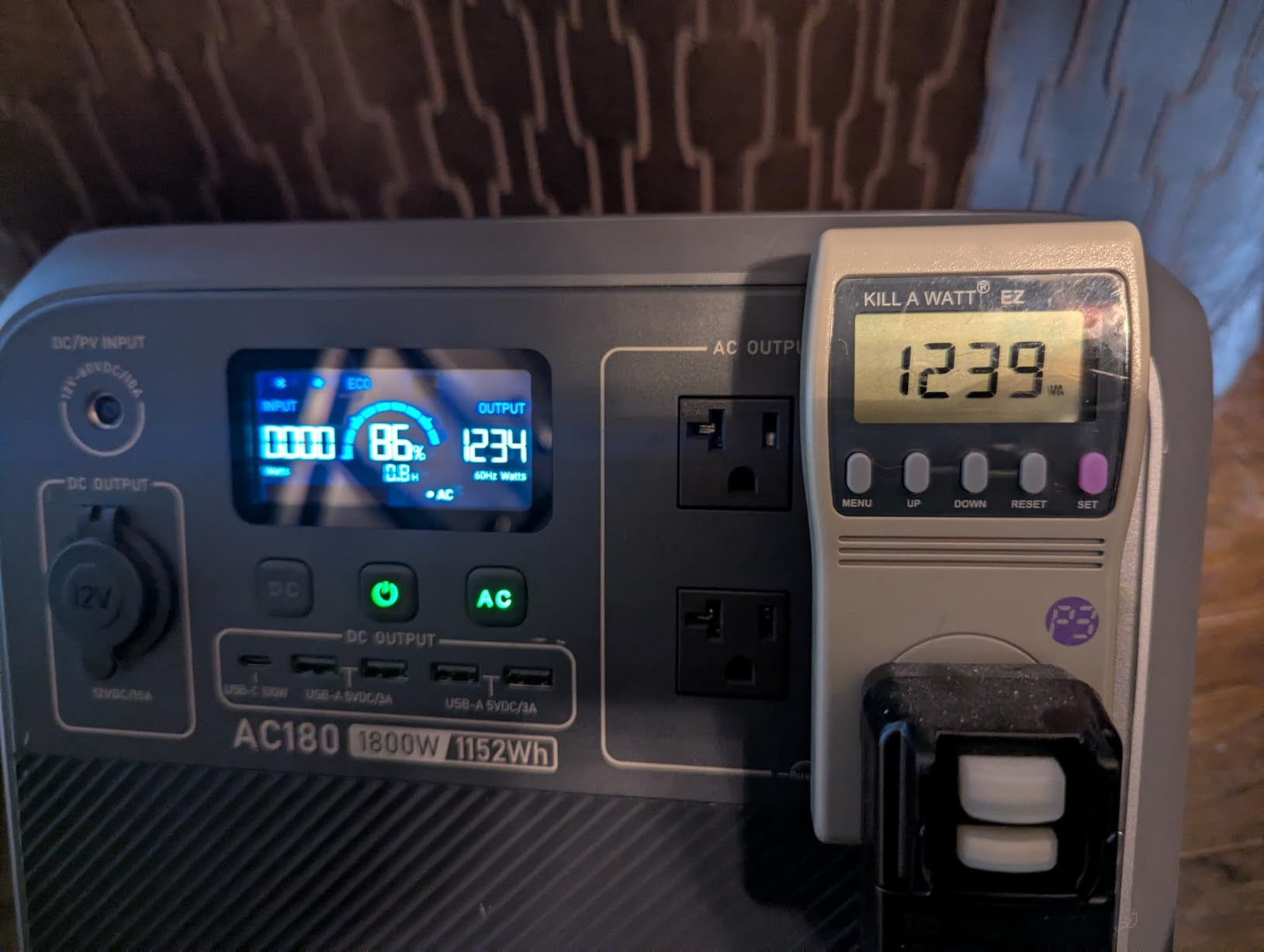
Capacity is the headline. At 2304Wh, expandable to 8448Wh with B300, B210P or B230 modules, this is the cheapest path we found to a multi-day whole-home reserve, and the LFP chemistry is rated for 3000+ cycles with an advanced battery management system.
What you give up is mobility. At 72 pounds, nobody is carrying this up a staircase. Treat it as a garage or utility-room unit that you place once before the season and leave there, and pair it with something lighter like the AC180 for the upstairs essentials.
Why it works for well pumps and RV households
A 1 HP well pump is the load most people underestimate. Continuous draw matters, but so does the start surge, and the AC200PL gives you 4800W of starting headroom on top of 2400W continuous. It has 12 outlets including a 30A TT30, four 2400W AC outlets, 100W USB-C ports and a car port, so a pump controller, a dehumidifier and a router can all run at once.
Owners highlight the combination of large capacity, RV charging and fast recharge. The recurring complaint is weight, which keeps it closer to a home backup unit than a camping unit.
Where it falls short
Real solar output falls well short of the 1200W nameplate in overcast conditions, and after a hurricane you should expect days of exactly that. Plan the battery as if you have one clear day of sun per two overcast days, not one per day.
At 72 pounds it is also awkward if your ground floor floods and you need the unit upstairs. Choose a smaller station as a companion rather than trying to relocate this one.
4. OUPES Mega 1 – Best Value With Expandability
- 0-80% in 36 minutes on AC and about 26 minutes with solar
- 2000W continuous is high for the 1kWh class
- expands to 5120Wh with two B2 batteries
- under 20ms UPS transfer
- dual 100W USB-C PD ports
- 4500W surge figure is optimistic and trips near 2100W
- cooling fan is loud under heavy load
- build is light plastic and not weather resistant
- basic Bluetooth app with unreliable Wi-Fi
The Mega 1 is the most interesting value in the 1kWh class right now. It delivers 2000W continuous, which is above several units in this group that cost more, and it charges from zero to 80% in about 36 minutes on AC or roughly 26 minutes when you combine AC and solar. Owners consistently praise that power-to-size ratio.
For hurricane planning, the expandability is the story. Two B2 extra batteries take it from 1024Wh to 5120Wh, which is the difference between a fridge-and-lights station and something that can carry a household for a full day without sun. The LiFePO4 pack is rated 3500+ cycles.
The UPS transfer is under 20ms, fast enough to keep a CPAP, a router or a desktop alive through an outage, and the sub-20ms figure held up in reviewer testing.
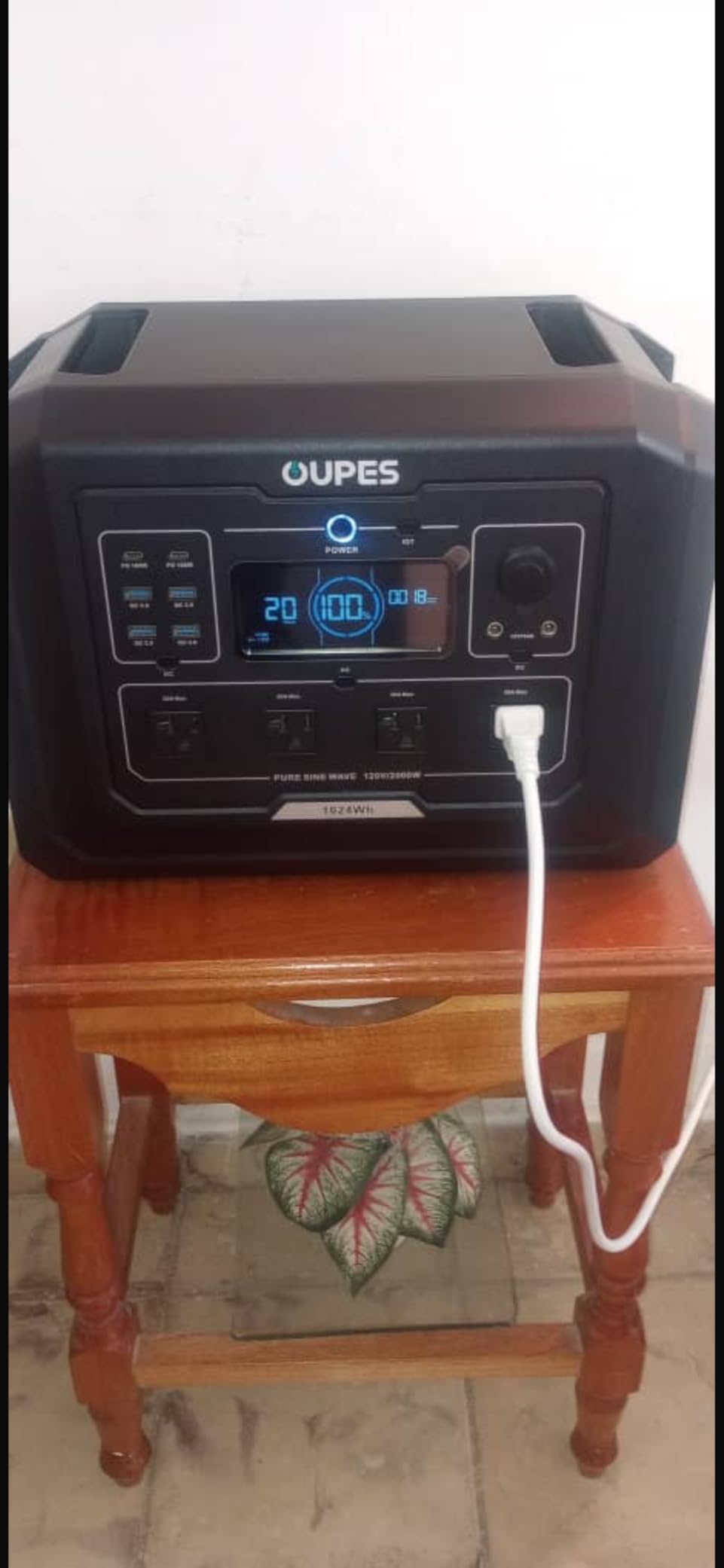
Two things to know. The advertised 4500W surge is optimistic and units commonly trip between roughly 2050W and 2200W in practice, so size pumps and compressors against the 2000W continuous figure, not the headline. The cooling fan also runs continuously during charging and is loud under heavy load, which is more noticeable in a quiet house at night.
The enclosure is light plastic and is not weather resistant, so it needs a dry, elevated location. A sealed garage shelf above the concrete line is the right spot in a coastal home where storm surge is a possibility.
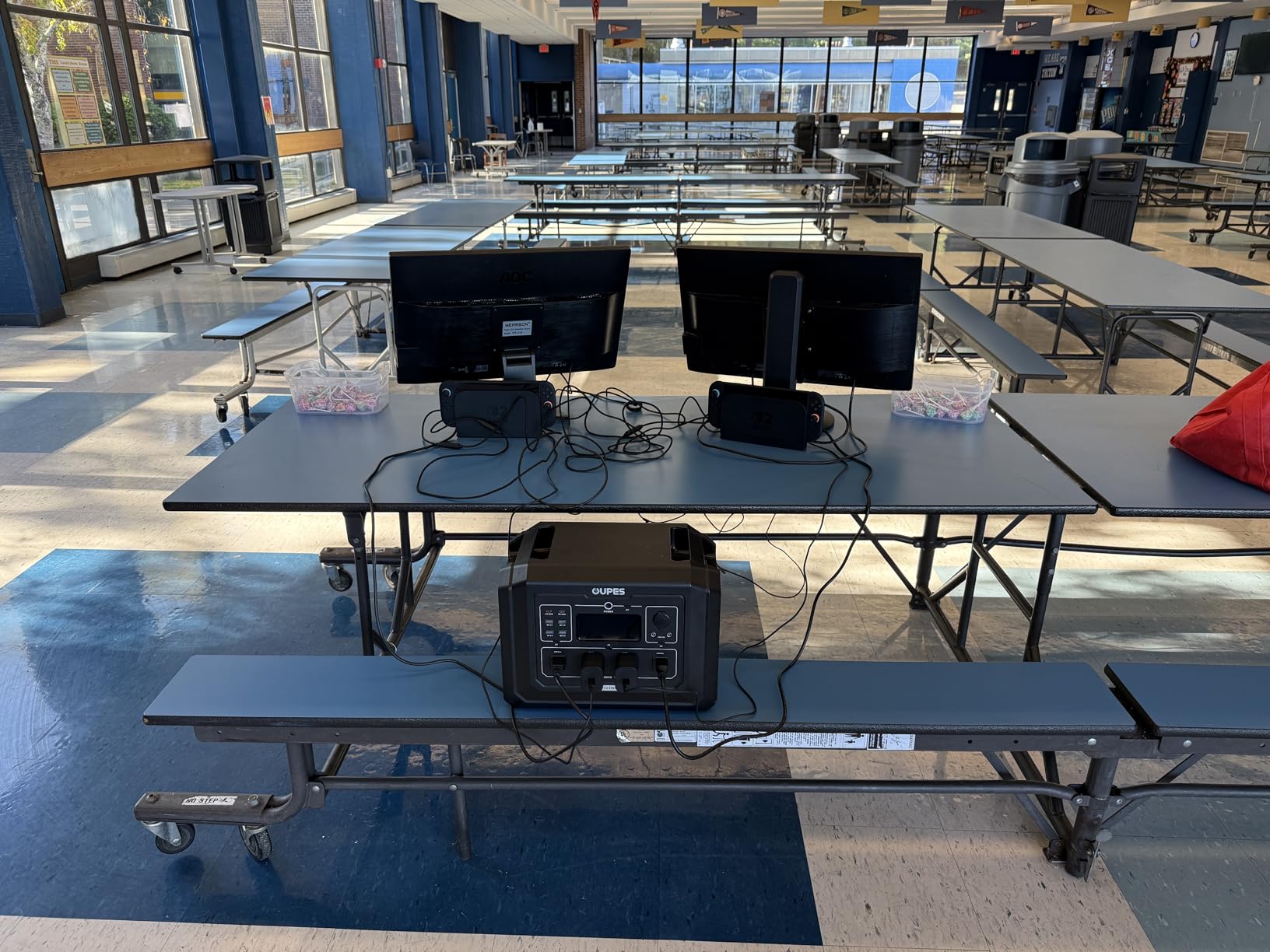
Why it works for a growing household
Start with one Mega 1 and one B2 battery and you have roughly 3kWh of usable reserve, which covers a refrigerator, a freezer, a router, lighting and a well-tank fill cycle for a couple of days. That is the most hurricane-relevant configuration in this entire list for the money.
The included port mix is generous, with four AC outlets, dual 100W USB-C PD, four QC3.0 USB-A and 12V DC outputs, so phones and medical devices never compete with the inverter for AC capacity.
Where it falls short
The surge claim is the honest problem. Buy it for 2000W continuous and you will not be disappointed; buy it expecting 4500W starts and you will trip breakers during the worst night of the storm.
The app is very basic and its Wi-Fi connectivity is unreliable, which limits the remote monitoring you can do while evacuated. A few buyers also reported a battery management fault on a first unit that OUPES resolved with a replacement.
5. Anker SOLIX C1000 Gen 2 – Best for Apartments and Medical Gear
- Fastest recharge in the group at 49 minutes on 1600W AC
- 2000W output across 10 ports
- under 10ms UPS for CPAP and router gear
- 14% smaller and 11% lighter than the prior model
- 600W solar input recharges in about 1.8 hours
- No battery expansion option
- output is not a perfectly clean sine wave
- no included storage case for cables
This is the station we recommend to anyone on a CPAP machine. The under 10ms UPS switchover is the fastest in this group, and combined with 2000W of continuous output it will run a medical device, a router, a modem and a lamp through a long outage without the device noticing.
Recharge speed is the quiet advantage. A full recharge in 49 minutes at 1600W AC means you can refill it from a wall outlet during a mid-day power window if the utility restores briefly, which happens more often than people expect after a storm.
Owners report running it successfully through multi-day ice storms and outages on refrigerators, networking gear and CPAP machines, and the LFP pack is rated 4000+ cycles to 80% capacity.
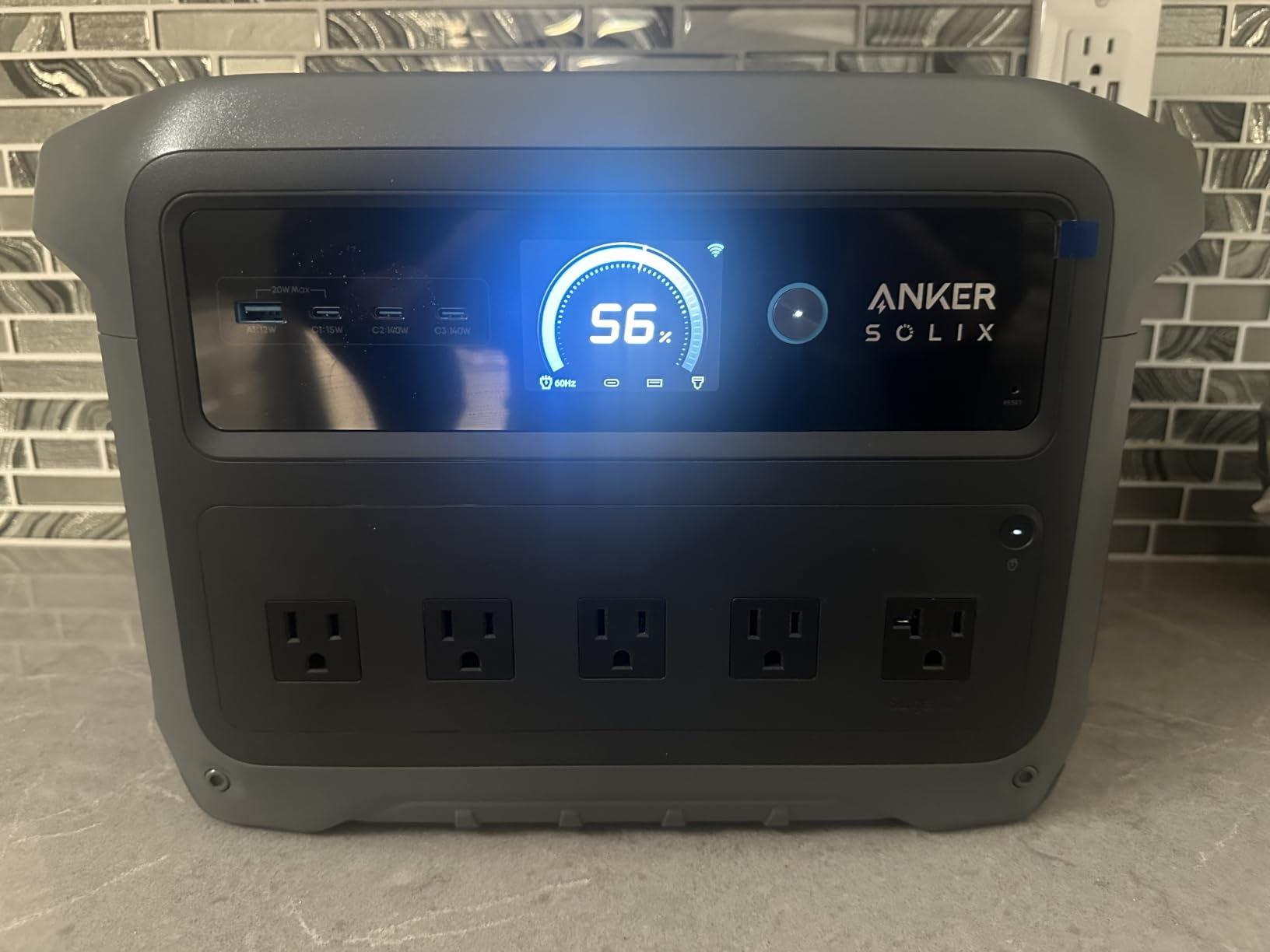
The trade-off is expandability. This generation dropped the extra-battery option that the first version had, and 1024Wh is all you get. If your household needs more than about one kilowatt-hour a day, that is the ceiling.
There is also a measured waveform caveat. Reviewers report roughly 15-20% harmonic distortion on a microwave load, which is not a problem for refrigerators, routers or CPAP machines, but matters if you plan to run sensitive audio or medical monitoring equipment.
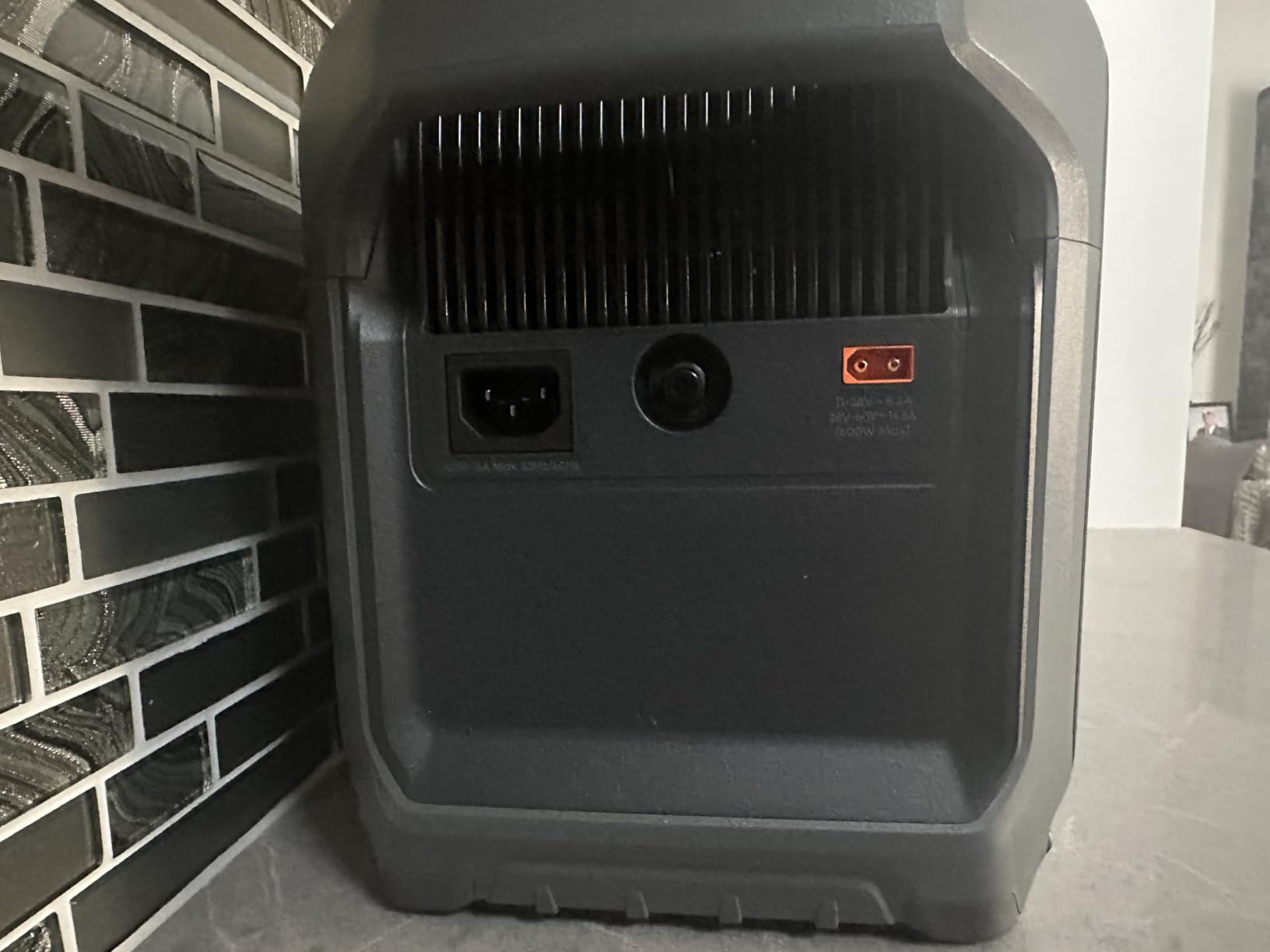
Why it works for condo and apartment dwellers
At about 25 pounds with 10 ports, it covers an entire small home’s essentials list in one box: refrigerator, router, modem, CPAP, a lamp or two, and phone charging for the household. It is quiet enough to sleep beside and it never needs a fuel run.
The 600W solar input recharges it in about 1.8 hours of good sun, so a single 400W or 600W panel on a balcony or patio is enough to keep it topped up between bands.
Where it falls short
No expansion means a hard ceiling. You cannot add a second battery later if a family medical load or a freezer pushes you past a kilowatt-hour a day.
A dedicated case for the XT60 adapters, extension cable and AC cord is not included, and those small parts are exactly what you need to find at 2am in a dark hallway during an outage.
6. EcoFlow Delta 3 – Top Rated Unit in the Group
- Highest average rating here at 4.8
- full charge in 56 minutes on 500W solar plus 1500W AC
- IP65 splash and dust protection on the battery pack
- 13 appliances powered at once
- expands to 5kWh with Delta 3 and Delta Pro 3 packs
- Only 1800W continuous for the money
- the Delta 3 Extra Battery is larger and heavier than the Delta 2 equivalent
The Delta 3 carries the highest average rating of anything we tested, 4.8 across more than 1300 reviews with 90% of those at five stars. That matters when the unit you are relying on has to work on the fourth night with no sun.
Its standout for storm country is the IP65-rated battery pack, protected against splash, dust and oil. Every other unit in this group has a bare enclosure. In a garage with a leaking water heater, a splash-proof pack is a real difference in how long a unit survives.
Charging is fast, with a full charge in 56 minutes combining 500W solar and 1500W AC input, and 80% in 30 minutes. It powers up to 13 appliances at once, and X-Boost supports resistive loads over 2600W.
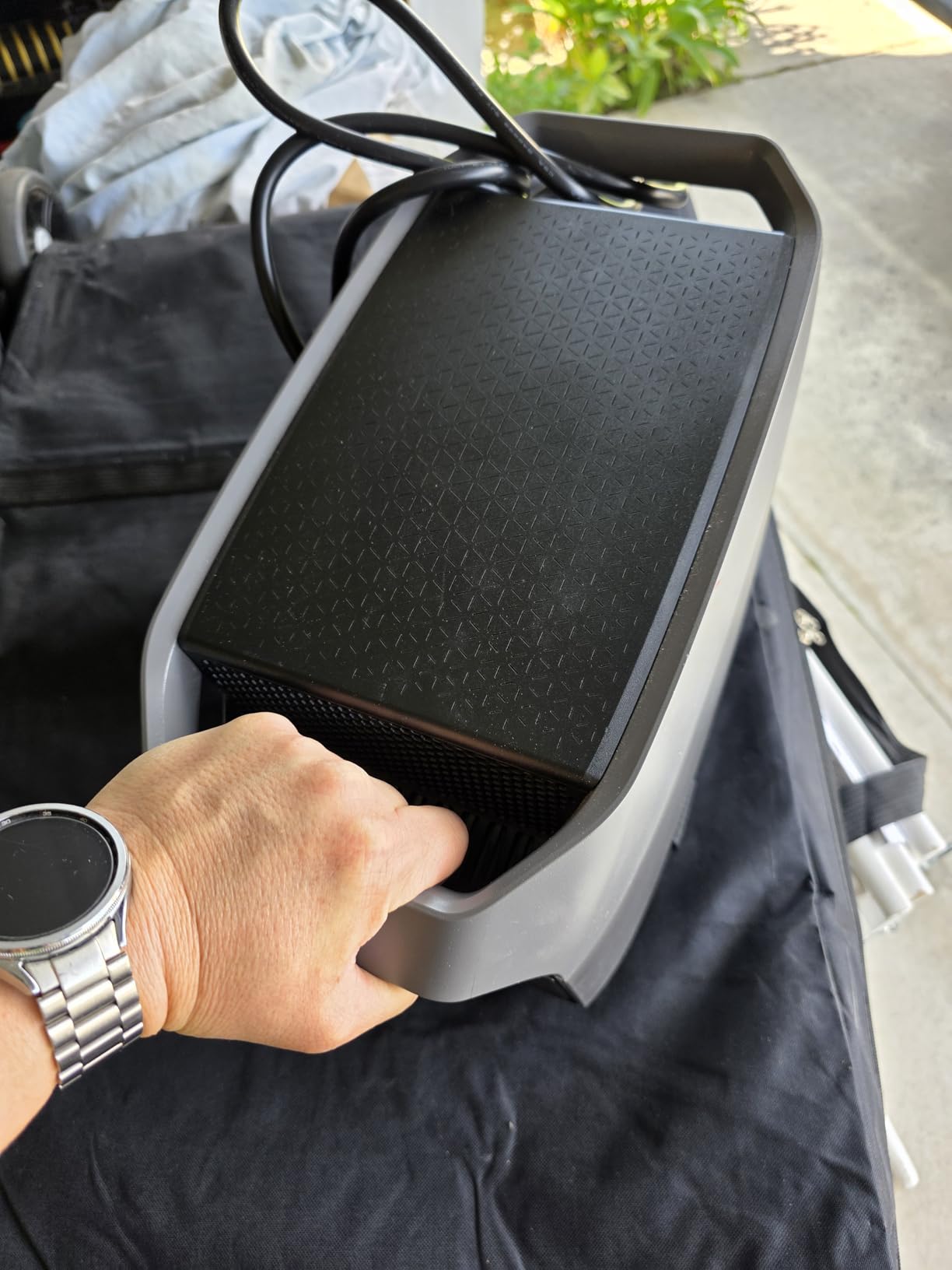
Expansion to 5kWh with Delta 3, Delta Pro 3 and Delta 2 Max packs gives you a path past the 1kWh ceiling, which most competitors at this capacity do not. Note that the Delta 3 Extra Battery is a third larger and heavier than the Delta 2 equivalent, so plan shelf space.
The honest limitation is continuous output. At 1800W, a window air conditioner or a 1 HP pump is a stretch even with X-Boost, and it is below the 2000W of the Anker C1000 Gen 2 and the OUPES Mega 1.
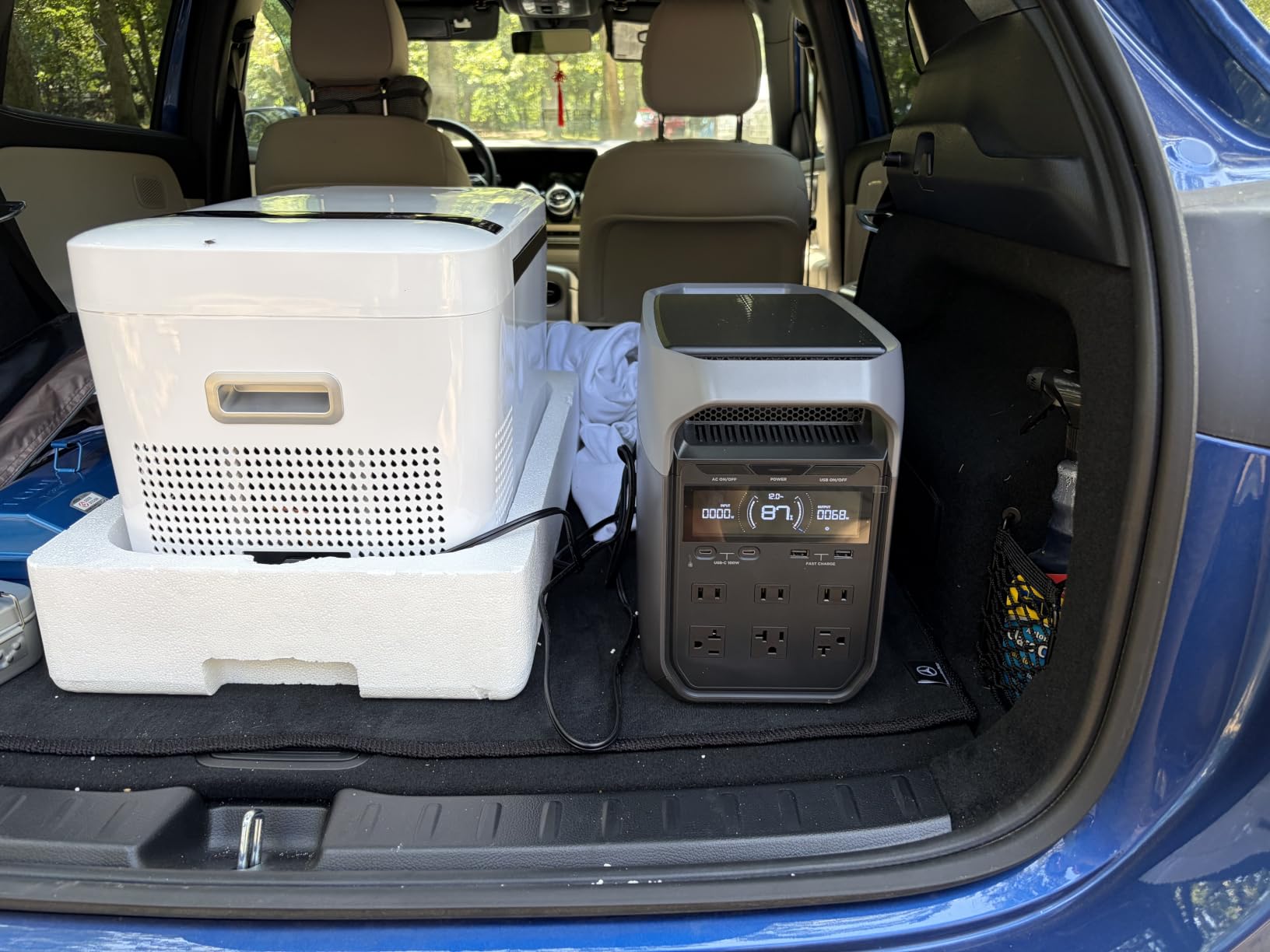
Why it works in humid, salt-air homes
Gulf Coast humidity and salt load are the two enemies of electronics that sit in a garage for years. An IP65 pack tolerates splash and dust far better than an open-frame power station, and the LFP cells are rated 4000 cycles to 80% capacity, which covers a decade of daily use.
For a coastal household running a refrigerator, a router and lighting, 1024Wh with an expansion pack on hand is a realistic two to three day plan.
Where it falls short
It is a 1kWh-class unit with 1800W output. If your priority list includes a well pump, a freezer and a portable air conditioner at the same time, step up a class.
The 5-year warranty is solid but not exceptional in this group, and the app adds convenience rather than necessity, so do not buy on app quality alone.
7. EcoFlow Delta 3 Max – Best for Two to Three Day Gaps
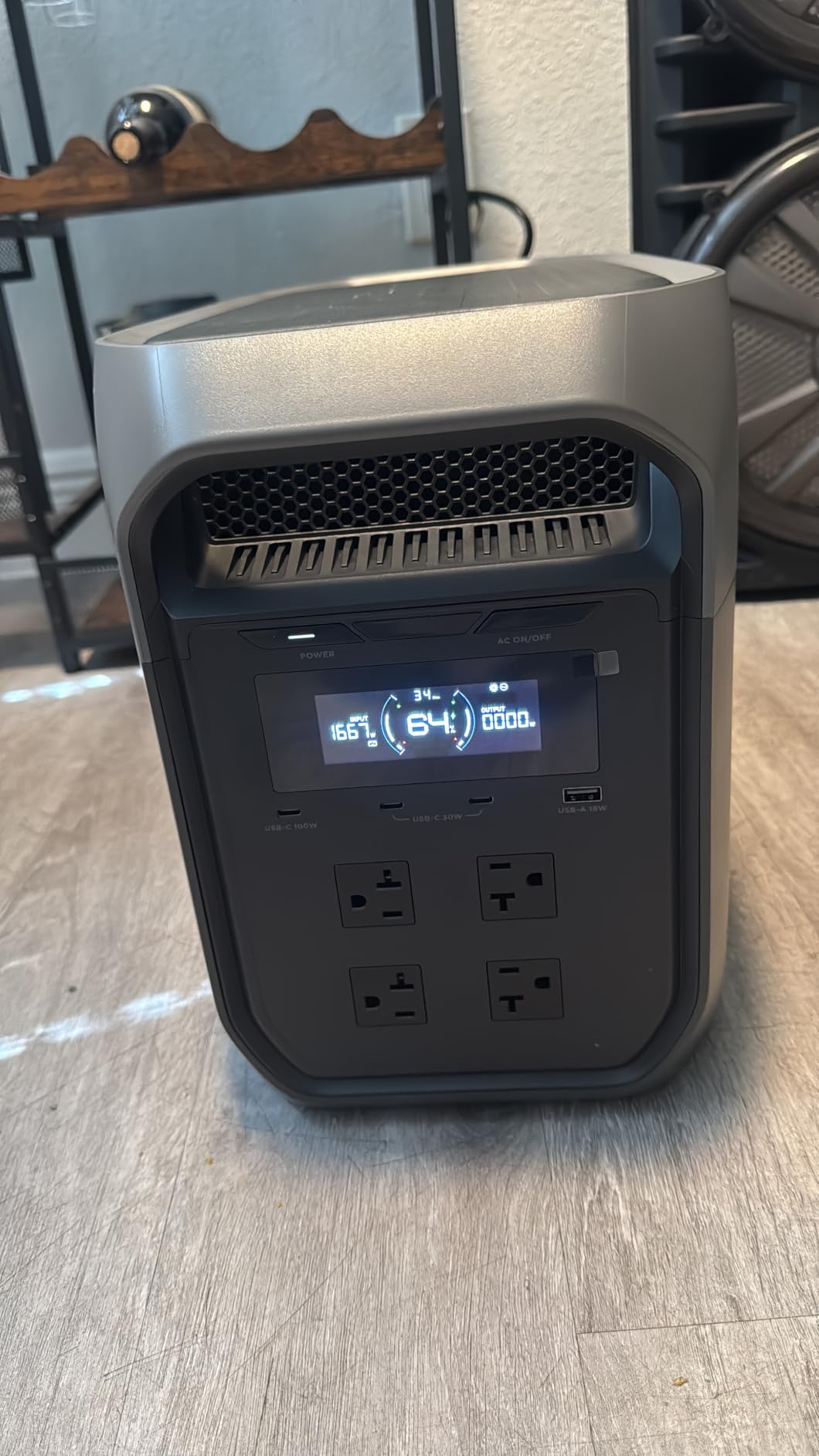
EF ECOFLOW DELTA 3 Max Portable Power Station, 2048Wh LFP Battery, 2400W
- 0-80% recharge in about 1.13 hours
- 3400W continuous X-Boost for microwaves and power tools
- under 10ms transfer for computers and medical devices
- ultra-quiet operation for indoor use
- lighter and more compact than earlier 2kWh EcoFlow models
- 2400W rated output is modest for the 2kWh class
- EcoFlow app needed for deeper configuration
The DELTA 3 Max is the unit we would pick for a household whose outage is reliably two to three days rather than an afternoon. At 2048Wh, it roughly doubles the useful reserve of a 1kWh station without jumping to the weight class of a 4kWh unit.
The 0-80% recharge in about 1.13 hours is the standout. In the first 48 hours after landfall, when utilities are still down and the sky is broken cloud, being able to refill from a wall during a brief restoration window is worth more than raw capacity.
X-Boost pushes continuous output to 3400W, which is enough to run a refrigerator, a microwave and a power tool in sequence, and the under 10ms transfer keeps computers and medical devices from rebooting.
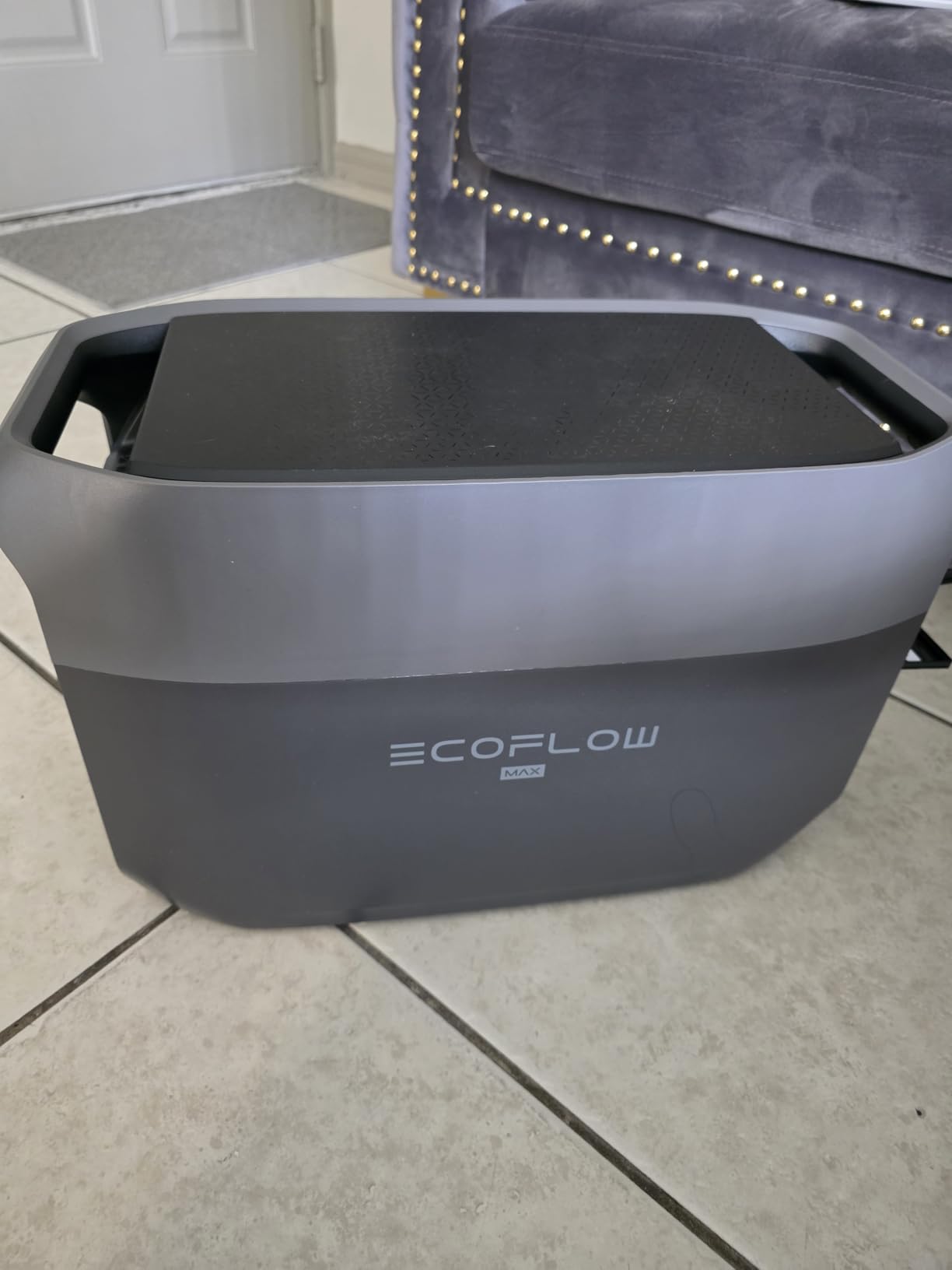
Buyers emphasize fast charging, quiet running and clean outage transfer. The main reservation is that 2400W rated output can be limiting for whole-home loads despite the X-Boost assist, and the EcoFlow app is required for deeper configuration.
With a smaller review base than the class leaders, this unit still shows 88% five-star ratings, but the social proof is thinner than the EcoFlow units above it.
Why it works for two-night outages
A two-day hurricane outage with a typical essential load of about 1.2kWh per day puts a 1kWh station on the edge and a 2kWh station in comfortable range. The DELTA 3 Max carries roughly a day and a half with no sun at all, and any solar input during daylight windows closes the gap.
It is also a good fit for powering a home office setup, since the 10ms transfer covers a NAS and a router without a reboot when the power blinks.
Where it falls short
If you want to add capacity later, the 2kWh EcoFlow path is less flexible than the OUPES Mega 1 or the BLUETTI AC200PL, where expansion to more than 5kWh is documented.
At 2400W rated output, a 1 HP well pump with a heavy start is not the target application. Pick a 2600W or 4000W class station for pump duty.
8. EcoFlow Delta Pro 3 – Best for 240V Whole-Home Backup
EF ECOFLOW DELTA Pro 3 Portable Power Station, 4096Wh, 4000W AC Output
- 4000W output with 120V/240V split phase for a 3-ton central AC or 1 HP pump
- 4096Wh expandable to 48kWh
- 10ms switchover for NAS and servers
- X-Quiet operation as low as 30 dB
- IP65-rated CTC battery pack with automotive-grade LFP cells
- 115 lb makes it a stationary garage unit
- no built-in 12V car output port and the dongle is not included
- display is hard to read at most angles
- one documented BMS lockout with a difficult hazmat return
This is the only unit in the group with true 120V/240V split-phase output, and that single fact changes what you can run. A 3-ton central air conditioner, a 1 HP water pump or a well system with high start current is out of reach for every other station here.
At 4096Wh, expandable to 48kWh with extra batteries or smart generators, it is the closest thing in this roundup to a whole-home system without an installation. Seven single and 18 combo charging methods cover wall, solar, car and generator input.
At 30 dB with X-Quiet technology it can sit beside a bed, which is not true of a combustion genset and not something you can say about most stations this size.
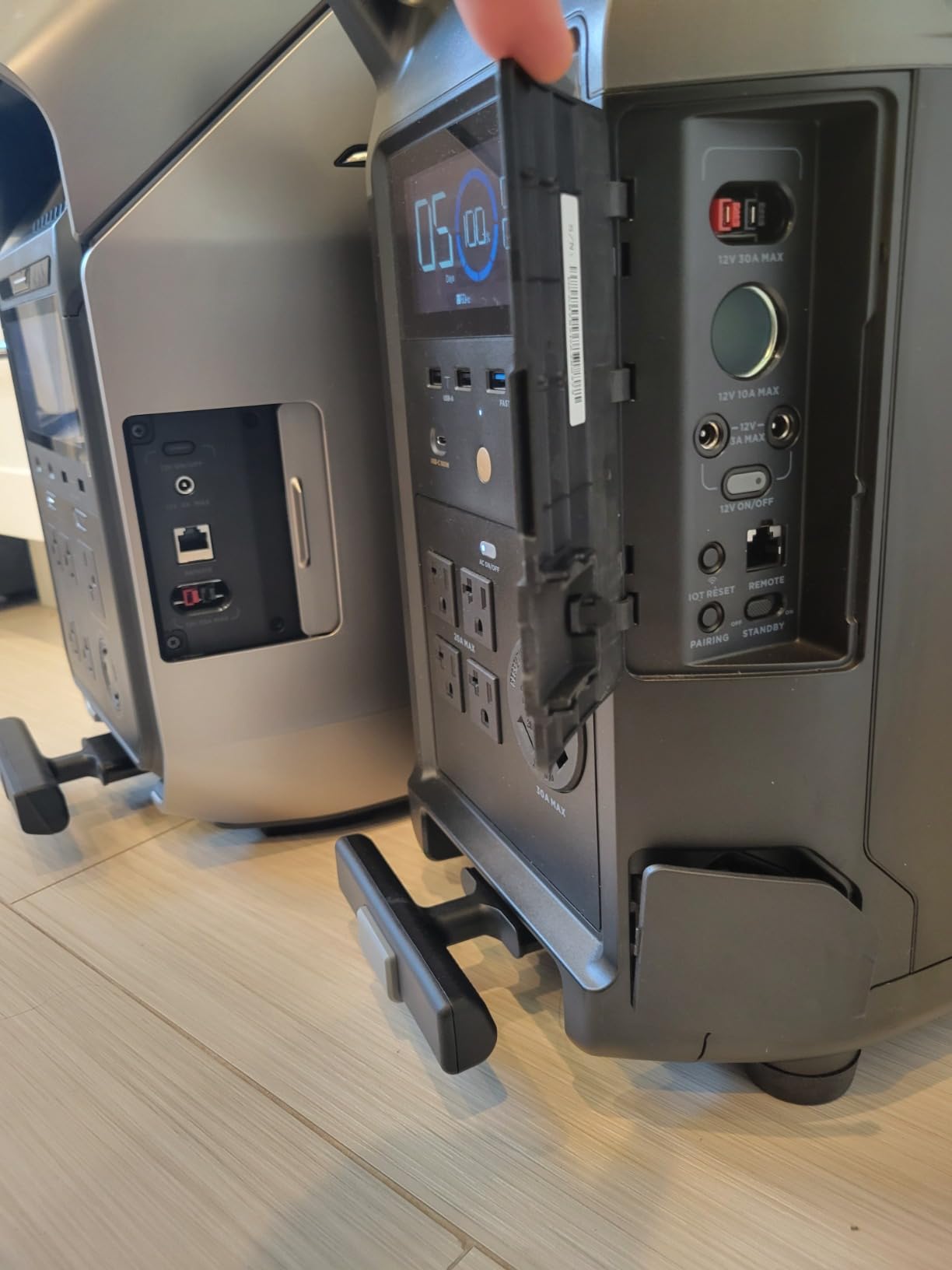
This is also the lowest-rated unit in the group at 4.2, with 14% one-star reviews, and we would rather explain that than bury it. Detailed technical reviewers confirm strong output, quiet cooling and 240V capability, but they also flag the weight, the removed 12V port and display readability.
The dominant negative theme is warranty and return logistics. A failed battery management unit is a 115-pound Class 9 hazmat item, and EcoFlow support struggled to ship one back in a documented case. If you buy this, register it and test the return path before you need it.
Why it works for whole-home backup
Whole-home backup is a different category from emergency essentials. Instead of a fridge and a router, you are talking about a 3-ton central air conditioner at roughly 3500W running, a 1 HP pump cycling, and household circuits on top. Nothing below 4000W continuous covers that, and nothing in this group except this unit reaches 240V.
The 10ms switchover keeps NAS systems, servers and entertainment gear from rebooting, and EV charging was tested up to 32A on 120V through the TT-30 outlet.
Where it falls short
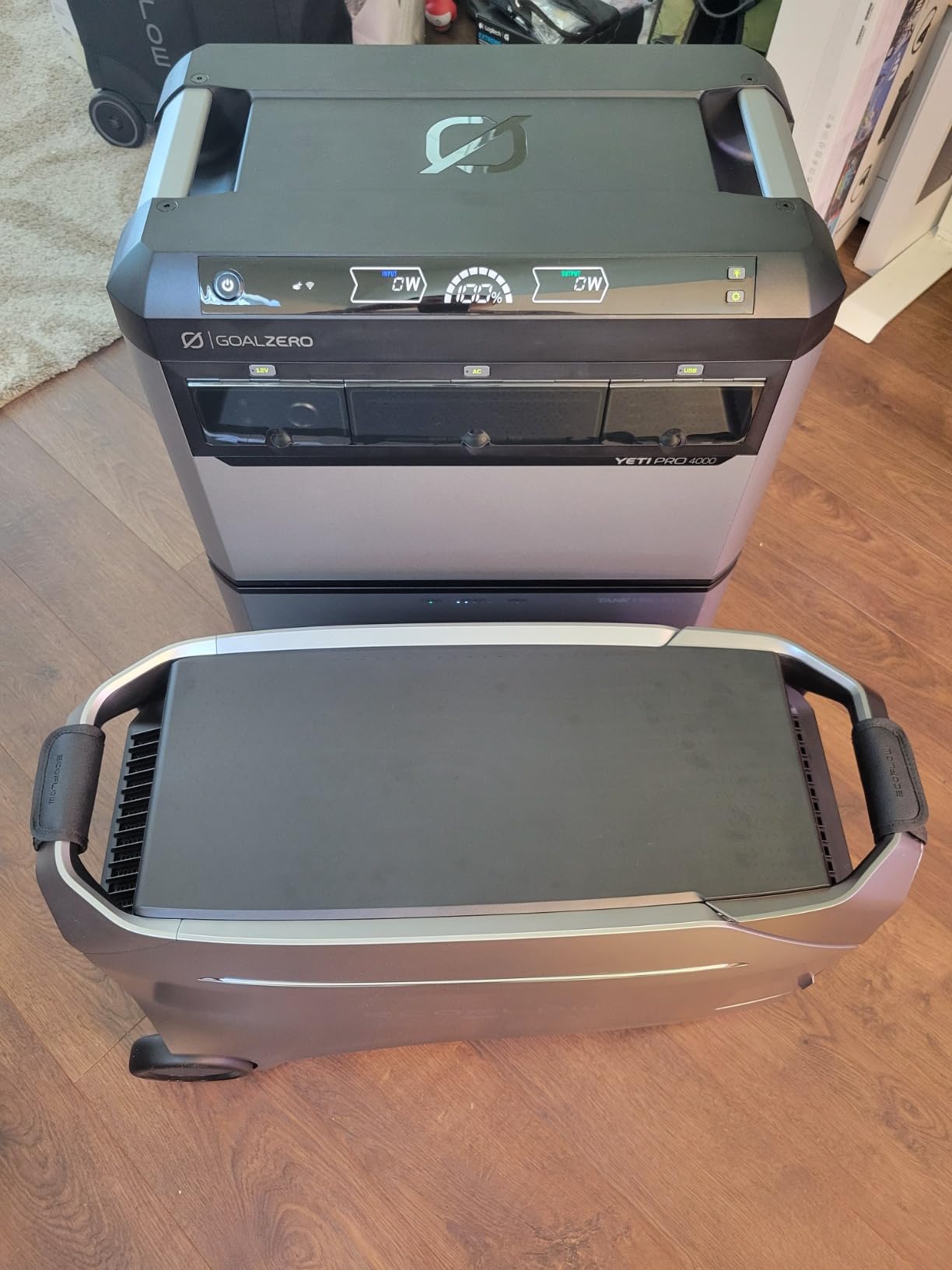
At 115 pounds it is a stationary garage unit. You place it once and it stays there, which also means stacking extra batteries on top immobilises the main unit for travel.
The 4.2 rating and the documented return friction are the reasons this is not our top pick despite being the most capable machine here. Capability and reliability are not the same thing, and in a hurricane you need both.
9. BLUETTI Elite 200 V2 – Best for Low Standby Draw
BLUETTI Elite 200 V2 Portable Power Station 2073.6Wh 2600W Solar Generator
- 6000+ cycle automotive-grade LFP rated for a 17-year lifespan
- only 10W standby draw which is roughly a third of similar stations
- turbo mode charges 0-80% in about 50 minutes
- silent mode at 16-30 dB for indoor use
- similar footprint to the AC180 with nearly double the capacity
- 53 lb suits car camping rather than backpacking
- no battery expansion and no 30A RV port
- 60V MPPT ceiling makes the 1000W solar rating hard to reach
- app frequently reports disconnected
Standby draw is the quiet killer in long outages. A station that sips 20-30W while you are asleep on a 2kWh battery loses most of a full charge overnight without powering anything. The Elite 200 V2 sips 10W in standby, roughly a third of comparable units, and that is the reason it is on this list.
It also has the longest cycle rating in the group at 6000+ cycles on CNAS-certified automotive-grade LFP cells, tested to 33 standards, with a claimed 17-year lifespan. For a unit that sits through eight months of hurricane seasons doing nothing, cycle life is the number that matters.
Output is 2600W continuous with 3900W power lifting, enough to run air fryers, microwaves and coffee makers simultaneously, and turbo mode reaches 80% in about 50 minutes.
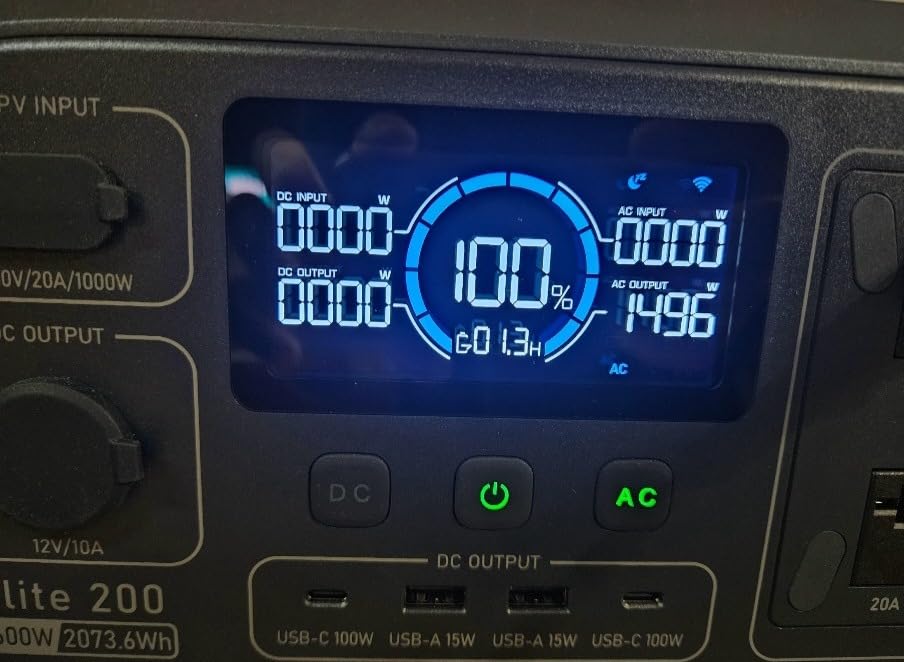
Reviewers treat this as the best balance of capacity and portability in the 2kWh class, praising inverter efficiency, the low standby draw and fast charging. The recurring complaints are the lack of expandability and an RV port, plus the 60V MPPT input ceiling.
That solar ceiling is the one that will bite you after landfall. A 1000W rating with a 60V limit is hard to hit with normal consumer panels, so your real-world recharge will be well under the headline number.
Why it works for overnight and medical loads
If your load is a CPAP machine, a router, a small oxygen concentrator and a lamp running all night for four or five days, standby draw decides whether you make it. At 10W, a 2073.6Wh battery gives you far more usable overnight capacity than a station of the same size that draws triple.
Silent mode at 16-30 dB also lets it run in a bedroom, which matters when a 72-hour outage turns a house into a live-in space.
Where it falls short
No expansion and no 30A RV port closes off two upgrade paths that competitors offer. If you think you will want 5kWh next year, buy the AC200PL instead.
At 53.4 pounds it suits car camping and home backup, not backpacking, and the app frequently reports disconnected and needs a manual refresh.
10. Anker SOLIX S2000 – Best for Compact Fridge Backup
Anker SOLIX S2000 Portable Power Station, 2,010Wh, 1,500W
- 6W idle draw with up to a 35 hour refrigerator runtime claim
- 30% smaller and 25% lighter than the 2kWh class average
- under 10ms switchover works as a network rack UPS
- outlets on front and rear keep always-on loads separate
- app tracks kWh by day week and month
- Only 1500W continuous which is the lowest here
- no 12V car port
- 400W solar input is the lowest ceiling in the group
- cooling fan is noisy at 1200W charging
- no dedicated carry handle
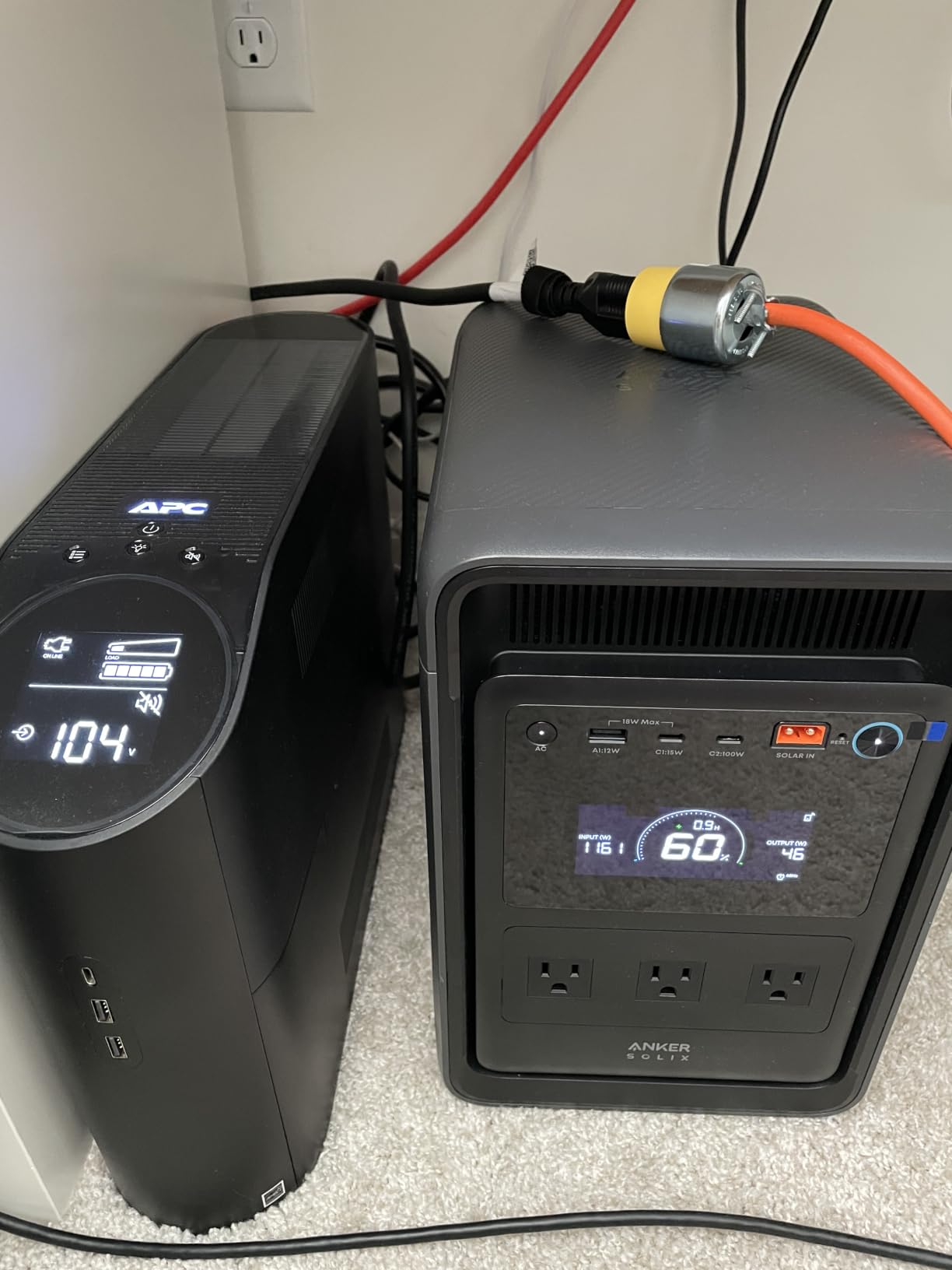
The S2000 is built around one job: keeping food from spoiling. Anker rates it for up to 35 hours of refrigerator runtime on a 6W idle draw, and the 2010Wh capacity means a fridge and a freezer can sit on it for the length of a typical three-day outage with room to spare.
At 35.7 pounds and 30% smaller than the 2kWh class average, it is also easier to relocate than most of its size, which matters if water gets into the ground floor. The app tracks kWh usage by day, week and month, which is genuinely useful for learning your real storm load before the next season.
Outlets on both the front and rear let you separate always-on appliances from temporary ones, and the under 10ms switchover works as a network rack UPS.
Two limitations stand out. Output is 1500W continuous, the lowest in this group, and there is no 12V DC car port at all, so car charging needs a pass-through inverter rather than a dedicated port. For RV and boat owners that is a real gap.
The 400W solar input ceiling is also the lowest here. After a multi-day overcast stretch, recharge speed matters more than anything, and this unit tops up more slowly than the 800W and 1200W competitors.
Why it works for food-safety runs
A refrigerator pulling about 150W while cycling uses roughly 1kWh a day, and a chest freezer in a closed garage uses another. At 2010Wh with a 6W idle draw, the S2000 covers roughly two full days of both with no solar at all, and any daylight input extends that.
Precise charging control in 100W increments from 100W to 1200W, with silent low-watt charging, lets you top it up slowly during a brief power restoration without waking the house.
Where it falls short
1500W continuous will not run a microwave, a power tool or a window air conditioner, and the 3000W peak only covers the start moment. If you need to power a pump, this is not the unit.
The cooling fan is noticeably noisy and droning while charging at 1200W, and there is no dedicated carry handle, only edge grips, so carrying it 100 feet across a wet lawn is awkward.
How to Size a Solar Generator for a Three-Day Outage
Size the battery by daily energy, not by capacity. Add up the watts each device draws, multiply by the hours it runs, and divide by 1000 to get kilowatt-hours per day. A 150W refrigerator cycling for 16 hours a day is about 1.0kWh. A 12W router running 72 hours is under 1kWh. A CPAP machine at 40W for eight hours a night is roughly 1kWh across three nights.
For most coastal households, the essentials list lands between 1.5kWh and 3kWh per day: refrigerator, freezer, router and modem, lighting, phone charging, and a well-tank fill if you have one. A 2kWh station covers that with modest solar help, and a 1kWh station covers it only with consistent sun.
Choose by band. 500-1000Wh is light duty, meaning lights, phones, a router and a CPAP machine for a night or two. 2000-3000Wh is moderate, which is a refrigerator and freezer plus lighting and network gear for three days. 5000Wh and above is whole-home territory, and it is the point where 240V split-phase output or a hybrid gas setup starts to make more sense than a single battery.
Continuous watts, not surge. Every appliance that runs for hours is limited by continuous output, not peak. A refrigerator needs 150W continuous and 300W to start. A 1 HP well pump may want 750W running and several thousand watts at start. Size to the running figure and check the start figure separately.
Check chemistry, not just capacity. LiFePO4 packs are rated for 3000 to 6000+ cycles in this group versus roughly 300-500 for NMC cells, and they hold a usable charge in cold and heat far better. Since a hurricane unit is charged to full, sits at 100% through a two-week outage, and then sits unused for eight months, cycle life is a direct hurricane-readiness number rather than a spec-sheet curiosity.
Match solar input to reality. A 1000W solar rating with a 60V MPPT ceiling, as on the BLUETTI Elite 200 V2, is hard to reach with ordinary consumer panels. A 400W ceiling, as on the Anker SOLIX S2000, means one panel is your maximum. Before buying panels, confirm the station accepts third-party panels, because the Jackery Explorer 1000 v2 restricts input to Jackery-branded panels.
Prefer expandability for multi-day risk. The OUPES Mega 1 reaches 5120Wh, the BLUETTI AC200PL reaches 8448Wh and the EcoFlow Delta 3 reaches 5kWh. Adding a second battery before a season is cheaper insurance than a unit you cannot grow.
Understand EPS versus UPS. Emergency power supply mode is for intermittent outages, where the station stays on and takes over instantly. Uninterruptible power supply mode is for everything else, but it requires the unit to be continuously on and can drain a battery noticeably faster over a three-day event. For a refrigerator, UPS mode is fine. For a CPAP machine, verify the switchover time in the manual.
Pick a load-shedding order before you need one. Decide in advance what runs first: medical devices, then the well pump or refrigerator, then network gear, then lighting, then everything else. Most of these stations shut down on low battery to protect the cells, and a written order means the fridge does not lose power because someone plugged in a microwave.
Connecting to a home panel is an electrical job. Never backfeed a breaker panel without a transfer switch or an interlock. If you want the Delta Pro 3’s 240V split-phase output in a hardwired circuit, have a licensed electrician install the interlock, and keep the rest of your loads on ordinary extension cords and outlets.
For the lighter end of the market and how these stations behave away from storm duty, our van life roundup covers portability trade-offs in more depth.
Solar vs Gas vs Dual-Fuel: What to Run Where
The most common forum question is whether one is enough. The honest answer is that a battery and a combustion generator cover different parts of a hurricane, and the best hybrid plan runs the wrong loads on each one.
Run the low-draw, high-consequence loads on solar. That means medical devices, the refrigerator, the freezer, the router and modem, lighting and phone charging. These draw under a few hundred watts, produce almost no noise, need no fuel run, and are safe indoors.
Run the high-draw, short-duration loads on gas. That means a portable air conditioner, a microwave, a hair dryer, a power washer, a sump pump and any well pump. These exceed what a 1kWh or 2kWh battery can do for hours, and a dual-fuel genset that runs on propane stored at home keeps working when fuel stations are closed or flooded.
This pairing came up repeatedly in prepper discussions, where the common recommendation was to own both and keep the solar station housed indoors where it will not be rained on.
The downside nobody writes about is recharge rate after landfall. Real solar output under a heavy overcast ceiling is a fraction of the nameplate figure on every unit in this roundup, and debris-blocked panels make it worse. If the storm is still within 48 hours and your battery is below half, treat wall power and a genset as the primary source and solar as the top-up.
On carbon monoxide, the difference is absolute. A combustion generator belongs outside, at least 20 feet from openings, with its exhaust pointed away from the house. A portable power station produces no exhaust and is safe to run in a garage, a bedroom or a closed-up apartment.
Where Solar Generators Fall Short After Landfall
The honest weakness of every station here is the same: a hurricane is often followed by days of cloud, and cloud is when a battery becomes a finite resource. Assume roughly one clear charging day per two overcast days and plan your capacity around the overcast scenario, not the sunny one.
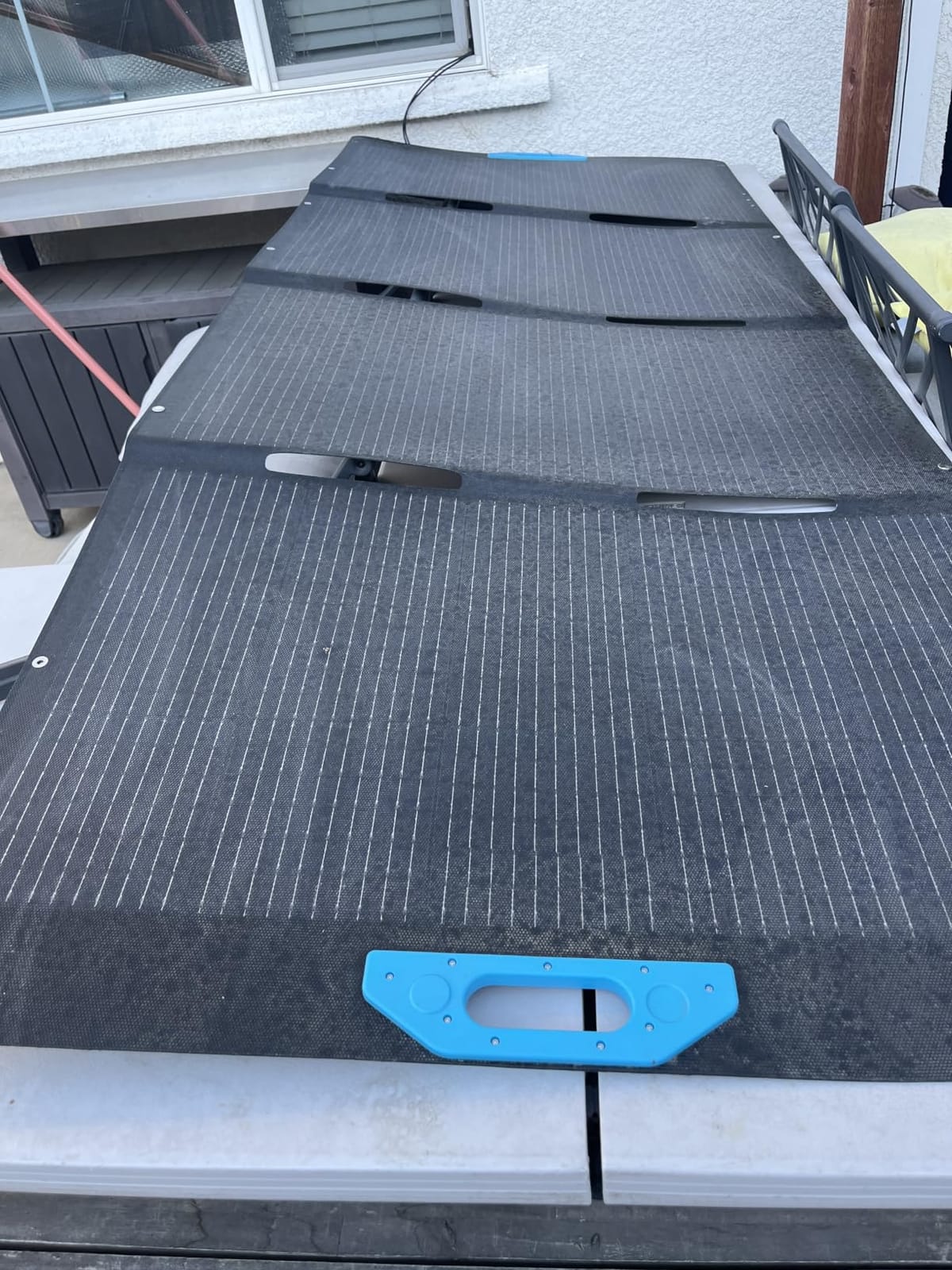
Panels are the second problem. Anything mounted on a roof or an open frame through a Category 3 wind field is a projectile risk, and a panel lying loose in the driveway for three days collects nothing. Bring panels inside before the eyewall arrives and redeploy them only when sustained wind has dropped.
Third, standby draw quietly taxes a long outage. A station idling at 20-30W uses roughly 0.5kWh a day doing nothing. Over a five-day outage that is a quarter of a 2kWh battery, which is why the low-idle units in this group earn their place in a long-event plan.
Fourth, weight. Two of the units here top 50 pounds and one exceeds 110, and moving any of them through a flooded house is a two-person job. Place heavy units on an elevated, dry surface before the storm, not after.
Fifth, service logistics. A battery management fault on a 115-pound unit is a hazmat shipment, not a courier pickup. Test your warranty path and register the unit before season, because a documented case on the Delta Pro 3 shows how long that can take.
Your 72-Hour Pre-Storm Checklist
Start this list the moment a named system forms in the Atlantic basin, not when your county issues an evacuation order. Battery capacity and app access both get harder once the gas stations close.
- Charge to 100% on wall power and confirm the app shows a full battery. A top-up on AC takes under an hour on the units in this roundup that support fast charging.
- Run the calibration cycle on any new unit. A full discharge and recharge plus a firmware update resolves the slow-charging reports we saw on some first-time units.
- Test the UPS path by unplugging the wall input while your router is connected. If the device does not reboot, the switchover is working.
- Pre-charge at the 40-60% mark for storage if the unit will sit unused for months. Leaving a battery at 100% through a two-week outage, then again through eight months of storage, is the fastest way to age it.
- Place the unit above the flood line on a dry, elevated surface. Assume standing water of a few inches is possible in a garage or ground-floor utility room.
- Match your panels to the input ceiling and confirm voltage limits before deploying. Bring them in before landfall, and do not leave them bolted to a roof frame.
- Write your load-shedding order and label the outlets. Medical devices, then refrigerator and freezer, then network, then lighting.
- Test a 1 HP pump or sump pump against your station’s continuous and start ratings before the storm, not during it.
- Check the extension cords for outdoor rating and condition. A flooded cable is both a shock risk and a fire risk.
- Confirm the app works from a cell network before you leave, so you can check state of charge while evacuated.
Between seasons, store the unit around 40-60% charge in a dry, temperature-stable room, and top it up once every three to four months. That single habit does more for long-term capacity than any feature on the spec sheet.
Frequently Asked Questions
What is the best generator to use during a hurricane season?
A portable power station is the safest and quietest choice. Our pick is the BLUETTI AC180, with 1152Wh, 1800W continuous output, 500W solar input and a 37-pound weight. For a well pump or multi-day outage, step up to the BLUETTI AC200PL or the EcoFlow Delta Pro 3 for 240V whole-home output. A dual-fuel gas genset is still worth owning for microwaves, air conditioners and power tools.
What are the downsides of solar generators?
The main drawbacks are recharge rate and finite capacity. After a hurricane, cloud cover and debris can hold real solar input far below the nameplate figure for days. Most units also lack 240V output, so they cannot run a central air conditioner or a heavy well pump. Standby draw of 20-30W per day quietly consumes capacity, and the heaviest units are difficult to move through a flooded house.
What type of generator is best for a long-term power outage?
For outages beyond three days, a hybrid setup works best. Run medical devices, the refrigerator, freezer, router and lighting on a portable power station, and reserve a dual-fuel gas generator for microwaves, air conditioners, sump pumps and power tools. If you want one machine only, look for 4000W or more of continuous output with 120V/240V split phase, such as the EcoFlow Delta Pro 3.
How long will a 2000 watt solar generator run a refrigerator?
A typical refrigerator averages 100-200Wh per hour while cycling, so it uses roughly 1kWh per day and draws around 150W continuously. On a 2000Wh battery with a low 6W idle draw, expect close to a full day without any solar input. With a 400W or 600W panel in good sun you can refill it daily. Anker rates its SOLIX S2000 for up to 35 hours of fridge runtime.
How big of a solar generator do you need to run a house?
Whole-home backup starts around 5000Wh and 4000W of continuous output, and ideally 120V/240V split phase so you can run a central air conditioner or a 1 HP pump. For essential loads only, 2000-3000Wh covers a refrigerator, freezer, router and lighting for three days. Below 1000Wh, plan for medical devices, network gear and lights rather than a full kitchen.
Are solar generators safe to use indoors?
Yes. A portable power station is a battery and an inverter, so it produces no exhaust and no carbon monoxide, and it is safe to run in a bedroom, garage or apartment. A combustion generator must stay outdoors at least 20 feet from windows and doors with its exhaust pointed away from the building. Never operate a gas generator indoors, even with garage doors open.
How many solar panels do you need to charge your generator quickly?
Match the panel wattage to the station’s maximum solar input. The units in this roundup accept 400W, 500W, 600W, 800W, 1000W or 1200W depending on the model, and some impose a 60V MPPT ceiling that limits real output. One 400W panel keeps a 1000Wh to 2000Wh station topped up, while a 2000Wh unit benefits from two panels in parallel. Check third-party panel compatibility before buying.
Is Jackery or Anker better?
Both are strong choices with LiFePO4 chemistry rated past 4000 cycles. Jackery is the simpler, lighter option, and the Explorer 1000 v2 at 23.8 pounds is easier to move, but its solar input works only with Jackery-branded panels. Anker offers faster charging and a very low 10ms UPS switchover, which suits CPAP machines, but the SOLIX S2000 has the lowest continuous output and solar ceiling of the group.
Final Verdict for Hurricane Season 2026
The best solar generators for hurricane season are the ones that match your essential load, not the ones with the biggest number on the box. For most coastal households we recommend the BLUETTI AC180 as the first unit, the BLUETTI AC200PL or the EcoFlow Delta 3 Max as the second if you need a well pump or a longer reserve, and a dual-fuel gas generator covering the loads no battery can handle.
Charge everything to full a week out, store between seasons at 40-60%, and take your panels in before the eyewall arrives. That preparation does more for your outage than another 500Wh of capacity.