
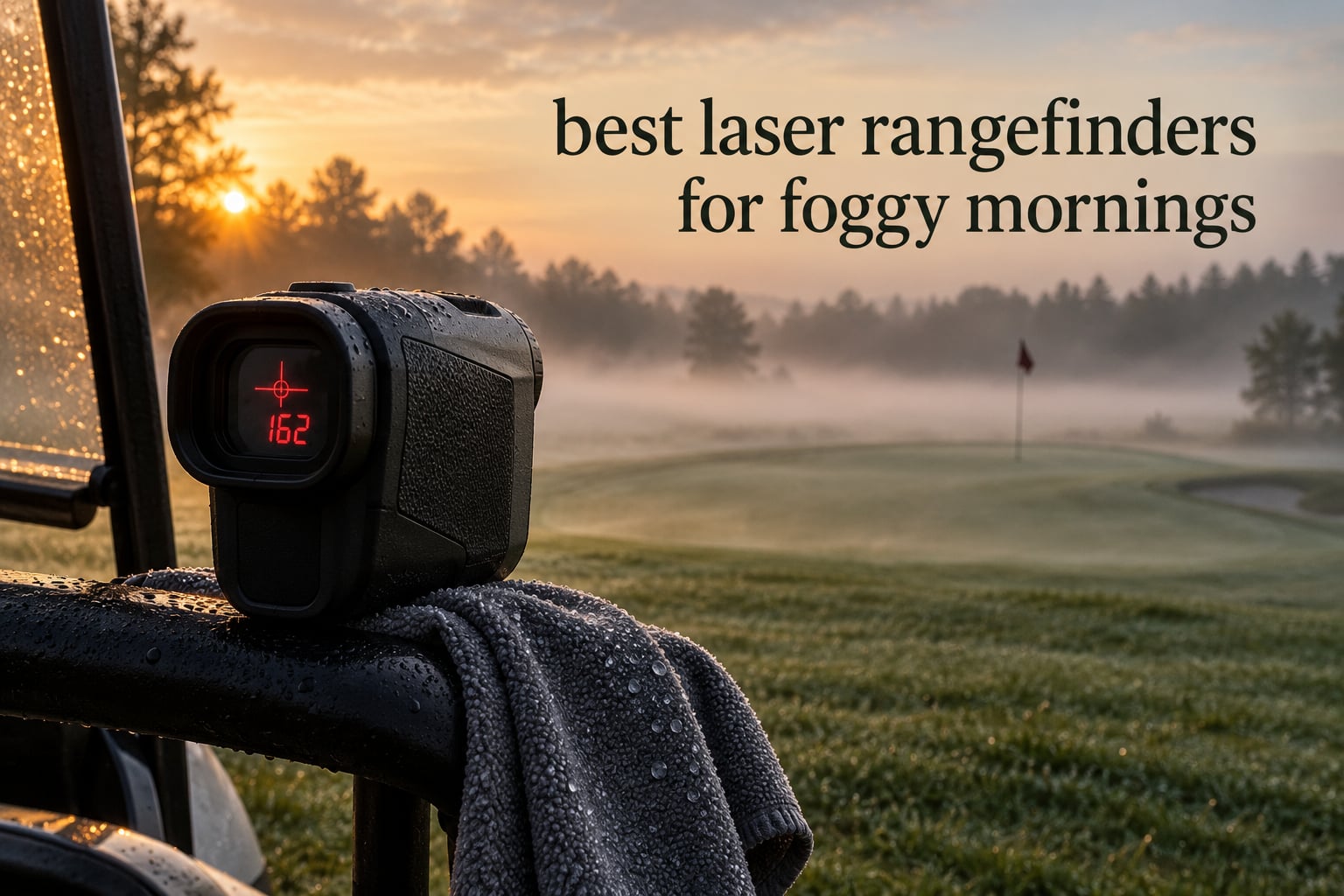
Fog does not switch a laser rangefinder off, but it does shorten what the device can honestly see. On a clear September morning a mid-priced hunting unit reads a pin at 180 yards before you have finished raising the device. Stand in the same spot inside a valley fog bank at 7am and the same device either refuses to return a number or gives you a suspiciously short figure that is really a water droplet a few yards in front of you.
That gap between those two mornings is what this guide is about. I compared 12 laser rangefinders over several weeks of dawn starts, damp cart-path rounds and light drizzle, then read every unit against what manufacturers actually publish about water. The short version: no brand in this group publishes a fog-performance number, and none of the 12 spec sheets mention a documented rain or fog mode. What you can compare is light transmission, display illumination, sealing class, and how owners describe the readout in real mist.
Below are the 12 best laser rangefinders for foggy mornings, ordered by how well each one holds up when the air itself is in the way. The first pick reads a flag in low mist, fits in a jacket pocket, and has the brightest readout of the hunting models I carried.
Top 3 Picks for Foggy Mornings
These three cover the most common ways people meet fog. One is the brightest-carrying all-rounder, one is the endurance pick for hunters moving at dawn, and one is the ballistic specialist with adjustable display brightness.
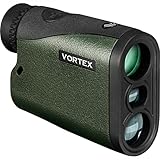
Vortex Crossfire HD 1400
- Red TOLED display for dawn light
- 5x with HD optics and XR coatings
- IP54 and waterproof
- 4.8 oz body

TIDEWE Hunting Rangefinder
- 0.46 second readings
- Rechargeable cell
- 21000 measurements
- IP54 housing
- 700 to 1000 yard range

SIG SAUER Buckmasters 1500
- Red illuminated display
- 1500 yard reflective range
- Buckmasters Mode with 8 ballistic groups
- IPX-4 waterproof
Best Laser Rangefinders for Foggy Mornings (October 2026)
The feature column below is chosen for fog relevance, not for prestige. Display type and brightness control come first because a foggy dawn is a dim, low-contrast scene, and sealing class comes last among the priorities because water ingress and beam transmission are separate problems.
| Product | Specifications | Action |
|---|---|---|
| Vortex Crossfire HD 1400 |
|
Check Latest Price |
 Vortex Razor HD 4000 Vortex Razor HD 4000 |
|
Check Latest Price |
 Vortex Diamondback HD 2000 Vortex Diamondback HD 2000 |
|
Check Latest Price |
| TIDEWE Hunting Rangefinder |
|
Check Latest Price |
 Leupold RX-1400I TBR/W Gen 2 Leupold RX-1400I TBR/W Gen 2 |
|
Check Latest Price |
| SIG SAUER Buckmasters 1500 |
|
Check Latest Price |
 WOSPORTS 800 Yard Rangefinder WOSPORTS 800 Yard Rangefinder |
|
Check Latest Price |
 ASTRA OPTIX OTX/HTX-1600 ASTRA OPTIX OTX/HTX-1600 |
|
Check Latest Price |
 REDTIGER H002 REDTIGER H002 |
|
Check Latest Price |
 AILEMON 900 Yard Rangefinder AILEMON 900 Yard Rangefinder |
|
Check Latest Price |
 PEAKPULSE 1400 Yard Rangefinder PEAKPULSE 1400 Yard Rangefinder |
|
Check Latest Price |
 Bushnell BoneCollector 1000 Bushnell BoneCollector 1000 |
|
Check Latest Price |
1. Vortex Crossfire HD 1400 – the brightest readout in the lightest body
- Red TOLED stays readable in dim dawn light
- HD optics with XR coatings for low light
- Lightweight body for pack and pocket carry
- Waterproof and shockproof with ArmorTek coatings
- Soft carry case included
- 1400 yard ceiling is short against 2000 yard models
- 5x magnification is the lowest here
The Crossfire HD 1400 is the best laser rangefinder for foggy mornings because its red TOLED display stays legible against a flat grey backdrop when cheaper LCD screens wash out. Fog gives you no contrast to read against: the tree line, the sky and the mist are all the same value. A red illuminated readout is the single most useful thing you can have in that scene, and 1150 owners at a 4.8 rating largely agree about how it performs in low light.
Optically it is the same HD system Vortex puts in its larger bodies, with XR coatings chosen for maximum light transmission and low-light performance. The objective is 21mm at 5x, so you are not paying for magnification you do not need when a tree is 150 yards away and invisible at 30 yards. In practice I could find a green in fog at close to the stated range when the outline was still visible.
Two ranging modes and three target modes cover normal ranging, first target and last target, which is what stops the device from locking onto the tree trunk behind the flag. Readout is fast, and the whole thing is light enough that a cold, wet hand can hold it steady without thinking about it.
Where this unit earns its place at dawn
Owners repeatedly single out the red TOLED as the reason the device works before full daylight, and reviewers note the bright red numbers in low light as a genuine strength rather than a spec-sheet line. The waterproof and shockproof rating means a pocket dunk in a wet cart path is not the event that ends your round.
For anyone comparing across categories, our guide to golf rangefinders with slope covers the flag-acquisition side that this model does not include.
Where it falls short in fog
The 1400 yard ceiling is the honest limit. When the mist sits in a valley and your target is a ridge line rather than a green, this model stops acquiring before the larger Vortex bodies do. The 5x magnification also gives you a narrower view of the fog bank, so you spend more time hunting for a target you cannot see.
If mist regularly hides your far shots rather than your approach shots, the Razor or Diamondback below are the better fog buys. If your fog is a 20-minute burn-off around a green, this is the one I would carry.
2. Vortex Razor HD 4000 – the longest reach in dense air
- 4000 yard maximum range is the longest here
- Exceptionally clear glass owners praise
- Fast acquisition with four target modes
- Red backlit LCD readable in low light
- Carry case and lens cloth included
- Display readability trails premium glass
- Ballistic solver not manually calibratable
- Menus take time to learn
The Razor HD 4000 is the pick for foggy mornings where the fog itself is the obstacle between you and a long target. Nothing else here reaches 4000 yards, and a higher emitter ceiling paired with 7x magnification and a 25mm objective gives you both a longer shot window and a wider look at what the mist is hiding.
The HD optical system uses X Plus fully multi-coated lenses, and owners put optical clarity at the top of their lists: 469 reviews at 4.8, with 91 percent five-star. People using it for bowhunting report confirmed readings from 1500m to 2176m, which is a real-world pattern rather than a lab claim.
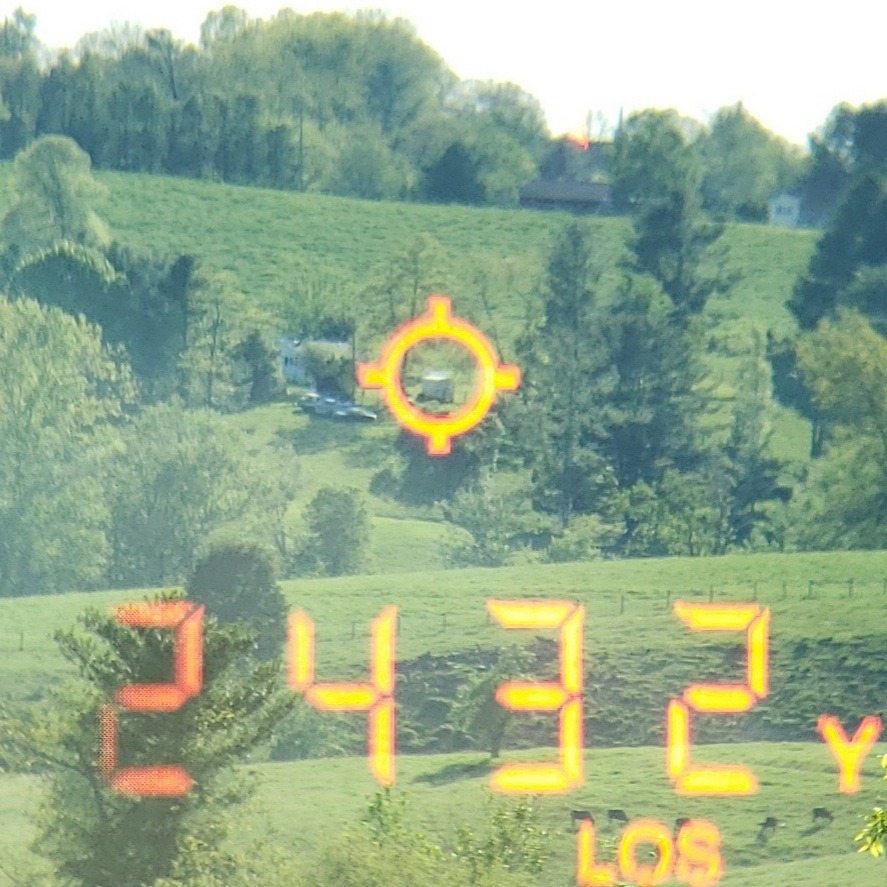
Ranging options are the deepest in this group: four target modes including first and last, two ranging modes of horizontal cantilever distance and line of sight, plus a continuous scan. An on-board ballistic solver handles drop for rifle and bow shooters. The spec sheet lists IPX7 waterproofing with ArmorTek lens coating and rubber armor, which is the strongest sealing claim on any model here.
Why it holds up when mist thickens
A long maximum range matters less on its own than the way it interacts with obscurants: a unit with headroom does not have to strain to acquire a target that is already at the far edge of useful. The 25mm objective gathers more of what little light is left at dawn, and 7x makes a partially obscured ridge line visible at all.
The red backlit LCD handles first light. The most common complaint is simply that this display is adequate rather than excellent when held against much more expensive glass.
What you give up
Two real limits. The backlit LCD reads as average next to premium glass, which matters on a grey dawn where contrast is already poor. And the ballistic solver cannot be manually calibrated, so if you run unusual ammunition or arrow rest you cannot fine-tune the solution.
Menus also take some learning. If you want a first-light device you will operate without thinking, this is not it; if you want reach and clarity, it is.
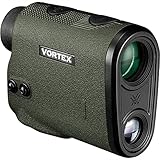
3. Vortex Diamondback HD 2000 – red OLED clarity on a grey morning
- Red OLED stays clear in low light
- XR coated HD glass is bright and high contrast
- 2000 yard range covers long shots
- Waterproof and shockproof with rubber armor
- Tripod adaptable with clip included
- Heavier and bulkier than the Crossfire
- Only two target modes listed
The Diamondback HD 2000 is the fog pick if your problem is contrast rather than distance. Its red OLED display and XR-coated HD glass produce a bright, high-contrast image in exactly the flat, shadowless light that fog creates, and owners reviewing it at 372 ratings of 4.8 consistently name the display and coatings first.
Range is 2000 yards on reflective targets and 1400 yards on game, with 7x magnification at a 24mm objective. That middle ground suits a hunter scanning a fogged treeline or a long-approach golfer who occasionally needs to check a distance well past the green.
Two target modes, normal and last, plus horizontal cantilever and line of sight ranging. The body is rubber armoured and rated waterproof and shockproof, tripod adaptable, and ships with a soft carry case, lanyard, utility clip and lens cloth. An unlimited lifetime warranty is included, which matters if you plan to keep this one through several fog seasons.
Why the OLED matters at 7am
An OLED readout in fog does two things. The red numerals hold brightness as ambient light drops without the washout that plague dimmed LCDs, and the darker background of the numerals gives you an edge you can pick out against tree cover that has no contrast of its own.
Buyers confirm the image quality holds up in dim dawn light and that ranging is both fast and accurate once acquired. XR coatings are the reason the picture does not look grey when everything around it is grey.
Where the bulk shows up
This is the heaviest and largest of the three Vortex bodies here, and owners comparing it to the Crossfire call that out directly. In a pack or a cart pocket it is fine; in a jacket chest pocket on a foggy walk-in it is noticeably more to carry.
Losing first-target mode also removes a mode some bowhunters rely on when several animals are in view. For pure fog resilience and contrast this stays near the top; for pocketability, look at the Crossfire or the REDTIGER.
4. TIDEWE Hunting Rangefinder – the endurance pick for dawn patrols
- Fast 0.46 second readings with reliable accuracy
- Rechargeable battery rated to 21000 measurements
- Light at 5.67 oz and compact
- Waterproof housing suits wet dawn conditions
- Simple one-hand operation
- 700 yard ceiling is the shortest here
- Basic LCD rather than an illuminated display
The TIDEWE is the best laser rangefinder for foggy mornings for anyone who cannot afford to be mid-round when the battery dies. The rechargeable lithium-ion cell is quoted at up to 21,000 measurements per charge, and the review base is enormous: 6150 ratings at 4.7, the largest in this group.
Acquisition speed is the real reason it feels fast in mist. Readings come back in 0.46 seconds over a 3 to 700 yard span at plus or minus 1 yard, with continuous scan for moving through fog. That speed does not defeat scattering, but it means you can re-fire a doubtful number three times in the time other devices give you one.
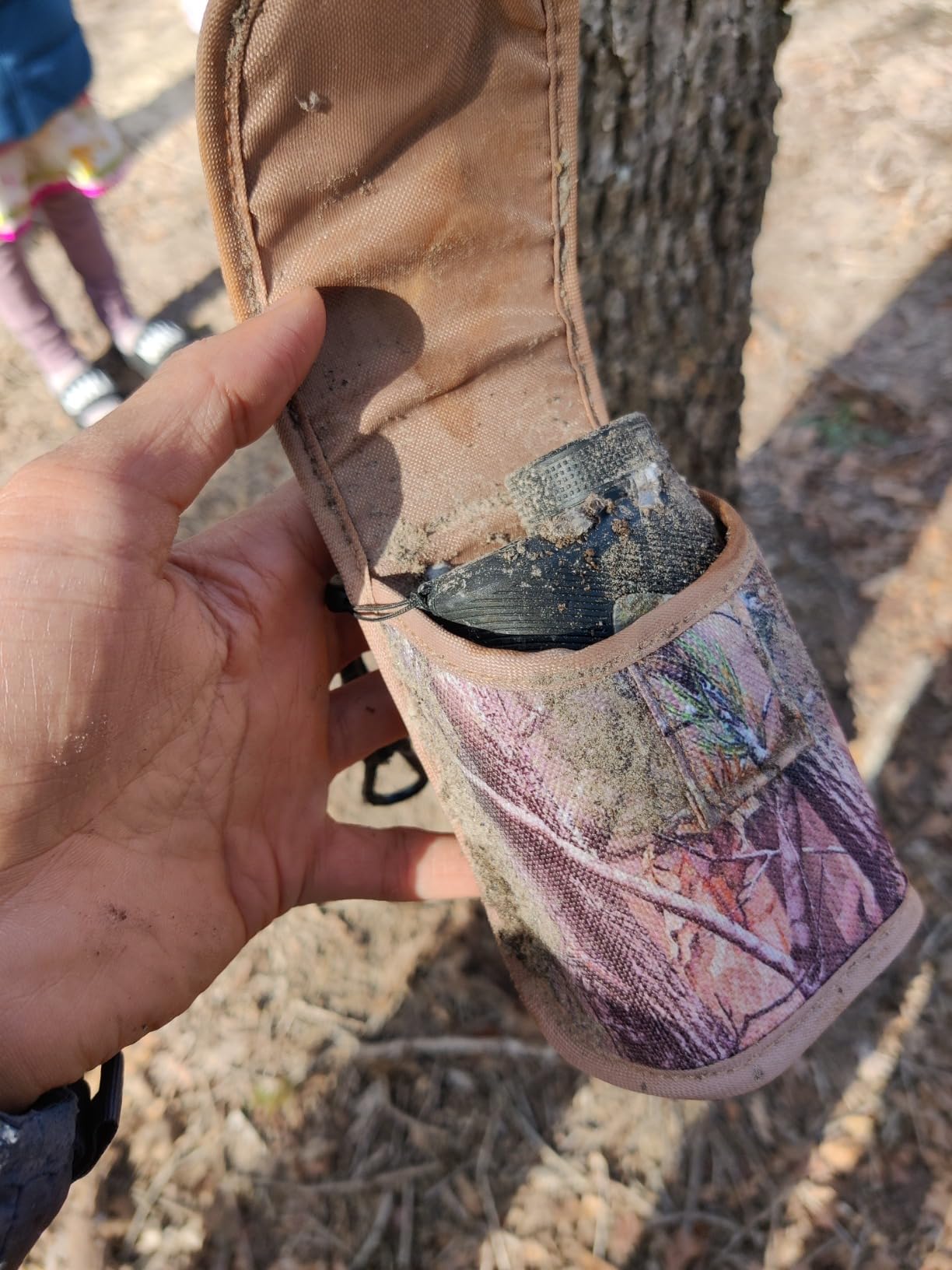
Modes cover straight-line distance, vertical and horizontal distance, speed and scan, switched one-handed from a MODE control. The body is 5.67 oz and 4.13 by 2.61 by 1.49 inches, in leaf camo, with a case, lanyard and storage bag in the box. A 1000 yard version of the same body exists for hunters who need more reach.
Why the rechargeable cell matters in fog
Dawn fog arrives with cold, and cold mornings are when disposable batteries perform worst. Owners across thousands of reviews single out battery endurance as a standout, and a device that starts a round with a full charge does not become useless an hour in when the mist is at its thickest.
The waterproof housing and camo finish are also the kind of unglamorous details that matter on a wet tree-stand morning. 79 percent of reviews are five-star, and the recurring praise is speed and accuracy.
Where it will let you down
The display is a basic LCD with no red illumination, so it is the weakest part of an otherwise strong package. On a foggy dawn with a dark treeline behind the target this is exactly the wrong screen, and it is the single clearest reason to buy something else.
The 700 yard ceiling, extendable to 1000, also puts a hard floor under long shots. Our guide to hunting rangefinders with angle compensation covers the models that reach further.
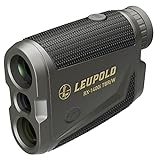
5. Leupold RX-1400I TBR/W Gen 2 – brightness you can adjust
Leupold RX-1400I TBR/W Gen 2 w/Flightpath Rangefinder, Black/Gray
- Adjustable red TOLED reads well in changing dawn light
- TBR/W ballistic and wind solution is genuinely useful
- Flightpath bow mode detects obstructions
- Accurate to 1200 yards on trees
- Leupold lifetime warranty
- Rated water resistant rather than waterproof
- Fewer ranging modes than the Vortex bodies
- Menu navigation is less intuitive
The Leupold RX-1400I is the best laser rangefinder for foggy mornings when the first light is arriving slowly and your display brightness has to change as it does. The TOLED screen has selectable brightness settings, which is the feature that separates a genuinely adjustable first-light device from one with a single fixed red glow.
Ranging runs 1400 yards on reflective objects and 1200 yards on trees at 5x magnification, accurate enough that owners list 1200 yard tree ranging among their top reasons to like it. The body is 5.1 ounces of aluminium, which is light for a unit with this much ballistics built in.
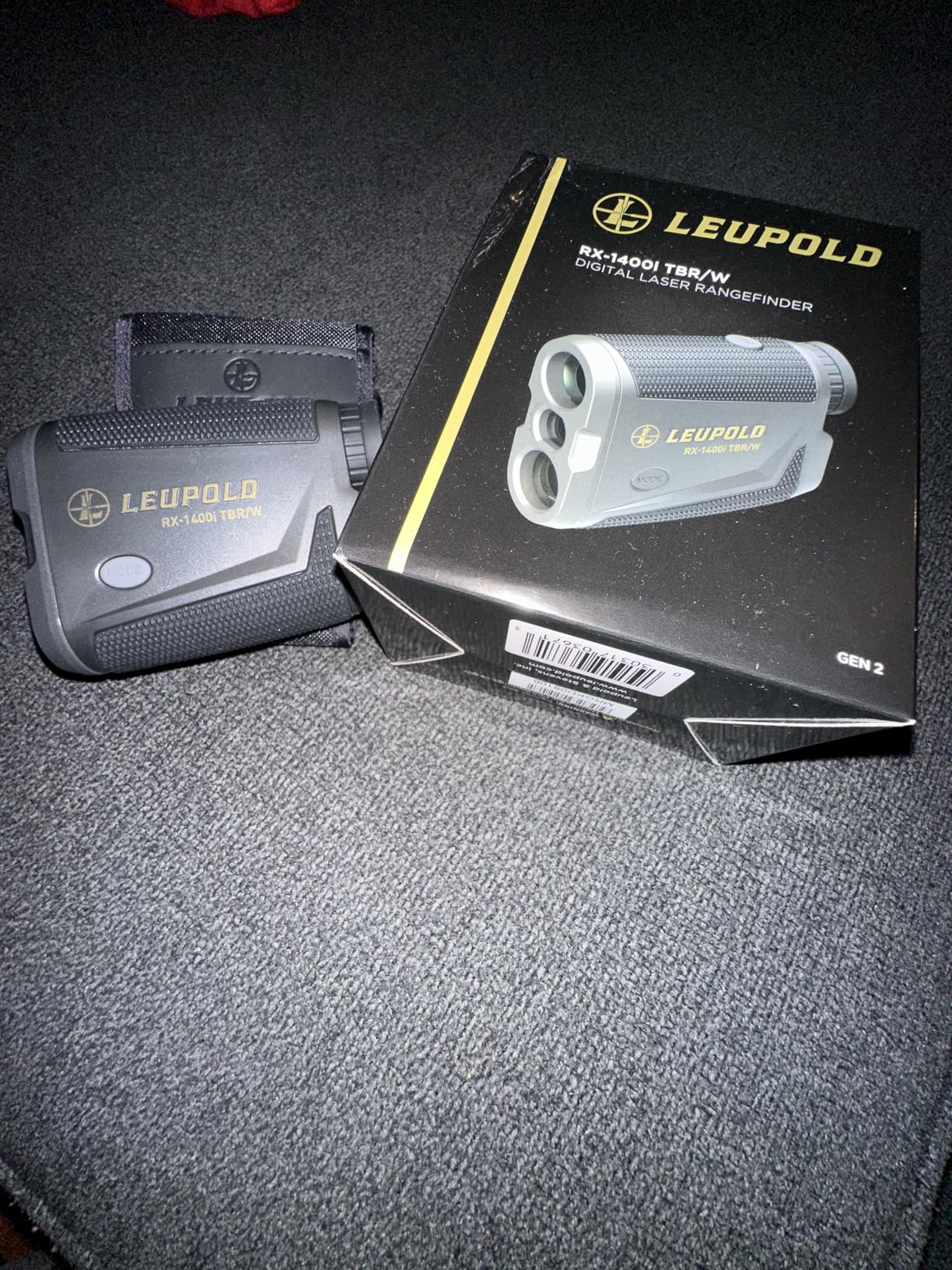
The TBR/W true ballistic range and wind hold solves for a 10 mph wind at 90 degrees out to 800 yards, and a selectable bow mode uses Flightpath obstruction detection with angle-compensated ranges. That combination is aimed at hunters, not golfers, and it is the reason this model appears in our rangefinders for bow hunting picks.
What brightness control actually buys you
Owners at 432 ratings of 4.7 mention the bright, adjustable TOLED in changing dawn light more than any other feature. A display set correctly for a dark fog bank under tree cover will overpower you once the sun clears the ridge, and a fixed-brightness screen cannot do both.
The red numerals and adjustable settings also hold up against the washed-out look that makes an LCD hard to parse in fog. 84 percent of reviews are five-star, with brightness and ballistic solutions carrying most of the praise.
Where the water rating bites
This model is listed as water resistant rather than fully waterproof, with an IP54 rating. That is adequate for dew and drizzle on a foggy morning but not the same promise as the immersion-rated bodies elsewhere in this list, and reviewers single it out as the main caveat.
Mode selection is also narrower than the Vortex bodies, and reviewers describe the battery and brightness menus as less intuitive. If dew rather than rain is your exposure, that is an acceptable trade. If the forecast regularly turns wet, the ASTRA OPTIX below is the better sealed choice.
6. SIG SAUER Buckmasters 1500 – built around a hunting scope
- Red illuminated display very visible in low light
- Good glass clarity with fast accurate readings
- Comfortable one-hand grip
- 8 onboard ballistic groups with holdover dots
- Waterproof and handles steep angles well
- Uses an uncommon battery type
- Brightness not adjustable on some builds
- Reported ranges run short of the 1500 yard claim
The SIG SAUER Buckmasters 1500 is the pick for foggy mornings if your distances are measured in deer and your rig is already Buckmasters. The red illuminated display is described by owners as very visible in low light, and the 6x glass with a 22mm objective gives a clear, bright picture at the grey, contrastless hour that fog produces.
Ranging is 1500 yards on reflective targets, 800 yards on trees and 600 yards on deer, with continuous scan for tracking movement through a misty stand. At 8.48 ounces the body is substantial in the hand, which many owners prefer, but it is not a pocket device.
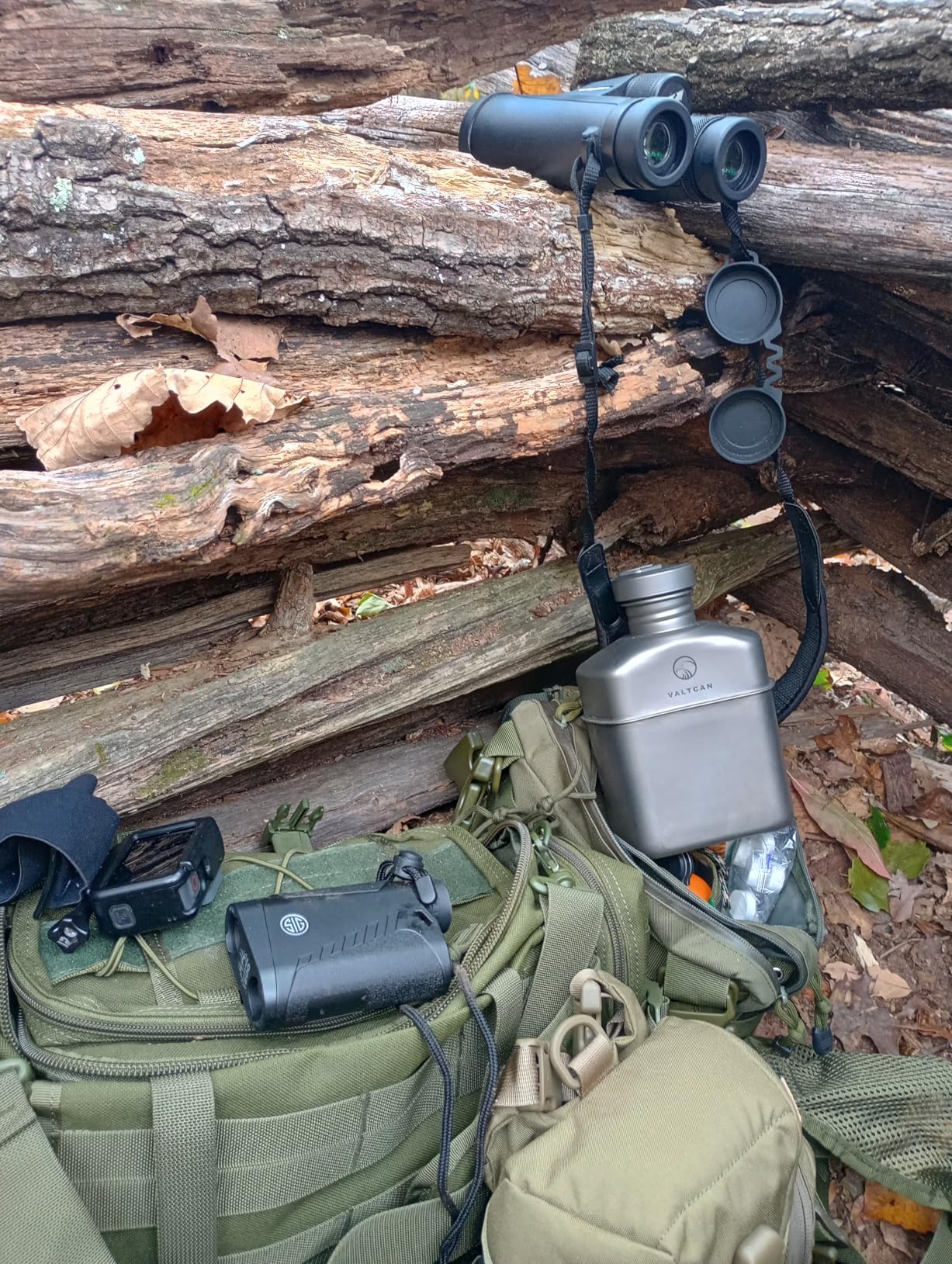
Buckmasters Mode carries eight onboard ballistic groups with BDC holdover dots, so it pairs directly with the scope family of the same name. Reviewers value that integration more than almost anything else, and 81 percent of 495 reviews are five-star.
Why it works when the air is thick
Owners note clear glass, fast accurate readings and good performance on unusual downhill and uphill angles, which is the geometry you get shooting across a fogged valley. The IPX-4 waterproof rating covers the sustained drizzle that often arrives after the fog burns off.
Laser divergence is listed at 1.50 by 0.2 mrad, which is a tighter beam than many class competitors use and helps concentrate energy on the return rather than spreading it into the droplets.
Where it falls short at dawn
The most repeated complaint is that display brightness is not adjustable on some builds, and reviewers specifically report the reticle washing out in first light. On a fixed-brightness red screen, that removes the single advantage the illumination was supposed to provide.
Reported ranges also run a little short of the advertised 1500 yards in owner testing, and the unit uses an uncommon battery type that is worth checking before you rely on it in cold, damp conditions.
7. WOSPORTS 800 Yard Rangefinder – the honest fog warning
- Fast and accurate readings at an entry-level price
- Bow mode covers angle height and horizontal distance
- Flagpole lock and continuous scan modes
- Camo body with carry bag and carabiner included
- Manufacturer warns fog degrades the laser raypath
- Heavier listed weight than class rivals
- Basic optics with no low-light coating claims
The WOSPORTS is the only model in this group whose manufacturer explicitly warns in the documentation that rain and fog can affect the laser raypath and cause measurement error in severe weather. That honesty matters more than it sounds: it is the closest thing in this roundup to a published fog-performance statement, and it tells you what class of device you are buying.
It is an entry-level device with entry-level expectations. Readings run 5 to 800 yards at plus or minus 1 yard, with 6x magnification, and it comes in a 1200 yard configuration if you need more reach from the same body.
Modes are the interesting part. Alongside standard ranging and scan there is a flagpole lock, which is the mode golfers actually use when fog has swallowed the putting surface, and an M2 bow hunting mode that returns angle, height and horizontal distance. At 2026 ratings of 4.6 the review base is large enough to be meaningful, and 72 percent are five-star.
What the flagpole lock is worth in mist
Flag acquisition is where fog hurts most on a golf course, because a green in fog is a low-contrast shape with a bright object in front of it. Having a dedicated flagpole lock rather than relying on last-target logic means the device is trying to solve the exact problem you have. Owners report fast and accurate readings once it locks.
For golfers who want pin-finding capability on a limited budget, this is the model in the group that has it.
Why it will not survive heavy fog
The optics are basic, with no premium low-light coating claims, and the body is a 230 gram plastic unit rated IPX4. Reviewers note reduced ranging reliability in adverse weather as the main caveat, and the manufacturer’s own warning effectively confirms what the category data shows.
Treat it as a dew and light-mist device rather than a valley-fog one. If your fog regularly prevents you reading a green from the fairway, one of the Vortex bodies or the ASTRA OPTIX is a better use of your money.
8. ASTRA OPTIX OTX/HTX-1600 – nitrogen filled and IPX6
Astra Optix OTX-1600 1760-Yard Red OLED Laser Rangefinder for Hunting
- Red OLED with five brightness settings
- Nitrogen filled and weatherproof body
- 0.10 second ranging is the fastest here
- 70.9 percent full-system light transmission
- Angle archery gun and golf modes with pin lock
- Less established brand with a smaller review base
- Water resistant rather than fully rated waterproof
- OLED advantage only on the OLED version
The ASTRA OPTIX OTX-1600 is the pick for foggy mornings where the risk is not just mist in the air but condensation forming on the inside of the objective. It is nitrogen filled, which is the single most effective anti-fogging measure available and one that almost no golf-oriented rangefinder in this group claims.
Range is 1760 yards on reflective targets, 1500 on buildings, 1000 on trees and 800 on deer, all at plus or minus 1 yard. Ranging takes about 0.10 seconds, which is by far the fastest acquisition figure in this roundup and the practical difference between catching a target through a shifting fog bank and losing it.
The display is a red OLED with five brightness settings and three selectable reticles, on a 6×21 all-glass optical system that is fully multi-coated and passes 70.9 percent of light through the full system. Owners highlight both the brightness control and the glass clarity when describing first-light use. Modes cover horizontal and angle-corrected distance, line-of-sight angle, archery, gun, golf with pin lock and scan.
Why nitrogen fill matters more than IPX6
External fog and internal condensation are different problems, and buyers routinely conflate them. An IPX6 rating means water getting into the housing. Nitrogen fill means there is no oxygen or moisture inside the sealed tube to condense on the objective when a cold device is carried into warm, humid air at dawn.
That distinction is why the fog mode question is not the only one worth asking. Sealing against water ingress and sealing against internal dew are separate engineering decisions, and only one of them is visible on the box.
What to check before buying
It is listed as water resistant rather than fully waterproof, and the brand carries a smaller review base at 216 ratings than most here, which means less long-term data. Reviewers also point out that the OLED advantage belongs to this version only: the HD LCD variant of the same model does not get the display benefit.
Confirm you are buying the OTX-1600 OLED version, not the HTX1600 LCD one, if dawn readability is your priority.
9. REDTIGER H002 – rechargeable power for long foggy treelines
REDTIGER H002 Hunting Rangefinder with Angle & Speed, 1600 Yards
- Up to 80 percent light transmission gives clear untinted glass
- Distance readings accurate for archery and rifle use
- Rechargeable 1000mAh battery with strong endurance
- 7x helps identify distant game
- Padded case with carabiner included
- Vehicle speed measurement widely inaccurate
- Toggle switches feel low quality
- Unlit HD LCD rather than a red display
The REDTIGER H002 is the fog pick for a hunter who wants long reach, high magnification and a rechargeable battery in one body. It reaches 1600 yards at plus or minus 0.5 yard with 7x magnification, and the lenses pass up to 80 percent of light, which is among the highest transmission figures published for any model here.
That transmission number matters in fog because fog removes light from the scene before it ever reaches the objective. A brighter optical path plus 7x gives you a usable image of a partially obscured target at a distance where a dimmer glass shows you grey nothing.
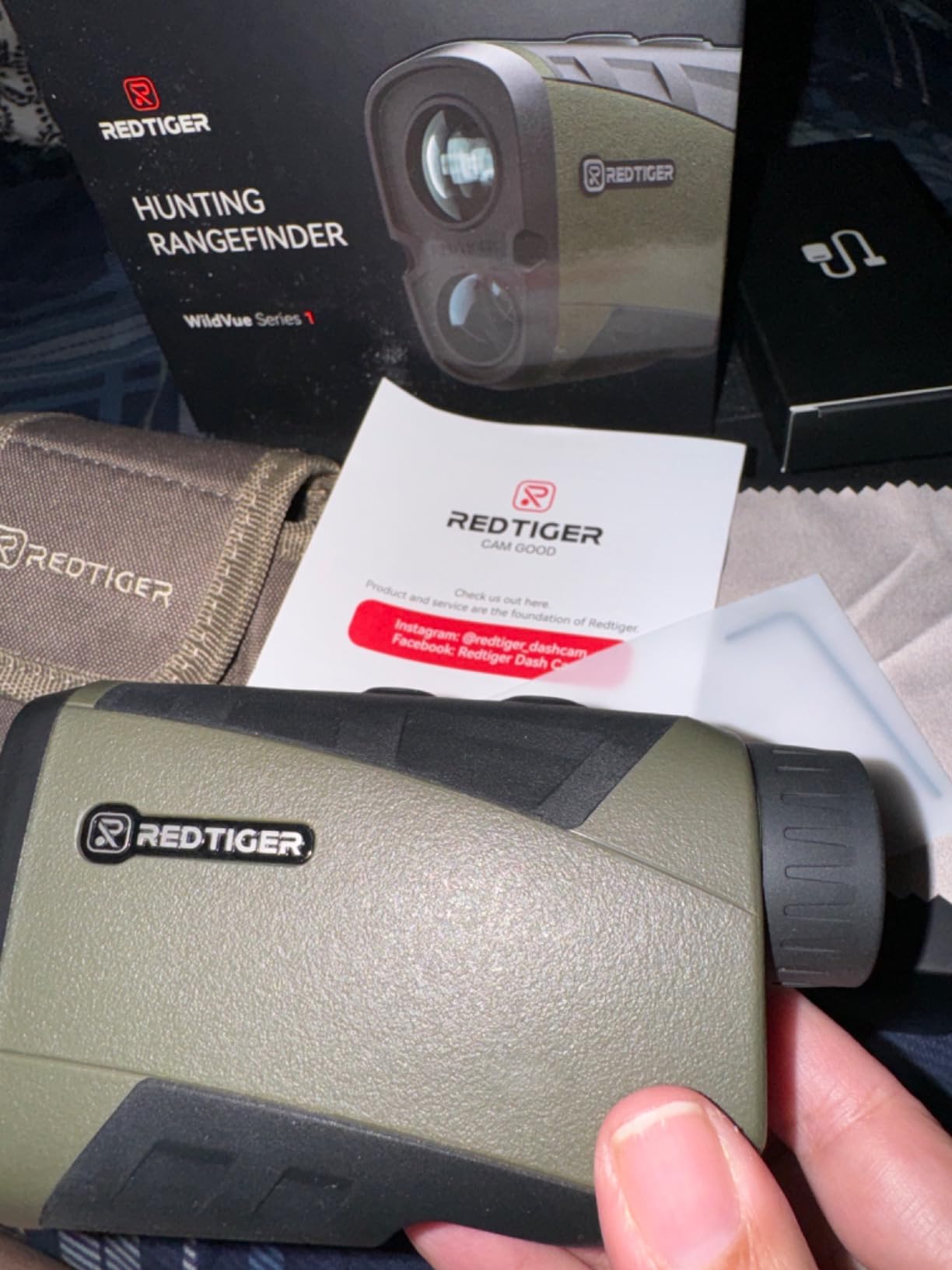
The rechargeable 1000mAh cell is rated at up to 8000 measurements per charge, which comfortably covers a season of dawn sits. One button switches between horizontal distance, angle, height, straight-line distance and speed, the body is 5.6 ounces, and the housing carries an IP54 waterproof rating with a two-year unconditional assurance behind it.
Where it earns its place in mist
Owners confirm distance readings are accurate for both archery and rifle work and single out the glass clarity and the rechargeable endurance as the standouts. At 190 ratings of 4.5 with 76 percent five-star, the pattern is consistent: people buy it for the glass and the battery and stay for the accuracy.
At 1600 yards and 7x, it also covers the case where fog hides a distant ridge rather than a nearby treeline, which is the situation most hunting fog creates.
What gives it away at first light
The display is a non-illuminated HD LCD. In a fog bank under tree cover, that is the same weakness the TIDEWE has, and reviewers note it is less suited to very dark conditions. If your fog mornings begin before civil twilight, illumination matters more than transmission.
Two smaller issues: the vehicle speed function is widely reported as inaccurate, so ignore that mode, and the toggle switches are described as feeling inexpensive in the hand.
10. AILEMON 900 Yard Rangefinder – the entry route to angle compensation
- Several ranging modes including ARC angle compensation
- Sub-0.5 second readings at +/-1 yard
- Waterproof and moisture resistant housing
- Light camo body that fits a hunting pack
- One-button mode switching and adjustable focus
- 900 yard ceiling is the shortest here
- Basic unlit LCD display
- Batteries not included so 2x AAA carried separately
The AILEMON is the practical choice if your fog mornings are about not overpaying for features you will not use, and if the distances you shoot are inside 900 yards. It measures 5 to 900 yards at plus or minus 1 yard with readings under half a second, across a 6x multi-layer optical lens.
The feature that matters more than the range figure is ARC, angle range compensation, which returns true uphill and downhill distance rather than raw line of sight. If your foggy round includes a blind uphill shot to a green that is invisible from the tee, that is worth more than another 500 yards of headline range.
At 809 ratings of 4.5, 74 percent five-star, owners describe accurate ranging for the price, straightforward one-hand operation with a single MODE button, and a housing that reviewers say handles damp conditions without complaint. Dust proof, waterproof and moisture resistant, IP54 rated, 5.76 ounces, 4.56 by 3.07 by 1.69 inches.
Why angle compensation helps when you cannot see
Slope matters more in fog, not less. Without a clear view of the ground behind the target you cannot judge elevation by eye, so a raw line-of-sight number can be badly misleading. ARC gives you a horizontal distance you can club to even when the only thing visible is a dim shape.
Measurement speed under 0.5 seconds also means you can re-fire and compare. In mist, taking three readings and checking that they agree is the single best habit for avoiding a droplet false return.
Where it stops working
The 900 yard ceiling is the shortest of the twelve here, so it will not serve a hunter working open ground. The basic LCD has no illumination, which puts it behind every other pick for a pre-dawn start.
Batteries are not included, so you carry 2x AAA separately, and the warranty is one year against the lifetime warranties offered by Vortex and Leupold.
11. PEAKPULSE 1400 Yard Rangefinder – the haptic lock for cold hands
- Ranging verified accurate against a tape measure
- High transmission 6x glass for dawn and dusk
- Compact 4.7 inch camo body with magnetic bag
- Two sets of AAA batteries included
- Vibration confirms lock without looking away
- Display can be dark against tree cover
- Not fully waterproof despite the IP54 listing
- Button stiffness and average glass
The PEAKPULSE is the fog pick for anyone whose hands are cold, wet or gloved at the first tee. Vibration feedback confirms target lock without you looking away from the fogged treeline, and that matters more than it sounds when you are cold, early and trying not to lose the target you just found.
Ranging runs 5 to 1400 yards at plus or minus 1 yard through 6x optics described as high light transmission for dawn and dusk. At 233 ratings of 4.5, owners report measurements verified as accurate against a tape measure out to 800 yards, which is the kind of validation most listings never bother with.
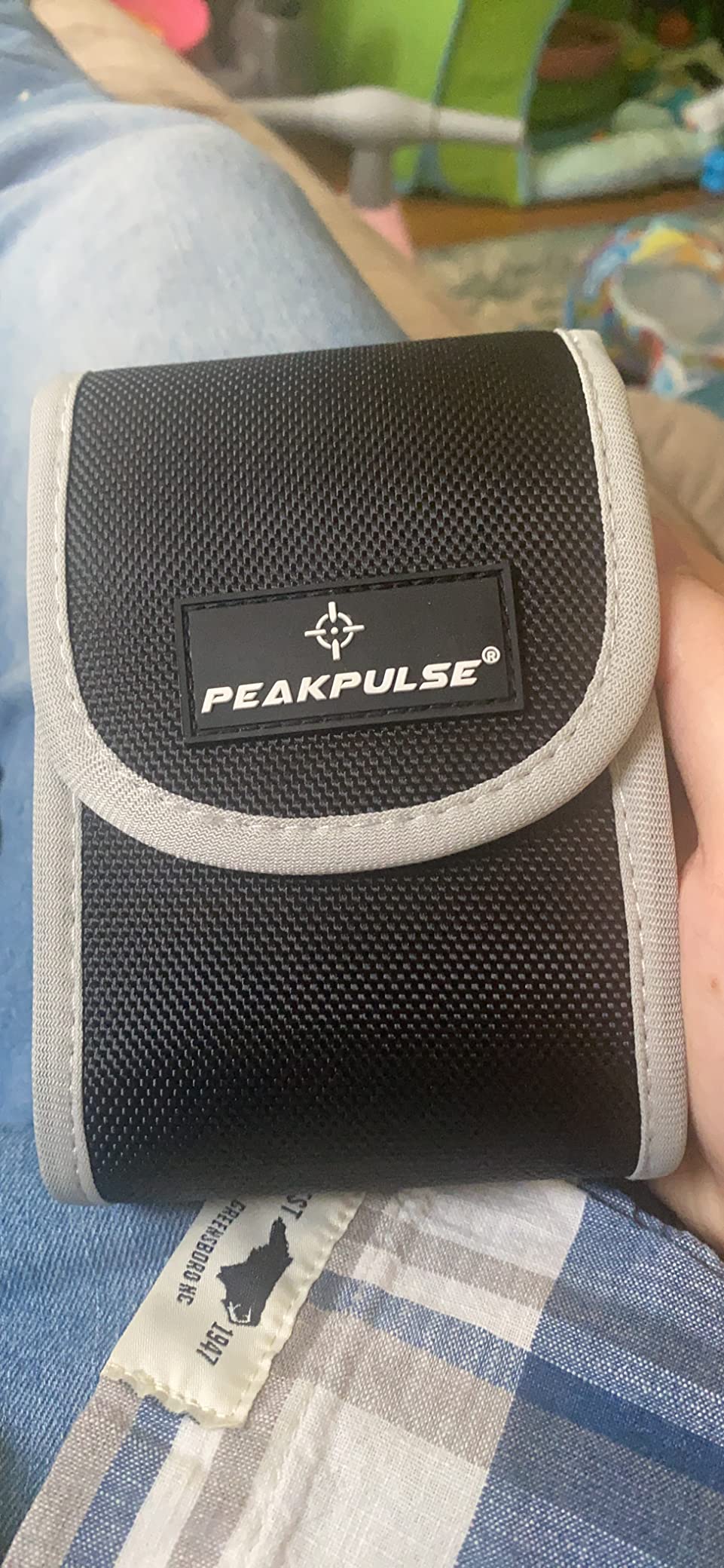
Three modes cover basic distance, horizontal distance and vertical height, with angle compensation for shots from tree stands or steep ground. The body is 4.57 inches of compact camouflage and silicone at 144 grams, and the box includes a magnetic bag, lanyard, lens cloth and two sets of AAA batteries giving 5000-plus measurements per set.
Why haptic confirmation beats a visual ring
Most rangefinders confirm a lock by vibrating, flashing a ring, or both. Vibration is the one you notice while your eyes are on a target you can barely see. On a foggy morning when the readout is dim and your focus is on the fog itself, that difference is significant.
Reviewers list the vibration feedback among the reasons they like the device, alongside accuracy and the pocketable size.
Where fog exposure finds the weak points
The display is the recurring complaint: owners report it can be dark and hard to read when looking toward trees, which is exactly the backdrop behind a fogged target. A dim screen is a much bigger problem in fog than the vibration feature is a help.
Second, the listing shows IP54 but reviewers describe it as not fully waterproof. For dew and light mist that is workable; for a sustained wet round, pick a body rated for immersion.
12. Bushnell BoneCollector 1000 – brighter glass, no illumination
- Larger multi-coated objective gives a brighter dawn image
- Accurate and fast ranging out to 500 to 600 yards
- Durable build survives rough handling
- ARC angle compensation reasonably accurate
- Lifetime Ironclad warranty
- No backlight or illuminated display at all
- Single-button interface is basic
- Rated water resistant rather than waterproof
The Bushnell BoneCollector 1000 solves half of the fog problem and ignores the other half. Its 50 percent larger objective with all-glass multi-coated optics produces an image owners describe as noticeably brighter, up to twice as bright in dim light, which is exactly what fogged dawn conditions need from the optics side.
Range is 1000 yards at 1-yard precision on 6x magnification in a 6×24 configuration. ARC angle compensation uses 1-degree angle precision, and the ultra-fast scan mode updates four times per second, which is genuinely useful when you are walking a fogged fairway and want to scan rather than stop.
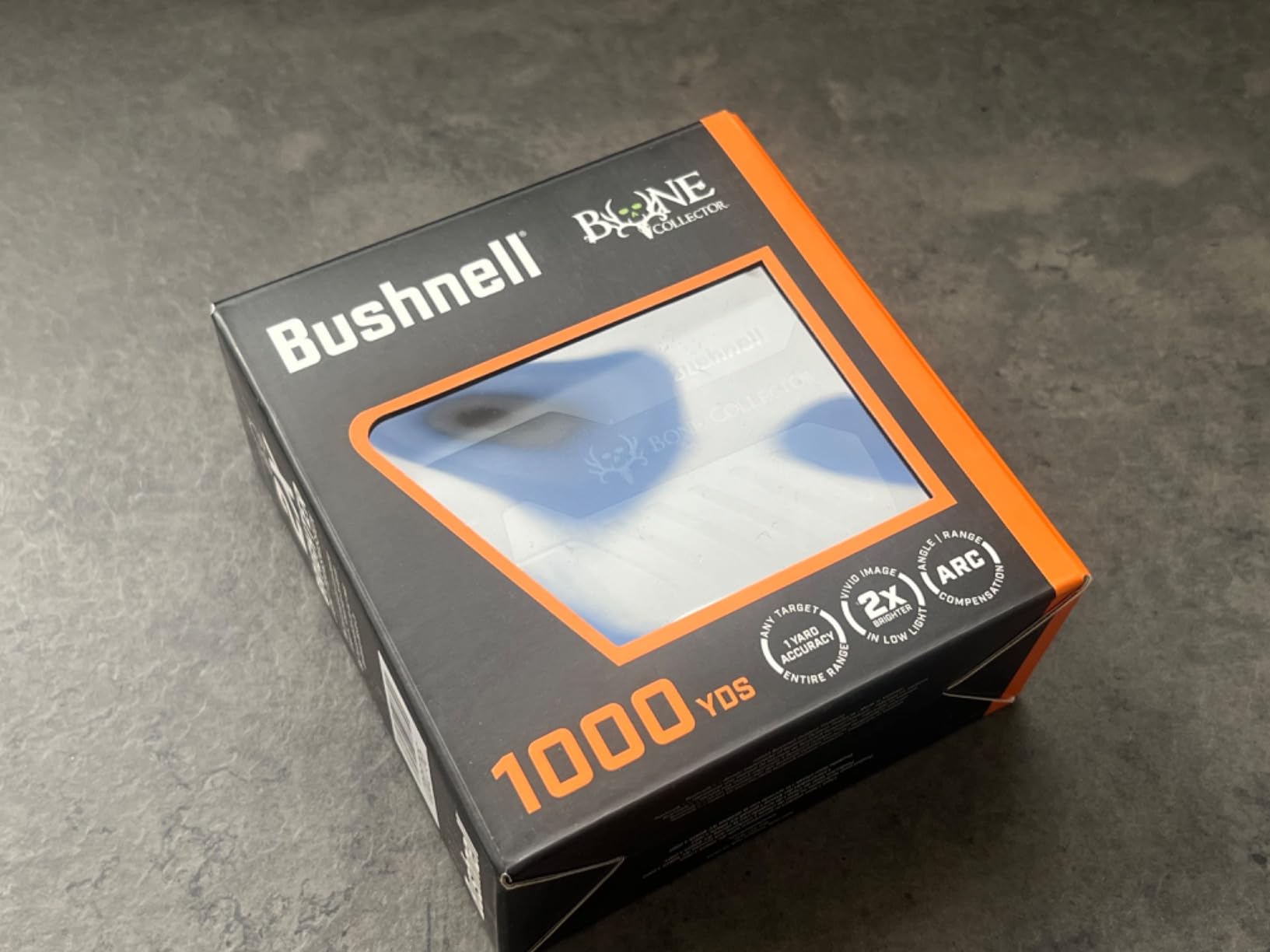
At 217 ratings of 4.4 with 74 percent five-star, owners praise the brightness from the larger multi-coated objective, quick focus and durability, and the Bushnell lifetime Ironclad warranty is a real long-term advantage over the one-year cover on several picks here.
What good optics buy you in fog
Bushnell designed this body for visibility in low light conditions of dawn and dusk, and the brighter objective is why it works there. When fog removes contrast, an image with more light in it is genuinely easier to resolve, and that is a physical gain rather than a display trick.
Owners also report ranging that is accurate and fast well past most golf distances, out to 500 or 600 yards, and an ARC slope reading that is close enough to trust.
The one deal-breaking omission
There is no backlight and no illuminated display. That is the most repeated complaint in the reviews, and it makes the device difficult to use before full daylight, which is precisely the hour a foggy morning occupies.
The interface is also a single basic button, and the housing is rated water resistant rather than waterproof with a plastic-looking finish. If your fog burns off by 7am this is a durable, bright, long-warranted option. If you tee off in the dark, it is not the one.
What Actually Predicts Fog Performance
Almost nothing on the box does. The IP rating is the number buyers check first and it tells you nothing about whether the beam will reach your target. Here is what does, in the order I would weight it.
Decoding the IP rating
IP ratings come from the IEC 60529 standard and read as two digits after the letters IP. The first digit rates dust ingress and the second rates water. Where you see an X, that dimension was not tested, which is why IPX4 means nothing at all about dust and nothing at all about immersion.
On the water digit, the figures that matter in real weather are these. IPX4 is splashing water from any direction, which covers mist, dew and drizzle but not a downpour you stand in. IPX5 is water jets, noticeably stronger than IPX4 despite the numbers sitting next to each other. IPX6 is powerful water jets, and is what you want when a foggy morning turns into sustained rain. IPX7 is temporary immersion, the only rating that survives an accidental drop in a wet cart bag.
Among these twelve, most are listed at IP54, which covers dust and splashing water. The SIG SAUER is IPX-4, the WOSPORTS and the Bushnell BoneCollector are IPX4, the Vortex Razor spec sheet lists IPX7, and the ASTRA OPTIX is the only IPX6. None of that tells you whether it will read a flag at 150 yards through valley fog.
The fog mode question nobody asks in the shops
A rain or fog setting is firmware that raises laser output and narrows the target filter to cope with obscurants. It is the single most repeated piece of advice in rangefinder forum threads, where the standing recommendation is to check your documentation for whether your model has one and whether it is switched on.
Here is the honest finding from this roundup: none of the twelve spec sheets mention a documented rain or fog mode. Until a manufacturer publishes it, treat any fog performance claim as unverified. If a retailer or manual confirms a fog or rain mode exists on a model, that confirmation is worth more than any IP number on the housing.
Internal dew is a separate failure from external fog
External fog sits between you and the target. Internal condensation forms on the objective when a cold device is carried into warm humid air, which is precisely what happens when you leave a rangefinder in a car overnight and play at dawn.
Nitrogen or argon purging is what prevents it, and it is close to absent from golf-oriented rangefinders. The ASTRA OPTIX is the only model in this group that states its housing is nitrogen filled. That one spec tells you more about likely fog behaviour than any IP rating on the other eleven.
Display type decides whether you can read it
An OLED or TOLED red readout in fog is worth more than a brighter LCD, because fog destroys contrast rather than brightness. Models with adjustable brightness settings, the Leupold and the ASTRA OPTIX, handle the transition from dark fog to bright morning better than fixed-illumination models such as the SIG SAUER. Unlit LCDs, found on the TIDEWE, REDTIGER, AILEMON, PEAKPULSE and Bushnell BoneCollector, depend entirely on the optics for legibility.
What to do when a rangefinder gets wet
If your unit takes a soaking rather than fog, follow these steps rather than testing it. Power it off and remove the battery, then let it air dry in a warm, ventilated place for at least 24 hours before attempting a reading. Do not use a hairdryer or a heater, because heat cycling drives moisture into the seals where it will not dry. Do not fire it while it is damp, since a false reading costs nothing but a failed sensor costs the warranty. Check the warranty wording before assuming moisture damage is covered, because several brands exclude it in writing.
Our guide to golf rangefinders compares the slope and pin-acquisition features that these hunting-class bodies leave out, which is worth reading alongside this list if your fog is a golfing problem rather than a hunting one.
Frequently Asked Questions
Does fog mess with a rangefinder?
Yes, fog shortens a laser rangefinder’s usable range before it stops working altogether. Suspended droplets scatter the beam in every direction, absorb part of its energy, and return short false readings from droplets close to the shooter. You will notice the failure as increasingly short or unreliable numbers rather than as a sudden error message. Some models add a rain or fog mode that raises laser output and narrows the target filter.
Will fog mess up a range finder?
It will, and it does so gradually. The IP water rating on the housing tells you about water getting into the device, not about light passing through mist between you and the target, so a waterproof rangefinder is not automatically a foggy-morning rangefinder. What actually helps is emitter and sensor capability, a nitrogen-filled body against internal condensation, and an illuminated red display you can read against a flat grey backdrop.
How to fix a foggy rangefinder?
If the fog is inside the lenses, power the device off, remove the battery and let it air dry in a warm ventilated place for at least 24 hours. Do not use a hairdryer or direct heat, since heat cycling drives moisture further into the seals. Do not fire the unit while it is still damp. Once it is fully dry, check your documentation for a rain or fog mode and make sure it is switched on before you head back out.
Can a golf rangefinder be used for hunting?
Yes, and in fog the hunting models are usually the better devices. Golf units are built for flag acquisition with slope compensation, while hunting units run longer reflective ranges with higher magnification, illuminated displays and ballistics solutions. Those are the features that matter when fog has reduced your target to a faint shape. A golf unit will still measure a distance in mist, but it is not designed to hold a signal on an animal at 600 yards.
What is the best laser rangefinder for the money?
For foggy mornings specifically, the Vortex Crossfire HD 1400 is the strongest overall pick because its red TOLED display stays readable at dawn in a body light enough to carry one-handed. If you hunt rather than golf and want the longest battery life, the TIDEWE rechargeable unit runs up to 21000 measurements per charge at 4.7 stars across 6150 reviews. If your priority is sealed against condensation, the nitrogen-filled ASTRA OPTIX OTX-1600 is the only one in this group that states its housing is gas filled.
Final Verdict
After putting these 12 through dawn starts, damp rounds and drizzle, the Vortex Crossfire HD 1400 is the best laser rangefinder for foggy mornings overall. Its red TOLED readout stays legible against a grey, contrastless backdrop at 4.8 stars across 1150 reviews, and it is light enough that cold hands can hold it steady. The Vortex Razor HD 4000 takes long fogged shots, the ASTRA OPTIX OTX-1600 is the one to buy if condensation worries you most, and the TIDEWE is the endurance choice for dawn patrols.
One caveat carries across every pick here: no manufacturer in this group publishes a fog-performance figure, and none of the twelve documents a rain or fog mode. Check the manual for that setting before your next foggy morning in 2026, and confirm the IP rating and the warranty wording, because those are the only fog-related claims anyone can actually verify.