
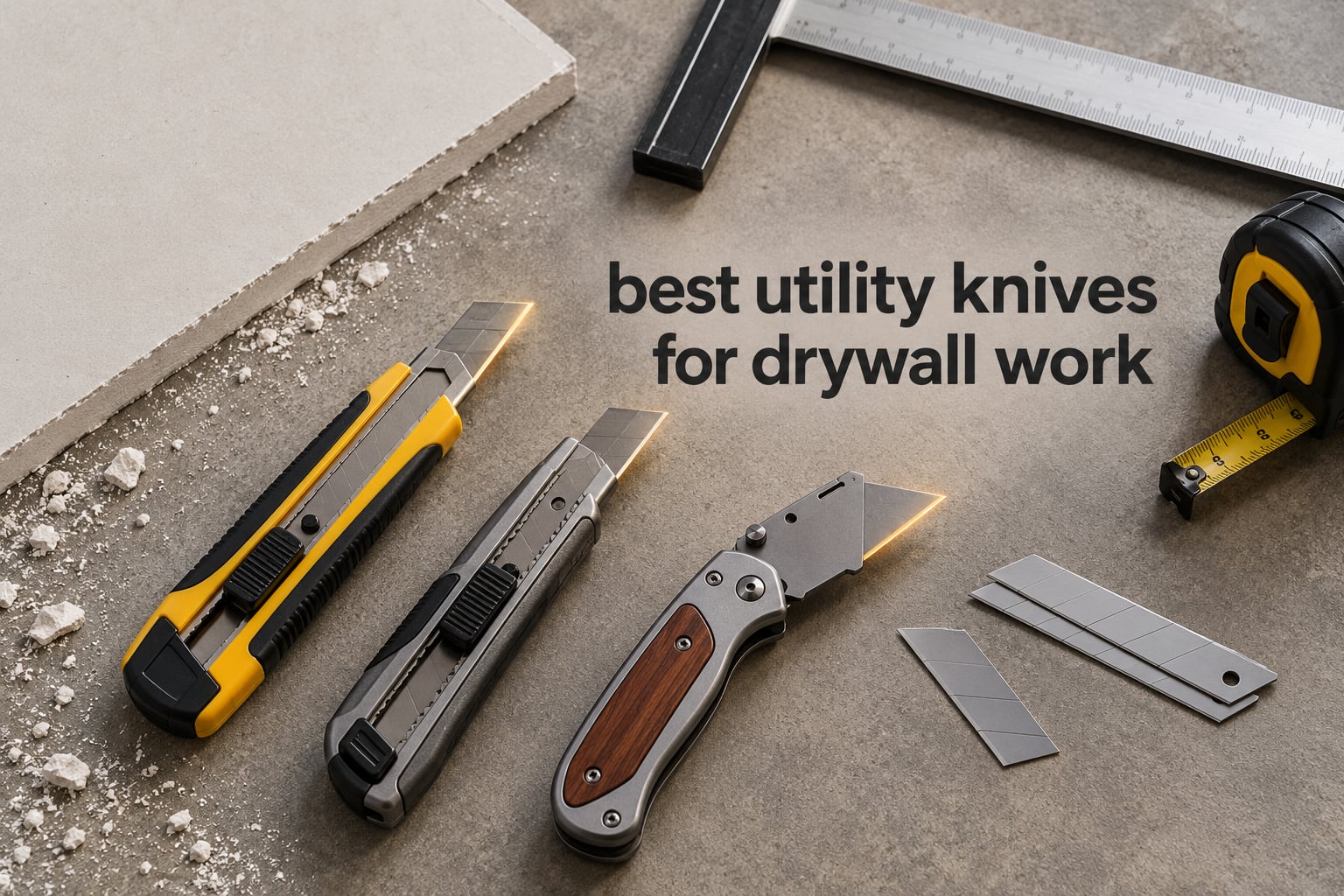
Yes, a utility knife will cut drywall. It is the tool most crews reach for to score the paper face, snap a sheet to size, and trim around a door jamb, and the gap between a good knife and a bad one shows up on the very first cut of the day. A dull blade chews the paper instead of slicing it, a weak lock lets the blade jump out mid-score, and a slick handle leaves your knuckles aching by the afternoon.
That is why the best utility knives for drywall work are not chosen by brand alone. Blade retention, onboard storage, grip depth, and how fast you can change a blade under pressure decide whether a knife belongs on a tool belt or in a junk drawer. We pulled 12 models, compared their mechanisms and specs, and matched each one to the job it actually does well: scoring full sheets, cutting out electrical boxes, slicing patch pieces, or riding in a pocket all week.
We also pulled in what working finishers report. On ContractorTalk, the Milwaukee Fastback series comes up again and again as the first tool a pro grabs for general cutting, specifically because of its fast one-handed deploy and onboard blade storage. On Reddit’s r/drywall, OLFA gets named over and over by learners who want one knife that never needs a new blade purchase to keep working.
If you are outfitting a whole crew rather than one person, start with our drywall tools guide for hangers and come back here for the cutting side.
Top 3 Best Utility Knives for Drywall Work (October 2026)
Our three standouts cover the widest range of drywall jobs. The folding model wins on versatility, the all-metal retractable wins on value, and the snap-off classic wins on never having to think about blade supply.

WORKPRO Folding Utility Knife
- Lockback folding design
- Stores 5 spare blades
- 148 g
- 7 inch overall


All 12 Picks at a Glance
Here is every knife in the roundup with the details that decide drywall performance. Compare blade type, spare blade supply, and locking behavior before you commit.
| Product | Specifications | Action |
|---|---|---|
| WORKPRO Folding Utility Knife |
|
Check Latest Price |
| WORKPRO Premium Retractable Utility Knife |
|
Check Latest Price |
 REXBETI Box Cutter 2-Pack REXBETI Box Cutter 2-Pack |
|
Check Latest Price |
 Home Planet Gear Heavy Duty Box Cutter Home Planet Gear Heavy Duty Box Cutter |
|
Check Latest Price |
| OLFA 18mm Heavy-Duty Utility Knife |
|
Check Latest Price |
 HORUSDY 4-Pack Aluminum Utility Knife HORUSDY 4-Pack Aluminum Utility Knife |
|
Check Latest Price |
 Milwaukee 48-22-1502 Fastback Milwaukee 48-22-1502 Fastback |
|
Check Latest Price |
 DeWalt Retractable Utility Knife DeWalt Retractable Utility Knife |
|
Check Latest Price |
 Spec Ops Tools Utility Knife Spec Ops Tools Utility Knife |
|
Check Latest Price |
 Klein Tools 44306 Flickblade Klein Tools 44306 Flickblade |
|
Check Latest Price |
 VOTREK 2-in-1 Safety Box Cutter VOTREK 2-in-1 Safety Box Cutter |
|
Check Latest Price |
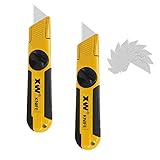 XW Fixed-Blade Drywall Cutter XW Fixed-Blade Drywall Cutter |
|
Check Latest Price |
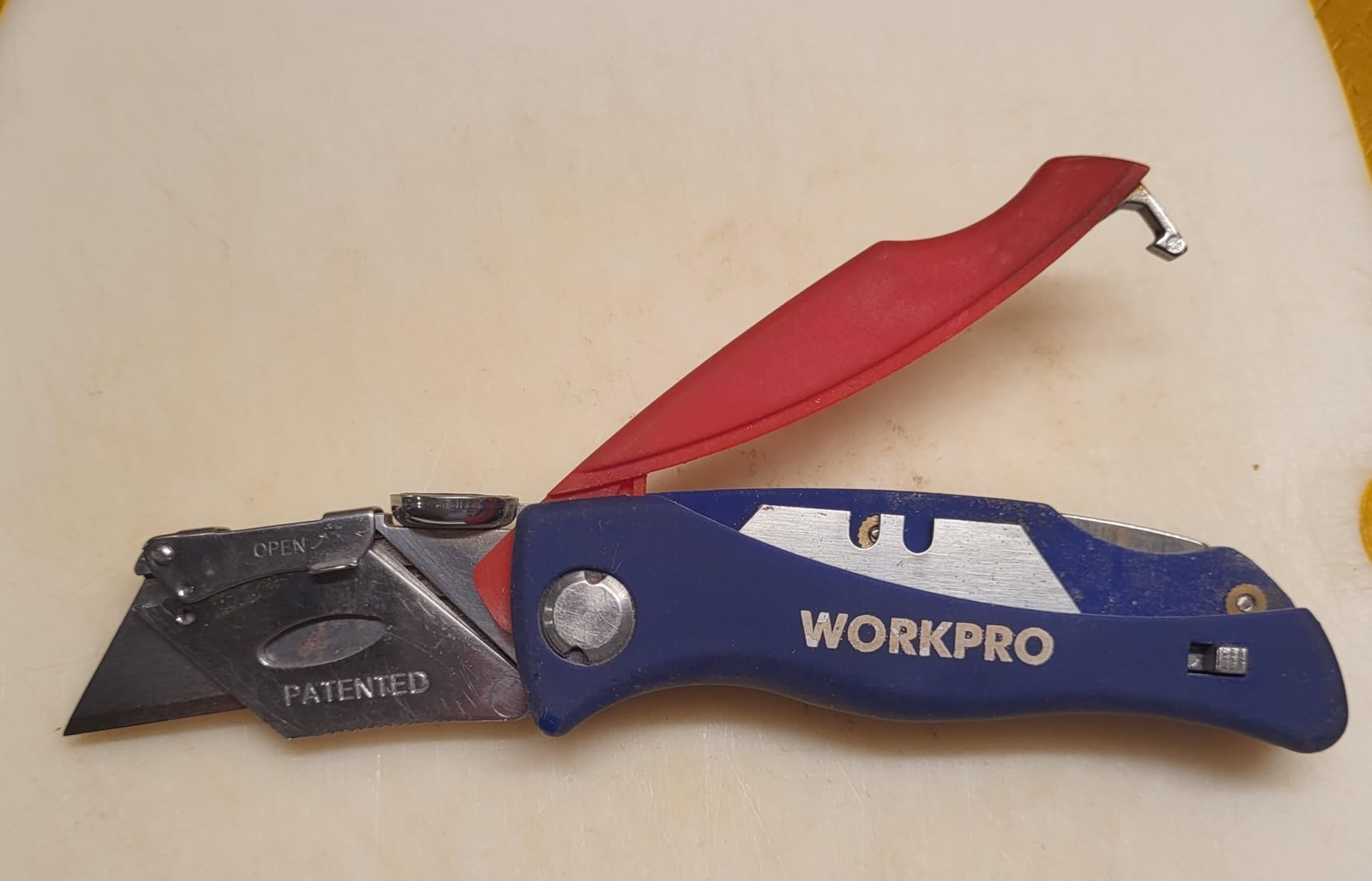
1. WORKPRO Folding Utility Knife – Best Overall for Drywall Work
- Stores 5 spare blades in the handle
- Lockback folds closed for safe carry
- Belt clip included
- Steel body resists drywall grit
- Quick-change blade release
- Lockback feels stiff at first
- No incremental blade exposure
This is the knife we hand to people who asked for one drywall knife and then realized they need one for everything. The handle is steel with an anti-slip ABS overmold, and the whole thing weighs 148 g, so it stays comfortable through a long scoring day.
The five-blade storage channel is the feature that decides drywall work. When a segment dulls against a gypsum core, you snap it off, flick the body open, and load the next one without walking to a truck. The quick-change release does exactly what it claims.

The lockback is the trade. It closes with a deliberate flick, which means a knife in your pocket is a knife that stays put, and it is why we like this model for anyone splitting time between hanging and finishing. Two things slow it down: the lockback needs a firm push to engage, and the blade only stops fully open or fully closed.
That second limitation matters on fine trim work. There is no half-inch of blade exposure for shallow paper scoring, so for the most delicate cuts you want a retractable or a snap-off knife instead.
Why it works for scoring full drywall sheets
A rigid steel handle transfers your push directly into the blade without flex, which is exactly what a straight score across a 4 by 8 sheet needs. The 2.4 inch blade covers most of the paper thickness in a single pass, and the belt clip keeps the knife on your hip rather than in a bucket.
Where it falls short on a finish crew
Zero blade adjustment means you cannot dial exposure down for scraping compound residue or shaving a corner. A crew that does heavy trimming will add a second knife with a dial or wheel lock rather than force this one past its limits.
2. WORKPRO Premium Retractable Utility Knife – Best Value Metal Retractable
- Lightest metal body in the roundup at 91 g
- Three blade positions
- 10 spare blades included
- Non-slip ergonomic body
- Drop tested aluminum shell
- Blade can wobble at full extension
- Storage latch less secure on newer runs
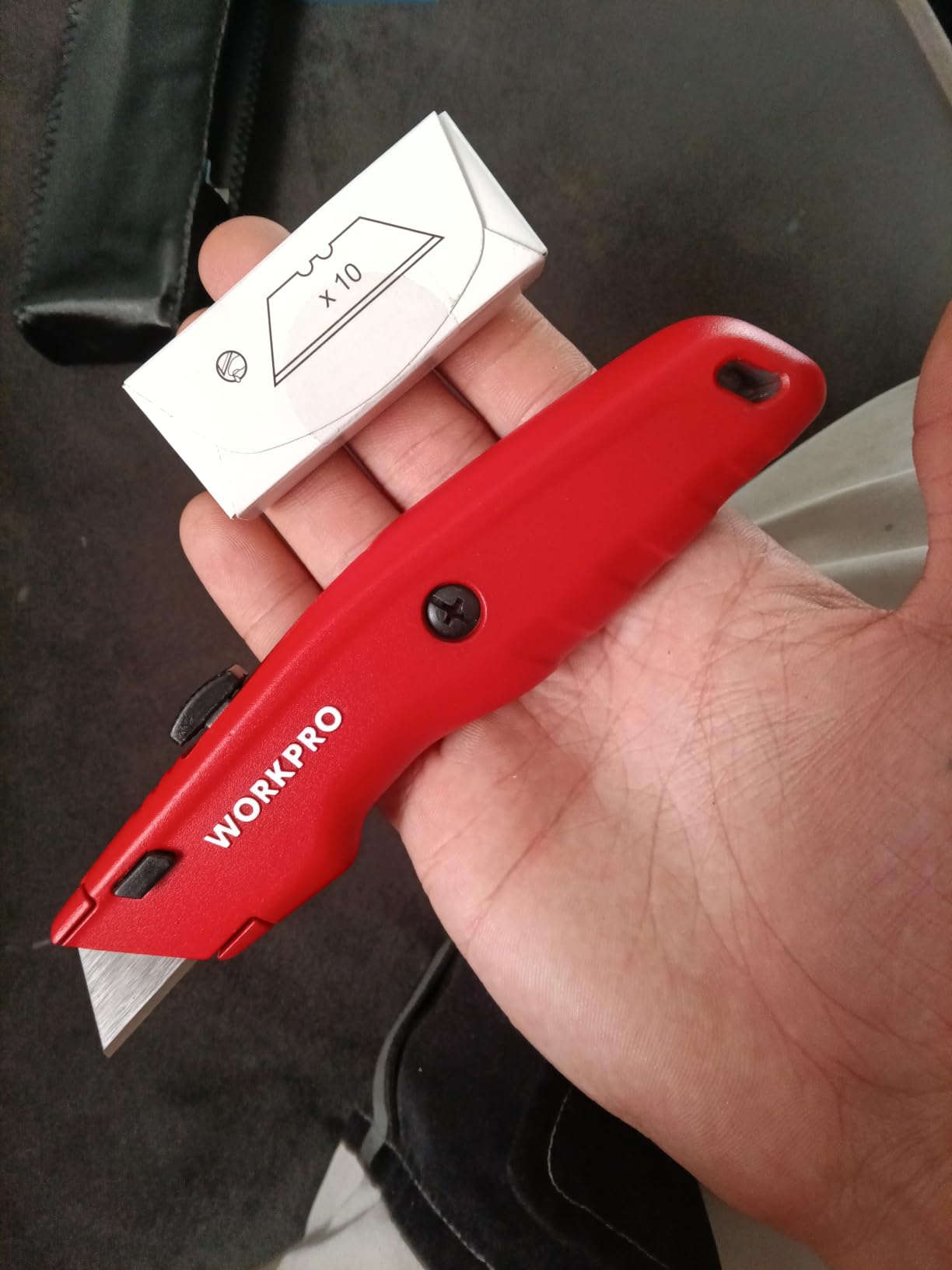
A die-cast aluminum shell in something this light is unusual, and it is why this retractable stands up to being dropped off a scaffold with a blade loaded. The body measures 6.3 inches and the SK5 blades hold an edge well against paper and gypsum.
Ten spare blades ship in the box, and combined with the handle storage that is enough supply for a medium patch job without another purchase. The three-position retractable lets you set exposure for cutting and pull it back for carrying between rooms.
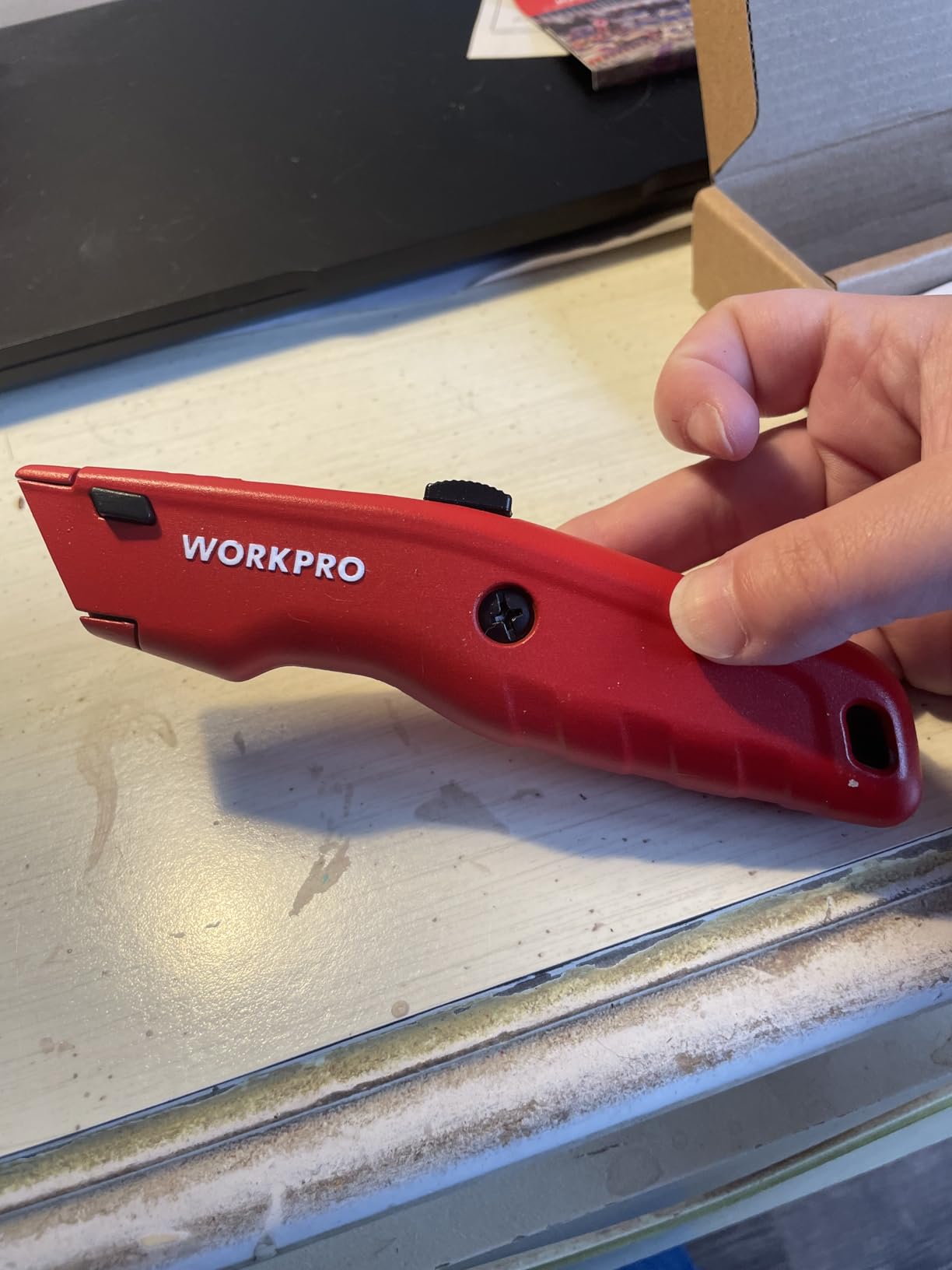
The 91 g weight is the quiet winner on long finishing days. It is light enough that your grip stays relaxed through dozens of trim cuts, and the non-slip surface keeps the knife from twisting when you push into a stubborn spot near an outlet cutout.
Two complaints come up repeatedly in reviews. Some owners notice a slight blade wobble at full extension, which shows up as wander on a shallow score line, and the internal storage latch is reported as less secure on newer production runs.
Why it works for cutting out openings
Because the blade is fully retractable, you can run a series of short cuts with the exposure set shallow, then extend it for the final push through the board. That control is what keeps an electrical box cutout from blowing out the back face.
Where it falls short against a fixed blade
A retractable mechanism is one more thing that can fill with dust and jam. On a dusty hang day, a fixed blade with a screw lock will still be working when a thumb-slide retractable starts to drag.
3. REXBETI Box Cutter 2-Pack – Best Set for a Crew
REXBETI Box Cutter 2-Pack, Utility Knife with Blade Storage, 18 Blades
- Two knives in one set
- 18 SK5 blades included across both
- Blade storage in each handle
- Blackened anti-rust blade coating
- Retractable and folding in one pack
- Plastic body feels basic
- Storage latch may not stay shut
A crew of two gets two different knives here. One is a push-button retractable with auto-lock, the other is a folding design, so the person trimming baseboard and the person scoring sheet do not have to share a tool.
The blackened SK5 blades carry an anti-rust coating, which matters more than it sounds on drywall because gypsum dust is mildly abrasive and damp board will pit a plain carbon blade faster than most people expect.
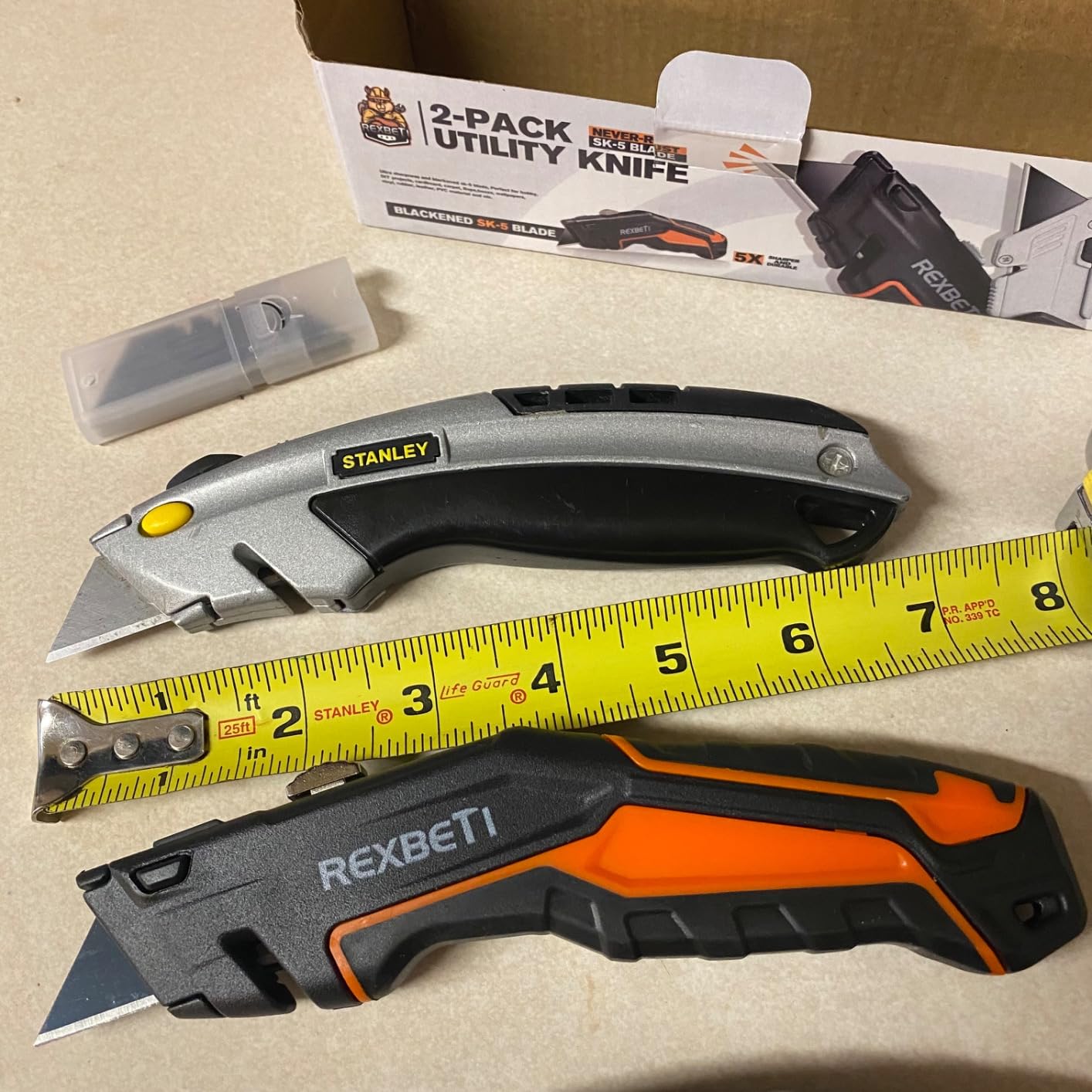
Each handle stores blades, three per knife, and the set includes 18 in total. That supply is the real argument for a crew. Nobody stops work to argue over who used the last spare.
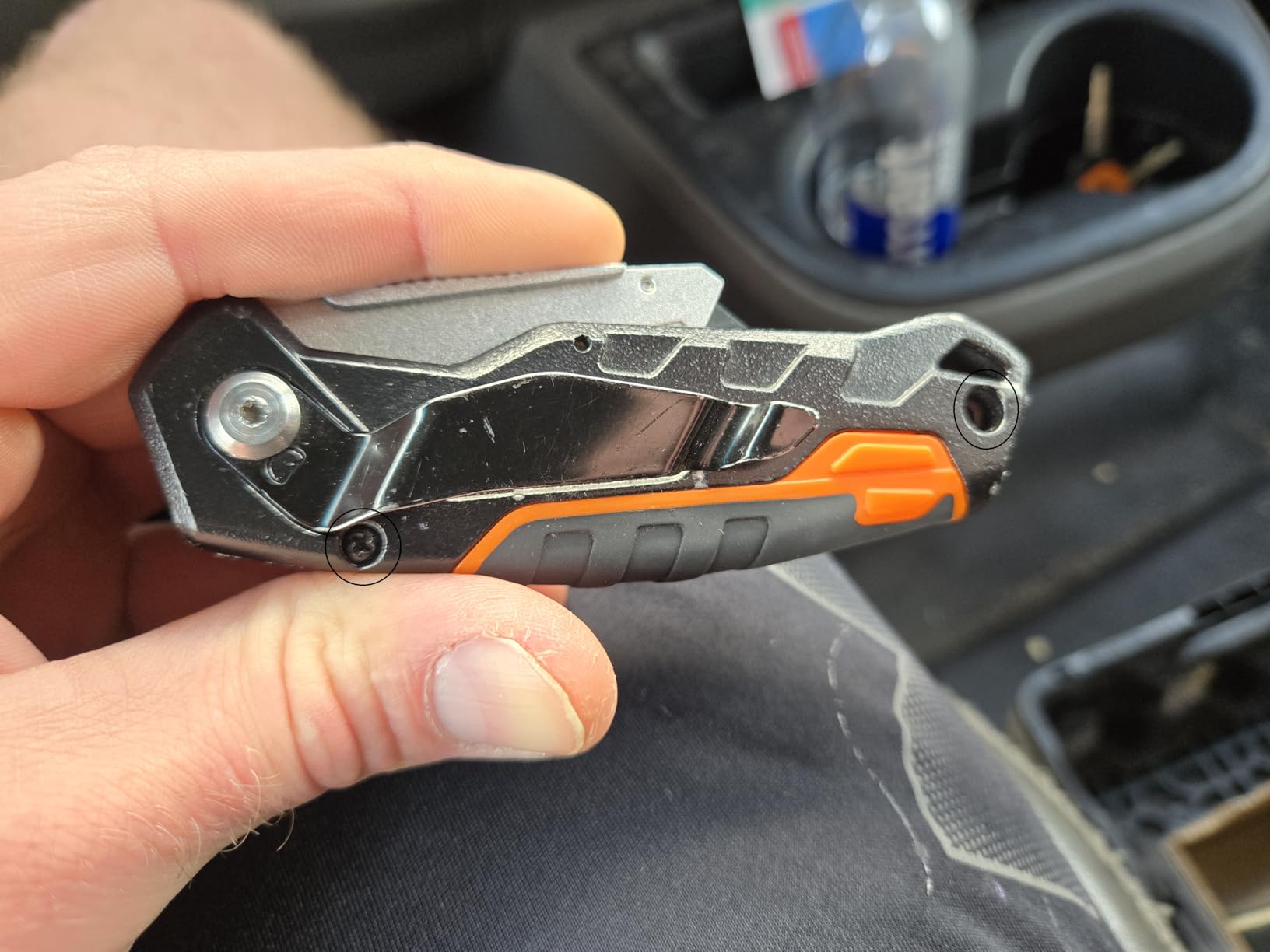
The plastic body is the compromise. It will survive a job, but it does not have the rigidity of an aluminum shell, and reviewers do point out that the storage compartment can be fiddly to close with blades loaded in it.
Why it works for fast blade swaps
The quick-change mechanism swaps a segment in seconds without the knife ever fully opening on your palm. When a score line starts to shred instead of cut, that speed is the difference between a clean pass and a repair.
Where it falls short for heavy trimming
Light pushing work only. If you regularly cut backer board or cement board, the lighter body and plastic handle transmit less force and your hand will feel the difference at the end of the day.
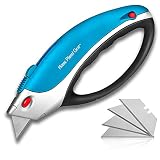
4. Home Planet Gear Heavy Duty Box Cutter – Best for Reduced Hand Strength
Box Cutter Retractable Utility Knife – Heavy Duty Box Cutter Knife Cardboard Cutter – Box Opener Razor Blades Utility Knife – Box Knife Carpet Cutter with 5 Sharp Blades
- Thumb rest spreads cutting force across the palm
- Large non-slip TPR grip
- Quick-release 3-step blade change
- Backed by a lifetime warranty
- Cuts drywall
- carpet
- rope and vinyl
- Blade needs extra force to fully retract
- Heavier than compact folders
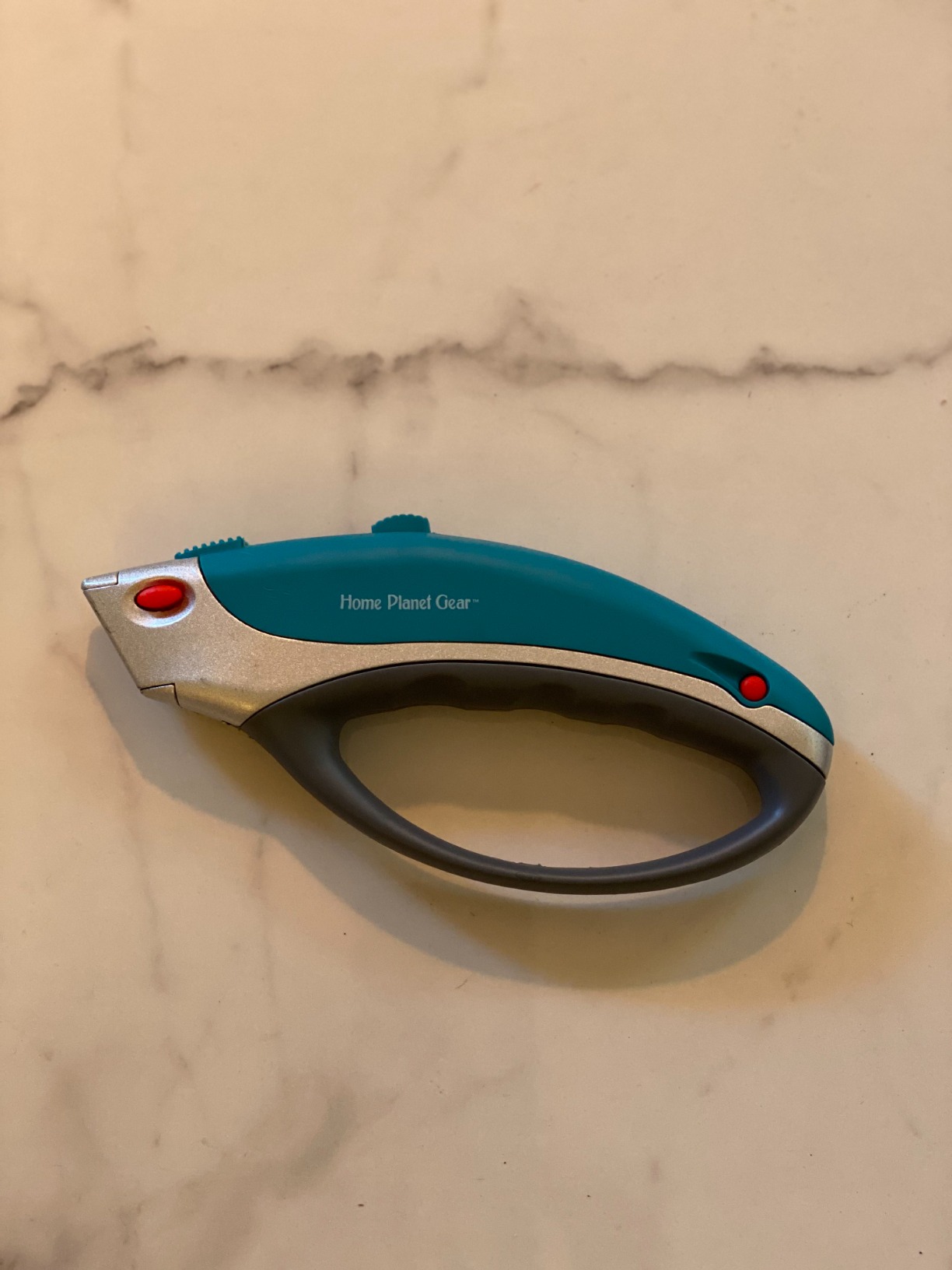
This is the one to look at if ordinary utility knife handles hurt your hands. The TPR rubber grip is noticeably fatter than a standard box cutter, and the thumb rest lets you push through a score line with your palm instead of pinching the blade with your fingers.
Users with arthritis and hand weakness rate this model unusually well, and the general lesson holds for everyone: force applied through the wrist is sustainable, force applied through fingertips is not.
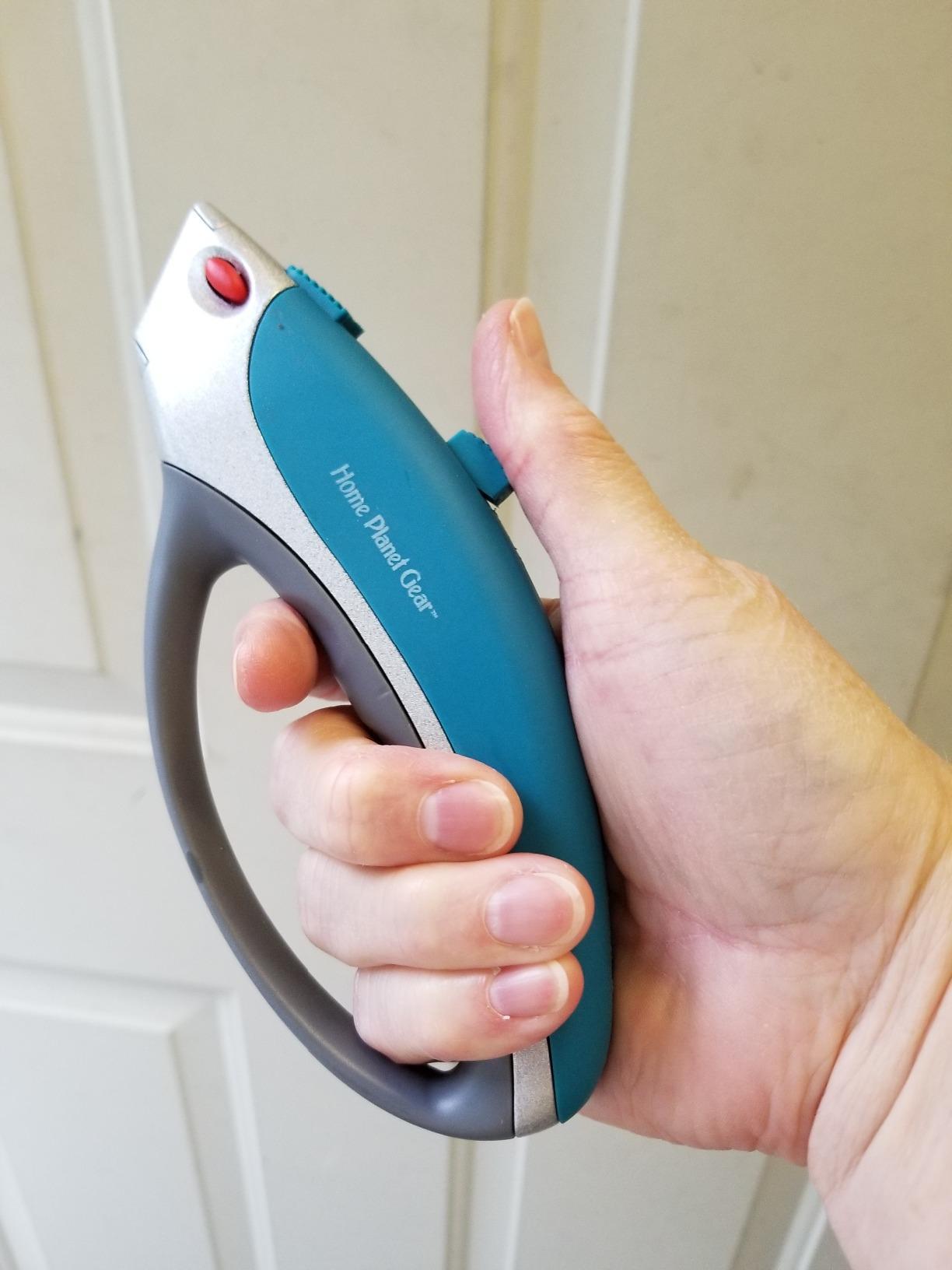
The zinc alloy body carries a lifetime warranty from the manufacturer, and the SK5 blades cut through stacked cardboard and taped seams without complaint. The red quick-release button triggers a three-step blade change that works with one thumb.
The recurring complaint is retraction. It takes extra force to push the blade fully closed, and if you do not push firmly, a small section can stay proud of the nose when the knife is set down.
Why it works for long trim days
A 0.59 lb body with a wide grip disperses pressure across more of your hand than a slim metal knife. On repetitive trimming around window openings, that is the difference between finishing the room and stopping halfway through.
Where it falls short on a jobsite
The heavier body is noticeable in a pocket, and the stiff retraction is a mild risk when the knife is belt-worn and you are reaching around a stud. Keep the lock engaged before you set it down.
5. OLFA 18mm Heavy-Duty Utility Knife – Best Snap-Off Blade for Drywall
- Snap segments off for a fresh edge in seconds
- Ratchet wheel lock gives any blade depth
- Japanese tool steel holds a long edge
- Only 2.5 ounces
- Backed by a forever guarantee
- No onboard blade storage
- Slower to open than a quick-change knife
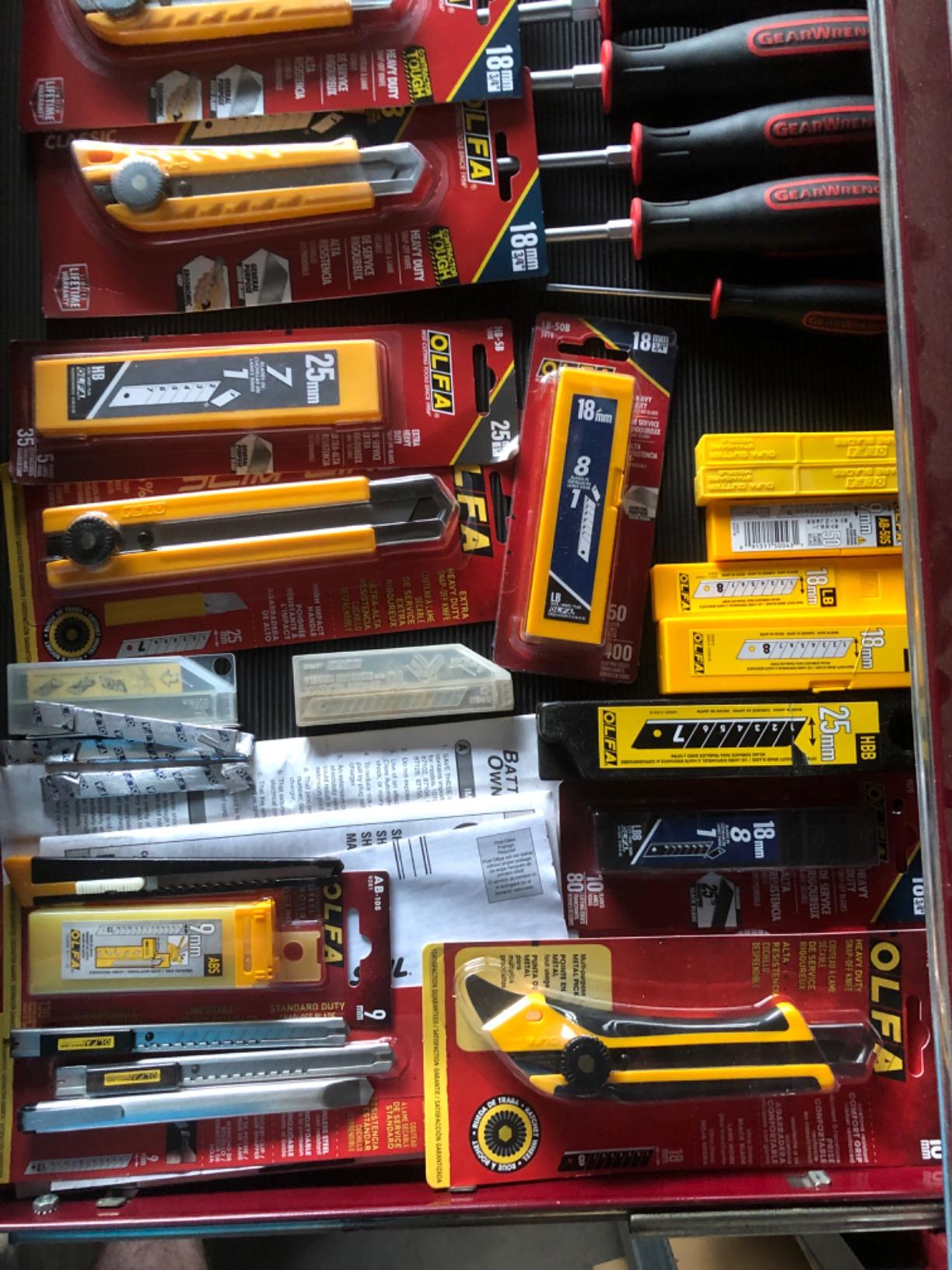
This is the snap-off design that made snap-off blades standard, and for drywall it solves the one problem that has no good answer: blade supply. When a segment dulls, you snap it off in the handle and expose a new edge. No loose blades, no storage compartment to lose.
The wheel lock sets blade depth anywhere along the travel, which lets you dial in a shallow cut for paper and a deep one for backer board on the same tool. At 2.5 ounces it is also the lightest knife here.
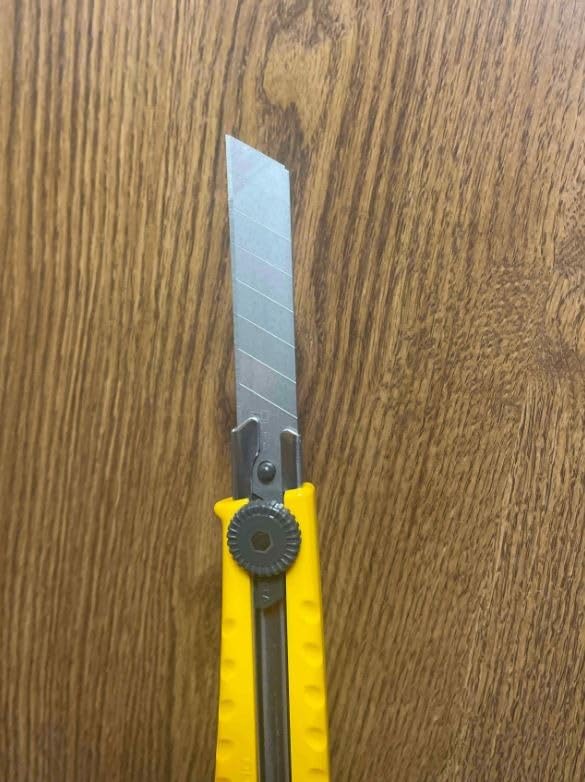
Users on drywall forums routinely report owning these for a decade or more, and OLFA guarantees the tool for life. The preloaded LB Heavy-Duty Silver snap blade is made from Japanese tool steel, which is why the segments keep a working edge through gypsum.
The costs are real. There is no onboard storage, because the blade is the storage. And opening the channel is a deliberate two-handed action, so it loses to a folding knife when you want to swap a blade without breaking stride.
Why it works for drywall paper scoring
A fresh segment gives you a sharp corner on the paper face, which is the difference between a clean score and a chewed one. On an 18mm blade the cutting edge is long enough to run the full width of a T-square in one stroke.
Where it falls short for cutting speed
Snapping eight segments takes real practice, and fine hands will pinch. If you change blades dozens of times a day, a quick-change retractable saves more time than the snap-off mechanism does.
6. HORUSDY 4-Pack Aluminum Utility Knife – Best Budget Multi-Pack
- Four knives and 10 blades in one order
- Aluminum shells outlast plastic
- SK5 blades hold an edge
- Different colors help assign a knife per task
- Hanging rope at the tail
- Newer versions dropped the onboard blade storage
- Storage case can open unexpectedly
Four knives at once solves a problem nobody talks about: a shared knife on a job site is a knife that walks off. Giving each person one, color coded, removes the whole argument.
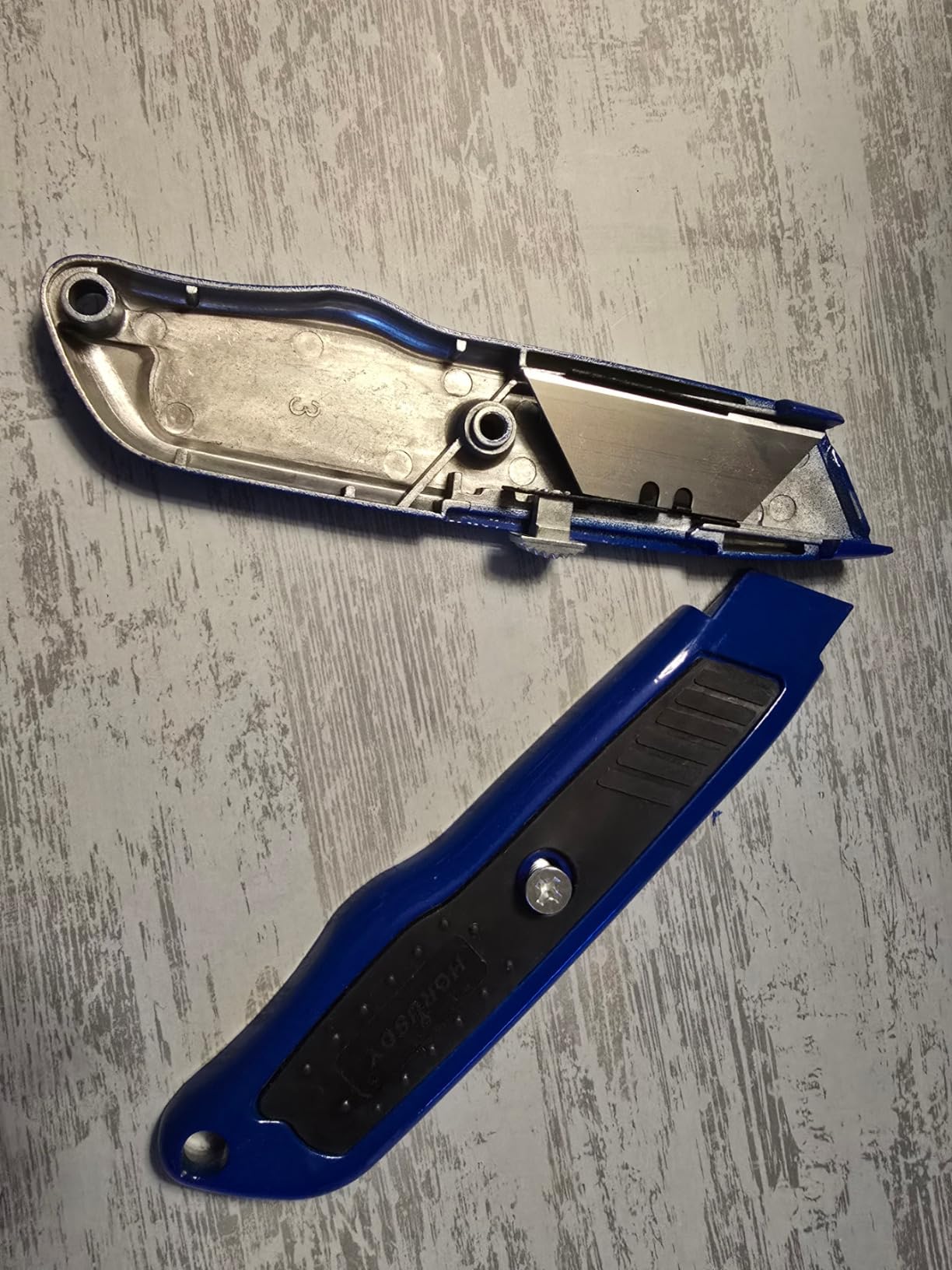
The shells are aluminum alloy with TPR rubber grips, which is a step above the plastic knives that usually occupy this tier. The included SK5 blades are sharp out of the packaging and cut drywall, carpet, and rope without complaint.
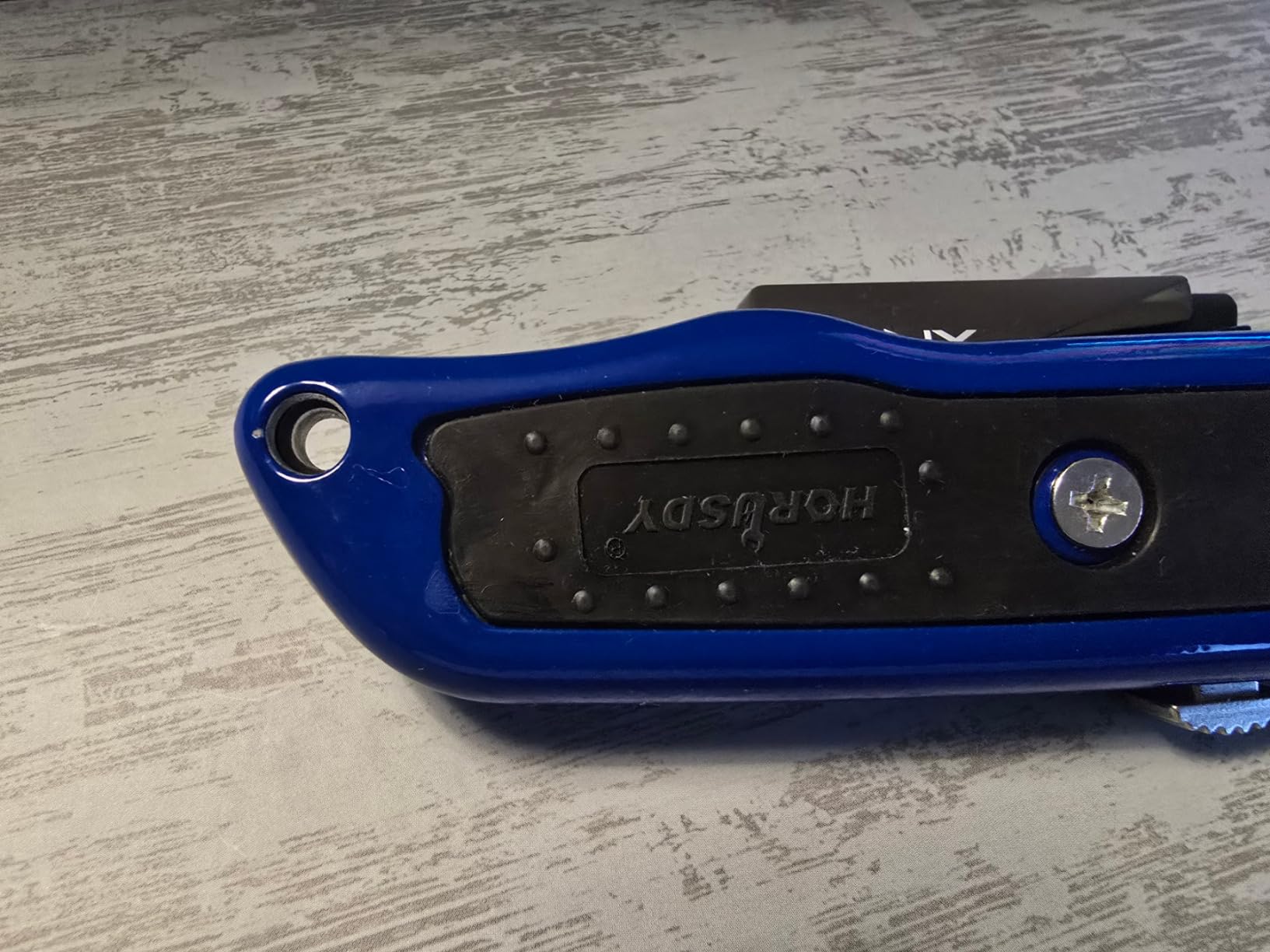
Each knife is 10 inches long, which is longer than most and does mean it is a belt tool rather than a pocket tool. A hanging rope at the tail lets you loop it onto a ladder rung or a screw hook so it does not slide off a plank.
One important caveat for anyone buying this now: reviewers note that newer production runs changed the screw type and dropped the internal blade storage. If onboard storage matters, confirm it on the current listing before you commit.
Why it works for a whole crew
Split the pack across a hanging crew and every person has a dedicated knife with a known-good blade. That removes the single most common cause of torn paper: a shared knife that is three days past sharp.
Where it falls short for one user
The lighter aluminum bodies feel less substantial in the hand than a single premium knife, and the lack of onboard storage means you are managing loose segments or a separate blade pack.
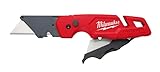
7. Milwaukee 48-22-1502 Fastback – Best for Working Pros
- One-handed flip open and lock
- Tool-free blade change
- All metal body built for daily abuse
- Wire-form belt clip will not tear pockets
- Limited lifetime warranty
- No spare blades in the box
- Highest cost in the roundup
- Slight learning curve for one-handed use
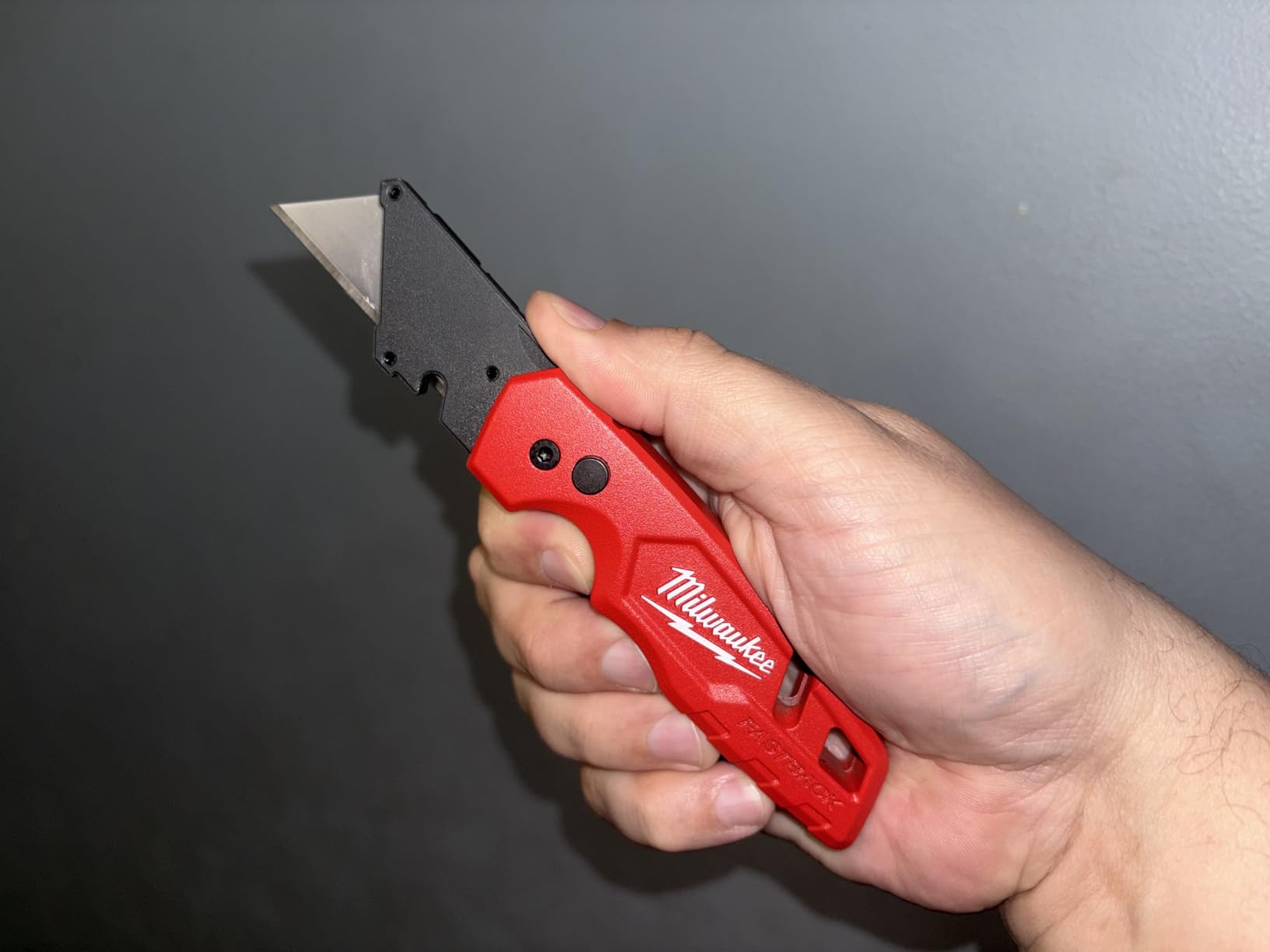
The Fastback is the knife that shows up in pro threads again and again, and the reason is the deploy. It opens and locks one-handed, which means your other hand stays on the board, the ladder, or the sheet you are measuring.
Tool-free blade change is the second pro feature. You do not hunt for a screwdriver or a coin in a dusty pocket; you open it, swap, and keep moving. The onboard compartment holds 3 to 5 spare blades.
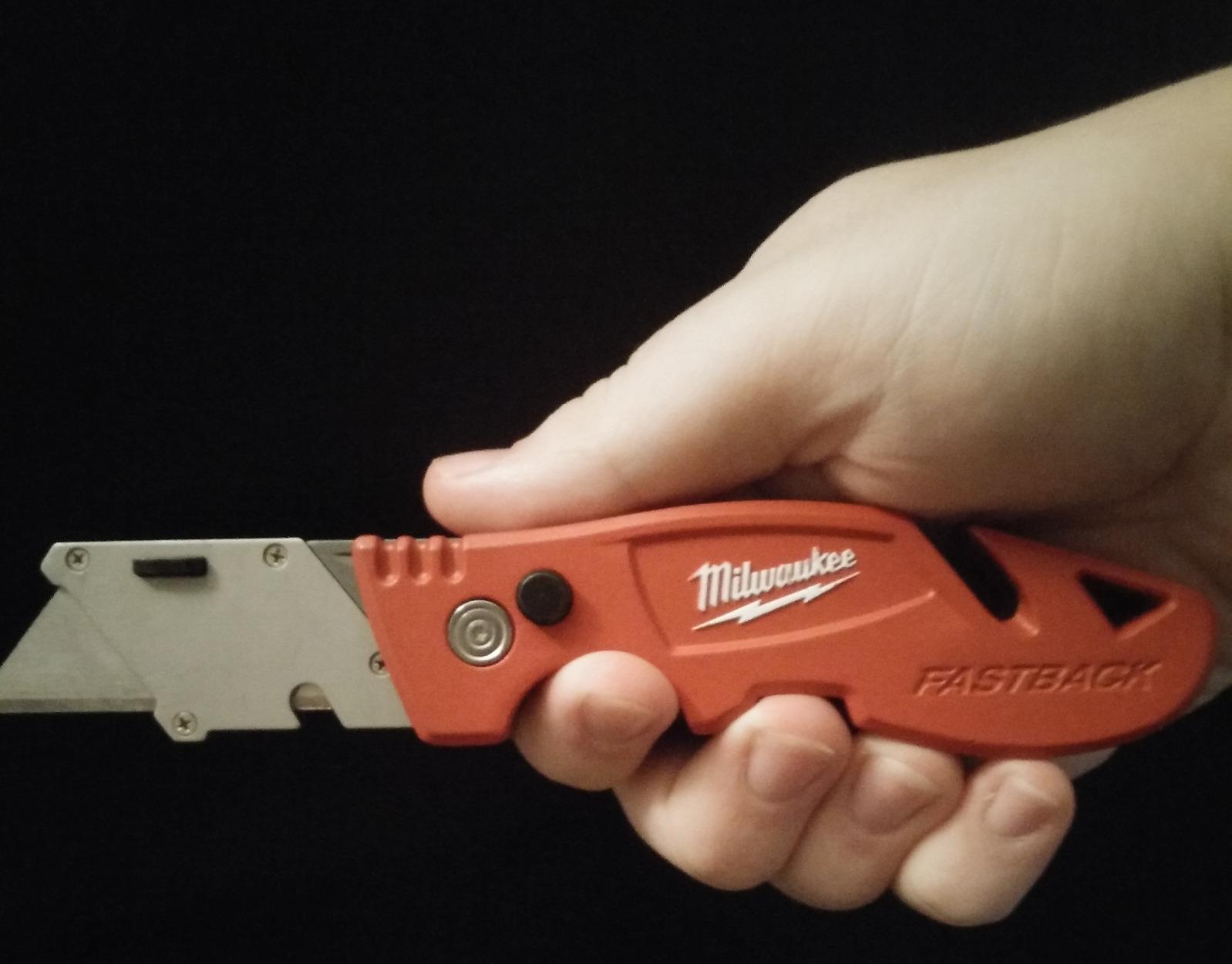
The all-metal body carries a limited lifetime warranty and owners report years of daily use without degradation. The integrated gut hook cuts strapping without opening the blade, and the wire stripper handles up to 10 gauge, which is not drywall work but earns its place in a mixed tool kit.
The wire-form belt clip is a small thing that matters more than it should. It grips a pocket without stitching damage and holds the knife oriented so the blade is not pointing at your thigh.
Why it works for a full hanging day
One-handed deploy plus tool-free blade change removes the two interruptions that add up. On a day of repetitive cutouts and trims, you change blades constantly, and each saved trip to the toolbox is time you get back.
Where it falls short
No blades ship in the box, which means a second purchase before your first job. It also costs more than anything else in this roundup, and the one-handed action takes a day or two to trust with a new blade in hand.
8. DeWalt Retractable Utility Knife – Best Blade Storage
- Holds 10 blades internally
- Soft rubber grip reduces fatigue
- Front-access blade change button
- Secure blade lock with no wobble
- Metal body
- Blade can move in the open position
- Only one blade included in the box
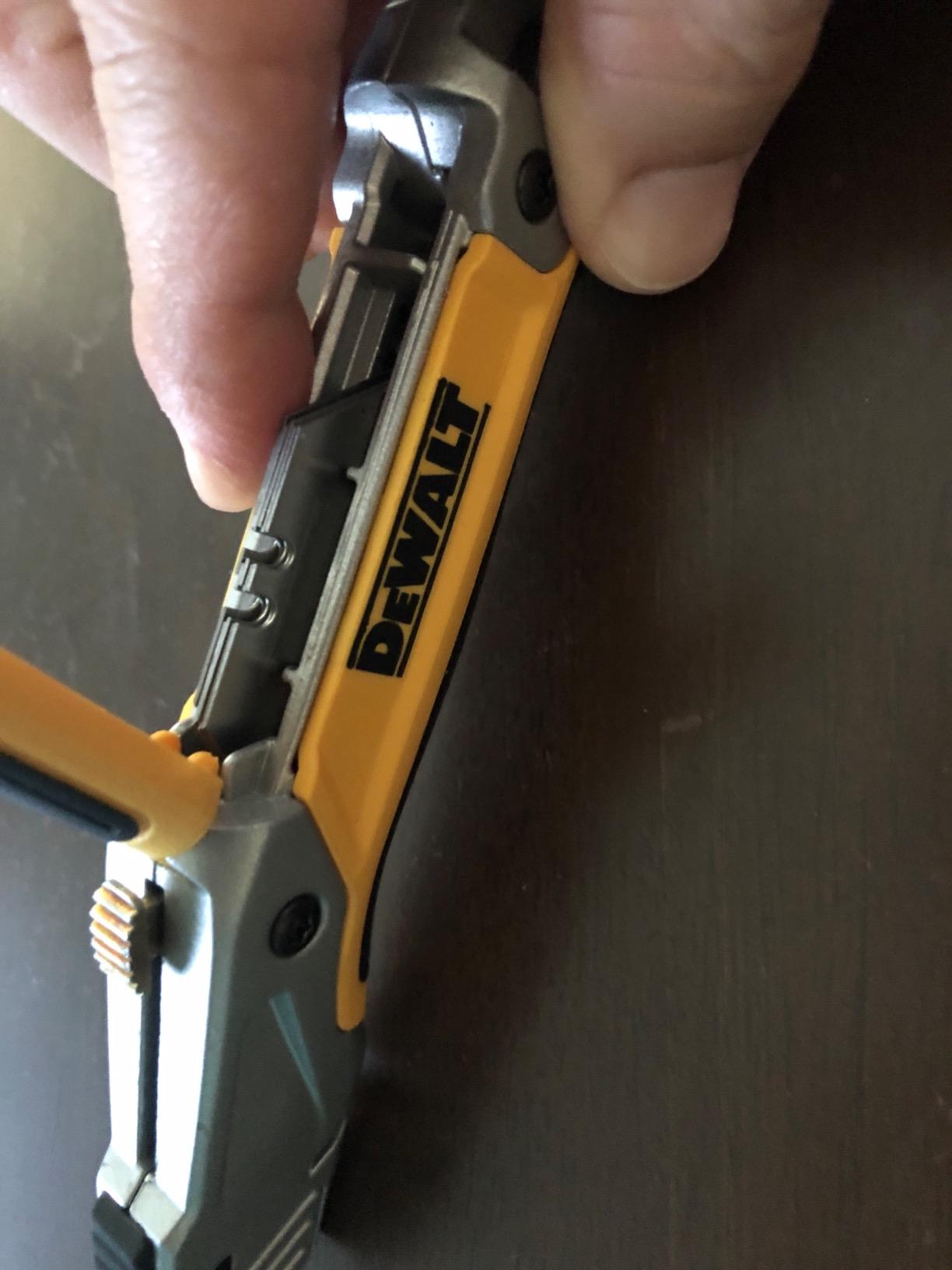
Ten blades in the handle is more onboard supply than any other knife here, and on drywall that is the feature that decides the review. A full day of cutouts and trim work can consume a surprising number of segments.
The soft rubber grip over a metal body gives you the durability of a pro knife with the comfort of a finishing tool. The front-access button means you change a blade from the same side your hand is already on.
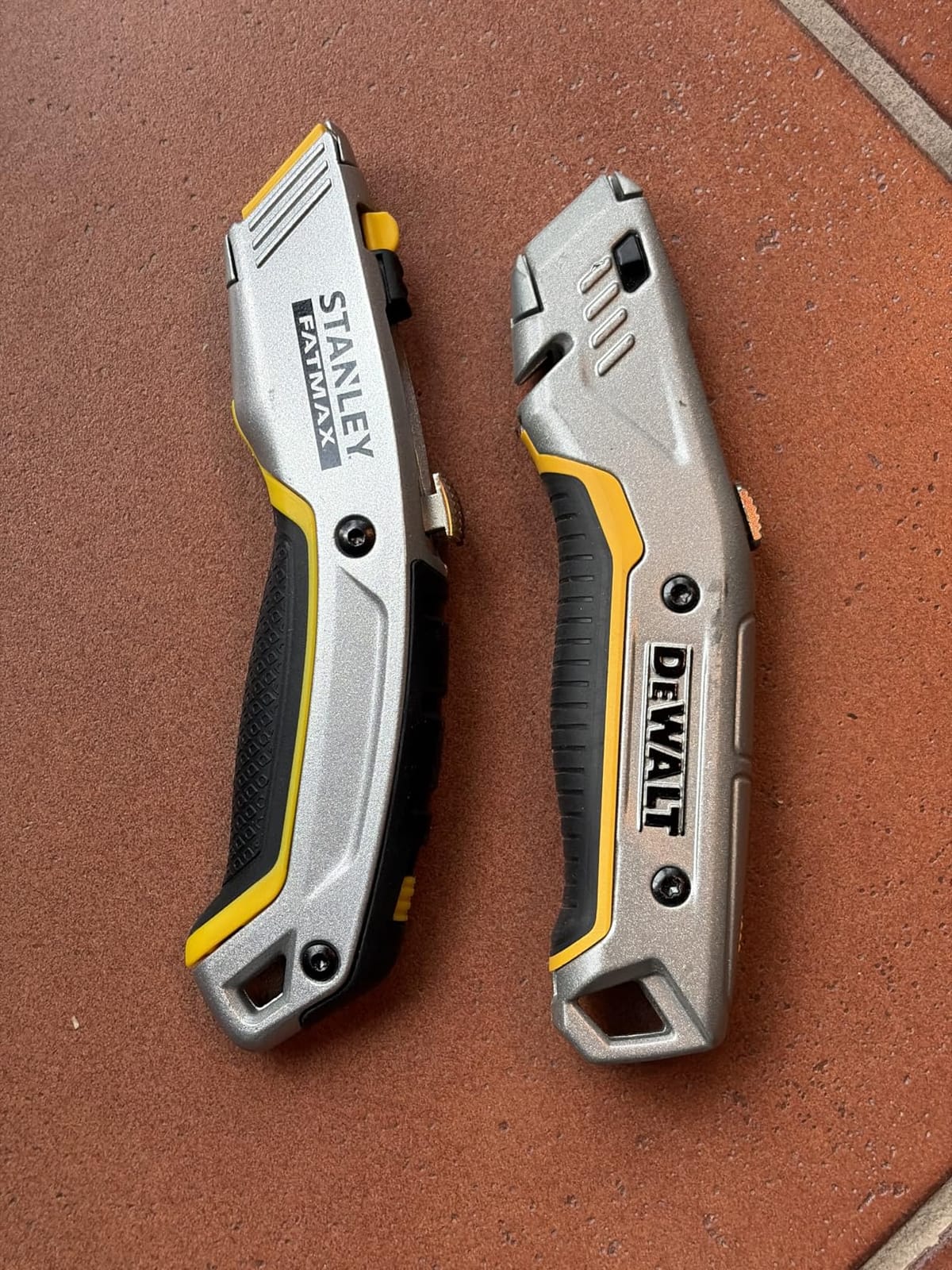
Three-position extension gives reasonable control over exposure, and at 8.8 inches long with a 2.5 inch blade it handles longer trim runs than a compact folder. Owners like the fit of the handle in hand and report less end-of-day fatigue.
Two weaknesses are worth weighing. The wide mouth can let the blade move or rattle when extended, which shows up as wander on a straight score, and only a single double-sided blade ships with the knife.
Why it works for a two-week residential job
Carrying ten spare blades means you never leave the tool belt for a fresh segment. On a renovation where you are cutting daily for a fortnight, that uninterrupted supply is worth a lot more than a lighter body.
Where it falls short
At 6.72 ounces with an 8.8 inch body, it is the bulkiest retractable here. Folding knives disappear into a pocket; this one needs a belt or a pouch.
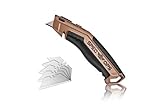
9. Spec Ops Tools Utility Knife – Best Pistol Grip for Large Hands
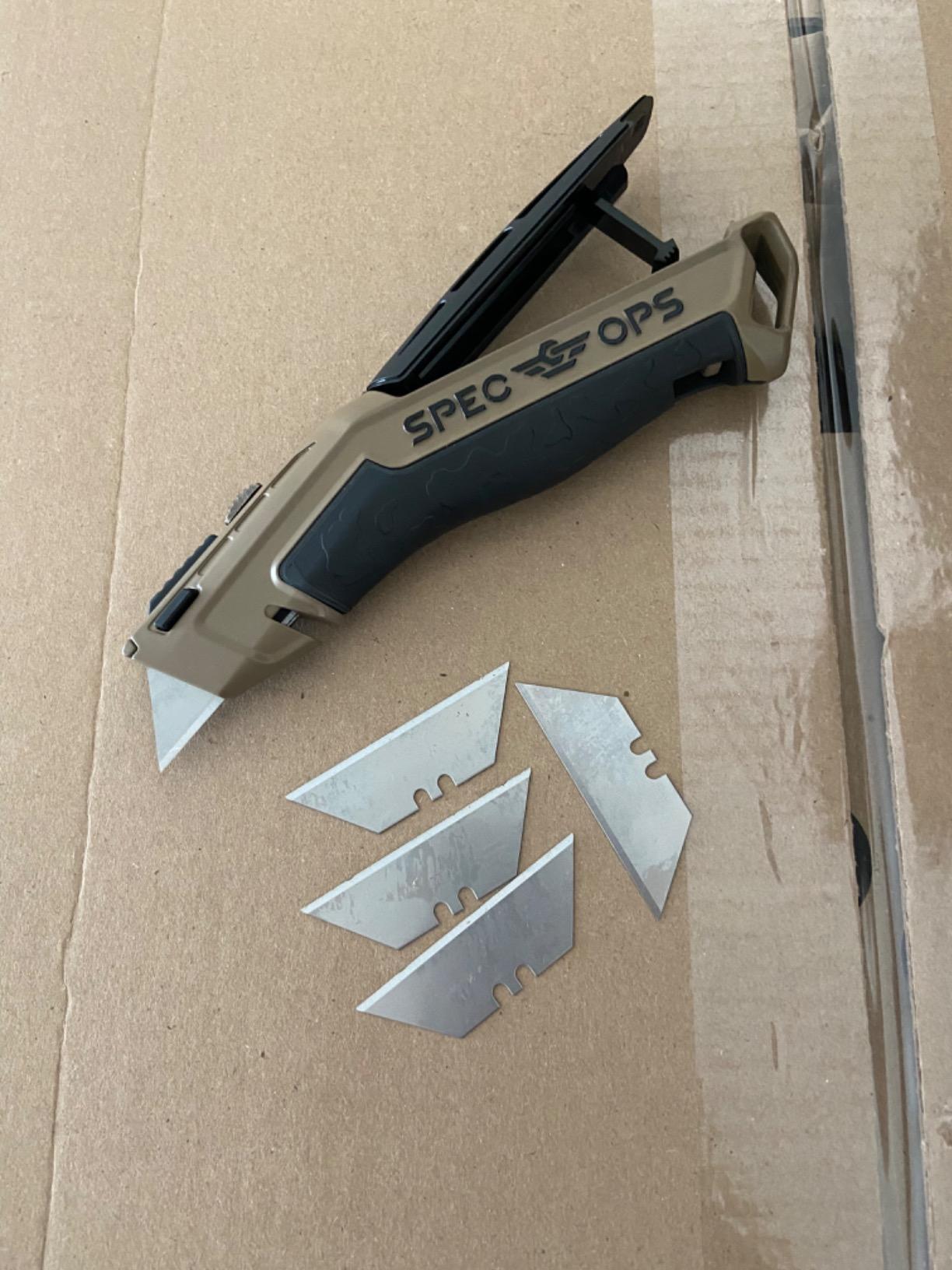
Spec Ops Tools Utility Knife for Cutting Drywall, Roofing & Jobsite Materials, Includes 5 Blades in Handle Storage, Retractable Blade
- Vented pistol grip spreads force across the palm
- Thumb press adds real cutting leverage
- Push-button blade change and storage access
- Aluminum body drop tested to 100 feet
- Limited lifetime warranty
- No self-retracting blade
- Strap cutter slot reported as ineffective
Most utility knives are designed for a medium hand. This one is built around a palm grip, with a shock-absorbing vented body and a thumb press that lets you drive the blade forward using the strength of your whole hand.
That leverage is the point on drywall. When you are pushing hard through the paper face to start a score, a thumb press converts that effort into blade force instead of letting it dissipate through a small handle.
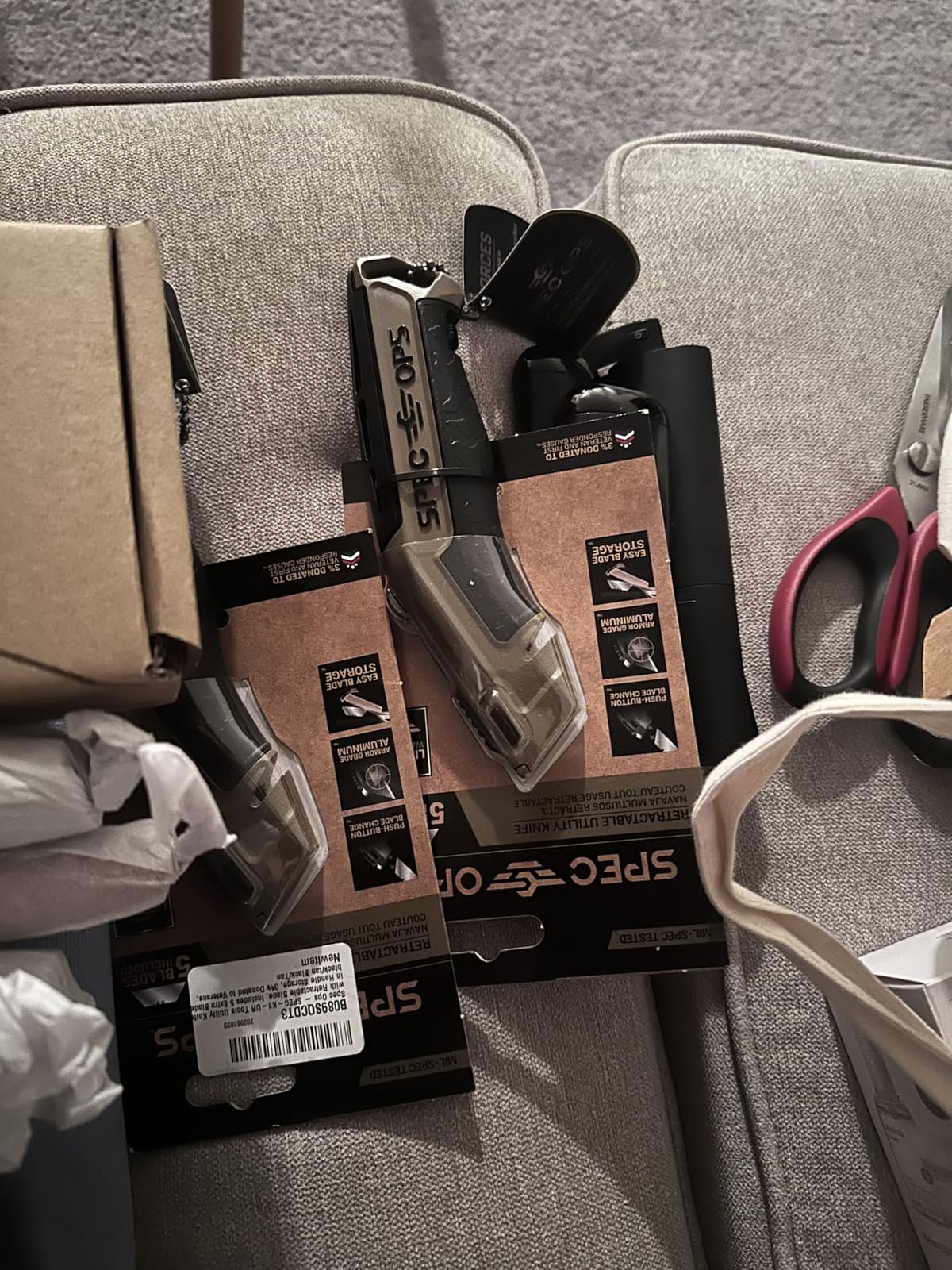
Five spare blades ride in a quick-release onboard compartment, and the body takes standard utility blades rather than a proprietary system. It is also rated to work with retention lanyards, which matters on sites that require tethered tools.
The trade is that it is manual only. There is no self-retract, so release is a conscious action every single time. It also sits at the higher end of the price range for a single knife, which is harder to justify for occasional use.
Why it works for backer board and cement board
Aluminum construction plus a grip that tolerates high load makes this the pick when the cutting list includes backer board. The thumb press generates force that a slim blade holder simply cannot.
Where it falls short
The grip is bulky by design, so it does not suit a pocket. And the built-in strap cutting slot is reported by users as unreliable, so leave your snips on the belt.
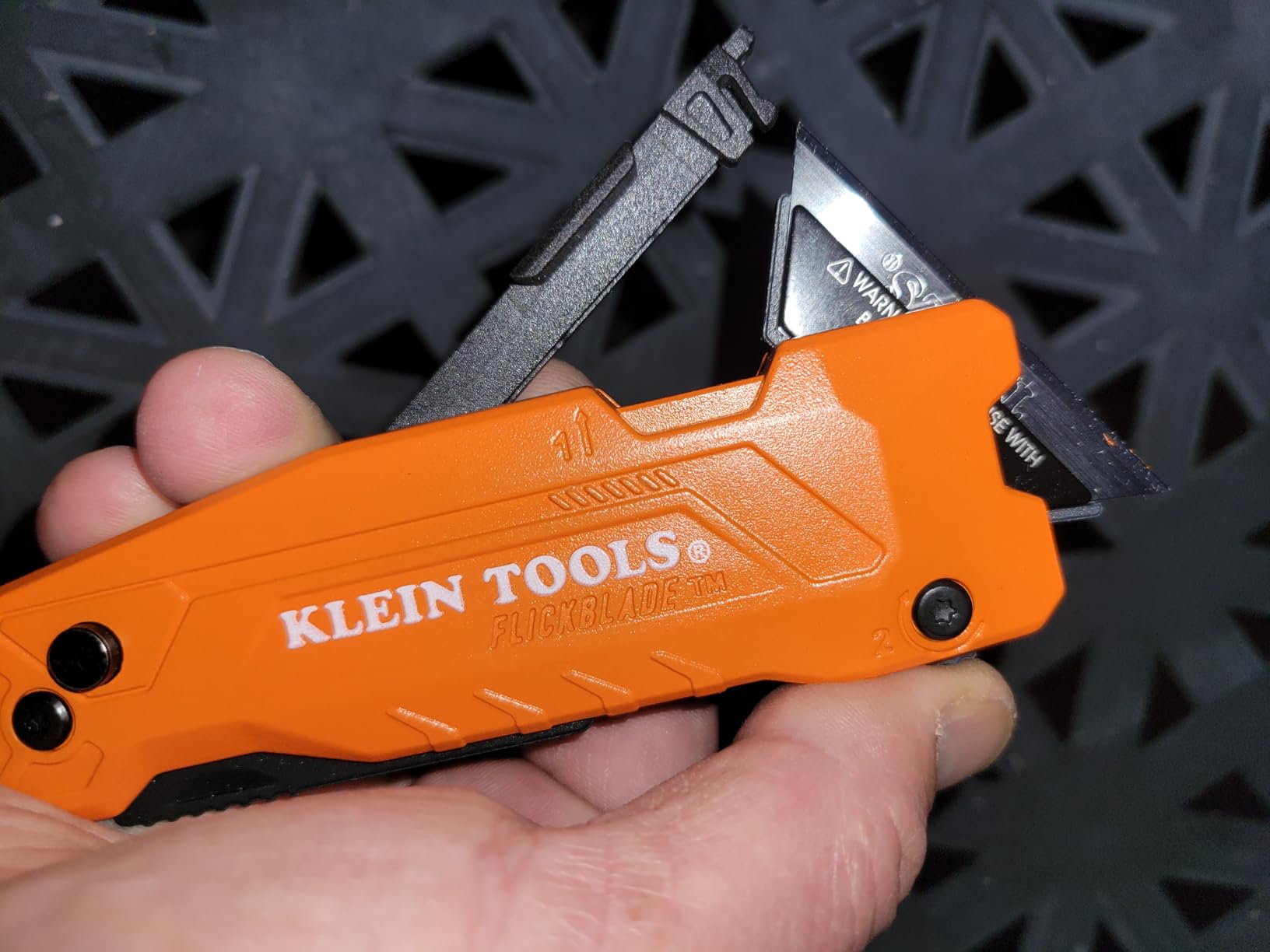
10. Klein Tools 44306 Flickblade – Best 2-in-1 Folding Design
- Folds into a scraper for tape and compound
- Dual lock positions reduce wrist strain
- Takes standard universal blades
- Built-in blade storage
- Aluminum body resists drops
- Bulky for pocket carry
- Only 3 blades included
- Belt clip screw can loosen
A knife that becomes a scraper saves a second tool on your belt. When you are trimming tape, shaving a corner, or cleaning compound out of a corner bead, the folded scraper edge is right there.
The dual locking positions are the more useful feature for drywall. Locking the blade at an angle keeps your wrist straighter on a long score, and locking it standard gives you full force for cutting through the board.
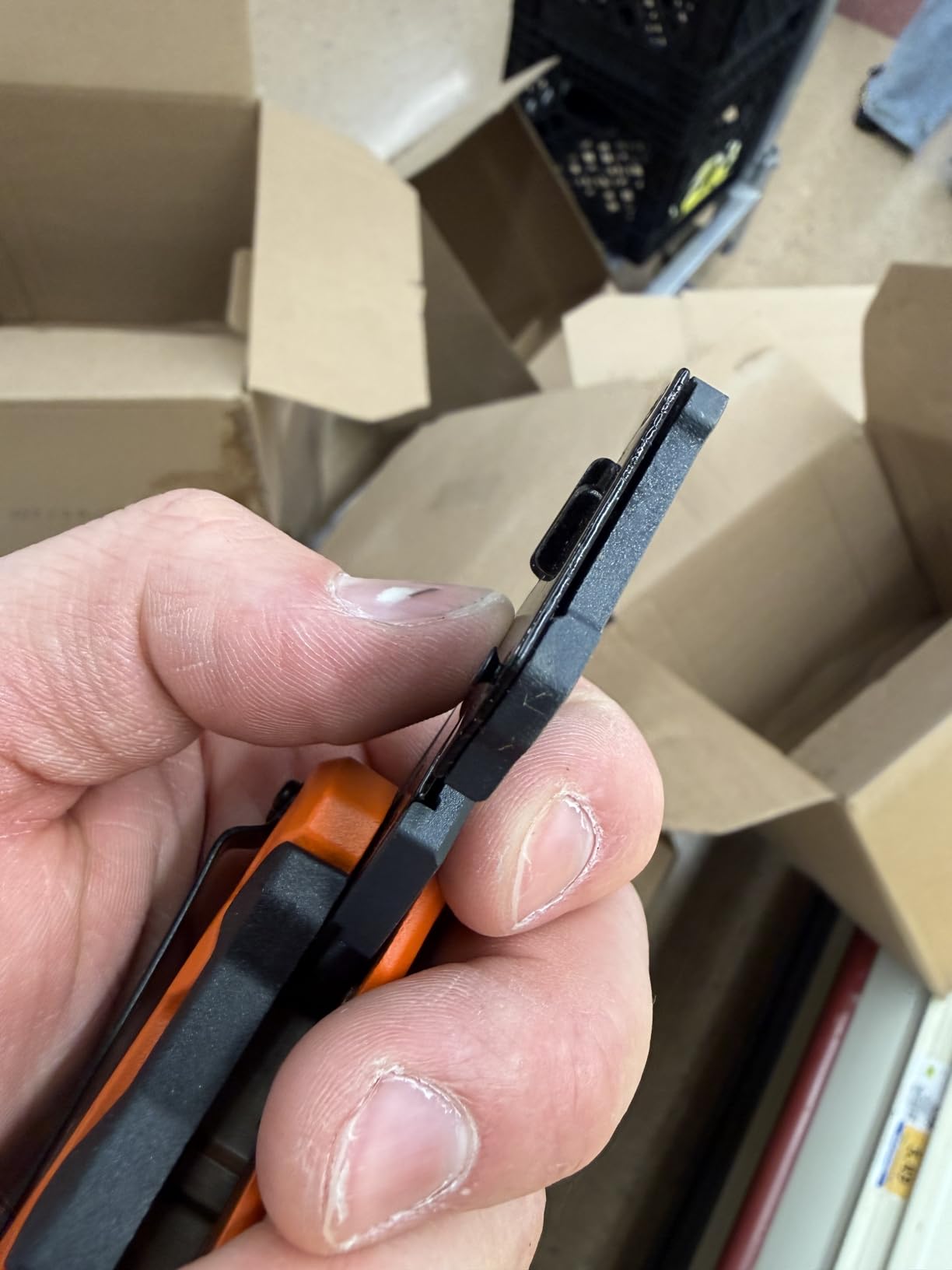
It accepts standard universal utility blades rather than a proprietary system, so the supply chain you already use applies. Three triple-ground carbon steel blades ship in the box, and the handle stores an additional one.
Because it is a 2-in-1, the body is bulkier than a plain folder, which makes it a belt tool. The screw under the belt clip can loosen with use, and a drop of thread locker solves it.
Why it works for electricians and HVAC installers
Cutout work, strapping, and box trimming all favor a tool that goes from cutting to scraping without a trip to the pouch. It is a common recommendation on trades forums for exactly that reason.
Where it falls short on pure drywall work
If you never scrape tape or compound, half of this tool is dead weight in your pocket. A dedicated folding knife handles the same scoring jobs in a smaller package.
11. VOTREK 2-in-1 Safety Box Cutter – Best Dual Locking Modes
- Retractable and safety lock modes in one body
- Ambidextrous for either hand
- Heat treated blades with quick change
- Metal and TPR grip resists slipping
- Hook blades included for strapping
- Auto-retract sensitivity takes practice
- Storage compartment security is average
This is the one to consider if you are new with a utility knife or working somewhere with strict tool control. It carries both a normal retractable mode and a safety lock mode that keeps the blade retracted while you pull.
The heat treated steel blades load with a quick-change mechanism, and the storage compartment holds 4 razor blades plus 2 hook blades. The hook blades are for strapping and banding, not for drywall scoring.
![Box Cutter Utility Knife, [2-in-1] Retractable Box Cutter, Safety Heavy Duty Sharp Razor Knife for Home & Warehouse Cardboard, Blade Storage, with Extra Razor & Hook Blades, 1 Pack-Black customer photo 1](https://www.logix4u.net/wp-content/uploads/2026/10/B0FJM37PFT_customer_1.jpg)
The ambidextrous metal and TPR grip works the same in either hand, which is useful on a crew where not everyone uses the same side. At 6.69 inches it stays compact enough for a pouch.
Two honest caveats. The auto-retract can feel too eager if you are used to a deliberate slide, and the storage compartment security is middling compared with knives that use a positive latch.
![Box Cutter Utility Knife, [2-in-1] Retractable Box Cutter, Safety Heavy Duty Sharp Razor Knife for Home & Warehouse Cardboard, Blade Storage, with Extra Razor & Hook Blades, 1 Pack-Black customer photo 2](https://www.logix4u.net/wp-content/uploads/2026/10/B0FJM37PFT_customer_2.jpg)
Why it works for apprentice and DIY cutting
The safety lock mode removes the most common beginner injury, which is a knife falling open in a pocket or toolbox. It costs nothing to carry and it removes a real risk from a learning curve.
Where it falls short for heavy scores
Metal construction is good, but this is not a thick-section cutter. Long runs through backer board or stacked board will work a slim handle harder than a pistol-grip model.
12. XW Fixed-Blade Drywall Cutter – Best Fixed Blade for Drywall
XW Fixed-Blade Utility Knife, Non-Retractable Heavy Duty Drywall Cutter, Extra 10 Blades Included,2-Pack
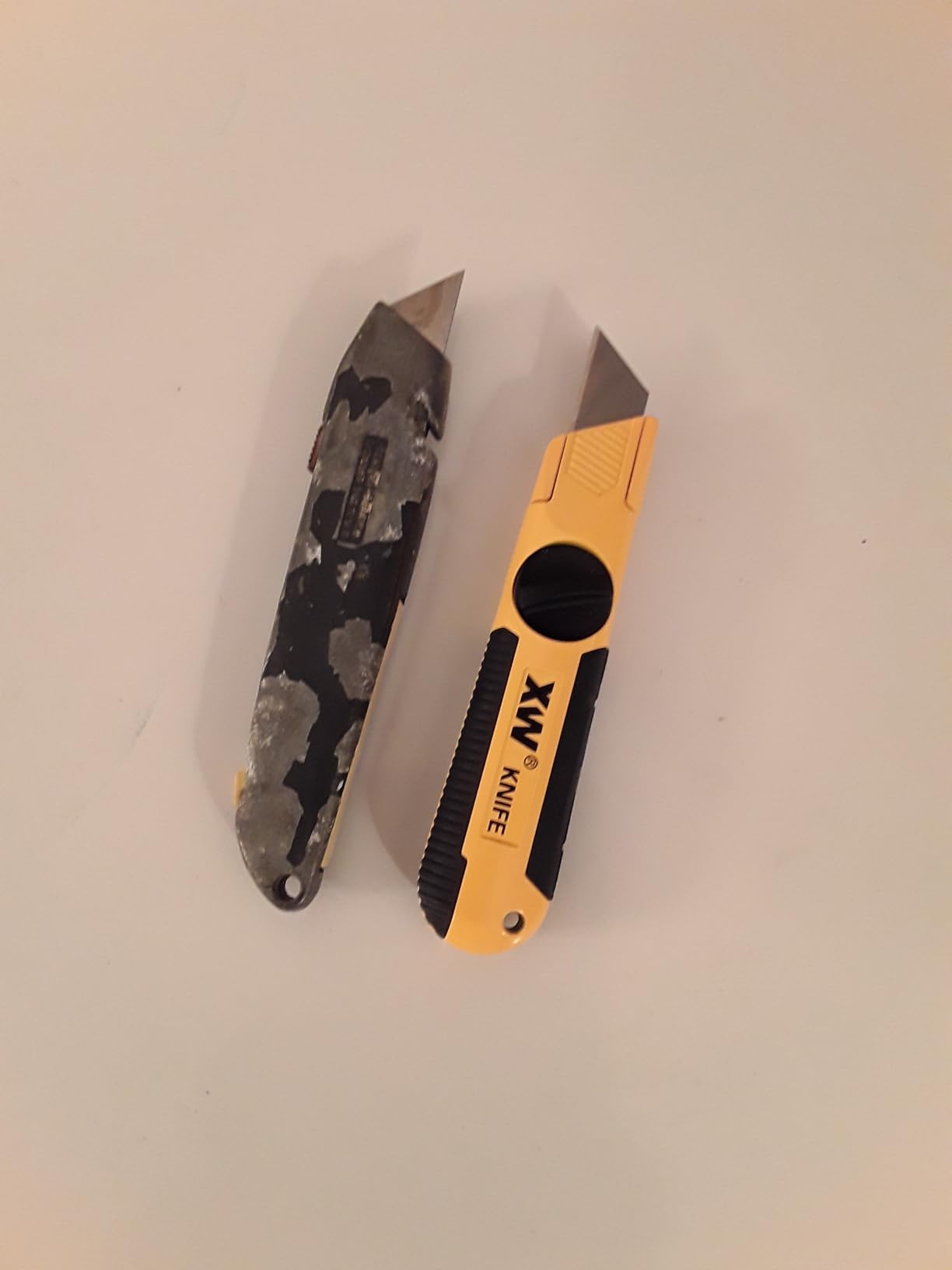
- No retract mechanism to jam with dust
- Screw-lock thumb dial holds the blade firm
- Longer blade reach for drywall cuts
- Two knives plus 10 blades included
- High visibility yellow body
- Blade never retracts
- Needs a sheath or careful storage
Every other knife here has a mechanism that can fill with gypsum dust and start to drag. This one has no mechanism at all. The blade is fixed, and the thumb dial screw locks it in position.
Because the blade runs past the front of the body and sits rigid, straight score lines stay straight even under firm pressure. That stability is exactly what makes fixed blades popular among drywall crews.
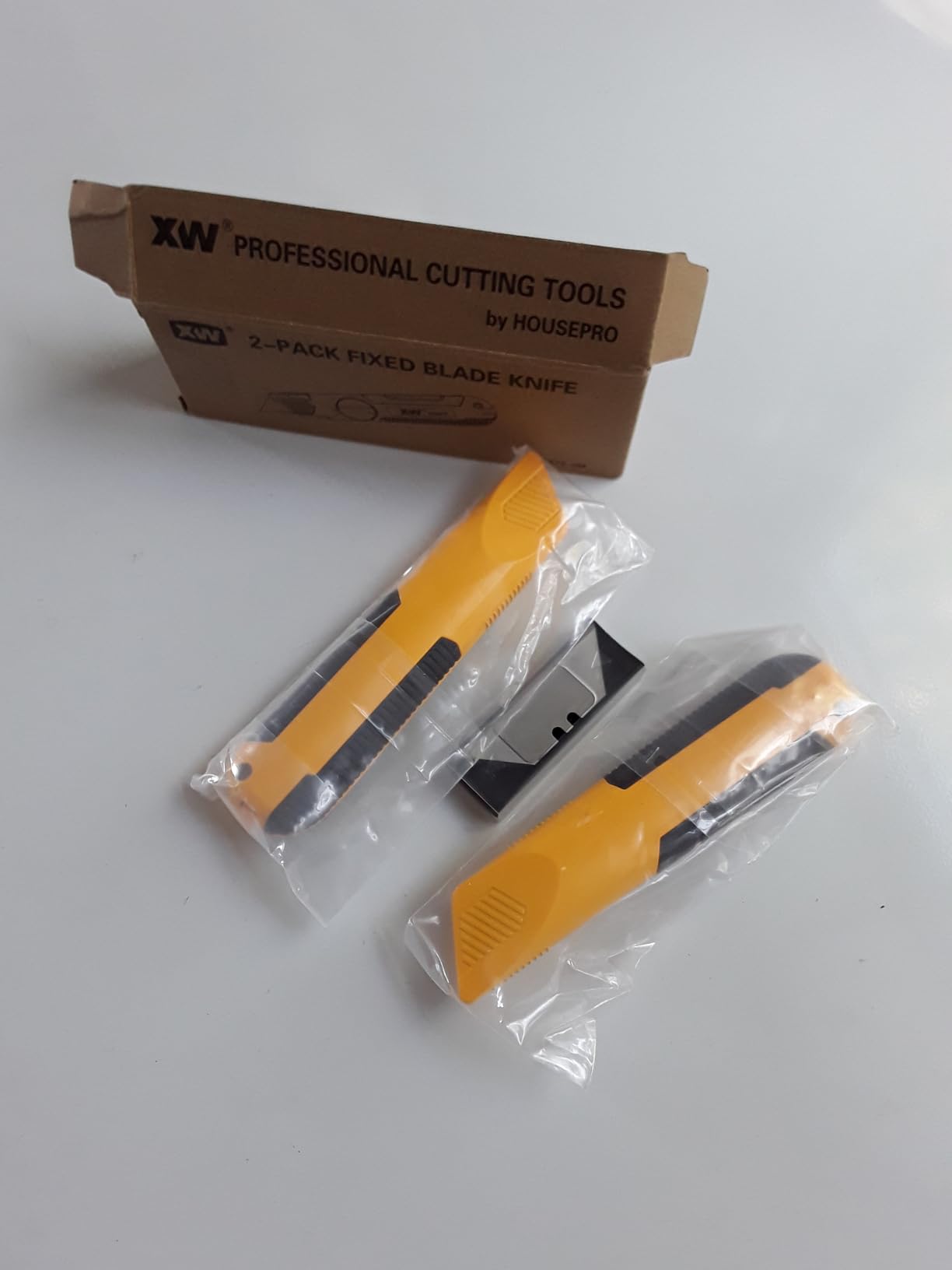
Blade changes are still quick. The handle swivels open with a twist of the end knob, stays hinged, and a magnetic holder keeps the blade secure while you fit a fresh one. Ten refill blades come in a pouch, and one spare rides inside the handle.
The safety trade is real. The blade does not retract, so this belongs in a sheath, a knife roll, or on a belt where nothing brushes against it. Users improvise cardboard sheaths, which works but is not a system.
Why it works for long straight cuts
A rigid body and a long exposed blade let you run a full sheet score in fewer strokes with no blade wander. For a 12 foot score line, fewer strokes means fewer opportunities to drift off the T-square.
Where it falls short
Never retracting rules out pockets, backpacks, and glove-box storage. If you move around a lot between the truck and the interior of a house, choose a folding or retractable model instead.
How to Cut Drywall with a Utility Knife Without Tearing It
Yes, a utility knife cuts drywall, but the cut comes in two steps: score the paper, then snap the gypsum core. Sawing straight through the board in one pass is what produces ragged edges and torn paper.
Measure and mark. Mark the cut line on the paper face and back it with a straightedge or T-square. Support the board so it is supported along its full length.
Fit a fresh blade. A dull blade is the number one cause of tearing. Load a new segment before you start rather than after the first bad cut.
Score the paper only. Draw the blade along the straightedge with firm, even pressure. You want to cut through the paper face, not into the gypsum. Multiple light passes beat one heavy pass.
Snap it. Push the board away from the score line until it breaks cleanly on the gypsum core. The board should snap rather than bend.
Trim the back paper. Lay the piece flat and cut the back paper face along the snap line to keep the edge square.
Cut openings from the face. Score the rectangle, then cut at a shallow angle to avoid driving through and blowing out the back face. Take short strokes and support the waste piece.
For dust control, cut openings with the waste side tilted away from you and vacuum as you go. Pair this with one of our HEPA shop vacuum picks for drywall dust if you are working indoors, since drywall dust is a respiratory irritant that settles fast.
Utility Knife vs Drywall Jab Saw vs Cut-Out Tool
A utility knife wins on straight cuts and tape. A jab saw wins on plunge cuts and tight corners. Knowing which one you need saves wasted material.
Utility knife: best for scoring long straight lines, sizing sheets, cutting tape, and trimming around the outside of an opening. Weakest at plunge cuts into an already-hung wall.
Drywall jab saw: best for cutting an opening in installed board, where you start from a drilled hole and cut outward. It throws far less dust than a utility knife and will not blow out the back face.
Cut-out tool: best for circular and rectangular openings where you need a clean, square edge in tight spaces around boxes.
Taping knife: not a cutting tool at all. This is the flat blade used to spread joint compound, and it is what people mean when they ask about the best knife for taping drywall.
The practical rule: cut drywall before it is hung with a utility knife, and use a jab saw or cut-out tool for anything you have to cut after installation.
Buying Guide for Drywall Utility Knives
Choose a fold-over style for pocket carry. A folding knife keeps the blade enclosed when you are not cutting, which removes most of the injury risk without adding a second action. Our top pick uses a lockback for that reason.
Choose a retractable for blade exposure control. Setting exposure shallow for paper and deep for board is the single most useful adjustment a drywall knife can offer. Three-position models cover most cases.
Choose a snap-off for zero blade logistics. Segmented blades eliminate loose spares entirely. The trade is speed, since snapping off a segment takes practice that a quick-change release does not.
Choose a fixed blade for maximum rigidity. No mechanism means no mechanism to fill with dust. You accept that the blade never retracts, so storage has to be deliberate.
Count onboard storage carefully. Storage ranges from nothing to ten blades. For a solo tradesperson, three to five is plenty. For a shared tool belt, ten saves real time.
Check the grip against a full day. A deep finger groove, a rubber overmold, and a palm-style grip all reduce fatigue. Weight matters less than how the handle fills your hand. For grip trouble specifically, a wider ergonomic handle is the fix.
Confirm blade standards. Knives that accept standard universal blades work with whatever supply you already buy. Proprietary systems lock you into one brand of replacement blades.
Budget for blades, not knives. Drywall consumes blades faster than most people expect, so a mid-range knife with ten spare blades will serve you longer than a bare knife at the same tier.
Safety Rules for Snap-Off Blades on a Jobsite
Most utility knife injuries happen to the hand holding the material, not the hand holding the knife. Cut away from your body, and never reach across your body to finish a score line.
Wear eye protection. A snapped segment leaves the handle at high speed, and a gypsum cut throws dust and paper fragments toward your face.
Snap segments over a waste bin or a bucket, never over your off hand, and never pointed toward another person. Keep the free hand behind your back or well clear of the break line.
Retract or sheath the blade every time you set the knife down. Most drops happen while reaching for a tape measure.
Wear a mask indoors. Drywall dust is fine enough to stay airborne, and cutting creates the largest plume you will see all day.
Frequently Asked Questions
What kind of knife is best for drywall?
A folding snap-off utility knife with onboard blade storage and a positive lock is the most broadly useful choice for drywall. Folding models stay closed in a pocket, onboard storage avoids blade hunting mid-job, and a rigid lock keeps the blade from moving while you score. For heavy backer board work, a fixed-blade model with a screw lock adds rigidity.
Can I cut drywall with a utility knife?
Yes. Score the paper face along a straightedge with a fresh blade using light even passes, then push the board away from the score until the gypsum core snaps. Cut the back paper face flat afterward for a square edge. Sawing through the whole board in one pass tears the paper and leaves a ragged line.
What is the best knife for taping drywall?
That is a taping knife, not a utility knife. A taping knife is a wide flat blade used to spread joint compound over seams and corners. A utility knife is used alongside it for trimming tape and scraping excess compound, but it cannot replace a taping knife for finishing a seam.
What blade is best for cutting drywall?
A snap-off segmented blade with a sharp pointed corner works best because drywall dulls edges quickly and you need a fresh corner on the paper face. An 18mm blade covers most of the paper thickness in one pass. Change or snap off the segment the moment a score line starts to shred rather than tear the paper.
What is the best drywall cutting tool?
It depends on whether the board is already hung. Use a utility knife for straight cuts, sizing sheets, and trimming tape before installation. Use a drywall jab saw for openings in installed board, since it throws less dust and does not blow out the back face. Use a cut-out tool for square or circular openings in tight spaces.
What is the best knife for cutting drywall utility pieces?
For small patch and repair pieces, a folding utility knife with a fresh blade and a small straightedge is enough. Measure twice, score the paper face firmly with light passes, snap the core, then trim the back paper flat. Avoid heavy pressure, which is what causes the paper face to tear away in flakes.
What is the best drywall jab saw?
A folding drywall jab saw with a triple-ground or bi-metal blade and a soft grip handle is the standard choice. The pointed tip lets you start from a drilled hole, and the fine teeth cut in either direction. Look for a lock-back handle and a blade length of 6 inches for general cutting work.
Will a utility knife cut drywall?
Yes, and it is the standard tool for it. Hangers cut 4 by 8 sheets down to size with a utility knife and a straightedge before the board ever goes on a wall. It also handles trimming around door and window openings and cutting patch pieces. Only installed-board cutouts are better served by a jab saw.
Conclusion
After putting all 12 through the same criteria, the best utility knives for drywall work come down to a few clear winners. The WORKPRO Folding Utility Knife is our editor’s choice because it stores five spare blades, folds closed safely, and holds a straight score on a full sheet.
Buy the WORKPRO Premium Retractable if you want a lightweight all-metal body and ten blades in the box. Buy the OLFA L-1 if blade supply is the thing that always trips you up. And if you are finishing sanders as well as cutting board, our drywall sander guide for renovation covers the other half of the finishing day.
Whichever one you choose, the thing that decides whether your cuts look clean is a fresh blade and steady pressure. Change the segment when the paper starts to shred, not after.