
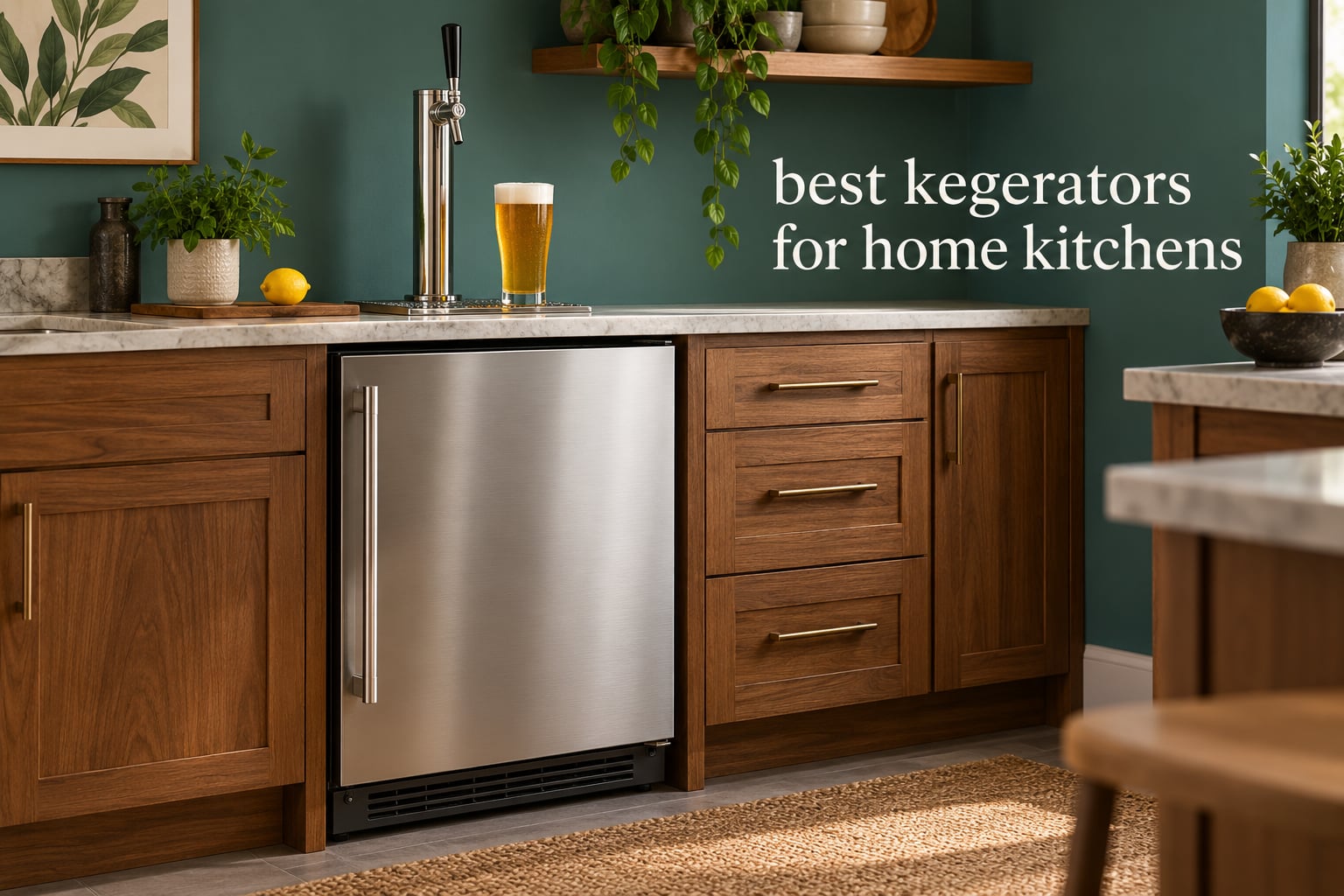
The best kegerators for home kitchens are the ones that fit the room, not just the keg. A cabinet that chills beautifully can still be wrong for your kitchen if it is 50 inches tall, vents out the back, or wakes up loud enough to interrupt dinner conversation. We compared seven models across capacity, temperature control, tap configuration, clearance and running costs to find the ones worth installing in a house.
A kegerator is a refrigerator built to hold one or more beer kegs at a steady serving temperature and pour beer through a tap. A CO2 cylinder pushes gas through a regulator and air line into the keg coupler, and the beer travels up the beer line through the draft tower to the faucet at roughly 12 PSI. Most home models hold that temperature between the low 30s and mid 40s in Fahrenheit, which is what keeps a poured glass cold and clean.
That matters because a standard kitchen fridge is not a substitute. Its compressor cycles for food, so the temperature swings, and it rarely has room for a full-size keg. We also broke down the choice between a purpose-built kegerator and a converted fridge in our guide to kegerators for home beer lovers, and covered outdoor-rated models in our garage picks. Here we stay focused to the kitchen.
2026 is a good year to shop, because the current crop of models finally covers the full range of kitchen situations: full-size single tap, dual tap, a built-in cabinet that disappears under a counter, and a countertop mini for small apartments. Seven picks follow, each with the clearance, tap count and honest limitations you need before measuring your cabinet run.
Top 3 Kegerators for Home Kitchens in 2026

EdgeStar KC2000 Kegerator
- Holds quarter and half barrel kegs
- Low 30s to mid 40s range
- 5 lb CO2 cylinder included
- Freestanding with casters
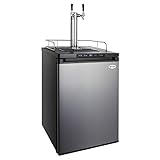
Kegco HBK309S-2 Dual Tap
- Digital LED temperature display
- Deep chill mode
- Holds three corny kegs
- 32 to 75 F range

Kegco K309SS-1 Single Tap
- Digital push button controls
- Deep chill function
- Includes CO2 tank and regulator
- Removable drip tray
The EdgeStar KC2000 takes the top slot because it pairs the highest rating in this group with by far the largest review base, and it holds standard US quarter and half barrel kegs without any conversion work. The Kegco HBK309S-2 is the stronger pick if you want two taps on one cabinet, and the Kegco K309SS-1 is the one owners describe as the most forgettable appliance in the house, in the best possible way.
Best Kegerators for Home Kitchens in 2026 at a Glance
| Product | Specifications | Action |
|---|---|---|
| EdgeStar KC2000 Full Size Kegerator |
|
Check Latest Price |
| Kegco HBK309S-2 Dual Tap Dispenser |
|
Check Latest Price |
| Kegco K309SS-1 Single Tap Dispenser |
|
Check Latest Price |
 EdgeStar KC3000TWIN Dual Tap Kegerator EdgeStar KC3000TWIN Dual Tap Kegerator |
|
Check Latest Price |
 SPT BD-0538 Mini Kegerator SPT BD-0538 Mini Kegerator |
|
Check Latest Price |
 VEVOR BF152-2 Dual Tap Kegerator VEVOR BF152-2 Dual Tap Kegerator |
|
Check Latest Price |
 Kegco HK38BSU-2 Undercounter Kegerator Kegco HK38BSU-2 Undercounter Kegerator |
|
Check Latest Price |
Two things stand out across this list. First, every full-size model here is freestanding, so rear clearance matters and none of them can slide into standard cabinetry except the Kegco HK38BSU-2. Second, three of the seven use ball lock couplers, which suits homebrew corny kegs but means a commercial Sankey D system coupler is a separate purchase.
1. EdgeStar KC2000 Full Size Kegerator Review
- Holds US standard quarter and half barrel kegs
- Wide range from the low 30s to mid 40s Fahrenheit
- Includes a 5 lb CO2 cylinder and casters
- Large 4.9 cubic foot interior
- Converts to a refrigerator when not in use
- Does not accept Coors Miller or rubberized oversized kegs
- Freestanding only so it cannot be built into cabinetry
- Footprint grows to about 30.5 inch deep with the tank mounted outside
- Warranty is only 90 days labor and 1 year parts
This is the cabinet we would put in a kitchen that drinks a lot of beer and has a corner to spare. It holds a full US standard half barrel or a quarter barrel, and the 4.9 cubic foot interior means one keg plus a little shelf space rather than nothing. Owners consistently report strong cooling across the low 30s to the mid 40s, which covers lager, IPA and everything in between.
Two details make it easier to live with than the spec sheet suggests. The drip tray catches spills, and the whole thing rolls on the included casters, so cleaning behind it is not a project. It also converts to a refrigerator for the weeks when you are not pouring, which softens the argument against dedicating that floor space all year.
What to check before it arrives
Measure depth with the CO2 tank mounted. The stated cabinet depth is about 20 inches, but with the tank hanging off the back the unit needs roughly 30.5 inches of front-to-back room. In a galley kitchen that difference decides whether it fits at all.
Confirm the keg you plan to buy is a US standard keg. Coors, Miller and rubberized oversized kegs do not fit, and that limitation shows up more often than you would expect once friends start bringing bottles.
Where it falls short
The warranty is the weak point. Ninety days of labor coverage and one year on parts is thin for a compressor appliance that will run year round, and it is worth factoring into how long you plan to keep it. The review base is deep enough that owners report both the strong cooling and the short warranty.
Because the cooling happens at the back, this is a freestanding model only. If your plan is a flush under-counter install, skip this one and read the Kegco HK38BSU-2 section further down.
2. Kegco HBK309S-2 Dual Tap Kegerator Review
- Accurate digital temperature control owners have measured at 34 F in a warm room
- Deep chill mode cools a warm keg quickly
- Fits three Cornelius ball lock kegs or a fermenting bucket
- Two taps on one cabinet
- Fan-forced cooling gives even temperatures
- Ball lock couplers only so commercial D system kegs need an extra purchase
- Included ball lock taps reported sticking after about 48 hours
- Setup documentation is sparse
- Weakest insulation is on the door panel
This is the pick for a kitchen that serves two beers at once. The dual tap tower lets you have a pale lager and a hoppy IPA on draft side by side, which removes the most common reason people get bored with a single keg. The digital LED display adjusts one degree at a time and can show Fahrenheit or Celsius.
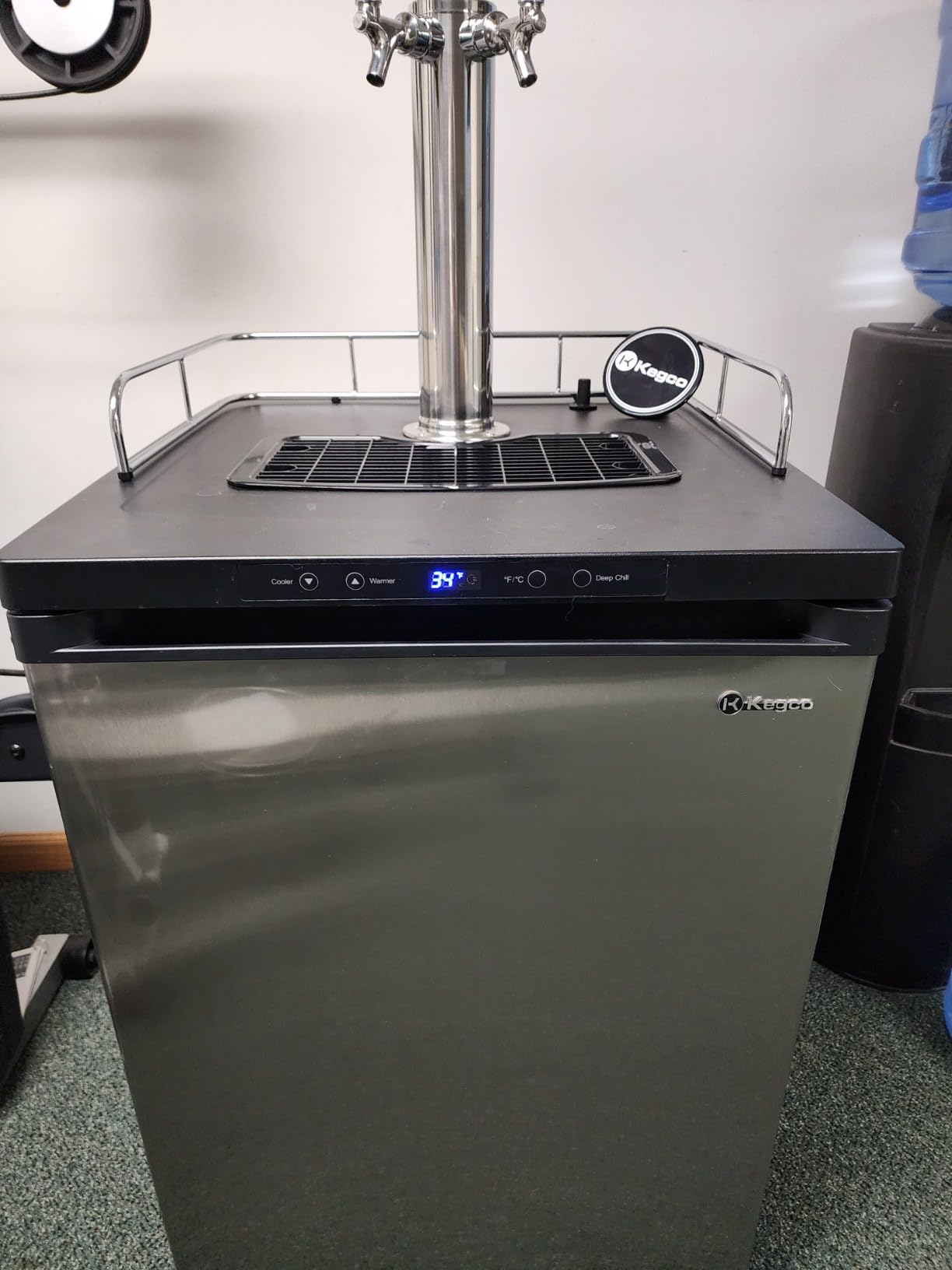
The temperature behavior is the standout. Owners running an independent thermometer report holding around 34 F in a 70 F room, and the fan-forced cooling plus a deep chill function that runs the compressor continuously for up to 24 hours means a room-temperature keg dropped in after a grocery run can be pulled cold the same evening. We also liked that the interior fits a 6 gallon fermenting bucket if you ever want to use it as a fermentation chamber.
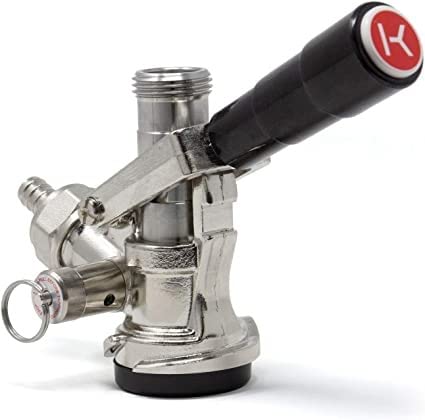
Our one reservation is hardware, not cooling. It arrives with ball lock couplers for homebrew corny kegs, which is right for brewers but means anyone pouring commercial Sankey D system kegs has to buy the coupler separately. Several owners also report the included ball lock taps sticking after about two days of contact with sugary beer residue, which is a maintenance habit rather than a defect.
Dual tap in a kitchen context
Serving two beers doubles the gas draw, so a single 5 lb cylinder lasts noticeably less than it would on a one-tap cabinet. Plan for refills on a schedule, and keep a spare cylinder in the same room rather than hunting for one mid-party.
The 32 to 75 F range is unusually wide for a dispensing cabinet, and it works in your favor in a kitchen that gets warm. A tighter range is fine if the room stays cool, but the extra headroom gives you room to compensate for a hot summer afternoon without cracking the beer.
Where it falls short
Documentation is the honest weak spot. Several owners report working out assembly and hookup themselves from the parts in the box, so budget an evening rather than an hour. If you are comfortable with basic fittings that is a minor irritation, not a dealbreaker.
The door panel is also the thinnest insulated surface, so it is where the cabinet loses cold fastest. If the cabinet sits in a corner next to an oven, leave a gap on the hinge side.
3. Kegco K309SS-1 Single Tap Kegerator Review
- Multiple owners report years of trouble-free operation
- Clear digital push button temperature controls
- Setup described as straightforward with fittings included
- Drip tray pops out for cleaning
- Cools beer quickly and holds it
- Single faucet only in this configuration
- Included regulator needs periodic cleaning or parts replacement
- Ball lock couplers mean commercial D system kegs need an adapter
This single-tap model is the one to buy if you want a kitchen appliance you stop thinking about. It is not the highest rated in the group, but the ownership reports are unusually long: multiple reviewers describe six and seven years of continuous operation with the compressor still running. That track record matters more than any feature list when the cabinet lives in your kitchen rather than a garage.
The dispense kit is where this one stands apart. It includes an empty 5 lb aluminum CO2 tank, a dual gauge regulator and ball lock keg couplers, so you can gas it up the same day it arrives rather than ordering hardware separately. The digital display with push button controls is easy to read from standing height, which is exactly where you need it next to the tap.
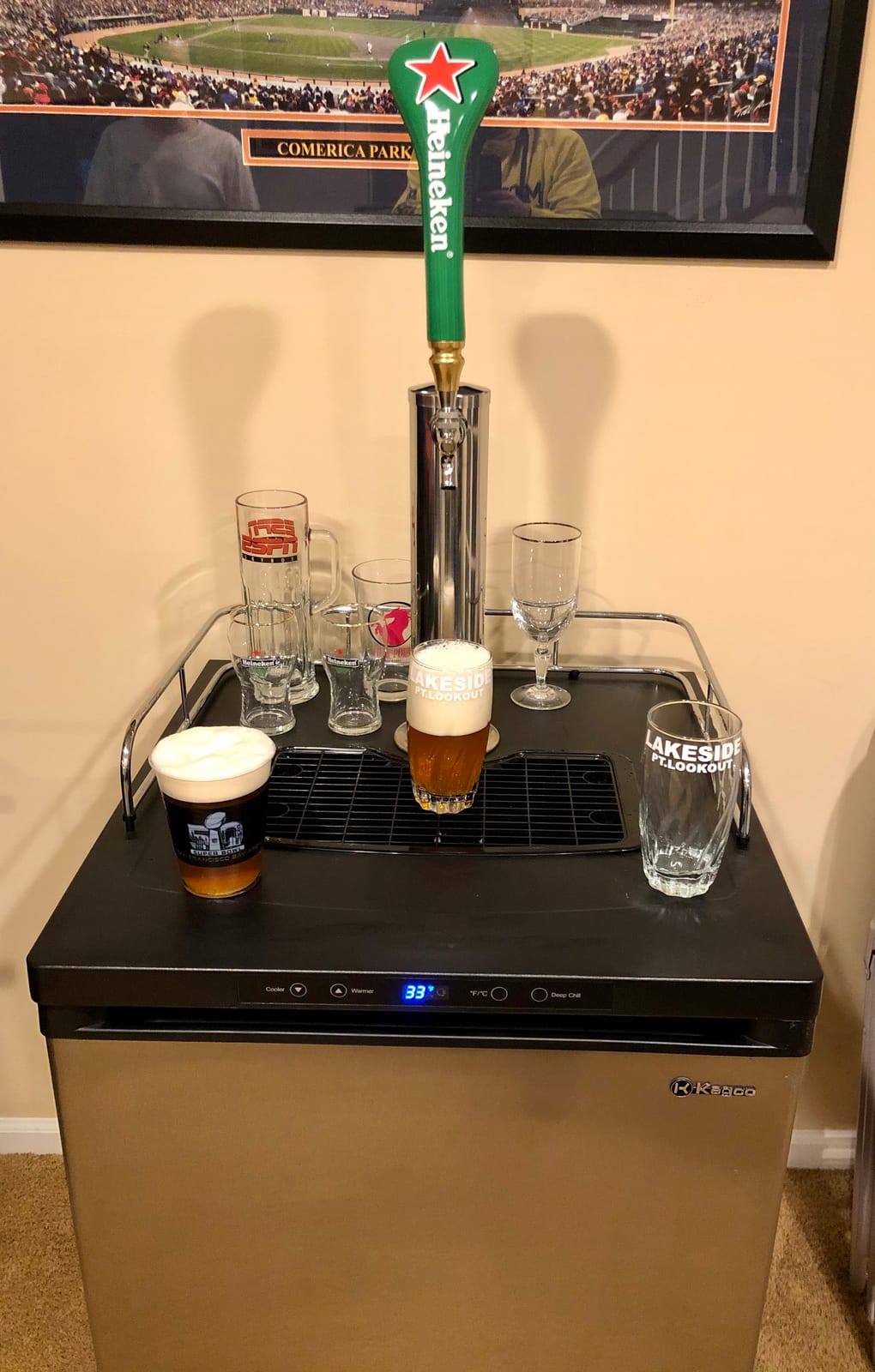
The removable drip tray is a small thing that we appreciate disproportionately in a kitchen. Pop it out, rinse it, put it back, and the base of the tower stays clean without disassembling anything. The interior also stores three home brew kegs or doubles as a fermentation chamber or an all-refrigerator when the beer runs out.
Why single tap suits most kitchens
One faucet means one coupler, one beer line and one pressure setting to dial in, which is a much simpler system to keep consistent. It also means lower gas consumption per serving and a longer stretch between cylinder refills, and in a kitchen you will not be running two regulators to keep at matched pressures.
Because the cabinet converts to a refrigerator or a fermentation chamber, the cost of ownership flattens across the year. We also weighed this model against dedicated homebrew setups in our craft beer kegerator guide, and the theme there was the same: hardware you already own beats hardware you have to buy twice.
Where it falls short
The regulator is the recurring maintenance note. Owners report that the supplied unit needs cleaning, disassembly or parts on roughly an annual cycle, which is normal for an entry regulator but worth budgeting for if you have never maintained one before.
Ball lock couplers are also the only ones included. If you plan to pour commercial D system kegs, add that coupler to your first order.
4. EdgeStar KC3000TWIN Dual Tap Kegerator Review
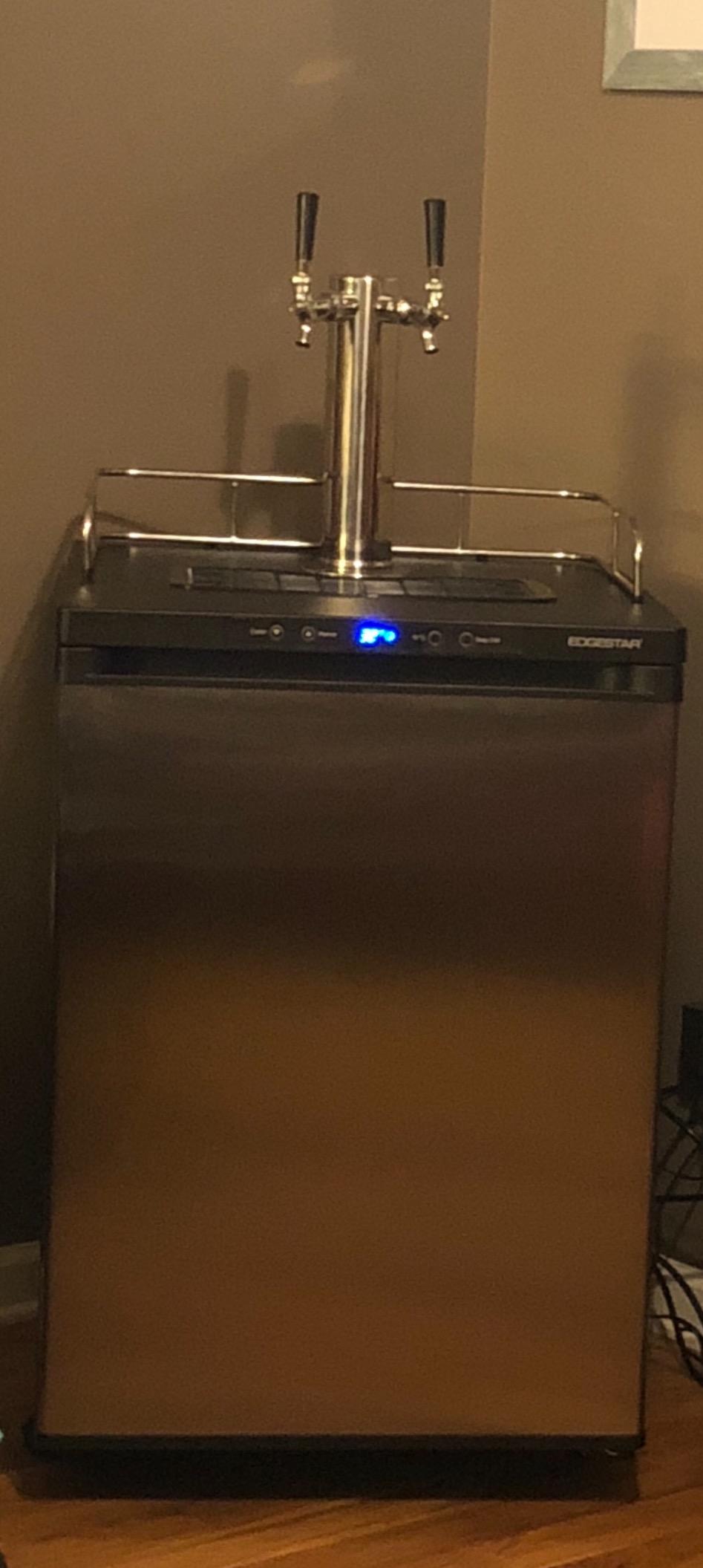
EdgeStar KC3000TWIN Full Size Dual Tap Kegerator with Digital Display – Black
- Dual tap configuration from a single cabinet
- Broad keg compatibility from half barrel to sixth barrel
- Deep chill mode plus adjustable digital temperature
- Two wire shelves convert it to a refrigerator
- Electronic door lock adds security
- Review spread is wide with 14 percent one-star ratings
- Freestanding only
- Smallest interior among the full-size models here
- Curbside delivery only with no inside delivery option
This is the dual tap option with the widest range of keg sizes. The manufacturer lists compatibility with half-barrel, slim quarter, corny and sixth barrel kegs, which means it can follow a homebrewer from fermentation to serving without a second appliance. The digital display adds deep chill mode, and the cabinet runs from 32 to 50 F.
Two features made me think about this one for a kitchen specifically. The door orientation is reversible, so the hinge can follow the layout of your cabinet run rather than forcing the door to swing into a walkway. And the electronic lock is genuinely useful in a house with children or a kitchen that doubles as a pass-through space.
Reviewers also like that the guard rail, drip tray and casters all come in the box, so moving the cabinet out to clean behind it needs no extra purchases. We would pair that with a wall clearance plan, because a rear-vented compressor in a tight gap is how you get a warm spot in an otherwise cold cabinet.
Deciding between the two dual tap models
Compared with the Kegco HBK309S-2, this cabinet runs a narrower temperature band, tops out at 50 F, and has the smaller 1.97 cubic foot interior. What it offers instead is the reversible door, the electronic lock and the broader keg format list.
The review data is the deciding factor for most people. At 100 reviews with 14 percent one-star, this is a wider spread of experiences than the Kegco models above, and the complaints cluster around delivery and capacity rather than cooling performance. If you can accept curbside delivery and measure your kegs first, it is a solid pick.
Where it falls short
Capacity is the practical limit. At 1.97 cubic feet, this is the smallest full-size interior in the group, so if you are hosting and want room for a second keg, look elsewhere. The single year manufacturer warranty is also short for a dual tap cabinet with a tower, regulator and couplers attached.
Delivery is curbside only. If the kitchen is not on the ground floor, plan the carry yourself or have someone available.
5. SPT BD-0538 Mini Kegerator Review
- Weighs only 13.89 pounds so it moves easily between counter and storage
- Uses inexpensive CO2 cartridges rather than a full tank
- Stainless steel housing with a removable drip tray
- Compact footprint suits small kitchens
- Three cartridges and connectors included
- Thermoelectric technology cannot chill as deeply as a compressor cabinet
- Accepts only 5 liter and Heineken mini kegs
- 800 watt draw is high for its cooling output
- Review spread is wide with 21 percent one-star ratings
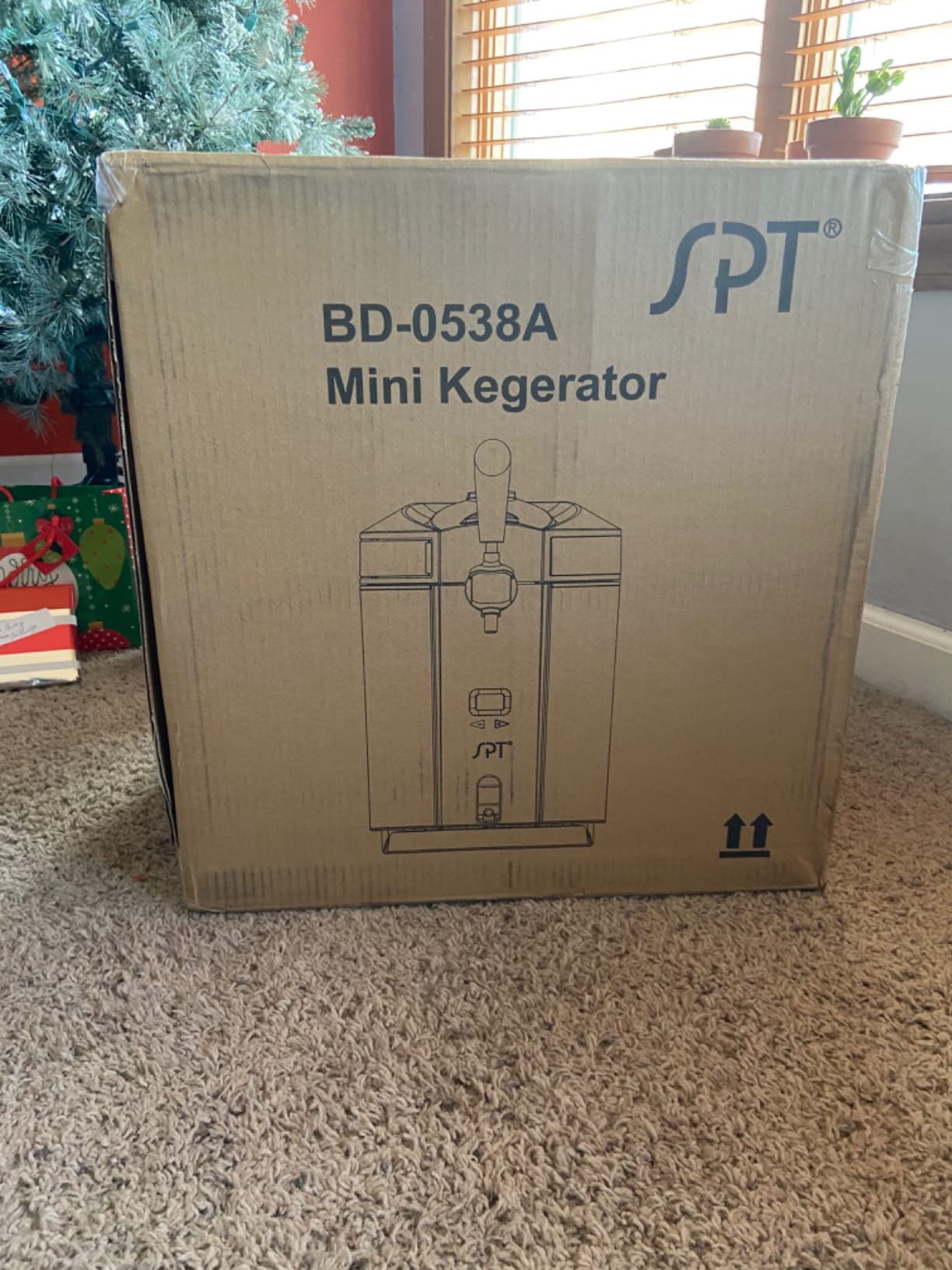
This is the apartment and first-appliance option. At 13.89 pounds and under 17 inches in every direction, the SPT BD-0538 lives on a countertop or a shelf and moves to the garage when you are not using it. It runs on thermoelectric cooling with an LED temperature display and adjustable settings, and it comes with three CO2 cartridges plus connectors in the box.
The cartridge system is the genuinely clever part for a kitchen. You are not shuttling a 5 lb steel cylinder in and out of cabinetry, and the running cost per serving is low because you replace a small cartridge rather than refilling a tank. For someone trying draft beer without committing floor space, that tradeoff is easier to accept than the cooling limit is for a serious brewer.
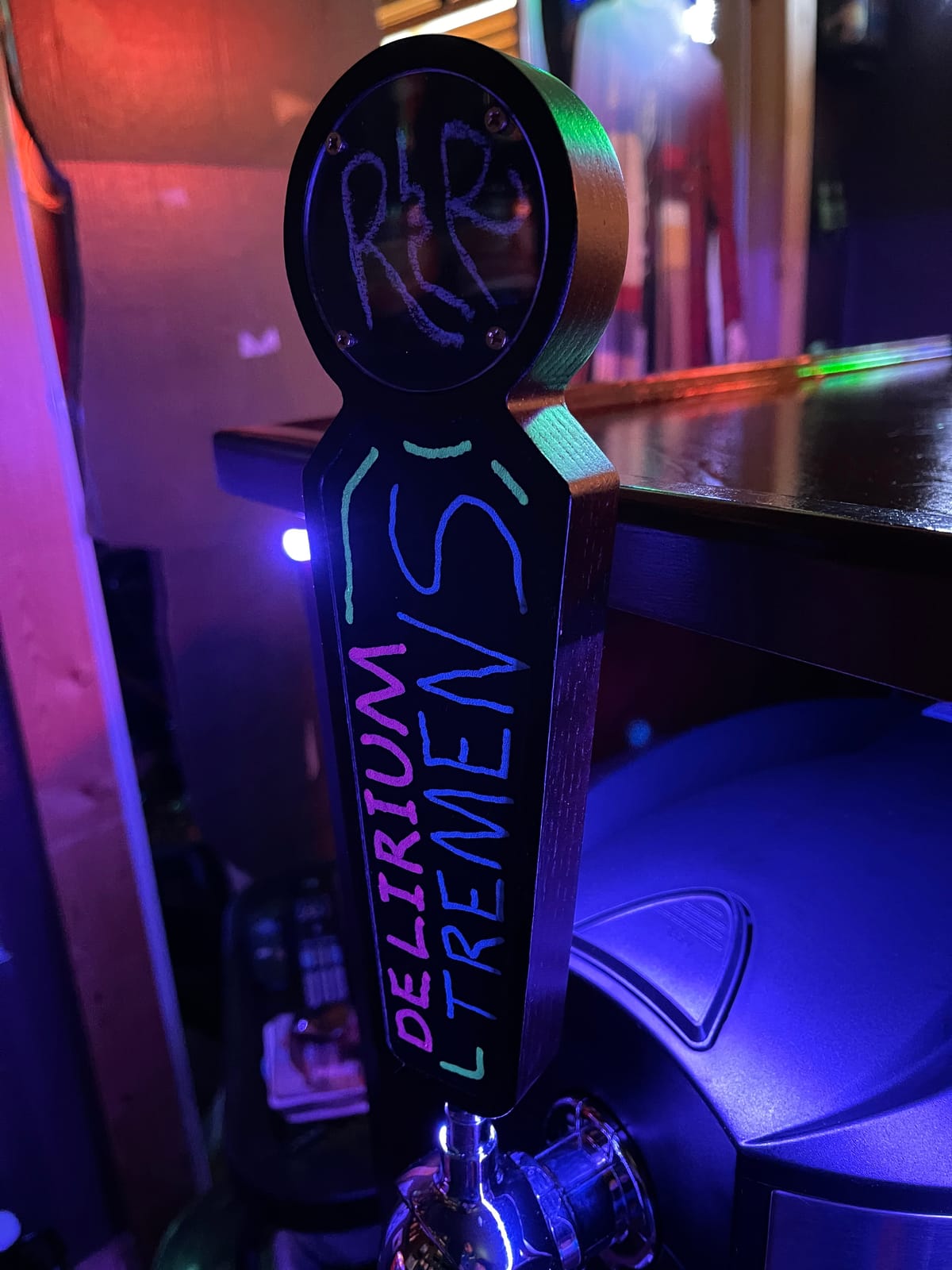
It is also the quietest cabinet we could put a published number on, at a 38 dB rating, which matters if it sits on a counter near where you cook. The stainless housing and removable water drip tray make cleanup simple, and the HEINEKEN connector means common European mini kegs work alongside standard 5 liter kegs.
Is a mini kegerator realistic for a kitchen?
For occasional pours, yes. A 5 liter mini keg is a fraction of a half barrel, so it runs out fast at a gathering. Treat this as a weekend appliance rather than the house supply, and it behaves well.
Owners repeatedly flag one thing: let a newly delivered mini keg sit for a day or two before the first pour. Mini kegs often arrive warm and release a lot of gas on tapping, which produces foam rather than beer. Plan the first pour for the second day, not the first.
Where it falls short
Thermoelectric cooling has a ceiling. It cannot match a compressor cabinet for low temperature, which matters if you are pouring lager that needs to sit genuinely cold. The 800 watt draw is also high relative to what you get out of it, so expect a noticeable effect on a small kitchen circuit.
The 3.5 star average with 21 percent one-star ratings tells you this is the most polarizing model here. Owners who bought it for size and cartridges are happy, and the complaints concentrate on cooling depth and mini keg compatibility.
6. VEVOR BF152-2 Dual Tap Kegerator Review
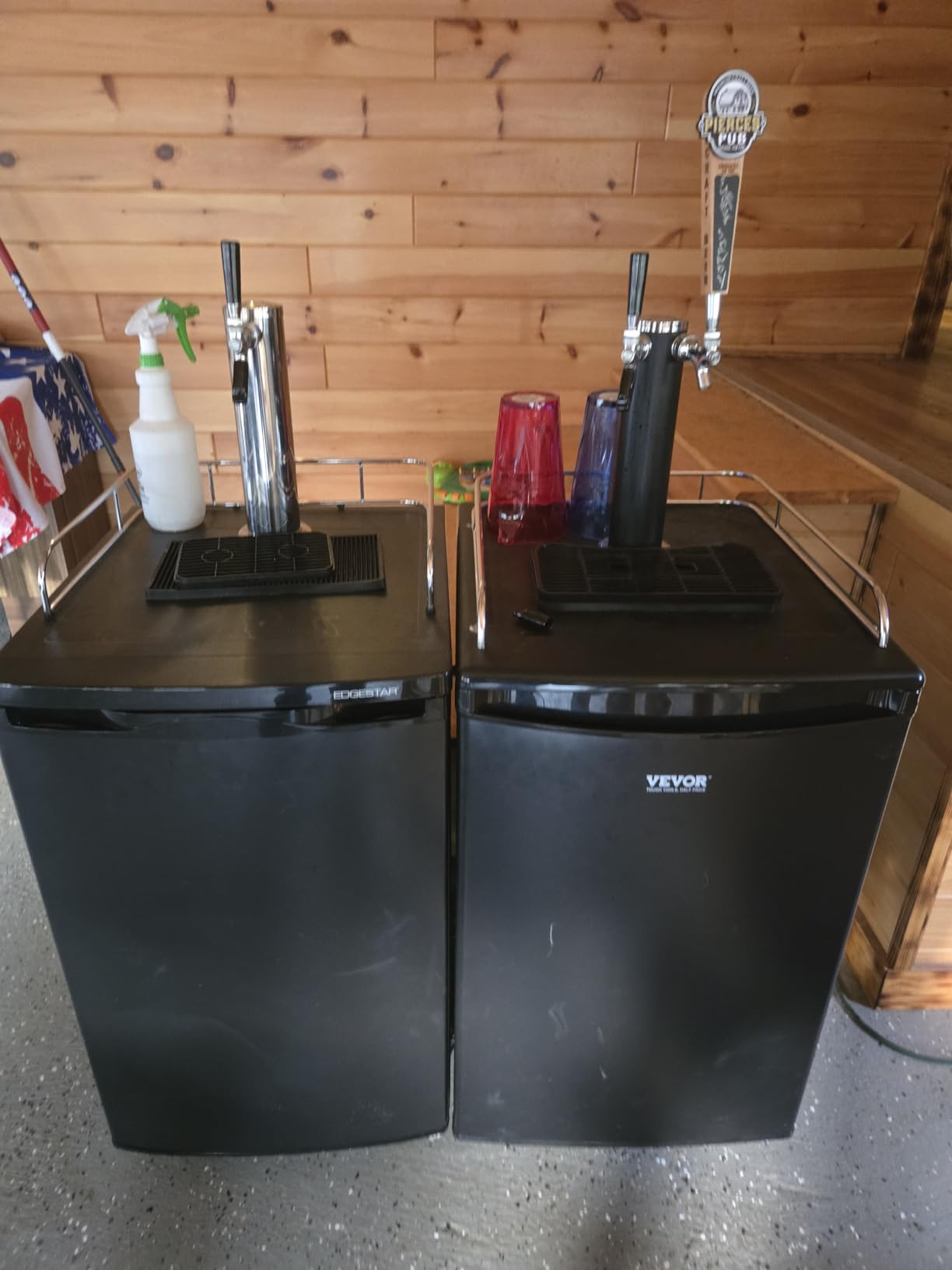
VEVOR Beer Kegerator, Dual Tap Commercial Draft Beer Dispenser for D system, Full Size Keg Refrigerator with 5lbs CO2 Tank, Hold 2 Sixth / 2 Ball lock keg, Black
- Dual tap tower with a complete installation kit including spare o-rings clamps and gaskets
- Auto defrost plus a 9.8 ft beer line for foam control
- Temperature dial restores the setting after a power outage
- Four wheels with two lockable front casters
- External CO2 bracket leaves more interior room
- Interior is tight when loading two sixth barrel kegs
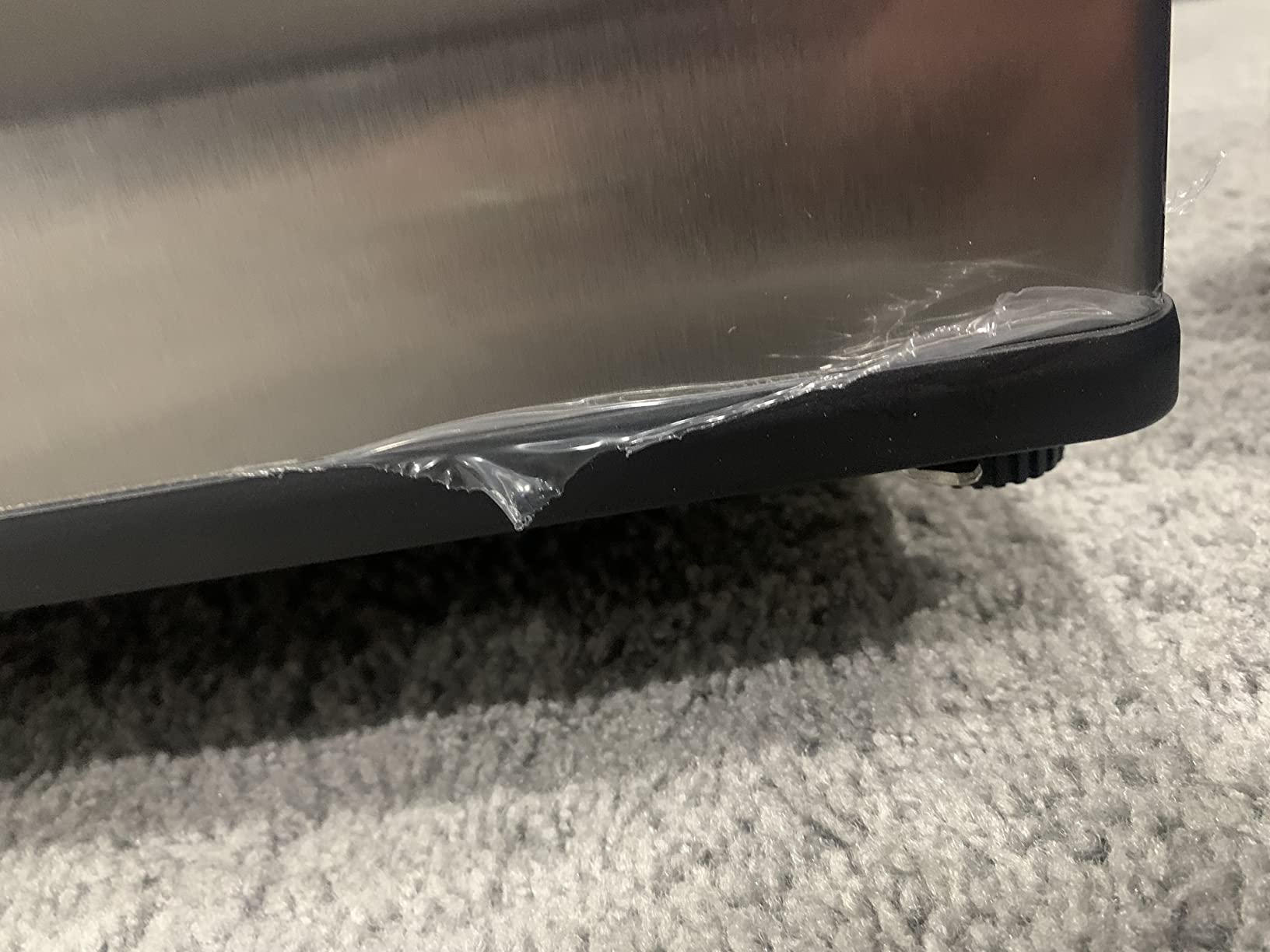
- Delivery damage to panels doors and feet reported by several owners
- Auto defrost system needs regular cleaning to keep taps flowing
- Not rated for outdoor use
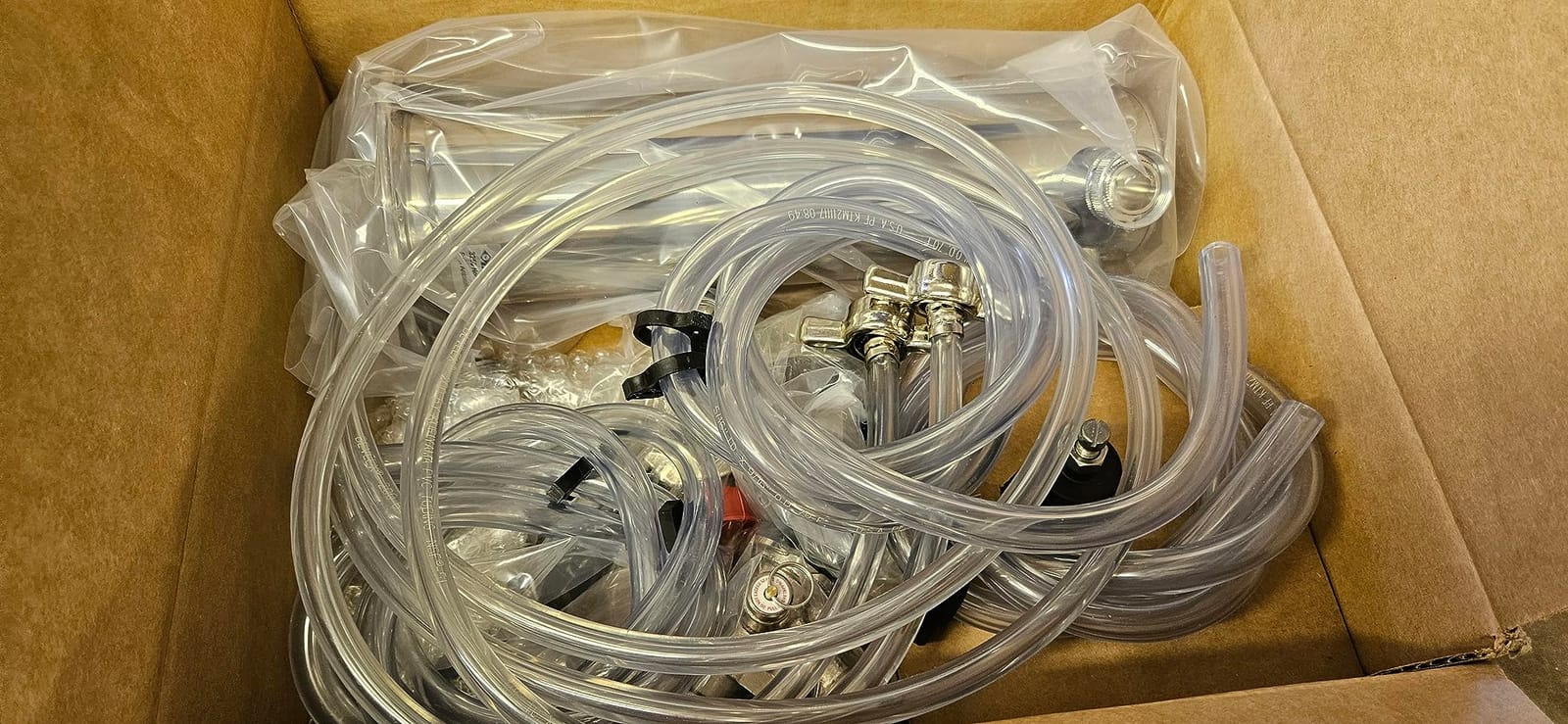
This model is the most recent of the group and the one with the most complete shipping box. The included parts list covers a dual tap beer tower, a 9.8 ft beer line, an empty CO2 tank, a tank bracket, an installation kit with hose clamps and gaskets, a regulator and two extra shelves. For a first-time owner who does not want a hardware shopping list, that saves a trip.
The auto-defrost cooling is a real feature in a kitchen, where condensation and sugary residue are constant. The long beer line gives better foam control than a short run, and the temperature dial restores your setting after a power outage, which is a small courtesy that removes a real annoyance after an afternoon storm knocks the power out.
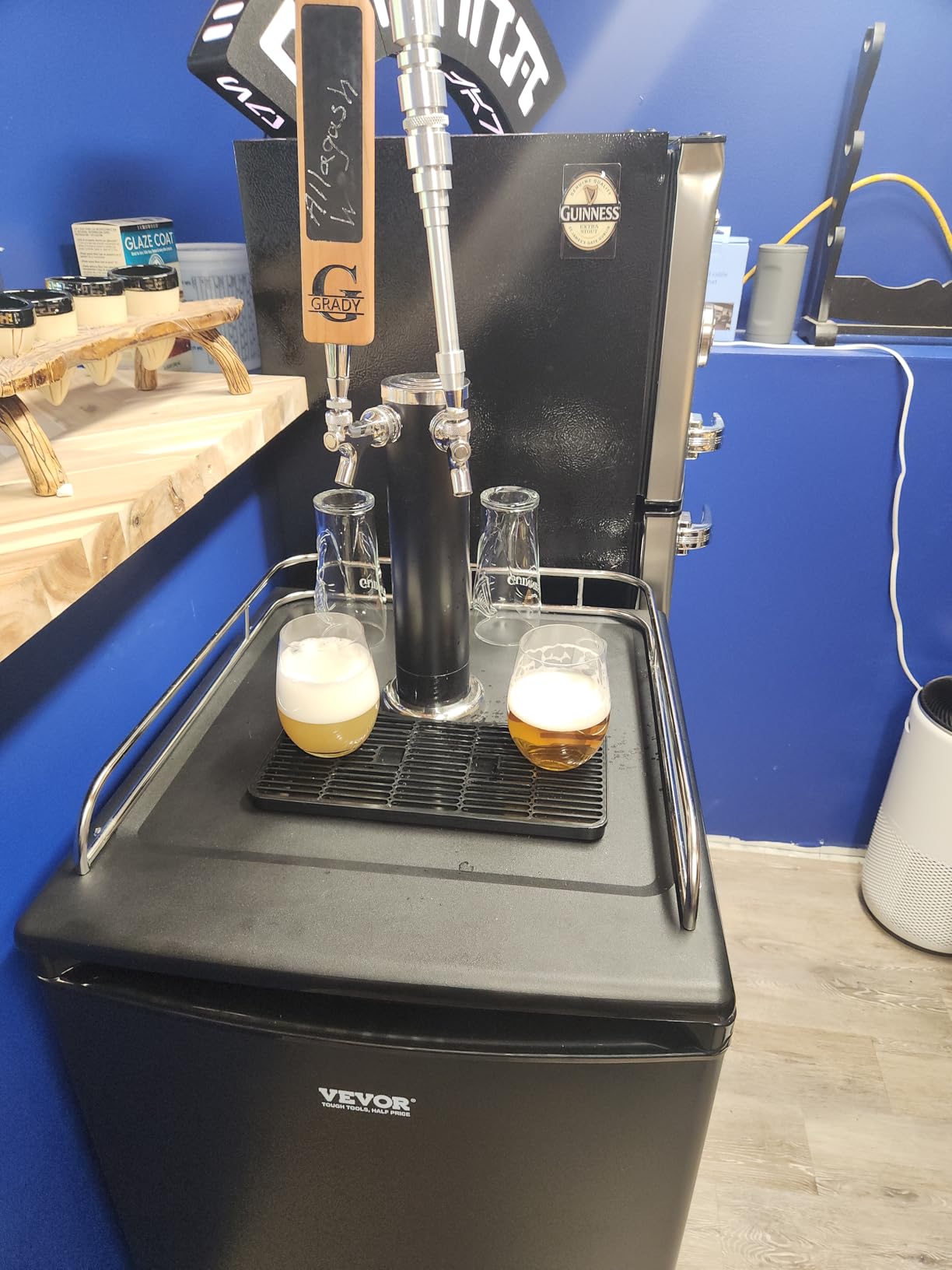
It also ranks at the top of the Amazon Kegerators category and sits high overall in Appliances, so parts and accessories are easy to source. The four wheels with two lockable front casters make it simple to roll out for cleaning or out to a covered area for an event.
What the auto-defrost tradeoff looks like in practice
Defrost cycles add water that has to go somewhere, and on a tap system that water carries sugar residue. Reviews connect the auto-defrost system to taps freezing up and needing regular cleaning, so budget for a line cleaning routine rather than treating it as a set-and-forget appliance.
Loading is the other real constraint. Owners report two sixth barrel kegs fitting only with care, and that a 17.75 inch keg just clears the interior width. Measure the widest keg you own before committing.
Where it falls short
At 3.8 stars on 76 reviews, the experience is mixed. Delivery damage to panels, doors and feet shows up in several reviews, so inspect the cabinet before you accept it. One reviewer also reported a faulty dual regulator that produced only foam, which points at the included hardware rather than the cabinet.
It is not designed for outdoor use, even though owners have run it under cover. For a patio or uncovered space, choose a model rated for that environment instead.
7. Kegco HK38BSU-2 Undercounter Kegerator Review
Kegco Kegerator 24″ Wide Dual Tap Black/Stainless Steel Undercounter Beer Dispenser HK38BSU-2
- The only model here listed for built-in undercounter installation
- 24 inch wide counter depth form factor fits standard cabinetry
- Premium two tap direct draw kit with stainless tower and regulator
- Largest interior here at 6.6 cubic feet with adjustable shelves
- Quiet operation with accurate temperature control
- Recurring reports of cooling failing around the two year mark
- Lowest rating in the group at 3.2 stars with 25 percent one-star
- One year warranty against a two year failure point
- Accessory kit regulator cannot run two taps without an extra part
This is the only model in the group built for a flush under-counter install, and that alone earns it a place for anyone with a wet bar or a kitchen island. The 24 inch wide counter depth form factor is designed to slide into cabinetry, though it can also stand freestanding if you are not ready to commit to a built-in look.
The interior is the largest here at 6.6 cubic feet and holds a full-size keg, two slim quarter kegs, or three 5 gallon kegs. Digital temperature control runs from 32 to 59 F, and the included kit is a genuine X-CLUSIVE direct draw package with a 3 inch dual faucet polished stainless tower, a Pro Series dual gauge regulator with air splitter, a 5 lb aluminum CO2 tank, hoses and fittings, two D system lever handle couplers and two stainless steel faucets.
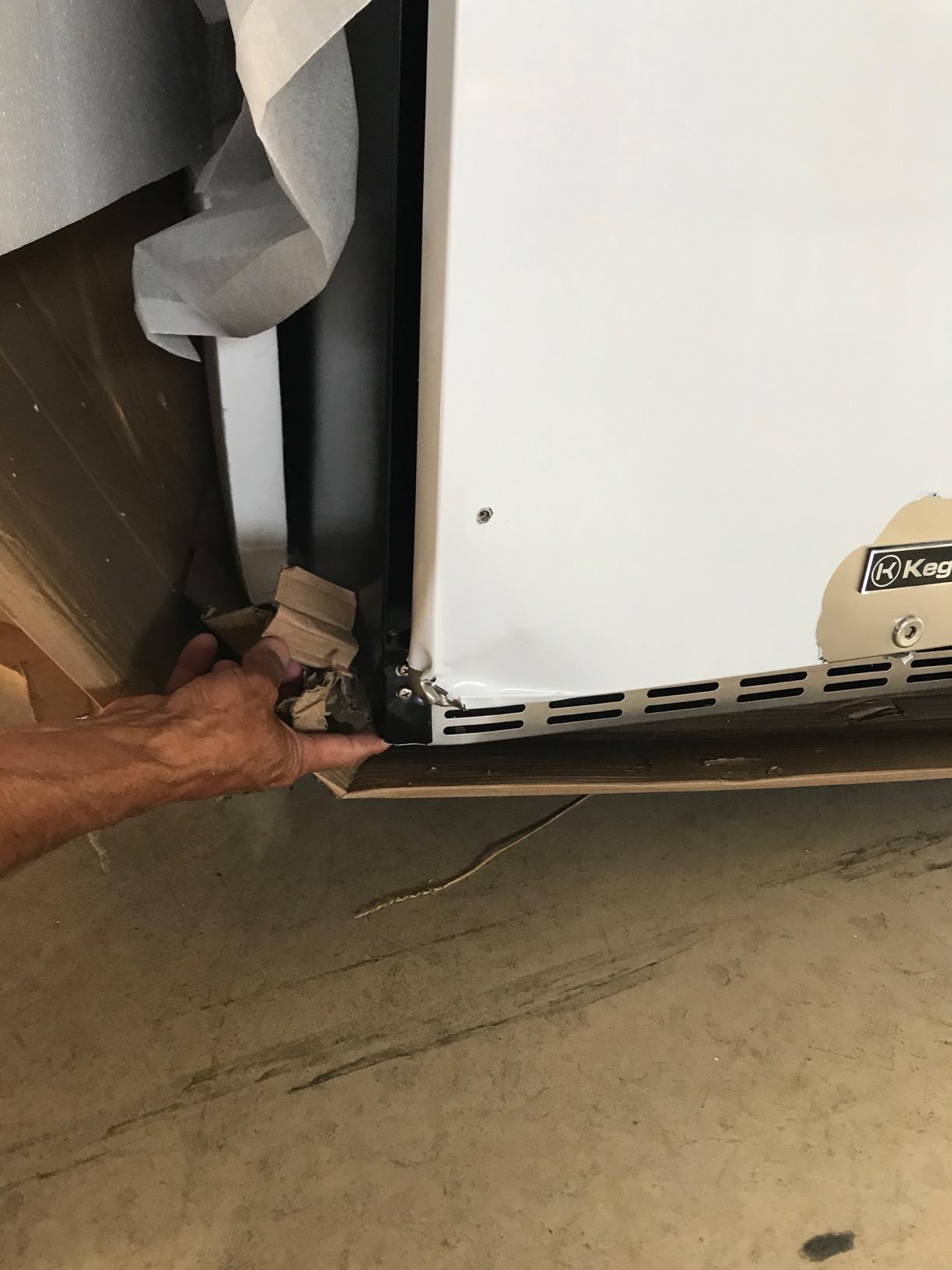
There are commercial-style touches that usually appear only on higher-end cabinets: a hose-cooled tower, an air recirculation fan and a knockout plug for an external CO2 cylinder. Two full-width shelves adjustable in half-inch increments let you convert it to a refrigerator. We also saw owners praising the door lock and reporting responsive, honest manufacturer support that honored a replacement.
Planning a built-in install in a real kitchen
Measure the opening twice, including the depth needed behind the cabinet door and the height for the tower. The door material and the handle hardware are part of the visual design, so check what the panel finish will look like next to your cabinets rather than assuming it will blend in.
If children are in the house, the door lock is worth wiring into your routine, and the knockout plug lets you keep the CO2 cylinder outside the cabinet entirely, which is the safest arrangement for a household kitchen.
Where it falls short
The review data is the concern. At 3.2 stars across 61 reviews, with 25 percent one-star, this is the weakest-rated model here, and the dominant pattern is a well-built cabinet whose refrigeration stops working at roughly the two year mark, in several cases traced to an R600a refrigerant leak. A one year warranty against that two year failure point is the weakest coverage combination in this group.
Owners also report missing screws for the two included handle options, tight shelf headroom for sixth barrel kegs, and handles and stainless panels arriving scratched or dented. Buy it for the built-in footprint, not for the support record.

Kegerator Buying Guide for Home Kitchens
Kegerator types: freestanding, built-in, mini, outdoor
Freestanding cabinets are the default in this roundup and the cheapest way to get real capacity. They vent out the back, so they need clearance behind and cannot be pushed flush into cabinetry. Built-in models are designed for an under-counter opening and vent in a way that suits an enclosed space, which is why the Kegco HK38BSU-2 is the pick for a wet bar despite its review record.
Mini kegerators trade capacity for footprint. They suit a countertop in an apartment or a first home where a full-size cabinet would dominate the room. Outdoor rated cabinets are a separate category entirely, built for temperature envelopes far wider than an indoor kitchen, and we covered those in our garage and outdoor picks. Do not put an indoor-only model on a covered patio and expect the compressor to cope.
Which keg size do you actually need?
Half barrel is the standard US keg and the most common reason to buy a cabinet at all. Quarter barrel, often called a pony, is roughly half the volume and a better fit for two people who do not drink a keg in a week. Sixth barrel and corny kegs are the homebrew standard, and slim quarter kegs are narrower versions of the pony that fit in tighter cabinets.
Before you buy, list the kegs you already own and measure the widest and tallest. The most common disappointment in reviews is not cooling, it is keg diameter variance, where a cabinet advertised for a format barely clears the keg on the way in. The EdgeStar KC3000TWIN has the broadest format list here, while the SPT mini accepts only 5 liter and HEINEKEN mini kegs.
CO2 versus nitrogen dispensing
CO2 is what almost every home kitchen should use. It is cheap, widely available and easy to refill. Nitrogen is worth the added complexity only for specific drinks, chiefly nitro cold brew coffee, nitro stout and certain draft styles that benefit from a creamy texture and lower pressure.
Keep the two systems separate. A CO2 cylinder and a nitrogen cylinder look similar and connect differently, and mixing them up is the fastest way to ruin a party. If you only pour beer, spend your attention on a good dual gauge regulator instead, which lets you set tank pressure and output pressure separately and makes recovery from a pour much faster.
Single tap versus dual tap, and tower cooling
A single tap means one coupler, one line and one pressure to tune. It costs less, uses less gas per serving and is easier to keep consistent. A dual tap lets you serve two styles at once, which is the main reason to step up, and both the Kegco HBK309S-2 and the VEVOR BF152-2 do it from one cabinet.
Tower cooling is the feature forum buyers ask about most, because a tower without a fan warms the first few inches of beer line and produces foam on every pour. Some cabinets here include air recirculation or a hose-cooled tower, and others do not. If foam is your main complaint, check the tower specification before you buy rather than after.
Kegerator, keezer or fridge conversion?
A kegerator is a purpose-built refrigerator with a dispensing system integrated, so it holds a steady temperature and pours cold on the first pull. A keezer is an insulated fridge you fit yourself with a tower, coupler and lines, usually cheaper to buy and cheaper to repair, but the foam control and temperature regulation depend on the build. A full fridge conversion does the same thing for anyone confident with tools.
For a kitchen, the deciding factor is who maintains it. A purpose-built cabinet gives you a digital thermostat, matched hardware and a warranty, which matters in a room you look at every day. A conversion gives you flexibility and often more interior space for the money, which is why homebrewers gravitate to it. We covered the enthusiast side of that argument in our craft beer picks.
Kitchen placement, clearance and noise
Give every compressor-based cabinet a few inches of rear clearance and keep it away from an oven or a sunny window. Measure the depth with the CO2 cylinder mounted rather than the cabinet alone, because an external tank adds close to ten inches in some designs, and check the total height including the tap and casters against your ceiling or counter overhang.
Noise is the quiet differentiator in an open plan home. Compressor cabinets cycle audibly when the door opens or when the room warms, and the models with fan-forced cooling tend to run more consistently rather than in short bursts. If the cabinet will sit next to where you cook, position it around a corner rather than directly beside the stove.
Cost of ownership and break-even math
A full-size keg holds roughly 165 twelve-ounce servings, so compare that against the price of a case of cans or a case of bottles for the same beer. Once you are pouring from your own supply the per-glass cost drops substantially, and the cabinet pays for itself faster when you actually drink through a keg every few weeks rather than storing one for a year.
Do not forget the running costs: CO2 refills, a line cleaning solution every keg or two, and the occasional coupler or faucet replacement. If you pour on nitro, add cylinder rental. A modest rule of thumb is that a kitchen that drinks one keg a month will recoup the cabinet cost in well under two years, while a household that pours once a year will not recoup it at all.
Cleaning and maintenance basics
Rinse and clean the lines between kegs, empty and wash the drip tray regularly, and leave the interior door open briefly if you see condensation building on the door panel. Never use a freezer or an ice bath to force a warm keg cold, since rapid temperature drops can push gas out of solution and give you a foaming keg.
Check the regulator annually, keep the gasket and coupler seals clean, and defrost only if the manufacturer instructions call for it. If you are choosing between two similar cabinets, a longer compressor warranty is the difference you will feel at year three rather than year one. Our broader home refrigerator picks are in the professional refrigerator guide if you also need an actual fridge for food.
Frequently Asked Questions
What is the best kegerator brand for homeowners?
For most kitchens, the EdgeStar KC2000 is the strongest all-round choice because it holds standard US quarter and half barrel kegs, cools reliably from the low 30s to the mid 40s Fahrenheit, and carries the deepest review base of any model we compared. If you want two taps on one cabinet, the Kegco HBK309S-2 is the better fit, and if the unit must disappear under a counter, the Kegco HK38BSU-2 is the only built-in model here.
Are home kegerators worth it?
A home kegerator pays for itself when you actually drink through kegs. A full-size keg holds about 165 twelve-ounce servings, so if you finish one every few weeks the per-glass cost falls well below buying the same beer by the case, and the cabinet typically recoups its cost in under two years. If you pour once a year, the cabinet costs more than the beer it replaces.
What is the average lifespan of a kegerator?
A well-maintained compressor kegerator commonly runs six to ten years, and owners of the Kegco K309SS-1 describe six and seven years of trouble-free service. Lifespan depends far more on cleaning and compressor care than on brand. Note that warranty length varies widely: some models here carry one year of parts coverage while others offer 90 days of labor, so register the unit and keep the paperwork.
What is better, a kegerator or a keezer?
A kegerator is a purpose-built refrigerator with integrated dispensing hardware, a digital thermostat and a warranty, so it pours cold and consistent with no build required. A keezer is an insulated fridge you fit with a tower, coupler and lines yourself, which is cheaper and easier to repair but puts foam control and temperature regulation in your hands. In a kitchen where the appliance is visible daily, the ready-made path usually wins.
How many kegs can one CO2 cylinder tap?
One 5 lb CO2 cylinder typically serves roughly three to four full half-barrel kegs on a single tap, and around two on a dual tap cabinet because the gas draw doubles. A dual gauge regulator, which lets you set tank pressure separately from output pressure, extends that by letting you pour at a lower output pressure. Refilling a cylinder costs far more than a single keg of beer, so plan refills around your pour schedule.
We kept the same standards that shape our other kitchen and home appliance guides: real review data, honest limitations, and no pricing in the copy. If you want to see how these cabinets hold up in a brewing setup rather than a kitchen, read our garage kegerator picks and our craft beer kegerator guide.
The Best Kegerator for Your Kitchen in 2026
The best kegerators for home kitchens come down to fit and temperature stability. The EdgeStar KC2000 is the one we would install first: it holds standard quarter and half barrel kegs, cools across the low 30s to the mid 40s, rolls on casters and converts to a refrigerator when the season changes.
Choose the Kegco HBK309S-2 if you want two beers pouring from one cabinet, the Kegco K309SS-1 if you want a single tap you can forget about for years, and the VEVOR BF152-2 if you want every fitting in the box on day one. Reserve the Kegco HK38BSU-2 for a real built-in opening and check its warranty terms carefully before you commit.
Before you order, measure the depth with the CO2 cylinder mounted, confirm the widest keg you own fits, and check whether your coupler is ball lock or D system. Those three checks prevent nearly every return we see in this category.