
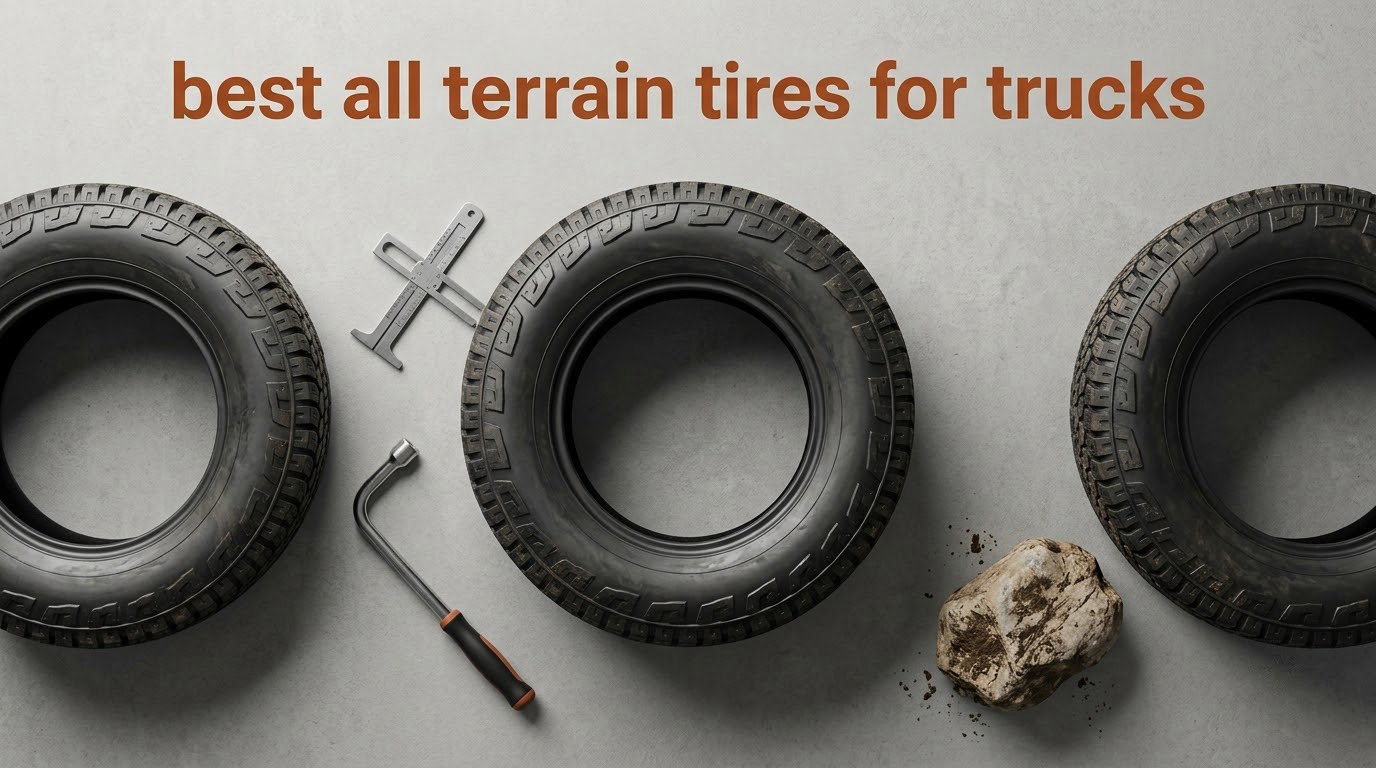
Short answer: the Hankook Dynapro AT2 RF11 tops our list of the best all-terrain tires for trucks because it balances pavement quietness with real snow and gravel grip, and that is exactly what most truck owners need.
Here is the honest part. Most half-ton owners buy mud-terrains they will never use, then live with the noise, the tread wear, and the fuel penalty. Almost nobody needs an M/T. The tire market rewards you for buying the aggressive option, and your right rear fender liner pays for it.
We went through ten all-terrain models built for light trucks and SUVs, read the retailer-reported owner ratings and review counts, and checked the fitment data on each one. This is a synthesis of published specifications, retailer review data, and owner reports from forums like r/Silverado, r/Tundra, r/4×4, RDForum, and DieselPlace. It is not a claim of our own instrumented braking or noise testing, because none exists to cite.
Two things to know before you read on. Every product below is a single tire, not a set of four, so budget accordingly. And star ratings here come from retailer review platforms, not from our editorial testing.
Top 3 Picks for Best All-Terrain Tires for Trucks


The 10 Best All-Terrain Tires for Trucks at a Glance in 2026
| Product | Specifications | Action |
|---|---|---|
| Hankook Dynapro AT2 RF11 265/70R16 |
|
Check Latest Price |
 Lexani Terrain Beast AT LT265/70R17 121/118S E Lexani Terrain Beast AT LT265/70R17 121/118S E |
|
Check Latest Price |
 Cooper Discoverer Road and Trail AT 265/65R18 XL 116H Cooper Discoverer Road and Trail AT 265/65R18 XL 116H |
|
Check Latest Price |
 Nexen Roadian ATX 265/65R18 114T Nexen Roadian ATX 265/65R18 114T |
|
Check Latest Price |
| Armstrong Tru-Trac AT 265/70R17 116T XL |
|
Check Latest Price |
 BFGoodrich All-Terrain T/A KO3 LT235/85R16E BFGoodrich All-Terrain T/A KO3 LT235/85R16E |
|
Check Latest Price |
 Goodyear Wrangler All-Terrain Adventure LT275/70R18 Goodyear Wrangler All-Terrain Adventure LT275/70R18 |
|
Check Latest Price |
| Pirelli Scorpion All Terrain Plus 265/65R18 114T |
|
Check Latest Price |
 Continental TerrainContact A/T 265/75R16 116T Continental TerrainContact A/T 265/75R16 116T |
|
Check Latest Price |
 Falken Wildpeak A/T3W 33X12.50R15 108R Falken Wildpeak A/T3W 33X12.50R15 108R |
|
Check Latest Price |
1. Hankook Dynapro AT2 RF11 265/70R16 112T – The Quiet Daily Driver Choice
- Quiet ride owners compare to driving on glass
- Aggressive sidewalls that perform in snow
- Balances easily and mounts cleanly
- One owner reached 60000 miles on a set
- Standard Load limits heavy towing use
- One owner reported weak wet-pavement traction on hard acceleration
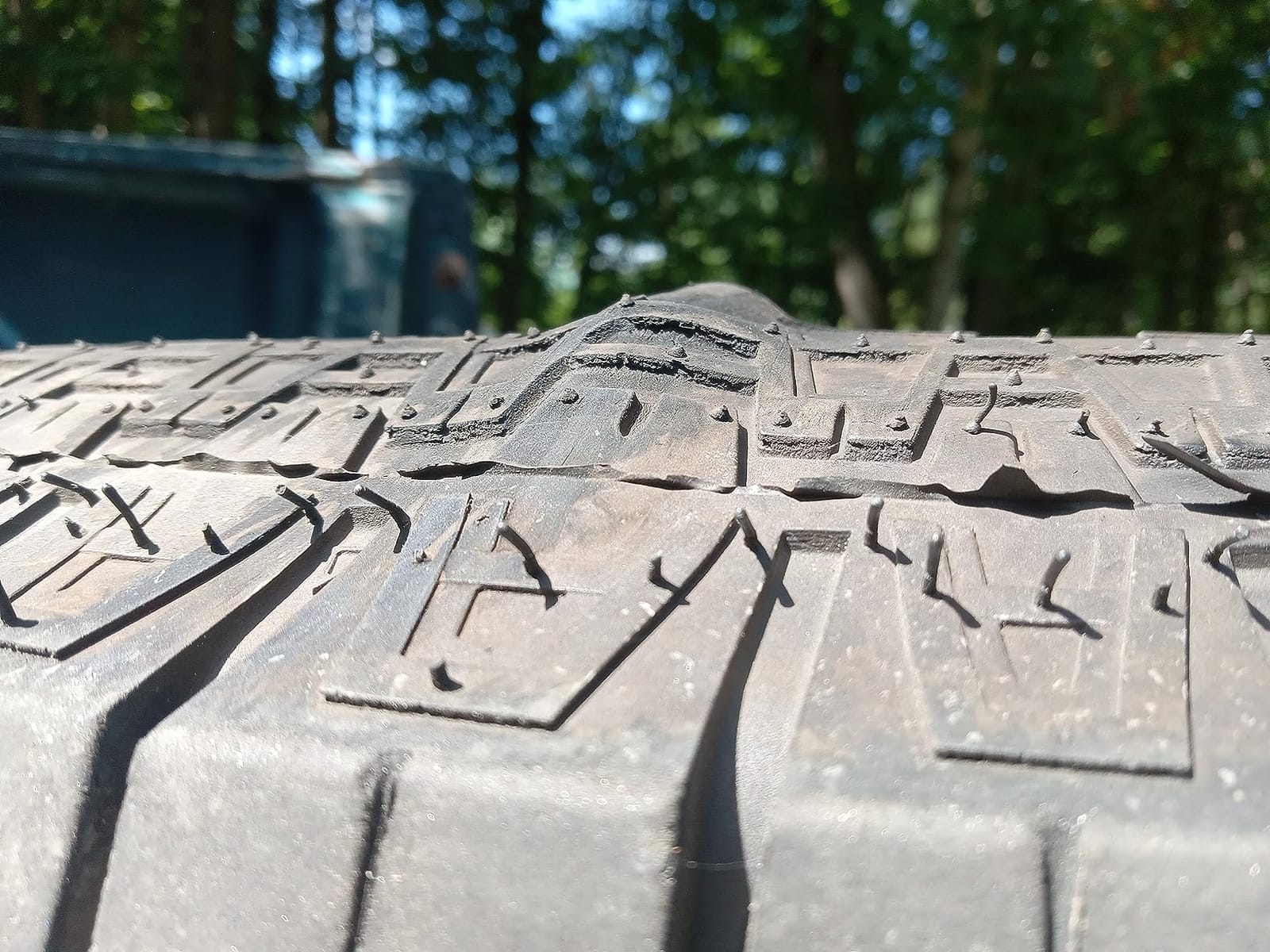
- Sidewall puncture reported by one owner
This is the tire we put on the list first, and it is not a close call on the evidence. The Dynapro AT2 RF11 carries a 4.6 retailer rating across 2178 reviews, the deepest owner base in this group, and the review pattern is unusually consistent: people describe the ride as smooth and quiet rather than merely acceptable.
It is a 265/70R16 radial with a load index of 112, a standard load construction, and a tread depth of 12.5/32 inch. That tire weighs 40.3 pounds, which tells you something important about the casing. The heaviest tires in this roundup run past 50 pounds because they carry more steel and more rubber.
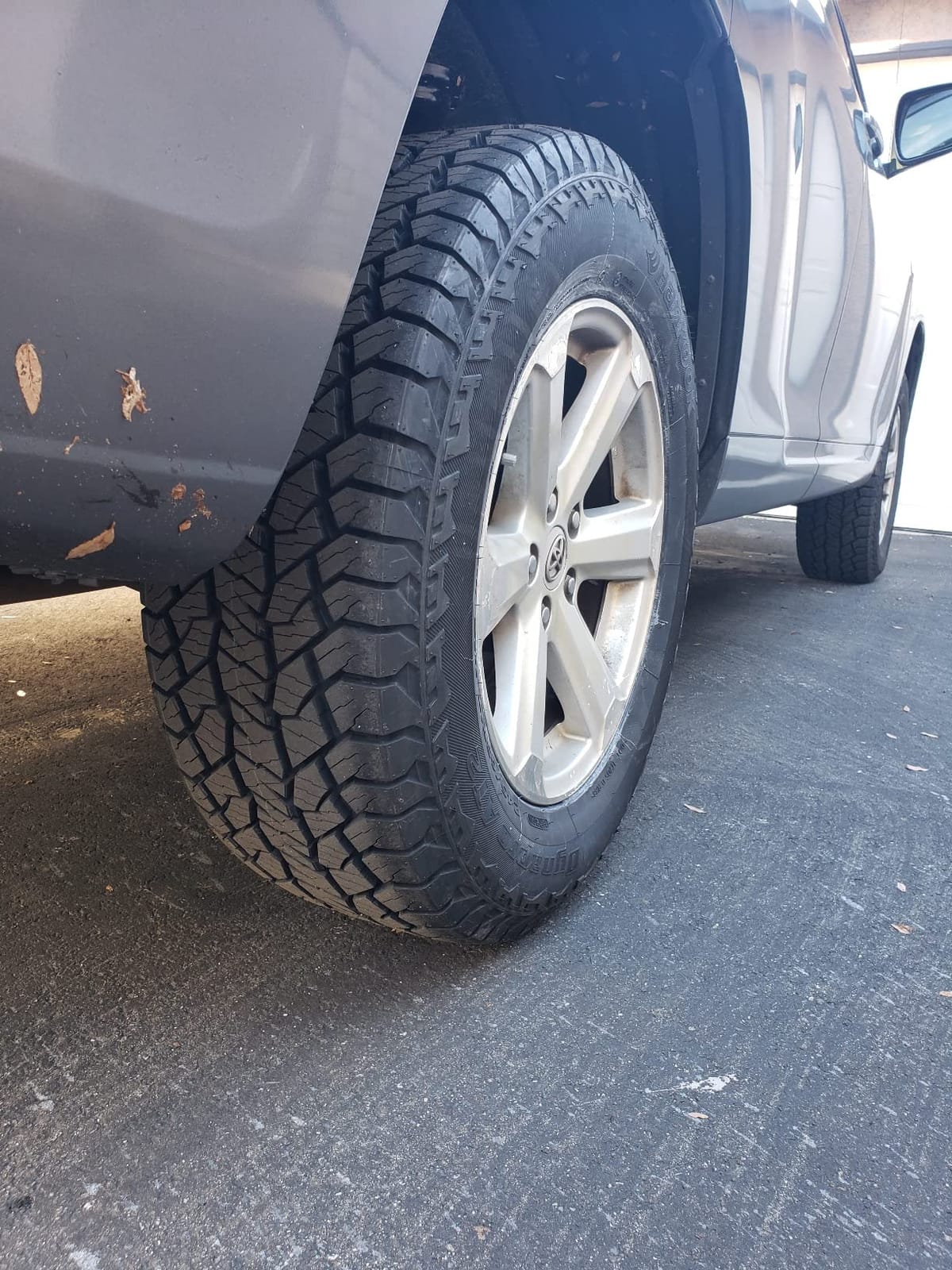
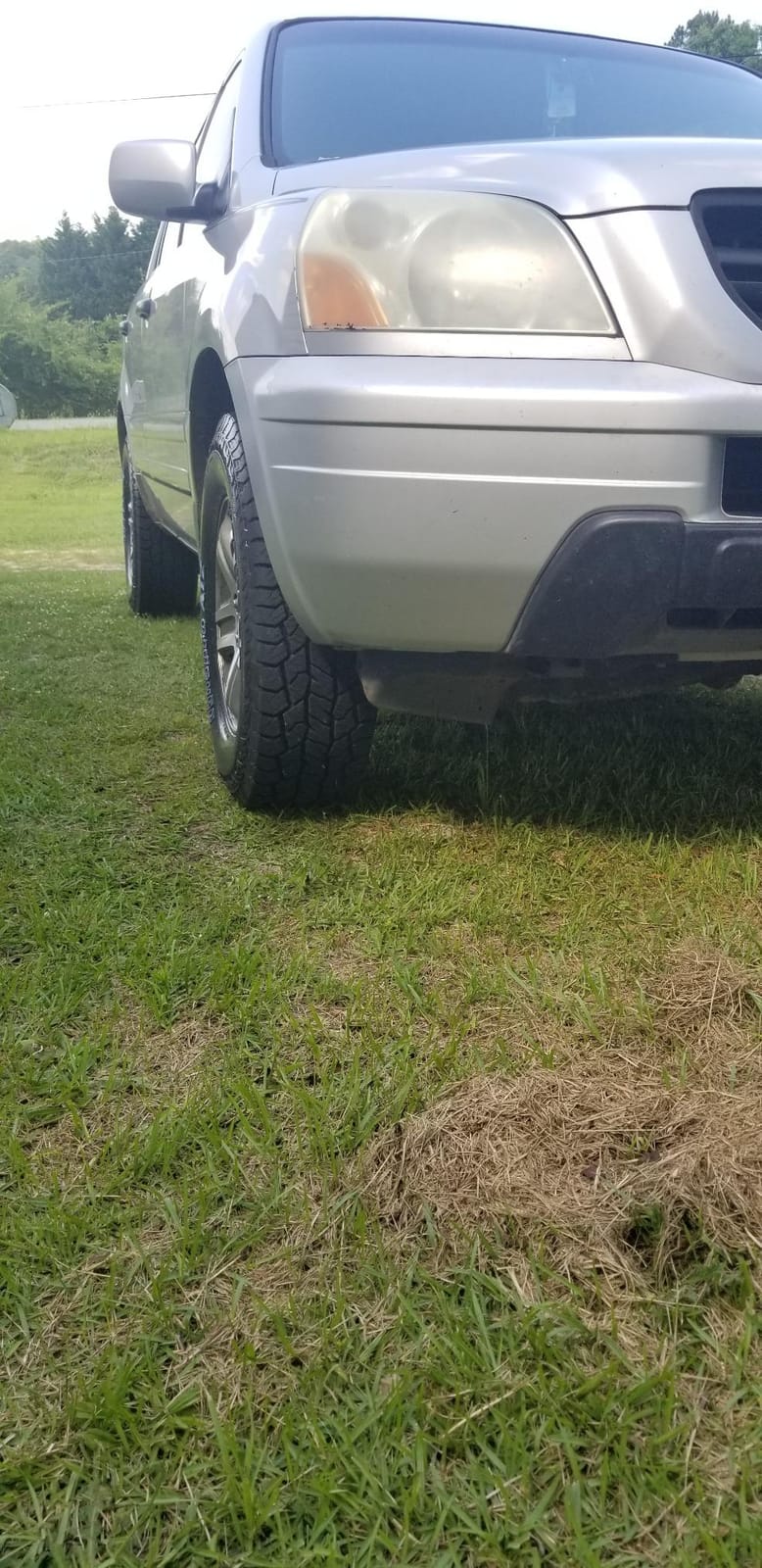
Snow traction draws repeated praise, as does tread durability, and one owner reported reaching 60000 miles on a set. The sidewall is aggressive enough to look purposeful on a truck without the noise penalty you get from a mud-terrain.
The two honest drawbacks are worth reading before you commit. First, this is a standard load size, so it is not the right tire for a dually or a truck living at its gross vehicle weight rating. Second, one owner reported traction control engaging on hard acceleration in rain, which is a wet-grip complaint rather than a dry-grip one.
Who this tire suits
If you drive 95 percent on pavement with a gravel road or a snowy month mixed in, this is the tire. The Dynapro AT2 does the least dramatic thing well, which is exactly what a daily-driven truck needs. Owners switching from a highway all-season usually notice the difference in confidence on wet and loose surfaces more than they notice the noise, because there is barely any noise difference.
It is also a strong first all-terrain purchase for a Tacoma, a Maverick, or a two-wheel-drive Silverado that has never had anything but touring tires.
Who should skip it
Skip it if you tow at the top of your truck’s rating or run a dually. The standard load construction is the deciding factor, not the tread pattern. Also skip it if you drive aggressively in heavy rain and care more about wet braking distances than snow capability.
If you want a documented Three-Peak Mountain Snowflake (3PMSF) severe snow rating, look at the Nexen Roadian ATX further down instead.
2. Lexani Terrain Beast AT LT265/70R17 121/118S E – Load Range E on a Smaller Budget
- Genuine 10-ply Load Range E construction
- 3195 lb load capacity
- Quiet relative to other all-terrains
- Handles repeated 5000-plus lb payloads
- Thin sidewalls reported to cause sway on a heavy dually
- Slight wander or vibration before pressures were reset
- Sold with no manufacturer warranty
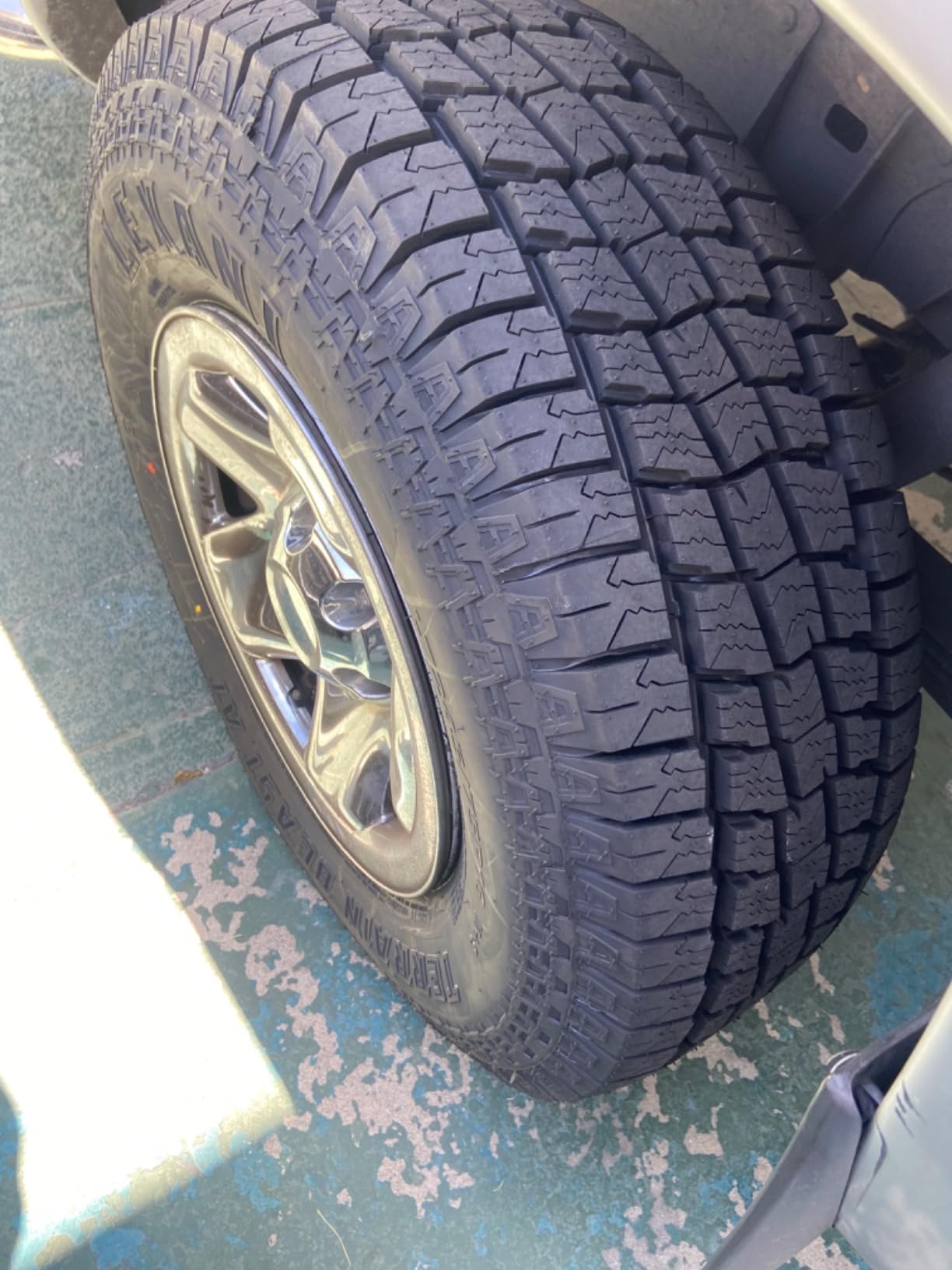
The Lexani Terrain Beast AT is the answer when you need real load capacity on a smaller check. The 121/118S E rating means load index 121 on a single tire with load range E, ten plies, and a 3195 pound per-tire capacity with an 80 psi maximum. That is the heavy-duty sidewall construction a three-quarter-ton or a dually application requires.
Owner sentiment treats this as the value entry into the category. Buyers praise easy mounting, exact fit in most truck applications, and quiet running relative to what the aggressive sidewall styling suggests you should get.
The design details are sensible for a work truck. Full-depth siping works in rain, mud, and snow, angled tread blocks and open shoulders eject debris, and a unilateral center rib adds stability on pavement.
The single recurring complaint is sidewall flex on tall, heavy applications, where highway sway has been reported. One owner also saw wander and possible vibration at highway speed before pressures were corrected. And this tire comes with no manufacturer warranty listed at all, which matters if you plan to keep the truck past four years.
Who this tire suits
It suits work trucks, dually applications, and anyone hauling repeated 5000-plus-pound payloads who wants a ten-ply casing without paying premium-brand money. One owner in that group reported running those loads without issue.
It also suits a buyer who cares more about the load index on the sidewall than about snow certification.
Who should skip it
Skip it if highway stability at speed matters more to you than payload. The sway and wander complaints cluster around heavy, tall-riding setups. And if a warranty matters to you, this listing carries none, which leaves you with no recourse if a casing fails early.
A premium Load Range E option with a real warranty is the better buy for the same job.
3. Cooper Discoverer Road and Trail AT 265/65R18 XL 116H – Built for Snow and Uneven Surfaces
Cooper Discoverer Road and Trail AT All-Terrain Tire, 265/65R18 XL 116H, Set of 1
- Continuous sidewall tread for soft and uneven ground
- Connected center lugs with severe snow designation
- Resists cutting cracking and tearing
- Backed by 65000-mile treadwear warranty
- Sold as a single tire only
- Two-ply construction is lighter duty than premium casings
The Discoverer Road and Trail AT is engineered around a simple idea: extend the tread pattern down the sidewall so the tire keeps biting where others run out of rubber. Reviewers single out that continuous pattern as the reason the tire holds up on soft and uneven ground.
It carries a severe snow designation and connected center tread lugs for traction on snow, which is the closest thing to a snow certification on this list short of a formal 3PMSF mark. Around 85 percent of its retailer reviews sit at five stars.
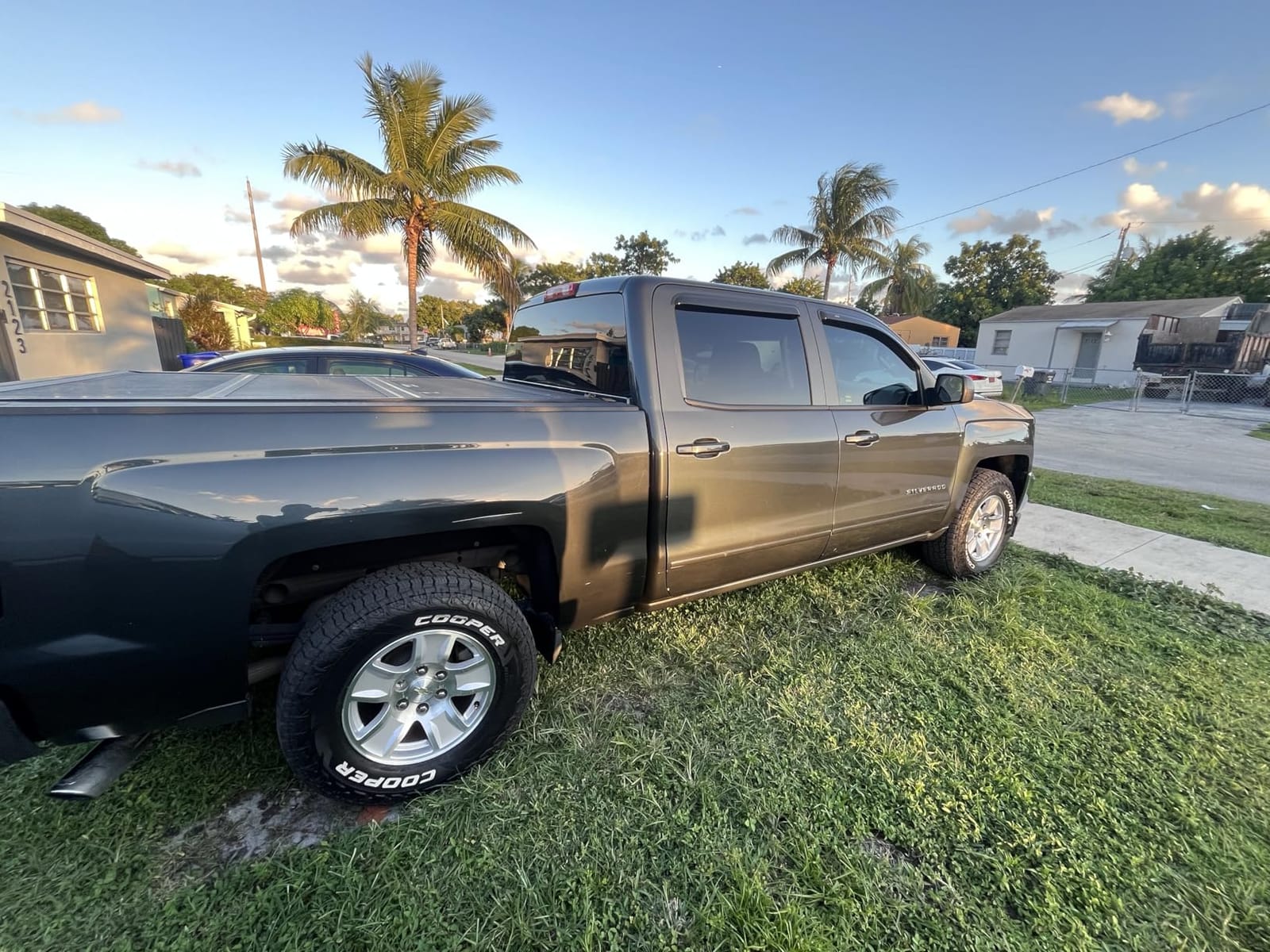
Durability is the other half of the pitch. The even-wear design is meant to resist cutting, cracking, and tearing on tough trails, and it is backed by a 65000-mile treadwear warranty, among the longest figures listed in this group.
Two practical notes. This tire is sold one at a time, so a full set of four means four separate purchases. And the construction is two-ply, which is lighter duty than the three-ply casing used on premium all-terrain lines. If you haul heavy loads, factor that in.
Who this tire suits
It suits half-ton owners in snow and on rough gravel who want sidewall grip without paying for the most aggressive sidewalls on the market. The severe snow designation makes it a defensible winter-capable choice for a truck that stays on plowed roads most of the year.
It also suits buyers who want among the longest warranty coverage listed here and plan to keep the tires past 50000 miles.
Who should skip it
Skip it if you tow seriously. A two-ply casing at load index 116 is not the construction for a tongue-heavy trailer. Skip it as well if you want a documented 3PMSF certification, because this listing carries a severe snow designation rather than the mountain snowflake mark.
If your winter driving involves unplowed mountain roads, a genuine 3PMSF tire is the safer bet.
4. Nexen Roadian ATX 265/65R18 114T – The Only Documented 3PMSF Tire Here
- Three Peak Mountain Snowflake certified
- Emerging 3D sipes bite into snow and wet surfaces
- Reinforced 3-ply sidewall resists cuts and chips
- Total Coverage Warranty with 65000-mile treadwear
- Standard Load rating not meant for heavy towing
- Sold as a single tire
The Nexen Roadian ATX is the only tire in this roundup whose listing carries a formal Three-Peak Mountain Snowflake (3PMSF) certification, and that is why it earns its place. Roughly 85 percent of its retailer reviews are five stars, which is unusually top-heavy for a 131-review listing.
That certification matters more than most marketing language in this category. A 3PMSF mark means the tire passed a test that checks acceleration, braking, and lateral grip on packed snow, which is a harder bar than the M+S label found on plenty of all-terrain tires.
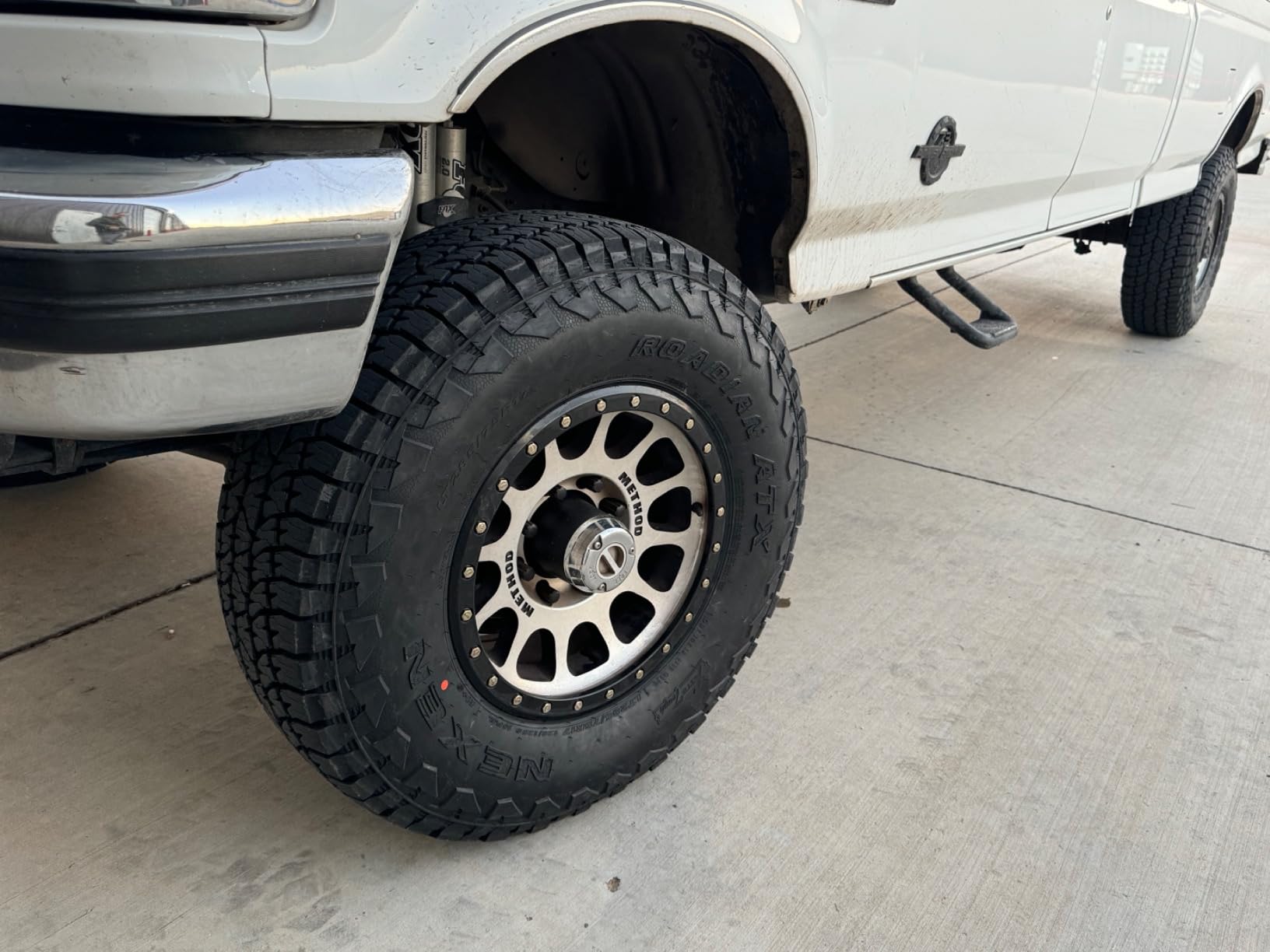
The engineering supports the claim rather than just asserting it. Emerging 3D sipes within the tread bite into the road for snow, mud, and wet-weather traction, and a puncture-resistant sidewall with a reinforced three-ply carcass guards against cuts and chips on and off the pavement.
The warranty package is unusually generous for this tier, covering up to a 65000-mile treadwear warranty, a road hazard period, roadside assistance, and a trial window. That combination is hard to find on tires in this class.
Who this tire suits
It suits the truck owner in a real snow belt who wants a documented severe snow rating, quiet highway manners, and aggressive-looking blocks in one package. Reviewers also call out how little weight it takes to balance, which matters if you do your own mounting.
It is a sensible pick for a Tacoma, a midsize F-150, or a Silverado running a stock-height 18-inch wheel.
Who should skip it
Skip it for heavy towing. The standard load rating with a load index of 114 is not the choice for a truck living at its towing capacity. And skip it if you want a load range E casing, because the reinforced sidewall cannot substitute for extra plies.
Owners who want a bigger casing with a snow rating should step up a load range rather than a brand.
5. Armstrong Tru-Trac AT 265/70R17 116T XL – The Lowest-Cost Extra Load Option
- Lowest entry cost for a genuine Extra Load all-terrain
- 60000-mile treadwear warranty
- Non-directional tread rotates freely front to rear
- Extra Load rating supports 2756 lb per tire
- Budget-brand casing with less off-road credibility
- Tire only and rim not included
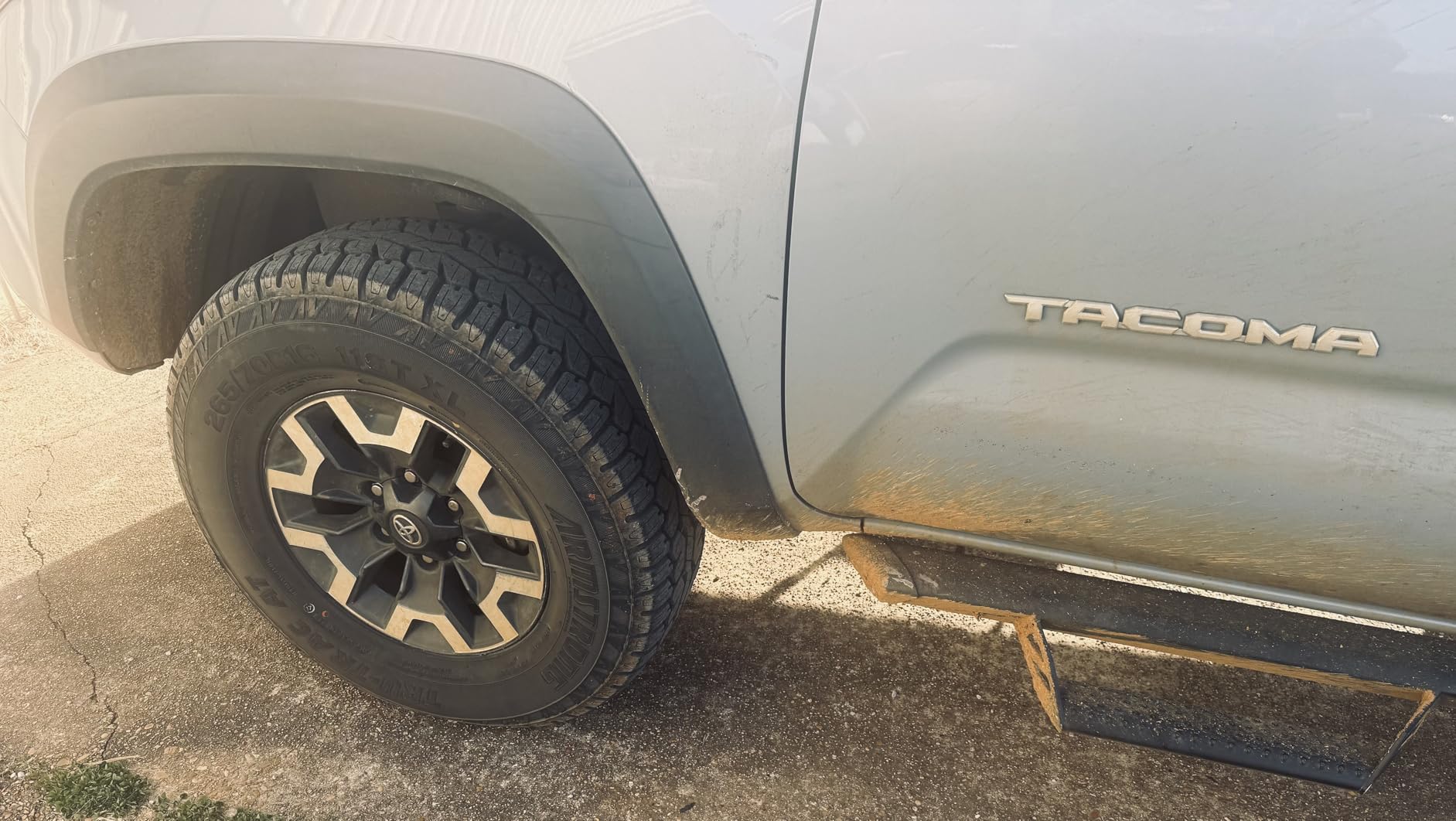
The Armstrong Tru-Trac AT exists because a genuine Extra Load all-terrain should not require a premium-brand budget. This 265/70R17 carries load index 116 in an XL extra load construction, rated to 2756 pounds per tire, with a 60000-mile treadwear warranty and a UTQG of 560AB.
The review base of 643 ratings at 4.6 stars is the fourth-largest in this group, and sentiment is broadly positive with little friction reported. Buyers pick it as an affordable first all-terrain for a half-ton truck.
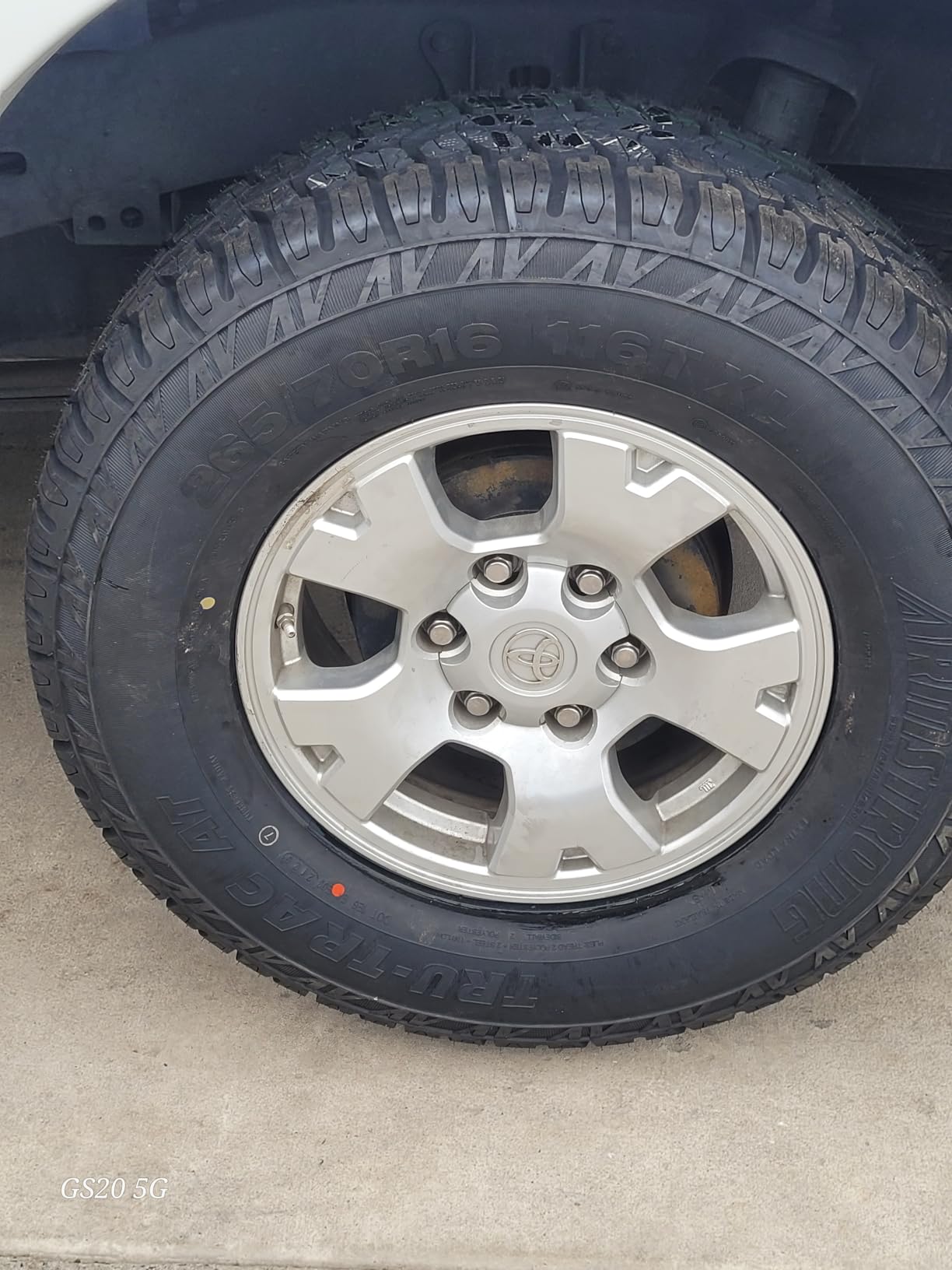
Two design choices make it easy to live with. The non-directional tread pattern means you can rotate front to rear freely, which helps even out wear on a truck that sees pavement most of the time. The four-ply XL casing is a genuine step up from standard load.
The trade-off is straightforward. This is a budget-brand casing with less off-road credibility than the premium A/T lines, and the tread is tuned for road manners rather than for crawling rocks. It is also sold as a tire only, with no rim included.
Who this tire suits
It suits a half-ton owner who drives to work on pavement, hits gravel, and wants extra load capacity and a long warranty without moving up a brand tier. The free rotation pattern makes it a good fit for vehicles that cannot be rotated in a conventional cross pattern.
It is also a reasonable choice for a second set of winter-capable all-terrains on a truck that already has wheels to swap.
Who should skip it
Skip it if you run serious trails. The casing is fine for gravel and mud, but nobody in the review base is describing this as a rock-crawling tire. Skip it if appearance matters, because the one-black-sidewall styling is plain.
If you want the same extra load rating with documented snow certification and a warranty package that includes more than tread wear, step up a tier.
6. BFGoodrich All-Terrain T/A KO3 LT235/85R16/E 120/116S – The Sidewall Toughness Benchmark
BFGoodrich All-Terrain T/A KO3 Car Tire for Light Trucks, SUVs, and Crossovers, LT235/85R16/E 120/116S
- CoreGard sidewall technology from Baja racing
- Advanced Deflection Design resists stone damage
- Serrated shoulders and mud-phobic bars improve mud and snow grip
- 50000-mile treadwear plus 6-year warranty
- Higher per-tire cost than the budget brands in this group
- Sold as a single tire in a narrower 235-size
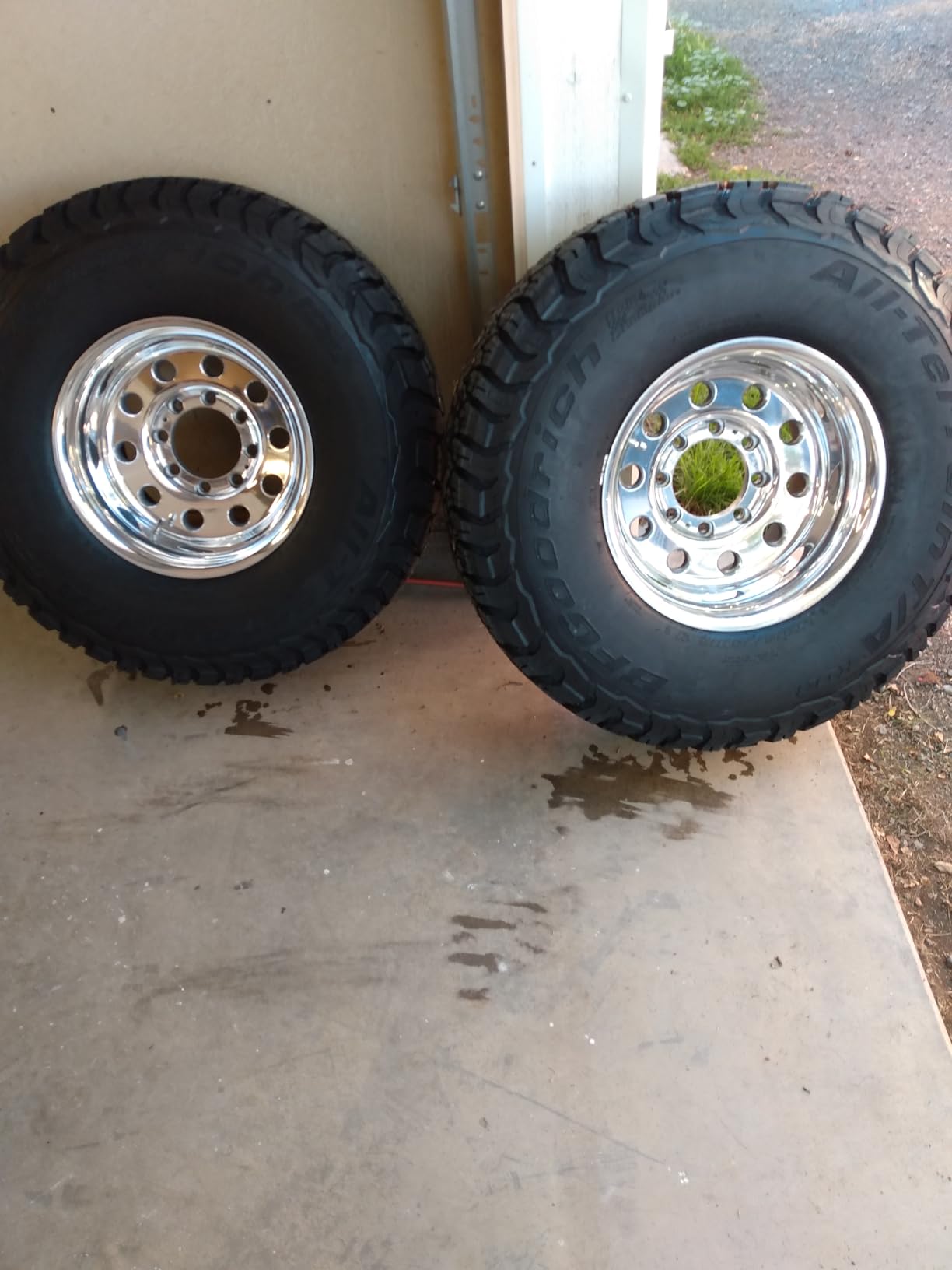
The KO3 is the tire most truck owners will name from memory when they ask for the best all-terrain tires for trucks, and the engineering behind it is the reason. CoreGard sidewall technology came out of Baja racing, which is a much harsher test than a gravel forest road.
This listing is the LT235/85R16 E size: ten plies, load index 120, a 3085 pound capacity, and an 80 psi maximum pressure. That is a load range E casing, the construction you want if the truck actually works for a living.
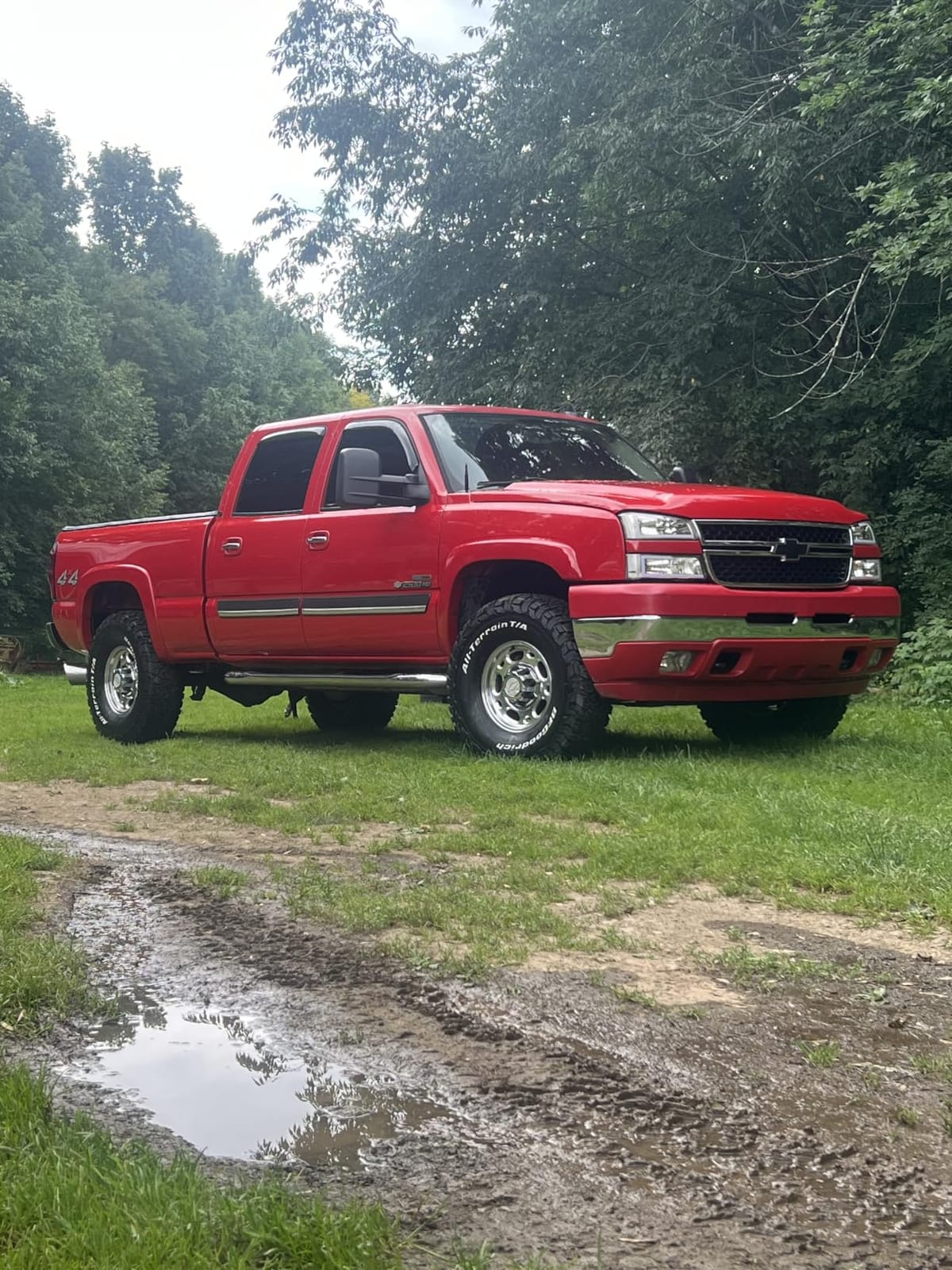
Advanced Deflection Design is the quieter headline. It keeps sticks and stones from snagging and splitting the sidewall, which is how most all-terrain tires eventually get retired. The new tread pattern and compound are tuned for durability on gravel, and serrated shoulders with mud-phobic bars improve mud and snow traction over the previous KO2.
Review sentiment is emphatic, with around 88 percent of ratings at five stars. The name appears constantly in owner threads on r/Silverado, where buyers describe it as hard to beat for looks, road noise, and fuel economy impact.
Who this tire suits
It suits the owner who drives a rough forest road or works gravel daily and needs a sidewall that survives rock and debris. It also suits anyone towing who wants a ten-ply load range E casing without researching load ratings from scratch.
Owners on forums who moved from the previous KO2 to the KO3 report the mud and snow traction improvement as the reason they stayed with the brand.
Who should skip it
Skip it if the listed size does not match your truck. LT235/85R16 is narrower than most modern half-ton factory fitments, so check your door jamb before anything else. It also costs more per tire than the budget-brand options in this group.
If noise is your top priority, this is a quieter tire than most aggressive A/T patterns but not the quietest option on this list.
7. Goodyear Wrangler All-Terrain Adventure LT275/70R18 125R – The Wide, Factory-Fit Load Range E Tire
Goodyear Wrangler All-Terrain Adventure LT275/70R18 125R All- Season Tire
- Quiet ride with little road hum for a Load Range E tire
- Handles rain well and performs strongly in winter weather
- Common OE fitment for many trucks
- One owner reported 65000 miles from a first set
- Shallowest tread depth here at 10/32 inch
- Several buyers received older manufacture dates
- Warranty paperwork not always supplied
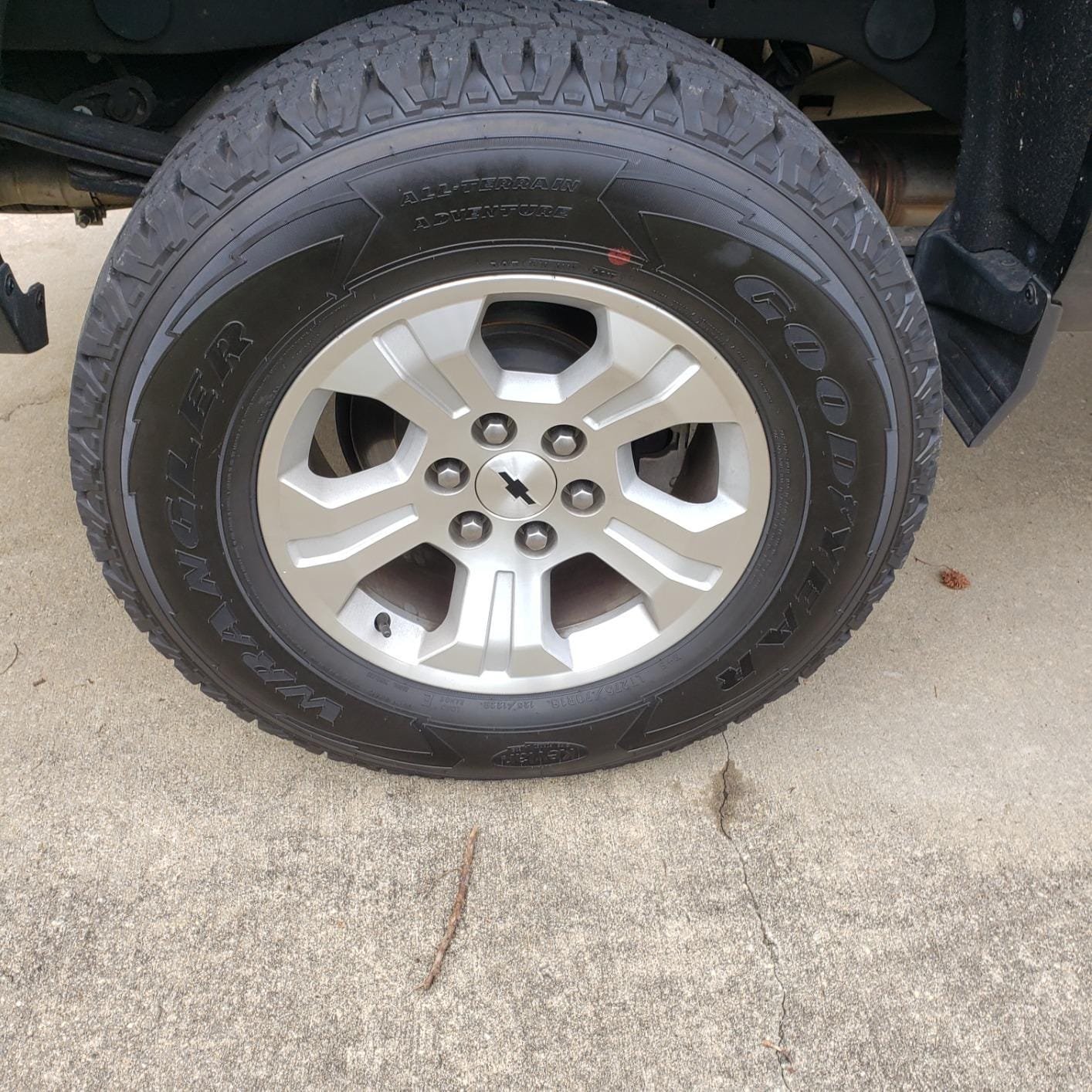
The Wrangler All-Terrain Adventure does what an original-equipment truck all-terrain should do. It rides quietly for a ten-ply all-terrain, with owners reporting little road hum, and it handles rain while holding up in winter weather.
The sizing is the reason to pay attention. LT275/70R18 with a load index of 125 in load range E gives you a 3638 pound per-tire capacity at up to 80 psi, and this is common OE fitment across many trucks, fitting both factory-height trucks and those with a leveling kit.
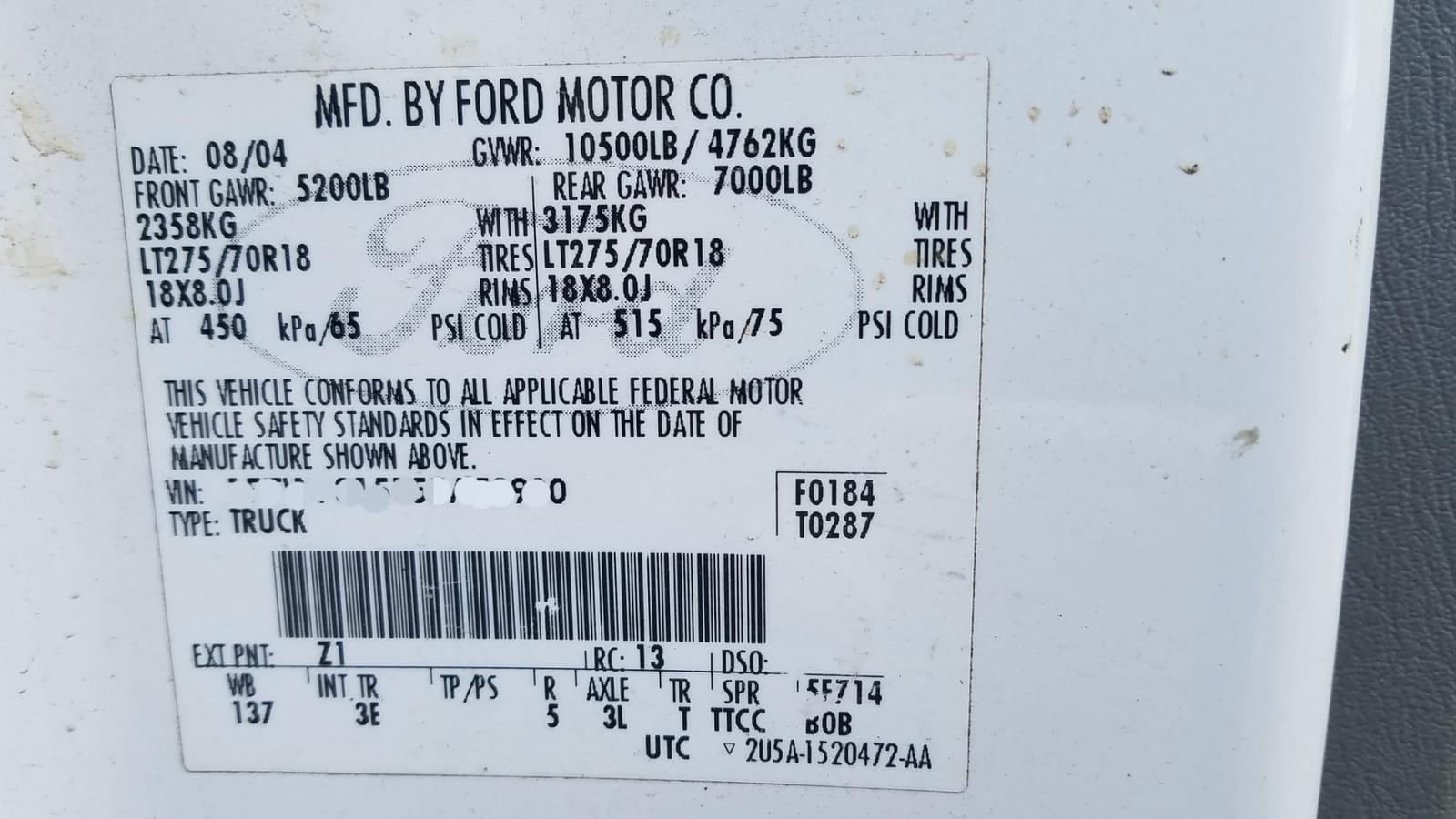
Tread life is genuinely good. The listing carries a 60000-mile mileage warranty, and one owner reported reaching 65000 miles on a first set. That is the tire for a buyer who measures value in years rather than in months.
The friction here is logistics rather than performance. This tire has the shallowest tread depth in the group at 10/32 inch, which shortens usable life against a 13/32 inch rival. Several buyers also reported tires arriving with older manufacture dates, and warranty documentation was not always included with the purchase.
Who this tire suits
It suits the truck owner who wants a load range E all-terrain that stays quiet on the highway, fits the factory wheel and tire package most trucks already have, and will still be there after five years of daily use.
It is also the pick for someone with a leveling kit who needs the extra load index rather than extra clearance.
Who should skip it
Skip it if you want maximum off-road traction, since 10/32 inch of tread is shallow by all-terrain standards. Skip it if you plan to air the tire down frequently, because the shallow tread and load range E pressures do not mix with low-pressure trail running.
Always check the manufacture date before you accept the delivery. That single step has prevented a lot of disappointment for this model.
8. Pirelli Scorpion All Terrain Plus 265/65R18 114T – The Road-Friendliest All-Terrain
- Quiet and softer riding than most all-terrains
- Cut and chip resistant compound with reinforced shoulders
- Conical stone ejectors create a self-cleaning pattern
- One owner logged 50000-plus miles with tread remaining
- Black sidewalls rather than white lettered
- One owner reported tread delamination near 20000 miles
- Softer sidewalls give more feedback on rough surfaces
The Scorpion All Terrain Plus is the name-brand pick most owners settle on when quietness is the deciding factor. With 1033 retailer reviews, it has the second-deepest owner base in this roundup, and the consistent theme is that it rides like an all-season while looking like an all-terrain.
Owners compare the ride favorably against their previous all-season tires, which is a high bar in this category. The compound is cut and chip resistant, and reinforced shoulder blocks guard the tire for longer tread life.
Winter and mud performance is credible rather than spectacular. Deep grooves with conical stone ejectors create a self-cleaning pattern for mud and snow, and alternating tread blocks with blunt edges add traction across surfaces. One owner logged more than 50000 miles on a 275/60R20 set with tread remaining.
Three caveats. This listing is the black sidewall version, not the white-lettered one you may see in some photos. Softer sidewalls mean more feedback when you hit rough surfaces. And one owner reported all four tires failing with tread delamination near 20000 miles, a serious complaint that stands out against an otherwise clean review profile.
Who this tire suits
It suits the daily commuter who drives long stretches of highway and hates tire noise. Owners who came from a quiet OE tire report the least change of character in this group, which matters when the truck is your commute.
It also suits buyers who want a name-brand A/T with a real warranty and are not ready to pay for load range E.
Who should skip it
Skip it if you haul heavy loads, because a load index of 114 in standard load construction is not a towing tire. Skip it if you want a formal snow certification, and be cautious if you have a history of casing failures given the delamination reports.
If white-lettered styling matters for your build, verify which version you are buying before you order.
9. Continental TerrainContact A/T 265/75R16 116T – European Tuning With Long Coverage
CONTINENTAL TerrainContact A/T all_ Season Radial Tire-265/75R16 116T
- TractionPlus technology improves wet grip with low noise
- 60000-mile limited tread life coverage
- Non-directional tread allows free rotation
- Outlined white lettering for an OE plus look
- Standard Load rating limits heavy towing use
- Less aggressive sidewall than a trail oriented all-terrain
The TerrainContact A/T is Continental’s European-developed all-terrain, and its review profile is small but consistently favorable. The recurring theme is quiet, comfortable road manners paired with credible off-pavement capability and long tread life.
TractionPlus technology is the piece to understand here. It is a compound and tread design aimed at improving grip on wet roads while holding road noise down, which is the hardest combination to achieve in an open all-terrain pattern. Wet-weather traction and low noise are the two things owners praise most.
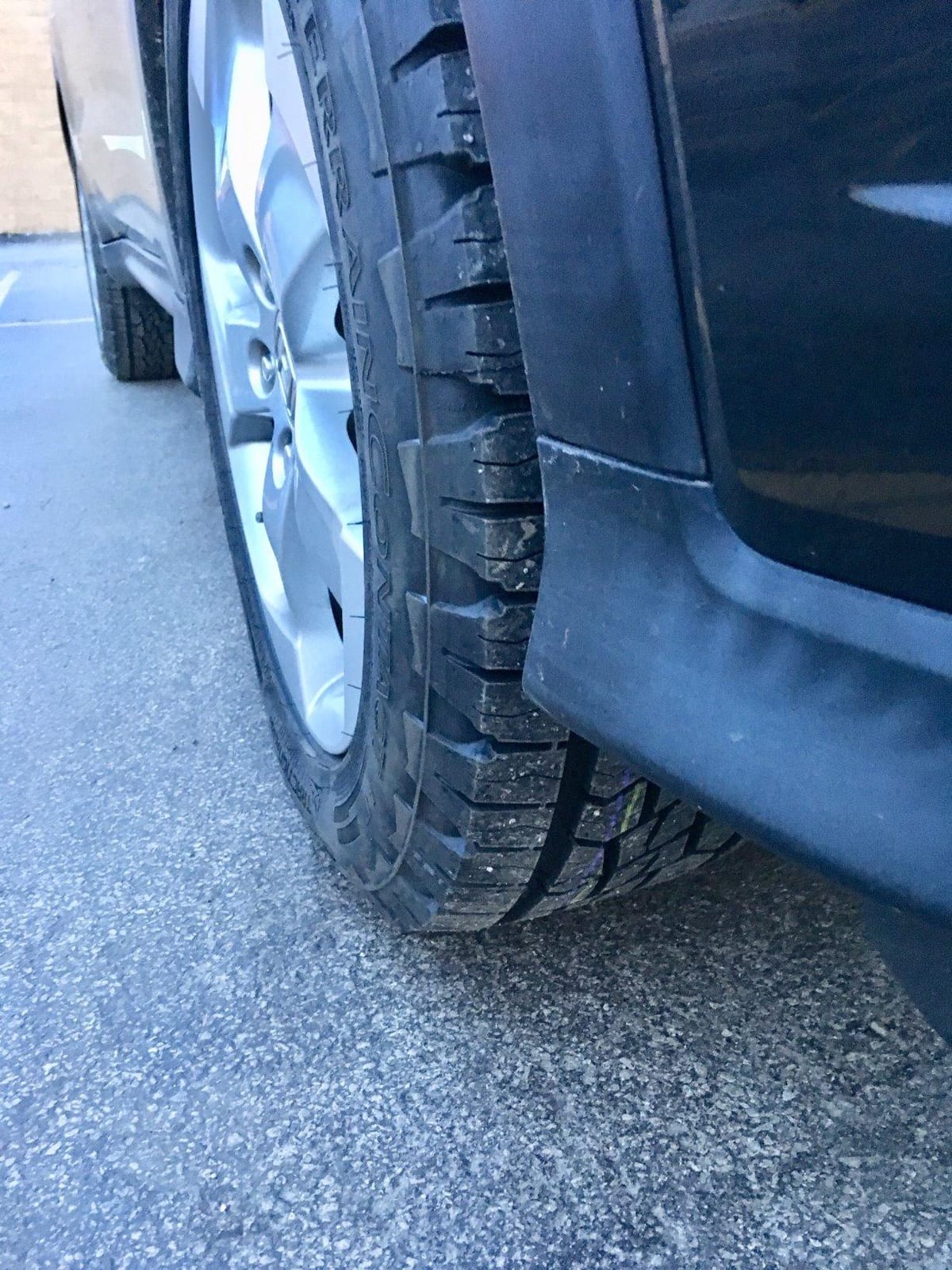
The warranty is the sleeper advantage. This tire carries 60000-mile limited manufacturer tread life coverage, among the longest listed here, and a non-directional tread that lets you rotate freely. For a truck driven daily on pavement, that combination matters more than aggressive sidewalls.
Two limitations. It carries a standard load rating, which limits it for heavy towing, and the sidewall is less aggressive than a trail-oriented all-terrain. One caution from the rating distribution: roughly 8 percent of reviews are one star, so buyers focused purely on aggressive trail use should look elsewhere.
Who this tire suits
It suits the pavement-heavy owner who wants quietness, wet grip, and the longest tread coverage per dollar on this list. The free-rotation pattern is a practical advantage on a truck driven mostly in one direction.
It also suits buyers who want OE-plus appearance, since the outlined white lettering reads as factory rather than aftermarket.
Who should skip it
Skip it if your truck spends real time on trails. This is a road-biased all-terrain, and the sidewall will disappoint anyone expecting to crawl. Skip it for heavy towing for the same reason as the standard load rating.
Owners who need one tire for pavement and one for mud should consider a rotation-friendly aggressive option instead.
10. Falken Wildpeak A/T3W 33X12.50R15 108R – The Off-Road End of the Scale
Falken Wildpeak A/T3W All- Terrain Radial Tire-33X12.50R15 108R 6-ply
- Tapered lugs shed rocks and debris instead of trapping them
- Handles mud sand snow and wet pavement
- Quiet for a reasonably aggressive all-terrain
- 3D Canyon sipes resist high-torque wear
- Heat diffuser sidewall for towing heat
- 35 psi maximum pressure requires careful planning
- Sold without warranty and 15-inch fitment is narrow by modern standards
The Wildpeak A/T3W in 33×12.50R15 is the serious off-road end of this roundup. It is a 33-inch tire on a 15-inch wheel, six plies in load range C, load index 108, rated to 3086 pounds. That diameter is not a bolt-on swap for a half-ton. It is a build.
The review base of 147 ratings at 4.6 stars is small but emphatic. Owners on forums running this model describe deep tread with tapered lugs that shed rocks rather than trap them, and one reported a slick red mud recovery that most all-terrains cannot deliver.
The engineering is aimed at durability under load and torque. 3D Canyon sipe technology interlocks the shoulders to resist high-torque wear, and a heat diffuser in the lower sidewall dissipates heat when towing or carrying heavy loads. The aggressive upper sidewall with offset shoulder blocks protects against sharp rocks and adds bite when aired down or on off-camber terrain.
Owners also report it is surprisingly quiet for a reasonably aggressive all-terrain, which is the single most common complaint about this category. The constraints are equally clear: a 35 psi cold maximum, a 15-inch fitment that is narrow by modern standards, no manufacturer warranty listed, and one reported sidewall blowout at 2500 miles.
Who this tire suits
It suits the Bronco, 4Runner, or Wrangler owner running larger wheels who needs mud, sand, and rock performance over pavement refinement. Forum owners running this model on similar builds praise the loose-surface grip and the low noise for the aggression.
It also suits anyone airing tires down on trails, since the sidewall is built for it.
Who should skip it
Skip it if you are trying to fit it to a modern half-ton. A 33×12.50R15 package needs a lift, a spacer or offset change, and clearance checking, and it will change your speedometer reading. The 35 psi cold maximum also means careful inflation planning every time you change terrain.
And if your truck tows, note that this listing carries no manufacturer warranty.
What Truck Owners Actually Run
Forums occupy four of the top five organic results for this query, so it is worth reporting what owners say rather than what we concluded. The good news is that owners mostly agree with this ranking. The bad news is that they also complain about the same things.
On r/Tundra, owners running the Falken Wildpeak A/T4W report it is quiet enough on pavement that you do not really notice tire noise unless you are specifically listening for it. On r/Silverado, a common line about the BFGoodrich KO3 is that it looks great, with minimal road noise and a small hit to fuel economy. On r/4×4, an owner running Mickey Thompson Baja Boss A/T tires on 295/70R18 called them 3-peak rated and said the rock crawling impressed him.
On RDForum, a user describing the Falken Wildpeak A/T3W called it 3-peak snowflake rated and better than Duratracs and KO2s, with very good off-road performance for an all-terrain. A ramforum owner added that the Falkens are great for unplowed roads and deep snow, and not loud on the highway.
The disagreement is worth stating plainly. Owners split between the KO3 and the Falkens, and both get described as quiet, so there is no single consensus winner. On DieselPlace, one owner said the Firestone Destination A/T was the best he had used, rating it highly at Tire Rack and describing it as doing everything well with no big flaws.
The complaints, though, are unanimous across communities. One r/XTerra thread captured the mood best, with users tired of the noise, rough rides, and poor wear of almost every all-terrain they had ever run. Owners also report wear falling well below warranty on pavement-heavy use, and one r/ram_trucks owner described his original equipment tires as quiet on the road but prone to slipping on wet grassy hills in summer and in snow in winter.
If your truck is your daily driver and road noise is the deciding factor, that is the real filter to apply.
How to Choose All-Terrain Tires for a Truck
Match the load range to the job, not the tire
Load range is the letter after the size, and it tells you how many plies the casing uses. Load range C is a light-truck casing, E is the heavy-duty ten-ply construction used on most half-tons and nearly all three-quarter-tons, and SL or XL are passenger-car-style ratings that do not carry the same duty.
Start from your gross vehicle weight rating and your tongue weight, not from the tread pattern. If you tow or carry payload regularly, load range E with a load index like 125 is the floor, not the ceiling. Under-tiring a truck is a safety problem, and the sidewall is what fails first.
Inside the load index, the number is load and the letter is speed. A 121/118S reading means 121 in single-tire application and 118 in dually application, with an S speed rating. Match the single-tire number to your application, not the dually number.
Read 3PMSF before you trust snow marketing
The Three-Peak Mountain Snowflake mark is the severe snow service rating, and it is stricter than the M+S label that appears on plenty of all-terrain tires. M+S simply means mud and snow capable. The 3PMSF mark means the tire was tested for acceleration, braking, and lateral grip on packed snow.
Among the ten tires here, the Nexen Roadian ATX is documented as Three-Peak Mountain Snowflake certified. The Cooper Discoverer Road and Trail AT carries a severe snow designation with connected center lugs. The rest of this group does not carry a documented 3PMSF mark on its listing, even where owners describe strong winter behavior, as r/Tundra and RDForum owners do with the Falken models.
Know the limit of the rating too. A 3PMSF all-terrain is not a winter tire. If you spend months on unplowed mountain roads below freezing, a genuine three-season or winter compound still beats an all-terrain, because the difference is the rubber temperature range, not the tread blocks.
Understand why all-terrain tires get loud
Road noise in this category comes from three things: tread blocks that flex as they enter and leave the contact patch, open shoulder voids that resonate, and a variable pitch tread pattern that generates a pitch change the ear locks onto. A tire with a solid center rib and closely spaced pitch intervals sounds flatter than one with widely spaced blocks.
So the self-diagnosis is simple. If the hum rises and falls in a repeating pattern as speed climbs, the tread pitch is the problem. If it is a steady roar that fades above a certain speed, the open shoulders are the problem. Either way the fix is a road-biased all-terrain pattern, which is why the Continental TerrainContact A/T and the Pirelli Scorpion All Terrain Plus earn quietness mentions from owners.
Tire pressure matters more than most people expect here. Under-inflated tires squirm more, and squirm is noise, heat, and wear. Keeping pressures at the door-jamb figure rather than the sidewall maximum is the cheapest noise reduction available.
Do not trust the warranty number as a mileage promise
Treadwear warranties in this group range from 50000 miles on the KO3 and the Pirelli Scorpion to 60000 or 65000 miles on the Cooper, Nexen, Armstrong, Goodyear, and Continental listings. Two rules make that number meaningful or meaningless.
First, rotate on the schedule the manufacturer specifies. A non-directional tire like the Armstrong or Continental can rotate freely front to rear, which evens out wear on a truck that spends its life going one direction. A directional pattern cannot.
Second, keep pressures correct. Pressure errors accelerate wear unevenly, and an under-inflated tire wears its shoulders instead of its center. Warranty coverage is also conditional on rotation and pressure records, so keep the paperwork.
The 3 percent rule is the practical tolerance. Compare your tire’s overall diameter against factory spec, and stay within about 3 percent. Beyond that, your speedometer and odometer are lying to you and your ABS and stability calibration are working with bad data.
Size up without a lift, and know where it rubs
One size up is usually fine. Beyond that, check four rub points: the inner fender at full steering lock, the sway bar at full compression, the plastic fender liner, and the frame rail. Those are the four places a larger all-terrain contacts metal, and they are all predictable before you buy.
Watch overall diameter, not section width. A wider tire on a smaller rim can grow in diameter as well as width, which is what shifts the speedometer. Check the tire weight too. Swapping a 34 pound tire for a 57 pound tire changes braking, suspension wear, and fuel economy in ways a speedometer cannot tell you about.
If you plan to air down for trail use, a portable inflator pays for itself the first time. Our cordless inflator picks for tires cover that job, and a quality bike pump is the lighter backup for airing down on a trail. Return to pavement pressure before you drive on the highway, because an under-inflated all-terrain generates heat fast.
Know the difference between the four categories
A highway terrain tire is quiet, long-lived, and useless once the pavement ends. An all-terrain tire is the middle ground described throughout this guide. A rugged-terrain tire sits between all-terrain and mud-terrain, giving you the look with less noise. A mud-terrain tire has the deepest voids and the loudest, least efficient ride in the category.
For an 80/20 driver, an all-terrain is the correct answer. Mud-terrains only earn their place if you routinely drive deep mud, sand, or rock.
Check the manufacture date and plan the install
Tires age even when unused, and several owners of the Goodyear Wrangler All-Terrain Adventure specifically reported receiving older manufacture dates. Read the DOT code on the sidewall, where the last four digits are the week and year, and reject anything unreasonably old.
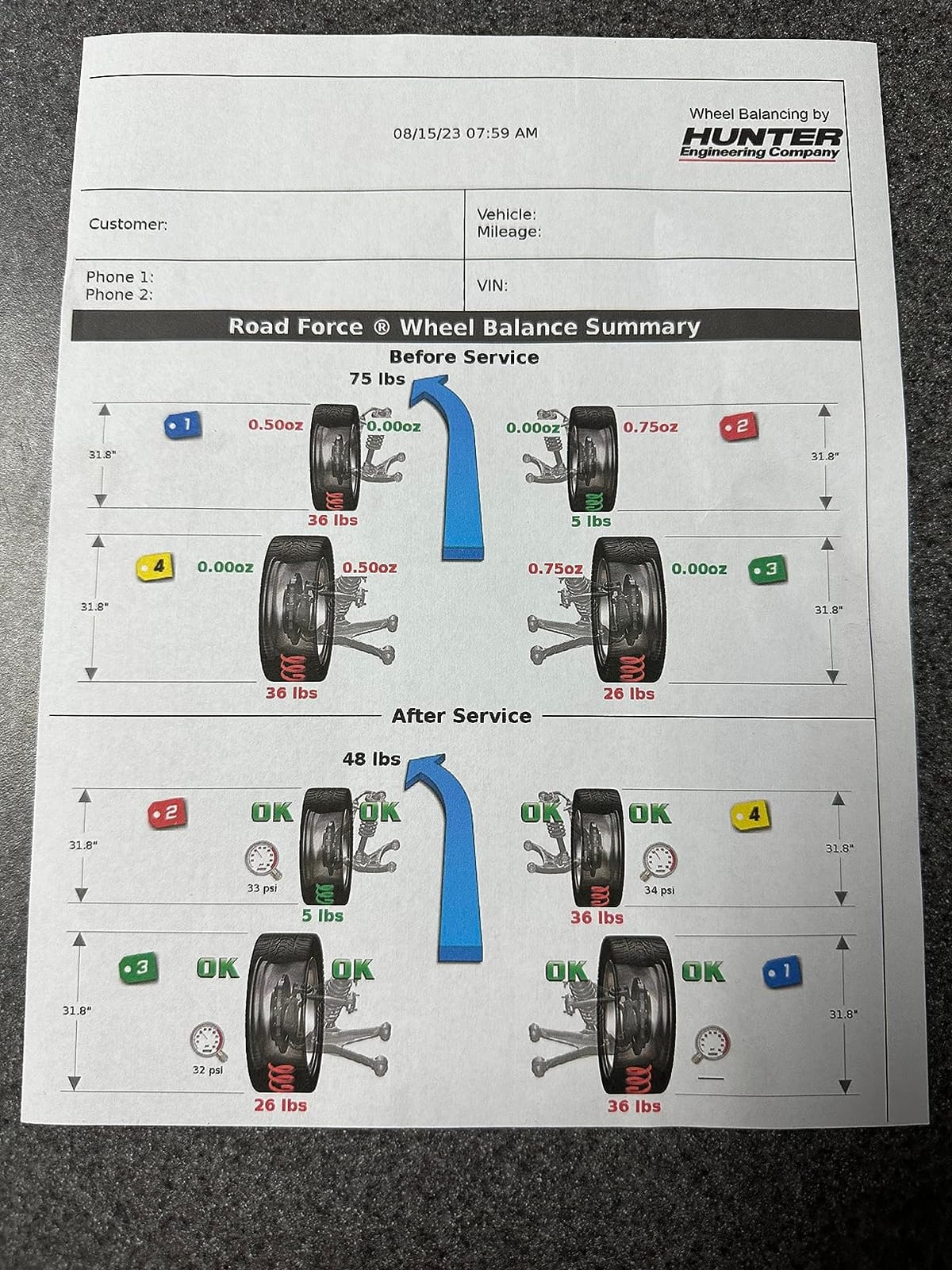
After installation, the sequence matters: spin balance each wheel, run a four-wheel alignment after any size change, relearn the TPMS sensors, torque the lugs to manufacturer specification with a torque wrench, and recalibrate the speedometer for the new overall diameter. Those five steps take an hour and prevent the tire wear and driveline problems that follow a sloppy install.
Which All-Terrain Tires to Avoid
Dealer advice is the first thing to be skeptical of. The recurring pattern in owner threads is a salesperson telling a truck owner to buy mud-terrains, which pays well and fits the truck they drove in on. If you have taken one off-road trip in the past year, you do not need an M/T.
Avoid any all-terrain whose specification is standard load if your truck tows or carries payload regularly. The list above marks the standard load tires for exactly that reason. Also avoid any tire sold with no manufacturer warranty at all if you plan to keep the truck more than a few years, since casing failures are the failure mode that ends an all-terrain’s life early.
Watch for the shallow-tread trap. A 10/32 inch all-terrain gives up usable life against a 13/32 inch one for no noise benefit you will notice. Finally, do not ignore tire age. Discounted leftover inventory is only a deal if the DOT code is recent.
Frequently Asked Questions
Which brand is considered the best for all-terrain tires?
BFGoodrich is the most frequently recommended brand by name across truck forums, with the KO3 cited for sidewall toughness and quietness. For pure daily-driver refinement, Pirelli and Continental draw the quietest reviews. The right answer depends more on load range and 3PMSF status than on the badge on the sidewall.
Are all-terrain tires loud on the highway?
They can be, and the cause is mechanical. Open shoulder voids and widely spaced tread blocks create a repeating pitch the ear locks onto. Road-biased patterns with a solid center rib, such as the Continental TerrainContact A/T and Pirelli Scorpion All Terrain Plus, are the quietest. Correct tire pressure reduces squirm noise as well.
What tires have a 3PMSF rating?
A 3PMSF mark certifies a tire for acceleration, braking, and lateral grip on packed snow. Among the ten all-terrain tires reviewed here, the Nexen Roadian ATX is documented as Three-Peak Mountain Snowflake certified, and the Cooper Discoverer Road and Trail AT carries a severe snow designation. Always confirm the mark on the sidewall rather than trusting a listing title.
Is 3PMSF better than winter tires?
No. A 3PMSF all-terrain is a severe snow service rating, not a winter compound. If you drive unplowed mountain roads for months below freezing, a genuine winter tire still wins because its rubber stays flexible in cold temperatures. For a truck driven mostly on pavement with occasional snow, a 3PMSF all-terrain is the more practical single set.
What are the best all-terrain truck tires for towing heavy loads?
Choose load range E with a high load index, not tread pattern. The Lexani Terrain Beast AT at load index 121, the BFGoodrich KO3 at 120, and the Goodyear Wrangler All-Terrain Adventure at 125 all carry ten-ply E casings. Check your gross vehicle weight rating and tongue weight, then match the single-tire load index to the job.
How long do all terrain tires last?
It depends far more on rotation and pressure than on the warranty figure. Warranties in this group range from 50000 to 65000 miles, but owners on pavement-heavy trucks report wear below warranty regularly. Rotate on schedule, keep door-jamb pressures, and a non-directional pattern such as the Armstrong Tru-Trac AT or Continental TerrainContact A/T evens out wear best.
What is the 3% rule for tires?
It is the tolerance for how much your overall tire diameter can differ from factory spec before gauges and safety systems read wrong. Stay within about 3 percent and your speedometer, odometer, ABS, and stability control all work with accurate data. Beyond that, every speed you read is inaccurate and tire wear accelerates unevenly.
What size all terrain tires fit without a lift?
One size up usually fits a half-ton at factory ride height with no rub. Before buying larger, check four rub points: the inner fender at full steering lock, the sway bar at full compression, the plastic fender liner, and the frame rail. Also weigh the tires, since a 57 pound tire changes braking and fuel economy versus a 34 pound one.
The Bottom Line on the Best All-Terrain Tires for Trucks
If you want one answer for the best all terrain tires for trucks, start with the Hankook Dynapro AT2 RF11. It has the deepest owner base in this roundup at 2178 reviews and 4.6 stars, and the reviews describe exactly what a daily-driven truck needs: quiet pavement manners with enough bite for snow and gravel.
Then adjust for your job. Tow seriously and move to a load range E casing, which rules out the standard load tires above. Spend real time in a snow belt and choose documented severe snow capability. Hit rock and mud regularly and take the aggressive end of the category. And if your truck is purely a highway truck, an all-terrain is the wrong tire entirely.
Whatever you choose, check the DOT manufacture date, match the load index to your gross vehicle weight rating, and budget for balance, alignment, and a TPMS relearn after install. Those details decide how long the tire lasts far more than the model name does.