
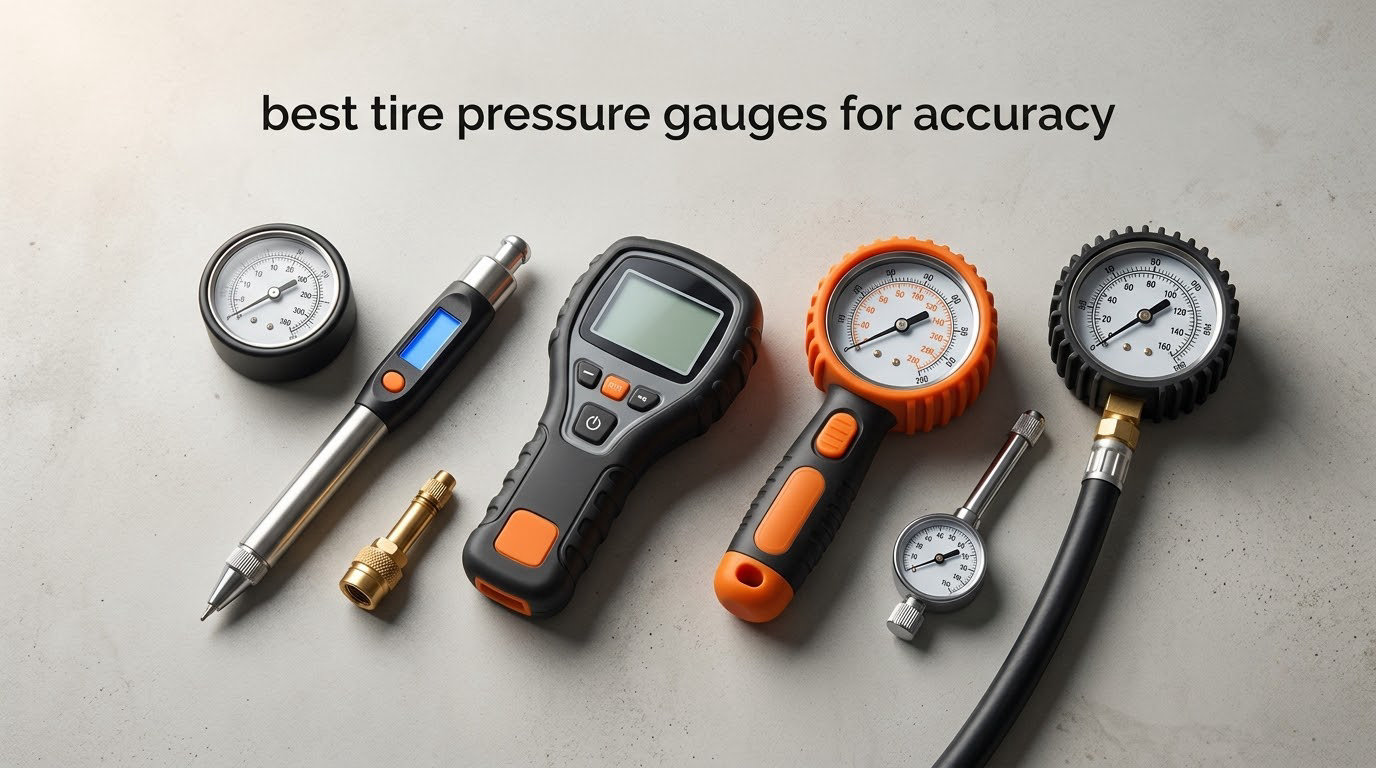
The best tire pressure gauges for accuracy are the ones that give you the same number twice in a row, not the ones with the loudest claim on the box. Over the last several weeks our team worked through twelve handheld and inline gauges, pulled the published calibration standard for each one, and compared those numbers against what owners report when they check the same tire with a certified shop gauge. What follows is the roundup we would hand to someone who actually cares about getting the number right.
Accuracy is also the one word in this category that gets stretched the most. A gauge can display digits to the tenth of a pound and still be a full PSI off, or it can show half-pound steps and land within a few tenths every single time. Our guide to upper arm blood pressure monitors for accuracy runs into the same trap, where a device that reads fine every time beats a device with a more impressive spec sheet.
How we evaluated: we read the calibration standard printed on each product (ANSI B40.1 Grade A or B for mechanical gauges, ANSI B40.7 Grade 2A for digital ones), we noted the resolution the display or dial actually offers, and we looked hard at repeatability in owner reports, which is the number that matters most when you are checking a tire in a dark driveway. Where a manufacturer publishes a calibration number printed on the body, that gets extra weight from us. If you enjoy instruments and calibration practice in general, our ultrasonic thickness gauge picks for inspectors cover the same idea in a different measurement family.
Twelve products cover a lot of ground here: a 0.1 PSI handheld digital for daily driving, a battery-free pencil gauge for the glove box, a 230 PSI unit for trucks and trailers, a brass analog dial that holds its reading, and an inline inflator gauge for anyone with a compressor. Every pick below carries a stated accuracy figure, so you can check the spec against your own needs instead of taking a marketing sentence on faith.
Top 3 Best Tire Pressure Gauges for Accuracy
The three below are the ones we would hand first to a friend. One is the most proven everyday digital, one is the best balance of certified precision and range, and one is the pick for anyone who measures pressures for a living.

AstroAI 150 PSI Digital Gauge
- Factory calibrated plus or minus 1 PSI
- 0-150 PSI range
- 0.1 PSI increments
- Backlit LCD and illuminated nozzle

AstroAI Heavy Duty 0-230 PSI
- ANSI B40.7 Grade 2A at 0.5 percent
- 0-230 PSI range
- Stainless steel dual-head chuck
- Backlit LCD with flashlight

JACO ElitePro 100 PSI Digital
- Dual sensors at plus or minus 0.50% full scale
- 0.10 PSI resolution to 100 PSI
- Lock-on display with live bleeder
- 10-inch hose with 360 degree swivel
All 12 Tire Pressure Gauges at a Glance in 2026
Every gauge in the list, with the specification that actually decides accuracy. Read across the rows: the four mechanical gauges are graded to ANSI B40.1, and the digital units to ANSI B40.7.
| Product | Specifications | Action |
|---|---|---|
| AstroAI Digital Gauge 150 PSI |
|
Check Latest Price |
| AstroAI Heavy Duty 0-230 PSI |
|
Check Latest Price |
 AstroAI Pencil Gauge 2 Pack AstroAI Pencil Gauge 2 Pack |
|
Check Latest Price |
 Topeak SmartGauge D2 Topeak SmartGauge D2 |
|
Check Latest Price |
 Vondior Analog Gauge 0-60 PSI Vondior Analog Gauge 0-60 PSI |
|
Check Latest Price |
 TireTek Analog Gauge 60 PSI TireTek Analog Gauge 60 PSI |
|
Check Latest Price |
 ETENWOLF T300 Digital 200 PSI ETENWOLF T300 Digital 200 PSI |
|
Check Latest Price |
| JACO ElitePro Digital 100 PSI |
|
Check Latest Price |
 ETENWOLF Pencil Gauge 2 Pack ETENWOLF Pencil Gauge 2 Pack |
|
Check Latest Price |
 Rhino USA Heavy Duty 75 PSI Rhino USA Heavy Duty 75 PSI |
|
Check Latest Price |
 Milton S-506 Dual Head Inflator Milton S-506 Dual Head Inflator |
|
Check Latest Price |
 ETENWOLF G200 Analog 75 PSI ETENWOLF G200 Analog 75 PSI |
|
Check Latest Price |
1. AstroAI Digital Tire Pressure Gauge 150 PSI — Most Proven Daily Driver
AstroAI Digital Tire Pressure Gauge 150PSI, ±1PSI Accuracy for Car Truck
- Most reviews of any gauge in this group
- Factory calibration to plus or minus 1 PSI with 0.1 PSI increments
- Backlit LCD plus illuminated nozzle for dark checks
- Four pressure scales on one button
- Small enough to live in a glove box
- Some units show a low-battery fault until the contacts are re-seated
- Not built for heavy truck and trailer pressures
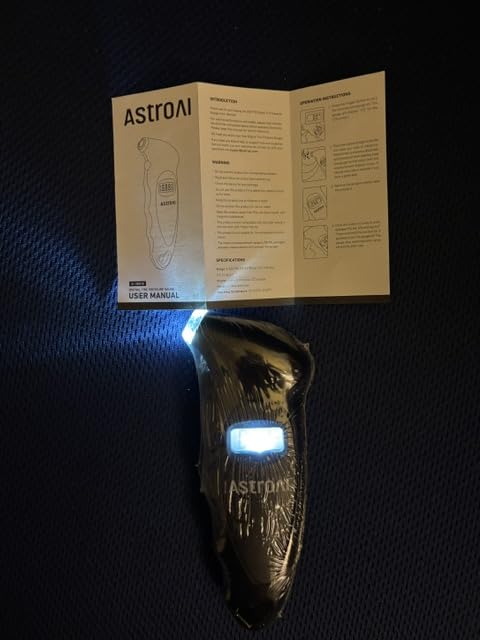
Our first stop was the most obvious candidate, because it is the gauge most people will actually end up with. Owners describe readings that come back the same on the same tire, and the backlit screen with a lit nozzle is the feature that gets mentioned most often in long-term reviews. Several describe it as a gauge they have used for years as a daily check rather than a drawer item.
The accuracy claim is a factory calibration of plus or minus 1 PSI against ANSI B40.7, paired with 0.1 PSI display increments, which means you get fine resolution on a sensor that is honest about its limits. It also switches between PSI, bar, kg per cm2 and kPa on a single button, so a car tire and a motorcycle tire can be checked without a manual conversion.
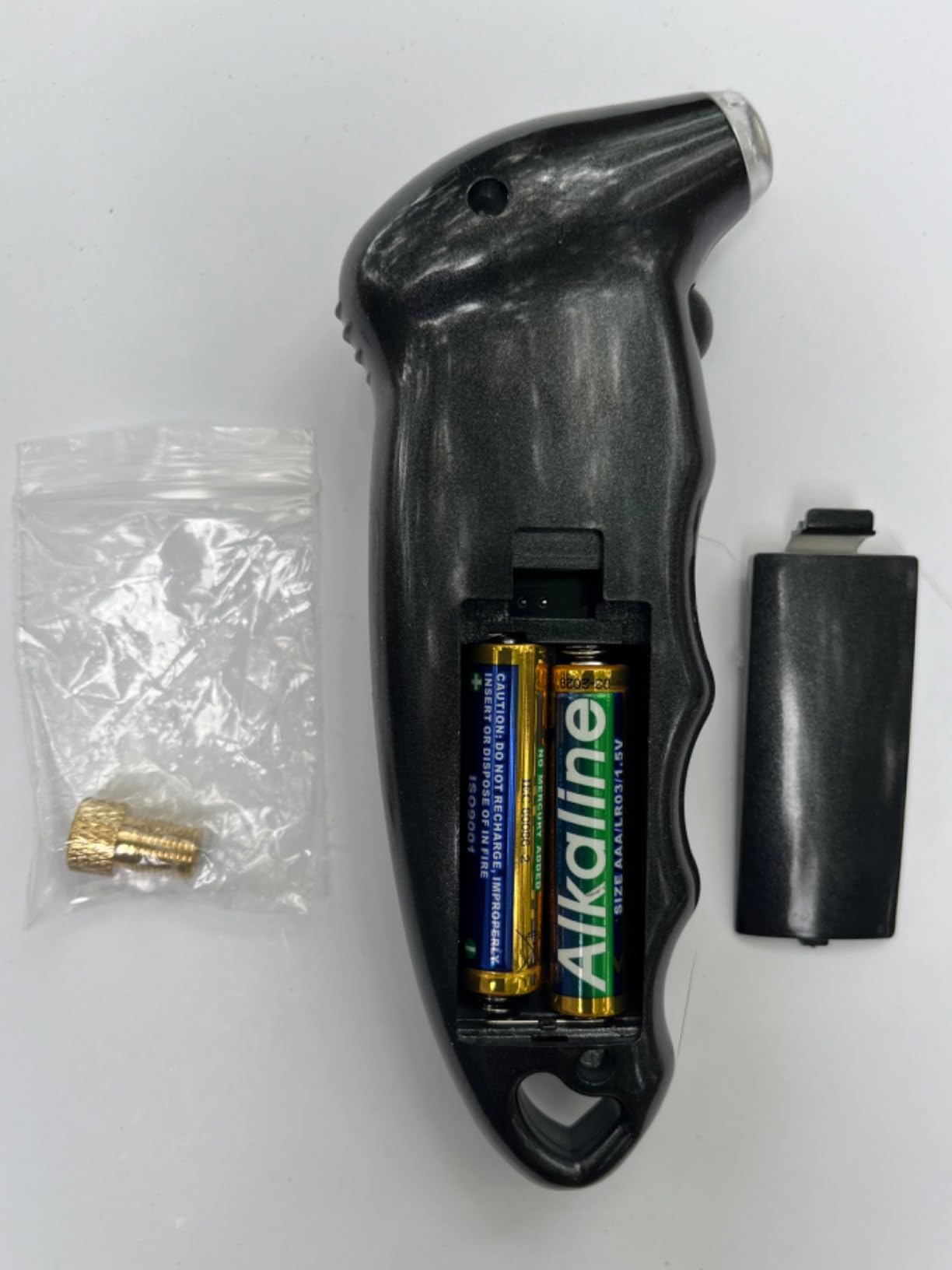
Physically it is small, about five and a third inches long, light enough to forget in a door pocket, and it shuts off after 30 seconds to protect the cell. That combination is why it works so well as a permanent glove box resident rather than a shop tool. Carrying one weighs close to nothing in a pocket during a fuel stop.
The recurring complaint is worth stating plainly. A minority of owners report a low-battery warning on units with fresh cells, and the fix is usually pulling the cell out and reseating the contacts so the meter sees it. It is an annoyance rather than a defect, but on a long road trip it is the failure mode most likely to ruin your morning.
What this gauge gets right for accuracy
Published accuracy and resolution both come from the factory calibration rather than a marketing page, and the range covers cars, SUVs, motorcycles and spare tires without running out of headroom. If your tires sit anywhere between 25 and 60 PSI, this gauge is measuring in the zone where its specification is most meaningful.
Where it will disappoint you
At 150 PSI the ceiling is fine for a passenger car and useless for a dually, a trailer, or an off-road rig running 40 PSI tires on a 105 PSI beadlock requirement. It also has no bleed function, so dialing pressure down means releasing air by hand and reconnecting. Our premium tire pressure monitoring systems for trucks guide covers the alternative if your vehicle sits in that high-pressure class.
2. AstroAI Heavy Duty Digital Tire Pressure Gauge 0-230 PSI — Best Value for Wide Range
- 0-230 PSI range for trucks RVs and trailers
- ANSI B40.7 Grade 2A calibration
- Stainless steel body with dual-head chuck
- Green backlit LCD plus built-in flashlight
- Longer and bulkier than a pocket gauge
- Depends on batteries unlike mechanical rivals
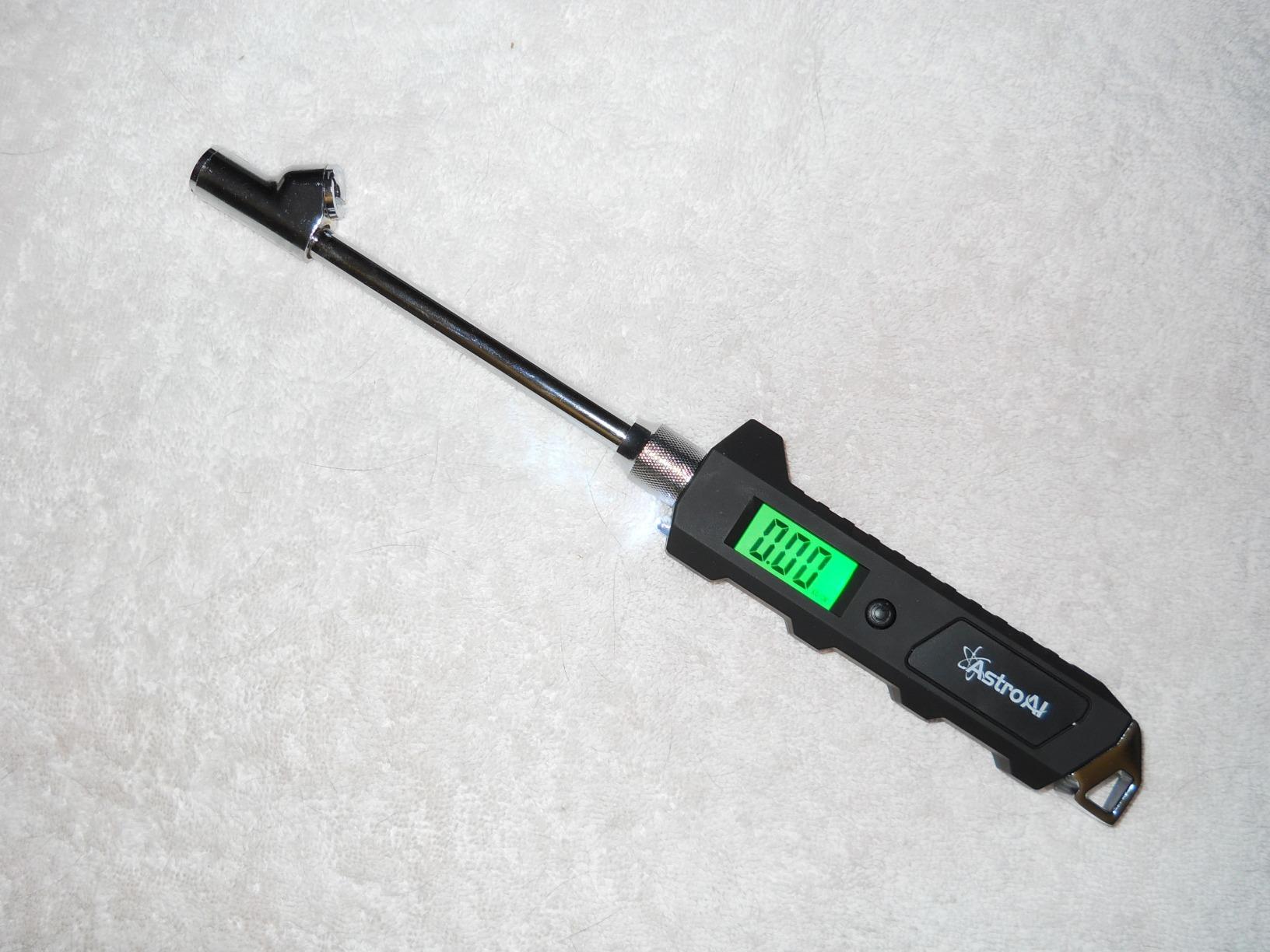
This is the one we would hand to anyone who owns more than one kind of vehicle. The published calibration is ANSI B40.7 Grade 2A at 0.5 percent, which is a tighter spec than most of the digital handhelves in this roundup, and it runs to 230 PSI so it covers a truck spare, a trailer, an RV and a set of car tires without changing tools.
Owner reviews focus on the stainless steel body and the dual-head chuck for a reason. The dual head reaches inner and outer stems on dual-wheel setups without you kneeling awkwardly on gravel, and reviewers doing truck and RV work call the flashlight plus green backlight the difference between finishing a job in a dark trailer bay and putting it off until morning.
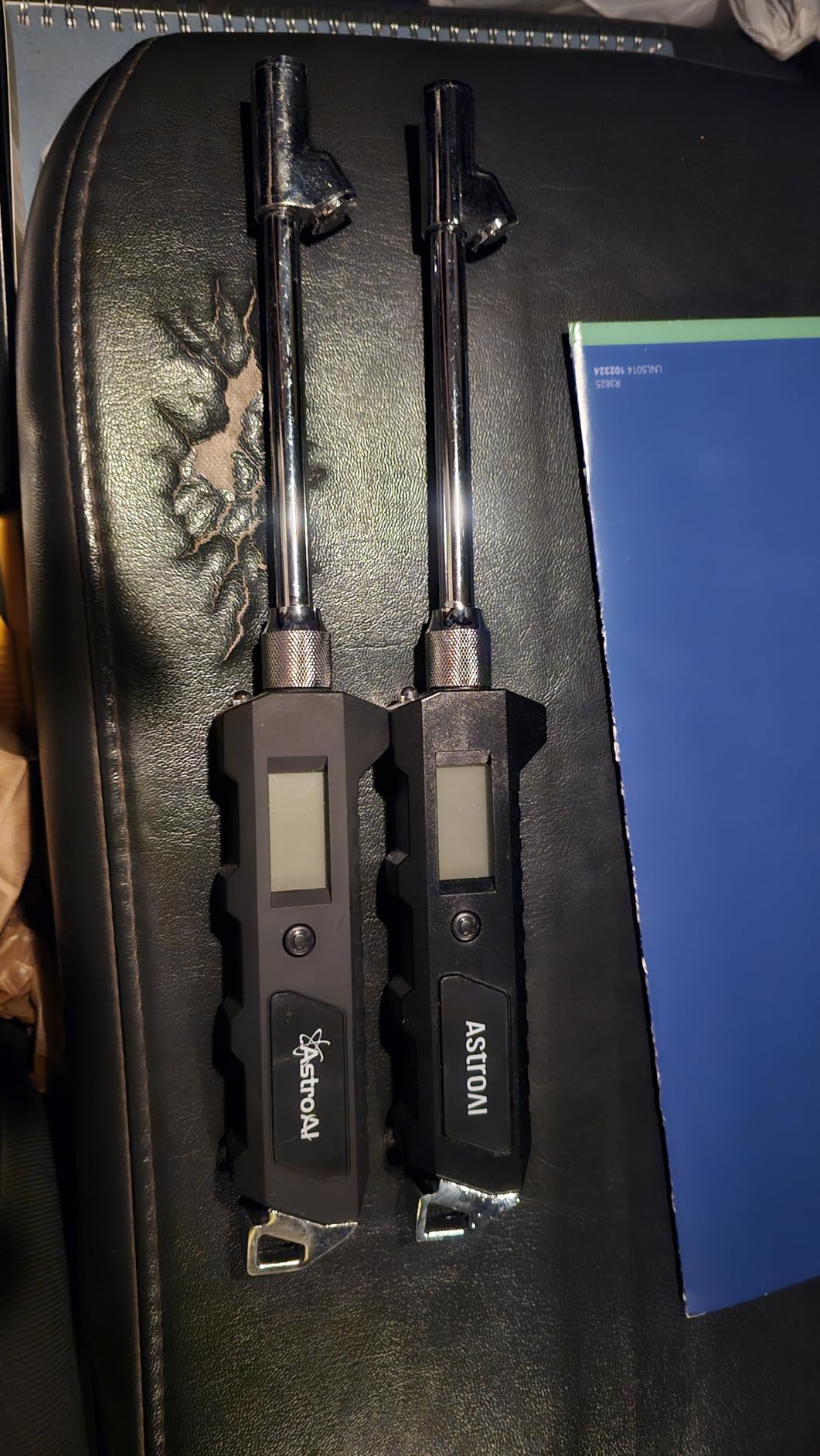
The scale set covers PSI, bar, kg per cm2 and kPa, and increments are 0.1 PSI, so a reading at 120 PSI lands on a tenth rather than a rounded half-pound. Auto shutoff after 30 to 40 seconds is a sensible power decision, and batteries are included in the box with a one year warranty behind them.
What you give up for the range is size. At roughly twelve and a half inches long in a stainless sleeve, it does not disappear into a door pocket the way the smaller handheld does. Owners accept that trade in exchange for a tool that survives being tossed in a truck bed, which is exactly how the smaller units tend to end up damaged.
Where the 0.5 percent spec pays off
A 0.5 percent grade on a 230 PSI scale is about 1.2 PSI at the top end, so this is not a precision instrument for a race car. What it is, is a gauge whose error band stays small across the whole span, which is exactly what you need when the same tool checks a sedan at 34 PSI and a trailer tire at 110 PSI in the same afternoon.
Where it is the wrong choice
If you only own a car and care about the last tenth of a pound, the tighter dual-sensor spec on the JACO further down is the better use of money. And if you want something that survives a locked trunk with no cell in it, a battery-free mechanical gauge is the safer bet.
3. AstroAI Pencil Tire Pressure Gauge 2 Pack — Best Battery-Free Backup
AstroAI Pencil Tire Pressure Gauge, 2 Pack 10-75 PSI Stainless Steel Body
- No batteries so no dead-gauge risk
- Stainless steel body resists corrosion
- Two-pack keeps one in each vehicle
- Readings matched a professional gauge within about 1 PSI
- Small scale markings need close inspection or glasses
- Never pressurize beyond the 75 PSI maximum
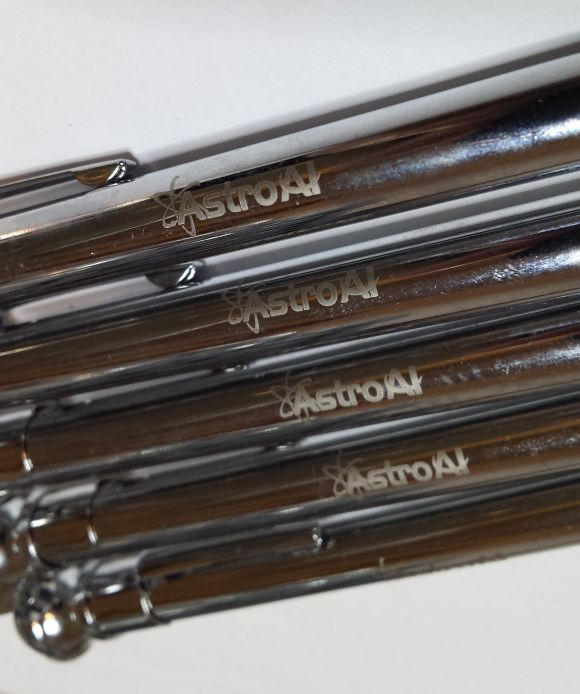
A pencil gauge is the oldest answer in this category and the one most owners keep as a permanent spare. The accuracy grade here is ANSI B40.1 Grade B at 2 percent of span across 10 to 75 PSI, which is a coarser claim than the digital units, and it is honest about that. The scale is marked in pounds, so you are reading a needle, not a number.
Owners with a calibrated shop gauge report landing within about a pound, which lines up exactly with the forum observation that inexpensive gauges from different brands cluster together on a car tire. On a 34 PSI road tire, a one pound spread between two gauges is well under the effect of a 10 degree temperature change, which is the thing that actually moves your pressure during the day.
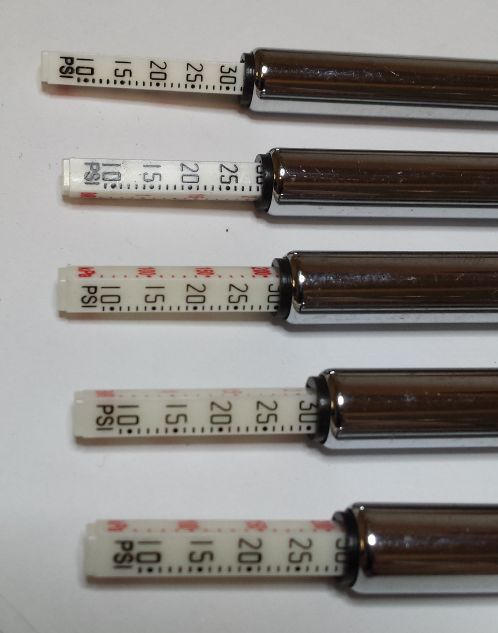
The build is where this set earns its place. A stainless steel body will not crack or corrode the way a plastic-cased pencil gauge does after a year in a hot glove box, and the integrated deflator valve lets you bleed a tire down in one connection instead of feathering air out by hand. A pocket clip and four valve stem caps come in the box.
The honest limitation is legibility. Several owners with glasses note they have to bring the gauge close and light it properly to trust the reading, and the scale stops at 75 PSI, which means it cannot check a truck tire. Read it as a car and motorcycle gauge with a 10 PSI margin above a typical placard value.
Why battery-free still wins in 2026
The most common failure reported for digital tire gauges is a dead cell at the exact moment you needed the reading, usually a year or two after purchase with no warning. A mechanical gauge has no such failure mode, which is why a 2 percent pencil gauge outlives far more electronics than its spec sheet suggests it should.
When a pencil gauge is not enough
It will not help you dial in a track setup, since you cannot fine-adjust without repeated reconnects, and the 1 PSI scale resolution cannot show you a deliberate change. For a shop, a pit lane or a corner-balance session, the digital lock-on and bleeder designs below are simply faster.
4. Topeak SmartGauge D2 — Best for Bikes and Sports Equipment
- One head fits both Presta and Schrader valves
- Rotating head keeps the display readable at odd angles
- Air release button dials pressure in a single pass
- Carries a two year manufacturer warranty
- Press-on head loses a little air on Presta so fork and shock readings drift
- Tight battery compartment can arrive with factory film
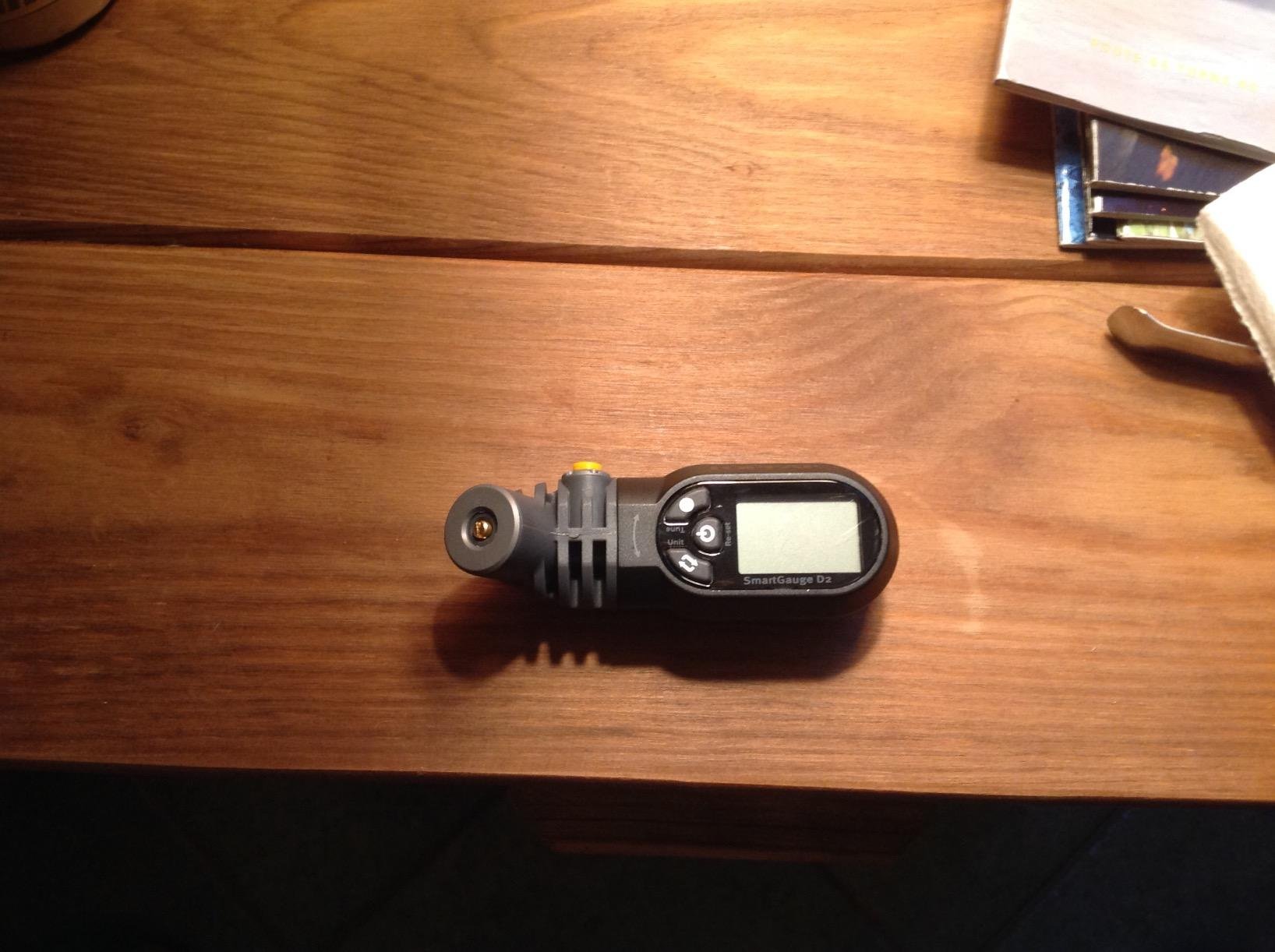
If your tires include bicycle, motorcycle or sports equipment, the valve type is the first filter, not the PSI range. This gauge reads up to 250 PSI and 17 bar, and the rotating SmartHead fits both Presta and Schrader stems without an adapter, which removes the most common complaint people have with bike-oriented gauges.
Long-term owners across road and mountain biking praise the accuracy and the swivel geometry. Being able to look at the screen without contorting to see it around a seatstay is a small thing that gets mentioned constantly in reviews, and the display can be switched between psi, bar and kg per cm2 for anyone who thinks in metric.
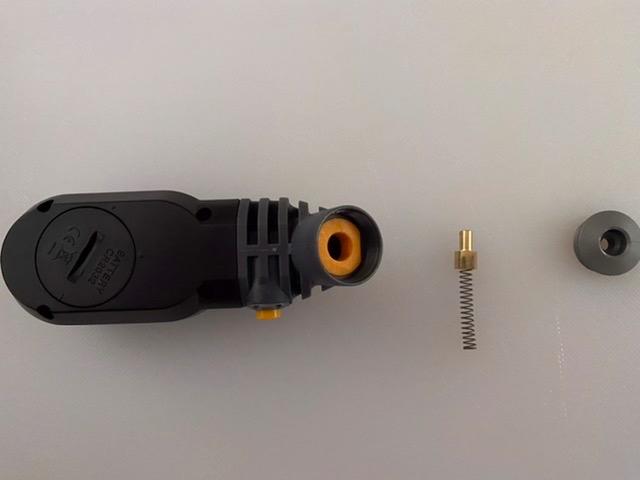
The air release button is the feature that separates it from a pure readout tool. You can bleed a tire down one fraction at a time while staying connected, which is what you actually want when chasing a specific pressure on a hot road or a pressure window for a race setup. A CR2032 cell is included and the warranty runs two years from the manufacturer.
There is a real limitation with suspension work. Because the head presses on and releases rather than locking to the valve, it lets a little air out of a Presta valve, so a fork or shock pressure reading will drift low. Another technique note appears often: yanking the gauge off the instant it beeps can produce a nonsense value, so let it settle.
Where it belongs on your bench
Road bike, mountain bike, motorcycle, and any ball or equipment that runs well past what a car gauge can reach. At 250 PSI it covers sports balls and higher-pressure running setups as well as tires, and the 65 gram body and four inch length make it pocketable on a ride.
Where it falls short
It is not a car tire gauge, and it is not a shock or fork gauge. If your accuracy question is about a 34 PSI sedan or a 120 PSI truck tire, a hose-and-swivel or long-chuck design will serve you better, because the SmartHead relies on a firm straight-on press to seal.
5. Vondior Analog Tire Pressure Gauge 0-60 PSI — Best Reading Hold in the Dark
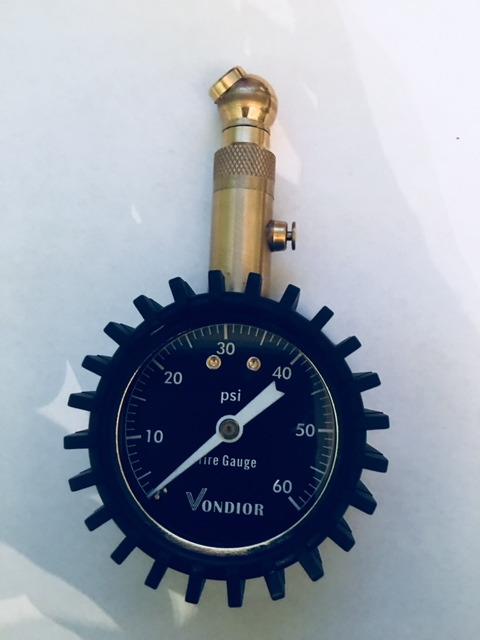
Vondior Tire Pressure Gauge for Cars, Certified ANSI 0-60 PSI Tire Gauge
- Verified within 1% against a certified calibration station
- Large 2 inch glow dial stays legible in a dark garage
- Holds the reading after you pull it off the stem
- No batteries and a 10 year warranty
- 60 PSI ceiling rules out truck and trailer work
- A minority report the air-hold seal weakening with age
This is the mechanical gauge owners describe checking against a certified calibration station, at 10, 15, 25, 30 and 50 PSI, and reporting dead-on results within the plus or minus 1 percent of full scale claim. That is the tightest mechanical spec in this group in percentage terms, and it is the number to check if an analog gauge has to be trusted over a 0-60 PSI span.
The dial is two inches across with a glow-in-the-dark face and high-contrast markings, which matters more than most spec sheets admit. A one inch pencil scale in an unlit garage is guesswork; a two inch face catches a headlight or a garage tube and is readable at a glance by people who would struggle with the small format.
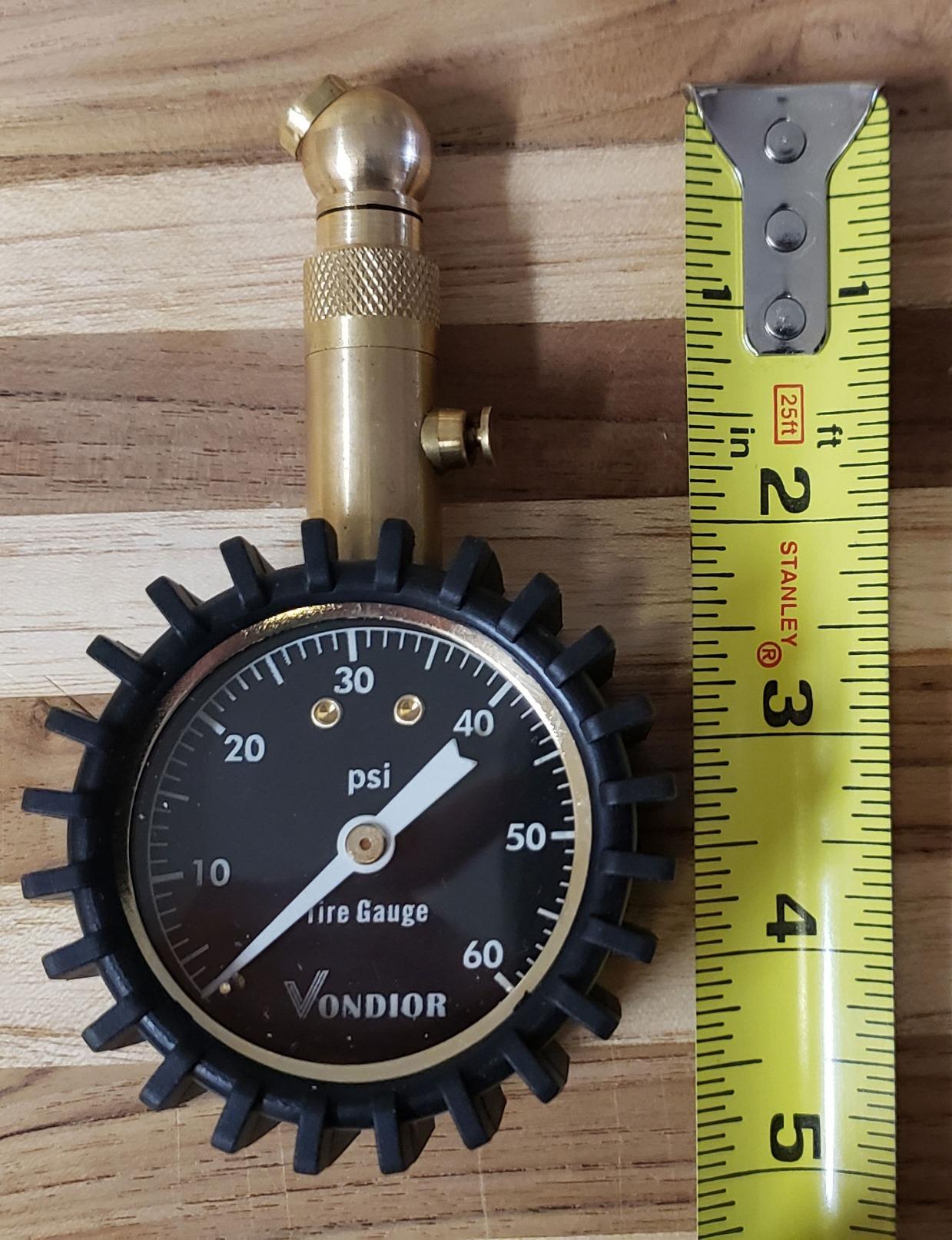
The rotating chuck and pressure relief valve are what make it feel like a shop tool rather than a novelty. You can swivel to any valve angle on a multi-spoke wheel, and the relief valve lets you bring a tire down gradually without disconnecting, which is how you set a car to its placard figure instead of overshooting.
Best of all it holds the reading after you pull it off the stem, so you can read the dial at your own pace rather than while kneeling with a torch. The rubber sleeve protects the body from drops and the ten year warranty is the longest mechanical coverage listed here.
What makes the accuracy claim checkable
An accuracy figure of 1 percent of full scale on a 60 PSI range is roughly 0.6 PSI anywhere on the dial, which is finer than the 1 pound resolution of a typical pencil scale. That combination, a verifiable standard plus fine scale, is why this one shows up in verified comparisons more often than its competitors.
When the 60 PSI ceiling bites
Truck tires, trailer tires, and many SUV spares run past 60 PSI, and at that point the needle is pinned at the stop and the reading is meaningless. The other soft spot is longevity of the hold mechanism: a small number of owners report the internal seal weakening after heavy use, which ends the reading-hold behaviour.
6. TireTek ANSI Certified 60 PSI Analog Dial Gauge — Best Budget Dial
Tire Pressure Gauge for Cars, ANSI Certified 60 PSI Analog Dial Gauge
- Steel and brass internals that mechanics recommend
- Extended 5mm chuck tip seals well and limits air loss
- 45 degree angled full swivel chuck
- Integrated bleed valve and glow dial
- 0-60 PSI range limits it to cars bikes and light trucks
- Analog needle is less precise at a glance than digits
The calibration grade is ANSI B40.1 Grade B at 2 percent, so this sits at the standard mechanical entry point rather than the Grade A tier. What separates it from other 2 percent dials is the material: alloy steel, brass and a rubber outer cover, the combination mechanics tend to recommend when a customer asks what to keep in the toolbox for years.
The extended 5mm chuck tip is the detail owners praise most. A longer tip reaches deeper into a recessed valve core and seals more reliably, which matters on steel wheels and older vehicles where a short tip bleeds enough air to make the reading fall while you watch it. The 45 degree angled swivel then makes the dial readable from almost any position.
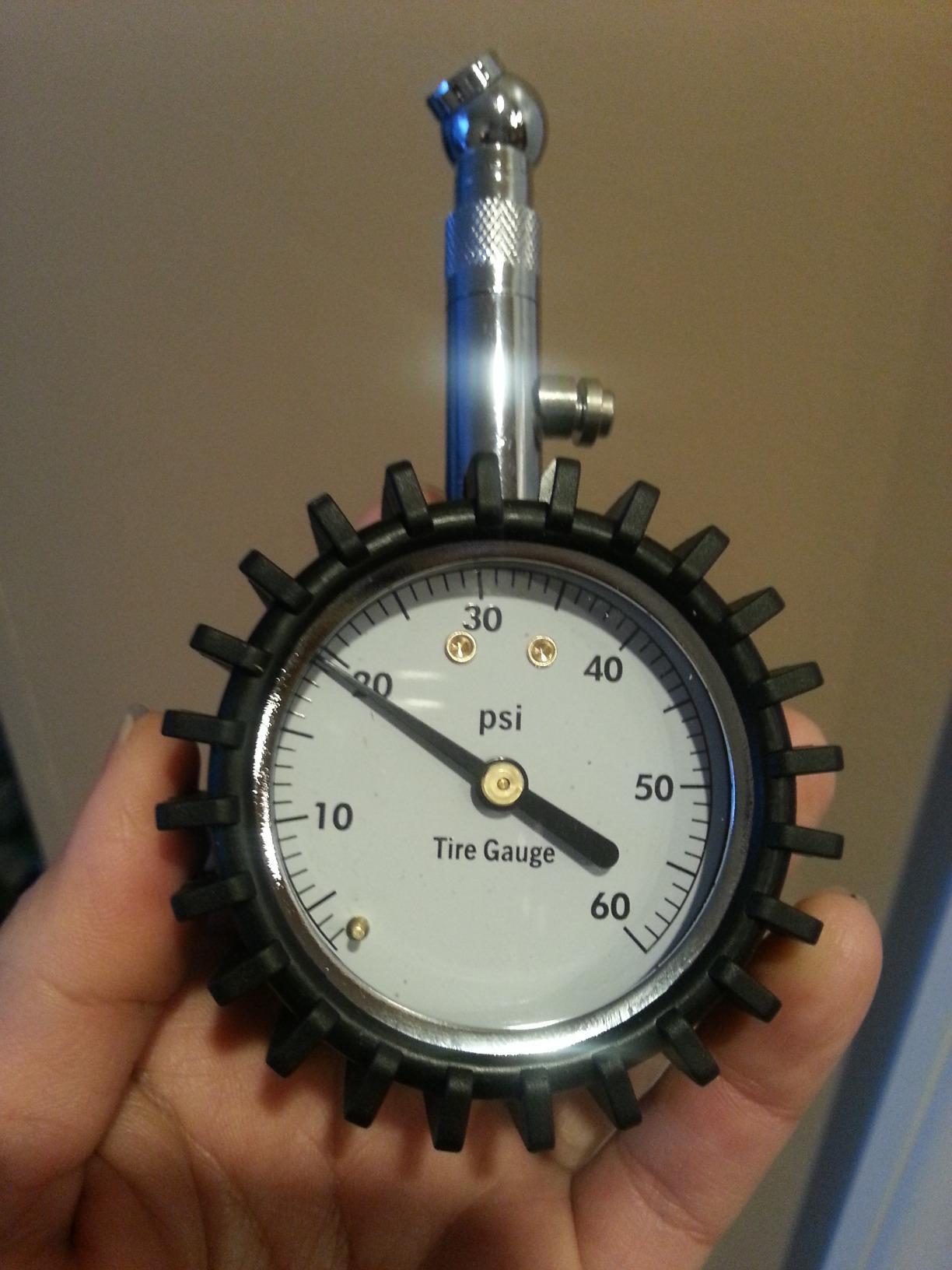
A built-in relief valve handles the bleed-down step, and the glow-in-the-dark dial handles the dark garage. Together they cover the two things that make a mechanical gauge pleasant to use at night, which is a real advantage over a cheaper non-glow dial at the same grade.
What you do not get is resolution. A needle on a 1 pound scale cannot show you the difference between 33.5 and 34.0 without estimation, and the 60 PSI ceiling closes it off for trucks, trailers and high-pressure spares. For car and bike tires it is a durable, honest tool that does one job well.
What the material choice changes in practice
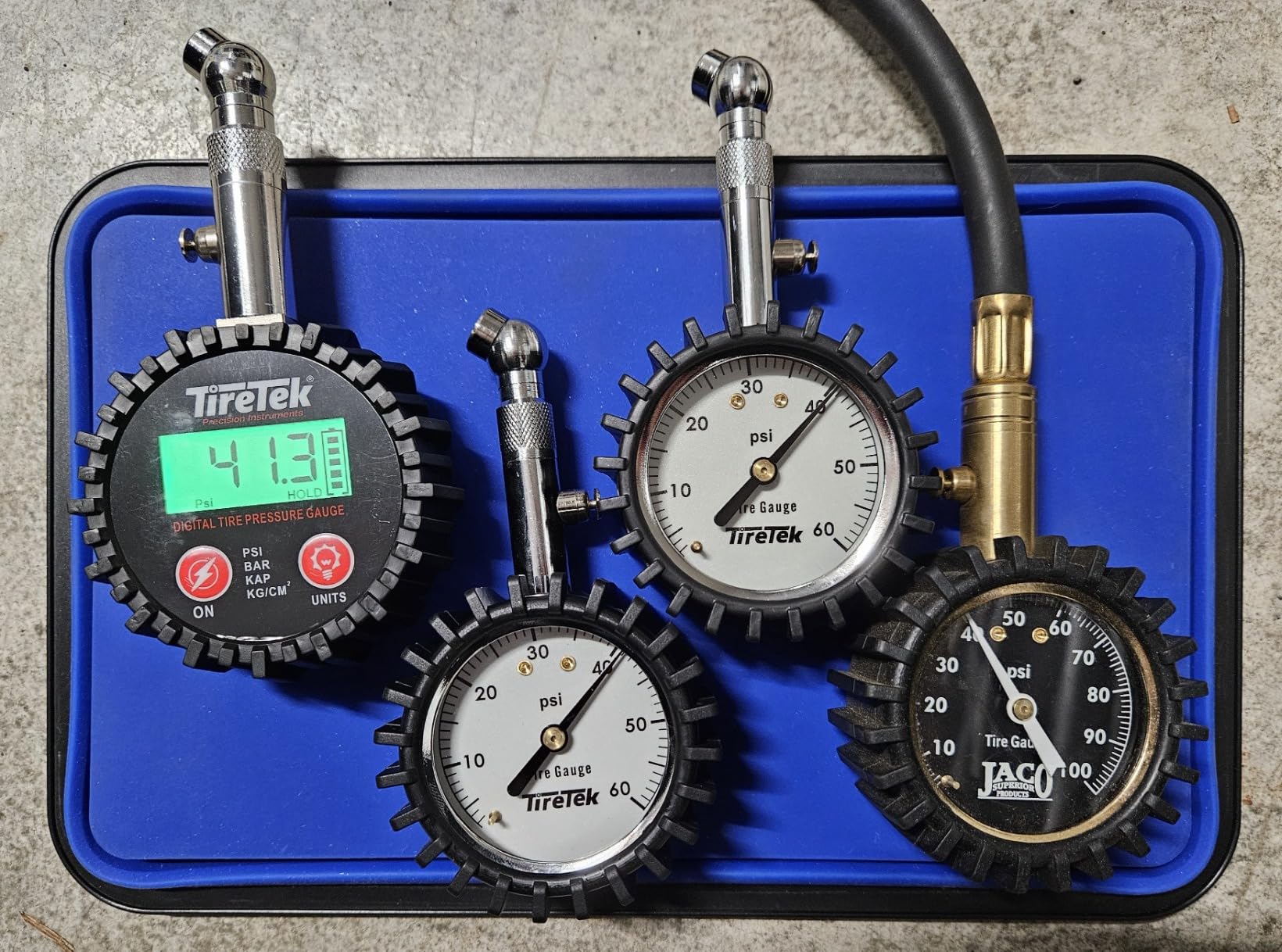
Brass and steel survive drops, solvents and decades of glove-box storage in a way that plastic-bodied dials do not, and the rubber cover is what saves the case on a concrete floor. For a tool that gets dropped rather than handled, that durability is arguably a bigger reliability gain than a half point of stated accuracy.
Where analog reading slows you down
Any task that needs repeated measurements, such as setting cold pressure on four tires or logging pressures across a track session, is faster with a lock-on digital display. The needle reading also carries an interpretation cost, because the person reading it is the least precise component in the chain.
7. ETENWOLF T300 Digital Gauge 3-200 PSI — Best for Extreme Weather
ETENWOLF T300 Digital Tire Pressure Gauge 200 PSI for Car, RV, Truck, Bikes
- Accuracy holds from under 12 PSI to past 140 PSI in owner tests
- 3-200 PSI range covers cars RVs trucks and bikes
- Thermal compensation rated minus 4 F to 130 F
- Replaceable AAA cells and a three year warranty
- Presta adapter sold separately for bicycle tires
- Reading depends on batteries being fresh
If you check tires in a place with real temperature swings, this is the one to look at. It uses a thermal compensation chip rated from minus 4 F to 130 F, which is a genuine engineering response to the fact that many low cost sensors drift as the sensor and the tire change temperature together. In practice owners report consistent readings across a very wide span, from under 12 PSI to above 140 PSI.
The calibration claim is ANSI B40.7 Grade 2A at plus or minus 1 PSI, with a 3 to 200 PSI working range. It will read a bicycle tire, a sedan, an RV and a light truck, and the auto shutoff after 30 seconds means you rarely come back to a dead gauge in the drawer.
Two practical details stand out. The cells are standard AAAs rather than a coin cell, which means you can buy a replacement at any drugstore on a road trip instead of hunting for a specific disc battery. The integrated LED light brightens the valve area so you are not guessing in the dark whether the chuck is seated.
The most common caveat is bicycle work, because a Presta adapter is not included and has to be bought separately. For car and truck use with standard Schrader stems there is nothing to add, which is why it rates so well with owners running a mixed fleet of vehicles.
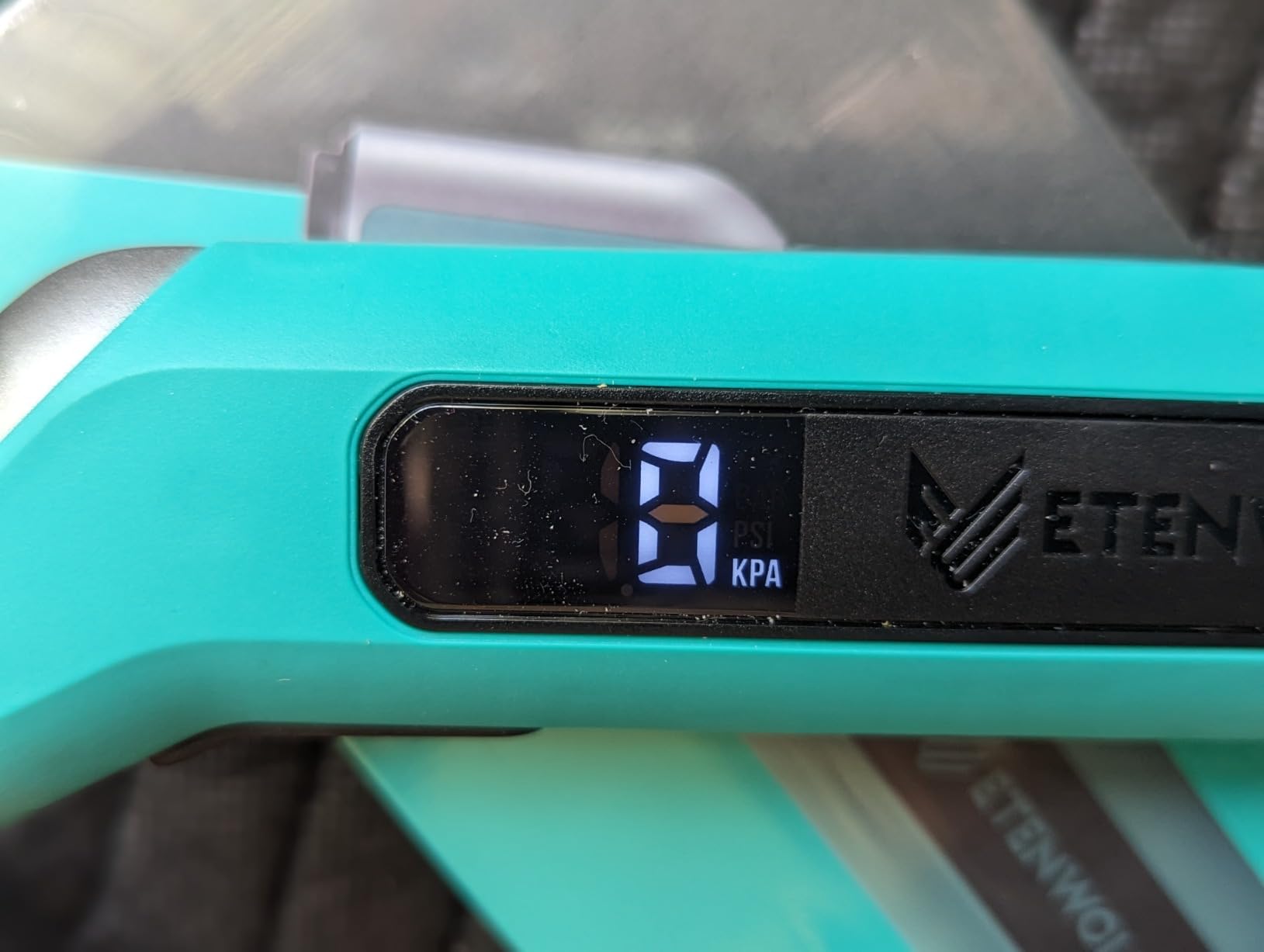
Why thermal compensation matters more than the last decimal
A tire pressure sensor sitting on a valve stem experiences the same ambient changes the tire does. Without compensation, a gauge can drift by a fraction of a pound between a cold morning reading and a hot afternoon one, which is enough to make you chase a leak that does not exist. The rated compensation range is the part of this spec sheet worth paying attention to.
Where the dollar-per-feature maths changes
The trade here is range and weather tolerance against a tighter absolute error band. If you chase tenths of a pound in a workshop, the dual-sensor unit further down the list is the better tool. If you check a fleet of vehicles in a hot yard or a cold mountain driveway, a stable reading across a wide span is worth more than the extra precision.
8. JACO ElitePro Digital Tire Pressure Gauge 100 PSI — Best for Professional Use
JACO ElitePro Digital Tire Pressure Gauge – Professional Accuracy – 100 PSI
- Tightest certified spec in the list at plus or minus 0.50% full scale
- Ten-inch hose and 360 degree swivel reach awkward valves
- Lock-on display holds the value until reset
- Bleeder valve drops pressure without disconnecting
- Lifetime warranty
- 100 PSI maximum excludes truck and trailer pressures
- Bulky hose and chuck format will not fit a pocket
This is the gauge we would put on a shop wall. The published specification is dual pressure sensors certified to plus or minus 0.50% of full scale against ANSI 2A, with a 0.10 PSI readout up to 100 PSI. On a 34 PSI tire that is an error band of roughly a third of a pound, which is a different class of claim from the 1 to 2 percent mechanical grades.
The 10 inch HybridFlex hose with a 360 degree swivel chuck is the physical answer to the complaint that shows up in almost every gauge review: valves tucked behind multi-spoke wheels or inside a deeply dished rim. You can sit on a low stool and look at the display instead of lying on wet gravel.
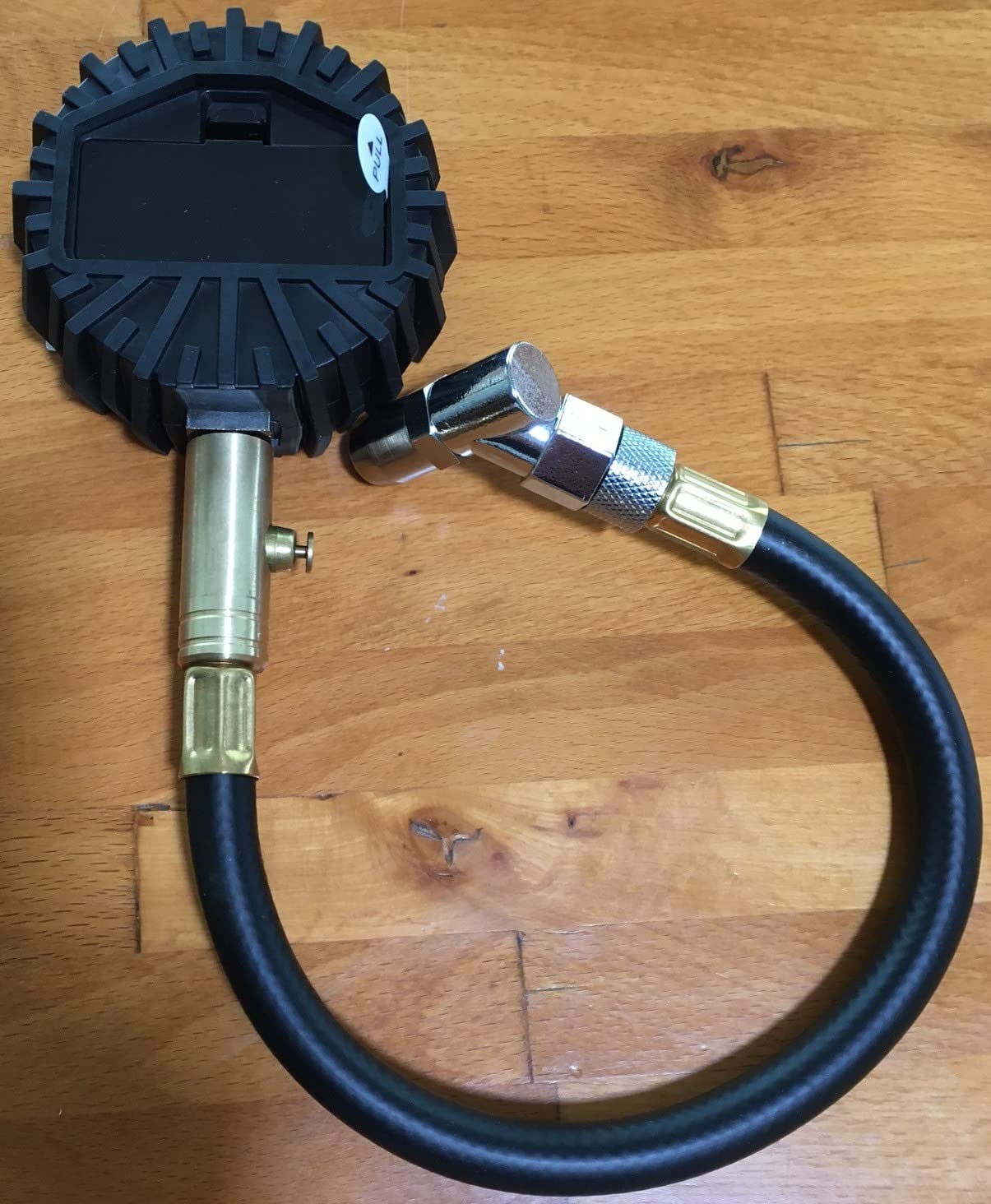
Two features make it a workflow tool rather than a reading tool. The lock-on display freezes the value until you press the button to reset, so you can pull the chuck, write the number down and still see it, and the real-time bleeder lets you lower pressure without disconnecting, which is exactly what setting a cold placard figure requires.
The body is brass and steel with a shock-resistant gear-style guard, and the 2.5 inch backlit LCD carries a battery indicator and a 150 second auto shutoff, with two AAAs included. Buyers who keep it in a shop for years tend to describe the build, not the electronics, as the reason it is still in service.
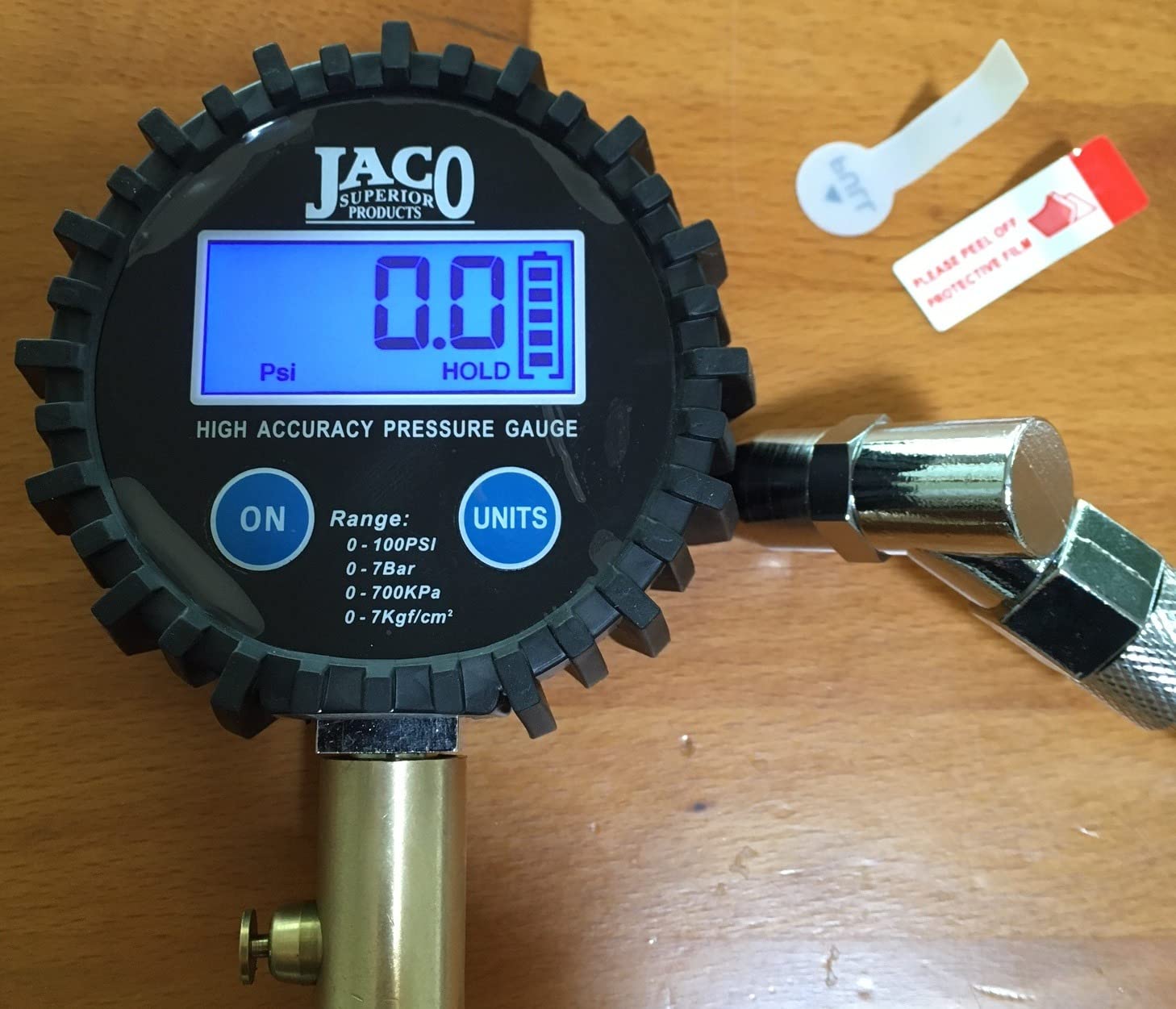
How the dual sensor spec compares in practice
Two sensors means two chances to catch a bad reading, and the plus or minus 0.50 percent full scale claim is the tightest certified figure in this roundup. Combined with 0.10 PSI resolution, it lets you hold a tire at a specific target, which is the requirement for corner balance work, track preparation and repeatable alignment setups.
Where it is not the right purchase
The 100 PSI ceiling is the deciding limit. Truck tires, trailer tires, and high pressure spares are all out of range, and no amount of accuracy compensates for a gauge that pins at the top of its range. The hose and chuck assembly also makes it the least pocketable pick here, so it lives in a bag rather than a door pocket.
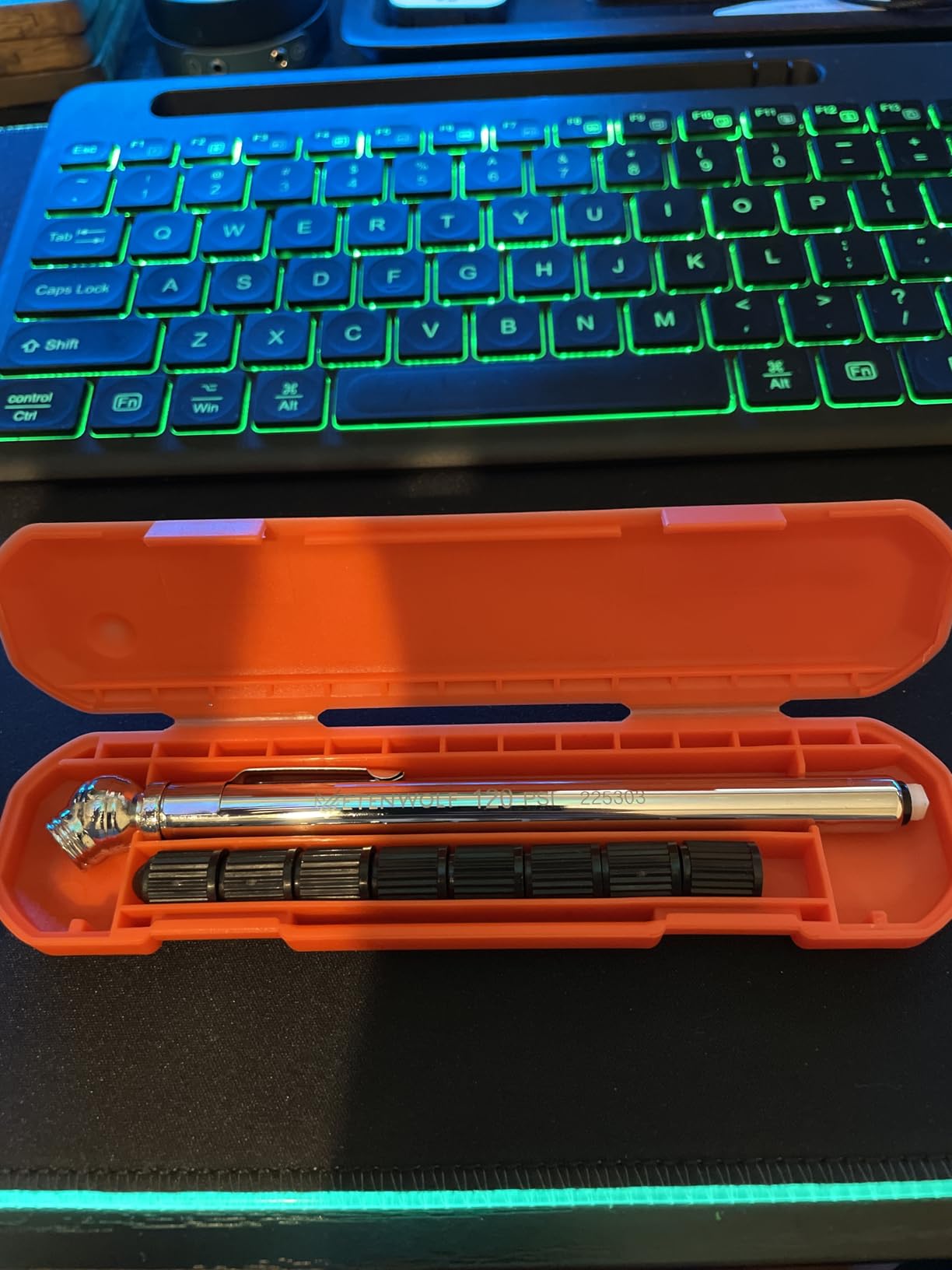
9. ETENWOLF Pencil Tire Pressure Gauge 2 Pack — Best With Traced Calibration
ETENWOLF Pencil Tire Pressure Gauge 2 Pack (10-50PSI, 20-120PSI)
- Each gauge carries its own printed calibration number
- Two complementary ranges solve the low and high PSI problem
- Deep chuck fits recessed valve stems for stable readings
- Two cases and 16 valve caps included
- Pocket-size scales need glasses for some users
- Lighter feel than heavy brass analog gauges
Most pencil gauges are graded and then forgotten. This set is graded individually and each gauge has its own calibration number printed on the body, so you can record what you measured and refer back to it. That is the closest a mechanical gauge in this price class gets to a traceable instrument, and it is why owners report matching it against professional gauges and the vehicle TPMS.
Two ranges in one kit is the smart part. The 10 to 50 PSI gauge covers bicycle, motorcycle and car tires where a 0-75 PSI scale would waste most of its travel on numbers you will never use, and the 20 to 120 PSI gauge reaches truck and trailer territory that a standard pencil gauge simply cannot touch.
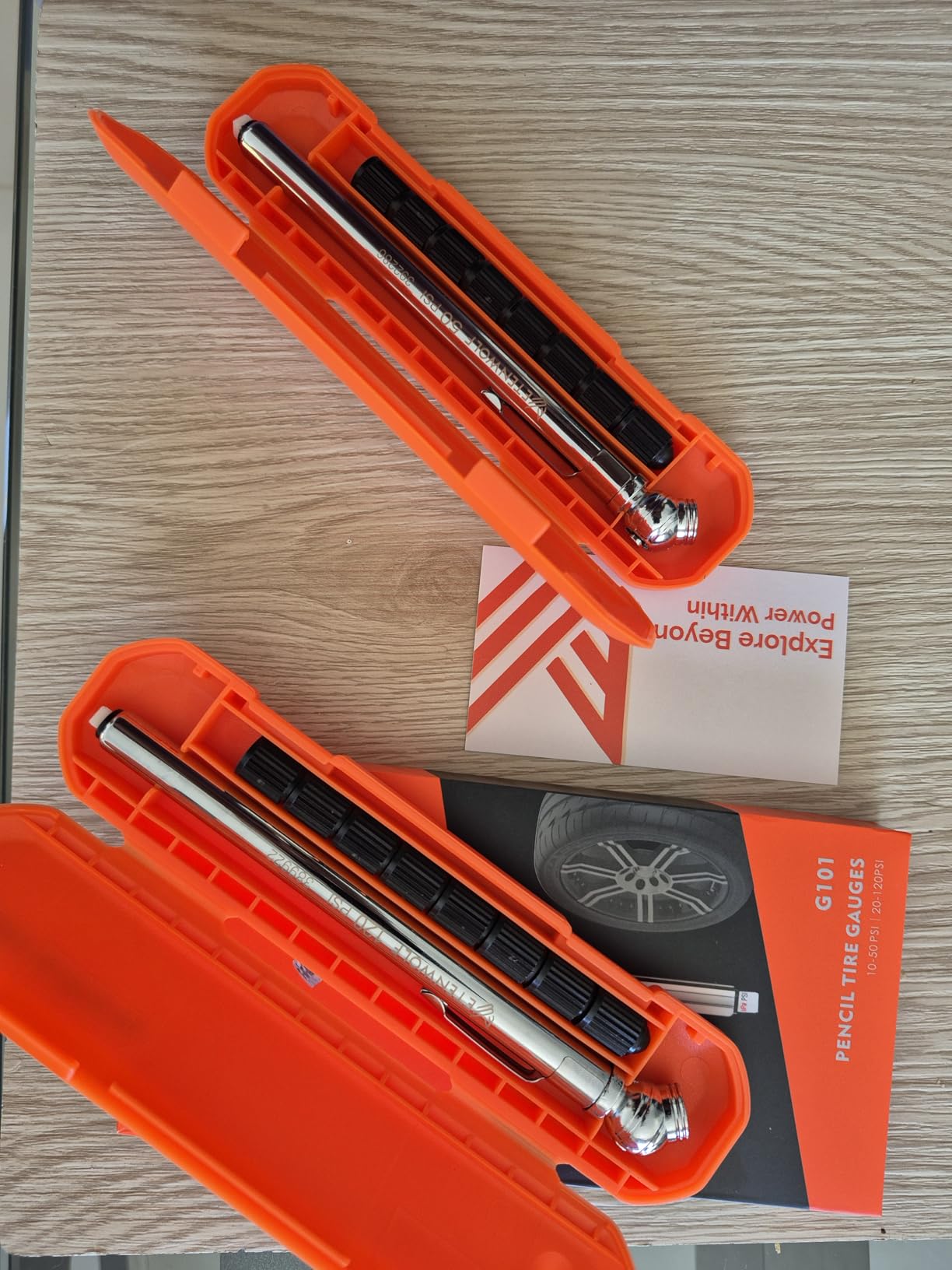
The stated grade is ANSI B40.1 Grade B, which is 2 percent of span across the middle half of the range and 3 percent at the extremes, so the wider gauge loses a little tightness at its very top. Build is zinc alloy heads with stainless steel bodies, both deflation capable, and the deep chuck is sized to reach recessed valve cores for a steadier seal.
You also get two storage cases and 16 valve stem caps, which sounds like filler until you try to keep a gauge in a work vehicle through winter. The trade-off is feel: these are lighter than the old-fashioned heavy brass dials, and the small markings are the reason some owners with glasses hand the job to a digital unit.
Why two ranges beat one clever gauge
Resolution across the scale is what you gain. A gauge that covers 10 to 50 PSI spreads the full span over its usable range, so a reading at 28 PSI uses roughly half the dial and can be read more precisely than on a 10 to 120 PSI needle. Pairing the two ranges removes the usual choice between tire types and dial density.
When the lighter build bothers you
Feel matters in a tool you handle constantly, and reviewers who prefer heavy brass dials notice the difference immediately. If you are the sort of person who hits tools, or you are reading cold tires in the rain without glasses, a heavier analog unit with a two inch dial will serve you better than a lighter pocket gauge.
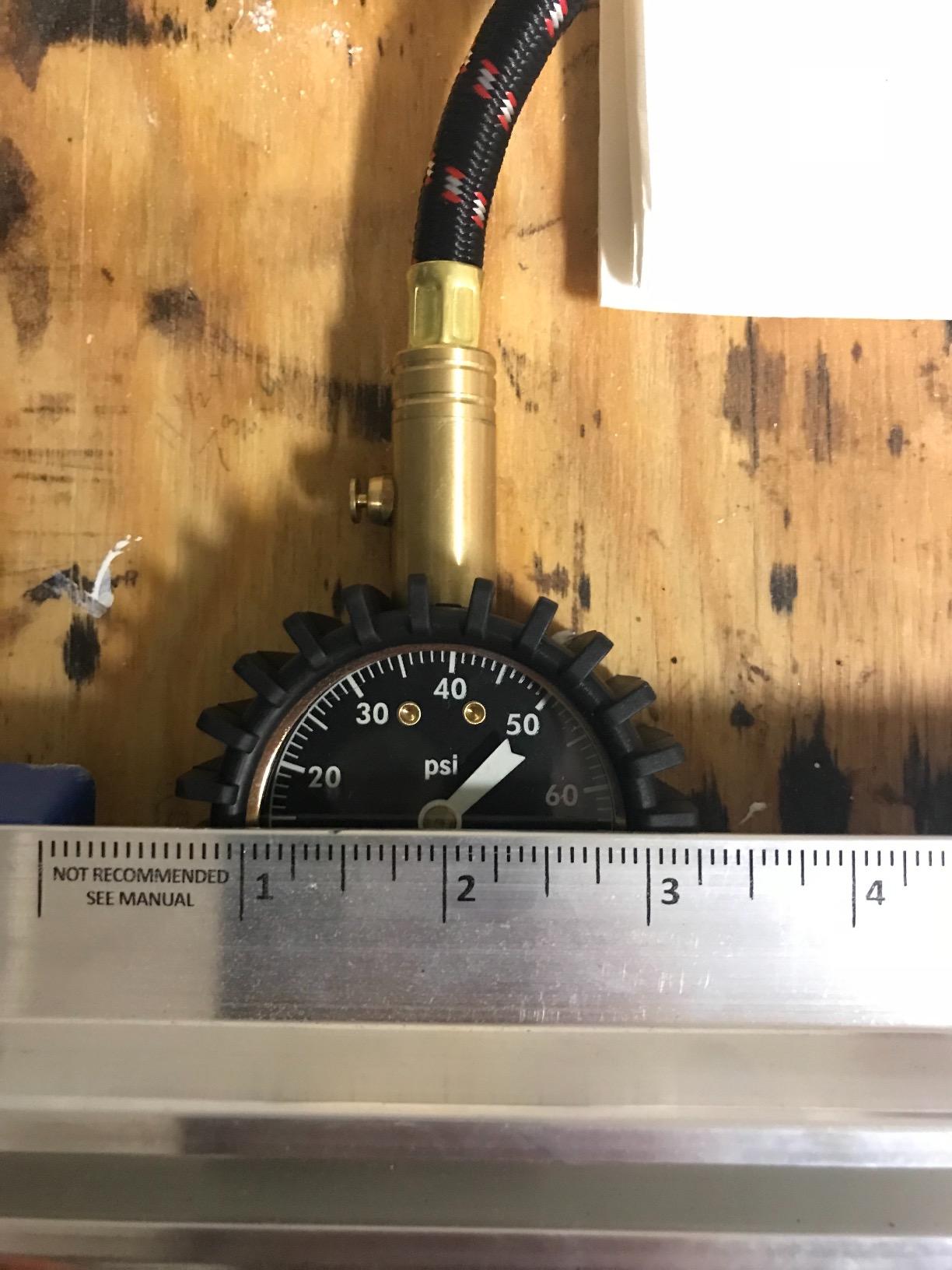
10. Rhino USA Heavy Duty Tire Pressure Gauge — Best Brass and Braided Hose Build
Rhino USA Heavy Duty Tire Pressure Gauge – ANSI Certified Glow Dial
- Braided hose lets you check without bending awkwardly
- Glow dial lights up under a headlight for night checks
- Solid brass hardware resists corrosion
- Holds the reading until the button is pressed
- 0-75 PSI range stops short of trailer pressures
- Some variants ship with a PSI-only scale
The materials are the argument here. Solid brass hardware, a braided no-leak hose and a two inch glow-in-the-dark dial, certified to ANSI B40.1 across a 0 to 75 PSI range. Owners with multi-year reports describe it as accurate and repeatable, and the braided hose is the detail that shows up in nearly every review as the reason the tool is comfortable to use.
A braided hose changes how the gauge feels in use. Instead of holding a rigid body at an awkward angle, you can hang the gauge from the stem and read it, which is a meaningful difference on a steel wheel with a deeply inset valve or a truck tucked into a narrow gap.
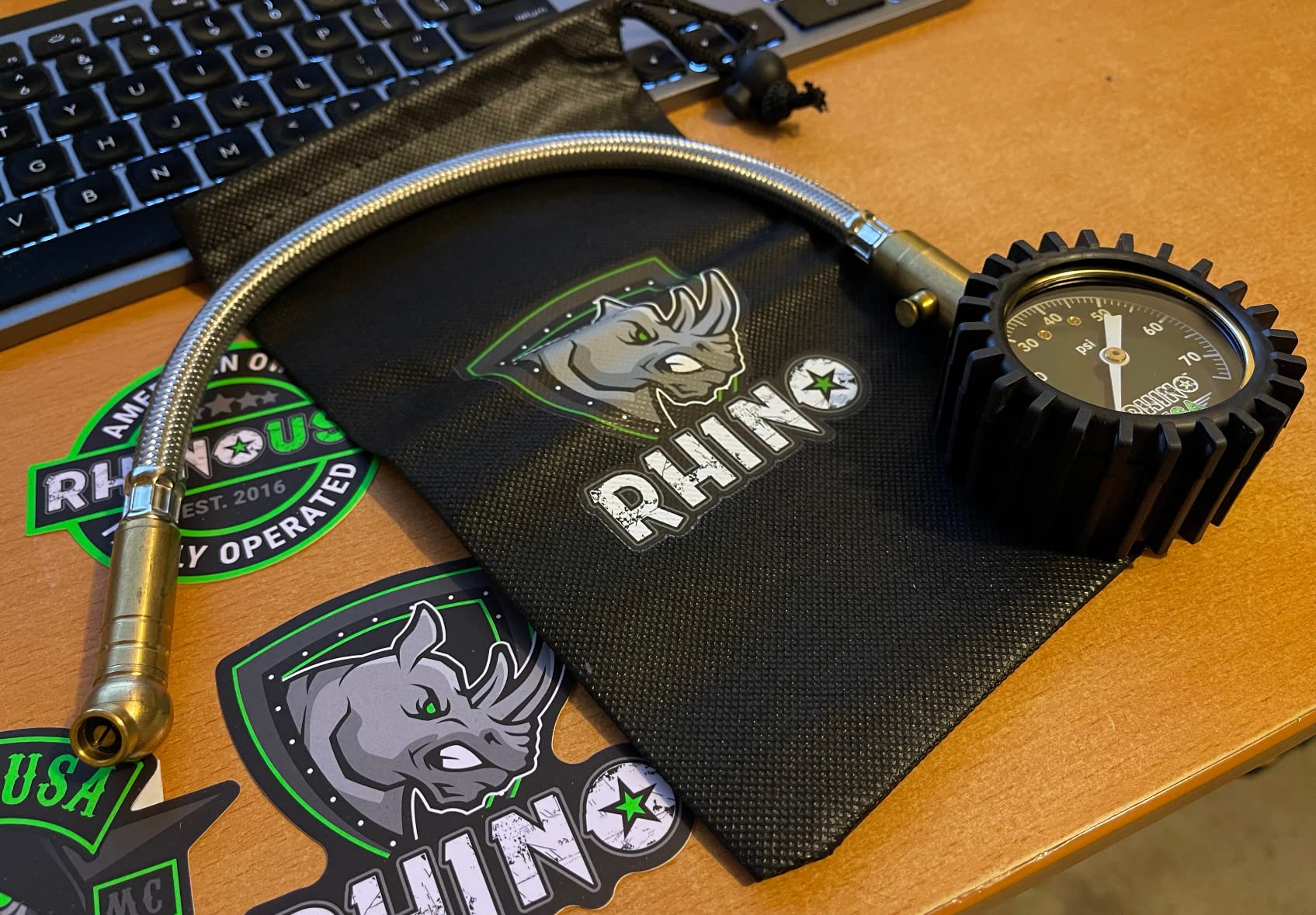
The air release and reset valve holds the reading until you press it, so you can take the gauge off, put it down, and still read the number you just took. The 360 degree swivel chuck on solid brass hardware keeps the motion smooth, and the nylon storage pouch is included.
A lifetime warranty sits behind the build. Two practical notes: the 75 PSI ceiling means it will not cover trailer or heavy truck pressures, and some variants of this gauge come with a PSI-only scale, so check the dial markings before you rely on it for a metric reading.
What brass changes after a few years
Brass and braided steel do not corrode, seize or crack the way plated steel and plastic fittings do in a wet, salty environment. If your gauge lives in a work truck, a boat, or a coastal garage, the material choice is the difference between a tool you still trust in three years and one that reads low because the mechanism has gummed up.
Where it stops being enough
A 75 PSI range handles cars, bikes, motorcycles and light trucks, which covers most daily use, but it is short of trailer territory. And with a mechanical dial you are limited to 1 pound scale resolution, so fine adjustment work is slow going compared with a digital bleeder.
11. Milton S-506 Dual Head Inflator Gauge — Best for Compressors and Trailers
New & Improved – Tire Inflator Gauge with Dual Head Air Chuck 15” Air Hose 10-160 PSI
- Checks and adds air in one tool with no juggling
- Reaches inside dual-wheel and tucked-in valves
- Fluid-filled cartridge stays readable in any weather
- Replaceable gauge and valve cartridges extend tool life
- Bulky in the hand compared with a handheld gauge
- Small readout window that some users need glasses for
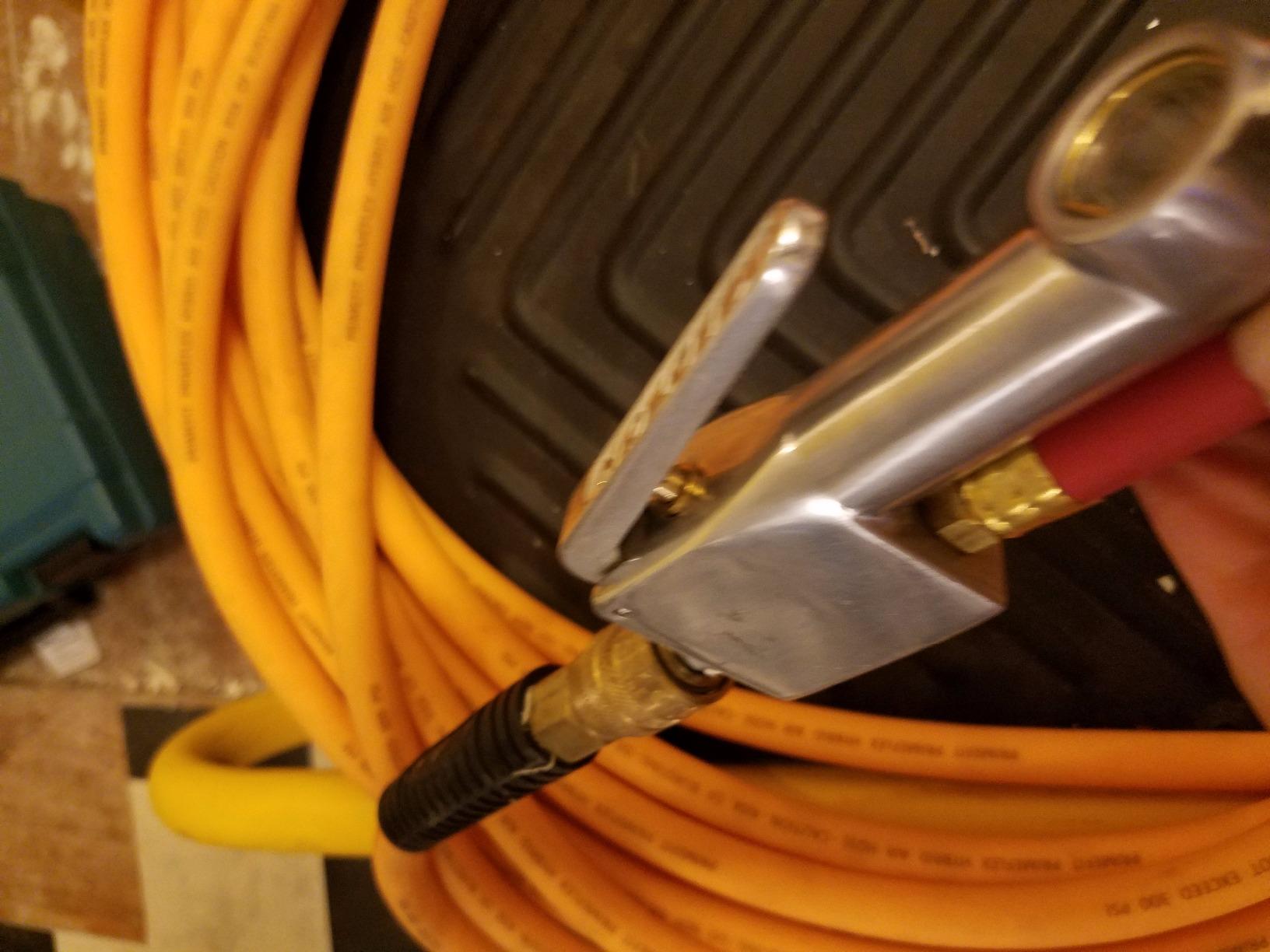
This is the only inline inflator gauge in the list, and for anyone who owns a compressor it removes a step from every tire check. Instead of clamping on a gauge, then swapping to a chuck, you hang the gauge off the 15 inch hose and read while you inflate. For anyone who checks pressure monthly across four or five tires, that is the single biggest time saving in this roundup.
The gauge cartridge is fluid filled, which is the old answer to a modern problem: oil in the capsule dampens needle movement, so the reading stays steady instead of bouncing in a cold morning or a hot shop. It is calibrated across 10 to 160 PSI in 2 pound increments, which covers cars, trucks, trailers and duallys in one tool.
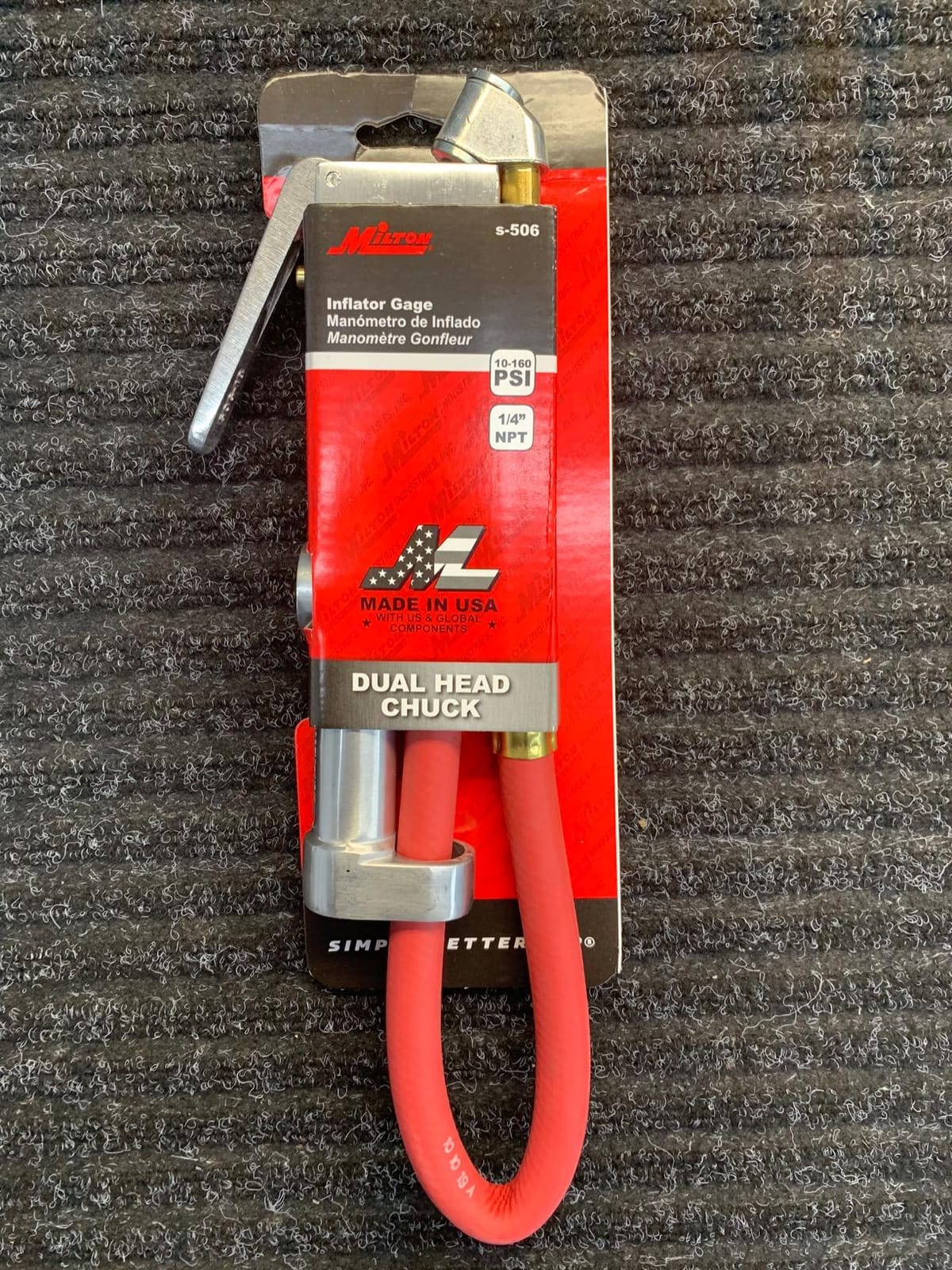
The dual-head full-swivel chuck is built for access. It reaches the inner stem on a dual-wheel setup and the tucked-in valves on a trailer with fenders, and the 1/4 NPT inlet fits a standard shop compressor. A magnifier lens sits over the cartridge, which helps when the scale is small.
Long-term owners working on trucks and trailers describe the brass and steel construction as parts that last decades, and the replaceable cartridges extend the life of the tool rather than forcing a whole replacement when one component ages. A one year warranty covers the assembly.
Where an inline gauge earns its keep
Any job where the tire is on the ground and the compressor is in the bed: dually rear wheels, trailer axles, RV tires, or a car you would rather not jack. Holding one tool instead of two also cuts down on dropped chucks, which is where most roadside punctures actually start.
Where the fluid-filled design limits you
Two pound increments and a small viewing window make this a coarse instrument compared with a 0.1 PSI digital. It is a monitoring and inflating tool rather than a measuring instrument, and the standard version is PSI only. In a cramped space it is also bulkier in the hand than any handheld in this list.
12. ETENWOLF G200 Analog Gauge 0-75 PSI — Best Tightest Analog Grade
ETENWOLF Tire Pressure Gauge for Cars 0-75 PSI with Large Glow Dial
- Grade A calibration is the tightest analog grade in the group
- Large glow dial is far easier to read than a pencil scale
- Holds the reading until the bleed button is pressed
- Compact enough for motorcycle valves in tight spots
- Dial pointer can overlap the numbers on some units
- 75 PSI ceiling excludes trailer and heavy truck tires
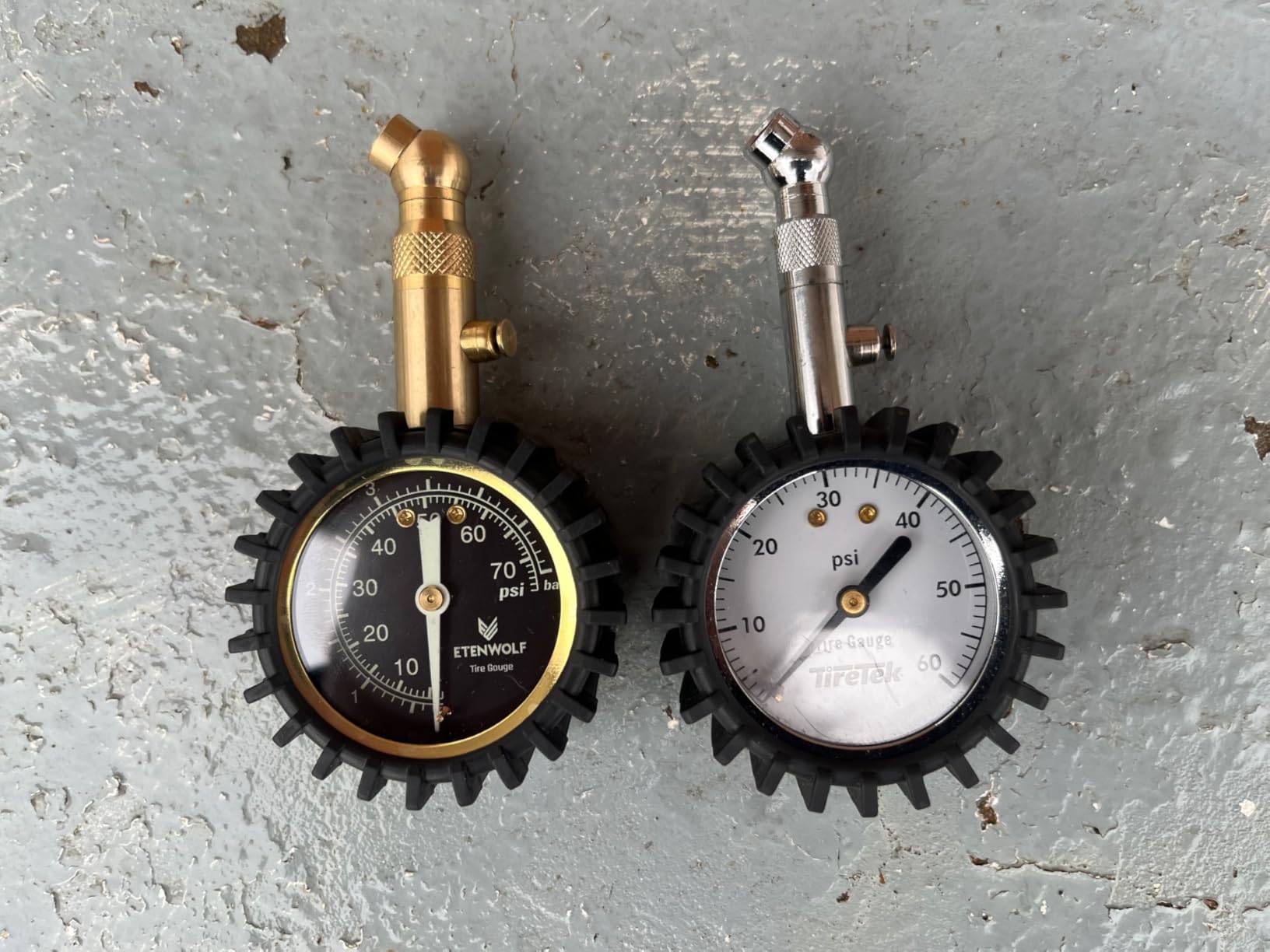
If an analog gauge is what you want, the calibration grade is the number to compare. This one is manually calibrated to ANSI B40.1 Grade A at plus or minus 1 percent of span, which puts it in the tightest mechanical tier available here rather than the usual 2 percent Grade B. Buyers checking it against the vehicle TPMS and higher-end digital gauges report consistent agreement.
The large glow-in-the-dark dial is the reason many owners pick it over a pencil gauge, particularly for older eyes or anyone wearing glasses. A two inch face with high-contrast markings is readable at a glance in a dark garage, where a 1 pound pocket scale simply is not.
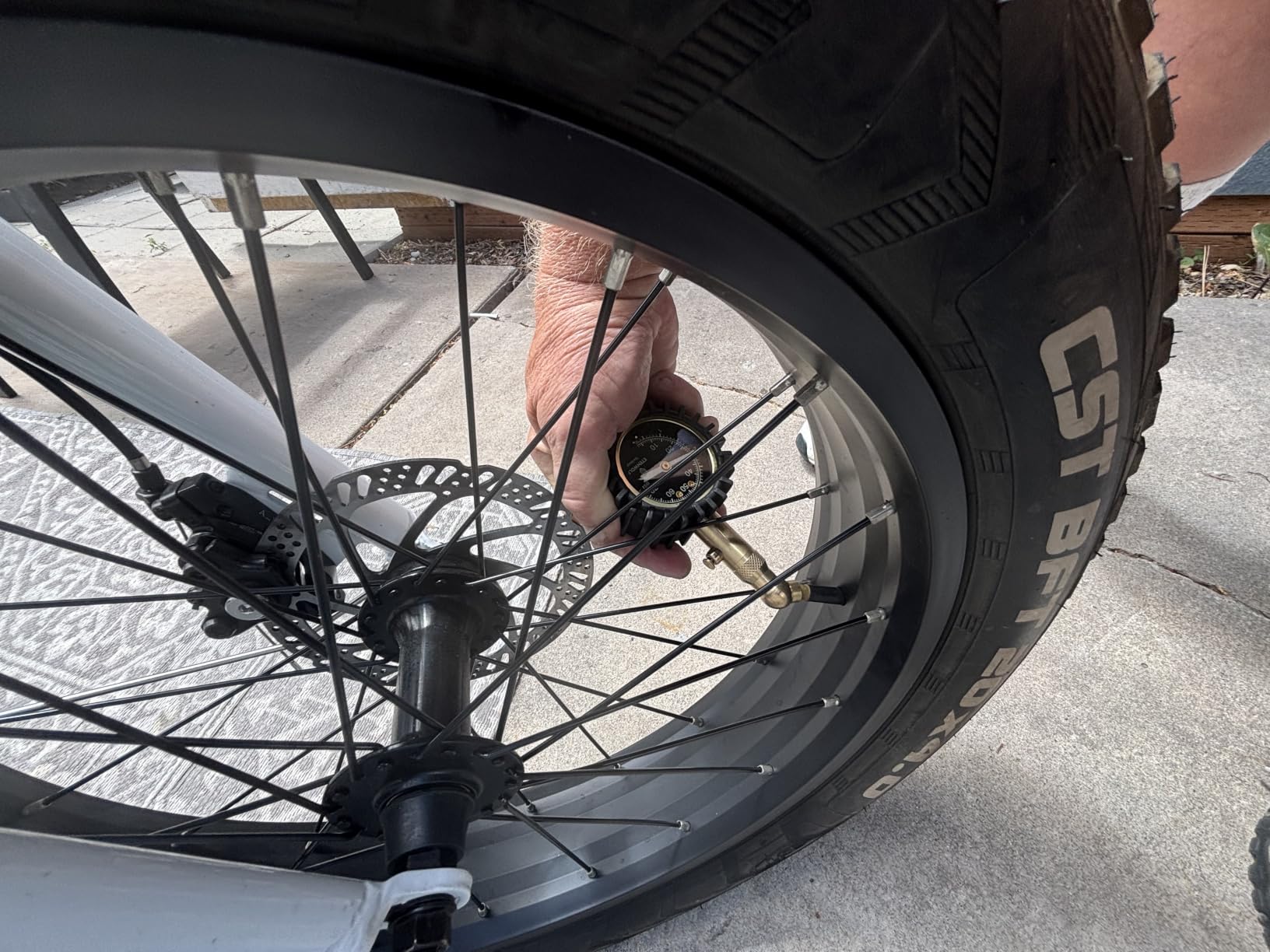
It holds its reading until you press the bleed and reset button, and the 360 degree swivel chuck makes it workable on motorcycle valves in tight positions. The box includes four valve caps, four replacement valve cores and a storage bag, which is a more complete kit than most gauges of this type ship with.
Two caveats come up in reviews. On some units the pointer overlaps the numbers on part of the scale, which is a manufacturing variation rather than a design choice, and the 75 PSI ceiling again puts trailer and heavy truck pressures out of reach despite the wide range for cars, bikes and ATVs.
What Grade A actually changes on the road
At plus or minus 1 percent of span across 0 to 75 PSI, the error band stays under a pound for a typical 34 PSI car tire, and the difference from a Grade B gauge shows up most when you are comparing readings across a fill-up. On a single check, the difference is small; across a log of readings, it is visible.
When you should step up to digital
Gradual deflation to a precise target, repeated logging over a track session, or working in a position where you cannot hold the gauge steady are all cases where a needle and 1 pound scale cost you time. If any of those describe your use, the digital units earlier in this list will get you there faster.
How to Choose a Tire Pressure Gauge for Accuracy
Start with the range your tires actually need, because a gauge that runs out of scale is worse than a coarse one. Most passenger car tires sit between 25 and 40 PSI cold, motorcycles run roughly 25 to 45 PSI, bicycle tires can go from 40 to well over 100 PSI, trucks and trailers live between 60 and 100 PSI, and off-road setups and sports balls push into the 150 to 250 PSI band. Pick a gauge whose range covers your highest expected pressure with room to spare.
Next, decide what kind of error you can live with. A 1 percent of full scale claim on a 60 PSI dial is about 0.6 PSI. The same 1 percent on a 200 PSI dial is two PSI, which is why range and accuracy have to be read together rather than as separate numbers on a spec sheet. If you want tenths of a pound, look for a digital gauge that states both a plus or minus 0.50 percent grade and 0.10 PSI resolution.
Then check the interface against the job. A long hose with a 360 degree swivel solves awkward valves on multi-spoke and deep-dish wheels. A bleeder valve or bleed button saves time when you are dialing down to a placard figure. A backlit screen or glow dial is the difference between a quick check and a squint in a dark driveway. And if you will ever check a bicycle tire, a Presta and Schrader head or a separate adapter is a must.
Finally, think about failure modes. A digital gauge with a coin cell can die without warning, so check what battery type it takes and how easy it is to replace. A mechanical gauge has no electronics to fail, and a lifetime warranty on brass hardware is a reasonable proxy for build quality. Our earlier testing of measuring instruments for accuracy followed the same reasoning, which is why we rank repeatability and sealing so heavily here.
How to verify a gauge’s accuracy at home
You do not need a calibration shop to do a useful check. Inflate one tire to a known round figure such as 35 PSI cold, then read it with the gauge you are testing and with a second gauge you trust. A difference of a few tenths on a road tire is normal; a difference that grows as pressure rises points at a full-scale percentage problem rather than a sensor fault.
Take three readings on the same tire within a few minutes and compare them. If they are identical, your repeatability is good and any remaining error is a fixed offset you can simply remember. If they wander, the problem is technique, temperature, or a leaking chuck, not calibration.
Finally, cross-check against the vehicle TPMS. Most sensors report in 0.5 PSI steps and read low by a fraction once a tire has been driven, so a handheld reading slightly above the dash value is normal. If the two disagree by more than about 2 PSI cold, the tire genuinely needs air, and if they agree but the tire still looks low, suspect the sensor.
Frequently Asked Questions
Which digital tire pressure gauge is the most accurate?
Among the digital gauges we reviewed, the JACO ElitePro has the tightest certified specification, with dual sensors rated to plus or minus 0.50% of full scale to ANSI 2A and a 0.10 PSI readout up to 100 PSI. The AstroAI heavy duty model follows at ANSI B40.7 Grade 2A for 0.5% across 0-230 PSI, and the ETENWOLF T300 covers 3-200 PSI at plus or minus 1 PSI. For most car owners the difference between these is smaller than the pressure change from a warm tire.
Which tire pressure gauge is the best quality?
Quality in this category is mostly material and sealing rather than electronics. The JACO ElitePro pairs brass and steel with a 10-inch hose and a lifetime warranty, the Rhino USA gauge uses solid brass with a braided no-leak hose, and the Milton S-506 inline gauge uses a fluid-filled cartridge with replaceable parts. Pick the one whose materials suit where it lives: a hot truck bed, a salty garage, or a glove box.
Which tire pressure gauge did Consumer Reports find to be the most accurate?
We do not have access to Consumer Reports test results, so we will not attribute a finding to them. What we can do is rank on published calibration standards and owner verification against certified references. On that basis the JACO ElitePro leads on certified precision, the Vondior and ETENWOLF G200 lead the mechanical gauges at plus or minus 1% of full scale, and the AstroAI 150 PSI digital leads on proven long-term use.
Which tire tread gauge is the most accurate?
A tread depth gauge measures a different thing entirely, so the accuracy question is separate. Look for a tread gauge with a 0.01 inch or 0.1 mm increment, a shaft that reaches into the tread grooves, and a 0 to 1 inch or 0 to 25 mm range. A stamped steel gauge is fine for a quick monthly check, while a digital model is easier to read on a dirty tire.
Is a digital or analog tire pressure gauge better?
Digital wins on resolution, backlighting and fine adjustment, since a 0.1 PSI readout and a bleeder valve let you hit a target quickly. Analog wins on reliability and battery-free operation, and mechanical gauges rated to ANSI B40.1 Grade A hold about 1% of span accuracy without any electronics. Many owners keep one of each, a digital for daily checks and a pencil or dial as a backup.
How often should I check tire pressure?
Check every month and before any long trip, and always while the tires are cold. A tire that has been driven even a few miles gains pressure as the air inside warms, so a post-drive reading typically runs 3 to 5 PSI high. Use the figure on the doorjamb placard rather than the number moulded into the tire sidewall, which is a maximum rating rather than a target.
The Best Tire Pressure Gauges for Accuracy in 2026
After working through all twelve, our best tire pressure gauges for accuracy split cleanly by job. For the most car owners the AstroAI 150 PSI digital is the safest daily choice, with a published plus or minus 1 PSI calibration, 0.1 PSI increments and the longest ownership record in this group. The AstroAI heavy duty 0-230 PSI covers trucks, trailers and RVs with a tighter Grade 2A spec, and the JACO ElitePro is the pick when you want the tightest certified precision and a lock-on reading with a bleeder.
For bikes and high-pressure equipment the Topeak SmartGauge D2 handles both Presta and Schrader stems. For anyone who wants zero battery risk, the AstroAI pencil pair or the ETENWOLF dual-range set cover you, and for a compressor setup the Milton S-506 is the one tool that both reads and inflates. Whichever you choose, check the placard, read cold, and compare the same tire twice before you trust the number.