
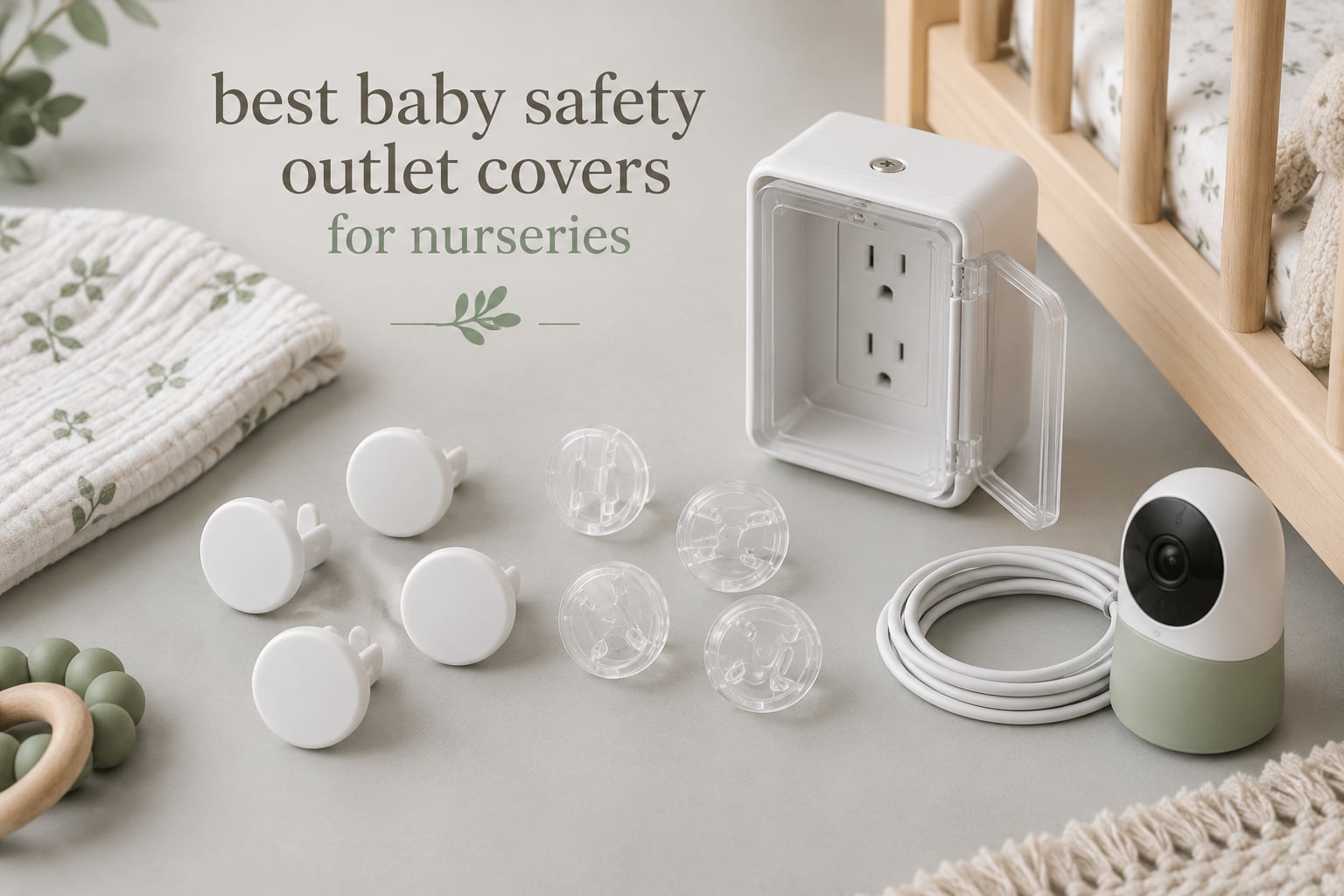
The safest outlet cover for a nursery is the one a parent can remove in a second and a toddler cannot remove at all, and that single requirement rules out most of the cheap plug caps on the shelf. We compared 12 of the best baby safety outlet covers for nurseries, weighing the three things that actually matter: how the cover is fixed to the socket, how easily an adult gets it back off, and whether it is big enough that losing one is not a choking emergency. What came back was a list where the biggest box is not the best buy, and the smallest cap is not the safest thing to have on a low wall.
Most shopping guides for baby proof outlet covers stop at the plug itself. We went further, because a nursery has two kinds of outlets and they need opposite solutions: the empty ones you never touch again, and the ones running a baby monitor, a humidifier or a white noise machine. Buy one pack of caps, cover everything, and you will end up unplugging the monitor to use the outlet. The guide below splits those two jobs, covers the deep recessed boxes that defeat most caps, and gives you a realistic count of how many covers one room actually needs.
We also weighed reviews from parents on r/toddlers and on long-running parent forums, because the failure modes here show up in the comments long before they show up in the spec sheet. If you are furnishing the rest of the room, our changing table picks for nurseries and air purifier guide for nurseries cover the gear that shares that wall space.
Top 3 Picks for Baby Safety Outlet Covers in October 2026

Power Gear Clear 30-Pack
- UL Listed one-piece plug
- Tool-free push-in fit
- Clear and near-invisible

Safety 1st 36-Pack
- 36 translucent covers
- Hidden indents for adult pull
- Blurs the socket holes
Safety Innovations Twin Door Box
- Two-hand double lock
- 5 3/8 inch deep interior
- Faceplates for both outlet styles
Best Baby Safety Outlet Covers for Nurseries in October 2026
The full comparison below lists all 12 covers we tested, with the feature that decides each one’s use. Two of them are enclosure boxes for outlets that stay in use, and the rest are plug-style covers for empty sockets.
| Product | Specifications | Action |
|---|---|---|
| Power Gear Outlet Covers 30 Pack Clear |
|
Check Latest Price |
| Safety 1st Outlet Covers 36 Count |
|
Check Latest Price |
 Wappa Baby Outlet Covers 50 Pack White Wappa Baby Outlet Covers 50 Pack White |
|
Check Latest Price |
 Babepai 38-Pack White Full-Face Covers Babepai 38-Pack White Full-Face Covers |
|
Check Latest Price |
 Wappa Baby Clear Outlet Covers 50 Pack Wappa Baby Clear Outlet Covers 50 Pack |
|
Check Latest Price |
 probebi Outlet Covers 38 Pack White probebi Outlet Covers 38 Pack White |
|
Check Latest Price |
 Jool Baby Outlet Covers 32 Pack Clear Jool Baby Outlet Covers 32 Pack Clear |
|
Check Latest Price |
 HEELALBABY Outlet Covers 45 Pack HEELALBABY Outlet Covers 45 Pack |
|
Check Latest Price |
 Safety 1st Outlet Cover with Cord Shortener Safety 1st Outlet Cover with Cord Shortener |
|
Check Latest Price |
| Safety Innovations Twin Door Outlet Box |
|
Check Latest Price |
 Wappa Baby Dual-Lock Outlet Cover Box Wappa Baby Dual-Lock Outlet Cover Box |
|
Check Latest Price |
 Vmaisi 62 Piece Outlet Plug Covers Vmaisi 62 Piece Outlet Plug Covers |
|
Check Latest Price |
The Choking-Hazard Truth About Small Plug Caps
The socket is not the only risk in a plug cap, and this is the point most roundups leave out. A toddler who finds a small plastic cap on the floor is far more dangerous than a toddler who cannot reach the socket, because the cap fits straight in a mouth. This has been argued for years on parent forums, where the bluntest version of the argument is that a parent chokes their child by buying the smallest available cap.
The failure is not a child prying the cap off the outlet. It is an adult pulling it off, dropping it on the carpet, and forgetting about it. That is why adult removability matters as a safety feature and not just a convenience, and it is why every cover on this list either has a handle, a notch, or an indention built for fingernails. If you see a one-star review on a plug cap complaining that the parent could not get it out, read it twice: for some households the cover is working exactly as intended.
The honest position, which several commenters on forums made forcefully, is that infant electrocution is rare compared with choking on loose plastic. Neither risk is zero, and the fix is not to skip outlet covers. It is to buy oversized covers, keep removed caps in a closed drawer immediately, and never leave a cap on a surface a child can reach. No product on this list replaces supervision.
1. Power Gear Outlet Covers 30 Pack Clear – Our Pick for Most Nurseries
- Tool-free push-in install and adult removal
- Fits two-prong and three-prong receptacles
- Clear finish does not draw attention
- ETL certified with 1-year limited plan
- Can be stubborn to pull from some outlet styles
- No dedicated pull handle
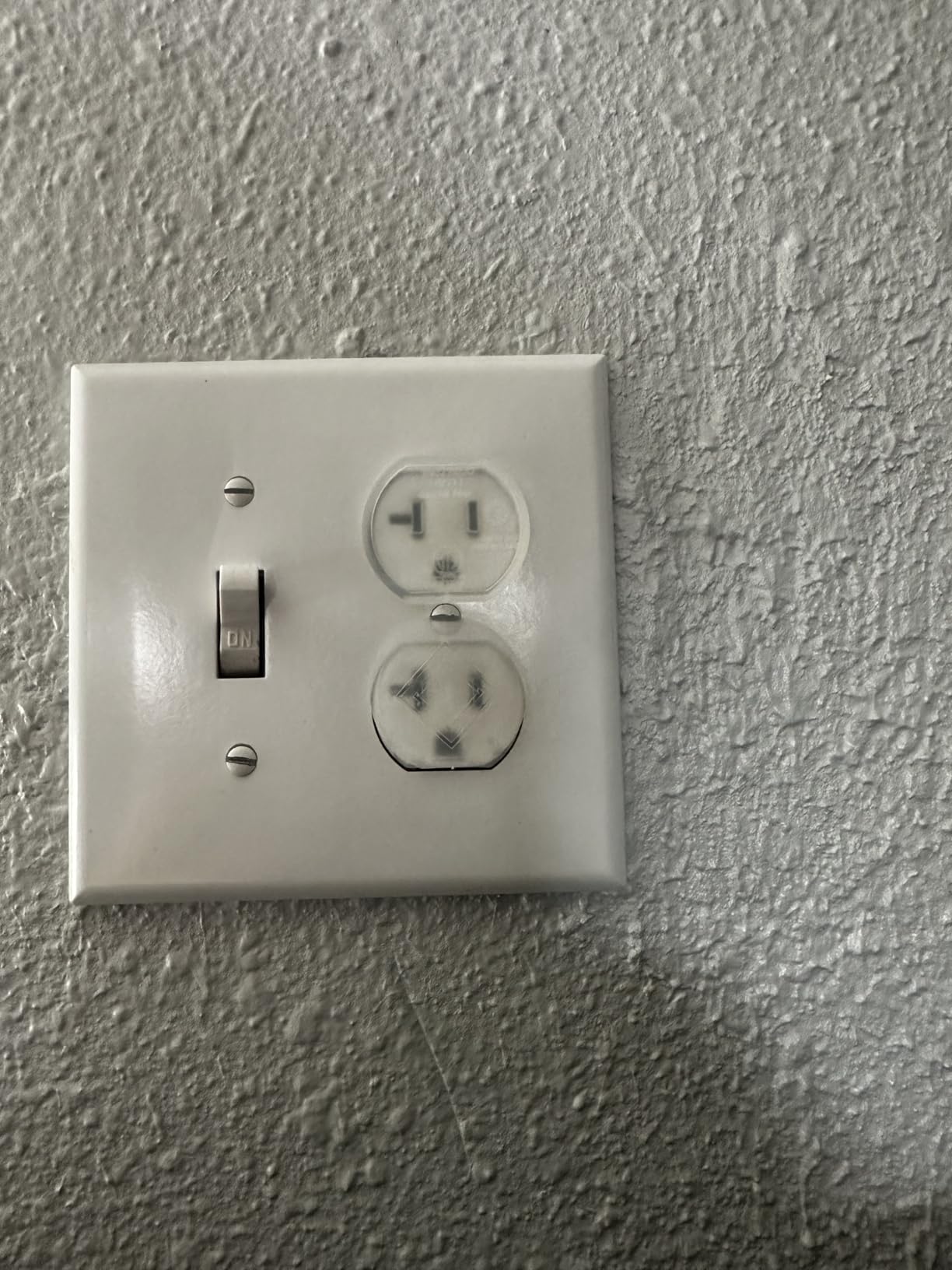
This is the one we ended up recommending to friends first. It is a plain one-piece plug that presses into an empty socket and comes straight back out with a fingernail, with no latching tab to hunt for and no screwdriver anywhere in the process. The 30-count pack covers a nursery and the rest of the main floor in one go.
What separates it from the other clear caps is the certification. The listing states UL Listed and ETL safety certified, and the body includes a 1-year limited replacement plan, which is more paper trail than most competing caps carry. Reviewers consistently describe the fit as tight on both two-prong and three-prong receptacles, so you are not left with two spare covers in the box that do not fit anything.
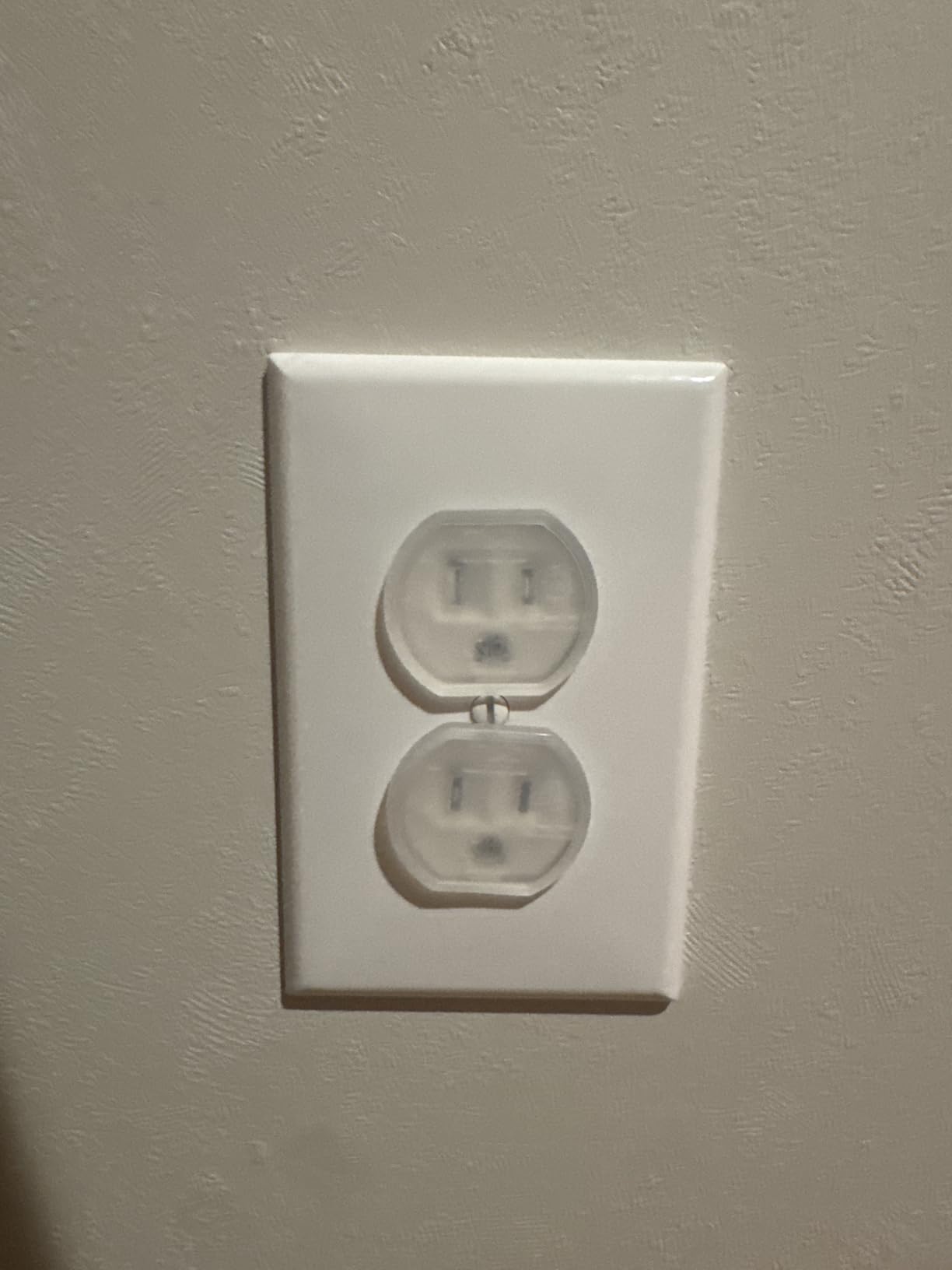
The one recurring complaint in reviews is adult removal on certain outlet styles, where the plug sits deep enough to need a real grip. Most reviewers accept that as the intended trade-off, and the dimensions at 0.75 by 1.47 by 1.28 inches make it one of the lower-profile caps we tested. It sits close to the wall face rather than sticking out into a crib-side walkway.
It is also the most discreet option here. The clear body blurs the socket openings almost completely, so a child who has never seen the outlet is not cued to go looking at it. For a nursery with a live outlet, pair it with one enclosure box rather than expecting one product to do both jobs.
What works well in a nursery
It covers the whole wall of unused sockets in about five minutes with no tools, and the clear body survives being handled constantly. Because the caps are reusable, the same 30 covers follow you to a second child’s room years later, which is a real saving over disposable-feeling options.
Where it falls short
If you need to unplug something from a covered outlet several times a day, expect friction. There is no handle to grab, so removal takes a fingernail and a moment of attention, and that is where dropped caps come from.
2. Safety 1st Outlet Covers 36 Count – Best Value for Whole-House Covering
Safety 1st Electrical Outlet Baby Proof Covers, Secure Outlet Plugs, Baby Proofing, 36 Count
- Snug fit toddlers cannot pull out
- Push-in install with no tools
- Translucent body hides the slot openings
- Reusable as the child grows
- Genuinely hard for adults to pull out
- Some need a thin flat tool
Safety 1st is the name most parents meet first, and this 36-count plug is the reason. The socket blocking is total, the install is a thumb-press, and the price per cover is one of the lowest in this roundup. It ranks first in Electrical Safety Baby Products and has more than 26,000 reviews behind it.
The design detail worth knowing is the hidden indents behind the plug edges. They are the reason an adult can get the cover off without fingernails, even though the friction fit is tight enough that a child cannot budge it. That combination is rare: most caps in this category give you one or the other, not both.
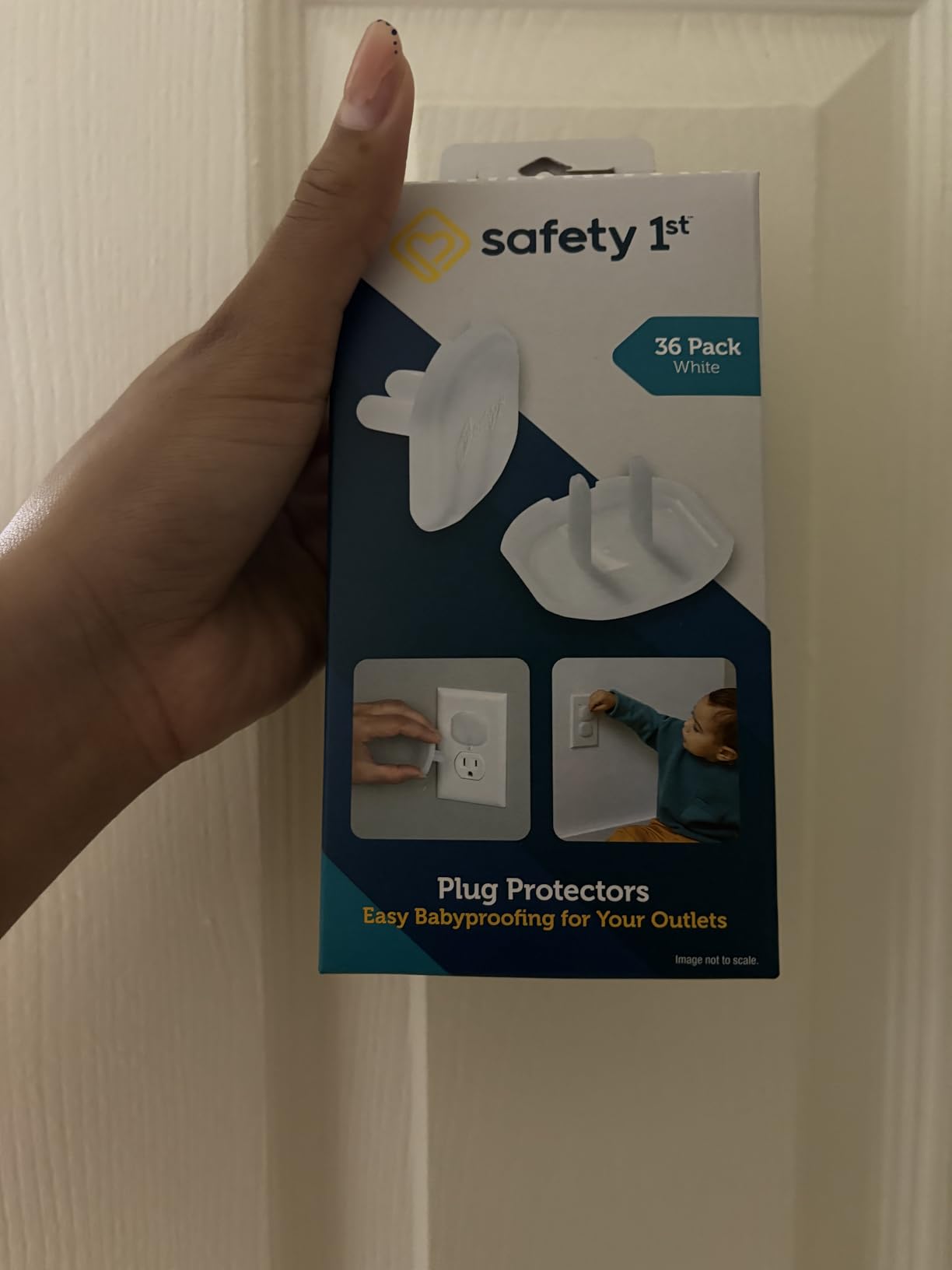
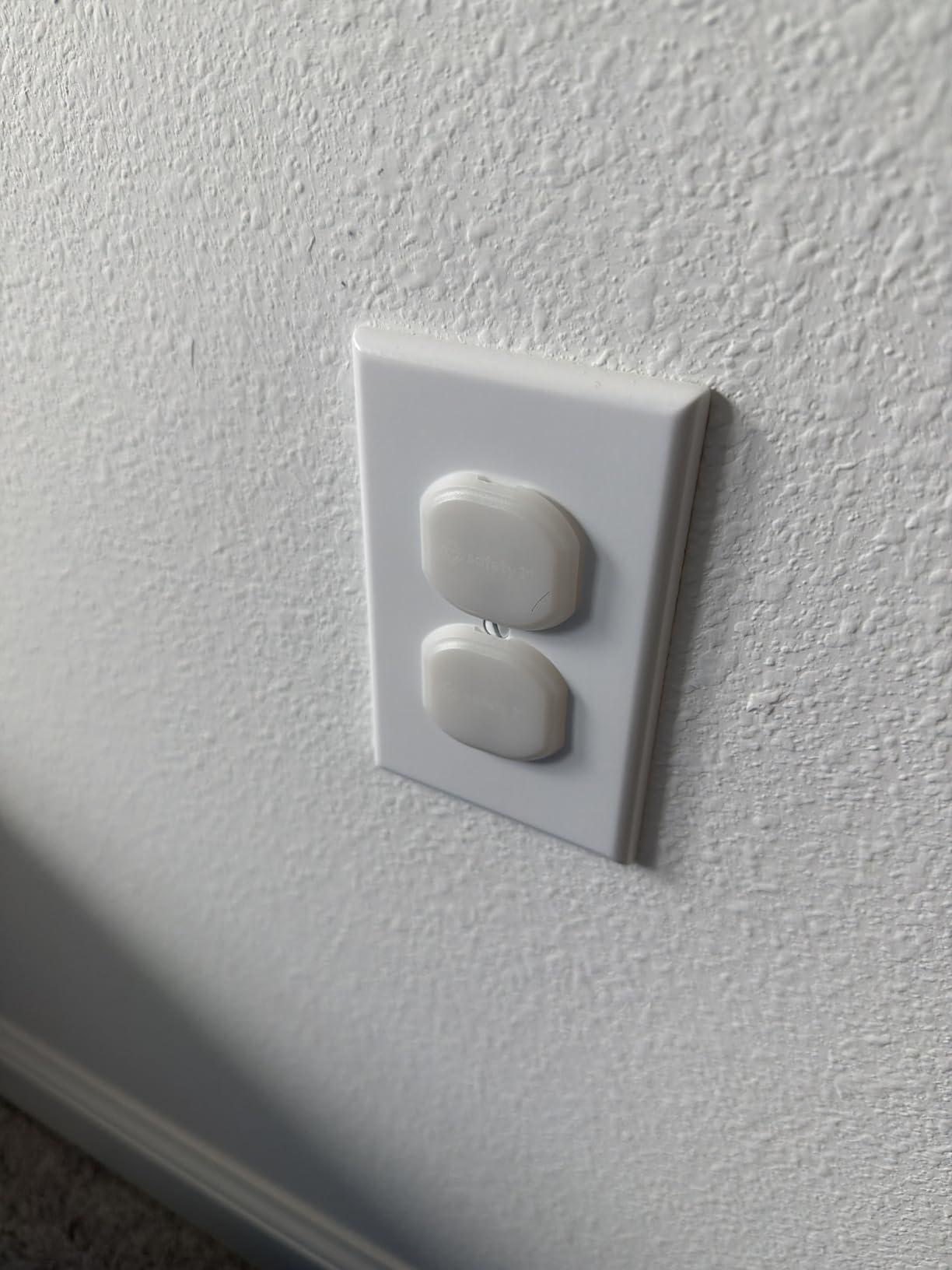
Reviewers describe the semi-translucent material as blurring the outlet holes once installed, so the sockets stop reading as openings. It is less invisible than a fully clear cap but more visible than nothing, which in a nursery with white walls is a reasonable middle ground.
At 36 covers this covers a full house of low wall outlets, plus grandparents’ house or the second floor, without a second purchase. The plugs are reusable, so they move to the next child’s room rather than into a drawer.
What works well in a nursery
It is the fastest way to make an entire room safe before a nap-time nap ends. Count your low outlets, add two spares, and the box is done in under ten minutes with no tools and no wall damage. The indents also mean the covers come off cleanly when you need to vacuum behind the dresser, which is the difference between a cover that stays on and one that ends up in a junk drawer.
Where it falls short
Adults with short nails or limited hand strength will still struggle, and reviewers mention resorting to a Popsicle stick or similar thin plastic tool. The pull-out friction is the safety feature, so this is not a defect, but it is worth knowing before you buy for a household with arthritis.
It is also a plug cover and nothing more, so an outlet running a monitor or sound machine stays exposed and its cord stays pullable.
3. Wappa Baby Outlet Covers 50 Pack White – Best for a Clean White Wall
- Sturdy plastic that does not flex or fall out
- Lays flush against the outlet face
- White finish matches walls and plates
- Presses in in seconds
- Hard for adults to remove quickly
- No pull tab or handle
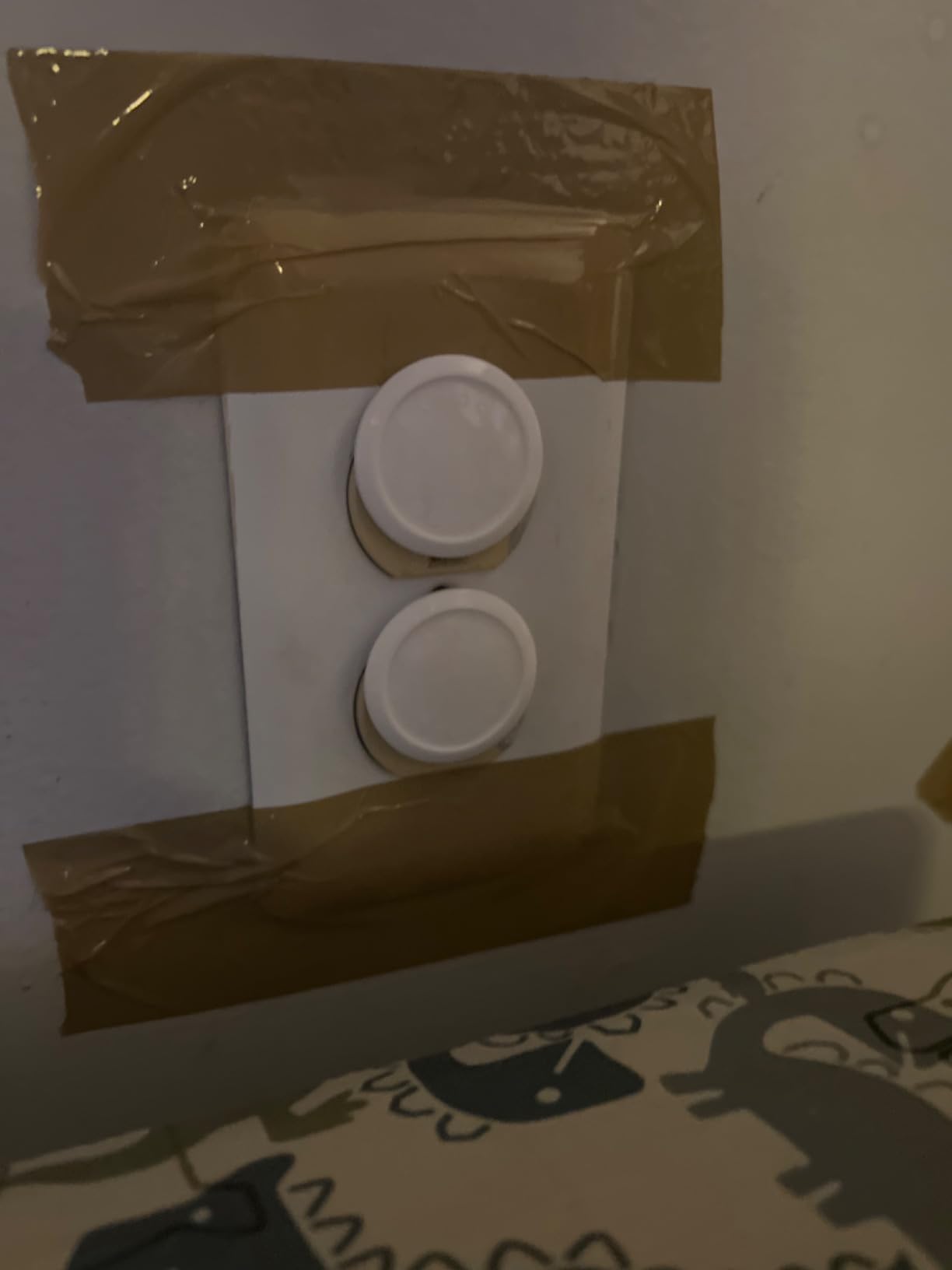
If your nursery is painted white and you want the outlets to disappear into the wall rather than sparkle, this is the set. The 50 covers are opaque white and sit flush to the outlet face, so from across the room the plate and the cover read as one object. Reviewers who prefer white over clear make exactly that point.
The build quality is the story here. Owners describe the plastic as sturdy enough that it does not flex or wiggle once seated, and a 50-pack is more than most houses need for the ground floor. Several buyers also report using them off-label to block dust and litter debris from unused sockets, which is a sensible secondary use in a room that is about to be repainted twice.
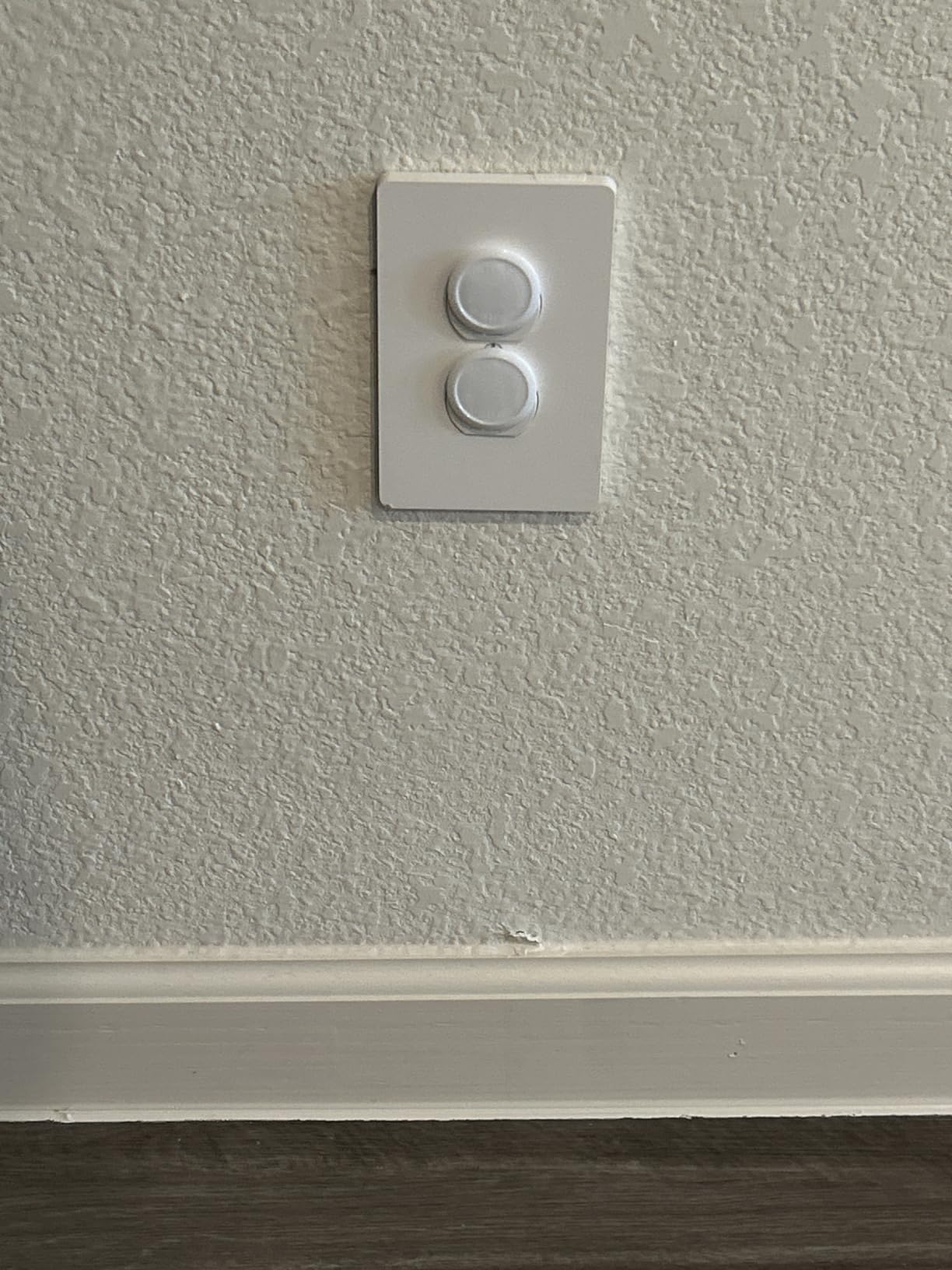
Installation is a press into the socket with no tools and no wall plate changes, and the covers sit at 6.5 by 2.8 by 1.7 inches for the whole pack. Nothing protrudes into the walkway beside a crib.
The honest drawback shows up in the reviews: there is no pull tab or handle, so removing one means prying with a fingernail or a thin tool. For an outlet you touch once a month that is fine. For one you need every evening, it is a daily annoyance that quietly pushes covers off.
What works well in a nursery
The flush, opaque white look is the nicest of any plug cap we tested in a plain white room, and 50 covers means the nursery, the hallway, and the playroom are all handled in one purchase. Because they lie flat, they present no edge for a climbing child to catch on.
Where it falls short
There is no adult access feature, so every removal is a pry. In a nursery where the humidifier moves between the bedroom and the living room each night, that friction gets annoying fast. White caps are also visible against a coloured wall, so on an accent wall they read as objects in the room.
4. Babepai 38-Pack White Full-Face Covers – Best Full-Coverage Design
Outlet Covers Babepai 38-Pack White Child Proof Electrical Protector Safety Improved Baby Safety Plug Covers
- Covers the entire socket face not just the slots
- Hidden grip handle for adult release
- 38 covers several rooms
- White finish blends with outlets
- Handle can be stiff for some adults
- Built for US three-prong outlets only
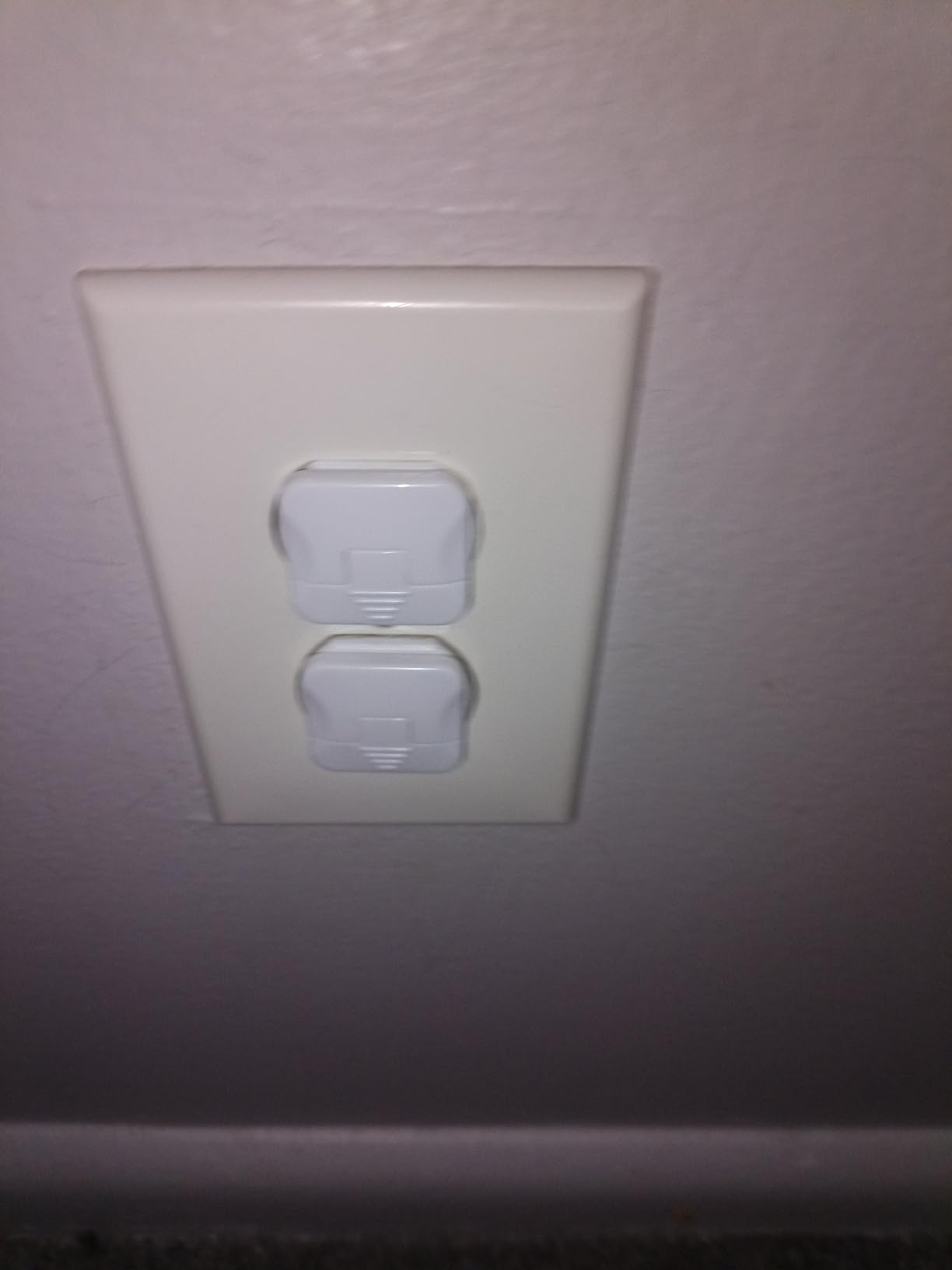
Most plug caps cover two or three holes. This one covers the whole face of the socket with a square plate, so there is no gap anywhere around the edge for a child to work a fingernail into. Reviewers who switched to it from flat plugs cite that full coverage as the reason it feels sturdier.
There is a hidden latch and grip handle on the back for adult removal, which addresses the complaint that most caps in this category create the choking risk themselves. Parents report that even after a child finds the tab, they cannot work it open.
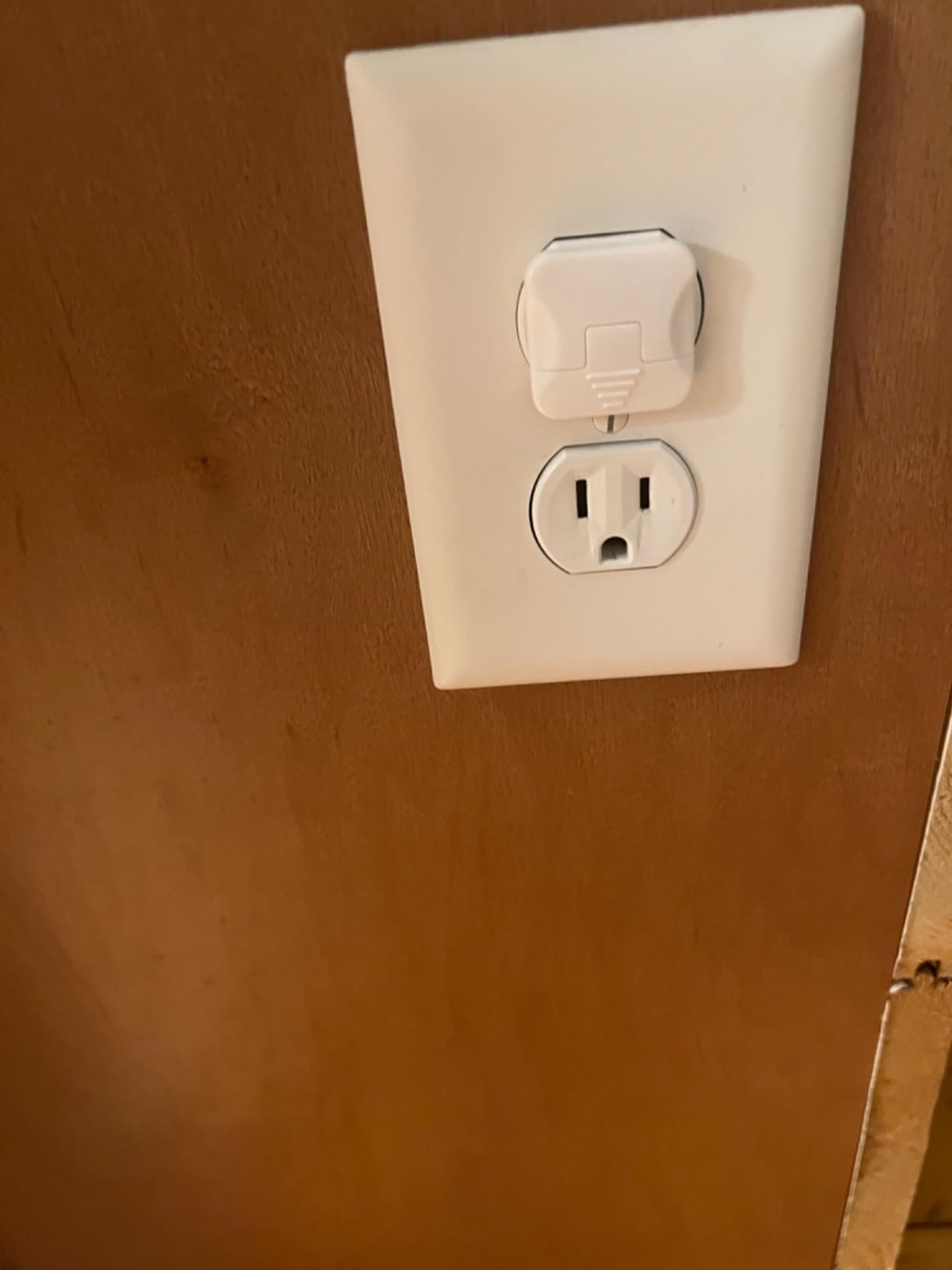
At 38 covers, the pack is sized for several rooms, offices, or a vacation home. The solid white plastic matches the outlet and the wall, so it is less noticeable than a black or grey cover in a light room.
A visible minority of one-star reviews come from international buyers who found the covers do not fit non-US socket standards. If you are outside the United States, check your socket format before ordering, because this is a US three-prong design.
What works well in a nursery
The full-face plate is the strongest physical barrier in the plug category, because there is no exposed edge to pry against. On a low outlet beside a crib, that extra surface area is worth more than another two spare caps in the box, and it works well on a hallway or stair run where a flat cap can simply be flicked out.
Where it falls short
The handle is stiff enough that some adults need a flat plastic tool to release it, which puts it in the same removal-difficulty bracket as the harder pull-in caps despite the handle. As a plug cap it also does nothing for an outlet that stays in use.
5. Wappa Baby Clear Outlet Covers 50 Pack – Best Discreet Finish
Clear Outlet Covers (50 Pack) Value Pack – Baby Safety Outlet Plug Covers – Durable & Steady – Child Proof Your Outlets Easily
- Nearly invisible against the wall plate
- Snug flush fit that resists wiggling
- Good balance of child-proofing and adult removal
- Plenty of spares for a second home
- Hard to pry back out once seated
- Will not fit surge protector or power strip receptacles
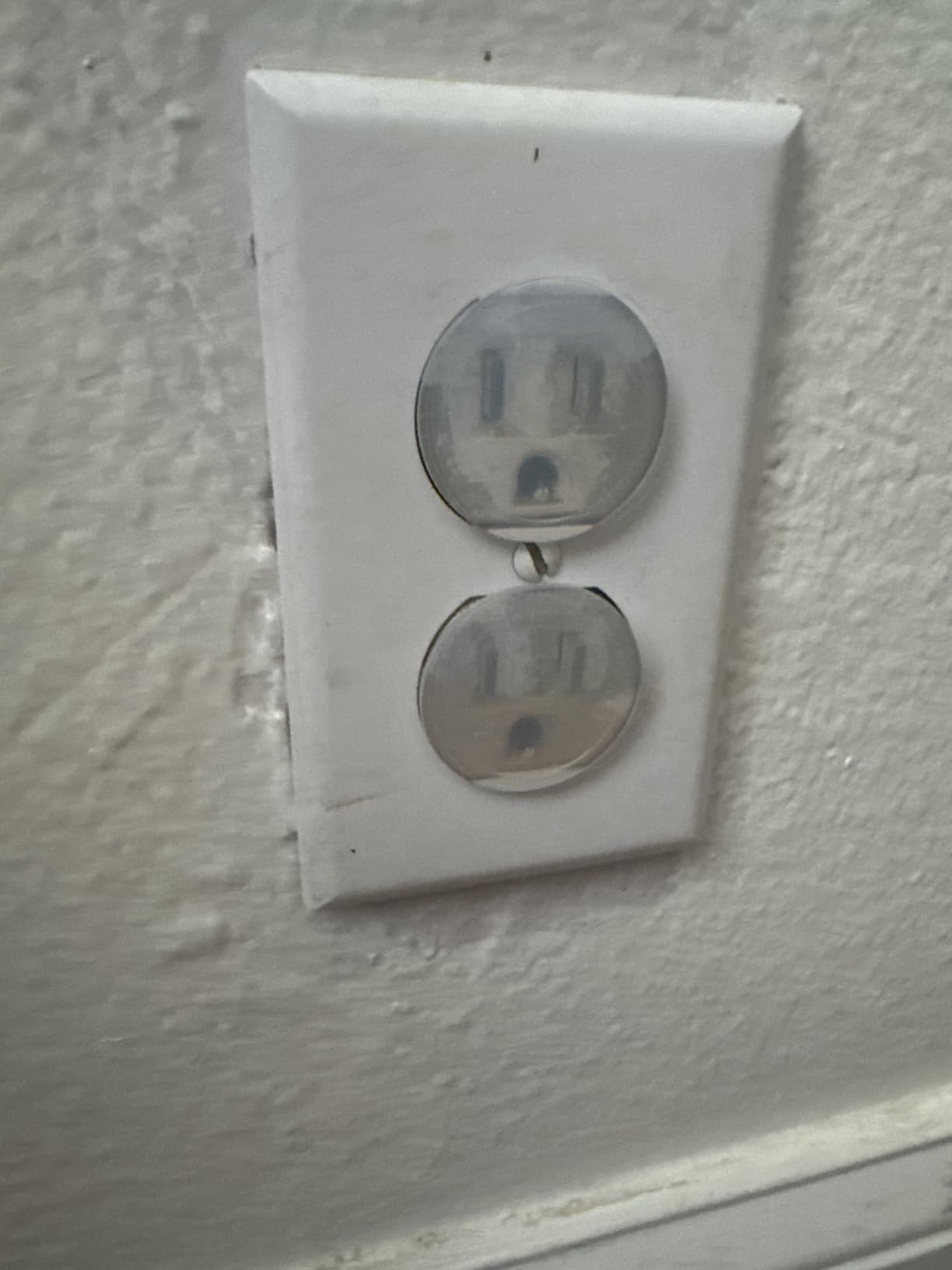
This is the set we would put up in a room where the wall colour is anything other than white. The transparent body almost disappears against a standard wall plate, and parents report that the effect is behavioural rather than cosmetic: a child who cannot see an opening is less likely to go probing at it.
Reviewers describe the fit as snug and flush, firm enough that a toddler cannot remove it, but still removable by an adult who knows where to grip it. That is the balance point this whole roundup is trying to hit, and most competitors miss it in one direction or the other.
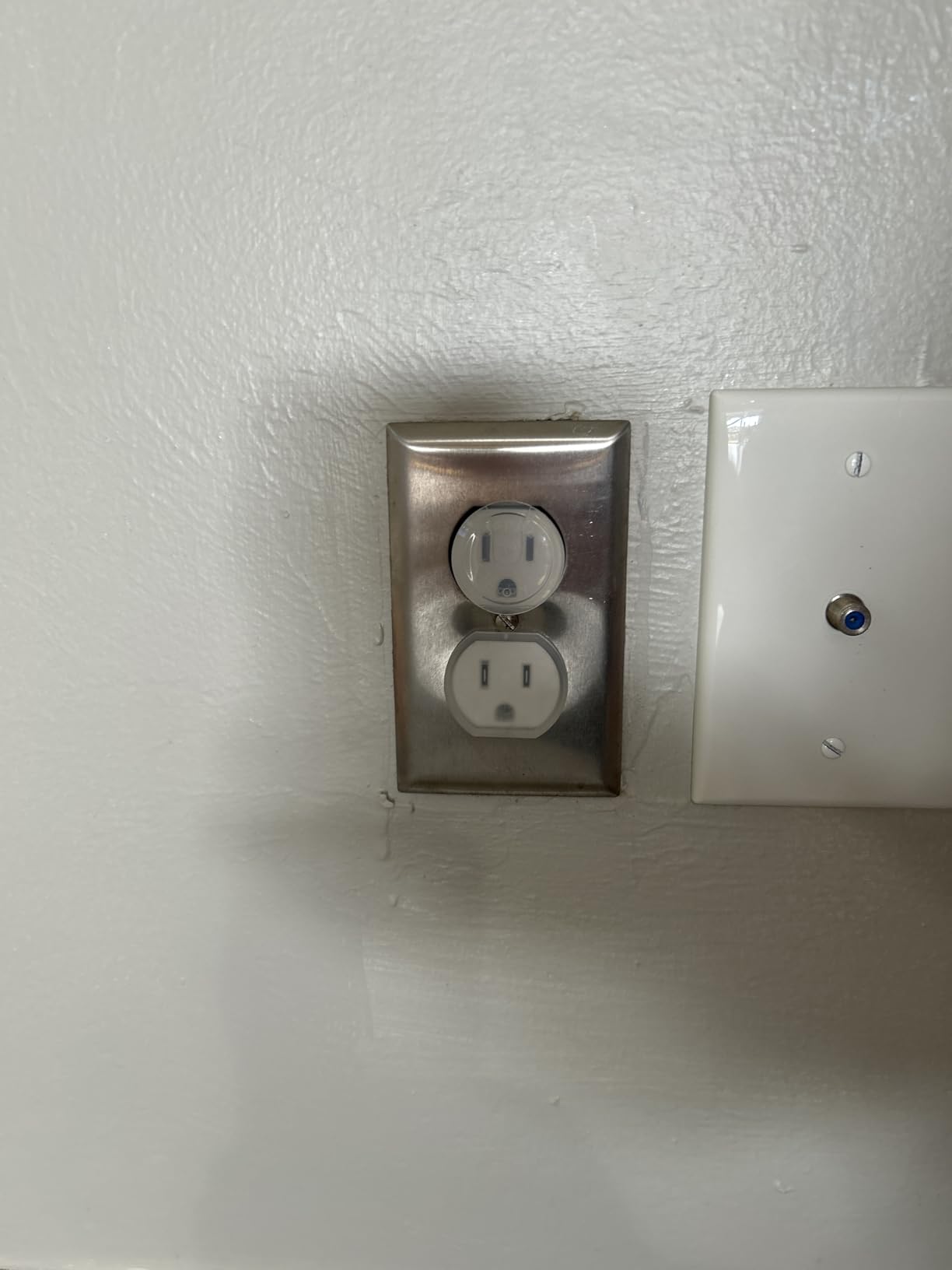
Two practical notes from the reviews. First, these are strictly for standard wall receptacles and will not work on surge protectors or power strip faces, so a strip plugged in near the crib is still an open socket. Second, several buyers use them to block cold drafts through unused exterior-wall outlets, which is a genuine bonus in an older nursery.
With 50 covers and a pack weight of 4.3 ounces, you have more than a nursery needs, with spares for the grandparents’ house, which is where many families end up covering next.
What works well in a nursery
The transparency is the whole argument. On an accent wall or a painted feature wall, clear covers preserve the decor while still removing the opening, which is something a decorative cover sold online rarely does with any certification behind it. They sit flush, so nothing protrudes into a walkway beside a crib.
Where it falls short
Once seated they take real effort to get back out, and there is no handle or notch, so removal depends on having a fingernail or a tool to hand. Reserve them for outlets you rarely use, and keep them off power strips, which they do not fit.
6. probebi Outlet Covers 38 Pack White – Best for a Leave-Partly-Open Outlet
- Ring-pull handle can stay partly open for quick adult access
- Certified to REACH ROHS PAHS and EN-71
- 38 covers a whole home with spares
- Also seals sockets against cold drafts
- Latch is thin plastic and can be stiff
- Some worry a child could break the tab
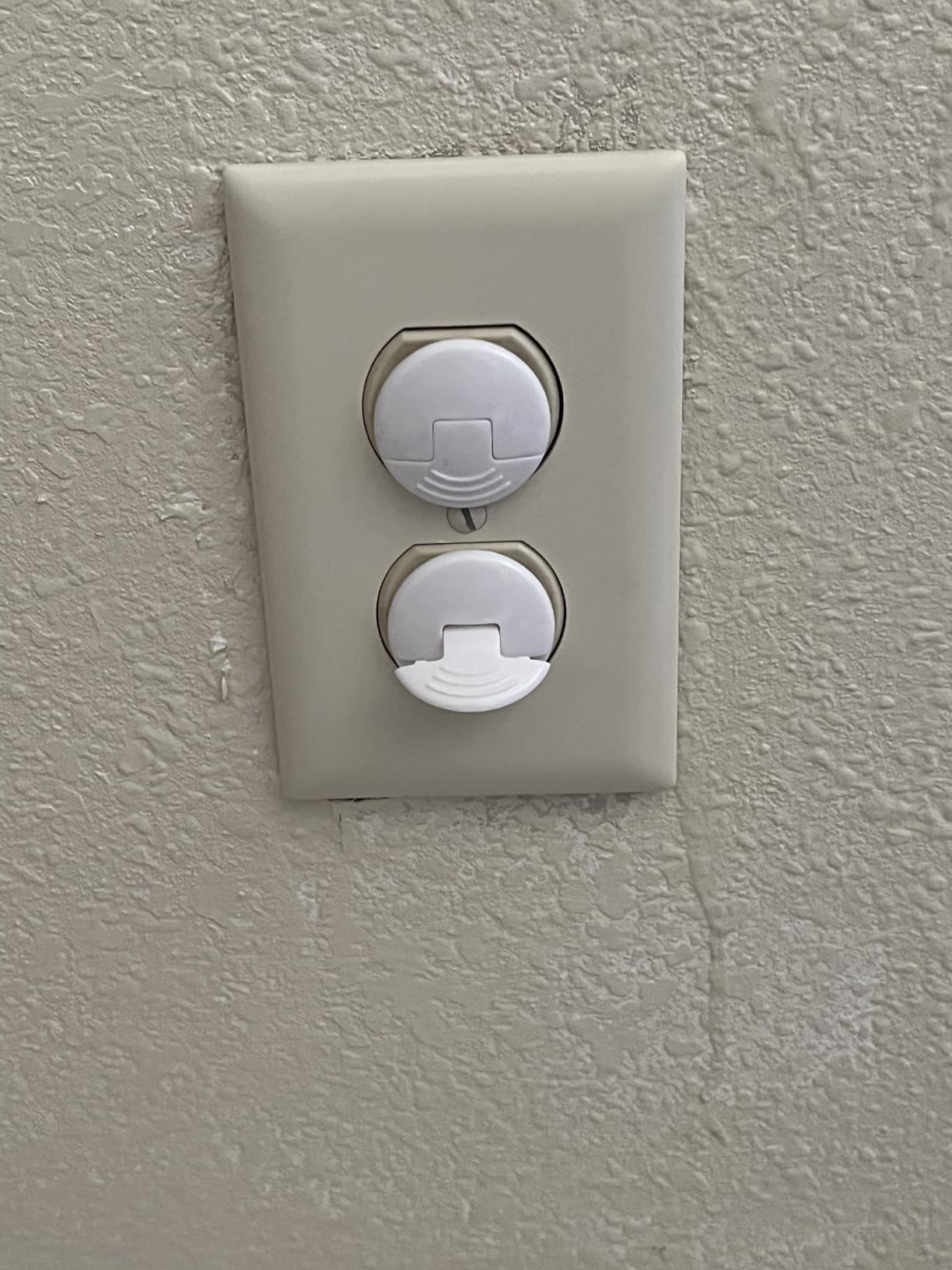
The distinguishing feature here is the ring-pull handle. Because the cover can be left partially released, an adult can get at a covered outlet without fully removing the cap, which means the part you carry in your hand is smaller and the part you drop on the floor is smaller too. That is a direct answer to the choking-hazard concern that drives this category.
The certification detail is unusual for this price bracket. The listing names REACH, ROHS, PAHS and EN-71 compliance, and the body is durable ABS rather than thin polypropylene. The manufacturer’s own safety warning on the listing says plainly that the product should not be used as a toy because there is a danger of swallowing, which is a level of honesty we would rather see than a vague child-safe claim.
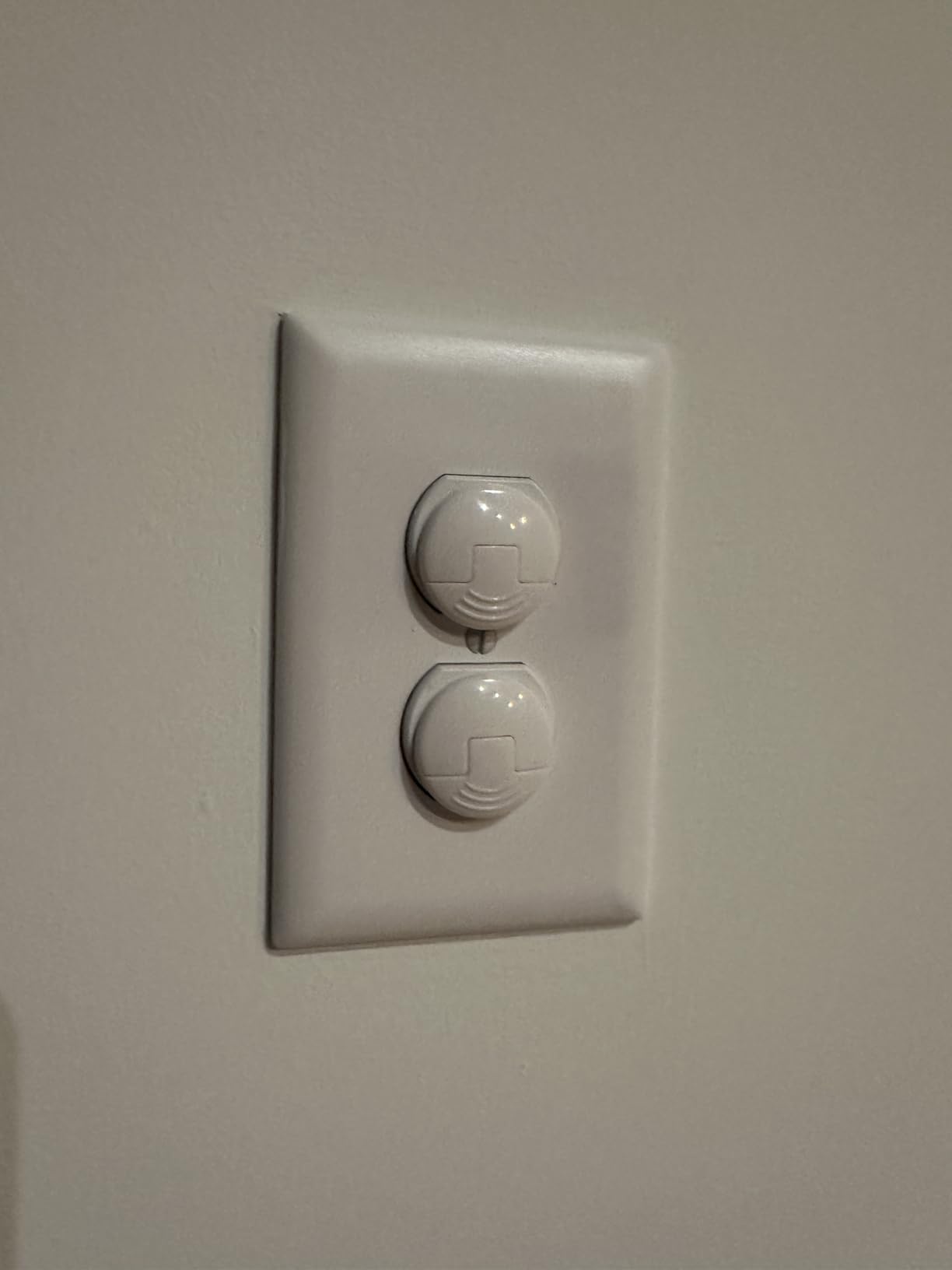
Reviewers also use these as socket sealers to block cold drafts on exterior walls, which makes them a two-tool purchase in an older nursery with draughty sockets. At 1.18 by 1.18 by 0.75 inches the body is a compact square that hides the outlet face even when the plate colour does not match.
The criticism is concentrated on the latch. It is thin flexible plastic, it can be stiff to slide down, and it is genuinely hard to operate for anyone with limited hand strength or short nails. A small number of reviewers also worry a determined child could eventually snap the tab off, which would turn it into a small loose plastic piece.
What works well in a nursery
The half-open position is the feature that changes daily life. An outlet you use every night for a humidifier does not require prying anything off, which removes the most common reason covers end up off the wall. The named certifications also make this the pick if you want something documented rather than merely described as child safe.
Where it falls short
The ring-pull is stiff, and the people most likely to need an easy-grip cover, an adult with arthritis, are the ones who find it hardest. If grip strength is a factor in your household, this is the wrong set. As a plug cap it also leaves an outlet in active use uncovered.
7. Jool Baby Outlet Covers 32 Pack Clear – Easiest Adult Removal in the Clear Category
Jool Baby Outlet Covers (32 Pack) for Child Safety – Easy Adult Removal, Plug Protectors for Baby Proofing Electric Sockets – Transparent Design
- Notch allows removal without a tool
- Clear design blends into any wall colour
- Fits standard US outlets tightly
- Lightweight press-in install
- Some adults still need a flat tool
- Fits US standard outlets only
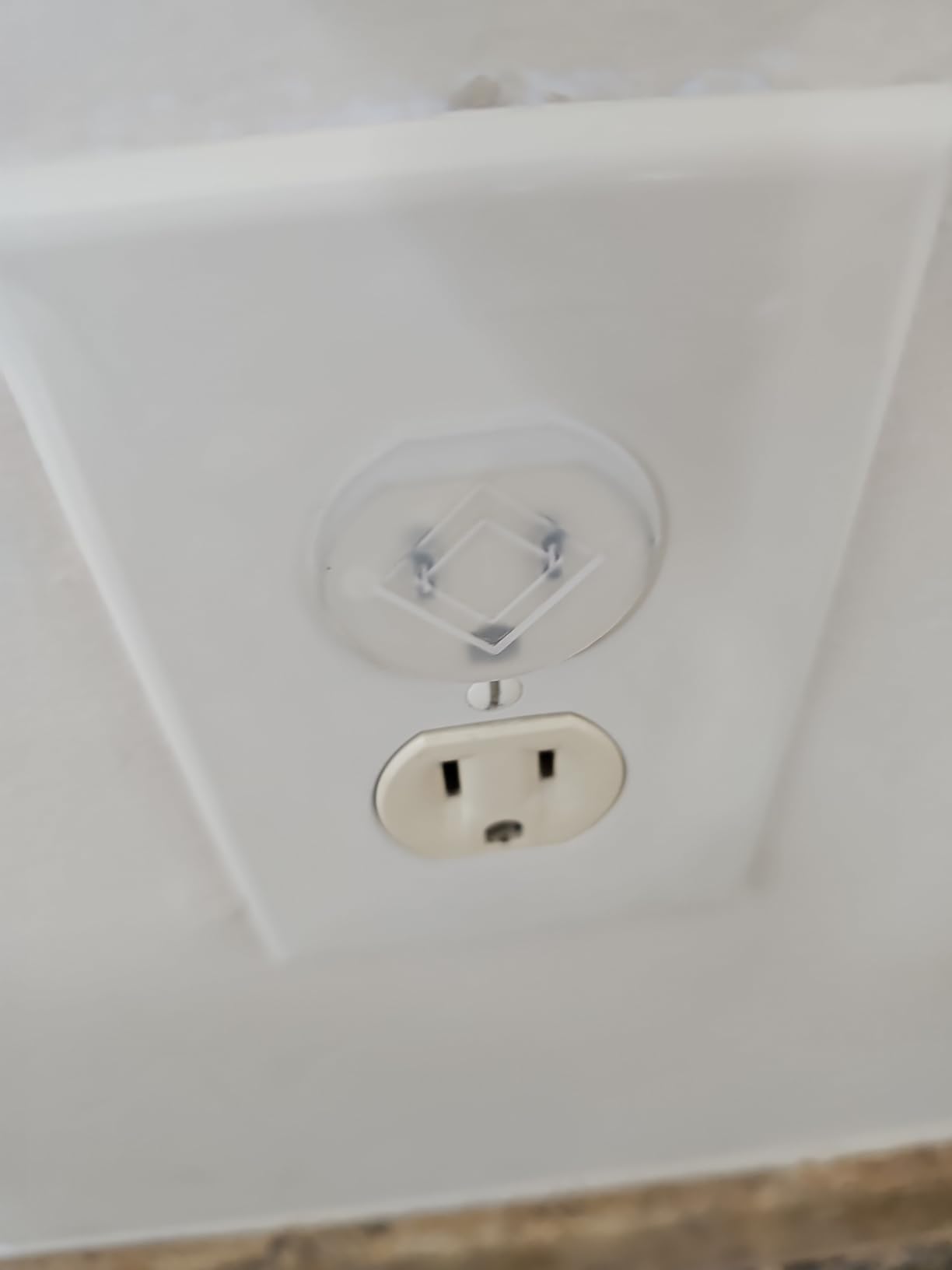
Most clear caps in this roundup need a fingernail or a tool to get out. This one has a deliberate small notch cut into the edge of slightly flexible plastic, designed so an adult can hook a finger and pull. In our comparison it is the most accessible clear cover for regular adult hands, and that is not a small thing in a category where the cover comes out as often as it goes in.
The fit is still tight enough that toddlers cannot pull the covers from the socket, and reviewers confirm this without exception. The transparency keeps the outlet nearly invisible, so a child is not cued to investigate it.
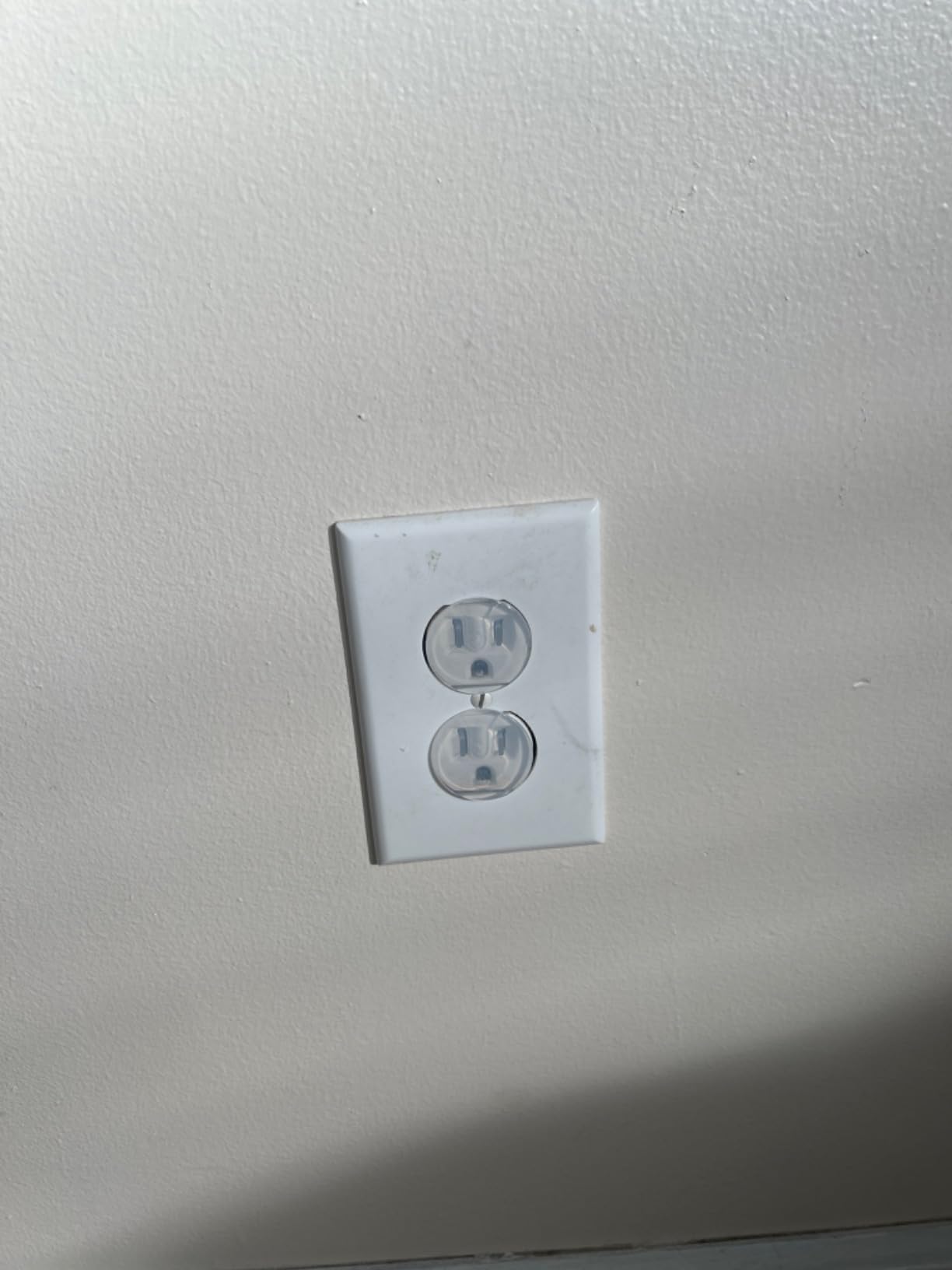
At 2.25 ounces for 32 covers it is the lightest pack here, and reviewers also use the covers to block cold drafts and shield outdoor light strings, so the pack tends to earn its place beyond the outlet count.
Ratings dip slightly for buyers outside the United States who find the fit does not match non-US power points. The listing states it fits standard US outlets, which is accurate and worth checking against your sockets before ordering internationally.
What works well in a nursery
Clear plastic suits any wall colour, and at 2.25 ounces it is the lightest pack here, so you can carry the whole set between the nursery and a travel room without thinking about it.
Where it falls short
Even with the notch, some adults report needing a flat tool, and the flexibility that makes it removable also means it is not the stiffest cap in the group. On an accent wall the clear body still reads slightly against dark paint, so check the finish under evening light before you commit to a full pack.
8. HEELALBABY Outlet Covers 45 Pack – Best for Covering Power Strips
- Hidden ring-pull avoids fingernail prying
- Snug fit children cannot defeat
- Smooth rounded edges with no burrs
- Also fits power strips and 3-prong outlets
- Latch can be stiff on first attempt
- Some sockets need wiggling
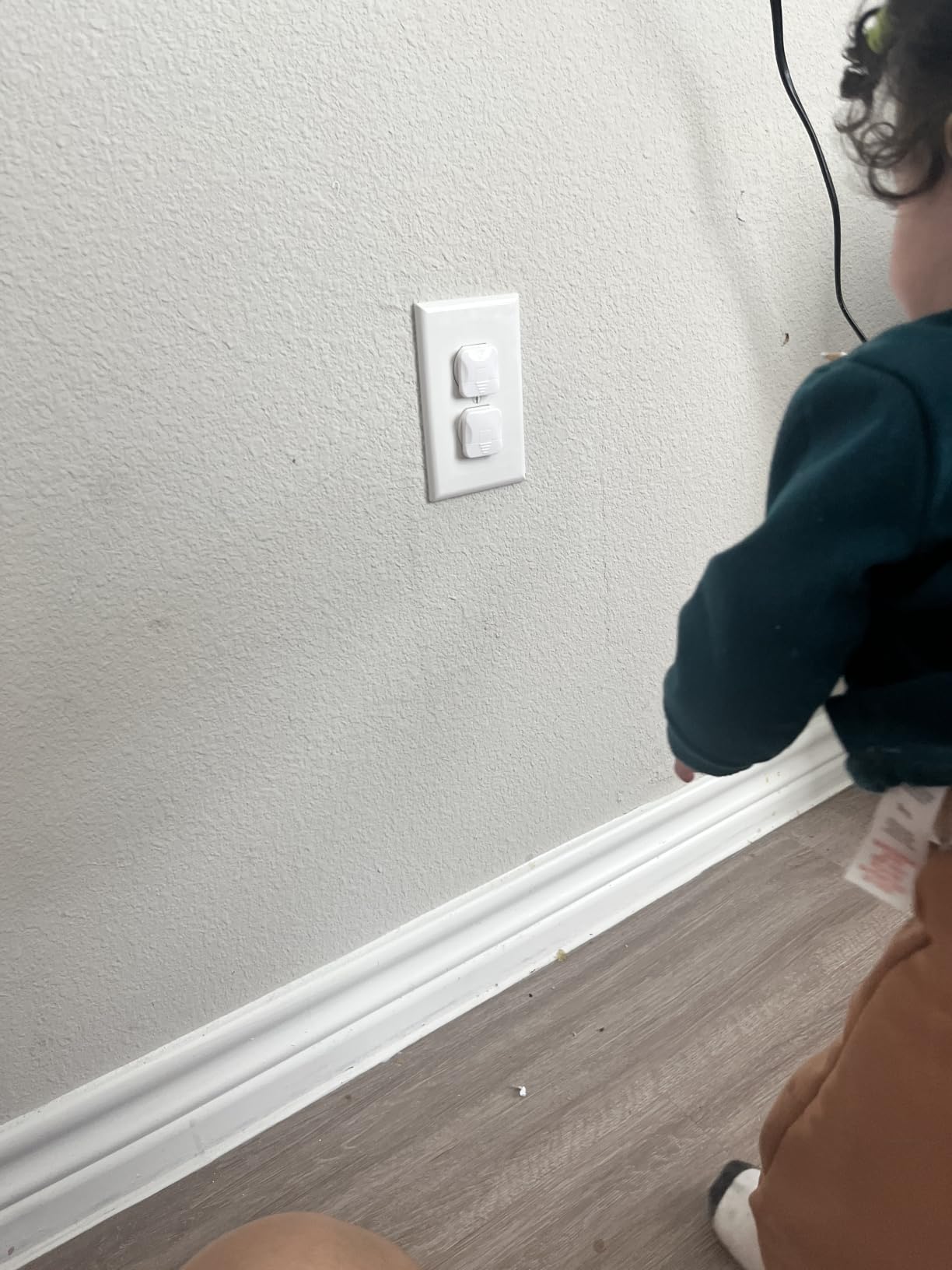
Most plug covers in this roundup explicitly do not fit power strips. This one is listed to fit standard three-prong outlets and power strips, which is the difference between covering the nursery and covering the nursery plus the surge protector someone plugged in beside the changing table. That gap is a real one: a power strip face has the same live slots as a wall receptacle and almost nobody accounts for it.
The hidden ring-pull handle is the deciding factor for anyone who does not like prying clear plugs with fingernails. Owners of the upgraded handle describe removal as possible without nails, and the 45-count pack is large enough for a full floor of sockets with spares over.
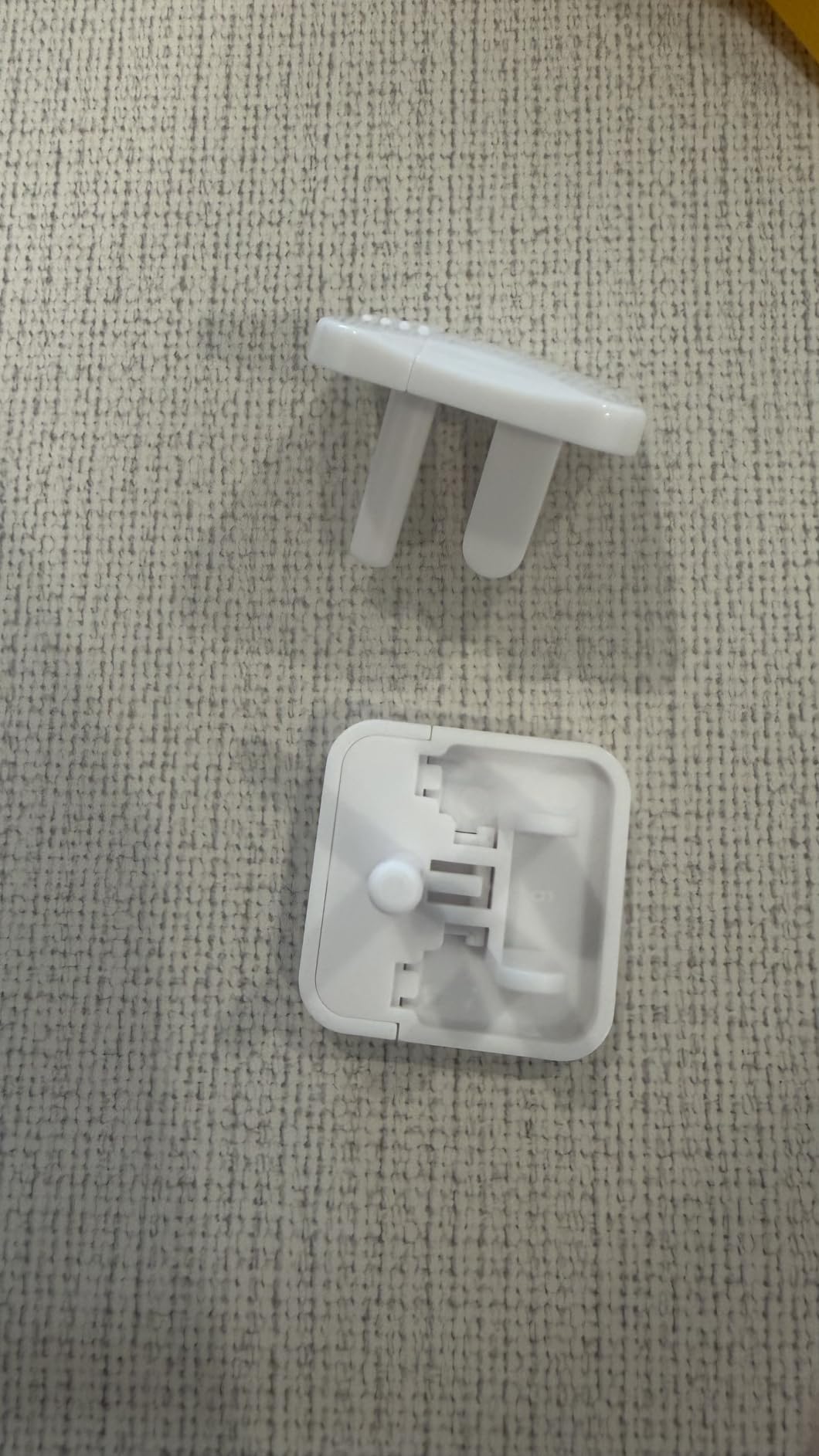
Material notes are good for a nursery. Reviewers single out the ABS insulation resin as wear-resistant and reusable, and mention the smooth rounded edges with no burrs and no plastic smell, which matters when the product sits within reach of a child’s face.
The recurring criticism is that the latch resists opening on the first attempt, and that on very tight sockets the cover has to be wiggled side to side before it seats. One reviewer also flags uncertainty about long-term durability if the plastic handle eventually breaks, which would leave you with a cap that is harder to remove than a standard plug.
What works well in a nursery
Power strip coverage is the reason to pick this over any other clear or white cap. If a strip is feeding a monitor, a night light, and a sound machine, this is the set that closes the remaining holes in the room. The 45-count pack also makes it a good fit for a household covering more than one room.
Where it falls short
The handle is stiff, and reviews specifically mention needing a tool to pop it open, so anyone with limited hand dexterity will find this set harder to live with than the Jool Baby notch design. It is built for US three-prong outlets only.
9. Safety 1st Outlet Cover with Cord Shortener – Best for Outlets That Stay Plugged In
- Covers an outlet that stays in use
- Child-resistant dual-press release
- Built-in cord shortener stores four feet of cord
- Screw-in install over the existing plate
- Bulky and protrudes from the wall
- Interior cord space is tight for thick plugs
- Difficult to open when needed often
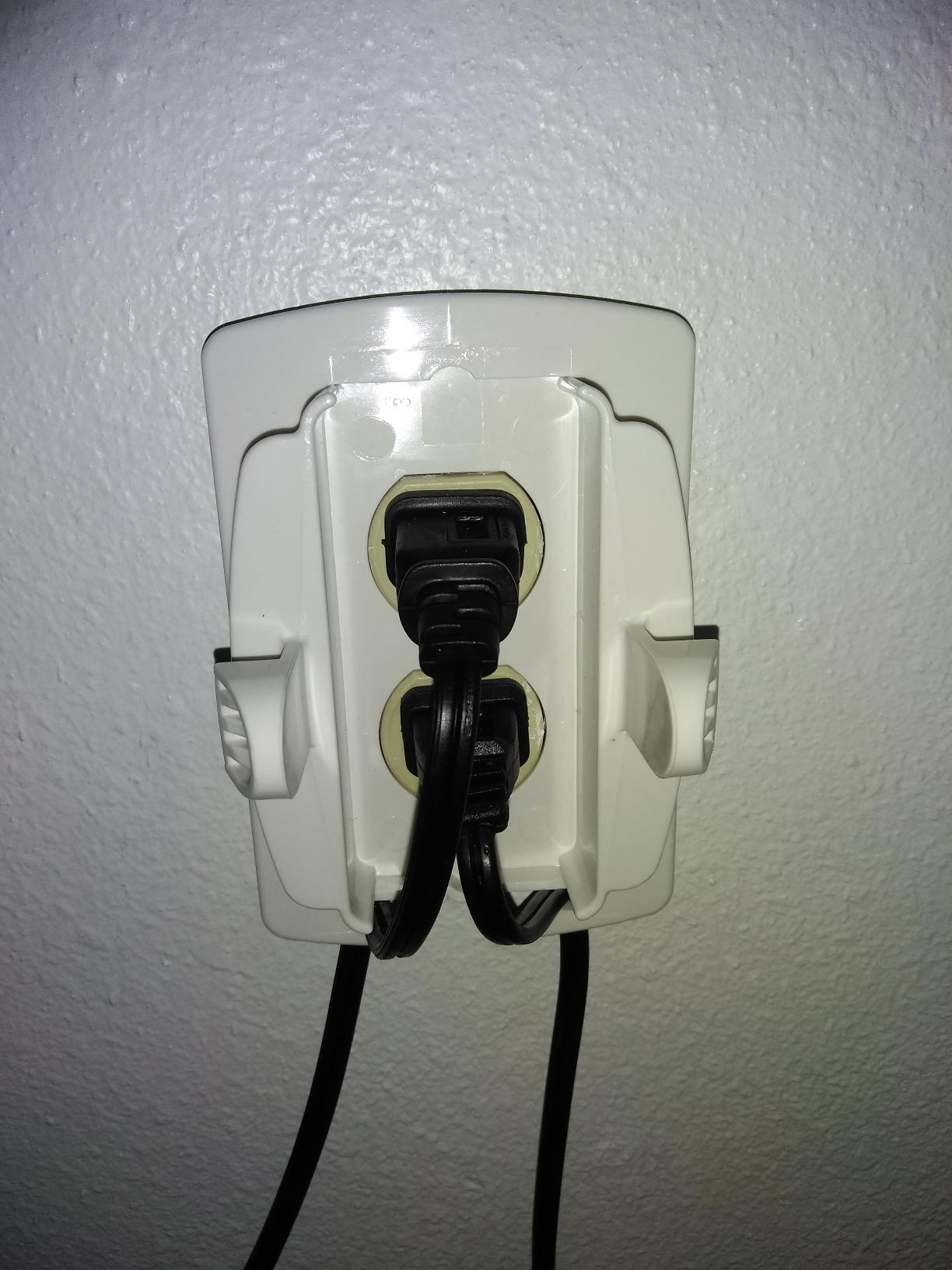
This is the only cover here designed around an outlet you cannot close up, and that is exactly the case most baby proofing advice skips. It screws over the existing plate, covers the receptacle while leaving the plug inside, and stops a child from unplugging a monitor or a sound machine. A parent reported it stayed attached through a month of aggressive cord pulling where cheaper plugs were pulled straight out.
The second feature is the cord shortener, which stores up to four feet of slack inside the cover so the excess cable is not lying on the floor. That solves a separate and underappreciated problem: cord entanglement around a neck or a wrist, and a cord that becomes a step hazard in a room where everyone is on the floor.
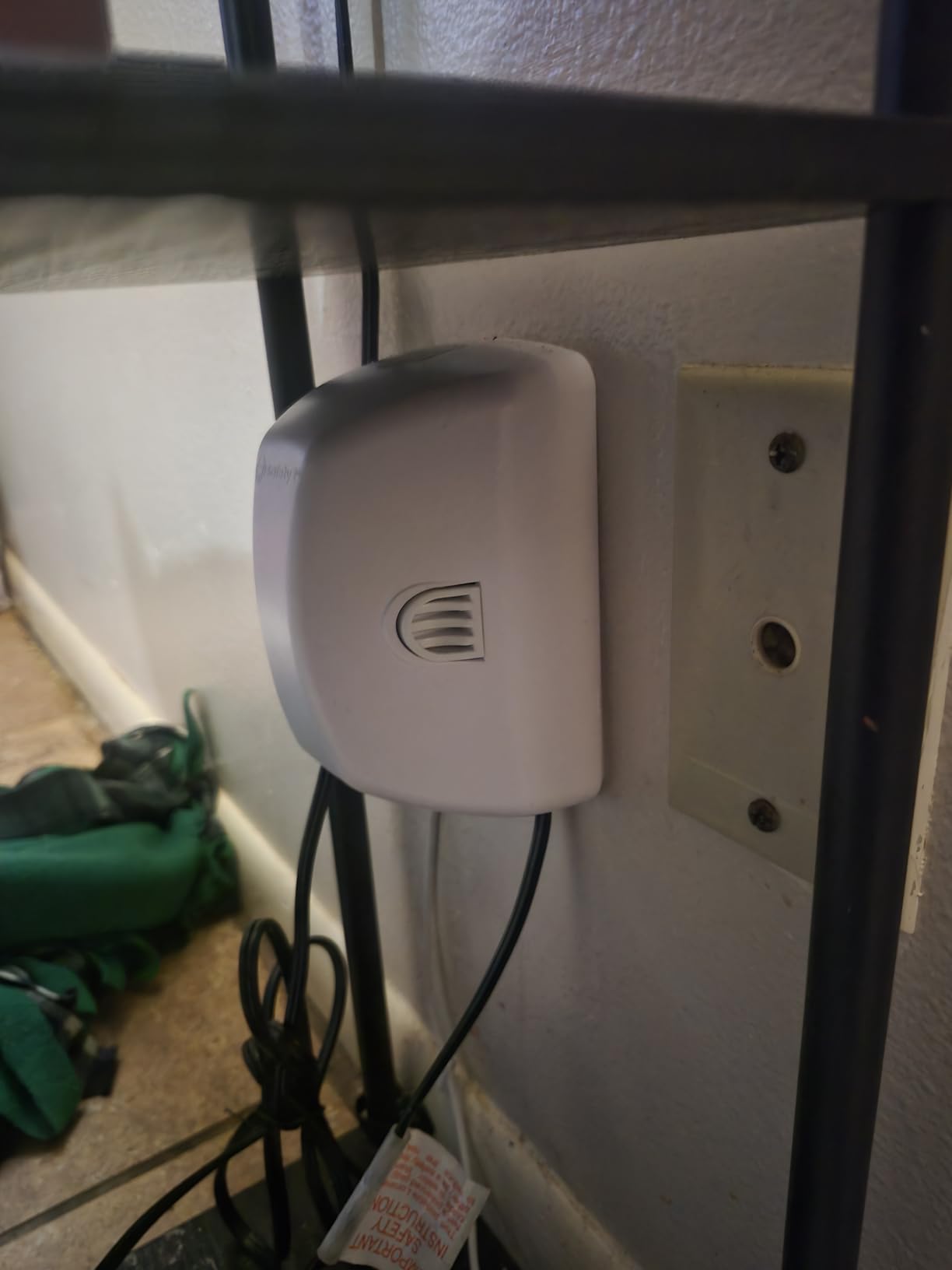
Operation is a child-resistant dual-press release, easy for an adult and out of reach for a toddler. Installation is genuinely simple: a screwdriver, remove the plate, fit this over it, done.
The limitations are consistent across reviews. It is bulky and protrudes further from the wall than a flat plug, the interior cord space is genuinely tight so thick power strip plugs and large AC adapters may not fit or latch properly, and it is difficult to open if you need that outlet often. It also does not fit decora-style receptacles without modification.
What works well in a nursery
The monitor outlet is the single most important live outlet in a nursery, and this is the cleanest way to protect it. Covering the socket and shorting the cord in one product removes both the reach risk and the cord risk at once, which also makes it a good answer for grandparents’ houses where the adult using the outlet is not you.
Where it falls short
Do not buy it for an outlet with a large AC adapter or a power strip. The interior is too tight, and a plug that does not fully seat behind a closed cover is a heat concern as well as a security one.
It is one cover, not a set, so covering a nursery with several live outlets means buying several. The protrusion also makes it more visible than a plug cap in a room you have spent time decorating.
10. Safety Innovations Twin Door Outlet Box – Best for Bulky AC Adapters
- Double lock needs two hands to open
- Deep interior fits AC adapters and power strips
- Faceplates for both standard and decora outlets
- Keeps child from unplugging live devices
- Bulky and costly per unit versus flat caps
- Protrudes from the wall
- Interior tight with both sockets full
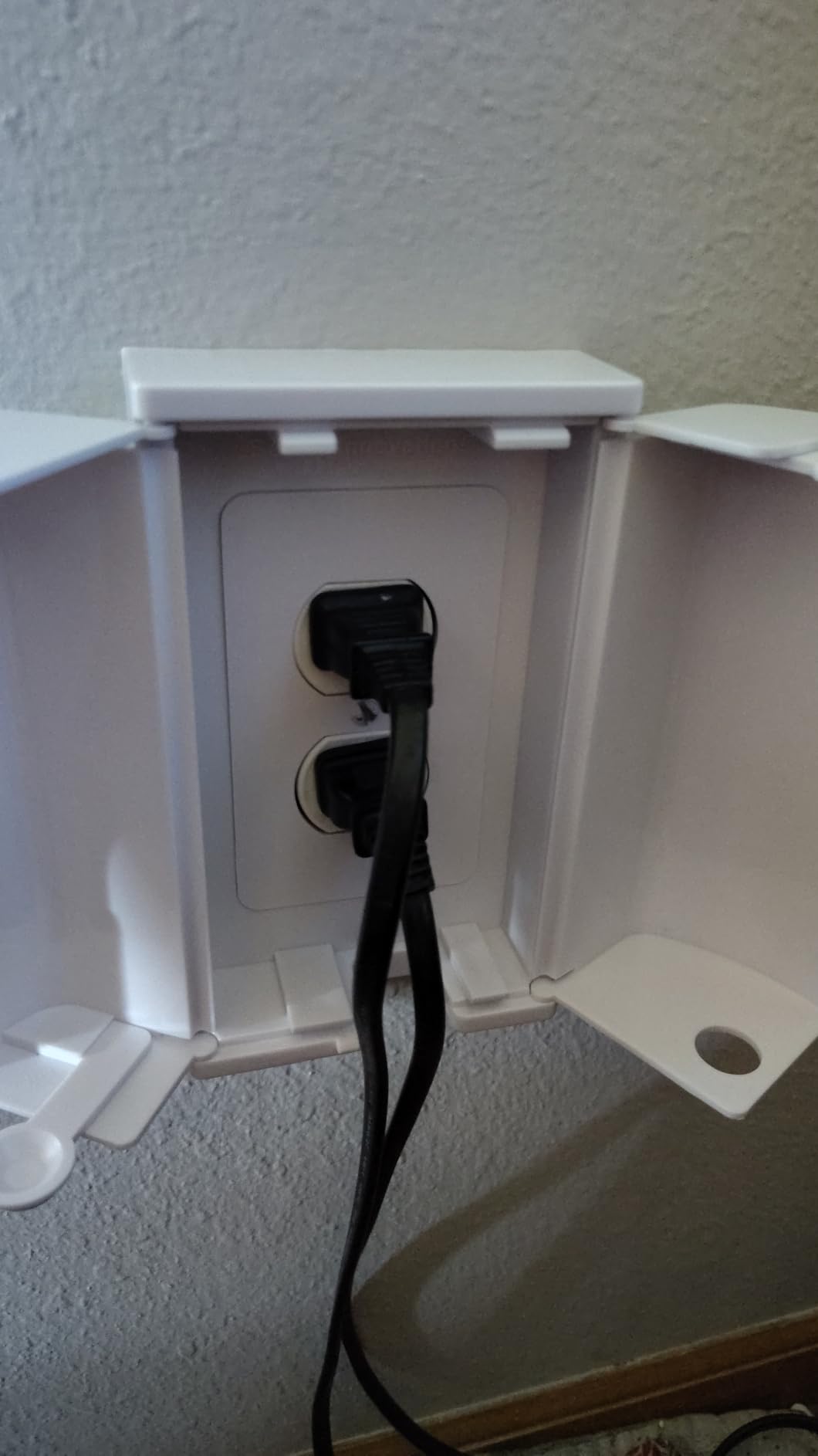
This is the answer to the problem a parent on r/toddlers described when asking for a 5 inch deep childproof outlet cover. The interior measures 5 3/8 inches high by 3 3/16 wide by 2 3/4 deep, which is deeper than typical baby proofing boxes, and it is specifically built to swallow the bulky power bricks, surge protectors and AC adapters that defeat shallow covers.
The security is mechanical rather than friction-based. Double-locking buttons at the top and bottom require two hands to operate, so a toddler working alone cannot open the doors. That is a very different failure profile from a friction-fit cap, which depends on the child not finding leverage.
Installation is screw-in with a screwdriver, and the box includes screws plus two faceplates, one for standard single-center-screw outlets and one for decora two-screw outlets. That means it fits the two common US receptacle formats without hunting for a separate plate, and it causes no wall damage beyond the existing screw holes.
Reviewers treat this as the solution for in-use outlets with oversized plugs, and the opaque body has the side benefit of hiding the outlet so a child loses interest. The recurring complaints are size, the protrusion from the wall, and the per-unit cost compared with buying several flat caps.
What works well in a nursery
Outlets behind furniture, in tight corners, or recessed into a deep box are exactly where a plug cap fails. This one encloses the receptacle rather than covering the face, so nothing about the socket is reachable even with a paperclip. The included decora faceplate also solves a compatibility problem that catches people mid-project.
Where it falls short
It is a single unit, and at this size the per-outlet cost adds up fast across a room with several live sockets. It is also a tool-required install, so it is a project rather than a five-minute job.
Because it stands proud of the wall, a toddler who climbs could lean on it, and reviews note the mounting has to absorb that kind of pressure. Interior space is also tight when both sockets are occupied by deep plugs at once, so plan for one device per side in the worst case.
11. Wappa Baby Dual-Lock Outlet Cover Box – Best Lock Against a Determined Toddler
- Dial plus two-button dual lock defeats toddlers
- Interior fits bulky plugs and adapters
- Thick plastic withstands pulling and leaning
- Installs in three steps with included screws
- Will not fit every oversized laptop charger
- Built for North American outlets
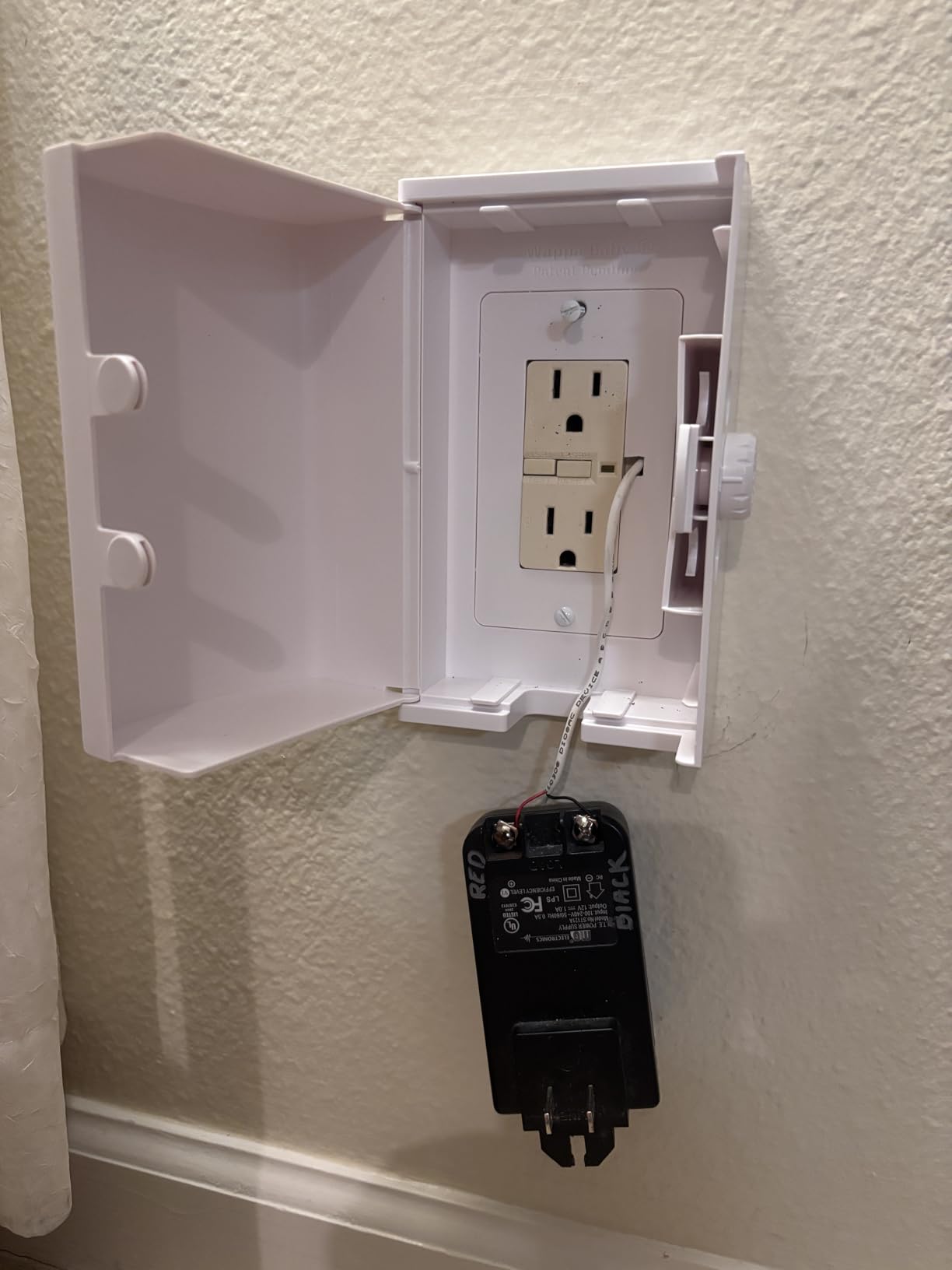
Parents who have watched a toddler defeat other baby proofing products describe this one differently. The reported pattern is that older babies break most socket covers within a day or two and still cannot open this box after months of trying, and that is a much stronger result than the general pattern for the category.
The mechanism is a patented dual lock combining a dial alignment with a two-finger button press. It is described as smooth and one-handed for parents, grandparents, and sitters, which matters because a cover that takes two hands and a struggle at 2am is a cover that does not go back on.
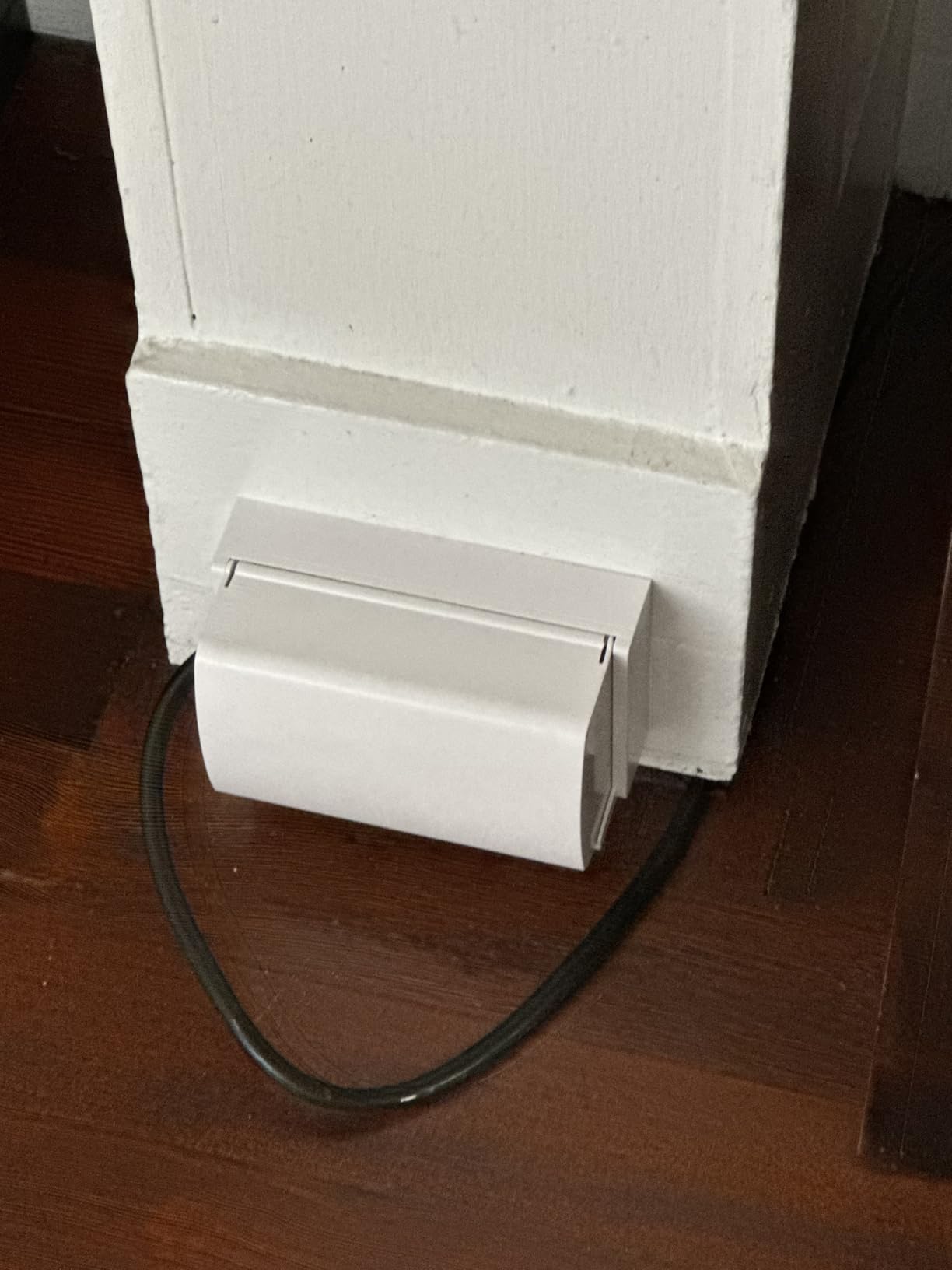
The interior measures 5.6 inches high by 3.1 wide by 2.6 deep, and reviews specifically praise the depth as better than designs that feel cramped and hard to open. Bulky plugs, adapters, and transformers all fit, and the 81 percent five-star share in the rating distribution reflects that.
All hardware is included, both a standard and a decorative faceplate, and installation is described consistently as a two-to-five-minute job needing only a screwdriver. The enclosed box form also fully conceals the outlet, so there is no visible cap to attract attention.
What works well in a nursery
This is the pick if your child is already past the age of being fooled by a friction fit. The dial-and-button lock requires a coordinated two-hand action that a one-year-old or a two-year-old working alone cannot reproduce. The generous interior and the included decorative plate also make it the best-looking of the enclosure boxes, which matters on a wall you chose the colour of.
Where it falls short
A small number of reviewers report fit limitations with oversized laptop chargers, so if you plan to plug a big brick into the covered outlet, check its depth first. The interior is deep but not unlimited.
It is designed for North American outlets and will not fit Australian or other foreign power points without modification. Like the other boxes, it is a one-unit purchase and stands proud of the wall.
12. Vmaisi 62 Piece Outlet Plug Covers – Best for Whole-Home Coverage on a Budget
Vmaisi 62 Pieces Outlet Covers Baby Proofing Plug Protectors Child Safety
- Largest count in the roundup
- Tight snap-in fit a two-year-old cannot defeat
- Flat profile does not protrude
- Tool-free install with reusable caps
- Opaque white caps are visible on coloured walls
- Firm fit is hard on arthritic hands
At 62 pieces this is the largest pack here, and the per-outlet cost works out well if you are covering more than a nursery. The house, the grandparents’ place, and a vacation rental all come from one box, which is the use reviewers actually report rather than just the marketing claim.
The round white caps sit flat and low-profile, so they do not protrude into a walkway and they look neat against a white wall. Buyers who prefer opaque white to clear say the flat design looks tidier than the more common clear plugs.
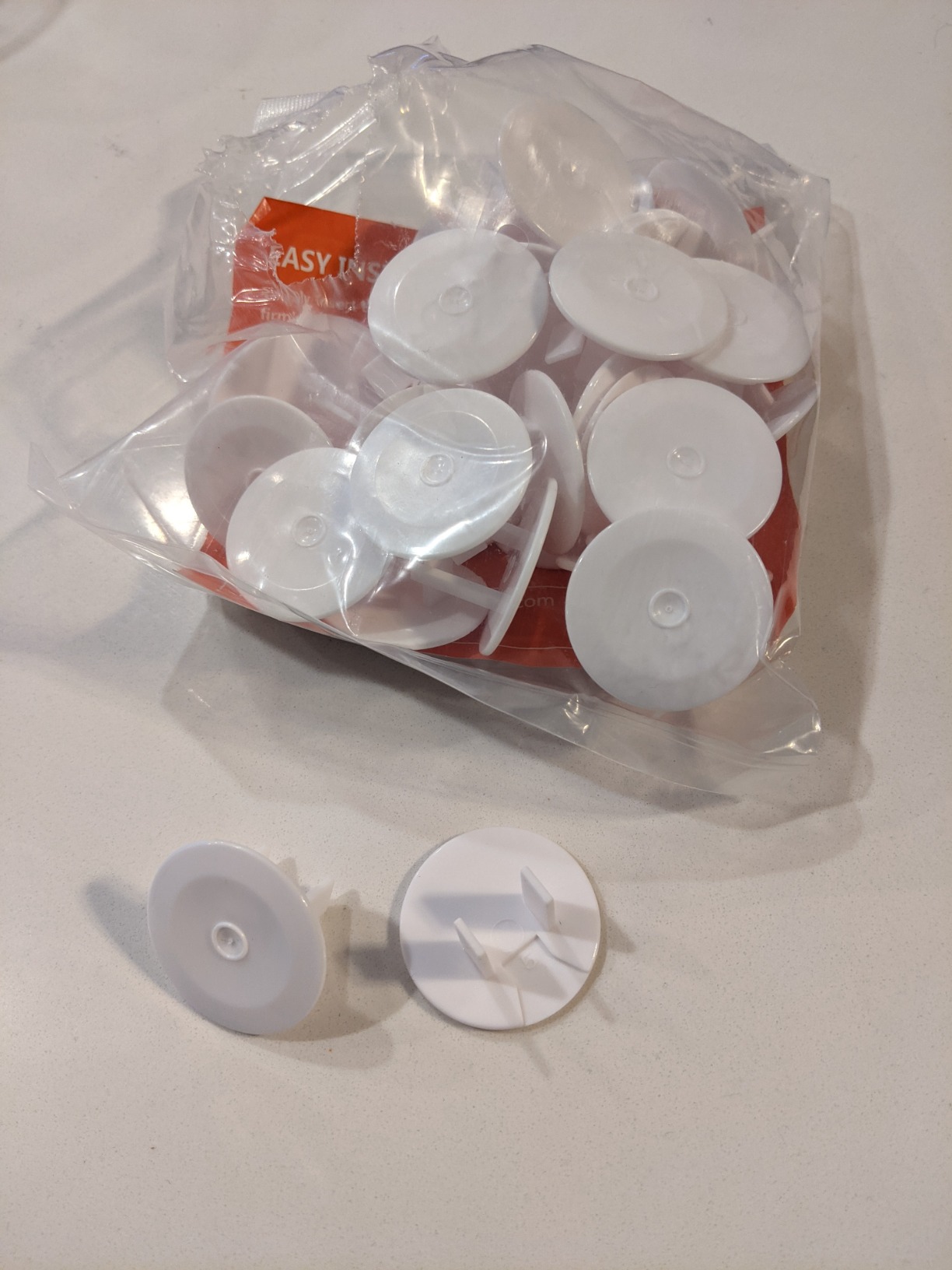
The fit is described as a tight snap that a two-year-old could not pull out of the socket, while still being removable by an adult with a fingernail. That balance, and the fact that the caps are durable thick plastic, is what the 82 percent five-star share reflects.
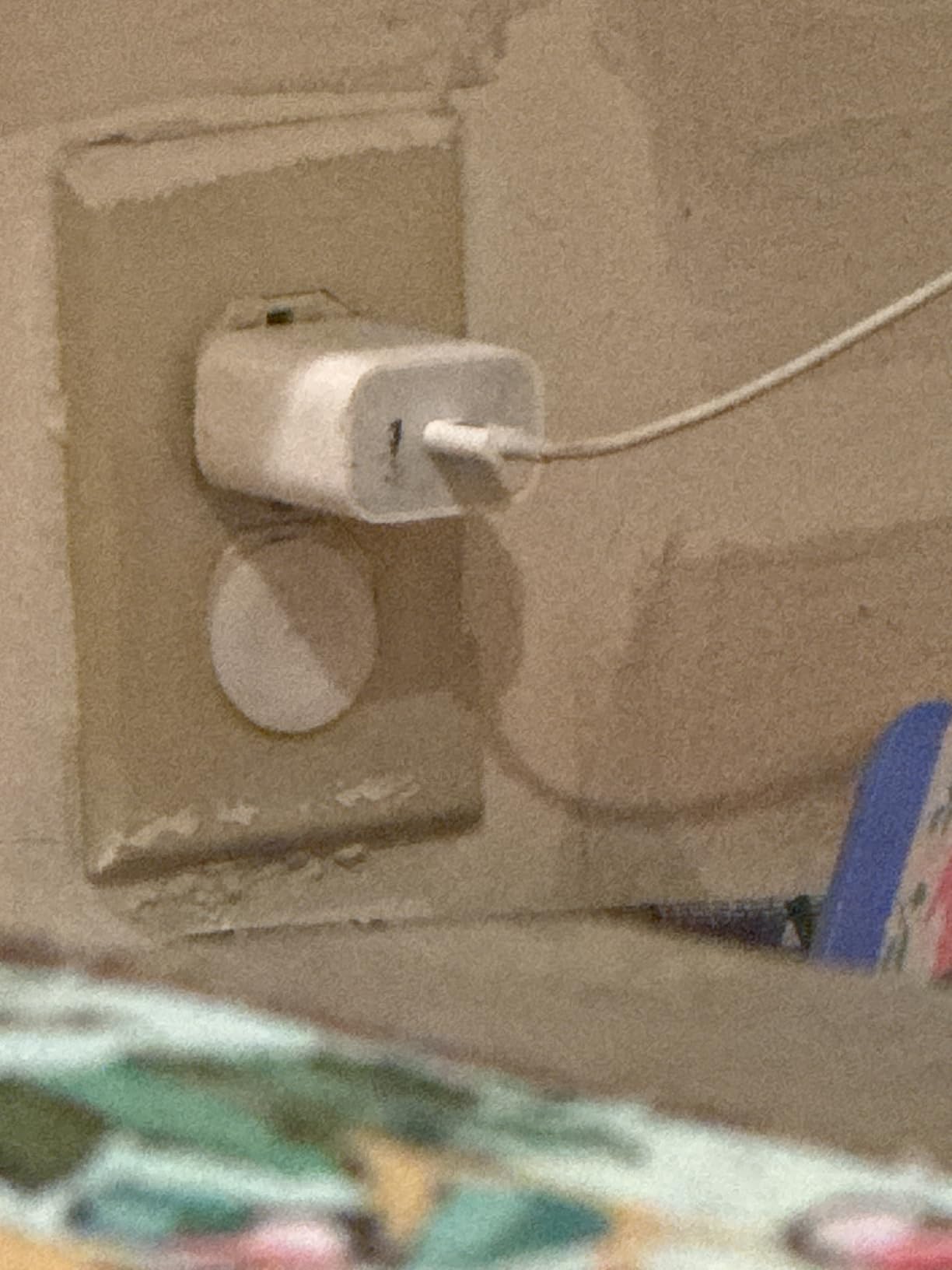
Two limits to know. The caps are opaque white, so on a coloured wall they read as visible objects and a curious child may notice them, which is the opposite of the argument for clear covers. And the firm fit is genuinely hard on hands with arthritis or very short nails.
What works well in a nursery
Count is the argument. If you are childproofing a nursery plus a hallway, a playroom, and a second home, 62 covers finishes the job in one purchase with spares to replace anything that gets lost. They are also the easiest to travel with, which matters if you use a grandparent’s house or a holiday rental regularly.
Where it falls short
On an accent wall they will not disappear, and the manufacturer notes you should check that your receptacle size matches before use. Some buyers report the fit depends on the receptacle size in their home, so measure one outlet before committing to the full pack.
There is no handle, notch, or indention for adult removal, so this is the cap to buy for outlets you will genuinely never open again. For anything used nightly, pick the Jool Baby or probebi instead.
Outlet Cover Types Explained – Plug Caps vs Boxes vs Cord Covers
There are three cover types, and choosing wrong is why so many parents end up unhappy with a cover they technically installed correctly.
Plug caps press into an empty socket and block the slots. They are cheap, tool-free, and reusable, and every one of them except the two boxes on this list is a cap. The tradeoff is that they do nothing at all for an outlet with something plugged into it, and they do not fit power strips in most cases.
Enclosure boxes screw over the existing wall plate and enclose the whole receptacle, so a plug can stay connected while the socket is covered. They are the only real answer to an outlet in use, and they are also the only ones that need a screwdriver. Two-hand or dual locks defeat a determined toddler better than any friction fit.
Cord covers protect the outlet and manage slack cord at the same time, storing a few feet of excess cable inside the cover. They are worth it for a monitor or sound machine in a nursery because they remove the cord-as-pull-handle problem as well as the socket problem.
One caution on sliding self-closing plates, the type that opens when a plug pushes in and shuts when it is pulled out. They are convenient because you never hunt for a spare cap, but a thick-bodied plug that is not fully inserted before the door closes can overheat behind the plate. If you use one, always push the plug all the way home and confirm it is seated before leaving it.
Used vs Unused Outlets – Why Your Nursery Needs Both Kinds
This is the single most common failure in nursery baby proofing, and almost no roundup mentions it. Parents buy one pack of plug caps, cover every socket in the room, and then discover the baby monitor, the humidifier, and the white noise machine all need live outlets. The caps come out again, and the three outlets that matter most stay exposed.
The fix is to sort the room into two lists before you buy anything. Unused outlets, meaning any socket with nothing in it, get plug caps. That is the bulk of a nursery and the cheap part of the job. In-use outlets get an enclosure box or a cord cover, one per socket, and that is where the real money and the real drilling goes.
A nursery typically has two or three live outlets. The monitor near the crib is the one to protect first, since its cord is the most reachable object in the room. A humidifier on a timer is the second, and a sound machine is the third. Our nursery seating picks and other gear guides cover the rest of the room, but the socket is the one a child reaches first.
Deep and Recessed Outlets – What to Do When Standard Covers Do Not Fit
A parent on r/toddlers asked for a 5 inch deep childproof outlet cover because the standard caps they were using were not deep enough. This is a real and under-served problem, and it is common in older homes, in rooms with deep wall boxes, and behind furniture pushed close to the wall.
The symptom is simple: the cap sits proud of the socket and leaves the face partially exposed, or it will not seat at all. Forcing a shallow cap into a deep box is the worst outcome, because a half-seated cap is less safe than none and still leaves a gap.
For deep or recessed boxes, use an enclosure box rather than a cap. A box that measures close to 3 inches deep internally, such as the Safety Innovations Twin Door at 2 3/4 inches or the Wappa Baby Dual-Lock at 2.6 inches, gives the plug somewhere to sit without being pushed against the back. If a box still will not clear your receptacle, the fix is a wall box swap or a decorator insert, which is an electrician’s job, not a nursery afternoon project.
How Many Outlet Covers Does a Nursery Need?
A typical nursery needs 8 to 12 covers, and almost nobody buys that number. A standard nursery has 2 to 4 duplex wall outlets, which is 4 to 8 sockets, plus one or two more if there is a closet, a bathroom-adjacent wall, or an outlet behind the changing table.
Here is the practical count. Multiply every duplex receptacle in the room by two for its sockets. Subtract one socket for each live device, since those get a box or a cord cover rather than a cap. Add two spare covers, because a dropped or lost cap should not send you back to the store. Bulk packs of 38 to 62 covers only make sense if you are childproofing more than one room, so buy for the house you have now.
How to Choose the Right Outlet Cover for Your Nursery?
Check for a named standard. A cover that says child safe means nothing. Look for a listed certification, whether UL 498, ETL, or a compliance mark like REACH, ROHS, PAHS, and EN-71 on the listing. ASTM F2050 and CPSIA are the standards reputable baby proofing buying guides reference. If the listing names none of them, assume the certification is untested.
Prioritise adult removability over raw security. A cover a child cannot beat is only useful if an adult can put it back on in seconds. Look for a handle, a notch, a hidden indent, or a tool-free release, and treat the absence of all four as a real drawback rather than a neutral detail.
Match the type to the outlet. Plug caps for empty sockets. An enclosure box for anything with a plug in it. A cord cover when the outlet feeds a monitor and the slack cable is a problem. A power-strip-compatible cap if a surge protector shares the wall.
Check the clearance before you buy a box. Measure the largest adapter you need to house, then check the interior dimensions in the listing. A box interior of 2 3/4 inches deep handles most AC adapters and USB bricks; a genuinely oversized laptop charger may not fit any of them.
Check the receptacle format and the wall. Most of these covers are built for US three-prong receptacles, so a plate cover with an included decora faceplate is the safer purchase. Clear covers vanish on any colour but disappear completely on white or off-white, while opaque white caps look tidy on a white wall and read as objects on an accent wall. Neither is safer; it is purely whether the room stays calm.
Installation Guide – Covering Outlets in 10 Minutes
Walk the room and count. List every receptacle within reach, mark unused versus in-use, and add two spare covers.
Sort by type. Take plug caps to the empty sockets. Take boxes or cord covers to the outlets with a device in them.
Check one socket for fit. Press a single cap in fully and confirm it sits flush and cannot be pulled out with a fingernail. If it is half-seated, stop and check the receptacle size.
Install the caps. Press each cap straight in with a thumb. No tools, no wall plate changes, and no damage to the wall.
Cut power and fit the boxes. For each live outlet, switch off the breaker, remove the existing wall plate, fit the supplied plate and enclosure, and tighten the supplied screws with a screwdriver.
Seat every plug fully. Push each plug all the way home and confirm it is seated before closing the cover, so nothing is pinched behind a closed door.
Store spares in a closed drawer. This is the step that prevents the choking hazard. Not on a shelf, not on the dresser, not in a toy bin.
Check monthly. Look for any cap left off, any cord a child can reach, and any box that has been levered at. Ten seconds a month catches a loosened cover before it becomes a habit.
For renters, stick to the plug caps, which come off with no wall damage. The Jool Baby notch design and the probebi ring-pull both come out fast enough that you can take the whole set with you when you move.
Frequently Asked Questions
What are the safest outlet covers for babies?
The safest covers are screw-on enclosure boxes with a two-hand or dual-lock opening, because they remove the socket entirely and do not depend on friction. For empty outlets, choose a large-bodied plug cap with a handle or notch for adult removal rather than the smallest cap available. Look for a named certification such as UL 498, ETL, or REACH, ROHS, PAHS and EN-71 on the listing, and confirm the fit is tight enough that a child cannot pull it out.
Are plug socket covers safe for babies?
The socket is covered safely, but a small plug cap becomes a choking hazard once a parent removes it and drops it. That is the real risk, not a child prying it off. Choose oversized covers, pick ones with a handle, notch, or indention so you can remove them without fingernails, and store every removed cap in a closed drawer immediately. No cover replaces supervision.
How many outlet covers does a nursery need?
Most nurseries need 8 to 12 covers. Count every duplex receptacle within reach and multiply by two for its sockets, subtract one for each live device that needs a box instead of a cap, then add two spares. Larger packs of 38 to 62 covers make sense only if you are childproofing several rooms, a playroom, or a second home.
How do I cover an outlet that has something plugged into it?
Use an enclosure box or a cord cover, not a plug cap. A box screws over the existing wall plate and encloses the receptacle with the plug still connected, so a child cannot reach the socket or unplug the device. A cord cover does the same and stores a few feet of slack cable inside. Make sure any plug is fully seated before you close the door, since a partly inserted plug can overheat behind a closed cover.
When should I remove outlet covers from a child’s room?
Most parents keep covers in place until the child is around four and can reliably ask for help with something plugged in, which is well past the toddler pulling-up stage. The covers on this list are reusable, so you can move them rather than discard them. If your child has started popping caps off with a fingernail or a wedged plug prong, replace that set with a screw-on box instead of waiting.
Conclusion
For most nurseries, the Power Gear 30-pack is the right starting point: a UL Listed clear cap that an adult can pull out with a fingernail and a toddler cannot, in a count that covers the room without a second order. The Safety 1st 36-count is the better value if the price per cover is your deciding factor, and the Wappa Baby clear 50-pack is the one to pick on a coloured wall where visible white caps would spoil the room.
Then handle the live outlets separately, because that is where a nursery actually gets unsafe. A screw-on box such as the Wappa Baby Dual-Lock is the strongest lock we tested against a determined toddler, the Safety Innovations Twin Door has the deepest interior for bulky AC adapters, and the Safety 1st cord cover is the only one that also solves the dangling cable.
Whichever of the best baby safety outlet covers for nurseries you choose, store every removed cap in a closed drawer, check the wall once a month, and remember that no product on this list does the job of watching the child. Updated for 2026, and worth revisiting before the second birthday, which is usually when covers start coming off on their own.